EP1234820A1 - Oxadiazole derivatives and drugs containing these derivatives as the active ingredient - Google Patents
Oxadiazole derivatives and drugs containing these derivatives as the active ingredient Download PDFInfo
- Publication number
- EP1234820A1 EP1234820A1 EP00979048A EP00979048A EP1234820A1 EP 1234820 A1 EP1234820 A1 EP 1234820A1 EP 00979048 A EP00979048 A EP 00979048A EP 00979048 A EP00979048 A EP 00979048A EP 1234820 A1 EP1234820 A1 EP 1234820A1
- Authority
- EP
- European Patent Office
- Prior art keywords
- oxo
- methyl
- pentyl
- carboxamide
- oxadiazolin
- Prior art date
- Legal status (The legal status is an assumption and is not a legal conclusion. Google has not performed a legal analysis and makes no representation as to the accuracy of the status listed.)
- Withdrawn
Links
- 0 CC1(*)N(C)IN(C)C1=O Chemical compound CC1(*)N(C)IN(C)C1=O 0.000 description 32
- GSXXTJIQPZIGLW-MCOCGALXSA-N CC(C)CC(C(C(O1)=NN(CC(C)C)C1=O)=O)NC([C@@H](CCCC1)[C@@H]1NC(c1ccccc1)=O)=O Chemical compound CC(C)CC(C(C(O1)=NN(CC(C)C)C1=O)=O)NC([C@@H](CCCC1)[C@@H]1NC(c1ccccc1)=O)=O GSXXTJIQPZIGLW-MCOCGALXSA-N 0.000 description 1
- SRXUPMBPNSTUHD-PDYHCXRVSA-N CC(C)CC(C(C(O1)=NN(CC(C)C)C1=O)=O)NC([C@H](CCCC1)[C@H]1NC(c1cc(cccc2)c2[s]1)=O)=O Chemical compound CC(C)CC(C(C(O1)=NN(CC(C)C)C1=O)=O)NC([C@H](CCCC1)[C@H]1NC(c1cc(cccc2)c2[s]1)=O)=O SRXUPMBPNSTUHD-PDYHCXRVSA-N 0.000 description 1
- AULHXFCYQCCDAQ-VQCQRNETSA-N CC(C)CC(C(C(O1)=NN(CC(C)C)C1=O)=O)NC([C@H]1CN(Cc2ccccc2)CCC1)=O Chemical compound CC(C)CC(C(C(O1)=NN(CC(C)C)C1=O)=O)NC([C@H]1CN(Cc2ccccc2)CCC1)=O AULHXFCYQCCDAQ-VQCQRNETSA-N 0.000 description 1
- QJRAOXLNIKDQMG-UHFFFAOYSA-N CC(C)CC(C(C(O1)=NN(CC(C)C)C1=O)=O)NC(c1cc(OCc2ccccc2)ccc1)=O Chemical compound CC(C)CC(C(C(O1)=NN(CC(C)C)C1=O)=O)NC(c1cc(OCc2ccccc2)ccc1)=O QJRAOXLNIKDQMG-UHFFFAOYSA-N 0.000 description 1
- CAYKCQPGWFADHH-GGYWPGCISA-N CC(C)CC(C(C(O1)=NN(COC)C1=O)=O)NC([C@H](CC(C)C)NC(OCc1ccccc1)=O)=O Chemical compound CC(C)CC(C(C(O1)=NN(COC)C1=O)=O)NC([C@H](CC(C)C)NC(OCc1ccccc1)=O)=O CAYKCQPGWFADHH-GGYWPGCISA-N 0.000 description 1
- ZIQXXFRNSMFNHI-ZHACJKMWSA-N CC(C)CC(C(C1=NN(CC(C)C)[NH+]([O-])O1)=O)NC(/C=C/c1ccccc1)=O Chemical compound CC(C)CC(C(C1=NN(CC(C)C)[NH+]([O-])O1)=O)NC(/C=C/c1ccccc1)=O ZIQXXFRNSMFNHI-ZHACJKMWSA-N 0.000 description 1
- SHQIRQJAAFUMIZ-PTCKQWLISA-N CC(C)CC(C(C1=NN(CC2CC2)[NH+]([O-])O1)=O)NC([C@H](CCCC1)[C@H]1NC(c(ccc(CNC)c1)c1F)=O)=O Chemical compound CC(C)CC(C(C1=NN(CC2CC2)[NH+]([O-])O1)=O)NC([C@H](CCCC1)[C@H]1NC(c(ccc(CNC)c1)c1F)=O)=O SHQIRQJAAFUMIZ-PTCKQWLISA-N 0.000 description 1
- BSOVLXDCFAGWIE-GARXDOFDSA-N CC(C)CC(C(c([o]1)nnc1SC(C)C)=O)NC([C@H](CCCC1)[C@H]1NC(C#CC)=O)=O Chemical compound CC(C)CC(C(c([o]1)nnc1SC(C)C)=O)NC([C@H](CCCC1)[C@H]1NC(C#CC)=O)=O BSOVLXDCFAGWIE-GARXDOFDSA-N 0.000 description 1
- MHLFJJMPKMGYQR-DVKDBIPTSA-N CC(C)CC(C(c([o]1)nnc1SC)=O)NC([C@H](CCCC1)[C@H]1NC(c(cc1)ccc1F)=O)=O Chemical compound CC(C)CC(C(c([o]1)nnc1SC)=O)NC([C@H](CCCC1)[C@H]1NC(c(cc1)ccc1F)=O)=O MHLFJJMPKMGYQR-DVKDBIPTSA-N 0.000 description 1
- VXTIALPDBDCSOJ-PDYHCXRVSA-N CC(C)CC(C(c([o]1)nnc1SC)=O)NC([C@H](CCCC1)[C@H]1NC(c1ccc(CN(C)C)cc1)=O)=O Chemical compound CC(C)CC(C(c([o]1)nnc1SC)=O)NC([C@H](CCCC1)[C@H]1NC(c1ccc(CN(C)C)cc1)=O)=O VXTIALPDBDCSOJ-PDYHCXRVSA-N 0.000 description 1
- GQIORTCLOHMYJC-UHFFFAOYSA-N CC(C)CC(C(c([o]1)nnc1SCCN(C)C)=O)NC(C1(CCCCC1)NC(c1ccccc1)=O)=O Chemical compound CC(C)CC(C(c([o]1)nnc1SCCN(C)C)=O)NC(C1(CCCCC1)NC(c1ccccc1)=O)=O GQIORTCLOHMYJC-UHFFFAOYSA-N 0.000 description 1
- CIBQODFOBUKBJJ-BHWOMJMDSA-N CC(C)C[C@@H](C(C(NNc1ccccc1)=O)OC1(C)C)N1C1=[O](C)C(C)(C)O1 Chemical compound CC(C)C[C@@H](C(C(NNc1ccccc1)=O)OC1(C)C)N1C1=[O](C)C(C)(C)O1 CIBQODFOBUKBJJ-BHWOMJMDSA-N 0.000 description 1
- SJYAAGRUVIKAOA-VUWPPUDQSA-N CC(C)C[C@@H](C(C(O)=O)OC1(C)C)N1C1=[O](C)C(C)(C)O1 Chemical compound CC(C)C[C@@H](C(C(O)=O)OC1(C)C)N1C1=[O](C)C(C)(C)O1 SJYAAGRUVIKAOA-VUWPPUDQSA-N 0.000 description 1
- GLGGENMGSZBDDH-AWEZNQCLSA-N CC(C)C[C@@H](C(C(O1)=NN(CC(C)C)C1=O)=O)NC(N1CCCCC1)=O Chemical compound CC(C)C[C@@H](C(C(O1)=NN(CC(C)C)C1=O)=O)NC(N1CCCCC1)=O GLGGENMGSZBDDH-AWEZNQCLSA-N 0.000 description 1
- RDALXHICKUBYBG-FSSWDIPSSA-N CC(C)C[C@@H](C(C(O1)=NN(CC(C)C)C1=O)=O)NC([C@H](CCCC1)[C@H]1NC(c1ccc(C)cc1)=O)=O Chemical compound CC(C)C[C@@H](C(C(O1)=NN(CC(C)C)C1=O)=O)NC([C@H](CCCC1)[C@H]1NC(c1ccc(C)cc1)=O)=O RDALXHICKUBYBG-FSSWDIPSSA-N 0.000 description 1
- BHROHASSVDYVNY-ZNZIZOMTSA-N CC(C)C[C@@H](C(C(O1)=NN(CC(C)C)C1=O)=O)NC([C@H](CCCC1)[C@H]1NC(c1ccc(CN2CCOCC2)cc1)=O)=O Chemical compound CC(C)C[C@@H](C(C(O1)=NN(CC(C)C)C1=O)=O)NC([C@H](CCCC1)[C@H]1NC(c1ccc(CN2CCOCC2)cc1)=O)=O BHROHASSVDYVNY-ZNZIZOMTSA-N 0.000 description 1
- PUFXBGDSMVGDID-HKBOAZHASA-N CC(C)C[C@@H](C(C(O1)=NN(CC(C)C)C1=O)=O)NC([C@H](CCCC1)[C@H]1NC(c1cccc(F)c1)=O)=O Chemical compound CC(C)C[C@@H](C(C(O1)=NN(CC(C)C)C1=O)=O)NC([C@H](CCCC1)[C@H]1NC(c1cccc(F)c1)=O)=O PUFXBGDSMVGDID-HKBOAZHASA-N 0.000 description 1
- PFUJWCUAXBIFPV-PMACEKPBSA-N CC(C)C[C@@H](C(C1=NN(CC(C)C)[NH+]([O-])O1)=O)NC(N(CCCC1)[C@@H]1C(Nc1ccccc1)=O)=O Chemical compound CC(C)C[C@@H](C(C1=NN(CC(C)C)[NH+]([O-])O1)=O)NC(N(CCCC1)[C@@H]1C(Nc1ccccc1)=O)=O PFUJWCUAXBIFPV-PMACEKPBSA-N 0.000 description 1
- SRLOYABDARKFDW-SFTDATJTSA-N CC(C)C[C@@H](C(C1=NN(CC(C)C)[NH+]([O-])O1)=O)NC([C@H]1N(CCc2ccccc2)CCC1)=O Chemical compound CC(C)C[C@@H](C(C1=NN(CC(C)C)[NH+]([O-])O1)=O)NC([C@H]1N(CCc2ccccc2)CCC1)=O SRLOYABDARKFDW-SFTDATJTSA-N 0.000 description 1
- GVUCQVNIORFTOG-NRFANRHFSA-N CC(C)C[C@@H](C(C1=NN(CC(C)C)[NH+]([O-])O1)=O)NC(c1ccccc1-c1ccccc1)=O Chemical compound CC(C)C[C@@H](C(C1=NN(CC(C)C)[NH+]([O-])O1)=O)NC(c1ccccc1-c1ccccc1)=O GVUCQVNIORFTOG-NRFANRHFSA-N 0.000 description 1
- ROVFOKVEWUKSGM-XSVUGYHLSA-N CC(C)C[C@@H](C(C1=NN(CC(OC(C)(C)C)=O)C(O)O1)=O)NC([C@H](CC(C)C)NC(OCc1ccccc1)=O)=O Chemical compound CC(C)C[C@@H](C(C1=NN(CC(OC(C)(C)C)=O)C(O)O1)=O)NC([C@H](CC(C)C)NC(OCc1ccccc1)=O)=O ROVFOKVEWUKSGM-XSVUGYHLSA-N 0.000 description 1
- RGXAIKSPQTUNDN-OALUTQOASA-N CC(C)C[C@@H](C(N[C@@H](CCOC)C(c([o]1)nnc1SC(C)C)=O)=O)NC(OCc1ccccc1)=O Chemical compound CC(C)C[C@@H](C(N[C@@H](CCOC)C(c([o]1)nnc1SC(C)C)=O)=O)NC(OCc1ccccc1)=O RGXAIKSPQTUNDN-OALUTQOASA-N 0.000 description 1
- CHDAIAQETAJGHG-KRWDZBQOSA-N CC(C)C[C@@H](C(c([o]1)nnc1SC(C)C)=O)NC(C1(CCCCC1)NC(N1CCOCC1)=O)=O Chemical compound CC(C)C[C@@H](C(c([o]1)nnc1SC(C)C)=O)NC(C1(CCCCC1)NC(N1CCOCC1)=O)=O CHDAIAQETAJGHG-KRWDZBQOSA-N 0.000 description 1
- NPMWGVAJRDDXGP-AWEZNQCLSA-N CC(C)C[C@@H](C(c([o]1)nnc1SC(C)C)=O)NC(C1CCCCC1)=O Chemical compound CC(C)C[C@@H](C(c([o]1)nnc1SC(C)C)=O)NC(C1CCCCC1)=O NPMWGVAJRDDXGP-AWEZNQCLSA-N 0.000 description 1
- DFDGFECQPHUIIS-DSITVLBTSA-N CC(C)C[C@@H](C(c([o]1)nnc1SC(C)C)=O)NC([C@H](CCCC1)[C@H]1NC(c1cc(CN2CCCC2)ccc1)=O)=O Chemical compound CC(C)C[C@@H](C(c([o]1)nnc1SC(C)C)=O)NC([C@H](CCCC1)[C@H]1NC(c1cc(CN2CCCC2)ccc1)=O)=O DFDGFECQPHUIIS-DSITVLBTSA-N 0.000 description 1
- AHSNYKKKQGXRRV-IKGGRYGDSA-N CC(C)C[C@@H](C(c([o]1)nnc1SC)=O)NC([C@H](CCC1)[C@H]1NC(c1ccccc1)=O)=O Chemical compound CC(C)C[C@@H](C(c([o]1)nnc1SC)=O)NC([C@H](CCC1)[C@H]1NC(c1ccccc1)=O)=O AHSNYKKKQGXRRV-IKGGRYGDSA-N 0.000 description 1
- MYECCNQTVPPNRF-FSSWDIPSSA-N CC(C)C[C@@H](C(c([o]1)nnc1SC)=O)NC([C@H](CCCC1)[C@H]1NC(c1ccc(cccc2)c2c1)=O)=O Chemical compound CC(C)C[C@@H](C(c([o]1)nnc1SC)=O)NC([C@H](CCCC1)[C@H]1NC(c1ccc(cccc2)c2c1)=O)=O MYECCNQTVPPNRF-FSSWDIPSSA-N 0.000 description 1
- UREGPHPABRWMNT-OALUTQOASA-N CC(C)C[C@@H](C(c([o]1)nnc1SC)=O)NC([C@H]1N(CCc2ccccc2)CCCC1)=O Chemical compound CC(C)C[C@@H](C(c([o]1)nnc1SC)=O)NC([C@H]1N(CCc2ccccc2)CCCC1)=O UREGPHPABRWMNT-OALUTQOASA-N 0.000 description 1
- KXXHLVAQHATPJE-SFHVURJKSA-N CC(C)C[C@@H](C(c([o]1)nnc1SCc1ccccc1)=O)NC(C1CCCCC1)=O Chemical compound CC(C)C[C@@H](C(c([o]1)nnc1SCc1ccccc1)=O)NC(C1CCCCC1)=O KXXHLVAQHATPJE-SFHVURJKSA-N 0.000 description 1
- RHSHRKJTZJWZPO-AWEZNQCLSA-N CC(C)C[C@@H](C(c1n[o]c(SC(C)C)n1)=O)NC(C1CCCCC1)=O Chemical compound CC(C)C[C@@H](C(c1n[o]c(SC(C)C)n1)=O)NC(C1CCCCC1)=O RHSHRKJTZJWZPO-AWEZNQCLSA-N 0.000 description 1
- YTDSGYIFIUXAMU-ROUUACIJSA-N CC(C)C[C@@H](C(c1n[o]c(SC)n1)=O)NC([C@H](CC(C)C)NC(OCc1ccccc1)=O)=O Chemical compound CC(C)C[C@@H](C(c1n[o]c(SC)n1)=O)NC([C@H](CC(C)C)NC(OCc1ccccc1)=O)=O YTDSGYIFIUXAMU-ROUUACIJSA-N 0.000 description 1
- JIRYOLNZSMTITM-ODRAOHSBSA-N CC(C)Sc1nnc(C(C(CC(C)C2[IH]C2)NC([C@H](CCCC2)[C@H]2NC(c2ccc(CN(C)C)cc2)=O)=O)=O)[o]1 Chemical compound CC(C)Sc1nnc(C(C(CC(C)C2[IH]C2)NC([C@H](CCCC2)[C@H]2NC(c2ccc(CN(C)C)cc2)=O)=O)=O)[o]1 JIRYOLNZSMTITM-ODRAOHSBSA-N 0.000 description 1
- SMOKEDVOWMQCPF-QYZOEREBSA-N CC(C)Sc1nnc(C([C@H](CCOC)NC([C@H](CCCC2)[C@H]2NC(c2ccccc2)=O)=O)=O)[o]1 Chemical compound CC(C)Sc1nnc(C([C@H](CCOC)NC([C@H](CCCC2)[C@H]2NC(c2ccccc2)=O)=O)=O)[o]1 SMOKEDVOWMQCPF-QYZOEREBSA-N 0.000 description 1
- NWKORHGXGUMGJH-WTIBDHCWSA-N CC(C)[C@H](C1)C1(C(C)O)N Chemical compound CC(C)[C@H](C1)C1(C(C)O)N NWKORHGXGUMGJH-WTIBDHCWSA-N 0.000 description 1
- XIJAMIYSOKUWSX-UHFFFAOYSA-N CC(C1N(C)CCC1)=O Chemical compound CC(C1N(C)CCC1)=O XIJAMIYSOKUWSX-UHFFFAOYSA-N 0.000 description 1
- JJFAXQMDKIUTID-UHFFFAOYSA-N CC(C1N(C)CCCC1)=O Chemical compound CC(C1N(C)CCCC1)=O JJFAXQMDKIUTID-UHFFFAOYSA-N 0.000 description 1
- MBVCTQKXEGCCCL-UHFFFAOYSA-N CC(O1)=NN(C)C1=O Chemical compound CC(O1)=NN(C)C1=O MBVCTQKXEGCCCL-UHFFFAOYSA-N 0.000 description 1
- AAPGYHQJMMBBEP-HKBOAZHASA-N CCCC[C@@H](C(C(O1)=NN(CC2CC2)C1=O)=O)NC([C@H](CCCC1)[C@H]1NC(c(cc1)ccc1F)=O)=O Chemical compound CCCC[C@@H](C(C(O1)=NN(CC2CC2)C1=O)=O)NC([C@H](CCCC1)[C@H]1NC(c(cc1)ccc1F)=O)=O AAPGYHQJMMBBEP-HKBOAZHASA-N 0.000 description 1
- UMKWNXBYAXGFRT-VJBWXMMDSA-N CCCC[C@@H](C(C1=NN(CC2CC2)[NH+]([O-])O1)=O)NC([C@H](CCCC1)[C@H]1NC(c(cc1)ccc1N(C)C)=O)=O Chemical compound CCCC[C@@H](C(C1=NN(CC2CC2)[NH+]([O-])O1)=O)NC([C@H](CCCC1)[C@H]1NC(c(cc1)ccc1N(C)C)=O)=O UMKWNXBYAXGFRT-VJBWXMMDSA-N 0.000 description 1
- RFHXAWKHIGIQBH-ROUUACIJSA-N CCCC[C@@H](C(c([o]1)nnc1SC)=O)NC([C@H](CC(C)C)NC(OCc1ccccc1)=O)=O Chemical compound CCCC[C@@H](C(c([o]1)nnc1SC)=O)NC([C@H](CC(C)C)NC(OCc1ccccc1)=O)=O RFHXAWKHIGIQBH-ROUUACIJSA-N 0.000 description 1
- OCKPCBLVNKHBMX-UHFFFAOYSA-N CCCCc1ccccc1 Chemical compound CCCCc1ccccc1 OCKPCBLVNKHBMX-UHFFFAOYSA-N 0.000 description 1
- RPLAZZUFWREKBR-AABGKKOBSA-N CCOCN1N=C(C([C@H](CC(C)C)NC([C@H](CCCC2)[C@H]2NC(c2ccccc2)=O)=O)=O)OC1=O Chemical compound CCOCN1N=C(C([C@H](CC(C)C)NC([C@H](CCCC2)[C@H]2NC(c2ccccc2)=O)=O)=O)OC1=O RPLAZZUFWREKBR-AABGKKOBSA-N 0.000 description 1
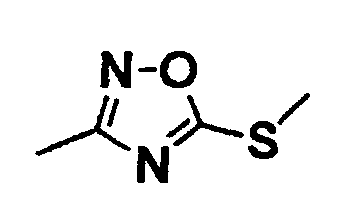
- LVOJDTRTKUOSBN-UHFFFAOYSA-N Cc([o]1)nnc1SC Chemical compound Cc([o]1)nnc1SC LVOJDTRTKUOSBN-UHFFFAOYSA-N 0.000 description 1
Classifications
-
- C—CHEMISTRY; METALLURGY
- C07—ORGANIC CHEMISTRY
- C07D—HETEROCYCLIC COMPOUNDS
- C07D271/00—Heterocyclic compounds containing five-membered rings having two nitrogen atoms and one oxygen atom as the only ring hetero atoms
- C07D271/02—Heterocyclic compounds containing five-membered rings having two nitrogen atoms and one oxygen atom as the only ring hetero atoms not condensed with other rings
- C07D271/06—1,2,4-Oxadiazoles; Hydrogenated 1,2,4-oxadiazoles
- C07D271/07—1,2,4-Oxadiazoles; Hydrogenated 1,2,4-oxadiazoles with oxygen, sulfur or nitrogen atoms, directly attached to ring carbon atoms, the nitrogen atoms not forming part of a nitro radical
-
- A—HUMAN NECESSITIES
- A61—MEDICAL OR VETERINARY SCIENCE; HYGIENE
- A61P—SPECIFIC THERAPEUTIC ACTIVITY OF CHEMICAL COMPOUNDS OR MEDICINAL PREPARATIONS
- A61P11/00—Drugs for disorders of the respiratory system
-
- A—HUMAN NECESSITIES
- A61—MEDICAL OR VETERINARY SCIENCE; HYGIENE
- A61P—SPECIFIC THERAPEUTIC ACTIVITY OF CHEMICAL COMPOUNDS OR MEDICINAL PREPARATIONS
- A61P19/00—Drugs for skeletal disorders
- A61P19/08—Drugs for skeletal disorders for bone diseases, e.g. rachitism, Paget's disease
- A61P19/10—Drugs for skeletal disorders for bone diseases, e.g. rachitism, Paget's disease for osteoporosis
-
- A—HUMAN NECESSITIES
- A61—MEDICAL OR VETERINARY SCIENCE; HYGIENE
- A61P—SPECIFIC THERAPEUTIC ACTIVITY OF CHEMICAL COMPOUNDS OR MEDICINAL PREPARATIONS
- A61P25/00—Drugs for disorders of the nervous system
-
- A—HUMAN NECESSITIES
- A61—MEDICAL OR VETERINARY SCIENCE; HYGIENE
- A61P—SPECIFIC THERAPEUTIC ACTIVITY OF CHEMICAL COMPOUNDS OR MEDICINAL PREPARATIONS
- A61P25/00—Drugs for disorders of the nervous system
- A61P25/18—Antipsychotics, i.e. neuroleptics; Drugs for mania or schizophrenia
-
- A—HUMAN NECESSITIES
- A61—MEDICAL OR VETERINARY SCIENCE; HYGIENE
- A61P—SPECIFIC THERAPEUTIC ACTIVITY OF CHEMICAL COMPOUNDS OR MEDICINAL PREPARATIONS
- A61P29/00—Non-central analgesic, antipyretic or antiinflammatory agents, e.g. antirheumatic agents; Non-steroidal antiinflammatory drugs [NSAID]
-
- A—HUMAN NECESSITIES
- A61—MEDICAL OR VETERINARY SCIENCE; HYGIENE
- A61P—SPECIFIC THERAPEUTIC ACTIVITY OF CHEMICAL COMPOUNDS OR MEDICINAL PREPARATIONS
- A61P3/00—Drugs for disorders of the metabolism
- A61P3/12—Drugs for disorders of the metabolism for electrolyte homeostasis
- A61P3/14—Drugs for disorders of the metabolism for electrolyte homeostasis for calcium homeostasis
-
- A—HUMAN NECESSITIES
- A61—MEDICAL OR VETERINARY SCIENCE; HYGIENE
- A61P—SPECIFIC THERAPEUTIC ACTIVITY OF CHEMICAL COMPOUNDS OR MEDICINAL PREPARATIONS
- A61P31/00—Antiinfectives, i.e. antibiotics, antiseptics, chemotherapeutics
- A61P31/12—Antivirals
- A61P31/14—Antivirals for RNA viruses
- A61P31/18—Antivirals for RNA viruses for HIV
-
- A—HUMAN NECESSITIES
- A61—MEDICAL OR VETERINARY SCIENCE; HYGIENE
- A61P—SPECIFIC THERAPEUTIC ACTIVITY OF CHEMICAL COMPOUNDS OR MEDICINAL PREPARATIONS
- A61P33/00—Antiparasitic agents
- A61P33/10—Anthelmintics
-
- A—HUMAN NECESSITIES
- A61—MEDICAL OR VETERINARY SCIENCE; HYGIENE
- A61P—SPECIFIC THERAPEUTIC ACTIVITY OF CHEMICAL COMPOUNDS OR MEDICINAL PREPARATIONS
- A61P35/00—Antineoplastic agents
-
- A—HUMAN NECESSITIES
- A61—MEDICAL OR VETERINARY SCIENCE; HYGIENE
- A61P—SPECIFIC THERAPEUTIC ACTIVITY OF CHEMICAL COMPOUNDS OR MEDICINAL PREPARATIONS
- A61P37/00—Drugs for immunological or allergic disorders
- A61P37/02—Immunomodulators
- A61P37/06—Immunosuppressants, e.g. drugs for graft rejection
-
- A—HUMAN NECESSITIES
- A61—MEDICAL OR VETERINARY SCIENCE; HYGIENE
- A61P—SPECIFIC THERAPEUTIC ACTIVITY OF CHEMICAL COMPOUNDS OR MEDICINAL PREPARATIONS
- A61P43/00—Drugs for specific purposes, not provided for in groups A61P1/00-A61P41/00
-
- A—HUMAN NECESSITIES
- A61—MEDICAL OR VETERINARY SCIENCE; HYGIENE
- A61P—SPECIFIC THERAPEUTIC ACTIVITY OF CHEMICAL COMPOUNDS OR MEDICINAL PREPARATIONS
- A61P5/00—Drugs for disorders of the endocrine system
-
- A—HUMAN NECESSITIES
- A61—MEDICAL OR VETERINARY SCIENCE; HYGIENE
- A61P—SPECIFIC THERAPEUTIC ACTIVITY OF CHEMICAL COMPOUNDS OR MEDICINAL PREPARATIONS
- A61P7/00—Drugs for disorders of the blood or the extracellular fluid
- A61P7/04—Antihaemorrhagics; Procoagulants; Haemostatic agents; Antifibrinolytic agents
-
- A—HUMAN NECESSITIES
- A61—MEDICAL OR VETERINARY SCIENCE; HYGIENE
- A61P—SPECIFIC THERAPEUTIC ACTIVITY OF CHEMICAL COMPOUNDS OR MEDICINAL PREPARATIONS
- A61P9/00—Drugs for disorders of the cardiovascular system
-
- C—CHEMISTRY; METALLURGY
- C07—ORGANIC CHEMISTRY
- C07D—HETEROCYCLIC COMPOUNDS
- C07D271/00—Heterocyclic compounds containing five-membered rings having two nitrogen atoms and one oxygen atom as the only ring hetero atoms
- C07D271/02—Heterocyclic compounds containing five-membered rings having two nitrogen atoms and one oxygen atom as the only ring hetero atoms not condensed with other rings
- C07D271/10—1,3,4-Oxadiazoles; Hydrogenated 1,3,4-oxadiazoles
- C07D271/113—1,3,4-Oxadiazoles; Hydrogenated 1,3,4-oxadiazoles with oxygen, sulfur or nitrogen atoms, directly attached to ring carbon atoms, the nitrogen atoms not forming part of a nitro radical
-
- C—CHEMISTRY; METALLURGY
- C07—ORGANIC CHEMISTRY
- C07D—HETEROCYCLIC COMPOUNDS
- C07D413/00—Heterocyclic compounds containing two or more hetero rings, at least one ring having nitrogen and oxygen atoms as the only ring hetero atoms
- C07D413/02—Heterocyclic compounds containing two or more hetero rings, at least one ring having nitrogen and oxygen atoms as the only ring hetero atoms containing two hetero rings
- C07D413/06—Heterocyclic compounds containing two or more hetero rings, at least one ring having nitrogen and oxygen atoms as the only ring hetero atoms containing two hetero rings linked by a carbon chain containing only aliphatic carbon atoms
-
- C—CHEMISTRY; METALLURGY
- C07—ORGANIC CHEMISTRY
- C07D—HETEROCYCLIC COMPOUNDS
- C07D413/00—Heterocyclic compounds containing two or more hetero rings, at least one ring having nitrogen and oxygen atoms as the only ring hetero atoms
- C07D413/02—Heterocyclic compounds containing two or more hetero rings, at least one ring having nitrogen and oxygen atoms as the only ring hetero atoms containing two hetero rings
- C07D413/12—Heterocyclic compounds containing two or more hetero rings, at least one ring having nitrogen and oxygen atoms as the only ring hetero atoms containing two hetero rings linked by a chain containing hetero atoms as chain links
-
- C—CHEMISTRY; METALLURGY
- C07—ORGANIC CHEMISTRY
- C07K—PEPTIDES
- C07K5/00—Peptides containing up to four amino acids in a fully defined sequence; Derivatives thereof
- C07K5/04—Peptides containing up to four amino acids in a fully defined sequence; Derivatives thereof containing only normal peptide links
- C07K5/06—Dipeptides
- C07K5/06008—Dipeptides with the first amino acid being neutral
- C07K5/06017—Dipeptides with the first amino acid being neutral and aliphatic
- C07K5/06034—Dipeptides with the first amino acid being neutral and aliphatic the side chain containing 2 to 4 carbon atoms
- C07K5/06043—Leu-amino acid
-
- C—CHEMISTRY; METALLURGY
- C07—ORGANIC CHEMISTRY
- C07K—PEPTIDES
- C07K5/00—Peptides containing up to four amino acids in a fully defined sequence; Derivatives thereof
- C07K5/04—Peptides containing up to four amino acids in a fully defined sequence; Derivatives thereof containing only normal peptide links
- C07K5/06—Dipeptides
- C07K5/06139—Dipeptides with the first amino acid being heterocyclic
-
- A—HUMAN NECESSITIES
- A61—MEDICAL OR VETERINARY SCIENCE; HYGIENE
- A61K—PREPARATIONS FOR MEDICAL, DENTAL OR TOILETRY PURPOSES
- A61K38/00—Medicinal preparations containing peptides
Definitions
- the present invention relates to an oxadiazole derivative.
- the present invention relates to;
- Cysteine protease is a generic name of proteases which have a cysteine residue in the activity center and catalyze protein degradation thereat.
- cysteine proteases In animal cells, a large number of cysteine proteases are known; for example, cathepsin family, calpain family, caspase-1, etc.
- Cysteine protease exists in various kinds of cells extensively and plays a basic and essential role in the homeostasis, such as conversion (processing) of precursor protein into its active form and degradation of proteins which have become out of use, etc.
- conversion conversion
- cysteine protease came to be taken as a cause of really various kinds of diseases.
- cathepsin S See J. Immunol., 161 , 2731 (1998)
- cathepsin L See J. Exp. Med., 183 , 1331 (1996)
- cathepsin S plays a role in processing of major histocompatibility antigen class-II in antigen presenting cells which play an important role in the early stage of immune responses.
- a specific inhibitor of cathepsin S showed an inhibitory effect (see J. Clin. Invest., 101 , 2351 (1998)).
- cathepsin B inhibitor inhibited an immune response and by means of this effect it inhibited the proliferation of protozoans (See J.
- cysteine protease inhibitor it is expected for a cysteine protease inhibitor to be used as an agent for the prophylaxis and/or treatment of those diseases concerning apoptosis, such as infectious diseases, deterioration or sthenia of immune function and brain function, tumors, etc.
- AIDS acquired immune deficiency syndrome
- ARC AIDS-related complex
- adult T cell leukemia hairy cell leukemia
- spondylopathy respiratory apparatus disorder
- HIV or HTLV-1 related diseases such as uveitis, virus-related diseases such as hepatitis C, cancer, collagenosis (systemic lupus erythematosus, rheumatoid arthritis, etc.), autoimmune diseases (ulcerative colitis, Sjögren's syndrome, primary biliary cirrhosis, spontaneous thrombocytopenic purpura, autoimmune hemolytic anemia, myasthenia gravis, insulin dependent (type I) diabetes, etc.), diseases accompanied by thrombocytopenia (osteomyelodysplasia syndrome, periodic thrombocytopenia, aplastic anemia, spontaneous thrombocytopenia, disseminated intravascular coagulation (DIC), etc.), hepatic diseases
- caspase-1 is concerned with various inflammatory diseases and those diseases caused by immune disorders, by means of interleukin-1 ⁇ (IL-1 ⁇ ) production.
- inflammatory diseases and autoimmune diseases listed below; inflammatory bowel diseases such as ulcerative colitis, insulin-dependent (type-I) diabetes, autoimmune thyroid diseases, infectious diseases, rejection of an organ transplantation, graft versus host diseases, psoriasis, periodontitis (above, see N. Eng. J. Med., 328 , 106 (1993)), pancreatitis (see J. Interferon Cytokine Res., 17 , 113 (1997)), hepatitis (see J. Leuko.
- cysteine protease is concerned with rheumatoid arthritis.
- IL-1 ⁇ is shown to be concerned with this disease (see Arthritis Rheum., 39 , 1092 (1996)), and in addition, as autoantibody toward calpastatin (endogenous calpain inhibitor) was found in the serum of the patients, it is considered that increase of calpain activity leads to the cause of diseases.
- cysteine protease causes a disease symptom by decomposing various proteins which compose the organism.
- cathepsin B plays a role in decomposing muscular protein in the chronic phase of sepsis (see J. Clin. Invest., 97 , 1610 (1996)), and in decomposing muscular protein in myodystrophy model (see Biochem. J., 288 , 643 (1992)). And it is also reported that calpain decomposes the myocyte cells protein of myodystrophy patients (see J. Biol. Chem., 270 , 10909 (1995)).
- calpain causes degeneration of brain tissues by means of degradation of protein kinase C- ⁇ (see J. Neurochem., 72 , 2556 (1999)) and that a cathepsin B inhibitor inhibits nerve injury (see Eur. J. Neurosci., 10 , 1723 (1998)).
- cysteine protease is concerned with systemic disorders of organs and tissues by shock.
- IL-1 ⁇ is concerned with septic shock and systemic inflammatory response syndrome (see Igakuno Ayumi, 169 , 850 (1994)) and besides, it is reported that in endotoxin shock model induced by lipopolysaccharide, a calpain inhibitor prevented circulatory system disorder, disorders of liver and pancreas and acidosis by means of inhibitory effect of activation of nuclear factor ⁇ B (see Br. J. Pharmacol., 121, 695 (1997)).
- Caspase-1 inhibitor inhibited the apoptosis of blood vessel endothelial cells, which is seen in the early phase of purpura (thrombocytopenia) and is thought to be important for the progression of the pathology afterwards (see Am. J. Hematol., 59 , 279 (1998)), so it is expected that a cysteine protease inhibitor makes effect on purpura and hemolytic uremic syndrome.
- cysteine protease and its inhibitor is being investigated in the field of cancer and metastasis of cancer.
- pancreas cancer cells see Cancer Res., 59, 4551 (1999)
- acute myeloid leukemia cells see Clin. Lab. Haematol., 21 , 173 (1999)
- caspase-1 activity is essential for the process of proliferation of tumor cells, and that an inhibitor thereof is effective for these cancers.
- Cathepsin B activity increased in colon cancer metastasis model (see Clin. Exp. Metastasis, 16 , 159 (1998)).
- Cathepsin K protein expression was recognized in human breast cancer cells and the relationship of cathepsin K and bone metastasis is shown (Cancer Res., 57 , 5386 (1997)).
- calpain inhibitor inhibited migaration of the cells and it implied the possibility that calpain inhibition may inhibit metastasis of cancer (J. Biochem., 272 , 32719 (1997)). From these, a cysteine protease inhibitor is presumed to show an inhibitory effect on the metastasis of various malignant tumors.
- IL-1 As to AIDS (see AIDS, 10 , 1349 (1996)) and AIDS-related complex (ARC) (see Arch. Immunol. Ther. Exp. (Warsz), 41 , 147 (1993)), it is shown that IL-1 is concerned with the progress of symptoms, so it is conceivable that cysteine protease inhibition leads to an effective therapy of AIDS and its complication.
- cysteine protease activity in their body.
- Cysteine protease in the phagosome of malaria protozoan is an essential enzyme for supplying nutrition of the parasites.
- a result is given that the inhibitor of cysteine protease shows an inhibitory effect of the proliferation of the protozoan (see Blood, 87 , 4448 (1996)).
- it is possible to apply the inhibitor of cysteine protease to malaria.
- amyloid In Alzheimer-type dementia, it is said that adhesion of non-physiological protein called amyloid to brain is deeply involved with nervous function disorders. Cysteine protease has an activity of generating amyloid by decomposing its precursor protein. Clinically, it is shown that cathepsin B is an enzyme that possesses a processing activity of amyloid proteins in the brains of Alzheimer-type dementia patients (see Biochem. Biophys. Res. Commun., 177 , 377 (1991)). Also, expressions of cathepsin B protein (see Virchows Arch. A. Pathol. Anat. Histpathol., 423 , 185 (1993)), cathepsin S protein (see Am. J.
- Pathol., 146 , 848 (1995)) and calpain protein were confirmed in the brain lesions.
- calpain is concerned with the formation of paired helical filaments which accumulate in Alzheimer dementia patients and production of protein kinase C which stabilizes the protein by phosphorylation (see J. Neurochem., 66 , 1539 (1996)) and by the knowledge that caspase is concerned with neurocyte death by ⁇ amyloid protein adhesion (see Exp. Cell Res., 234 , 507 (1997)), it is implied that cysteine protease is concerned with the disease symptoms.
- cathepsin S and cathepsin K do not exist in human arterial walls but it was confirmed that they expressed in arterial sclerosis lesion and they had an decomposing activity of alveolus elastica (see J. Clin. Invest., 102, 576 (1998)) and a calpain inhibitor and antisense of m-calpain inhibited the proliferation of human blood vessel smooth muscle cells and it is shown that m-calpain is concerned with the proliferation of smooth muscle (see Arteioscler. Thromb. Vssc.
- cysteine protease inhibitor is promising for the treatment of blood vessel lesion such as arteriosclerosis, restenosis after percutaneous transluminal coronary angioplasty (PTCA), etc.
- cathepsin B is activated in the process of injuring hepatocyte by bile acid (see J. Clin. Invest., 103 , 137 (1999)) and so it is expected that a cysteine protease inhibitor is effective for cholestatic cirrhosis.
- cathepsin S is an enzyme that plays a role in elastin degradation by alveolus macrophages (see J. Biol. Chem., 269 , 11530 (1994)), so it is probable that cysteine protease is a cause of pulmonary emphysema.
- lung injury see J. Clin. Invest., 97 , 963 (1996)
- lung fibrosis see Cytokine, 5 , 57 (1993)
- bronchial asthma see J. Immunol., 149 , 3078 (1992)
- cysteine protease is also concerned with diseases concerning bones and cartilages.
- Cathepsin K is specifically recognized in osteoclast and it has a decomposing activity against bone matrix (see J. Biol. Chem., 271 , 12517 (1996)), so its inhibitor is expected to show an effect against osteoporosis, arthritis, rheumatoid arthritis, osteoarthritis, hypercalcemia and osteometastasis of cancer, where pathologic bone resorption is recognized.
- IL-1 ⁇ is shown to be concerned with bone resorption and cartilage degradation, and a caspase-1 inhibitor and IL-1 ⁇ receptor antagonist inhibit the bone resorption and symptoms of arthritis, a caspase-1 inhibitor and IL-1 ⁇ receptor antagonist are expected to be effective for arthritis (see Cytokine, 8 , 377 (1996)) and osteoporosis (J. Clin. Invest., 93 , 1959 (1994)). And it is reported that IL-1 ⁇ is also concerned with osteoarthritis (see Life Sci., 41 , 1187 (1987)).
- Cysteine protease is involved with production of various hormones. Since increase of messenger RNA of cathepsin S was recognized by stimuli of thytropin on thyroid epitheliocyte strains (see J. Biol. Chem., 267 , 26038 (1992)), it is conceivable that a cysteine protease inhibitor is effective for hyperthyrodism.
- the compound that possesses the inhibitory activity of cysteine protease is useful as an agent for the prophylaxis and/or treatment of inflammatory diseases (periodontitis, arthritis, inflammatory bowel diseases, infectious diseases, pancreatitis, hepatitis, glomerulonephritis, endocarditis, myocarditis, etc.), diseases induced by apoptosis (graft versus host diseases, rejection of an organ transplantation, acquired immune deficiency syndrome (AIDS), AIDS-related complex (ARC), adult T cell leukemia, hairy cells leukemia, spondylopathy, disorders of respiratory apparatus, arthritis, HIV or HTLV-1 related diseases such as uveitis, virus-related diseases such as hepatitis C, cancer, collagenosis (systemic lupus erythematosus, rheumatoid arthritis, etc.), ulcerative colitis, Sjögren's syndrome, primary biliary cirrhosis, spontaneous
- the compound of formula (A) or a pharmaceutically acceptable salt thereof has an inhibitory activity against cysteine proteases, wherein Z A is a cysteine protease binding moiety;
- X A and Y A are independently S, O or N, said N being optionally substituted with alkyl or alkenyl optionally substituted with 1-3 halogen atoms, or (C5-C6)aryl, arylalkyl or arylalkenyl optionally comprising 1-3 heteroatoms selected from N, O and S, and optionally substituted with halogen atom, cyano, nitro, haloalkyl, amino, aminoalkyl, dialkylamino, alkyl, alkenyl, alkynyl, alkoxy, haloalkoxy, carboxyl, carboalkoxy, arylcarboxamide, alkylthio or haloalkylthio;
- R 1 A is al
- the present inventors have energetically investigated to find out such compounds that have cysteine protease inhibitory activity and found that the oxadiazole derivative of formula (I) of the present invention accomplishes the purpose.
- the oxadiazole derivative of formula (I) of the present invention is not known at all as a cysteine protease inhibitor at all.
- the present invention relates to
- J 1 is oxygen, sulfur, -NR 29 -, wherein R 29 is hydrogen, C1-4 alkyl, CycA or C1-4 alkyl substituted with CycA, C1-3 alkylene or C2-3 alkenylene
- J 2 is a single bond or C1-2 alkylene
- J 3 is carbonyl or C1-3 alkylene
- Y 3 is C1-3 alkylene
- oxygen or -NR 29 - wherein R 29 is the same meaning as above
- R 28 is hydrogen, C1-4 alkyl, CycA or C1-4 alkyl substituted with CycA, or R 28 is taken together with R 1 to form C2-4 alkylene, and the other symbols have the same meaning as above and each ring may be substituted with 1-5 of R 27 .
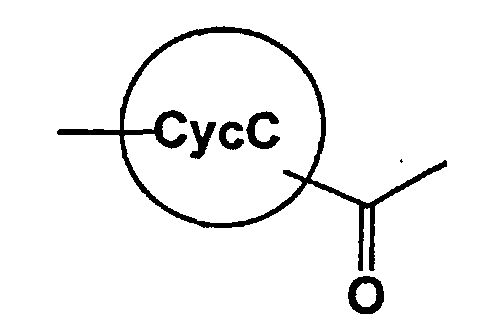
- CycC is a 3-17 membered heteroring which contains 1-2 of nitrogen, 1 of oxygen and/or 1 of sulfur (this ring may be substituted with 1-5 of R 27 ).
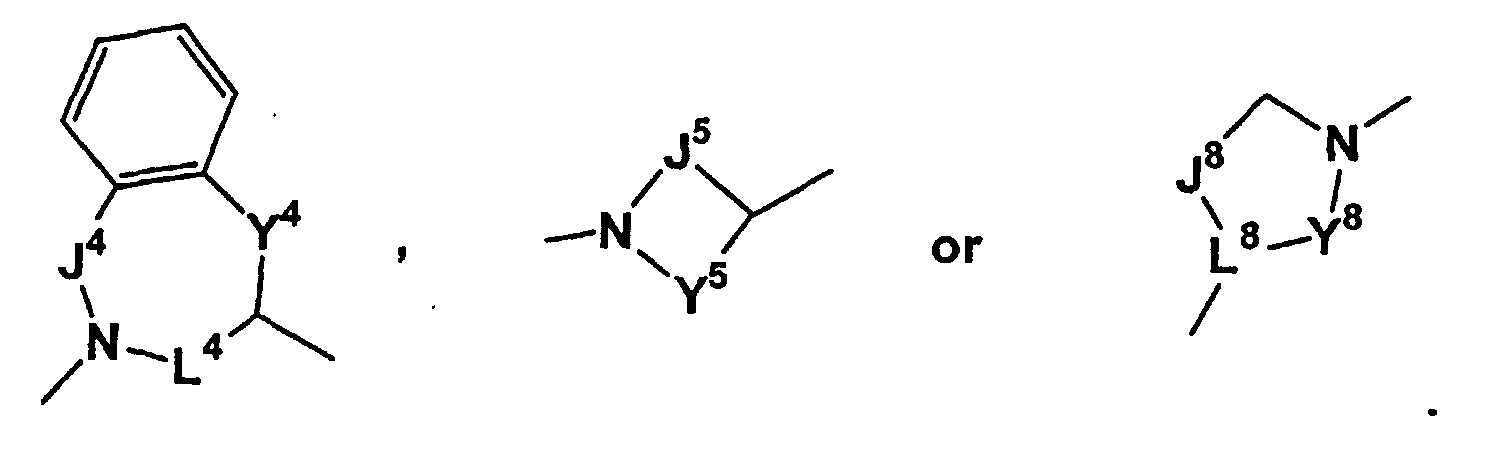
- J 4 , Y 4 and L 4 are the same or different to represent a single bond or C1-3 alkylene, wherein J 4 , Y 4 and L 4 do not represent a single bond at the same time
- J 5 is C1-6 alkylene
- Y 5 is a single bond
- R 67 is hydrogen, C1-4 alkyl, phenyl or C1-4 alkyl substituted with phenyl
- J 8 is C1-5 alkylene, wherein one carbon atom may be replaced by oxygen
- Y 8 is a single bond or C1-4 alkylene
- L 8 is -N- or -CH-, and the other symbols have the same meaning as above and each ring may be substituted with 1-5 of R 27 .
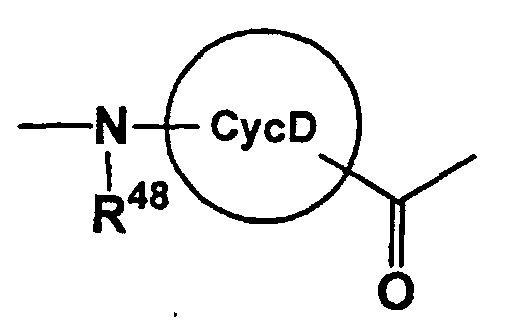
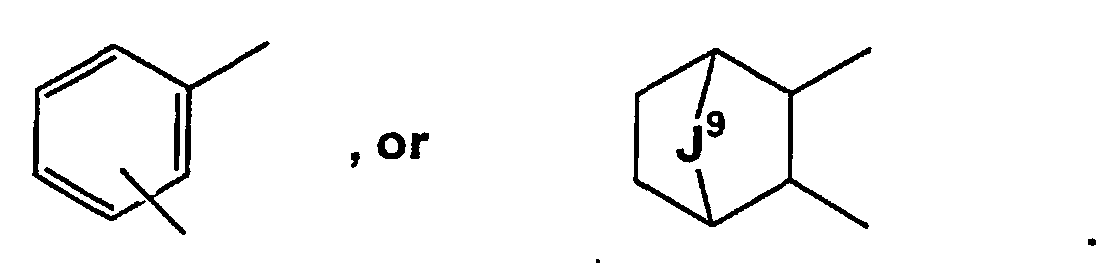
- CycD is a C3-14 mono- or bi-cyclic carboring or 3-14 membered heteroring which contains 1-2 of nitrogen, 1 of oxygen and/or 1 of sulfur (this carboring and heteroring may be substituted with 1-5 of R 27 ).
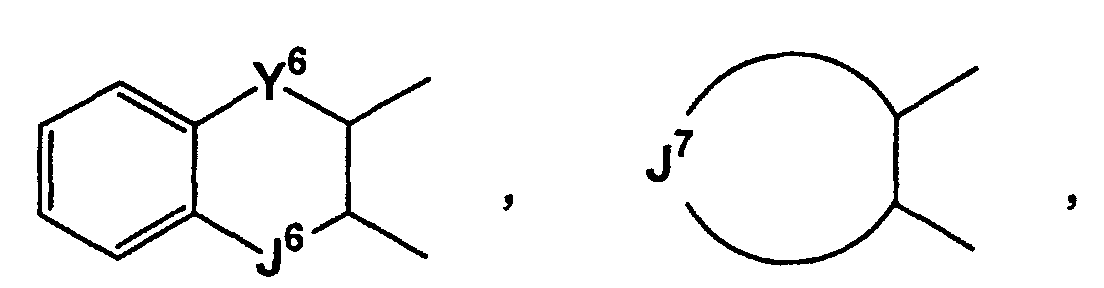
- J 6 and Y 6 are the same or different to represent a single bond or C1-3 alkylene, wherein J 6 and Y 6 do not represent a single bond at the same time
- J 7 is C1-6 alkylene, wherein one carbon atom may be replaced by oxygen, sulfur or -NR 67 -, wherein R 67 has the same meaning as above
- J 9 is C1-3 alkylene, oxygen, sulfur or -NR 67 -, wherein R 67 is the same meaning as above, and the other symbols have the same meanings as above and each ring may be replaced by 1-5 of R 27 .
- CycE is a 4-18 membered heteroring which contains 1-2 of nitrogen, 1 of oxygen and/or 1 of -S(O) p - (this heteroring may be substituted with 1-5 of R 27 ).
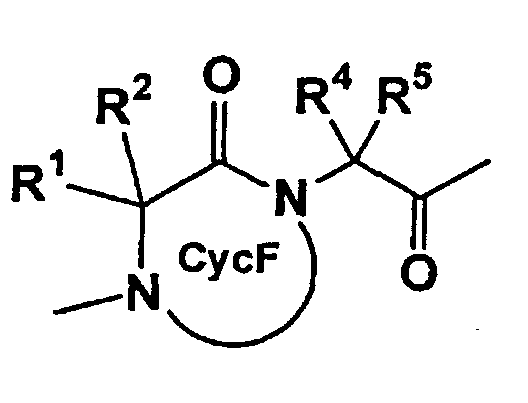
- CycF is a 5-8 membered heteroring containing 2 of nitrogen.
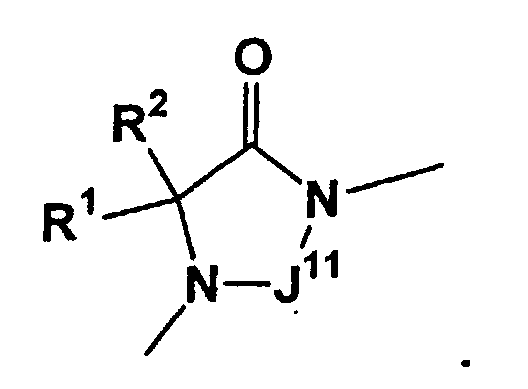
- J 11 is carbonyl or C2-4 alkylene and the other symbols have the same meaning as above and the ring therein may be substituted with 1-5 of R 27 .
- C1-4 alkyl is methyl, ethyl, propyl, butyl and isomers thereof.
- C1-8 alkyl is methyl, ethyl, propyl, butyl, pentyl, hexyl, heptyl, octyl and isomers thereof.
- C2-8 alkenyl is, ethyl, propyl, butyl, pentyl, hexyl, heptyl, octyl containing 1-3 of double bond and isomers thereof.
- vinyl, propenyl, butenyl, hexenyl, hexadienyl, octadienyl, etc. are included.
- C2-8 alkynyl is ethyl, propyl, butyl, pentyl, hexyl, heptyl, octyl containing 1-3 of triple bond and isomers thereof.
- ethynyl, propynyl, butynyl, pentynyl, hexynyl, heptynyl, octynyl, etc. are included.
- C1-4 alkyl substituted with phenyl is phenylmethyl, phenylethyl, phenylpropyl, phenylbutyl and isomers thereof.
- C1-2 alkylene is, methylene, ethylene and isomers thereof.
- C1-3 alkylene is, methylene, ethylene, trimethylene and isomers thereof.
- C1-4 alkylene is methylene, ethylene, trimethylene, tetramethylene and isomers thereof.
- C1-5 alkylene is methylene, ethylene, trimethylene, tetramethylene, pentamethylene and isomers thereof
- C1-6 alkylene is methylene, ethylene, trimethylene, tetramethylene, pentamethylene, hexamethylene and isomers thereof.
- C2-4 alkylene is ethylene, trimethylene, tetramethylene and isomers thereof.
- C2-6 alkylene is ethylene, trimethylene, tetramethylene, pentamethylene, hexamethylene and isomers thereof.
- C2-8 alkylene is ethylene, trimethylene, tetramethylene, pentamethylene, hexamethylene, heptamethylene, octamethylene and isomers thereof.
- C2-6 alkylene whose one carbon atom may be replaced by oxygen, sulfur, -NR 20 -, -NR 40 - or -NR 60 - is ethylene, trimethylene, tetramethylene, pentamethylene, hexamethylene and isomers thereof, wherein one carbon atom thereof may be replaced by oxygen, sulfur, -NR 20 -, -NR 40 -, or -NR 60 -, for example, such groups are -CH 2 -O-CH 2 -, -CH 2 -CH 2 -O-CH 2 -, -CH 2 -CH 2 -S-CH 2 -, -CH 2 -CH 2 -NH-CH 2 -, -CH 2 -CH 2 -O-CH 2 -CH 2 -, -CH 2 -CH 2 -S-CH 2 -CH 2 -, -CH 2 -CH 2 -NH-CH 2 -CH 2 -, -CH 2 -CH 2 -S-CH 2
- C2-8 alkylene whose one carbon atom may be replaced by oxygen, sulfur, -NR 20 -, -NR 40 - or -NR 60 - is ethylene, trimethylene, tetramethylene, pentamethylene, hexamethylene, heptamethylene, octamethylene and isomers thereof, wherein one carbon atom may be replaced by oxygen, sulfur, -NR 20 -, -NR 40 - or -NR 60 -, for example, such groups are -CH 2 -O-CH 2 -, -CH 2 -CH 2 -O-CH 2 -, -CH 2 -CH 2 -S-CH 2 -, -CH 2 -CH 2 -NH-CH 2 -, -CH 2 -CH 2 -O-CH 2 -CH 2 -, -CH 2 -CH 2 -S-CH 2 -CH 2 -, -CH 2 -CH 2 -NH-CH 2 -CH 2 -CH 2 -
- C2-3 alkenylene means vinylene and allylene and isomers thereof.
- halogen atom means chlorine, fluorine, bromine and iodine atom.
- mono- or bi-cyclic C5-10 carboring is mono- or bi-cyclic C5-10 carboaryl or partially or completely saturated one thereof.
- cyclopentane, cyclohexane, cycloheptane, cyclopentene, cyclohexene, cyclopentadiene, cyclohexadiene, benzene, pentalene, indene, naphthalene, azulene, perhydropentalene, perhydroindene, perhydronaphthalene, perhydroazulene, adamantyl ring, etc. are included.
- mono-, bi- or tri-cyclic C3-15 carboring is mono-, bi- or tri-cyclic carboaryl or partially or completely saturated one thereof.
- mono- or bi-cyclic 5-10 membered heteroring containing 1-4 of nitrogen, 1 of oxygen and /or sulfur is mono- or bi-cyclic 5-10 membered heteroaryl containing 1-4 of nitrogen, 1 of oxygen and / or sulfur or partially or completely saturated one thereof.
- 1 of oxygen and/or 1 of sulfur is, for example, pyrrole, imidazole, triazole, tetrazole, pyrazole, pyridine, pyrazine, pyrimidine, pyridazine, azepine, diazepine, furan, pyrane, oxepine, thiophene, thiaine (thiopyrane), thiepine, oxazole, isooxazole, thiazole, isothiazole, oxadiazole, oxazine, oxadiazine, oxazepine, oxadiazepine, thiadiazole, thiazine, thiadiazine, thiazepine, thiadiazepine, indole, isoindole, benzofuran, isobenzofuran, benzothi
- 1 of oxygen and/or 1 of sulfur is, for example, pyrroline, pyrrolidine, imidazoline, imidazolidine, triazoline, triazolidine, tetrazoline, tetrazolidine, pyrazoline, pyrazolidine, piperidine, piperazine, tetrahydropyridine, tetrahydropyrimidine, tetrahydropyridazine, dihydrofuran, tetrahydrofuran, dihydropyrane, tetrahydropyrane, dihydrothiophene, tetrahydrothiophene, dihydrothiaine (dihydrothiopyrane), tetrahydrothiaine (tetrahydrothiopyrane), oxazoline (dihydrooxazole), oxazolidine (tetrahydroxazole), di
- a 3-15 membered mono-, bi- or tri-cyclic heteroring containing 1-4 of nitrogen, 1-2 of oxygen and/or 1 of sulfur is 3-15 membered mono-, bi- or tri-cyclic heteroaryl containing 1-4 of nitrogen, 1-2 of oxygen and/or 1 of sulfur or partially or completely saturated one thereof.
- 3-15 membered mono-, bi- or tri-cyclic heteroring containing 1-4 of nitrogen, 1-2 of oxygen and/or 1 of sulfur is, for example, pyrrole, imidazole, triazole, tetrazole, pyrazole, pyridine, pyrazine, pyrimidine, pyridazine, azepine, diazepine, furan, pyrane, oxepine, oxazepine, thiophene, thiaine (thiopyrane), thiepine, oxazole, isoxazole, thiazole, isothiazole, oxadiazole, oxazine, oxadiazine, oxazepine, oxadiazepine, thiadiazole, thiazine, thiadiazine, thiazepine, thiadiazepine, indole, isoindole, benzofuran,
- mono-, bi- or tri-cyclic 5-15 membered heteroring containing 1-4 of nitrogen, 1-2 of oxygen and/or 1 of sulfur is, aziridine, oxirane, azetidine, oxetane, thiirane, thietane, pyrroline, pyrrolidine, imidazoline, imidazolidine, triazoline, triazolidine, tetrazoline, tetrazolidine, pyrazoline, pyrazolidine, piperidine, piperazine, tetrahydropyridine, tetrahydropyrimidine, tetrahydropyridazine, dihydrofuran, tetrahydrofuran, dihydropyrane, tetrahydropyrane, dihydrothiophene, tetrahydrothiophene, dihydrothiaine (dihydrothiopyrane), tetrahydrothiaine (tetrahydrothiothio)
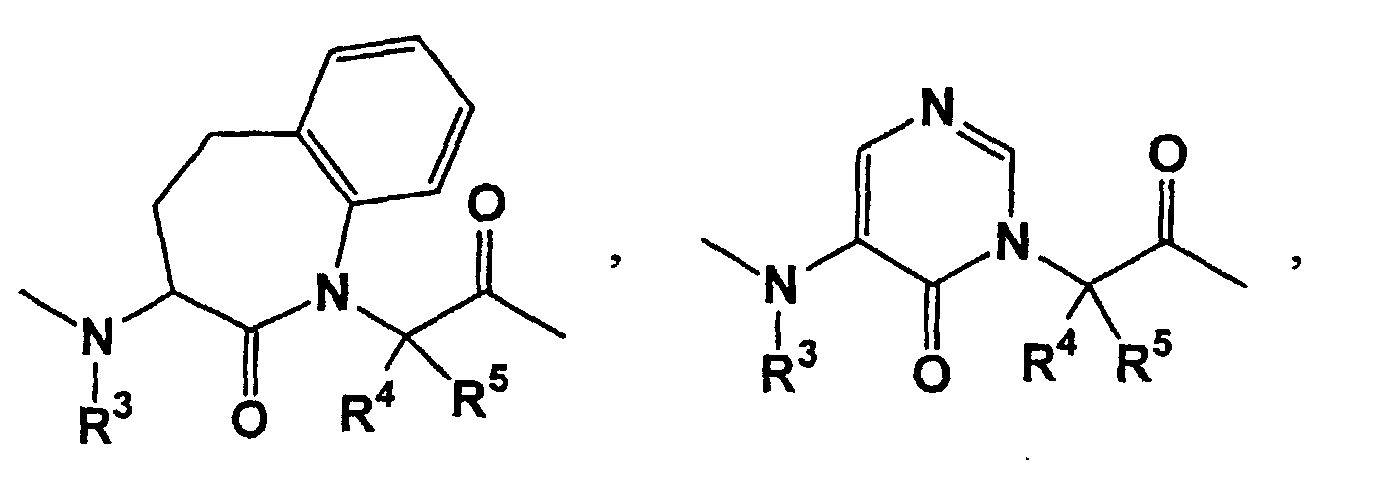
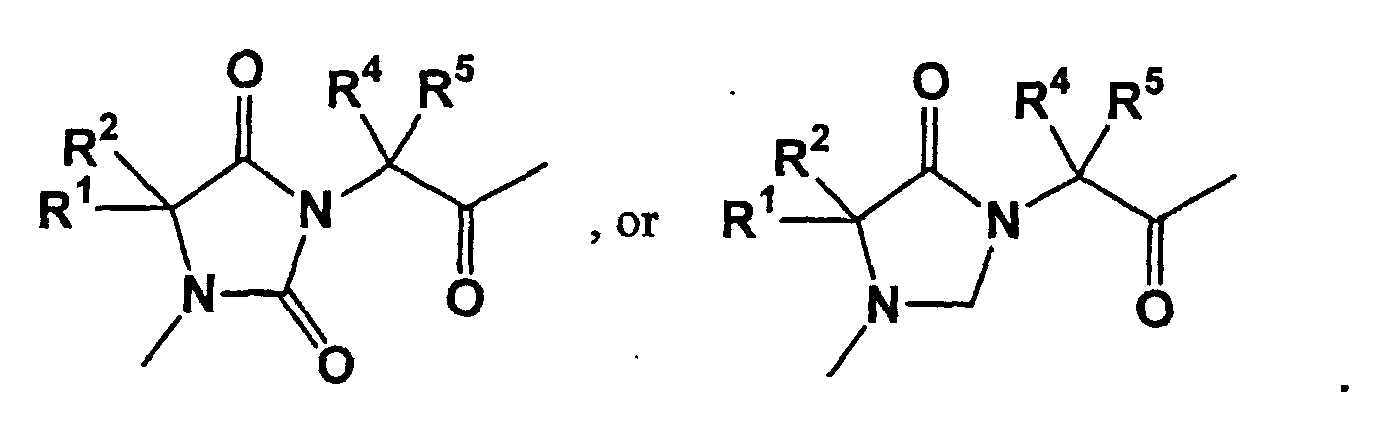
- a 5-12 membered heteroring containing 1-3 of nitrogen, 1 of oxygen and/or 1 of sulfur atom i.e. is, for example, a ring represented by
- 2-oxo-1,3,4-triazoline, 5-oxo-1,2,4-oxadiazoline, 5-oxo-1,2,4-thiadiazoline, 4-oxoimidazoline, 3,4-dihydro-4-oxopyrimidine, 3,4,5,6-tetrahydro-4-oxopyrimidine, 2-oxoindoline, 2-oxo-tetrahydroquinoline, 1,2-dihydro-2-oxoquinazoline, 1,2-dihydro-2-oxoquinoxaline, 3-oxopyrazolidine, perhydro-3-oxopyridazine, 2-oxo-1,3,4-oxadiazolidine, perhydro-2-oxo-1,3,4-oxadiazine, etc. are included.
- 3-17 membered heteroring containing 1-2 of nitrogen, 1 of oxygen and/or 1 of sulfur represented by CycC is, for example, a ring represented by
- pyrrolidine imidazolidine, pyrazolidine, piperidine, piperazine, perhydropyrimidine, perhydropyridazine, thiazolidine, indoline, isoindoline, tetrahydroquinoline, tetrahydroisoquinoline, etc. are included.
- a C3-14 mono- or bi-cyclic carboring or 3-14 membered heteroring containing 1-2 of nitrogen, 1 of oxygen, and/or 1 of sulfur represented by CycD is, for example, a ring represented by
- cyclopentane, cyclohexane, cycloheptane, benzene, indan, tetrahydronaphthalene, oxorane, oxane, thiorane, thian, pyrrolidine, piperidine, bicyclo[2.2.1]heptane, bicycle[2.2.2]octane, 7-azabicyclo[2.2.1]heptane, 7-oxobicyclo[2.2.1]heptane, 7-thiabicyclo[2.2.1]heptane, etc. are included.
- CycE is, for example, a ring represented by
- CycF is, for example, a ring represented by
- the symbol indicates that the substituent attached thereto is in front of the sheet ( ⁇ -position) unless specified, indicates that the substituent attached thereto is behind the sheet ( ⁇ -position) unless specified, and indicates that the substituent attached thereto is in ⁇ -position or ⁇ -position or a mixture thereof.
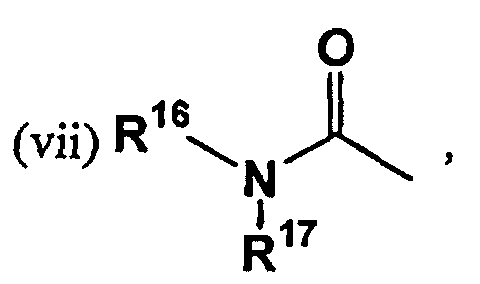
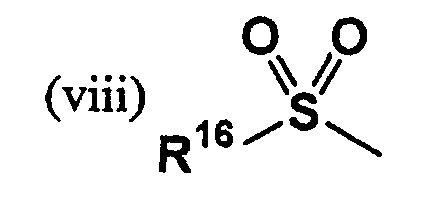
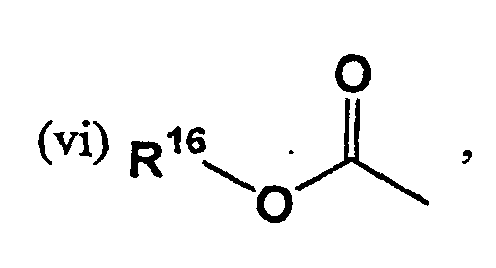
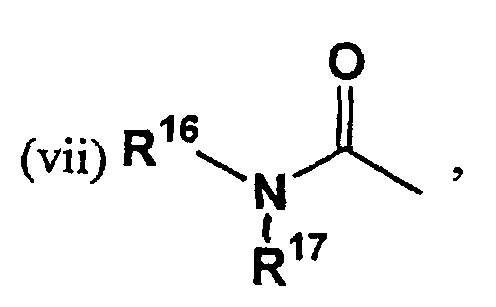
- R 16 Any group represented by R 16 is preferable, but more preferably, R 16 is
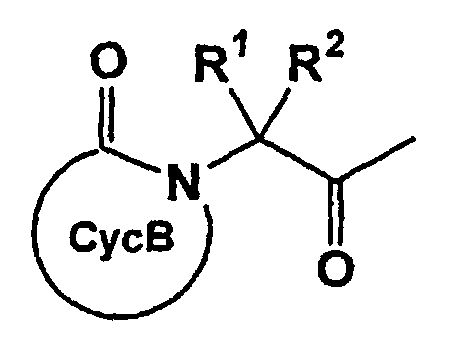
- AA 1 is preferably a single bond, or which is formed with R, but more preferably, AA 1 is a single bond or
- R 1 is hydrogen, C1-8 alkyl, phenyl or C1-8 alkyl substituted with NH 2 , C1-4 alkoxy, SH, SCH 3 , phenyl, hydroxyphenyl, COOH, CONH 2 , guanidino, imidazole or indole.
- R 1 is hydrogen, C1-8 alkyl, phenyl or C1-8 alkyl substituted with C1-4 alkoxy or phenyl.
- any group represented by R 2 is preferable, but hydrogen is particularly preferable.
- R 3 Any group represented by R 3 is preferable, but more preferably R 3 is hydrogen or C1-4 alkyl.
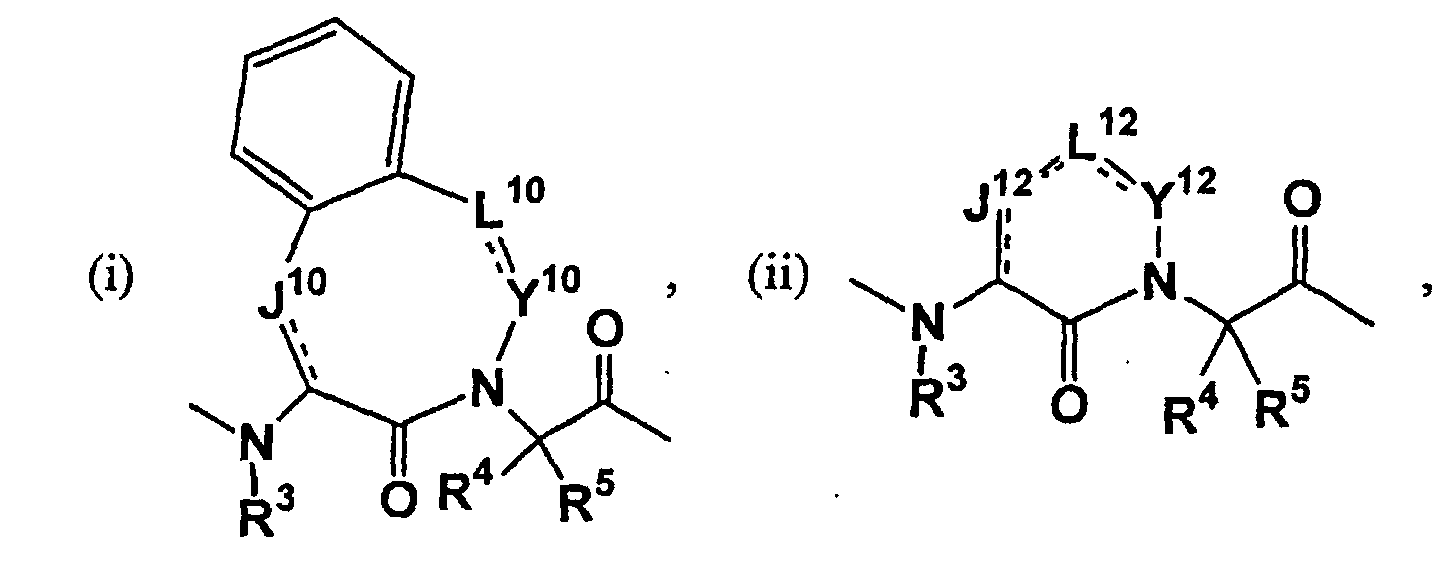
- AA 2 is all preferable, but more preferably, AA 2 is a single bond, Particularly preferably, AA 2 is a single bond,
- R 4 is hydrogen, C1-8 alkyl, phenyl or C1-8 alkyl substituted with NH 2 , C1-4 alkoxy, SH, SCH 3 , phenyl, hydroxyphenyl, COOH, CONH 2 , guanidino, imidazole or indole.
- R 4 is hydrogen, C1-8 alkyl, phenyl or C1-8 alkyl substituted with C1-4 alkoxy or phenyl.
- any group represented by R 5 is preferable, and hydrogen is particularly preferable.
- R 6 Any group represented by R 6 is preferable, but more preferably R 6 is hydrogen or C1-4 alkyl.
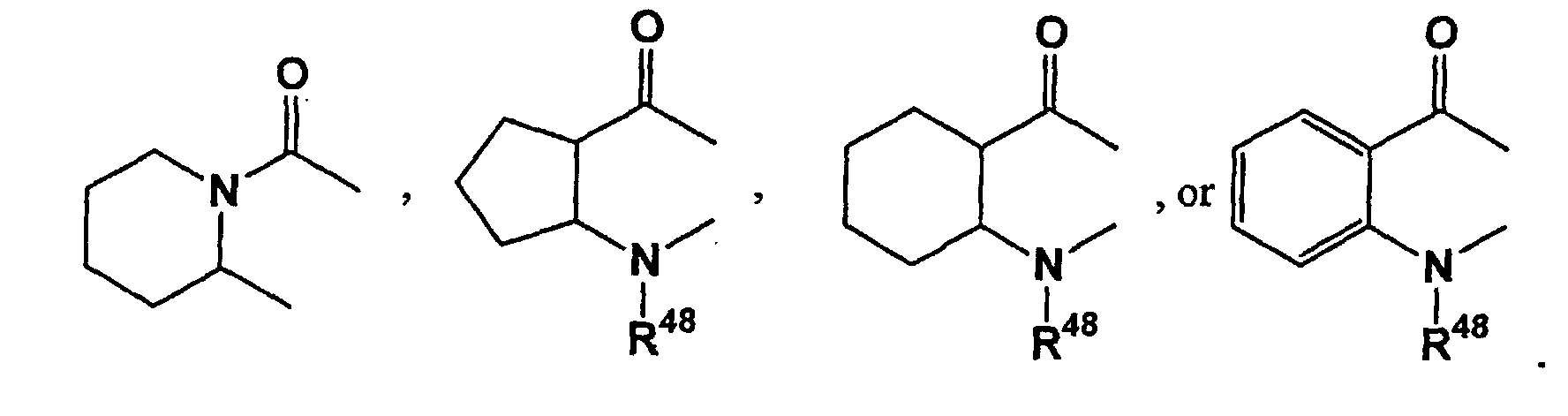
- R 48 is all preferable, but more preferably, R 48 is
- R 7 is hydrogen atom, C1-8 alkyl, phenyl, or C1-8 alkyl substituted with NH 2 , C1-4 alkoxy, SH, SCH 3 , phenyl, hydroxyphenyl, COOH, CONH 2 , guanidino, imidazole or indole.
- R 7 is hydrogen, C1-8 alkyl, phenyl, or C1-8 alkyl substituted with C1-4 alkoxy or phenyl. Then, any group represented by R 8 is preferable, but hydrogen is most preferable.
- R 9 Any group represented by R 9 is preferable, but more preferably R 9 is hydrogen or C1-4 alkyl.
- R 10 is C1-6 alkyl, CycA or C1-6 alkyl substituted with COR 71 , NR 72 R 73 , hydroxy, OR 74 or CycA, more preferably C1-4 alkyl, or C1-4 alkyl substituted with phenyl, NR 72 R 73 or C3-6 cycloalkyl.
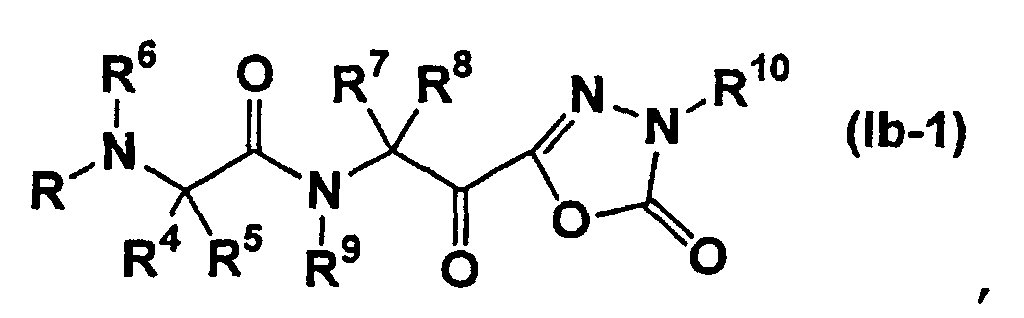
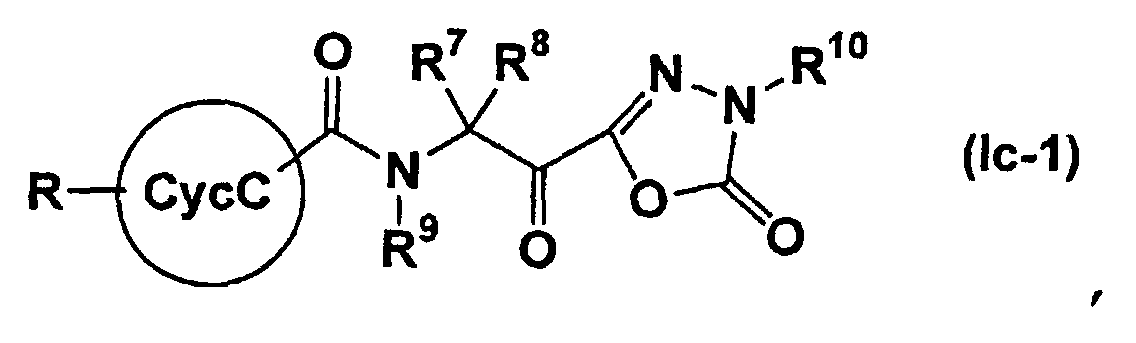
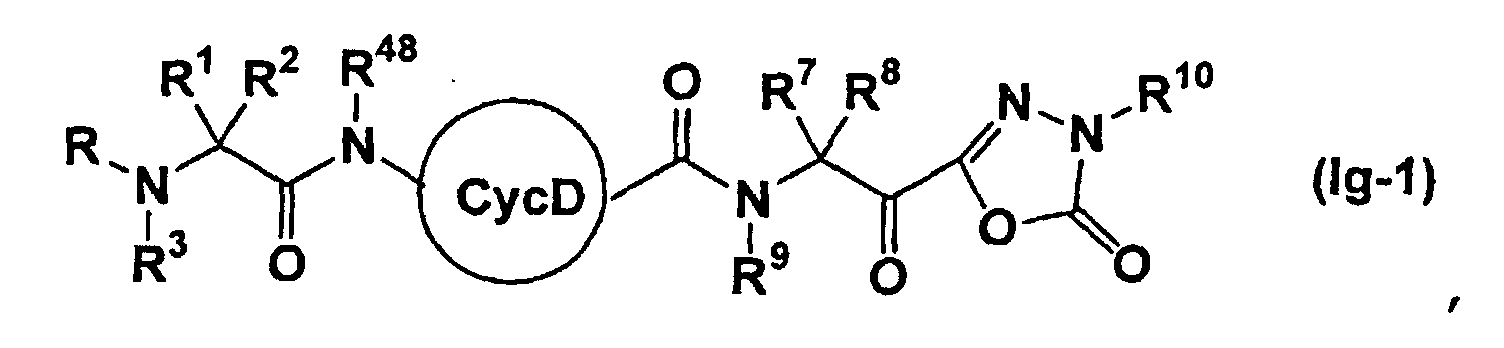
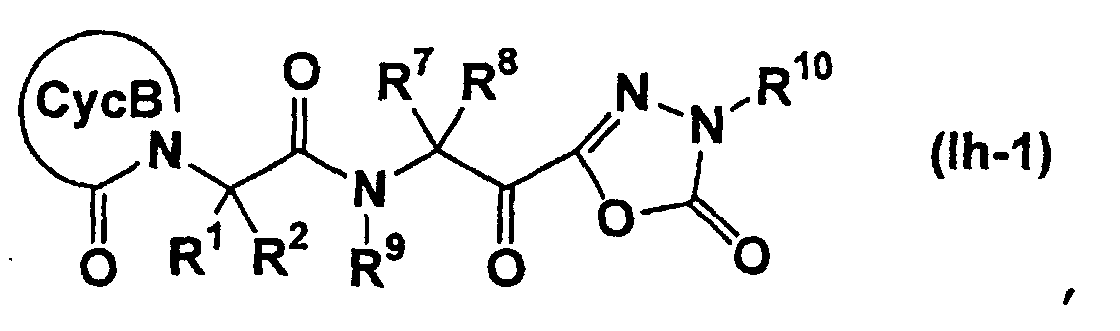
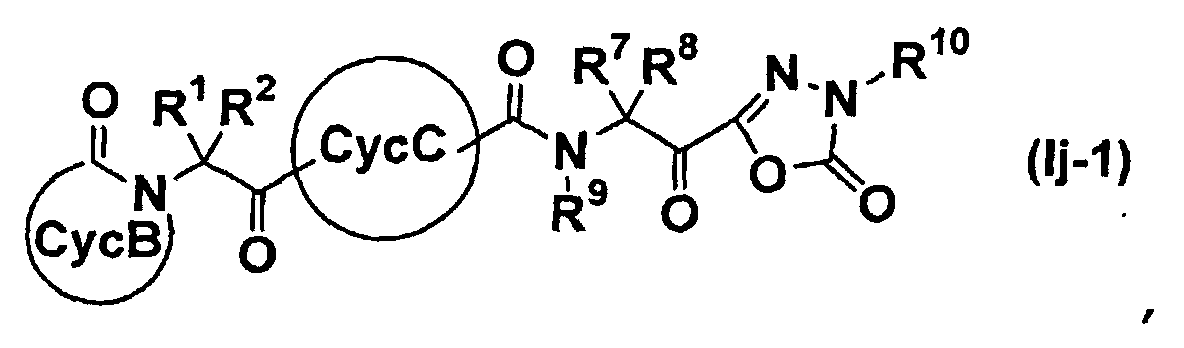
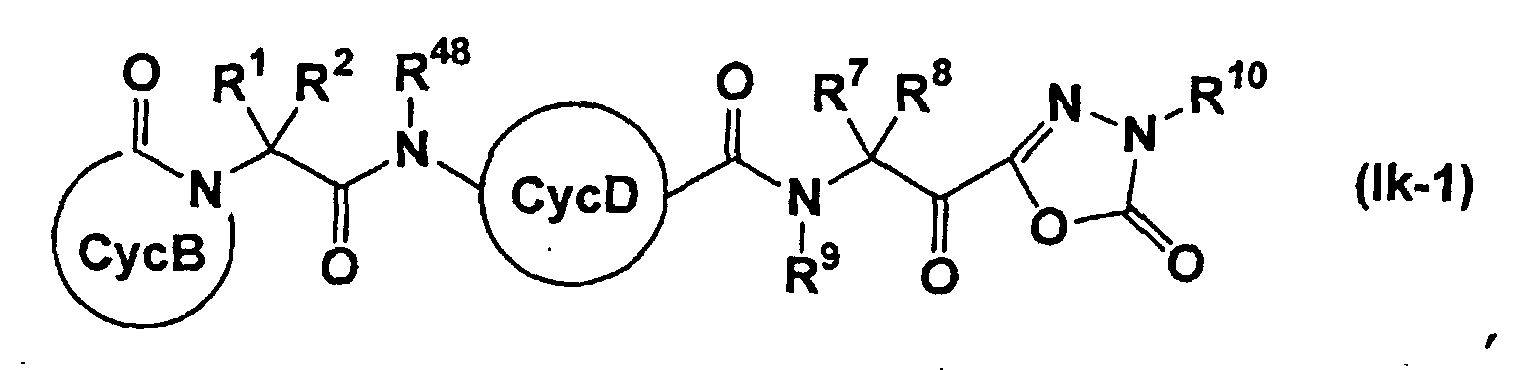
- preferable compounds are the compound of formula (Ia-1) wherein all symbols have the same meanings as above, the compound of formula (Ib-1) wherein all symbols have the same meanings as above, the compound of formula (Ic-1) wherein all symbols have the same meanings as above), the compound of formula (Id-1) wherein all symbols have the same meanings as above), the compound of formula (Ie-1) wherein all symbols have the same meanings as above), the compound of formula (If-1) wherein all symbols have the same meanings as above, the compound of formula (Ig-1) wherein all symbols have the same meanings as above, the compound of formula (Ih-1) wherein all symbols have the same meanings as above, the compound of formula (Ii-1) wherein all symbols have the same meanings as above, the compound of formula (Ij-1) wherein all symbols have the same meanings as above, the compound of formula (Ik-1) wherein all symbols have the same meanings as above, the compound of formula (Im-1) wherein all symbols have the same
- alkyl, alkoxy, alkylthio, alkenyl, alkynyl and alkylene include straight and branched ones.
- the present invention includes isomers in double bond, ring, fused ring (E, Z, cis, trans), isomers by the presence of asymmetric carbon etc.(R, S, ⁇ , ⁇ , enantiomer, diastereomer), optical isomers having optical rotation (D, L, d, l, +, -), polars by chromatography separation (more polar, less polar), equilibrium compound, a compound of arbitrary ratios of those and racemic mixture.
- Non-toxic salts include alkali metal salts, alkaline earth metal salts, amine salts, acid-addition salts and corresponding quaternary ammonium salts if the compound of formula (I) contains residues of amino acid.
- Non-toxic and water-soluble salts are preferable.
- Appropriate non-toxic salts include salts of alkali metals (potassium, sodium etc.), salts of alkaline-earth metals (calcium, magnesium, etc.), ammonium salts and salts of pharmaceutically-acceptable organic amines (tetramethyl ammonium, triethylamine, methylamine, dimethylamine, cyclopentylamine, benzylamine, phenethylamine, piperidine, monoethanolamine, diethanolamine, tris(hydroxymethyl)aminomethane, lysine, arginine, N-methyl-D-glucamine, etc.
- Non-toxic, water-soluble acid-addition salts are preferable.
- Appropriate acid-addition salts are, inorganic salts such as hydrochloride, hydrobromide, sulfate, phosphate, nitrate, or organic salts such as acetate, trifluoroacetate, lactate, tartrate, oxalate, fumarate, malate, citrate, benzoate, methanesulfonate, ethanesulfonate, benzenesulfonate, toluenesulfonate, isethionate, glucuronate, gluconate.
- the compounds of formula (I) of the present invention or a salt thereof may be converted into hydrate by a conventional method.
- the compound of formula (III) may be prepared according to the method by the following reaction scheme (2).
- the compound of formula (X-8) may be prepared according to the method by the following reaction scheme (3).
- R x is methyl, ethyl or t-butyl.
- the other symbols have the same meanings as above.
- the compound wherein Z ring is and R 9 is hydrogen atom i.e. the compound of formula (III-1), wherein all symbols have the same meanings as above, may be prepared by the method in the following reaction scheme (4).
- Q 1 is t-butoxycarbonyl
- Q 2 is methyl or ethyl
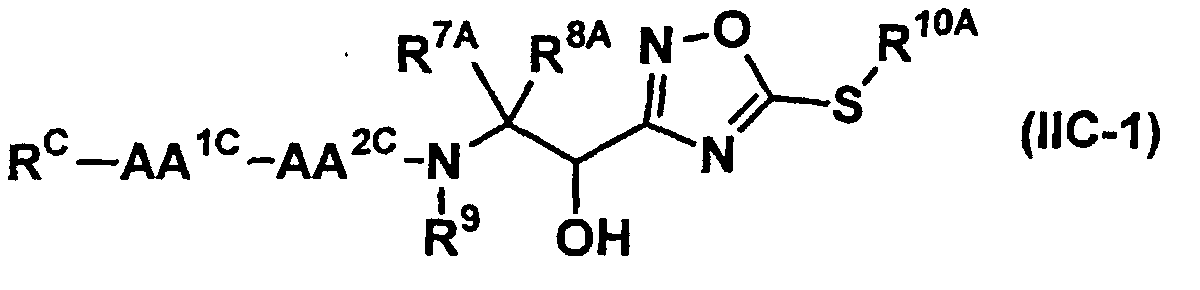
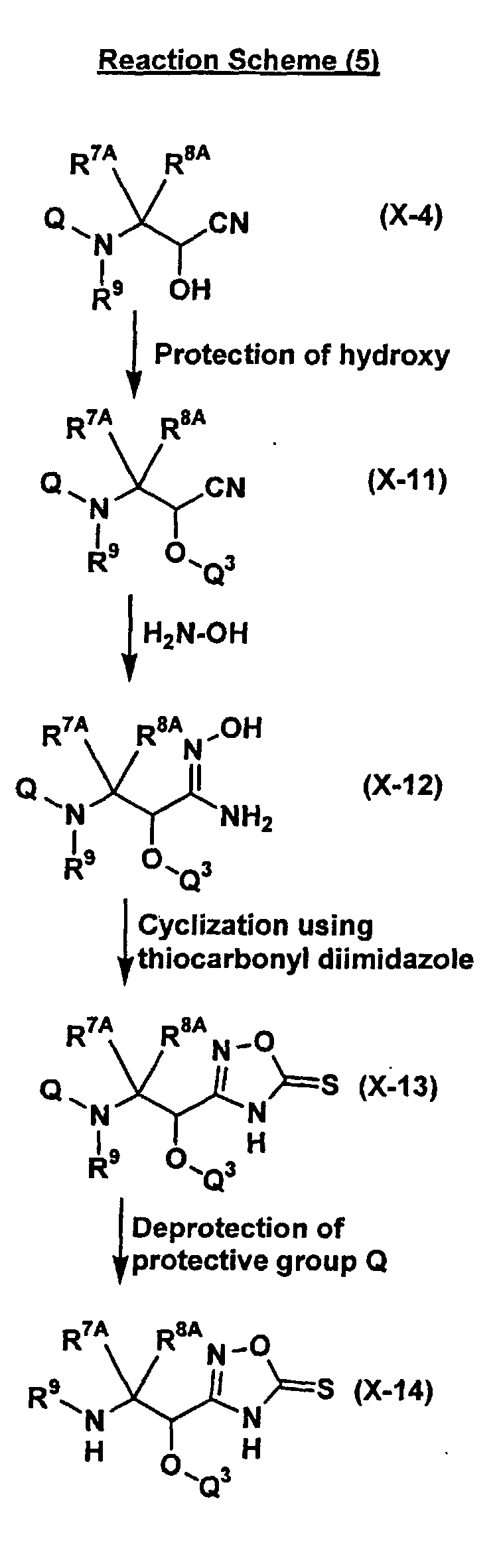
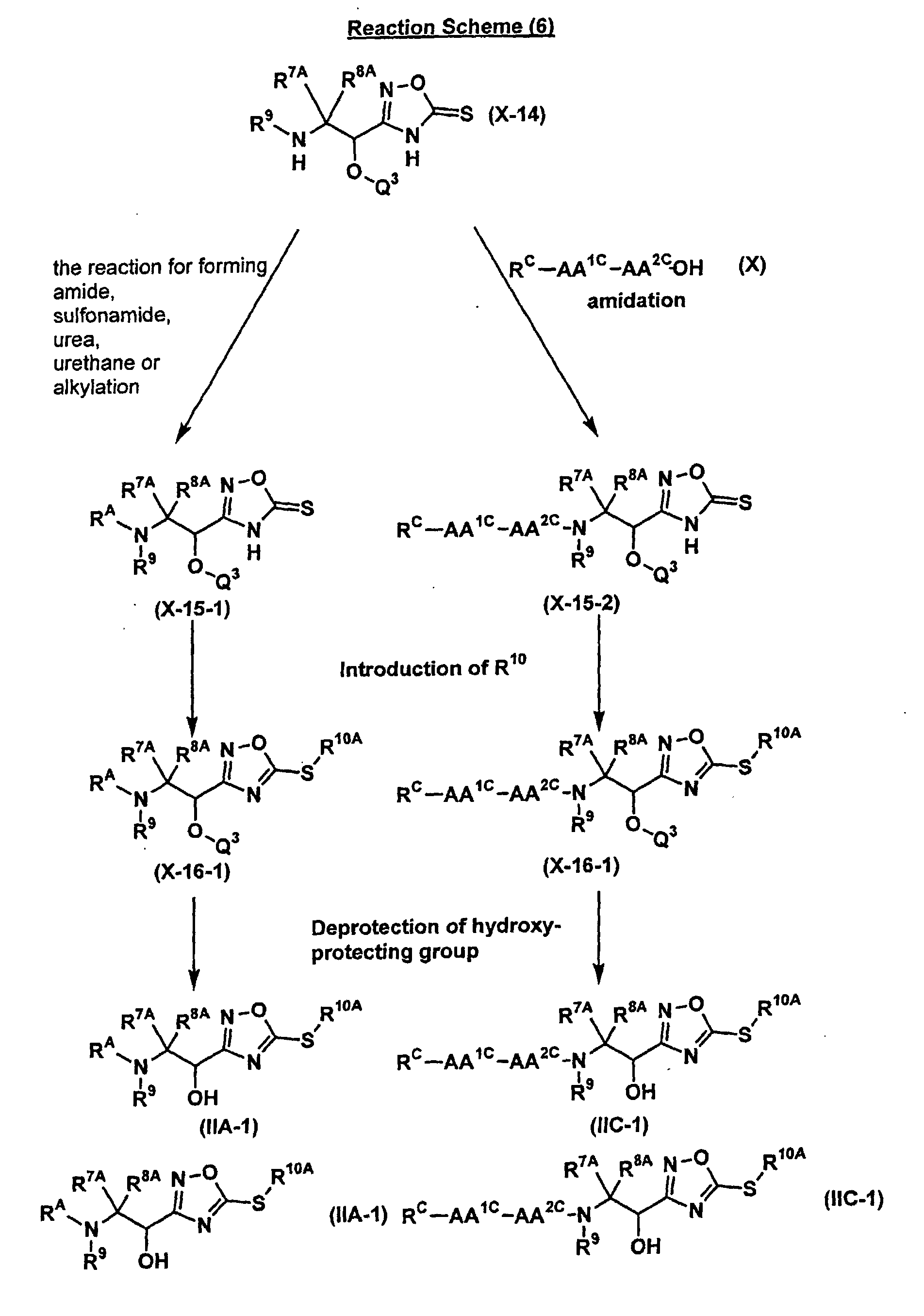
- the compound wherein Z is i.e. the compound of formula (IIA-1), wherein all symbols have the same meanings as above, and the compound of formula (IIC-1), wherein all symbols have the same meanings as above, may be prepared by the methods described by the reaction schemes (5) and (6).
- Q 3 is a protective group for hydroxy (t-butyldimethylsilyl, trimethylsilyl, etc.) and the other symbols have the same meanings as above.
- the starting materials i.e. the compounds of formula (X), (X-1) and (X-4) are known per se or may be prepared by known methods.
- reaction products may be purified by conventional techniques. For example, purification may be carried out by distillation under atmospheric or reduced pressure, by high performance liquid chromatography, thin layer chromatography or column chromatography using silica gel or magnesium silicate, by washing or by recrystallization, etc. Purification may be carried out after each reaction, or after a series of reactions.
- the toxicity of the compounds of the present invention is very low and therefore it was confirmed that the compounds are safe for pharmaceutical use.
- the compound of formula (I) of the present invention has an inhibitory activity against cysteine proteases, and therefore it is useful as an agent for the prophylaxis and/or treatment of inflammatory diseases (periodontitis, arthritis, inflammatory bowel diseases, infectious diseases, pancreatitis, hepatitis, glomerulonephritis, endocarditis, myocarditis, etc.), diseases induced by apoptosis (graft versus host diseases, rejection of an organ transplantation, acquired immune deficiency syndrome (AIDS), AIDS-related complex (ARC), adult T cell leukemia, hairy cells leukemia, spondylopathy, disorders of respiratory apparatus, arthritis, HIV or HTLV-1 related diseases such as uveitis, virus-related diseases such as hepatitis C, cancer, collagenosis (systemic lupus erythematosus, rheumatoid arthritis, etc.), ulcerative colitis, Sjoegren's syndrome, primary biliary cir
- the compounds of formula (I), of the present invention may normally be administered systemically or locally, usually by oral or parenteral administration.
- the doses to be administered are determined depending upon, for example, age, body weight, symptom, the desired therapeutic effect, the route of administration, and the duration of the treatment.
- the doses per person at a time are generally from 1 mg to 1000 mg, by oral administration, up to several times per day, and from 1 mg to 100 mg, by parenteral administration (preferably intravenous administration), up to several times per day, or continuous administration for from 1 to 24 hours per day from vein.
- the doses to be used depend upon various conditions. Therefore, there are cases wherein doses lower than or greater than the ranges specified above may be used.
- the compounds of the present invention may be administered in the form of, for example, solid compositions, liquid compositions or other compositions for oral administration, injections, liniments or suppositories for parenteral administration.
- Solid compositions for oral administration include compressed tablets, pills, capsules, dispersible powders and granules.
- Capsules include hard capsules and soft capsules.
- one or more of the active compound(s) may be used as a dosage form , as is normal practice, to admix with excipient (e.g. lactose, mannitol, glucose, microcrystalline cellulose, starch), combining agents (hydroxypropyl cellulose ,polyvinyl pyrrolidone or magnesium metasilicate aluminate), disintegrating agents (e.g. cellulose calcium glycolate), lubricating agents (e.g. magnesium stearate), stabilizing agents, agents to assist dissolution (e.g. glutamic acid or asparatic acid) and the like.
- the agents may, if desired, be coated with coating agents (e.g. sugar, gelatin, hydroxypropyl cellulose or hydroxypropylmethyl cellulose phthalate), or be coated with two or more films. Further, coating may include containment within capsules of absorbable materials such as gelatin.
- Liquid compositions for oral administration include pharmaceutically acceptable solutions, suspensions, emulsions, syrups and elixirs.
- one or more of the active compound(s) are dissolved, suspended or emulsified in diluent commonly used (e.g. purified water, ethanol or mixture thereof).
- diluent commonly used (e.g. purified water, ethanol or mixture thereof).
- such liquid compositions may also comprise wetting agents or suspending agents, emulsifying agents, sweetening agents, flavouring agents, perfuming agents, preserving agents buffer agent etc.
- Injections for parenteral administration include solutions, suspensions, emulsions and solids which are dissolved or suspended to use at a time to use.
- One or more of the active compound(s) in injections are dissolved, suspended and emulsified in a solvent.
- the solvents are, for example, distilled water for injection, physiological salt solution, vegetable oil, propylene glycol, polyethylene glycol, alcohol such as ethanol or mixture thereof.
- the injections may also include stabilizing agents, agents to assist dissolution (e.g. glutamic acid,aspartic acid or POLYSORBATE80 (registered trade mark)), suspending agents, emulsifying agents, soothing agents, buffer agents, preserving agents, etc.
- They are sterilized in the last process or manufactured and prepared by sterile procedure. They may also be manufactured in the form of sterile solid compositions such as freeze-dried one and they may be sterilized or dissolved to use in sterile distilled water for injection or some other solvents immediately before use.
- compositions for parenteral administration include liquids for external use, and ointment, endermic liniments, inhale, spray, suppositories for rectal administration and pessaries for vaginal administration which comprise one or more of the active compound(s) and are prescribed by methods known per se .
- Spray compositions may comprise additional substances other than diluents: e.g. stabilizing agents (e.g. sodium sulfite hydride), isotonic buffers (e.g. sodium chloride, sodium citrate or citric acid).
- stabilizing agents e.g. sodium sulfite hydride
- isotonic buffers e.g. sodium chloride, sodium citrate or citric acid.
- the solvents in the parentheses show the eluting or developing solvents and the ratios of the solvents used are by volume in chromatographic separations or TLC.
- TBS represents t-butyldimethylsilyl
- Example 1 (1) to Example 1 (22)
- (+)-2-benzamidocyclohexanecarbonylchloride which was prepared from (+)-2-benzamidocyclohexanecarboxylic acid ((2R,1S)-2-(benzoylamino) cyclohexanoic acid) (148 mg) and oxalyl chloride (61 ⁇ l)) and N-methyl morpholine (110 ⁇ l) and the mixture was stirred for 3 hours.
- N,N-dimethylpropandiamine and a cold 10% aqueous solution of citric acid and was extracted with ethytl acetate.
Landscapes
- Chemical & Material Sciences (AREA)
- Organic Chemistry (AREA)
- Health & Medical Sciences (AREA)
- Life Sciences & Earth Sciences (AREA)
- Medicinal Chemistry (AREA)
- General Health & Medical Sciences (AREA)
- Veterinary Medicine (AREA)
- Public Health (AREA)
- Chemical Kinetics & Catalysis (AREA)
- Nuclear Medicine, Radiotherapy & Molecular Imaging (AREA)
- Pharmacology & Pharmacy (AREA)
- General Chemical & Material Sciences (AREA)
- Animal Behavior & Ethology (AREA)
- Engineering & Computer Science (AREA)
- Bioinformatics & Cheminformatics (AREA)
- Molecular Biology (AREA)
- Biochemistry (AREA)
- Genetics & Genomics (AREA)
- Proteomics, Peptides & Aminoacids (AREA)
- Biophysics (AREA)
- Rheumatology (AREA)
- Diabetes (AREA)
- Immunology (AREA)
- Physical Education & Sports Medicine (AREA)
- Endocrinology (AREA)
- Hematology (AREA)
- Biomedical Technology (AREA)
- Neurology (AREA)
- Neurosurgery (AREA)
- Tropical Medicine & Parasitology (AREA)
- Orthopedic Medicine & Surgery (AREA)
- Virology (AREA)
- Pain & Pain Management (AREA)
- Oncology (AREA)
- Obesity (AREA)
- Pulmonology (AREA)
- Communicable Diseases (AREA)
- AIDS & HIV (AREA)
- Psychiatry (AREA)
- Transplantation (AREA)
Abstract

Description
In the experiment utilizing ischemic liver injury model, it proved that necrosis and apoptosis of hepacyte were induced by means of protein-decomposing activity of calpain (see Gastroenterology, 116, 168 (1999)).
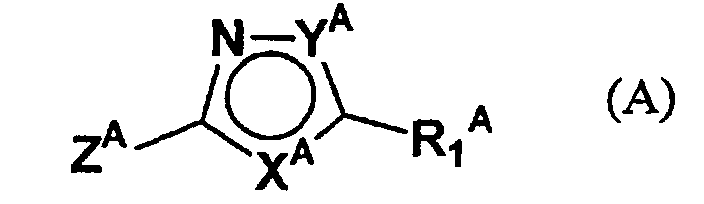
XA and YA are independently S, O or N, said N being optionally substituted with alkyl or alkenyl optionally substituted with 1-3 halogen atoms, or (C5-C6)aryl, arylalkyl or arylalkenyl optionally comprising 1-3 heteroatoms selected from N, O and S, and optionally substituted with halogen atom, cyano, nitro, haloalkyl, amino, aminoalkyl, dialkylamino, alkyl, alkenyl, alkynyl, alkoxy, haloalkoxy, carboxyl, carboalkoxy, arylcarboxamide, alkylthio or haloalkylthio;
R1 A is alkyl or alkenyl optionally substituted with 1-3 halo or hydroxy; alkylamino, dialkylamino, alkyldialkylamino; or cycloalkyl, alkylcycloalkyl, (C5-C12)aryl, (C5-C12)arylalkyl or (C5-C12)arylalkenyl optionally comprising 1-4 heteroatoms selected from N, O and S, and optionally substituted with halo, cyano, nitro, haloalkyl, amino, aminodialkyl, dialkylamino, alkyl, alkenyl, alkynyl, alkoxy, haloalkyl, carboxyl, carboalkoxy, alkylcarboxamide, (C5-C6)aryl, -O-(C5-C6)aryl, arylcarboxamide, alkylthio or haloalkylthio; and
wherein at least one of Y or X is N.


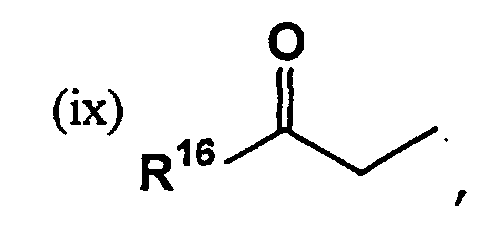
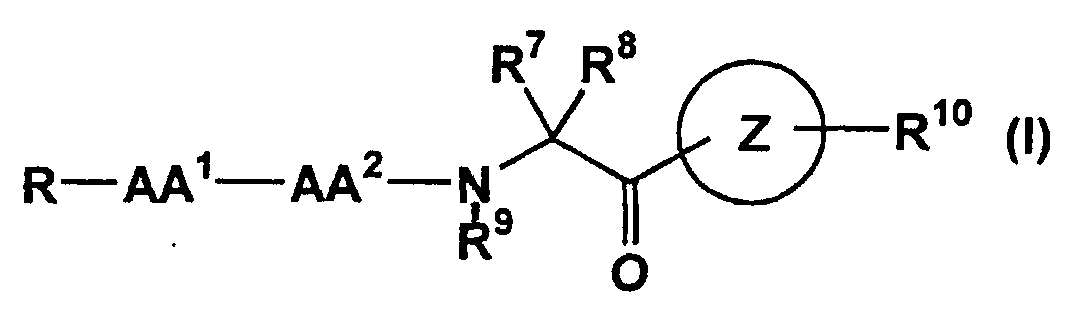
- (1) C1-8 alkyl,
- (2) C2-8 alkenyl,
- (3) C2-8 alkynyl,
- (4) CycA or
- (5) C1-8 alkyl, C2-8 alkenyl or C2-8 alkynyl substituted with a group selected from halogen atom, nitro, CF3, cyano, CycA, NR18R19 and -NHC(O)-CycA;
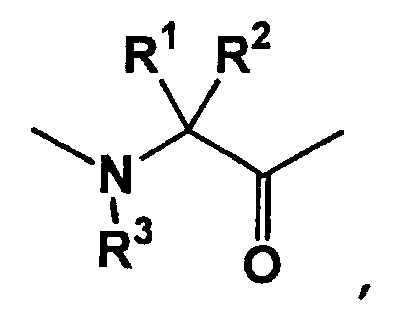
AA1 is
- (i) a single bond, or
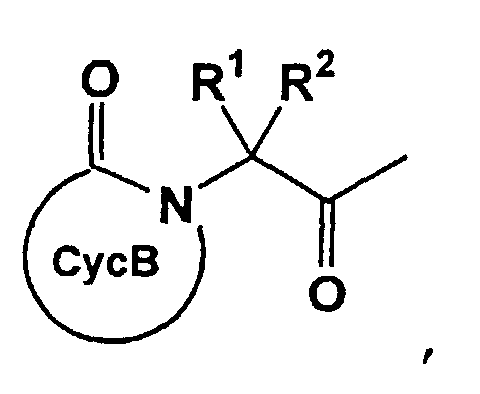
wherein R1 and R2 are the same or different to represent
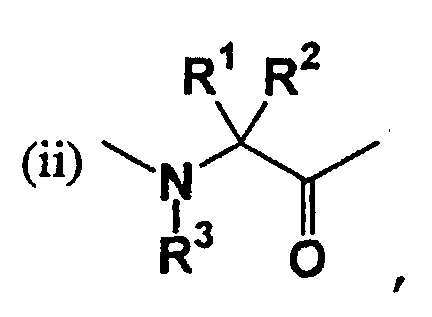
- (i) hydrogen,
- (ii) C1-8 alkyl,
- (iii) CycA or
- (iv) C1-8 alkyl substituted with 1-5 of group selected from the
following (1) to (8):
- (1) -NR21R22,
- (2) -OR23,
- (3) -SR24,
- (4) -COR25,
- (5) -NR26CONR21R22,
- (6) guanidino,
- (7) CycA,
- (8) -NR26SO2R21 ; or
R21, R22, R23, R24 and R26 are the same or different to represent hydrogen, C1-4 alkyl, phenyl or C1-4 alkyl substituted with phenyl,
R25 is C1-4 alkyl, phenyl, -NR21R22, wherein all symbols have the same meaning as above, -OR23, wherein R23 is the same meaning as above, or C1-4 alkyl substituted with phenyl,
R3 is hydrogen, C1-8 alkyl, phenyl or C1-8 alkyl substituted with phenyl or
R3 is taken together with R1 to form C2-6 alkylene, wherein one carbon atom may be replaced by oxygen, sulfur or -NR20- and the alkylene may be substituted with -NR21R22 or -OR23, or
when AA1 is

AA2 is
- (i) a single bond,
 or
or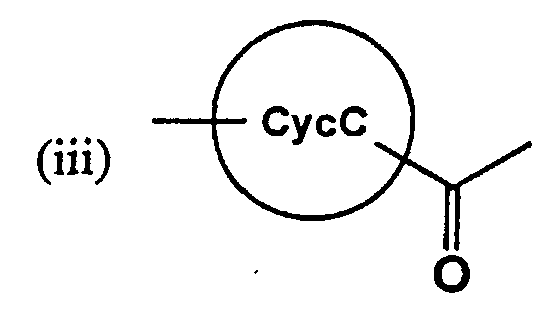 wherein R4 and R5 are the same or different to represent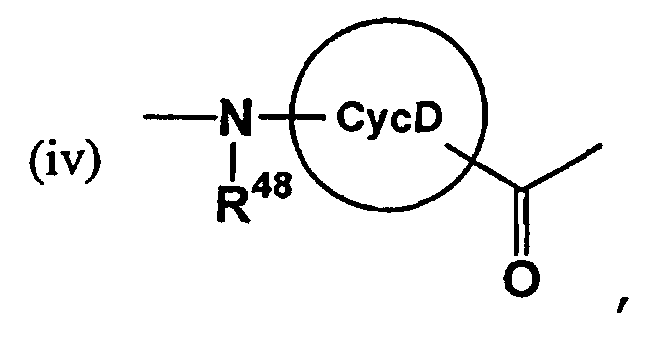
- (1) hydrogen,
- (2) C1-8 alkyl,
- (3) CycA or
- (4) C1-8 alkyl substituted with 1-5 of group selected from the
following (a) to (h):
(a) -NR41R42, (b) -OR43, (c) -SR44, (d) -COR45, (e) -NR46CONR41R42, (f) guanidino, (g) CycA, (h) -NR46SO2R41 ; or
R40 is hydrogen, C1-4 alkyl, -COO-(C1-4 alkyl), phenyl or C1-4 alkyl substituted with phenyl,
R41, R42, R43, R44 and R46 are the same or different to represent hydrogen, C1-4 alkyl, phenyl or C1-4 alkyl substituted with phenyl,
R45 is C1-4 alkyl, phenyl, -NR41R42, wherein all symbols are the same meaning as above, -OR43, wherein R43 is the same meaning as above, or C1-4 alkyl substituted with phenyl,
R6 is hydrogen, C1-8 alkyl, phenyl or C1-8 alkyl substituted with phenyl or
R6 is taken together with R4 to form C2-6 alkylene, wherein one carbon atom may be replaced by oxygen, sulfur or -NR40- and the alkylene may be substituted with -NR41R42 or -OR43,
R48 is hydrogen, C1-4 alkyl, phenyl or C1-4 alkyl substituted with phenyl or
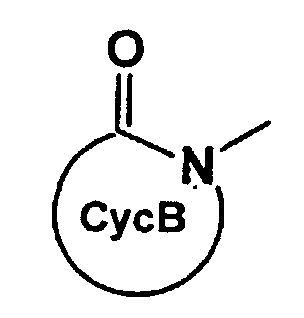
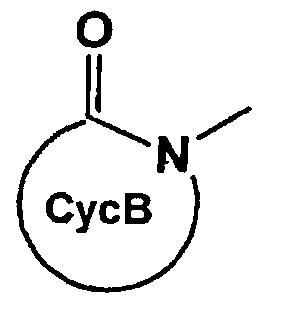
when AA1 is a single bond, R48 and R may be taken together to form C2-6 alkylene, wherein one carbon atom may be replaced by oxygen, sulfur or -NR47, wherein R47 is hydrogen or C1-4 alkyl, CycC is a 3-17 membered mono- or bi-cyclic heteroring,
CycD is a C3-14 mono- or bi-cyclic carboring or a 3-14 membered mono- or bi-cyclic heteroring, or
AA2 and AA1 are taken together to form,

R7 and R8 are the same or different to represent
- (i) hydrogen,
- (ii) C1-8 alkyl,
- (iii) CycA or
- (iv) C1-8 alkyl substituted with 1-5 of group selected from the following (1) to (8);
R7 and R8 are taken together to form C2-8 alkylene, wherein one carbon atom may be replaced by oxygen, sulfur or -NR60- and the alkylene may be substituted with -NR61R62 or -OR63,
R60 is hydrogen, C1-4 alkyl, -COO-(C1-4 alkyl), phenyl or C1-4 alkyl substituted with phenyl,
R61, R62, R63, R64 and R66 are the same or different to represent hydrogen, C1-4 alkyl, phenyl or C1-4 alkyl substituted with phenyl, R65 is C1-4 alkyl, phenyl, -NR61R62, wherein all symbols are the same meanings as above, -OR63, wherein R63 is the same meaning as above, or C1-4 alkyl substituted with phenyl,
R9 is hydrogen, C1-8 alkyl, phenyl or C1-8 alkyl substituted with phenyl or
R9 is taken together with R7 to form C2-6 alkylene, wherein one carbon atom may be replaced by oxygen, sulfur or -NR60- and the alkylene may be substituted with -NR61R62 or -OR63,

- (i) C1-8 alkyl,
- (ii) C2-8 alkenyl,
- (iii) CycA,
- (iv) -COR71 or
- (v) C1-8 alkyl substituted with 1-3 of group selected from CycA,
guanidino, -COR71, -NR72R73, -OR74, cyano or -P(O) (OR78)2,
wherein R71 is - (1) C1-4 alkyl,
- (2) C1-4 alkoxy,
- (3) CycA,
- (4) -O-CycA,
- (5) -NR72R73,
- (6) C1-4 alkyl substituted with CycA,
- (7) C1-4 alkoxy substituted with CycA, or
- (8) hydroxy,
R74 is
- (1) hydrogen,
- (2) C1-8 alkyl,
- (3) CycA,
- (4) -SiR75R76R77, wherein R75, R76 and R77 are the same or different to represent C1-8 alkyl, phenyl or C1-8 alkyl substituted with phenyl, or
- (5) C1-8 alkyl substituted with CycA,
R27 is
- (1) C1-8 alkyl,
- (2) halogen atom,
- (3) -NR11R12,
- (4) -OR13,
- (5) a C5-10 mono-or bi-cyclic carboring,
- (6) nitro,
- (7) CF3,
- (8) cyano,
- (9) a 5-10 membered mono- or bi-cyclic heteroring
- (10) -SR14,
- (11) -COR15,
- (12) oxo,
- (13) -SO2R15,
- (14) -OCF3 or
- (15) C1-8 alkyl substituted with 1-5 of group selected from the
following (a) to (m):
(a) halogen atom, (b) -NR11R12, (c) -OR13, (d) a C5-10 mono- or bi-cyclic carboring, (e) nitro, (f) CF3, (g) cyano, (h) a 5-10 membered mono- or bi-cyclic heteroring, (j) -SR14, (k) -COR15, (l) -SO2R15, (m) -OCF3,
R13 and R14 are the same or different to represent hydrogen, C1-4 alkyl, phenyl or C1-4 alkyl substituted with phenyl,
R15 is C1-4 alkyl, phenyl, -NR11R12, wherein all symbols have the same meanings as above, -OR13, wherein R13 is the same meaning as above, or C1-4 alkyl substituted with phenyl,
or a non-toxic salt thereof,

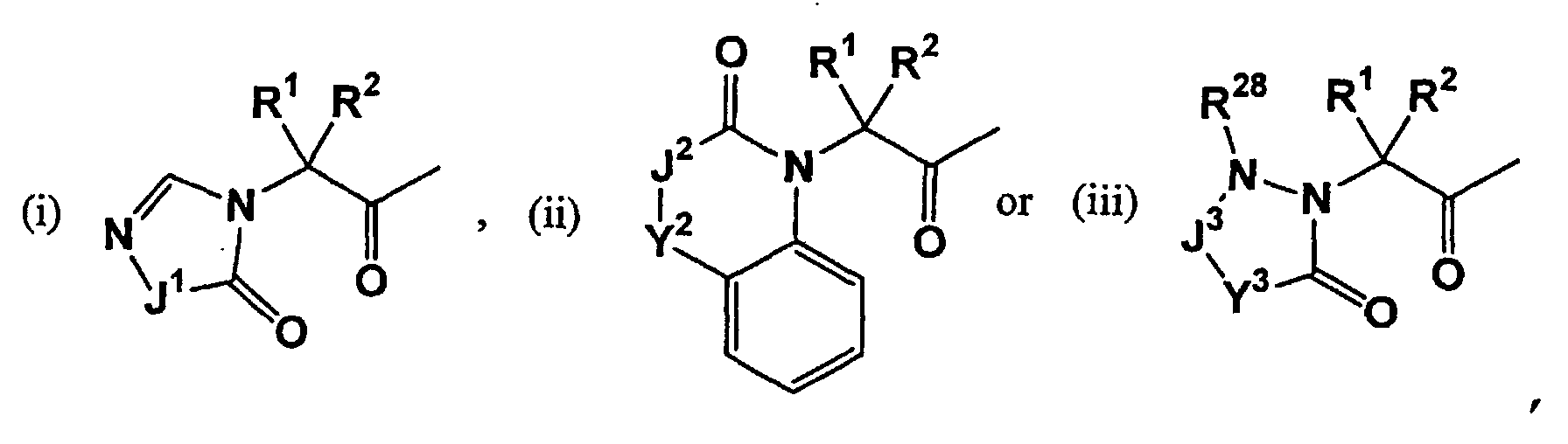
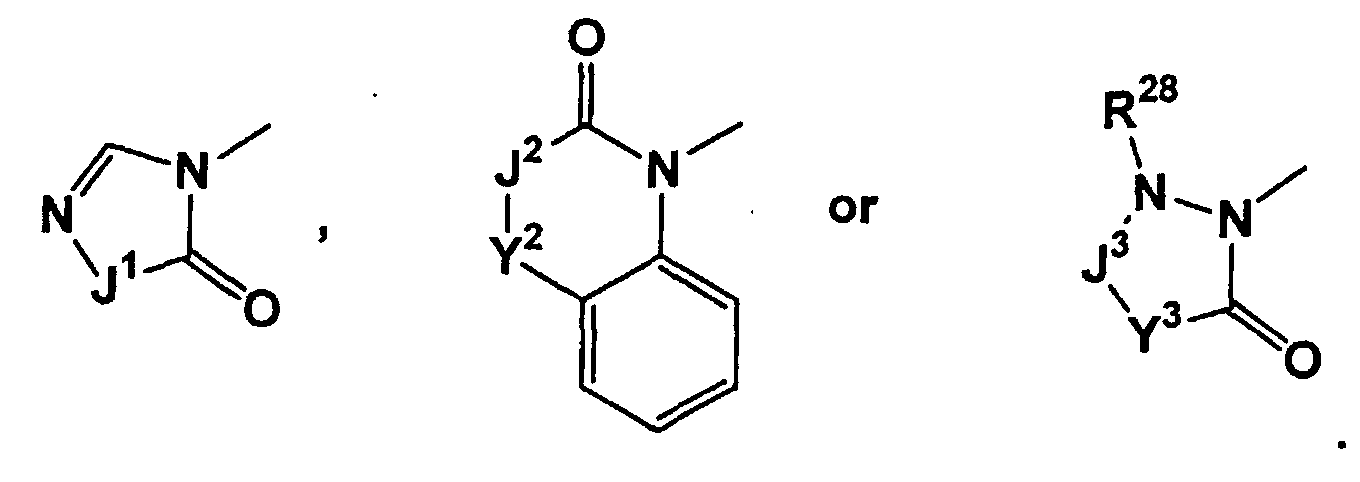
J2 is a single bond or C1-2 alkylene,
Y2 is -N=CH-, -CH=N- or C1-2 alkylene,
J3 is carbonyl or C1-3 alkylene,
Y3 is C1-3 alkylene, oxygen or -NR29-, wherein R29 is the same meaning as above,
R28 is hydrogen, C1-4 alkyl, CycA or C1-4 alkyl substituted with CycA, or
R28 is taken together with R1 to form C2-4 alkylene, and the other symbols have the same meaning as above and each ring may be substituted with 1-5 of R27.


J5 is C1-6 alkylene,
Y5 is a single bond, C1-3 alkylene or -NR67-, wherein R67 is hydrogen, C1-4 alkyl, phenyl or C1-4 alkyl substituted with phenyl,
J8 is C1-5 alkylene, wherein one carbon atom may be replaced by oxygen,
Y8 is a single bond or C1-4 alkylene,
L8 is -N- or -CH-,
and the other symbols have the same meaning as above and each ring may be substituted with 1-5 of R27.



J7 is C1-6 alkylene, wherein one carbon atom may be replaced by oxygen, sulfur or -NR67-, wherein R67 has the same meaning as above,
J9 is C1-3 alkylene, oxygen, sulfur or -NR67-, wherein R67 is the same meaning as above,
and the other symbols have the same meanings as above and each ring may be replaced by 1-5 of R27.
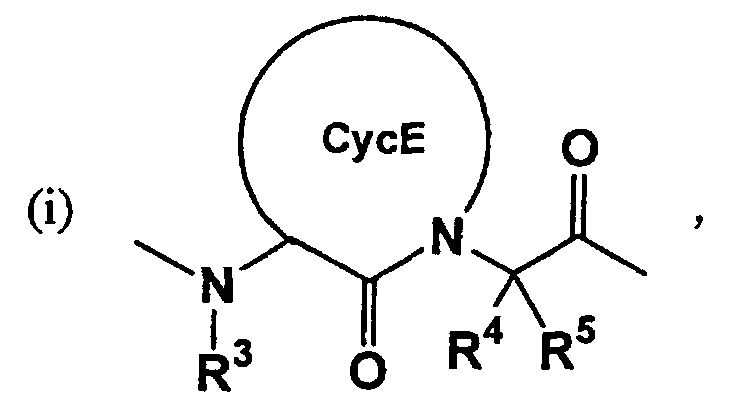
CycE is a 4-18 membered heteroring which contains 1-2 of nitrogen, 1 of oxygen and/or 1 of -S(O)p- (this heteroring may be substituted with 1-5 of R27).

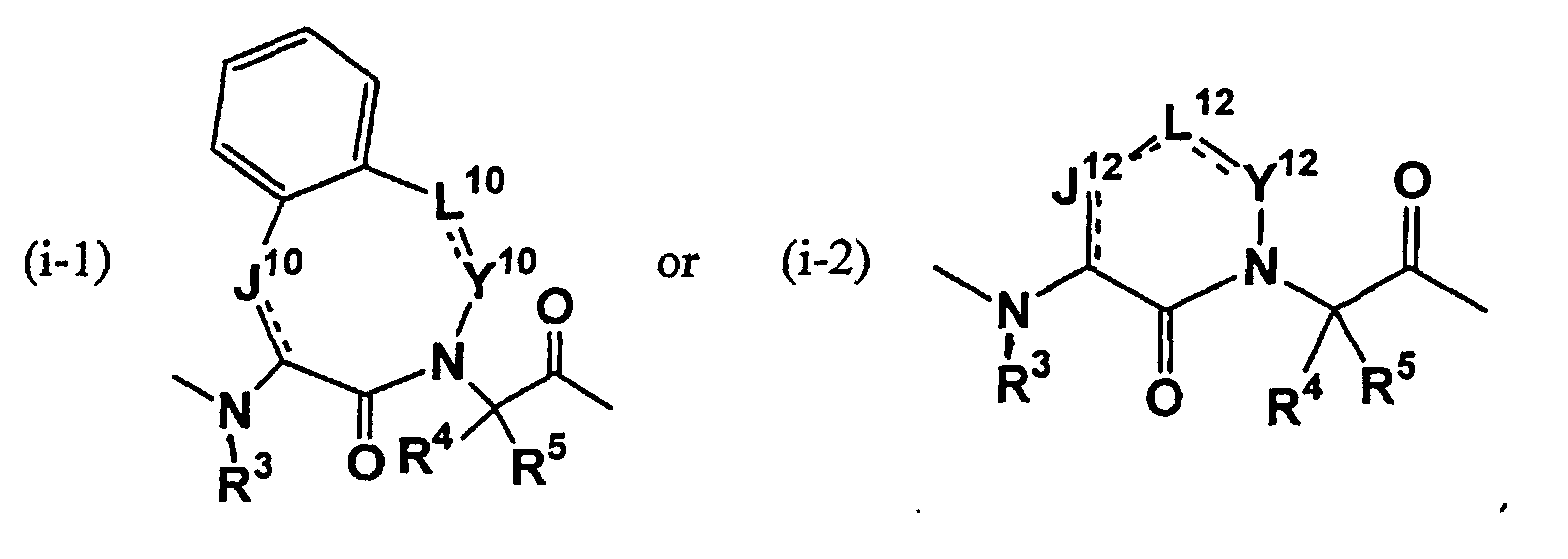
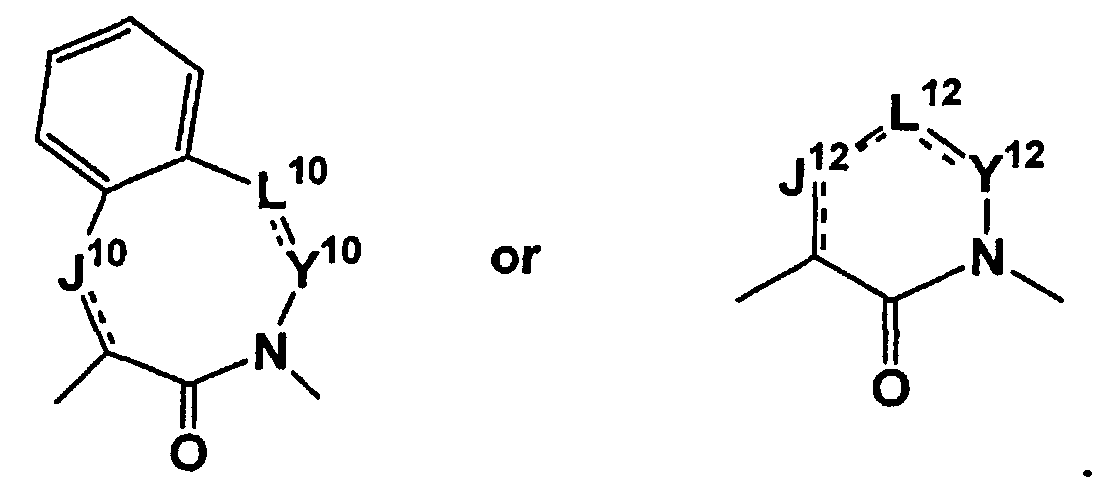
J10 and Y10 are the same or different to represent a single bond or C1-3 alkylene,
L10 is a single bond, C1-3 alkylene, -NR57-, wherein R57 is hydrogen, C1-4 alkyl, phenyl or C1-4 alkyl substituted with phenyl, -N=, oxygen or -S(O)p-, wherein p is 0 or an integer of 1 to 2,
J12 and Y12 are the same or different to represent a single bond or C1-3 alkylene,
L12 is C1-3 alkylene, -NR57-, wherein R57 is the same meaning as above), -N=, =N-, oxygen or -S(O)p-, wherein p has the same meaning as above,
and the other symbols have the same meanings as above and each ring may be substituted with 1-5 of R27.
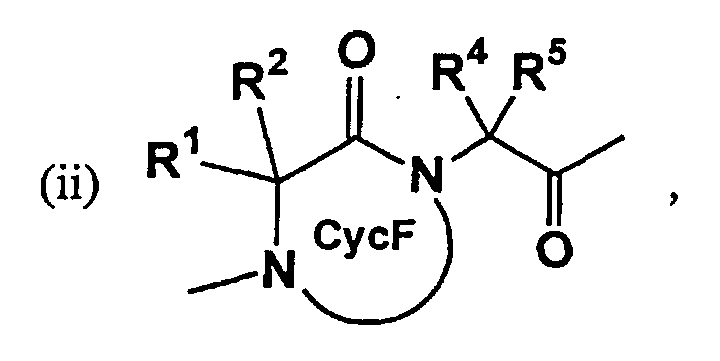
CycF is a 5-8 membered heteroring containing 2 of nitrogen.






R27a is
- (1) C1-8 alkyl,
- (2) halogen,
- (3) -NR11R12,
- (4) -OR13,
- (5) phenyl,
- (6) nitro,
- (7) CF3,
- (8) cyano,
- (9) tetrazole,
- (10) -SR14,
- (11) -COR15,
- (12) oxo or
- (13) C1-8 alkyl substituted with 1-5 of group selected from
the following (a) to (k):
(a) halogen, (b) -NR11R12, (c) -OR13, (d) phenyl, (e) nitro, (f) CF3, (g) cyano, (h) tetrazole, (j) -SR14, (k) -COR15, or
wherein at least one of R27 described in (1) and (2) is selected from
(2) C1-8 alkyl, C2-8 alkenyl or C2-8 alkynyl substituted with CycA, which contains 1-5 of substituent R27,
wherein at least one of R27 described in (1) and (2) is selected from
- (i) a C5-10 mono- or bi-cyclic carboring,
- (ii) a 5-10 membered mono- or bi-cyclic heteroring,
- (iii) -SO2R15, (iv) -OCF3, or
- (v) C1-8 alkyl substituted with 1-5 of group selected from (a) halogen atom, (b) -NR11R12, (c) -OR13, (d) a C5-10 mono- or bi-cyclic carboring, (e) nitro, (f) CF3, (g) cyano, (h) a 5-10 membered mono- or bi-cyclic heteroring, (j) -SR14, (k) -COR15, (l) -SO2R15 or (m) -OCF3, wherein at least one group is selected from a C5-10 mono- or bi-cyclic carboring, a 5-10 membered mono- or bi-cyclic heteroring, -SO2R15 or -OCF3, and









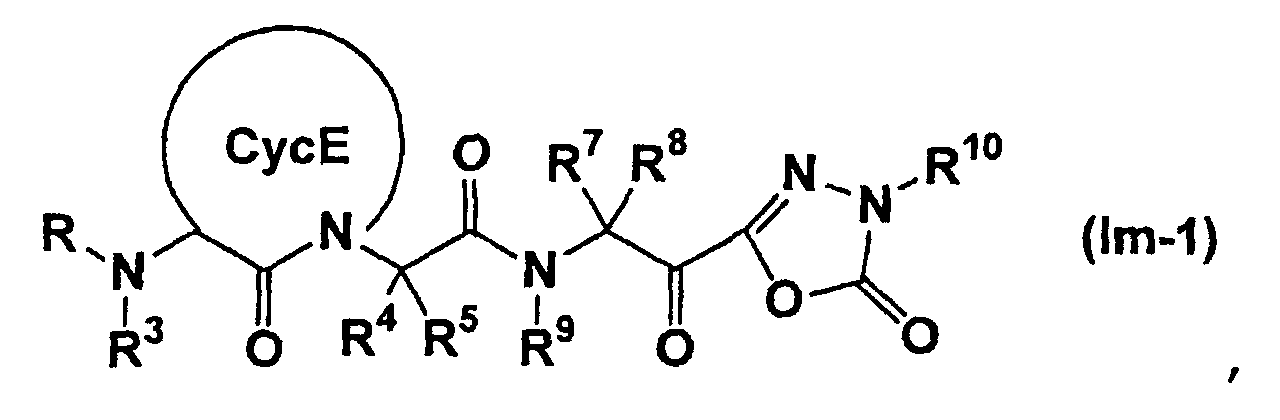

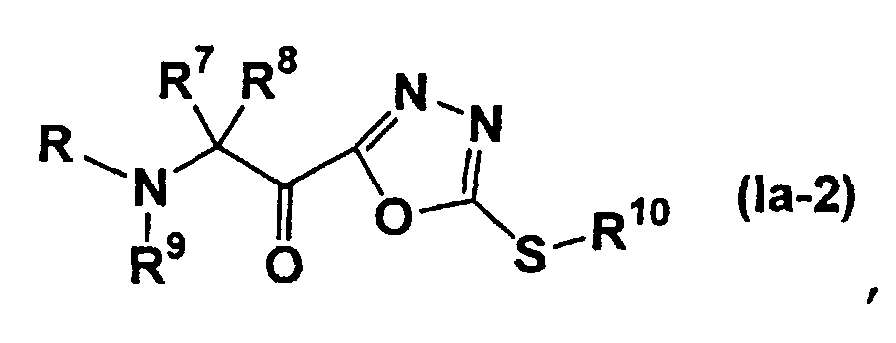


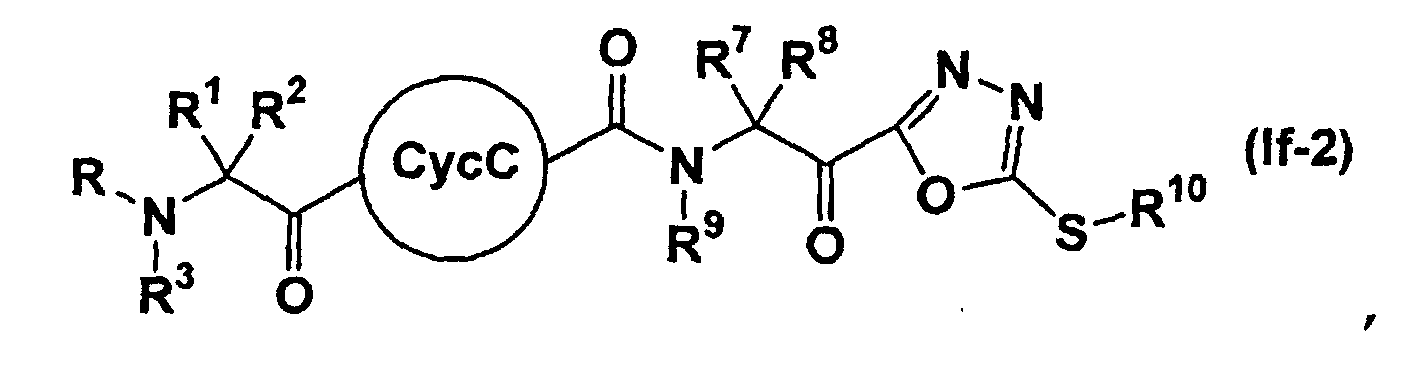
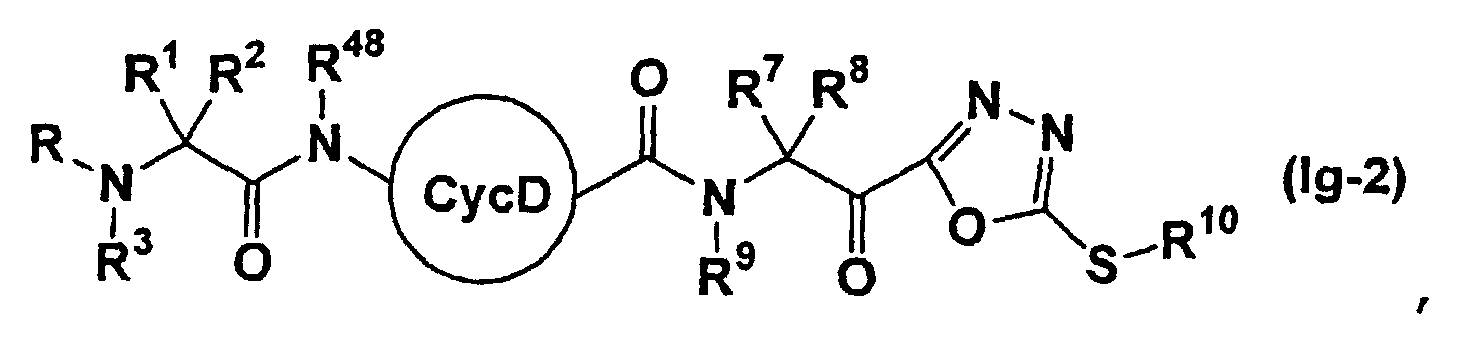

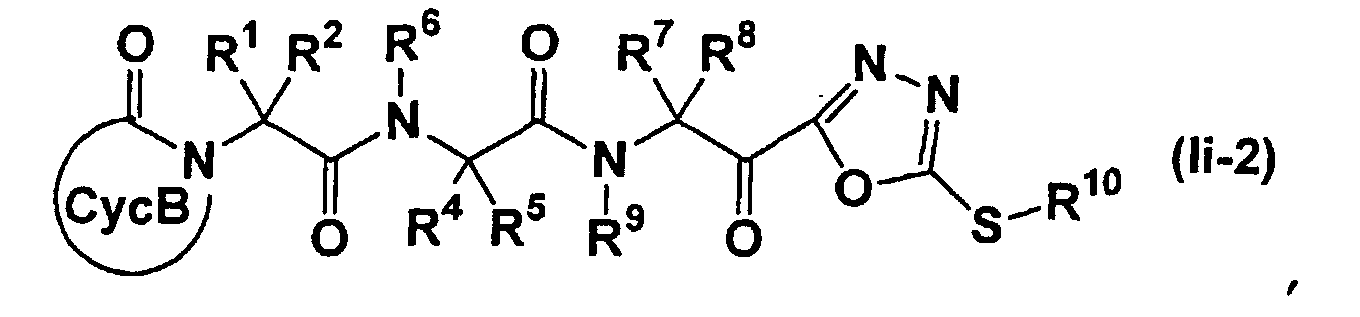


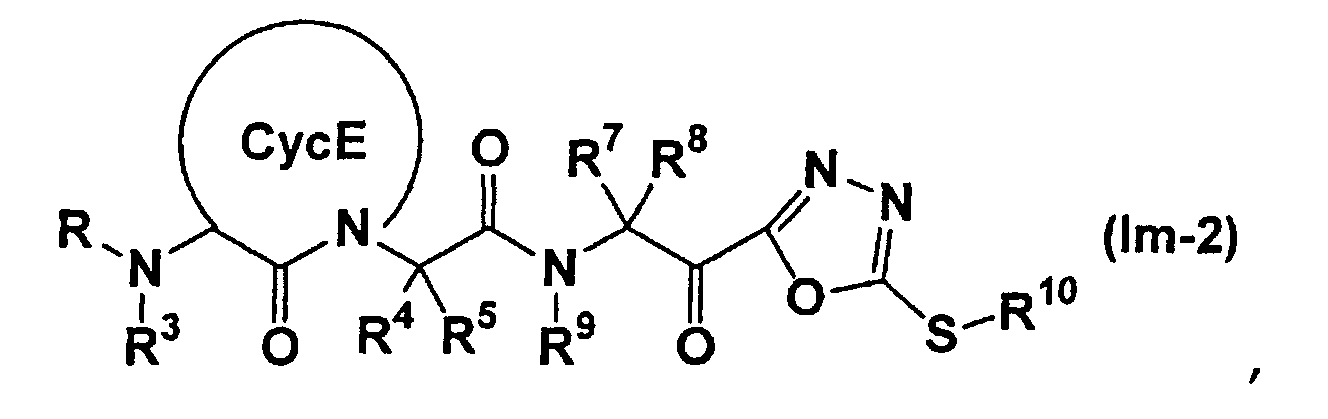
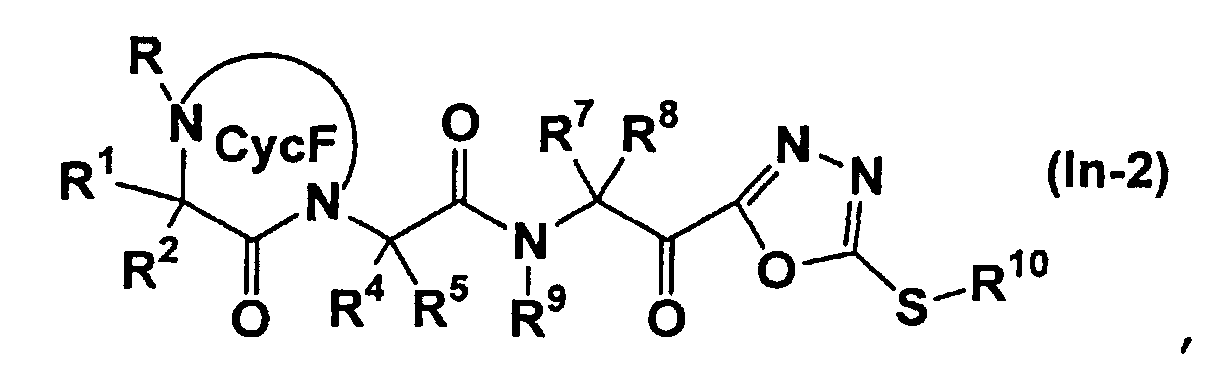

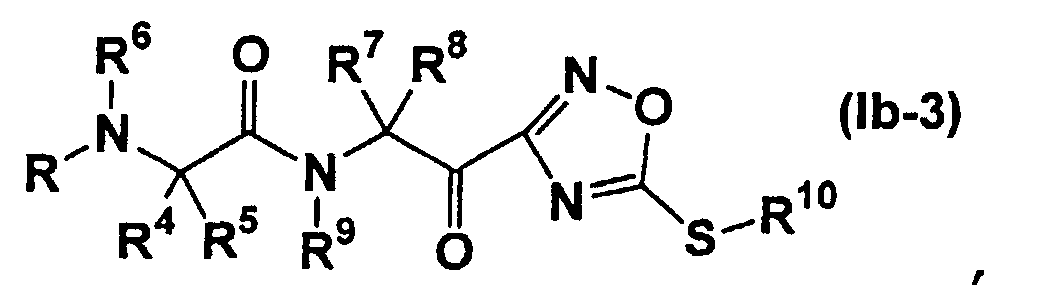
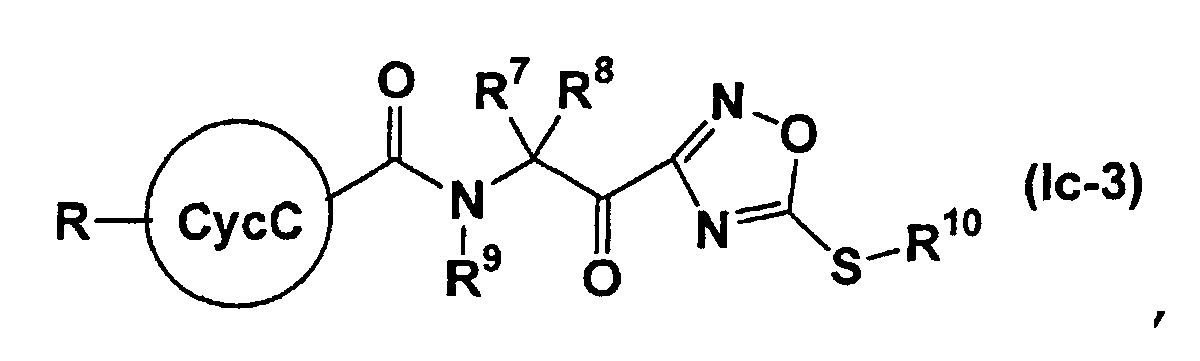
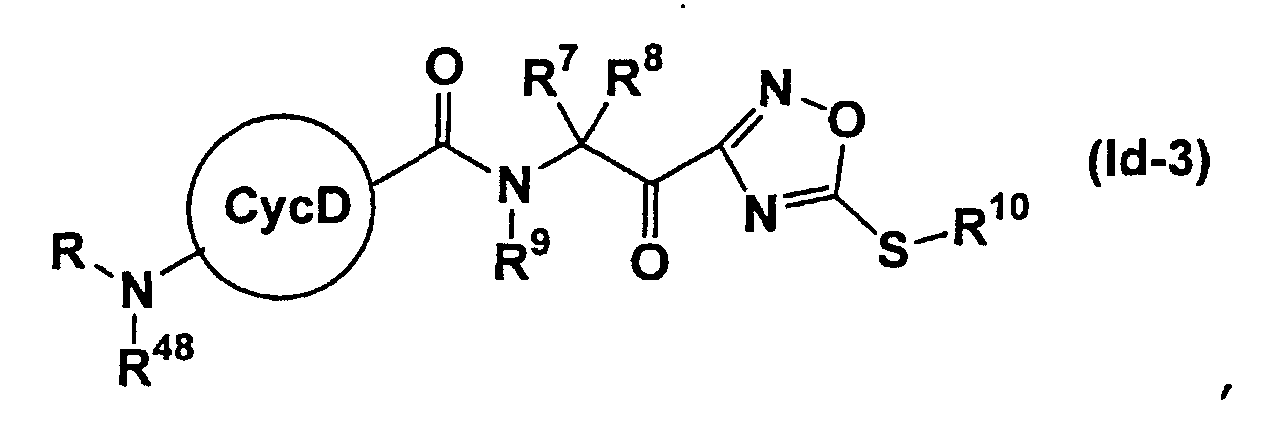


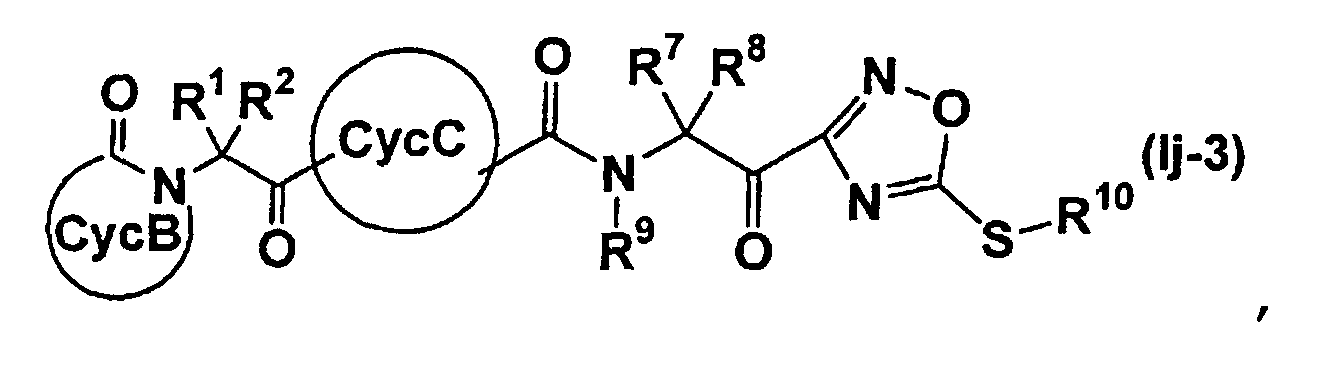
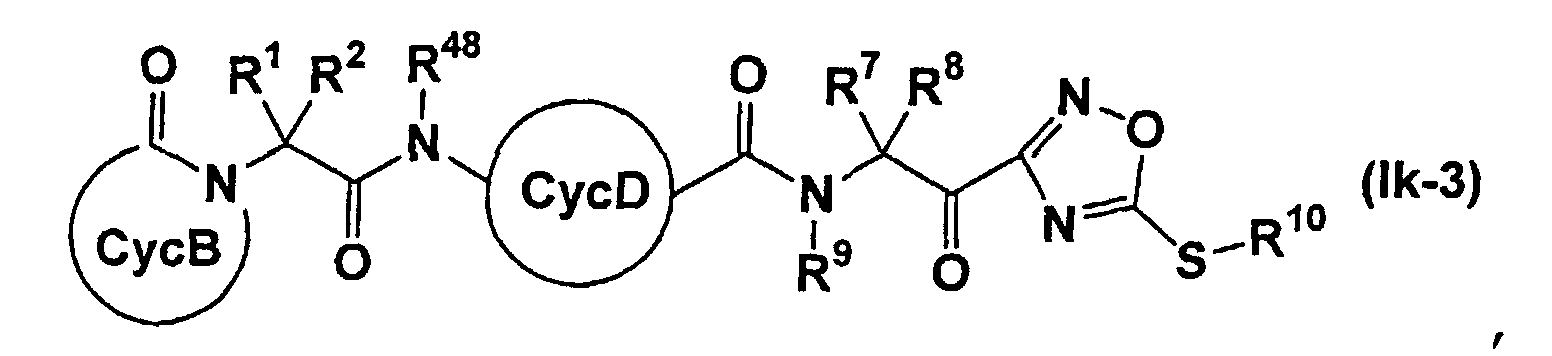
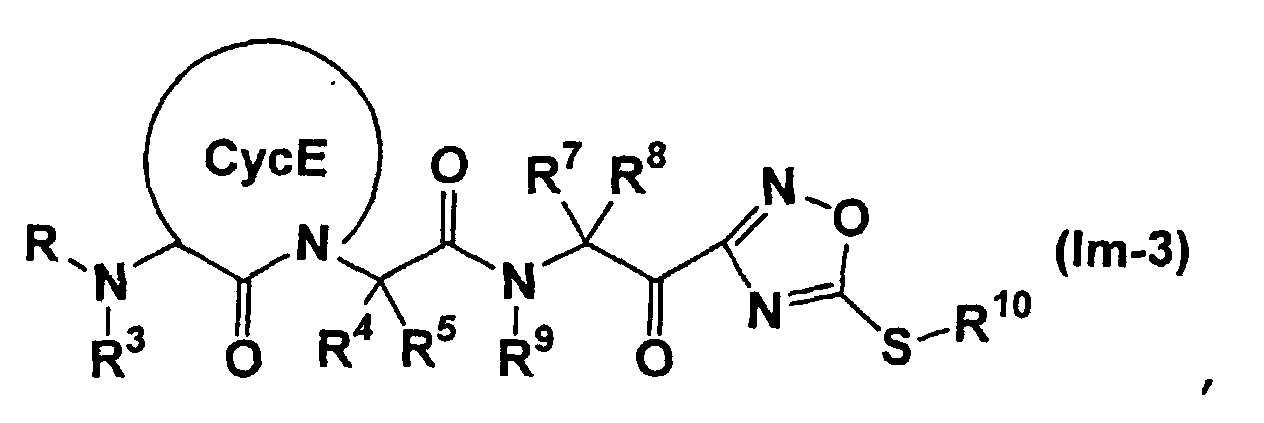
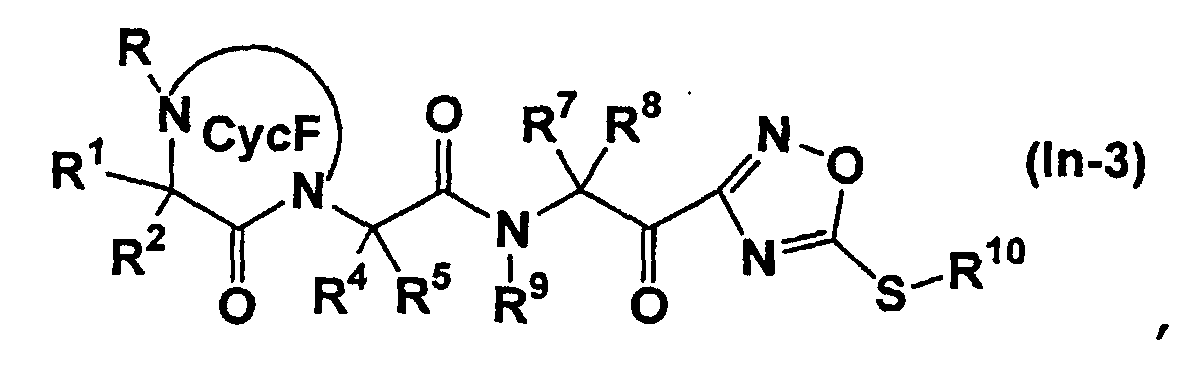
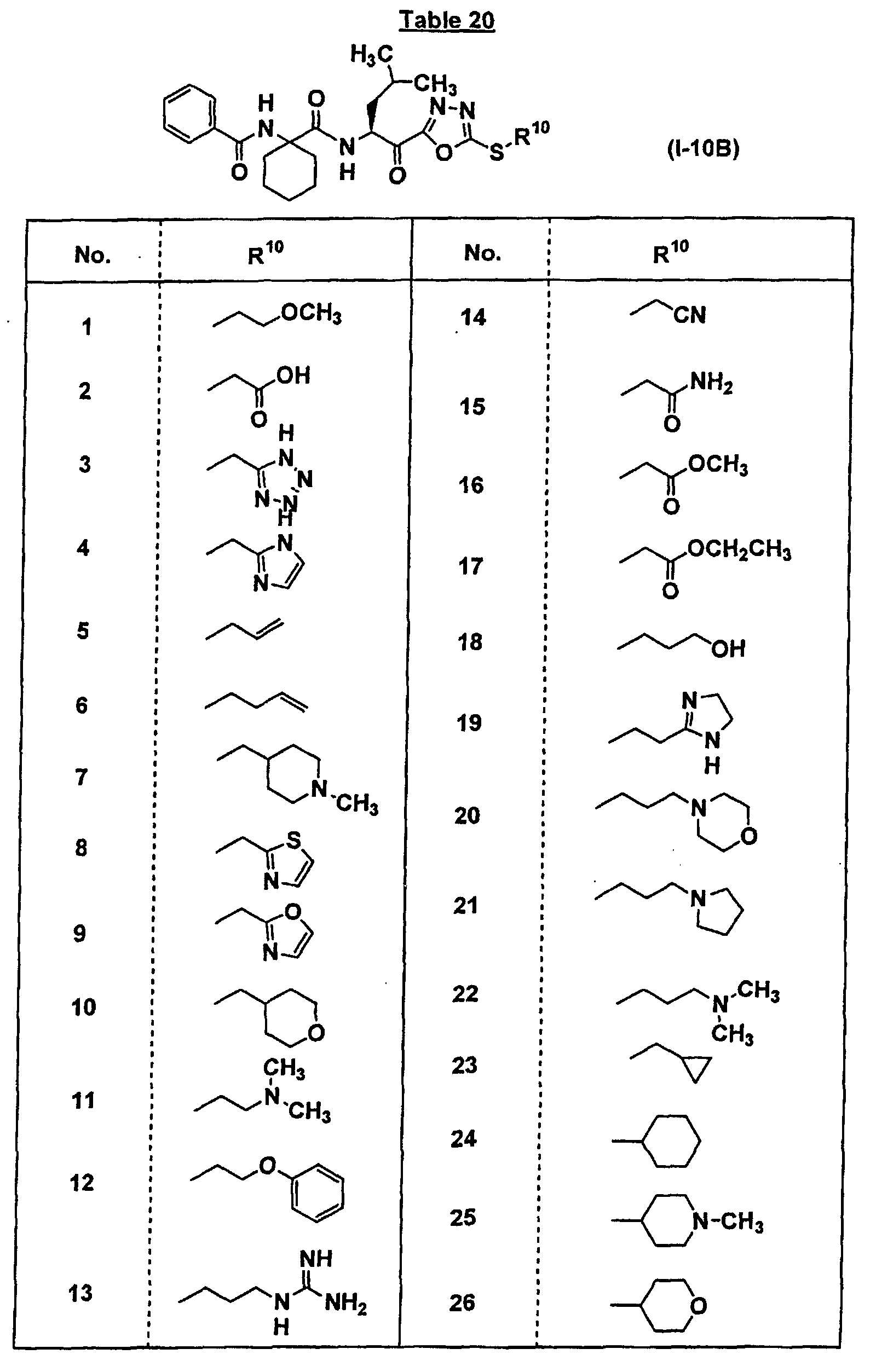
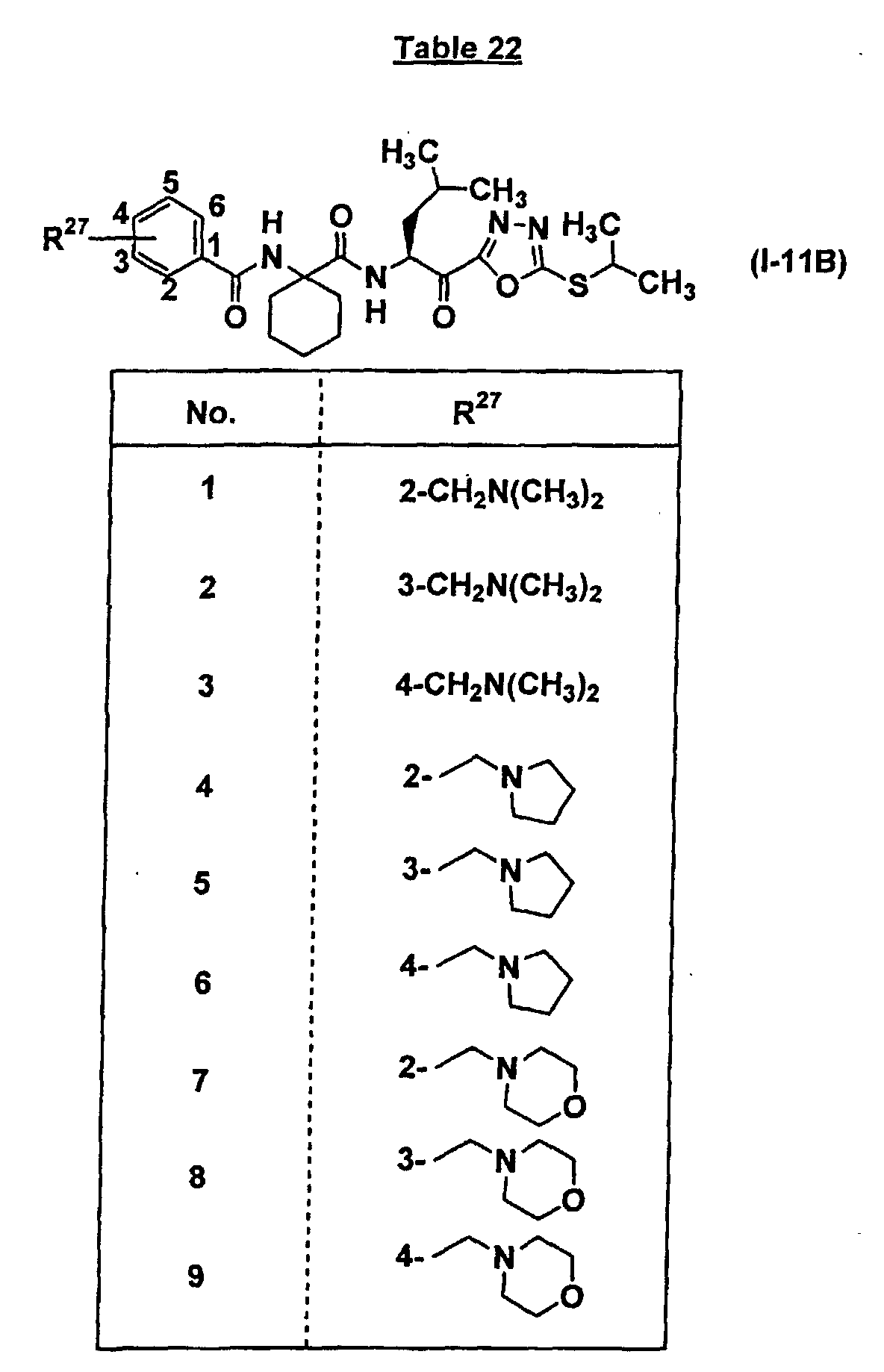
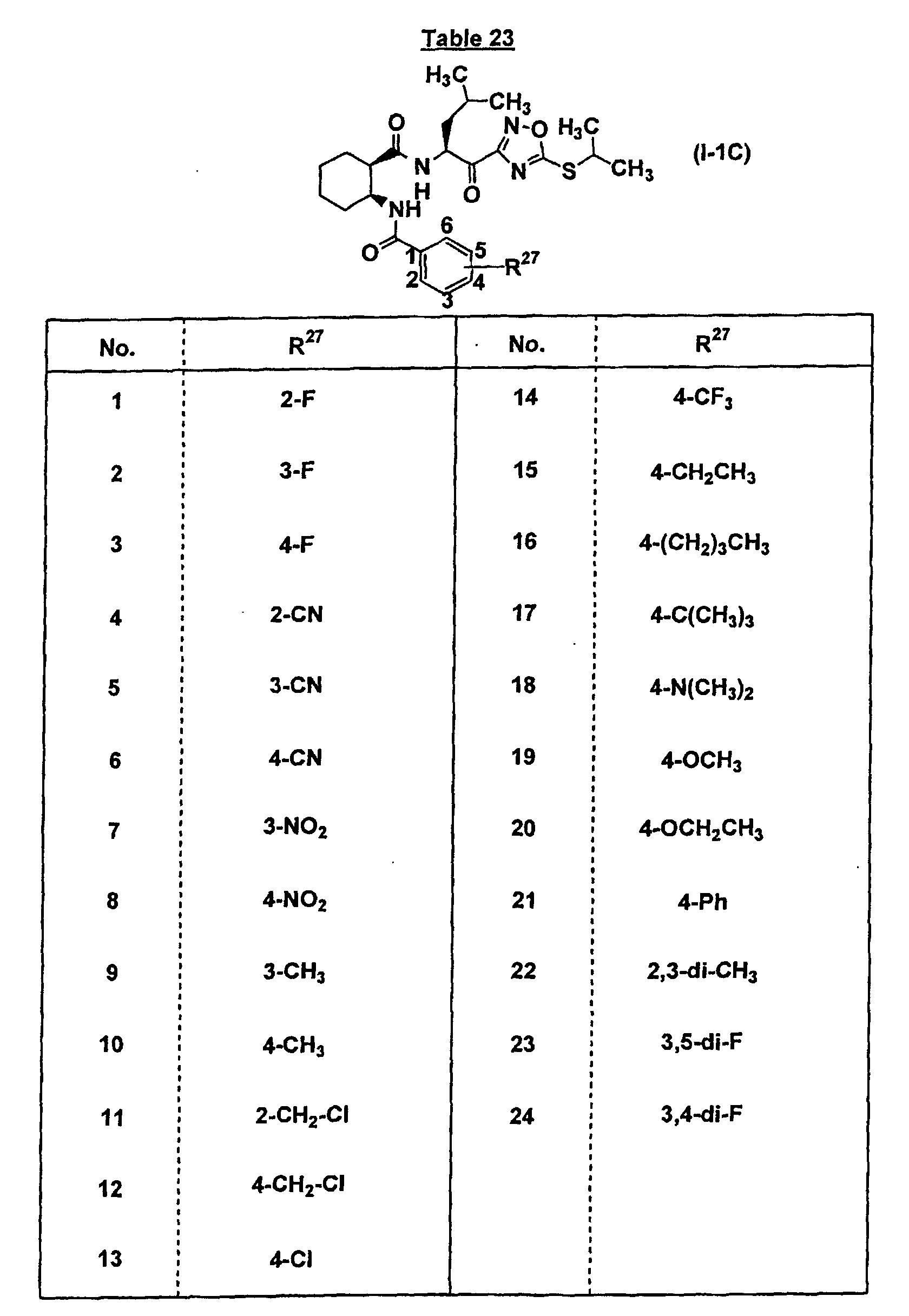
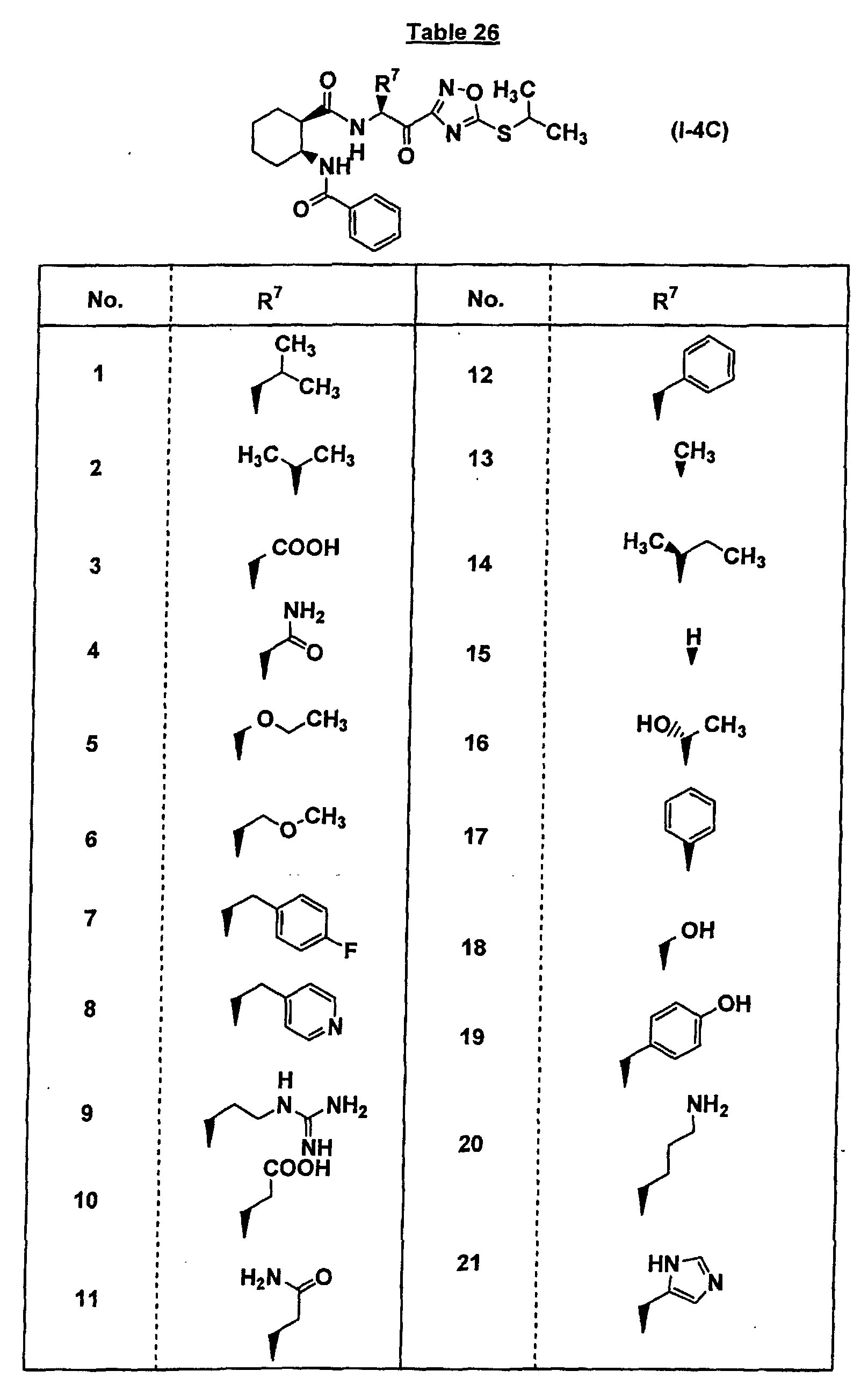
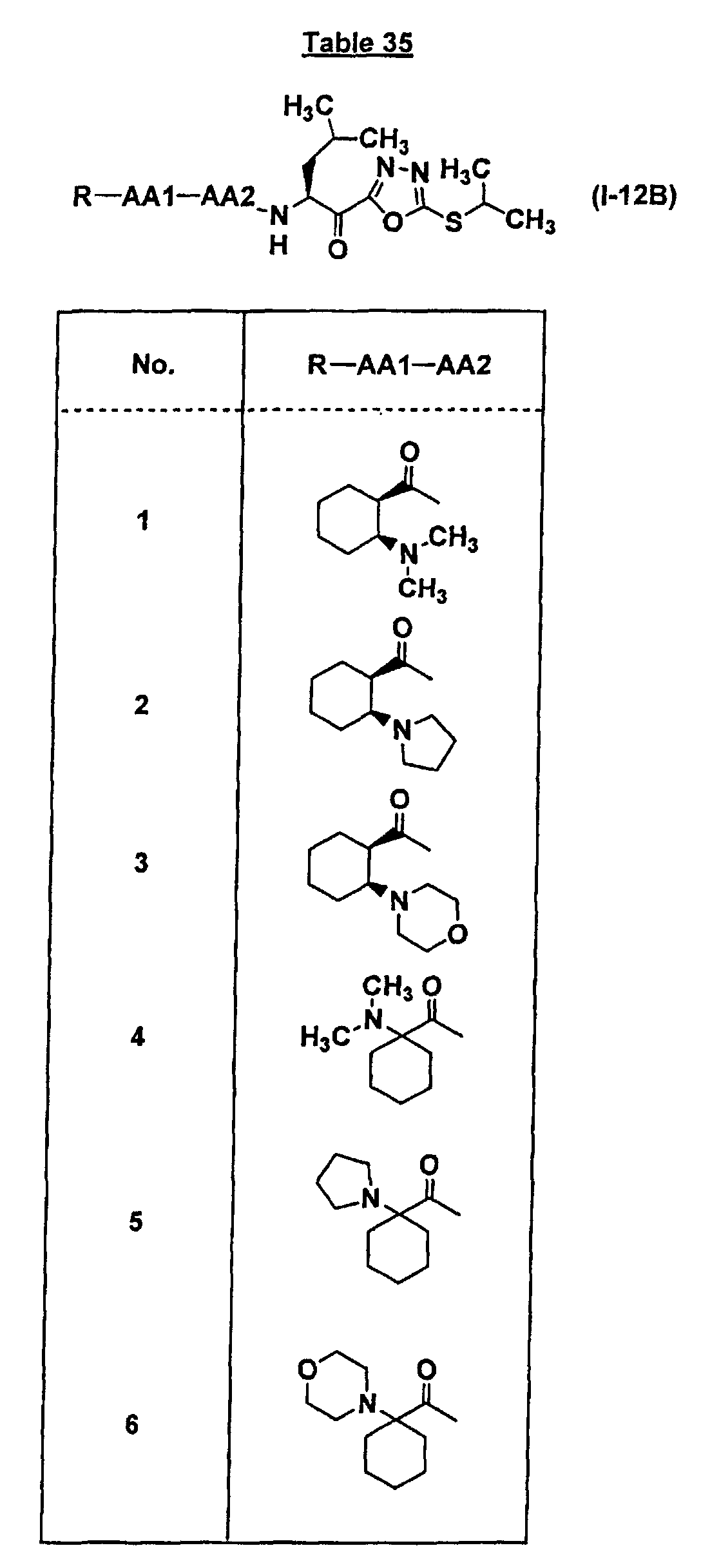
In the tables below, the numbers in front of the group means the position of substituent, and Ph means phenyl.
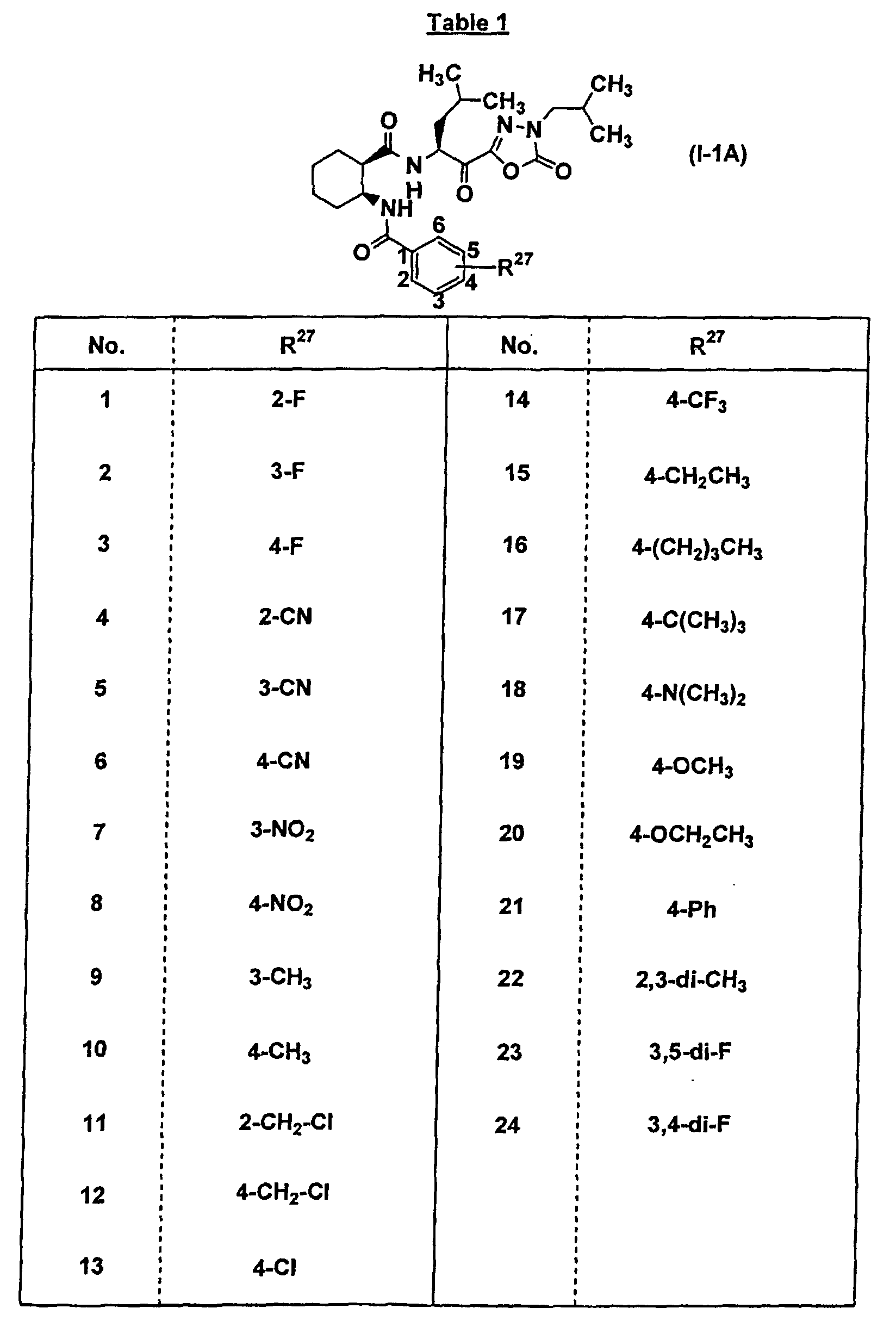

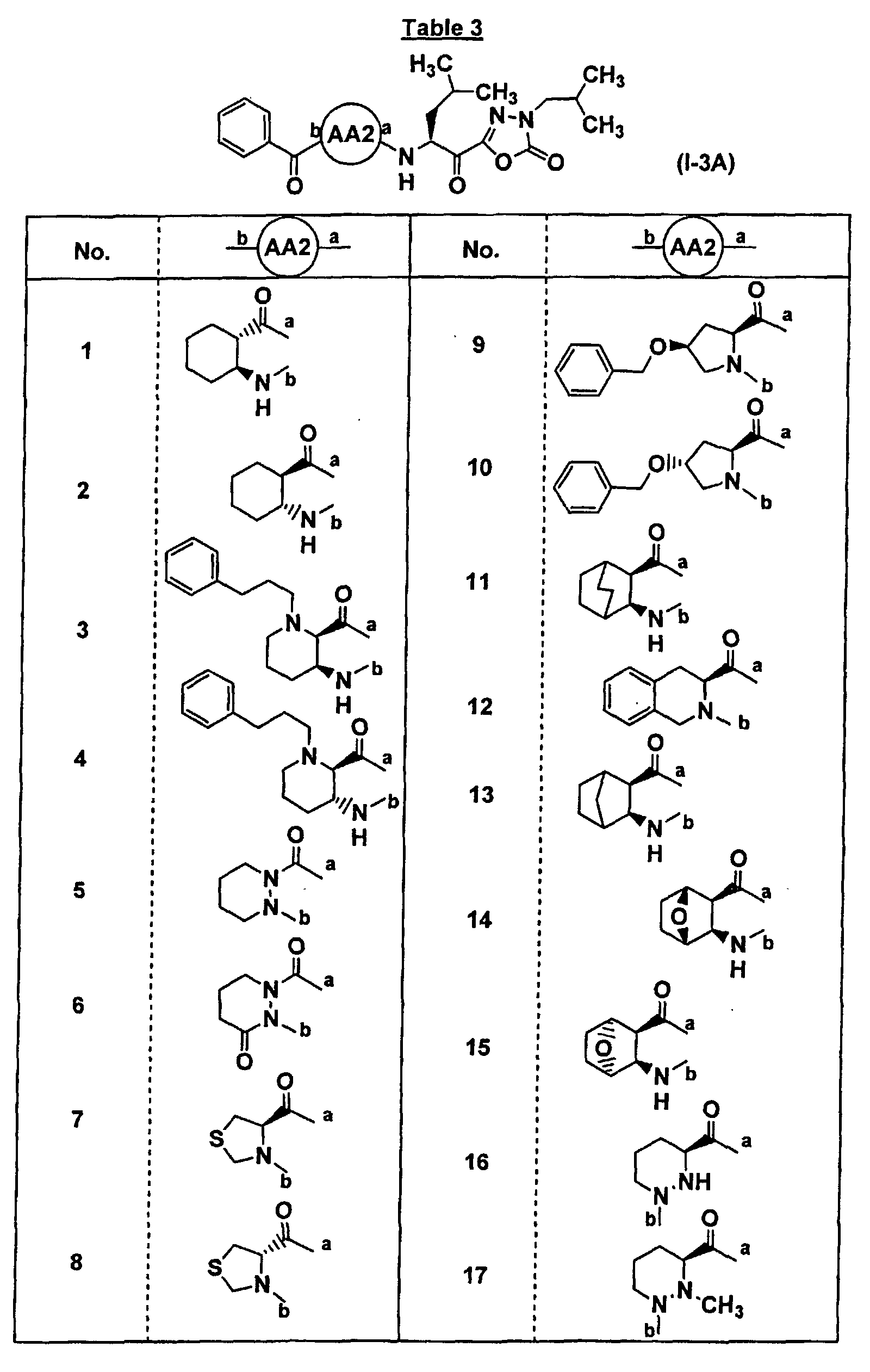

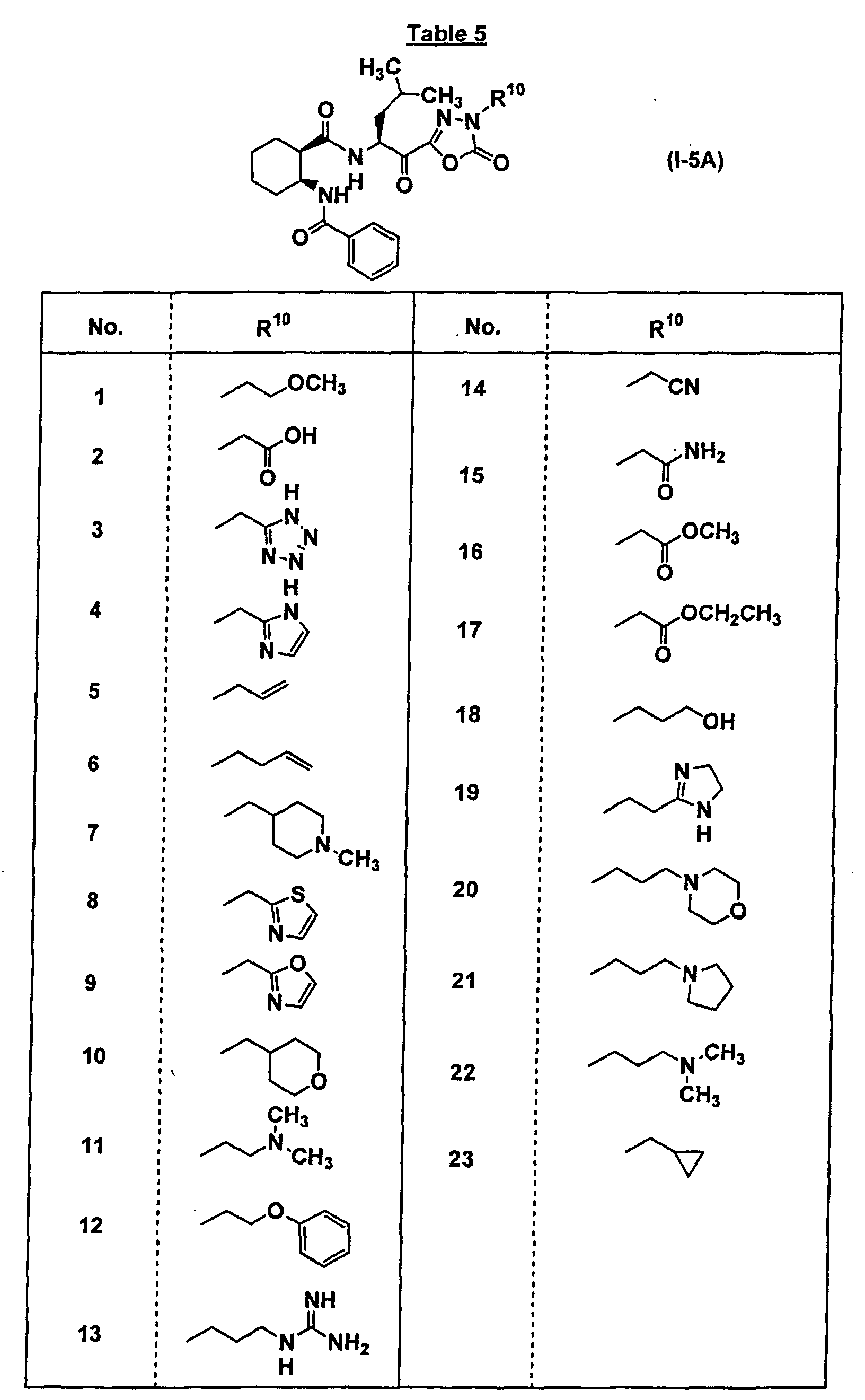

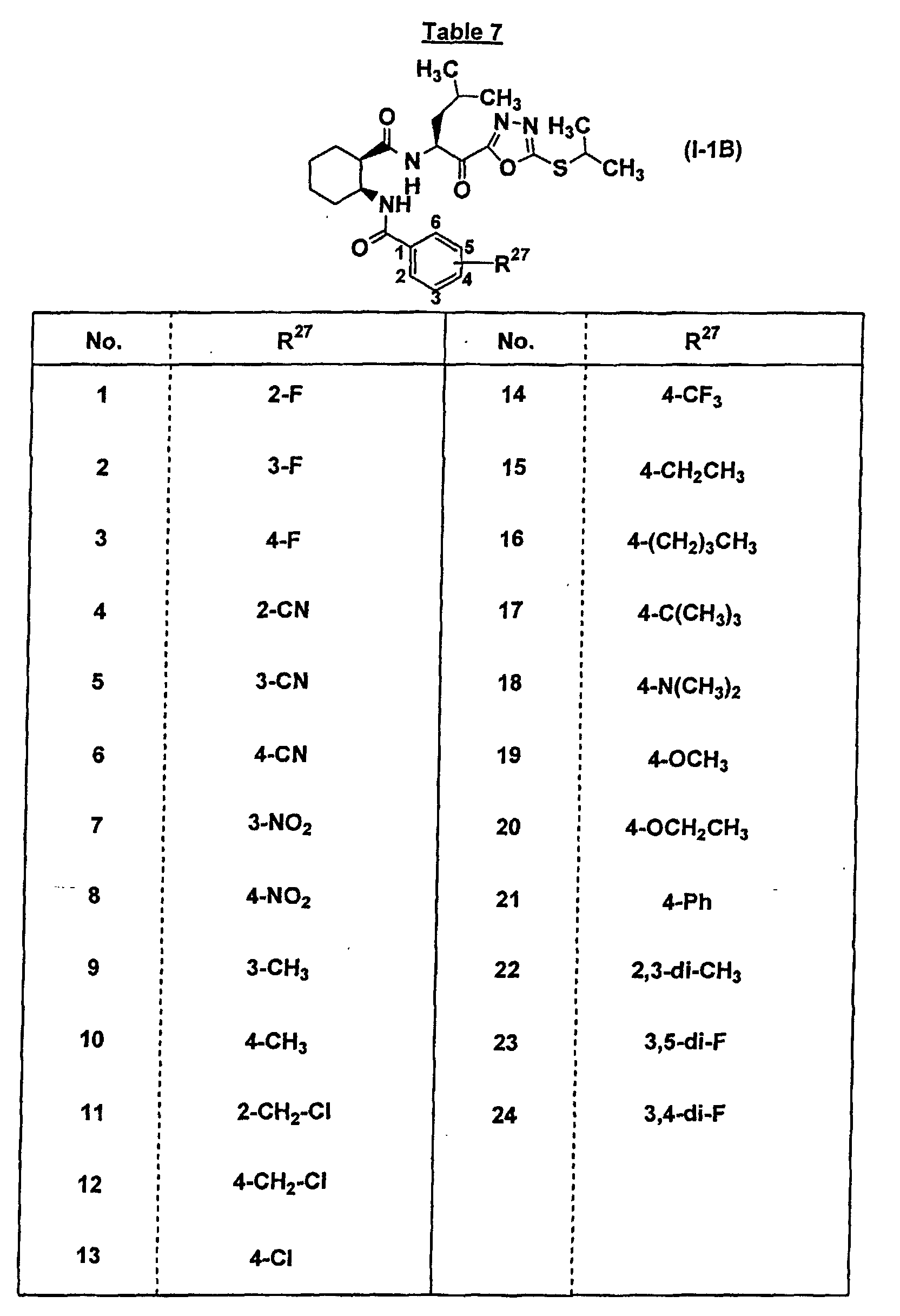

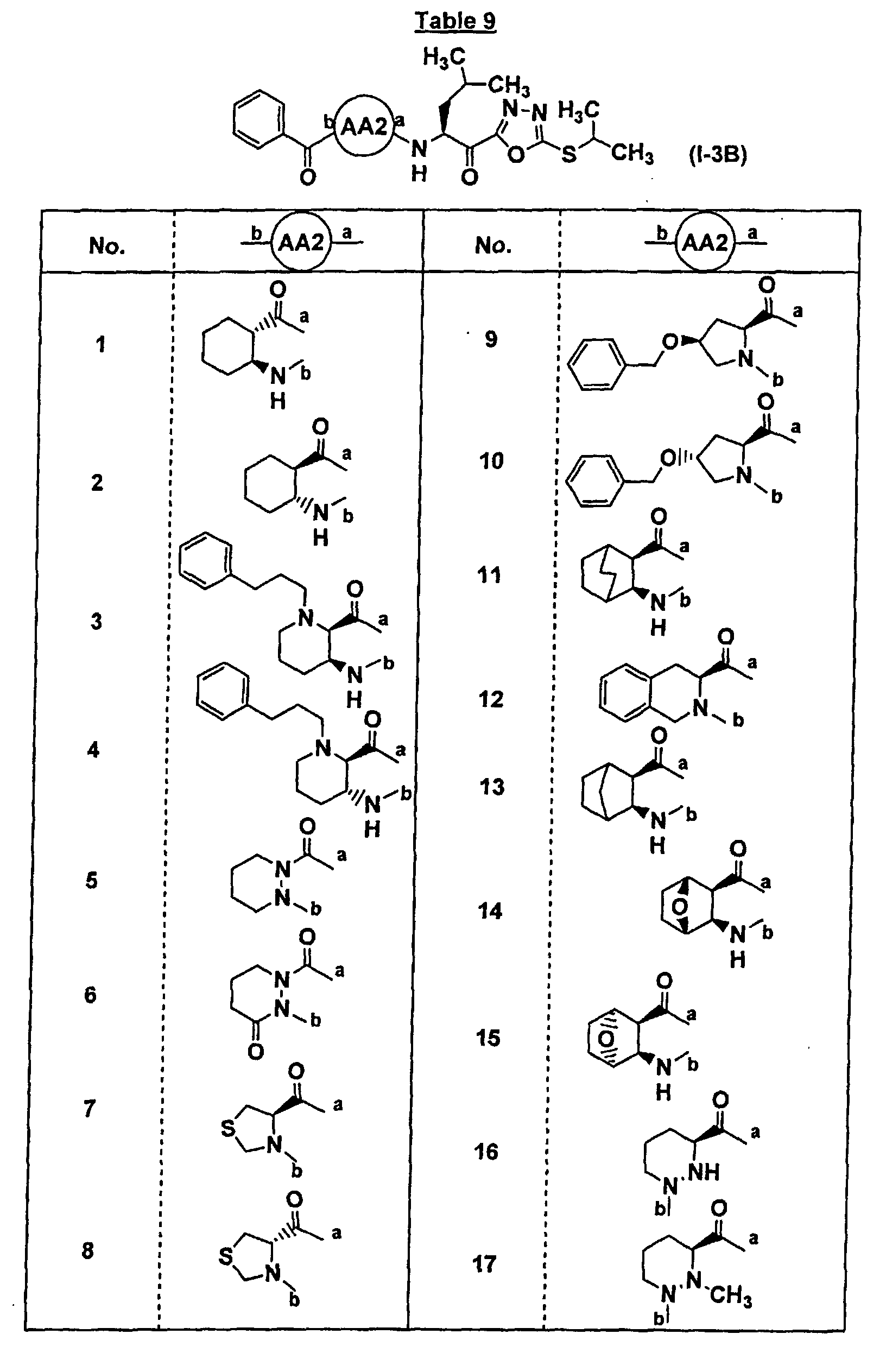
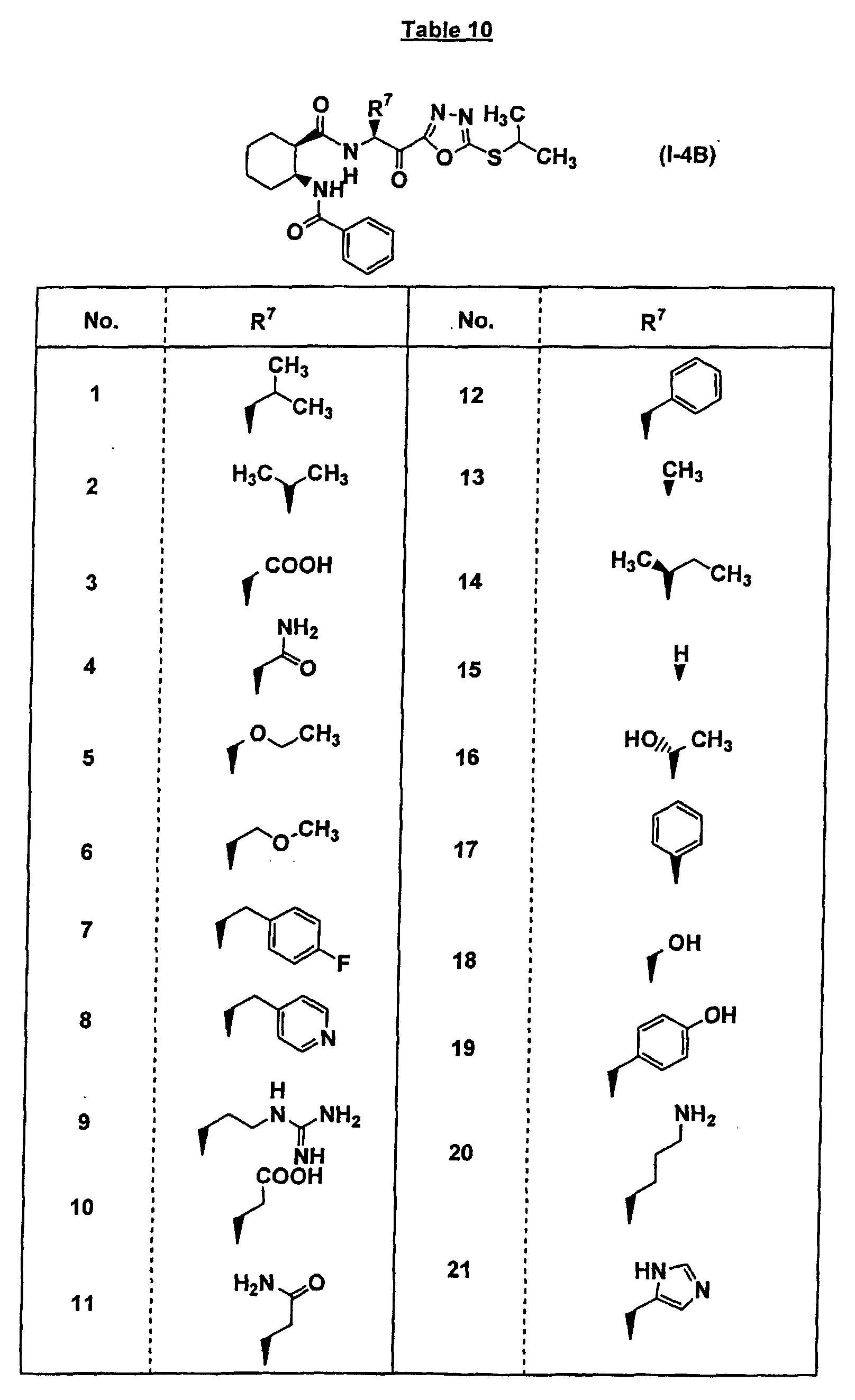


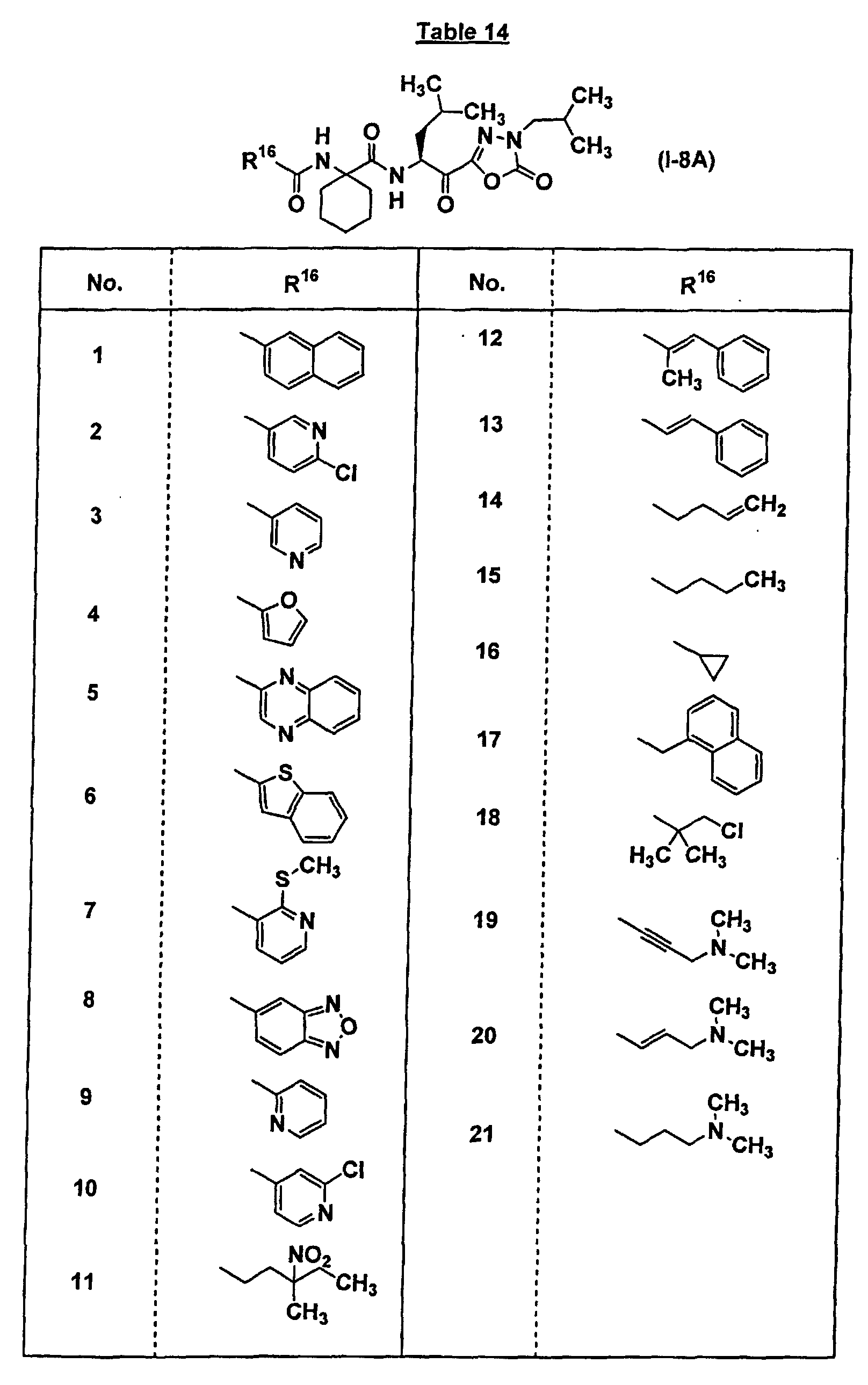
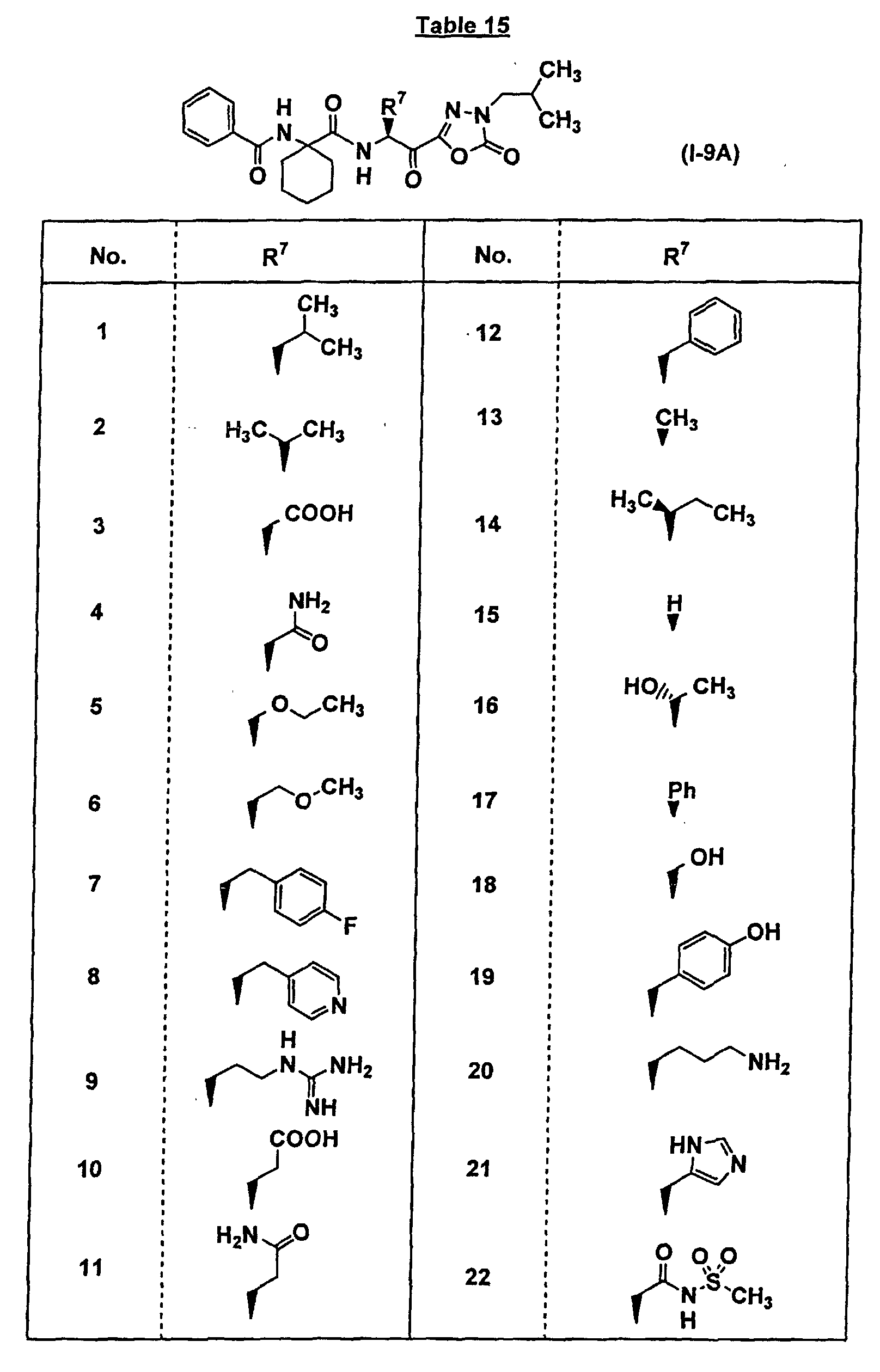


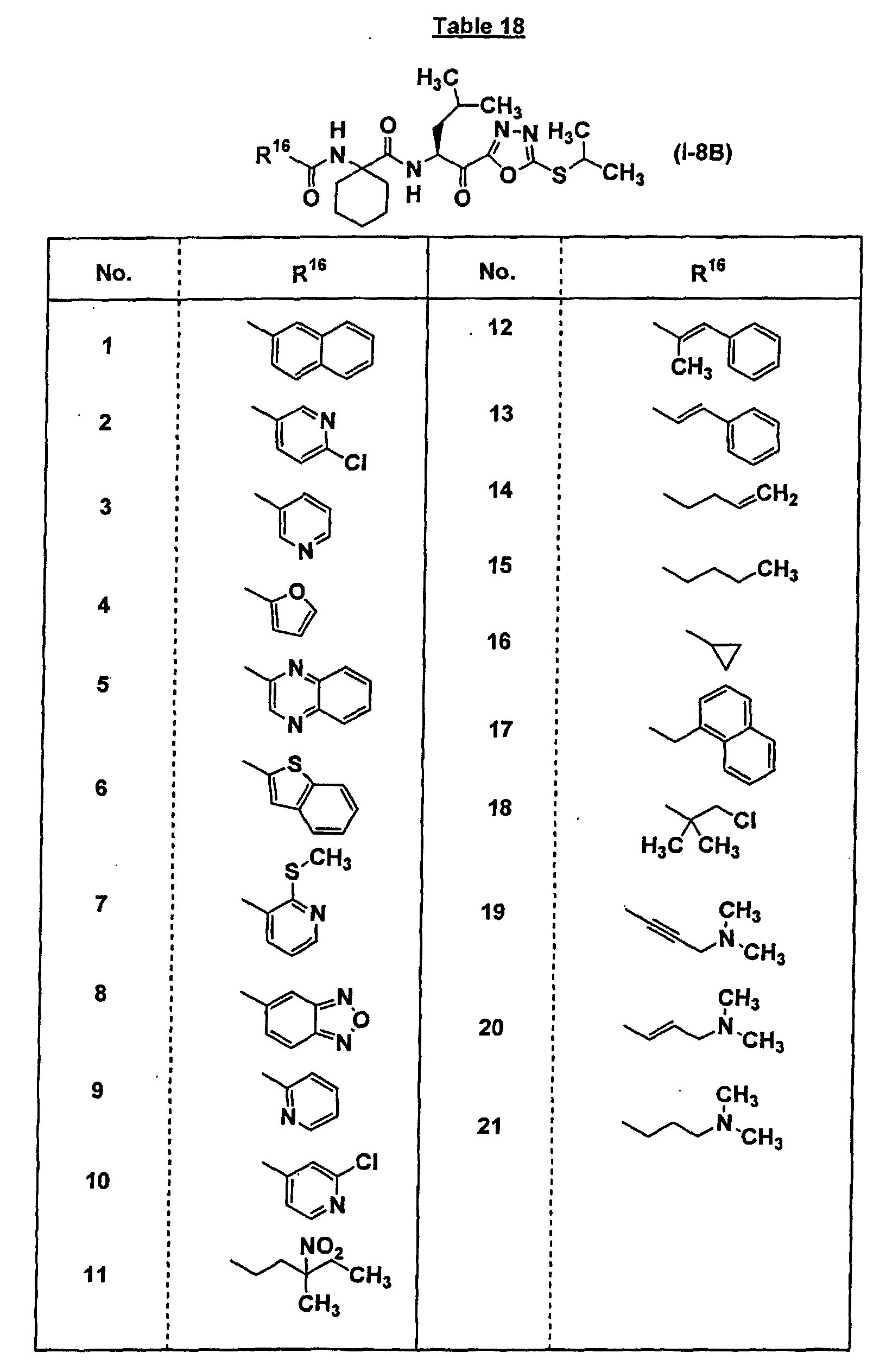
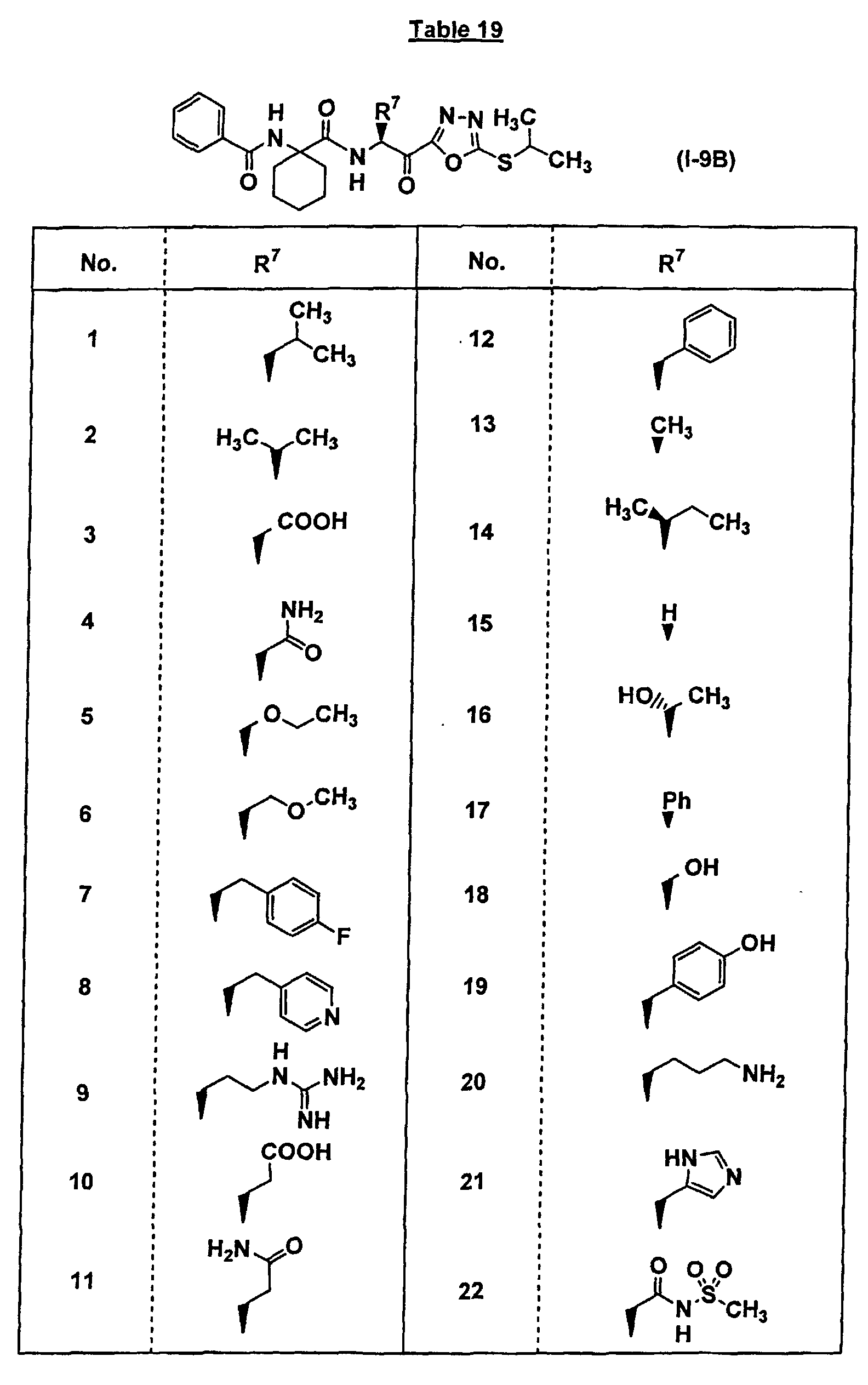




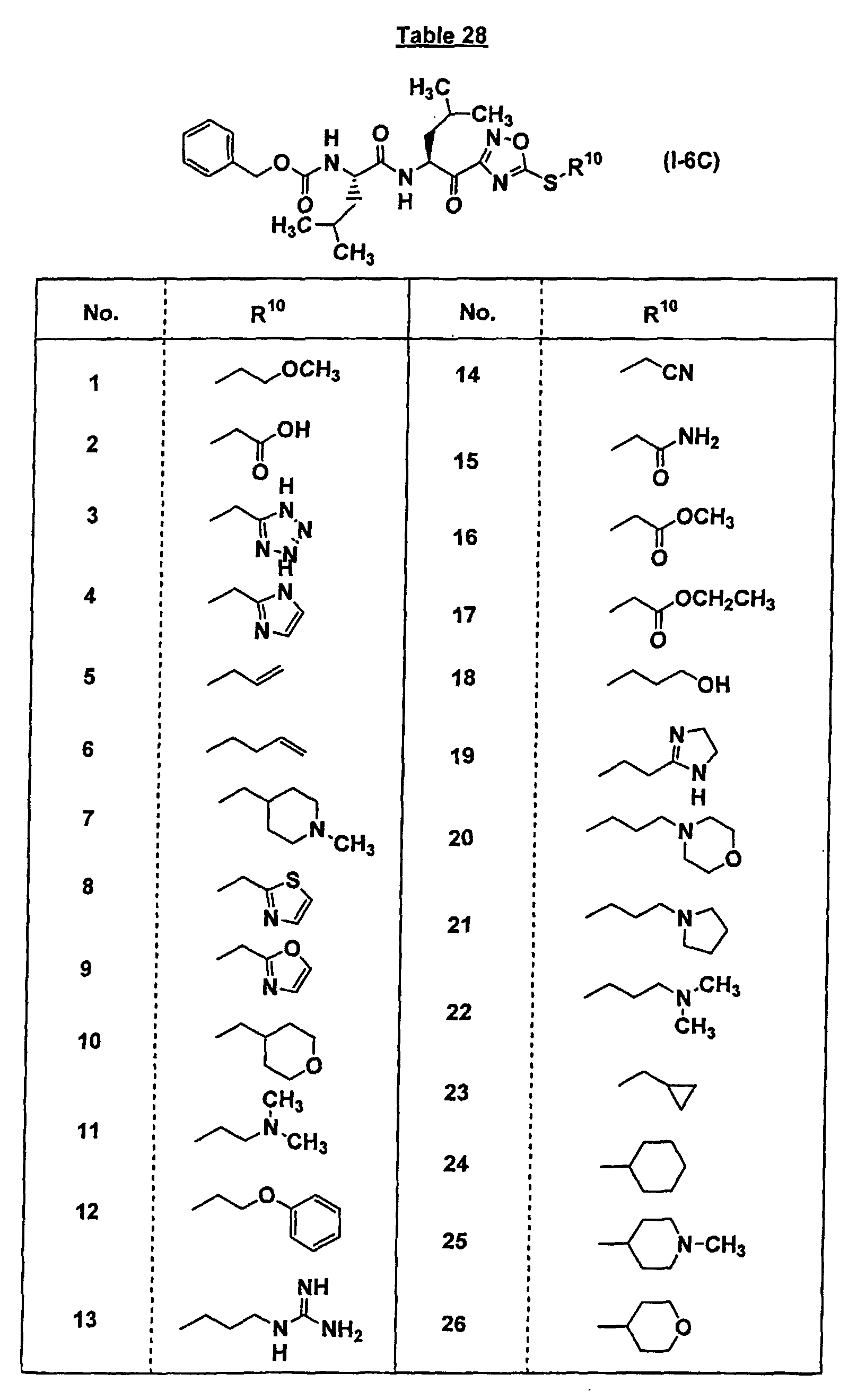

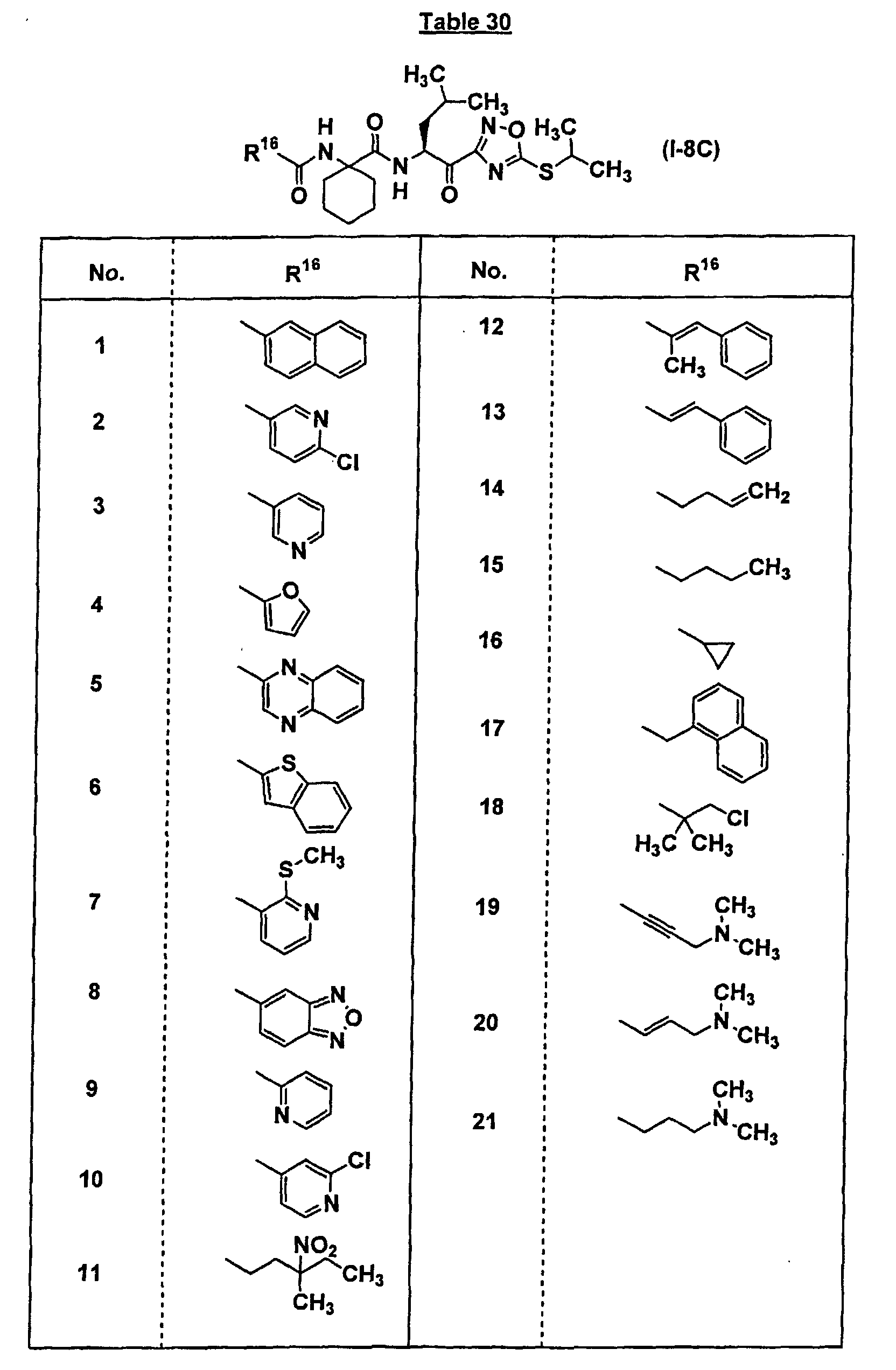
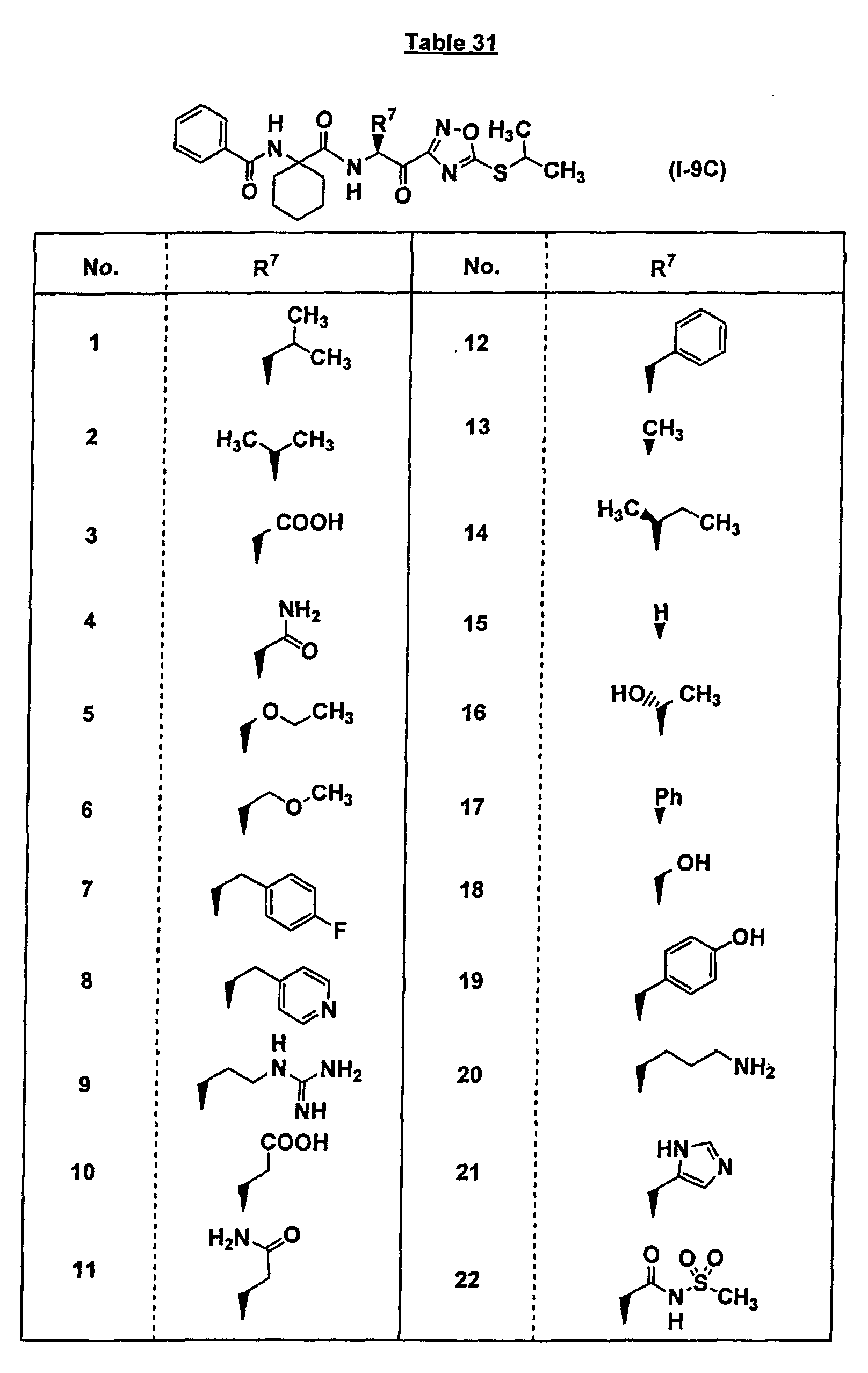


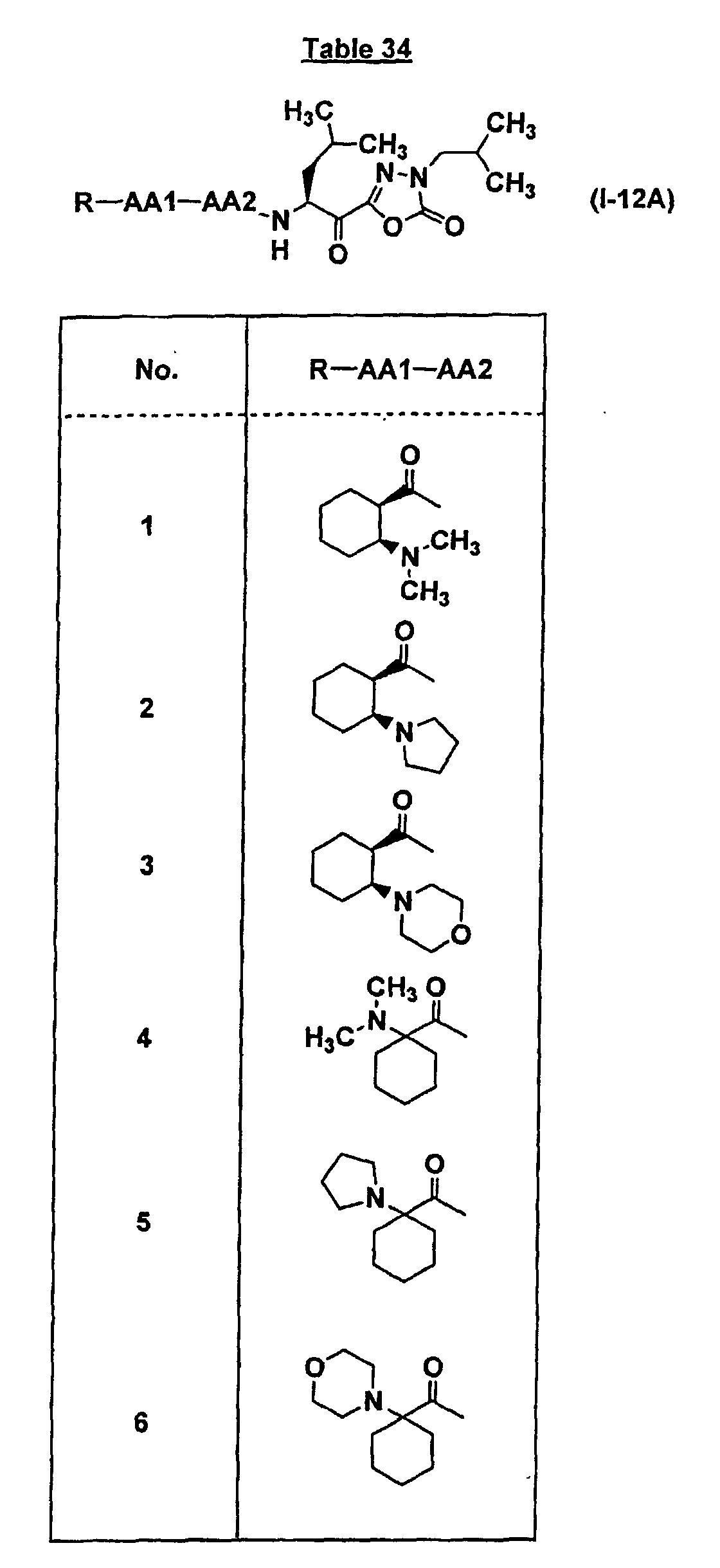

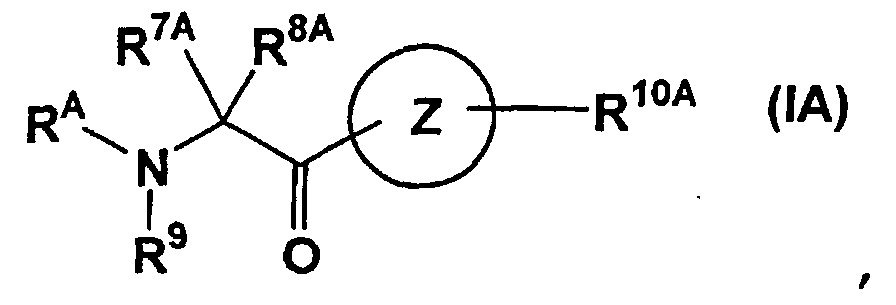
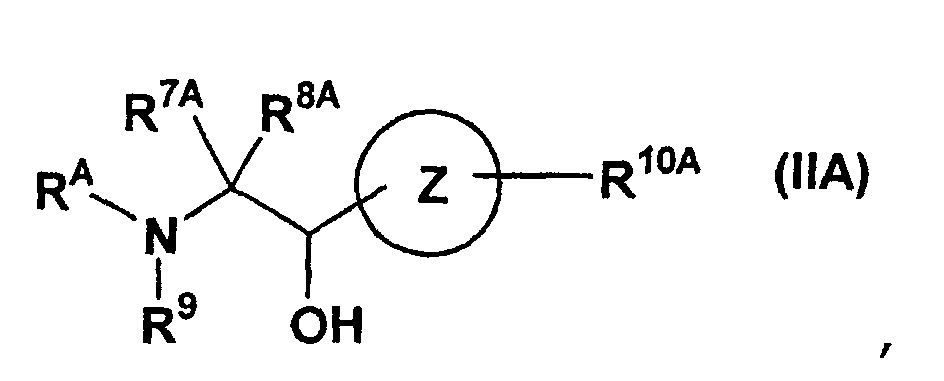
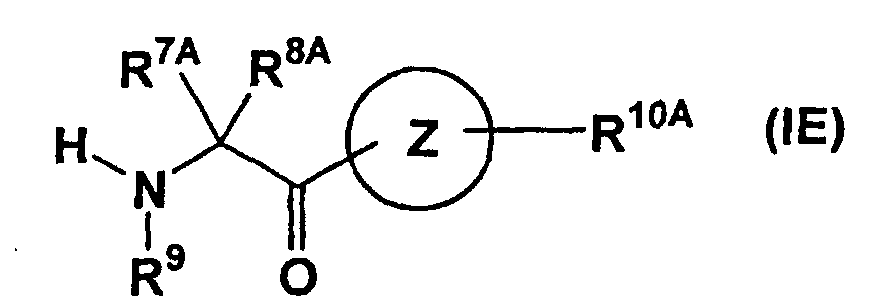
- (1) the method of Swern oxidation is carried out, for example, in an inert organic solvent (chloroform, methylene chloride, etc.) by subjecting to a reaction oxalyl chloride and dimethylsulfoxide at -78 °C and then subjecting to a reaction the obtained solution with an alcohol compound, and then subjecting to a reaction with a tertiary amine such as at a temperature of -78 to 20 °C.
- (2) the method utilizing Dess-Martin reagent is carried out, for example, in an inert organic solvent (chloroform, dichloromethane, etc.) in the presence of Dess-Martin reagent (1,1,1-triacetoxy-1,1-dihydro-1,2-benzoiodoxol-3-(1H)-one) at a temperature of 0 ~ 40 °C.
- (3) the method utilizing TEMPO reagent is carried out, for example, in an inert organic solvent (chloroform, methylene chloride, etc.), in the presence of TEMPO reagent (2,2,6,6-tetramethyl-1-piperidinyloxy, free radical) at a temperature of 20 to 60 °C.


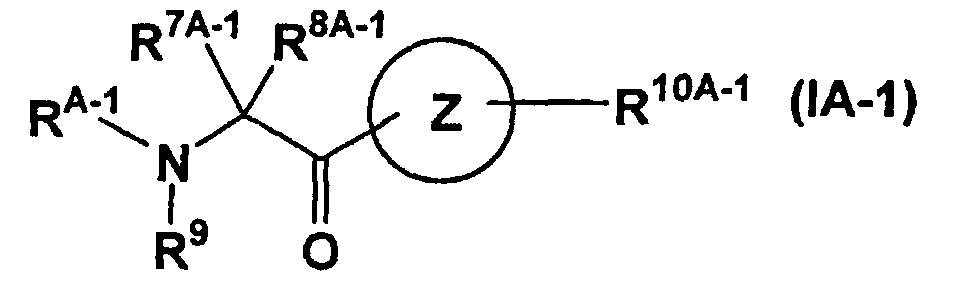
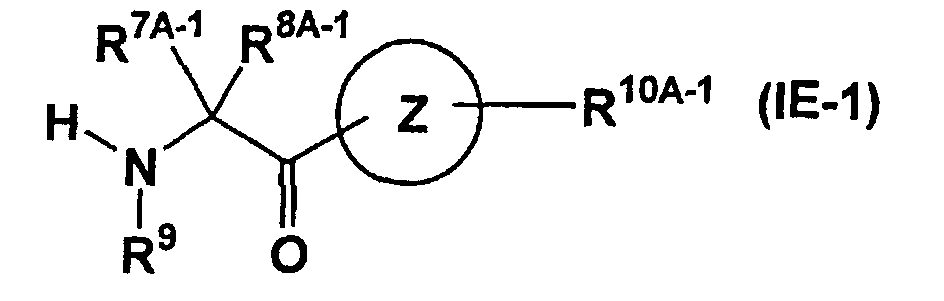
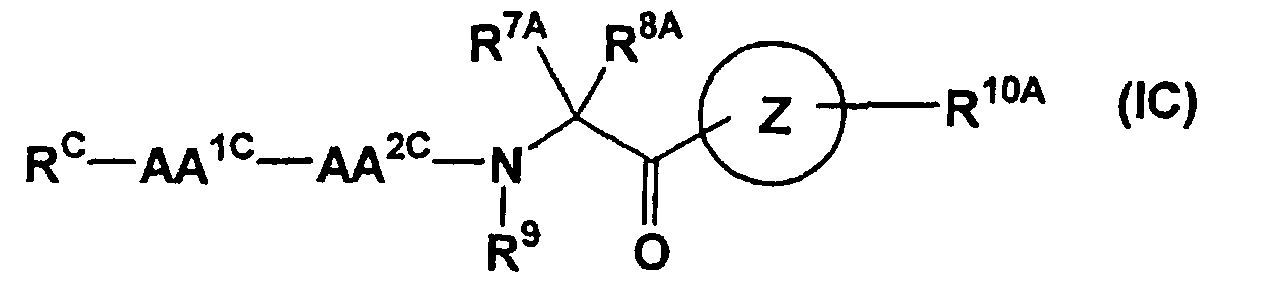

- 1) a method using acid halide,
- 2) a method using mixed anhydride,
- 3) a method using a condensing agent (EDC, DCC, etc.), etc.
To explain these methods concretely,
- 1) the method using acid halide is carried out, for example, by subjecting to a reaction carboxylic acid and acid-halogenating agent (oxalyl chloride, thionyl chloride, etc.) in an organic solvent (chloroform, methylene chloride, diethyl ether, tetrahydrofuran, etc.) or without a solvent, at a temperature between -20 °C and refluxing temperature, and then subjecting to a reaction thus obtained acid halide in the presence of tertiary amine (pyridine, triethylamine, dimethylaniline, dimethylaminopyridine, etc.) in an inert organic solvent (chloroform, methylene chloride, diethyl ether, tetrahydrofuran, etc.) at a temperature between 0 to 40 °C. And it may be carried out by subjecting to a reaction with acid halide in an organic solvent (dioxane, tetrahydrofuran, etc.) using an aqueous alkali solution (an aqueous solution of sodium bicarbonate or sodium hydroxide, etc.) at a temperature between 0 to 40 °C.
- 2) The method using mixed anhydride is carried out, for example, by subjecting to a reaction in an organic solvent (chloroform, methylene chloride, diethyl ether, tetrahydrofuran, etc.) or without a solvent, in the presence of tertiary amine (pyridine, triethylamine, dimethylaniline, dimethylaminopyridine, etc.), carboxylic acid with acid halide (pivaloyl chloride, tosyl chloride, mesylchloride, etc.) or acid derivative (chloroethyl formate, chloroisobutyl formate, etc.) at a temperature between 0 to 40 °C, and then subjecting to a reaction thus obtained mixed anhydride with amine in an organic solvent (chloroform, methylene chloride, diethyl ether, tetrahydrofuran, etc.) at a temperature between 0 to 40 °C.
- 3) The method using a condensing agent is carried out, for example, in an organic solvent (chloroform, methylene chloride, dimethylformamide, diethyl ether, tetrahydrofuran, etc.) or without a solvent, in the presence or absence of a tertiary amine (pyridine, triethylamine, dimethylaniline, dimethylaminopyridine, etc.), using a condensing agent (1,3-dicychlorohexylcarbodiimide (DCC), 1-ethyl-3-[3-(dimethylamino)propyl]carbodiimide (EDC), 1,1'-carbonyldiimidazole (CDI), 2-chloro-1-methylpyridinium iodide, etc.) in the presence or absence of 1-hydroxybenzotriazole (1-HOBt), by subjecting to a reaction carboxylic acid and amine at a temperature between 0 and 40 °C.


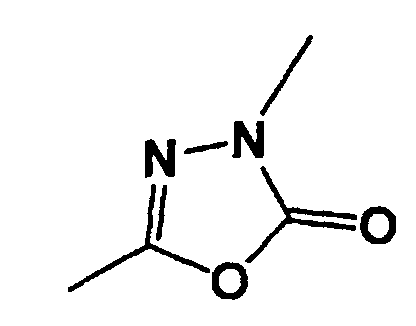



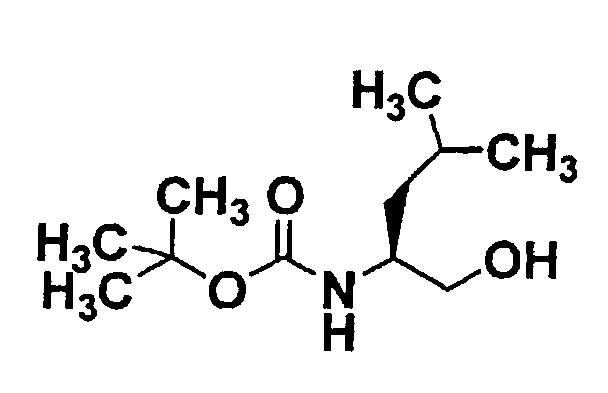
TLC : Rf 0.50 (chloroform : methanol = 10 : 1);
NMR (CDCl3): δ 4.58 (br, 1H), 3.81-3.45 (m, 3H), 1.80-1.60 and 1.37-1.25 (each m, totally 3H), 1.45 (s, 9H), 0.95-0.91 (m, 6H).

TLC : Rf 0.45 (chloroform : methanol = 10 : 1);
NMR (CDCl3): δ 9.59 (s, 1H), 4.91 (br, 1H), 4.12 (br, 1H), 1.80-1.60 and 1.40-1.30 (each m, totally 3H), 1.46 (s, 9H), 1.00-0.87 (m, 6H).
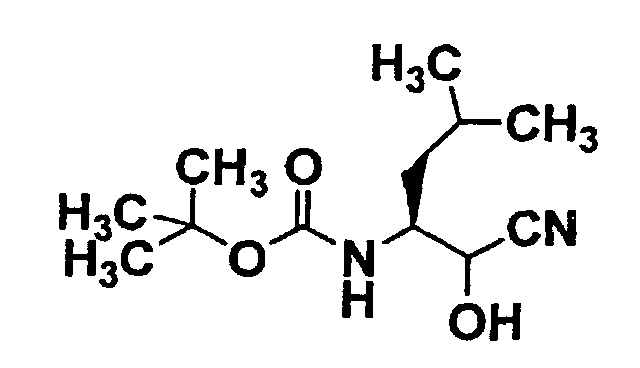
TLC : Rf 0.40 (n-hexane : ethyl acetate = 3 : 1);
NMR (CDCl3): δ 4.85-4.80 (m, 1H), 4.60-4.45 (m, 1H), 4.00-3.70 (m, 1H), 1.80-1.40 (m, 3H), 1.45 and 1.43 (each s, totally 9H), 1.00-0.90 (m, 6H).
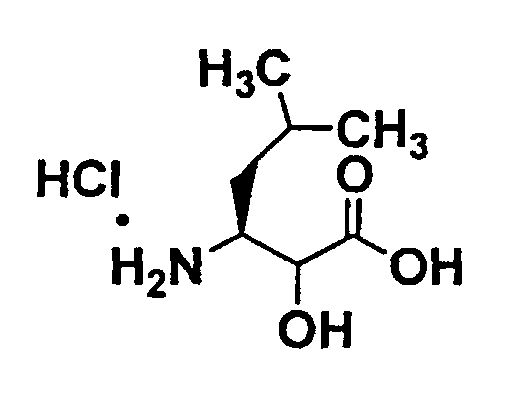
TLC : Rf 0.30 (chloroform : methanol : water = 6 : 4 : 1).
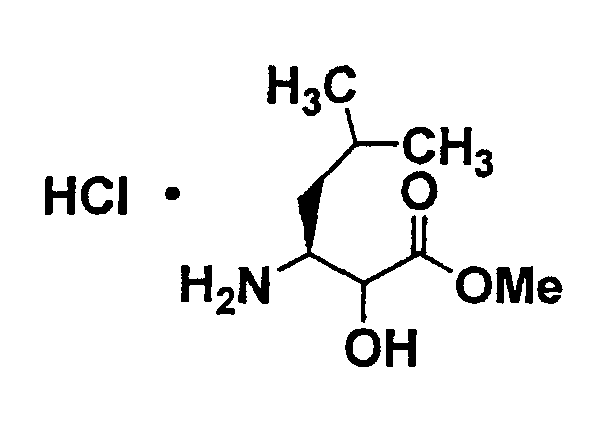
TLC : Rf 0.50 (chloroform : methanol : water = 6 : 4 : 1).
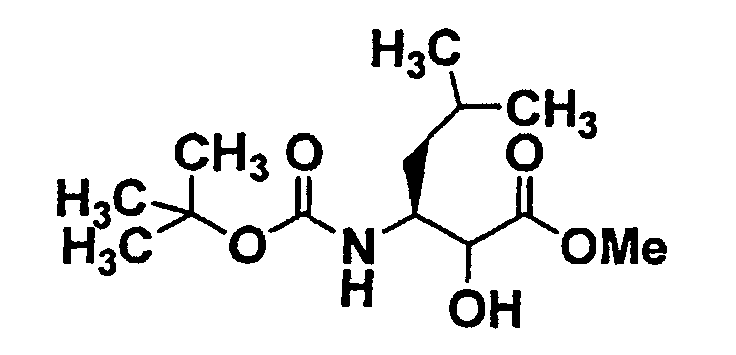
TLC : Rf 0.40 and 0.35 (n-hexane : ethyl acetate = 3 : 1);
NMR (CD3OD) : δ 4.10-4.09 (m, 1H), 4.04-3.95 and 3.93-3.85 (each m, totally 1H), 3.72 and 3.70 (each s, totally 3H), 1.70-1.08 (m, 3H), 1.43 and 1.40 (each s, totally 9H), 0.98-0.82 (m, 6H).
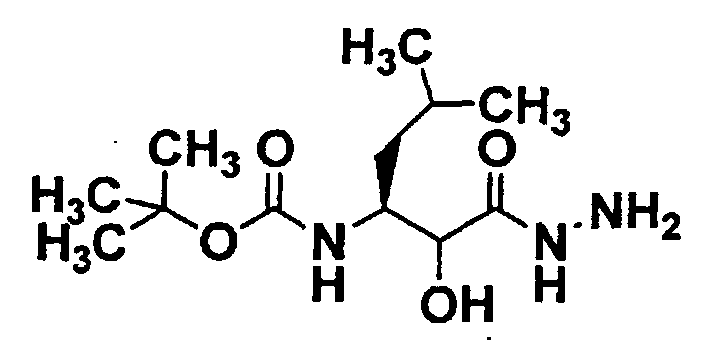
TLC : Rf 0.40 (chloroform : methanol : water = 9 : 1 : 0.1);
NMR (CD3OD): δ 4.10 (d, J = 3.6 Hz, 0.5H), 4.00-3.90 (m, 1.5H), 1.70-1.30 (m, 3H), 1.43 and 1.41 (each s, totally 9H), 0.95-0.88 (m, 6H).

TLC : Rf 0.50 and 0.45 (chloroform : methanol = 10 : 1);
NMR (CDCl3): δ 4.87 and 4.80 (each brd, each J = 9.3 Hz, totally 1H), 4.60-4.50 (m, 1H), 4.10-3.90 (m, 1H), 1.80-1.30 (m, 3H), 1.45 and 1.41 (each s, totally 9H), 1.00-0.80 (m, 6H).

TLC : Rf 0.35 (n-hexane : ethyl acetate = 3 : 1);
NMR (CDCl3): δ 4.80-4.50 (m, 2H), 4.10-3.80 (m, 1H), 3.50-3.45 (m, 2H), 2.10-2.05 (m, 1H), 1.70-1.30 (m, 3H), 1.45 and 1.40 (s, 9H), 1.00-0.90 (m, 12H).
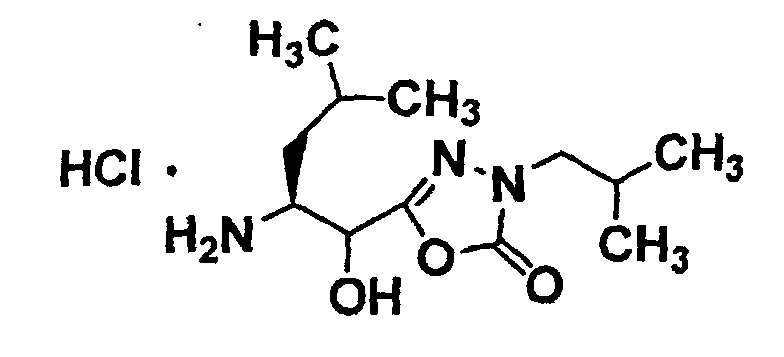
TLC : Rf 0.46 (chloroform : methanol : water = 6 : 4 : 1).

TLC : Rf 0.70 (n-hexane : ethyl acetate = 1 : 1);
NMR (CDCl3): δ 7.40-7.30 (m, 5H), 6.50-6.38 (m, 1H), 5.20-5.08 (m, 3H), 4.60-4.10 (m, 3H), 3.50-3.40 (m, 2H), 2.20-2.00 (m, 1H), 1.70-1.20 (m, 6H), 1.00-0.80 (m, 18H).
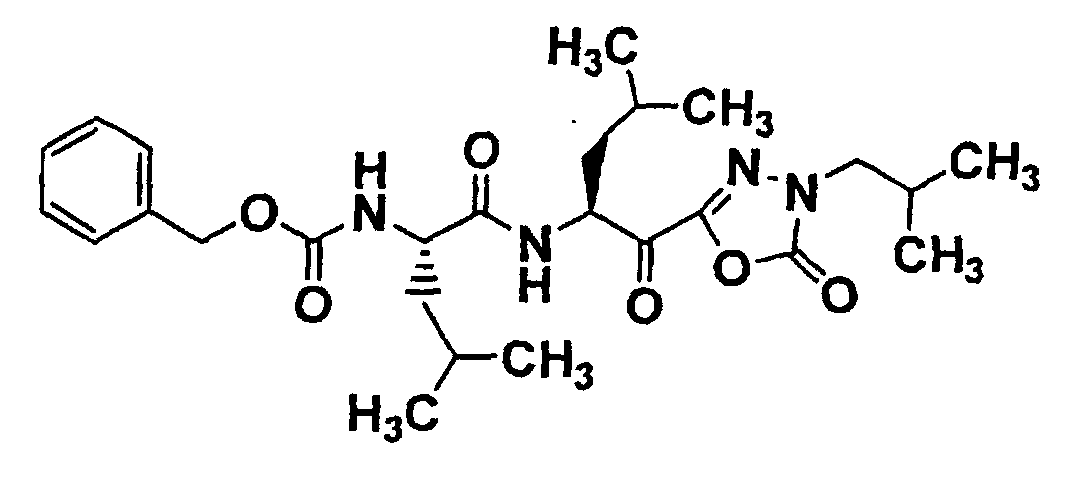
TLC : Rf 0.50 (n-hexane : ethyl acetate = 3 : 1);
NMR (CDCl3): δ 7.40-7.30 (m, 5H), 6.51 (brd, J = 7.5 Hz, 1H), 5.33 (ddd, J = 9.9, 7.5, 4.2 Hz, 1H), 5.20-5.10 (m, 1H), 5.12 (s, 2H), 4.28-4.15 (m, 1H), 3.68 (dd, J = 13.8, 6.9 Hz, 1H), 3.63 (dd, J = 13.8, 6.9 Hz, 1H), 2.25-2.13 (m, 1H), 1.75-1.43 (m, 6H), 1.00-0.88 (m, 18H).
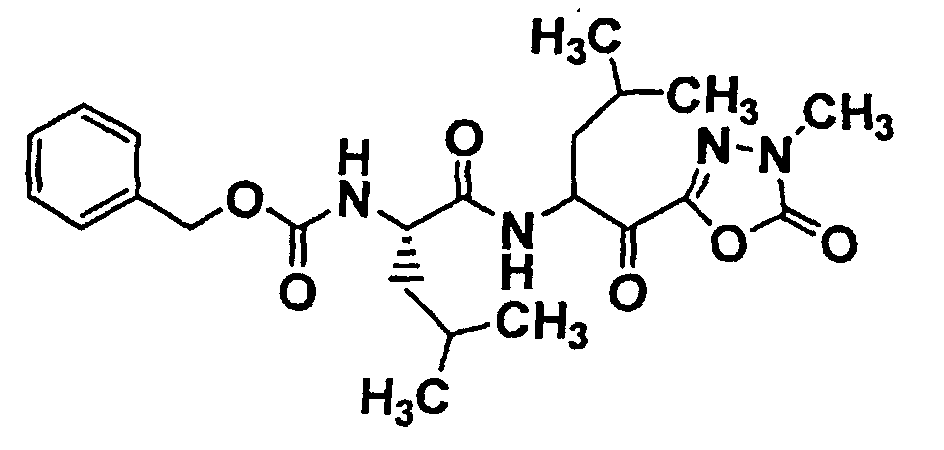
NMR (CDCl3) : δ 7.35 (s, 5H), 6.67 and 6.50 (each brd, J= 6.6 Hz, totally 1H), 5.30 (m, 1H), 5.20-5.03 (m, 3H), 4.22 (m, 1H), 3.55and3.54 (each s, totally 3H), 1.84-1.40 (m, 6H), 1.05-0.84 (m, 12H).

NMR (CDCl3): δ 7.35 (s, 5H), 6.61 and 6.43 (each br, totally 1H), 5.33 (m, 1H), 5.15-4.95 (m, 3H), 4.21 (m, 1H), 3.68 (dd, J = 14.1, 7.2 Hz, 1H), 3.63 (dd, J = 14.1, 7.2 Hz, 1H), 2.18 (m, 1H), 1.78-1.42 (m, 6H), 1.04-0.84 (m, 18H).
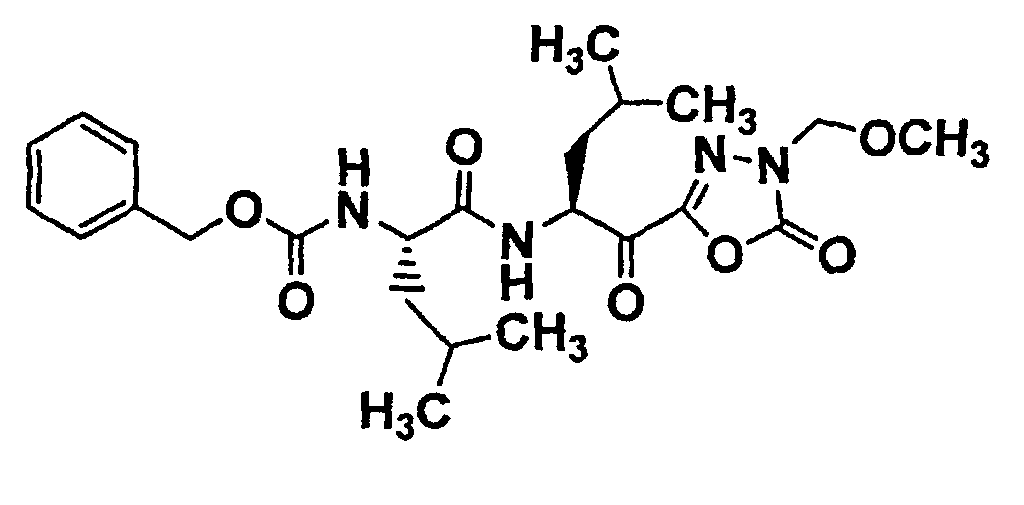
NMR (CDCl3): δ 7.35 (s, 5H), 6.59 (brd, J = 6.3 Hz, 1H), 5.30 (m, 1H), 5.20-5.09 (m, 5H), 4.21 (m, 1H), 3.48 (s, 3H), 1.80-1.40 (m, 6H), 1.02-0.88 (m, 12H).
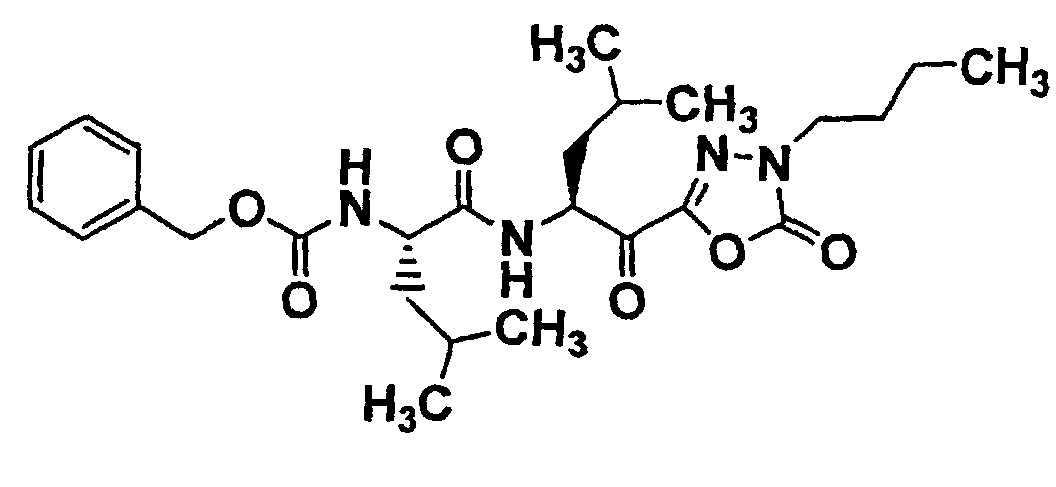
NMR (CDCl3): δ 7.35 (s, 5H), 6.43 (brd, J = 7.2 Hz, 1H), 5.33 (m, 1H), 5.18-5.05 (m, 3H), 4.20 (m, 1H), 3.84 (t, J = 7.2 Hz, 2H), 1.83-1.31 (m, 10H), 1.02-0.88 (m, 15H).
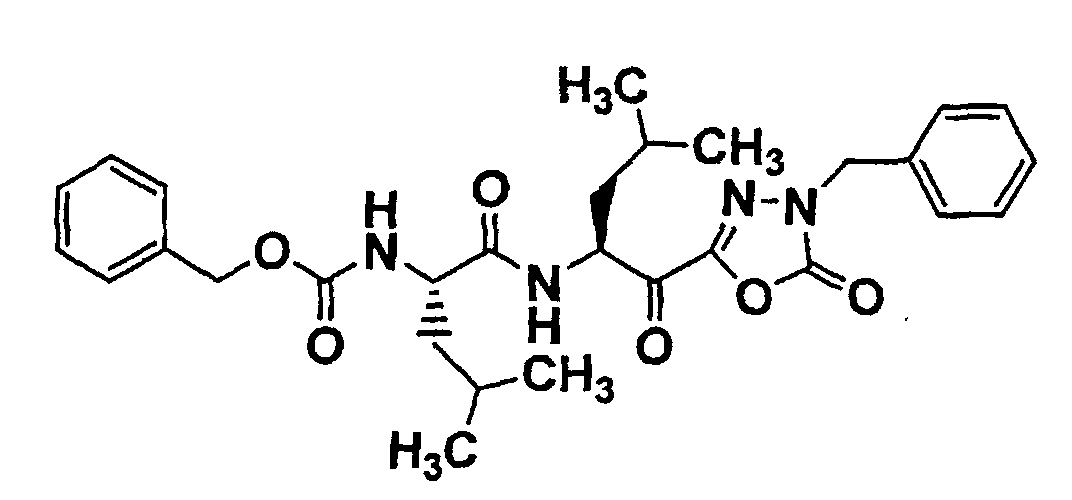
NMR (CDCl3) : δ 7.19 (m, 10H), 6.42 (brd, J = 8.2 Hz, 1H), 5.30 (m, 1H), 5.18-5.05 (m, 3H), 5.03 (d, J = 15.0 Hz, 1H), 4.97 (d, J = 15.0 Hz, 1H), 4.19 (m, 1H), 1.80-1.40 (m, 6H), 1.00-0.88 (m, 12H).
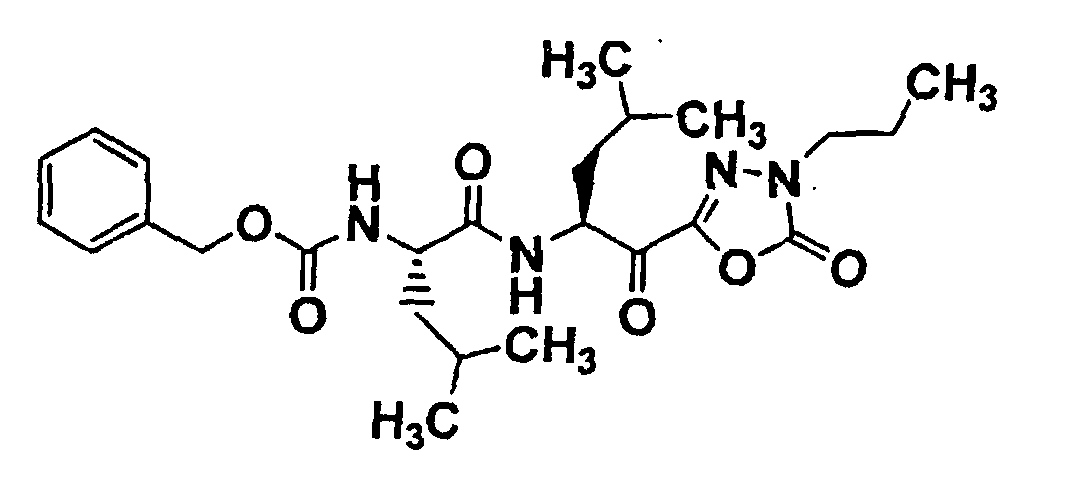
NMR (CDCl3): δ 7.35 (s, 5H), 6.47 (brd, J = 7.0 Hz, 1H), 5.34 (m, 1H), 5.16-5.00 (m, 3H), 4.20 (m, 1H), 3.81 (t, J = 6.2 Hz, 2H), 1.83 (m, 2H), 1.80-1.40 (m, 6H), 1.00-0.88 (m, 15H).
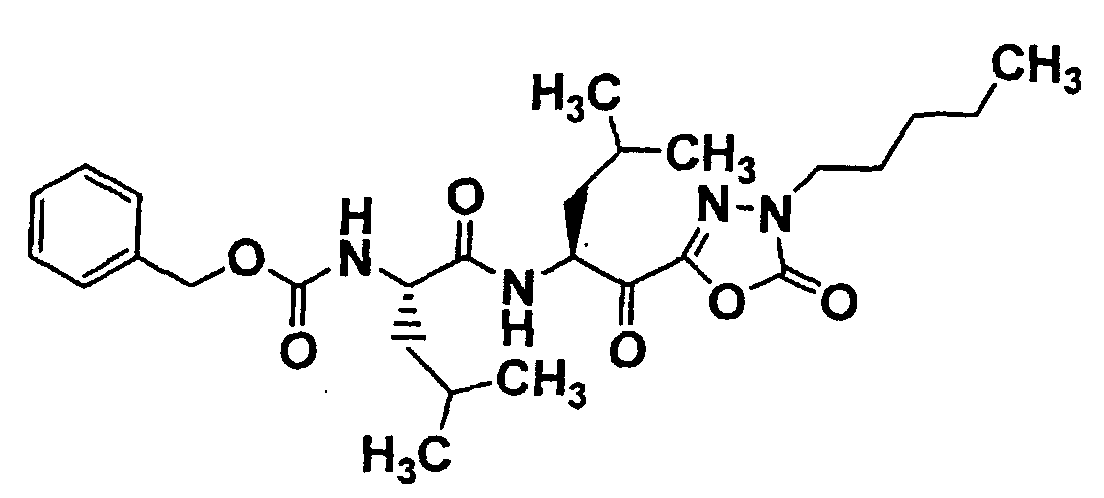
NMR (CDCl3): δ 7.35 (s, 5H), 6.63 and 6.43 (each brd, J = 8.0 Hz, totally 1H), 5.34 (m, 1H), 5.20-5.05 (m, 3H), 4.20 (m, 1H), 3.83 (m, 2H), 1.80 (quintet, J = 4.2 Hz, 2H), 1.73-1.30 (m, 10H), 1.00-0.88 (m, 15H).

NMR (CDCl3): δ 7.40-7.30 (m, 5H), 6.48 (d, J = 6.6 Hz, 1H), 5.42-5.32 (m, 1H), 5.18-5.03 (m, 3H), 4.48-4.39 (m, 1H), 4.28-4.17 (m, 1H), 1.78-1.40 (m, 6H), 1.43 (d, J = 6.6 Hz, 3H), 1.42 (d, J = 6.6 Hz, 3H), 1.00-0.93 (m, 12H).

NMR (CDCl3): δ 7.35 (m, 5H), 6.43 (m, 1H), 5.34 (m, 1H), 5.20-5.02 (m, 3H), 4.20 (m, 1H), 3.90 (q, J = 7.2 Hz, 2H), 1.78-1.45 (m, 6H), 1.43 (t, J = 7.2 Hz, 3H), 1.05-0.83 (m, 12H).
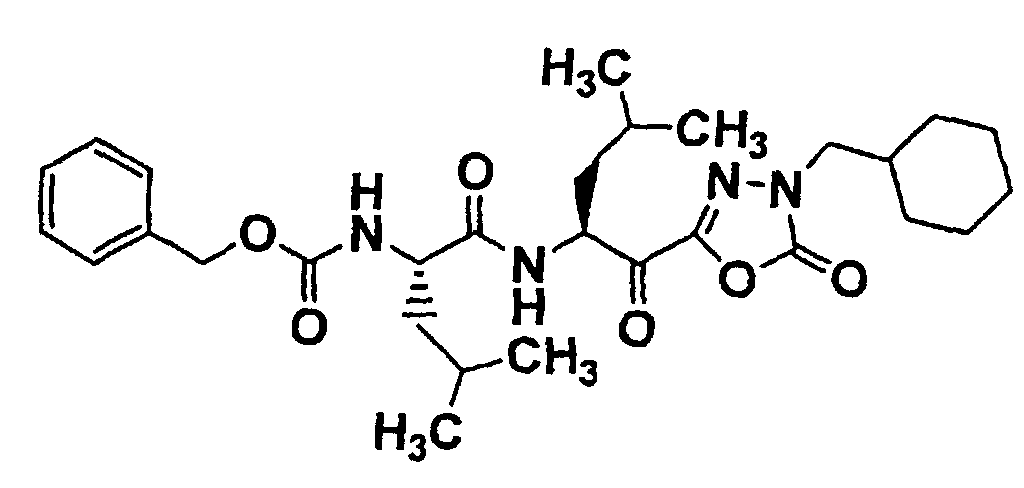
NMR (CDCl3): δ 7.35 (s, 5H), 6.62 and 6.46 (each brd, J = 8.2 Hz, totally 1H), 5.35 (m, 1H), 5.20-5.00 (m, 3H), 4.21 (m, 1H), 3.70 (dd, J = 12.3, 7.2 Hz, 1H), 3.65 (dd, J = 12.3, 7.2 Hz, 1H), 1.97-0.90 (m, 29H).

NMR (CDCl3): δ 7.40-7.30 (m, 5H), 6.45 (brd, J= 6.3 Hz, 1H), 5.40-5.30 (m, 1H), 5.18-5.07 (m, 3H), 4.27-4.15 (m, 1H), 4.04 (tt, J = 11.7, 3.9 Hz, 1H), 2.00-1.83 (m, 4H), 1.80-1.20 (m, 12H), 1.00-0.90 (m, 12H).

NMR (CDCl3) : δ 7.40-7.15 (m, 10H), 6.49 (brd, J= 7.5Hz, 1H), 5.38-5.28 (m, 1H), 5.18-5.02 (m, 3H), 4.27-4.13 (m, 1H), 3.86 (t, J = 7.5 Hz, 2H), 2.71 (t, J = 7.5 Hz, 2H), 2.15 (quintet, J= 7.5 Hz, 2H), 1.75-1.45 (m, 6H), 1.00-0.92 (m, 12H).

NMR (CDCl3): δ 7.36 and 7.35 (each s, totally 5H), 6.67 and 6.53 (brd, J = 7.8 Hz, totally1H), 5.40-5.00 (m, 6H), 4.30-4.10 (m, 1H), 3.72 and 3.71 (each t, J = 8.3 Hz, totally2H), 1.80-1.40 (m, 6H), 1.10-0.80 (m, 14H), 0.02 (s, 9H).

NMR (CDCl3): δ 7.40-7.18 (m, 10H), 6.50 (brd, J = 6.6 Hz, 1H), 5.29 (ddd, J = 9.9, 6.6, 4.5 Hz, 1H), 5.20-5.05 (m, 3H), 4.28-4.16 (m, 1H), 4.17-4.00 (m, 2H), 3.11 (t, J = 7.5 Hz, 2H), 1.70-1.40 (m, 6H), 1.00-0.85 (m, 12H).
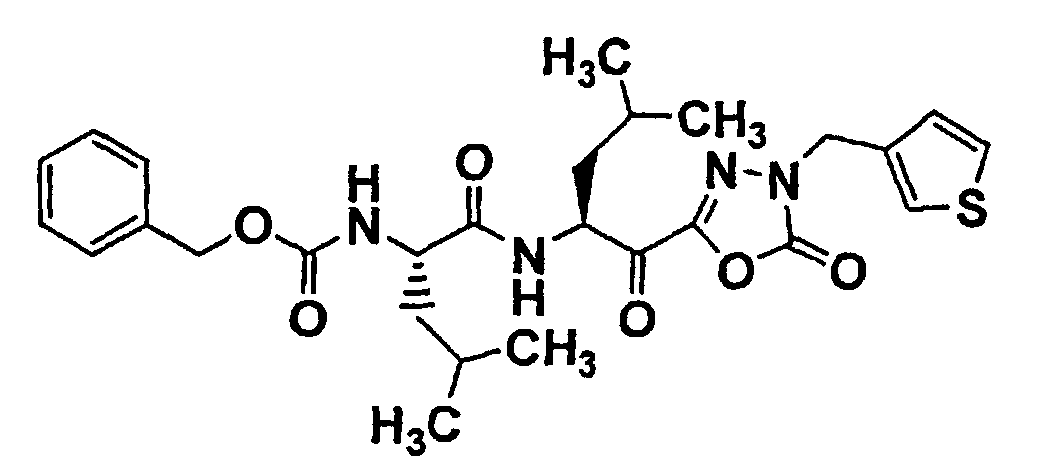
NMR (CDCl3): δ 7.40-7.25 (m, 7H), 7.11 (d, J = 4.8 Hz, 1H), 6.62 and 6.45 (each m, totally 1H), 5.30 (m, 1H), 5.20-4.80 (m, 5H), 4.20 (m, 1H), 1.78-1.40 (m, 6H), 1.03-0.84 (m, 12H).
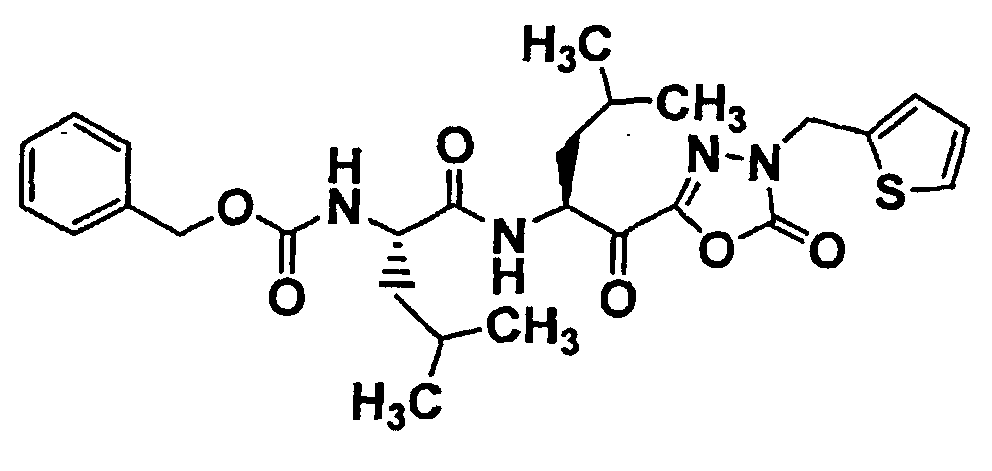
NMR (CDCl3): δ 7.40-7.26 (m, 6H), 7.15 (d, J = 3.3 Hz, 1H), 7.00 (dd, J = 4.8, 3.3 Hz, 1H), 6.60 and 6.43 (each m, totally 1H), 5.30 (m, 1H), 5.23-4.95 (m, 5H), 4.20 (m, 1H), 1.80-1.40 (m, 6H), 1.03-0.83 (m, 12H).

NMR (CDCl3): δ 7.40-7.30 (m, 5H), 6.52 (brd, J = 6.8 Hz, 1H), 5.41-5.30 (m, 1H), 5.10-5.02 (m, 3H), 4.30-4.12 (m, 1H), 3.76 (dd, J = 14.6, 7.2 Hz, 1H), 3.63 (dd, J = 14.6, 7.2 Hz, 1H), 1.80-1.42 (m, 6H), 1.36-1.18 (m, 1H), 1.03-0.82 (m, 12H), 0.70-0.60 (m, 2H), 0.48-0.38 (m, 2H).

NMR (CDCl3): δ 8.58 (d, J = 7.6 Hz, 1H), 7.72 (dt, J = 1.8, 7.6 Hz, 1H), 7.40-7.30 (m, 6H), 7.27 (t, J = 7.6 Hz, 1H), 6.62 (brd, J = 7.4 Hz, 1H), 5.30-5.20 (m, 2H), 5.18 (d, J = 15.0 Hz, 1H), 5.10 (d, J = 15.0 Hz, 1H), 5.11 (s, 2H), 4.30-4.10 (m, 1H), 1.90-1.40 (m, 6H), 0.98-0.82 (m, 12H).
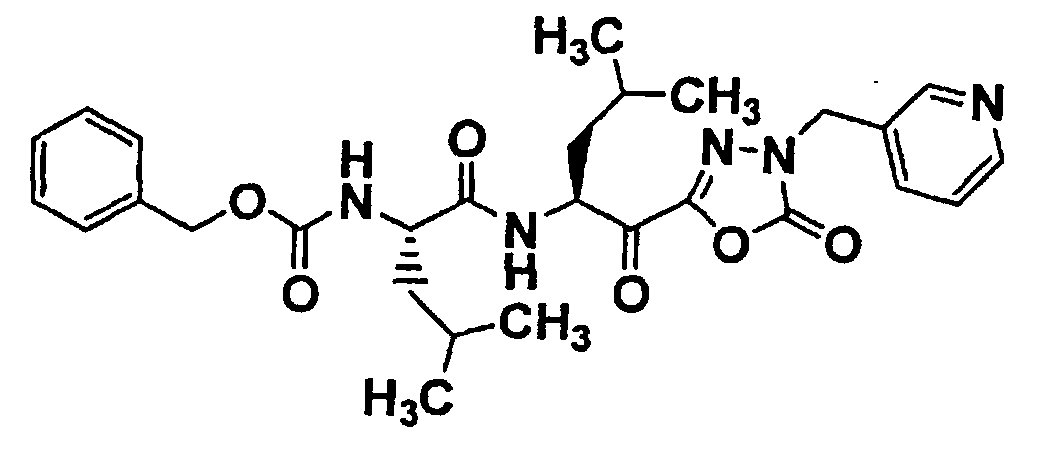
NMR (CDCl3): δ 8.69 (d, J = 1.8 Hz, 1H), 8.64 (dd, J = 7.8, 1.8 Hz, 1H), 7.77 (dt, J = 7.8, 1.8 Hz, 1H), 7.40-7.30 (m, 6H), 6.59 (brd, J = 7.0 Hz, 1H), 5.30-5.10 (m, 2H), 5.11 (s, 2H), 5.03 (d, J = 15.4 Hz, 1H), 4.95 (d, J = 15.4 Hz, 1H), 4.30-4.10 (m, 1H), 1.90-1.40 (m, 6H), 1.00-0.80 (m, 12H).

NMR (CDCl3): δ 8.66 (d, J = 6.0 Hz, 2H), 7.40-7.30 (m, 5H), 7.30 (d, J = 6.0 Hz, 2H), 6.58 (brd, J = 6.3 Hz, 1H), 5.30-5.20 (m, 1H), 5.20-5.10 (m, 1H), 5.13 (s, 2H), 5.02 (d, J = 15.6 Hz, 1H), 4.95 (d, J = 15.6 Hz, 1H), 4.25-4.16 (m, 1H), 1.70-1.40 (m, 6H), 1.00-0.85 (m, 12H).
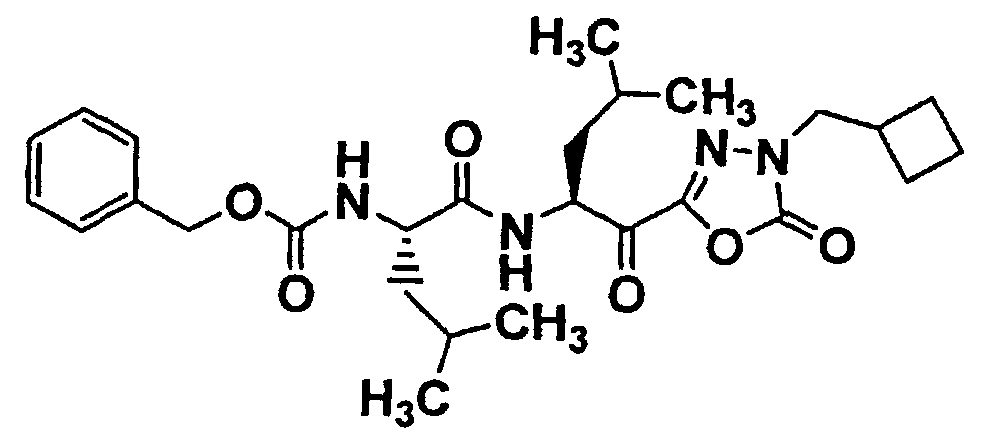
NMR (CDCl3) : δ 7.40-7.30 (m, 5H), 6.53 (brd, J = 7.2 Hz, 1H), 5.38-5.29 (m, 1H), 5.20-5.10 (m, 1H), 5.12 (s, 2H), 4.28-4.17 (m, 1H), 3.87 (dd, J = 14.1, 7.5 Hz, 1H), 3.84 (dd, J = 14.1, 7.5 Hz, 1H), 2.85-2.70 (m, 1H), 2.20-2.00 and 2.00-1.75 (each m, totally 6H), 1.70-1.40 (m, 6H), 1.00-0.85 (m, 12H).

NMR (CDCl3): δ 7.40-7.30 (m, 5H), 6.54 (brd, J = 7.2 Hz, 1H), 5.34 (ddd, J = 9.6, 7.2, 3.6 Hz, 1H), 5.20-5.05 (m, 1H), 5.11 (s, 2H), 4.30-4.15 (m, 1H), 3.79 (dd, J = 13.8, 7.8 Hz, 1H), 3.73 (dd, J = 13.8, 7.8 Hz, 1H), 2.43-2.30 (m, 1H), 1.85-1.25 (m, 14H), 1.00-0.82 (m, 12H).

NMR (CDCl3) : δ 5.88 (d, J= 7.8 Hz, 1H), 5.39 (m, 1H), 3.68 (dd, J=13.8, 6.9 Hz, 1H), 3.62 (dd, J = 13.8, 6.9 Hz, 1H), 2.12-2.10 and 1.90-1.20 (each m, totally 15H), 1.00-0.96 (m, 12H).
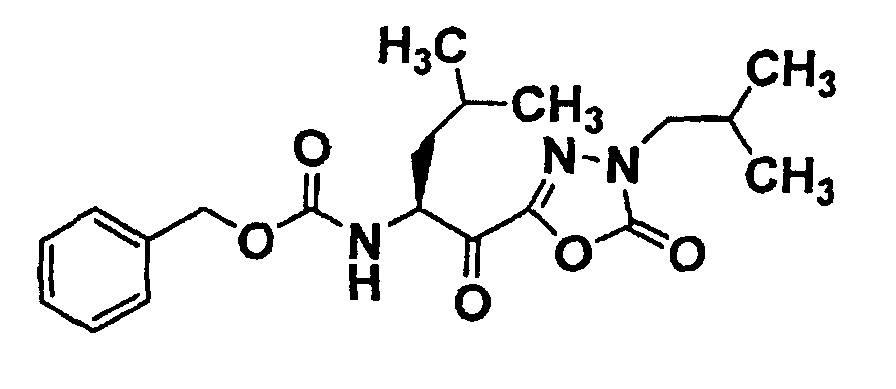
NMR (CDCl3): δ 7.35 (s, 5H), 5.21 (m, 2H), 5.10 (s, 2H), 3.65 (m, 2H), 2.09 (m, 1H), 1.84-1.43 (m, 3H), 1.08-0.90 (m, 12H).

NMR (CDCl3) : δ 7.83-7.74 (m, 2H), 7.52-7.37 (m, 3H), 7.17-7.12 (m, 1H), 6.23 and 6.17 (each d, each J = 7.0 and 7.6 Hz, totally 1H), 5.40-5.20 (m, 1H), 4.42-4.25 (m, 1H), 3.70-3.50 (m, 2H), 2.90- 2.78 (m, 1H), 2.23-1.25 (m, 12H), 1.00-0.82 (m, 12H).

NMR (CDCl3): δ 7.76 (d, J= 8.7 Hz, 2H), 7.45-7.30 (m, 5H), 7.00 (d, J = 8.7 Hz, 2H), 6.57 (d, J = 8.1 Hz, 1H), 5.57 (ddd, J = 9.3, 8.1, 3.9 Hz, 1H), 5.12 (s, 2H), 3.70 (dd, J = 14.1, 7.2 Hz, 1H), 3.63 (dd, J = 14.1, 7.2 Hz, 1H), 2.25-2.10 (m, 1H), 1.90-1.58 (m, 3H), 1.06-0.90 (m, 12H).
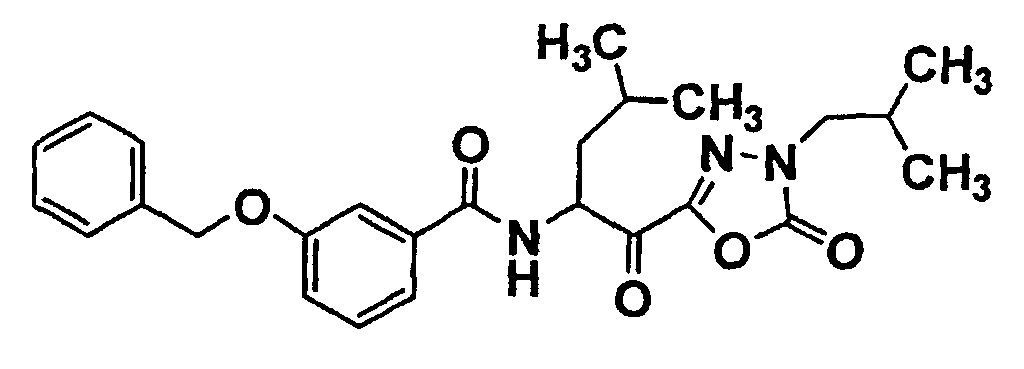
NMR (CDCl3): δ 7.47-7.30 (m, 8H), 7.18-7.10 (m, 1H), 6.63 (d, J = 7.8 Hz, 1H), 5.58 (ddd, J = 9.9, 7.8, 3.9 Hz, 1H), 5.10 (s, 2H), 3.70 (dd, J = 14.1, 7.2 Hz, 1H), 3.64 (dd, J = 14.1, 7.2 Hz, 1H), 2.25-2.10 (m, 1H), 1.87-1.58 (m, 3H), 1.05 (d, J = 6.0 and 6.6 Hz, 3H), 0.99 (d, J = 6.0 and 6.6 Hz, 9H).

NMR (CDCl3): δ 8.37 (d, J = 6.3 Hz, 1H), 8.17 (dd, J = 8.1, 1.8 Hz, 1H), 7.52 (dt, J = 1.8, 8.1 Hz, 1H), 7.55-7.38 (m, 5H), 7.12-7.08 (m, 2H), 5.36 (dt, J = 6.3, 3.9 Hz, 1H), 5.20 (d, J = 10.2 Hz, 1H), 5.16 (d, J = 10.2 Hz, 1H), 3.67 (dd, J = 13.8, 7.2 Hz, 1H), 3.60 (dd, J = 13.8, 7.2 Hz, 1H), 2.23-2.08 (m, 1H), 1.50-1.10 (m, 3H), 0.96 (d, J = 6.6 Hz, 3H), 0.95 (d, J = 6.6 Hz, 3H), 0.85 (d, J = 6.3 Hz, 3H), 0.70 (d, J = 6.3 Hz, 3H).
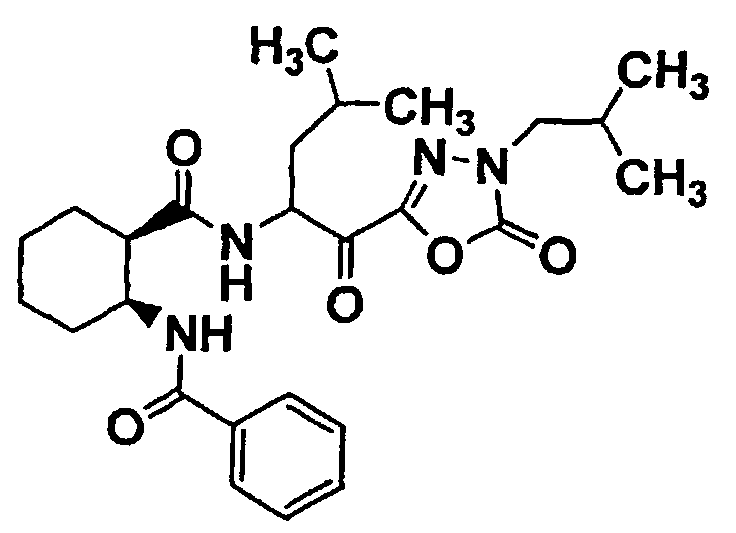
NMR (CDCl3): δ 7.83-7.74 (m, 2H), 7.50-7.37 (m, 3H), 7.15-7.11 (m, 1H), 6.25 and 6.19 (each d, each J = 7.8 Hz, totally 1H), 5.40-5.20 (m, 1H), 4.42-4.27 (m, 1H), 3.75- 3.53 (m, 2H), 2.90-2.79 (m, 1H), 2.22-1.38 (m, 12H), 1.01-0.90 (m, 6H), 0.88 (d, J = 5.8 Hz, 3H), 0.83 (d, J = 6.2 Hz, 3H).
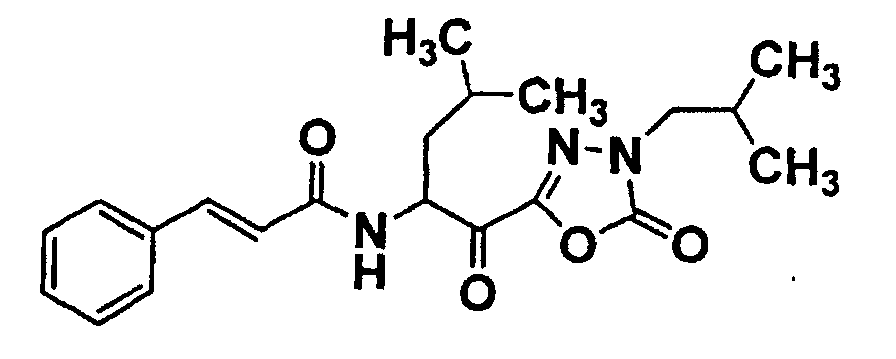
NMR (CDCl3): δ 7.64 (d, J = 15.6 Hz, 1H), 7.52-7.49 (m, 2H), 7.40-7.36 (m, 3H), 6.45 (d, J = 15.6 Hz, 1H), 6.13 (d, J = 8.1 Hz, 1H), 5.56 (ddd, J = 9.9, 8.1, 4.2 Hz, 1H), 3.70 (dd, J = 13.8, 7.2 Hz, 1H), 3.64 (dd, J = 13.8, 7.2 Hz, 1H), 2.28-2.13 (m, 1H), 1.83-1.52 (m, 3H), 1.05 (d, J = 6.0 Hz, 3H), 0.99 (d, J = 6.9 Hz, 6H), 0.98 (d, J = 6.3 Hz, 3H).

NMR (CDCl3): δ 5.30-5.10 (m, 2H), 3.84 (d, J = 6.6 Hz, 2H), 3.70 (dd, J = 13.8, 7.0 Hz, 1H), 3.63 (dd, J = 13.8, 7.0 Hz, 1H), 2.30-2.08 (m, 1H), 2.00-1.40 (m, 4H), 1.03-0.91 (m, 18H).
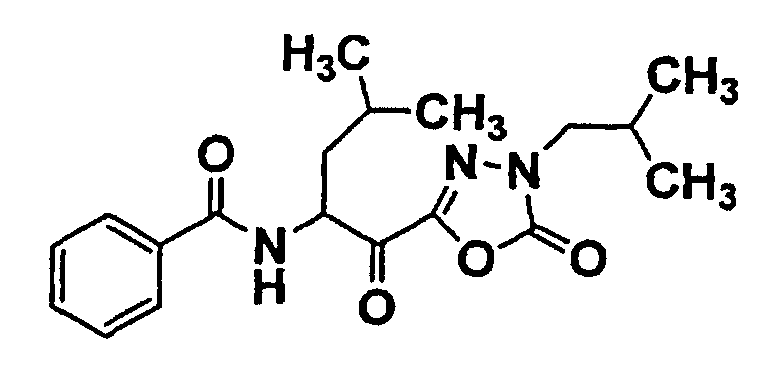
NMR (CDCl3) : δ 7.82-7.79 (m, 2H), 7.54 (tt, J = 7.2, 1.8 Hz, 1H), 7.48-7.43 (m, 2H), 6.59 (d, J = 7.8 Hz, 1H), 5.62 (ddd, J= 9.9, 7.8, 4.2 Hz, 1H), 3.70 (dd, J=13.8, 7.2 Hz, 1H), 3.64 (dd, J = 13.8, 7.2 Hz, 1H), 2.25-2.15 (m, 1H), 1.85-1.50 (m, 3H), 1.07 (d, J = 6.0 Hz, 3H), 1.00 (d, J = 6.0 Hz, 9H).
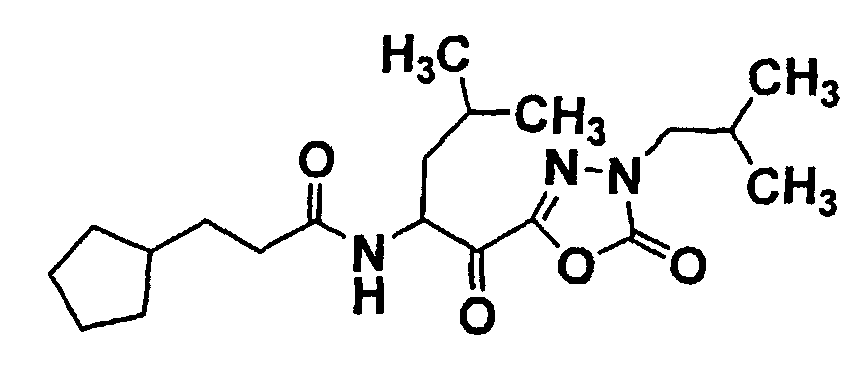
NMR (CDCl3) : δ 5.89 (d, J = 8.0 Hz, 1H), 5.41 (ddd, J = 10.0, 8.0, 4.0 Hz, 1H), 3.69 (dd, J = 14.0, 7.0 Hz, 1H), 3.63 (dd, J = 14.0, 7.0 Hz, 1H), 2.40-2.10 (m, 4H), 1.85-1.40 (m, 11H), 1.20-1.00 (m, 2H), 1.05-0.95 (m, 12H).
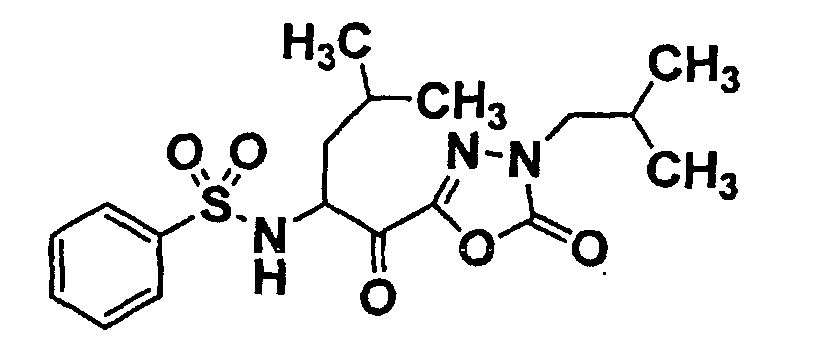
NMR (CDCl3): δ 7.82-7.78 (m, 2H), 7.55 (tt, J = 7.5, 1.8 Hz, 1H), 7.45 (t, J = 7.5 Hz, 2H), 5.32 (d, J = 10.2 Hz, 1H), 4.73 (ddd, J = 10.2, 7.8, 6.6 Hz, 1H), 3.66 (dd, J = 14.1, 7.2 Hz, 1H), 3.62 (dd, J = 14.1, 7.2 Hz, 1H), 2.25-2.10 (m, 1H), 1.92-1.78 (m, 1H), 1.46-1.42 (m, 2H), 0.99 (d, J = 6.6 Hz, 6H), 0.91 (d, J = 6.6 Hz, 3H), 0.90 (d, J = 6.6 Hz, 3H).
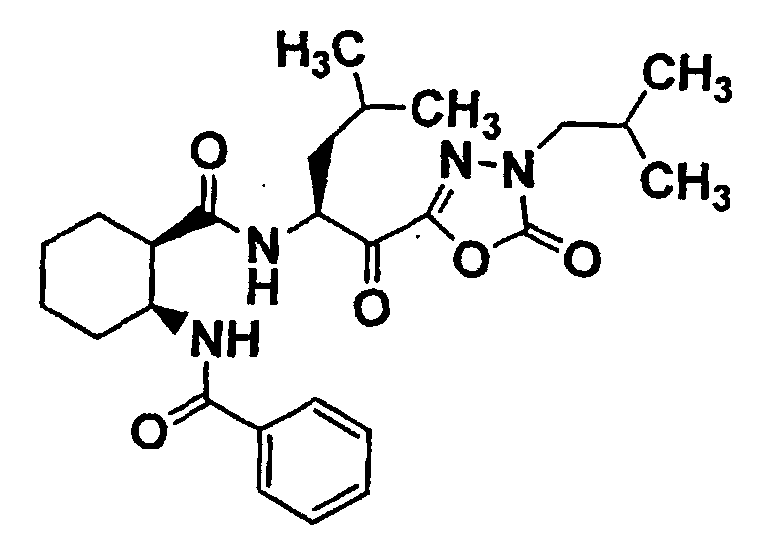
NMR (CDCl3): δ 7.77 (dd, J= 8.2, 1.6 Hz, 2H), 7.55-7.35 (m, 3H), 7.13 (d, J = 8.4 Hz, 1H), 6.18 (d, J=8.2Hz, 1H), 5.40-5.25 (m, 1H), 4.40-4.25 (m, 1H), 3.68 (dd, J = 16.5, 7.0 Hz, 1H), 3.63 (dd, J = 16.5, 7.0 Hz, 1H), 2.84 (q, J = 4.9 Hz, 1H), 2.35-1.35 (m, 12H), 0.98 (d, J = 6.6 Hz, 6H), 0.88 (d, J = 5.8 Hz, 3H), 0.83 (d, J = 6.2 Hz, 3H).

NMR (CDCl3): δ 11.80 (s, 1H), 8.83 (d, J = 8.4 Hz, 1H), 7.99 (dd, J = 7.7, 1.9 Hz, 2H), 7.65-7.45 (m, 5H), 7.15 (t, J = 7.7 Hz, 1H), 6.76 (d, J= 7.6 Hz, 1H), 5.65-5.50 (m, 1H), 3.71 (dd, J = 13.9, 7.1 Hz, 1H), 3.67 (dd, J = 13.9, 7.4 Hz, 1H), 2.30-2.10 (m, 1H), 1.90-1.50 (m, 3H), 1.08 (d, J = 5.8 Hz, 3H), 1.05-0.95 (m, 9H).

NMR (CDCl3): δ 7.55-7.30 (m, 5H), 7.25-7.10 (m, 1H), 5.40-5.20 (m, 2H), 3.80-3.45 (m, 3H), 3.10-2.90 (m, 1H), 2.35-2.10 (m, 2H), 1.90-1.40 (m, 6H), 1.10-0.85 (m, 14H).
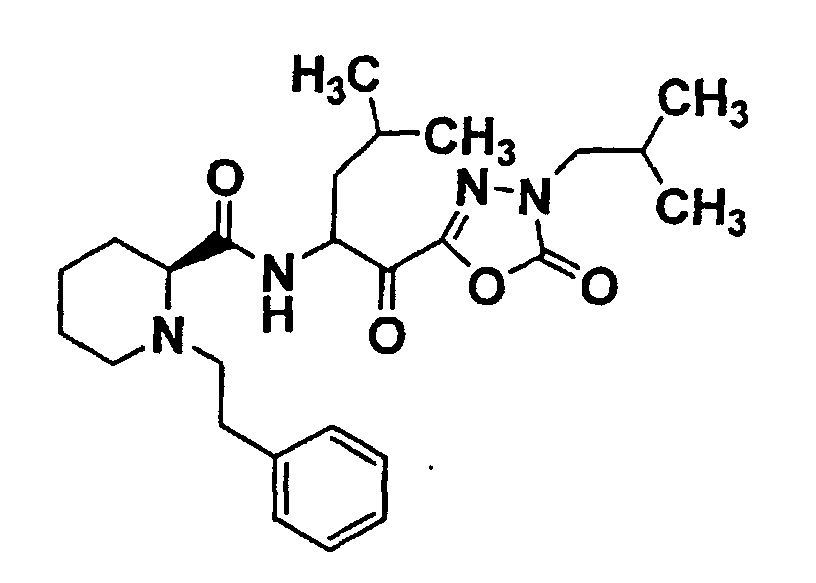
NMR (CDCl3): δ 7.40-7.10 (m, 5H), 7.03 and 6.78 (each br, totally1H), 5.30-5.10 (m, 1H), 3.66 (d, J = 13.8 Hz, 1H), 3.62 and 3.61 (each d, J = 13.8 Hz, totally1H), 3.45-3.20 (m, 1H), 3.10-2.70 (m, 4H), 2.70-1.10 (m, 12H), 1.05-0.80 (m, 12H).

NMR (CDCl3): δ 7.45-7.15 (m, 6H), 5.45-5.30 (m, 1H), 3.98 and 3.89 (each d, J = 13.4 and 14.0 Hz, totally1H), 3.75-3.55 (m, 2H), 3.29 and 3.17 (each d, J = 14.0 and 13.4 Hz, totally1H), 3.00-2.80 (m, 2H), 2.25-1.20 (m, 11H), 1.05-0.75 (m, 12H).

NMR (CDCl3): δ 8.00-7.90 (m, 2H), 7.70-7.30 (m, 4H), 5.25-5.10 (m, 1H), 4.15 and 3.98 (each d, J = 18.0 Hz, totally 1H), 3.90 (d, J = 18.0 Hz, 1H), 3.75-3.50 (m, 2H), 3.20-3.00 (m, 2H), 2.25-1.20 (m, 11H), 1.05-0.70 (m, 12H).

NMR (CDCl3) : δ 7.40-7.20 (m, 5H), 6.58 and 6.52 (each d, J = 7.4 Hz, totally 1H), 5.35-5.05 (m, 2H), 3.95-3.75 (m, 3H), 3.67 (dd, J = 14.0, 6.9 Hz, 1H), 3.61 (dd, J = 14.0, 7.2 Hz, 1H), 3.15-2.90 (m, 1H), 2.30-2.00 (m, 2H), 2.00-1.10 (m, 8H), 1.05-0.80 (m, 12H).
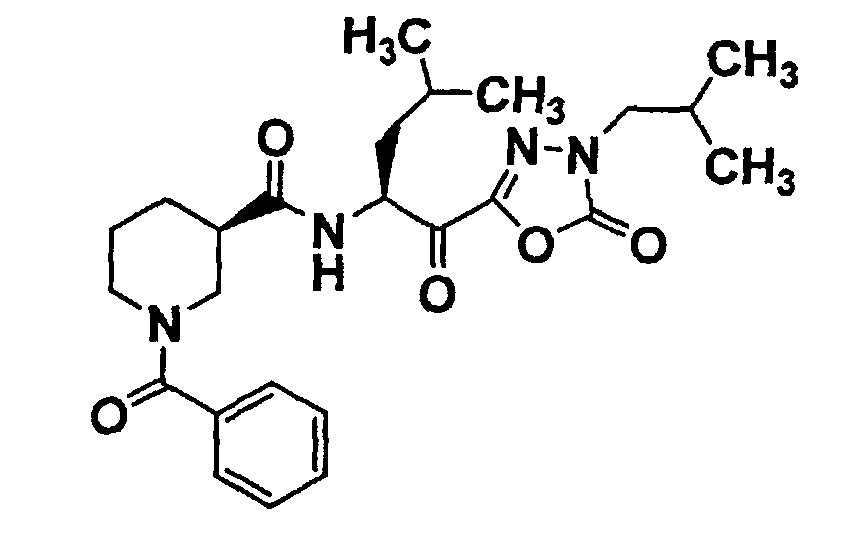
NMR (CDCl3) : δ 7.50-7.30 (m, 5H), 6.97 (br, 1H), 5.34 (br, 1H), 4.30-4.10 (br, 1H), 3.68 (dd, J = 14.0, 7.0 Hz, 1H), 3.63 (dd, J = 14.0, 7.0 Hz, 1H), 3.65-3.45 (m, 2H), 3.29 (br, 1H), 2.54 (br, 1H), 2.30-1.30 (m, 8H), 0.99 (d, J= 6.6 Hz, 12H).
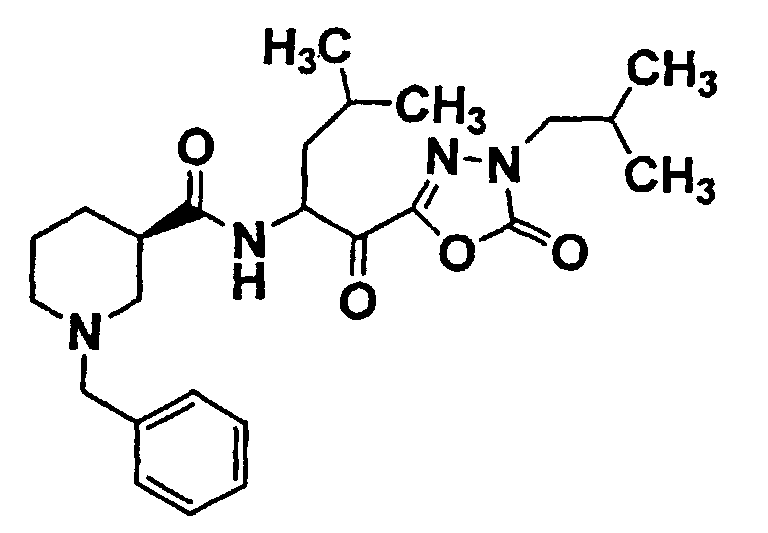
NMR (CDCl3): δ 8.84 and 8.68 (each br, totally 1H), 7.45-7.20 (m, 5H), 5.42-5.26 (m, 1H), 3.75-3.35 (m, 4H), 3.10-2.70 (m, 2H), 2.60-2.45 (m, 1H), 2.40-1.40 (m, 10H), 1.05-0.80 (m, 12H).

NMR (CDCl3): δ 7.40-7.10 (m, 6H), 5.45-5.30 (m, 1H), 3.68 (dd, J = 13.8, 7.2 Hz, 1H), 3.64 (dd, J = 13.8, 7.2 Hz, 1H), 3.20-3.05 (m, 1H), 2.85-2.50 (m, 4H), 2.30-1.20 (m, 14H), 1.05-0.90 (m, 12H).

NMR (CDCl3) : δ 7.30-7.10 (m, 5H), 6.74 (d, J = 7.2 Hz, 1H), 5.25-5.10 (m, 1H), 3.66 (dd, J = 13.9, 7.0 Hz, 1H), 3.61 (dd, J = 13.9, 7.2 Hz, 1H), 3.40-3.25 (m, 1H), 3.05-2.70 (m, 4H), 2.45-1.10 (m, 12H), 1.05-0.85 (m, 12H).
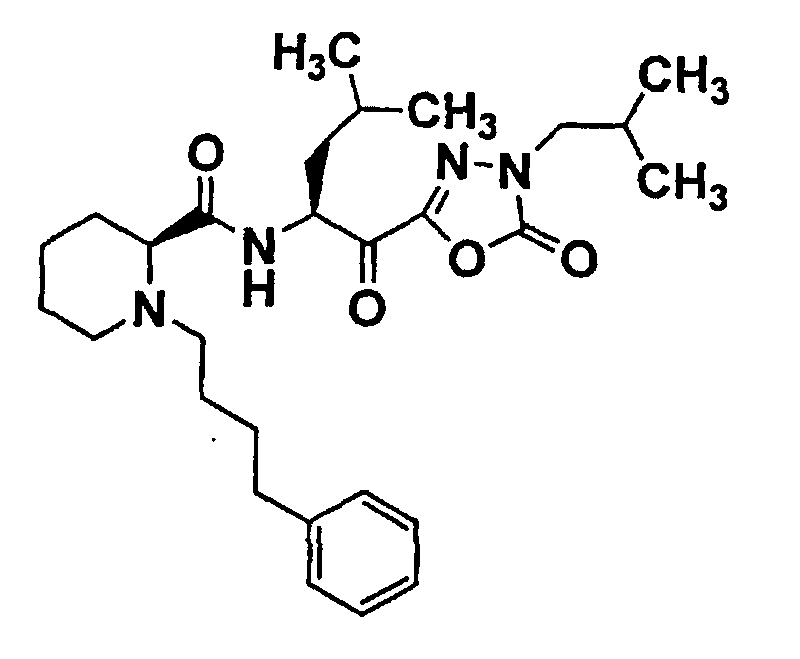
NMR (CDCl3): δ 7.35-7.10 (m, 6H), 5.40-5.25 (m, 1H), 3.67 (dd, J = 13.9, 7.0 Hz, 1H), 3.63 (dd, J = 13.9, 7.0 Hz, 1H), 3.15-3.00 (m, 1H), 2.80-2.40 (m, 4H), 2.30-1.20 (m, 16H), 1.05-0.85 (m, 12H).

NMR (CDCl3): δ 7.70-7.50 (m, 1H), 7.45-7.30 (m, 5H), 5.30-5.15 (m, 1H), 4.72 and 4.68 (each d, J = 11.4 and 11.0 Hz, totally 1H), 4.55 and 4.46 (each d, J = 11.0 and 11.4 Hz, totally 1H), 3.95-3.80 (m, 1H), 3.75-3.50 (m, 2H), 2.70-2.45 (m, 1H), 2.30-1.15 (m, 12H), 0.97, 0.88, 0.77 and 0.76 (each d, J = 7.0, 6.2, 6.4 and 5.8 Hz, totally 12H).

TLC : Rf 0.31 (n-hexane : ethyl acetate = 1 : 1);
NMR (CDCl3): δ 11.80 (br, 1H), 5.28 and 5.09 (each br, totally 1H), 5.00-4.40 (m, 2H), 4.20-3.90 (m, 1H), 2.00-1.20 (m, 3H), 1.47 and 1.43 (each s, totally 9H), 1.05-0.85 (m, 6H).
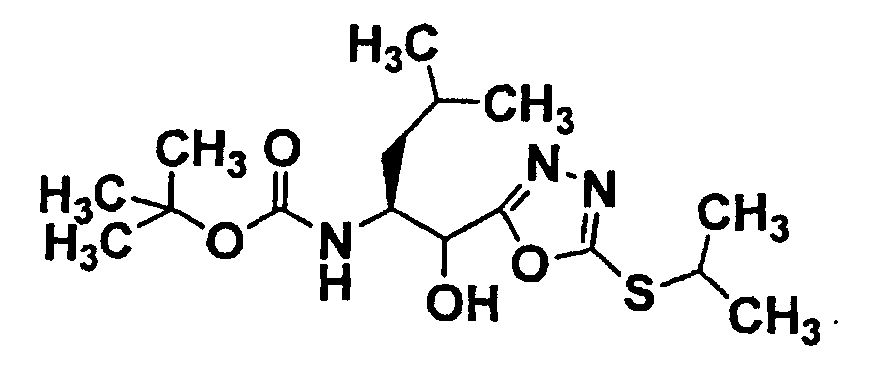
TLC : Rf 0.59 (n-hexane : ethyl acetate = 1 : 1);
NMR (CDCl3) : δ 4.95-4.75 (m, 2H), 4.61 (d, J = 6.6 Hz, 0.5 H), 4.20-3.80 (m, 2.5H), 1.80-1.20 (m, 3H), 1.49 (d, J = 6.9 Hz, 3H), 1.48 (d, J = 6.6 Hz, 3H), 1.45 and 1.38 (each s, totally 9H), 1.00-0.90 (m, 6H).
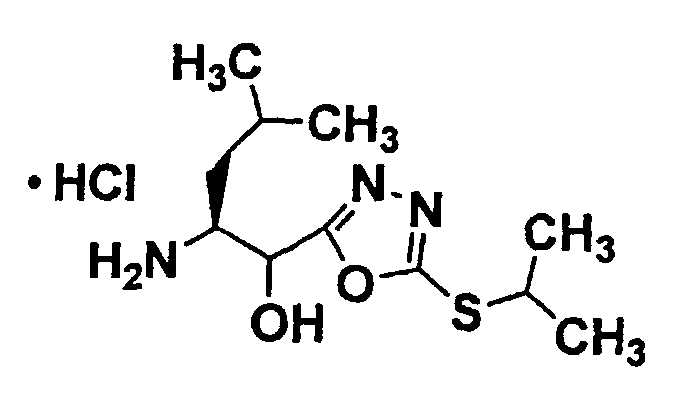
TLC : Rf 0.33 (chloroform : methanol = 9 : 1).

TLC : Rf 0.51 (n-hexane : ethyl acetate = 1 : 1);
NMR (CDCl3): δ 7.40-7.25 (m, 5H), 6.85 and 6.66 (each d, J = 9.2 and 8.0 Hz, totally 1H), 5.27 (d, J = 7.4 Hz, 1H), 5.15-4.00 (m, 6H), 3.95-3.75 (m, 1H), 1.80-1.20 (m, 12H), 1.00-0.75 (m, 12H).
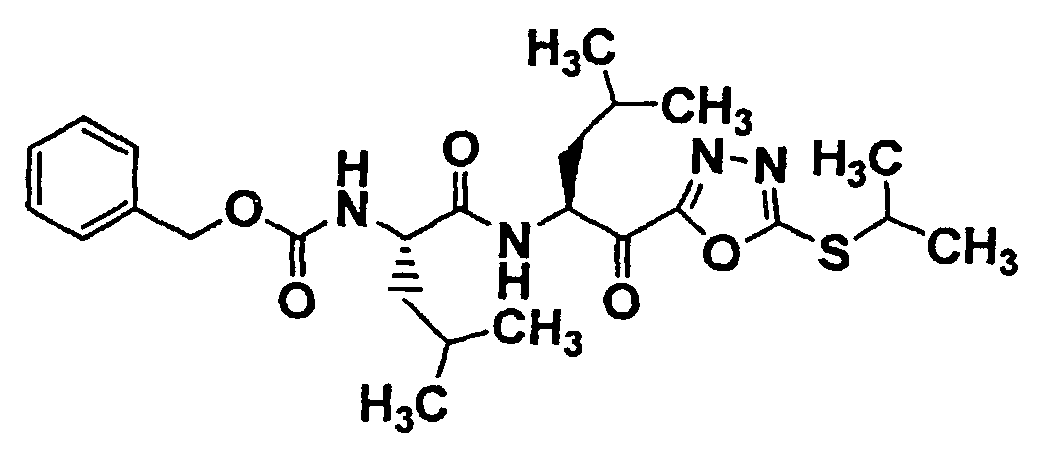
TLC : Rf 0.56 (n-hexane : ethyl acetate = 2 : 1);
NMR (CDCl3): δ 7.35 (s, 5H), 6.63 (d, J = 7.2 Hz, 1H), 5.50-5.35 (m, 1H), 5.20-5.05 (m, 3H), 4.30-4.10 (m, 1H), 4.04 (septet, J = 6.6 Hz, 1H), 1.90-1.40 (m, 6H), 1.54 (d, J = 6.6 Hz, 6H), 1.05-0.80 (m, 12H).

NMR (CDCl3): δ 7.77 (dd, J = 7.9, 1.7 Hz, 2H), 7.55-7.35 (m, 3H), 7.20 (d, J = 8.0 Hz, 1H), 6.29 (d, J = 7.6 Hz, 1H), 5.50-5.35 (m, 1H), 4.40-4.25 (m, 1H), 4.04 (septet, J = 6.8 Hz, 1H), 2.87 (q, J = 5.0 Hz, 1H), 2.20-1.30 (m, 11H), 1.54 (d, J = 6.8 Hz, 1H), 0.91 (d, J = 6.2 Hz, 3H), 0.85 (d, J = 6.2 Hz, 3H).

NMR (CDCl3 ) : δ 7.35 (s, 5H), 6.65 (d, J= 8.4 Hz, 1H), 5.50-5.35 (m, 1H), 5.20-5.02 (m, 3H), 4.30-4.15 (m, 1H), 2.79 (s, 3H), 1.90-1.40 (m, 6H), 1.10-0.85 (m, 12H).
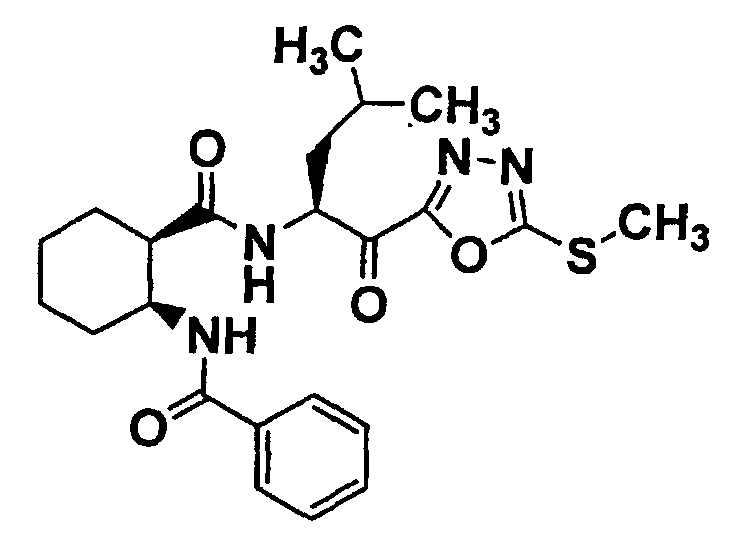
NMR (CDCl3): δ 7.85-7.70 (m, 2H), 7.55-7.35 (m, 3H), 7.19 (d, J = 8.4 Hz, 1H), 6.29 (d, J = 7.6 Hz, 1H), 5.50-5.35 (m, 1H), 4.40-4.25 (m, 1H), 2.87 (q, J = 5.0 Hz, 1H), 2.79 (s, 3H), 2.20-1.40 (m, 11H), 0.91 (d, J = 6.2 Hz, 3H), 0.85 (d, J = 6.2 Hz, 3H).
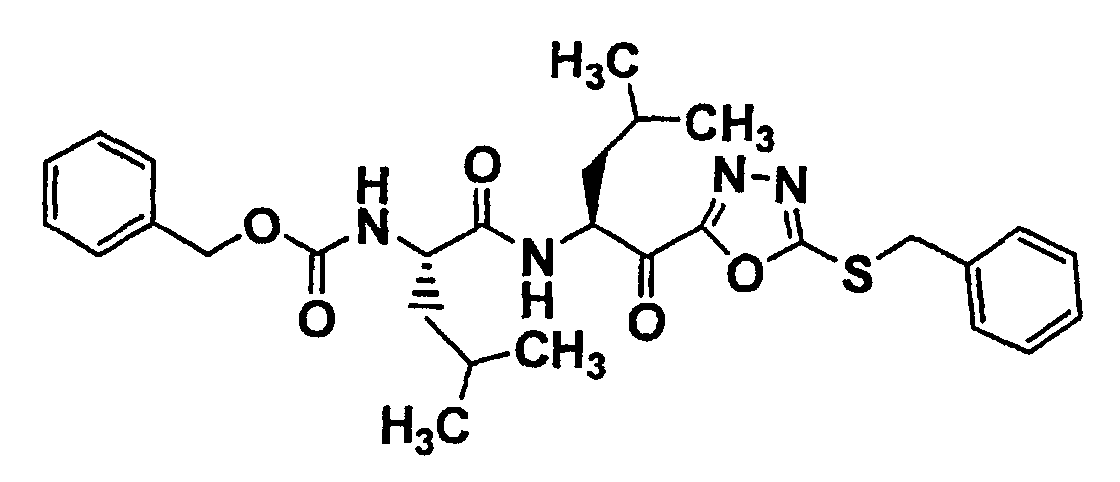
NMR (CDCl3): δ 7.50-7.25 (m, 10H), 6.64 (d, J = 7.4 Hz, 1H), 5.50-5.35 (m, 1H), 5.20-5.00 (m, 3H), 4.55 (s, 2H), 4.30-4.15 (m, 1H), 1.90-1.40 (m, 6H), 1.05-0.80 (m, 12H).
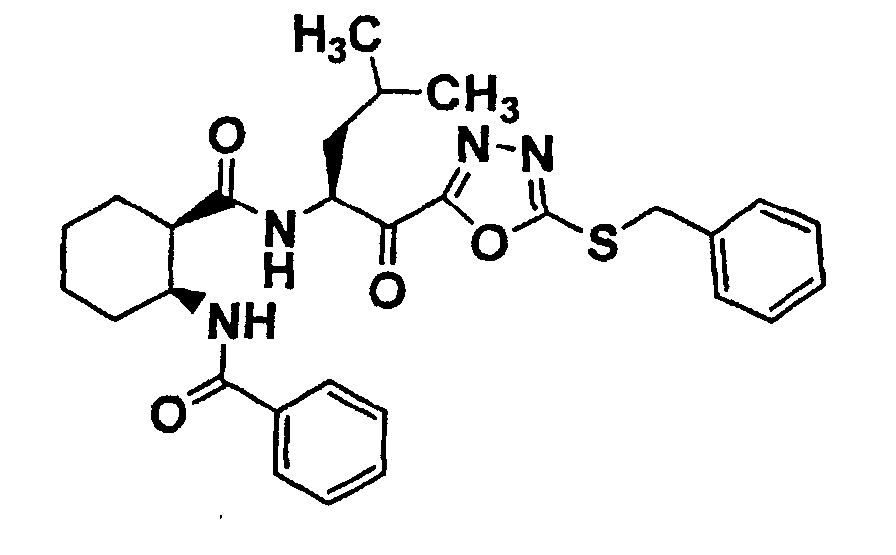
NMR (CDCl3): δ 7.76 (dd, J = 8.2, 1.8 Hz, 2H), 7.60-7.30 (m, 8H), 7.19 (d, J = 8.0 Hz, 1H), 6.27 (d, J = 7.6 Hz, 1H), 5.50-5.30 (m, 1H), 4.55 (s, 2H), 4.40-4.25 (m, 1H), 2.86 (q, J = 5.0 Hz, 1H), 2.20-1.30 (m, 11H), 0.90 (d, J = 6.2 Hz, 3H), 0.85 (d, J = 6.2 Hz, 3H).
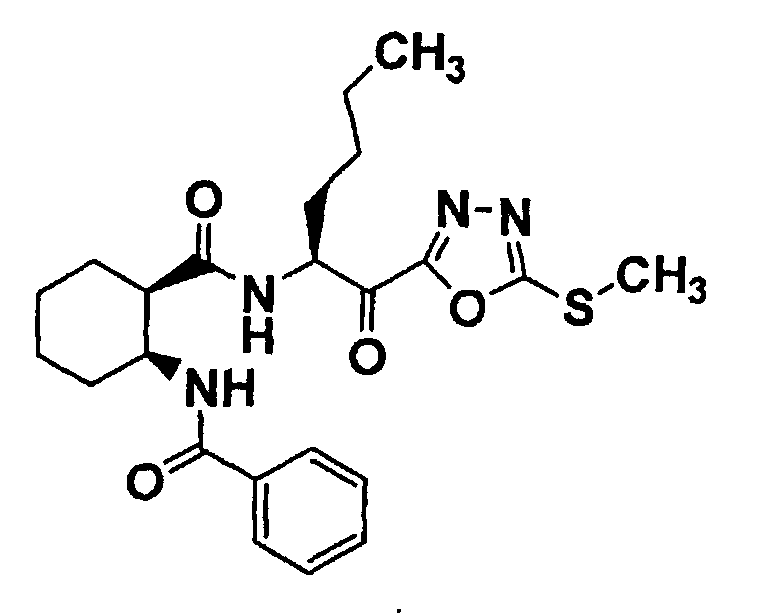
NMR (CDCl3) : δ 7.76 (d, J = 6.9 Hz, 2H), 7.53-7.36 (m, 3H), 7.26 (brd, J = 8.7 Hz, 1H), 6.39 (brd, J = 8.4 Hz, 1H), 5.37 (ddd, J= 8.4, 6.6, 4.8 Hz, 1H), 4.33 (m, 1H), 2.83 (m, 1H), 2.80 (s, 3H), 2.20-1.18 (m, 14H), 0.77 (t, J = 6.9 Hz, 3H).
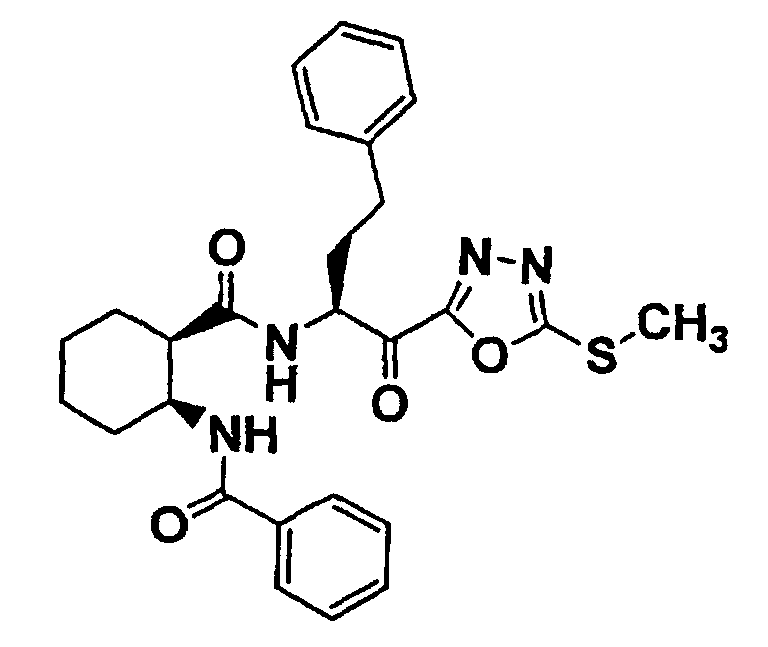
NMR (CDCl3): δ 7.77 (dd, J = 8.0, 1.5 Hz, 2H), 7.55-7.00 (m, 9H), 6.41 (d, J = 7.2 Hz, 1H), 5.40 (brd, J = 7.7, 4.4 Hz, 1H), 4.40-4.15 (m, 1H), 2.80-2.60 (m, 6H), 2.50-1.40 (m, 10H).
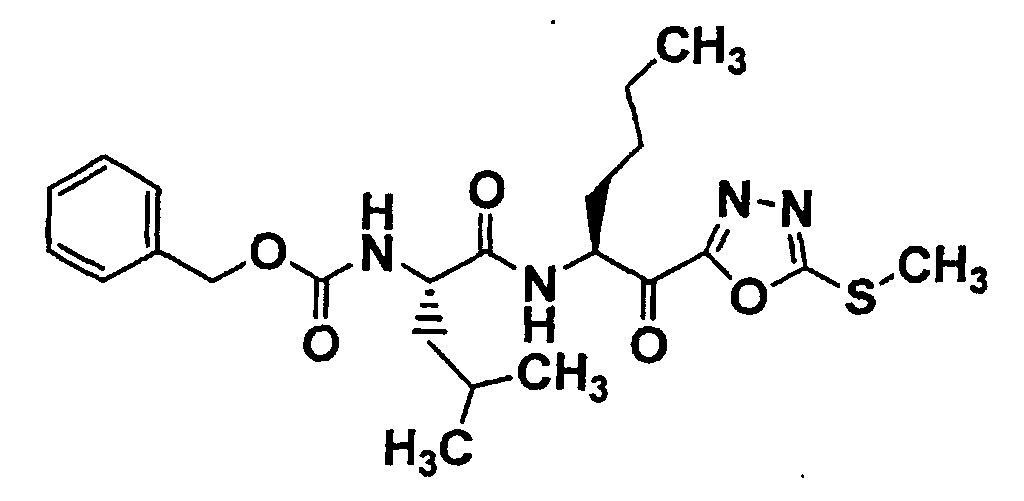
NMR (CDCl3): δ 7.35 (s, 5H), 6.84 and 6.71 (each brd, J = 6.6 Hz, totally 1H), 5.40 (m, 1H), 5.20-5.08 (m, 3H), 4.22 (m, 1H), 2.79 (s, 3H), 2.02 (m, 1H), 1.82-1.22 (m, 8H), 1.02-0.82 (m, 9H).
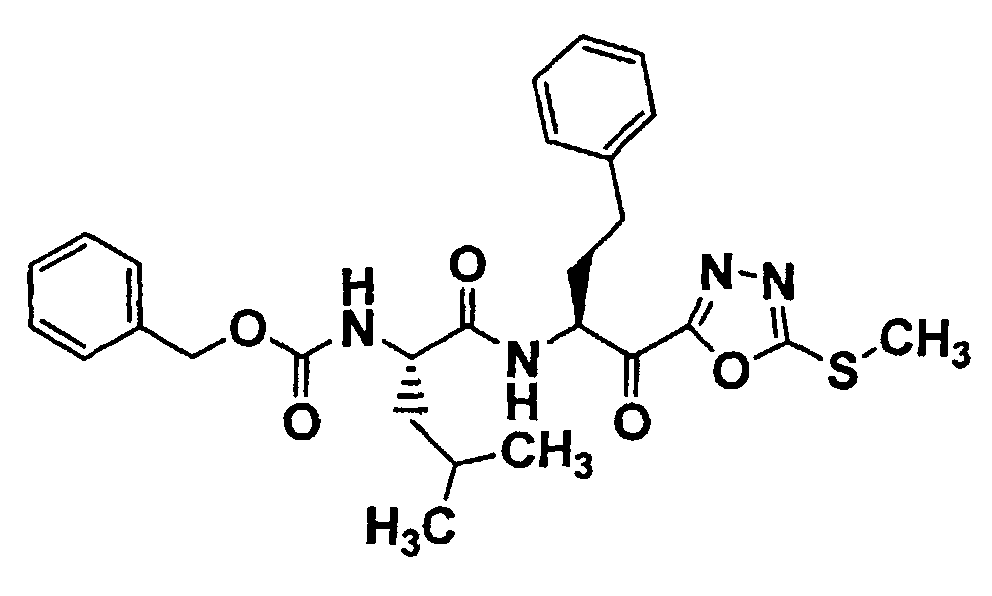
NMR (CDCl3): δ 7.40-7.10 (m, 10H), 6.80 (brd, J = 6.6 Hz, 1H), 5.42 (dt, J = 7.8, 4.6 Hz, 1H), 5.20-5.00 (m, 3H), 4.30-4.10 (m, 1H), 2.78 (s, 3H), 2.71 (t, J = 7.5Hz, 2H), 2.55-2.00 (m, 2H), 1.80-1.30 (m, 3H), 1.00-0.80 (m, 6H).

TLC : Rf 0.53 (n-hexane : ethyl acetate = 1 : 1);
NMR (CDCl3) : δ 7.77 (dd, J = 7.8, 1.6 Hz, 2H), 7.55-7.35 (m, 3H), 7.13 (d, J = 8.0 Hz, 1H), 6.22 (d, J=7.8 Hz, 1H), 5.45-5.30 (m, 1H), 4.40-4.25 (m, 1H), 3.76 (dd, J = 14.6, 7.1 Hz, 1H), 3.63 (dd, J = 14.6, 7.3 Hz, 1H), 2.85 (q, J = 5.1 Hz, 1H), 2.20-1.10 (m, 12H), 0.89 (d, J = 5.8 Hz, 3H), 0.84 (d, J = 6.2 Hz, 3H), 0.70-0.35 (m, 4H).
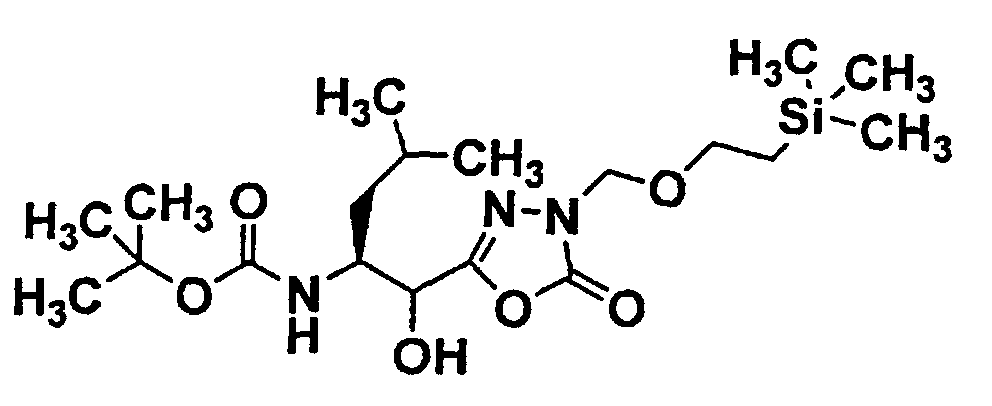
TLC : Rf 0.74 (n-hexane : ethyl acetate = 1 : 1);
NMR (CDCl3): δ 5.15-5.00 (m, 2H), 4.80-4.50 (m, 3H), 4.20-3.80 (m, 1H), 3.67 (t, J = 7.1 Hz, 2H), 1.80-1.20 (m, 3H), 1.46 and 1.42 (each s, totally 9H), 1.05-0.85 (m, 8H), 0.01 (s, 9H).
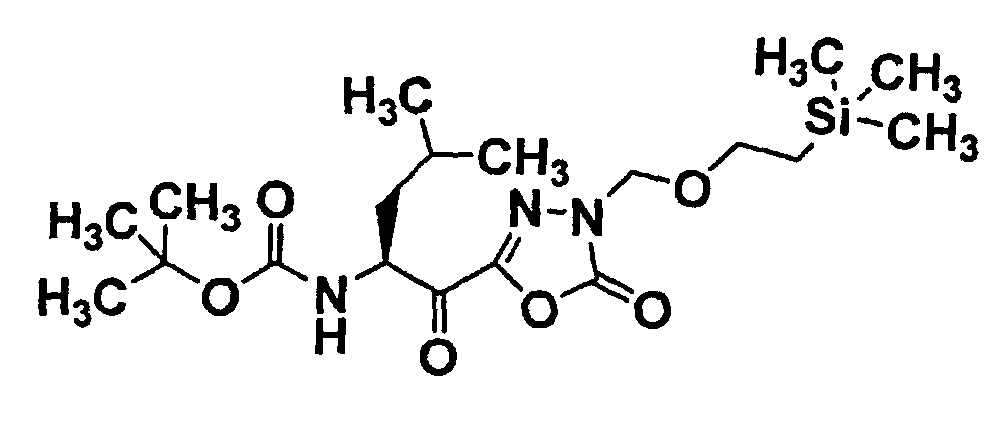
TLC : Rf 0.57 (n-hexane : ethyl acetate = 7 : 3);
NMR (CDCl3): δ 5.23 (d, J = 11.6 Hz, 1H), 5.18 (d, J = 11.6 Hz, 1H), 5.15-4.90 (m, 2H), 3.75-3.65 (m, 2H), 1.90-1.40 (m, 3H), 1.43 (s, 9H), 1.02 (d, J = 6.4 Hz, 3H), 1.02-0.90 (m, 2H), 0.97 (d, J = 6.6 Hz, 3H), 0.02 (s, 9H).
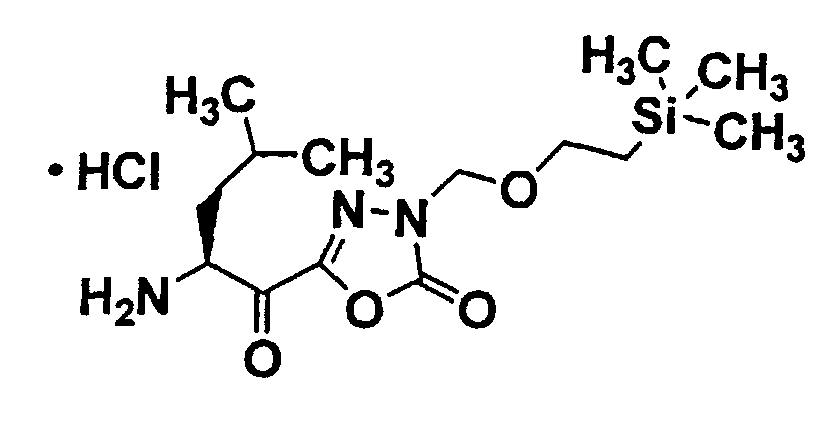
TLC : Rf 0.48 (chloroform : methanol = 9 : 1).
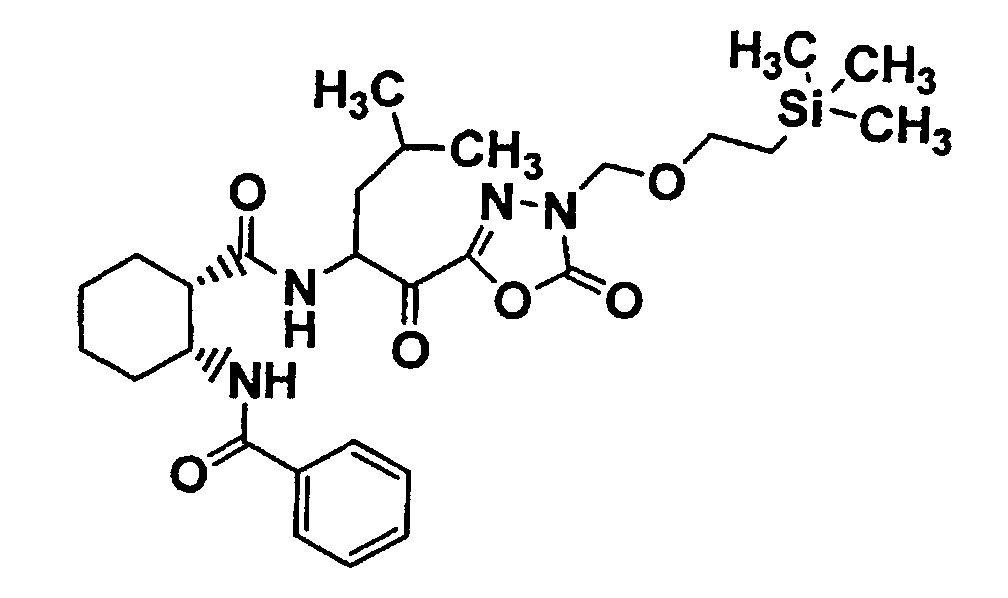

TLC : Rf 0.46 (chloroform : methanol = 9 : 1);
NMR (CDCl3) : δ 7.80-7.65 (m, 2H), 7.60-7.35 (m, 3H), 7.07 and 6.96 (each d, J = 7.2 Hz, totally 1H), 6.55-6.30 (m, 1H), 5.31 and 5.25 (each d, J = 11.4 Hz, totally 1H), 5.15 (d, J = 11.4 Hz, 1H), 5.10-4.90 (m, 1H), 4.40-4.25 (m, 1H), 2.83 (q, J = 4.9 Hz, 1H), 2.15-1.30 (m, 11H), 1.00-0.80 (m, 6H).
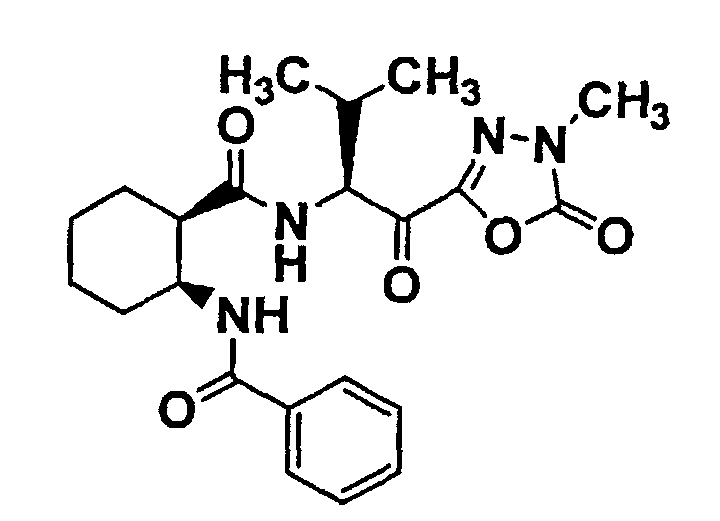
NMR (CDCl3) : δ 7.77 (d, J = 8.0 Hz, 2H), 7.51-7.39 (m, 3H), 7.17 (d, J = 7.0 Hz, 1H), 6.23 (d, J = 8.4 Hz, 1H), 5.24 (dd, J = 8.4, 5.0 Hz, 1H), 4.36-4.30 (m, 1H), 3.55 (s, 3H), 2.84 (dt, J = 5.0, 5.5Hz, 1H), 2.27-2.18 (m, 1H), 2.10-2.03 and 1.95-1.80 (each m, totally 3H), 1.70-1.65 and 1.52-1.50 (each m, totally 5H), 0.95 (d, J = 7.0 Hz, 3H), 0.83 (d, J = 7.0 Hz, 3H).

NMR (CDCl3) : δ 7.76 (d, J= 7.5 Hz, 2H), 7.51-7.39 (m, 3H), 7.19 (d, J = 8.0 Hz, 1H), 6.24 (d, J = 8.5 Hz, 1H), 5.27 (dd, J = 8.5, 5.0 Hz, 1H), 4.38-4.31 (m, 1H), 3.84 (t, J = 7.5 Hz, 2H), 2.84 (dt, J = 6.0, 4.7 Hz, 1H), 2.28-2.18 (m, 1H), 2.10-2.04 and 1.95-1.66 (each m, totally 5H), 1.54-1.32 (m, 7H), 0.97 (t, J = 7.5 Hz, 3H), 0.94 (d, J = 7.0 Hz, 3H), 0.82 (d, J = 7.0 Hz, 3H).

NMR (CDCl3) : δ 7.79 (m, 2H), 7.52-7.38 (m, 3H), 7.19 (brd, J = 7.8 Hz, 1H), 6.28 (brd, J = 7.5 Hz, 1H), 5.27 (m, 1H), 4.33 (m, 1H), 3.67 (dd, J = 13.8, 7.2 Hz, 1H), 3.62 (dd, J = 13.8, 7.2 Hz, 1H), 2.83 (m, 1H), 2.22-1.05 (m, 15H), 0.98 (m, 6H), 0.77 (m, 3H).
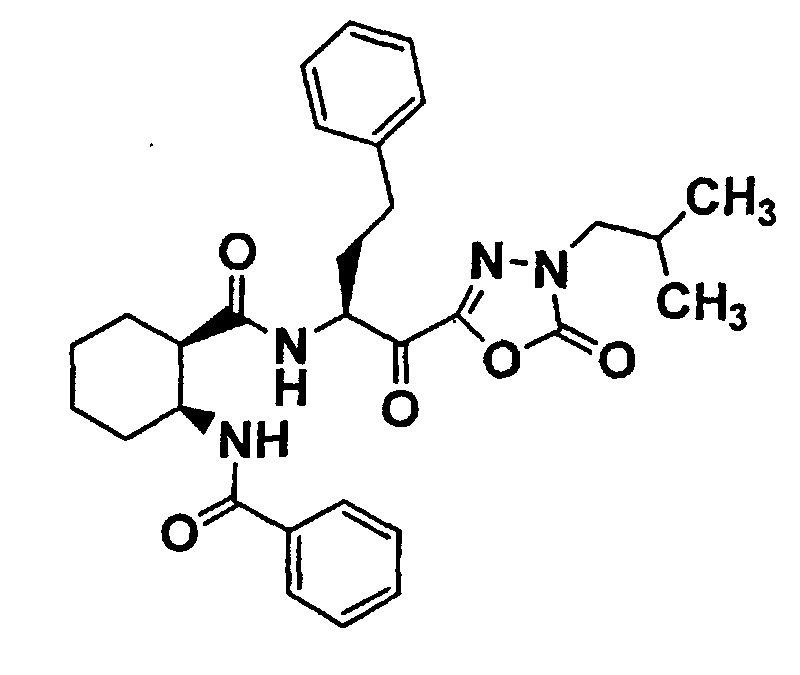
NMR (CDCl3): δ 7.77 (dd, J = 7.8, 1.6 Hz, 2H), 7.55-7.30 (m, 3H), 7.30-7.10 (m, 4H), 7.10-7.00 (m, 2H), 6.34 (d, J = 7.4 Hz, 1H), 5.31 (dt, J = 4.4, 8.0 Hz, 1H), 4.45-4.25 (m, 1H), 3.61 (d, J = 7.2 Hz, 2H), 2.76 (q, J = 4.9 Hz), 2.63 (t, J = 7.3 Hz, 2H), 2.15-1.30 (m, 11H), 0.97 (d, J = 7.0 Hz, 6H).
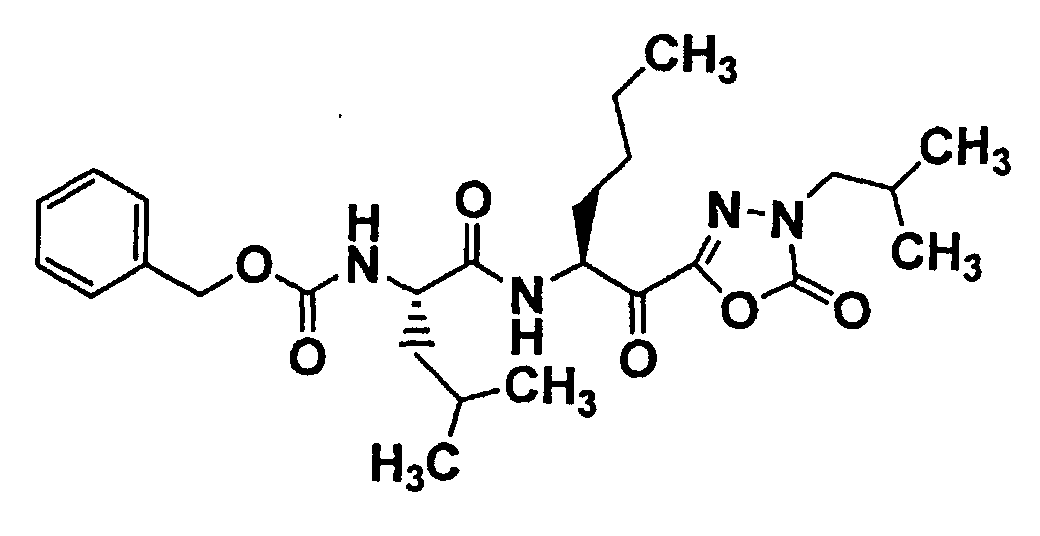
NMR (CDCl3): δ 7.35 (s, 5H), 6.58 (brd, J = 7.8 Hz, 1H), 5.30 (dt, J = 4.8, 7.8 Hz, 1H), 5.13 (m, 3H), 4.22 (m, 1H), 3.68 (dd, J = 13.8, 7.2 Hz, 1H), 3.63 (dd, J = 13.8, 7.2 Hz, 1H), 2.19 (m, 1H), 2.00-1.23 (m, 9H), 1.00-0.85 (m, 15H).
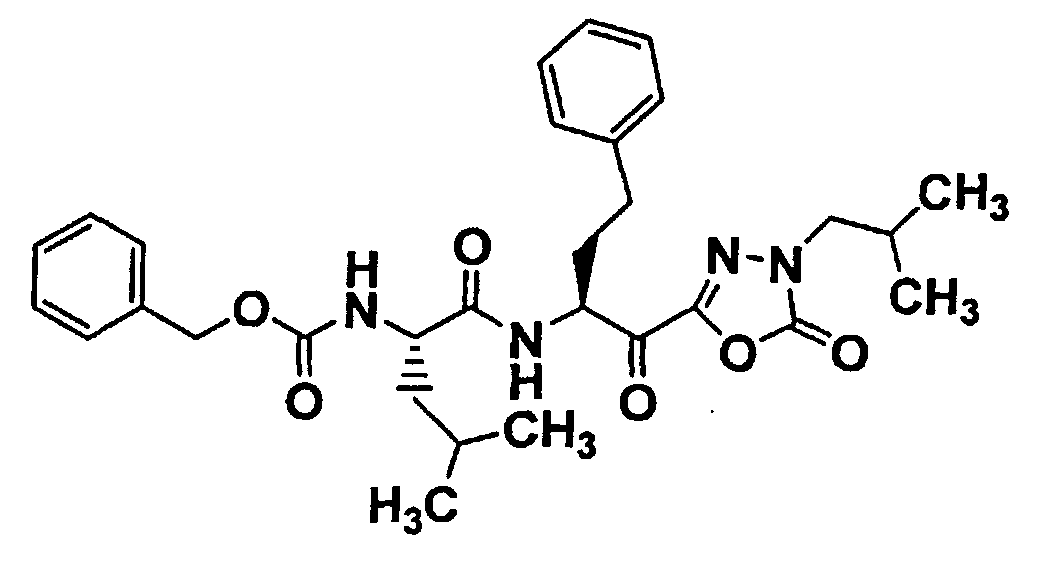
NMR (CDCl3): δ 7.40-7.10 (m, 10H), 6.65 (d, J = 5.8 Hz, 1H), 5.34 (dt, J = 4.4, 8.0 Hz, 1H), 5.12 (s, 2H), 5.04 (d, J = 7.4 Hz, 1H), 4.30-4.10 (m, 1H), 2.68 (t, J = 7.3 Hz, 2H), 2.40-1.90 (m, 3H), 1.80-1.30 (m, 3H), 1.05-0.80 (m, 12H).
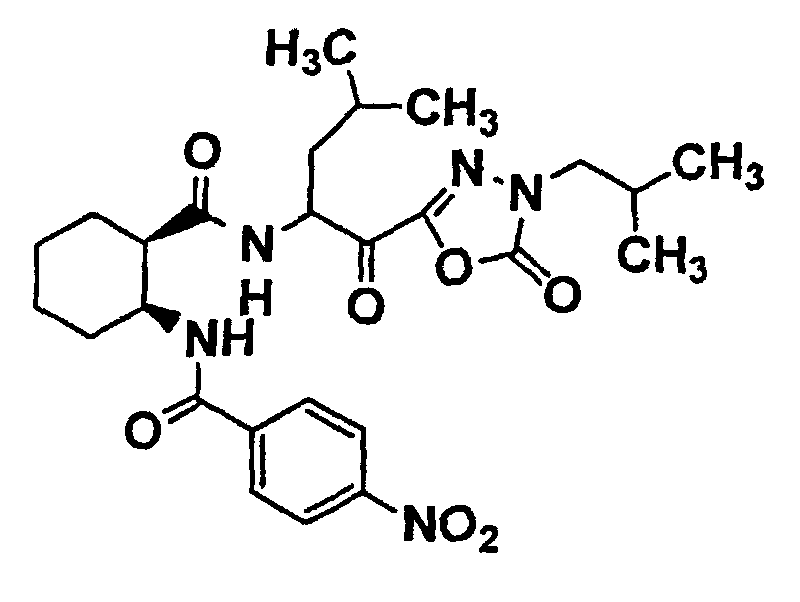
NMR (CDCl3) : δ 8.27 (d, J = 9.0 Hz, 2H), 7.97 and 7.94 (each d, J = 9.0 Hz, totally 2H), 7.60 and 7.46 (each d, J = 7.5 Hz, totally 1H), 6.13 (brd, J= 7.5 Hz, 1H), 5.41-5.26 (m, 1H), 4.30 (m, 1H), 3.66 (m, 2H), 2.83 (m, 1H), 2.30-1.40 (m, 12H), 1.10-0.90 (m, 12H).
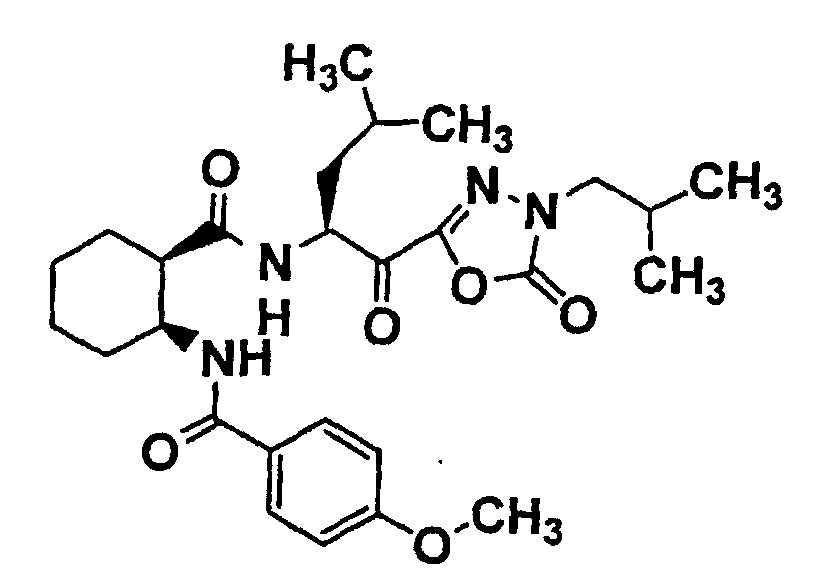
NMR (CDCl3) : δ 7.73 (d, J = 8.7 Hz, 2H), 7.01 (brd, J = 7.8 Hz, 1H), 6.92 (d, J = 8.7 Hz, 2H), 6.24 (brd, J = 7.8 Hz, 1H), 5.33 (m, 1H), 4.33 (m, 1H), 3.85 (s, 3H), 3.68 and 3.61 (each dd, J = 14.1, 7.2 Hz, each 1H), 2.81 (m, 1H), 2.23-1.40 (m, 12H), 0.98, 0.87 and 0.82 (each d, J = 6.6 Hz, totally 12H).
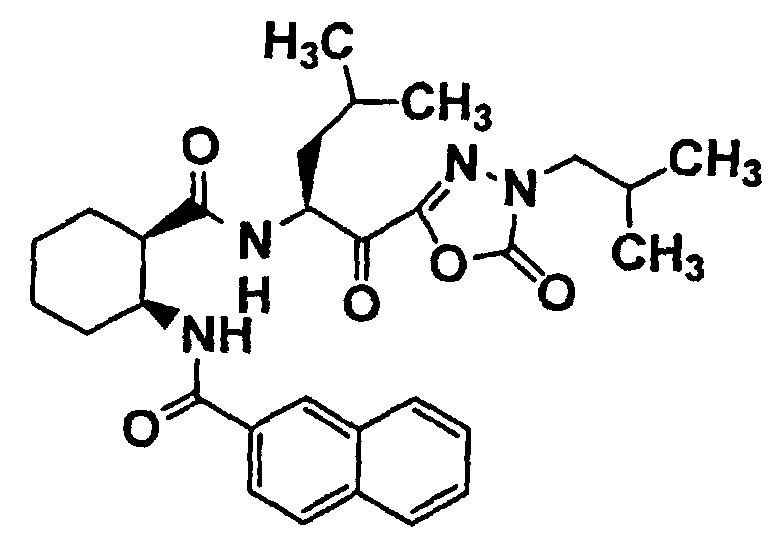
NMR (CDCl3): δ 8.25 (s, 1H), 8.00-7.80 (m, 4H), 7.60-7.50 (m, 2H), 7.23 (m, 1H), 6.18 (brd, J= 8.1 Hz, 1H), 5.38 (m, 1H), 4.40 (m, 1H), 3.67 and 3.61 (each dd, J = 13.8, 7.2 Hz, each 1H), 2.90 (m, 1H), 2.22-1.40 (m, 12H), 0.97, 0.84 and 0.80 (each d, J = 6.6 Hz, totally 12H).
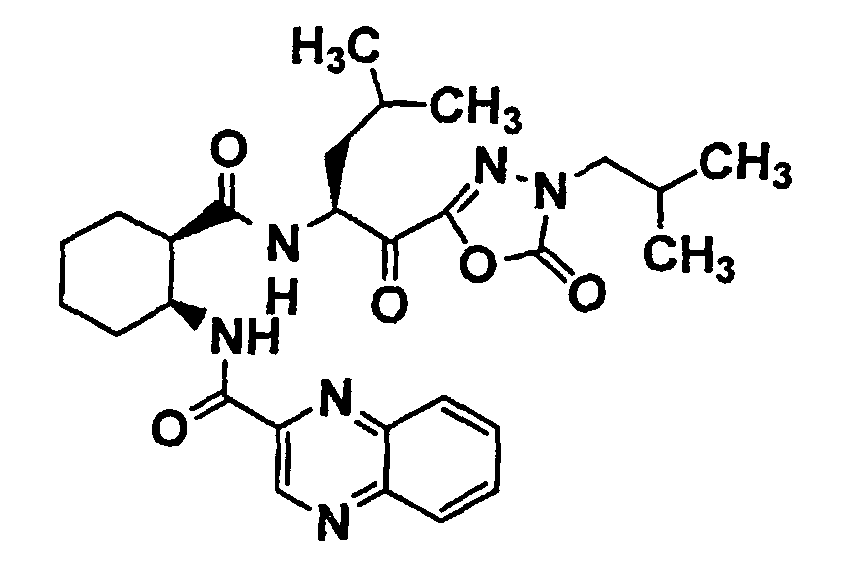
NMR (CDCl3): δ 9.65 (s, 1H), 8.58 (brd, J = 8.4 Hz, 1H), 8.23-8.10 (m, 2H), 7.90-7.80 (m, 2H), 6.20 (brd, J = 8.1 Hz, 1H), 5.31 (m, 1H), 4.43 (m, 1H), 3.66 and 3.59 (each dd, J = 14.1, 7.2 Hz, each 1H), 2.90 (m, 1H), 2.22-1.40 (m, 12H), 0.99, 0.76 and 0.68 (each d, J = 6.3 Hz, totally 12H).

NMR (CDCl3): δ 7.74 and 7.71 (each d, J = 8.4 Hz, totally 2H), 7.40 (d, J = 8.4 Hz, 2H), 7.23 and 7.18 (each brd, J = 8.0 Hz, totally 1H), 6.20 and 6.18 (each brd, J = 7.8 Hz, totally 1H), 5.40-5.23 (m, 1H), 4.30 (m, 1H), 3.65 (m, 2H), 2.82 (m, 1H), 2.23-1.40 (m, 12H), 1.05-0.84 (m, 12H).
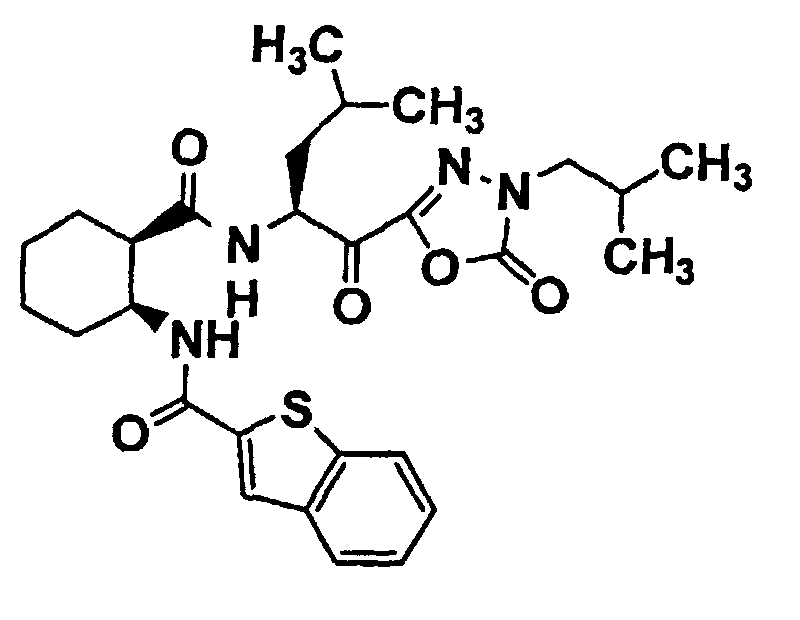
NMR (CDCl3): δ 7.88-7.79 (m, 2H), 7.73 (s, 1H), 7.50-7.35 (m, 2H), 7.24 (m, 1H), 6.30 (brd, J = 8.4 Hz, 1H), 5.38 (m, 1H), 4.40-4.30 (m, 1H), 3.68 and 3.61 (each dd, J = 14.1, 7.2 Hz, each 1H), 2.88 (m, 1H), 2.22-1.40 (m, 12H), 0.99, 0.76 and 0.68 (each d, J = 6.3 Hz, totally 12H).
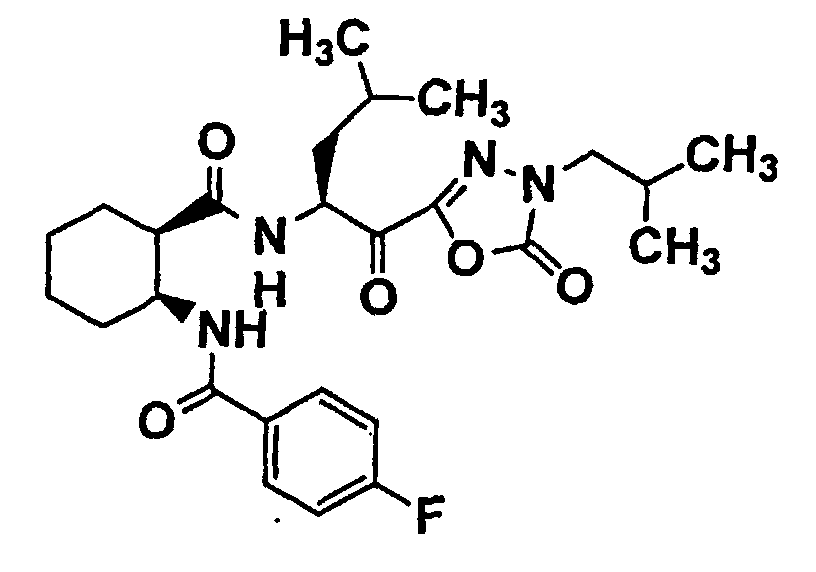
NMR (CDCl3): δ 7.77 (dd, J = 9.0, 5.4 Hz, 2H), 7.18 (brd, J= 8.1 Hz, 1H), 7.10 (t, J = 9.0 Hz, 2H), 6.19 (brd, J = 7.8 Hz, 1H), 5.30 (m, 1H), 4.30 (m, 1H), 3.68 and 3.62 (each dd, J= 13.8 7.2 Hz, each 1H), 2.82 (m, 1H), 2.25-1.40 (m, 12H), 0.98, 0.87 and 0.84 (each d, J = 6.0 Hz, totally 12H).
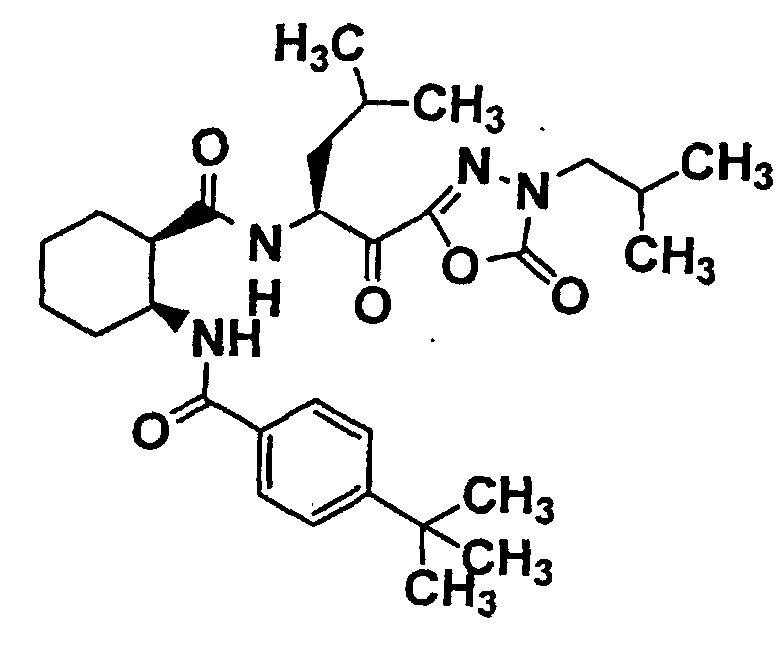
NMR (CDCl3) : δ 7.68 (d, J = 8.7 Hz, 2H), 7.42 (d, J = 8.7 Hz, 2H), 7.05 (brd, J = 8.4 Hz, 1H), 6.21 (brd, J = 7.5 Hz, 1H), 5.33 (m, 1H), 4.31 (m, 1H), 3.67 and 3.60 (each dd, J = 13.8, 7.2 Hz, each 1H), 2.83 (m, 1H), 2.23-1.40 (m, 12H), 1.32 (s, 9H), 0.97, 0.86 and 0.81 (each d, J = 6.0 Hz, totally 12H).

NMR (CDCl3): δ 8.70-8.50 (m, 2H), 8.16 (m, 1H), 7.82 (m, 1H), 7.43 (m, 1H), 6.63 and 6.33 (each brd, J = 7.5 Hz, totally 1H), 5.29 (m, 1H), 4.45 (m, 1H), 3.62 (m, 2H), 2.80 (m, 1H), 2.23-1.40 (m, 12H), 1.05-0.90 (m, 9H), 0.92 and 0.78 (each d, J = 6.3 Hz, totally 3H).

NMR (CDCl3): δ 8.00-7.80 (m, 3H), 7.58-7.35 (m, 4H), 6.25 (brd, J = 8.1 Hz, 1H), 6.10 (brd, J = 7.2 Hz, 1H), 5.15 (m, 1H), 4.18 (m, 1H), 4.03 and 3.92 (each d, J = 15.9 Hz, each 1H), 3.70 and 3.63 (each dd, J = 13.8, 7.2 Hz, each 1H), 2.50 (m, 1H), 2.20 (m, 1H), 1.80-0.90 (m, 23H).

NMR (CDCl3) : δ 8.04 (dt, J = 1.8, 7.8 Hz, 1H), 7.52-7.40 (m, 2H), 7.25 (brd, J = 7.8 Hz, 1H), 7.11 (dd, J = 11.7, 7.8 Hz, 1H), 6.24 (brd, J = 7.5 Hz, 1H), 5.32 (m, 1H), 4.43 (m, 1H), 3.67 and 3.60 (each dd, J = 13.5, 6.9 Hz, each 1H), 2.83 (m, 1H), 2.24-1.40 (m, 12H), 0.97, 0.90 and 0.84 (each d, J = 6.6 Hz, totally 12H).

NMR (CDCl3): δ 7.84 (d, J = 8.7 Hz, 2H), 7.70-7.55 (m, 4H), 7.50-7.30 (m, 3H), 7.18 (brd, J = 7.8 Hz, 1H), 6.18 (brd, J = 7.5 Hz, 1H), 5.38 (m, 1H), 4.38 (m, 1H), 3.68 and 3.61 (each dd, J = 13.5, 6.9 Hz, each 1H), 2.83 (m, 1H), 2.24-1.42 (m, 12H), 0.98, 0.86 and 0.84 (each d, J = 6.3 Hz, totally 12H).
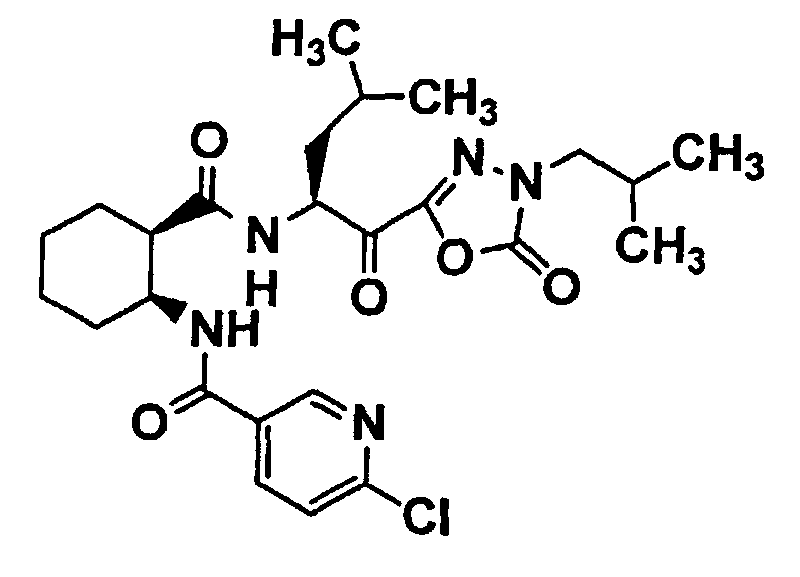
NMR (CDCl3) : δ 8.78 (d, J = 2.7 Hz, 1H), 8.04 (dd, J = 8.4, 2.7 Hz, 1H), 7.55 (brd, J = 8.1 Hz, 1H), 7.40 (d, J = 8.4 Hz, 1H), 6.10 (brd, J = 7.5 Hz, 1H), 5.38 (m, 1H), 4.28 (m, 1H), 3.70 and 3.64 (each dd, J = 13.5, 6.9 Hz, each 1H), 2.82 (m, 1H), 2.20 (m, 1H), 2.10-1.40 (m, 11H), 1.00, 0.93 and 0.90 (each d, J = 6.3 Hz, totally 12H).
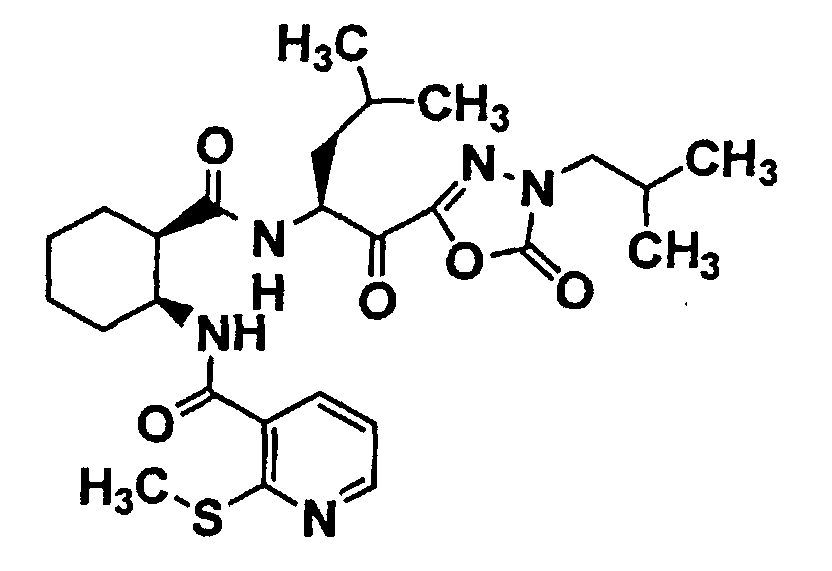
NMR (CDCl3): δ 8.50 (dd, J = 7.2, 1.5 Hz, 1H), 7.74 (dd, J = 7.5, 1.5 Hz, 1H), 7.14 (brd, J = 8.1 Hz, 1H), 7.03 (dd, J = 7.5, 7.2 Hz, 1H), 6.17 (brd, J = 7.5 Hz, 1H), 5.30 (m, 1H), 4.39 (m, 1H), 3.67 and 3.60 (each dd, J = 13.8, 7.2 Hz, each 1H), 2.82 (m, 1H), 2.56 (s, 3H), 2.23-1.40 (m, 12H), 1.13, 0.97, 0.90, and 0.88 (each d, J = 6.3 Hz, each 3H).

NMR (CDCl3) : δ 7.87 (d, J = 8.6 Hz, 2H), 7.73 (d, J = 8.6 Hz, 2H), 7.53 (brd, J = 8.0 Hz, 1H), 6.12 (brd, J = 7.5 Hz, 1H), 5.38 (m, 1H), 4.30 (m, 1H), 3.71 and 3.62 (each dd, J = 14.0, 7.4 Hz, each 1H), 2.82 (m, 1H), 2.30-1.40 (m, 12H), 1.04-0.88 (m, 12H).

NMR (CDCl3): δ 7.65 (d, J = 9.0 Hz, 2H), 6.81 (brd, J = 7.8 Hz, 1H), 6.66 (d, J = 9.0 Hz, 2H), 6.32 (brd, J = 7.2 Hz, 1H), 5.30 (m, 1H), 4.38 (m, 1H), 3.67 and 3.60 (each dd, J = 13.8, 7.2 Hz, each 1H), 3.02 (s, 6H), 2.82 (m, 1H), 2.23-2.00 (m, 2H), 1.88 (m, 2H), 1.80-1.40 (m, 8H), 0.98 (d, J = 6.9 Hz, 6H), 0.86 and 0.82 (each d, J = 5.7 Hz, each 3H).

NMR (CDCl3): δ 7.48 and 7.38 (each brd, J = 8.4 Hz, totally 1H), 7.35-7.17 (m, 5H), 5.23-5.12 (m, 1H), 3.66 and 3.60 (each dd, J = 13.8, 7.2 Hz, each 1H), 3.43-3.32 (m, 1H), 3.15-2.99 (m, 1H), 2.93-2.65 (m, 4H), 2.45-2.31 (m, 1H), 2.30-2.10 (m, 2H), 1.90-1.62 (m, 4H), 1.62-1.10 (m, 2H), 1.05-0.90 (m, 12H).

NMR (CDCl3) : δ 7.93 and 7.82 (each brd, J = 9.3 Hz, totally 1H), 7.32-7.12 (m, 5H), 5.42-5.25 (m, 1H), 3.72-3.53 (m, 2H), 3.25-3.19 (m, 1H), 3.08-3.04 (m, 1H), 2.82-2.42 (m, 4H), 2.40-2.13 (m, 1H), 2.13-2.08 (m, 2H), 1.90-1.42 (m, 8H), 1.05-0.83 (m, 12H).

NMR (CDCl3) : δ 7.53 and 7.37 (each brd, J = 7.8 Hz, totally 1H), 7.27-7.15 (m, 5H), 5.23-5.13 (m, 1H), 3.66 and 3.60 (each dd, J = 13.8, 7.2 Hz, each 1H), 3.43-3.32 (m, 1H), 3.15-2.99 (m, 1H), 2.95-2.65 (m, 4H), 2.50-2.32 (m, 1H), 2.30-2.10 (m, 2H), 1.90-1.73(m, 4H), 1.60-1.10 (m, 2H), 1.05-0.90 (m, 12H).
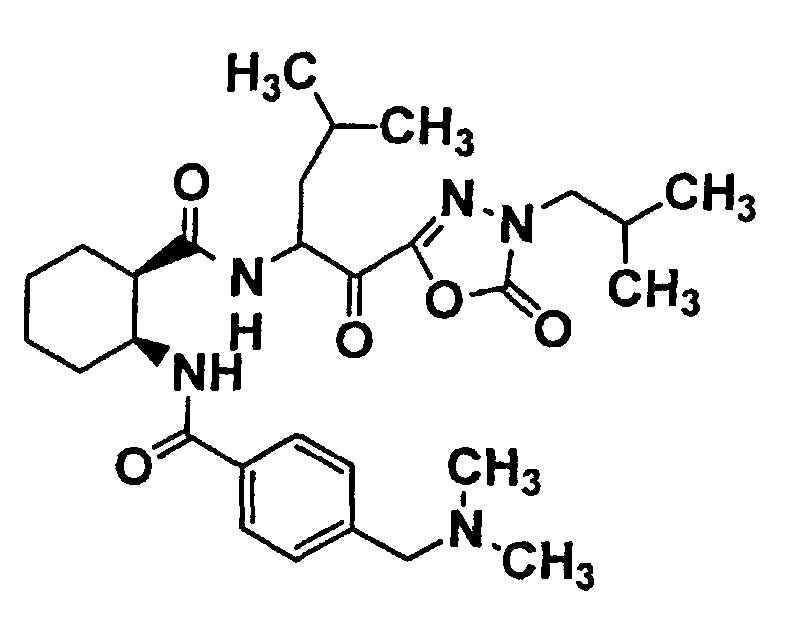
NMR (CDCl3): δ 7.76 and 7.72 (each d, J = 8.0 Hz, totally 2H), 7.37 and 7.36 (each d, J = 8.0 Hz, totally 2H), 7.20-7.05 (m, 1H), 6.34 and 6.26 (each d, J = 7.0 and 7.6 Hz, totally 1H), 5.40-5.20 (m, 1H), 4.45-4.25 (m, 1H), 3.75-3.50 (m, 2H), 3.46 (s, 2H), 2.90-2.80 (m, 1H), 2.24 (s, 6H), 2.20-1.35 (m, 12H), 1.05-0.80 (m, 12H).

NMR (CDCl3): δ 5.23 (ddd, J = 9.6, 7.8 and 4.2 Hz, 1H), 4.82 (d, J = 7.8 Hz, 1H), 3.68 and 3.61 (each dd, J = 13.8 and 7.2 Hz, each 1H), 3.43-3.26 (m, 4H), 2.27-2.08 (m, 1H), 1.88-1.38 (m, 9H), 1.03-0.95 (m, 12H).

NMR (CDCl3): δ 8.05 (brs, 1H), 7.54 (d, J= 7.2 Hz, 2H), 7.32 (t, J = 7.2 Hz, 2H), 7.09 (t, J = 7.2 Hz, 1H), 5.25 (ddd, J = 9.9, 7.2 and 3.9 Hz, 1H), 5.07-4.96 (m, 2H), 3.74-3.54 (m, 3H), 3.15 (td, J = 12.6 and 2.4 Hz, 1H), 2.45-2.32 (m, 1H), 2.26-2.09 (m, 1H), 1.90-1.42 (m, 8H), 1.10-0.92 (m, 12H).

NMR (CDCl3): δ 7.81-7.74 (m, 2H), 7.53-7.38 (m, 3H), 6.89 (brd, J = 7.8 Hz, 1H), 6.13 (d, J = 7.5 Hz, 1H), 5.33-5.21 (m, 1H), 4.71-4.58 (m, 1H), 3.67 (dd, J = 13.5, 7.2 Hz, 1H), 3.61 (dd, J = 13.5, 7.2 Hz, 1H), 3.05 (q, J = 7.5 Hz, 1H), 2.24-1.30 (m, 10H), 0.98 (d, J = 6.9 Hz, 6H), 0.70 and 0.69 (each d, J = 6.0 Hz, totally 6H).
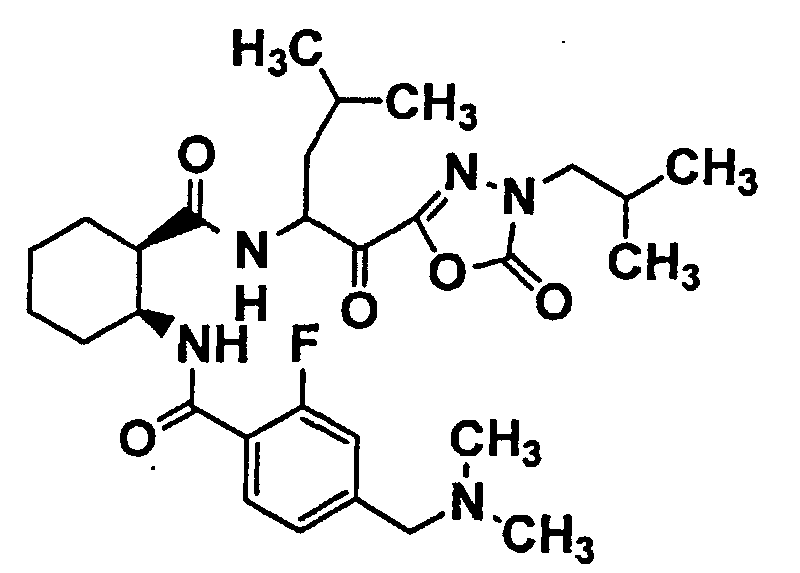
NMR (CDCl3): δ 8.01-7.90 (m, 1H), 7.45-7.32 (m, 1H), 7.20-7.08 (m, 2H), 6.42 and 6.24 (each brd, J = 6.3 Hz, totally 1H), 5.38-5.25 (m, 1H), 4.51-4.40 (m, 1H), 3.70-3.50 (m, 2H), 3.46 (s, 2H), 2.84-2.70 (m, 1H), 2.25 (s, 6H), 2.20-1.40 (m, 12H), 1.02-0.80 (m, 12H).
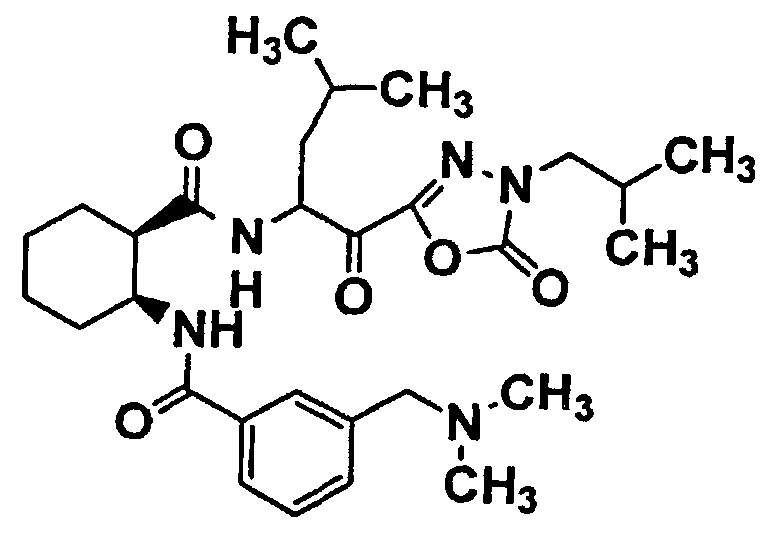
NMR (CDCl3): δ 7.75-7.60 (m, 2H), 7.50- 7.30 (m, 2H), 7.10 (d, J = 8.0 Hz, 1H), 6.29 and 6.24 (each d, J = 8.2 Hz, totally 1H), 5.40-5.20 (m, 1H), 4.45-4.25 (m, 1H), 3.67 and 3.66 (each dd, J = 14.0, 7.1 Hz, totally 1H), 3.63 and 3.60 (each dd, J = 14.0, 7.1 Hz, totally 1H), 3.47 (s, 2H), 2.90-2.80 (m, 1H), 2.25 and 2.24 (each s, totally 6H), 2.20-1.35 (m, 12H), 1.05-0.80 (m, 12H).
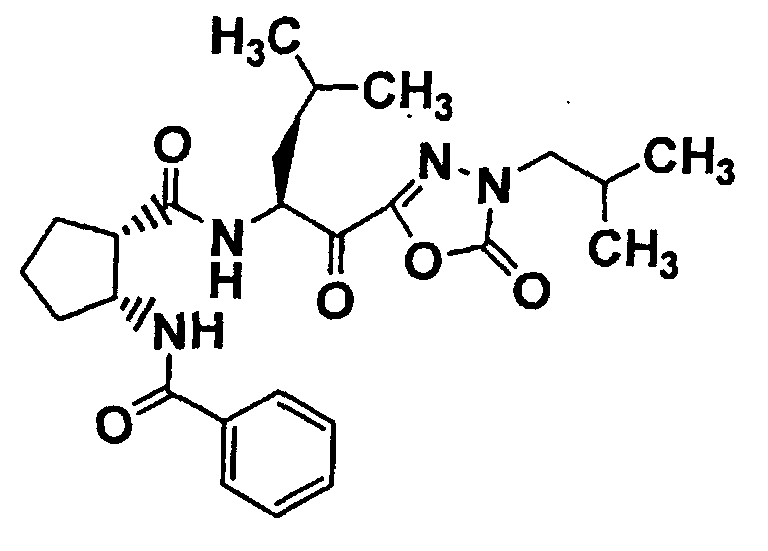
NMR (CDCl3) : δ 7.83-7.75 (m, 2H), 7.52-7.37 (m, 3H), 6.91 (brd, J = 8.1 Hz, 1H), 6.23 (brd, J = 5.7 Hz, 1H), 5.22-5.12 (m, 1H), 4.68-4.54 (m, 1H), 3.65 (dd, J = 14.1, 7.2 Hz, 1H), 3.56 (dd, J = 14.1, 7.2 Hz, 1H), 3.13-3.03 (m, 1H), 2.22-1.30 (m, 10H), 0.97 and 0.96 (each d, J = 6.6 Hz, totally 6H), 0.94 and 0.91 (each d, J = 6.6 Hz, totally 6H).
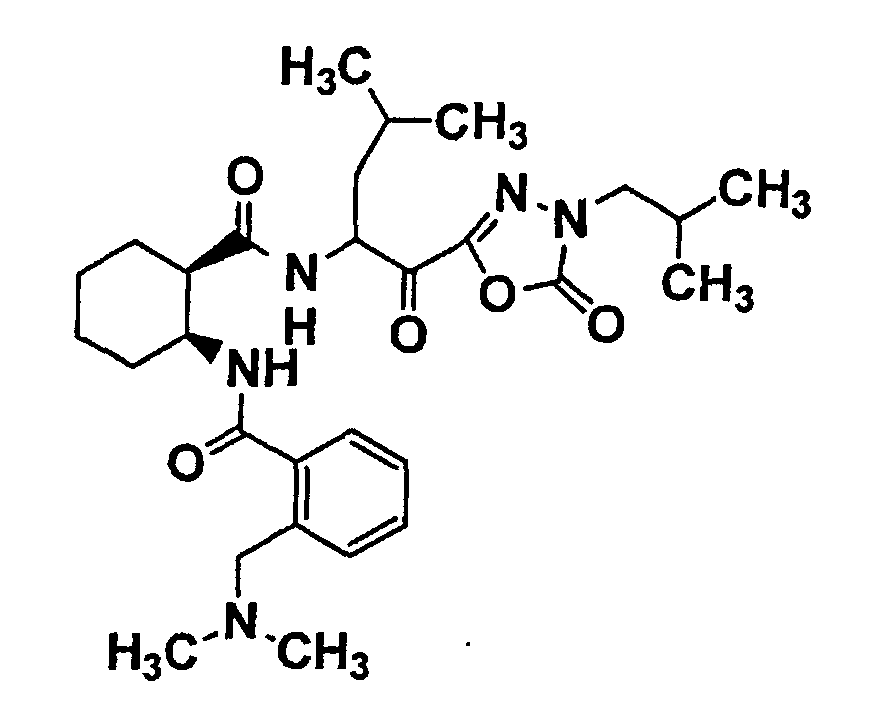
NMR (CDCl3): δ 10.65-10.45 (m, 1H), 8.05-7.90 (m, 1H), 7.45-7.30 (m, 2H), 7.25-7.10 (m, 1H), 7.01 and 6.36 (each d, J = 7.0 and 7.4 Hz, totally 1H), 5.25-5.10 (m, 1H), 4.51 and 4.34 (each br, totally 1H), 3.80-3.30 (m, 4H), 3.10-2.90 (m, 1H), 2.23 and 2.20 (each s, totally 6H), 2.20-1.20 (m, 12H), 1.05-0.75 (m, 12H).

NMR (CDCl3): δ 7.68 (d, J = 8.4 Hz, 2H), 7.21 (d, J = 8.4 Hz, 2H), 7.04 (brd, J = 8.1 Hz, 1H), 6.16 (brd, J = 7.2 Hz, 1H), 5.40-5.30 (m, 1H), 4.40-4.30 (m, 1H), 3.68 and 3.61 (each dd, J = 13.8, 6.9 Hz, each 1H), 2.88-2.79 (m, 1H), 2.39 (s, 3H), 2.25-1.40 (m, 12H), 0.98, 0.87 and 0.82 (each d, J = 6.3 Hz, totally 12H).
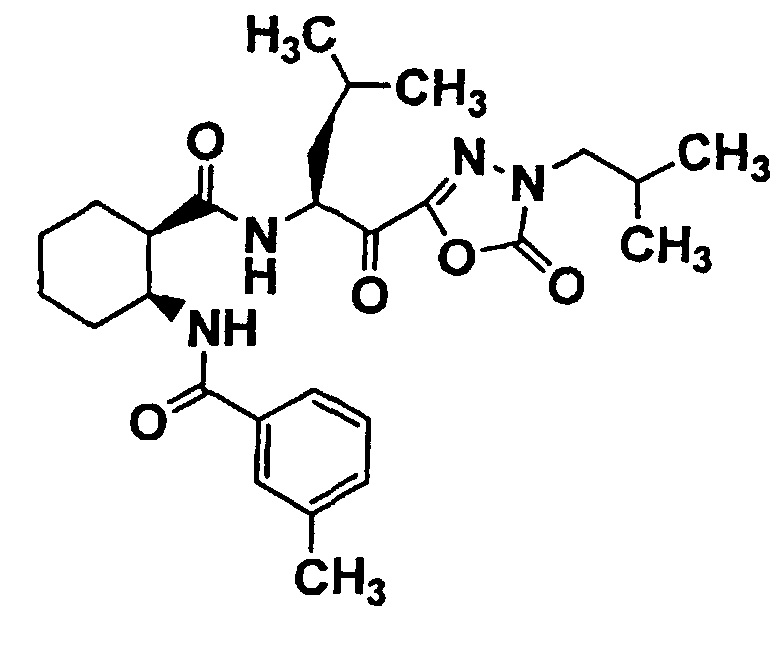
NMR (CDCl3) : δ 7.59 (s, 1H), 7.55 (t, J= 6.0Hz, 1H), 7.30 (d, J = 6.0 Hz, 2H), 7.05 (brd, J = 8.1 Hz, 1H), 6.14 (brd, J = 7.5 Hz, 1H), 5.40-5.30 (m, 1H), 4.40-4.30 (m, 1H), 3.68 and 3.61 (each dd, J = 13.8, 6.9 Hz, each 1H), 2.88-2.80 (m, 1H), 2.40 (s, 3H), 2.24-1.40 (m, 12H), 0.98, 0.87 and 0.82 (each d, J = 6.3 Hz, totally 12H).
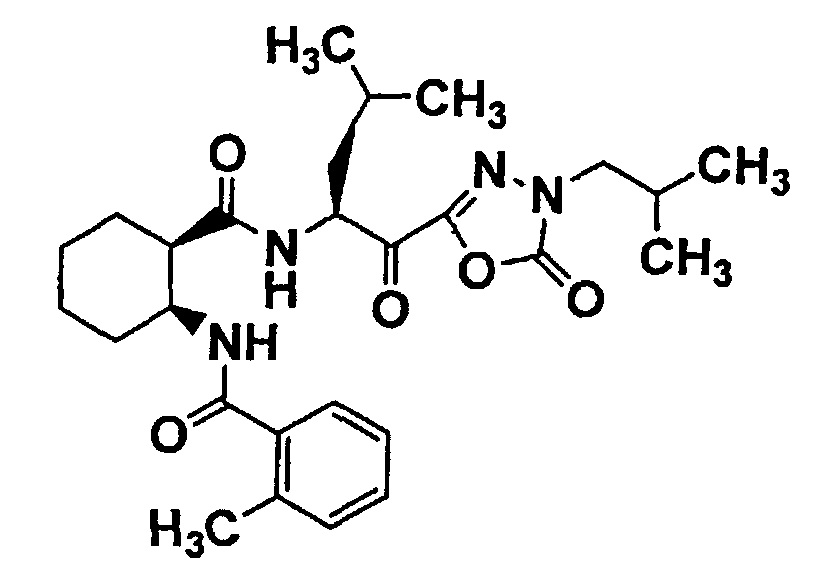
NMR (CDCl3) : δ 7.38-7.16 (m, 4H), 6.66 (brd, J = 8.7 Hz, 1H), 6.13 (brd, J = 8.1 Hz, 1H), 5.40-5.30 (m, 1H), 4.40-4.30 (m, 1H), 3.68 and 3.61 (each dd, J=13.8, 6.9 Hz, each 1H), 2.90-2.82 (m, 1H), 2.43 (s, 3H), 2.30-1.40 (m, 12H), 1.04-0.90 (m, 12H).

NMR (CDCl3) : δ 7.76 (t, J = 1.8 Hz, 1H), 7.62 (d, J = 7.5 Hz, 1H), 7.47 (dt, J = 7.5, 1.8 Hz, 1H), 7.36 (t, J = 7.5 Hz, 1H), 7.20 (brd, J = 8.1 Hz, 1H), 6.10 (brd, J = 8.1 Hz, 1H), 5.42-5.30 (m, 1H), 4.38-4.25 (m, 1H), 3.69 and 3.62 (each dd, J = 14.1, 7.2 Hz, each 1H), 2.88-2.80 (m, 1H), 2.30-1.40 (m, 12H), 0.99, 0.89 and 0.86 (each d, J = 6.0 Hz, totally 12H).
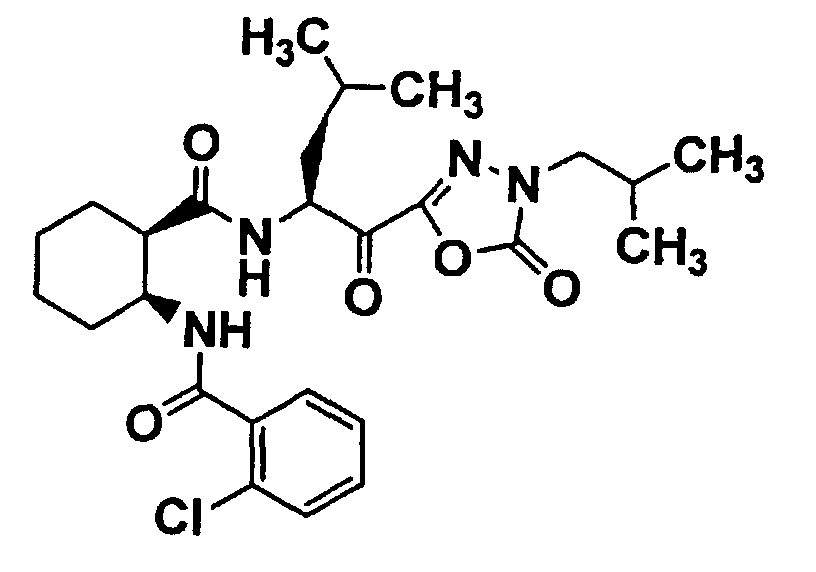
NMR (CDCl3): δ 7.60 (dd, J= 6.9, 2.4 Hz, 1H), 7.42-7.25 (m, 3H), 6.99 (brd, J = 8.4 Hz, 1H), 6.14 (brd, J = 7.8 Hz, 1H), 5.38-5.25 (m, 1H), 4.43-4.35 (m, 1H), 3.68 and 3.61 (each dd, J = 13.8, 7.2 Hz, each 1H), 2.88-2.78 (m, 1H), 2.23-1.41 (m, 12H), 1.05-0.88 (m, 12H).
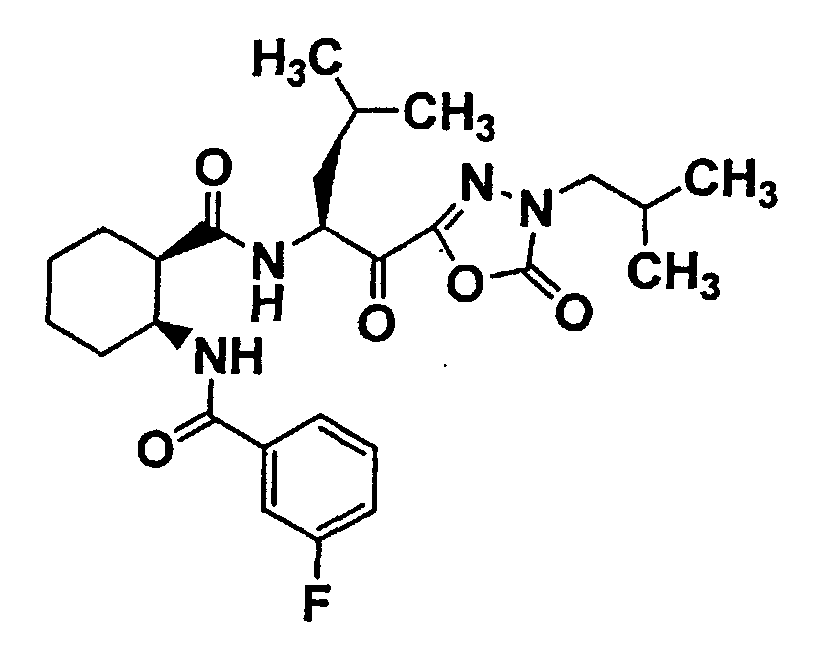
NMR (CDCl3) : δ 7.50 (m, 2H), 7.40 (m, 1H), 7.30-7.15 (m, 2H), 6.10 (brd, J = 8.4 Hz, 1H), 5.42-5.31 (m, 1H), 4.38-4.26 (m, 1H), 3.68 and 3.61 (each dd, J=13.8, 7.2 Hz, each 1H), 2.85-2.80 (m, 1H), 2.30-1.40 (m, 12H), 0.98, 0.88, and 0.86 (each d, J = 6.6 Hz, totally 12H).
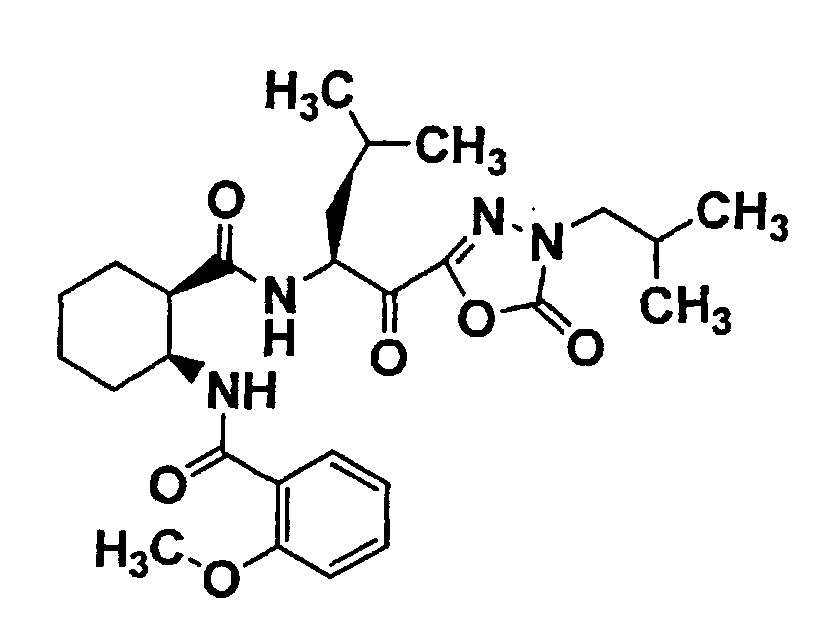
NMR (CDCl3): δ 8.55 (brd, J = 8.1 Hz, 1H), 8.18 (dd, J = 7.8, 1.8 Hz, 1H), 7.46 (dt, J = 1.8, 7.8 Hz, 1H), 7.08 (t, J = 7.8 Hz, 1H), 6.97 (d, J = 7.8 Hz, 1H), 6.58 (brd, J = 7.8 Hz, 1H), 5.30- 5.20 (m, 1H), 4.65-4.50 (m, 1H), 3.99 (s, 3H), 3.68 and 3.61 (each dd, J = 13.8, 7.8 Hz, each 1H), 2.80-2.70 (m, 1H), 2.25-1.38 (m, 12H), 0.96, 0.78, and 0.74 (each d, J = 6.3 Hz, totally 12H).
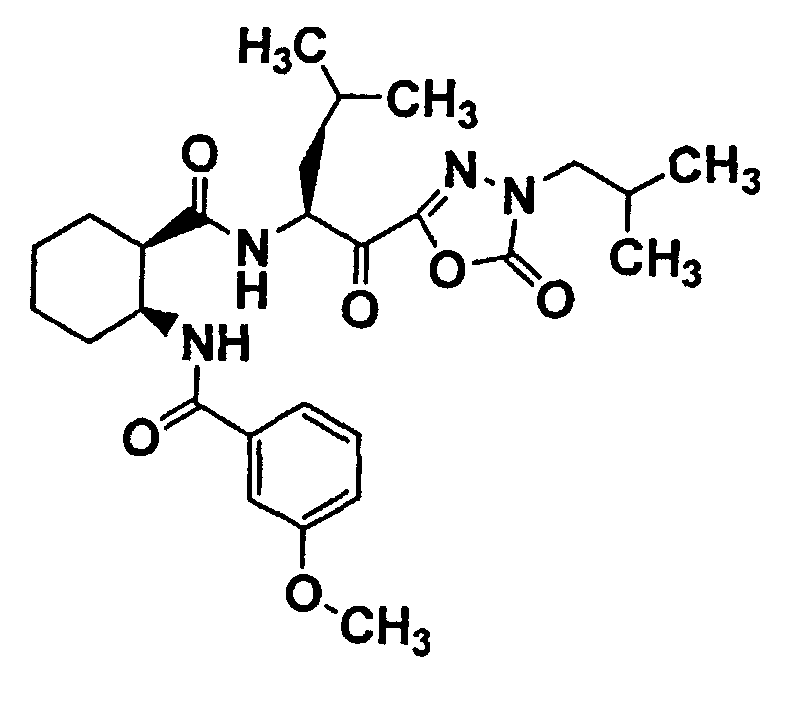
NMR (CDCl3) : δ 7.40-7.30 (m, 3H), 7.11 (brd, J = 7.8 Hz, 1H), 7.02 (m, 1H), 6.14 (brd, J = 7.8 Hz, 1H), 5.40-5.30 (m, 1H), 4.40-4.30 (m, 1H), 3.85 (s, 3H), 3.68 and 3.61 (each dd, J = 13.8, 7.8 Hz, each 1H), 2.88-2.80 (m, 1H), 2.30-1.40 (m, 12H), 0.98, 0.90, and 0.88 (each d, J = 6.3 Hz, totally 12H).
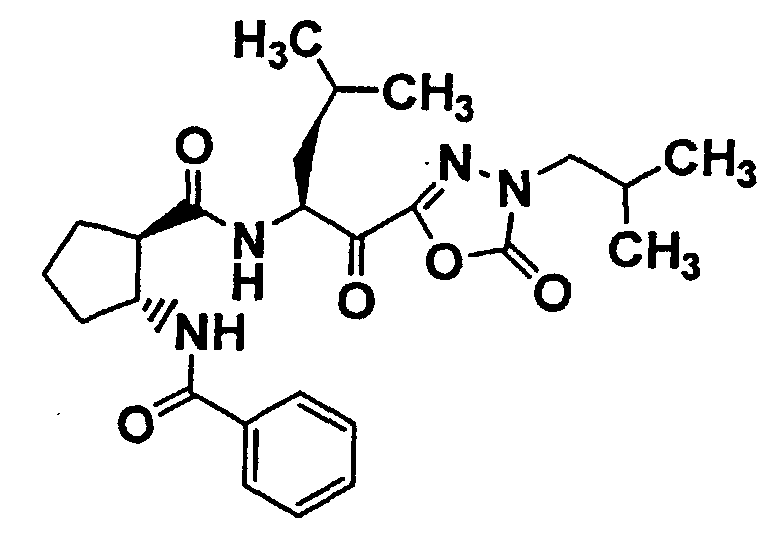
NMR (CDCl3) : δ 8.57 (brd, J = 6.0 Hz, 1H), 7.82-7.73 (m, 2H), 7.58-7.42 (m, 3H), 6.27 (brd, J = 6.0 Hz, 1H), 5.30-5.20 (m, 1H), 4.45-4.35 (m, 1H), 3.67 (dd, J = 13.8, 7.2 Hz, 1H), 3.60 (dd, J = 13.8, 7.2 Hz, 1H), 2.94-2.79 (m, 1H), 2.27-1.50 (m, 10H), 1.08-0.91 (m, 12H).
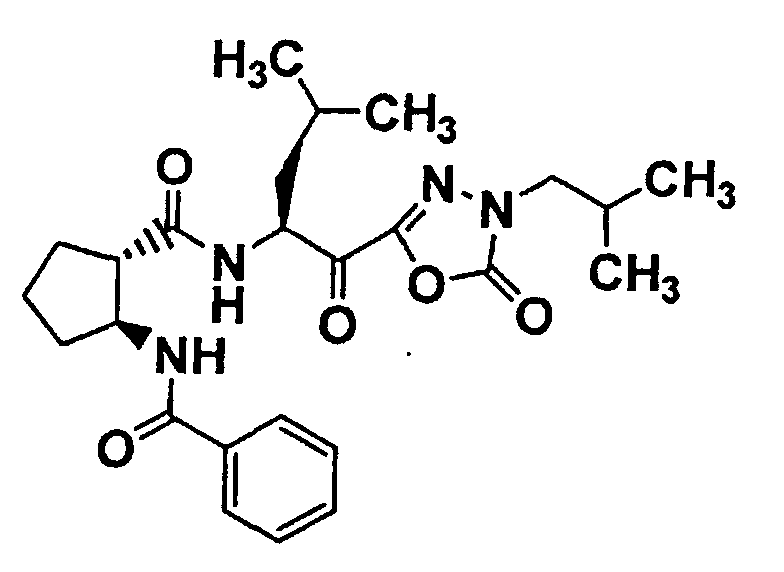
NMR (CDCl3): δ 8.84 (brd, J = 6.0 Hz, 1H), 7.77 (d, J = 7.2 Hz, 2H), 7.58-7.42 (m, 3H), 6.26 (brd, J = 5.7 Hz, 1H), 5.29-5.20 (m, 1H), 4.52-4.43 (m, 1H), 3.67 (dd, J = 13.8, 7.2 Hz, 1H), 3.61 (dd, J = 13.8, 7.2 Hz, 1H), 2.93-2.84 (m, 1H), 2.29-1.48 (m, 10H), 1.02 and 1.00 (each d, J = 6.6 Hz, totally 6H), 0.98 (d, J = 6.6 Hz, 6H).
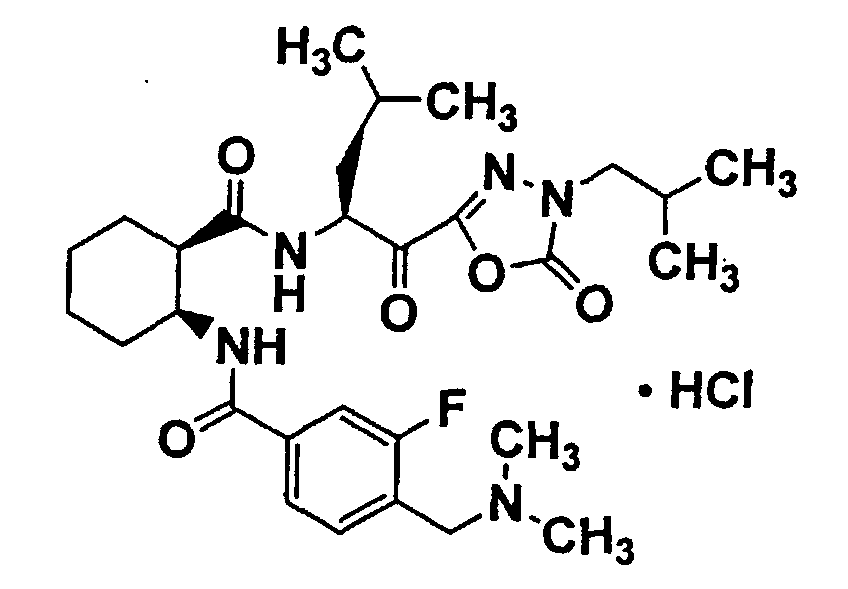
NMR (DMSO-d6): δ 8.47 and 8.37 (each brd, J = 6.9 Hz, totally 1H), 8.03 and 7.88 (each brd, J=7.8Hz, totally 1H), 7.80-7.58 (m, 3H), 4.90 (m, 1H), 4.42-4.25 (m, 3H), 3.56 and 3.51 (each dd, J = 12.3, 6.9 Hz, each 1H), 2.74 (brs, 7H), 2.10-1.82 (m, 3H), 1.70-1.20 (m, 9H), 0.88, 0.74 and 0.69 (each d, J = 6.0 Hz, totally 12H).
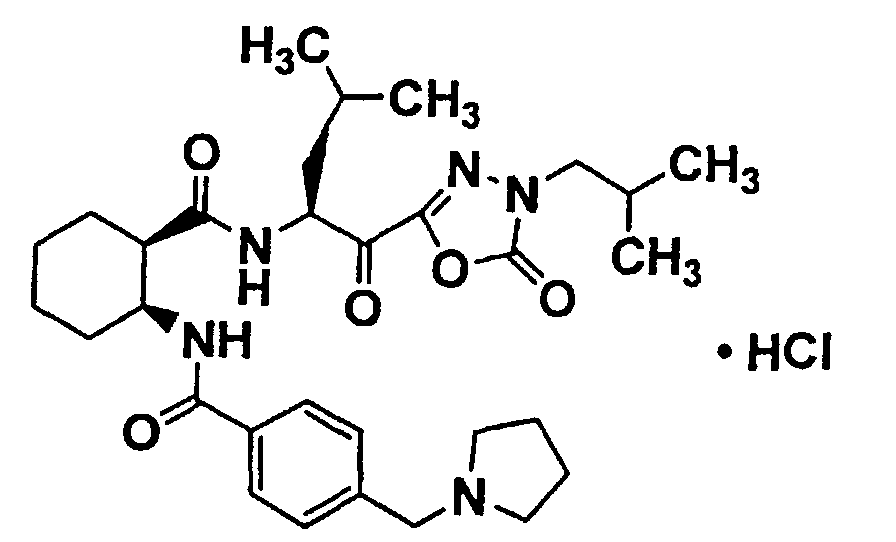
NMR (DMSO-d6) : δ 8.48 and 8.38 (each d, J = 6.6 Hz, totally 1H), 7.87-7.71 (m, 3H), 7.67-7.62 (m, 2H), 4.95-4.80 (m, 1H), 4.38 and 4.37 (each s, totally 2H), 4.30-4.14 (m, 1H), 3.61-3.45 (m, 2H), 3.32 (m, 2H), 3.03 (m, 2H), 2.78-2.74 (m, 1H), 2.02-1.87 (m, 7H), 1.69-1.23 (m, 9H), 0.89 (d, J = 6.6 Hz, 3H), 0.88 (d, J = 6.6 Hz, 3H), 0.84, 0.83, 0.74, and 0.69 (each d, J = 6.0 Hz, totally 6H).
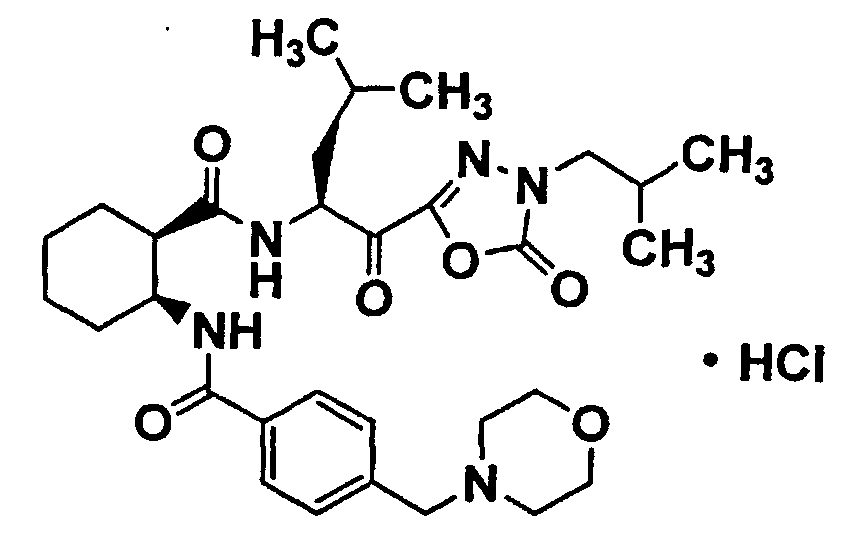
NMR (DMSO-d6): δ 8.38 (d, J = 6.9 Hz, 1H), 7.87-7.81 (m, 3H), 7.67 (d, J = 8.1 Hz, 2H), 4.93-4.86 (m, 1H), 4.38 (br-s, 2H), 4.27 (m, 1H), 3.95-3.90 (m, 2H), 3.81-3.74 (m, 2H), 3.61-3.48 (m, 2H), 3.25-3.01 (m, 4H), 2.78-2.71 (m, 1H), 2.07-1.86 (m, 2H), 1.66-1.23 (m, 10H), 0.89 (d, J = 6.9 Hz, 3H), 0.88 (d, J = 6.9 Hz, 3H), 0.75 (d, J = 6.0 Hz, 3H), 0.70 (d, J = 6.0 Hz, 3H).

NMR (CDCl3): δ 7.76 (d, J = 8.3 Hz, 2H), 7.40 (d, J = 8.3 Hz, 2H), 6.58 (d, J = 8.1 Hz, 1H), 5.65-5.55 (m, 1H), 3.70 (dd, J = 12.5, 7.4 Hz, 1H), 3.65 (dd, J = 12.5, 7.5 Hz, 1H), 3.48 (s, 2H), 2.25 (s, 6H), 2.25-2.10 (m, 1H), 1.85-1.55 (m, 3H), 1.06 (d, J = 6.0 Hz, 3H), 1.00 (d, J = 6.0 Hz, 9H).

NMR (CDCl3) : δ 7.75 (s, 1H), 7.72 (d, J = 7.5 Hz, 1H), 7.48 (d, J = 7.5 Hz, 1H), 7.41 (t, J = 7.5 Hz, 1H), 6.71 (d, J = 8.1 Hz, 1H), 5.65-5.55 (m, 1H), 3.70 (dd, J = 13.7, 7.1 Hz, 1H), 3.65 (dd, J = 13.7, 7.2 Hz), 3.48 (s, 2H), 2.26 (s, 6H), 2.25-2.10 (m, 1H), 1.90-1.60 (m, 3H), 1.06 (d, J = 6.3 Hz, 3H), 1.00 (d, J = 6.3 Hz, 3H), 0.99 (d, J = 6.9 Hz, 6H).
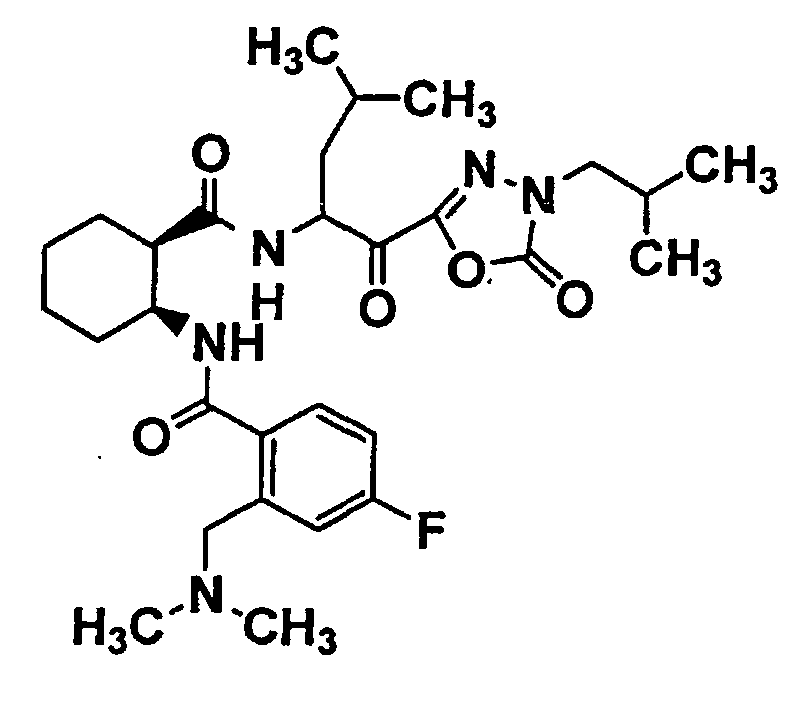
NMR (CDCl3) : δ 10.51 and 10.45 (each brd, J = 7.2 Hz, totally 1H), 8.02 and 7.99 (each t, J = 5.4 Hz, totally 1H), 7.13-7.05 (m, 1H), 6.92-6.80 (m, 1H), 6.83 and 6.24 (each brd, J = 6.9 Hz, totally 1H), 5.26-5.10 (m, 1H), 4.48 and 4.32 (each m, totally 1H), 3.80-3.30 (m, 4H), 3.10 and 2.90 (each m, totally 1H), 2.50-1.21 (m, 18H), 1.10-0.70 (m, 12H).

NMR (CDCl3) : δ 11.39 (d, J = 5.1 Hz, 1H), 7.95-7.90 (m, 1H), 7.45-7.30 (m, 1H), 7.25-7.15 (m, 1H), 5.50-5.40 (m, 1H), 4.04 (d, J = 12.2 Hz, 1H), 3.69 (dd, J=14.0, 7.0 Hz, 1H), 3.65 (dd, J = 14.0, 7.0 Hz, 1H), 3.22 (d, J = 12.2 Hz, 1H), 2.30 (s, 6H), 2.20 (septet, J= 7.0 Hz, 1H), 1.85-1.50 (m, 3H), 1.10-0.90 (m, 12H).
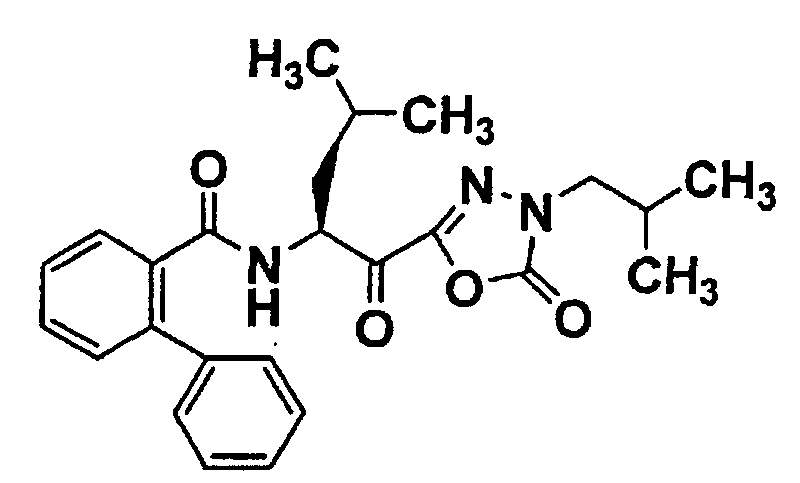
NMR (CDCl3): δ 7.75-7.70 (m, 1H), 7.55-7.30 (m, 8H), 5.69 (d, J = 7.5 Hz, 1H), 5.26 (ddd, J = 9.8, 7.5, 4.1 Hz, 1H), 3.65 (dd, J = 13.7, 7.0 Hz, 1H), 3.62 (dd, J = 13.7, 7.0 Hz, 1H), 2.16 (septet, J = 7.0 Hz, 1H), 1.45-1.05 (m, 3H), 0.98 (d, J = 7.0 Hz, 6H), 0.85 (d, J = 6.3 Hz, 3H), 0.79 (d, J = 6.3 Hz, 3H).
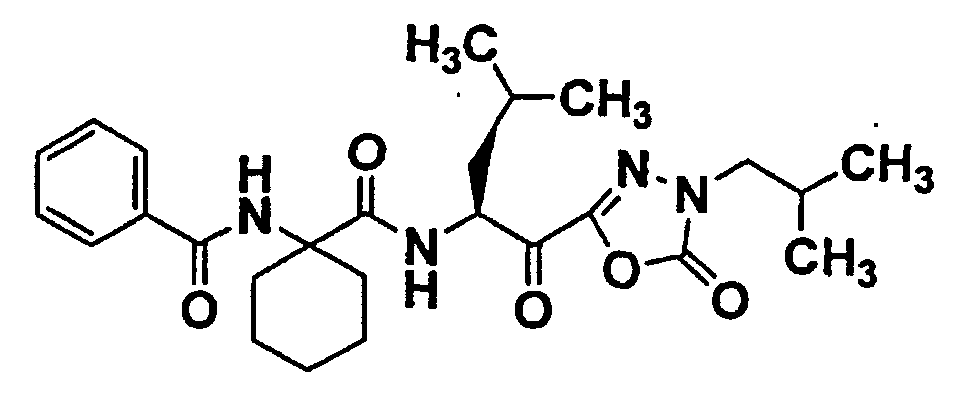
NMR (CDCl3): δ 7.89 (d, J = 6.6 Hz, 1H), 7.77 (d, J = 6.9 Hz, 2H), 7.56 (t, J = 6.9 Hz, 1H), 7.47 (t, J = 6.9 Hz, 2H), 6.09 (brs, 1H), 5.38-5.23 (m, 1H), 3.64 and 3.58 (each dd, J = 6.9 Hz, each 1H), 2.40-1.21 (m, 14H), 1.10-0.90 (m, 12H).

NMR (DMSO-d6): δ 8.47 and 8.37 (each d, J = 6.0 Hz, totally 1H), 8.04 and 7.96 (each s, totally 1H), 7.83-7.65 (m, 3H), 7.52 (t-like, J = 7.5 Hz, 1H), 4.94-4.84 (m, 1H), 4.37 (br-s, 2H), 4.31 (m, 1H), 3.94-3.90 (m, 2H), 3.80-3.72 (m, 2H), 3.61-3.48 (m, 2H), 3.38-3.04 (m, 4H), 2.73-2.71 (m, 1H), 2.06-1.90 (m, 3H), 1.71-1.23 (m, 9H), 0.90 (d, J = 6.6 Hz, 6H), 0.84, 0.82, 0.75, and 0.69 (each d, J = 6.0 Hz, totally 6H).

NMR (DMSO-d6): δ 8.37 (d, J = 6.6 Hz, 1H), 8.00 (s, 1H), 7.79 (d, J = 7.5 Hz, 2H), 7.73 (d, J = 7.5 Hz, 1H), 7.51 (t-like, J = 7.5 Hz, 1H), 4.95-4.86 (m, 1H), 4.39 and 4.37 (each s, totally 2H), 4.29 (m, 1H), 3.61-3.47 (m, 2H), 3.41-3.22 (m, 2H), 3.05 (m, 2H), 2.74-2.72 (m, 1H), 2.01-1.84 (m, 7H), 1.68-1.23 (m, 9H), 0.89 (d, J = 6.6 Hz, 6H), 0.74 (d, J = 6.0 Hz, 3H), 0.68 (d, J = 6.0 Hz, 3H).
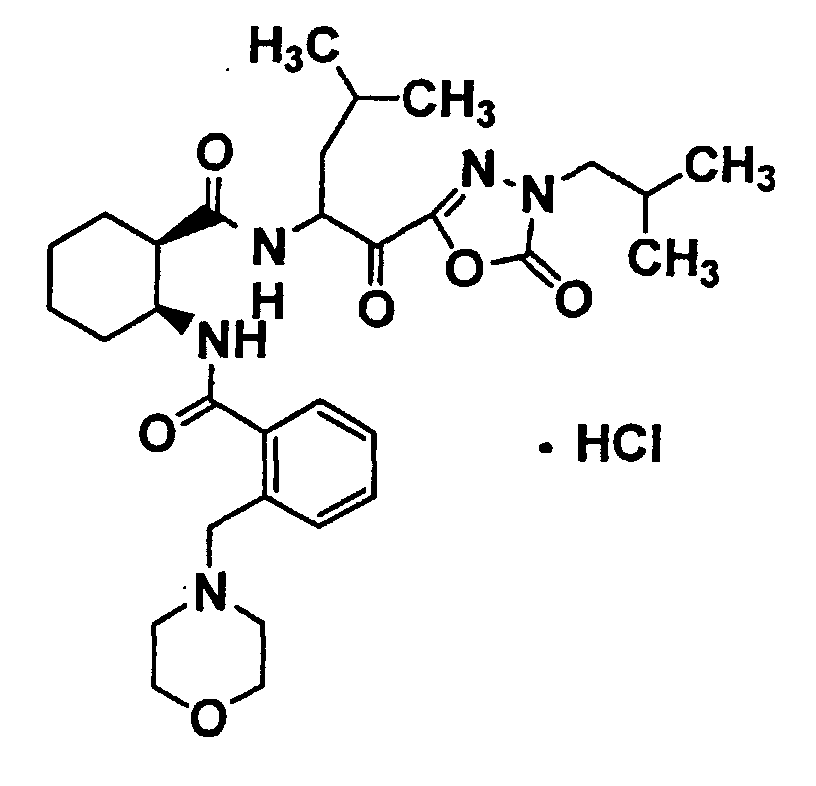
NMR (DMSO-d6): δ 8.55-8.30 (m, 2H), 7.76-7.69 (m, 1H), 7.59-7.49 (m, 3H), 4.92-4.85 (m, 1H), 4.50-4.27 (m, 3H), 3.91-3.88 (m, 2H), 3.80-3.67 (m, 2H), 3.63-3.48 (m, 2H), 3.32-3.00 (m, 4H), 2.80-2.69 (m, 1H), 2.18-1.80 (m, 4H), 1.74-1.23 (m, 8H), 0.90 and 0.89 (each d, J = 6.6 Hz, totally 6H), 0.81 and 0.77 (each d, J = 6.3 Hz, totally 6H).

TLC : Rf 0.43 and 0.36 (chloroform : methanol = 9 : 1);
NMR (CDCl3): δ 7.76 and 7.72 (each d, J = 8.4 Hz, totally 2H), 7.37 and 7.36 (each d, J = 8.4 Hz, totally 2H), 7.13 and 7.10 (each d, J = 7.4 Hz, totally 1H), 6.40-6.20 (m, 1H), 5.40-5.20 (m, 1H), 4.34 (br, 1H), 3.76 and 3.75 (each dd, J = 14.3, 7.4 and 14.5, 7.1 Hz, totally 1H)3.63 and 3.60 (each dd, J = 14.3, 7.4 and 14.5, 7.6 Hz, totally 1H), 3.46 and 3.45 (each s, totally 2H), 2.86 (br, 1H), 2.24 and 2.23 (each s, totally 6H), 2.20-1.35 (m, 11H), 1.35-1.10 (m, 1H), 1.00, 0.94, 0.89 and 0.83 (each d, J = 6.2, 6.2, 5.8 and 5.8 Hz, totally 6H), 0.70-0.30 (m, 4H). hydrochloride
TLC : Rf 0.43 and 0.36 (chloroform : methanol = 9 : 1);
NMR (CDCl3) : δ 7.85 and 7.81 (each d, J = 8.6 Hz, totally 2H), 7.73 and 7.65 (each d, J = 8.6 Hz, totally 2H), 7.47 and 7.16 (each d, J = 8.0 Hz, totally 1H), 7.09 and 6.34 (each d, J = 7.2 Hz, totally 1H), 5.45-5.20 (m, 1H), 4.45-4.10 (m, 3H), 3.78 and 3.76 (each dd, J = 14.4, 7.1 and 14.3, 6.9 Hz, totally 1H), 3.64 and 3.61 (each dd, J = 14.4, 7.7 and 14.3, 7.3 Hz, totally 1H), 3.05-2.60 (m, 7H), 2.20-1.35 (m, 11H), 1.35-1.10 (m, 1H), 1.05-0.80 (m, 6H), 0.70-0.30 (m, 4H).

NMR (CDCl3) : δ 7.78 (dd, J = 8.8, 5.4 Hz, 2H), 7.18 (d, J = 8.6 Hz, 1H), 7.10 (t, J = 8.8 Hz, 2H), 6.15 (d, J = 8.0 Hz, 1H), 5.45-5.30 (m, 1H), 4.40-4.20 (m, 1H), 3.77 (dd, J = 14.5, 7.2 Hz, 1H), 3.64 (dd, J = 14.5, 7.6 Hz, 1H), 2.83 (q, J = 5.1 Hz, 1H), 2.20-1.35 (m, 11H), 1.35-1.10 (m, 1H), 0.91 (d, J = 6.2 Hz, 3H), 0.86 (d, J = 6.2 Hz, 3H), 0.70-0.35 (m, 4H).
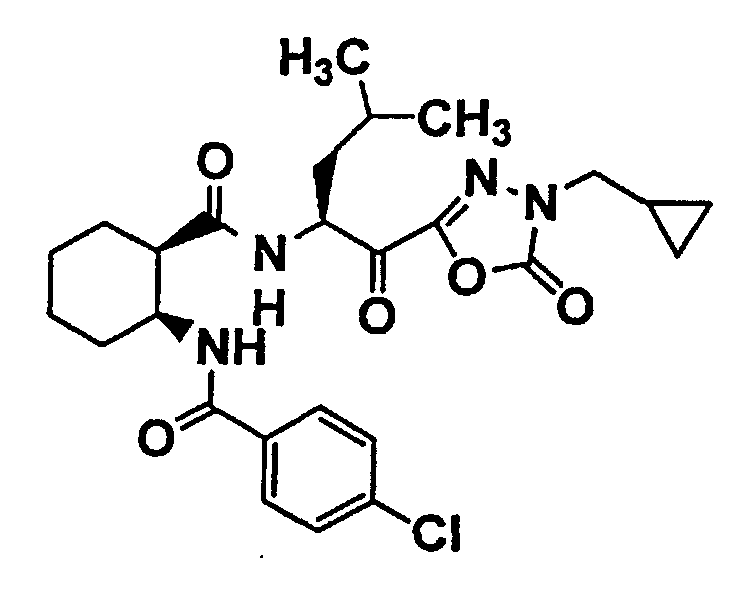
NMR (CDCl3): δ 7.72 (d, J = 8.6 Hz, 2H), 7.40 (d, J = 8.6 Hz, 2H), 7.23 (d, J = 8.0 Hz, 1H), 6.14 (d, J = 8.0 Hz, 1H), 5.45-5.30 (m, 1H), 4.40-4.20 (m, 1H), 3.77 (dd, J = 14.4, 7.0 Hz, 1H), 3.64 (dd, J = 14.4, 7.7 Hz, 1H), 2.83 (q, J = 5.1 Hz, 1H), 2.20-1.35 (m, 11H), 1.35-1.10 (m, 1H), 0.91 (d, J = 5.8 Hz, 3H), 0.87 (d, J = 5.8 Hz, 3H), 0.70-0.35 (m, 4H).

NMR (CDCl3) : δ 7.73 (d, J = 9.0 Hz, 2H), 7.01 (d, J = 8.2 Hz, 1H), 6.92 (d, J = 9.0 Hz, 2H), 6.22 (d, J = 7.6 Hz, 1H), 5.45-5.25 (m, 1H), 4.40-4.25 (m, 1H), 3.85 (s, 3H), 3.76 (dd, J = 14.5, 7.1 Hz, 1H), 3.63 (dd, J = 14.5, 7.5 Hz, 1H), 2.83 (q, J = 5.1 Hz, 1H), 2.20-1.35 (m, 11H), 1.35-1.10 (m, 1H), 0.89 (d, J= 5.8 Hz, 3H), 0.84 (d, J = 6.0 Hz, 3H), 0.70-0.35 (m, 4H).
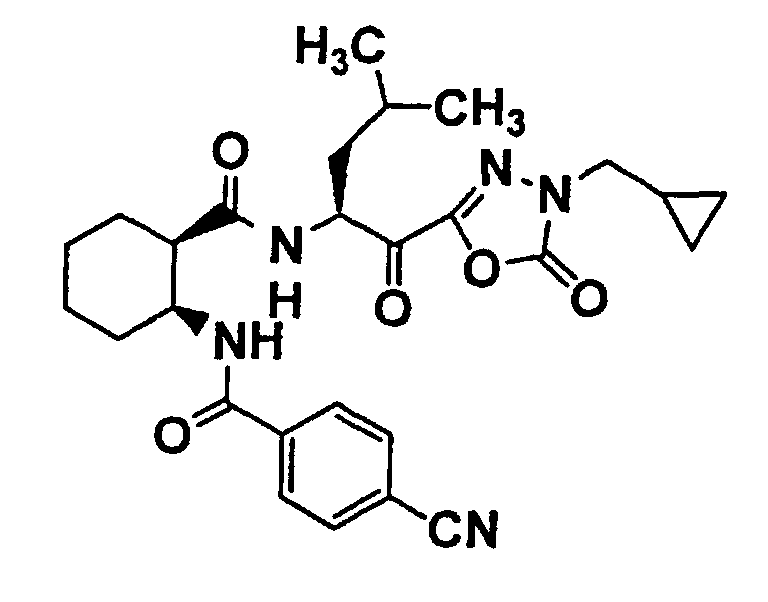
NMR (CDCl3) : δ 7.88 (d, J = 8.4 Hz, 2H), 7.73 (d, J = 8.4 Hz, 2H), 7.53 (d, J=8.4Hz, 1H), 6.14 (d, J = 8.0 Hz, 1H), 5.45-5.30 (m, 1H), 4.40-4.20 (m, 1H), 3.78 (dd, J = 14.5, 7.1 Hz, 1H), 3.65 (dd, J = 14.5, 7.6 Hz, 1H), 2.83 (q, J = 5.1 Hz, 1H), 2.20-1.35 (m, 11H), 1.35-1.10 (m, 1H), 0.93 (d, J= 6.2 Hz, 3H), 0.89 (d, J = 6.2 Hz, 3H), 0.70-0.35 (m, 4H).

NMR (CDCl3): δ 7.50-7.20 (m, 5H), 6.51-6.13 (br, 1H), 5.35-5.22 (m, 1H), 4.67- 4.20 (br, 1H), 3.76 and 3.61 (each dd, J = 14.7 and 7.2 Hz, each 1H), 3.33-3.02 (br, 1H), 2.88 (s, 3H), 2.62-2.35 (m, 1H), 2.04-1.07 (m, 11H), 1.07-0.79 (m, 6H), 0.70-0.56 and 0.50-0.32 (each m, each 2H).

TLC : Rf 0.26 (n-hexane : ethyl acetate = 1 : 1);
NMR (CDCl3): δ 7.66 (d, J = 9.0 Hz, 2H), 6.82 (d, J = 8.0 Hz, 1H), 6.66 (d, J = 9.0 Hz, 2H), 6.33 (d, J = 7.6 Hz, 1H), 5.40-5.25 (m, 1H), 4.45-4.30 (m, 1H), 3.75 (dd, J = 14.4, 7.3 Hz, 1H), 3.62 (dd, J = 14.4, 7.4 Hz, 1H), 3.02 (s, 6H), 2.82 (q, J = 5.0 Hz, 1H), 2.15-1.35 (m, 11H), 1.30-1.10 (m, 1H), 0.88 (d, J = 5.8 Hz, 3H), 0.83 (d, J = 6.4 Hz, 3H), 0.70-0.35 (m, 4H). hydrochloride
TLC : Rf 0.26 (n-hexane : ethyl acetate = 1 : 1);
NMR (CDCl3) : δ 7.87 (d, J = 8.4 Hz, 2H), 7.58 (d, J = 8.4 Hz, 2H), 7.42 (d, J = 7.8 Hz, 1H), 6.25 (d, J = 7.6 Hz, 1H), 5.45-5.20 (m, 1H), 4.40-4.20 (m, 1H), 3.75 (dd, J = 14.4, 7.2 Hz, 1H), 3.64 (dd, J = 14.4, 7.7 Hz, 1H), 3.15 (s, 6H), 2.83 (q, J = 4.8 Hz, 1H), 2.15-1.35 (m, 11H), 1.35-1.10 (m, 1H), 0.93 (d, J= 6.2 Hz, 3H), 0.90 (d, J = 6.2 Hz, 3H), 0.70-0.35 (m, 4H).

NMR (CDCl3): δ 8.05 (dt, J = 2.2, 7.9 Hz, 1H), 7.60-7.40 (m, 2H), 7.25 (dt, J = 1.1, 7.5 Hz, 1H), 7.11 (ddd, J = 12.0, 8.2, 1.1 Hz, 1H), 6.36 (d, J = 7.6 Hz, 1H), 5.30 (dt, J = 4.2, 7.6 Hz, 1H), 4.55-4.35 (m, 1H), 3.73 (dd, J = 14.5, 7.2 Hz, 1H), 3.64 (dd, J = 14.5, 7.6 Hz, 1H), 2.83 (q, J = 5.0 Hz, 1H), 2.20-1.05 (m, 15H), 0.85-0.70 (m, 3H), 0.70-0.35 (m, 4H).
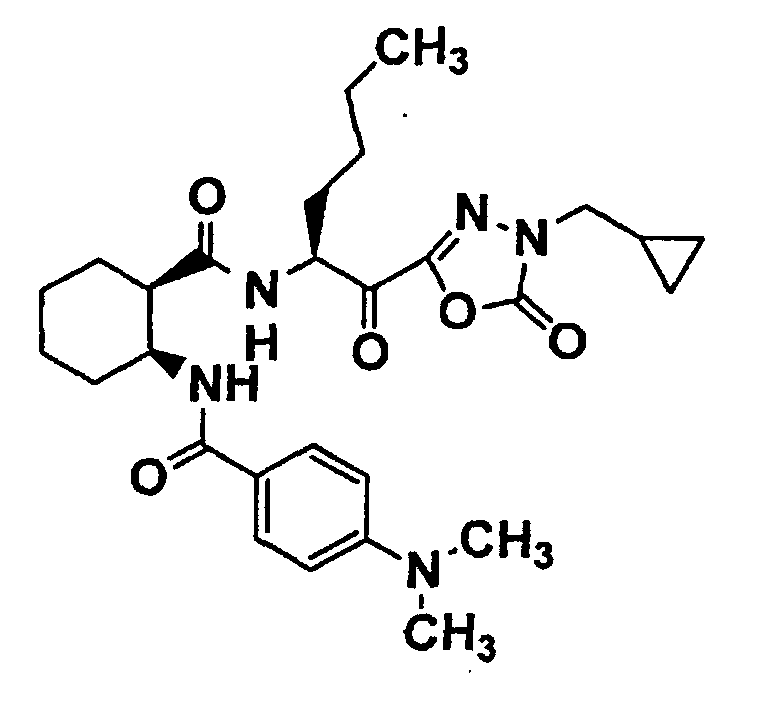
TLC : Rf 0.22 (n-hexane : ethyl acetate = 1 : 1);
NMR (CDCl3) : δ 7.67 (d, J = 9.0 Hz, 2H), 6.88 (d, J = 8.2 Hz, 1H), 6.67 (d, J = 9.0 Hz, 2H), 6.44 (d, J = 7.2 Hz, 1H), 5.24 (ddd, J= 8.4, 7.2 and 4.8 Hz, 1H), 4.45-4.30 (m, 1H), 3.74 (dd, J = 14.2, 7.2 Hz, 1H), 3.65 (dd, J = 14.2, 7.2 Hz, 1H), 3.01 (s, 6H), 2.82 (q, J = 5.0 Hz, 1H), 2.15-1.15 (m, 15H), 0.85-0.70 (m, 3H), 0.70-0.35 (m, 4H).
hydrochloride
TLC : Rf 0.22 (n-hexane : ethyl acetate = 1 : 1);
NMR (CDCl3): δ 7.88 (d, J = 8.4 Hz, 2H), 7.60 (d, J = 8.4 Hz, 2H), 7.46 (d, J = 8.2 Hz, 1H), 6.40 (d, J = 8.0 Hz, 1H), 5.28 (dt, J = 4.7, 8.0 Hz, 1H), 4.40-4.20 (m, 1H), 3.75 (dd, J = 14.9, 7.4 Hz, 1H), 3.67 (dd, J = 14.9, 7.8 Hz, 1H), 3.16 (s, 6H), 2.84 (q, J = 5.1 Hz, 1H), 2.15-1.15 (m, 15H), 0.90-0.70 (m, 3H), 0.70-0.35 (m, 4H).
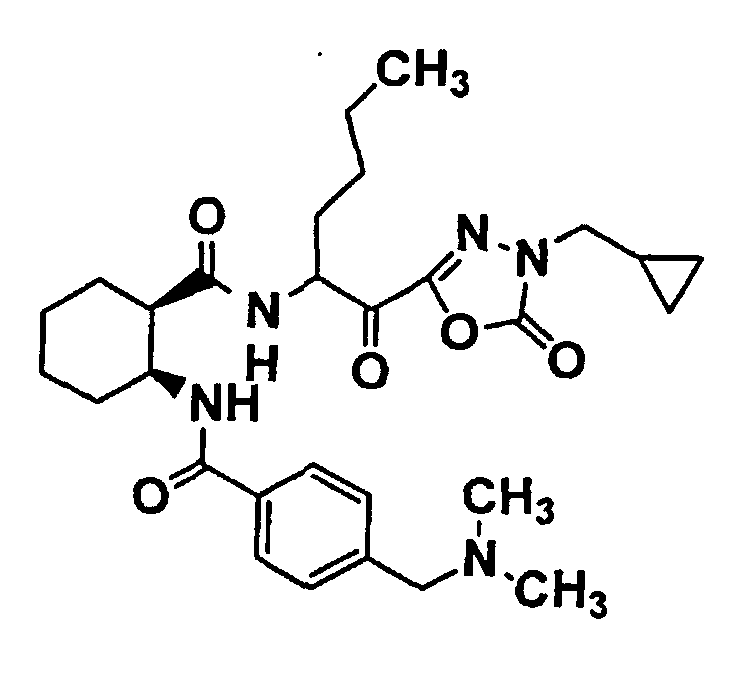
TLC : Rf 0.47 and 0.38 (chloroform : methanol = 9 : 1);
NMR (CDCl3) : δ 7.76 and 7.73 (each d, J = 8.0 and 8.2 Hz, totally 2H), 7.37 and 7.36 (each d, J = 8.0 and 8.2 Hz, totally 2H), 7.17 (d, J = 8.0 Hz, 1H), 6.45-6.30 (m, 1H), 5.35-5.15 (m, 1H), 4.45-4.25 (m, 1H), 3.75 and 3.73 (each dd, J = 14.4, 7.1 Hz, totally 1H), 3.66 and 3.63 (each dd, J = 14.4, 7.4 Hz, totally 1H), 3.46 (s, 2H), 2.90-2.80 (m, 1H), 2.24 (s, 6H), 2.20-1.10 (m, 15H), 0.90-0.70 (m, 3H), 0.70-0.35 (m, 4H).
hydrochloride
TLC : Rf 0.47 and 0.38 (chloroform : methanol = 9 : 1);
NMR (CDCl3): δ 7.87 and 7.83 (each d, J = 8.4 and 8.6 Hz, totally 2H), 7.72 and 7.66 (each d, J = 8.4 and 8.6 Hz, totally 2H), 7.51 and 7.22 (each d, J = 8.0 Hz, totally 1H), 6.91 and 6.39 (each d, J = 6.6 and 7.8 Hz, totally 1H), 5.40-5.10 (m, 1H), 4.40-4.10 (m, 3H), 3.85-3.55 (m, 2H), 3.00-2.60 (m, 7H), 2.30-1.10 (m, 15H), 0.95-0.70 (m, 3H), 0.70-0.35 (m, 4H).

NMR (DMSO-d6): δ 8.50 and 8.39 (each d, J = 6.3 Hz, totally 1H), 7.88-7.62 (m, 5H), 4.94-4.81 (m, 1H), 4.38 and 4.37 (each s, totally 2H), 4.32-4.12 (m, 1H), 3.70-3.50 (m, 2H), 3.38-3.25 (m, 2H), 3.08-2.96 (m, 2H), 2.80-2.72 (m, 1H), 2.00-1.88 (m, 7H), 1.68-1.22 (m, 8H), 1.17-1.06 (m, 1H), 0.86, 0.84, 0.75, and 0.71 (each d, J = 6.3 Hz, totally 6H), 0.53-0.49 (m, 2H), 0.36-0.33 (m, 2H).

NMR (DMSO-d6): δ 8.40 (d, J = 6.9 Hz, 1H), 7.87-7.81 (m, 3H), 7.66 (d, J = 7.8 Hz, 2H), 4.93-4.86 (m, 1H), 4.37 (m, 2H), 4.27 (m, 1H), 3.95-3.90 (m, 2H), 3.81-3.73 (m, 2H), 3.67-3.54 (m, 2H), 3.41-3.05 (m, 4H), 2.79-2.72 (m, 1H), 2.06-1.87 (m, 1H), 1.56-1.23 (m, 10H), 1.17-1.06 (m, 1H), 0.76 (d, J= 6.3 Hz, 3H), 0.72 (d, J= 6.3 Hz, 3H), 0.52-0.50 (m, 2H), 0.36-0.33 (m, 2H).
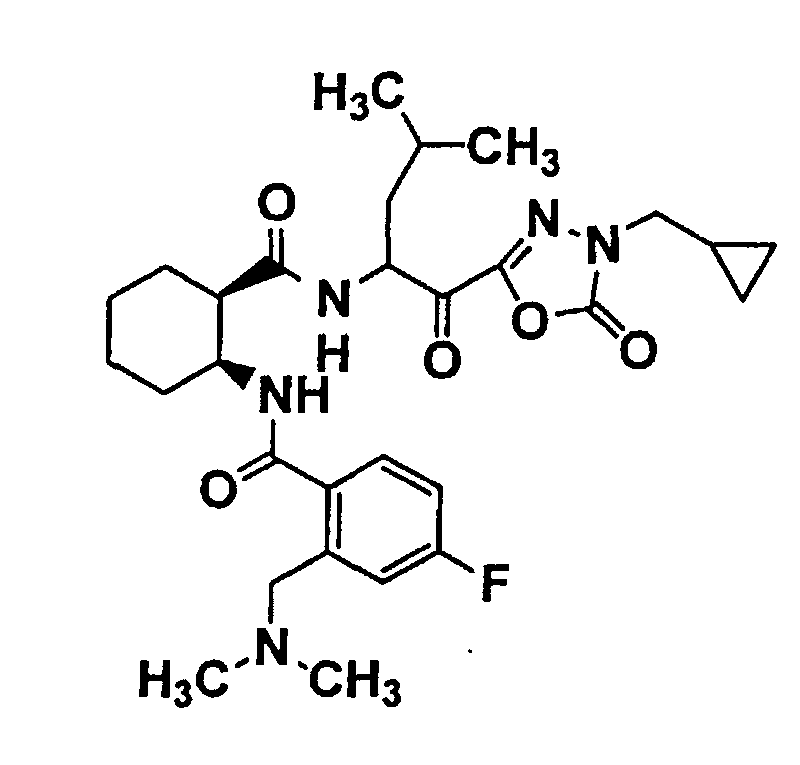
NMR (CDCl3) : δ 10.50 and 10.44 (each brd, J = 7.2 Hz, totally 1H), 8.03 and 7.99 (each t, J = 5.4 Hz, totally 1H), 7.10-7.03 (m, 1H), 6.93-6.88 (m, 1H), 6.85 and 6.23 (each brd, J = 7.5 Hz, totally 1H), 5.30-5.10 (m, 1H), 4.50 and 4.31 (each m, totally 1H), 3.80-3.30 (m, 4H), 3.05 and 2.92 (each m, totally 1H), 2.24 and 2.21 (each s, totally 6H), 2.30-1.10 (m, 12H), 0.99 and 0.78 (each m, totally 6H), 0.63 and 0.43 (each m, each 2H).
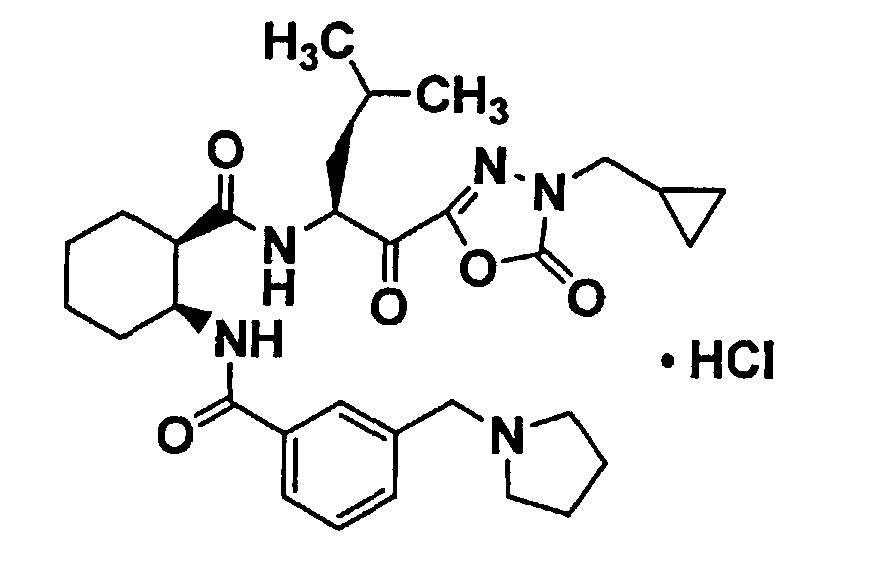
NMR (DMSO-d6): δ 8.49 and 8.38 (each d, J = 6.6 Hz, totally 1H), 8.01 and 7.93 (each s, totally 1H), 7.80 (d, J = 7.5 Hz, 2H), 7.74 (d, J = 7.8 Hz, 1H), 7.51 (t-like, J = 7.5 Hz, 1H), 4.93-4.87 (m, 1H), 4.39 and 4.37 (each s, totally 2H), 4.38 (m, 1H), 3.87-3.53 (m, 2H), 3.38-3.32 (m, 2H), 3.05 (m, 2H), 2.75-2.72 (m, 1H), 2.01-1.87 (m, 7H), 1.58-1.24 (m, 8H), 1.17-1.05 (m, 1H), 0.86, 0.84, 0.76, and 0.70 (each d, J = 6.0 Hz, totally 6H), 0.54-0.48 (m, 2H), 0.36-0.33 (m, 2H).

NMR (CDCl3): δ 8.02-7.92 (m, 1H), 7.48-7.35 (m, 1H), 7.21-7.05 (m, 2H), 6.39 and 6.22 (each brd, J = 6.9 Hz, totally 1H), 5.42-5.25 (m, 1H), 4.52-4.38 (m, 1H), 3.80-3.54 (m, 1H), 3.43 (m, 2H), 2.82-2.75 (m, 1H), 2.24 (s, 6H), 2.15-1.40 (m, 11H), 1.30-1.15 (m, 1H), 0.99, 0.96, 0.87, and 0.80 (each d, J = 6.3 Hz, totally 6H), 0.70 and 0.42 (each m, each 2H).
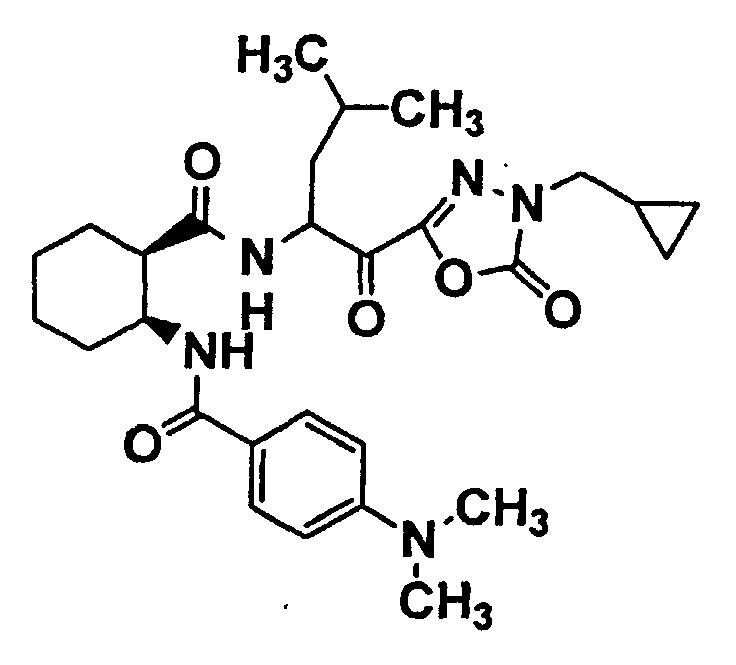
NMR (CDCl3) : δ 7.72 and 7.66 (each d, J = 8.7 Hz, totally 2H), 6.87 and 6.81 (each d, J = 8.4 Hz, totally 1H), 6.66 and 6.65 (each d, J = 8.7 Hz, totally 2H), 6.33-6.29 (m, 1H), 5.35-5.20 (m, 1H), 4.38-4.33 (m, 1H), 3.79-3.70 (m, 1H), 3.65-3.55 (m, 1H), 3.01 (m, 6H), 2.88-2.80 (m, 1H), 2.15-1.45 (m, 11H), 1.29-1.16 (m, 1H), 0.99-0.82 (m, 6H), 0.64-0.61 (m, 2H), 0.42 (m, 2H).

NMR (CDCl3) : δ 7.75-7.60 (m, 2H), 7.50-7.30 (m, 2H), 7.09 (d, J = 8.4 Hz, 1H), 6.31 and 6.26 (each d, J = 7.8 and 8.0 Hz, totally 1H), 5.40-5.20 (m, 1H), 4.45-4.25 (m, 1H), 3.76 and 3.75 (each dd, J = 14.5, 7.2 Hz, totally 1H), 3.63 and 3.61 (each dd, J = 14.5, 7.4 Hz, totally 1H), 3.47 (s, 2H), 2.90-2.80 (m, 1H), 2.25 and 2.24 (each s, totally 6H), 2.20-1.35 (m, 11H), 1.35-1.10 (m, 1H), 1.00, 0.94, 0.88 and 0.83 (each d, J = 6.2 Hz, totally 6H), 0.70-0.35 (m, 4H).
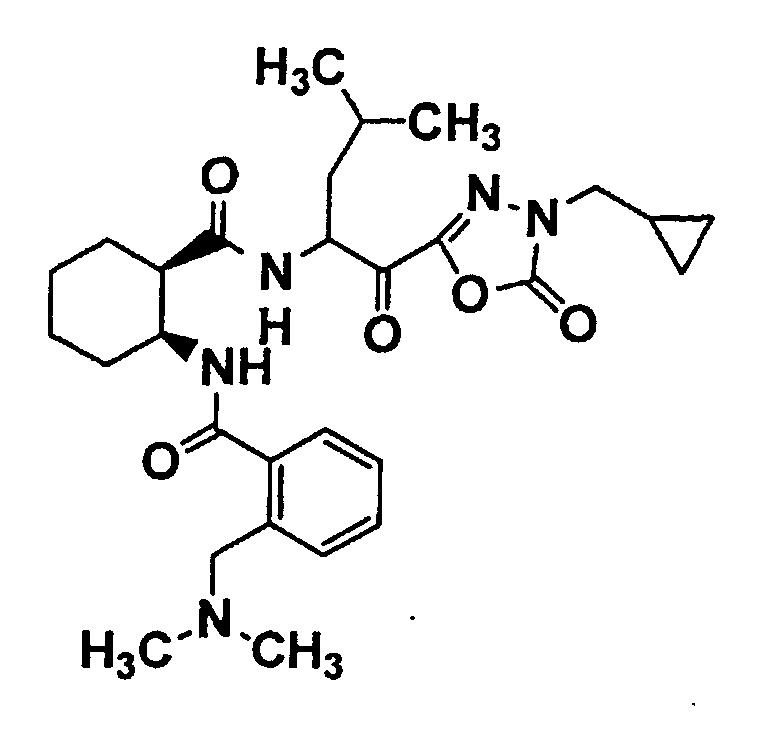
NMR (CDCl3): δ 10.65-10.45 (m, 1H), 8.05-7.90 (m, 1H), 7.45-7.30 (m, 2H), 7.25-7.10 (m, 1H), 7.00 and 6.34 (each d, J = 7.0 and 7.2 Hz, totally 1H), 5.30-5.10 (m, 1H), 4.52 and 4.34 (each br, totally 1H), 3.80-3.30 (m, 4H), 3.10-2.85 (m, 1H), 2.23and2.21 (each s, totally 6H), 2.20-1.35 (m, 11H), 1.30-1.10 (m, 1H), 0.96, 0.95, 0.71 and 0.68 (each d, J = 6.2, 6.2, 6.0 and 6.0 Hz, totally 6H), 0.65-0.35 (m, 4H).
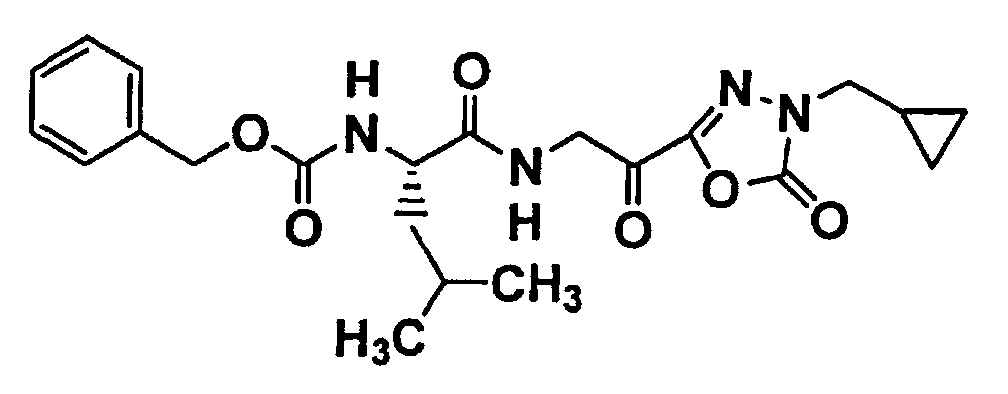
NMR (CDCl3): δ 7.46-7.24 (m, 5H), 6.98-6.79 (br, 1H), 5.34-5.18 (m, 1H), 5.12 (s, 2H), 4.60 (brs, 2H), 4.37-4.22 (m, 1H), 3.69 (d, J = 7.5 Hz, 2H), 2.00-1.46 (m, 3H), 1.32-1.18 (m, 1H), 1.10-0.90 (m, 6H), 0.70-0.57 and 0.47-0.38 (each m, totally 4H).
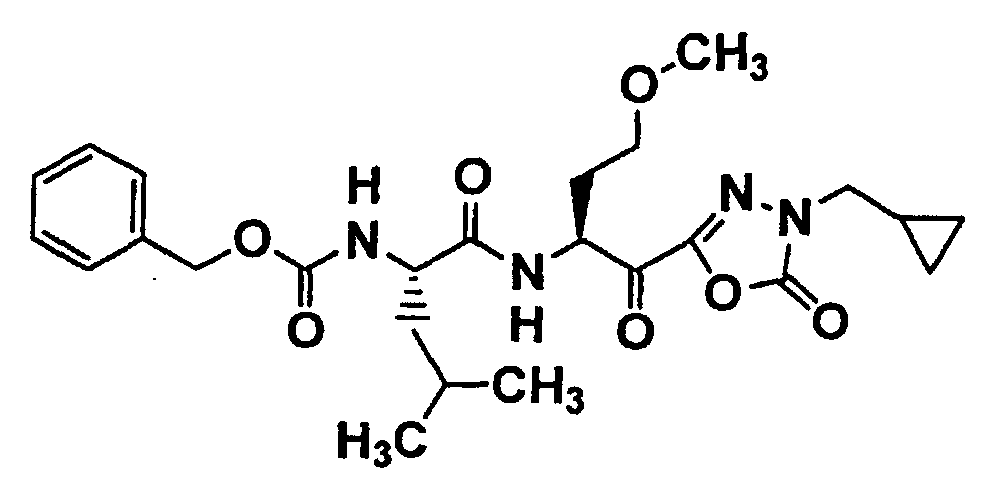
NMR (CDCl3) : δ 7.40-7.25 (m, 5H), 7.13 (d, J = 6.0 Hz, 1H), 5.28 (q, J= 6.0 Hz, 1H), 5.20-5.05 (m, 3H), 4.30-4.15 (m, 1H), 3.71 (dd, J = 14.2, 7.5 Hz, 1H), 3.67 (dd, J = 14.2, 7.5 Hz, 1H), 3.50-3.30 (m, 2H), 3.19 (s, 3H), 2.25-2.10 (m, 2H), 1.80-1.40 (m, 3H), 1.30-1.15 (m, 1H), 0.95 (d, J = 6.3 Hz, 6H), 0.65-0.60 (m, 2H), 0.45-0.40 (m, 2H).

NMR (CDCl3): δ 7.80-7.75 (m, 2H), 7.50-7.35 (m, 4H), 7.10 (d, J = 6.0 Hz, 1H), 5.28 (q, J = 6.0 Hz, 1H), 4.40-4.30 (m, 1H), 3.70 (dd, J = 14.5, 7.2 Hz, 1H), 3.66 (dd, J = 14.5, 7.2 Hz, 1H), 3.40 (t, J = 6.0 Hz, 2H), 3.21 (s, 3H), 2.81 (q, J = 4.8 Hz, 1H), 2.17 (q, J = 6.0 Hz, 2H), 2.05-1.45 (m, 8H), 1.30-1.15 (m, 1H), 0.65-0.60 (m, 2H), 0.45-0.40 (m, 2H).
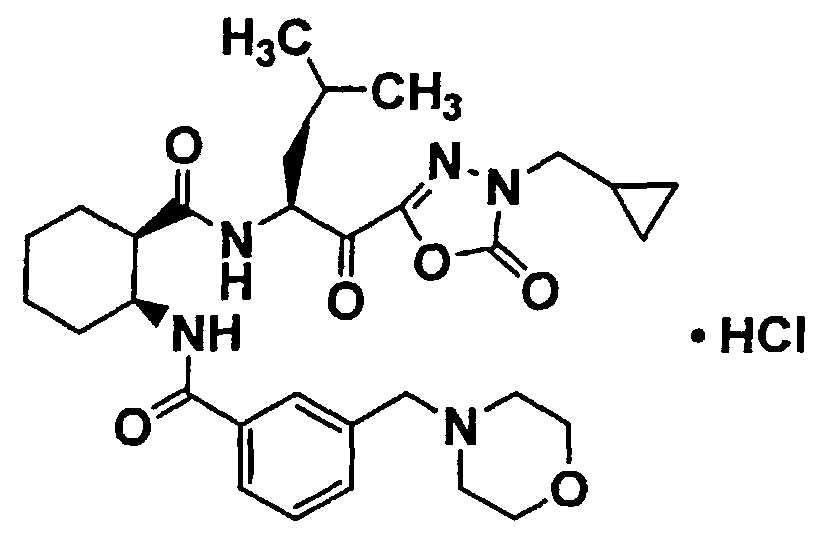
NMR (DMSO-d6) : δ 8.48 and 8.38 (each d, J = 6.6 Hz, totally 1H), 8.03 and 7.96 (each s, totally 1H), 7.81 (d, J = 6.3 Hz, 2H), 7.72 (d, J=7.5Hz, 1H), 7.53 (t-like, J=7.5Hz, 1H), 4.92-4.86 (m, 1H), 4.39 (br-s, 2H), 4.30 (m, 1H), 3.95-3.91 (m, 2H), 3.78-3.69 (m, 2H), 3.67-3.53 (m, 2H), 3.41-3.08 (m, 4H), 2.74-2.72 (m, 1H), 2.02-1.90 (m, 2H), 1.79-1.21 (m, 9H), 1.18-1.04 (m, 1H), 0.86, 0.84, 0.76, and 0.71 (each d, J = 6.0 Hz, totally 6H), 0.54-0.48 (m, 2H), 0.35-0.33 (m, 2H).

NMR (DMSO-d6): δ 8.56-8.21 (m, 2H), 7.75-7.70 (m, 1H), 7.59-7.53 (m, 3H), 4.92-4.85 (m, 1H), 4.50-4.33 (m, 3H), 3.91-3.88 (m, 2H), 3.79-3.55 (m, 4H), 3.38-3.08 (m, 4H), 2.80-2.71 (m, 1H), 1.98-1.77 (m, 2H), 1.67-1.22 (m, 9H), 1.18-1.06 (m, 1H), 0.89, 0.83, and 0.79 (each d, J = 6.0 Hz, totally 6H), 0.56-0.49 (m, 2H), 0.37-0.34 (m, 2H).
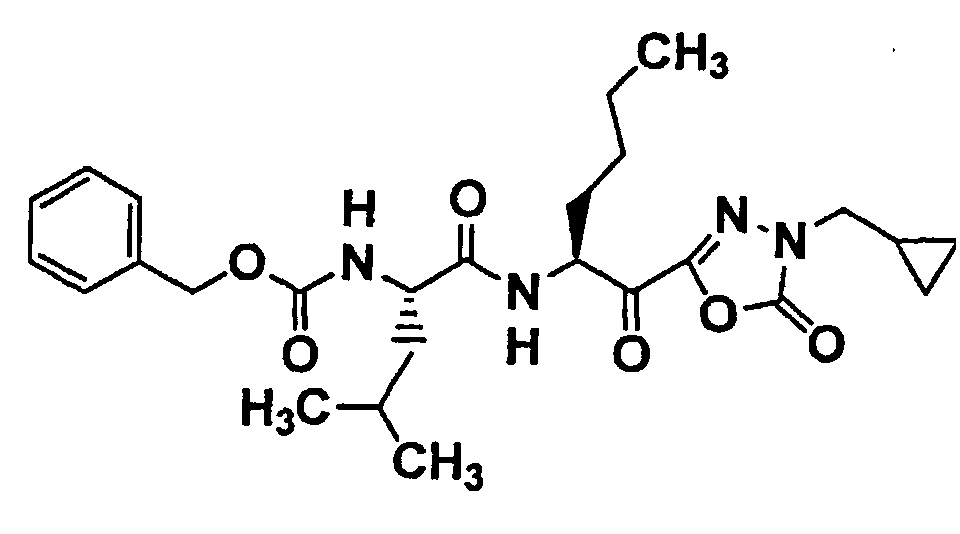
NMR (CDCl3): δ 7.34 (s, 5H), 6.58 (brd, J= 7.4 Hz, 1H), 5.29 (m, 1H), 5.11 (m, 3H), 4.22 (m, 1H), 3.74 and 3.64 (each dd, J = 14.8, 7.4 Hz, each 1H), 2.03-1.80 (m, 1H), 1.80-1.10 (m, 9H), 1.02-0.80 (m, 9H), 0.60 and 0.43 (each m, each 2H).
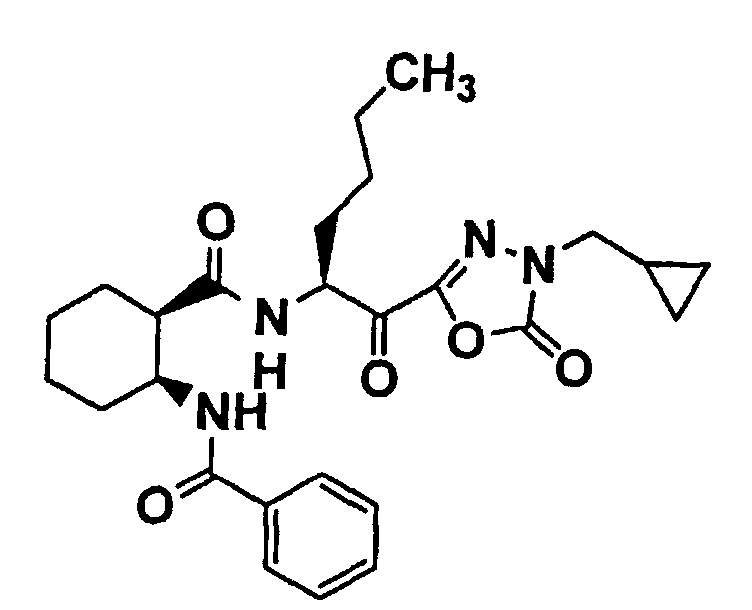
NMR (CDCl3): δ 7.80 (m, 2H), 7.58-7.31 (m, 3H), 7.20 (brd, J = 8.2 Hz, 1H), 6.27 (brd, J = 7.6 Hz, 1H), 5.29 (ddd, J = 8.4, 7.6, 4.4 Hz, 1H), 4.38 (m, 1H), 3.75 and 3.64 (each dd, J = 14.4, 7.4 Hz, each 1H), 2.83 (q, J = 5.2 Hz, 1H), 2.23-1.13 (m, 15H), 0.83 (m, 3H), 0.63 and 0.82 (each m, each 2H).

NMR (CDCl3): δ 7.83-7.74 (m, 2H), 7.53-7.37 (m, 3H), 7.14 (d, J = 8.1 Hz, 1H), 6.17 (d, J = 7.8 Hz, 1H), 5.42-5.24 (m, 1H), 4.40-4.28 (m, 1H), 4.03 (tt, J = 11.4, 3.9 Hz, 1H), 2.88-2.80 (m, 1H), 2.17-1.12 (m, 21H), 0.90 and 0.83 (each d, J = 6.3 Hz, totally 6H).

NMR (CDCl3): δ 7.35 (s, 5H), 6.50 (d, J = 7.0 Hz, 1H), 5.40-5.25 (m, 1H), 5.21 (s, 2H), 5.15-5.05 (m, 1H), 5.12 (s, 2H), 4.30-4.10 (m, 1H), 3.69 (q, J = 7.0 Hz, 2H), 1.80-1.40 (m, 6H), 1.24 (t, J = 7.0 Hz, 3H), 1.10-0.80 (m, 12H).

NMR (CDCl3) : δ 7.76 (dd, J = 8.6, 2.0 Hz, 2H), 7.60-7.35 (m, 3H), 7.11 (d, J= 8.0 Hz, 1H), 6.19 (d, J = 7.2 Hz, 1H), 5.40-5.25 (m, 1H), 5.20 (s, 2H), 4.45-4.25 (m, 1H), 3.69 (q, J = 7.0 Hz, 2H), 2.85 (q, J = 5.0 Hz, 1H), 2.20-1.30 (m, 11H), 1.24 (t, J = 7.0 Hz, 3H), 0.88 (d, J = 6.0 Hz, 3H), 0.84 (d, J = 6.0 Hz, 3H).
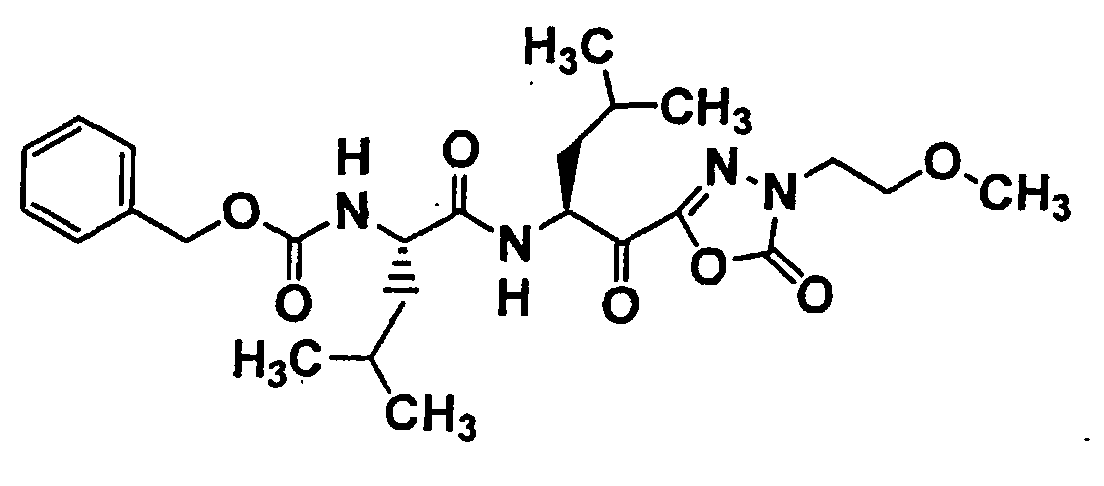
NMR (CDCl3) : δ 7.35 (s, 5H), 6.50 (d, J = 7.4 Hz, 1H), 5.40-5.25 (m, 1H), 5.20-5.05 (m, 3H), 4.30-4.10 (m, 1H), 4.04 (dt, J= 14.3, 5.5 Hz, 1H), 4.00 (dt, J = 14.3, 5.1 Hz, 1H), 3.72 (t, J = 5.3Hz, 2H), 3.36 (s, 3H), 1.80-1.40 (m, 6H), 1.05-0.80 (m, 12H).
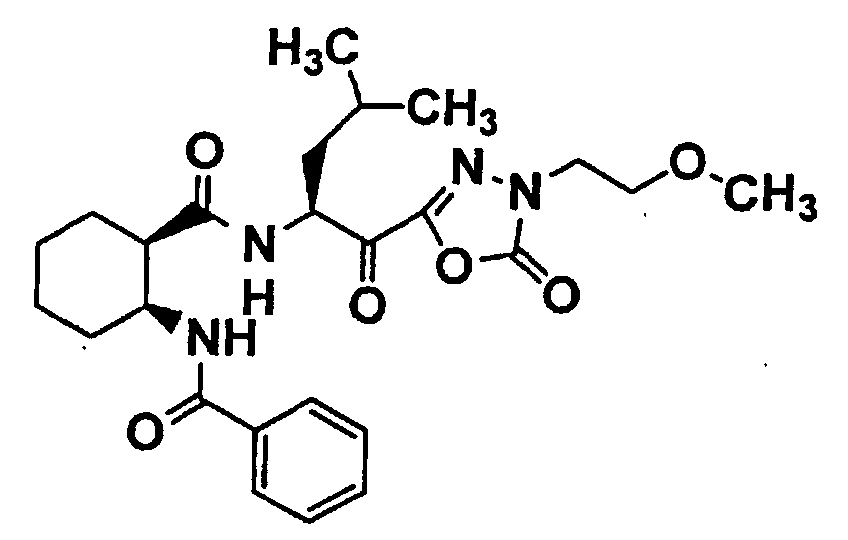
NMR (CDCl3): δ 7.77 (dd, J = 7.9, 1.6 Hz, 2H), 7.55-7.35 (m, 3H), 7.14 (d, J = 8.4 Hz, 1H), 6.19 (d, J = 7.8 Hz, 1H), 5.40-5.25 (m, 1H), 4.40-4.25 (m, 1H), 4.04 (dt, J = 14.5, 5.6 Hz, 1H), 3.99 (dt, J = 14.5, 5.0 Hz, 1H), 3.72 (t, J = 5.3 Hz, 2H), 3.36 (s, 3H), 2.84 (q, J = 5.2 Hz, 1H), 2.20- 1.35 (m, 11H), 0.88 (d, J = 6.0 Hz, 3H), 0.83 (d, J = 6.2 Hz, 3H).
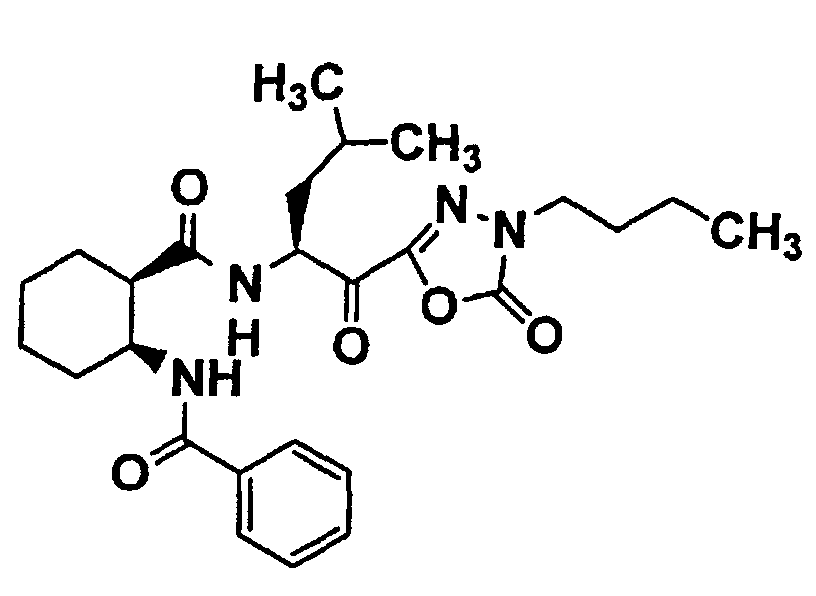
NMR (CDCl3): δ 7.77 (dd, J = 7.9, 1.6 Hz, 2H), 7.55-7.35 (m, 3H), 7.13 (d, J = 8.0 Hz, 1H), 6.19 (d, J = 8.2 Hz, 1H), 5.40-5.25 (m, 1H), 4.40-4.25 (m, 1H), 3.84 (t, J = 7.0 Hz, 2H), 2.84 (q, J = 5.0 Hz, 1H), 2.20-1.20 (m, 15H), 0.97 (t, J = 7.3 Hz, 3H), 0.89 (d, J = 6.0 Hz, 3H), 0.83 (d, J = 6.0 Hz, 3H).

NMR (CDCl3): δ 7.79 (dd, J = 8.7, 5.4 Hz, 2H), 7.35-7.20 (m, 1H), 7.10 (t, J = 8.7 Hz, 2H), 6.27 (d, J = 7.6 Hz, 1H), 5.30 (dt, J = 4.2, 7.6 Hz, 1H), 4.40-4.20 (m, 1H), 3.75 (dd, J = 14.6, 7.2 Hz, 1H), 3.67 (dd, J = 14.6, 7.6 Hz, 1H), 2.83 (q, J = 5.0 Hz, 1H), 2.20-1.10 (m, 15H), 0.90-0.70 (m, 3H), 0.70-0.35 (m, 4H).
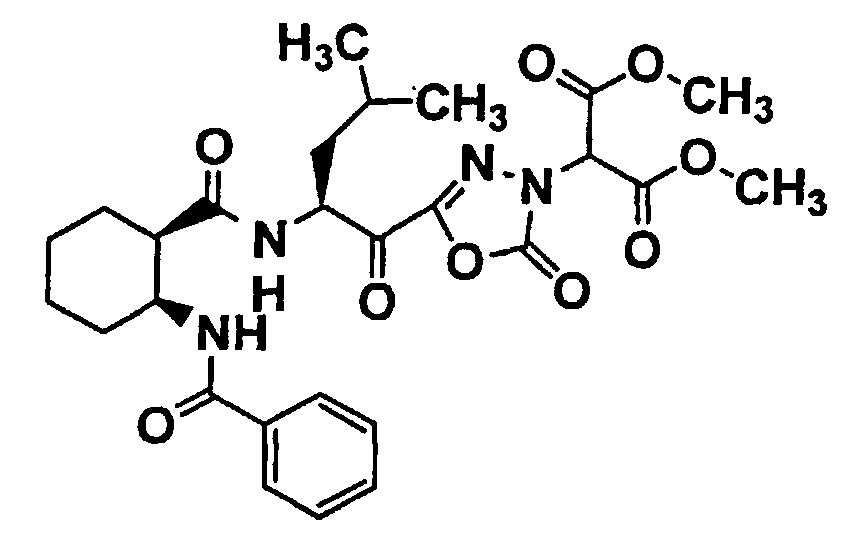
NMR (CDCl3): δ 7.80-7.73 (m, 2H), 7.53-7.37 (m, 3H), 7.14 (brd, J = 7.8 Hz, 1H), 6.18 (d, J = 7.2 Hz, 1H), 5.52 (s, 1H), 5.34-5.24 (m, 1H), 4.42-4.29 (m, 1H), 3.89 and 3.88 (each s, totally 6H), 2.89-2.80 (m, 1H), 2.15-1.40 (m, 11H), 0.86 and 0.84 (each d, J = 6.0 Hz, totally 6H).

NMR (CDCl3) : δ 7.48-7.25 (m, 5H), 6.60-6.40 (br, 1H), 5.52 (s, 1H), 5.32-5.22 (m, 1H), 5.20-5.05 (m, 3H), 4.28-4.13 (m, 1H), 3.89 and 3.88 (each s, totally 6H), 1.80-1.42 (m, 6H), 1.10-0.85 (m, 12H).
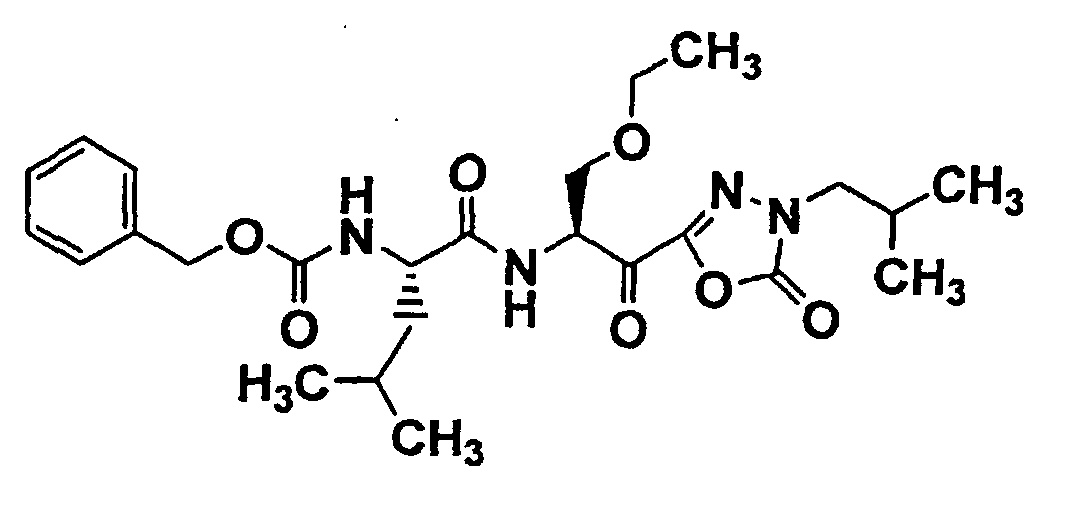
NMR (CDCl3): δ 7.35 (s, 5H), 7.00 and 6.82 (each brd, J= 7.8 Hz, totally 1H), 5.45-5.38 (m, 1H), 5.22-5.10 (m, 3H), 4.35-4.20 (m, 1H), 4.03 and 3.72 (each m, each 1H), 3.65 (d, J = 7.2 Hz, 2H), 3.50-3.38 (m, 2H), 2.30-2.10 (m, 1H), 1.80-1.50 (m, 3H), 1.15 (t, J = 6.8 Hz, 3H), 1.05-0.90 (m, 12H).
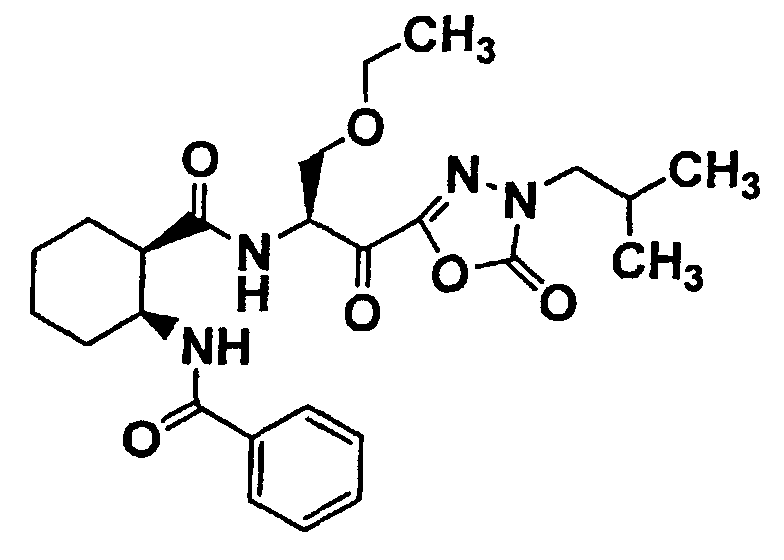
NMR (CDCl3): δ 7.82 and 7.78 (each d, J = 6.6 Hz, totally 2H), 7.50-7.30 (m, 4H), 6.59 and 6.54 (each brd, J = 6.6 Hz, totally 1H), 5.42-5.30 (m, 1H), 4.42-4.30 (m, 1H), 3.98 and 3.70 (each m, each 1H), 3.65 (d, J = 7.2 Hz, 2H), 3.45-3.35 (m, 2H), 2.92-2.84 (m, 1H), 2.30-1.40 (m, 9H), 1.15 (t, J = 7.2 Hz, 3H), 1.05-0.90 (m, 6H).
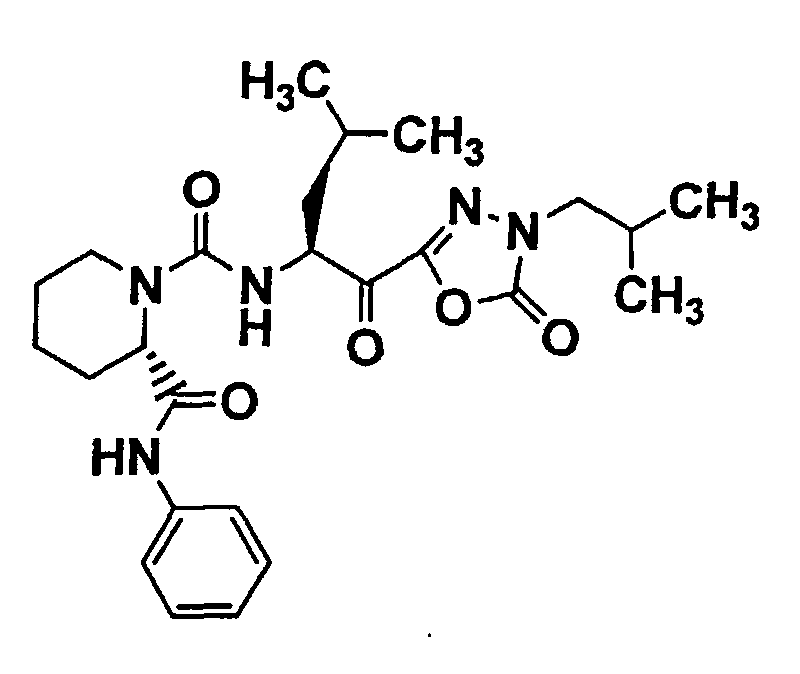
NMR (CDCl3): δ 8.51 (brs, 1H), 7.57-7.48 (m, 2H), 7.36-7.24 (m, 2H), 7.13-7.05 (m, 1H), 5.28 (ddd, J = 9.9, 8.1 and 4.2 Hz, 1H), 5.08 (d, J = 8.1 Hz, 1H), 4.88-4.77 (m, 1H), 3.70-3.56 (m, 3H), 3.12 (td, J = 13.2 and 2.7 Hz, 1H), 2.38-2.09 (m, 2H), 1.94-1.42 (m, 8H), 1.10-0.91 (m, 12H).
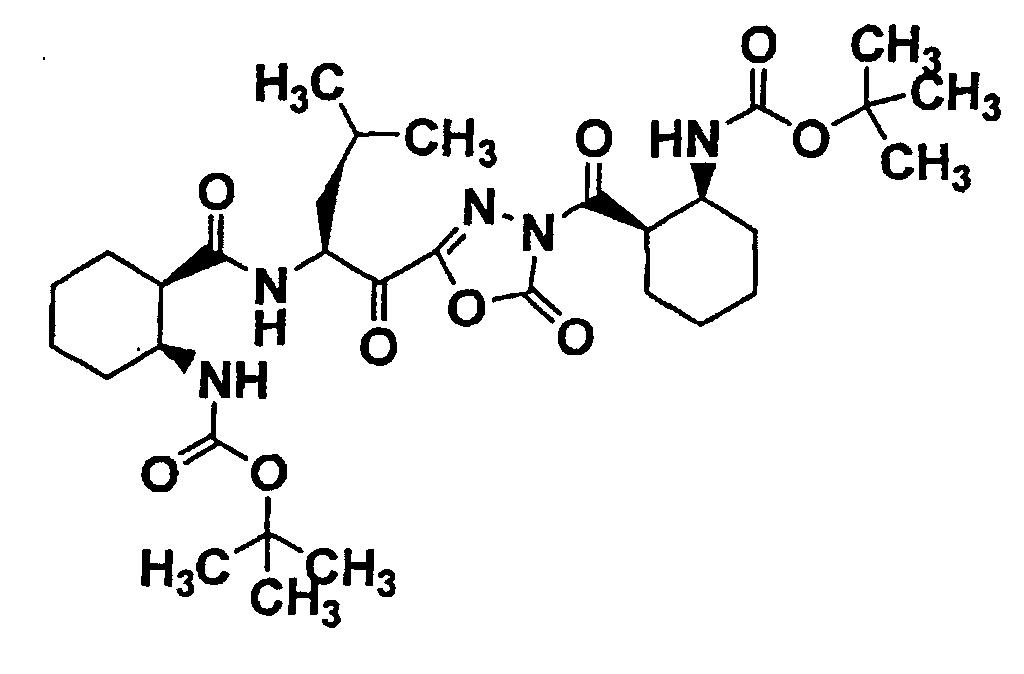
NMR (CDCl3): δ 6.21 (d, J = 6.9 Hz, 1H), 5.40-5.25 (m, 1H), 5.15 (d, J = 7.5 Hz, 1H), 4.90 (d, J = 9.3 Hz, 1H), 4.40-4.25 (m, 1H), 3.90-3.80 (m, 1H), 3.50-3.40 (m, 1H), 2.69 (q, J = 5.1 Hz, 1H), 1.95-1.30 (m, 19H), 1.43 (s, 9H), 1.41 (s, 9H), 1.02 (d, J = 6.0 Hz, 6H), 0.98 (d, J = 6.3 Hz, 6H).
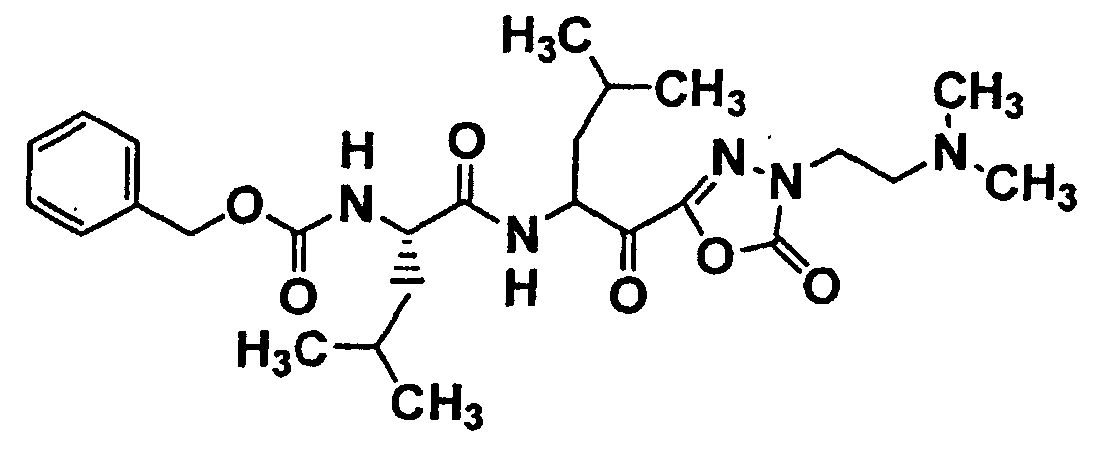
NMR (CDCl3): δ 7.35 (s, 5H), 6.63 and 6.48 (each br, totally 1H), 5.38 (m, 1H), 5.22-5.00 (m, 3H), 4.30-4.18 (m, 1H), 4.02-3.80 (m, 2H), 2.80-2.60 (m, 2H), 2.27 (s, 6H), 2.05-1.40 (m, 6H), 1.02-0.80 (m, 12H).

NMR (CDCl3) : δ 7.83-7.71 (m, 2H), 7.50-7.38 (m, 3H), 7.20-7.10 (m, 1H), 6.25 and 6.19 (each d, J=6.6Hz, totally 1H), 5.40-5.24 (m, 1H), 4.42-4.30 (m, 1H), 4.02-3.80 (m, 2H), 2.82 (m, 1H), 2.80-2.60 (m, 2H), 2.28 (s, 6H), 2.25-1.40 (m, 11H), 0.98, 0.94, 0.88, and 0.82 (each d, J = 6.3 Hz, totally 6H).

NMR (CDCl3) : δ 7.40-7.25 (m, 5H), 7.11 (d, J = 6.3 Hz, 1H), 5.26 (q, J= 6.3Hz, 1H), 5.20-5.05 (m, 3H), 4.30-4.15 (m, 1H), 3.63 (d, J = 7.2 Hz, 2H), 3.50-3.30 (m, 2H), 3.18 (s, 3H), 2.25-2.10 (m, 3H), 1.80-1.40 (m, 3H), 1.00-0.85 (m, 12H).
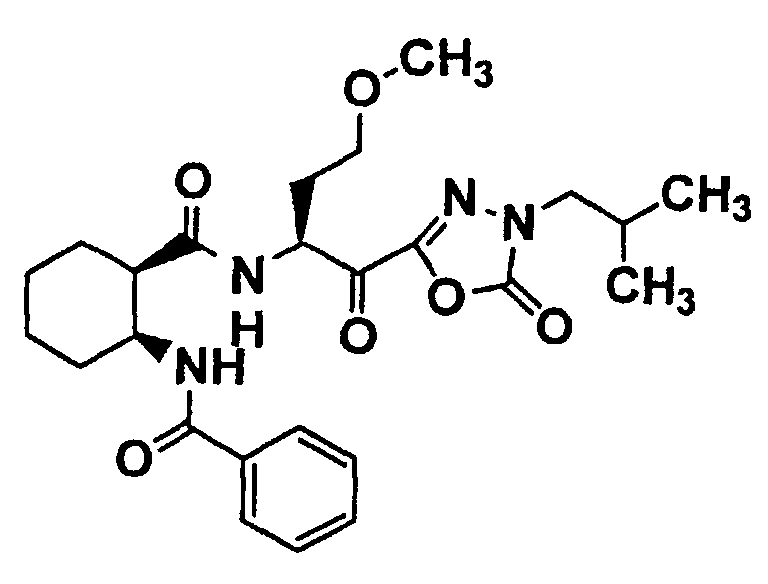
NMR (CDCl3) : δ 7.80-7.75 (m, 2H), 7.50-7.35 (m, 4H), 7.09 (d, J = 5.7 Hz, 1H), 5.26 (q, J= 5.7 Hz, 1H), 4.40-4.25 (m, 1H), 3.63 (d, J = 6.9 Hz, 2H), 3.45-3.30 (m, 2H), 3.19 (s, 3H), 2.81 (q, J = 5.1 Hz, 1H), 2.25-1.40 (m, 11H), 0.98 (d, J = 6.9 Hz, 6H).

NMR (CDCl3) : δ 7.82-7.75 (m, 2H), 7.52-7.37 (m, 3H), 7.27 (brd, J = 7.8 Hz, 1H), 6.56-6.46 (br, 1H), 4.56 (d, J = 5.1 Hz), 4.43-4.32 (m, 1H), 3.63 (d, J = 7.2 Hz, 2H), 2.92-2.84 (m, 1H), 2.23-1.45 (m, 9H), 0.97 (d, J = 6.6 Hz, 6H).
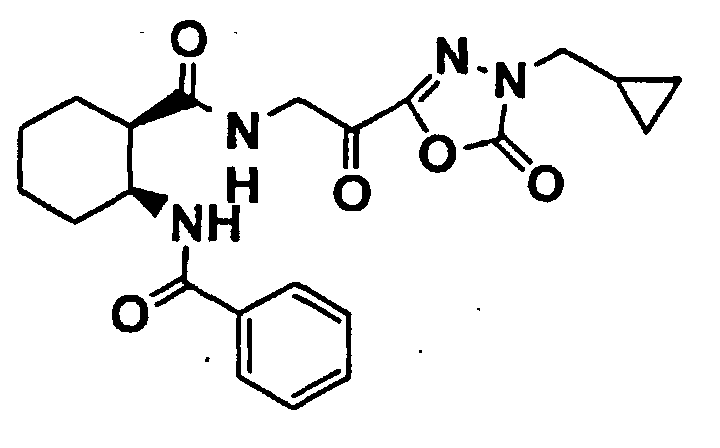
NMR (CDCl3) : δ 7.83-7.75 (m, 2H), 7.55-7.38 (m, 3H), 7.28 (brd, J = 9.0 Hz, 1H), 6.46 (brs, 1H), 4.61 (dd, J = 19.5, 5.1 Hz, 1H), 4.58 (dd, J = 19.5, 5.1 Hz, 1H), 4.44-4.31 (m, 1H), 3.68 (d, J = 7.5 Hz, 2H), 2.92-2.84 (m, 1H), 2.13-1.13 (m, 9H), 0.68-0.59 and 0.47-0.38 (each m, totally 4H).

NMR (CDCl3): δ 7.44-7.24 (m, 5H), 6.94-6.78 (br, 1H), 5.31-5.19 (m, 1H), 5.12 (s, 2H), 4.59 (brd, J = 4.2 Hz, 2H), 4.35-4.23 (m, 1H), 3.64 (d, J = 7.2 Hz, 2H), 2.26-2.10 (m, 1H), 1.90-1.47 (m, 3H), 1.03-0.82 (m, 12H).

NMR (CDCl3): δ 7.40-7.30 (m, 5H), 6.94 and 6.74 (br and d, J = 6.6 Hz, totally 1H), 5.38 (q, J = 6.6 Hz, 1H), 5.20-5.00 (m, 3H), 4.30-4.15 (m, 1H), 3.65 and 3.64 (each d, J = 7.0 Hz, totally 2H), 2.18 (septet, J = 7.0 Hz, 1H), 1.90-1.40 (m, 5H), 1.00-0.85 (m, 12H), 0.75-0.55 (m, 1H), 0.55-0.40 (m, 2H), 0.10-0.00 (m, 2H).
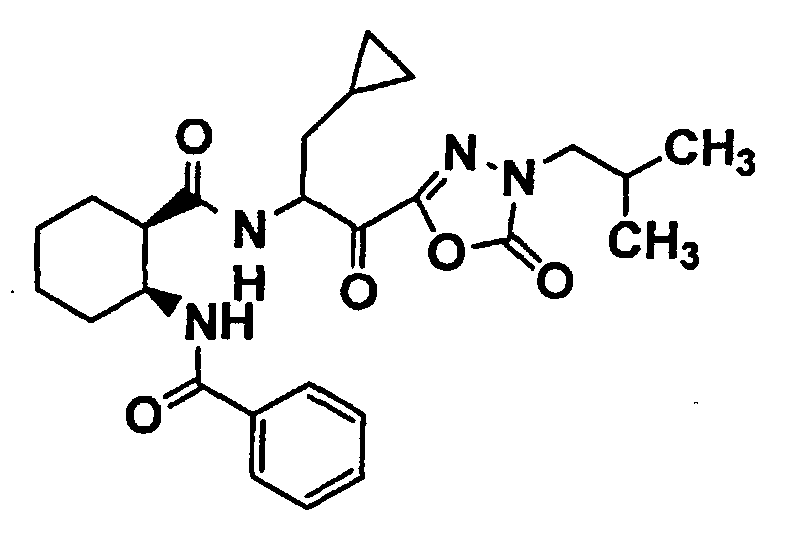
NMR (CDCl3) : δ 7.85-7.70 (m, 2H), 7.50-7.30 (m, 3H), 7.30-7.20 (m, 1H), 6.45 (d, J = 6.6 Hz, 1H), 5.35 and 5.32 (each q, J = 6.6 Hz, totally 1H), 4.40-4.30 (m, 1H), 3.70-3.55 (m, 2H), 2.90-2.80 (m, 1H), 2.25-2.10 (m, 1H), 2.10-1.40 (m, 10H), 0.97 and 0.96 (each d, J = 6.6 Hz, totally 6H), 0.70-0.55 (m, 1H), 0.50-0.30 (m, 2H), 0.10--0.10 (m, 2H).
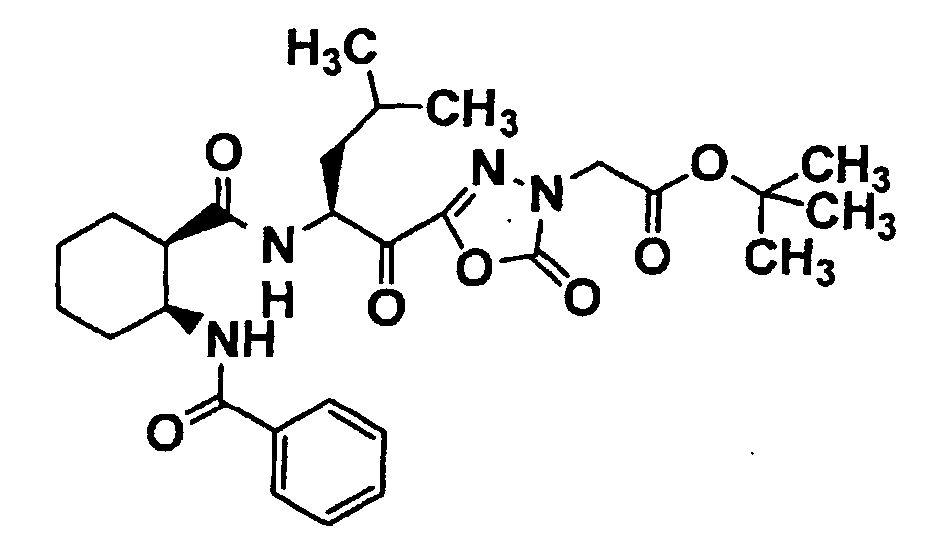
NMR (CDCl3) : δ 7.76 (d, J = 6.9 Hz, 2H), 7.53-7.37 (m, 3H), 7.14 (brd, J = 7.8 Hz, 1H), 6.18 (d, J = 7.5 Hz, 1H), 5.36-5.26 (m, 1H), 4.53 (d, J = 17.4 Hz, 1H), 4.44 (d, J = 17.4 Hz, 1H), 4.39-4.27 (m, 1H), 2.84 (q, J = 5.1 Hz, 1H), 2.15-1.38 (m, 11H), 1.49 (s, 9H), 0.87 and 0.83 (each d, J = 6.0 Hz, totally 6H).
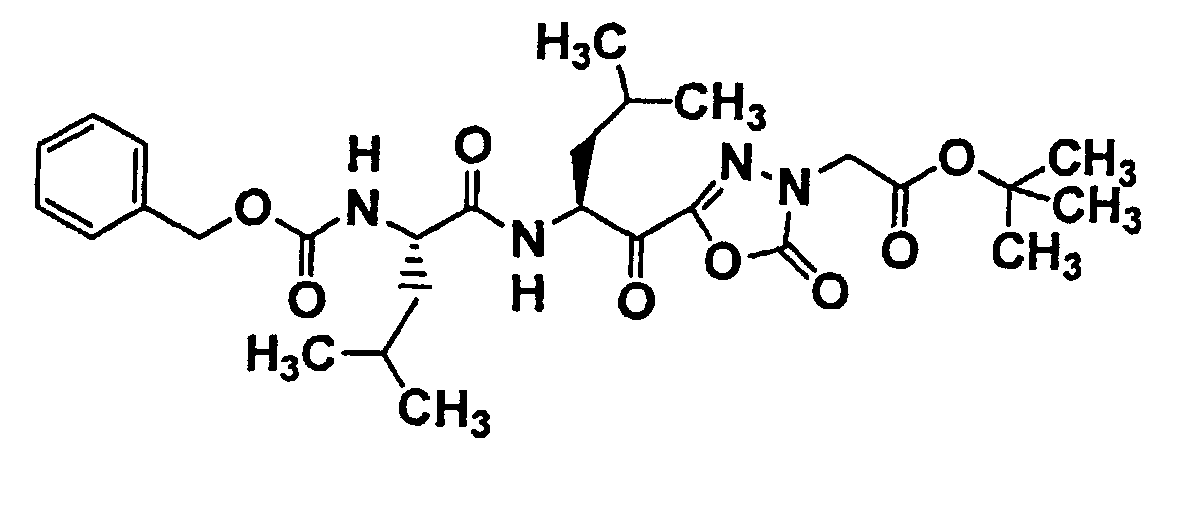
NMR (CDCl3) : δ 7.43-7.24 (m, 5H), 6.50 (brd, J = 7.5 Hz, 1H), 5.34-5.24 (m, 1H), 5.20-5.00 (m, 1H), 5.12 (s, 2H), 4.53 (d, J = 17.4 Hz, 1H), 4.44 (d, J = 17.4 Hz, 1H), 4.26-4.08 (m, 1H), 1.80-1.30 (m, 6H), 1.49 (s, 9H), 1.05-0.80 (m, 12H).

NMR (DMSO-d6): δ 8.54 and 8.46 (each d, J = 6.0 Hz, totally 1H), 8.40 and 8.25 (each d, J = 8.4 Hz, totally 1H), 7.77-7.73 (m, 1H), 7.57-7.49 (m, 3H), 4.91-4.84 (m, 1H), 4.47-4.32 (m, 3H), 3.65-3.49 (m, 2H), 3.41-3.01 (m, 4H), 2.77-2.68 (m, 1H), 2.05-1.80 (m, 7H), 1.70-1.22 (m, 9H), 0.91 (d, J = 6.6 Hz, 3H), 0.90 (d, J = 6.6 Hz, 3H), 0.87, 0.81, and 0.78 (each d, J = 6.3 Hz, totally 6H).
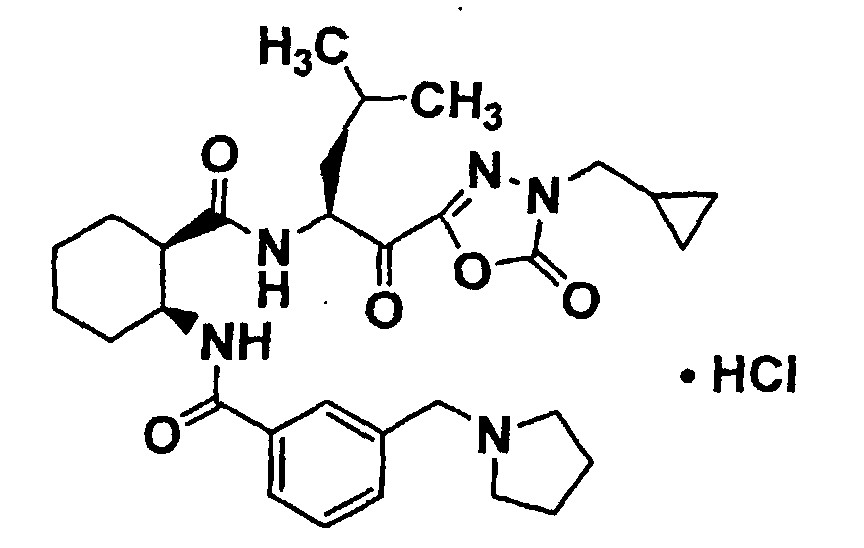
NMR (DMSO-d6): δ 8.54 and 8.47 (each d, J = 6.3 Hz, totally 1H), 8.42 and 8.25 (each d, J = 8.1 Hz, totally 1H), 7.74-7.72 (m, 1H), 7.56-7.52 (m, 3H), 4.92-4.85 (m, 1H), 4.47-4.27 (m, 3H), 3.73-3.55 (m, 2H), 3.41-3.00 (m, 4H), 2.78-2.70 (m, 1H), 2.11-1.78 (m, 6H), 1.72-1.23 (m, 9H), 1.18-1.06 (m, 1H), 0.89, 0.87, 0.83, and 0.79 (each d, J = 6.0 Hz, totally 6H), 0.57-0.46 (m, 2H), 0.37-0.32 (m, 2H).

NMR (CDCl3) : δ 8.50 (d, J = 2.2 Hz, 1H), 7.84 (dd, J = 8.8, 2.2 Hz, 1H), 7.02 (d, J = 7.6 Hz, 1H), 6.49 (d, J = 8.8 Hz, 1H), 6.26 (d, J = 7.8 Hz, 1H), 5.40-5.20 (m, 1H), 4.84 (br, 2H), 4.40-4.20 (m, 1H), 3.77 (dd, J=14.5, 7.1 Hz, 1H), 3.64 (dd, J = 14.5, 7.5 Hz, 1H), 2.82 (q, J = 5.1 Hz, 1H), 2.20-1.35 (m, 11H), 1.35-1.10 (m, 1H), 0.91 (d, J = 5.8 Hz, 3H), 0.87 (d, J = 6.2 Hz, 3H), 0.70-0.30 (m, 4H).
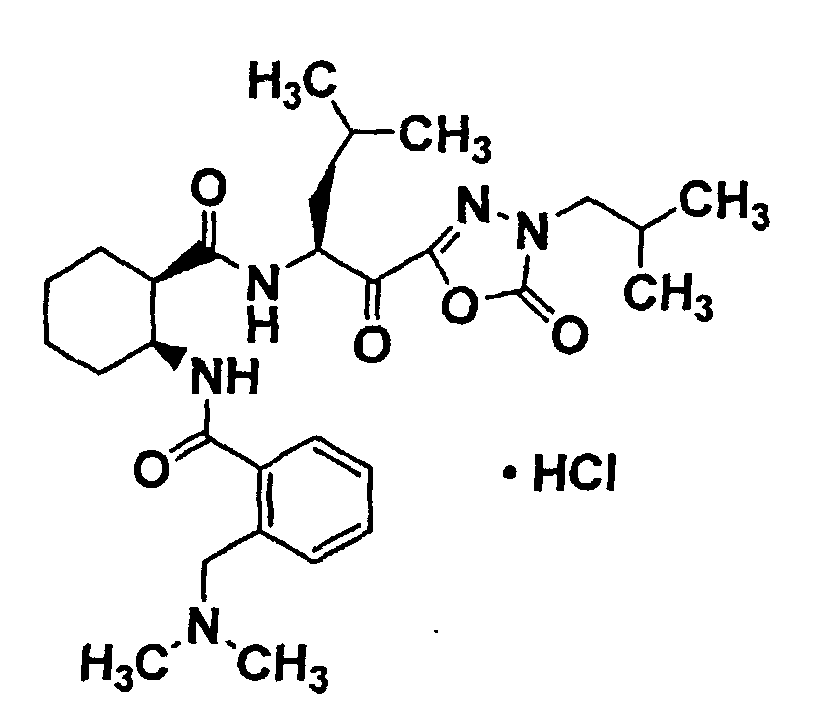
NMR (DMSO-d6): δ 9.82 (brs, 1H), 8.52-8.42 (m, 2H), 7.67 (d, J = 7.5 Hz, 1H), 7.62-7.47 (m, 3H), 4.93-4.84 (m, 1H), 4.45-4.20 (m, 3H), 3.60 and 3.53 (each dd, J = 15.1, 6.9 Hz, totally 2H), 2.85-2.62 (m, 7H), 2.08-1.10 (m, 12H), 0.91 and 0.90 (each d, J = 6.9 Hz, totally 6H), 0.80 and 0.75 (each d, J = 6.3 Hz).
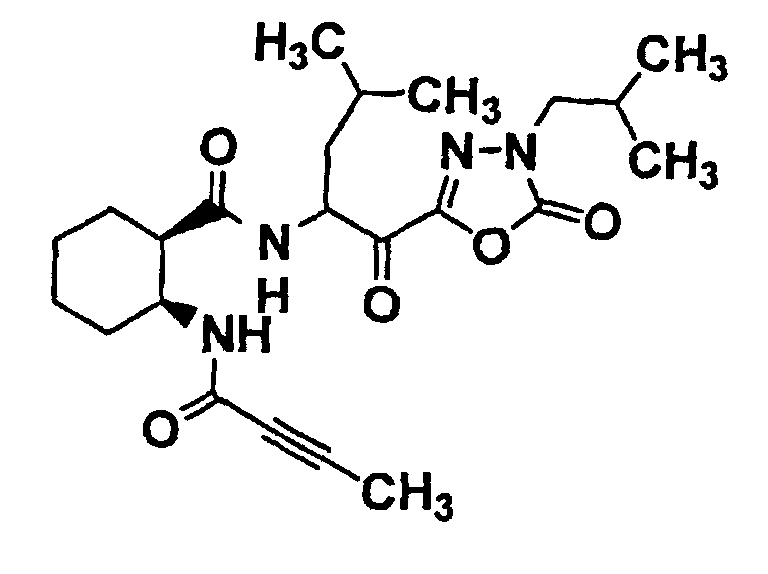
NMR (CDCl3): δ 6.70 and 6.61 (each brd, J = 9.0 Hz, 1H), 6.23 and 6.13 (each brd, J = 7.5 Hz, 1H), 5.33 and 5.27 (each m, 1H), 4.20-4.08 (m, 1H), 3.70 (dd, J = 14, 7.2 Hz, 1H), 3.63 (dd, J = 14, 7.2 Hz, 1H), 2.79-2.71 (m, 1H), 2.18 (septet J = 6.9 Hz, 1H), 2.00-1.35 (m, 11H), 1.93 (s, 3H), 1.01 (d, J = 6.3 Hz, 3H), 1.00 (d, J = 6.9 Hz, 6H), 0.97 (d, J = 6.0 Hz, 3H).

NMR (CDCl3) : δ 6.79 and 6.73 (each brd, J = 9.0 Hz, 1H), 6.20 and 6.14 (each brd, J = 7.5 Hz, 1H), 5.38-5.24 (each m, 1H), 4.22-4.10 (m, 1H), 3.70 (dd, J = 14, 7.2 Hz, 1H), 3.63 (dd, J = 14, 7.2 Hz, 1H), 3.36 (s, 2H), 2.80-2.72 (m, 1H), 2.32 (s, 6H), 2.19 (septet J = 6.9 Hz, 1H), 2.00-1.35 (m, 11H), 1.01 (d, J = 6.0 Hz, 3H), 1.00 (d, J = 6.6 Hz, 6H), 0.98 (d, J = 6.0 Hz, 3H).
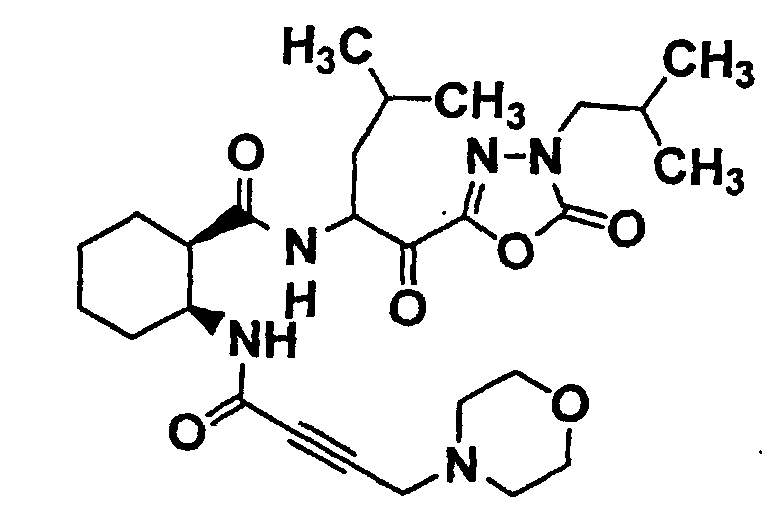
NMR (CDCl3): δ 6.80 and 6.77 (each brd, J = 9.0 Hz, 1H), 6.11 and 6.08 (each brd, J = 7.5 Hz, 1H), 5.34 and 5.28 (each m, 1H), 4.22-4.10 (m, 1H), 3.76-3.70 (m, 4H), 3.70 (dd, J = 14, 6.9 Hz, 1H), 3.63 (dd, J = 14, 6.9 Hz, 1H), 3.40 and 3.38 (each s, 2H), 2.79-2.70 (m, 1H), 2.57 (t, J = 4.5 Hz, 4H), 2.19 and 2.18 (each septet, J = 6.9 Hz, 1H), 2.00-1.35 (m, 11H), 1.01 (d, J = 6.0 Hz, 3H), 1.00 (d, J = 6.9 Hz, 6H), 0.98 and 0.97 (each d, J = 6.0 Hz, 3H).
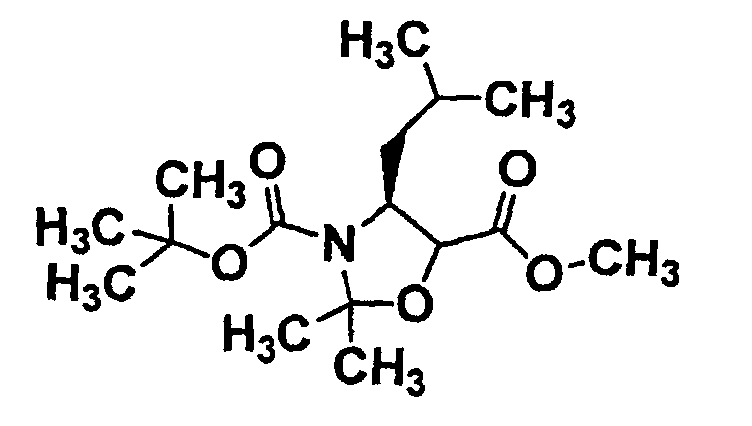
TLC : Rf 0.52 and 0.48 (n-hexane : ethyl acetate = 2 : 1);
NMR (CDCl3): δ 4.61 and 4.44-4.12 (d and m, J = 5.1 Hz, totally 2H), 3.78 (s, 3H), 1.70-1.30 (m, 9H), 1.48 and 1.47 (each s, totally 9H), 1.05-0.87 (m, 6H).

NMR (CDCl3) : δ 4.45-4.22 (m, 2H), 1.85-1.30 (m, 3H), 1.66 and 1.58 (each s, totally 6H), 1.48 (s, 9H), 1.04-0.85 (m, 6H).

TLC : Rf 0.44, 0.29 (n-hexane : ethyl acetate = 2 : 1);
NMR (CDCl3): δ 8.28-8.16 (m, 1H), 7.28-7.19 (m, 2H), 6.97-6.81 (m, 3H), 4.63 and 4.39 (each d, J = 5.1 and 2.4 Hz), 4.42-4.30 (m, 1H), 1.76-1.30 (m, 9H), 1.48 and 1.47 (each s, totally 9H), 1.01-0.85 (m, 6H).

TLC : Rf 0.45, 0.39 (n-hexane : ethyl acetate = 4 : 1);
NMR (CDCl3): δ 7.89-7.81 (m, 2H), 7.49-7.41 (m, 2H), 7.32-7.24 (m, 1H), 5.05 (d, J = 8.7 Hz, 0.5H), 4.81 (d, J = 2.1 Hz, 0.5 H), 4.60-4.15 (br, 1H), 1.90-1.30 (m, 9H), 1.50 (s, 9H), 0.99, 0.93 and 0.86 (each d, J = 6.0 Hz, totally 6H).

TLC : Rf 0.22 (chloroform : methanol = 9 : 1);
NMR (CDCl3): δ 8.12-7.87 (br, 3H), 7.81-7.73 (m, 2H), 7.56-7.44 (m, 4H), 7.36-7.29 (m, 1H), 7.10 (d, J = 8.7 Hz, 2H), 4.85 and 4.79 (each d, J = 4.2 Hz, totally 1H), 3.54-3.35 (br, 1H), 2.27 (s, 3H), 1.84-1.68 (m, 1H), 1.64-1.44 (m, 2H), 1.00-0.82 (m, 6H).

NMR (CDCl3): δ 7.90-7.84 (m, 2H), 7.82-7.73 (m, 2H), 7.53-7.31 (m, 6H), 7.12 (d, J = 8.1 Hz, 1H), 6.35-6.15 (m, 1H), 5.50-5.32 (m, 1H), 4.44-4.28 (m, 1H), 2.92-2.82 (m, 1H), 2.17-1.36 (m, 11H), 0.94 and 0.87 (each d, J = 6.0 Hz, totally 6H).

NMR (CDCl3): δ 7.88 (d, J = 8.1 Hz, 2H), 7.50 (t, J = 8.1 Hz, 2H), 7.44-7.20 (m, 6H), 6.80-6.48 (m, 1H), 5.49-5.37 (m, 1H), 5.25-4.95 (m, 1H), 5.12 (s, 2H), 4.32-4.11 (m, 1H), 1.85-1.35 (m, 6H), 1.10-0.85 (m, 12H).
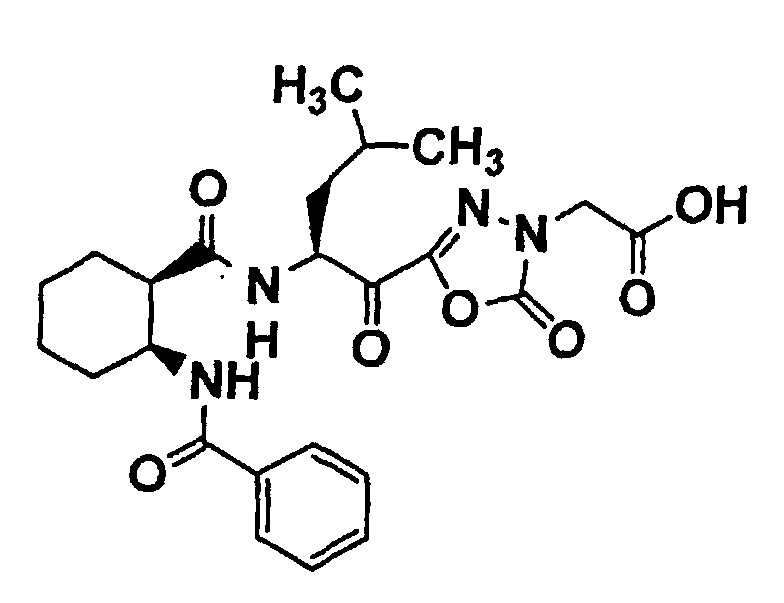
TLC : Rf 0.61 (chloroform : methanol : acetic acid = 8 : 2 : 1);
NMR (DMSO-d6): δ 8.39 (d, J = 6.6 Hz, 1H), 7.79 (d, J = 7.8 Hz, 1H), 7.75 (d, J = 8.1 Hz, 2H), 7.53-7.37 (m, 3H), 4.89 (q, J = 6.9 Hz, 1H), 4.62 (s, 2H), 4.29-4.16 (m, 1H), 2.81-2.69 (m, 1H), 2.09-1.81 (m, 2H), 1.70-1.21 (m, 9H), 0.73 and 0.66 (each d, J = 6.0 Hz, totally 6H).
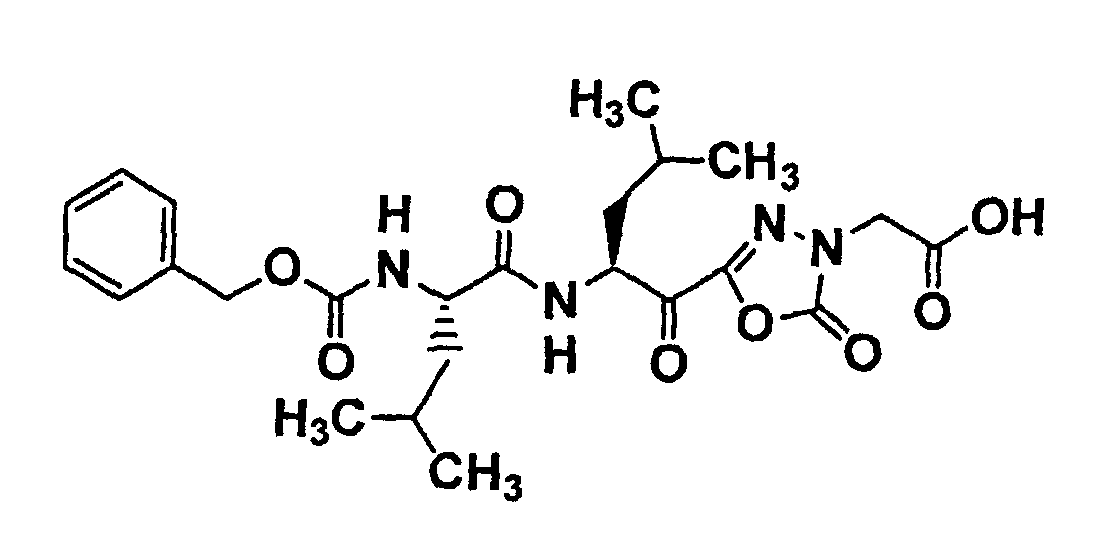
TLC : Rf 0.65 (chloroform : methanol : acetic acid = 8 : 2 : 1);
NMR (DMSO-d6): δ 8.49 (d, J= 6.6 Hz, 1H), 7.45-7.23 (m, 5H), 7.39 (d, J = 8.1 Hz, 1H), 5.00 (s, 2H), 4.96-4.85 (m, 1H), 4.68 (s, 2H), 4.12-4.00 (m, 1H), 1.77-1.29 (m, 6H), 1.00-0.72 (m, 12H).
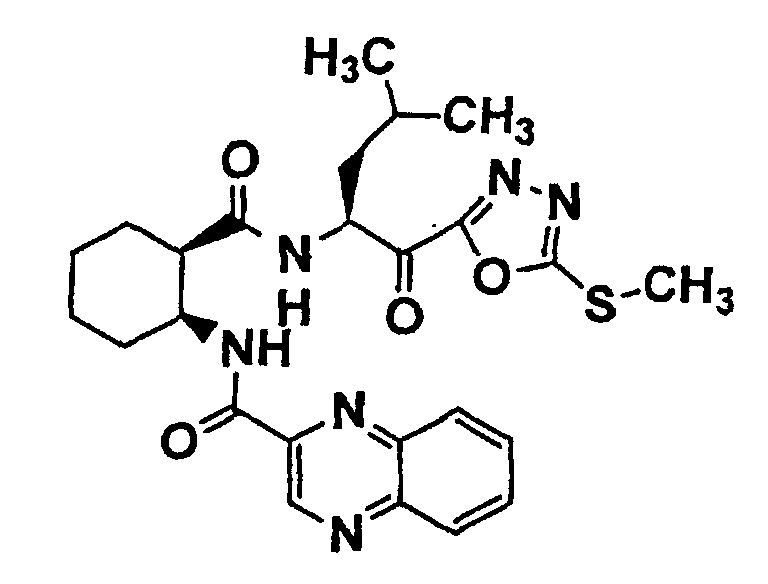
NMR (CDCl3): δ 9.65 (s, 1H), 8.62 (d, J = 9.2 Hz, 1H), 8.25-8.10 (m, 2H), 7.90-7.80 (m, 2H), 6.30 (d, J = 7.8 Hz, 1H), 5.50-5.30 (m, 1H), 4.55-4.35 (m, 1H), 2.92 (q, J = 5.0 Hz, 1H), 2.77 (s, 3H), 2.30-1.40 (m, 11H), 0.79 (d, J = 6.6 Hz, 3H), 0.71 (d, J = 6.2 Hz, 3H).
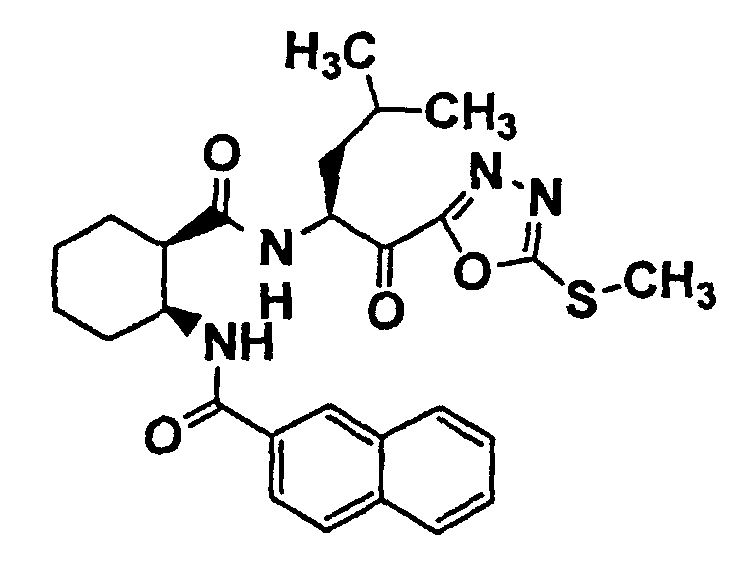
NMR (CDCl3): δ 8.29 (s, 1H), 8.00-7.80 (m, 4H), 7.65-7.50 (m, 2H), 7.34 (d, J = 8.0 Hz, 1H), 6.33 (d, J = 7.6 Hz, 1H), 5.50-5.35 (m, 1H), 4.50-4.35 (m, 1H), 2.92 (q, J = 4.9Hz, 1H), 2.78 (s, 3H), 2.25-1.40 (m, 11H), 0.88 (d, J = 6.2 Hz, 3H), 0.81 (d, J = 6.2 Hz, 3H).
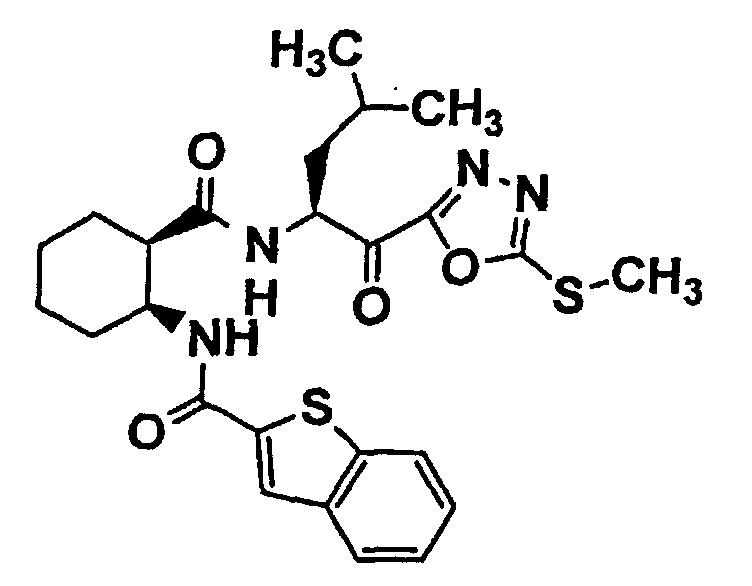
NMR (CDCl3) : δ 7.90-7.75 (m, 2H), 7.73 (s, 1H), 7.50-7.35 (m, 2H), 7.32 (d, J = 8.4 Hz, 1H), 6.30 (d, J = 7.8 Hz, 1H), 5.50-5.35 (m, 1H), 4.40-4.20 (m, 1H), 2.88 (q, J = 4.8 Hz, 1H), 2.79 (s, 3H), 2.20-1.40 (m, 11H), 0.92 (d, J = 6.2 Hz, 3H), 0.85 (d, J = 6.4 Hz, 3H).
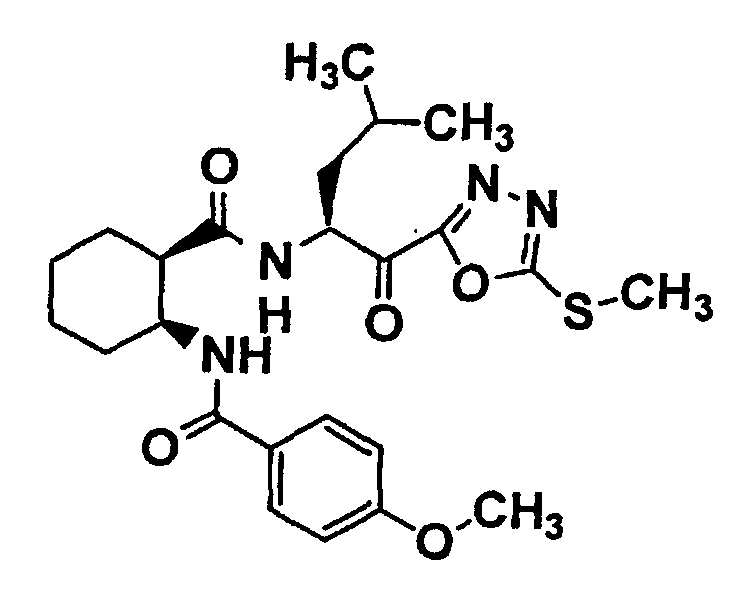
NMR (CDCl3) : δ 7.73 (d, J = 8.8 Hz, 2H), 7.07 (d, J = 8.4 Hz, 1H), 6.92 (d, J= 8.8 Hz, 2H), 6.29 (d, J = 7.6 Hz, 1H), 5.50-5.35 (m, 1H), 4.40-4.20 (m, 1H), 3.85 (s, 3H), 2.85 (q, J = 5.0 Hz, 1H), 2.79 (s, 3H), 2.20-1.40 (m, 11H), 0.91 (d, J = 6.2 Hz, 3H), 0.85 (d, J = 6.4 Hz, 3H).

NMR (CDCl3) : δ 8.28 (d, J = 9.0 Hz, 2H), 7.94 (d, J = 9.0 Hz, 2H), 7.67 (d, J=7.6Hz, 1H), 6.25 (d, J=7.6Hz, 1H), 5.50-5.35 (m, 1H), 4.40-4.20 (m, 1H), 2.85 (q, J = 4.8 Hz, 1H), 2.81 (s, 3H), 2.10-1.40 (m, 11H), 0.96 (d, J = 6.4 Hz, 3H), 0.91 (d, J = 6.0 Hz, 3H).

NMR (CDCl3): δ 7.71 (d, J = 8.6 Hz, 2H), 7.40 (d, J = 8.6 Hz, 2H), 7.30 (d, J= 8.0 Hz, 1H), 6.25 (d, J = 7.6 Hz, 1H), 5.50-5.35 (m, 1H), 4.35-4.20 (m, 1H), 2.84 (q, J = 5.0 Hz, 1H), 2.80 (s, 3H), 2.10-1.40 (m, 11H), 0.93 (d, J = 6.2 Hz, 3H), 0.88 (d, J = 6.2 Hz, 3H).
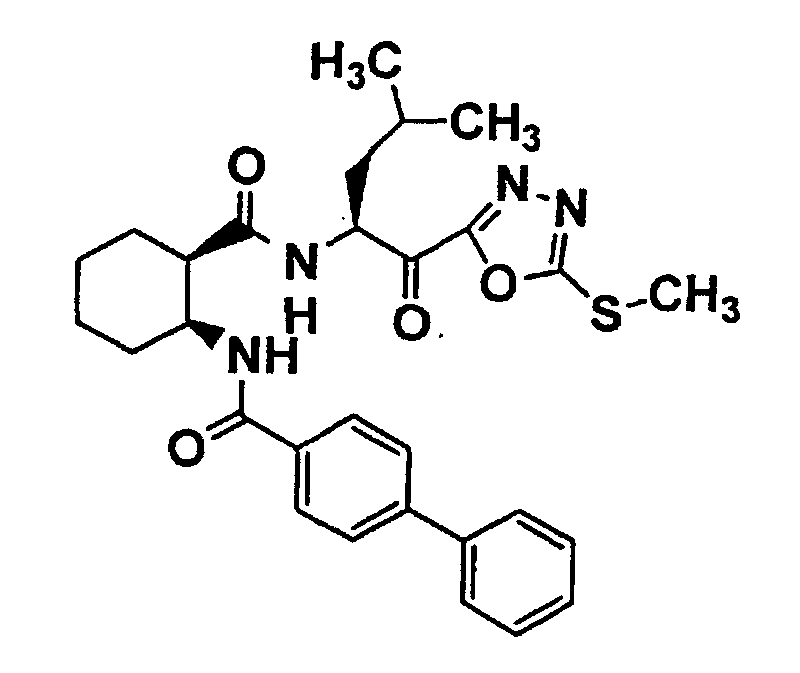
NMR (CDCl3) : δ 7.84 (d, J = 8.7 Hz, 2H), 7.70-7.55 (m, 4H), 7.50-7.30 (m, 3H), 7.30-7.20 (m, 1H), 6.27 (d, J = 7.5 Hz, 1H), 5.50-5.30 (m, 1H), 4.40-4.25 (m, 1H), 2.88 (q, J = 4.9 Hz, 1H), 2.79 (s, 3H), 2.15-1.40 (m, 11H), 0.93 (d, J = 6.3 Hz, 3H), 0.86 (d, J = 6.3 Hz, 3H).

NMR (CDCl3): δ 7.78 (dd, J = 8.8, 5.0 Hz, 2H), 7.30-7.15 (m, 1H), 7.10 (t, J = 8.8 Hz, 2H), 6.27 (d, J = 7.4 Hz, 1H), 5.50-5.35 (m, 1H), 4.40-4.20 (m, 1H), 2.85 (q, J = 4.8 Hz, 1H), 2.80 (s, 3H), 2.15-1.40 (m, 11H), 0.93 (d, J = 6.6 Hz, 3H), 0.87 (d, J = 6.4 Hz, 3H).

NMR (CDCl3) : δ 8.70-8.55 (m, 2H), 8.16 (d, J = 8.8 Hz, 1H), 7.84 (dt, J=1.4, 8.8 Hz, 1H), 7.43 (ddd, J= 8.8, 4.8, 1.4 Hz, 1H), 6.42 (d, J= 7.0Hz, 1H), 5.45-5.30 (m, 1H), 4.55-4.35 (m, 1H), 2.83 (q, J= 5.3 Hz, 1H), 2.78 (s, 3H), 2.20-1.40 (m, 11H), 0.82 (d, J = 6.4 Hz, 3H), 0.75 (d, J = 6.2 Hz, 3H).
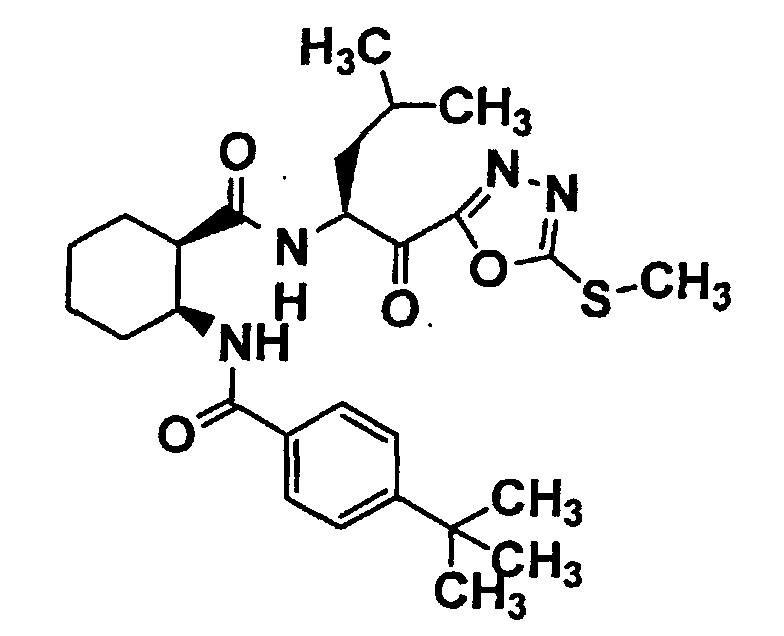
NMR (CDCl3): δ 7.70 (d, J = 8.8 Hz, 2H), 7.44 (d, J = 8.8 Hz, 2H), 7.12 (d, J = 8.0 Hz, 1H), 6.28 (d, J = 7.6 Hz, 1H), 5.50-5.35 (m, 1H), 4.40-4.25 (m, 1H), 2.86 (q, J = 4.9 Hz, 1H), 2.79 (s, 3H), 2.20-1.40 (m, 11H), 1.33 (s, 9H), 0.90 (d, J = 6.2 Hz, 3H), 0.84 (d, J = 6.0 Hz, 3H).
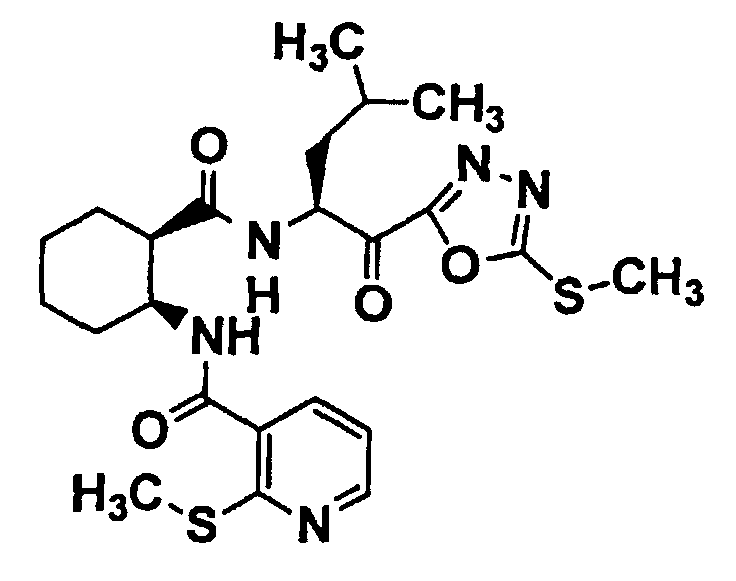
NMR (CDCl3): δ 8.50 (dd, J = 8.2, 1.8 Hz, 1H), 7.73 (dd, J = 5.3, 1.8 Hz, 1H), 7.17 (d, J = 8.0 Hz, 1H), 7.04 (dd, J = 8.2, 5.3 Hz, 1H), 6.28 (d, J = 7.2 Hz, 1H), 5.45-5.30 (m, 1H), 4.45-4.30 (m, 1H), 2.86 (q, J = 5.0 Hz, 1H), 2.79 (s, 3H), 2.56 (s, 3H), 2.20-1.40 (m, 11H), 0.94 (d, J = 6.2 Hz, 3H), 0.90 (d, J = 6.2 Hz, 3H).
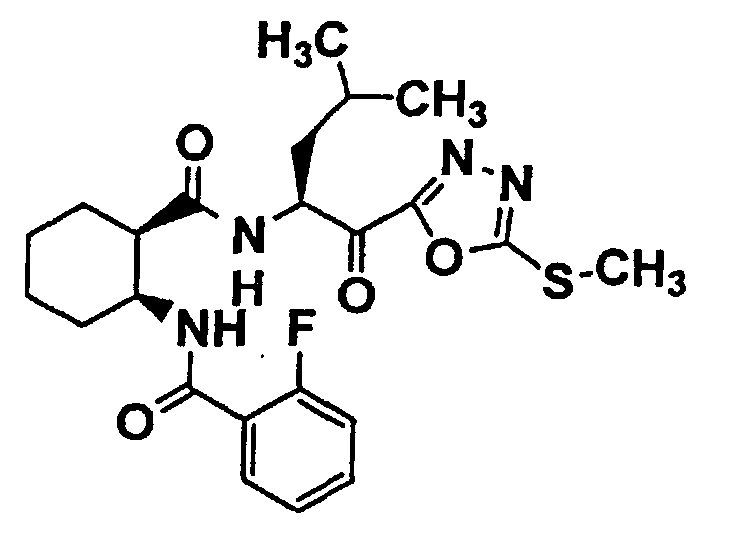
NMR (CDCl3): δ 8.04 (dt, J = 2.0, 7.6 Hz, 1H), 7.55-7.40 (m, 2H), 7.24 (dt, J = 1.1, 7.6 Hz, 1H), 7.11 (ddd, J = 12.0, 8.4, 1.1 Hz, 1H), 6.32 (d, J = 7.4 Hz, 1H), 5.50-5.30 (m, 1H), 4.55-4.35 (m, 1H), 2.85 (q, J = 4.9 Hz, 1H), 2.79 (s, 3H), 2.20-1.40 (m, 11H), 0.90 (d, J = 6.4 Hz, 3H), 0.82 (d, J = 6.4 Hz, 3H).
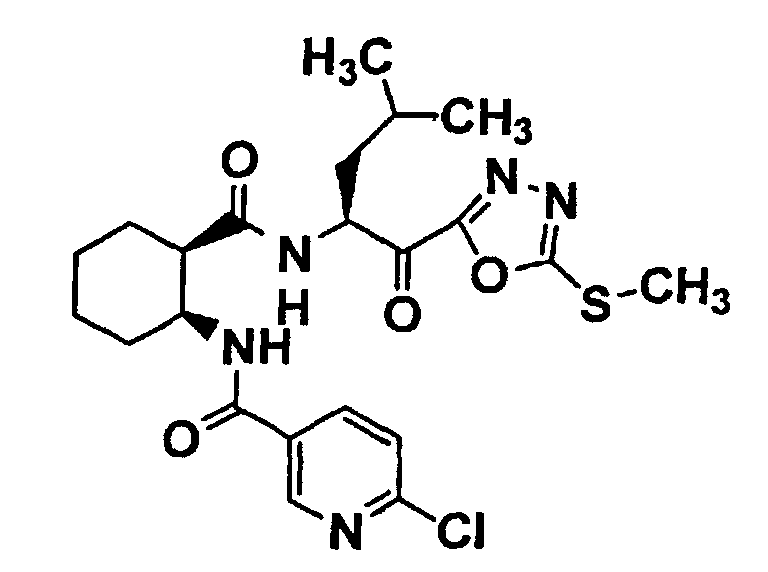
NMR (CDCl3): δ 8.78 (d, J = 2.2 Hz, 1H), 8.02 (dd, J = 8.4, 2.2 Hz, 1H), 7.58 (d, J = 8.0 Hz, 1H), 7.39 (d, J = 8.4 Hz, 1H), 6.24 (d, J = 7.4 Hz, 1H), 5.50-5.35 (m, 1H), 4.35-4.20 (m, 1H), 2.83 (q, J = 4.9 Hz, 1H), 2.80 (s, 3H), 2.10-1.40 (m, 11H), 0.96 (d, J = 6.2 Hz, 3H), 0.92 (d, J = 6.2 Hz, 3H).

NMR (CDCl3) : δ 8.00-7.75 (m, 3H), 7.60-7.35 (m, 4H), 6.30 (d, J = 8.4 Hz, 1H), 6.15 (d, J = 6.6 Hz, 1H), 5.25-5.10 (m, 1H), 4.25-4.05 (m, 1H), 4.01 (d, J = 16.4 Hz, 1H), 3.95 (d, J = 16.4 Hz, 1H), 2.80 (s, 3H), 2.51 (dt, J = 6.6, 4.4 Hz, 1H), 1.80-1.10 (m, 11H), 1.00 (d, J = 6.0 Hz, 3H), 0.98 (d, J = 6.0 Hz, 3H).
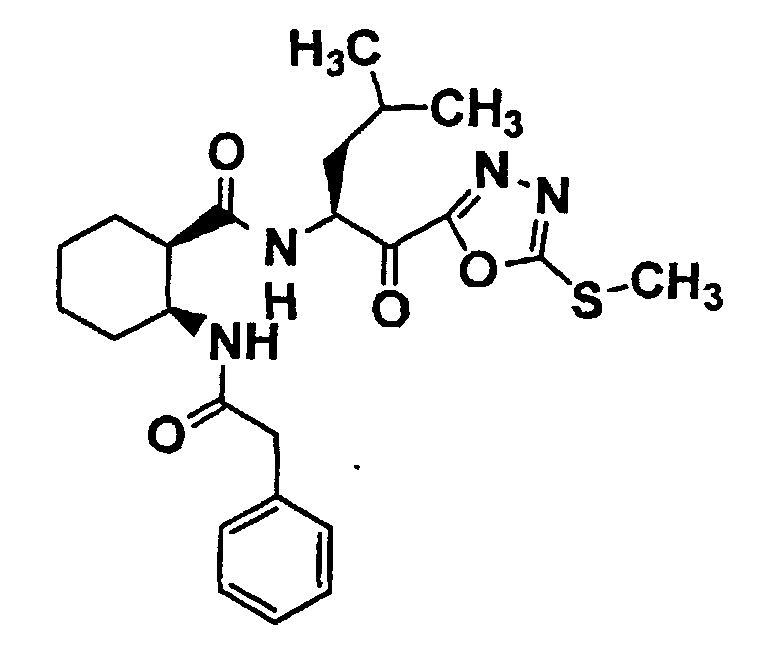
NMR (CDCl3): δ 7.40-7.20 (m, 5H), 6.34 (d, J = 8.8 Hz, 1H), 6.23 (d, J = 7.2 Hz, 1H), 5.40-5.25 (m, 1H), 4.20-4.05 (m, 1H), 3.52 (s, 2H), 2.80 (s, 3H), 2.65 (q, J = 5.0 Hz, 1H), 1.95-1.30 (m, 11H), 1.02 (d, J = 6.2 Hz, 3H), 0.98 (d, J = 6.0 Hz, 3H).

NMR (CDCl3): δ 7.35-7.10 (m, 5H), 6.30 (d, J = 8.0 Hz, 1H), 6.21 (d, J = 7.0 Hz, 1H), 5.45-5.30 (m, 1H), 4.20-4.05 (m, 1H), 2.93 (t, J = 7.5 Hz, 2H), 2.79 (s, 3H), 2.65 (q, J = 5.0 Hz, 1H), 2.50-2.40 (m, 2H), 1.90-1.30 (m, 11H), 1.01 (d, J = 6.4 Hz, 3H), 0.97 (d, J = 6.2 Hz, 3H).

NMR (CDCl3): δ 6.37 (d, J = 8.8 Hz, 1H), 6.25 (d, J = 7.0 Hz, 1H), 5.50-5.30 (m, 1H), 4.20-4.05 (m, 1H), 2.80 (s, 3H), 2.74 (q, J = 5.1 Hz, 1H), 2.00-1.30 (m, 11H), 1.95 (s, 3H), 1.03 (d, J = 6.2 Hz, 3H), 0.98 (d, J = 6.2 Hz, 3H).

NMR (CDCl3): δ 7.30-7.10 (m, 5H), 6.75 (d, J = 7.0 Hz, 1H), 5.40-5.20 (m, 1H), 3.35 (br-d, J = 11.6 Hz, 1H), 3.15-2.65 (m, 4H), 2.79 (s, 3H), 2.60-1.10 (m, 11H), 0.97 (d, J = 6.6 Hz, 3H), 0.93 (d, J = 6.4 Hz, 3H).

NMR (CDCl3) : δ 7.35-7.10 (m, 6H), 5.55-5.35 (m, 1H), 3.14 (br-d, J = 11.4 Hz, 1H), 2.85-2.45 (m, 4H), 2.79 (s, 3H), 2.35-1.10 (m, 13H), 1.05 (d, J = 6.2 Hz, 3H), 0.98 (d, J = 6.2 Hz, 3H).

NMR (CDCl3): δ 7.35-7.10 (m, 6H), 5.50-5.35 (m, 1H), 3.11 (br-d, J = 11.6 Hz, 1H), 2.85-2.45 (m, 4H), 2.78 (s, 3H), 2.35-1.15 (m, 15H), 1.05-0.80 (m, 6H).

NMR (CDCl3) : δ 7.35-7.10 (m, 5H), 6.74 (d, J= 7.5 Hz, 1H), 5.40-5.25 (m, 1H), 4.03 (septet, J= 6.9 Hz, 1H), 3.40-3.20 (m, 1H), 3.10-2.70 (m, 4H), 2.60-1.10 (m, 11H), 1.53 (d, J = 6.9 Hz, 6H), 0.97 (d, J = 6.3 Hz, 3H), 0.92 (d, J = 6.3 Hz, 3H).

NMR (CDCl3) : δ 7.35-7.10 (m, 6H), 5.55-5.40 (m, 1H), 4.04 (septet, J = 6.7 Hz, 1H), 3.14 (br-d, J = 11.4 Hz, 1H), 2.80-2.50 (m, 4H), 2.30-1.00 (m, 13H), 1.54 (d, J = 6.7 Hz, 6H), 1.05 (d, J = 6.3 Hz, 3H), 0.98 (d, J = 6.3 Hz, 3H).

NMR (CDCl3): δ 7.87 (d, J = 8.0 Hz, 2H), 7.73 (d, J = 8.0 Hz, 2H), 7.60 (d, J = 8.4 Hz, 1H), 6.25 (d, J = 7.8 Hz, 1H), 5.50-5.35 (m, 1H), 4.35-4.20 (m, 1H), 2.85 (q, J = 5.0 Hz, 1H), 2.80 (s, 3H), 2.10-1.40 (m, 11H), 0.95 (d, J = 6.3 Hz, 3H), 0.91 (d, J = 6.6 Hz, 3H).
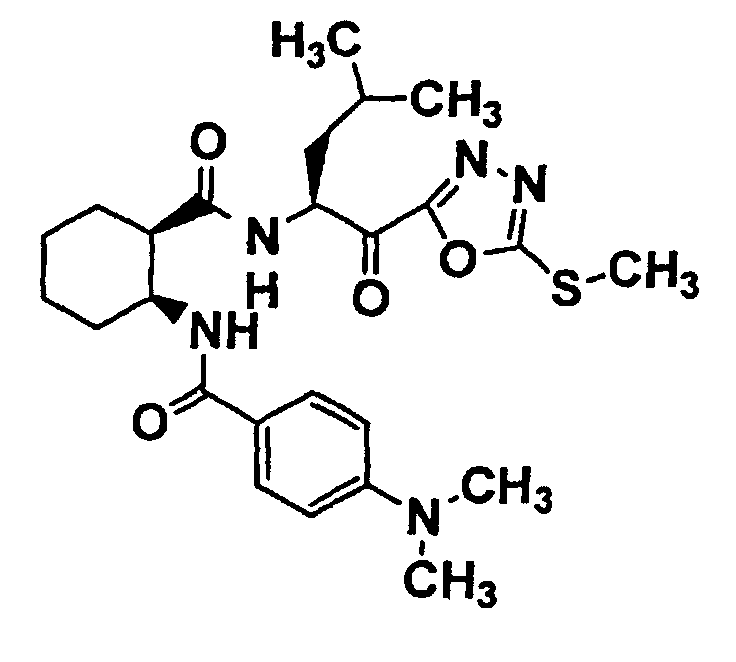
TLC : Rf 0.62 (chloroform : methanol = 9 : 1);
NMR (CDCl3) : δ 7.66 (d, J = 8.8 Hz, 2H), 6.88 (d, J = 8.0 Hz, 1H), 6.67 (d, J = 8.8Hz, 2H), 6.41 (d, J = 7.4 Hz, 1H), 5.50-5.30 (m, 1H), 4.40-4.25 (m, 1H), 3.02 (s, 6H), 2.90-2.75 (m, 1H), 2.79 (s, 3H), 2.15-1.35 (m, 11H), 0.90 (d, J = 6.4 Hz, 3H), 0.84 (d, J = 6.0 Hz, 3H).
hydrochloride
TLC : Rf 0.62 (chloroform : methanol = 9 : 1);
NMR (CDCl3) : δ 7.89 (d, J = 8.4 Hz, 2H), 7.66 (d, J = 8.4 Hz, 2H), 7.50 (d, J = 7.8 Hz, 1H), 6.35 (d, J = 7.4 Hz, 1H), 5.50-5.30 (m, 1H), 4.40-4.20 (m, 1H), 3.16 (s, 6H), 2.90-2.75 (m, 1H), 2.80 (s, 3H), 2.10-1.30 (m, 11H), 0.94 (d, J= 6.2 Hz, 3H), 0.90 (d, J = 6.2 Hz, 3H).

NMR (CDCl3): δ 7.78 (dd, J = 8.8, 5.0 Hz, 2H), 7.30-7.20 (m, 1H), 7.10 (t, J = 8.8 Hz, 2H), 6.28 (d, J = 7.6 Hz, 1H), 5.50-5.35 (m, 1H), 4.35-4.20 (m, 1H), 4.05 (septet, J = 6.8 Hz, 1H), 2.85 (q, J = 5.0 Hz, 1H), 2.20-1.30 (m, 11H), 1.54 (d, J = 6.8 Hz, 6H), 0.93 (d, J = 6.2 Hz, 3H), 0.87 (d, J = 6.2 Hz, 3H).
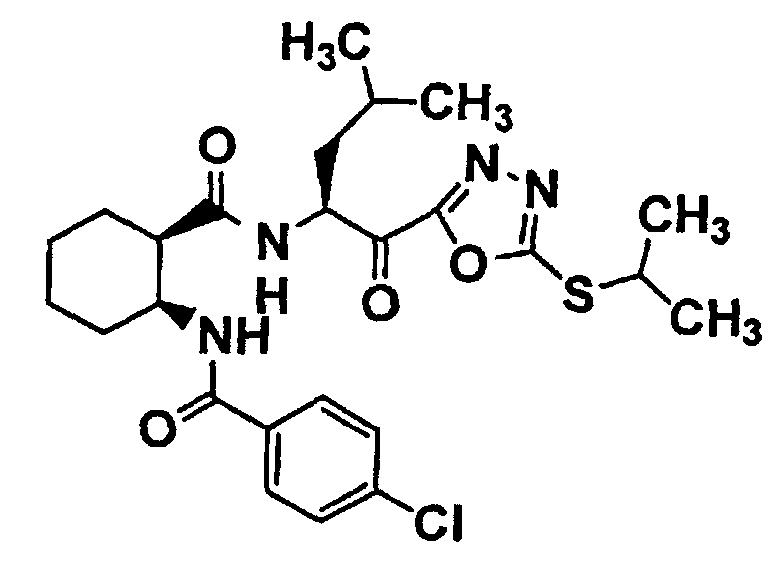
NMR (CDCl3): δ 7.71 (d, J = 8.4 Hz, 2H), 7.40 (d, J = 8.4 Hz, 2H), 7.31 (d, J = 6.8 Hz, 1H), 6.23 (d, J = 7.8 Hz, 1H), 5.50-5.35 (m, 1H), 4.35-4.20 (m, 1H), 4.05 (septet, J = 6.8 Hz, 1H), 2.84 (q, J = 4.9 Hz, 1H), 2.15-1.30 (m, 11H), 1.55 (d, J = 6.8 Hz, 6H), 0.94 (d, J = 6.4 Hz, 3H), 0.88 (d, J = 6.2 Hz, 3H).

NMR (CDCl3) : δ 7.73 (d, J = 8.8 Hz, 2H), 7.08 (d, J = 8.0 Hz, 1H), 6.92 (d, J= 8.8 Hz, 2H), 6.28 (d, J = 7.8 Hz, 1H), 5.50-5.35 (m, 1H), 4.40-4.20 (m, 1H), 4.04 (septet, J = 7.0 Hz, 1H), 3.85 (s, 3H), 2.85 (q, J = 4.9 Hz, 1H), 2.20-1.35 (m, 11H), 1.54 (d, J = 7.0 Hz, 1H), 0.91 (d, J = 6.2 Hz, 3H), 0.85 (d, J = 6.4 Hz, 3H).
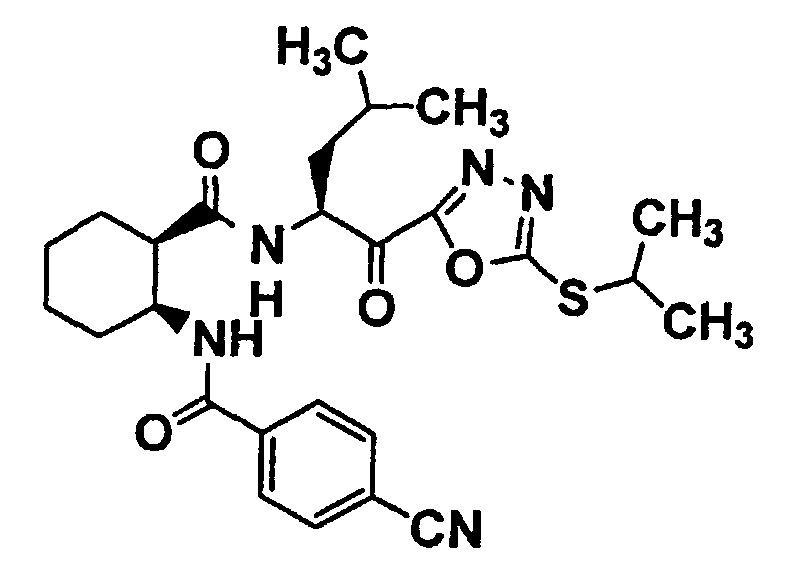
NMR (CDCl3) : δ 7.88 (d, J = 8.5 Hz, 2H), 7.73 (d, J = 8.5 Hz, 2H), 7.61 (d, J = 7.8 Hz, 1H), 6.23 (d, J = 7.8 Hz, 1H), 5.55-5.35 (m, 1H), 4.35-4.20 (m, 1H), 4.05 (septet, J = 6.8 Hz, 1H), 2.84 (q, J = 4.9 Hz, 1H), 2.10-1.30 (m, 11H), 1.55 (d, J = 6.8 Hz, 6H), 0.95 (d, J = 6.2 Hz, 3H), 0.91 (d, J = 6.2 Hz, 3H).
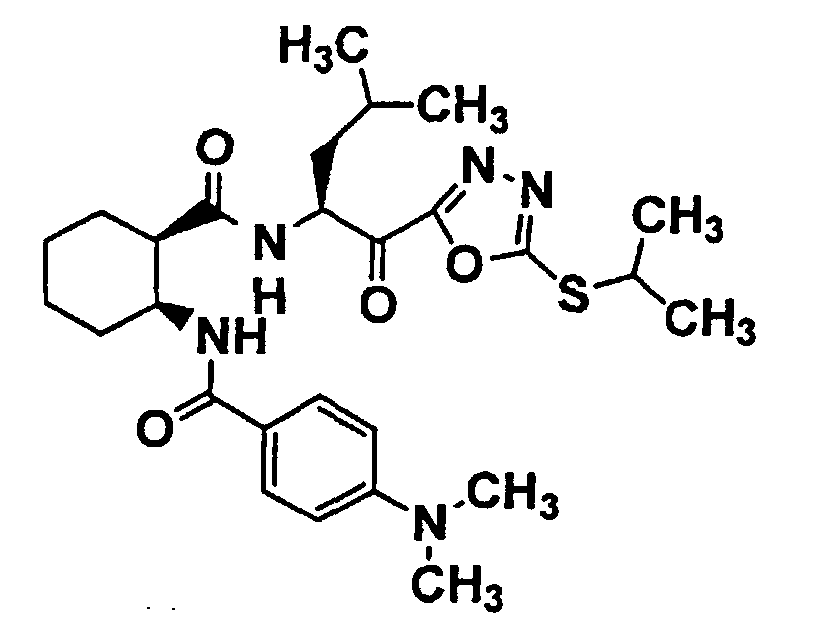
TLC : Rf 0.25 (n-hexane : ethyl acetate = 1 : 1) ;
NMR (CDCl3) : δ 7.66 (d, J = 9.2 Hz, 2H), 6.88 (d, J = 8.0 Hz, 1H), 6.66 (d, J = 9.2 Hz, 2H), 6.36 (d, J = 7.4 Hz, 1H), 5.50-5.35 (m, 1H), 4.45-4.25 (m, 1H), 4.04 (septet, J= 6.6 Hz, 1H), 3.02 (s, 6H), 2.85 (q, J = 5.1 Hz, 1H), 2.15-1.40 (m, 11H), 1.54 (d, J = 6.6 Hz, 6H), 0.90 (d, J = 6.2 Hz, 3H), 0.84 (d, J = 6.2 Hz, 3H).
hydrochloride
TLC : Rf 0.25 (n-hexane : ethyl acetate = 1 : 1);
NMR (CDCl3): δ 7.92 (d, J = 8.8 Hz, 2H), 7.77 (d, J = 8.8 Hz, 2H), 7.56 (d, J = 8.0 Hz, 1H), 6.31 (d, J = 7.8 Hz, 1H), 5.50-5.35 (m, 1H), 4.35-4.20 (m, 1H), 4.05 (septet, J = 6.8 Hz, 1H), 3.18 (s, 6H), 2.84 (q, J = 4.9 Hz, 1H), 2.10-1.40 (m, 11H), 1.55 (d, J = 6.8 Hz, 6H), 0.95 (d, J = 6.2 Hz, 3H), 0.91 (d, J = 6.2 Hz, 3H).

NMR (CDCl3) : δ 7.45-7.29 (m, 5H), 6.50-6.27 (br, 1H), 5.43-5.31 (m, 1H), 4.61-4.30 (br, 1H), 3.36-3.00 (br, 1H), 2.87 (s, 3H), 2.78 (s, 3H), 2.60-2.36 (m, 1H), 2.02-1.23 (m, 10H), 0.94 and 0.90 (each d, J = 6.2 Hz, each 3H).
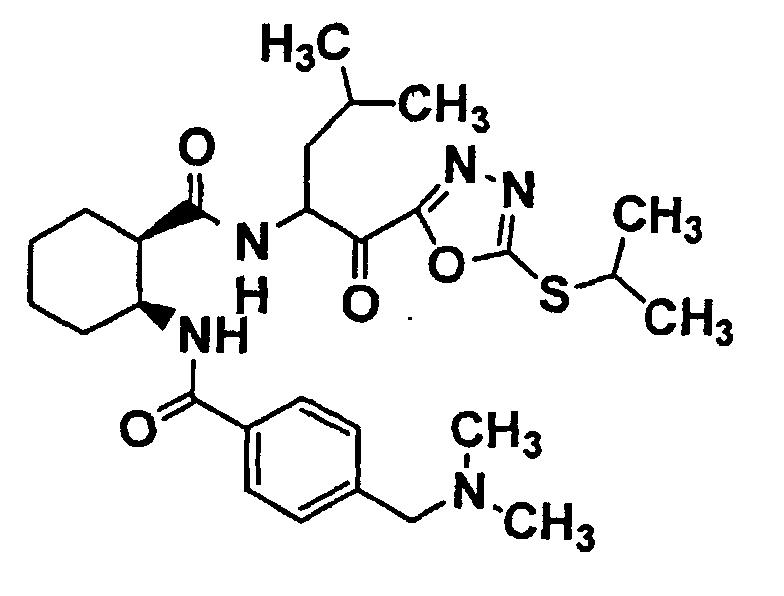
TLC : Rf 0.44 (chloroform : methanol = 9 : 1);
NMR (CDCl3) : δ 7.66 and 7.72 (each d, J = 8.4 Hz, totally 2H), 7.37 and 7.35 (each d, J = 8.4 Hz, totally 2H), 7.24 and 7.16 (each d, J = 8.0 Hz, totally 1H), 6.33 and 6.29 (each d, J = 8.0 Hz, totally 1H), 5.50-5.30 (m, 1H), 4.40-4.25 (m, 1H), 4.05 and 4.03 (each septet, J = 6.8 Hz, totally 1H), 3.47 and 3.46 (each s, totally 2H), 2.90-2.80 (m, 1H), 2.24 and 2.23 (each s, totally 6H), 2.20-1.40 (m, 11H), 1.54 and 1.53 (each d, J = 6.8 Hz, totally 6H), 1.02, 0.94, 0.91 and 0.85 (each d, J = 5.8, 5.8, 6.2 and 6.2 Hz, totally 6H).
hydrochloride
TLC : Rf 0.44 (chloroform : methanol = 9 : 1);
NMR (CDCl3): δ 7.85 and 7.84 (each d, J = 8.2 Hz, totally 2H), 7.68 and 7.64 (each d, J = 8.2 Hz, totally 2H), 7.47 and 7.35 (each d, J = 8.0 and 8.8 Hz, totally 1H), 6.78 and 6.37 (each d, J = 7.0 and 7.8 Hz, totally 1H), 5.50-5.30 (m, 1H), 4.31 (br, 1H), 4.23 and 4.20 (each s, totally 2H), 4.05 (septet, J = 6.8 Hz, 1H), 3.00-2.85 (m, 1H), 2.75 and 2.74 (each s, totally 6H), 2.10-1.40 (m, 11H), 1.54 (d, J = 6.8 Hz, 6H), 1.04, 0.97, 0.94 and 0.90 (each d, J = 6.0, 6.0, 6.2 and 6.2 Hz, totally 6H).

NMR (CDCl3): δ 8.56 and 8.52 (each d, J = 2.2 Hz, totally 1H), 7.84 and 7.81 (each dd, J = 8.6, 2.2 Hz, totally 1H), 7.15-7.00 (m, 1H), 6.48 (d, J = 8.6 Hz, 1H), 6.45-6.30 (m, 1H), 5.50-5.30 (m, 1H), 4.84 (br, 2H), 4.40-4.20 (m, 1H), 4.04 (septet, J = 6.6 Hz, 1H), 2.90-2.75 (m, 1H), 2.20-1.30 (m, 11H), 1.54 (d, J = 6.6 Hz, 6H), 1.02, 0.95, 0.93 and 0.87 (each d, J = 5.8, 6.0, 6.2 and 6.2 Hz, totally 6H).

NMR (CDCl3): δ 8.55 and 8.52 (each d, J = 2.4 Hz, totally 1H), 7.85 and 7.81 (each dd, J = 8.8, 2.4 Hz, totally 1H), 7.07 (d, J = 7.4 Hz, 1H), 6.55-6.35 (m, 2H), 5.50-5.30 (m, 1H), 4.88 (br, 2H), 4.40-4.20 (m, 1H), 2.90-2.75 (m, 1H), 2.79 and 2.78 (each s, totally 3H), 2.10-1.30 (m, 11H), 1.02, 0.95, 0.92 and 0.87 (each d, J = 6.0, 6.2, 6.2 and 6.2 Hz, totally 6H).

NMR (CDCl3): δ 7.80-7.73 (m, 2H), 7.53-7.38 (m, 3H), 7.20 (brd, J = 8.4 Hz, 1H), 6.26 (d, J = 7.8 Hz, 1H), 5.46-5.36 (m, 1H), 4.37-4.27 (m, 1H), 4.06 (s, 2H), 2.86 (q, J = 4.8 Hz, 1H), 2.15-1.30 (m, 11H), 1.49 (s, 9H), 0.90 and 0.85 (each d, J = 6.3 Hz, totally 6H).

NMR (CDCl3): δ 7.45-7.24 (m, 5H), 6.64 (brd, J = 6.6 Hz, 1H), 5.46-5.35 (m, 1H), 5.23-5.06 (m, 3H), 4.32-4.18 (m, 1H), 4.06 (s, 2H), 1.86-1.41 (m, 6H), 1.48 (s, 9H), 1.03-0.85 (m, 12H).
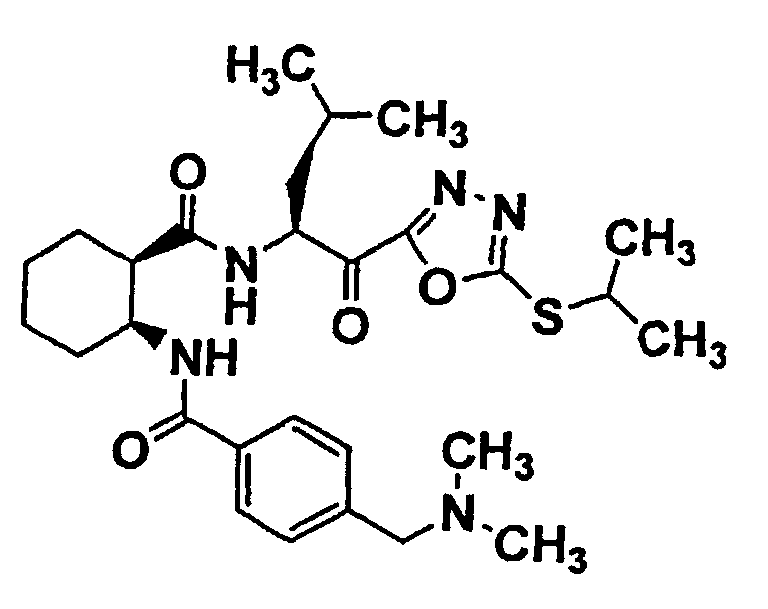
NMR (CDCl3): δ 7.72 (d, J = 8.4 Hz, 2H), 7.37 (d, J = 8.4 Hz, 2H), 7.16 (d, J = 8.1 Hz, 1H), 6.25 (d, J = 7.8 Hz, 1H), 5.48-5.41 (m, 1H), 4.36-4.30 (m, 1H), 4.09-4.00 (m, 1H), 3.48 (s, 2H), 2.89-2.84 (m, 1H), 2.25 (s, 6H), 2.14-1.43 (m, 17H), 0.91 (d, J = 6.6 Hz, 3H), 0.85 (d, J = 6.6 Hz, 3H).
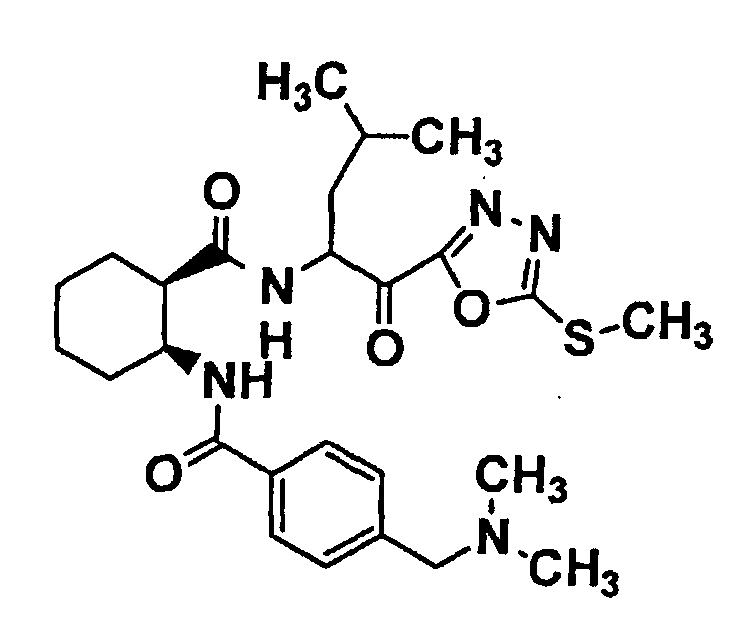
NMR (CDCl3) : δ 7.76 and 7.72 (each d, J = 8.0 and 8.4 Hz, totally 2H), 7.37 and 7.35 (each d, J = 8.0 and 8.4 Hz, totally 2H), 7.22 and 7.16 (each d, J = 8.4 and 8.0 Hz, totally 1H), 6.39 and 6.33 (each d, J = 7.0 and 7.6 Hz, totally 1H), 5.50-5.30 (m, 1H), 4.40-4.25 (m, 1H), 3.48 and 3.47 (each s, totally 2H), 2.90-2.80 (m, 1H), 2.79 and 2.78 (each s, totally 3H), 2.25 and 2.24 (each s, totally 6H), 2.20-1.40 (m, 11H), 1.01, 0.94, 0.91 and 0.84 (each d, J = 6.0, 6.0, 6.2 and 6.2 Hz, totally 6H).
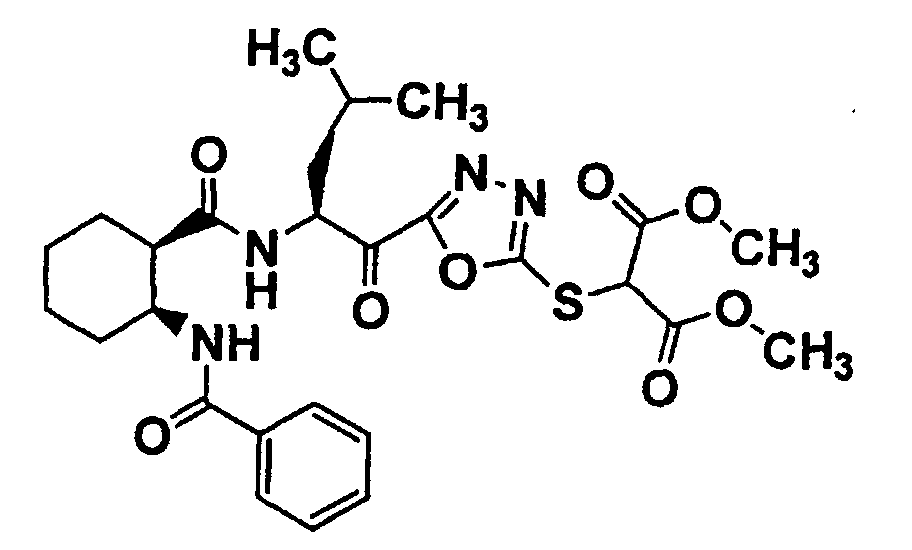
NMR (CDCl3): δ 7.80-7.72 (m, 2H), 7.53-7.38 (m, 3H), 7.15 (brd, J = 7.8 Hz, 1H), 6.24 (d, J = 7.5 Hz, 1H), 5.46-5.35 (m, 1H), 5.39 (s, 1H), 4.39-4.27 (m, 1H), 3.87 (s, 6H), 2.86 (q, J = 5.4 Hz, 1H), 2.14-1.40 (m, 11H), 0.90 and 0.85 (each d, J = 6.3 Hz, totally 6H).
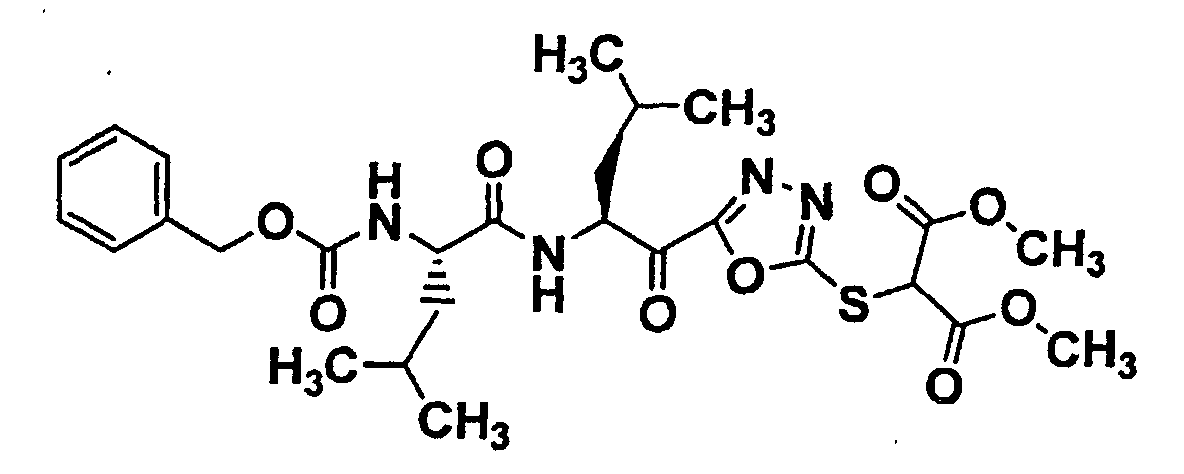
NMR (CDCl3) : δ 7.45-7.26 (m, 5H), 6.74-6.56 (br, 1H), 5.44-5.34 (m, 1H), 5.39 (s, 1H), 5.20-5.04 (m, 3H), 4.30-4.15 (m, 1H), 3.87 (s, 6H), 1.87-1.40 (m, 6H), 1.04-0.83 (m, 12H).
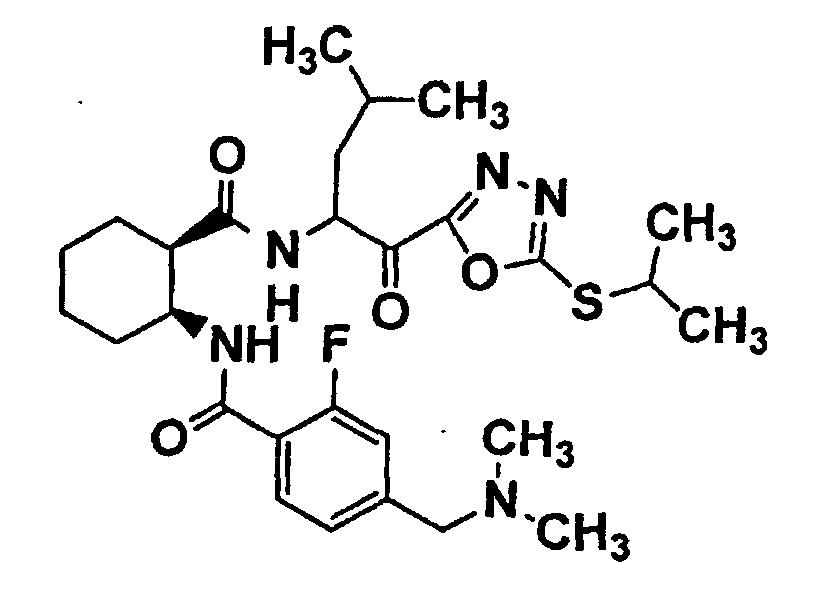
NMR (CDCl3): δ 8.02-7.90 (m, 1H), 7.50-7.38 (m, 1H), 7.22-7.05 (m, 2H), 6.50 and 6.30 (each brd, J = 7.5 Hz, totally 1H), 5.48-5.32 (m, 1H), 4.52-4.39 (m, 1H), 4.10-3.93 (m, 1H), 3.43 (m, 2H), 2.88-2.75 (m, 1H), 2.25 (s, 6H), 2.20-1.40 (m, 17H), 1.01, 0.95, 0.89, and 0.81 (each d, J = 6.3 Hz, totally 6H).
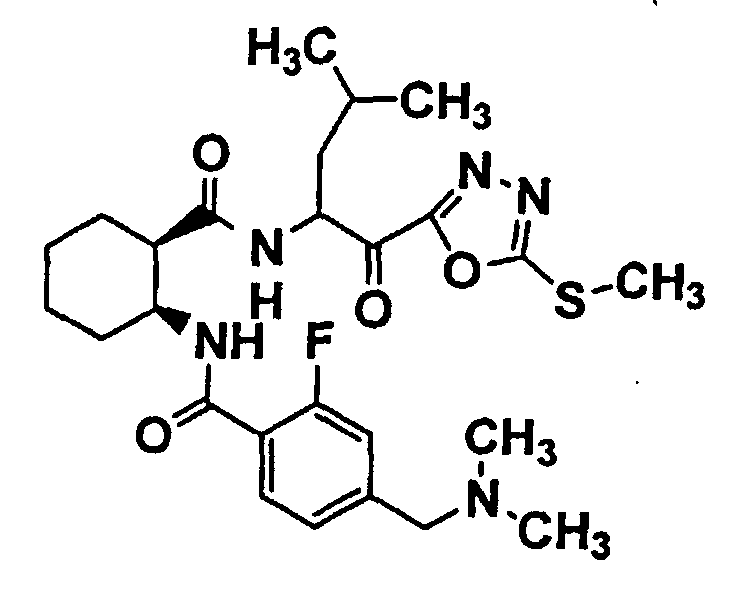
NMR (CDCl3): δ 8.01-7.90 (m, 1H), 7.50-7.35 (m, 1H), 7.20-7.05 (m, 2H), 6.55 and 6.35 (each brd, J = 6.3 Hz, totally 1H), 5.48-5.30 (m, 1H), 4.60-4.38 (m, 1H), 3.45 (m, 2H), 2.85 (m, 1H), 2.78 and 2.76 (each s, totally 3H), 2.25 (s, 6H), 2.20-1.40 (m, 11H), 1.05-0.80 (m, 6H).
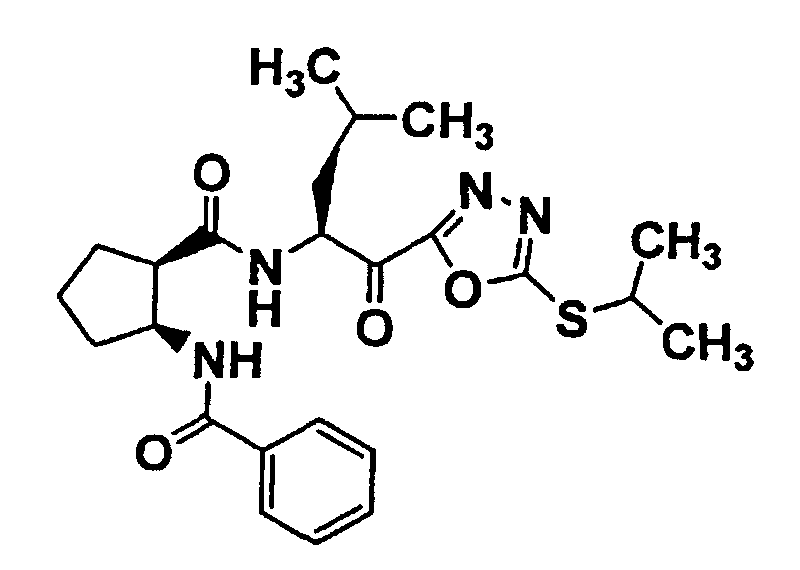
NMR (CDCl3) : δ 7.83-7.75 (m, 2H), 7.54-7.39 (m, 3H), 6.95 (brd, J = 7.8 Hz, 1H), 6.23 (brd, J = 7.5 Hz, 1H), 5.43-5.33 (m, 1H), 4.71-4.58 (m, 1H), 4.10-3.96 (m, 1H), 3.07 (q, J = 7.5 Hz, 1H), 2.16-1.38 (m, 9H), 1.54 (d, J = 6.9 Hz, 6H), 0.73 and 0.72 (each d, J = 6.3 Hz, totally 6H).
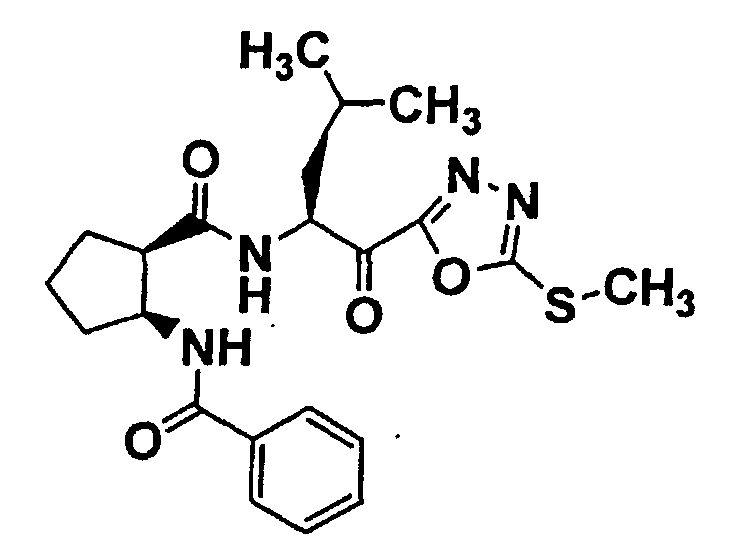
NMR (CDCl3): δ 7.82-7.72 (m, 2H), 7.54-7.39 (m, 3H), 6.94 (brd, J = 7.5 Hz, 1H), 6.23 (brd, J = 7.5 Hz, 1H), 5.42-5.33 (m, 1H), 4.72-4.58 (m, 1H), 3.07 (q, J = 7.5 Hz, 1H), 2.79 (s, 3H), 2.15-1.37 (m, 9H), 0.73 and 0.72 (each d, J = 6.3 Hz, totally 6H).
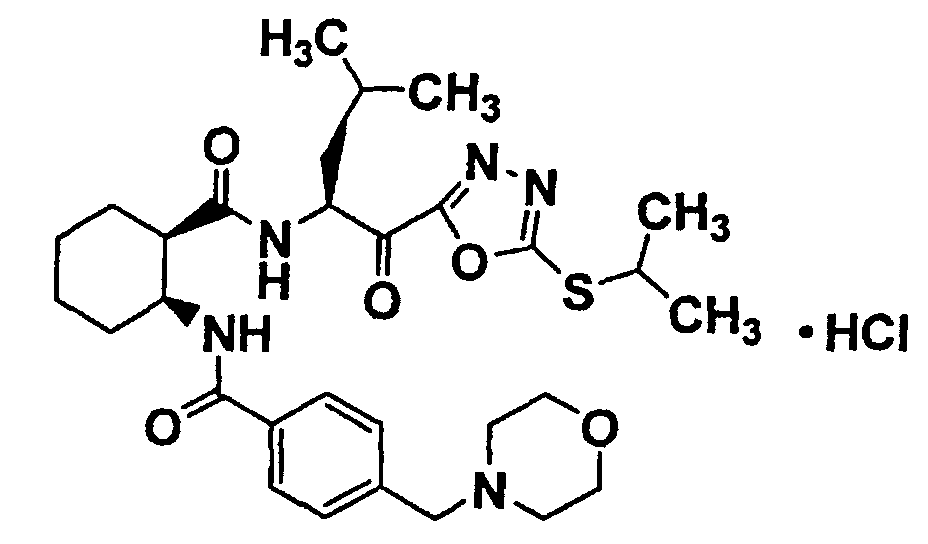
NMR (DMSO-d6): δ 8.47 (d, J= 6.3 Hz, 1H), 7.88-7.82 (m, 3H), 7.66 (d, J= 7.5 Hz, 2H), 5.07-5.00 (m, 1H), 4.39 (br-s, 2H), 4.27 (m, 1H), 4.00-3.87 (m, 3H), 3.79-3.82 (m, 2H), 3.24-3.02 (m, 4H), 2.78-2.75 (m, 1H), 2.04-1.84 (m, 2H), 1.67-1.22 (m, 9H), 1.45 (d, J = 6.9 Hz, 6H), 0.77 (d, J = 6.0 Hz, 3H), 0.72 (d, J = 6.0 Hz, 3H).
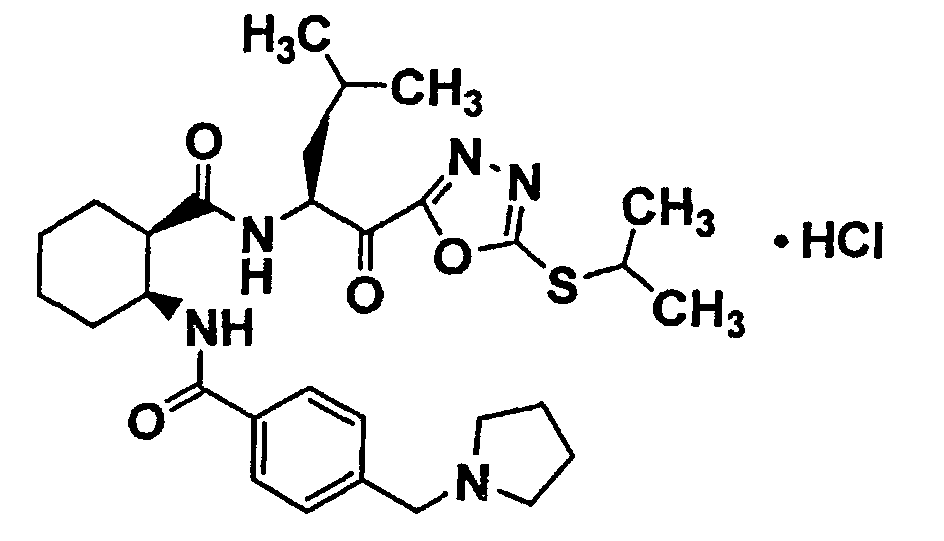
NMR (DMSO-d6): δ 8.63 and 8.46 (each d, J = 6.6 Hz, totally 1H), 7.90-7.74 (m, 3H), 7.67-7.63 (m, 2H), 5.04-4.88 (m, 1H), 4.38 (m, 2H), 4.30-4.11 (m, 1H), 3.98-3.86 (m, 1H), 3.41-3.24 (m, 2H), 3.03 (m, 2H), 2.80-2.73 (m, 1H), 2.00-1.88 (m, 6H), 1.68-1.22 (m, 15H), 0.86, 0.82, 0.76, and 0.71 (each d, J= 5.7 Hz, totally 6H).
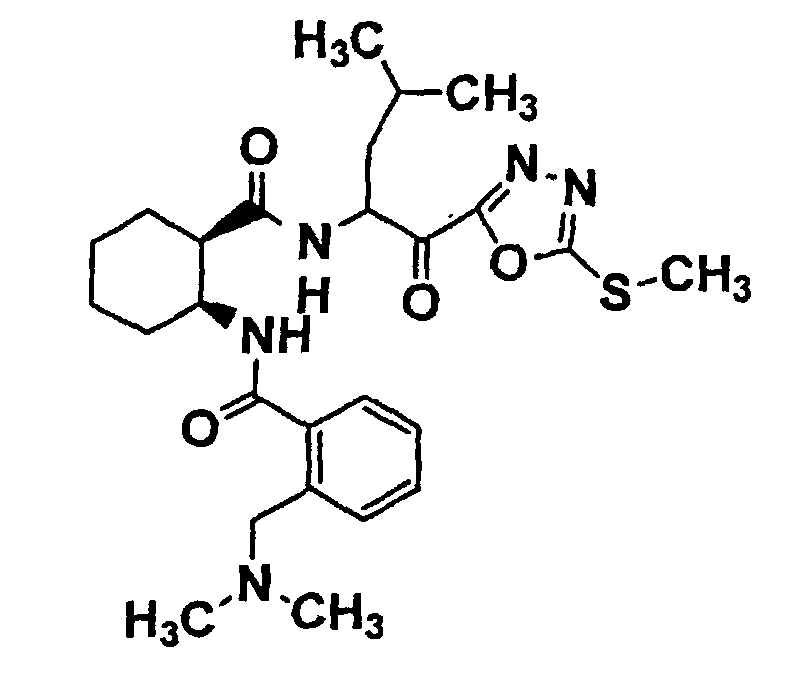
NMR (CDCl3) : δ 10.65-10.40 (m, 1H), 8.05-7.90 (m, 1H), 7.50-7.30 (m, 2H), 7.25-7.10 (m, 1H), 7.05 and 6.36 (each d, J = 6.6 Hz, totally 1H), 5.35-5.20 (m, 1H), 4.53 and 4.34 (each br, totally 1H), 3.71, 3.53, 3.44 and 3.40 (each d, J = 12.0, 11.8, 11.8 and 12.0 Hz, totally 2H), 3.15-2.80 (m, 1H), 2.77 and 2.74 (each s, totally 3H), 2.22 and 2.20 (each s, totally 6H), 2.20-1.30 (m, 11H), 0.97, 0.94, 0.72 and 0.70 (each d, J = 6.2 Hz, totally 6H).
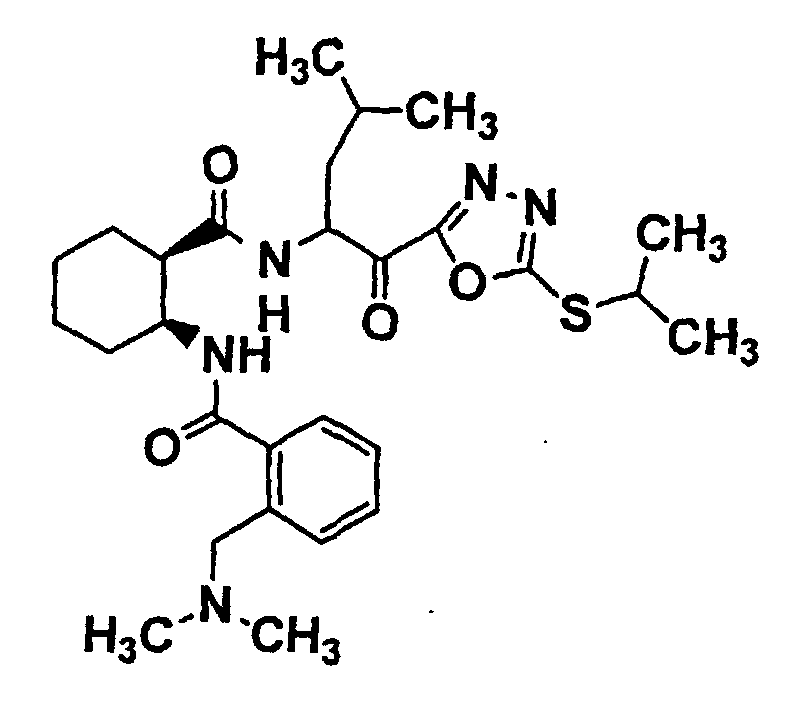
NMR (CDCl3) : δ 10.65-10.40 (m, 1H), 8.05-7.90 (m, 1H), 7.45-7.30 (m, 2H), 7.25-7.10 (m, 1H), 7.04 and 6.36 (each d, J = 6.2 and 7.4 Hz, totally 1H), 5.40-5.20 (m, 1H), 4.53 and 4.33 (each br, totally 1H), 4.02 and 3.99 (each septet, J = 6.8 Hz, totally 1H), 3.72, 3.53, 3.44 and 3.41 (each d, J = 12.2, 11.7, 11.7 and 12.2 Hz, totally 2H), 3.15-2.85 (m, 1H), 2.22 and 2.21 (each s, totally 6H), 2.20-1.20 (m, 11H), 1.53 and 1.51 (each d, J = 6.8 Hz, totally 6H), 0.98, 0.94, 0.72 and 0.71 (each d, J = 6.4 Hz, totally 6H).
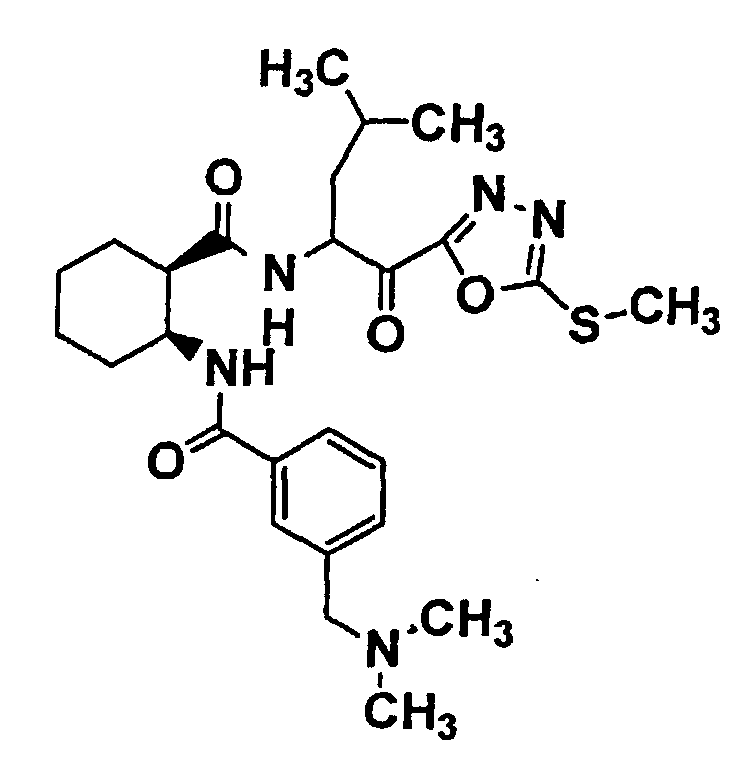
NMR (CDCl3): δ 7.75-7.60 (m, 2H), 7.50-7.30 (m, 2H), 7.21 and 7.16 (each d, J = 8.8 and 7.6 Hz, totally 1H), 6.42 and 6.35 (each d, J = 7.8 and 7.4 Hz, totally 1H), 5.50-5.30 (m, 1H), 4.40-4.25 (m, 1H), 3.47 (s, 2H), 2.90-2.80 (m, 1H), 2.79 and 2.77 (each s, totally 3H), 2.25 and 2.23 (each s, totally 6H), 2.20-1.35 (m, 11H), 1.01, 0.94, 0.89 and 0.84 (each d, J = 6.2 Hz, totally 6H).

NMR (CDCl3): δ 7.75-7.60 (m, 2H), 7.50-7.30 (m, 2H), 7.21 and 7.17 (each d, J = 9.6 Hz, totally 1H), 6.43 and 6.35 (each d, J = 7.0 and 7.4 Hz, totally 1H), 5.50-5.30 (m, 1H), 4.40-4.25 (m, 1H), 4.04 and 4.03 (each septet, J = 6.7 Hz, totally 1H), 3.47 (s, 2H), 2.90-2.80 (m, 1H), 2.25 and 2.24 (each s, totally 6H), 2.20-1.30 (m, 11H), 1.54 and 1.53 (each d, J = 6.7 Hz, totally 6H), 1.02, 0.94, 0.90 and 0.84 (each d, J = 6.2 Hz, totally 6H).

NMR (CDCl3) : δ 7.82-7.71 (m, 2H), 7.51- 7.38 (m, 3H), 7.24-7.18 (m, 1H), 6.29 and 6.25 (each brd, J = 7.5 Hz, totally 1H), 5.50-5.30 (m, 1H), 4.42-4.30 (m, 1H), 3.51-3.40 (m, 2H), 2.90-2.82 (m, 1H), 2.80-2.70 (m, 2H), 2.32 (s, 6H), 2.10-1.40 (m, 11H), 1.01, 0.94, 0.90 and 0.84 (each d, J = 6.3 Hz, totally 6H).

NMR (DMSO-d6): δ 8.61 and 8.47 (each d, J = 6.9 Hz, totally 1H), 7.87-7.81 (m, 3H), 7.65 (d, J= 7.8 Hz, 2H), 5.06-4.91 (m, 1H), 4.37 (br-s, 2H), 4.30-4.12 (m, 1n), 3.95-3.91 (m, 2H), 3.81-3.73 (m, 2H), 3.26-3.00 (m, 4H), 2.82-2.66 (m, 4H), 2.07-1.82 (m, 2H), 1.65-1.22 (m, 9H), 0.86, 0.83, 0.77, and 0.72 (each d, J = 6.3 Hz, totally 6H).
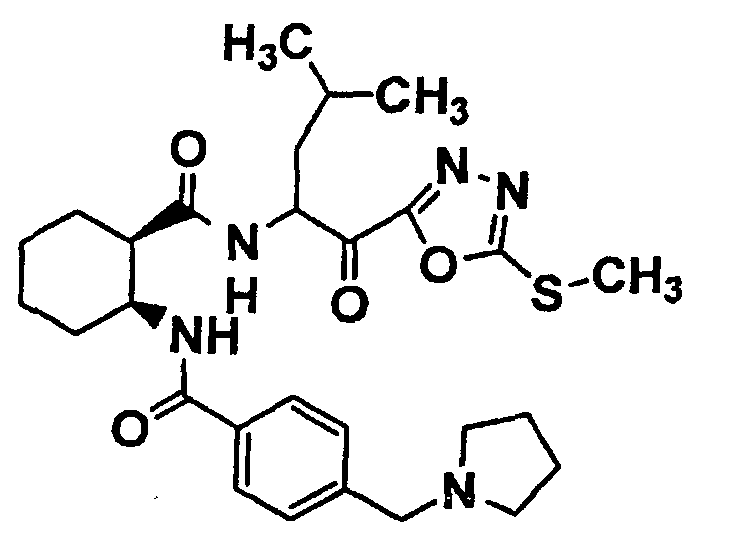
NMR (CDCl3) : δ 7.79 and 7.75 (each d, J = 8.1 Hz, totally 2H), 7.51 (d, J = 8.1 Hz, 2H), 7.29-7.23 (m, 1H), 6.39 and 6.28 (each d, J = 7.5 Hz, totally 1H), 5.45-5.34 (m, 1H), 4.38-4.37 (m, 1H), 3.89 and 3.88 (each s, totally 2H), 2.85-2.70 (m, 8H), 2.05-1.42 (m, 15H), 1.02, 0.95, 0.92, and 0.87 (each d, J= 6.3 Hz, totally 6H).

NMR (CDCl3): δ 7.42-7.30 (m, 5H), 6.72 and 6.59 (each m, totally 1H), 5.45-5.35 (m, 1H), 5.21-5.02 (m, 3H), 4.32-4.19 (m, 1H), 3.49 (t, J = 5.7 Hz, 2H), 2.75 (t, J = 5.7 Hz, 2H), 2.31 (s, 6H), 1.90-1.41 (m, 6H), 1.05-0.90 (m, 12H).
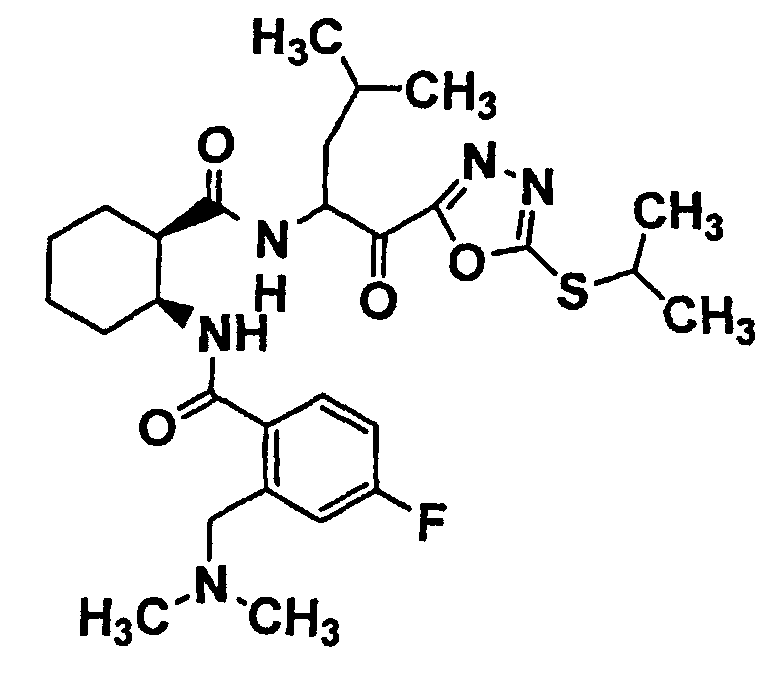
NMR (CDCl3): δ 10.52-10.31 (m, 1H), 8.05-7.92 (m, 1H), 7.10-7.02 (m, 1H), 6.90 (m, 1H), 6.90 and 6.28 (each br, totally 1H), 5.38-5.27 (m, 1H), 4.50 and 4.30 (each m, totally 1H), 4.01 (septet, J = 6.9 Hz, 1H), 3.70-3.30 (m, 2H), 3.08 and 2.92 (each m, totally 1H), 2.30-2.20 (m, 6H), 2.10-1.40 (m, 17H), 1.05-0.70 (m, 6H).

NMR (CDCl3): δ 7.40-7.25 (m, 5H), 7.01 and 6.87 (br and d, J = 6.6 Hz, totally 1H), 5.55-5.40 (m, 1H), 5.20-5.05 (m, 3H), 4.30-4.20 (m, 1H), 2.79 and 2.78 (each s, totally 3H), 2.00-1.40 (m, 5H), 1.00-0.85 (m, 6H), 0.80-0.60 (m, 1H), 0.50-0.35 (m, 2H), 0.15--0.05 (m, 2H).
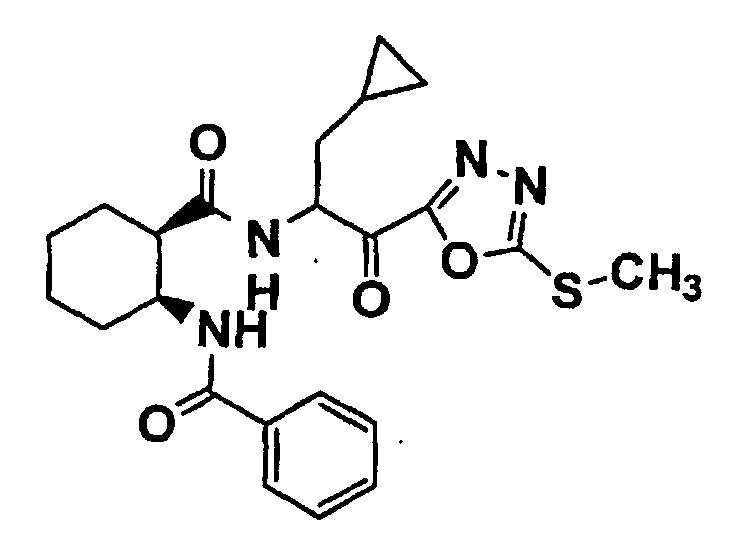
NMR (CDCl3): δ 7.85-7.70 (m, 2H), 7.50-7.25 (m, 4H), 6.54 (d, J = 6.6 Hz, 1H), 5.55-5.40 (m, 1H), 4.40-4.25 (m, 1H), 2.87 (q, J = 5.1 Hz, 1H), 2.79 and 2.78 (each s, totally 3H), 2.10-1.40 (m, 10H), 0.70-0.55 (m, 1H), 0.50-0.30 (m, 2H), 0.10--0.10 (m, 2H).
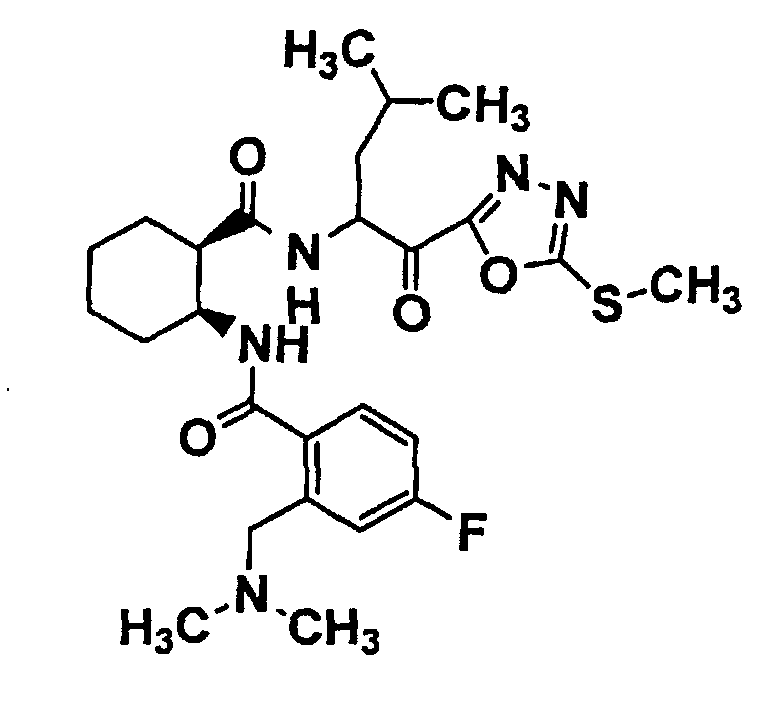
NMR (CDCl3): δ 7.58-7.20 (m, 4H), 6.29 and 6.25 (each brd, J = 7.8 Hz, totally 1H), 5.51-5.35 (m, 1H), 4.38-4.25 (m, 1H), 3.60-3.40 (m, 2H), 2.90-2.70 (m, 4H), 2.32-1.39 (m, 11H), 1.05, 0.99, 0.97, and 0.88 (each d, J = 6.3 Hz, totally 6H).
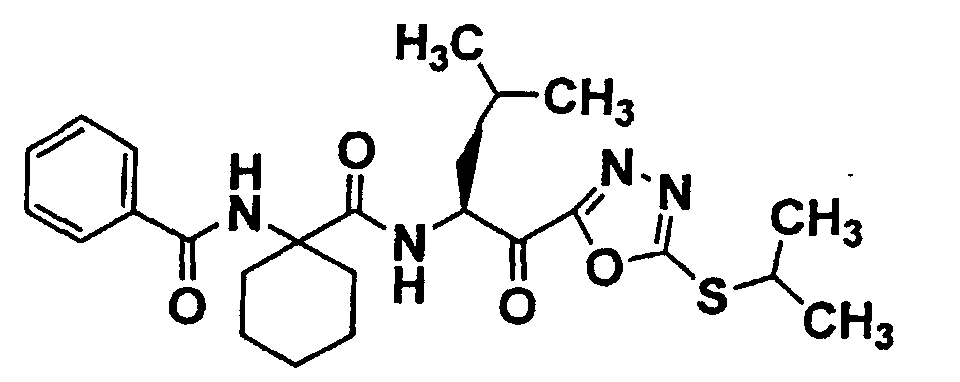
NMR (CDCl3) : δ 8.02 (d, J = 6.6 Hz, 1H), 7.77 (d, J = 6.9 Hz, 2H), 7.55 (t, J = 6.9 Hz, 1H), 7.47 (t, J = 6.9 Hz, 2H), 6.04 (brs, 1H), 5.38 (m, 1H), 4.00 (septet, J = 6.6 Hz, 1H), 2.28 (br, 2H), 2.00 (br, 2H), 1.90-1.21 (m, 15H), 1.01 and 0.97 (each d, J = 5.7 Hz, each 3H).

NMR (DMSO-d6): δ 8.46 (d, J = 6.3 Hz, 1H), 8.01 (s, 1H), 7.82 (d, J = 7.5 Hz, 2H), 7.72 (d, J = 7.2 Hz, 1H), 7.53 (t-like, J = 7.5 Hz, 1H), 5.06-4.98 (m, 1H), 4.39 (br-s, 2H), 4.29 (m, 1H), 3.95-3.91 (m, 2H), 3.77-3.69 (m, 2H), 3.38-3.03 (m, 4H), 2.75 (s, 4H), 1.98-1.90 (m, 2H), 1.70-1.23 (m, 9H), 0.77 (d, J = 6.0 Hz, 3H), 0.72 (d, J = 6.0 Hz, 3H).

NMR (DMSO-d6): δ 8.46 (d, J = 6.3 Hz, 1H), 8.02 (s, 1H), 7.81 (d, J = 7.5 Hz, 2H), 7.73 (d, J = 7.8 Hz, 1H), 7.53 (t-like, J = 7.5 Hz, 1H), 5.06-4.99 (m, 1H), 4.39 (br-s, 2H), 4.30 (m, 1H), 3.98-3.87 (m, 3H), 3.79-3.71 (m, 2H), 3.41-3.03 (m, 4H), 2.76-2.73 (m, 1H), 2.02-1.90 (m, 2H), 1.67-1.22 (m, 9H), 1.45 (d, J = 6.6 Hz, 6H), 0.77 (d, J = 6.0 Hz, 3H), 0.72 (d, J = 6.0 Hz, 3H).
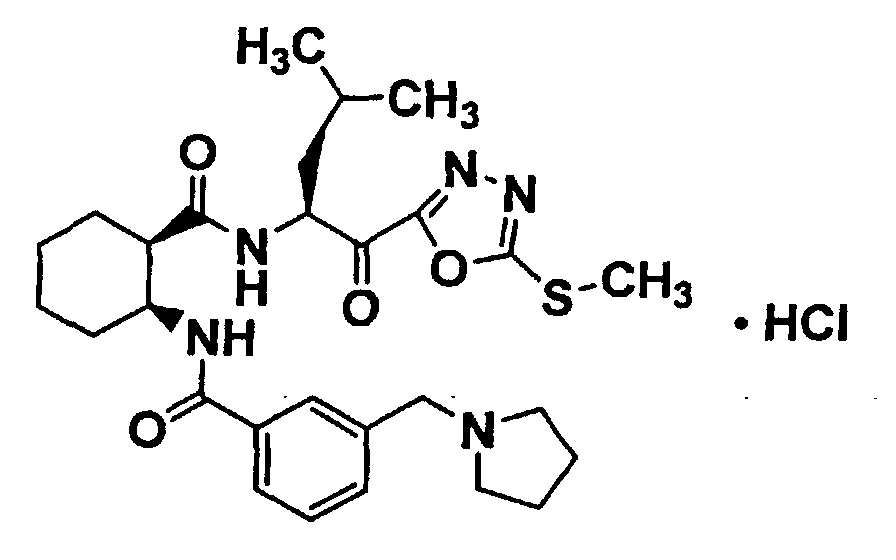
NMR (DMSO-d6) : δ 8.58 and 8.46 (each d, J = 6.3 Hz, totally 1H), 7.99 and 7.94 (each s, totally 1H), 7.80 (d, J = 7.5 Hz, 2H), 7.74 and 7.67 (each d, J = 7.8 Hz, totally 1H), 7.52 (t-like, J = 7.5 Hz, 1H), 5.06-4.98 (m, 1H), 4.39 and 4.37 (each s, totally 2H), 4.29 (m, 1H), 3.41-3.26 (m, 2H), 3.11-2.98 (m, 2H), 2.81-2.70 (m, 1H), 2.74 (s, 3H), 2.01-1.85 (m, 7H), 1.61-1.22 (m, 8H), 0.86, 0.83, 0.77, and 0.71 (each d, J= 6.3Hz, totally 6H).
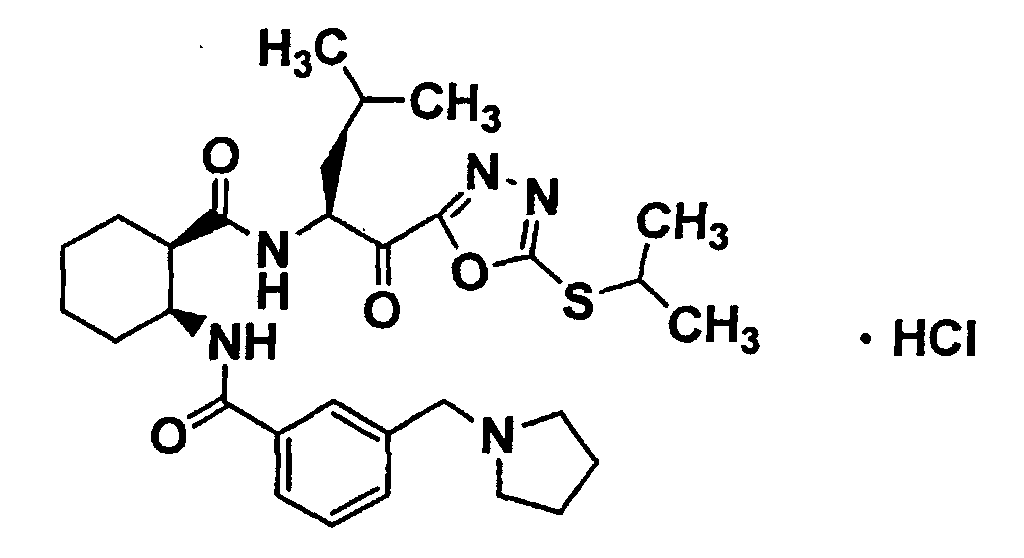
NMR (DMSO-d6): δ 8.46 (each d, J = 6.6 Hz, 1H), 7.98 (s, 1H), 7.81 (d, J = 7.5 Hz, 2H), 7.72 (d, J = 6.9 Hz, 1H), 7.52 (t-like, J = 7.5 Hz, 1H), 5.08-5.00 (m, 1H), 4.40 and 4.38 (each s, totally 2H), 4.29 (m, 1H), 4.00-3.87 (m, 1H), 3.41-3.32 (m, 2H), 3.12-3.00 (m, 2H), 2.77-2.73 (m, 1H), 2.01-1.85 (m, 7H), 1.68-1.23 (m, 8H), 1.45 (d, J = 6.9 Hz, 6H) 0.77 (d, J = 5.1 Hz, 3H), 0.71 (d, J = 5.1 Hz, 3H).
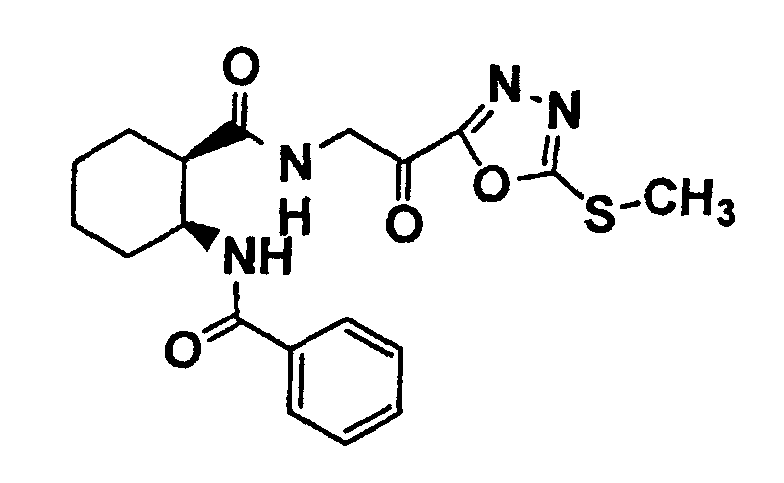
NMR (CDCl3) : δ 7.82-7.74 (m, 2H), 7.51-7.38 (m, 3H), 7.31 (brd, J = 8.7 Hz, 1H), 6.53 (brt, J = 5.4 Hz, 1H), 4.78 (dd, J = 19.5, 5.1 Hz, 1H), 4.75 (dd, J=19.5, 5.1 Hz, 1H), 4.42-4.31 (m, 1H), 2.93-2.87 (m, 1H), 2.79 (s, 3H), 2.13-1.40 (m, 8H).

NMR (CDCl3): δ 7.45-7.26 (m, 5H), 6.82 (brs, 1H), 5.23-5.06 (m, 1H), 5.13 (s, 2H), 4.85-4.73 (m, 2H), 4.36-4.24 (m, 1H), 2.80 (s, 3H), 1.81-1.48 (m, 3H), 1.04-0.85 (m, 6H).

NMR (CDCl3): δ 8.03-7.88 (m, 1H), 7.68-7.54 (m, 2H), 7.59 and 7.41 (each brd, J = 9.0 Hz, totally 1H), 6.55 and 6.32 (each brd, J = 6.9 Hz, totally 1H), 5.50-5.38 (m, 1H), 4.38-4.20 (m, 3H), 4.13-3.90 (m, 1H), 2.90-2.70 (m, 7H), 2.10-1.40 (m, 17H), 1.04, 0.97, and 0.92 (each d, J = 6.0 Hz, totally 6H).
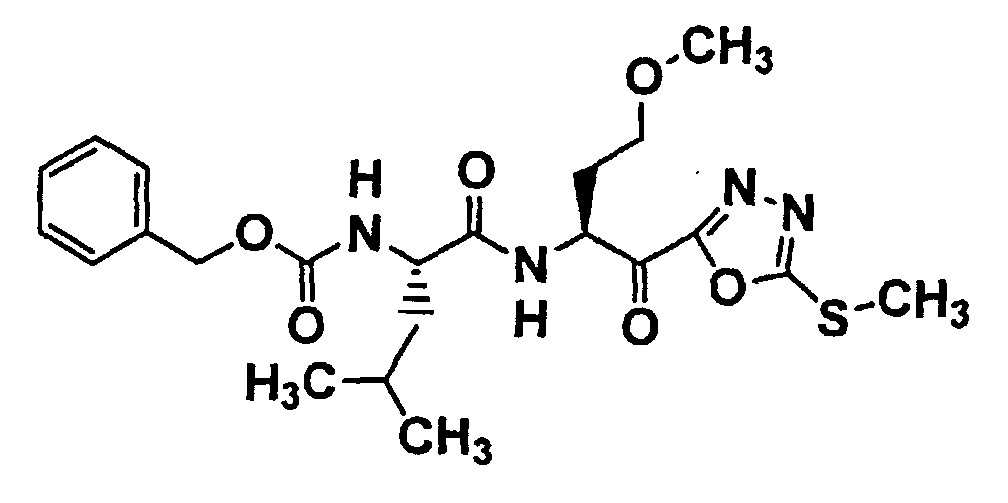
NMR (CDCl3) : δ 7.40-7.20 (m, 6H), 5.41 (q, J= 5.5 Hz, 1H), 5.17 (d, J = 8.4 Hz, 1H), 5.12 (s, 2H), 4.30-4.20 (m, 1H), 3.43 (t, J = 5.1 Hz, 2H), 3.17 (s, 3H), 2.78 (s, 3H), 2.40-2.20 (m, 2H), 1.80-1.45 (m, 3H), 0.95 (d, J = 6.0 Hz, 6H).
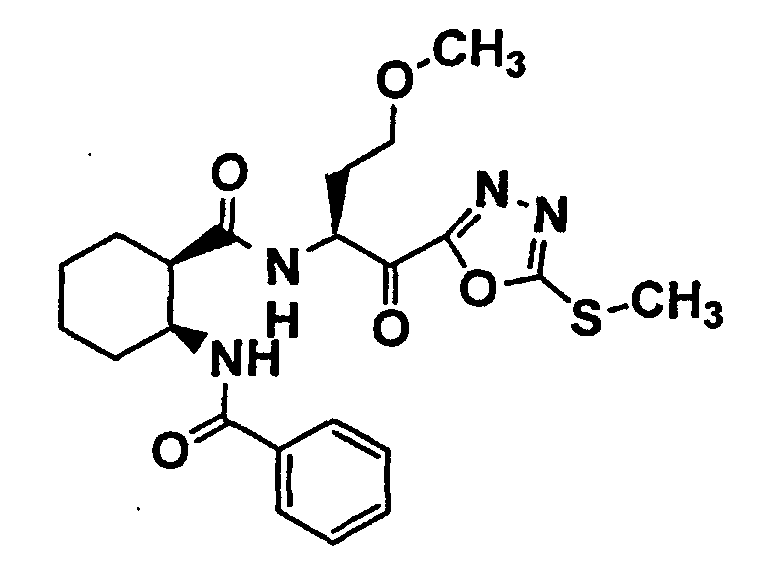
NMR (CDCl3): δ 7.80-7.75 (m, 2H), 7.55 (d, J = 8.1 Hz, 1H), 7.50-7.35 (m, 3H), 7.22 (d, J = 5.7 Hz, 1H), 5.42 (q, J = 5.7 Hz, 1H), 4.35-4.25 (m, 1H), 3.50-3.35 (m, 2H), 3.19 (s, 3H), 2.82 (q, J = 4.8 Hz, 1H), 2.79 (s, 3H), 2.40-2.20 (m, 2H), 2.05-1.40 (m, 8H).

NMR (CDCl3): δ 8.02 (brd, J = 6.6 Hz, 1H), 7.76 (d, J = 7.8 Hz, 2H), 7.58-7.43 (m, 3H), 6.07 (brs, 1H), 5.36 (ddd, J = 10.2, 6.9, 4.2 Hz, 1H), 2.76 (s, 3H), 2.37-2.20 (m, 2H), 2.06-1.90 (m, 2H), 1.90-1.30 (m, 9H), 1.00 and 0.96 (each d, J = 6.0 Hz, each 3H).

NMR (CDCl3): δ 8.09 (t, J = 7.8 Hz, 1H), 7.71-7.42 (m, 3H), 6.28 (d, J = 7.2 Hz, 1H), 5.50-5.33 (m, 1H), 4.52-4.31 (m, 1H), 4.17 (brs, 2H), 4.13-3.95 (m, 1H), 2.90-2.70 (m, 1H), 2.76 (brs, 6H), 2.15-1.38 (m, 11H), 1.54 (d, J = 6.6 Hz, 6H), 0.94 and 0.89 (each d, J = 6.3 Hz, each 3H).

NMR (CDCl3): δ 8.17 (brd, J = 6.6 Hz, 1H), 5.31 (ddd, J = 9.9, 6.6, 3.9 Hz, 1H), 4.43 (brs, 1H), 4.02 (septet, J = 6.9 Hz, 1H), 3.72 (t, J = 5.1 Hz, 4H), 3.38 (t, J = 5.1 Hz, 4H), 2.21-1.20 (m, 13H), 1.53 (d, J = 6.9 Hz, 6H), 1.00 and 0.97 (each d, J = 5.7 Hz, each 3H).
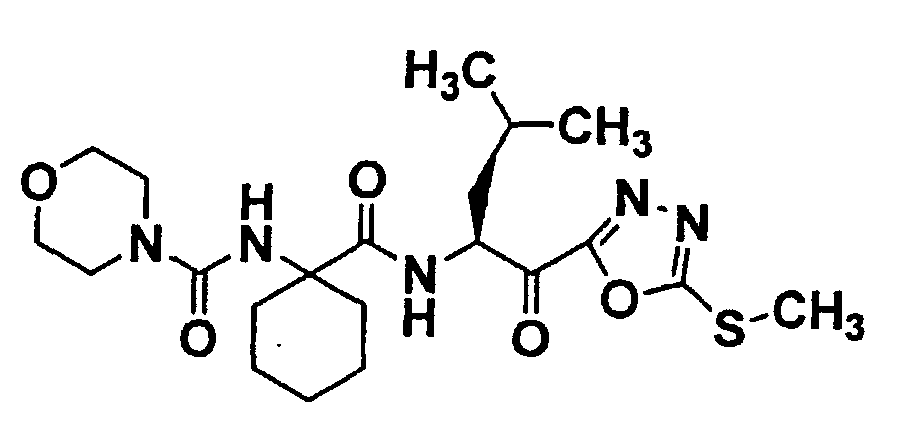
NMR (CDCl3) : δ 8.17 (brd, J = 6.3 Hz, 1H), 5.29 (m, 1H), 4.41 (brs, 1H), 3.72 (t, J = 4.5 Hz, 4H), 3.38 (t, J = 4.5 Hz, 4H), 2.79 (s, 3H), 2.21-1.28 (m, 13H), 1.00 and 0.97 (each d, J = 5.7 Hz, each 3H).

NMR (CDCl3): δ 7.49 (br, 1H), 5.38 (m, 1H), 4.70 (brs, 1H), 2.78 (s, 3H), 2.11-1.20 (m, 22H), 1.01 and 0.97 (each d, J = 6.0 Hz, each 3H).

NMR (CDCl3) : δ 7.40-7.25 (m, 5H), 7.24 (d, J= 6.0Hz, 1H), 5.42 (q, J = 6.0 Hz, 1H), 5.17 (d, J = 7.8 Hz, 1H), 5.12 (s, 2H), 4.30-4.20 (m, 1H), 4.03 (septet, J = 6.9 Hz, 1H), 3.43 (t, J = 5.0 Hz, 2H), 3.17 (s, 3H), 2.40-2.20 (m, 2H), 1.80-1.40 (m, 3H), 1.53 (d, J = 6.9 Hz, 6H), 0.95 (d, J = 6.0 Hz, 6H).
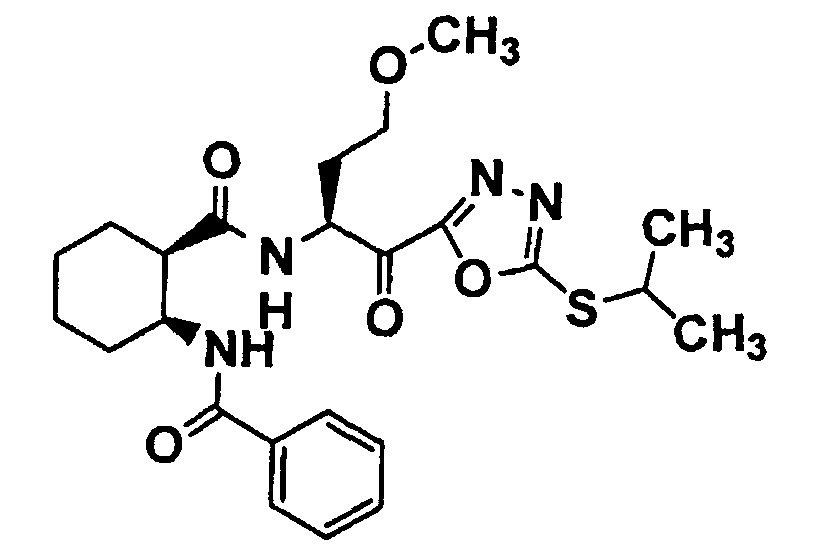
NMR (CDCl3) : δ 7.80-7.75 (m, 2H), 7.57 (d, J = 6.0 Hz, 1H), 7.50-7.35 (m, 3H), 7.23 (d, J = 6.0 Hz, 1H), 5.43 (q, J = 6.0 Hz, 1H), 4.35-4.25 (m, 1H), 4.04 (septet, J = 6.9 Hz, 1H), 3.45-3.35 (m, 2H), 3.20 (s, 3H), 2.83 (q, J = 4.7 Hz, 1H), 2.40-2.20 (m, 2H), 2.05-1.40 (m, 8H), 1.53 (d, J= 6.9 Hz, 6H).

NMR (DMSO-d6): δ 8.66 and 8.56 (each d, J = 5.7 Hz, 1H), 8.45 and 8.31 (each d, J = 5.4 Hz, 1H), 7.75-7.69 (m, 1H), 7.60-7.48 (m, 3H), 5.06-4.98 (m, 1H), 4.50-4.45 (m, 1H), 4.37-4.32 (m, 2H), 3.94-3.87 (m, 2H), 3.78-3.65 (m, 2H), 3.41-3.00 (m, 4H), 2.82-2.71 (m, 4H), 2.00-1.22 (m, 11H), 1.92-0.85, 0.83, and 0.79 (m, d, and d, J = 6.3 Hz, totally 6H).

NMR (CDCl3): δ 8.16 (brd, J = 6.6 Hz, 1H), 5.29 (ddd, J = 9.0, 6.6, 5.1 Hz, 1H), 4.43 (brs, 1H), 4.03 (septet, J = 6.9 Hz, 1H), 3.72 (t, J = 4.8 Hz, 4H), 3.38 (t, J = 4.8 Hz, 4H), 2.20-1.20 (m, 16H), 1.53 (d, J = 6.9 Hz, 6H), 0.89 (t, J = 6.6 Hz, 3H).
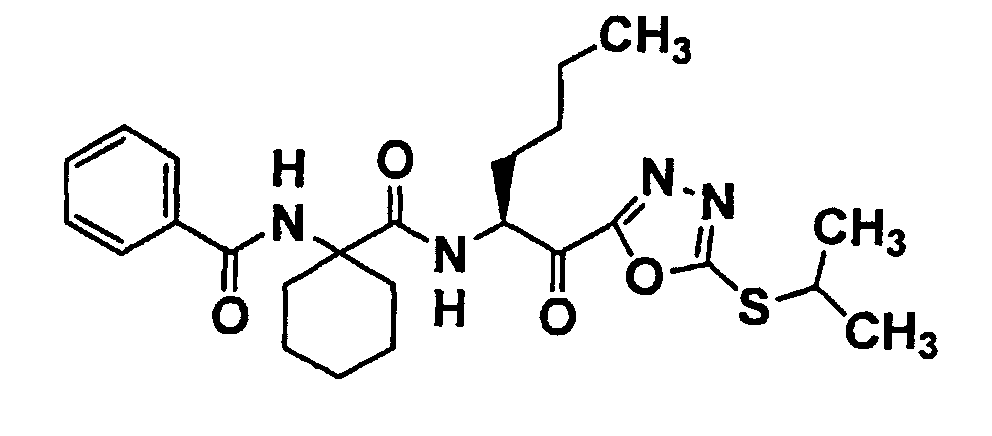
NMR (CDCl3) : δ 8.02 (brd, J = 6.9 Hz, 1H), 7.78 (d, J = 6.9 Hz, 2H), 7.59-7.44 (m, 3H), 6.09 (brs, 1H), 5.33 (ddd, J = 9.0, 6.9, 5.1 Hz, 1H), 4.00 (septet, J = 6.6 Hz, 1H), 2.40-1.30 (m, 16H), 1.52 (d, J = 6.6 Hz, 6H), 0.87 (t, J = 7.2 Hz, 3H).

NMR (CDCl3): δ 8.02 (d, J = 6.9 Hz, 1H), 7.73 (d, J = 8.3 Hz, 2H), 7.43 (d, J = 8.3 Hz, 2H), 6.05 (s, 1H), 5.45-5.30 (m, 1H), 4.01 (septet, J = 6.9 Hz, 1H), 3.51 (s, 2H), 2.35-2.20 (m, 2H), 2.28 (s, 6H), 2.10-1.90 (m, 2H), 1.85-1.30 (m, 9H), 1.52 (d, J = 6.9 Hz, 6H), 1.01 (d, J = 6.0 Hz, 3H), 0.97 (d, J = 6.0 Hz, 3H).

NMR (DMSO-d6): δ 8.68 and 8.57 (each d, J = 5.4 Hz, totally 1H), 8.43 and 8.30 (each d, J = 8.1 Hz, totally 1H), 7.78-7.75 (m, 1H), 7.55-7.46 (m, 3H), 5.07-4.99 (m, 1H), 4.50-4.24 (m, 3H), 4.00-3.66 (m, 5H), 3.41-3.00 (m, 4H), 2.80-2.71 (m, 1H), 2.00-1.23 (m, 11H), 1.46 (d, J = 6.6 Hz, 3H), 1.43 (d, J = 6.6 Hz, 3H), 0.90, 0.86, 0.85, and 0.82 (each d, J = 6.6 Hz, totally 6H).
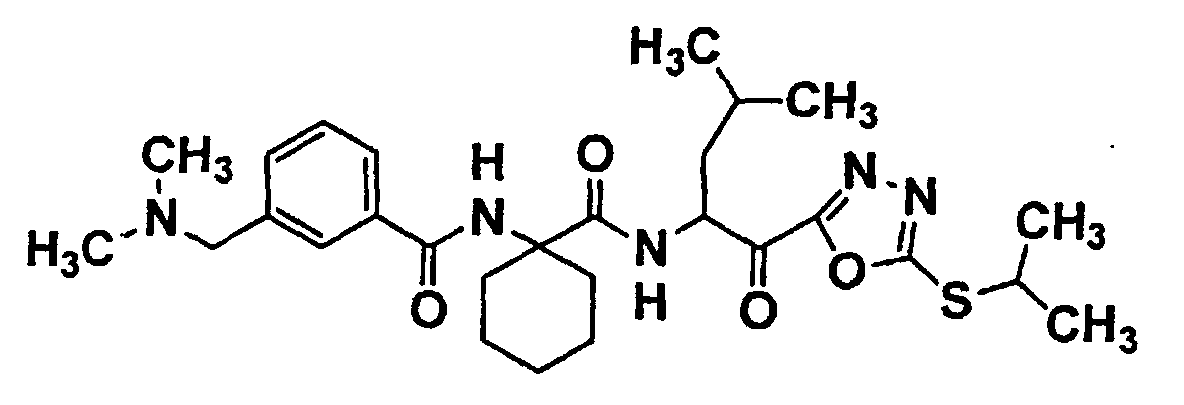
NMR (CDCl3) : δ 7.97 (d, J = 6.9 Hz, 1H), 7.76 (s, 1H), 7.69 (d, J = 7.5 Hz, 1H), 7.50 (d, J = 7.5 Hz, 1H), 7.43 (t, J = 7.5 Hz, 1H), 6.22 (brs, 1H), 5.45-5.30 (m, 1H), 4.01 (septet, J = 6.9 Hz, 1H), 3.52 (s, 2H), 2.40-2.15 (m, 2H), 2.29 (s, 6H), 2.10-1.90 (m, 2H), 1.85-1.30 (m, 9H), 1.52 (d, J = 6.9 Hz, 6H), 1.01 (d, J = 6.0 Hz, 3H), 0.97 (d, J = 6.0 Hz, 3H).
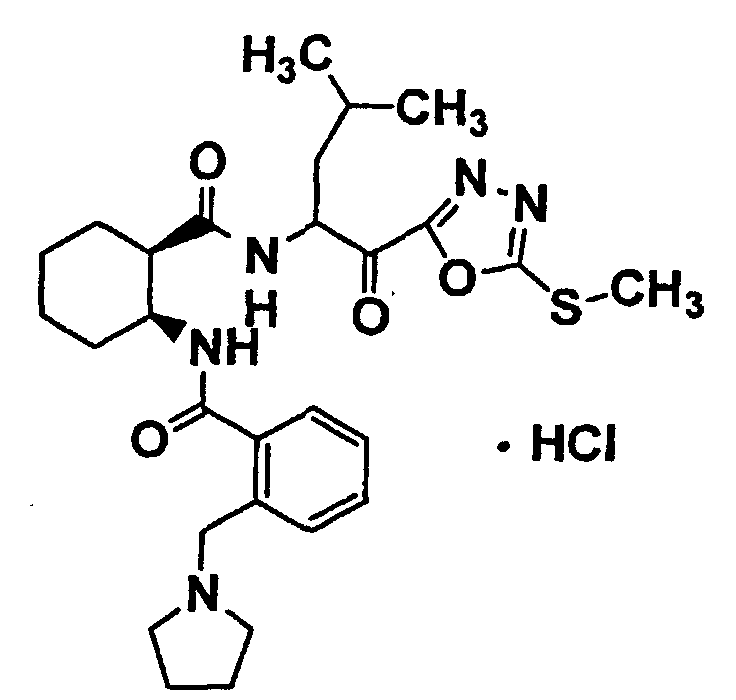
NMR (DMSO-d6): δ 8.65 and 8.55 (each d, J = 6.6 Hz, totally 1H), 8.42 and 8.28 (each d, J = 8.4 Hz, totally 1H), 7.74-7.67 (m, 1H), 7.56-7.46 (m, 3H), 5.05-4.97 (m, 1H), 4.46-4.22 (m, 3H), 3.26-3.00 (m, 4H), 2.81-2.67 (m, 1H), 2.76 and 2.73 (each s, totally 3H), 2.13-1.22 (m, 15H), 0.88, 0.87, 0.84, and 0.81 (each d,J = 6.0 Hz, totally 6H).
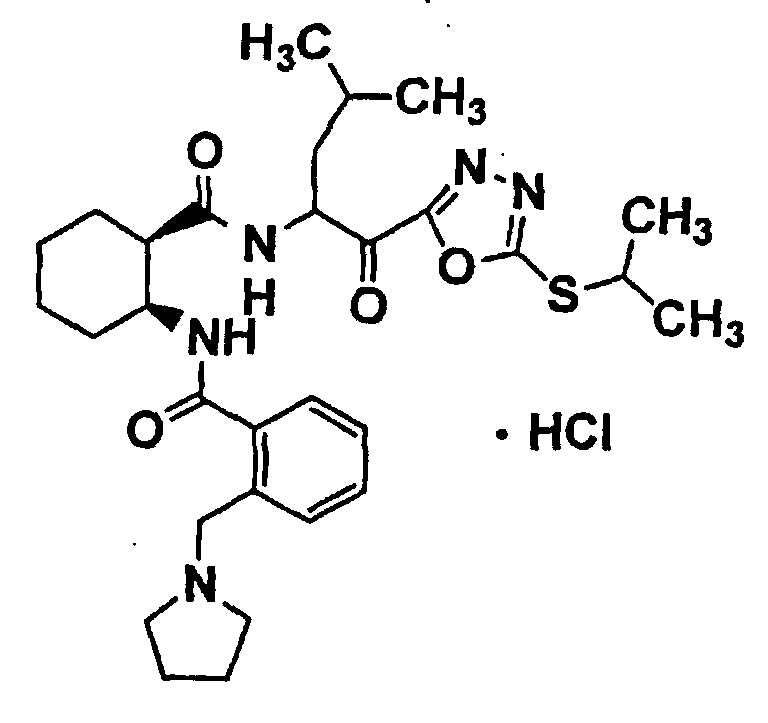
NMR (DMSO-d6) : δ 8.67 and 8.56 (each d, J = 6.6 Hz, totally 1H), 8.41 and 8.26 (each d, J = 7.8 Hz, totally 1H), 7.74-7.70 (m, 1H), 7.60-7.45 (m, 3H), 5.05-4.96 (m, 1H), 4.46-4.23 (m, 3H), 4.00-3.86 (m, 1H), 3.21-3.01 (m, 4H), 2.80-2.70 (m, 1H), 2.07-1.01 (m, 21H), 0.89, 0.88, 0.85, and 0.81 (each d, J = 6.6 Hz, totally 6H).
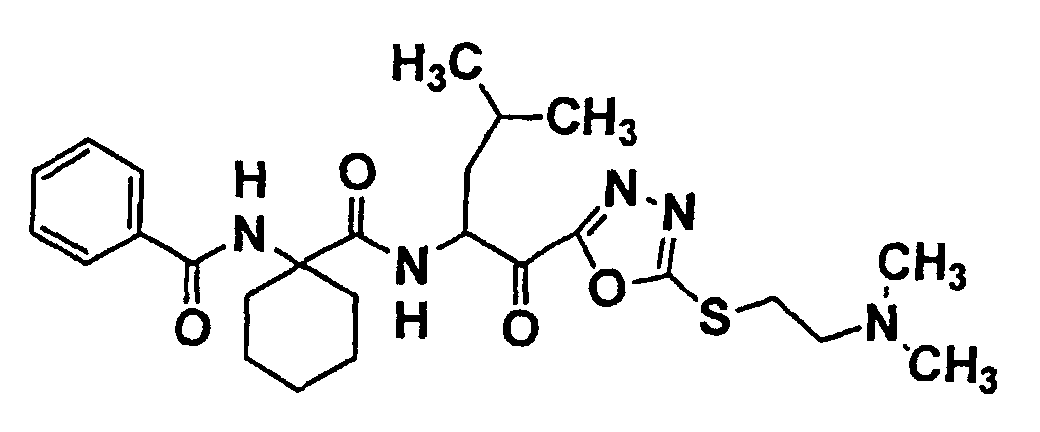
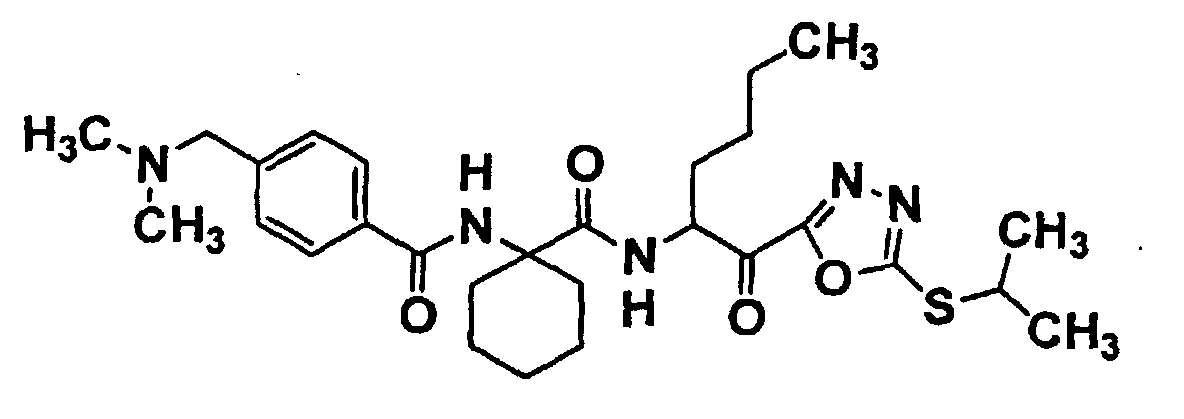
NMR (CDCl3): δ 8.02 (brd, J = 6.9 Hz, 1H), 7.74 (d, J = 8.4 Hz, 2H), 7.43 (d, J = 8.4 Hz, 2H), 6.09 (brs, 1H), 5.31 (m, 1H), 4.01 (m, 1H), 3.54 (brs, 2H), 2.60-1.20 (m, 28H), 0.87 (t, J = 7.2 Hz, 3H).

NMR (CDCl3): δ 7.91 (brd, J = 6.9 Hz, 1H), 5.40 (brs, 1H), 5.31 (m, 1H), 4.02 (septet, J = 6.9 Hz, 1H), 2.20-1.25 (m, 13H), 2.08 (s, 3H), 1.53 (d, J = 6.6 Hz, 6H), 1.01 (d, J = 6.0 Hz, 3H), 0.98 (d, J = 6.6 Hz, 3H).
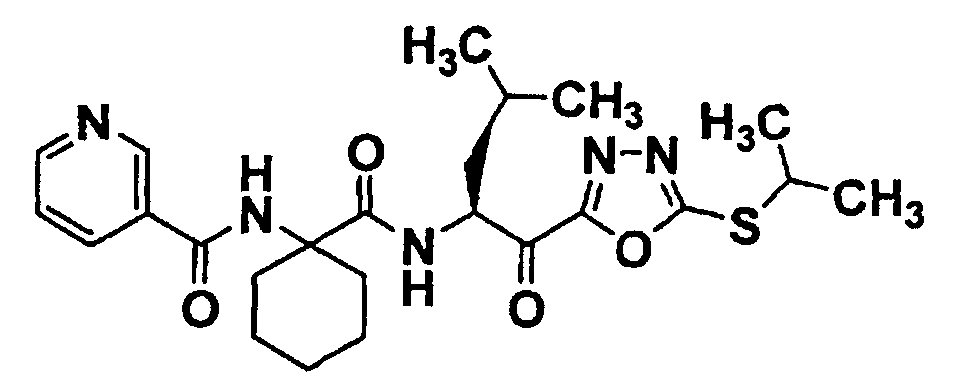
NMR (CDCl3) : δ 9.01 (brs, 1H), 8.77 (brs, 1H), 8.12 (d, J= 8.1 Hz, 1H), 7.79 (d, J= 6.9 Hz, 1H), 7.48-7.38 (m, 1H), 6.20 (brs, 1H), 5.43-5.32 (m, 1H), 4.08-3.95 (m, 1H), 2.37-1.28 (m, 13H), 1.52 (d, J = 6.9 Hz, 6H), 1.02 and 0.98 (each d, J = 6.0 Hz, totally 6H).
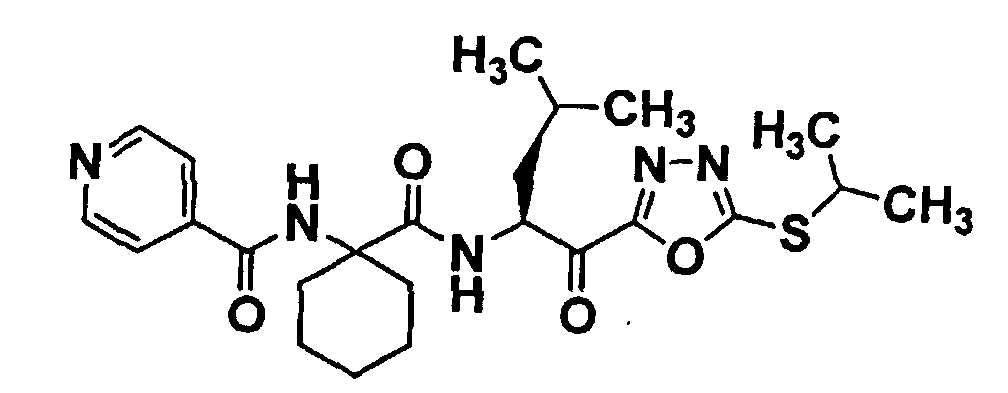
NMR (CDCl3) : δ 8.78 (brd, J = 5.7 Hz, 2H), 7.71 (d, J = 7.2 Hz, 1H), 7.62 (d, J = 5.7 Hz, 2H), 6.17 (brs, 1H), 5.43-5.33 (m, 1H), 4.08-3.93 (m, 1H), 2.35-1.30 (m, 13H), 1.52 (d, J = 6.9 Hz, 6H), 1.02 and 0.98 (each d, J = 6.0 Hz, totally 6H).

NMR (CDCl3): δ 10.7 (brs, 1H), 8.50 (brd, J = 6.6 Hz, 1H), 7.87 (m, 1H), 7.45-7.36 (m, 2H), 7.19 (m, 1H), 5.37 (m, 1H), 4.01 (septet, J = 6.9 Hz, 1H), 3.84 (brd, J = 12 Hz, 1H), 3.32 (brd, J = 12 Hz, 1H), 2.57 (m, 1H), 2.30-1.25 (m, 12H), 2.23 (s, 6H), 1.52 (d, J = 6.6 Hz, 3H), 1.51 (d, J = 6.6 Hz, 3H), 1.02 (d, J = 6.0 Hz, 3H), 0.97 (d, J = 6.3 Hz, 3H).

NMR (CDCl3): δ 8.03 (brd, J = 6.6 Hz, 1H), 7.73 (d, J = 8.4 Hz, 2H), 7.44 (d, J= 8.4 Hz, 2H), 6.05 (brs, 1H), 5.37 (m, 1H), 4.01 (septet, J = 6.6 Hz, 1H), 3.72 (brt, J = 4.5 Hz, 4H), 3.56 (s, 2H), 2.46 (brt, J = 4.5 Hz, 4H), 2.27 (m, 2H), 1.98 (m, 2H), 1.85-1.30 (m, 9H), 1.52 (d, J = 6.6 Hz, 6H), 1.01 (d, J = 6.0 Hz, 3H), 0.97 (d, J = 6.3 Hz, 3H).

NMR (CDCl3): δ 8.06 (br, 1H), 7.76 (d, J = 6.9 Hz, 2H), 7.60-7.42 (m, 3H), 6.13 (brs, 1H), 5.37 (ddd, J = 9.9, 6.6, 3.6 Hz, 1H), 4.00 (septet, J = 6.6 Hz, 1H), 3.90-3.70 (m, 2H), 3.35-3.20 (m, 2H), 2.40-2.10 (m, 4H), 1.90-1.40 (m, 18H), 1.01 and 0.97 (each d, J = 6.3 Hz, each 3H).
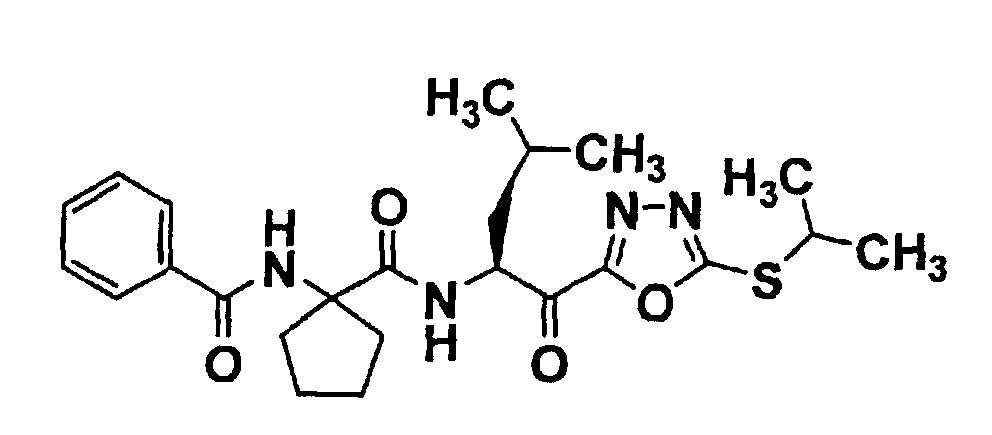
NMR (CDCl3) : δ 7.89 (brd, J = 6.9 Hz, 1H), 7.75 (m, 2H), 7.5 (m, 1H), 7.46 (m, 2H), 6.37 (brs, 1H), 5.38 (m, 1H), 4.00 (septet, J = 6.9 Hz, 1H), 2.43 (m, 2H), 2.12 (m, 2H), 1.88-1.58 (m, 7H), 1.52 (d, J = 6.9 Hz, 6H), 1.01 (d, J = 6.3 Hz, 3H), 0.96 (d, J = 6.3 Hz, 3H).
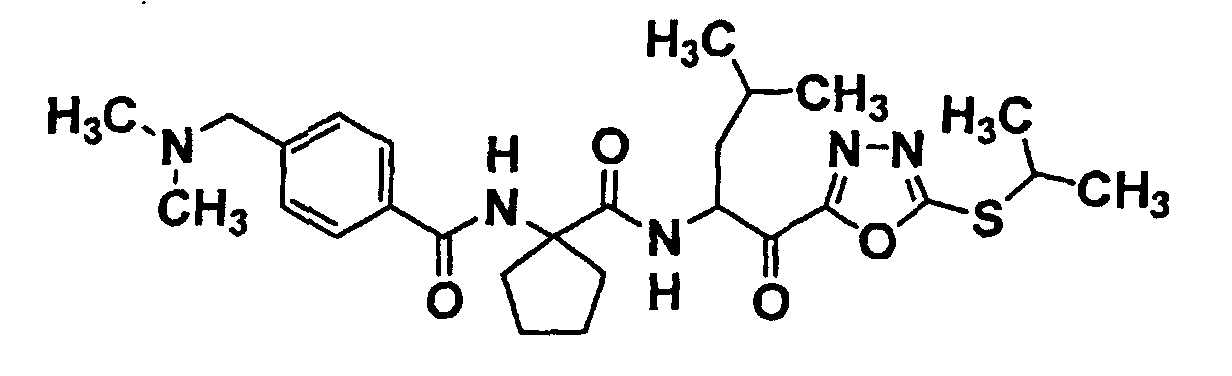
NMR (CDCl3) : δ 7.90 (brd, J = 6.6 Hz, 1H), 7.71 (d, J = 8.4 Hz, 2H), 7.41 (d, J= 8.4 Hz, 2H), 6.36 (brs, 1H), 5.38 (m, 1H), 4.01 (septet, J = 6.9 Hz, 1H), 3.50 (s, 2H), 2.43 (m, 2H), 2.26 (s, 6H), 2.12 (m, 2H), 1.88-1.60 (m, 7H), 1.52 (d, J = 6.9 Hz, 6H), 1.01 (d, J = 6.0 Hz, 3H), 0.96 (d, J = 6.3 Hz, 3H).
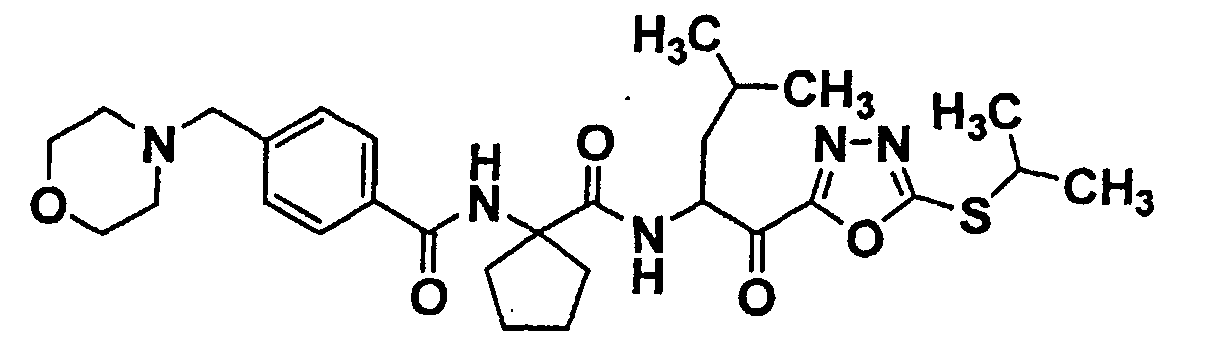
NMR (CDCl3) : δ 7.89 (brd, J = 6.9 Hz, 1H), 7.70 (d, J = 8.4 Hz, 2H), 7.43 (d, J = 8.4 Hz, 2H), 6.34 (brs, 1H), 5.38 (m, 1H), 4.01 (septet, J = 6.9 Hz, 1H), 3.72 (brt, J = 4.5 Hz, 4H), 3.55 (s, 2H), 2.45 (brt, J= 4.5Hz, 4H), 2.43 (m, 2H), 2.11 (m, 2H), 1.88-1.60 (m, 7H), 1.52 (d, J = 6.9 Hz, 6H), 1.01 (d, J = 6.0 Hz, 3H), 0.96 (d, J = 6.3 Hz, 3H).
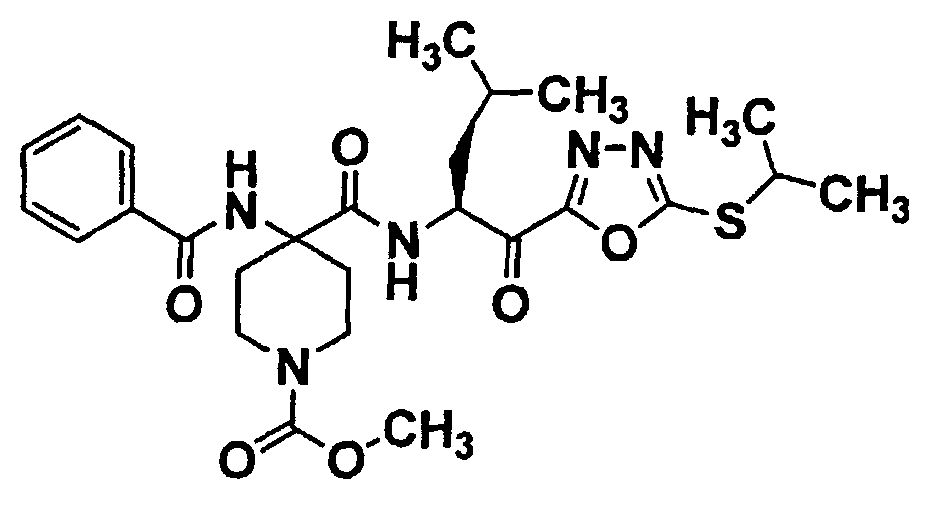
NMR (CDCl3): δ 8.06 (br, 1H), 7.75 (d, J = 6.9 Hz, 1H), 7.61-7.42 (m, 3H), 6.10 (brs, 1H), 5.38 (ddd, J = 9.9, 6.6, 3.6 Hz, 1H), 4.05 (septet, J = 6.6 Hz, 1H), 3.90-3.70 (m, 2H), 3.35-3.20 (m, 2H), 3.70 (s, 3H), 3.43-3.31 (m, 2H), 2.40-2.11 (m, 4H), 1.90-1.50 (m, 9H), 1.01 and 0.97 (each d, J = 6.0 Hz, each 3H).
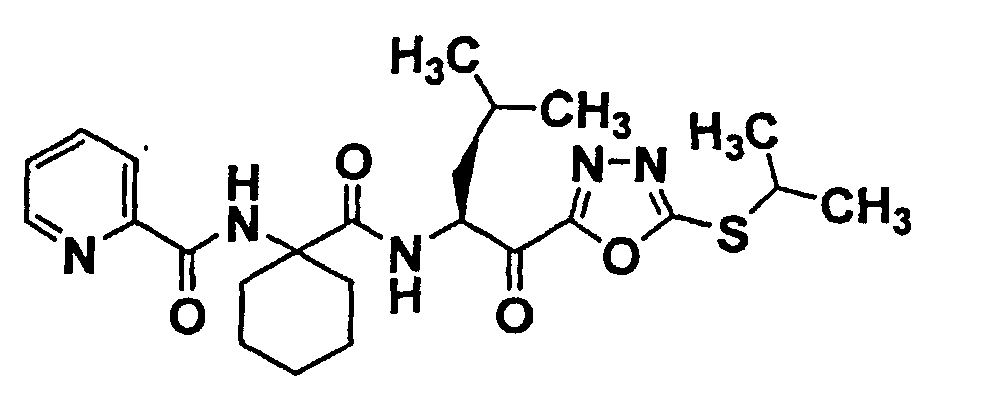
NMR (CDCl3): δ 8.62-8.57 (m, 1H), 8.31 (brs, 1H), 8.18 (d, J = 7.8 Hz, 1H), 7.95 (brd, J = 6.6 Hz, 1H), 7.88 (dt, J = 1.5, 7.8 Hz, 1H), 7.48 (ddd, J = 7.8, 4.5, 1.5 Hz, 1H), 5.41-5.32 (m, 1H), 4.08-3.92 (m, 1H), 2.40-1.23 (m, 13H), 1.52 (d, J = 6.9 Hz, 6H), 0.99 and 0.94 (each d, J = 6.0 Hz, each 3H).

NMR (CDCl3): δ 8.16 (brd, J = 6.3 Hz, 1H), 5.30 (ddd, J = 9.9, 6.6, 4.2 Hz, 1H), 4.42 (brs, 1H), 4.01 (septet, J = 6.6 Hz, 1H), 3.51-3.38 (m, 8H), 2.21-1.30 (m, 28H), 0.98 and 0.96 (each d, J = 6.3 Hz, each 3H).
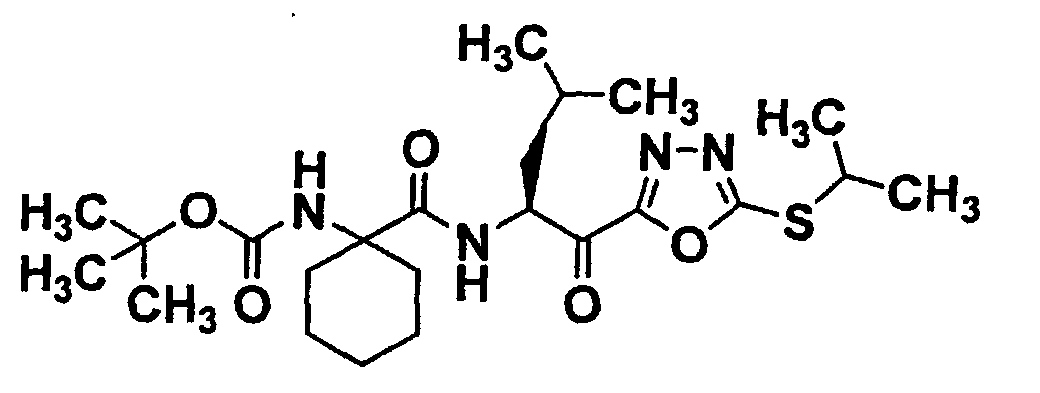
NMR (CDCl3): 7.43 (br, 1H), 5.39 (ddd, J = 10.5, 7.2, 3.0 Hz, 1H), 4.69 (brs, 1H), 4.03 (septet, J = 6.6 Hz, 1H), 2.11-1.21 (m, 28H), 1.02 and 0.95 (each d, J = 6.0 Hz, each 3H).
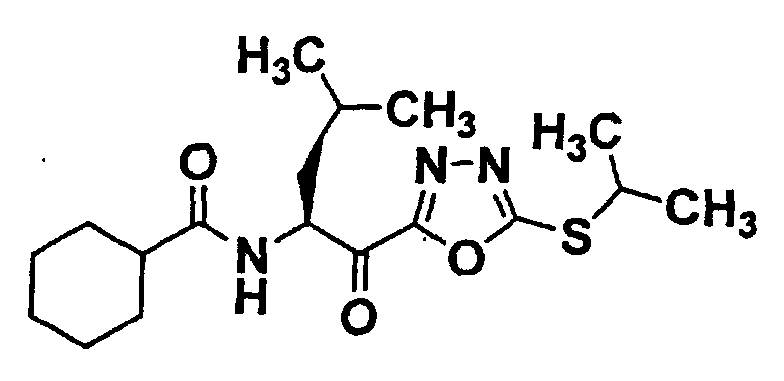
NMR (CDCl3): δ 6.02 (d, J = 8.0 Hz, 1H), 5.43 (ddd, J = 10.1, 8.0 and 3.9 Hz, 1H), 4.13-3.96 (m, 1H), 2.24-2.10 (m, 1H), 1.94-1.15 (m, 13H), 1.54 (d, J=6.9Hz, 6H), 1.03 and 0.97 (each d, J = 6.3 Hz, each 3H).
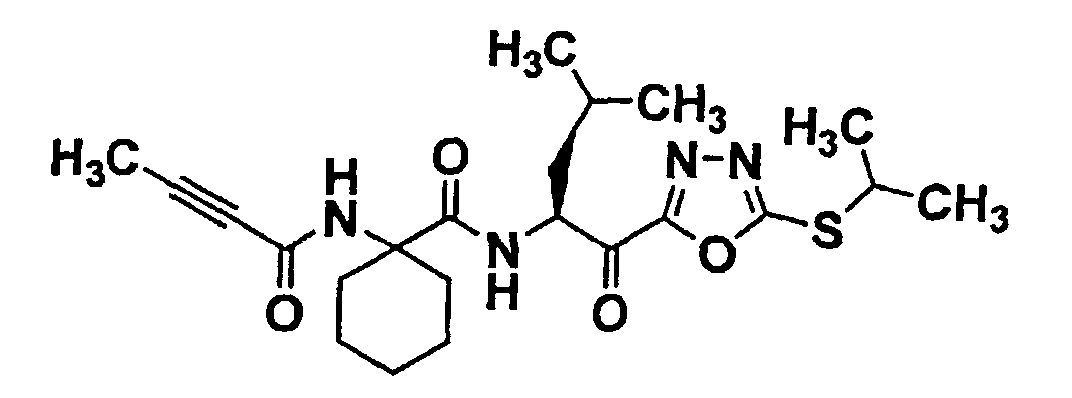
NMR (CDCl3): δ 9.00 (d, J = 1.8 Hz, 1H), 8.77 (dd, J = 4.8, 1.8 Hz, 1H), 8.12 (dt, J = 7.8, 1.8 Hz, 1H), 7.70 (d, J = 7.2 Hz, 1H), 7.43 (dd, J = 7.8, 4.8 Hz, 1H), 6.16 (s, 1H), 5.41-5.34 (m, 1H,), 4.06-3.97 (m, 1H), 2.34-2.19 (m, 2H), 2.08-1.98 (m, 2H), 1.81-1.26 (m, 9H), 1.51 (d, J = 6.6 Hz, 6H), 1.01 (d, J = 6.0 Hz, 3H), 0.98 (d, J = 6.0 Hz, 3H).
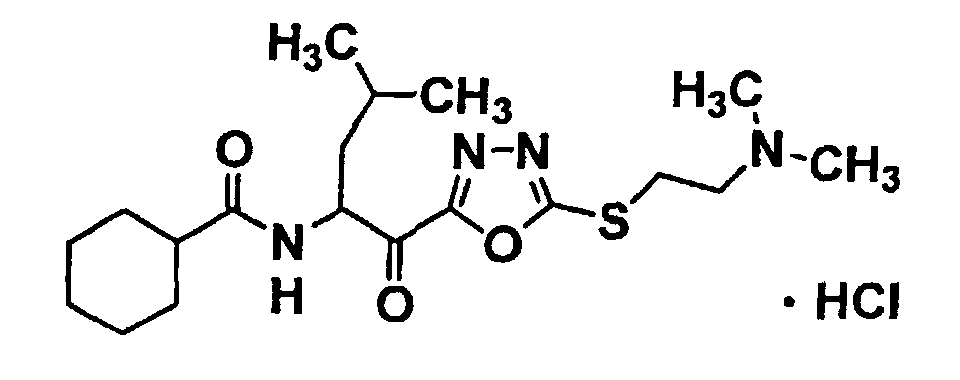
NMR (CDCl3) : δ 13.08 (brs, 1H), 5.98 (d, J = 6.9Hz, 1H), 5.47-5.37 (m, 1H), 3.97-3.84 (m, 2H), 3.62-3.44 (m, 2H), 2.93 (brs, 6H), 2.24-2.11 (m, 1H), 2.02-1.11 (m, 13H), 1.03 and 0.99 (each d, J = 6.0 Hz, each 3H).
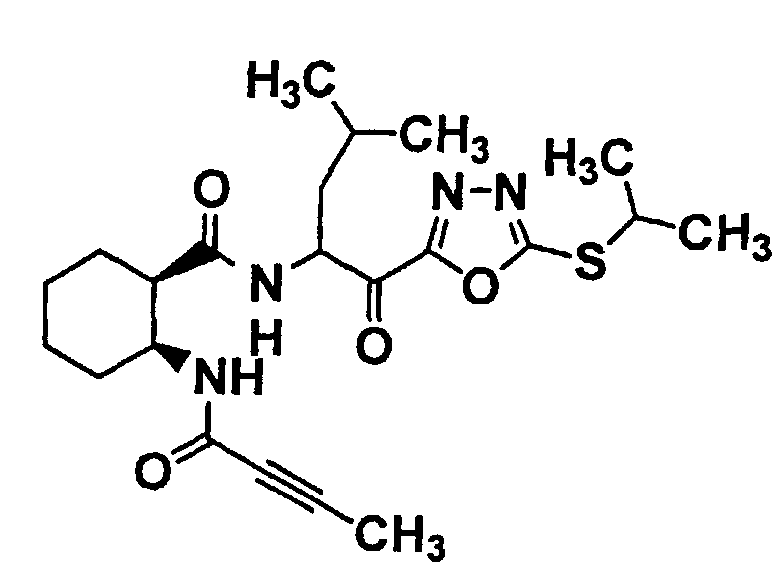
NMR (CDCl3): δ 6.82 and 6.67 (each brd, J = 9.0 Hz, 1H), 6.27 and 6.17 (each brd, J = 7.5 Hz, 1H), 5.45 and 5.41 (each m, 1H), 4.20-4.08 (m, 1H), 4.06 and 4.05 (each septet, J = 6.9 Hz, 1H), 2.77 and 2.74 (each m, 1H), 2.00-1.35 (m, 11H), 1.93 and 1.92 (each s, 3H, ), 1.55 and 1.54 (each d, J = 6.9 Hz, 6H), 1.04 (d, J = 6.3 Hz, 3H), 0.99 and 0.98 (each d, J = 6.6 Hz, 3H).
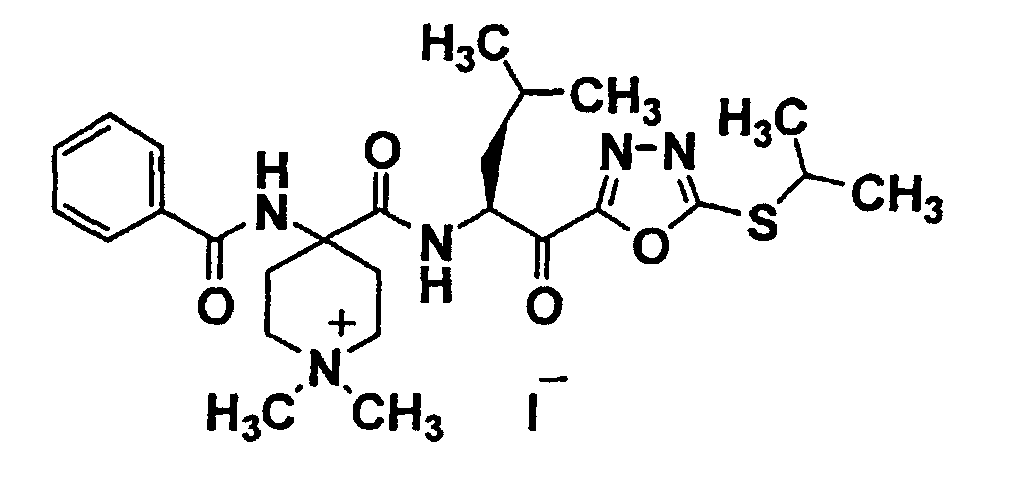
NMR (CDCl3) : δ 8.98 (brs, 1H), 8.17 (d, J = 7.2 Hz, 2H), 7.88 (d, J = 7.2 Hz, 1H), 7.50-7.35 (m, 3H), 5.31-5.25 (m, 1H), 4.10-3.10 (m, 11H), 2.90-2.50 (m, 4H), 2.20-1.20 (m, 9H), 0.93 and 0.82 (each d, J = 5.7 Hz, each 3H).
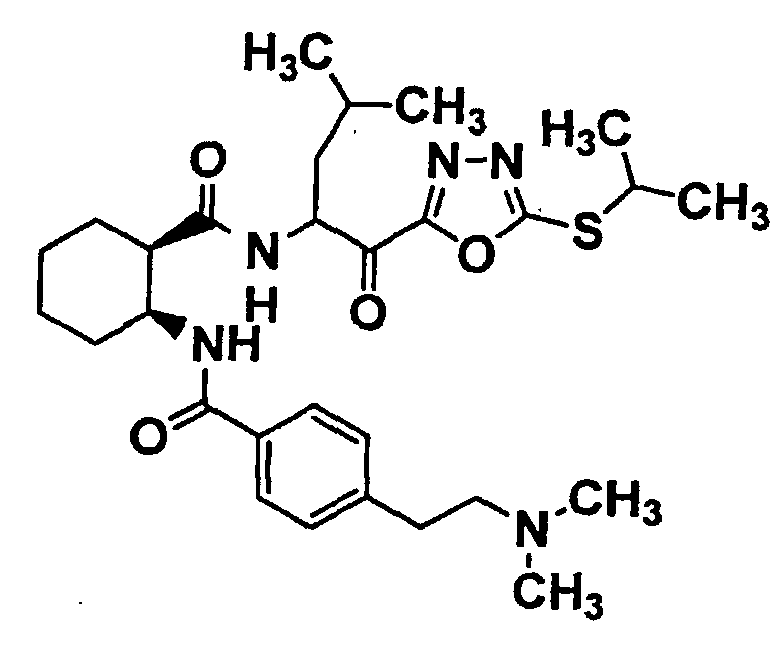
NMR (CDCl3) : δ 7.72 and 7.68 (each d, J = 8.1 Hz, 2H), 7.26 and 7.24 (each d, J = 8.1 Hz, 2H), 7.21 and 7.15 (each brd, J = 9.0 Hz, 1H), 6.33 and 6.27 (each brd, J = 7.5 Hz, 1H), 5.43 and 5.38 (each m, 1H), 4.38-4.25 (m, 1H), 4.05 and 4.03 (each septet, J = 6.9 Hz, 1H), 2.88-2.77 (m, 3H), 2.58-2.50 (m, 2H), 2.30 (s, 6H), 2.10-1.40 (m, 11H), 1.54 and 1.53 (each d, J = 6.9 Hz, 6H), 1.02 and 0.94 (each d, J = 6.0 Hz, 3H), 0.91 and 0.85 (each d, J = 6.3 Hz, 3H).
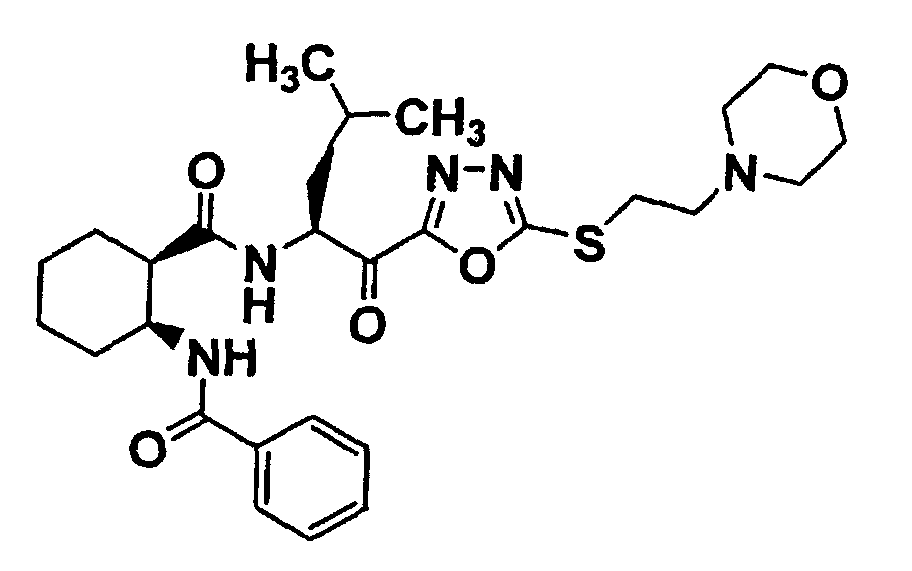
NMR (CDCl3): δ 7.77-7.75 (m, 2H), 7.49-7.40 (m, 3H), 7.19 (d, J = 8.1 Hz, 1H), 6.36 and 6.27 (each d, J = 7.5 Hz, total 1H), 5.47-5.41 (m, 1H), 4.38-4.28 (m, 1H), 3.70 (t, J = 4.5 Hz, 4H), 3.51 (t, J = 6.9 Hz, 2H), 2.87-2.78 (m, 3H), 2.53 (t, J= 4.5 Hz, 4H), 2.13-1.41 (m, 11H), 1.01, 0.95, 0.91, and 0.85 (each d, J = 6.3 Hz, total 6H).
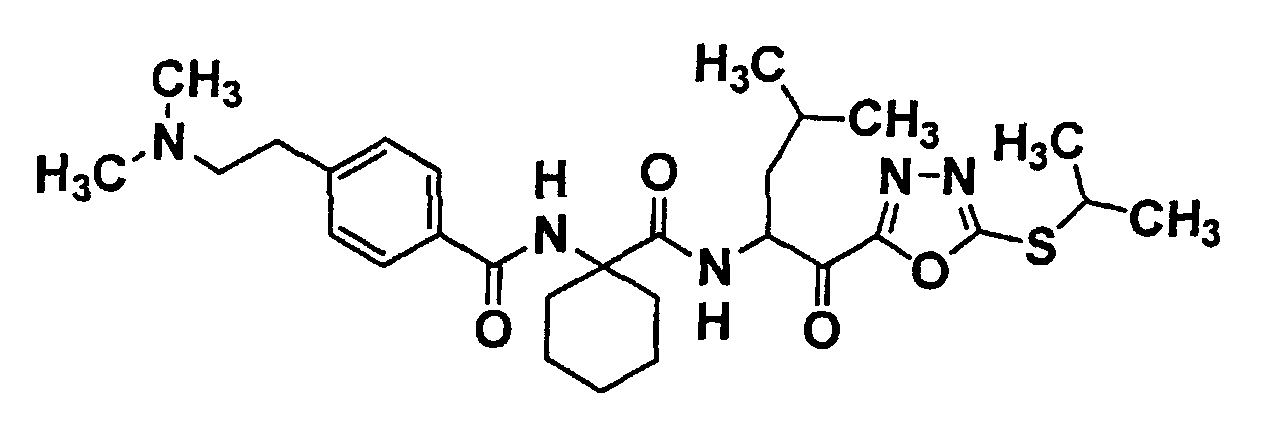
NMR (CDCl3): δ 8.05 (brd, J = 6.9 Hz, 1H), 7.70 (d, J = 8.1 Hz, 2H), 7.31 (d, J= 8.1 Hz, 2H), 6.03 (brs, 1H), 5.37 (m, 1H), 4.01 (septet, J = 6.9 Hz, 1H), 2.85 (t, J = 8.0 Hz, 2H), 2.56 (t, J = 8.0 Hz, 2H), 2.30 (s, 6H), 2.25 (m, 2H), 1.98 (m, 2H), 1.85-1.30 (m, 9H), 1.52 (d, J = 6.6 Hz, 6H), 1.01 (d, J = 5.7 Hz, 3H), 0.97 (d, J = 6.0 Hz, 3H).
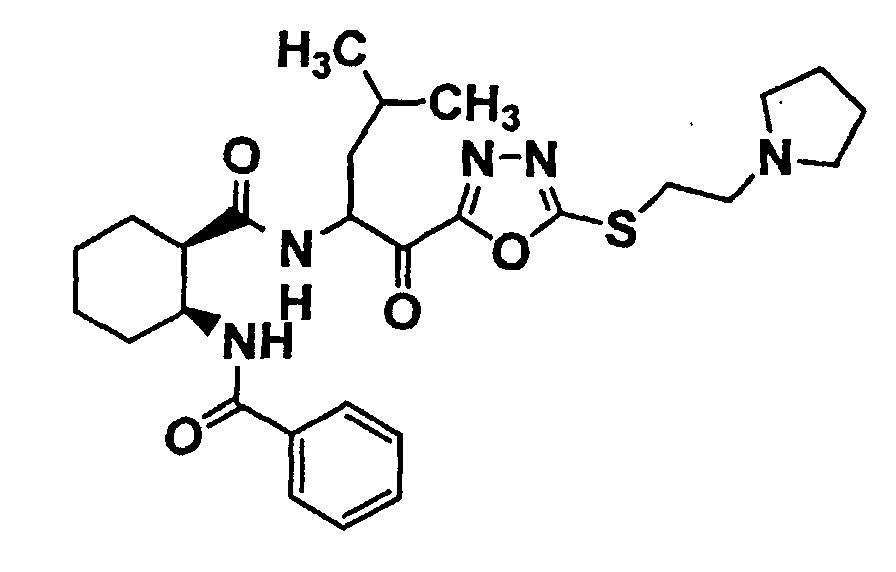
NMR (CDCl3): δ 7.80-7.75 (m, 2H), 7.52-7.39 (m, 3H), 7.26 and 7.20 (each d, J = 8.4 Hz, total 1H), 6.30 and 6.25 (each d, J = 8.1 Hz, total 1H), 5.47-5.34 (m, 1H), 4.36-4.29 (m, 1H), 3.53-3.47 (m, 2H), 2.95-2.91 (m, 2H), 2.88-2.84 (m, 1H), 2.61 (br-s, 4H), 2.08-1.46 (m, 15H), 1.01, 0.97, 0.93, and 0.85 (each d, J = 6.6 Hz, total 6H).

NMR (CDCl3) : δ 7.82-7.74 (m, 2H), 7.53-7.38 (m, 3H), 7.20 (brd, J = 8.4 Hz, 1H), 6.35-6.22 (m, 1H), 5.50-5.40 (m, 1H), 4.38-4.26 (m, 1H), 3.95-3.84 (m, 1H), 2.91-2.83 (m, 1H), 2.27-1.25 (m, 21H), 0.91 and 0.85 (each d, J = 6.3 Hz, each 3H).
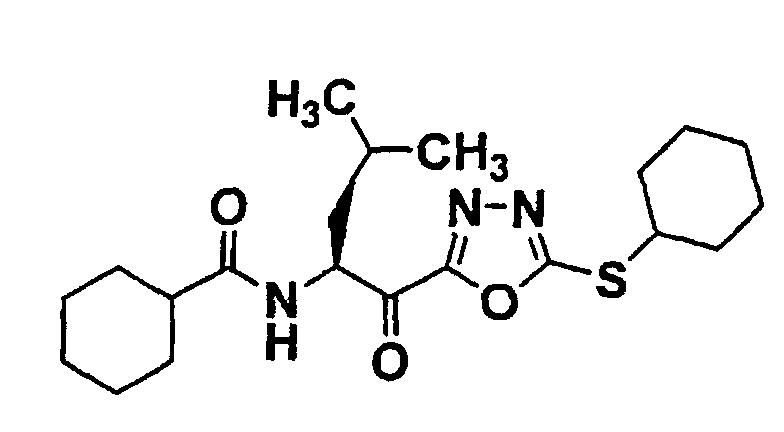
NMR (CDCl3): δ 6.03 (brd, J = 7.8 Hz, 1H), 5.48-5.38 (m, 1H), 3.95-3.83 (m, 1H), 2.27-2.11 and 1.93-1.17 (each m, total 24H), 1.02 and 0.97 (each d, J = 6.3 Hz, each 3H).
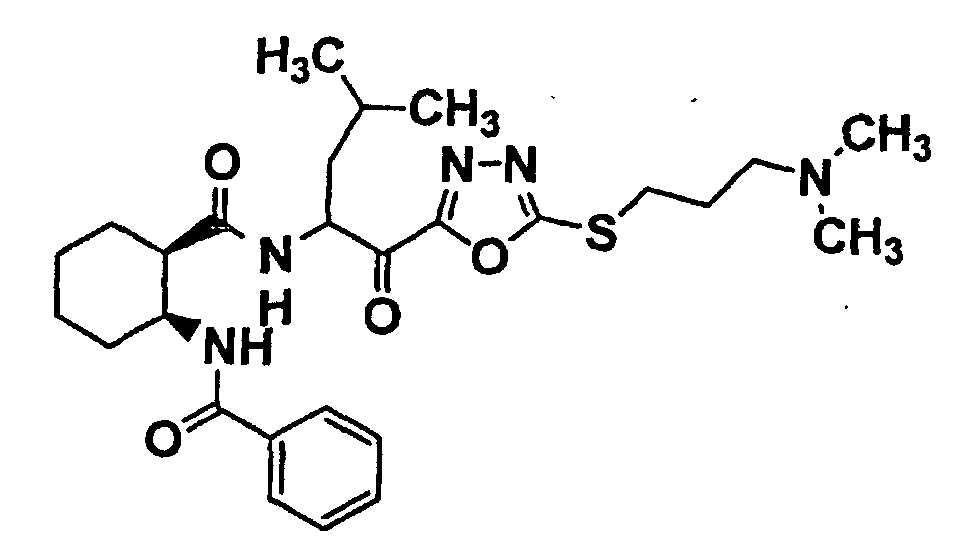
NMR (CDCl3): δ 7.83-7.75 (m, 2H), 7.53-7.39 (m, 3H), 7.30 - 7.20 (m, 1H), 6.27 and 6.23 (each brd, J = 6.6 Hz, totally 1H), 5.50-5.38 (m, 1H), 4.40-4.30 (m, 1H), 3.43-3.33 (m, 2H), 2.89 (m, 1H), 2.42 (t, J = 6.9 Hz, 2H), 2.24 (s, 6H), 2.10-1.40 (m, 13H), 1.01, 0.94, 0.90 and 0.84 (each d, J = 6.3 Hz, totally 6H).
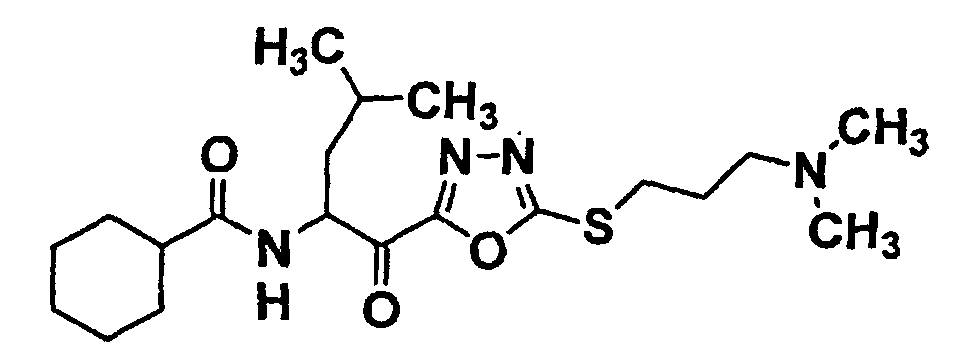
NMR (CDCl3) : δ 6.04 (brd, J = 7.5 Hz, 1H), 5.42 (ddd, J = 9.9, 7.8, 3.9 Hz, 1H), 3.37 (dt, J = 1.2, 6.9 Hz, 2H), 2.41 (t, J = 6.9 Hz, 2H), 2.23 (s, 6H), 2.22-1.19 (m, 14H), 1.02 and 0.97 (each d, J = 6.3 Hz, each 3H).
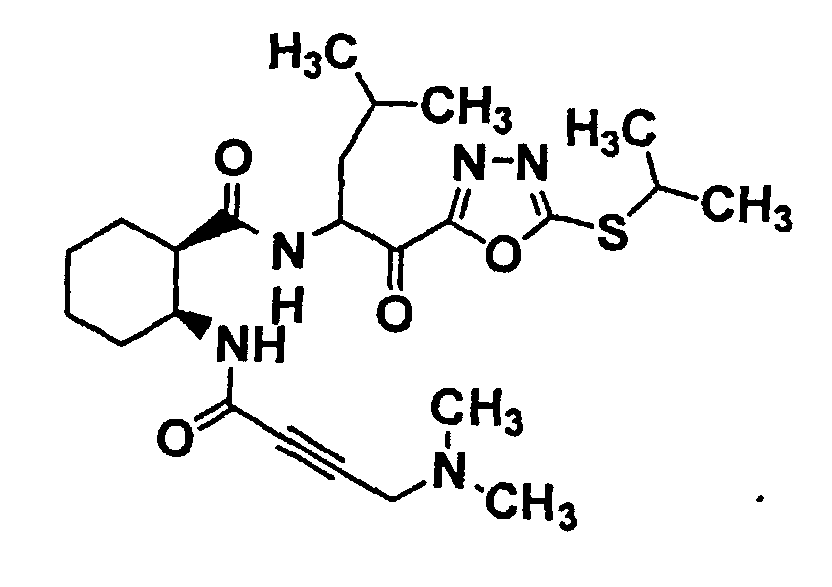
NMR (CDCl3): δ 6.90 and 6.80 (each brd, J = 9.0 Hz, 1H), 6.24 and 6.19 (each brd, J = 7.2 Hz, 1H), 5.45 and 5.42 (each m, 1H), 4.20-4.10 (m, 1H), 4.05 (septet, J = 6.9 Hz, 1H), 3.37 (s, 2H), 2.82-2.75 (m, 1H), 2.32 and 2.31 (each s, 6H), 2.00-1.35 (m, 11H), 1.55 (d, J = 6.6 Hz, 6H), 1.05 and 1.04 (each d, J = 6.0 Hz, 3H), 0.99 and 0.98 (each d, J = 6.3 Hz, 3H).
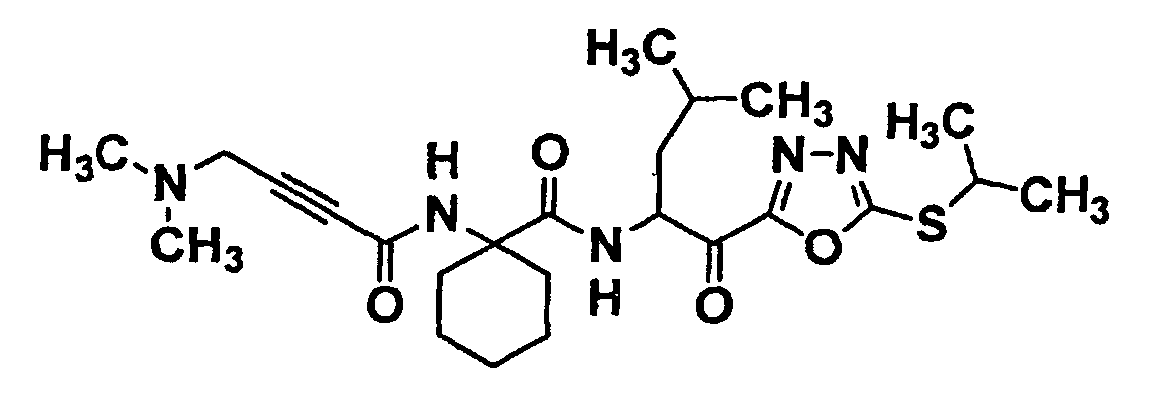
NMR (CDCl3): δ 7.48 (brd, J = 6.9 Hz, 1H), 5.81 (brs, 1H), 5.35 (m, 1H), 4.03 (septet, J = 6.9 Hz, 1H), 3.40 (s, 2H), 2.36 (s, 6H), 2.12 (m, 2H), 1.92 (m, 2H), 1.85-1.30 (m, 9H), 1.53 (d, J = 6.6 Hz, 6H), 1.01 (d, J = 6.0 Hz, 3H), 0.97 (d, J = 6.3 Hz, 3H).
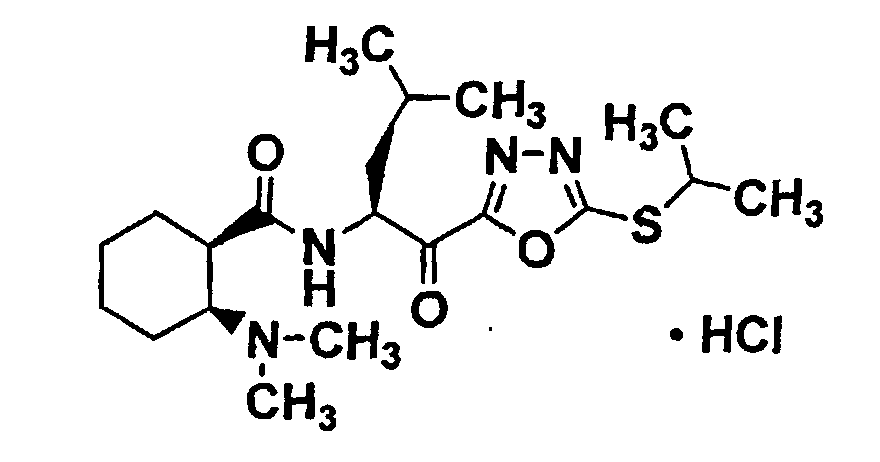
NMR (DMSO-d6) : δ 9.24-8.87 (m, 2H), 5.13-4.99 (m, 1H), 4.08-3.88 (m, 1H), 3.30-3.00 (m, 2H), 2.85-2.53 (m, 6H), 2.29-2.10 and 2.05-1.01 (each m, total 11H), 1.47 (d, J = 6.9 Hz, 6H), 0.93 (d, J = 6.0 Hz, 6H).
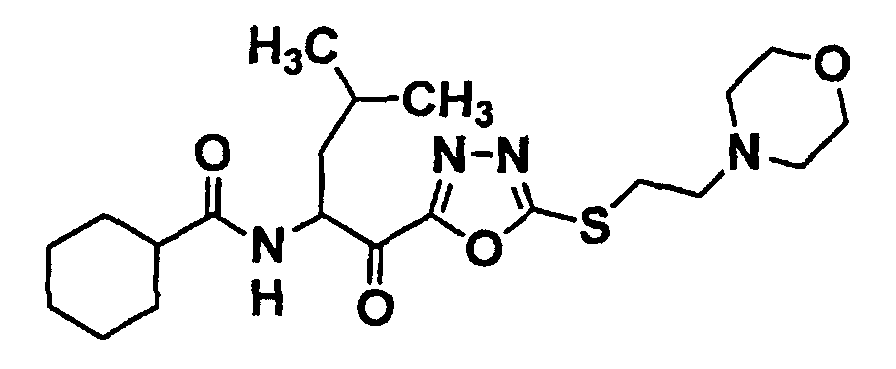
NMR (CDCl3): δ 6.00 (d, J = 8.1 Hz, 1H), 5.45-5.38 (m, 1H), 3.71 (t, J = 4.5 Hz, 4H), 3.51 and 3.50 (each t, J = 6.6 Hz, total 2H), 2.81 (t, J = 6.6 Hz, 2H), 2.54 (t, J = 4.5 Hz, 4H), 2.20-2.13 (m, 1H) 1.89-1.23 (m, 13H), 1.03 (d, J = 6.3 Hz, 3H), 0.97 (d, J = 6.3 Hz, 3H).

NMR (CDCl3): δ 6.02 (d, J = 7.8 Hz, 1H), 5.46-5.39 (m, 1H), 3.51 and 3.50 (each t, J = 6.6 Hz, total 2H), 2.93 (t, J = 6.6 Hz, 2H), 2.61 (br-s, 4H), 2.20-2.11 (m, 1H), 1.89-1.12 (m, 17H), 1.03 (d, J = 6.3 Hz, 3H), 0.97 (d, J = 6.3 Hz, 3H).
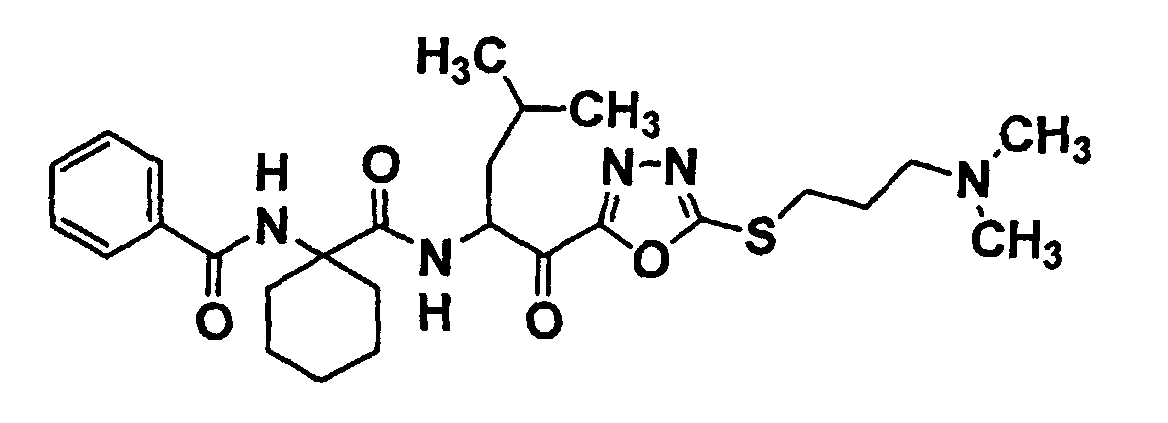
NMR (CDCl3): δ 8.02 (brd, J = 6.6 Hz, 1H), 7.78 (d, J = 8.1 Hz, 2H), 7.58-7.40 (m, 3H), 6.08 (brs, 1H), 5.36 (ddd, J = 10.2, 6.6, 3.9 Hz, 1H), 3.36 (m, 2H), 2.49 (t, J = 6.9 Hz, 2H), 2.29 (s, 6H), 2.20-1.30 (m, 15H), 1.01 and 0.97 (each d, J = 6.0 Hz, each 3H).
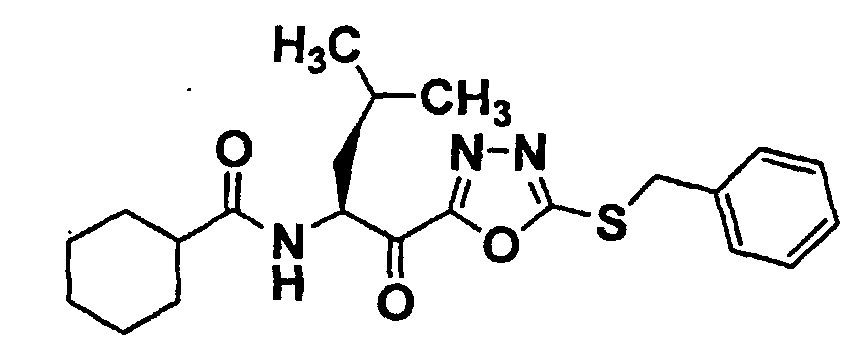
NMR (CDCl3): δ 7.48-7.40 (m, 2H), 7.40-7.26 (m, 3H), 6.01 (brd, J = 7.5 Hz, 1H), 5.46-5.36 (m, 1H), 4.56 (d, J = 13.2 Hz, 1H), 4.54 (d, J = 13.2 Hz, 1H), 2.23-2.08 (m, 1H), 1.93-1.12 (m, 13H), 1.03 and 0.97 (each d, J = 6.3 Hz, each 3H).
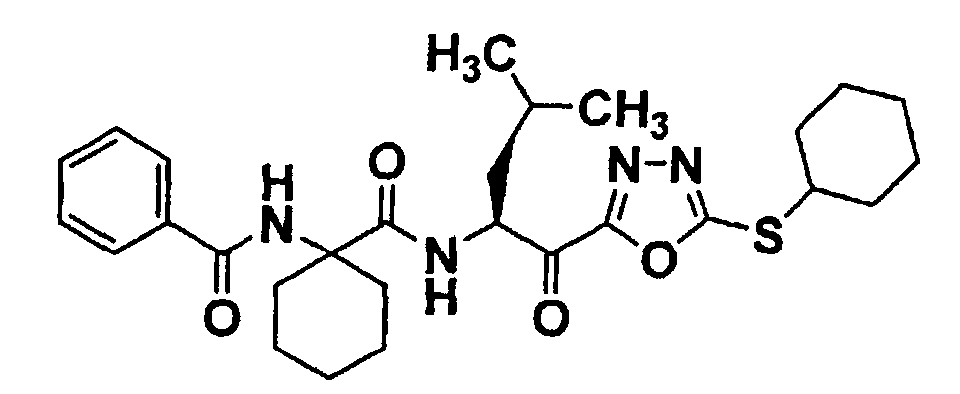
NMR (CDCl3): δ 8.01 (brd, J = 6.9 Hz, 1H), 7.81-7.74 (m, 2H), 7.60-7.43 (m, 3H), 6.07 (brs, 1H), 5.43-5.33 (m, 1H), 3.91-3.78 (m, 1H), 2.37-1.25 (m, 23H), 1.01 and 0.97 (each d, J = 6.3 Hz, each 3H).

NMR (CDCl3): δ 8.03 (brd, J= 6.6 Hz, 1H), 7.81-7.74 (m, 2H), 7.61-7.26 (m, 8H), 6.08 (brs, 1H), 5.40-5.31 (m, 1H), 4.53 (d, J = 12.9 Hz, 1H), 4.51 (d, J = 12.9 Hz, 1H), 2.35-1.28 (m, 13H), 1.01 and 0.97 (each d, J = 6.0 Hz, each 3H).
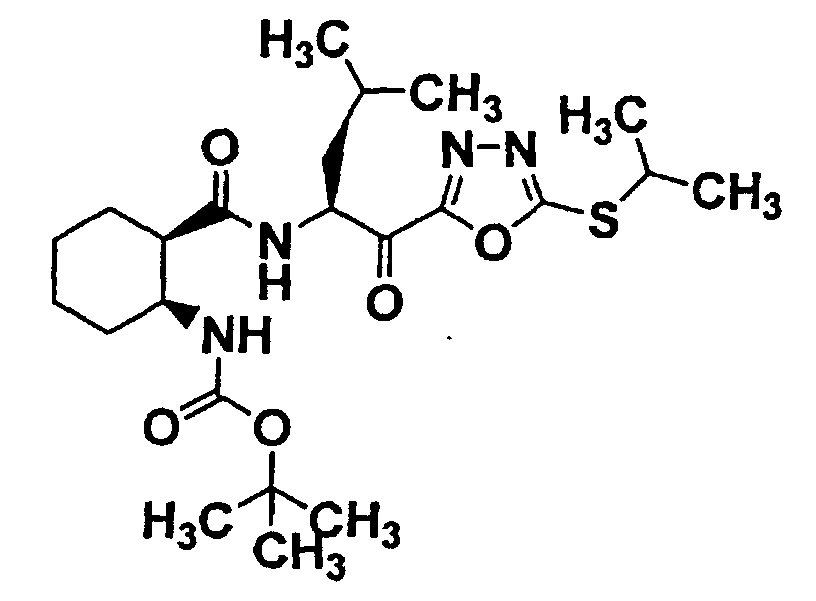
NMR (DMSO-d6): δ 8.37 (d, J = 6.0 Hz, 1H), 6.25 (d, J = 8.4 Hz, 1H), 5.11-5.00 (m, 1H), 4.06-3.74 (m, 2H), 2.64-2.51 (m, 1H), 1.87-1.11 (m, 11H), 1.48 (d, J = 6.6 Hz, 6H), 1.37 (s, 9H), 0.91 (d, J = 6.3 Hz, 6H).

NMR (CDCl3) : δ 8.03 (d, J = 6.6 Hz, 1H), 7.77 (d, J = 7.8 Hz, 2H), 7.58-7.45 (m, 3H), 6.06 (s, 1H), 5.39-5.30 (m, 1H), 3.69 (t, J = 4.5 Hz, 4H), 3.48 and 3.47 (each t, J = 6.6 Hz, total 2H), 2.79 (t, J = 6.6 Hz, 2H), 2.52 (t, J = 4.5 Hz, 4H), 2.32-2.23 (m, 2H), 2.03-1.95 (m, 2H), 1.85-1.25 (m, 9H), 1.01 (d, J = 6.0 Hz, 3H), 0.97 (d, J = 6.0 Hz, 3H).
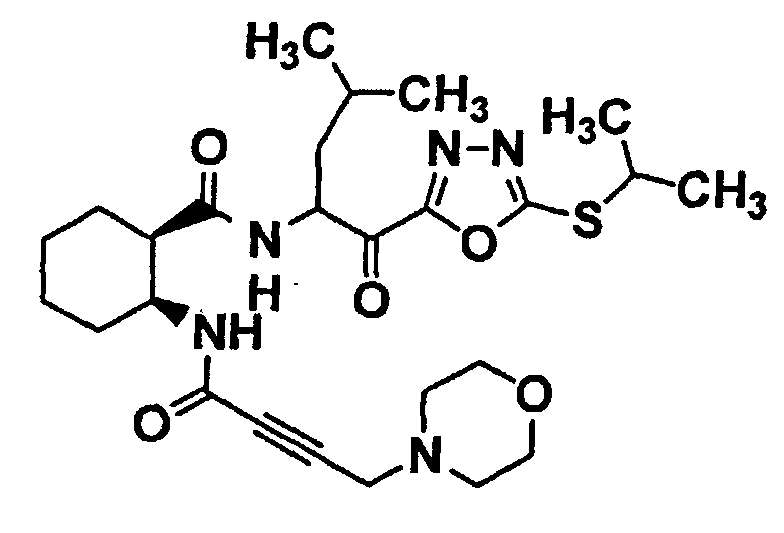
NMR (CDCl3) : δ 6.91 and 6.83 (each brd, J = 9.0 Hz, 1H), 6.19 and 6.16 (each brd, J = 7.5 Hz, 1H), 5.44 and 5.43 (each m, 1H), 4.20-4.08 (m, 1H), 4.06 and 4.05 (each septet, J = 6.9 Hz, 1H), 3.75-3.70 (m, 4H), 3.38 (s, 2H), 2.80-2.73 (m, 1H), 2.57 (t, J = 4.5 Hz, 4H), 2.00-1.35 (m, 11H), 1.55 and 1.54 (each d, J = 6.6 Hz, 6H), 1.05 and 1.04 (each d, J = 6.3 Hz, 3H), 0.99 and 0.98 (each d, J = 6.3 Hz, 3H).
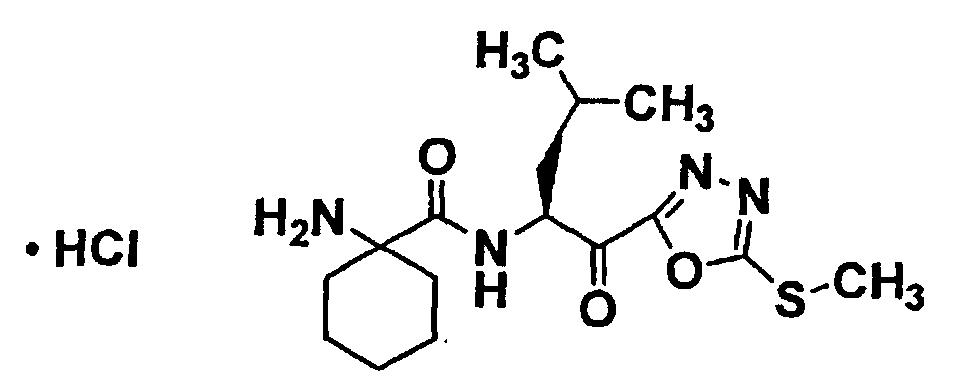
NMR (CDCl3) : δ 8.79 (br, 3H), 7.90 (br, 1H), 5.42-5.30 (m, 1H), 2.78 (s, 3H), 2.30- 1.40 (m, 13H), 1.12- 0.90 (m, 6H).
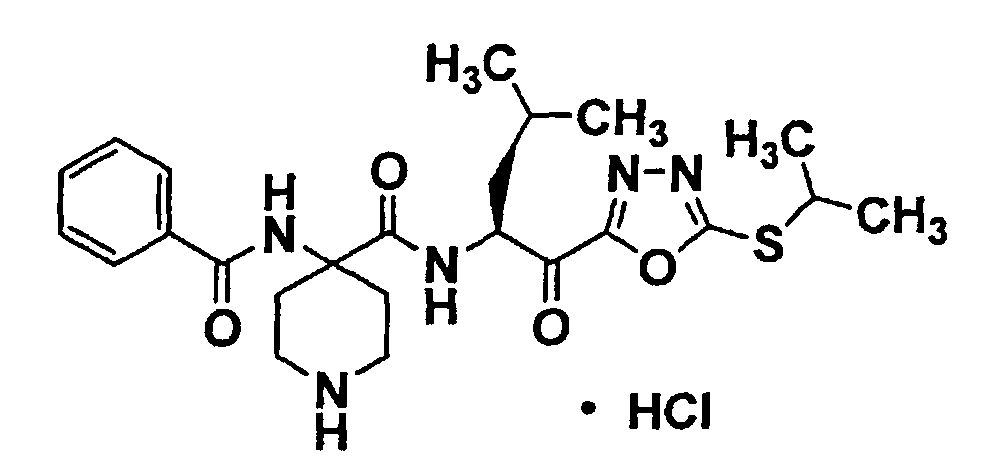
NMR (DMSO-d6): δ 8.72 (br, 1H), 8.37 (d, J = 6.9Hz, 1H), 8.30 (brs, 1H), 7.89 (d, J = 8.4 Hz, 2H), 7.60-7.43 (m, 3H), 5.01 (m, 1H), 3.95 (septet, J = 6.9 Hz, 1H), 3.40-3.05 (m, 4H), 2.75-2.01 (m, 4H), 1.70-1.31 (m, 3H), 1.46 (d, J = 6.9 Hz, 6H), 0.84 and 0.81 (each d, J = 5.4 Hz, each 3H).
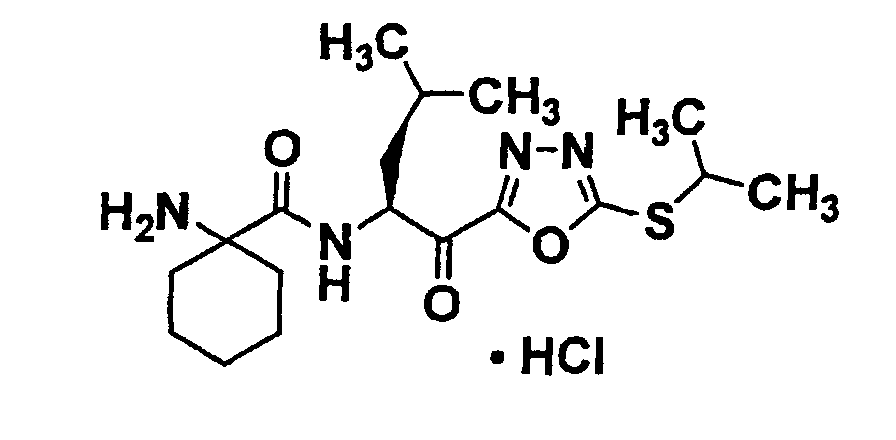
NMR (CDCl3): δ 8.80 (brs, 3H), 7.87 (brd, J = 6.0 Hz, 1H), 5.39 (m, 1H), 4.02 (septet, J = 6.6 Hz, 1H), 2.28-1.40 (m, 19H), 1.03-0.92 (m, 6H).
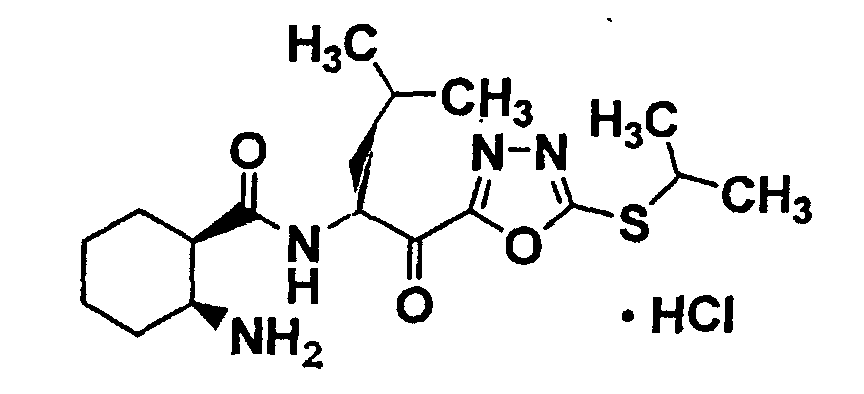
NMR (DMSO-d6) : δ 8.81 (d, J = 5.4 Hz, 1H), 8.17-7.48 (br, 3H), 5.15-5.02 (m, 1H), 4.04-3.89 (m, 1H), 3.40-3.21 (m, 1H), 2.85-2.73 (m, 1H), 1.97-1.20 (m, 11H), 1.47 (d, J= 6.6 Hz, 6H), 0.93 (d, J = 6.3 Hz, 6H).
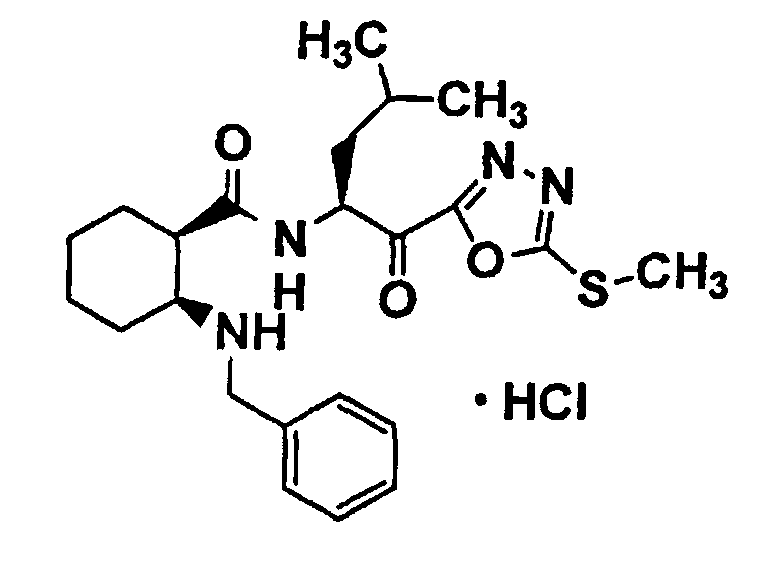
TLC : Rf 0.31 (ethyl acetate);
NMR (DMSO-d6): δ 9.10-8.60 (m, 3H), 7.62-7.30 (m, 5H), 5.18-5.04 (m, 1H), 4.30-3.97 (m, 2H), 3.31-3.10 and 3.10-2.93 (each br, each 1H), 2.78 (s, 3H), 2.21-1.16 (m, 11H), 0.95 and 0.94 (each d, J = 6.2 Hz, each 3H).
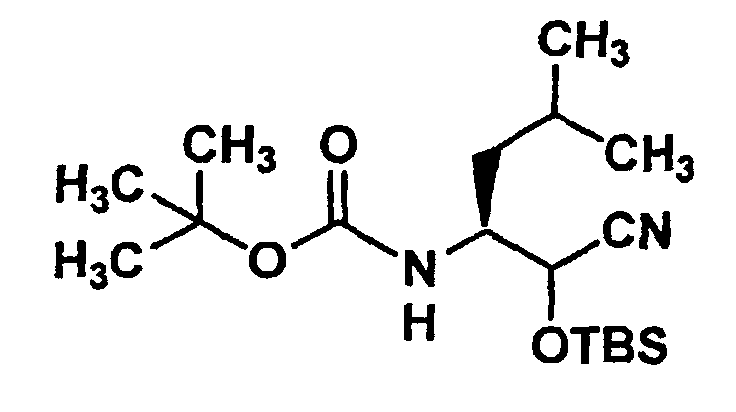
TLC : Rf 0.51, 0.47 (hexane : ethyl acetate = 5 : 1).
NMR (CDCl3): δ 4.64-4.40 (m, 2H), 3.82 (m, 1H), 1.80-1.40 (m, 12H), 1.05-0.84 (m, 15H), 0.25-0.10 (m, 6H).
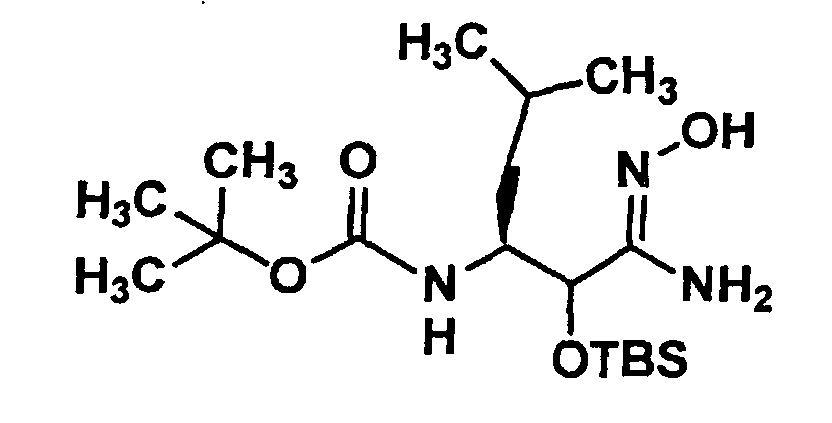
The reaction mixture was concentrated and to the residue were added water and ethyl acetate. The organic layer was washed with saturated aqueous solution of sodium chloride, dried over anhydrous magnesium sulfate and was concentrated. The residue was purified by column chromatography on silica gel (chloroform : methanol = 20 : 1) to give the title compound (4.44 g) having the following physical data.
TLC : Rf 0.44 (chloroform : methanol = 9 : 1);
NMR (CDCl3): δ 6.60-6.00 and 4.86-4.42 (each m, totally 3H), 4.08-4.00 (m, 1H), 3.90-3.70 (m, 1H), 1.44 (s, 9H), 1.42-1.15 (m, 3H), 1.00-0.85 (m, 15H), 0.16-0.08 (m, 6H).
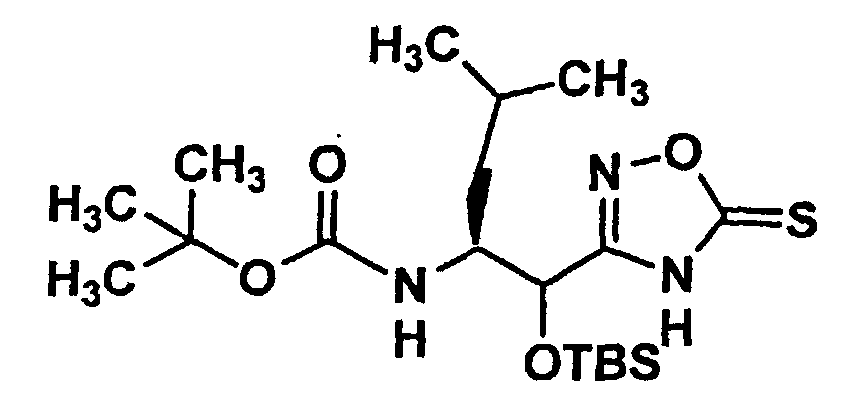
TLC : Rf 0.44 (n-hexane : ethyl acetate = 2 : 1);
NMR (CDCl3): δ 6.73-5.70 (m, 1H), 4.82-3.75 (m, 2H), 1.83-1.15 (m, 3H), 1.43 and 1.39 (each s, totally 9H), 1.01-0.82 (m, 15H), 0.23-0.02 (m, 6H).

TLC : Rf 0.41 (chloroform : methanol = 9 : 1);
NMR (DMSO-d6): δ 8.30-8.00 (br, 3H), 5.06-4.87 (m, 1H), 3.47-3.34 (m, 1H), 1.88-1.32 (m, 3H), 0.96-0.78 (m, 15H), 0.11 and 0.03 (each s, totally 6H).
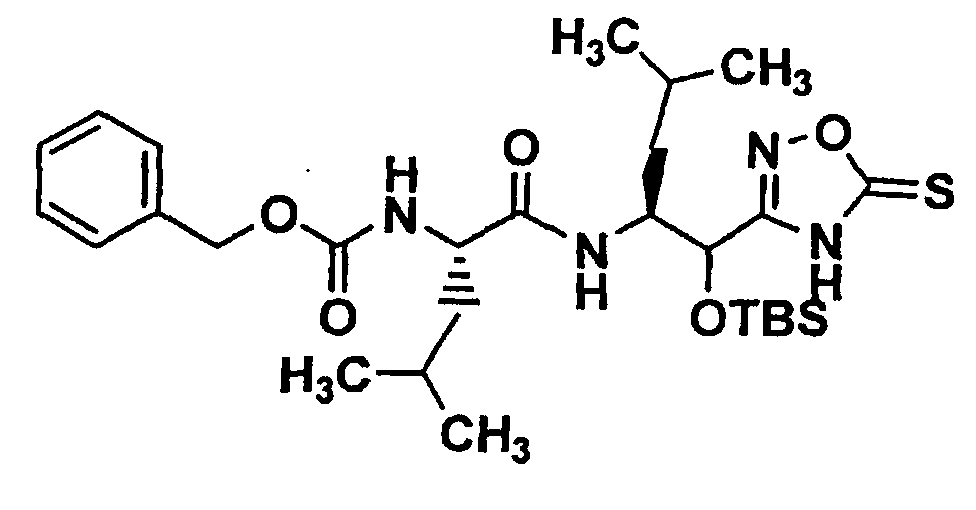
TLC : Rf 0.27 and 0.37 (n-hexane : ethyl acetate = 1 : 1);
NMR (CDCl3) : δ 7.47-7.23 (m, 5H), 6.41 and 6.22 (each brd, J = 10.2 Hz, totally 1H), 5.68-5.50 and 5.23-5.00 (each m, totally 1H), 5.36 and 5.07 (each d, J = 12.0 Hz, totally 2H), 5.16 (s, 1H), 4.88-4.64 (m, 1H), 4.45-4.28 (m, 1H), 4.14-4.02 (m, 1H), 1.85-1.30 (m, 6H), 1.03-0.78 (m, 21H), 0.15, 0.13, 0.05 and 0.03 (each s, total 6H).

TLC : Rf 0.61 (n-hexane : ethyl acetate = 2 : 1);
NMR (CDCl3): δ 7.43-7.25 (m, 5H), 6.57 and 6.21 (each brd, J = 8.7 Hz, totally 1H), 5.25 and 5.17 (each brd, J = 8.4 Hz, totally 1H), 5.09 (s, 2H), 4.90-4.81 (m, 1H), 4.51-4.25 (m, 1H), 4.24-4.06 (m, 1H), 2.73 and 2.69 (each s, totally 3H), 1.80-1.30 (m, 6H), 1.20-1.10 and 1.05-0.88 (each m, totally 21H), 0.15-0.00 (m, 6H).

TLC : Rf 0.16 (n-hexane : ethyl acetate = 2 : 1);
NMR (CDCl3): δ 7.42-7.24 (m, 5H), 6.65 and 6.31 (each brd, J = 9.3 Hz, totally 1H), 5.20-5.00 (m, 1H), 5.09 (s, 2H), 4.83 (brs, 1H), 4.63-4.50 and 4.43-4.32 (each m, totally 1H), 4.17-4.03 (m, 1H), 2.71 and 2.70 (each s, totally 3H), 2.48-2.39 (m, 1H), 1.80-1.36 (m, 6H), 1.02-0.80 (m, 12H).

TLC : Rf 0.34 (n-hexane : ethyl acetate = 2 : 1);
NMR (CDCl3): δ 7.45-7.24 (m, 5H), 6.53 (brd, J= 6.3 Hz, 1H), 5.46-5.35 (m, 1H), 5.26-5.03 (m, 1H), 5.12 (s, 2H), 4.31-4.10 (m, 1H), 2.79 (s, 3H), 1.82-1.42 (m, 6H), 1.09-0.84 (m, 12H).
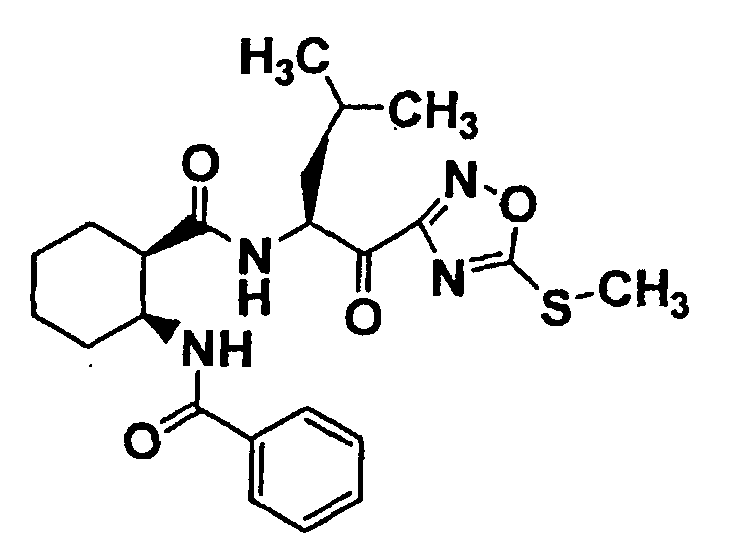
NMR (CDCl3) : δ 7.73 (d, J = 6.6 Hz, 2H), 7.53-7.38 (m, 3H), 7.23 (brd, J = 7.8 Hz, 1H), 6.21 (brd, J = 7.5 Hz, 1H), 5.42 (m, 1H), 4.31 (m, 1H), 2.88 (m, 1H), 2.78 (s, 3H), 2.20-1.40 (m, 11H), 0.90 and 0.83 (each d, J = 6.3 Hz, each 3H).

NMR (CDCl3): δ 7.81-7.74 (m, 2H), 7.53-7.38 (m, 3H), 7.23 (brd, J = 7.8 Hz, 1H), 6.21 (d, J = 8.1 Hz, 1H), 5.50-5.39 (m, 1H), 4.37-4.26 (m, 1H), 4.11-3.95 (m, 1H), 2.86 (q, J = 5.1 Hz, 1H), 2.17-1.40 (m, 11H), 1.52 (d, J = 6.6 Hz, 6H), 0.90 and 0.85 (each d, J = 6.3 Hz, totally 6H).

NMR (CDCl3): δ 7.45-7.27 (m, 5H), 6.53 (brd, J = 7.5 Hz, 1H), 5.47-5.38 (m, 1H), 5.22-5.04 (m, 1H), 5.12 (s, 2H), 4.29-4.17 (m, 1H), 4.10-3.95 (m, 1H), 1.82-1.42 (m, 6H), 1.52 (d, J = 6.9 Hz, 6H), 1.03-0.86 (m, 12H).
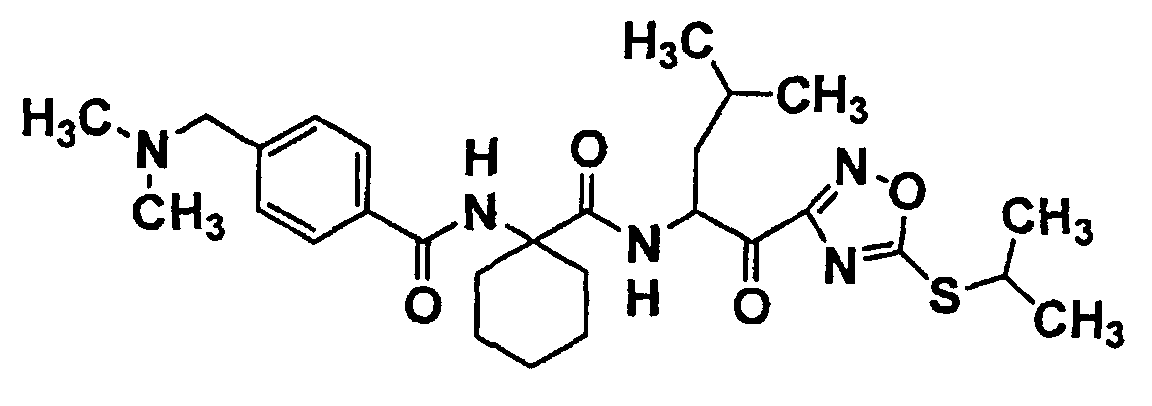
NMR (CDCl3) : δ 7.93 (d, J = 6.9 Hz, 1H), 7.74 (d, J = 8.4 Hz, 2H), 7.43 (d, J = 8.4 Hz, 2H), 6.06 (s, 1H), 5.39-5.32 (m, 1H), 4.06-3.97 (m, 1H), 3.52 (s, 2H), 2.37-2.18 (m, 2H), 2.28 (s, 6H), 2.06-1.95 (m, 2H), 1.86-1.32 (m, 9H), 1.51 (d, J = 6.9 Hz, 6H), 1.00 (d, J = 6.0 Hz, 3H), 0.95 (d, J = 6.0 Hz, 3H).
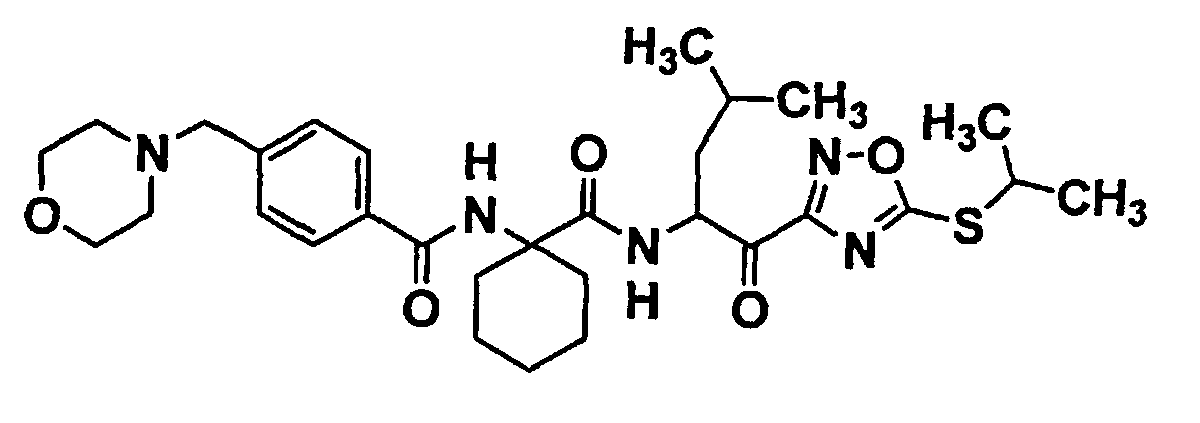
NMR (CDCl3): δ 7.93 (d, J = 7.2 Hz, 1H), 7.73 (d, J = 8.4 Hz, 2H), 7.44 (d, J = 8.4 Hz, 2H), 6.04 (s, 1H), 5.39-5.32 (m, 1H), 4.06-3.97 (m, 1H), 3.72 (t, J = 4.5 Hz, 4H), 3.55 (s, 2H), 2.45 (t, J = 4.5 Hz, 4H), 2.36-2.18 (m, 2H), 2.04-1.96 (m, 2H), 1.77-1.26 (m, 9H), 1.51 (d, J = 6.6 Hz, 6H), 1.00 (d, J = 6.0 Hz, 3H), 0.95 (d, J = 6.0 Hz, 3H).

NMR (CDCl3) : δ 9.00 (d, J = 1.8 Hz, 1H), 8.77 (dd, J = 4.8, 1.8 Hz, 1H), 8.12 (dt, J = 7.8, 1.8 Hz, 1H), 7.70 (d, J = 7.2 Hz, 1H), 7.43 (dd, J = 7.8, 4.8 Hz, 1H), 6.16 (s, 1H), 5.41-5.34 (m, 1H), 4.06-3.97 (m, 1H), 2.34-2.19 (m, 2H), 2.08-1.98 (m, 2H), 1.81-1.26 (m, 9H), 1.51 (d, J = 6.6 Hz, 6H), 1.01 (d, J = 6.0 Hz, 3H), 0.98 (d, J = 6.0 Hz, 3H).

NMR (CDCl3): δ 8.04 (d, J = 6.9 Hz, 1H), 5.36-5.30 (m, 1H), 4.45 (s, 1H), 4.07-3.98 (m, 1H), 3.72 (t, J = 4.8 Hz, 4H), 3.39 (t, J = 4.8 Hz, 4H), 2.18-1.26 (m, 13H), 1.52 (d, J = 6.6 Hz, 6H), 1.00 (d, J = 6.0 Hz, 3H), 0.95 (d, J = 6.0 Hz, 3H).
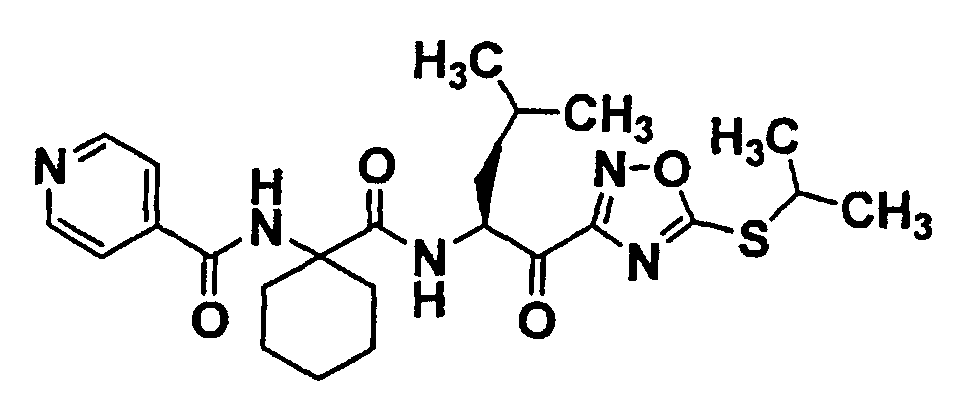
NMR (CDCl3): δ 8.78 (dd, J = 4.5, 1.5 Hz, 2H), 7.62-7.60 (m, 1H), 7.61 (dd, J = 4.5, 1.5 Hz, 2H), 6.14 (s, 1H), 5.41-5.34 (m, 1H), 4.06-3.97 (m, 1H), 2.33-2.29 (m, 1H), 2.22-2.17 (m, 1H), 2.07-1.99 (m, 2H), 1.82-1.24 (m, 9H), 1.51 (d, J = 6.6 Hz, 6H), 1.01 (d, J = 6.0 Hz, 3H), 0.96 (d, J = 6.0 Hz, 3H).

NMR (CDCl3) : δ 6.00 (d, J = 7.8 Hz, 1H), 5.51-5.44 (m, 1H), 4.08-3.99 (m, 1H), 2.22-2.12 (m, 1H), 1.89-1.19 (m, 13H), 1.53 (d, J = 6.9 Hz, 3H), 1.52 (d, J = 6.9 Hz, 3H), 1.03 (d, J = 6.0 Hz, 3H), 0.95 (d, J = 6.0 Hz, 3H).
- (2S)-N-[(2S)-4-methyl-1-(5-(1-methylethylthio)-1,3,4-oxadiazol-2-yl)]-1-oxo-2-pentyl]-2-benzyloxycarbonylamino-4-methylpentanamide 5.0 g
- carboxymethylcellulose calcium(disintegrating agent) 0.2 g
- magnesium stearate (lubricant) 0.1 g
- microcrystalline cellulose 4.7 g
- (2S)-N-[(2S)-4-methyl-1-(5-(1-methylethylthio)-1,3,4-oxadiazol-2-yl)]-1-oxo-2-pentyl]-2-benzyloxycarbonylamino-4-methylpentanamide 2.0 g
- mannitol 20 g
- distilled water 500 ml
Claims (22)
- An oxadiazole derivative of formula (I),wherein R is
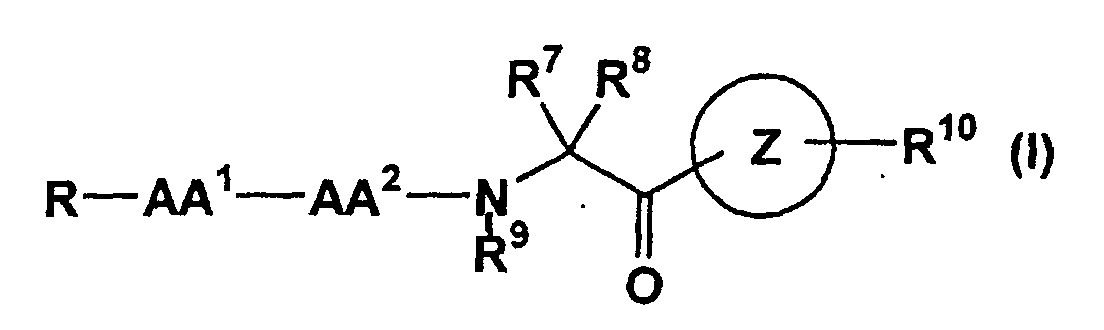 R16 is(i) hydrogen,(ii) C1-8 alkyl,(iii) CycA,(iv) C1-8 alkyl substituted with a group selected from halogen atom, CycA, nitro, CF3 and cyano,
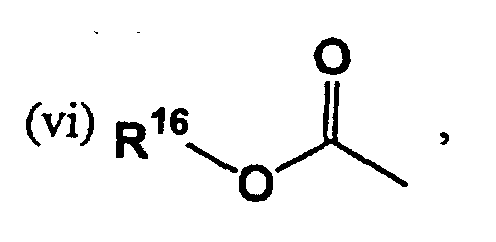
 or
or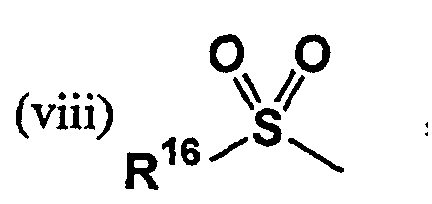 CycA is mono-, bi- or tri-cyclic C3-15 carboring or mono-, bi- or tri-cyclic 3-15 membered heteroring comprising 1-4 of nitrogen, 1-2 of oxygen and/or 1 of sulfur;
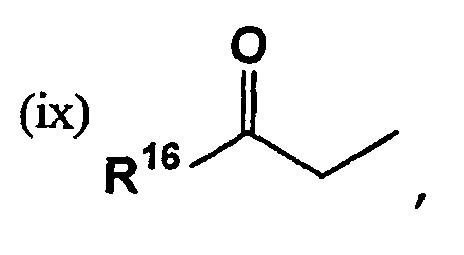 R17, R18 and R19 each independently are, hydrogen or C1-4 alkyl, AA1 is(1) C1-8 alkyl,(2) C2-8 alkenyl,(3) C2-8 alkynyl,(4) CycA or(5) C1-8 alkyl, C2-8 alkenyl or C2-8 alkynyl substituted with a group selected from halogen, nitro, CF3, cyano, CycA, NR18R19 and -NHC(O)-CycA;,wherein R1 and R2 are the same or different to represent(i) a single bond, or
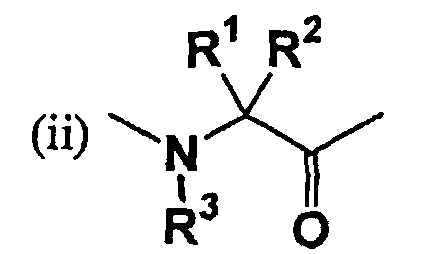 wherein(i) hydrogen,(ii) C1-8 alkyl,(iii) CycA or(iv) C1-8 alkyl substituted with 1-5 of group selected from the following (1)∼(8):R1 and R2 are taken together to form C2-8 alkylene ,wherein one carbon atom may be replaced by oxygen, sulfur or -NR20- and the alkylene may be substituted with -NR21R22 or -OR23,(1) -NR21R22,(2) -OR23,(3) -SR24,(4) -COR25,(5) -NR26CONR21R22,(6) guanidino,(7) CycA,(8) -NR26SO2R21;or
R20 is hydrogen, C1-4 alkyl, -COO-(C1-4 alkyl), phenyl or C1-4 alkyl substituted with phenyl,
R21, R22, R23, R24 and R26 are the same or different to represent hydrogen, C1-4 alkyl, phenyl or C1-4 alkyl substituted with phenyl,
R25 is C1-4 alkyl, phenyl, -NR21R22, wherein all symbols are the same meanings as above, -OR23 ,wherein R23 is the same meaning as above, or C1-4 alkyl substituted with phenyl,
R3 is hydrogen, C1-8 alkyl, phenyl or C1-8 alkyl substituted with phenyl or
R3 is taken together with R1 to form C2-6 alkylene ,wherein one carbon atom may be replaced by oxygen, sulfur or -NR20- and the alkylene may be substituted with -NR21R22 or -OR23, or
when AA1 isAA1 and R may be taken together to form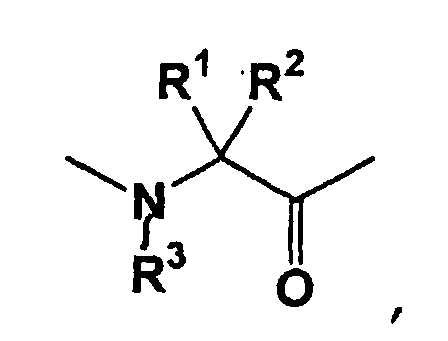
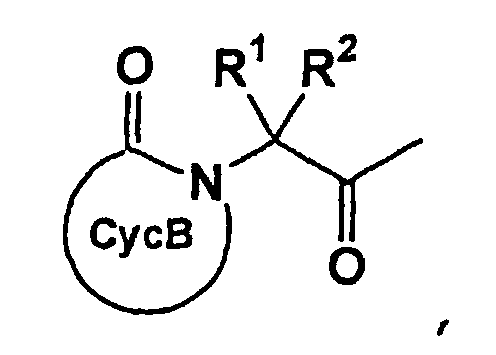 is a 5-12 membered mono- or bi-cyclic heteroring and the other symbols are the same meanings as above,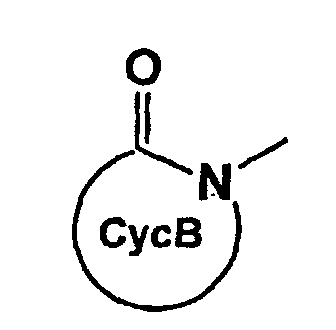
AA2 iswherein R4 and R5 are the same or different to represent(i) a single bond, or
or
 R4 and R5 are taken together to form C2-8 alkylene ,wherein one carbon atom may be replaced by oxygen, sulfur or -NR40- and the alkylene may be substituted with -NR41R42 or -OR43,(1) hydrogen,(2) C1-8 alkyl,(3) CycA or(4) C1-8 alkyl substituted with 1-5 of group selected from the following (a)∼(h):
(a) -NR41R42, (b) -OR43, (c) -SR44, (d) -COR45, (e) -NR46CONR41R42, (f) guanidino, (g) CycA, (h) -NR46SO2R41;or
R40 is hydrogen, C1-4 alkyl, -COO-(C1-4 alkyl), phenyl or C1-4 alkyl substituted with phenyl,
R41, R42, R43, R44 and R46 are the same or different to represent hydrogen, C1-4 alkyl, phenyl or C1-4 alkyl substituted with phenyl,
R45 is C1-4 alkyl, phenyl, -NR41R42 ,wherein all symbols are the same meaning as above, -OR43 ,wherein R43 is the same menaing as above, or C1-4 alkyl subbstituted with phenyl,
R6 is hydrogen, C1-8 alkyl, phenyl or C1-8 alkyl substituted with phenyl or
R6 is taken together with R4 to form C2-6 alkylene ,wherein one carbon atom may be replaced by oxygen, sulfur or -NR40- and the alkylene may be substituted with -NR41R42 or -OR43,
R48 is hydrogen, C1-4 alkyl, phenyl or C1-4 alkyl substituted with phenyl or
when AA1 is a single bond, R48 and R may be taken together to form C2-6 alkylene ,wherein one carbon atom may be replaced by oxygen, sulfur or -NR47- ,wherein R47 is hydrogen or C1-4 alkyl, CycC is a 3-17 membered mono- or bi-cyclic heteroring,
CycD is a C3-14 mono- or bi-cyclic carboring or a 3-14 membered mono- or bi-cyclic heteroring, or
AA2 and AA1 are taken together to form,wherein CycE is a 4-18 membered mono- or bi-cyclic heteroring, CycF is a 5-8 membered monocyclic heteroring, and the other symbols are the same meanings as above,
R7 and R8 are the same or different to represent(1) -NR61R62, (2) -OR63, (3) -SR64, (4) -COR65, (5)-NR66CONR61R62, (6) guanidino,(i) hydrogen,(ii) C1-8 alkyl,(iii) CycA or(iv) C1-8 alkyl substituted with 1-5 of group selected from the following (1)∼(8);
(7) CycA, (8)-NR66SO2R61, or
R7 and R8 are taken together to form C2-8 alkylene ,wherein one carbon atom may be replaced by oxygen, sulfur or -NR60- and the alkylene may be substituted with -NR61R62 or -OR63,
R60 is hydrogen, C1-4 alkyl, -COO-(C1-4 alkyl), phenyl or C1-4 alkyl substituted with phenyl,
R61, R62, R63, R64 and R66 are the same or different to represent hydrogen, C1-4 alkyl, phenyl or C1-4 alkyl substituted with phenyl, R65 is C1-4 alkyl, phenyl, -NR61R62 ,wherein all symbols are the same meanings as above, -OR63, wherein R63 is the same meaning as above, or C1-4 alkyl substituted with phenyl,
R9 is hydrogen, C1-8 alkyl, phenyl or C1-8 alkyl substituted with phenyl or
R9 is taken together with R7 to form C2-6 alkylene ,wherein one carbon atom may be replaced by oxygen, sulfur or -NR60- and the alkylene may be substituted with -NR61R62 or -OR63,R10 is ,wherein R71 is(i) C1-8 alkyl,(ii) C2-8 alkenyl,(iii) CycA,(iv) -COR71 or(v) C1-8 alkyl substituted with 1-3 of group selected from CycA, guanidino, -COR71, -NR72R73, -OR74, cyano or -P(O)(OR78)2R72 and R73 are the same or different to represent hydrogen, C1-8 alkyl, CycA or C1-8 alkyl substituted with CycA,(1) C1-4 alkyl,(2) C1-4 alkoxy,(3) CycA,(4) -O-CycA,(5) -NR72R73,(6) C1-4 alkyl substituted with CycA,(7) C1-4 alkoxy substituted with CycA, or(8) hydroxy,
R74 isR78 is C1-8 alkyl, phenyl, or C1-8 alkyl substituted with phenyl; and, CycA is included in R, R1, R2, R4, R5, R7, R8, R16 are the same or different and CycA, CycB, CycC, CycD, CycE and CycF, independently, may be substituted with 1-5 of R27:(1) hydrogen,(2) C1-8 alkyl,(3) CycA,(4) -SiR75R76R77 ,wherein R75, R76 and R77 are the same or different to represent C1-8 alkyl, phenyl or C1-8 alkyl substituted with phenyl, or(5) C1-8 alkyl substituted with CycA,
R27 is,wherein R11 and R12 are the same or different to represent hydrogen, C1-4 alkyl, -COO-(C1-4 alkyl), phenyl or C1-4 alkyl substituted with phenyl,(1) C1-8 alkyl,(2) halogen,(3) -NR11R12,(4) -OR13,(5) a C5-10 mono-or bi-cyclic carboring,(6) nitro,(7) CF3,(8) cyano,(9) a 5-10 membered mono- or bi-cyclic heteroring(10) -SR14,(11) -COR15,(12) oxo,(13) -SO2R15,(14) -OCF3 or(15) C1-8 alkyl substituted with 1-5 of group selected from the following (a)~(m):
(a) halogen, (b) -NR11R12, (c) -OR13, (d) a C5-10 mono- or bi-cyclic carboring, (e) nitro, (f) CF3, (g) cyano, (h) a 5-10 membered mono- or bi-cyclic heteroring, (j) -SR14, (k) -COR15, (1) -SO2R15, or (m) -OCF3
R13 and R14 are the same or different to represent hydrogen, C1-4 alkyl, phenyl or C1-4 alkyl substituted with phenyl.
R15 is C1-4 alkyl, phenyl, -NR11R12,wherein all symbols are the same meanings as above, -OR13 ,wherein R13 is the same meaning as above, or C1-4 alkyl substituted with phenyl]
or a non-toxic salt thereof. - The compound according to claim 1, wherein
R isR16 is(i) hydrogen,(ii) C1-8 alkyl,(iii) CycA,(iv) C1-8 alkyl substituted with CycA or nitro,

 or
or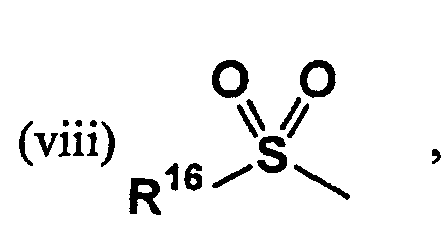
 AA1 is(1) C1-8 alkyl,(2) C2-8 alkenyl,(3) C2-8 alkynyl,(4) CycA,(5) C1-8 alkyl substituted with CycA or -NHC(O)-CycA,(6) C2-8 alkenyl substituted with CycA,(7) C2-8 alkynyl substituted with CycA,or taken together with R to represent(i) a single bond,
 ,wherein J1 is oxygen, sulfur, -NR29- ,wherein R29 is hydrogen, C1-4 alkyl CycA or C1-4 alkyl substituted with CycA, C1-3 alkylene or C2-3 alkenylene,
J2 is a single bond or C1-2 alkylene,
Y2 is -N=CH-, -CH=N- or C1-2 alkylene,
J3 is carbonyl or C1-3 alkylene,
Y3 is C1-3 alkylene, oxygen or -NR29- ,wherein R29 is the same meaning as above,
R28 is hydrogen, C1-4 alkyl, CycA or C1-4 alkyl substituted with CycA, or
R28 is taken together with R1 to form C2-4 alkylene, and the other symbols are the same meanings as defined in claim 1),
AA2 is, wherein J4, Y4, L4 are the same or different to represent a single bond or C1-3 alkylene (with proviso that J4, Y4 and L4 do not represent a single bond at the same time,(i) a single bond,
J5 is C1-6 alkylene,
Y5 is a single bond, C1-3 alkylene or -NR67- ,wherein R67 is hydrogen, C1-4 alkyl, phenyl or C1-4 alkyl substituted with phenyl,
J8 is C1-5 alkylene ,wherein one carbon atom may be replaced by oxygen,
Y8 is a single bond or C1-4 alkylene,
L8 is -N- or -CH-,
J6 and Y6 are the same or different to represent a single bond or C1-3 alkylene (with proviso that J6 and Y6 do not represent a single bond at the same time),
J7 is C1-6 alkylene ,wherein one carbon atom may be replaced by oxygen, sulfur or -NR67- ,wherein R67 is the same meaning as above,
J9 is C1-3 alkylene, oxygen, sulfur or -NR67- ,wherein R67 is the same meaning as above,
and each ring may be substituted with 1-5 of R27, or
AA2 and AA1 are taken together to formwherein
---- is a single bond or a double bond,
J10 and Y10 are the same or different to represent a single bond or C1-3 alkylene,
L10 is a single bond, C1-3 alkylene, -NR57- ,wherein R57 is hydrogen, C1-4 alkyl, phenyl or C1-4 alkyl substituted with phenyl, -N=, oxygen or -S(O)p- ,wherein p is o or an integer of 1∼2,
J12 and Y12 are the same or different to represnet a single bond or C1-3 alkylene,
L12 is C1-3 alkylene, -NR57- ,wherein R57 is the same meaning as above, -N=, =N-, oxygen or -S(O)p-, wherein p is the same meaning as above,
and the other symbols are the same meanings as defined in claim 1, and each ring may be substituted with 1-5 of R27 and
AA2 and AA1 are taken together to formwherein J11 is carbonyl or C2-4 alkylene and the other symbols are the same meanings as defined in claim 1, and
R27 in CycA iswherein all symbols are the same meanings as above, and(1) C1-8 alkyl,(2) halogen,(3) -NR11R12,(4) -OR13,(5) phenyl,(6) nitro,(7) CF3,(8) cyano,(9) tetrazole,(10) -SR14,(11) -COR15,(12) oxo, or(13) C1-8 alkyl substituted with 1-5 group selected from the following (a)∼(k):
(a) halogen, (b) -NR11R12, (c) -OR13, (d) phenyl, (e) nitro, (f) CF3, (g) cyano, (h) tetrazole, (j) -SR14, or (k) -COR15,
R10 is,wherein all symbols are the same meanings as defined in claim 1, or a non-toxic salt thereof.(i) C1-8 alkyl,(ii) CycA,(iii) -COR71 or(iv) C1-8 alkyl substituted with CycA, guanidino, -COR71, -NR72R73 or -OR74 - The compound according to claim 2,
wherein R is C1-8 alkyl or C1-8 alkyl substituted with CycA or nitro,and
AA1 is a single bond, orand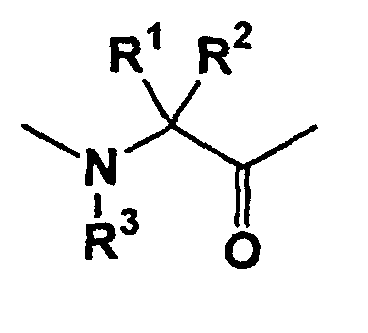
AA2 is a single bond,or a non-toxic salt thereof.
- The compound according to claim 3,
wherein R16 is C1-8 alkyl, C2-8 alkenyl, C2-8 alkynyl, CycA, or C1-8 alkyl, C2-8 alkenyl or C2-8 alkynyl substituted with CycA and therein CycA is a C5-10 mono- or bi-cyclic carboaryl or partially or completely saturated one thereof or a 5-10 membered heteroaryl or partially or completely saturated one thereof containing 1-2 of nitrogen, 1-2 of oxygen and/or 1 of sulfur,
R1 is hydrogen, C1-8 alkyl, phenyl, or C1-8 alkyl substituted with NH2, C1-4 alkoxy, SH, SCH3, phenyl, hydroxyphenyl, COOH, CONH2, guanidino, imidazole or indole and R2 is hydrogen or R1 and R2 are taken together to form C3-6 alkylene,
R3 is hydrogen or C1-4 alkyl, or R3 and R1 are taken together to form C2-4 alkylene,
AA2 is a single bond,
 R4 is hydrogen, C1-8 alkyl, phenyl or C1-8 alkyl substituted with NH2, C1-4 alkoxy, SH, SCH3, phenyl, hydroxyphenyl, COOH, CONH2, guanidino, imidazole or indole and R5 is hydrogen or R4 and R5 are taken together to form C3-6 alkylene,
R6 is hydrogen or C1-4 alkyl, or R6 and R4 are taken together to form C2-4 alkylene,
R48 is hydrogen or C1-4 alkyl,
R7 is hydrogen, C1-8 alkyl, phenyl, or C1-8 alkyl substituted with NH2, C1-4 alkoxy, SH, SCH3, phenyl, hydroxyphenyl, COOH, CONH2, guanidino, imidazole or indole and R8 is hydrogen or R7 and R8 are taken together to form C3-6 alkylene,
R9 is hydrogen or C1-4 alkyl, or R9 and R7 are taken together to form C2-4 alkylene,
or a non-toxic salt thereof. - The compound according to claim 1, wherein R16 is C1-8 alkyl, C2-8 alkenyl or C2-8 alkynyl substituted with a group selected from halogen, nitro, CF3, cyano and NR18R19, or a non-toxic salt thereof.
- The compound according to claim 1,
wherein R16 is,wherein at least one of R27 in (1) and (2) is selected from(1) CycA containing 1-5 of substituent R27 or(2) C1-8 alkyl, C2-8 alkenyl or C2-8 alkynyl substituted with CycA containing 1-5 of substituent R27(i) a C5-10 mono- or bi-carboring,(ii) a 5-10 membered mono- or bi-cyclic heteroring,(iii) -SO2R15,(iv) -OCF3, and(v) C1-8 alkyl substituted with 1-5 of group selected from (a) halogen, (b) -NR11R12, (c) -OR13, (d) a C5-10 mono- or bi-cyclic carboring, (e) nitro, (f) CF3, (g) cyano, (h) a 5-10 membered mono- or bi-cyclic heteroring (j) -SR14, (k) -COR15, (l) -SO2R15 and (m) -OCF3 ,wherein at least one of them is selected from a C5-10 mono- or bi-cyclic carboring, a 5-10 membered mono- or bi-cyclic heteroring, -SO2R15 and -OCF3, or a non-toxic salt thereof. - The compound according to claim 1,
wherein R10 is C1-8 alkenyl, or C1-8 alkyl substituted with 1-3 group selected from CycA, guanidino, COR71, NR72R73, OR74, cyano or P(O)(OR78)2 (with proviso that the substituent is one, then it is not CycA, guanidino, COR71, NR72R73, or OR74), or a non-toxic salt thereof. - The compound according to claim 1,
wherein AA1 is a single bond, and R48 and R are taken together to form C2-6 alkylene ,wherein one carbon atom may be replaced by -NR47- ,wherein R47 is the same meaning as defined in claim 1, oxygen or sulfur, or a non-toxic salt thereof. - The compound according to claim 1, wherein Z ring is
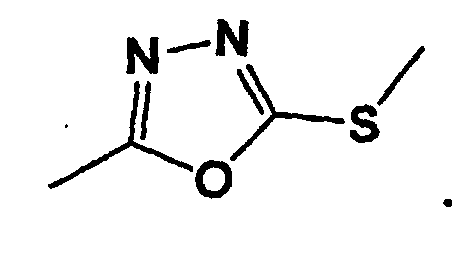
- The compound according to claim 1, wherein Z ring is
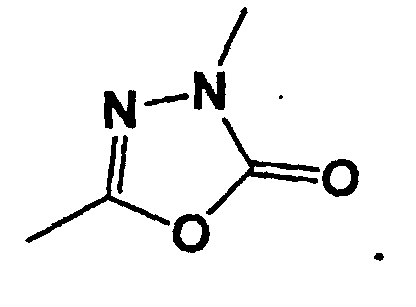
- The compound according to claim 1, wherein Z ring is
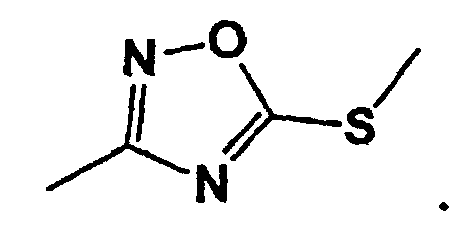
- The compound according to claim 1, which isor a non-toxic salt thereof.(1) (2S)-N-[(2S)-4-methyl-1-(5-(1-methylethylthio)-1,3,4-oxadiazol-2-yl)-1-oxo-2-pentyl]-2-benzyloxycarbonylamino-4-methylpentanamide,(2) 1-[(1R,2S)-2-benzoylaminocyclohexyl]-N-[(2S)-4-methyl-1-(5-(1-methylethylthio)-1,3,4-oxadiazol-2-yl)-1-oxo-2-pentyl]carboxamide,(3) (2S)-N-[(2S)-4-methyl-1-(5-methylthio-1,3,4-oxadiazol-2-yl)-1-oxo-2-pentyl]-2-benzyloxycarbonylamino-4-methylpentanamide,(4) 1-[(1R,2S)-2-benzoylaminocyclohexyl]-N-[(2S)-4-methyl-1-(5-methylthio-1,3,4-oxadiazol-2-yl)-1-oxo-2-pentyl] carboxamide,(5) (2S)-N-[(2S)-1-(5-benzylthio-1,3,4-oxadiazol-2-yl)-4-methyl-1-oxo-2-pentyl]-2-benzyloxycarbonylamino-4-methylpentanamide,(6) 1-[(1R,2S)-2-benzoylaminocyclohexyl]-N-[(2S)-1-(5-benzylthio-1,3,4-oxadiazol-2-yl)-4-methyl-1-oxo-2-pentyl]carboxamide,(7) 1-[(1R,2S)-2-benzoylaminocyclohexyl]-N-[(2S)-1-(5-methylthio-1,3,4-oxadiazol-2-yl)-1-oxo-2-hexyl]carboxamide,(8) 1-[(1R,2S)-2-benzoylaminocyclohexyl]-N-[(2S)-1-(5-methylthio-1,3,4-oxadiazol-2-yl)-1-oxo-4-phenyl-2-butyl]carboxamide,(9) (2S)-N-[(2S)-1-(5-methylthio-1,3,4-oxadiazol-2-yl)-1-oxo-2-hexyl]-2-benzyloxycarbonylamino-4-methylpentanamide,(10) (2S)-N-[(2S)-1-(5-methylthio-1,3,4-oxadiazol-2-yl)-1-oxo-4-phenyl-2-butyl]-4-methyl-2-benzyloxycarbonylaminopentanamide,(11) 1-[(1R,2S)-2-(quinoxalin-2-ylcarbonylamino)cyclohexyl]-N-[(2S)-4-methyl-1-(5-methylthio-1,3,4-oxadiazol-2-yl)-1-oxo-2-pentyl]carboxamide,(12) 1-[(1R,2S)-2-(naphthalen-2-ylcarbonylamino)cyclohexyl]-N-[(2S)-4-methyl-1-(5-methylthio-1,3,4-oxadiazol-2-yl)-1-oxo-2-pentyl],(13) 1-[(1R,2S)-2-(benzo[b]thiophen-2-ylcarbonylamino)cyclohexyl]-N-[(2S)-4-methyl-1-(5-methylthio-1,3,4-oxadiazol-2-yl)-1-oxo-2-pentyl]carboxamide,(14) 1-[(1R,2S)-2-(4-methoxybenzoylamino)cyclohexyl]-N-[(2S)-4-methyl-1-(5-methylthio-1,3,4-oxadiazol-2-yl)-1-oxo-2-pentyl]carboxamide,(15) 1-[(1R,2S)-2-(4-nitrobenzoylamino)cyclohexyl]-N-[(2S)-4-methyl-1-(5-methylthio-1,3,4-oxadiazol-2-yl)-1-oxo-2-pentyl]carboxamide,(16) 1-[(1R,2S)-2-(4-chlorobenzoylamino)cyclohexyl]-N-[(2S)-4-methyl-1-(5-methylthio-1,3,4-oxadiazol-2-yl)-1-oxo-2-pentyl]carboxamide,(17) 1-[(1R,2S)-2-(4-phenylbenzoylamino)cyclohexyl]-N-[(2S)-4-methyl-1-(5-methylthio-1,3,4-oxadiazol-2-yl)-1-oxo-2-pentyl]carboxamide,(18) 1-[(1R,2S)-2-(4-fluorobenzoylamino)cyclohexyl]-N-[(2S)-4-methyl-1-(5-methylthio-1,3,4-oxadiazol-2-yl)-1-oxo-2-pentyl]carboxamide,(19) 1-[(1R,2S)-2-(pyridin-2-ylcarbonylamino)cyclohexyl]-N-[(2S)-4-methyl-1-(5-methylthio-1,3,4-oxadiazol-2-yl)-1-oxo-2-pentyl]carboxamide,(20) 1-[(1R,2S)-2-(4-t-butylbenzoylamino)cyclohexyl]-N-[(2S)-4-methyl-1-(5-methylthio-1,3,4-oxadiazol-2-yl)-1-oxo-2-pentyl]carboxamide,(21) 1-[(1R,2S)-2-(2-methylthiopyridin-3-ylcarbonylamino)cyclohexyl]-N-[(2S)-4-methyl-1-(5-methylthio-1,3,4-oxadiazol-2-yl)-1-oxo-2-pentyl]carboxamide,(22) 1-[(1R,2S)-2-(2-fluorobenzoylamino)cyclohexyl]-N-[(2S)-4-methyl-1-(5-methylthio-1,3,4-oxadiazol-2-yl)-1-oxo-2-pentyl]carboxamide,(23) 1-[(1R,2S)-2-(2-chloropyridin-5-ylcarbonylamino)cyclohexyl]-N-[(2S)-4-methyl-1-(5-methylthio-1,3,4-oxadiazol-2-yl)-1-oxo-2-pentyl]carboxamide,(24) 1-[(1R,2S)-2-(naphthalen-1-ylmethylcarbonylamino)cyclohexyl]-N-[(2S)-4-methyl-1-(5-methylthio-1,3,4-oxadiazol-2-yl)-1-oxo-2-pentyl]carboxamide,(25) 1-[(1R,2S)-2-benzylcarbonylaminocyclohexyl]-N-[(2S)-4-methyl-1-(5-methylthio-1,3,4-oxadiazol-2-yl)-1-oxo-2 pentyl]carboxamide,(26) 1-[(1R,2S)-2-phenethylcarbonylaminocyclohexyl]-N-[(2S)-4-methyl-1-(5-methylthio-1,3,4-oxadiazol-2-yl)-1-oxo-2-pentyl]carboxamide,(27) 1-[(1R,2S)-2-acetylaminocyclohexyl]-N-[(23)-4-methyl-1-(5-methylthio-1,3,4-oxadiazol-2-yl)-1-oxo-2-pentyl]carboxamide,(28) 1-[(2S)-N-phenethylpiperidin-2-yl]-N-[(23)-4-methyl-1-(5-methylthio-1,3,4-oxadiazol-2-yl)-1-oxo-2-pentyl]carboxamide,(29) 1-[(2S)-N-(3-phenylpropyl)piperidin-2-yl]-N-[(2S)-4-methyl-1-(5-methylthio-1,3,4-oxadiazol-2-yl)-1-oxo-2-pentyl]carboxamide,(30) 1-[(2S)-N-(4-phenylbutyl)piperidin-2-yl]-N-[(2S)-4-methyl-1-(5-methylthio-1,3,4-oxadiazol-2-yl)-1-oxo-2-pentyl]carboxamide,(31) 1-[(2S)-N-phenethylpiperidin-2-yl]-N-[(2S)-4-methyl-1-(5-(1-methylethylthio)-1,3,4-oxadiazol-2-yl)-1-oxo-2-pentyl]carboxamide,(32) 1-[(2S)-N-(3-phenylpropyl)piperidin-2-yl]-N-[(2S)-4-methyl-1-(5-(1-methylethylthio)-1,3,4-oxadiazol-2-yl)-1-oxo-2-pentyl]carboxamide,(33) 1-[(1R,2S)-2-(4-cyanobenzoylamino)cyclohexyl]-N-[(2S)-4-methyl-1-(5-methylthio-1,3,4-oxadiazol-2-yl)-1-oxo-2-pentyl]carboxamide,(34) 1-[(1R,2S)-2-(4-dimethylaminobenzoylamino)cyclohexyl]-N-[(2S)-4-methyl-1-(5-methylthio-1,3,4-oxadiazol-2-yl)-1-oxo-2-pentyl]carboxamide,(35) 1-[(1R,2S)-2-(4-fluorobenzoylamino)cyclohexyl]-N-[(2S)-4-methyl-1-(5-(1-methylethylthio)-1,3,4-oxadiazol-2-yl)-1-oxo-2-pentyl]carboxamide,(36) 1-[(1R,2S)-2-(4-chlorobenzoylamino)cyclohexyl]-N-[(2S)-4-methyl-1-(5-(1-methylethylthio)-1,3,4-oxadiazol-2-yl)-1-oxo-2-pentyl]carboxamide,(37) 1-[(1R,2S)-2-(4-methoxybenzoylamino)cyclohexyl]-N-[(2S)-4-methyl-1-(5-(1-methylethylthio)-1,3,4-oxadiazol-2-yl)-1-oxo-2-pentyl]carboxamide,(38) 1-[(1R,2S)-2-(4-cyanobenzoylamino)cyclohexyl]-N-[(2S)-4-methyl-1-(5-(1-methylethylthio)-1,3,4-oxadiazol-2-yl)-1-oxo-2-pentyl]carboxamide,(39) 1-[(1R,2S)-2-(4-dimethylaminobenzoylamino)cyclohexyl]-N-[(2S)-4-methyl-1-(5-(1-methylethylthio)-1,3,4-oxadiazol-2-yl)-1-oxo-2-pentyl]carboxamide,(40) 1-[(1R,2S)-2-(N-benzoyl-N-methylamino)cyclohexyl]-N-[(2S)-4-methyl-1-(5-methylthio-1,3,4-oxadiazol-2-yl)-1-oxo-2-pentyl]carboxamide,(41) 1-[(1R,2S)-2-(4-dimethylaminomethylbenzoylamino)cyclohexyl]-N-[4-methyl-1-(5-(1-methylethylthio)-1,3,4-oxadiazol-2-yl)-1-oxo-2-pentyl]carboxamide,(42) 1-[(1R,2S)-2-(2-aminopyridin-5-ylcarbonylamino)cyclohexyl]-N-[4-methyl-1-(5-(1-methylethylthio)-1,3,4-oxadiazol-2-yl)-1-oxo-2-pentyl]carboxamide,(43) 1-[(1R,2S)-2-(2-aminopyridin-5-ylcarbonylamino)cyclohexyl]-N-[4-methyl-1-(5-methylthio-1,3,4-oxadiazol-2-yl)-1-oxo-2-pentyl]carboxamide,(44-) 1-[(1R,2S)-2-benzoylaminocyclohexyl]-N-[(2S)-4-methyl-1-(5-t-butoxycarbonylmethylthio-1,3,4-oxadiazol-2-yl)-1-oxo-2-pentyl]carboxamide,(45) (2S)-N-[(2S)-4-methyl-1-(5-t-butoxycarbonylmethylthio-1,3,4-oxadiazol-2-yl)-1-oxo-2-pentyl]-4-methyl-2-benzyloxycarbonylaminopentanamide,(46) 1-[(1R,2S)-2-(4-dimethylaminomethylbenzoylamino)cyclohexyl]-N-[(2S)-4-methyl-1-(5-(1-methylethylthio)-1,3,4-oxadiazol-2-yl)-1-oxo-2-pentyl]carboxamide,(47) 1-[(1R,2S)-2-(4-dimethylaminomethylbenzoylamino) cyclohexyl) -N- [4-methyl-1-(5-methylthio-1,3,4-oxadiazol-2-yl)-1-oxo-2-pentyl] carboxamide,(48) 1-[(1R,2S)-2-(4-dimethylaminomethyl-2-fluorobenzoylamino)cyclohexyl]-N-[4-methyl-1-(5-(1-methylethylthio)-1,3,4-oxadiazol-2-yl)-1-oxo-2-pentyl] carboxamide,(49) 1-[(1R,2S)-2-(4-dimethylaminomethyl-2-fluorobenzoylamino)cyclohexyl]-N-[4-methyl-1-(5-methylthio-1,3,4-oxadiazol-2-yl)-1-oxo-2-pentyl]carboxamide,(50) 1-[(1R,2S)-2-benzoylaminocyclopentyl]-N-[(2S)-4-methyl-1-(5-(1-methylethylthio)-1,3,4-oxadiazol-2-yl)-1-oxo-2-pentyl]carboxamide,(51) 1-[(1R,2S)-2-benzoylaminocyclopentyl]-N-[(2S)-4-methyl-1-(5-methylthio-1,3,4-oxadiazol-2-yl)-1-oxo-2-pentyl]carboxamide,(52) 1-[(1R,2S)-2-(2-dimethylaminomethylbenzoylamino)cyclohexyl]-N-[4-methyl-1-(5-methylthio-1,3,4-oxadiazol-2-yl)-1-oxo-2-pentyl]carboxamide,(53) 1-[(1R,2S)-2-(2-dimethylaminomethylbenzoylamino)cyclohexyl]-N-[4-methyl-1-(5-(1-methylethylthio)-1,3,4-oxadiazol-2-yl)-1-oxo-2-pentyl]carboxamide,(54) 1-[(1R,2S)-2-(3-dimethylaminomethylbenzoylamino)cyclohexyl]-N-[4-methyl-1-(5-methylthio-1,3,4-oxadiazol-2-yl)-1-oxo-2-pentyl]carboxamide,(55) 1-[(1R,2S)-2-(3-dimethylaminomethylbenzoylamino)cyclohexyl]-N-[4-methyl-1-(5-(1-methylethylthio)-1,3,4-oxadiazol-2-yl)-1-oxo-2-pentyl]carboxamide,(56) 1-[(1R,2S)-2-benzoylaminocyclohexyl]-N-[1-(5-(2-dimethylaminoethylthio)-1,3,4-oxadiazol-2-yl)-4-methyl-1-oxo-2-pentyl]carboxamide,(57) (2S)-N-[1-(5-(2-dimethylaminoethylthio)-1,3,4-oxadiazol-2-yl)-4-methyl-1-oxo-2-pentyl]-4-methyl-2-benzyloxycarbonylaminopentanamide,(58) 1-[(1R,2S)-2-(2-dimethylaminomethyl-4-fluorobenzoylamino)cyclohexyl]-N-[4-methyl-1-(5-(1-methylethylthio)-1,3,4-oxadiazol-2-yl)-1-oxo-2-pentyl]carboxamide,(59) (2S)-N-[3-cyclopropyl-1-(5-methylthio-1,3,4-oxadiazol-2-yl)-1-oxo-2-propyl]-4-methyl-2-benzyloxycarbonylaminopentanamide,(60) 1-[(1R,2S)-2-benzoylaminocyclohexyl]-N-[3-cyclopropyl-1-(5-methylthio-1,3,4-oxadiazol-2-yl)-1-oxo-2-propyl]carboxamide,(61) 1-[(1R,2S)-2-(2-dimethylaminomethyl-4-fluorobenzoylamino)cyclohexyl]-N-[4-methyl-1-(5-methylthio-1,3,4-oxadiazol-2-yl)-1-oxo-2-pentyl]carboxamide,(62) 1-benzoylaminocyclohexyl-N-[(2S)-4-methyl-1-(5-(1-methylethylthio)-1,3,4-oxadiazol-2-yl)-1-oxo-2-pentyl] carboxamide,(63) 1-[(1R,2S)-2-benzoylaminocyclohexyl]-N-[2-(5-methylthio-1,3,4-oxadiazol-2-yl)-2-oxoethyl]carboxamide,(64) (2S)-N-[2-(5-methylthio-1,3,4-oxadiazol-2-yl)-2-oxoethyl]-2-benzyloxycarbonylamino-4-methylpentanamide,(65) 1-[(1R,2S)-2-(4-dimethylaminomethyl-3-fluorobenzoylamino)cyclohexyl]-N-[4-methyl-1-(5-(1-methylethylthio)-1,3,4-oxadiazol-2-yl)-1-oxo-2-pentyl]carboxamide,(66) (2S)-N-[(2S)-4-methoxy-1-(5-methylthio-1,3,4-oxadiazol-2-yl)-1-oxo-2-butyl]-4-methyl-2-benzyloxycarbonylaminopentanamide,(67) 1-[(1R,2S)-2-benzoylaminocyclohexyl]-N-[(2S)-4-methoxy-1-(5-methylthio-1,3,4-oxadiazol-2-yl)-1-oxo-2-butyl]carboxamide,(68) 1-benzoylaminocyclohexyl-N-[(2S)-4-methyl-1-(5-methylthio-1,3,4-oxadiazol-2-yl)-1-oxo-2-pentyl]carboxamide,(69) 1-[(1R,2S)-2-(4-dimethylaminomethyl-2-fluorobenzoylamino)cyclohexyl]-N-[(2S)-4-methyl-1-(5-(1-methylethylthio)-1,3,4-oxadiazol-2-yl)-1-oxo-2-pentyl]carboxamide,(70) 1-[1-morpholinocarbonylaminocyclohexyl]-N-[(2S)-4-methyl-1-(5-(1-methylethylthio)-1,3,4-oxadiazol-2-yl)-1-oxo-2-pentyl]carboxamide,(71) 1-(1-morpholinocarbonylaminocyclohexyl)-N-[(2S)-4-methyl-1-(5-methylthio-1,3,4-oxadiazol-2-yl)-1-oxo-2-pentyl]carboxamide,(72) 1-[1-t-butoxycarbonylaminocyclohexyl]-N-[(2S)-4-methyl-1-(5-methylthio-1,3,4-oxadiazol-2-yl)-1-oxo-2-pentyl]carboxamide,(73) (2S)-N-[(2S)-4-methoxy-1-(5-(1-methylethylthio)-1,3,4-oxadiazol-2-yl)-1-oxo-2-butyl]-4-methyl-2-benzyloxycarbonylaminopentanamide,(74) 1-[(1R,2S)-2-benzoylaminocyclohexyl]-N-[(2S)-4-methoxy-1-(5-(1-methylethylthio)-1,3,4-oxadiazol-2-yl)-1-oxo-2-butyl]carboxamide,(75) 1-[1-morpholinocarbonylaminocyclohexyl] -N-[(2S)-1-(5-(1-methylethylthio)-1,3,4-oxadiazol-2-yl)-1-oxo-2-hexyl]carboxamide,(76) 1-(1-benzoylaminocyclohexyl)-N-[(2S)-1-(5-(1-methylethylthio)-1,3,4-oxadiazol-2-yl)-1-oxo-2-hexyl]carboxamide,(77) 1-[1-(4-dimethylaminomethylbenzoylamino)cyclohexyl]-N-[4-methyl-1-(5-(1-methylethylthio)-1,3,4-oxadiazol-2-yl)-1-oxo-2-pentyl]carboxamide,(78) 1-[1-(3-dimethylaminomethylbenzoylamino)cyclohexyl]-N-[4-methyl-1-(5-(1-methylethylthio)-1,3,4-oxadiazol-2-yl)-1-oxo-2-pentyl]carboxamide,(79) 1-(1-benzoylaminocyclohexyl)-N-[1-(5-(2-dimethylaminoethylthio)-1,3,4-oxadiazol-2-yl)-4-methyl-1-oxo-2-pentyl]carboxamide,(80) 1-[1-(4-dimethylaminomethylbenzoylamino)cyclohexyl]-N-[1-(5-(1-methylethylthio)-1,3,4-oxadiazol-2-yl)-1-oxo-2-hexyl]carboxamide,(81) 1-(1-acetylaminocyclohexyl)-N-[(2S)-4-methyl-1-(5-(1-methylethylthio)-1,3,4-oxadiazol-2-yl)-1-oxo-2-pentyl]carboxamide,(82) 1-[1-(pyridin-3-ylcarbonylamino)cyclohexyl]-N-[(2S)-4-methyl-1-(5-(1-methylethylthio)-1,3,4-oxadiazol-2-yl)-1-oxo-2-pentyl]carboxamide,(83) 1-[1-(pyridin-4-ylcarbonylamino)cyclohexyl]-N-((2S)-4-methyl-1-(5-(1-methylethylthio)-1,3,4-oxadiazol-2-yl)-1-oxo-2-pentyl]carboxamide,(84) 1-[1-(2-dimethylaminomethylbenzoylamino)cyclohexyl]-N-[4-methyl-1-(5-(1-methylethylthio)-1,3,4-oxadiazol-2-yl)-1-oxo-2-pentyl]carboxamide,(85) 1-(1-benzoylaminocyclopentyl)-N-[(2S)-4-methyl-1-(5-(1-methylethylthio)-1,3,4-oxadiazol-2-yl)-1-oxo-2-pentyl]carboxamide,(86) 1-[1-(4-dimethylaminomethylbenzoylamino)cyclopentyl]-N-[4-methyl-1-(5-(1-methylethylthio)-1-oxo-1,3,4-oxadiazol-2-yl)-2-pentyl]carboxamide,(87) 1-[1-(pyridin-2-ylcarbonylamino)cyclohexyl]-N-[(2S)-4-methyl-1-(5-(1-methylethylthio)-1,3,4-oxadiazol-2-yl)-1-oxo-2-pentyl]carboxamide,(88) 1-[1-(4-(N-t-butoxycarbonyl)piperazin-1-ylcarbonylamino)cyclohexyl]-N-[(2S)-4-methyl-1-(5-(1-methylethylthio)-1,3,4-oxadiazol-2-yl)-1-oxo-2-pentyl]carboxamide,(89) 1-[1-(t-butoxycarbonylamino)cyclohexyl]-N-[(2S)-4-methyl-1-(5-(1-methylethylthio)-1,3,4-oxadiazol-2-yl)-1-oxo-2-pentyl]carboxamide,(90) 1-cyclohexyl-N-[(2S)-4-methyl-1-(5-(1-methylethylthio)-1,3,4-oxadiazol-2-yl)-1-oxo-2-pentyl]carboxamide,(91) 1-(1-(2-butynoylamino)cyclohexyl)-N-[(2S)-4-methyl-1-(5-(1-methylethylthio)-1,3,4-oxadiazol-2-yl)-1-oxo-2-pentyl]carboxamide,(92) 1-(1-cyclohexyl)-N-[4-methyl-1-(2-(2-dimethylethylthio)-1,3,4-oxadiazol-5-yl)-1-oxo-2-pentyl]carboxamide,(93) 1-[(1R,2S)-2-(2-butynoylamino)cyclohexyl]-N-[4-methyl-1-(2-(1-methylethylthio)-1,3,4-oxadiazol-5-yl)-1-oxo-2-pentyl]carboxamide,(94) 1-[(1R,2S)-2-(4-(2-dimethylaminoethyl)benzoylamino)cyclohexyl]-N-[4-methyl-1-(2-(1-methylethylthio)-1,3,4-oxadiazol-5-yl)-1-oxo-2-pentyl]carboxamide,(95) 1-[(1R,2S)-2-benzoylaminocyclohexyl]-N-[(2S)-4-methyl-1-(2-(2-morpholinoethylthio)-1,3,4-oxadiazol-5-yl)-1-oxo-2-pentyl]carboxamide,(96) 1-[1-(4-(2-dimethylaminoethyl)benzoylamino)cyclohexyl]-N-[4-methyl-1-(5-(1-methylethylthio)-1,3,4-oxadiazol-2-yl)-1-oxo-2-pentyl]carboxamide,(97) 1-[(1R,2S)-2-benzoylaminocyclohexyl]-N-[4-methyl-1-(2-(2-pyrrolidinoethylthio)-1,3,4-oxadiazol-5-yl)-1-oxo-2-pentyl]carboxamide,(98) 1-[(1R,2S)-2-benzoylaminocyclohexyl]-N-[(2S)-1-(2-cyclohexylthio-1,3,4-oxadiazol-5-yl)-4-methyl-1-oxo-2-pentyl]carboxamide,(99) 1-cyclohexyl-N-[(2S)-1-(2-cyclohexylthio-1,3,4-oxadiazol-5-yl)-4-methyl-1-oxo-2-pentyl]carboxamide,(100) 1-[(1R,2S)-2-benzoylaminocyclohexyl]-N-[1-(2-(3-dimethylaminopropylthio)-1,3,4-oxadiazol-5-yl)-4-methyl-1-oxo-2-pentyl]carboxamide,(101) 1-cyclohexyl-N-[4-methyl-1-(2-(3-dimethylaminopropylthio)-1,3,4-oxadiazol-5-yl)-1-oxo-2-pentyl]carboxamide,(102) 1-(1-aminocyclohexyl)-N-[(2S)-4-methyl-1-(5-methylthio-1,3,4-oxadiazol-2-yl)-1-oxo-2-pentyl]carboxamide,(103) 1-(4-benzoylaminopiperidin-4-yl)-N-[(2S)-4-methyl-1-(5-(1-methylethylthio)-1,3,4-oxadiazol-2-yl)-1-oxo-2-pentyl]carboxamide,(104) 1-(1-aminocyclohexyl)-N-[(2S)-4-methyl-1-(5-(1-methylethylthio)-1,3,4-oxadiazol-2-yl)-1-oxo-2-pentyl]carboxamide,(105) 1-[(1R,2S)-2-benzylaminocyclohexyl]-N-[(2S)-4-methyl-1-(5-methylthio-1,3,4-oxadiazol-2-yl)-1-oxo-2-pentyl]carboxamide,(106) 1-[(1R,2S)-2-dimethylaminocyclohexyl]-N-[(2S)-4-methyl-1-(2-(1-methylethylthio)-1,3,4-oxadiazol-5-yl)-1-oxo-2-pentyl]carboxamide,(107) 1-cyclohexyl-N-[4-methyl-1-(2-(2-morpholinoethylthio)-1,3,4-oxadiazol-5-yl)-1-oxo-2-pentyl]carboxamide,(108) 1-cyclohexyl-N-[4-methyl-1-oxo-1-(2-(2-pyrrolidinoethylthio)-1,3,4-oxadiazol-5-yl)-2-pentyl]carboxamide,(109) 1-(1-benzoylaminocyclohexyl)-N-[4-methyl-1-(2-(3-dimethylaminopropylthio)-1,3,4-oxadiazol-5-yl)-1-oxo-2-pentyl]carboxamide,(110) 1-cyclohexyl-N-[(2S)-4-methyl-1-(2-benzylthio-1,3,4-oxadiazol-5-yl)-1-oxo-2-pentyl]carboxamide,(111) 1-(1-benzoylaminocyclohexyl)-N-[(2S)-1-(2-cyclohexylthio-1,3,4-oxadiazol-5-yl)-4-methyl-1-oxo-2-pentyl]carboxamide,(112) 1-(1-benzoylaminocyclohexyl)-N-[(2S)-1-(2-benzylthio-1,3,4-oxadiazol-5-yl)-4-methyl-1-oxo-2-pentyl]carboxamide,(113) 1-[(1R,2S)-2-(t-butoxycarbonylamino)cyclohexyl]-N-[(2S)-4-methyl-1-(2-(1-methylethylthio)-1,3,4-oxadiazol-5-yl)-1-oxo-2-pentyl]carboxamide, or(114) 1-(1-benzoylaminocyclohexyl)-N-[4-methyl-1-(2-(2-morpholinoethylthio)-1,3,4-oxadiazol-5-yl)-1-oxo-2-pentyl]carboxamide
- The compound according to claim 1, which isor a non-toxic salt thereof.(1) (2S)-N-[(2S)-2-(4-methyl-1-(3-(2-methylpropyl)-2-oxo-1,3,4-oxadiazolin-5-yl)-1-oxo-2-pentyl]-2-benzyloxycarbonylamino-4-methylpentanamide,(2) (2S)-N-[4-methyl-1-(3-methyl-2-oxo-1,3,4-oxadiazolin-5-yl)-1-oxo-2-pentyl]-2-benzyloxycarbonylamino-4-methylpentanamide,(3) (2S)-N-[4-methyl-1-(3-(2-methylpropyl)-2-oxo-1,3,4-oxadiazolin-5-yl)-1-oxo-2-pentyl]-2-benzyloxycarbonylamino-4-methylpentanamide,(4) (2S)-N-[(2S)-4-methyl-1-(3-methoxymethyl-2-oxo-1,3,4-oxadiazolin-5-yl)-1-oxo-2-pentyl]-2-benzyloxycarbonylamino-4-methylpentanamide,(5) (2S)-N-[(2S)-1-(3-butyl-2-oxo-1,3,4-oxadiazolin-5-yl)-4-methyl-1-oxo-2-pentyl]-2-benzyloxycarbonylamino-4-methylpentanamide,(6) (2S)-N-[(2S)-1-(3-benzyl-2-oxo-1,3,4-oxadiazolin-5-yl)-4-methyl-1-oxo-2-pentyl]-2-benzyloxycarbonylamino-4-methylpentanamide,(7) (2S)-N-[(2S)-4-methyl-1-oxo-1-(3-propyl-2-oxo-1,3,4-oxadiazolin-5-yl)-2-pentyl]-2-benzyloxycarbonylamino-4-methylpentanamide,(8) (2S)-N-[(2S)-4-methyl-1-oxo-1-(3-pentyl-2-oxo-1,3,4-oxadiazolin-5-yl)-2-pentyl]-2-benzyloxycarbonylamino-4-methylpentanamide,(9) (2S)-N-[(2S)-4-methyl-1-(3-(1-methylethyl)-2-oxo-1,3,4-oxadiazolin-5-yl)-1-oxo-2-pentyl]-2-benzyloxycarbonylamino-4-methylpentanamide,(10) (2S)-N-[(2S)-1-(3-ethyl-2-oxo-1,3,4-oxadiazolin-5-yl)-4-methyl-1-oxo-2-pentyl]-2-benzyloxycarbonylamino-4-methylpentanamide,(11) (2S)-N-[(2S)-1-(3-cyclohexylmethyl-2-oxo-1,3,4-oxadiazolin-5-yl)-4-methyl-1-oxo-2-pentyl]-2-benzyloxycarbonylamino-4-methylpentanamide,(12) (2S)-N-[(2S)-1-(3-cyclohexyl-2-oxo-1,3,4-oxadiazolin-5-yl)-4-methyl-1-oxo-2-pentyl]-2-benzyloxycarbonylamino-4-methylpentanamide,(13) (2S)-N-[(2S)-4-methyl-1-oxo-1-(3-(3-phenylpropyl)-2-oxo-1,3,4-oxadiazolin-5-yl)-2-pentyl]-2-benzyloxycarbonylamino-4-methylpentanamide,(14) (2S)-N-[4-methyl-1-oxo-1-(3-(2-trimethylsilylethoxymethyl)-2-oxo-1,3,4-oxadiazolin-5-yl)-2-pentyl]-2-benzyloxycarbonylamino-4-methylpentanamide,(15) (2S)-N-[(2S)-4-methyl-1-oxo-1-(3-phenethyl-2-oxo-1,3,4-oxadiazolin-5-yl)-2-pentyl]-2-benzyloxycarbonylamino-4-methylpentanamide,(16) (2S)-N-[(2S)-4-methyl-1-oxo-1-(3-(thiophen-3-ylmethyl)-2-oxo-1,3,4-oxadiazolin-5-yl)-2-pentyl]-2-benzyloxycarbonylamino-4-methylpentanamide,(17) (2S)-N-[(2S)-4-methyl-1-oxo-1-(3-(thiophen-2-ylmethyl)-2-oxo-1,3,4-oxadiazolin-5-yl)-2-pentyl]-2-benzyloxycarbonylamino-4-methylpentanamide,(18) (2S)-N-[(2S)-1-(3-cyclopropylmethyl-2-oxo-1,3,4-oxadiazolin-5-yl)-4-methyl-1-oxo-2-pentyl]-2-benzyloxycarbonylamino-4-methylpentanamide,(19) (2S)-N-[(2S)-4-methyl-1-oxo-1-(3-(pyridin-2-ylmethyl)-2-oxo-1,3,4-oxadiazolin-5-yl)-2-pentyl]-2-benzyloxycarbonylamino-4-methylpentanamide,(20) (2S)-N-[(2S)-4-methyl-1-oxo-1-(3-(pyridin-3-ylmethyl)-2-oxo-1,3,4-oxadiazolin-5-yl)-2-pentyl]-2-benzyloxycarbonylamino-4-methylpentanamide,(21) (2S)-N-[(2S)-4-methyl-1-oxo-1-(3-(pyridin-4-ylmethyl)-2-oxo-1,3,4-oxadiazolin-5-yl)-2-pentyl]-2-benzyloxycarbonylamino-4-methylpentanamide,(22) (2S)-N-[(2S)-1-(3-cyclobutylmethyl-2-oxo-1,3,4-oxadiazolin-5-yl)-4-methyl-1-oxo-2-pentyl]-2-benzyloxycarbonylamino-4-methylpentanamide,(23) (2S)-N-[(2S)-1-(3-cyclopentylmethyl-2-oxo-1,3,4-oxadiazolin-5-yl)-4-methyl-1-oxo-2-pentyl]-2-benzyloxycarbonylamino-4-methylpentanamide,(24) N-[4-methyl-1-(3-(2-methylpropyl)-2-oxo-1,3,4-oxadiazolin-5-yl)-1-oxo-2-pentyl]cyclohexylcarboxamide,(25) N-[(2S)-4-methyl-1-(3-(2-methylpropyl)-2-oxo-1,3,4-oxadiazolin-5-yl)-1-oxo-2-pentyl]benzyloxycarboxamide,(26) 1-[(1S,2R)-2-benzoylaminocyclohexyl]-N-[4-methyl-1-(3-(2-methylpropyl)-2-oxo-1,3,4-oxadiazolin-5-yl)-1-oxo-2-pentyl]carboxamide,(27) N-[4-methyl-1-(3-(2-methylpropyl)-2-oxo-1,3,4-oxadiazolin-5-yl)-1-oxo-2-pentyl]-4-benzyloxybenzamide,(28) N-[4-methyl-1-(3-(2-methylpropyl)-2-oxo-1,3,4-oxadiazolin-5-yl)-1-oxo-2-pentyl]-3-benzyloxybenzamide,(29) N-[4-methyl-1-(3-(2-methylpropyl)-2-oxo-1,3,4-oxadiazolin-5-yl)-1-oxo-2-pentyl]-2-benzyloxybenzamide,(30) 1-[(1R,2S)-2-benzoylaminocyclohexyl]-N-[4-methyl-1-(3-(2-methylpropyl)-2-oxo-1,3,4-oxadiazolin-5-yl)-1-oxo-2-pentyl]carboxamide,(31) N-[4-methyl-1-(3-(2-methylpropyl)-2-oxo-1,3,4-oxadiazolin-5-yl)-1-oxo-2-pentyl]cinnamamide [cinnamoylamide],(32) 2-methylpropoxy-N-[4-methyl-1-(3-(2-methylpropyl)-2-oxo-1,3,4-oxadiazolin-5-yl)-1-oxo-2-pentyl]carboxamide,(33) N-[4-methyl-1-(3-(2-methylpropyl)-2-oxo-1,3,4-oxadiazolin-5-yl)-1-oxo-2-pentyl]benzamide,(34) N-[4-methyl-1-(3-(2-methylpropyl)-2-oxo-1,3,4-oxadiazolin-5-yl)-1-oxo-2-pentyl]-3-cyclopentylpropionylamide,(35) N-[4-methyl-1-(3-(2-methylpropyl)-2-oxo-1,3,4-oxadiazolin-5-yl)-1-oxo-2-pentyl]benzenesulfonylamide,(36) 1-[(1R,2S)-2-benzoylaminocyclohexyl]-N-[(2S)-4-methyl-1-(3-(2-methylpropyl)-2-oxo-1,3,4-oxadiazolin-5-yl)-1-oxo-2-pentyl]carboxamide,(37) N-[4-methyl-1-(3-(2-methylpropyl)-2-oxo-1,3,4-oxadiazolin-5-yl)-1-oxo-2-pentyl]-2-benzoylaminobenzamide,(38) N-[4-methyl-1-(3-(2-methylpropyl)-2-oxo-1,3,4-oxadiazolin-5-yl)-1-oxo-2-pentyl]-1-[(2S)-N-benzoylpiperidin-2-yl]carboxamide,(39) N-[4-methyl-2-(3-(2-methylpropyl)-2-oxo-1,3,4-oxadiazolin-5-yl)-2-oxo-2-pentyl]-1-[(2S)-N-phenethylpiperidin-2-yl]carboxamide,(40) N-[4-methyl-1-(3-(2-methylpropyl)-2-oxo-1,3,4-oxadiazolin-5-yl)-1-oxo-2-pentyl)-1-[(2S)-N-benzylpiperidin-2-yl]carboxamide,(41) N-[(2S)-4-methyl-1-(3-(2-methylpropyl)-2-oxo-1,3,4-oxadiazolin-5-yl)-1-oxo-2-pentyl]-1-[(2S)-N-phenacylpiperidin-2-yl]carboxamide,(42) N-[4-methyl-1-(3-(2-methylpropyl)-2-oxo-1,3,4-oxadiazolin-5-yl)-1-oxo-2-pentyl]-1-[(2S)-N-benzylcarbonylpiperidin-2-yl]carboxamide,(43) N-[(2S)-4-methyl-1-(3-(2-methylpropyl)-2-oxo-1,3,4-oxadiazolin-5-yl)-1-oxo-2-pentyl]-1-[(3R)-N-benzoylpiperidin-3-yl]carboxamide,(44) N-[4-methyl-1-(3-(2-methylpropyl)-2-oxo-1,3,4-oxadiazolin-5-yl)-1-oxo-2-pentyl]-1-[(3R)-N-benzylpiperidin-3-yl]carboxamide,(45) N-[(2S)-4-methyl-1-(3-(2-methylpropyl)-2-oxo-1,3,4-oxadiazolin-5-yl)-1-oxo-2-pentyl]-1-[(2S)-N-(3-phenylpropyl)piperidin-2-yl]carboxamide,(46) N-[(2S)-4-methyl-1-(3-(2-methylpropyl)-2-oxo-1,3,4-oxadiazolin-5-yl)-1-oxo-2-pentyl]-1-[(2S)-N-phenethylpiperidin-2-yl]carboxamide,(47) N-[(2S)-4-methyl-1-(3-(2-methylpropyl)-2-oxo-1,3,4-oxadiazolin-5-yl)-1-oxo-2-pentyl]-1-[(2S)-N-(4-phenylbutyl)piperidin-2-yl]carboxamide,(48) N-[(2S)-4-methyl-1-(3-(2-methylpropyl)-2-oxo-1,3,4-oxadiazolin-5-yl)-1-oxo-2-pentyl]-1-(2-benzyloxycyclohexyl)carboxamide,(49) 1-[(1R,2S)-2-benzoylaminocyclohexyl]-N-[(2S)-1-(3-cyclopropylmethyl-2-oxo-1,3,4-oxadiazolin-5-yl)-4-methyl-1-oxo-2-pentyl]carboxamide,(50) t-butoxy-N-[4-methyl-1-oxo-1-(3-(2-trimethylsilylethoxymethyl)-2-oxo-1,3,4-oxadiazolin-5-yl)-2-pentyl]carboxamide,(51) (2S)-2-amino-4-methyl-1-[3-(2-trimethylsilylethoxymethyl)-2-oxo-1,3,4-oxadiazolin-5-yl]pentanone,(52) 1-[(1S,2R)-2-benzoylaminocyclohexyl]-N-[4-methyl-1-oxo-1-(3-(2-trimethylsilylethoxymethyl)-2-oxo-1,3,4-oxadiazolin-5-yl)-2-pentyl]carboxamide,(53) 1-[(1S,2R)-2-benzoylaminocyclohexyl]-N-[1-(3-hydroxymethyl)-2-oxo-1,3,4-oxadiazolin-5-yl)-4-methyl-1-oxo-2-pentyl]carboxamide,(54) 1-[(1S,2R)-2-benzoylaminocyclohexyl]-N-[(2S)-3-methyl-1-(3-methyl-2-oxo-1,3,4-oxadiazolin-5-yl)-1-oxo-2-butyl]carboxamide,(55) 1-[(1S,2R)-2-benzoylaminocyclohexyl]-N-[(2S)-1-(3-butyl-2-oxo-1,3,4-oxadiazolin-5-yl)-3-methyl-1-oxo-2-butyl]carboxamide,(56) 1-[(1S,2R)-2-benzoylaminocyclohexyl]-N-[(2S)-1-(3-(2-methylpropyl)-2-oxo-1,3,4-oxadiazolin-5-yl)-1-oxo-2-hexyl]carboxamide,(57) 1-[(1S,2R)-2-benzoylaminocyclohexyl]-N-[(2S)-1-(3-(2-methylpropyl)-2-oxo-1,3,4-oxadiazolin-5-yl)-1-oxo-4-phenyl-2-butyl]carboxamide,(58) (2S)-N-[(2S)-1-(3-(2-methylpropyl)-2-oxo-1,3,4-oxadiazolin-5-yl)-1-oxo-2-hexyl]-2-benzyloxycarbonylamino-4-methylpentanamide,(59) (2S)-N-[(2S)-1-(3-(2-methylpropyl)-2-oxo-1,3,4-oxadiazolin-5-yl)-1-oxo-4-phenyl-2-butyl]-2-benzyloxycarbonylamino-4-methylpentanamide,(60) 1-[(1R,2S)-2-(4-nitrobenzoylamino)cyclohexyl]-N-[4-methyl-1-(3-(2-methylpropyl)-2-oxo-1,3,4-oxadiazolin-5-yl)-1-oxo-2-pentyl]carboxamide,(61) 1-[(1R,2S)-2-(4-methoxybenzoylamino)cyclohexyl]-N-[(2S)-4-methyl-1-(3-(2-methylpropyl)-2-oxo-1,3,4-oxadiazolin-5-yl)-1-oxo-2-pentyl]carboxamide,(62) 1-[(1R,2S)-2-(naphthalen-2-ylcarbonylamino)cyclohexyl]-N-[(2S)-4-methyl-1-(3-(2-methylpropyl)-2-oxo-1,3,4-oxadiazolin-5-yl)-1-oxo-2-pentyl]carboxamide,(63) 1-[(1R,2S)-2-(quinoxalin-2-ylcarbonylamino)cyclohexyl]-N-[(2S)-4-methyl-1-(3-(2-methylpropyl)-2-oxo-1,3,4-oxadiazolin-5-yl)-1-oxo-2-pentyl]carboxamide,(64) 1-[(1R,2S)-2-(4-chlorobenzoylamino)cyclohexyl]-N-[4-methyl-1-(3-(2-methylpropyl)-2-oxo-1,3,4-oxadiazolin-5-yl)-1-oxo-2-pentyl]carboxamide,(65) 1-[(1R,2S)-2-(benzo[b]thiophen-2-ylcarbonylamino)cyclohexyl]-N-[(2S)-4-methyl-1-(1-(2-methylpropyl)-2-oxo-1,3,4-oxadiazolin-5-yl)-1-oxo-2-pentyl]carboxamide,(66) 1-[(1R,2S)-2-(4-fluorobenzoylamino)cyclohexyl]-N-[(2S)-4-methyl-1-(3-(2-methylpropyl)-2-oxo-1,3,4-oxadiazolin-5-yl)-1-oxo-2-pentyl]carboxamide,(67) 1-[(1R,2S)-2-(4-t-butylbenzoylamino)cyclohexyl]-N-[(2S)-4-methyl-1-(1-(2-methylpropyl)-2-oxo-1,3,4-oxadiazolin-5-yl)-1-oxo-2-pentyl]carboxamide,(68) 1-[(1R,2S)-2-(pyridin-2-ylcarbonylamino)cyclohexyl]-N-[4-methyl-1-(3-(2-methylpropyl)-2-oxo-1,3,4-oxadiazolin-5-yl)-1-oxo-2-pentyl]carboxamide,(69) 1-[(1R,2S)-2-(naphthalen-1-ylmethylcarbonylamino)cyclohexyl]-N-[(2S)-4-methyl-1-(3-(2-methylpropyl)-2-oxo-1,3,4-oxadiazolin-5-yl)-1-oxo-2-pentyl] carboxamide,(70) 1-[(1R,2S)-2-(2-fluorobenzoylamino)cyclohexyl]-N-[(2S)-4-methyl-1-(3-(2-methylpropyl)-2-oxo-1,3,4-oxadiazolin-5-yl)--1-oxo-2-pentyl]carboxamide,(71) 1-[(1R,2S)-2-(4-phenylbenzoylamino)cyclohexyl]-N-[(2S)-4-methyl-1-(3-(2-methylpropyl)-2-oxo-1,3,4-oxadiazolin-5-yl)-1-oxo-2-pentyl]carboxamide,(72) 1-[(1R,2S)-2-(2-chloropyridin-5-ylcarbonylamino)cyclohexyl]-N-[(2S)-4-methyl-1-(3-(2-methylpropyl)-2-oxo-1,3,4-oxadiazolin-5-yl)-1-oxo-2-pentyl]carboxamide,(73) 1-((1R,2S)-2-(2-methylthiopyridin-3-ylcarbonylamino)cyclohexyl]-N-[(2S)-4-methyl-1-(3-(2-methylpropyl) -2-oxo-1,3,4-oxadiazolin-5-yl)-1-oxo-2-pentyl]carboxamide,(74) 1-[(1R,2S)-2-(4-cyanobenzoylamino)cyclohexyl]-N-[(2S)-4-methyl-1-(3-(2-methylpropyl)-2-oxo-1,3,4-oxadiazolin-5-yl)-1-oxo-2-pentyl]carboxamide,(75) 1-[(1R,2S)-2-(4-dimethylaminobenzoylamino)cyclohexyl]-N-[(2S)-4-methyl-1-(3-(2-methylpropyl)-2-oxo-1,3,4-oxadiazolin-5-yl)-1-oxo-2-pentyl]carboxamide,(76) [(2S)-N-phenethylpyrrolidin-2-yl]-N-[(2S)-4-methyl-1-(3-(2-methylpropyl)-2-oxo-1,3,4-oxadiazolin-5-yl)-1-oxo-2-pentyl]carboxamide,(77) [(2S)-N-(3-phenylpropyl)pyrrolidin-2-yl]-N-[1-(3-(2-methylpropyl)-2-oxo-1,3,4-oxadiazolin-5-yl)-1-oxo-2-pentyl]carboxamide,(78) [(2R)-N-phenethylpyrrolidin-2-yl]-N-[(2S)-4-methyl-1-(3-(2-methylpropyl)-2-oxo-1,3,4-oxadiazolin-5-yl)-1-oxo-2-pentyl]carboxamide,(79) 1-[(1R,2S)-2-(4-dimethylaminomethylbenzoylamino)cyclohexyl]-N-[4-methyl-1-(3-(2-methylpropyl)-2-oxo-1,3,4-oxadiazolin-5-yl)-1-oxo-2-pentyl]carboxamide,(80) [(2R)-2-phenylaminocarbonylpiperidino]-N-[(2S)-4-methyl-1-(3-(2-methylpropyl)-2-oxo-1,3,4-oxadiazolin-5-yl)-1-oxo-2-pentyl]carboxamide,(81) 1-[(1R,2S)-2-benzoylaminocyclopentyl]-N-[(2S)-4-methyl-1-(3-(2-methylpropyl)-2-oxo-1,3,4-oxadiazolin-5-yl)-1-oxo-2-pentyl]carboxamide,(82) 1-[(1R,2S)-2-(4-dimethylaminomethyl-2-fluorobenzoylamino)cyclohexyl]-N-[4-methyl-1-(3-(2-methylpropyl)-2-oxo-1,3,4-oxadiazolin-5-yl)-1-oxo-2-pentyl] carboxamide,(83) 1-[(1R,2S)-2-(3-dimethylaminomethylbenzoylamino)cyclohexyl]-N-[4-methyl-1-(3-(2-methylpropyl)-2-oxo-1,3,4-oxadiazolin-5-yl)-1-oxo-2-pentyl] carboxamide,(84) 1-[(1S,2R)-2-benzoylaminocyclopentyl]-N-[(2S)-4-methyl-1-(3-(2-methylpropyl)-2-oxo-1,3,4-oxadiazolin-5-yl)-1-oxo-2-pentyl]carboxamide,(85) 1-[(1R,2S)-2-(2-dimethylaminomethylbenzoylamino)cyclohexyl]-N-[4-methyl-1-(3-(2-methylpropyl)-2-oxo-1,3,4-oxadiazolin-5-yl)-1-oxo-2-pentyl]carboxamide,(86) 1-[(1R,2S)-2-(4-methylbenzoylamino)cyclohexyl]-N-[(2S)-4-methyl-1-(3-(2-methylpropyl)-2-oxo-1,3,4-oxadiazolin-5-yl)-1-oxo-2-pentyl]carboxamide,(87) 1-[(1R,2S)-2-(3-methylbenzoylamino)cyclohexyl]-N-[(2S)-4-methyl-1-(3-(2-methylpropyl)-2-oxo-1,3,4-oxadiazolin-5-yl)-1-oxo-2-pentyl]carboxamide,(88) 1-[(1R,2S)-2-(2-methylbenzoylamino)cyclohexyl]-N-[(2S)-4-methyl-1-(3-(2-methylpropyl)-2-oxo-1,3,4-oxadiazolin-5-yl)-1-oxo-2-pentyl]carboxamide,(89) 1-[(1R,2S)-2-(3-chlorobenzoylamino)cyclohexyl]-N-[(2S)-4-methyl-1-(3-(2-methylpropyl)-2-oxo-1,3,4-oxadiazolin-5-yl)-1-oxo-2-pentyl]carboxamide,(90) 1-[(1R,2S)-2-(2-chlorobenzoylamino)cyclohexyl]-N-[(2S)-4-methyl-1-(3-(2-methylpropyl)-2-oxo-1,3,4-oxadiazolin-5-yl)-1-oxo-2-pentyl]carboxamide,(91) 1-[(1R,2S)-2-(3-fluorobenzoylamino)cyclohexyl]-N-[(2S)-4-methyl-1-(3-(2-methylpropyl)-2-oxo-1,3,4-oxadiazolin-5-yl)-1-oxo-2-pentyl]carboxamide,(92) 1-[(1R,2S)-2-(2-methoxybenzoylamino)cyclohexyl]-N-[(2S)-4-methyl-1-(3-(2-methylpropyl)-2-oxo-1,3,4-oxadiazolin-5-yl)-1-oxo-2-pentyl]carboxamide,(93) 1-[(1R,2S)-2-(3-methoxybenzoylamino)cyclohexyl]-N-[(2S)-4-methyl-1-(3-(2-methylpropyl)-2-oxo-1,3,4-oxadiazolin-5-yl)-1-oxo-2-pentyl]carboxamide,(94) 1-[(1R,2R)-2-benzoylaminocyclopentyl]-N-[(2S)-4-methyl-1-(3-(2-methylpropyl)-2-oxo-1,3,4-oxadiazolin-5-yl)-1-oxo-2-pentyl]carboxamide,(95) 1-[(1S,2S)-2-benzoylaminocyclopentyl]-N-[(2S)-4-methyl-1-(3-(2-methylpropyl)-2-oxo-1,3,4-oxadiazolin-5-yl)-1-oxo-2-pentyl]carboxamide,(96) 1-[(1R,2S)-2-(4-dimethylaminomethyl-3-fluorobenzoylamino)cyclohexyl]-N-[(2S)-4-methyl-1-(3-(2-methylpropyl)-2-oxo-1,3,4-oxadiazolin-5-yl)-1-oxo-2-pentyl]carboxamide,(97) (4-dimethylaminomethyl)-N-[4-methyl-1-(3-(2-methylpropyl)-2-oxo-1,3,4-oxadiazolin-5-yl)-1-oxo-2-pentyl]benzamide,(98) (3-dimethylaminomethyl)-N-[4-methyl-1-(3-(2-methylpropyl)-2-oxo-1,3,4-oxadiazolin-5-yl)-1-oxo-2-pentyl]benzamide,(99) 1-[(1R,2S)-2-(2-dimethylaminomethyl-4-fluorobenzoylamino)cyclohexyl]-N-[4-methyl-1-(3-(2-methylpropyl)-2-oxo-1,3,4-oxadiazolin-5-yl)-1-oxo-2-pentyl]carboxamide,(100) (2-dimethylaminomethyl)-N-[4-methyl-1-(3-(2-methylpropyl)-2-oxo-1,3,4-oxadiazolin-5-yl)-1-oxo-2-pentyl]benzamide,(101) 2-phenyl-N-[(2S)-4-methyl-1-(3-(2-methylpropyl)-2-oxo-1,3,4-oxadiazolin-5-yl)-1-oxo-2-pentyl]benzamide,(102) 1-(1-benzoylaminocyclohexyl)-N-[(2S)-4-methyl-1-(3-(2-methylpropyl)-2-oxo-1,3,4-oxadiazolin-5-yl)-1-oxo-2-pentyl]carboxamide,(103) 1-[(1R,2S)-2-(4-dimethylaminomethylbenzoylamino)cyclohexyl]-N-[1-(3-cyclopropylmethyl-2-oxo-1,3,4-oxadiazolin-5-yl)-4-methyl-1-oxo-2-pentyl]carboxamide,(104) 1-[(1R,2S)-2-(4-fluorobenzoylamino)cyclohexyl]-N-[(2S)-1-(3-cyclopropylmethyl-2-oxo-1,3,4-oxadiazolin-5-yl)-4-methyl-1-oxo-2-pentyl]carboxamide,(105) 1-[(1R,2S)-2-(4-chlorobenzoylamino)cyclohexyl]-N-[(2S)-1-(3-cyclopropylmethyl-2-oxo-1,3,4-oxadiazolin-5-yl)-4-methyl-1-oxo-2-pentyl]carboxamide,(106) 1-[(1R,2S)-2-(4-methoxybenzoylamino)cyclohexyl]-N-[(2S)-1-(3-cyclopropylmethyl-2-oxo-1,3,4-oxadiazolin-5-yl)-4-methyl-1-oxo-2-pentyl]carboxamide,(107) 1-[(1R,2S)-2-(4-cyanobenzoylamino)cyclohexyl]-N-[(2S)-1-(3-cyclopropylmethyl-2-oxo-1,3,4-oxadiazolin-5-yl)-4-methyl-1-oxo-2-pentyl]carboxamide,(108) 1-[(1R,2S)-2-(N-benzoyl-N-methylamino)cyclohexyl]-N-[(2S)-1-(3-cyclopropylmethyl-2-oxo-1,3,4-oxadiazolin-5-yl)-4-methyl-1-oxo-2-pentyl]carboxamide,(109) 1-[(1R,2S)-2-(N-(4-dimethylaminobenzoylamino)cyclohexyl]-N-[(2S)-1-(3-cyclopropylmethyl-2-oxo-1,3,4-oxadiazolin-5-yl)-4-methyl-1-oxo-2-pentyl] carboxamide,(110) 1-[(1R,2S)-2-(2-fluorobenzoylamino)cyclohexyl]-N-[(2S)-1-(3-cyclopropylmethyl-2-oxo-1,3,4-oxadiazolin-5-yl)-1-oxo-2-hexyl]carboxamide,(111) 1-[(1R,2S)-2-(4-dimethylaminobenzoylamino)cyclohexyl]-N-[(2S)-1-(3-cyclopropylmethyl-2-oxo-1,3,4-oxadiazolin-5-yl)-1-oxo-2-hexyl]carboxamide,(112) 1-[(1R,2S)-2-(4-dimethylaminomethylbenzoylamino)cyclohexyl]-N-[1-(3-cyclopropylmethyl-2-oxo-1,3,4-oxadiazolin-5-yl)-1-oxo-2-hexyl]carboxamide,(113) 1-[(1R,2S)-2-(2-dimethylaminomethyl-4-fluorobenzoylamino)cyclohexyl]-N-[1-(3-cyclopropylmethyl-2-oxo-1,3,4-oxadiazolin-5-yl)-4-methyl-1-oxo-2-pentyl]carboxamide,(114) 1-[(1R,2S)-2-(4-dimethylaminomethyl-2-fluorobenzoylamino)cyclohexyl]-N-[1-(3-cyclopropylmethyl-2-oxo-1,3,4-oxadiazolin-5-yl)-4-methyl-1-oxo-2-pentyl]carboxamide,(115) 1-[(1R,2S)-2-(4-dimethylaminobenzoylamino)cyclohexyl]-N-[1-(3-cyclopropylmethyl-2-oxo-1,3,4-oxadiazolin-5-yl)-4-methyl-1-oxo-2-pentyl]carboxamide,(116) 1-[(1R,2S)-2-(3-dimethylaminomethylbenzoylamino)cyclohexyl]-N-[1-(3-cyclopropylmethyl-2-oxo-1,3,4-oxadiazolin-5-yl)-4-methyl-1-oxo-2-pentyl]carboxamide,(117) 1-[(1R,2S)-2-(2-dimethylaminomethylbenzoylamino)cyclohexyl]-N-[1-(3-cyclopropylmethyl-2-oxo-1,3,4-oxadiazolin-5-yl)-4-methyl-1-oxo-2-pentyl]carboxamide,(118) (2S)-N-[2-(3-cyclopropylmethyl-2-oxo-1,3,4-oxadiazolin-5-yl)-2-oxoethyl]-2-benzyloxycarbonylamino-4-methylpentanamide,(119) (2S)-N-[(2S)-1-(3-cyclopropylmethyl-2-oxo-1,3,4-oxadiazolin-5-yl)-4-methoxy-1-oxo-2-butyl]-2-benzyloxycarbonylamino-4-methylpentanamide,(120) 1-[(1R,2S)-2-benzoylaminocyclohexyl]-N-[(2S)-1-(3-cyclopropylmethyl-2-oxo-1,3,4-oxadiazolin-5-yl)-4-methoxy-1-oxo-2-butyl]carboxamide,(121) (2S)-N-[(2S)-1-(3-cyclopropylmethyl-2-oxo-1,3,4-oxadiazolin-5-yl)-1-oxo-2-hexyl]-2-benzyloxycarbonylamino-4-methylpentanamide,(122) 1-[(1R,2S)-2-benzoylaminocyclohexyl]-N-[(2S)-1-(3-cyclopropylmethyl-2-oxo-1,3,4-oxadiazolin-5-yl)-1-oxo-2-hexyl]carboxamide,(123) 1-[(1R,2S)-2-benzoylaminocyclohexyl]-N-[(2S)-1-(3-cyclohexyl-2-oxo-1,3,4-oxadiazolin-5-yl)-4-methyl-1-oxo-2-pentyl]carboxamide,(124) (2S)-N-[(2S)-1-(3-ethoxymethyl-2-oxo-1,3,4-oxadiazolin-5-yl)-4-methyl-1-oxo-2-pentyl]-2-benzyloxycarbonylamino-4-methylpentanamide,(125) 1-[(1R,2S)-2-benzoylaminocyclohexyl]-N-[(2S)-1-(3-ethoxymethyl-2-oxo-1,3,4-oxadiazolin-5-yl)-4-methyl-1-oxo-2-pentyl]carboxamide,(126) (2S)-N-[(2S)-4-methyl-1-(3-(2-methoxyethyl)-2-oxo-1,3,4-oxadiazolin-5-yl)-1-oxo-2-pentyl]-2-benzyloxycarbonylamino-4-methylpentanamide,(127) 1-[(1R,2S)-2-benzoylaminocyclohexyl]-N-[(2S)-4-methyl-1-(3-methoxyethyl-2-oxo-1,3,4-oxadiazolin-5-yl)-1-oxo-2-pentyl]carboxamide,(128) 1-[(1R,2S)-2-benzoylaminocyclohexyl]-N-[(2S)-1-(3-butyl-2-oxo-1,3,4-oxadiazolin-5-yl)-4-methyl-1-oxo-2-pentyl]carboxamide,(129) 1-[(1R,2S)-2-(4-fluorobenzoylamino)cyclohexyl]-N-[(2S)-1-(3-cyclopropylmethyl-2-oxo-1,3,4-oxadiazolin-5-yl)-1-oxo-2-hexyl]carboxamide,(130) (2S)-N-[(2S)-3-ethoxy-1-(3-(2-methylpropyl)-2-oxo-1,3,4-oxadiazolin-5-yl)-1-oxo-2-propyl]-2-benzyloxycarbonylamino-4-methylpentanamide,(131) 1-[(1R,2S)-2-benzoylaminocyclohexyl]-N-[(2S)-3-ethoxy-1-(3-(2-methylpropyl)-2-oxo-1,3,4-oxadiazolin-5-yl)-1-oxo-2-propyl]carboxamide,(132) (2S)-N-[1-(3-(2-dimethylaminoethyl)-2-oxo-1,3,4-oxadiazolin-5-yl)-4-methyl-1-oxo-2-pentyl]-2-benzyloxycarbonylamino-4-methylpentanamide,(133) 1-[(1R,2S)-2-benzoylaminocyclohexyl]-N-[1-(3-(2-dimethylamino)ethyl-2-oxo-1,3,4-oxadiazolin-5-yl)-4-methyl-1-oxo-2-pentyl]carboxamide,(134) (2S)-N-[(2S)-4-methoxy-1-(3-(2-methylpropyl)-2-oxo-1,3,4-oxadiazolin-5-yl)-1-oxo-2-butyl]-2-benzyloxycarbonylamino-4-methylpentanamide,(135) 1-[(1R,2S)-2-benzoylaminocyclohexyl]-N-[(2S)-4-methoxy-1-(3-(2-methylpropyl)-2-oxo-1,3,4-oxadiazolin-5-yl)-1-oxo-2-butyl]carboxamide,(136) 1-[(1R,2S)-2-benzoylaminocyclohexyl]-N-[2-(3-(2-methylpropyl)-2-oxo-1,3,4-oxadiazolin-5-yl)-2-oxoethyl]carboxamide,(137) 1-[(1R,2S)-2-benzoylaminocyclohexyl]-N-[2-(3-cyclopropylmethyl-2-oxo-1,3,4-oxadiazolin-5-yl)-2-oxoethyl]carboxamide,(138) (2S)-N-[2-(3-(2-methylpropyl)-2-oxo-1,3,4-oxadiazolin-5-yl)-2-oxoethyl]-2-benzyloxycarbonylamino-4-methylpentanamide,(139) (2S)-N-[3-cyclopropyl-1-(3-(2-methylpropyl)-2-oxo-1,3,4-oxadiazolin-5-yl)-1-oxo-2-propyl]-2-benzyloxycarbonylamino-4-methylpentanamide,(140) 1-[(1R,2S)-2-benzoylaminocyclohexyl]-N-[3-cyclopropyl-1-(3-(2-methylpropyl)-2-oxo-1,3,4-oxadiazolin-5-yl)-1-oxo-2-propyl]carboxamide,(141) 1-[(1R,2S)-2-benzoylaminocyclohexyl]-N-[(2S)-1-(3-t-butoxycarbonylmethyl-2-oxo-1,3,4-oxadiazolin-5-yl)-4-methyl-1-oxo-2-pentyl]carboxamide,(142) (2S)-N-[(2S)-1-(3-t-butoxycarbonylmethyl-2-oxo-1,3,4-oxadiazolin-5-yl)-4-methyl-1-oxo-2-pentyl]-2-benzyloxycarbonylamino-4-methylpentanamide,(143) 1-[(1R,2S)-2-(2-aminopyridin-5-ylcarbonylamino)cyclohexyl]-N-[(2S)-1-(3-cyclopropylmethyl-2-oxo-1,3,4-oxadiazolin-5-yl)-4-methyl-1-oxo-2-pentyl] carboxamide,(144) 1-[(1R,2S)-2-(2-dimethylaminomethylbenzoylamino)cyclohexyl]-N-[(2S)-4-methyl-1-(3-(2-methylpropyl)-2-oxo-1,3,4-oxadiazolin-5-yl)-1-oxo-2-pentyl]carboxamide,(145) 1-[(1R,2S)-2-benzoylaminocyclohexyl]-N-[(2S)-4-methyl-1-oxo-1-(3-phenyl-2-oxo-1,3,4-oxadiazolin-5-yl)-2-pentyl]carboxamide,(146) (2S)-N-[(2S)-4-methyl-1-oxo-1-(3-phenyl-2-oxo-1,3,4-oxadiazolin-5-yl)-2-pentyl]-2-benzyloxycarbonylamino-4-methylpentanamide,(147) 1-[(1R,2S)-2-benzoylaminocyclohexyl]-N-[(2S)-4-methyl-1-oxo-1-(3-carboxymethyl-2-oxo-1,3,4-oxadiazolin-5-yl)-2-pentyl]carboxamide,(148) (2S)-N-[(2S)-4-methyl-1-oxo-l-(3-carboxymethyl-2-oxo-1,3,4-oxadiazolin-5-yl)-2-pentyl]-2-benzyloxycarbonylamino-4-methylpentanamide, or(149) 1-[(1R,2S)-2-(2-butynoylamino)cyclohexyl]-N-[4-methyl-1-oxo-1-(3-(2-methylpropyl)-2-oxo-1,3,4-oxadiazolin-5-yl)-2-pentyl]carboxamide
- The compound according to claim 1, which isor a non-toxic salt thereof.(1) 1-[(1R,2S)-2-benzoylaminocyclohexyl]-N-[(2S)-4-methyl-1-(5-bis(methoxycarbonyl)methylthio-1,3,4-oxadiazol-2-yl)-1-oxo-2-pentyl]carboxamide,(2) (2S)-N-[(2S)-4-methyl-1-(5-bis(methoxycarbonyl)methylthio-1,3,4-oxadiazol-2-yl)-1-oxo-2-pentyl]-4-methyl-2-benzyloxycarbonylaminopentanamide,(3) 1-[(1R,2S)-2-(4-morpholinomethylbenzoylamino)cyclohexyl]-M-[(2S)-4-methyl-1-(5-(1-methylethylthio)-1,3,4-oxadiazol-2-yl)-1-oxo-2-pentyl]carboxamide,(4) 1-[(1R,2S)-2-(4-pyrrolidinomethylbenzoylamino)cyclohexyl]-N-[(2S)-4-methyl-1-(5-(1-methylethylthio)-1,3,4-oxadiazol-2-yl)-1-oxo-2-pentyl]carboxamide,(5) 1-[(1R,2S)-2-(4-morpholinomethylbenzoylamino)cyclohexyl]-N-[(2S)-4-methyl-1-(5-methylthio-1,3,4-oxadiazol-2-yl)-1-oxo-2-pentyl]carboxamide,(6) 1-[(1R,2S)-2-(4-pyrrolidinomethylbenzoylamino)cyclohexyl]-N-[4-methyl-1-(5-methylthio-1,3,4-oxadiazol-2-yl)-1-oxo-2-pentyl]carboxamide,(7) 1-[(1R,2S)-2-(3-morpholinomethylbenzoylamino)cyclohexyl]-N-[(2S)-4-methyl-1-(5-methylthio-1,3,4-oxadiazol-2-yl)-1-oxo-2-pentyl]carboxamide,(8) 1-[(1R,2S)-2-(3-morpholinomethylbenzoylamino)cyclohexyl]-N-[(2S)-4-methyl-1-(5-(1-methylethylthio)-1,3,4-oxadiazol-2-yl)-1-oxo-2-pentyl]carboxamide,(9) 1-[(1R,2S)-2-(3-pyrrolidinomethylbenzoylamino)cyclohexyl]-N-[(2S)-4-methyl-1-(5-methylthio-1,3,4-oxadiazol-2-yl)-1-oxo-2-pentyl]carboxamide,(10) 1-[(1R,2S)-2-(3-pyrrolidinomethylbenzoylamino)cyclohexyl]-N-[4-methyl-1-(5-(1-methylethylthio)-1,3,4-oxadiazol-2-yl)-1-oxo-2-pentyl]carboxamide,(11) 1-[(1R,2S)-2-(2-morpholinomethylbenzoylamino)cyclohexyl]-N-[(2S)-4-methyl-1-(5-methylthio-1,3,4-oxadiazol-2-yl)-1-oxo-2-pentyl]carboxamide,(12) 1-[(1R,2S)-2-(3-morpholinomethylbenzoylamino)cyclohexyl]-N-[(2S)-4-methyl-1-(5-(1-methylethylthio)-1,3,4-oxadiazol-2-yl)-1-oxo-2-pentyl]carboxamide,(13) 1-[(1R,2S)-2-(2-pyrrolidin-1-ylmethylbenzoylamino)cyclohexyl]-N-[4-methyl-1-(5-methylthio-1,3,4-oxadiazol-2-yl)-1-oxo-2-pentyl]carboxamide,(14) 1-[(1R,2S)-2-(2-pyrrolidin-1-ylmethylbenzoylamino)cyclohexyl]-N-[4-methyl-1-(5-(1-methylethylthio)-1,3,4-oxadiazol-2-yl)-1-oxo-2-pentyl]carboxamide,(15) 1-[1-(4-morpholinomethylbenzoylamino)cyclohexyl]-N-[(2S)-4-methyl-1-(5-(1-methylethylthio)-1,3,4-oxadiazol-2-yl)-1-oxo-2-pentyl]carboxamide,(16) 1-(4-benzoylamino-1-t-butoxycarbonylpiperidin-4-yl)-N-[(2S)-4-methyl-1-(5-(1-methylethylthio)-1,3,4-oxadiazol-2-yl)-1-oxo-2-pentyl]carboxamide,(17) 1-[1-(4-morpholinomethylbenzoylamino)cyclopentyl]-N-[4-methyl-1-(5-(1-methylethylthio)-1-oxo-1,3,4-oxadiazol-2-yl)-2-pentyl]carboxamide,(18) 1-(4-benzoylamino-1-methoxycarbonylpiperidin-4-yl)-N-[(2S)-4-methyl-1-(5-(1-methylethylthio)-1-oxo-1,3,4-oxadiazol-2-yl)-2-pentyl]carboxamide,(19) 1-(4-benzoylamino- 1 ,1-dimethylpiperidinium-4-yl)-N-[(2S)-4-methyl-1-(5-(1-methylethylthio)-1-oxo-1,3,4-oxadiazol-2-yl)-2-pentyl]carboxamide,(20) 1-[(1R,2S)-2-aminocyclohexyl]-N-[(2S)-4-methyl-1-(2-(1-methylethylthio)-1,3,4-oxadiazol-5-yl)-1-oxo-2-pentyl]carboxamide,(21) 1-[(1R,2S)-2-(4-dimethylaminobut-2-ynoylamino)cyclohexyl]-N-[4-methyl-1-(2-(1-methylethylthio)-1,3,4-oxadiazol-5-yl)-1-oxo-2-pentyl]carboxamide,(22) 1-[1-(4-dimethylaminobut-2-ynoylaminocyclohexyl)]-N-[4-methyl-1-(5-(1-methylethylthio)-1,3,4-oxadiazol-2-yl)-1-oxo-2-pentyl]carboxamide, or(23) 1-[(1R,2S)-2-(4-morpholinobut-2-ynoylamino)cyclohexyl]-N-[4-methyl-1-(2-(1-methylethylthio)-1,3,4-oxadiazol-5-yl)-1-oxo-2-pentyl]carboxamide
- The compound according to claim 1, which isor a non-toxic salt thereof.(1) piperidino-N-[(2S)-4-methyl-1-(3-(2-methylpropyl)-2-oxo-1,3,4-oxadiazolin-5-yl)-1-oxo-2-pentyl]carboxamide,(2) 1-[(1R,2S)-2-(4-pyrrolidinomethylbenzoylamino)cyclohexyl]-N-[(2S)-4-methyl-1-(3-(2-methylpropyl)-2-oxo-1,3,4-oxadiazolin-5-yl)-1-oxo-2-pentyl]carboxamide,(3) 1-[(1R,2S)-2-(4-morpholinomethylbenzoylamino)cyclohexyl]-N-[(2S)-4-methyl-1-(3-(2-methylpropyl)-2-oxo-1,3,4-oxadiazolin-5-yl)-1-oxo-2-pentyl] carboxamide,(4) 1-[(1R,2S)-2-(3-morpholinomethylbenzoylamino)cyclohexyl]-N-[(2S)-4-methyl-1-(3-(2-methylpropyl)-2-oxo-1,3,4-oxadiazolin-5-yl)-1-oxo-2-pentyl] carboxamide,(5) 1-[(1R,2S)-2-(3-pyrrolidinomethylbenzoylamino)cyclohexyl]-N-[(2S)-4-methyl-1-(3-(2-methylpropyl)-2-oxo-1,3,4-oxadiazolin-5-yl)-1-oxo-2-pentyl]carboxamide,(6) 1-[(1R,2S)-2-(2-morpholinomethylbenzoylamino)cyclohexyl]-N-[4-methyl-1-(3-(2-methylpropyl)-2-oxo-1,3,4-oxadiazolin-5-yl)-1-oxo-2-butyl]carboxamide,(7) 1-[(1R,2S)-2-(4-pyrrolidinomethylbenzoylamino)cyclohexyl]-N-[(2S)-1-(3-cyclopropylmethyl-2-oxo-1,3,4-oxadiazolin-5-yl)-4-methyl-1-oxo-2-pentyl]carboxamide,(8) 1-[(1R,2S)-2-(4-morpholinomethylbenzoylamino)cyclohexyl]-N-[(2S)-1-(3-cyclopropylmethyl-2-oxo-1,3,4-oxadiazolin-5-yl)-4-methyl-1-oxo-2-pentyl]carboxamide,(9) 1-[(1R,2S)-2-(3-pyrrolidinomethylbenzoylamino)cyclohexyl]-N-[(2S)-1-(3-cyclopropylmethyl-2-oxo-1,3,4-oxadiazolin-5-yl)-4-methyl-1-oxo-2-pentyl]carboxamide,(10) 1-[(1R,2S)-2-(3-morpholinomethylbenzoylamino)cyclohexyl]-N-[(2S)-1-(3-cyclopropylmethyl-2-oxo-1,3,4-oxadiazolin-5-yl)-4-methyl-1-oxo-2-pentyl]carboxamide,(11) 1-[(1R,2S)-2-(2-morpholinomethylbenzoylamino)cyclohexyl]-N-[(2S)-1-(3-cyclopropylmethyl-2-oxo-1,3,4-oxadiazolin-5-yl)-4-methyl-1-oxo-2-pentyl]carboxamide,(12) 1-[(1R,2S)-2-benzoylaminocyclohexyl]-N-[(2S)-1-(3-bis(methoxycarbonyl)methyl-2-oxo-1,3,4-oxadiazolin-5-yl)-4-methyl-1-oxo-2-pentyl]carboxamide,(13) (2S)-N-[(2S)-1-(3-bis(methoxycarbonyl)methyl-2-oxo-1,3,4-oxadiazolin-5-yl)-4-methyl-1-oxo-2-pentyl]-2-benzyloxycarbonylamino-4-methylpentanamide,(14) 1-[(2S)-2-phenylaminocarbonylpiperidino]-N-[(2S)-4-methyl-1-(3-(2-methylpropyl)- 2-oxo-1,3,4-oxadiazolin-5-yl)-1-oxo-2-pentyl]carboxamide,(15) 1-[(1R,2S)-2-t-butoxycarbonylaminocyclohexyl]-N-[(2S)-1-(3-((1R,2S)-2-t-butoxycarbonylaminocyclohexylcarbonyl)-2-oxo-1,3,4-oxadiazolin-5-yl)-4-methyl-1-oxo-2-pentyl]carboxamide,(16) 1-[(1R,2S)-2-(2-pyrrolidinomethylbenzoylamino)cyclohexyl]-N-[(2S)-4-methyl-1-(3-(2-methylpropyl)-2-oxo-1,3,4-oxadiazolin-5-yl)-1-oxo-2-pentyl]carboxamide,(17) 1-[(1R,2S)-2-(3-pyrrolidinomethylbenzoylamino)cyclohexyl]-N-[(2S)-1-(3-cyclopropylmethyl-2-oxo-1,3,4-oxadiazolin-5-yl)-4-methyl-1-oxo-2-pentyl]carboxamide,(18) 1-[(1R,2S)-2-(4-dimethylaminobut-2-ynoylamino)cyclohexyl]-N-[4-methyl-1-(3-(2-methylpropyl)-2-oxo-1,3,4-oxadiazolin-5-yl)-1-oxo-2-pentyl]carboxamide, or(19) 1-[(1R,2S)-2-(4-morpholinobut-2-ynoylamino)cyclohexyl]-N-[4-methyl-1-(3-(2-methylpropyl)-2-oxo-1,3,4-oxadiazolin-5-yl)-1-oxo-2-pentyl]carboxamide,
- The compound according to claim 1, which isor a non-toxic salt thereof.(1) (2S)-N-[(2S)-4-methyl-1-(5-methylthio-1,2,4-oxadiazole-3-yl)-1-oxo-2-pentyl]-2-benzyloxycarbonylamino-4-methylpentanamide,(2) 1-[(1R,2S)-2-benzoylaminocyclohexyl]-N-[4-methyl-1-(5-methylthio-1,2,4-oxadiazole-3-yl)-1-oxo-2-pentyl]carboxamide,(3) 1-[(1R,2S)-2-benzoylaminocyclohexyl]-N-[4-methyl-1-(5-(1-methylethylthio)-1,2,4-oxadiazole-3-yl)-1-oxo-2-pentyl]carboxamide,(4) (2S)-N-[(2S)-4-methyl-1-(5-(1-methylethylthio)-1,2,4-oxadiazole-3-yl)-1-oxo-2-pentyl]-2-benzyloxycarbonylamino-4-methylpentanamide,(5) 1-[1-(4-dimethylaminomethylbenzoylamino)cyclohexyl]-N-[4-methyl-1-(5-(1-methylethylthio)-1,2,4-oxadiazole-3-yl)-1-oxo-2-pentyl]carboxamide,(6) 1-[1-(4-morpholinomethylbenzoylamino)cyclohexyl]-N-[4-methyl-1-(5-(1-methylethylthio)-1,2,4-oxadiazole-3-yl)-1-oxo-2-pentyl]carboxamide,(7) 1-[1-(pyridin-3-ylcarbonylamino)cyclohexyl]-N-[(2S)-4-methyl-1-(5-(1-methylethylthio)-1,2,4-oxadiazole-3-yl)-1-oxo-2-pentyl]carboxamide,(8) 1-(1-morpholinocarbonylaminocyclohexyl)-N-[(2S)-4-methyl-1-(5-(1-methylethylthio)-1,2,4-oxadiazole-3-yl)-1-oxo-2-pentyl]carboxamide,(9) 1-[1-(pyridin-4-ylcarbonylamino)cyclohexyl]-N-[(2S)-4-methyl-1-(5-(1-methylethylthio)-1,2,4-oxadiazole-3-yl)-1-oxo-2-pentyl]carboxamide, or(10) 1-cyclohexyl-N-[(2S)-4-methyl-1-(5-(1-methylethylthio)-1,2,4-oxadiazole-3-yl)-1-oxo-2-pentyl]carboxamide,
- A pharmaceutical composition comprising the oxadiazole derivative of formula (I) claimed in claim 1 or a non-toxic salt thereof.
- A cysteine protease inhibitor comprising the oxadiazole derivative of formula (I) claimed in claim 1 or a non-toxic salt thereof as an active ingredient.
- The inhibitor according to claim 18, wherein cysteine protease is cathepsin K, cathepsin S, cathepsin L, cathepsin B, cathepsin H, calpain or caspase-1.
- The inhibitor according to claim 19, wherein cysteine protease is cathepsin K.
- The inhibitor according to claim 19, wherein cysteine protease is cathepsin S.
- An agent for the prophylaxis and/or treatment of inflammatory diseases, diseases induced by apoptosis, diseases induced by disorders of immune responses, autoimmune diseases, diseases induced by decomposition of proteins which compose organism, shock, circulatory system disorders, blood coagulation system disorders, malignant tumors, acquired immune deficiency syndrome and AIDS-related somplex, parasitic diseases, nerve degenerative diseases, pulmonary disorders, bone resorption diseases, endocrinesthenia, which comprises an oxadiazole derivative of formula (I) claimed in claim 1 or a non-toxic salt thereof as an active ingredient.
Applications Claiming Priority (3)
| Application Number | Priority Date | Filing Date | Title |
|---|---|---|---|
| JP34438999 | 1999-12-03 | ||
| JP34438999 | 1999-12-03 | ||
| PCT/JP2000/008514 WO2001044214A1 (en) | 1999-12-03 | 2000-12-01 | Oxadiazole derivatives and drugs containing these derivatives as the active ingredient |
Publications (2)
| Publication Number | Publication Date |
|---|---|
| EP1234820A1 true EP1234820A1 (en) | 2002-08-28 |
| EP1234820A4 EP1234820A4 (en) | 2003-04-02 |
Family
ID=18368880
Family Applications (1)
| Application Number | Title | Priority Date | Filing Date |
|---|---|---|---|
| EP00979048A Withdrawn EP1234820A4 (en) | 1999-12-03 | 2000-12-01 | Oxadiazole derivatives and drugs containing these derivatives as the active ingredient |
Country Status (5)
| Country | Link |
|---|---|
| US (2) | US7144901B2 (en) |
| EP (1) | EP1234820A4 (en) |
| KR (1) | KR20020058078A (en) |
| AU (1) | AU1650401A (en) |
| WO (1) | WO2001044214A1 (en) |
Cited By (2)
| Publication number | Priority date | Publication date | Assignee | Title |
|---|---|---|---|---|
| EP1234834A4 (en) * | 1999-12-03 | 2003-01-29 | Ono Pharmaceutical Co | 1,3,4-oxadiazolin-2-one derivatives and drugs containing these derivatives as the active ingredient |
| WO2007014839A3 (en) * | 2005-07-27 | 2007-04-26 | Hoffmann La Roche | Cathepsin k inhibitors |
Families Citing this family (12)
| Publication number | Priority date | Publication date | Assignee | Title |
|---|---|---|---|---|
| WO2002023784A2 (en) * | 2000-09-12 | 2002-03-21 | Axys Pharmaceuticals, Inc. | Cysteine protease inhibitors |
| US20030212115A1 (en) * | 2000-09-29 | 2003-11-13 | Yasushi Hirota | Remedies for inflammatory bowel diseases |
| CA2423945A1 (en) * | 2000-09-29 | 2003-03-27 | Atsushi Nagai | Restrainers of airway mucus secretion |
| JP2004523506A (en) * | 2000-12-22 | 2004-08-05 | アクシス・ファーマシューティカルズ・インコーポレイテッド | Novel compounds and compositions as cathepsin inhibitors |
| US20020156063A1 (en) * | 2001-04-06 | 2002-10-24 | Setti Eduardo L. | Arylacetamido-ketobenzoxazole as cysteine protease inhibitors |
| EP1381602A1 (en) * | 2001-04-19 | 2004-01-21 | Vertex Pharmaceuticals Incorporated | Heterocyclyldicarbamides as caspase inhibitors |
| JPWO2002096892A1 (en) * | 2001-05-31 | 2004-09-09 | 小野薬品工業株式会社 | Oxadiazole derivative compound and drug containing the compound as active ingredient |
| US20040147503A1 (en) * | 2002-06-04 | 2004-07-29 | Sheila Zipfeil | Novel compounds and compositions as cathepsin inhibitors |
| WO2006091610A2 (en) * | 2005-02-23 | 2006-08-31 | The Brigham And Women's Hospital, Inc. | Inhibitors of enveloped virus infectivity |
| KR20120082906A (en) | 2009-09-30 | 2012-07-24 | 프레지던트 앤드 펠로우즈 오브 하바드 칼리지 | Methods for modulation of autophagy through the modulation of autophagy-enhancing gene products |
| UY35435A (en) | 2013-03-15 | 2014-10-31 | Monsanto Technology Llc | ? 1,3,4-OXADIAZOL-2 (3H) -ONON 3,5-DISPOSED AND COMPOSITIONS AND METHODS TO CONTROL PESTS OF NE MATODOS ?. |
| US11439623B2 (en) | 2017-04-04 | 2022-09-13 | Case Western Reserve University | Method of modulating ribonucleotide reductase |
Family Cites Families (7)
| Publication number | Priority date | Publication date | Assignee | Title |
|---|---|---|---|---|
| US6004933A (en) * | 1997-04-25 | 1999-12-21 | Cortech Inc. | Cysteine protease inhibitors |
| NZ507696A (en) | 1998-04-23 | 2003-10-31 | Cortech Inc | Triazole, oxadiazole and thiadiazole derivatives useful as cysteine protease inhibitors |
| US6197750B1 (en) * | 1998-07-02 | 2001-03-06 | Idun Pharmaceuticals, Inc. | C-terminal modified oxamyl dipeptides as inhibitors of the ICE/ced-3 family of cysteine proteases |
| US6797720B2 (en) * | 1999-12-03 | 2004-09-28 | Ono Pharmaceutical Co., Ltd. | 1,3,4-oxadiazoline derivative and an agent comprising its derivative as active ingredient |
| EP1234821A4 (en) | 1999-12-03 | 2002-10-28 | Ono Pharmaceutical Co | 1,3,4-oxadiazoline derivatives and drugs containing these derivatives as the active ingredient |
| EP1254901A4 (en) | 2000-01-26 | 2003-03-05 | Ono Pharmaceutical Co | Nitrogen-containing 5-membered cyclic compounds and drugs containing these compounds as the active ingredient |
| JPWO2002096892A1 (en) * | 2001-05-31 | 2004-09-09 | 小野薬品工業株式会社 | Oxadiazole derivative compound and drug containing the compound as active ingredient |
-
2000
- 2000-12-01 WO PCT/JP2000/008514 patent/WO2001044214A1/en not_active Ceased
- 2000-12-01 US US10/148,612 patent/US7144901B2/en not_active Expired - Fee Related
- 2000-12-01 EP EP00979048A patent/EP1234820A4/en not_active Withdrawn
- 2000-12-01 AU AU16504/01A patent/AU1650401A/en not_active Abandoned
- 2000-12-01 KR KR1020027007112A patent/KR20020058078A/en not_active Withdrawn
-
2006
- 2006-07-19 US US11/488,782 patent/US20070004642A1/en not_active Abandoned
Cited By (3)
| Publication number | Priority date | Publication date | Assignee | Title |
|---|---|---|---|---|
| EP1234834A4 (en) * | 1999-12-03 | 2003-01-29 | Ono Pharmaceutical Co | 1,3,4-oxadiazolin-2-one derivatives and drugs containing these derivatives as the active ingredient |
| WO2007014839A3 (en) * | 2005-07-27 | 2007-04-26 | Hoffmann La Roche | Cathepsin k inhibitors |
| US7358373B2 (en) | 2005-07-27 | 2008-04-15 | Roche Palo Alto Llc | Cathepsin K inhibitors |
Also Published As
| Publication number | Publication date |
|---|---|
| US20070004642A1 (en) | 2007-01-04 |
| WO2001044214A1 (en) | 2001-06-21 |
| US7144901B2 (en) | 2006-12-05 |
| US20030166573A1 (en) | 2003-09-04 |
| AU1650401A (en) | 2001-06-25 |
| EP1234820A4 (en) | 2003-04-02 |
| KR20020058078A (en) | 2002-07-12 |
Similar Documents
| Publication | Publication Date | Title |
|---|---|---|
| ES2399362T3 (en) | Compounds derived from diketohydrazine and drugs containing the compounds as active ingredient | |
| US7390804B2 (en) | N-containing five-membered ring compounds and pharmaceutical agents comprising the same as active ingredient | |
| US20030166573A1 (en) | Oxadiazole derivatives and drugs containing these derivatives as the active ingredient | |
| US20040204368A1 (en) | Oxadiazole derivative compounds and drugs containing these compounds as the active ingredient | |
| US6809092B2 (en) | Benezene-fused heteroring derivatives and pharmaceutical agents comprising the same as active ingredient | |
| EP1234821A1 (en) | 1,3,4-oxadiazoline derivatives and drugs containing these derivatives as the active ingredient | |
| US6797720B2 (en) | 1,3,4-oxadiazoline derivative and an agent comprising its derivative as active ingredient | |
| JPWO2001044214A1 (en) | Oxadiazole derivatives and drugs containing these derivatives as active ingredients | |
| JPWO2001040204A1 (en) | 1,3,4-Oxadiazoline derivatives and drugs containing them as active ingredients | |
| JPWO2001055123A1 (en) | Nitrogen-containing five-membered ring compounds and drugs containing these compounds as active ingredients | |
| JPWO2001055118A1 (en) | Benzene-fused heterocyclic derivatives and drugs containing such derivatives as active ingredients |
Legal Events
| Date | Code | Title | Description |
|---|---|---|---|
| PUAI | Public reference made under article 153(3) epc to a published international application that has entered the european phase |
Free format text: ORIGINAL CODE: 0009012 |
|
| 17P | Request for examination filed |
Effective date: 20020620 |
|
| AK | Designated contracting states |
Kind code of ref document: A1 Designated state(s): AT BE CH CY DE DK ES FI FR GB GR IE IT LI LU MC NL PT SE TR |
|
| AX | Request for extension of the european patent |
Free format text: AL;LT;LV;MK;RO;SI |
|
| A4 | Supplementary search report drawn up and despatched |
Effective date: 20030220 |
|
| RIC1 | Information provided on ipc code assigned before grant |
Ipc: 7C 07D 413/06 B Ipc: 7A 61K 31/41 B Ipc: 7C 07D 271/06 B Ipc: 7C 07K 5/06 A Ipc: 7C 07D 271/10 B Ipc: 7C 07D 413/12 B |
|
| 17Q | First examination report despatched |
Effective date: 20030730 |
|
| STAA | Information on the status of an ep patent application or granted ep patent |
Free format text: STATUS: THE APPLICATION IS DEEMED TO BE WITHDRAWN |
|
| 18D | Application deemed to be withdrawn |
Effective date: 20031210 |