EP1234043B1 - Constructs for delivery of therapeutic agents to neuronal cells - Google Patents
Constructs for delivery of therapeutic agents to neuronal cells Download PDFInfo
- Publication number
- EP1234043B1 EP1234043B1 EP00979809A EP00979809A EP1234043B1 EP 1234043 B1 EP1234043 B1 EP 1234043B1 EP 00979809 A EP00979809 A EP 00979809A EP 00979809 A EP00979809 A EP 00979809A EP 1234043 B1 EP1234043 B1 EP 1234043B1
- Authority
- EP
- European Patent Office
- Prior art keywords
- domain
- composition according
- neuronal
- therapeutic agent
- polypeptide
- Prior art date
- Legal status (The legal status is an assumption and is not a legal conclusion. Google has not performed a legal analysis and makes no representation as to the accuracy of the status listed.)
- Expired - Lifetime
Links
- 210000002569 neuron Anatomy 0.000 title claims abstract description 73
- 239000003814 drug Substances 0.000 title claims abstract description 46
- 229940124597 therapeutic agent Drugs 0.000 title claims abstract description 36
- 239000012634 fragment Substances 0.000 claims abstract description 99
- 108090000765 processed proteins & peptides Proteins 0.000 claims abstract description 96
- 230000005945 translocation Effects 0.000 claims abstract description 72
- 230000027455 binding Effects 0.000 claims abstract description 71
- 102000004196 processed proteins & peptides Human genes 0.000 claims abstract description 62
- 229920001184 polypeptide Polymers 0.000 claims abstract description 56
- 231100001102 clostridial toxin Toxicity 0.000 claims abstract description 9
- 231100000252 nontoxic Toxicity 0.000 claims abstract description 6
- 230000003000 nontoxic effect Effects 0.000 claims abstract description 6
- 241001112695 Clostridiales Species 0.000 claims description 99
- 108010055044 Tetanus Toxin Proteins 0.000 claims description 64
- 108090000623 proteins and genes Proteins 0.000 claims description 42
- 239000000203 mixture Substances 0.000 claims description 40
- 229940118376 tetanus toxin Drugs 0.000 claims description 40
- 102000004169 proteins and genes Human genes 0.000 claims description 31
- 108010053187 Diphtheria Toxin Proteins 0.000 claims description 28
- 102000016607 Diphtheria Toxin Human genes 0.000 claims description 28
- 230000001225 therapeutic effect Effects 0.000 claims description 27
- 210000004027 cell Anatomy 0.000 claims description 24
- 206010043376 Tetanus Diseases 0.000 claims description 23
- 239000000126 substance Substances 0.000 claims description 22
- 238000011282 treatment Methods 0.000 claims description 19
- 230000000694 effects Effects 0.000 claims description 16
- 102000005962 receptors Human genes 0.000 claims description 16
- 108020003175 receptors Proteins 0.000 claims description 16
- 238000000034 method Methods 0.000 claims description 14
- 230000006378 damage Effects 0.000 claims description 12
- 208000037265 diseases, disorders, signs and symptoms Diseases 0.000 claims description 12
- 208000028867 ischemia Diseases 0.000 claims description 12
- 239000012528 membrane Substances 0.000 claims description 12
- 239000000872 buffer Substances 0.000 claims description 11
- 108020001507 fusion proteins Proteins 0.000 claims description 11
- 102000037865 fusion proteins Human genes 0.000 claims description 11
- 241000700605 Viruses Species 0.000 claims description 10
- 102000004190 Enzymes Human genes 0.000 claims description 9
- 108090000790 Enzymes Proteins 0.000 claims description 9
- 201000010099 disease Diseases 0.000 claims description 9
- 230000003961 neuronal insult Effects 0.000 claims description 9
- 230000009467 reduction Effects 0.000 claims description 9
- 230000010410 reperfusion Effects 0.000 claims description 9
- 206010013023 diphtheria Diseases 0.000 claims description 8
- 230000007514 neuronal growth Effects 0.000 claims description 8
- 230000004931 aggregating effect Effects 0.000 claims description 7
- 229940079593 drug Drugs 0.000 claims description 7
- 230000002829 reductive effect Effects 0.000 claims description 7
- 238000009833 condensation Methods 0.000 claims description 6
- 230000005494 condensation Effects 0.000 claims description 6
- 238000005516 engineering process Methods 0.000 claims description 6
- 230000000799 fusogenic effect Effects 0.000 claims description 6
- 239000003102 growth factor Substances 0.000 claims description 6
- 238000004519 manufacturing process Methods 0.000 claims description 6
- 230000003472 neutralizing effect Effects 0.000 claims description 6
- 108020004707 nucleic acids Proteins 0.000 claims description 5
- 102000039446 nucleic acids Human genes 0.000 claims description 5
- 150000007523 nucleic acids Chemical group 0.000 claims description 5
- 239000002502 liposome Substances 0.000 claims description 4
- 101800003755 Tetanus toxin heavy chain Proteins 0.000 claims description 3
- 238000012412 chemical coupling Methods 0.000 claims description 3
- 239000007822 coupling agent Substances 0.000 claims description 2
- 230000002463 transducing effect Effects 0.000 claims description 2
- 230000010415 tropism Effects 0.000 claims description 2
- 230000000692 anti-sense effect Effects 0.000 claims 1
- 239000002581 neurotoxin Substances 0.000 description 29
- 231100000618 neurotoxin Toxicity 0.000 description 29
- 235000018102 proteins Nutrition 0.000 description 28
- 108030001720 Bontoxilysin Proteins 0.000 description 25
- 101710138657 Neurotoxin Proteins 0.000 description 18
- 230000001537 neural effect Effects 0.000 description 16
- 239000003446 ligand Substances 0.000 description 15
- 108700012359 toxins Proteins 0.000 description 12
- 101710117520 Botulinum neurotoxin type F Proteins 0.000 description 11
- 108090000190 Thrombin Proteins 0.000 description 11
- 238000003776 cleavage reaction Methods 0.000 description 11
- 230000007017 scission Effects 0.000 description 11
- 239000003053 toxin Substances 0.000 description 11
- 231100000765 toxin Toxicity 0.000 description 11
- FAPWRFPIFSIZLT-UHFFFAOYSA-M Sodium chloride Chemical compound [Na+].[Cl-] FAPWRFPIFSIZLT-UHFFFAOYSA-M 0.000 description 10
- 229960004072 thrombin Drugs 0.000 description 10
- 108091005804 Peptidases Proteins 0.000 description 9
- 239000004365 Protease Substances 0.000 description 9
- 102100037486 Reverse transcriptase/ribonuclease H Human genes 0.000 description 9
- 102000019197 Superoxide Dismutase Human genes 0.000 description 9
- 108010012715 Superoxide dismutase Proteins 0.000 description 9
- 239000011859 microparticle Substances 0.000 description 9
- 238000000746 purification Methods 0.000 description 9
- 108010074860 Factor Xa Proteins 0.000 description 8
- 108030001722 Tentoxilysin Proteins 0.000 description 8
- 231100001103 botulinum neurotoxin Toxicity 0.000 description 8
- 229940053031 botulinum toxin Drugs 0.000 description 8
- 229940088598 enzyme Drugs 0.000 description 8
- 239000013598 vector Substances 0.000 description 8
- 230000015572 biosynthetic process Effects 0.000 description 7
- 238000002474 experimental method Methods 0.000 description 7
- 108010001857 Cell Surface Receptors Proteins 0.000 description 6
- 102000000844 Cell Surface Receptors Human genes 0.000 description 6
- 241000193385 Geobacillus stearothermophilus Species 0.000 description 6
- 125000003275 alpha amino acid group Chemical group 0.000 description 6
- 210000004556 brain Anatomy 0.000 description 6
- 210000003169 central nervous system Anatomy 0.000 description 6
- 230000004770 neurodegeneration Effects 0.000 description 6
- 208000015122 neurodegenerative disease Diseases 0.000 description 6
- 229920000729 poly(L-lysine) polymer Polymers 0.000 description 6
- 208000006011 Stroke Diseases 0.000 description 5
- 101710119418 Superoxide dismutase [Mn] Proteins 0.000 description 5
- 101710202572 Superoxide dismutase [Mn], mitochondrial Proteins 0.000 description 5
- 102100032891 Superoxide dismutase [Mn], mitochondrial Human genes 0.000 description 5
- 230000008901 benefit Effects 0.000 description 5
- 238000005119 centrifugation Methods 0.000 description 5
- 239000003795 chemical substances by application Substances 0.000 description 5
- 125000000151 cysteine group Chemical group N[C@@H](CS)C(=O)* 0.000 description 5
- 238000001415 gene therapy Methods 0.000 description 5
- 239000011780 sodium chloride Substances 0.000 description 5
- 239000000243 solution Substances 0.000 description 5
- 210000000278 spinal cord Anatomy 0.000 description 5
- 230000008685 targeting Effects 0.000 description 5
- 210000001519 tissue Anatomy 0.000 description 5
- JKMHFZQWWAIEOD-UHFFFAOYSA-N 2-[4-(2-hydroxyethyl)piperazin-1-yl]ethanesulfonic acid Chemical compound OCC[NH+]1CCN(CCS([O-])(=O)=O)CC1 JKMHFZQWWAIEOD-UHFFFAOYSA-N 0.000 description 4
- 230000009471 action Effects 0.000 description 4
- 210000000170 cell membrane Anatomy 0.000 description 4
- 239000000499 gel Substances 0.000 description 4
- 238000011534 incubation Methods 0.000 description 4
- 208000014674 injury Diseases 0.000 description 4
- 239000002245 particle Substances 0.000 description 4
- 229920001606 poly(lactic acid-co-glycolic acid) Polymers 0.000 description 4
- 230000008569 process Effects 0.000 description 4
- 230000032312 synaptic target recognition Effects 0.000 description 4
- 210000003568 synaptosome Anatomy 0.000 description 4
- 238000001890 transfection Methods 0.000 description 4
- 241000712461 unidentified influenza virus Species 0.000 description 4
- JWDFQMWEFLOOED-UHFFFAOYSA-N (2,5-dioxopyrrolidin-1-yl) 3-(pyridin-2-yldisulfanyl)propanoate Chemical compound O=C1CCC(=O)N1OC(=O)CCSSC1=CC=CC=N1 JWDFQMWEFLOOED-UHFFFAOYSA-N 0.000 description 3
- 101000879393 Aplysia californica Synaptobrevin Proteins 0.000 description 3
- 101710117542 Botulinum neurotoxin type A Proteins 0.000 description 3
- 241000193155 Clostridium botulinum Species 0.000 description 3
- YMWUJEATGCHHMB-UHFFFAOYSA-N Dichloromethane Chemical compound ClCCl YMWUJEATGCHHMB-UHFFFAOYSA-N 0.000 description 3
- 101710146739 Enterotoxin Proteins 0.000 description 3
- 241000588724 Escherichia coli Species 0.000 description 3
- 101710175625 Maltose/maltodextrin-binding periplasmic protein Proteins 0.000 description 3
- 108010010469 Qa-SNARE Proteins Proteins 0.000 description 3
- 108010057722 Synaptosomal-Associated Protein 25 Proteins 0.000 description 3
- 102000004183 Synaptosomal-Associated Protein 25 Human genes 0.000 description 3
- 230000004913 activation Effects 0.000 description 3
- 125000000539 amino acid group Chemical group 0.000 description 3
- 230000002096 anti-tetanic effect Effects 0.000 description 3
- 239000012148 binding buffer Substances 0.000 description 3
- 238000006243 chemical reaction Methods 0.000 description 3
- 230000008878 coupling Effects 0.000 description 3
- 238000010168 coupling process Methods 0.000 description 3
- 238000005859 coupling reaction Methods 0.000 description 3
- 239000003431 cross linking reagent Substances 0.000 description 3
- 208000035475 disorder Diseases 0.000 description 3
- 239000000147 enterotoxin Substances 0.000 description 3
- 231100000655 enterotoxin Toxicity 0.000 description 3
- 230000006870 function Effects 0.000 description 3
- 230000002163 immunogen Effects 0.000 description 3
- 150000002632 lipids Chemical class 0.000 description 3
- 239000002858 neurotransmitter agent Substances 0.000 description 3
- 230000009870 specific binding Effects 0.000 description 3
- 210000002182 synaptic membrane Anatomy 0.000 description 3
- 230000003612 virological effect Effects 0.000 description 3
- XLYOFNOQVPJJNP-UHFFFAOYSA-N water Chemical compound O XLYOFNOQVPJJNP-UHFFFAOYSA-N 0.000 description 3
- LMDZBCPBFSXMTL-UHFFFAOYSA-N 1-ethyl-3-(3-dimethylaminopropyl)carbodiimide Chemical compound CCN=C=NCCCN(C)C LMDZBCPBFSXMTL-UHFFFAOYSA-N 0.000 description 2
- 229920000856 Amylose Polymers 0.000 description 2
- 101710117524 Botulinum neurotoxin type B Proteins 0.000 description 2
- 108091003079 Bovine Serum Albumin Proteins 0.000 description 2
- 108010059378 Endopeptidases Proteins 0.000 description 2
- 102000005593 Endopeptidases Human genes 0.000 description 2
- 208000009889 Herpes Simplex Diseases 0.000 description 2
- 101000868115 Homo sapiens Superoxide dismutase [Mn], mitochondrial Proteins 0.000 description 2
- WHUUTDBJXJRKMK-VKHMYHEASA-N L-glutamic acid Chemical compound OC(=O)[C@@H](N)CCC(O)=O WHUUTDBJXJRKMK-VKHMYHEASA-N 0.000 description 2
- 239000007987 MES buffer Substances 0.000 description 2
- 102000018697 Membrane Proteins Human genes 0.000 description 2
- 108010052285 Membrane Proteins Proteins 0.000 description 2
- 241001465754 Metazoa Species 0.000 description 2
- 206010028980 Neoplasm Diseases 0.000 description 2
- 108091034117 Oligonucleotide Proteins 0.000 description 2
- 102000007056 Recombinant Fusion Proteins Human genes 0.000 description 2
- 108010008281 Recombinant Fusion Proteins Proteins 0.000 description 2
- 108700008625 Reporter Genes Proteins 0.000 description 2
- 102000050389 Syntaxin Human genes 0.000 description 2
- 108700005077 Viral Genes Proteins 0.000 description 2
- 208000027418 Wounds and injury Diseases 0.000 description 2
- 235000001014 amino acid Nutrition 0.000 description 2
- 150000001413 amino acids Chemical class 0.000 description 2
- 239000003443 antiviral agent Substances 0.000 description 2
- 238000003556 assay Methods 0.000 description 2
- 229940098773 bovine serum albumin Drugs 0.000 description 2
- 230000001413 cellular effect Effects 0.000 description 2
- 238000010382 chemical cross-linking Methods 0.000 description 2
- 230000002950 deficient Effects 0.000 description 2
- 230000001419 dependent effect Effects 0.000 description 2
- 238000000502 dialysis Methods 0.000 description 2
- 239000000839 emulsion Substances 0.000 description 2
- 239000011521 glass Substances 0.000 description 2
- 229930195712 glutamate Natural products 0.000 description 2
- 102000005396 glutamine synthetase Human genes 0.000 description 2
- 108020002326 glutamine synthetase Proteins 0.000 description 2
- 239000001963 growth medium Substances 0.000 description 2
- 230000005847 immunogenicity Effects 0.000 description 2
- 238000001727 in vivo Methods 0.000 description 2
- 208000015181 infectious disease Diseases 0.000 description 2
- 230000002401 inhibitory effect Effects 0.000 description 2
- 238000011081 inoculation Methods 0.000 description 2
- 230000001404 mediated effect Effects 0.000 description 2
- 230000002438 mitochondrial effect Effects 0.000 description 2
- 230000007900 neurotoxin activity Effects 0.000 description 2
- 239000013612 plasmid Substances 0.000 description 2
- 229920000642 polymer Polymers 0.000 description 2
- 239000011148 porous material Substances 0.000 description 2
- 230000003389 potentiating effect Effects 0.000 description 2
- 238000002360 preparation method Methods 0.000 description 2
- 239000000047 product Substances 0.000 description 2
- 239000011541 reaction mixture Substances 0.000 description 2
- 239000011347 resin Substances 0.000 description 2
- 229920005989 resin Polymers 0.000 description 2
- 230000000717 retained effect Effects 0.000 description 2
- 230000028327 secretion Effects 0.000 description 2
- 239000006228 supernatant Substances 0.000 description 2
- 210000000225 synapse Anatomy 0.000 description 2
- 238000002560 therapeutic procedure Methods 0.000 description 2
- 239000003440 toxic substance Substances 0.000 description 2
- 230000032258 transport Effects 0.000 description 2
- 230000008733 trauma Effects 0.000 description 2
- ATCJTYORYKLVIA-SRXJVYAUSA-N vamp regimen Chemical compound O=C1C=C[C@]2(C)[C@H]3[C@@H](O)C[C@](C)([C@@](CC4)(O)C(=O)CO)[C@@H]4[C@@H]3CCC2=C1.C=1N=C2N=C(N)N=C(N)C2=NC=1CN(C)C1=CC=C(C(=O)N[C@@H](CCC(O)=O)C(O)=O)C=C1.O([C@H]1C[C@@](O)(CC=2C(O)=C3C(=O)C=4C=CC=C(C=4C(=O)C3=C(O)C=21)OC)C(=O)CO)[C@H]1C[C@H](N)[C@H](O)[C@H](C)O1.C([C@H](C[C@]1(C(=O)OC)C=2C(=CC3=C(C45[C@H]([C@@]([C@H](OC(C)=O)[C@]6(CC)C=CCN([C@H]56)CC4)(O)C(=O)OC)N3C=O)C=2)OC)C[C@@](C2)(O)CC)N2CCC2=C1NC1=CC=CC=C21 ATCJTYORYKLVIA-SRXJVYAUSA-N 0.000 description 2
- 238000005406 washing Methods 0.000 description 2
- OWEGMIWEEQEYGQ-UHFFFAOYSA-N 100676-05-9 Natural products OC1C(O)C(O)C(CO)OC1OCC1C(O)C(O)C(O)C(OC2C(OC(O)C(O)C2O)CO)O1 OWEGMIWEEQEYGQ-UHFFFAOYSA-N 0.000 description 1
- GVJXGCIPWAVXJP-UHFFFAOYSA-N 2,5-dioxo-1-oxoniopyrrolidine-3-sulfonate Chemical compound ON1C(=O)CC(S(O)(=O)=O)C1=O GVJXGCIPWAVXJP-UHFFFAOYSA-N 0.000 description 1
- AXAVXPMQTGXXJZ-UHFFFAOYSA-N 2-aminoacetic acid;2-amino-2-(hydroxymethyl)propane-1,3-diol Chemical compound NCC(O)=O.OCC(N)(CO)CO AXAVXPMQTGXXJZ-UHFFFAOYSA-N 0.000 description 1
- DGZSVBBLLGZHSF-UHFFFAOYSA-N 4,4-diethylpiperidine Chemical compound CCC1(CC)CCNCC1 DGZSVBBLLGZHSF-UHFFFAOYSA-N 0.000 description 1
- QFVHZQCOUORWEI-UHFFFAOYSA-N 4-[(4-anilino-5-sulfonaphthalen-1-yl)diazenyl]-5-hydroxynaphthalene-2,7-disulfonic acid Chemical compound C=12C(O)=CC(S(O)(=O)=O)=CC2=CC(S(O)(=O)=O)=CC=1N=NC(C1=CC=CC(=C11)S(O)(=O)=O)=CC=C1NC1=CC=CC=C1 QFVHZQCOUORWEI-UHFFFAOYSA-N 0.000 description 1
- 208000024827 Alzheimer disease Diseases 0.000 description 1
- 231100000699 Bacterial toxin Toxicity 0.000 description 1
- 101710117515 Botulinum neurotoxin type E Proteins 0.000 description 1
- 208000003508 Botulism Diseases 0.000 description 1
- 208000003174 Brain Neoplasms Diseases 0.000 description 1
- 208000014644 Brain disease Diseases 0.000 description 1
- 108090000715 Brain-derived neurotrophic factor Proteins 0.000 description 1
- 102000004219 Brain-derived neurotrophic factor Human genes 0.000 description 1
- -1 CTNF Proteins 0.000 description 1
- OYPRJOBELJOOCE-UHFFFAOYSA-N Calcium Chemical compound [Ca] OYPRJOBELJOOCE-UHFFFAOYSA-N 0.000 description 1
- 102000000584 Calmodulin Human genes 0.000 description 1
- 108010041952 Calmodulin Proteins 0.000 description 1
- 208000000094 Chronic Pain Diseases 0.000 description 1
- 101000933563 Clostridium botulinum Botulinum neurotoxin type G Proteins 0.000 description 1
- 101000985023 Clostridium botulinum C phage Botulinum neurotoxin type C Proteins 0.000 description 1
- 101000985020 Clostridium botulinum D phage Botulinum neurotoxin type D Proteins 0.000 description 1
- 108700010070 Codon Usage Proteins 0.000 description 1
- 108010035532 Collagen Proteins 0.000 description 1
- 102000008186 Collagen Human genes 0.000 description 1
- 101800002949 Diphtheria toxin fragment B Proteins 0.000 description 1
- 208000032274 Encephalopathy Diseases 0.000 description 1
- 108010013369 Enteropeptidase Proteins 0.000 description 1
- 102100029727 Enteropeptidase Human genes 0.000 description 1
- 241001198387 Escherichia coli BL21(DE3) Species 0.000 description 1
- 108010014173 Factor X Proteins 0.000 description 1
- 102000007563 Galectins Human genes 0.000 description 1
- 108010046569 Galectins Proteins 0.000 description 1
- 108010043121 Green Fluorescent Proteins Proteins 0.000 description 1
- 102000004144 Green Fluorescent Proteins Human genes 0.000 description 1
- 241000696272 Gull adenovirus Species 0.000 description 1
- AVXURJPOCDRRFD-UHFFFAOYSA-N Hydroxylamine Chemical compound ON AVXURJPOCDRRFD-UHFFFAOYSA-N 0.000 description 1
- XUJNEKJLAYXESH-REOHCLBHSA-N L-Cysteine Chemical group SC[C@H](N)C(O)=O XUJNEKJLAYXESH-REOHCLBHSA-N 0.000 description 1
- 239000000232 Lipid Bilayer Substances 0.000 description 1
- 241001082241 Lythrum hyssopifolia Species 0.000 description 1
- GUBGYTABKSRVRQ-PICCSMPSSA-N Maltose Natural products O[C@@H]1[C@@H](O)[C@H](O)[C@@H](CO)O[C@@H]1O[C@@H]1[C@@H](CO)OC(O)[C@H](O)[C@H]1O GUBGYTABKSRVRQ-PICCSMPSSA-N 0.000 description 1
- 108010006035 Metalloproteases Proteins 0.000 description 1
- 102000005741 Metalloproteases Human genes 0.000 description 1
- 208000026072 Motor neurone disease Diseases 0.000 description 1
- 108010025020 Nerve Growth Factor Proteins 0.000 description 1
- 208000002193 Pain Diseases 0.000 description 1
- 206010033799 Paralysis Diseases 0.000 description 1
- 208000018737 Parkinson disease Diseases 0.000 description 1
- 102000012288 Phosphopyruvate Hydratase Human genes 0.000 description 1
- 108010022181 Phosphopyruvate Hydratase Proteins 0.000 description 1
- 239000004372 Polyvinyl alcohol Substances 0.000 description 1
- 102000015799 Qa-SNARE Proteins Human genes 0.000 description 1
- 108010005730 R-SNARE Proteins Proteins 0.000 description 1
- 206010063837 Reperfusion injury Diseases 0.000 description 1
- 102000000583 SNARE Proteins Human genes 0.000 description 1
- 108010041948 SNARE Proteins Proteins 0.000 description 1
- 229920005654 Sephadex Polymers 0.000 description 1
- 239000012507 Sephadex™ Substances 0.000 description 1
- 229920000147 Styrene maleic anhydride Polymers 0.000 description 1
- 229930006000 Sucrose Natural products 0.000 description 1
- CZMRCDWAGMRECN-UGDNZRGBSA-N Sucrose Chemical compound O[C@H]1[C@H](O)[C@@H](CO)O[C@@]1(CO)O[C@@H]1[C@H](O)[C@@H](O)[C@H](O)[C@@H](CO)O1 CZMRCDWAGMRECN-UGDNZRGBSA-N 0.000 description 1
- 102000002215 Synaptobrevin Human genes 0.000 description 1
- 108700005078 Synthetic Genes Proteins 0.000 description 1
- 108010057266 Type A Botulinum Toxins Proteins 0.000 description 1
- 102000004604 Vesicle-Associated Membrane Protein 3 Human genes 0.000 description 1
- 108010017749 Vesicle-Associated Membrane Protein 3 Proteins 0.000 description 1
- 208000036142 Viral infection Diseases 0.000 description 1
- OKSSKVHGKYJNLL-LJRZAWCWSA-N [(3as,4r,9s,10as)-2,6-diamino-10,10-dihydroxy-9-sulfooxy-3a,4,8,9-tetrahydro-1h-pyrrolo[1,2-c]purin-4-yl]methoxycarbonylsulfamic acid Chemical compound OS(=O)(=O)NC(=O)OC[C@@H]1N=C(N)N2C[C@H](OS(O)(=O)=O)C(O)(O)[C@@]22N=C(N)N[C@H]21 OKSSKVHGKYJNLL-LJRZAWCWSA-N 0.000 description 1
- JLCPHMBAVCMARE-UHFFFAOYSA-N [3-[[3-[[3-[[3-[[3-[[3-[[3-[[3-[[3-[[3-[[3-[[5-(2-amino-6-oxo-1H-purin-9-yl)-3-[[3-[[3-[[3-[[3-[[3-[[5-(2-amino-6-oxo-1H-purin-9-yl)-3-[[5-(2-amino-6-oxo-1H-purin-9-yl)-3-hydroxyoxolan-2-yl]methoxy-hydroxyphosphoryl]oxyoxolan-2-yl]methoxy-hydroxyphosphoryl]oxy-5-(5-methyl-2,4-dioxopyrimidin-1-yl)oxolan-2-yl]methoxy-hydroxyphosphoryl]oxy-5-(6-aminopurin-9-yl)oxolan-2-yl]methoxy-hydroxyphosphoryl]oxy-5-(6-aminopurin-9-yl)oxolan-2-yl]methoxy-hydroxyphosphoryl]oxy-5-(6-aminopurin-9-yl)oxolan-2-yl]methoxy-hydroxyphosphoryl]oxy-5-(6-aminopurin-9-yl)oxolan-2-yl]methoxy-hydroxyphosphoryl]oxyoxolan-2-yl]methoxy-hydroxyphosphoryl]oxy-5-(5-methyl-2,4-dioxopyrimidin-1-yl)oxolan-2-yl]methoxy-hydroxyphosphoryl]oxy-5-(4-amino-2-oxopyrimidin-1-yl)oxolan-2-yl]methoxy-hydroxyphosphoryl]oxy-5-(5-methyl-2,4-dioxopyrimidin-1-yl)oxolan-2-yl]methoxy-hydroxyphosphoryl]oxy-5-(5-methyl-2,4-dioxopyrimidin-1-yl)oxolan-2-yl]methoxy-hydroxyphosphoryl]oxy-5-(6-aminopurin-9-yl)oxolan-2-yl]methoxy-hydroxyphosphoryl]oxy-5-(6-aminopurin-9-yl)oxolan-2-yl]methoxy-hydroxyphosphoryl]oxy-5-(4-amino-2-oxopyrimidin-1-yl)oxolan-2-yl]methoxy-hydroxyphosphoryl]oxy-5-(4-amino-2-oxopyrimidin-1-yl)oxolan-2-yl]methoxy-hydroxyphosphoryl]oxy-5-(4-amino-2-oxopyrimidin-1-yl)oxolan-2-yl]methoxy-hydroxyphosphoryl]oxy-5-(6-aminopurin-9-yl)oxolan-2-yl]methoxy-hydroxyphosphoryl]oxy-5-(4-amino-2-oxopyrimidin-1-yl)oxolan-2-yl]methyl [5-(6-aminopurin-9-yl)-2-(hydroxymethyl)oxolan-3-yl] hydrogen phosphate Polymers Cc1cn(C2CC(OP(O)(=O)OCC3OC(CC3OP(O)(=O)OCC3OC(CC3O)n3cnc4c3nc(N)[nH]c4=O)n3cnc4c3nc(N)[nH]c4=O)C(COP(O)(=O)OC3CC(OC3COP(O)(=O)OC3CC(OC3COP(O)(=O)OC3CC(OC3COP(O)(=O)OC3CC(OC3COP(O)(=O)OC3CC(OC3COP(O)(=O)OC3CC(OC3COP(O)(=O)OC3CC(OC3COP(O)(=O)OC3CC(OC3COP(O)(=O)OC3CC(OC3COP(O)(=O)OC3CC(OC3COP(O)(=O)OC3CC(OC3COP(O)(=O)OC3CC(OC3COP(O)(=O)OC3CC(OC3COP(O)(=O)OC3CC(OC3COP(O)(=O)OC3CC(OC3COP(O)(=O)OC3CC(OC3COP(O)(=O)OC3CC(OC3CO)n3cnc4c(N)ncnc34)n3ccc(N)nc3=O)n3cnc4c(N)ncnc34)n3ccc(N)nc3=O)n3ccc(N)nc3=O)n3ccc(N)nc3=O)n3cnc4c(N)ncnc34)n3cnc4c(N)ncnc34)n3cc(C)c(=O)[nH]c3=O)n3cc(C)c(=O)[nH]c3=O)n3ccc(N)nc3=O)n3cc(C)c(=O)[nH]c3=O)n3cnc4c3nc(N)[nH]c4=O)n3cnc4c(N)ncnc34)n3cnc4c(N)ncnc34)n3cnc4c(N)ncnc34)n3cnc4c(N)ncnc34)O2)c(=O)[nH]c1=O JLCPHMBAVCMARE-UHFFFAOYSA-N 0.000 description 1
- OIPILFWXSMYKGL-UHFFFAOYSA-N acetylcholine Chemical compound CC(=O)OCC[N+](C)(C)C OIPILFWXSMYKGL-UHFFFAOYSA-N 0.000 description 1
- 229960004373 acetylcholine Drugs 0.000 description 1
- 239000013543 active substance Substances 0.000 description 1
- 238000001042 affinity chromatography Methods 0.000 description 1
- 238000001261 affinity purification Methods 0.000 description 1
- 125000003277 amino group Chemical group 0.000 description 1
- 229960000723 ampicillin Drugs 0.000 description 1
- 150000008064 anhydrides Chemical class 0.000 description 1
- 239000002246 antineoplastic agent Substances 0.000 description 1
- 239000012736 aqueous medium Substances 0.000 description 1
- 239000007864 aqueous solution Substances 0.000 description 1
- 230000001580 bacterial effect Effects 0.000 description 1
- 239000000688 bacterial toxin Substances 0.000 description 1
- 230000009286 beneficial effect Effects 0.000 description 1
- 230000008827 biological function Effects 0.000 description 1
- 208000029028 brain injury Diseases 0.000 description 1
- 239000007853 buffer solution Substances 0.000 description 1
- 210000004899 c-terminal region Anatomy 0.000 description 1
- 229910052791 calcium Inorganic materials 0.000 description 1
- 239000011575 calcium Substances 0.000 description 1
- 201000011510 cancer Diseases 0.000 description 1
- 230000003197 catalytic effect Effects 0.000 description 1
- 125000002091 cationic group Chemical group 0.000 description 1
- 208000015114 central nervous system disease Diseases 0.000 description 1
- 150000005829 chemical entities Chemical class 0.000 description 1
- 239000003638 chemical reducing agent Substances 0.000 description 1
- 210000000038 chest Anatomy 0.000 description 1
- VDQQXEISLMTGAB-UHFFFAOYSA-N chloramine T Chemical compound [Na+].CC1=CC=C(S(=O)(=O)[N-]Cl)C=C1 VDQQXEISLMTGAB-UHFFFAOYSA-N 0.000 description 1
- 230000007012 clinical effect Effects 0.000 description 1
- 229920001436 collagen Polymers 0.000 description 1
- 238000012875 competitive assay Methods 0.000 description 1
- 150000001875 compounds Chemical class 0.000 description 1
- 238000010276 construction Methods 0.000 description 1
- 210000000172 cytosol Anatomy 0.000 description 1
- 231100000599 cytotoxic agent Toxicity 0.000 description 1
- 239000002254 cytotoxic agent Substances 0.000 description 1
- 229940127089 cytotoxic agent Drugs 0.000 description 1
- 238000003936 denaturing gel electrophoresis Methods 0.000 description 1
- 238000009792 diffusion process Methods 0.000 description 1
- 239000012153 distilled water Substances 0.000 description 1
- VHJLVAABSRFDPM-QWWZWVQMSA-N dithiothreitol Chemical compound SC[C@@H](O)[C@H](O)CS VHJLVAABSRFDPM-QWWZWVQMSA-N 0.000 description 1
- 238000012377 drug delivery Methods 0.000 description 1
- 239000012636 effector Substances 0.000 description 1
- 230000003241 endoproteolytic effect Effects 0.000 description 1
- 210000001163 endosome Anatomy 0.000 description 1
- 230000000021 endosomolytic effect Effects 0.000 description 1
- 206010015037 epilepsy Diseases 0.000 description 1
- 230000001747 exhibiting effect Effects 0.000 description 1
- 230000028023 exocytosis Effects 0.000 description 1
- 239000012530 fluid Substances 0.000 description 1
- 235000013305 food Nutrition 0.000 description 1
- 230000005714 functional activity Effects 0.000 description 1
- 238000001502 gel electrophoresis Methods 0.000 description 1
- 238000001641 gel filtration chromatography Methods 0.000 description 1
- 238000001476 gene delivery Methods 0.000 description 1
- 230000009395 genetic defect Effects 0.000 description 1
- 238000010353 genetic engineering Methods 0.000 description 1
- 239000005090 green fluorescent protein Substances 0.000 description 1
- 208000019622 heart disease Diseases 0.000 description 1
- 229930186900 holotoxin Natural products 0.000 description 1
- 230000002209 hydrophobic effect Effects 0.000 description 1
- 238000000338 in vitro Methods 0.000 description 1
- 239000003112 inhibitor Substances 0.000 description 1
- 230000003993 interaction Effects 0.000 description 1
- 230000002673 intoxicating effect Effects 0.000 description 1
- 230000035987 intoxication Effects 0.000 description 1
- 231100000566 intoxication Toxicity 0.000 description 1
- 230000003834 intracellular effect Effects 0.000 description 1
- 229910052740 iodine Inorganic materials 0.000 description 1
- 239000011630 iodine Substances 0.000 description 1
- BPHPUYQFMNQIOC-NXRLNHOXSA-N isopropyl beta-D-thiogalactopyranoside Chemical compound CC(C)S[C@@H]1O[C@H](CO)[C@H](O)[C@H](O)[C@H]1O BPHPUYQFMNQIOC-NXRLNHOXSA-N 0.000 description 1
- 229960000318 kanamycin Drugs 0.000 description 1
- 239000007788 liquid Substances 0.000 description 1
- 230000004807 localization Effects 0.000 description 1
- 239000006166 lysate Substances 0.000 description 1
- 239000003550 marker Substances 0.000 description 1
- 230000010534 mechanism of action Effects 0.000 description 1
- 230000034217 membrane fusion Effects 0.000 description 1
- 238000002156 mixing Methods 0.000 description 1
- 238000010369 molecular cloning Methods 0.000 description 1
- 239000000178 monomer Substances 0.000 description 1
- 208000005264 motor neuron disease Diseases 0.000 description 1
- 230000003387 muscular Effects 0.000 description 1
- 238000001426 native polyacrylamide gel electrophoresis Methods 0.000 description 1
- 210000005170 neoplastic cell Anatomy 0.000 description 1
- 230000009826 neoplastic cell growth Effects 0.000 description 1
- 210000001640 nerve ending Anatomy 0.000 description 1
- 210000000653 nervous system Anatomy 0.000 description 1
- 210000000715 neuromuscular junction Anatomy 0.000 description 1
- 230000016273 neuron death Effects 0.000 description 1
- 230000002887 neurotoxic effect Effects 0.000 description 1
- 230000003957 neurotransmitter release Effects 0.000 description 1
- 230000036542 oxidative stress Effects 0.000 description 1
- 229910052760 oxygen Inorganic materials 0.000 description 1
- 239000001301 oxygen Substances 0.000 description 1
- 230000007170 pathology Effects 0.000 description 1
- 230000002093 peripheral effect Effects 0.000 description 1
- 210000001428 peripheral nervous system Anatomy 0.000 description 1
- 208000027232 peripheral nervous system disease Diseases 0.000 description 1
- 230000004962 physiological condition Effects 0.000 description 1
- 231100000614 poison Toxicity 0.000 description 1
- 229920002401 polyacrylamide Polymers 0.000 description 1
- 229920002451 polyvinyl alcohol Polymers 0.000 description 1
- 229940068984 polyvinyl alcohol Drugs 0.000 description 1
- 235000019422 polyvinyl alcohol Nutrition 0.000 description 1
- 239000000843 powder Substances 0.000 description 1
- 230000003518 presynaptic effect Effects 0.000 description 1
- 125000002924 primary amino group Chemical group [H]N([H])* 0.000 description 1
- 230000012743 protein tagging Effects 0.000 description 1
- 231100000654 protein toxin Toxicity 0.000 description 1
- 230000002797 proteolythic effect Effects 0.000 description 1
- 230000010837 receptor-mediated endocytosis Effects 0.000 description 1
- 238000009877 rendering Methods 0.000 description 1
- 230000007441 retrograde transport Effects 0.000 description 1
- 230000002441 reversible effect Effects 0.000 description 1
- 230000003248 secreting effect Effects 0.000 description 1
- 239000012679 serum free medium Substances 0.000 description 1
- 238000002415 sodium dodecyl sulfate polyacrylamide gel electrophoresis Methods 0.000 description 1
- 239000007787 solid Substances 0.000 description 1
- 238000000527 sonication Methods 0.000 description 1
- 241000894007 species Species 0.000 description 1
- 208000020431 spinal cord injury Diseases 0.000 description 1
- 238000010561 standard procedure Methods 0.000 description 1
- 239000000758 substrate Substances 0.000 description 1
- 239000005720 sucrose Substances 0.000 description 1
- 239000000725 suspension Substances 0.000 description 1
- 102000003137 synaptotagmin Human genes 0.000 description 1
- 108060008004 synaptotagmin Proteins 0.000 description 1
- 208000011580 syndromic disease Diseases 0.000 description 1
- 108010001039 tetanus toxin receptor Proteins 0.000 description 1
- 125000003396 thiol group Chemical group [H]S* 0.000 description 1
- 150000003573 thiols Chemical class 0.000 description 1
- 229960001479 tosylchloramide sodium Drugs 0.000 description 1
- 231100000331 toxic Toxicity 0.000 description 1
- 231100000167 toxic agent Toxicity 0.000 description 1
- 230000002588 toxic effect Effects 0.000 description 1
- 230000024033 toxin binding Effects 0.000 description 1
- 108010072106 tumstatin (74-98) Proteins 0.000 description 1
- 239000003981 vehicle Substances 0.000 description 1
- 210000003501 vero cell Anatomy 0.000 description 1
- 230000011215 vesicle docking Effects 0.000 description 1
- 230000009385 viral infection Effects 0.000 description 1
- 239000013603 viral vector Substances 0.000 description 1
- 238000011179 visual inspection Methods 0.000 description 1
Images


Classifications
-
- C—CHEMISTRY; METALLURGY
- C12—BIOCHEMISTRY; BEER; SPIRITS; WINE; VINEGAR; MICROBIOLOGY; ENZYMOLOGY; MUTATION OR GENETIC ENGINEERING
- C12N—MICROORGANISMS OR ENZYMES; COMPOSITIONS THEREOF; PROPAGATING, PRESERVING, OR MAINTAINING MICROORGANISMS; MUTATION OR GENETIC ENGINEERING; CULTURE MEDIA
- C12N9/00—Enzymes; Proenzymes; Compositions thereof; Processes for preparing, activating, inhibiting, separating or purifying enzymes
- C12N9/0004—Oxidoreductases (1.)
- C12N9/0089—Oxidoreductases (1.) acting on superoxide as acceptor (1.15)
-
- A—HUMAN NECESSITIES
- A61—MEDICAL OR VETERINARY SCIENCE; HYGIENE
- A61K—PREPARATIONS FOR MEDICAL, DENTAL OR TOILETRY PURPOSES
- A61K48/00—Medicinal preparations containing genetic material which is inserted into cells of the living body to treat genetic diseases; Gene therapy
-
- A—HUMAN NECESSITIES
- A61—MEDICAL OR VETERINARY SCIENCE; HYGIENE
- A61P—SPECIFIC THERAPEUTIC ACTIVITY OF CHEMICAL COMPOUNDS OR MEDICINAL PREPARATIONS
- A61P25/00—Drugs for disorders of the nervous system
-
- A—HUMAN NECESSITIES
- A61—MEDICAL OR VETERINARY SCIENCE; HYGIENE
- A61P—SPECIFIC THERAPEUTIC ACTIVITY OF CHEMICAL COMPOUNDS OR MEDICINAL PREPARATIONS
- A61P25/00—Drugs for disorders of the nervous system
- A61P25/08—Antiepileptics; Anticonvulsants
-
- A—HUMAN NECESSITIES
- A61—MEDICAL OR VETERINARY SCIENCE; HYGIENE
- A61P—SPECIFIC THERAPEUTIC ACTIVITY OF CHEMICAL COMPOUNDS OR MEDICINAL PREPARATIONS
- A61P25/00—Drugs for disorders of the nervous system
- A61P25/14—Drugs for disorders of the nervous system for treating abnormal movements, e.g. chorea, dyskinesia
- A61P25/16—Anti-Parkinson drugs
-
- A—HUMAN NECESSITIES
- A61—MEDICAL OR VETERINARY SCIENCE; HYGIENE
- A61P—SPECIFIC THERAPEUTIC ACTIVITY OF CHEMICAL COMPOUNDS OR MEDICINAL PREPARATIONS
- A61P25/00—Drugs for disorders of the nervous system
- A61P25/28—Drugs for disorders of the nervous system for treating neurodegenerative disorders of the central nervous system, e.g. nootropic agents, cognition enhancers, drugs for treating Alzheimer's disease or other forms of dementia
-
- A—HUMAN NECESSITIES
- A61—MEDICAL OR VETERINARY SCIENCE; HYGIENE
- A61P—SPECIFIC THERAPEUTIC ACTIVITY OF CHEMICAL COMPOUNDS OR MEDICINAL PREPARATIONS
- A61P31/00—Antiinfectives, i.e. antibiotics, antiseptics, chemotherapeutics
-
- A—HUMAN NECESSITIES
- A61—MEDICAL OR VETERINARY SCIENCE; HYGIENE
- A61P—SPECIFIC THERAPEUTIC ACTIVITY OF CHEMICAL COMPOUNDS OR MEDICINAL PREPARATIONS
- A61P31/00—Antiinfectives, i.e. antibiotics, antiseptics, chemotherapeutics
- A61P31/12—Antivirals
- A61P31/14—Antivirals for RNA viruses
- A61P31/18—Antivirals for RNA viruses for HIV
-
- A—HUMAN NECESSITIES
- A61—MEDICAL OR VETERINARY SCIENCE; HYGIENE
- A61P—SPECIFIC THERAPEUTIC ACTIVITY OF CHEMICAL COMPOUNDS OR MEDICINAL PREPARATIONS
- A61P35/00—Antineoplastic agents
-
- C—CHEMISTRY; METALLURGY
- C07—ORGANIC CHEMISTRY
- C07K—PEPTIDES
- C07K14/00—Peptides having more than 20 amino acids; Gastrins; Somatostatins; Melanotropins; Derivatives thereof
- C07K14/195—Peptides having more than 20 amino acids; Gastrins; Somatostatins; Melanotropins; Derivatives thereof from bacteria
- C07K14/33—Peptides having more than 20 amino acids; Gastrins; Somatostatins; Melanotropins; Derivatives thereof from bacteria from Clostridium (G)
-
- C—CHEMISTRY; METALLURGY
- C07—ORGANIC CHEMISTRY
- C07K—PEPTIDES
- C07K14/00—Peptides having more than 20 amino acids; Gastrins; Somatostatins; Melanotropins; Derivatives thereof
- C07K14/195—Peptides having more than 20 amino acids; Gastrins; Somatostatins; Melanotropins; Derivatives thereof from bacteria
- C07K14/34—Peptides having more than 20 amino acids; Gastrins; Somatostatins; Melanotropins; Derivatives thereof from bacteria from Corynebacterium (G)
-
- C—CHEMISTRY; METALLURGY
- C12—BIOCHEMISTRY; BEER; SPIRITS; WINE; VINEGAR; MICROBIOLOGY; ENZYMOLOGY; MUTATION OR GENETIC ENGINEERING
- C12N—MICROORGANISMS OR ENZYMES; COMPOSITIONS THEREOF; PROPAGATING, PRESERVING, OR MAINTAINING MICROORGANISMS; MUTATION OR GENETIC ENGINEERING; CULTURE MEDIA
- C12N15/00—Mutation or genetic engineering; DNA or RNA concerning genetic engineering, vectors, e.g. plasmids, or their isolation, preparation or purification; Use of hosts therefor
- C12N15/09—Recombinant DNA-technology
- C12N15/11—DNA or RNA fragments; Modified forms thereof; Non-coding nucleic acids having a biological activity
- C12N15/62—DNA sequences coding for fusion proteins
-
- C—CHEMISTRY; METALLURGY
- C12—BIOCHEMISTRY; BEER; SPIRITS; WINE; VINEGAR; MICROBIOLOGY; ENZYMOLOGY; MUTATION OR GENETIC ENGINEERING
- C12N—MICROORGANISMS OR ENZYMES; COMPOSITIONS THEREOF; PROPAGATING, PRESERVING, OR MAINTAINING MICROORGANISMS; MUTATION OR GENETIC ENGINEERING; CULTURE MEDIA
- C12N15/00—Mutation or genetic engineering; DNA or RNA concerning genetic engineering, vectors, e.g. plasmids, or their isolation, preparation or purification; Use of hosts therefor
- C12N15/09—Recombinant DNA-technology
- C12N15/87—Introduction of foreign genetic material using processes not otherwise provided for, e.g. co-transformation
-
- C—CHEMISTRY; METALLURGY
- C12—BIOCHEMISTRY; BEER; SPIRITS; WINE; VINEGAR; MICROBIOLOGY; ENZYMOLOGY; MUTATION OR GENETIC ENGINEERING
- C12N—MICROORGANISMS OR ENZYMES; COMPOSITIONS THEREOF; PROPAGATING, PRESERVING, OR MAINTAINING MICROORGANISMS; MUTATION OR GENETIC ENGINEERING; CULTURE MEDIA
- C12N9/00—Enzymes; Proenzymes; Compositions thereof; Processes for preparing, activating, inhibiting, separating or purifying enzymes
- C12N9/14—Hydrolases (3)
- C12N9/48—Hydrolases (3) acting on peptide bonds (3.4)
- C12N9/50—Proteinases, e.g. Endopeptidases (3.4.21-3.4.25)
- C12N9/52—Proteinases, e.g. Endopeptidases (3.4.21-3.4.25) derived from bacteria or Archaea
-
- A—HUMAN NECESSITIES
- A61—MEDICAL OR VETERINARY SCIENCE; HYGIENE
- A61K—PREPARATIONS FOR MEDICAL, DENTAL OR TOILETRY PURPOSES
- A61K38/00—Medicinal preparations containing peptides
-
- C—CHEMISTRY; METALLURGY
- C07—ORGANIC CHEMISTRY
- C07K—PEPTIDES
- C07K2319/00—Fusion polypeptide
-
- C—CHEMISTRY; METALLURGY
- C07—ORGANIC CHEMISTRY
- C07K—PEPTIDES
- C07K2319/00—Fusion polypeptide
- C07K2319/20—Fusion polypeptide containing a tag with affinity for a non-protein ligand
- C07K2319/24—Fusion polypeptide containing a tag with affinity for a non-protein ligand containing a MBP (maltose binding protein)-tag
-
- C—CHEMISTRY; METALLURGY
- C07—ORGANIC CHEMISTRY
- C07K—PEPTIDES
- C07K2319/00—Fusion polypeptide
- C07K2319/50—Fusion polypeptide containing protease site
-
- C—CHEMISTRY; METALLURGY
- C07—ORGANIC CHEMISTRY
- C07K—PEPTIDES
- C07K2319/00—Fusion polypeptide
- C07K2319/55—Fusion polypeptide containing a fusion with a toxin, e.g. diphteria toxin
-
- C—CHEMISTRY; METALLURGY
- C07—ORGANIC CHEMISTRY
- C07K—PEPTIDES
- C07K2319/00—Fusion polypeptide
- C07K2319/70—Fusion polypeptide containing domain for protein-protein interaction
- C07K2319/74—Fusion polypeptide containing domain for protein-protein interaction containing a fusion for binding to a cell surface receptor
-
- Y—GENERAL TAGGING OF NEW TECHNOLOGICAL DEVELOPMENTS; GENERAL TAGGING OF CROSS-SECTIONAL TECHNOLOGIES SPANNING OVER SEVERAL SECTIONS OF THE IPC; TECHNICAL SUBJECTS COVERED BY FORMER USPC CROSS-REFERENCE ART COLLECTIONS [XRACs] AND DIGESTS
- Y02—TECHNOLOGIES OR APPLICATIONS FOR MITIGATION OR ADAPTATION AGAINST CLIMATE CHANGE
- Y02A—TECHNOLOGIES FOR ADAPTATION TO CLIMATE CHANGE
- Y02A50/00—TECHNOLOGIES FOR ADAPTATION TO CLIMATE CHANGE in human health protection, e.g. against extreme weather
- Y02A50/30—Against vector-borne diseases, e.g. mosquito-borne, fly-borne, tick-borne or waterborne diseases whose impact is exacerbated by climate change
Definitions
- the present invention relates to constructs for delivering therapeutic substances to neuronal cells, to manufacture and use thereof, and in particular to constructs based on clostridial neurotoxins.
- disorders of the central nervous system include neurodegenerative diseases, stroke, epilepsy, brain tumours, infections and HIV encephalopathy, and sufferers of these diseases far outnumber the morbidity of cancer and heart disease.
- CNS disorders such as stroke and the neurodegenerative diseases
- the number of sufferers for CNS disorders such as stroke and the neurodegenerative diseases is set to grow, particularly in developed countries where the average age of the population is increasing.
- potential therapeutic strategies become apparent. All these treatments, however, face the daunting problem of efficient delivery of therapeutics to the various neuronal cell populations involved.
- Vectors which can effect efficient delivery to neuronal cells are thus required for a broad range of therapeutic substances, including drugs, enzymes, growth factors, therapeutic peptides and genes.
- Ischemia/reperfusion injury induced by stroke or injury is one notable example in which rapid and efficient delivery of therapeutic agents would afford considerable benefit.
- Neurons injured by trauma or ischemia produce elevated levels of free oxygen radicals and release large amount of glutamate. These substances in high concentration are toxic to both neurons and surrounding cells which potentiate and amplify the damage process.
- Agents such as superoxide dismutase or glutamine synthetase which reduce the levels of these toxic substances have been shown to reduce neuronal cell death in a variety of in vitro and in vivo ischemia models (Gorovits et al . PNAS (1997) 94, 7024-7029; Francis et al . Experimental Neurology (1997) 146, 435-443; Lim et al .
- Peripheral nervous system disorders such as motor neuron disease, are further examples of diseases which would benefit from the targeted delivery of therapeutic agents.
- Such therapies could take the form of drug delivery or DNA delivery via gene therapy strategies.
- Gene therapy holds considerable promise for the treatment of neurodegenerative diseases such as Parkinson's and Alzheimer's diseases.
- Most of the currently available viral and non-viral gene delivery vectors lack tissue specificity which reduces both their efficiency and safety of use. Suitable neuronal cell-specific targeting ligands are therefore required for a broad range of gene vectors to enable effective treatments for neuronal diseases to be developed.
- the botulinum neurotoxins are a family of protein toxins whose primary site of action is the neuromuscular junction where they block the release of the transmitter acetylcholine.
- the action of these toxins on the peripheral nervous system of man and animals results in the syndrome botulism, which is characterised by widespread flaccid muscular paralysis (Shone (1986) in 'Natural Toxicants in Foods', Editor D. Watson, Ellis Harwood, UK).
- Each of the botulinum neurotoxins consists of two disulphide-linked subunits; a 100 kDa heavy subunit which plays a role in the initial binding and internalisation of the neurotoxin into the nerve ending (Dolly et. al.
- the clostridial neurotoxins are potent inhibitors of calcium-dependent neurotransmitter secretion in neuronal cells. They are currently considered to mediate this activity through a specific endoproteolytic cleavage of at least one of three vesicle or pre-synaptic membrane associated proteins VAMP, syntaxin or SNAP-25 which are central to the vesicle docking and membrane fusion events of neurotransmitter secretion.
- the neuronal cell targeting of tetanus and botulinum neurotoxins is considered to be a receptor mediated event following which the toxins become internalised and subsequently traffic to the appropriate intracellular compartment where they effect their endopeptidase activity.
- Clostridial neurotoxins share a common architecture of a catalytic L-chain (LC, ca 50 kDa) disulphide linked to a receptor binding and translocating H-chain (HC, ca 100 kDa).
- LC catalytic L-chain
- HC receptor binding and translocating H-chain
- the HC polypeptide is considered to comprise all or part of two distinct functional domains.
- the carboxy-terminal half of the HC termed the H C domain (ca 50 kDa) is involved in the high affinity, neurospecific binding of the neurotoxin to cell surface receptors on the target neuron, whilst the amino-terminal half, termed the H N domain (ca 50 kDa), is considered to mediate the translocation of at least some portion of the neurotoxin across cellular membranes such that the functional activity of the LC is expressed within the target cell.
- the H N domain also has the property, under conditions of low pH, of forming ion-permeable channels in lipid membranes, and this may in some manner relate to its translocation function.
- BoNT/A botulinum neurotoxin type A
- these domains are considered to reside within amino acid residues 872-1296 for the H C , amino acid residues 449-871 for the H N and residues 1-448 for the LC.
- synaptotagmin may be the receptor for botulinum neurotoxin type B. It is probable that each of the neurotoxins has a different receptor.
- Tetanus toxin is structurally very similar to botulinum neurotoxins but its primary site of action is the central nervous system where it blocks the release of inhibitory neurotransmitters from central synapses (Renshaw cells).
- a major obstacle to the use of the native clostridial heavy chain fragments as delivery vectors is that their highly aggregated state in solution prevent their adequate diffusion into body tissue and hence reduces their efficiency as targeting vectors.
- a further significant problem with any proposed clinical use of native tetanus toxin fragments as neuronal targeting ligands for therapeutics is the existence of circulating antibodies to the toxin in the majority of the population who have been immunized against tetanus. The presence of these antibodies is likely to reduce the efficacy of constructs based on tetanus toxin fragments. Thus, clostridial neurotoxin fragments do not offer solutions to the problems identified.
- the present invention is based upon the discovery of the practical difficulties in using clostridial neurotoxin-based therapeutic compositions, and the devising of modified polypeptides and hybrid polypeptides based on clostridial neurotoxin fragments that avoid the aforementioned drawbacks.
- EP-A-439 954 discloses a ternary hybrid protein, where there is a binding domain, at translocation domain and a chemical entity to be delivered into the cells. This document does not refer to the use of clostridial proteins as binding domains.
- WO-A-99/09057 describes a method for in vivo delivery of a desired composition into the human or animal nervous system.
- the composition comprises a non-toxic, proteolytic fragment of tetanus toxin capable of binding nerve cells and being retrogradely transported through a synapse, in association with at least one molecule having a biological function.
- WO-A-99/17806 describes a class of agents comprising a galactose-binding lectin linked to a derivative of a clostridial neurotoxin (L-chain). These agents may be used in the treatment of chronic pain.
- a first aspect of the invention provides a composition comprising a therapeutic agent linked to a polypeptide, wherein the polypeptide is a non-toxic polypeptide, for delivery of a therapeutic agent to a neuronal cell, comprising:-
- the invention also provides a composition comprising a therapeutic agent linked to a polypeptide, wherein the polypeptide is for delivery of a therapeutic agent to a neuronal cell, comprising:-
- non-aggregating domains result in constructs of the invention that are partially or preferably totally soluble whereas aggregating domains result in non-soluble aggregates of polypeptides having apparent sizes of many tens or even hundreds the size of a single polypeptide.
- the construct should be non-aggregating as measured by size on gel electrophoresis, and the size or apparent size of the construct measured should preferably be less than 5.0 x 10 5 daltons, more preferably less than 1.5 x 10 5 daltons, with the measuring being suitably carried out on native PAGE using physiological conditions.
- a still further aspect of the invention provides a composition comprising a therapeutic agent linked to a polypeptide, wherein the polypeptide is for delivery of a therapeutic agent to a neuronal cell, comprising:-
- botulinum toxin C 2 is not a neurotoxin as it has no neuronal specificity, instead it is an enterotoxin and suitable for use in the invention to provide a non-aggregating translocation domain.
- a yet further aspect of the invention provides a composition comprising a therapeutic agent linked to a polypeptide, wherein the polypeptide is for delivery of a therapeutic agent to a neuronal cell, comprising:-
- polypeptides of the invention may singly or in any combination be exhibited by polypeptides of the invention and thus a typical preferred polypeptide of the invention (i) lacks the neurotoxic activities of botulinum and tetanus toxins, (ii) displays high affinity to neuronal cells corresponding to the affinity of a clostridial neurotoxin for those cells, (iii) contains a domain which can effect translocation across cell membranes, and (iv) occurs in a less aggregated state than the corresponding heavy chain from botulinum or tetanus toxin in physiological buffers.
- polypeptides of the invention are their non-aggregated state, thus rendering them usable as soluble polypeptides where the prior art constructs were not and overcoming most if not all of the drawbacks of previous constructs based upon clostridial neurotoxins.
- the polypeptides according to the invention generally include sequences from the H C domains of the botulinum and tetanus neurotoxins and these are combined with functional domains from other proteins, such that the essential functions of the native heavy chain, binding to neuronal cells, is retained.
- the H C domain of botulinum type F neurotoxin is fused to the translocation domain derived from diphtheria toxin to give a modified clostridial heavy chain fragment.
- such polypeptides are more useful as constructs for delivering substances to neuronal cells than are the native clostridial heavy chains.
- a polypeptide having an amino acid sequence comprising (a) a sub-sequence based on the H C fragment of botulinum or tetanus neurotoxin, and (b) a sub-sequence based on a translocation domain, e.g.
- the said polypeptide (i) lacks the neurotoxin activities of botulinum and tetanus toxins; (ii) displays high affinity to neuronal cells, (iii) contains a domain which can effect translocation across cell membranes and (iv) occurs in a less aggregated state than the corresponding heavy chain of botulinum or tetanus toxin in physiological buffers.
- the modified clostridial heavy chain is suitably produced by combining the binding domain (H C domain) of a clostridial neurotoxin with a non-clostridial translocation domain.
- a modified clostridial heavy chain fragment may be constructed from the translocation domain of diphtheria toxin (residues 194-386) fused to the H C domain of a botulinum toxin (e.g. type F H C fragment, residues 865-1278; type A H C fragment, residues 872-1296).
- the modified clostridial heavy chain is produced by combining the H C domain of a clostridial neurotoxin with a membrane disrupting peptide which functions as a translocation domain, suitably a viral peptide.
- a modified clostridial heavy chain fragment may be constructed by combining the H C domain of a botulinum toxin with a peptide based on influenza virus haemagglutinin HA2 (residues 1-23).
- polypeptides of the invention have properties which make them useful as neuronal targeting ligands; they are non-toxic and yet retain the specific, high affinity binding to neuronal cells displayed by the botulinum or tetanus toxins. Unlike the native clostridial heavy chains, however, the modified clostridial heavy chains occur in a less aggregated state in solution which improves their access to neuronal cells.
- the preferred constructs are soluble in aqueous solution, in contrast to the highly aggregated state of the prior art constructs.
- a modified tetanus heavy chain fragment which, in addition to the properties of modified heavy chains defined above, has the added advantage in that it has reduced affinity to neutralizing antibodies, present as a result of anti-tetanus inoculation, compared to the native tetanus toxin heavy chain.
- the polypeptides according to this aspect of the invention generally include subsequences derived from the heavy chain of tetanus toxin (residues 458 - 1315) and from which epitopes responsible for the immunogenicity of tetanus toxin have optionally been reduced or removed.
- immunogenic epitopes associated with H C domain as well as that of the H N domain.
- it is possible to eliminate epitopes by deleting small numbers of amino acids (e.g. less than 20 or preferably less than 10 amino acids) it has been found that epitopes associated with immunogenicity of tetanus toxin heavy chain can be reduced more rigorously by replacing a large number of amino acid residues (e.g. at least 100, at least 200 and preferably 400 or more residues) with amino acid sequences from other toxins.
- a polypeptide having an amino sequence comprising (a) an H N domain derived from a non-clostridial source (e.g. diphtheria toxin), (b) one or more subsequences derived from the sequence of a botulinum H C , and (c) one or more subsequences derived from the sequence of tetanus toxin H C , and wherein said polypeptide (i) lacks the neurotoxin activities of botulinum and tetanus toxins, (ii) displays high affinity to neuronal cells corresponding to the neuronal binding of tetanus neurotoxin, (iii) contains a domain which can effect translocation across cell membranes and (iv) has low affinity to neutralizing antibodies to tetanus toxin which are present as result of anti-tetanus inoculation.
- a non-clostridial source e.g. diphtheria toxin
- This latter modified tetanus heavy chain fragment can be produced by combining the binding domain (H C domain) of tetanus neurotoxin with a non-clostridial translocation domain.
- a modified tetanus heavy chain fragment may be constructed from the translocation domain of diphtheria toxin (residues 1 94-386) fused to the H C domain of a tetanus toxin (residues 865-1315).
- the modified tetanus heavy chain is derived a non-clostridial translocation domain fused to the H C domain of a botulinum toxin into which the minimal domains of tetanus toxin are inserted to confer tetanus toxin-like binding activity onto the resulting hybrid.
- a modified tetanus heavy chain may be constructed from the translocation domain of diphtheria toxin (residues 194-386) fused to the H C domain of a botulinum type F fragment (residues 865-1278) in which residues 1097-1273 of the latter have been replaced by homologous sequences from tetanus toxin.
- the modified tetanus heavy chains have properties which make them useful as neuronal targeting ligands; they are non-toxic and yet retain the specific, high affinity binding to neuronal cells displayed by tetanus toxin.
- the modified clostridial binding fragments have different immunogenic properties which makes them more useful clinically.
- the different immunogenic properties of the modified clostridial binding fragments of the invention significantly reduce the problems caused by existing antibodies to native tetanus toxin sequences.
- tetanus toxin is unique amongst the clostridial toxins in that it has selectivity to inhibitory neurons (e.g. Renshaw cells) and as such the modified tetanus toxin heavy chains are valuable targeting ligands for this class of neuron. Tetanus toxin also has the property that it can retrograde transport from the peripheral to the central nervous system.
- the modified clostridial heavy chain fragment is fused to a linker peptide via the N-terminus of the translocation domain to which a polypeptide payload may be attached.
- a linker peptide is the sequence CGLVPAGSGP (SEQ ID NO:1) which contains the thrombin protease cleavage site and a cysteine residue for disulphide bridge formation.
- Such a peptide linker allows production of a recombinant fusion protein comprising a polypeptide therapeutic molecule fused by the linker peptide to the N-terminus of the modified clostridial heavy chain fragment.
- the latter single chain fusion protein may then be treated with thrombin to give a dichain protein in which the polypeptide therapeutic is linked to the translocation domain of the modified clostridial heavy chain fragment by a disulphide link.
- a linker peptide in which the translocation domain does not contain a free cysteine residue near its C-terminus such as is the case when the translocation domain is a fusogenic peptide
- the linker peptide contains both cysteine residues required for the disulphide bridge.
- An example of the latter linker peptide is the amino acid sequence: CGLVPAGSGPSAGSSAC (SEQ ID NO:2).
- the modified clostridial heavy chain is linked to a polypeptide which may be an enzyme, growth factor, protein or peptide which has therapeutic benefits when delivered to neuronal cells.
- the polypeptide may be linked to the modified clostridial heavy chain by chemical means.
- the polypeptide may be produced as a fusion protein linked to the modified clostridial binding fragment by recombinant technology using the linker peptides as described above.
- the construct would contain the following components:-
- polypeptide therapeutic payload is superoxide dismutase.
- the modified clostridial heavy chain is linked directly or indirectly to DNA such that the construct is capable of delivering the DNA to neuronal cells, e.g. via the receptor for tetanus toxin.
- constructs have gene therapy applications and be used to switch on, or off, selected genes with the cell.
- the DNA may be contained within a liposome or be condensed via a peptide or protein.
- the modified clostridial heavy chain may be chemically linked to the protein that effects the DNA condensation by chemical coupling agents.
- the modified clostridial heavy chain may be produced as a fusion protein, by recombinant technology, with a peptide that can effect the condensation of DNA.
- the modified clostridial heavy chain fragment may be linked to a recombinant virus such that the modified virus has an altered tropism and is capable of transducing cells via the tetanus toxin receptor.
- a construct is of use to correct genetic defects within neuronal cells by switching on, or off, selected genes.
- the modified clostridial heavy chain fragment may be linked directly to the surface of the virus using chemical cross-linking agents.
- the modified clostridial heavy chain fragment may be linked to the recombinant virus via an antibody which specifically bind to the virus.
- modified clostridial binding fragment is chemically coupled to a polyclonal or monoclonal antibody which specifically recognizes a marker on the surface of the virus.
- a similar modified clostridial binding fragment-antibody fusion protein could be produced by recombinant technology in which the antibody component is a recombinant single chain antibody.
- the modified clostridial heavy chain fragment is linked to a drug release system such as a microparticle constructed from a suitable polymer, e.g. poly (lactide-co-glycolide), polyhydroxylalkonate, collagen, poly(divinyl-ether-comaleic anhydride, poly (styrene-co-maleic anhydride) or other polymer useful in such microparticles.
- a suitable polymer e.g. poly (lactide-co-glycolide), polyhydroxylalkonate, collagen, poly(divinyl-ether-comaleic anhydride, poly (styrene-co-maleic anhydride) or other polymer useful in such microparticles.
- the modified clostridial heavy chain fragment may be linked to the drug release system by covalent chemical coupling, or electrostatic or hydrophobic forces.
- the modified clostridial heavy chain fragment may also be encapsulated within the release vehicle together with the therapeutic payload provided that a portion of the modified clostridial binding fragment is exposed at the surface.
- the modified clostridial heavy chain fragment may be linked, at either the N- or C-terminal end, to a peptide or protein to facilitate coupling of the fragment to the drug release system.
- modified heavy chain binding fragments can be linked to range of therapeutic substances using a variety of established chemical cross-linking techniques, and a variety of fusion proteins can be produced containing a modified clostridial binding fragment and another polypeptide. Using these techniques a variety of substances can be targeted to neuronal cells using the modified clostridial binding fragments. Examples of possible uses of the modified clostridial binding fragments as neuronal delivery vectors are given in more detail below in Table 1.
- Constructs of the invention may be introduced into either neuronal or non-neuronal tissue using methods known in the art. By subsequent specific binding to neuronal cell tissue, the targeted construct exerts its therapeutic effects. Ideally, the construct is injected near a site requiring therapeutic intervention.
- the construct of the invention may be produced as a suspension, emulsion, solution or as a freeze dried powder depending on the application and properties of the therapeutic substance.
- the construct of the invention may be resuspended or diluted in a variety of pharmaceutically acceptable liquids depending on the application.
- Clostridial neurotoxin means either tetanus neurotoxin or one of the seven botulinum neurotoxins, the latter being designated as serotypes A, B C 1 , D, E, F or G.
- Modified clostridial heavy chain fragment means a polypeptide fragment which binds to neuronal cell receptors in similar manner to a corresponding heavy chain derived from botulinum or tetanus toxins but differs in its amino acid sequence and properties compared to the corresponding fragment derived from tetanus toxin.
- Bind in relation to the botulinum and tetanus heavy chain fragments, means the specific interaction between the clostridial fragment and one or more cell surface receptors or markers which results in localization of the binding fragment on the cell surface.
- the property of a fragment being able to 'bind' like a fragment of a given serotype can be demonstrated by competition between the ligand and the native toxin for its neuronal cell receptor.
- High affinity binding specific to neuronal cell corresponding to that of a clostridial neurotoxin refers to the ability of a ligand to bind strongly to cell surface receptors of neuronal cells that are involved in specific binding of a given neurotoxin. The capacity of a given ligand to bind strongly to these cell surface receptors may be assessed using conventional competitive binding assays. In such assays radiolabelled clostridial neurotoxin is contacted with neuronal cells in the presence of various concentrations of non-radiolabelled ligands.
- the ligand mixture is incubated with the cells, at low temperature (0-3°C) to prevent ligand internalization, during which competition between the radiolabelled clostridial neurotoxin and non-labelled ligand may occur.
- the radiolabelled clostridial neurotoxin will be displaced from the neuronal cell receptors as the concentration of non-labelled neurotoxin is increased.
- the competition curve obtained in this case will therefore be representative of the behaviour of a ligand which shows "high affinity binding specificity to neuronal cells corresponding to that of a clostridial neurotoxin", as used herein.
- Translocation domain means a domain or fragment of a protein which effects transport of itself and/or other proteins and substances across a membrane or lipid bilayer.
- the latter membrane may be that of an endosome where translocation will occur during the process of receptor-mediated endocytosis.
- Translocation domains can frequently be identified by the property of being able to form measurable pores in lipid membranes at low pH (Shone et al . Eur J. Biochem. 167, 175-180). Examples of translocation domains are set out in more detail below in Figure 1. in the application, translocation domains are frequently referred to as "H N domains".
- Translocation in relation to translocation domain, means the internalization events which occur after binding to the cell surface. These events lead to the transport of substances into the cytosol of neuronal cells.
- “Therapeutic substances” or “agents” mean any substance, agent or mixture thereof, which, if delivered by the modified clostridial binding fragment, would be beneficial to the treatment of neuronal diseases. Examples of these include drugs, growth factors, enzymes, and DNA packaged in various forms (e.g. modified viruses, cationic liposomes, and condensed DNA).
- Also provided in the present invention are methods of manufacture of the polypeptides of the invention by expressing in a host cell a nucleic acid encoding the polypeptide, and the use of a polypeptide or a composition according to the invention in the treatment of a disease state associated with neuronal cells.
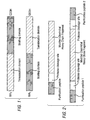
- figure 1 shows examples of embodiments of the invention incorporating modified clostridial heavy chain fragments.
- the binding domain is derived from sequences of the clostridial neurotoxins:-
- the translocation domain may be derived from a number of sources:-
- Figure 2 shows examples of Recombinant Modified Clostridial Heavy Chain Fragment Fusion Proteins Showing Positions of Purification Peptide Tags and Specific Protease Cleavage Sites (by treatment with the appropriate protease, the purification peptide tags may be removed from the modified clostridial binding fragment).
- purification peptides tags are:
- Plasmid DNA was amplified, purified and screened for the presence of the appropriate sequence (Ausubel et al . 1989, Current Protocols in Molecular Biology, John Wiley & Sons, New York). Gene constructions confirmed as possessing the correct sequences were then transformed into the expression host E. coli BL21 (DE3) (Studier & Moffatt 1986, Journal of Molecular Biology, 189: 113-130).
- the recombinant proteins expressed in pMAL were produced with amino-terminal maltose-binding protein tags allowing proteins to be purified by affinity chromatography on amylose resin. Briefly, cultures of E.coli BL21 (DE3) pMALc2-H C were grown in Terrific broth-ampicillin (100 ⁇ gml -1 )-kanamycin (30 ⁇ gml -1 ) to an OD 600 nm of 2.5-3.8, and protein expression was induced by the addition of 1 mM IPTG for approximately 2 h. Cells were lysed by freeze/thaw followed by sonication, lysates cleared by centrifugation and supernatants loaded onto an amylose resin column and eluted with maltose. All buffers used were as specified by the manufacturer. Thrombin or factor Xa protease sites were included within the protein for subsequent removal of these purification tags.
- modified clostridial heavy chain fragments was constructed by fusing domains of the H c fragments of either botulinum type F or tetanus neurotoxins with the translocation domain of diphtheria toxin.
- the amino acid sequences of examples are shown in SEQ ID NO:s 8-17, which also gives examples of modified tetanus heavy chains in which the H c fragment is a hybrid of tetanus and botulinum type F neurotoxin.
- the polypeptide, protein or enzyme to be linked to the modified clostridial heavy chain fragment is first derivatized with a suitable cross-linking agent.
- Mn-Superoxide dismutase (SOD) was modified by treatment with a 15 molar excess of SPDP (Pierce) in 0.05M Hepes buffer pH 7.0 containing 0.15M NaCl for 60 min at 25°C. The excess SPDP was removed by dialysis against the same buffer At 4°C for 16h.
- the substituted SOD was then mixed in a 1:5 molar ration with modified clostridial heavy chain fragment fused to a translocation domain derived from diphtheria toxin (see Figure 3) and incubated at 25°C for 16h. After incubation the SOD-modified clostridial binding fragment conjugate was purified by gel filtration chromatography on Sephadex G200.
- Poly-L-lysine (M r 1000-4000) (10 mg) to be used for the condensation of DNA was dissolved in 2ml of 20mM Hepes buffer pH 7.4 containing 0.15M NaCl (HBS). To this solution 0.6mg of Sulpho-LC-SPDP (Pierce and Warriner, UK Ltd.) was added and the mixture incubated for 30 min at 25°C. The activated poly-L-lysine was then dialysed against HBS at 4°C using a dialysis tubing of 1000 molecular weight cut-off and then diluted to 1mg/ml using HBS.
- HBS Hepes buffer pH 7.4 containing 0.15M NaCl
- Condensation of DNA was carried out in glass tubes.
- Purified plasmid DNA containing a gene encoding a therapeutic protein (or a reporter gene) under the control of a suitable promoter e.g. CMV immediate early, or a neuronal-specific promoter e.g. neuron-specific enolase promoter
- a suitable promoter e.g. CMV immediate early, or a neuronal-specific promoter e.g. neuron-specific enolase promoter
- Activated poly-L-lysine is added in various proportions to the DNA (see Table 2) and incubated for 90min at 25°C. Condensation of DNA with activated poly-L-lysine.
- dialysed fragments (100 ⁇ g) was then added to 1 ml of condensed DNA and incubated for 18h at 25°C to from the modified clostridial binding protein-condensed DNA construct (see Figure 4).
- Modified clostridial heavy chain-condensed DNA construct described in Example 4 was diluted with 2ml MEM serum free medium. Growth media from NG 108 grown in 12 well dished was removed and 1 ml of the diluted construct added and incubated for 2h at 37°C in the presence of 5% CO 2 . Growth media (1ml) was then added to each well and the incubation continued under the same conditions for 24-48h. After this period the cell were examined.
- 398mg of poly (lactide co-glycolide) low internal viscosity (3000 MW)(Beohringer Mannheim, ) was dissolved in 4ml dichloromethane. This was homogenised at 2000rpm for 150 seconds with 1 ml of buffer solution containing the therapeutic substance, such as an enzymes and/or drugs.
- the therapeutic substance such as an enzymes and/or drugs.
- 10mg of the enzyme was dissolved in 10mM Hepes buffer pH 8.0 containing 100mM NaCl. The mixture was then added to 50ml of 8% poly vinyl alcohol and emulsified at 2000rpm for a further 1 50 seconds.
- the emulsion was poured into 300ml of ultrapure distilled water at 37°C and stirred for 30min at 37°C.
- the microparticles were collected by centrifugation at 10000 x g for 25min at 20°C and then resuspended in 300ml water and centrifuged as above. This washing procedure was the repeated a further 4 times. After the final centrifugation the water supernatant fluid was removed and the microparticles freeze dried.
- the wash step was repeated 4 times and then the microparticles resuspended in 1ml of activation buffer containing 33 ⁇ M of a modified clostridial heavy chain fragment and incubated for 2 h at 25°C. The reaction was then quenched with 10mM hydroxylamine. After 20min at 25°C the microparticles were washed in a suitable buffer by centrifugation as described above.
- Clostridial neurotoxins may be labelled with 125-iodine using chloramine-T and its binding to various cells assessed by standard methods such as described in Evans et al . 1986, Eur J. Biochem., 154, 409 or Wadsworth et al . 1990, Biochem. J. 268, 123). In these experiments the ability of modified clostridial heavy chain constructs to compete with native clostridial neurotoxins for receptors present on neuronal cells or brain synaptosomes was assessed. All binding experiments were carried out in binding buffers. For the botulinum neurotoxins this buffer consisted of: 50mM hepes pH 7.0, 30mM NaCl, 0.25% sucrose, 0.25% bovine serum albumin.
- the binding buffer was: 0.05M MES buffer pH 6.0 containing 0.6% bovine serum albumin.
- the radiolabelled clostridial neurotoxin was held at a fixed concentration of between 1-10nM.
- Reaction mixtures were prepared by mixing the radiolabelled toxin with various concentrations of unlabelled neurotoxin or modified clostridial heavy chain construct. The reaction mixture were then added to neuronal cells or rat brain synaptosomes and then incubated at 0-3°C for 2hr. After this period the neuronal cells of synaptosomes were washed twice with binding ice-cold binding buffer and the amount of labelled clostridial neurotoxin bound to cells or synaptosomes was assessed by ⁇ -counting.
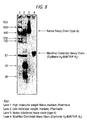
- Non-denaturing gel electrophoresis to compare the sizes of a native botulinum toxin heavy chain (type A) with that of a modified clostridial heavy chain (recombinant Diphtheria H N - BoNT/F H C )
- Botulinum type A heavy chain was purified as described previously (Shone et al . 1985 Eur J. Biochemistry 151, 75-82) and recombinant Diphtheria H N - BoNT/F H C purified as described in Examples1 and 2.
- the modified clostridial heavy chain was purifies as a Maltose Binding Protein fusion with then the fusion protein removed by treatment with Factor Xa.
- Samples of type A heavy chain (20 ⁇ g) and Diphtheria H N - BoNT/F H C (10 ⁇ g) were loaded on a 4-20% Tris-glycine polyacrylamide gel in Tris-glycine buffer.
- the recombinant modified clostridial heavy chain-superoxide dismutase conjugates were converted to the dichain form by treatment with a unique protease corresponding to the cleavage site sequences within the linker region.
- Conjugates containing the thrombin cleavage site were treated with thrombin (20 ⁇ g per mg of conjugate) for 20h at 37°C; conjugates containing the factor Xa cleavage site were treated with factor Xa (20 ⁇ g per mg of conjugate) for 20 min at 22°C.
- Enzymes - Superoxide dismutase Reduce oxidative stress after stroke/injury of brain or spinal cord Reduction of neuronal damage after ischemia/ reperfusion
- Glutamine synthetase Reduce damage by excess glutamate after stroke/injury of the brain or spinal cord Reduction of neuronal damage after ischemia/ reperfusion
- Antibodies - Anti-tetanus toxin Neutralize the action of tetanus toxin at the spinal cord Reverse the effects of intoxication by tetanus toxin Anti SNARE protein (e.g.
- SNAP-25, VAMPs Syntaxins Modulate neurotransmitter release Hyper secretory disorders ⁇ Viruses/DNA Viral gene therapy vectors (e.g. adenovirus, herpes simplex, etc.) Replacement of defective genes within the CNS Treatment of neurodegenerative diseases (Parkinson's' Alzheimer's ALS etc.) and other neuronal diseases Non-viral vectors for gene therapy (e.g. liposomes) Replacement of defective genes within the CNS Treatment of neurodegenerative diseases and other neuronal diseases (d) Growth factors e.g. BDNF, CTNF, NGF Deliver growth factors to the brain and spinal cord Treatment of neurodegenerative diseases, promotion of neuronal growth after damage.
- BDNF BDNF
- CTNF transforming growth factor
- NGF Neuronal growth factor
- Anti-viral agents Deliver anti-viral agents to the brain or spinal cord neurons Treatment of latent viral infections within neuronal cells, e.g. HIV, herpes simplex infections
- Anti-cancer agents Deliver cytotoxic agents to neoplastic cells of the CNS Treatment of neuronal neoplasia
Landscapes
- Health & Medical Sciences (AREA)
- Life Sciences & Earth Sciences (AREA)
- Chemical & Material Sciences (AREA)
- Genetics & Genomics (AREA)
- Organic Chemistry (AREA)
- Engineering & Computer Science (AREA)
- Bioinformatics & Cheminformatics (AREA)
- General Health & Medical Sciences (AREA)
- Biomedical Technology (AREA)
- Medicinal Chemistry (AREA)
- Molecular Biology (AREA)
- Wood Science & Technology (AREA)
- Zoology (AREA)
- Biotechnology (AREA)
- General Engineering & Computer Science (AREA)
- Biochemistry (AREA)
- Public Health (AREA)
- Veterinary Medicine (AREA)
- Animal Behavior & Ethology (AREA)
- Pharmacology & Pharmacy (AREA)
- Biophysics (AREA)
- Microbiology (AREA)
- General Chemical & Material Sciences (AREA)
- Chemical Kinetics & Catalysis (AREA)
- Nuclear Medicine, Radiotherapy & Molecular Imaging (AREA)
- Neurosurgery (AREA)
- Neurology (AREA)
- Plant Pathology (AREA)
- Physics & Mathematics (AREA)
- Gastroenterology & Hepatology (AREA)
- Proteomics, Peptides & Aminoacids (AREA)
- Communicable Diseases (AREA)
- Oncology (AREA)
- Epidemiology (AREA)
- Virology (AREA)
- AIDS & HIV (AREA)
- Pain & Pain Management (AREA)
- Tropical Medicine & Parasitology (AREA)
- Psychiatry (AREA)
- Hospice & Palliative Care (AREA)
Abstract
Description
- a metalloprotease exhibiting high substrate specificity for vesicle and/or plasma membrane associated proteins involved in the exocytotic process. In particular, it cleaves one or more of SNAP-25, VAMP (synaptobrevin / cellubrevin) and syntaxin.
- a portion of the heavy chain which enables translocation of that portion of the neurotoxin molecule such that a functional expression of light chain activity occurs within a target cell.
- the domain responsible for translocation of the endopeptidase activity, following binding of neurotoxin to its specific cell surface receptor via the binding domain, into the target cell.
- the domain responsible for formation of ion-permeable pores in lipid membranes under conditions of low pH.
- a portion of the heavy chain which is responsible for binding of the native holotoxin to cell surface receptor(s) involved in the intoxicating action of clostridial toxin prior to internalisation of the toxin into the cell.
hybrids of the Hc domain of BoNT/F and tetanus
| Condensation of DNA with activated poly-L-lysine. | ||||
| Sample no. | DNA(µg) | Activated Poly-L- | HBS | |
| 1 | 750 | 250 | 1500 | |
| 2 | 1500 | 500 | 500 | |
| 3 | 500 | 250 | 1750 | |
| 4 | 1000 | 500 | 1000 |
- a bacterial superoxide dismutase, from Bacillus stearothermophilus;
- a linker region which allows the formation of a disulphide bond between the superoxide dismutase and the translocation domain and which also contains a unique protease cleavage site for cleavage by factor Xa or thrombin to allow the formation of a dichain molecule;
- a translocation domain from diphtheria toxin or a endosomolytic (fusogenic) peptide from influenza virus haemagglutinin); and
- a neuronal cell-specific binding domain from tetanus or botulinum neurotoxin type F.
| Examples of Potential Therapeutic Uses of Modified Clostridial Binding Fragments | ||
| Therapeutic Substance or Effector | Site and Mechanism of Action | Potential Clinical Effects |
| (a) Enzymes:- | ||
| Superoxide dismutase | Reduce oxidative stress after stroke/injury of brain or spinal cord | Reduction of neuronal damage after ischemia/ reperfusion |
| Glutamine synthetase | Reduce damage by excess glutamate after stroke/injury of the brain or spinal cord | Reduction of neuronal damage after ischemia/ reperfusion |
| (b) Antibodies:- | ||
| Anti-tetanus toxin | Neutralize the action of tetanus toxin at the spinal cord | Reverse the effects of intoxication by tetanus toxin |
| Anti SNARE protein (e.g. SNAP-25, VAMPs Syntaxins) | Modulate neurotransmitter release | Hyper secretory disorders |
| © Viruses/DNA | ||
| Viral gene therapy vectors (e.g. adenovirus, herpes simplex, etc.) | Replacement of defective genes within the CNS | Treatment of neurodegenerative diseases (Parkinson's' Alzheimer's ALS etc.) and other neuronal diseases |
| Non-viral vectors for gene therapy (e.g. liposomes) | Replacement of defective genes within the CNS | Treatment of neurodegenerative diseases and other neuronal diseases |
| (d) Growth factors | ||
| e.g. BDNF, CTNF, NGF | Deliver growth factors to the brain and spinal cord | Treatment of neurodegenerative diseases, promotion of neuronal growth after damage. |
| (e) Anti-viral agents | Deliver anti-viral agents to the brain or spinal cord neurons | Treatment of latent viral infections within neuronal cells, e.g. HIV, herpes simplex infections |
| (f) Anti-cancer agents | Deliver cytotoxic agents to neoplastic cells of the CNS | Treatment of neuronal neoplasia |


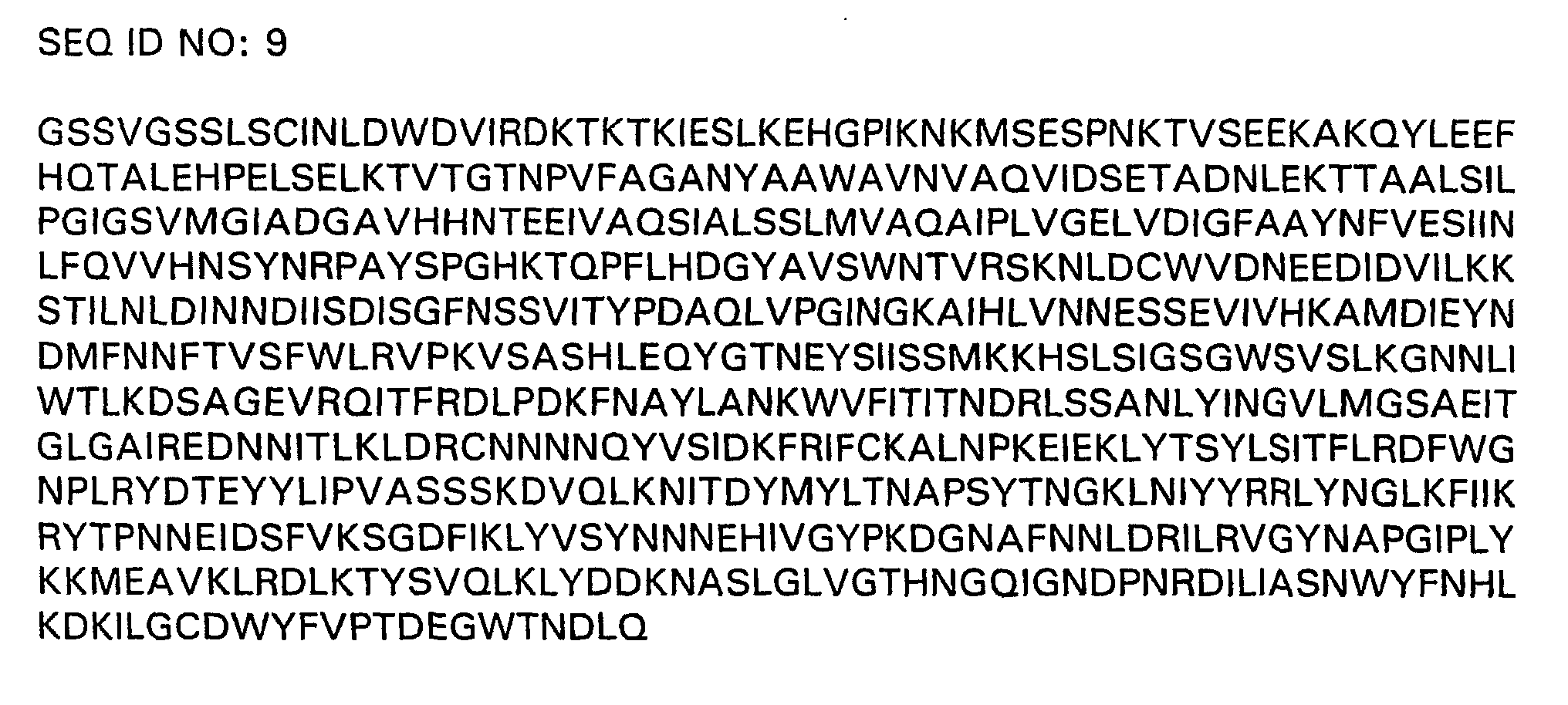

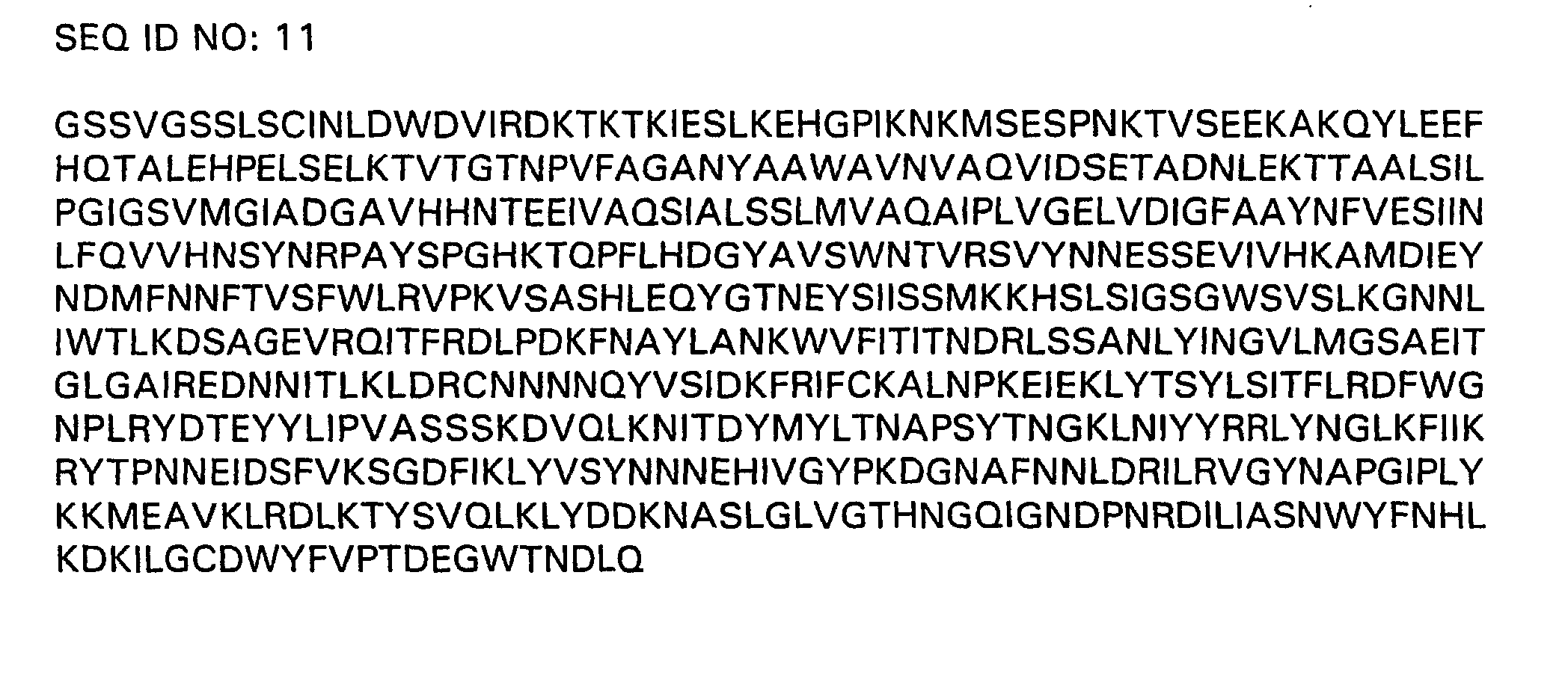


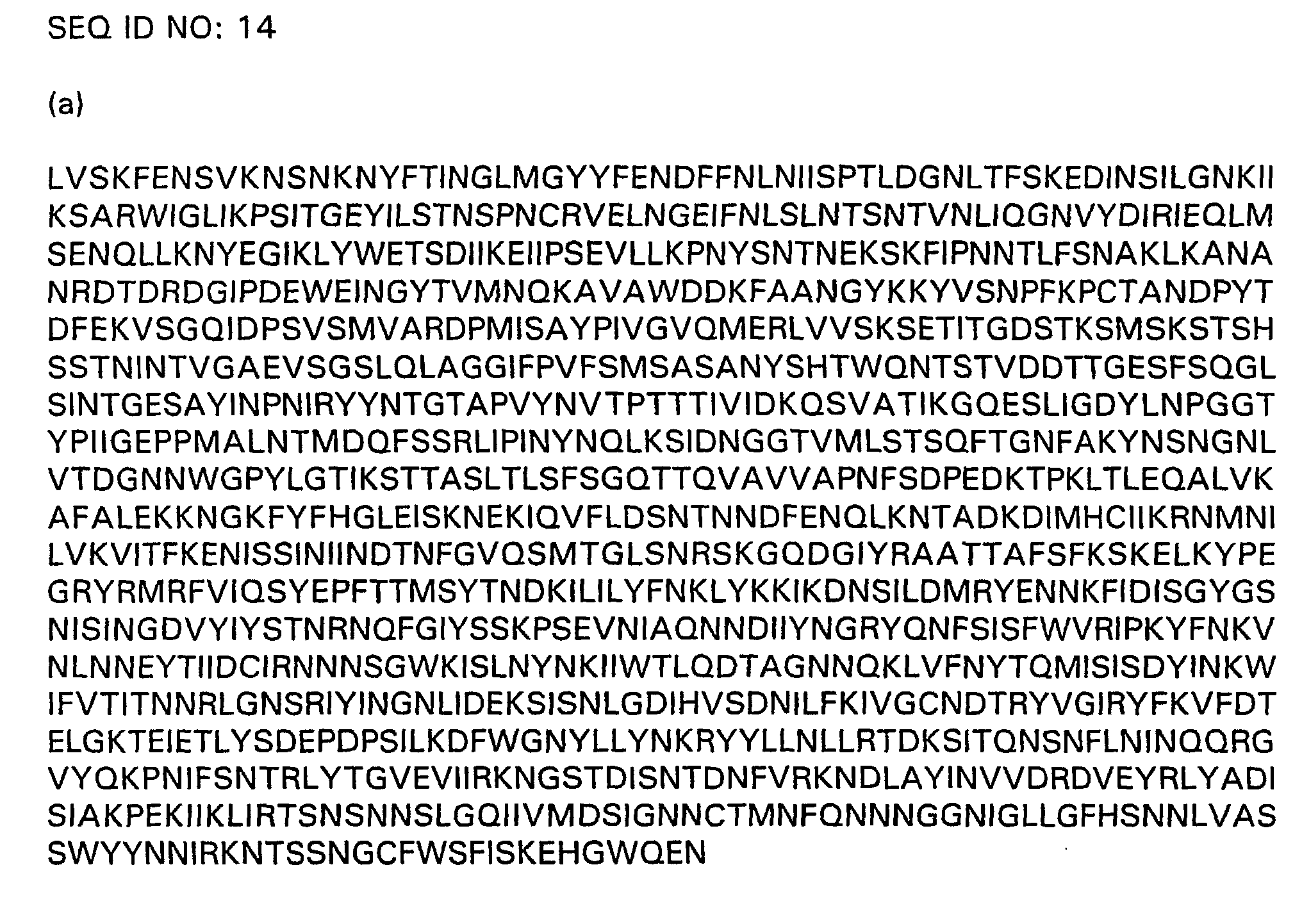


Claims (26)
- A composition comprising a therapeutic agent linked to a polypeptide, wherein the polypeptide is a non-toxic polypeptide, for delivery of a therapeutic agent to a neuronal cell, comprising:-wherein the translocation domain is not a HN domain of a clostridial toxin and is not a fragment or derivative of a HN domain of a clostridial toxin anda binding domain that binds to the neuronal cell and is comprised of or derived from clostridial heavy chain fragments, anda translocation domain that translocates the therapeutic agent into the neuronal cell,
wherein the therapeutic agent is for reduction of neuronal damage after ischemia/reperfusion or is for promotion of neuronal growth after damage. - A composition according to Claim 1, wherein the translocation domain is further a non-aggregating translocation domain as measured by size in physiological buffers.
- A composition according to Claim 1 or 2, wherein the translocation domain is further selected from (1) a HN domain of a diphtheria toxin, (2) a fragment or derivative of (1) that substantially retains the translocating activity of the HN domain of a diphtheria toxin, (3) a fusogenic peptide, (4) a membrane disrupting peptide, and (5) translocating fragments and derivatives of (3) and (4).
- A composition according to any of Claims 1 to 3, wherein the polypeptide has the binding specificity of tetanus toxin and reduced affinity to neutralising antibodies to tetanus toxin compared with the affinity to such antibodies of native tetanus toxin heavy chain.
- A composition comprising a therapeutic agent linked to a polypeptide, wherein the polypeptide is for delivery of a therapeutic agent to a neuronal cell, comprising:-wherein the translocation domain is selected from (1) a HN domain of a diphtheria toxin, (2) a fragment or derivative of (1) that substantially retains the translocating activity of the HN domain of a diphtheria toxin, (3) a fusogenic peptide, (4) a membrane disrupting peptide, and (5) translocating fragments and derivatives of (3) and (4) and wherein the therapeutic agent is for reduction of neuronal damage after ischemia/reperfusion or is for promotion of neuronal growth after damage.a binding domain that binds to the neuronal cell and is comprised of or derived from clostridial heavy chain fragments, anda translocation domain that translocates the therapeutic agent into the neuronal cell,
- A composition according to Claim 5, wherein the polypeptide has reduced affinity to neutralising antibodies to tetanus toxin compared with the affinity to such antibodies of native tetanus toxin.
- A composition comprising a therapeutic agent linked to a polypeptide, wherein the polypeptide is for delivery of a therapeutic agent to a neuronal cell, comprising:-wherein the polypeptide has reduced affinity to neutralising antibodies to tetanus toxin compared with the affinity to such antibodies of native tetanus toxin and wherein the therapeutic agent is for reduction of neuronal damage after ischemia/reperfusion or is for promotion of neuronal growth after damage.a binding domain that binds to the neuronal cell and is comprised ofor derived from clostridial heavy chain fragments, anda translocation domain that translocates the therapeutic agent into the neuronal cell,
- A composition according to any previous claim wherein the binding domain comprises a botulinum HC domain.
- A composition according to any of claims 1 to 7 wherein the binding domain comprises a tetanus HC domain.
- A composition according to any of claims 1 to 7 wherein the binding domain comprises a hybrid of a botulinum HC domain and a tetanus HC domain.
- A composition according to Claim 10, based on a botulinum type B fragment (residues 859-1291) or type A fragment (residues 872-1296) or type F fragment (residues 862-1278).
- A composition according to Claim 10, based on a botulinum type B fragment (residues 859-1291) by replacing residues 1093-1285 with the homologous sequence from tetanus toxin.
- A composition according to Claim 10, based on a botuiinum type A fragment (residues 872-1296) by replacing residues 1103-1296 with the homologous sequence from tetanus toxin.
- A composition according to Claim 10, based on a botulinum type F fragment (residues 862-1278) by replacing residues 1097-1273 with the homologous sequence from tetanus toxin.
- A composition according to any of Claims 1 to 7 comprising a tetanus HC domain and a diphtheria HN domain.
- A composition according to any of Claims 1 to 7 comprising a botulinum HC domain and diphtheria HN domain.
- A composition according to any of Claims 1-16, wherein the therapeutic substance is chemically bound to said polypeptide.
- A composition according to any of Claims 1-17 wherein the therapeutic substance is linked to a translocation domain of said polypeptide.
- A composition according to any of Claims 1 to 18 wherein the therapeutic substance is an enzyme, growth factor, protein or peptide.
- A composition according to any of Claims 18 to 19 wherein the therapeutic agent is produced as a fusion protein by recombinant technology methods.
- A composition according to any of Claims 1 to 20 wherein the therapeutic agent is a nucleic acid useful as a gene therapeutic agent or an antisense drug.
- A composition according to Claim 21 in which the nucleic acid is contained within a liposome or is condensed via a peptide or protein, or by condensation using a chemical coupling agent.
- A composition according to Claim 21 in which the nucleic acid is present in the form of a recombinant virus.
- A composition according to Claim 21 in which the virus has an altered tropism and is capable of transducing cells via a clostridial toxin receptor.
- A method of manufacture of a composition according to any of Claims 1 to 16, comprising expressing in a host cell a nucleic acid encoding the composition.
- Use of a composition according to any of Claims 1 to 24 for the manufacture of a medicament for the treatment of a disease state associated with neuronal cells.
Applications Claiming Priority (5)
| Application Number | Priority Date | Filing Date | Title |
|---|---|---|---|
| GB9928530 | 1999-12-02 | ||
| GBGB9928530.6A GB9928530D0 (en) | 1999-12-02 | 1999-12-02 | Constructs for delivery of therapeutic agents to neuronal cells |
| GB0008658 | 2000-04-07 | ||
| GB0008658A GB0008658D0 (en) | 2000-04-07 | 2000-04-07 | Constructs for delivery of therapeutic agents to neuronal cells |
| PCT/GB2000/004644 WO2001058936A2 (en) | 1999-12-02 | 2000-12-04 | Constructs for delivery of therapeutic agents to neuronal cells |
Publications (2)
| Publication Number | Publication Date |
|---|---|
| EP1234043A2 EP1234043A2 (en) | 2002-08-28 |
| EP1234043B1 true EP1234043B1 (en) | 2004-03-10 |
Family
ID=26244065
Family Applications (1)
| Application Number | Title | Priority Date | Filing Date |
|---|---|---|---|
| EP00979809A Expired - Lifetime EP1234043B1 (en) | 1999-12-02 | 2000-12-04 | Constructs for delivery of therapeutic agents to neuronal cells |
Country Status (11)
| Country | Link |
|---|---|
| US (2) | US20090269361A1 (en) |
| EP (1) | EP1234043B1 (en) |
| JP (1) | JP4991073B2 (en) |
| AT (1) | ATE261494T1 (en) |
| AU (1) | AU768529B2 (en) |
| CA (1) | CA2392202C (en) |
| DE (1) | DE60008915T2 (en) |
| DK (1) | DK1234043T3 (en) |
| ES (1) | ES2216996T3 (en) |
| PT (1) | PT1234043E (en) |
| WO (1) | WO2001058936A2 (en) |
Families Citing this family (19)
| Publication number | Priority date | Publication date | Assignee | Title |
|---|---|---|---|---|
| US7192596B2 (en) | 1996-08-23 | 2007-03-20 | The Health Protection Agency Ipsen Limited | Recombinant toxin fragments |
| GB9617671D0 (en) * | 1996-08-23 | 1996-10-02 | Microbiological Res Authority | Recombinant toxin fragments |
| US7923216B2 (en) | 1997-08-14 | 2011-04-12 | Institut Pasteur | In vivo modulation of neuronal transport |
| US7923015B2 (en) * | 1997-08-14 | 2011-04-12 | Institut Pasteur | Methods for direct visualization of active synapses |
| GB0216865D0 (en) | 2002-07-19 | 2002-08-28 | Microbiological Res Authority | Targetted agents for nerve regeneration |
| JP5036302B2 (en) * | 2003-02-10 | 2012-09-26 | ティオー − ビービービー ホールディング ベスローテン フェンノートシャップ | Nucleic acids differentially expressed at the blood-brain barrier under inflammatory conditions |
| JP2007070225A (en) * | 2003-07-25 | 2007-03-22 | Yukako Fujinaga | Pharmaceutical formulation containing component derived from bacterium of clostridium |
| GB0426394D0 (en) | 2004-12-01 | 2005-01-05 | Health Prot Agency | Fusion proteins |
| US8778634B2 (en) | 2004-12-01 | 2014-07-15 | Syntaxin, Ltd. | Non-cytotoxic protein conjugates |
| US8512984B2 (en) | 2004-12-01 | 2013-08-20 | Syntaxin, Ltd. | Non-cytotoxic protein conjugates |
| US8399400B2 (en) | 2004-12-01 | 2013-03-19 | Syntaxin, Ltd. | Fusion proteins |
| US8603779B2 (en) | 2004-12-01 | 2013-12-10 | Syntaxin, Ltd. | Non-cytotoxic protein conjugates |
| DE102005019302A1 (en) | 2005-04-26 | 2006-11-16 | Toxogen Gmbh | Carrier for targeting nerve cells |
| GB0610867D0 (en) | 2006-06-01 | 2006-07-12 | Syntaxin Ltd | Treatment of pain |
| US8343743B2 (en) | 2008-06-10 | 2013-01-01 | Synaptic Research, Llc | Designer ubiquitin ligases having a non-cleavable SNAP25 domain and E3-ligase domain |
| WO2011133658A1 (en) * | 2010-04-22 | 2011-10-27 | Boston Medical Center Corporation | Compositions and methods for targeting and delivering therapeutics into cells |
| US20140056870A1 (en) | 2012-08-27 | 2014-02-27 | Allergan, Inc. | Fusion proteins |
| CN108137654A (en) * | 2015-05-15 | 2018-06-08 | 内布拉斯加大学董事会 | Suitable for molecule to be deliverrf into the engineered clostridium botulinum toxin of selected cell |
| EP3946413A4 (en) * | 2019-04-03 | 2023-01-11 | Technical University of Denmark | NEUROTROPHIC FACTOR PROTEIN CONJUGATES AND EMBODIMENTS THEREOF |
Family Cites Families (13)
| Publication number | Priority date | Publication date | Assignee | Title |
|---|---|---|---|---|
| US5668255A (en) * | 1984-06-07 | 1997-09-16 | Seragen, Inc. | Hybrid molecules having translocation region and cell-binding region |
| AU657087B2 (en) * | 1989-12-22 | 1995-03-02 | Seragen Incorporated | Hybrid molecules having translocation region and cell-binding region |
| US5521291A (en) * | 1991-09-30 | 1996-05-28 | Boehringer Ingelheim International, Gmbh | Conjugates for introducing nucleic acid into higher eucaryotic cells |
| US5693476A (en) * | 1995-02-24 | 1997-12-02 | The Board Of Trustees Of The Leland Stanford Junior University | Methods of screening for compounds capable of modulating vesicular release |
| GB9508204D0 (en) * | 1995-04-21 | 1995-06-07 | Speywood Lab Ltd | A novel agent able to modify peripheral afferent function |
| US7192596B2 (en) * | 1996-08-23 | 2007-03-20 | The Health Protection Agency Ipsen Limited | Recombinant toxin fragments |
| GB9617671D0 (en) * | 1996-08-23 | 1996-10-02 | Microbiological Res Authority | Recombinant toxin fragments |
| DE69836982T2 (en) * | 1997-08-14 | 2007-10-31 | Institut Pasteur | Hybrid tetanus toxin proteins migrating retrograde and trans-synaptically into the CNS |
| GB9721189D0 (en) * | 1997-10-08 | 1997-12-03 | Speywood Lab The Limited | Analgesic conjugates |
| US20040071736A1 (en) * | 1998-08-25 | 2004-04-15 | Health Protection Agency | Methods and compounds for the treatment of mucus hypersecretion |
| GB9818548D0 (en) * | 1998-08-25 | 1998-10-21 | Microbiological Res Authority | Treatment of mucas hypersecretion |
| GB9824282D0 (en) * | 1998-11-05 | 1998-12-30 | Microbiological Research Agenc | Delivery of superoxide dismutase to neuronal cells |
| CA2392208A1 (en) * | 1999-11-16 | 2001-05-25 | Johanna C. Vanderspek | Fusion proteins that specifically inhibit protein synthesis in neuronal cells |
-
2000
- 2000-12-04 EP EP00979809A patent/EP1234043B1/en not_active Expired - Lifetime
- 2000-12-04 DK DK00979809T patent/DK1234043T3/en active
- 2000-12-04 JP JP2001558083A patent/JP4991073B2/en not_active Expired - Fee Related
- 2000-12-04 PT PT00979809T patent/PT1234043E/en unknown
- 2000-12-04 CA CA2392202A patent/CA2392202C/en not_active Expired - Fee Related
- 2000-12-04 WO PCT/GB2000/004644 patent/WO2001058936A2/en not_active Ceased
- 2000-12-04 DE DE60008915T patent/DE60008915T2/en not_active Expired - Lifetime
- 2000-12-04 AU AU17193/01A patent/AU768529B2/en not_active Ceased
- 2000-12-04 ES ES00979809T patent/ES2216996T3/en not_active Expired - Lifetime
- 2000-12-04 AT AT00979809T patent/ATE261494T1/en active
-
2007
- 2007-05-17 US US11/798,909 patent/US20090269361A1/en not_active Abandoned
-
2012
- 2012-02-01 US US13/363,544 patent/US20120128700A1/en not_active Abandoned
Also Published As
| Publication number | Publication date |
|---|---|
| ES2216996T3 (en) | 2004-11-01 |
| DE60008915D1 (en) | 2004-04-15 |
| CA2392202C (en) | 2012-02-28 |
| PT1234043E (en) | 2004-07-30 |
| AU1719301A (en) | 2001-08-20 |
| AU768529B2 (en) | 2003-12-18 |
| JP4991073B2 (en) | 2012-08-01 |
| JP2003522199A (en) | 2003-07-22 |
| CA2392202A1 (en) | 2001-08-16 |
| DK1234043T3 (en) | 2004-07-19 |
| WO2001058936A2 (en) | 2001-08-16 |
| DE60008915T2 (en) | 2005-01-20 |
| WO2001058936A3 (en) | 2002-02-28 |
| US20090269361A1 (en) | 2009-10-29 |
| EP1234043A2 (en) | 2002-08-28 |
| ATE261494T1 (en) | 2004-03-15 |
| US20120128700A1 (en) | 2012-05-24 |
Similar Documents
| Publication | Publication Date | Title |
|---|---|---|
| US20120128700A1 (en) | Constructs for delivery of therapeutic agents to neuronal cells | |
| US7368532B2 (en) | Constructs for delivery of therapeutic agents to neuronal cells | |
| US7470661B2 (en) | Delivery of superoxide dismutase to neuronal cells | |
| JP5232021B2 (en) | PEGylated mutant Clostridium botulinum toxin | |
| US10266816B2 (en) | Carrier for targeting nerve cells | |
| JP5746624B2 (en) | Clostridial neurotoxins with altered persistence | |
| JP5107055B2 (en) | Recombinant expression of disulfide-bridged double-stranded protein | |
| US20090226468A1 (en) | Hybrid tetanus toxoid proteins that migrate retrogradely and transynaptically into the CNS | |
| US8012491B2 (en) | Recombinant toxin fragments | |
| AU2003254463B2 (en) | Targeted agents for nerve regeneration | |
| AU2002256803A1 (en) | Pharmaceutical use for secreted bacterial effector proteins | |
| WO2002096467A2 (en) | Pharmaceutical use for secreted bacterial effector proteins | |
| RU2801120C2 (en) | Sortase-labeled clostridia neurotoxins | |
| CN120282979A (en) | Clostridial neurotoxin comprising activated endosomal protease cleavage site |
Legal Events
| Date | Code | Title | Description |
|---|---|---|---|
| PUAI | Public reference made under article 153(3) epc to a published international application that has entered the european phase |
Free format text: ORIGINAL CODE: 0009012 |
|
| 17P | Request for examination filed |
Effective date: 20020515 |
|
| AK | Designated contracting states |
Kind code of ref document: A2 Designated state(s): AT BE CH CY DE DK ES FI FR GB GR IE IT LI LU MC NL PT SE TR |
|
| AX | Request for extension of the european patent |
Free format text: AL;LT;LV;MK;RO;SI |
|
| 17Q | First examination report despatched |
Effective date: 20021014 |
|
| REG | Reference to a national code |
Ref country code: GB Ref legal event code: FG4D |
|
| GRAH | Despatch of communication of intention to grant a patent |
Free format text: ORIGINAL CODE: EPIDOS IGRA |
|
| RAP1 | Party data changed (applicant data changed or rights of an application transferred) |
Owner name: HEALTH PROTECTION AGENCY |
|
| GRAS | Grant fee paid |
Free format text: ORIGINAL CODE: EPIDOSNIGR3 |
|
| RIN1 | Information on inventor provided before grant (corrected) |
Inventor name: SUTTON, JOHN MARK Inventor name: SHONE, CLIFFORD CHARLES Inventor name: SILMAN, NIGEL |
|
| GRAA | (expected) grant |
Free format text: ORIGINAL CODE: 0009210 |
|
| AK | Designated contracting states |
Kind code of ref document: B1 Designated state(s): AT BE CH CY DE DK ES FI FR GB GR IE IT LI LU MC NL PT SE TR |
|
| REG | Reference to a national code |
Ref country code: CH Ref legal event code: EP |
|
| REG | Reference to a national code |
Ref country code: IE Ref legal event code: FG4D |
|
| REF | Corresponds to: |
Ref document number: 60008915 Country of ref document: DE Date of ref document: 20040415 Kind code of ref document: P |
|
| REG | Reference to a national code |
Ref country code: SE Ref legal event code: TRGR |
|
| REG | Reference to a national code |
Ref country code: CH Ref legal event code: NV Representative=s name: ISLER & PEDRAZZINI AG |
|
| REG | Reference to a national code |
Ref country code: GR Ref legal event code: EP Ref document number: 20040401982 Country of ref document: GR Ref country code: DK Ref legal event code: T3 |
|
| REG | Reference to a national code |
Ref country code: PT Ref legal event code: SC4A Free format text: AVAILABILITY OF NATIONAL TRANSLATION Effective date: 20040602 |
|
| LTIE | Lt: invalidation of european patent or patent extension |
Effective date: 20040310 |
|
| REG | Reference to a national code |
Ref country code: ES Ref legal event code: FG2A Ref document number: 2216996 Country of ref document: ES Kind code of ref document: T3 |
|
| ET | Fr: translation filed | ||
| PLBE | No opposition filed within time limit |
Free format text: ORIGINAL CODE: 0009261 |
|
| STAA | Information on the status of an ep patent application or granted ep patent |
Free format text: STATUS: NO OPPOSITION FILED WITHIN TIME LIMIT |
|
| 26N | No opposition filed |
Effective date: 20041213 |
|
| REG | Reference to a national code |
Ref country code: GB Ref legal event code: 732E |
|
| REG | Reference to a national code |
Ref country code: FR Ref legal event code: TP |
|
| REG | Reference to a national code |
Ref country code: CH Ref legal event code: PFA Owner name: HEALTH PROTECTION AGENCY "NON-DEPARTMENTAL PUBLIC Free format text: HEALTH PROTECTION AGENCY#PORTON DOWN#SALISBURY WILTSHIRE, SP4 0JG (GB) -TRANSFER TO- HEALTH PROTECTION AGENCY "NON-DEPARTMENTAL PUBLIC BODY"#PORTON DOWN#SALISBURY, WILTSHIRE SP4 0JG (GB) |
|
| REG | Reference to a national code |
Ref country code: CH Ref legal event code: PCAR Free format text: ISLER & PEDRAZZINI AG;POSTFACH 1772;8027 ZUERICH (CH) |
|
| REG | Reference to a national code |
Ref country code: GB Ref legal event code: 732E |
|
| REG | Reference to a national code |
Ref country code: PT Ref legal event code: PC4A Owner name: SYNTAXIN LIMITED, GB Effective date: 20071217 |
|
| REG | Reference to a national code |
Ref country code: FR Ref legal event code: TP Ref country code: FR Ref legal event code: CA |
|
| REG | Reference to a national code |
Ref country code: CH Ref legal event code: PUE Owner name: SYNTAXIN LIMITED Free format text: HEALTH PROTECTION AGENCY "NON-DEPARTMENTAL PUBLIC BODY"#PORTON DOWN#SALISBURY, WILTSHIRE SP4 0JG (GB) -TRANSFER TO- SYNTAXIN LIMITED#UNITS 4-10 THE QUADRANT BARTON LANE#ABINGDON, OXFORDSHIRE OX14 3YS (GB) |
|
| BECA | Be: change of holder's address |
Owner name: SYNTAXIN LTDUNITS 4-10, THE QUADRANT, BARTON LANE, Effective date: 20090428 |
|
| NLS | Nl: assignments of ep-patents |
Owner name: SYNTAXIN LIMITED Effective date: 20090212 |
|
| REG | Reference to a national code |
Ref country code: ES Ref legal event code: PC2A |
|
| REG | Reference to a national code |
Ref country code: ES Ref legal event code: PC2A |
|
| PGFP | Annual fee paid to national office [announced via postgrant information from national office to epo] |
Ref country code: AT Payment date: 20101228 Year of fee payment: 11 Ref country code: DK Payment date: 20101129 Year of fee payment: 11 |
|
| PGFP | Annual fee paid to national office [announced via postgrant information from national office to epo] |
Ref country code: GR Payment date: 20101221 Year of fee payment: 11 Ref country code: GB Payment date: 20101203 Year of fee payment: 11 Ref country code: IT Payment date: 20101222 Year of fee payment: 11 |
|
| PGFP | Annual fee paid to national office [announced via postgrant information from national office to epo] |
Ref country code: IE Payment date: 20111229 Year of fee payment: 12 Ref country code: PT Payment date: 20111202 Year of fee payment: 12 Ref country code: FR Payment date: 20120105 Year of fee payment: 12 Ref country code: LU Payment date: 20111223 Year of fee payment: 12 Ref country code: CH Payment date: 20111230 Year of fee payment: 12 Ref country code: MC Payment date: 20111130 Year of fee payment: 12 Ref country code: ES Payment date: 20111207 Year of fee payment: 12 Ref country code: SE Payment date: 20111221 Year of fee payment: 12 Ref country code: NL Payment date: 20111220 Year of fee payment: 12 Ref country code: FI Payment date: 20111220 Year of fee payment: 12 |
|
| PGFP | Annual fee paid to national office [announced via postgrant information from national office to epo] |
Ref country code: BE Payment date: 20111230 Year of fee payment: 12 |
|
| PGFP | Annual fee paid to national office [announced via postgrant information from national office to epo] |
Ref country code: DE Payment date: 20111222 Year of fee payment: 12 |
|
| PGFP | Annual fee paid to national office [announced via postgrant information from national office to epo] |
Ref country code: CY Payment date: 20111205 Year of fee payment: 12 |
|
| PGFP | Annual fee paid to national office [announced via postgrant information from national office to epo] |
Ref country code: TR Payment date: 20120405 Year of fee payment: 12 |
|
| REG | Reference to a national code |
Ref country code: PT Ref legal event code: MM4A Free format text: LAPSE DUE TO NON-PAYMENT OF FEES Effective date: 20130604 |
|
| BERE | Be: lapsed |
Owner name: SYNTAXIN LTD Effective date: 20121231 |
|
| REG | Reference to a national code |
Ref country code: NL Ref legal event code: V1 Effective date: 20130701 |
|
| PG25 | Lapsed in a contracting state [announced via postgrant information from national office to epo] |
Ref country code: CY Free format text: LAPSE BECAUSE OF NON-PAYMENT OF DUE FEES Effective date: 20121204 Ref country code: SE Free format text: LAPSE BECAUSE OF NON-PAYMENT OF DUE FEES Effective date: 20121205 Ref country code: MC Free format text: LAPSE BECAUSE OF NON-PAYMENT OF DUE FEES Effective date: 20121231 |
|
| REG | Reference to a national code |
Ref country code: CH Ref legal event code: PL |
|
| REG | Reference to a national code |
Ref country code: AT Ref legal event code: MM01 Ref document number: 261494 Country of ref document: AT Kind code of ref document: T Effective date: 20121204 |
|
| REG | Reference to a national code |
Ref country code: DK Ref legal event code: EBP |
|
| GBPC | Gb: european patent ceased through non-payment of renewal fee |
Effective date: 20121204 |
|
| PG25 | Lapsed in a contracting state [announced via postgrant information from national office to epo] |
Ref country code: PT Free format text: LAPSE BECAUSE OF NON-PAYMENT OF DUE FEES Effective date: 20130604 Ref country code: FI Free format text: LAPSE BECAUSE OF NON-PAYMENT OF DUE FEES Effective date: 20121204 |
|
| REG | Reference to a national code |
Ref country code: GR Ref legal event code: ML Ref document number: 20040401982 Country of ref document: GR Effective date: 20130703 |
|
| REG | Reference to a national code |
Ref country code: IE Ref legal event code: MM4A |
|
| REG | Reference to a national code |
Ref country code: FR Ref legal event code: ST Effective date: 20130830 |
|
| PG25 | Lapsed in a contracting state [announced via postgrant information from national office to epo] |
Ref country code: BE Free format text: LAPSE BECAUSE OF NON-PAYMENT OF DUE FEES Effective date: 20121231 |
|
| REG | Reference to a national code |
Ref country code: DE Ref legal event code: R119 Ref document number: 60008915 Country of ref document: DE Effective date: 20130702 |
|
| PG25 | Lapsed in a contracting state [announced via postgrant information from national office to epo] |
Ref country code: GR Free format text: LAPSE BECAUSE OF NON-PAYMENT OF DUE FEES Effective date: 20130703 Ref country code: NL Free format text: LAPSE BECAUSE OF NON-PAYMENT OF DUE FEES Effective date: 20130701 Ref country code: IE Free format text: LAPSE BECAUSE OF NON-PAYMENT OF DUE FEES Effective date: 20121204 Ref country code: AT Free format text: LAPSE BECAUSE OF NON-PAYMENT OF DUE FEES Effective date: 20121204 Ref country code: LI Free format text: LAPSE BECAUSE OF NON-PAYMENT OF DUE FEES Effective date: 20121231 Ref country code: DE Free format text: LAPSE BECAUSE OF NON-PAYMENT OF DUE FEES Effective date: 20130702 Ref country code: CH Free format text: LAPSE BECAUSE OF NON-PAYMENT OF DUE FEES Effective date: 20121231 |
|
| PG25 | Lapsed in a contracting state [announced via postgrant information from national office to epo] |
Ref country code: FR Free format text: LAPSE BECAUSE OF NON-PAYMENT OF DUE FEES Effective date: 20130102 Ref country code: GB Free format text: LAPSE BECAUSE OF NON-PAYMENT OF DUE FEES Effective date: 20121204 |
|
| PG25 | Lapsed in a contracting state [announced via postgrant information from national office to epo] |
Ref country code: IT Free format text: LAPSE BECAUSE OF NON-PAYMENT OF DUE FEES Effective date: 20121204 |
|
| PG25 | Lapsed in a contracting state [announced via postgrant information from national office to epo] |
Ref country code: DK Free format text: LAPSE BECAUSE OF NON-PAYMENT OF DUE FEES Effective date: 20130102 |
|
| REG | Reference to a national code |
Ref country code: ES Ref legal event code: FD2A Effective date: 20140514 |
|
| PG25 | Lapsed in a contracting state [announced via postgrant information from national office to epo] |
Ref country code: LU Free format text: LAPSE BECAUSE OF NON-PAYMENT OF DUE FEES Effective date: 20121204 Ref country code: ES Free format text: LAPSE BECAUSE OF NON-PAYMENT OF DUE FEES Effective date: 20121205 Ref country code: TR Free format text: LAPSE BECAUSE OF NON-PAYMENT OF DUE FEES Effective date: 20121204 |