Technical Field
The present invention relates to a data
communication apparatus mounted on a base station and
terminal apparatuses (mobile station, etc.) in a mobile
communication system using TDD (Time Division Duplex)
and a data communication method.
Background Art
Conventionally, data communication apparatus and
data communication method of this kind are described in
Japanese laid-open patent publication No.HEI 8-298688.
FIG. 1 is a block diagram showing the configurations
of a base station and a mobile station in a mobile
communication system that performs conventional TDD data
communication.
In FIG. 1, a base station 10 comprises an antenna
11 for transmission and reception, a receiving section
12, a receiving buffer 13, a transmitting section 14,
a transmitting buffer 15, and a band allocating section
16. Moreover, a mobile station (terminal apparatus) 20
comprises an antenna 21 for transmission and reception,
a receiving section 22, a receiving buffer 23, a
transmitting section 24, a transmitting buffer 25, and
a transmission controller 26.
An explanation will be next given of data
transmitting and receiving operations using TDD in
connection with the above-structured base station 10 and
mobile station 20 with reference to a frame configuration
view shown in FIG. 2.
The base station 10 notifies the mobile station 20
of slot information relating to the regulations of
downlink/uplink slots such as positions, lengths, and
modulation methods of a downlink slot 32 and a uplink
slot 33 using a slot 31 for BCH(Broadcast CHannel) of
a header for each frame based on a scheduling result of
the band allocating section 16 that allocates slots
(uplink and downlink), namely, a band (time band in the
case of TDD communication) to each mobile station 20 in
accordance with downlink/uplink traffic loads.
Moreover, information such as user information held
in the transmitting buffer 15 is inserted to the downlink
slot 32.
Such notification to the mobile station 20 is carried
out by radio-transmitting information from the antenna
11 that is subjected to predetermined radio transmit
processing such as modulation, upconvert, and the like
at the transmitting section 14 .
The mobile station 20 extracts receive information
from the downlink slot 32 allocated to the own station
(hereinafter referred to as "downlink slot for own
station") based on slot information of the header for
each frame of a received signal. Then, the mobile station
20 inserts transmit information that reflects the
contents of this receive information to the uplink slot
33 allocated to the own station (hereinafter referred
to as "uplink slot for own station") similarly, and
transmits it to the base station 10.
In other words, information received by the
receiving section 22 via the antenna 21 is held in the
receiving buffer 23 , and transmit information is inserted
to the uplink slot 33 for own station by control of
transmission controller 26 in accordance with this held
information. Then, predetermined radio transmit
processing is provided to information by the transmitting
section 24, and information subjected to radio transmit
processing is radio-transmitted from the antenna 21.
This transmit information is received by the
receiving section 12 via the antenna 11 at the base station
10, thereafter being output to a back stage processing
circuit (not shown) via the receiving buffer 13.
However, according to such a conventional apparatus,
at each mobile station 20, the contents of receive
information of the downlink slot 32 for own station are
reflected in transmit information and this transmit
information is inserted to the uplink slot 33 for own
station in the same frame as that of the downlink slot
32 for own station. For this reason, in the case where
a time interval between the downlink slot 32 for own station
and the uplink slot 33 for own station, which are allocated
by the base station 10, is short, transmit information
that reflects the contents of receive information cannot
be inserted to the uplink slot 33 for own station in the
same frame, so that transmit information must be inserted
to the uplink slot 33 for own station in a next frame.
This causes a problem in which transmission of transmit
information that reflects the contents of receive
information is delayed by one frame.
Moreover, in the case where the mobile station 20
is placed at the location away from the base station 10,
the downlink slot 32 for own station is received late
at the corresponding mobile station 20. For this reason,
the corresponding mobile station 20 transmitsthe uplink
slot 33 for own station with the downlink slot 32 for
own station in the same frame together in one frame, and
the uplink slot 33 for own station needs to be transmitted
at a quick timing. However, in the case of such
transmission at a quick timing, a collision between the
downlink slot 32 and the uplink slot 33 for own station
occurs, with result that transmission cannot be
appropriately carried out. Accordingly, the base
station 10 must reduce the radius of communication zone
to deal with such a case. Namely, there is a problem in
which the radius of a communication zone of the base station
10 is limited small.
Disclosure of Invention
It is an object of the present invention is to provide
a data communication apparatus and a data communication
method, which can eliminate delay in transmission of
transmit information that reflects the contents of
receive information from a base station at a terminal
apparatus and which can increase a radius of a
communication zone of the base station.
According to one aspect of the present invention,
there is provided a data communication apparatus
comprising allocating means for allocating both a
downlink slot and an uplink slot to each terminal apparatus
in accordance with downlink/uplink traffic loads in TDD
communication; and control means for controlling the
allocating means such that a slot for other terminal
apparatus can be allocated between both slots of the
downlink slot and the uplink slot that are allocated to
the same terminal apparatus in the same frame signal.
According to another aspect o the present invention,
there is provided a data communication apparatus
comprising allocating means for allocating both a
downlink slot and an uplink slot to each terminal apparatus
in accordance with downlink/uplink traffic loads in TDD
communication; and control means for controlling the
allocating means such that guard time can be allocated
between both slots of the downlink slot and the uplink
slot that are allocated to the same terminal apparatus
in the same frame signal.
According to further another aspect of the present
invention, there is provided a data communication
apparatus comprising allocating means for allocating both
a downlink slot and an uplink slot to each terminal
apparatus in accordance with downlink/uplink traffic
loads in TDD communication; and control means for
controlling the allocating means such that a random access
slot, which is usable by an arbitrary terminal apparatus,
can be allocated between both slots of the downlink slot
and the uplink slot that are allocated to the same terminal
apparatus in the same frame signal.
According to still further another aspect of the
present invention, there is provided a data communication
method comprising the step of allocating a slot for other
terminal apparatus between both slots of a downlink slot
and an uplink slot that are allocated to the same terminal
apparatus in the same frame signal when both the downlink
slot and the uplink slot are allocated to each terminal
apparatus in accordance with downlink/uplink traffic
loads in TDD communication.
According to still further another aspect of the
present invention, there is provided a data communication
method comprising the step of allocating guard time
between both slots of a downlink slot and an uplink slot
that are allocated to the same terminal apparatus in the
same frame signal when both the downlink slot and the
uplink slot are allocated to each terminal apparatus in
accordance with downlink/uplink traffic loads in TDD
communication.
According to still further another aspect of the
present invention, there is provided a data communication
method comprising the step of allocating a random access
slot between both slots of a downlink slot and an uplink
slot that are allocated to the same terminal apparatus
in the same frame signal when both the downlink slot and
the uplink slot are allocated to each terminal apparatus
in accordance with downlink/uplink traffic loads in TDD
communication.
Brief Description of Drawings
FIG. 1 is a block diagram showing the configurations
of a base station and a mobile station in a mobile
communication system that performs conventional TDD data
communication;
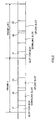
FIG. 2 is a frame configuration view showing the
arrangement of downlink/uplink slots allocated to the
mobile station by the base station in the mobile
communication system that performs conventional TDD data
communication;
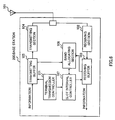
FIG. 3 is a block diagram showing the configurations
of a base station and a mobile station in a mobile
communication system that performs TDD data communication
according to Embodiment 1 of the present invention;
FIG.4 is a frame configuration view showing the
arrangement of downlink/uplink slots allocated to the
mobile station by the base station in the mobile
communication system that performs TDD data communication
according to Embodiment 1 of the present invention;
FIG. 5 is another frame configuration view showing
the arrangement of downlink/uplink slots allocated to
the mobile station by the base station in the mobile
communication system that performs TDD data communication
according to Embodiment 1 of the present invention;
FIG. 6 is a block diagram showing the configuration
of a base station in a mobile communication system that
performs TDD data communication according to Embodiment
2 of the present invention;
FIG. 7 is a block diagram showing the configuration
of a base station in a mobile communication system that
performs TDD data communication according to Embodiment
3 of the present invention; and
FIG.8 is a frame configuration view showing the
arrangement of downlink/uplink slots allocated to a
mobile station by a base station in a mobile communication
system that performs TDD data communication according
to Embodiment 4 of the present invention.
Best Mode for Carrying Out the Invention
The following will specifically explain embodiments
of the present invention with reference to the drawings
accompanying herewith.
(Embodiment 1)
FIG. 3 is a block diagram showing the configurations
of a base station and a mobile station in a mobile
communication system that performs TDD data communication
according to Embodiment 1 of the present invention.
In FIG. 3, a base station 100 comprises an antenna
101 for transmission and reception, a receiving section
102, a receiving buffer 103, a transmitting section 104,
a transmitting buffer 105, a band allocating section 106,
and a slot interval controller 107. Moreover, a mobile
station (terminal apparatus) 110 comprises an antenna
111 for transmission and reception, a receiving section
112, a receiving buffer 113, a transmitting section 114,
a transmitting buffer 115, and a transmission controller
116.
In addition, the number of mobile stations 110 that
perform TDD data communication with one base station 100
is not particularly limited in the range of the given
allowable number, and one or a plurality of mobile stations
110 may be possible. Moreover, the terminal apparatus
is not limited to the mobile station 110, and an arbitrary
terminal apparatus except the base station may be
included.
An explanation will be next given of data
transmitting and receiving operations using TDD in
connection with the above-configured base station 100
and mobile station 110 with reference to the frame
configuration view of FIG.4.
The base station 100 notifies the mobile station
110 of slot information relating to the regulations of
downlink/uplink slots such as positions, lengths, and
modulation methods of downlink slot 122 and uplink slot
123 using a slot 121 for BCH(Broadcast CHannel) of a header
for each frame based on a scheduling result of the band
allocating section 106 that allocates slots (uplink and
downlink), namely, a band (time band in the case of TDD
communication) to each mobile station 110 in accordance
with downlink/uplink traffic loads.
At the time of scheduling, the band allocating
section 106 allocates a slot 124 for other mobile station
between both slots of the downlink slot 122 and uplink
slot 123 for the same mobile station that are allocated
to the same mobile station in the same frame signal in
accordance with control of the slot interval controller
107.
Moreover, information such as user information held
in the transmitting buffer 105 is inserted to the downlink
slot 122.
Such notification to the mobile station 110 is
carried out by radio-transmitting information from the
antenna 101 that is subjected to predetermined radio
transmit processing such as modulation, upconvert, and
the like at the transmitting section 104.
The mobile station 110 extracts receive information
from the downlink slot for own station 110 based on slot
information of the header for each frame of a received
signal. Then, the mobile station 110 inserts transmit
information that reflects the contents of this receive
information to the uplink slot 123 for own station 110
arranged next to the slot 124 for other mobile station,
and transmits it to the base station 100.
In other words, information received by the
receiving section 112 via the antenna 111 is held in the
receiving buffer 113, and transmit information is
inserted to the uplink slot 123 for own station 110 by
control of transmission controller 116 in accordance with
this held information. Then, predetermined radio
transmit processing is provided to information by the
transmitting section 114, and information subjected to
radio transmit processing is radio-transmitted from the
antenna 111.
This transmit information is received by the
receiving section 102 via the antenna 101 at the base
station 100, thereafter being output to a back stage
processing circuit (not shown) via the receiving buffer
103.
In this way, according to this embodiment, at the
time of carrying out scheduling where the base station
100 allocates both the downlink slot and the uplink slot
to each mobile station 110 in accordance with
downlink/uplink traffic loads, the slot 124 for other
mobile station is allocated between both slots of the
downlink slot 122 and the uplink slot 123 for the same
mobile station in the same frame. For this reason, since
the slot 124 for other mobile station is interposed between
both slots of the downlink slot 122 and the uplink slot
123 that are allocated to the same mobile station 110,
it is possible to obtain time enough to reflect receive
information, which is extracted from the downlink slot
122 for own station, in transmit information by slot 124
for other mobile station even if the distance between
the slots is narrowed like the conventional case. This
makes it possible for the mobile station 110, having the
downlink slot 122 and the uplink slot 123 for own station
allocated thereto, to reflect the contents of receive
information, which is extracted from the downlink slot
122 for own station, in transmit information and to insert
it to the uplink slot 123 for own station in the same
frame without fail. In other words, this eliminates delay
in transmission of transmit information that reflects
the contents of receive information from the base station
at the mobile station.
Moreover, according to this embodiment, it is
possible to increase the radius of a communication zone
of the base station. Namely, in the case where the mobile
station 110 is placed at the location away from the base
station 100 as mentioned above, the downlink slot 122
for own station is received late at the corresponding
mobile station 110, so that the corresponding mobile
station 110 transmits the uplink slot 123 placed in the
same frame as that of the downlink slot 122 for own station
at a quick timing. In this case, a collision between the
downlink slot and the uplink slot for own station occurs,
with result that transmission cannot be appropriately
carried out in the conventional case. However, according
to this embodiment, since the slot 124 for other mobile
station is interposed between both slots of the downlink
slot 122 and the uplink slot 123 for the same mobile station
in the same frame, such a collision can be avoided. This
makes it possible for the base station 100 to increase
the radius of communication zone.
Additionally, as a modification of this embodiment,
the slot interval controller 107 can carry out control
that allocates guard time 131 between both slots of the
downlink slot 122 and the uplink slot 123 for the same
mobile station in place of the slot 124 for other mobile
station, as illustrated in FIG. 5. Moreover, in the case
where no other mobile station exist, the slot interval
controller 107 can carry out control that allocates guard
time 131 between both slots of the downlink slot 122 and
the uplink slot 123 for the same mobile station in place
of the slot 124 for other mobile station, as illustrated
in FIG. 5.
This can obtain the same effect as the case in which
the slot 124 for other mobile station is allocated. In
other words, since guard time 131 is interposed between
both slots of the downlink slot 122 and the uplink slot
123 for the same mobile station, it is possible to obtain
time enough to reflect receive information, which is
extracted from the downlink slot 122 for own station,
in transmit information, by use of guard time 131 even
if the distance between the slots is narrowed like the
conventional case. This makes it possible for the mobile
station 110 to reflect the contents of receive information,
which is extracted from the downlink slot 122 for own
station, in transmit information and to insert it to the
uplink slot 123 for own station in the same frame without
fail. This can eliminate delay in transmission of
transmit information that reflects the contents of
receive information from the base station at the mobile
station. Moreover, even in the case where the mobile
station 110 is placed at the location away from the base
station 100, guard 131 is interposed between both slots
of the downlink slot 122 and the uplink slot 123 for own
station in the same frame. Accordingly, it is possible
to avoid occurrence in the collision between the downlink
slot for own station and the uplink slot as in the
conventional case. It is also possible to increase the
radius of communication zone of the base station.
At this time, the slot interval controller 107 can
set the length of guard time 131 to a fixed value. In
this case, since the length of guard time 131 can be set
to the fixed value, processing for controlling guard time
131 can be reduced correspondingly and processing loads
on the base station 100 can be decreased.
(Embodiment 2)
Embodiment 2 shows another control mode in
connection with the modification of Embodiment 1 (in a
case in which guard time 131 is allocated).
FIG. 6 is a block diagram showing the configuration
of a base station in a mobile communication system that
performs TDD data communication according to Embodiment
2 of the present invention. In addition, some sections
in Embodiment 2 illustrated in FIG. 6 are assigned the
same symbols as those of corresponding sections in
Embodiment 1 illustrated in FIG. 3 and its explanation
is omitted.
A base station 200 shown in FIG. 6 is configured
to have a terminal transmission controller 201 that is
connected between the transmitting buffer 105 and the
slot interval controller 107 in addition to the
configuration components of base station 100 shown in
FIG. 3.
When detecting that information to be transmitted
to the mobile station 110 is information in which receive
contents do not have to be reflected in transmit
information in the same frame at the mobile station 110,
the terminal transmission controller 201 controls such
that guard time 131 (FIG. 5) is not be allocated between
both slots of the downlink slot 122 and the uplink slot
123 for the same mobile station.
In this way, according to this embodiment, when
receive contents need not to be reflected in transmit
information in the same frame at the mobile station 110,
guard time 131 is not be allocated between both slots
of the downlink slot 122 and the uplink slot 123 for the
mobile station 110. This makes it possible to use the
frame efficiently.
(Embodiment 3)
Embodiment 3 shows further another control mode in
connection with the modification of Embodiment 1 (in a
case in which guard time 131 is allocated).
FIG. 7 is a block diagram showing the configuration
of a base station in a mobile communication system that
performs TDD data communication according to Embodiment
3 of the present invention. In addition, some sections
in Embodiment 3 illustrated in FIG. 7 are assigned the
same symbols as those of corresponding sections in
Embodiment 1 illustrated in FIG. 3 and its explanation
is omitted.
A base station 300 shown in FIG. 7 is configured
to have a transmission distance detector 301 that is
connected to the slot interval controller 107 in addition
to the configuration components of base station 100 shown
in FIG. 3.
The transmission distance detector 301 measures
delay time of transmit/receive signal to/from the mobile
station 110, and detects a distance between the base
station 300 and the mobile station 110 from measured time.
The slot interval controller 107 varies the length of
guard time 131 in accordance with the detected distance.
If the distance is near, the guard time 131 is reduced.
Conversely, if the distance is far, the guard time 131
is increased.
In this way, according to this embodiment, the length
of guard time 131 is varied in accordance with the distance
from the mobile station 110. Accordingly, if the mobile
station 110 is near to the base station 300, the guard
time 131 may be reduced on the assumption that no collision
occurs between the downlink slot 122 and the uplink slot
123 for the mobile station 110. Conversely, if the mobile
station 110 is far from the base station 300, the guard
time 131 may be increased on the assumption that no
collision occurs between the downlink slot 122 and the
uplink slot 123 for the mobile station 110. In other words,
the base station 300 can expand the communication zone
as using the frame efficiently in accordance with the
distance from the mobile station 110.
(Embodiment 4)
FIG.8 is a frame configuration view showing the
arrangement of downlink/uplink slots allocated to a
mobile station by a base station in a mobile communication
system that performs TDD data communication according
to Embodiment 4 of the present invention. Additionally,
the base station that carries out slot allocation to each
frame as illustrated in FIG. 8 has the same configuration
as that of the base station 100 shown in, for example,
FIG. 3.
The slot interval controller 107 of base station
100 provides a random access slot 401, which is normally
placed at an arbitrary position between both slots of
the downlink slot 122 and the uplink slot 123 for the
same mobile station and which is usable by an arbitrary
mobile station as shown in FIG. 8.
In this way, according to this embodiment, the random
access slot 401 functions as the aforementioned guard
time 131, so that the same effect as that of the case
when the guard time allocation is carried out. Moreover,
since the random access slot 401 is used as guard time
131, the frame signal can be efficiently used.
Additionally, as a modification of this embodiment,
in the case where the guard time 131 is provided between
both slots of the downlink slot 122 and the uplink slot
123 for the same mobile station, it is possible to carry
out control that reduces the area of random access slot
401 by an area corresponding to the guard time 131. In
this case, since the area of random access slot 401 is
reduced by the area corresponding to the guard time 131,
processing loads on the base station 100 can be reduced
correspondingly.
This application is based on the Japanese Patent
Application No.2000-299077 filed on September 29, 2000,
entire content of which is expressly incorporated by
reference herein.
Industrial Applicability
The present invention can be applied to a data
communication apparatus mounted on the base station and
terminal apparatuses (mobile station, etc.) in a mobile
communication system using TDD and a data communication
method.