-
This invention relates to thermally developable imaging materials
such as photothermographic materials that exhibit high speed imaging
characteristics. In particular, this invention relates to the use of certain gold(III)
compounds as chemical sensitizers in combination with sulfur or tellurium
chemical sensitizers in photothermographic materials to provide increased photothermographic
speed. This invention also relates to methods of imaging using
these photothermographic materials and methods for their preparation.
-
Photothermographic imaging materials that are developed with
heat and without liquid development have been known in the art for many years.
Such materials are used in a recording process wherein an image is formed by
imagewise exposure of the photothermographic material to specific electromagnetic
radiation (for example, visible, ultraviolet, or infrared radiation) and
developed by the use of thermal energy. These materials, also known as "dry
silver" materials, generally comprise a support having coated thereon: (a)
photosensitive catalyst (such as silver halide) that upon such exposure provides a
latent image in exposed grains that are capable of acting as a catalyst for the
subsequent formation of a silver image in a development step, (b) a relatively or
completely non-photosensitive source of reducible silver ions, (c) a reducing
composition (usually including a developer) for the reducible silver ions, and (d) a
hydrophilic or hydrophobic binder. The latent image is then developed by
application of thermal energy.
-
In such materials, the photosensitive catalyst is generally a photographic
type photosensitive silver halide that is considered to be in catalytic
proximity to the non-photosensitive source of reducible silver ions. Catalytic
proximity requires intimate physical association of these two components either
prior to or during the thermal image development process so that when silver
atoms (Ag0)n, also known as silver specks, clusters, nuclei or latent image, are
generated by irradiation or light exposure of the photosensitive silver halide, those
silver atoms are able to catalyze the reduction of the reducible silver ions within a
catalytic sphere of influence around the silver atoms [D. H. Klosterboer, Imaging
Processes and Materials, (Nebiette's Eighth Edition), Sturge, Walworth & Shepp
(Eds.), Van Nostrand-Reinhold, New York, Chapter 9, pages 279-291, 1989]. It
has long been understood that silver atoms act as a catalyst for the reduction of
silver ions, and that the photosensitive silver halide can be placed in catalytic
proximity with the non-photosensitive source of reducible silver ions in a number
of different ways (see, for example, Research Disclosure, June 1978, item 17029).
Other photosensitive materials, such as titanium dioxide, cadmium sulfide, and
zinc oxide have also been reported to be useful in place of silver halide as the
photocatalyst in photothermographic materials [see for example, Shepard, J. Appl.
Photog. Eng. 1982, 8(5), 210-212, Shigeo et al., Nippon Kagaku Kaishi, 1994, 11,
992-997, and FR 2,254,047 (Robillard)].
-
The photosensitive silver halide may be made "in situ," for
example by mixing an organic or inorganic halide-containing source with a source
of reducible silver ions to achieve partial metathesis and thus causing the in-situ
formation of silver halide (AgX) grains throughout the silver source [see, for
example, US-A-3,457,075 (Morgan et al.)].
-
The silver halide may also be "preformed" and prepared by an " ex
situ" process whereby the silver halide (AgX) grains are prepared and grown
separately. With this technique, one has the possibility of controlling the grain
size, grain size distribution, dopant levels, and composition much more precisely,
so that one can impart more specific properties to both the silver halide grains and
the photothermographic material. The preformed silver halide grains may be
introduced prior to and be present during the formation of the source of reducible
silver ions. Co-precipitation of the silver halide and the source of reducible silver
ions provides a more intimate mixture of the two materials [see for example US-A-3,839,049
(Simons)]. Alternatively, the preformed silver halide grains may be
added to and physically mixed with the source of reducible silver ions.
-
The non-photosensitive source of reducible silver ions is a material
that contains reducible silver ions. Typically, the preferred non-photosensitive
source of reducible silver ions is a silver salt of a long chain aliphatic carboxylic
acid having from 10 to 30 carbon atoms, or mixtures of such salts. Such acids are
also known as "fatty acids". Silver salts of other organic acids or other organic
compounds, such as silver imidazoles, silver tetrazoles, silver benzotriazoles,
silver benzotetrazoles, silver benzothiazoles and silver acetylides have also been
proposed. US-A-4,260,677 (Winslow et al.) discloses the use of complexes of
various inorganic or organic silver salts.
-
In photothermographic materials, exposure of the photographic
silver halide to light produces small clusters containing silver atoms (Ag0)n. The
imagewise distribution of these clusters, known in the art as a latent image, is
generally not visible by ordinary means. Thus, the photosensitive material must
be further developed to produce a visible image. This is accomplished by the
reduction of silver ions that are in catalytic proximity to silver halide grains
bearing the silver-containing clusters of latent image. This produces a black-and-white
image. The non-photosensitive silver source is catalytically reduced to
form the visible black-and-white negative image while much of the silver halide,
generally, remains as silver halide and is not reduced.
-
In photothermographic materials, the reducing agent for the
reducible silver ions, often referred to as a "developer," may be any compound
that, in the presence of the latent image, can reduce silver ion to metallic silver
and is preferably of relatively low activity until it is heated to a temperature
sufficient to cause the reaction. A wide variety of classes of compounds have
been disclosed in the literature that function as developers for photothermographic
materials. At elevated temperatures, the reducible silver ions are reduced by the
reducing agent. In photothermographic materials, upon heating, this reaction
occurs preferentially in the regions surrounding the latent image. This reaction
produces a negative image of metallic silver having a color that ranges from
yellow to deep black depending upon the presence of toning agents and other
components in the imaging layer(s).
Differences Between Photothermography and Photography
-
The imaging arts have long recognized that the field of photothermography
is clearly distinct from that of photography. Photothermographic
materials differ significantly from conventional silver halide photographic
materials that require processing with aqueous processing solutions.
-
As noted above, in photothermographic imaging materials, a
visible image is created by heat as a result of the reaction of a developer
incorporated within the material. Heating at 50°C or more is essential for this dry
development. In contrast, conventional photographic imaging materials require
processing in aqueous processing baths at more moderate temperatures (from
30°C to 50°C) to provide a visible image.
-
In photothermographic materials, only a small amount of silver
halide is used to capture light and a non-photosensitive source of reducible silver
ions (for example a silver carboxylate) is used to generate the visible image using
thermal development. Thus, the imaged photosensitive silver halide serves as a
catalyst for the physical development process involving the non-photosensitive
source of reducible silver ions and the incorporated reducing agent. In contrast,
conventional wet-processed, black-and-white photographic materials use only one
form of silver (that is, silver halide) that, upon chemical development, is itself
converted into the silver image, or that upon physical development requires
addition of an external silver source (or other reducible metal ions that form black
images upon reduction to the corresponding metal). Thus, photothermographic
materials require an amount of silver halide per unit area that is only a fraction of
that used in conventional wet-processed photographic materials.
-
In photothermographic materials, all of the "chemistry" for
imaging is incorporated within the material itself. For example, such materials
include a developer (that is, a reducing agent for the reducible silver ions) while
conventional photographic materials usually do not. Even in so-called "instant
photography," the developer chemistry is physically separated from the
photosensitive silver halide until development is desired. The incorporation of the
developer into photothermographic materials can lead to increased formation of
various types of "fog" or other undesirable sensitometric side effects. Therefore,
much effort has gone into the preparation and manufacture of photothermographic
materials to minimize these problems during the preparation of the photothermographic
emulsion as well as during coating, use, storage, and post-processing
handling.
-
Moreover, in photothermographic materials, the unexposed silver
halide generally remains intact after development and the material must be
stabilized against further imaging and development. In contrast, silver halide is
removed from conventional photographic materials after solution development to
prevent further imaging (that is in the aqueous fixing step).
-
In photothermographic materials, the binder is capable of wide
variation and a number of binders (both hydrophilic and hydrophobic) are useful.
In contrast, conventional photographic materials are limited almost exclusively to
hydrophilic colloidal binders such as gelatin.
-
Because photothermographic materials require dry thermal
processing, they present distinctly different problems and require different
materials in manufacture and use, compared to conventional, wet-processed silver
halide photographic materials. Additives that have one effect in conventional
silver halide photographic materials may behave quite differently when
incorporated in photothermographic materials where the underlying chemistry is
significantly more complex. The incorporation of such additives as, for example,
stabilizers, antifoggants, speed enhancers, supersensitizers, and spectral and
chemical sensitizers in conventional photographic materials is not predictive of
whether such additives will prove beneficial or detrimental in photothermographic
materials. For example, it is not uncommon for a photographic antifoggant useful
in conventional photographic materials to cause various types of fog when
incorporated into photothermographic materials, or for supersensitizers that are
effective in photographic materials to be inactive in photothermographic
materials.
-
These and other distinctions between photothermographic and
photographic materials are described in Imaging Processes and Materials
(Neblette's Eighth Edition), noted above, Unconventional Imaging Processes,
E. Brinckman et al. (Eds.), The Focal Press, London and New York, 1978, pp. 74-75,
C-f. Zou et al., J. Imaging Sci. Technol. 1996, 40, pp. 94-103, and in M. R. V.
Sahyun, J. Imaging Sci. Technol. 1998, 42, 23.
Problem to be Solved
-
One of the challenges in the use of photothermographic materials is
attaining sufficient photothermographic speed in such materials that are also
compatible with conventional imaging sources.
-
Each of the pure photographic silver halides (silver chloride, silver
bromide and silver iodide) has its own natural response to radiation, in both wavelength
and speed, within the UV, near UV and blue regions of the electromagnetic
spectrum. Mixtures of silver halides (for example, silver bromochloroiodide,
silver chloroiodide, silver chlorobromide, and silver iodobromide) also have their
own natural sensitivities within the UV and blue regions of the electromagnetic
spectrum. Thus, silver halide grains, when composed of only silver and halogen
atoms have defined levels of sensitivity depending upon the levels of specific
halogens, crystal morphology (shape and structure of the crystals or grains) and
other characteristics, such as, for example, crystal defects, stresses, and
dislocations, and dopants, incorporated within or on the crystal lattice of the silver
halide. These features may or may not have been readily controlled or purposely
introduced to affect emulsion sensitometry.
-
The efforts to influence silver halide grain speed in conventional
wet-processed silver halide emulsions generally fall within the investigation of
crystal composition, morphology or structure (all briefly described above), or the
use of dopants, spectral sensitizers, supersensitizers, reduction sensitizers, and
chemical sensitizers (particularly sulfur sensitizers).
-
Spectral sensitization is the addition of a compound (usually a dye)
to silver halide grains that absorbs radiation at wavelengths (UV, visible or IR)
other than those to which the silver halide is naturally sensitive, or that absorbs
radiation more efficiently than silver halide (even within the regions of silver
halide's natural sensitivity). It is generally recognized that spectral sensitizers
extend the responses of photosensitive silver halide to longer wavelengths. After
absorption of the radiation, these compounds transfer energy or electrons to the
silver halide grains to cause the necessary local photoinduced reduction of silver
(I) to silver (0).
-
Supersensitization is a process whereby the speed of spectrally
sensitized silver halide is increased by the addition of still another compound that
may or may not be a dye. This is not merely an additive effect of the two
compounds (spectral sensitizer and supersensitizer).
-
Reduction sensitization is a type of chemical sensitization
(described in more detail in the following paragraphs) in which other chemical
species (not sulfur-containing) are deposited onto, or reacted with, the silver
halide grains during grain growth and finishing. Compounds used for this
purpose act as reducing agents on the silver halide grains and include, but are not
limited to, stannous chloride, hydrazine, ethanolamine, and thioureaoxide.
-
Chemical sensitization (generally sulfur-sensitization) is a process,
during or after silver halide crystal formation, in which sensitization centers [for
example, silver sulfide clusters such as (Ag2S)n] are introduced onto the individual
silver halide grains. For example, silver sulfide specks can be introduced by
direct reaction of sulfur-contributing compounds with the silver halide during
various stages or after completion of silver halide grain growth. These specks
usually function as shallow electron traps for the preferential formation of a latent
image center. Other chalcogens (Se and Te) can function similarly. The presence
of these specks increases the speed or sensitivity of the resulting silver halide
grains to radiation. Sulfur-contributing compounds useful for this purpose
include thiosulfates (such as sodium thiosulfate) and various thioureas (such as
allyl thiourea, thiourea, triethyl thiourea and 1,1'-diphenyl-2-thiourea) as
described for example, by Sheppard et al., J.Franklin Inst., 1923, pp. 196, 653
and 673, C. E. K. Mees and T. H. James, The Theory of the Photographic
Process, 4th Edition, 1977, pp. 152-3, and Tani, T., Photographic Sensitivity:
Theory and Mechanisms, Oxford University Press, NY, 1995, pp. 167-176).
-
Another method of chemical sensitization is achieved by oxidative
decomposition of a sulfur-containing spectral sensitizing dye in a photothermographic
emulsion as described in US-A-5,891,615 (Winslow et al.).
-
Chemical sensitization to increase photospeed has also been
achieved by treating the silver halide grains with gold-containing ions such as
tetrachloroaurate (III) or dithiocyanatoaurate (I). Preferably, the gold compounds
are added in the later stages of silver halide grain formation such as during
ripening. Platinum and palladium compounds are also known to have similar
effects. In comparison, iridium, rhodium, and ruthenium compounds are
generally used to control contrast and/or high intensity reciprocity effects rather
than to increase speed.
-
It is well known that the various speed enhancing means just
described can be used in combination as the situation requires.
-
As noted above, in photothermographic emulsions, the photosensitive
silver halide must be in catalytic proximity to (or in reactive association
with) the non-photosensitive source of reducible silver ions. Because of the
different emulsion making procedures and chemical environments of photothermographic
emulsions, the effects achieved by compounds (such as chemical
sensitizers) in conventional photographic emulsions are not necessarily possible in
photothermographic emulsions.
-
For example, in phototheimographic emulsions, two types of
chemical sensitization have been used to increase speed: (a) chemical sensitization
of preformed silver halide grains that are then mixed into the solution containing
reducible silver ions in some manner, and (b) chemical sensitization of preformed
silver halide grains that are already in intimate contact with the reducible silver
ions.
-
In the first approach (a), many of the traditional methods (used for
photographic emulsions) can be used, but for the second approach (b), quite
specific methods and unique compounds are often needed. Regardless of which
approach is used, there is considerable difficulty in attaining additional speed
while maintaining low fog (Dmin).
-
The use of sodium thiosulfate, triarylphosphine selenide and
dibenzoyl ditelluride, or mixtures thereof, as chemical sensitizers for photothermographic
materials is also known. For example, US-A-4,639,414
(Sakaguchi) describes the use of sodium thiosulfate to decrease fog and loss of
sensitivity upon storage in a silver benzotriazole, gelatin-based photothermographic
emulsion. The light-sensitive silver halide is said to be chemically
sensitized in the presence of a sensitizing dye that is added after the formation of
silver halide but before the completion of chemical sensitization.
-
Various sulfur-containing chemical sensitizers are also known in
the art and described in numerous references. For example, US-A-4,810,626
(Burgmaier et al.), US-A-4,213,784 (Ikenoue et al.), and US-A-5,843,632
(Eshelman et al.) describe various thioureas that may be used in this manner in
certain emulsion conditions.
-
Another useful class of chemical sensitizers is the tetrasubstituted
thiourea compounds described in copending and commonly assigned U.S. Serial
No. 09/667,748 (filed September 21, 2000 by Lynch, Simpson, Shor, Willett, and
Zou). These compounds are shown to provide increased photospeed with
minimal loss in Dmin.
-
Tellurium chemical sensitization of photothermographic materials
has also been reported. For example, US-A-6,025,122 (Sakai et al.) and US-A-5,968,725
(Katoh et al.) describe the use of conventional tellurides such as
dibenzoyl ditelluride, and other tellurium compounds as chemical sensitizers. It is
also known to use dibenzoyl ditelluride in combination with other chemical
sensitizers such as sodium thiosulfate, pentafuorophenyldiphenyl phosphine
selenide and chloroauric acid [that is a Au(I) compound] in thermally developable
materials.
-
Particularly useful tellurium chemical sensitizers are described and
claimed in copending and commonly assigned U.S. Serial No. 09/746,400 (filed
December 21, 2000 by Lynch, Opatz, Shor, Simpson, Willett, and Gysling,) and
entitled "High Speed Photothermographic Materials Containing Tellurium
Compounds and Methods of Using Same".
-
Gold has also been used in conventional photographic materials as
a chemical sensitizer [for example, as described in US-A-5,220,030 (Deaton)].
While gold may be generally added to formulations as Au(III), for example as a
KAuX4 compound, it is believed that Au(I) is the active species in such uses (see
for example, Tani, Photographic Sensitivity, Oxford University Press, 1995). US-A-5,858,637
(Eshelman et al.) also describes various Au(I) compounds that can
be used as chemical sensitizers in photothermographic compositions and
materials. Particularly useful are sulfur-containing 1,1,3,3-tetrasubstituted
thiourea compounds having an acid group with an acid dissociation constant
(pKa) of less than 7.
-
Photothermographic materials are constantly being redesigned to
meet ever-increasing performance, storage, and manufacturing demands raised by
customers, regulators, and manufacturers. One of these demands is increased
photospeed without a significant increase in fog (Dmin) or a loss in Dmax.
-
The present invention relates to our discovery that the combination
of certain gold(III)-containing compounds with either sulfur- or tellurium-containing
compounds or with a combination of one or more of sulfur- and one or
more tellurium-containing compounds provides chemical sensitization of photothermographic
materials. The photothermographic materials thus prepared have
increased photospeed without significant increase in Dmin.
-
The present invention provides the desired benefits with a photothermographic
material comprising a support having thereon one or more layers
comprising a hydrophobic binder and in reactive association:
- a. photosensitive silver halide grains,
- b. a non-photosensitive source of reducible silver ions, and
- c. a reducing composition for the reducible silver ions,
the photothermographic material characterized wherein the
photosensitive silver halide grains have been chemically sensitized with a
combination of chemical sensitizers that consists essentially of a sulfur- or
tellurium-containing compound, and a gold(III)-containing compound that is
represented by the following Structure GOLD:
Au(III)L'rYq
wherein L' represents the same or different ligands, each ligand comprising a
heteroatom that is capable of forming a bond with gold, Y is an anion, r is an
integer of from 1 to 8, and q is an integer of from 0 to 3.-
-
A photothermographic material comprising a support having
thereon one or more layers comprising a binder and in reactive association:
- a. photosensitive silver halide grains,
- b. a non-photosensitive source of reducible silver ions, and
- c. a reducing composition for said reducible silver ions,
the photothermographic material characterized wherein said
photosensitive silver halide grains have been chemically sensitized with a
combination of chemical sensitizers that consists essentially of a sulfur- or
tellurium-containing compound, and a gold(III)-containing compound that is
represented by the following Structure GOLD:
Au(III)L'rYq
wherein L' represents the same or different bipyridine, terpyridine, P(phenyl)3,
carboxylate, imine, phenol, mercaptophenol, imidazole, triazole, or dithiooxamide
ligands, each ligand comprising at least one heteroatom that is capable of forming
a bond with gold, Y is an anion, r is an integer of from 1 to 8, and q is an integer
of from 0 to 3.-
-
Further, a method of this invention for forming a visible image
comprises:
- A) imagewise exposing the photothermographic material described
above to electromagnetic radiation to form a latent image, and
- B) simultaneously or sequentially, heating the exposed photothermographic
material to develop the latent image into a visible image.
In some embodiments of this invention to provide an image, the
photothermographic material has a transparent support and the method of this
invention further includes:
- C) positioning the exposed and heat-developed photothermographic
material with a visible image therein between a source of imaging radiation and
an imageable material that is sensitive to the imaging radiation, and
- D) thereafter exposing the imageable material to the imaging radiation
through the visible image in the exposed and heat-developed photothermographic
material to provide a visible image in the imageable material.
-
-
In still another embodiment of this invention, a method for
preparing a photothermographic emulsion comprises:
- A) providing a photothermographic emulsion comprising
photosensitive silver halide grains and a non-photosensitive source of reducible
silver ions, and
- B) positioning one or more gold(III)-containing chemical sensitizers
and one or more sulfur- or tellurium-containing chemical sensitizers on or
around the photosensitive silver halide grains, the one or more gold(III)-containing
chemical sensitizers being represented by the Structure GOLD noted
above.
-
-
Moreover, another method of preparing a photothermographic
emulsion comprises:
- A) providing photosensitive silver halide grains,
- B) providing a photothermographic emulsion of the photosensitive
silver halide grains and a non-photosensitive source of reducible silver ions, and
- C) prior to, during, or immediately following either or both of steps A
and B, chemically sensitizing the photosensitive silver halide grains with a
combination of chemical sensitizers that consists essentially of a gold(III)-containing
compound and a sulfur- or tellurium-containing compound, the
gold(III)-containing compound being represented by the Structure GOLD noted
above.
-
-
The combination of chemical sensitizing compounds described for
use in the photothermographic materials of this invention has a number of useful
properties. For example, the chemical sensitizing compounds can easily be
prepared in good yield, are stable in air, and are resistant to hydrolysis.
Moreover, they are soluble in a range of useful coating solvents. This allows
them to be included easily in the imaging element formulations.
-
The speed increasing ability of the combination of chemical
sensitizers described herein was not anticipated from the teaching in the prior art.
Moreover, prior art chemical sensitizers have generally not produced speed
enhancement while maintaining high Dmax and low Dmin. It was also apparent to us
that using gold(III)-, sulfur- or tellurium-containing compounds alone did not
provide the best results. Quite unexpectedly, we discovered that certain gold(III)-containing
compounds provide the noted advantages only in combination with a
sulfur- or tellurium-containing chemical sensitizing compound. This combination
of compounds was also unexpectedly better than a combination of gold(T)-containing
compound and a sulfur- or tellurium-containing compound, or similar
combinations of gold(III) compounds outside of the scope of the Structure
GOLD.
-
The photothermographic materials of this invention can be used,
for example, in conventional black-and-white photothermography, in
electronically generated black-and-white hardcopy recording, in the graphic arts
area (for example imagesetting and phototypesetting), in the manufacture of
printing plates, in proofing, in microfilm applications, and in radiographic
imaging. Furthermore, the absorbance of these photothermographic materials
between 350 and 450 nm is desirably low (less than 0.5) to permit their use in
graphic arts applications such as contact printing, proofing, and duplicating
("duping").
-
In the photothermographic materials of this invention, the
components needed for imaging can be in one or more layers. The layer(s) that
contain the photosensitive photocatalyst (such as a photosensitive silver halide) or
non-photosensitive source of reducible silver ions, or both, are referred to herein
as photothermographic emulsion layer(s). The photocatalyst and the non-photosensitive
source of reducible silver ions are in catalytic proximity (or in reactive
association with each other) and preferably are in the same layer.
-
Various layers are usually disposed on the "backside"
(non-emulsion side) of the materials, including antihalation layer(s), protective
layers, antistatic layers, conducting layers, and transport enabling layers.
-
Various layers are also usually disposed on the "frontside" or
emulsion side of the support, including protective topcoat layers, primer layers,
interlayers, opacifying layers, antistatic layers, antihalation layers, acutance
layers, auxiliary layers, and others readily apparent to one skilled in the art.
-
The present invention also provides a process for the formation of
a visible image (usually a black-and-white image) by first exposing to electromagnetic
radiation and thereafter heating the inventive photothermographic
material. In one embodiment, the present invention provides a process
comprising:
- A) imagewise exposing the photothermographic material of this
invention to electromagnetic radiation to which the photocatalyst (for example,
a photosensitive silver halide) of the material is sensitive, to generate a latent
image, and
- B) simultaneously or sequentially, heating the exposed material to
develop the latent image into a visible image.
-
-
This visible image can also be used as a mask for exposure of other
photosensitive imageable materials, such as graphic arts films, proofing films,
printing plates and circuit board films, that are sensitive to suitable imaging
radiation (for example UV radiation). This can be done by imaging an
imageable material (such as a photopolymer, a diazo material, a photoresist, or a
photosensitive printing plate) through the exposed and heat-developed
photothermographic material of this invention using steps C) and D) noted
above.
-
When the photothermographic materials of this invention are heat-developed
as described below in a substantially water-free condition after, or
simultaneously with, imagewise exposure, a silver image (preferably a black-and-white
silver image) is obtained. The photothermographic material may be
exposed in step A using ultraviolet, visible, infrared or laser radiation using an
infrared laser, a laser diode, an infrared laser diode, a light-emitting screen, CRT
tube, a light-emitting diode, or other light or radiation source readily apparent to
one skilled in the art.
Definitions
-
As used herein:
-
In the descriptions of the photothermographic materials of the
present invention, "a" or "an" component refers to "at least one" of that
component. For example, the gold compounds described herein for chemical
sensitization can be used individually or in combination.
-
Heating in a substantially water-free condition as used herein,
means heating at a temperature of from 50° to 250°C with little more than
ambient water vapor present. The term "substantially water-free condition"
means that the reaction system is approximately in equilibrium with water in the
air and water for inducing or promoting the reaction is not particularly or
positively supplied from the exterior to the material. Such a condition is
described in T. H. James, The Theory of the Photographic Process, Fourth
Edition, Macmillan 1977, p. 374.
-
"Photothermographic material(s)" means a construction comprising
at least one photothermographic emulsion layer or a photothermographic set of
layers (wherein the silver halide and the source of reducible silver ions are in one
layer and the other essential components or desirable additives are distributed, as
desired, in an adjacent coating layer) and any supports, topcoat layers, image-receiving
layers, blocking layers, antihalation layers, subbing or priming layers.
These materials also include multilayer constructions in which one or more
imaging components are in different layers, but are in "reactive association" so
that they readily come into contact with each other during imaging and/or
development. For example, one layer can include the non-photosensitive source
of reducible silver ions and another layer can include the reducing composition,
but the two reactive components are in reactive association with each other.
-
"Emulsion layer", "imaging layer", or "photothermographic
emulsion layer" means a layer of a photothermographic material that contains the
photosensitive silver halide and/or non-photosensitive source of reducible silver
ions. It can also mean a layer of the photothermographic material that contains, in
addition to the photosensitive silver halide and/or non-photosensitive source of
reducible ions, additional essential components and/or desirable additives. These
layers are usually on what is known as the "frontside" of the support.
-
"Ultraviolet region of the spectrum" refers to that region of the
spectrum less than or equal to 410 nm, and preferably from 100 nm to 410 nm,
although parts of these ranges may be visible to the naked human eye. More
preferably, the ultraviolet region of the spectrum is the region of from 190 to
405 nm.
-
"Visible region of the spectrum" refers to that region of the
spectrum of from 400 nm to 750 nm.
-
"Short wavelength visible region of the spectrum" refers to that
region of the spectrum of from 400 nm to 450 nm.
-
"Red region of the spectrum" refers to that region of the spectrum
of from 600 nm to 750 nm.
-
"Infrared region of the spectrum" refers to that region of the
spectrum of from 750 nm to 1400 nm.
-
"Non-photosensitive" means not intentionally light sensitive.
-
The sensitometric terms "photospeed" or "photographic speed",
Dmin, and Dmax have conventional definitions known in the imaging arts.
-
"Transparent" means capable of transmitting visible light or
imaging radiation without appreciable scattering or absorption.
-
As is well understood in this art, for the gold-containing
compounds herein, substitution is not only tolerated, but is often advisable and
various substituents are anticipated on the compounds used in the present
invention. Thus, when a compound is referred to as "having the structure" of a
given formula, any substitution that does not alter the bond structure of the
formula or the shown atoms within that structure is included within the formula,
unless such substitution is specifically excluded by language (such as "free of
carboxy-substituted alkyl"). For example, where a benzene ring structure is
shown (including fused ring structures), substituent groups may be placed on the
benzene ring structure, but the atoms making up the benzene ring structure may
not be replaced.
-
As a means of simplifying the discussion and recitation of certain
substituent groups, the term "group" refers to chemical species that may be
substituted as well as those that are not so substituted. Thus, the term "group,"
such as "alkyl group" is intended to include not only pure hydrocarbon alkyl
chains, such as methyl, ethyl, propyl, t-butyl, cyclohexyl, iso-octyl, octadecyl and
the like, but also alkyl chains bearing substituents known in the art, such as
hydroxyl, alkoxy, phenyl, halogen atoms (F, Cl, Br, and I), cyano, nitro, amino,
carboxy and the like. For example, alkyl group includes ether and thioether
groups (for example CH3-CH2-CH2-O-CH2-), haloalkyl, nitroalkyl, carboxyalkyl,
hydroxyalkyl, sulfoalkyl, and other groups readily apparent to one skilled in the
art. Substituents that adversely react with other active ingredients, such as very
strongly electrophilic or oxidizing substituents, would, of course, be excluded by
the ordinarily skilled artisan as not being inert or harmless.
-
Other aspects, advantages, and benefits of the present invention are
apparent from the detailed description, examples, and claims provided in this
application.
The Photocatalyst
-
As noted above, the photothermographic materials of the present
invention include one or more photocatalysts in the photothermographic emulsion
layer(s). Useful photocatalysts are typically silver halides such as silver bromide,
silver iodide, silver chloride, silver bromoiodide, silver chlorobromoiodide, silver
chlorobromide, and others readily apparent to one skilled in the art. Mixtures of
silver halides can also be used in any suitable proportion. Silver bromide and
silver bromoiodide are more preferred, with the latter silver halide having up to
10 mol% silver iodide.
-
The shape of the photosensitive silver halide grains used in the
present invention is in no way limited. The silver halide grains may have any
crystalline habit including, but not limited to, cubic, octahedral, rhombic
dodecahedral, orthorhombic, tetrahedral, other polyhedral, laminar, twinned,
platelet, or tabular morphologies and may have epitaxial growth of crystals
thereon. If desired, a mixture of these crystals can be employed. Silver halide
grains having cubic and tabular morphology are preferred.
-
The silver halide grains may have a uniform ratio of halide
throughout. They may have a graded halide content, with a continuously varying
ratio of, for example, silver bromide and silver iodide or they may be of the
core-shell type, having a discrete core of one halide ratio, and a discrete shell of
another halide ratio. Core-shell silver halide grains useful in photothermographic
materials and methods of preparing these materials are described for example in
US-A-5,382,504 (Shor et al.). Iridium and/or copper doped core-shell and non-core-shell
grains are described in US-A-5,434,043 (Zou et al.) and US-A-5,939,249
(Zou).
-
The photosensitive silver halide can be added to (or formed within)
the emulsion layer(s) in any fashion as long as it is placed in catalytic proximity
to the non-photosensitive source of reducible silver ions.
-
It is preferred that the silver halides be preformed and prepared by
an ex-situ process. The silver halide grains prepared ex-situ may then be added to
and physically mixed with the non-photosensitive source of reducible silver ions.
It is more preferable to form the source of reducible silver ions in the presence of
ex-situ-prepared silver halide. In this process, the source of reducible silver ions,
such as a long chain fatty acid silver carboxylate (commonly referred to as a silver
"soap"), is formed in the presence of the preformed silver halide grains.
Co-precipitation of the reducible source of silver ions in the presence of silver
halide provides a more intimate mixture of the two materials [see, for example
US-A-3,839,049 (Simons)]. Materials of this type are often referred to as
"preformed soaps."
-
The silver halide grains used in the imaging formulations can vary
in average diameter of up to several micrometers (µm) depending on their desired
use. Preferred silver halide grains are those having an average particle size of
from 0.01 to 1.5 µm, more preferred are those having an average particle size of
from 0.03 to 1.0 µm, and most preferred are those having an average particle size
of from 0.05 to 0.8 µm. Those of ordinary skill in the art understand that there is
a finite lower practical limit for silver halide grains that is partially dependent
upon the wavelengths to which the grains are spectrally sensitized. Such a lower
limit, for example, is typically from 0.01 to 0.005 µm.
-
The average size of the photosensitive doped silver halide grains is
expressed by the average diameter if the grains are spherical, and by the average
of the diameters of equivalent circles for the projected images if the grains are
cubic or in other non-spherical shapes.
-
Grain size may be determined by any of the methods commonly
employed in the art for particle size measurement. Representative methods are
described by in "Particle Size Analysis," ASTM Symposium on Light
Microscopy, R. P. Loveland, 1955, pp. 94-122, and in C. E. K. Mees and T. H.
James, The Theory of the Photographic Process, Third Edition, Chapter 2,
Macmillan Company, 1966. Particle size measurements may be expressed in
terms of the projected areas of grains or approximations of their diameters. These
will provide reasonably accurate results if the grains of interest are substantially
uniform in shape.
-
Preformed silver halide emulsions used in the material of this
invention can be prepared by aqueous or organic processes and can be unwashed
or washed to remove soluble salts. In the latter case, the soluble salts can be
removed by ultrafiltration, by chill setting and leaching, or by washing the
coagulum [for example, by the procedures described in US-A-2,618,556
(Hewitson et al.), US-A-2,614,928 (Yutzy et al.), US-A-2,565,418 (Yackel),
US-A-3,241,969 (Hart et al.) and US-A-2,489,341 (Waller et al.)].
-
It is also effective to use an in situ process in which a halide-containing
compound is added to an organic silver salt to partially convert the
silver of the organic silver salt to silver halide. The halogen-containing
compound can be inorganic (such as zinc bromide or lithium bromide) or organic
(such as N-bromosuccinimide).
-
Additional methods of preparing these silver halide and organic
silver salts and manners of blending them are described in Research Disclosure,
June 1978, item 17029, US-A-3,700,458 (Lindholm) and US-A-4,076,539
(Ikenoue et al.), and JP Applications 13224/74, 42529/76 and 17216/75.
-
The one or more light-sensitive silver halides used in the photothermographic
materials of the present invention are preferably present in an
amount of from 0.005 to 0.5 mole, more preferably from 0.01 to 0.25 mole per
mole, and most preferably from 0.03 to 0.15 mole, per mole of non-photosensitive
source of reducible silver ions.
Chemical Sensitizers
-
The advantages of this invention are provided by chemically
sensitizing the silver halide(s) with one or more gold(III)-containing compounds
(defined below) in combination with one or more sulfur- or tellurium-containing
compounds. The molar ratio of the one or more sulfur- or tellurium-containing
compounds to the one or more gold(III)-containing compounds is generally from
10,000:1 to 1:10, and preferably from 5,000:1 to 1:1.
-
The total amount of such sulfur- or tellurium-containing
compounds in the material will generally vary depending upon the average size of
silver halide grains. The silver halide grains are chemically sensitized with these
compounds in a total amount generally of at least 10-8 mole and preferably from
10-7 to 10-2 mole of sulfur- or tellurium-containing compound per mole of total
silver for silver halide grains having an average size of from 0.01 to 2 µm.
-
The total amount of such gold(III)-containing compounds in the
material will also generally vary depending upon the average size of silver halide
grains with a total amount generally of at least 10-10 mole, and preferably from
10-8 to 10-2 mole of gold(III) containing compounds per mole of total silver for
silver halide grains having an average size of from 0.01 to 2 µm. The upper limit
can vary depending upon the compound used, the level of silver halide, and the
average grain size, and it would be readily determinable by one of ordinary skill
in the art.
-
A mixture of gold-containing compounds can be used, including a
mixture of gold(III)-containing compounds and a mixture of one or more
gold(III)-containing compounds and one or more gold(I)-containing compounds.
In the latter mixtures, at least 25 mol% (preferably at least 50 mol%) of the gold-containing
compounds are gold(III)-containing compounds defined below in
reference to Structure GOLD. Most preferably, all of the gold-containing
compounds are in the gold(III) form as defined below.
-
As long as they provide the desired photospeed increase in the
noted combination and do not provide any adverse effects, the gold(III)-containing
compounds useful in the practice of this invention are represented by
the following Structure GOLD:
Au(III)L'rYq
wherein L' represents the same or different ligands, each ligand comprising at
least one heteroatom that is capable of forming a bond with gold, Y is an anion, r
is an integer of from 1 to 8, and q is an integer of from 0 to 3.
-
More particularly, L' represents the same or different ligands that
comprise at least one oxygen, nitrogen, sulfur, or phosphorous atom. Examples
of such ligands include but are not limited to, pyridine, bipyridine, terpyridine,
P(phenyl)3, carboxylate, imine, phenol, mercaptophenol, imidazole, triazole, and
dithiooxamide. The preferred L' ligands are derived from bipyridine, terpyridine,
P(phenyl), carboxylate, imine, phenol, mercaptophenol, imidazole, triazole, and
dithiooxaminde. The more preferred L' ligands are derived from terpyridine,
P(phenyl)3, and salicylimine compounds.
-
Also in the noted GOLD Structure, Y represents an appropriate
counter anion having the appropriate charge. Useful anions include but are not
limited to, halides (such as chloride and bromide), perchlorate, tetrafluoroborate,
sulfate, sulfonate, methylsulfonate, p-toluenesulfonate, tetrafluoroantimonate, and
nitrate. Halides are preferred.
-
The GOLD Structure also comprises r that is an integer from 1 to 8
(preferably from I to 3), and q is 0 or an integer from I to 3 (preferably, 3).
-
Useful gold(III)-containing chemical sensitizers can be prepared
using known methods. Representative synthetic methods are described in the
literature citations provided in TABLE I above. In addition, some gold(III)-containing
compounds can be obtained from various commercial sources
including Alfa Aesar (Ward Hill, MA).
-
Particularly useful gold(III)-containing chemical sensitizers useful
in the practice of this invention are the following Compounds Au-1 to Au-14
shown in TABLE I.
-
As noted above, one or more gold(III)-containing compounds
described herein are used in combination with one or more sulfur- or tellurium-containing
compounds, all as chemical sensitizers. The one or more gold(III)-containing
compounds can also be used in combination with one or more sulfur-
and one or more tellurium-containing compounds, all as chemical sensitizers.
-
Useful tellurium-containing chemical sensitizing compounds are
also known in the art, including those described for example, in US-A-4,639,414
(Sakaguchi et al.), US-A-6,025,122 (Sakai et al.), US-A-5,968,725 (Katoh et al.),
and Research Disclosure Vol. 166, pp. 54-56, 1978.
-
Particularly useful tellurium-containing compounds are described
in WO
corresponding to U.S.S.N. 09/746,400 and can be further
represented by the following Structure I, II, or III:
Te(L)m(X1)n
Pd(X2)2[Te(R')2]2 -
In Structure I, X represents the same or different COR, CSR,
CN(R)2, CR, P(R)2 or P(OR)2 groups that are attached to the two sulfur atoms
through the noted carbon or phosphorus atom in the groups. Preferably, X
represents the same or different COR, CSR, CN(R)2, P(R)2, or P(OR)2 groups, and
more preferably X is the same or different CN(R)2 group. Thus, the multiple X
groups can be the same or different groups in the Structure I compounds.
-
The "R" groups used to define "X" can be any suitable substituted
or unsubstituted alkyl group having 1 to 20 carbon atoms (including all possible
isomers, such as methyl, ethyl, isopropyl, t-butyl, octyl, decyl, trimethylsilylmethyl,
and 3-trimethylsilyl-n-propyl), substituted or unsubstituted alkenyl group
having 2 to 20 carbon atoms (including all possible isomers such as ethenyl,
1-propenyl, and 2-propenyl) or substituted or unsubstituted carbocyclic or heterocyclic
aryl group (Ar) having 6 to 10 carbon atoms in the single- or fused-ring
system [such as phenyl, 4-methylphenyl, anthryl, naphthyl, p-methoxyphenyl,
3,5-dimethylphenyl, p-tolyl, mesityl, pyridyl, xylyl, indenyl, 2,4,6-tri(t-butyl)-phenyl,
pentafluorophenyl, p-methoxyphenyl and 2-phenylethyl]. Preferably, R is
a substituted or unsubstituted alkyl group having 1 to 8 carbon atoms such as
trimethylsilylmethyl, and 3-trimethylsilyl-n-propyl. Multiple R groups can be the
same or different groups in each molecule. In addition, multiple R groups can be
joined together to form a substituted or unsubstituted 5- to 7- membered
heterocyclic ring.
-
Also in Structure I, p is 2 or 4, and preferably, it is 2.
-
In Structure II, L represents the same or different ligands derived
from a neutral Lewis base such as ligands derived from thiourea, substituted
thiourea, pyridine, and substituted pyridine groups. Preferably, L is the same or
different ligand derived from thiourea or a substituted thiourea, and more
preferably, it is the same or different ligands derived from a thiourea as defined
below in relation to Structure IV, V, or VI. Multiple L groups in the Structure II
compounds can be the same or different groups.
-
X1 represents the same or different halo (such as chloro, bromo, or
iodo), OCN, SCN, S2CN(R)2, S2COR, S2CSR S2P(OR)2, S2P(R)2, SeCN, TeCN,
CN, SR, OR, N3, alkyl (as defined above for R), aryl (as defined above for R), or
O2CR groups wherein R is as defined above. Preferably, X1 represents a halo
(such as chloro or bromo), SCN, or S2CN(R)2 group, and more preferably, it
represents a halo group such as chloro or bromo. The multiple X' groups can be
the same or different groups in each structure II compound.
-
Also in Structure II, m is 0, 1, 2, or 4, and n is 2 and 4 provided
that when m is 0 or 2, n is 2 or 4. However, when m is 0 or 2, n is 2 or 4, and
when m is 1 or 4, n is 2. Preferably, m is 2 and n is 2 or 4.
-
In Structure III, X2 represents a halo, OCN, SCN, S2CN(R)2,
S2COR, S2CSR S2P(OR)2, S2P(R)2, SeCN, TeCN, CN, SR, OR, N3, alkyl (as
defined above for R), aryl (as defined above for Ar), or O2CR group (in which R
is as defined above). Preferably, X2 represents a halo, SCN, or SeCN group.
More preferably, X2 is a chloro, bromo, or SCN group. The multiple X2 groups in
the Structure III compounds can be the same or different groups.
-
In addition, R' represents a substituted or unsubstituted alkyl or
aryl group that is defined as described above for R. Preferably, R' is a substituted
or unsubstituted alkyl groups having from 1 to 10 carbon atoms. The multiple R'
groups can be the same or different groups in the Structure III compounds.
-
Particularly useful tellurium-containing chemical sensitizers
represented by Structures I-III are as follows:
Te(phenyl)2(S2CO-ethyl)2
Te(pyridyl)2Br2
Te(phenyl)Br
Te(p-tolyl)(S2CO-butyl)
Te(p-anisyl)[(S2CN(ethyl)2]2Br
PdBr2[Te(p-anisyl)2]2
PdCl2[Te(mesityl)2]2
Pd(SCN)2{Te[CH2Si(CH3)3]2}2
Te(S2P(O-ethyl)2)2
Te(S2P(n-butyl)2)2
Te(S2C-phenyl)2
Te(S2CS-i-propyl)2
TeBr4(pyridine)2 -
The tellurium-containing chemical sensitizers useful in the present
invention can be prepared using readily available starting materials and known
procedures as described for example in K. J. Irgolic " The Organic Chemistry of
Tellurium", Gordon and Breach, NY, 1974, K. J. Irgoloc, "Houben Weyl Methods
of Organic Chemistry, Vol. E 12b, Organotellurium Compounds", D. Klamann,
Ed., Georg Thieme Verlag, Stuttgart, Germany, 1990, Synthetic Method of
Organometallic and Inorganic Chemistry, W. A. Herrmann and C. Zybill, Eds.,
George Thieme Verlag, NY, 1997: Vol. 4, Chapter 3: K. J. Irgolic, Tellurium and
its Compounds, The Chemistry of Organic Selenium and Tellurium Compounds,
Vol. 1 (1986) and Vol. 2 (1987), S. Patai and Z. Rappoport, Eds, Wiley, New
York, H. J. Gysling, H. R. Luss, and D. L. Smith, Inorg. Chem., 1979, 18, 2696
and H. J. Gysling, M. Lelental, M. G. Mason, and L. J. Gerenser, J. Phot. Sci.,
1982, 30, 55. Compound II-1, [TeCl4(tetramethylthiourea)2], was prepared as
described in O. Foss and W. Johannessen, Acta Chem. Scand., 1961, 15, 1939. A
representative synthesis of Compound Te-I-1 is provided in WO
corresponding to U.S.Serial No. 09/746,400.
-
Sulfur-containing chemical sensitizers useful in the present
invention are well known in the art and described for example, in Sheppard et al.,
J. Franklin Inst., 1923, 196, pp. 653 and 673, C. E. K. Mees and T. H. James, The
Theory of the Photographic Process, 4th Edition, 1977, pp. 152-3, Tani, T.,
Photographic Sensitivity: Theory and Mechanisms, Oxford University Press, NY,
1995, pp. 167-176, US-A-5,891,615 (Winslow et al.), Zavlin et al., IS&T's 48th
Annual Conference Papers, May 7-11 1995 Washington D.C., pp. 156-6), US-A-4,810,626
(Burgmaier et al.), US-A-4,036,650 (Kobayashi et al.), US-A-4,213,784
(Ikenoue et al.), and US-A-4,207,108 (Hiller).
-
Particularly useful sulfur-containing chemical sensitizers are
substituted thiourea ligands that include any -S=C(-N<)N< group that has one or
more of the four nitrogen valences substituted with hydrogen or with the same or
different aliphatic substituents. More preferably, the four nitrogen valences are
substituted with the same aliphatic substituent.
-
Useful thioureas are described in U.S. Serial No. 09/667,748
(noted above) and in US-A-5,843,632 (Eshelman et al.). In general, these
compounds can be represented by below by Structure IV, V, or VI:
-
In Structure IV, R1, R2, R3, and R4 independently represent
hydrogen, substituted or unsubstituted alkyl groups (including alkylenearyl groups
such as benzyl), substituted or unsubstituted aryl groups (including arylenealkyl
groups), substituted or unsubstituted cycloalkyl groups, substituted or
unsubstituted alkenyl groups, substituted or unsubstituted alkynyl groups and
heterocyclic groups.
-
Useful alkyl groups are branched or linear and can have from 1 to
20 carbon atoms (preferably having 1 to 5 carbon atoms), useful aryl groups can
have from 6 to 14 carbon atoms in the carbocyclic ring, useful cycloalkyl groups
can have from 5 to 14 carbon atoms in the central ring system, useful alkenyl and
alkynyl groups can be branched or linear and have from 2 to 20 carbon atoms, and
useful heterocyclic groups can have 5 to 10 carbon, oxygen, sulfur and nitrogen
atoms in the central ring system (they can also have fused rings).
-
These various monovalent groups can be further substituted with
one or more groups including but not limited to, halo groups, alkoxycarbonyl
groups, hydroxy groups, alkoxy groups, cyano groups, acyl groups, acyloxy
groups, carbonyloxy ester groups, sulfonic acid ester groups, alkylthio groups,
dialkylamino groups, carboxylic acid groups, sulfonic acid groups,
hydroxylamino groups, sulfo groups, phosphono groups, and any other group
readily apparent to one skilled in the art. R1, R2, R3, R4 and R5 can
independently be alkyl groups.
-
Alternatively, R1 and R3 taken together, R2 and R4 taken together,
R1 and R2 taken together, or R3 and R4 taken together, can form a substituted or
unsubstituted 5- to 7-membered heterocyclic ring.
-
Where R1 and R3 are taken together or R2 and R4 are taken
together, the heterocyclic rings can be saturated or unsaturated and can contain
oxygen, nitrogen or sulfur atoms in addition to carbon atoms. Useful rings of this
type include, but are not limited to, imidazole, pyrroline, pyrrolidine,
thiohydantoin, pyridone, morpholine, piperazine and thiomorpholine rings. These
rings can be substituted with one or more alkyl groups (having 1 to 5 carbon
atoms), aryl groups (having 6 to 10 carbon atoms in the central ring system),
cycloalkyl groups (having 5 to 10 carbon atoms in the central ring system), alkoxy
groups, carbonyloxyester groups, halo groups, cyano groups, hydroxy groups,
acyl groups, alkoxycarbonyl groups, sulfonic ester groups, alkylthio groups,
carbonyl groups, carboxylic acid groups, sulfonic acid groups, hydroxylamino
groups,, sulfo groups, phosphono groups, and other groups readily apparent to
one skilled in the art.
-
Where R1 and R2 are taken together or R3 and R4 are taken
together, the heterocyclic rings can be saturated or unsaturated and can contain
oxygen, nitrogen or sulfur atoms in addition to carbon atoms. Useful rings of this
type include, but are not limited to, 2-imidazolidinethione, 2-thioxo-1
-imidazolidinone (thiohydantoin), 1,3-dihydro-2H-imidazole-2-thione,
1,3-dihydro-2H-benzimidazole-2-thione, tetrahydro-2,2-thioxo-5-pyrimidine,
tetrahydro-1,3,5,-triazine-2(1H)-thione, dihydro-2-thioxo-4,6-(1H,3H)-pyrimidinedione,
dihydro-1,3,5-triazine-2,4-(1H, 3H)-dione and hexahydrodiazepine-2-thione
rings. These rings can be substituted with one or more alkyl
groups (having 1 to 5 carbon atoms), aryl groups (having 6 to 10 carbon atoms in
the central ring system), cycloalkyl groups (having 5 to 10 carbon atoms in the
central ring system), carbonyloxyester groups, halo groups, cyano groups,
hydroxy groups, acyl groups, alkoxycarbonyl groups, sulfonic ester groups,
alkylthio groups, carbonyl groups, alkoxy groups carboxylic acid groups, sulfonic
acid groups, hydroxylamino groups, sulfo groups, phosphono groups, and other
groups readily apparent to one skilled in the art.
-
Preferably, R1, R2, R3, and R4 independently represent alkyl,
alkenyl, alkynyl, aryl, and heterocyclic groups, more preferably alkyl, aryl, and
alkenyl groups, and most preferably alkenyl groups. A preferred alkenyl group is
an allyl group. A preferred alkyl group is a methyl group. Also particularly
useful are sulfur-containing 1,1,3,3-tetrasubstituted thiourea compounds having
carboxylic acid groups, sulfonic acid groups, or other acid groups that have an
acid dissociation constant (pKa) of less than 7.
-
In Structure V noted above, R
1, R
2, R
3, R
4 and R
5 have the same
definitions as noted above for R
1, R
2, R
3 and R
4 in Structure I with the following
differences:
- R1 and R3 can be taken together, R2 and R4 can be taken together,
R3 and R5 can be taken together and/or R4 and R5 can be taken together, to form
substituted or unsubstituted 5- to 7-membered heterocyclic rings (as described
above for Structure IV). When those heterocyclic rings are formed from R1 and
R3 taken together or R2 and R4 taken together, they are as defined above for R1
and R3 taken together for Structure I, but the resulting heterocyclic rings can have
other substituents such as alkoxy groups, dialkylamino groups, and carboxylic
acid groups, sulfonic acid groups, hydroxylamino groups, sulfo, phosphono and
other acidic groups. When those heterocyclic rings are formed from R3 and R5
taken together or R4 and R5 taken together, they can be substituted as described
for R1 and R3 of Structure IV. Useful rings of this type include, but are not
limited to, 2-imidazolidinethione, 2-thioxo-1-imidazolidinone (thiohydantoin),
1,3-dihydro-2H-imidazole-2-thione, 1,3-dihydro-2H-benzimidazole-2-thione,
tetrahydro-2,2-thioxo-5-pyrimidine, tetrahydro-1,3,5,-triazine-2(1H)-thione,
dihydro-2-thioxo-4,6-(1H,3H)-pyrimidinedione, dihydro-1,3,5-triazine-2,4-(1H,
3H)-dione and hexahydrodiazepine-2-thione.
-
-
For Structure V, the preferred groups for R1-R5 are hydrogen,
alkyl, alkenyl, alkynyl, aryl, and heterocyclic groups, more preferably alkyl, aryl,
and alkenyl groups, and more preferably alkenyl groups. A preferred alkenyl
group is an allyl group.
-
Also, in Structure V, most preferable alkyl groups are methyl and
ethyl groups. Most preferable aryl groups are phenyl or tolyl groups. Most
preferable cycloalkyl groups are cyclopentyl and cyclohexyl groups. Most
preferably the alkenyl group is an allyl group. Most preferable heterocyclic
groups are morpholino and piperazino groups.
-
In Structure VI noted above, R1, R2, R3, R4, R5, and R6 have the
same definitions as noted above for R1, R2, R3, R4, and R5 in Structure V described
above. In addition, R3 and R6 taken together, R4 and R5 taken together, R1 and R3
taken together, R2 and R4 taken together, or R5 and R6 taken together, can form a
substituted or unsubstituted 5- to 7-membered heterocyclic ring as described
above for the heterocyclic rings in Structure V.
-
R7 is a divalent aliphatic or alicyclic linking group including but
not limited to substituted or unsubstituted alkylene groups having 1 to 12 carbon
atoms, substituted or unsubstituted cycloalkylene groups having 5 to 8 carbon
atoms in the ring structure, substituted or unsubstituted arylene groups having 6 to
10 carbon atoms in the ring structure, substituted or unsubstituted divalent
heterocyclyl groups having 5 to 10 carbon, nitrogen, oxygen, and sulfur atoms in
the ring structure, or any combination of two or more of these divalent groups, or
any two or more of these groups connected by ether, thioether, carbonyl,
carbonamido, sulfoamido, amino, imido, thiocarbonyl, thioamido, sulfinyl,
sulfonyl, or phosphinyl groups. Preferably, R7 is a substituted or unsubstituted
alkylene group having at least 2 carbon atoms.
-
Representative examples of compounds represented by Structures
IV-VI are as follows:
-
Another class of sulfur-containing chemical sensitizers particularly
useful with the gold(III)-containing compounds described herein, are compounds
with sulfur atoms directly attached to cyclic rings within the structure, particularly
dye structures, more preferably with at least some sulfur atoms attached or
incorporated as thiocarbonyl groups (that is, >C=S) or as ―S― groups within the
actual ring structure of the compounds. Compounds with both types of sulfur
atom positioning [that is, both >C=S and ―S―, or ―S―(C=S)―] are also desirable in
the practice of the present invention. In some instances, the sulfur-containing
compound is an organic sulfur-containing compound that is also known in the art
as a spectral sensitizing dye. Such compounds are described for example in US-A-5,891,615
(Winslow et al.). Upon decomposition in an oxidizing environment,
such compounds provide chemical sensitization instead of spectral sensitization.
In such embodiments, the method of preparing photothermographic emulsions
will likely further comprise adding a second spectral sensitizing dye to the photothermographic
emulsion to spectrally sensitize the silver halide grains.
-
Preferred sulfur containing chemical sensitizing compounds of this
type contain the thiohydantoin, rhodanine, or the 2-thio-4-oxo-oxazolidine
nucleus. These nuclei are shown below. In general, these nuclei can be
represented below by Structure VII, VIII, or IX:
-
Representative sulfur containing chemical sensitizing compounds
useful in the present invention and their methods of preparation and sources are
known in the art. These representations are exemplary and are not intended to be
limiting.
-
Useful sulfur-containing chemical sensitizers can be purchased
from a number of commercial sources (such as Aldrich Chemical Co.), or
prepared using readily available starting materials and known procedures as
described for example in Belgian Patent Publication 813,926 (May 27, 1959),
Schroeder, Chem.Rev. 1955, pp. 181-228, Barluenga et al., Comprehensive
Organic Functional Group Transformations, Vol. 6, 1995, (Katritsky et al., Eds.),
pp. 569-585 and references cited therein, and Karkhanis et al., Phosphorous and
Sulfur, 1985, 22, pp. 49-57. A representative synthesis of Compound S-IV-2 is
provided in U.S. Serial No. 09/667,748 (noted above).
-
Additional and conventional chemical sensitizers may be used in
combination with the combination of chemical sensitizing compounds described
above. Such compounds may contain gold(I), selenium, platinum, palladium,
ruthenium, rhodium, iridium, or combinations thereof, a reducing agent such as a
tin halide or a combination of any of these. The details of these materials are
provided for example in T. H. James, The Theory of the Photographic Process,
Fourth Edition, Chapter 5, pp. 149-169. Suitable conventional chemical
sensitization procedures are also described in US-A-1,623,499 (Sheppard et al.),
US-A-2,399,083 (Waller et al.), US-A-3,297,447 (McVeigh), US-A-3,297,446
(Dunn), US-A-5,049,485 (Deaton), US-A-5,252,455 (Deaton), US-A-5,391,727
(Deaton), US-A-5,912,111 (Lok et al.), US-A-5,759,761 (Lushington et al.), and
EP-A-0 915 371 (Lok et al.).
-
In some embodiments of the present invention, the photothermographic
materials comprise a merocyanine spectral sensitizing dye and the
photosensitive silver halide has been chemically sensitized with a tellurium-containing
compound in combination with said gold(III)-containing compound.
-
As noted above, the photothermographic emulsions useful to make
the imaging materials of this invention can be prepared by:
- A) providing a photothermographic emulsion comprising
photosensitive silver halide grains and a non-photosensitive source of reducible
silver ions, and
- B) positioning one or more of the defined gold(III)-containing and
sulfur- or tellurium-containing chemical sensitizers on or around the
photosensitive silver halide grains.
-
-
More particularly, such a method can comprise:
- A) providing photosensitive silver halide grains,
- B) providing a photothermographic emulsion of the photosensitive
silver halide grains and a non-photosensitive source of reducible silver ions, and
- C) prior to, during or immediately following either or both of steps A
and B, chemically sensitizing the photosensitive silver halide grains with the
defined gold(III)-containing and sulfur- or tellurium-containing chemical
sensitizers described above.
-
-
The chemical sensitizers described herein can be added at one or
more times and at any stage of preparation of the photothermographic emulsion
formulations.
-
In some embodiments of the method of preparing
photothermographic emulsions, step C can follow step B. That is, chemical
sensitization can take place after the formation of the non-photosensitive source of
reducible silver in the presence of the preformed silver halide grains or the mixing
of the non-photosensitive source of reducible silver in the presence of the
preformed photosensitive silver halide grains (that is, during the formation of the
silver soap). Chemical sensitization can also take place at any stage during the
formulation of the photothermographic emulsion, such as during or after addition
of pyridinium hydrobromide perbromide, calcium bromide, zinc bromide
or similar addenda, before any toning agents (described below) are added to the
formulation, or before any spectral sensitizing dyes (described below) are added.
The silver halide grains may even be chemically sensitized as the last step in the
formation of the photothermographic emulsion.
-
Alternatively, step C can be carried out between steps A and B. In
this instance, the preformed photosensitive silver halide grains are chemically
sensitized immediately before they are mixed with the non-photosensitive source
of reducible silver ions, or immediately before the non-photosensitive source of
reducible silver ions is formed in their presence.
-
Still further, step C can be carried out prior to step A by
chemically sensitizing preformed photosensitive silver halide grains during or
immediately after their preparation and before they are mixed with the non-photosensitive
source of reducible silver ions or before the non-photosensitive
source of reducible silver ions is reduced in their presence.
-
When the photosensitive silver halide grains are chemically
sensitized with an organic sulfur-containing compound containing a
thiohydantoin, rhodanine, or 2-thio-4-oxo-oxazolidine nucleus, step C also
includes decomposing the sulfur-containing compound on or around the
photosensitive silver halide grains in an oxidizing environment.
-
The chemical sensitizers described herein can be present in one or
more imaging layer(s) on the front side of the photothermographic material.
Preferably, they are used on all photosensitive silver halide grains within the
material.
-
It would be readily determinable by routine experimentation as to
the optimum time for adding particular chemical sensitizers to achieve the
maximum speed enhancement in the photothermographic emulsion.
-
To further control the properties of photothermographic materials,
(for example, contrast, Dmin, speed, or fog), it may be preferable to add one or
more heteroaromatic mercapto compounds or heteroaromatic disulfide
compounds of the formulae: Ar-S-M and Ar-S-S-Ar, wherein M represents a
hydrogen atom or an alkali metal atom and Ar represents a heteroaromatic ring or
fused heteroaromatic ring containing one or more of nitrogen, sulfur, oxygen,
selenium, or tellurium atoms. Preferably, the heteroaromatic ring comprises
benzimidazole, naphthimidazole, benzothiazole, naphthothiazole, benzoxazole,
naphthoxazole, benzoselenazole, benzotellurazole, imidazole, oxazole, pyrazole,
triazole, thiazole, thiadiazole, tetrazole, triazine, pylimidine, pyridazine, pyrazine,
pyridine, purine, quinoline, or quinazolinone. Compounds having other
heteroaromatic rings are also envisioned to be suitable. For example,
heteroaromatic mercapto compounds are described as supersensitizers for infrared
photothermographic materials in EP-A-0 559 228. (Philip Jr. et al).
-
The heteroaromatic ring may also carry substituents. Examples of
preferred substituents are halo groups (such as bromo and chloro), hydroxy,
amino, carboxy, alkyl groups (for example, of 1 or more carbon atoms and
preferably 1 to 4 carbon atoms), and alkoxy groups (for example, of 1 or more
carbon atoms and preferably of 1 to 4 carbon atoms).
-
Heteroaromatic mercapto compounds are most preferred.
Examples of preferred heteroaromatic mercapto compounds are 2-mercaptobenzimidazole,
2-mercapto-5-methylbenzimidazole, 2-mercaptobenzothiazole, and
2-mercaptobenzoxazole. Mixtures of such compounds can also be used.
-
If used, a heteroaromatic mercapto compound is generally present
in an emulsion layer in an amount of at least 0.0001 mole per mole of total silver
in the emulsion layer. More preferably, the heteroaromatic mercapto compound
is present within a range of 0.001 mole to 1.0 mole, and most preferably, 0.005
mole to 0.2 mole, per mole of total silver.
Spectral Sensitizing Compounds
-
It may also be desirable to add spectral sensitizing dyes to enhance
silver halide sensitivity to ultraviolet, visible and infrared light. Thus, the
photosensitive silver halides may be spectrally sensitized with various dyes that
are known to spectrally sensitize silver halide. Non-limiting examples of spectral
sensitizing dyes that can be employed include cyanine dyes, merocyanine dyes,
complex cyanine dyes, complex merocyanine dyes, holopolar cyanine dyes,
hemicyanine dyes, styryl dyes, and hemioxanol dyes. The cyanine dyes,
merocyanine dyes and complex merocyanine dyes are particularly useful.
Suitable spectral sensitizing dyes such as those described in US-A-3,719,495
(Lea), US-A-5,393,654 (Burrows et al.), US-A-5,441,866 (Miller et al.) and US-A-5,541,054
(Miller et al.), US-A-5,281,515 (Delprato et al.) and US-A-5,314,795
(Helland et al.) are effective in the practice of the invention.
-
These spectral sensitizing dyes can be used in addition to the
organic sulfur-containing compounds described above that are used to chemically
sensitize photosensitive silver halide grains in an oxidative environment.
-
An appropriate amount of sensitizing dye added is generally 10-10
to 10-1 mole, and preferably, 10-7 to 10-2 moles per mole of silver halide.
Non-Photosensitive Source of Reducible Silver Ions
-
The non-photosensitive source of reducible silver ions used in
photothermographic materials of this invention can be any compound that
contains reducible silver (1+) ions. Preferably, it is a silver salt that is
comparatively stable to light and forms a silver image when heated to 50°C or
higher in the presence of an exposed photocatalyst (such as silver halide) and a
reducing composition.
-
Silver salts of organic acids, particularly silver salts of long-chain
carboxylic acids are preferred. The chains typically contain 10 to 30, and
preferably 15 to 28, carbon atoms. Suitable organic silver salts include silver salts
of organic compounds having a carboxylic acid group. Examples thereof include
a silver salt of an aliphatic carboxylic acid or a silver salt of an aromatic
carboxylic acid. Preferred examples of the silver salts of aliphatic carboxylic
acids include silver behenate, silver arachidate, silver stearate, silver oleate, silver
laurate, silver caprate, silver myristate, silver palmitate, silver maleate, silver
fumarate, silver tartarate, silver furoate, silver linoleate, silver butyrate, silver
camphorate, and mixtures thereof. Preferred examples of the silver salts of
aromatic carboxylic acid and other carboxylic acid group-containing compounds
include, but are not limited to, silver benzoates, a silver-substituted benzoate, such
as silver 3,5-dihydroxy-benzoate, silver o-methylbenzoate, silver m-methylbenzoate,
silver p-methylbenzoate, silver 2,4-dichlorobenzoate, silver acetamidobenzoate,
silver p-phenylbenzoate, silver gallate, silver tannate, silver phthalate,
silver terephthalate, silver salicylate, silver phenylacetate, silver pyromellitate, a
silver salt of 3-carboxymethyl-4-methyl-4-thiazoline-2-thione or others as
described in US-A-3,785,830 (Sullivan et al.), and silver salts of aliphatic
carboxylic acids containing a thioether group as described in US-A-3,330,663
(Weyde et al.). Soluble silver carboxylates comprising hydrocarbon chains
incorporating ether or thioether linkages, or sterically hindered substitution in the
α- (on a hydrocarbon group) or ortho- (on an aromatic group) position, and
displaying increased solubility in coating solvents and affording coatings with less
light scattering can also be used. Such silver carboxylates are described in US-A-5,491,059
(Whitcomb). Mixtures of any of the silver salts described herein can
also be used if desired.
-
Silver salts of sulfonates are also useful in the practice of this
invention. Such materials are described for example in US-A-4,504,575 (Lee).
Silver salts of sulfosuccinates are also useful as described for example in EP-A-0
227 141 (Leenders et al.).
-
Silver salts of compounds containing mercapto or thione groups
and derivatives thereof can also be used. Preferred examples of these compounds
include, but are not limited to, a silver salt of 3-mercapto-4-phenyl-1,2,4-triazole,
a silver salt of 2-mercaptobenzimidazole, a silver salt of 2-mercapto-5-aminothiadiazole,
a silver salt of 2-(2-ethylglycolamido)benzothiazole, silver salts of
thioglycolic acids (such as a silver salt of a S-alkylthioglycolic acid, wherein the
alkyl group has from 12 to 22 carbon atoms), silver salts of dithiocarboxylic acids
(such as a silver salt of dithioacetic acid), a silver salt of thioamide, a silver salt of
5-carboxylic-1-methyl-2-phenyl-4-thiopyridine, a silver salt of
mercaptotriazine, a silver salt of 2-mercaptobenzoxazole, silver salts as described
in US-A-4,123,274 (Knight et al.) (for example, a silver salt of a 1,2,4-mercaptothiazole
derivative, such as a silver salt of 3-amino-5-benzylthio-1,2,4-thiazole),
and a silver salt of thione compounds [such as a silver salt of 3-(2-carboxyethyl)-4-methyl-4-thiazoline-2-thione
as described in US-A-3,201,678 (Meixell)].
-
Furthermore, a silver salt of a compound containing an imino
group can be used. Preferred examples of these compounds include, but are not
limited to, silver salts of benzotriazole and substituted derivatives thereof (for
example, silver methylbenzotriazole and silver 5-chlorobenzotriazole), silver salts
of 1,2,4-triazoles or 1-H-tetrazoles such as phenylmercaptotetrazole as described
in US-A-4,220,709 (deMauriac), and silver salts of imidazoles and imidazole
derivatives as described in US-A-4,260,677 (Winslow et al.). Moreover, silver
salts of acetylenes can also be used as described, for example in US-A-4,761,361
(Ozaki et al.) and US-A-4,775,613 (Hirai et al.).
-
It is also convenient to use silver half soaps. A preferred example
of a silver half soap is an equimolar blend of silver carboxylate and carboxylic
acid, which analyzes for 14.5% by weight solids of silver in the blend and which
is prepared by precipitation from an aqueous solution of the sodium salt of a
commercial fatty carboxylic acid, or by addition of the free fatty acid to the silver
soap. For transparent films a silver carboxylate full soap, containing not more
than 15% of free carboxylic acid and analyzing for 22% silver, can be used. For
opaque photothermographic materials, different amounts can be used.
-
The methods used for making silver soap emulsions are well
known in the art and are disclosed in Research Disclosure, April 1983, item
22812, Research Disclosure, October 1983, item 23419, US-A-3,985,565
(Gabrielsen et al.) and the references cited above.
-
The photocatalyst and the non-photosensitive source of reducible
silver ions must be in catalytic proximity (that is, reactive association). "Catalytic
proximity" or "reactive association" means that they should be in the same layer,
or in adjacent layers. It is preferred that these reactive components be present in
the same emulsion layer.
-
The one or more non-photosensitive sources of reducible silver
ions are preferably present in an amount of 5% by weight to 70% by weight, and
more preferably, 10% to 50% by weight, based on the total dry weight of the
emulsion layers. Stated another way, the amount of the sources of reducible
silver ions is generally present in an amount of from 0.001 to 0.2 mol/m2 of the
dry photothermographic material, and preferably from 0.01 to 0.05 mol/m2 of that
material.
-
The total amount of silver (from all silver sources) in the photothermographic
materials is generally at least 0.002 mol/m2 and preferably from
0.01 to 0.05 mol/m2.
Reducing Agents
-
The reducing agent (or reducing agent composition comprising two
or more components) for the source of reducible silver ions can be any material,
preferably an organic material, that can reduce silver (I) ion to metallic silver.
Conventional photographic developers such as methyl gallate, hydroquinone,
substituted hydroquinones, hindered phenols, amidoximes, azines, catechol,
pyrogallol, ascorbic acid (and derivatives thereof), leuco dyes and other materials
readily apparent to one skilled in the art can be used in this manner as described
for example in US-A-6,020,117 (Bauer et al.).
-
In some instances, the reducing agent composition comprises two
or more components such as a hindered phenol developer and a co-developer that
can be chosen from the various classes of reducing agents described below.
Ternary developer mixtures involving the further addition of contrast enhancing
agents are also useful. Such contrast enhancing agents can be chosen from the
various classes of reducing agents described below.
-
Hindered phenol reducing agents are preferred (alone or in
combination with one or more co-developers and contrast enhancing agents).
-
These are compounds that contain only one hydroxy group on a given
phenyl ring and have at least one additional substituent located ortho to the
hydroxy group. Hindered phenol developers may contain more than one hydroxy
group as long as each hydroxy group is located on different phenyl rings.
Hindered phenol developers include, for example, binaphthols (that is dihydroxybinaphthyls),
biphenols (that is dihydroxybiphenyls), bis(hydroxynaphthyl)methanes,
bis(hydroxyphenyl)methanes, hindered phenols, and hindered
naphthols each of which may be variously substituted.
-
Representative binaphthols include, but are not limited, to 1,1'-bi-2-naphthol,
1,1'-bi-4-methyl-2-naphthol and 6,6'-dibromo-bi-2-naphthol. For
additional compounds see US-A-3,094,417 (Workman) and US-A-5,262,295
(Tanaka et al.).
-
Representative biphenols include, but are not limited, to
2,2'-dihydroxy-3,3'-di-t-butyl-5,5-dimethylbiphenyl, 2,2'-dihydroxy-3,3',5,5'-tetra-t-butylbiphenyl,
2,2'-dihydroxy-3,3'-di-t-butyl-5,5'-dichlorobiphenyl,
2-(2-hydroxy-3-t-butyl-5-methylphenyl)-4-methyl-6-n-hexylphenol,
4,4'-dihydroxy-3,3',5,5'-tetra-t-butylbiphenyl and 4,4'-dihydroxy-3,3',5,5'-tetramethylbiphenyl.
For additional compounds see US-A-5,262,295
(noted above).
-
Representative bis(hydroxynaphthyl)methanes include, but are not
limited to, 4,4'-methylenebis(2-methyl-1-naphthol). For additional compounds
see US-A-5,262,295 (noted above).
-
Representative bis(hydroxyphenyl)methanes include, but are not
limited to, bis(2-hydroxy-3-t-butyl-5-methylphenyl)methane (CAO-5),
1,1-bis(2-hydroxy-3,5-dimethylphenyl)-3,5,5-trimethylhexane (NONOX or
PERMANAX WSO), 1,1-bis(3,5-di-t-butyl-4-hydroxyphenyl)methane,
2,2-bis(4-hydroxy-3-methylphenyl)propane, 4,4-ethylidene-bis(2-t-butyl-6-methylphenol)
and 2,2-bis(3,5-dimethyl-4-hydroxyphenyl)propane. For
additional compounds see US-A-5,262,295 (noted above).
-
Representative hindered phenols include, but are not limited to,
2,6-di-t-butylphenol, 2,6-di-t-butyl-4-methylphenol, 2,4-di-t-butylphenol,
2,6-dichlorophenol, 2,6-dimethylphenol and 2-t-butyl-6-methylphenol.
-
Representative hindered naphthols include, but are not limited to,
1-naphthol, 4-methyl-1-naphthol, 4-methoxy-1-naphthol, 4-chloro-1-naphthol and
2-methyl-1-naphthol. For additional compounds see US-A-5,262,295 (noted
above).
-
More specific alternative reducing agents that have been disclosed
in dry silver systems including amidoximes such as phenylamidoxime, 2-thienylamidoxime
and p-phenoxyphenylamidoxime, azines (for example, 4-hydroxy-3,5-dimethoxybenzaldehydrazine),
a combination of aliphatic carboxylic acid aryl
hydrazides and ascorbic acid, such as 2,2'-bis(hydroxymethyl)-propionyl-β-phenyl
hydrazide in combination with ascorbic acid, a combination of
polyhydroxybenzene and hydroxylamine, a reductone and/or a hydrazine [for
example, a combination of hydroquinone and bis(ethoxyethyl)hydroxylamine],
piperidinohexose reductone or formyl-4-methylphenylhydrazine, hydroxamic
acids (such as phenylhydroxamic acid, p-hydroxyphenylhydroxamic acid, and
o-alaninehydroxamic acid), a combination of azines and sulfonamidophenols (for
example, phenothiazine and 2,6-dichloro-4-benzenesulfonamidophenol),
α-cyanophenylacetic acid derivatives (such as ethyl α-cyano-2-methylphenylacetate
and ethyl α-cyanophenylacetate), bis-o-naphthols [such as
2,2'-dihydroxyl-1-binaphthyl, 6,6'-dibromo-2,2'-dihydroxy-1,1'-binaphthyl, and
bis(2-hydroxy-1-naphthyl)methane], a combination of bis-o-naphthol and a 1,3-dihydroxybenzene
derivative (for example, 2,4-dihydroxybenzophenone or 2,4-dihydroxyacetophenone),
5-pyrazolones such as 3-methyl-1-phenyl-5-pyrazolone,
reductones (such as dimethylaminohexose reductone, anhydrodihydroaminohexose
reductone and anhydrodihydro-piperidone-hexose reductone),
sulfonamidophenol reducing agents (such as 2,6-dichloro-4-benzenesulfonamidophenol,
and p-benzenesulfonamidophenol), 2-phenylindane-1,3-dione and similar
compounds, chromans (such as 2,2-dimethyl-7-t-butyl-6-hydroxychroman), 1,4-dihydropyridines
(such as 2,6-dimethoxy-3,5-dicarbethoxy-1 4-dihydropyridine),
bisphenols [such as bis(2-hydroxy-3-t-butyl-5-methylphenyl)methane, 2,2-bis(4-hydroxy-3-methylphenyl)propane,
4,4-ethylidene-bis(2-t-butyl-6-methylphenol)
and 2,2-bis(3,5-dimethyl-4-hydroxyphenyl)propane], ascorbic acid derivatives
(such as 1-ascorbylpalmitate, ascorbylstearate and unsaturated aldehydes and
ketones), 3-pyrazolidones, and certain indane-1,3-diones.
-
An additional class of reducing agents that can be used as
developers are substituted hydrazines including the sulfonyl hydrazides described
in US-A-5,464,738 (Lynch et al.). Still other useful reducing agents are
described, for example, in US-A-3,074,809 (Owen), US-A-3,094,417
(Workman), US-A-3,080,254 (Grant, Jr.) and US-A-3,887,417 (Klein et al.).
Auxiliary reducing agents may be useful as described in US-A-5,981,151
(Leenders et al.).
-
Useful co-developer reducing agents can also be used as described
for example, in copending JP 2000-24706 (by Lynch and Skoog),. Examples of
these compounds include, but are not limited to, 2,5-dioxo-cyclopentane carboxaldehyde,
5-(hydroxymethylene)-2,2-dimethyl-1,3-dioxane-4,6-dione,
5-(hydroxymethylene)-1,3-dialkylbarbituric acids, 2-(ethoxymethylene)-1H-indene-1,3(2H)-dione.
-
Additional classes of reducing agents that can be used as
co-developers are trityl hydrazides and formyl phenyl hydrazides as described in
US-A-5,496,695 (Simpson et al.), 3-heteroaromatic-substituted acrylonitrile
compounds as described in US-A-5,635,339 (Murray), 2-substituted
malondialdehyde compounds as described in US-A-5,654,130 (Murray),
substituted propenitriles as described in US-A-5,686,228 (Murray et al.), and 4-substituted
isoxazole compounds as described in US-A-5,705,324 (Murray). Still
other useful co-developers include 2,5-dioxo-cyclopentane carboxaldehydes, 5-(hydroxymethylene)-1,3-dialkylbarbituric
acids, and 2-(ethoxymethylene)-1H-indene-1,3(2H)-diones.
Additional developers are described in US-A-6,100,022
(Inoue et al.).
-
Various contrast enhancers can be used in some photothermographic
materials with specific co-developers. Examples of useful contrast
enhancers include, but are not limited to, hydroxylamines (including
hydroxylamine and alkyl- and aryl-substituted derivatives thereof), alkanolamines
and ammonium phthalamate compounds as described for example, in US-A-5,545,505
(Simpson), hydroxamic acid compounds as described for example, in
US-A-5,545,507 (Simpson et al.), N-acylhydrazine compounds as described for
example, in US-A-5,558,983 (Simpson et al.), and hydrogen atom donor
compounds as described in US-A-5,637,449 (Harring et al.).
-
The reducing agent (or mixture thereof) described herein is
generally present as 1 to 10% (dry weight) of the emulsion layer. In multilayer
constructions, if the reducing agent is added to a layer other than an emulsion
layer, slightly higher proportions, of from 2 to 15 weight % may be more
desirable. Any co-developers may be present generally in an amount of from
0.001% to 1.5% (dry weight) of the emulsion layer coating.
Other Addenda
-
The photothermographic materials of the invention can also
contain other additives such as shelf-life stabilizers, toners, antifoggants, contrast
enhancers, development accelerators, acutance dyes, post-processing stabilizers or
stabilizer precursors, and other image-modifying agents as would be readily
apparent to one skilled in the art.
-
The photothermographic materials of the present invention can be
further protected against the production of fog and can be stabilized against loss
of sensitivity during storage. While not necessary for the practice of the
invention, it may be advantageous to add mercury (II) salts to the emulsion
layer(s) as an antifoggant. Preferred mercury (II) salts for this purpose are
mercuric acetate and mercuric bromide. Other useful mercury salts include those
described in US-A-2,728,663 (Allen).
-
Other suitable antifoggants and stabilizers that can be used alone or
in combination include thiazolium salts as described in US-A-2,131,038 (Staud)
and US-A-2,694,716 (Allen), azaindenes as described in US-A-2,886,437 (Piper),
triazaindolizines as described in US-A-2,444,605 (Heimbach), the urazoles
described in US-A-3,287,135 (Anderson), sulfocatechols as described in US-A-3,235,652
(Kennard), the oximes described in GB 623,448 (Carrol et al.),
polyvalent metal salts as described in US-A-2,839,405 (Jones), thiuronium salts as
described in US-A-3,220,839 (Herz), palladium, platinum and gold salts as
described in US-A-2,566,263 (Trirelli) and US-A-2,597,915 (Damshroder), and
2-(tribromomethylsulfonyl)quinoline compounds as described in US-A-5,460,938
(Kirk et al.). Stabilizer precursor compounds capable of releasing stabilizers upon
application of heat during development can also be used. Such precursor
compounds are described in for example, US-A-5,158,866 (Simpson et al.), US-A-5,175,081
(Krepski et al.), US-A-5,298,390 (Sakizadeh et al.) and US-A-5,300,420
(Kenney et al.).
-
In addition, certain substituted-sulfonyl derivatives of
benzotriazoles (for example alkylsulfonylbenzotriazoles and arylsulfonylbenzotriazoles)
have been found to be useful stabilizing compounds (such as for post-processing
print stabilizing), as described in U.S.-A-6,171,767 (Kong et al).
-
Furthermore, other specific useful antifoggants/stabilizers are
described in more detail in US-A-6,083,681 (Lynch et al.
-
Other antifoggants are hydrobromic acid salts of heterocyclic
compounds (such as pyridinium hydrobromide perbromide) as described, for
example, in US-A-5,028,523 (Skoug), compounds having -SO2CBr3 groups as
described for example in US-A-5,594,143 (Kirk et al.) and US-A-5,374,514 (Kirk
et al.), benzoyl acid compounds as described, for example, in US-A-4,784,939
(Pham), substituted propenenitrile compounds as described, for example, in US-A-5,686,228
(Murray et al.), silyl blocked compounds as described, for example,
in US-A-5,358,843 (Sakizadeh et al.), vinyl sulfones as described, for example, in
EP-A-0 600,589 (Philip, Jr. et al.) and EP-A-0 600,586 (Philip, Jr. et al.), and
tribromomethylketones as described, for example, in EP-A-0 600,587 (Oliff et
al.).
-
Preferably, the photothermographic materials of this invention
include one or more polyhalo antifoggants that include one or more polyhalo
substituents including but not limited to, dichloro, dibromo, trichloro, and
tribromo groups. The antifoggants can be aliphatic, alicyclic or aromatic
compounds, including aromatic heterocyclic and carbocyclic compounds.
-
The use of "toners" or derivatives thereof that improve the image is
highly desirable. Preferably, if used, a toner can be present in an amount of
0.01% by weight to 10%, and more preferably 0.1% by weight to 10% by weight,
based on the total dry weight of the layer in which it is included. Toners may be
incorporated in the photothermographic emulsion layer or in an adjacent layer.
Toners are well known materials in the photothermographic art, as shown in US-A-3,080,254
(Grant, Jr.), US-A-3,847,612 (Winslow), US-A-4,123,282
(Winslow), US-A-4,082,901 (Laridon et al.), US-A-3,074,809 (Owen), US-A-3,446,648
(Workman), US-A-3,844,797 (Willems et al.), US-A-3,951,660
(Hagemann et al.), US-A-5,599,647 (Defieuw et al.) and GB 1,439,478 (AGFA).
-
Examples of toners include, but are not limited to, phthalimide and
N-hydroxyphthalimide, cyclic imides (such as succinimide), pyrazoline-5-ones,
quinazolinone, 1-phenylurazole, 3-phenyl-2-pyrazoline-5-one, and
2,4-thiazolidinedione, naphthalimides (such as N-hydroxy-1,8-naphthalimide),
cobalt complexes [such as hexaaminecobalt(3+) trifluoroacetate], mercaptans
(such as 3-mercapto-1,2,4-triazole, 2,4-dimercaptopyrimidine, 3-mercapto-4,5-diphenyl-1,2,4-triazole
and 2,5-dimercapto-1,3,4-thiadiazole), N-(aminomethyl)aryldicarboximides
[such as (N,N-dimethylaminomethyl)phthalimide, and
N-(dimethylaminomethyl)naphthalene-2,3-dicarboximide, a combination of
blocked pyrazoles, isothiuronium derivatives, and certain photobleach agents
[such as a combination of N,N'-hexamethylene-bis(1-carbamoyl-3,5-dimethylpyrazole),
1,8-(3,6-diazaoctane)bis(isothiuronium)trifluoroacetate, and
2-(tribromomethylsulfonyl benzothiazole)], merocyanine dyes {such as 3-ethyl-5-[(3-ethyl-2-benzothiazolinylidene)-1-methyl-ethylidene]-2-thio-2,4-o-azolidinedione},
phthalazine and derivatives thereof [such as those described in US-A-6,146,822
(Asanuma et al.)], phthalazinone and phthalazinone derivatives, or
metal salts or these derivatives [such as 4-(1-naphthyl)phthalazinone,
6-chlorophthalazinone, 5,7-dimethoxyphthalazinone, and 2,3-dihydro-1,4-phthalazinedione],
a combination of phthalazine (or derivative thereof) plus
one or more phthalic acid derivatives (such as phthalic acid, 4-methylphthalic
acid, 4-nitrophthalic acid, and tetrachlorophthalic anhydride), quinazolinediones,
benzoxazine or naphthoxazine derivatives, rhodium complexes functioning not
only as tone modifiers but also as sources of halide ion for silver halide formation
in situ [such as ammonium hexachlororhodate (III), rhodium bromide, rhodium
nitrate, and potassium hexachlororhodate (III)], inorganic peroxides and
persulfates (such as ammonium peroxydisulfate and hydrogen peroxide),
benzoxazine-2,4-diones (such as 1,3-benzoxazine-2,4-dione, 8-methyl-1,3-benzoxazine-2,4-dione
and 6-nitro-1,3-benzoxazine-2,4-dione), pyrimidines
and asym-triazines (such as 2,4-dihydroxypyrimidine, 2-hydroxy-4-aminopyrimidine
and azauracil) and tetraazapentalene derivatives [such as
3,6-dimercapto-1,4-diphenyl-1H,4H-2,3a,5,6a-tetraazapentalene and
1,4-di-(o-chlorophenyl)-3,6-dimercapto-1H,4H-2,3a,5,6a-tetraazapentalene].
-
Phthalazines and phthalazine derivatives [such as those described
in US-A-6,146,822 (Asanuma et al.),] are particularly useful toners.
Binders
-
The photocatalyst (such as photosensitive silver halide), the non-photosensitive
source of reducible silver ions, the reducing agent composition,
and any other additives used in the present invention are generally added to one or
more binders that are either hydrophilic or hydrophobic. Thus, either aqueous or
solvent-based formulations can be used to prepare the photothermographic
materials of this invention. Mixtures of either or both types of binders can also be
used. It is preferred that the binder be selected from hydrophobic polymeric
materials, such as, for example, natural and synthetic resins that are sufficiently
polar to hold the other ingredients in solution or suspension.
-
Examples of typical hydrophobic binders include, but are not
limited to, polyvinyl acetals, polyvinyl chloride, polyvinyl acetate, cellulose
acetate, cellulose acetate butyrate, polyolefins, polyesters, polystyrenes,
polyacrylonitrile, polycarbonates, methacrylate copolymers, maleic anhydride
ester copolymers, butadiene-styrene copolymers, and other materials readily
apparent to one skilled in the art. Copolymers (including terpolymers) are also
included in the definition of polymers. The polyvinyl acetals (such as polyvinyl
butyral and polyvinyl formal) and vinyl copolymers (such as polyvinyl acetate
and polyvinyl chloride) are particularly preferred. Particularly suitable binders
are polyvinyl butyral resins that are available as BUTVAR® B79 (Solutia, Inc.)
and Pioloform BS-18 or Pioloform BL-16 (Wacker Chemical Company).
-
Examples of useful hydrophilic binders include, but are not limited
to, gelatin and gelatin-like derivatives (hardened or unhardened), cellulosic
materials such as cellulose acetate, cellulose acetate butyrate, hydroxymethyl
cellulose, acrylamide/methacryl amide polymers, acrylic/methacrylic polymers
polyvinyl pyrrolidones, polyvinyl acetates, polyvinyl alcohols, and
polysaccharides (such as dextrans and starch ethers).
-
Hardeners for various binders may be present if desired. Useful
hardeners are well known and include diisocyanate compounds as described for
example in EP-0 600 586B1 and vinyl sulfone compounds as described in EP-0
600 589B1.
-
Where the proportions and activities of the photothermographic
materials require a particular developing time and temperature, the binder(s)
should be able to withstand those conditions. Generally, it is preferred that the
binder not decompose or lose its structural integrity at 120°C for 60 seconds. It is
more preferred that it not decompose or lose its structural integrity at 177°C for
60 seconds.
-
The polymer binder(s) is used in an amount sufficient to carry the
components dispersed therein. The effective range can be appropriately
determined by one skilled in the art. Preferably, a binder is used at a level of 10%
by weight to 90% by weight, and more preferably at a level of 20% by weight to
70% by weight, based on the total dry weight of the layer in which it is included.
Support Materials
-
The photothermographic materials of this invention comprise a
polymeric support that is preferably a flexible, transparent film that has any
desired thickness and is composed of one or more polymeric materials, depending
upon their use. The supports are generally transparent (especially if the material
is used as a photomask) or at least translucent, but in some instances, opaque
supports may be useful. They are required to exhibit dimensional stability during
thermal development and to have suitable adhesive properties with overlying
layers. Useful polymeric materials for making such supports include, but are not
limited to, polyesters (such as polyethylene terephthalate and polyethylene
naphthalate), cellulose acetate and other cellulose esters, polyvinyl acetal,
polyolefins (such as polyethylene and polypropylene), polycarbonates, and
polystyrenes (and polymers of styrene derivatives). Preferred supports are
composed of polymers having good heat stability, such as polyesters and
polycarbonates. Polyethylene terephthalate film is the most preferred support.
Various support materials are described, for example, in Research Disclosure,
August 1979, publication 18431. A method of making dimensionally stable
polyester films is described in Research Disclosure, September, 1999, publication
42536.
-
Opaque supports can also be used such as dyed polymeric films
and resin-coated papers that are stable to high temperatures.
-
Support materials can contain various colorants, pigments,
antihalation or acutance dyes if desired. Support materials may be treated using
conventional procedures (such as corona discharge) to improve adhesion of
overlying layers, or subbing or other adhesion-promoting layers can be used.
Useful subbing layer formulations include those conventionally used for
photographic materials such as vinylidene halide polymers.
Photothermographic Formulations
-
The formulation for the photothermographic emulsion layer(s) can
be prepared by dissolving and dispersing the binder, the photocatalyst, the non-photosensitive
source of reducible silver ions, the reducing composition, and
optional addenda in an organic solvent, such as toluene, 2-butanone, acetone or
tetrahydrofuran.
-
Alternatively, these components can be formulated with a
hydrophilic binder in water or water-organic solvent mixtures to provide aqueous-based
coating formulations.
-
Photothermographic materials can contain plasticizers and
lubricants such as polyalcohols and diols of the type described in US-A-2,960,404
(Milton et al.), fatty acids or esters such as those described in US-A-2,588,765
(Robijns) and US-A-3,121,060 (Duane), and silicone resins such as those
described in GB 955,061 (DuPont). The materials can also contain matting agents
such as starch, titanium dioxide, zinc oxide, silica, and polymeric beads including
beads of the type described in US-A-2,992,101 (Jelley et al.) and US-A-2,701,245
(Lynn). Polymeric fluorinated surfactants may also be useful in one or more
layers of the imaging materials for various purposes, such as improving
coatability and optical density uniformity as described in US-A-5,468,603 (Kub).
-
EP-A-0 792 476 (Geisler et al.) describes various means of
modifying the photothermographic materials to reduce what is known as the
"woodgrain" effect, or uneven optical density. This effect can be reduced or
eliminated by several means, including treatment of the support, adding matting
agents to the topcoat, using acutance dyes in certain layers or other procedures
described in the noted publication.
-
The photothermographic materials can include antistatic or
conducting layers. Such layers may contain soluble salts (for example chlorides
or nitrates), evaporated metal layers, or ionic polymers such as those described in
US-A-2,861,056 (Minsk) and US-A-3,206,312 (Sterman et al.), or insoluble
inorganic salts such as those described in US-A-3,428,451 (Trevoy), electroconductive
underlayers such as those described in US-A-5,310,640 (Markin et
al.), electronically-conductive metal antimonate particles such as those described
in US-A-5,368,995 (Christian et al.), and electrically-conductive metal-containing
particles dispersed in a polymeric binder such as those described in EP-A-0
678 776 (Melpolder et al.). Other antistatic agents are well known in the art.
-
The photothermographic materials can be constructed of one or
more layers on a support. Single layer materials should contain the photocatalyst,
the non-photosensitive source of reducible silver ions, the reducing composition,
the binder, as well as optional materials such as toners, acutance dyes, coating
aids and other adjuvants.
-
Two-layer constructions comprising a single imaging layer coating
containing all the ingredients and a protective topcoat are generally found in the
materials of this invention. However, two-layer constructions containing
photocatalyst and non-photosensitive source of reducible silver ions in one
imaging layer (usually the layer adjacent to the support) and the reducing
composition and other ingredients in the second imaging layer or distributed
between both layers are also envisioned.
-
Layers to promote adhesion of one layer to another in photothermographic
materials are also known, as described for example in US-A-5,891,610
(Bauer et al.), US-A-5,804,365 (Bauer et al.) and US-A-4,741,992
(Przezdziecki). Adhesion can also be promoted using specific polymeric adhesive
materials as described for example in US-A-5,928,857 (Geisler et al.).
-
Photothermographic formulations described can be coated by
various coating procedures including wire wound rod coating, dip coating, air
knife coating, curtain coating, slide coating, or extrusion coating using hoppers of
the type described in US-A-2,681,294 (Beguin). Layers can be coated one at a
time, or two or more layers can be coated simultaneously by the procedures
described in US-A-2,761,791 (Russell), US-A-4,001,024 (Dittman et al.), US-A-4,569,863
(Keopke et al.), US-A-5,340,613 (Hanzalik et al.), US-A-5,405,740
(LaBelle), US-A-5,415,993 (Hanzalik et al.), US-A-5,525,376 (Leonard), US-A-5,733,608
(Kessel et al.), US-A-5,849,363 (Yapel et al.), US-A-5,843,530 (Jerry
et al.), US-A-5,861,195 (Bhave et al.) and GB 837,095 (Ilford). A typical coating
gap for the emulsion layer can be from 10 to 750 µm, and the layer can be dried
in forced air at a temperature of from 20°C to 100°C. It is preferred that the
thickness of the layer be selected to provide maximum image densities greater
than 0.2, and more preferably, from 0.5 to 5.0 or more, as measured by a
MacBeth Color Densitometer Model TD 504.
-
When the layers are coated simultaneously using various coating
techniques, a "carrier" layer formulation comprising a single-phase mixture of the
two or more polymers described above may be used. Such formulations are
described in copending and commonly assigned WO US00/04693.
-
Mottle and other surface anomalies can be reduced in the materials
of this invention by incorporation of a fluorinated polymer as described for
example in US-A-5,532,121 (Yonkonski et al.) or by using particular drying
techniques as described, for example in US-A-5,621,983 (Ludemann et al.).
-
Preferably, two or more layers are applied to a film support using
slide coating. The first layer can be coated on top of the second layer while the
second layer is still wet. The first and second fluids used to coat these layers can
be the same or different organic solvents (or organic solvent mixtures).
-
While the first and second layers can be coated on one side of the
film support, manufacturing methods can also include forming on the opposing
or backside of said polymeric support, one or more additional layers, including an
antihalation layer, an antistatic layer, or a layer containing a matting agent (such
as silica), or a combination of such layers. It is also contemplated that the photo
thermographic materials of this invention can include emulsion layers on both
sides of the support.
-
To promote image sharpness, photothermographic materials
according to the present invention can contain one or more layers containing
acutance and/or antihalation dyes. These dyes are chosen to have absorption close
to the exposure wavelength and are designed to absorb scattered light. One or
more antihalation dyes may be incorporated into one or more antihalation layers
according to known techniques, as an antihalation backing layer, as an
antihalation underlayer, or as an antihalation overcoat. Additionally, one or more
acutance dyes may be incorporated into one or more frontside layers such as the
photothermographic emulsion layer, primer layer, underlayer, or topcoat layer
according to known techniques. It is preferred that the photothermographic
materials of this invention contain an antihalation coating on the support opposite
to the side on which the emulsion and topcoat layers are coated.
-
Dyes particularly useful as antihalation and acutance dyes include
dihydroperimidine squaraine dyes having the nucleus represented by the
following general Structure X:
Details of such dyes having the dihydroperimidine squaraine nucleus and methods
of their preparation can be found in US-A-6,063,560 (Suzuki et al.) and US-A-5,380,635
(Gomez et al.). These dyes can also be used as acutance dyes in
frontside layers of the materials of this invention. One particularly useful dihydroperimidine
squaraine dye is cyclobutenediylium, 1,3-bis[2,3-dihydro-2,2-bis[[1-oxohexyl)oxy]methyl]-1H-perimidin-4-yl]-2,4-dihydroxy-,
bis(inner salt).
-
Dyes particularly useful as antihalation dyes in a backside layer of
the photothermographic material also include indolenine cyanine dyes represented
by the following general Structure XI:
-
Details of such dyes having the indolenine cyanine nucleus and
methods of their preparation can be found in EP-A-0 342 810 (Leichter). One
particularly useful cyanine dye, compound (6) described therein, is 3H-Indolium,
2-[2-[2-chloro-3-[(1,3-dihydro-1,3,3-trimethyl-2H-indol-2-ylidene)ethylidene]-5-methyl-1-cyclohexen-1-yl]ethenyl]-1,3,3-trimethyl-,
perchlorate.
-
It is also useful in the present invention to employ acutance or
antihalation dyes that will decolorize with heat during processing. Dyes and
constructions employing these types of dyes are described in, for example, US-A-5,135,842
(Kitchin et al.), US-A-5,266,452 (Kitchin et al.), US-A-5,314,795
(Helland et al.), and EP-A-0 911 693 (Sakurada et al.).
Imaging/Development
-
While the imaging materials of the present invention can be
imaged in any suitable manner consistent with the type of material using any
suitable imaging source (typically some type of radiation or electronic signal), the
following discussion will be directed to the preferred imaging means. Generally,
the materials are sensitive to radiation in the range of from 300 to 850 nm.
-
Imaging can be achieved by exposing the photothermographic
materials to a suitable source of radiation to which they are sensitive, including
ultraviolet light, visible light, near infrared radiation and infrared radiation to
provide a latent image. Suitable exposure means are well known and include
laser diodes that emit radiation in the desired region, photodiodes and others
described in the art, including Research Disclosure, September, 1996, item 38957
(such as sunlight, xenon lamps and fluorescent lamps). Particularly useful
exposure means include laser diodes, including laser diodes that are modulated to
increase imaging efficiency using what is known as multilongitudinal exposure
techniques as described in US-A-5,780,207 (Mohapatra et al.). Other exposure
techniques are described in US-A-5,493,327 (McCallum et al.).
-
For using the materials of this invention, development conditions
will vary, depending on the construction used but will typically involve heating
the imagewise exposed material at a suitably elevated temperature. Thus, the
latent image can be developed by heating the exposed material at a moderately
elevated temperature of, for example, from 50 to 250°C (preferably from 80 to
200°C and more preferably from 100 to 200°C) for a sufficient period of time,
generally from 1 to 120 seconds. Heating can be accomplished using any suitable
heating means such as a hot plate, a steam iron, a hot roller or a heating bath.
-
In some methods, the development is carried out in two steps.
Thermal development takes place at a higher temperature for a shorter time (for
example at 150°C for up to 10 seconds), followed by thermal diffusion at a lower
temperature (for example at 80°C) in the presence of a transfer solvent.
Use as a Photomask
-
The photothermographic materials of the present invention are
sufficiently transmissive in the range of from 350 to 450 nm in non-imaged areas
to allow their use in a process where there is a subsequent exposure of an
ultraviolet or short wavelength visible radiation sensitive imageable medium. For
example, imaging the photothermographic material and subsequent development
affords a visible image. The heat-developed photothermographic material absorbs
ultraviolet or short wavelength visible radiation in the areas where there is a
visible image and transmits ultraviolet or short wavelength visible radiation where
there is no visible image. The heat-developed material may then be used as
a mask and positioned between a source of imaging radiation (such as an
ultraviolet or short wavelength visible radiation energy source) and an imageable
material that is sensitive to such imaging radiation, such as a photopolymer, diazo
material, photoresist, or photosensitive printing plate. Exposing the imageable
material to the imaging radiation through the visible image in the exposed and
heat-developed photothermographic material provides an image in the imageable
material. This process is particularly useful where the imageable medium
comprises a printing plate and the photothermographic material serves as an
imagesetting film.
-
The following examples are provided to illustrate the practice of
this invention, and are not intended to be limiting in any manner. The examples
provide exemplary synthetic procedures and preparatory procedures using the
combination of chemical sensitizing compounds within the scope of the present
invention.
Materials and Methods for the Examples:
-
All materials used in the following examples are readily available
from standard commercial sources, such as Aldrich Chemical Co. (Milwaukee
Wisconsin) unless otherwise specified. All percentages are by weight unless
otherwise indicated. The following additional terms and materials were used.
-
ACRYLOID™ A-21 is an acrylic copolymer available from Rohm
and Haas (Philadelphia, PA).
-
BUTVAR® B-79 is a polyvinyl butyral resin available from
Solutia, Inc. (St. Louis, MO).
-
CAB 171-15S is a cellulose acetate butyrate resin available from
Eastman Chemical Co (Kingsport, TN).
-
DESMODUR® N3300 is an aliphatic hexamethylene diisocyanate
available from Bayer Chemicals (Pittsburgh, PA).
-
PERMANAX WSO (or NONOX) is 1,1-bis(2-hydroxy-3,5-dimethylphenyl)-3,5,5-trimethylhexane
[CAS RN=7292-14-0] and is
available from St-Jean PhotoChemicals, Inc. (Quebec, Canada).
-
MEK is methyl ethyl ketone (or 2-butanone).
-
"2-MBO" is 2-mercaptobenzoxazole (Aldrich Chemical Co.)
"PHP" is pyridinium hydrobromide perbromide.
-
-
-
Compound HC-1 is described in US-A-5,545,515 (noted above)
and has the following structure:
-
Vinyl Sulfone-1 (VS-1) is described in US-A-6,143,487 and has
the following structure:
-
Antifoggant A is 2-(tribromomethylsulfonyl)quinoline and has the
following structure:
-
-
Backcoat Dye BC-1 is cyclobutenediylium, 1,3-bis[2,3-dihydro-2,2-bis[[1-oxohexyl)oxy]methyl]-1H-perimidin-4-yl]-2,4-dihydroxy-,
bis(inner
salt). It is believed to have the structure shown below.
-
Several comparative gold-containing chemical sensitizers were
used in the examples. These compounds are identified in TABLE II below.
Example 1:
-
The preparation of a photothermographic formulation was carried
out as follows:
-
A preformed silver bromide, silver carboxylate "soap" was
prepared as described in US-A-5,382,504 (noted above). The average silver
halide grain size was 0.12 µm. The photothermographic emulsion was prepared
from the soap dispersion in a manner similar to that described in US-A-6,083,681
(noted above) but using the materials and amounts shown below.
| Photothermographic Emulsion Formulation: |
| To 160 g of this silver soap dispersion at 28.8% solids were added, in order: |
| Compound S-VIII-1 | 0.02 g in 5 g of methanol |
| Chemical sensitizer | 1.2 to 3.16 ml of a 8.9 x 10⁻⁶ mol in 50 g of MEK or methanol |
| PHP | 0.20 g in 1.58 g of methanol |
| Calcium bromide | 0.15 g in 1.19 g of methanol |
| Dye premix formulation | (see below for ingredients) |
| BUTVAR® B-79 polyvinyl butyral | 20 g |
| Antifoggant A | 0.6 g in 10 g of MEK |
| DESMODUR® N3300 | 0.63 g in 1.5 g of MEK |
| Phthalazine | 1.0 g in 5 g of MEK |
| Tetrachlorophthalic acid | 0.35 g in 2 g of MEK |
| 4-Methylphthalic acid | 0.45 g in 4 g of MEK |
| PERMANAX WSO | 10.6 g |
| MEK | To make 250 g total batch size. |
| Dye Premix Formulation: |
| Sensitizing Dye A | 0.02 g |
| Chlorobenzoyl benzoic acid | 1.42 g |
| Methanol | 5.0 g |
| Protective topcoat Formulation |
| A protective topcoat for the photothermographic emulsion layer was prepared as follows: |
| ACRYLOID-21 poly(methyl methacrylate) | 0.58 g |
| CAB 171-15S cellulose acetate butyrate | 14.9 g |
| MEK | 184 g |
| VS-1 | 0.3 g |
| Benzotriazole | 1.6 g |
| Antifoggant-B | 0.12 g |
-
This green-sensitive imaging formulation was coated under
safelight conditions using a dual knife coating machine onto a 7 mil (178 µm)
blue-tinted polyethylene terephthalate support provided with a backside
antihalation layer containing Backcoat Dye BC-1 in CAB 171-15S resin binder.
Coating and drying were carried out as described in US-A-6,083,681 (Lynch et
al.).
-
Samples of the resulting green-sensitive photothermographic
materials were imagewise exposed for 10-3 seconds using an EG&G Flash
sensitometer with a P-31 filter and developed using a heated roll processor for 15
seconds at 124°C.
-
Densitometry measurements were made on a custom built
computer-scanned densitometer using a filter appropriate to the sensitivity of the
photothermographic material and are believed to be comparable to measurements
from commercially available densitometers. D
min is the density of the non-exposed
areas after development and it is the average of the eight lowest density
values. Speed-1 ("SP-1") is logl/E + 4 corresponding to the density value of 0.2
above D
min where E is the exposure in ergs/cm
2. Speed-2 ("SP-2") is Logl/E + 4
corresponding to the density value of 1.00 above D
min where E is the exposure in
ergs/cm
2. Speed-3 ("SP-3") is Logl/E + 4 corresponding to the
density value of 2.90 above D
min where E is the exposure in ergs/cm
2. Average
Contrast-1 ("AC-1") is the absolute value of the slope of the line joining the
density points at 0.60 and 2.00 above D
min. Contrast-D ("Con-D") is the absolute
value of the slope of the line joining the density points at 1.00 and 3.00 above
D
min. TABLE III shows the sensitometric data of the resulting photothermographic
material. Changes in D
min, SP-1, and SP-2 are relative to a Control photothermographic
material having the same composition and structure but from
which the gold-containing chemical sensitizer had been omitted.
| Gold-Containing Chemical Sensitizer | Amount (ml) | ΔDmin | ΔSP-1 | ΔSP-2 |
| Au-1 | 3.16 | 0.124 | 0.241 | 0.121 |
| C-1 | 3.16 | 0.172 | 0.270 | 0.151 |
Example 2:
-
Photothermographic materials like those described in Example 1
were prepared except that they also comprised a surface topcoat over the emulsion
layer prepared from the following formulation:
| Topcoat formulation: |
| ACRYLOID™A-21 polymer | 0.58 g |
| CAB 171-15S cellulose acetate butyrate | 14.9 g |
| MEK | 184 g |
| VS-1 | 0.3 g |
| Antifoggant B | 0.12g |
| Benzotriazole | 1.6 g |
| High contrast agent HC-1 | 0.05 g |
-
The green-sensitive photothermographic materials were coated,
imaged, and developed as described in Example 1. TABLE IV shows the
sensitometric data for the resulting photothermographic material. Changes in D
min
and SP-2 are relative to a Control photothermographic material from which the
gold chemical sensitizer had been omitted. The materials were found to have a
contrast (AC-1) greater than 6.
| Gold-Containing Chemical Sensitizer | Amount (ml) | ΔDmin | ΔSP-1 | ΔSP-2 |
| Au-1 | 3.16 | 0.092 | 0.400 | 0.376 |
| C-1 | 3.16 | 0.152 | 0.542 | 0.494 |
Example 3:
-
Green-sensitive photothermographic materials were prepared,
imaged, and developed as described in Example 2 except that chemical sensitizer
Au-2 was used in the invention material and Compound C-2 was used in the
comparative material. Also, the gold-containing chemical sensitizers were added
to the imaging formulation after the addition of the calcium bromide. TABLE V
shows the sensitometric data for the resulting photothermographic material.
Changes in speed and D
min are relative to identically prepared photothermographic
materials from which the gold-containing compound had been omitted.
| Gold-Containing Chemical Sensitizer | Amount (ml) | ΔDmin | ΔSP-1 | ΔSP-2 |
| Au-2 | 1.34 | 0.162 | 0.735 | 0.727 |
| C-2 | 1.34 | 0.150 | 0.597 | 0.592 |
Example 4:
-
Green-sensitive photothermographic materials were prepared,
imaged, and developed as described in Example 1 except that Compound C-3 was
used in the comparative material. The gold-containing chemical sensitizers were
added to the imaging formulation after the addition of the calcium bromide. In
addition, the materials were heat developed using a heated roll processor for 12
seconds at 124°C. TABLE VI shows the sensitometric data for the resulting
photothermographic material. Changes in speed and D
min are relative to
identically prepared photothermographic materials from which the gold-containing
compound had been omitted.
| Gold-Containing Chemical Sensitizer | Amount (ml) | ΔDmin | ΔSP-1 | ΔSP-2 |
| Au-2 | 1.26 | 0.149 | 0.392 | 0.235 |
| C-3 | 1.26 | 0.110 | 0.134 | 0.071 |
Example 5:
-
Green-sensitive photothermographic materials were prepared,
imaged, and developed as described in Example 2 except that Compound C-3 was
used in the comparative material. The gold-containing chemical sensitizers were
added to the imaging formulation after the addition of the calcium bromide.
TABLE VII shows the sensitometric data for the resulting photothermographic
material. Changes in speed and D
min are relative to identically prepared photothermographic
materials from which the gold-containing compound had been
omitted.
| Gold-Containing Chemical Sensitizer | Amount (ml) | ΔDmin | ΔSP-1 | ΔSP-2 |
| Au-2 | 1.26 | 0.153 | 0.671 | 0.670 |
| C-3 | 1.26 | 0.148 | 0.305 | 0.310 |
Example 6:
-
Green-sensitive photothermographic materials were prepared,
imaged, and developed as described in Example 2 except that the gold-containing
chemical sensitizers were added to the imaging formulation after the addition of
the calcium bromide. These materials were found to have a contrast (AC-1)
greater than 6. TABLE VIII shows the sensitometric data for the resulting photothermographic
material. Changes in speed and D
min are relative to identically
prepared photothermographic materials from which the gold-containing
compound had been omitted.
| Gold-Containing Chemical Sensitizer | Amount (ml) | ΔDmin | ΔSP-1 | ΔSP-2 |
| Au-1 | 1.58 | 0.012 | 0.298 | 0.278 |
| C-1 | 1.58 | 0.006 | 0.079 | 0.038 |
Example 7:
-
Green-sensitive photothermographic materials were prepared,
imaged, and developed as described in Example 1 except that the gold-containing
chemical sensitizers were added to the imaging formulation after the addition of
the calcium bromide, and iridium- and copper- doped core-shell silver bromide
grains (average size of 0.055 µm) were used. These silver halide grains were
prepared as described in US-A-5,939,249 (noted above). TABLE IX shows the
sensitometric data for the resulting photothermographic material. Changes in
speed and D
min are relative to identically prepared photothermographic materials
from which the gold-containing compound had been omitted.
| Gold-Containing Chemical Sensitizer | Amount (ml) | ΔDmin | ΔSP-1 | ΔSP-2 |
| Au-1 | 1.70 | 0.017 | 0.189 | 0.108 |
| C-1 | 1.70 | 0.018 | 0.029 | -0.008 |
| C-5 | 1.58 | -0.011 | 0.004 | -0.047 |
Example 8:
-
Green-sensitive photothermographic materials were prepared,
imaged, and developed as described in Example 7 except that the materials also
had a topcoat layer prepared as described in Example 2. The materials were
found to have a contrast (AC-1) greater than 6. TABLE X shows the
sensitometric data for the resulting photothermographic material. Changes in
speed and D
min are relative to identically prepared photothermographic materials
from which the gold-containing compound had been omitted. The data also show
that the use of chemical sensitizer C-5 provided essentially no speed increase in
the photothermographic materials.
| Gold-Containing Chemical Sensitizer | Amount (ml) | ΔDmin | ΔSP-1 | ΔSP-2 |
| Au-1 | 1.70 | 0.008 | 0.266 | 0.248 |
| C-1 | 1.70 | 0.013 | 0.111 | 0.105 |
| C-5 | 1.58 | -0.007 | 0.030 | 0.024 |
Example 9:
-
Green-sensitive photothermographic materials were prepared,
imaged, and developed as described in Example 1 except gold(III)-containing
Compound Au-2 was used and the gold-containing chemical sensitizers were
added to the imaging formulation after the addition of the calcium bromide.
TABLE XI shows the sensitometric data for the resulting photothermographic
material. Changes in speed and D
min are relative to identically prepared photothermographic
materials from which the gold-containing compound had been
omitted. The data show that the material of the present invention provided a
higher ratio of the change in speed to the change in D
min compared to the material
containing compounds C-2 or C-4. The data also show that the use of chemical
sensitizer compound C-5 in higher amounts provided essentially no speed
increase.
| Gold-Containing Chemical Sensitizer | Amount (ml) | ΔDmin | ΔSP-1 | ΔSP-2 |
| Au-2 | 1.50 | 0.181 | 0.490 | 0.455 |
| C-2 | 1.50 | 0.190 | 0.346 | 0.326 |
| C-4 | 1.50 | 0.442 | 0.590 | 0.509 |
| C-4 | 1.26 | 0.317 | 0.389 | 0.378 |
| C-5 | 3.16 | 0.36 | 0.160 | -0.015 |
Example 10:
-
Green-sensitive photothermographic materials were prepared,
imaged, and developed as described in Example 2 except gold(III)-containing
Compound Au-2 was used and the gold-containing chemical sensitizers were
added to the imaging formulation after the addition of the calcium bromide.
TABLE XII shows the sensitometric data for the resulting photothermographic
material. Changes in speed and D
min are relative to identically prepared photothermographic
materials from which the gold-containing compound had been
omitted.
| Gold-Containing Chemical Sensitizer | Amount (ml) | ΔDmin | ΔSP-1 | ΔSP-2 |
| Au-2 | 1.50 | 0.175 | 0.858 | 0.815 |
| C-2 | 1.50 | 0.184 | 0.761 | 0.711 |
| C-4 | 1.50 | fogged | ---- | ---- |
| C-4 | 1.26 | fogged | ---- | ---- |
| C-5 | 3.16 | fogged | ---- | ---- |
Example 11:
-
A photothermographic formulation was prepared as follows:
-
A 93% silver carboxylate "soap" was dispersed in MEK. The
"soap" contained a mixture of C-18, C-20 and C-22 chain length silver
carboxylates. To 550 g of this silver soap dispersion was added 37.5 g of
BUTVAR® B-79 poly(vinyl butyral) resin and 191.3 g of MEK, followed by
homogenization to 23.5% solids.
-
The silver halide emulsion was prepared by precipitation by
mixing lithium bromide, silver trifluoroacetate, and poly(vinyl butyral) in acetone
under controlled conditions to yield silver bromide grains having an average size
of 0.079 µm. This procedure is known in the art as an
ex-situ silver halide
preparation and has been described, for example, in US-A-3,871,88). To 9 g of
this emulsion were added compound S-IV-50 (1.59 ml of a 2.5 x 10
-5 mole
solution in 25 g of methanol) and the gold-containing chemical sensitizer (0.79 ml
of a 8.7 x 10
-6 mole solution in 25 g of methanol).
| Photothermographic Emulsion Formulation: |
| To 190 g of the noted silver soap dispersion at 23.5% solids were added, in order: |
| PHP | 0.20 g in 1.58 g of methanol |
| Calcium bromide | 0.15 g in 1.19 g of methanol |
| Silver halide emulsion noted above | 9 g (21.7% solids) |
| Dye premix | (see below for ingredients) |
| BUTVAR® B-79 poly(vinyl butyral) 20 g |
| Antifoggant A | 0.6 g in 10 g of MEK |
| DESMODUR® N3300 | 0.63 g in 1.5 g of MEK |
| Phthalazine | 1.0 g in 5 g of MEK |
| Tetrachlorophthalic acid | 0.35 g in 2 g of MEK |
| 4-Methylphthalic acid | 0.45 g in 4 g of MEK |
| PERMANAX WSO | 10.6 g |
| MEK | To make 250 g total batch size. |
| Dye Premix Formulation: |
| Sensitizing Dye A | 0.02 g |
| Chlorobenzoyl benzoic acid | 1.42 g |
| Methanol | 5.0 g |
-
A topcoat formulation was prepared as described in Example 2.
The resulting green-sensitive photothermographic materials were prepared,
imaged, and heat-developed as described in Example 1. They were shown to have
a contrast (AC-1) greater than 6. TABLE XIII shows the sensitometric data for
the resulting photothermographic material. Changes in speed and D
min are relative
to identically prepared photothermographic materials from which the gold-containing
compound had been omitted.
| Gold-Containing Chemical Sensitizer | Amount (ml) | ΔDmin | ΔSP-1 | ΔSP-2 |
| Au-1 | 0.79 | 0.030 | 0.165 | 0.137 |
| C-1 | 0.79 | 0.031 | 0.060 | 0.037 |
-
Similar photothermographic materials were prepared as described
in this example except that either no chemical sensitizers were included or only
Compound Au-1 or C-1 was included (that is, no additional sulfur- or tellurium-containing
compound was present). In addition, for the first two comparative
materials (noted with *), the topcoat did not include the high contrast agent HC-1.
TABLE XIV shows the sensitometric data for the resulting photothermographic
material. Changes in speed and D
min are relative to identically prepared photothermographic
materials from which the gold-containing compound had been
omitted. No speed increase was observed with either material containing only the
gold chemical sensitizer.
| Gold-Containing Chemical Sensitizer | Amount (ml) | ΔDmin | ΔSP-1 | ΔSP-2 |
| Au-1* | 0.79 | -0.008 | -0.060 | -0.017 |
| C-1* | 0.79 | -0.008 | -0.025 | 0.007 |
| Au-1 | 0.79 | -0.005 | -0.116 | -0.116 |
| C-1 | 0.79 | -0.002 | -0.049 | -0.049 |
Example 12:
-
A green-sensitive photothermographic material was prepared,
imaged, and heat-developed as described in Example 11 except that the gold-containing
chemical sensitizer was provided in 0.167 g of the following solution:
| Chemical Sensitizer Solution: |
| Chemical sensitizer | 0.0188 g in 7.5 g of water |
| BUTVAR® B-76 poly(vinyl butyral) | 18.5 g of 5% solution in toluene |
| Benzyl alcohol | 1.15 g |
The topcoat was prepared without high contrast agent HC-1. TABLE XV shows
the resulting sensitometric data for this material. The changes in speed and D
min
are relative to an identically prepared photothermographic material prepared from
which the gold-containing compound had been omitted.
| Gold-Containing Chemical Sensitizer | Amount (g) | ΔDmin | ΔSP-1 | ΔSP-2 |
| Au-2 | 0.0167 | 0.113 | 0.559 | 0.470 |
Example 13:
-
A green-sensitive photothermographic material was prepared, imaged, and heat-developed
as described in Example 12 except that the topcoat was prepared as
described in Example 11. The material was found to have a contrast (AC-1)
greater than 6. TABLE XVI shows the sensitometric data for the resulting photothermographic
material. Changes in speed and D
min are relative to identically
prepared photothermographic materials from which the gold-containing
compound had been omitted. The change in speed relative to the change in D
min
was high.
| Gold-Containing Chemical Sensitizer | Amount (g) | ΔDmin | ΔSP-1 | ΔSP-2 |
| Au-2 | 0.0167 | 0.118 | 0.702 | 0.667 |
Example 14:
-
Green-sensitive photothermographic materials were prepared,
imaged, and heat-developed as described in Example 1 except that the gold-containing
chemical sensitizers were added to the imaging formulation after the
addition of the calcium bromide. TABLE XVII shows the sensitometric data for
the resulting photothermographic material. Changes in speed and D
min are relative
to identically prepared photothermographic materials from which the gold-containing
chemical sensitizer had been omitted.
| Gold-Containing Chemical Sensitizer | Amount (ml) | ΔDmin | ΔSP-1 | ΔSP-2 |
| Au-2 | 1.58 | 0.095 | 0.352 | 0.293 |
| Au-3 | 1.58 | 0.113 | 0.297 | 0.214 |
| Au-4 | 1.42 | 0.259 | 0.411 | 0.299 |
| Au-5 | 1.34 | 0.217 | 0.356 | 0.287 |
Example 15:
-
Green-sensitive photothermographic materials were prepared,
imaged, and developed as described in Example 2 except that the gold-containing
chemical sensitizers were added to the imaging formulation after the addition of
the calcium bromide. The materials were found to have a contrast (AC-1) greater
than 6. TABLE XVIII shows the sensitometric data for the resulting photothermographic
material. Changes in speed and D
min are relative to identically
prepared photothermographic materials from which the gold-containing
compound had been omitted.
| Gold-Containing Chemical Sensitizer | Amount (ml) | ΔDmin | ΔSP-1 | ΔSP-2 |
| Au-2 | 1.58 | 0.080 | 0.494 | 0.472 |
| Au-3 | 1.58 | 0.111 | 0.455 | 0.433 |
| Au-4 | 1.42 | 0.196 | 0.672 | 0.627 |
| Au-5 | 1.34 | 0.156 | 0.560 | 0.538 |
Example 16:
-
Green-sensitive photothermographic materials were prepared,
imaged, and developed as described in Example 6 except that the topcoat did not
contain the high contrast agent HC-1. TABLE XIX shows the sensitometric data
for the resulting photothermographic material. Changes in speed and D
min are
relative to identically prepared photothermographic materials from which the
gold-containing compound had been omitted.
| Gold-Containing Chemical Sensitizer | Amount (ml) | ΔDmin | ΔSP-1 | ΔSP-2 |
| Au-2 | 1.58 | 0.071 | 0.476 | 0.334 |
| Au-4 | 1.58 | 0.064 | 0.439 | 0.290 |
| Au-6 | 1.58 | 0.040 | 0.385 | 0.219 |
Example 17:
-
Green-sensitive photothermographic materials were prepared,
imaged, and developed as described in Example 6. They were found to have a
contrast (AC-1) greater than 6. TABLE XX shows the sensitometric data for the
resulting photothermographic material. Changes in speed and D
min are relative to
identically prepared photothermographic materials from which the gold-containing
compound had been omitted.
| Gold-Containing Chemical Sensitizer | Amount (ml) | ΔDmin | ΔSP-1 | ΔSP-2 |
| Au-2 | 1.58 | 0.058 | 0.663 | 0.603 |
| Au-4 | 1.58 | 0.047 | 0.554 | 0.517 |
| Au-6 | 1.58 | 0.028 | 0.422 | 0.390 |
Example 18:
-
A green-sensitive photothermographic material was prepared,
imaged, and developed as described in Example 7. TABLE XXI shows the
sensitometric data for the resulting photothermographic material. Changes in
speed and D
min are relative to an identically prepared photothermographic material
from which the gold-containing compound had been omitted.
| Gold-Containing Chemical Sensitizer | Amount (ml) | ΔDmin | ΔSP-1 | ΔSP-2 |
| Au-2 | 1.43 | 0.063 | 0.368 | 0.249 |
Example 19:
-
A green-sensitive photothermographic material was prepared,
imaged, and developed as described in Example 8. It was shown to have a
contrast (AC-1) greater than 6. TABLE XXII shows the sensitometric data for
the resulting photothermographic material. Changes in speed and D
min are relative
to an identically prepared photothermographic material from which the gold-containing
compound had been omitted.
| Gold-Containing Chemical Sensitizer | Amount (ml) | ΔDmin | ΔSP-1 | ΔSP-2 |
| Au-2 | 1.43 | 0.054 | 0.517 | 0.491 |
Example 20:
-
This example demonstrates the effect of a combination of
tellurium-containing and gold(III)-containing chemical sensitizers in photothermographic
materials using iridium-doped core-shell silver halide grains
prepared as described in US-A-5,434,043 (noted above). The silver halide grains
were sensitized using a red sensitizing dye and high contrast agent HC-1. All of
the materials provided a "Con-D" greater than 10.
| Photothermographic Emulsion Formulation: |
| To 176 g of the silver soap dispersion at 28.2% solids containing 46 g of preformed "soap" were added, in order: |
| MEK | 14 g |
| PHP | 0.2544 g |
| Zinc bromide | 0.288 g |
| Tellurium Compound Te-II-1 | 0.0139 g |
| Gold (III) chemical sensitizer Au-2 | 3 g of 8.5 x 10⁻⁶ mole in 250 g of methanol |
| Dye premix formulation | (see below for ingredients) |
| BUTVAR® B-79 poly(vinyl butyral) | 31.8 g |
| Antifoggant A | 1.6 g |
| DESMODUR® N3300 | 0.49 g |
| Phthalazine | 1.2 g |
| Tetrachlorophthalic acid | 0.27 g |
| 4-Methylphthalic acid | 0.60 g |
| PERMANAX WSO | 12.0 g |
| High contrast agent HC-1 | 0.215 g |
| Dye Premix Formulation: |
| Sensitizing dye C | 0.02368 mmol |
| Chlorobenzoyl benzoic acid | 2.32 g |
| 2-Mercaptobenzoxazole | 0.014 g |
| Methanol | 9.82 g |
| Topcoat formulation: |
| A topcoat formulation (20 g) was prepared as follows: |
| ACRYLOID™ A-21 polymer | 0.052 g |
| CAB 171-15S cellulose acetate butyrate | 1.34 g |
| MEK | 16.95 g |
| VS-1 | 0.079 g |
-
The photothermographic material of this invention was prepared
by coating these formulations under safelight conditions onto a 4 mil (102 µm)
polyethylene terephthalate support provided with a backside antihalation layer
containing a dye having an absorbance >1.0 at the imaging wavelength of
exposure (670 nm). Coating and drying were carried out using a dual-knife
coating machine and as described in US-A6,083,681 (Lynch et al.).
-
Samples of the resulting red-sensitive photothermographic
materials were imagewise exposed using a conventional laser scanning
sensitometer comprising a 670 nm laser diode. The materials were then heat-developed
using a heated roll processor for 13 seconds at 118°C.
-
Sensitometric results were obtained as described in the previous
examples in comparison to a material from which the gold(III)-containing
chemical had been omitted. The results are shown in TABLE XXIII below. The
material of this invention provided the desired speed increase with little increase
in D
min.
| Gold-Containing Chemical Sensitizer | Amount (g) | ΔDmin | ΔSP-3 |
| Au-2 | 3.00 | 0.041 | 0.243 |
Example 21
-
Photothermographic materials were prepared like those described
in Example 11 except that 0.079 µm silver bromide grains were used as seed
grains to grow grains to a final average size of 0.12 µm using the procedure
described in US-A-3,871,887. To 12.8 g of this emulsion were added 0.79 ml of
a solution containing 2.72 x 10
-5 mole of sulfur-containing chemical sensitizer
S-IV-50 in 25 g of methanol and 0.26 ml of a solution containing 8.5 x 10
-6 mole
of gold-containing chemical sensitizer Au-2 in 25 g of methanol. After the
addition of these chemical sensitizers a dye premix formulation containing 0.02 g
of sensitizing Dye A in 5.0 g of methanol was added.
| Photothermographic Emulsion Formulation: |
| To 199 g of this silver soap dispersion at 23.5% solids was added: |
| PHP | 0.20 g in 1.58 g of methanol |
| Calcium bromide | 0.15 g in 1.19 g of methanol |
| Chlorobenzoyl benzoic acid | 1.42g |
| BUTVAR® B-79 poly(vinyl butyral) | 20 g |
| Antifoggant-A | 0.6 g in 10 g of MEK |
| DESMODUR® N3300 | 0.63 g in 1.5 g of MEK |
| Phthalazine | 1.00 g in 5.0 g of MEK |
| Tetrachlorophthalic acid | 0.35 g in 2.0 g of MEK |
| 4-methylphthalic acid | 0.45 g in 4.0 g of MEK |
| PERMANAX WSO | 10.6 g |
| Silver halide emulsion noted above | 12.8 g |
| MEK | To make 250 g total batch size. |
-
A topcoat formulation was prepared and coated as described an
Example 2.
-
The resulting green-sensitive photothermographic materials were
prepared, imaged, and heat-developed as described in Example 1. They were
found to have an average contrast (AC-1) greater than 4. TABLE XXIV shows
the sensitometric data for this photothermographic material. The changes in
speed and D
min are relative to an identically prepared photothermographic material
from which the gold-containing compound had been omitted.
| Gold-Containing Chemical Sensitizer | Amount (ml) | ΔDmin | ΔSP-1 | ΔSpeed-2 |
| Au-2 | 0.26 | -0.044 | 0.360 | 0.465 |
Example 22
-
Green-sensitive photothermographic materials were prepared,
imaged and developed as described in Example 8 except that 1.26 ml of a solution
containing of 4.41 x 10⁻⁵ moles of sulfur-containing chemical sensitizer S-IV-2 in
5.0 g of methanol was added to the imaging formulation after the addition of
calcium bromide and gold-containing chemical sensitizer Au-2 was used. The
samples were developed for 10 seconds at 124°C.
-
The materials were found to have an average contrast (AC-1)
greater than 6. TABLE XXV shows the sensitometric data for this phototheimographic
material. The changes in speed and D
min are relative to an identically
prepared photothermographic material from which the gold-containing compound
had been omitted.
| Gold-Containing Chemical Sensitizer | Amount (ml) | ΔDmin | ΔSP-1 | ΔSpeed-3 |
| Au-2 | 1.26 | 0.041 | 0.428 | 0.386 |

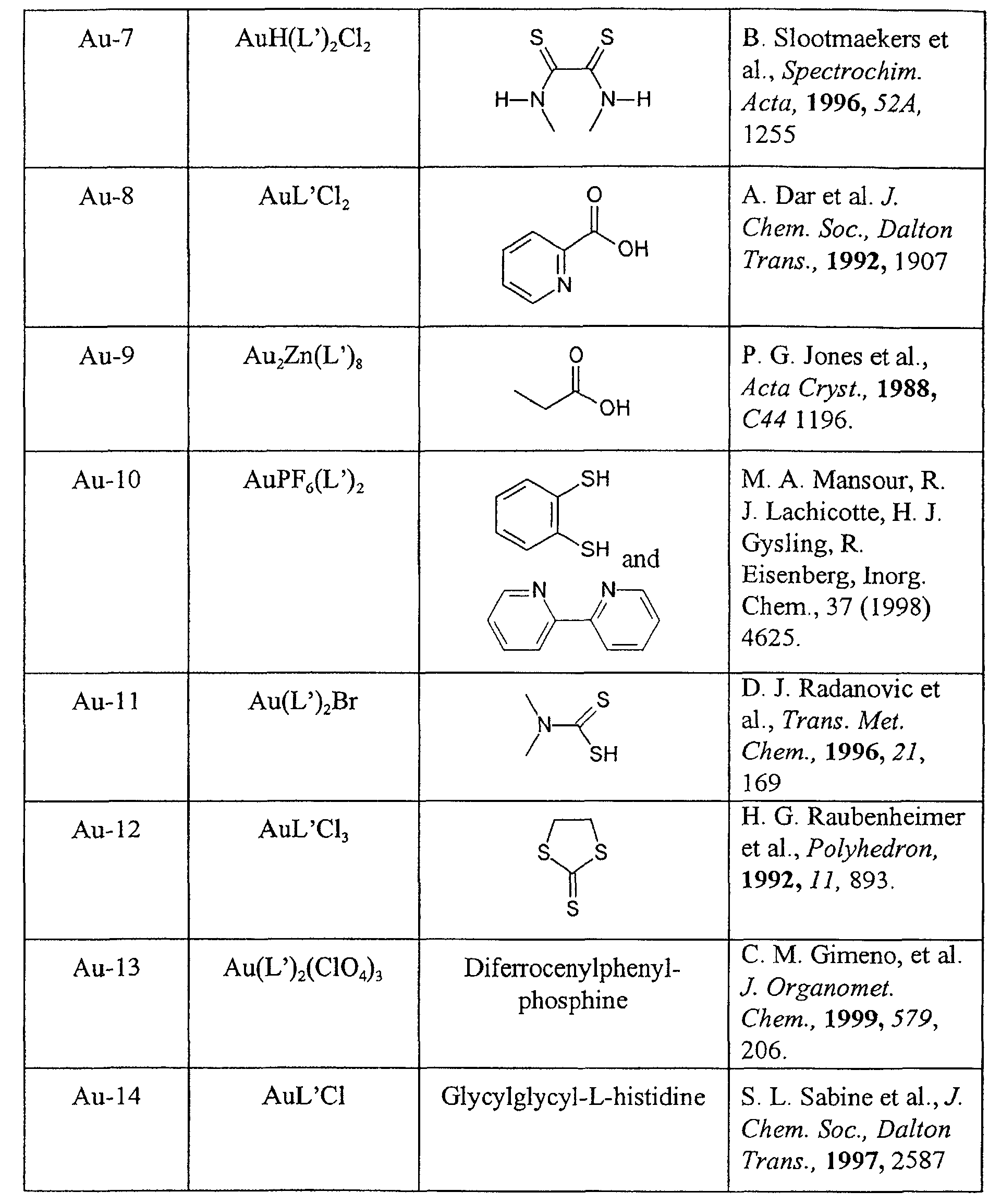
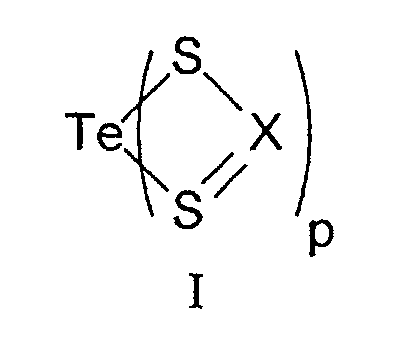
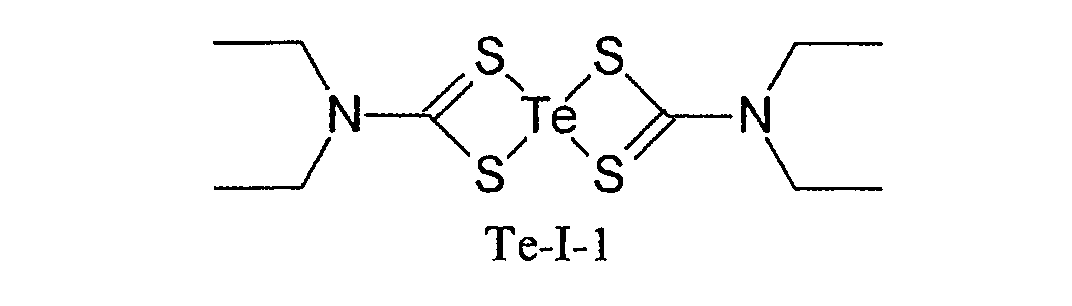

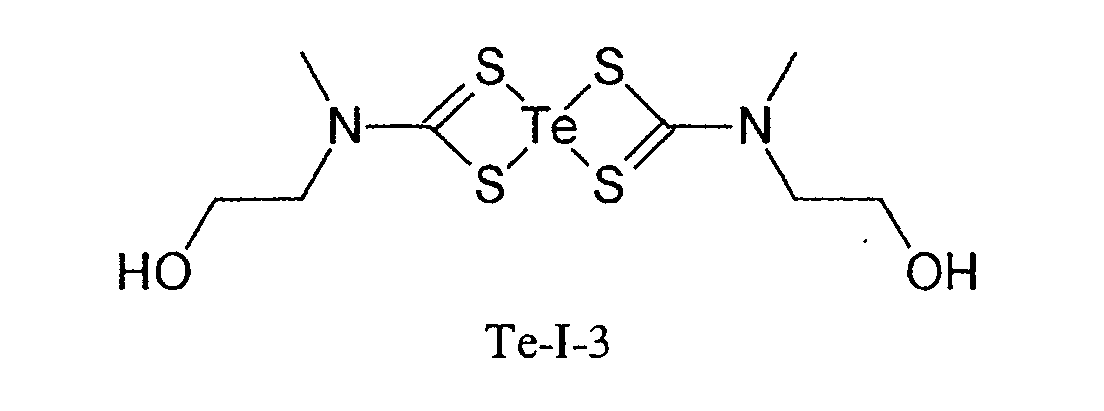
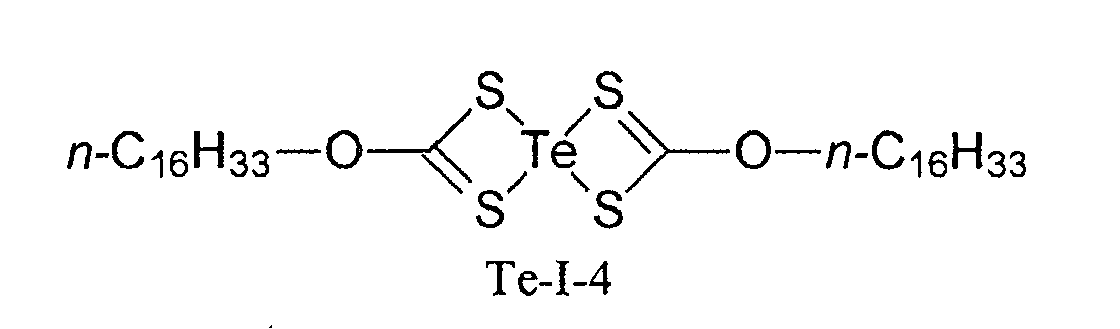


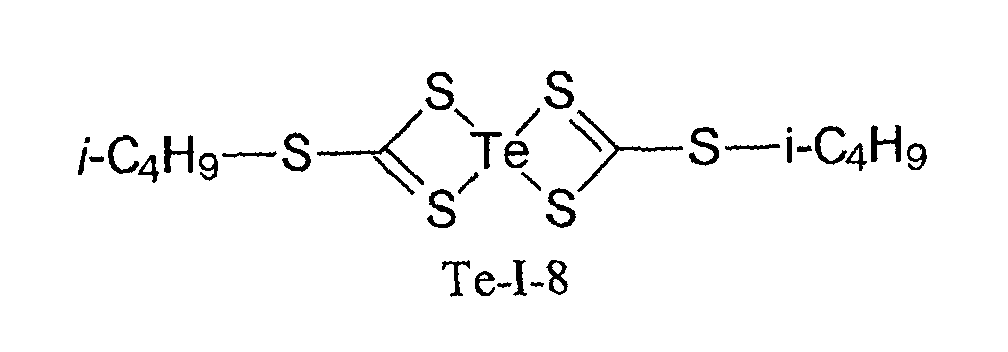


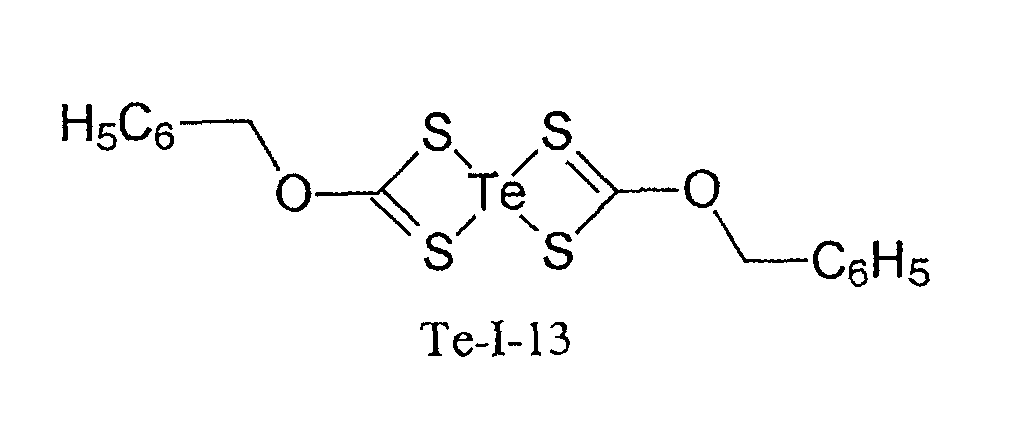
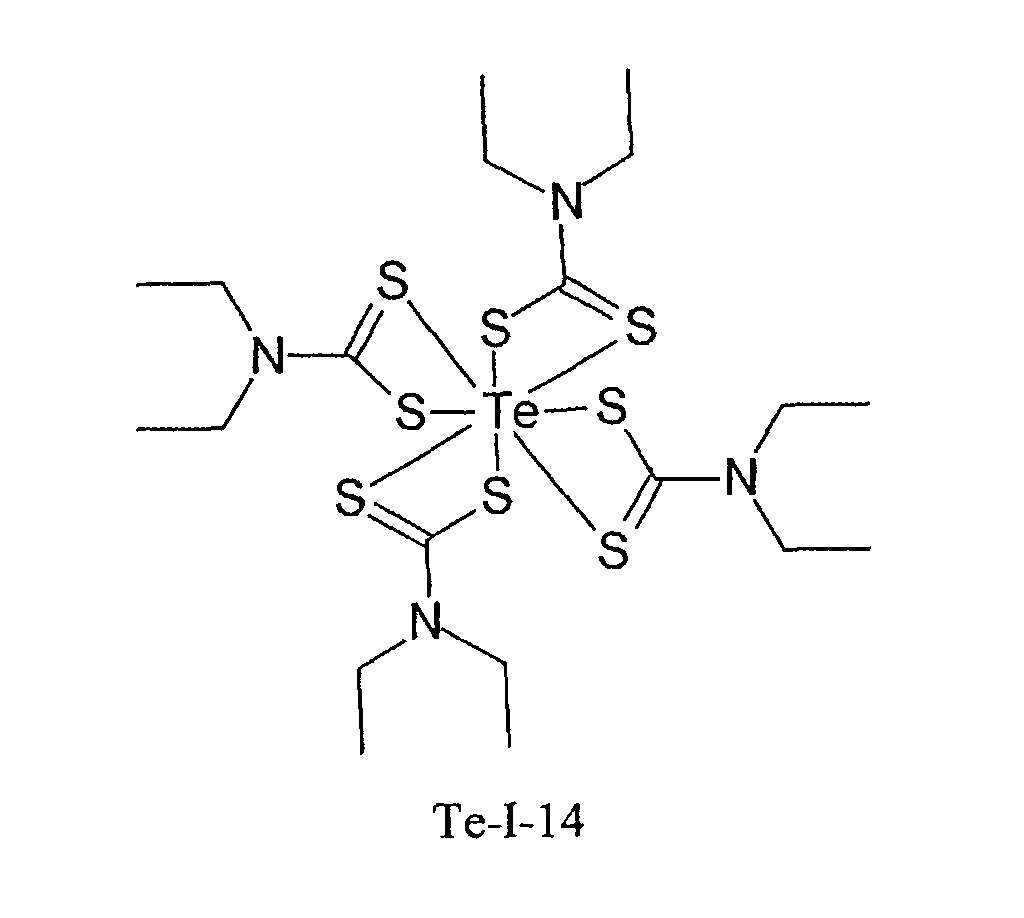


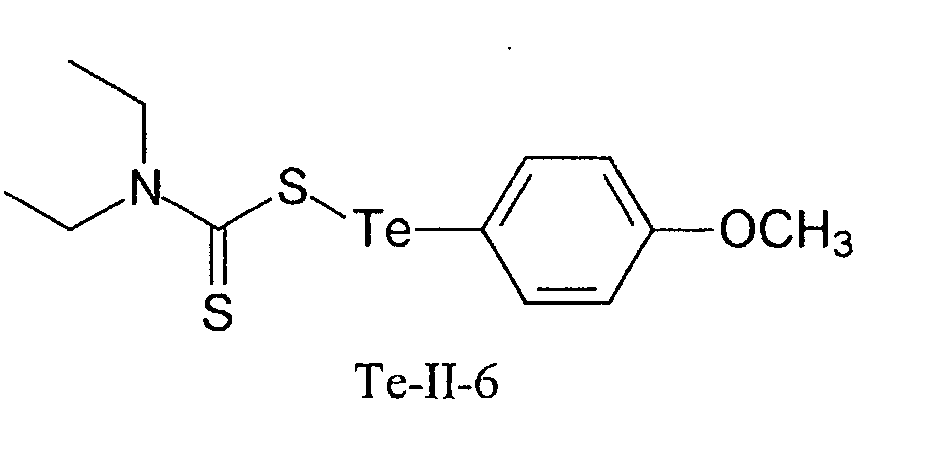
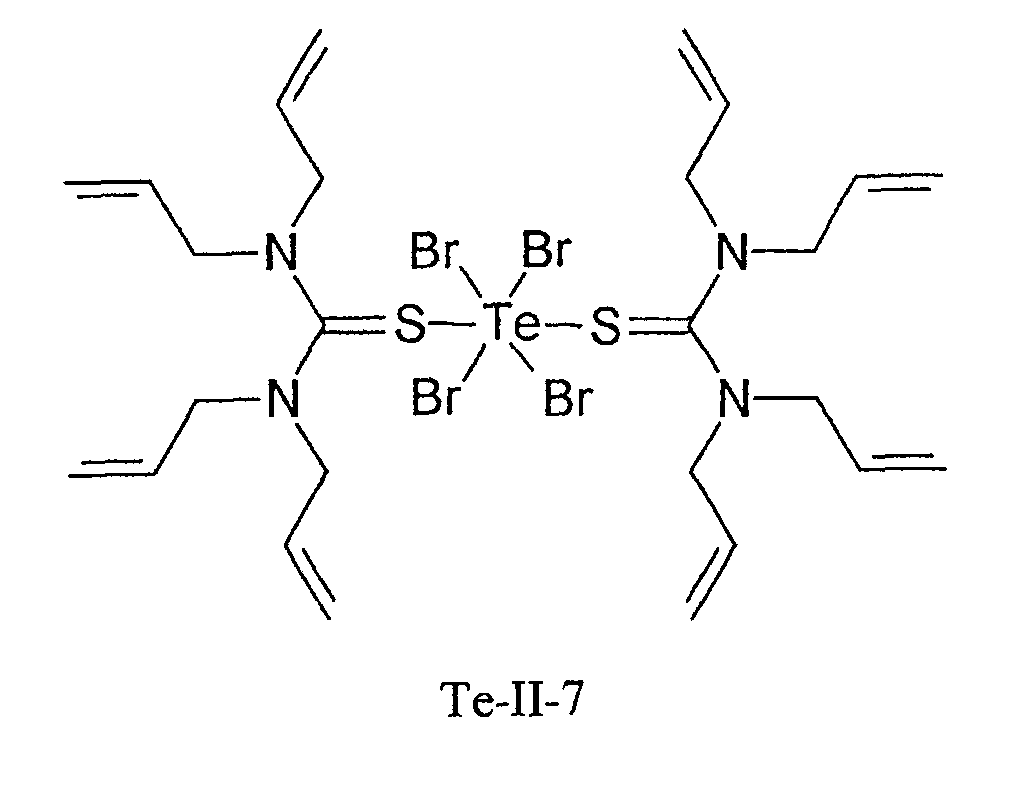

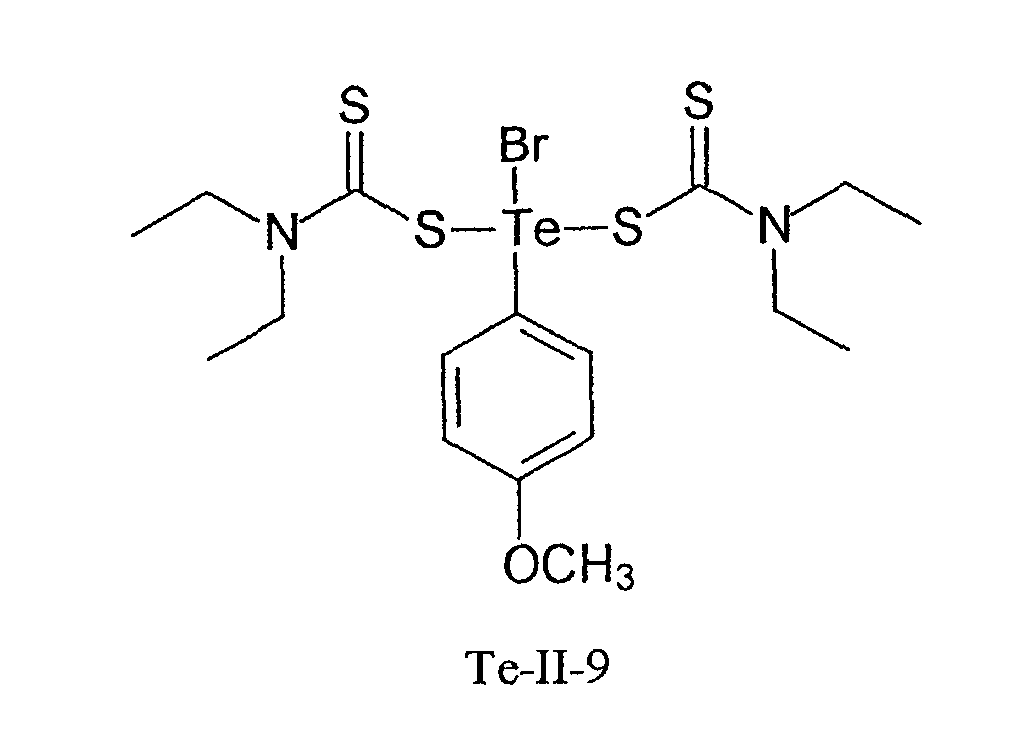
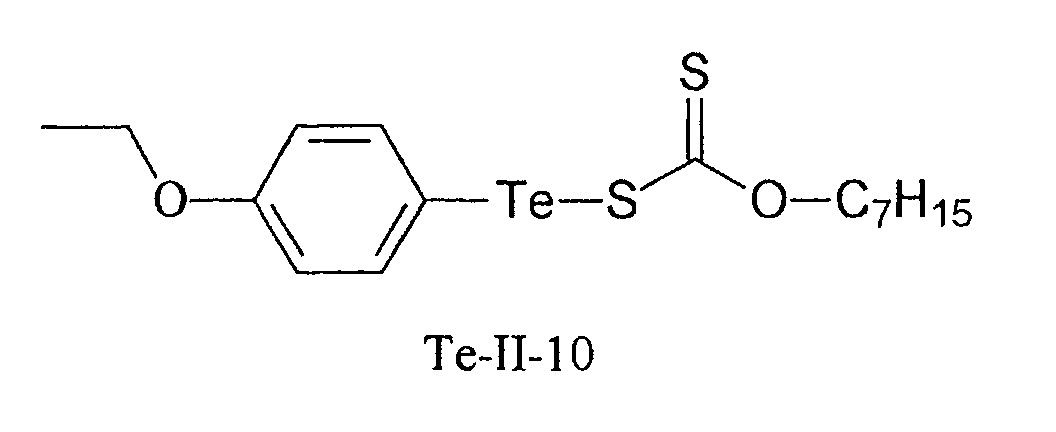

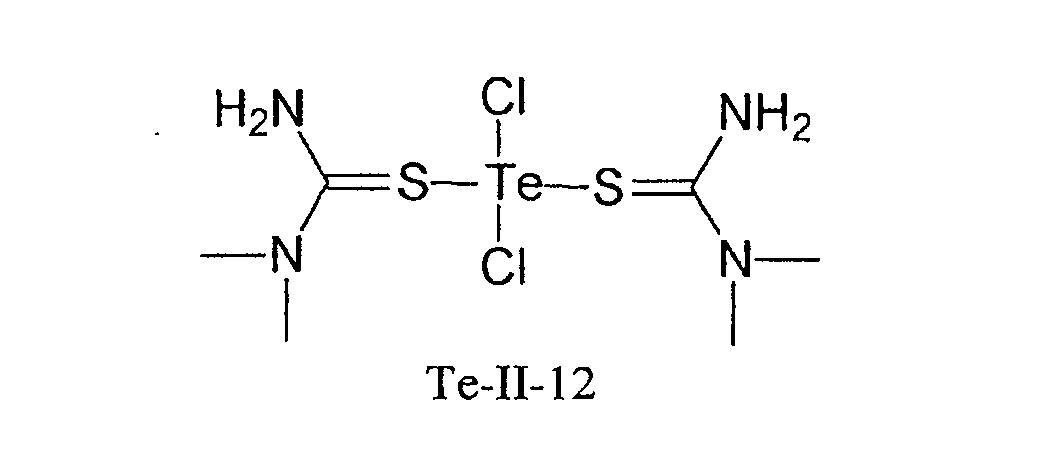


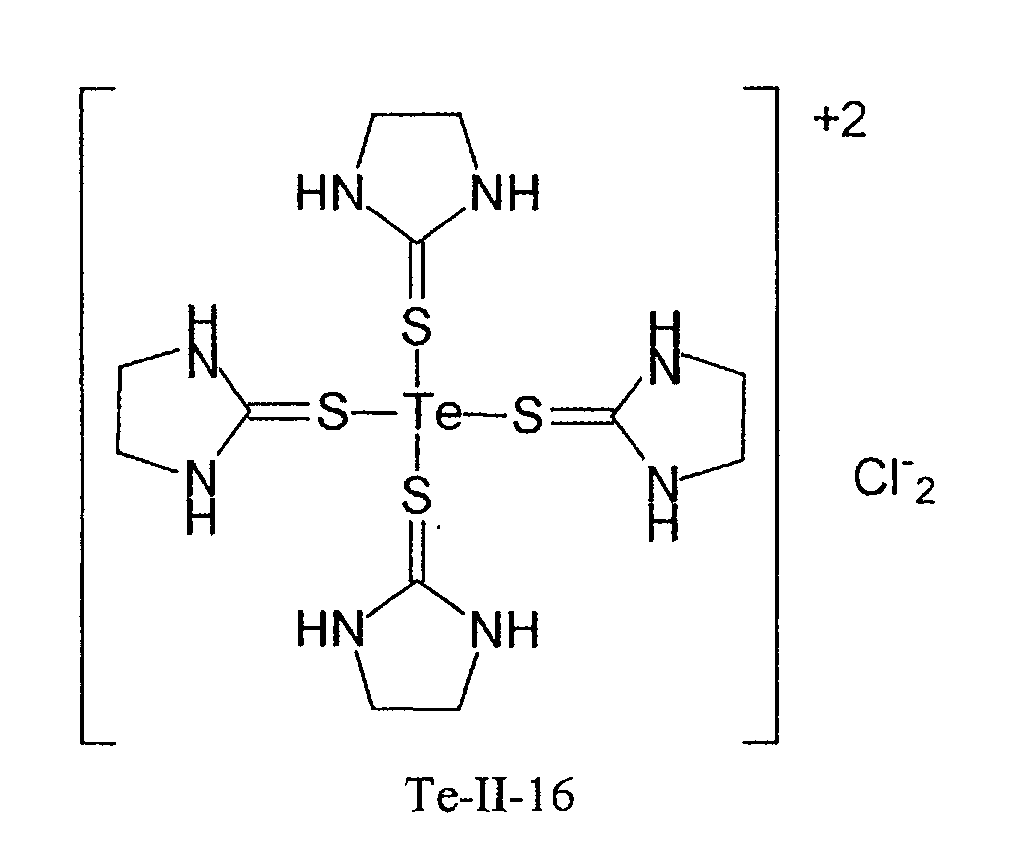
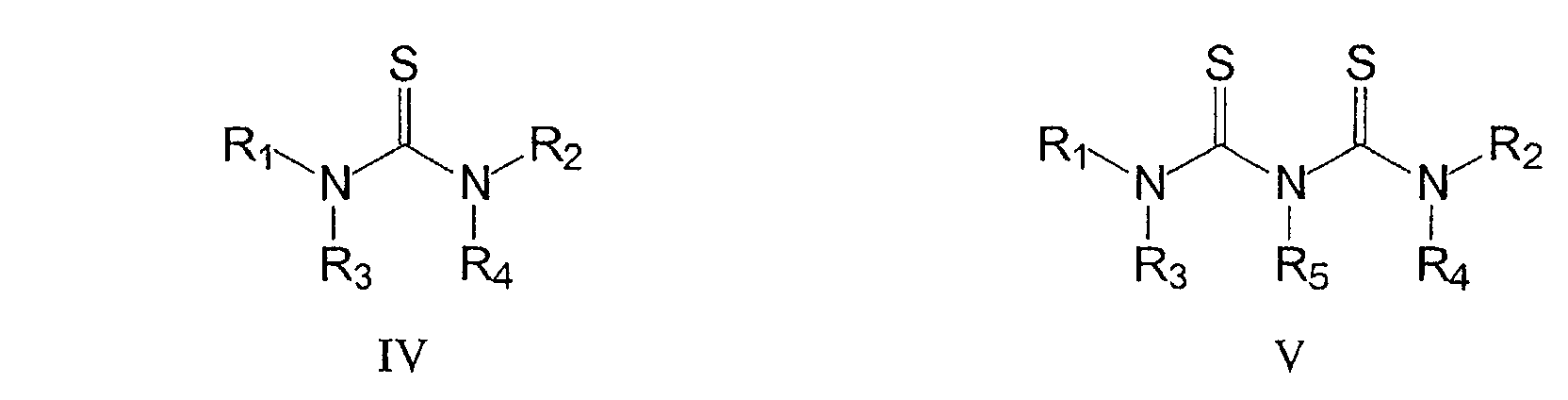
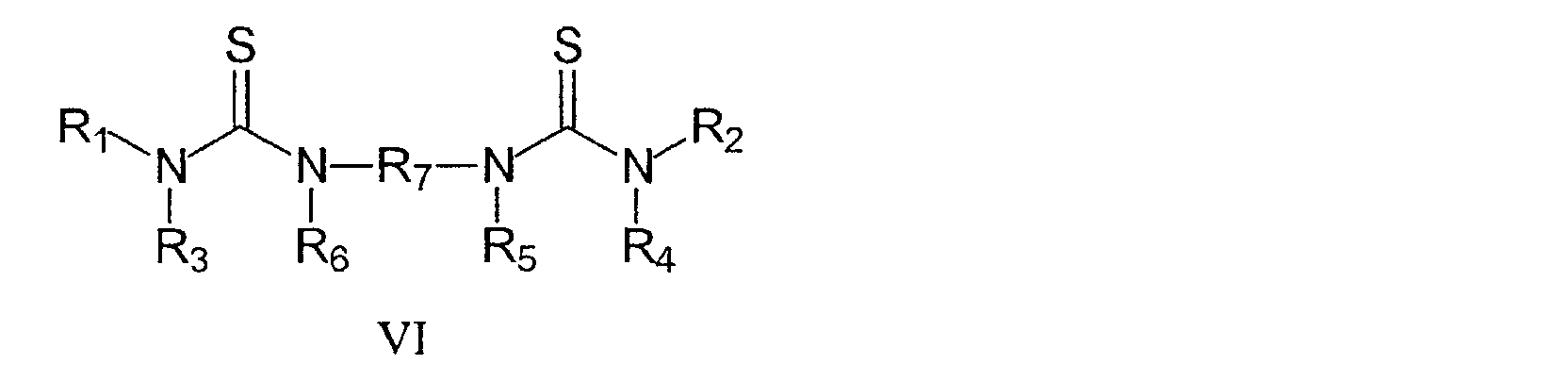


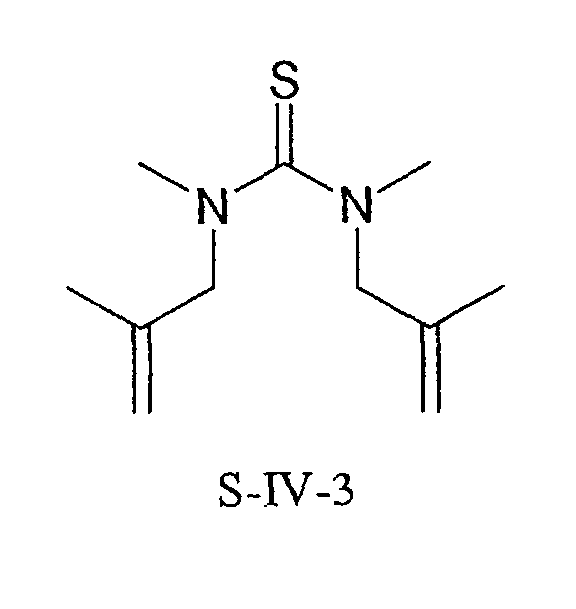
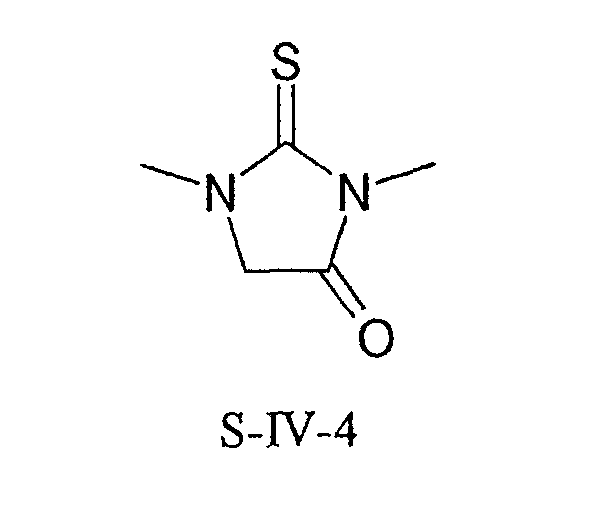
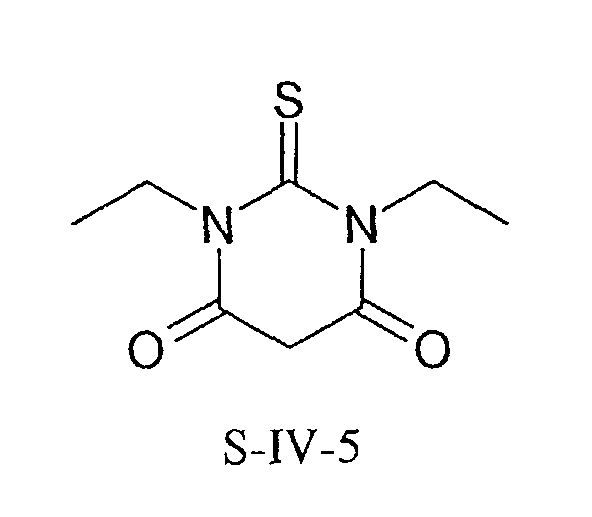


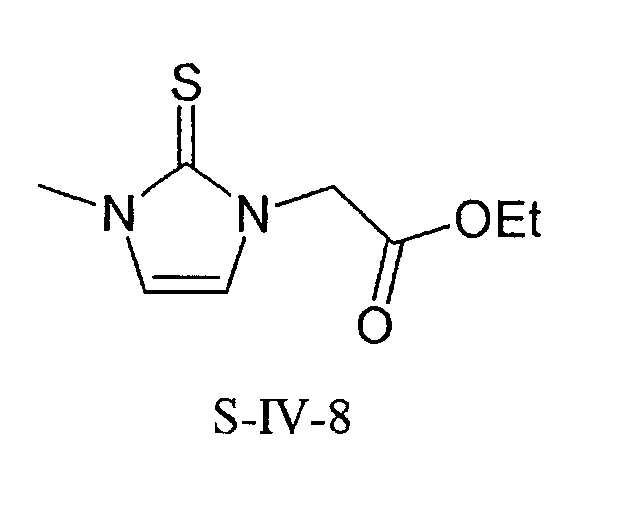
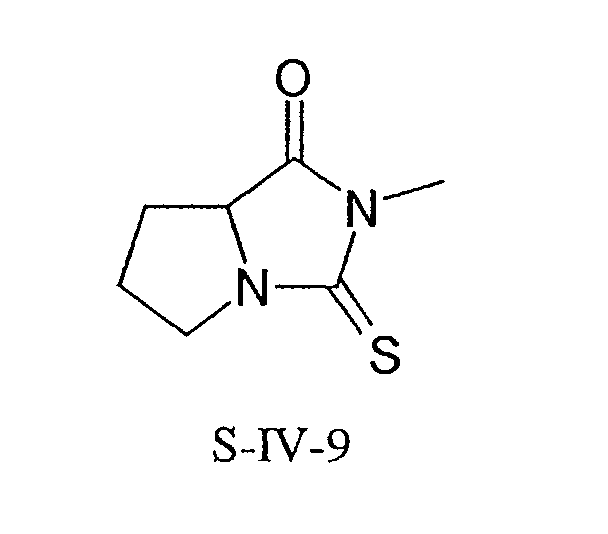
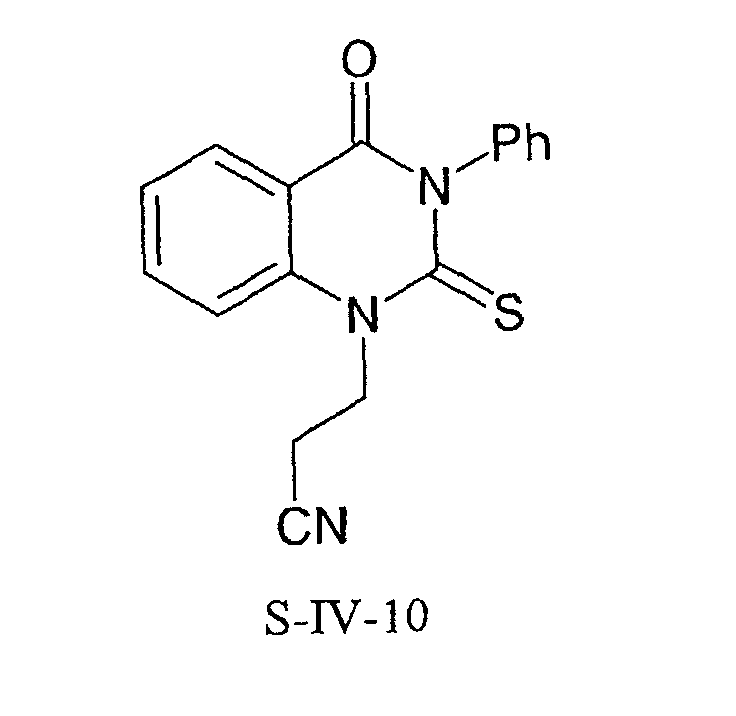

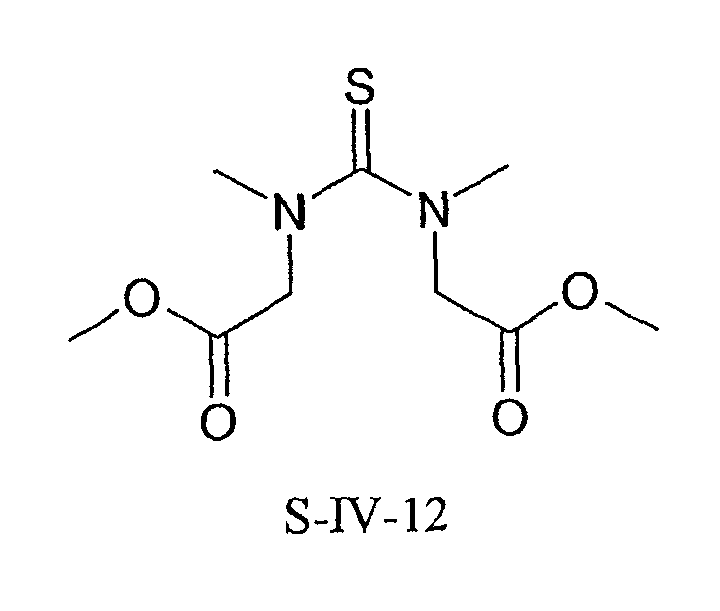


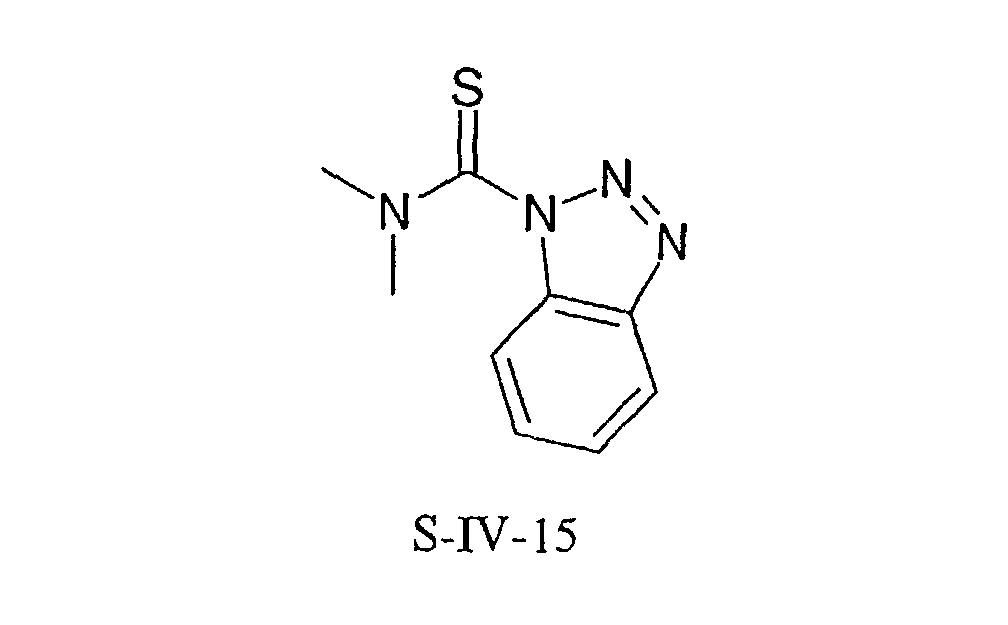

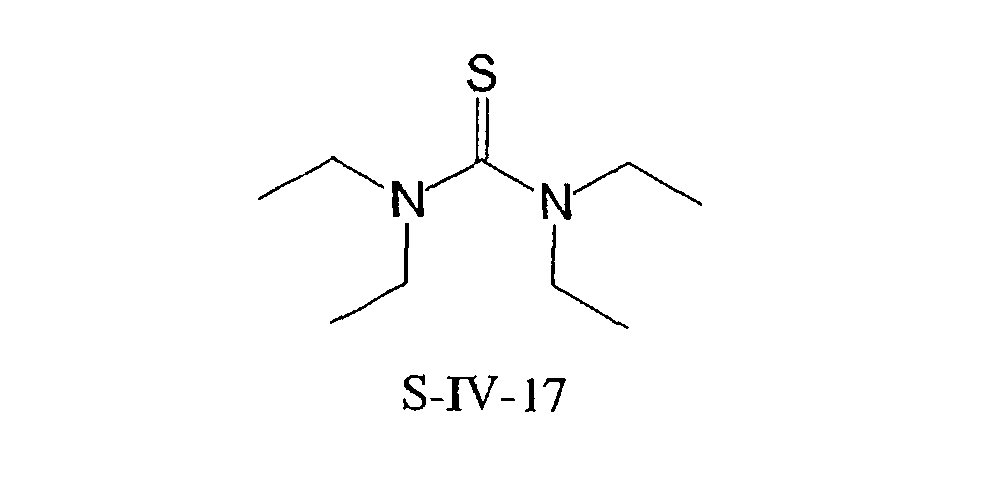
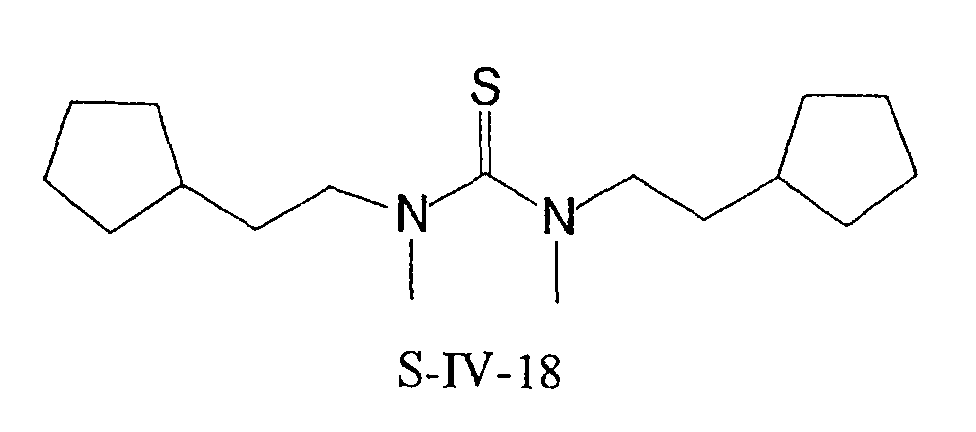
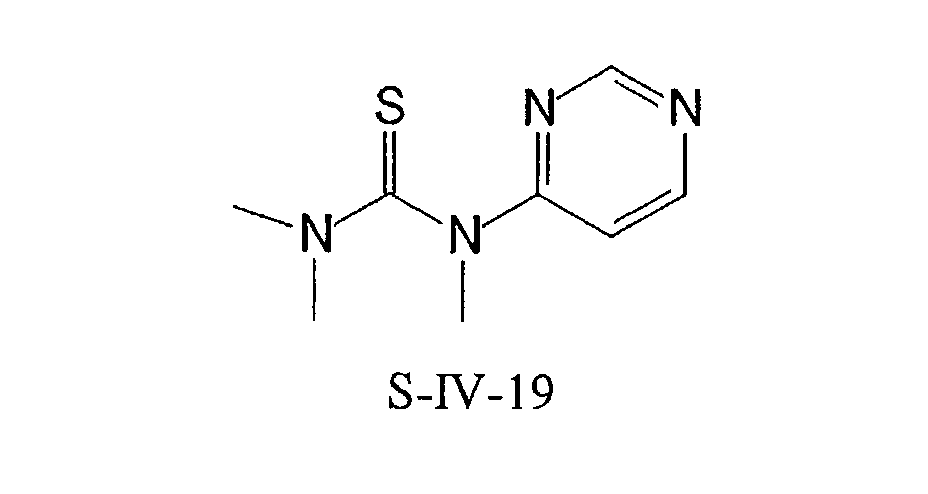
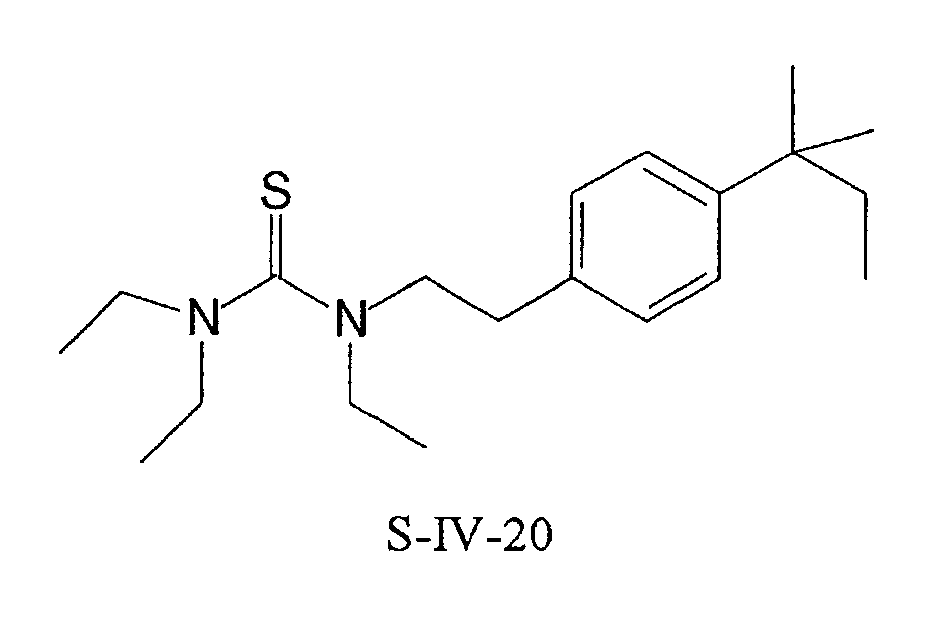
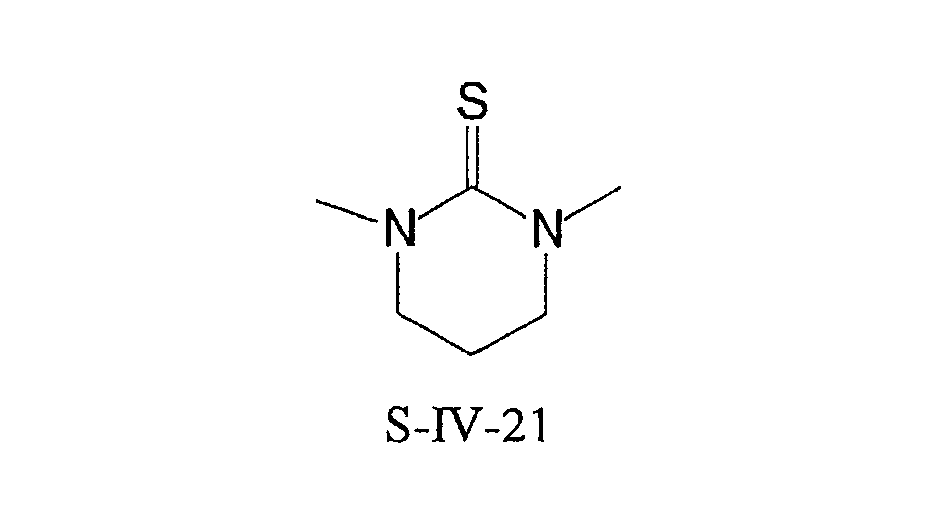
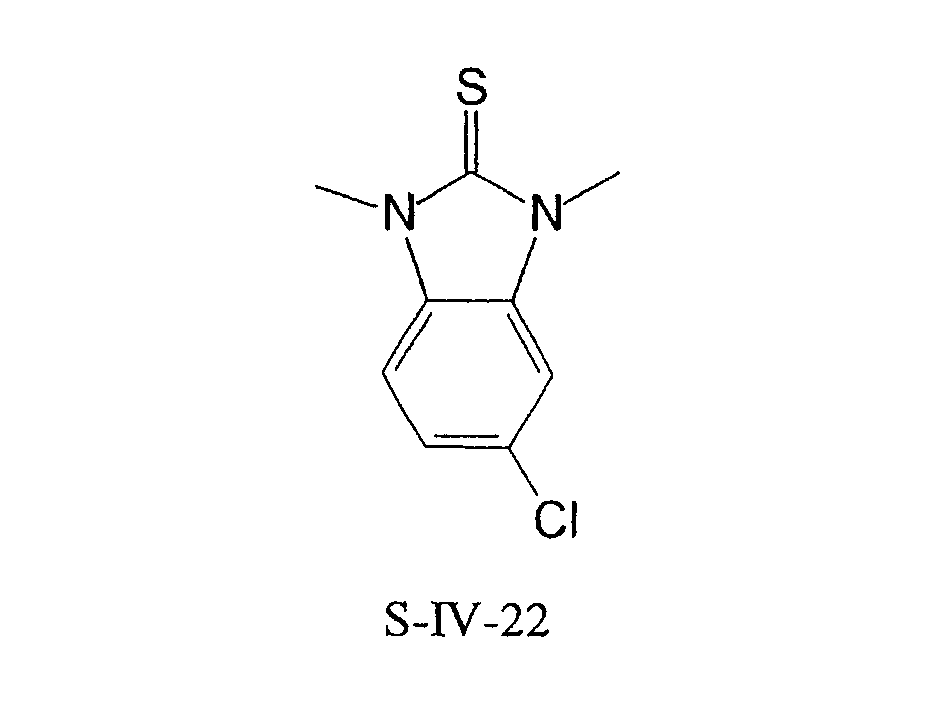
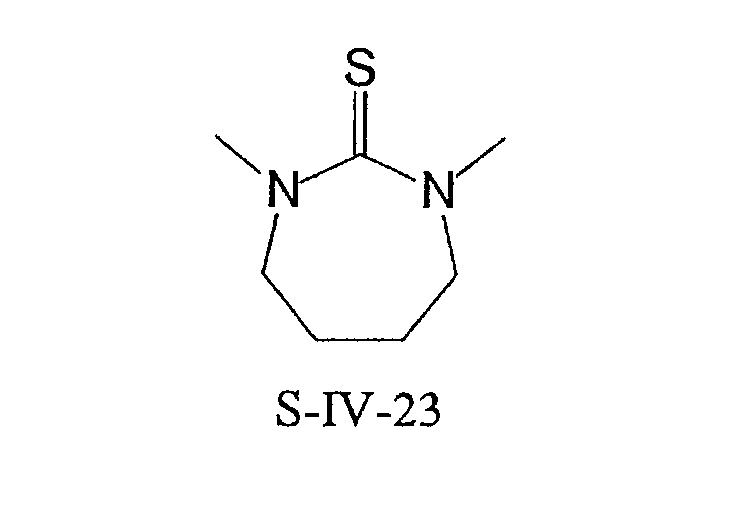
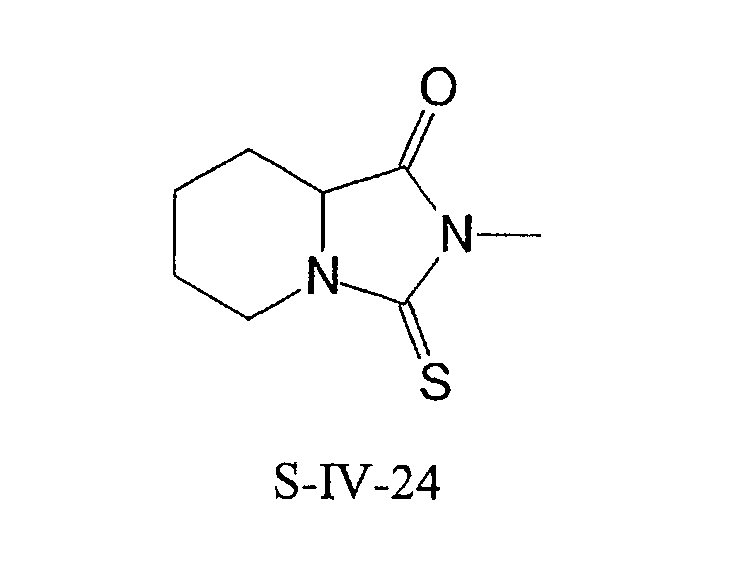


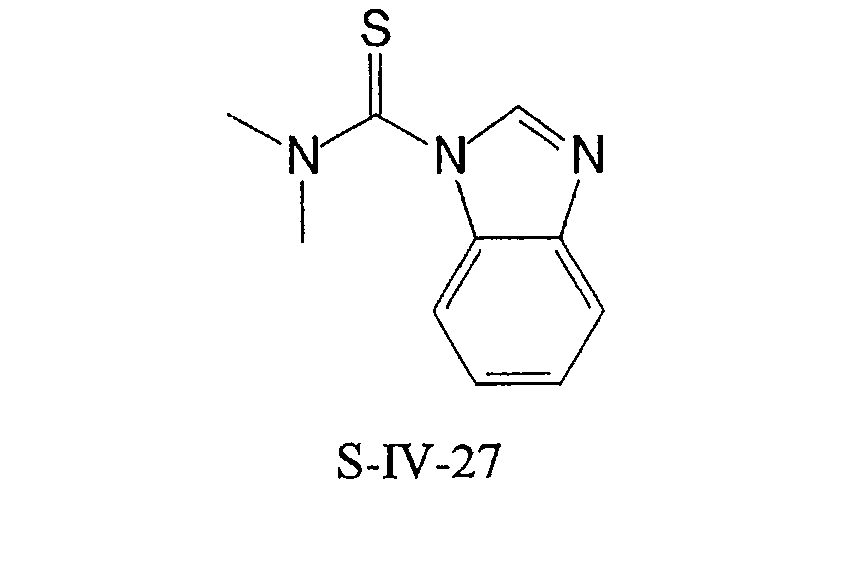
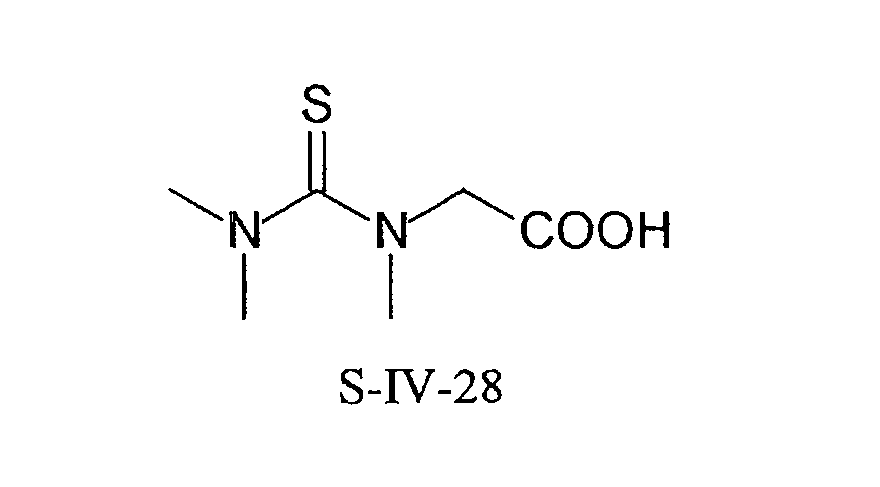
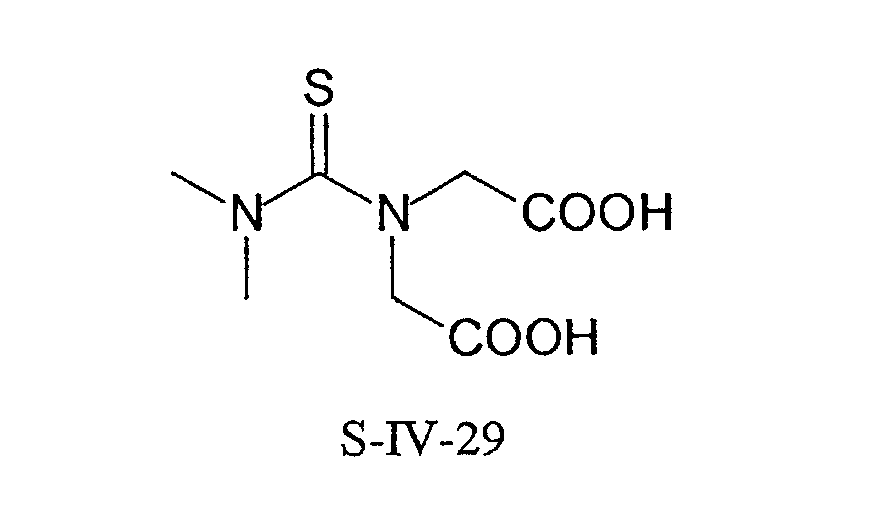
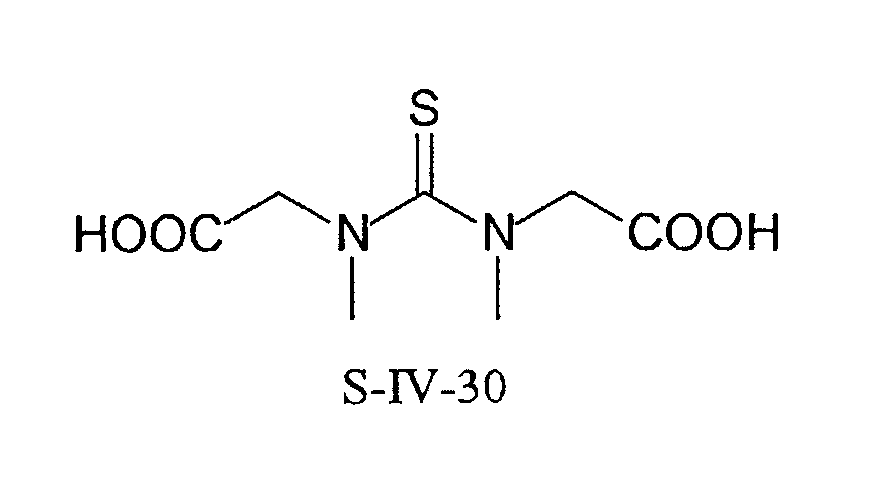

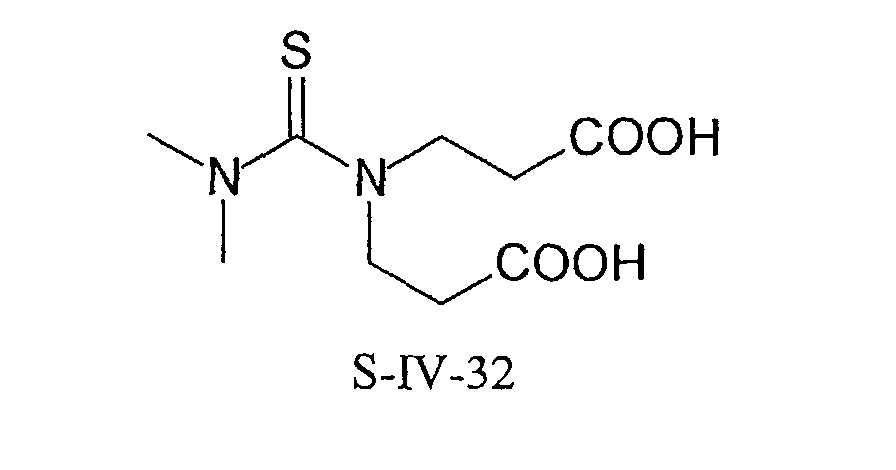


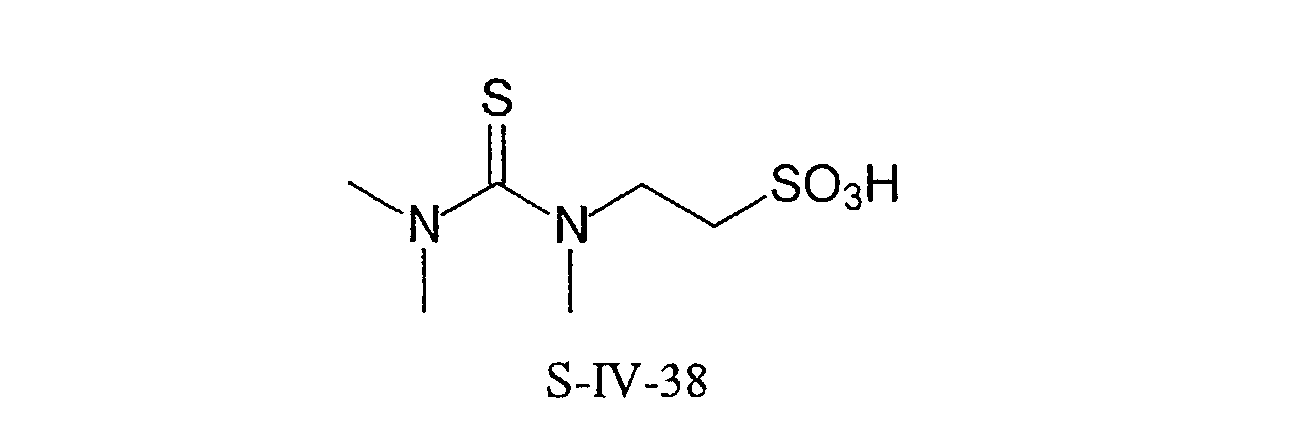


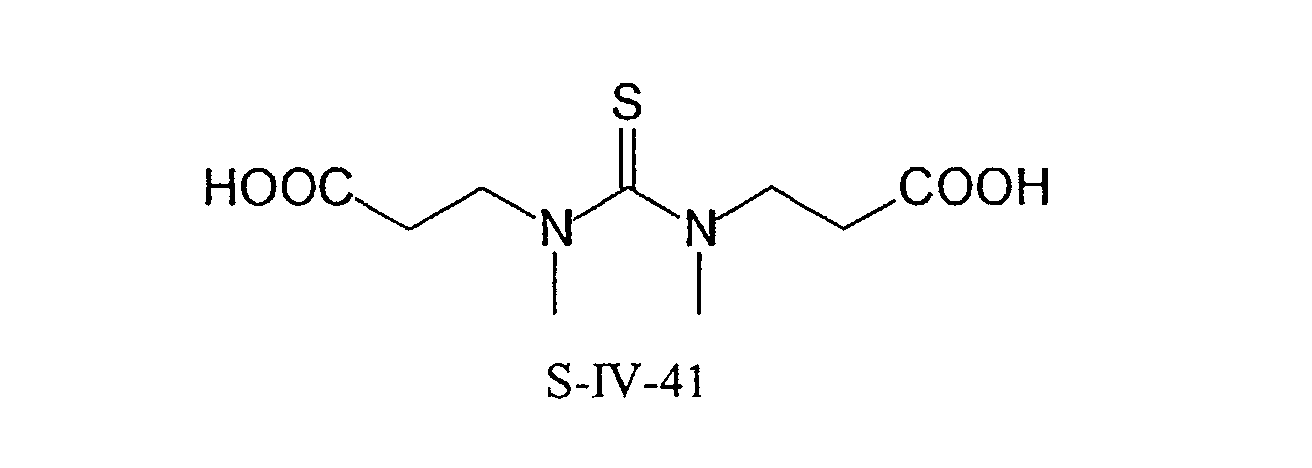
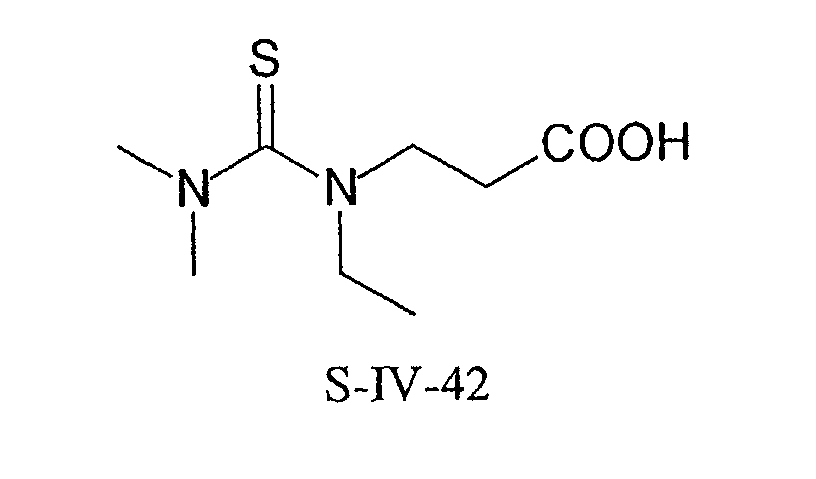


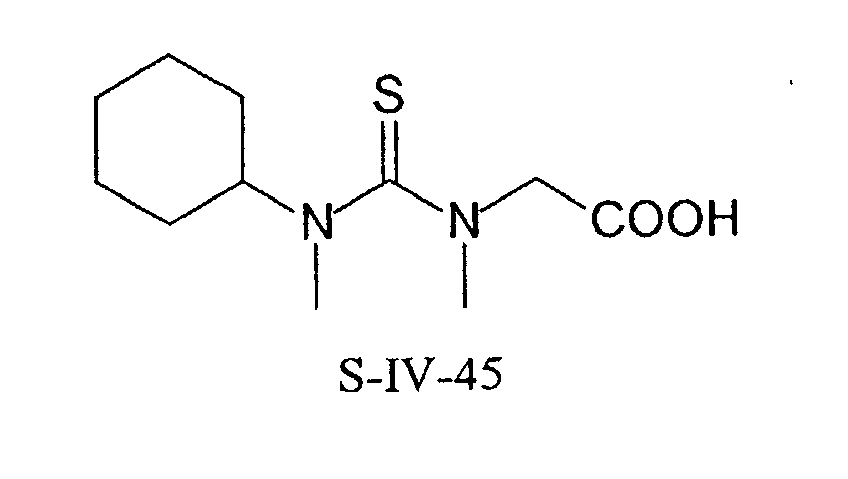
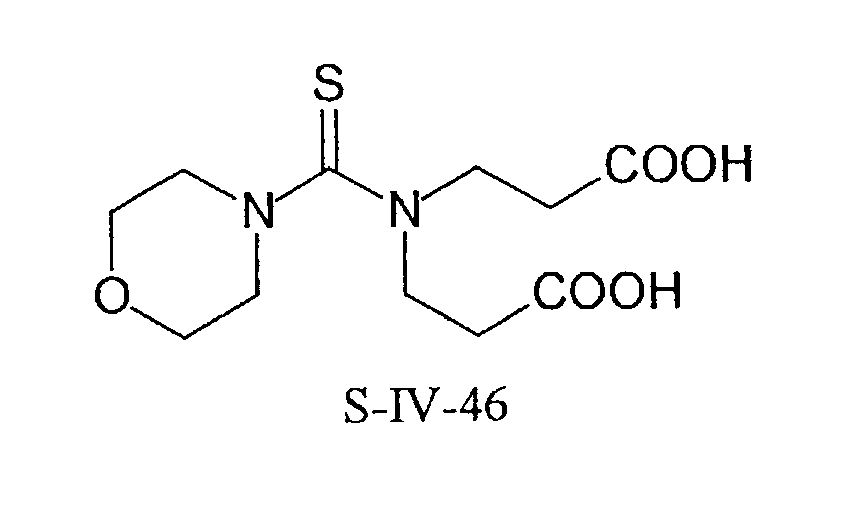


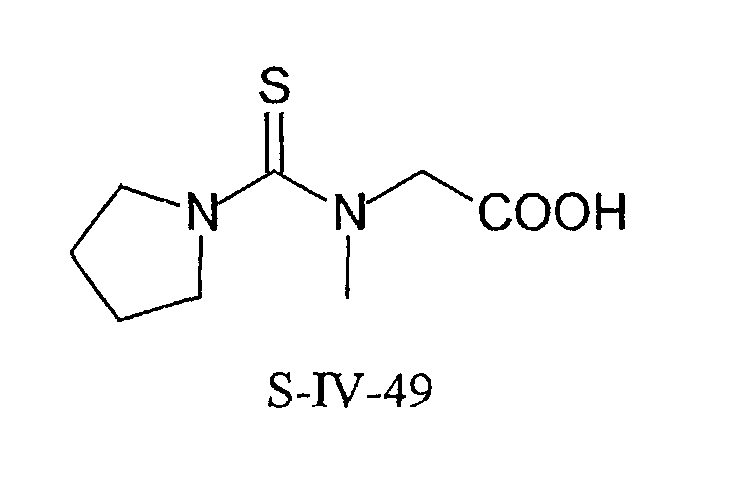
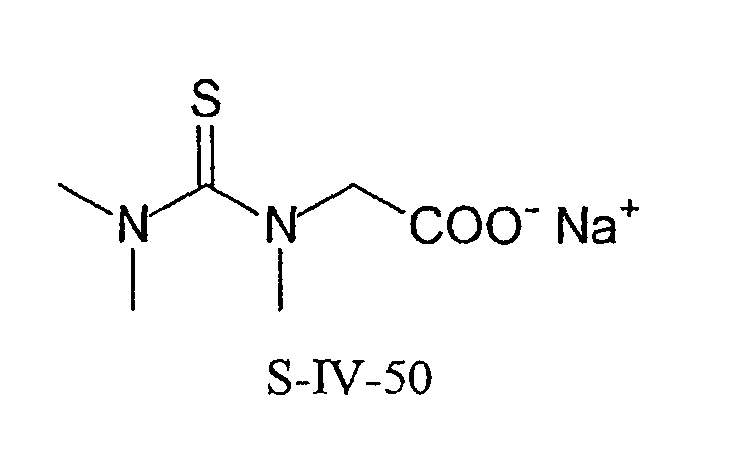
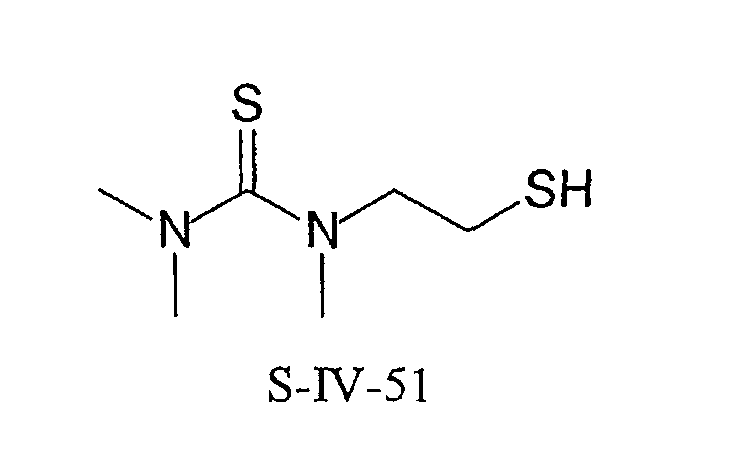
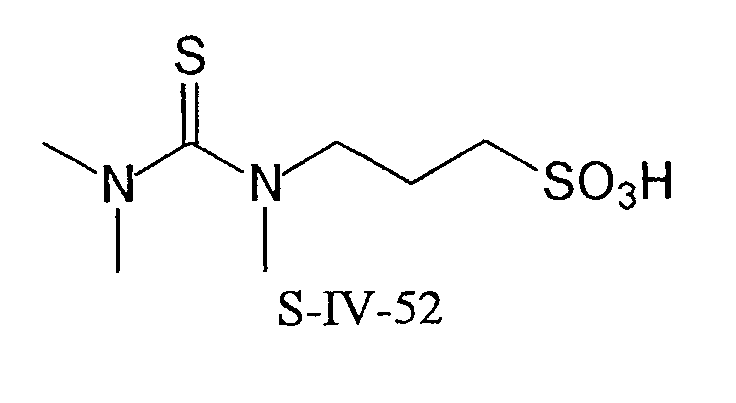


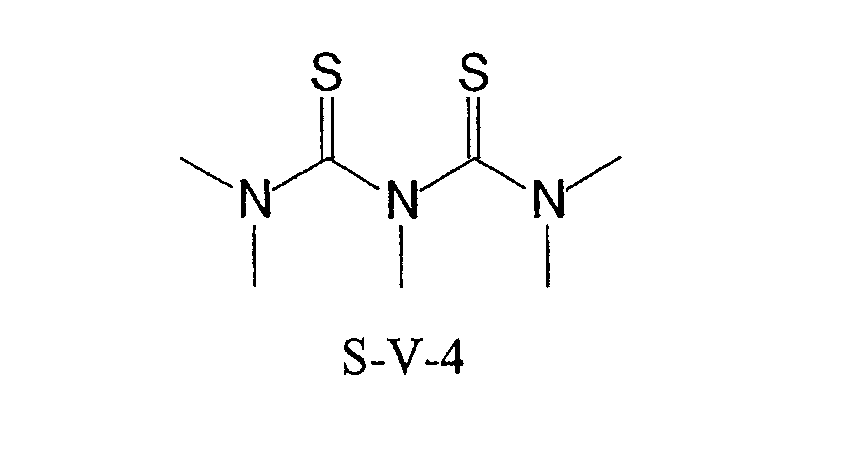
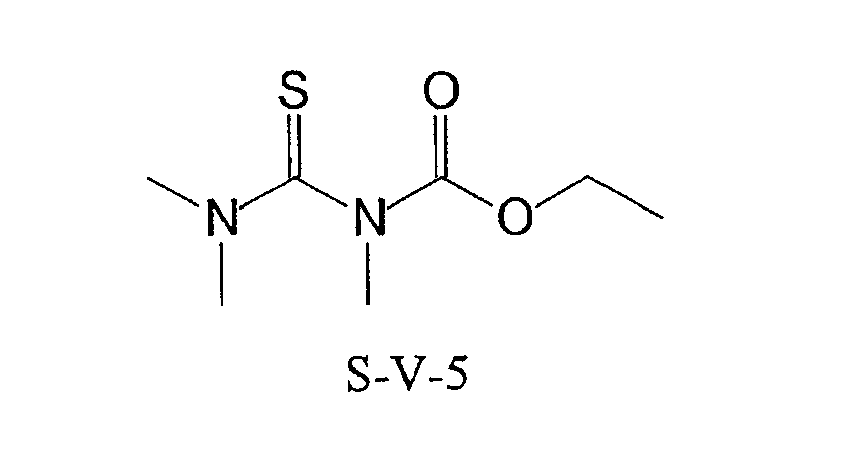

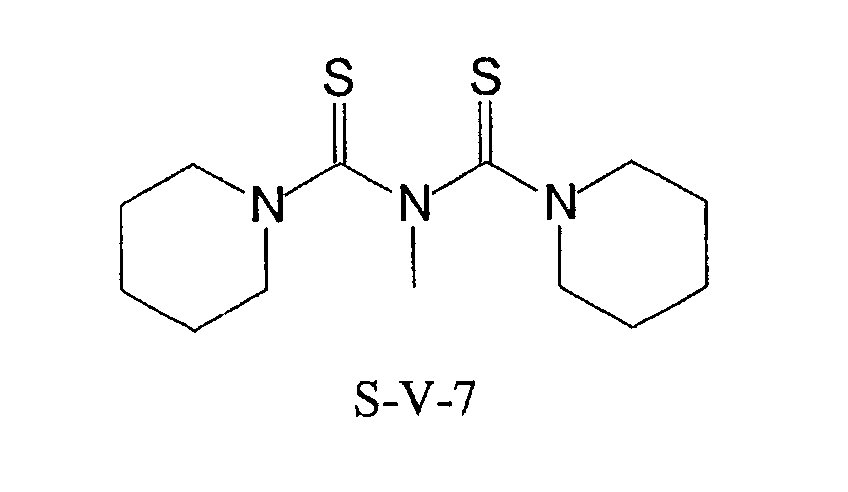


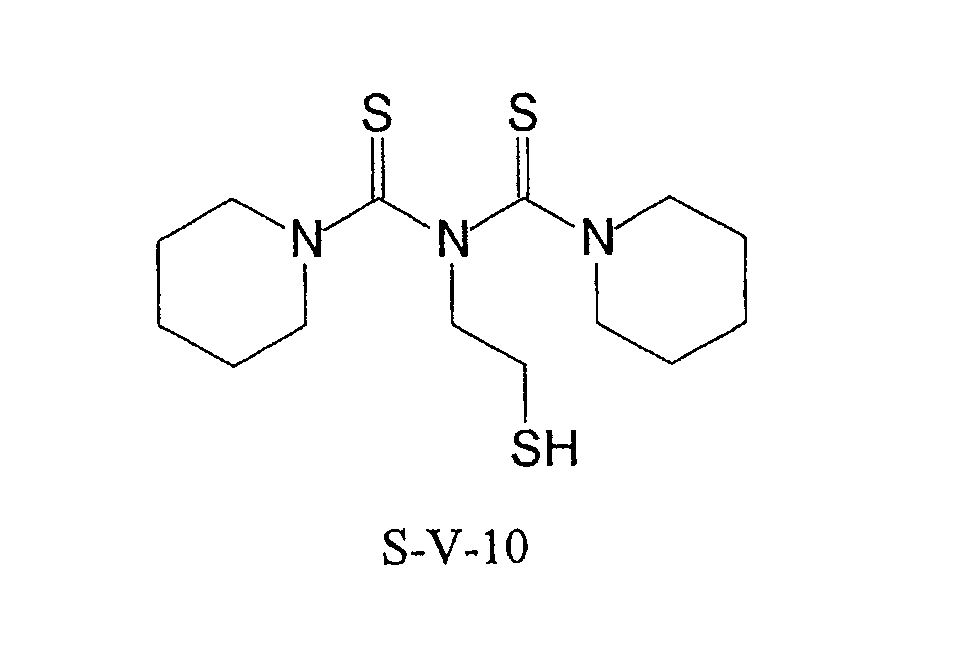
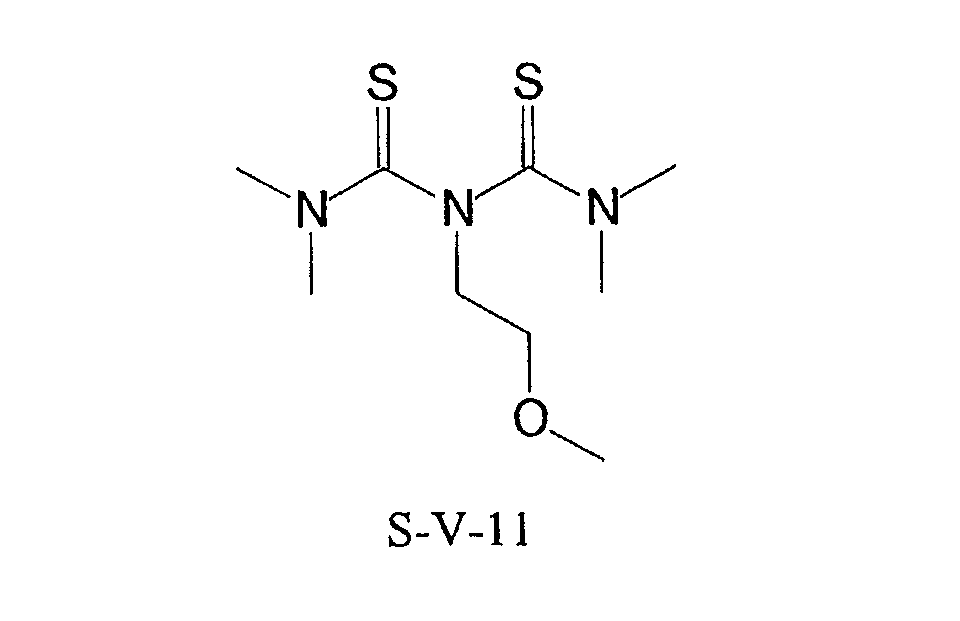


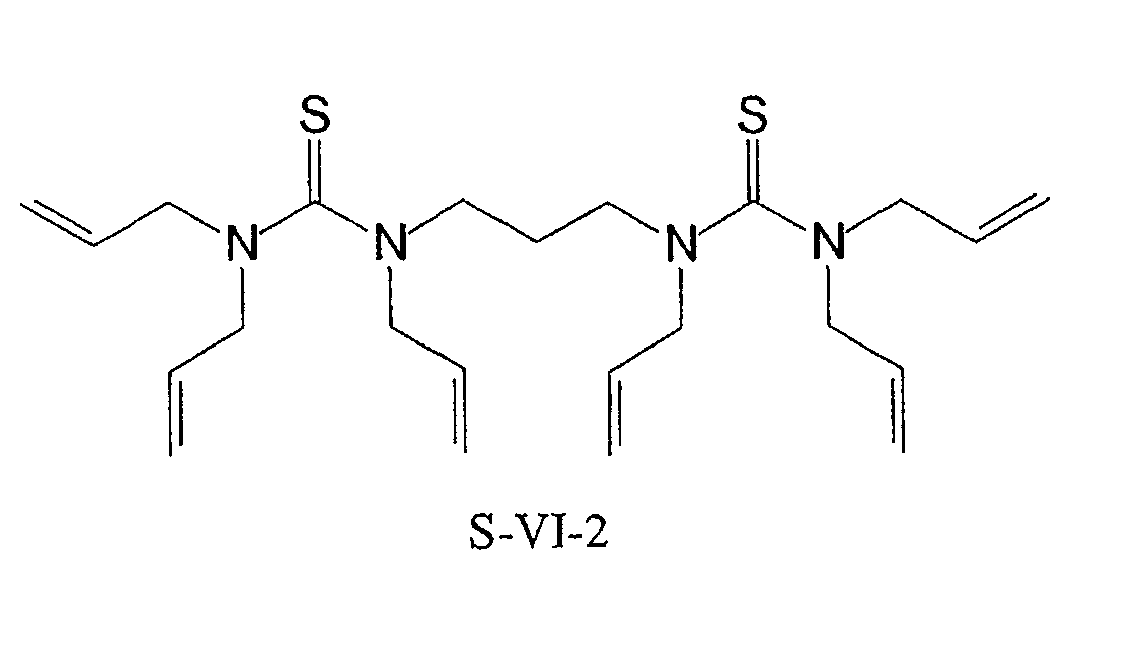


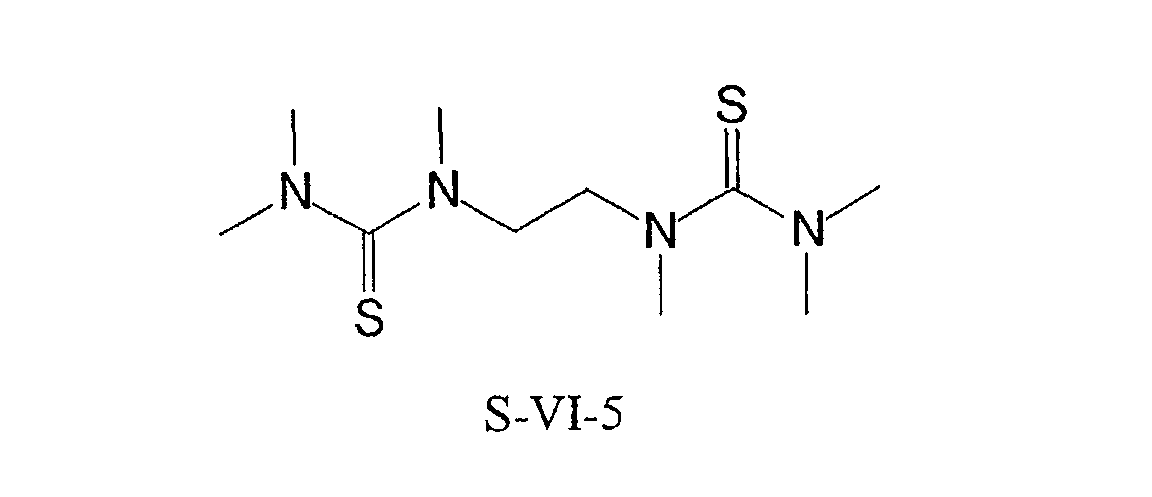
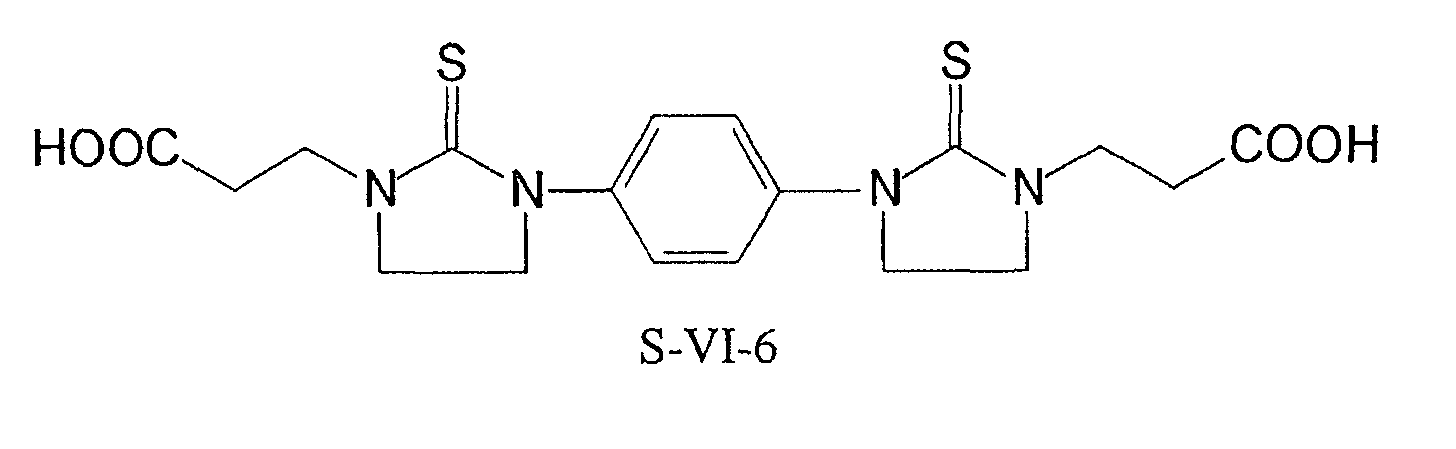

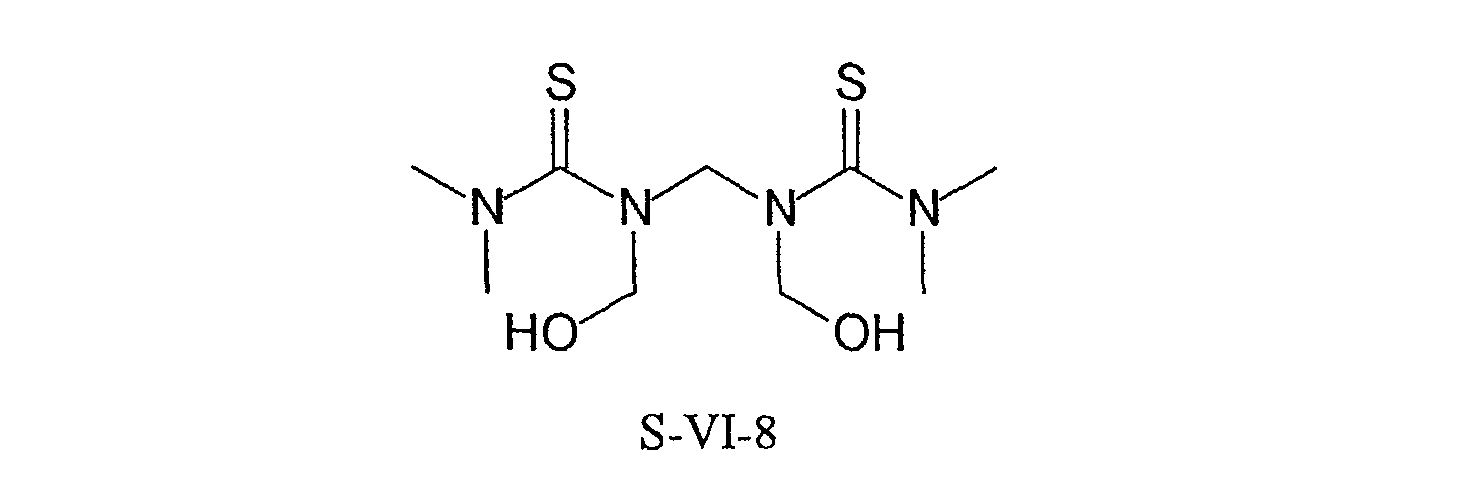


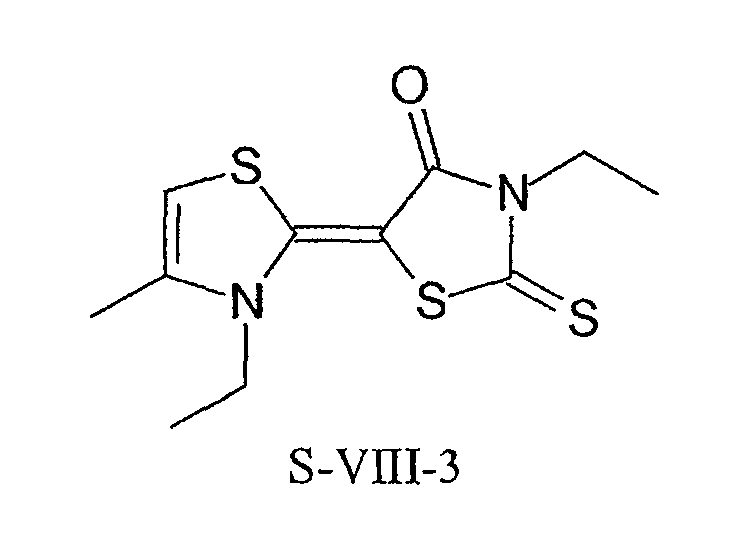


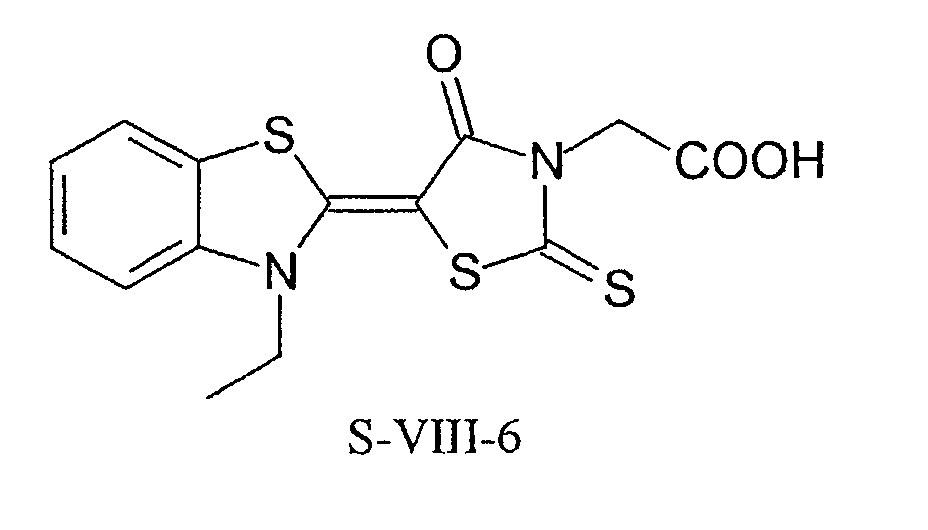

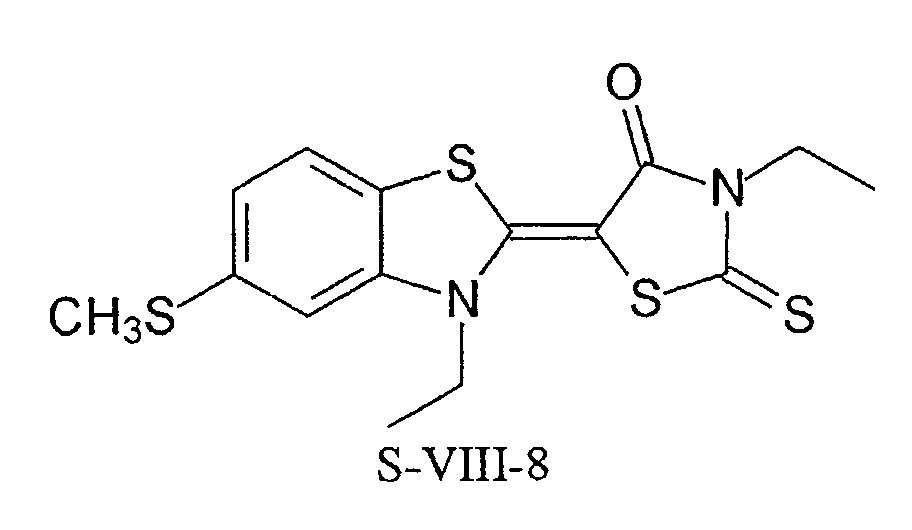


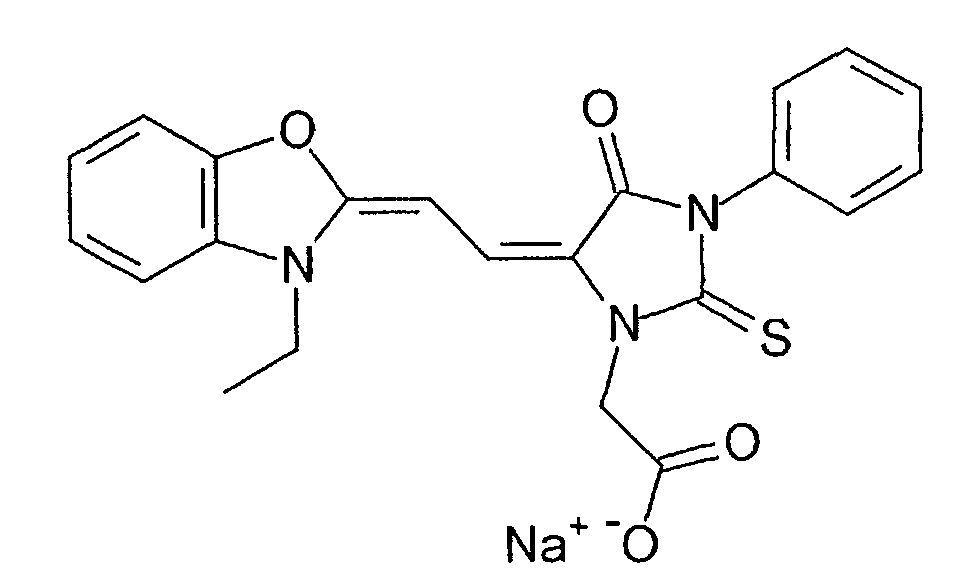
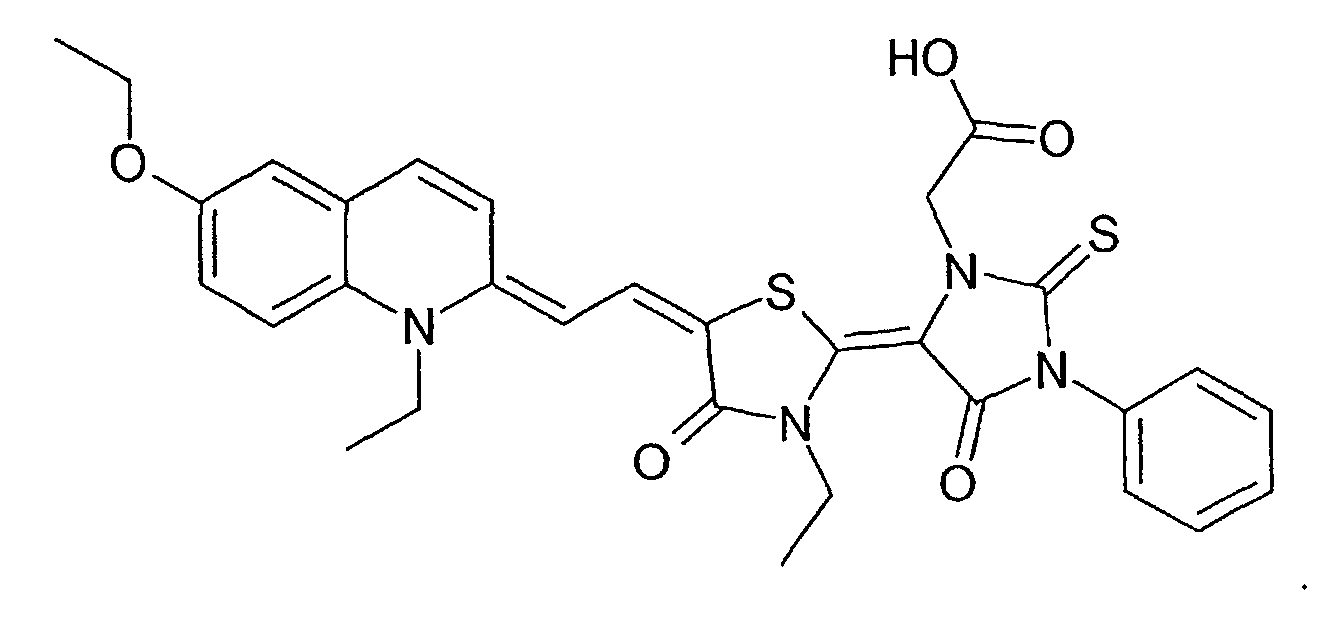
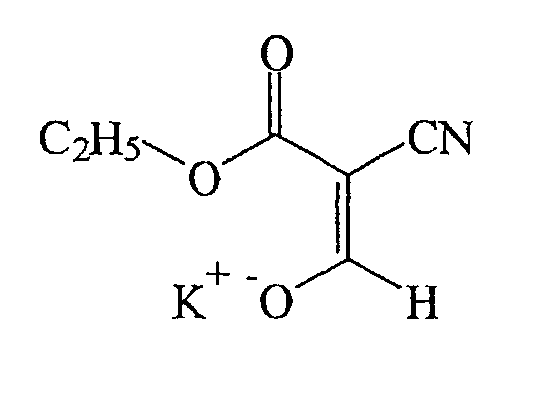

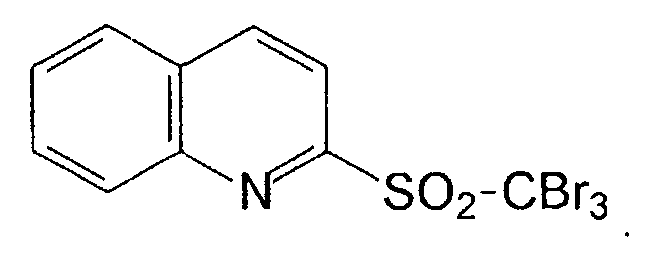

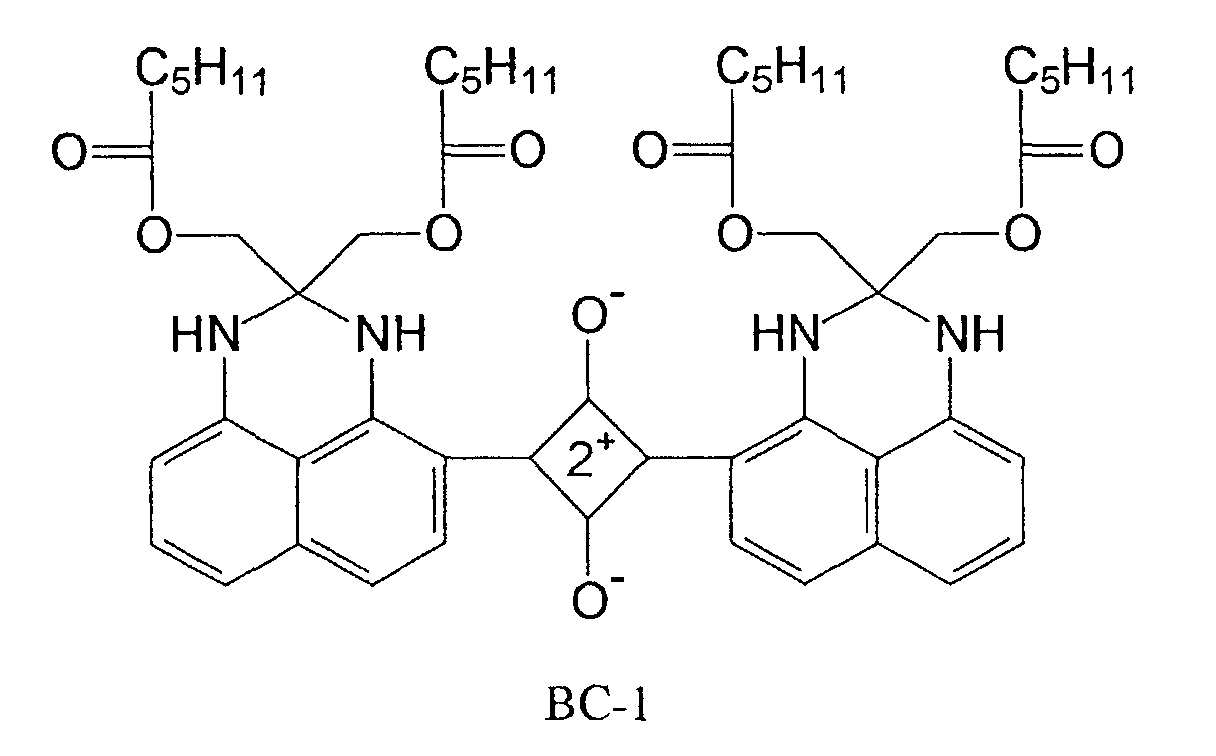

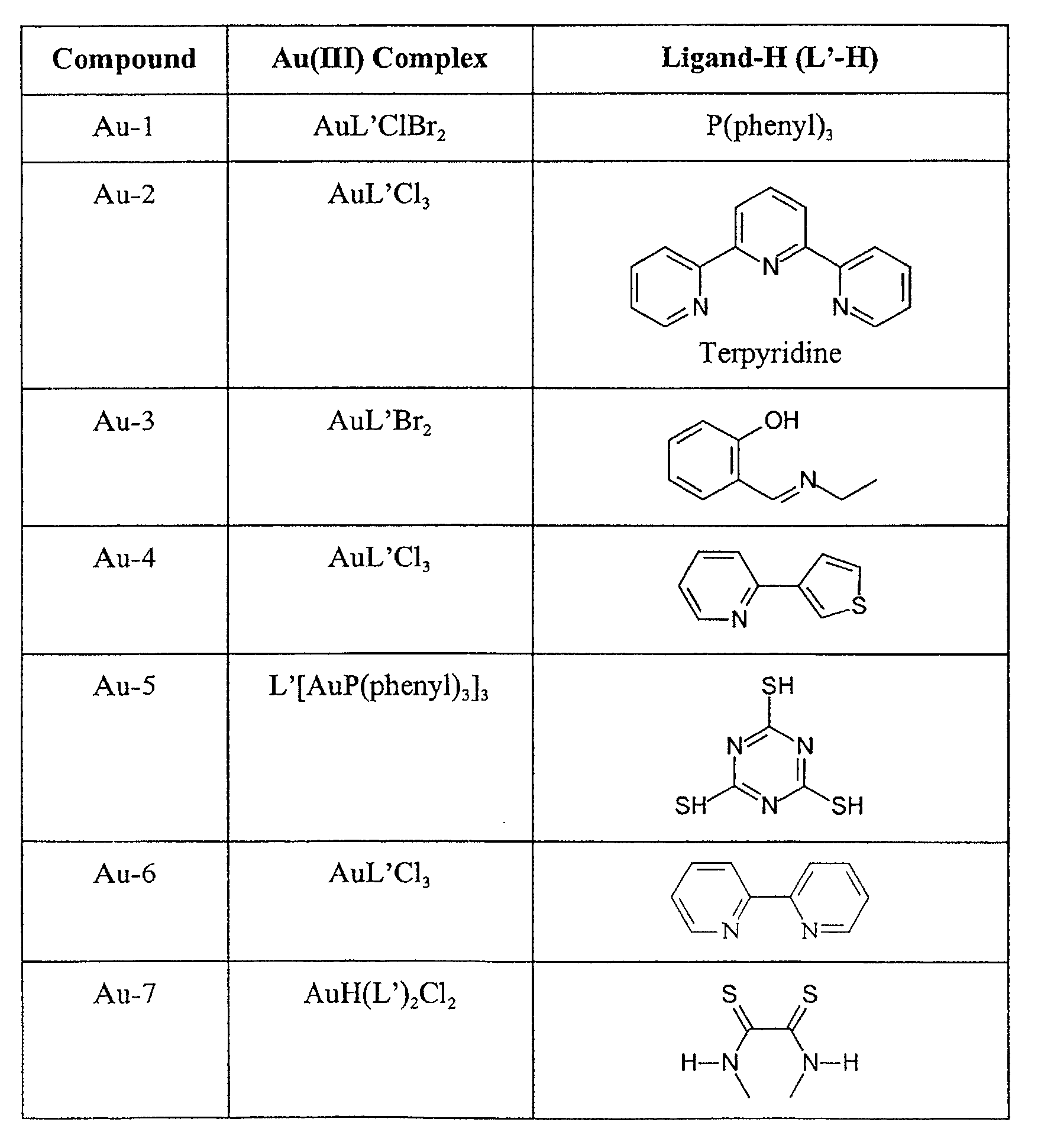

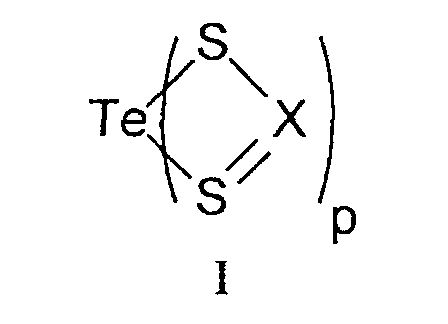
 wherein:
 in Structure IV, R1, R2, R3 and R4 are independently hydrogen, alkyl, cycloalkyl, allyl, alkenyl, alkynyl, aryl or heterocyclic groups, or R1 and R2 taken together, R3 and R5 taken together, R1 and R3 taken together or R2 and R4 taken together, can form a 5- to 7-membered heterocyclic ring,in Structure V, R1, R2, R3, R4 and R5 are independently hydrogen, alkyl, cycloalkyl, allyl, alkenyl, alkynyl, aryl or heterocyclic groups, or R3 and R5 taken together, can form a substituted or unsubstituted 5- to 7-membered heterocyclic ring, andin Structure VI, R1, R2, R3, R4, R5, and R6 are independently hydrogen, alkyl, cycloalkyl, allyl, alkenyl, alkynyl, aryl or heterocyclic groups, or R3 and R6 taken together, R4 and R5 taken together, R1 and R3 taken together, R2 and R4 taken together, or R5 and R6 taken together, can form a substituted or unsubstituted 5- to 7-membered heterocyclic ring, and R7 is a divalent aliphatic or alicyclic linking group.