EP1231741A2 - Universal mobile telecommunications system (UMTS) quality of service (QoS) supporting asymmetric traffic classes - Google Patents
Universal mobile telecommunications system (UMTS) quality of service (QoS) supporting asymmetric traffic classes Download PDFInfo
- Publication number
- EP1231741A2 EP1231741A2 EP01306730A EP01306730A EP1231741A2 EP 1231741 A2 EP1231741 A2 EP 1231741A2 EP 01306730 A EP01306730 A EP 01306730A EP 01306730 A EP01306730 A EP 01306730A EP 1231741 A2 EP1231741 A2 EP 1231741A2
- Authority
- EP
- European Patent Office
- Prior art keywords
- uplink
- downlink
- traffic class
- service
- qos
- Prior art date
- Legal status (The legal status is an assumption and is not a legal conclusion. Google has not performed a legal analysis and makes no representation as to the accuracy of the status listed.)
- Withdrawn
Links
Images



Classifications
-
- H—ELECTRICITY
- H04—ELECTRIC COMMUNICATION TECHNIQUE
- H04W—WIRELESS COMMUNICATION NETWORKS
- H04W28/00—Network traffic management; Network resource management
- H04W28/16—Central resource management; Negotiation of resources or communication parameters, e.g. negotiating bandwidth or QoS [Quality of Service]
- H04W28/24—Negotiating SLA [Service Level Agreement]; Negotiating QoS [Quality of Service]
-
- H—ELECTRICITY
- H04—ELECTRIC COMMUNICATION TECHNIQUE
- H04L—TRANSMISSION OF DIGITAL INFORMATION, e.g. TELEGRAPHIC COMMUNICATION
- H04L47/00—Traffic control in data switching networks
- H04L47/10—Flow control; Congestion control
- H04L47/24—Traffic characterised by specific attributes, e.g. priority or QoS
-
- H—ELECTRICITY
- H04—ELECTRIC COMMUNICATION TECHNIQUE
- H04L—TRANSMISSION OF DIGITAL INFORMATION, e.g. TELEGRAPHIC COMMUNICATION
- H04L67/00—Network arrangements or protocols for supporting network services or applications
- H04L67/14—Session management
-
- H—ELECTRICITY
- H04—ELECTRIC COMMUNICATION TECHNIQUE
- H04L—TRANSMISSION OF DIGITAL INFORMATION, e.g. TELEGRAPHIC COMMUNICATION
- H04L9/00—Cryptographic mechanisms or cryptographic arrangements for secret or secure communications; Network security protocols
- H04L9/40—Network security protocols
-
- H—ELECTRICITY
- H04—ELECTRIC COMMUNICATION TECHNIQUE
- H04W—WIRELESS COMMUNICATION NETWORKS
- H04W28/00—Network traffic management; Network resource management
- H04W28/02—Traffic management, e.g. flow control or congestion control
- H04W28/0268—Traffic management, e.g. flow control or congestion control using specific QoS parameters for wireless networks, e.g. QoS class identifier [QCI] or guaranteed bit rate [GBR]
-
- H—ELECTRICITY
- H04—ELECTRIC COMMUNICATION TECHNIQUE
- H04W—WIRELESS COMMUNICATION NETWORKS
- H04W8/00—Network data management
- H04W8/02—Processing of mobility data, e.g. registration information at HLR [Home Location Register] or VLR [Visitor Location Register]; Transfer of mobility data, e.g. between HLR, VLR or external networks
- H04W8/04—Registration at HLR or HSS [Home Subscriber Server]
-
- H—ELECTRICITY
- H04—ELECTRIC COMMUNICATION TECHNIQUE
- H04L—TRANSMISSION OF DIGITAL INFORMATION, e.g. TELEGRAPHIC COMMUNICATION
- H04L69/00—Network arrangements, protocols or services independent of the application payload and not provided for in the other groups of this subclass
- H04L69/24—Negotiation of communication capabilities
-
- H—ELECTRICITY
- H04—ELECTRIC COMMUNICATION TECHNIQUE
- H04W—WIRELESS COMMUNICATION NETWORKS
- H04W84/00—Network topologies
- H04W84/02—Hierarchically pre-organised networks, e.g. paging networks, cellular networks, WLAN [Wireless Local Area Network] or WLL [Wireless Local Loop]
- H04W84/04—Large scale networks; Deep hierarchical networks
Definitions
- This invention relates generally to communications and, more particularly, to packet communications systems.
- wireless systems As wireless systems continue to evolve, communications between a mobile switching center (MSC) and its base stations are moving to an Internet Protocol (IP) based transport mechanism.
- IP Internet Protocol
- wireless systems refers to e.g., CDMA (code division multiple access), GSM (Global System for Mobile Communications), the proposed UMTS (Universal Mobile Telecommunications System), etc.
- push services are envisioned as being available on, e.g., UMTS.
- a user goes, e.g., to an Internet web site to establish a profile for the data they want sent to them and the time they want it sent. Once those conditions have been satisfied, the messages are automatically "pushed" to the user's equipment (UE) (also referred to herein as the mobile station (MS)).
- UE user's equipment
- MS mobile station
- TS 23.060 requires that the MS requests symmetric traffic classes (uplink - from the MS to the GPRS, and downlink - from the GPRS to the MS) in a packet data protocol (PDP) context (e.g., see 3G TS 23.060 V3.4.0 (2000-07) 3GPP General Packet Radio Service (GPRS); Service Description; Stage 2 (Release 99)).
- PDP packet data protocol
- QoS Quality of Service
- IE Quality of Service
- the MS has to retry with another QoS request, via yet another PDP context activation procedure. Such retries create unnecessary delay in setting up a PDP context with the appropriate QoS that the user desires.
- push services are but one example where there may be an imbalance in the desired traffic class for the uplink and the downlink directions in providing a service to a user.
- the user may use a "interactive" traffic class, while desiring a "streaming" traffic class for downloading music.
- a wireless system or general packet radio type system, to allow such asymmetric traffic class negotiation by a mobile station for services between the mobile station and the wireless system.
- a UMTS core network supports the negotiation of asymmetric traffic classes with an MS.
- a new QoS IE is defined that allows for the MS to negotiate for asymmetric traffic classes.
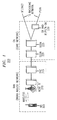
- UMTS network 200 comprises a radio access network (RAN) (also referred to herein as a "UMTS Terrestrial Radio Access Network” (UTRAN)) and a core network (CN).
- RAN radio access network
- UTRAN UMTS Terrestrial Radio Access Network
- CN core network
- the CN is also coupled to a backbone network (not shown).
- the latter comprises the Internet and the public switched telephone network (PSTN) for providing access to other endpoints.
- the RAN comprises mobile station (MS) 205 (also referred to herein as a wireless endpoint), node B 210 and radio network controller 215.
- MS mobile station
- node B 210 also referred to herein as a wireless endpoint
- the CN comprises a serving GPRS support node (SGSN) 220, gateway GPRS support node (GGSN) 225 and element 230, which comprises a gatekeeper (GK) (a component in ITU H.323) and an IP/PSTN gateway (GW) (for translation between H.323 and the PSTN).
- GK gatekeeper
- GW IP/PSTN gateway
- the elements of UMTS network 200 include stored-program-control processors, memory, and appropriate interface cards (not shown).
- packet server refers to any packet processor, illustrations of which are various ones of the above-mentioned elements of UMTS 200, e.g., SGSN 220, MS 205, etc.
- inventive concept is implemented using conventional programming techniques, which as such, will not be described herein.
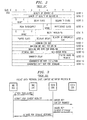
- a QoS IE is coded, or formatted, as shown in QoS IE 300 of FIG. 2.
- the QoS IE 300 has a length of 13 octets (an octet is 8 bits wide) and specifies QoS parameters for a PDP context.
- the first two octets define the type of information element (here, a QoS IE) and its length.
- Octet 3 holds two spare bits and also communicates the delay class and the reliability class (three bits each).
- Octet 4 conveys the peak throughput, precedence class and a spare bit.
- Octet 5 conveys the mean throughput and three spare bits.
- Octet 6 coveys the traffic class (conversational, streaming, interactive, or background), delivery order (whether the UMTS bearer shall provide in-sequence service data units (SDUs) delivery or not) and delivery of erroneous SDU (whether SDUs detected as erroneous shall be delivered or discarded). Since an SDU is a packet comprising a payload, octet 7 conveys the maximum SDU size. Octets 8 and 9 convey the maximum bit rates for the uplink direction and downlink directions, respectively.
- SDUs in-sequence service data units
- Octet 10 conveys the residual bit error rate (BER) (which indicates the undetected bit error ratio in the delivered SDUs), and the SDU error ratio (which indicates the fraction of SDUs lost or detected as erroneous).
- Octet 11 conveys the transfer delay and the traffic handling priority.
- octets 12 and 13 convey the guaranteed bit rates for the uplink and downlink, respectively.
- a QoS IE specifies QoS parameters for a PDP context.
- An illustrative prior art message flow for activating a PDP context is shown in FIG. 3.
- MS 205 transmits to SGSN 220 an "Activate PDP (packet data protocol) context" request message comprising the above-described QoS IE.
- PDP packet data protocol
- the SGSN may reject the PDP context activation request under certain conditions. Additional information can be found in the above-mentioned TS 23.060 V3.4.0.)
- SGSN 220 sends a "Create PDP context" request message to GGSN 225.
- GGSN 225 responds with a "Create PDP context” response message as an acknowledgment.
- SGSN 220 Upon receipt of the "Create PDP context" response message, SGSN 220 sends an "Activate PDP context" response message to MS 205.
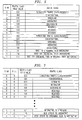
- QoS IE 300 of FIG. 2 only one type of traffic class can be negotiated. Therefore, in order to support asymmetric traffic class negotiation by a mobile station for services between the mobile station and the wireless system, an illustrative modified QoS IE 400 is shown in FIG. 4.
- the first four octets of QoS IE 400 are similar to the first four octets of QoS IE 300, described above.
- the previous "spare" bits are now defined as:
- the T bit When the T bit is set, it means asymmetric traffic classes are to be negotiated (and, the presence of Octet 16 in the IE). This results in downlink requirements as to traffic class, delivery order, and delivery of erroneous SDU (octet 6) that can be different from the uplink requirements for traffic class, delivery order, and delivery of erroneous SDU (octet 16).
- the R bit When the R bit is set, it reflects the presence of octets 17 and 18, which allows for supporting a difference in residual BER, SEU error ratio, and transfer delay in the uplink and downlink directions.
- the R bit is useful for push services where the downlink may be a streaming traffic class but the uplink can be an interactive traffic class.
- QoS IE 400 provides an additional feature - downgradeable QoS Classes - as indicated by the D bit. This allows for a faster PDP context set up time since it reduces retries in QoS negotiation.
- additional traffic classes may be defined, or combinations of existing traffic classes. (As can be observed from QoS IE 300 of FIG. 2, the traffic class field is 3 bits long - i.e., it supports eight different values - of which four convey a particular type of traffic class (as currently defined): conversational, streaming, interactive, or background.)
- traffic class bit value 001, 010, 011, 100.
- a traffic class bit value of 101 means request the streaming traffic class first and if that fails request the interactive traffic class; while a traffic class bit value of 110 means request the interactive traffic class first and if that fails request the background traffic class.
- multiple traffic classes are requested in a single QoS IE.
- the network checks if enough resources are available to grant the first requested traffic class and, if not, immediately checks if enough resources are available to grant the second requested traffic class, etc., ⁇ without requiring rejection of the request and subsequent additional QoS IE transmissions by the MS.
- the network checks if enough resources are available to grant the first requested traffic class and, if not, immediately checks if enough resources are available to grant the second requested traffic class, etc., ⁇ without requiring rejection of the request and subsequent additional QoS IE transmissions by the MS.
- an additional octet can be inserted as octet 14 (pushing subsequent octets further down, e.g., octet 18 of QoS IE 400 now becomes octet 19) for defining additional alternative traffic classes, or traffic class combinations, etc.
- combinations of three alternative traffic classes could be defined with a predefined bit pattern - first request streaming, if that is denied, then interactive, and if that is denied then background, etc. (illustrated in FIG. 5).
- the SGSN checks a predefined subscription profile to get relevant information to populate an enhanced RAB assignment request message (comprising a modified form of QoS IE as shown in FIG. 4) before doing the RAB set up procedures (not described herein).
- This latter approach reduces the number of additional octets in the illustrative modified QoS IE 400 of FIG. 4.
- additional information is conveyed that increases the probability that an acceptable QoS will be negotiated on the first PDP context activation procedure.
- the selection of particular traffic classes is, e.g., performed by the user in initiating a request. For example, if a user subscribes to a service that supports either streaming (at a higher cost) or interactive (at a lower cost), the user can specify which one to try for first by, e.g., setting a predefined field on a service profile, or preferences, screen (not shown) in the MS.
- the D bit is set and the appropriate traffic class value is inserted in QoS IE 400 to specify, e.g., requesting a streaming traffic class first then (if streaming is not available) an interactive traffic class.
- FIG. 6 illustrates a further modified QoS IE 500 where bit 8 of Octet 3 is used to represent an upgradeable bit - the U bit.
- bit 8 of Octet 3 is used to represent an upgradeable bit - the U bit.
- the MS may desire to upgrade its QoS, e.g., from an interactive traffic class to a streaming traffic class.
- bit U is set to indicate the request to upgrade the QoS.
- the requested change in traffic class is conveyed in the traffic class field value.
- FIG. 7 illustrates some illustrative associated traffic class field values for use when the U bit is set.
- FIG. 8 An illustrative PDP context activation procedure utilizing QoS IE 400 of FIG. 4 is shown in FIG. 8. Other than the inclusion of QoS IE 400, this PDP context activation procedure is similar to the procedure shown in FIG. 3, and will not be described further.
- Packet server 605 is a stored-program-control based processor architecture and includes processor 650, memory 660 (for storing program instructions and data, e.g., for communicating in accordance with the above-described modified PDP context activation procedure supporting asymmetric QoS) and communications interface(s) 665 for coupling to one or more packet communication facilities as represented by path 666 (e.g., a transceiver and associated air interface, respectively).
- processor 650 for storing program instructions and data, e.g., for communicating in accordance with the above-described modified PDP context activation procedure supporting asymmetric QoS
- communications interface(s) 665 for coupling to one or more packet communication facilities as represented by path 666 (e.g., a transceiver and associated air interface, respectively).
Landscapes
- Engineering & Computer Science (AREA)
- Computer Networks & Wireless Communication (AREA)
- Signal Processing (AREA)
- Quality & Reliability (AREA)
- Computer Security & Cryptography (AREA)
- Databases & Information Systems (AREA)
- Mobile Radio Communication Systems (AREA)
- Data Exchanges In Wide-Area Networks (AREA)
- Telephonic Communication Services (AREA)
Abstract
Description
- T bit - a set value (e.g., the bit value is recognized as a logical ONE) for indicating asymmetric traffic classes (cleared otherwise);
- R-bit - a set value for indicating asymmetric needs (uplink/downlink) in SDU error ratio, residual BER, and transfer delay, (cleared otherwise); and
- D bit - a set value for indicating downgradeable QoS Classes, (cleared otherwise).
Claims (10)
- A method for use in a mobile station, the method comprising the steps of:attaching to a wireless data network; andperforming asymmetric traffic class negotiation with the wireless data network.
- The method of claim 1 wherein the performing step includes the steps of:transmitting to the wireless data network a quality of service information element comprising a traffic class indicator that is indicative of requesting asymmetric traffic classes.
- The method of claim 1 wherein the performing step includes the steps of:transmitting to the wireless data network a quality of service information element comprising at least two traffic class fields, one for an uplink direction and one for a downlink direction associated with the mobile station.
- The method of claim 3 wherein the quality of service information element further comprises at least two residual bit error rate fields, one for the uplink and one for the downlink; as least two service data unit error ratio fields, one for the uplink and one for the downlink; and at least two transfer delay fields, one for the uplink and one for the downlink.
- The method of claim 1 further comprising the steps of:wherein the first negotiated traffic class and the second negotiated traffic class are different.receiving data in accordance with a first negotiated traffic class; andtransmitting data in accordance with a second negotiated traffic class;
- A method for use in a first packet server of a wireless network, the method comprising the steps of:exchanging messages with a second packet server for the purpose of providing at least one service to a mobile station, wherein the exchanging step includes the step oftransmitting to the second packet server a message comprising a quality of service information element comprising a field for requesting asymmetric traffic classes for an uplink direction and a downlink direction associated with the mobile station.
- The method of claim 6 wherein the quality of service information element further comprises at least two residual bit error rate fields, one for the uplink and one for the downlink; as least two service data unit error ratio fields, one for the uplink and one for the downlink; and at least two transfer delay fields, one for the uplink and one for the downlink.
- A packet server comprising:a transceiver for exchanging messages with a second packet server for the purpose of providing at least one service to a mobile station; anda processor for causing to be transmitted to the second packet server a message comprising a quality of service information element comprising a field for requesting asymmetric traffic classes for an uplink direction and a downlink direction associated with the mobile station.
- The wireless apparatus of claim 8 wherein the quality of service information element further comprises at least two residual bit error rate fields, one for the uplink and one for the downlink; as least two service data unit error ratio fields, one for the uplink and one for the downlink; and at least two transfer delay fields, one for the uplink and one for the downlink.
- A transmission frame representing data embodied in a wireless transmission signal, the transmission frame comprising:a field for requesting asymmetric traffic classes for an uplink direction and a downlink direction associated with a mobile station;a downlink traffic class field; andan uplink traffic class field.
Applications Claiming Priority (2)
| Application Number | Priority Date | Filing Date | Title |
|---|---|---|---|
| US764647 | 1991-09-24 | ||
| US09/764,647 US6970423B2 (en) | 2001-01-18 | 2001-01-18 | Universal mobile telecommunications system (UMTS) quality of service (QoS) supporting asymmetric traffic classes |
Publications (2)
| Publication Number | Publication Date |
|---|---|
| EP1231741A2 true EP1231741A2 (en) | 2002-08-14 |
| EP1231741A3 EP1231741A3 (en) | 2002-08-21 |
Family
ID=25071339
Family Applications (1)
| Application Number | Title | Priority Date | Filing Date |
|---|---|---|---|
| EP01306730A Withdrawn EP1231741A3 (en) | 2001-01-18 | 2001-08-07 | Universal mobile telecommunications system (UMTS) quality of service (QoS) supporting asymmetric traffic classes |
Country Status (4)
| Country | Link |
|---|---|
| US (1) | US6970423B2 (en) |
| EP (1) | EP1231741A3 (en) |
| JP (1) | JP4021207B2 (en) |
| CA (1) | CA2365549A1 (en) |
Cited By (1)
| Publication number | Priority date | Publication date | Assignee | Title |
|---|---|---|---|---|
| CN101682869A (en) * | 2007-06-11 | 2010-03-24 | 交互数字技术公司 | The link layer quality of service parameter maps |
Families Citing this family (27)
| Publication number | Priority date | Publication date | Assignee | Title |
|---|---|---|---|---|
| US7546376B2 (en) * | 2000-11-06 | 2009-06-09 | Telefonaktiebolaget Lm Ericsson (Publ) | Media binding to coordinate quality of service requirements for media flows in a multimedia session with IP bearer resources |
| JP3746040B2 (en) * | 2001-02-15 | 2006-02-15 | ノキア コーポレイション | Method and system for managing the connection of mobile elements to a network |
| GB2373069B (en) | 2001-03-05 | 2005-03-23 | Ibm | Method, apparatus and computer program product for integrating heterogeneous systems |
| US8004969B2 (en) * | 2001-11-07 | 2011-08-23 | Tektronix, Inc. | Cell level congestion policy management |
| US7525940B2 (en) * | 2002-04-26 | 2009-04-28 | Nokia Siemens Networks Oy | Relocation of content sources during IP-level handoffs |
| KR100884956B1 (en) * | 2002-08-14 | 2009-02-23 | 엘지전자 주식회사 | Asymmetric bidirectional packet data transmission and reception method and system |
| EP1570688B1 (en) * | 2002-12-10 | 2019-02-20 | Nokia Technologies Oy | APPARATUS, AND AN ASSOCIATED METHODS, FOR PROVIDING TRAFFIC CLASS SUPPORT FOR QoS ACTIVATION IN A RADIO COMMUNICATION SYSTEM |
| US20040184432A1 (en) * | 2003-03-19 | 2004-09-23 | Ralitsa Gateva | Method for controlling streaming services |
| US20040260951A1 (en) * | 2003-04-14 | 2004-12-23 | Lila Madour | Method and Packet Data Service Node (PDSN) for Quality of Service (QoS) mapping |
| US7826353B2 (en) * | 2003-05-05 | 2010-11-02 | Nokia Corporation | Method, system and network element for authorizing a data transmission |
| US8214536B2 (en) * | 2003-09-16 | 2012-07-03 | Research In Motion Limited | Methods and apparatus for selecting a wireless network based on quality of service (QoS) criteria associated with an application |
| GB0329221D0 (en) * | 2003-12-17 | 2004-01-21 | Nokia Corp | Session control in a communication system |
| GB0329502D0 (en) * | 2003-12-19 | 2004-01-28 | Nokia Corp | Control decisions in a communication system |
| DE602004024596D1 (en) * | 2004-07-05 | 2010-01-21 | Ericsson Telefon Ab L M | BINDING MECHANISM FOR SERVICE QUALITY MANAGEMENT IN A COMMUNICATION NETWORK |
| ATE523050T1 (en) * | 2004-07-05 | 2011-09-15 | Ericsson Telefon Ab L M | PROCEDURES AND FACILITIES FOR CHANGING THE QUALITY OF SERVICE |
| PT1763964E (en) * | 2004-07-05 | 2010-12-27 | Ericsson Telefon Ab L M | DEVICES AND PROCESSES FOR A SERVICE INITIATED BY MESSAGE IN PUSH MODE |
| US8331375B2 (en) | 2004-08-06 | 2012-12-11 | Qualcomm Incorporated | Technology agnostic QoS support in a multi-mode environment |
| KR100663279B1 (en) * | 2004-09-30 | 2007-01-02 | 삼성전자주식회사 | Method and apparatus for Supporting voice servicein a mobile telecommunication system of radio channel |
| DE602005022638D1 (en) | 2005-12-12 | 2010-09-09 | Ericsson Telefon Ab L M | METHOD AND DEVICES FOR SPECIFYING THE SERVICE QUALITY WHEN TRANSMITTING DATA PACKAGES |
| US7911997B2 (en) * | 2006-05-10 | 2011-03-22 | Intel Corporation | Quality of service resource negotiation |
| GB0613116D0 (en) * | 2006-06-30 | 2006-08-09 | Nokia Corp | Handover of a communication device |
| US7855958B2 (en) * | 2006-08-03 | 2010-12-21 | Alcatel-Lucent Usa Inc. | Determining priority of bearer channels in a wireless telecommunications network |
| BRPI0823198A8 (en) * | 2008-11-17 | 2015-09-22 | Ericsson Telefon Ab L M | method for providing device access to a general packet radio service network, control node, computer program, and computer readable media product. |
| US10015729B2 (en) * | 2008-11-17 | 2018-07-03 | Telefonaktiebolaget L M Ericsson (Publ) | Providing access to a GPRS network |
| WO2010098705A1 (en) * | 2009-02-26 | 2010-09-02 | Telefonaktiebolaget Lm Ericsson (Publ) | Service specific bandwidth policy configuration in data networks |
| US8612609B2 (en) | 2009-08-31 | 2013-12-17 | At&T Intellectual Property I, L.P. | Methods and apparatus to reassign quality of service priorities in a communication network |
| CN102547610B (en) * | 2010-12-31 | 2016-03-30 | 华为技术有限公司 | Message treatment method, equipment and system |
Family Cites Families (10)
| Publication number | Priority date | Publication date | Assignee | Title |
|---|---|---|---|---|
| US6031832A (en) * | 1996-11-27 | 2000-02-29 | Telefonaktiebolaget L M Ericsson (Publ) | Method and apparatus for improving performance of a packet communications system |
| ATE362202T1 (en) | 1997-01-15 | 2007-06-15 | Menzolit Fibron Gmbh | FIBER-REINFORCED PLASTIC MOLDED PART WITH INTEGRATED ANTENNA |
| US5963548A (en) * | 1997-01-21 | 1999-10-05 | Nokia Mobile Phones Limited | Apparatus and method for configuring a data channel for symmetric/asymmetric data transmission |
| FI108192B (en) * | 1998-03-19 | 2001-11-30 | Nokia Networks Oy | Procedure and apparatus for checking service quality in a mobile telephone system |
| FI105969B (en) | 1998-08-10 | 2000-10-31 | Nokia Networks Oy | Service quality management in a mobile communication system |
| US6377817B1 (en) | 1999-05-03 | 2002-04-23 | Nokia Mobile Phones Ltd. | Asymmetric data transmission for use in a multi-modulation environment |
| US6683853B1 (en) * | 1999-12-01 | 2004-01-27 | Telefonaktiebolaget Lm Ericsson (Publ) | Dynamic upgrade of quality of service in a packet switched network |
| US6654610B1 (en) * | 2000-05-05 | 2003-11-25 | Lucent Technologies Inc. | Two-way packet data protocol methods and apparatus for a mobile telecommunication system |
| US6621793B2 (en) * | 2000-05-22 | 2003-09-16 | Telefonaktiebolaget Lm Ericsson (Publ) | Application influenced policy |
| US6665280B2 (en) * | 2002-03-22 | 2003-12-16 | Nokia Corporation | Method and apparatus providing multiple temporary block flow (TBF) mapping to upper layer when operating in GSM/EDGE radio access network (GERAN) A/Gb mode |
-
2001
- 2001-01-18 US US09/764,647 patent/US6970423B2/en not_active Expired - Lifetime
- 2001-08-07 EP EP01306730A patent/EP1231741A3/en not_active Withdrawn
- 2001-12-18 CA CA002365549A patent/CA2365549A1/en not_active Abandoned
-
2002
- 2002-01-18 JP JP2002010749A patent/JP4021207B2/en not_active Expired - Fee Related
Cited By (1)
| Publication number | Priority date | Publication date | Assignee | Title |
|---|---|---|---|---|
| CN101682869A (en) * | 2007-06-11 | 2010-03-24 | 交互数字技术公司 | The link layer quality of service parameter maps |
Also Published As
| Publication number | Publication date |
|---|---|
| US20020093936A1 (en) | 2002-07-18 |
| JP2002305764A (en) | 2002-10-18 |
| JP4021207B2 (en) | 2007-12-12 |
| EP1231741A3 (en) | 2002-08-21 |
| CA2365549A1 (en) | 2002-07-18 |
| US6970423B2 (en) | 2005-11-29 |
Similar Documents
| Publication | Publication Date | Title |
|---|---|---|
| EP1233578B1 (en) | Universal mobile telecommunications system (UMTS) quality of service (QoS) supporting variable QoS negotiation | |
| US6970423B2 (en) | Universal mobile telecommunications system (UMTS) quality of service (QoS) supporting asymmetric traffic classes | |
| RU2287912C2 (en) | Communication system containing a set of communication networks | |
| EP1397750B1 (en) | Technique for providing announcements in mobile-originated calls | |
| JP3917427B2 (en) | Connections in communication systems | |
| EP1234415B1 (en) | Dynamic upgrade of quality of service in a packet switched network | |
| EP1982475B1 (en) | Method and devices for installing packet filters in a data transmission | |
| US8532033B2 (en) | Selective RAB assignment | |
| JP5044026B2 (en) | Method and apparatus for channel optimization during point-to-point protocol (PPP) session request period | |
| US20080259865A1 (en) | Handling traffic flows in a mobile communications network | |
| EP1658749B1 (en) | Identifying network resources for packet-switched services | |
| AU2002246300A1 (en) | Technique for providing announcements in mobile-originated calls | |
| JP2006514510A (en) | A method for differentiating service quality in packet-mode mobile communication networks | |
| CN103260236A (en) | System and device used in wireless communication | |
| CN100450268C (en) | Bit Rate Control Means in Telecommunication System | |
| EP1887809B1 (en) | Method and system for providing service quality assurance in wireless communication system | |
| US20040114615A1 (en) | Network-ordered change of an access network | |
| RU2412550C2 (en) | Network initiated transition from speech service to multimedia service | |
| WO2001065881A1 (en) | Intersystem handover with modified parameters | |
| US20060039310A1 (en) | Method of acquiring a mobile station identifier in a hybrid network | |
| US8295269B1 (en) | Technique for informing network of voice traffic | |
| KR20050037043A (en) | Settlement of quality of service about default access point name in wcdma packet network |
Legal Events
| Date | Code | Title | Description |
|---|---|---|---|
| PUAI | Public reference made under article 153(3) epc to a published international application that has entered the european phase |
Free format text: ORIGINAL CODE: 0009012 |
|
| PUAL | Search report despatched |
Free format text: ORIGINAL CODE: 0009013 |
|
| 17P | Request for examination filed |
Effective date: 20010817 |
|
| AK | Designated contracting states |
Kind code of ref document: A2 Designated state(s): AT BE CH CY DE DK ES FI FR GB GR IE IT LI LU MC NL PT SE TR |
|
| AX | Request for extension of the european patent |
Free format text: AL;LT;LV;MK;RO;SI |
|
| AK | Designated contracting states |
Kind code of ref document: A3 Designated state(s): AT BE CH CY DE DK ES FI FR GB GR IE IT LI LU MC NL PT SE TR |
|
| AX | Request for extension of the european patent |
Free format text: AL;LT;LV;MK;RO;SI |
|
| 17Q | First examination report despatched |
Effective date: 20021128 |
|
| AKX | Designation fees paid |
Designated state(s): DE FR GB |
|
| STAA | Information on the status of an ep patent application or granted ep patent |
Free format text: STATUS: THE APPLICATION IS DEEMED TO BE WITHDRAWN |
|
| 18D | Application deemed to be withdrawn |
Effective date: 20030611 |