EP1230343B1 - Aspegillus niger beta-glucosidase gene, protein and uses thereof - Google Patents
Aspegillus niger beta-glucosidase gene, protein and uses thereof Download PDFInfo
- Publication number
- EP1230343B1 EP1230343B1 EP00976229A EP00976229A EP1230343B1 EP 1230343 B1 EP1230343 B1 EP 1230343B1 EP 00976229 A EP00976229 A EP 00976229A EP 00976229 A EP00976229 A EP 00976229A EP 1230343 B1 EP1230343 B1 EP 1230343B1
- Authority
- EP
- European Patent Office
- Prior art keywords
- plant
- polypeptide
- nucleic acid
- increasing
- glucosidase
- Prior art date
- Legal status (The legal status is an assumption and is not a legal conclusion. Google has not performed a legal analysis and makes no representation as to the accuracy of the status listed.)
- Expired - Lifetime
Links
- 108010047754 beta-Glucosidase Proteins 0.000 title claims abstract description 132
- 108090000623 proteins and genes Proteins 0.000 title description 90
- 102000004169 proteins and genes Human genes 0.000 title description 60
- 108090000765 processed proteins & peptides Proteins 0.000 claims abstract description 156
- 102000006995 beta-Glucosidase Human genes 0.000 claims abstract description 127
- 229920001184 polypeptide Polymers 0.000 claims abstract description 110
- 102000004196 processed proteins & peptides Human genes 0.000 claims abstract description 110
- 150000007523 nucleic acids Chemical class 0.000 claims abstract description 107
- 102000039446 nucleic acids Human genes 0.000 claims abstract description 94
- 108020004707 nucleic acids Proteins 0.000 claims abstract description 94
- 108091033319 polynucleotide Proteins 0.000 claims abstract description 87
- 102000040430 polynucleotide Human genes 0.000 claims abstract description 87
- 239000002157 polynucleotide Substances 0.000 claims abstract description 87
- WQZGKKKJIJFFOK-GASJEMHNSA-N Glucose Natural products OC[C@H]1OC(O)[C@H](O)[C@@H](O)[C@@H]1O WQZGKKKJIJFFOK-GASJEMHNSA-N 0.000 claims abstract description 80
- 239000008103 glucose Substances 0.000 claims abstract description 80
- 230000004151 fermentation Effects 0.000 claims abstract description 79
- 238000000855 fermentation Methods 0.000 claims abstract description 78
- 210000004027 cell Anatomy 0.000 claims abstract description 77
- 230000001965 increasing effect Effects 0.000 claims abstract description 67
- LFQSCWFLJHTTHZ-UHFFFAOYSA-N Ethanol Chemical compound CCO LFQSCWFLJHTTHZ-UHFFFAOYSA-N 0.000 claims abstract description 44
- 210000005253 yeast cell Anatomy 0.000 claims abstract description 17
- 239000000463 material Substances 0.000 claims abstract description 11
- 238000000034 method Methods 0.000 claims description 133
- 108010076504 Protein Sorting Signals Proteins 0.000 claims description 67
- 230000003197 catalytic effect Effects 0.000 claims description 51
- 230000000295 complement effect Effects 0.000 claims description 38
- 239000002131 composite material Substances 0.000 claims description 38
- 239000000126 substance Substances 0.000 claims description 36
- 210000002472 endoplasmic reticulum Anatomy 0.000 claims description 35
- 239000007858 starting material Substances 0.000 claims description 35
- 210000001519 tissue Anatomy 0.000 claims description 35
- 235000013399 edible fruits Nutrition 0.000 claims description 9
- 230000007480 spreading Effects 0.000 claims description 7
- 238000003892 spreading Methods 0.000 claims description 7
- 125000003275 alpha amino acid group Chemical group 0.000 claims 6
- 241000287181 Sturnus vulgaris Species 0.000 claims 1
- 230000009261 transgenic effect Effects 0.000 abstract description 37
- 150000001875 compounds Chemical class 0.000 abstract description 22
- 238000006460 hydrolysis reaction Methods 0.000 abstract description 14
- 230000007062 hydrolysis Effects 0.000 abstract description 13
- 230000002255 enzymatic effect Effects 0.000 abstract description 10
- 238000004519 manufacturing process Methods 0.000 abstract description 9
- 235000013334 alcoholic beverage Nutrition 0.000 abstract description 6
- 229930182470 glycoside Natural products 0.000 abstract description 6
- 150000002338 glycosides Chemical class 0.000 abstract description 5
- GUBGYTABKSRVRQ-CUHNMECISA-N D-Cellobiose Chemical compound O[C@@H]1[C@@H](O)[C@H](O)[C@@H](CO)O[C@H]1O[C@@H]1[C@@H](CO)OC(O)[C@H](O)[C@H]1O GUBGYTABKSRVRQ-CUHNMECISA-N 0.000 abstract description 4
- 230000003301 hydrolyzing effect Effects 0.000 abstract description 3
- 238000005918 transglycosylation reaction Methods 0.000 abstract description 3
- 230000006098 transglycosylation Effects 0.000 abstract description 2
- 241000196324 Embryophyta Species 0.000 description 203
- 101150100570 bglA gene Proteins 0.000 description 78
- 241000228245 Aspergillus niger Species 0.000 description 71
- WQZGKKKJIJFFOK-VFUOTHLCSA-N beta-D-glucose Chemical compound OC[C@H]1O[C@@H](O)[C@H](O)[C@@H](O)[C@@H]1O WQZGKKKJIJFFOK-VFUOTHLCSA-N 0.000 description 63
- 101100437484 Arabidopsis thaliana BGLU18 gene Proteins 0.000 description 59
- 101100342633 Bos taurus LLGL1 gene Proteins 0.000 description 59
- 101100065855 Saccharomyces cerevisiae (strain ATCC 204508 / S288c) EXG1 gene Proteins 0.000 description 59
- 101100058298 Saccharomycopsis fibuligera BGL1 gene Proteins 0.000 description 59
- 229940088598 enzyme Drugs 0.000 description 58
- 102000004190 Enzymes Human genes 0.000 description 57
- 108090000790 Enzymes Proteins 0.000 description 57
- 235000018102 proteins Nutrition 0.000 description 53
- 230000000694 effects Effects 0.000 description 45
- 239000000047 product Substances 0.000 description 45
- 230000014509 gene expression Effects 0.000 description 41
- 108020004414 DNA Proteins 0.000 description 35
- 239000002299 complementary DNA Substances 0.000 description 32
- 150000001413 amino acids Chemical class 0.000 description 26
- 240000004808 Saccharomyces cerevisiae Species 0.000 description 24
- 235000014680 Saccharomyces cerevisiae Nutrition 0.000 description 22
- 102100039371 ER lumen protein-retaining receptor 1 Human genes 0.000 description 20
- 101000812437 Homo sapiens ER lumen protein-retaining receptor 1 Proteins 0.000 description 20
- 230000003612 virological effect Effects 0.000 description 20
- 241000700605 Viruses Species 0.000 description 18
- 235000001014 amino acid Nutrition 0.000 description 17
- 239000000796 flavoring agent Substances 0.000 description 17
- 241000588724 Escherichia coli Species 0.000 description 16
- 239000000499 gel Substances 0.000 description 16
- 239000013612 plasmid Substances 0.000 description 16
- 239000000758 substrate Substances 0.000 description 16
- 102000005575 Cellulases Human genes 0.000 description 14
- 108010084185 Cellulases Proteins 0.000 description 14
- 108091027544 Subgenomic mRNA Proteins 0.000 description 14
- 239000001913 cellulose Substances 0.000 description 14
- 229920002678 cellulose Polymers 0.000 description 14
- 235000019634 flavors Nutrition 0.000 description 13
- 239000012634 fragment Substances 0.000 description 13
- 238000001262 western blot Methods 0.000 description 13
- 241000894006 Bacteria Species 0.000 description 12
- 101710132601 Capsid protein Proteins 0.000 description 12
- 101710094648 Coat protein Proteins 0.000 description 12
- 101710125418 Major capsid protein Proteins 0.000 description 12
- 108091028043 Nucleic acid sequence Proteins 0.000 description 12
- 101710141454 Nucleoprotein Proteins 0.000 description 12
- 101710083689 Probable capsid protein Proteins 0.000 description 12
- FAPWRFPIFSIZLT-UHFFFAOYSA-M Sodium chloride Chemical compound [Na+].[Cl-] FAPWRFPIFSIZLT-UHFFFAOYSA-M 0.000 description 12
- 238000002415 sodium dodecyl sulfate polyacrylamide gel electrophoresis Methods 0.000 description 12
- 241000235058 Komagataella pastoris Species 0.000 description 11
- 238000006243 chemical reaction Methods 0.000 description 11
- 230000001105 regulatory effect Effects 0.000 description 11
- 102100021181 Golgi phosphoprotein 3 Human genes 0.000 description 10
- 244000061176 Nicotiana tabacum Species 0.000 description 10
- 235000002637 Nicotiana tabacum Nutrition 0.000 description 10
- 238000004458 analytical method Methods 0.000 description 10
- 230000001939 inductive effect Effects 0.000 description 10
- 239000002773 nucleotide Substances 0.000 description 10
- 125000003729 nucleotide group Chemical group 0.000 description 10
- 239000000523 sample Substances 0.000 description 10
- 239000000243 solution Substances 0.000 description 10
- 238000003776 cleavage reaction Methods 0.000 description 9
- 230000007017 scission Effects 0.000 description 9
- 239000013598 vector Substances 0.000 description 9
- 235000014101 wine Nutrition 0.000 description 9
- 108091032973 (ribonucleotides)n+m Proteins 0.000 description 8
- 241000589158 Agrobacterium Species 0.000 description 8
- IJGRMHOSHXDMSA-UHFFFAOYSA-N Atomic nitrogen Chemical compound N#N IJGRMHOSHXDMSA-UHFFFAOYSA-N 0.000 description 8
- 101100290380 Caenorhabditis elegans cel-1 gene Proteins 0.000 description 8
- 108091026890 Coding region Proteins 0.000 description 8
- 239000000872 buffer Substances 0.000 description 8
- 150000001720 carbohydrates Chemical class 0.000 description 8
- 239000013604 expression vector Substances 0.000 description 8
- 210000001236 prokaryotic cell Anatomy 0.000 description 8
- 239000013605 shuttle vector Substances 0.000 description 8
- 238000013518 transcription Methods 0.000 description 8
- 230000035897 transcription Effects 0.000 description 8
- IFBHRQDFSNCLOZ-UHFFFAOYSA-N 2-(hydroxymethyl)-6-(4-nitrophenoxy)oxane-3,4,5-triol Chemical compound OC1C(O)C(O)C(CO)OC1OC1=CC=C([N+]([O-])=O)C=C1 IFBHRQDFSNCLOZ-UHFFFAOYSA-N 0.000 description 7
- CSCPPACGZOOCGX-UHFFFAOYSA-N Acetone Natural products CC(C)=O CSCPPACGZOOCGX-UHFFFAOYSA-N 0.000 description 7
- 241000122821 Aspergillus kawachii Species 0.000 description 7
- 102000007056 Recombinant Fusion Proteins Human genes 0.000 description 7
- 108010008281 Recombinant Fusion Proteins Proteins 0.000 description 7
- 238000010367 cloning Methods 0.000 description 7
- 210000003527 eukaryotic cell Anatomy 0.000 description 7
- 238000011534 incubation Methods 0.000 description 7
- 239000002609 medium Substances 0.000 description 7
- 239000012528 membrane Substances 0.000 description 7
- 210000003463 organelle Anatomy 0.000 description 7
- 238000002360 preparation method Methods 0.000 description 7
- 230000008569 process Effects 0.000 description 7
- 238000000746 purification Methods 0.000 description 7
- 239000011541 reaction mixture Substances 0.000 description 7
- 230000028327 secretion Effects 0.000 description 7
- 230000009466 transformation Effects 0.000 description 7
- 230000015572 biosynthetic process Effects 0.000 description 6
- 230000015556 catabolic process Effects 0.000 description 6
- 239000003795 chemical substances by application Substances 0.000 description 6
- KRKNYBCHXYNGOX-UHFFFAOYSA-N citric acid Chemical compound OC(=O)CC(O)(C(O)=O)CC(O)=O KRKNYBCHXYNGOX-UHFFFAOYSA-N 0.000 description 6
- 238000006731 degradation reaction Methods 0.000 description 6
- 235000013305 food Nutrition 0.000 description 6
- 235000011389 fruit/vegetable juice Nutrition 0.000 description 6
- 238000009396 hybridization Methods 0.000 description 6
- 238000003780 insertion Methods 0.000 description 6
- 230000037431 insertion Effects 0.000 description 6
- -1 monoterpene alcohols Chemical class 0.000 description 6
- 230000010076 replication Effects 0.000 description 6
- 239000011780 sodium chloride Substances 0.000 description 6
- 241000228212 Aspergillus Species 0.000 description 5
- 108010059892 Cellulase Proteins 0.000 description 5
- 241000233866 Fungi Species 0.000 description 5
- 102000005744 Glycoside Hydrolases Human genes 0.000 description 5
- 108010031186 Glycoside Hydrolases Proteins 0.000 description 5
- 102000000447 Peptide-N4-(N-acetyl-beta-glucosaminyl) Asparagine Amidase Human genes 0.000 description 5
- 108010055817 Peptide-N4-(N-acetyl-beta-glucosaminyl) Asparagine Amidase Proteins 0.000 description 5
- QLTCHMYAEJEXBT-UHFFFAOYSA-N alpha-beta-D-glucopyranosyloxy-isobutyronitrile Natural products N#CC(C)(C)OC1OC(CO)C(O)C(O)C1O QLTCHMYAEJEXBT-UHFFFAOYSA-N 0.000 description 5
- 239000007979 citrate buffer Substances 0.000 description 5
- 239000000284 extract Substances 0.000 description 5
- 230000002538 fungal effect Effects 0.000 description 5
- 229930182478 glucoside Natural products 0.000 description 5
- 230000002779 inactivation Effects 0.000 description 5
- QLTCHMYAEJEXBT-ZEBDFXRSSA-N linamarin Chemical compound N#CC(C)(C)O[C@@H]1O[C@H](CO)[C@@H](O)[C@H](O)[C@H]1O QLTCHMYAEJEXBT-ZEBDFXRSSA-N 0.000 description 5
- CRTWQTRFSBJGLK-UHFFFAOYSA-N linamarin Natural products CC(C)(C#N)C1OC(CO)C(O)C(O)C1O CRTWQTRFSBJGLK-UHFFFAOYSA-N 0.000 description 5
- 239000007788 liquid Substances 0.000 description 5
- 239000003550 marker Substances 0.000 description 5
- 239000000203 mixture Substances 0.000 description 5
- 230000036961 partial effect Effects 0.000 description 5
- 239000002245 particle Substances 0.000 description 5
- 230000017854 proteolysis Effects 0.000 description 5
- 230000007420 reactivation Effects 0.000 description 5
- 238000013519 translation Methods 0.000 description 5
- 229920001817 Agar Polymers 0.000 description 4
- 101001047514 Bos taurus Lethal(2) giant larvae protein homolog 1 Proteins 0.000 description 4
- KFZMGEQAYNKOFK-UHFFFAOYSA-N Isopropanol Chemical compound CC(C)O KFZMGEQAYNKOFK-UHFFFAOYSA-N 0.000 description 4
- TWRXJAOTZQYOKJ-UHFFFAOYSA-L Magnesium chloride Chemical compound [Mg+2].[Cl-].[Cl-] TWRXJAOTZQYOKJ-UHFFFAOYSA-L 0.000 description 4
- CSNNHWWHGAXBCP-UHFFFAOYSA-L Magnesium sulfate Chemical compound [Mg+2].[O-][S+2]([O-])([O-])[O-] CSNNHWWHGAXBCP-UHFFFAOYSA-L 0.000 description 4
- 108091005461 Nucleic proteins Proteins 0.000 description 4
- 240000007594 Oryza sativa Species 0.000 description 4
- 235000007164 Oryza sativa Nutrition 0.000 description 4
- 108010092799 RNA-directed DNA polymerase Proteins 0.000 description 4
- 238000009825 accumulation Methods 0.000 description 4
- 239000008272 agar Substances 0.000 description 4
- 210000004102 animal cell Anatomy 0.000 description 4
- 238000003556 assay Methods 0.000 description 4
- 230000001580 bacterial effect Effects 0.000 description 4
- 230000008901 benefit Effects 0.000 description 4
- 239000003054 catalyst Substances 0.000 description 4
- 238000010276 construction Methods 0.000 description 4
- 238000012258 culturing Methods 0.000 description 4
- 241001493065 dsRNA viruses Species 0.000 description 4
- 238000002290 gas chromatography-mass spectrometry Methods 0.000 description 4
- 230000013595 glycosylation Effects 0.000 description 4
- 230000012010 growth Effects 0.000 description 4
- 230000000937 inactivator Effects 0.000 description 4
- 208000015181 infectious disease Diseases 0.000 description 4
- 230000000670 limiting effect Effects 0.000 description 4
- 230000007246 mechanism Effects 0.000 description 4
- 244000005700 microbiome Species 0.000 description 4
- 229910052757 nitrogen Inorganic materials 0.000 description 4
- 229920001542 oligosaccharide Polymers 0.000 description 4
- 150000002482 oligosaccharides Chemical class 0.000 description 4
- 230000002018 overexpression Effects 0.000 description 4
- 230000002441 reversible effect Effects 0.000 description 4
- 238000003786 synthesis reaction Methods 0.000 description 4
- 230000008685 targeting Effects 0.000 description 4
- QFVHZQCOUORWEI-UHFFFAOYSA-N 4-[(4-anilino-5-sulfonaphthalen-1-yl)diazenyl]-5-hydroxynaphthalene-2,7-disulfonic acid Chemical compound C=12C(O)=CC(S(O)(=O)=O)=CC2=CC(S(O)(=O)=O)=CC=1N=NC(C1=CC=CC(=C11)S(O)(=O)=O)=CC=C1NC1=CC=CC=C1 QFVHZQCOUORWEI-UHFFFAOYSA-N 0.000 description 3
- 108010085238 Actins Proteins 0.000 description 3
- 102000007469 Actins Human genes 0.000 description 3
- 230000004544 DNA amplification Effects 0.000 description 3
- 241000588700 Dickeya chrysanthemi Species 0.000 description 3
- 108700024394 Exon Proteins 0.000 description 3
- 244000286779 Hansenula anomala Species 0.000 description 3
- 235000014683 Hansenula anomala Nutrition 0.000 description 3
- 241000282414 Homo sapiens Species 0.000 description 3
- 102100034343 Integrase Human genes 0.000 description 3
- 108091092195 Intron Proteins 0.000 description 3
- OKKJLVBELUTLKV-UHFFFAOYSA-N Methanol Chemical compound OC OKKJLVBELUTLKV-UHFFFAOYSA-N 0.000 description 3
- 108700026244 Open Reading Frames Proteins 0.000 description 3
- 239000002033 PVDF binder Substances 0.000 description 3
- 241000194105 Paenibacillus polymyxa Species 0.000 description 3
- 235000000370 Passiflora edulis Nutrition 0.000 description 3
- 244000288157 Passiflora edulis Species 0.000 description 3
- 241000235004 Saccharomycopsis fibuligera Species 0.000 description 3
- 238000012300 Sequence Analysis Methods 0.000 description 3
- 108010084650 alpha-N-arabinofuranosidase Proteins 0.000 description 3
- 238000013459 approach Methods 0.000 description 3
- 210000004899 c-terminal region Anatomy 0.000 description 3
- 238000004113 cell culture Methods 0.000 description 3
- 230000001413 cellular effect Effects 0.000 description 3
- 210000000349 chromosome Anatomy 0.000 description 3
- 230000000593 degrading effect Effects 0.000 description 3
- 238000005516 engineering process Methods 0.000 description 3
- 230000006870 function Effects 0.000 description 3
- 230000002068 genetic effect Effects 0.000 description 3
- 150000008131 glucosides Chemical class 0.000 description 3
- 238000006206 glycosylation reaction Methods 0.000 description 3
- 239000001963 growth medium Substances 0.000 description 3
- 238000010438 heat treatment Methods 0.000 description 3
- 238000000265 homogenisation Methods 0.000 description 3
- 238000001727 in vivo Methods 0.000 description 3
- 238000002347 injection Methods 0.000 description 3
- 239000007924 injection Substances 0.000 description 3
- 230000010354 integration Effects 0.000 description 3
- 230000014759 maintenance of location Effects 0.000 description 3
- 230000000813 microbial effect Effects 0.000 description 3
- 238000010369 molecular cloning Methods 0.000 description 3
- 125000001055 monoterpenyl- group Chemical group 0.000 description 3
- 239000013642 negative control Substances 0.000 description 3
- 230000008520 organization Effects 0.000 description 3
- 229920002981 polyvinylidene fluoride Polymers 0.000 description 3
- 238000000425 proton nuclear magnetic resonance spectrum Methods 0.000 description 3
- 238000003757 reverse transcription PCR Methods 0.000 description 3
- 235000009566 rice Nutrition 0.000 description 3
- 238000012216 screening Methods 0.000 description 3
- 230000003248 secreting effect Effects 0.000 description 3
- 239000006228 supernatant Substances 0.000 description 3
- 238000012546 transfer Methods 0.000 description 3
- 239000013603 viral vector Substances 0.000 description 3
- XLYOFNOQVPJJNP-UHFFFAOYSA-N water Substances O XLYOFNOQVPJJNP-UHFFFAOYSA-N 0.000 description 3
- INOZZBHURUDQQR-AJNGGQMLSA-N (2s)-2-[[(2s)-2-[[(2s)-2-[[(2s)-2-amino-3-(1h-imidazol-5-yl)propanoyl]amino]-3-carboxypropanoyl]amino]-4-carboxybutanoyl]amino]-4-methylpentanoic acid Chemical compound CC(C)C[C@@H](C(O)=O)NC(=O)[C@H](CCC(O)=O)NC(=O)[C@H](CC(O)=O)NC(=O)[C@@H](N)CC1=CN=CN1 INOZZBHURUDQQR-AJNGGQMLSA-N 0.000 description 2
- ALSTYHKOOCGGFT-KTKRTIGZSA-N (9Z)-octadecen-1-ol Chemical compound CCCCCCCC\C=C/CCCCCCCCO ALSTYHKOOCGGFT-KTKRTIGZSA-N 0.000 description 2
- BBMCTIGTTCKYKF-UHFFFAOYSA-N 1-heptanol Chemical compound CCCCCCCO BBMCTIGTTCKYKF-UHFFFAOYSA-N 0.000 description 2
- 125000001917 2,4-dinitrophenyl group Chemical group [H]C1=C([H])C(=C([H])C(=C1*)[N+]([O-])=O)[N+]([O-])=O 0.000 description 2
- 241000219194 Arabidopsis Species 0.000 description 2
- 241000228257 Aspergillus sp. Species 0.000 description 2
- 244000063299 Bacillus subtilis Species 0.000 description 2
- 235000014469 Bacillus subtilis Nutrition 0.000 description 2
- 240000002791 Brassica napus Species 0.000 description 2
- 235000011293 Brassica napus Nutrition 0.000 description 2
- 0 CC*(C*)=C(C)C(*C)=C(C*)C(C(C(*)*)C=C1)=CC1=BC(CCCCCC=CC=C)=C Chemical compound CC*(C*)=C(C)C(*C)=C(C*)C(C(C(*)*)C=C1)=CC1=BC(CCCCCC=CC=C)=C 0.000 description 2
- 108010014303 DNA-directed DNA polymerase Proteins 0.000 description 2
- 102000016928 DNA-directed DNA polymerase Human genes 0.000 description 2
- KCXVZYZYPLLWCC-UHFFFAOYSA-N EDTA Chemical compound OC(=O)CN(CC(O)=O)CCN(CC(O)=O)CC(O)=O KCXVZYZYPLLWCC-UHFFFAOYSA-N 0.000 description 2
- 241000206602 Eukaryota Species 0.000 description 2
- 108700005088 Fungal Genes Proteins 0.000 description 2
- GLZPCOQZEFWAFX-UHFFFAOYSA-N Geraniol Chemical compound CC(C)=CCCC(C)=CCO GLZPCOQZEFWAFX-UHFFFAOYSA-N 0.000 description 2
- 235000010469 Glycine max Nutrition 0.000 description 2
- 244000068988 Glycine max Species 0.000 description 2
- 240000005979 Hordeum vulgare Species 0.000 description 2
- 235000007340 Hordeum vulgare Nutrition 0.000 description 2
- 241000588749 Klebsiella oxytoca Species 0.000 description 2
- 239000006142 Luria-Bertani Agar Substances 0.000 description 2
- 241001465754 Metazoa Species 0.000 description 2
- LRHPLDYGYMQRHN-UHFFFAOYSA-N N-Butanol Chemical compound CCCCO LRHPLDYGYMQRHN-UHFFFAOYSA-N 0.000 description 2
- 241000283973 Oryctolagus cuniculus Species 0.000 description 2
- 108020005089 Plant RNA Proteins 0.000 description 2
- 101150041925 RBCS gene Proteins 0.000 description 2
- 108020004511 Recombinant DNA Proteins 0.000 description 2
- 241000193448 Ruminiclostridium thermocellum Species 0.000 description 2
- PXIPVTKHYLBLMZ-UHFFFAOYSA-N Sodium azide Chemical compound [Na+].[N-]=[N+]=[N-] PXIPVTKHYLBLMZ-UHFFFAOYSA-N 0.000 description 2
- 101000829189 Staphylococcus aureus Glutamyl endopeptidase Proteins 0.000 description 2
- QAOWNCQODCNURD-UHFFFAOYSA-L Sulfate Chemical compound [O-]S([O-])(=O)=O QAOWNCQODCNURD-UHFFFAOYSA-L 0.000 description 2
- 241000499912 Trichoderma reesei Species 0.000 description 2
- 244000042324 Trifolium repens Species 0.000 description 2
- 235000010729 Trifolium repens Nutrition 0.000 description 2
- 108020005202 Viral DNA Proteins 0.000 description 2
- 240000008042 Zea mays Species 0.000 description 2
- 239000002253 acid Substances 0.000 description 2
- NIXOWILDQLNWCW-UHFFFAOYSA-N acrylic acid group Chemical group C(C=C)(=O)O NIXOWILDQLNWCW-UHFFFAOYSA-N 0.000 description 2
- 230000009471 action Effects 0.000 description 2
- 229960000723 ampicillin Drugs 0.000 description 2
- AVKUERGKIZMTKX-NJBDSQKTSA-N ampicillin Chemical compound C1([C@@H](N)C(=O)N[C@H]2[C@H]3SC([C@@H](N3C2=O)C(O)=O)(C)C)=CC=CC=C1 AVKUERGKIZMTKX-NJBDSQKTSA-N 0.000 description 2
- 230000003321 amplification Effects 0.000 description 2
- 238000000137 annealing Methods 0.000 description 2
- 239000003242 anti bacterial agent Substances 0.000 description 2
- 230000000692 anti-sense effect Effects 0.000 description 2
- 229940088710 antibiotic agent Drugs 0.000 description 2
- 239000011324 bead Substances 0.000 description 2
- HUMNYLRZRPPJDN-UHFFFAOYSA-N benzaldehyde Chemical compound O=CC1=CC=CC=C1 HUMNYLRZRPPJDN-UHFFFAOYSA-N 0.000 description 2
- 239000011942 biocatalyst Substances 0.000 description 2
- 238000009835 boiling Methods 0.000 description 2
- 235000014633 carbohydrates Nutrition 0.000 description 2
- 210000003763 chloroplast Anatomy 0.000 description 2
- 239000000470 constituent Substances 0.000 description 2
- 238000007796 conventional method Methods 0.000 description 2
- 230000022811 deglycosylation Effects 0.000 description 2
- 230000001419 dependent effect Effects 0.000 description 2
- 238000000502 dialysis Methods 0.000 description 2
- 230000004069 differentiation Effects 0.000 description 2
- 230000002708 enhancing effect Effects 0.000 description 2
- 230000007071 enzymatic hydrolysis Effects 0.000 description 2
- 238000006047 enzymatic hydrolysis reaction Methods 0.000 description 2
- 238000001952 enzyme assay Methods 0.000 description 2
- 238000002474 experimental method Methods 0.000 description 2
- 238000000605 extraction Methods 0.000 description 2
- 238000001914 filtration Methods 0.000 description 2
- 235000015203 fruit juice Nutrition 0.000 description 2
- 239000011521 glass Substances 0.000 description 2
- YVECGMZCTULTIS-PBXRRBTRSA-N glucal Chemical compound OC[C@H]1OC=C[C@@H](O)[C@@H]1O YVECGMZCTULTIS-PBXRRBTRSA-N 0.000 description 2
- JARKCYVAAOWBJS-UHFFFAOYSA-N hexanal Chemical compound CCCCCC=O JARKCYVAAOWBJS-UHFFFAOYSA-N 0.000 description 2
- 108010041601 histidyl-aspartyl-glutamyl-leucine Proteins 0.000 description 2
- 238000000338 in vitro Methods 0.000 description 2
- 238000002372 labelling Methods 0.000 description 2
- XMGQYMWWDOXHJM-UHFFFAOYSA-N limonene Chemical compound CC(=C)C1CCC(C)=CC1 XMGQYMWWDOXHJM-UHFFFAOYSA-N 0.000 description 2
- CDOSHBSSFJOMGT-UHFFFAOYSA-N linalool Chemical compound CC(C)=CCCC(C)(O)C=C CDOSHBSSFJOMGT-UHFFFAOYSA-N 0.000 description 2
- 238000009630 liquid culture Methods 0.000 description 2
- 229910001629 magnesium chloride Inorganic materials 0.000 description 2
- 229910052943 magnesium sulfate Inorganic materials 0.000 description 2
- 230000001404 mediated effect Effects 0.000 description 2
- 239000002480 mineral oil Substances 0.000 description 2
- 235000010446 mineral oil Nutrition 0.000 description 2
- 230000004048 modification Effects 0.000 description 2
- 238000012986 modification Methods 0.000 description 2
- 230000035772 mutation Effects 0.000 description 2
- 238000003199 nucleic acid amplification method Methods 0.000 description 2
- 210000004940 nucleus Anatomy 0.000 description 2
- 229940055577 oleyl alcohol Drugs 0.000 description 2
- XMLQWXUVTXCDDL-UHFFFAOYSA-N oleyl alcohol Natural products CCCCCCC=CCCCCCCCCCCO XMLQWXUVTXCDDL-UHFFFAOYSA-N 0.000 description 2
- 230000037361 pathway Effects 0.000 description 2
- 239000008363 phosphate buffer Substances 0.000 description 2
- 229920002401 polyacrylamide Polymers 0.000 description 2
- 238000002264 polyacrylamide gel electrophoresis Methods 0.000 description 2
- 235000020004 porter Nutrition 0.000 description 2
- 239000013641 positive control Substances 0.000 description 2
- 239000000843 powder Substances 0.000 description 2
- 239000002244 precipitate Substances 0.000 description 2
- 210000001938 protoplast Anatomy 0.000 description 2
- 238000003259 recombinant expression Methods 0.000 description 2
- 230000006798 recombination Effects 0.000 description 2
- 238000005215 recombination Methods 0.000 description 2
- 230000008929 regeneration Effects 0.000 description 2
- 238000011069 regeneration method Methods 0.000 description 2
- 238000011160 research Methods 0.000 description 2
- 108091008146 restriction endonucleases Proteins 0.000 description 2
- 238000010839 reverse transcription Methods 0.000 description 2
- 238000012552 review Methods 0.000 description 2
- 238000000926 separation method Methods 0.000 description 2
- 210000001082 somatic cell Anatomy 0.000 description 2
- 238000001228 spectrum Methods 0.000 description 2
- 230000035882 stress Effects 0.000 description 2
- 230000009885 systemic effect Effects 0.000 description 2
- 230000001131 transforming effect Effects 0.000 description 2
- 230000005945 translocation Effects 0.000 description 2
- 238000011282 treatment Methods 0.000 description 2
- 238000000108 ultra-filtration Methods 0.000 description 2
- 238000011144 upstream manufacturing Methods 0.000 description 2
- DUPDJVDPPBFBPL-UHFFFAOYSA-N vitispirane Chemical compound O1C(C)CCC21C(C)(C)CC=CC2=C DUPDJVDPPBFBPL-UHFFFAOYSA-N 0.000 description 2
- DGVVWUTYPXICAM-UHFFFAOYSA-N β‐Mercaptoethanol Chemical compound OCCS DGVVWUTYPXICAM-UHFFFAOYSA-N 0.000 description 2
- NOOLISFMXDJSKH-UTLUCORTSA-N (+)-Neomenthol Chemical compound CC(C)[C@@H]1CC[C@@H](C)C[C@@H]1O NOOLISFMXDJSKH-UTLUCORTSA-N 0.000 description 1
- 239000001490 (3R)-3,7-dimethylocta-1,6-dien-3-ol Substances 0.000 description 1
- IGIDLTISMCAULB-YFKPBYRVSA-N (3s)-3-methylpentanoic acid Chemical compound CC[C@H](C)CC(O)=O IGIDLTISMCAULB-YFKPBYRVSA-N 0.000 description 1
- PVPBBTJXIKFICP-UHFFFAOYSA-N (7-aminophenothiazin-3-ylidene)azanium;chloride Chemical compound [Cl-].C1=CC(=[NH2+])C=C2SC3=CC(N)=CC=C3N=C21 PVPBBTJXIKFICP-UHFFFAOYSA-N 0.000 description 1
- WUOACPNHFRMFPN-VIFPVBQESA-N (R)-(+)-alpha-terpineol Chemical compound CC1=CC[C@H](C(C)(C)O)CC1 WUOACPNHFRMFPN-VIFPVBQESA-N 0.000 description 1
- CDOSHBSSFJOMGT-JTQLQIEISA-N (R)-linalool Natural products CC(C)=CCC[C@@](C)(O)C=C CDOSHBSSFJOMGT-JTQLQIEISA-N 0.000 description 1
- ZHMWOVGZCINIHW-FTYOSCRSSA-N 1-D-1,2-anhydro-myo-inositol Chemical compound O[C@@H]1[C@@H](O)[C@H](O)[C@@H](O)[C@H]2O[C@H]21 ZHMWOVGZCINIHW-FTYOSCRSSA-N 0.000 description 1
- 238000005160 1H NMR spectroscopy Methods 0.000 description 1
- QKNYBSVHEMOAJP-UHFFFAOYSA-N 2-amino-2-(hydroxymethyl)propane-1,3-diol;hydron;chloride Chemical compound Cl.OCC(N)(CO)CO QKNYBSVHEMOAJP-UHFFFAOYSA-N 0.000 description 1
- XMVBHZBLHNOQON-UHFFFAOYSA-N 2-butyl-1-octanol Chemical compound CCCCCCC(CO)CCCC XMVBHZBLHNOQON-UHFFFAOYSA-N 0.000 description 1
- YZRDPODBASCWCK-QZABAPFNSA-N 2-deoxy-2-fluoro-α-d-mannosyl fluoride Chemical compound OC[C@H]1O[C@@H](F)[C@H](F)[C@@H](O)[C@@H]1O YZRDPODBASCWCK-QZABAPFNSA-N 0.000 description 1
- MBDOYVRWFFCFHM-UHFFFAOYSA-N 2-hexenal Chemical compound CCCC=CC=O MBDOYVRWFFCFHM-UHFFFAOYSA-N 0.000 description 1
- GHCZTIFQWKKGSB-UHFFFAOYSA-N 2-hydroxypropane-1,2,3-tricarboxylic acid;phosphoric acid Chemical compound OP(O)(O)=O.OC(=O)CC(O)(C(O)=O)CC(O)=O GHCZTIFQWKKGSB-UHFFFAOYSA-N 0.000 description 1
- 101150090724 3 gene Proteins 0.000 description 1
- WAVIRIDEOZAIIV-UHFFFAOYSA-N 4-(2,6,6-trimethylcyclohexen-1-yl)but-3-enal Chemical compound CC1=C(C=CCC=O)C(C)(C)CCC1 WAVIRIDEOZAIIV-UHFFFAOYSA-N 0.000 description 1
- FWMNVWWHGCHHJJ-SKKKGAJSSA-N 4-amino-1-[(2r)-6-amino-2-[[(2r)-2-[[(2r)-2-[[(2r)-2-amino-3-phenylpropanoyl]amino]-3-phenylpropanoyl]amino]-4-methylpentanoyl]amino]hexanoyl]piperidine-4-carboxylic acid Chemical compound C([C@H](C(=O)N[C@H](CC(C)C)C(=O)N[C@H](CCCCN)C(=O)N1CCC(N)(CC1)C(O)=O)NC(=O)[C@H](N)CC=1C=CC=CC=1)C1=CC=CC=C1 FWMNVWWHGCHHJJ-SKKKGAJSSA-N 0.000 description 1
- OPIFSICVWOWJMJ-LNNRFACYSA-N 5-bromo-4-chloro-3-indolyl beta-D-glucoside Chemical compound O[C@@H]1[C@@H](O)[C@H](O)[C@@H](CO)O[C@H]1OC1=CNC2=CC=C(Br)C(Cl)=C12 OPIFSICVWOWJMJ-LNNRFACYSA-N 0.000 description 1
- 101150074148 AT2S1 gene Proteins 0.000 description 1
- RZVAJINKPMORJF-UHFFFAOYSA-N Acetaminophen Chemical compound CC(=O)NC1=CC=C(O)C=C1 RZVAJINKPMORJF-UHFFFAOYSA-N 0.000 description 1
- 244000235858 Acetobacter xylinum Species 0.000 description 1
- 235000002837 Acetobacter xylinum Nutrition 0.000 description 1
- HRPVXLWXLXDGHG-UHFFFAOYSA-N Acrylamide Chemical compound NC(=O)C=C HRPVXLWXLXDGHG-UHFFFAOYSA-N 0.000 description 1
- 241000186361 Actinobacteria <class> Species 0.000 description 1
- 229920000936 Agarose Polymers 0.000 description 1
- TWCMVXMQHSVIOJ-UHFFFAOYSA-N Aglycone of yadanzioside D Natural products COC(=O)C12OCC34C(CC5C(=CC(O)C(O)C5(C)C3C(O)C1O)C)OC(=O)C(OC(=O)C)C24 TWCMVXMQHSVIOJ-UHFFFAOYSA-N 0.000 description 1
- 241000589159 Agrobacterium sp. Species 0.000 description 1
- 241000589155 Agrobacterium tumefaciens Species 0.000 description 1
- 108050007200 Alpha-L-arabinofuranosidases Proteins 0.000 description 1
- 241000710929 Alphavirus Species 0.000 description 1
- 239000004382 Amylase Substances 0.000 description 1
- 108010065511 Amylases Proteins 0.000 description 1
- 102000013142 Amylases Human genes 0.000 description 1
- 108700006678 Arabidopsis ACT2 Proteins 0.000 description 1
- 241000219195 Arabidopsis thaliana Species 0.000 description 1
- 101100215339 Arabidopsis thaliana ACT11 gene Proteins 0.000 description 1
- 101100434207 Arabidopsis thaliana ACT8 gene Proteins 0.000 description 1
- 101000717417 Arabidopsis thaliana Cysteine proteinase RD21A Proteins 0.000 description 1
- 101100036901 Arabidopsis thaliana RPL40B gene Proteins 0.000 description 1
- 241000228215 Aspergillus aculeatus Species 0.000 description 1
- 241000228260 Aspergillus wentii Species 0.000 description 1
- PLMKQQMDOMTZGG-UHFFFAOYSA-N Astrantiagenin E-methylester Natural products CC12CCC(O)C(C)(CO)C1CCC1(C)C2CC=C2C3CC(C)(C)CCC3(C(=O)OC)CCC21C PLMKQQMDOMTZGG-UHFFFAOYSA-N 0.000 description 1
- 244000075850 Avena orientalis Species 0.000 description 1
- 235000007319 Avena orientalis Nutrition 0.000 description 1
- 241000193752 Bacillus circulans Species 0.000 description 1
- 241000194110 Bacillus sp. (in: Bacteria) Species 0.000 description 1
- 241000606124 Bacteroides fragilis Species 0.000 description 1
- 241000701513 Badnavirus Species 0.000 description 1
- 101710130006 Beta-glucanase Proteins 0.000 description 1
- 241000186012 Bifidobacterium breve Species 0.000 description 1
- 239000002028 Biomass Substances 0.000 description 1
- 241000123650 Botrytis cinerea Species 0.000 description 1
- 235000011291 Brassica nigra Nutrition 0.000 description 1
- 244000180419 Brassica nigra Species 0.000 description 1
- 241000605900 Butyrivibrio fibrisolvens Species 0.000 description 1
- 102100028668 C-type lectin domain family 4 member C Human genes 0.000 description 1
- 101150096672 CEL1 gene Proteins 0.000 description 1
- UXVMQQNJUSDDNG-UHFFFAOYSA-L Calcium chloride Chemical compound [Cl-].[Cl-].[Ca+2] UXVMQQNJUSDDNG-UHFFFAOYSA-L 0.000 description 1
- 241000178334 Caldicellulosiruptor Species 0.000 description 1
- 241000178335 Caldicellulosiruptor saccharolyticus Species 0.000 description 1
- 108090000565 Capsid Proteins Proteins 0.000 description 1
- OKTJSMMVPCPJKN-UHFFFAOYSA-N Carbon Chemical compound [C] OKTJSMMVPCPJKN-UHFFFAOYSA-N 0.000 description 1
- 241001515826 Cassava vein mosaic virus Species 0.000 description 1
- 241000700199 Cavia porcellus Species 0.000 description 1
- 241000186318 Cellulomonas biazotea Species 0.000 description 1
- 241000186320 Cellulomonas fimi Species 0.000 description 1
- 241000863388 Cellulomonas gilvus Species 0.000 description 1
- LZZYPRNAOMGNLH-UHFFFAOYSA-M Cetrimonium bromide Chemical compound [Br-].CCCCCCCCCCCCCCCC[N+](C)(C)C LZZYPRNAOMGNLH-UHFFFAOYSA-M 0.000 description 1
- 241000736839 Chara Species 0.000 description 1
- 101000978826 Clostridium acetobutylicum (strain ATCC 824 / DSM 792 / JCM 1419 / LMG 5710 / VKM B-1787) Maltose-6'-phosphate glucosidase MalH Proteins 0.000 description 1
- 241000223205 Coccidioides immitis Species 0.000 description 1
- 108020004705 Codon Proteins 0.000 description 1
- 108700010070 Codon Usage Proteins 0.000 description 1
- 238000011537 Coomassie blue staining Methods 0.000 description 1
- 244000258136 Costus speciosus Species 0.000 description 1
- 235000000385 Costus speciosus Nutrition 0.000 description 1
- XFXPMWWXUTWYJX-UHFFFAOYSA-N Cyanide Chemical compound N#[C-] XFXPMWWXUTWYJX-UHFFFAOYSA-N 0.000 description 1
- 241000192700 Cyanobacteria Species 0.000 description 1
- PHOQVHQSTUBQQK-SQOUGZDYSA-N D-glucono-1,5-lactone Chemical compound OC[C@H]1OC(=O)[C@H](O)[C@@H](O)[C@@H]1O PHOQVHQSTUBQQK-SQOUGZDYSA-N 0.000 description 1
- NOOLISFMXDJSKH-UHFFFAOYSA-N DL-menthol Natural products CC(C)C1CCC(C)CC1O NOOLISFMXDJSKH-UHFFFAOYSA-N 0.000 description 1
- 108020003215 DNA Probes Proteins 0.000 description 1
- 239000003298 DNA probe Substances 0.000 description 1
- 238000001712 DNA sequencing Methods 0.000 description 1
- 102000004163 DNA-directed RNA polymerases Human genes 0.000 description 1
- 108090000626 DNA-directed RNA polymerases Proteins 0.000 description 1
- 241001527082 Dalbergia cochinchinensis Species 0.000 description 1
- 241000168726 Dictyostelium discoideum Species 0.000 description 1
- 240000001879 Digitalis lutea Species 0.000 description 1
- 241000589566 Elizabethkingia meningoseptica Species 0.000 description 1
- 241001198387 Escherichia coli BL21(DE3) Species 0.000 description 1
- 241001646716 Escherichia coli K-12 Species 0.000 description 1
- 241000660147 Escherichia coli str. K-12 substr. MG1655 Species 0.000 description 1
- VGGSQFUCUMXWEO-UHFFFAOYSA-N Ethene Chemical compound C=C VGGSQFUCUMXWEO-UHFFFAOYSA-N 0.000 description 1
- 239000005977 Ethylene Substances 0.000 description 1
- 108091029865 Exogenous DNA Proteins 0.000 description 1
- 108091092566 Extrachromosomal DNA Proteins 0.000 description 1
- 108010093031 Galactosidases Proteins 0.000 description 1
- 102000002464 Galactosidases Human genes 0.000 description 1
- 108010001498 Galectin 1 Proteins 0.000 description 1
- 102100021736 Galectin-1 Human genes 0.000 description 1
- 101710155000 Gamma conglutin 1 Proteins 0.000 description 1
- 229920002148 Gellan gum Polymers 0.000 description 1
- 108700039691 Genetic Promoter Regions Proteins 0.000 description 1
- 108010073178 Glucan 1,4-alpha-Glucosidase Proteins 0.000 description 1
- 108010017544 Glucosylceramidase Proteins 0.000 description 1
- 102000004547 Glucosylceramidase Human genes 0.000 description 1
- 108010051815 Glutamyl endopeptidase Proteins 0.000 description 1
- 229930186217 Glycolipid Natural products 0.000 description 1
- 108090000288 Glycoproteins Proteins 0.000 description 1
- 102000003886 Glycoproteins Human genes 0.000 description 1
- 102000002812 Heat-Shock Proteins Human genes 0.000 description 1
- 108010004889 Heat-Shock Proteins Proteins 0.000 description 1
- 108010000540 Hexosaminidases Proteins 0.000 description 1
- 102000002268 Hexosaminidases Human genes 0.000 description 1
- 101000766907 Homo sapiens C-type lectin domain family 4 member C Proteins 0.000 description 1
- 241000223200 Humicola grisea var. thermoidea Species 0.000 description 1
- 102000004157 Hydrolases Human genes 0.000 description 1
- 108090000604 Hydrolases Proteins 0.000 description 1
- 239000007836 KH2PO4 Substances 0.000 description 1
- 235000014663 Kluyveromyces fragilis Nutrition 0.000 description 1
- 240000006024 Lactobacillus plantarum Species 0.000 description 1
- 235000013965 Lactobacillus plantarum Nutrition 0.000 description 1
- 102000003960 Ligases Human genes 0.000 description 1
- 108090000364 Ligases Proteins 0.000 description 1
- 101150068825 MAT1A gene Proteins 0.000 description 1
- 241000124008 Mammalia Species 0.000 description 1
- 240000003183 Manihot esculenta Species 0.000 description 1
- 235000004456 Manihot esculenta Nutrition 0.000 description 1
- 240000004658 Medicago sativa Species 0.000 description 1
- 235000017587 Medicago sativa ssp. sativa Nutrition 0.000 description 1
- 229920001410 Microfiber Polymers 0.000 description 1
- 101100217138 Mus musculus Actr10 gene Proteins 0.000 description 1
- 238000005481 NMR spectroscopy Methods 0.000 description 1
- 241001235463 Nakazawaea wickerhamii Species 0.000 description 1
- GLZPCOQZEFWAFX-JXMROGBWSA-N Nerol Natural products CC(C)=CCC\C(C)=C\CO GLZPCOQZEFWAFX-JXMROGBWSA-N 0.000 description 1
- 241001478326 Niveispirillum irakense Species 0.000 description 1
- BGMYHTUCJVZIRP-UHFFFAOYSA-N Nojirimycin Natural products OCC1NC(O)C(O)C(O)C1O BGMYHTUCJVZIRP-UHFFFAOYSA-N 0.000 description 1
- 108091034117 Oligonucleotide Proteins 0.000 description 1
- 241000849734 Orpinomyces sp. Species 0.000 description 1
- 101100036899 Oryza sativa subsp. japonica Ub-CEP52-1 gene Proteins 0.000 description 1
- 238000012408 PCR amplification Methods 0.000 description 1
- 229910019142 PO4 Inorganic materials 0.000 description 1
- 241000588912 Pantoea agglomerans Species 0.000 description 1
- 241000787361 Parastagonospora avenae Species 0.000 description 1
- 101710091688 Patatin Proteins 0.000 description 1
- 241000382362 Persicaria tinctoria Species 0.000 description 1
- 241000222393 Phanerochaete chrysosporium Species 0.000 description 1
- 108700011203 Phaseolus vulgaris phaseolin Proteins 0.000 description 1
- 241000235061 Pichia sp. Species 0.000 description 1
- 235000008593 Pinus contorta Nutrition 0.000 description 1
- 241000218606 Pinus contorta Species 0.000 description 1
- 241001302521 Prevotella albensis Species 0.000 description 1
- 241000605860 Prevotella ruminicola Species 0.000 description 1
- 244000007021 Prunus avium Species 0.000 description 1
- 235000010401 Prunus avium Nutrition 0.000 description 1
- 240000008296 Prunus serotina Species 0.000 description 1
- 235000014441 Prunus serotina Nutrition 0.000 description 1
- 241001112090 Pseudovirus Species 0.000 description 1
- 241000205156 Pyrococcus furiosus Species 0.000 description 1
- 238000002123 RNA extraction Methods 0.000 description 1
- 101710141795 Ribonuclease inhibitor Proteins 0.000 description 1
- 229940122208 Ribonuclease inhibitor Drugs 0.000 description 1
- 102100037968 Ribonuclease inhibitor Human genes 0.000 description 1
- 102000006382 Ribonucleases Human genes 0.000 description 1
- 108010083644 Ribonucleases Proteins 0.000 description 1
- 241000192029 Ruminococcus albus Species 0.000 description 1
- 102100026115 S-adenosylmethionine synthase isoform type-1 Human genes 0.000 description 1
- 101100438645 Saccharomyces cerevisiae (strain ATCC 204508 / S288c) CBT1 gene Proteins 0.000 description 1
- 244000253911 Saccharomyces fragilis Species 0.000 description 1
- 235000018368 Saccharomyces fragilis Nutrition 0.000 description 1
- 241000235088 Saccharomyces sp. Species 0.000 description 1
- 241000187559 Saccharopolyspora erythraea Species 0.000 description 1
- 240000000111 Saccharum officinarum Species 0.000 description 1
- 235000007201 Saccharum officinarum Nutrition 0.000 description 1
- 241000293869 Salmonella enterica subsp. enterica serovar Typhimurium Species 0.000 description 1
- 241000222481 Schizophyllum commune Species 0.000 description 1
- 241000235347 Schizosaccharomyces pombe Species 0.000 description 1
- 235000007238 Secale cereale Nutrition 0.000 description 1
- 244000082988 Secale cereale Species 0.000 description 1
- 229920002684 Sepharose Polymers 0.000 description 1
- 241001533580 Septoria lycopersici Species 0.000 description 1
- 235000002595 Solanum tuberosum Nutrition 0.000 description 1
- 244000061456 Solanum tuberosum Species 0.000 description 1
- 240000006394 Sorghum bicolor Species 0.000 description 1
- 235000007230 Sorghum bicolor Nutrition 0.000 description 1
- 241000256251 Spodoptera frugiperda Species 0.000 description 1
- 241000191940 Staphylococcus Species 0.000 description 1
- 108091081024 Start codon Proteins 0.000 description 1
- 241000187747 Streptomyces Species 0.000 description 1
- 241000187420 Streptomyces reticuli Species 0.000 description 1
- 241000187418 Streptomyces rochei Species 0.000 description 1
- 241000187180 Streptomyces sp. Species 0.000 description 1
- WFWLQNSHRPWKFK-UHFFFAOYSA-N Tegafur Chemical group O=C1NC(=O)C(F)=CN1C1OCCC1 WFWLQNSHRPWKFK-UHFFFAOYSA-N 0.000 description 1
- 239000004098 Tetracycline Substances 0.000 description 1
- 241001147775 Thermoanaerobacter brockii Species 0.000 description 1
- 241000203780 Thermobifida fusca Species 0.000 description 1
- 241000203600 Thermobispora bispora Species 0.000 description 1
- 241001495444 Thermococcus sp. Species 0.000 description 1
- 241000204666 Thermotoga maritima Species 0.000 description 1
- 241000204664 Thermotoga neapolitana Species 0.000 description 1
- 241000589497 Thermus sp. Species 0.000 description 1
- 241000589499 Thermus thermophilus Species 0.000 description 1
- 108010076830 Thionins Proteins 0.000 description 1
- 108700009124 Transcription Initiation Site Proteins 0.000 description 1
- 108700019146 Transgenes Proteins 0.000 description 1
- 229920004890 Triton X-100 Polymers 0.000 description 1
- 239000013504 Triton X-100 Substances 0.000 description 1
- 235000004424 Tropaeolum majus Nutrition 0.000 description 1
- 240000001260 Tropaeolum majus Species 0.000 description 1
- 108090000848 Ubiquitin Proteins 0.000 description 1
- 102000044159 Ubiquitin Human genes 0.000 description 1
- 108700005077 Viral Genes Proteins 0.000 description 1
- 108020000999 Viral RNA Proteins 0.000 description 1
- 241000219094 Vitaceae Species 0.000 description 1
- 235000009754 Vitis X bourquina Nutrition 0.000 description 1
- 235000012333 Vitis X labruscana Nutrition 0.000 description 1
- 240000006365 Vitis vinifera Species 0.000 description 1
- 235000014787 Vitis vinifera Nutrition 0.000 description 1
- 235000007244 Zea mays Nutrition 0.000 description 1
- 235000005824 Zea mays ssp. parviglumis Nutrition 0.000 description 1
- 235000002017 Zea mays subsp mays Nutrition 0.000 description 1
- 229920002494 Zein Polymers 0.000 description 1
- 241000588902 Zymomonas mobilis Species 0.000 description 1
- JLCPHMBAVCMARE-UHFFFAOYSA-N [3-[[3-[[3-[[3-[[3-[[3-[[3-[[3-[[3-[[3-[[3-[[5-(2-amino-6-oxo-1H-purin-9-yl)-3-[[3-[[3-[[3-[[3-[[3-[[5-(2-amino-6-oxo-1H-purin-9-yl)-3-[[5-(2-amino-6-oxo-1H-purin-9-yl)-3-hydroxyoxolan-2-yl]methoxy-hydroxyphosphoryl]oxyoxolan-2-yl]methoxy-hydroxyphosphoryl]oxy-5-(5-methyl-2,4-dioxopyrimidin-1-yl)oxolan-2-yl]methoxy-hydroxyphosphoryl]oxy-5-(6-aminopurin-9-yl)oxolan-2-yl]methoxy-hydroxyphosphoryl]oxy-5-(6-aminopurin-9-yl)oxolan-2-yl]methoxy-hydroxyphosphoryl]oxy-5-(6-aminopurin-9-yl)oxolan-2-yl]methoxy-hydroxyphosphoryl]oxy-5-(6-aminopurin-9-yl)oxolan-2-yl]methoxy-hydroxyphosphoryl]oxyoxolan-2-yl]methoxy-hydroxyphosphoryl]oxy-5-(5-methyl-2,4-dioxopyrimidin-1-yl)oxolan-2-yl]methoxy-hydroxyphosphoryl]oxy-5-(4-amino-2-oxopyrimidin-1-yl)oxolan-2-yl]methoxy-hydroxyphosphoryl]oxy-5-(5-methyl-2,4-dioxopyrimidin-1-yl)oxolan-2-yl]methoxy-hydroxyphosphoryl]oxy-5-(5-methyl-2,4-dioxopyrimidin-1-yl)oxolan-2-yl]methoxy-hydroxyphosphoryl]oxy-5-(6-aminopurin-9-yl)oxolan-2-yl]methoxy-hydroxyphosphoryl]oxy-5-(6-aminopurin-9-yl)oxolan-2-yl]methoxy-hydroxyphosphoryl]oxy-5-(4-amino-2-oxopyrimidin-1-yl)oxolan-2-yl]methoxy-hydroxyphosphoryl]oxy-5-(4-amino-2-oxopyrimidin-1-yl)oxolan-2-yl]methoxy-hydroxyphosphoryl]oxy-5-(4-amino-2-oxopyrimidin-1-yl)oxolan-2-yl]methoxy-hydroxyphosphoryl]oxy-5-(6-aminopurin-9-yl)oxolan-2-yl]methoxy-hydroxyphosphoryl]oxy-5-(4-amino-2-oxopyrimidin-1-yl)oxolan-2-yl]methyl [5-(6-aminopurin-9-yl)-2-(hydroxymethyl)oxolan-3-yl] hydrogen phosphate Polymers Cc1cn(C2CC(OP(O)(=O)OCC3OC(CC3OP(O)(=O)OCC3OC(CC3O)n3cnc4c3nc(N)[nH]c4=O)n3cnc4c3nc(N)[nH]c4=O)C(COP(O)(=O)OC3CC(OC3COP(O)(=O)OC3CC(OC3COP(O)(=O)OC3CC(OC3COP(O)(=O)OC3CC(OC3COP(O)(=O)OC3CC(OC3COP(O)(=O)OC3CC(OC3COP(O)(=O)OC3CC(OC3COP(O)(=O)OC3CC(OC3COP(O)(=O)OC3CC(OC3COP(O)(=O)OC3CC(OC3COP(O)(=O)OC3CC(OC3COP(O)(=O)OC3CC(OC3COP(O)(=O)OC3CC(OC3COP(O)(=O)OC3CC(OC3COP(O)(=O)OC3CC(OC3COP(O)(=O)OC3CC(OC3COP(O)(=O)OC3CC(OC3CO)n3cnc4c(N)ncnc34)n3ccc(N)nc3=O)n3cnc4c(N)ncnc34)n3ccc(N)nc3=O)n3ccc(N)nc3=O)n3ccc(N)nc3=O)n3cnc4c(N)ncnc34)n3cnc4c(N)ncnc34)n3cc(C)c(=O)[nH]c3=O)n3cc(C)c(=O)[nH]c3=O)n3ccc(N)nc3=O)n3cc(C)c(=O)[nH]c3=O)n3cnc4c3nc(N)[nH]c4=O)n3cnc4c(N)ncnc34)n3cnc4c(N)ncnc34)n3cnc4c(N)ncnc34)n3cnc4c(N)ncnc34)O2)c(=O)[nH]c1=O JLCPHMBAVCMARE-UHFFFAOYSA-N 0.000 description 1
- 241000193445 [Clostridium] stercorarium Species 0.000 description 1
- 238000002835 absorbance Methods 0.000 description 1
- 239000008351 acetate buffer Substances 0.000 description 1
- 230000004913 activation Effects 0.000 description 1
- 101150066782 adhB gene Proteins 0.000 description 1
- 239000002671 adjuvant Substances 0.000 description 1
- 238000001042 affinity chromatography Methods 0.000 description 1
- 238000002299 affinity electrophoresis Methods 0.000 description 1
- 150000001298 alcohols Chemical class 0.000 description 1
- 230000004075 alteration Effects 0.000 description 1
- BFNBIHQBYMNNAN-UHFFFAOYSA-N ammonium sulfate Chemical compound N.N.OS(O)(=O)=O BFNBIHQBYMNNAN-UHFFFAOYSA-N 0.000 description 1
- 229910052921 ammonium sulfate Inorganic materials 0.000 description 1
- 101150053596 ams1 gene Proteins 0.000 description 1
- 235000019418 amylase Nutrition 0.000 description 1
- 238000004873 anchoring Methods 0.000 description 1
- IGIDLTISMCAULB-UHFFFAOYSA-N anteisohexanoic acid Natural products CCC(C)CC(O)=O IGIDLTISMCAULB-UHFFFAOYSA-N 0.000 description 1
- 125000000328 arabinofuranosyl group Chemical group C1([C@@H](O)[C@H](O)[C@H](O1)CO)* 0.000 description 1
- 125000000089 arabinosyl group Chemical group C1([C@@H](O)[C@H](O)[C@H](O)CO1)* 0.000 description 1
- 210000004507 artificial chromosome Anatomy 0.000 description 1
- CKLJMWTZIZZHCS-REOHCLBHSA-N aspartic acid group Chemical group N[C@@H](CC(=O)O)C(=O)O CKLJMWTZIZZHCS-REOHCLBHSA-N 0.000 description 1
- QVGXLLKOCUKJST-UHFFFAOYSA-N atomic oxygen Chemical compound [O] QVGXLLKOCUKJST-UHFFFAOYSA-N 0.000 description 1
- 235000013405 beer Nutrition 0.000 description 1
- WQZGKKKJIJFFOK-FPRJBGLDSA-N beta-D-galactose Chemical class OC[C@H]1O[C@@H](O)[C@H](O)[C@@H](O)[C@H]1O WQZGKKKJIJFFOK-FPRJBGLDSA-N 0.000 description 1
- 125000000188 beta-D-glucosyl group Chemical group C1([C@H](O)[C@@H](O)[C@H](O)[C@H](O1)CO)* 0.000 description 1
- 235000013361 beverage Nutrition 0.000 description 1
- 230000033228 biological regulation Effects 0.000 description 1
- 230000005540 biological transmission Effects 0.000 description 1
- 238000011138 biotechnological process Methods 0.000 description 1
- 239000001045 blue dye Substances 0.000 description 1
- UDSAIICHUKSCKT-UHFFFAOYSA-N bromophenol blue Chemical compound C1=C(Br)C(O)=C(Br)C=C1C1(C=2C=C(Br)C(O)=C(Br)C=2)C2=CC=CC=C2S(=O)(=O)O1 UDSAIICHUKSCKT-UHFFFAOYSA-N 0.000 description 1
- 239000001110 calcium chloride Substances 0.000 description 1
- 229910001628 calcium chloride Inorganic materials 0.000 description 1
- FPPNZSSZRUTDAP-UWFZAAFLSA-N carbenicillin Chemical compound N([C@H]1[C@H]2SC([C@@H](N2C1=O)C(O)=O)(C)C)C(=O)C(C(O)=O)C1=CC=CC=C1 FPPNZSSZRUTDAP-UWFZAAFLSA-N 0.000 description 1
- 229960003669 carbenicillin Drugs 0.000 description 1
- 229910052799 carbon Inorganic materials 0.000 description 1
- 150000001732 carboxylic acid derivatives Chemical group 0.000 description 1
- 150000001735 carboxylic acids Chemical class 0.000 description 1
- 108010085318 carboxymethylcellulase Proteins 0.000 description 1
- 239000012159 carrier gas Substances 0.000 description 1
- 230000032823 cell division Effects 0.000 description 1
- 210000000170 cell membrane Anatomy 0.000 description 1
- 210000002421 cell wall Anatomy 0.000 description 1
- 229940106157 cellulase Drugs 0.000 description 1
- 238000005119 centrifugation Methods 0.000 description 1
- 230000008859 change Effects 0.000 description 1
- 238000012512 characterization method Methods 0.000 description 1
- 239000007795 chemical reaction product Substances 0.000 description 1
- 238000004587 chromatography analysis Methods 0.000 description 1
- 230000002759 chromosomal effect Effects 0.000 description 1
- 239000013599 cloning vector Substances 0.000 description 1
- 238000004891 communication Methods 0.000 description 1
- 230000021615 conjugation Effects 0.000 description 1
- 230000001276 controlling effect Effects 0.000 description 1
- 235000005822 corn Nutrition 0.000 description 1
- 239000013078 crystal Substances 0.000 description 1
- 239000012228 culture supernatant Substances 0.000 description 1
- 229930182485 cyanogenic glycoside Natural products 0.000 description 1
- 150000008142 cyanogenic glycosides Chemical class 0.000 description 1
- 230000001351 cycling effect Effects 0.000 description 1
- 125000000151 cysteine group Chemical group N[C@@H](CS)C(=O)* 0.000 description 1
- 210000000805 cytoplasm Anatomy 0.000 description 1
- 230000001086 cytosolic effect Effects 0.000 description 1
- RGWHQCVHVJXOKC-SHYZEUOFSA-J dCTP(4-) Chemical compound O=C1N=C(N)C=CN1[C@@H]1O[C@H](COP([O-])(=O)OP([O-])(=O)OP([O-])([O-])=O)[C@@H](O)C1 RGWHQCVHVJXOKC-SHYZEUOFSA-J 0.000 description 1
- 230000007423 decrease Effects 0.000 description 1
- 230000003247 decreasing effect Effects 0.000 description 1
- 230000007812 deficiency Effects 0.000 description 1
- 230000003111 delayed effect Effects 0.000 description 1
- 238000012217 deletion Methods 0.000 description 1
- 230000037430 deletion Effects 0.000 description 1
- 230000000881 depressing effect Effects 0.000 description 1
- 238000001514 detection method Methods 0.000 description 1
- 230000001627 detrimental effect Effects 0.000 description 1
- 230000029087 digestion Effects 0.000 description 1
- 238000006073 displacement reaction Methods 0.000 description 1
- 238000004821 distillation Methods 0.000 description 1
- 230000005684 electric field Effects 0.000 description 1
- 238000001962 electrophoresis Methods 0.000 description 1
- 238000004520 electroporation Methods 0.000 description 1
- 230000013020 embryo development Effects 0.000 description 1
- 229940124642 endogenous agent Drugs 0.000 description 1
- 239000003623 enhancer Substances 0.000 description 1
- 230000009088 enzymatic function Effects 0.000 description 1
- 238000006911 enzymatic reaction Methods 0.000 description 1
- 238000011156 evaluation Methods 0.000 description 1
- 239000000835 fiber Substances 0.000 description 1
- 229930003935 flavonoid Natural products 0.000 description 1
- 150000002215 flavonoids Chemical class 0.000 description 1
- 235000017173 flavonoids Nutrition 0.000 description 1
- 108020001507 fusion proteins Proteins 0.000 description 1
- 102000037865 fusion proteins Human genes 0.000 description 1
- 238000010353 genetic engineering Methods 0.000 description 1
- 235000012209 glucono delta-lactone Nutrition 0.000 description 1
- 229960003681 gluconolactone Drugs 0.000 description 1
- 125000002791 glucosyl group Chemical group C1([C@H](O)[C@@H](O)[C@H](O)[C@H](O1)CO)* 0.000 description 1
- 125000003147 glycosyl group Chemical group 0.000 description 1
- 235000021021 grapes Nutrition 0.000 description 1
- ZJYYHGLJYGJLLN-UHFFFAOYSA-N guanidinium thiocyanate Chemical compound SC#N.NC(N)=N ZJYYHGLJYGJLLN-UHFFFAOYSA-N 0.000 description 1
- 101150054900 gus gene Proteins 0.000 description 1
- 239000001307 helium Substances 0.000 description 1
- 229910052734 helium Inorganic materials 0.000 description 1
- SWQJXJOGLNCZEY-UHFFFAOYSA-N helium atom Chemical compound [He] SWQJXJOGLNCZEY-UHFFFAOYSA-N 0.000 description 1
- 238000004128 high performance liquid chromatography Methods 0.000 description 1
- PFOARMALXZGCHY-UHFFFAOYSA-N homoegonol Natural products C1=C(OC)C(OC)=CC=C1C1=CC2=CC(CCCO)=CC(OC)=C2O1 PFOARMALXZGCHY-UHFFFAOYSA-N 0.000 description 1
- 238000002744 homologous recombination Methods 0.000 description 1
- 230000006801 homologous recombination Effects 0.000 description 1
- 235000003642 hunger Nutrition 0.000 description 1
- 239000012135 ice-cold extraction buffer Substances 0.000 description 1
- 210000001822 immobilized cell Anatomy 0.000 description 1
- 238000003018 immunoassay Methods 0.000 description 1
- 210000003000 inclusion body Anatomy 0.000 description 1
- 238000010348 incorporation Methods 0.000 description 1
- 238000009655 industrial fermentation Methods 0.000 description 1
- 239000012678 infectious agent Substances 0.000 description 1
- 230000008595 infiltration Effects 0.000 description 1
- 238000001764 infiltration Methods 0.000 description 1
- 239000003112 inhibitor Substances 0.000 description 1
- 230000005764 inhibitory process Effects 0.000 description 1
- 230000000977 initiatory effect Effects 0.000 description 1
- 238000011081 inoculation Methods 0.000 description 1
- 229910052500 inorganic mineral Inorganic materials 0.000 description 1
- 230000003993 interaction Effects 0.000 description 1
- 239000013067 intermediate product Substances 0.000 description 1
- 230000003834 intracellular effect Effects 0.000 description 1
- 238000004255 ion exchange chromatography Methods 0.000 description 1
- 150000002500 ions Chemical class 0.000 description 1
- BAUYGSIQEAFULO-UHFFFAOYSA-L iron(2+) sulfate (anhydrous) Chemical compound [Fe+2].[O-]S([O-])(=O)=O BAUYGSIQEAFULO-UHFFFAOYSA-L 0.000 description 1
- 229910000359 iron(II) sulfate Inorganic materials 0.000 description 1
- 238000002955 isolation Methods 0.000 description 1
- 230000005445 isotope effect Effects 0.000 description 1
- 229960000318 kanamycin Drugs 0.000 description 1
- 229930027917 kanamycin Natural products 0.000 description 1
- SBUJHOSQTJFQJX-NOAMYHISSA-N kanamycin Chemical compound O[C@@H]1[C@@H](O)[C@H](O)[C@@H](CN)O[C@@H]1O[C@H]1[C@H](O)[C@@H](O[C@@H]2[C@@H]([C@@H](N)[C@H](O)[C@@H](CO)O2)O)[C@H](N)C[C@@H]1N SBUJHOSQTJFQJX-NOAMYHISSA-N 0.000 description 1
- 229930182823 kanamycin A Natural products 0.000 description 1
- 238000012933 kinetic analysis Methods 0.000 description 1
- 229940031154 kluyveromyces marxianus Drugs 0.000 description 1
- 229940072205 lactobacillus plantarum Drugs 0.000 description 1
- 235000001510 limonene Nutrition 0.000 description 1
- 229940087305 limonene Drugs 0.000 description 1
- 229930007744 linalool Natural products 0.000 description 1
- XIXADJRWDQXREU-UHFFFAOYSA-M lithium acetate Chemical compound [Li+].CC([O-])=O XIXADJRWDQXREU-UHFFFAOYSA-M 0.000 description 1
- 230000004807 localization Effects 0.000 description 1
- 210000003712 lysosome Anatomy 0.000 description 1
- 230000001868 lysosomic effect Effects 0.000 description 1
- 235000019341 magnesium sulphate Nutrition 0.000 description 1
- 238000005259 measurement Methods 0.000 description 1
- 229940041616 menthol Drugs 0.000 description 1
- 108020004999 messenger RNA Proteins 0.000 description 1
- 230000002906 microbiologic effect Effects 0.000 description 1
- 239000003658 microfiber Substances 0.000 description 1
- 238000000520 microinjection Methods 0.000 description 1
- 239000011859 microparticle Substances 0.000 description 1
- 239000011707 mineral Substances 0.000 description 1
- 235000010755 mineral Nutrition 0.000 description 1
- 210000003470 mitochondria Anatomy 0.000 description 1
- 230000002438 mitochondrial effect Effects 0.000 description 1
- 230000011278 mitosis Effects 0.000 description 1
- 230000000394 mitotic effect Effects 0.000 description 1
- 238000002156 mixing Methods 0.000 description 1
- 238000012544 monitoring process Methods 0.000 description 1
- 239000000178 monomer Substances 0.000 description 1
- 229910000402 monopotassium phosphate Inorganic materials 0.000 description 1
- 150000002772 monosaccharides Chemical class 0.000 description 1
- 229930003658 monoterpene Natural products 0.000 description 1
- 235000002577 monoterpenes Nutrition 0.000 description 1
- 239000004570 mortar (masonry) Substances 0.000 description 1
- 239000006870 ms-medium Substances 0.000 description 1
- 210000004897 n-terminal region Anatomy 0.000 description 1
- BGMYHTUCJVZIRP-GASJEMHNSA-N nojirimycin Chemical compound OC[C@H]1NC(O)[C@H](O)[C@@H](O)[C@@H]1O BGMYHTUCJVZIRP-GASJEMHNSA-N 0.000 description 1
- 231100000252 nontoxic Toxicity 0.000 description 1
- 230000003000 nontoxic effect Effects 0.000 description 1
- 238000007899 nucleic acid hybridization Methods 0.000 description 1
- 239000012038 nucleophile Substances 0.000 description 1
- 230000031787 nutrient reservoir activity Effects 0.000 description 1
- QWVGKYWNOKOFNN-UHFFFAOYSA-N o-cresol Chemical compound CC1=CC=CC=C1O QWVGKYWNOKOFNN-UHFFFAOYSA-N 0.000 description 1
- 238000002515 oligonucleotide synthesis Methods 0.000 description 1
- 150000007524 organic acids Chemical class 0.000 description 1
- 235000005985 organic acids Nutrition 0.000 description 1
- 150000002894 organic compounds Chemical class 0.000 description 1
- 230000003204 osmotic effect Effects 0.000 description 1
- 230000008723 osmotic stress Effects 0.000 description 1
- 239000007800 oxidant agent Substances 0.000 description 1
- 230000001590 oxidative effect Effects 0.000 description 1
- 239000001301 oxygen Substances 0.000 description 1
- 229910052760 oxygen Inorganic materials 0.000 description 1
- 238000004806 packaging method and process Methods 0.000 description 1
- QNGNSVIICDLXHT-UHFFFAOYSA-N para-ethylbenzaldehyde Natural products CCC1=CC=C(C=O)C=C1 QNGNSVIICDLXHT-UHFFFAOYSA-N 0.000 description 1
- 230000001717 pathogenic effect Effects 0.000 description 1
- 230000007918 pathogenicity Effects 0.000 description 1
- NBIIXXVUZAFLBC-UHFFFAOYSA-K phosphate Chemical compound [O-]P([O-])([O-])=O NBIIXXVUZAFLBC-UHFFFAOYSA-K 0.000 description 1
- 239000010452 phosphate Substances 0.000 description 1
- 239000000419 plant extract Substances 0.000 description 1
- 239000013600 plasmid vector Substances 0.000 description 1
- 210000002706 plastid Anatomy 0.000 description 1
- 229920000642 polymer Polymers 0.000 description 1
- GNSKLFRGEWLPPA-UHFFFAOYSA-M potassium dihydrogen phosphate Chemical compound [K+].OP(O)([O-])=O GNSKLFRGEWLPPA-UHFFFAOYSA-M 0.000 description 1
- 230000003389 potentiating effect Effects 0.000 description 1
- 238000001556 precipitation Methods 0.000 description 1
- 239000002243 precursor Substances 0.000 description 1
- 238000004321 preservation Methods 0.000 description 1
- 108060006613 prolamin Proteins 0.000 description 1
- 230000004952 protein activity Effects 0.000 description 1
- 238000012514 protein characterization Methods 0.000 description 1
- 210000004777 protein coat Anatomy 0.000 description 1
- 238000001742 protein purification Methods 0.000 description 1
- 238000012207 quantitative assay Methods 0.000 description 1
- OVYWMEWYEJLIER-UHFFFAOYSA-N quinolin-6-ol Chemical compound N1=CC=CC2=CC(O)=CC=C21 OVYWMEWYEJLIER-UHFFFAOYSA-N 0.000 description 1
- 238000011084 recovery Methods 0.000 description 1
- 230000002829 reductive effect Effects 0.000 description 1
- 238000009877 rendering Methods 0.000 description 1
- 239000003161 ribonuclease inhibitor Substances 0.000 description 1
- 210000003705 ribosome Anatomy 0.000 description 1
- 150000003839 salts Chemical class 0.000 description 1
- 239000013606 secretion vector Substances 0.000 description 1
- 230000001953 sensory effect Effects 0.000 description 1
- 210000002966 serum Anatomy 0.000 description 1
- 230000035939 shock Effects 0.000 description 1
- 238000002741 site-directed mutagenesis Methods 0.000 description 1
- 238000001542 size-exclusion chromatography Methods 0.000 description 1
- 239000012064 sodium phosphate buffer Substances 0.000 description 1
- 239000007787 solid Substances 0.000 description 1
- 238000007711 solidification Methods 0.000 description 1
- 230000008023 solidification Effects 0.000 description 1
- 238000010186 staining Methods 0.000 description 1
- 230000037351 starvation Effects 0.000 description 1
- 150000003431 steroids Chemical class 0.000 description 1
- 239000010907 stover Substances 0.000 description 1
- 238000006467 substitution reaction Methods 0.000 description 1
- 235000000346 sugar Nutrition 0.000 description 1
- 150000008163 sugars Chemical class 0.000 description 1
- 239000013589 supplement Substances 0.000 description 1
- 230000004083 survival effect Effects 0.000 description 1
- 230000002194 synthesizing effect Effects 0.000 description 1
- DKVBOUDTNWVDEP-NJCHZNEYSA-N teicoplanin aglycone Chemical compound N([C@H](C(N[C@@H](C1=CC(O)=CC(O)=C1C=1C(O)=CC=C2C=1)C(O)=O)=O)[C@H](O)C1=CC=C(C(=C1)Cl)OC=1C=C3C=C(C=1O)OC1=CC=C(C=C1Cl)C[C@H](C(=O)N1)NC([C@H](N)C=4C=C(O5)C(O)=CC=4)=O)C(=O)[C@@H]2NC(=O)[C@@H]3NC(=O)[C@@H]1C1=CC5=CC(O)=C1 DKVBOUDTNWVDEP-NJCHZNEYSA-N 0.000 description 1
- 229960002180 tetracycline Drugs 0.000 description 1
- 229930101283 tetracycline Natural products 0.000 description 1
- 235000019364 tetracycline Nutrition 0.000 description 1
- 150000003522 tetracyclines Chemical class 0.000 description 1
- 108010058651 thioglucosidase Proteins 0.000 description 1
- 230000036962 time dependent Effects 0.000 description 1
- UZKQTCBAMSWPJD-UQCOIBPSSA-N trans-Zeatin Natural products OCC(/C)=C\CNC1=NC=NC2=C1N=CN2 UZKQTCBAMSWPJD-UQCOIBPSSA-N 0.000 description 1
- UZKQTCBAMSWPJD-FARCUNLSSA-N trans-zeatin Chemical compound OCC(/C)=C/CNC1=NC=NC2=C1N=CN2 UZKQTCBAMSWPJD-FARCUNLSSA-N 0.000 description 1
- 108091008023 transcriptional regulators Proteins 0.000 description 1
- 230000010474 transient expression Effects 0.000 description 1
- 230000007704 transition Effects 0.000 description 1
- 230000032258 transport Effects 0.000 description 1
- WFKWXMTUELFFGS-UHFFFAOYSA-N tungsten Chemical compound [W] WFKWXMTUELFFGS-UHFFFAOYSA-N 0.000 description 1
- 239000010937 tungsten Substances 0.000 description 1
- 229910052721 tungsten Inorganic materials 0.000 description 1
- 241001624918 unidentified bacterium Species 0.000 description 1
- 210000003934 vacuole Anatomy 0.000 description 1
- 235000015192 vegetable juice Nutrition 0.000 description 1
- 230000017260 vegetative to reproductive phase transition of meristem Effects 0.000 description 1
- 238000012795 verification Methods 0.000 description 1
- 210000002845 virion Anatomy 0.000 description 1
- 239000011782 vitamin Substances 0.000 description 1
- 235000013343 vitamin Nutrition 0.000 description 1
- 229940088594 vitamin Drugs 0.000 description 1
- 229930003231 vitamin Natural products 0.000 description 1
- 229930195530 vitispirane Natural products 0.000 description 1
- 239000003039 volatile agent Substances 0.000 description 1
- 238000005406 washing Methods 0.000 description 1
- 229940023877 zeatin Drugs 0.000 description 1
- 239000005019 zein Substances 0.000 description 1
- 229940093612 zein Drugs 0.000 description 1
- NWONKYPBYAMBJT-UHFFFAOYSA-L zinc sulfate Chemical compound [Zn+2].[O-]S([O-])(=O)=O NWONKYPBYAMBJT-UHFFFAOYSA-L 0.000 description 1
- 229910000368 zinc sulfate Inorganic materials 0.000 description 1
- 239000011686 zinc sulphate Substances 0.000 description 1
- 150000008505 β-D-glucopyranosides Chemical class 0.000 description 1
- 150000008495 β-glucosides Chemical class 0.000 description 1
Images


Classifications
-
- C—CHEMISTRY; METALLURGY
- C12—BIOCHEMISTRY; BEER; SPIRITS; WINE; VINEGAR; MICROBIOLOGY; ENZYMOLOGY; MUTATION OR GENETIC ENGINEERING
- C12N—MICROORGANISMS OR ENZYMES; COMPOSITIONS THEREOF; PROPAGATING, PRESERVING, OR MAINTAINING MICROORGANISMS; MUTATION OR GENETIC ENGINEERING; CULTURE MEDIA
- C12N15/00—Mutation or genetic engineering; DNA or RNA concerning genetic engineering, vectors, e.g. plasmids, or their isolation, preparation or purification; Use of hosts therefor
- C12N15/09—Recombinant DNA-technology
- C12N15/63—Introduction of foreign genetic material using vectors; Vectors; Use of hosts therefor; Regulation of expression
- C12N15/79—Vectors or expression systems specially adapted for eukaryotic hosts
- C12N15/82—Vectors or expression systems specially adapted for eukaryotic hosts for plant cells, e.g. plant artificial chromosomes (PACs)
- C12N15/8241—Phenotypically and genetically modified plants via recombinant DNA technology
- C12N15/8242—Phenotypically and genetically modified plants via recombinant DNA technology with non-agronomic quality (output) traits, e.g. for industrial processing; Value added, non-agronomic traits
-
- C—CHEMISTRY; METALLURGY
- C12—BIOCHEMISTRY; BEER; SPIRITS; WINE; VINEGAR; MICROBIOLOGY; ENZYMOLOGY; MUTATION OR GENETIC ENGINEERING
- C12N—MICROORGANISMS OR ENZYMES; COMPOSITIONS THEREOF; PROPAGATING, PRESERVING, OR MAINTAINING MICROORGANISMS; MUTATION OR GENETIC ENGINEERING; CULTURE MEDIA
- C12N15/00—Mutation or genetic engineering; DNA or RNA concerning genetic engineering, vectors, e.g. plasmids, or their isolation, preparation or purification; Use of hosts therefor
- C12N15/09—Recombinant DNA-technology
- C12N15/63—Introduction of foreign genetic material using vectors; Vectors; Use of hosts therefor; Regulation of expression
- C12N15/79—Vectors or expression systems specially adapted for eukaryotic hosts
- C12N15/82—Vectors or expression systems specially adapted for eukaryotic hosts for plant cells, e.g. plant artificial chromosomes (PACs)
- C12N15/8241—Phenotypically and genetically modified plants via recombinant DNA technology
- C12N15/8242—Phenotypically and genetically modified plants via recombinant DNA technology with non-agronomic quality (output) traits, e.g. for industrial processing; Value added, non-agronomic traits
- C12N15/8243—Phenotypically and genetically modified plants via recombinant DNA technology with non-agronomic quality (output) traits, e.g. for industrial processing; Value added, non-agronomic traits involving biosynthetic or metabolic pathways, i.e. metabolic engineering, e.g. nicotine, caffeine
-
- C—CHEMISTRY; METALLURGY
- C12—BIOCHEMISTRY; BEER; SPIRITS; WINE; VINEGAR; MICROBIOLOGY; ENZYMOLOGY; MUTATION OR GENETIC ENGINEERING
- C12N—MICROORGANISMS OR ENZYMES; COMPOSITIONS THEREOF; PROPAGATING, PRESERVING, OR MAINTAINING MICROORGANISMS; MUTATION OR GENETIC ENGINEERING; CULTURE MEDIA
- C12N9/00—Enzymes; Proenzymes; Compositions thereof; Processes for preparing, activating, inhibiting, separating or purifying enzymes
- C12N9/14—Hydrolases (3)
- C12N9/24—Hydrolases (3) acting on glycosyl compounds (3.2)
- C12N9/2402—Hydrolases (3) acting on glycosyl compounds (3.2) hydrolysing O- and S- glycosyl compounds (3.2.1)
- C12N9/2405—Glucanases
- C12N9/2434—Glucanases acting on beta-1,4-glucosidic bonds
- C12N9/2445—Beta-glucosidase (3.2.1.21)
-
- C—CHEMISTRY; METALLURGY
- C12—BIOCHEMISTRY; BEER; SPIRITS; WINE; VINEGAR; MICROBIOLOGY; ENZYMOLOGY; MUTATION OR GENETIC ENGINEERING
- C12P—FERMENTATION OR ENZYME-USING PROCESSES TO SYNTHESISE A DESIRED CHEMICAL COMPOUND OR COMPOSITION OR TO SEPARATE OPTICAL ISOMERS FROM A RACEMIC MIXTURE
- C12P19/00—Preparation of compounds containing saccharide radicals
- C12P19/14—Preparation of compounds containing saccharide radicals produced by the action of a carbohydrase (EC 3.2.x), e.g. by alpha-amylase, e.g. by cellulase, hemicellulase
-
- C—CHEMISTRY; METALLURGY
- C12—BIOCHEMISTRY; BEER; SPIRITS; WINE; VINEGAR; MICROBIOLOGY; ENZYMOLOGY; MUTATION OR GENETIC ENGINEERING
- C12Y—ENZYMES
- C12Y302/00—Hydrolases acting on glycosyl compounds, i.e. glycosylases (3.2)
- C12Y302/01—Glycosidases, i.e. enzymes hydrolysing O- and S-glycosyl compounds (3.2.1)
- C12Y302/01021—Beta-glucosidase (3.2.1.21)
-
- Y—GENERAL TAGGING OF NEW TECHNOLOGICAL DEVELOPMENTS; GENERAL TAGGING OF CROSS-SECTIONAL TECHNOLOGIES SPANNING OVER SEVERAL SECTIONS OF THE IPC; TECHNICAL SUBJECTS COVERED BY FORMER USPC CROSS-REFERENCE ART COLLECTIONS [XRACs] AND DIGESTS
- Y02—TECHNOLOGIES OR APPLICATIONS FOR MITIGATION OR ADAPTATION AGAINST CLIMATE CHANGE
- Y02E—REDUCTION OF GREENHOUSE GAS [GHG] EMISSIONS, RELATED TO ENERGY GENERATION, TRANSMISSION OR DISTRIBUTION
- Y02E50/00—Technologies for the production of fuel of non-fossil origin
- Y02E50/10—Biofuels, e.g. bio-diesel
Definitions
- the present invention relates to a method for increasing a level of at least one fermentation substance in a fermentation product according to claims 1 and 10, a method of increasing a level of at least one aroma substance in a plant derived product according to claims 2 and 12, a method of increasing a level of free glucose in a plant derived glucose containing fermentation starting material according to claims 4 and 15, a method of increasing a level of free glucose in a plant according to claims 5 and 17, a method of producing an alcohol according to claims 6 and 19, a method of producing an aroma spreading plant according to claims 7 and 21.
- B1 ⁇ -glucosidase bgll - a cDNA encoding same
- 2FGlcF 2-deoxy-2-fluoro ⁇ -glucosyl fluoride
- DNP 2,4-dinitrophenol
- DNPGlc 2,4-dinitrophenyl ⁇ -D-glucopyranoside
- pNPGlc - p-nitrophenyl ⁇ -D-glucopyranoside MUGlc - 4-methylumbeliferyl- ⁇ -D-glucopyranoside
- YNB yeast nitrogen base without amino acids
- ⁇ -Glucosidases (EC 3.2.1.21; ⁇ -D-glucoside glucohydrolase) play a number of different important roles in biology, including the degradation of cellulosic biomass by fungi and bacteria, degradation of glycolipids in mammalian lysosomes and the cleavage of glucosylated flavonoids in plants. These enzymes are therefore of considerable industrial interest, not only as constituents of cellulose-degrading systems, but also in the food industry (2, 3).
- Aspergillus species are known as a useful source of ⁇ -glucosidases (4-6), and Aspergillus niger is by far the most efficient producer of ⁇ -glucosidase among the microorganisms investigated (4).
- Shoseyov et al . (7) have previously described a ⁇ -glucosidase from Aspergillus niger B1 (CMI CC 324626) which is active at low pHs, as well as in the presence of high ethanol concentrations.
- This enzyme effectively hydrolyzes flavor-compound glycosides in certain low-pH products, such as wine and passion fruit juice, thereby enhancing their flavor (8-12), and is particularly attractive for use in the food industry, as A.
- niger is considered non-toxic (3).
- ⁇ -glucosidase was found useful in enzymatic synthesis of glycosides (13-15).
- Other A. niger ⁇ -glucosidases have also been purified (16-18), however, differences in their properties have been reported, including ranges of molecular weights (116-137 kDa), isoelectric points (pI values of 3.8-4) and pH optima (3.4-4.5). Indeed, at least two ⁇ -glucosidases, with distinct substrate specificities, have been identified in commercial A. niger ⁇ -glucosidase preparations (19). Attempts to clear this confusion by cloning and expression of a functional A. niger ⁇ -glucosidase gene in S. cerevisiae has been previously reported (20), however the protein was not characterized, and the sequence was not published.
- Glycosidases have been assigned to families on the basis of sequence similarities, there now being some 77 different such families defined containing over 2,000 different enzymes (21, see also http://afmb.cnrs-mrs.fr/ ⁇ pedro/CAZY/db.html). With the exception of the glucosylceramidases (Family 30), all simple ⁇ -glucosidases belong to either Family 1 or 3. Family 1 contains enzymes from bacteria, plants and mammals, including also 6-phospho-glucosidases and thioglucosidases. Furthermore, most Family 1 enzymes also have significant galactosidase activity.
- this intermediate is hydrolyzed by general base-catalyzed attack of water at the anomeric center of the glycosyl-enzyme, to release the ⁇ -glucose product and regenerate free enzyme. Both the formation and the hydrolysis of this intermediate proceed via transition states with substantial oxocarbenium ion character.
- Family 3 contains fungal enzymes of similar mass, including those from other Aspergillus sp., it is likely that the Aspergillus niger ⁇ -glucosidase would be a member of this family. Mechanistic information on this family is relatively sparse: the best characterized being the glycosylated 170 kDa ⁇ -glucosidase from Aspergillus wentii. By labeling the active site with conduritol B-epoxide, this enzyme was shown to carry out hydrolysis, with net retention of anomeric configuration. This study has demonstrated that the labeled aspartic acid residue was the same as that derivatized by the slow substrate D-glucal (1, 25).
- the ⁇ -glucosidase protein was isolated from Aspergillus niger, purified, cloned, sequenced, expressed in yeast host cells and its enzymatic function characterized.
- the protein as well as signal peptide fused thereto and optionally an endoplasmic reticulum retaining peptide fused thereto were expressed in transgenic plants and the release of aroma substances therefrom following homogenization monitored.
- the enzyme encoded by the isolated gene, as described above, is of known usefulness in plant and/or plant products, as well as in biotechnological processes, including the food industry.
- a genome bank of Aspergillus niger was made in E. coli using a yeast cosmid shuttle vector and over 10.000 different cosmid clones were individually isolated.
- Yeast transformants carrying Aspergillus DNA were screened for the expression of the genes for fungal secreted glycoproteins, ⁇ -glucosidase, and amylog-lucosidase, and for the expression of fungal genes complementing yeast ura3 and leu2 mutations.
- BHAT M K ET AL. 1997 Cellulose degrading enzymes and their potential industrial applications; BIOTECHNOLOGY ADVANCES, 15:583-620; describes bioconversion of cellulose to soluble sugars and glucose catalyzed by a group of enzymes called cellulases.
- Microorganisms including fungi, bacteria and actinomycetes produce mainly three types of cellulase components - endo-1,4- ⁇ -D-glucanase, exo-1,4- ⁇ -D-glucanase and ⁇ -glucosidase - either separately or in the form of a complex.
- cellulases have become better understood at a fundamental level; nevertheless, much remains to be learnt.
- the tremendous commercial potential of cllulases in a variety of applications remains the driving force for research in this area. This review summarizes the present state of knowledge on microbial cellulases and their applications.
- DEKKER R F H 1986, 28:1438-1442 discloses kinetic inhibition and stability properties of a commercial beta-d glucosidase cellobiase preparation from aspergillus-niger and its suitability in the hydrolysis of lignocellulose, biotechnology and bioengineering.
- Free and immobilized endo- ⁇ -glucosidases were used to treat Muscat Roy wine and passion fruit juice (pH 2.45).
- GC-MS analysis as well as sensory evaluation indicated a significant increase in flavor compounds, monoterpene alcohols, and linalool oxides of the benzaldehyde is a cyanogenic glycoside as evident from the evolution of cyanide followed by the enzymatic treatment.
- the method for increasing a level of at least one fermentation substance in a fermentation product is defined in claims 1 and 10
- a method of increasing a level of at least one aroma substance in a plant derived product is defined in claims 2 and 12
- a method of increasing a level of free glucose in a plant derived glucose containing fermentation starting material is defined in claims 4 and 15
- a method of increasing a level of free glucose in a plant is defined in claims 5 and 17
- a method of producing an alcohol is defined in claims 6 and 19
- a method of producing an aroma spreading plant is defined in claims 7 and 21.
- the polynucleotide is as set forth in SEQ ID NOs:1, 3 or a portion thereof.
- the nucleic acid construct further comprising at least one cis acting control element for regulating expression of the polynucleotide.
- the host cell is selected from the group consisting of a prokaryotic cell and a eukaryotic cell.
- the prokaryotic cell is E. coli.
- the eukaryotic cell is selected from the group consisting of a yeast cell, a fungous cell, a plant cell and an animal cell.
- polypeptide is as set forth in SEQ ID NO: 2 or a portion thereof having the ⁇ -glucosidase catalytic activity.
- a method of producing recombinant ⁇ -glucosidase comprising the step of introducing, in an expressible form, a nucleic acid construct into a host cell, the nucleic acid construct including a genomic, complementary or composite polynucleotide preferably derived from Aspergillus niger, encoding a polypeptide having a ⁇ -glucosidase catalytic activity and preferably further encoding, in frame, a signal peptide and an endoplasmic reticulum retaining peptide.
- the method further comprising the step of extracting the polypeptide having the ⁇ -glucosidase catalytic activity.
- a method of producing a recombinant ⁇ -glucosidase overexpressing cell comprising the step of introducing, in an overexpressible form, a nucleic acid construct into a host cell, the nucleic acid construct including a genomic, complementary or composite polynucleotide preferably derived from Aspergillus niger, encoding a polypeptide having a ⁇ -glucosidase catalytic activity and preferably further encoding, in frame, a signal peptide and an endoplasmic reticulum retaining peptide.
- a method of increasing a level of at least one fermentation substance in a fermentation product comprising the step of fermenting a glucose containing fermentation starting material by a yeast cell overexpressing a nucleic acid construct including a genomic, complementary or composite polynucleotide being preferably derived from Aspergillus niger, encoding a polypeptide having a ⁇ -glucosidase catalytic activity and preferably further encoding, in frame, a signal peptide and an endoplasmic reticulum retaining peptide, thereby increasing the level of the at least one fermentation substance in the fermentation product.
- a method of increasing a level of at least one fermentation substance in a fermentation product comprising the step of fermenting a plant derived glucose containing fermentation starting material by a yeast cell, the plant overexpressing a nucleic acid construct including a genomic, complementary or composite polynucleotide preferably derived from Aspergillus niger, encoding a polypeptide having a ⁇ -glucosidase catalytic activity and preferably further encoding, in frame, a signal peptide and an endoplasmic reticulum retaining peptide, thereby increasing the level of the at least one fermentation substance in the fermentation product.
- a method of increasing a level of at least one aroma substance in a plant derived product comprising the step of incubating a glucose containing plant starting material with a yeast cell overexpressing a nucleic acid construct including a genomic, complementary or composite polynucleotide preferably derived from Aspergillus niger, encoding a polypeptide having a ⁇ -glucosidase catalytic activity and preferably further encoding, in frame, a signal peptide and an endoplasmic reticulum retaining peptide, thereby increasing the level of the at least one aroma substance in the plant derived product.
- a method of increasing a level of at least one aroma substance in a plant derived product comprising the step of incubating a glucose containing plant starting material with a yeast cell, said plant overexpressing a nucleic acid construct including a genomic, complementary or composite polynucleotide preferably derived from Aspergillus niger, encoding a polypeptide having a ⁇ -glucosidase catalytic activity and preferably further encoding, in frame, a signal peptide and an endoplasmic reticulum retaining peptide, thereby increasing the level of the at least one aroma substance in the plant derived product.
- the plant derived product is a fermentation product, such as, but not limited to, an alcoholic beverage.
- a method of increasing a level of free glucose in a glucose containing fermentation starting material comprising the step of fermenting the glucose containing fermentation starting material by a cell overexpressing a nucleic acid construct including a genomic, complementary or composite polynucleotide preferably derived from Aspergillus niger, encoding a polypeptide having a ⁇ -glucosidase catalytic activity and preferably further encoding, in frame, a signal peptide and an endoplasmic reticulum retaining peptide, thereby increasing the level of the free glucose in the glucose containing fermentation starting material.
- a nucleic acid construct including a genomic, complementary or composite polynucleotide preferably derived from Aspergillus niger, encoding a polypeptide having a ⁇ -glucosidase catalytic activity and preferably further encoding, in frame, a signal peptide and an endoplasmic reticulum retaining peptide, thereby increasing the level of the free
- a method of increasing a level of free glucose in a plant derived glucose containing fermentation starting material comprising the step of fermenting the plant derived glucose containing fermentation starting material by a cell, the plant overexpressing a nucleic acid construct including a genomic, complementary or composite polynucleotide preferably derived from Aspergillus niger, encoding a polypeptide having a ⁇ -glucosidase catalytic activity and preferably further encoding, in frame, a signal peptide and an endoplasmic reticulum retaining peptide, thereby increasing the level of the free glucose in the plant.
- a method of increasing a level of free glucose in a plant comprising the step of overexpressing in the plant a nucleic acid construct including a genomic, complementary or composite polynucleotide preferably derived from Aspergillus niger, encoding a polypeptide having a ⁇ -glucosidase catalytic activity and preferably further encoding, in frame, a signal peptide and an endoplasmic reticulum retaining peptide, thereby increasing the level of the free glucose in the plant.
- a nucleic acid construct including a genomic, complementary or composite polynucleotide preferably derived from Aspergillus niger, encoding a polypeptide having a ⁇ -glucosidase catalytic activity and preferably further encoding, in frame, a signal peptide and an endoplasmic reticulum retaining peptide, thereby increasing the level of the free glucose in the plant.
- a method of producing an alcohol comprising the step of fermenting a glucose containing fermentation starting material by a cell overexpressing a nucleic acid construct including a genomic, complementary or composite polynucleotide preferably derived from Aspergillus niger, encoding a polypeptide having a ⁇ -glucosidase catalytic activity and preferably further encoding, in frame, a signal peptide and an endoplasmic reticulum retaining peptide, and extracting the alcohol therefrom.
- a nucleic acid construct including a genomic, complementary or composite polynucleotide preferably derived from Aspergillus niger, encoding a polypeptide having a ⁇ -glucosidase catalytic activity and preferably further encoding, in frame, a signal peptide and an endoplasmic reticulum retaining peptide, and extracting the alcohol therefrom.
- a method of producing an alcohol comprising the step of fermenting a plant derived glucose containing fermentation starting material by a cell, the plant overexpressing a nucleic acid construct including a genomic, complementary or composite polynucleotide preferably derived from Aspergillus niger, encoding a polypeptide having a ⁇ -glucosidase catalytic activity and preferably further encoding, in frame, a signal peptide and an endoplasmic reticulum retaining peptide, and extracting the alcohol therefrom.
- a nucleic acid construct including a genomic, complementary or composite polynucleotide preferably derived from Aspergillus niger, encoding a polypeptide having a ⁇ -glucosidase catalytic activity and preferably further encoding, in frame, a signal peptide and an endoplasmic reticulum retaining peptide, and extracting the alcohol therefrom.
- a method of producing an aroma spreading plant comprising the step of overexpressing in the plant a nucleic acid construct including a genomic, complementary or composite polynucleotide preferably derived from Aspergillus niger, encoding a polypeptide having a ⁇ -glucosidase catalytic activity and preferably further encoding, in frame, a signal peptide and an endoplasmic reticulum retaining peptide, thereby increasing aroma spread from the plant.
- overexpressing the nucleic acid construct is performed in a tissue specific manner.
- overexpressing the nucleic acid construct is limited to at least one tissue selected from the group consisting of flower, fruit, seed, root, stem, pollen and leaves.
- the present invention successfully addresses the shortcomings of the presently known configurations by providing a polypeptide having ⁇ -glucosidase enzymatic activity, a polynucleotide encoding the polypeptide, a nucleic acid constructs carrying the polynucleotide, transformed or infected cells, such as yeast cells, and organisms expressing the polynucleotide and various uses of the polypeptide, the polynucleotide, cells and/or organisms, including, but not limited to, producing a recombinant polypeptide having ⁇ -glucosidase enzymatic activity, increasing the level of aroma compounds in alcoholic beverages, as well as other fermentation products of plant material, hydrolyzing cellobiose and thus increasing the level of fermentable and/or free glucose, to increase production of a fermentation product, such as ethanol from plant material, increasing the aroma released from a plant or a plant product, and hydrolysis or transglycosylation of glycosides.
- a fermentation product such as ethanol
- an isolated nucleic acid comprising a genomic, complementary or composite polynucleotide encoding a polypeptide having a ⁇ -glucosidase catalytic activity.
- the polynucleotide is derived from Aspergillus niger, however other sources are applicable.
- These include all isolated polynucleotides encoding polypeptide having ⁇ -glucosidasc catalytic activity.
- Such polynucleotides and polypeptides identified by their GenBank Accession Nos. are listed in Table 1 below, all of which can be used while implementing the present invention.
- thermoidea 093784 AB003109 Kluyveromyces marxianus P07337 X05918; CAA29353.1 Lactobacillus plantarum O86291 Y15954; AJ250202; CAB71149.1 Manihot esculenta Q40283 X94986 Microbispora bispora P38645 M97265; AAA25311.1 Nicotiana tabacum O82151 AB017502; BAA33065.1 Orpinomyces sp.
- PC-2 AF016864; AAD45834.1 Oryza sativa Q42975 U28047 Paenibacillus polymyxa P22073 M60210; AAA22263.1 Paenibacillus polymyxa P22505 M60211; AAA22264.1 Phaeosphaeria avenaria AJ276675; CAB82861.1 Phanerochaete chrysosporium 074203 AF036872; AF036873 Pichia anomala (Candida pelliculosa) P06835 X02903 Pinus contorta AF072736; AAC696.1 Polygonum tinctorium AB003089; BAA78708.1 Prunus avium Q43014 U39228 Prunus serotina Q43073, Q40984 U50201; U26025 Prevotella albensis M384 AJ276021; CAC07184.1 Prevotella ruminicola Q59716 U35425
- isolated refers to a biological component (such as a nucleic acid or protein or organelle) that has been substantially separated or purified away from other biological components in the cell of the organism in which the component naturally occurs, i.e., other chromosomal and extra-chromosomal DNA and RNA, proteins and organelles.
- Nucleic acids and proteins that have been "isolated” include nucleic acids and proteins purified by standard purification methods. The term also embraces nucleic acids and proteins prepared by recombinant expression in a host cell as well as chemically synthesized nucleic acids.
- polynucleotide and “polynucleotide sequence” are used interchangeably and refer to a nucleotide sequence which can be DNA or RNA of, for example, genomic or synthetic origin, which may be single- or doublestranded, and which may represent the sense or antisense strand.
- polypeptide and “polypeptide sequence” are interchangeably used herein and refer to an amino acid sequence of any length.
- complementary polynucleotide sequence includes sequences, which originally result from reverse transcription of messenger RNA using a reverse transcriptase or any other RNA dependent DNA polymerase. Such sequences can be subsequently amplified in vivo or in vitro using a DNA dependent DNA polymerase.
- genomic polynucleotide sequence includes sequences which originally derive from a chromosome and reflect a contiguous portion of a chromosome.
- composite polynucleotide sequence includes sequences which are at least partially complementary and at least partially genomic.
- a composite sequence can include some exonal sequences required to encode the polypeptide having the ⁇ -glucosidase catalytic activity, as well as some intronic sequences interposing therebetween.
- the intronic sequences can be of any source, including of other genes, and typically will include conserved splicing signal sequences. Such intronic sequences may further include cis acting expression regulatory elements, as hereinbelow described.
- the phrase "having a ⁇ -glucosidase catalytic activity” refers to a polypeptide sequence, protein or fragments thereof capable of serving as catalysts to a chemical reaction involving hydrolysis of the O-glycosidic bond of glucosides, the result of which is the release of a ⁇ -D-glucose residue(s), or an aglycon, in addition to the ⁇ -D-glucose residue.
- hydrolysis by retaining enzymes is performed while maintaining the ⁇ -configuration of the anomeric center of the carbohydrate.
- ⁇ -glucosides A wide specificity for ⁇ -glucosides exists, thus, some examples also hydrolyze one or more of the following: ⁇ -D-galactosides, ⁇ -L-arabinosides, ⁇ -D-xylosides, and ⁇ -D-fucosides.
- catalyst refers to a substance that accelerates a chemical reaction, but is not consumed or changed permanently thereby.
- glucoside refers to a compound of at least two monomers, at least one of which is a glucose, including a glycoside bond.
- examples of glucosides include, but are not limited to, glucose containing backbones, such as the diglucose cellobiose, and the glucose polymer, cellulose.
- the polynucleotide according to this aspect of the present invention encodes a polypeptide as set forth in SEQ ID NO:2 or a portion thereof which retains ⁇ -glucosidase catalytic activity.
- polynucleotide according to this aspect of the present invention is as set forth in SEQ ID NO: 1, 3 or a portion thereof, the portion encodes a polypeptide retaining ⁇ -glucosidase catalytic activity.
- polynucleotides according to the present invention encode a polypeptide which is at least 75 %, at least 80 %, at least 85 %, at least 90 %, at least 95 % or more, say 95 % - 100 % homologous to SEQ ID NO:2 as determined using the BestFit software of the Wisconsin sequence analysis package, utilizing the Smith and Waterman algorithm, where gap creation penalty equals 8 and gap extension penalty equals 2.
- the polynucleotides according to the broader aspect of the present invention encodes a polypeptide as set forth in SEQ ID NOs:1 or 3 or a portion thereof which retains activity.
- polynucleotides according to this broader aspect of the present invention are hybridizable with SEQ ID NOs: 1 or 3.
- Hybridization for long nucleic acids is effected according to preferred embodiments of the present invention by stringent or moderate hybridization, wherein stringent hybridization is effected by a hybridization solution containing 10 % dextrane sulfate, 1 M NaCl, 1 % SDS and 5 x 10 6 cpm 32 p labeled probe, at 65 °C, with a final wash solution of 0.2 x SSC and 0.1 % SDS and final wash at 65°C; whereas moderate hybridization is effected by a hybridization solution containing 10 % dextrane sulfate, 1 M NaCl, 1 % SDS and 5 x 10 6 cpm 32 p labeled probe, at 65 °C, with a final wash solution of 1 x SSC and 0.1 % SDS and final wash at 50 °C.
- the polynucleotides according to this broad aspect of the present invention is preferably at least 70 %, at least 75 %, at least 80 %, at least 85 %, at least 90 %, at least 95 % or more, say 95 % - 100 %, identical with SEQ ID NOs: 1 or 3 as determined using the BestFit software of the Wisconsin sequence analysis package, utilizing the Smith and Waterman algorithm, where gap weight equals 50, length weight equals 3, average match equals 10 and average mismatch equals -9.
- this broad aspect of the present invention encompasses (i) polynucleotides as set forth in SEQ ID NOs:1 or 3; (ii) fragments thereof; (iii) sequences hybridizable therewith; (iv) sequences homologous thereto; (v) sequences encoding similar polypeptides with different codon usage; (vi) altered sequences characterized by mutations, such as deletion, insertion or substitution of one or more nucleotides, either naturally occurring or man induced, either randomly or in a targeted fashion.
- nucleic acid construct comprising the isolated nucleic acid described herein.
- the nucleic acid construct according to this aspect of the present invention further comprising at least one cis acting control (regulatory) element for regulating the expression of the isolated nucleic acid.
- cis acting regulatory elements include, for example, promoters, which are known to be sequence elements required for transcription, as they serve to bind DNA dependent RNA polymerase, which transcribes sequences present downstream thereof. Further details relating to various regulatory elements are described hereinbelow.
- the isolated nucleic acid described herein is an essential element of the invention, it is modular and can be used in different contexts.
- the promoter of choice that is used in conjunction with this invention is of secondary importance, and will comprise any suitable promoter. It will be appreciated by one skilled in the art, however, that it is necessary to make sure that the transcription start site(s) will be located upstream of an open reading frame.
- the promoter that is selected comprises an element that is active in the particular host cells of interest. These elements may be selected from transcriptional regulators that activate the transcription of genes essential for the survival of these cells in conditions of stress or starvation, including the heat shock proteins.
- a construct according to the present invention preferably further includes an appropriate selectable marker.
- the construct further includes an origin of replication.
- the construct is a shuttle vector, which can propagate both in E. coli (wherein the construct comprises an appropriate selectable marker and origin of replication) and be compatible for propagation in cells, or integration in the genome, of an organism of choice, such as a plant.
- the construct according to this aspect of the present invention can be, for example, a plasmid, a bacmid, a phagemid, a cosmid, a phage, a virus or an artificial chromosome.
- a recombinant protein comprising a polypeptide having a ⁇ -glucosidase catalytic activity.
- the polypeptide is preferably derived from an Aspergillus niger and preferably includes a signal peptide and optionally an endoplasmic reticulum retaining peptide.
- polypeptide according to this aspect of the present invention is as set forth in SEQ ID NO:2 or a portion thereof which retains ⁇ -glucosidase catalytic activity.
- SEQ ID NO:2 of A. niger ⁇ -glucosidase is similar to the amino acid sequence of the ⁇ -glucosidase of A. kawachii .
- the former is highly stable at wide range of temperatures and pH treatments, the latter is relatively unstable, and thus has certain disadvantages, rendering its use for the purpose of the present invention as is further detailed and described hereinunder, unfeasible and/or much less attractive.
- Enzymes of the two Aspergillus sp. contain seven cysteine residues and identical number of glycosylation sites, while differing in their degree of glycosylation (35).
- the A. niger enzyme unexpectedly exhibits significantly higher thermal and pH stability.
- a host cell comprising a nucleic acid construct as described herein.
- the term "host cell” refers to a recipient of a heterologous nucleic acid, which host cell can be either a prokaryotic cell, such as E. coli , or a eukaryotic cell, such as a yeast cell, a filamentous fungus cell, a plant cell or an animal cell.
- a yeast cell include, but not limited to, Pichia sp. such as P. pastoris , and Saccharomyces sp. such as S. cervisiae.
- heterologous when used in context of a nucleic acid sequence or a protein found within a plant, plant derived tissue or plant cells, or alternatively, within a eukaryotic cell, such as yeast, or a prokaryotic cell such as bacteria, refers to nucleic acid or amino acid sequences typically not native to the plant, plant derived tissue or plant cells, or alternatively, to the eukaryotic cell, such as yeast, or the prokaryotic cell, such as bacteria.
- nucleic acid or amino acid sequences typically not native to the plant, plant derived tissue or plant cells, or alternatively, to the eukaryotic cell, such as yeast, or the prokaryotic cell, such as bacteria, are referred to by "recombinant nucleic acid” and "recombinant protein", respectively.
- a recombinant nucleic acid is one that has a sequence that is not naturally occurring or has a sequence that is made by an artificial combination of two otherwise separated segments of sequence. This artificial combination is often accomplished by chemical synthesis or, more commonly, by the artificial manipulation of isolated segments of nucleic acids, e.g., by genetic engineering techniques.
- eukaryotic cell refers to a cell containing a diploid genome through at least a portion of its life cycle, having membrane-bound nucleus with chromosomes made of DNA, with cell division involving a form of mitosis in which spindles are involved. Possession of a eukaryote type of cell characterizes the four kingdoms, Protoctista, Fungi, Plantae and Animalia.
- prokaryotic cell refers to various bacteria and blue-green algae, characterized by the absence of the nuclear organization, mitotic capacities and complex organelles that typify the eukaryote superkingdom.
- prokaryotic cell according to the present invention are bacteria, such as, but not limited to, E. coli .
- an organism comprising a nucleic acid construct as described herein, such as, but not limited to, a plant. Such an organism is said to be transformed or virally infected.
- the term "transformed” and its conjugations such as transformation, transforming and transform all relate to the process of introducing heterologous nucleic acid sequences into a cell or an organism, which nucleic acid sequences are propagatable to the offspring.
- the term thus reads on, for example, “genetically modified”, “transgenic” and “transfected”, which may be used herein to further describe and/or claim the present invention.
- the term relates both to introduction of a heterologous nucleic acid sequence into the genome of an organism and/or into the genome of a nucleic acid containing organelle thereof, such as into a genome of chloroplast or a mitochondrion.
- viral infected includes infection by a virus carrying a heterologous nucleic acid sequence. Such infection typically results in transient expression of the nucleic acid sequence, which nucleic acid sequence is typically not integrated into a genome and therefore not propagatable to offspring, unless further infection of such offspring is experienced.
- the Agrobacterium system includes the use of plasmid vectors that contain defined DNA segments that integrate into the plant genomic DNA. Methods of inoculation of the plant tissue vary depending upon the plant species and the Agrobacterium delivery system. A widely used approach is the leaf disc procedure, which can be performed with any tissue explant that provides a good source for initiation of whole plant differentiation. Horsch et al . in Plant Molecular Biology Manual A5, Kluwer Academic Publishers, Dordrecht (1988) p. 1-9. A supplementary approach employs the Agrobacterium delivery system in combination with vacuum infiltration. The Agrobacterium system is especially viable in the creation of transgenic dicotyledenous plants.
- DNA transfer into plant cells There are various methods of direct DNA transfer into plant cells.
- electroporation the protoplasts are briefly exposed to a strong electric field.
- microinjection the DNA is mechanically injected directly into the cells using very small micropipettes.
- microparticle bombardment the DNA is adsorbed on microprojectiles such as magnesium sulfate crystals or tungsten particles, and the microprojectiles are physically accelerated into cells or plant tissues.
- Micropropagation is a process of growing new generation plants from a single piece of tissue that has been excised from a selected parent plant or cultivar. This process permits the mass reproduction of plants having the preferred tissue expressing the protein.
- the new generation plants, which are produced, are genetically identical to, and have all of the characteristics of, the original plant.
- Micropropagation allows mass production of quality plant material in a short period of time and offers a rapid multiplication of selected cultivars in the preservation of the characteristics of the original transgenic or transformed plant.
- the advantages of cloning plants are the speed of plant multiplication and the quality and uniformity of plants produced.
- Micropropagation is a multi-stage procedure that requires alteration of culture medium or growth conditions between stages.
- the micropropagation process involves four basic stages: Stage one, initial tissue culturing; stage two, tissue culture multiplication; stage three, differentiation and plant formation; and stage four, greenhouse culturing and hardening.
- stage one initial tissue culturing
- stage two tissue culture multiplication
- stage three differentiation and plant formation
- stage four greenhouse culturing and hardening.
- stage one initial tissue culturing
- the tissue culture is established and certified contaminant-free.
- stage two the initial tissue culture is multiplied until a sufficient number of tissue samples are produced to meet production goals.
- stage three the tissue samples grown in stage two are divided and grown into individual plantlets.
- the transformed plantlets are transferred to a greenhouse for hardening where the plants' tolerance to light is gradually increased so that it can be grown in the natural environment.
- Sequences suitable for permitting integration of the heterologous sequence into the plant genome are recommended. These might include transposon sequences and the like for homologous recombination as well as Ti sequences which permit random insertion of a heterologous expression cassette into a plant genome.
- Suitable prokaryote selectable markers include resistance toward antibiotics such as ampicillin or tetracycline.
- Other DNA sequences encoding additional functions may also be present in the vector, as is known in the art.
- the constructs of the subject invention will include an expression cassette for expression of the protein of interest. Usually, there will be only one expression cassette, although two or more are feasible.
- the recombinant expression cassette will contain in addition to the heterologous sequence one or more of the following sequence elements, a promoter region, plant 5' untranslated sequences which can include regulatory elements, initiation codon depending upon whether or not the structural gene comes equipped with one, and a transcription and translation termination sequence.
- Unique restriction enzyme sites at the 5' and 3' ends of the cassette allow for easy insertion into a pre-existing vector.
- regulatory element refers to a nucleotide sequence which are typically included within an expression cassette and function in regulating (i.e., enhancing or depressing) the expression of a coding sequence therefrom. This regulation can be effected either at the transcription or the translation stages. Examples of regulatory elements include, but are not limited to, enhancers, suppressers and transcription terminators.
- promoter refers to a nucleotide sequence, which can direct gene expression in cells. Such a promoter can be derived from a plant, a plant virus, or from any other living organism including bacteria and animals.
- a plant promoter can be a constitutive promoter, such as, but not limited to, CaMV35S and CaMV19S promoters, FMV34S promoter, sugarcane bacilliform badnavirus promoter, CsVMV promoter, Arabidopsis ACT2/ACT8 actin promoter, Arabidopsis ubiquitin UBQ1 promoter, barley leaf thionin BTH6 promoter, and rice actin promoter.
- a constitutive promoter such as, but not limited to, CaMV35S and CaMV19S promoters, FMV34S promoter, sugarcane bacilliform badnavirus promoter, CsVMV promoter, Arabidopsis ACT2/ACT8 actin promoter, Arabidopsis ubiquitin UBQ1 promoter, barley leaf thionin BTH6 promoter, and rice actin promoter.
- the promoter can alternatively be a tissue specific promoter.
- tissue specific promoters include, without being limited to, bean phaseolin storage protein promoter, DLEC promoter, PHS ⁇ promoter, zein stprotein promoter, conglutin gamma promoter from soybean, AT2S1 gene promoter, ACT11 actin promoter from Arabidopsis, napA promoter from Brassica napus, potato patatin gene promoter and the Tob promoter.
- the promoter may also be a promoter which is active in a specific developmental stage of a plant's life cycle, for example, a promoter active in late embryogenesis, such as: the LEA promoter; Endosperm-specific expression promoter (the seed storage prolamin from rice is expressed in tobacco seed at the developmental stage about 20 days after flowering) or the promoter controlling the FbL2A gene during fiber wall synthesis stages.
- a promoter active in late embryogenesis such as: the LEA promoter; Endosperm-specific expression promoter (the seed storage prolamin from rice is expressed in tobacco seed at the developmental stage about 20 days after flowering) or the promoter controlling the FbL2A gene during fiber wall synthesis stages.
- tissue-specific promoter ensures that the heterologous protein is expressed only in the desired tissue, for example, only in the flower, the fruit, the root, the seed, etc.
- Both the tissue-specific and the non-specific promoters may be constitutive, i.e., may cause continuous expression of the heterologous protein.
- the promoter may also be an inducible promoter, i.e., a promoter which is activated by the presence of an inducing agent, and only upon said activation, causes expression of the heterologous protein.
- An inducing agent can be for example, light, chemicals, drought, high salinity, osmotic shock, oxidant conditions or in case of pathogenicity and include, without being limited to, the light-inducible promoter derived from the pea rbcS gene, the promoter from the alfalfa rbcS gene, the promoters DRE, MYC and MYB active in drought; the promoters INT, INPS, prxEa, Ha hsp17.7G4 and RD21 active in high salinity and osmotic stress, the promoters hsr303J and str246C active in pathogenic stress, the copper-controllable gene expression system and the steroid-inducible gene system
- an inducing agent may be an endogenous agent which is normally present in only certain tissues of the plant, or is produced only at certain time periods of the plant's life cycle, such as ethylene or steroids.
- an endogenous tissue-specific inducing agent By using such an endogenous tissue-specific inducing agent, it is possible to control the expression from such inducible promoters only in those specific tissues.
- an inducing agent produced only during a specific period of the life cycle it is possible to control the expression from an inducible promoter to the specific phase in the life-cycle in which the inducing agent is produced.
- Bacterial and yeast derived promoters are well known in the art.
- Viruses are a unique class of infectious agents whose distinctive features are their simple organization and their mechanism of replication.
- a complete viral particle, or virion may be regarded mainly as a block of genetic material (either DNA or RNA) capable of autonomous replication, surrounded by a protein coat and sometimes by an additional membranous envelope such as in the case of alpha viruses.
- the coat protects the virus from the environment and serves as a vehicle for transmission from one host cell to another.
- Viruses that have been shown to be useful for the transformation of plant hosts include CaV, TMV and BV. Transformation of plants using plant viruses is described in U.S. Pat. No. 4,855,237 (BGV), EP-A 67,553 (TMV), Japanese Published Application No. 63-14693 (TMV), EPA 194,809 (BV), EPA 278,667 (BV); and Gluzman, Y. et al ., Communications in Molecular Biology: Viral Vectors, Cold Spring Harbor Laboratory, New York, pp. 172-189 (1988). Pseudovirus particles for use in expressing foreign DNA in many hosts, including plants, is described in WO 87/06261.
- the constructions can be made to the virus itself.
- the virus can first be cloned into a bacterial plasmid for ease of constructing the desired viral vector with the foreign DNA. The virus n then be excised from the plasmid. If the virus is a DNA virus, a bacterial origin of replication can be attached to the viral DNA, which is then replicated by the bacteria. Transcription and translation of this DNA will produce the coat protein which will encapsidate the viral DNA.
- the virus is an RNA virus, the virus is generally cloned as a cDNA and inserted into a plasmid. The plasmid is then used to make all of the constructions. The RNA virus is then produced by transcribing the viral sequence of the plasmid and translation of the viral genes to produce the coat protein(s) which encapsidate the viral RNA.
- a plant viral nucleic acid in which the native coat protein coding sequence has been deleted from a viral nucleic acid, a non-native plant viral coat protein coding sequence and a non promoter, preferably the subgenomic promoter of the non-native coat protein coding sequence, capable of expression in the plant host, packaging of the recombinant plant viral nucleic acid, and ensuring a systemic infection of the host by the recombinant plant viral nucleic acid, has been inserted.
- the coat protein gene may be inactivated by insertion of the non-native nucleic acid sequence within it, such that a protein is produced.
- the recombinant plant viral nucleic acid may contain one or more additional non-native subgenomic promoters.
- Each non-native subgenomic promoter is capable of transcribing or expressing adjacent genes or nucleic acid sequences in the plant host and incapable of recombination with each other and with native subgenomic promoters.
- Non-native (foreign) nucleic acid sequences may be inserted adjacent the native plant viral subgenomic promoter or the native and a non-native plant viral subgenomic promoters if more than one nucleic acid sequence is included.
- the non-native nucleic acid sequences are transcribed or expressed in the host plant under control of the subgenomic promoter to produce the desired products.
- a recombinant plant viral nucleic acid is provided as in the first embodiment except that the native coat protein coding sequence is placed adjacent one of the non-native coat protein subgenomic promoters instead of a non-native coat protein coding sequence.
- a recombinant plant viral nucleic acid in which the native coat protein gene is adjacent its subgenomic promoter and one or more non-native subgenomic promoters have been inserted into the viral nucleic acid.
- the inserted non-native subgenomic promoters are capable of transcribing or expressing adjacent genes in a plant host and are incapable of recombination with each other and with native subgenomic promoters.
- Non-native nucleic acid sequences may be inserted adjacent the non-native subgenomic plant viral promoters such that said sequences are transcribed or expressed in the host plant under control of the subgenomic promoters to produce the desired product.
- a recombinant plant viral nucleic acid is provided as in the third embodiment except that the native coat protein coding sequence is replaced by a non-native coat protein coding sequence.
- the viral vectors are encapsidated by the coat proteins encoded by the recombinant plant viral nucleic acid to produce a recombinant plant virus.
- the recombinant plant viral nucleic acid or recombinant plant virus is used to infect appropriate host plants.
- the recombinant plant viral nucleic acid is capable of replication in the host, systemic spread in the host, and transcription or expression of foreign gene(s) in the host to produce the desired protein.
- targeting can be into a cellular organelle or outside of the cell. This can be effected, as is well known in the art, by appropriate signal peptides, which are fused to the polypeptide to be targeted, typically at the N terminus.
- signal peptide refers to a stretch of amino acids which is effective in targeting a protein expressed in a cell into a target location.
- Different signal peptides which are known in the art, are effective in secreting a protein from bacteria, yeast, plant and animal cells.
- signal peptides serve the function of translocation of produced protein across the endoplasmic reticulum membrane.
- transmembrane segments halt translocation and provide anchoring of the protein to the plasma membrane, see, Johnson et al . The Plant Cell (1990) 2:525-532; Sauer et al . EMBO J. (1990) 9:3045-3050; Mueckler et al . Science (1985) 229:941-945.
- Mitochondrial, nuclear, chloroplast, or vacuolar signals target expressed protein correctly into the corresponding organelle through the secretory pathway, see, Von Heijne, Eur. J. Biochem. (1983) 133:17-21; Yon Heijne, J. Mol.
- the preferred site of accumulation of the fusion protein according to the present invention is the ER using signal peptide such as Cel 1 or the rice amylase signal peptide at the N-terminus and an ER retaining peptide (HDEL, SEQ ID NO:17; or KDEL, SEQ ID NO:24) at the C-terminus.
- a method of producing recombinant ⁇ -glucosidase is effected by introducing, in an expressible or overexpressible form, a nucleic acid construct into a host cell.
- the nucleic acid construct includes a genomic, complementary or composite polynucleotide preferably derived from Aspergillus niger and encoding a polypeptide having a ⁇ -glucosidase catalytic activity.
- the polynucleotide preferably further encodes a signal peptide in frame with the polypeptide. Still preferably, the polynucleotide further encodes an endoplasmic reticulum retaining peptide in frame with the polypeptide.
- introducing refers both to transforming and to virally infecting, as these terms are further defined hereinabove.
- expressible form and overexpressible form refers to a recombinant form which includes the required regulatory elements to effect expression or over expression of a coding region, all as is further detailed hereinabove.
- the polypeptide having the ⁇ -glucosidase catalytic activity is extracted from the expressing host cell.
- host cells expressing the polypeptide according to the present invention, provide an immediate, easy and indefinite source of the polypeptide.
- liquid or solid culture media Any number of well-known liquid or solid culture media may be used for appropriately culturing host cells of the present invention, although growth on liquid media is preferred as the secretion of the polypeptide into the media results in simplification of polypeptide recovery. As is further detailed hereinabove, such secretion can be effected by the incorporation of a suitable signal peptide.
- the ⁇ -glucosidase may be isolated or separated or purified from host cell preparations using techniques well known in the art, such as, but not limited to, centrifugation filtration, chromatography, electrophoresis and dialysis.
- ⁇ -glucosidase may be effected by use of conventional techniques, including, but not limited to, ultrafiltration, further dialysis, ion-exchange chromatography, HPLC, size-exclusion chromatography, cellobiose-sepharose affinity chromatography, and electrophoresis, such as polyacrylamide-gel-electrophoresis (PAGE).
- ultrafiltration further dialysis
- ion-exchange chromatography HPLC
- size-exclusion chromatography size-exclusion chromatography
- cellobiose-sepharose affinity chromatography cellobiose-sepharose affinity chromatography
- electrophoresis such as polyacrylamide-gel-electrophoresis (PAGE).
- PAGE polyacrylamide-gel-electrophoresis
- a method of increasing a level of at least one fermentation substance in a fermentation product is effected by fermenting a glucose containing fermentation starting material by a yeast cell overexpressing a nucleic acid construct which includes a genomic, complementary or composite polynucleotide preferably derived from Aspergillus niger and which encodes a polypeptide having a ⁇ -glucosidase catalytic activity, thereby increasing the level of the at least one fermentation substance in the fermentation product.
- the polynucleotide preferably further encodes a signal peptide in frame with the polypeptide. Still preferably, the polynucleotide further encodes an endoplasmic reticulum retaining peptide in frame with the polypeptide.
- a method of increasing a level of at least one fermentation substance in a fermentation product is effected by fermenting a plant derived glucose containing fermentation starting material by a yeast cell, the plant overexpressing a nucleic acid construct which includes a genomic, complementary or composite polynucleotide preferably derived from Aspergillus niger and which encodes a polypeptide having a ⁇ -glucosidase catalytic activity, thereby increasing the level of the at least one fermentation substance in the fermentation product.
- the polynucleotide preferably further encodes a signal peptide in frame with the polypeptide. Still preferably, the polynucleotide further encodes an endoplasmic reticulum retaining peptide in frame with the polypeptide.
- the term “fermentation” refers to a chemical change induced in a complex organic compound by the action of an enzyme, whereby the substance is split into simpler compounds.
- the term “fermentation” includes the anaerobic dissimilation of substrates with the production of energy and reduced compounds, the final products thereof are organic acids, alcohols, such as ethanol, isopropanol, butanol, etc., and CO 2 .
- Such products are typically secreted and each of which is referred to herein as a "fermentation substance", i.e., any known fermentation resultant of either microbial or yeast fermentation.
- reaction product refers to the resultant material of a fermentation process.
- examples include, but are not limited to, alcohol containing fermentation medium and alcoholic beverages, such a, but not limited to, fruit-based alcohol-containing beverages, wines and beers.
- the ⁇ -glucosidase When used in conjunction with, for example, a ⁇ -glucanase, the ⁇ -glucosidase is effective for hydrolyzing a variety of cellulose containing materials to glucose.
- the glucose produced by enzymatic hydrolysis of the cellulose and other glucose containing saccharides may be recovered and stored, or it may be subsequently fermented to ethanol using conventional techniques.
- Many processes for the fermentation of glucose generated from cellulose are well known, and are suitable for use herein. Briefly, the hydrolyzate containing the glucose from the enzymatic reaction is contacted with an appropriate microorganism under conditions effective for the fermentation of the glucose to ethanol.
- This fermentation may be separate from and follow the enzymatic hydrolysis of the cellulose (sequentially processed), or the hydrolysis and fermentation may be concurrent and conducted in the same vessel (simultaneously processed). Details of the various fermentation techniques, conditions, and suitable microorganisms have been described, for example, by Wyman (1994, Bioresource Technol., 50:3-16) or Olsson and Hahn-Hagerdal (1996, Enzyme Microbial Technol., 18:312-331), the content of each of which is incorporated herein by reference. Following the completion of a fermentation, the alcohol may be recovered by extraction, and optionally purified e.g., by distillation.
- a method of producing an alcohol is effected by fermenting a glucose containing fermentation starting material by a cell overexpressing a nucleic acid construct including a genomic, complementary or composite polynucleotide preferably derived from Aspergillus niger, encoding a polypeptide having a ⁇ -glucosidase catalytic activity, and extracting the alcohol therefrom.
- the polynucleotide preferably further encodes a signal peptide in frame with the polypeptide.
- the polynucleotide further encodes an endoplasmic reticulum retaining peptide in frame with the polypeptide.
- a method of producing an alcohol is effected by fermenting a plant derived glucose containing fermentation starting material by a cell, the plant overexpressing a nucleic acid construct including a genomic, complementary or composite polynucleotide preferably derived from Aspergillus niger, encoding a polypeptide having a ⁇ -glucosidase catalytic activity, and extracting the alcohol therefrom.
- the polynucleotide preferably further encodes a signal peptide in frame with the polypeptide.
- the polynucleotide further encodes an endoplasmic reticulum retaining peptide in frame with the polypeptide.
- Plants contain aroma and flavor compounds of glycosidic nature, their inherent aroma property can be released by degrading enzymes, turning a non-volatile aroma compound into its volatile form.
- ⁇ -L-arabinofuranosidases assist in the liberation of aroma compounds from substrates such as juices or wines, as described by Gunata et al. (European Patent Application No. 332.281, 1989; and "purification and some properties of an alpha-L-arabinofuranosidase from A. niger action on grape monoterpenyl arabinofuranosylglucosides. J. Agric. Food Chem. 38: 772-776, 1990).
- the first step comprises the use of an ⁇ -L-arabinofuranosidase, to catalyze the release of arabinose residues from monoterpenyl ⁇ -L-arabinofuranosyl glucosides contained in, for example, the fruit or vegetable juice via the cleavage of the (1 ⁇ 6) linkage between a terminal arabinofuranosyl unit and the intermediate glucose of a monoterpenyl ⁇ -L-arabinofuranosylglucoside.
- the ⁇ -L-arabinofuranosidase is preferably in a purified form so as to avoid the undesirable degradation of other components of the juice which may be detrimental to its ultimate quality.
- ⁇ -glucosidase is required to yield the free terpenol from the resulting desarabinosylated monoterpenyl glucoside.
- both reaction steps may be performed in the same reaction vessel without the need to isolate the intermediate product (Gunata et al. (1989), supra).
- ⁇ -glucosidase is an essential contributor when the liberation of these aroma compounds for improving the flavor of the juice or wine is desired.
- the control of the liberation of aroma compounds provides wines with a more consistent flavor, thus reducing or eliminating the undesirable effect of "poor vintage years".
- a method of increasing a level of at least one aroma substance in a plant derived product such as, but not limited to, an alcoholic beverage.
- the method according to this aspect of the present invention is effected by incubating a glucose containing plant starting material with a yeast cell overexpressing a nucleic acid construct including a genomic, complementary or composite polynucleotide preferably derived from Aspergillus niger which encodes a polypeptide having a ⁇ -glucosidase catalytic activity, thereby increasing the level of the at least one aroma substance in the plant derived product.
- the polynucleotide preferably further encodes a signal peptide in frame with the polypeptide. Still preferably, the polynucleotide further encodes an endoplasmic reticulum retaining peptide in frame with the polypeptide.
- the expression construct should include a signal peptide.
- retaining the enzyme in the endoplasmic reticulum results in higher release of aroma compounds following homogenization and incubation. It is assumed that compartmentalization of the enzyme in for example the ER prevents it from interacting with its substrates which are mainly outside the cells, limiting such interaction following homogenization. Indeed, directing the enzyme to the apoplast resulted in increased release of aroma in vivo.
- a method of increasing a level of at least one aroma substance in a plant derived product such as, but not limited to, an alcoholic beverage.
- the method according to this aspect of the present invention is effected by incubating a glucose containing plant starting material with a yeast cell, said plant overexpressing a nucleic acid construct including a genomic, complementary or composite polynucleotide preferably derived from Aspergillus niger which encodes a polypeptide having a ⁇ -glucosidase catalytic activity, thereby increasing the level of the at least one aroma substance in the plant derived product.
- the polynucleotide preferably further encodes a signal peptide in frame with the polypeptide. Still preferably, the polynucleotide further encodes an endoplasmic reticulum retaining peptide in frame with the polypeptide.
- glucose containing starting material refers to any source of energy, in the form of glucose containing compounds, other than free glucose, including, but not limited to, crushed, minced, diced or extracted plant material, plant, or portions thereof, such as fruits, examples thereof are tropical fruits and grapes.
- an aroma spreading plant refers to substantially any part of a plant, in which volatile compounds are generated by the catalytic activity of the ⁇ -glucosidase polypeptide of the present invention, release of volatile compounds therefrom is perceived by the olfactory system of an organism, such as a human.
- the method according to this aspect of the present invention is effected by overexpressing in the plant a nucleic acid construct including a genomic, complementary or composite polynucleotide derived from Aspergillus niger, which encodes a polypeptide having a ⁇ -glucosidase catalytic activity, thereby increasing aroma spread from the plant.
- a nucleic acid construct including a genomic, complementary or composite polynucleotide derived from Aspergillus niger, which encodes a polypeptide having a ⁇ -glucosidase catalytic activity, thereby increasing aroma spread from the plant.
- Such overexpression is preferably performed in a tissue specific manner by, for example, employing a tissue specific promoter, as hereinabove described, to thereby overexpress a heterologous protein in a selected portion of the plant.
- the tissue in which such overexpression is effected is selected according to the availability of glucose containing non-volatile aroma substrates therein.
- overexpressing the nucleic acid construct is limited to at least one tissue, such as a flower, a fruit, a seed, a root, a stem, pollen and leaves.
- a method of increasing a level of free glucose in a glucose containing fermentation starting material is effected by fermenting the glucose containing fermentation starting material by a cell overexpressing a nucleic acid construct including a genomic, complementary or composite polynucleotide preferably derived from Aspergillus niger, which encodes a polypeptide having a ⁇ -glucosidase catalytic activity, thereby increasing the level of the free glucose in the glucose containing fermentation starting material.
- the polynucleotide preferably further encodes a signal peptide in frame with the polypeptide. Still preferably, the polynucleotide further encodes an endoplasmic reticulum retaining peptide in frame with the polypeptide.
- a method of increasing a level of free glucose in a plant derived glucose containing fermentation starting material is effected by fermenting the plant derived glucose containing fermentation starting material by a cell, the plant overexpressing a nucleic acid construct including a genomic, complementary or composite polynucleotide preferably derived from Aspergillus niger, which encodes a polypeptide having a ⁇ -glucosidase catalytic activity, thereby increasing the level of the free glucose in the plant.
- the polynucleotide preferably further encodes a signal peptide in frame with the polypeptide. Still preferably, the polynucleotide further encodes an endoplasmic reticulum retaining peptide in frame with the polypeptide.
- free glucose refers to glucose residues in the form of a monosaccharide, the levels of which are increased by the catalytic activity of ⁇ -glucosidase.
- glucose containing fermentation starting material refers to any source of energy, in the form of glucose containing compounds, other than free glucose, including, but not limited to, crushed, minced, diced or extracted plant material, plant, or portions thereof, used in industrial fermentation processes.
- a method of increasing a level of extra- or intracellular free glucose in a plant is effected by overexpressing in the plant a nucleic acid construct including a genomic, complementary or composite polynucleotide preferably derived from Aspergillus niger, which encodes a polypeptide having a ⁇ -glucosidase catalytic activity, thereby increasing the level of the free glucose in the plant.
- a nucleic acid construct including a genomic, complementary or composite polynucleotide preferably derived from Aspergillus niger, which encodes a polypeptide having a ⁇ -glucosidase catalytic activity, thereby increasing the level of the free glucose in the plant.
- sweeter fruits can be produced.
- the polynucleotide preferably further encodes a signal peptide in frame with the polypeptide.
- the polynucleotide further encodes an endoplasmic reticulum retaining peptide in frame with the polypeptide.
- Glycosidases including ⁇ -glucosidase, catalyze reactions involving the hydrolysis of O-glycosidic bond of glycosides, and synthesize oligosaccharides when the reaction is run in reverse from the normal direction, a result achieved by, for example, site directed mutagenesis, and Km reversal.
- the hydrolysis reaction mechanism of glycosidases involves two catalytic steps, the second of which involves a base catalyzed H 2 O attack, resulting in the regeneration of the enzyme, and the release of the saccharide residue.
- oligosaccharide synthesis can be achieved by adding a second saccharide to the reaction mixture, which competes with the H 2 O molecule, and reacts in its place with the first saccharide in, what is known as, a transglycosylation reaction.
- a second saccharide competes with the H 2 O molecule, and reacts in its place with the first saccharide in, what is known as, a transglycosylation reaction.
- these enzymes have the potential to catalyze the production of many different products using inexpensive substrates.
- U.S. pat. No. 5,716,812 which is incorporated herein by reference.
- a method of synthesizing oligosaccharides is effected by mixing a polypeptide having a ⁇ -glucosidase catalytic activity with first and second saccharide molecules to thereby join the first and second saccharide molecules into an oligosaccharide.
- a crude preparation of A. niger B1 (CMI CC 324626) ⁇ -glucosidase was obtained from Shaligal Ltd. (Tel-Aviv, Israel).
- the proteins were then separated on an FPLC equipped with a Mono-Q RH 5/5 column (Amersham Pharmacia Biotech AB, Uppsala, Sweden), equilibrated with the same buffer.
- the enzyme was eluted with a linear gradient of 0 to 350 mM NaCl.
- Active fractions were monitored and pooled (between 80-110 mM NaCl).
- the purified enzyme eluted at 155 mM NaCl was concentrated by ultrafiltration (50 kDa cut-off membrane, Amicon).
- ⁇ -glucosidase in polyacrylamide gels was carried out by washing the SDS-polyacrylamide gel with 1:1 isopropanol:PC buffer to remove SDS and renature the enzyme. The gel was washed once in PC buffer and incubated in a thin layer of a solution of 0.5 mM MUGlc. After incubation at 50 °C for one hour, the active protein band was visualized by UV light.
- Quantitative assays were performed using pNPGlc as a substrate according to Shoseyov (7).
- N-glycosidase-F Boehringer Mannheim, Mannheim, Germany
- Partial enzymatic proteolysis with Staphylococcus aureus V8 protease was carried out as described by Cleveland (28). Briefly, FPLC-purified ⁇ -glucosidase (5 ⁇ g), was concentrated by acetone precipitation. The protein was separated on a preparative 10 % SDS-PAGE. The gel was stained with coomassie blue, destained and rinsed with cold water, and the ⁇ -glucosidase protein band was excised. The resulting gel slice was applied to a second SDS-PAGE gel (15 % acrylamide) and overlaid with Staphylococcus aurous V8 protease. Digestion was carried out within the stacking gel by turning off the current for 30 min.
- mineral media NH 4 ) 2 SO 4 ⁇ 3H 2 O (0.5 g/l)
- KH 2 PO 4 0.2 g/l
- MgSO 4 0.2 g/l
- CaCl 2 ⁇ H 2 O 0.1 g/l
- niger B1 (10 6 spores/ml). Baffled flasks were used with constant shaking (200 RPM) at 37 ° C. The appearance of ⁇ -glucosidase activity was monitored by placing 5 ⁇ l of growth medium on 1 % agar plates containing 0.5 mM MUGlc, as described above. Activity was detected following 15 hours incubation. The mycelium was harvested following 24 hours growth period, and the medium removed by filtering through GFA glass microfibre (Whatman Inter. Ltd., Maidstone, England). The mycelium was then frozen with liquid nitrogen and ground to fine powder with mortar and pestle. Total RNA was produced from this powder by the Guanidine thiocyanate (TriReagent TM ) method (Molecular Research Center, Inc.).
- TriReagent TM Guanidine thiocyanate
- Total RNA was initially denatured at 70 °C, allowed to cool to room temperature (for primers annealing), and added to the reaction mixture. The reaction mixture was incubated for 1 hour at 37 °C, followed by heating (95 °C, 5 minutes) and stored at -70 °C until further use.
- DNA amplification Degenerate primers for DNA amplification reaction by PCR methods were synthesized, based on part of the amino acid N-terminal sequence and an internal sequence, as determined by the Edman degradation, following V8 proteolysis (hereinbelow, experimental results).
- the partial sequence from ⁇ -glucosidase N-terminal derived amino acid sequence was Ser-Pro-Pro-Tyr-Tyr-Pro (SEQ ID NO:4), yielding the following primer: 5'-(C/G)(A/C/G/T)CC(A/C/G/T) CC(A/C/G/T)TA(C/T)TA(C/T)CC-3' (SEQ ID NO:5).
- the partial sequence from E2 internal cleavage product amino acid sequence was Gln-Pro-Ile-Leu-Pro-Ala-Gly-Gly (SEQ ID NO:6), yielding the following primer: 5'-TCCIGC(T/G/C/A)GG(TG/C/A)A(G/A) (T/G/A)AT(T/G/C/A)GG(T/C)TG-3' (SEQ ID NO: 7).
- DNA amplification reaction mixture (25 ⁇ l) contained: reverse transcriptase reaction product (1 ⁇ l), 10 x PCR buffer (2.5 ⁇ l, Promega Corp., Madison, WI), dNTPs (250 ⁇ M each), MgCl 2 (2.0 mM), degenerate primers (250 pmol each), DNA polymerase (3 units, Stratagene, La Jolla, CA) and overlaid with mineral oil (25 ⁇ l).
- the reaction was performed in an automated heating block (Programmable thermal controller - MJ Research, Inc.). PCR cycling conditions were 30 seconds denaturing at 94 °C, 60 seconds annealing at 50 °C, and 150 seconds elongation at 72 °C, repeated 36 times.
- the resulting amplified product was electrophoresed on a 1.2 % (w/v) agarose/TBE gel, resulting in a 2.2 kb cDNA gene fragment, which was further isolated using Gel Extraction Kit (QIAGEN, Hilden, Germany) and cloned directly into the single 3'-T PCR insertion site of pGEM-T cloning vector (Promega Corp., Madison, WI).
- Probe preparation The 2.2 kb partial cDNA was digested with Pst I to produce a 1.2 kb fragment DNA probe. A sample (25 ng) of the fragment was labeled with [ 32 P]dCTP, using the random sequence nanonucleotide rediprime DNA labeling system (Amersham Pharmacia Biotech AB, Buckinghamshire, England).
- genomic DNA plasmid library An A. niger B1 genomic library was constructed in the pYEAUra3 yeast/ E. coli shuttle vector (Clontech Lab. Inc. Palo Alto, CA). A. niger B1 was grown in liquid culture as described above, the mycelium harvested following 48 hours of growth, frozen in liquid nitrogen and grounded. The mycelium ground was used to produce genomic DNA by the CTAB method of Murray and Thompson (29). The library was constructed from partially digested Sau3A genomic DNA, cloned into the Bam HI site of the pYEUra3 yeast shuttle vector (Clontech Lab. Inc. Palo Alto, CA). pYEAUra3 yeast/ E.
- coli shuttle vector was digested with Bam HI and dephosphorylated with CIP to prevent self ligation.
- the partially digested genomic DNA was cloned into the shuttle vector with T4 ligase and used to transform TOP10 E. coli electro-competent cells, which were then plated on LB-agar containing ampicillin (50 ⁇ g/ml).
- a total of 4 x 10 4 colonies were grown on LB-agar plates, blotted to Hybond-N membranes (Amersham Pharmacia Biotech AB, Buckinghamshire, England) and screened using the above described 1.2 kb probe. Positive clones were subcloned in pUC18 and sequenced (Biological Services, The Weizmann Institute of Science, Rehovot, Israel).
- sense primer 5'-' (SEQ ID NO:8).
- Antisense primer 5'-AAAGGATCCTTAGTGAACAGTAGGCAGAGACGC-3' (SEQ ID NO:9).
- the isolated cDNA was digested with Nco I and Bam HI and cloned into a pET3d expression vector ( Figure 1A, Novagen Inc., Madison, WI). Positive E. coli BL21(DE3) pLysS colonies, containing the bgll cDNA, were confirmed by enzyme restriction and sequence analysis. Recombinant BGL1 was expressed according to the manufacturer's protocol.
- the pYES2 vector (Invitrogen Inc., San Diego, CA) was used to successfully clone the bgll cDNA gene into the Hin dIII/ Bam HI of pYES2-bgll plasmid ( Figure 1b), and transform Saccharomyces cerevisiae using the lithium acetate method (30).
- the BGL1 was expressed by inducing the Gal1 promoter according to the manufacturer's protocol.
- Saccharomyces cerevisiae strain INVSc2 (MATa, his3-D200, ura3-167) was used as the host.
- Pichia pastoris strain GS115 (his4 mutant) was used as the host for shuttle and expression vector plasmid pHIL-S1 (Invitrogen Inc., San Diego, CA).
- the bgll cDNA was cloned into the Eco RI/ Bam HI sites of pHIL-S1, yielding the pHIL-S1-bgl1 expression and secretion vector (Figure 1c).
- Expression in P. pastoris was carried out according to the manufacturer's protocol. Screening of ⁇ -glucosidase-expressing clones was facilitated by top-agar, containing 50 mg X-Glc, 30 ml methanol and 1 % agar per liter. Blue color indicated a colony producing active ⁇ -glucosidase.
- Antibodies were produced from rabbit serum 36 days following a second injection of 100 ⁇ g purified protein and adjuvant (AniLab Biological Services, Tal-Sachar, Israel). High molecular weight ladder was from Sigma Chemical Inc. St. Louis, Missouri. Western blot conditions were as described in reference 36.
- ⁇ -Glucosidase was lyophilized and redissolved in 100 ⁇ l D 2 O (35 units/ml).
- the 1H-NMR spectrum of the substrate was recorded, enzyme added (10 ⁇ l), and spectra recorded at specified time intervals on a Bruker AMX400 at 25 °C.
- 2FG1cF 2-deoxy-2-fluoro- ⁇ -glucosyl fluoride
- Bgll cDNA was cloned in pETB1 (37).
- pJD330 and pBINPlus (38) were used as an intermediate and binary vector, respectively.
- Cell signal sequence as well as 35S plus ⁇ fragment were retrieved from pB21, modified pBluescript SK (39). Nicotiana tabacum cv. Samson was used as a model plant for gene transformation.
- Figures 11a-c Three gene constructs were employed ( Figures 11a-c): (i) bgl1 without any signal peptide which served for cytoplasmic expression ( Figure 11a, plasmid pJDB1); (ii) bgll including a cell signal peptide at the N terminus for secretion into the apoplast ( Figure 11b, plasmid pJDCB1); and (iii) bgl1 including the cel1 signal peptide and the KDEL (SEQ ID NO:24) ER-retaining peptide at the C-terminus for accumulation in the ER ( Figure 11c, plasmid pJDCB1T).
- bgll cDNA (2.5 kb) was released from pETB1 (37) with Nco I and Bam HI and inserted into pJD330 between the 35S promoter ⁇ fragment and the nos terminator, eliminating the gus gene, resulting in plasmid pJDB1.
- Endoplasmic reticulum retaining signal tetrapeptide HDEL (SEQ ID NO:17) was synthesized and fused with bgl 1 at the C-terminal in pJDB1 by a fidelity PCR reaction with the following pair of primers: Forward primer (23 mer), starting from nucleotide 1248 of bgll cDNA 5' - (1248) - CAGTGACCGTGGATGCGACAATG - (1270') - 3' (SEQ ID NO:20); Reverse primer (40 mer), starting at nucleotide 2506 of bgll cDNA encoding also for the HDEL (SEQ ID NO:17) peptide 5' - (2506) - AGAGACGGATGACAAGTACTACTTGAAATTGGGCCCAAAA-3' (SEQ ID NO:21).
- pJDCB1T 35S ⁇ + Cel1 + bgl1 + HDEL
- the 35S ⁇ fragment of pJDB1 was replaced by a 35S ⁇ + Cel1 fragment digested from pB21 with Bam HI and Xba I.
- pJDCB1 35S ⁇ + Cell + bgl1
- the fragment containing 35S ⁇ and Cell as well as part of bgll was cut from pJDCB1T with Hind III and Nru I and ligated with the vector of pJDB1 digested with the same pair of restriction enzymes.
- the nucleotide sequence of all of the genetic constructs was confirmed by DNA sequencing.
- the young leaves of in vitro grown plantlets were excised and cut into 0.5 cm 2 pieces and then immersed for 5 minutes in an overnight grown culture of Agrobacterium. After blotted with sterile Whatman filter paper, the infected leaves were co-cultured for 2 days with Agrobacterium on MS medium plus 2.0 mg/L of Zeatin and 0.1 mg/L of IAA as well as 0.35 % (w/v) phytagel and then transferred to the same medium but with 300 mg/L kanamycin and 300 mg/L carbenicillin. Regenerates were then transferred to the rooting media, containing only MS salts, vitamins and the same antibiotics. Rooted plants were transferred to greenhouse after PCR screening.
- DNA and protein of plants were extracted according to Nagy et al . (40). PCR verification of gene insertion into plant genome was done with the following pairs of primers, which cover the DNA fragment from position 1248 to the end of bgll: 5'-CAGTGACCGTGGATGCGACAATG-3' (SEQ ID NO:22) and 5'-AAAGGATCCTTAGTGAACAGTAGGCAGAGACGC-3' (SEQ ID NO:23).
- A. niger ⁇ -glucosidase enzyme preparation was purified by Mono-Q FPLC. Active protein samples eluted from the Mono-Q column were separated on a 10 % SDS-PAGE gel, stained with coomassie blue, and incubated in the presence of MUG1c to demonstrate activity of the enzyme. At this stage of purification, a discrete band, having an apparent molecular mass of approximately 160 kDa and ⁇ -glucosidase activity could be detected (Figure 2b, lanes 1-5: 1 - electroeluted band of BGL1 from preparative PAGE-SDS gel stabs; 2-5 - acetone precipitates from Mono-Q separation of BGL1).
- the apparent mass of the denatured enzyme (boiled for 10 min in the presence of ⁇ -mercaptoethanol), was shown to be 120 kDa on 10 % SDS-PAGE ( Figure 2a).
- the enzyme was designated BGL1 was further purified to homogeneity on a Resource-S column ( Figure 3).
- Deglycosylation of A. niger ⁇ -glucosidase was performed by N-glycosidase-F.
- SDS-PAGE analysis indicated that approximately 20 kDa of the A. niger ⁇ -glucosidase mass can be attributed to N-linked carbohydrates.
- Partial enzymatic proteolysis with Staphylococcus aureus V8 protease of purified BGL1 was conducted.
- the undigested protein and cleavage products were separated by SDS-PAGE, followed by electroblotting onto PVDF membranes and determination of the N-terminal sequence of the native protein and two of the cleavage products.
- Amino acid sequences obtained were as follows:
- degenerate primers were designed according to the sequence of digest fragments of the polypeptide. These oligonucleotides were used to amplify a cDNA fragment of the ⁇ -glucosidase gene by RT-PCR. A 1.2 kb probe was excised from the resultant 2.2 kb amplification product and was used to screen a genomic library, constructed in pYEUra3 yeast/ E. coli shuttle vector. Positive clones were successfully subcloned and sequenced, resulting in full length bgll genomic sequence (SEQ ID NO:3, Figure 5a).
- Amplification primers were then generated, according to the genomic DNA sequence, corresponding to the N- and C-terminal of the mature protein.
- RT-PCR was thereafter used for amplifying the full length ⁇ -glucosidase cDNA sequence (SEQ ID NO:1, Figure 5a, GenBank Accession No. AJ132386).
- the cDNA sequence perfectly matched the DNA sequence of the combined exons.
- the open reading frame was found to encode a polypeptide with a predicted molecular weight of 92 kDa.
- the gene includes 7 exons intercepted by 6 introns ( Figure 5b). Analysis of the DNA sequence upstream to the sequence encoding for the mature protein revealed a putative leader sequence, intercepted by an 82 bp intron.
- Recombinant BGL1 was successfully expressed both in S. cerevisiae and P. pastoris .
- S. cerevisiae a relatively low level of expression was found.
- the recombinant protein was detected by a Western blot analysis ( Figure 6a).
- the total protein extract of S. cerevisiae expressing bgl1 cDNA had a ⁇ -glucosidase activity of 1.9 units/mg protein. No ⁇ -glucosidase activity was detected in control S. cerevisiae, transformed with vector only, under the same assay conditions. However, no protein band corresponding to recombinant BGL 1 could be detected by coomassie blue staining.
- Rates of reactivation of 2-deoxy-2-fluoroglucosyl-BGL1 were determined in the presence of different concentrations of linamarin by monitoring activity regain after 0, 10, 20 and 30 min ( Figure 9). The regain of activity followed a first order process at each linamarin concentration.
- BGL1 was found smaller in molecular weight compared to wild type A. niger beta-glucosidase and of processed recombinant BGL1 containing a signal peptide. Its apparent size of about 95 kDa is very close to 92 kDa which is the calculated molecular weight of the un-glycosylated A. niger beta-glucosidase.
- Extracts of transgenic plants (CB14 and CBT21 containing similar BGL1 activity, see Figure 15) were incubated for 9 hours at 37 °C, and flavor compounds were analyzed by SPMI-GC/MS.
- Table 4 shows that with the exception of oleyl alcohol, the concentration of different flavor compounds is increased in transgenic plants expressing active BGL1 compared with the control. Furthermore, it seems that compartmentalization of BGL1 in the ER (or for that matter, any other subcellular organelle), rather then its secretion to the apoplast, results in higher release of flavor compounds.
Landscapes
- Health & Medical Sciences (AREA)
- Life Sciences & Earth Sciences (AREA)
- Genetics & Genomics (AREA)
- Chemical & Material Sciences (AREA)
- Engineering & Computer Science (AREA)
- Organic Chemistry (AREA)
- Zoology (AREA)
- Wood Science & Technology (AREA)
- Bioinformatics & Cheminformatics (AREA)
- Biotechnology (AREA)
- General Engineering & Computer Science (AREA)
- Molecular Biology (AREA)
- Biochemistry (AREA)
- General Health & Medical Sciences (AREA)
- Biomedical Technology (AREA)
- Microbiology (AREA)
- Plant Pathology (AREA)
- Cell Biology (AREA)
- Physics & Mathematics (AREA)
- Biophysics (AREA)
- Nutrition Science (AREA)
- General Chemical & Material Sciences (AREA)
- Chemical Kinetics & Catalysis (AREA)
- Medicinal Chemistry (AREA)
- Micro-Organisms Or Cultivation Processes Thereof (AREA)
- Enzymes And Modification Thereof (AREA)
- Preparation Of Compounds By Using Micro-Organisms (AREA)
Abstract
Description
- The present invention relates to a method for increasing a level of at least one fermentation substance in a fermentation product according to
claims claims 2 and 12, a method of increasing a level of free glucose in a plant derived glucose containing fermentation starting material according toclaims 4 and 15, a method of increasing a level of free glucose in a plant according toclaims 5 and 17, a method of producing an alcohol according toclaims 6 and 19, a method of producing an aroma spreading plant according to claims 7 and 21. - Abbreviations used herein include: BGL1 - Aspergillus niger. B1 β-glucosidase; bgll - a cDNA encoding same; 2FGlcF - 2-deoxy-2-fluoro β-glucosyl fluoride; DNP - 2,4-dinitrophenol; DNPGlc - 2,4-dinitrophenyl β-D-glucopyranoside; pNP - p-nitrophenol; pNPGlc - p-nitrophenyl β-D-glucopyranoside; MUGlc - 4-methylumbeliferyl-β-D-glucopyranoside; YNB - yeast nitrogen base without amino acids; and X-glu - 5-bromo-4-chloro-3-indolyl β-D-glucopyranoside.
- β-Glucosidases (EC 3.2.1.21; β-D-glucoside glucohydrolase) play a number of different important roles in biology, including the degradation of cellulosic biomass by fungi and bacteria, degradation of glycolipids in mammalian lysosomes and the cleavage of glucosylated flavonoids in plants. These enzymes are therefore of considerable industrial interest, not only as constituents of cellulose-degrading systems, but also in the food industry (2, 3).
- Aspergillus species are known as a useful source of β-glucosidases (4-6), and Aspergillus niger is by far the most efficient producer of β-glucosidase among the microorganisms investigated (4). Shoseyov et al. (7) have previously described a β-glucosidase from Aspergillus niger B1 (CMI CC 324626) which is active at low pHs, as well as in the presence of high ethanol concentrations. This enzyme effectively hydrolyzes flavor-compound glycosides in certain low-pH products, such as wine and passion fruit juice, thereby enhancing their flavor (8-12), and is particularly attractive for use in the food industry, as A. niger is considered non-toxic (3). In addition, β-glucosidase was found useful in enzymatic synthesis of glycosides (13-15). Other A. niger β-glucosidases have also been purified (16-18), however, differences in their properties have been reported, including ranges of molecular weights (116-137 kDa), isoelectric points (pI values of 3.8-4) and pH optima (3.4-4.5). Indeed, at least two β-glucosidases, with distinct substrate specificities, have been identified in commercial A. niger β-glucosidase preparations (19). Attempts to clear this confusion by cloning and expression of a functional A. niger β-glucosidase gene in S. cerevisiae has been previously reported (20), however the protein was not characterized, and the sequence was not published.
- Glycosidases have been assigned to families on the basis of sequence similarities, there now being some 77 different such families defined containing over 2,000 different enzymes (21, see also http://afmb.cnrs-mrs.fr/~pedro/CAZY/db.html). With the exception of the glucosylceramidases (Family 30), all simple β-glucosidases belong to either
Family Family 1 contains enzymes from bacteria, plants and mammals, including also 6-phospho-glucosidases and thioglucosidases. Furthermore,most Family 1 enzymes also have significant galactosidase activity.Family 3 contains β-glucosidases and hexosaminidases of fungal, bacterial and plant origin. Enzymes of both families hydrolyze their substrates with net retention of anomeric configuration, presumably via a two-step, double-displacement mechanism, involving two key active site carboxylic acid residues (for reviews of mechanism, see 22-24). In the first step, one of the carboxylic acids (the nucleophile) attacks at the substrate anomeric center, while the other (the acid/base catalyst) protonates the glycosidic oxygen, thereby assisting the departure of the aglycone. This results in the formation of a covalent α-glycosyl-enzyme intermediate. In a second step this intermediate is hydrolyzed by general base-catalyzed attack of water at the anomeric center of the glycosyl-enzyme, to release the β-glucose product and regenerate free enzyme. Both the formation and the hydrolysis of this intermediate proceed via transition states with substantial oxocarbenium ion character. - Given that
Family 3 contains fungal enzymes of similar mass, including those from other Aspergillus sp., it is likely that the Aspergillus niger β-glucosidase would be a member of this family. Mechanistic information on this family is relatively sparse: the best characterized being the glycosylated 170 kDa β-glucosidase from Aspergillus wentii. By labeling the active site with conduritol B-epoxide, this enzyme was shown to carry out hydrolysis, with net retention of anomeric configuration. This study has demonstrated that the labeled aspartic acid residue was the same as that derivatized by the slow substrate D-glucal (1, 25). Furthermore, it was shown that the 2-deoxyglucosyl-enzyme, trapped by use of D-glucal, was kinetically identical to that formed during the hydrolysis of PNP-2-deoxy-β-D- glucopyranoside (26). Further detailed kinetic analysis of the enzyme was performed by Legler et al. (27), including measurement of Hammett relationships, kinetic isotope effects and studies of the binding of potent reversible inhibitors, such as gluconolactone and nojirimycin. - While reducing the present invention to practice, the β-glucosidase protein was isolated from Aspergillus niger, purified, cloned, sequenced, expressed in yeast host cells and its enzymatic function characterized. In addition, the protein as well as signal peptide fused thereto and optionally an endoplasmic reticulum retaining peptide fused thereto were expressed in transgenic plants and the release of aroma substances therefrom following homogenization monitored. The enzyme encoded by the isolated gene, as described above, is of known usefulness in plant and/or plant products, as well as in biotechnological processes, including the food industry. Several unexpected advantages were uncovered, including, but not limited to, pH and temperature stability of the β-glucosidase from Aspergillus niger, requirement for a signal peptide for obtaining catalytic activity when expressed in plants. Advantage for an endoplasmic retaining peptide or for a lack thereof when expressed in plants, depending on the application.
- PENTTILA ET AL. 1984; cloning of aspergillus niger genes in yeast; Expression of the gene coding aspergillus beta-glucosidase; MOL. GEN. GENET. 194:494-499; discloses the possibility of cloning filamentous fungal genes by expression in the yeast Saccaromyces cerevisiae. A genome bank of Aspergillus niger was made in E. coli using a yeast cosmid shuttle vector and over 10.000 different cosmid clones were individually isolated. Yeast transformants carrying Aspergillus DNA were screened for the expression of the genes for fungal secreted glycoproteins, β-glucosidase, and amylog-lucosidase, and for the expression of fungal genes complementing yeast ura3 and leu2 mutations.
- Of the five Aspergillus genes studied, only one, β-glucosidase, was found to be expressed in yeast, and this at a low level. This suggests that there are essential differences between the genes of yeast and filamentous fungi.
- Iwashita et al. 1997, EMBL Accesion number : AB003470 relates to "The bg1A gene of Aspergillus kawachii which encodes both extracellular and cell wall-bound beta-glucosidases".
- BHAT M K ET AL. 1997: Cellulose degrading enzymes and their potential industrial applications; BIOTECHNOLOGY ADVANCES, 15:583-620; describes bioconversion of cellulose to soluble sugars and glucose catalyzed by a group of enzymes called cellulases. Microorganisms including fungi, bacteria and actinomycetes produce mainly three types of cellulase components - endo-1,4-β-D-glucanase, exo-1,4-β-D-glucanase and β-glucosidase - either separately or in the form of a complex. Over the last several decades, cellulases have become better understood at a fundamental level; nevertheless, much remains to be learnt. The tremendous commercial potential of cllulases in a variety of applications remains the driving force for research in this area. This review summarizes the present state of knowledge on microbial cellulases and their applications.
- DEKKER R F H 1986, 28:1438-1442 discloses kinetic inhibition and stability properties of a commercial beta-d glucosidase cellobiase preparation from aspergillus-niger and its suitability in the hydrolysis of lignocellulose, biotechnology and bioengineering.
- ZHOU S BT AL 1999: Engineering endoglucanase-secreting strains of ethanologenic Klebsiella oxytoca P2. JOURNAL OF INDUSTRIAL MICROBIOLOGY & BIOTECHNOLOGY, 22:600-607 relates to recombinant Klebsiella oxytoca P2 developed as a biocatalyst for the simultaneous saccharification and fermentation (SSF) of cellulose by chromosomally integrating Zymomonas mobilis genes (pdc,adhB) encoding the ethanol pathway. This strain contains the native ability to transport and metabolize cellobiose, eliminating the need to supplement with β-glucosidase during SSF. To increase the utility of this biocatalyst, we have now chromosomally integrated the ceIZ gene encoding the primary endoglucanase from Erwinia chrysanthemi. This gene was expressed at high levels by replacing the native promoter with a surrogate promoter derived from Z, mobilis DNA. With the addition of out genes encoding the type II protein secretion system from E. chrysanthemi, over half of the active endoglucanase (EGZ) was secreted into the extracellular environment. The two most active strains, SZ2(pCPP2006) and SZ6(pCPP2006), produced approximately 24 000 (U L-1 of CMCase activity, equivalent to 5% of total cellular protein. Recombinant EGZ partially depolymerized acid-swollen cellulose and allowed the production of small amounts of ethanol by SZ6(pCPP2006) without the addition of fungal cellulose. However, additional endoglucanase activities will be required to complete the depolymerization of cellulose into small soluble products which can be efficiently metabolized to ethanol.
- SHOSEYOV BT AL 1990; Immobilized endo-beta-glucosidase enriches flavor of wine and passion fruit juice, journal of agricultural and food chemistry, 38:1387-1390, concerns Aspergillus niger endo-β-glucosidase immobilized to acrylic beads as well as to corn stover cellulose particles. The efficiency of the immobilization at pH 6.5 to the acrylic beads, with respect to activity, was higher than that to the cellulose but still low (10%). However, higher immobilization efficiency for cellulose (30%) was achieve at pH 4.5 The thermal stability of the enzyme was improved by its immobilization in both methods. Free and immobilized endo-β-glucosidases were used to treat Muscat Roy wine and passion fruit juice (pH 2.45). GC-MS analysis as well as sensory evaluation indicated a significant increase in flavor compounds, monoterpene alcohols, and linalool oxides of the benzaldehyde is a cyanogenic glycoside as evident from the evolution of cyanide followed by the enzymatic treatment.
- The method for increasing a level of at least one fermentation substance in a fermentation product is defined in
claims claims 2 and 12, a method of increasing a level of free glucose in a plant derived glucose containing fermentation starting material is defined inclaims 4 and 15, a method of increasing a level of free glucose in a plant is defined inclaims 5 and 17, a method of producing an alcohol is defined inclaims 6 and 19, a method of producing an aroma spreading plant is defined in claims 7 and 21. - According to further features in preferred embodiments of the invention described below, the polynucleotide is as set forth in SEQ ID NOs:1, 3 or a portion thereof.
- According to still further features in the described preferred embodiments, the nucleic acid construct further comprising at least one cis acting control element for regulating expression of the polynucleotide.
- According to still further features in the described preferred embodiments, the host cell is selected from the group consisting of a prokaryotic cell and a eukaryotic cell.
- According to still further features in the described preferred embodiments the prokaryotic cell is E. coli.
- According to still further features in the described preferred embodiments the eukaryotic cell is selected from the group consisting of a yeast cell, a fungous cell, a plant cell and an animal cell.
- According to still further features in the described preferred embodiments the polypeptide is as set forth in SEQ ID NO: 2 or a portion thereof having the β-glucosidase catalytic activity.
- According to an additional aspect of the present invention there is provided a method of producing recombinant β-glucosidase, the method comprising the step of introducing, in an expressible form, a nucleic acid construct into a host cell, the nucleic acid construct including a genomic, complementary or composite polynucleotide preferably derived from Aspergillus niger, encoding a polypeptide having a β-glucosidase catalytic activity and preferably further encoding, in frame, a signal peptide and an endoplasmic reticulum retaining peptide.
- According to further features in preferred embodiments of the invention described below, the method further comprising the step of extracting the polypeptide having the β-glucosidase catalytic activity.
- According to yet an additional aspect of the present invention there is provided a method of producing a recombinant β-glucosidase overexpressing cell, the method comprising the step of introducing, in an overexpressible form, a nucleic acid construct into a host cell, the nucleic acid construct including a genomic, complementary or composite polynucleotide preferably derived from Aspergillus niger, encoding a polypeptide having a β-glucosidase catalytic activity and preferably further encoding, in frame, a signal peptide and an endoplasmic reticulum retaining peptide.
- According to still an additional aspect of the present invention there is provided a method of increasing a level of at least one fermentation substance in a fermentation product, the method comprising the step of fermenting a glucose containing fermentation starting material by a yeast cell overexpressing a nucleic acid construct including a genomic, complementary or composite polynucleotide being preferably derived from Aspergillus niger, encoding a polypeptide having a β-glucosidase catalytic activity and preferably further encoding, in frame, a signal peptide and an endoplasmic reticulum retaining peptide, thereby increasing the level of the at least one fermentation substance in the fermentation product.
- According to a further aspect of the present invention there is provided a method of increasing a level of at least one fermentation substance in a fermentation product, the method comprising the step of fermenting a plant derived glucose containing fermentation starting material by a yeast cell, the plant overexpressing a nucleic acid construct including a genomic, complementary or composite polynucleotide preferably derived from Aspergillus niger, encoding a polypeptide having a β-glucosidase catalytic activity and preferably further encoding, in frame, a signal peptide and an endoplasmic reticulum retaining peptide, thereby increasing the level of the at least one fermentation substance in the fermentation product.
- According to a further aspect of the present invention there is provided a method of increasing a level of at least one aroma substance in a plant derived product, the method comprising the step of incubating a glucose containing plant starting material with a yeast cell overexpressing a nucleic acid construct including a genomic, complementary or composite polynucleotide preferably derived from Aspergillus niger, encoding a polypeptide having a β-glucosidase catalytic activity and preferably further encoding, in frame, a signal peptide and an endoplasmic reticulum retaining peptide, thereby increasing the level of the at least one aroma substance in the plant derived product.
- According to yet a further aspect of the present invention there is provided a method of increasing a level of at least one aroma substance in a plant derived product, the method comprising the step of incubating a glucose containing plant starting material with a yeast cell, said plant overexpressing a nucleic acid construct including a genomic, complementary or composite polynucleotide preferably derived from Aspergillus niger, encoding a polypeptide having a β-glucosidase catalytic activity and preferably further encoding, in frame, a signal peptide and an endoplasmic reticulum retaining peptide, thereby increasing the level of the at least one aroma substance in the plant derived product.
- According to still further features in the described preferred embodiments the plant derived product is a fermentation product, such as, but not limited to, an alcoholic beverage.
- According to still a further aspect of the present invention there is provided a method of increasing a level of free glucose in a glucose containing fermentation starting material, the method comprising the step of fermenting the glucose containing fermentation starting material by a cell overexpressing a nucleic acid construct including a genomic, complementary or composite polynucleotide preferably derived from Aspergillus niger, encoding a polypeptide having a β-glucosidase catalytic activity and preferably further encoding, in frame, a signal peptide and an endoplasmic reticulum retaining peptide, thereby increasing the level of the free glucose in the glucose containing fermentation starting material.
- According to another aspect of the present invention there is provided a method of increasing a level of free glucose in a plant derived glucose containing fermentation starting material, the method comprising the step of fermenting the plant derived glucose containing fermentation starting material by a cell, the plant overexpressing a nucleic acid construct including a genomic, complementary or composite polynucleotide preferably derived from Aspergillus niger, encoding a polypeptide having a β-glucosidase catalytic activity and preferably further encoding, in frame, a signal peptide and an endoplasmic reticulum retaining peptide, thereby increasing the level of the free glucose in the plant.
- According to yet another aspect of the present invention there is provided a method of increasing a level of free glucose in a plant, the method comprising the step of overexpressing in the plant a nucleic acid construct including a genomic, complementary or composite polynucleotide preferably derived from Aspergillus niger, encoding a polypeptide having a β-glucosidase catalytic activity and preferably further encoding, in frame, a signal peptide and an endoplasmic reticulum retaining peptide, thereby increasing the level of the free glucose in the plant.
- According to still another aspect of the present invention there is provided a method of producing an alcohol, the method comprising the step of fermenting a glucose containing fermentation starting material by a cell overexpressing a nucleic acid construct including a genomic, complementary or composite polynucleotide preferably derived from Aspergillus niger, encoding a polypeptide having a β-glucosidase catalytic activity and preferably further encoding, in frame, a signal peptide and an endoplasmic reticulum retaining peptide, and extracting the alcohol therefrom.
- According to an additional aspect of the present invention there is provided a method of producing an alcohol, the method comprising the step of fermenting a plant derived glucose containing fermentation starting material by a cell, the plant overexpressing a nucleic acid construct including a genomic, complementary or composite polynucleotide preferably derived from Aspergillus niger, encoding a polypeptide having a β-glucosidase catalytic activity and preferably further encoding, in frame, a signal peptide and an endoplasmic reticulum retaining peptide, and extracting the alcohol therefrom.
- According to an additional aspect of the present invention there is provided a method of producing an aroma spreading plant, the method comprising the step of overexpressing in the plant a nucleic acid construct including a genomic, complementary or composite polynucleotide preferably derived from Aspergillus niger, encoding a polypeptide having a β-glucosidase catalytic activity and preferably further encoding, in frame, a signal peptide and an endoplasmic reticulum retaining peptide, thereby increasing aroma spread from the plant.
- According to further features in preferred embodiments of the invention described below, overexpressing the nucleic acid construct is performed in a tissue specific manner.
- According to still further features in the described preferred embodiments overexpressing the nucleic acid construct is limited to at least one tissue selected from the group consisting of flower, fruit, seed, root, stem, pollen and leaves.
- The present invention successfully addresses the shortcomings of the presently known configurations by providing a polypeptide having β-glucosidase enzymatic activity, a polynucleotide encoding the polypeptide, a nucleic acid constructs carrying the polynucleotide, transformed or infected cells, such as yeast cells, and organisms expressing the polynucleotide and various uses of the polypeptide, the polynucleotide, cells and/or organisms, including, but not limited to, producing a recombinant polypeptide having β-glucosidase enzymatic activity, increasing the level of aroma compounds in alcoholic beverages, as well as other fermentation products of plant material, hydrolyzing cellobiose and thus increasing the level of fermentable and/or free glucose, to increase production of a fermentation product, such as ethanol from plant material, increasing the aroma released from a plant or a plant product, and hydrolysis or transglycosylation of glycosides.
- The invention is herein described, by way of example only, with reference to the accompanying drawings. With specific reference now to the drawings in detail, it is stressed that the particulars shown are by way of example and for purposes of illustrative discussion of the preferred embodiments of the present invention only, and are presented in the cause of providing what is believed to be the most useful and readily understood description of the principles and conceptual aspects of the invention. In this regard, no attempt is made to show structural details of the invention in more detail than is necessary for a fundamental understanding of the invention, the description taken with the drawings making apparent to those skilled in the art how the several forms of the invention may be embodied in practice.
- In the drawings:
- FIGs. 1a-c demonstrate plasmid maps employed as expression vectors for bgl1 cDNA. Figure 1a - E. coli expression vector containing bgll cDNA, inserted into the NcoI/BamHI sites of pET3d. Figure 1b - S. cerevisiae expression vector containing bgll cDNA, inserted into the HindIII/BamHI sites of pYES2-bgl1 plasmid. Figure 1c - P. pastoris expression vector containing bgl1 cDNA, inserted into the EcoRI/BamHI sites of pHIL-S1.
- FIGs. 2a-b demonstrates SDS-PAGE analysis of active protein samples eluted from a Mono-Q column, stained with coomassie blue (Figure 2a), or β-glucosidase zymogram (Figure 2b) using MUGlc as a substrate. Lanes (for both Figures 2a and 2b): 1 - Electroeluted band of BGL1 from preparative PAGE-SDS gel stabs; 2, 3, 4, 5 - acetone precipitates from Mono-Q separation of BGL1.
- FIG. 3 demonstrates SDS-PAGE analysis of purified β-glucosidase by Mono-Q and Resource-S. Lanes: 1 - crude (27.5 µg protein); 2 - active fraction after Mono-Q (7 µg protein); and 3 - active fraction after Resource-S (10 µg protein).
- FIG. 4 demonstrates SDS-PAGE analysis of β-glucosidase deglycosylated by N-glycosidase-F. Lanes: 1 - molecular weight marker; 2 - native β-glucosidase; and 3 - deglycosylated protein.
- FIG. 5a demonstrates the DNA and amino acid sequences of bgll. Amino acid sequences determined by Edman degradation are underlined. DNA sequences of introns are underlined. Signal peptide is indicated by italic letters.
- FIG 5b. demonstrates bgl1 gene organization. Exons (E1-7) are indicated by filled boxes, introns by solid lines, restriction sites and the stop codon by arrows.
- FIG. 6a demonstrates a Western blot analysis of recombinant BGL1 expressed in S. cerevisiae. Lanes: 1 - native BGL1 (positive control); 2 - total protein extract of S. cerevisiae expressing
recombinant BGL 1; 3 - total protein extract of S. cerevisiae without the bg11 expression vector (negative control). - FIG. 6b demonstrates a Western blot analysis of recombinant BGL1 secreted from P. pastoris. Lanes: 1 - molecular weight marker; 2 - medium supernatant of P. pastoris expressing recombinant BGL1; 3 - medium supernatant of P. pastoris host without the vector (negative control).
- FIG. 7 demonstrates proton-NMR spectra, illustrating the stereochemical course of pNPGlc hydrolysis by A. niger β-glucosidase. Spectra are for the anomeric proton region of the substrate at different time intervals relative to addition of the enzyme.
- FIG. 8 demonstrates inactivation of recombinant BGL1 by 2FGlcF. Pure enzyme was incubated in the presence of various concentrations of the inactivator, and residual enzyme activity was determined at different time intervals. Residual activity is presented, semilogarithmically, versus time, in the presence of the indicated concentrations of inactivator.
- FIG. 9 demonstrates reactivation of 2-deoxy-2-fluoroglucosyl-recombinant BGL1 by linamarin. Activity is plotted versus incubation time in the presence of the indicated concentrations of linamarin.
- FIG. 10 demonstrates the stability of recombinant A. niger β-glucosidase at various temperatures. Activity is calculated as percent of a recombinant enzyme solution kept at 4 °C.
- FIGs. 11a-c show schematic depictions of expression cassettes used for expression of A. niger β-glucosidase in tobacco plants. Figure 11a - a cassette encoding BGL1 without a signal peptide (see, SEQ ID NO:13 for the nucleotide sequence and SEQ ID NO:14 for the amino acid sequence); Figure 11b - a cassette encoding a BGL1 fused to a Cell signal peptide for secretion into the apoplast (see, SEQ ID NO:15 for the nucleotide sequence and SEQ ID NO:16 for the amino acid sequence); and Figure 11c - a cassette encoding a BGL1 fused to Cell signal peptide as in Figure 11b and in addition to HDEL (SEQ ID NO:17) ER-retaining peptide at the C-terminus for accumulation in the ER (see, SEQ ID NO:18 for the nucleotide sequence and SEQ ID NO:19 for the amino acid sequence).
- FIG. 12 demonstrate PCR amplification results of bgll cDNA indicating the presence of bgl1 cDNA in transgenic plants. CB10 and CB11 - transgenic plants transformed with bgl1 and Cell signal peptide without HDEL ER retaining peptide. CBT3, CBT8 and CBT15 - different transgenic lines transformed with bgl1, Cell signal peptide and HDEL. B1 - a transgenic plants transformed with bgl1. 1kb - 1 kb DNA marker. WT - wild type non transgenic plant. pETB1 - bgl1 plasmid DNA.
- FIGs. 13a-b show Western blot analyses of transgenic plants containing BGL1 without signal peptide (13a), and BGL1 with Cell signal peptide (13b), with and without HDEL ER retaining peptide. An gluco - purified A. niger beta-glucosidase. WT - nontransgenic control plant. B1, B15, B16, B20, B27, B33 and B34 - different transgenic lines transformed with bgl1. CBT1,
CBT 3, CBT 7 and CBT 8 - different transgenic lines transformed with bgl1, Cel1 signal peptide and HDEL. CB10 and CB12 - transgenic plants transformed withbgl 1 and Cel1 signal peptide without HDEL ER retaining peptide. - FIG. 14 show activity gel analysis of transgenic tobacco plant extracts in SDS-PAGE incubated with MUGlu. WT - non-transgenic control plant. CB10 and CB11- two independent lines of transgenic
plants expressing BGL 1 fused to Cell signal peptide (without HDEL). CBT3, CBT8 and CBT15 - independent lines of transgenic plants expressing BGL1 fused to Cell signal peptide at the N terminus and HDEL ER retaining peptide at the C terminus. B1 and B34 - transgenic plant expressing BGL1 without signal peptide or HDEL ER retaining peptide and which were positive for BGL1 protein in Western blot analysis. An Glu - control A. niger native beta-glucosidase. - FIG. 15 demonstrates level of BGL1 activity in different transgenic plants. WT - non-transgenic control plant. B1 and B21 - transgenic plants expressing BGL1 without signal peptide or HDEL ER retaining peptide and which were positive for BGL1 in Western blot analysis. CBT8, CBT21, CBT0 and CBT15 - independent lines of transgenic plants expressing BGL1 fused to Cel1 signal peptide at the N terminus and HDEL ER retaining peptide at the C terminus. CB12, CB13, CB14 and CB15 - four independent lines of transgenic plants expressing BGL1 fused to Cell signal peptide (without HDEL).
- The principles and operation of the present invention may be better understood with reference to the drawings and accompanying descriptions.
- Before explaining at least one embodiment of the invention in detail, it is to be understood that the invention is not limited in its application to the details of the components set forth in the following description or exemplified in the examples that follow. The invention is capable of other embodiments or of being practiced or carried out in various ways. Also, it is to be understood that the phraseology and terminology employed herein is for the purpose of description and should not be regarded as limiting.
- According to one aspect of the present invention there is provided an isolated nucleic acid comprising a genomic, complementary or composite polynucleotide encoding a polypeptide having a β-glucosidase catalytic activity. Preferably the polynucleotide is derived from Aspergillus niger, however other sources are applicable. These include all isolated polynucleotides encoding polypeptide having β-glucosidasc catalytic activity. Such polynucleotides and polypeptides identified by their GenBank Accession Nos. are listed in Table 1 below, all of which can be used while implementing the present invention.
TABLE 1 Accession numbers of cDNA and their encoded beta-glucosidases (EC.3.2.1.21) Organism SWISS-PROT EMBL Acetobacter xylinus 024749 AB003689; AB010645 Agrobacterium sp. P12614 M19033; AAA22085.1 Agrobacterium tumefaciens P27034 M59852; AAA22082.1 Arabidopsis thaliana 082772, 024433, 023656 AF082157; AF082158; AC009327; U721S3; U72155 AC020665; AC066691 Aspergillus aculeatus P48825 D64088, BAA10968.1 Aspergillus kawachi P87076 AB003470 Aspergillus niger B1 AJ132386; CAB75696.1 Aspergillus niger AMS1 Q9P456 AF268911 Avena sativa Q38786, Q9ZP27 X78433; AF082991 Azospirillum irakense AF090429; AAF21798.1 Bacillus circulans Q03506 M96979; AAA22266.1 Bacillus sp. GL1 Q9ZNN7 AB009411; BAA36161.1; AB009410 Bacillus polymyxa P22073, P22505 M60210; M60211 Bacillus subtilis P40740 Z34526; CAA84287.1 Bacillus subtilis P42403 D30762; BAA06429.1 Bacteroides fragilis O31356 AF006658; AAB62870.1 Bifidobacterium breve P94248, 008487 D84489; D88311 Botryotinia fuckeliana AJ130890; CAB61489.1 Brassica napus Q42618 X82577 Brassica nigra 024434 U72154 Butyrivibrio fibrisolvens P16084 M31120; AAA23008.1 Caldocellum saccharolyticum P10482 X12575; CAA31087.1 Caldicellulosiruptor sp. 14B Q9ZENO AJ131346 Candida wickerhamii Q12601 U13672 Cavia porcellus P97265 U50545 Cellulomonas biazotea O51843 AF005277; AAC38196.1 Cellulomonas fimi Q46043 M94865 Cellvibrio gilvus P96316 D14068; BAA03152.1 Chryseobacterium meningosepticum 030713 AF015915 Clostridium stercorarium 008331 Z94045 Clostridium thermocellum P26208 X60268; CAA42814.1 Clostridium thermocellum P14002 X15644; CAA33665.1 Coccidioides immitis 014424 U87805; AF022893 Costus speciosus Q42707 D83177 Dalbergia cochinchinensis Q9SPK3 AF163097 Dictyostelium discoideum Q23892 L21014 Digitalis lanata Q9ZPB6 AJ133406 Erwinia chrysanthemi Q46684 U08606; AAA80156.1 Erwinia herbicola Q59437 X79911; CAA56282.1 Escherichia coli P33363 U15049; AAB38487.1 Escherichia coli K12/MG1655 E65074, Q46829 U28375; AE000373 Glycine max AF000378; AAD09291.1 Hansenula anomala P06835 X02903; CAA26662.1 Homo sapiens AJ278964; CAC08178.1 Hordeum vulgare Q40025 L41869 Humicola grisea var. thermoidea 093784 AB003109 Kluyveromyces marxianus P07337 X05918; CAA29353.1 Lactobacillus plantarum O86291 Y15954; AJ250202; CAB71149.1 Manihot esculenta Q40283 X94986 Microbispora bispora P38645 M97265; AAA25311.1 Nicotiana tabacum O82151 AB017502; BAA33065.1 Orpinomyces sp. PC-2 AF016864; AAD45834.1 Oryza sativa Q42975 U28047 Paenibacillus polymyxa P22073 M60210; AAA22263.1 Paenibacillus polymyxa P22505 M60211; AAA22264.1 Phaeosphaeria avenaria AJ276675; CAB82861.1 Phanerochaete chrysosporium 074203 AF036872; AF036873 Pichia anomala (Candida pelliculosa) P06835 X02903 Pinus contorta AF072736; AAC696.1 Polygonum tinctorium AB003089; BAA78708.1 Prunus avium Q43014 U39228 Prunus serotina Q43073, Q40984 U50201; U26025 Prevotella albensis M384 AJ276021; CAC07184.1 Prevotella ruminicola Q59716 U35425 Pyrococcus furiosus Q51723 AF013169; U37557 Ruminococcus albus P15885 066050 X15415; CAA33461.1 U92808 Saccharomycopsis fibuligera P22506 M22475; AAA34314.1 Saccharomycopsis fibuligera P22507 M22476; AAA34315.1 Saccharopolyspora erythraea O70021 Y14327 Salmonella typhimurium Q56078 D86507; BAA13102.1 Schizophyllum commune P29091 M27313; AAA33925.1 Schizosaccharomyces pombe AL355920; CAB91163.1 Secale cereale AF293849; AAG00614.1 Septoria lycopersici Q99324 U24701; U35462 Sorghum bicolor Q41290 U33817 Spodoptera frugiperda O61594 AF052729 Streptomyces coelicolorA3(2) AL121596; CAB56653.1 Streptomyces reticuli Q9X9R4 AJ009797 Streptomyces rochei A2 Q55000 X74291 Streptomyces sp. QM-B814 Q59976 Z29625 Thermoanaerobacter brockii P96090, Q60026 Z56279; Z56279 Thermobifida fusca ER1 AF086819; AAF37727.1 Thermococcus sp. 008324 Z70242 Thermotoga maritima Q08638 X74163; CAA52276.1 Thermotoga neapolitana 033843, Q60038 Z97212; Z77856; CAB10165.1 Thermus sp. Z-1 Q9RA58 AB034947 Thermus thermophilus Q9X9D4 Y16753 Trichoderma reesei (Hypocrea Jecorina) Q12715, 093785 U09580; AAA 18473.1, AB003110 Trifolium repens P26204 X56734; CAA40058.1 Trifolium repens P26205 X56733; CAA40057.1 Tropaeolum majus 082074 AJ006501; CAA07070.1 Zea mays P49235, Q41761 X74217, U25157; CAA52293.1 U33816, U44087, U44773 Unidentified bacterium Q60055 U12011 - As used herein in the specification and in the claims section that follows, the term "isolated" refers to a biological component (such as a nucleic acid or protein or organelle) that has been substantially separated or purified away from other biological components in the cell of the organism in which the component naturally occurs, i.e., other chromosomal and extra-chromosomal DNA and RNA, proteins and organelles. Nucleic acids and proteins that have been "isolated" include nucleic acids and proteins purified by standard purification methods. The term also embraces nucleic acids and proteins prepared by recombinant expression in a host cell as well as chemically synthesized nucleic acids.
- As used herein and in the claims section that follows the terms and phrases "polynucleotide" and "polynucleotide sequence" are used interchangeably and refer to a nucleotide sequence which can be DNA or RNA of, for example, genomic or synthetic origin, which may be single- or doublestranded, and which may represent the sense or antisense strand. Similarly, the terms "polypeptide" and "polypeptide sequence" are interchangeably used herein and refer to an amino acid sequence of any length.
- As used herein in the specification and in the claims section that follows, the phrase "complementary polynucleotide sequence" includes sequences, which originally result from reverse transcription of messenger RNA using a reverse transcriptase or any other RNA dependent DNA polymerase. Such sequences can be subsequently amplified in vivo or in vitro using a DNA dependent DNA polymerase.
- As used herein in the specification and in the claims section that follows, the phrase "genomic polynucleotide sequence" includes sequences which originally derive from a chromosome and reflect a contiguous portion of a chromosome.
- As used herein in the specification and in the claims section that follows, the phrase "composite polynucleotide sequence" includes sequences which are at least partially complementary and at least partially genomic. A composite sequence can include some exonal sequences required to encode the polypeptide having the β-glucosidase catalytic activity, as well as some intronic sequences interposing therebetween. The intronic sequences can be of any source, including of other genes, and typically will include conserved splicing signal sequences. Such intronic sequences may further include cis acting expression regulatory elements, as hereinbelow described.
- As used herein in the specification and in the claims section that follows, the phrase "having a β-glucosidase catalytic activity" refers to a polypeptide sequence, protein or fragments thereof capable of serving as catalysts to a chemical reaction involving hydrolysis of the O-glycosidic bond of glucosides, the result of which is the release of a β-D-glucose residue(s), or an aglycon, in addition to the β-D-glucose residue. Specifically, hydrolysis by retaining enzymes is performed while maintaining the β-configuration of the anomeric center of the carbohydrate. A wide specificity for β-glucosides exists, thus, some examples also hydrolyze one or more of the following: β-D-galactosides, α-L-arabinosides, β-D-xylosides, and β-D-fucosides.
- As used herein the term "catalyst" refers to a substance that accelerates a chemical reaction, but is not consumed or changed permanently thereby.
- As used herein the term "glucoside" refers to a compound of at least two monomers, at least one of which is a glucose, including a glycoside bond. Examples of glucosides include, but are not limited to, glucose containing backbones, such as the diglucose cellobiose, and the glucose polymer, cellulose.
- According to preferred embodiments, the polynucleotide according to this aspect of the present invention encodes a polypeptide as set forth in SEQ ID NO:2 or a portion thereof which retains β-glucosidase catalytic activity.
- Alternatively or additionally, the polynucleotide according to this aspect of the present invention is as set forth in SEQ ID NO: 1, 3 or a portion thereof, the portion encodes a polypeptide retaining β-glucosidase catalytic activity.
- In a broader aspect the polynucleotides according to the present invention encode a polypeptide which is at least 75 %, at least 80 %, at least 85 %, at least 90 %, at least 95 % or more, say 95 % - 100 % homologous to SEQ ID NO:2 as determined using the BestFit software of the Wisconsin sequence analysis package, utilizing the Smith and Waterman algorithm, where gap creation penalty equals 8 and gap extension penalty equals 2.
- According to preferred embodiments, the polynucleotides according to the broader aspect of the present invention encodes a polypeptide as set forth in SEQ ID NOs:1 or 3 or a portion thereof which retains activity.
- Alternatively or additionally, the polynucleotides according to this broader aspect of the present invention are hybridizable with SEQ ID NOs: 1 or 3.
- Hybridization for long nucleic acids (e.g., above 200 bp in length) is effected according to preferred embodiments of the present invention by stringent or moderate hybridization, wherein stringent hybridization is effected by a hybridization solution containing 10 % dextrane sulfate, 1 M NaCl, 1 % SDS and 5 x 10⁶ cpm 32p labeled probe, at 65 °C, with a final wash solution of 0.2 x SSC and 0.1 % SDS and final wash at 65°C; whereas moderate hybridization is effected by a hybridization solution containing 10 % dextrane sulfate, 1 M NaCl, 1 % SDS and 5 x 10⁶ cpm 32p labeled probe, at 65 °C, with a final wash solution of 1 x SSC and 0.1 % SDS and final wash at 50 °C.
- Yet alternatively or additionally, the polynucleotides according to this broad aspect of the present invention is preferably at least 70 %, at least 75 %, at least 80 %, at least 85 %, at least 90 %, at least 95 % or more, say 95 % - 100 %, identical with SEQ ID NOs: 1 or 3 as determined using the BestFit software of the Wisconsin sequence analysis package, utilizing the Smith and Waterman algorithm, where gap weight equals 50, length weight equals 3, average match equals 10 and average mismatch equals -9.
- Thus, this broad aspect of the present invention encompasses (i) polynucleotides as set forth in SEQ ID NOs:1 or 3; (ii) fragments thereof; (iii) sequences hybridizable therewith; (iv) sequences homologous thereto; (v) sequences encoding similar polypeptides with different codon usage; (vi) altered sequences characterized by mutations, such as deletion, insertion or substitution of one or more nucleotides, either naturally occurring or man induced, either randomly or in a targeted fashion.
- According to another aspect of the present invention there is provided a nucleic acid construct comprising the isolated nucleic acid described herein.
- According to a preferred embodiment, the nucleic acid construct according to this aspect of the present invention further comprising at least one cis acting control (regulatory) element for regulating the expression of the isolated nucleic acid. Such cis acting regulatory elements include, for example, promoters, which are known to be sequence elements required for transcription, as they serve to bind DNA dependent RNA polymerase, which transcribes sequences present downstream thereof. Further details relating to various regulatory elements are described hereinbelow.
- While the isolated nucleic acid described herein is an essential element of the invention, it is modular and can be used in different contexts. The promoter of choice that is used in conjunction with this invention is of secondary importance, and will comprise any suitable promoter. It will be appreciated by one skilled in the art, however, that it is necessary to make sure that the transcription start site(s) will be located upstream of an open reading frame. In a preferred embodiment of the present invention, the promoter that is selected comprises an element that is active in the particular host cells of interest. These elements may be selected from transcriptional regulators that activate the transcription of genes essential for the survival of these cells in conditions of stress or starvation, including the heat shock proteins.
- A construct according to the present invention preferably further includes an appropriate selectable marker. In a more preferred embodiment according to the present invention the construct further includes an origin of replication. In another most preferred embodiment according to the present invention the construct is a shuttle vector, which can propagate both in E. coli (wherein the construct comprises an appropriate selectable marker and origin of replication) and be compatible for propagation in cells, or integration in the genome, of an organism of choice, such as a plant. The construct according to this aspect of the present invention can be, for example, a plasmid, a bacmid, a phagemid, a cosmid, a phage, a virus or an artificial chromosome.
- According to an additional aspect of the present invention there is provided a recombinant protein comprising a polypeptide having a β-glucosidase catalytic activity. The polypeptide is preferably derived from an Aspergillus niger and preferably includes a signal peptide and optionally an endoplasmic reticulum retaining peptide.
- According to preferred embodiments, the polypeptide according to this aspect of the present invention is as set forth in SEQ ID NO:2 or a portion thereof which retains β-glucosidase catalytic activity.
- SEQ ID NO:2 of A. niger β-glucosidase is similar to the amino acid sequence of the β-glucosidase of A. kawachii. However, while the former is highly stable at wide range of temperatures and pH treatments, the latter is relatively unstable, and thus has certain disadvantages, rendering its use for the purpose of the present invention as is further detailed and described hereinunder, unfeasible and/or much less attractive.
- Recently, Iwashita and coworkers have published the sequence of a β-glucosidase (GenBank/EMBL AB003470) obtained from Aspergillus kawachii strain: IFO4308. Sequence comparison between Aspergillus kawachii β-glucosidase and A. niger β-glucosidase revealed that the two share 98 % homology.
- Enzymes of the two Aspergillus sp. contain seven cysteine residues and identical number of glycosylation sites, while differing in their degree of glycosylation (35).
- The physical and kinetic properties of three β-glucosidases from Aspergillus kawachii were described (35), and the three were shown to be products of the same gene, differing solely by the degree of glycosylation. The three purified A. kawachii β-glucosidases were readily inactivated, even at moderate pH and temperature conditions. In sharp distinction, while examining the stability of the recombinant A. niger β-glucosidase according to the present invention under conditions identical to those described by Iwashita et al. and as described hereinbelow in the Examples section, revealed that the enzyme is highly stable, retaining majority of the enzymatic activity even after 1 hour incubation at 60 °C (68 % activity, as defined by percent activity of an enzyme kept at 4 °C).
- Thus, despite the similarity between the A. kawachii and A. niger β-glucosidases, the A. niger enzyme unexpectedly exhibits significantly higher thermal and pH stability.
- According to yet another aspect of the present invention there is provided a host cell comprising a nucleic acid construct as described herein. The term "host cell" refers to a recipient of a heterologous nucleic acid, which host cell can be either a prokaryotic cell, such as E. coli, or a eukaryotic cell, such as a yeast cell, a filamentous fungus cell, a plant cell or an animal cell. Examples for a yeast cell include, but not limited to, Pichia sp. such as P. pastoris, and Saccharomyces sp. such as S. cervisiae.
- As used herein and in the claims section which follows, the term "heterologous" when used in context of a nucleic acid sequence or a protein found within a plant, plant derived tissue or plant cells, or alternatively, within a eukaryotic cell, such as yeast, or a prokaryotic cell such as bacteria, refers to nucleic acid or amino acid sequences typically not native to the plant, plant derived tissue or plant cells, or alternatively, to the eukaryotic cell, such as yeast, or the prokaryotic cell, such as bacteria. Interchangeably, nucleic acid or amino acid sequences typically not native to the plant, plant derived tissue or plant cells, or alternatively, to the eukaryotic cell, such as yeast, or the prokaryotic cell, such as bacteria, are referred to by "recombinant nucleic acid" and "recombinant protein", respectively. Thus, a recombinant nucleic acid is one that has a sequence that is not naturally occurring or has a sequence that is made by an artificial combination of two otherwise separated segments of sequence. This artificial combination is often accomplished by chemical synthesis or, more commonly, by the artificial manipulation of isolated segments of nucleic acids, e.g., by genetic engineering techniques.
- As used herein in the specification and in the claims section that follows, the term "eukaryotic cell" refers to a cell containing a diploid genome through at least a portion of its life cycle, having membrane-bound nucleus with chromosomes made of DNA, with cell division involving a form of mitosis in which spindles are involved. Possession of a eukaryote type of cell characterizes the four kingdoms, Protoctista, Fungi, Plantae and Animalia.
- As used herein in the specification and in the claims section that follows, the term "prokaryotic cell" refers to various bacteria and blue-green algae, characterized by the absence of the nuclear organization, mitotic capacities and complex organelles that typify the eukaryote superkingdom. Examples of prokaryotic cell according to the present invention are bacteria, such as, but not limited to, E. coli.
- According to still another aspect of the present invention there is provided an organism comprising a nucleic acid construct as described herein, such as, but not limited to, a plant. Such an organism is said to be transformed or virally infected.
- As used herein the term "transformed" and its conjugations such as transformation, transforming and transform, all relate to the process of introducing heterologous nucleic acid sequences into a cell or an organism, which nucleic acid sequences are propagatable to the offspring. The term thus reads on, for example, "genetically modified", "transgenic" and "transfected", which may be used herein to further describe and/or claim the present invention. The term relates both to introduction of a heterologous nucleic acid sequence into the genome of an organism and/or into the genome of a nucleic acid containing organelle thereof, such as into a genome of chloroplast or a mitochondrion.
- As used herein the phrase "viral infected" includes infection by a virus carrying a heterologous nucleic acid sequence. Such infection typically results in transient expression of the nucleic acid sequence, which nucleic acid sequence is typically not integrated into a genome and therefore not propagatable to offspring, unless further infection of such offspring is experienced.
- There are various methods of introducing foreign genes into both monocotyledonous and dicotyledenous plants (Potrykus, I., Annu. Rev. Plant. Physiol., Plant. Mol. Biol. (1991) 42:205-225; Shimamoto et al., Nature (1989) 338:274-276). The principle methods of causing stable integration of exogenous DNA into plant genomic DNA include two main approaches:
- (i) Agrobacterium-mediated gene transfer: Klee et al. (1987) Annu. Rev. Plant Physiol. 38:467-486; Klee and Rogers in Cell Culture and Somatic Cell Genetics of Plants, Vol. 6, Molecular Biology of Plant Nuclear Genes, eds. Schell, J., and Vasil, L. K., Academic Publishers, San Diego, Calif. (1989) p. 2-25; Gatenby, in Plant Biotechnology, eds. Kung, S. and Arntzen, C. J., Butterworth Publishers, Boston, Mass. (1989) p. 93-112.
- (ii) direct DNA uptake: Paszkowski et al., in Cell Culture and Somatic Cell Genetics of Plants, Vol. 6, Molecular Biology of Plant Nuclear Genes eds. Schell, J., and Vasil, L. K., Academic Publishers, San Diego, Calif. (1989) p. 52-68; including methods for direct uptake of DNA into protoplasts, Toriyama, K. et al. (1988) Bio/Technology 6:1072-1074. DNA uptake induced by brief electric shock of plant cells: Zhang et al. Plant Cell Rep. (1988) 7:379-384. Fromm et al. Nature (1986) 319:791-793. DNA injection into plant cells or tissues by particle bombardment, Klein et al. Bio/Technology (1988) 6:559-563; McCabe et al. Bio/Technology (1988) 6:923-926; Sanford, Physiol. Plant. (1990) 79:206-209; by the use of micropipette systems: Neuhaus et al., Theor. Appl. Genet. (1987) 75:30-36; Neuhaus and Spangenberg, Physiol. Plant. (1990) 79:213-217; or by the direct incubation of DNA with germinating pollen, DeWet et al. in Experimental Manipulation of Owle Tissue, eds. Chapman, G. P. and Mantell, S. H. and Daniels, W. Longman, London, (1985) p. 197-209; and Ohta, Proc. Natl. Acad. Sci. USA (1986) 83:715-719.
- The Agrobacterium system includes the use of plasmid vectors that contain defined DNA segments that integrate into the plant genomic DNA. Methods of inoculation of the plant tissue vary depending upon the plant species and the Agrobacterium delivery system. A widely used approach is the leaf disc procedure, which can be performed with any tissue explant that provides a good source for initiation of whole plant differentiation. Horsch et al. in Plant Molecular Biology Manual A5, Kluwer Academic Publishers, Dordrecht (1988) p. 1-9. A supplementary approach employs the Agrobacterium delivery system in combination with vacuum infiltration. The Agrobacterium system is especially viable in the creation of transgenic dicotyledenous plants.
- There are various methods of direct DNA transfer into plant cells. In electroporation, the protoplasts are briefly exposed to a strong electric field. In microinjection, the DNA is mechanically injected directly into the cells using very small micropipettes. In microparticle bombardment, the DNA is adsorbed on microprojectiles such as magnesium sulfate crystals or tungsten particles, and the microprojectiles are physically accelerated into cells or plant tissues.
- Following transformation plant propagation is exercised. The most common method of plant propagation is by seed. Regeneration by seed propagation, however, has the deficiency that due to heterozygosity there is a lack of uniformity in the crop, since seeds are produced by plants according to the genetic variances governed by Mendelian rules. Basically, each seed is genetically different and each will grow with its own specific traits. Therefore, it is preferred that the transformed plant be produced such that the regenerated plant has the identical traits and characteristics of the parent transgenic plant. Therefore, it is preferred that the transformed plant be regenerated by micropropagation, which provides a rapid, consistent reproduction of the transformed plants.
- Micropropagation is a process of growing new generation plants from a single piece of tissue that has been excised from a selected parent plant or cultivar. This process permits the mass reproduction of plants having the preferred tissue expressing the protein. The new generation plants, which are produced, are genetically identical to, and have all of the characteristics of, the original plant. Micropropagation allows mass production of quality plant material in a short period of time and offers a rapid multiplication of selected cultivars in the preservation of the characteristics of the original transgenic or transformed plant. The advantages of cloning plants are the speed of plant multiplication and the quality and uniformity of plants produced.
- Micropropagation is a multi-stage procedure that requires alteration of culture medium or growth conditions between stages. Thus, the micropropagation process involves four basic stages: Stage one, initial tissue culturing; stage two, tissue culture multiplication; stage three, differentiation and plant formation; and stage four, greenhouse culturing and hardening. During stage one, initial tissue culturing, the tissue culture is established and certified contaminant-free. During stage two, the initial tissue culture is multiplied until a sufficient number of tissue samples are produced to meet production goals. During stage three, the tissue samples grown in stage two are divided and grown into individual plantlets. At stage four, the transformed plantlets are transferred to a greenhouse for hardening where the plants' tolerance to light is gradually increased so that it can be grown in the natural environment.
- Sequences suitable for permitting integration of the heterologous sequence into the plant genome are recommended. These might include transposon sequences and the like for homologous recombination as well as Ti sequences which permit random insertion of a heterologous expression cassette into a plant genome.
- Suitable prokaryote selectable markers include resistance toward antibiotics such as ampicillin or tetracycline. Other DNA sequences encoding additional functions may also be present in the vector, as is known in the art.
- The constructs of the subject invention will include an expression cassette for expression of the protein of interest. Usually, there will be only one expression cassette, although two or more are feasible. The recombinant expression cassette will contain in addition to the heterologous sequence one or more of the following sequence elements, a promoter region, plant 5' untranslated sequences which can include regulatory elements, initiation codon depending upon whether or not the structural gene comes equipped with one, and a transcription and translation termination sequence. Unique restriction enzyme sites at the 5' and 3' ends of the cassette allow for easy insertion into a pre-existing vector.
- As used herein, the phrase "regulatory element" refers to a nucleotide sequence which are typically included within an expression cassette and function in regulating (i.e., enhancing or depressing) the expression of a coding sequence therefrom. This regulation can be effected either at the transcription or the translation stages. Examples of regulatory elements include, but are not limited to, enhancers, suppressers and transcription terminators.
- As used herein the term "promoter" refers to a nucleotide sequence, which can direct gene expression in cells. Such a promoter can be derived from a plant, a plant virus, or from any other living organism including bacteria and animals.
- A plant promoter can be a constitutive promoter, such as, but not limited to, CaMV35S and CaMV19S promoters, FMV34S promoter, sugarcane bacilliform badnavirus promoter, CsVMV promoter, Arabidopsis ACT2/ACT8 actin promoter, Arabidopsis ubiquitin UBQ1 promoter, barley leaf thionin BTH6 promoter, and rice actin promoter.
- The promoter can alternatively be a tissue specific promoter. Examples of plant tissue specific promoters include, without being limited to, bean phaseolin storage protein promoter, DLEC promoter, PHSβ promoter, zein stprotein promoter, conglutin gamma promoter from soybean, AT2S1 gene promoter, ACT11 actin promoter from Arabidopsis, napA promoter from Brassica napus, potato patatin gene promoter and the Tob promoter.
- The promoter may also be a promoter which is active in a specific developmental stage of a plant's life cycle, for example, a promoter active in late embryogenesis, such as: the LEA promoter; Endosperm-specific expression promoter (the seed storage prolamin from rice is expressed in tobacco seed at the developmental stage about 20 days after flowering) or the promoter controlling the FbL2A gene during fiber wall synthesis stages.
- In case of a tissue-specific promoter, it ensures that the heterologous protein is expressed only in the desired tissue, for example, only in the flower, the fruit, the root, the seed, etc.
- Both the tissue-specific and the non-specific promoters may be constitutive, i.e., may cause continuous expression of the heterologous protein.
- The promoter may also be an inducible promoter, i.e., a promoter which is activated by the presence of an inducing agent, and only upon said activation, causes expression of the heterologous protein. An inducing agent can be for example, light, chemicals, drought, high salinity, osmotic shock, oxidant conditions or in case of pathogenicity and include, without being limited to, the light-inducible promoter derived from the pea rbcS gene, the promoter from the alfalfa rbcS gene, the promoters DRE, MYC and MYB active in drought; the promoters INT, INPS, prxEa, Ha hsp17.7G4 and RD21 active in high salinity and osmotic stress, the promoters hsr303J and str246C active in pathogenic stress, the copper-controllable gene expression system and the steroid-inducible gene system
- Alternatively, an inducing agent may be an endogenous agent which is normally present in only certain tissues of the plant, or is produced only at certain time periods of the plant's life cycle, such as ethylene or steroids. By using such an endogenous tissue-specific inducing agent, it is possible to control the expression from such inducible promoters only in those specific tissues. By using an inducing agent produced only during a specific period of the life cycle, it is possible to control the expression from an inducible promoter to the specific phase in the life-cycle in which the inducing agent is produced.
- Bacterial and yeast derived promoters are well known in the art.
- Viruses are a unique class of infectious agents whose distinctive features are their simple organization and their mechanism of replication. In fact, a complete viral particle, or virion, may be regarded mainly as a block of genetic material (either DNA or RNA) capable of autonomous replication, surrounded by a protein coat and sometimes by an additional membranous envelope such as in the case of alpha viruses. The coat protects the virus from the environment and serves as a vehicle for transmission from one host cell to another.
- Viruses that have been shown to be useful for the transformation of plant hosts include CaV, TMV and BV. Transformation of plants using plant viruses is described in U.S. Pat. No. 4,855,237 (BGV), EP-A 67,553 (TMV), Japanese Published Application No. 63-14693 (TMV), EPA 194,809 (BV), EPA 278,667 (BV); and Gluzman, Y. et al., Communications in Molecular Biology: Viral Vectors, Cold Spring Harbor Laboratory, New York, pp. 172-189 (1988). Pseudovirus particles for use in expressing foreign DNA in many hosts, including plants, is described in WO 87/06261.
- Construction of plant RNA viruses for the introduction and expression of non-viral foreign genes in plants is demonstrated by the above references as well as by Dawson, W. O. et al., Virology (1989) 172:285-292; Takamatsu et al. EMBO J. (1987) 6:307-311; French et al. Science (1986) 231:1294-1297; and Takamatsu et al. FEBS Letters (1990) 269:73-76.
- When the virus is a DNA virus, the constructions can be made to the virus itself. Alternatively, the virus can first be cloned into a bacterial plasmid for ease of constructing the desired viral vector with the foreign DNA. The virus n then be excised from the plasmid. If the virus is a DNA virus, a bacterial origin of replication can be attached to the viral DNA, which is then replicated by the bacteria. Transcription and translation of this DNA will produce the coat protein which will encapsidate the viral DNA. If the virus is an RNA virus, the virus is generally cloned as a cDNA and inserted into a plasmid. The plasmid is then used to make all of the constructions. The RNA virus is then produced by transcribing the viral sequence of the plasmid and translation of the viral genes to produce the coat protein(s) which encapsidate the viral RNA.
- Construction of plant RNA viruses for the introduction and expression of non-viral foreign genes in plants is demonstrated by the above references as well as in U.S. Pat. No. 5,316,931.
- In one embodiment, a plant viral nucleic acid is provided in which the native coat protein coding sequence has been deleted from a viral nucleic acid, a non-native plant viral coat protein coding sequence and a non promoter, preferably the subgenomic promoter of the non-native coat protein coding sequence, capable of expression in the plant host, packaging of the recombinant plant viral nucleic acid, and ensuring a systemic infection of the host by the recombinant plant viral nucleic acid, has been inserted. Alternatively, the coat protein gene may be inactivated by insertion of the non-native nucleic acid sequence within it, such that a protein is produced. The recombinant plant viral nucleic acid may contain one or more additional non-native subgenomic promoters. Each non-native subgenomic promoter is capable of transcribing or expressing adjacent genes or nucleic acid sequences in the plant host and incapable of recombination with each other and with native subgenomic promoters. Non-native (foreign) nucleic acid sequences may be inserted adjacent the native plant viral subgenomic promoter or the native and a non-native plant viral subgenomic promoters if more than one nucleic acid sequence is included. The non-native nucleic acid sequences are transcribed or expressed in the host plant under control of the subgenomic promoter to produce the desired products.
- In a second embodiment, a recombinant plant viral nucleic acid is provided as in the first embodiment except that the native coat protein coding sequence is placed adjacent one of the non-native coat protein subgenomic promoters instead of a non-native coat protein coding sequence.
- In a third embodiment, a recombinant plant viral nucleic acid is provided in which the native coat protein gene is adjacent its subgenomic promoter and one or more non-native subgenomic promoters have been inserted into the viral nucleic acid. The inserted non-native subgenomic promoters are capable of transcribing or expressing adjacent genes in a plant host and are incapable of recombination with each other and with native subgenomic promoters. Non-native nucleic acid sequences may be inserted adjacent the non-native subgenomic plant viral promoters such that said sequences are transcribed or expressed in the host plant under control of the subgenomic promoters to produce the desired product.
- In a fourth embodiment, a recombinant plant viral nucleic acid is provided as in the third embodiment except that the native coat protein coding sequence is replaced by a non-native coat protein coding sequence.
- The viral vectors are encapsidated by the coat proteins encoded by the recombinant plant viral nucleic acid to produce a recombinant plant virus. The recombinant plant viral nucleic acid or recombinant plant virus is used to infect appropriate host plants. The recombinant plant viral nucleic acid is capable of replication in the host, systemic spread in the host, and transcription or expression of foreign gene(s) in the host to produce the desired protein.
- In many instances it is desired to target the expression of a recombinant protein. Such targeting can be into a cellular organelle or outside of the cell. This can be effected, as is well known in the art, by appropriate signal peptides, which are fused to the polypeptide to be targeted, typically at the N terminus.
- Thus, as used herein and in the claims section which follows, the phrase "signal peptide" refers to a stretch of amino acids which is effective in targeting a protein expressed in a cell into a target location. Different signal peptides, which are known in the art, are effective in secreting a protein from bacteria, yeast, plant and animal cells.
- It should be noted in this respect that signal peptides serve the function of translocation of produced protein across the endoplasmic reticulum membrane. Similarly, transmembrane segments halt translocation and provide anchoring of the protein to the plasma membrane, see, Johnson et al. The Plant Cell (1990) 2:525-532; Sauer et al. EMBO J. (1990) 9:3045-3050; Mueckler et al. Science (1985) 229:941-945. Mitochondrial, nuclear, chloroplast, or vacuolar signals target expressed protein correctly into the corresponding organelle through the secretory pathway, see, Von Heijne, Eur. J. Biochem. (1983) 133:17-21; Yon Heijne, J. Mol. Biol. (1986) 189:239-242; Iturriaga et al. The Plant Cell (1989) 1:381-390; McKnight et al., Nucl. Acid Res. (1990) 18:4939-4943; Matsuoka and Nakamura, Proc. Natl. Acad. Sci. USA (1991) 88:834-838. A recent book by Cunningham and Porter (Recombinant proteins from plants, Eds. C. Cunningham and A.J.R. Porter, 1998 Humana Press Totowa, N.J.) describe methods for the production of recombinant proteins in plants and methods for targeting the proteins to different compartments in the plant cell. In particular, two chapters therein (14 and 15) describe different methods to introduce targeting sequences that results in accumulation of recombinant proteins in compartments such as ER, vacuole, plastid, nucleus and cytoplasm. The book by Cunningham and Porter is incorporated herein by reference. Presently, the preferred site of accumulation of the fusion protein according to the present invention is the ER using signal peptide such as
Cel 1 or the rice amylase signal peptide at the N-terminus and an ER retaining peptide (HDEL, SEQ ID NO:17; or KDEL, SEQ ID NO:24) at the C-terminus. - According to an additional aspect of the present invention there is provided a method of producing recombinant β-glucosidase. The method according to this aspect of the present invention is effected by introducing, in an expressible or overexpressible form, a nucleic acid construct into a host cell. The nucleic acid construct includes a genomic, complementary or composite polynucleotide preferably derived from Aspergillus niger and encoding a polypeptide having a β-glucosidase catalytic activity. The polynucleotide preferably further encodes a signal peptide in frame with the polypeptide. Still preferably, the polynucleotide further encodes an endoplasmic reticulum retaining peptide in frame with the polypeptide.
- As used herein the term "introducing" refers both to transforming and to virally infecting, as these terms are further defined hereinabove. As used herein the terms "expressible form" and "overexpressible form" refers to a recombinant form which includes the required regulatory elements to effect expression or over expression of a coding region, all as is further detailed hereinabove.
- According to a preferred embodiment of this aspect of the present invention, after sufficient expression has been detected, the polypeptide having the β-glucosidase catalytic activity is extracted from the expressing host cell.
- Thus host cells, expressing the polypeptide according to the present invention, provide an immediate, easy and indefinite source of the polypeptide.
- Any number of well-known liquid or solid culture media may be used for appropriately culturing host cells of the present invention, although growth on liquid media is preferred as the secretion of the polypeptide into the media results in simplification of polypeptide recovery. As is further detailed hereinabove, such secretion can be effected by the incorporation of a suitable signal peptide. The β-glucosidase may be isolated or separated or purified from host cell preparations using techniques well known in the art, such as, but not limited to, centrifugation filtration, chromatography, electrophoresis and dialysis. Further concentration and/or purification of the β-glucosidase may be effected by use of conventional techniques, including, but not limited to, ultrafiltration, further dialysis, ion-exchange chromatography, HPLC, size-exclusion chromatography, cellobiose-sepharose affinity chromatography, and electrophoresis, such as polyacrylamide-gel-electrophoresis (PAGE). Using these techniques, β-glucosidase may be recovered in pure or substantially pure form.
- According to an additional aspect of the present invention there is provided a method of increasing a level of at least one fermentation substance in a fermentation product. The method according to this aspect of the present invention is effected by fermenting a glucose containing fermentation starting material by a yeast cell overexpressing a nucleic acid construct which includes a genomic, complementary or composite polynucleotide preferably derived from Aspergillus niger and which encodes a polypeptide having a β-glucosidase catalytic activity, thereby increasing the level of the at least one fermentation substance in the fermentation product. The polynucleotide preferably further encodes a signal peptide in frame with the polypeptide. Still preferably, the polynucleotide further encodes an endoplasmic reticulum retaining peptide in frame with the polypeptide.
- According an alternative aspect of the present invention there is provided a method of increasing a level of at least one fermentation substance in a fermentation product. The method according to this aspect of the present invention is effected by fermenting a plant derived glucose containing fermentation starting material by a yeast cell, the plant overexpressing a nucleic acid construct which includes a genomic, complementary or composite polynucleotide preferably derived from Aspergillus niger and which encodes a polypeptide having a β-glucosidase catalytic activity, thereby increasing the level of the at least one fermentation substance in the fermentation product. The polynucleotide preferably further encodes a signal peptide in frame with the polypeptide. Still preferably, the polynucleotide further encodes an endoplasmic reticulum retaining peptide in frame with the polypeptide.
- As used herein in the specification and in the claims section that follows, the term "fermentation" refers to a chemical change induced in a complex organic compound by the action of an enzyme, whereby the substance is split into simpler compounds. Specifically, the term "fermentation" includes the anaerobic dissimilation of substrates with the production of energy and reduced compounds, the final products thereof are organic acids, alcohols, such as ethanol, isopropanol, butanol, etc., and CO2. Such products, are typically secreted and each of which is referred to herein as a "fermentation substance", i.e., any known fermentation resultant of either microbial or yeast fermentation.
- As used herein in the specification and in the claims section that follows, the phrase "fermentation product" refers to the resultant material of a fermentation process. Examples include, but are not limited to, alcohol containing fermentation medium and alcoholic beverages, such a, but not limited to, fruit-based alcohol-containing beverages, wines and beers.
- When used in conjunction with, for example, a β-glucanase, the β-glucosidase is effective for hydrolyzing a variety of cellulose containing materials to glucose. The glucose produced by enzymatic hydrolysis of the cellulose and other glucose containing saccharides, may be recovered and stored, or it may be subsequently fermented to ethanol using conventional techniques. Many processes for the fermentation of glucose generated from cellulose are well known, and are suitable for use herein. Briefly, the hydrolyzate containing the glucose from the enzymatic reaction is contacted with an appropriate microorganism under conditions effective for the fermentation of the glucose to ethanol. This fermentation may be separate from and follow the enzymatic hydrolysis of the cellulose (sequentially processed), or the hydrolysis and fermentation may be concurrent and conducted in the same vessel (simultaneously processed). Details of the various fermentation techniques, conditions, and suitable microorganisms have been described, for example, by Wyman (1994, Bioresource Technol., 50:3-16) or Olsson and Hahn-Hagerdal (1996, Enzyme Microbial Technol., 18:312-331), the content of each of which is incorporated herein by reference. Following the completion of a fermentation, the alcohol may be recovered by extraction, and optionally purified e.g., by distillation.
- Thus, according to still another aspect of the present invention there is provided a method of producing an alcohol. The method according to this aspect of the present invention is effected by fermenting a glucose containing fermentation starting material by a cell overexpressing a nucleic acid construct including a genomic, complementary or composite polynucleotide preferably derived from Aspergillus niger, encoding a polypeptide having a β-glucosidase catalytic activity, and extracting the alcohol therefrom. The polynucleotide preferably further encodes a signal peptide in frame with the polypeptide. Still preferably, the polynucleotide further encodes an endoplasmic reticulum retaining peptide in frame with the polypeptide.
- According to an additional aspect of the present invention there is provided a method of producing an alcohol. The method according to this aspect of the present invention is effected by fermenting a plant derived glucose containing fermentation starting material by a cell, the plant overexpressing a nucleic acid construct including a genomic, complementary or composite polynucleotide preferably derived from Aspergillus niger, encoding a polypeptide having a β-glucosidase catalytic activity, and extracting the alcohol therefrom. The polynucleotide preferably further encodes a signal peptide in frame with the polypeptide. Still preferably, the polynucleotide further encodes an endoplasmic reticulum retaining peptide in frame with the polypeptide.
- Plants contain aroma and flavor compounds of glycosidic nature, their inherent aroma property can be released by degrading enzymes, turning a non-volatile aroma compound into its volatile form. Thus, for example, α-L-arabinofuranosidases, assist in the liberation of aroma compounds from substrates such as juices or wines, as described by Gunata et al. (European Patent Application No. 332.281, 1989; and "purification and some properties of an alpha-L-arabinofuranosidase from A. niger action on grape monoterpenyl arabinofuranosylglucosides. J. Agric. Food Chem. 38: 772-776, 1990). This outcome is achieved, for example, in a two step process wherein the first step comprises the use of an α-L-arabinofuranosidase, to catalyze the release of arabinose residues from monoterpenyl α-L-arabinofuranosyl glucosides contained in, for example, the fruit or vegetable juice via the cleavage of the (1 →6) linkage between a terminal arabinofuranosyl unit and the intermediate glucose of a monoterpenyl α-L-arabinofuranosylglucoside. The α-L-arabinofuranosidase is preferably in a purified form so as to avoid the undesirable degradation of other components of the juice which may be detrimental to its ultimate quality. In the second step, β-glucosidase is required to yield the free terpenol from the resulting desarabinosylated monoterpenyl glucoside. If desired, both reaction steps may be performed in the same reaction vessel without the need to isolate the intermediate product (Gunata et al. (1989), supra). Thus, β-glucosidase is an essential contributor when the liberation of these aroma compounds for improving the flavor of the juice or wine is desired. Moreover, in the case of wine, the control of the liberation of aroma compounds provides wines with a more consistent flavor, thus reducing or eliminating the undesirable effect of "poor vintage years". Additional information is contained in: "Cloning and expression of DNA molecules encoding arabinan degrading enzyme of fungal origin", U.S. Pat. No. 5,863,783; Y. Gueguen, et al. "A Very Efficient β-Glucosidase Catalyst for the Hydrolysis of Flavor Precursors of Wines and Fruit Juices", J. Agric. Food Chem. 44:2336-2340, 1996, each of which is incorporated herein by reference.
- Thus, according to a further aspect of the present invention there is provided a method of increasing a level of at least one aroma substance in a plant derived product, such as, but not limited to, an alcoholic beverage. The method according to this aspect of the present invention is effected by incubating a glucose containing plant starting material with a yeast cell overexpressing a nucleic acid construct including a genomic, complementary or composite polynucleotide preferably derived from Aspergillus niger which encodes a polypeptide having a β-glucosidase catalytic activity, thereby increasing the level of the at least one aroma substance in the plant derived product. The polynucleotide preferably further encodes a signal peptide in frame with the polypeptide. Still preferably, the polynucleotide further encodes an endoplasmic reticulum retaining peptide in frame with the polypeptide.
- While reducing the present invention to practice it was discovered that in order to obtain activity of a β-glucosidase in a transgenic plant, the expression construct should include a signal peptide. In addition, it was found that retaining the enzyme in the endoplasmic reticulum results in higher release of aroma compounds following homogenization and incubation. It is assumed that compartmentalization of the enzyme in for example the ER prevents it from interacting with its substrates which are mainly outside the cells, limiting such interaction following homogenization. Indeed, directing the enzyme to the apoplast resulted in increased release of aroma in vivo. Thus, depending on the specific application, one can chose weather to include in the construct an endoplasmic reticulum retaining peptide or not.
- According to yet a further aspect of the present invention there is provided a method of increasing a level of at least one aroma substance in a plant derived product, such as, but not limited to, an alcoholic beverage. The method according to this aspect of the present invention is effected by incubating a glucose containing plant starting material with a yeast cell, said plant overexpressing a nucleic acid construct including a genomic, complementary or composite polynucleotide preferably derived from Aspergillus niger which encodes a polypeptide having a β-glucosidase catalytic activity, thereby increasing the level of the at least one aroma substance in the plant derived product. The polynucleotide preferably further encodes a signal peptide in frame with the polypeptide. Still preferably, the polynucleotide further encodes an endoplasmic reticulum retaining peptide in frame with the polypeptide.
- As used herein in the specification and in the claims section that follows, the phrase "glucose containing starting material" refers to any source of energy, in the form of glucose containing compounds, other than free glucose, including, but not limited to, crushed, minced, diced or extracted plant material, plant, or portions thereof, such as fruits, examples thereof are tropical fruits and grapes.
- According to an additional aspect of the present invention there is provided a method of producing an aroma spreading plant. As used herein in the specification and in the claims section that follows, the phrase "aroma spreading plant" refers to substantially any part of a plant, in which volatile compounds are generated by the catalytic activity of the β-glucosidase polypeptide of the present invention, release of volatile compounds therefrom is perceived by the olfactory system of an organism, such as a human.
- The method according to this aspect of the present invention is effected by overexpressing in the plant a nucleic acid construct including a genomic, complementary or composite polynucleotide derived from Aspergillus niger, which encodes a polypeptide having a β-glucosidase catalytic activity, thereby increasing aroma spread from the plant. Such overexpression is preferably performed in a tissue specific manner by, for example, employing a tissue specific promoter, as hereinabove described, to thereby overexpress a heterologous protein in a selected portion of the plant. The tissue in which such overexpression is effected is selected according to the availability of glucose containing non-volatile aroma substrates therein. Thus, such an overexpression will cause the release of a volatile and aroma constituent of the substrate. Thus, according to preferred embodiments overexpressing the nucleic acid construct is limited to at least one tissue, such as a flower, a fruit, a seed, a root, a stem, pollen and leaves.
- According to still a further aspect of the present invention there is provided a method of increasing a level of free glucose in a glucose containing fermentation starting material. The method according to this aspect of the present invention is effected by fermenting the glucose containing fermentation starting material by a cell overexpressing a nucleic acid construct including a genomic, complementary or composite polynucleotide preferably derived from Aspergillus niger, which encodes a polypeptide having a β-glucosidase catalytic activity, thereby increasing the level of the free glucose in the glucose containing fermentation starting material. The polynucleotide preferably further encodes a signal peptide in frame with the polypeptide. Still preferably, the polynucleotide further encodes an endoplasmic reticulum retaining peptide in frame with the polypeptide.
- According to another aspect of the present invention there is provided a method of increasing a level of free glucose in a plant derived glucose containing fermentation starting material. The method according to this aspect of the present invention is effected by fermenting the plant derived glucose containing fermentation starting material by a cell, the plant overexpressing a nucleic acid construct including a genomic, complementary or composite polynucleotide preferably derived from Aspergillus niger, which encodes a polypeptide having a β-glucosidase catalytic activity, thereby increasing the level of the free glucose in the plant. The polynucleotide preferably further encodes a signal peptide in frame with the polypeptide. Still preferably, the polynucleotide further encodes an endoplasmic reticulum retaining peptide in frame with the polypeptide.
- As used herein in the specification and in the claims section that follows, the term "free glucose" refers to glucose residues in the form of a monosaccharide, the levels of which are increased by the catalytic activity of β -glucosidase.
- As used herein in the specification and in the claims section that follows, the phrase "glucose containing fermentation starting material" refers to any source of energy, in the form of glucose containing compounds, other than free glucose, including, but not limited to, crushed, minced, diced or extracted plant material, plant, or portions thereof, used in industrial fermentation processes.
- According to yet another aspect of the present invention there is provided a method of increasing a level of extra- or intracellular free glucose in a plant. The method according to this aspect of the present invention is effected by overexpressing in the plant a nucleic acid construct including a genomic, complementary or composite polynucleotide preferably derived from Aspergillus niger, which encodes a polypeptide having a β-glucosidase catalytic activity, thereby increasing the level of the free glucose in the plant. Thus, sweeter fruits can be produced. The polynucleotide preferably further encodes a signal peptide in frame with the polypeptide. Still preferably, the polynucleotide further encodes an endoplasmic reticulum retaining peptide in frame with the polypeptide.
- Glycosidases, including β-glucosidase, catalyze reactions involving the hydrolysis of O-glycosidic bond of glycosides, and synthesize oligosaccharides when the reaction is run in reverse from the normal direction, a result achieved by, for example, site directed mutagenesis, and Km reversal. As described in the Background section hereinabove, the hydrolysis reaction mechanism of glycosidases involves two catalytic steps, the second of which involves a base catalyzed H2O attack, resulting in the regeneration of the enzyme, and the release of the saccharide residue. Thus, in addition, oligosaccharide synthesis can be achieved by adding a second saccharide to the reaction mixture, which competes with the H2O molecule, and reacts in its place with the first saccharide in, what is known as, a transglycosylation reaction. Hence, as glycosidases are generally available and easy to handle, these enzymes have the potential to catalyze the production of many different products using inexpensive substrates. For further detail see U.S. pat. No. 5,716,812, which is incorporated herein by reference.
- Thus, according to yet an additional aspect of the present invention there is provided a method of synthesizing oligosaccharides. The method according to this aspect of the present invention is effected by mixing a polypeptide having a β-glucosidase catalytic activity with first and second saccharide molecules to thereby join the first and second saccharide molecules into an oligosaccharide.
- Additional objects, advantages, and novel features of the present invention will become apparent to one ordinarily skilled in the art upon examination of the following examples, which are not intended to be limiting. Additionally, each of the various embodiments and aspects of the present invention as delineated hereinabove and as claimed in the claims section below finds experimental support in the following examples.
- Reference is now made to the following examples, which together with the above descriptions, illustrate the invention in a non limiting fashion.
- Generally, the nomenclature used herein and the laboratory procedures utilized in the present invention include molecular, biochemical, microbiological and recombinant DNA techniques. Such techniques are thoroughly explained in the literature. See, for example, "Molecular Cloning: A laboratory Manual" Sambrook et al., (1989); "Current Protocols in Molecular Biology" Volumes I-III Ausubel, R. M., ed. (1994); Ausubel et al., "Current Protocols in Molecular Biology", John Wiley and Sons, Baltimore, Maryland (1989); Perbal, "A Practical Guide to Molecular Cloning", John Wiley & Sons, New York (1988); Watson et al., "Recombinant DNA", Scientific American Books, New York; Birren et al. (eds) "Genome Analysis: A Laboratory Manual Series", Vols. 1-4, Cold Spring Harbor Laboratory Press, New York (1998); methodologies as set forth in U.S. Pat. Nos. 4,666,828; 4,683,202; 4,801,531; 5,192,659 and 5,272,057; "Cell Biology: A Laboratory Handbook", Volumes I-III Cellis, J. E., ed. (1994); "Current Protocols in " Volumes I-III Coligan J. E., ed. (1994); Stites et al. (eds), "Basic and Clinical Immunology" (8th Edition), Appleton & Lange, Norwalk, CT (1994); Mishell and Shiigi (eds), "Selected Methods in Cellular Immunology", W. H. Freeman and Co., New York (1980); available immunoassays are extensively described in the patent and scientific liter, see, for example, U.S. Pat. Nos. 3,791,932; 3,839,153; 3,850,752; 3,850,578; 3,853,987; 3,867,517; 3,879,262; 3,901,654; 3,935,074; 3,984,533; 3,996,345; 4,034,074; 4,098,876; 4,879,219; 5,011,771 and 5,281,521; "Oligonucleotide Synthesis" Gait, M. J., ed. (1984); "Nucleic Acid Hybridization" Hames, B. D., and Higgins S. J., eds. (1985); "Transcription and Translation" Hames, B. D., and Higgins S. J., eds. (1984); "Animal Cell Culture" Freshney, R. I., ed. (1986); "Immobilized Cells and Enzymes" IRL Press, (1986); "A Practical Guide to Molecular Cloning" Perbal, B., (1984) and "Methods in Enzymology" Vol. 1-317, Academic Press; "PCR Protocols: A Guide To Methods And Application", Academic Press, San Diego, CA (1990); Marshak et al., "Strategies for Protein Purification and Characterization - A Laboratory Course Manual" CSHL Press (1996); all of which are incorporated by reference as if fully set forth herein. Other general references are provided throughout this document. The procedures therein are believed to be well known in the art and are provided for the convenience of the reader. All the information contained therein is incorporated herein by reference.
- A crude preparation of A. niger B1 (CMI CC 324626) β-glucosidase was obtained from Shaligal Ltd. (Tel-Aviv, Israel). A sample (10 ml) of the crude enzyme (140 Units/ml) was first diafiltered through a 50 kDa cut-off Amicon membrane (Amicon Corp., Danvers, MA), with 20 mM citrate buffer pH=5. The proteins were then separated on an FPLC equipped with a Mono-
Q RH 5/5 column (Amersham Pharmacia Biotech AB, Uppsala, Sweden), equilibrated with the same buffer. The enzyme was eluted with a linear gradient of 0 to 350 mM NaCl. Active fractions (see below, enzyme assays) were monitored and pooled (between 80-110 mM NaCl). The partially purified enzyme was dialyzed against 20 mM citrate buffer pH=3.5, applied to a Resource-S column equilibrated with the same buffer, and eluted with a gradient of 0-1 M NaCl. The purified enzyme (eluted at 155 mM NaCl) was concentrated by ultrafiltration (50 kDa cut-off membrane, Amicon). - β-glucosidase enzyme activity was monitored using a plate assay as follows. 4-methylumbelife β-D-glucopyranoside (MUG1c, Sigma Chemical Inc. St. Louis, Missouri) to a final concentration of 0.5 mM, was dissolved in PC buffer (50 mM phosphate, 12 mM citric acid, pH=3.4) at 45 °C. The solution was mixed with 3 % agar in water, previously boiled and then cooled to 45 °C. The resulting solution (20 ml) was poured into a petri dish and after solidification, 10 µl enzyme samples were spotted. The plate was incubated at 50 °C for one hour, and then illuminated with long UV. An intense fluorescence was indicative of β-glucosidase activity.
- Detection of β-glucosidase in polyacrylamide gels was carried out by washing the SDS-polyacrylamide gel with 1:1 isopropanol:PC buffer to remove SDS and renature the enzyme. The gel was washed once in PC buffer and incubated in a thin layer of a solution of 0.5 mM MUGlc. After incubation at 50 °C for one hour, the active protein band was visualized by UV light.
- Quantitative assays were performed using pNPGlc as a substrate according to Shoseyov (7).
- Recombinant enzyme (40 µg/ml) was dissolved in 20 mM citrate phosphate buffer, pH=5. Each tested sample (8 µl) was covered by 15 µl mineral oil. The activity was determined by the standard pNPGlc assay (7).
- A N-glycosidase-F (Boehringer Mannheim, Mannheim, Germany) reaction mixture, containing 0.125 µg pure β-glucosidase (previously denatured by boiling for 3 minutes in 1 % SDS and 5 % β-mercaptoethanol), 0.2 units of the N-glycosidase-F, sodium phosphate buffer (50 mM, pH=7.5), EDTA (25 mM), 1 % Triton X-100 and 0.02 % sodium azide, in a total volume of 12.5 µl, was incubated for 4 hours at 37 °C. Reaction was stopped by addition of PAGE sample application buffer followed by 3 minutes of boiling.
- Partial enzymatic proteolysis with Staphylococcus aureus V8 protease was carried out as described by Cleveland (28). Briefly, FPLC-purified β-glucosidase (5 µg), was concentrated by acetone precipitation. The protein was separated on a preparative 10 % SDS-PAGE. The gel was stained with coomassie blue, destained and rinsed with cold water, and the β-glucosidase protein band was excised. The resulting gel slice was applied to a second SDS-PAGE gel (15 % acrylamide) and overlaid with Staphylococcus aurous V8 protease. Digestion was carried out within the stacking gel by turning off the current for 30 min. As the bromophenol blue dye neared the bottom of the stacking gel, the current was restored. The electrophoresed cleavage products were electroblotted to PVDF membranes. The native protein was transferred to PVDF in parallel. The N-terminal sequence of the native protein and two of the numerous cleavage products were analyzed by Edman degradation using a gas-phase protein sequencer (Applied Biosystems model 475A microsequencer).
- Total RNA isolation: Total RNA was isolated from Aspergillus niger B1 as follows: A. niger B1 was grown in liquid culture consisting of mineral media (NH4)2SO4·3H2O (0.5 g/l), KH2PO4 (0.2 g/l), MgSO4 (0.2 g/l), CaCl2·H2O (0.1 g/l), FeSO4·6H2O (0.001 g/l), ZnSO4·7H2O (0.001 g/l), and 2 mM citric acid, at pH=3.5 with 1 % w/v bran as a carbon source. The medium was autoclaved, cooled and inoculated with A. niger B1 (106 spores/ml). Baffled flasks were used with constant shaking (200 RPM) at 37 ° C. The appearance of β-glucosidase activity was monitored by placing 5 µl of growth medium on 1 % agar plates containing 0.5 mM MUGlc, as described above. Activity was detected following 15 hours incubation. The mycelium was harvested following 24 hours growth period, and the medium removed by filtering through GFA glass microfibre (Whatman Inter. Ltd., Maidstone, England). The mycelium was then frozen with liquid nitrogen and ground to fine powder with mortar and pestle. Total RNA was produced from this powder by the Guanidine thiocyanate (TriReagent™) method (Molecular Research Center, Inc.).
- RNA reverse-transcription reaction: cDNA was obtained by reverse transcribing total RNA (10 µg) using Stratagene RT-PCR kit (Stratagene, La Jolla, CA). The reaction mixture (50 µl) additionally consisted of: Oligo dT18 (1 µg), RNase Block Ribonuclease Inhibitor (20 units), 1x buffer (50 mM Tris-HCl, pH=8.3, 75 mM KCl, 10 mM DTT, 3 mM MgCl2), dNTPs (500 µM each) and reverse transcriptase (300 units). Total RNA was initially denatured at 70 °C, allowed to cool to room temperature (for primers annealing), and added to the reaction mixture. The reaction mixture was incubated for 1 hour at 37 °C, followed by heating (95 °C, 5 minutes) and stored at -70 °C until further use.
- DNA amplification: Degenerate primers for DNA amplification reaction by PCR methods were synthesized, based on part of the amino acid N-terminal sequence and an internal sequence, as determined by the Edman degradation, following V8 proteolysis (hereinbelow, experimental results). The partial sequence from β-glucosidase N-terminal derived amino acid sequence was Ser-Pro-Pro-Tyr-Tyr-Pro (SEQ ID NO:4), yielding the following primer: 5'-(C/G)(A/C/G/T)CC(A/C/G/T) CC(A/C/G/T)TA(C/T)TA(C/T)CC-3' (SEQ ID NO:5). The partial sequence from E2 internal cleavage product amino acid sequence was Gln-Pro-Ile-Leu-Pro-Ala-Gly-Gly (SEQ ID NO:6), yielding the following primer: 5'-TCCIGC(T/G/C/A)GG(TG/C/A)A(G/A) (T/G/A)AT(T/G/C/A)GG(T/C)TG-3' (SEQ ID NO: 7).
- DNA amplification reaction mixture (25 µl) contained: reverse transcriptase reaction product (1 µl), 10 x PCR buffer (2.5 µl, Promega Corp., Madison, WI), dNTPs (250 µM each), MgCl2 (2.0 mM), degenerate primers (250 pmol each), DNA polymerase (3 units, Stratagene, La Jolla, CA) and overlaid with mineral oil (25 µl). The reaction was performed in an automated heating block (Programmable thermal controller - MJ Research, Inc.). PCR cycling conditions were 30 seconds denaturing at 94 °C, 60 seconds annealing at 50 °C, and 150 seconds elongation at 72 °C, repeated 36 times. The resulting amplified product was electrophoresed on a 1.2 % (w/v) agarose/TBE gel, resulting in a 2.2 kb cDNA gene fragment, which was further isolated using Gel Extraction Kit (QIAGEN, Hilden, Germany) and cloned directly into the single 3'-T PCR insertion site of pGEM-T cloning vector (Promega Corp., Madison, WI).
- Probe preparation: The 2.2 kb partial cDNA was digested with PstI to produce a 1.2 kb fragment DNA probe. A sample (25 ng) of the fragment was labeled with [32P]dCTP, using the random sequence nanonucleotide rediprime DNA labeling system (Amersham Pharmacia Biotech AB, Buckinghamshire, England).
- Preparation of genomic DNA plasmid library: An A. niger B1 genomic library was constructed in the pYEAUra3 yeast/E. coli shuttle vector (Clontech Lab. Inc. Palo Alto, CA). A. niger B1 was grown in liquid culture as described above, the mycelium harvested following 48 hours of growth, frozen in liquid nitrogen and grounded. The mycelium ground was used to produce genomic DNA by the CTAB method of Murray and Thompson (29). The library was constructed from partially digested Sau3A genomic DNA, cloned into the BamHI site of the pYEUra3 yeast shuttle vector (Clontech Lab. Inc. Palo Alto, CA). pYEAUra3 yeast/E. coli shuttle vector was digested with BamHI and dephosphorylated with CIP to prevent self ligation. The partially digested genomic DNA was cloned into the shuttle vector with T4 ligase and used to transform TOP10 E. coli electro-competent cells, which were then plated on LB-agar containing ampicillin (50 µg/ml). A total of 4 x 10⁴ colonies were grown on LB-agar plates, blotted to Hybond-N membranes (Amersham Pharmacia Biotech AB, Buckinghamshire, England) and screened using the above described 1.2 kb probe. Positive clones were subcloned in pUC18 and sequenced (Biological Services, The Weizmann Institute of Science, Rehovot, Israel).
- Two specific primers were designed according to the 5' and the 3' sequences, corresponding to the N-terminal and C-terminal region of the mature protein: sense primer: 5'-' (SEQ ID NO:8). Antisense primer: 5'-AAAGGATCCTTAGTGAACAGTAGGCAGAGACGC-3' (SEQ ID NO:9). The isolated cDNA was digested with NcoI and BamHI and cloned into a pET3d expression vector (Figure 1A, Novagen Inc., Madison, WI). Positive E. coli BL21(DE3) pLysS colonies, containing the bgll cDNA, were confirmed by enzyme restriction and sequence analysis. Recombinant BGL1 was expressed according to the manufacturer's protocol.
- The pYES2 vector (Invitrogen Inc., San Diego, CA) was used to successfully clone the bgll cDNA gene into the HindIII/BamHI of pYES2-bgll plasmid (Figure 1b), and transform Saccharomyces cerevisiae using the lithium acetate method (30). The BGL1 was expressed by inducing the Gal1 promoter according to the manufacturer's protocol. Saccharomyces cerevisiae strain INVSc2 (MATa, his3-D200, ura3-167) was used as the host. Pichia pastoris strain GS115 (his4 mutant) was used as the host for shuttle and expression vector plasmid pHIL-S1 (Invitrogen Inc., San Diego, CA). The bgll cDNA was cloned into the EcoRI/BamHI sites of pHIL-S1, yielding the pHIL-S1-bgl1 expression and secretion vector (Figure 1c). Expression in P. pastoris was carried out according to the manufacturer's protocol. Screening of β-glucosidase-expressing clones was facilitated by top-agar, containing 50 mg X-Glc, 30 ml methanol and 1 % agar per liter. Blue color indicated a colony producing active β-glucosidase.
- Antibodies were produced from rabbit serum 36 days following a second injection of 100 µg purified protein and adjuvant (AniLab Biological Services, Tal-Sachar, Israel). High molecular weight ladder was from Sigma Chemical Inc. St. Louis, Missouri. Western blot conditions were as described in reference 36.
- The method was essentially as described by Wong et al. (31). PNPGlc (10 µmols) was dissolved in 0.5 ml of 25 mM acetate buffer pH=3.5 in D2O in an NMR tube. β-Glucosidase was lyophilized and redissolved in 100 µl D2O (35 units/ml). The 1H-NMR spectrum of the substrate was recorded, enzyme added (10 µl), and spectra recorded at specified time intervals on a Bruker AMX400 at 25 °C.
- Pure A. niger β-Glucosidase enzyme (0.47 mg/ml) was incubated in the presence of various concentrations of 2-deoxy-2-fluoro-β-glucosyl fluoride (2FG1cF, 0.5-6 mM) in 30 mM citrate buffer pH=4.8 at 50 °C. Residual enzyme activity was determined at different time intervals by addition of an aliquot (10 µl) of the inactivation mixture, to a solution containing citrate buffer (30 mM, pH=4.8), BSA (8 µg) and 2,4-dinitrophenyl β-D-glucopyranoside (DNPGlc, 0.625 mM, 830 µl). Release of DNP was determined spectrophotometrically by measuring the absorbance at 400 nm one minute after the addition of the substrate.
- Reactivation rates were determined as follows: pure A. niger β-glucosidase (0.34 mg/ml) was preincubated with 2FGlcF (5 mM) for 15 min, after which the excess of the inactivator was diafiltered by 20-kDa nominal molecular mass cutoff centrifugal concentrators (Sartorius Inc., Goettingen, Germany). Samples of the purified, inactivated enzyme were incubated in the presence linamarin (0-16 mM) in citrate buffer (30 mM, pH=4.8) at 50 °C for 0, 10, 20 and 30 minutes, and the activity of each sample was determined using p-nitrophenyl β-D-glucopyranoside (pNPGlc) as a substrate.
- Bgll cDNA was cloned in pETB1 (37). pJD330 and pBINPlus (38) were used as an intermediate and binary vector, respectively. Cell signal sequence as well as 35S plus Ω fragment were retrieved from pB21, modified pBluescript SK (39). Nicotiana tabacum cv. Samson was used as a model plant for gene transformation. Three gene constructs were employed (Figures 11a-c): (i) bgl1 without any signal peptide which served for cytoplasmic expression (Figure 11a, plasmid pJDB1); (ii) bgll including a cell signal peptide at the N terminus for secretion into the apoplast (Figure 11b, plasmid pJDCB1); and (iii) bgl1 including the cel1 signal peptide and the KDEL (SEQ ID NO:24) ER-retaining peptide at the C-terminus for accumulation in the ER (Figure 11c, plasmid pJDCB1T).
- To this end, bgll cDNA (2.5 kb) was released from pETB1 (37) with NcoI and BamHI and inserted into pJD330 between the 35S promoter Ω fragment and the nos terminator, eliminating the gus gene, resulting in plasmid pJDB1. Endoplasmic reticulum retaining signal tetrapeptide HDEL (SEQ ID NO:17) was synthesized and fused with bgl1 at the C-terminal in pJDB1 by a fidelity PCR reaction with the following pair of primers: Forward primer (23 mer), starting from nucleotide 1248 of bgll cDNA 5' - (1248) - CAGTGACCGTGGATGCGACAATG - (1270') - 3' (SEQ ID NO:20); Reverse primer (40 mer), starting at nucleotide 2506 of bgll cDNA encoding also for the HDEL (SEQ ID NO:17) peptide 5' - (2506) - AGAGACGGATGACAAGTACTACTTGAAATTGGGCCCAAAA-3' (SEQ ID NO:21). For pJDCB1T (35S Ω + Cel1 + bgl1 + HDEL), the 35S Ω fragment of pJDB1 was replaced by a 35S Ω + Cel1 fragment digested from pB21 with BamHI and XbaI. For pJDCB1 (35S Ω + Cell + bgl1), the fragment containing 35S Ω and Cell as well as part of bgll was cut from pJDCB1T with HindIII and NruI and ligated with the vector of pJDB1 digested with the same pair of restriction enzymes. The nucleotide sequence of all of the genetic constructs was confirmed by DNA sequencing.
- Gene cassettes in the intermediate vectors of pJDB1, pJDCB1 and pJDCB1T were further isolated with HindIII and EcoRI and inserted into multiple cloning sites of the binary vector pBINPlus. Disarmed Agrobateruim LB4404 was transformed with pBINPlus containing bgl1 gene cassettes.
- The young leaves of in vitro grown plantlets were excised and cut into 0.5 cm2 pieces and then immersed for 5 minutes in an overnight grown culture of Agrobacterium. After blotted with sterile Whatman filter paper, the infected leaves were co-cultured for 2 days with Agrobacterium on MS medium plus 2.0 mg/L of Zeatin and 0.1 mg/L of IAA as well as 0.35 % (w/v) phytagel and then transferred to the same medium but with 300 mg/L kanamycin and 300 mg/L carbenicillin. Regenerates were then transferred to the rooting media, containing only MS salts, vitamins and the same antibiotics. Rooted plants were transferred to greenhouse after PCR screening.
- DNA and protein of plants were extracted according to Nagy et al. (40). PCR verification of gene insertion into plant genome was done with the following pairs of primers, which cover the DNA fragment from position 1248 to the end of bgll: 5'-CAGTGACCGTGGATGCGACAATG-3' (SEQ ID NO:22) and 5'-AAAGGATCCTTAGTGAACAGTAGGCAGAGACGC-3' (SEQ ID NO:23).
- Western blot (40) and SDS-PAGE activity gel staining (37) were employed to screen successful transgenic lines, using the purified A. niger BGL1 protein as positive controls and non-transgenic plant as negative control.
- The effect of bgl1 on flavor compound evolution and composition was studied. Fresh leaves of transgenic plants and of wild type control plants were excised and ground in liquid nitrogen. Ice-cold extraction buffer, containing 10 mM EDTA, 4 mM DTT in 50 mM phosphate buffer, pH 4.3, was added in a ratio of 1:3 w/w. The mixture was then shaken for 0.5 hours. 0.75 ml of supernatant from each of the centrifuged mixtures was taken into a glass vial. All manipulations were at 4 °C. After 9 hours of incubation at 37 °C, the volatiles in the vial were analyzed according to Clark et al. (41) using a Saturn Varian 3800 SPMI-GC-MS apparatus, equipped with a DB-5 capillary column. The temperature of splitless injections was 250 °C and the transfer line was maintained at 280 °C. Helium was used as a carrier gas. The oven was programmed as follows: 1 minute at 40 °C with gradually heating to 250 °C at a rate of 5 °C/minute.
- A. niger β-glucosidase enzyme preparation was purified by Mono-Q FPLC. Active protein samples eluted from the Mono-Q column were separated on a 10 % SDS-PAGE gel, stained with coomassie blue, and incubated in the presence of MUG1c to demonstrate activity of the enzyme. At this stage of purification, a discrete band, having an apparent molecular mass of approximately 160 kDa and β-glucosidase activity could be detected (Figure 2b, lanes 1-5: 1 - electroeluted band of BGL1 from preparative PAGE-SDS gel stabs; 2-5 - acetone precipitates from Mono-Q separation of BGL1). However, the apparent mass of the denatured enzyme (boiled for 10 min in the presence of β-mercaptoethanol), was shown to be 120 kDa on 10 % SDS-PAGE (Figure 2a). The enzyme was designated BGL1 was further purified to homogeneity on a Resource-S column (Figure 3). Deglycosylation of A. niger β-glucosidase was performed by N-glycosidase-F. As demonstrated in Figure 4, SDS-PAGE analysis indicated that approximately 20 kDa of the A. niger β-glucosidase mass can be attributed to N-linked carbohydrates.
- Partial enzymatic proteolysis with Staphylococcus aureus V8 protease of purified BGL1 was conducted. The undigested protein and cleavage products were separated by SDS-PAGE, followed by electroblotting onto PVDF membranes and determination of the N-terminal sequence of the native protein and two of the cleavage products. Amino acid sequences obtained were as follows:
- N-terminal native protein: Asp-Glu-Leu-Ala-Tyr-Ser-Pro-Pro-Tyr-Tyr-Pro-Ser-Pro-Trp-Ala-Asn-Gly-Gln-Gly-Asp (SEQ ID NO:10). Underlined portion represents SEQ ID NO:4.
- Internal cleavage product - E1 polypeptide: Val-Leu-Lys-His-Lys-Asn-Gly-Val-Phe-Thr-Ala-Thr-Asp-Asn-Trp-Ala-Ile-Asp-Gln-Ile-Glu-Ala-Leu-Ala-Lys (SEQ ID NO: 11).
- Internal cleavage product - E2 polypeptide: Gly-Ala-Thr-Asp-Gly-Ser-Ala-Gln-Pro-Ile-Leu-Pro-Ala-Gly-Gly-Gly-Pro-Gly-Gly-Asn-Pro (SEQ ID NO:12). Underlined portion represents SEQ ID NO:6.
- FastA analysis (32) indicated that the N-terminal sequence, as well as the internal sequences, have sequence similarity with sequences of β-glucosidase from the yeast Saccharomycopsis fibuligera which belonging to
Family 3 of the glycosyl hydrolases. - In order to clone the A. niger β-glucosidase gene, degenerate primers were designed according to the sequence of digest fragments of the polypeptide. These oligonucleotides were used to amplify a cDNA fragment of the β-glucosidase gene by RT-PCR. A 1.2 kb probe was excised from the resultant 2.2 kb amplification product and was used to screen a genomic library, constructed in pYEUra3 yeast/E. coli shuttle vector. Positive clones were successfully subcloned and sequenced, resulting in full length bgll genomic sequence (SEQ ID NO:3, Figure 5a). Amplification primers were then generated, according to the genomic DNA sequence, corresponding to the N- and C-terminal of the mature protein. RT-PCR was thereafter used for amplifying the full length β-glucosidase cDNA sequence (SEQ ID NO:1, Figure 5a, GenBank Accession No. AJ132386). The cDNA sequence perfectly matched the DNA sequence of the combined exons. The open reading frame was found to encode a polypeptide with a predicted molecular weight of 92 kDa. The gene includes 7 exons intercepted by 6 introns (Figure 5b). Analysis of the DNA sequence upstream to the sequence encoding for the mature protein revealed a putative leader sequence, intercepted by an 82 bp intron.
- Recombinant BGL1 was overexpressed in E. coli. No apparent β-glucosidase activity could be detected in the E. coli extracts, however SDS-PAGE analysis revealed a relatively intense protein band expressed at the expected molecular weight. Western blot analysis using rabbit polyclonal anti-native BGL1 antibodies (AniLab Biological Services, Tal-Sachar, Israel), positively identified the 90 kDa protein band (not shown). Further analysis revealed that the protein was accumulated in inclusion bodies. Several refolding experiments were conducted, however, these efforts to produce active protein from E. coli failed (not shown).
- Recombinant BGL1 was successfully expressed both in S. cerevisiae and P. pastoris. In S. cerevisiae a relatively low level of expression was found. The recombinant protein was detected by a Western blot analysis (Figure 6a). The total protein extract of S. cerevisiae expressing bgl1 cDNA had a β-glucosidase activity of 1.9 units/mg protein. No β-glucosidase activity was detected in control S. cerevisiae, transformed with vector only, under the same assay conditions. However, no protein band corresponding to
recombinant BGL 1 could be detected by coomassie blue staining. P. pastoris transformed with bgll secreted relatively high levels of recombinant BGL1 to the medium (about 0.5 g/l) appearing as an almost pure protein in the culture supernatant (Figure 6b). This recombinant enzyme was highly active (124 units/mg protein) and without further purification, yielded specific activity similar to that of the pure native enzyme. - 1H-NMR spectra of a reaction mixture containing pNPGlc and BGL1 revealed that the beta anomer of glucose was formed first (H-1 = 4.95 ppm), with delayed appearance of the alpha anomer (H-1 5.59 ppm), the consequence of mutarotation (Figure 7). BGL1 is indeed, therefore, a retaining glycosidase, as has been observed for other family members (33, 34).
- Enzyme was incubated in the presence of various concentrations of 2FG1cF and residual enzyme activity was monitored at different time intervals. Enzyme activity decreased in a time-dependent manner, according to pseudo-first order kinetics, allowing the determination of pseudo-first order rate constants: Ki = 4.5 min-1 and KI = 35.4 mM, for inactivation at each inactivator concentration (0, 0.5, 1, 2, 4, and 6 mM, Figure 8).
- Rates of reactivation of 2-deoxy-2-fluoroglucosyl-BGL1 were determined in the presence of different concentrations of linamarin by monitoring activity regain after 0, 10, 20 and 30 min (Figure 9). The regain of activity followed a first order process at each linamarin concentration.
- Thermal stability of the recombinant enzyme was evaluated at different temperatures, presented as percent enzymatic activity relative to an enzyme solution kept at 4 °C. Results obtained are summarized in Table 2 and illustrated in Figure 10. The purified enzyme exhibits high thermal stability, as majority (above 50 %) of the activity is maintained at a temperature ranging from 4-60 °C.
TABLE 2 Temp.° C % activity 4 100 50 91.5 55 83.5 60 68 65 17.8 - Agrobacterium mediated leaf disc transformation resulted in transgenic tobacco plants as was proved by PCR (Figure 12) for the presence of the transgene, Western blotting (Figures 13a-b) for presence of the protein and activity assays (Figures 14 and 15) for presence of protein activity. Table 3 below summarizes the results.
TABLE 3 Gene construct BGL1 Cell + BGL1 + HDEL Cell + BGL1 Number of Regenerates 33 14 27 PCR positive 29 9 23 Western Blot positive 4 9 18 Activity gel positive 0 9 18 - Of the 29 PCR positive regenerates transformed with cDNA encoding BGL1, which fails to encode a signal peptide, only in 4 the BGL1 protein was detectable via Western blotting, however no BGL1 activity was measurable in any of which. The BGL1 was found smaller in molecular weight compared to wild type A. niger beta-glucosidase and of processed recombinant BGL1 containing a signal peptide. Its apparent size of about 95 kDa is very close to 92 kDa which is the calculated molecular weight of the un-glycosylated A. niger beta-glucosidase. This result coincides with the fact that a protein with no signal peptide is expected to be released from the ribosomes and remain in the cytoplast (42) un-glycosylated, as protein glycosylation is conducted in the lumen of the endoplasmic reticulum (43).
- Of the 9 PCR positive regenerates transformed with a cDNA encoding the BGL1 and a Cell signal peptide and in addition encodes the HDEL ER retaining peptide, all plants expressed detectable amounts of BGL1 protein and activity.
- Of the 23 PCR positive regenerates transformed with a cDNA which encodes the BGL1 protein and the Cel1 signal peptide but not the HDEL ER retaining peptide, 18 plants expressed detectable amounts of BGL1 protein and activity.
- Extracts of transgenic plants (CB14 and CBT21 containing similar BGL1 activity, see Figure 15) were incubated for 9 hours at 37 °C, and flavor compounds were analyzed by SPMI-GC/MS. The results, which are summarized in Table 4 below, show that with the exception of oleyl alcohol, the concentration of different flavor compounds is increased in transgenic plants expressing active BGL1 compared with the control. Furthermore, it seems that compartmentalization of BGL1 in the ER (or for that matter, any other subcellular organelle), rather then its secretion to the apoplast, results in higher release of flavor compounds. It is likely that this is resulted from the localization many flavor compounds in the apoplast, thus, secretion of BGL1 to the apoplast cause in vivo release of flavor compounds, while compartmentalization of BGL1 in the ER results in release of flavor compounds only in the event of cell disruption and decompartmentalization.
TABLE 4 Retention Time (minutes) Scan Name CB14 CBT 21 3.917 419 Hexanal - a - 4.749 508 3-methyl-pentanoic acid - 4.863 520 2-Hexenal - +b 5.167 552 ? - + 6.564 702 1-Heptanol - - 7.1 752 ? + ++d 8.085 865 2-ethyl-1-pexanol - + 8.132 870 Limonene ++ + 8.194 877 2-methyl-phenol - + 10.653 1139 Menthol + + 11.757 1258 Nerol - + 12.039 1288 6-Quinolinol - + 12.1 1294 2-butyl-1-octanol - + 13.0 1458 ? - + 13.7 1466 ? - + 14.091 1507 Vitispirane - + 14.094 1516 4-[2,6,6-trimethyl-1-cyclohexen-1-yl] 3-Buten-1-one + ++ 15.985 1710 ? - - 19.327 2069 Oleyl alcohol --c -- CB14 - transgenic plant containing Cel1 signal peptide + BGL1; CBT 21 - transgenic plant containing Cell signal peptide + BGL1 + HDEL ER retaining peptide. a - "-" means no significant difference in concentration compared with wile type. b - "+" means significant increase compared with the wild type. c - "--" means significant decrease compared with the wild type. d - "++" means significant increase compared with a respective mark "+". ? - unknown compound. - Although the invention has been described in conjunction with specific embodiments thereof, it is evident that many alternatives, modifications and variations will be apparent to those skilled in the art. Accordingly, it is intended to embrace all such alternatives, modifications and variations that fall within the spirit and broad scope of the appended claims. All publications, patents, patent applications and sequences identified by GenBank accession numbers mentioned in this specification are herein incorporated in their entirety by reference into the specification, to the same extent as if each individual publication, patent, patent application or sequence was specifically and individually indicated to be incorporated herein by reference. In addition, citation or identification of any reference in this application shall not be construed as an admission that such reference is available as prior art to the present invention.
-
- 1. Bause, E., and Legler, G. (1974) Hoppe-Seyler's Z. Physiol. Chem. 355, 438-442.
- 2. Beguin, P., and Aubert, J. P. (1994) FEMS Microbiol. Rev. 13,25-58.
- 3. Rombouts, F. M. and Pilnik, W. (1978), Proc. Biochem. 8,9-13.
- 4. Sternberg, D., Vijayakumar, P. and Reese, E. T. (1977), Can. J. Microbiol. 23, 139-147.
- 5. Woodward, J. and Wiseman, A. (1982), Enz. Microbiol. Technol. 4, 73-79.
- 6. Kerns, G., Dalchow, E., Klappach, G. and Meyer, D. (1986), Acta. Biotechnol. 6(4), 355-359.
- 7. Shoseyov, O., Bravdo, B., Ikan, R. and Chet, I. (1988), Phytochem. 27(7), 1973-1976.
- 8. Shoseyov, O., Bravdo, B., Siegel, D., Goldman, A., Cohen, S. and Shoseyov, L. (1990), J. Agric. Food. Chem. 39, 1387-1390.
- 9. Dekker, R. F. H. (1986), Biotechnol. Bioengin. 26, 1438-1442.
- 10. Kitpreechavanich, V. M., Hayashi, M. and Nagai, S. (1986), Agric. Biol. Chem. 50, 1703-1711.
- 11. Yeoh, H. H., Tan, T. K. and Koh, S. K. (1986), Appl. Microbiol. Biotechnol. 25, 25-28.
- 12. Crouzet, J. and Chassagne, D. (1999) in Naturally Occurring Glycosides (Ikan. R., ed.) pp.225-274, Wiley Press.
- 13. Prade, H., L.F. Mackenzie and S.G. Withers (1998) Carbohyd. Res. 305, 371-381.
- 14. Zarevucka M., Vacek, M., Wimmer, Z., Demnerova, K. and Mackova, M. (1998)
Chirality 10, 676-68. - 15. Yi, Q., Sarney, D.B., Khan, J.A. and Vulfson, E.N. (1998) Biotechnol. Bioeng. 60, 385-390.
- 16. McCleary, B. V. and Harrington, J. (1988), Methods Enzymology, 160, 575-583.
- 17. Watanabe, T., Sato, T., Yoshioka, S., Koshijima, T. and Kuwahara, M. (1992), Eur. J. Biochem. 209, 651-659.
- 18. Unno, T., Ide, K., Yazaki, T., Tanaka, Y., Nakakuki, T. and Okada, G. (1993), Biosci. Biotech. Biochem. 57(12), 2172-2173.
- 19. Le Traon, M. M. P., and Pellerin P., (1998) Enz. Micro. Technol., 22 (5) 374-382.
- 20. Penttila, M. E., Nevalainen, H. K. M., Raynal, A., and Knowles, J. K. C., (1984), Mol. Gen. Genet. 194, 494-499.
- 21. Henrissat, B., and Bairoch, A. (1996) Biochem. J. Lett. 316, 695-696
- 22. Sinnott, M. L. (1990) Chem. Rev. 90, 1171-1202.
- 23. McCarter, J., and Withers, S. G. (1994) Curr. Opin. Struct. Biol. 4, 885-892.
- 24. Davies, G., Sinnott, M. L., and Withers, S. G. (1998) in CBiological Catalysis (Sinnott, M. L., ed.) Vol. 1, pp. 119-208, Academic Press.
- 25. Legler, G., Roeser, K. R., and Illig, H. K. (1979) Eur. J. Biochem. 101, 85-92.
- 26. Roeser, K. R., and Legler, G. (1981) Biochem. Biophys. Acta. 657, 321-333.
- 27. Legler, G., Sinnott, M. L., and Withers, S. G. (1980) J. Chem. Soc., Perkin Trans. II, 1376-1383.
- 28. Cleveland, D. W., Fischer, S. G., Kirschner, M. W. and Laemmli, U.K. (1977), J. Biol. Chem. 252(3), 1102-1106.
- 29. Murray, M. G. and Thompson, W. F. (1980), Nucl. Acids Res. 8,4321-4325.
- 30. Ito, H., Fukuda, Y., Murata, K. and Kimura, A. (1983), J. Bacteriol. 153(1), 163-168.
- 31. Wong, A.W., He, S., Grubb, J. H., Sly, W. S. and Withers S. G. (1998), J. Biol. Chem. 273, 34057-34062.
- 32. Lipman, D. J. and Pearson, W. R. (1985) Science, 227, 1435-1441.
- 33. Legler, G. (1968) Hoppe-Zeyler's Z. Physiol. Chem. 349, 767-774.
- 34. Hrmova, M. and Fincher, G. B. (1996) J. Biol. Chem. 271, 5277-5286.
- 35. Iwashita K., Todoroki, M., Kimura, H., Shimoi, H. and Ito, K. (1998) Biosci. Biotechnol. and Biochem. 62 (10), 1938-1946.
- 36. Rlow E. and Lane D. (1988) Antibodies, a laboratory manual. Cold Spring Harbor Laboratory, Cold Spring Harbor, New York.
- 37. Siegel D., Marton I., Dekel M., Bravdo B.A., He S.M., Wither S.G., Shoseyov O., 2000, Cloning, expression, characterization, and nucleophile identification of
family 3, Aspergillus niger beta-glucosidase. J. Biol. Chem. 275(7),4973-4980. - 38. Engelen F.A.V., Molthoff J. W., Conner A. J., Nap J. P., Pereira A and Stiekema W., 1995, pBINPLUS: an improved plant transformation vector based on pBIN19. Transgenic Res. 4, 288-290.
- 39. Shani Z., Dekel M., Tsabary G., Shoseyov., 1997, Cloning and characterization of elongation specific endo-1,4- beta-glucanase (Cell) from Arabidopsis thaliana, Plant Molecular Biol. 34: 837-842.
- 40. Nagy F., Kay S.A.K., Chua N. H., 1989, Analysis of gene expression in transgenic plants. In Plant Molecular Biology: manual edited by Gelvin et al., Kluwer Academic Publishers.
- 41. Clark T. J., Bunch J. E., 1997, Qualitative and quantitative analysis of flavor additives on tobacco products using SPME-GC-Mass Spectroscopy. J. Aagric. Food Chem. 45 (3),844-849.
- 42. Lewin B., 1994, The apparatus for protein localization, In Gene V, Oxford University Press. Pp:279-314.
- 43. Prodi J. A., 2000, The role of N-oligosaccharide endoplasmic reticulum processing reactions in glycoprotein folding and degradation. Biochem. J., 348, 1-13.
-
- (2) INFORMATION FOR SEQ ID NO:1:
- (i) SEQUENCE CHARACTERISTICS:
- (A) LENGTH: 2583
- (B) TYPE: nucleic acid
- (C) STRANDEDNESS: double
- (D) TOPOLOGY: linear
- (xi) SEQUENCE DESCRIPTION: SEQ ID NO:1:

- (i) SEQUENCE CHARACTERISTICS:
- (2) INFORMATION FOR SEQ ID NO:2:
- (i) SEQUENCE CHARACTERISTICS:
- (A) LENGTH: 860
- (B) TYPE: amino acid
- (C) STRAN: single
- (D) TOPOLOGY: linear
- (xi) SEQUENCE DESCRIPTION: SEQ ID NO:2:


- (i) SEQUENCE CHARACTERISTICS:
- (2) INFORMATION FOR SEQ ID NO:3:
- (i) SEQUENCE CHARACTERISTICS:
- (A) LENGTH: 3885
- (B) TYPE: nucleic acid
- (C) STRANDEDNESS: double
- (D) TOPOLOGY: linear
- (xi) SEQUENCE DESCRIPTION: SEQ ID NO:3:
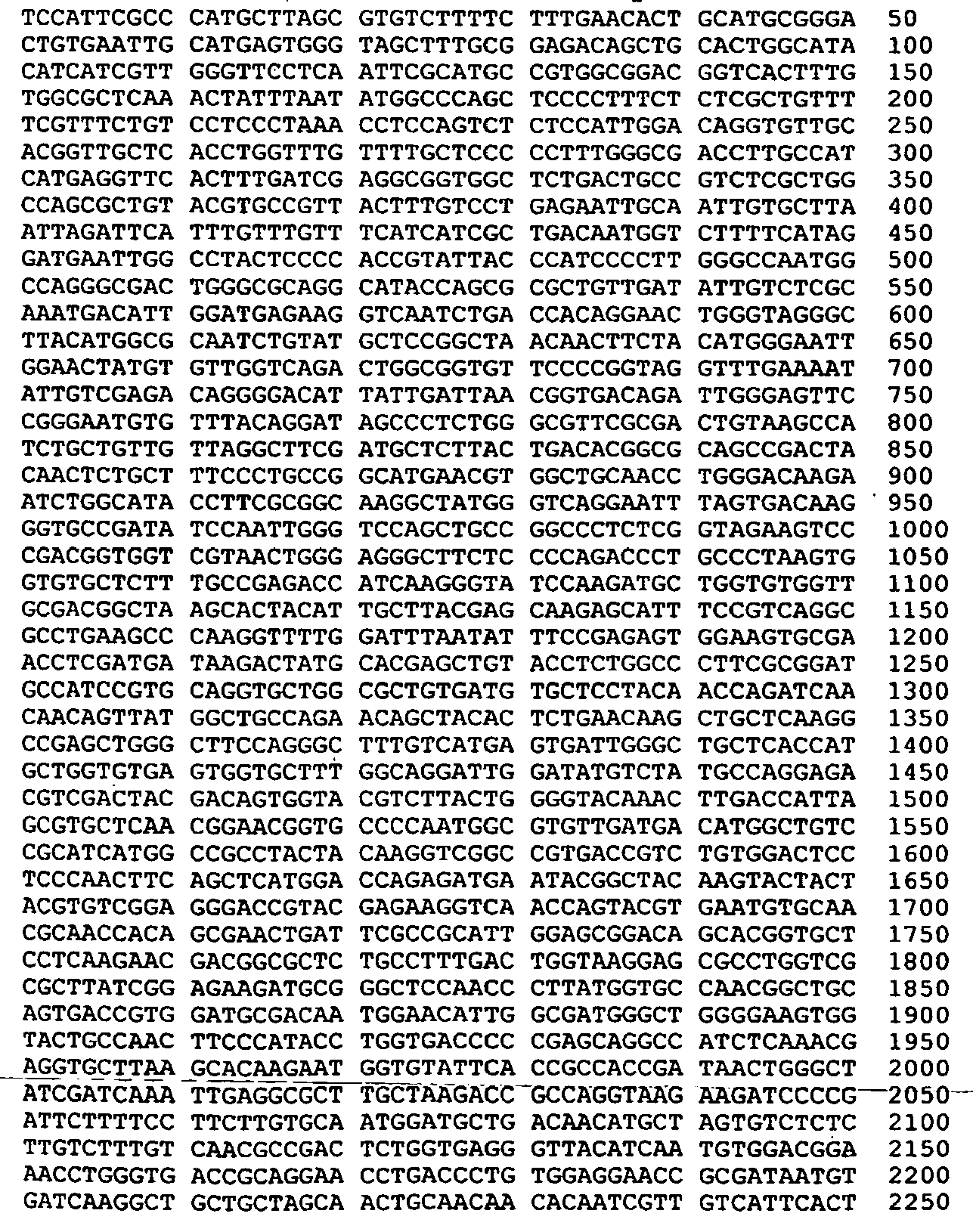

- (i) SEQUENCE CHARACTERISTICS:
- (2) INFORMATION FOR SEQ ID NO:4:
- (i) SEQUENCE CHARACTERISTICS:
- (A) LENGTH: 6
- (B) TYPE: amino acid
- (C) STRANDEDNESS: single
- (D) TOPOLOGY: linear
- (xi) SEQUENCE DESCRIPTION: SEQ ID NO:4:

- (i) SEQUENCE CHARACTERISTICS:
- (2) INFORMATION FOR SEQ ID NO:5:
- (i) SEQUENCE CHARACTERISTICS:
- (A) LENGTH: 16
- (B) TYPE: nucleic acid
- (C) STRANDEDNESS: single
- (D) TOPOLOGY: linear
- (xi) SEQUENCE DESCRIPTION: SEQ ID NO:5:

- (i) SEQUENCE CHARACTERISTICS:
- (2) INFORMATION FOR SEQ ID NO:6:
- (i) SEQUENCE CHARACTERISTICS:
- (A) LENGTH: 8
- (B) TYPE: amino acid
- (C) STRANDEDNESS: single
- (D) TOPOLOGY: linear
- (xi) SEQUENCE DESCRIPTION: SEQ ID NO:6:

- (i) SEQUENCE CHARACTERISTICS:
- (2) INFORMATION FOR SEQ ID NO:7:
- (i) SEQUENCE CHARACTERISTICS:
- (A) LENGTH: 21
- (B) TYPE: nucleic acid
- (C) STRANDEDNESS: single
- (D) TOPOLOGY: linear
- (xi) SEQUENCE DESCRIPTION: SEQ ID NO:7:
- TCCIGCNGGN ARDATNGGYT G 21
- (i) SEQUENCE CHARACTERISTICS:
- (2) INFORMATION FOR SEQ ID NO:8:
- (i) SEQUENCE CHARACTERISTICS:
- (A) LENGTH: 34
- (B) TYPE: nucleic acid
- (C) STRANDEDNESS: single
- (D) TOPOLOGY: linear
- (xi) SEQUENCE DESCRIPTION: SEQ ID NO:8:
- AAACCATGGC TGATGAATTG GCATACTCCC CACC 34
- (i) SEQUENCE CHARACTERISTICS:
- (2) INFORMATION FOR SEQ ID NO:9:
- (i) SEQUENCE CHARACTERISTICS:
- (A) LENGTH: 33
- (B) TYPE: nucleic acid
- (C) STRANDEDNESS: single
- (D) TOPOLOGY: linear
- (xi) SEQUENCE DESCRIPTION: SEQ ID NO:9:
- AAAGGATCCT TAGTGAACAG TAGGCAGAGA CGC 33
- (i) SEQUENCE CHARACTERISTICS:
- (2) INFORMATION FOR SEQ ID NO:10:
- (i) SEQUENCE CHARA:
- (A) LENGTH: 19
- (B) TYPE: amino acid
- (C) STRANDEDNESS: single
- (D) TOPOLOGY: linear
- (xi) SEQUENCE DESCRIPTION: SEQ ID NO:10:

- (i) SEQUENCE CHARA:
- (2) INFORMATION FOR SEQ ID NO:11:
- (i) SEQUENCE CHARACTERISTICS:
- (A) LENGTH: 25
- (B) TYPE: amino acid
- (C) STRANDEDNESS: single
- (D) TOPOLOGY: linear
- (xi) SEQUENCE DESCRIPTION: SEQ ID NO:11:

- (i) SEQUENCE CHARACTERISTICS:
- (2) INFORMATION FOR SEQ ID NO:12:
- (i) SEQUENCE CHARACTERISTICS:
- (A) LENGTH: 21
- (B) TYPE: amino acid
- (C) STRANDEDNESS: single
- (D) TOPOLOGY: linear
- (xi) SEQUENCE DESCRIPTION: SEQ ID NO:12:

- (i) SEQUENCE CHARACTERISTICS:
- (2) INFORMATION FOR SEQ ID NO:13:
- (i) SEQUENCE CHARACTERISTICS:
- (A) LENGTH: 3212
- (B) TYPE: nucleic acid
- (C) STRANDEDNESS: double
- (D). TOPOLOGY: linear
- (xi) SEQUENCE DESCRIPTION: SEQ ID NO:13:


- (i) SEQUENCE CHARACTERISTICS:
- (2) INFORMATION FOR SEQ ID NO:14:
- (i) SEQUENCE CHARACTERISTICS:
- (A) LENGTH: 841
- (B) TYPE: amino acid
- (C) STRAN: single
- (D) TOPOLOGY: linear
- (xi) SEQUENCE DESCRIPTION: SEQ ID NO:14:

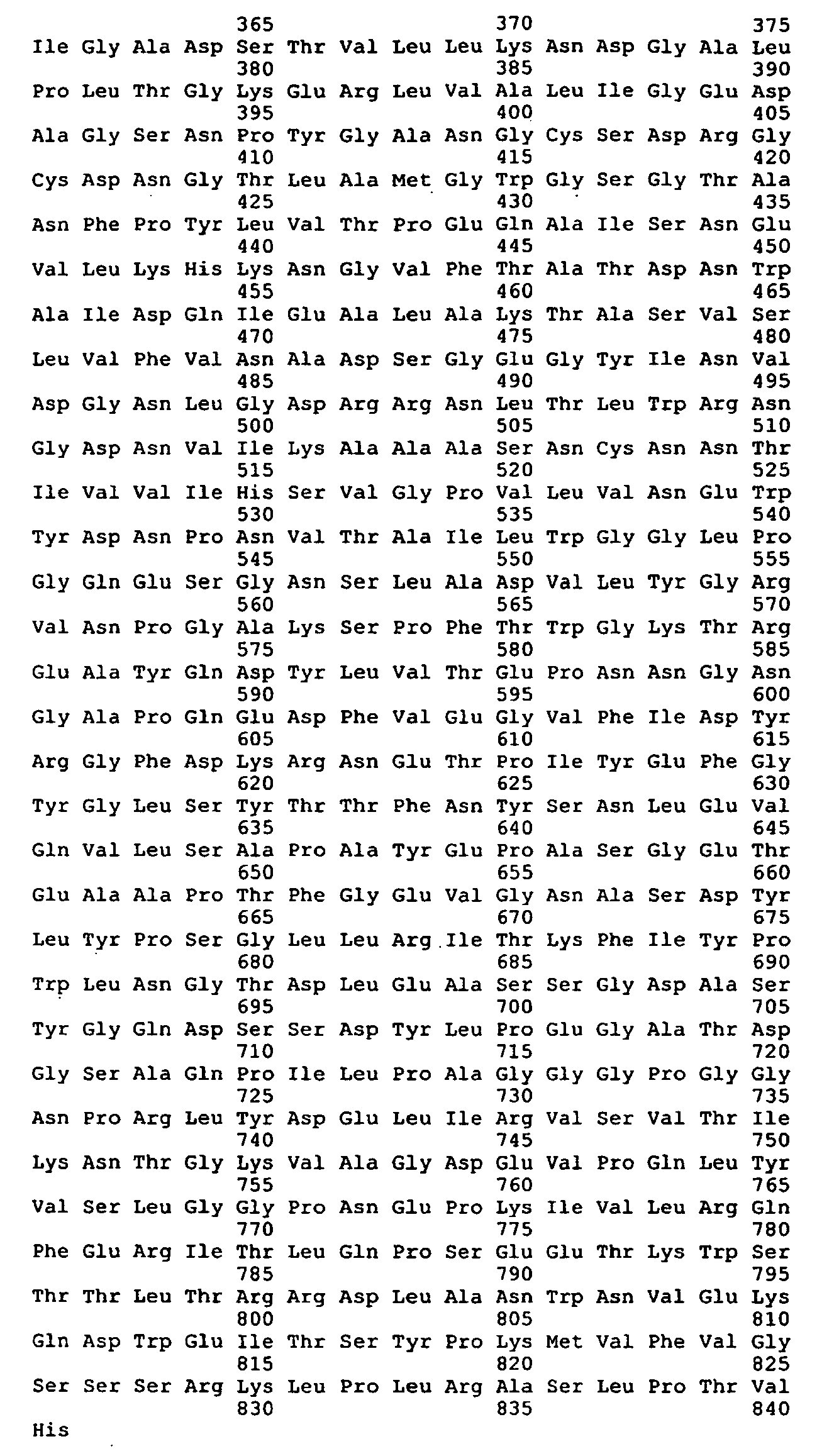
- (i) SEQUENCE CHARACTERISTICS:
- (2) INFORMATION FOR SEQ ID NO:15:
- (i) SEQUENCE CHARACTERISTICS:
- (A) LENGTH: 3329
- (B) TYPE: nucleic acid
- (C) STRANDEDNESS: double
- (D) TOPOLOGY: linear
- (xi) SEQUENCE DESCRIPTION: SEQ ID NO:15:


- (i) SEQUENCE CHARACTERISTICS:
- (2) INFORMATION FOR SEQ ID NO:16:
- (i) SEQUENCE CHARACTERISTICS:
- (A) LENGTH: 880
- (B) TYPE: amino acid
- (C) STRAN: single
- (D) TOPOLOGY: linear
- (xi) SEQUENCE DESCRIPTION: SEQ ID NO:16:


- (i) SEQUENCE CHARACTERISTICS:
- (2) INFORMATION FOR SEQ ID NO:17
- (i) SEQUENCE CHARACTERISTICS:
- (A) LENGTH: 4
- (B) TYPE: amino acid
- (C) STRANDEDNESS: single
- (D) TOPOLOGY: linear
- (xi) SEQUENCE DESCRIPTION: SEQ ID NO:17:
- His Asp Glu Leu
- (i) SEQUENCE CHARACTERISTICS:
- (2) INFORMATION FOR SEQ ID NO:18
- (i) SEQUENCE CHARACTERISTICS:
- (A) LENGTH: 3338
- (B) TYPE: nucleic acid
- (C) STRANDEDNESS: double
- (D) TOPOLOGY: linear
- (xi) SEQUENCE DESCRIPTION: SEQ ID NO:18:


- (i) SEQUENCE CHARACTERISTICS:
- (2) INFORMATION FOR SEQ ID NO:19:
- (i) SEQUENCE CHARACTERISTICS:
- (A) LENGTH: 883
- (B) : amino acid
- (C) STRAN: single
- (D) TOPOLOGY: linear
- (xi) SEQUENCE DESCRIPTION: SEQ ID NO:19:


- (i) SEQUENCE CHARACTERISTICS:
- (2) INFORMATION FOR SEQ ID NO:20
- (i) SEQUENCE CHARACTERISTICS:
- (A) LENGTH: 23
- (B) TYPE: nucleic acid
- (C) STRANDEDNESS: single
- (D) TOPOLOGY: linear
- (xi) SEQUENCE DESCRIPTION: SEQ ID NO:20:
- CAGTGACCGT GGATGCGACA ATG 23
- (i) SEQUENCE CHARACTERISTICS:
- (2) INFORMATION FOR SEQ ID NO:21
- (i) SEQUENCE CHARACTERISTICS:
- (A) LENGTH: 40
- (B) TYPE: nucleic acid
- (C) STRANDEDNESS: single
- (D) TOPOLOGY: linear
- (xi) SEQUENCE DESCRIPTION: SEQ ID NO:21:
- AGAGACGGAT
GACAAGTACT ACTTGAAATT GGGCCCAAAA 40
- AGAGACGGAT
- (i) SEQUENCE CHARACTERISTICS:
- (2) INFORMATION FOR SEQ ID NO:22
- (i) SEQUENCE CHARACTERISTICS:
- (A) LENGTH: 23
- (B) TYPE: nucleic acid
- (C) STRANDEDNESS: single
- (D) TOPOLOGY: linear
- (xi) SEQUENCE DESCRIPTION: SEQ ID NO:22:
- CAGTGACCGT GGATGCGACA ATG 23
- (i) SEQUENCE CHARACTERISTICS:
- (2) INFORMATION FOR SEQ ID NO:23
- (i) SEQUENCE CHARACTERISTICS:
- (A) LENGTH: 33
- (B) TYPE: nucleic acid
- (C) STRANDEDNESS: single
- (D) TOPOLOGY: linear
- (xi) SEQUENCE DESCRIPTION: SEQ ID NO:23:
- AAAGGATCCT TAGTGAACAG TAGGCAGAGA CGC 33
- (i) SEQUENCE CHARACTERISTICS:
- (2) INFORMATION FOR SEQ ID NO:24
- (i) SEQUENCE CHARACTERISTICS:
- (A) LENGTH: 4
- (B) TYPE: amino acid
- (C) STRANDEDNESS: single
- (D) TOPOLOGY: linear
- (xi) SEQUENCE DESCRIPTION: SEQ ID NO:24:
- His Asp Glu Leu
- (i) SEQUENCE CHARACTERISTICS:
Claims (24)
- A method of increasing a level of at least one fermentation substance in a fermentation product, the method comprising the step of fermenting a plant derived glucose containing fermentation starting material by a yeast cell, said plant overexpressing a nucleic acid construct including a genomic, complementary or composite polynucleotide encoding a polypeptide having an amino acid sequence as set forth in SEQ ID NO:2, said polypeptide having a β-glucosidase catalytic activity, thereby increasing the level of the at least one fermentation substance in the fermentation product.
- A method of increasing a level of at least one aroma substance in a plant derived product, the method comprising the step of incubating a glucose containing plant starting material with a yeast cell, said plant overexpressing a nucleic acid construct including a genomic, complementary or composite polynucleotide encoding a polypeptide having an amino acid sequence as set forth in SEQ ID NO:2, said polypeptide having a β-glucosidase catalytic activity, thereby increasing the level of the at least one aroma substance in the plant derived product.
- The method of claim 2, wherein said plant derived product is a fermentation product.
- A method of increasing a level of free glucose in a plant derived glucose containing fermentation starling material, the method comprising the step of fermenting the plant derived glucose containing fermentation starting material by a cell, said plant overexpressing a nucleic acid construct including a genomic, complementary or composite polynucleotide encoding a polypeptide having an amino acid sequence as set forth in SEQ ID NO:2, said polypeptide having a β-glucosidase catalytic activity, thereby increasing the level of the free glucose hi the plant.
- A method of increasing a level of free glucose in a plant, the method comprising the step of overexpressing in the plant a nucleic acid construct including a genomic, complementary or composite polynucleotide encoding a polypeptide having an amino acid sequence as set forth in SEQ ID NO:2, said polypeptide having a β-glucosidase catalytic activity, thereby increasing the level of the free glucose in the plant.
- A method of producing an alcohol, the method comprising the step of fermenting a plant derived glucose containing fermentation starting material by a cell, said plant overexpressing a nucleic acid construct including a genomic, complementary or composite polynucleotide being encoding a polypeptide having an amino acid sequence as set forth in SEQ ID NO:2, said polypeptide having a β-glucosidase catalytic activity, and extracting the alcohol therefrom.
- A method of producing an aroma spreading plant, the method comprising the step of overexpressing in the plant a nucleic acid construct including a genomic, complementary or composite polynucleotide encoding a polypeptide having an amino acid sequence as set forth in SEQ ID NO:2, said polypeptide having a β-glucosidase catalytic activity, thereby increasing aroma spread from the plant.
- The method of claim 7, wherein overexpressing said nucleic acid construct is performed in a tissue specific manner.
- The method of claim 7, wherein overexpressing said nucleic acid construct is limited to at least one tissue selected from the group consisting of flower, fruit, seed, root, stem, pollen and leaves.
- A method of increasing a level of at least one fermentation substance in a fermentation product, the method comprising the step of fermenting a plant derived glucose containing fermentation starting material by a yeast cell, said plant overexpressing a nucleic acid construct including a genomic, complementary or composite polynucleotide encoding a polypeptide having a β-glucosidase catalytic activity and further encoding a signal peptide being in frame with said polypeptide, thereby increasing the level of the at least one fermentation substance in the fermentation product.
- The method of claim 10, wherein said polynucleotide further encodes an endoplasmic reticulum retaining peptide being in frame with said polypeptide.
- A method of increasing a level of at least one aroma substance in a plant derived product, the method comprising the step of incubating a glucose containing plant starting material with a yeast cell, said plant overexpressing a nucleic acid construct including a genomic, complementary or composite polynucleotide encoding a polypeptide having a β-glucosidase catalytic activity and further encoding a signal peptide being in frame with said polypeptide, thereby increasing the level of the at least one aroma substance in the plant derived product.
- The method of claim 12, wherein said polynucleotide further encodes an endoplasmic reticulum retaining peptide being in frame with said polypeptide.
- The method of claim 12, wherein said plant derived product is a fermentation product.
- A method of increasing a level of free glucose in a plant derived glucose containing fermentation starting material, the method comprising the step of fermenting the plant derived glucose containing fermentation starting material by a cell, said plant overexpressing a nucleic acid construct including a genomic, complementary or composite polynucleotide encoding a polypeptide having a β-glucosidase catalytic activity and further encoding a signal peptide being in frame with said polypeptide, thereby increasing the level of the free glucose in the plant.
- The method of claim 15, wherein said polynucleotide further encodes an endoplasmic reticulum retaining peptide being in frame with said polypeptide.
- A method of increasing a level of free glucose in a plant, the method comprising the step of overexpressing in the plant a nucleic acid construct including a genomic, complementary or composite polynucleotide encoding a polypeptide having a β-glucosidase catalytic activity and further encoding a signal peptide being in frame with said polypeptide, thereby increasing the level of the free glucose in the plant.
- The method of claim 17, wherein said polynucleotide further encodes an endoplasmic reticulum retaining peptide being in frame with said polypeptide.
- A method of producing an alcohol, the method comprising the step of fermenting a plant derived glucose containing fermentation starting material by a cell, said plant overexpressing a nucleic acid construct including a genomic, complementary or composite polynucleotide encoding a polypeptide having a β-glucosidase catalytic activity and further encoding a signal peptide being in frame with said polypeptide, and extracting the alcohol therefrom.
- The method of claim 19, wherein said polynucleotide further encodes an endoplasmic reticulum retaining peptide being in frame with said polypeptide.
- A method of producing an aroma spreading plant, the method comprising the step of overexpressing in the plant a nucleic acid construct including a genomic, complementary or composite polynucleotide encoding a polypeptide having a β-glucosidase catalytic activity and further encoding a signal peptide being in frame with said polypeptide, thereby increasing aroma spread from the plant
- The method of claim 21, wherein said polynucleotide further encodes an endoplasmic reticulum retaining peptide being in frame with said polypeptide.
- The method of claim 21, wherein overexpressing said nucleic acid construct is performed in a tissue specific manner.
- The method of claim 21, wherein overexpressing said nucleic acid construct is limited to at least one tissue selected from the group consisting of flower, fruit, seed, root, stem, pollen and leaves.
Applications Claiming Priority (3)
| Application Number | Priority Date | Filing Date | Title |
|---|---|---|---|
| US44333899A | 1999-11-19 | 1999-11-19 | |
| US443338 | 1999-11-19 | ||
| PCT/IL2000/000758 WO2001036586A2 (en) | 1999-11-19 | 2000-11-15 | Aspegillus niger beta-glucosidase gene, protein and uses thereof |
Publications (3)
| Publication Number | Publication Date |
|---|---|
| EP1230343A2 EP1230343A2 (en) | 2002-08-14 |
| EP1230343A4 EP1230343A4 (en) | 2003-09-03 |
| EP1230343B1 true EP1230343B1 (en) | 2006-08-30 |
Family
ID=23760395
Family Applications (1)
| Application Number | Title | Priority Date | Filing Date |
|---|---|---|---|
| EP00976229A Expired - Lifetime EP1230343B1 (en) | 1999-11-19 | 2000-11-15 | Aspegillus niger beta-glucosidase gene, protein and uses thereof |
Country Status (12)
| Country | Link |
|---|---|
| US (2) | US7223902B1 (en) |
| EP (1) | EP1230343B1 (en) |
| AT (1) | ATE338109T1 (en) |
| AU (1) | AU784258B2 (en) |
| CA (1) | CA2392060C (en) |
| DE (1) | DE60030466T2 (en) |
| ES (1) | ES2272333T3 (en) |
| HK (1) | HK1048139B (en) |
| IL (1) | IL149698A0 (en) |
| NZ (1) | NZ519043A (en) |
| WO (1) | WO2001036586A2 (en) |
| ZA (1) | ZA200204463B (en) |
Cited By (1)
| Publication number | Priority date | Publication date | Assignee | Title |
|---|---|---|---|---|
| CN106811477A (en) * | 2017-02-06 | 2017-06-09 | 湖北工业大学 | A kind of method that glucosidase multicopy expression improves trichoderma reesei cellulase enzyme activity |
Families Citing this family (11)
| Publication number | Priority date | Publication date | Assignee | Title |
|---|---|---|---|---|
| AU784258B2 (en) * | 1999-11-19 | 2006-03-02 | Yissum Research Development Company Of The Hebrew University Of Jerusalem | Aspegillus niger beta-glucosidase gene, protein and uses thereof |
| CN100510051C (en) | 2002-04-16 | 2009-07-08 | 天野酶株式会社 | Composition for improving flavor of wine prepared from grape |
| DK2228440T3 (en) * | 2003-05-02 | 2013-01-02 | Novozymes Inc | Variants of beta-glucosidases |
| EP1682656B1 (en) | 2003-10-28 | 2013-09-18 | Novozymes Inc. | Polypeptides having beta-glucosidase activity and polynucleotides encoding same |
| US20070264419A1 (en) * | 2006-05-11 | 2007-11-15 | Virendra Kumar Tuli | Composition and method for translocation of aromatic compounds in plants |
| CN101492661B (en) * | 2009-01-16 | 2011-06-15 | 江南大学 | Clone, expression of beta-glucosidase gene, and preparation for gentian oligose |
| EP2443139B1 (en) | 2009-06-16 | 2016-08-10 | Codexis, Inc. | Beta-glucosidase variant enzymes and related polynucleotides |
| WO2012006622A2 (en) * | 2010-07-09 | 2012-01-12 | University Of Central Florida Research Foundation, Inc. | Improved agronomic traits via genetically induced elevation of phytohormone levels in plants |
| SG11201610894UA (en) | 2014-08-08 | 2017-01-27 | Xyleco Inc | Aglycosylated enzyme and uses thereof |
| CN108841740B (en) * | 2018-07-10 | 2021-07-09 | 青岛蔚蓝生物集团有限公司 | A Pichia strain with high α-galactosidase production |
| US20250311734A1 (en) | 2022-05-14 | 2025-10-09 | Novozymes A/S | Compositions and Methods for Preventing, Treating, Suppressing and/or Eliminatting Phytopathogenic Infestations and Infections |
Family Cites Families (23)
| Publication number | Priority date | Publication date | Assignee | Title |
|---|---|---|---|---|
| NL154600B (en) | 1971-02-10 | 1977-09-15 | Organon Nv | METHOD FOR THE DETERMINATION AND DETERMINATION OF SPECIFIC BINDING PROTEINS AND THEIR CORRESPONDING BINDABLE SUBSTANCES. |
| NL154598B (en) | 1970-11-10 | 1977-09-15 | Organon Nv | PROCEDURE FOR DETERMINING AND DETERMINING LOW MOLECULAR COMPOUNDS AND PROTEINS THAT CAN SPECIFICALLY BIND THESE COMPOUNDS AND TEST PACKAGING. |
| NL154599B (en) | 1970-12-28 | 1977-09-15 | Organon Nv | PROCEDURE FOR DETERMINING AND DETERMINING SPECIFIC BINDING PROTEINS AND THEIR CORRESPONDING BINDABLE SUBSTANCES, AND TEST PACKAGING. |
| US3901654A (en) | 1971-06-21 | 1975-08-26 | Biological Developments | Receptor assays of biologically active compounds employing biologically specific receptors |
| US3853987A (en) | 1971-09-01 | 1974-12-10 | W Dreyer | Immunological reagent and radioimmuno assay |
| US3867517A (en) | 1971-12-21 | 1975-02-18 | Abbott Lab | Direct radioimmunoassay for antigens and their antibodies |
| NL171930C (en) | 1972-05-11 | 1983-06-01 | Akzo Nv | METHOD FOR DETERMINING AND DETERMINING BITES AND TEST PACKAGING. |
| US3850578A (en) | 1973-03-12 | 1974-11-26 | H Mcconnell | Process for assaying for biologically active molecules |
| US3935074A (en) | 1973-12-17 | 1976-01-27 | Syva Company | Antibody steric hindrance immunoassay with two antibodies |
| US3996345A (en) | 1974-08-12 | 1976-12-07 | Syva Company | Fluorescence quenching with immunological pairs in immunoassays |
| US4034074A (en) | 1974-09-19 | 1977-07-05 | The Board Of Trustees Of Leland Stanford Junior University | Universal reagent 2-site immunoradiometric assay using labelled anti (IgG) |
| US3984533A (en) | 1975-11-13 | 1976-10-05 | General Electric Company | Electrophoretic method of detecting antigen-antibody reaction |
| US4098876A (en) | 1976-10-26 | 1978-07-04 | Corning Glass Works | Reverse sandwich immunoassay |
| US4879219A (en) | 1980-09-19 | 1989-11-07 | General Hospital Corporation | Immunoassay utilizing monoclonal high affinity IgM antibodies |
| US5011771A (en) | 1984-04-12 | 1991-04-30 | The General Hospital Corporation | Multiepitopic immunometric assay |
| IL82980A (en) * | 1987-06-24 | 1991-09-16 | Yissum Res Dev Co | Endo-beta-glucosidase b1 derived from a.niger b1 used for the hydrolysis of monoterpene glycosides for enhancing flavour and fragrance |
| US5316931A (en) | 1988-02-26 | 1994-05-31 | Biosource Genetics Corp. | Plant viral vectors having heterologous subgenomic promoters for systemic expression of foreign genes |
| US5997913A (en) | 1990-12-10 | 1999-12-07 | Genencor International, Inc. | Method enhancing flavor and aroma in foods by overexpression of β-glucosidase |
| US5863783A (en) | 1991-03-27 | 1999-01-26 | Gist-Brocades, N.V. | Cloning and expression of DNA molecules encoding arabinan-degrading enzymes of fungal origin |
| US5281521A (en) | 1992-07-20 | 1994-01-25 | The Trustees Of The University Of Pennsylvania | Modified avidin-biotin technique |
| NZ328434A (en) * | 1997-07-24 | 1998-05-27 | Univ British Columbia Substitu | Coniferin beta-glucosidase cdna for modifying lignin content in plants |
| US6015703A (en) * | 1998-03-10 | 2000-01-18 | Iogen Corporation | Genetic constructs and genetically modified microbes for enhanced production of beta-glucosidase |
| AU784258B2 (en) * | 1999-11-19 | 2006-03-02 | Yissum Research Development Company Of The Hebrew University Of Jerusalem | Aspegillus niger beta-glucosidase gene, protein and uses thereof |
-
2000
- 2000-11-15 AU AU14103/01A patent/AU784258B2/en not_active Ceased
- 2000-11-15 NZ NZ519043A patent/NZ519043A/en unknown
- 2000-11-15 DE DE60030466T patent/DE60030466T2/en not_active Expired - Lifetime
- 2000-11-15 HK HK03100352.9A patent/HK1048139B/en not_active IP Right Cessation
- 2000-11-15 IL IL14969800A patent/IL149698A0/en not_active IP Right Cessation
- 2000-11-15 CA CA002392060A patent/CA2392060C/en not_active Expired - Fee Related
- 2000-11-15 ES ES00976229T patent/ES2272333T3/en not_active Expired - Lifetime
- 2000-11-15 EP EP00976229A patent/EP1230343B1/en not_active Expired - Lifetime
- 2000-11-15 WO PCT/IL2000/000758 patent/WO2001036586A2/en not_active Ceased
- 2000-11-15 AT AT00976229T patent/ATE338109T1/en not_active IP Right Cessation
- 2000-11-15 US US10/130,150 patent/US7223902B1/en not_active Expired - Fee Related
-
2002
- 2002-06-04 ZA ZA200204463A patent/ZA200204463B/en unknown
-
2007
- 2007-04-17 US US11/785,365 patent/US20070292930A1/en not_active Abandoned
Cited By (2)
| Publication number | Priority date | Publication date | Assignee | Title |
|---|---|---|---|---|
| CN106811477A (en) * | 2017-02-06 | 2017-06-09 | 湖北工业大学 | A kind of method that glucosidase multicopy expression improves trichoderma reesei cellulase enzyme activity |
| CN106811477B (en) * | 2017-02-06 | 2019-11-22 | 湖北工业大学 | A method for improving the enzyme activity of Trichoderma reesei cellulase by expressing multiple copies of glucosidase |
Also Published As
| Publication number | Publication date |
|---|---|
| IL149698A0 (en) | 2002-11-10 |
| DE60030466D1 (en) | 2006-10-12 |
| CA2392060C (en) | 2007-07-10 |
| EP1230343A4 (en) | 2003-09-03 |
| US20070292930A1 (en) | 2007-12-20 |
| HK1048139B (en) | 2006-12-29 |
| ES2272333T3 (en) | 2007-05-01 |
| EP1230343A2 (en) | 2002-08-14 |
| NZ519043A (en) | 2006-12-22 |
| AU784258B2 (en) | 2006-03-02 |
| CA2392060A1 (en) | 2001-05-25 |
| DE60030466T2 (en) | 2007-08-30 |
| ATE338109T1 (en) | 2006-09-15 |
| WO2001036586A2 (en) | 2001-05-25 |
| WO2001036586A3 (en) | 2002-05-02 |
| AU1410301A (en) | 2001-05-30 |
| HK1048139A1 (en) | 2003-03-21 |
| ZA200204463B (en) | 2003-07-09 |
| US7223902B1 (en) | 2007-05-29 |
Similar Documents
| Publication | Publication Date | Title |
|---|---|---|
| US20070292930A1 (en) | Method of producing recombinant Aspergillus niger beta-glucosidase and an aroma spreading plant | |
| Dai et al. | Expression of Acidothermus cellulolyticus endoglucanase E1 in transgenic tobacco: biochemical characteristics and physiological effects | |
| EP2041294B1 (en) | Construction of highly efficient cellulase compositions for enzymatic hydrolysis of cellulose | |
| Herbers et al. | A thermostable xylanase from Clostridium thermocellum expressed at high levels in the apoplast of transgenic tobacco has no detrimental effects and is easily purified | |
| US9127287B2 (en) | Compositions and methods for producing fermentable carbohydrates | |
| EP2260105B1 (en) | Production and use of plant degrading materials | |
| US7049485B2 (en) | Transgenic plants containing ligninase and cellulase which degrade lignin and cellulose to fermentable sugars | |
| Harrison et al. | Accumulation of recombinant cellobiohydrolase and endoglucanase in the leaves of mature transgenic sugar cane | |
| Iwashita et al. | The bglA gene of Aspergillus kawachii encodes both extracellular and cell wall-bound β-glucosidases | |
| CA2801577C (en) | Yeast expressing saccharolytic enzymes for consolidated bioprocessing using starch and cellulose | |
| KR20120089631A (en) | Methods and compositions for improving sugar transport, mixed sugar fermentation, and production of biofuels | |
| KR100769584B1 (en) | Cellulase Expression Transformation Plant for Autohydrolysis of Cellulose and Production Method of Water-Soluble Sugar Using the Same | |
| AU748020B2 (en) | Beta-glucosidase coding sequences and protein from Orpinomyces PC-2 | |
| Chen et al. | Properties of a Recombinant ẞ-Glucosidase from Polycentric Anaerobic Fungus Orpinomyces PC-2 and Its Application |
Legal Events
| Date | Code | Title | Description |
|---|---|---|---|
| PUAI | Public reference made under article 153(3) epc to a published international application that has entered the european phase |
Free format text: ORIGINAL CODE: 0009012 |
|
| 17P | Request for examination filed |
Effective date: 20020606 |
|
| AK | Designated contracting states |
Kind code of ref document: A2 Designated state(s): AT BE CH CY DE DK ES FI FR GB GR IE IT LI LU MC NL PT SE TR |
|
| AX | Request for extension of the european patent |
Free format text: AL;LT;LV;MK;RO;SI |
|
| RAP1 | Party data changed (applicant data changed or rights of an application transferred) |
Owner name: YISSUM RESEARCH DEVELOPMENT COMPANY OF THE HEBREW |
|
| RIC1 | Information provided on ipc code assigned before grant |
Ipc: 7C 12N 15/82 B Ipc: 7C 12N 15/09 B Ipc: 7C 12N 15/31 B Ipc: 7A 01H 5/00 B Ipc: 7C 12N 5/04 A Ipc: 7C 12N 9/42 B |
|
| A4 | Supplementary search report drawn up and despatched |
Effective date: 20030722 |
|
| 17Q | First examination report despatched |
Effective date: 20031110 |
|
| GRAP | Despatch of communication of intention to grant a patent |
Free format text: ORIGINAL CODE: EPIDOSNIGR1 |
|
| GRAS | Grant fee paid |
Free format text: ORIGINAL CODE: EPIDOSNIGR3 |
|
| GRAA | (expected) grant |
Free format text: ORIGINAL CODE: 0009210 |
|
| AK | Designated contracting states |
Kind code of ref document: B1 Designated state(s): AT BE CH CY DE DK ES FI FR GB GR IE IT LI LU MC NL PT SE TR |
|
| PG25 | Lapsed in a contracting state [announced via postgrant information from national office to epo] |
Ref country code: IT Free format text: LAPSE BECAUSE OF FAILURE TO SUBMIT A TRANSLATION OF THE DESCRIPTION OR TO PAY THE FEE WITHIN THE PRESCRIBED TIME-LIMIT;WARNING: LAPSES OF ITALIAN PATENTS WITH EFFECTIVE DATE BEFORE 2007 MAY HAVE OCCURRED AT ANY TIME BEFORE 2007. THE CORRECT EFFECTIVE DATE MAY BE DIFFERENT FROM THE ONE RECORDED. Effective date: 20060830 Ref country code: BE Free format text: LAPSE BECAUSE OF FAILURE TO SUBMIT A TRANSLATION OF THE DESCRIPTION OR TO PAY THE FEE WITHIN THE PRESCRIBED TIME-LIMIT Effective date: 20060830 Ref country code: AT Free format text: LAPSE BECAUSE OF FAILURE TO SUBMIT A TRANSLATION OF THE DESCRIPTION OR TO PAY THE FEE WITHIN THE PRESCRIBED TIME-LIMIT Effective date: 20060830 Ref country code: FI Free format text: LAPSE BECAUSE OF FAILURE TO SUBMIT A TRANSLATION OF THE DESCRIPTION OR TO PAY THE FEE WITHIN THE PRESCRIBED TIME-LIMIT Effective date: 20060830 |
|
| REG | Reference to a national code |
Ref country code: GB Ref legal event code: FG4D |
|
| REG | Reference to a national code |
Ref country code: CH Ref legal event code: EP |
|
| REG | Reference to a national code |
Ref country code: IE Ref legal event code: FG4D |
|
| REF | Corresponds to: |
Ref document number: 60030466 Country of ref document: DE Date of ref document: 20061012 Kind code of ref document: P |
|
| PG25 | Lapsed in a contracting state [announced via postgrant information from national office to epo] |
Ref country code: DK Free format text: LAPSE BECAUSE OF FAILURE TO SUBMIT A TRANSLATION OF THE DESCRIPTION OR TO PAY THE FEE WITHIN THE PRESCRIBED TIME-LIMIT Effective date: 20061130 Ref country code: SE Free format text: LAPSE BECAUSE OF FAILURE TO SUBMIT A TRANSLATION OF THE DESCRIPTION OR TO PAY THE FEE WITHIN THE PRESCRIBED TIME-LIMIT Effective date: 20061130 Ref country code: MC Free format text: LAPSE BECAUSE OF NON-PAYMENT OF DUE FEES Effective date: 20061130 |
|
| REG | Reference to a national code |
Ref country code: HK Ref legal event code: GR Ref document number: 1048139 Country of ref document: HK |
|
| PG25 | Lapsed in a contracting state [announced via postgrant information from national office to epo] |
Ref country code: PT Free format text: LAPSE BECAUSE OF FAILURE TO SUBMIT A TRANSLATION OF THE DESCRIPTION OR TO PAY THE FEE WITHIN THE PRESCRIBED TIME-LIMIT Effective date: 20070212 |
|
| ET | Fr: translation filed | ||
| REG | Reference to a national code |
Ref country code: ES Ref legal event code: FG2A Ref document number: 2272333 Country of ref document: ES Kind code of ref document: T3 |
|
| PLBE | No opposition filed within time limit |
Free format text: ORIGINAL CODE: 0009261 |
|
| STAA | Information on the status of an ep patent application or granted ep patent |
Free format text: STATUS: NO OPPOSITION FILED WITHIN TIME LIMIT |
|
| 26N | No opposition filed |
Effective date: 20070531 |
|
| PG25 | Lapsed in a contracting state [announced via postgrant information from national office to epo] |
Ref country code: GR Free format text: LAPSE BECAUSE OF FAILURE TO SUBMIT A TRANSLATION OF THE DESCRIPTION OR TO PAY THE FEE WITHIN THE PRESCRIBED TIME-LIMIT Effective date: 20061201 |
|
| PG25 | Lapsed in a contracting state [announced via postgrant information from national office to epo] |
Ref country code: TR Free format text: LAPSE BECAUSE OF FAILURE TO SUBMIT A TRANSLATION OF THE DESCRIPTION OR TO PAY THE FEE WITHIN THE PRESCRIBED TIME-LIMIT Effective date: 20060830 |
|
| PG25 | Lapsed in a contracting state [announced via postgrant information from national office to epo] |
Ref country code: CY Free format text: LAPSE BECAUSE OF FAILURE TO SUBMIT A TRANSLATION OF THE DESCRIPTION OR TO PAY THE FEE WITHIN THE PRESCRIBED TIME-LIMIT Effective date: 20060830 |
|
| PGFP | Annual fee paid to national office [announced via postgrant information from national office to epo] |
Ref country code: CH Payment date: 20091124 Year of fee payment: 10 Ref country code: IE Payment date: 20091124 Year of fee payment: 10 Ref country code: LU Payment date: 20091120 Year of fee payment: 10 Ref country code: DE Payment date: 20091120 Year of fee payment: 10 Ref country code: ES Payment date: 20091123 Year of fee payment: 10 |
|
| PGFP | Annual fee paid to national office [announced via postgrant information from national office to epo] |
Ref country code: NL Payment date: 20091112 Year of fee payment: 10 |
|
| PGFP | Annual fee paid to national office [announced via postgrant information from national office to epo] |
Ref country code: IT Payment date: 20091126 Year of fee payment: 10 Ref country code: GB Payment date: 20091119 Year of fee payment: 10 Ref country code: FR Payment date: 20091201 Year of fee payment: 10 |
|
| PGFP | Annual fee paid to national office [announced via postgrant information from national office to epo] |
Ref country code: BE Payment date: 20091224 Year of fee payment: 10 |
|
| BERE | Be: lapsed |
Owner name: YISSUM RESEARCH DEVELOPMENT COMPANY OF THE HEBREW Effective date: 20101130 |
|
| REG | Reference to a national code |
Ref country code: NL Ref legal event code: V1 Effective date: 20110601 |
|
| REG | Reference to a national code |
Ref country code: CH Ref legal event code: PL |
|
| GBPC | Gb: european patent ceased through non-payment of renewal fee |
Effective date: 20101115 |
|
| PG25 | Lapsed in a contracting state [announced via postgrant information from national office to epo] |
Ref country code: CH Free format text: LAPSE BECAUSE OF NON-PAYMENT OF DUE FEES Effective date: 20101130 Ref country code: LI Free format text: LAPSE BECAUSE OF NON-PAYMENT OF DUE FEES Effective date: 20101130 |
|
| REG | Reference to a national code |
Ref country code: FR Ref legal event code: ST Effective date: 20110801 |
|
| PG25 | Lapsed in a contracting state [announced via postgrant information from national office to epo] |
Ref country code: NL Free format text: LAPSE BECAUSE OF NON-PAYMENT OF DUE FEES Effective date: 20110601 |
|
| REG | Reference to a national code |
Ref country code: DE Ref legal event code: R119 Ref document number: 60030466 Country of ref document: DE Effective date: 20110601 Ref country code: DE Ref legal event code: R119 Ref document number: 60030466 Country of ref document: DE Effective date: 20110531 |
|
| PG25 | Lapsed in a contracting state [announced via postgrant information from national office to epo] |
Ref country code: BE Free format text: LAPSE BECAUSE OF FAILURE TO SUBMIT A TRANSLATION OF THE DESCRIPTION OR TO PAY THE FEE WITHIN THE PRESCRIBED TIME-LIMIT Effective date: 20101130 |
|
| PG25 | Lapsed in a contracting state [announced via postgrant information from national office to epo] |
Ref country code: IE Free format text: LAPSE BECAUSE OF NON-PAYMENT OF DUE FEES Effective date: 20101115 Ref country code: FR Free format text: LAPSE BECAUSE OF NON-PAYMENT OF DUE FEES Effective date: 20101130 |
|
| PG25 | Lapsed in a contracting state [announced via postgrant information from national office to epo] |
Ref country code: GB Free format text: LAPSE BECAUSE OF NON-PAYMENT OF DUE FEES Effective date: 20101115 |
|
| PG25 | Lapsed in a contracting state [announced via postgrant information from national office to epo] |
Ref country code: IT Free format text: LAPSE BECAUSE OF NON-PAYMENT OF DUE FEES Effective date: 20101115 |
|
| REG | Reference to a national code |
Ref country code: ES Ref legal event code: FD2A Effective date: 20120110 |
|
| PG25 | Lapsed in a contracting state [announced via postgrant information from national office to epo] |
Ref country code: ES Free format text: LAPSE BECAUSE OF NON-PAYMENT OF DUE FEES Effective date: 20101116 |
|
| PG25 | Lapsed in a contracting state [announced via postgrant information from national office to epo] |
Ref country code: LU Free format text: LAPSE BECAUSE OF NON-PAYMENT OF DUE FEES Effective date: 20101115 |
|
| PG25 | Lapsed in a contracting state [announced via postgrant information from national office to epo] |
Ref country code: DE Free format text: LAPSE BECAUSE OF NON-PAYMENT OF DUE FEES Effective date: 20110531 |