EP1229114A1 - Gene encoding protein capable of regenerating luciferin, novel recombinant dna and process for producing protein capable of regenerating luciferin - Google Patents
Gene encoding protein capable of regenerating luciferin, novel recombinant dna and process for producing protein capable of regenerating luciferin Download PDFInfo
- Publication number
- EP1229114A1 EP1229114A1 EP00961208A EP00961208A EP1229114A1 EP 1229114 A1 EP1229114 A1 EP 1229114A1 EP 00961208 A EP00961208 A EP 00961208A EP 00961208 A EP00961208 A EP 00961208A EP 1229114 A1 EP1229114 A1 EP 1229114A1
- Authority
- EP
- European Patent Office
- Prior art keywords
- protein capable
- gene
- regenerating luciferin
- luciferin
- protein
- Prior art date
- Legal status (The legal status is an assumption and is not a legal conclusion. Google has not performed a legal analysis and makes no representation as to the accuracy of the status listed.)
- Granted
Links
- 108090000623 proteins and genes Proteins 0.000 claims abstract description 100
- IGXWBGJHJZYPQS-SSDOTTSWSA-N D-Luciferin Chemical compound OC(=O)[C@H]1CSC(C=2SC3=CC=C(O)C=C3N=2)=N1 IGXWBGJHJZYPQS-SSDOTTSWSA-N 0.000 claims abstract description 63
- CYCGRDQQIOGCKX-UHFFFAOYSA-N Dehydro-luciferin Natural products OC(=O)C1=CSC(C=2SC3=CC(O)=CC=C3N=2)=N1 CYCGRDQQIOGCKX-UHFFFAOYSA-N 0.000 claims abstract description 63
- BJGNCJDXODQBOB-UHFFFAOYSA-N Fivefly Luciferin Natural products OC(=O)C1CSC(C=2SC3=CC(O)=CC=C3N=2)=N1 BJGNCJDXODQBOB-UHFFFAOYSA-N 0.000 claims abstract description 63
- DDWFXDSYGUXRAY-UHFFFAOYSA-N Luciferin Natural products CCc1c(C)c(CC2NC(=O)C(=C2C=C)C)[nH]c1Cc3[nH]c4C(=C5/NC(CC(=O)O)C(C)C5CC(=O)O)CC(=O)c4c3C DDWFXDSYGUXRAY-UHFFFAOYSA-N 0.000 claims abstract description 63
- 102000004169 proteins and genes Human genes 0.000 claims abstract description 59
- 230000001172 regenerating effect Effects 0.000 claims abstract description 56
- 238000000034 method Methods 0.000 claims abstract description 31
- LIYGYAHYXQDGEP-UHFFFAOYSA-N firefly oxyluciferin Natural products Oc1csc(n1)-c1nc2ccc(O)cc2s1 LIYGYAHYXQDGEP-UHFFFAOYSA-N 0.000 claims abstract description 9
- JJVOROULKOMTKG-UHFFFAOYSA-N oxidized Photinus luciferin Chemical compound S1C2=CC(O)=CC=C2N=C1C1=NC(=O)CS1 JJVOROULKOMTKG-UHFFFAOYSA-N 0.000 claims abstract description 9
- 238000012258 culturing Methods 0.000 claims abstract description 8
- XUJNEKJLAYXESH-UWTATZPHSA-N D-Cysteine Chemical compound SC[C@@H](N)C(O)=O XUJNEKJLAYXESH-UWTATZPHSA-N 0.000 claims abstract description 5
- 229930195710 D‐cysteine Natural products 0.000 claims abstract description 5
- 150000001413 amino acids Chemical group 0.000 claims description 28
- 108020004414 DNA Proteins 0.000 claims description 21
- 108020004511 Recombinant DNA Proteins 0.000 claims description 10
- FWMNVWWHGCHHJJ-SKKKGAJSSA-N 4-amino-1-[(2r)-6-amino-2-[[(2r)-2-[[(2r)-2-[[(2r)-2-amino-3-phenylpropanoyl]amino]-3-phenylpropanoyl]amino]-4-methylpentanoyl]amino]hexanoyl]piperidine-4-carboxylic acid Chemical compound C([C@H](C(=O)N[C@H](CC(C)C)C(=O)N[C@H](CCCCN)C(=O)N1CCC(N)(CC1)C(O)=O)NC(=O)[C@H](N)CC=1C=CC=CC=1)C1=CC=CC=C1 FWMNVWWHGCHHJJ-SKKKGAJSSA-N 0.000 claims description 9
- 241000254158 Lampyridae Species 0.000 claims description 9
- 238000004020 luminiscence type Methods 0.000 claims description 7
- 238000007792 addition Methods 0.000 claims description 6
- 238000012217 deletion Methods 0.000 claims description 5
- 230000037430 deletion Effects 0.000 claims description 5
- 238000006467 substitution reaction Methods 0.000 claims description 4
- 241000254173 Coleoptera Species 0.000 claims description 3
- 241000254064 Photinus pyralis Species 0.000 claims 1
- 238000006243 chemical reaction Methods 0.000 description 16
- 239000002773 nucleotide Substances 0.000 description 14
- 125000003729 nucleotide group Chemical group 0.000 description 14
- 239000000243 solution Substances 0.000 description 11
- 239000005089 Luciferase Substances 0.000 description 10
- 239000012634 fragment Substances 0.000 description 10
- 108060001084 Luciferase Proteins 0.000 description 9
- 210000004027 cell Anatomy 0.000 description 9
- 108020004999 messenger RNA Proteins 0.000 description 9
- 241000588724 Escherichia coli Species 0.000 description 8
- 238000003757 reverse transcription PCR Methods 0.000 description 8
- 108091028043 Nucleic acid sequence Proteins 0.000 description 7
- 102000004190 Enzymes Human genes 0.000 description 6
- 108090000790 Enzymes Proteins 0.000 description 6
- 238000004458 analytical method Methods 0.000 description 6
- 229940088598 enzyme Drugs 0.000 description 6
- 238000001962 electrophoresis Methods 0.000 description 5
- 239000000203 mixture Substances 0.000 description 5
- 229920000936 Agarose Polymers 0.000 description 4
- TWRXJAOTZQYOKJ-UHFFFAOYSA-L Magnesium chloride Chemical compound [Mg+2].[Cl-].[Cl-] TWRXJAOTZQYOKJ-UHFFFAOYSA-L 0.000 description 4
- CSNNHWWHGAXBCP-UHFFFAOYSA-L Magnesium sulfate Chemical compound [Mg+2].[O-][S+2]([O-])([O-])[O-] CSNNHWWHGAXBCP-UHFFFAOYSA-L 0.000 description 4
- 239000003153 chemical reaction reagent Substances 0.000 description 4
- 239000002299 complementary DNA Substances 0.000 description 3
- 239000000284 extract Substances 0.000 description 3
- 239000002609 medium Substances 0.000 description 3
- 239000011259 mixed solution Substances 0.000 description 3
- 239000013612 plasmid Substances 0.000 description 3
- 108090000765 processed proteins & peptides Proteins 0.000 description 3
- 102000004196 processed proteins & peptides Human genes 0.000 description 3
- 239000000047 product Substances 0.000 description 3
- XLYOFNOQVPJJNP-UHFFFAOYSA-N water Substances O XLYOFNOQVPJJNP-UHFFFAOYSA-N 0.000 description 3
- 108091032973 (ribonucleotides)n+m Proteins 0.000 description 2
- IJGRMHOSHXDMSA-UHFFFAOYSA-N Atomic nitrogen Chemical compound N#N IJGRMHOSHXDMSA-UHFFFAOYSA-N 0.000 description 2
- 108020004705 Codon Proteins 0.000 description 2
- 108010054576 Deoxyribonuclease EcoRI Proteins 0.000 description 2
- 241001646716 Escherichia coli K-12 Species 0.000 description 2
- 102100034343 Integrase Human genes 0.000 description 2
- 108010092799 RNA-directed DNA polymerase Proteins 0.000 description 2
- FAPWRFPIFSIZLT-UHFFFAOYSA-M Sodium chloride Chemical compound [Na+].[Cl-] FAPWRFPIFSIZLT-UHFFFAOYSA-M 0.000 description 2
- 230000015572 biosynthetic process Effects 0.000 description 2
- 210000002421 cell wall Anatomy 0.000 description 2
- 238000012790 confirmation Methods 0.000 description 2
- 238000004925 denaturation Methods 0.000 description 2
- 230000036425 denaturation Effects 0.000 description 2
- 230000000694 effects Effects 0.000 description 2
- YMAWOPBAYDPSLA-UHFFFAOYSA-N glycylglycine Chemical compound [NH3+]CC(=O)NCC([O-])=O YMAWOPBAYDPSLA-UHFFFAOYSA-N 0.000 description 2
- 229910001629 magnesium chloride Inorganic materials 0.000 description 2
- 229910052943 magnesium sulfate Inorganic materials 0.000 description 2
- 235000019341 magnesium sulphate Nutrition 0.000 description 2
- 238000000691 measurement method Methods 0.000 description 2
- 244000005700 microbiome Species 0.000 description 2
- 230000035772 mutation Effects 0.000 description 2
- 229920001184 polypeptide Polymers 0.000 description 2
- 238000001556 precipitation Methods 0.000 description 2
- 108091008146 restriction endonucleases Proteins 0.000 description 2
- 238000010839 reverse transcription Methods 0.000 description 2
- 238000010561 standard procedure Methods 0.000 description 2
- 239000000758 substrate Substances 0.000 description 2
- 239000006228 supernatant Substances 0.000 description 2
- 238000003786 synthesis reaction Methods 0.000 description 2
- 230000009466 transformation Effects 0.000 description 2
- NKDFYOWSKOHCCO-YPVLXUMRSA-N 20-hydroxyecdysone Chemical compound C1[C@@H](O)[C@@H](O)C[C@]2(C)[C@@H](CC[C@@]3([C@@H]([C@@](C)(O)[C@H](O)CCC(C)(O)C)CC[C@]33O)C)C3=CC(=O)[C@@H]21 NKDFYOWSKOHCCO-YPVLXUMRSA-N 0.000 description 1
- 241000186361 Actinobacteria <class> Species 0.000 description 1
- DHBKYZYFEXXUAK-ONGXEEELSA-N Ala-Phe-Gly Chemical compound OC(=O)CNC(=O)[C@@H](NC(=O)[C@@H](N)C)CC1=CC=CC=C1 DHBKYZYFEXXUAK-ONGXEEELSA-N 0.000 description 1
- 241000894006 Bacteria Species 0.000 description 1
- 241000255789 Bombyx mori Species 0.000 description 1
- 108091026890 Coding region Proteins 0.000 description 1
- 241000588722 Escherichia Species 0.000 description 1
- NHMRJKKAVMENKJ-WDCWCFNPSA-N Gln-Thr-Leu Chemical compound [H]N[C@@H](CCC(N)=O)C(=O)N[C@@H]([C@@H](C)O)C(=O)N[C@@H](CC(C)C)C(O)=O NHMRJKKAVMENKJ-WDCWCFNPSA-N 0.000 description 1
- SCJJPCQUJYPHRZ-BQBZGAKWSA-N Gly-Pro-Asn Chemical compound NCC(=O)N1CCC[C@H]1C(=O)N[C@@H](CC(N)=O)C(O)=O SCJJPCQUJYPHRZ-BQBZGAKWSA-N 0.000 description 1
- BMWFDYIYBAFROD-WPRPVWTQSA-N Gly-Pro-Val Chemical compound CC(C)[C@@H](C(O)=O)NC(=O)[C@@H]1CCCN1C(=O)CN BMWFDYIYBAFROD-WPRPVWTQSA-N 0.000 description 1
- 244000068988 Glycine max Species 0.000 description 1
- 235000010469 Glycine max Nutrition 0.000 description 1
- 108010008488 Glycylglycine Proteins 0.000 description 1
- 241000238631 Hexapoda Species 0.000 description 1
- PQKCQZHAGILVIM-NKIYYHGXSA-N His-Glu-Thr Chemical compound C[C@@H](O)[C@H](NC(=O)[C@H](CCC(O)=O)NC(=O)[C@@H](N)Cc1cnc[nH]1)C(O)=O PQKCQZHAGILVIM-NKIYYHGXSA-N 0.000 description 1
- JRHFQUPIZOYKQP-KBIXCLLPSA-N Ile-Ala-Glu Chemical compound CC[C@H](C)[C@H](N)C(=O)N[C@@H](C)C(=O)N[C@H](C(O)=O)CCC(O)=O JRHFQUPIZOYKQP-KBIXCLLPSA-N 0.000 description 1
- OWSWUWDMSNXTNE-GMOBBJLQSA-N Ile-Pro-Asp Chemical compound CC[C@H](C)[C@@H](C(=O)N1CCC[C@H]1C(=O)N[C@@H](CC(=O)O)C(=O)O)N OWSWUWDMSNXTNE-GMOBBJLQSA-N 0.000 description 1
- 229910021578 Iron(III) chloride Inorganic materials 0.000 description 1
- LHSGPCFBGJHPCY-UHFFFAOYSA-N L-leucine-L-tyrosine Natural products CC(C)CC(N)C(=O)NC(C(O)=O)CC1=CC=C(O)C=C1 LHSGPCFBGJHPCY-UHFFFAOYSA-N 0.000 description 1
- ILJREDZFPHTUIE-GUBZILKMSA-N Leu-Asp-Glu Chemical compound [H]N[C@@H](CC(C)C)C(=O)N[C@@H](CC(O)=O)C(=O)N[C@@H](CCC(O)=O)C(O)=O ILJREDZFPHTUIE-GUBZILKMSA-N 0.000 description 1
- APFJUBGRZGMQFF-QWRGUYRKSA-N Leu-Gly-Lys Chemical compound CC(C)C[C@H](N)C(=O)NCC(=O)N[C@H](C(O)=O)CCCCN APFJUBGRZGMQFF-QWRGUYRKSA-N 0.000 description 1
- 102000016943 Muramidase Human genes 0.000 description 1
- 108010014251 Muramidase Proteins 0.000 description 1
- 108010062010 N-Acetylmuramoyl-L-alanine Amidase Proteins 0.000 description 1
- YBAFDPFAUTYYRW-UHFFFAOYSA-N N-L-alpha-glutamyl-L-leucine Natural products CC(C)CC(C(O)=O)NC(=O)C(N)CCC(O)=O YBAFDPFAUTYYRW-UHFFFAOYSA-N 0.000 description 1
- 125000001429 N-terminal alpha-amino-acid group Chemical group 0.000 description 1
- 108091034117 Oligonucleotide Proteins 0.000 description 1
- 239000001888 Peptone Substances 0.000 description 1
- 108010080698 Peptones Proteins 0.000 description 1
- UAYHMOIGIQZLFR-NHCYSSNCSA-N Pro-Gln-Val Chemical compound [H]N1CCC[C@H]1C(=O)N[C@@H](CCC(N)=O)C(=O)N[C@@H](C(C)C)C(O)=O UAYHMOIGIQZLFR-NHCYSSNCSA-N 0.000 description 1
- 240000004808 Saccharomyces cerevisiae Species 0.000 description 1
- 108091081024 Start codon Proteins 0.000 description 1
- 108010006785 Taq Polymerase Proteins 0.000 description 1
- 108020005038 Terminator Codon Proteins 0.000 description 1
- IEZVHOULSUULHD-XGEHTFHBSA-N Thr-Ser-Val Chemical compound [H]N[C@@H]([C@@H](C)O)C(=O)N[C@@H](CO)C(=O)N[C@@H](C(C)C)C(O)=O IEZVHOULSUULHD-XGEHTFHBSA-N 0.000 description 1
- 241000209140 Triticum Species 0.000 description 1
- 235000021307 Triticum Nutrition 0.000 description 1
- 239000013504 Triton X-100 Substances 0.000 description 1
- 229920004890 Triton X-100 Polymers 0.000 description 1
- 102000004142 Trypsin Human genes 0.000 description 1
- 108090000631 Trypsin Proteins 0.000 description 1
- FGVFBDZSGQTYQX-UFYCRDLUSA-N Tyr-Phe-Val Chemical compound [H]N[C@@H](CC1=CC=C(O)C=C1)C(=O)N[C@@H](CC1=CC=CC=C1)C(=O)N[C@@H](C(C)C)C(O)=O FGVFBDZSGQTYQX-UFYCRDLUSA-N 0.000 description 1
- ZXAGTABZUOMUDO-GVXVVHGQSA-N Val-Glu-Lys Chemical compound CC(C)[C@@H](C(=O)N[C@@H](CCC(=O)O)C(=O)N[C@@H](CCCCN)C(=O)O)N ZXAGTABZUOMUDO-GVXVVHGQSA-N 0.000 description 1
- 240000008042 Zea mays Species 0.000 description 1
- 235000005824 Zea mays ssp. parviglumis Nutrition 0.000 description 1
- 235000002017 Zea mays subsp mays Nutrition 0.000 description 1
- 238000005377 adsorption chromatography Methods 0.000 description 1
- 238000005273 aeration Methods 0.000 description 1
- 238000000246 agarose gel electrophoresis Methods 0.000 description 1
- 238000013019 agitation Methods 0.000 description 1
- BFNBIHQBYMNNAN-UHFFFAOYSA-N ammonium sulfate Chemical compound N.N.OS(O)(=O)=O BFNBIHQBYMNNAN-UHFFFAOYSA-N 0.000 description 1
- 229910052921 ammonium sulfate Inorganic materials 0.000 description 1
- 235000011130 ammonium sulphate Nutrition 0.000 description 1
- AVKUERGKIZMTKX-NJBDSQKTSA-N ampicillin Chemical compound C1([C@@H](N)C(=O)N[C@H]2[C@H]3SC([C@@H](N3C2=O)C(O)=O)(C)C)=CC=CC=C1 AVKUERGKIZMTKX-NJBDSQKTSA-N 0.000 description 1
- 229960000723 ampicillin Drugs 0.000 description 1
- 210000004102 animal cell Anatomy 0.000 description 1
- 238000000137 annealing Methods 0.000 description 1
- 108010093581 aspartyl-proline Proteins 0.000 description 1
- 238000005415 bioluminescence Methods 0.000 description 1
- 230000029918 bioluminescence Effects 0.000 description 1
- 210000004899 c-terminal region Anatomy 0.000 description 1
- 229940041514 candida albicans extract Drugs 0.000 description 1
- 150000001720 carbohydrates Chemical class 0.000 description 1
- 238000005119 centrifugation Methods 0.000 description 1
- 238000003776 cleavage reaction Methods 0.000 description 1
- 238000001816 cooling Methods 0.000 description 1
- 235000005822 corn Nutrition 0.000 description 1
- 239000012045 crude solution Substances 0.000 description 1
- 238000012136 culture method Methods 0.000 description 1
- 238000011161 development Methods 0.000 description 1
- 230000018109 developmental process Effects 0.000 description 1
- 230000029087 digestion Effects 0.000 description 1
- ZPWVASYFFYYZEW-UHFFFAOYSA-L dipotassium hydrogen phosphate Chemical compound [K+].[K+].OP([O-])([O-])=O ZPWVASYFFYYZEW-UHFFFAOYSA-L 0.000 description 1
- 238000005516 engineering process Methods 0.000 description 1
- 210000000416 exudates and transudate Anatomy 0.000 description 1
- 238000001914 filtration Methods 0.000 description 1
- 235000013305 food Nutrition 0.000 description 1
- 238000001641 gel filtration chromatography Methods 0.000 description 1
- 229940043257 glycylglycine Drugs 0.000 description 1
- 238000004128 high performance liquid chromatography Methods 0.000 description 1
- 230000006698 induction Effects 0.000 description 1
- 229910017053 inorganic salt Inorganic materials 0.000 description 1
- 238000003780 insertion Methods 0.000 description 1
- 230000037431 insertion Effects 0.000 description 1
- 238000004255 ion exchange chromatography Methods 0.000 description 1
- RBTARNINKXHZNM-UHFFFAOYSA-K iron trichloride Chemical compound Cl[Fe](Cl)Cl RBTARNINKXHZNM-UHFFFAOYSA-K 0.000 description 1
- RUTXIHLAWFEWGM-UHFFFAOYSA-H iron(3+) sulfate Chemical compound [Fe+3].[Fe+3].[O-]S([O-])(=O)=O.[O-]S([O-])(=O)=O.[O-]S([O-])(=O)=O RUTXIHLAWFEWGM-UHFFFAOYSA-H 0.000 description 1
- 229910000360 iron(III) sulfate Inorganic materials 0.000 description 1
- BPHPUYQFMNQIOC-NXRLNHOXSA-N isopropyl beta-D-thiogalactopyranoside Chemical compound CC(C)S[C@@H]1O[C@H](CO)[C@H](O)[C@H](O)[C@H]1O BPHPUYQFMNQIOC-NXRLNHOXSA-N 0.000 description 1
- 108010012058 leucyltyrosine Proteins 0.000 description 1
- 238000009630 liquid culture Methods 0.000 description 1
- 229960000274 lysozyme Drugs 0.000 description 1
- 235000010335 lysozyme Nutrition 0.000 description 1
- 239000004325 lysozyme Substances 0.000 description 1
- 229940099596 manganese sulfate Drugs 0.000 description 1
- 239000011702 manganese sulphate Substances 0.000 description 1
- 235000007079 manganese sulphate Nutrition 0.000 description 1
- SQQMAOCOWKFBNP-UHFFFAOYSA-L manganese(II) sulfate Chemical compound [Mn+2].[O-]S([O-])(=O)=O SQQMAOCOWKFBNP-UHFFFAOYSA-L 0.000 description 1
- 238000004519 manufacturing process Methods 0.000 description 1
- 239000000463 material Substances 0.000 description 1
- 235000013372 meat Nutrition 0.000 description 1
- 229910000402 monopotassium phosphate Inorganic materials 0.000 description 1
- 235000019796 monopotassium phosphate Nutrition 0.000 description 1
- 239000004570 mortar (masonry) Substances 0.000 description 1
- 231100000350 mutagenesis Toxicity 0.000 description 1
- 210000004897 n-terminal region Anatomy 0.000 description 1
- 229910052757 nitrogen Inorganic materials 0.000 description 1
- 210000000056 organ Anatomy 0.000 description 1
- 239000003960 organic solvent Substances 0.000 description 1
- 235000019319 peptone Nutrition 0.000 description 1
- 108010070409 phenylalanyl-glycyl-glycine Proteins 0.000 description 1
- PJNZPQUBCPKICU-UHFFFAOYSA-N phosphoric acid;potassium Chemical compound [K].OP(O)(O)=O PJNZPQUBCPKICU-UHFFFAOYSA-N 0.000 description 1
- 238000002360 preparation method Methods 0.000 description 1
- 239000012460 protein solution Substances 0.000 description 1
- 238000000746 purification Methods 0.000 description 1
- 238000011084 recovery Methods 0.000 description 1
- 230000008929 regeneration Effects 0.000 description 1
- 238000011069 regeneration method Methods 0.000 description 1
- 238000011160 research Methods 0.000 description 1
- 239000003161 ribonuclease inhibitor Substances 0.000 description 1
- 238000005185 salting out Methods 0.000 description 1
- 230000007017 scission Effects 0.000 description 1
- 238000002741 site-directed mutagenesis Methods 0.000 description 1
- 239000011780 sodium chloride Substances 0.000 description 1
- 239000007787 solid Substances 0.000 description 1
- 239000000126 substance Substances 0.000 description 1
- 239000004094 surface-active agent Substances 0.000 description 1
- 230000026683 transduction Effects 0.000 description 1
- 238000010361 transduction Methods 0.000 description 1
- 230000014621 translational initiation Effects 0.000 description 1
- 239000012588 trypsin Substances 0.000 description 1
- 239000007160 ty medium Substances 0.000 description 1
- 241001515965 unidentified phage Species 0.000 description 1
- 238000011144 upstream manufacturing Methods 0.000 description 1
- 108700026220 vif Genes Proteins 0.000 description 1
- 239000011782 vitamin Substances 0.000 description 1
- 229940088594 vitamin Drugs 0.000 description 1
- 229930003231 vitamin Natural products 0.000 description 1
- 235000013343 vitamin Nutrition 0.000 description 1
- 150000003722 vitamin derivatives Chemical class 0.000 description 1
- 239000012138 yeast extract Substances 0.000 description 1
Classifications
-
- C—CHEMISTRY; METALLURGY
- C07—ORGANIC CHEMISTRY
- C07K—PEPTIDES
- C07K14/00—Peptides having more than 20 amino acids; Gastrins; Somatostatins; Melanotropins; Derivatives thereof
- C07K14/435—Peptides having more than 20 amino acids; Gastrins; Somatostatins; Melanotropins; Derivatives thereof from animals; from humans
-
- C—CHEMISTRY; METALLURGY
- C07—ORGANIC CHEMISTRY
- C07K—PEPTIDES
- C07K14/00—Peptides having more than 20 amino acids; Gastrins; Somatostatins; Melanotropins; Derivatives thereof
- C07K14/435—Peptides having more than 20 amino acids; Gastrins; Somatostatins; Melanotropins; Derivatives thereof from animals; from humans
- C07K14/43504—Peptides having more than 20 amino acids; Gastrins; Somatostatins; Melanotropins; Derivatives thereof from animals; from humans from invertebrates
- C07K14/43563—Peptides having more than 20 amino acids; Gastrins; Somatostatins; Melanotropins; Derivatives thereof from animals; from humans from invertebrates from insects
Definitions
- the present invention relates to a gene encoding a protein capable of regenerating luciferin, a novel recombinant DNA, and process for producing a protein capable of regenerating luciferin.
- Luciferin is a substrate of a bioluminescence enzyme, luciferase, and after emitting light as a result of luciferase reaction, is converted to oxyluciferin.
- ATP measurement methods using luciferase are widely used in the fields of medical science and food hygiene.
- luciferin which is used as a substrate is expensive and the luciferase reaction is inhibited by oxyluciferin produced after reaction.
- removal of oxyluciferin or regeneration to luciferin will enable further development of the ATP measurement methods using luciferase.
- Aprotein which is derived from a firefly and capable of regenerating luciferin from oxyluciferin has been found (U.S. Pat. No. 5814504). However, only a small quantity of the protein can be extracted from a firefly body so that industrial application of the protein has been difficult.
- the object of the present invention is to provide a process for producing a protein capable of regenerating luciferin using a recombinant DNA to which a gene encoding the protein capable of regenerating luciferin has been inserted.
- a first invention of the present invention is a gene which encodes a protein capable of regenerating luciferin by acting on oxyluciferin and D-cysteine.
- a second invention of the present invention is the above gene which is derived from an organism capable of luminescence.
- a third invention of the present invention is a gene which encodes the following protein (a) or (b):
- a forth invention of the present invention is a gene which has 50% or more homology with the amino acid sequence represented by SEQ ID NO: 2 and encodes a protein capable of regenerating luciferin.
- a fifth invention of the present invention is a novel recombinant DNA which is characterized in that the above gene encoding a protein capable of regenerating luciferin is inserted into vector DNA.
- a sixth invention of the present invention is a transformant or a transductant which comprises the above recombinant DNA.
- a seventh invention of the present invention is a process for producing a protein capable of regenerating luciferin which comprises culturing the above transformant or transductant in a medium and collecting the protein capable of regenerating luciferin from the culture product.
- the gene of the present invention which encodes a protein capable of regenerating luciferin is obtained from a Coleoptera.
- the gene of the present invention which encodes a protein capable of regenerating luciferin can be obtained as follows.
- mRNA is extracted from the luminous organ of an American firefly.
- synthetic DNA is prepared based on an amino acid sequence of a purified protein capable of regenerating luciferin and the codon frequency of an American firefly. Then a reverse transcription polymerase chain reaction (hereinafter abbreviated as a RT-PCR method) is performed using the mRNA obtained above as a template, thereby obtaining DNA encoding a part of the protein capable of regenerating luciferin.
- a reverse transcription polymerase chain reaction hereinafter abbreviated as a RT-PCR method
- cDNA is synthesized from the mRNA obtained above using reverse transcriptase. Then the cDNA, as an intact cDNA or as an amplified gene encoding a protein capable of regenerating luciferin by the PCR method, is incorporated into a vector DNA by standard techniques.
- a vector DNA used herein include a plasmid DNA, such as pUC19(Takara Shuzo), pBR322 (Takara Shuzo), pBluescript SK+ (Stratagene), and pMAL-C2 (NEW England Labs), and bacteriophage DNA, such as ⁇ ENBL3 (Stratagene) and ⁇ DASH II (Funakoshi).
- the obtained recombinant DNA is transformed or transduced into, for example, Escherichia coli K-12, preferably Escherichia coli JM109 (Toyobo), DH5 ⁇ (Toyobo) or XL1-Blue (Funakoshi), thereby obtaining transformants or transductants, respectively.
- Escherichia coli K-12 preferably Escherichia coli JM109 (Toyobo), DH5 ⁇ (Toyobo) or XL1-Blue (Funakoshi)
- examples of a host cell used herein include bacteria, such as Escherichia coli other than E. coli K-12, yeast, mold, Actinomycetes, silk worms, and animal cells.
- Transformation can be performed by, for example D. M. Morrison's method (Method in Enzymology, 68, 326-331, 1979).
- Transduction can be performed by, for example B. Hohn's method (Method in Enzymology, 68, 299-309, 1979).
- a novel recombinant DNA which is purified from the above transformant or transductant can be obtained by, for example, P. Guerry et al.'s method [J. Bacteriology, vol. 116, 1064-1066 (1973)] and D. B. Clewell's method [J. Bacteriology, vol. 110, 667-676 (1972)].
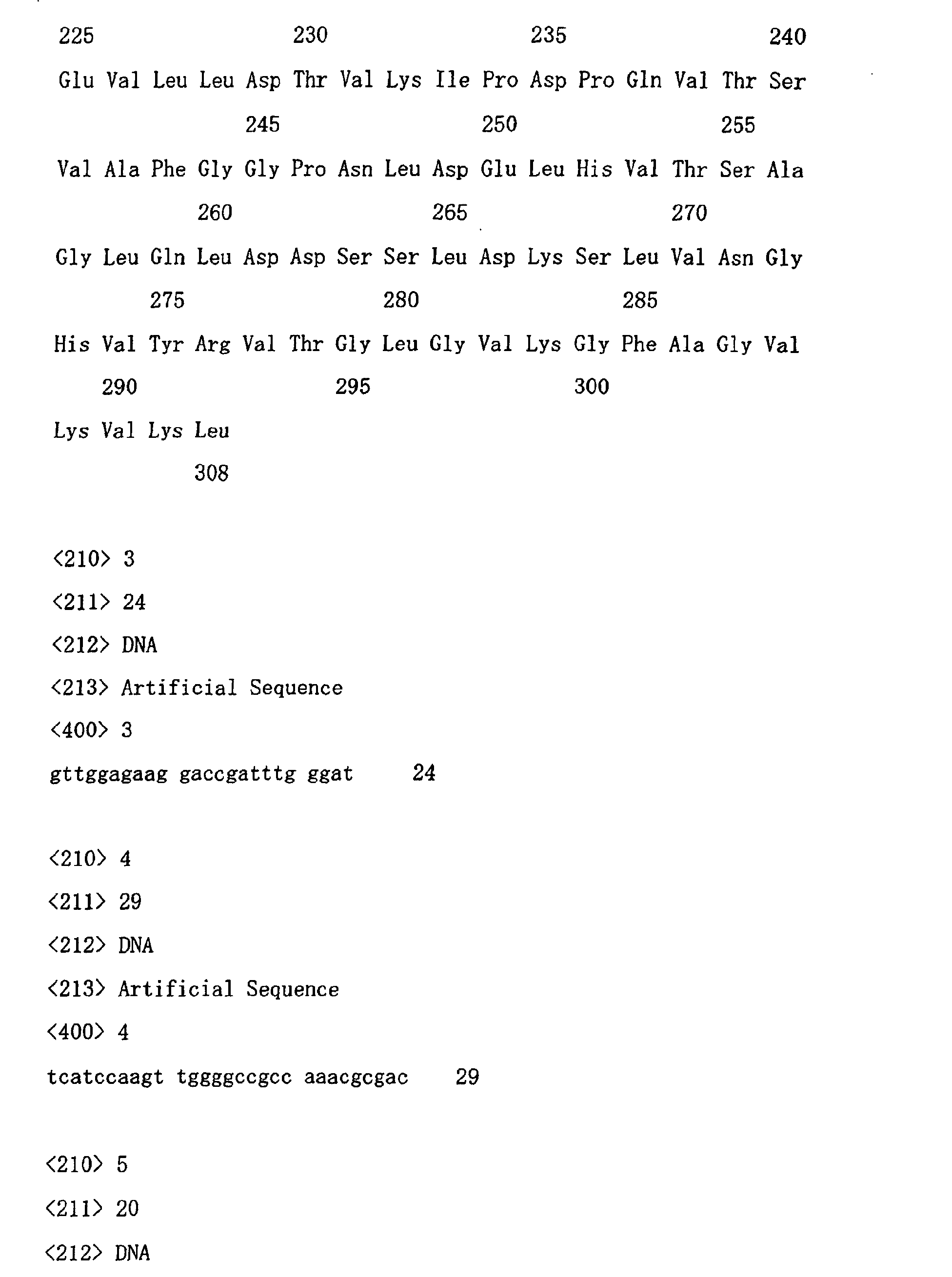
- nucleotide sequence of a gene which encodes a protein capable of regenerating luciferin is analyzed (see SEQ ID NO: 1) using DNA comprising the above gene which encodes the protein capable of regenerating luciferin and a 373A DNA sequence system (Perkin-Elmer) indicated in the later described Example (9). Then, the primary sequence of amino acids of a polypeptide which is translated by a gene comprising the above nucleotide sequence is determined (see SEQ ID NO: 2).
- the present invention encompasses any gene which encodes a protein capable of regenerating luciferin comprising an amino acid sequence which is derived from the amino acid sequence of SEQ ID NO: 2 by deletion, substitution, or addition of one or more, preferably several amino acids and is capable of regenerating luciferin.
- the present invention encompasses any gene which encodes a protein having a 50% or more homology with the amino acid sequence of SEQ ID NO: 2 and capable of regenerating luciferin.
- Any method can be employed to obtain a gene which encodes a protein capable of regenerating luciferin comprising an amino acid sequence which is derived from the amino acid sequence of SEQ ID NO: 2 by deletion, substitution or addition of one or more amino acids and is capable of regenerating luciferin.
- Examples of sucha method include site-directed mutagenesis which is a known technique to cause point mutation or deletion to occur in a gene, a method which involves selective cleavage of a gene, removal or addition of a selected nucleotide, and ligation of the gene, and an oligonucleotide mutation induction method.
- a protein capable of regenerating luciferin can be produced as described below using a transformant or a transductant capable of regenerating luciferin obtained as described above, for example, a strain belonging to the genus Escherichia.
- the above microorganism may be cultured by a normal solid culture method, preferably a liquid culture method.
- a medium used for culturing the above microorganism is supplemented with, for example, one or more types of nitrogen source, such as yeast extract, Peptone, meat extract, corn steep liquor, or exudates of soybean or wheat koji; and one or more types of inorganic salt, such as potassium dihydrogenphosphate, dipotassium hydrogenphosphate, magnesium sulfate, ferric chloride, ferric sulfate or manganese sulfate, and if necessary, appropriately supplemented with carbohydrate material, vitamin and the like.
- nitrogen source such as yeast extract, Peptone, meat extract, corn steep liquor, or exudates of soybean or wheat koji
- inorganic salt such as potassium dihydrogenphosphate, dipotassium hydrogenphosphate, magnesium sulfate, ferric chloride, ferric sulfate or manganese sulfate, and if necessary, appropriately supplemented with carbohydrate material, vitamin and the like.
- the initial pH of a medium is appropriately adjusted to 7 to 9.
- Culturing is performed at 30°C to 42°C, preferably at around 37°C for 6 to 24 hours by aeration (agitation) - submerged culture, shaking culture, stationary culture or the like.
- a protein capable of regenerating luciferin can be collected from the culture product by normal techniques for collecting enzymes.
- the protein capable of regenerating luciferin is preferably collected from cells. In this case, intact cells can be used.
- the protein capable of regenerating luciferin is collected from cells by, for example, a method which disrupts cells using various disruptive means, such as an ultrasonicator, french press or Dyno-Mill, a method which digests cell walls using a cell wall digesting enzyme, such as lysozyme, and a method which extracts enzyme from the cell using a surfactant, such as Triton X-100.
- the protein capable of regenerating luciferin can be isolated from the thus obtained crude solution of protein having ability to regenerate luciferase by a standard technique for enzyme purification.
- a standard technique for enzyme purification Preferably performed is an appropriate combination of such techniques including ammonium sulfate salting out technique, precipitation technique using organic solvents, ion exchange chromatography, gel filtration chromatography, adsorption chromatography and electrophoresis.
- the obtained protein capable of regenerating luciferin can regenerate luciferin by acting on oxyluciferin and D-cysteine.
- RNA fraction 0.51 mg was obtained according to the method described in the Current Protocols in Molecular Biology (WILEY Interscience, 1989).
- a reaction solution was prepared to have the following composition, and a reverse transcription reaction was allowed to proceed for 30 min at 42°C. Then, denaturation was performed at 99°C for 5 min, and then stored at 5°C.
- Composition of reaction solution Magnesium chloride 5 mM 10xRNA PCR buffer 2 ⁇ l water 8.5 ⁇ l dNTP 1 mM each RNase inhibitor 1 U/ ⁇ l *AMV reverse transcriptase XL 0.25 U/ ⁇ l *oligo dT adapter primer 0.125 ⁇ M mRNA 1 ⁇ g
- reaction solution prepared to have the following composition was added to a tube in which reverse transcription had been performed. Then PCR was performed under a reaction condition for 30 cycles, each consisting of denaturation at 94°C for 30 sec, annealing at 62°C for 30 sec, and elongation reaction at 72°C for 1.5 min.
- Composition of reaction solution Primer (SEQ ID NO: 3) 0.2 ⁇ M Primer (SEQ ID NO: 4) 0.2 ⁇ M 10xRNA PCR buffer 8 ⁇ l
- the reaction solution was subjected to agarose gel electrophoresis, so that a band of approximately 0.75kb regarded as a target fragment was confirmed.
- the band was cut out and purified with GENECLEAN II (BIO 101).
- the nucleotide sequence of the purified DNA fragment was determined and analyzed using a 373A DNA sequence system (Perkin-Elmer). Thus, an amino acid sequence which had been deduced from the determined nucleotide sequence was confirmed to comprise the previously described amino acid sequence (His Glu Thr Gln Thr Leu Tyr Phe Val Asp Thr). Thus, a partial sequence of the gene which encodes a protein capable of regenerating luciferin was confirmed to be present in the DNA fragment amplified by the above RT-PCR.
- a primer was designed according to the above analysis for DNA sequence, and then synthesized by Amersham Pharmacia Biotech (SEQ ID NO: 5). RT-PCR was performed using the primer, the above mRNA and 3'-Full RACE CoreSet (Takara Shuzo), thereby amplifying 3' unknown region.
- the reaction solution was subjected to agarose electrophoresis, a DNA fragment of approximately 650 bp was purified and extracted with RecoChip (Takara Shuzo), and the nucleotide sequence was determined and analyzed using a DNA sequencer.
- the 5' region of the determined nucleotide sequence was confirmed to contain a sequence being the same as that of the 3' sequence of the partial sequence of the above gene encoding a protein capable of regenerating luciferin. Further, an amino acid sequence which had been deduced from the determined nucleotide sequence was confirmed to comprise the previously described amino acid sequence (Ile Pro Asp Pro Gln Val Thr Ser Val Ala Phe Gly Gly Pro Asn Leu Asp Glu).
- primers were designed according to the above analysis for DNA sequence, and then synthesized by Amersham Pharmacia Biotech (SEQ ID NOS: 6 to 9). RT-PCR was performed using the primers, the above mRNA and 5' -Full RACE CoreSet (Takara Shuzo), thereby amplifying 5' unknown region.
- the reaction solution was subjected to agarose electrophoresis, a DNA fragment of approximately 400 bp was purified and extracted with RecoChip (Takara Shuzo), and the nucleotide sequence was determined and analyzed using a DNA sequencer.
- the determined nucleotide sequence was confirmed to contain a sequence being the same as that of the partial sequence of the above gene encoding a protein capable of regenerating luciferin. Further, an amino acid sequence which had been deduced from the determined nucleotide sequence was confirmed to comprise the previously described amino acid sequence (Gly Pro Val Val Glu Lys Ile Ala Glu Leu Gly Lys).
- a translation initiation codon and a termination codon were deduced from the above three nucleotide sequences, and then the primer DNAs of the N terminal region and the C terminal region were synthesized by Amersham Pharmacia Biotech (SEQ ID NOS: 10 and 11).
- RT-PCR was performed using the primers and the above mRNA, and then the reaction solution was analyzed by agarose electrophoresis. As a result, a band of approximately 900 bp was confirmed.
- a DNA fragment contained in the band was purified and extracted with a RecoChip (Takara Shuzo), followed by digestion with restriction enzymes Eco RI and Pst I (both manufactured by Takara Shuzo).
- a plasmid pKK223-3 (Pharmacia) was digested with restriction enzymes Eco RI and Pst I and purified by agarose electrophoresis. This was ligated to the above purified and extracted DNA fragment, and then transformation of E. coli JM109 (Toyobo) was performed.
- the transformant strain, E. coli JM109 (pLRE) was deposited to Patent and Bio-Resource Center, National Institute of Advanced Industrial Science and Technology as FERM BP-6908.
- E. coli JM109 (pLRE) cells were shake-cultured to Klett 100 at 37°C in 10 ml of TY medium (1% bacto trypton, 0.5% bactoyeast extract, 0.5% NaCl, pH 7.0) containing 50 ⁇ g/ml ampicillin. Then, IPTG was added to a final concentration of 1mM, followed by another 4 hours of culturing. The culture solution was treated 4 times (20 sec each) using an ultrasonicator (Ultrasonicgenerator, Nissei) while cooling on ice. The solution was put into an Eppendorf tube, and centrifuged at 12,000 r. p. m.
- TY medium 1% bacto trypton, 0.5% bactoyeast extract, 0.5% NaCl, pH 7.0
- IPTG was added to a final concentration of 1mM, followed by another 4 hours of culturing.
- the culture solution was treated 4 times (20 sec each) using an ultrasonicator (Ultrasonicgenerator
- E. coli comprising only a vector had 0.94 kcount/ml
- E. coli JM109 pLRE
- the present invention is industrially very useful because the invention enables efficient production of a protein capable of regenerating luciferin.
Landscapes
- Health & Medical Sciences (AREA)
- Chemical & Material Sciences (AREA)
- Life Sciences & Earth Sciences (AREA)
- Organic Chemistry (AREA)
- Zoology (AREA)
- Toxicology (AREA)
- Medicinal Chemistry (AREA)
- Proteomics, Peptides & Aminoacids (AREA)
- Biochemistry (AREA)
- Biophysics (AREA)
- General Health & Medical Sciences (AREA)
- Genetics & Genomics (AREA)
- Gastroenterology & Hepatology (AREA)
- Molecular Biology (AREA)
- Tropical Medicine & Parasitology (AREA)
- Insects & Arthropods (AREA)
- Preparation Of Compounds By Using Micro-Organisms (AREA)
- Micro-Organisms Or Cultivation Processes Thereof (AREA)
- Peptides Or Proteins (AREA)
- Enzymes And Modification Thereof (AREA)
Abstract
Description
- The present invention relates to a gene encoding a protein capable of regenerating luciferin, a novel recombinant DNA, and process for producing a protein capable of regenerating luciferin.
- Luciferin is a substrate of a bioluminescence enzyme, luciferase, and after emitting light as a result of luciferase reaction, is converted to oxyluciferin. ATP measurement methods using luciferase are widely used in the fields of medical science and food hygiene. However, luciferin which is used as a substrate, is expensive and the luciferase reaction is inhibited by oxyluciferin produced after reaction. Thus, removal of oxyluciferin or regeneration to luciferin will enable further development of the ATP measurement methods using luciferase. Aprotein which is derived from a firefly and capable of regenerating luciferin from oxyluciferin has been found (U.S. Pat. No. 5814504). However, only a small quantity of the protein can be extracted from a firefly body so that industrial application of the protein has been difficult.
- Addition of such a protein capable of regenerating luciferin to the luciferin-luciferase reaction system enables improvement in durability of luminescence and reduction in the amount of luciferase and luciferin to be used.
- The object of the present invention is to provide a process for producing a protein capable of regenerating luciferin using a recombinant DNA to which a gene encoding the protein capable of regenerating luciferin has been inserted.
- As a result of dedicated research on the above object, we have succeeded in isolating a gene which is derived from an insect belonging to the class Coleoptera and encodes a protein capable of regenerating luciferin, determining the gene structure, and obtaining a recombinant DNA by inserting a gene encoding a protein capable of regenerating luciferin into a vector DNA. Then we have completed the present invention by finding that a protein capable of regenerating luciferin can be produced efficiently by culturing a transformant or a transductant wherein the recombinant DNA is contained in a host cell.
- That is, a first invention of the present invention is a gene which encodes a protein capable of regenerating luciferin by acting on oxyluciferin and D-cysteine.
- A second invention of the present invention is the above gene which is derived from an organism capable of luminescence.
- A third invention of the present invention is a gene which encodes the following protein (a) or (b):
- (a) a protein which comprises an amino acid sequence represented by SEQ ID NO: 2;
- (b) a protein which comprises an amino acid sequence derived from the amino acid sequence (a) by deletion, substitution, or addition of one or more amino acids, and is capable of regenerating luciferin.
-
- A forth invention of the present invention is a gene which has 50% or more homology with the amino acid sequence represented by SEQ ID NO: 2 and encodes a protein capable of regenerating luciferin.
- A fifth invention of the present invention is a novel recombinant DNA which is characterized in that the above gene encoding a protein capable of regenerating luciferin is inserted into vector DNA.
- A sixth invention of the present invention is a transformant or a transductant which comprises the above recombinant DNA.
- A seventh invention of the present invention is a process for producing a protein capable of regenerating luciferin which comprises culturing the above transformant or transductant in a medium and collecting the protein capable of regenerating luciferin from the culture product.
- Hereinafter, the present invention is described in detail.
- The gene of the present invention which encodes a protein capable of regenerating luciferin is obtained from a Coleoptera.
- For example, the gene of the present invention which encodes a protein capable of regenerating luciferin can be obtained as follows.
- First, mRNA is extracted from the luminous organ of an American firefly.
- Next, synthetic DNA is prepared based on an amino acid sequence of a purified protein capable of regenerating luciferin and the codon frequency of an American firefly. Then a reverse transcription polymerase chain reaction (hereinafter abbreviated as a RT-PCR method) is performed using the mRNA obtained above as a template, thereby obtaining DNA encoding a part of the protein capable of regenerating luciferin.
- cDNA is synthesized from the mRNA obtained above using reverse transcriptase. Then the cDNA, as an intact cDNA or as an amplified gene encoding a protein capable of regenerating luciferin by the PCR method, is incorporated into a vector DNA by standard techniques. Examples of a vector DNA used herein include a plasmid DNA, such as pUC19(Takara Shuzo), pBR322 (Takara Shuzo), pBluescript SK+ (Stratagene), and pMAL-C2 (NEW England Labs), and bacteriophage DNA, such as λ ENBL3 (Stratagene) and λ DASH II (Funakoshi). The obtained recombinant DNA is transformed or transduced into, for example, Escherichia coli K-12, preferably Escherichia coli JM109 (Toyobo), DH5α (Toyobo) or XL1-Blue (Funakoshi), thereby obtaining transformants or transductants, respectively. In addition to the above, examples of a host cell used herein include bacteria, such as Escherichia coli other than E. coli K-12, yeast, mold, Actinomycetes, silk worms, and animal cells.
- Transformation can be performed by, for example D. M. Morrison's method (Method in Enzymology, 68, 326-331, 1979). Transduction can be performed by, for example B. Hohn's method (Method in Enzymology, 68, 299-309, 1979).
- A novel recombinant DNA which is purified from the above transformant or transductant can be obtained by, for example, P. Guerry et al.'s method [J. Bacteriology, vol. 116, 1064-1066 (1973)] and D. B. Clewell's method [J. Bacteriology, vol. 110, 667-676 (1972)].
- Further, the entire nucleotide sequence of a gene which encodes a protein capable of regenerating luciferin is analyzed (see SEQ ID NO: 1) using DNA comprising the above gene which encodes the protein capable of regenerating luciferin and a 373A DNA sequence system (Perkin-Elmer) indicated in the later described Example (9). Then, the primary sequence of amino acids of a polypeptide which is translated by a gene comprising the above nucleotide sequence is determined (see SEQ ID NO: 2).
- Further, the present invention encompasses any gene which encodes a protein capable of regenerating luciferin comprising an amino acid sequence which is derived from the amino acid sequence of SEQ ID NO: 2 by deletion, substitution, or addition of one or more, preferably several amino acids and is capable of regenerating luciferin.
- Furthermore, the present invention encompasses any gene which encodes a protein having a 50% or more homology with the amino acid sequence of SEQ ID NO: 2 and capable of regenerating luciferin.
- Any method can be employed to obtain a gene which encodes a protein capable of regenerating luciferin comprising an amino acid sequence which is derived from the amino acid sequence of SEQ ID NO: 2 by deletion, substitution or addition of one or more amino acids and is capable of regenerating luciferin. Examples of sucha method include site-directed mutagenesis which is a known technique to cause point mutation or deletion to occur in a gene, a method which involves selective cleavage of a gene, removal or addition of a selected nucleotide, and ligation of the gene, and an oligonucleotide mutation induction method.
- A protein capable of regenerating luciferin can be produced as described below using a transformant or a transductant capable of regenerating luciferin obtained as described above, for example, a strain belonging to the genus Escherichia. The above microorganism may be cultured by a normal solid culture method, preferably a liquid culture method.
- A medium used for culturing the above microorganism is supplemented with, for example, one or more types of nitrogen source, such as yeast extract, Peptone, meat extract, corn steep liquor, or exudates of soybean or wheat koji; and one or more types of inorganic salt, such as potassium dihydrogenphosphate, dipotassium hydrogenphosphate, magnesium sulfate, ferric chloride, ferric sulfate or manganese sulfate, and if necessary, appropriately supplemented with carbohydrate material, vitamin and the like.
- The initial pH of a medium is appropriately adjusted to 7 to 9. Culturing is performed at 30°C to 42°C, preferably at around 37°C for 6 to 24 hours by aeration (agitation) - submerged culture, shaking culture, stationary culture or the like. After culturing, a protein capable of regenerating luciferin can be collected from the culture product by normal techniques for collecting enzymes.
- Cells were isolated from the culture product by a technique, such as filtration or centrifugation, and washed. The protein capable of regenerating luciferin is preferably collected from cells. In this case, intact cells can be used. Preferably, the protein capable of regenerating luciferin is collected from cells by, for example, a method which disrupts cells using various disruptive means, such as an ultrasonicator, french press or Dyno-Mill, a method which digests cell walls using a cell wall digesting enzyme, such as lysozyme, and a method which extracts enzyme from the cell using a surfactant, such as Triton X-100.
- The protein capable of regenerating luciferin can be isolated from the thus obtained crude solution of protein having ability to regenerate luciferase by a standard technique for enzyme purification. Preferably performed is an appropriate combination of such techniques including ammonium sulfate salting out technique, precipitation technique using organic solvents, ion exchange chromatography, gel filtration chromatography, adsorption chromatography and electrophoresis.
- The obtained protein capable of regenerating luciferin can regenerate luciferin by acting on oxyluciferin and D-cysteine.
-
- A 0.1 mM oxyluciferin
- B 0.01 mM D-cysteine
- C 25 mM glycylglycine + 5.4mM magnesium sulfate
- D 10 mM ATP (pH7.8)
- E 5 mg/ml luciferase
-
-
- 1. Prepare a mixed solution of the following reagents.
0. 005 ml A
0.010 ml B
0. 085 ml C - 2. Add 0.01 ml of the protein solution and allow to react at 37°C for a certain time.
- 3. Mix 0.01 ml of the reaction solution with 0.1 ml of C.
- 4. Prepare a luciferase mixed solution of the following reagents.
10 ml D
1 ml E - 5. Add 0.1 ml of the mixed solution of 4 to that of 3, and then measure the amount of light emitted using a luminometer.
-
- Hereinafter, the present invention is described in more detail by Examples.
- The tail portion of American firefly (Sigma) 10 g disrupted with a mortar and a pestle was suspended in 10 ml of ISOGEN (Wako Pure Chemical Industries, Ltd.), a reagent for extracting RNA, and then centrifuged at 2700 r.p.m. for 5 min, thereby obtaining RNA fraction. From the fraction, 0.51 mg of mRNA was obtained according to the method described in the Current Protocols in Molecular Biology (WILEY Interscience, 1989).
- Approximately 10 µg of the protein capable of regenerating luciferin purified in (1) was subjected to a protein sequencer (Perkin-Elmer Corporation), so that the N-terminal amino acid sequence was determined. Further, approximately 10 µg of the protein capable of regenerating luciferin purified in (1) was digested with trypsin. Then 6 peptides obtained with HPLC were subjected to a protein sequencer, so that the internal amino acid sequence was determined. Furthermore, the codon frequency of American firefly was examined. Based on this information, primers shown in SEQ ID NOS: 3 and 4 were synthesized by Amersham Pharmacia Biotech's entrusted custom synthesis.
- A reaction solution was prepared to have the following composition, and a reverse transcription reaction was allowed to proceed for 30 min at 42°C. Then, denaturation was performed at 99°C for 5 min, and then stored at 5°C.
(Composition of reaction solution) Magnesium chloride 5 mM 10xRNA PCR buffer 2 µl water 8.5 µl dNTP 1 mM each RNase inhibitor 1 U/µl *AMV reverse transcriptase XL 0.25 U/µl *oligo dT adapter primer 0.125 µM mRNA 1 µg - Next, 80 µl of the reaction solution prepared to have the following composition was added to a tube in which reverse transcription had been performed. Then PCR was performed under a reaction condition for 30 cycles, each consisting of denaturation at 94°C for 30 sec, annealing at 62°C for 30 sec, and elongation reaction at 72°C for 1.5 min.
(Composition of reaction solution) Primer (SEQ ID NO: 3) 0.2 µM Primer (SEQ ID NO: 4) 0.2 µM 10xRNA PCR buffer 8 µl Magnesium chloride 2.5 mM Taq polymerase 2.5 Unit Water (add water to a final volume of 80 µl) - After PCR, the reaction solution was subjected to agarose gel electrophoresis, so that a band of approximately 0.75kb regarded as a target fragment was confirmed. The band was cut out and purified with GENECLEAN II (BIO 101).
- The nucleotide sequence of the purified DNA fragment was determined and analyzed using a 373A DNA sequence system (Perkin-Elmer). Thus, an amino acid sequence which had been deduced from the determined nucleotide sequence was confirmed to comprise the previously described amino acid sequence (His Glu Thr Gln Thr Leu Tyr Phe Val Asp Thr). Thus, a partial sequence of the gene which encodes a protein capable of regenerating luciferin was confirmed to be present in the DNA fragment amplified by the above RT-PCR.
- First, a primer was designed according to the above analysis for DNA sequence, and then synthesized by Amersham Pharmacia Biotech (SEQ ID NO: 5). RT-PCR was performed using the primer, the above mRNA and 3'-Full RACE CoreSet (Takara Shuzo), thereby amplifying 3' unknown region. The reaction solution was subjected to agarose electrophoresis, a DNA fragment of approximately 650 bp was purified and extracted with RecoChip (Takara Shuzo), and the nucleotide sequence was determined and analyzed using a DNA sequencer. Therefore, the 5' region of the determined nucleotide sequence was confirmed to contain a sequence being the same as that of the 3' sequence of the partial sequence of the above gene encoding a protein capable of regenerating luciferin. Further, an amino acid sequence which had been deduced from the determined nucleotide sequence was confirmed to comprise the previously described amino acid sequence (Ile Pro Asp Pro Gln Val Thr Ser Val Ala Phe Gly Gly Pro Asn Leu Asp Glu).
- First, primers were designed according to the above analysis for DNA sequence, and then synthesized by Amersham Pharmacia Biotech (SEQ ID NOS: 6 to 9). RT-PCR was performed using the primers, the above mRNA and 5' -Full RACE CoreSet (Takara Shuzo), thereby amplifying 5' unknown region. The reaction solution was subjected to agarose electrophoresis, a DNA fragment of approximately 400 bp was purified and extracted with RecoChip (Takara Shuzo), and the nucleotide sequence was determined and analyzed using a DNA sequencer. Therefore, the determined nucleotide sequence was confirmed to contain a sequence being the same as that of the partial sequence of the above gene encoding a protein capable of regenerating luciferin. Further, an amino acid sequence which had been deduced from the determined nucleotide sequence was confirmed to comprise the previously described amino acid sequence (Gly Pro Val Val Glu Lys Ile Ala Glu Leu Gly Lys).
- A translation initiation codon and a termination codon were deduced from the above three nucleotide sequences, and then the primer DNAs of the N terminal region and the C terminal region were synthesized by Amersham Pharmacia Biotech (SEQ ID NOS: 10 and 11). RT-PCR was performed using the primers and the above mRNA, and then the reaction solution was analyzed by agarose electrophoresis. As a result, a band of approximately 900 bp was confirmed. A DNA fragment contained in the band was purified and extracted with a RecoChip (Takara Shuzo), followed by digestion with restriction enzymes Eco RI and Pst I (both manufactured by Takara Shuzo). Separately, a plasmid pKK223-3 (Pharmacia) was digested with restriction enzymes Eco RI and Pst I and purified by agarose electrophoresis. This was ligated to the above purified and extracted DNA fragment, and then transformation of E. coli JM109 (Toyobo) was performed. The transformant strain, E. coli JM109 (pLRE), was deposited to Patent and Bio-Resource Center, National Institute of Advanced Industrial Science and Technology as FERM BP-6908.
- E. coli JM109 (pLRE) cells were shake-cultured to Klett 100 at 37°C in 10 ml of TY medium (1% bacto trypton, 0.5% bactoyeast extract, 0.5% NaCl, pH 7.0) containing 50 µg/ml ampicillin. Then, IPTG was added to a final concentration of 1mM, followed by another 4 hours of culturing. The culture solution was treated 4 times (20 sec each) using an ultrasonicator (Ultrasonicgenerator, Nissei) while cooling on ice. The solution was put into an Eppendorf tube, and centrifuged at 12,000 r. p. m. with a micro centrifuge for 10 min, thereby separating into supernatant and precipitation fractions. The supernatant was transferred to another Eppendorf tube and ability thereof to regenerate luciferin was measured by the previously described method for measuring enzyme activity. While E. coli comprising only a vector had 0.94 kcount/ml, E. coli JM109 (pLRE) had 10.58 kcount/ml and was confirmed to be capable of regenerating luciferin.
- Confirmation of the luciferin regenerating ability of E. coli JM109 (pLRE) revealed that the insertion fragment of pLRE comprised the gene of the protein capable of regenerating luciferin. Then, the nucleotide sequence was determined for the plasmid DNA using a 373A DNA sequence system (Perkin-Elmer). The determined nucleotide sequence and an amino acid sequence of a polypeptide which is translated from the DNA sequence are shown in SEQ ID NO: 1 and SEQ ID NO: 2, respectively. The gene of the protein capable of regenerating luciferin had a coding region of 924 bp and encoded 308 amino acids.
- The present invention is industrially very useful because the invention enables efficient production of a protein capable of regenerating luciferin.




Claims (11)
- A gene which encodes a protein capable of regenerating luciferin by acting on oxyluciferin and D-cysteine.
- The gene of claim 1 which is derived from an organism capable of luminescence.
- The gene of claim 2 wherein the organism capable of luminescence is a Coleoptera.
- The gene of claim 2 wherein the organism capable of luminescence is a firefly.
- The gene of claim 2 wherein the organism capable of luminescence is a North American firefly.
- The gene of claim 2 wherein the organism capable of luminescence is an American firefly.
- A gene which encodes the following protein (a) or (b):(a) a protein which comprises an amino acid sequence represented by SEQ ID NO: 2;(b) a protein which comprises an amino acid sequence derived from the amino acid sequence (a) by deletion, substitution, or addition of one or more amino acids, and is capable of regenerating luciferin.
- A gene which has a 50% or more homology with the amino acid sequence represented by SEQ ID NO: 2 and encodes a protein capable of regenerating luciferin.
- A novel recombinant DNA which is characterized in that the gene of claims 1 to 8 encoding a protein capable of regenerating luciferin is inserted into a vector DNA.
- A transformant or a transductant which comprises the recombinant DNA of claim 9.
- A method of producing a protein capable of regenerating luciferin which comprises culturing the transformant or transductant of claim 10 in a medium and collecting the protein capable of regenerating luciferin from the culture product.
Applications Claiming Priority (3)
| Application Number | Priority Date | Filing Date | Title |
|---|---|---|---|
| JP28525899 | 1999-10-06 | ||
| JP28525899A JP2001103972A (en) | 1999-10-06 | 1999-10-06 | Gene encoding protein capable of regenerating luciferin, novel recombinant DNA, and method for producing protein capable of regenerating luciferin |
| PCT/JP2000/006527 WO2001025426A1 (en) | 1999-10-06 | 2000-09-22 | Gene encoding protein capable of regenerating luciferin, novel recombinant dna and process for producing protein capable of regenerating luciferin |
Publications (3)
| Publication Number | Publication Date |
|---|---|
| EP1229114A1 true EP1229114A1 (en) | 2002-08-07 |
| EP1229114A4 EP1229114A4 (en) | 2003-03-19 |
| EP1229114B1 EP1229114B1 (en) | 2006-12-13 |
Family
ID=17689179
Family Applications (1)
| Application Number | Title | Priority Date | Filing Date |
|---|---|---|---|
| EP00961208A Expired - Lifetime EP1229114B1 (en) | 1999-10-06 | 2000-09-22 | Gene encoding protein capable of regenerating luciferin, novel recombinant dna and process for producing protein capable of regenerating luciferin |
Country Status (6)
| Country | Link |
|---|---|
| US (1) | US6838270B1 (en) |
| EP (1) | EP1229114B1 (en) |
| JP (1) | JP2001103972A (en) |
| AT (1) | ATE348160T1 (en) |
| DE (1) | DE60032380T2 (en) |
| WO (1) | WO2001025426A1 (en) |
Families Citing this family (4)
| Publication number | Priority date | Publication date | Assignee | Title |
|---|---|---|---|---|
| JP3891323B2 (en) * | 2000-07-28 | 2007-03-14 | キッコーマン株式会社 | Method for producing gene encoding protein having ability to regenerate luciferin, recombinant DNA and protein having ability to regenerate luciferin |
| JP4158956B2 (en) * | 2000-07-28 | 2008-10-01 | キッコーマン株式会社 | Method for producing gene encoding protein having ability to regenerate luciferin, recombinant DNA and protein having ability to regenerate luciferin |
| JP2005509426A (en) * | 2001-11-14 | 2005-04-14 | イギリス国 | Method for measuring intracellular ATP and / or gene expression |
| US9220700B2 (en) * | 2009-08-19 | 2015-12-29 | Cornell University | Cysteine for physiological injection |
Family Cites Families (2)
| Publication number | Priority date | Publication date | Assignee | Title |
|---|---|---|---|---|
| US5283179A (en) | 1990-09-10 | 1994-02-01 | Promega Corporation | Luciferase assay method |
| US5814504A (en) * | 1996-08-22 | 1998-09-29 | Kikkoman Corporation | Protein involved in regenerating firefly luciferin |
-
1999
- 1999-10-06 JP JP28525899A patent/JP2001103972A/en active Pending
-
2000
- 2000-09-22 DE DE60032380T patent/DE60032380T2/en not_active Expired - Fee Related
- 2000-09-22 WO PCT/JP2000/006527 patent/WO2001025426A1/en not_active Ceased
- 2000-09-22 EP EP00961208A patent/EP1229114B1/en not_active Expired - Lifetime
- 2000-09-22 US US10/089,986 patent/US6838270B1/en not_active Expired - Fee Related
- 2000-09-22 AT AT00961208T patent/ATE348160T1/en not_active IP Right Cessation
Non-Patent Citations (4)
| Title |
|---|
| GOMI KEIKO ET AL: "Oxyluciferin, a luminescence product of firefly luciferase, is enzymatically regenerated into luciferin." JOURNAL OF BIOLOGICAL CHEMISTRY, vol. 276, no. 39, 28 September 2001 (2001-09-28), pages 36508-36513, XP002227525 ISSN: 0021-9258 * |
| OKADA ET AL: "Firefly Bioluminescence III. Conversion of oxyluciferin to luciferin in firefly" TETRAHEDRON LETTERS, ELSEVIER SCIENCE PUBLISHERS, AMSTERDAM, NL, no. 32, 1974, pages 2771-2774, XP002109172 ISSN: 0040-4039 * |
| See also references of WO0125426A1 * |
| SHIMOKAWA NORIAKI ET AL: "Molecular cloning and sequencing of the cDNA coding for a calcium-binding protein regucalcin from rat liver." FEBS (FEDERATION OF EUROPEAN BIOCHEMICAL SOCIETIES) LETTERS, vol. 327, no. 3, 1993, pages 251-255, XP002227524 ISSN: 0014-5793 * |
Also Published As
| Publication number | Publication date |
|---|---|
| ATE348160T1 (en) | 2007-01-15 |
| EP1229114A4 (en) | 2003-03-19 |
| JP2001103972A (en) | 2001-04-17 |
| DE60032380T2 (en) | 2007-10-31 |
| US6838270B1 (en) | 2005-01-04 |
| WO2001025426A1 (en) | 2001-04-12 |
| DE60032380D1 (en) | 2007-01-25 |
| EP1229114B1 (en) | 2006-12-13 |
Similar Documents
| Publication | Publication Date | Title |
|---|---|---|
| US5162227A (en) | Recombinant DNA vectors capable of expressing apoaequorin in E. coli | |
| JPH068317B2 (en) | Novel polypeptide | |
| EP0575319A1 (en) | Cloning and expression of renilla luciferase | |
| JP2003235585A (en) | New fructosyl peptide oxidase | |
| EP1156103B1 (en) | Oplophorus luciferase | |
| Phiriyangkul et al. | Molecular characterization of a cDNA encoding vitellogenin in the banana shrimp, Penaeus (Litopenaeus) merguiensis and sites of vitellogenin mRNA expression | |
| JP3462313B2 (en) | Mutant uricase, mutant uricase gene, novel recombinant DNA, and method for producing mutant uricase | |
| US7101694B2 (en) | Genes encoding proteins capable of regenerating luciferin, recombinant DNA and process for producing protein capable of regenerating luciferin | |
| EP1229114B1 (en) | Gene encoding protein capable of regenerating luciferin, novel recombinant dna and process for producing protein capable of regenerating luciferin | |
| AU8640798A (en) | Recombinant expression of insulin c-peptide | |
| Zhang et al. | Escherichia coli RNase D: sequencing of the rnd structural gene and purification of the overexpressed protein | |
| EP1306434B1 (en) | Genes encoding proteins capable of regenerating luciferin, recombinant dna and process for producing protein capable of regenerating luciferin | |
| Abe et al. | Isolation, characterization and cDNA cloning of a one-lobed transferrin from the ascidian Halocynthia roretzi | |
| EP1468284B1 (en) | Method for measuring intracellular atp and/or gene expression | |
| Matteucci et al. | Alkaline phosphatase fusions: a tag to identify mutations that result in increased expression of secreted human growth hormone from Escherichia coli | |
| RU2325398C2 (en) | Antibacterial protein chlamisin b, gene, which is coding it, and system that expresses it | |
| JP4752026B2 (en) | Novel pyridoxal 4-dehydrogenase and use thereof | |
| Kislitsyn et al. | Isolation and primary structure of trypsin from the king crab Paralithodes camtschaticus | |
| JPH0568548A (en) | Gene fragment encoding human alt | |
| JP2003250586A (en) | Novel proteolytic enzymes | |
| Yamaguchi et al. | DNA polymerase βs from liver and testes of Cherry Salmon, Oncorhynchus masou: Purification and characterization of DNA polymerase βs with acidic isoelectric points | |
| JP2004016216A (en) | New polypeptide and method for producing the same | |
| JPH05268969A (en) | Novel fish growth hormone polypeptide | |
| JPH06153956A (en) | Silver fox growth hormone gene and its recombinant dna |
Legal Events
| Date | Code | Title | Description |
|---|---|---|---|
| PUAI | Public reference made under article 153(3) epc to a published international application that has entered the european phase |
Free format text: ORIGINAL CODE: 0009012 |
|
| 17P | Request for examination filed |
Effective date: 20020425 |
|
| AK | Designated contracting states |
Kind code of ref document: A1 Designated state(s): AT BE CH CY DE DK ES FI FR GB GR IE IT LI LU MC NL PT SE |
|
| A4 | Supplementary search report drawn up and despatched |
Effective date: 20030130 |
|
| 17Q | First examination report despatched |
Effective date: 20031007 |
|
| GRAP | Despatch of communication of intention to grant a patent |
Free format text: ORIGINAL CODE: EPIDOSNIGR1 |
|
| GRAS | Grant fee paid |
Free format text: ORIGINAL CODE: EPIDOSNIGR3 |
|
| GRAA | (expected) grant |
Free format text: ORIGINAL CODE: 0009210 |
|
| AK | Designated contracting states |
Kind code of ref document: B1 Designated state(s): AT BE CH CY DE DK ES FI FR GB GR IE IT LI LU MC NL PT SE |
|
| PG25 | Lapsed in a contracting state [announced via postgrant information from national office to epo] |
Ref country code: IT Free format text: LAPSE BECAUSE OF FAILURE TO SUBMIT A TRANSLATION OF THE DESCRIPTION OR TO PAY THE FEE WITHIN THE PRESCRIBED TIME-LIMIT;WARNING: LAPSES OF ITALIAN PATENTS WITH EFFECTIVE DATE BEFORE 2007 MAY HAVE OCCURRED AT ANY TIME BEFORE 2007. THE CORRECT EFFECTIVE DATE MAY BE DIFFERENT FROM THE ONE RECORDED. Effective date: 20061213 Ref country code: FI Free format text: LAPSE BECAUSE OF FAILURE TO SUBMIT A TRANSLATION OF THE DESCRIPTION OR TO PAY THE FEE WITHIN THE PRESCRIBED TIME-LIMIT Effective date: 20061213 Ref country code: DK Free format text: LAPSE BECAUSE OF FAILURE TO SUBMIT A TRANSLATION OF THE DESCRIPTION OR TO PAY THE FEE WITHIN THE PRESCRIBED TIME-LIMIT Effective date: 20061213 Ref country code: CH Free format text: LAPSE BECAUSE OF FAILURE TO SUBMIT A TRANSLATION OF THE DESCRIPTION OR TO PAY THE FEE WITHIN THE PRESCRIBED TIME-LIMIT Effective date: 20061213 Ref country code: LI Free format text: LAPSE BECAUSE OF FAILURE TO SUBMIT A TRANSLATION OF THE DESCRIPTION OR TO PAY THE FEE WITHIN THE PRESCRIBED TIME-LIMIT Effective date: 20061213 Ref country code: BE Free format text: LAPSE BECAUSE OF FAILURE TO SUBMIT A TRANSLATION OF THE DESCRIPTION OR TO PAY THE FEE WITHIN THE PRESCRIBED TIME-LIMIT Effective date: 20061213 Ref country code: NL Free format text: LAPSE BECAUSE OF FAILURE TO SUBMIT A TRANSLATION OF THE DESCRIPTION OR TO PAY THE FEE WITHIN THE PRESCRIBED TIME-LIMIT Effective date: 20061213 Ref country code: AT Free format text: LAPSE BECAUSE OF FAILURE TO SUBMIT A TRANSLATION OF THE DESCRIPTION OR TO PAY THE FEE WITHIN THE PRESCRIBED TIME-LIMIT Effective date: 20061213 |
|
| REG | Reference to a national code |
Ref country code: GB Ref legal event code: FG4D |
|
| REG | Reference to a national code |
Ref country code: CH Ref legal event code: EP |
|
| REG | Reference to a national code |
Ref country code: IE Ref legal event code: FG4D |
|
| REF | Corresponds to: |
Ref document number: 60032380 Country of ref document: DE Date of ref document: 20070125 Kind code of ref document: P |
|
| PG25 | Lapsed in a contracting state [announced via postgrant information from national office to epo] |
Ref country code: SE Free format text: LAPSE BECAUSE OF FAILURE TO SUBMIT A TRANSLATION OF THE DESCRIPTION OR TO PAY THE FEE WITHIN THE PRESCRIBED TIME-LIMIT Effective date: 20070313 |
|
| PG25 | Lapsed in a contracting state [announced via postgrant information from national office to epo] |
Ref country code: ES Free format text: LAPSE BECAUSE OF FAILURE TO SUBMIT A TRANSLATION OF THE DESCRIPTION OR TO PAY THE FEE WITHIN THE PRESCRIBED TIME-LIMIT Effective date: 20070324 |
|
| PG25 | Lapsed in a contracting state [announced via postgrant information from national office to epo] |
Ref country code: PT Free format text: LAPSE BECAUSE OF FAILURE TO SUBMIT A TRANSLATION OF THE DESCRIPTION OR TO PAY THE FEE WITHIN THE PRESCRIBED TIME-LIMIT Effective date: 20070514 |
|
| NLV1 | Nl: lapsed or annulled due to failure to fulfill the requirements of art. 29p and 29m of the patents act | ||
| ET | Fr: translation filed | ||
| REG | Reference to a national code |
Ref country code: CH Ref legal event code: PL |
|
| PGFP | Annual fee paid to national office [announced via postgrant information from national office to epo] |
Ref country code: DE Payment date: 20070920 Year of fee payment: 8 |
|
| PLBE | No opposition filed within time limit |
Free format text: ORIGINAL CODE: 0009261 |
|
| STAA | Information on the status of an ep patent application or granted ep patent |
Free format text: STATUS: NO OPPOSITION FILED WITHIN TIME LIMIT |
|
| 26N | No opposition filed |
Effective date: 20070914 |
|
| PG25 | Lapsed in a contracting state [announced via postgrant information from national office to epo] |
Ref country code: MC Free format text: LAPSE BECAUSE OF NON-PAYMENT OF DUE FEES Effective date: 20070930 Ref country code: GR Free format text: LAPSE BECAUSE OF FAILURE TO SUBMIT A TRANSLATION OF THE DESCRIPTION OR TO PAY THE FEE WITHIN THE PRESCRIBED TIME-LIMIT Effective date: 20070314 |
|
| GBPC | Gb: european patent ceased through non-payment of renewal fee |
Effective date: 20070922 |
|
| REG | Reference to a national code |
Ref country code: FR Ref legal event code: ST Effective date: 20080531 |
|
| PG25 | Lapsed in a contracting state [announced via postgrant information from national office to epo] |
Ref country code: FR Free format text: LAPSE BECAUSE OF NON-PAYMENT OF DUE FEES Effective date: 20071001 Ref country code: IE Free format text: LAPSE BECAUSE OF NON-PAYMENT OF DUE FEES Effective date: 20070924 |
|
| PG25 | Lapsed in a contracting state [announced via postgrant information from national office to epo] |
Ref country code: GB Free format text: LAPSE BECAUSE OF NON-PAYMENT OF DUE FEES Effective date: 20070922 |
|
| PG25 | Lapsed in a contracting state [announced via postgrant information from national office to epo] |
Ref country code: LU Free format text: LAPSE BECAUSE OF NON-PAYMENT OF DUE FEES Effective date: 20070922 Ref country code: DE Free format text: LAPSE BECAUSE OF NON-PAYMENT OF DUE FEES Effective date: 20090401 Ref country code: CY Free format text: LAPSE BECAUSE OF FAILURE TO SUBMIT A TRANSLATION OF THE DESCRIPTION OR TO PAY THE FEE WITHIN THE PRESCRIBED TIME-LIMIT Effective date: 20061213 |