-
The present invention relates to a method for removing from an
aqueous photographic effluent silver in complexed form and thiosulfates contained
therein, and more specifically a method for reducing the quantity of water and
chemicals needed for photographic processing.
-
The invention further relates to a method for the photographic
processing of a photographic material containing exposed silver halides, that
consumes less water and less chemicals.
-
More specifically, the invention relates to a method for the
treatment of a seasoned stabilization bath containing pollutants derived from the
fixing or fixing-bleaching bath.
-
A number of manufacturing or processing methods produce
effluents that cannot be discharged directly into the sewers because of their
composition, but that contain substances the reclamation and re-use of which may
be economically worthwhile. One example of this is the processing of
photographic materials, in which exposed photographic films and papers pass
through several processing baths containing high concentrations of chemicals.
Such methods for the processing of photographic films are for example described
in Chimie et Physique Photographiques, Pierre Glafkidès, Vol. 2, Chapt. XL,
pages 947-967, 5ème Ed, 1986), or in Modern Photographic Processing, O. Haist,
vol 2, Chapt 7 & 10, J; Wiley & Sons, New York, 1978.
-
The processing of photographic materials comprises a developing
step and a fixing step. In the fixing step, fixing agents are used, the function of
which is to complex and dissolve silver halides remaining in the photographic
material after the development step. In the case of color photographic materials,
there is also bleaching step, which can be combined with a fixing step. The most
usual fixing agent is a thiosulfate, possibly in association with various other
substances.
-
Photographic materials are generally developed automatically and
as rapidly as possible. During processing, the exposed photographic material
passes through a succession of tanks each containing a bath performing the
developing, fixing, bleaching or bleach-fixing steps described above. As the
photographic material passes from one tank to the next, significant quantities of
chemicals can be carried over either by the photographic material itself, or by the
belts that convey the photographic material. These chemicals accumulate in the
"seasoned" processing baths and reduce their efficacy. The faster the processing of
photographic materials, the worse the contamination of baths by the carry-over of
chemicals from a previous bath.
-
To overcome this reduction in the efficacy of a seasoned bath, it is
common practice to add a replenishing solution to the bath and run off by
overflow an equivalent volume of spent bath. This method generates a volume of
spent baths that can no longer be used for photographic processing.
-
It is common practice to place washing baths between successive
processing baths. In particular after passage through a fixing or fixing-bleaching
bath the film passes through several washing baths to prevent too heavy
contamination with chemicals such as thiosulfates, complexed silver, complexed
iron or sulfates. The drawback of such washing is that it requires large amounts of
water and gives rise to large volumes of effluent that has to be treated before it can
be recycled or discarded.
-
In particular, in the processing of color papers and films after the
fixing or bleaching-fixing bath, it is usual to place several washing baths before
the stabilizing bath. A stabilizing bath can be also used to reduce residual color
and increase dye stability. The stabilization bath can contain a color stabilizer such
as formaldehyde or a precursor of formaldehyde, hardening agents, alkanolamines,
biocids (for example derivatives of the chloromethylisothiazolone or
benzoisothiazolone type), etc. Stabilization baths are described in Research
Disclosure September 1996 N° 38957, section XX, D.
-
However, to achieve shorter the processing times for photographic
materials in "minilabs" (small units for automatic rapid photographic processing),
a reduction in the number of washing baths is sought. In particular, processing
time can be reduced if the processed photographic material is passed from the
fixing or bleaching-fixing bath directly into a stabilization bath with no
intermediate washing. However, in that case, constituents of the fixing or
bleaching-fixing bath are then carried over into the stabilization bath. As a result,
thiosulfates, sulfates, silver complexes of the silver-dithiosulfate type, ferric
complexes, etc. are introduced in the stabilization bath. When these compounds
are present in the stabilization bath, they degrade it through the formation of
precipitates, sulfur, etc. A photographic material processed in such a degraded
stabilization bath will display unacceptable sensitometric characteristics. In
addition, the total quantity of pollutants found in these seasoned stabilization baths
is generally greater than 10 g/l, whereas seasoned washing solutions contain a
concentration of pollutants of about 1 g/l. With such a pollutant concentration, the
treatment of the solution by conventional methods, such as for example reverse
osmosis or ultrafiltration, is difficult.
-
European Patent 655,419 describes a process for treating
photographic effluents resulting from a bleaching or fixing step. This process
comprises the step of adding to the effluent a polymer that forms a metal-polymer
complex with the metals contained in the effluent, and the step of separating of
this metal-polymer complex from the effluents using a single layer membrane
filter with pore size between 0.05 and 10 micrometers. The type of membrane
used discriminates solely on the basis of the molecular size of the chemical species
it retains. Molecules or particles that are smaller than the pore size pass through.
This method uses a polymer of high average molecular weight, between 50,000
and 500,000, and cannot be implemented with complexing polymers of molecular
weight lower than 50,000. In addition, the type of membrane used does not allow
the separation of multivalent ionized salts such as thiosulfate. This leaves the
treated water unfit for recycling in a photographic treatment bath, because the
accumulation of thiosulfate in photographic baths adversely affects the
sensitometric quality of the photographic products developed in them.
-
French Patent 2,773,891 describes a process for the treatment of a
photographic stabilization bath containing at least 2 g/l of thiosulfate by means of
a nanofiltration system. However, when seasoned solutions containing more than 7
g/l of thiosulfates are to be treated, nanofiltration requires the application of an
average pressure of 30 bars at ambient temperature. This limits permeate yield
(expressed as a percentage of the volume of the solution to be treated). If the
pressure is too low, the level of thiosulfate in the permeate will not be kept below
the value that would allow to reuse the permeate in the development of
photographic products without impairing the sensitometric performance of the
film.
-
It is therefore desirable to have a nanofiltration process that uses
lower pressures.
-
It is also desirable to have a process for removing from an aqueous
photographic effluent comprising one or more photographic processing baths,
silver in complexed form and (or) thiosulfates contained in this effluent, whereby
the effluent can be recycled and re-used for photographic processing, even when
the initial effluent was heavily polluted, i.e., when the total pollutant concentration
exceeds 10 g/l.
-
It is also desirable to have a process for removing from a seasoned
photographic bath chemical species such as silver in complexed form and (or)
thiosulfates contained therein, that will allow the elimination or recovery of
chemical species while at the same time replenishing in the bath with the water
and the organic compounds that are necessary for maintaining the efficacy of the
bath.
-
Given the problems arising from the use of rapid photographic
processing, it is desirable to have systems that will treat and recycle effluents from
photographic baths as completely as possible, i.e., that make it possible to recycle
the water.
-
The object of the present invention is to provide a method to
remove chemical pollutants from an aqueous photographic effluent containing
silver in complexed form and (or) thiosulfates whereby the quantities of chemical
pollutants discharged into the sewers or present in photographic processing, and
the volume of water required for photographic processing, are both reduced.
-
This object and others are achieved by the method of the present
invention comprising the steps of:
- a) adding to the aqueous photographic effluent at least one agent
able to (i) combine with the silver and (or) thiosulfate and (ii) form at
least one compound of molecular weight Mx, whereby two phases are
formed, one liquid and one solid,
- b) adjusting the pH at value in the range of from 3 to 6.5, and
- c) allowing the effluent to pass through nanofiltration unit with a
cut-off threshold below Mx.
-
-
The cut-off threshold corresponds to the minimum size of the
particles or molecules that the nanofiltration unit holds back.
-
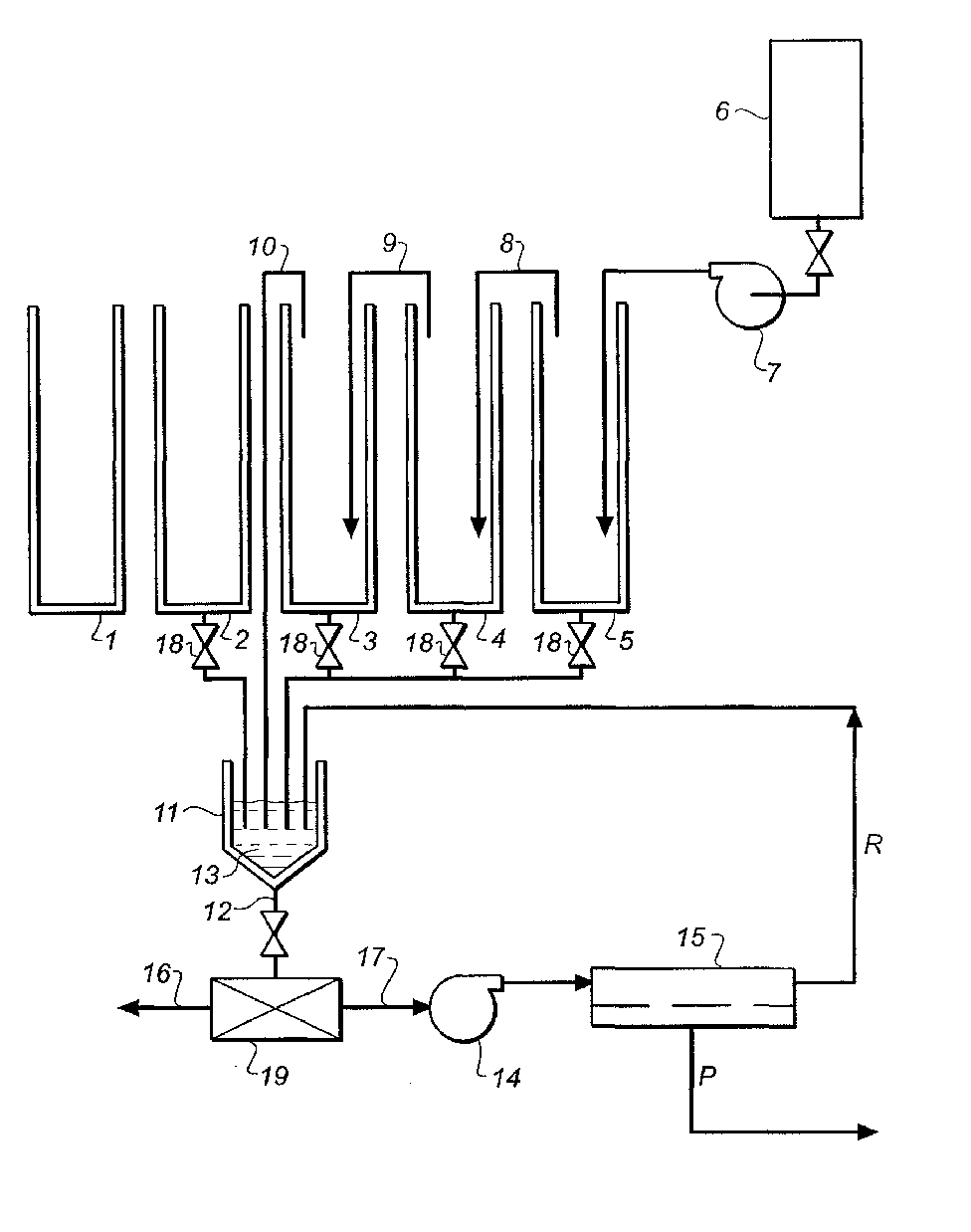
Figure 1 is a schematic view of a processing facility for an exposed
photographic material, said processing facility comprising a nanofiltration unit.
-
The method of the invention affords a photographically utilizable
permeate, i.e., a solution that can be re-used in one of the processing baths, either
directly or in the preparation or replenishment of such a bath, while at the same
time maintaining the sensitometric characteristics of the photographic products
processed in such baths within the set tolerance limits of the photographic process.
The method of the present invention permits a significant reduction in the volume
of photographic effluents because it affords a permeate released by the
nanofiltration unit that can be reused directly in a photographic processing bath.
For example, the permeate can be re-used to make up for evaporation from the
bleaching, fixing, bleaching-fixing or stabilization baths, or to prepare a
replenishing solution for such baths from concentrated solution, or it can be sent
back into a washing bath.
-
The agent that is added to the photographic effluent must combine
with the silver, which is present in a complexed form of the silver dithiosulfate
type, and (or) the thiosulfate, to yield for example a complex or an addition
product through the formation e.g. of a covalent or electrostatic bond. The agents
that can be used for this purpose include complexing agents such as, for example,
ethylenediaminetetra-acetic acid, nitrilotriacetic acid, polyacrylic acid,
polyvinylsulfonic acid and poly(iminoacetic) acid, and salts of these acids,
polythioureas, quaternary polyethyleneimines and polyethyleneimines (PEIs).
According to a particularly advantageous embodiment of the invention, the
complexing agent is a polyethyleneimine and the quantity of polyethyleneimine
added to the effluent is at least 1 g/l and preferably between 15 and 20 g/l.
-
According to a specific embodiment, the liquid and solid phases
obtained after step a) are separated from each other before step c). Preferably, the
liquid and solid phases are separated after step b), i.e. after the pH has been
adjusted at a value from 3 to 6.5. The techniques that can be used to separate the
liquid and solid phases from each other include for example filtration, decantation
and centrifugation.
-
After the addition of the agent that combines with silver and (or)
thiosulfate, the solution may be stirred mechanically or by other means. In a
specific embodiment of the invention, after the addition of the agent that combines
with the silver and (or) thiosulfate to the aqueous photographic effluent, the pH of
the effluent being treated is adjusted to a value between 4.5 and 5.5.
-
The nanofiltration unit used in the method of the invention is a
classical cell comprising one or more nanofiltration membranes able to yield a
permeate fit for photographic use. Nanofiltration is a method based on phenomena
of diffusion and convection through a porous membrane of pore size about 1 nm.
It allows the separation of components with sizes in solution of the order of a
nanometer. Monovalent ionized salts and non-ionized organic compounds with
molecular weights below the cut-off threshold of the membrane cross this type of
membrane. For nanofiltration, the cut-off thresholds of the membranes are
between 200 and 500 daltons. In contrast, multivalent ionized salts and non-ionized
organic compounds of molecular weight higher than the cut-off threshold
of the membrane are strongly retained. The solution that has crossed the
membrane is called the filtrate or permeate and the solution that is retained by the
membrane is called the concentrate or retentate. Nanofiltration membranes can be
either inorganic or organic. Organic membranes are membranes based on cellulose
acetate, poly(amide/imide), polysulfone, acrylic polymers, polyacrylonitriles or
fluorinated polymers. Inorganic membranes are ceramic membranes. The
membranes can be mounted on supports to design nanofiltration units. There are
two main types of units: tubular units and spiral units. Tubular units are made of
hollow porous tubes on which is fixed the membrane. The solution circulates
inside the tubes. The units can be placed either in series or in parallel. Spiral units
comprise a plane membrane wound up around a hollow perforated tube designed
to collect the permeate. A plastic mesh is placed between the membranes to space
them and create turbulence in the fluid circulation. To exert the required pressure
on the liquid being treated, the membrane rolls are inserted into tubular pressure
vessels with seals at the ends. It is also possible to use disk-shaped or plate-shaped
units stacked on top of each other.
-
According to the present invention, the nanofiltration unit is able to
retain pollutants contained in a bath situated after a fixing or bleaching-fixing
bath. For example, if this bath is a stabilizing bath situated immediately after the
fixing or bleaching-fixing bath, with no intermediate washing bath, and if the
permeate is to be used for the preparation of a fresh stabilization bath, then the
nanofiltration unit preferably retains the thiosulfate and the silver that are present
in complexed form, and does not retain the organic compounds initially present in
the stabilization bath. According to the invention, the nanofiltration unit can be
used under pressures of less than 30 bars (3 x 10⁶ Pa), preferably in the range of
from 10 (106 Pa) to 20 (2 x 10⁶ Pa)bars, without adversely affecting the efficacy of
the process. According to one embodiment, the nanofiltration unit comprises
several membranes in series. With nanofiltration membranes in series, the flow
rates and yields of the unit can be improved. The nanofiltration membranes that
can be used in the method of the invention are, for example, membranes NF45
FILMTEC®, NF70 FILMTEC®, NF90 FILMTEC® and NF200FILMTEC®
marketed by DOW Europe Separation Systems®, membranes DK OSMONICS®,
MX OSMONICS® and SV OSMONICS® marketed by OSMONICS Inc. Also
membranes MPS34 SELRO® and MPS44 SELRO® sold by KOCH MEMBRANE
SYSTEMS Inc.
-
The following description refers to the drawing in which Figure 1
depicts an embodiment of the process according to the invention.
-
Figure 1 is a schematic representation of a photographic processing
line that incorporates a set-up for the implementation of the method of the
invention. As shown in Figure 1, during the photographic processing a
photographic material (not represented in the figure) is conveyed by a belt into the
development bath 1, the bleaching-fixing bath 2, the stabilization bath 3, followed
by two stabilization and (or) washing baths 4 and 5. A replenishment solution 6
for the stabilization bath is introduced by means of a pump 7 upstream into the
washing bath 5. The overflow 8 from bath 5 flows through piping to bath 4. The
overflow 9 from bath 4 flows through piping into stabilization bath 3. The
overflow 10 from the stabilization bath then flows through piping to a collector
tank 11 fitted with an outlet 12 from which wastewater is drawn for treatment. By
means of drain 12 solution 13 can be recovered and treated by addition of an agent
that will combine with silver and (or) thiosulfate, for example polyethyleneimine
to form a compound of molecular weight Mx. The solid and liquid phases 16 and
17 are then separated, for example by means of filtration unit 19, and the pH of
the liquid phase 17 is adjusted to a value between 3 and 6.5, preferably between
4.5 and 5.5.
-
The pH adjustment can also be made before the separation of the
solid and liquid phases 16 and 17. The solid phase 16 can be treated using
conventional techniques to recover metals (for example silver) such as electrolysis.
The liquid phase 17 is sent by a pump 14 into the nanofiltration system 15 and the
permeate (P) is recovered and sent back into the baths 1, 2, 3, 4, 5 and (or) 6. In a
preferred embodiment of the invention, the permeate is used to prepare the
replenishing solution 6 or it can be sent back exclusively into the stabilization bath
3. The retentate R from the nanofiltration system 15 is sent to the collector tank
11.
-
Once they are seasoned, the contents of the fixing bath 2, the
stabilization bath 3 and the stabilization and (or) washing baths 4 and 5 can also be
transferred by means of the valves 18 to the collector tank 11 for treatment.
-
In a variant of the method of the invention, the set-up comprises a
single washing bath 4, and the replenishing solution 6 is run into the washing bath
4. In another variant the set-up has no washing bath, and the replenishing solution
6 is run directly into the stabilization bath 3.
-
This process is particularly well suited to the treatment of
stabilization baths used in "minilabs" because it makes it possible to recycle water
in the stabilization bath without eliminating the organic substances initially present
in the stabilization bath, while at the same time recovering chemicals such as
complexed silver, complexed iron, thiosulfates and sulfates. Advantageously, the
process of the present invention can be used to treat stabilization baths from the
processing of color photographic papers such as processes C-41 FLEXICOLOR®
and FLEXICOLOR SM® marketed by EASTMAN KODAK, and stabilization
baths from the processing of color photographic films such as processes
EKTACOLOR RA4® and EKTACOLOR RA2-SM® marketed by EASTMAN
KODAK. It can also be used in reversal color processing methods.
-
The method of the invention can be used to treat the mixture of
stabilization baths used in the processing of photographic papers and films.
Through the use of a single process for treating stabilization baths, the costs
associated with effluent treatment and the complexity of implementing such
treatment can be reduced.
-
The treatment of stabilization baths of the present invention can be
readily integrated into a minilab because it requires only a simple technical
installation by the operator in charge of the development of the photographic
materials.
-
The invention is described in detail in the following examples.
EXAMPLES
EXAMPLE 1
-
This example concerns the treatment of a seasoned stabilization
bath from a color photographic paper process EKTACOLOR RA-2SM® marketed
by EASTMAN Kodak.
-
The EKTACOLOR RA-2SM® process comprises the following steps :
| Development | 25 s at 40°C |
| Bleaching-fixing | 25 s at 35-41°C |
| Stabilization | 1 min 30 s at 32°C |
| Drying | at 60°C. |
-
The seasoned stabilization bath (pH = 6.7) contained the following
chemicals at the stated concentrations:
- Thiosulfate: 10.93 g/l
- Sulfate: 1.49 g/l
- Fe: 1.58 g/l (as iron-EDTA complex)
- Ag: 1.40 g/l (as silver-dithiosulfate complex).
-
-
16 liters of this seasoned stabilization bath were submitted to the
following procedure: To the stabilization bath to be treated was added 10 g/l of
polyethyleneimine (supplied by Aldrich, catalog number 18, 197-8) as a solution
containing 50% by weight. The resulting solution was stirred for 15 min. The pH
was then 8.5 at 20°C. The pH was adjusted to 5 with acetic acid (Aldrich, catalog
number 33, 882-6). Two phases were obtained, one of which was a slurry. The
liquid and solid phases were separated from each other by means of a filter (0.45
microns). The filtrate was then passed through a nanofiltration unit fitted with an
NF45 FILMTEC® membrane sold by DOW Europe Separation Systems with a
rated surface area of 2.21 square meters and a cut-off threshold of 200 g/mol. The
pressure applied to the nanofiltration unit was 20 bars. The concentrations of the
chemical species in the permeate were measured as a function of the yield of
permeate (percentage of the solution being treated). A yield of 90% of permeate
meant that the permeate recovered accounted in volume for 90% of the initial
untreated volume.
-
For comparison, the seasoned stabilization bath was treated
according to the same procedure as above, except that the pre-treatment of the
effluent by addition of polyethyleneimine was omitted. The same nanofiltration
unit fitted with an NF45 FILMTEC® membrane under a pressure of 20 bars was
used. The concentrations of chemical species in the permeate were measured as a
function of the yield of permeate.
-
The results are set out in Table 1.
[Thiosulfate]
(ppm) | [Ag] in complexed form
(ppm) |
Yield of permeate
(%) | Invention
(20 bars) | Comparison
(20 bars) | Yield of permeate
(%) | Invention
(20 bars) | Comparison
(20 bars) |
| 15 | 124 | 141 | 15 | 0.55 | 4.1 |
| 30 | 127 | 155 | 28 | 0.62 | 5.0 |
| 43 | 145 | 191 | 43 | 0.73 | 7.1 |
| 55 | 148 | 235 | 55 | 0.83 | 9.3 |
| 65 | 178 | 325 | 65 | 0.98 | 13.9 |
| 72 | 192 | 450 | 72 | 1.15 | 19.5 |
| 81 | 234 | 1190 | 81 | 1.40 | 55 |
| 90 | 289 | 2010 | 86 | 1.70 | 111 |
-
With the method of the invention, a low concentration of thiosulfate
and complexed silver can be maintained even when the yield of permeate is
greater than 80%. To eliminate thiosulfate and silver from a seasoned bath, the
method according to the invention proves much more efficacious than using a
nanofiltration unit without pre-treatment with the polyethyleneimine.
EXAMPLE 2
-
In this example, the procedure of Example 1 was repeated except
that the pressure applied to the nanofiltration unit was set at 10 bars (106
Pa)(instead of 20 bars as in Example 1). The comparative (with no ethyleneimine)
test failed to operate correctly at this pressure, and so without ethyleneimine, it
was necessary to raise the pressure applied to the nanofiltration system to 15 bars.
-
The results are set out in Table 2.
| [Thiosulfate] (ppm) | [Ag] in complexed form (ppm) |
Yield of permeate
(%) | Invention
(10 bars) | Comparison
(15 bars) | Yield of permeate
(%) | Invention
(10 bars) | Comparison
(15 bars) |
| 6 | 246 | 98 | 6 | 1.18 | 7 |
| 11 | 250 | 98 | 11 | 1.23 | 7.3 |
| 35 | 289 | 164 | 26 | 1.28 | 8.8 |
| 48 | 345 | 185 | 47 | 1.68 | 13.8 |
| 60 | 362 | 440 | 63 | 2.19 | 28.2 |
| 71 | 545 | 925 | 69 | 2.82 | 50 |
| 74 | 661 | 1574 | 74 | 3.42 | 81.4 |
| 88 | 1128 | | 88 | 6.83 |
-
The maximum yield of permeate of the invention (88%) obtained
with nanofiltration under 10 bars (106 Pa) was thus greater than the maximum
yield of permeate in the comparative test, even though the pressure in the
comparative test was higher (15 bars). The method according to the invention
allowed the pressure applied to the nanofiltration unit to be lowered to 10 bars,
whereas using a nanofiltration system without polyethyleneimine to treat a
seasoned bath, required a minimum pressure of 15 bars (comparison).
EXAMPLE 3
-
In this example, 15 liters of the seasoned stabilization bath of
Example 1 was treated using the following procedure:
To the solution to be treated, was added 10 g/l of a 50 % weight solution of
polyethyleneimine (supplied by Aldrich, catalog number 18, 197-8). The resulting
solution was stirred for 1 hour. The pH was then 8.5 at 20°C. The pH was adjusted
to 5 with acetic acid (Aldrich, catalog number 33, 882-6). The liquid and solid
phases were separated from each other by means of a filter (0.45 microns). The
filtrate was then passed through a nanofiltration unit fitted with an NF45
FILMTEC® membrane sold by DOW Europe Separation Systems with a rated
surface area of 2.21 square meters. The nanofiltration was conducted under two
applied pressures, 10 and 20 bars. When the maximum yield of permeate was
reached the concentrations of the chemical species present in the permeate, the
throughput (l/h.m2) treated by the membrane of the nanofiltration system and the
operating temperature of the membrane were determined.
-
For comparison, 15 liters of the seasoned stabilization bath of
Example 1 was treated using the following procedure:
To the solution to be treated was added 10 g/l of a 50 % weight
solution of polyethyleneimine (supplied by Aldrich, catalog number 18, 197-8).
The resulting solution was stirred for 1 hour. The pH was then 8.5 at 20°C. The
filtrate was then treated directly (no filtration or adjustment of the pH to 5) using a
nanofiltration unit fitted with an NF45 FILMTEC® membrane sold by DOW
Europe Separation Systems with a rated surface area of 2.21 square meters and a
cut-off threshold of 200 daltons. The pressure applied to the nanofiltration unit
was 20 bars. When the maximum yield of permeate was reached the
concentrations of the chemical species present in the permeate, the throughput (1/h
per m
2 of membrane) treated by the membrane of the nanofiltration unit and the
operating temperature of the membrane were determined.
The results are set out in Table 3.
| | Comparison (20 bars) | Invention (20 bars) | Invention (10 bars) |
| Maximum yield of permeate (%) | 78 | 89 | 88 |
| Membrane throughput (1/h.m2) | 9.67 | 65 | 10.56 |
| Membrane operating temperature (°C) | 45° | 30° | 37° |
| [Ag] in complexed form in the permeate (ppm) | 91 | 1.7 | 6.8 |
| [Fe] in complexed form in the permeate (ppm) | 21 | 3.3 | 12 |
| [S2O3] in the permeate (ppm) | 3,824 | 289 | 1,128 |
| [SO4] in the permeate (ppm) | 237 | 24 | 91 |
-
The method according to the invention manifestly improved the
maximum yield of permeate even when the pressure applied to the membrane of
the nanofiltration unit was lowered to 10 bars. In addition, the membrane
throughput was also improved. In the comparison, the operating temperature
reached the upper limit recommended by the manufacturer. This was due to
irreversible clogging of the membrane, i.e., the membrane could not be
regenerated and so became unusable. The concentrations of the chemical species
measured in the permeate clearly show the efficacy of the method according to the
invention. This experiment clearly shows that if there is no pH adjustment of the
solution (comparative test), then the pollutant concentrations in the permeate are
higher.
EXAMPLE 4
-
In this example, the permeate of the invention described in Table 1
was used to prepare a fresh stabilization bath for the EKTACOLOR RA2-SM®
process. To prepare this bath, 17 ml of stabilization bath concentrate was diluted
with 3 liters of permeate.
-
A second stabilization bath was prepared by diluting the
stabilization bath concentrate with water in the same conditions of dilution.
-
An exposed photographic paper, EKTACOLOR Royal®, was then
submitted to the EKTACOLOR RA-2 SM process using the following processing
sequence, the stabilization bath being as described previously:
| Development | 25 s at 40°C |
| Bleaching-fixing | 25 s at 35-41°C |
| Stabilization | 1 min. 30 s at 32°C |
| Drying | at 60°C. |
-
The sensitometric results are set out in Table 5 below.
| Fresh sensitometry (neutral exposure) | δ Dmin = 0 |
| δ Speed = 0 |
| δ Dmax = 0 |
| δ contrast = 0 |
| Image stability / aging in daylight (14 days storage, 50 KLUX) | Δ (δ Dmin) blue = +0.01 |
| Δ(δ Dmin) green = 0 |
| Δ (δ Dmin) red = +0.01 |
| Image stability / aging in the dark (14 days at 70°C - 50% relative humidity) | Δ (δ Dmax) blue = +0.1 |
| Δ (δ Dmax) green = 0 |
| Δ (δ Dmax) red = 0 |
-
δ x is the difference between the sensitometric characteristic x
observed when the paper is treated with a stabilization bath prepared with fresh
water and when the photographic paper is treated with a stabilization bath
prepared using the permeate.
Δ(δ x) is the difference between the values of δ x after 14 days
aging in the conditions stated in the table above.
-
The invention has been described in detail with particular reference
to certain preferred embodiments thereof, but it will be understood that variations
and modifications can be effected within the spirit and scope of the invention.