EP1227108A1 - Process for producing high-purity oxygenic compound and lubricating oil - Google Patents
Process for producing high-purity oxygenic compound and lubricating oil Download PDFInfo
- Publication number
- EP1227108A1 EP1227108A1 EP00957055A EP00957055A EP1227108A1 EP 1227108 A1 EP1227108 A1 EP 1227108A1 EP 00957055 A EP00957055 A EP 00957055A EP 00957055 A EP00957055 A EP 00957055A EP 1227108 A1 EP1227108 A1 EP 1227108A1
- Authority
- EP
- European Patent Office
- Prior art keywords
- high purity
- compound
- compounds
- crude
- group
- Prior art date
- Legal status (The legal status is an assumption and is not a legal conclusion. Google has not performed a legal analysis and makes no representation as to the accuracy of the status listed.)
- Granted
Links
Classifications
-
- C—CHEMISTRY; METALLURGY
- C08—ORGANIC MACROMOLECULAR COMPOUNDS; THEIR PREPARATION OR CHEMICAL WORKING-UP; COMPOSITIONS BASED THEREON
- C08G—MACROMOLECULAR COMPOUNDS OBTAINED OTHERWISE THAN BY REACTIONS ONLY INVOLVING UNSATURATED CARBON-TO-CARBON BONDS
- C08G65/00—Macromolecular compounds obtained by reactions forming an ether link in the main chain of the macromolecule
- C08G65/02—Macromolecular compounds obtained by reactions forming an ether link in the main chain of the macromolecule from cyclic ethers by opening of the heterocyclic ring
- C08G65/30—Post-polymerisation treatment, e.g. recovery, purification, drying
-
- C—CHEMISTRY; METALLURGY
- C08—ORGANIC MACROMOLECULAR COMPOUNDS; THEIR PREPARATION OR CHEMICAL WORKING-UP; COMPOSITIONS BASED THEREON
- C08G—MACROMOLECULAR COMPOUNDS OBTAINED OTHERWISE THAN BY REACTIONS ONLY INVOLVING UNSATURATED CARBON-TO-CARBON BONDS
- C08G64/00—Macromolecular compounds obtained by reactions forming a carbonic ester link in the main chain of the macromolecule
- C08G64/40—Post-polymerisation treatment
- C08G64/406—Purifying; Drying
-
- C—CHEMISTRY; METALLURGY
- C10—PETROLEUM, GAS OR COKE INDUSTRIES; TECHNICAL GASES CONTAINING CARBON MONOXIDE; FUELS; LUBRICANTS; PEAT
- C10M—LUBRICATING COMPOSITIONS; USE OF CHEMICAL SUBSTANCES EITHER ALONE OR AS LUBRICATING INGREDIENTS IN A LUBRICATING COMPOSITION
- C10M105/00—Lubricating compositions characterised by the base-material being a non-macromolecular organic compound
- C10M105/08—Lubricating compositions characterised by the base-material being a non-macromolecular organic compound containing oxygen
- C10M105/18—Ethers, e.g. epoxides
-
- C—CHEMISTRY; METALLURGY
- C10—PETROLEUM, GAS OR COKE INDUSTRIES; TECHNICAL GASES CONTAINING CARBON MONOXIDE; FUELS; LUBRICANTS; PEAT
- C10M—LUBRICATING COMPOSITIONS; USE OF CHEMICAL SUBSTANCES EITHER ALONE OR AS LUBRICATING INGREDIENTS IN A LUBRICATING COMPOSITION
- C10M105/00—Lubricating compositions characterised by the base-material being a non-macromolecular organic compound
- C10M105/08—Lubricating compositions characterised by the base-material being a non-macromolecular organic compound containing oxygen
- C10M105/32—Esters
- C10M105/38—Esters of polyhydroxy compounds
-
- C—CHEMISTRY; METALLURGY
- C10—PETROLEUM, GAS OR COKE INDUSTRIES; TECHNICAL GASES CONTAINING CARBON MONOXIDE; FUELS; LUBRICANTS; PEAT
- C10M—LUBRICATING COMPOSITIONS; USE OF CHEMICAL SUBSTANCES EITHER ALONE OR AS LUBRICATING INGREDIENTS IN A LUBRICATING COMPOSITION
- C10M105/00—Lubricating compositions characterised by the base-material being a non-macromolecular organic compound
- C10M105/08—Lubricating compositions characterised by the base-material being a non-macromolecular organic compound containing oxygen
- C10M105/32—Esters
- C10M105/48—Esters of carbonic acid
-
- C—CHEMISTRY; METALLURGY
- C10—PETROLEUM, GAS OR COKE INDUSTRIES; TECHNICAL GASES CONTAINING CARBON MONOXIDE; FUELS; LUBRICANTS; PEAT
- C10M—LUBRICATING COMPOSITIONS; USE OF CHEMICAL SUBSTANCES EITHER ALONE OR AS LUBRICATING INGREDIENTS IN A LUBRICATING COMPOSITION
- C10M107/00—Lubricating compositions characterised by the base-material being a macromolecular compound
- C10M107/20—Lubricating compositions characterised by the base-material being a macromolecular compound containing oxygen
- C10M107/22—Macromolecular compounds obtained by reactions only involving carbon-to-carbon unsaturated bonds
- C10M107/24—Macromolecular compounds obtained by reactions only involving carbon-to-carbon unsaturated bonds containing monomers having an unsaturated radical bound to an alcohol, aldehyde, ketonic, ether, ketal or acetal radical
-
- C—CHEMISTRY; METALLURGY
- C10—PETROLEUM, GAS OR COKE INDUSTRIES; TECHNICAL GASES CONTAINING CARBON MONOXIDE; FUELS; LUBRICANTS; PEAT
- C10M—LUBRICATING COMPOSITIONS; USE OF CHEMICAL SUBSTANCES EITHER ALONE OR AS LUBRICATING INGREDIENTS IN A LUBRICATING COMPOSITION
- C10M107/00—Lubricating compositions characterised by the base-material being a macromolecular compound
- C10M107/20—Lubricating compositions characterised by the base-material being a macromolecular compound containing oxygen
- C10M107/30—Macromolecular compounds obtained otherwise than by reactions only involving carbon-to-carbon unsaturated bonds
- C10M107/32—Condensation polymers of aldehydes or ketones; Polyesters; Polyethers
- C10M107/34—Polyoxyalkylenes
-
- C—CHEMISTRY; METALLURGY
- C10—PETROLEUM, GAS OR COKE INDUSTRIES; TECHNICAL GASES CONTAINING CARBON MONOXIDE; FUELS; LUBRICANTS; PEAT
- C10M—LUBRICATING COMPOSITIONS; USE OF CHEMICAL SUBSTANCES EITHER ALONE OR AS LUBRICATING INGREDIENTS IN A LUBRICATING COMPOSITION
- C10M171/00—Lubricating compositions characterised by purely physical criteria, e.g. containing as base-material, thickener or additive, ingredients which are characterised exclusively by their numerically specified physical properties, i.e. containing ingredients which are physically well-defined but for which the chemical nature is either unspecified or only very vaguely indicated
- C10M171/008—Lubricant compositions compatible with refrigerants
-
- C—CHEMISTRY; METALLURGY
- C10—PETROLEUM, GAS OR COKE INDUSTRIES; TECHNICAL GASES CONTAINING CARBON MONOXIDE; FUELS; LUBRICANTS; PEAT
- C10M—LUBRICATING COMPOSITIONS; USE OF CHEMICAL SUBSTANCES EITHER ALONE OR AS LUBRICATING INGREDIENTS IN A LUBRICATING COMPOSITION
- C10M2207/00—Organic non-macromolecular hydrocarbon compounds containing hydrogen, carbon and oxygen as ingredients in lubricant compositions
- C10M2207/04—Ethers; Acetals; Ortho-esters; Ortho-carbonates
-
- C—CHEMISTRY; METALLURGY
- C10—PETROLEUM, GAS OR COKE INDUSTRIES; TECHNICAL GASES CONTAINING CARBON MONOXIDE; FUELS; LUBRICANTS; PEAT
- C10M—LUBRICATING COMPOSITIONS; USE OF CHEMICAL SUBSTANCES EITHER ALONE OR AS LUBRICATING INGREDIENTS IN A LUBRICATING COMPOSITION
- C10M2207/00—Organic non-macromolecular hydrocarbon compounds containing hydrogen, carbon and oxygen as ingredients in lubricant compositions
- C10M2207/28—Esters
- C10M2207/281—Esters of (cyclo)aliphatic monocarboxylic acids
-
- C—CHEMISTRY; METALLURGY
- C10—PETROLEUM, GAS OR COKE INDUSTRIES; TECHNICAL GASES CONTAINING CARBON MONOXIDE; FUELS; LUBRICANTS; PEAT
- C10M—LUBRICATING COMPOSITIONS; USE OF CHEMICAL SUBSTANCES EITHER ALONE OR AS LUBRICATING INGREDIENTS IN A LUBRICATING COMPOSITION
- C10M2207/00—Organic non-macromolecular hydrocarbon compounds containing hydrogen, carbon and oxygen as ingredients in lubricant compositions
- C10M2207/28—Esters
- C10M2207/282—Esters of (cyclo)aliphatic oolycarboxylic acids
-
- C—CHEMISTRY; METALLURGY
- C10—PETROLEUM, GAS OR COKE INDUSTRIES; TECHNICAL GASES CONTAINING CARBON MONOXIDE; FUELS; LUBRICANTS; PEAT
- C10M—LUBRICATING COMPOSITIONS; USE OF CHEMICAL SUBSTANCES EITHER ALONE OR AS LUBRICATING INGREDIENTS IN A LUBRICATING COMPOSITION
- C10M2207/00—Organic non-macromolecular hydrocarbon compounds containing hydrogen, carbon and oxygen as ingredients in lubricant compositions
- C10M2207/28—Esters
- C10M2207/283—Esters of polyhydroxy compounds
-
- C—CHEMISTRY; METALLURGY
- C10—PETROLEUM, GAS OR COKE INDUSTRIES; TECHNICAL GASES CONTAINING CARBON MONOXIDE; FUELS; LUBRICANTS; PEAT
- C10M—LUBRICATING COMPOSITIONS; USE OF CHEMICAL SUBSTANCES EITHER ALONE OR AS LUBRICATING INGREDIENTS IN A LUBRICATING COMPOSITION
- C10M2207/00—Organic non-macromolecular hydrocarbon compounds containing hydrogen, carbon and oxygen as ingredients in lubricant compositions
- C10M2207/28—Esters
- C10M2207/286—Esters of polymerised unsaturated acids
-
- C—CHEMISTRY; METALLURGY
- C10—PETROLEUM, GAS OR COKE INDUSTRIES; TECHNICAL GASES CONTAINING CARBON MONOXIDE; FUELS; LUBRICANTS; PEAT
- C10M—LUBRICATING COMPOSITIONS; USE OF CHEMICAL SUBSTANCES EITHER ALONE OR AS LUBRICATING INGREDIENTS IN A LUBRICATING COMPOSITION
- C10M2209/00—Organic macromolecular compounds containing oxygen as ingredients in lubricant compositions
-
- C—CHEMISTRY; METALLURGY
- C10—PETROLEUM, GAS OR COKE INDUSTRIES; TECHNICAL GASES CONTAINING CARBON MONOXIDE; FUELS; LUBRICANTS; PEAT
- C10M—LUBRICATING COMPOSITIONS; USE OF CHEMICAL SUBSTANCES EITHER ALONE OR AS LUBRICATING INGREDIENTS IN A LUBRICATING COMPOSITION
- C10M2209/00—Organic macromolecular compounds containing oxygen as ingredients in lubricant compositions
- C10M2209/02—Macromolecular compounds obtained by reactions only involving carbon-to-carbon unsaturated bonds
-
- C—CHEMISTRY; METALLURGY
- C10—PETROLEUM, GAS OR COKE INDUSTRIES; TECHNICAL GASES CONTAINING CARBON MONOXIDE; FUELS; LUBRICANTS; PEAT
- C10M—LUBRICATING COMPOSITIONS; USE OF CHEMICAL SUBSTANCES EITHER ALONE OR AS LUBRICATING INGREDIENTS IN A LUBRICATING COMPOSITION
- C10M2209/00—Organic macromolecular compounds containing oxygen as ingredients in lubricant compositions
- C10M2209/02—Macromolecular compounds obtained by reactions only involving carbon-to-carbon unsaturated bonds
- C10M2209/04—Macromolecular compounds obtained by reactions only involving carbon-to-carbon unsaturated bonds containing monomers having an unsaturated radical bound to an alcohol or ester thereof; bound to an aldehyde, ketonic, ether, ketal or acetal radical
-
- C—CHEMISTRY; METALLURGY
- C10—PETROLEUM, GAS OR COKE INDUSTRIES; TECHNICAL GASES CONTAINING CARBON MONOXIDE; FUELS; LUBRICANTS; PEAT
- C10M—LUBRICATING COMPOSITIONS; USE OF CHEMICAL SUBSTANCES EITHER ALONE OR AS LUBRICATING INGREDIENTS IN A LUBRICATING COMPOSITION
- C10M2209/00—Organic macromolecular compounds containing oxygen as ingredients in lubricant compositions
- C10M2209/02—Macromolecular compounds obtained by reactions only involving carbon-to-carbon unsaturated bonds
- C10M2209/06—Macromolecular compounds obtained by reactions only involving carbon-to-carbon unsaturated bonds containing monomers having an unsaturated radical bound to an acyloxy radical of saturated carboxylic or carbonic acid
-
- C—CHEMISTRY; METALLURGY
- C10—PETROLEUM, GAS OR COKE INDUSTRIES; TECHNICAL GASES CONTAINING CARBON MONOXIDE; FUELS; LUBRICANTS; PEAT
- C10M—LUBRICATING COMPOSITIONS; USE OF CHEMICAL SUBSTANCES EITHER ALONE OR AS LUBRICATING INGREDIENTS IN A LUBRICATING COMPOSITION
- C10M2209/00—Organic macromolecular compounds containing oxygen as ingredients in lubricant compositions
- C10M2209/02—Macromolecular compounds obtained by reactions only involving carbon-to-carbon unsaturated bonds
- C10M2209/06—Macromolecular compounds obtained by reactions only involving carbon-to-carbon unsaturated bonds containing monomers having an unsaturated radical bound to an acyloxy radical of saturated carboxylic or carbonic acid
- C10M2209/062—Vinyl esters of saturated carboxylic or carbonic acids, e.g. vinyl acetate
-
- C—CHEMISTRY; METALLURGY
- C10—PETROLEUM, GAS OR COKE INDUSTRIES; TECHNICAL GASES CONTAINING CARBON MONOXIDE; FUELS; LUBRICANTS; PEAT
- C10M—LUBRICATING COMPOSITIONS; USE OF CHEMICAL SUBSTANCES EITHER ALONE OR AS LUBRICATING INGREDIENTS IN A LUBRICATING COMPOSITION
- C10M2209/00—Organic macromolecular compounds containing oxygen as ingredients in lubricant compositions
- C10M2209/10—Macromolecular compoundss obtained otherwise than by reactions only involving carbon-to-carbon unsaturated bonds
-
- C—CHEMISTRY; METALLURGY
- C10—PETROLEUM, GAS OR COKE INDUSTRIES; TECHNICAL GASES CONTAINING CARBON MONOXIDE; FUELS; LUBRICANTS; PEAT
- C10M—LUBRICATING COMPOSITIONS; USE OF CHEMICAL SUBSTANCES EITHER ALONE OR AS LUBRICATING INGREDIENTS IN A LUBRICATING COMPOSITION
- C10M2209/00—Organic macromolecular compounds containing oxygen as ingredients in lubricant compositions
- C10M2209/10—Macromolecular compoundss obtained otherwise than by reactions only involving carbon-to-carbon unsaturated bonds
- C10M2209/103—Polyethers, i.e. containing di- or higher polyoxyalkylene groups
- C10M2209/105—Polyethers, i.e. containing di- or higher polyoxyalkylene groups of alkylene oxides containing three carbon atoms only
-
- C—CHEMISTRY; METALLURGY
- C10—PETROLEUM, GAS OR COKE INDUSTRIES; TECHNICAL GASES CONTAINING CARBON MONOXIDE; FUELS; LUBRICANTS; PEAT
- C10M—LUBRICATING COMPOSITIONS; USE OF CHEMICAL SUBSTANCES EITHER ALONE OR AS LUBRICATING INGREDIENTS IN A LUBRICATING COMPOSITION
- C10M2209/00—Organic macromolecular compounds containing oxygen as ingredients in lubricant compositions
- C10M2209/10—Macromolecular compoundss obtained otherwise than by reactions only involving carbon-to-carbon unsaturated bonds
- C10M2209/103—Polyethers, i.e. containing di- or higher polyoxyalkylene groups
- C10M2209/108—Polyethers, i.e. containing di- or higher polyoxyalkylene groups etherified
-
- C—CHEMISTRY; METALLURGY
- C10—PETROLEUM, GAS OR COKE INDUSTRIES; TECHNICAL GASES CONTAINING CARBON MONOXIDE; FUELS; LUBRICANTS; PEAT
- C10M—LUBRICATING COMPOSITIONS; USE OF CHEMICAL SUBSTANCES EITHER ALONE OR AS LUBRICATING INGREDIENTS IN A LUBRICATING COMPOSITION
- C10M2211/00—Organic non-macromolecular compounds containing halogen as ingredients in lubricant compositions
- C10M2211/02—Organic non-macromolecular compounds containing halogen as ingredients in lubricant compositions containing carbon, hydrogen and halogen only
- C10M2211/022—Organic non-macromolecular compounds containing halogen as ingredients in lubricant compositions containing carbon, hydrogen and halogen only aliphatic
-
- C—CHEMISTRY; METALLURGY
- C10—PETROLEUM, GAS OR COKE INDUSTRIES; TECHNICAL GASES CONTAINING CARBON MONOXIDE; FUELS; LUBRICANTS; PEAT
- C10M—LUBRICATING COMPOSITIONS; USE OF CHEMICAL SUBSTANCES EITHER ALONE OR AS LUBRICATING INGREDIENTS IN A LUBRICATING COMPOSITION
- C10M2211/00—Organic non-macromolecular compounds containing halogen as ingredients in lubricant compositions
- C10M2211/06—Perfluorinated compounds
-
- C—CHEMISTRY; METALLURGY
- C10—PETROLEUM, GAS OR COKE INDUSTRIES; TECHNICAL GASES CONTAINING CARBON MONOXIDE; FUELS; LUBRICANTS; PEAT
- C10N—INDEXING SCHEME ASSOCIATED WITH SUBCLASS C10M RELATING TO LUBRICATING COMPOSITIONS
- C10N2020/00—Specified physical or chemical properties or characteristics, i.e. function, of component of lubricating compositions
- C10N2020/01—Physico-chemical properties
-
- C—CHEMISTRY; METALLURGY
- C10—PETROLEUM, GAS OR COKE INDUSTRIES; TECHNICAL GASES CONTAINING CARBON MONOXIDE; FUELS; LUBRICANTS; PEAT
- C10N—INDEXING SCHEME ASSOCIATED WITH SUBCLASS C10M RELATING TO LUBRICATING COMPOSITIONS
- C10N2040/00—Specified use or application for which the lubricating composition is intended
-
- C—CHEMISTRY; METALLURGY
- C10—PETROLEUM, GAS OR COKE INDUSTRIES; TECHNICAL GASES CONTAINING CARBON MONOXIDE; FUELS; LUBRICANTS; PEAT
- C10N—INDEXING SCHEME ASSOCIATED WITH SUBCLASS C10M RELATING TO LUBRICATING COMPOSITIONS
- C10N2040/00—Specified use or application for which the lubricating composition is intended
- C10N2040/30—Refrigerators lubricants or compressors lubricants
-
- C—CHEMISTRY; METALLURGY
- C10—PETROLEUM, GAS OR COKE INDUSTRIES; TECHNICAL GASES CONTAINING CARBON MONOXIDE; FUELS; LUBRICANTS; PEAT
- C10N—INDEXING SCHEME ASSOCIATED WITH SUBCLASS C10M RELATING TO LUBRICATING COMPOSITIONS
- C10N2040/00—Specified use or application for which the lubricating composition is intended
- C10N2040/32—Wires, ropes or cables lubricants
-
- C—CHEMISTRY; METALLURGY
- C10—PETROLEUM, GAS OR COKE INDUSTRIES; TECHNICAL GASES CONTAINING CARBON MONOXIDE; FUELS; LUBRICANTS; PEAT
- C10N—INDEXING SCHEME ASSOCIATED WITH SUBCLASS C10M RELATING TO LUBRICATING COMPOSITIONS
- C10N2040/00—Specified use or application for which the lubricating composition is intended
- C10N2040/34—Lubricating-sealants
-
- C—CHEMISTRY; METALLURGY
- C10—PETROLEUM, GAS OR COKE INDUSTRIES; TECHNICAL GASES CONTAINING CARBON MONOXIDE; FUELS; LUBRICANTS; PEAT
- C10N—INDEXING SCHEME ASSOCIATED WITH SUBCLASS C10M RELATING TO LUBRICATING COMPOSITIONS
- C10N2040/00—Specified use or application for which the lubricating composition is intended
- C10N2040/36—Release agents or mold release agents
-
- C—CHEMISTRY; METALLURGY
- C10—PETROLEUM, GAS OR COKE INDUSTRIES; TECHNICAL GASES CONTAINING CARBON MONOXIDE; FUELS; LUBRICANTS; PEAT
- C10N—INDEXING SCHEME ASSOCIATED WITH SUBCLASS C10M RELATING TO LUBRICATING COMPOSITIONS
- C10N2040/00—Specified use or application for which the lubricating composition is intended
- C10N2040/38—Conveyors or chain belts
-
- C—CHEMISTRY; METALLURGY
- C10—PETROLEUM, GAS OR COKE INDUSTRIES; TECHNICAL GASES CONTAINING CARBON MONOXIDE; FUELS; LUBRICANTS; PEAT
- C10N—INDEXING SCHEME ASSOCIATED WITH SUBCLASS C10M RELATING TO LUBRICATING COMPOSITIONS
- C10N2040/00—Specified use or application for which the lubricating composition is intended
- C10N2040/40—Generators or electric motors in oil or gas winning field
-
- C—CHEMISTRY; METALLURGY
- C10—PETROLEUM, GAS OR COKE INDUSTRIES; TECHNICAL GASES CONTAINING CARBON MONOXIDE; FUELS; LUBRICANTS; PEAT
- C10N—INDEXING SCHEME ASSOCIATED WITH SUBCLASS C10M RELATING TO LUBRICATING COMPOSITIONS
- C10N2040/00—Specified use or application for which the lubricating composition is intended
- C10N2040/42—Flashing oils or marking oils
-
- C—CHEMISTRY; METALLURGY
- C10—PETROLEUM, GAS OR COKE INDUSTRIES; TECHNICAL GASES CONTAINING CARBON MONOXIDE; FUELS; LUBRICANTS; PEAT
- C10N—INDEXING SCHEME ASSOCIATED WITH SUBCLASS C10M RELATING TO LUBRICATING COMPOSITIONS
- C10N2040/00—Specified use or application for which the lubricating composition is intended
- C10N2040/44—Super vacuum or supercritical use
-
- C—CHEMISTRY; METALLURGY
- C10—PETROLEUM, GAS OR COKE INDUSTRIES; TECHNICAL GASES CONTAINING CARBON MONOXIDE; FUELS; LUBRICANTS; PEAT
- C10N—INDEXING SCHEME ASSOCIATED WITH SUBCLASS C10M RELATING TO LUBRICATING COMPOSITIONS
- C10N2040/00—Specified use or application for which the lubricating composition is intended
- C10N2040/50—Medical uses
Definitions
- the present invention relates to a process for producing a high purity compound having oxygen such as a high purity polyvinyl ether compound and a lubricating oil comprising the high purity compound having oxygen obtained in accordance with this process. More particularly, the present invention relates to a process for efficiently producing a high purity compound having oxygen which has a high volume specific resistance and is advantageously used as a component of a lubricating oil for refrigerators by an adsorption treatment, and a lubricating oil, in particular, a lubricating oil for refrigerators which comprises the high purity compound having oxygen obtained in accordance with this process and has an improved volume specific resistance.
- compression-type refrigerators are constituted with a compressor, a condenser, an expansion valve and an evaporator and has a structure in which a mixed fluid of a refrigerant and a lubricating oil is circulated in a closed system.
- temperature is as high as 50°C or higher in the compressor and as low as about -40°C in the refrigerating chamber although the conditions may be different depending on the type of the apparatus and it is required, in general, that the refrigerant and the lubricating oil be circulated in the system without causing a phase separation in the temperature range of -40 to 50°C.
- phase separation takes place during the operation of a refrigerator, the life and the efficiency of the apparatus are adversely affected to a great extent. For example, if the phase separation of the refrigerant and the lubricating oil takes place in the compressor, lubrication of moving parts deteriorates and seizure occurs to cause a great decrease in the life of the apparatus. If the phase separation takes places in the evaporator, the efficiency of heat exchange decreases because of the presence of a lubricating oil of high viscosity.
- the lubricating oil for refrigerators is used for the purpose of lubricating moving parts in refrigerators, the lubricating property is naturally important.
- the viscosity which can maintain the oil film necessary for the lubrication is important.
- the required viscosity is different depending on the type of the compressor used and working conditions and, in general, it is preferable that the viscosity (the kinematic viscosity) of the lubricating oil before mixing with a refrigerant is 5 to 1,000 mm 2 /sec at 40°C.
- the viscosity is lower than this range, the oil film becomes thin and the lubrication tends to become insufficient.
- the efficiency of heat exchange decreases.
- dichlorodifluoromethane mainly dichlorodifluoromethane(fron 12) has heretofore been used.
- As the lubricating oil various types of mineral oils and synthetic oils satisfying the required properties described above have been used.
- chlorofluorocarbons (CFC) including dichlorodifluoromethane are more rigorously restricted world-wide because there is the possibility of causing environmental pollution such as the ozonosphere destruction. Due to this reason, hydrofluorocarbons (HFC) and hydrochlorofluorocarbons (HCFC) which are fluorocarbons having hydrogen has been attracting attention as the novel types of refrigerant.
- the fluorocarbons having hydrogen in particular, hydrofluorocarbons (HFC) such as fron134a (1,1,1,2-tetrafluoroethane) as a typical example are preferable as the refrigerant for compression-type refrigerators since these hydrofluorocarbons have little possibility of causing the ozonosphere destruction and can be used in place of dichlorodifluoromethane with a little change in the structure of conventional refrigerators.
- Refrigerants prepared by mixing more than one HFC are also attracting attention from the standpoint of the efficiency of refrigeration.
- Other refrigerants having a small coefficient of atmospheric warming such as a carbon dioxide, hydrocarbons, ether and ammonia are also attracting attention from the standpoint of the global warming of the atmosphere.
- a motor and a compressor are integrally formed as a single member and an excellent electric insulating property is required for a lubricating oil used for them.
- a compound having oxygen such as a polyvinyl ether compound is contaminated with polar substances or metal components during the process of production thereof and the volume specific resistance is decreased.
- a treatment such as washing with an alkali or water is known.
- the effect of the washing is not always sufficient. Therefore, development of a novel treatment process for increasing the volume specific resistance of the compound having oxygen such as a polyvinyl ether compound has been desired.
- the present invention has an object of providing a process for efficiently producing a high purity compound having oxygen which has a high volume specific resistance and a lubricating oil, in particular, a lubricating oil for refrigerators which comprises the high purity compound having oxygen obtained in accordance with this process and has an improved volume specific resistance.
- the present invention provides a process for producing a high purity compound having oxygen selected from a group consisting of high purity polyvinyl ether compounds, high purity polyalkylene glycol compounds, high purity polyol ester compounds, high purity cyclic polyether compounds and high purity carbonate compounds, comprising a step of treating with an adsorbent at least one crude compound having oxygen selected from a group consisting of crude polyvinyl ether compounds, crude polyalkylene glycol compounds, crude polyol ester compounds, crude cyclic polyether compounds and crude carbonate compounds.
- the present invention also provides, as aspects thereof:
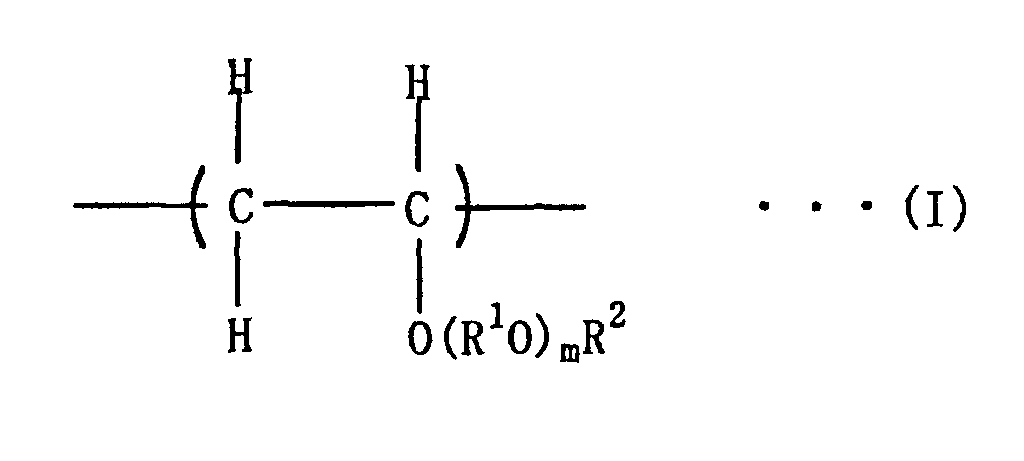
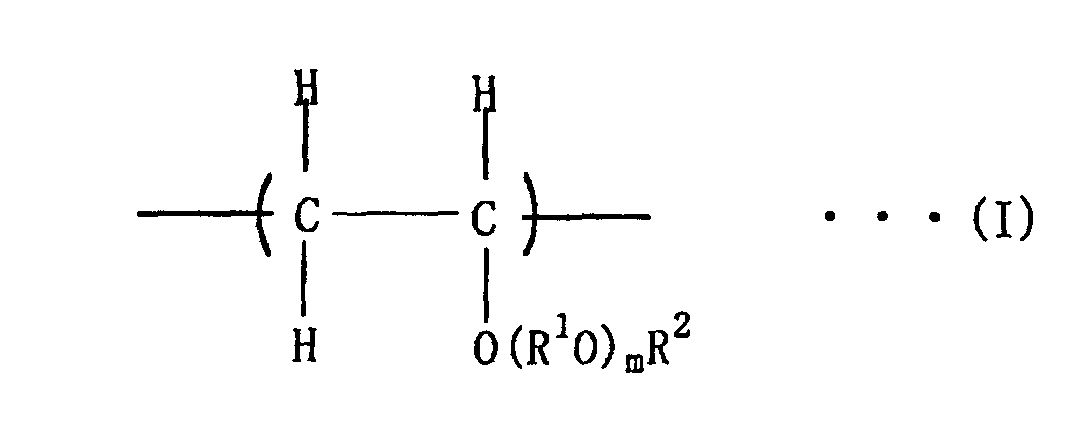
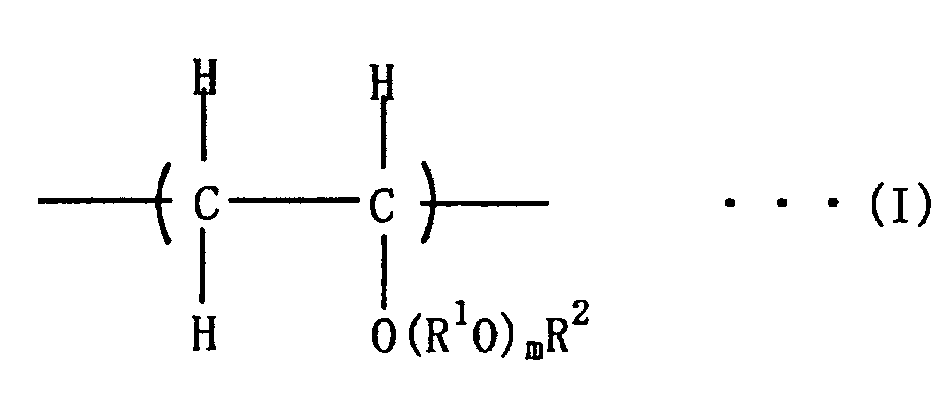
- a crude polyvinyl ether compound is purified by the treatment with an adsorbent. It is preferable that the crude polyvinyl ether compound comprises a compound having a constituting unit represented by the following general formula (I):
- R 1 represents a divalent hydrocarbon group having 1 to 10 carbon atoms which may be branched.
- Examples of the hydrocarbon group represented by R 1 include linear, branched and cyclic hydrocarbon groups.
- Specific examples of the hydrocarbon group represented by R 1 include a methylene group, an ethylene group, a trimethylene group, a methylethylene group, a tetramethylene group, a 1,1-dimethylethylene group, a 1,2-dimethylethylene group, a pentylene group, a hexylene group, a heptylene group, an octylene group, a nonylene group, a decylene group, a cyclopentylene group, a cyclohexylene group and a phenylene group.
- m represents number of repetition of the unit represented by R 1 O.
- the average value of the numbers represented by m is in the range of 0 to 10 and preferably in the range of 0 to 5.
- R 1 O's may represent the same group or different groups.
- R 2 represents a monovalent hydrocarbon group having 1 to 20 carbon atoms which may be branched.
- Examples of the hydrocarbon group represented by R 2 include linear, branched and cyclic hydrocarbon groups.
- Specific examples of the hydrocarbon group represented by R 2 include alkyl groups such as a methyl group, an ethyl group, a n-propyl group, an isopropyl group, a n-butyl group, an isobutyl group, a sec-butyl group, a tert-butyl group, various types of pentyl group, various types of hexyl group, various types of heptyl group, various types of octyl group, various types of decyl group and various types of dodecyl group; and cycloalkyl groups such as a cyclopentyl group, a cyclohexyl group, various types of methylcyclohexyl group, various types of ethylcyclo
- the groups represented by R 1 , R 2 and m may be the same with or different from each other among constituting units.
- one or more types of constituting units represented by general formula (I) may be comprised.
- the crude polyvinyl ether compound used in the present invention can be produced by homopolymerization or copolymerization of the corresponding vinyl ether monomers.
- the crude polyvinyl ether compound can be produced by polymerization of one or more types of vinyl ether monomer represented by general formula (II): wherein R 1 , R 2 and m are as defined above.
- Examples of the vinyl ether monomer represented by general formula (II) include vinyl methyl ether, vinyl ethyl ether, vinyl n-propyl ether, vinyl isopropyl ether, vinyl n-butyl ether, vinyl isobutyl ether, vinyl sec-butyl ether, vinyl tert-butyl ether, vinyl n-pentyl ether, vinyl n-hexyl ether, vinyl 2-methoxyethyl ether, vinyl 2-ethoxyethyl ether, vinyl 2-methoxy-1-methylethyl ether, vinyl 2-methoxy-2-methylethyl ether, vinyl 3,6-dioxaheptyl ether, vinyl 3,6,9-trioxadecyl ether, vinyl 1,4-dimethyl-3,6-dioxaheptyl ether, vinyl 1,4,7-trimethyl-3,6,9-trioxadecyl ether and vinyl 4-methoxyphenyl ether
- the above vinyl ether monomers may be polymerized in accordance with a conventional process such as the radical polymerization, the cationic polymerization or the irradiation polymerization described in the first edition of "Gosei Kobunshi (Synthetic Polymers) III” edited by Shunsuke Murahasi, Minoru Imoto and Hisaya Tani, published by Asakura Shoten, June 15, 1971.
- a polymer having a desired viscosity can be obtained when the vinyl ether monomer is polymerized in accordance with the process described in the following.
- a combination of a Br ⁇ nsted acid, a Lewis acid or an organometallic compound and an alcohol, water, a phenol, an acetal or an addition product of a vinyl ether and a carboxylic acid can be used.
- the Br ⁇ nsted acid include hydrofluoric acid, hydrochloric acid, hydrobromic acid, hydroiodic acid, nitric acid, sulfuric acid, trichloroacetic acid and trifluoroacetic acid.
- the Lewis acid include boron trifluoride, aluminum trichloride, aluminum tribromide, tin tetrachloride, zinc dichloride and iron(III) chloride.
- the Lewis acids boron trifluoride and complexes thereof are preferable.
- the organometallic compound include diethylaluminum chloride, ethylaluminum dichloride and diethylzinc.
- the amount of the Br ⁇ nsted acid, the Lewis acid or the organometallic compound is not particularly limited. It is preferable that the Br ⁇ nsted acid, the Lewis acid or the organometallic compound is used in an amount of 0.001 to 10% by weight based on the amount of the vinyl ether monomer.
- any compound can be selected.
- the amount of the above compound is not particularly limited. It is preferable that the above compound is used in an amount of 0.01 to 50% by weight based on the amount of the vinyl ether monomer.
- the end of the polymer at which the polymerization has been initiated has the following structure depending on the compound used.
- water, the alcohol or the phenol is used, hydrogen is attached.
- acetal a group formed by removing one alkoxyl group from the used acetal is attached.
- addition product of a vinyl ether and a carboxylic acid is used, a group formed by removing an alkylcarbonyloxyl group derived from the portion of the carboxylic acid from the addition product of a vinyl ether and a carboxylic acid is attached.
- the end of the polymer at which the polymerization has been terminated has the following structure depending on the compound used.
- the end of the polymer When water, the alcohol, the phenol or the acetal is used, the end of the polymer has a structure of an acetal, an olefin or an aldehyde.
- the end of the polymer When the addition product of a vinyl ether and a carboxylic acid is used, the end of the polymer has a structure of a carboxylic acid ester of a hemiacetal.
- An aldehyde is obtained by hydrolysis of the carboxylic acid ester of a hemiacetal in the presence of an acid.
- the polymerization of the vinyl ether monomer represented by general formula (II) can be initiated, in general, at a temperature in the range of -80 to 150°C and can be conducted preferably in the range of 0 to 100°C although the temperature is different depending on the type of the materials and the initiator.
- the polymerization is completed in about 10 seconds to 10 hours after the initiation of the polymerization.
- a polymer having a lower molecular weight can be obtained by increasing the amount of the alcohol, water, the phenol, the acetal or the addition product of a vinyl ether and a carboxylic acid based on the amount of the vinyl ether monomer represented by general formula (II).
- a polymer having a lower molecular weight can also be obtained by increasing the amount of the Br ⁇ nsted acid or the Lewis acid. Viscosity of the polymer can be adjusted by the adjustment of the molecular weight.
- the polymerization can be conducted in the absence of solvents or in the presence of a solvent inert under the polymerization condition.
- the type of the solvent is not particularly limited.
- the solvent include hydrocarbon solvents such as hexane, benzene, toluene and isooctane; and ether solvents such as diethyl ether, 1,2-dimethoxyethane and tetrahydrofuran.
- the polymerization can be terminated by addition of an alkali.
- a crude polyvinyl ether compound can be obtained by reacting the acetal and the like with hydrogen at 70 to 200°C in the presence of nickel and an oxide of silicon, aluminum, magnesium, titanium or zirconium such as nickel diatomaceous earth in accordance with the process described in WO96/33154 or the like.
- the crude polyvinyl ether compound obtained as described above has a weight-average molecular weight in the range of 150 to 3,000 and preferably in the range of 200 to 2,000.
- the crude polyvinyl ether compound means a compound comprising the polyvinyl ether compound and impurities such as metal compounds and polar substances and has a volume specific resistance smaller than 10 14 ⁇ cm at 30°C.
- the crude polyvinyl ether compound is treated with an adsorbent.
- an adsorbent for example, an oxide of at least one metal selected from aluminum, iron, titanium, silicon, tin and the like, a clay mineral, activated carbon, an ion exchange resin or the like is preferably used.
- activated carbon, silica-alumina, activated clay, bentonite, zeolite and activated alumina are more preferable from the standpoint of the effect.
- the adsorbent may be used singly or in combination of two or more.
- the crude polyvinyl ether compound may be brought into contact with the adsorbent in an amount in the range of about 0.1 to 25% by weight and preferably in the range of 0.5 to 10% by weight based on the amount of the crude polyvinyl ether compound at a temperature, in general, in the range of 0 to 100°C and preferably in the range of 10 to 70°C.
- the crude polyvinyl compound may be passed through a column packed with the adsorbent or a batch process may be used. If necessary, the treatment may be conducted in the presence of a solvent.
- a solvent a non-polar solvent is preferable.
- non-polar solvent examples include hydrocarbons such as hexane, cyclohexane, heptane, octane, isononane, toluene and xylene.
- the amount of the solvent is not particularly limited. It is preferable that the solvent is used in an amount of 1 to 30 parts by weight per 1 part by weight of the crude polyvinyl ether compound.
- the time of the adsorption treatment varies depending on the temperature of the treatment, the absence or the presence of the solvent, the type and the amount of the adsorbent and the like and cannot be generally decided.
- the time of the adsorption treatment is, in general, in the range of 10 minutes to 10 hours and preferably in the range of 30 minutes to 5 hours. If necessary, the adsorption treatment can be conducted under an atmosphere of an inert gas such as nitrogen, argon or helium.
- a high purity polyvinyl ether compound having a great volume specific resistance of 10 14 ⁇ cm or greater at 30°C, namely a high electric insulating property can be obtained by the above treatment with the adsorbent.
- a crude polyalkylene glycol compound, a crude polyol ester compound, a crude cyclic polyether compound or a crude carbonate compound is purified by the treatment with the adsorbent.
- the crude polyalkylene glycol compound, the crude polyol ester compound, the crude cyclic polyether compound and the crude carbonate compound mean compounds comprising a polyalkylene glycol compound, a polyol ester compound, a cyclic polyether compound and a carbonate compound, respectively, and impurities such as metal compounds and polar substances and have volume specific resistances smaller than 10 12 ⁇ cm at 30°C.
- a high purity polyalkylene glycol compound, a high purity polyol ester compound, a high purity cyclic polyether compound and a high purity carbonate compound which have volume specific resistances of 10 12 ⁇ cm or greater at 30°C can be obtained by treating the crude polyalkylene glycol compound, the crude polyol ester compound, the crude cyclic polyether compound and the crude carbonate compound, respectively, with the adsorbent.
- the type of the adsorbent and the process for the treatment with the adsorbent are the same as those described for the process for producing high purity compound having oxygen I described above.
- Lubricating oil I of the present invention comprises the high purity polyvinyl ether compound obtained by the treatment described above as the main component.
- Lubricating oil II of the present invention comprises at least one high purity compound having oxygen selected from the high purity polyalkylene glycol compounds, the high purity polyol ester compounds, the high purity cyclic polyether compounds and the high purity carbonate compounds obtained by the treatment described above as the main component.
- Lubricating oil I and lubricating oil II are, in particular, advantageous as the lubricating oil used for refrigerators.
- Examples of the polyalkylene glycol compound include compounds represented by the following general formula: wherein R 3 represents an alcohol residue having 1 to 6 carbon atoms, R 4 represents an alkylene group having 2 to 4 carbon atoms, R 5 represents a hydrogen atom, an alkyl group having 1 to 10 carbon atoms or an acyl group, n represents a number of 1 to 80 and p represents a number of 1 to 6.
- polyol ester compound examples include esters of dihydric to tetrahydric alcohols such as neopentyl glycol, trimethylolpropane, trimethylolethane and pentaerythritol with linear and branched carboxylic acids having 2 to 18 carbon atoms.
- Examples of the cyclic polyether compound include derivatives obtained by addition of alkylene oxides to polyhydric ether alcohols, which are represented by the following general formula: wherein R 6 represents a hydrogen atom or a linear or branched alkyl group having 1 to 21 carbon atoms, R 7 represents a branched alkyl group having 3 to 21 carbon atoms when R 6 represents a hydrogen atom and a linear or branched alkyl group having 1 to 21 carbon atoms when R 6 represents a linear or branched alkyl group having 1 to 21 carbon atoms, R 6 and R 7 may form an alkylene group having 2 to 13 carbon atoms in combination, R 6 and R 7 may be the same with or different from each other among constituting units, R 8 represents a hydrogen atom or a linear or branched alkyl group having 1 to 8 carbon atoms, X represents a linear or branched alkylene group having 2 to 4 carbon atoms, k 2 represents a number of 0 to 4, n 2 represents
- Examples of the carbonate compound include compounds represented by the following general formula: wherein R 13 and R 16 each represent a monovalent hydrocarbon group having 1 to 20 carbon atoms, R 14 and R 15 each represent an alkylene group having 1 to 10 carbon atoms and r and s each represent an integer of 1 to 100; and compounds having a constituting unit represented by the following general formula: wherein R 17 and R 18 each represent a hydrogen atom, an alkyl group having 1 to 6 carbon atoms, an aryl group having 6 to 10 carbon atoms, an arylalkyl group having 7 to 10 carbon atoms or an alkoxyalkyl group having 2 to 6 carbon atoms, u represents an integer of 2 to 10 and t represents an integer of 1 to 100.
- the kinematic viscosity of a lubricating oil before being mixed with a refrigerant is in the range of 5 to 1,000 mm 2 /second and more preferably in the range of 5 to 200 mm 2 /second at 40°C.
- the polymer has a kinematic viscosity outside of the above range, the kinematic viscosity can be adjusted within the above range by mixing it with another polymer having a suitable kinematic viscosity.
- hydrofluorocarbons which have a small possibility of causing ozonosphere destruction are preferably used.
- Refrigerants obtained by mixing more than one HFC to improve the efficiency of refrigeration are preferable.
- a carbon dioxide, hydrocarbons, ether and ammonia having a smaller coefficient of atmospheric warming can also be used advantageously.
- the high purity polyvinyl ether compound described above can be used singly or in combination of two or more and can also be used in combination with other lubricating oils.
- a single compound selected from the high purity polyalkylene glycol compounds, the high purity polyol ester compounds, the high purity cyclic polyether compounds and the high purity carbonate compounds described above may be used or a combination of two or more compounds suitably selected from the above compounds may be used.
- the above compounds can also be used in combination with other lubricating oils such as mineral oils, alkylbenzenes and poly- ⁇ -olefins.
- various types of other additives used in the conventional lubricating oils such as load carrying additives, chlorine capturing agents, antioxidants, metal deactivators, defoaming agents, detergent-dispersants, viscosity-index improvers, oiliness agents, anti-wear additives, extreme pressure agents, antirust agents, corrosion inhibitors, pour point depressants may be added, if necessary.
- the pressure of hydrogen was adjusted to 30 kg/cm 2 G and the temperature of the mixture was elevated.
- the mixture was kept at 130°C for 30 minutes and then cooled to the room temperature.
- the pressure in the autoclave increased by the elevation of the temperature and a decrease in the pressure of hydrogen was also observed due to the reaction of acetaldehyde diethylacetal.
- hydrogen was added and the pressure was kept at 30 kg/cm 2 G.
- reaction liquid was transferred to a 2 liter washing tank and washed twice with 200 ml of a 3% by weight aqueous solution of sodium hydroxide and three times with 200 ml of distilled water.
- the solvent and light fractions were removed from the washed reaction liquid under a reduced pressure using a rotary evaporator and 550.0 g of a crude product was obtained.
- An autoclave containing a catalyst prepared in accordance with the same procedures as those described in Preparation Example of Catalyst 1 was opened and a liquid layer in the autoclave was removed by decantation.
- 400 g of the crude product obtained above was placed into the autoclave.
- the pressure of hydrogen was adjusted to 30 kg/cm 2 G and the temperature of the mixture was elevated.
- the mixture was kept at 140°C for 2 hours and then cooled to the room temperature.
- the pressure in the autoclave increased by the elevation of the temperature and a decrease in the pressure of hydrogen was also observed due to the progress of the reaction.
- hydrogen was suitably added and the pressure in the autoclave was kept at 30 kg/cm 2 G.
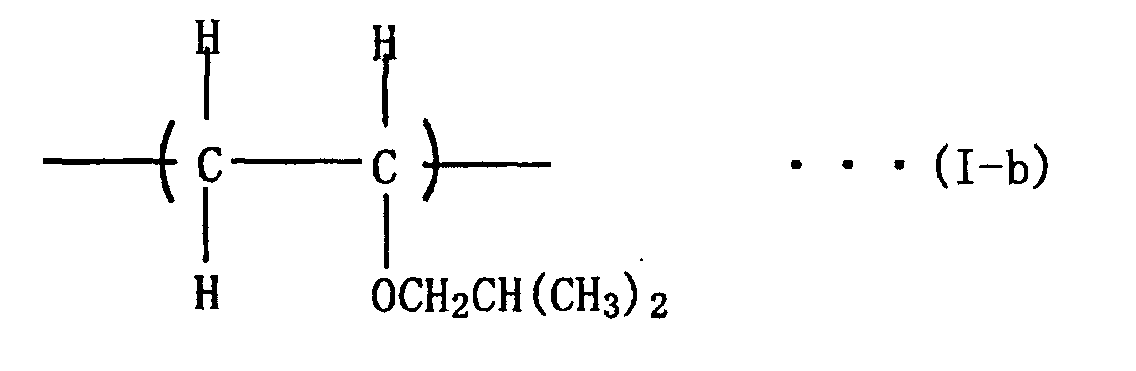
- the crude polyvinyl ether compound thus obtained had constituting units expressed by the following formulae (I-a) and (I-b) in amounts such that the ratio by mole (I-a)/(I-b) was 9/1, a kinematic viscosity of 68.86 mm 2 /second at 40°C, a kinematic viscosity of 8.26 mm 2 /second at 100°C and a volume specific resistance of 3.26 ⁇ 10 13 ⁇ cm at 30°C.
- the crude polyvinyl ether compound obtained in (1) described above in an amount of 150 g was dissolved into 300 g of isononane and the resultant solution was heated to 50°C.
- 4.5 g of silica-alumina HA manufactured by SHOKUBAI KASEI KOGYO Co., Ltd. was added while the solution was stirred and the obtained mixture was heated at 50°C under stirring for 1 hour under an atmosphere of nitrogen.
- the silica-alumina was removed by filtration using a membrane filter and the solvent was removed from the resultant mother liquor using a rotary evaporator.
- the purified polyvinyl ether compound obtained as described above had a volume specific resistance of 1.87 ⁇ 10 15 ⁇ cm at 30°C.
- the volume specific resistance was measured in accordance with the following method.
- the sample was placed into a liquid cell for the measurement of the volume specific resistance placed in a thermostatted tank kept at 30°C and sealed. After the sample was kept in the thermostatted tank kept at 30°C for 40 minutes, the volume specific resistance was measured by a high ultra insulation meter R8340 manufactured by ADVANTEST Co., Ltd. at an applied voltage of 250 V.
- 4.5 g of silica-alumina HA manufactured by SHOKUBAI KASEI KOGYO Co., Ltd. was added while the solution was stirred and the obtained mixture was stirred at 15°C for 1 hour under an atmosphere of nitrogen.
- the silica-alumina was removed by filtration using a membrane filter and the solvent was removed from the resultant mother liquor using a rotary evaporator.
- the purified polyvinyl ether compound obtained as described above had a volume specific resistance of 8.33 ⁇ 10 14 ⁇ cm at 30°C.
- Example 1 The same procedures as those conducted in Example 1 were conducted except that hexane was used in place of isononane. The results are shown in Table 1.
- Example 1 The same procedures as those conducted in Example 1 were conducted except that toluene was used in place of isononane. The results are shown in Table 1.
- 1.5 g of silica-alumina HA manufactured by SHOKUBAI KASEI KOGYO Co., Ltd.
- the silica-alumina was removed by filtration using a membrane filter and the solvent was removed from the resultant mother liquor using a rotary evaporator.
- the purified polyvinyl ether compound obtained as described above had a volume specific resistance of 1.57 ⁇ 10 14 ⁇ cm at 30°C.
- 4.5 g of silica-alumina HA manufactured by SHOKUBAI KASEI KOGYO Co., Ltd.
- the silica-alumina was removed by filtration using a membrane filter.
- the purified polyvinyl ether compound obtained as described above had a volume specific resistance of 3.33 ⁇ 10 14 ⁇ cm at 30°C.
- Example 2 The same procedures as those conducted in Example 1 were conducted except that adsorbents shown in Table 1-1 were used in place of silica-alumina HA. The results are shown in Table 1-2.
- reaction liquid was transferred to a 2 liter washing tank and washed twice with 200 ml of a 3% by weight aqueous solution of sodium hydroxide and three times with 200 ml of distilled water.
- the solvent and light fractions were removed from the washed reaction liquid under a reduced pressure using a rotary evaporator and 534.1 g of a crude product was obtained.
- An autoclave containing a catalyst prepared in accordance with the same procedures as those described in Preparation Example of Catalyst 1 was opened and a liquid layer in the autoclave was removed by decantation.
- 400 g of the crude product obtained above was placed into the autoclave.
- the pressure of hydrogen was adjusted at 30 kg/cm 2 G and the temperature of the mixture was elevated.
- the mixture was kept at 140°C for 2 hours and then cooled to the room temperature.
- the pressure in the autoclave increased by the elevation of the temperature and a decrease in the pressure of hydrogen was also observed due to the progress of the reaction.
- hydrogen was suitably added and the pressure in the autoclave was kept at 30 kg/cm 2 G.
- the crude polyvinyl ether compound thus obtained had constituting units expressed by formulae (I-a) and (I-b) in amounts such that the ratio by mole (I-a)/(I-b) was 8/2, a kinematic viscosity of 32.54 mm 2 /second at 40°C, a kinematic viscosity of 5.14 mm 2 /second at 100°C and a volume specific resistance of 1.32 ⁇ 10 13 ⁇ cm at 30°C.
- the purified polyvinyl ether compound obtained as described above had a volume specific resistance of 1.28 ⁇ 10 14 ⁇ cm at 30°C.
- reaction liquid was transferred to a 2 liter washing tank and washed twice with 200 ml of a 3% by weight aqueous solution of sodium hydroxide and three times with 200 ml of distilled water.
- the solvent and light fractions were removed from the washed reaction liquid under a reduced pressure using a rotary evaporator and 528.4 g of a crude product was obtained.
- An autoclave containing a catalyst prepared in accordance with the same procedures as those described in Preparation Example of Catalyst 1 was opened and a liquid layer in the autoclave was removed by decantation.
- 400 g of the crude product obtained above was placed into the autoclave.
- the pressure of hydrogen was adjusted at 30 kg/cm 2 G and the temperature of the mixture was elevated.
- the mixture was kept at 140°C for 2 hours and then cooled to the room temperature.
- the pressure in the autoclave increased by the elevation of the temperature and a decrease in the pressure of hydrogen was also observed due to the progress of the reaction.
- hydrogen was suitably added and the pressure in the autoclave was kept at 30 kg/cm 2 G.
- the crude polyvinyl ether compound thus obtained had constituting units expressed by formulae (I-a) and (I-b) in amounts such that the ratio by mole (I-a)/(I-b) was 7/3, a kinematic viscosity of 29.65 mm 2 /second at 40°C, a kinematic viscosity of 4.77 mm 2 /second at 100°C and a volume specific resistance of 5.60 ⁇ 10 14 ⁇ cm at 30°C.
- the purified polyvinyl ether compound obtained as described above had a volume specific resistance of 2.46 ⁇ 10 15 ⁇ cm at 30°C.
- the reaction mixture was transferred to a washing tank and 400 ml of chloroform was added.
- the resultant mixture was washed three times with 200 ml of a 5% by weight aqueous solution of sodium hydroxide and three times with 300 ml of water.
- the solvent and unreacted materials were removed from the washed mixture under a reduced pressure using a rotary evaporator and 258 g of a crude product was obtained.
- the obtained crude product had a kinematic viscosity of 33.3 mm 2 /second at 40°C.
- the temperature was raised to 130°C over 30 minutes while the pressure of hydrogen was kept at 50 kg/cm 2 and the reaction was allowed to proceed at 130°C for 2 hours.
- the reaction proceeded and a decrease in the pressure of hydrogen was observed.
- the reaction was allowed to proceed while the pressure of hydrogen was kept at 60 kg/cm 2 by suitably compensating the increase in the pressure due to the elevation of the temperature and the decrease in the pressure due to the reaction.
- the mixture was cooled to the room temperature and the pressure was lowered to the ordinary pressure.
- the catalyst was precipitated by leaving the reaction mixture standing for 1 hour and the reaction liquid was separated by decantation.
- the catalyst was washed twice with 60 ml of hexane and the liquid obtained by washing was combined with the reaction liquid.
- the combined liquid was filtered with a filter paper.
- Hexane was removed from the liquid using a rotary evaporator under a reduced pressure.
- the resultant mixture was transferred to a washing tank and washed three times with 200 ml of a 5% by weight aqueous solution of sodium hydroxide and five times with 300 ml of distilled water.
- the solvent, water and the like were removed from the washed liquid under a reduced pressure using a rotary evaporator.
- the yield of a crude polyvinyl ether compound was 188 g.
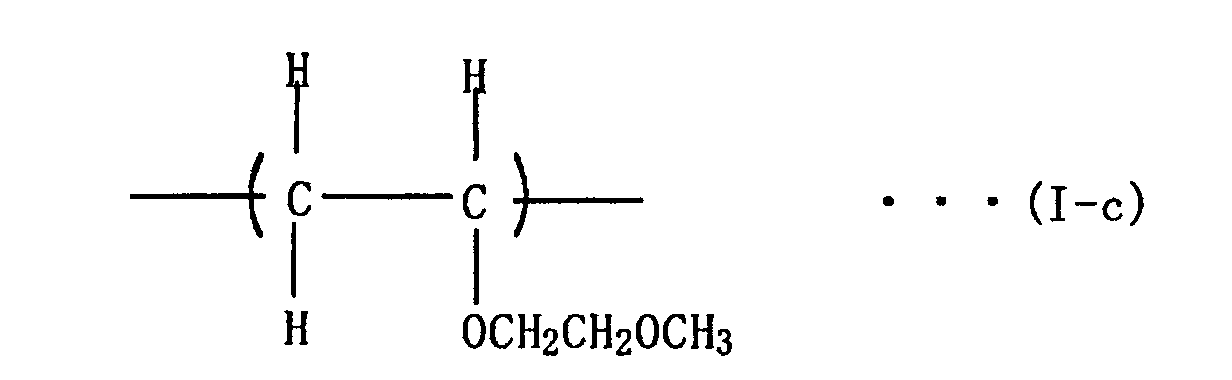
- the obtained crude polyvinyl ether compound had a constituting unit expressed by the following formula (I-c): a kinematic viscosity of 30.4 mm 2 /second at 40°C, a kinematic viscosity of 6.29 mm 2 /second at 100°C and a volume specific resistance of 2.50 ⁇ 10 12 ⁇ cm at 30°C.
- the purified polyvinyl ether compound obtained as described above had a volume specific resistance of 1.50 ⁇ 10 14 ⁇ cm at 30°C.
- Example 1 Polyvinyl ether compound Adsorbent constituting units ratio of amounts by mole
- Example 1 (I-a)/(I-b) 9/1 silica-alumina HA
- Example 2 (I-a)/(I-b) 9/1 silica-alumina HA
- Example 3 (I-a)/(I-b) 9/1 silica-alumina HA
- Example 4 (I-a)/(I-b) 9/1 silica-alumina HA
- Example 5 (I-a)/(I-b) 9/1 silica-alumina HA
- Example 6 (I-a)/(I-b) 9/1 silica-alumina HA
- Example 7 (I-a)/(I-b) 9/1 silica-alumina LA
- Example 8 (I-a)/(I-b) 9/1 activated clay
- Example 9 (I-a)/(I-b) 9/1 Ca-type bentonite
- Example 10 (I-a)/(I-b)
- the polyvinyl ether compound treated as described above had a volume specific resistance of 1.80 ⁇ 10 12 ⁇ cm at 30°C.
- a commercial crude polypropylene glycol (the weight-average molecular weight: 950; the kinematic viscosity at 40°C: 38.45 mm 2 /second; the kinematic viscosity at 100°C: 9.15 mm 2 /second) had a volume specific resistance of 4.05 ⁇ 10 10 ⁇ cm at 30°C.
- the above crude polypropylene glycol in an amount of 150 g was dissolved into 300 g of isononane.
- Into the resultant solution 4.5 g of silica-alumina HA (manufactured by SHOKUBAI KASEI KOGYO Co., Ltd.) was added while the solution was stirred and the obtained mixture was stirred at the room temperature for 1 hour under an atmosphere of nitrogen.
- the silica-alumina was removed by filtration using a membrane filter and the solvent was removed using a rotary evaporator.
- the purified polypropylene glycol obtained as described above had a volume specific resistance of 2.15 ⁇ 10 12 ⁇ cm at 30°C.
- the high purity compound having oxygen such as the high purity polyvinyl ether compound which can be advantageously used as a component for lubricating oils, in particular, lubricating oils for refrigerators can be efficiently produced by the adsorption treatment.
- the lubricating oil comprising the high purity compound having oxygen as the main component which is obtained in accordance with the above process can be advantageously used especially as a lubricating oil for compression-type refrigerators using a hydrofluorocarbon as the refrigerant.
Landscapes
- Chemical & Material Sciences (AREA)
- Organic Chemistry (AREA)
- Chemical Kinetics & Catalysis (AREA)
- Health & Medical Sciences (AREA)
- General Chemical & Material Sciences (AREA)
- Oil, Petroleum & Natural Gas (AREA)
- Emergency Medicine (AREA)
- Medicinal Chemistry (AREA)
- Polymers & Plastics (AREA)
- Organic Low-Molecular-Weight Compounds And Preparation Thereof (AREA)
- Lubricants (AREA)
- Solid-Sorbent Or Filter-Aiding Compositions (AREA)
- Production Of Liquid Hydrocarbon Mixture For Refining Petroleum (AREA)
- Addition Polymer Or Copolymer, Post-Treatments, Or Chemical Modifications (AREA)
Abstract
Description


And also, examples of the cyclic polyether compound include cyclic acetals represented by the following general formula:
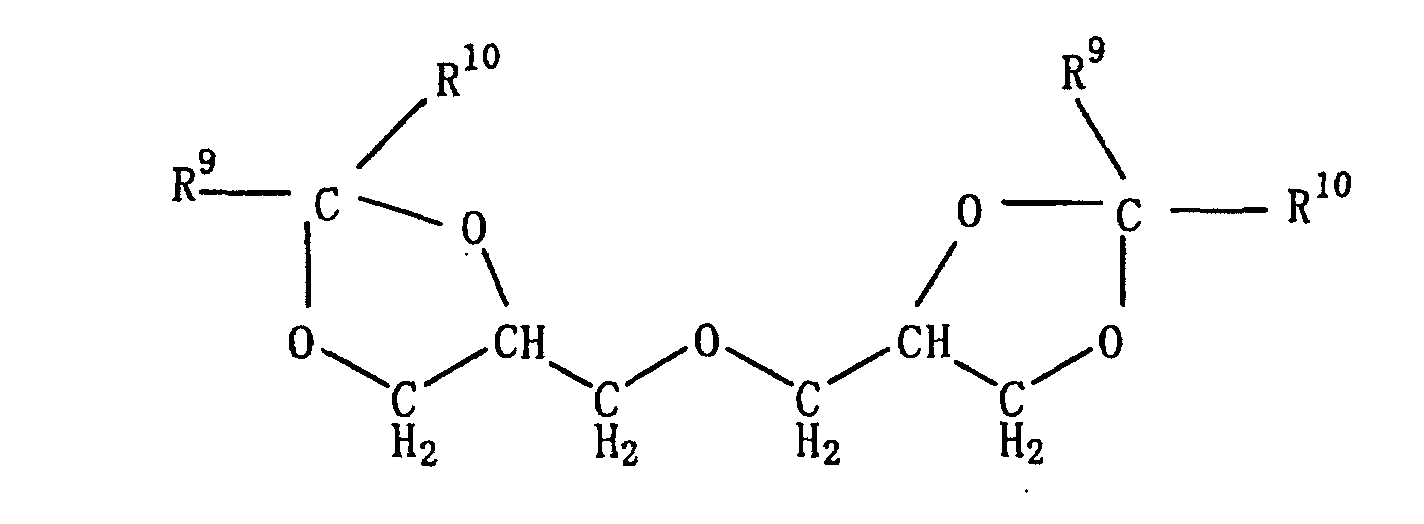
cyclic acetals represented by the following general formula:

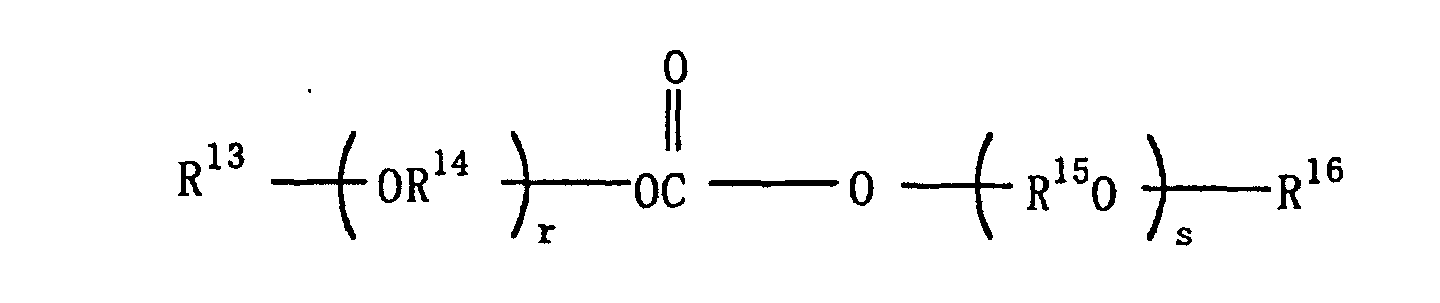
compounds having a constituting unit represented by the following general formula:




| Polyvinyl ether compound | Adsorbent | ||
| constituting units | ratio of amounts by mole | ||
| Example 1 | (I-a)/(I-b) | 9/1 | silica-alumina HA |
| Example 2 | (I-a)/(I-b) | 9/1 | silica-alumina HA |
| Example 3 | (I-a)/(I-b) | 9/1 | silica-alumina HA |
| Example 4 | (I-a)/(I-b) | 9/1 | silica-alumina HA |
| Example 5 | (I-a)/(I-b) | 9/1 | silica-alumina HA |
| Example 6 | (I-a)/(I-b) | 9/1 | silica-alumina HA |
| Example 7 | (I-a)/(I-b) | 9/1 | silica-alumina LA |
| Example 8 | (I-a)/(I-b) | 9/1 | activated clay |
| Example 9 | (I-a)/(I-b) | 9/1 | Ca-type bentonite |
| Example 10 | (I-a)/(I-b) | 9/1 | activated carbon A |
| Example 11 | (I-a)/(I-b) | 9/1 | activated carbon B |
| Example 12 | (I-a)/(I-b) | 9/1 | activated carbon C |
| Example 13 | (I-a)/(I-b) | 8/2 | silica-alumina HA |
| Example 14 | (I-a)/(I-b) | 7/3 | silica-alumina HA |
| Example 15 | (I-c) | - | silica-alumina HA |
| Notes: Silica-alumina HA, LA: manufactured by SHOKUBAI KASEI KOGYO Co., Ltd. Activated clay: manufactured by MIZUSAWA KAGAKU KOGYO Co., Ltd.; "GAREON EARTH NS" Ca-type bentonite: manufactured by KUNIMINE KOGYO Co., Ltd.; "KB" Activated carbon B: manufactured by NIPPON NORIT; "CA1" Activated carbon B: manufactured by NIPPON NORIT; "SA Plus" Activated carbon C: manufactured by NIPPON NORIT; "S-51" The amount of the adsorbent: 1% by weight in Example 5 and 3% by weight in other Examples, based on the amount of the polyvinyl ether compound The amount of the solvent: 1 part by weight in Example 5 and 2 parts by weight in other Examples per 1 part by weight of the polyvinyl ether compound |
| Conditions of adsorption | Volume specific resistance at 30°C (Ω·cm) | |||
| solvent | temperature (°C) | before adsorption | after adsorption | |
| Example 1 | isononane | 50 | 3.26×10¹³ | 1.87×10¹⁵ |
| Example 2 | isononane | 15 | 1.30×10¹³ | 8.33×10¹⁴ |
| Example 3 | hexane | 50 | 3.26×10¹³ | 5.83×10¹⁴ |
| Example 4 | toluene | 50 | 3.26×10¹³ | 4.48×10¹⁴ |
| Example 5 | toluene | 15 | 1.10×10¹² | 1.57×10¹⁴ |
| Example 6 | none | 50 | 1.65×10¹² | 3.33×10¹⁴ |
| Example 7 | isononane | 50 | 3.26×10¹³ | 3.15×10¹⁴ |
| Example 8 | isononane | 50 | 3.26×10¹³ | 2.46×10¹⁴ |
| Example 9 | isononane | 50 | 3.26×10¹³ | 3.56×10¹⁴ |
| Example 10 | isononane | 50 | 3.26×10¹³ | 2.40×10¹⁴ |
| Example 11 | isononane | 50 | 3.26×10¹³ | 5.22×10¹⁴ |
| Example 12 | isononane | 50 | 3.26×10¹³ | 5.60×10¹⁴ |
| Example 13 | isononane | 50 | 1.32×10¹³ | 1.28×10¹⁴ |
| Example 14 | isononane | 50 | 5.60×10¹⁴ | 2.46×10¹⁵ |
| Example 15 | isononane | 50 | 2.50×10¹² | 1.50×10¹⁴ |
Claims (12)
- A process for producing a high purity compound having oxygen selected from a group consisting of high purity polyvinyl ether compounds, high purity polyalkylene glycol compounds, high purity polyol ester compounds, high purity cyclic polyether compounds and high purity carbonate compounds, comprising a step of treating with an adsorbent at least one crude compound having oxygen selected from a group consisting of crude polyvinyl ether compounds, crude polyalkylene glycol compounds, crude polyol ester compounds, crude cyclic polyether compounds and crude carbonate compounds.
- The process according to Claim 1, wherein the polyvinyl ether compound is a compound having a constituting unit represented by general formula (I):wherein R1 represents a divalent hydrocarbon group having 1 to 10 carbon atoms which may be branched, R2 represents a monovalent hydrocarbon group having 1 to 20 carbon atoms which may be branched, m represents numbers giving an average value in a range of 0 to 10, R1O's may represent the same group or different groups when more than one R1O are present, and R1, R2 and m may be the same with or different from each other among constituting units.
- The process according to any one of Claims 1 and 2, wherein the adsorbent is an oxide of at least one metal selected from a group consisting of aluminum, iron, titanium, silicon and tin, a clay mineral, activated carbon or an ion exchange resin.
- The process according to any one of Claims 1 and 2, wherein the adsorbent is activated carbon, silica-alumina, activated clay, bentonite, zeolite or activated alumina.
- A lubricating oil which comprises a high purity polyvinyl ether compound obtained in accordance with the process described in any one of Claims 1 to 4.
- A lubricating oil which comprises at least one high purity compound having oxygen selected from a group consisting of high purity polyalkylene glycol compounds, high purity polyol ester compounds, high purity cyclic polyether compounds and high purity carbonate compounds which are obtained in accordance with the process described in any one of Claims 1, 3 and 4.
- A lubricating oil which comprises a high purity polyvinyl ether compound which is obtained in accordance with the process described in any one of Claims 1 to 4 and has a volume specific resistance of 1014 Ω·cm or greater at 30°C.
- A lubricating oil which comprises at least one high purity compound having oxygen selected from a group consisting of high purity polyalkylene glycol compounds, high purity polyol ester compounds and high purity carbonate compounds which are obtained in accordance with the process described in any one of Claims 1, 3 and 4 and have volume specific resistances of 1012 Ω·cm or greater at 30°C.
- The lubricating oil according to any one of Claims 5 to 8 which is used for refrigerators.
- The process according to Claim 1, wherein the step of treating at least one crude compound having oxygen with an adsorbent is a step of bringing at least one crude compound having oxygen into contact with the adsorbent.
- The process according to any one of Claims 1 to 4 and 10, wherein the crude polyvinyl ether compound has a volume specific resistance smaller than 1014 Ω·cm at 30°C and the high purity polyvinyl ether compound obtained after the treatment with a adsorbent has a volume specific resistance of 1014 Ω·cm or greater at 30°C.
- The process according to any one of Claims 1 to 4, 10 and 11, wherein the crude polyvinyl ether compound has a weight-average molecular weight in a range of 150 to 3,000.
Applications Claiming Priority (3)
| Application Number | Priority Date | Filing Date | Title |
|---|---|---|---|
| JP25720599 | 1999-09-10 | ||
| JP25720599 | 1999-09-10 | ||
| PCT/JP2000/006153 WO2001019875A1 (en) | 1999-09-10 | 2000-09-08 | Process for producing high-purity oxygenic compound and lubricating oil |
Publications (3)
| Publication Number | Publication Date |
|---|---|
| EP1227108A1 true EP1227108A1 (en) | 2002-07-31 |
| EP1227108A4 EP1227108A4 (en) | 2003-04-16 |
| EP1227108B1 EP1227108B1 (en) | 2006-09-06 |
Family
ID=17303138
Family Applications (1)
| Application Number | Title | Priority Date | Filing Date |
|---|---|---|---|
| EP00957055A Expired - Lifetime EP1227108B1 (en) | 1999-09-10 | 2000-09-08 | Process for producing a high-purity polyvinyl ether compound and lubricating oil |
Country Status (6)
| Country | Link |
|---|---|
| US (1) | US6734151B1 (en) |
| EP (1) | EP1227108B1 (en) |
| JP (1) | JP4959894B2 (en) |
| DE (1) | DE60030577T2 (en) |
| ES (1) | ES2277850T3 (en) |
| WO (1) | WO2001019875A1 (en) |
Cited By (7)
| Publication number | Priority date | Publication date | Assignee | Title |
|---|---|---|---|---|
| WO2004033533A1 (en) * | 2002-10-09 | 2004-04-22 | Sanyo Chemical Industries, Ltd. | Copolyether and process for production thereof |
| US7119160B2 (en) | 2002-04-03 | 2006-10-10 | Kyowa Hakko Chemical Co., Ltd. | Polyalkenyl ether resin |
| EP1983040A1 (en) * | 2007-03-29 | 2008-10-22 | NOF Corporation | Refrigeration lubricant composition and refrigerant working fluid composition |
| EP1939165A4 (en) * | 2005-10-17 | 2010-11-03 | Idemitsu Kosan Co | POLYVINYL ETHER COMPOUND |
| EP2119760A4 (en) * | 2007-03-08 | 2011-05-04 | Idemitsu Kosan Co | LUBRICANT FOR COMPRESSION TYPE REFRIGERATION MACHINE AND REFRIGERATION SYSTEM USING SAME |
| EP1932900A4 (en) * | 2005-09-07 | 2011-05-04 | Idemitsu Kosan Co | LUBRICANT FOR COMPRESSOR TYPE REFRIGERANT DEVICE AND REFRIGERANT DEVICE USING THE LUBRICANT |
| US20120068104A1 (en) * | 2010-09-20 | 2012-03-22 | Arkema France | Composition based on 1,3,3,3-tetrafluoropropene |
Families Citing this family (11)
| Publication number | Priority date | Publication date | Assignee | Title |
|---|---|---|---|---|
| JP4510227B2 (en) * | 2000-05-22 | 2010-07-21 | 出光興産株式会社 | Lubricating oil composition for refrigerator |
| CA2622192A1 (en) * | 2005-09-30 | 2007-04-12 | Kuraray Co., Ltd. | Oxygen absorbing composition and containers made by using the same |
| CN101517051B (en) * | 2006-09-29 | 2014-02-12 | 出光兴产株式会社 | Lubricating oil for compression-type refrigerator and refrigeration device using same |
| CN101522871B (en) | 2006-09-29 | 2015-09-09 | 出光兴产株式会社 | Lubricating oil for compression refrigerator and refrigeration device using the same |
| EP2067844A4 (en) * | 2006-09-29 | 2011-05-04 | Idemitsu Kosan Co | REFRIGERANT REFRIGERATING MACHINE LUBRICANT AND REFRIGERATING APPARATUS USING THE SAME |
| US8491811B2 (en) | 2006-09-29 | 2013-07-23 | Idemitsu Kosan Co., Ltd. | Lubricant for compression refrigerating machine and refrigerating apparatus using the same |
| CN101517053B (en) * | 2006-09-29 | 2013-09-11 | 出光兴产株式会社 | Lubricating oil for compression-type refrigerator and refrigeration device using same |
| CN101517052B (en) * | 2006-09-29 | 2015-02-25 | 出光兴产株式会社 | Lubricating oil for compression-type refrigerator and refrigeration device using same |
| FR2964975B1 (en) * | 2010-09-20 | 2012-08-24 | Arkema France | COMPOSITION BASED ON 2,3,3,3-TETRAFLUOROPROPENE |
| JP5562920B2 (en) * | 2011-09-30 | 2014-07-30 | 日立アプライアンス株式会社 | Compressor for refrigeration and air-conditioning equipment |
| CN113248644B (en) * | 2021-04-28 | 2026-03-31 | 宁夏荆洪科技股份有限公司 | A method for synthesizing polyvinyl methacrylate (PVM) ether |
Family Cites Families (18)
| Publication number | Priority date | Publication date | Assignee | Title |
|---|---|---|---|---|
| JPS51138279A (en) | 1975-05-23 | 1976-11-29 | Dai Ichi Kogyo Seiyaku Co Ltd | Brake fluid components refining process |
| CA1268481A (en) * | 1984-11-13 | 1990-05-01 | Atsushi Aoshima | Process for purification of polyether |
| JP2831400B2 (en) * | 1989-11-02 | 1998-12-02 | 三井化学株式会社 | Lubricating oil composition for refrigerator |
| KR950008087B1 (en) | 1990-09-17 | 1995-07-25 | 미쓰이세끼유 가가꾸고오교오 가부시끼가이샤 | Polycarbonates, uses thereof, processes for preparing and purifying same |
| JPH04197407A (en) * | 1990-11-29 | 1992-07-17 | Asahi Glass Co Ltd | Purification of polyethers |
| WO1992013931A1 (en) | 1991-02-06 | 1992-08-20 | Asahi Kasei Kogyo Kabushiki Kaisha | Refrigerant composition comprising fluoroalkane refrigerant and fluoroaromatic lubricant having high compatibility with said refrigerant |
| JPH05255680A (en) * | 1992-01-13 | 1993-10-05 | Mitsui Petrochem Ind Ltd | Polycarbonate and its uses |
| EP1059279B1 (en) * | 1992-06-04 | 2005-08-17 | Idemitsu Kosan Co., Ltd. | Polyvinyl ether compound and method of preperation |
| US5518643A (en) * | 1992-06-04 | 1996-05-21 | Idemitsu Kosan Co., Ltd. | Lubricating oil containing a polyvinyl ether compound for compression-type refrigerators |
| USRE36914E (en) | 1992-10-07 | 2000-10-17 | Minntech Corp | Dialysate filter including an asymmetric microporous, hollow fiber membrane incorporating a polyimide |
| US5393856A (en) | 1993-08-11 | 1995-02-28 | Amoco Corporation | Liquid phase and aqueous solutions of poly(vinyl methyl ether) from highly purified vinyl methyl ether monomer |
| MY111325A (en) * | 1993-12-03 | 1999-10-30 | Idemitsu Kosan Co | A lubricating oil for compression-type refrigerators. |
| US5720895A (en) | 1994-08-11 | 1998-02-24 | Kao Corporation | Polyol ether derivatives and production methods therefor |
| KR100213525B1 (en) | 1994-08-29 | 1999-08-02 | 가오가부시끼가이샤 | Synthetic lubricating oil |
| JP3271905B2 (en) | 1996-08-06 | 2002-04-08 | 出光興産株式会社 | Lubricating oil composition for refrigerator |
| JP3501258B2 (en) * | 1996-11-18 | 2004-03-02 | 出光興産株式会社 | Refrigeration equipment and refrigerant compressor |
| JPH10159734A (en) * | 1996-11-28 | 1998-06-16 | Sanyo Electric Co Ltd | Refrigerator |
| TW552302B (en) * | 1999-06-21 | 2003-09-11 | Idemitsu Kosan Co | Refrigerator oil for carbon dioxide refrigerant |
-
2000
- 2000-09-08 US US10/070,820 patent/US6734151B1/en not_active Expired - Fee Related
- 2000-09-08 ES ES00957055T patent/ES2277850T3/en not_active Expired - Lifetime
- 2000-09-08 DE DE60030577T patent/DE60030577T2/en not_active Expired - Lifetime
- 2000-09-08 JP JP2001523652A patent/JP4959894B2/en not_active Expired - Lifetime
- 2000-09-08 WO PCT/JP2000/006153 patent/WO2001019875A1/en not_active Ceased
- 2000-09-08 EP EP00957055A patent/EP1227108B1/en not_active Expired - Lifetime
Cited By (13)
| Publication number | Priority date | Publication date | Assignee | Title |
|---|---|---|---|---|
| US7119160B2 (en) | 2002-04-03 | 2006-10-10 | Kyowa Hakko Chemical Co., Ltd. | Polyalkenyl ether resin |
| WO2004033533A1 (en) * | 2002-10-09 | 2004-04-22 | Sanyo Chemical Industries, Ltd. | Copolyether and process for production thereof |
| EP1932900A4 (en) * | 2005-09-07 | 2011-05-04 | Idemitsu Kosan Co | LUBRICANT FOR COMPRESSOR TYPE REFRIGERANT DEVICE AND REFRIGERANT DEVICE USING THE LUBRICANT |
| CN101291901B (en) * | 2005-10-17 | 2013-03-13 | 出光兴产株式会社 | Polyvinyl ether compound |
| EP1939165A4 (en) * | 2005-10-17 | 2010-11-03 | Idemitsu Kosan Co | POLYVINYL ETHER COMPOUND |
| US8486871B2 (en) | 2007-03-08 | 2013-07-16 | Idemitsu Kosan Co., Ltd. | Lubricant for compression type refrigerating machine and refrigeration system using the same |
| EP2119760A4 (en) * | 2007-03-08 | 2011-05-04 | Idemitsu Kosan Co | LUBRICANT FOR COMPRESSION TYPE REFRIGERATION MACHINE AND REFRIGERATION SYSTEM USING SAME |
| US7794619B2 (en) | 2007-03-29 | 2010-09-14 | Nof Corporation | Refrigeration lubricant composition and refrigerant working fluid composition |
| EP1983040A1 (en) * | 2007-03-29 | 2008-10-22 | NOF Corporation | Refrigeration lubricant composition and refrigerant working fluid composition |
| US20120068104A1 (en) * | 2010-09-20 | 2012-03-22 | Arkema France | Composition based on 1,3,3,3-tetrafluoropropene |
| US10119056B2 (en) * | 2010-09-20 | 2018-11-06 | Arkema France | Composition based on 1,3,3,3,-tetrafluoropropene |
| US10759983B2 (en) | 2010-09-20 | 2020-09-01 | Arkema France | Composition based on 1,3,3,3-tetrafluoropropene |
| US11591504B2 (en) | 2010-09-20 | 2023-02-28 | Arkema France | Composition based on 1,3,3,3-tetrafluoropropene |
Also Published As
| Publication number | Publication date |
|---|---|
| US6734151B1 (en) | 2004-05-11 |
| ES2277850T3 (en) | 2007-08-01 |
| EP1227108B1 (en) | 2006-09-06 |
| EP1227108A4 (en) | 2003-04-16 |
| JP4959894B2 (en) | 2012-06-27 |
| WO2001019875A1 (en) | 2001-03-22 |
| DE60030577T2 (en) | 2006-12-21 |
| DE60030577D1 (en) | 2006-10-19 |
Similar Documents
| Publication | Publication Date | Title |
|---|---|---|
| US6734151B1 (en) | Process for producing a high-purity oxygenic compound and lubricating oil | |
| US5399631A (en) | Polyvinyl ether compound | |
| JPWO2001019875A1 (en) | Method for producing high-purity oxygen-containing compounds and lubricating oil | |
| KR0131690B1 (en) | Lubricating oil for refrigerator with compressor | |
| EP2119760B1 (en) | Composition for lubricating a compression type refrigerating | |
| EP0732391B1 (en) | Lubricating oil for compression refrigerator | |
| KR102124305B1 (en) | Lubricant for compression type refrigerating machines | |
| JP5069120B2 (en) | Lubricating oil for compression type refrigerators | |
| US8894875B2 (en) | Lubricant for compression refrigerating machine and refrigerating apparatus using the same | |
| JP3583175B2 (en) | Lubricating oil for compression refrigerators | |
| US8916060B2 (en) | Lubricant for compression refrigerating machine and refrigerating apparatus using the same | |
| JPH0472390A (en) | Lubricating oil for compression type refrigerator | |
| JPH06234814A (en) | Polyvinyl ether compound | |
| JP3163594B2 (en) | Polyvinyl ether compound | |
| US5286398A (en) | End-capped polyalkylene oxide compositions with hydroxyl group functionality and use thereof for lubrication in refrigeration systems | |
| JPH04275397A (en) | Lubricating oil for compression-type refrigerating machine and production thereof | |
| KR100264423B1 (en) | Lubricating oil for compression-type refrigerators comprising an improved polyvinyl ether compound | |
| JP2580448B2 (en) | Lubricating oil for chlorofluorocarbon compressor, composition for chlorofluorocarbon compressor in which said lubricating oil is mixed with chlorofluorocarbon refrigerant, and method of lubricating chlorofluorocarbon compressor using said lubricating oil | |
| CN100375738C (en) | Preparation method of polyvinyl ether compound | |
| JPH06298718A (en) | Urethane compound and its use |
Legal Events
| Date | Code | Title | Description |
|---|---|---|---|
| PUAI | Public reference made under article 153(3) epc to a published international application that has entered the european phase |
Free format text: ORIGINAL CODE: 0009012 |
|
| 17P | Request for examination filed |
Effective date: 20020307 |
|
| AK | Designated contracting states |
Kind code of ref document: A1 Designated state(s): AT BE CH CY DE DK ES FI FR GB GR IE IT LI LU MC NL PT SE |
|
| RIC1 | Information provided on ipc code assigned before grant |
Free format text: 7C 08F 6/00 A, 7C 08G 64/40 B, 7C 08G 65/30 B, 7C 10M 107/24 B, 7C 10M 107/34 B, 7C 08F 16/12 B, 7C 10M 171/00 B, 7C 10M 105/38 B |
|
| A4 | Supplementary search report drawn up and despatched |
Effective date: 20030303 |
|
| RBV | Designated contracting states (corrected) |
Designated state(s): AT BE CH CY DE DK ES FR GB IT LI |
|
| 17Q | First examination report despatched |
Effective date: 20041022 |
|
| GRAP | Despatch of communication of intention to grant a patent |
Free format text: ORIGINAL CODE: EPIDOSNIGR1 |
|
| RTI1 | Title (correction) |
Free format text: PROCESS FOR PRODUCING A HIGH-PURITY POLYVINYL ETHER COMPOUND AND LUBRICATING OIL |
|
| RBV | Designated contracting states (corrected) |
Designated state(s): BE DE ES FR GB IT |
|
| GRAS | Grant fee paid |
Free format text: ORIGINAL CODE: EPIDOSNIGR3 |
|
| GRAA | (expected) grant |
Free format text: ORIGINAL CODE: 0009210 |
|
| AK | Designated contracting states |
Kind code of ref document: B1 Designated state(s): BE DE ES FR GB IT |
|
| REG | Reference to a national code |
Ref country code: GB Ref legal event code: FG4D |
|
| REF | Corresponds to: |
Ref document number: 60030577 Country of ref document: DE Date of ref document: 20061019 Kind code of ref document: P |
|
| ET | Fr: translation filed | ||
| RAP2 | Party data changed (patent owner data changed or rights of a patent transferred) |
Owner name: KYOWA HAKKO CHEMICAL CO., LTD. Owner name: IDEMITSU KOSAN COMPANY LIMITED |
|
| REG | Reference to a national code |
Ref country code: ES Ref legal event code: PC2A |
|
| PLBE | No opposition filed within time limit |
Free format text: ORIGINAL CODE: 0009261 |
|
| STAA | Information on the status of an ep patent application or granted ep patent |
Free format text: STATUS: NO OPPOSITION FILED WITHIN TIME LIMIT |
|
| REG | Reference to a national code |
Ref country code: ES Ref legal event code: FG2A Ref document number: 2277850 Country of ref document: ES Kind code of ref document: T3 |
|
| 26N | No opposition filed |
Effective date: 20070607 |
|
| BECA | Be: change of holder's address |
Owner name: *IDEMITSU KOSAN CY LTD Effective date: 20060906 Owner name: 2-15, NIHONBASHI MUROMACHI 3-CHOME, CHUO-KU, TOKYO Effective date: 20060906 Owner name: *KYOWA KYOWA HAKKO CHEMICAL CO. LTD1-1, MARUNOUCHI Effective date: 20060906 |
|
| BECN | Be: change of holder's name |
Owner name: *IDEMITSU KOSAN CY LTD Effective date: 20060906 Owner name: *KYOWA KYOWA HAKKO CHEMICAL CO. LTD Effective date: 20060906 |
|
| PGFP | Annual fee paid to national office [announced via postgrant information from national office to epo] |
Ref country code: DE Payment date: 20140922 Year of fee payment: 15 |
|
| PGFP | Annual fee paid to national office [announced via postgrant information from national office to epo] |
Ref country code: GB Payment date: 20140919 Year of fee payment: 15 Ref country code: ES Payment date: 20140926 Year of fee payment: 15 Ref country code: FR Payment date: 20140919 Year of fee payment: 15 |
|
| PGFP | Annual fee paid to national office [announced via postgrant information from national office to epo] |
Ref country code: IT Payment date: 20140929 Year of fee payment: 15 |
|
| PGFP | Annual fee paid to national office [announced via postgrant information from national office to epo] |
Ref country code: BE Payment date: 20140919 Year of fee payment: 15 |
|
| REG | Reference to a national code |
Ref country code: DE Ref legal event code: R119 Ref document number: 60030577 Country of ref document: DE |
|
| PG25 | Lapsed in a contracting state [announced via postgrant information from national office to epo] |
Ref country code: IT Free format text: LAPSE BECAUSE OF NON-PAYMENT OF DUE FEES Effective date: 20150908 |
|
| GBPC | Gb: european patent ceased through non-payment of renewal fee |
Effective date: 20150908 |
|
| REG | Reference to a national code |
Ref country code: FR Ref legal event code: ST Effective date: 20160531 |
|
| PG25 | Lapsed in a contracting state [announced via postgrant information from national office to epo] |
Ref country code: DE Free format text: LAPSE BECAUSE OF NON-PAYMENT OF DUE FEES Effective date: 20160401 Ref country code: GB Free format text: LAPSE BECAUSE OF NON-PAYMENT OF DUE FEES Effective date: 20150908 |
|
| PG25 | Lapsed in a contracting state [announced via postgrant information from national office to epo] |
Ref country code: FR Free format text: LAPSE BECAUSE OF NON-PAYMENT OF DUE FEES Effective date: 20150930 |
|
| REG | Reference to a national code |
Ref country code: ES Ref legal event code: FD2A Effective date: 20161028 |
|
| PG25 | Lapsed in a contracting state [announced via postgrant information from national office to epo] |
Ref country code: ES Free format text: LAPSE BECAUSE OF NON-PAYMENT OF DUE FEES Effective date: 20150909 |
|
| PG25 | Lapsed in a contracting state [announced via postgrant information from national office to epo] |
Ref country code: BE Free format text: LAPSE BECAUSE OF NON-PAYMENT OF DUE FEES Effective date: 20150930 |