EP1226266B1 - Method for enhancing secretion of beta-lactam compounds - Google Patents
Method for enhancing secretion of beta-lactam compounds Download PDFInfo
- Publication number
- EP1226266B1 EP1226266B1 EP00979601A EP00979601A EP1226266B1 EP 1226266 B1 EP1226266 B1 EP 1226266B1 EP 00979601 A EP00979601 A EP 00979601A EP 00979601 A EP00979601 A EP 00979601A EP 1226266 B1 EP1226266 B1 EP 1226266B1
- Authority
- EP
- European Patent Office
- Prior art keywords
- seq
- abc transporter
- polynucleotide
- sequence
- micro
- Prior art date
- Legal status (The legal status is an assumption and is not a legal conclusion. Google has not performed a legal analysis and makes no representation as to the accuracy of the status listed.)
- Expired - Lifetime
Links
- 238000000034 method Methods 0.000 title claims abstract description 49
- -1 beta-lactam compounds Chemical class 0.000 title claims abstract description 34
- 230000002708 enhancing effect Effects 0.000 title claims abstract description 18
- 230000028327 secretion Effects 0.000 title claims abstract description 14
- 108010006533 ATP-Binding Cassette Transporters Proteins 0.000 claims abstract description 168
- 108091033319 polynucleotide Proteins 0.000 claims abstract description 83
- 239000002157 polynucleotide Substances 0.000 claims abstract description 83
- 102000040430 polynucleotide Human genes 0.000 claims abstract description 83
- 244000005700 microbiome Species 0.000 claims abstract description 42
- 238000004519 manufacturing process Methods 0.000 claims abstract description 31
- 102000005416 ATP-Binding Cassette Transporters Human genes 0.000 claims abstract description 28
- 230000000694 effects Effects 0.000 claims abstract description 14
- 238000012258 culturing Methods 0.000 claims abstract description 5
- 241000228150 Penicillium chrysogenum Species 0.000 claims description 159
- 108090000765 processed proteins & peptides Proteins 0.000 claims description 30
- 229920001184 polypeptide Polymers 0.000 claims description 29
- 102000004196 processed proteins & peptides Human genes 0.000 claims description 29
- 239000002773 nucleotide Substances 0.000 claims description 25
- 125000003729 nucleotide group Chemical group 0.000 claims description 25
- 239000013598 vector Substances 0.000 claims description 25
- 241000233866 Fungi Species 0.000 claims description 17
- 230000014509 gene expression Effects 0.000 claims description 15
- 241000351920 Aspergillus nidulans Species 0.000 claims description 14
- 125000003275 alpha amino acid group Chemical group 0.000 claims description 14
- 241000228431 Acremonium chrysogenum Species 0.000 claims description 6
- 240000004808 Saccharomyces cerevisiae Species 0.000 claims description 6
- 235000014680 Saccharomyces cerevisiae Nutrition 0.000 claims description 6
- 241000894006 Bacteria Species 0.000 claims description 5
- 230000001105 regulatory effect Effects 0.000 claims description 4
- 230000001131 transforming effect Effects 0.000 claims description 4
- 241000187433 Streptomyces clavuligerus Species 0.000 claims description 3
- 241000187390 Amycolatopsis lactamdurans Species 0.000 claims description 2
- 241000589564 Flavobacterium sp. Species 0.000 claims description 2
- 241000235058 Komagataella pastoris Species 0.000 claims description 2
- 241000320412 Ogataea angusta Species 0.000 claims description 2
- 241001446247 uncultured actinomycete Species 0.000 claims 2
- 102000043966 ABC-type transporter activity proteins Human genes 0.000 description 126
- 108090000623 proteins and genes Proteins 0.000 description 67
- 239000002299 complementary DNA Substances 0.000 description 59
- 108020004414 DNA Proteins 0.000 description 58
- 108091028043 Nucleic acid sequence Proteins 0.000 description 47
- 102000004169 proteins and genes Human genes 0.000 description 38
- 235000018102 proteins Nutrition 0.000 description 37
- 239000012634 fragment Substances 0.000 description 35
- 229930182555 Penicillin Natural products 0.000 description 27
- JGSARLDLIJGVTE-MBNYWOFBSA-N Penicillin G Chemical compound N([C@H]1[C@H]2SC([C@@H](N2C1=O)C(O)=O)(C)C)C(=O)CC1=CC=CC=C1 JGSARLDLIJGVTE-MBNYWOFBSA-N 0.000 description 26
- 238000013519 translation Methods 0.000 description 26
- 230000000295 complement effect Effects 0.000 description 23
- 229940049954 penicillin Drugs 0.000 description 21
- 108010078791 Carrier Proteins Proteins 0.000 description 19
- 150000003952 β-lactams Chemical class 0.000 description 17
- 108091032973 (ribonucleotides)n+m Proteins 0.000 description 15
- 238000004458 analytical method Methods 0.000 description 14
- WLJVXDMOQOGPHL-UHFFFAOYSA-N phenylacetic acid Chemical compound OC(=O)CC1=CC=CC=C1 WLJVXDMOQOGPHL-UHFFFAOYSA-N 0.000 description 14
- 235000001014 amino acid Nutrition 0.000 description 13
- 239000000047 product Substances 0.000 description 13
- 229940124587 cephalosporin Drugs 0.000 description 12
- 238000000855 fermentation Methods 0.000 description 12
- 230000004151 fermentation Effects 0.000 description 12
- 229930186147 Cephalosporin Natural products 0.000 description 10
- 229940024606 amino acid Drugs 0.000 description 10
- 210000004027 cell Anatomy 0.000 description 10
- 150000001780 cephalosporins Chemical class 0.000 description 10
- 238000003757 reverse transcription PCR Methods 0.000 description 10
- 208000005652 acute fatty liver of pregnancy Diseases 0.000 description 9
- 150000001413 amino acids Chemical class 0.000 description 9
- 238000009396 hybridization Methods 0.000 description 9
- 108020004999 messenger RNA Proteins 0.000 description 9
- QTBSBXVTEAMEQO-UHFFFAOYSA-N Acetic acid Chemical compound CC(O)=O QTBSBXVTEAMEQO-UHFFFAOYSA-N 0.000 description 8
- 238000007792 addition Methods 0.000 description 8
- 239000003782 beta lactam antibiotic agent Substances 0.000 description 8
- 239000002132 β-lactam antibiotic Substances 0.000 description 8
- 229940124586 β-lactam antibiotics Drugs 0.000 description 8
- 230000015572 biosynthetic process Effects 0.000 description 7
- 238000002474 experimental method Methods 0.000 description 7
- 239000000523 sample Substances 0.000 description 7
- 238000006467 substitution reaction Methods 0.000 description 7
- 238000013518 transcription Methods 0.000 description 7
- 230000035897 transcription Effects 0.000 description 7
- 230000032258 transport Effects 0.000 description 7
- NVIAYEIXYQCDAN-CLZZGJSISA-N 7beta-aminodeacetoxycephalosporanic acid Chemical compound S1CC(C)=C(C(O)=O)N2C(=O)[C@@H](N)[C@@H]12 NVIAYEIXYQCDAN-CLZZGJSISA-N 0.000 description 6
- WQZGKKKJIJFFOK-GASJEMHNSA-N Glucose Natural products OC[C@H]1OC(O)[C@H](O)[C@@H](O)[C@@H]1O WQZGKKKJIJFFOK-GASJEMHNSA-N 0.000 description 6
- CSGFFYNMTALICU-ZWNOBZJWSA-N adipyl-7-aminodesacetoxycephalosporanic acid Natural products CC1=C(N2[C@H](SC1)[C@H](NC(=O)CCCCC(O)=O)C2=O)C(O)=O CSGFFYNMTALICU-ZWNOBZJWSA-N 0.000 description 6
- 239000000499 gel Substances 0.000 description 6
- 239000008103 glucose Substances 0.000 description 6
- 239000003112 inhibitor Substances 0.000 description 6
- 239000002609 medium Substances 0.000 description 6
- 230000000813 microbial effect Effects 0.000 description 6
- 150000002960 penicillins Chemical class 0.000 description 6
- LCPDWSOZIOUXRV-UHFFFAOYSA-N phenoxyacetic acid Chemical compound OC(=O)COC1=CC=CC=C1 LCPDWSOZIOUXRV-UHFFFAOYSA-N 0.000 description 6
- 229960003424 phenylacetic acid Drugs 0.000 description 6
- 239000003279 phenylacetic acid Substances 0.000 description 6
- 102000057234 Acyl transferases Human genes 0.000 description 5
- 108700016155 Acyl transferases Proteins 0.000 description 5
- 241000228143 Penicillium Species 0.000 description 5
- 108091081024 Start codon Proteins 0.000 description 5
- 238000006243 chemical reaction Methods 0.000 description 5
- 238000010367 cloning Methods 0.000 description 5
- 239000005516 coenzyme A Substances 0.000 description 5
- 229940093530 coenzyme a Drugs 0.000 description 5
- 238000001514 detection method Methods 0.000 description 5
- 238000011534 incubation Methods 0.000 description 5
- 239000000543 intermediate Substances 0.000 description 5
- 230000008569 process Effects 0.000 description 5
- SGTNSNPWRIOYBX-UHFFFAOYSA-N 2-(3,4-dimethoxyphenyl)-5-{[2-(3,4-dimethoxyphenyl)ethyl](methyl)amino}-2-(propan-2-yl)pentanenitrile Chemical compound C1=C(OC)C(OC)=CC=C1CCN(C)CCCC(C#N)(C(C)C)C1=CC=C(OC)C(OC)=C1 SGTNSNPWRIOYBX-UHFFFAOYSA-N 0.000 description 4
- 241000228245 Aspergillus niger Species 0.000 description 4
- IJGRMHOSHXDMSA-UHFFFAOYSA-N Atomic nitrogen Chemical compound N#N IJGRMHOSHXDMSA-UHFFFAOYSA-N 0.000 description 4
- 102000014914 Carrier Proteins Human genes 0.000 description 4
- KCXVZYZYPLLWCC-UHFFFAOYSA-N EDTA Chemical compound OC(=O)CN(CC(O)=O)CCN(CC(O)=O)CC(O)=O KCXVZYZYPLLWCC-UHFFFAOYSA-N 0.000 description 4
- 108091034117 Oligonucleotide Proteins 0.000 description 4
- 108020005038 Terminator Codon Proteins 0.000 description 4
- RGJOEKWQDUBAIZ-UHFFFAOYSA-N coenzime A Natural products OC1C(OP(O)(O)=O)C(COP(O)(=O)OP(O)(=O)OCC(C)(C)C(O)C(=O)NCCC(=O)NCCS)OC1N1C2=NC=NC(N)=C2N=C1 RGJOEKWQDUBAIZ-UHFFFAOYSA-N 0.000 description 4
- 150000001875 compounds Chemical class 0.000 description 4
- 238000012217 deletion Methods 0.000 description 4
- 230000037430 deletion Effects 0.000 description 4
- KDTSHFARGAKYJN-UHFFFAOYSA-N dephosphocoenzyme A Natural products OC1C(O)C(COP(O)(=O)OP(O)(=O)OCC(C)(C)C(O)C(=O)NCCC(=O)NCCS)OC1N1C2=NC=NC(N)=C2N=C1 KDTSHFARGAKYJN-UHFFFAOYSA-N 0.000 description 4
- 230000003834 intracellular effect Effects 0.000 description 4
- 239000000463 material Substances 0.000 description 4
- 238000003199 nucleic acid amplification method Methods 0.000 description 4
- 239000000758 substrate Substances 0.000 description 4
- 229960001722 verapamil Drugs 0.000 description 4
- HSHGZXNAXBPPDL-HZGVNTEJSA-N 7beta-aminocephalosporanic acid Chemical compound S1CC(COC(=O)C)=C(C([O-])=O)N2C(=O)[C@@H]([NH3+])[C@@H]12 HSHGZXNAXBPPDL-HZGVNTEJSA-N 0.000 description 3
- 240000006439 Aspergillus oryzae Species 0.000 description 3
- KZSNJWFQEVHDMF-BYPYZUCNSA-N L-valine Chemical compound CC(C)[C@H](N)C(O)=O KZSNJWFQEVHDMF-BYPYZUCNSA-N 0.000 description 3
- 108090000364 Ligases Proteins 0.000 description 3
- 102000003960 Ligases Human genes 0.000 description 3
- 108010047230 Member 1 Subfamily B ATP Binding Cassette Transporter Proteins 0.000 description 3
- 238000012408 PCR amplification Methods 0.000 description 3
- JLCPHMBAVCMARE-UHFFFAOYSA-N [3-[[3-[[3-[[3-[[3-[[3-[[3-[[3-[[3-[[3-[[3-[[5-(2-amino-6-oxo-1H-purin-9-yl)-3-[[3-[[3-[[3-[[3-[[3-[[5-(2-amino-6-oxo-1H-purin-9-yl)-3-[[5-(2-amino-6-oxo-1H-purin-9-yl)-3-hydroxyoxolan-2-yl]methoxy-hydroxyphosphoryl]oxyoxolan-2-yl]methoxy-hydroxyphosphoryl]oxy-5-(5-methyl-2,4-dioxopyrimidin-1-yl)oxolan-2-yl]methoxy-hydroxyphosphoryl]oxy-5-(6-aminopurin-9-yl)oxolan-2-yl]methoxy-hydroxyphosphoryl]oxy-5-(6-aminopurin-9-yl)oxolan-2-yl]methoxy-hydroxyphosphoryl]oxy-5-(6-aminopurin-9-yl)oxolan-2-yl]methoxy-hydroxyphosphoryl]oxy-5-(6-aminopurin-9-yl)oxolan-2-yl]methoxy-hydroxyphosphoryl]oxyoxolan-2-yl]methoxy-hydroxyphosphoryl]oxy-5-(5-methyl-2,4-dioxopyrimidin-1-yl)oxolan-2-yl]methoxy-hydroxyphosphoryl]oxy-5-(4-amino-2-oxopyrimidin-1-yl)oxolan-2-yl]methoxy-hydroxyphosphoryl]oxy-5-(5-methyl-2,4-dioxopyrimidin-1-yl)oxolan-2-yl]methoxy-hydroxyphosphoryl]oxy-5-(5-methyl-2,4-dioxopyrimidin-1-yl)oxolan-2-yl]methoxy-hydroxyphosphoryl]oxy-5-(6-aminopurin-9-yl)oxolan-2-yl]methoxy-hydroxyphosphoryl]oxy-5-(6-aminopurin-9-yl)oxolan-2-yl]methoxy-hydroxyphosphoryl]oxy-5-(4-amino-2-oxopyrimidin-1-yl)oxolan-2-yl]methoxy-hydroxyphosphoryl]oxy-5-(4-amino-2-oxopyrimidin-1-yl)oxolan-2-yl]methoxy-hydroxyphosphoryl]oxy-5-(4-amino-2-oxopyrimidin-1-yl)oxolan-2-yl]methoxy-hydroxyphosphoryl]oxy-5-(6-aminopurin-9-yl)oxolan-2-yl]methoxy-hydroxyphosphoryl]oxy-5-(4-amino-2-oxopyrimidin-1-yl)oxolan-2-yl]methyl [5-(6-aminopurin-9-yl)-2-(hydroxymethyl)oxolan-3-yl] hydrogen phosphate Polymers Cc1cn(C2CC(OP(O)(=O)OCC3OC(CC3OP(O)(=O)OCC3OC(CC3O)n3cnc4c3nc(N)[nH]c4=O)n3cnc4c3nc(N)[nH]c4=O)C(COP(O)(=O)OC3CC(OC3COP(O)(=O)OC3CC(OC3COP(O)(=O)OC3CC(OC3COP(O)(=O)OC3CC(OC3COP(O)(=O)OC3CC(OC3COP(O)(=O)OC3CC(OC3COP(O)(=O)OC3CC(OC3COP(O)(=O)OC3CC(OC3COP(O)(=O)OC3CC(OC3COP(O)(=O)OC3CC(OC3COP(O)(=O)OC3CC(OC3COP(O)(=O)OC3CC(OC3COP(O)(=O)OC3CC(OC3COP(O)(=O)OC3CC(OC3COP(O)(=O)OC3CC(OC3COP(O)(=O)OC3CC(OC3COP(O)(=O)OC3CC(OC3CO)n3cnc4c(N)ncnc34)n3ccc(N)nc3=O)n3cnc4c(N)ncnc34)n3ccc(N)nc3=O)n3ccc(N)nc3=O)n3ccc(N)nc3=O)n3cnc4c(N)ncnc34)n3cnc4c(N)ncnc34)n3cc(C)c(=O)[nH]c3=O)n3cc(C)c(=O)[nH]c3=O)n3ccc(N)nc3=O)n3cc(C)c(=O)[nH]c3=O)n3cnc4c3nc(N)[nH]c4=O)n3cnc4c(N)ncnc34)n3cnc4c(N)ncnc34)n3cnc4c(N)ncnc34)n3cnc4c(N)ncnc34)O2)c(=O)[nH]c1=O JLCPHMBAVCMARE-UHFFFAOYSA-N 0.000 description 3
- 101150069003 amdS gene Proteins 0.000 description 3
- 230000003321 amplification Effects 0.000 description 3
- 239000003153 chemical reaction reagent Substances 0.000 description 3
- BNIILDVGGAEEIG-UHFFFAOYSA-L disodium hydrogen phosphate Chemical compound [Na+].[Na+].OP([O-])([O-])=O BNIILDVGGAEEIG-UHFFFAOYSA-L 0.000 description 3
- 229910000397 disodium phosphate Inorganic materials 0.000 description 3
- 235000019800 disodium phosphate Nutrition 0.000 description 3
- 229940079593 drug Drugs 0.000 description 3
- 239000003814 drug Substances 0.000 description 3
- 230000002538 fungal effect Effects 0.000 description 3
- 239000001963 growth medium Substances 0.000 description 3
- 230000006698 induction Effects 0.000 description 3
- 239000000203 mixture Substances 0.000 description 3
- 238000012545 processing Methods 0.000 description 3
- 238000003786 synthesis reaction Methods 0.000 description 3
- BQIMPGFMMOZASS-CLZZGJSISA-N (6r,7r)-7-amino-3-(hydroxymethyl)-8-oxo-5-thia-1-azabicyclo[4.2.0]oct-2-ene-2-carboxylic acid Chemical compound S1CC(CO)=C(C(O)=O)N2C(=O)[C@@H](N)[C@H]21 BQIMPGFMMOZASS-CLZZGJSISA-N 0.000 description 2
- OYIFNHCXNCRBQI-UHFFFAOYSA-N 2-aminoadipic acid Chemical group OC(=O)C(N)CCCC(O)=O OYIFNHCXNCRBQI-UHFFFAOYSA-N 0.000 description 2
- WLJVXDMOQOGPHL-PPJXEINESA-N 2-phenylacetic acid Chemical compound O[14C](=O)CC1=CC=CC=C1 WLJVXDMOQOGPHL-PPJXEINESA-N 0.000 description 2
- 102100033094 ATP-binding cassette sub-family G member 4 Human genes 0.000 description 2
- 102100033350 ATP-dependent translocase ABCB1 Human genes 0.000 description 2
- DLFVBJFMPXGRIB-UHFFFAOYSA-N Acetamide Chemical compound CC(N)=O DLFVBJFMPXGRIB-UHFFFAOYSA-N 0.000 description 2
- 108010085238 Actins Proteins 0.000 description 2
- 239000004382 Amylase Substances 0.000 description 2
- 241000123650 Botrytis cinerea Species 0.000 description 2
- 241000222122 Candida albicans Species 0.000 description 2
- OKTJSMMVPCPJKN-UHFFFAOYSA-N Carbon Chemical compound [C] OKTJSMMVPCPJKN-UHFFFAOYSA-N 0.000 description 2
- HEDRZPFGACZZDS-UHFFFAOYSA-N Chloroform Chemical compound ClC(Cl)Cl HEDRZPFGACZZDS-UHFFFAOYSA-N 0.000 description 2
- 238000002881 Clustal sequence alignment Methods 0.000 description 2
- RGJOEKWQDUBAIZ-IBOSZNHHSA-N CoASH Chemical compound O[C@@H]1[C@H](OP(O)(O)=O)[C@@H](COP(O)(=O)OP(O)(=O)OCC(C)(C)[C@@H](O)C(=O)NCCC(=O)NCCS)O[C@H]1N1C2=NC=NC(N)=C2N=C1 RGJOEKWQDUBAIZ-IBOSZNHHSA-N 0.000 description 2
- 229930105110 Cyclosporin A Natural products 0.000 description 2
- PMATZTZNYRCHOR-CGLBZJNRSA-N Cyclosporin A Chemical compound CC[C@@H]1NC(=O)[C@H]([C@H](O)[C@H](C)C\C=C\C)N(C)C(=O)[C@H](C(C)C)N(C)C(=O)[C@H](CC(C)C)N(C)C(=O)[C@H](CC(C)C)N(C)C(=O)[C@@H](C)NC(=O)[C@H](C)NC(=O)[C@H](CC(C)C)N(C)C(=O)[C@H](C(C)C)NC(=O)[C@H](CC(C)C)N(C)C(=O)CN(C)C1=O PMATZTZNYRCHOR-CGLBZJNRSA-N 0.000 description 2
- 108010036949 Cyclosporine Proteins 0.000 description 2
- 101710104123 Deacetoxycephalosporin C synthase Proteins 0.000 description 2
- 102000004190 Enzymes Human genes 0.000 description 2
- 108090000790 Enzymes Proteins 0.000 description 2
- 241000701959 Escherichia virus Lambda Species 0.000 description 2
- 108010073178 Glucan 1,4-alpha-Glucosidase Proteins 0.000 description 2
- 102100022624 Glucoamylase Human genes 0.000 description 2
- DHMQDGOQFOQNFH-UHFFFAOYSA-N Glycine Chemical compound NCC(O)=O DHMQDGOQFOQNFH-UHFFFAOYSA-N 0.000 description 2
- 101000800393 Homo sapiens ATP-binding cassette sub-family G member 4 Proteins 0.000 description 2
- 108091092195 Intron Proteins 0.000 description 2
- MIFYHUACUWQUKT-UHFFFAOYSA-N Isopenicillin N Natural products OC(=O)C1C(C)(C)SC2C(NC(=O)CCCC(N)C(O)=O)C(=O)N21 MIFYHUACUWQUKT-UHFFFAOYSA-N 0.000 description 2
- 108030003691 Isopenicillin-N synthases Proteins 0.000 description 2
- XUJNEKJLAYXESH-REOHCLBHSA-N L-Cysteine Chemical compound SC[C@H](N)C(O)=O XUJNEKJLAYXESH-REOHCLBHSA-N 0.000 description 2
- GUBGYTABKSRVRQ-QKKXKWKRSA-N Lactose Natural products OC[C@H]1O[C@@H](O[C@H]2[C@H](O)[C@@H](O)C(O)O[C@@H]2CO)[C@H](O)[C@@H](O)[C@H]1O GUBGYTABKSRVRQ-QKKXKWKRSA-N 0.000 description 2
- 108700041567 MDR Genes Proteins 0.000 description 2
- TWRXJAOTZQYOKJ-UHFFFAOYSA-L Magnesium chloride Chemical compound [Mg+2].[Cl-].[Cl-] TWRXJAOTZQYOKJ-UHFFFAOYSA-L 0.000 description 2
- CSNNHWWHGAXBCP-UHFFFAOYSA-L Magnesium sulfate Chemical compound [Mg+2].[O-][S+2]([O-])([O-])[O-] CSNNHWWHGAXBCP-UHFFFAOYSA-L 0.000 description 2
- 238000005481 NMR spectroscopy Methods 0.000 description 2
- 241000235648 Pichia Species 0.000 description 2
- 238000002123 RNA extraction Methods 0.000 description 2
- 239000013614 RNA sample Substances 0.000 description 2
- 108020004511 Recombinant DNA Proteins 0.000 description 2
- 241000235347 Schizosaccharomyces pombe Species 0.000 description 2
- DTQVDTLACAAQTR-UHFFFAOYSA-N Trifluoroacetic acid Chemical compound OC(=O)C(F)(F)F DTQVDTLACAAQTR-UHFFFAOYSA-N 0.000 description 2
- 239000002253 acid Substances 0.000 description 2
- WNLRTRBMVRJNCN-UHFFFAOYSA-N adipic acid Chemical compound OC(=O)CCCCC(O)=O WNLRTRBMVRJNCN-UHFFFAOYSA-N 0.000 description 2
- 239000011543 agarose gel Substances 0.000 description 2
- 239000003242 anti bacterial agent Substances 0.000 description 2
- 229940088710 antibiotic agent Drugs 0.000 description 2
- 101150025956 atrC gene Proteins 0.000 description 2
- KQHXBDOEECKORE-UHFFFAOYSA-L beryllium sulfate Chemical compound [Be+2].[O-]S([O-])(=O)=O KQHXBDOEECKORE-UHFFFAOYSA-L 0.000 description 2
- BQIMPGFMMOZASS-UHFFFAOYSA-N beta-amino-3-hydroxymethyl-3-cefem-4-carboxylic acid Natural products S1CC(CO)=C(C(O)=O)N2C(=O)C(N)C21 BQIMPGFMMOZASS-UHFFFAOYSA-N 0.000 description 2
- 230000003115 biocidal effect Effects 0.000 description 2
- 230000001851 biosynthetic effect Effects 0.000 description 2
- 210000004899 c-terminal region Anatomy 0.000 description 2
- 229910052799 carbon Inorganic materials 0.000 description 2
- 239000013611 chromosomal DNA Substances 0.000 description 2
- 229960001265 ciclosporin Drugs 0.000 description 2
- YPHMISFOHDHNIV-FSZOTQKASA-N cycloheximide Chemical compound C1[C@@H](C)C[C@H](C)C(=O)[C@@H]1[C@H](O)CC1CC(=O)NC(=O)C1 YPHMISFOHDHNIV-FSZOTQKASA-N 0.000 description 2
- 238000001962 electrophoresis Methods 0.000 description 2
- 238000005516 engineering process Methods 0.000 description 2
- ZMMJGEGLRURXTF-UHFFFAOYSA-N ethidium bromide Chemical compound [Br-].C12=CC(N)=CC=C2C2=CC=C(N)C=C2[N+](CC)=C1C1=CC=CC=C1 ZMMJGEGLRURXTF-UHFFFAOYSA-N 0.000 description 2
- 229960005542 ethidium bromide Drugs 0.000 description 2
- 230000000855 fungicidal effect Effects 0.000 description 2
- 239000000417 fungicide Substances 0.000 description 2
- 101150073906 gpdA gene Proteins 0.000 description 2
- 101150095733 gpsA gene Proteins 0.000 description 2
- HNDVDQJCIGZPNO-UHFFFAOYSA-N histidine Natural products OC(=O)C(N)CC1=CN=CN1 HNDVDQJCIGZPNO-UHFFFAOYSA-N 0.000 description 2
- 230000002209 hydrophobic effect Effects 0.000 description 2
- 230000006872 improvement Effects 0.000 description 2
- 238000001727 in vivo Methods 0.000 description 2
- 230000005764 inhibitory process Effects 0.000 description 2
- 230000007154 intracellular accumulation Effects 0.000 description 2
- MIFYHUACUWQUKT-GTQWGBSQSA-N isopenicillin N Chemical compound OC(=O)[C@H]1C(C)(C)S[C@@H]2[C@H](NC(=O)CCC[C@H](N)C(O)=O)C(=O)N21 MIFYHUACUWQUKT-GTQWGBSQSA-N 0.000 description 2
- 238000002372 labelling Methods 0.000 description 2
- 239000008101 lactose Substances 0.000 description 2
- 239000003550 marker Substances 0.000 description 2
- 239000011159 matrix material Substances 0.000 description 2
- 230000001404 mediated effect Effects 0.000 description 2
- 238000010369 molecular cloning Methods 0.000 description 2
- 230000035772 mutation Effects 0.000 description 2
- 229910052757 nitrogen Inorganic materials 0.000 description 2
- 102000039446 nucleic acids Human genes 0.000 description 2
- 108020004707 nucleic acids Proteins 0.000 description 2
- 150000007523 nucleic acids Chemical class 0.000 description 2
- 239000002245 particle Substances 0.000 description 2
- 101150074325 pcbC gene Proteins 0.000 description 2
- 239000008188 pellet Substances 0.000 description 2
- 229940056360 penicillin g Drugs 0.000 description 2
- 229940056367 penicillin v Drugs 0.000 description 2
- 239000013612 plasmid Substances 0.000 description 2
- 238000000746 purification Methods 0.000 description 2
- 230000010076 replication Effects 0.000 description 2
- 239000007320 rich medium Substances 0.000 description 2
- 241000894007 species Species 0.000 description 2
- JOXIMZWYDAKGHI-UHFFFAOYSA-N toluene-4-sulfonic acid Chemical compound CC1=CC=C(S(O)(=O)=O)C=C1 JOXIMZWYDAKGHI-UHFFFAOYSA-N 0.000 description 2
- 229960004295 valine Drugs 0.000 description 2
- 239000011534 wash buffer Substances 0.000 description 2
- 238000005406 washing Methods 0.000 description 2
- OILXMJHPFNGGTO-UHFFFAOYSA-N (22E)-(24xi)-24-methylcholesta-5,22-dien-3beta-ol Natural products C1C=C2CC(O)CCC2(C)C2C1C1CCC(C(C)C=CC(C)C(C)C)C1(C)CC2 OILXMJHPFNGGTO-UHFFFAOYSA-N 0.000 description 1
- RQOCXCFLRBRBCS-UHFFFAOYSA-N (22E)-cholesta-5,7,22-trien-3beta-ol Natural products C1C(O)CCC2(C)C(CCC3(C(C(C)C=CCC(C)C)CCC33)C)C3=CC=C21 RQOCXCFLRBRBCS-UHFFFAOYSA-N 0.000 description 1
- MTCFGRXMJLQNBG-REOHCLBHSA-N (2S)-2-Amino-3-hydroxypropansäure Chemical compound OC[C@H](N)C(O)=O MTCFGRXMJLQNBG-REOHCLBHSA-N 0.000 description 1
- 101150084750 1 gene Proteins 0.000 description 1
- 108020004463 18S ribosomal RNA Proteins 0.000 description 1
- QRBLKGHRWFGINE-UGWAGOLRSA-N 2-[2-[2-[[2-[[4-[[2-[[6-amino-2-[3-amino-1-[(2,3-diamino-3-oxopropyl)amino]-3-oxopropyl]-5-methylpyrimidine-4-carbonyl]amino]-3-[(2r,3s,4s,5s,6s)-3-[(2s,3r,4r,5s)-4-carbamoyl-3,4,5-trihydroxy-6-(hydroxymethyl)oxan-2-yl]oxy-4,5-dihydroxy-6-(hydroxymethyl)- Chemical compound N=1C(C=2SC=C(N=2)C(N)=O)CSC=1CCNC(=O)C(C(C)=O)NC(=O)C(C)C(O)C(C)NC(=O)C(C(O[C@H]1[C@@]([C@@H](O)[C@H](O)[C@H](CO)O1)(C)O[C@H]1[C@@H]([C@](O)([C@@H](O)C(CO)O1)C(N)=O)O)C=1NC=NC=1)NC(=O)C1=NC(C(CC(N)=O)NCC(N)C(N)=O)=NC(N)=C1C QRBLKGHRWFGINE-UGWAGOLRSA-N 0.000 description 1
- NGHVIOIJCVXTGV-ALEPSDHESA-N 6-aminopenicillanic acid Chemical compound [O-]C(=O)[C@H]1C(C)(C)S[C@@H]2[C@H]([NH3+])C(=O)N21 NGHVIOIJCVXTGV-ALEPSDHESA-N 0.000 description 1
- NGHVIOIJCVXTGV-UHFFFAOYSA-N 6beta-amino-penicillanic acid Natural products OC(=O)C1C(C)(C)SC2C(N)C(=O)N21 NGHVIOIJCVXTGV-UHFFFAOYSA-N 0.000 description 1
- OQMZNAMGEHIHNN-UHFFFAOYSA-N 7-Dehydrostigmasterol Natural products C1C(O)CCC2(C)C(CCC3(C(C(C)C=CC(CC)C(C)C)CCC33)C)C3=CC=C21 OQMZNAMGEHIHNN-UHFFFAOYSA-N 0.000 description 1
- 102000008146 Acetate-CoA ligase Human genes 0.000 description 1
- 108010049926 Acetate-CoA ligase Proteins 0.000 description 1
- 241001019659 Acremonium <Plectosphaerellaceae> Species 0.000 description 1
- 241000186361 Actinobacteria <class> Species 0.000 description 1
- 229920001817 Agar Polymers 0.000 description 1
- 102100034042 Alcohol dehydrogenase 1C Human genes 0.000 description 1
- 108700023418 Amidases Proteins 0.000 description 1
- 108010065511 Amylases Proteins 0.000 description 1
- 102000013142 Amylases Human genes 0.000 description 1
- 241000219195 Arabidopsis thaliana Species 0.000 description 1
- 101100161469 Arabidopsis thaliana ABCB23 gene Proteins 0.000 description 1
- 101100107607 Arabidopsis thaliana ABCB4 gene Proteins 0.000 description 1
- 101100132433 Arabidopsis thaliana VIII-1 gene Proteins 0.000 description 1
- 239000004475 Arginine Substances 0.000 description 1
- DCXYFEDJOCDNAF-UHFFFAOYSA-N Asparagine Natural products OC(=O)C(N)CC(N)=O DCXYFEDJOCDNAF-UHFFFAOYSA-N 0.000 description 1
- 102000004580 Aspartic Acid Proteases Human genes 0.000 description 1
- 108010017640 Aspartic Acid Proteases Proteins 0.000 description 1
- 241000228212 Aspergillus Species 0.000 description 1
- 241001513093 Aspergillus awamori Species 0.000 description 1
- 241001225321 Aspergillus fumigatus Species 0.000 description 1
- 108091005658 Basic proteases Proteins 0.000 description 1
- 101100280051 Brucella abortus biovar 1 (strain 9-941) eryH gene Proteins 0.000 description 1
- 108020004705 Codon Proteins 0.000 description 1
- 101000796894 Coturnix japonica Alcohol dehydrogenase 1 Proteins 0.000 description 1
- 101100136092 Drosophila melanogaster peng gene Proteins 0.000 description 1
- 101100218308 Emericella nidulans (strain FGSC A4 / ATCC 38163 / CBS 112.46 / NRRL 194 / M139) atrB gene Proteins 0.000 description 1
- YQYJSBFKSSDGFO-UHFFFAOYSA-N Epihygromycin Natural products OC1C(O)C(C(=O)C)OC1OC(C(=C1)O)=CC=C1C=C(C)C(=O)NC1C(O)C(O)C2OCOC2C1O YQYJSBFKSSDGFO-UHFFFAOYSA-N 0.000 description 1
- DNVPQKQSNYMLRS-NXVQYWJNSA-N Ergosterol Natural products CC(C)[C@@H](C)C=C[C@H](C)[C@H]1CC[C@H]2C3=CC=C4C[C@@H](O)CC[C@]4(C)[C@@H]3CC[C@]12C DNVPQKQSNYMLRS-NXVQYWJNSA-N 0.000 description 1
- 241000588724 Escherichia coli Species 0.000 description 1
- 101100462961 Fischerella muscicola pcb gene Proteins 0.000 description 1
- WHUUTDBJXJRKMK-UHFFFAOYSA-N Glutamic acid Natural products OC(=O)C(N)CCC(O)=O WHUUTDBJXJRKMK-UHFFFAOYSA-N 0.000 description 1
- SXRSQZLOMIGNAQ-UHFFFAOYSA-N Glutaraldehyde Chemical compound O=CCCCC=O SXRSQZLOMIGNAQ-UHFFFAOYSA-N 0.000 description 1
- 239000004471 Glycine Substances 0.000 description 1
- 101100295959 Halobacterium salinarum (strain ATCC 700922 / JCM 11081 / NRC-1) arcB gene Proteins 0.000 description 1
- 101000780463 Homo sapiens Alcohol dehydrogenase 1C Proteins 0.000 description 1
- 102100034343 Integrase Human genes 0.000 description 1
- OYIFNHCXNCRBQI-BYPYZUCNSA-N L-2-aminoadipic acid Chemical compound OC(=O)[C@@H](N)CCCC(O)=O OYIFNHCXNCRBQI-BYPYZUCNSA-N 0.000 description 1
- QNAYBMKLOCPYGJ-REOHCLBHSA-N L-alanine Chemical compound C[C@H](N)C(O)=O QNAYBMKLOCPYGJ-REOHCLBHSA-N 0.000 description 1
- ODKSFYDXXFIFQN-BYPYZUCNSA-P L-argininium(2+) Chemical compound NC(=[NH2+])NCCC[C@H]([NH3+])C(O)=O ODKSFYDXXFIFQN-BYPYZUCNSA-P 0.000 description 1
- DCXYFEDJOCDNAF-REOHCLBHSA-N L-asparagine Chemical compound OC(=O)[C@@H](N)CC(N)=O DCXYFEDJOCDNAF-REOHCLBHSA-N 0.000 description 1
- CKLJMWTZIZZHCS-REOHCLBHSA-N L-aspartic acid Chemical compound OC(=O)[C@@H](N)CC(O)=O CKLJMWTZIZZHCS-REOHCLBHSA-N 0.000 description 1
- 239000004201 L-cysteine Substances 0.000 description 1
- 235000013878 L-cysteine Nutrition 0.000 description 1
- WHUUTDBJXJRKMK-VKHMYHEASA-N L-glutamic acid Chemical compound OC(=O)[C@@H](N)CCC(O)=O WHUUTDBJXJRKMK-VKHMYHEASA-N 0.000 description 1
- ZDXPYRJPNDTMRX-VKHMYHEASA-N L-glutamine Chemical compound OC(=O)[C@@H](N)CCC(N)=O ZDXPYRJPNDTMRX-VKHMYHEASA-N 0.000 description 1
- HNDVDQJCIGZPNO-YFKPBYRVSA-N L-histidine Chemical compound OC(=O)[C@@H](N)CC1=CN=CN1 HNDVDQJCIGZPNO-YFKPBYRVSA-N 0.000 description 1
- AGPKZVBTJJNPAG-WHFBIAKZSA-N L-isoleucine Chemical compound CC[C@H](C)[C@H](N)C(O)=O AGPKZVBTJJNPAG-WHFBIAKZSA-N 0.000 description 1
- ROHFNLRQFUQHCH-YFKPBYRVSA-N L-leucine Chemical compound CC(C)C[C@H](N)C(O)=O ROHFNLRQFUQHCH-YFKPBYRVSA-N 0.000 description 1
- KDXKERNSBIXSRK-YFKPBYRVSA-N L-lysine Chemical compound NCCCC[C@H](N)C(O)=O KDXKERNSBIXSRK-YFKPBYRVSA-N 0.000 description 1
- FFEARJCKVFRZRR-BYPYZUCNSA-N L-methionine Chemical compound CSCC[C@H](N)C(O)=O FFEARJCKVFRZRR-BYPYZUCNSA-N 0.000 description 1
- COLNVLDHVKWLRT-QMMMGPOBSA-N L-phenylalanine Chemical compound OC(=O)[C@@H](N)CC1=CC=CC=C1 COLNVLDHVKWLRT-QMMMGPOBSA-N 0.000 description 1
- AYFVYJQAPQTCCC-GBXIJSLDSA-N L-threonine Chemical compound C[C@@H](O)[C@H](N)C(O)=O AYFVYJQAPQTCCC-GBXIJSLDSA-N 0.000 description 1
- QIVBCDIJIAJPQS-VIFPVBQESA-N L-tryptophane Chemical compound C1=CC=C2C(C[C@H](N)C(O)=O)=CNC2=C1 QIVBCDIJIAJPQS-VIFPVBQESA-N 0.000 description 1
- OUYCCCASQSFEME-QMMMGPOBSA-N L-tyrosine Chemical compound OC(=O)[C@@H](N)CC1=CC=C(O)C=C1 OUYCCCASQSFEME-QMMMGPOBSA-N 0.000 description 1
- ROHFNLRQFUQHCH-UHFFFAOYSA-N Leucine Natural products CC(C)CC(N)C(O)=O ROHFNLRQFUQHCH-UHFFFAOYSA-N 0.000 description 1
- KDXKERNSBIXSRK-UHFFFAOYSA-N Lysine Natural products NCCCCC(N)C(O)=O KDXKERNSBIXSRK-UHFFFAOYSA-N 0.000 description 1
- 239000004472 Lysine Substances 0.000 description 1
- PKVZBNCYEICAQP-UHFFFAOYSA-N Mecamylamine hydrochloride Chemical compound Cl.C1CC2C(C)(C)C(NC)(C)C1C2 PKVZBNCYEICAQP-UHFFFAOYSA-N 0.000 description 1
- BYBLEWFAAKGYCD-UHFFFAOYSA-N Miconazole Chemical compound ClC1=CC(Cl)=CC=C1COC(C=1C(=CC(Cl)=CC=1)Cl)CN1C=NC=C1 BYBLEWFAAKGYCD-UHFFFAOYSA-N 0.000 description 1
- 108010074633 Mixed Function Oxygenases Proteins 0.000 description 1
- 102000011279 Multidrug resistance protein 1 Human genes 0.000 description 1
- 101710085855 Multidrug resistance protein fnx1 Proteins 0.000 description 1
- 101100235161 Mycolicibacterium smegmatis (strain ATCC 700084 / mc(2)155) lerI gene Proteins 0.000 description 1
- PKEXHDRGMPOQQN-RZVRUWJTSA-N N[C@H](C(=O)O)CCCC(=O)O.N[C@@H](CCCC(=O)O)C(=O)O Chemical compound N[C@H](C(=O)O)CCCC(=O)O.N[C@@H](CCCC(=O)O)C(=O)O PKEXHDRGMPOQQN-RZVRUWJTSA-N 0.000 description 1
- 101100324822 Neurospora crassa (strain ATCC 24698 / 74-OR23-1A / CBS 708.71 / DSM 1257 / FGSC 987) fes-4 gene Proteins 0.000 description 1
- 238000000636 Northern blotting Methods 0.000 description 1
- 102000015636 Oligopeptides Human genes 0.000 description 1
- 108010038807 Oligopeptides Proteins 0.000 description 1
- 108091006764 Organic cation transporters Proteins 0.000 description 1
- 229930195708 Penicillin V Natural products 0.000 description 1
- 101000847770 Penicillium chrysogenum N-(5'-phosphoribosyl)anthranilate isomerase Proteins 0.000 description 1
- 241001507673 Penicillium digitatum Species 0.000 description 1
- LTQCLFMNABRKSH-UHFFFAOYSA-N Phleomycin Natural products N=1C(C=2SC=C(N=2)C(N)=O)CSC=1CCNC(=O)C(C(O)C)NC(=O)C(C)C(O)C(C)NC(=O)C(C(OC1C(C(O)C(O)C(CO)O1)OC1C(C(OC(N)=O)C(O)C(CO)O1)O)C=1NC=NC=1)NC(=O)C1=NC(C(CC(N)=O)NCC(N)C(N)=O)=NC(N)=C1C LTQCLFMNABRKSH-UHFFFAOYSA-N 0.000 description 1
- 108010035235 Phleomycins Proteins 0.000 description 1
- 102000011755 Phosphoglycerate Kinase Human genes 0.000 description 1
- 241000589776 Pseudomonas putida Species 0.000 description 1
- 108010092799 RNA-directed DNA polymerase Proteins 0.000 description 1
- 238000010240 RT-PCR analysis Methods 0.000 description 1
- 241000235403 Rhizomucor miehei Species 0.000 description 1
- 101000968489 Rhizomucor miehei Lipase Proteins 0.000 description 1
- 108091028664 Ribonucleotide Proteins 0.000 description 1
- 101150017986 STE6 gene Proteins 0.000 description 1
- 241000235070 Saccharomyces Species 0.000 description 1
- 238000012300 Sequence Analysis Methods 0.000 description 1
- MTCFGRXMJLQNBG-UHFFFAOYSA-N Serine Natural products OCC(N)C(O)=O MTCFGRXMJLQNBG-UHFFFAOYSA-N 0.000 description 1
- FAPWRFPIFSIZLT-UHFFFAOYSA-M Sodium chloride Chemical compound [Na+].[Cl-] FAPWRFPIFSIZLT-UHFFFAOYSA-M 0.000 description 1
- 241000191940 Staphylococcus Species 0.000 description 1
- 108010006785 Taq Polymerase Proteins 0.000 description 1
- 101001099217 Thermotoga maritima (strain ATCC 43589 / DSM 3109 / JCM 10099 / NBRC 100826 / MSB8) Triosephosphate isomerase Proteins 0.000 description 1
- AYFVYJQAPQTCCC-UHFFFAOYSA-N Threonine Natural products CC(O)C(N)C(O)=O AYFVYJQAPQTCCC-UHFFFAOYSA-N 0.000 description 1
- 239000004473 Threonine Substances 0.000 description 1
- IQFYYKKMVGJFEH-XLPZGREQSA-N Thymidine Chemical group O=C1NC(=O)C(C)=CN1[C@@H]1O[C@H](CO)[C@@H](O)C1 IQFYYKKMVGJFEH-XLPZGREQSA-N 0.000 description 1
- 102000005924 Triose-Phosphate Isomerase Human genes 0.000 description 1
- 108700015934 Triose-phosphate isomerases Proteins 0.000 description 1
- QIVBCDIJIAJPQS-UHFFFAOYSA-N Tryptophan Natural products C1=CC=C2C(CC(N)C(O)=O)=CNC2=C1 QIVBCDIJIAJPQS-UHFFFAOYSA-N 0.000 description 1
- XSQUKJJJFZCRTK-UHFFFAOYSA-N Urea Chemical compound NC(N)=O XSQUKJJJFZCRTK-UHFFFAOYSA-N 0.000 description 1
- KZSNJWFQEVHDMF-UHFFFAOYSA-N Valine Natural products CC(C)C(N)C(O)=O KZSNJWFQEVHDMF-UHFFFAOYSA-N 0.000 description 1
- 241001360088 Zymoseptoria tritici Species 0.000 description 1
- 108010048241 acetamidase Proteins 0.000 description 1
- 230000002378 acidificating effect Effects 0.000 description 1
- 101150023527 actA gene Proteins 0.000 description 1
- 230000009471 action Effects 0.000 description 1
- OIRDTQYFTABQOQ-KQYNXXCUSA-N adenosine group Chemical group [C@@H]1([C@H](O)[C@H](O)[C@@H](CO)O1)N1C=NC=2C(N)=NC=NC12 OIRDTQYFTABQOQ-KQYNXXCUSA-N 0.000 description 1
- 239000001361 adipic acid Substances 0.000 description 1
- 235000011037 adipic acid Nutrition 0.000 description 1
- 230000002411 adverse Effects 0.000 description 1
- 239000008272 agar Substances 0.000 description 1
- 238000013019 agitation Methods 0.000 description 1
- 235000004279 alanine Nutrition 0.000 description 1
- 238000012867 alanine scanning Methods 0.000 description 1
- 108010049411 alpha-aminoadipyl-cysteinyl-valine synthetase Proteins 0.000 description 1
- 102000005922 amidase Human genes 0.000 description 1
- 125000000539 amino acid group Chemical group 0.000 description 1
- 235000019418 amylase Nutrition 0.000 description 1
- 238000000137 annealing Methods 0.000 description 1
- 230000000890 antigenic effect Effects 0.000 description 1
- 238000013459 approach Methods 0.000 description 1
- 101150008194 argB gene Proteins 0.000 description 1
- ODKSFYDXXFIFQN-UHFFFAOYSA-N arginine Natural products OC(=O)C(N)CCCNC(N)=N ODKSFYDXXFIFQN-UHFFFAOYSA-N 0.000 description 1
- 229960001230 asparagine Drugs 0.000 description 1
- 235000009582 asparagine Nutrition 0.000 description 1
- 235000003704 aspartic acid Nutrition 0.000 description 1
- 229940091771 aspergillus fumigatus Drugs 0.000 description 1
- 101150115605 atm1 gene Proteins 0.000 description 1
- 239000011324 bead Substances 0.000 description 1
- 108010019077 beta-Amylase Proteins 0.000 description 1
- OQFSQFPPLPISGP-UHFFFAOYSA-N beta-carboxyaspartic acid Natural products OC(=O)C(N)C(C(O)=O)C(O)=O OQFSQFPPLPISGP-UHFFFAOYSA-N 0.000 description 1
- 230000004071 biological effect Effects 0.000 description 1
- 230000006696 biosynthetic metabolic pathway Effects 0.000 description 1
- 239000002981 blocking agent Substances 0.000 description 1
- 238000009835 boiling Methods 0.000 description 1
- 239000000872 buffer Substances 0.000 description 1
- 229940095731 candida albicans Drugs 0.000 description 1
- 125000002843 carboxylic acid group Chemical group 0.000 description 1
- 239000000969 carrier Substances 0.000 description 1
- 238000006555 catalytic reaction Methods 0.000 description 1
- 210000000170 cell membrane Anatomy 0.000 description 1
- 230000001413 cellular effect Effects 0.000 description 1
- UCKZMPLVLCKKMO-LHLIQPBNSA-N cephamycin Chemical compound S1CC(C)=C(C(O)=O)N2C(=O)[C@@H](C)[C@]21OC UCKZMPLVLCKKMO-LHLIQPBNSA-N 0.000 description 1
- 239000007795 chemical reaction product Substances 0.000 description 1
- 229960005091 chloramphenicol Drugs 0.000 description 1
- WIIZWVCIJKGZOK-RKDXNWHRSA-N chloramphenicol Chemical compound ClC(Cl)C(=O)N[C@H](CO)[C@H](O)C1=CC=C([N+]([O-])=O)C=C1 WIIZWVCIJKGZOK-RKDXNWHRSA-N 0.000 description 1
- 230000002759 chromosomal effect Effects 0.000 description 1
- 210000000349 chromosome Anatomy 0.000 description 1
- 238000009833 condensation Methods 0.000 description 1
- 230000005494 condensation Effects 0.000 description 1
- 238000001816 cooling Methods 0.000 description 1
- 239000013078 crystal Substances 0.000 description 1
- RGWHQCVHVJXOKC-SHYZEUOFSA-J dCTP(4-) Chemical compound O=C1N=C(N)C=CN1[C@@H]1O[C@H](COP([O-])(=O)OP([O-])(=O)OP([O-])([O-])=O)[C@@H](O)C1 RGWHQCVHVJXOKC-SHYZEUOFSA-J 0.000 description 1
- 230000007547 defect Effects 0.000 description 1
- 239000005547 deoxyribonucleotide Substances 0.000 description 1
- 125000002637 deoxyribonucleotide group Chemical group 0.000 description 1
- 230000001419 dependent effect Effects 0.000 description 1
- 238000001212 derivatisation Methods 0.000 description 1
- 238000002050 diffraction method Methods 0.000 description 1
- 238000009792 diffusion process Methods 0.000 description 1
- 230000002255 enzymatic effect Effects 0.000 description 1
- DNVPQKQSNYMLRS-SOWFXMKYSA-N ergosterol Chemical compound C1[C@@H](O)CC[C@]2(C)[C@H](CC[C@]3([C@H]([C@H](C)/C=C/[C@@H](C)C(C)C)CC[C@H]33)C)C3=CC=C21 DNVPQKQSNYMLRS-SOWFXMKYSA-N 0.000 description 1
- 239000013604 expression vector Substances 0.000 description 1
- 238000000605 extraction Methods 0.000 description 1
- 101150097026 facA gene Proteins 0.000 description 1
- 238000001914 filtration Methods 0.000 description 1
- 239000012737 fresh medium Substances 0.000 description 1
- 238000012248 genetic selection Methods 0.000 description 1
- 101150021650 gluA gene Proteins 0.000 description 1
- 235000013922 glutamic acid Nutrition 0.000 description 1
- 239000004220 glutamic acid Substances 0.000 description 1
- ZDXPYRJPNDTMRX-UHFFFAOYSA-N glutamine Natural products OC(=O)C(N)CCC(N)=O ZDXPYRJPNDTMRX-UHFFFAOYSA-N 0.000 description 1
- 150000004676 glycans Chemical class 0.000 description 1
- 125000003651 hexanedioyl group Chemical group C(CCCCC(=O)*)(=O)* 0.000 description 1
- 238000011081 inoculation Methods 0.000 description 1
- 230000003993 interaction Effects 0.000 description 1
- 229960000310 isoleucine Drugs 0.000 description 1
- AGPKZVBTJJNPAG-UHFFFAOYSA-N isoleucine Natural products CCC(C)C(N)C(O)=O AGPKZVBTJJNPAG-UHFFFAOYSA-N 0.000 description 1
- 229960003136 leucine Drugs 0.000 description 1
- 239000007788 liquid Substances 0.000 description 1
- 238000011068 loading method Methods 0.000 description 1
- 101150039489 lysZ gene Proteins 0.000 description 1
- 238000010841 mRNA extraction Methods 0.000 description 1
- 229910001629 magnesium chloride Inorganic materials 0.000 description 1
- 229910052943 magnesium sulfate Inorganic materials 0.000 description 1
- 239000012528 membrane Substances 0.000 description 1
- 229930182817 methionine Natural products 0.000 description 1
- 125000001360 methionine group Chemical group N[C@@H](CCSC)C(=O)* 0.000 description 1
- 229960002509 miconazole Drugs 0.000 description 1
- 210000002500 microbody Anatomy 0.000 description 1
- 238000002156 mixing Methods 0.000 description 1
- 230000007935 neutral effect Effects 0.000 description 1
- 101150095344 niaD gene Proteins 0.000 description 1
- 210000003463 organelle Anatomy 0.000 description 1
- 150000002892 organic cations Chemical class 0.000 description 1
- 230000002018 overexpression Effects 0.000 description 1
- 101150093672 pcl gene Proteins 0.000 description 1
- 108010082406 peptide permease Proteins 0.000 description 1
- BPLBGHOLXOTWMN-MBNYWOFBSA-N phenoxymethylpenicillin Chemical compound N([C@H]1[C@H]2SC([C@@H](N2C1=O)C(O)=O)(C)C)C(=O)COC1=CC=CC=C1 BPLBGHOLXOTWMN-MBNYWOFBSA-N 0.000 description 1
- COLNVLDHVKWLRT-UHFFFAOYSA-N phenylalanine Natural products OC(=O)C(N)CC1=CC=CC=C1 COLNVLDHVKWLRT-UHFFFAOYSA-N 0.000 description 1
- 229920003023 plastic Polymers 0.000 description 1
- 229920002401 polyacrylamide Polymers 0.000 description 1
- 229920000642 polymer Polymers 0.000 description 1
- 238000003752 polymerase chain reaction Methods 0.000 description 1
- 229920001282 polysaccharide Polymers 0.000 description 1
- 239000005017 polysaccharide Substances 0.000 description 1
- 239000013641 positive control Substances 0.000 description 1
- XAEFZNCEHLXOMS-UHFFFAOYSA-M potassium benzoate Chemical compound [K+].[O-]C(=O)C1=CC=CC=C1 XAEFZNCEHLXOMS-UHFFFAOYSA-M 0.000 description 1
- 239000002243 precursor Substances 0.000 description 1
- 108010007439 proline transporter Proteins 0.000 description 1
- 101150054232 pyrG gene Proteins 0.000 description 1
- 238000011084 recovery Methods 0.000 description 1
- 230000003362 replicative effect Effects 0.000 description 1
- 230000000754 repressing effect Effects 0.000 description 1
- 108091008146 restriction endonucleases Proteins 0.000 description 1
- 239000002336 ribonucleotide Substances 0.000 description 1
- 125000002652 ribonucleotide group Chemical group 0.000 description 1
- 150000003839 salts Chemical class 0.000 description 1
- 238000012216 screening Methods 0.000 description 1
- 238000002741 site-directed mutagenesis Methods 0.000 description 1
- 239000000243 solution Substances 0.000 description 1
- 238000010561 standard procedure Methods 0.000 description 1
- 239000007858 starting material Substances 0.000 description 1
- 239000000126 substance Substances 0.000 description 1
- 238000012360 testing method Methods 0.000 description 1
- 231100000331 toxic Toxicity 0.000 description 1
- 231100000167 toxic agent Toxicity 0.000 description 1
- 230000002588 toxic effect Effects 0.000 description 1
- 239000003440 toxic substance Substances 0.000 description 1
- 101150080369 tpiA gene Proteins 0.000 description 1
- 238000001890 transfection Methods 0.000 description 1
- 238000012546 transfer Methods 0.000 description 1
- OUYCCCASQSFEME-UHFFFAOYSA-N tyrosine Natural products OC(=O)C(N)CC1=CC=C(O)C=C1 OUYCCCASQSFEME-UHFFFAOYSA-N 0.000 description 1
- 239000004474 valine Substances 0.000 description 1
- LSGOVYNHVSXFFJ-UHFFFAOYSA-N vanadate(3-) Chemical compound [O-][V]([O-])([O-])=O LSGOVYNHVSXFFJ-UHFFFAOYSA-N 0.000 description 1
- XLYOFNOQVPJJNP-UHFFFAOYSA-N water Substances O XLYOFNOQVPJJNP-UHFFFAOYSA-N 0.000 description 1
Images




Classifications
-
- C—CHEMISTRY; METALLURGY
- C07—ORGANIC CHEMISTRY
- C07K—PEPTIDES
- C07K14/00—Peptides having more than 20 amino acids; Gastrins; Somatostatins; Melanotropins; Derivatives thereof
- C07K14/37—Peptides having more than 20 amino acids; Gastrins; Somatostatins; Melanotropins; Derivatives thereof from fungi
- C07K14/385—Peptides having more than 20 amino acids; Gastrins; Somatostatins; Melanotropins; Derivatives thereof from fungi from Penicillium
-
- C—CHEMISTRY; METALLURGY
- C12—BIOCHEMISTRY; BEER; SPIRITS; WINE; VINEGAR; MICROBIOLOGY; ENZYMOLOGY; MUTATION OR GENETIC ENGINEERING
- C12P—FERMENTATION OR ENZYME-USING PROCESSES TO SYNTHESISE A DESIRED CHEMICAL COMPOUND OR COMPOSITION OR TO SEPARATE OPTICAL ISOMERS FROM A RACEMIC MIXTURE
- C12P37/00—Preparation of compounds having a 4-thia-1-azabicyclo [3.2.0] heptane ring system, e.g. penicillin
Definitions
- ⁇ -lactam antibiotics constitute the most important group of antibiotic compounds, having a long and successful record of clinical use.
- the prominent members among this group are the penicillins and cephalosporins. These compounds are naturally produced by filamentous fungi, such as Penicillium chrysogenum and Acremonium chrysogenum, and by filamentous bacteria.
- the first two steps in the biosynthesis of penicillin in P. chrysogenum are the condensation of the three amino acids L-5-amino-5-carboxypentanoic acid (L- ⁇ -aminoadipic acid) (A), L-cysteine (C) and L-valine (V) into the tripeptide LLD-ACV, followed by cyclisation of this tripeptide to form isopenicillin N.
- the isopenicillin N intermediate compound contains the ⁇ -lactam structure characteristic of penicillin.
- the third synthesis step involves the exchange of the hydrophilic ⁇ -aminoadipic acid side chain derived from L-5-amino-5-carboxypentanoic acid with a hydrophobic side chain, via the action of the enzyme acyltransferase (AT).
- AT acyltransferase
- the enzymatic exchange reaction mediated by AT takes place inside a cellular organelle, the microbody, as has been described in EP-A-0448180.
- Industrial fermented penicillins like-penicillin V and penicillin G are produced by adding to the culture broth phenoxyacetic acid or phenylacetic acid, respectively, during fermentation of P. chrysogenum, thereby replacing the side chains of the natural ⁇ -lactams with phenoxyacetic acid or phenylacetic acid.
- the carboxylic acid group of the new side chain first must be activated, as the AT enzyme requires the side chain in an activated form.
- the activated form is a coenzyme A (CoA) derivative, synthesised by a CoA ligase.
- the enzyme not only accepts acetic acid but also phenylacetic acid as a substrate in the synthesis of the corresponding acyl-coenzyme A ester, although the specificity for phenylacetic acid is very low as compared to the specificity for acetic acid.
- a gene encoding a homologue of the Pseudomonas putida phenylacetic acid CoA ligase has been cloned; the pcl gene (WO 97/02349). The protein was shown to be active with both phenylacetic and phenoxyacetic acid.
- P. chrysogenum strains carrying heterologous cephalosporin biosynthetic genes such as the expandase gene of S. clavuligerus or the expandase/hydroxylase gene of A. chrysogenum, are used for the production of the corresponding adipoyl-cephalosporins by feeding adipic acid to these recombinant strains.
- Cephalosporin intermediates produced in this fashion include 7-aminodeacetoxycephalosporanic acid (7-ADCA), 7-aminodeacetylcephalosporanic acid (7-ADAC) and 7-aminocephalosporanic acid (7-ACA).
- Penicillium chrysogenum have been selected for their capacity to produce and secrete large quantities of a variety of ⁇ -lactam compounds into culture medium.
- Various lines of evidence indicate that ⁇ -lactam secretion is an active process, possibly via transport proteins. During the latter stages of such fermentation processes extremely high ⁇ -lactam titers are found in fermentations on an industrial scale.
- micro-organisms have yet to be optimised for maximal secretion of ⁇ -lactam compounds.
- the transport process might be optimised for each organism and each antibiotic.
- the production rate of heterologous cephalosporins produced in P. chrysogenum will be limited due to the fact that the penicillin transporter will have a low affinity for the product. This could be overcome either by cloning one or more homologue ⁇ -lactam transporters from natural cephalosporin producers like A. chrysogenum with the aid of the transporter subject of this invention or, alternatively, by mutagenesing the penicillin transporter according to the present invention into a derivative more apt to transporting cephalosporins.
- EP-A-0908516 discloses a Staphylococcus ATP-binding cassette (ABC) transporter polypeptide, an ABC transporter polynucleotide and materials and methods for their production.
- the transporter polypeptide of EP-A-0908516 may be used to determine the presence of drug resistant bacteria in a mammalian host.
- the polypeptide of EP-A-0908516 may be obtained from other organisms, but has no bearing on transport of ⁇ -lactam compounds.
- the invention solves the above-mentioned problem by manipulation of the ABC-transport protein system, providing a means for enhancing ⁇ -lactam secretion from the micro-organisms in which these compounds are or can be synthesized.
- Present invention therefore provides a method for producing ⁇ -lactam compounds comprising the step of enhancing ABC-transporter activity of a micro-organism and subsequently culturing said micro-organism under conditions allowing the production of said ⁇ -lactam compounds.
- a method for enhancing the secretion of a ⁇ -lactam compound from a micro-organism comprising the step of enhancing an ABC transporter activity of said micro-organism.
- the present invention further provides an isolated polynucleotide encoding an ABC transporter polypeptide selected from the group consisting of SEQ ID NO. 10, 13, 16, 20, 2,3, 28, 31, 36, 39, and 48 as incorporated in the present application, or a sequence which shows a percentage of similarity of at least 95% with these sequences.
- the present invention also provides for isolated ABC transporters encoded by an ABC transporter gene comprising the nucleotide sequence according to SEQ ID NO. selected from the group consisting of SEQ ID NO. 7, 8, 9, 11, 12, 14, 15, 18, 19, 21, 22, 24, 25, 26, 27, 29, 30, 34, 35, 37, 38, 40, 46 and 47 or a polynucleotide sequence which shows a similarity of at least 95% with these nucleotide sequences.
- An ABC-transport protein utilises ATP to drive transport processes of a diverse range of substrates including various antibiotics, oligopeptides, polysaccharides and unrelated toxic drugs (reviewed by Schneider et al (Schneider, E. and Hunke, S. FEMS Microbiol. Rev. 22: 1-20, 1998); Méndez et al (Méndez, C. and Salas, J.A. FEMS Microbiol. Lett. 158 : 1-8, 1998) ; van Veen et al (Veen, H.W. van and Konings, W.N. Biochim.Biophys. Acta 1365: 31-36, 1998)).
- An embodiment of the invention provides a method for enhancing the secretion of a ⁇ -lactam compound from a micro-organism which method comprises the step of enhancing an ABC transporter activity as defined on page 5 of said micro-organism.
- Secretion according to the invention comprises any step involved in transport of ⁇ -lactam compounds or intermediates thereof occurring inside the micro-organism and from inside to outside the micro-organism.
- ⁇ -lactam compounds according to the invention comprise Penicillins, Cephalosporins, Amoxycillins, Calvulanic acid and intermediates thereof such as PenV, PenG, 6-APA, 7-ADCA, 7-ACA, 7-ADCA.
- the step of enhancing the ABC transporter acitivity comprises the step of transforming said micro-organism with at least one vector comprising a polynucleotide encoding a homologous or heterologous ABC transporter protein as defined on page 5.
- the method comprises the use of polynucleotides encoding an ABC transporter polypeptide selected from the group consisting of SEQ ID NO. 10 13, 16, 20, 23, 28, 31, 36, 39, and 48 or a polypeptide showing at least 60% similarity with these polypeptide sequences.
- micro-organism useful as a source for a polynucleotide according to the present invention may be micro-organisms capable of producing ⁇ -lactam compounds either naturally or upon induction or mutation according to methods known in the art.
- micro-organisms are ⁇ -lactam-producing fungi, filamentous fungi or filamentous bacteria, more preferably Penicillium, Acremonium, Saccharomyces, Hansenula, Pichia and Aspergillus strains.
- Penicillium chrysogenum Saccharomyces cerevisiae, Hansenula polymorpha, Pichia pastoris, Acremonium chrysogenum or Aspergillus nidulans, or Actinomycetes like Streptomyces clavuligerus, Nocardia lactamdurans, Flavobacterium sp.
- the isolated polynucleotide according to the invention comprises a nucleotide sequence encoding an ABC transporter polypeptide may suitably be of genomic of of cDNA origin, for instance obtained by preparing a genomic or a cDNA library and screening for DNA sequences coding for all or part of the polypeptide by hybridisation using at least part of the novel nucleotide sequence as disclosed herein as a probe applying standard techniques (cf. Sambrook et al., Molecular Cloning: A Laboratory Manual, 2nd. Ed., Cold Spring Harbor Laboratory, Cold Spring Harbor, New York, 1989).
- the isolated polynucleotides of the invention comprising the gene or cDNA encoding a ABC transporter polypeptide may also be prepared by polymerase chain reaction using specific primers advantageously primer derived from the nucleotide sequence as disclosed herein. To this end use can be made, for instance of the method described in US 4,683,202 or by Saiki et al. (Science, 239 (1988): 487-491).
- the isolated polynucleotide according to the invention may be selected from the group consisting of polynucleotides as defined on page 5.
- a homologous ABC transporter polynucleotide comprises a polynucleotide that is obtained from a micro-organisms belonging to the same species as the micro -organism to which said polynucleotide is transformed, whereas a heterologous ABC transporter comprises a polynucleotide that is obtained from a micro-organisms belonging to another species as the micro -organism to which said polynucleotide is transformed.
- Polynucleotide and polypeptide sequences that are substantially homologous to the polynucleotide or polypeptide sequences can be determined using the method described in experiment 2. In this experiment it is described how the percentage of sequence identity and percentage of similarity can be determined. Basically, a comparison of the sequences of two polynucleotides (or more than two) may be restricted to a "comparison window" in order to determine sequence similarity in a local region of the two polynucleotides.
- a “comparison window” is defined to be a continuous series of at least 20 nucleotides in a first polynucleotide sequence, which when aligned with a reference sequence of at least 20 contiguous nucleotides, enables a comparison of the first polynucleotide and reference sequences.
- the segment of contiguous nucleotides in the "comparison window" of the first polynucleotide may comprise additions and/or deletions such as, for example, gaps, of up to 20% of the reference sequence.
- Local homology or sequence identity within the "comparison window" of the first polynucleotide and reference polynucleotide may be achieved via alignment of the sequences according to the algorithm of Smith and Waterman (Appl. Math.
- Sequence identity is established when the first polynucleotide and reference polynucleotide exhibit complete sequence similarity on a nucleotide by nucleotide basis over the span of the "comparison window".
- polynucleotides having substantial identity with a reference polynucleotide can be contemplated, wherein a polynucleotide having substantial identity with the reference polynucleotide exhibits the same function as the reference polynucleotide.
- substantially identity is meant that a polynucleotide has nearly identical nucleic acid bases in a "comparison window" located in positions corresponding to those of the reference polynucleotide.
- a reference sequence having a "comparison window" of at least 20 nucleotides (preferably 20-50 nucleotides) is contemplated.
- the reference sequence is obtained via a PCR reaction on a homologous boxes in the so-called ATP Binding Cassette (ABC-) proteins: the Walker A and B domains.
- the BlastP method and Blast N method (Version 2.0.6, release date September 1998, running under the software of Biomax Bioinformatics GmbH, Martinsried, GE) is preferred for determining the degree of identity between two polypeptide sequences or polynucleotide sequences, using the following parameters: Expectation value (E) : 10 Cost to open a gap : 11 Cost to extend a gap : 1 Matrix : Blosum62 Polynucleotide and polypeptide sequences which are substantially homologous may show a percentage of similarity of at least 60% , preferably at least 80 %, more preferably 90 % ,and more preferred at least 95%, 96%, 97%, 98%, 99% with the polynucleotide or polypeptide sequence represented by SEQ ID NO. 7-48 as incorporated in the present application.
- Functional equivalents of the ABC transporter protein include nucleotide sequences encoding a ABC transporter polypeptide which may have one or more amino acid substitutions, deletions or additions as compared to their natural counterparts and still resulting in a functional ABC transporter polypeptide.
- Fragments of the ABC transporter protein may include biologically active fragments of the polypeptide comprising amino acid sequences sufficiently identical to or derived from the amino acid sequence of the ABC transporter protein, which include fewer amino acids than the full length protein.
- biologically active fragments comprise a domain or motif with at least one activity of the ABC transporter protein.
- Amino acid substitutions may encompass changes made on the basis of similarity in polarity, charge, solubility, hydrophobicity, hydrophilicity, and/or the amphipathic nature of the residues involved.
- Sites of ligand-receptor interaction can also be determined by analysis of crystal structure as determined by such techniques as nuclear magnetic resonance, crystallography or photo-affinity labelling. See, for example, de Vos et al. (Science, 255 (1992): 306-312), Smith et al. (J. Mol. Biol., 224 (1992): 899-904) and Wlodaver et al. (FEBS Lett., 309 (1992): 59-64).
- Another embodiment of the invention provides for a micro-organism transformed with at least one vector comprising at least one polynucleotide encoding a microbial ABC-transporter as defined on page 5.
- Said polynucleotide might be operably linked to a regulatory sequence, such as a heterologous or homologous promoter, or a constitutive or regulatable promoter.
- the term "operably linked” indicates that the sequence encoding at least part of a microbial ABC transporter and the regulatory sequence are arranged so that they function in concert for their intended purposes, e.g. transcription initiates in a promoter and proceeds through the DNA sequence coding for the polypeptide.
- Suitable promoters for use in filamentous fungus host cells are, for instance, the ADH3 promoter (McKnight et al., EMBO J., 4 (1985): 2093-2099,) or the tpiA promoter.
- Examples of other useful promoters are those derived from the gene encoding A. oryzae TAKA amylase, Rhizomucor miehei aspartic proteinase, A. niger neutral ⁇ -amylase, A. niger acid stable a-amylase, A.
- gluA Rhizomucor miehei lipase
- A. oryzae alkaline protease A. oryzae triose phosphate isomerase
- A. nidulans acetamidase P. chrysogenum ACV synthetase
- P. chrysogenum isopenicillin N synthase
- P. chrysogenum acyltransferase P. chrysogenum phosphoglycerate kinase
- P. chrysogenum gene Y Preferred are the A. niger glucoamylase or P. chrysogenum promoters.
- the DNA sequence of the invention encoding the ABC-transporter polypeptide according to the invention may also, if necessary, be operably connected to a suitable terminator.
- the vector may conveniently be subjected to recombinant DNA procedures, and the choice of the vector will often depend on the host cell into which it is to be introduced.
- the vector may be an autonomously replicating vector, i.e. a vector which exists as an extra-chromosomal entity, the replication of which is independent of chromosomal replication, e.g. a plasmid.
- the vector may be one which, when introduced into a host cell, is integrated into the host cell genome and replicated together with the chromosome(s) into which it has been integrated.
- the recombinant vector may also comprise a selectable marker, e.g. a gene the product of which complements a defect in the host cell, or one which confers resistance to a drug. Examples of the latter are phleomycin or hygromycin.
- selectable markers include amdS, pyrG, argB, niaD, facA, and sC (Applied Molecular Genetics of Filamentous fungi ( ibid. ) , Biotechnology of Filamentous fungi, Finkelstein, Ball (eds.), Butterworth-Heinemann, Boston, 1992).
- the invention relates to the transformed host cell comprising the vector that contain the polynucleotide according to SEQ ID NO selected from the group consisting of: 7, 8, 9, 11, 12, 14, 15, 18, 19, 21, 22, 24, 25, 26, 29, 30, 34, 35, 37, 38, 46 and 47 or a polynucleotide having at least 95% similarity thereto.
- a preferred embodiment of the invention is a process for enhancing ABC transporter activity comprising expression from the host cell under conditions sufficient for the production of the polypeptide according to SEQ ID. 10, 13, 16, 20, 23, 28, 31, 36, 39, or 48 or a polypeptide having at least 60 % similarity thereto.
- Another embodiment is the use of an isolated polynucleotide according to the invention or a vector comprising said polynucleotide in a method for the production of ⁇ -lactam compounds in a micro-organism.
- Another embodiment of the invention provides a method for producing beta-lactam compounds in a miro-organism comprising the step of enhancing ABC-transporter activity of said micro-organism and subsequently culturing said micro-organism under conditions allowing the production of said ⁇ -lactam compounds.
- the invention also provides an isolated ABC transporter encoded by an ABC transporter gene comprising at least part of the nucleotide sequence as defined on page 5.
- the invention also provides a method for producing a ⁇ -lactam compound from a cultured micro-organism comprising transforming a ⁇ -lactam-producing micro-organism with an isolated polynucleotide encoding the microbial ABC-transporter according to the invention under the control of a suitable promoter, and subsequent culturing the ⁇ -lactam-producing micro-organism under conditions which permit
- Another embodiment is the use of an isolated polynucleotide encoding the microbial ABC-transport protein according to the invention under the control of a suitable promoter in the production of a secreted microbial ⁇ -lactam compound.
- P. chrysogenum was cultivated in 100 ml shake flasks with 25 ml of defined medium containing lactose as the carbon source to ensure non-repressing conditions for penicillin production (280 rpm at 25 degrees Celsius).
- Table I Intracellular accumulation ⁇ -lactam antibiotics as a result of the inhibition of ABC transporters.
- Inhibitor 1 Intracellular penicillinG conc. 2 Intracellular isopenicillinN conc.
- Verapamil and cyclosporinA were added in a final concentration of 20 ⁇ M and 2 ⁇ M, respectively; together with 40 ⁇ M vanadate, 4 mM MgCl 2 and 4mM ATP.
- the precursor for penicillinG, phenyl acetic acid was added as potassium salt 48 hours after inoculation.
- the ABC transporter inhibitors were added either at the start of penicillin production (48 hours) or at the end of the fermentation (144 hours). In the latter case 100 mM penicillinG was added after the cultures were incubated for 1 hour with the inhibitors. Exactly 1 hour later all cultures were harvested by filtration and washed three times with cold physiological salt (0.9%). These washing steps are very critical; they must be done thoroughly.
- the mycelial pellets were frozen in liquid nitrogen, freeze-dried and the internal penicillinG concentration was determined by NMR.
- RNA was isolated from a high penicillin producing strain of P. chrysogenum (e.g. Panlabs P2) under penicillin producing conditions to enlarge the presence of putative penicillin transporter transcripts in the total RNA pool.
- RT-PCR was performed on these total RNA isolates using the above mentioned degenerate primers.
- cDNA was synthesized with AMV reverse transcriptase (Boehringer Mannheim) using the reverse ( WalkerB ) primers (incubation for 1 hr at 50°C). This cDNA material was subsequently used in a PCR procedure using the following program.
- PCR reaction products were analyzed by electrophoresis on agarose gels containing ethidium bromide.
- PCR products of proper size (about 400 bp) were isolated from gel, purified and cloned in the pGEM-T Easy vector (Promega).
- This vector contains 3' protruding thymidine residues which makes ligation with PCR-fragments that contain 3' protruding adenosine residues (when generated with Taq-polymerase, for example), possible.
- PCR techniques as described above restrict ones choice to one set of genes.
- AFLP selective restriction fragment amplification
- the AFLP technique is based on the selective PCR amplification of restriction fragments from a total digest of genomic DNA.
- the technique involves three steps:
- PCR amplification of restriction fragments is achieved by using the adapter and restriction site sequence as target sites for primer annealing.
- the selective amplification is achieved by the use of primers that extend into the restriction fragments, amplifying only those fragments in which the primer extensions match the nucleotides flanking the restriction sites.
- sets of restriction fragments may be visualized by PCR without knowledge of their nucleotide sequence. The method allows the specific co-amplification of high numbers of restriction fragments.
- the number of fragments that can be analyzed simultaneously is dependent on the resolution of the detection system. Typically 50-100 restriction fragments are amplified and detected on denaturing polyacrylamide gels.
- the AFLP technique provides a novel and very powerful DNA fingerprinting technique for DNAs of any origin or complexity. It can also be used in combination with RNA and thereby applied to pinpoint differences in mRNA levels between two strains or two conditions. This is called: Differential Display. We applied this technique to identify genes which are expressed higher with increased penicillin titers.
- Polynucleotide sequences discussed herein refer to single or doublestranded polymers of deoxyribonucleotide or ribonucleotide bases as read from their respective 5' to 3'ends.
- a reference sequence in this regard is defined as a polynucleotide sequence, at least 20 nucleotides in length, used as a basis for a comparison between sequences.
- the reference sequence comprise a full-length cDNA or gene sequence in a sequence listing, or the reference sequence comprise a portion of a full-length cDNA or gene sequence.
- a comparison of the sequences of two polynucleotides may be restricted to a "comparison window" in order to determine sequence similarity in a local region of the two polynucleotides.
- a “comparison window” is defined to be a continuous series of at least 20 nucleotides in a first polynucleotide sequence, which when aligned with a reference sequence of at least 20 contiguous nucleotides, enables a comparison of the first polynucleotide and reference sequences.
- the segment of contiguous nucleotides in the "comparison window" of the first polynucleotide may comprise additions and/or deletions such as, for example, gaps, of up to 20% of the reference sequence.
- Local homology or sequence identity within the "comparison window" of the first polynucleotide and reference polynucleotide may be achieved via alignment of the sequences according to the algorithm of Smith and Waterman (Appl. Math. 2:482 (1981), or by a another suitable alignment method or algorithm (Needleman and Wunsch, J. Mol. Bio. 48:443 (1970); Pearson and Lipman, Proc. Natl. Acad. Sci. (USA) 85:2444 (1988)).
- Sequence identity is established when the first polynucleotide and reference polynucleotide exhibit complete sequence similarity on a nucleotide by nucleotide basis over the span of the "comparison window".
- polynucleotides having substantial identity with a reference polynucleotide may be contemplated wherein a polynucleotide having substantial identity with the reference polynucleotide exhibits the same function as the reference polynucleotide.
- substantially identity is meant that a polynucleotide has nearly identical nucleic acid bases in a "comparison window" located in positions corresponding to those of the reference polynucleotide. The number of matched base positions divided by the number of total positions compared, multiplied by 100 percent, yields what is known as the percentage sequence identity (also known as percentage sequence homology) between compared polynucleotides.
- the reference sequence is obtained via a PCR reaction on a homologous boxes in the so-called ATP Binding Cassette (ABC-) proteins: the Walker A and B domains.
- ABSC- ATP Binding Cassette
- the variability in sequence identity within the known sequences is due to the existence of two sequence subclasses, determined via clustal sequence alignment.
- Yeast ABC-transporters have been analyzed for sequence and function (substrate) relationship to other known ABC-transporters, and classified as MDR-like ABC-transporters and ABC-transporters involved in the secretion of substances (Decottignies and Goffeau, Nature Gen. 15: 137-145 (1998)).
- the substrate specificity of these proteins is in part conferred to the regions outside the conserved domains.
- the BlastP or BlastN method (Version 2.0.6, release date September 1998, running under the software of Biomax Bioinformatics GmbH, Martinsried, GE) is preferred for determining the degree of identity between two amino acid sequences, using the following parameters: Expectation value (E) : 10 Cost to open a gap : 11 Cost to extend a gap : 1 Matrix : Blosum62
- oligonucleotides complementary to the rather conserved Walker A and Walker B motifs, present in the nucleotide binding domain (NBD) of ABC-transporters were used in RT-PCR reactions (Reverse Transcriptase Polymerase Chain Reaction) on total RNA isolated from P. chrysogenum strains (e.g. Wisconsin 54-1255 and Panlabs P2).
- RT-PCR reactions Reverse Transcriptase Polymerase Chain Reaction
- the fragment was cloned in the vector pGEM-T Easy (Promega) and 32 individual clones were analyzed. Ten different sequences were obtained (due two multiple clones containing identical sequences). The sequence of these fragments (see SEQ ID NO. 7, 11, 14, 17, 21, 24, 29, 32, 37 and 40) showed high sequence identity to several ABC transporter genes from other organisms.
- RNA samples of a ⁇ -lactam producing fed-batch culture of Penicillium chrysogenum were used to isolate RNA.
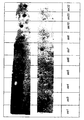
- An AFLP analysis as described above between the samples A and B (see Figure 2) was performed. Two transcripts were found which were approximately 8-10 times increased during the fermentation. Surprisingly, these two polynucleotide sequences (see SEQ ID NO. 43 and 46) showed a high sequence identity to several ABC transporter genes from other organisms.
- Penicillium chrysogenum ABC transporter clones were subjected to an expression study to determine the conditions under which the transporter genes are regulated.
- Northern analysis was conducted on RNA samples obtained from the organism subjected to two different growth conditions. Total RNA was isolated from a high yielding strain grown on either glucose or under conditions optimal for penicillinV production. RNA electrophoresis, blotting and hybridizations were performed as described by Schuurs et al., 1997 (Genetics 147:589-596)
- the filter was prepared by spotting 12 ⁇ g of denatured pGEM-T Easy vector containing the PCR amplified fragment (as described in example 3) on a Hybond-N + filter (Amersham Pharmacia Biotech); this means that approximately 1 ⁇ g of each ABC transporter fragment is on the filter.
- RNA samples were obtained from the strain Wisconsin54-1255 subjected to two different growth conditions. Total RNA was isolated from the fungus grown on either glucose or under conditions optimal for penicillinG production. RNA was prepared by mortaring the washed and frozen fungal pellet with trizol. The continuing steps were essentially as described in laboratory manuals (e.g. Sambrook et al (1989) Molecular Cloning: a laboratory manual (2 nd ed), Cold Spring Harbor Press, CSH, NY). mRNA was isolated from 3 ⁇ g of total RNA with the Oligotex mRNA Midi Kit (Qiagen). Prior to hybridization 1 ⁇ g of mRNA was labeled according to the ECL kit (Pharmacia Amersham Biotech):
- Penicillium chrysogenum was pre-grown overnight on a rich medium (e.g. YEPD) and then diluted into a defined medium containing lactose as the sole carbon source to ensure derepressing conditions. After 24 hours the culture was washed and resuspended in fresh medium containing 100mM penicillinV, 10mM 7-amino deacetoxycephalosporanic acid (7-ADCA) and 100mM adipoyl-7-ADCA, respectively. At several time-points samples were taken for RNA isolation with trizol. This material was used as a template for a semi-quantitative RT-PCR, using RT-PCR beads from Amersham/Pharmacia.
- the PCR program was as follows: 30 minutes at 42°C (the RT-step); 5 minutes at 95°C; followed by 20 cycles of 30 seconds at 95°C, 30 seconds at 59°C and 45 seconds at 72°C; followed by a final step of 7 minutes at 72°C and cooling at 4°C.
- the primers used were: aa7 forward primer (SEQ ID. 49): 5'-ATT GGC TGA GAC AGC AAA TCT CGC-3'. aa7 reverse primer (SEQ ID. 50) 5'-AGG ATC GGA AAT GAG GGC GC-3'. aa10 forward primer (SEQ ID. 51): 5'-AGC GGT TCT ATC TCC CAG TCG GAG G-3'.
- aa10 reverse primer (SEQ ID. 52): 5'-CAC GAG CGA TGG CAA TAC GTT GC-3'.
- dd062 forward primer (SEQ ID. 53) 5'-TGG AGT GCC CGA TGA TGT ATG-3'.
- dd062 reverseprimer (SEQ ID. 54): 5'-CGC GAG GTT GCT ACC TGG AGA G-3'.
- Penicillium chrysogenum was pre-grown to mid-logarithmic phase on a rich medium (e.g. YEPD) when 100mM penicillinG was added to the culture. At several time-points samples were taken for RNA isolation with trizol. This material was analyzed with a Northern blot (as described in example 5) using the PCR-fragment cloned in the pGEM-T easy vector (as described in example 3) as a probe.
- a phage lambda genomic P. chrysogenum DNA library was successfully screened using the 400 bp fragments from the pGEM-T Easy vector (see example 3) as probes.
- Hybridization was carried out overnight in: 1 mM EDTA; 0.5 M Na2HPO4, pH 7.2; 7% SDS; 1% Blocking agent (Cat. No. 1096176, Roche Molecular Biochemicals). Washing was done 2X 30 minutes in: 1 mM EDTA; 40 mM Na2HPO4, pH 7.2; 5% SDS, followed by 2X 30 minutes in: 1 mM EDTA; 40 mM Na2HPO4, pH 7.2; 1% SDS. All steps were performed at the stringent temperature of 65°C.
- the gene aa7 contains one putative intron, while aa10 contains no introns (see SEQ ID NO. 26 and 35).
- Chromosomal DNA of a high-production strain of Pencillium chrysogenum (e.g. Panlabs P2) was digested with 5 different restriction enzymes; Eco RI, Hin dIII, Sal I , Bam HI and Pst I . 3 ⁇ g of the digested chromosomal DNA was separated on an 0.4 % agarose gel with ethidium bromide and the DNA was transferred on a hybond-N+ filter (Pharmacia Amersham Biotech) by vacuum blotting and afterwards cross-linked by UV light.
- Pencillium chrysogenum e.g. Panlabs P2
- the above described full genomic gene was used as template DNA for a PCR reaction with two homologous primers, which insert a Nde I restriction site just 5' of the start codon and a Nsi I restriction site just 3' of the stop codon.
- the resulting fragment was cloned into an expression vector.
- the vector pISEWA as described in PCT/EP99/03455, was digested with Nde I and Nsi I.
- the pcbC promoter was replaced by one of the suitable promoters mentioned in the text.
- the resulting plasmids were transformed to Penicillium chrysogenum (using co-transformation with the A. nidulans amdS gene under control of the A. nidulans gpdA promoter) and the penicillin production was tested as described above and found to be enhanced.
Landscapes
- Chemical & Material Sciences (AREA)
- Organic Chemistry (AREA)
- Life Sciences & Earth Sciences (AREA)
- Health & Medical Sciences (AREA)
- Engineering & Computer Science (AREA)
- Genetics & Genomics (AREA)
- General Health & Medical Sciences (AREA)
- Biochemistry (AREA)
- Wood Science & Technology (AREA)
- Zoology (AREA)
- Bioinformatics & Cheminformatics (AREA)
- Gastroenterology & Hepatology (AREA)
- General Chemical & Material Sciences (AREA)
- General Engineering & Computer Science (AREA)
- Chemical Kinetics & Catalysis (AREA)
- Biotechnology (AREA)
- Mycology (AREA)
- Microbiology (AREA)
- Biophysics (AREA)
- Medicinal Chemistry (AREA)
- Molecular Biology (AREA)
- Proteomics, Peptides & Aminoacids (AREA)
- Preparation Of Compounds By Using Micro-Organisms (AREA)
- Micro-Organisms Or Cultivation Processes Thereof (AREA)
- Cephalosporin Compounds (AREA)
- Organic Low-Molecular-Weight Compounds And Preparation Thereof (AREA)
Abstract
Description
- Historically, β-lactam antibiotics constitute the most important group of antibiotic compounds, having a long and successful record of clinical use. The prominent members among this group are the penicillins and cephalosporins. These compounds are naturally produced by filamentous fungi, such as Penicillium chrysogenum and Acremonium chrysogenum, and by filamentous bacteria.
- As a result of classical strain improvement techniques, the production levels of these antibiotics in P. chrysogenum and A. chrysogenum have increased dramatically over the past decades. Increased understanding of the biosynthetic pathways leading to penicillins and cephalosporins has prompted the advent of recombinant DNA technology, providing new tools for the improvement of β-lactam production strains and for the in vivo derivatisation of β-lactam compounds.
- Most enzymes involved in β-lactam biosynthesis have been identified (Ingolia and Queener, Med. Res. Rev. 9: 245-264, 1989), and their corresponding genes have been cloned (Aharonowitz, et al., (Ann. Rev. Microbiol. 46: 461-495, 1992).
- The first two steps in the biosynthesis of penicillin in P. chrysogenum are the condensation of the three amino acids L-5-amino-5-carboxypentanoic acid (L-α-aminoadipic acid) (A), L-cysteine (C) and L-valine (V) into the tripeptide LLD-ACV, followed by cyclisation of this tripeptide to form isopenicillin N. The isopenicillin N intermediate compound contains the β-lactam structure characteristic of penicillin. These first two steps in the biosynthesis of penicillins are common in penicillin-producing, cephamycin-producing and cephalosporin-producing fungi and bacteria.
- The third synthesis step involves the exchange of the hydrophilic α-aminoadipic acid side chain derived from L-5-amino-5-carboxypentanoic acid with a hydrophobic side chain, via the action of the enzyme acyltransferase (AT). The enzymatic exchange reaction mediated by AT takes place inside a cellular organelle, the microbody, as has been described in EP-A-0448180.
- Industrial fermented penicillins like-penicillin V and penicillin G, are produced by adding to the culture broth phenoxyacetic acid or phenylacetic acid, respectively, during fermentation of P. chrysogenum, thereby replacing the side chains of the natural β-lactams with phenoxyacetic acid or phenylacetic acid. In order to replace the α-aminoadipic acid side chain in the acyltransferase-catalysed reaction, the carboxylic acid group of the new side chain first must be activated, as the AT enzyme requires the side chain in an activated form. The activated form is a coenzyme A (CoA) derivative, synthesised by a CoA ligase.
- Two CoA ligases have been cloned from P. chrysogenum. The gene encoding an acetyl-coenzyme A synthetase has been characterised by Van Hartingsveldt et al. (WO92/07079) Gouka et al. (Appl. Microbiol. Biotechnol., 38:514-519 (1993)) and Martinez-Blanco et al. (Gene, 130:265-270 (1993); J. Biol. Chem. 267:5474-5481 (1992)). The enzyme not only accepts acetic acid but also phenylacetic acid as a substrate in the synthesis of the corresponding acyl-coenzyme A ester, although the specificity for phenylacetic acid is very low as compared to the specificity for acetic acid. More recently, a gene encoding a homologue of the Pseudomonas putida phenylacetic acid CoA ligase has been cloned; the pcl gene (WO 97/02349). The protein was shown to be active with both phenylacetic and phenoxyacetic acid.
- In novel fermentation processes for the production of cephalosporin intermediates, P. chrysogenum strains carrying heterologous cephalosporin biosynthetic genes, such as the expandase gene of S. clavuligerus or the expandase/hydroxylase gene of A. chrysogenum, are used for the production of the corresponding adipoyl-cephalosporins by feeding adipic acid to these recombinant strains. Cephalosporin intermediates produced in this fashion include 7-aminodeacetoxycephalosporanic acid (7-ADCA), 7-aminodeacetylcephalosporanic acid (7-ADAC) and 7-aminocephalosporanic acid (7-ACA). Subsequent removal of the adipoyl side chain from the adipoyl-cephalosporins can be achieved by using an amidase (EP 532341 and Crawford et al., Bio/Technology 13: 58-62 (1995)).
- During the latter stages of industrial penicillin fermentation processes extremely high β-lactam titers are found, using Penicillium chrysogenum as the production host (estimated to be 120 mM by Hillenga (1999) PhD thesis, University of Groningen, The Netherlands). From literature it is known that the ergosterol content of P. chrysogenum plasma membranes is around 50% (Hillenga, 1999). At this concentration the membrane is almost impermeable for passive diffusion of penicillins. Therefore, it remains unclear how the fungus can export such an amount of β-lactam antibiotics. Especially at the end of fermentation this must be an efficient system to export against a high external concentration.
- Recently, organic cation/peptide transporters were suggested to be involved in the transport of β-lactam antibiotics in humans (Ganapathy et al., J. Biol. Chem (2000) 275:1699-1707). Until now no such proteins are reported in filamentous fungi.
- Industrial strains of the filamentous fungus Penicillium chrysogenum have been selected for their capacity to produce and secrete large quantities of a variety of β-lactam compounds into culture medium. Various lines of evidence indicate that β-lactam secretion is an active process, possibly via transport proteins. During the latter stages of such fermentation processes extremely high β-lactam titers are found in fermentations on an industrial scale. However, despite traditional genetic selection of fungal strains for β-tactam output and evidence of how β-lactam compounds are secreted, micro-organisms have yet to be optimised for maximal secretion of β-lactam compounds. Moreover, the transport process might be optimised for each organism and each antibiotic. For example, the production rate of heterologous cephalosporins produced in P. chrysogenum will be limited due to the fact that the penicillin transporter will have a low affinity for the product. This could be overcome either by cloning one or more homologue β-lactam transporters from natural cephalosporin producers like A. chrysogenum with the aid of the transporter subject of this invention or, alternatively, by mutagenesing the penicillin transporter according to the present invention into a derivative more apt to transporting cephalosporins.
- EP-A-0908516 discloses a Staphylococcus ATP-binding cassette (ABC) transporter polypeptide, an ABC transporter polynucleotide and materials and methods for their production. The transporter polypeptide of EP-A-0908516 may be used to determine the presence of drug resistant bacteria in a mammalian host. The polypeptide of EP-A-0908516 may be obtained from other organisms, but has no bearing on transport of β-lactam compounds.
- Certain transporters have been described in eukaryotic yeast and moulds, but none appear related to improving β-lactam output from industrial strains of fungi. For example, a histidine transporter (Tanaka and Fink, Gene 38: 205-214 (1985)) and a proline transporter (Vandenbol et al., Gene 83: 153-159 (1989)) have been identified in Saccharomyces cerevisiae. Over-expression of the yeast multi-drug-resistance gene CDR1 in Candida albicans can confer resistance to cycloheximide, chloramphenicol, and miconazole (Prasad et al., Curr. Genet., 27 (4): 320-329 (1995)). An ATP-binding cassette transporter p-glycoprotein encoded by a Penicillium multi-drug resistance gene is over-expressed in strains of Penicillium digitatum resistant to fungicide, suggesting the toxicant efflux system of the fungus is directly involved with fungicide resistance (Nakaune et al., Appl. Environ. Microbiol. 64:3983-3988 (1998)). However, such protein carriers are not associated with β-lactam secretion from fungi.
- Thus, a need exists for improving the secreted amounts of β-lactam compounds recoverable from industrial strains of micro-organisms. The invention solves the above-mentioned problem by manipulation of the ABC-transport protein system, providing a means for enhancing β-lactam secretion from the micro-organisms in which these compounds are or can be synthesized.
- Present invention therefore provides a method for producing β-lactam compounds comprising the step of enhancing ABC-transporter activity of a micro-organism and subsequently culturing said micro-organism under conditions allowing the production of said β-lactam compounds. In another embodiment of the present invention a method is provided for enhancing the secretion of a β-lactam compound from a micro-organism comprising the step of enhancing an ABC transporter activity of said micro-organism.
- The present invention further provides an isolated polynucleotide encoding an ABC transporter polypeptide selected from the group consisting of SEQ ID NO. 10, 13, 16, 20, 2,3, 28, 31, 36, 39, and 48 as incorporated in the present application, or a sequence which shows a percentage of similarity of at least 95% with these sequences.
- The present invention also provides for isolated ABC transporters encoded by an ABC transporter gene comprising the nucleotide sequence according to SEQ ID NO. selected from the group consisting of SEQ ID NO. 7, 8, 9, 11, 12, 14, 15, 18, 19, 21, 22, 24, 25, 26, 27, 29, 30, 34, 35, 37, 38, 40, 46 and 47 or a polynucleotide sequence which shows a similarity of at least 95% with these nucleotide sequences.
- An ABC-transport protein utilises ATP to drive transport processes of a diverse range of substrates including various antibiotics, oligopeptides, polysaccharides and unrelated toxic drugs (reviewed by Schneider et al (Schneider, E. and Hunke, S. FEMS Microbiol. Rev. 22: 1-20, 1998); Méndez et al (Méndez, C. and Salas, J.A. FEMS Microbiol. Lett. 158 : 1-8, 1998) ; van Veen et al (Veen, H.W. van and Konings, W.N. Biochim.Biophys. Acta 1365: 31-36, 1998)).
- An embodiment of the invention provides a method for enhancing the secretion of a β-lactam compound from a micro-organism which method comprises the step of enhancing an ABC transporter activity as defined on page 5 of said micro-organism. Secretion according to the invention comprises any step involved in transport of β-lactam compounds or intermediates thereof occurring inside the micro-organism and from inside to outside the micro-organism. β-lactam compounds according to the invention comprise Penicillins, Cephalosporins, Amoxycillins, Calvulanic acid and intermediates thereof such as PenV, PenG, 6-APA, 7-ADCA, 7-ACA, 7-ADCA.
- In a preferred embodiment of the invention, the step of enhancing the ABC transporter acitivity comprises the step of transforming said micro-organism with at least one vector comprising a polynucleotide encoding a homologous or heterologous ABC transporter protein as defined on page 5. According to another embodiment of the invention the method comprises the use of polynucleotides encoding an ABC transporter polypeptide selected from the group consisting of SEQ ID NO. 10 13, 16, 20, 23, 28, 31, 36, 39, and 48 or a polypeptide showing at least 60% similarity with these polypeptide sequences. The micro-organism useful as a source for a polynucleotide according to the present invention, may be micro-organisms capable of producing β-lactam compounds either naturally or upon induction or mutation according to methods known in the art. In a preferred embodiment of the invention, micro-organisms are β-lactam-producing fungi, filamentous fungi or filamentous bacteria, more preferably Penicillium, Acremonium, Saccharomyces, Hansenula, Pichia and Aspergillus strains. Most preferably Penicillium chrysogenum, Saccharomyces cerevisiae, Hansenula polymorpha, Pichia pastoris, Acremonium chrysogenum or Aspergillus nidulans, or Actinomycetes like Streptomyces clavuligerus, Nocardia lactamdurans, Flavobacterium sp.
- The isolated polynucleotide according to the invention comprises a nucleotide sequence encoding an ABC transporter polypeptide may suitably be of genomic of of cDNA origin, for instance obtained by preparing a genomic or a cDNA library and screening for DNA sequences coding for all or part of the polypeptide by hybridisation using at least part of the novel nucleotide sequence as disclosed herein as a probe applying standard techniques (cf. Sambrook et al., Molecular Cloning: A Laboratory Manual, 2nd. Ed., Cold Spring Harbor Laboratory, Cold Spring Harbor, New York, 1989). The isolated polynucleotides of the invention comprising the gene or cDNA encoding a ABC transporter polypeptide may also be prepared by polymerase chain reaction using specific primers advantageously primer derived from the nucleotide sequence as disclosed herein. To this end use can be made, for instance of the method described in US 4,683,202 or by Saiki et al. (Science, 239 (1988): 487-491).
- The isolated polynucleotide according to the invention may be selected from the group consisting of polynucleotides as defined on page 5.
- A homologous ABC transporter polynucleotide comprises a polynucleotide that is obtained from a micro-organisms belonging to the same species as the micro -organism to which said polynucleotide is transformed, whereas a heterologous ABC transporter comprises a polynucleotide that is obtained from a micro-organisms belonging to another species as the micro -organism to which said polynucleotide is transformed.
- Polynucleotide and polypeptide sequences that are substantially homologous to the polynucleotide or polypeptide sequences can be determined using the method described in experiment 2. In this experiment it is described how the percentage of sequence identity and percentage of similarity can be determined. Basically, a comparison of the sequences of two polynucleotides (or more than two) may be restricted to a "comparison window" in order to determine sequence similarity in a local region of the two polynucleotides. A "comparison window" is defined to be a continuous series of at least 20 nucleotides in a first polynucleotide sequence, which when aligned with a reference sequence of at least 20 contiguous nucleotides, enables a comparison of the first polynucleotide and reference sequences. The segment of contiguous nucleotides in the "comparison window" of the first polynucleotide may comprise additions and/or deletions such as, for example, gaps, of up to 20% of the reference sequence. Local homology or sequence identity within the "comparison window" of the first polynucleotide and reference polynucleotide may be achieved via alignment of the sequences according to the algorithm of Smith and Waterman (Appl. Math. 2:482 (1981), or by a another suitable alignment method or algorithm (Needleman and Wunsch, J. Mol. Bio. 48:443 (1970); Pearson and Lipman, Proc. Natl. Acad. Sci. (USA) 85:2444 (1988)).
- Sequence identity is established when the first polynucleotide and reference polynucleotide exhibit complete sequence similarity on a nucleotide by nucleotide basis over the span of the "comparison window". However, polynucleotides having substantial identity with a reference polynucleotide can be contemplated, wherein a polynucleotide having substantial identity with the reference polynucleotide exhibits the same function as the reference polynucleotide. By "substantial identity" is meant that a polynucleotide has nearly identical nucleic acid bases in a "comparison window" located in positions corresponding to those of the reference polynucleotide. The number of matched base positions divided by the number of total positions compared, multiplied by 100 percent, yields what is known as the percentage sequence identity (also known as percentage sequence homology) between compared polynucleotides. A reference sequence having a "comparison window" of at least 20 nucleotides (preferably 20-50 nucleotides) is contemplated. The reference sequence is obtained via a PCR reaction on a homologous boxes in the so-called ATP Binding Cassette (ABC-) proteins: the Walker A and B domains. Although the similarities of these sequences to known ABC-transporters can be quite high, this is concentrated in these conserved regions. The variability in sequence identity within the known sequences is due to the existence of two sequence subclasses, determined via clustal sequence alignment. The above outlined procedure is applicable to all the sequences which are part of this invention.
- For the purposes of this invention, the BlastP method and Blast N method (Version 2.0.6, release date September 1998, running under the software of Biomax Bioinformatics GmbH, Martinsried, GE) is preferred for determining the degree of identity between two polypeptide sequences or polynucleotide sequences, using the following parameters:
Expectation value (E) : 10 Cost to open a gap : 11 Cost to extend a gap : 1 Matrix : Blosum62 - Functional equivalents of the ABC transporter protein include nucleotide sequences encoding a ABC transporter polypeptide which may have one or more amino acid substitutions, deletions or additions as compared to their natural counterparts and still resulting in a functional ABC transporter polypeptide.
- Fragments of the ABC transporter protein may include biologically active fragments of the polypeptide comprising amino acid sequences sufficiently identical to or derived from the amino acid sequence of the ABC transporter protein, which include fewer amino acids than the full length protein. Typically, biologically active fragments comprise a domain or motif with at least one activity of the ABC transporter protein. Amino acid substitutions may encompass changes made on the basis of similarity in polarity, charge, solubility, hydrophobicity, hydrophilicity, and/or the amphipathic nature of the residues involved. These changes are preferably of a minor nature (that is conservative amino acid substitutions that do not adversely affect the folding or activity of the protein), small deletions (typically of one to about 30 amino acids), small amino- or carboxyl-terminal extensions (such as an amino-terminal methionine residue), a small linker peptide of up to about 20-25 residues, or a small extension that facilitates purification (such as a poly-histidine tract, an antigenic epitope or a binding domain). See in general Ford et al. (Protein Expression and Purification, 2 (1991), 95-107,).
Examples of conservative substitutions are substitutions within the respective groups of - ◆ basic amino acids (such as arginine, lysine, histidine),
- ◆ acidic amino acids (such as glutamic acid and aspartic acid),
- ◆ polar amino acids (such as glutamine and asparagine),
- ◆ hydrophobic amino acids (such as leucine, isoleucine, valine),
- ◆ aromatic amino acids (such as phenylalanine, tryptophan, tyrosine) and
- ◆ small amino acids (such as glycine, alanine, serine, threonine, methionine).
- It will be apparent to persons skilled in the art that such substitutions can be made outside the regions critical to the function of the molecule and still have to result in an active polypeptide. A test which can be applied to determine the ABC transporter activity of a polypeptide is described in example 12.
Amino acids essential to the activity of the ABC transporter polypeptide of the invention, and therefore preferably not subject to substitution, may be identified according to procedures known in the art, such as site-directed mutagenesis or alanine-scanning mutagenesis (Cunningham and Wells, Science, 244 (1989): 1081-1085). In the latter technique mutations are introduced at every residue in the molecule, and the resultant mutant molecules are tested for biological activity to identify amino acid residues that are critical to the activity of the molecule. Sites of ligand-receptor interaction can also be determined by analysis of crystal structure as determined by such techniques as nuclear magnetic resonance, crystallography or photo-affinity labelling. See, for example, de Vos et al. (Science, 255 (1992): 306-312), Smith et al. (J. Mol. Biol., 224 (1992): 899-904) and Wlodaver et al. (FEBS Lett., 309 (1992): 59-64). - Another embodiment of the invention provides for a micro-organism transformed with at least one vector comprising at least one polynucleotide encoding a microbial ABC-transporter as defined on page 5. Said polynucleotide might be operably linked to a regulatory sequence, such as a heterologous or homologous promoter, or a constitutive or regulatable promoter. The term "operably linked" indicates that the sequence encoding at least part of a microbial ABC transporter and the regulatory sequence are arranged so that they function in concert for their intended purposes, e.g. transcription initiates in a promoter and proceeds through the DNA sequence coding for the polypeptide.
- An overview of fungal promoters can be found in, for instance, Applied Molecular Genetics of filamentous fungi (Kinghorn, Turner (eds.), Blackie, Glasgow, UK, 1992). Suitable promoters for use in filamentous fungus host cells are, for instance, the ADH3 promoter (McKnight et al., EMBO J., 4 (1985): 2093-2099,) or the tpiA promoter. Examples of other useful promoters are those derived from the gene encoding A. oryzae TAKA amylase, Rhizomucor miehei aspartic proteinase, A. niger neutral β-amylase, A. niger acid stable a-amylase, A. niger or A. awamori glucoamylase (gluA), Rhizomucor miehei lipase, A. oryzae alkaline protease, A. oryzae triose phosphate isomerase, A. nidulans acetamidase, P. chrysogenum ACV synthetase, P. chrysogenum isopenicillin N synthase, P. chrysogenum acyltransferase, P. chrysogenum phosphoglycerate kinase, P. chrysogenum gene Y. Preferred are the A. niger glucoamylase or P. chrysogenum promoters.
- The DNA sequence of the invention encoding the ABC-transporter polypeptide according to the invention may also, if necessary, be operably connected to a suitable terminator.
- The vector may conveniently be subjected to recombinant DNA procedures, and the choice of the vector will often depend on the host cell into which it is to be introduced. Thus, the vector may be an autonomously replicating vector, i.e. a vector which exists as an extra-chromosomal entity, the replication of which is independent of chromosomal replication, e.g. a plasmid. Alternatively, the vector may be one which, when introduced into a host cell, is integrated into the host cell genome and replicated together with the chromosome(s) into which it has been integrated.
- The recombinant vector may also comprise a selectable marker, e.g. a gene the product of which complements a defect in the host cell, or one which confers resistance to a drug. Examples of the latter are phleomycin or hygromycin. For filamentous fungi, additional selectable markers include amdS, pyrG, argB, niaD, facA, and sC (Applied Molecular Genetics of Filamentous fungi (ibid.), Biotechnology of Filamentous fungi, Finkelstein, Ball (eds.), Butterworth-Heinemann, Boston, 1992).
- It is also possible to introduce the vector comprising the DNA sequence of the invention encoding a ABC transporter polypeptide into a host cell on a DNA fragment separate from the vector comprising a selectable marker, by a so-called co-transformation process.
- In another embodiment the invention relates to the transformed host cell comprising the vector that contain the polynucleotide according to SEQ ID NO selected from the group consisting of: 7, 8, 9, 11, 12, 14, 15, 18, 19, 21, 22, 24, 25, 26, 29, 30, 34, 35, 37, 38, 46 and 47 or a polynucleotide having at least 95% similarity thereto.
- A preferred embodiment of the invention is a process for enhancing ABC transporter activity comprising expression from the host cell under conditions sufficient for the production of the polypeptide according to SEQ ID. 10, 13, 16, 20, 23, 28, 31, 36, 39, or 48 or a polypeptide having at least 60 % similarity thereto.
- Another embodiment is the use of an isolated polynucleotide according to the invention or a vector comprising said polynucleotide in a method for the production of β-lactam compounds in a micro-organism.
- Another embodiment of the invention provides a method for producing beta-lactam compounds in a miro-organism comprising the step of enhancing ABC-transporter activity of said micro-organism and subsequently culturing said micro-organism under conditions allowing the production of said β-lactam compounds.
- The invention also provides an isolated ABC transporter encoded by an ABC transporter gene comprising at least part of the nucleotide sequence as defined on page 5.
- The invention also provides a method for producing a β-lactam compound from a cultured micro-organism comprising transforming a β-lactam-producing micro-organism with an isolated polynucleotide encoding the microbial ABC-transporter according to the invention under the control of a suitable promoter, and subsequent culturing the β-lactam-producing micro-organism under conditions which permit
- (i) synthesis of a β-lactam compound,
- (ii) expression of the isolated polynucleotide encoding the microbial ABC-transporter under the control of a suitable promoter, and
- (iii) ABC-transporter-mediated secretion of the β-lactam compound by the micro-organism into culture media, and thereafter, recovery of the secreted β-lactam compound from the culture media.
- Another embodiment is the use of an isolated polynucleotide encoding the microbial ABC-transport protein according to the invention under the control of a suitable promoter in the production of a secreted microbial β-lactam compound.
- P. chrysogenum was cultivated in 100 ml shake flasks with 25 ml of defined medium containing lactose as the carbon source to ensure non-repressing conditions for penicillin production (280 rpm at 25 degrees Celsius).
Table I: Intracellular accumulation β-lactam antibiotics as a result of the inhibition of ABC transporters. Inhibitor1 Intracellular penicillinG conc.2 Intracellular isopenicillinN conc.2 Control without phenyl acetic acid - 0 5.2 Control with phenyl acetic acid - 0.4 0.1 Addition of inhibitor at the start of penicillin production BeF 0.4 0.1 Verapamil 1.2 0 Cyclosporin A 0.6 0 Control with 100mM penicillinG incubation - 1.8 0.1 Addition of inhibitor at the end of the fermentation, after 1 hour followed by the 100mM penicillinG incubation BeF 3.1 0.1 Verapamil 5.3 0 Cyclosporin A 6.1 0 1 Berilliumfluoride was added in the a final concentration of 400µM BeSO4 and 2mM NaF; together with 400µM ATP, 4mM MgSO4 and 0.1 mM EDTA. Verapamil and cyclosporinA were added in a final concentration of 20µM and 2µM, respectively; together with 40µM vanadate, 4 mM MgCl2 and 4mM ATP.
2 In arbritary units
These washing steps are very critical; they must be done thoroughly. The mycelial pellets were frozen in liquid nitrogen, freeze-dried and the internal penicillinG concentration was determined by NMR. - There was a clear increase in intracellular penicillinG when the organism was incubated with ABC transporter inhibitors (see Table I). The best results were obtained with verapamil and cyclosporinA, where a two-to-three fold increase in intracellular penicillinG was found.
- This is a clear indication that ABC transporters are directly involved in the export of β-lactam antibiotics as penicillinG.
- Degenerate oligonucleotides complementary to the rather conserved C-terminal WalkerA and WalkerB motifs (present in the nucleotide binding domain of ABC-transporters) were designed (see Figure 1). As a result, the forward primers (complementary to the WalkerA motif; SGA/CGKT/ST), 5'-TCI GGI G/TG/CI GGI AAA/G A/TCI AC-3' (SEQ ID NO. 3) and 5'-TCI GGI G/TG/CI GGI AAA/G AGC/T AC-3' (SEQ ID NO. 4) and the reverse primers (complementary to the WalkerB motif; DEA/PTSA/GLD), 5'-TCI AA/GI G/CCI GAI GTI GG/CC/T TCA/G TC-3' (SEQ ID NO. 5) and 5'-TCI AA/GI G/CCA/G CTI GTI GG/CC/T TCA/G TC-3' (SEQ ID NO. 6)were applied.
- Total RNA was isolated from a high penicillin producing strain of P. chrysogenum (e.g. Panlabs P2) under penicillin producing conditions to enlarge the presence of putative penicillin transporter transcripts in the total RNA pool. RT-PCR was performed on these total RNA isolates using the above mentioned degenerate primers. cDNA was synthesized with AMV reverse transcriptase (Boehringer Mannheim) using the reverse (WalkerB) primers (incubation for 1 hr at 50°C). This cDNA material was subsequently used in a PCR procedure using the following program. As the standard PCR programs (with one standard cycle) gave no satisfactory results, we applied a special "staircase" program to obtain good PCR products A 'hot start' was made for 3 min at 95°C after which 10 cycles of 0.15 min at 95°C, 0.30 min at 55°C and 0.40 min at 72°C were done. This was followed by 20 cycles in which the last step at 72°C was extended each cycle with 20 sec., followed by 5 min at 72°C.
- PCR reaction products were analyzed by electrophoresis on agarose gels containing ethidium bromide. PCR products of proper size (about 400 bp) were isolated from gel, purified and cloned in the pGEM-T Easy vector (Promega). This vector contains 3' protruding thymidine residues which makes ligation with PCR-fragments that contain 3' protruding adenosine residues (when generated with Taq-polymerase, for example), possible.
- PCR techniques as described above restrict ones choice to one set of genes. As another approach to obtain genes involved in the export of β-lactams a DNA fingerprinting technique called AFLP (selective restriction fragment amplification) is employed.
- The AFLP technique is based on the selective PCR amplification of restriction fragments from a total digest of genomic DNA.
- The technique involves three steps:
- (i) restriction of the DNA and ligation of oligonucleotide adapters,
- (ii) selective amplification of sets of restriction fragments, and
- (iii) gel analysis of the amplified fragments.
- PCR amplification of restriction fragments is achieved by using the adapter and restriction site sequence as target sites for primer annealing. The selective amplification is achieved by the use of primers that extend into the restriction fragments, amplifying only those fragments in which the primer extensions match the nucleotides flanking the restriction sites. Using this method, sets of restriction fragments may be visualized by PCR without knowledge of their nucleotide sequence. The method allows the specific co-amplification of high numbers of restriction fragments.
- The number of fragments that can be analyzed simultaneously, however, is dependent on the resolution of the detection system. Typically 50-100 restriction fragments are amplified and detected on denaturing polyacrylamide gels.
The AFLP technique provides a novel and very powerful DNA fingerprinting technique for DNAs of any origin or complexity. It can also be used in combination with RNA and thereby applied to pinpoint differences in mRNA levels between two strains or two conditions. This is called: Differential Display. We applied this technique to identify genes which are expressed higher with increased penicillin titers. - After determining the sequences of the PCR-fragments, homology searches and sequence comparisons were executed as following. The terms used herein to describe the sequence relationships between two or more polynucleotides are well known in the art, as exemplified in U.S. Patent Nos. 5,912,120 and 5,914,393.
- Polynucleotide sequences discussed herein refer to single or doublestranded polymers of deoxyribonucleotide or ribonucleotide bases as read from their respective 5' to 3'ends. A reference sequence in this regard is defined as a polynucleotide sequence, at least 20 nucleotides in length, used as a basis for a comparison between sequences. The reference sequence comprise a full-length cDNA or gene sequence in a sequence listing, or the reference sequence comprise a portion of a full-length cDNA or gene sequence.
- A comparison of the sequences of two polynucleotides (or more than two) may be restricted to a "comparison window" in order to determine sequence similarity in a local region of the two polynucleotides. A "comparison window" is defined to be a continuous series of at least 20 nucleotides in a first polynucleotide sequence, which when aligned with a reference sequence of at least 20 contiguous nucleotides, enables a comparison of the first polynucleotide and reference sequences. The segment of contiguous nucleotides in the "comparison window" of the first polynucleotide may comprise additions and/or deletions such as, for example, gaps, of up to 20% of the reference sequence. Local homology or sequence identity within the "comparison window" of the first polynucleotide and reference polynucleotide may be achieved via alignment of the sequences according to the algorithm of Smith and Waterman (Appl. Math. 2:482 (1981), or by a another suitable alignment method or algorithm (Needleman and Wunsch, J. Mol. Bio. 48:443 (1970); Pearson and Lipman, Proc. Natl. Acad. Sci. (USA) 85:2444 (1988)).
- Sequence identity is established when the first polynucleotide and reference polynucleotide exhibit complete sequence similarity on a nucleotide by nucleotide basis over the span of the "comparison window". However, polynucleotides having substantial identity with a reference polynucleotide may be contemplated wherein a polynucleotide having substantial identity with the reference polynucleotide exhibits the same function as the reference polynucleotide. By "substantial identity" is meant that a polynucleotide has nearly identical nucleic acid bases in a "comparison window" located in positions corresponding to those of the reference polynucleotide. The number of matched base positions divided by the number of total positions compared, multiplied by 100 percent, yields what is known as the percentage sequence identity (also known as percentage sequence homology) between compared polynucleotides.
- The reference sequence is obtained via a PCR reaction on a homologous boxes in the so-called ATP Binding Cassette (ABC-) proteins: the Walker A and B domains. Although the similarities of these sequences to known ABC-transporters can be quite high, this is concentrated in these conserved regions. The variability in sequence identity within the known sequences is due to the existence of two sequence subclasses, determined via clustal sequence alignment. Yeast ABC-transporters have been analyzed for sequence and function (substrate) relationship to other known ABC-transporters, and classified as MDR-like ABC-transporters and ABC-transporters involved in the secretion of substances (Decottignies and Goffeau, Nature Gen. 15: 137-145 (1998)). The substrate specificity of these proteins is in part conferred to the regions outside the conserved domains.
- The above outlined procedure is applicable to all the sequences which are part of this invention.
- For the purposes of this invention, the BlastP or BlastN method (Version 2.0.6, release date September 1998, running under the software of Biomax Bioinformatics GmbH, Martinsried, GE) is preferred for determining the degree of identity between two amino acid sequences, using the following parameters:
Expectation value (E) : 10 Cost to open a gap : 11 Cost to extend a gap : 1 Matrix : Blosum62 - Degenerate oligonucleotides complementary to the rather conserved Walker A and Walker B motifs, present in the nucleotide binding domain (NBD) of ABC-transporters, were used in RT-PCR reactions (Reverse Transcriptase Polymerase Chain Reaction) on total RNA isolated from P. chrysogenum strains (e.g. Wisconsin 54-1255 and Panlabs P2). To enlarge the presence of putative penicillin transporter transcripts in the total RNA pools, the above mentioned strains were grown under penicillin producing conditions. The RT-PCR resulted in the formation of a DNA fragment of about 400 bp, which is the expected size. The fragment was cloned in the vector pGEM-T Easy (Promega) and 32 individual clones were analyzed. Ten different sequences were obtained (due two multiple clones containing identical sequences). The sequence of these fragments (see SEQ ID NO. 7, 11, 14, 17, 21, 24, 29, 32, 37 and 40) showed high sequence identity to several ABC transporter genes from other organisms.
- Samples of a β-lactam producing fed-batch culture of Penicillium chrysogenum were used to isolate RNA. An AFLP analysis as described above between the samples A and B (see Figure 2) was performed. Two transcripts were found which were approximately 8-10 times increased during the fermentation. Surprisingly, these two polynucleotide sequences (see SEQ ID NO. 43 and 46) showed a high sequence identity to several ABC transporter genes from other organisms.
- This indicates that there is need for high ABC transporter activity when the penicillinG concentration is high, which confirms the direct role for these transporters in the export of penicillinG.
- The isolated Penicillium chrysogenum ABC transporter clones were subjected to an expression study to determine the conditions under which the transporter genes are regulated. Northern analysis was conducted on RNA samples obtained from the organism subjected to two different growth conditions. Total RNA was isolated from a high yielding strain grown on either glucose or under conditions optimal for penicillinV production. RNA electrophoresis, blotting and hybridizations were performed as described by Schuurs et al., 1997 (Genetics 147:589-596)
- Northern analysis showed a remarkable elevated expression of the 5 tested ABC transporter genes (aa1, aa5, aa6, aa7 and aa10) during penicillinV fermentation conditions (see Figure 3). Thus, during penicillin fermentation, P. chrysogenum specifically expresses ABC-transporter genes whose protein product is shown to be a transporter of β-tactam.
- All PCR-isolated Penicillium chrysogenum ABC transporter clones were subjected to an expression study using a DNA array. Opposite to Northern analysis here the DNA is linked to a filter and hybridized with labeled mRNA. Moreover, we applied the technique in such a way that it is possible to omit the RT-PCR step normally applied in DNA experiments and directly labeled the mRNA.
- The filter was prepared by spotting 12µg of denatured pGEM-T Easy vector containing the PCR amplified fragment (as described in example 3) on a Hybond-N+ filter (Amersham Pharmacia Biotech); this means that approximately 1µg of each ABC transporter fragment is on the filter.
- The RNA samples were obtained from the strain Wisconsin54-1255 subjected to two different growth conditions. Total RNA was isolated from the fungus grown on either glucose or under conditions optimal for penicillinG production. RNA was prepared by mortaring the washed and frozen fungal pellet with trizol. The continuing steps were essentially as described in laboratory manuals (e.g. Sambrook et al (1989) Molecular Cloning: a laboratory manual (2nd ed), Cold Spring Harbor Press, CSH, NY). mRNA was isolated from 3µg of total RNA with the Oligotex mRNA Midi Kit (Qiagen). Prior to hybridization 1µg of mRNA was labeled according to the ECL kit (Pharmacia Amersham Biotech):
- 1 µg/20 µl mRNA was denatured by boiling for 5 minutes in a water bath
- after 5 minutes the mRNA was directly placed on ice for 5 minutes
- 20 µl labeling reagent was added and gently mixed
- 20 µl glutaraldehyde solution was added and mixed
- the mixture was incubated for 15 minutes at 37 °C
- As depicted in Figure 4 all 10 ABC transporter genes clearly show elevated expression during penicillinG fermentation conditions.
- Penicillium chrysogenum was pre-grown overnight on a rich medium (e.g. YEPD) and then diluted into a defined medium containing lactose as the sole carbon source to ensure derepressing conditions. After 24 hours the culture was washed and resuspended in fresh medium containing 100mM penicillinV, 10mM 7-amino deacetoxycephalosporanic acid (7-ADCA) and 100mM adipoyl-7-ADCA, respectively. At several time-points samples were taken for RNA isolation with trizol. This material was used as a template for a semi-quantitative RT-PCR, using RT-PCR beads from Amersham/Pharmacia. The PCR program was as follows: 30 minutes at 42°C (the RT-step); 5 minutes at 95°C; followed by 20 cycles of 30 seconds at 95°C, 30 seconds at 59°C and 45 seconds at 72°C; followed by a final step of 7 minutes at 72°C and cooling at 4°C. The primers used were: aa7 forward primer (SEQ ID. 49): 5'-ATT GGC TGA GAC AGC AAA TCT CGC-3'. aa7 reverse primer (SEQ ID. 50) 5'-AGG ATC GGA AAT GAG GGC GC-3'. aa10 forward primer (SEQ ID. 51): 5'-AGC GGT TCT ATC TCC CAG TCG GAG G-3'. aa10 reverse primer (SEQ ID. 52): 5'-CAC GAG CGA TGG CAA TAC GTT GC-3'. dd062 forward primer (SEQ ID. 53) 5'-TGG AGT GCC CGA TGA TGT ATG-3'. dd062 reverseprimer (SEQ ID. 54): 5'-CGC GAG GTT GCT ACC TGG AGA G-3'.
- Of the three ABC transporters tested (aa7, aa10 and DD062) all responded positively to the addition of β-lactams (see respectively Figure 5, 6 and 7).
- Penicillium chrysogenum was pre-grown to mid-logarithmic phase on a rich medium (e.g. YEPD) when 100mM penicillinG was added to the culture. At several time-points samples were taken for RNA isolation with trizol. This material was analyzed with a Northern blot (as described in example 5) using the PCR-fragment cloned in the pGEM-T easy vector (as described in example 3) as a probe.
- Theinduction of penicillinG on the transcription of the ABC transporter gene takes place in the presence of high glucose concentrations and subsequently the absence of penicillin production (see Figure 8).
- A phage lambda genomic P. chrysogenum DNA library was successfully screened using the 400 bp fragments from the pGEM-T Easy vector (see example 3) as probes. Hybridization was carried out overnight in: 1 mM EDTA; 0.5 M Na2HPO4, pH 7.2; 7% SDS; 1% Blocking agent (Cat. No. 1096176, Roche Molecular Biochemicals). Washing was done
2X 30 minutes in: 1 mM EDTA; 40 mM Na2HPO4, pH 7.2; 5% SDS, followed by2X 30 minutes in: 1 mM EDTA; 40 mM Na2HPO4, pH 7.2; 1% SDS. All steps were performed at the stringent temperature of 65°C. The probes were labeled with 32P via PCR (25 microCi 32P dCTP, standard protocol Oligolabeling Kit (27-9250-01, Pharmacia Biotech.). DNA from positive clones was excised in vivo by picking the core phage of the plaque of interest; transfer it into 500µl buffer and 20µl chloroform; the subsequent incubation of 2 hours at room temperature releases the phage particles. 200µl of XL1-Blue cells (grown in LB-medium to an OD600=1) were mixed with 200µl of the phage particles and 10µl R408 helper phage (Predigested Lambda ZAP II/EcoRI Cloning Kit; Catalog#236211, Stratagene). This was incubated for 15 minutes at 37°C, and afterwards 5 ml 2XTrypton medium was added for another incubation of 3 hours at 37°C. The temperature was increased to 70°C for 20 min, the mixture was spun down for 5 minutes at 4000 g and transformed to XL1-Blue host cells. - These clones were sequenced (see SEQ ID NO. 25 and 34). The gene aa7 contains one putative intron, while aa10 contains no introns (see SEQ ID NO. 26 and 35).
- These clones were isolated directly from the phage lambda library. The methods employed were the same as described for aa7 and aa10. The genomic sequences of aa1 and aa5 are depicted in SEQ ID NO. 8 and 18. As presented in SEQ ID NO. 9 and 19 these genes contain a lot more introns: 8 and 4, respectively.
- Chromosomal DNA of a high-production strain of Pencillium chrysogenum (e.g. Panlabs P2) was digested with 5 different restriction enzymes; EcoRI, HindIII, SalI, BamHI and PstI. 3 µg of the digested chromosomal DNA was separated on an 0.4 % agarose gel with ethidium bromide and the DNA was transferred on a hybond-N+ filter (Pharmacia Amersham Biotech) by vacuum blotting and afterwards cross-linked by UV light.
- As probes we amplified the approximately 400 bp fragments of the ABC-transporter genes by PCR from the pGEM-T easy vectors (see example 3).The PCR products were purified from gel with the Gel Extraction Kit (Qiagen). The hybridization was essentially the same as described in example 6. Hybridization signals were obtained for all probes.
- The longest protein sequence derived from each ABC transporter gene described in this invention were analyzed using the blastP software with settings as described in example 2.
ABC trans porter gene DNA translation depicted in SEQ ID NO: Protein sequence depicted inSEQ ID NO: Similari ty score (%) Identity score (%) Closest homologue aa1 9 10 71 54 TREMBL|AF071410 1 gene: "atrC"; product: "ATP-binding cassette multidrug transport protein ATRC"; Emericella nidulans aa3 12 13 67 46 TREMBL|AC004411_16 gene: "At2g47000"; product: "putative ABC transporter"; Arabidopsis thaliana aa4 15 16 89 83 PIR|T30566 ATP-binding cassette multidrug transport protein - Emericella nidulans aa5 19 20 79 60 TREMBL|ANPGP 2_1 product: "ATP-binding cassette multidrug transporter"; A. nidulans aa6 22 23 92 87 PIR|T3O567 ATP-binding cassette multidrug transport protein- Emericella nidulans aa7 26 28 66 47 TREMBL|AF173826_1 gene: "abcD"; product: "ABC-transporter"; Emericella nidulans aa8 30 31 90 86 TREMBL|MGR243113_1 gene: "atr2"; product: "putative ABC transporter"; Mycosphaerella graminicola aa10 35 36 85 75 TREMBL|U62934_1 gene: "mdrl"; product: "multidrug resistance protein 1"; Aspergillus fumigatus aa20 38 39 85 77 P|R| T43022 ATP-binding multidrug cassette transport protein - Botryotinia fuckeliana aa32 41 42 78 64 PATENTPROT Y21815 A. nidulans atrC polypeptide dd034 44 45 89 69 TREMBL|BFU6217_1 gene: "atrB"; product: "ABC transporter"; Botryotinia fuckeliana dd062 47 48 56 38 PIR|T43551 multidrug resistance protein fnx1 fission yeast (Schizosaccharomyces pombe) - The above described full genomic gene was used as template DNA for a PCR reaction with two homologous primers, which insert a NdeI restriction site just 5' of the start codon and a NsiI restriction site just 3' of the stop codon. The resulting fragment was cloned into an expression vector. For this the vector pISEWA, as described in PCT/EP99/03455, was digested with NdeI and NsiI. The pcbC promoter was replaced by one of the suitable promoters mentioned in the text. The resulting plasmids were transformed to Penicillium chrysogenum (using co-transformation with the A. nidulans amdS gene under control of the A. nidulans gpdA promoter) and the penicillin production was tested as described above and found to be enhanced.
- The above described full genomic genes of aa7 and
aa 10 were disrupted by inserting a heterologous selectionmarker like the Aspergillus nidulans amdS gene under control of the A. nidulans gpdA promoter. Transformants growing on agar plates with acetamide as the sole nitrogen source were selected. Colony PCR was employed to select the homologous integrants from the random transformants. Southern analysis confirmed the disruption of the aa7 and aa10 gene described in this invention. -
- Figure 1.
Schematic representation of the C-terminal nucleotide binding domain (NBD) found in ABC-transporters. Examples of some WalkerA and WalkerB sequences found in a variety of ABC-tranporters are given. The boxed amino acid sequences were used to develop degenerate primers. (AtrA and AtrB of A. nidulans; MDR1 of human; CDR1 of C. albicans; ATM1 and STE6 of S. cerevisiae; MalK and HisP of E. coli). - Figure 2.
Schematic representation of a typical penicillin production curve with Penicillium chrysogenum. Samples at indicated timepoints A and B were used for mRNA isolation and subsequent AFLP analysis. - Figure 3.
Northern analyses showing expression of several isolated ABC-transporter gene fragments, from a high yielding strain (e.g. Panlabs P2 or Wisconsin54-1255) grown on glucose-containing medium or under conditions optimal for penicillin V production. Expression of the pcbC gene (encoding the penicillin biosynthetic enzyme isopenicillin N synthase) was used as a positive control; specific expression under penicillin producing conditions. 18S rRNA and the actA gene (actin gene, isolated from a cDNA library by PCR) were used to check for equal gel loading. - Figure 4.
DNA filter analysis showing expression of several isolated ABC-transporter gene fragments. mRNA was isolated from Wisconsin54-1255 grown on glucose-containing medium or under conditions optimal for penicillinG production. All genes show elevated expression when producing penicillin G. Top-panel: Wisconsin54-1255 producing penicillinG Bottom-panel: Wisconsin54-1255 grown on glucose (not producing penicillinG). - Figure 5.
Time-course experiments after addition of β-lactam antibiotics to growing cultures of Penicillium chrysogenum aa7 mutants. In the experiment the actin gene was used a a control for equal amounts of starting material. The time is indicated in minutes. - Figure 6.
As in figure 5, but now forPenicillium chrysogenum aa 10 mutants. -
Fig ure 7.
As in figure 5, but now for Penicillium chrysogenum DD062 mutants. - Figure 8.
Time-course analysis of aa5 transcription after addition of penicillinG to a growing culture of Penicillium chrysogenum. - (SEQ ID NO. 3) Degenerate forward primer I (complementary to Walker A motif) :
5'-TCI GGI KSI GGI AAR WCI AC-3' - (SEQ ID NO. 4) Degenerate forward primer II (complementary to Walker A motif):
5'-TCI GGI KSI GGI AAR AGY AC-3' - (SEQ ID NO. 5) Degenerate reverse primer I (complementary to Walker B motif) :
5'-TCI ARI SCI GAI GTI GSY TCR TC-3' - (SEQ ID NO. 6) Degenerate reverse primer II (complementary to Walker B motif) :
5'-TCI ARI SCR CTI GTI GSY TCR TC-3' - (SEQ ID NO. 7) Partial cDNA sequence of Penicillium chrysogenum ABC transporter aa1 (Shown in bold are the sequences complementary to the Walker-motif primers used for the PCR):

- (SEQ ID NO. 8) Complete genomic DNA sequence of Penicillium chrysogenum ABC transporter aa1 (Shown in bold are the sequences complementary to the Walker-motifs; the cDNA sequence from (SEQ ID NO. 7) is underlined) :
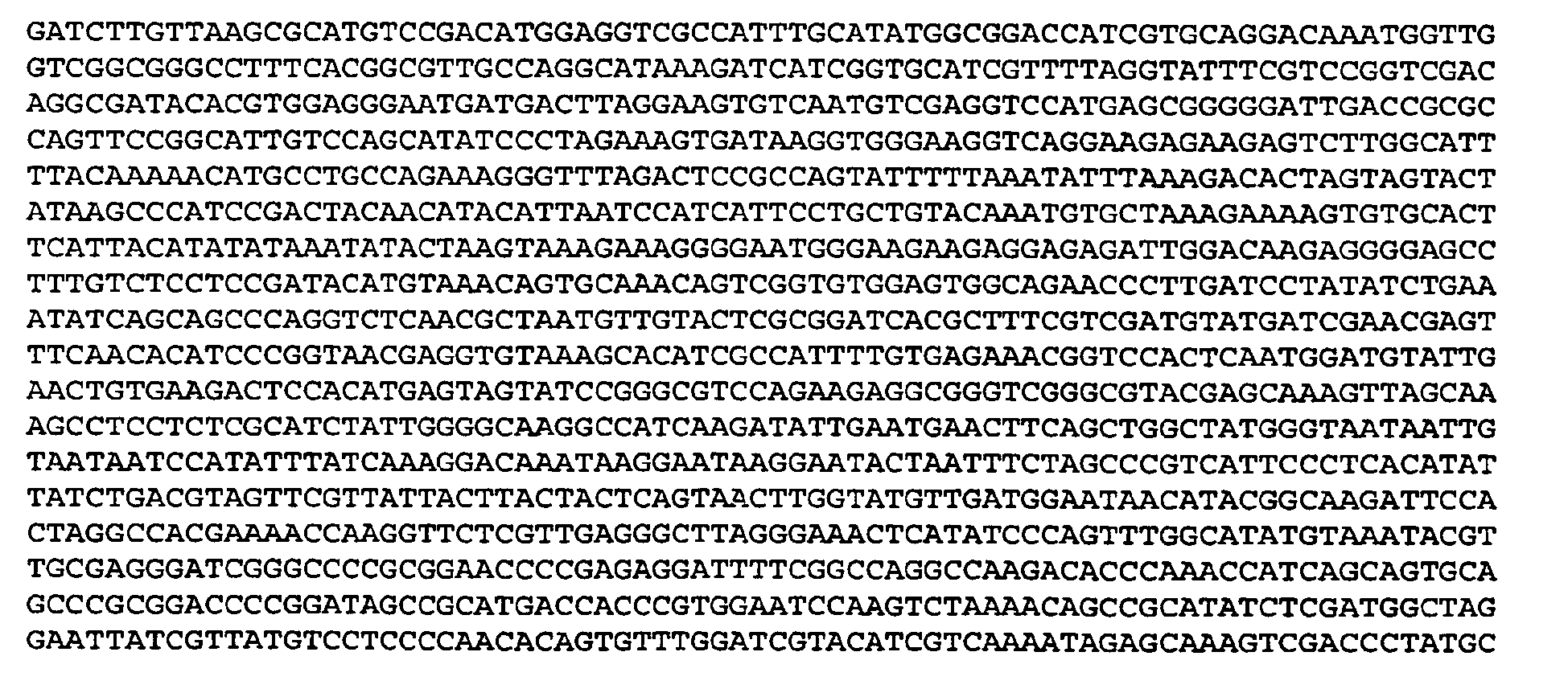


- (SEQ ID NO. 9)Translation of the complete genomic DNA sequence of Penicillium chrysogenum ABC transporter aa1 (The DNA sequence is shown above the dashed line; shown in bold are the putative intron sequences which are spliced out during RNA processing; the derived amino acid sequence is shown below the dashed line; start- and stopcodon are shown in italic):


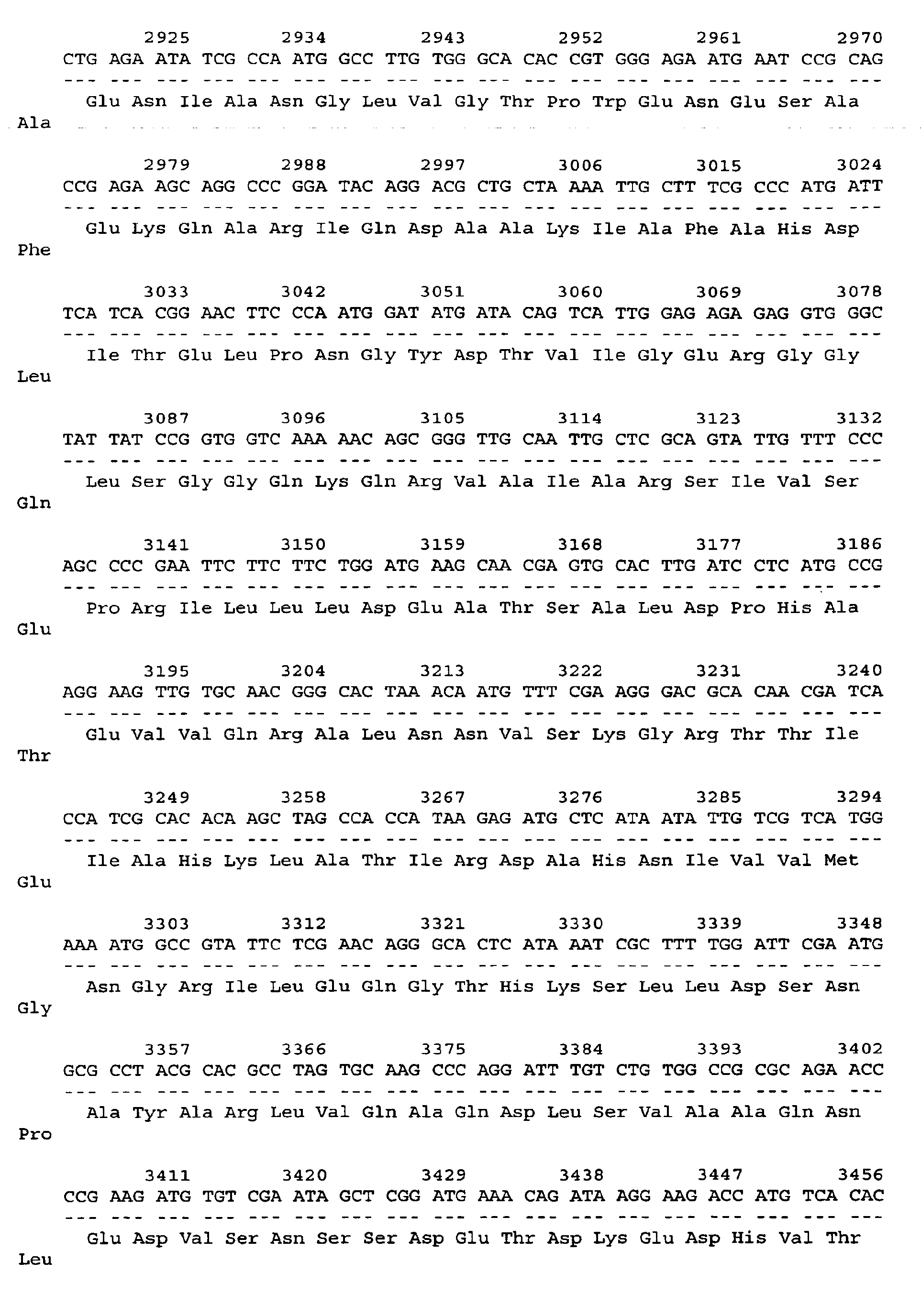


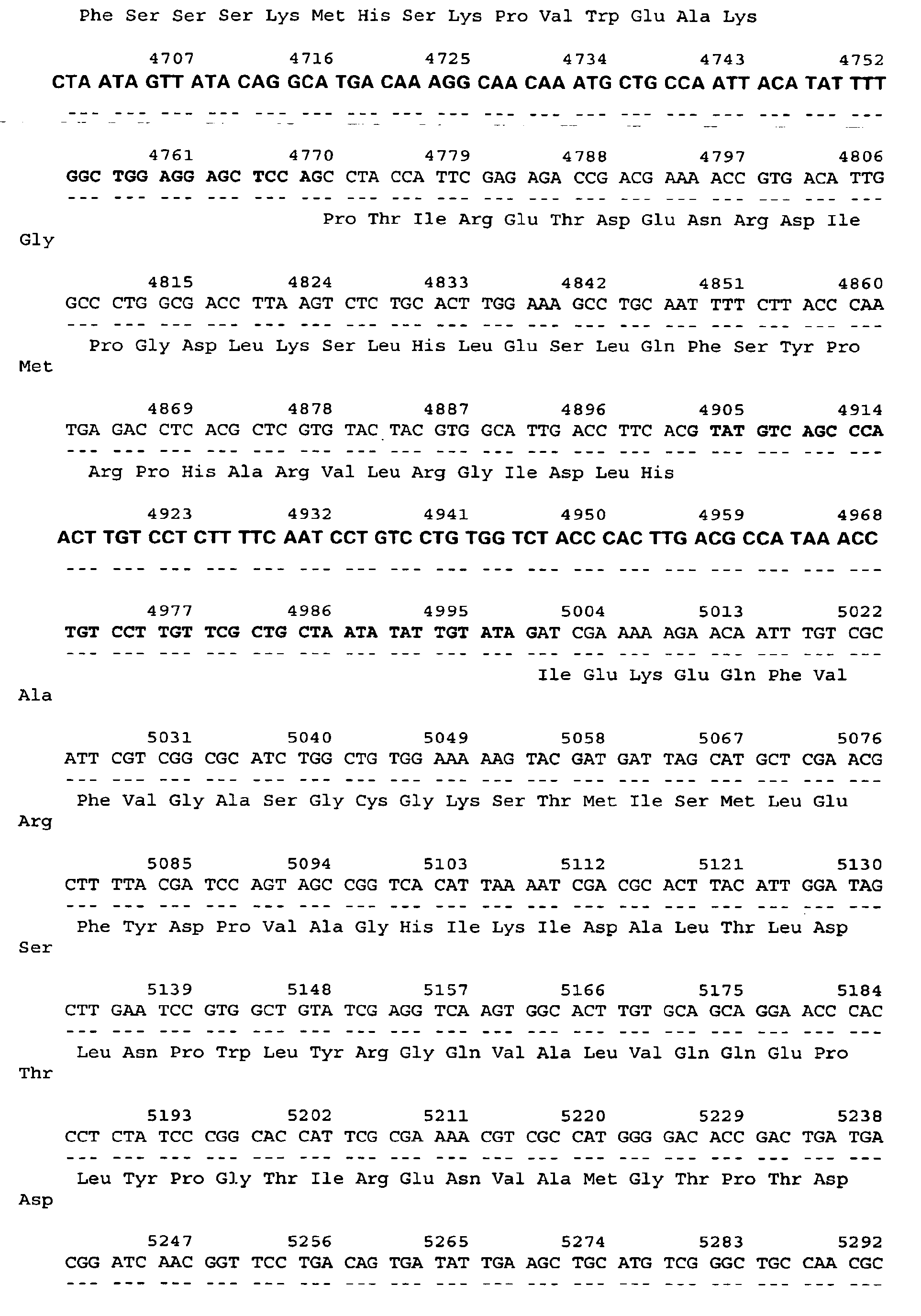


- (SEQ ID NO. 10) Protein sequence of the Penicillium chrysogenum ABC transporter aa1 (derived from the DNA sequence as shown in (SEQ ID NO. 8)):


- (SEQ ID NO. 11) Partial cDNA sequence of Penicillium chrysogenum ABC transporter aa3 (Shown in bold are the sequences complementary to the Walker-motif primers used for the PCR):

- (SEQ ID NO. 12)Translation of the cDNA sequence of Penicillium chrysogenum ABC transporter aa3 from SEQ ID NO. 11:


- (SEQ ID NO. 13)Protein sequence of the Penicillium chrysogenum ABC transporter aa3 (derived from the DNA sequence as shown in SEQ ID NO. 11):

- (SEQ ID NO. 14)Partial cDNA sequence of Penicillium chrysogenum ABC transporter aa4 (Shown in bold are the sequences complementary to the Walker-motif primers used for the PCR):

- (SEQ ID NO. 15)Translation of the cDNA sequence of Penicillium chrysogenum ABC transporter aa4 from SEQ ID NO. 14:

- (SEQ ID NO. 16) Protein sequence of the Penicillium chrysogenum ABC transporter aa4 (derived from the DNA sequence as shown in SEQ ID NO. 14):


- (SEQ ID NO. 17)Partial cDNA sequence of Penicillium chrysogenum ABC transporter aa5 (Shown in bold are the sequences complementary to the Walker-motif primers used for the PCR) :

- (SEQ ID NO. 18) Complete genomic DNA sequence of Penicillium chrysogenum ABC transporter aa5:


- (SEQ ID NO. 19)Translation of the complete genomic DNA sequence of Penicillium chrysogenum ABC transporter aa5 (The DNA sequence is shown above the dashed line; shown in bold are the putative intron sequences which are spliced out during RNA processing; the derived amino acid sequence is shown below the dashed line; start- and stopcodon are shown in italic) :


- (SEQ ID NO. 20) Protein sequence of the Penicillium chrysogenum ABC transporter aa5 (derived from the DNA sequence as shown in SEQ ID NO. 18) :


- (SEQ ID NO. 21)Partial cDNA sequence of Penicillium chrysogenum ABC transporter aa6 (Shown in bold are the sequences complementary to the Walker-motif primers used for the PCR):

- (SEQ ID NO. 22)Translation of the cDNA sequence of Penicillium chrysogenum ABC transporter aa6 from SEQ ID NO. 21:

- (SEQ ID NO. 23) Protein sequence of the Penicillium chrysogenum ABC transporter aa6 (derived from the DNA sequence as shown in SEQ ID NO. 21):

- (SEQ ID NO. 24)Partial cDNA sequence of Penicillium chrysogenum ABC transporter aa7 (Shown in bold are the sequences complementary to the Walker-motif primers used for the PCR) :

- (SEQ ID NO. 24)Large, partial cDNA sequence of Penicillium chrysogenum ABC transporter aa7 (Shown in bold are the sequences complementary to the Walker-motifs; the smaller cDNA sequence of SEQ ID NO. 23 is underlined) :


- (SEQ ID NO. 25)Complete genomic DNA sequence of Penicillium chrysogenum ABC transporter aa7 (Shown in bold are the sequences complementary to the Walker-motifs; the cDNA sequence of figure 23 is underlined;the cDNA sequence of SEQ ID NO. 24 is in italic):


- (SEQ ID NO. 26)Translation of the complete genomic DNA sequence of Penicillium chrysogenum ABC transporter aa7 (The DNA sequence is shown above the dashed line; shown in bold are the putative intron sequences which are spliced out during RNA processing; the derived amino acid sequence is shown below the dashed line; start- and stopcodon are shown in italic):


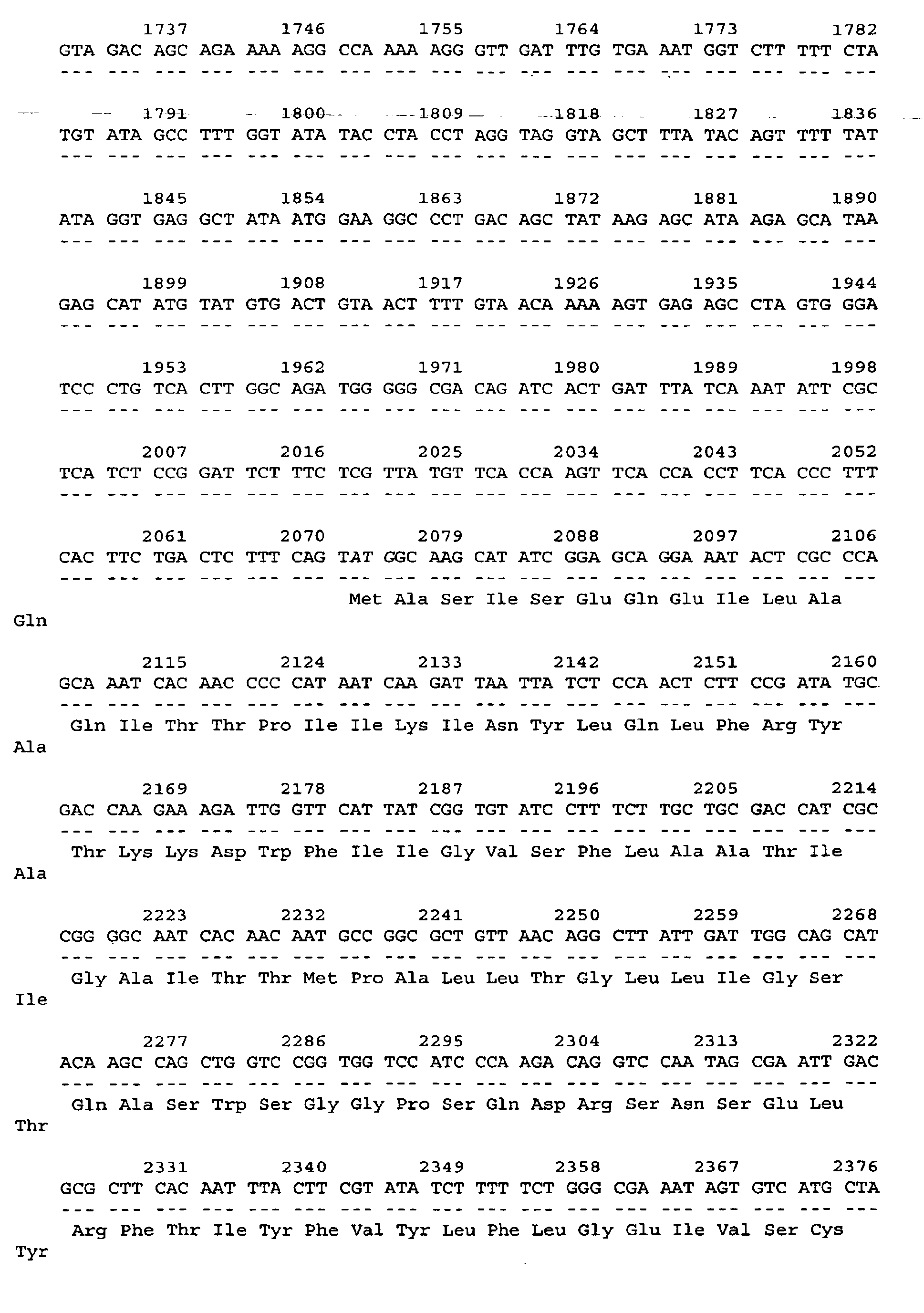


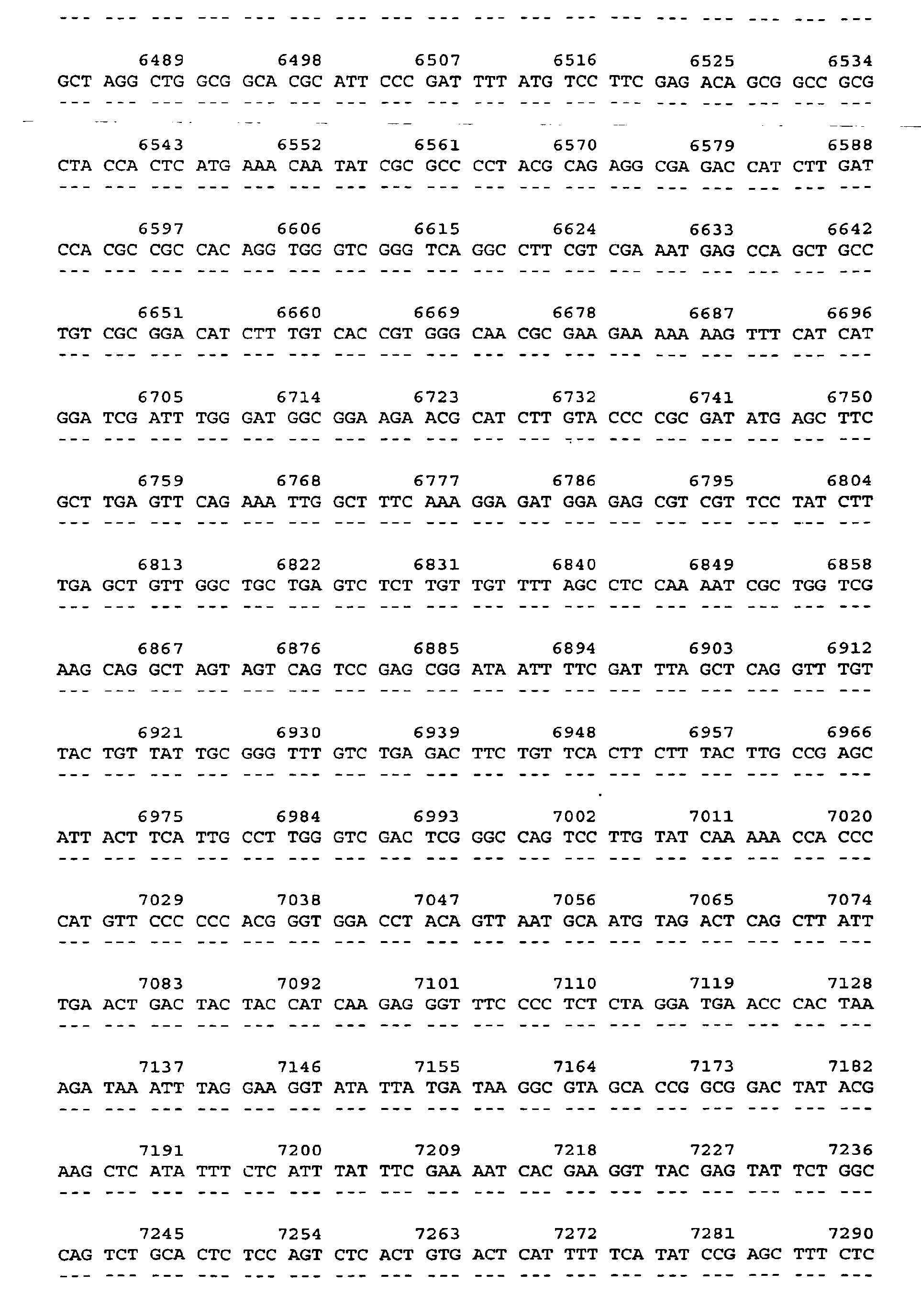

- (SEQ ID NO. 28) Protein sequence of the Penicillium chrysogenum ABC transporter aa7 (derived from the DNA sequence as shown in SEQ ID NO. 26):


- (SEQ ID NO. 29)Partial cDNA sequence of Penicillium chrysogenum ABC transporter aa8 (Shown in bold are the sequences complementary to the Walker-motif primers used for the PCR):

- (SEQ ID NO. 30)Translation of the cDNA sequence of Penicillium chrysogenum ABC transporter aa8 from SEQ ID NO. 29:


- (SEQ ID NO. 31)Protein sequence of the Penicillium chrysogenum ABC transporter aa8 (derived from the DNA sequence as shown in SEQ ID NO. 29):

- (SEQ ID NO. 32)Partial cDNA sequence of Penicillium chrysogenum ABC transporter aa10 (Shown in bold are the sequences complementary to the Walker-motif primers used for the PCR):

- (SEQ ID NO. 33)Large, partial cDNA sequence of Penicillium chrysogenum ABC transporter aa10 (Shown in bold are the sequences complementary to the Walker-motifs; the smaller cDNA sequence of SEQ ID NO. 32 is underlined)


- (SEQ ID NO. 34)Complete genomic DNA sequence of Penicillium chrysogenum ABC transporter aa10 (Shown in bold are the sequences complementary to the Walker-motifs; the cDNA sequence of SEQ ID NO. 32 is underlined;the cDNA sequence of SEQ ID NO. 33 is in italic):


- (SEQ ID NO. 35)Translation of the complete genomic DNA sequence of Penicillium chrysogenum ABC transporter aa10 (The DNA sequence is shown above the dashed line; the derived amino acid sequence is shown below the dashed line; start- and stopcodon are shown in italic):


- (SEQ ID NO. 36) Protein sequence of the Penicillium chrysogenum ABC transporter aa10 (derived from the DNA sequence as shown in SEQ ID NO. 34):


- (SEQ ID NO. 37)Partial cDNA sequence of Penicillium chrysogenum ABC transporter aa20 (Shown in bold are the sequences complementary to the Walker-motif primers used for the PCR):

- (SEQ ID NO. 38)Translation of the cDNA sequence of Penicillium chrysogenum ABC transporter aa20 from SEQ ID NO. 37:

- (SEQ ID NO. 39)Protein sequence of the Penicillium chrysogenum ABC transporter aa20 (derived from the DNA sequence as shown in SEQ ID NO. 37):


- (SEQ ID NO. 40) Partial cDNA sequence of Penicillium chrysogenum ABC transporter aa32 (Shown in bold are the sequences complementary to the Walker-motif primers used for the PCR):

- (SEQ ID NO. 41)Translation of the cDNA sequence of Penicillium chrysogenum ABC transporter aa32 from SEQ ID NO. 40:


- (SEQ ID NO. 42)Protein sequence of the Penicillium chrysogenum ABC transporter aa32 (derived from the DNA sequence as shown in SEQ ID NO. 42):

- (SEQ ID NO. 43)Partial cDNA sequence of Penicillium chrysogenum ABC transporter dd034 (Sequence is derived from AFLP experiment)

- (SEQ ID NO. 44)Translation of the cDNA sequence of Penicillium chrysogenum ABC transporter dd034 from SEQ ID NO. 43:
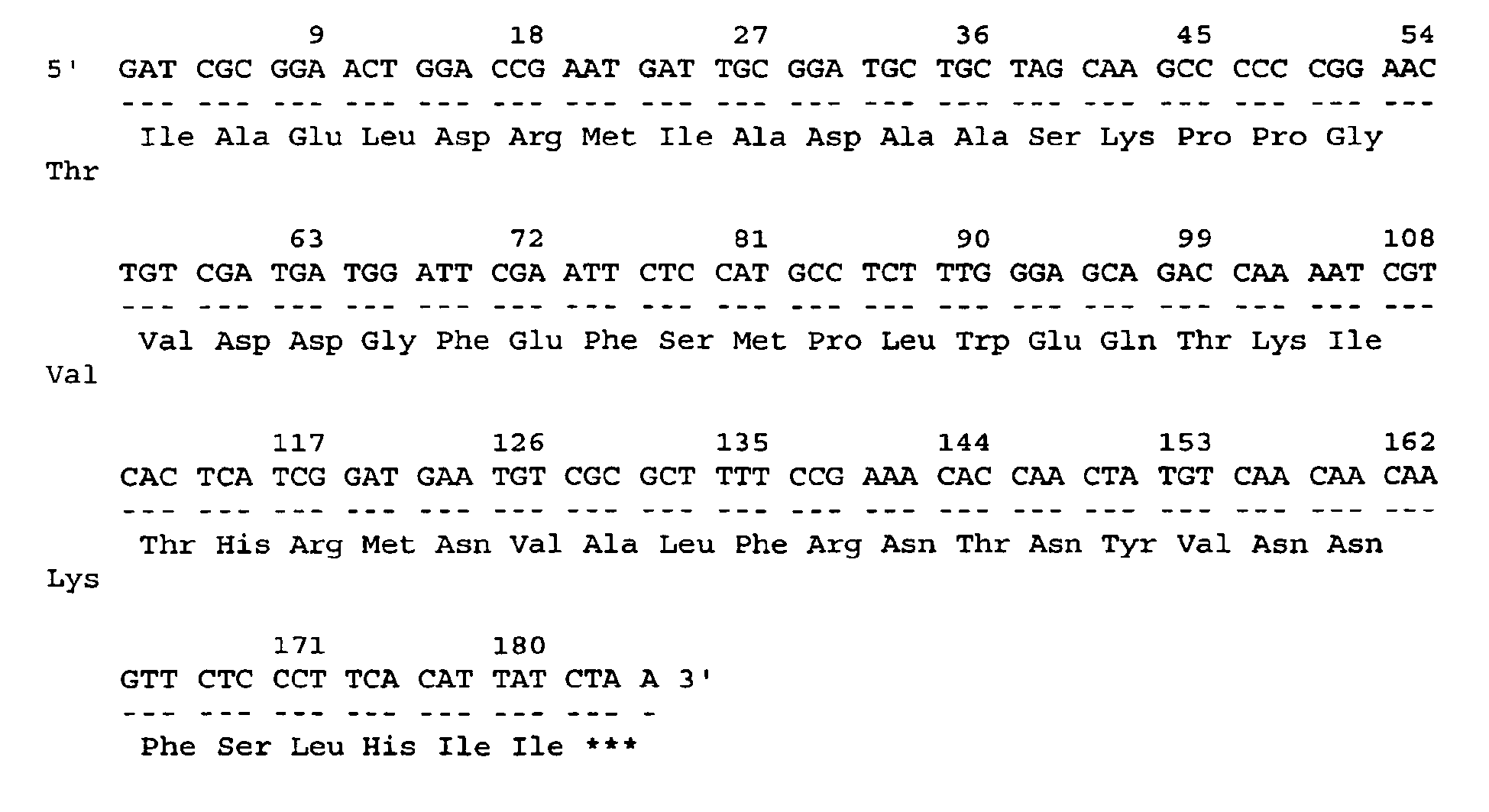
- (SEQ ID NO. 45) Protein sequence of the Penicillium chrysogenum ABC transporter dd034 (derived from the DNA sequence as shown in SEQ ID NO. 43):

- (SEQ ID NO.46)Partial cDNA sequence of Penicillium chrysogenum ABC transporter dd062 (Sequence is derived from AFLP experiment) :

- (SEQ ID NO. 47)Translation of the cDNA sequence of Penicillium chrysogenum ABC transporter dd062 from SEQ ID NO. 46:

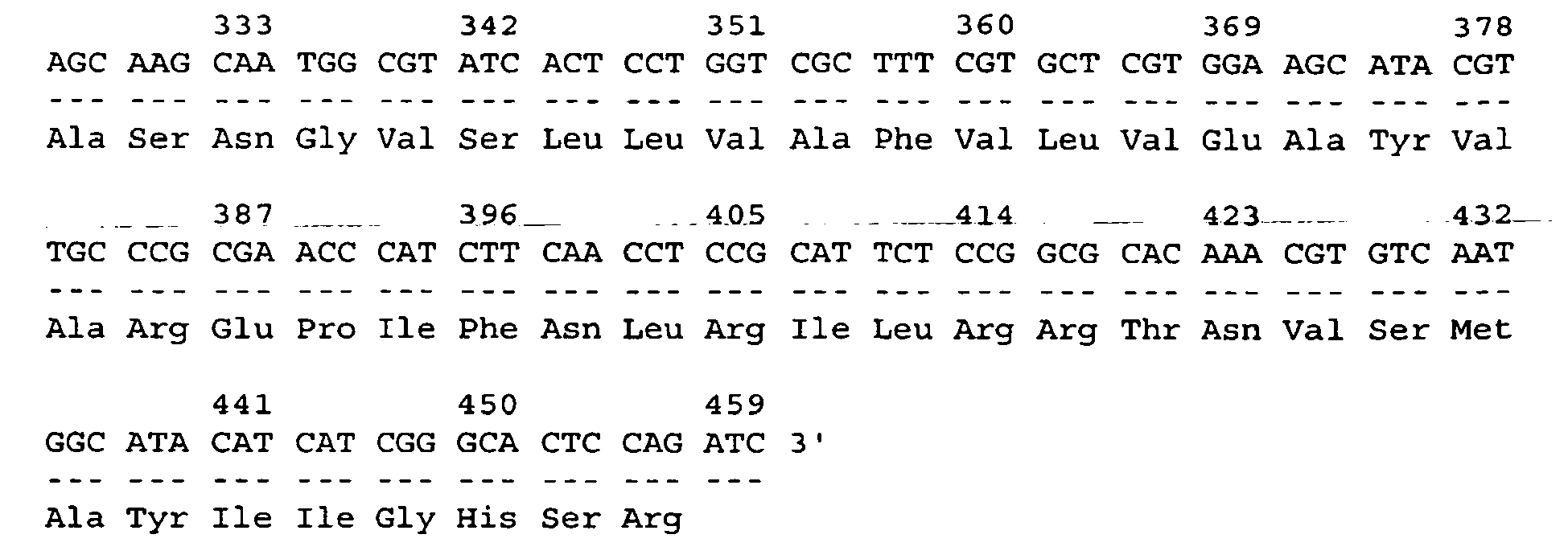
- (SEQ ID NO. 48)Protein sequence of the Penicillium chrysogenum ABC transporter dd062 (derived from the DNA sequence as shown in SEQ ID NO. 46):

-
- <110> DSM NV
- <120> METHOD FOR ENHANCING SECRETION OF β-LACTAM COMPOUNDS
- <130> WO 2958
- <140>
<141> - <160> 52
- <210> 1
<400> 1
0000 - <210> 2
<400> 2
0000 - <210> 3
<211> 20
<212> DNA
<213> Artificial Sequence - <220>
<223> Degenerate forward primer I - <400> 3
tcnggnksng gnaarwcnac 20 - <210> 4
<211> 20
<212> DNA
<213> Artificial Sequence - <220>
<223> Degenerate forward primer II - <400> 4
tcnggnksng gnaaragyac 20 - <210> 5
<211> 23
<212> DNA
<213> Artificial Sequence - <220>
<223> Degenerate reverse primer I - <400> 5
tcnarnscng angtngsytc rtc 23 - <210> 6
- <211> 23
<212> DNA
<213> Artificial Sequence - <220>
<223> Degenerate reverse primer II - <400> 6
tcnarnscrc tngtngsytc rtc 23 - <210> 7
<211> 429
<212> DNA
<213> Penicillium chrysogenum - <220>
<223> Partial cDNA of Penicillium chrysogenum ABC transporter aa1 - <400> 7

- <210> 8
<211> 7744
<212> DNA
<213> Penicillium chrysogenum - <220>
<223> Complete genomic DNA sequence of Penicillium chrysogenum ABC transporter aa1 - <400> 8


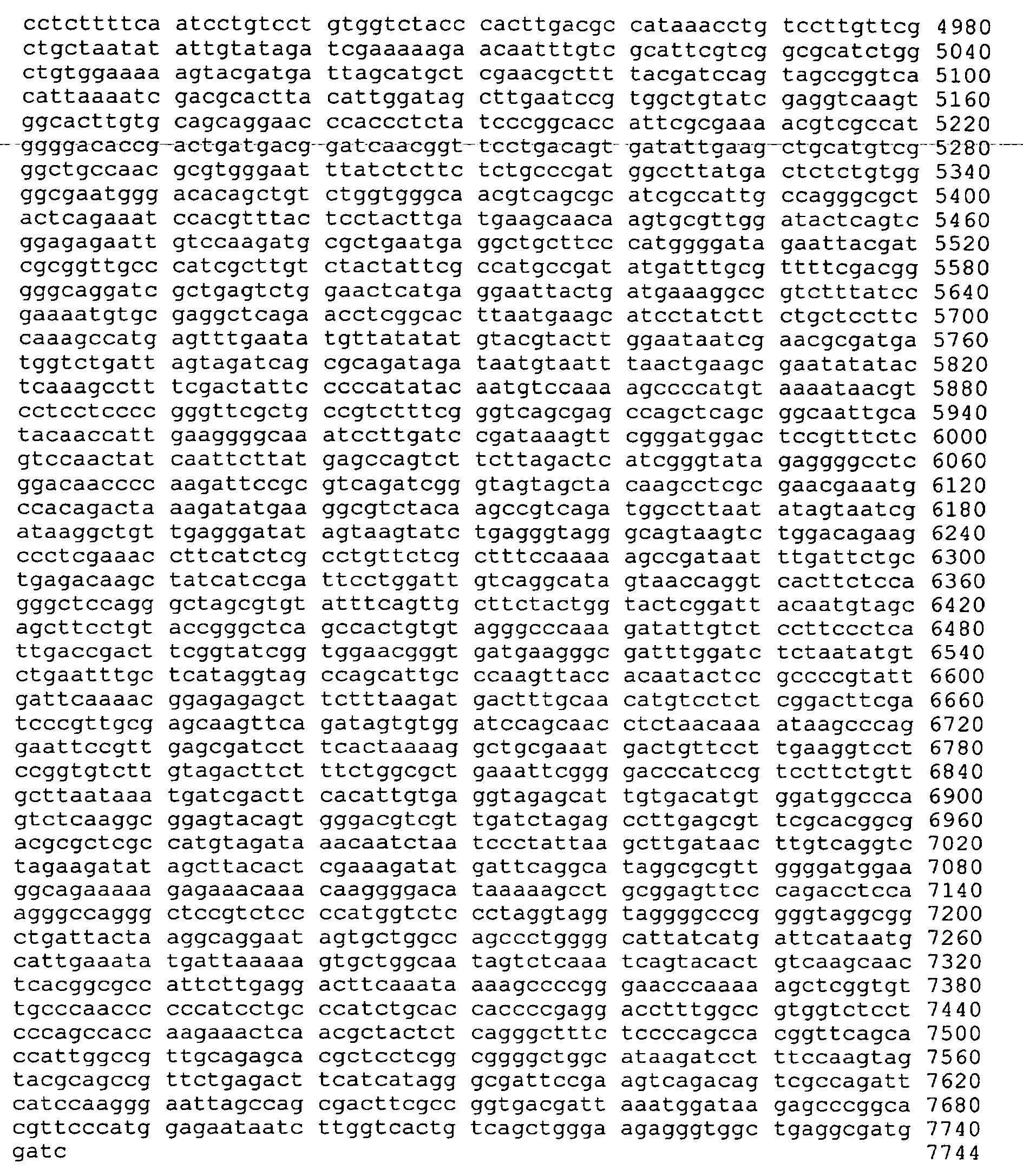
- <210> 9
<211> 7744
<212> DNA
<213> Penicillium chrysogenum - <220>
<221> CDS
<222> (1383)..(1699) - <220>
<221> CDS
<222> (1748)..(2904) - <220>
<221> CDS
<222> (2460)..(3638) - <220>
<221> CDS
<222> (3695)..(3871) - <220>
<221> CDS
<222> (3926)..(4027) - <220>
<221> CDS
<222> (4093)..(4452) - <220>
<221> CDS
<222> (9538)..(4690) - <220>
<221> CDS
<222> (4770)..(4901) - <220>
<221> CDS
<222> (5000)..(5671) - <220>
<223> Translation of the complete genomic sequence of Penicillium chrysogenum ABC transporter aa1 - <400> 9


- <210> 10
<211> 1248
<212> PRT
<213> Penicillium chrysogenum
<223> Translation of the complete genomic sequence of Penicillium chrysogenum ABC transporter aa1 - <400> 10


- <210> 11
<211> 387
<212> DNA
<213> Penicillium chrysogenum - <220>
<223> Partial cDNA sequence of Penicillium chrysogenum ABC transporter aa3 - <400> 11

- <210> 12
<211> 387
<212> DNA
<213> Penicillium chrysogenum - <220>
<221> CDS
<222> (1)..(387)
<223> Translation of the cDNA sequence of Penicillium chrysogenum ABC transporter aa3 from SEQ ID NO. 11 - <400> 12


- <210> 13
<211> 129
<212> PRT
<213> Penicillium chrysogenum
<223> Protein sequence of the Penicillium chrysogenum ABC transporter aa3 (derived from the DNA sequence as shown in (SEQ ID NO. 11)) - <400> 13
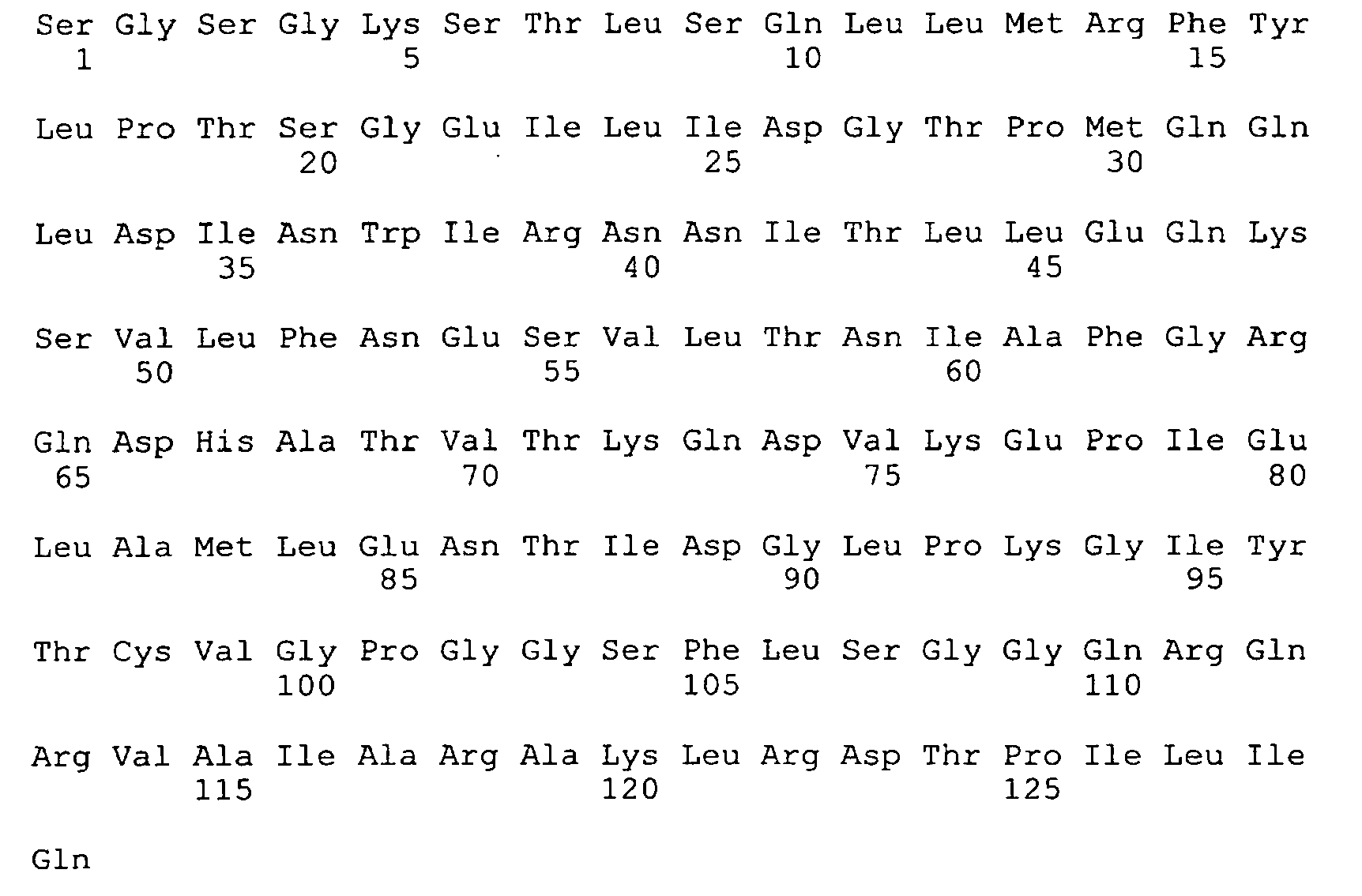
- <210> 14
<211> 408
<212> DNA
<213> Penicillium chrysogenum - <220>
<223> Partial cDNA sequence of Penicillium chrysogenum ABC transporter aa4 - <400> 14

- <210> 15
<211> 408
<212> DNA
<213> Penicillium chrysogenum - <220>
<221> CDS
<222> (1)..(408)
<223> Translation of the cDNA sequence of Penicillium chrysogenum ABC transporter aa4 from SEQ ID NO. 14 - <400> 15

- <210> 16
<211> 136
<212> PRT
<213> Penicillium chrysogenum
<223> Protein sequence of the Penicillium chrysogenum ABC transporter aa4 (derived from the DNA sequence as shown in SEQ ID NO. 14) - <400> 16

- <210> 17
<211> 402
<212> DNA
<213> Penicillium chrysogenum - <220>
<223> Partial cDNA sequence of Penicillium chrysogenum ABC transporter aa5 - <400> 17

- <210> 18
<211> 7529
<212> DNA
<213> Penicillium chrysogenum - <220>
<223> Complete genomic DNA sequence of Penicillium chrysogenum ABC transporter aa5 - <400> 18


- <210> 19
<211> 7529
<212> DNA
<213> Penicillium chrysogenum - <220>
<221> CDS
<222> (119)..(796) - <220>
<221> CDS
<222> (852)..(1535) - <220>
<221> CDS
<222> (1603)..(2862) - <220>
<221> CDS
<222> (2882)..(4195) - <220>
<223> Translation of the complete genomic DNA sequence of Penicillium chrysogenum ABC transporter aa5 - <400> 19


- <210> 20
<211> 1312
<212> PRT
<213> Penicillium chrysogenum
<223> Protein sequence of the Penicillium chrysogenum ABC transporter aa5 derived from the DNA sequence as shown in SEQ ID NO. 18 - <400> 20


- <210> 21
<211> 408
<212> DNA
<213> Penicillium chrysogenum - <220>
<223> Partial cDNA sequence of Penicillium chrysogenum ABC transporter aa6 - <400> 21

- <210> 22
<211> 408
<212> DNA
<213> Penicillium chrysogenum - <220>
<221> CDS
<222> (1)..(408) - <220>
<223> Translation of the cDNA sequence of Penicillium chrysogenum ABC transporter aa6 from SEQ ID NO. 21 - <400> 22


- <210> 23
<211> 136
<212> PRT
<213> Penicillium chrysogenum
<223> Protein sequence of the Penicillium chrysogenum ABC transporter aa6 (derived from the DNA sequence as shown in SEQ ID NO. 21) - <400> 23


- <210> 24
<211> 429
<212> DNA
<213> Penicillium chrysogenum - <220>
<223> Partial cDNA sequence of Penicillium chrysogenum ABC transporter aa7 - <400> 24

- <210> 25
<211> 7476
<212> DNA
<213> Penicillium chrysogenum - <220>
<223> Complete genomic DNA sequence of Penicillium chrysogenum ABC transporter aa7 - <400> 25


- <210> 26
<211> 7476
<212> DNA
<213> Penicillium chrysogenum - <220>
<221> CDS
<222> (2072)..(5506) - <220>
<221> CDS
<222> (5560)..(5907) - <220>
<223> Translation of the complete genomic DNA sequence of Penicillium chrysogenum ABC transporter aa7 - <400> 26


- <210> 27
<211> 3416
<212> DNA
<213> Penicillium chrysogenum - <220>
<223> Large, partial cDNA sequence of Penicillium chrysogenum ABC transporter aa7 - <400> 27


- <210> 28
<211> 1261
<212> PRT
<213> Penicillium chrysogenum
<223> Protein sequence of the Penicillium chrysogenum ABC transporter aa7 (derived from the DNA sequence as Shown in SEQ ID NO. 26) - <400> 28
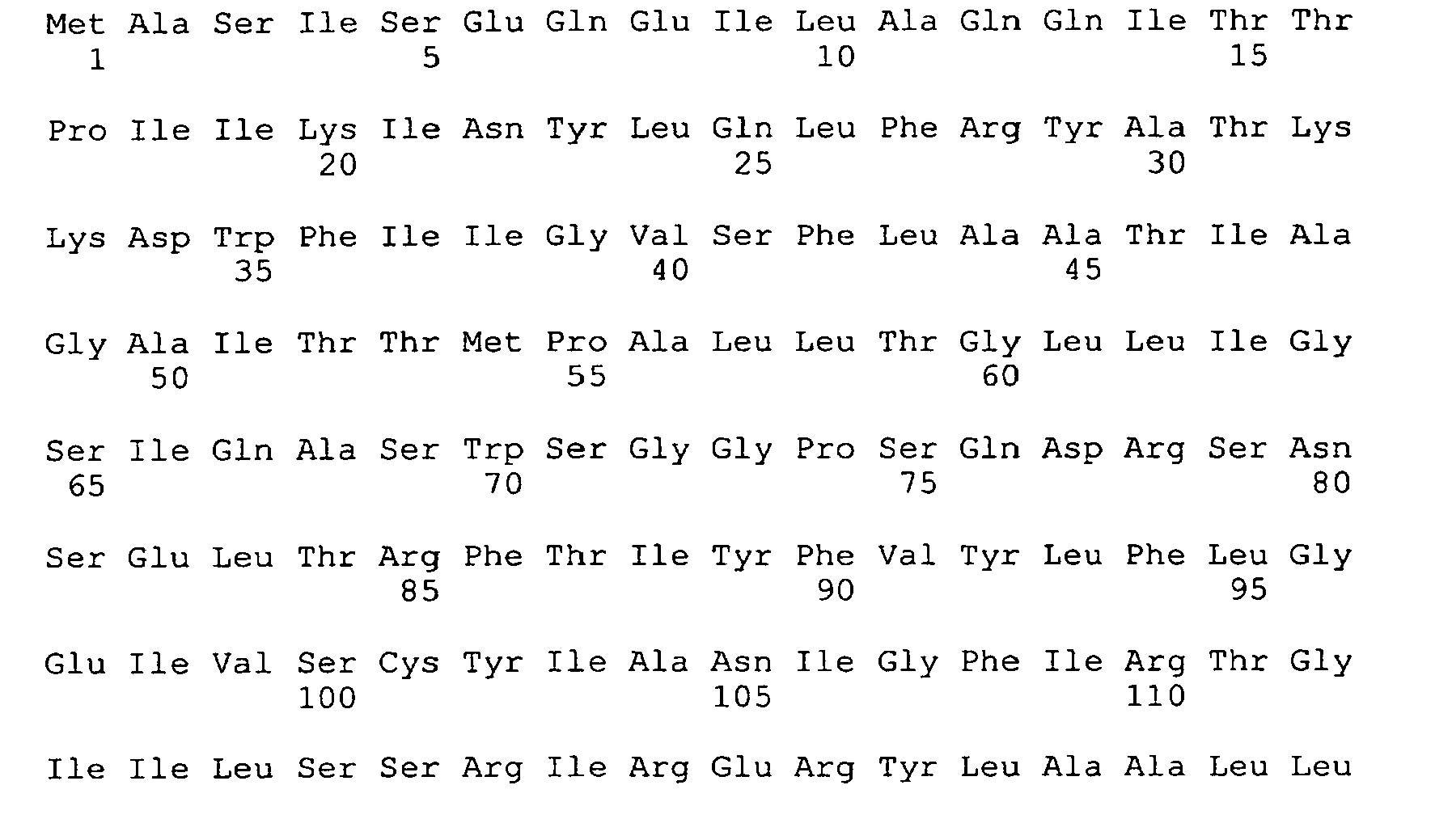


- <210> 29
<211> 405
<212> DNA
<213> Penicillium chrysogenum - <220>
<223> Partial cDNA sequence of Penicillium chrysogenum ABC transporter aa8 - <400> 29

- <210> 30
<211> 405
<212> DNA
<213> Penicillium chrysogenum - <220>
<221> CDS
<222> (1)..(405) - <220>
<223> Translation of the cDNA sequence of Penicillium chrysogenum ABC transporter aa8 from SEQ ID NO. 29 - <400> 30

- <210> 31
<211> 135
<212> PRT
<213> Penicillium chrysogenum
<223> Protein sequence of the Penicillium chrysogenum ABC transporter aa8 (derived from the DNA as shown in SEQ ID NO. 29) - <400> 31


- <210> 32
<211> 411
<212> DNA
<213> Penicillium chrysogenum - <220>
<223> Partial cDNA sequence of Penicillium chrysogenum ABC transporter aa10 - <400> 32

- <210> 33
<211> 3133
<212> DNA
<213> Penicillium chrysogenum - <220>
<223> Large, partial cDNA sequence of Penicillium chrysogenum ABC transporter aa10 - <400> 33


- <210> 34
<211> 8777
<212> DNA
<213> Penicillium chrysogenum - <220>
<223> Complete genomic DNA sequence of Penicillium chrysogenum ABC transporter aa10 - <400> 34


- <210> 35
<211> 8777
<212> DNA
<213> Penicillium chrysogenum - <220>
<223> Translation of the comlete genomic DNA sequence of Penicillium chrysogenum ABC transporter aa10 - <220>
<221> CDS
<222> (2227)..(6225) - <400> 35


- <210> 36
<211> 1333
<212> PRT
<213> Penicillium chrysogenum
<223> Protein sequence of the Penicillium chrysogenum ABC transporter aa10 (derived from the DNA sequence as shown in SEQ ID NO. 34) - <400> 36


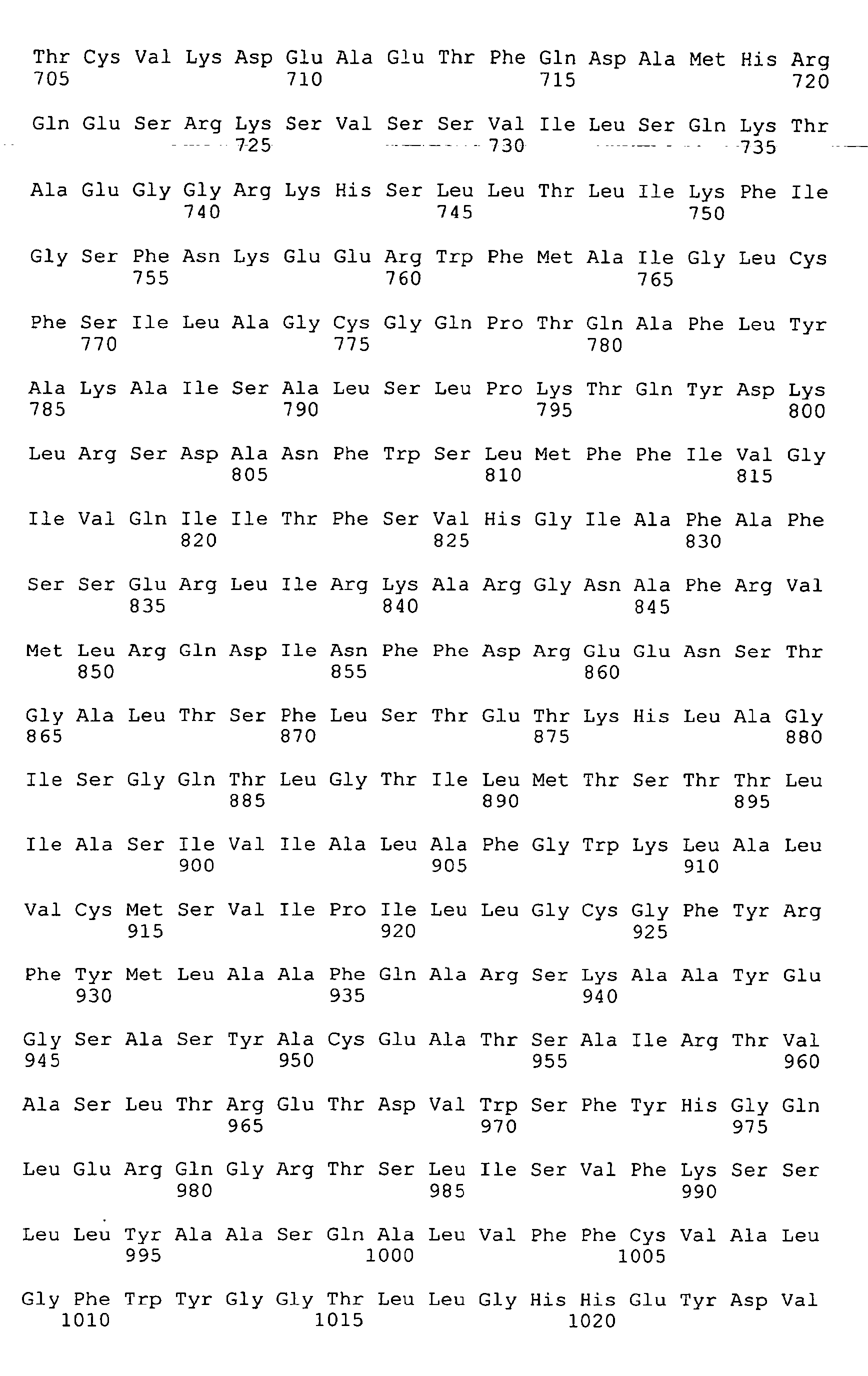

- <210> 37
<211> 396
<212> DNA
<213> Penicillium chrysogenum - <220>
<223> Partial cDNA sequence of Penicillium chrysogenum ABC transporter aa20 - <400> 37

- <210> 38
<211> 396
<212> DNA
<213> Penicillium chrysogenum - <220>
<221> CDS
<222> (1).. (396) - <220>
<223> Translation of the cDNA sequence of Penicillium chrysogenum ABC transporter aa20 from SEQ ID NO. 37 - <400> 38


- <210> 39
<211> 132
<212> PRT
<213> Penicillium chrysogenum
<223> Protein sequence of the Penicillium chrysogenum ABC transporter aa20 (derived from the DNA sequence as shown in SEQ ID NO. 37) - <400> 39

- <210> 40
<211> 396
<212> DNA
<213> Penicillium chrysogenum - <220>
<223> Partial cDNA sequence of Penicillium chrysogenum ABC transporter aa32 - <400> 40


- <210> 41
<211> 396
<212> DNA
<213> Penicillium chrysogenum - <220>
<221> CDS
<222> (1) .. (396) - <220>
<223> Translation of the cDNA sequence of Penicillium chrysogenum ABC transporter aa32 from SEQ ID NO. 40 - <400> 41

- <210> 42
<211> 132
<212> PRT
<213> Penicillium chrysogenum
<223> Protein sequence of the Penicillium chrysogenum ABC transporter aa32 (derived from the DNA sequence as shown in SEQ ID NO. 40) - <400> 42

- <210> 43
<211> 184
<212> DNA
<213> Penicillium chrysogenum - <220>
<223> Partial cDNA sequence of Penicillium chrysogenum ABC transporter dd034 - <400> 43

- <210> 44
<211> 184
<212> DNA
<213> Penicillium chrysogenum - <220>
<221> CDS
<222> (2)..(181)
<223> Translation of the cDNA sequence of Penicillium chrysogenum ABC transporter dd034 from SEQ ID NO. 43 - <400> 44

- <210> 45
<211> 60
<212> PRT
<213> Penicillium chrysogenum
<223> Protein sequence of the Penicillium chrysogenum ABC transporter dd034 (derived from the DNA sequence as shown in SEQ ID NO. 43) - <400> 45

- <210> 46
<211> 459
<212> DNA
<213> Penicillium chrysogenum - <220>
<223> Partial cDNA sequence of Penicillium chrysogenum ABC transporter dd062 - <400> 46

- <210> 47
<211> 459
<212> DNA
<213> Penicillium chrysogenum - <220>
<221> CDS
<222> (5)..(457) - <220>
<223> Translation of the cDNA sequence of Penicillium chrysogenum ABC transporter dd062 from SEQ ID No. 46 - <400> 47

- <210> 48
<211> 151
<212> PRT
<213> Penicillium chrysogenum
<223> Protein sequence of the Penicillium chrysogenum ABC transporter dd062 (derived from the DNA sequence as shown in SEQ ID No. 46) - <400> 48

- <210> 49
<211> 24
<212> DNA
<213> Artificial Sequence
<220>
<223> aa7 forward primer - <400> 49
attggctgag acagcaaatc tcgc 24 - <210> 50
<211> 20
<212> DNA
<213> Artificial Sequence - <220>
<223> aa7 reverse primer - <400> 50
aggatcggaa atgagggcgc 20 - <210> 51
<211> 25
<212> DNA
<213> Artificial Sequence - <220>
<223> aa10 forward primer - <400> 51
agcggttcta tctcccagtc ggagg 25 - <210> 52
<211> 23
<212> DNA
<213> Artificial Sequence - <220>
<223> aa10 reverse primer - <400> 52
cacgagcgat ggcaatacgt tgc 23 - <210> 53
<211> 21
<212> DNA
<213> Artificial Sequence - <220>
<223> dd062 forward primer - <400> 53
tggagtgccc gatgatgtat g 21 - <210> 54
<211> 22
<212> DNA
<213> Artificial Sequence - <220>
<223> dd062 reverse primer - <400> 54
cgcgaggttg ctacctggag ag 22
Claims (13)
- Method for enhancing the secretion of a β-lactam compound from a micro-organism, capable of producing β-lactam compounds comprising the step of enhancing an ABC transporter activity of said micro-organism, which comprises the step of transforming said micro-organism with at least one expression cassette comprising a polynucleotide selected from the group consisting of SEQ ID NO 7. 8, 9, 11, 12, 14, 15, 18, 19, 21, 22, 24, 25, 26, 27, 29, 30, 34, 35, 37, 38, 46 and 47 or a polynucleotide which shows a percentage of similarity of least 60% with these polynucleotide sequences, encoding a homologous or heterologous ABC transporter.
- Method according to claim 1, wherein said polynucleotide encodes an ABC transporter which comprises an amino acid sequence selected from the group consisting of SEQ ID NO. 10, 13, 16, 20, 23, 28, 31, 36, 39, and 48 or a polypeptide which shows a percentage of similarity of least 60% with these polypeptide sequences.
- Method according to claim 1 or 2, wherein said micro-organism is a fungus.
- Method according to claim 3, wherein said fungus is selected from the group consisting of Penicillium chrysogenum, Acremonium chrysogenum, Aspergillus nidulans, Saccharomyces cerevisiae, Hansenula polymorpha and Pichia pastoris.
- Method according to claim 1 or 2, wherein said micro-organism is a bacterium, preferably an actinomycete, even more preferably an actinomycete selected from the group consisting of Streptomyces clavuligerus, Nocardia lactamdurans, Flavobacterium sp.
- An isolated polynucleotide encoding an amino acid sequence selected from the group consisting of SEQ ID NO. 10, 13, 16, 20, 23, 28, 31, 36, 39, and 48, or a sequence which shows a percentage of similarity of at least 95% with these amino acid sequences.
- An isolated polynucleotide comprising a nucleotide sequence selected from the group consisting of SEQ ID NO. 7, 8, 9, 11, 12, 14, 15, 18, 19, 21, 22, 24, 25, 26, 27, 29, 30, 32, 33, 34, 35, 37, 38, 46 and 47, or a polynucleotide which shows a similarity of at least 95% with these polynucleotide sequences
- A vector comprising a polynucleotide according to claim 7.
- A vector according to claim 8 wherein the polynucleotide sequence encodes an ABC transporter and wherein said polynucleotide is operably linked to regulatory sequences suitable for expression of the ABC transporter in a suitable host cell.
- A transformed host cell comprising the vector of claim 8 or 9.
- Use of an isolated polynucleotide according to claim 6 or 7 and a vector according to claim 8 or 9 in a method for enhancing the production of β-lactam compounds in a micro-organism capable of producing β-lactam compounds.
- Method for enhancing the production of β-lactam compounds in a micro-organism capable of producing β-lactam compounds comprising the step of enhancing ABC transporter activity of said micro-organism, which comprises the step of transforming said micro-organism with at least one expression cassette comprising a polynucleotide selected from the group consisting of SEQ ID NO 7, 8, 9, 11, 12, 14, 15, 18, 19, 21, 22, 24, 25, 26, 27, 29, 30, 34, 35, 37, 38, 46 and 47 or a polynucleotide which shows a percentage of similarity of least 60% with these polynucleotide sequences, encoding a homologous or heterologous ABC transporter, and subsequently culturing said micro-organism under conditions allowing the production of said β-lactam compounds.
- Isolated ABC transporter encoded by an ABC transporter gene comprising a nucleotide sequence according to a SEQ ID NO selected from the group consisting of SEQ ID NO. 7, 8, 9, 11, 12, 14, 15, 18, 19, 21, 22, 24, 25, 26, 29, 30, 32, 33, 34, 37, 38, 46 and 47
Priority Applications (1)
| Application Number | Priority Date | Filing Date | Title |
|---|---|---|---|
| EP00979601A EP1226266B1 (en) | 1999-11-03 | 2000-11-03 | Method for enhancing secretion of beta-lactam compounds |
Applications Claiming Priority (26)
| Application Number | Priority Date | Filing Date | Title |
|---|---|---|---|
| EP99203694 | 1999-11-03 | ||
| EP99203694 | 1999-11-03 | ||
| EP99203695 | 1999-11-03 | ||
| EP99203684 | 1999-11-03 | ||
| EP99203685 | 1999-11-03 | ||
| EP99203690 | 1999-11-03 | ||
| EP99203689 | 1999-11-03 | ||
| EP99203687 | 1999-11-03 | ||
| EP99203691 | 1999-11-03 | ||
| EP99203688 | 1999-11-03 | ||
| EP99203685 | 1999-11-03 | ||
| EP99203693 | 1999-11-03 | ||
| EP99203696 | 1999-11-03 | ||
| EP99203689 | 1999-11-03 | ||
| EP99203687 | 1999-11-03 | ||
| EP99203691 | 1999-11-03 | ||
| EP99203690 | 1999-11-03 | ||
| EP99203692 | 1999-11-03 | ||
| EP99203688 | 1999-11-03 | ||
| EP99203696 | 1999-11-03 | ||
| EP99203684 | 1999-11-03 | ||
| EP99203693 | 1999-11-03 | ||
| EP99203695 | 1999-11-03 | ||
| EP99203692 | 1999-11-03 | ||
| PCT/EP2000/011489 WO2001032904A2 (en) | 1999-11-03 | 2000-11-03 | Method for enhancing secretion of beta-lactam compounds |
| EP00979601A EP1226266B1 (en) | 1999-11-03 | 2000-11-03 | Method for enhancing secretion of beta-lactam compounds |
Publications (2)
| Publication Number | Publication Date |
|---|---|
| EP1226266A2 EP1226266A2 (en) | 2002-07-31 |
| EP1226266B1 true EP1226266B1 (en) | 2007-04-18 |
Family
ID=27582989
Family Applications (1)
| Application Number | Title | Priority Date | Filing Date |
|---|---|---|---|
| EP00979601A Expired - Lifetime EP1226266B1 (en) | 1999-11-03 | 2000-11-03 | Method for enhancing secretion of beta-lactam compounds |
Country Status (6)
| Country | Link |
|---|---|
| EP (1) | EP1226266B1 (en) |
| AT (1) | ATE360085T1 (en) |
| AU (1) | AU1703201A (en) |
| DE (1) | DE60034475D1 (en) |
| ES (1) | ES2283331T3 (en) |
| WO (1) | WO2001032904A2 (en) |
Families Citing this family (2)
| Publication number | Priority date | Publication date | Assignee | Title |
|---|---|---|---|---|
| CN100376676C (en) * | 2004-05-11 | 2008-03-26 | 华北制药集团有限责任公司 | Transport protein and coded gene for producing penicillium chrysogenum, and application |
| WO2007122249A1 (en) * | 2006-04-25 | 2007-11-01 | Dsm Ip Assets B.V. | Production of compounds in a recombinant host |
Family Cites Families (1)
| Publication number | Priority date | Publication date | Assignee | Title |
|---|---|---|---|---|
| JPH11276172A (en) * | 1998-03-27 | 1999-10-12 | Tanabe Seiyaku Co Ltd | ABC transporter gene |
-
2000
- 2000-11-03 DE DE60034475T patent/DE60034475D1/en not_active Expired - Lifetime
- 2000-11-03 EP EP00979601A patent/EP1226266B1/en not_active Expired - Lifetime
- 2000-11-03 WO PCT/EP2000/011489 patent/WO2001032904A2/en not_active Ceased
- 2000-11-03 AU AU17032/01A patent/AU1703201A/en not_active Abandoned
- 2000-11-03 AT AT00979601T patent/ATE360085T1/en active
- 2000-11-03 ES ES00979601T patent/ES2283331T3/en not_active Expired - Lifetime
Also Published As
| Publication number | Publication date |
|---|---|
| WO2001032904A2 (en) | 2001-05-10 |
| DE60034475D1 (en) | 2007-05-31 |
| AU1703201A (en) | 2001-05-14 |
| ATE360085T1 (en) | 2007-05-15 |
| EP1226266A2 (en) | 2002-07-31 |
| WO2001032904A3 (en) | 2001-11-08 |
| ES2283331T3 (en) | 2007-11-01 |
Similar Documents
| Publication | Publication Date | Title |
|---|---|---|
| WO2001021779A2 (en) | Penicillium chrysogenum transcriptional activator blar, a pathway specific regulator of beta-lactam biosynthesis, and uses therof | |
| Ullán et al. | The cefT gene of Acremonium chrysogenum C10 encodes a putative multidrug efflux pump protein that significantly increases cephalosporin C production | |
| DK2588616T3 (en) | PROCEDURE FOR MAKING A RELATIONSHIP OF INTEREST | |
| Schmitt et al. | Regulation of cephalosporin biosynthesis | |
| CN1301303A (en) | Improvement of in vivo production of cephalosporins | |
| CN101218348A (en) | Filamentous fungal mutants with improved homologous recombination efficiency | |
| RO115886B1 (en) | Bioprocess for preparing 7-aminodesacetoxy cephalosporanic acid | |
| BG98714A (en) | Biological methods for the preparation of 7-aca and 7-adac | |
| KR20170138543A (en) | Expression constructs and methods for genetically engineering methylnutritic yeast | |
| JPH05501806A (en) | Mutant β-lactam acylase gene | |
| JP2000342289A (en) | Isolation of gene for biologically synthesizing penicillin | |
| Skatrud | Genetic engineering of ß-lactam antibiotic biosynthetic pathways in filamentous fungi | |
| CN100432099C (en) | Transcription factor | |
| CN110129305B (en) | Cephalosporin C acylase mutant for preparing 7-ACA | |
| EP2392649A2 (en) | Adipoyl-7-ADCA producing strains | |
| Dumina et al. | Functional analysis of MFS protein CefT involved in the transport of beta-lactam antibiotics in Acremonium chrysogenum and Saccharomyces cerevisiae | |
| JP3476834B2 (en) | Method for producing Rhodotorula gracilis enzyme D-amino acid oxidase in a host cell | |
| JPH08266290A (en) | Penicillin V amidohydrolase gene from Fusarium oxysporum | |
| EP1226266A2 (en) | Method for enhancing secretion of beta-lactam compounds | |
| CN119842775A (en) | Deacetylated cephalosporin C production strain and preparation method and application thereof | |
| EP0922766A1 (en) | Process for the inactivation of genes which code for enzymes for the catabolism of phenyl acetate, plasmids involved in such process and strains transformed therewith | |
| US5882879A (en) | Method for influencing β-lactam antibiotic production and for isolation of large quantities of ACV synthetase | |
| Marcos et al. | Characterization of the reverse transsulfuration gene mecB of Acremonium chrysogenum, which encodes a functional cystathionine-γ-lyase | |
| EP0444758A1 (en) | Method for modification of ACV synthetase and use of the modified enzyme for production of beta-lactam antibiotics | |
| JP2002505587A (en) | T. D-amino acid oxidase promoter derived from variabilis |
Legal Events
| Date | Code | Title | Description |
|---|---|---|---|
| PUAI | Public reference made under article 153(3) epc to a published international application that has entered the european phase |
Free format text: ORIGINAL CODE: 0009012 |
|
| 17P | Request for examination filed |
Effective date: 20020410 |
|
| AK | Designated contracting states |
Kind code of ref document: A2 Designated state(s): AT BE CH CY DE DK ES FI FR GB GR IE IT LI LU MC NL PT SE TR |
|
| AX | Request for extension of the european patent |
Free format text: AL;LT;LV;MK;RO;SI |
|
| RAP1 | Party data changed (applicant data changed or rights of an application transferred) |
Owner name: DSM IP ASSETS B.V. |
|
| 17Q | First examination report despatched |
Effective date: 20030814 |
|
| GRAP | Despatch of communication of intention to grant a patent |
Free format text: ORIGINAL CODE: EPIDOSNIGR1 |
|
| GRAS | Grant fee paid |
Free format text: ORIGINAL CODE: EPIDOSNIGR3 |
|
| GRAA | (expected) grant |
Free format text: ORIGINAL CODE: 0009210 |
|
| AK | Designated contracting states |
Kind code of ref document: B1 Designated state(s): AT BE CH CY DE DK ES FI FR GB GR IE IT LI LU MC NL PT SE TR |
|
| PG25 | Lapsed in a contracting state [announced via postgrant information from national office to epo] |
Ref country code: FI Free format text: LAPSE BECAUSE OF FAILURE TO SUBMIT A TRANSLATION OF THE DESCRIPTION OR TO PAY THE FEE WITHIN THE PRESCRIBED TIME-LIMIT Effective date: 20070418 Ref country code: LI Free format text: LAPSE BECAUSE OF FAILURE TO SUBMIT A TRANSLATION OF THE DESCRIPTION OR TO PAY THE FEE WITHIN THE PRESCRIBED TIME-LIMIT Effective date: 20070418 Ref country code: CH Free format text: LAPSE BECAUSE OF FAILURE TO SUBMIT A TRANSLATION OF THE DESCRIPTION OR TO PAY THE FEE WITHIN THE PRESCRIBED TIME-LIMIT Effective date: 20070418 |
|
| REG | Reference to a national code |
Ref country code: CH Ref legal event code: EP |
|
| REG | Reference to a national code |
Ref country code: IE Ref legal event code: FG4D |
|
| REF | Corresponds to: |
Ref document number: 60034475 Country of ref document: DE Date of ref document: 20070531 Kind code of ref document: P |
|
| PG25 | Lapsed in a contracting state [announced via postgrant information from national office to epo] |
Ref country code: SE Free format text: LAPSE BECAUSE OF FAILURE TO SUBMIT A TRANSLATION OF THE DESCRIPTION OR TO PAY THE FEE WITHIN THE PRESCRIBED TIME-LIMIT Effective date: 20070718 |
|
| PG25 | Lapsed in a contracting state [announced via postgrant information from national office to epo] |
Ref country code: PT Free format text: LAPSE BECAUSE OF FAILURE TO SUBMIT A TRANSLATION OF THE DESCRIPTION OR TO PAY THE FEE WITHIN THE PRESCRIBED TIME-LIMIT Effective date: 20070918 |
|
| REG | Reference to a national code |
Ref country code: CH Ref legal event code: PL |
|
| REG | Reference to a national code |
Ref country code: ES Ref legal event code: FG2A Ref document number: 2283331 Country of ref document: ES Kind code of ref document: T3 |
|
| EN | Fr: translation not filed | ||
| PG25 | Lapsed in a contracting state [announced via postgrant information from national office to epo] |
Ref country code: BE Free format text: LAPSE BECAUSE OF FAILURE TO SUBMIT A TRANSLATION OF THE DESCRIPTION OR TO PAY THE FEE WITHIN THE PRESCRIBED TIME-LIMIT Effective date: 20070418 |
|
| PG25 | Lapsed in a contracting state [announced via postgrant information from national office to epo] |
Ref country code: DK Free format text: LAPSE BECAUSE OF FAILURE TO SUBMIT A TRANSLATION OF THE DESCRIPTION OR TO PAY THE FEE WITHIN THE PRESCRIBED TIME-LIMIT Effective date: 20070418 |
|
| PLBE | No opposition filed within time limit |
Free format text: ORIGINAL CODE: 0009261 |
|
| STAA | Information on the status of an ep patent application or granted ep patent |
Free format text: STATUS: NO OPPOSITION FILED WITHIN TIME LIMIT |
|
| 26N | No opposition filed |
Effective date: 20080121 |
|
| PG25 | Lapsed in a contracting state [announced via postgrant information from national office to epo] |
Ref country code: GR Free format text: LAPSE BECAUSE OF FAILURE TO SUBMIT A TRANSLATION OF THE DESCRIPTION OR TO PAY THE FEE WITHIN THE PRESCRIBED TIME-LIMIT Effective date: 20070719 Ref country code: DE Free format text: LAPSE BECAUSE OF FAILURE TO SUBMIT A TRANSLATION OF THE DESCRIPTION OR TO PAY THE FEE WITHIN THE PRESCRIBED TIME-LIMIT Effective date: 20070719 Ref country code: FR Free format text: LAPSE BECAUSE OF FAILURE TO SUBMIT A TRANSLATION OF THE DESCRIPTION OR TO PAY THE FEE WITHIN THE PRESCRIBED TIME-LIMIT Effective date: 20071214 |
|
| PG25 | Lapsed in a contracting state [announced via postgrant information from national office to epo] |
Ref country code: MC Free format text: LAPSE BECAUSE OF NON-PAYMENT OF DUE FEES Effective date: 20071130 |
|
| PG25 | Lapsed in a contracting state [announced via postgrant information from national office to epo] |
Ref country code: IE Free format text: LAPSE BECAUSE OF NON-PAYMENT OF DUE FEES Effective date: 20071105 |
|
| PG25 | Lapsed in a contracting state [announced via postgrant information from national office to epo] |
Ref country code: FR Free format text: LAPSE BECAUSE OF FAILURE TO SUBMIT A TRANSLATION OF THE DESCRIPTION OR TO PAY THE FEE WITHIN THE PRESCRIBED TIME-LIMIT Effective date: 20070418 |
|
| PG25 | Lapsed in a contracting state [announced via postgrant information from national office to epo] |
Ref country code: CY Free format text: LAPSE BECAUSE OF FAILURE TO SUBMIT A TRANSLATION OF THE DESCRIPTION OR TO PAY THE FEE WITHIN THE PRESCRIBED TIME-LIMIT Effective date: 20070418 |
|
| PG25 | Lapsed in a contracting state [announced via postgrant information from national office to epo] |
Ref country code: LU Free format text: LAPSE BECAUSE OF NON-PAYMENT OF DUE FEES Effective date: 20071103 |
|
| PG25 | Lapsed in a contracting state [announced via postgrant information from national office to epo] |
Ref country code: TR Free format text: LAPSE BECAUSE OF FAILURE TO SUBMIT A TRANSLATION OF THE DESCRIPTION OR TO PAY THE FEE WITHIN THE PRESCRIBED TIME-LIMIT Effective date: 20070418 |
|
| PGFP | Annual fee paid to national office [announced via postgrant information from national office to epo] |
Ref country code: NL Payment date: 20091123 Year of fee payment: 10 |
|
| REG | Reference to a national code |
Ref country code: NL Ref legal event code: V1 Effective date: 20110601 |
|
| PG25 | Lapsed in a contracting state [announced via postgrant information from national office to epo] |
Ref country code: NL Free format text: LAPSE BECAUSE OF NON-PAYMENT OF DUE FEES Effective date: 20110601 |
|
| REG | Reference to a national code |
Ref country code: ES Ref legal event code: PC2A Owner name: DSM SINOCHEM PHARMACEUTICALS NETHERLANDS B.V. Effective date: 20120604 |
|
| REG | Reference to a national code |
Ref country code: AT Ref legal event code: PC Ref document number: 360085 Country of ref document: AT Kind code of ref document: T Owner name: DSM SINOCHEM PHARMACEUTICALS NETHERLANDS B.V., NL Effective date: 20120518 |
|
| REG | Reference to a national code |
Ref country code: GB Ref legal event code: 732E Free format text: REGISTERED BETWEEN 20120809 AND 20120815 |
|
| PGFP | Annual fee paid to national office [announced via postgrant information from national office to epo] |
Ref country code: AT Payment date: 20181025 Year of fee payment: 19 |
|
| PGFP | Annual fee paid to national office [announced via postgrant information from national office to epo] |
Ref country code: IT Payment date: 20181122 Year of fee payment: 19 Ref country code: GB Payment date: 20181031 Year of fee payment: 19 Ref country code: ES Payment date: 20181203 Year of fee payment: 19 |
|
| REG | Reference to a national code |
Ref country code: ES Ref legal event code: PC2A Owner name: CENTRIENT PHARMACEUTICALS NETHERLANDS B.V. Effective date: 20190321 |
|
| REG | Reference to a national code |
Ref country code: AT Ref legal event code: HC Ref document number: 360085 Country of ref document: AT Kind code of ref document: T Owner name: CENTRIENT PHARMACEUTICALS NETHERLANDS B.V., NL Effective date: 20200224 |
|
| REG | Reference to a national code |
Ref country code: AT Ref legal event code: MM01 Ref document number: 360085 Country of ref document: AT Kind code of ref document: T Effective date: 20191103 |
|
| GBPC | Gb: european patent ceased through non-payment of renewal fee |
Effective date: 20191103 |
|
| PG25 | Lapsed in a contracting state [announced via postgrant information from national office to epo] |
Ref country code: IT Free format text: LAPSE BECAUSE OF NON-PAYMENT OF DUE FEES Effective date: 20191103 Ref country code: GB Free format text: LAPSE BECAUSE OF NON-PAYMENT OF DUE FEES Effective date: 20191103 |
|
| PG25 | Lapsed in a contracting state [announced via postgrant information from national office to epo] |
Ref country code: AT Free format text: LAPSE BECAUSE OF NON-PAYMENT OF DUE FEES Effective date: 20191103 |
|
| REG | Reference to a national code |
Ref country code: ES Ref legal event code: FD2A Effective date: 20210414 |
|
| PG25 | Lapsed in a contracting state [announced via postgrant information from national office to epo] |
Ref country code: ES Free format text: LAPSE BECAUSE OF NON-PAYMENT OF DUE FEES Effective date: 20191104 |