EP1225183A2 - Human G-protein coupled receptor - Google Patents
Human G-protein coupled receptor Download PDFInfo
- Publication number
- EP1225183A2 EP1225183A2 EP02250128A EP02250128A EP1225183A2 EP 1225183 A2 EP1225183 A2 EP 1225183A2 EP 02250128 A EP02250128 A EP 02250128A EP 02250128 A EP02250128 A EP 02250128A EP 1225183 A2 EP1225183 A2 EP 1225183A2
- Authority
- EP
- European Patent Office
- Prior art keywords
- polypeptide
- polynucleotide
- patient
- gpcr
- agonist
- Prior art date
- Legal status (The legal status is an assumption and is not a legal conclusion. Google has not performed a legal analysis and makes no representation as to the accuracy of the status listed.)
- Withdrawn
Links
Images
Classifications
-
- C—CHEMISTRY; METALLURGY
- C07—ORGANIC CHEMISTRY
- C07K—PEPTIDES
- C07K14/00—Peptides having more than 20 amino acids; Gastrins; Somatostatins; Melanotropins; Derivatives thereof
- C07K14/435—Peptides having more than 20 amino acids; Gastrins; Somatostatins; Melanotropins; Derivatives thereof from animals; from humans
- C07K14/705—Receptors; Cell surface antigens; Cell surface determinants
-
- A—HUMAN NECESSITIES
- A61—MEDICAL OR VETERINARY SCIENCE; HYGIENE
- A61P—SPECIFIC THERAPEUTIC ACTIVITY OF CHEMICAL COMPOUNDS OR MEDICINAL PREPARATIONS
- A61P1/00—Drugs for disorders of the alimentary tract or the digestive system
- A61P1/04—Drugs for disorders of the alimentary tract or the digestive system for ulcers, gastritis or reflux esophagitis, e.g. antacids, inhibitors of acid secretion, mucosal protectants
-
- A—HUMAN NECESSITIES
- A61—MEDICAL OR VETERINARY SCIENCE; HYGIENE
- A61P—SPECIFIC THERAPEUTIC ACTIVITY OF CHEMICAL COMPOUNDS OR MEDICINAL PREPARATIONS
- A61P11/00—Drugs for disorders of the respiratory system
-
- A—HUMAN NECESSITIES
- A61—MEDICAL OR VETERINARY SCIENCE; HYGIENE
- A61P—SPECIFIC THERAPEUTIC ACTIVITY OF CHEMICAL COMPOUNDS OR MEDICINAL PREPARATIONS
- A61P13/00—Drugs for disorders of the urinary system
-
- A—HUMAN NECESSITIES
- A61—MEDICAL OR VETERINARY SCIENCE; HYGIENE
- A61P—SPECIFIC THERAPEUTIC ACTIVITY OF CHEMICAL COMPOUNDS OR MEDICINAL PREPARATIONS
- A61P15/00—Drugs for genital or sexual disorders; Contraceptives
-
- A—HUMAN NECESSITIES
- A61—MEDICAL OR VETERINARY SCIENCE; HYGIENE
- A61P—SPECIFIC THERAPEUTIC ACTIVITY OF CHEMICAL COMPOUNDS OR MEDICINAL PREPARATIONS
- A61P15/00—Drugs for genital or sexual disorders; Contraceptives
- A61P15/10—Drugs for genital or sexual disorders; Contraceptives for impotence
-
- A—HUMAN NECESSITIES
- A61—MEDICAL OR VETERINARY SCIENCE; HYGIENE
- A61P—SPECIFIC THERAPEUTIC ACTIVITY OF CHEMICAL COMPOUNDS OR MEDICINAL PREPARATIONS
- A61P15/00—Drugs for genital or sexual disorders; Contraceptives
- A61P15/12—Drugs for genital or sexual disorders; Contraceptives for climacteric disorders
-
- A—HUMAN NECESSITIES
- A61—MEDICAL OR VETERINARY SCIENCE; HYGIENE
- A61P—SPECIFIC THERAPEUTIC ACTIVITY OF CHEMICAL COMPOUNDS OR MEDICINAL PREPARATIONS
- A61P17/00—Drugs for dermatological disorders
-
- A—HUMAN NECESSITIES
- A61—MEDICAL OR VETERINARY SCIENCE; HYGIENE
- A61P—SPECIFIC THERAPEUTIC ACTIVITY OF CHEMICAL COMPOUNDS OR MEDICINAL PREPARATIONS
- A61P17/00—Drugs for dermatological disorders
- A61P17/14—Drugs for dermatological disorders for baldness or alopecia
-
- A—HUMAN NECESSITIES
- A61—MEDICAL OR VETERINARY SCIENCE; HYGIENE
- A61P—SPECIFIC THERAPEUTIC ACTIVITY OF CHEMICAL COMPOUNDS OR MEDICINAL PREPARATIONS
- A61P17/00—Drugs for dermatological disorders
- A61P17/16—Emollients or protectives, e.g. against radiation
-
- A—HUMAN NECESSITIES
- A61—MEDICAL OR VETERINARY SCIENCE; HYGIENE
- A61P—SPECIFIC THERAPEUTIC ACTIVITY OF CHEMICAL COMPOUNDS OR MEDICINAL PREPARATIONS
- A61P19/00—Drugs for skeletal disorders
- A61P19/08—Drugs for skeletal disorders for bone diseases, e.g. rachitism, Paget's disease
- A61P19/10—Drugs for skeletal disorders for bone diseases, e.g. rachitism, Paget's disease for osteoporosis
-
- A—HUMAN NECESSITIES
- A61—MEDICAL OR VETERINARY SCIENCE; HYGIENE
- A61P—SPECIFIC THERAPEUTIC ACTIVITY OF CHEMICAL COMPOUNDS OR MEDICINAL PREPARATIONS
- A61P25/00—Drugs for disorders of the nervous system
-
- A—HUMAN NECESSITIES
- A61—MEDICAL OR VETERINARY SCIENCE; HYGIENE
- A61P—SPECIFIC THERAPEUTIC ACTIVITY OF CHEMICAL COMPOUNDS OR MEDICINAL PREPARATIONS
- A61P25/00—Drugs for disorders of the nervous system
- A61P25/18—Antipsychotics, i.e. neuroleptics; Drugs for mania or schizophrenia
-
- A—HUMAN NECESSITIES
- A61—MEDICAL OR VETERINARY SCIENCE; HYGIENE
- A61P—SPECIFIC THERAPEUTIC ACTIVITY OF CHEMICAL COMPOUNDS OR MEDICINAL PREPARATIONS
- A61P25/00—Drugs for disorders of the nervous system
- A61P25/20—Hypnotics; Sedatives
-
- A—HUMAN NECESSITIES
- A61—MEDICAL OR VETERINARY SCIENCE; HYGIENE
- A61P—SPECIFIC THERAPEUTIC ACTIVITY OF CHEMICAL COMPOUNDS OR MEDICINAL PREPARATIONS
- A61P27/00—Drugs for disorders of the senses
-
- A—HUMAN NECESSITIES
- A61—MEDICAL OR VETERINARY SCIENCE; HYGIENE
- A61P—SPECIFIC THERAPEUTIC ACTIVITY OF CHEMICAL COMPOUNDS OR MEDICINAL PREPARATIONS
- A61P29/00—Non-central analgesic, antipyretic or antiinflammatory agents, e.g. antirheumatic agents; Non-steroidal antiinflammatory drugs [NSAID]
-
- A—HUMAN NECESSITIES
- A61—MEDICAL OR VETERINARY SCIENCE; HYGIENE
- A61P—SPECIFIC THERAPEUTIC ACTIVITY OF CHEMICAL COMPOUNDS OR MEDICINAL PREPARATIONS
- A61P3/00—Drugs for disorders of the metabolism
-
- A—HUMAN NECESSITIES
- A61—MEDICAL OR VETERINARY SCIENCE; HYGIENE
- A61P—SPECIFIC THERAPEUTIC ACTIVITY OF CHEMICAL COMPOUNDS OR MEDICINAL PREPARATIONS
- A61P31/00—Antiinfectives, i.e. antibiotics, antiseptics, chemotherapeutics
-
- A—HUMAN NECESSITIES
- A61—MEDICAL OR VETERINARY SCIENCE; HYGIENE
- A61P—SPECIFIC THERAPEUTIC ACTIVITY OF CHEMICAL COMPOUNDS OR MEDICINAL PREPARATIONS
- A61P35/00—Antineoplastic agents
-
- A—HUMAN NECESSITIES
- A61—MEDICAL OR VETERINARY SCIENCE; HYGIENE
- A61P—SPECIFIC THERAPEUTIC ACTIVITY OF CHEMICAL COMPOUNDS OR MEDICINAL PREPARATIONS
- A61P37/00—Drugs for immunological or allergic disorders
- A61P37/08—Antiallergic agents
-
- A—HUMAN NECESSITIES
- A61—MEDICAL OR VETERINARY SCIENCE; HYGIENE
- A61P—SPECIFIC THERAPEUTIC ACTIVITY OF CHEMICAL COMPOUNDS OR MEDICINAL PREPARATIONS
- A61P43/00—Drugs for specific purposes, not provided for in groups A61P1/00-A61P41/00
-
- A—HUMAN NECESSITIES
- A61—MEDICAL OR VETERINARY SCIENCE; HYGIENE
- A61P—SPECIFIC THERAPEUTIC ACTIVITY OF CHEMICAL COMPOUNDS OR MEDICINAL PREPARATIONS
- A61P9/00—Drugs for disorders of the cardiovascular system
-
- G—PHYSICS
- G01—MEASURING; TESTING
- G01N—INVESTIGATING OR ANALYSING MATERIALS BY DETERMINING THEIR CHEMICAL OR PHYSICAL PROPERTIES
- G01N33/00—Investigating or analysing materials by specific methods not covered by groups G01N1/00 - G01N31/00
- G01N33/48—Biological material, e.g. blood, urine; Haemocytometers
- G01N33/50—Chemical analysis of biological material, e.g. blood, urine; Testing involving biospecific ligand binding methods; Immunological testing
- G01N33/74—Chemical analysis of biological material, e.g. blood, urine; Testing involving biospecific ligand binding methods; Immunological testing involving hormones or other non-cytokine intercellular protein regulatory factors such as growth factors, including receptors to hormones and growth factors
-
- A—HUMAN NECESSITIES
- A01—AGRICULTURE; FORESTRY; ANIMAL HUSBANDRY; HUNTING; TRAPPING; FISHING
- A01K—ANIMAL HUSBANDRY; AVICULTURE; APICULTURE; PISCICULTURE; FISHING; REARING OR BREEDING ANIMALS, NOT OTHERWISE PROVIDED FOR; NEW BREEDS OF ANIMALS
- A01K2217/00—Genetically modified animals
- A01K2217/05—Animals comprising random inserted nucleic acids (transgenic)
-
- A—HUMAN NECESSITIES
- A61—MEDICAL OR VETERINARY SCIENCE; HYGIENE
- A61K—PREPARATIONS FOR MEDICAL, DENTAL OR TOILETRY PURPOSES
- A61K48/00—Medicinal preparations containing genetic material which is inserted into cells of the living body to treat genetic diseases; Gene therapy
-
- G—PHYSICS
- G01—MEASURING; TESTING
- G01N—INVESTIGATING OR ANALYSING MATERIALS BY DETERMINING THEIR CHEMICAL OR PHYSICAL PROPERTIES
- G01N2500/00—Screening for compounds of potential therapeutic value
- G01N2500/10—Screening for compounds of potential therapeutic value involving cells
Definitions
- the present invention relates to a novel polynucleotide sequence which encodes a novel polypeptide belonging to the class of proteins known as G-protein coupled receptors (GPCRs).
- GPCRs G-protein coupled receptors
- the present invention also relates, inter alia, to processes for producing the polypeptide and its uses.
- GPCRs G-protein coupled receptors
- GPCRs respond to a wide variety of ligands including small molecule amines (such as serotonin, dopamine, acetylcholine), lipid-derived mediators (such as LpA), amino acid derivatives (such as glutamate) and neurotransmitter peptides and hormones (such as neurokinin, galanin, glucagon, gastrin).
- small molecule amines such as serotonin, dopamine, acetylcholine
- LpA lipid-derived mediators
- amino acid derivatives such as glutamate
- neurotransmitter peptides and hormones such as neurokinin, galanin, glucagon, gastrin.
- the endogenous ligands of GPCRs are relatively small, enabling them to be mimicked or blocked by synthetic analogues.
- drugs such as prazosin, doxazosin, cimetidine, ranitidine are all effective antagonists of their respective target GPCRs.
- an isolated polynucleotide comprising:
- an isolated polynucleotide essentially consisting of, or an isolated polynucleotide consisting of, a polynucleotide according to any one of (a) to (e) above.
- the polynucleotide comprises a nucleotide sequence that has at least 75% identity, preferably at least 75-80% identity to a polynucleotide according to (a) or (b) above. More preferably, the polynucleotide comprises a nucleotide sequence that has at least 80% identity, preferably at least 80-85% identity to a polynucleotide according to (a) or (b) above. Even more preferably, the polynucleotide comprises a nucleotide sequence that has at least 85% identity, preferably at least 85-90% identity to a polynucleotide according to (a) or (b) above.
- the polynucleotide comprises a nucleotide sequence that has at least 90% identity, preferably at least 90-95% identity to a polynucleotide according to (a) or (b) above. Yet more preferably, the polynucleotide comprises a nucleotide sequence that has greater than 95% identity to a polynucleotide according to (a) or (b) above. Preferably, the polynucleotide comprises a nucleotide sequence that has at least 98% identity to a polynucleotide according to (a) or (b) above.
- polypeptide comprising:
- polypeptide consists of SEQ ID NO: 2.
- polypeptide consists of a variant, fragment, homologue, analogue or derivative of SEQ ID NO: 2.
- a polynucleotide according to the invention encodes a G-protein coupled receptor (GPCR).
- GPCR G-protein coupled receptor
- the present invention also provides a polynucleotide probe or primer comprising at least 15 contiguous nucleotides of a polynucleotide according to the invention.
- the present invention also provides a recombinant DNA comprising a polynucleotide sequence according to the invention.
- the present invention yet further provides a vector comprising a polynucleotide according to the invention.
- a host cell comprising a vector according to the invention, preferably a host cell transformed or transfected with a vector according to the invention.
- the host cell is a mammalian, insect, bacterial, fungal or yeast cell.
- a process for producing a polypeptide according to the invention, or fragment thereof comprising culturing said host cell comprising the vector under conditions sufficient for the expression of said polypeptide or fragment.
- said polypeptide or fragment is expressed at the surface of said cell.
- the process preferably further includes recovering the polypeptide or fragment from the culture.
- a membrane preparation of said cells There is also provided a membrane preparation of said cells.
- the present invention provides a process for producing cells capable of expressing a polypeptide or fragment thereof comprising transforming or transfecting cells with a vector according to the invention.
- the present invention yet further provides a compound which activates a polypeptide according to the invention (an agonist), or a compound which inhibits activation of a polypeptide according to the invention (an antagonist).
- a method for identifying an agonist compound which can bind to and activate a polypeptide according to the invention comprising:
- a method for identifying an antagonist compound which can bind to and inhibit activation of a polypeptide according to the invention comprising:
- agonists or antagonists of the polypeptide of the present invention can find use in interfering in, that is modulating the signal transduction process. Consequently, the present invention provides an agonist compound which can activate a GPCR polypeptide according to the invention, or an antagonist compound which can inhibit activation of a GPCR polypeptide according to the invention for use as a pharmaceutical. Agonists or antagonists of the GPCR polypeptide, can find use in therapeutic areas in which conditions and diseases are affected by signal transduction.
- agonists or antagonists of the polypeptide can find use in therapeutic areas such as: inflammation, allergy and respiratory, neurology, psychotherapy, urogenital disease, reproductive and sexual dysfunction/disorders, cancer, tissue repair, dermatology, skin pigmentation disorders, photoageing, frailty, osteoporosis, metabolic disease, cardiovascular disease, gastrointestinal disease, anti-infection, sensory organ disorders, sleep disorders and hairloss.
- an agonist of a GPCR polypeptide according to the invention in the manufacture of a medicament for the treatment of a patient having a condition or disease which can be ameliorated by activation of the GPCR polypeptide.
- an antagonist of a GPCR polypeptide according to the invention in the manufacture of a medicament for the treatment of a patient having a disease or condition which can be ameliorated by inhibition of the GPCR polypeptide.
- a method for the treatment of a patient having a disease or condition which can be ameliorated by activation of a GPCR polypeptide according to the invention comprising administering to the patient a therapeutically effective amount of an agonist compound according to the invention.
- said agonist compound is a polypeptide and a therapeutically effective amount of said polypeptide is provided by administering to the patient DNA encoding said polypeptide and expressing said polypeptide in vivo.
- a method for the treatment of a patient having a disease or condition that can be ameliorated by inhibition of a GPCR polypeptide according to the invention comprising administering to the patient a therapeutically effective amount of an antagonist compound according to the invention.
- said antagonist compound is a polypeptide and a therapeutically effective amount of said polypeptide is provided by administering to the patient DNA encoding said polypeptide and expressing said polypeptide in vivo.
- an antibody according to the invention in the manufacture of a medicament for the treatment of a patient having need, depending on the condition or disease to be treated, either to activate or to inhibit a GPCR polypeptide according to the invention.
- a method of treatment of a patient having need to upregulate a GPCR polypeptide according to the invention comprising administering to the patient a therapeutically effective amount of a polypeptide according to the present invention.
- said therapeutically effective amount of the polypeptide is provided by administering to the patient DNA encoding said polypeptide and expressing said polypeptide in vivo.
- cells or an animal genetically engineered to overexpress, underexpress or to exhibit targeted deletion of a GPCR polypeptide of the present invention are provided.
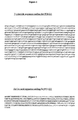
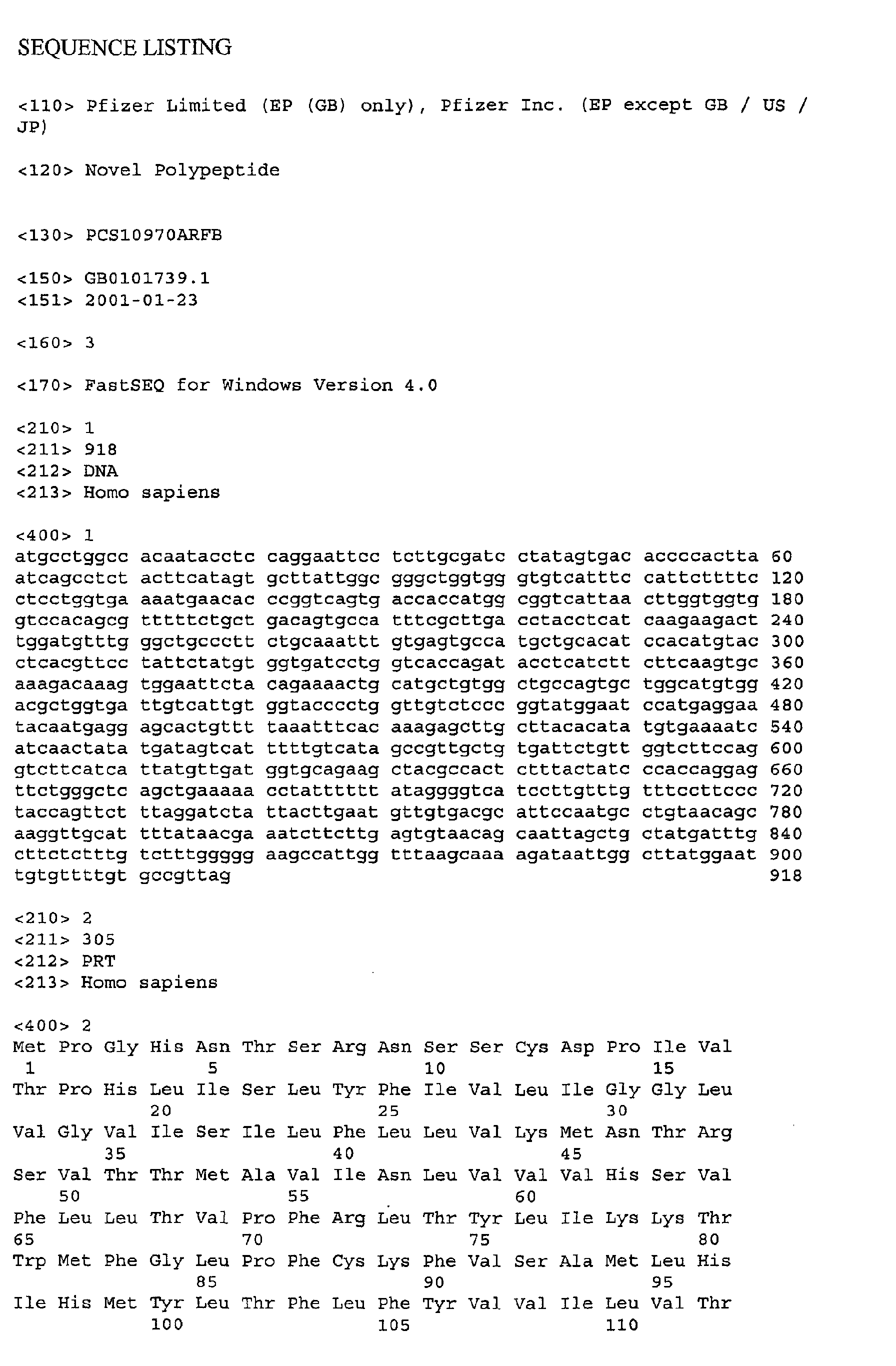
- SEQ ID NO: 1 is the nucleotide sequence coding for PFI-021.
- the ATG translation initiation codon is indicated by the first three letters.
- the stop codon is indicated by the last three letters.
- SEQ ID NO: 2 is the amino acid sequence for PFI-021.
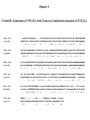
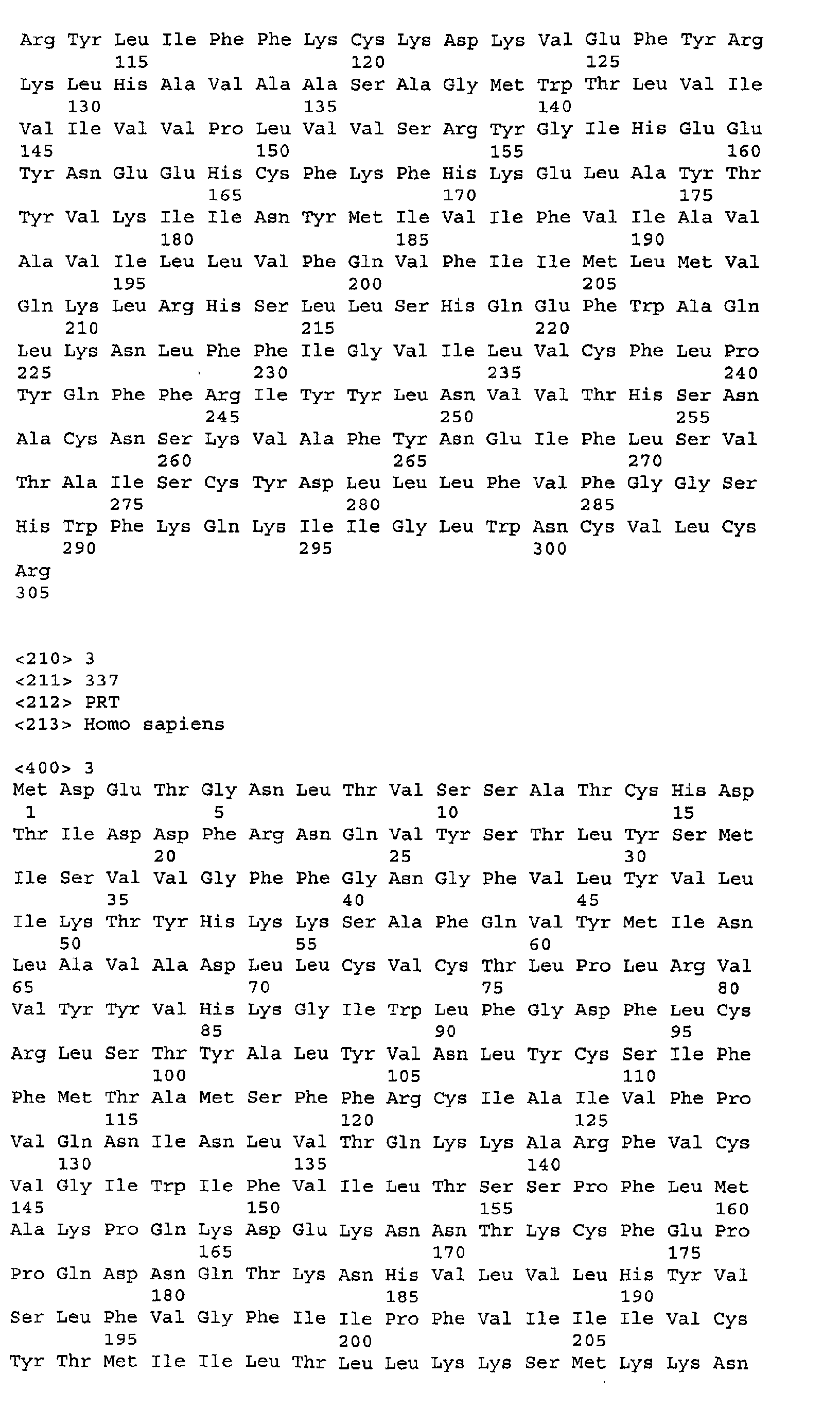
- SEQ ID NO: 3 is a ClustalW Alignment of PFI-021 with cysteinyl leukotriene receptor (CYSLT1).
- the polynucleotide which encodes the GPCR of the present invention was identified electronically and analysed using various bioinformatic tools.
- the GPCR encoded by the sequences described herein has been termed PFI-021.
- nucleotide sequence refers to an oligonucleotide sequence or polynucleotide sequence, and variants, homologues, fragments and derivatives thereof (such as portions thereof).
- the nucleotide sequence may be DNA or RNA of genomic or synthetic or recombinant origin which may be double-stranded or single-stranded whether representing the sense or antisense strand.
- nucleotide sequence means DNA. More preferably, the term “nucleotide sequence” means DNA prepared by use of recombinant DNA techniques (i.e. recombinant DNA).
- the present invention does not cover the native nucleotide coding sequence according to the present invention in its natural environment when it is under the control of its native promoter which is also in its natural environment.
- the "non-native nucleotide sequence” we shall call this preferred embodiment the "non-native nucleotide sequence".
- amino acid sequence refers to peptide or protein sequences or portions thereof.
- polypeptide which is interchangeable with the term protein, refers to amino acid sequences, which are at least 5 amino acids in length, preferably at least 10 amino acids in length, more preferably at least 15 amino acids in length, yet more preferably at least 20 amino acids in length, preferably at least 50 amino acids in length.
- the present invention does not cover the native PFI-021 polypeptide according to the present invention when it is in its natural environment and when it has been expressed by its native nucleotide coding sequence which is also in its natural environment and when that nucleotide sequence is under the control of its native promoter which is also in its natural environment.
- the "non-native amino acid sequence” we shall call this preferred embodiment the "non-native amino acid sequence".
- biologically active refers to a PFI-021 polypeptide having structural, regulatory or biochemical functions of the naturally occurring PFI-021.
- a polypeptide according to the invention having "PFI-021 activity” has at least one of the structural, regulatory or biochemical functions of the native PFI-021 polypeptide.
- immunological activity is defined as the capability of the natural, recombinant or synthetic PFI-021 peptide or any oligopeptide thereof, to induce a specific immune response in appropriate animals or cells and to bind with specific antibodies.
- derivative includes chemical modification of a PFI-021 polypeptide .
- isolated and purified refer to molecules, either nucleic or amino acid sequences, that are removed from their natural environment and isolated or separated from at least one other component with which they are naturally associated.
- variant in relation to the amino acid sequence for the preferred polypeptide of the present invention include any substitution of, variation of, modification of, replacement of, deletion of or addition of one (or more) amino acid from or to the sequence providing the resultant polypeptide has PFI-021 activity.
- homologue covers homology with respect to structure and/or function.
- variant in relation to the nucleotide sequence coding for the preferred polypeptide of the present invention include any substitution of, variation of, modification of, replacement of, deletion of or addition of one (or more) nucleic acid from or to the sequence providing the resultant nucleotide sequence codes for or is capable of coding for a polypeptide having PFI-021 activity.
- homologue covers homology with respect to structure and/or function providing the resultant nucleotide sequence codes for or is capable of coding for an enzyme having PFI-021 activity. With respect to sequence homology (i.e.
- identity preferably there is at least 70%, preferably at least 70-75%, more preferably at least 75%, preferably at least 75-80%, more preferably at least 80%, preferably at least 80-85%, more preferably at least 85%, preferably at least 85-90%, more preferably at least 90%, preferably at least 90-95%, yet more preferably greater than 95% identity, preferably at least 98% identity to the polynucleotide sequence shown in Figure 1 and SEQ ID NO: 1.
- sequence identity can be determined by commercially available computer programs that can calculate percentage (%) homology between two or more sequences.
- a typical example of such a computer program is CLUSTAL.
- variants include allelic variations of the sequences.
- variant also encompasses sequences that are complementary to sequences that are capable of hybridising to the nucleotide sequences presented herein.
- the present invention also covers nucleotide sequences that can hybridise to the nucleotide sequences of the present invention (including complementary sequences of those presented herein).
- the present invention covers nucleotide sequences that can hybridise to the nucleotide sequence of the present invention under stringent conditions when tested using standard laboratory techniques well known in the art (e.g. 65°C and 0.1xSSC).
- vector includes expression vectors and transformation vectors.
- expression vector means a construct capable of in vivo or in vitro expression.
- transformation vector means a construct capable of being transferred from one species to another.
- PFI-021 was identified in unfinished genomic sequence information (GenBank contig accession AC083865) which is being released by the Genome Sequencing Centers by searching the sequences with known members of the G-protein coupled receptor (GPCR) family using the BLAST algorithm. In order to confirm that PFI-021 was a member of the GPCR family, a number of bioinformatics approaches were performed.
- PFI-021 was searched against Swissprot using the BLAST algorithm (Basic Local Alignment Search Tool (Altschul SF (1993) J.Mol. Evol. 36:290-300; Altschul, SF et al (1990) J. Mol. Biol. 215:403-410)) to identify the closest protein match. In this case the top hit was to: Cysteinyl leukotriene receptor (CYSLT1).
- BLAST algorithm Basic Local Alignment Search Tool (Altschul SF (1993) J.Mol. Evol. 36:290-300; Altschul, SF et al (1990) J. Mol. Biol. 215:403-410)
- PFI-021 was searched against a non-redundant human GPCR database comprising mainly sequences from Genbank and Geneseq Patents databases in order to identify the class of agonist for this receptor.
- the top hits are shown below: Source Name E-value GENBANK Cysteinyl leukotriene receptor (CYSLT1) 4e-20 GENBANK G protein-coupled receptor GPR34 [L:381] 1e-18 GENESEQP G-protein coupled receptor GRIR-2 (gene... 7e-18 SWISSPROT G protein-coupled receptor GPR18 (frag... 7e-18 Genbank Cysteinyl Leukotriene receptor CysLT2 (P...
- Expressed sequence tags of the PFI-021 sequence are found mainly in cDNA libraries prepared from peripheral blood mononuclear cells; two ESTs have also been identified in libraries prepared from breast mRNA.
Landscapes
- Health & Medical Sciences (AREA)
- Life Sciences & Earth Sciences (AREA)
- Chemical & Material Sciences (AREA)
- Medicinal Chemistry (AREA)
- Organic Chemistry (AREA)
- General Health & Medical Sciences (AREA)
- Engineering & Computer Science (AREA)
- General Chemical & Material Sciences (AREA)
- Nuclear Medicine, Radiotherapy & Molecular Imaging (AREA)
- Pharmacology & Pharmacy (AREA)
- Animal Behavior & Ethology (AREA)
- Chemical Kinetics & Catalysis (AREA)
- Public Health (AREA)
- Veterinary Medicine (AREA)
- Bioinformatics & Cheminformatics (AREA)
- Biomedical Technology (AREA)
- Endocrinology (AREA)
- Molecular Biology (AREA)
- Immunology (AREA)
- Rheumatology (AREA)
- Urology & Nephrology (AREA)
- Reproductive Health (AREA)
- Neurology (AREA)
- Neurosurgery (AREA)
- Dermatology (AREA)
- Hematology (AREA)
- Physical Education & Sports Medicine (AREA)
- Biochemistry (AREA)
- Cell Biology (AREA)
- Toxicology (AREA)
- Pulmonology (AREA)
- Orthopedic Medicine & Surgery (AREA)
- Obesity (AREA)
- Gynecology & Obstetrics (AREA)
- Cardiology (AREA)
- Microbiology (AREA)
- Psychiatry (AREA)
- Food Science & Technology (AREA)
- Physics & Mathematics (AREA)
- Analytical Chemistry (AREA)
Abstract
Description
| Source | Name | E-value |
| GENBANK | Cysteinyl leukotriene receptor (CYSLT1) | 4e-20 |
| GENBANK | G protein-coupled receptor GPR34 [L:381] | 1e-18 |
| GENESEQP | G-protein coupled receptor GRIR-2 (gene... | 7e-18 |
| SWISSPROT | G protein-coupled receptor GPR18 (frag... | 7e-18 |
| Genbank | Cysteinyl Leukotriene receptor CysLT2 (P... | 8e-17 |
| SWISSPROT | P2Y purinoceptor 5 (P2Y5) [L:344] | 1e-16 |
| SWISSPROT | G protein-coupled receptor KIAA0001. U... | 7e-16 |
| SWISSPROT | G protein-coupled receptor GPR7. [L:328] | 1e-15 |
| (e value = statistical likelihood of the hit occurring by chance) |

Claims (43)
- An isolated polynucleotide essentially consisting of:(a) a polynucleotide encoding a polypeptide as set forth in SEQ ID NO: 2;(b) the nucleotide sequence of SEQ ID NO: 1;(c) a nucleotide sequence that has at least 70% identity to the polynucleotide of (a) or (b);(d) a polynucleotide consisting of a nucleotide sequence which is capable of hybridising to a polynucleotide according to any one of (a) to (c); or(e) a polynucleotide fragment of a polynucleotide according to any one of (a) to (d).
- A polynucleotide according to claim 1, comprising a nucleotide sequence that has at least 75% identity to a polynucleotide according to (a) or (b).
- A polynucleotide according to claim 1, comprising a nucleotide sequence that has at least 80% identity to a polynucleotide according to (a) or (b).
- A polynucleotide according to claim 1, comprising a nucleotide sequence that has at least 85% identity to a polynucleotide according to (a) or (b).
- A polynucleotide according to claim 1, comprising a nucleotide sequence that has at least 90% identity to the polynucleotide according to (a) or (b).
- A polynucleotide according to claim 1, comprising a nucleotide sequence that has greater than 95% identity to a polynucleotide according to (a) or (b).
- A polynucleotide according to claim 1, comprising a nucleotide sequence that has greater than 98% identity to a polynucleotide according to (a) or (b).
- A polynucleotide according to any one of the preceding claims which encodes a G-protein coupled receptor (GPCR).
- A polynucleotide probe or primer comprising at least 15 contiguous nucleotides of a polynucleotide according to any one of the preceding claims.
- A recombinant DNA comprising a polynucleotide sequence according to claim 1.
- A vector comprising a polynucleotide according to any one of claims 1 to 8.
- A host cell comprising a polynucleotide according to any one of claims 1 to 8.
- A host cell transformed or transfected with a vector according to claim 11.
- A host cell according to claim 12 or claim 13 which is a mammalian, insect, bacterial, fungal, or yeast cell.
- A polypeptide comprising:(a) a polypeptide having the deduced amino acid sequence translated from the polynucleotide sequence in SEQ ID NO: 1, and variants, fragments, homologues, analogues and derivatives thereof; or(b) the polypeptide of SEQ ID NO: 2, and variants, fragments, homologues, analogues and derivatives thereof.
- A polypeptide consisting of SEQ ID NO: 2.
- A polypeptide consisting of a variant, fragment, homologue analogue or derivative of the polypeptide of SEQ ID NO: 2.
- A process for producing a polypeptide according to any one of claims 15 to 17 comprising culturing the host cell according to any one of claims 12 to 14 under conditions sufficient for the expression of said polypeptide.
- A process according to claim 18, wherein said expressed polypeptide is present at the surface of said cell.
- A process according to claim 18 or claim 19 which further includes recovering the polypeptide from the culture.
- A process for producing cells capable of expressing a polypeptide according to any one of claims 15 to 17 comprising transforming or transfecting cells with a vector according claim 11.
- Cells produced by the process of claim 21.
- A membrane preparation of the cells according to claim 22.
- An antibody against a polypeptide according to any one of claims 15 to 17.
- An agonist which activates a GPCR polypeptide which corresponds to a polypeptide according to any one of claims 15 to 17.
- An antagonist which inhibits activation of a GPCR polypeptide which corresponds to a polypeptide according to any one of claims 15 to 17.
- A method for identifying an agonist compound which can bind to and activate a GPCR polypeptide which corresponds to a polypeptide according to any one of claims 15 to 17 comprising:(a) contacting a compound to be tested with cells expressing on the surface thereof a polypeptide according to any one of claims 15 to 17, or a membrane preparation of said cells, said polypeptide being associated with a second component capable of providing a detectable signal in response to the binding of an agonist compound to said polypeptide; said contacting being under conditions sufficient to permit binding of agonist compounds to the polypeptide; and(b) identifying an agonist compound capable of polypeptide binding and activation by detecting the signal produced by said second component.
- A method for identifying an antagonist compound which can bind to and inhibit activation of a GPCR polypeptide which corresponds to a polypeptide according to any one of claims 15 to 17 comprising:(a) contacting (i) a detectable first component known to bind to and activate a polypeptide according to any one of claims 15 to 17 and (ii) a compound to be tested with cells expressing on the surface thereof a polypeptide according to any one of claims 15 to 17, or a membrane preparation of said cells, said polypeptide being associated with a second component capable of providing a detectable signal in response to the binding of said detectable first component to said polypeptide; said contacting being under conditions sufficient to permit binding of said detectable first component or agonist compounds to the polypeptide; and(b) determining the extent to which the binding of the first component to the polypeptide is affected by the test compound, by detecting the absence or otherwise of a signal generated from the interaction of the first component with the polypeptide.
- An agonist according to claim 25 or an antagonist according to claim 26 for use as a pharmaceutical.
- Use of an agonist according to claim 25 in the manufacture of a medicament for the treatment of a patient having a condition or disease which can be ameliorated by activation of the GPCR.
- Use of an antagonistaccording to claim 26 in the manufacture of a medicament for the treatment of a patient having a condition or disease which can be ameliorated by inhibition of the GPCR.
- A method for the treatment of a patient having a condition or disease which can be ameliorated by activation of a GPCR corresponding to a polypeptide according to any one of claims 15 to 17 comprising administering to the patient a therapeutically effective amount of an agonist according to claim 25.
- The method of claim 32, wherein said agonist is a polypeptide and a therapeutically effective amount of the compound is provided by administering to the patient DNA encoding said agonist polypeptide and expressing said agonist polypeptide in vivo.
- A method for the treatment of a patient having a condition or disease which can be ameliorated by inhibition of a GPCR corresponding to a polypeptide according to any one of claims 15 to 17 comprising administering to the patient a therapeutically effective amount of an antagonist according to claim 26.
- The method of claim 34, wherein said antagonist is a polypeptide and a therapeutically effective amount of the antagonist polypeptide is provided by administering to the patient DNA encoding said antagonist polypeptide and expressing said antagonist polypeptide in vivo.
- A method for the treatment of a patient having a condition or disease which can be ameliorated by either activation of, or inhibition of, a GPCR corresponding to a polypeptide according to any one of claims 15 to 17, comprising administering to the patient a therapeutically effective amount of an antibody according to claim 24.
- Use of an antibody according to of claim 24 in the manufacture of a medicament for the treatment of a patient having a condition or disease which can be ameliorated by either the activation or the inhibition of a GPCR corresponding to a polypeptide according to any one of claims 15 to 17.
- A method of treatment of a patient having need to upregulate a GPCR corresponding to a polypeptide according to any one of claims 15 to 17, comprising administering to the patient a therapeutically effective amount of a polypeptide according to any one of claims 15 to 17.
- The method of claim 38, wherein said therapeutically effective amount of polypeptide is provided by administering to the patient DNA encoding said polypeptide and expressing said polypeptide in vivo.
- Use of a polypeptide according to any one of claims 15 to 17 in the manufacture of a medicament for the treatment of a patient having need to upregulate a GPCR corresponding to a polypeptide according to any one of claims 15 to 17.
- Cells or animal genetically engineered to overexpress a polypeptide according to any one of claims 15 to 17.
- Cells or animal genetically engineered to underexpress a polypeptide according to any one of claims 15 to 17.
- Cells or animal genetically engineered to exhibit targeted deletion of a polypeptide according to any one of claims 15 to 17.
Applications Claiming Priority (2)
| Application Number | Priority Date | Filing Date | Title |
|---|---|---|---|
| GB0101739 | 2001-01-23 | ||
| GBGB0101739.1A GB0101739D0 (en) | 2001-01-23 | 2001-01-23 | Novel polypeptide |
Publications (2)
| Publication Number | Publication Date |
|---|---|
| EP1225183A2 true EP1225183A2 (en) | 2002-07-24 |
| EP1225183A3 EP1225183A3 (en) | 2002-12-11 |
Family
ID=9907345
Family Applications (1)
| Application Number | Title | Priority Date | Filing Date |
|---|---|---|---|
| EP02250128A Withdrawn EP1225183A3 (en) | 2001-01-23 | 2002-01-09 | Human G-protein coupled receptor |
Country Status (4)
| Country | Link |
|---|---|
| EP (1) | EP1225183A3 (en) |
| JP (1) | JP2003024082A (en) |
| CA (1) | CA2365997A1 (en) |
| GB (1) | GB0101739D0 (en) |
Cited By (1)
| Publication number | Priority date | Publication date | Assignee | Title |
|---|---|---|---|---|
| WO2004104596A3 (en) * | 2003-05-22 | 2005-06-09 | Bayer Healthcare Ag | Diagnostics and therapeutics for diseases associated with igs70 (igs70) |
Family Cites Families (5)
| Publication number | Priority date | Publication date | Assignee | Title |
|---|---|---|---|---|
| CA2388865A1 (en) * | 1999-11-16 | 2001-05-25 | Pharmacia & Upjohn Company | Novel g protein-coupled receptors |
| AU2001274522A1 (en) * | 2000-06-15 | 2001-12-24 | Takeda Chemical Industries Ltd. | Novel g protein-coupled receptor protein and dna thereof |
| WO2002026825A2 (en) * | 2000-09-29 | 2002-04-04 | Incyte Genomics, Inc. | G-protein coupled receptors |
| AU2002219890B2 (en) * | 2000-11-27 | 2007-06-14 | Arena Pharmaceuticals, Inc. | Endogenous and non-endogenous versions of human G protein-coupled receptors |
| WO2002044212A2 (en) * | 2000-11-30 | 2002-06-06 | Deleersnijder, Willy | Human g-protein coupled receptor and uses thereof |
-
2001
- 2001-01-23 GB GBGB0101739.1A patent/GB0101739D0/en not_active Ceased
-
2002
- 2002-01-09 EP EP02250128A patent/EP1225183A3/en not_active Withdrawn
- 2002-01-17 JP JP2002008881A patent/JP2003024082A/en active Pending
- 2002-01-21 CA CA002365997A patent/CA2365997A1/en not_active Abandoned
Cited By (1)
| Publication number | Priority date | Publication date | Assignee | Title |
|---|---|---|---|---|
| WO2004104596A3 (en) * | 2003-05-22 | 2005-06-09 | Bayer Healthcare Ag | Diagnostics and therapeutics for diseases associated with igs70 (igs70) |
Also Published As
| Publication number | Publication date |
|---|---|
| JP2003024082A (en) | 2003-01-28 |
| EP1225183A3 (en) | 2002-12-11 |
| CA2365997A1 (en) | 2002-07-23 |
| GB0101739D0 (en) | 2001-03-07 |
Similar Documents
| Publication | Publication Date | Title |
|---|---|---|
| Qian et al. | Cloning and characterization of teneurin C-terminus associated peptide (TCAP)-3 from the hypothalamus of an adult rainbow trout (Oncorhynchus mykiss) | |
| Zhou et al. | The evolution of tachykinin/tachykinin receptor (TAC/TACR) in vertebrates and molecular identification of the TAC3/TACR3 system in zebrafish (Danio rerio) | |
| Wang et al. | Existence and functions of a kisspeptin neuropeptide signaling system in a non-chordate deuterostome species | |
| US20090226403A1 (en) | Olfactory and pheromones G-protein coupled receptors | |
| US20010016336A1 (en) | G-protein coupled receptor HFIAO41 | |
| JPH10295376A (en) | Cloning of human GPR14 receptor | |
| JPH1128093A (en) | CDNA clone HDPBI30 encoding novel human 7-transmembrane receptor | |
| EP0885960A2 (en) | G-protein coupled receptor (H7TBA62) | |
| JPH11235184A (en) | Cdna clone hneaa81 encoding human 7-transmembrane receptor | |
| US5882926A (en) | Excitatory amino acid transporter gene and uses | |
| US6344342B1 (en) | Human G protein coupled lysophosphatidic acid receptor | |
| US20030017536A1 (en) | Novel polypeptide | |
| JP2002512780A (en) | Cloning of novel 7TM receptor AXOR-2 | |
| JP2003210183A (en) | HUMAN IkappaB-beta | |
| JP2002186491A (en) | G-protein conjugated receptor hofnh30 | |
| JP2002199892A (en) | New splicing variant of epstein-barr virus-induced g- protein coupled receptor | |
| JP2002508934A (en) | Novel nucleic acids and polypeptides having homology to the TNF receptor | |
| JPH10337189A (en) | New compound | |
| CA2365997A1 (en) | Novel polypeptide | |
| JP3661953B2 (en) | Novel ATP-sensitive potassium channel protein and its gene | |
| US20040241757A1 (en) | Novel screening method using prokineticin receptor | |
| JPH1118782A (en) | Novel human neurotensin receptor type 2 and splice variants thereof | |
| JP2002223780A (en) | Human 7 tm receptor similar to mouse frizzled-6 gene | |
| JP2005500012A (en) | Nuclear hormone receptor ligand binding domain | |
| JP2000078994A (en) | CDNA clone HNFDY20 encoding a novel 7-transmembrane receptor |
Legal Events
| Date | Code | Title | Description |
|---|---|---|---|
| PUAI | Public reference made under article 153(3) epc to a published international application that has entered the european phase |
Free format text: ORIGINAL CODE: 0009012 |
|
| 17P | Request for examination filed |
Effective date: 20020126 |
|
| AK | Designated contracting states |
Kind code of ref document: A2 Designated state(s): AT BE CH CY DE DK ES FI FR GB GR IE IT LI LU MC NL PT SE TR |
|
| AX | Request for extension of the european patent |
Free format text: AL;LT;LV;MK;RO;SI |
|
| PUAL | Search report despatched |
Free format text: ORIGINAL CODE: 0009013 |
|
| AK | Designated contracting states |
Kind code of ref document: A3 Designated state(s): AT BE CH CY DE DK ES FI FR GB GR IE IT LI LU MC NL PT SE TR |
|
| AX | Request for extension of the european patent |
Free format text: AL;LT;LV;MK;RO;SI |
|
| AKX | Designation fees paid |
Designated state(s): AT BE CH CY DE DK ES FI FR GB GR IE IT LI LU MC NL PT SE TR |
|
| STAA | Information on the status of an ep patent application or granted ep patent |
Free format text: STATUS: THE APPLICATION IS DEEMED TO BE WITHDRAWN |
|
| 18D | Application deemed to be withdrawn |
Effective date: 20060802 |