EP1224975A1 - Anion exchanger, process for producing same, and its use - Google Patents
Anion exchanger, process for producing same, and its use Download PDFInfo
- Publication number
- EP1224975A1 EP1224975A1 EP02001094A EP02001094A EP1224975A1 EP 1224975 A1 EP1224975 A1 EP 1224975A1 EP 02001094 A EP02001094 A EP 02001094A EP 02001094 A EP02001094 A EP 02001094A EP 1224975 A1 EP1224975 A1 EP 1224975A1
- Authority
- EP
- European Patent Office
- Prior art keywords
- anion exchanger
- fine particle
- polyamine
- group
- molecular weight
- Prior art date
- Legal status (The legal status is an assumption and is not a legal conclusion. Google has not performed a legal analysis and makes no representation as to the accuracy of the status listed.)
- Granted
Links
Images

Classifications
-
- C—CHEMISTRY; METALLURGY
- C08—ORGANIC MACROMOLECULAR COMPOUNDS; THEIR PREPARATION OR CHEMICAL WORKING-UP; COMPOSITIONS BASED THEREON
- C08J—WORKING-UP; GENERAL PROCESSES OF COMPOUNDING; AFTER-TREATMENT NOT COVERED BY SUBCLASSES C08B, C08C, C08F, C08G or C08H
- C08J5/00—Manufacture of articles or shaped materials containing macromolecular substances
- C08J5/20—Manufacture of shaped structures of ion-exchange resins
-
- B—PERFORMING OPERATIONS; TRANSPORTING
- B01—PHYSICAL OR CHEMICAL PROCESSES OR APPARATUS IN GENERAL
- B01J—CHEMICAL OR PHYSICAL PROCESSES, e.g. CATALYSIS OR COLLOID CHEMISTRY; THEIR RELEVANT APPARATUS
- B01J41/00—Anion exchange; Use of material as anion exchangers; Treatment of material for improving the anion exchange properties
- B01J41/08—Use of material as anion exchangers; Treatment of material for improving the anion exchange properties
- B01J41/12—Macromolecular compounds
- B01J41/13—Macromolecular compounds obtained otherwise than by reactions only involving unsaturated carbon-to-carbon bonds
-
- B—PERFORMING OPERATIONS; TRANSPORTING
- B01—PHYSICAL OR CHEMICAL PROCESSES OR APPARATUS IN GENERAL
- B01J—CHEMICAL OR PHYSICAL PROCESSES, e.g. CATALYSIS OR COLLOID CHEMISTRY; THEIR RELEVANT APPARATUS
- B01J41/00—Anion exchange; Use of material as anion exchangers; Treatment of material for improving the anion exchange properties
- B01J41/20—Anion exchangers for chromatographic processes
Definitions
- This invention relates to an anion exchanger, a packing for chromatography comprised of the anion exchanger, and a column for chromatography packed with the packing.
- Fine particles having an anion exchanging group are widely used in the field of liquid chromatography for analyzing, or separating or isolating, for example, amino acids, peptide, protein, nucleic acids and saccharides.
- An anion exchanger of a fine particle form is generally produced by introducing an anion exchanging group by allowing the anion exchanging group to bind directly to a functional group present on the surface of the fine particle. More specifically, methods are known wherein a functional group such as a hydroxyl, epoxy or haloalkyl group is introduced onto the surface of a fine particle, and then an anion exchanging nitrogen compound is allowed to react directly with the functional group on the particle surface whereby an anion exchanging group is introduced in the fine particle.
- a functional group such as a hydroxyl, epoxy or haloalkyl group
- the fine particles used include, for example, crosslinked fine particles of polysaccharides such as cellulose, agarose and dextran, fine particles of inorganic materials such as silica gel, alumina and zeolites, and fine particles of organic polymeric materials such as an acrylic polymer and a styrene polymer.
- Capacity for analysis or separation of the anion exchanger namely, capacity for keeping a sample to be analyzed or separated on the surface of the anion exchanger comprised of a fine particle having an anion exchanging group having introduced on the surface thereof, is principally determined by area of the surface of fine particle (in the case of a fine particle having micropores, the capacity for analysis and separation is determined by the diameter of micropores and the surface area thereof).
- Such anion exchanger is characterized in that, when it is used for liquid chromatography for adsorbing a sample to be analyzed or isolated, as a single layer on the fine particle surface, it exhibits a high rate of adsorption and desorption and gives a sharp pattern of separation.
- the above-mentioned graft polymerization method (ii) is known as being capable of producing an anion exchanger having a large capacity of adsorbing a sample.
- the anion exchanger produced by the graft polymerization method has straight-chain polymers on the surface thereof, and therefore, when it is used as being packed in a column for liquid chromatography, a high operation pressure is required for feeding a liquid.
- pressure-resistant equipment and pipes must be used for liquid chromatography means spanning from a liquid-feed pump to a detector and for paths of flow connecting these means each other.
- the liquid flow characteristics are closely related with the particle diameter of anion exchanger. If the particle diameter of anion exchanger is enlarged, the liquid flow characteristics can be improved, but, the separation capacity of anion exchanger as used for liquid chromatography is lowered. To sum up, the anion exchanger produced by the graft polymerization method (ii) cannot be advantageously employed for liquid chromatography for which a high adsorption capacity and a high separation capacity are required.
- an object of the present invention is to provide an anion exchanger which is a fine particle having a polyamine bound to the surface thereof, and exhibits an enhanced adsorption capacity for a sample to be analyzed, separated or isolated.
- Another object of the present invention is to provide a process for producing an anion exchanger of a fine particle form, which exhibits an enhanced adsorption capacity for a sample to be analyzed, separated or isolated, by binding a polyamine to an epoxy group or a halogenated alkyl group or an aldehyde group, present on the surface of the fine particle.
- Still another object of the present invention is to provide a packing for chromatography comprised of an anion exchanger exhibiting an enhanced adsorption capacity for a sample to be analyzed, separated or isolated.
- a further aspect of the present invention is to provide a column for chromatography packed with the above-mentioned packing.
- an anion exchanger which is a fine particle having bound to the surface thereof a polyamine having a number average molecular weight of at least 50,000.
- the fine particle is preferably a porous particle having pores having an average diameter of at least 150 ⁇ .
- a process for producing an anion exchanger of a fine particle form comprising the step of binding a polyamine having a number average molecular weight of at least 50,000 to at least one group selected from the group consisting of an epoxy group, a halogenated alkyl group and an aldehyde group, present on the surface of a fine particle.
- the binding of the polyamine to the fine particle is carried out by placing the polyamine in contact with the fine particle which is dispersed in an aqueous liquid medium, in the presence of a base.
- a packing for chromatography which is comprised of the above-mentioned polyamine-bound fine particle.
- Figure 1 illustrates chromatograms (A), (B) and (C) as obtained for separating protein in Example 1, Comparative Example 1 and Comparative Example 3, respectively.
- the anion exchanger of the present invention is comprised of a fine particle having bound to the surface thereof a polyamine having a number average molecular weight of at least 50,000.
- the anion exchanger has a large adsorption capacity for a sample to be analyzed or separated and, when it is used as a packing for liquid chromatography, it exhibits good characteristics for liquid passage. Therefore, the particle diameter can be rendered small, and the capacity of separation of a sample is not reduced. Consequently, according to the anion exchanger of the present invention, the capacity of adsorption of a sample is enhanced, and the rate of adsorption and desorption of a sample is enhanced and a sharp pattern of separation is obtained, which is in a striking contrast to the conventional technique.
- the diameter of a fine particle constituting the anion exchanger of the present invention is not particularly limited, but is preferably in the range of about 1 ⁇ m to about 100 ⁇ m to obtain a better separation capability when used for liquid chromatography.
- the fine particles used include organic fine particles and inorganic fine particles.
- the organic fine particles include, for example, those of copolymers of a monofunctional vinyl monomer with a polyfunctional vinyl monomer, and crosslinked polysaccharides.
- the monofunctional vinyl monomer there can be mentioned hydroxyalkyl esters of acrylic acid and methacrylic acid, such as 2-hydroxyethyl acrylate, 2,3-dihydroxypropyl acrylate, 2-hydroxyethyl methacrylate and 2,3-dihydroxypropyl methacrylate; epoxy group-containing esters of acrylic acid and methacrylic acid, such as glycidyl acrylate and glycidyl methacrylate; halogenated alkyl esters of acrylic acid and methacrylic acid, such as 3-chloro-2-hydroxypropyl acrylate, 3-bromopropyl acrylate, 3-chloro-2-hydroxypropyl methacrylate and 3-bromopropyl methacrylate; acrylic acid and meth
- polyfunctional vinyl monomer there can be mentioned polyol esters of acrylic acid and methacrylic acid, such as ethylene glycol diacrylate, glycerol diacrylate, ethylene glycol dimethacrylate and glycerol dimethacrylate; and divinylbenzene and triallyl isocyanurate.
- polyol esters of acrylic acid and methacrylic acid such as ethylene glycol diacrylate, glycerol diacrylate, ethylene glycol dimethacrylate and glycerol dimethacrylate
- divinylbenzene and triallyl isocyanurate As specific examples of the crosslinked polysaccharides, there can be mentioned cellulose, agarose, dextran and mannose.
- inorganic fine particles there can be mentioned silica, zeolite, titania, aluminum oxide and hydroxyapatite.
- the fine particles may be non-porous fine particles, i.e., those which do not have pores on the surface thereof, but are preferably porous fine particles having pores with an average diameter of at least 150 ⁇ , more preferably at least 250 ⁇ , in view of improved adsorption capacity for a sample to be analyzed or separated.
- the upper limit of the average pore diameter is not particularly limited, but is usually 0.5 ⁇ m.
- the polyamine having a number average molecular weight of at least 50,000 to be bound to the above-mentioned fine particle surface includes homopolymers of an amino group-containing unsaturated monomer and copolymers of two or more of such monomers.
- the polyamine there can be mentioned polyetyleneimine, polyallylamine, and homopolymers and copolymers derived from amino group-containing unsaturated monomer such as N,N-dimethylaminopropylmethacrylamide and N,N-dimethylaminoethyl methacrylate.
- polyethyleneimine is preferable in view of improved properties of the resulting anion exchanger.
- the polyamine is not particularly limited provided that it has a number average molecular weight, as measured on viscosity, of at least 50,000, but preferably has a number average molecular weight in the range of about 50,000 to about 500,000.
- polyamine having a molecular weight of this range is introduced onto the fine particle surface having pores exposed on the surface thereof, the polyamine easily penetrates into the pores and thus a large amount of the polyamine can be bound to the fine particle surface with the results that an anion exchanger having a more enhanced adsorption capacity can be obtained.
- the polyethylene is bound to the surface of the particle, in the form represented by the following formula (1) or (2): wherein A denotes the anion exchanger particle, m is an integer of at least 1 and n is an integer of at least 0.
- the anion exchanger of the present invention is prepared preferably by a process wherein a polyamine having a molecular weight of at least 50,000 is allowed to react with a functional group capable of reacting with a tertiary or lower amino group, such as an epoxy group or a halogenated alkyl group or an aldehyde group, present on the surface of a fine particle.
- a functional group capable of reacting with a tertiary or lower amino group, such as an epoxy group or a halogenated alkyl group or an aldehyde group, present on the surface of a fine particle.
- an epoxy group a halogenated alkyl group and an aldehyde group are preferable because the polyamine can be effectively introduced onto an epoxy group, a halogenated alkyl group or an aldehyde group by placing a fine particle having these groups in contact with the polyamine in an appropriate liquid medium.
- the halogenated alkyl group is preferably a chlorinated, brominated or iodated alkyl group having 1 to 6 carbon atoms.
- the fine particle having a functional group capable of reacting with a tertiary or lower amino group, such as an epoxy group or a halogenated alkyl group or an aldehyde group, on the surface thereof is known and can be prepared by a conventional procedure.
- An epoxy group, a halogenated alkyl group and an aldehyde group can be introduced onto the surface of fine particle by treating a fine particle with, for example, epichlorohydrin, ethylene glycol diglycidyl ether and butanediol diglycidyl ether for an epoxy group; epichlorohydrin and 1,3-bromobutane for a halogenated alkyl goup; and glutaraldehyde for an aldehyde group.
- a single functional group or a combination of two or more functional groups may be present on the fine particle surface.
- the reaction of the polyamine with an epoxy group or a halogenated alkyl group or an aldehyde group, present on the fine particle surface is preferably carried out by placing the polyamine in contact with the fine particle in an aqueous dispersion under a basic condition. This procedure can be easily conducted and the production efficiency of the anion exchanger of the present invention is high.
- the fine particle is dispersed in an aqueous medium.
- the aqueous medium is not particularly limited provided that it is capable of dissolving the polyamine and the fine particle is dispersible in the aqueous medium.
- the polyamine is added in the aqueous medium while the aqueous medium is stirred under a basic condition.
- the basic condition can be obtained by adding a base such as an caustic alkali or a quaternary ammonium compounds such as tetramethylammonium hydroxide in an amount such that pH of at least 9 is obtained.
- reaction of the polyamine with an epoxy group or a halogenated alkyl group or an aldehyde group proceeds even at room temperature, but is preferably carried out under heated conditions. For example, this reaction can be effected to the desired extent by maintaining at about 40°C for about 2 hours. Finally the fine particle is taken out from the aqueous medium and then washed to remove unreacted polyamine. An aqueous hydrochloric acid solution is preferably used for washing.
- the anion exchanger of the present invention is useful as a packing for chromatography. More specifically the anion extender is packed in a column made of glass or a metal, and the packed column is used in chromatography for analyzing, separating or isolating anionic protein or other materials.
- a 500 ml three-necked flask is charged with 50 g of porous hydrophilic acrylate polymer particles having an average particle diameter of 10 ⁇ m and pores with an average diameter of 1,000 ⁇ , 50 g of pure water and 50 g of epichlorohydrin.
- a stirrer is equipped with the flask, and the flask was dipped in an oil bath maintained at 40°C and the content was gently stirred.
- the above-mentioned porous hydrophilic acrylate polymer particles used were taken from a commercially available column (tradename "TSK gel G5000 PWXL" available from Tosoh Corporation).
- a 200 ml flask was charged with 40 g of sodium hydroxide and 60 g of pure water to prepare an aqueous sodium hydroxide solution.
- the aqueous sodium hydroxide solution was dropwise added to the above-mentioned content in the 500 ml flask over a period of one hour by using Perista pump while being stirred. After completion of the dropwise addition of sodium hydroxide, the mixture was further stirred for one hour to conduct epoxidation of the acrylate polymer particle surface. After completion of epoxidation, the fine particles were separated by a glass filter and washed with pure water.
- a 300 ml three-necked flask was charged with 50 g of the epoxidated fine particles, and then 100 g of pure water was added, and the mixture was stirred at room temperature.
- To the flask 15 g of a 30% solution of polyethyleneimine (tradename "P-70” available from Wako Pure Chemical Ind. Ltd.; number average molecular weight: 70,000) and the mixture was stirred. pH value of the polyethyleneimine-added mixture was higher than 11 as measured by a pH-test paper.
- the flask was dipped in an oil bath maintained at 40°C and the content was stirred for 2 hours whereby polyethyleneimine was bound to the fine particle surface. After completion of the reaction, the fine particles were separated by a glass filter, and washed with an aqueous 0.5N hydrochloric solution and then with pure water to obtain an anion exchanger.
- the anion exchanger was packed in a column having a size of 4.6 mm I.D. ⁇ 5 mmL.
- the adsorption capacity for protein was measured by a break-through method.
- the measuring conditions and equipment employed were as follows.
- the adsorption capacity for protein (BSA) was 80 mgBSA/ml ⁇ gel as calculated taking the 10% height of extinction change due to protein elution as the break point.
- the above-mentioned anion exchanger was packed in a column having a size of 7.5 mm I.D. ⁇ 75 mmL. Separation of protein was conducted under the following conditions. The equipment used was the same as mentioned above.
- chromatogram (A) The test results are shown in chromatogram (A) in Fig. 1.
- the anion exchanger prepared in Example 1 had a large adsorption capacity for protein and a high separation performance.
- the liquid feed pressure in the flow paths was 1.2 MPa, and thus, the anion exchanger had good liquid permeation characteristics. That is, a large adsorption capacity and high separation performance can be obtained at a low liquid feed pressure.
- An anion exchanger was prepared and its adsorption capacity for protein was evaluated by the same procedures as described in Example 1 wherein polyallylamine hydrochloride having a number average molecular weight of about 100,000 (available from Nittobo K.K.) was used instead of poyethyleneimine P-70, and, when the polyallylamine hydrochloride was bound to a fine particle, an aqueous 1N sodium hydroxide solution was used to adjust the pH value to 11. All other conditions remained the same.
- the adsorption capacity for protein of the anion exchanger was 40 mgBSA/ml ⁇ gel.
- Example 2 Three anion exchangers were prepared and their adsorption capacities for protein were evaluated by the same procedures as described in Example 1 wherein three kinds of polyethyleneimine having a numver average molecular weight of 600, 1,800 and 10,000 (available from Wako Pure Chemical Ind. Ltd.) were separately used each in an amount of 5g with all other conditions remaining the same.
- the adsorption capacities for protein of the three anion exchangers were as follows. Molecular weight of polyethyleneimine Adsorption capacity for protein (mgBSA/ml ⁇ gel) 600 42 1,800 40 10,000 43
- the anion exchanger prepared from polyethyleneimine having a number average molecular weight of 600 was packed in a column and separation of protein was tested by the same procedures as described in Example 1.
- An anion exchanger was prepared and its adsorption capacity for protein was evaluated by the same procedures as described in Example 2 wherein polyallylamine having a number average molecular weight of 30,000 (available from Nittobo K.K.) was used instead of the polyallyamine hydrochloride with all other conditions remaining the same.
- the adsorption capacity for protein of the anion exchanger was 33 mgBSA/ml ⁇ gel.
- An anion exchanger was prepared and its adsorption capacity for protein was evaluated by the same procedures as described in Example 1 wherein trimethylamine (available from Tokyo Kasei K.K.) was used instead of polyethyleneimine P-70 with all other conditions remaining the same.
- the adsorption capacity for protein of the anion exchanger was 35 mgBSA/ml ⁇ gel.
- the anion exchanger prepared was packed in a column and protein separation performance was tested by the same procedures as described in Example 1 wherein the gradient time was changed to 60 minutes with all other conditions remaining the same.
- the test results are shown in chromatogram (C) in Fig. 1. As seen from Fig. 1, the protein separation effect was poor as compared with that obtained in Example 1 (chromatogram (A)).
- the anion exchanger of the present invention having polyamine with a large molecular weight bound to the surface thereof has a large adsorption capacity, but, disadvantages such as widening of each elution peak of protein and elevation of feed pressure are not caused.
- the conventional ion exchanger comprised of fine particles having an ion exchanging polymer chain introduced on the surface thereof, which has disadvantages such that the rate of adsorption and desorption of an objective sample in liquid chromatography is low, the elution peak of an objective sample is widened, and the pressure for feeding liquid is increased.
- the anion exchanger of the present invention exhibits an enhanced adsorption capacity for protein and other objective samples, although the anion exchanger is comprised of fine particles.
- the anion exchanger When the anion exchanger is used as a packing for liquid chromatography, it exhibits good liquid permeability and high performance. By good liquid permeability, the operation can be conducted at a reduced liquid feed pressure.
Landscapes
- Chemical & Material Sciences (AREA)
- Organic Chemistry (AREA)
- Chemical Kinetics & Catalysis (AREA)
- Engineering & Computer Science (AREA)
- Manufacturing & Machinery (AREA)
- Analytical Chemistry (AREA)
- Materials Engineering (AREA)
- Health & Medical Sciences (AREA)
- Medicinal Chemistry (AREA)
- Polymers & Plastics (AREA)
- Treatment Of Liquids With Adsorbents In General (AREA)
- Solid-Sorbent Or Filter-Aiding Compositions (AREA)
Abstract
Description
- This invention relates to an anion exchanger, a packing for chromatography comprised of the anion exchanger, and a column for chromatography packed with the packing.
- Fine particles having an anion exchanging group are widely used in the field of liquid chromatography for analyzing, or separating or isolating, for example, amino acids, peptide, protein, nucleic acids and saccharides.
- An anion exchanger of a fine particle form is generally produced by introducing an anion exchanging group by allowing the anion exchanging group to bind directly to a functional group present on the surface of the fine particle. More specifically, methods are known wherein a functional group such as a hydroxyl, epoxy or haloalkyl group is introduced onto the surface of a fine particle, and then an anion exchanging nitrogen compound is allowed to react directly with the functional group on the particle surface whereby an anion exchanging group is introduced in the fine particle. The fine particles used include, for example, crosslinked fine particles of polysaccharides such as cellulose, agarose and dextran, fine particles of inorganic materials such as silica gel, alumina and zeolites, and fine particles of organic polymeric materials such as an acrylic polymer and a styrene polymer. Capacity for analysis or separation of the anion exchanger, namely, capacity for keeping a sample to be analyzed or separated on the surface of the anion exchanger comprised of a fine particle having an anion exchanging group having introduced on the surface thereof, is principally determined by area of the surface of fine particle (in the case of a fine particle having micropores, the capacity for analysis and separation is determined by the diameter of micropores and the surface area thereof). Such anion exchanger is characterized in that, when it is used for liquid chromatography for adsorbing a sample to be analyzed or isolated, as a single layer on the fine particle surface, it exhibits a high rate of adsorption and desorption and gives a sharp pattern of separation.
- In recent years, in order to enhance the rate of operation for separation of protein or other sample materials to be adsorbed, an anion exchanger having an improved capacity for adsorption of protein or the other materials is being developed. Attempts are being made for enhancing the adsorption capacity of the surface of a fine particle. For example, a process for producing an anion exchanger capable of adsorbing a sample to form multi-layers of the sample on the surface of a fine particle by introducing a polymer chain having an anion exchanging group onto the fine particle surface has been proposed in U.S. Patent No. 5,453,186.
- As the method of introducing the polymer chain having an anion exchanging group onto a fine particle surface, many proposals have been made. For examples, there have been proposed (i) a method of preparing a polymer having copolymerized therein a monomer having a crosslinking functional group, and then, allowing the crosslinking functional group introduced in the polymer to react with a functional group present on the surface of a fine particle to thereby introduce the polymer having an anion exchange group onto the fine particle surface; (ii) a method of graft polymerization, namely, irradiating a fine particle surface with radiation to form radical initiating sites, or treating a fine particle surface with a cerium salt or a manganese salt to form hydroxyl groups as radical initiating sites, and then, allowing a polymer chain to grow on each radical initiating site; (iii) a method of introducing an unsaturated group onto a fine particle surface and then treating the unsaturated group-introduced polymer in a monomer solution whereby a polymer chain derived from the monomer is allowed to grow on the unsaturated group; and (iv) a method of introducing a functional group to a polymer terminal and then the polymer is allowed to react with a functional group present on a fine particle surface.
- Among the above-mentioned methods (i) of preparing a polymer having copolymerized therein a monomer having a crosslinking functional group, and then, allowing the crosslinking functional group introduced in the polymer to react with a functional group present on the surface of a fine particle, a method of allowing polyamine to react with a functional group such as an epoxy group or a halogenated alkyl group present on a fine particle surface is widely used as a method of producing an anion exchanger because the anion exchanger can be easily produced by the fact that the nitrogen atoms in polyamine function as crosslinking sites and simultaneously as an anion exchanging group. But, a consideration has not been given for enhancement of the adsorption capacity for a sample to be analyzed, isolated or separated.
- The above-mentioned graft polymerization method (ii) is known as being capable of producing an anion exchanger having a large capacity of adsorbing a sample. However, the anion exchanger produced by the graft polymerization method has straight-chain polymers on the surface thereof, and therefore, when it is used as being packed in a column for liquid chromatography, a high operation pressure is required for feeding a liquid. Thus, pressure-resistant equipment and pipes must be used for liquid chromatography means spanning from a liquid-feed pump to a detector and for paths of flow connecting these means each other. Consequently problems arise in that the equipment cost increases, a sealing material is readily deteriorated and parts must be exchanged with a shortened interval of time, and further, liquid leakage tends to occur. The liquid flow characteristics are closely related with the particle diameter of anion exchanger. If the particle diameter of anion exchanger is enlarged, the liquid flow characteristics can be improved, but, the separation capacity of anion exchanger as used for liquid chromatography is lowered. To sum up, the anion exchanger produced by the graft polymerization method (ii) cannot be advantageously employed for liquid chromatography for which a high adsorption capacity and a high separation capacity are required.
- In view of the foregoing, an object of the present invention is to provide an anion exchanger which is a fine particle having a polyamine bound to the surface thereof, and exhibits an enhanced adsorption capacity for a sample to be analyzed, separated or isolated.
- Another object of the present invention is to provide a process for producing an anion exchanger of a fine particle form, which exhibits an enhanced adsorption capacity for a sample to be analyzed, separated or isolated, by binding a polyamine to an epoxy group or a halogenated alkyl group or an aldehyde group, present on the surface of the fine particle.
- Still another object of the present invention is to provide a packing for chromatography comprised of an anion exchanger exhibiting an enhanced adsorption capacity for a sample to be analyzed, separated or isolated.
- A further aspect of the present invention is to provide a column for chromatography packed with the above-mentioned packing.
- In one aspect of the present invention, there is provided an anion exchanger which is a fine particle having bound to the surface thereof a polyamine having a number average molecular weight of at least 50,000. The fine particle is preferably a porous particle having pores having an average diameter of at least 150 Å. The polyamine is preferably polyethyleneimine and is especially preferably bound to the surface of the particle through at least one group selected from,-CH2- and -CH=.

- In another aspect of the present invention, there is provided a process for producing an anion exchanger of a fine particle form comprising the step of binding a polyamine having a number average molecular weight of at least 50,000 to at least one group selected from the group consisting of an epoxy group, a halogenated alkyl group and an aldehyde group, present on the surface of a fine particle. Preferably, the binding of the polyamine to the fine particle is carried out by placing the polyamine in contact with the fine particle which is dispersed in an aqueous liquid medium, in the presence of a base.
- In still another aspect of the present invention, there is provided a packing for chromatography, which is comprised of the above-mentioned polyamine-bound fine particle.
- In a further another aspect of the present invention, there is provided a column for chromatography, which is packed with the above-mentioned packing.
- Figure 1 illustrates chromatograms (A), (B) and (C) as obtained for separating protein in Example 1, Comparative Example 1 and Comparative Example 3, respectively.
- The anion exchanger of the present invention is comprised of a fine particle having bound to the surface thereof a polyamine having a number average molecular weight of at least 50,000. The anion exchanger has a large adsorption capacity for a sample to be analyzed or separated and, when it is used as a packing for liquid chromatography, it exhibits good characteristics for liquid passage. Therefore, the particle diameter can be rendered small, and the capacity of separation of a sample is not reduced. Consequently, according to the anion exchanger of the present invention, the capacity of adsorption of a sample is enhanced, and the rate of adsorption and desorption of a sample is enhanced and a sharp pattern of separation is obtained, which is in a striking contrast to the conventional technique.
- The diameter of a fine particle constituting the anion exchanger of the present invention is not particularly limited, but is preferably in the range of about 1 µm to about 100 µm to obtain a better separation capability when used for liquid chromatography.
- The fine particles used include organic fine particles and inorganic fine particles. The organic fine particles include, for example, those of copolymers of a monofunctional vinyl monomer with a polyfunctional vinyl monomer, and crosslinked polysaccharides. As specific examples of the monofunctional vinyl monomer, there can be mentioned hydroxyalkyl esters of acrylic acid and methacrylic acid, such as 2-hydroxyethyl acrylate, 2,3-dihydroxypropyl acrylate, 2-hydroxyethyl methacrylate and 2,3-dihydroxypropyl methacrylate; epoxy group-containing esters of acrylic acid and methacrylic acid, such as glycidyl acrylate and glycidyl methacrylate; halogenated alkyl esters of acrylic acid and methacrylic acid, such as 3-chloro-2-hydroxypropyl acrylate, 3-bromopropyl acrylate, 3-chloro-2-hydroxypropyl methacrylate and 3-bromopropyl methacrylate; acrylic acid and methacrylic acid; alkyl acrylates and alkyl methacrylates, such as methyl acrylate, ethyl acrylate, methyl methacrylate and ethyl methacrylate; styrene derivatives such as chloromethylstyrene, vinylbenzyl alcohol, vinylbenzyl glycidyl ether and hydroxystyrene; and vinyl acetate. As specific examples of the polyfunctional vinyl monomer, there can be mentioned polyol esters of acrylic acid and methacrylic acid, such as ethylene glycol diacrylate, glycerol diacrylate, ethylene glycol dimethacrylate and glycerol dimethacrylate; and divinylbenzene and triallyl isocyanurate. As specific examples of the crosslinked polysaccharides, there can be mentioned cellulose, agarose, dextran and mannose.
- As specific examples of the inorganic fine particles, there can be mentioned silica, zeolite, titania, aluminum oxide and hydroxyapatite.
- The fine particles may be non-porous fine particles, i.e., those which do not have pores on the surface thereof, but are preferably porous fine particles having pores with an average diameter of at least 150 Å, more preferably at least 250 Å, in view of improved adsorption capacity for a sample to be analyzed or separated. The upper limit of the average pore diameter is not particularly limited, but is usually 0.5 µm.
- The polyamine having a number average molecular weight of at least 50,000 to be bound to the above-mentioned fine particle surface includes homopolymers of an amino group-containing unsaturated monomer and copolymers of two or more of such monomers. As specific examples of the polyamine, there can be mentioned polyetyleneimine, polyallylamine, and homopolymers and copolymers derived from amino group-containing unsaturated monomer such as N,N-dimethylaminopropylmethacrylamide and N,N-dimethylaminoethyl methacrylate. Of these, polyethyleneimine is preferable in view of improved properties of the resulting anion exchanger.
- The polyamine is not particularly limited provided that it has a number average molecular weight, as measured on viscosity, of at least 50,000, but preferably has a number average molecular weight in the range of about 50,000 to about 500,000. When polyamine having a molecular weight of this range is introduced onto the fine particle surface having pores exposed on the surface thereof, the polyamine easily penetrates into the pores and thus a large amount of the polyamine can be bound to the fine particle surface with the results that an anion exchanger having a more enhanced adsorption capacity can be obtained.
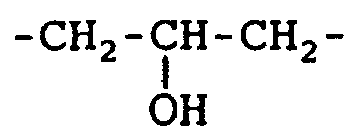
- No particular limitation is imposed to the manner in which the polyamine is bound to the fine particle surface, provided that it is chemically bound. But, the polyamine is preferably polyethyleneimine and especially preferably polyethyleneimine bound to the fine particle surface through at least one group selected from the group consisting of -CH2-C(OH)H-CH2-, -CH2-and -CH=. For example, the polyethylene is bound to the surface of the particle, in the form represented by the following formula (1) or (2):
 wherein A denotes the anion exchanger particle, m is an integer of at least 1 and n is an integer of at least 0. It is to be noted that the polyethyleneimine chain may have branches each extending from a nitrogen atom in the polymer chain. It is possible that some branches form crosslinks between adjacent polymer chains. When the polymer chain is bound through a group -CH= derived from an aldehyde group, a terminal nitrogen atom of the polymer chain is bound to the group -CH=.
- The anion exchanger of the present invention is prepared preferably by a process wherein a polyamine having a molecular weight of at least 50,000 is allowed to react with a functional group capable of reacting with a tertiary or lower amino group, such as an epoxy group or a halogenated alkyl group or an aldehyde group, present on the surface of a fine particle.
- As preferable examples of the functional groups capable of reacting with a tertiary or lower amino group, there can be mentioned an epoxy group, a halogenated alkyl group and an aldehyde group are preferable because the polyamine can be effectively introduced onto an epoxy group, a halogenated alkyl group or an aldehyde group by placing a fine particle having these groups in contact with the polyamine in an appropriate liquid medium. The halogenated alkyl group is preferably a chlorinated, brominated or iodated alkyl group having 1 to 6 carbon atoms.
- The fine particle having a functional group capable of reacting with a tertiary or lower amino group, such as an epoxy group or a halogenated alkyl group or an aldehyde group, on the surface thereof is known and can be prepared by a conventional procedure. An epoxy group, a halogenated alkyl group and an aldehyde group can be introduced onto the surface of fine particle by treating a fine particle with, for example, epichlorohydrin, ethylene glycol diglycidyl ether and butanediol diglycidyl ether for an epoxy group; epichlorohydrin and 1,3-bromobutane for a halogenated alkyl goup; and glutaraldehyde for an aldehyde group.
- As the functional group, a single functional group or a combination of two or more functional groups may be present on the fine particle surface.
- The reaction of the polyamine with an epoxy group or a halogenated alkyl group or an aldehyde group, present on the fine particle surface, is preferably carried out by placing the polyamine in contact with the fine particle in an aqueous dispersion under a basic condition. This procedure can be easily conducted and the production efficiency of the anion exchanger of the present invention is high.
- The procedure of placing the polyamine in contact with the fine particle in an aqueous dispersion will be more specifically descried. First, the fine particle is dispersed in an aqueous medium. The aqueous medium is not particularly limited provided that it is capable of dissolving the polyamine and the fine particle is dispersible in the aqueous medium. Then the polyamine is added in the aqueous medium while the aqueous medium is stirred under a basic condition. The basic condition can be obtained by adding a base such as an caustic alkali or a quaternary ammonium compounds such as tetramethylammonium hydroxide in an amount such that pH of at least 9 is obtained. The reaction of the polyamine with an epoxy group or a halogenated alkyl group or an aldehyde group proceeds even at room temperature, but is preferably carried out under heated conditions. For example, this reaction can be effected to the desired extent by maintaining at about 40°C for about 2 hours. Finally the fine particle is taken out from the aqueous medium and then washed to remove unreacted polyamine. An aqueous hydrochloric acid solution is preferably used for washing.
- The anion exchanger of the present invention is useful as a packing for chromatography. More specifically the anion extender is packed in a column made of glass or a metal, and the packed column is used in chromatography for analyzing, separating or isolating anionic protein or other materials.
- The invention will now be described by the following working examples that by no means limit the scope of the invention.
- A 500 ml three-necked flask is charged with 50 g of porous hydrophilic acrylate polymer particles having an average particle diameter of 10 µm and pores with an average diameter of 1,000 Å, 50 g of pure water and 50 g of epichlorohydrin. A stirrer is equipped with the flask, and the flask was dipped in an oil bath maintained at 40°C and the content was gently stirred. The above-mentioned porous hydrophilic acrylate polymer particles used were taken from a commercially available column (tradename "TSK gel G5000 PWXL" available from Tosoh Corporation).
- Separately, a 200 ml flask was charged with 40 g of sodium hydroxide and 60 g of pure water to prepare an aqueous sodium hydroxide solution. The aqueous sodium hydroxide solution was dropwise added to the above-mentioned content in the 500 ml flask over a period of one hour by using Perista pump while being stirred. After completion of the dropwise addition of sodium hydroxide, the mixture was further stirred for one hour to conduct epoxidation of the acrylate polymer particle surface. After completion of epoxidation, the fine particles were separated by a glass filter and washed with pure water.
- A 300 ml three-necked flask was charged with 50 g of the epoxidated fine particles, and then 100 g of pure water was added, and the mixture was stirred at room temperature. To the flask, 15 g of a 30% solution of polyethyleneimine (tradename "P-70" available from Wako Pure Chemical Ind. Ltd.; number average molecular weight: 70,000) and the mixture was stirred. pH value of the polyethyleneimine-added mixture was higher than 11 as measured by a pH-test paper.
- The flask was dipped in an oil bath maintained at 40°C and the content was stirred for 2 hours whereby polyethyleneimine was bound to the fine particle surface. After completion of the reaction, the fine particles were separated by a glass filter, and washed with an aqueous 0.5N hydrochloric solution and then with pure water to obtain an anion exchanger.
- The anion exchanger was packed in a column having a size of 4.6 mm I.D. × 5 mmL. The adsorption capacity for protein was measured by a break-through method. The measuring conditions and equipment employed were as follows.
- Pump: trade name "CCPM-II" available from Tosoh Corporation
- Auto-sampler: trade name "AS-8020" available from Tosoh Corporation
- Detector: trade name "UV-8020" available from Tosoh Corporation
- Sample: 10 mg/ml, "BSA" available from Sigma Co.
- Amount of sample injected: 5 ml
- Measurement wavelength: UV 280 nm
- Eluting solution: 20 mM tris-HCl buffer (pH: 8.0)
-
- The adsorption capacity for protein (BSA) was 80 mgBSA/ml·gel as calculated taking the 10% height of extinction change due to protein elution as the break point.
- The above-mentioned anion exchanger was packed in a column having a size of 7.5 mm I.D. × 75 mmL. Separation of protein was conducted under the following conditions. The equipment used was the same as mentioned above.
- Eluting solution:
- A: 20 mM tris-HCl buffer (pH: 8.0)
- B: eluting solution A + 1.0M aqueous sodium chloride
- Gradient: linear gradient transferring from 100% eluting solution A to 100% eluting solution B over a period of 30 minutes
- Flow rate: 1.0 ml/min.
- Sample: Ovalbumine (2 mg/ml)
- Trypsin inhibitor (2 mg/ml)
- Amount of sample injected: 20 µl
- Measurement wavelength: UV 280 nm
-
- The test results are shown in chromatogram (A) in Fig. 1. As seen from chromatogram (A), the anion exchanger prepared in Example 1 had a large adsorption capacity for protein and a high separation performance. The liquid feed pressure in the flow paths was 1.2 MPa, and thus, the anion exchanger had good liquid permeation characteristics. That is, a large adsorption capacity and high separation performance can be obtained at a low liquid feed pressure.
- An anion exchanger was prepared and its adsorption capacity for protein was evaluated by the same procedures as described in Example 1 wherein polyallylamine hydrochloride having a number average molecular weight of about 100,000 (available from Nittobo K.K.) was used instead of poyethyleneimine P-70, and, when the polyallylamine hydrochloride was bound to a fine particle, an aqueous 1N sodium hydroxide solution was used to adjust the pH value to 11. All other conditions remained the same. The adsorption capacity for protein of the anion exchanger was 40 mgBSA/ml·gel.
- Three anion exchangers were prepared and their adsorption capacities for protein were evaluated by the same procedures as described in Example 1 wherein three kinds of polyethyleneimine having a numver average molecular weight of 600, 1,800 and 10,000 (available from Wako Pure Chemical Ind. Ltd.) were separately used each in an amount of 5g with all other conditions remaining the same. The adsorption capacities for protein of the three anion exchangers were as follows.
Molecular weight of polyethyleneimine Adsorption capacity for protein (mgBSA/ml·gel) 600 42 1,800 40 10,000 43 - As seen from the above results, when polyethyleneimine having a molecular weight of 10,000 or lower is used, the adsorption capacity for protein is small. When the molecular weight of polyethyleneimine is 10,000 or lower, there is no great difference among the adsorption capacity for protein irrespective of the magnitude of molecular weight.
- The anion exchanger prepared from polyethyleneimine having a number average molecular weight of 600 was packed in a column and separation of protein was tested by the same procedures as described in Example 1.
- The test results are shown in chromatogram (B) in Fig. 1. As seen from Fig. 1, the protein separation effect was poor as compared with that obtained in Example 1 (chromatogram (A)).
- An anion exchanger was prepared and its adsorption capacity for protein was evaluated by the same procedures as described in Example 2 wherein polyallylamine having a number average molecular weight of 30,000 (available from Nittobo K.K.) was used instead of the polyallyamine hydrochloride with all other conditions remaining the same. The adsorption capacity for protein of the anion exchanger was 33 mgBSA/ml·gel.
- An anion exchanger was prepared and its adsorption capacity for protein was evaluated by the same procedures as described in Example 1 wherein trimethylamine (available from Tokyo Kasei K.K.) was used instead of polyethyleneimine P-70 with all other conditions remaining the same. The adsorption capacity for protein of the anion exchanger was 35 mgBSA/ml·gel.
- The anion exchanger prepared was packed in a column and protein separation performance was tested by the same procedures as described in Example 1 wherein the gradient time was changed to 60 minutes with all other conditions remaining the same. The test results are shown in chromatogram (C) in Fig. 1. As seen from Fig. 1, the protein separation effect was poor as compared with that obtained in Example 1 (chromatogram (A)).
- As seen from Fig. 1, the anion exchanger of the present invention having polyamine with a large molecular weight bound to the surface thereof has a large adsorption capacity, but, disadvantages such as widening of each elution peak of protein and elevation of feed pressure are not caused. This contrasts markedly with the conventional ion exchanger comprised of fine particles having an ion exchanging polymer chain introduced on the surface thereof, which has disadvantages such that the rate of adsorption and desorption of an objective sample in liquid chromatography is low, the elution peak of an objective sample is widened, and the pressure for feeding liquid is increased.
- Advantages of the anion exchanger of the present invention are summarized as follows. By the introduction of polyamine with a number average molecular weight of at least 50,000, the anion exchanger exhibits an enhanced adsorption capacity for protein and other objective samples, although the anion exchanger is comprised of fine particles. When the anion exchanger is used as a packing for liquid chromatography, it exhibits good liquid permeability and high performance. By good liquid permeability, the operation can be conducted at a reduced liquid feed pressure.
- That is, when protein or other materials are analyzed by using a column packed with the anion exchanger of the present invention, a large amount of a sample can be treated in a lot without elevation of working pressure, i.e., liquid feed pressure. Therefore, trace analysis of a large sample material as well as preparative chromatography can be advantageously carried out.
Claims (8)
- An anion exchanger which is a fine particle characterized by having bound to the surface thereof a polyamine having a number average molecular weight of at least 50,000.
- The anion exchanger according to claim 1, wherein the fine particle is a porous particle having pores having an average diameter of at least 150 Å.
- The anion exchanger according to claim 1 or claim 2, wherein the polyamine is polyethyleneimine.
- The anion exchanger according to claim 3, wherein the polyethyleneimine is bound to the surface of the particle through at least one group selected from the group consisting of, -CH2- and -CH=.
- A process for producing an anion exchanger of a fine particle form characterized by binding a polyamine having a number average molecular weight of at least 50,000 to at least one group selected from an epoxy group, a halogenated alkyl group and an aldehyde group, present on the surface of a fine particle.
- The process for producing an anion exchanger according to claim 5, wherein the binding of the polyamine to the fine particle is carried out by placing the polyamine in contact with the fine particle which is dispersed in an aqueous liquid medium, in the presence of a base.
- A packing for chromatography, characterized by being comprised of the polyamine-bound fine particle as claimed in any one of claims 1 to 4.
- A column for chromatography, characterized as being packed with the packing as claimed in claim 7.
Applications Claiming Priority (2)
| Application Number | Priority Date | Filing Date | Title |
|---|---|---|---|
| JP2001013143A JP2002210377A (en) | 2001-01-22 | 2001-01-22 | Anion exchanger, method for producing the same, and use using the same |
| JP2001013143 | 2001-01-22 |
Publications (2)
| Publication Number | Publication Date |
|---|---|
| EP1224975A1 true EP1224975A1 (en) | 2002-07-24 |
| EP1224975B1 EP1224975B1 (en) | 2005-04-20 |
Family
ID=18880052
Family Applications (1)
| Application Number | Title | Priority Date | Filing Date |
|---|---|---|---|
| EP02001094A Expired - Lifetime EP1224975B1 (en) | 2001-01-22 | 2002-01-22 | Anion exchanger, process for producing the same, and its use |
Country Status (4)
| Country | Link |
|---|---|
| US (1) | US20020134729A1 (en) |
| EP (1) | EP1224975B1 (en) |
| JP (1) | JP2002210377A (en) |
| DE (1) | DE60203746T8 (en) |
Cited By (5)
| Publication number | Priority date | Publication date | Assignee | Title |
|---|---|---|---|---|
| JP2014522479A (en) * | 2011-05-03 | 2014-09-04 | アバンター・パフォーマンス・マテリアルズ・インコーポレイテッド | Novel chromatographic media based on allylamine and allylamine derivatives for protein purification |
| WO2017041868A1 (en) * | 2015-09-10 | 2017-03-16 | Sartorius Stedim Biotech Gmbh | Adsorption medium, method for production thereof, and use thereof for purification of biomolecules |
| WO2019175412A2 (en) | 2018-03-15 | 2019-09-19 | Klawego Gmbh & Co. Kg | Composite materials for the depletion of contaminants from solutions |
| WO2020079233A2 (en) | 2018-10-19 | 2020-04-23 | Klaus Gottschall | Materials and methods for the removal of contaminants |
| WO2025163088A1 (en) | 2024-02-02 | 2025-08-07 | Piac Gmbh | Materials, processes, and methods for the adsorption of harmful compounds |
Families Citing this family (16)
| Publication number | Priority date | Publication date | Assignee | Title |
|---|---|---|---|---|
| US7479222B2 (en) * | 2004-02-05 | 2009-01-20 | Millipore Corporation | Porous adsorptive or chromatographic media |
| US7291395B2 (en) * | 2004-02-18 | 2007-11-06 | Dionex Corporation | Coated ion exchanged substrate and method of forming |
| MY144940A (en) * | 2005-01-25 | 2011-11-30 | Avantor Performance Mat Inc | Chromatographic media |
| EP1911518A1 (en) * | 2005-08-05 | 2008-04-16 | Shiga Prefecture | Material for transfer of substance in liquid comprising polymer blend |
| US9433922B2 (en) * | 2007-08-14 | 2016-09-06 | Emd Millipore Corporation | Media for membrane ion exchange chromatography based on polymeric primary amines, sorption device containing that media, and chromatography scheme and purification method using the same |
| US20090130738A1 (en) * | 2007-11-19 | 2009-05-21 | Mikhail Kozlov | Media for membrane ion exchange chromatography |
| DE102008055821A1 (en) | 2008-04-14 | 2009-10-15 | Sartorius Stedim Biotech Gmbh | Cellulose hydrate membrane, process for its preparation and use thereof |
| JP5248904B2 (en) * | 2008-04-18 | 2013-07-31 | Hoya株式会社 | Coated particle, method for producing coated particle, and adsorption device |
| US9314712B2 (en) * | 2008-05-09 | 2016-04-19 | Dionex Corporation | Functionalized substrates with ion-exchange properties |
| JP5080413B2 (en) * | 2008-09-26 | 2012-11-21 | Hoya株式会社 | Method for producing coated particles |
| JP2016006410A (en) * | 2014-05-27 | 2016-01-14 | Jnc株式会社 | Chromatography carrier and protein purification method using the same |
| SG10201811099SA (en) * | 2014-06-13 | 2019-01-30 | Avantor Performance Materials Llc | High purity low endotoxin carbohydrate (hple) compositions, and methods of isolation thereof |
| CN106832269B (en) * | 2015-12-04 | 2019-05-14 | 中国科学院大连化学物理研究所 | Azepine Michael's addition polymerize the method for preparing porous whole separating material |
| JP6757598B2 (en) * | 2016-05-27 | 2020-09-23 | 日立化成テクノサービス株式会社 | Separator and column |
| CN108341966B (en) * | 2018-03-09 | 2020-10-27 | 北京化工大学 | Preparation method of functionalized polymer microspheres |
| JP6981364B2 (en) * | 2018-05-14 | 2021-12-15 | 三菱ケミカル株式会社 | Separator, separation method and compound manufacturing method |
Citations (2)
| Publication number | Priority date | Publication date | Assignee | Title |
|---|---|---|---|---|
| US5030352A (en) * | 1990-01-25 | 1991-07-09 | Purdue Research Foundation | Coated media for chromatography |
| EP0451706A1 (en) * | 1990-04-06 | 1991-10-16 | Sakai Engineering Co., Ltd. | Ultra-lightweight, open-pore foamed cellulose materials with large surface areas, having ion-exchangeable functional groups introduced therein |
Family Cites Families (3)
| Publication number | Priority date | Publication date | Assignee | Title |
|---|---|---|---|---|
| US4136067A (en) * | 1977-12-02 | 1979-01-23 | Rohm And Haas Company | Hybrid ion exchange resins with improved properties |
| US4273878A (en) * | 1978-07-24 | 1981-06-16 | Rohm And Haas Company | Polyamine-crosslinked anion exchange resin |
| US5180750A (en) * | 1988-07-29 | 1993-01-19 | Asahi Glass Company Ltd. | Anion exchanger |
-
2001
- 2001-01-22 JP JP2001013143A patent/JP2002210377A/en active Pending
-
2002
- 2002-01-22 EP EP02001094A patent/EP1224975B1/en not_active Expired - Lifetime
- 2002-01-22 US US10/051,195 patent/US20020134729A1/en not_active Abandoned
- 2002-01-22 DE DE60203746T patent/DE60203746T8/en active Active
Patent Citations (2)
| Publication number | Priority date | Publication date | Assignee | Title |
|---|---|---|---|---|
| US5030352A (en) * | 1990-01-25 | 1991-07-09 | Purdue Research Foundation | Coated media for chromatography |
| EP0451706A1 (en) * | 1990-04-06 | 1991-10-16 | Sakai Engineering Co., Ltd. | Ultra-lightweight, open-pore foamed cellulose materials with large surface areas, having ion-exchangeable functional groups introduced therein |
Cited By (8)
| Publication number | Priority date | Publication date | Assignee | Title |
|---|---|---|---|---|
| JP2014522479A (en) * | 2011-05-03 | 2014-09-04 | アバンター・パフォーマンス・マテリアルズ・インコーポレイテッド | Novel chromatographic media based on allylamine and allylamine derivatives for protein purification |
| EP2705361A4 (en) * | 2011-05-03 | 2015-01-28 | Avantor Performance Mat Inc | NOVEL CHROMATOGRAPHIC MEDIUM BASED ON ALLYLAMINE AND ITS DERIVATIVE FOR PROTEIN PURIFICATION |
| WO2017041868A1 (en) * | 2015-09-10 | 2017-03-16 | Sartorius Stedim Biotech Gmbh | Adsorption medium, method for production thereof, and use thereof for purification of biomolecules |
| US20180243724A1 (en) * | 2015-09-10 | 2018-08-30 | Sartorius Stedim Biotech Gmbh | Adsorption Medium, Method for Production Thereof, and Use Thereof for Purification of Biomolecules |
| US11992825B2 (en) | 2015-09-10 | 2024-05-28 | Sartorius Stedim Biotech Gmbh | Adsorption medium, method for production thereof, and use thereof for purification of biomolecules |
| WO2019175412A2 (en) | 2018-03-15 | 2019-09-19 | Klawego Gmbh & Co. Kg | Composite materials for the depletion of contaminants from solutions |
| WO2020079233A2 (en) | 2018-10-19 | 2020-04-23 | Klaus Gottschall | Materials and methods for the removal of contaminants |
| WO2025163088A1 (en) | 2024-02-02 | 2025-08-07 | Piac Gmbh | Materials, processes, and methods for the adsorption of harmful compounds |
Also Published As
| Publication number | Publication date |
|---|---|
| DE60203746T8 (en) | 2006-08-24 |
| DE60203746D1 (en) | 2005-05-25 |
| DE60203746T2 (en) | 2006-01-12 |
| US20020134729A1 (en) | 2002-09-26 |
| JP2002210377A (en) | 2002-07-30 |
| EP1224975B1 (en) | 2005-04-20 |
Similar Documents
| Publication | Publication Date | Title |
|---|---|---|
| EP1224975B1 (en) | Anion exchanger, process for producing the same, and its use | |
| EP1226870B1 (en) | Anion exchanger, process for producing the same, and its use | |
| EP0763064B1 (en) | A method of manufacturing particles, and particles that can be produced in accordance with the method | |
| EP1137466B1 (en) | A chromatography method and a column material useful in said method | |
| AU778045B2 (en) | Process for making fluorinated polymer adsorbent particles | |
| JP2001506364A (en) | Preformed polymer coating method and product | |
| CN101616738A (en) | Macroporous polymers with larger pore sizes | |
| NZ523914A (en) | Functionalized polymeric media for separation of analytes | |
| AU2001285152A1 (en) | Functionalized polymeric media for separation of analytes | |
| EP1226869B1 (en) | Cation exchanger, process for producing same, and its use | |
| US6746608B2 (en) | Use of adsorbent polymer particles in DNA separation | |
| US4486308A (en) | Column packing material and production thereof | |
| JPS6361618B2 (en) | ||
| US5438077A (en) | Ion exchange resins containing glycidyl ether spacer groups | |
| JP3972662B2 (en) | Cation exchanger, method for producing the same, and use thereof | |
| CA2247927C (en) | Removal of borate in chromatography | |
| JPS6392627A (en) | Hydrophilic porous particle | |
| JPH02251251A (en) | Hydrophilic anion exchange resin and its manufacturing method |
Legal Events
| Date | Code | Title | Description |
|---|---|---|---|
| PUAI | Public reference made under article 153(3) epc to a published international application that has entered the european phase |
Free format text: ORIGINAL CODE: 0009012 |
|
| AK | Designated contracting states |
Kind code of ref document: A1 Designated state(s): AT BE CH CY DE DK ES FI FR GB GR IE IT LI LU MC NL PT SE TR |
|
| AX | Request for extension of the european patent |
Free format text: AL;LT;LV;MK;RO;SI |
|
| 17P | Request for examination filed |
Effective date: 20021218 |
|
| AKX | Designation fees paid |
Designated state(s): DE FR GB |
|
| 17Q | First examination report despatched |
Effective date: 20031030 |
|
| GRAP | Despatch of communication of intention to grant a patent |
Free format text: ORIGINAL CODE: EPIDOSNIGR1 |
|
| RTI1 | Title (correction) |
Free format text: ANION EXCHANGER, PROCESS FOR PRODUCING THE SAME, AND ITS USE |
|
| RAP1 | Party data changed (applicant data changed or rights of an application transferred) |
Owner name: TOSOH CORPORATION |
|
| GRAS | Grant fee paid |
Free format text: ORIGINAL CODE: EPIDOSNIGR3 |
|
| GRAA | (expected) grant |
Free format text: ORIGINAL CODE: 0009210 |
|
| AK | Designated contracting states |
Kind code of ref document: B1 Designated state(s): DE FR GB |
|
| REG | Reference to a national code |
Ref country code: GB Ref legal event code: FG4D |
|
| REG | Reference to a national code |
Ref country code: IE Ref legal event code: FG4D |
|
| REF | Corresponds to: |
Ref document number: 60203746 Country of ref document: DE Date of ref document: 20050525 Kind code of ref document: P |
|
| ET | Fr: translation filed | ||
| PLBE | No opposition filed within time limit |
Free format text: ORIGINAL CODE: 0009261 |
|
| STAA | Information on the status of an ep patent application or granted ep patent |
Free format text: STATUS: NO OPPOSITION FILED WITHIN TIME LIMIT |
|
| 26N | No opposition filed |
Effective date: 20060123 |
|
| PGFP | Annual fee paid to national office [announced via postgrant information from national office to epo] |
Ref country code: FR Payment date: 20110128 Year of fee payment: 10 Ref country code: DE Payment date: 20110119 Year of fee payment: 10 |
|
| PGFP | Annual fee paid to national office [announced via postgrant information from national office to epo] |
Ref country code: GB Payment date: 20110119 Year of fee payment: 10 |
|
| GBPC | Gb: european patent ceased through non-payment of renewal fee |
Effective date: 20120122 |
|
| REG | Reference to a national code |
Ref country code: FR Ref legal event code: ST Effective date: 20120928 |
|
| PG25 | Lapsed in a contracting state [announced via postgrant information from national office to epo] |
Ref country code: DE Free format text: LAPSE BECAUSE OF NON-PAYMENT OF DUE FEES Effective date: 20120801 Ref country code: GB Free format text: LAPSE BECAUSE OF NON-PAYMENT OF DUE FEES Effective date: 20120122 |
|
| REG | Reference to a national code |
Ref country code: DE Ref legal event code: R119 Ref document number: 60203746 Country of ref document: DE Effective date: 20120801 |
|
| PG25 | Lapsed in a contracting state [announced via postgrant information from national office to epo] |
Ref country code: FR Free format text: LAPSE BECAUSE OF NON-PAYMENT OF DUE FEES Effective date: 20120131 |