EP1223760A2 - Mosquito noise reducing apparatus and method - Google Patents
Mosquito noise reducing apparatus and method Download PDFInfo
- Publication number
- EP1223760A2 EP1223760A2 EP01130490A EP01130490A EP1223760A2 EP 1223760 A2 EP1223760 A2 EP 1223760A2 EP 01130490 A EP01130490 A EP 01130490A EP 01130490 A EP01130490 A EP 01130490A EP 1223760 A2 EP1223760 A2 EP 1223760A2
- Authority
- EP
- European Patent Office
- Prior art keywords
- noise
- section
- image
- noise reducing
- motion
- Prior art date
- Legal status (The legal status is an assumption and is not a legal conclusion. Google has not performed a legal analysis and makes no representation as to the accuracy of the status listed.)
- Withdrawn
Links
Images



Classifications
-
- G—PHYSICS
- G06—COMPUTING OR CALCULATING; COUNTING
- G06T—IMAGE DATA PROCESSING OR GENERATION, IN GENERAL
- G06T5/00—Image enhancement or restoration
- G06T5/70—Denoising; Smoothing
-
- H—ELECTRICITY
- H04—ELECTRIC COMMUNICATION TECHNIQUE
- H04N—PICTORIAL COMMUNICATION, e.g. TELEVISION
- H04N19/00—Methods or arrangements for coding, decoding, compressing or decompressing digital video signals
- H04N19/50—Methods or arrangements for coding, decoding, compressing or decompressing digital video signals using predictive coding
- H04N19/503—Methods or arrangements for coding, decoding, compressing or decompressing digital video signals using predictive coding involving temporal prediction
- H04N19/51—Motion estimation or motion compensation
-
- H—ELECTRICITY
- H04—ELECTRIC COMMUNICATION TECHNIQUE
- H04N—PICTORIAL COMMUNICATION, e.g. TELEVISION
- H04N19/00—Methods or arrangements for coding, decoding, compressing or decompressing digital video signals
- H04N19/80—Details of filtering operations specially adapted for video compression, e.g. for pixel interpolation
-
- H—ELECTRICITY
- H04—ELECTRIC COMMUNICATION TECHNIQUE
- H04N—PICTORIAL COMMUNICATION, e.g. TELEVISION
- H04N19/00—Methods or arrangements for coding, decoding, compressing or decompressing digital video signals
- H04N19/85—Methods or arrangements for coding, decoding, compressing or decompressing digital video signals using pre-processing or post-processing specially adapted for video compression
- H04N19/86—Methods or arrangements for coding, decoding, compressing or decompressing digital video signals using pre-processing or post-processing specially adapted for video compression involving reduction of coding artifacts, e.g. of blockiness
-
- G—PHYSICS
- G06—COMPUTING OR CALCULATING; COUNTING
- G06T—IMAGE DATA PROCESSING OR GENERATION, IN GENERAL
- G06T2207/00—Indexing scheme for image analysis or image enhancement
- G06T2207/10—Image acquisition modality
- G06T2207/10016—Video; Image sequence
Definitions
- the present invention generally relates to a noise reducing apparatus for reducing a noise component included in a digital video signal. More particularly, the present invention relates to reduction of a noise component included in a digital video signal obtained by compressively encoding image data on a block-by-block basis by an encoder and then decoding the resultant image data by a decoder.
- a digital video signal resulting from decoding of image data by a decoder includes random noise and encoding noise which is introduced in encoding process.
- the random noise results from degraded quality of a material image itself to be encoded by an encoder.
- the encoding noise is generated by, e.g., quantization error caused upon encoding. The encoding noise is thus specific to an encoding/decoding system.
- the encoding noise include mosquito noise and blocking artifact.
- the mosquito noise is generated in a flat region near the edge of the image within a 8 X 8 pixel encoding block.
- the blocking artifact appears as distortion at the boundary of an encoding block.
- These noises are generally reduced or reduced by a smoothing process. Since the noise reducing process is a process that damages the original image in a sense, it involves degradation in image quality more or less. Therefore, the noise reduction level in the noise reducing process is generally determined so as to balance the noise reducing effect with the influence of degradation in image quality.
- the original image data is increasingly scaled for display rather than being displayed in its original size.
- the display image size on a display device may vary depending on the areas (e.g., the European countries and the US). Even in the same area, the display image size (aspect ratio) may vary like 4 : 3 and 16 : 9 depending on the display devices.
- Some display devices are capable of scaling the displayed image through operation of the user.
- devices capable of recording and reproducing the image of various sizes such as a DVD player/recorder are becoming widespread.
- Such an image scaling process is conducted by performing a prescribed operation (a kind of filtering process) on the pixel data of each pixel and its neighboring pixels.
- the noise reducing process and the scaling process are independent processes having completely different purposes from each other, the balance between the respective influences of the processes has not been considered particularly. This may result in failing to obtain a sufficient noise reducing effect or may result in degraded image quality (other than noise) when the image data is subjected to such a noise reducing process and scaling process.
- the noise reducing process is conducted so as to balance the noise reducing effect with the influence of degradation in image quality as described above, the balance is not necessarily retained even after the scaling process. For example, if a smoothing process for noise reduction results in less sharp edges, the edges of the image may get much less sharp as a result of the enlarging process.
- the subsequent scaling process (a kind of filtering process) may degrade the image quality rather than improving it.
- the conventional noise reducing apparatus has a fixed, preset noise reduction level. Therefore, if the noise reduction level is set so that noise is sufficiently reduced from a fast-moving image (i.e., an image that reduces human eye's visual sensitivity to degradation in image quality), degradation in image quality is more likely to be perceived in a slow-moving image (i.e., an image that increases the human eye's visual sensitivity thereto) than the noise reducing effect. On the other hand, if the noise reduction level is set so that the slow-moving image is not noticeably degraded in quality, the noise reducing effect on the fast-moving image is not likely to be perceived.
- a fast-moving image i.e., an image that reduces human eye's visual sensitivity to degradation in image quality
- a slow-moving image i.e., an image that increases the human eye's visual sensitivity thereto
- a noise reducing apparatus includes: at least one noise reducing section for reducing encoding noise of image data with controllable noise reduction characteristics; and a control section for controlling the noise reduction characteristics of the noise reducing section according to at least one of a scale factor for scaling an image represented by the image data and a degree of motion of the image.
- the noise reducing section reduces encoding noise with the noise reduction characteristics that are controlled by the control section according to the scale factor and/or the degree of motion of the image. Therefore, noise can be reduced from the image while preventing degradation in image quality resulting from the noise reduction to a negligible level even when the image is enlarged. Moreover, noise can be sufficiently reduced from a fast-moving image, and also noise can be reduced from a slow-moving image while suppressing degradation in image quality resulting from the noise reduction to a negligible level.
- the noise reducing section includes at least one of a mosquito noise reducing section for reducing mosquito noise and a blocking artifact reducing section for reducing blocking artifact.
- the mosquito noise and/or the blocking artifact are reduced with appropriate noise reduction characteristics as described above, enabling high-quality image display.
- control section controls the noise reduction characteristics by controlling at least one of noise detection sensitivity and a noise reduction level of the noise reducing section.
- the noise reducing section may include a filter
- the control section may control the noise reduction level by controlling at least one of the number of filter taps and a filter coefficient of the filter.
- control section may control the number of filter taps and the filter coefficient so that the noise reduction level is lower when the scale factor is greater than 1 than when the scale factor is 1.
- the control section may control the number of filter taps and the filter coefficient so that the noise reduction level is higher when the degree of motion of the image is larger than a prescribed value than when the degree of motion of the image is smaller than the prescribed value.
- the control section may control the number of filter taps and the filter coefficient so that input image data to the noise reducing section is the same as output image data from the noise reducing section when noise reduction is not conducted.
- the noise reduction characteristics can be readily controlled according to the scale factor and/or the degree of motion of the image.
- the noise reducing apparatus further includes: an extracting section for extracting image data of a prescribed region from original image data (or trimming the original image data) to produce effective display image data; and a scaling section for scaling the image data extracted by the extracting section by a prescribed scale factor.
- a part of original image can be scaled by the prescribed factor with high image quality.
- the noise reducing apparatus further includes: an original image size detecting section for detecting an original image size from original image data; and a scale factor calculating section for calculating a scale factor of the image from the detected original image size and a display image size.
- the control section preferably controls the noise reduction characteristics of the noise reducing section according to the scale factor calculated by the scale factor calculating section.
- the noise reducing apparatus further includes a motion detecting section for obtaining the degree of motion of the image based on a sum of absolute values of differences between pixel data of the same position in at least one pair of successive field images or frame images, and the difference is obtained for pixels in at least a part of each field image or each frame image.
- the control section preferably controls the noise reduction characteristics of the noise reducing section according to output of the motion detecting section.
- the motion detecting section may determine a level of the degree of motion of the image from a plurality of levels based on a compared result of the sum with at least one prescribed threshold value, and the control section may control the noise reduction characteristics of the noise reducing section in a plurality of levels according to the level of the degree of motion of the image.
- the motion detecting section may obtain the degree of motion of the image based on a plurality of sums respectively obtained for a plurality of image pairs.
- the motion detecting section may obtain the degree of motion of the image based on a compared result of each of the sums with at least one prescribed threshold value.
- the noise reduction characteristics are controlled according to the degree of motion of the image considering human eye's visual characteristics for a fast-moving image and a slow-moving image. This enables high-quality image display.
- control section controls the noise reduction characteristics of the noise reducing section regardless of output of the motion detecting section, in response to a still-state signal indicating a still state in which image data held in an image memory is repeatedly read for display.
- noise can be appropriately reduced from a still image independently of a slow-moving image.
- the noise reducing apparatus further includes: a random noise reducing section for reducing random noise of the image data based on a difference between pixel data of pixels of the same position in at least one pair of successive field images or frame images; and a difference calculating section shared for calculating the difference between pixel data for reducing the random noise by the random noise reducing section and for calculating the difference between pixel data for obtaining the degree of motion of the image by the motion detecting section.
- a random noise reducing section for reducing random noise of the image data based on a difference between pixel data of pixels of the same position in at least one pair of successive field images or frame images
- a difference calculating section shared for calculating the difference between pixel data for reducing the random noise by the random noise reducing section and for calculating the difference between pixel data for obtaining the degree of motion of the image by the motion detecting section.
- noise reducing apparatus not only encoding noise can be appropriately reduced according to the degree of motion of the image, but also random noise can be reduced without causing significant increase in circuit scale.
- control section controls the noise reduction characteristics of the noise reducing section according to both the scale factor for scaling an image represented by the image data and the degree of motion of the image.
- noise reducing apparatus noise is appropriately reduced even when an image is displayed with a combination of various scale factors and various degrees of motion of the image. This enables high-quality image display.
- control section controls the noise reduction characteristics by controlling a noise reduction level of the noise reducing section according to the scale factor and controlling noise detection sensitivity of the noise reducing section according to the degree of motion of the image.
- a noise reducing method includes: at least one step of reducing encoding noise of image data with controlled noise reduction characteristics; and a step of controlling the noise reduction characteristics according to at least one of a scale factor for scaling an image represented by the image data and a degree of motion of the image.
- encoding noise is reduced with the noise reduction characteristics according to the scale factor and/or the degree of motion of the image, enabling high-quality image display.
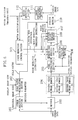
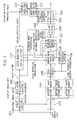
- FIG. 1 is a block diagram showing the structure of a noise reducing apparatus according to the first embodiment of the present invention.
- a stream analyzing section 101 analyzes input stream data (i.e., encoded image data), and outputs a decoding parameter required for decoding. Based on the stream data, the stream analyzing section 101 obtains image size (original image size) for output.
- image size original image size
- a scale factor calculating section 102 calculates a scale factor of the image based on the original image size received from the stream analyzing section 101 and the actual display image size.
- the display image size may either be preset according to, e.g., a display device, or may be specified by operation of the user.
- a decoder 103 decodes the input stream data based on the decoding parameter obtained by the stream analyzing section 101, and outputs the decoded image data.
- a frame memory 104 (image memory) is a decoded image frame memory for holding N frames of the image data output from the decoder 103 (where N is a natural number).
- An image extracting section 105 extracts, based on pixel extraction position information, image data of the pixels in an actual display region from the original image data read from the frame memory 104, and outputs the extracted image data as effective display image data. For example, when the original image has a size of 16 : 9, the display image having a size of 4 : 3 can be obtained by extracting only the horizontal central portion of the image.
- An in-block pixel position calculating section 106 specifies an encoding block to which each pixel in the image to be extracted by the image extracting section 105 belongs, and calculates a position of that pixel in the encoding block. Such calculation is required because encoding noise is generated on an encoding block-by-encoding block basis or at the boundary of an encoding block (and therefore the noise reducing process must be conducted on an encoding block-by-encoding block basis) but the image extracting section 105 does not necessarily extract the image data on an encoding block-by-encoding block basis (i.e., an extraction position does not necessarily match the boundary of an encoding block).
- a noise reducing section 107 includes a mosquito noise reducing section 108 and a blocking artifact reducing section 109 for reducing mosquito noise and blocking artifact, respectively.
- the noise reduction characteristics of the noise reducing section 107 are controlled with an instruction to conduct noise detection (hereinafter, referred to as noise detection instruction), an instruction indicating a noise detection threshold value (hereinafter, referred to as noise detection threshold instruction) and an instruction indicating a filtering mode (hereinafter, referred to as filtering mode instruction), as described in detail below.
- a scaling section 110 scales the image data having encoding noise reduced therefrom according to a scale factor calculated by the scale factor calculating section 102, and outputs display image data.
- the scaling process herein includes scaling by the factor of 1.
- the scaling ratio may be varied between the vertical and horizontal directions of the image, or may be varied depending on the regions.
- An image difference calculating section 111 calculates the difference between successive image data that are output from the scaling section 110, that is, between image data of successive fields or frames, on a pixel-by-pixel basis. In other words, the image difference calculating section 111 calculates the difference between pixels of the same position in successive image data.
- a motion detecting section 112 detects the degree of motion of the image based on the difference obtained in the image difference calculating section 111, and outputs the motion detection result.
- a noise reduction control section 113 controls noise reduction characteristics of the noise reducing section 107 by outputting the noise detection instruction, noise detection threshold instruction and filtering mode instruction based on the scale factor received from the scale factor calculating section 102 and the motion detection result received from the motion detecting section 112.
- the image difference calculating section 111 includes a delay frame memory 121 and a difference calculating section 122.
- the delay frame memory 121 holds image data output from the scaling section 110 and outputs that image data with a delay of one field or one frame period.
- the difference calculating section 122 calculates the difference between the image data output from the delay frame memory 121 and the image data output from the scaling section 110 on a pixel-by-pixel basis, that is, the difference between pixels of the same position in the respective image data.
- the motion detecting section 112 includes an absolute value calculating section 131, an absolute value adding section 132, a sum holding section 133, a threshold comparing section 134, a determining section 135, and a motion detection result holding section 136.
- the absolute value calculating section 131 calculates an absolute value of the difference output from the image difference calculating section 111.
- the absolute value adding section 132 adds absolute values of the differences of the pixels in at least a part of the image and outputs the sum of absolute values.
- the sum holding section 133 sequentially holds K sums of absolute values of differences (where K is a natural number such as 3 or 4).
- the threshold comparing section 134 compares each of the K sums of absolute values with a prescribed motion detection threshold value and outputs K comparison results.
- the determining section 135 outputs the motion detection result based on the K comparison results and the past motion detection record.
- the motion detection result holding section 136 holds the motion detection result, and outputs it to the determining section 135 as a motion detection
- the noise reduction control section 113 includes a noise detection parameter generating section 141 and a filtering mode control section 142.
- the noise detection parameter generating section 141 outputs a noise detection instruction and a noise detection threshold instruction to the noise reducing section 107 based on the motion detection result output from the motion detecting section 112.
- the noise detection instruction indicates whether to cause the noise reducing section 107 to conduct noise detecting operation (and thus noise reducing operation) or not.
- the noise detection threshold instruction indicates noise detection sensitivity of the noise reducing section 107, that is, a threshold value for judging presence/absence of noise.
- the filtering mode control section 142 outputs a filtering mode instruction to the noise reducing section 107 according to the scale factor output from the scale factor calculating section 102 and the noise detection instruction.
- the filtering mode instruction designates one of preset combinations of the number of filter taps and a filter coefficient regarding a filter included in each of the mosquito noise reducing section 108 and the blocking artifact reducing section 109. The filtering mode instruction is thus used to control the noise reduction level.
- the stream data is first applied to the stream analyzing section 101 and the decoder 103.
- the stream analyzing section 101 analyzes the input stream data, and outputs the original image size to the scale factor calculating section 102 as well as outputs a decoding parameter to the decoder 103.
- the scale factor calculating section 102 calculates a scale factor of the image based on the original image size and an input or preset display image size, and outputs the calculation result to the noise reduction control section 113.
- the noise reduction control section 113 outputs a noise detection instruction, a noise detection threshold instruction and a filtering mode instruction to the noise reducing section 107 based on the scale factor and the motion detection result output from the motion detecting section 112 as described in detail below. For example, when the motion detection result output from the motion detecting section 112 indicates "slow-moving image", the noise detection parameter generating section 141 of the noise reduction control section 113 makes the noise detection instruction "invalid" (in this case, the noise detection threshold instruction and the filtering mode instruction are not particularly specified). On the other hand, when the motion detection result indicates "fast-moving image”, the noise detection parameter generating section 141 makes the noise detection instruction "valid”, and outputs a noise detection threshold instruction for the fast-moving image.
- the filtering mode control section 142 In response to the "valid" noise detection instruction, the filtering mode control section 142 outputs a filtering mode instruction based on the scale factor output from the scale factor calculating section 102. For example, when enlarging the image, the filtering mode control section 142 outputs a filtering mode instruction designating the number of filter taps and/or a filter coefficient corresponding to the noise reduction level that is lower than that at the scale factor of 1. For example, when enlarging the image, the filtering mode control section 142 outputs a filtering mode instruction designating the number of filter taps that is less than that at the scale factor of 1, and a filter coefficient corresponding to the number of filter taps.
- the decoder 103 decodes the input stream data using the decoding parameter output from the stream analyzing section 101, and stores the decoded image data into the frame memory 104.
- the image extracting section 105 extracts effective display image data for actual display from the image data read from the frame memory 104, based on pixel extraction position information, and outputs the effective display image data to the noise reducing section 107.
- the pixel extraction position information indicates coordinates of the upper left pixel and the respective numbers of pixels in the vertical and horizontal directions in the image to be extracted.
- the in-block pixel position calculating section 106 calculates the position of each pixel in a corresponding encoding block based on the image extraction position information.
- the pixels whose position is calculated in the in-block pixel position calculating section 106 are those to be processed in the mosquito noise reducing section 108 and/or the blocking artifact reducing section 109 in the noise reducing section 107.
- the mosquito noise reducing section 108 and the blocking artifact reducing section 109 in the noise reducing section 107 reduce noise from the image data extracted by the image extracting section 105, based on the positional information calculated by the in-block pixel position calculating section 106.
- Noise reduction characteristics in this noise reducing process are determined by the noise detection instruction, noise detection threshold instruction and filtering mode instruction that are output from the noise reduction control section 113 as described before.
- the mosquito noise reducing section 108 and the blocking artifact reducing section 109 each outputs the input image data without conducting any noise reducing process.
- the mosquito noise reducing section 108 and the blocking artifact reducing section 109 may output the input image data as it is, or may process the input image data based on the number of filter taps and a filter coefficient such that the output image data is the same as the input image data.
- the noise detection instruction is "valid”
- the mosquito noise reducing section 108 and the blocking artifact reducing section 109 operate as follows:
- the mosquito noise reducing section 108 calculates the difference between adjacent pixels in each encoding block, and then compares the calculated difference with a threshold value indicated by the noise detection threshold instruction from the noise reduction control section 113.
- the mosquito noise reducing section 108 thus detects an edge region of the image at which mosquito noise is likely to be generated and a flat region around the edge region. Once detecting an edge region and a flat region, the mosquito noise reducing section 108 smoothes the image data of the flat region around the edge based on the number of filter taps and the filter coefficient indicated by the filtering mode instruction from the noise reduction control section 113.
- the mosquito noise reducing section 108 thus outputs the image data having mosquito noise reduced therefrom.
- the blocking artifact reducing section 109 calculates the difference between adjacent pixels at the boundary of each encoding block and its periphery, and then compares the calculated difference with a threshold value indicated by the noise detection threshold instruction from the noise reduction control section 113.
- the blocking artifact reducing section 109 thus detects a region where the pixels around the block boundary are flat in a respective encoding block. Regarding the detected flat region, if the difference between adjacent pixels across the block boundary is larger than that between adjacent pixels within each block, the blocking artifact reducing section 109 smoothes the image data around the block boundary based on the number of filter taps and the filter coefficient indicated by the filtering mode instruction from the noise reduction control section 113 . The blocking artifact reducing section 109 thus outputs the image data having blocking artifact reduced therefrom.
- the scaling section 110 scales the image data having noise reduced therefrom according to the scale factor output from the scale factor calculating section 102.
- the scaling section 110 may output the input image data without conducting any scaling process, or may scale the input image data by the scale factor of 1.
- the image data thus scaled is output to, e.g., a not-shown display device as display image data.
- This image data is also output to the image difference calculating section 111, and motion detection is conducted in order to control the noise reduction characteristics of the noise reduction control section 113.
- the image data output from the scaling section 110 is first held in the delay frame memory 121 of the image difference calculating section 111.
- the delay frame memory 121 outputs the received image data with a delay of one frame (or one field) period.
- the difference calculating section 122 calculates the difference between the subsequent image data from the scaling section 110 and the delayed image data on a pixel-by-pixel basis. In other words, the difference calculating section 122 calculates the difference between pixels of the same position in the respective image data.
- the absolute value calculating section 131 of the motion detecting section 112 then calculates an absolute value of the difference.
- the absolute value adding section 132 adds absolute values of the differences regarding the pixels in at least a part of the image, and outputs the sum of absolute values.
- the sum holding section 133 sequentially holds K sums of absolute values of the differences regarding K frames.
- the threshold comparing section 134 compares each of the K sums with a motion detection threshold value, and outputs K comparison results.
- the determining section 135 outputs the motion detection result based on each comparison result and the past motion detection record. More specifically, when every sum is greater than the motion detection threshold value, the determining section 135 determines the image as "fast-moving image".
- the determining section 135 determines the image as "slow-moving image".
- the determining section 135 makes the same determination as the past motion detection record held in the motion detection result holding section 136. More specifically, when the difference between frames is definitely larger or smaller than the motion detection threshold value over several previous frames, the determining section 135 determines the image as fast-moving or slow-moving image. However, if the difference between frames varies over several previous frames, the determining section 135 maintains previous determination results. Motion detection suitable for human eye's visual characteristics to the noise and image quality is thus conducted appropriately.
- the motion detection result thus obtained is held in the motion detection result holding section 136 for the following determination.
- This motion detection result is also applied to the noise detection parameter generating section 141 in the noise reduction control section 113, whereby the noise reduction characteristics are controlled according to the motion of the image as described before.
- parameters such as an encoding noise detection threshold value and the number of filter taps and a filter coefficient of a smoothing filter are adaptively controlled according to the scale factor and the degree of motion of the image. This enables improved quality of the display image according to the display image size and the degree of motion of the image.
- motion detection method is not limited to that described above, and various known detection methods may alternatively be used.
- motion of the image is herein detected in two levels (i.e., fast and slow), the present invention is not limited to this. Motion of the image may be detected in several of levels so that the noise reduction characteristics are controlled in various levels.
- the first embodiment shows the example in which the noise reduction characteristics are controlled according to both the scale factor and the degree of motion of the image.
- the present invention is not limited to this.
- the noise reduction characteristics may be controlled according to either the scale factor or the degree of motion of the image. Note that, in the following embodiments, elements having the same function as that of the first embodiment are denoted with the same reference numerals, and description thereof is omitted.
- the noise reduction control section 113 of the first embodiment may be replaced with a noise reduction control section 213 that outputs a noise detection instruction, a noise detection threshold instruction and a filtering mode instruction based only on the scale factor output from the scale factor calculating section 102.
- the image difference calculating section 111 and the motion detecting section 112 of the first embodiment may be reduced.
- the noise reduction control section 113 of the first embodiment may be replaced with a noise reduction control section 313 that output a noise detection instruction, a noise detection threshold instruction and a filtering mode instruction based only on the motion detection result output from the motion detecting section 112.
- the noise reduction control section 213 of FIG. 4 may also output the noise detection instruction and the noise detection threshold instruction based on the scale factor as shown in the figure.
- the noise reduction control section 213 may output only the filtering mode instruction, and the noise detection instruction and the noise detection threshold instruction may be separately applied to the noise reducing section 107 from another device or the like, or may be set by the user.
- the noise reduction control section 313 of FIG. 5 may also output the filtering mode instruction based on the motion detection result.
- the filtering mode instruction may be separately applied to the noise reducing section 107 from another device or the like.
- the noise reducing apparatus of the third embodiment includes a noise reduction control section 413 including a noise detection parameter generating section 441, instead of the noise reduction control section 113 including the noise detection parameter generating section 141 in the first embodiment.
- the noise detection parameter generating section 441 makes a noise detection instruction "valid" regardless of the motion detection result, and outputs a noise detection threshold instruction for the still state (Note that, when no still-state notification signal is applied (when the still-state information signal is "invalid"), the noise reduction control section 413 operates in the same manner as that of the noise reduction control section 113).
- the still state herein refers to the state in which the image data held in the frame memory is repeatedly read for display.
- the motion detecting section 112 determines that there is no motion in the image.
- outputting a noise detection instruction or the like in response to the still-state notification signal regardless of the motion detection result of the motion detecting section 112 enables high-quality image display even in the still state.
- a noise reducing apparatus of the fourth embodiment is capable of reducing random noise as well without causing significant increase in circuit scale.
- this noise reducing apparatus includes a random noise reducing section 521 in addition to the structure of the first embodiment.
- the random noise reducing section 521 reduces random noise from the image data output from the scaling section 110.
- the image difference calculating section 111 calculates the difference between image data of successive fields or frames on a pixel-by-pixel basis (i.e., the difference between pixels of the same position in the respective image data).
- the random noise reducing section 521 includes a correction value calculating section 522 and a pixel data correcting section 523.
- the random noise reducing section 521 reduces random noise by utilizing the property that random noise is generated without correlation with time (i.e., each pixel data value varies with time).
- the correction value calculating section 522 calculates correction data based on the difference output from the image difference calculating section 111 so as to approximate each pixel data value to the median of the variation.
- the pixel data correcting section 523 corrects the image data output from the scaling section 110 by, e.g., adding or subtracting the correction data received from the correction value calculating section 522 to or from each pixel data. Note that, as described above, the image difference calculating section 111 herein obtains the difference of the image data output from the image data correcting section 523. However, the present invention is not limited to this.
- the image difference calculating section 111 may alternatively obtain the difference of the image data output from the scaling section 110 as in the first embodiment.
- the position of the image data correcting section 523 is not limited to that described above.
- the image data correcting section 523 may alternatively be provided in an earlier stage than the scaling section 110.
- the difference of image data required for motion detection of the image and the difference of image data required for random noise reduction are calculated by the common image difference calculating section 111. Therefore, encoding noise can be appropriately reduced or reduced according to the degree of motion of the image as well as random noise can be reduced or reduced while suppressing the circuit scale.
- the noise reduction characteristics may be controlled by the noise detection instruction or the like based only on the motion detection result.
- encoding noise may be reduced with appropriate noise reduction characteristics even in the still state in response to the still-state notification signal.
- the noise reduction control section 113 or the like applies a common noise detection instruction and the like to the mosquito noise reducing section 108 and the blocking artifact reducing section 109 in the noise reducing section 107.
- the present invention is not limited to this. Separate noise detection instructions and the like may be applied to the respective noise reducing sections.
- the noise reducing process is not conducted when the noise detection instruction is "invalid".
- the noise reducing process may be directly controlled by an instruction to conduct the noise reducing process.
- the noise detection threshold instruction and the filtering mode instruction may be used so that noise is not detected or so that the output image data is the same as the input image data.
- the noise reduction characteristics are herein controlled by the noise detection threshold instruction and the filtering mode instruction, the present invention is not limited to this.
- the noise reduction characteristics may alternatively be controlled by directly designating the threshold, the number of filter taps and the like.
- the threshold value and the like may either be set in a stepwise manner or may be set to a continuous value.
- the noise reducing apparatus herein scales the image by the scaling section 110
- the present invention is not limited to this. The same effects can be obtained even when the image is either enlarged or reduced (including or not including the case of the scale factor of 1).
- the scale factor calculating section 102 herein calculates the scale factor of the image
- the present invention is not limited to this.
- the scale factor may alternatively be designated from the outside.
- the encoding-noise reduction characteristics are controlled according to the scale factor and the degree of motion of the image. Therefore, noise can be appropriately reduced even from the image scaled by various factors or the fast-moving or slow-moving image. Moreover, degradation in image quality resulting from noise reduction can be suppressed to a negligible level. Further, not only encoding noise but also random noise can be reduced or reduced while suppressing the circuit scale.
Landscapes
- Engineering & Computer Science (AREA)
- Multimedia (AREA)
- Signal Processing (AREA)
- Physics & Mathematics (AREA)
- General Physics & Mathematics (AREA)
- Theoretical Computer Science (AREA)
- Compression Or Coding Systems Of Tv Signals (AREA)
- Picture Signal Circuits (AREA)
Abstract
Description
Claims (18)
- A noise reducing apparatus, comprising:at least one noise reducing section for reducing encoding noise of image data with controllable noise reduction characteristics; anda control section for controlling the noise reduction characteristics of the noise reducing section according to at least one of a scale factor for scaling an image represented by the image data and a degree of motion of the image.
- The noise reducing apparatus according to claim 1, wherein the noise reducing section includes at least one of a mosquito noise reducing section for reducing mosquito noise and a blocking artifact reducing section for reducing blocking artifact.
- The noise reducing apparatus according to claim 1, wherein the control section controls the noise reduction characteristics by controlling at least one of noise detection sensitivity and a noise reduction level of the noise reducing section.
- The noise reducing apparatus according to claim 3, wherein the noise reducing section includes a filter, and the control section controls the noise reduction level by controlling at least one of the number of filter taps and a filter coefficient of the filter.
- The noise reducing apparatus according to claim 4, wherein the control section controls the number of filter taps and the filter coefficient so that the noise reduction level is lower when the scale factor is greater than 1 than when the scale factor is 1.
- The noise reducing apparatus according to claim 4, wherein the control section controls the number of filter taps and the filter coefficient so that the noise reduction level is higher when the degree of motion of the image is larger than a prescribed value than when the degree of motion of the image is smaller than the prescribed value.
- The noise reducing apparatus according to claim 4, wherein the control section controls the number of filter taps and the filter coefficient so that input image data to the noise reducing section is the same as output image data from the noise reducing section when noise reduction is not conducted.
- The noise reducing apparatus according to claim 1, further comprising:an extracting section for extracting image data of a prescribed region from original image data to produce effective display image data; anda scaling section for scaling by a prescribed scale factor the image data extracted by the extracting section and having noise reduced therefrom by the noise reducing section.
- The noise reducing apparatus according to claim 1, further comprising:wherein the control section controls the noise reduction characteristics of the noise reducing section according to the scale factor calculated by the scale factor calculating section.an original image size detecting section for detecting an original image size from original image data; anda scale factor calculating section for calculating a scale factor of the image from the detected original image size and a display image size,
- The noise reducing apparatus according to claim 1, further comprising a motion detecting section for obtaining the degree of motion of the image based on a sum of absolute values of differences between pixel data of pixels of the same position in at least one pair of successive field images or frame images, the difference being obtained for pixels in at least a part of each field image or each frame image, wherein the control section controls the noise reduction characteristics of the noise reducing section according to output of the motion detecting section.
- The noise reducing apparatus according to claim 10, wherein the motion detecting section determines a level of the degree of motion of the image from a plurality of levels based on a compared result of the sum with at least one prescribed threshold value, and the control section controls the noise reduction characteristics of the noise reducing section in a plurality of levels according to the level of the degree of motion of the image.
- The noise reducing apparatus according to claim 10, wherein the motion detecting section obtains the degree of motion of the image based on a plurality of sums respectively obtained for a plurality of image pairs.
- The noise reducing apparatus according to claim 12, wherein the motion detecting section obtains the degree of motion of the image based on a comparison result of each of the sums with at least one prescribed threshold value.
- The noise reducing apparatus according to claim 10, wherein the control section controls the noise reduction characteristics of the noise reducing section regardless of output of the motion detecting section, in response to a still-state signal indicating a still state in which image data held in an image memory is repeatedly read for display.
- The noise reducing apparatus according to claim 10, further comprising:a random noise reducing section for reducing random noise of the image data based on a difference between pixel data of pixels of the same position in at least one pair of successive field images or frame images; anda difference calculating section shared for calculating the difference between pixel data for reducing the random noise by the random noise reducing section and for calculating the difference between pixel data for obtaining the degree of motion of the image by the motion detecting section.
- The noise reducing apparatus according to claim 1, wherein the control section controls the noise reduction characteristics of the noise reducing section according to both the scale factor for scaling an image represented by the image data and the degree of motion of the image.
- The noise reducing apparatus according to claim 16, wherein the control section controls the noise reduction characteristics by controlling a noise reduction level of the noise reducing section according to the scale factor and controlling noise detection sensitivity of the noise reducing section according to the degree of motion of the image.
- A noise reducing method, comprising:at least one step of reducing encoding noise of image data with controlled noise reduction characteristics; anda step of controlling the noise reduction characteristics according to at least one of a scale factor for scaling an image represented by the image data and a degree of motion of the image.
Applications Claiming Priority (2)
| Application Number | Priority Date | Filing Date | Title |
|---|---|---|---|
| JP2000388308 | 2000-12-21 | ||
| JP2000388308 | 2000-12-21 |
Publications (2)
| Publication Number | Publication Date |
|---|---|
| EP1223760A2 true EP1223760A2 (en) | 2002-07-17 |
| EP1223760A3 EP1223760A3 (en) | 2005-03-16 |
Family
ID=18855071
Family Applications (1)
| Application Number | Title | Priority Date | Filing Date |
|---|---|---|---|
| EP01130490A Withdrawn EP1223760A3 (en) | 2000-12-21 | 2001-12-20 | Mosquito noise reducing apparatus and method |
Country Status (2)
| Country | Link |
|---|---|
| US (1) | US7136538B2 (en) |
| EP (1) | EP1223760A3 (en) |
Families Citing this family (33)
| Publication number | Priority date | Publication date | Assignee | Title |
|---|---|---|---|---|
| US7330596B2 (en) * | 2002-07-17 | 2008-02-12 | Ricoh Company, Ltd. | Image decoding technique for suppressing tile boundary distortion |
| US7430337B2 (en) * | 2004-01-06 | 2008-09-30 | Sharp Laboratories Of America, Inc. | System and method for removing ringing artifacts |
| US7471845B2 (en) * | 2004-01-06 | 2008-12-30 | Sharp Laboratories Of America, Inc. | De-ringing filter |
| US7697782B2 (en) | 2004-09-16 | 2010-04-13 | Sharp Laboratories Of America, Inc. | System for reducing ringing artifacts |
| JP5044886B2 (en) * | 2004-10-15 | 2012-10-10 | パナソニック株式会社 | Block noise reduction device and image display device |
| US7680355B2 (en) * | 2005-05-02 | 2010-03-16 | Intel Corporation | Detection of artifacts resulting from image signal decompression |
| US7657098B2 (en) * | 2005-05-02 | 2010-02-02 | Samsung Electronics Co., Ltd. | Method and apparatus for reducing mosquito noise in decoded video sequence |
| US7711200B2 (en) * | 2005-09-29 | 2010-05-04 | Apple Inc. | Video acquisition with integrated GPU processing |
| US7865035B2 (en) * | 2005-10-06 | 2011-01-04 | Samsung Electronics Co., Ltd. | Video quality adaptive coding artifact reduction |
| JP4157592B2 (en) * | 2005-10-12 | 2008-10-01 | 松下電器産業株式会社 | Visual processing device, display device, visual processing method, program, and integrated circuit |
| JP2007274067A (en) * | 2006-03-30 | 2007-10-18 | Mitsubishi Electric Corp | Noise removing device, noise removing method, and video signal display device |
| CN102438097B (en) * | 2006-04-19 | 2015-06-03 | 松下电器(美国)知识产权公司 | Visual processing device, visual processing method |
| CN101438575B (en) * | 2006-04-28 | 2011-09-28 | 松下电器产业株式会社 | Visual processing device, visual processing method, and display device |
| TWI323605B (en) * | 2006-05-12 | 2010-04-11 | Realtek Semiconductor Corp | Apparatus and method for reducing temporal noise |
| US8175405B1 (en) * | 2006-09-14 | 2012-05-08 | Marvell International Ltd. | Adaptive MPEG noise reducer |
| TWI332351B (en) * | 2006-10-05 | 2010-10-21 | Realtek Semiconductor Corp | Image processing method and device thereof for reduction mosquito noise |
| BRPI0717936B1 (en) | 2006-11-08 | 2020-09-29 | Interdigital Vc Holdings, Inc. | METHOD AND APPLIANCES FOR FILTERING REMOVAL OF TIE ARTIFACTS |
| US7813425B2 (en) * | 2006-11-29 | 2010-10-12 | Ipera Technology, Inc. | System and method for processing videos and images to a determined quality level |
| WO2008085874A2 (en) * | 2007-01-05 | 2008-07-17 | Marvell World Trade Ltd. | Methods and systems for improving low-resolution video |
| WO2008100640A1 (en) * | 2007-02-16 | 2008-08-21 | Marvell World Trade Lte. | Methods and systems for improving low resolution and low frame rate video |
| US20080310751A1 (en) * | 2007-06-15 | 2008-12-18 | Barinder Singh Rai | Method And Apparatus For Providing A Variable Blur |
| US8305497B2 (en) * | 2007-07-27 | 2012-11-06 | Lsi Corporation | Joint mosquito and aliasing noise reduction in video signals |
| US8204336B2 (en) * | 2008-07-16 | 2012-06-19 | Panasonic Corporation | Removing noise by adding the input image to a reference image |
| US8526506B1 (en) * | 2008-08-15 | 2013-09-03 | Ipera Technology, Inc. | System and method for transcoding with quality enhancement |
| EP2327219B1 (en) * | 2008-09-09 | 2016-11-09 | Marvell World Trade Ltd. | Reducing digital image noise |
| JP5195250B2 (en) * | 2008-10-03 | 2013-05-08 | ソニー株式会社 | Image display system and image display apparatus |
| US8306355B2 (en) * | 2009-07-13 | 2012-11-06 | Sharp Laboratories Of America, Inc. | Methods and systems for reducing compression artifacts |
| US9854207B2 (en) * | 2009-07-31 | 2017-12-26 | Antonio Garrett | Mobile surveillance system |
| JP2011259248A (en) * | 2010-06-09 | 2011-12-22 | Sony Corp | Image processing device, image processing method, and program |
| US9077990B2 (en) | 2010-07-28 | 2015-07-07 | Marvell World Trade Ltd. | Block noise detection in digital video |
| JP6671975B2 (en) * | 2016-01-20 | 2020-03-25 | キヤノン株式会社 | Image processing apparatus, imaging apparatus, image processing method, and computer program |
| US10949951B2 (en) * | 2018-08-23 | 2021-03-16 | General Electric Company | Patient-specific deep learning image denoising methods and systems |
| CN115131229A (en) * | 2022-05-27 | 2022-09-30 | 腾讯科技(深圳)有限公司 | Image noise reduction and filtering data processing method and device and computer equipment |
Family Cites Families (31)
| Publication number | Priority date | Publication date | Assignee | Title |
|---|---|---|---|---|
| JPS6455987A (en) | 1987-08-26 | 1989-03-02 | Nec Corp | Method and device for decoded moving image signal smoothing processing |
| JP2680469B2 (en) | 1990-07-09 | 1997-11-19 | 三菱電機株式会社 | Image reading device |
| JPH0575901A (en) | 1991-09-13 | 1993-03-26 | Sony Corp | Device for reducing noise |
| JP2853399B2 (en) | 1991-09-19 | 1999-02-03 | 松下電器産業株式会社 | Orthogonal transformer |
| JP3134434B2 (en) | 1991-12-26 | 2001-02-13 | ソニー株式会社 | Recording and playback device |
| JPH06121192A (en) | 1992-10-08 | 1994-04-28 | Sony Corp | Noise removal circuit |
| JPH06233266A (en) | 1993-02-02 | 1994-08-19 | Matsushita Electric Ind Co Ltd | Video signal encoder and video signal decoder |
| US5424783A (en) * | 1993-02-10 | 1995-06-13 | Wong; Yiu-Fai | Clustering filter method for noise filtering, scale-space filtering and image processing |
| JPH0715662A (en) | 1993-06-28 | 1995-01-17 | Matsushita Electric Ind Co Ltd | Video signal processing method and video signal processing circuit |
| US5489952A (en) * | 1993-07-14 | 1996-02-06 | Texas Instruments Incorporated | Method and device for multi-format television |
| JPH07225833A (en) | 1994-02-10 | 1995-08-22 | Matsushita Electric Ind Co Ltd | Video signal processing method and video signal processing device |
| JP2673778B2 (en) | 1994-02-22 | 1997-11-05 | 国際電信電話株式会社 | Noise reduction device for video decoding |
| JPH07307942A (en) | 1994-05-13 | 1995-11-21 | Hitachi Ltd | Image noise eliminator |
| JP3381755B2 (en) * | 1994-10-11 | 2003-03-04 | セイコーエプソン株式会社 | Method and apparatus for improved adaptive filtering and thresholding to reduce image graininess |
| US5790714A (en) * | 1994-11-01 | 1998-08-04 | International Business Machines Corporation | System and method for scaling video |
| US5852475A (en) * | 1995-06-06 | 1998-12-22 | Compression Labs, Inc. | Transform artifact reduction process |
| US5819035A (en) * | 1995-10-20 | 1998-10-06 | Matsushita Electric Industrial Co., Ltd. | Post-filter for removing ringing artifacts of DCT coding |
| JP2985752B2 (en) | 1995-10-31 | 1999-12-06 | 日本電気株式会社 | Video decoding device |
| JP3157706B2 (en) | 1995-11-16 | 2001-04-16 | 日本電気株式会社 | Video signal processing device |
| JPH09163225A (en) | 1995-12-06 | 1997-06-20 | Nec Corp | Video image special effect device |
| US5850294A (en) * | 1995-12-18 | 1998-12-15 | Lucent Technologies Inc. | Method and apparatus for post-processing images |
| JPH1013718A (en) | 1996-06-18 | 1998-01-16 | Oki Electric Ind Co Ltd | Noise removal circuit |
| KR100242637B1 (en) * | 1996-07-06 | 2000-02-01 | 윤종용 | Loop filtering method for reducing blocking effect and ringing noise of motion compensated image |
| JPH1056583A (en) | 1996-08-12 | 1998-02-24 | Toshiba Corp | Noise reduction device |
| DE69822060T2 (en) | 1997-03-12 | 2005-03-03 | Matsushita Electric Industrial Co., Ltd., Kadoma | UPPER SWITCH FILTER AND HALF PANEL ELEMENT GENERATOR FOR DOWNWARD SWITCHING SYSTEM FOR HIGH-RESOLUTION TELEVISION |
| US5873830A (en) * | 1997-08-22 | 1999-02-23 | Acuson Corporation | Ultrasound imaging system and method for improving resolution and operation |
| US5973740A (en) | 1997-10-27 | 1999-10-26 | International Business Machines Corporation | Multi-format reduced memory video decoder with adjustable polyphase expansion filter |
| US6178205B1 (en) * | 1997-12-12 | 2001-01-23 | Vtel Corporation | Video postfiltering with motion-compensated temporal filtering and/or spatial-adaptive filtering |
| US6348929B1 (en) * | 1998-01-16 | 2002-02-19 | Intel Corporation | Scaling algorithm and architecture for integer scaling in video |
| US6066980A (en) * | 1998-04-07 | 2000-05-23 | Lsi Logic Corporation | Near Nyquist rate variable rate receiver |
| JPH11341309A (en) | 1998-05-28 | 1999-12-10 | Toshiba Corp | Video signal processing device |
-
2001
- 2001-12-19 US US10/021,039 patent/US7136538B2/en not_active Expired - Fee Related
- 2001-12-20 EP EP01130490A patent/EP1223760A3/en not_active Withdrawn
Also Published As
| Publication number | Publication date |
|---|---|
| US7136538B2 (en) | 2006-11-14 |
| US20020080882A1 (en) | 2002-06-27 |
| EP1223760A3 (en) | 2005-03-16 |
Similar Documents
| Publication | Publication Date | Title |
|---|---|---|
| US7136538B2 (en) | Noise reducing apparatus and noise reducing method | |
| US9092855B2 (en) | Method and apparatus for reducing noise introduced into a digital image by a video compression encoder | |
| KR100601707B1 (en) | Motion adaptive noise reduction apparatus and method for video signals | |
| US8160384B2 (en) | Methods of suppressing ringing artifact of decompressed images | |
| JP3856031B2 (en) | Motion detection device and noise reduction device using the same | |
| US10922792B2 (en) | Image adjustment method and associated image processing circuit | |
| KR20020053014A (en) | Data processing method | |
| JP2002247414A (en) | Image data processing method | |
| US8265138B2 (en) | Image processing apparatus, method and integrated circuit used in liquid crystal display by processing block velocity of noisy blocks | |
| US20030174223A1 (en) | Noise reducing apparatus | |
| JP2005150903A (en) | Image processing apparatus, noise removal method, and noise removal program | |
| JP4380498B2 (en) | Block distortion reduction device | |
| JP5377649B2 (en) | Image processing apparatus and video reproduction apparatus | |
| JP2005012641A (en) | Block noise detecting device and block noise removing device using the same | |
| US8811766B2 (en) | Perceptual block masking estimation system | |
| CN100371954C (en) | Video signal post-processing method | |
| JP2002252793A (en) | Noise removal device and noise removal method | |
| JP5436082B2 (en) | Noise reduction device and noise reduction method | |
| US8077926B2 (en) | Method of motion detection using adaptive threshold | |
| JP2007334457A (en) | Image processing apparatus and image processing method | |
| KR20050027271A (en) | Dynamic detection of blocking artefacts | |
| JP2007336075A (en) | Block distortion reducing device | |
| JPH11112978A (en) | Signal processing method and signal reproducing device | |
| CN117174042A (en) | Image display device and image display method | |
| TWI443605B (en) | Method for adjusting color value of pixel in video signal |
Legal Events
| Date | Code | Title | Description |
|---|---|---|---|
| PUAI | Public reference made under article 153(3) epc to a published international application that has entered the european phase |
Free format text: ORIGINAL CODE: 0009012 |
|
| AK | Designated contracting states |
Kind code of ref document: A2 Designated state(s): AT BE CH CY DE DK ES FI FR GB GR IE IT LI LU MC NL PT SE TR |
|
| AX | Request for extension of the european patent |
Free format text: AL;LT;LV;MK;RO;SI |
|
| RIC1 | Information provided on ipc code assigned before grant |
Ipc: 7H 04N 7/50 B Ipc: 7H 04N 7/46 B Ipc: 7H 04N 7/36 B Ipc: 7H 04N 7/26 A |
|
| PUAL | Search report despatched |
Free format text: ORIGINAL CODE: 0009013 |
|
| AK | Designated contracting states |
Kind code of ref document: A3 Designated state(s): AT BE CH CY DE DK ES FI FR GB GR IE IT LI LU MC NL PT SE TR |
|
| AX | Request for extension of the european patent |
Extension state: AL LT LV MK RO SI |
|
| 17P | Request for examination filed |
Effective date: 20050524 |
|
| AKX | Designation fees paid |
Designated state(s): DE FR GB |
|
| STAA | Information on the status of an ep patent application or granted ep patent |
Free format text: STATUS: THE APPLICATION HAS BEEN WITHDRAWN |
|
| 18W | Application withdrawn |
Effective date: 20080414 |