EP1222913A1 - Depilatories and agents for external use - Google Patents
Depilatories and agents for external use Download PDFInfo
- Publication number
- EP1222913A1 EP1222913A1 EP00969841A EP00969841A EP1222913A1 EP 1222913 A1 EP1222913 A1 EP 1222913A1 EP 00969841 A EP00969841 A EP 00969841A EP 00969841 A EP00969841 A EP 00969841A EP 1222913 A1 EP1222913 A1 EP 1222913A1
- Authority
- EP
- European Patent Office
- Prior art keywords
- endothelin
- hair
- administration
- growth
- depilatories
- Prior art date
- Legal status (The legal status is an assumption and is not a legal conclusion. Google has not performed a legal analysis and makes no representation as to the accuracy of the status listed.)
- Granted
Links
Images

Classifications
-
- A—HUMAN NECESSITIES
- A61—MEDICAL OR VETERINARY SCIENCE; HYGIENE
- A61Q—SPECIFIC USE OF COSMETICS OR SIMILAR TOILETRY PREPARATIONS
- A61Q9/00—Preparations for removing hair or for aiding hair removal
- A61Q9/04—Depilatories
-
- A—HUMAN NECESSITIES
- A61—MEDICAL OR VETERINARY SCIENCE; HYGIENE
- A61K—PREPARATIONS FOR MEDICAL, DENTAL OR TOILETRY PURPOSES
- A61K38/00—Medicinal preparations containing peptides
- A61K38/16—Peptides having more than 20 amino acids; Gastrins; Somatostatins; Melanotropins; Derivatives thereof
- A61K38/17—Peptides having more than 20 amino acids; Gastrins; Somatostatins; Melanotropins; Derivatives thereof from animals; from humans
- A61K38/1703—Peptides having more than 20 amino acids; Gastrins; Somatostatins; Melanotropins; Derivatives thereof from animals; from humans from vertebrates
-
- A—HUMAN NECESSITIES
- A61—MEDICAL OR VETERINARY SCIENCE; HYGIENE
- A61K—PREPARATIONS FOR MEDICAL, DENTAL OR TOILETRY PURPOSES
- A61K38/00—Medicinal preparations containing peptides
- A61K38/16—Peptides having more than 20 amino acids; Gastrins; Somatostatins; Melanotropins; Derivatives thereof
- A61K38/17—Peptides having more than 20 amino acids; Gastrins; Somatostatins; Melanotropins; Derivatives thereof from animals; from humans
- A61K38/22—Hormones
- A61K38/2285—Endothelin, vasoactive intestinal contractor [VIC]
-
- A—HUMAN NECESSITIES
- A61—MEDICAL OR VETERINARY SCIENCE; HYGIENE
- A61K—PREPARATIONS FOR MEDICAL, DENTAL OR TOILETRY PURPOSES
- A61K8/00—Cosmetics or similar toiletry preparations
- A61K8/02—Cosmetics or similar toiletry preparations characterised by special physical form
- A61K8/04—Dispersions; Emulsions
- A61K8/046—Aerosols; Foams
-
- A—HUMAN NECESSITIES
- A61—MEDICAL OR VETERINARY SCIENCE; HYGIENE
- A61K—PREPARATIONS FOR MEDICAL, DENTAL OR TOILETRY PURPOSES
- A61K8/00—Cosmetics or similar toiletry preparations
- A61K8/18—Cosmetics or similar toiletry preparations characterised by the composition
- A61K8/30—Cosmetics or similar toiletry preparations characterised by the composition containing organic compounds
- A61K8/64—Proteins; Peptides; Derivatives or degradation products thereof
-
- A—HUMAN NECESSITIES
- A61—MEDICAL OR VETERINARY SCIENCE; HYGIENE
- A61P—SPECIFIC THERAPEUTIC ACTIVITY OF CHEMICAL COMPOUNDS OR MEDICINAL PREPARATIONS
- A61P17/00—Drugs for dermatological disorders
-
- A—HUMAN NECESSITIES
- A61—MEDICAL OR VETERINARY SCIENCE; HYGIENE
- A61P—SPECIFIC THERAPEUTIC ACTIVITY OF CHEMICAL COMPOUNDS OR MEDICINAL PREPARATIONS
- A61P17/00—Drugs for dermatological disorders
- A61P17/14—Drugs for dermatological disorders for baldness or alopecia
-
- A—HUMAN NECESSITIES
- A61—MEDICAL OR VETERINARY SCIENCE; HYGIENE
- A61Q—SPECIFIC USE OF COSMETICS OR SIMILAR TOILETRY PREPARATIONS
- A61Q7/00—Preparations for affecting hair growth
- A61Q7/02—Preparations for inhibiting or slowing hair growth
Definitions
- This invention relates to depilatories and external preparations, which are useful as drugs, cosmetics and animal drugs.
- hair on the human arms and legs is not considered to be preferred from the standpoint of makeup, beauty and external attraction, resulting in a tendency to remove hair from the body.
- EGF epidermal growth factor
- An object of the present invention is to provide a depilatory and external preparation, each of which inhibits growth of hair in mammalian skin and is useful as a drug, cosmetic or animal drug.
- the present inventors have proceeded with an investigation for substances having depilatory effects. As a result, it has been found that endothelin and its agonists have excellent effects for the inhibition of hair growth.
- the present invention provides a depilatory and external preparation, each of which comprises endothelin or an agonist therefor.
- the present invention also provides a depilating method characterized by administering endothelin or an agonist therefor.
- Endothelin is a physiologically active substance, which directly or indirectly causes persistent contraction of vascular and non-vascular smooth muscles.
- the role of endothelin in ontogenesis has been clarified, and elucidation of the roles of endothelin in various cells such as gliacytes, renal mesangial cells andmelanocytes is also under way.
- absolutely no report has been made as to how endothelin acts on the growth of hair. Further, use of endothelin as an external preparation is not known.
- Endothelin is a peptide composed of 21 amino acid residues, and to date, it is known to include three isoforms, endothelin-1, endothelin-2 and endothelin-3. In the depilatory and external preparation according to the present invention, all the isoforms are usable, although use of endothelin-1 is preferred.
- the above-mentioned individual isoforms of endothelin are activated from their corresponding preproteins, in other words, big endothelins under the action of an in vivo enzyme (endothelin-converting enzyme), and such preproteins are also usable in the depilatory according to the present invention.
- endothelin agonists and their peptide fragment sequences having agonistic effects are also useful in the depilatory according to the present invention.
- Illustrative of the endothelin agonists are Sarafotoxin-6C and [Ala 1,3,11,15 ]-endothelin-1 [Biochem. Biophys. Res.
- Such endothelin can be separated and purified from a culture supernatant of endothelin-producing cells or a disrupted solution thereof, can be synthesized by peptide chemistry, or can be produced by a genetic engineering technique while making use of DNA having a base sequence encoding endothelin.
- the depilatory effects of endothelin in the present invention are based on effects that inhibit hair growth by causing transition of growth-phase hair follicles into regressing phase (catagen) as will be described subsequently in Example 3. Therefore, the depilatory and external preparation according to the present invention can be used for human and all kinds of cattle, and no limitation is imposed on the kind or site of hair to which they are applied.
- the administration route of the depilatory according to the present invention can be chosen, from transdermal administration, topical intracutaneous administration, systemic administration or the like, depending upon the purpose of administration and/or the kind and/or site of hair to which the depilatory is applied.
- the content of endothelin can be set preferably at 0.01 to 10 wt.% in general, with a range of from 0.1 to 1 wt.% being particularly preferred, from the viewpoint of depilatory effects, economy and the like.
- the content of endothelin can be set preferably at 0.1 to 100 ⁇ g/administration in general, with a range of from 1 to 10 ⁇ g/administration being particularly preferred.
- endothelin when used as a preparation for systemic administration, can be administered preferably at 0.01 to 100 mg/kg-body weight in general, with a range of from 0.1 to 10 mg/kg-body weight being particularly preferred.
- subcutaneous or intraperitoneal administration is effective for systemic administration, and intracutaneous administration is effective for topical administration.
- Continuous transdermal administration is also effective. In this case, however, it is more effective to administer it in a form sealed in liposome to enhance transdermal absorption [R.M. Hoffman, J. Drug Target, 5 , 67 (1998)].
- one or more ingredients having hair growth inhibitory and/or depilatory effects such as keratolytic agents and thioglycolic acid and salts thereof, may be added as desired, in addition to endothelin.
- the keratolytic agents can include lactic acid, bioprase, salicylic acid, glycolic acid, citric acid, and malic acid.
- the salts of thioglycolic acid can include, in addition to its sodium, potassium and ammonium salts, its alkanolamines such as its monoethanol amines, diethanol amines and triethanol amines.
- the preferred content of the keratolytic agent or thioglycolic acid or the salt thereof may range from 0.01 to 10 wt.%, with a range of from 0.05 to 5% being particularly preferred.
- the depilatory or external preparation according to the present invention is used as a drug, cosmetic or animal drug, and its use as an epilation-, depilation- or shaving-related cosmetic or drug is particularly preferred.
- a cosmetic or drug are depilatories in the form of pastes, creams, aerosols and the like; depilatories in the form of waxes, jels, sheets and the like; after-treatments useful for the after-treatment of epilation or depilation, such as lotions and creams; antihidrotic and deodorant cosmetics such as deodorant lotions, deodorant powders, deodorant sprays and deodorant sticks; preshave treatments such as preshave lotions; shaving preparations such as shaving creams; and aftershave treatments such as aftershave lotions.
- the depilatory and external preparation according to the present invention may contain various ingredients generally used in drugs, cosmetics, quasi-drugs, animal drugs or the like, for example, purified water, ethanol, oiliness substances, humectants, thickeners, preservatives, emulsifiers, pharmaceutically active ingredients, powders, ultraviolet absorbers, colors, fragrances, and emulsion stabilizers.
- ingredients generally used in drugs, cosmetics, quasi-drugs, animal drugs or the like for example, purified water, ethanol, oiliness substances, humectants, thickeners, preservatives, emulsifiers, pharmaceutically active ingredients, powders, ultraviolet absorbers, colors, fragrances, and emulsion stabilizers.
- endothelin-1 0.3 ⁇ g
- PBS phosphate buffer solution
- BSA bovine serum albumin
- PBS phosphate buffer solution
- BSA bovine serum albumin
- the growth-phase hair follicle inhibitory effects by the administration of endothelin are attributed to effects that cause transition of growth-phase hair follicles into resting-phase hair follicles (resting-phase hair follicle inducing effects).
- endothelin 0.3 ⁇ g was intracutaneously administered to the dorsal part of each guinea pig, and PD142839 (10 ⁇ g) as an endothelin inhibitor was also administered concurrently.
- the size of a depilation spot formed 10 days after the administration was determined in terms of a product of its long diameter and short diameter. The results are presented in Table 1. By the concurrent administration of PD142839, the formation of the depilation spot was significantly inhibited.
- hair follicle organs in growth phase were surgically isolated under a stereomicroscope. Following a conventional procedure [Philpott M.P., et al., J. Cell Sci., 97 , 463-471 (1990)], the isolated hair follicles were subjected to organ culture. Described specifically, endothelin-1 was added to William's E medium which contained L-glutamine (2mM), hydrocortisone (10 ng/mL), insulin (10 ⁇ g/mL), sodium selenite (10 ng/mL) and transferrin (10 ⁇ g/mL).
- the insolated hair follicles were incubated at 37°C under a gaseous phase of 5% CO 2 , during which grown hair follicle lengths were observed with days.
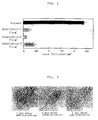
- significant hair growth inhibitory effects were observed on day 4 of incubation and the subsequent days in the group added with endothelin-1 compared with a control group in which endothelin-1 was not added (FIG. 3).
- a structural change of the endothelin-treated, growth-phase hair follicles into those similar to resting-phase hair follicles was observed (FIG. 4). Percent formations of regressed hair follicles with days are presented in Table 2.
- Endothelin-1 (0.5 mg) was dissolved in a mixed solution (2.5 mL) of polyethylene glycol 400 (average molecular weight: 400) and polyethylene glycol 3350 (average molecular weight: 3,350) (mixing ratio: 95/5) to prepare a hair growth inhibitor.
- Dorsal hair of each 8-week old C3H/HeNCrj mouse was removed with a depilatory cream (over an area of 2 x 4 cm 2 ), and the hair growth inhibitor was applied to the depilated site once a day at a dose of 25 ⁇ L/application over 2 weeks.
- a group in which only the solvent was similarly applied was employed as a control group.
- ILA1620 1.0 Cetanol 0.1 Propylene glycol 2.0 Dimethyl corn oil 2.0 A Polyoxyethylene-hydrogenated castor oil 2.5 Liquid paraffin 1.0 Polyvinyl pyrrolidone 0.5 Methylparaben 0.2 Ethanol 10.0 Purified water Balance B Liquefied petroleum gas (propellant) 4.0
- the ingredients belonging to Group A were combined into a uniform mixture and then placed in a can.
- the ingredient B was filled in the can to produce a hair growth inhibitory foam.
- the ingredients belonging to Group A were combined into a uniform mixture and then placed in a can.
- the ingredient B was filled in the can to produce an aerosol.
- the depilatories and external preparations according to the present invention inhibit the growth of hair in mammalian skin.
- Their application as drugs or cosmetics to the human body therefore, permits safe and efficient removal of hair from the body.
- their use, for example, as wool harvesting preparations for the harvest of wool makes it possible to harvest wool of high quality.
Landscapes
- Health & Medical Sciences (AREA)
- Life Sciences & Earth Sciences (AREA)
- Veterinary Medicine (AREA)
- Public Health (AREA)
- General Health & Medical Sciences (AREA)
- Animal Behavior & Ethology (AREA)
- Epidemiology (AREA)
- Chemical & Material Sciences (AREA)
- Engineering & Computer Science (AREA)
- Dermatology (AREA)
- Medicinal Chemistry (AREA)
- Pharmacology & Pharmacy (AREA)
- Bioinformatics & Cheminformatics (AREA)
- Proteomics, Peptides & Aminoacids (AREA)
- Gastroenterology & Hepatology (AREA)
- Zoology (AREA)
- Birds (AREA)
- Immunology (AREA)
- Vascular Medicine (AREA)
- Endocrinology (AREA)
- Chemical Kinetics & Catalysis (AREA)
- General Chemical & Material Sciences (AREA)
- Nuclear Medicine, Radiotherapy & Molecular Imaging (AREA)
- Organic Chemistry (AREA)
- Dispersion Chemistry (AREA)
- Marine Sciences & Fisheries (AREA)
- Cosmetics (AREA)
- Medicines That Contain Protein Lipid Enzymes And Other Medicines (AREA)
Abstract
Description
| Effects of administration of endothelin inhibitor on the formation of endothelin-induced depilation spot | |
| Administered Ingredient | Product of long diameter and short diameter of depilation spot (mm2) (mean ± S.D., N=6) |
| Solvent (0.1% BSA/PBS) | 0.00 ± 0.00 |
| Endothelin-1 (0.3 µg) | 81.47 ± 6.53 |
| PD142839 (10 µg) | 0.00 ± 0.00 |
| Endothelin-1 + PD142839 | 41.30 ± 20.43 (p<0.01 vs. endothelin-1 administration) |
| Effects of endothelin on the percent regression of growth-phase hair follicles | |||||||
| Concentration of added endothelin (ng/mL) | | Day | 2 of | Day | 4 of | Day | 6 of |
| 0 | 0.0 | 0.0 | 5.9 | 5.9 | |||
| 10 | 0.0 | 0.0 | 17.6 | 35.3 | |||
| 100 | 0.0 | 0.0 | 23.5 | 41.2 |
| Hair growth inhibitory effects by the application of endothelin to skin | ||
| Applied sample | Number of test animals | Percentage of regrown hair area on day 14 after |
| Solvent | ||
| 6 | 10.98 | |
| Endothelin-1 | 5 | 2.22 |
| Ingredient | (wt.%) | |
| A | Polyoxyethylene-hydrogenated castor oil | 0.8 |
| Ethanol | 30.0 | |
| Endothelin-1 | 0.5 | |
| Sodium dodecylsulfate | 0.12 | |
| Dodecylmethylamine oxide | 0.18 | |
| B | Isopyl alcohol | 15.0 |
| Benzyl alcohol | 15.0 | |
| Glycerin | 2.0 | |
| Purified water | Balance |
| Ingredient | (wt.%) | |
| Liquid paraffin | 10.0 | |
| Squalane | 7.0 | |
| Jojoba oil | 3.0 | |
| A | Solid paraffin | 3.0 |
| Polyoxyethylene cetyl ether | 2.0 | |
| Sorbitan sesquioleate | 1.0 | |
| Potassium hydroxide | 0.1 | |
| Endothelin-1 | 0.5 | |
| B | Glycerin | 3.0 |
| Ethylparaben | 0.1 | |
| Purified water | Balance |
| Ingredient | (wt.%) | |
| ILA1620 | 1.0 | |
| Cetanol | 0.1 | |
| Propylene glycol | 2.0 | |
| Dimethyl corn oil | 2.0 | |
| A | Polyoxyethylene-hydrogenated castor oil | 2.5 |
| Liquid paraffin | 1.0 | |
| Polyvinyl pyrrolidone | 0.5 | |
| Methylparaben | 0.2 | |
| Ethanol | 10.0 | |
| Purified water | Balance | |
| B | Liquefied petroleum gas (propellant) | 4.0 |
| Ingredient | (wt.%) | |
| BQ3020 | 0.05 | |
| Cetanol | 1.2 | |
| A | Propylene glycol | 4.0 |
| Ethanol | 8.0 | |
| Purified water | Balance | |
| B | Liquefied petroleum gas (propellant) | 4.0 |
Claims (3)
- A depilatory comprising endothelin or an agonist therefor.
- An external preparation comprising endothelin or an agonist therefor.
- A depilating method characterized by administering endothelin or an agonist therefor.
Applications Claiming Priority (3)
| Application Number | Priority Date | Filing Date | Title |
|---|---|---|---|
| JP29930599 | 1999-10-21 | ||
| JP29930599 | 1999-10-21 | ||
| PCT/JP2000/007218 WO2001028509A1 (en) | 1999-10-21 | 2000-10-18 | Depilatories and agents for external use |
Publications (3)
| Publication Number | Publication Date |
|---|---|
| EP1222913A1 true EP1222913A1 (en) | 2002-07-17 |
| EP1222913A4 EP1222913A4 (en) | 2003-06-25 |
| EP1222913B1 EP1222913B1 (en) | 2005-09-28 |
Family
ID=17870826
Family Applications (1)
| Application Number | Title | Priority Date | Filing Date |
|---|---|---|---|
| EP00969841A Expired - Lifetime EP1222913B1 (en) | 1999-10-21 | 2000-10-18 | Depilating method |
Country Status (5)
| Country | Link |
|---|---|
| US (2) | US6884772B1 (en) |
| EP (1) | EP1222913B1 (en) |
| JP (2) | JP5043253B2 (en) |
| DE (1) | DE60022892T2 (en) |
| WO (1) | WO2001028509A1 (en) |
Cited By (3)
| Publication number | Priority date | Publication date | Assignee | Title |
|---|---|---|---|---|
| WO2007042829A1 (en) * | 2005-10-14 | 2007-04-19 | Reckitt Benckiser (Uk) Limited | Sprayable depilatory composition and method of use |
| WO2015159099A1 (en) * | 2014-04-17 | 2015-10-22 | Follicum Ab | Compositions comprising osteopontin derivatives for the inhibition of hair growth |
| US10137169B2 (en) | 2011-08-10 | 2018-11-27 | Follicum Ab | Compositions and uses thereof |
Families Citing this family (7)
| Publication number | Priority date | Publication date | Assignee | Title |
|---|---|---|---|---|
| US7838250B1 (en) | 2006-04-04 | 2010-11-23 | Singulex, Inc. | Highly sensitive system and methods for analysis of troponin |
| CN101432626B (en) | 2006-04-04 | 2013-06-19 | 神谷来克斯公司 | Highly sensitive systems and methods for troponin analysis |
| EP2155209A4 (en) * | 2007-04-26 | 2012-06-13 | Univ Pennsylvania | COMPOSITION OF POLYMERASE DNA INHIBITORS AND METHODS OF THESE INHIBITORS |
| AU2010259022B2 (en) | 2009-06-08 | 2016-05-12 | Singulex, Inc. | Highly sensitive biomarker panels |
| EP2536384A1 (en) * | 2010-02-17 | 2012-12-26 | The Procter & Gamble Company | Efficacious depilatory article |
| WO2011119557A2 (en) * | 2010-03-26 | 2011-09-29 | The Procter & Gamble Company | Kit and method for removing hair |
| ES2379703T3 (en) * | 2010-03-26 | 2012-04-30 | The Procter And Gamble Company | Hair removal method and hair removal kit |
Family Cites Families (21)
| Publication number | Priority date | Publication date | Assignee | Title |
|---|---|---|---|---|
| US2823168A (en) * | 1952-06-06 | 1958-02-11 | Ethicon Inc | Depilatory of thioglycollate salt in gel solution with colloidal excess and method of preparing same |
| US3527559A (en) * | 1967-01-05 | 1970-09-08 | Standard Pharmacal Corp | Dense aqueous aerosol foam depilatory compositions containing a mixture of alkaline metal and alkali metal thioglycolates and a fatty alcohol-alkylene oxide wax emulsifying agent |
| US4139619A (en) | 1976-05-24 | 1979-02-13 | The Upjohn Company | 6-Amino-4-(substituted amino)-1,2-dihydro-1-hydroxy-2-iminopyrimidine, topical compositions and process for hair growth |
| DE3480171D1 (en) * | 1983-06-20 | 1989-11-23 | Kao Corp | Hair growth promoting composition |
| US5519058A (en) * | 1989-03-17 | 1996-05-21 | Cedars-Sinai Medical Center | Method for treatment with dimercaptosuccinic acid (DMSA) of hypertension, diabetic neuphropathy and atherosclerosis |
| WO1991013089A1 (en) * | 1990-02-26 | 1991-09-05 | Takeda Chemical Industries, Ltd. | Peptide derivatives and production thereof |
| JPH0678224B2 (en) * | 1990-08-13 | 1994-10-05 | 花王株式会社 | Proliferation / pigmentation promoter for melanocytes |
| JPH072677A (en) * | 1993-06-18 | 1995-01-06 | Toyo Seito Kk | Oral hair restorer |
| FR2711060B1 (en) * | 1993-10-13 | 1995-11-17 | Oreal | Method for modifying the growth of hair and / or hair and compositions which can be used for this purpose. |
| JPH07206843A (en) * | 1994-01-17 | 1995-08-08 | Kao Corp | Vasodilator |
| US5468476A (en) * | 1994-03-16 | 1995-11-21 | Ahluwalia; Gurpreet S. | Reduction of hair growth |
| AU719106B2 (en) * | 1995-02-28 | 2000-05-04 | Gillette Company, The | Use of angiogenesis suppressors for inhibiting hair growth |
| EP0748636B1 (en) | 1995-06-14 | 2003-08-27 | Hisamitsu Pharmaceutical Co., Inc. | Interface for iontophoresis |
| GB9521101D0 (en) * | 1995-10-16 | 1995-12-20 | Reckitt & Colmann Sa | Improvements in or relating to organic compositions |
| US5688499A (en) * | 1996-03-13 | 1997-11-18 | Queen's University At Kingston | Antagonism of endothelin actions |
| FR2769225B1 (en) | 1997-10-03 | 2000-03-10 | Yvon Gauthier | NEW COMPOSITIONS TO PROMOTE PIGMENTATION AND THEIR USE IN DERMO-COSMETOLOGY |
| EP1037621A4 (en) * | 1997-10-15 | 2004-01-21 | Univ Jefferson | NITRIC OXIDE DONOR COMPOSITIONS, METHODS, APPARATUS AND KITS FOR PREVENTION AND MITIGATION OF VASOCONSTRUCTION AND VASCULAR SPASMS IN A MAMMAL |
| WO1999038472A2 (en) | 1998-01-28 | 1999-08-05 | Seatrace Pharmaceuticals Inc | Topical vasodilatory gel composition and methods of use and production |
| US20010056068A1 (en) * | 1998-03-04 | 2001-12-27 | Kristof Chwalisz | Method of treatment and prevention of nitric oxide deficiency-related disorders with citrulline and citrulline derivatives |
| US6375948B1 (en) * | 1999-07-12 | 2002-04-23 | Kao Corporation | Treating method for suppressing hair growth |
| CN1100526C (en) * | 1999-11-12 | 2003-02-05 | 上海家化联合股份有限公司 | Skin beautifying and whitening composition |
-
2000
- 2000-10-18 WO PCT/JP2000/007218 patent/WO2001028509A1/en not_active Ceased
- 2000-10-18 JP JP2000317601A patent/JP5043253B2/en not_active Expired - Fee Related
- 2000-10-18 EP EP00969841A patent/EP1222913B1/en not_active Expired - Lifetime
- 2000-10-18 US US10/110,226 patent/US6884772B1/en not_active Expired - Fee Related
- 2000-10-18 DE DE60022892T patent/DE60022892T2/en not_active Expired - Lifetime
-
2005
- 2005-01-03 US US11/026,090 patent/US7468421B2/en not_active Expired - Fee Related
-
2009
- 2009-09-28 JP JP2009222379A patent/JP2009298815A/en not_active Withdrawn
Cited By (5)
| Publication number | Priority date | Publication date | Assignee | Title |
|---|---|---|---|---|
| WO2007042829A1 (en) * | 2005-10-14 | 2007-04-19 | Reckitt Benckiser (Uk) Limited | Sprayable depilatory composition and method of use |
| US10137169B2 (en) | 2011-08-10 | 2018-11-27 | Follicum Ab | Compositions and uses thereof |
| US10517932B2 (en) | 2011-08-10 | 2019-12-31 | Follicum Ab | Compositions and uses thereof |
| WO2015159099A1 (en) * | 2014-04-17 | 2015-10-22 | Follicum Ab | Compositions comprising osteopontin derivatives for the inhibition of hair growth |
| CN106413734A (en) * | 2014-04-17 | 2017-02-15 | 富力卡姆股份公司 | Compositions comprising osteopontin derivatives for the inhibition of hair growth |
Also Published As
| Publication number | Publication date |
|---|---|
| JP2009298815A (en) | 2009-12-24 |
| EP1222913A4 (en) | 2003-06-25 |
| EP1222913B1 (en) | 2005-09-28 |
| JP2001187720A (en) | 2001-07-10 |
| WO2001028509A1 (en) | 2001-04-26 |
| US6884772B1 (en) | 2005-04-26 |
| US20050112079A1 (en) | 2005-05-26 |
| JP5043253B2 (en) | 2012-10-10 |
| DE60022892T2 (en) | 2006-07-13 |
| DE60022892D1 (en) | 2006-02-09 |
| US7468421B2 (en) | 2008-12-23 |
Similar Documents
| Publication | Publication Date | Title |
|---|---|---|
| JP2009298815A (en) | Depilatory and agent for external use | |
| CA2314562C (en) | Reducing hair growth, hair follicle and hair shaft size and hair pigmentation | |
| WO1992007877A1 (en) | Hair growth regulating composition comprising epithelium cell supernatant-derived growth factor | |
| US20030053973A1 (en) | Topical composition for follicular delivery of an ornithine decarboxylase inhibitor | |
| US20090182031A1 (en) | Reduction of Hair Growth | |
| JPH06128295A (en) | Composition for controlling hair growth | |
| US20090082473A1 (en) | Composition comprising resveratol and its topical use thereof for reducing human hair growth | |
| WO2014080015A2 (en) | Hair growth compositions and methods | |
| KR101113806B1 (en) | A composition for preventing or treating alopecia comprising L-threonate | |
| RU2305540C2 (en) | Hair growth reduction | |
| WO2016102969A1 (en) | Inhibition of hair growth | |
| CN101170992A (en) | Compositions comprising wortmannin and topical use thereof for reducing human hair growth | |
| US20060034952A1 (en) | Agent for inhibiting the growth of mammalian hair | |
| JPH09500090A (en) | Method for promoting hair growth and hair activating composition containing rutozomia protein | |
| AU4885500A (en) | Reducing hair growth, hair follicle and hair shaft size and hair pigmentation | |
| HK1099696A (en) | Use of heat shock protein inhibitors for the reduction of hair growth | |
| JPH0558849A (en) | Trichogenous and hair-tonic agent |
Legal Events
| Date | Code | Title | Description |
|---|---|---|---|
| PUAI | Public reference made under article 153(3) epc to a published international application that has entered the european phase |
Free format text: ORIGINAL CODE: 0009012 |
|
| 17P | Request for examination filed |
Effective date: 20020508 |
|
| AK | Designated contracting states |
Kind code of ref document: A1 Designated state(s): DE FR GB |
|
| RIC1 | Information provided on ipc code assigned before grant |
Ipc: 7A 61K 38/22 B Ipc: 7A 61K 7/155 A Ipc: 7A 61P 17/00 B Ipc: 7A 61K 38/16 B Ipc: 7A 61K 7/00 B |
|
| A4 | Supplementary search report drawn up and despatched |
Effective date: 20030513 |
|
| 17Q | First examination report despatched |
Effective date: 20040716 |
|
| GRAP | Despatch of communication of intention to grant a patent |
Free format text: ORIGINAL CODE: EPIDOSNIGR1 |
|
| RTI1 | Title (correction) |
Free format text: DEPILATING METHOD |
|
| GRAS | Grant fee paid |
Free format text: ORIGINAL CODE: EPIDOSNIGR3 |
|
| GRAA | (expected) grant |
Free format text: ORIGINAL CODE: 0009210 |
|
| AK | Designated contracting states |
Kind code of ref document: B1 Designated state(s): DE FR GB |
|
| REG | Reference to a national code |
Ref country code: GB Ref legal event code: FG4D |
|
| REF | Corresponds to: |
Ref document number: 60022892 Country of ref document: DE Date of ref document: 20060209 Kind code of ref document: P |
|
| ET | Fr: translation filed | ||
| PLBE | No opposition filed within time limit |
Free format text: ORIGINAL CODE: 0009261 |
|
| STAA | Information on the status of an ep patent application or granted ep patent |
Free format text: STATUS: NO OPPOSITION FILED WITHIN TIME LIMIT |
|
| 26N | No opposition filed |
Effective date: 20060629 |
|
| PGFP | Annual fee paid to national office [announced via postgrant information from national office to epo] |
Ref country code: FR Payment date: 20141008 Year of fee payment: 15 Ref country code: DE Payment date: 20141014 Year of fee payment: 15 Ref country code: GB Payment date: 20141015 Year of fee payment: 15 |
|
| REG | Reference to a national code |
Ref country code: DE Ref legal event code: R119 Ref document number: 60022892 Country of ref document: DE |
|
| GBPC | Gb: european patent ceased through non-payment of renewal fee |
Effective date: 20151018 |
|
| PG25 | Lapsed in a contracting state [announced via postgrant information from national office to epo] |
Ref country code: DE Free format text: LAPSE BECAUSE OF NON-PAYMENT OF DUE FEES Effective date: 20160503 Ref country code: GB Free format text: LAPSE BECAUSE OF NON-PAYMENT OF DUE FEES Effective date: 20151018 |
|
| REG | Reference to a national code |
Ref country code: FR Ref legal event code: ST Effective date: 20160630 |
|
| PG25 | Lapsed in a contracting state [announced via postgrant information from national office to epo] |
Ref country code: FR Free format text: LAPSE BECAUSE OF NON-PAYMENT OF DUE FEES Effective date: 20151102 |