EP1221482A1 - Novel hemopoietin receptor protein, nr12 - Google Patents
Novel hemopoietin receptor protein, nr12 Download PDFInfo
- Publication number
- EP1221482A1 EP1221482A1 EP00962878A EP00962878A EP1221482A1 EP 1221482 A1 EP1221482 A1 EP 1221482A1 EP 00962878 A EP00962878 A EP 00962878A EP 00962878 A EP00962878 A EP 00962878A EP 1221482 A1 EP1221482 A1 EP 1221482A1
- Authority
- EP
- European Patent Office
- Prior art keywords
- protein
- dna
- amino acid
- gene
- sequence
- Prior art date
- Legal status (The legal status is an assumption and is not a legal conclusion. Google has not performed a legal analysis and makes no representation as to the accuracy of the status listed.)
- Granted
Links
Images



Classifications
-
- C—CHEMISTRY; METALLURGY
- C07—ORGANIC CHEMISTRY
- C07K—PEPTIDES
- C07K16/00—Immunoglobulins [IG], e.g. monoclonal or polyclonal antibodies
- C07K16/18—Immunoglobulins [IG], e.g. monoclonal or polyclonal antibodies against material from animals or humans
- C07K16/28—Immunoglobulins [IG], e.g. monoclonal or polyclonal antibodies against material from animals or humans against receptors, cell surface antigens or cell surface determinants
- C07K16/2866—Immunoglobulins [IG], e.g. monoclonal or polyclonal antibodies against material from animals or humans against receptors, cell surface antigens or cell surface determinants against receptors for cytokines, lymphokines, interferons
-
- A—HUMAN NECESSITIES
- A61—MEDICAL OR VETERINARY SCIENCE; HYGIENE
- A61P—SPECIFIC THERAPEUTIC ACTIVITY OF CHEMICAL COMPOUNDS OR MEDICINAL PREPARATIONS
- A61P37/00—Drugs for immunological or allergic disorders
- A61P37/02—Immunomodulators
-
- C—CHEMISTRY; METALLURGY
- C07—ORGANIC CHEMISTRY
- C07K—PEPTIDES
- C07K14/00—Peptides having more than 20 amino acids; Gastrins; Somatostatins; Melanotropins; Derivatives thereof
- C07K14/435—Peptides having more than 20 amino acids; Gastrins; Somatostatins; Melanotropins; Derivatives thereof from animals; from humans
- C07K14/705—Receptors; Cell surface antigens; Cell surface determinants
- C07K14/715—Receptors; Cell surface antigens; Cell surface determinants for cytokines; for lymphokines; for interferons
Definitions
- the present invention relates to novel hemopoietin receptor proteins, and genes encoding them, as well as methods for producing and using the same.
- cytokines A large number of cytokines are known as humoral factors that regulate proliferation/differentiation of various cells, or that regulate the maintenance, activation, and death of differentiated mature cells. There are specific receptors for these cytokines, which are categorized into several families based on their structural similarities (Hilton D.J., in "Guidebook to Cytokines and Their Receptors” edited by Nicola N.A. (A Sambrook & Tooze Publication at Oxford University Press), 1994, p8-16).
- Representative examples of the above-mentioned receptor families are the tyrosine kinase receptor family, hemopoietin receptor family, tumor necrosis factor (TNF) receptor family, and transforming growth factor (TGF) receptor family.
- TGF tumor necrosis factor
- TGF tumor necrosis factor
- TGF tumor necrosis factor
- TGF tumor necrosis factor
- TGF tumor growth factor
- Different signal transduction pathways have been reported to be involved with each of these families.
- many receptors of the hemopoietin receptor family in particular are expressed in blood cells and immunocytes, and their ligands, cytokines, are often termed as hemopoietic factors or interleukins. Some of these hemopoietic factors or interleukins exist within blood and are thought to be involved in systemic humoral regulation of hemopoietic or immune functions.
- hemopoietins can be taken as hormone-like factors, and representative peptide hormones, such as the growth hormone, prolactin, or leptin receptors, also belong to the hemopoietin receptor family. Because of these hormone-like systemic regulatory features, it is anticipated that administration of these hemopoietins can be applied to the treatment of various diseases.
- those that are presently being clinically applied include erythropoietin, G-CSF, GM-CSF, and IL-2.
- cytokine receptors have structural similarities among the family members. Using these similarities, many investigations are aimed at finding novel receptors. In particular, many receptors of the tyrosine kinase receptor family have already been cloned, using its highly conserved sequence at the catalytic site (Matthews W. et al., Cell, 1991, 65 (7) p1143-52). In comparison, hemopoietin receptors do not have a tyrosine kinase-like enzyme activity domain in their cytoplasmic regions, and their signal transductions are known to be mediated through associations with other tyrosine kinase proteins existing freely in the cytoplasm.
- JAK kinases the sites on receptors binding with these cytoplasmic tyrosine kinases, called JAK kinases group, are conserved among family members, the homology is not very high (Murakami M. et al., Proc. Natl. Acad. Sci. USA, 1991, 88, p11349-11353). Actually, the sequence that best characterizes these hemopoietin receptors exists in the extracellular region. In particular, a five amino acid motif, Trp-Ser-Xaa-Trp-Ser (wherein "Xaa” is an arbitrary amino acid), is conserved in almost all of the hemopoietin receptors. Therefore, novel receptors may be obtained by searching for novel family members using this motif sequence.
- the present invention provides novel hemopoietin receptor proteins, and DNA encoding these proteins.
- the present invention also provides a vector into which the DNA has been inserted, a transformant harboring the DNA, and a method for producing recombinant proteins using the transformant.
- the present invention also provides methods of screening for compounds that bind to the protein.
- this YR motif is not exactly a perfect consensus sequence, and the combination of the nucleotide sequences that encode the motif is very complicated. Therefore, it is practically impossible to synthesize and provide oligonucleotides that encode all of the amino acid sequences as probes for hybridization, which is a practical method for screening, or as primers aimed for RT-PCR.
- the inventors looked for other approaches to practically search for novel members of the hemopoietin receptor family using the above two motifs as probes, and determined that it would be appropriate to perform a database search on the computer using partial amino acid sequences of known hemopoietin receptors, including both motifs as the query.
- the inventors repeated TblastN searches on the gss and htgs database in GenBank, using partial amino acid sequences from multiple known hemopoietin receptors as the query. As a result, many positive clones, including known hemopoietin receptors, were obtained in all cases. Next, the nucleotide sequence around those sequences which seemed to be positive at a high rate was converted to the amino acid sequence.
- Genes considered to encode members of the receptor family were selected by BlastX search, in which the amino acid sequences (converted from the nucleotide sequences of the clones) were compared to those of known hemopoietin receptors.
- BlastX search in which the amino acid sequences (converted from the nucleotide sequences of the clones) were compared to those of known hemopoietin receptors.
- human genome sequences encoding two clones of known hemopoietin receptor genes and one clone of novel hemopoietin receptor gene were identified.
- specific oligonucleotide primers were designed based on the exon sequences predicted from the obtained nucleotide sequence.
- Clones corresponding to the N-terminal region and C-terminal region of NR12 were obtained by conducting 5'-RACE and 3'-RACE methods using the primers, and cDNA libraries of human fetal liver, adult thymus, and adult testis as the templates.
- the complete nucleotide sequence of the full-length cDNA was revealed by determining the nucleotide sequences of both clones, and connecting the sequence at the duplicated center region.
- NR12.1 A cDNA clone of these splice variants comprising 337 amino acids and potentially encoding a secretory form soluble receptor protein was named NR12.1; the other two clones, comprising 428 amino acids and 629 amino acids respectively and each encoding transmembrane form receptor proteins, were named NR12.2 and NR12.3. Because repeated structure of cysteine residues, YR motif, WS motif, and so on, that are conserved in the extracellular region of other family members were well conserved in the primary structure of all the isolated cDNA clones of NR12, it was considered that these clones encode typical hemopoietin receptors.
- the present inventors succeeded in obtaining two clones (NR12.4 and NR12.5) encoding complete proteins that were 3 amino acids different from NR12.2 and NR12.3, respectively, by conducting PCR cloning against the cDNA library of human thymus (wherein five clones generically named "NR12" were isolated).
- the present invention relates to novel hemopoietin receptors and genes encoding the receptors, as well as use of the same. More specifically, the present invention provides the following:
- NR12.4 A clone having almost the same full-length ORF as NR12.2 was named NR12.4, and that having almost the same full-length ORF as NR12.3 was named NR12.5.
- the nucleotide sequence of NR12.1 cDNA is shown in SEQ ID NO: 1, and the corresponding amino acid sequence of the protein encoded by the cDNA is shown in SEQ ID NO: 2.
- the nucleotide sequence of NR12.2 cDNA is shown in SEQ ID NO: 3, and the corresponding amino acid sequence of the protein encoded by the cDNA is shown in SEQ ID NO: 4.
- the nucleotide sequence of NR12.3 cDNA is shown in SEQ ID NO: 5, and the corresponding amino acid sequence of the protein encoded by the cDNA is shown in SEQ ID NO: 6.
- NR12.1, NR12.2, NR12.3, NR12.4, and NR12.5 are almost identical, these regions are thought to have the same tertiary structure and thereby recognize the same specific ligand.
- NR12 in hematopoietic cell line tissues and immune cell line tissues such as adult spleen, thymus, lymph node, bone marrow, and peripheral leukocyte; and expression in testis, liver, lung, kidney, pancreas, and gastrointestinal tract, such as small intestine and colon. Additionally, expression of NR12 was also observed in all the analyzed mRNA derived from human fetal organs. From the revealed distribution pattern of NR12 gene expression, it was presumed that NR12 encodes a novel hematopoietic factor receptor, primarily because localization of strong expression in tissues thought to include immune cell lines and hematopoietic cells was detected. Furthermore, the fact that NR12 expression was observed in tissues other than those described above suggests that NR12 can regulate not only physiological functions of the immune system and hematopoietic system in vivo but also various other physiological functions in vivo.
- NR12.1 is expressed in thymus, peripheral leukocytes, and spleen, it is predicted to be a receptor for an unknown hemopoietic factor. Therefore, NR12 proteins are useful tools in the identification of the unknown hemopoietic factor. They may also be used to screen a peptide library or synthetic chemical compounds to isolate or identify agonists and antagonists that can functionally bind to the NR12 molecule. Moreover, clinical application is expected of novel molecules binding to the NR12 molecule and specific antibodies that can limit the function of the NR12 molecule to regulate the immune response or hematopoiesis in vivo, by searching such molecules and antibodies.
- NR12 is expected to be expressed in a restricted population of cells in the hemopoietic tissues, and thus, anti-NR12 antibodies are useful for the isolation of such cell populations.
- the isolated cell populations may be used in cell transplantation.
- the anti-NR12 antibody may be used for the diagnosis or treatment of diseases, such as leukemia.
- the soluble proteins comprising the extracellular domain of NR12 protein and the splice variant of NR12, NR12.1, may be used as a decoy-type receptor to inhibit the NR12 ligand. They may be useful for the treatment of diseases in which NR12 is implicated, such as leukemia.
- the present invention includes proteins that are functionally equivalent to the NR12 protein.
- proteins that are functionally equivalent to the NR12 protein are included.
- the term "functionally equivalent” refers to proteins having an equivalent biological activity as compared to that of an NR12 protein.
- Such biological activity may include the protein activity as a membrane bound or soluble form hematopoietic factor receptor.
- the proteins of the present invention includes proteins having the amino acid sequence of human NR12 protein in which one or more amino acids are mutated, so long as the resulting proteins are functionally equivalent to human NR12 protein.
- a protein functionally equivalent to the NR12 protein of the invention the following can be specifically mentioned: one in which one or two, preferably, two to 30, more preferably, two to 10 amino acids are deleted in any one of the amino acid sequences of SEQ ID NOs: 2, 4, 6, 8, or 10; one in which one or two, preferably, two to 30, more preferably, two to 10 amino acids have been added into any one of the amino acid sequences of SEQ ID NOs: 2, 4, 6, 8, or 10; one in which one or two, preferably, two to 30, more preferably, two to 10 amino acids have been substituted with other amino acids in any one of the amino acid sequences of SEQ ID NOs: 2, 4, 6, 8, or 10.
- a fusion protein comprising human NR12 protein is an example of a protein in which one or more amino acids residues have been added to the amino acid sequence of a human NR12 protein (e.g., SEQ ID NO: 2, 4 6, 8 or 10).
- a fusion protein is made by fusing the human NR12 protein with another peptide(s) or protein(s) and is included in the present invention.
- a fusion protein can be prepared by ligating a DNA encoding the human NR12 protein of the present invention with a DNA encoding another peptide (s) or protein(s) in frame, introducing the ligated DNA into an expression vector, and expressing the fusion gene in a host. Methods known by one skilled in the art can be used for preparing such a fusion gene. There is no restriction as to the other peptide(s) or protein(s) that is (are) fused to the protein of the present invention.
- proteins to be fused with the protein of the present invention are the GST (glutathione-S-transferase), Influenza agglutinin (HA), immunoglobulin constant region, ⁇ -galactosidase, MBP (maltose-binding protein), and such.
- Fusion proteins can be prepared by fusing commercially available DNA encoding these peptides or proteins with DNA encoding a protein of the present invention and expressing the fused DNA prepared.
- the hybridization technique (Sambrook, J. et al., Molecular Cloning 2nd ed., 9.47-9.58, Cold Spring Harbor Lab. Press, 1989) is well known to those skilled in the art as an alternative method for preparing a protein functionally equivalent to a certain protein. More specifically, one skilled in the art can utilize the general procedure to obtain a protein functionally equivalent to a human NR12 protein by isolating DNA having a high homology with the whole or part of a DNA sequence encoding the human NR12 protein (e.g., SEQ ID NO: 1, 3, 5, 7 or 9).
- the proteins of the present invention include such proteins, that are encoded by DNAs that hybridizes with a DNA encoding a human NR12 protein or part thereof and that are functionally equivalent to a human NR12 protein.
- Examples include homologues of human NR12 in other mammals (for example, those of monkey, rat, mouse, rabbit, and bovine gene) .
- a hematopoietic cell line tissue such as spleen, thymus, lymph node, bone marrow, and peripheral leukocyte; however, the invention is not limited thereto.
- Stringent hybridization conditions for isolating DNA encoding proteins functionally equivalent to a human NR12 protein can be suitably selected by one skilled in the art, and for example, low-stringent conditions can be given.
- Low-stringent conditions are, for example, 42 °C, 2x SSC, and 0.1% SDS, and preferably, 50 °C, 2x SSC, and 0.1% SDS.
- High stringent conditions are more preferable and include, for example, 65 °C, 2x SSC, and 0.1% SDS. Under these conditions, at lower temperatures, the DNA obtained will have a lower homology. Conversely, it is expected that the homology of the obtained DNA will be higher at higher temperatures.
- several factors other than temperature such as salt concentration, can also influence the stringency of hybridization and one skilled in the art can routinely select the factors to accomplish a similar stringency.
- the gene amplification method for example, the polymerase chain reaction (PCR) method can be utilized to isolate the object DNA, using primers synthesized based on the sequence information of a DNA (e.g., SEQ ID NO: 1, 3, 5, 7 or 9) encoding human NR12 protein.
- PCR polymerase chain reaction
- the proteins of the present invention also include proteins that are functionally equivalent to the human NR12 protein, which also have a high homology with the protein comprising any one of the amino acid sequences of SEQ ID NO: 2, 4, 6, 8, and 10.
- High homology is normally defined as a homology of 70% or higher, preferably 80% or higher, more preferably 90% or higher, and most preferably 95% or higher.
- the homology of a protein can be determined by the algorithm in "Wilbur, W. J. and Lipman, D. J. Proc. Natl. Acad. Sci. USA (1983) 80, 726-730".
- the amino acid sequence, molecular weight, isoelectric point, the presence or absence of sugar chains, and the form of a protein of the present invention may differ according to the producing cells, host, or purification method described below. However, so long as the obtained protein has an equivalent function to human NR12 protein (SEQ ID NO: 2, 4, 6, 8 or 10), it is included in the present invention.
- a protein of the present invention is expressed in prokaryotic cells, such as E. coli , a methionine residue is added at the N-terminus of the amino acid sequence of the expressed protein.
- a protein of the present invention is expressed in eukaryotic cells, such as mammalian cells, the N-terminal signal sequence is removed.
- proteins are also included as proteins of the present invention.
- the present invention encompasses a protein comprising the sequence from the 24 th Gly to 337 th Cys in the amino acid sequence of SEQ ID NO: 2.
- the present invention encompasses a protein comprising the sequence from the 24 th Gly to 428 th Ser in the amino acid sequence of SEQ ID NO: 4.
- the present invention encompasses a protein comprising the sequence from the 24 th Gly to 629 th Lys in the amino acid sequence of SEQ ID NO: 6.
- the present invention encompasses a protein comprising the sequence from the 24 th Gly to 428 th Ser in the amino acid sequence of SEQ ID NO: 8.
- the present invention encompasses a protein comprising the sequence from the 24 th Gly to 629 th Lys in the amino acid sequence of SEQ ID NO: 10.
- a protein of the present invention can be prepared by methods known to one skilled in the art, as a recombinant protein, and also as a natural protein.
- a recombinant DNA can be prepared by inserting a DNA encoding the protein of the present invention (for example, the DNA comprising the nucleotide sequence of SEQ ID NO: 1, 3, 5, 7 or 9) into a suitable expression vector, introducing the vector into a suitable host cell, and collecting the extract from the resulting transformant.
- recombinant protein can be purified and prepared by subjecting to chromatography, such as ion exchange chromatography, reverse phase chromatography, gel filtration, and such, or affinity chromatography, wherein antibodies against the protein of the present invention are immobilized, or using one or more of these columns in combination.
- chromatography such as ion exchange chromatography, reverse phase chromatography, gel filtration, and such, or affinity chromatography, wherein antibodies against the protein of the present invention are immobilized, or using one or more of these columns in combination.
- a protein of the present invention when expressed within host cells (for example, animal cells and E. coli) , as a fusion protein with glutathione-S-transferase protein or as a recombinant protein supplemented with multiple histidines, the expressed recombinant protein can be purified using a glutathione column or nickel column.
- host cells for example, animal cells and E. coli
- the expressed recombinant protein can be purified using a glutathione column or nickel column.
- a natural protein may be isolated by methods known to one skilled in the art. For example, extracts of tissue or cells expressing a protein of the invention may be reacted with an affinity column described below, to which antibodies binding to the human NR12 protein are attached, to isolate the natural protein. Polyclonal or monoclonal antibodies may be used.
- the present invention also includes partial peptides of the proteins of the present invention.
- a partial peptide consists of an amino acid sequence specific to a protein of the present invention and is composed of at least 7 amino acids, preferably more than 8 amino acids, and more preferably more than 9 amino acids.
- the partial peptides may be useful , for example, for preparing antibodies against a protein of the present invention; for screening compounds binding to a protein of the present invention, or for screening accelerators or inhibitors of a protein of the present invention. Alternatively, they may be used as antagonists for the ligand of a protein of the present invention.
- a partial peptide of a protein of the present invention is, for example, a partial peptide having the active center of the protein consisting of the amino acid sequences of SEQ ID NO: 2, 4, 6, 8, or 10. Additionally, the partial peptides may comprise one or more regions of the hydrophilic region and hydrophobic region determined by hydrophobicity plot analysis. These partial peptides may contain the whole hydrophilic region or a part of a hydrophilic region, or may contain the whole or a part of the hydrophobic region. Moreover, for example, soluble proteins and proteins comprising extracellular regions of a protein of the invention are also encompassed in the invention.
- the partial peptides of the invention may be produced by genetic engineering techniques, well-known peptide synthesizing methods, or by excising a protein of the invention with a suitable peptidase.
- the solid phase synthesizing method or liquid phase synthesizing method may be used as peptide synthesizing method.
- Another object of the present invention is to provide a DNA encoding a protein of the present invention.
- the DNA may be useful for producing the above proteins of the present invention in vivo or in vitro. Furthermore, for example, it is also possible to use the DNA for application to gene therapy and such of diseases arising from abnormalities of the gene encoding the protein of the present invention.
- the DNA may be provided in any form, so long as it encodes a protein of the present invention.
- the DNA may be a cDNA synthesized from mRNA, genomic DNA, or chemically synthesized DNA.
- a DNA comprising any nucleotide sequence based on the degeneracy of genetic code may be included so long as it encodes a protein of the present invention.
- the DNA of the present invention can be prepared by any method known to a person skilled in the art.
- the DNA of the present invention may be prepared by constructing a cDNA library from cells expressing the protein of the present invention, and conducting hybridization using as a probe a partial sequence of a DNA of the present invention (for example, SEQ ID NO: 1, 3, 5, 7 or 9).
- a cDNA library may be constructed, for example, according to the method described in the literature (Sambrook J. et al., Molecular Cloning, Cold Spring Harbor Laboratory Press (1989)), or a commercial cDNA library may be used.
- the DNA may be prepared by obtaining RNA from a cell expressing a protein of the present invention, synthesizing oligo DNA based on the sequence of a DNA of the present invention (for example, SEQ ID NO: 1, 3, 5, 7 or 9), conducting PCR using the synthesized DNA as primers, and amplifying the cDNA encoding a protein of the present invention.
- the translation region encoded by the cDNA can be determined, and the amino acid sequence of the protein of the present invention can be obtained.
- genomic DNA can be isolated by screening genomic DNA libraries using the obtained cDNA as a probe.
- mRNA is isolated from cells, tissues, or organs expressing a protein of the invention (for example, hematopoietic-competent cell line tissue such as spleen, thymus, lymph node, bone marrow, peripheral leukocyte and immunocompetent cell line tissue, and such).
- a protein of the invention for example, hematopoietic-competent cell line tissue such as spleen, thymus, lymph node, bone marrow, peripheral leukocyte and immunocompetent cell line tissue, and such.
- whole RNA is prepared using well-known methods, for example, the guanidine ultracentrifugation method (Chirgwin J.M. et al. Biochemistry 18:5294-5299 (1979)), the AGPC method (Chomczynski, P. and Sacchi, N., Anal. Biochem. 162:156-159 (1987)), and such.
- mRNA from whole mRNA can be purified using the mRNA Purification Kit
- cDNA can then be synthesized using reverse transcriptase from the obtained mRNA.
- cDNA can be synthesized by using the AMV Reverse Transcriptase First-strand cDNA Synthesis Kit (Seikagaku Kogyo), etc. Additionally, cDNA synthesis and amplification may be also performed using the primer and such described herein, following the 5'-RACE method (Frohman, M.A. etal. Proc. Natl. Acad. Sci. U.S.A. 85:8998-9002 (1988); Belyavsky, A. et al. Nucleic Acids Res. 17:2919-2932 (1989)) utilizing the polymerase chain reaction (PCR) and the 5'-Ampli FINDER RACE Kit (Clontech).
- 5'-RACE method Frohman, M.A. etal. Proc. Natl. Acad. Sci. U.S.A. 85:8998-9002 (1988); Belya
- the objective DNA fragment is prepared from the obtained PCR product and ligated with a vector DNA.
- a recombinant vector is created and introduced into E. coli, and such, and colonies are selected to prepare the desired recombinant vector.
- the nucleotide sequence of the objective DNA can be verified by conventional methods, for example, dideoxynucleotide chain termination.
- DNA of the invention a sequence with higher expression efficiency can be designed by considering the codon usage frequency in the host used for the expression (Grantham R. et al. Nucleic Acids Research (1981) 9, r43-74).
- the DNA of the present invention may also be modified using commercially available kits and conventional methods. Illustrative modifications include, for instance, digestion by restriction enzymes, insertion of synthetic oligonucleotides and suitable DNA fragments, addition of linkers, insertion of a initiation codon (ATG) and/or stop codon (TAA, TGA, or TAG), and such.
- the present invention includes DNA that hybridize under stringent conditions to the DNA consisting of any one of the nucleotide sequence of SEQ ID NO: 1, 3, 5, 7 or 9, so long as the resulting DNA encodes a protein functionally equivalent to the above-mentioned protein of the invention.
- low-stringent conditions are, for example, 42°C, 2x SSC, and 0.1% SDS, and preferably 50°C, 2x SSC, and 0.1% SDS. More preferable are highly stringent conditions which are, for example, 65°C, 2x SSC, and 0.1% SDS. Under these conditions, the higher the temperature, the higher the homology of the obtained DNA will be.
- the above hybridizing DNA is preferably a natural DNA, such as cDNA and chromosomal DNA.
- any vector may be used as long as it contains the "ori" for amplification in E. coli that enables large-scale preparation, and a selection marker for transformants (for example, a drug-resistance gene that enables selection by a drug such as ampicillin, tetracycline, kanamycin, and chloramphenicol).
- a selection marker for transformants for example, a drug-resistance gene that enables selection by a drug such as ampicillin, tetracycline, kanamycin, and chloramphenicol.
- M13-series vectors, pUC-series vectors, pBR322, pBluescript, pCR-Script, and so on can be used.
- an expression vector is especially useful.
- the expression vector must have characteristics such as those mentioned above to be amplified in E. coli .
- E. coli such as JM109, DH5 ⁇ , HB101, or XL1 Blue
- the vector must have a promoter, for example, the lacZ promoter (Ward et al., Nature (1989) 341, 544-546; FASEB J.
- Such vectors include pGFX-5X-1 (Pharmacia), "QIAexpress system” (Qiagen), pEGFP, pET (in this case, a host is preferably BL21 which expresses T7 RNA polymerase), and so on, except those mentioned above.
- Vectors may be introduced into host cells, for example, by the calcium chloride method or electroporation.
- the vector may also contain a signal sequence for polypeptide secretion.
- the pelB signal sequence (Lei, S. P. et al. J. Bacteriol. (1987) 169, 4379) may be used to produce the proteins in the periplasm in E. coli .
- an expression vector for the preparation of a protein of the present invention may be a mammal-derived expression vector (for example, pcDNA3 (Invitrogen) , pEGF-BOS (Nucleic Acids. Res. 1990, 18 (17) , p5322) , pEF, and pCDM8); an insect cell-derived expression vector (for example, "Bac-to-BAC baculovirus expression system” (GIBCO BRL), pBacPAK8); a plant-derived expression vector (for example, pMH1 and pMH2); an animal virus-derived expression vector (for example, pHSV, pMV, and pAdexLcw) ; a retrovirus-derived expression vector (for example, pZIpneo) ; an yeast-derived expression vector (for example, "Pichia Expression Kit” (Invitrogen), pNV11, and SP-Q01) ; or a Bacillus subtilis -derived expression vectors (
- the expression vector For the expression in animal cells, such as CHO, COS, and NIH3T3 cells, the expression vector must have a promoter such as the SV40 promoter (Mulligan et al., Nature (1979) 277, 108), MMLV-LTR promoter, the EF1 ⁇ promoter (Mizushima et al., Nucleic Acids Res. (1990) 18, 5322) , and the CMV promoter. More preferably, the vector may contain a marker gene for the selection of transformants (for example, a drug resistance gene for selection by a drug such as neomycin and G418). Such vectors include pMAM, pDR2, pBK-RSV, pBK-CMV, pOPRSV, pOp13, and so on.
- CHO cells deficient in the metabolic pathway for nucleotide synthesis may be used.
- the CHO cell is transfected with an expression vector comprising the DHFR gene that complements the deficiency (for example, pCHO I), then the vector may be amplified by methotrexate (MTX) treatment.
- MTX methotrexate
- COS cells containing a gene expressing the SV40 T-antigen on its chromosome may be used to transform with a vector containing the SV40 replication origin (e.g. pcD).
- replication origins to be used in the present invention include those derived from polyomavirus, adenovirus, bovine papilomavirus (BPV), and such.
- the expression vector may include an aminoglycoside transferase (APH) gene, thymidine kinase (TK) gene, E.coli xanthine guanine phosphoribosyl transferase (Ecogpt) gene, dihydrofolate reductase (dhfr) gene, and such as a selective marker.
- APH aminoglycoside transferase
- TK thymidine kinase
- Ecogpt E.coli xanthine guanine phosphoribosyl transferase
- dhfr dihydrofolate reductase
- a DNA of the present invention in animals may be performed by, for example, by inserting a DNA of the present invention into an appropriate vector and introducing the vector into the body using retrovirus, liposome, cationic liposome, adenovirus, and so on. It is possible to use these methods to perform gene therapy for diseases that arise from mutations in the NR12 gene of the present invention.
- vectors used for this purpose include, for example, adenovirus vectors (for example pAdexlcw), retrovirus vectors (for example, pZIPneo), and such, but are not limited thereto.
- General gene manipulations, for example, insertion of the DNA of the present invention into a vector may be performed by using standard methods (Molecular Cloning, 5.61-5.63).
- the vector may be administered to a living body through ex vivo or in vivo methods.
- Another object of the present invention is to provide a transformant that contains a DNA or vector of the present invention.
- the host cell to insert a vector of the invention is not limited in any way, and for example, E. coli , a variety of animal cells, and so on may be used.
- the host cells of the present invention may be, for example, used as a production system for preparing or expressing a protein of the present invention. In vitro and in vivo production systems are known as production system for producing proteins. Production systems using eukaryotic cells and prokaryotic cells may be used as the in vitro production systems.
- animal cells When using eukaryotic cells, production system using, for example, animal cells, plant cells, and fungal cells are available as hosts.
- animal cells to be used include mammalian cells such as CHO (J. Exp. Med. 108:945 (1995)), COS, 3T3, myeloma, baby hamster kidney (BHK) , HeLa, Vero cells; amphibian cells such as Xenopus oocytes (Valle, et al. Nature 291:338-340 (1981)); and insect cells such as Sf9, Sf21, or Tn5.
- CHO cells especially DHFR gene-deficient CHO cell, dhfr-CHO (Proc. Natl. Acad. Sci. U.S.A.
- CHO cells may be preferably used.
- the vector may be introduced into host cells, for example, by the calcium phosphate method, the DEAE dextran method, methods using cationic liposome DOTAP (Boehringer Mannheim), the electroporation method, the lipofection method, and so on.
- Nicotiana tabacum -derived cells are well known as protein production systems in plant cells, and these can be callus cultured.
- yeasts such as the Saccharomyces genus, for example, Saccharomyces cerevisiae; filamentous fungi, such as Aspergillus genus, for example, Aspergillus niger are known.
- the objective DNA may be prepared as a fusion gene with a gene encoding a protein intrinsically produced into milk, such as goat ⁇ casein.
- the DNA fragment comprising the fusion gene is injected into goat's embryo, and this embryo is implanted in female goat.
- the objective protein can be recovered from the milk of the transgenic goats produced from the goat that received the embryo and offspring thereof.
- a suitable hormone(s) may be administered to the transgenic goats (Ebert, K.M. et al., Bio/Technology 12:699-702 (1994)).
- Silk worms may be used as insects. When using silk worms, they are infected with baculoviruses to which the DNA encoding objective protein has been inserted, and the desired protein can be recovered from body fluids of the silk worm (Susumu M. et al. Nature 315:592-594 (1985)).
- tobacco When using plants, for example, tobacco can be used.
- the DNA encoding the objective protein is inserted into a plant expression vector, for example, pMON530, and this is inserted into a bacteria, such as Agrobacterium tumefaciens .
- This bacterium is infected to tobacco, for example, Nicotiana tabacum , and it is able to obtain the desired polypeptide from the tobacco leaves (Julian K. -C. Ma et al. Eur. J. Immunol. 24:131-138 (1994)).
- proteins of the present invention are isolated from inside or outside (e.g. medium) of the host cell, and may be purified as a substantially pure homogeneous protein.
- the separation and purification of the protein can be done using conventional separation and purification methods used to purify proteins and are not limited to any specific method. For instance, column chromatography, filter, ultrafiltration, salt precipitation, solvent precipitation, solvent extraction, distillation, immunoprecipitation, SDS-polyacrylamide gel electrophoresis, isoelectric point electrophoresis, dialysis, recrystallization, and such may be suitably selected, or combined to separate and purify the protein.
- affinity chromatography ion-exchange chromatography, hydrophobic chromatography, gel filtration, reverse phase chromatography, adsorption chromatography, and such can be exemplified as chromatographies (Strategies for Protein Purification and Characterization: A Laboratory Course Manual. Ed. Daniel R. Marshak et al., Cold Spring Harbor Laboratory Press (1996)). These chromatographies can be performed by liquid chromatography, such as HPLC, FPLC, and such.
- the present invention encompasses proteins highly purified by using such purification methods.
- Proteins can be arbitrarily modified, or peptides can be partially excised by treating the proteins with appropriate protein modification enzymes prior to or after the purification. Trypsin, chymotrypsin, lysyl-endopeptidase, protein kinase, glucosidase, and such are used as protein modification enzymes.
- the present invention also provides antibodies that bind to the protein of the invention.
- the form of the antibody of the invention includes polyclonal antibodies, as well as monoclonal antibodies.
- the antiserum obtained by immunizing animals such as rabbits with a protein of the invention, as well polyclonal and monoclonal antibodies of all classes, human antibodies, and humanized antibodies produced by genetic recombination, are also included.
- a protein of the invention that is used as a sensitizing antigen for obtaining antibodies is not restricted by the animal species from which it is derived, but is preferably a protein derived from mammals, for example, humans, mice, or rats, especially preferably from humans. Protein of human origin can be obtained by using the nucleotide sequence or amino acid sequences disclosed herein.
- an intact protein or its partial peptide may be used as the antigen for immunization.
- partial peptides of the proteins for example, the amino (N)-terminal fragment of the protein, and the carboxy (C)-terminal fragment can be given.
- Antibody as used herein means an antibody that specifically reacts with the full-length or fragments of the protein.
- a gene encoding a protein of the invention or a fragment thereof is inserted into a known expression vector, and, by transforming the host cells with the vector described herein, the desired protein or a fragment thereof is recovered from outside or inside the host cells using standard methods.
- This protein can be used as the sensitizing antigen.
- cells expressing the protein, cell lysates, or a chemically synthesized protein of the invention may be also used as a sensitizing antigen.
- Examples of animals belonging to rodentia that may be used include, for example, mice, rats, hamsters, and such.
- Examples of animals belonging to lagomorpha that may be used include, for example, rabbits.
- Examples of animals of Primates that may be used include, for example, monkeys.
- Examples of monkeys to be used include the infraorder catarrhini (old world monkeys), for example, Macaca fascicularis , rhesus monkeys, sacred baboons, chimpanzees, and such.
- immunocytes are taken from the mammal and used for cell fusion.
- splenocytes can be mentioned as preferable immunocytes.
- parent cells fused with the above immunocytes mammalian myeloma cells are preferably used. More preferably, myeloma cells that have acquired the feature, which can be used to distinguish fusion cells by agents, are used as the parent cell.
- the monoclonal antibodies obtained by transplanting the obtained hybridomas into the abdominal cavity of a mouse and extracting ascites can be purified by, for example, ammonium sulfate precipitation, protein A or protein G column, DEAE ion exchange chromatography, an affinity column to which the protein of the present invention is coupled, and so on.
- An antibody of the present invention may be used for the purification or detection of a protein of the present invention. It may also be a candidate as an agonist or antagonist of a protein of the present invention. Furthermore, it is possible to use it in antibody treatment for diseases in which the protein is implicated.
- human antibodies or humanized antibodies are preferably used because of their reduced immunogenicity.
- the antibody of the present invention may be an antibody fragment or modified-antibody, so long as it binds to a protein of the invention.
- Fab, F (ab') 2 , Fv, or single chain Fv (scFv) in which the H chain Fv and the L chain Fv are suitably linked by a linker Huston J.S. et al. Proc. Natl. Acad. Sci. U.S.A. 85:5879-5883 (1988)
- linker Huston J.S. et al. Proc. Natl. Acad. Sci. U.S.A. 85:5879-5883 (1988)
- antibody fragments are generated by treating antibodies with enzymes, for example, papain or pepsin.
- they may be generated by constructing a gene encoding an antibody fragment, introducing this into an expression vector, and expressing this vector in suitable host cells (see, for example, Co M.S. et al. J. Immunol. (1994) 152, 2968-2976; Better M. and Horwitz A.H., Methods Enzymol. (1989) 178, 476-496; Pluckthun, A. and Skerra, A., Methods Enzymol. (1989) 178, 497-515; Lamoyi, E., Methods Enzymol. (1986) 121, 652-663; Rousseaux, J. et al., Methods Enzymol. (1986) 121, 663-669; Bird, R.E. and Walker, B.W., Trends Biotechnol. (1991) 9, 132-137).
- An antibody of the present invention may be obtained as a chimeric antibody, comprising non-human antibody-derived variable region and human antibody-derived constant region, or as a humanized antibody comprising non-human antibody-derived complementarily determining region (CDR), human antibody-derived framework region (FR), and human antibody-derived constant region by using conventional methods.
- CDR non-human antibody-derived complementarily determining region
- FR human antibody-derived framework region
- Another object of this invention is to provide a polynucleotide of at least 15 nucleotides that is complementary to the DNA encoding human NR12 protein (SEQ ID NO: 1, 3, 5, 7 or 9) or its complementary strand.
- complementary strand is defined as one strand of a double strand polynucleotide composed of A:T and G:C base pairs to the other strand.
- complementary is defined as not only those completely matching within a continuous region of at least 15 nucleotides, but also having a homology of at least 70%, preferably 80%, more preferably 90%, and most preferably 95% or higher within that region. The homology may be determined using the algorithm described herein.
- the antisense oligonucleotides that hybridize with a portion of the nucleotide sequence of any of SEQ ID NO: 1, 3, 5, 7, and 9 are also included in the antisense oligonucleotides of the present invention.
- These antisense oligonucleotides are preferably directed against a sequence which contains at least 15 continuous nucleotides comprised in any one of the nucleotide sequence of SEQ ID NO: 1, 3, 5, 7, and 9. More preferably, it is the antisense oligonucleotide against at least 15 continuous nucleotides containing a translation start codon.
- antisense oligonucleotides means, not only those in which the nucleotides corresponding to those constituting a specified region of a DNA or mRNA are entirely complementary, but also those having a mismatch of one or more nucleotides, so long as the DNA or mRNA and the oligonucleotide can specifically hybridize with the nucleotide sequence of SEQ ID NO: 1, 3, 5, 7 or 9.
- An antisense oligonucleotide derivative of the present invention can be made into an external preparation, such as a liniment or a poultice, by mixing with a suitable base material, which is inactive against the derivatives.
- Proteins of this invention to be used in the screening of the invention may be any of recombinant, natural, or partial peptides. Also, they may be in the form of proteins expressed on the cell surface or membrane fractions. Test samples to be used in the screening method of the present invention are not limited, but may be, for example, cell extracts, cell culture supernatants, microbial fermentation products, extracts of marine organisms, plant extracts, purified or partly purified proteins, peptides, non-peptide compounds, synthetic low molecular compounds, or natural compounds. The proteins of this invention may be exposed to the sample as purified protein or soluble proteins, in a form bound to a carrier, as fusion proteins with another protein, in a form expressed on the cell surface, or as membrane fractions.
- Transfer of a foreign gene into animal cells for its expression can be performed by any of the following methods, including the electroporation method (Chu, G. et al. Nucl. Acid Res. 15, 1311-1326 (1987)), the calcium phosphate method (Chen, C and Okayama, H. Mol Cell. Biol. 7, 2745-2752 (1987)), the DEAE dextran method (Lopata, M. A. et al. Nucl. Acids Res. 12, 5707-5717 (1984); Sussman, D. J. and Milman, G. Mol. Cell. Biol. 4, 1642-1643 (1985)), the lipofectin method (Derijard, B. Cell 7 1025-1037 (1994) ; Lamb, B. T.
- immune complexes are formed by adding these antibodies to cell lysate prepared using suitable detergents.
- This immune complex consists of a protein of the present invention, a protein capable of binding to the protein, and an antibody.
- the immunoprecipitation can also be conducted using an antibody against a protein of the present invention besides antibodies against the above epitopes.
- An antibody against the protein of the present invention can be prepared, for example, by inserting a gene encoding a protein of the present invention into an appropriate E. coli expression vector to express the gene in E. coli , purifying the expressed protein, and immunizing rabbits, mice, rats, goats, chickens, and such, with the purified protein.
- the antibody can also be prepared by immunizing the above-described animals with partial peptides of the protein of the present invention.
- the protein encoded by the isolated cDNA may be obtained by introducing the cDNA into E. coli and expressing it therein. Thus, it is possible to prepare proteins that bind to a protein of this invention and genes encoding them.
- the reporter gene to be used in the two-hybrid system may be any suitable gene, such as HIS3 gene, Ade2 gene, LacZ gene, CAT gene, luciferase gene, or plasminogen activator inhibitor type1 (PAI-1) gene, but is not limited thereto.
- Screening for compounds which bind to a protein of the present invention can be also carried out using affinity chromatography.
- a protein of the invention is immobilized on a carrier in the affinity chromatography column, to which a test sample, which is expected to express a protein binding to the protein of the invention, is applied.
- Samples may be, for example, cell extracts, cell lysates, etc. After loading the test sample, the column is washed, and proteins which binds to the protein of the invention can be obtained.
- the isolated compound or a protein of the present invention can be directly administered or can be formulated into a dosage form using known pharmaceutical preparation methods.
- the pharmaceuticals can be taken orally, as sugar-coated tablets, capsules, elixirs and microcapsules, or parenterally, in the form of injections of sterile solutions, suspensions with water, or any other pharmaceutically acceptable liquid.
- additives which can be mixed to tablets and capsules include: binders, such as gelatin, corn starch, tragacanth gum and gum acacia; excipients, such as crystalline cellulose; swelling agents, such as corn starch, gelatin and alginic acid; lubricants, such as magnesium stearate; and sweeteners, such as sucrose, lactose or saccharin; flavoring agents, such as peppermint, Gaultheria adenothrix oil and cherry.
- a liquid carrier such as oil
- Sterile composites for injections can be formulated following normal drug implementations, using vehicles such as distilled water used for injections.
- physiological saline, glucose, and other isotonic liquids including adjuvants, such as D-sorbitol, D-mannose, D-mannitol, and sodium chloride, can be used as aqueous solutions for injections.
- adjuvants such as D-sorbitol, D-mannose, D-mannitol, and sodium chloride
- suitable solubilizers such as alcohol, specifically ethanol, polyalcohols such as propylene glycol and polyethylene glycol, and non-ionic surfactants, such as Polysorbate 80 (TM) and HCO-50.
- Methods well known to those skilled in the art may be used to administer the pharmaceutical compound to patients, for example as intraarterial, intravenous, percutaneous injections and also as intranasal, transbronchial, intramuscular or oral administrations.
- the dosage varies according to the body-weight and age of the patient, the administration method, and such, but one skilled in the art can suitably select them.
- said compound is encodable by a DNA
- said DNA can be inserted into a vector for gene therapy to perform the therapy.
- the dosage and method of administration vary according to the body-weight, age, and symptoms of a patient, but one skilled in the art can select them suitably.
- the dosage of the protein of this invention may vary depending on the subject of administration, target organ, symptom, and method for administration. However, it may be injected to a normal adult (body weight, 60 kg) at a dose of about 100 ⁇ g to 10-20 mg per day.
- the dose of a compound that binds with a protein of the present invention, or a compound that inhibits the activity of a protein of this invention is typically about 0.1 mg to about 100 mg per day, preferably about 1.0 mg to about 50 mg per day, and more preferably about 1.0 mg to about 20 mg per day, when administered orally to a normal adult (weight 60 kg).
- the protein When the protein is administered parenterally, in the form of an injection to a normal adult (weight 60 kg), although there are some differences according to the patient, target organ, symptoms and method of administration, it is convenient to intravenously inject a dose of about 0.01 mg to about 30 mg per day, preferably about 0.1 to about 20 mg per day and more preferably about 0.1 to about 10 mg per day. Also, in the case of other animals, it is possible to administer an amount converted to 60 kg of body-weight or surface area.
- the present inventors found motif sequences conserved in the hemopoietin receptor family, namely (Tyr/His)-Xaa-(Hydrophobic/Ala)-(Gln/Arg)-Hydrophobic-Arg motif (YR motif) in the extracellular region, and Trp-Ser-Xaa-Trp-Ser motif (WS motif) located around the C-terminus.
- motif sequences conserved in the hemopoietin receptor family namely (Tyr/His)-Xaa-(Hydrophobic/Ala)-(Gln/Arg)-Hydrophobic-Arg motif (YR motif) in the extracellular region, and Trp-Ser-Xaa-Trp-Ser motif (WS motif) located around the C-terminus.
- Trp-Ser-Xaa-Trp-Ser motif Trp-Ser-Xaa-Trp-Ser motif
- Fragmentation of partial amino acid sequences that may be used as a query was examined using the human receptors shown in table 1 as the sequence of known hemopoietin receptors.
- the exons encoding these YR motif and WS motif were about 50 to 70 amino acids long, and the exon proximal to it to the N-terminus (PP exon) was also about 50 to 70 amino acids long.
- PP exon the exon proximal to it to the N-terminus
- a sequence containing both exons consisting of about 120 amino acids were cut to prepare a query sequence for convenience' sake.
- the length of the partial amino acid sequence used as the query sequence varied depending on each known hemopoietin receptor, the feature of the structure was conserved.
- a sequence that ranges from one or more proline residues located near the initiation site in the PP exon to the amino acid residue located about 10 amino acids to the C-terminus of the WS motif termination in the WS exon was extracted as the query sequences from all known hematopoietin receptor sequences.
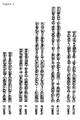
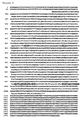
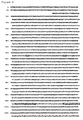
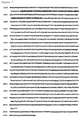
- AL109843 is a genome draft sequence derived from human chromosome 1 submitted to htgs database at 16 th August 1999, and has a length of 149104 bp. However, nucleotide sequences at 10 positions, approximately 8000 bp in total, remains undetermined at this time. The existence of a WS exon could be predicted in the sequence of AL109843 which were positive in the TblastN primary search as shown in Figure 1. The YR motif, [YVFQVR] sequence , and WS motif, [WQPWS] sequence, was recognized in the sequence. The comparison of the amino acid sequence of NR12 to that of the known hematopoietin receptor, which were detected to have homology in BlastX secondary search, are shown in Figure 2. Based on the above result, specific oligonucleotide primers were designed on the exon sequence that were predicted in the AL109843 sequence, and these primers were used in the 5'-RACE method and the 3'-RACE method described later on.
- exon sites were predicted on AL109843 sequences, and these were used to design the following oligonucleotide primers specific for NR12.
- Three sense primers (NR12-S1, NR12-S2, and NR12-S3; oriented downstream) and three antisense primers (NR12-A1, NR12-A2, and NR12-A3; oriented upstream ) were synthesized using the ABI 394 DNA/RNA synthesizer under a condition to attach a trityl group to the 5'-terminus. Then, the products were purified using an OPC column (ABI #400771) to obtain full-length primers.
- oligonucleotide primers NR12-S1 and NR12-A3, NR12-S2 and NR12-A2, and NR12-S3 and NR12-A1 were designed to have completely complementary sequence to each other.
- Condition of the primary PCR was as follows: 94°C for 4 min, 5 cycles of "94°C for 20 sec, 72°C for 90 sec", 5 cycles of "94°C for 20 sec, 70°C for 90 sec", 28 cycles of "94°C for 20 sec, 68°C for 90 sec", 72°C for 3 min, and termination at 4°C.
- Condition of the secondary PCR was as follows: 94°C for 4 min, 5 cycles of "94°C for 20 sec, 70°C for 90 sec", 25 cycles of "94°C for 20 sec, 68°C for 90 sec", 72°C for 3 min, and termination at 4°C.
- pGEM-T Easy vector Two amplification products were obtained by the PCR and both of them were subcloned into pGEM-T Easy vector (Promega #A1360), and the nucleotide sequences were determined.
- the transformation of the PCR product into the pGEM-T Easy vector was performed using T4 DNA ligase (Promega#1360) in a reaction at 4°C of 12 hours.
- Recombinants of the PCR products and pGEM-T Easy vector were obtained by the transformation of E. coli DH5 ⁇ strain (Toyobo#DNA-903). Recombinants were selected by using Insert Check Ready Blue (Toyobo#PIK-201) .
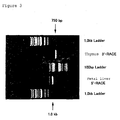
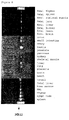
- nucleotide sequences were determined using the BigDye Terminator Cycle Sequencing Ready Reaction Kit (ABI/Perkin Elmer#4303154) and by analyzing with the ABI PRISM 377 DNA Sequencer. Nucleotide sequences of the whole insert fragment of 10 independent clones were determined. As a result, they were divided into two groups, one consisting of 4 clones with a size of 1.3 kb, and the other consisting of 6 clones with a size of 1.0 kb, based on the length of the base pairs and the differences in sequence. However, the former 5'-RACE PCR products of 1.3 kb were revealed to be non-specific PCR amplification products. This sequence is derived from the minor band shown in Figure 3. On the other hand, the latter 5'-RACE PCR products of 1.0 kb were recognized as partial nucleotide sequences of NR12 that resulted from a correct PCR amplification reaction.
- 3'-RACE PCR was performed using NR12-S1 primer of (3) for the primary PCR, and NR12-A2 of (3) for secondary PCR, respectively.
- the PCR was performed under the same condition as in the 5'-RACE above except the Human Thymus Marathon-Ready cDNA Library (Clontech#7415-1) was used-as the template. More specifically, Advantage cDNA Polymerase Mix and the Perkin Elmer Gene Amp PCR System 2400 thermalcycler was used in the PCR experiment.
- 3'-RACE amplification product showing an identical size of 750 bp was obtained as shown in Figure 3.
- the obtained PCR product was subcloned into the pGEM-T Easy vector as above to determine the nucleotide sequence.
- the recombination of the PCR product into the pGEM-T Easy vector was performed using T4 DNA ligase in a reaction at 4°C for 12 hours.
- the recombinant of the PCR product and pGEM-T Easy vector was obtained by transformation of E. coli DH5 ⁇ strain, and selection of the recombinant was done using Insert Check Ready Blue as described above.
- the nucleotide sequence was determined using the BigDye Terminator Cycle Sequencing Ready Reaction Kit and the ABI PRISM 377 DNA Sequencer for analysis.
- the nucleotide sequences of the whole insert fragment from 2 independent clones of genetic recombinants revealed that the clones contain the C-terminal sequence of the full-length NR12 cDNA clone having a poly A sequence.
- nucleotide sequence determined by the 3'-RACE-PCR and those determined by 5'-RACE-PCR in (4) were combined to finally determine the whole nucleotide sequence of the cDNA clone encoding the secretory form soluble receptor-like protein named NR12.1.
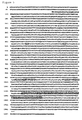
- the determined nucleotide sequence of NR12.1 cDNA (SEQ ID NO: 1) and the amino acid sequence encoded by the sequence (SEQ ID NO: 2) are shown in Figure 4.
- the NR12.1 clone isolated above had sufficient feature of known hemopoietin receptors according to the result of structural analysis, it did not possess a transmembrane region. Therefore, it was inferred to encode a soluble receptor-like protein as above-mentioned. Further, the present inventors predicted the existence of splicing variants that have a transmembrane region especially in the C-terminal region of the transcription product of the present gene, and tried to isolate NR12 cDNA clones by successive 3'-RACE method.
- 3'-RACEPCR was performed using the above-mentioned NR12-S2 primer of (3) for primary PCR, and NR12-S3 primer for secondary PCR. Under the same PCR condition to those described in (4) for 5'-RACE method except using Human Testis Marathon-Ready cDNA Library (Clontech#7414-1) as the template. As a result, multiple 3'-RACE PCR products with different sizes were obtained. All of the obtained PCR products were subcloned into the pGEM-T Easy vector as described above to determine the nucleotide sequences. Nucleotide sequences of the whole insert fragments of 6 independent clones of genetic recombinants were determined.
- the exon site sequence was predicted in above (2) from the splicing consensus sequence in RNA transcription (Hames, B.D. and Glover, D.M., Transcription and Splicing (Oxford, IRL Press), 1988, p131-206) and not by using program such as genome analysis software. According to the determination of the whole nucleotide sequence of isolated cDNA clones, it was revealed that the exon site predicted within the partial sequence of AL109843 shown in Figure 1 correspond completely to that observed in the actual transcription of the NR12 gene. However, it was revealed that only the transcription product of NR12.1 cDNA clone was one which elongates to the 3'-untranslated region read through the identical sequence as that of the genome structure without splicing after the termination of WS exon.
- NR12.1, NR12.2 and NR12.3 may encode a secretory form soluble hemopoietin receptor-like protein consisting of 337 amino acids according to its primary structure, while the NR12.2 and NR12.3 may encode transmembrane hemopoietin receptor proteins consisting of 428 and 629 amino acids, respectively.
- the characteristics of each NR12 were as follows.
- the sequence from the 1 st Met to the 23 rd Gly in the common extracellular domain of these clones is the typical secretion signal sequence.
- the first Met is presumed to be the translation initiation site because there exists an in-frame termination codon at the minus 32 position from the 1 st Met.
- an Ig-like region exists in the region from the 24 th Gly to the 124 th Pro residue.
- the region from the 133 rd Cys to the 144 th Cys residue forms one of the loop structures which is a ligand-binding site.
- the region from the 290 th Tyr to the 295 th Arg residue corresponds to the highly conserved YR motif, and a typical WS motif is also found at residues from the 304 th Trp to 308 th Ser.
- the NR12.1 encodes 29 amino acids after the WS motif and the translation frame terminates at the next stop codon. Therefore, the NR12.1 encodes a soluble hemopoietin receptor protein that does not have a transmembrane domain.
- the 26 amino acids following the conserved motif above from the 352 nd Gly to the 377 th Asn residue in NR12.2 and NR12.3 correspond to a typical transmembrane domain.
- the NR12.2 and NR12.3 encode identical amino acid sequences to the 413 th Gln residue in the extracellular region. However, structural differences exist in the C-terminal region following the 413 th Gln residue due to alternative splicing which connects them to different exons.
- NR12.2 encodes 428 amino acids and the translation frame is terminated at the next stop codon. Thus, it has only a short intracellular region consisting of 51 amino acids.
- NR12.3 encodes 629 amino acids and has an intracellular region consisting of 252 amino acids. According to the structural characteristics above, NR12 gene was recognized to possess sufficient characteristics as novel hemopoietin receptor proteins.
- Example 2 Tissue distribution determination and expression pattern analysis of NR12 gene by RT-PCR
- NR12-PPD primer with the sequence below was synthesized as a sense primer (downstream orientation) for the RT-PCR analysis.
- NR12-A1 primer synthesized in Example 1 (3) was used as the antisense primer (upstream orientation).
- the NR12-PPD primer was synthesized and purified as in Example 1 (3). It was expected that the common N-terminal region in all splice variants, NR12.1, NR12.2 and NR12.3, are amplified and detected using these primer sets (NR12-PPD and NR12-A1).
- the templates used were Human Multiple Tissue cDNA (MTC) Panel I (Clontech #K1420-1), Human MTC Panel II (Clontech#K1421-1), Human Immune System MTC Panel (Clontech#K1426-1), and Human Fetal MTC Panel (Clontech#K1425-1).
- PCR was performed using Advantage cDNA Polymerase Mix (Clontech#8417-1) on a thermal cycler (Perkin Elmer Gene Amp PCR System 2400).
- PCR was performed by following condition to amplify the target gene: 94°C for 4 min, 5 cycles of "94°C for 20 sec, 72°C for 1 min", 5 cycles of "94°C for 20 sec, 70°C for 1 min", 25 cycles of "94°C for 20 sec, 68°C for 1 min", 72°C for 3 min, and termination at 4°C.
- the size of the RT-PCR amplification product was 561 bp, which was consistent with the size calculated from the determined nucleotide sequence of NR12 cDNA. Thus, the product was considered to be the product of specific PCR amplification reaction. This was further confirmed by Southern blotting as in the following, and the possibilitythat the product was a non-specific PCR amplification product was denied.
- transcriptional regulation of the NR12 gene expression is strictly controlled by the transcriptional regulation determining functional specificity, transcriptional induction by exogenous stimulating factor, and regulation of alternative splicing in specific cell types.
- the RT-PCR amplified target gene product in Example 2 was subjected to Southern blotting using NR12 specific cDNA fragment as a probe.
- the amount of RT-PCR product was quantitatively detected by the strength of labeled signal to assess relative gene expression levels among different human organs.
- the RT-PCR product was electrophoresed on an agarose gel, blotted onto a charged nylon membrane, Hybond N (+) (Amersham, cat#RPN303B), and was subjected to hybridization.
- the 5'-RACE PCR product cDNA fragment corresponding to the N-terminus of the NR12 obtained in Example 1 (4) was used as a probe specific to NR12.
- Probes were prepared using the Mega Prime Kit (Amersham, cat#RPN1607), and labeled with radioisotope, [ ⁇ - 32 P] dCTP (Amersham, cat#AA0005). Hybridization was performed using Express Hyb Hybridization Solution (Clontech#8015-2) , and after the prehybridization at 68°C for 30 min, heat-denatured labeled probe was added to conduct hybridization at 68°C for 120 min.
- Northern blot analysis of NR12 gene expression was performed to examine the expression pattern of NR12 gene in human organs and human cancer cell lines, and to determine the size of NR12 transcripts.
- Human Multiple Tissue Northern (MTN) Blot (Clontech#7760-1), Human MTN Blot II (Clontech#7759-1) , Human MTN Blot III (Clontech#7767-1) and Human Cancer Cell Line MTN Blot (Clontech#7757-1) were used.
- MTN Multiple Tissue Northern
- the cDNA fragment obtained by 5'-RACE in Example 1 (4) was used as the probe.
- the probe was prepared using Mega Prime Kit and radio-labeled with [ ⁇ - 32 P]dCTP as in Example 3.
- Hybridization was performed using Express Hybridization Solution, and after prehybridization at 65°C for 30 min heat-denatured labeled probe was added to conduct hybridization at 65°C for 16 hr.
- the method failed to detect any signal in any of the examined human organs. This could be because Northern blotting has a significant lower sensitivity than RT-PCR and thus failed to detect mRNA with low expression level.
- Ligands that bind specifically to the protein of this invention can be screened by the following step: (1) preparing a chimeric receptor by ligating the extracellular domain of the protein of this invention with the intracellular domain containing the transmembrane domain of a hemopoietin receptor protein comprising a known signal transduction ability; (2) expressing this chimeric receptor on the cell surface of a suitable cell line, preferably, a cell line that can survive and proliferate only under the presence of a suitable factor (a growth factor-dependent cell line); and (3) culturing the cell line by adding a material that is expected to contain various growth factors, cytokines, or hemopoietic factors.
- This method utilizes the fact that the above-mentioned growth factor-dependent cell line only survives and proliferates when a ligand specifically binding to the extracellular domain of the protein of the invention exists within the test material and is killed rapidly without the existence of the growth factor.
- Known hemopoietic receptors are, for example, the thrombopoietin receptor, erythropoietin receptor, G-CSF receptor, gp130, etc.
- the partner of the chimeric receptor used in the screening of the invention is not limited to these known hemopoietic receptors, and any receptor may be used so long as it contains the structure necessary for the signal transducing activity in the cytoplasmic domain.
- IL-3-dependent cell lines such as Ba/F3 and FDC-P1, can be exemplified as growth factor-dependent cell lines.
- the cDNA sequence encoding the extracellular region of NR12 (the amino acid sequence from the 1 st Met to the 319 th Gly) was amplified by PCR, and this DNA fragment was bound in frame to the DNA fragments encoding the transmembrane region and the intracellular region of a known hemopoietin receptor to prepare a fusion sequence encoding a chimeric receptor.
- the TPO receptor Human MPL-P
- the constructed chimeric receptor sequence above was inserted into the plasmid vector, pME18S/neo, which can be expressed in mammalian cells.
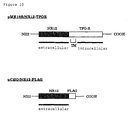
- FIG. 10 A schematic diagram of the structure of the constructed pME18S/NR12-TPOR chimeric receptor is shown in Figure 10.
- the chimeric receptor-expressing vector was introduced into the growth factor-dependent cell line Ba/F3, and was forced to express. Then, stable gene-introduced cells were selected. The selection can be done by utilizing the fact that the expression vector contains a drug (neomycin) resistant gene, and thus, only gene-introduced cells that obtained drug tolerance can be proliferated in the culture containing the drug.
- Novel hematopoietin may be screened by constructing a screening system that utilizes the ability of the chimeric receptor-expressing cell lines to survive and proliferate only under the existence of a ligand functionally binding specifically to the NR12.
- the culture of the chimeric receptor-expressing cell line is conducted in medium supplemented with a material expected to include a target ligand in place of the growth factor (IL-3, in this case) free medium described above.
- the former proteins containing only the extracellular domain of the protein of the invention are, for example, soluble receptor proteins artificially prepared by inserting a stop codon to the N-terminal side of the transmembrane domain, or NR12.1 that encodes the soluble type protein of NR12.
- the latter proteins may be prepared by adding labeling peptide sequences such as Fc site of immunogloblins, and FLAG peptide to the C-terminus of the extracellular domain of the protein of the invention.
- These soluble labeled proteins can be also used for the detection in the West-western blotting method.
- the present inventors selected a construction method as follows: (1) cDNA sequence encoding the extracellular region of NR12 (amino acid sequence from the 1 st Met to the 319 th Gly) was amplified by PCR; and (2) FLAG peptide sequence was added in frame to the C-terminus of the amplified DNA fragment to obtain a sequence encoding the soluble targeted protein.
- the constructed sequence was inserted into the plasmid vector, pCHO, which can be expressed in mammalian cells.
- a schematic diagram of the structure of the constructed pCHO/NR12-TPOR chimeric receptor is shown in Figure 10. This expression vector was introduced into mammalian cells, CHO cells, and was forced to express. Then, stable gene-introduced cells were selected.
- the expression cells were cultured in large scale.
- the recombinant protein secreted into the culture supernatant can be immunoprecipitated using anti-FLAG peptide antibody, and may be purified by affinity columns, etc.
- PCR cloning was performed using NR12.1-MET primer of (1) as sense primer and NR12.2-STP and NR12.3-STP primer as antisense primers, respectively.
- Human Thymus Marathon-Ready cDNA Library (Clontech#7415-1) was used as the template, and Advantage cDNA Polymerase Mix (Clontech#8417-1) for the PCR experiment on a thermal cycler (Perkin Elmer Gene Amp PCR System 2400) under the condition described below.
- the obtained PCR products were subcloned into pGEM-T Easy vectors (Promega #A1360) as in Example 1 (4), and the nucleotide sequences were determined. Recombination of the PCR products into the pGEM-T Easy vectors were performed using T4 DNA ligase (Promega#1360) in a reaction at 4°C for 12 hours. The recombinant of the PCR product and the pGEM-T Easy vector was obtained by transformation of E . coli strain DH5 ⁇ (Toyobo#DNA-903), and Insert Check Ready Blue (Toyobo#PIK-201) was used for the selection of the genetic recombinant.
- NR12.4 contains the full-length ORF of NR12.2 but not the 5'-untranslated region or 3'-untranslated region except the sequence derived from primers due to the design of the used primers in the PCR.
- NR12.5 also contained the full-length ORF of NR12.3 but not the 5'-untranslated region or 3'-untranslated region except the sequence derived from the primers.
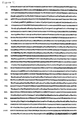
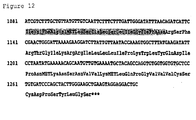
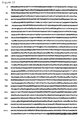
- the determined nucleotide sequence of NR12.4 and its amino acid sequence are shown in Figure 11 and 12, and the determined nucleotide sequence of NR12.5 and its amino acid sequence are shown in Figure 13 and 14.
- the present invention provides novel hemopoietin receptor proteins and DNA encoding same.
- the present invention also provides: a vector into which the DNA has been inserted, a transformant harboring the DNA, and a method for producing recombinant proteins using the transformant. It further provides a method of screening for a compound or a natural ligand that binds to the protein.
- the protein of this invention is predicted to be associated with the regulation of immune system and hematopoiesis. Therefore, the proteins of this invention are expected to be useful in understanding immune responses and fundamental features of hematopoiesis in vivo . It is also expected that the proteins of the present invention can be used in the diagnosis and treatment of diseases related to immunity and hematopoiesis.
- the NR12 gene is expected to provide a useful source for obtaining unknown hematopoietic factors or agonists that are capable of functionally binding to the receptor protein encoded by the NR12 gene. It is expected that cellular immunity and hematopoietic function in vivo will be enhanced by the administration of such functionally binding substances or specific antibodies that can activate the function of NR12 molecule to the organism.
- the NR12 gene facilitates the development of drugs for clinical application that promote proliferation or differentiation of the immune cells or hematopoietic cells, or that activates the function of immune cells. Such drugs may be used to enhance cytotoxic immunity against specific types of tumor. It is possible that NR12 is expressed in a restricted population of cells in the hematopoietic tissues. Accordingly, anti-NR12 antibodies would be useful in the isolation of such cell populations, which may then be used in cell transplantation treatments.
- NR12.1 a splice variant of NR12
- antagonists that can bind functionally to the NR12 molecule, or other inhibitors, as well as specific antibodies that can inhibit the molecular function of NR12 to the organism, one can potentially suppress cellular immunity or inhibit the proliferation of hematopoietic cells in vivo.
- inhibitors may be applied as drugs for clinical application for use as, for example, proliferation inhibitors of immune cell and hematopoietic cell, differentiation inhibitors, immunosuppressive drugs, and anti-inflammatory drugs.
- inhibitors may be used to suppress the onset of autoimmune diseases arising from autoimmunity, or tissue rejection by the immune system of the living body, the primary problem in transplantation. Furthermore, the inhibitors may be effectively used to treat diseases caused by such aberrant promotion of immune response. Thus, the inhibitors may be used to treat a variety of allergies that are specific to particular antigens, such as metal and pollen.
Landscapes
- Health & Medical Sciences (AREA)
- Chemical & Material Sciences (AREA)
- Life Sciences & Earth Sciences (AREA)
- Organic Chemistry (AREA)
- Immunology (AREA)
- General Health & Medical Sciences (AREA)
- Medicinal Chemistry (AREA)
- Biochemistry (AREA)
- Biophysics (AREA)
- Genetics & Genomics (AREA)
- Molecular Biology (AREA)
- Proteomics, Peptides & Aminoacids (AREA)
- Cell Biology (AREA)
- Toxicology (AREA)
- Zoology (AREA)
- Gastroenterology & Hepatology (AREA)
- Engineering & Computer Science (AREA)
- Bioinformatics & Cheminformatics (AREA)
- Chemical Kinetics & Catalysis (AREA)
- General Chemical & Material Sciences (AREA)
- Nuclear Medicine, Radiotherapy & Molecular Imaging (AREA)
- Pharmacology & Pharmacy (AREA)
- Animal Behavior & Ethology (AREA)
- Public Health (AREA)
- Veterinary Medicine (AREA)
- Peptides Or Proteins (AREA)
- Micro-Organisms Or Cultivation Processes Thereof (AREA)
Abstract
Description
| Human Receptors | GenBank Accession # | YR-motif Sequence | WS-motif Sequence |
| LIF-R | NM_002310 | Y TFRI R | WS K WS |
| gp130 | NM_002184 | Y VFRI R | WS D WS |
| IL-12Rβ1 | NP_005526 | QEFQL R | WS K WS |
| IL-12Rβ2 | NM_001559 | Y EFQIS | WS D WS |
| G-CSFR | NM_000760 | Y TLQI R | WS D WS |
| EPO-R | M34986 | Y TFAV R | WS A WS |
| TPO-R | M90103 | Y RLQL R | WS S WS |
| Leptin-R | U50748 | Y AVQV R | WS N WS |
| IL-3Rα | M74782 | Y TVQI R | L S A WS |
| IL-4R | NM_000418 | Y RARV R | WS E WS |
| IL-5Rα | M96651 | V DVQV R | WS E WS |
| IL-6R | NM_000565 | HVVQL R | WS E WS |
| IL-7R | NM_002185 | Y EIKV R | WS E WS |
| IL-11Rα | U32324 | HAVRVS | WS T WS |
| IL-13Rα | NM_001560 | NTVRI R | WS N WS |
| IL-2Rβ | A28052 | Y EFQV R | WS P WS |
| IL-2Rγ | NM_000206 | Y TFRV R | WS E WS |
| GM-CSFR | M64445 | HSVKI R | WS S WS |
| CNTF-R | NM_001842 | Y IIQVA | WS D WS |
| PRL-R | NM_000949 | Y LVQV R | WS A WS |
| NR6(CRLF1) | NM_004750 | Y FVQV R | WS E WS |
| NR9(CREME9) | AF120151 | Y QFRVC | WS P WS |
| GenBank Accession # | Motif Sequence | Note |
| AC008048 | WS P WS | IL-2R beta |
| AC007174 | WS E WS | IL-5R |
| AL031406 | WS T WS | CH.22 |
| AC003656 | WS G WS | CH.21 |
| AC008663 | WS K WS | CH.5 |
| AC008614 | WS G WS | CH.5 |
| AC008532 | WS G WS | CH.19 |
| AC009267 | WS T WS | CH.18 |
| AC007596 | WS S WS | CH.16 |
| AC007227 | W GE WS | CH.16 |
| AL031123 | WS D WA | CH.6 |
| AC005911 | W GE WS | CH.12 |
| AL096870 | WS N WK | CH.14 |
| Z97201 | WS N WK | CH.12 |
| AC007902 | WS G WS | CH.18 |
| AC008536 | WS M WS | CH.5 |
| AC006176 | WS G WS | CH.10 |
| AC004846 | WS Q WS | none |
| AL109843 | W QP WS | CH.1 (NR12) |
| AC003656 | WS E WG | CH.21 |
| AC005143 | T S G WS | CH.15 |
| AL109743 | WS G WS | CH.1 |
| AC008403 | WS A WS | CH.19 |
| AL032818 | WS G WS | CH.22 |
| Z93017 | WS G WS | CH.6 |
| AC009456 | WS R WS | CH.18 |
| AC008427 | WS EG S | CH.5 |
| AL096791 | WS Q WS | CH.X |







Name and Address of the depositary institution
Depositary institution: National Institute of Bioscience and Human-Technology, Agency of Industrial Science and Technology, Ministry of International Trade and Industry.
Address: 1-1-3 Higashi, Tsukuba, Ibaraki 305-8566, Japan.
Deposition date: 31st July 2000
Accession No.: FERM BP-7259

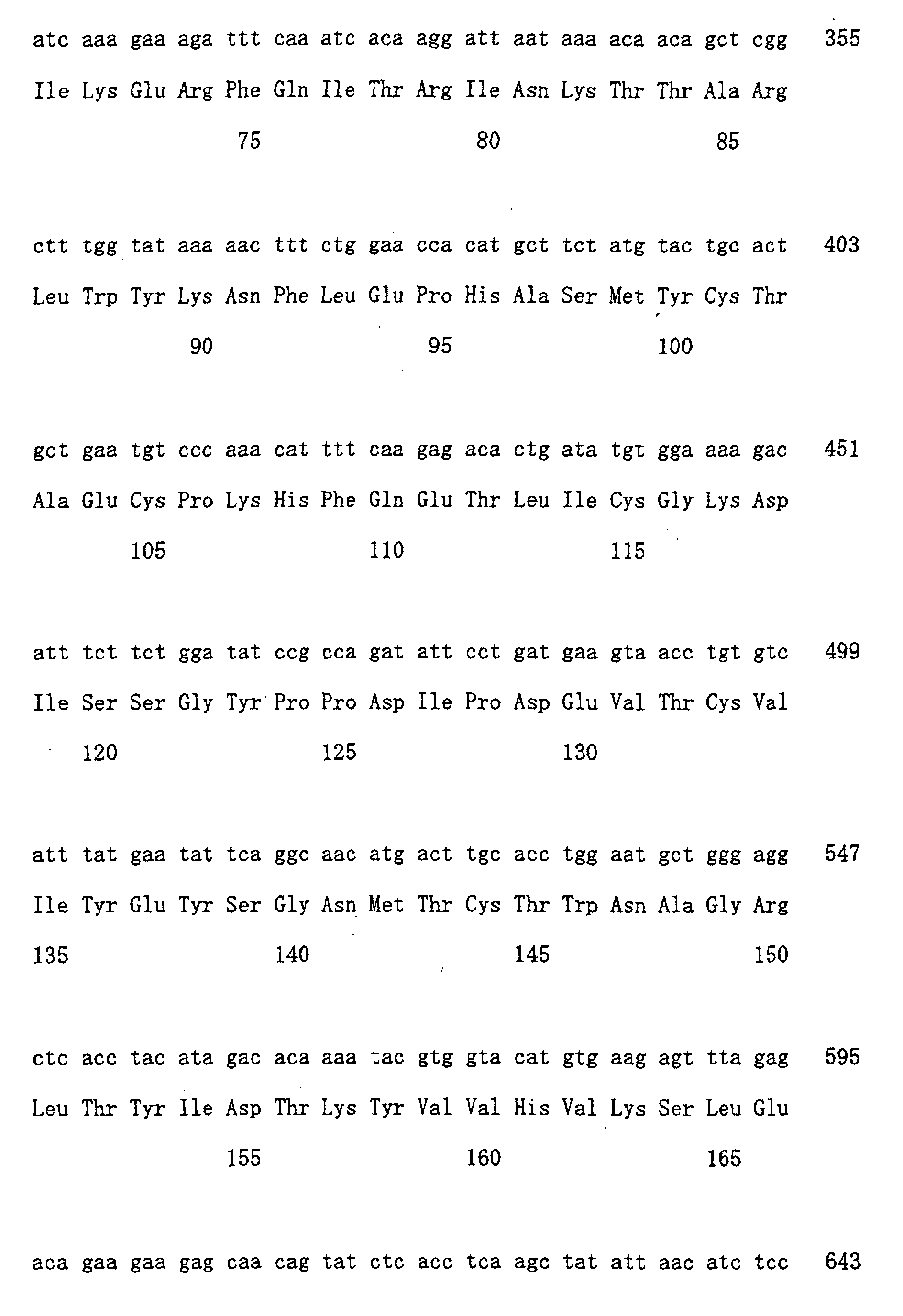
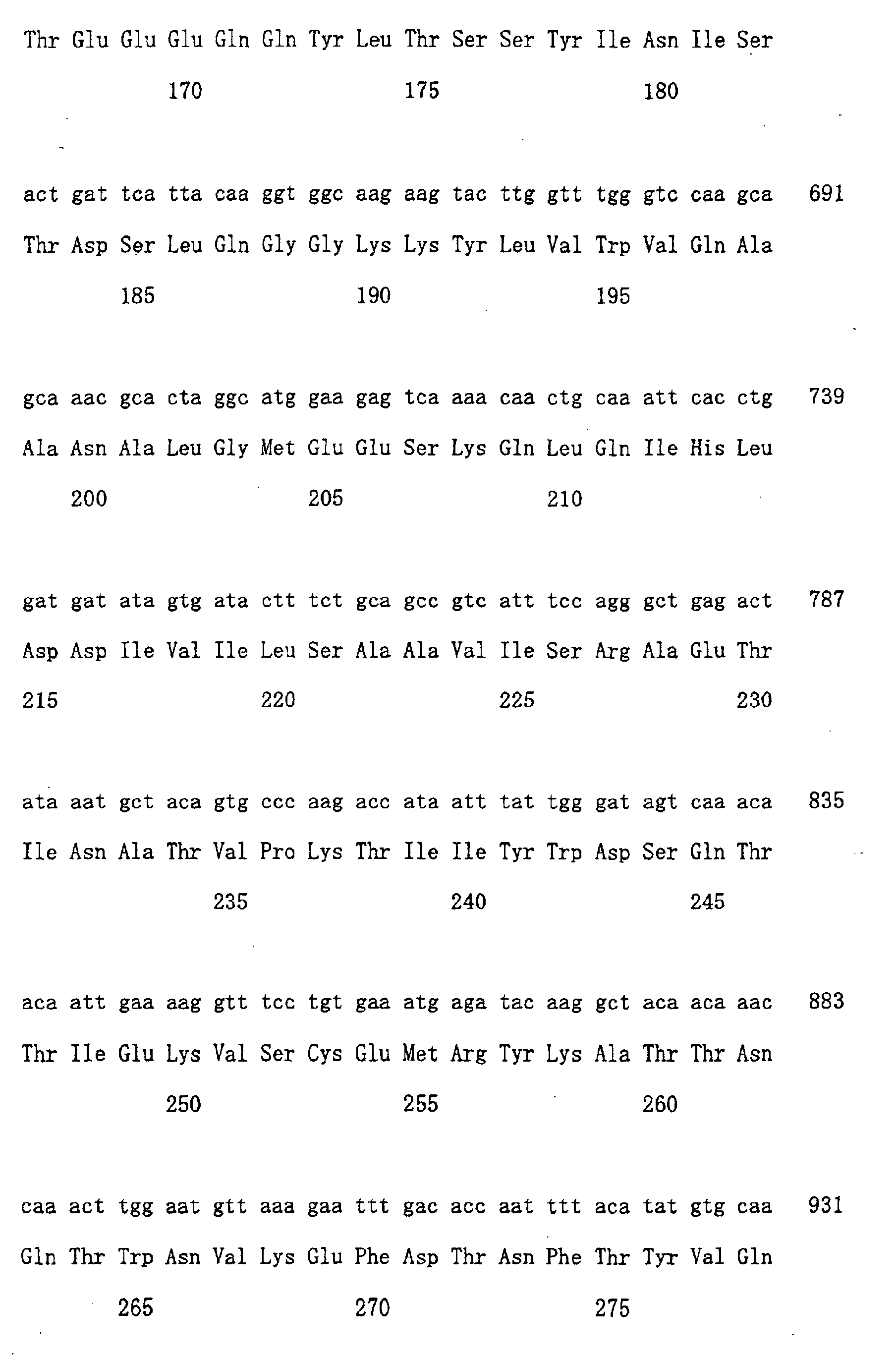


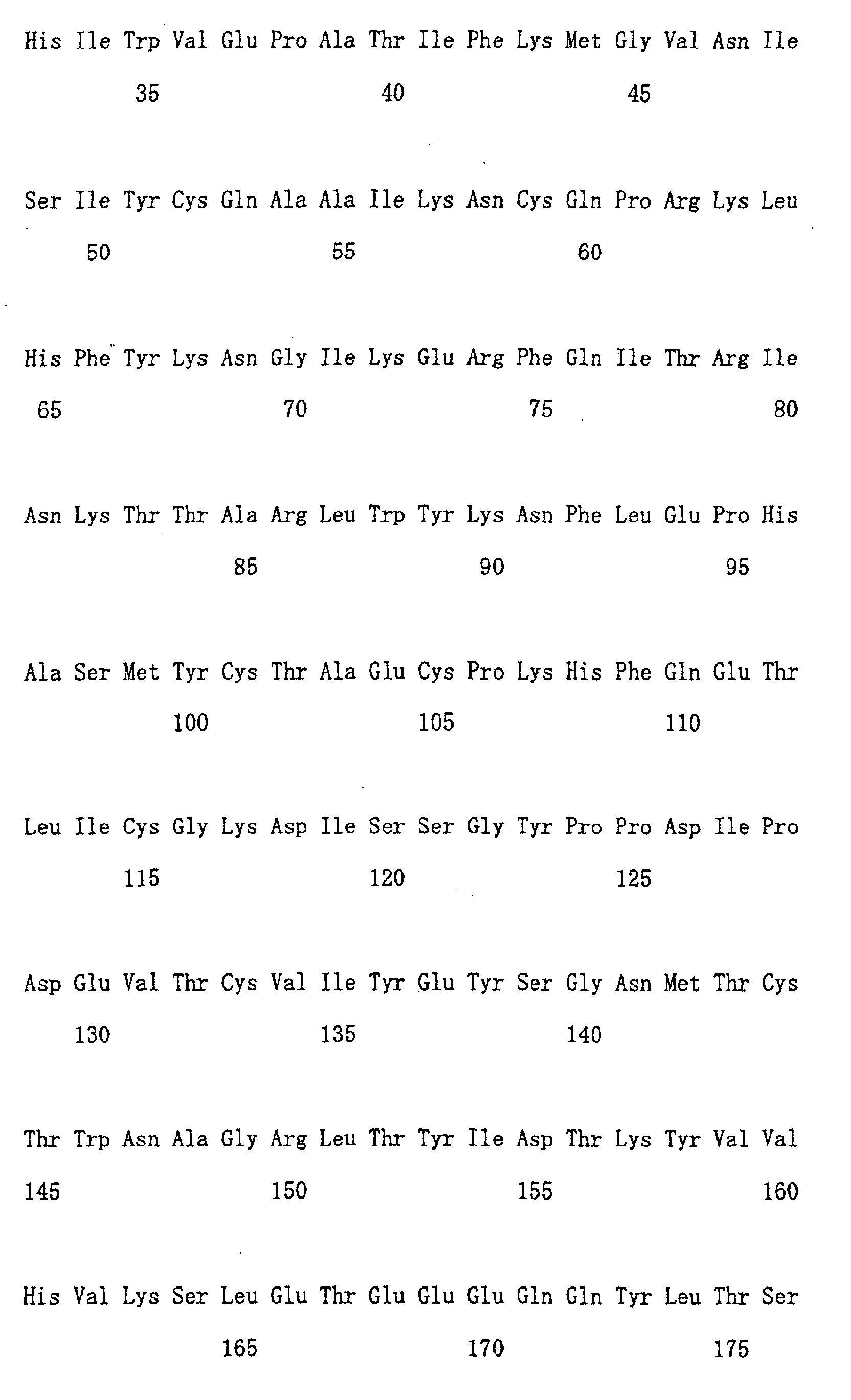


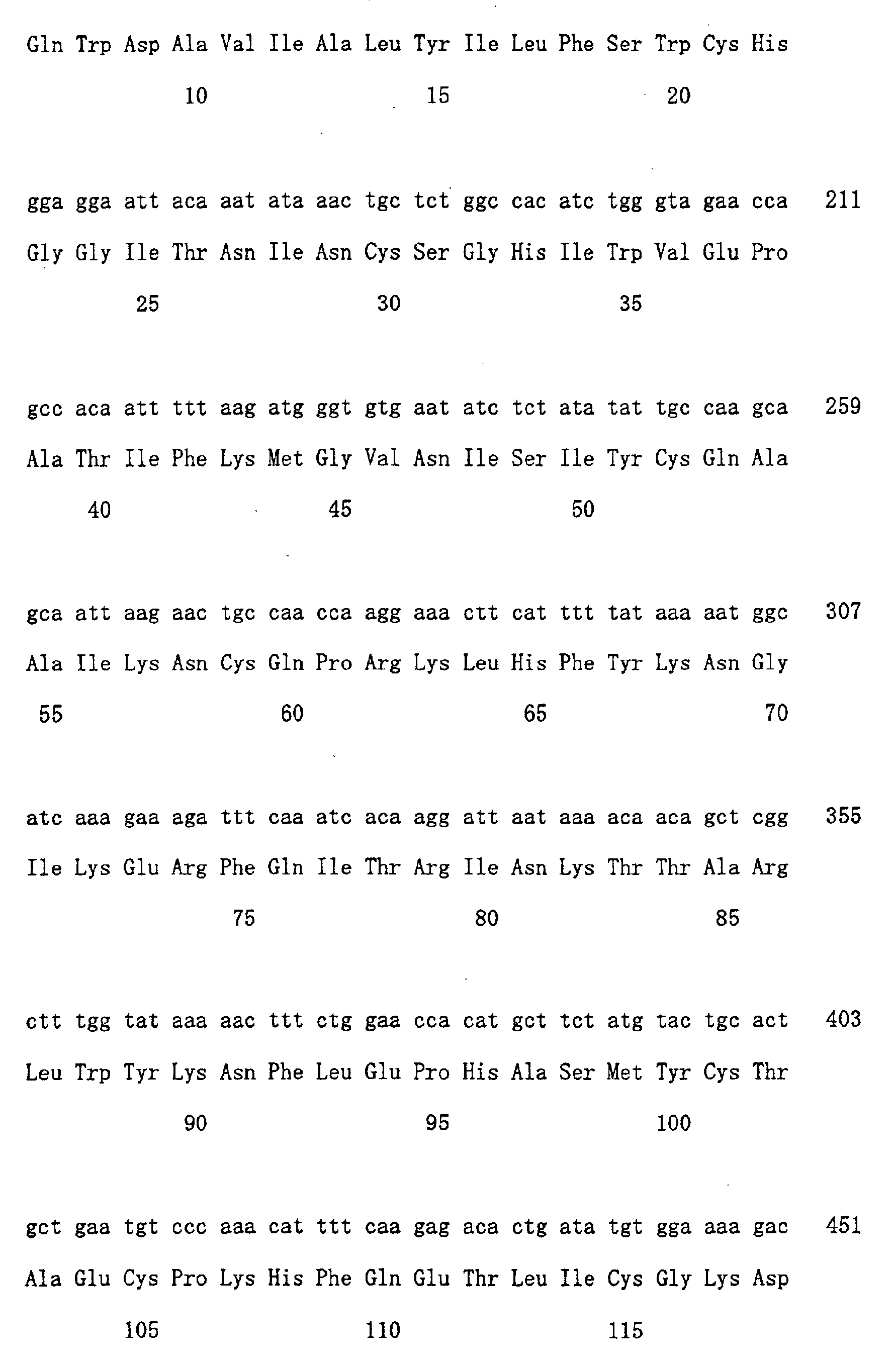
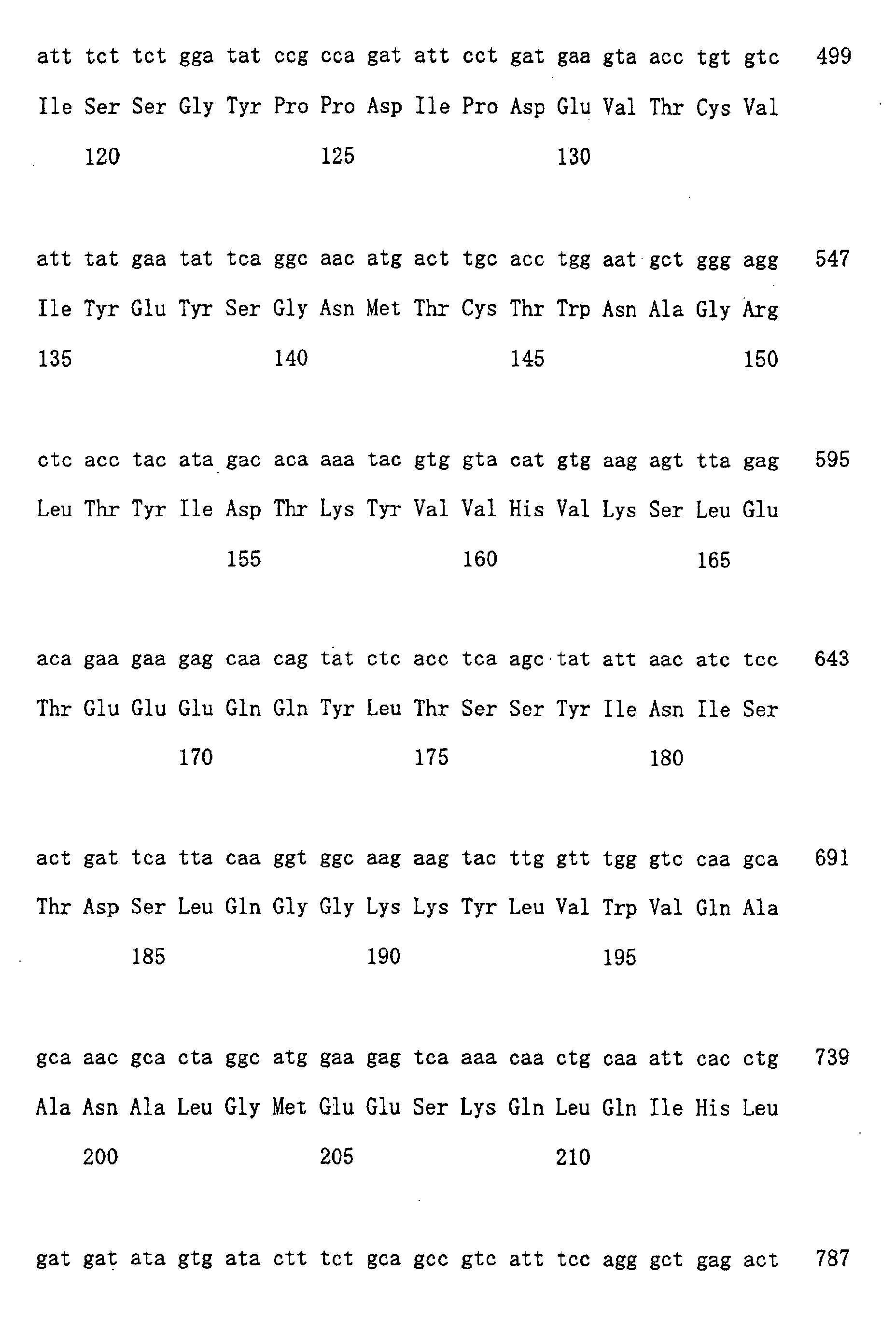
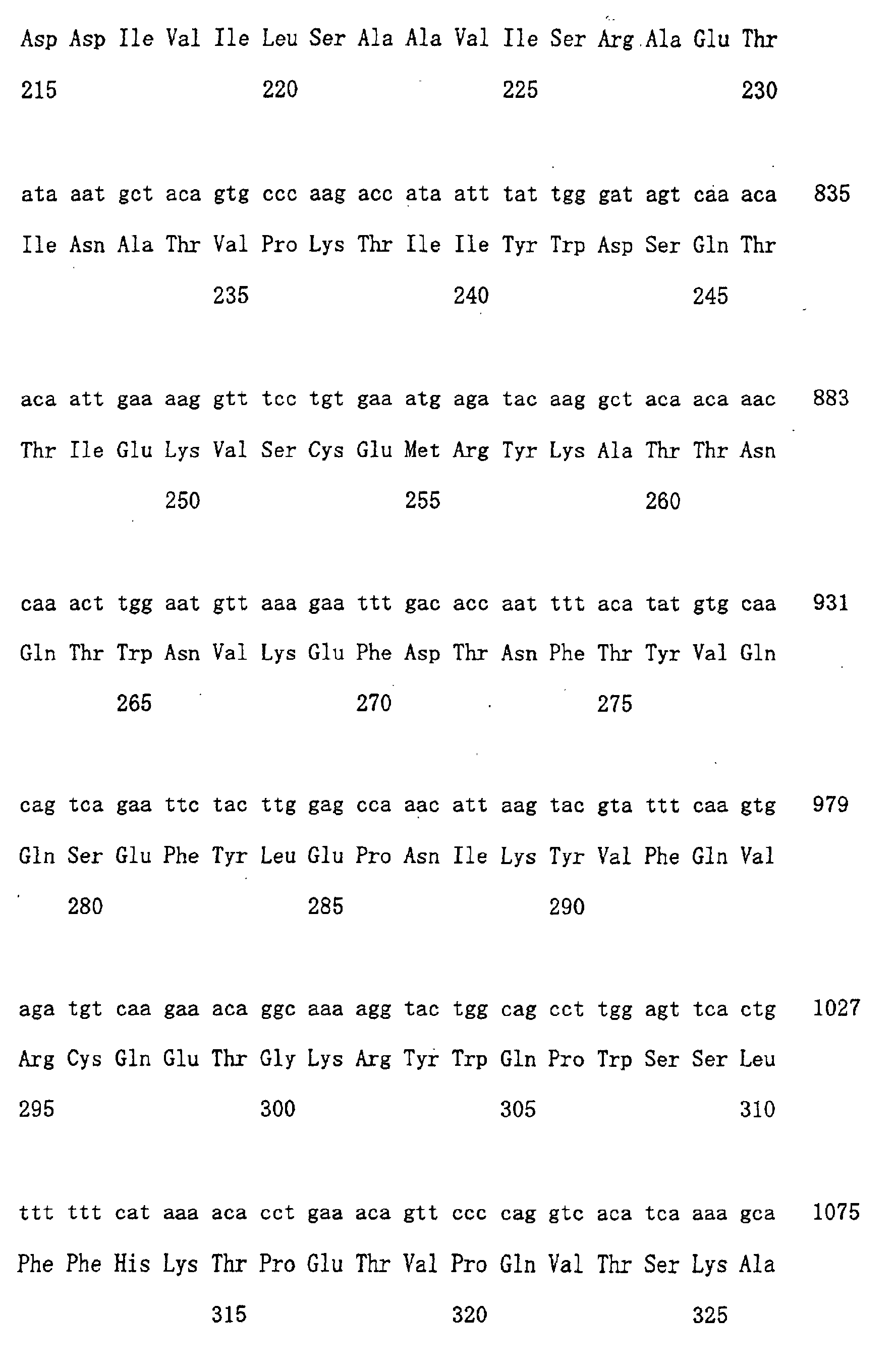
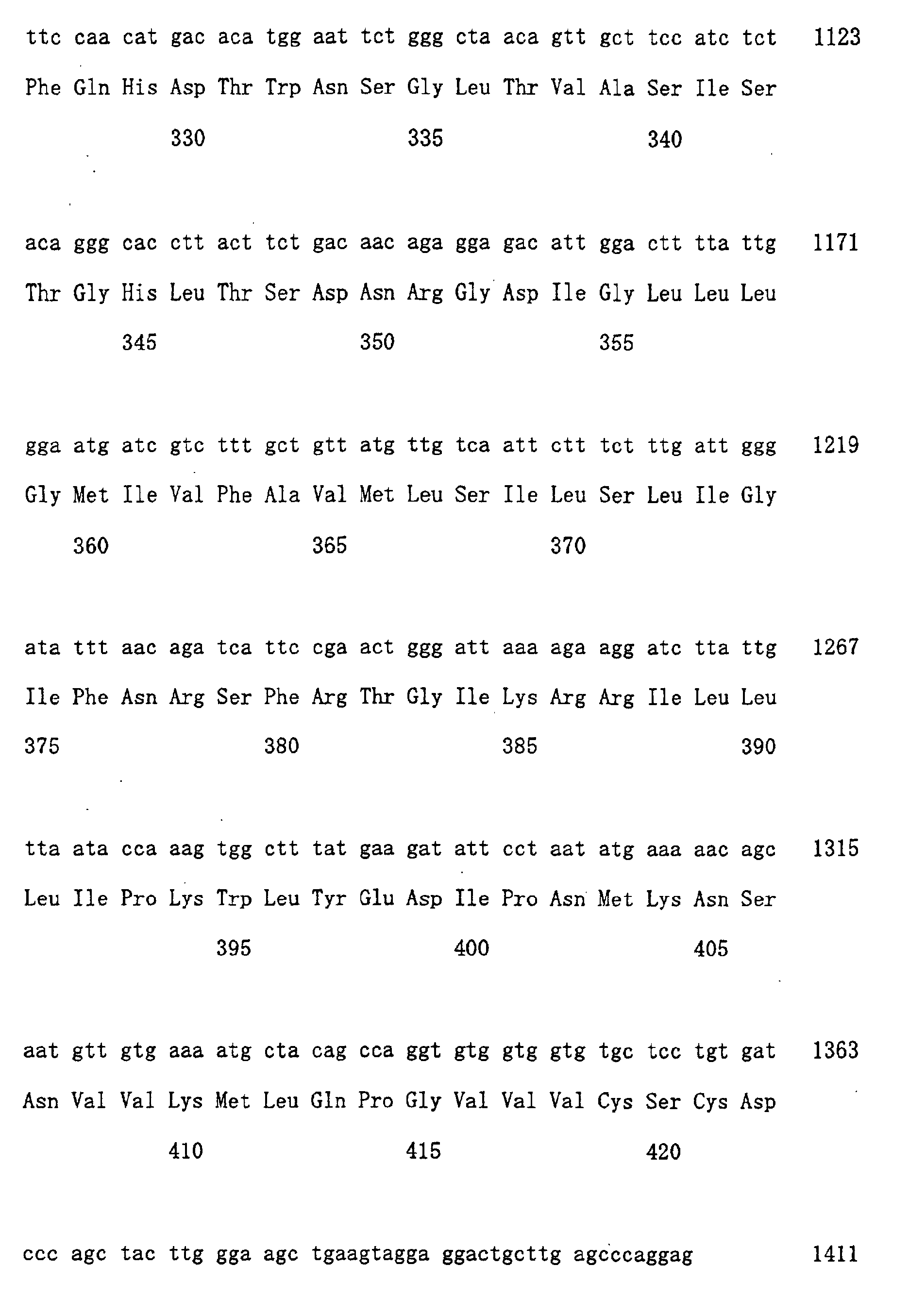


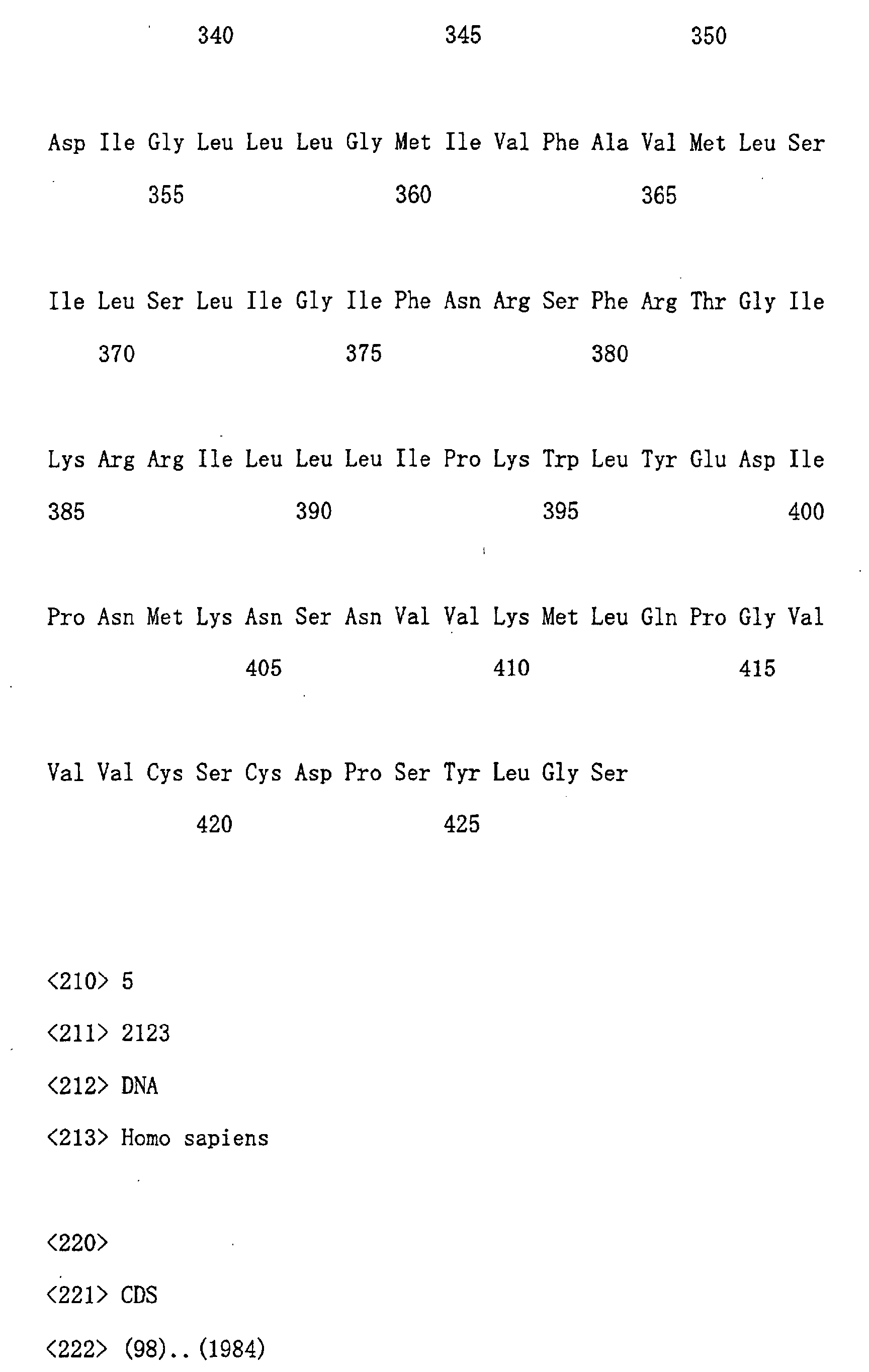
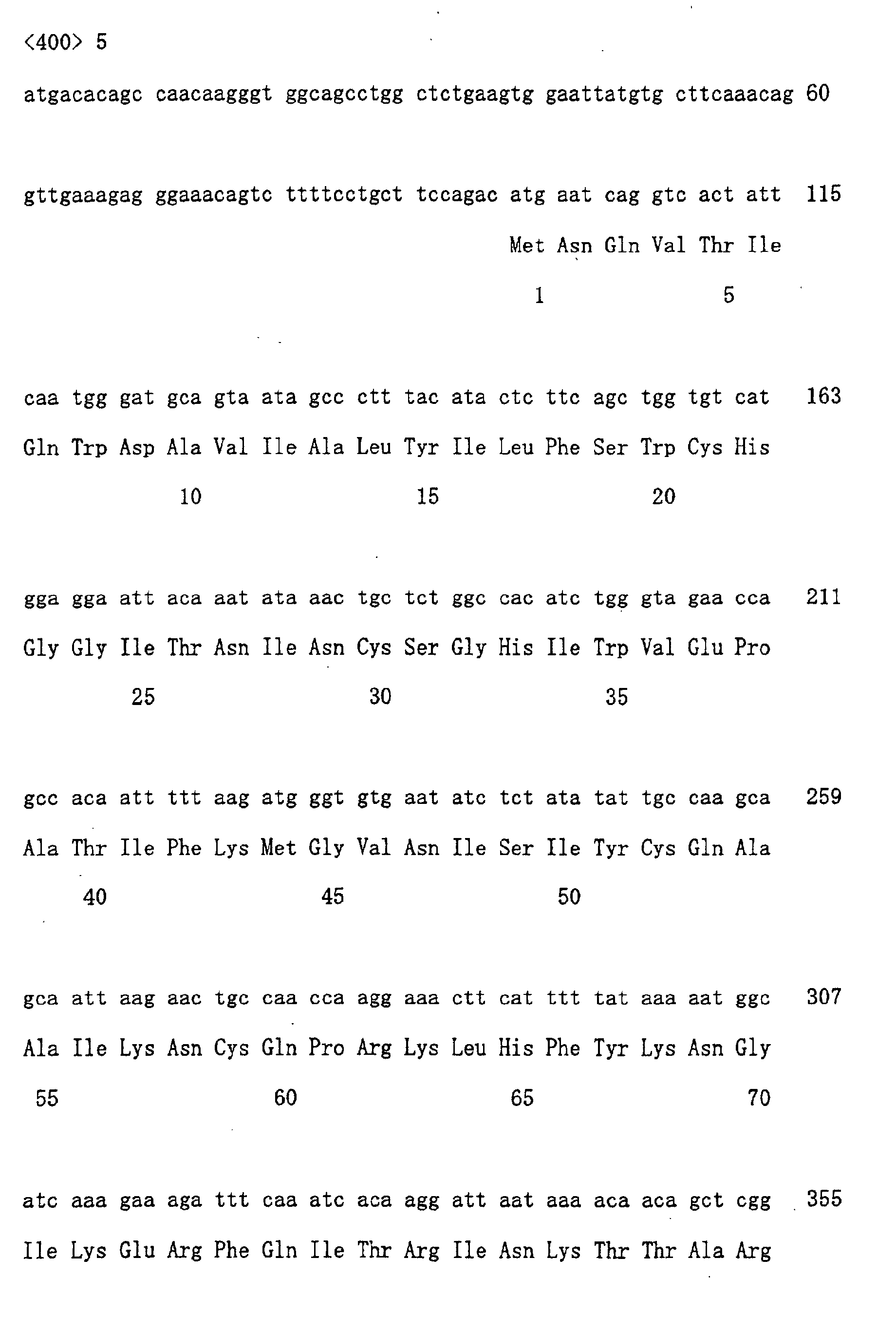
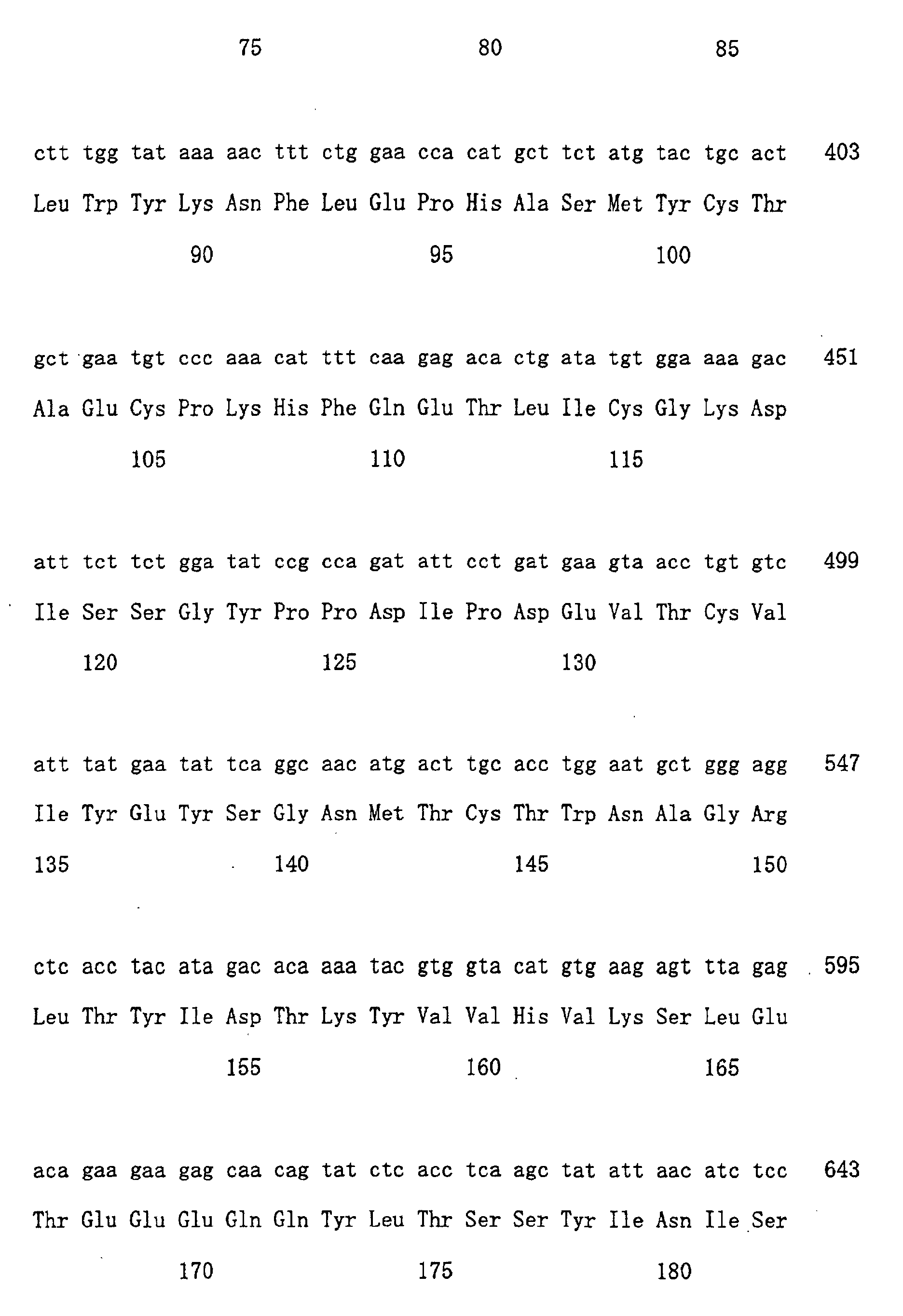


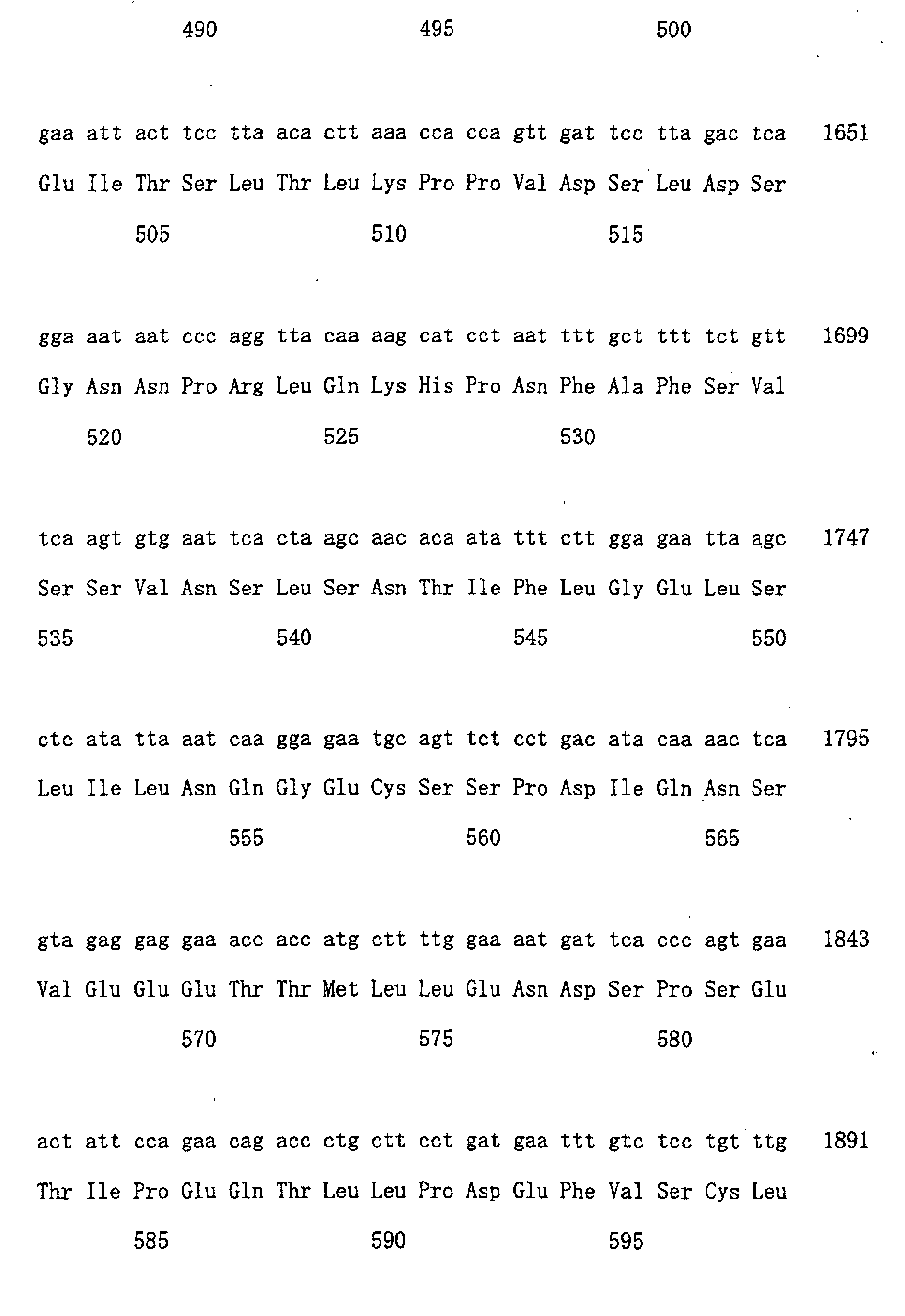
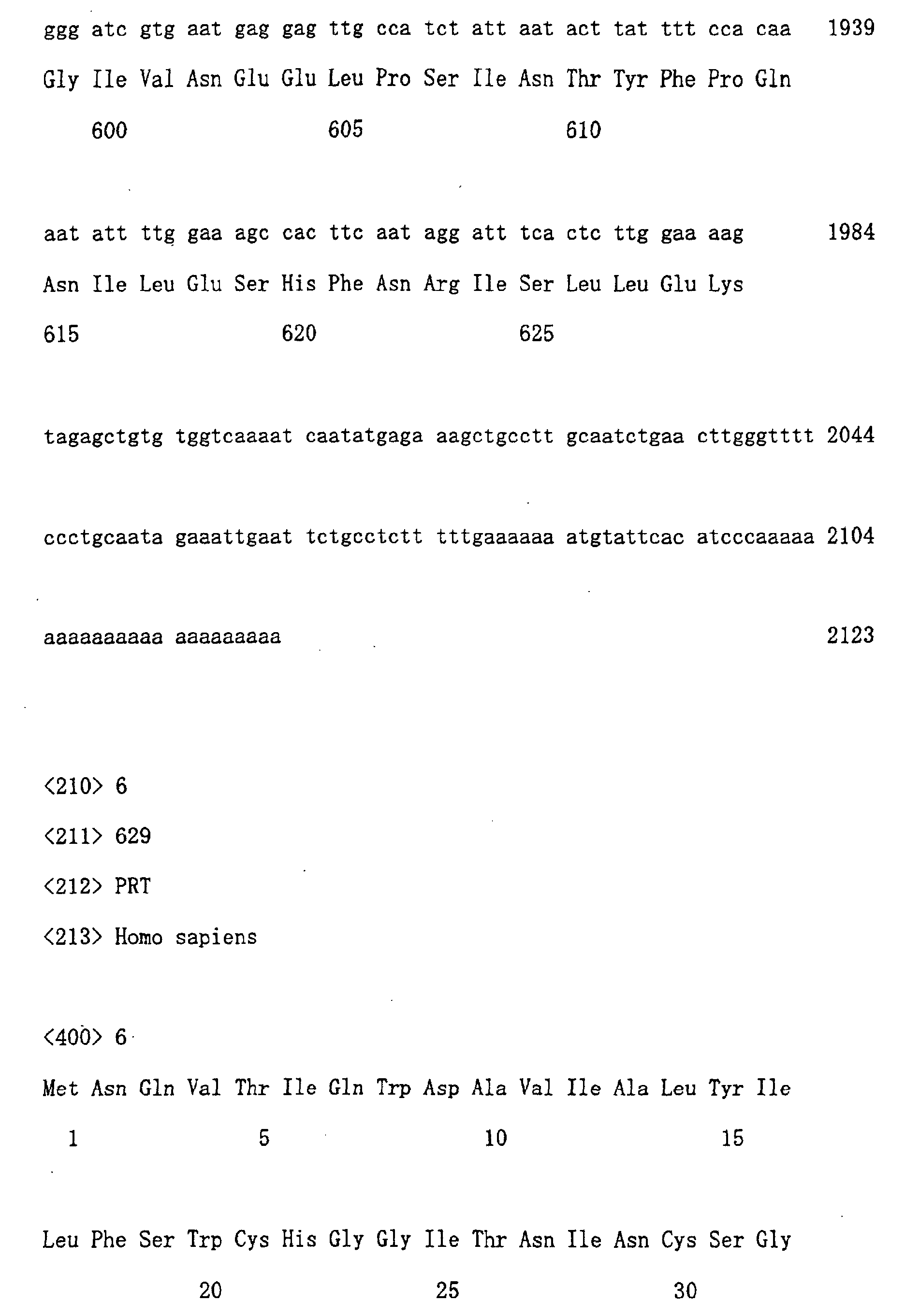

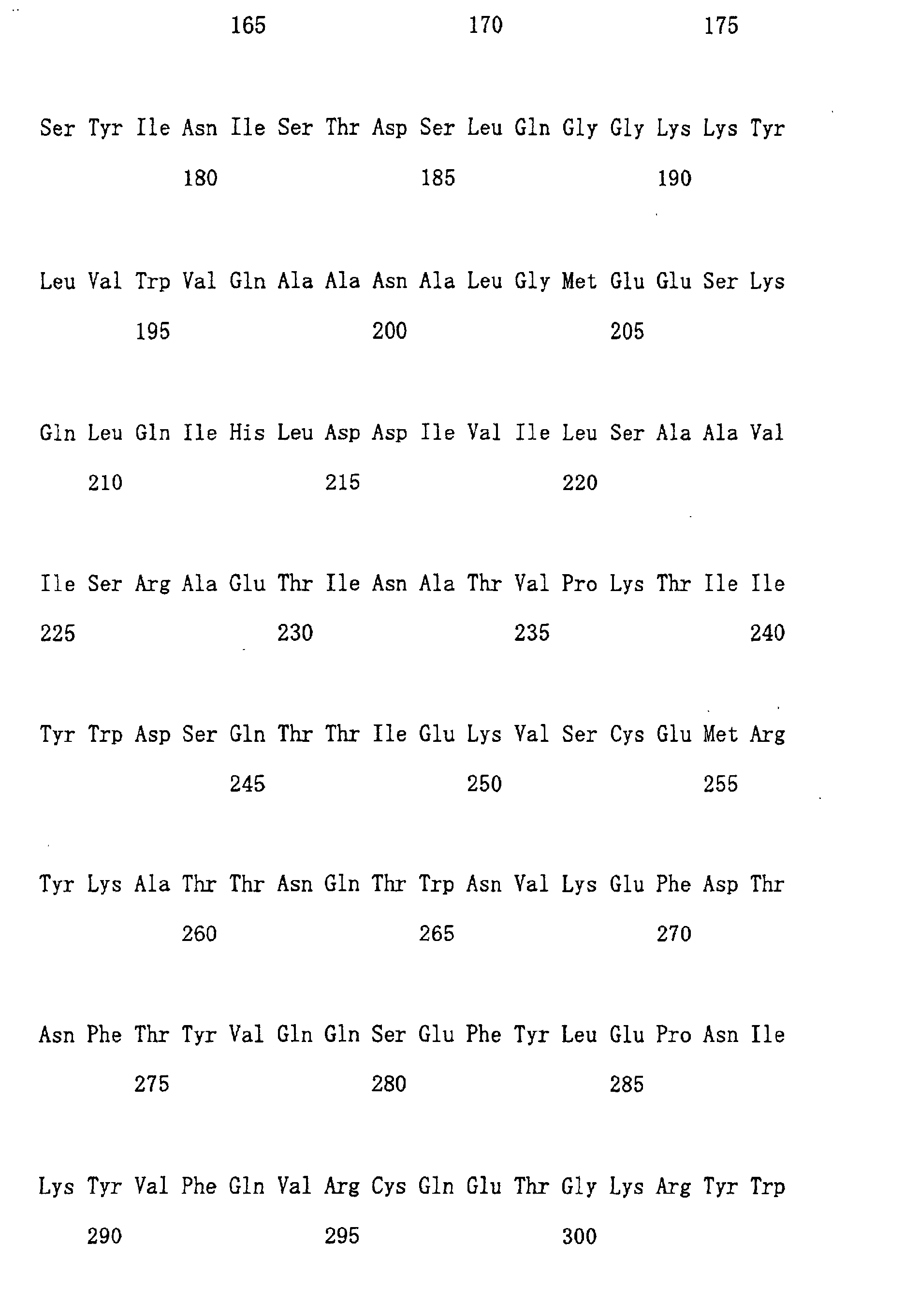


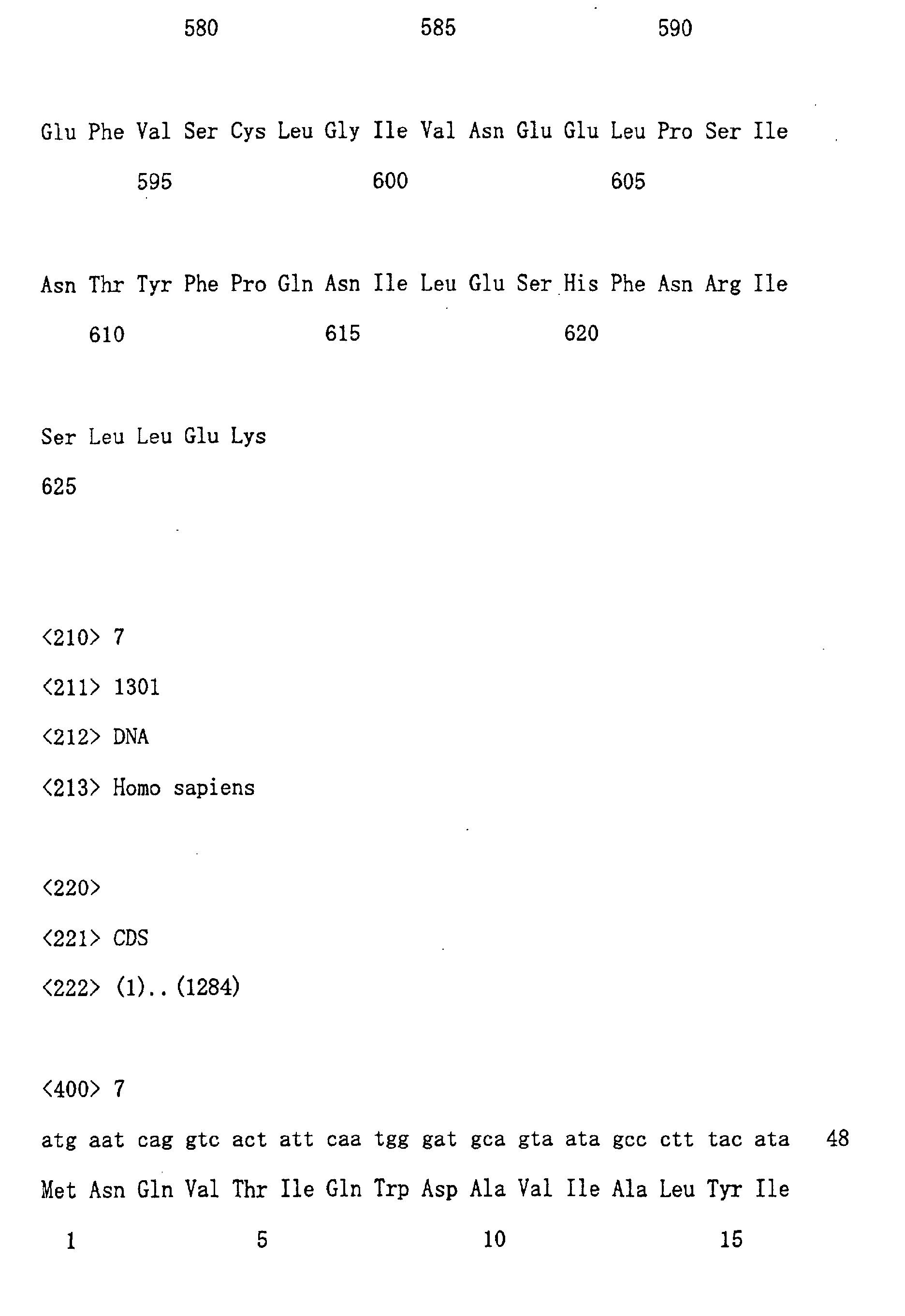
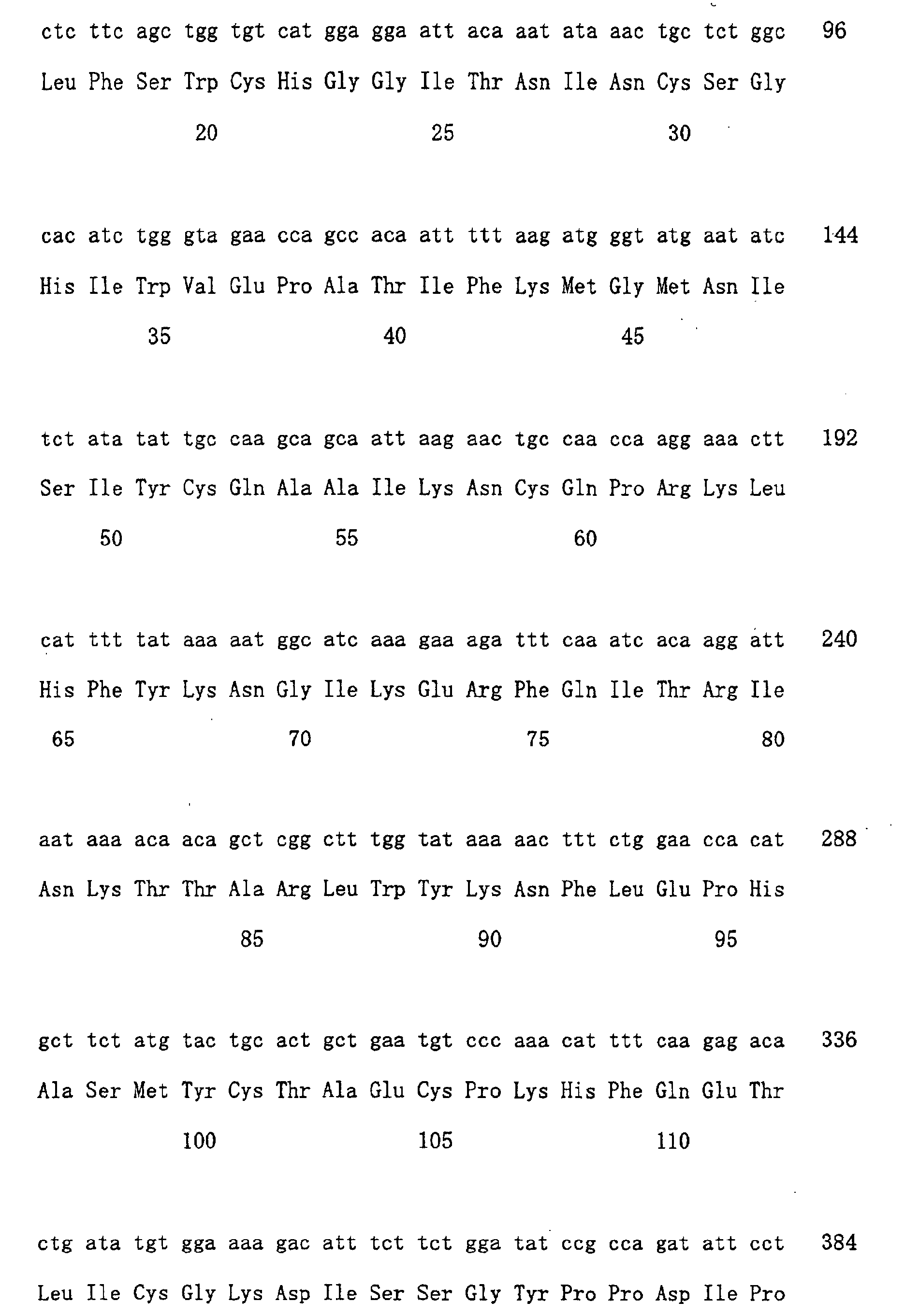

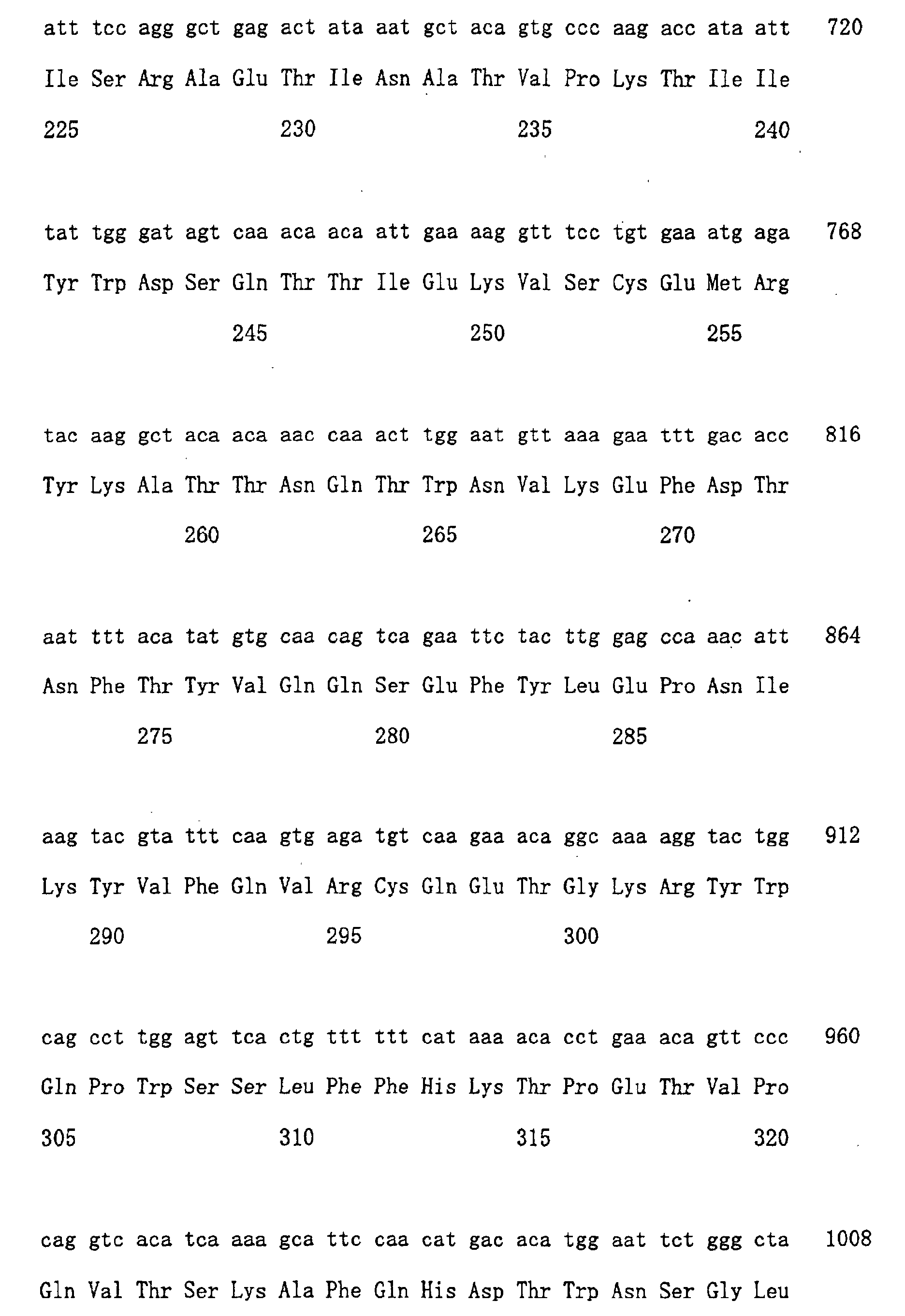


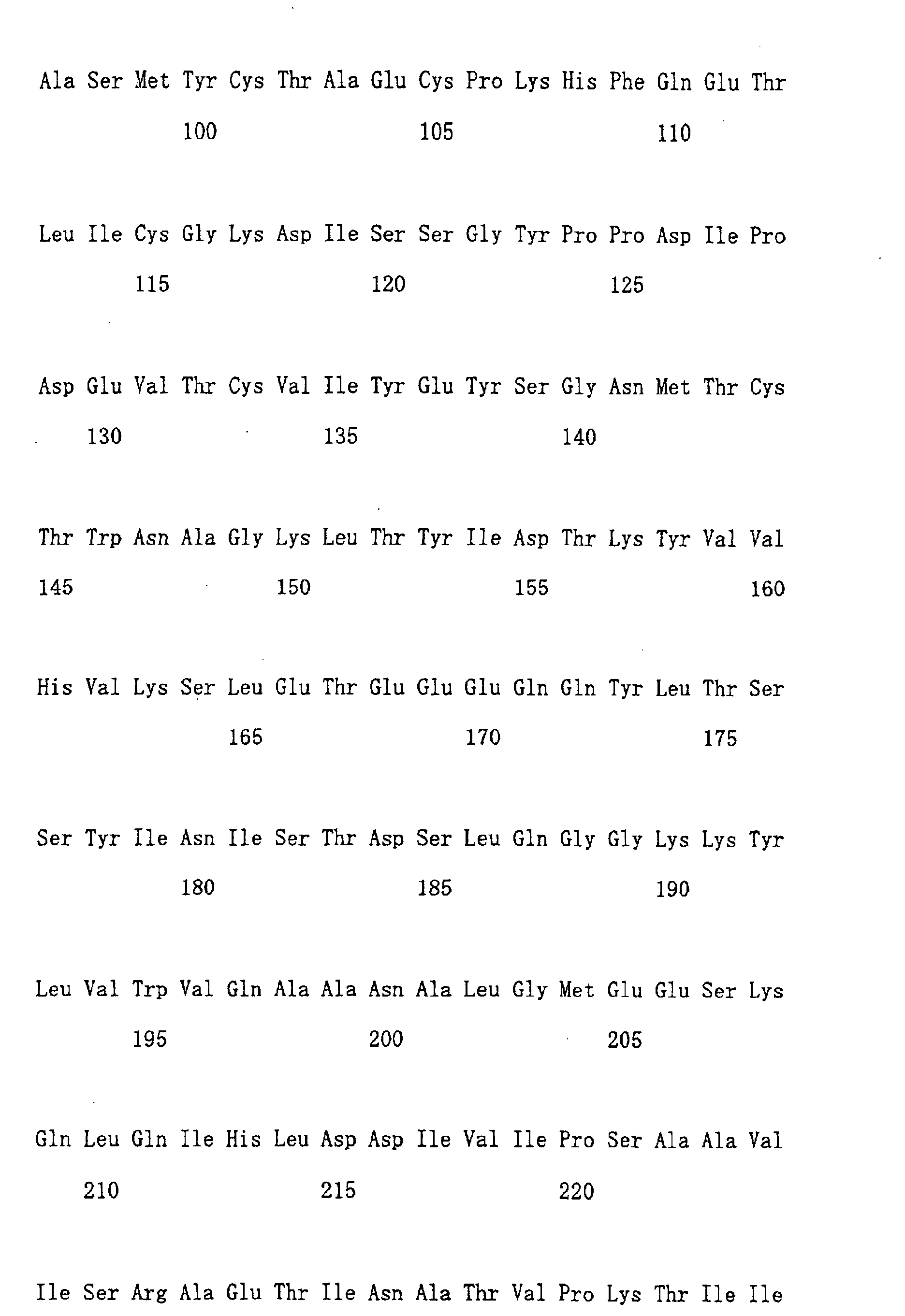

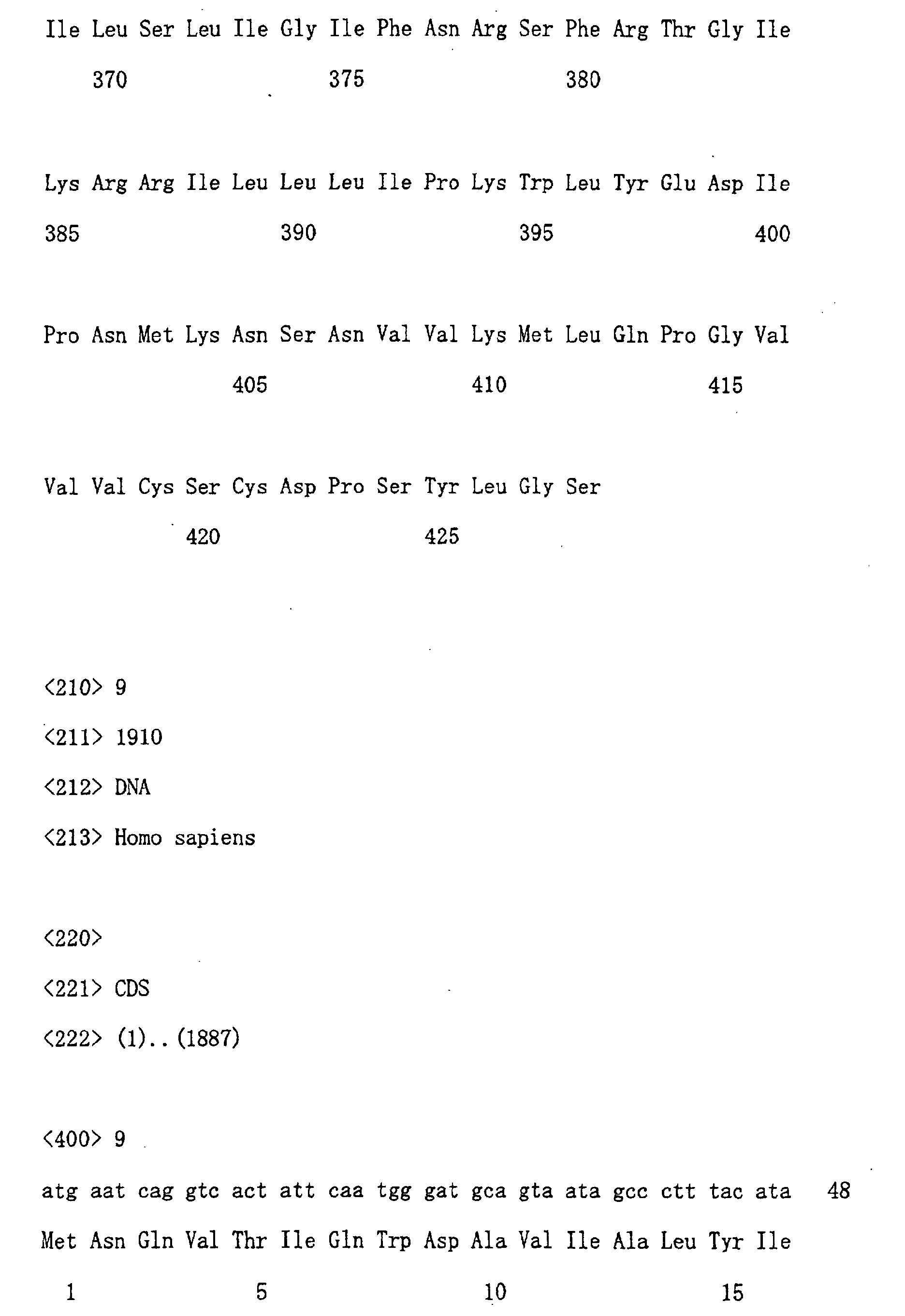
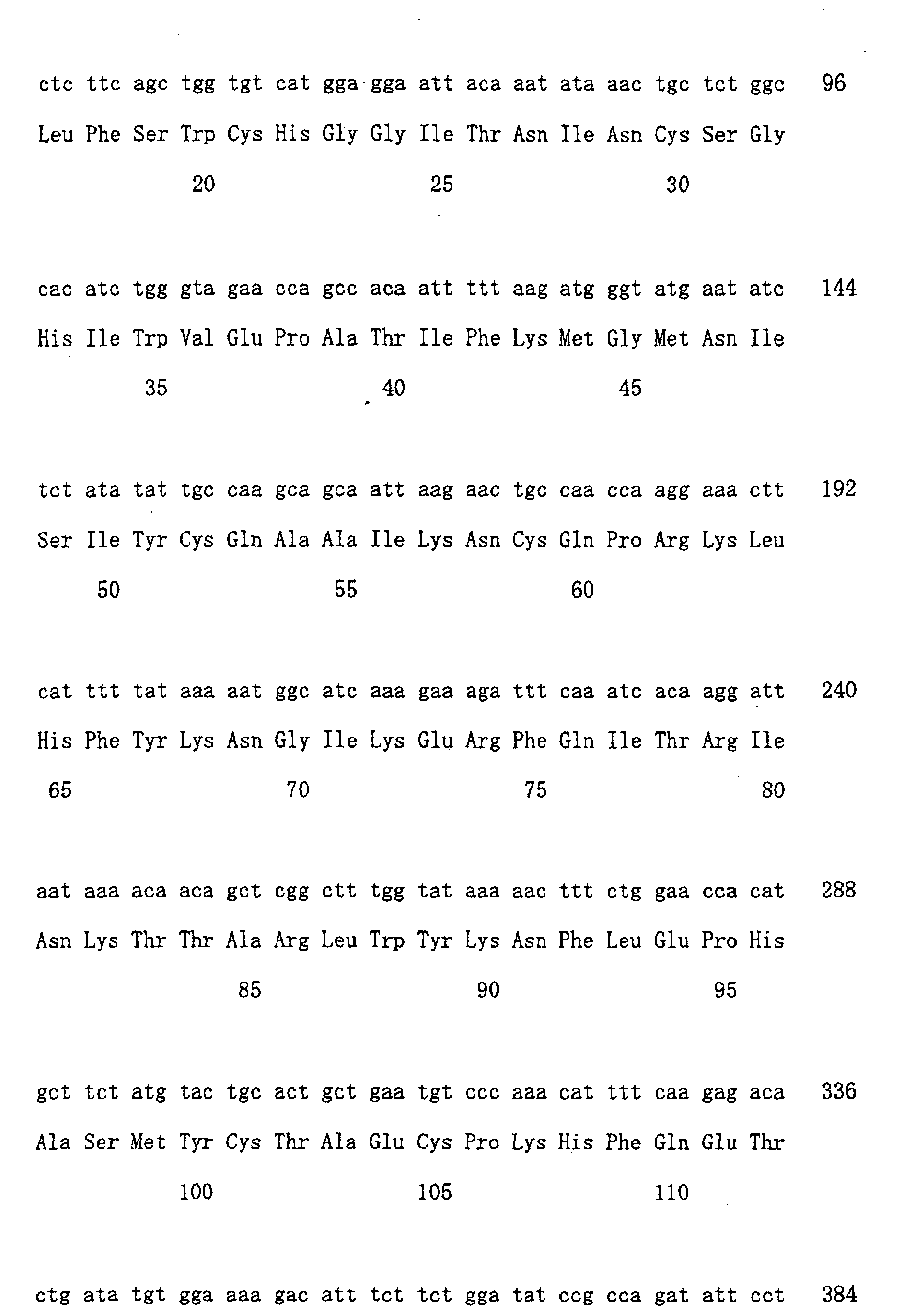
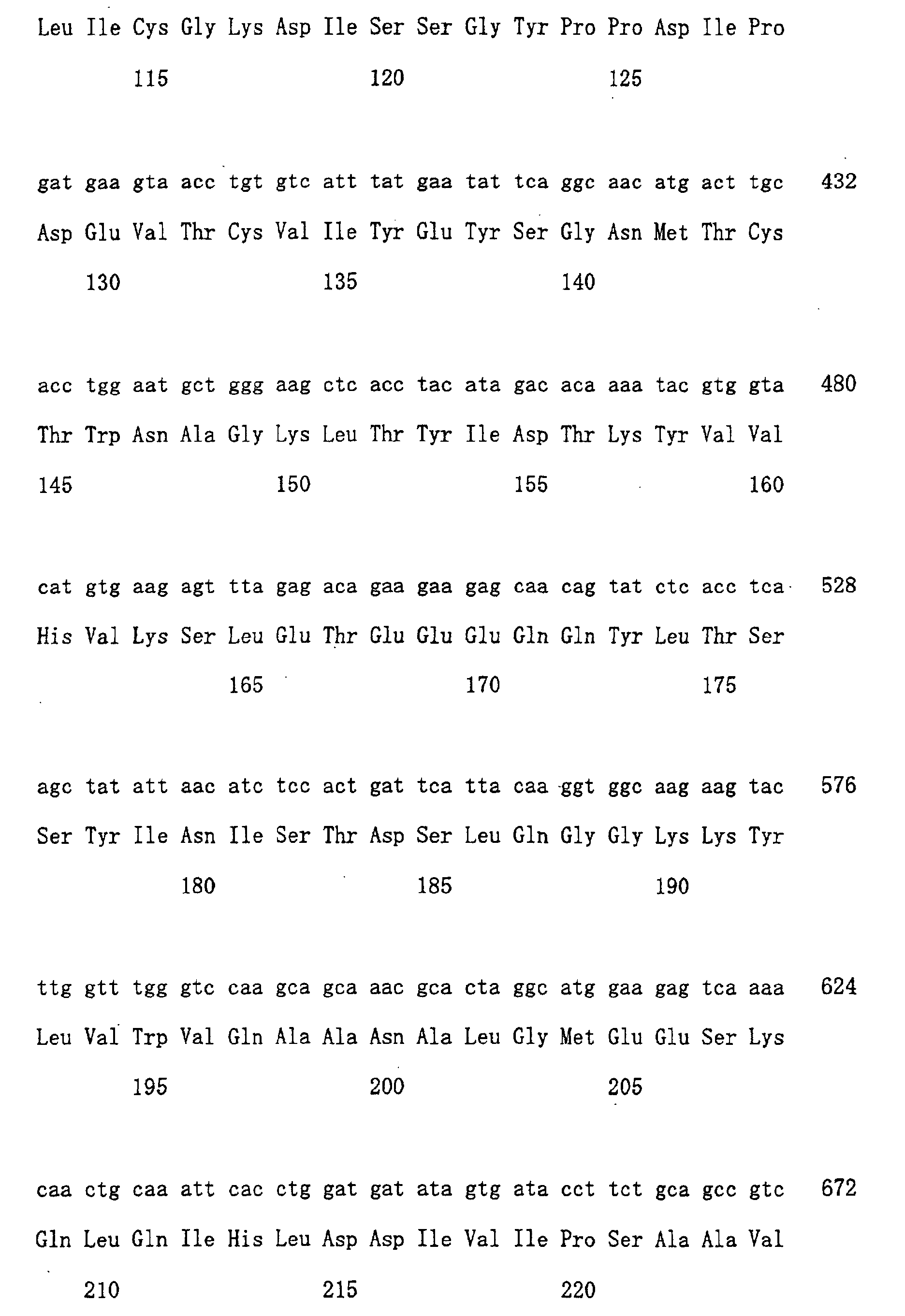

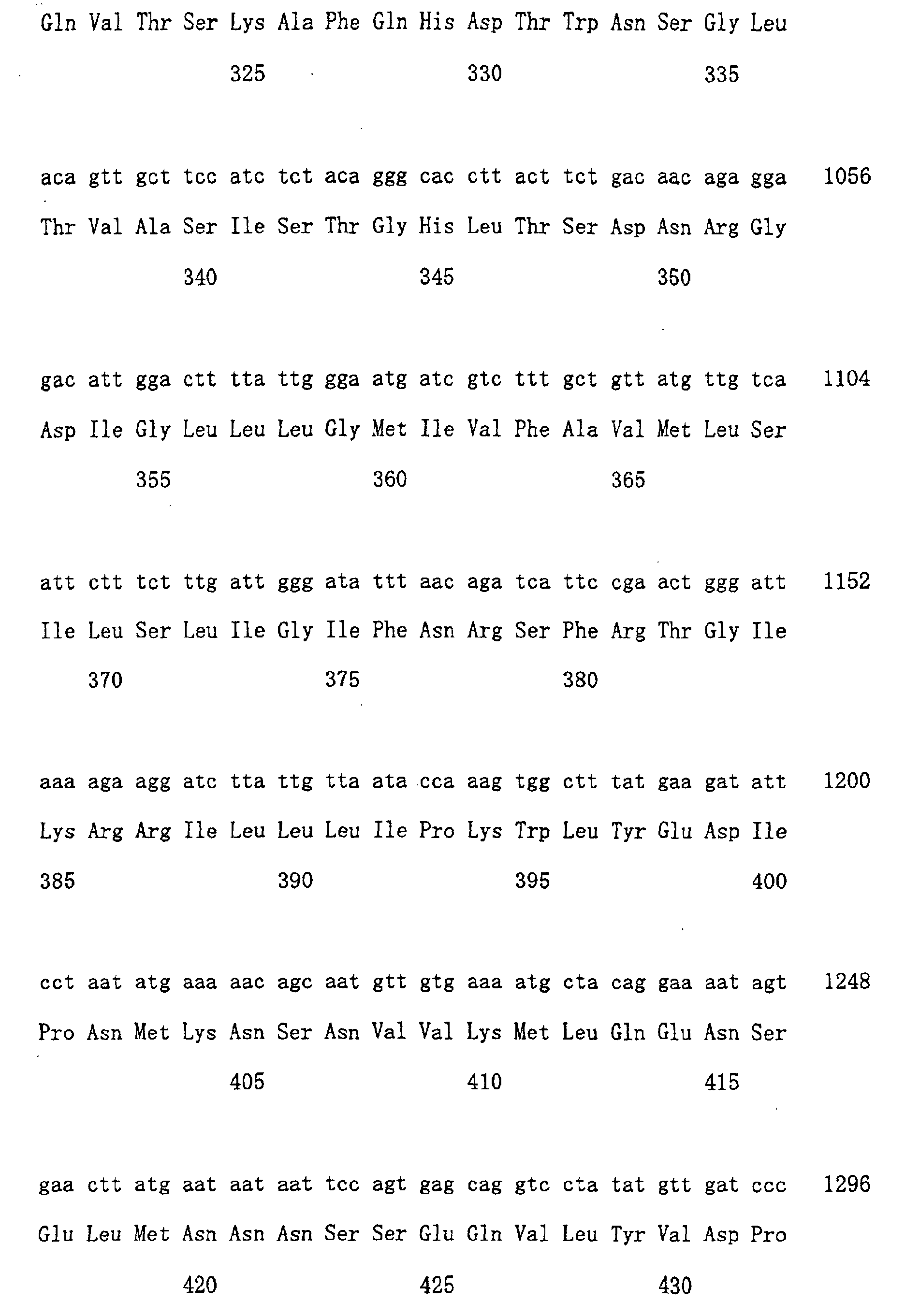
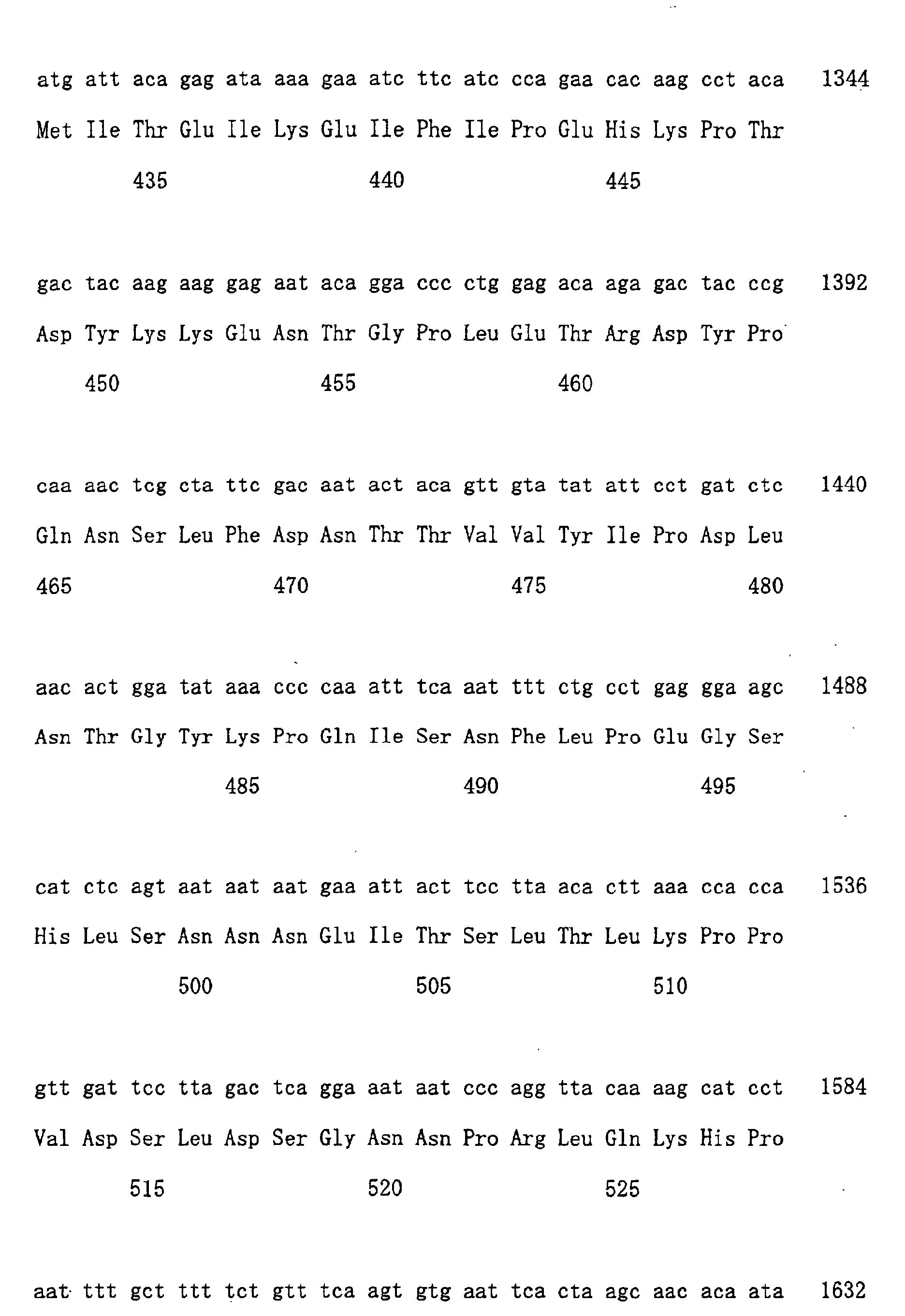
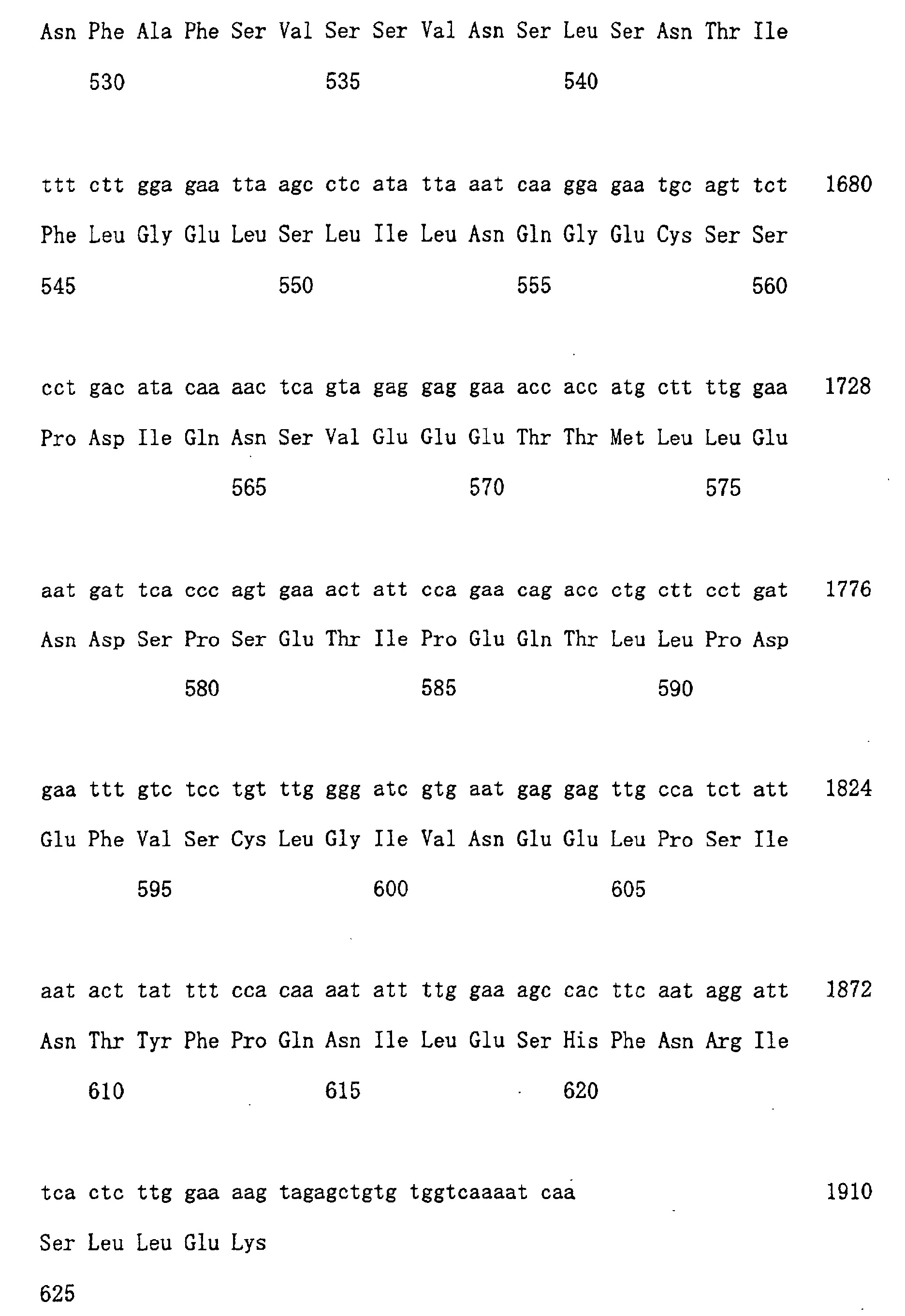

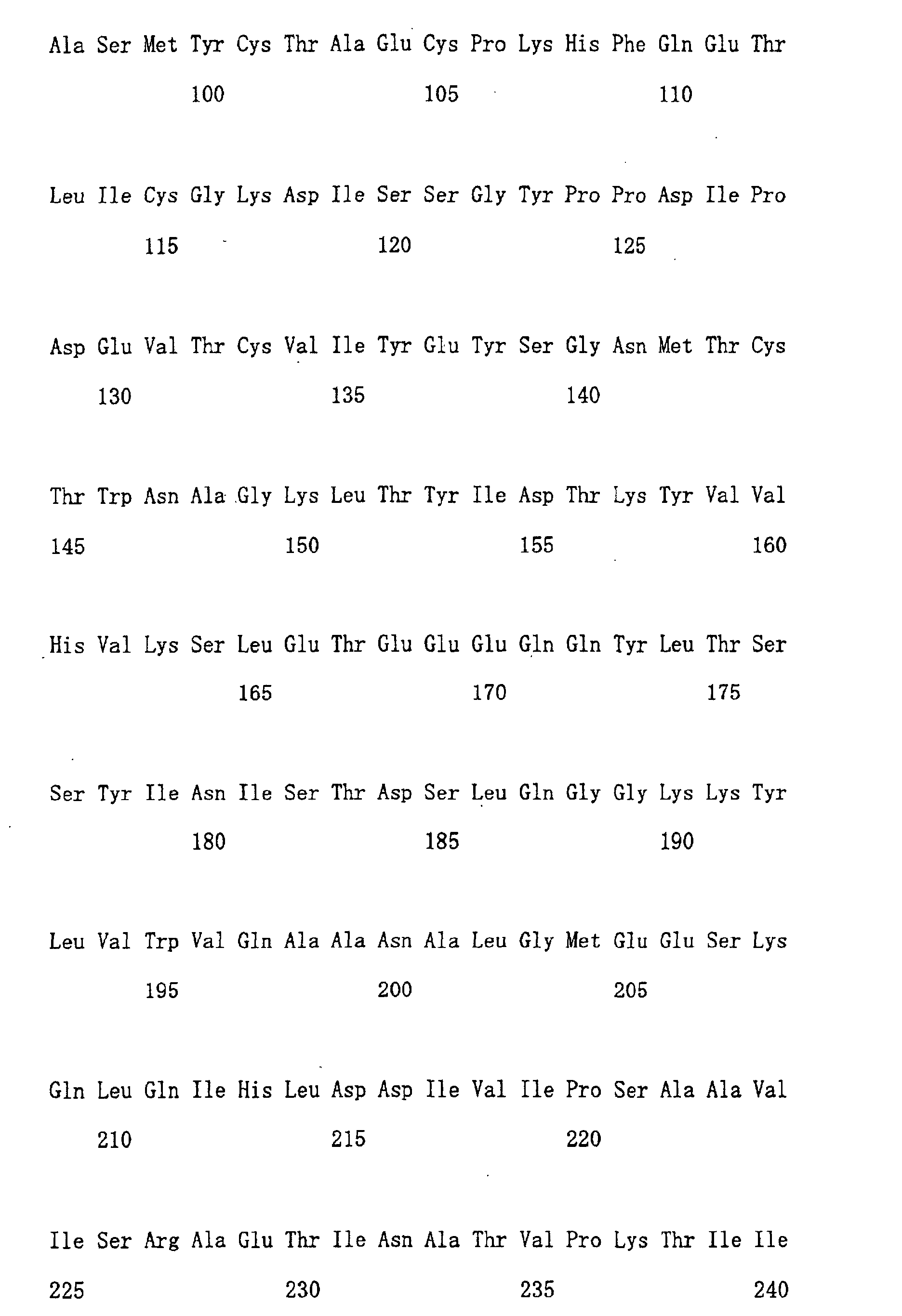
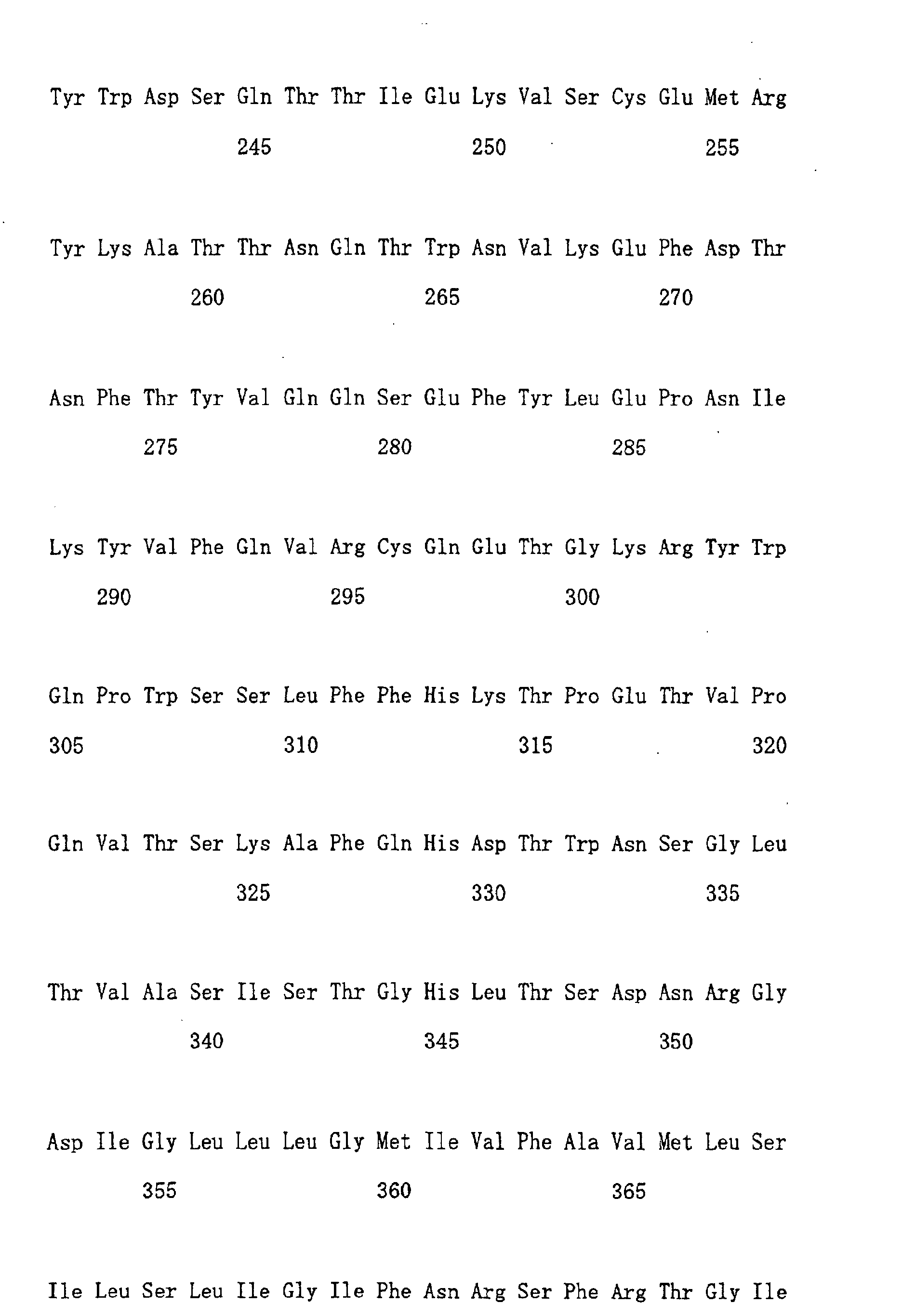
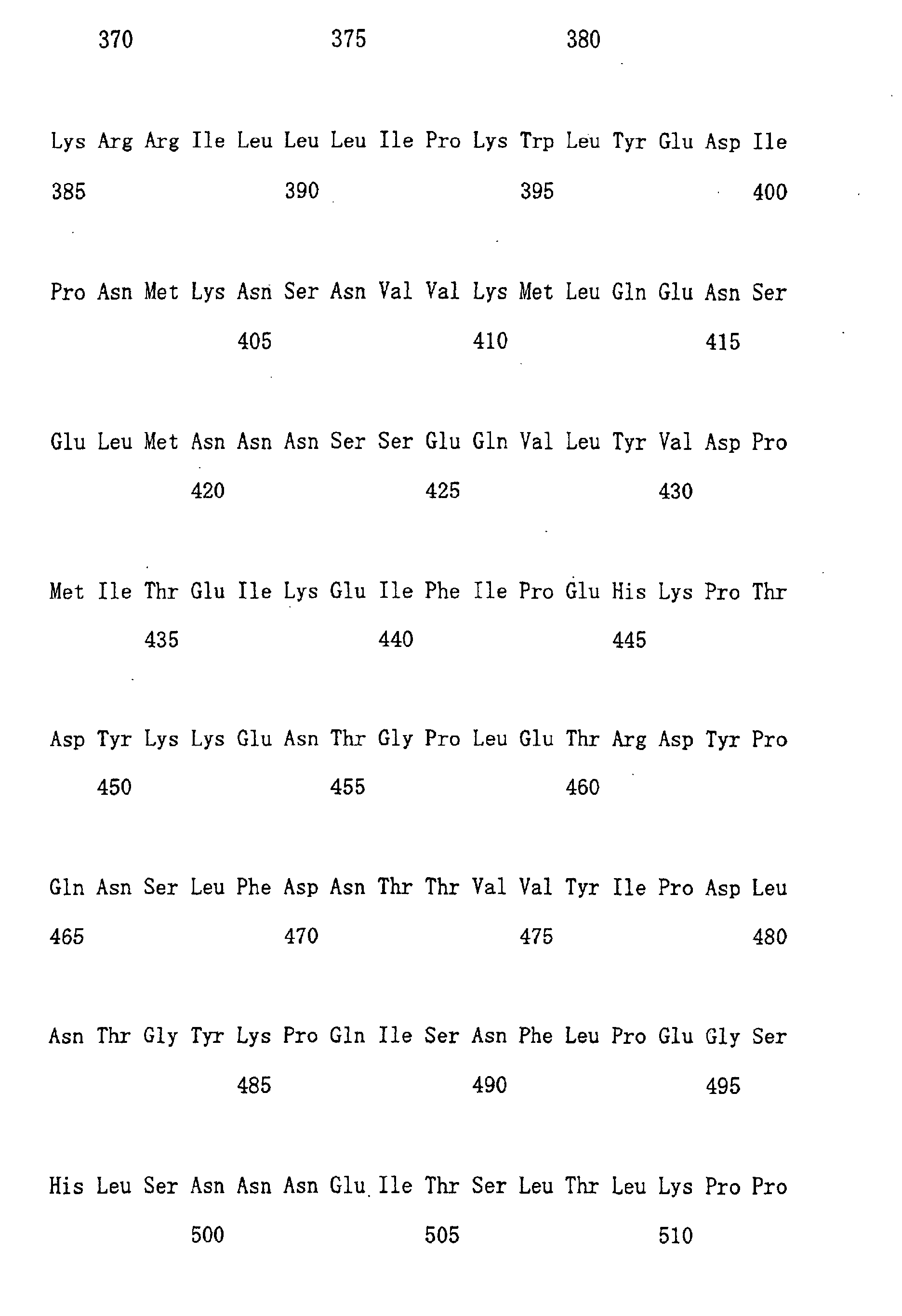
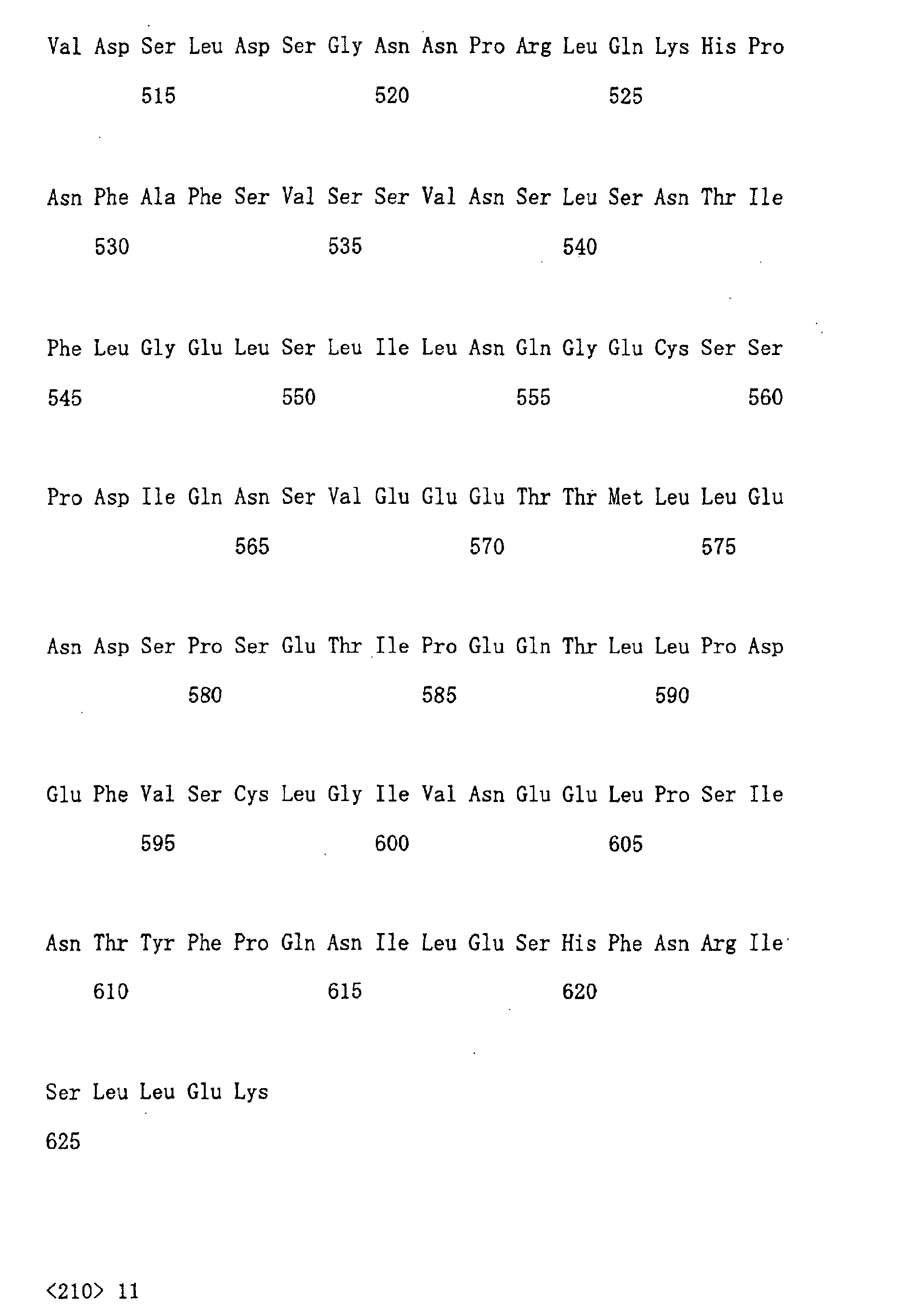
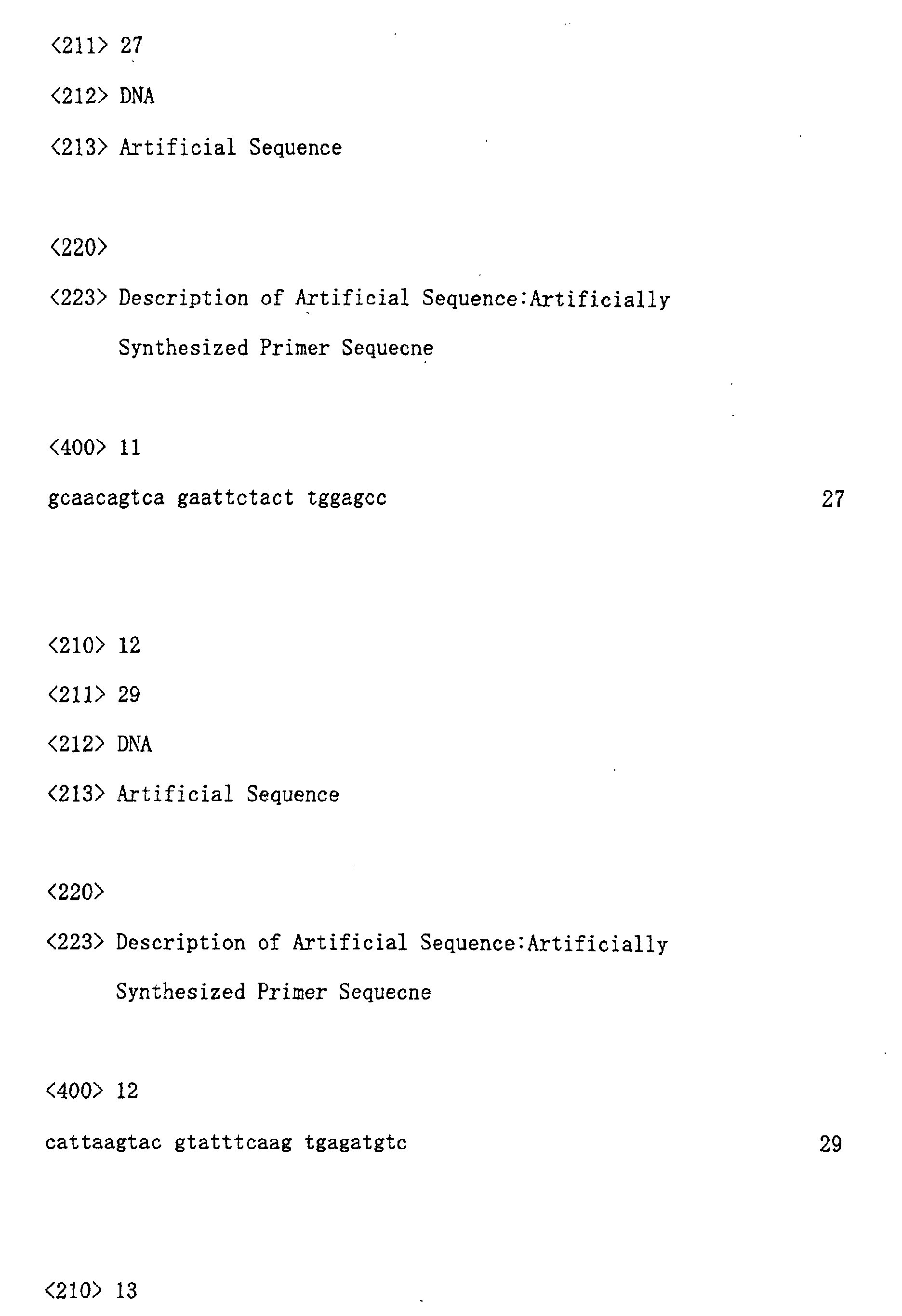
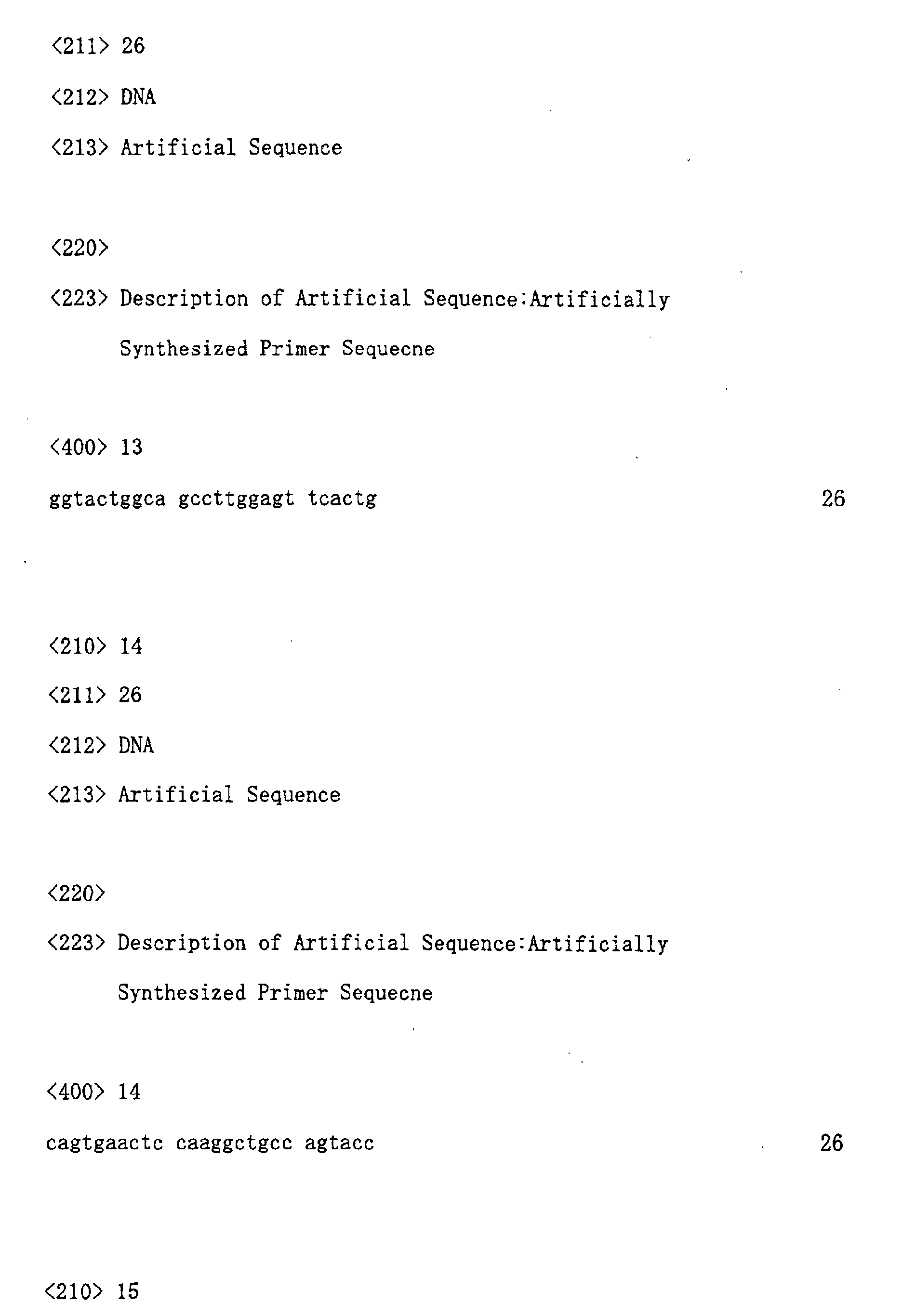


Claims (9)
- A DNA selected from the group consisting of:(a) a DNA encoding a protein comprising the amino acid sequence of any one of SEQ ID NOs: 2, 4, 6, 8, and 10;(b) a DNA comprising the coding region of the nucleotide sequence of any one of SEQ ID NOs: 1, 3, 5, 7, and 9;(c) a DNA encoding a protein comprising the amino acid sequence of any one of SEQ ID NOs: 2, 4, 6, 8, and 10, in which one or more amino acids are modified by substitution, deletion, insertion, and/or addition, wherein said protein is functionally equivalent to the protein consisting of the amino acid sequence of any of SEQ ID NOs: 2, 4, 6, 8, and 10; and,(d) a DNA hybridizing under stringent conditions with a DNA consisting of the nucleotide sequence of any one of SEQ ID NOs: 1, 3, 5, 7, and 9, and encoding a protein that is functionally equivalent to the protein consisting of the amino acid sequence of any one of SEQ ID NOs: 2, 4, 6, 8, and 10.
- A DNA encoding a partial peptide of a protein consisting of the amino acid sequence of any one of SEQ ID NOs: 2, 4, 6, 8, and 10.
- A protein or peptide that is encoded by the DNA described in claim 1 or claim 2.
- A vector into which the DNA described in claim 1 or claim 2 is inserted.
- A transformant harboring the DNA described in claim 1 or claim 2, or the vector described in claim 4.
- A method for producing the protein or peptide of claim 3, comprising the steps of: culturing said transformant of claim 5, and recovering the expressed protein from said transformant or the culture supernatant.
- An antibody binding to the protein of claim 3.
- A polynucleotide complementary to either a DNA that comprises the nucleotide sequence of any one of SEQ ID NOs: 1, 3, 5, 7, and 9 or its complementary strand, wherein the polynucleotide comprises at least 15 nucleotides.
- A method of screening for a compound that binds to the protein of (3), comprising the steps of:(a) contacting a test sample with said protein or partial peptide thereof;(b) detecting the binding activity of the test sample with the protein or partial peptide thereof; and,(c) selecting the compound that binds to the protein or partial peptide thereof.
Applications Claiming Priority (5)
| Application Number | Priority Date | Filing Date | Title |
|---|---|---|---|
| JP27335899 | 1999-09-27 | ||
| JP27335899 | 1999-09-27 | ||
| JP2000240397 | 2000-08-03 | ||
| JP2000240397 | 2000-08-03 | ||
| PCT/JP2000/006654 WO2001023556A1 (en) | 1999-09-27 | 2000-09-27 | Novel hemopoietin receptor protein, nr12 |
Publications (3)
| Publication Number | Publication Date |
|---|---|
| EP1221482A1 true EP1221482A1 (en) | 2002-07-10 |
| EP1221482A4 EP1221482A4 (en) | 2003-03-26 |
| EP1221482B1 EP1221482B1 (en) | 2005-12-28 |
Family
ID=26550628
Family Applications (1)
| Application Number | Title | Priority Date | Filing Date |
|---|---|---|---|
| EP00962878A Expired - Lifetime EP1221482B1 (en) | 1999-09-27 | 2000-09-27 | Hemopoietin receptor protein, nr12 |
Country Status (6)
| Country | Link |
|---|---|
| US (9) | US7045595B2 (en) |
| EP (1) | EP1221482B1 (en) |
| AU (1) | AU7445900A (en) |
| DE (1) | DE60025241T2 (en) |
| ES (1) | ES2254224T3 (en) |
| WO (1) | WO2001023556A1 (en) |
Cited By (3)
| Publication number | Priority date | Publication date | Assignee | Title |
|---|---|---|---|---|
| US7749718B2 (en) | 2000-05-10 | 2010-07-06 | Schering Corporation | Method for raising or isolating an antibody to DCRS5 |
| US7754214B2 (en) | 2000-05-10 | 2010-07-13 | Schering Corporation | Mammalian receptor protein DCRS5; methods of treatment |
| EP2258849A1 (en) * | 1999-06-01 | 2010-12-08 | Schering Corporation | Mammalian receptor proteins; related reagents and methods |
Families Citing this family (28)
| Publication number | Priority date | Publication date | Assignee | Title |
|---|---|---|---|---|
| DK1188830T3 (en) | 1999-06-02 | 2010-04-26 | Chugai Pharmaceutical Co Ltd | New hemopoietin receptor protein NR10 |
| AU2007202362B2 (en) * | 1999-09-03 | 2011-06-23 | Merck Sharp & Dohme Corp. | Mammalian receptor proteins; related reagents and methods |
| EP1221482B1 (en) | 1999-09-27 | 2005-12-28 | Chugai Seiyaku Kabushiki Kaisha | Hemopoietin receptor protein, nr12 |
| US20030059871A1 (en) * | 2000-10-06 | 2003-03-27 | Cosman David J. | Hematopoietin receptors HPR1 and HPR2 |
| NZ539271A (en) * | 2002-10-30 | 2008-12-24 | Genentech Inc | Inhibition of the production of proinflammatory cytokine interleukin-17 (IL-17) by T cells, using an antagonist of interleukin-23 (IL-23) |
| PL1625156T3 (en) * | 2003-05-12 | 2013-03-29 | Affymax Inc | Peptides that bind to the erythropoietin receptor |
| KR101163683B1 (en) | 2003-05-12 | 2012-07-10 | 아피맥스, 인크. | Novel peptides that bind to the erythropoietin receptor |
| CN1849141A (en) * | 2003-05-12 | 2006-10-18 | 阿费麦克斯公司 | Spacer moieties for poly(ethylene glycol)-modified peptides |
| JP2007530440A (en) | 2003-05-12 | 2007-11-01 | アフィーマックス・インコーポレイテッド | Novel poly (ethylene glycol) modified compounds and uses thereof |
| WO2006062685A2 (en) * | 2004-11-11 | 2006-06-15 | Affymax, Inc. | Novel peptides that bind to the erythropoietin receptor |
| EP1814910A4 (en) * | 2004-11-11 | 2009-04-29 | Affymax Inc | NOVEL PEPTIDES THAT BIND ERYTHROPOIETIN RECEPTOR |
| US20060257935A1 (en) * | 2005-04-26 | 2006-11-16 | Ajinomoto Co., Inc. | Hematopoietic factor production promoter |
| US7550433B2 (en) * | 2005-06-03 | 2009-06-23 | Affymax, Inc. | Erythropoietin receptor peptide formulations and uses |
| US8324159B2 (en) * | 2005-06-03 | 2012-12-04 | Affymax, Inc. | Erythropoietin receptor peptide formulations and uses |
| US7919461B2 (en) | 2005-06-03 | 2011-04-05 | Affymax, Inc. | Erythropoietin receptor peptide formulations and uses |
| ES2544888T3 (en) | 2006-06-08 | 2015-09-04 | Chugai Seiyaku Kabushiki Kaisha | Prevention or remedy for inflammatory diseases |
| US8106154B2 (en) * | 2007-01-31 | 2012-01-31 | Affymax, Inc. | Nitrogen-based linkers for attaching modifying groups to polypeptides and other macromolecules |
| MX2009009167A (en) | 2007-02-28 | 2009-09-04 | Schering Corp | Combination therapy for treatment of immune disorders. |
| CA2679381A1 (en) | 2007-02-28 | 2008-09-04 | Schering Corporation | Engineered anti-il-23r antibodies |
| JP2011501941A (en) * | 2007-07-06 | 2011-01-20 | バロリゼイション エイチエスジェイ, ソシエテ アン コマンディテ | IL-23 receptor antagonists and uses thereof |
| CA2708065C (en) | 2007-12-05 | 2015-02-24 | Chugai Seiyaku Kabushiki Kaisha | Therapeutic agent for pruritus |
| BRPI0908312A2 (en) | 2008-05-05 | 2015-08-18 | Novimmune Sa | '' Isolated fully human monoclonal antibody, pharmaceutical composition, symptom-relieving method of a clinical indication, and method of relieving a symptom of an autoimmune disease, inflammatory disorder or cell proliferation disorder '' |
| WO2010027767A1 (en) * | 2008-08-27 | 2010-03-11 | Schering Corporation | Engineered anti-il-23r antibodies |
| EP2427203B1 (en) | 2009-05-05 | 2018-10-17 | Novimmune S.A. | Anti-il-17f antibodies and use thereof |
| CN102206667B (en) * | 2011-04-18 | 2012-10-10 | 中国药科大学 | Recombinant plasmid pET32a-hIL-23R-CHR and construction and expression thereof |
| FI3284480T3 (en) | 2015-04-14 | 2025-09-11 | Chugai Pharmaceutical Co Ltd | Pharmaceutical composition for prevention and/or treatment of atopic dermatitis containing il-31 antagonist as active ingredient |
| EP3232000A1 (en) | 2016-04-15 | 2017-10-18 | Siemens Aktiengesellschaft | Platform of a rotor blade with film cooling holes in the platform and corresponding turbomaschine |
| WO2021100794A1 (en) | 2019-11-20 | 2021-05-27 | 中外製薬株式会社 | Antibody-containing preparation |
Family Cites Families (32)
| Publication number | Priority date | Publication date | Assignee | Title |
|---|---|---|---|---|
| US4732863A (en) * | 1984-12-31 | 1988-03-22 | University Of New Mexico | PEG-modified antibody with reduced affinity for cell surface Fc receptors |
| JP2898064B2 (en) | 1989-08-03 | 1999-05-31 | 忠三 岸本 | Human gp130 protein |
| GB9016440D0 (en) | 1990-07-26 | 1990-09-12 | Elopak Systems | A laminate |
| US5783672A (en) | 1994-05-26 | 1998-07-21 | Immunex Corporation | Receptor for oncostatin M |
| AUPN481295A0 (en) * | 1995-08-16 | 1995-09-07 | Medvet Science Pty. Ltd. | Agonists of haemopoietic growth factors |
| AUPN564195A0 (en) * | 1995-09-26 | 1995-10-19 | Walter And Eliza Hall Institute Of Medical Research, The | A novel haemopoietin receptor and genetic sequences encoding same |
| ES2334408T3 (en) * | 1995-10-23 | 2010-03-09 | Zenyth Operations Pty Ltd | HEMATOPOYETINE RECEIVER AND GENETIC SEQUENCES THAT CODE IT. |
| US6642360B2 (en) * | 1997-12-03 | 2003-11-04 | Genentech, Inc. | Secreted polypeptides that stimulate release of proteoglycans from cartilage |
| US6747137B1 (en) * | 1998-02-13 | 2004-06-08 | Genome Therapeutics Corporation | Nucleic acid sequences relating to Candida albicans for diagnostics and therapeutics |
| WO1999067290A1 (en) | 1998-06-24 | 1999-12-29 | Chugai Research Institute For Molecular Medicine, Inc. | Novel hemopoietin receptor proteins |
| US20030082734A1 (en) * | 1999-06-01 | 2003-05-01 | Dowling Lynette M. | Mammalian receptor proteins; related reagents and methods |
| EP1181366B2 (en) * | 1999-06-01 | 2013-08-21 | Merck Sharp & Dohme Corp. | Mammalian receptor proteins; related reagents and methods |
| DK1188830T3 (en) * | 1999-06-02 | 2010-04-26 | Chugai Pharmaceutical Co Ltd | New hemopoietin receptor protein NR10 |
| EP1221482B1 (en) * | 1999-09-27 | 2005-12-28 | Chugai Seiyaku Kabushiki Kaisha | Hemopoietin receptor protein, nr12 |
| US6756481B2 (en) * | 2000-05-10 | 2004-06-29 | Schering Corporation | IL-23 receptor binding compositions |
| EP1325115B1 (en) | 2000-06-26 | 2016-07-27 | ZymoGenetics, Inc. | Cytokine receptor zcytor17 |
| US20030059871A1 (en) | 2000-10-06 | 2003-03-27 | Cosman David J. | Hematopoietin receptors HPR1 and HPR2 |
| WO2002077230A1 (en) | 2001-03-26 | 2002-10-03 | Chugai Seiyaku Kabushiki Kaisha | Nr10 splicing variants |
| RU2490276C2 (en) | 2002-01-18 | 2013-08-20 | Займоджинетикс, Инк. | New ligand of cytokine receptor zcytor17 |
| WO2004003140A2 (en) | 2002-01-18 | 2004-01-08 | Zymogenetics, Inc. | Cytokine receptor zcytor17 multimers |
| US7303896B2 (en) | 2002-02-25 | 2007-12-04 | Genentech, Inc. | Nucleic acid encoding novel type-1 cytokine receptor GLM-R |
| US7579000B2 (en) * | 2002-05-01 | 2009-08-25 | Bayer Schering Pharma Ag | Tissue factor targeted antibodies as anticoagulants |
| CN100412090C (en) | 2002-05-01 | 2008-08-20 | 舍林股份公司 | Novel thrombomodulin fusion proteins targeting tissue factor as anticoagulants |
| EP1671642A1 (en) | 2004-12-15 | 2006-06-21 | Universite D'angers | Compositions comprising (ant)agonists of oncostatin M (OSM), IL-31 and IFN-gamma for modulating keratinocyte migration and functions via a receptor containing OSMRbeta as a subunit, and applications thereof. |
| ES2579758T3 (en) | 2005-01-28 | 2016-08-16 | Zymogenetics, Inc. | Homogeneous preparations of IL-31 |
| EP1858924A1 (en) | 2005-02-14 | 2007-11-28 | ZymoGenetics, Inc. | Methods of treating skin disorders using an il-31ra antagonist |
| JP4927762B2 (en) | 2005-02-14 | 2012-05-09 | ザイモジェネティクス, インコーポレイテッド | Method for predicting therapeutic response of atopic dermatitis to IL-31 antagonist |
| CN101198624B (en) | 2005-05-06 | 2012-10-10 | 津莫吉尼蒂克斯公司 | IL-31 monoclonal antibodies and methods of use |
| EP2001906A2 (en) | 2006-01-10 | 2008-12-17 | Zymogenetics, Inc. | Methods of treating pain and inflammation in neuronal tissue using il-31ra and osmrb antagonists |
| ES2544888T3 (en) * | 2006-06-08 | 2015-09-04 | Chugai Seiyaku Kabushiki Kaisha | Prevention or remedy for inflammatory diseases |
| TWI434703B (en) * | 2007-05-14 | 2014-04-21 | Kao Corp | Skin cleansing composition |
| JP5132292B2 (en) * | 2007-12-07 | 2013-01-30 | キヤノン株式会社 | Information processing apparatus and information processing method |
-
2000
- 2000-09-27 EP EP00962878A patent/EP1221482B1/en not_active Expired - Lifetime
- 2000-09-27 ES ES00962878T patent/ES2254224T3/en not_active Expired - Lifetime
- 2000-09-27 AU AU74459/00A patent/AU7445900A/en not_active Abandoned
- 2000-09-27 WO PCT/JP2000/006654 patent/WO2001023556A1/en not_active Ceased
- 2000-09-27 DE DE60025241T patent/DE60025241T2/en not_active Expired - Lifetime
-
2002
- 2002-03-25 US US10/105,930 patent/US7045595B2/en not_active Expired - Lifetime
-
2005
- 2005-11-14 US US11/274,375 patent/US20060106201A1/en not_active Abandoned
-
2006
- 2006-11-09 US US11/595,320 patent/US7893201B2/en not_active Expired - Fee Related
-
2008
- 2008-09-05 US US12/205,799 patent/US7893205B2/en not_active Expired - Fee Related
- 2008-09-05 US US12/205,753 patent/US20090029484A1/en not_active Abandoned
- 2008-12-01 US US12/325,631 patent/US20090105459A1/en not_active Abandoned
- 2008-12-01 US US12/325,556 patent/US20090111972A1/en not_active Abandoned
- 2008-12-01 US US12/325,617 patent/US20090105458A1/en not_active Abandoned
- 2008-12-01 US US12/325,591 patent/US20090105457A1/en not_active Abandoned
Cited By (9)
| Publication number | Priority date | Publication date | Assignee | Title |
|---|---|---|---|---|
| EP2258849A1 (en) * | 1999-06-01 | 2010-12-08 | Schering Corporation | Mammalian receptor proteins; related reagents and methods |
| US7749718B2 (en) | 2000-05-10 | 2010-07-06 | Schering Corporation | Method for raising or isolating an antibody to DCRS5 |
| US7754214B2 (en) | 2000-05-10 | 2010-07-13 | Schering Corporation | Mammalian receptor protein DCRS5; methods of treatment |
| US7887806B2 (en) | 2000-05-10 | 2011-02-15 | Schering Corporation | Mammalian receptor proteins DCRS5; method of treatment |
| US7964703B2 (en) | 2000-05-10 | 2011-06-21 | Schering Corporation | DCRS5 polypeptides |
| US8097255B2 (en) | 2000-05-10 | 2012-01-17 | Schering Corporation | Mammalian receptor protein DCRS5; methods of treatment |
| US8110378B2 (en) | 2000-05-10 | 2012-02-07 | Schering Corporation | Nucleic acids encoding DCRS5 |
| US8372402B2 (en) | 2000-05-10 | 2013-02-12 | Merck Sharp & Dohme Corp. | Mammalian receptor proteins DCRS5; methods of treatment |
| US8795666B2 (en) | 2000-05-10 | 2014-08-05 | Merck Sharp & Dohme Corp. | Antagonists of IL-23P19 for treatement of atopic dermatitis |
Also Published As
| Publication number | Publication date |
|---|---|
| US20090105459A1 (en) | 2009-04-23 |
| US7893205B2 (en) | 2011-02-22 |
| WO2001023556A1 (en) | 2001-04-05 |
| US20090105457A1 (en) | 2009-04-23 |
| EP1221482B1 (en) | 2005-12-28 |
| EP1221482A4 (en) | 2003-03-26 |
| ES2254224T3 (en) | 2006-06-16 |
| AU7445900A (en) | 2001-04-30 |
| DE60025241D1 (en) | 2006-02-02 |
| US7045595B2 (en) | 2006-05-16 |
| US20070203328A1 (en) | 2007-08-30 |
| US20060106201A1 (en) | 2006-05-18 |
| US7893201B2 (en) | 2011-02-22 |
| US20090029484A1 (en) | 2009-01-29 |
| US20030009018A1 (en) | 2003-01-09 |
| DE60025241T2 (en) | 2007-01-11 |
| US20090023660A1 (en) | 2009-01-22 |
| US20090111972A1 (en) | 2009-04-30 |
| US20090105458A1 (en) | 2009-04-23 |
Similar Documents
| Publication | Publication Date | Title |
|---|---|---|
| US7893205B2 (en) | Hemopoietin receptor protein, NR12 | |
| EP2135953B1 (en) | Novel hemopoietin receptor protein, Nr. 10 | |
| EP1088831A1 (en) | Novel hemopoietin receptor proteins | |
| US20090275082A1 (en) | Mast Cell-Derived Membrane Proteins | |
| JP2008099690A (en) | Novel hemopoietin receptor protein, NR12 | |
| EP1215283A1 (en) | NOVEL bHLH TYPE TRANSCRIPTION FACTOR GENE DEC2 | |
| EP1176198A1 (en) | Novel fetal genes | |
| EP1227148A1 (en) | Gene ys68 concerning early hematopoiesis | |
| EP1260584A1 (en) | Novel protein having signal sequence |
Legal Events
| Date | Code | Title | Description |
|---|---|---|---|
| PUAI | Public reference made under article 153(3) epc to a published international application that has entered the european phase |
Free format text: ORIGINAL CODE: 0009012 |
|
| 17P | Request for examination filed |
Effective date: 20020426 |
|
| AK | Designated contracting states |
Kind code of ref document: A1 Designated state(s): AT BE CH CY DE DK ES FI FR GB GR IE IT LI LU MC NL PT SE |
|
| AX | Request for extension of the european patent |
Free format text: AL;LT;LV;MK;RO;SI |
|
| RIN1 | Information on inventor provided before grant (corrected) |
Inventor name: YAGUCHI, NORIKO Inventor name: MAEDA, MASATSUGU |
|
| A4 | Supplementary search report drawn up and despatched |
Effective date: 20030210 |
|
| RIC1 | Information provided on ipc code assigned before grant |
Ipc: 7C 07K 14/715 B Ipc: 7C 12N 15/12 A Ipc: 7C 07K 16/28 B Ipc: 7C 12P 21/02 B Ipc: 7C 12N 1/21 B Ipc: 7C 12N 5/10 B Ipc: 7C 07K 14/705 B Ipc: 7G 01N 33/567 B |
|
| 17Q | First examination report despatched |
Effective date: 20030417 |
|
| GRAP | Despatch of communication of intention to grant a patent |
Free format text: ORIGINAL CODE: EPIDOSNIGR1 |
|
| RTI1 | Title (correction) |
Free format text: HEMOPOIETIN RECEPTOR PROTEIN, NR12 |
|
| GRAS | Grant fee paid |
Free format text: ORIGINAL CODE: EPIDOSNIGR3 |
|
| GRAA | (expected) grant |
Free format text: ORIGINAL CODE: 0009210 |
|
| AK | Designated contracting states |
Kind code of ref document: B1 Designated state(s): AT BE CH CY DE DK ES FI FR GB GR IE IT LI LU MC NL PT SE |
|
| PG25 | Lapsed in a contracting state [announced via postgrant information from national office to epo] |
Ref country code: BE Free format text: LAPSE BECAUSE OF FAILURE TO SUBMIT A TRANSLATION OF THE DESCRIPTION OR TO PAY THE FEE WITHIN THE PRESCRIBED TIME-LIMIT Effective date: 20051228 Ref country code: NL Free format text: LAPSE BECAUSE OF FAILURE TO SUBMIT A TRANSLATION OF THE DESCRIPTION OR TO PAY THE FEE WITHIN THE PRESCRIBED TIME-LIMIT Effective date: 20051228 Ref country code: CH Free format text: LAPSE BECAUSE OF FAILURE TO SUBMIT A TRANSLATION OF THE DESCRIPTION OR TO PAY THE FEE WITHIN THE PRESCRIBED TIME-LIMIT Effective date: 20051228 Ref country code: LI Free format text: LAPSE BECAUSE OF FAILURE TO SUBMIT A TRANSLATION OF THE DESCRIPTION OR TO PAY THE FEE WITHIN THE PRESCRIBED TIME-LIMIT Effective date: 20051228 Ref country code: FI Free format text: LAPSE BECAUSE OF FAILURE TO SUBMIT A TRANSLATION OF THE DESCRIPTION OR TO PAY THE FEE WITHIN THE PRESCRIBED TIME-LIMIT Effective date: 20051228 Ref country code: AT Free format text: LAPSE BECAUSE OF FAILURE TO SUBMIT A TRANSLATION OF THE DESCRIPTION OR TO PAY THE FEE WITHIN THE PRESCRIBED TIME-LIMIT Effective date: 20051228 |
|
| REG | Reference to a national code |
Ref country code: GB Ref legal event code: FG4D |
|
| REG | Reference to a national code |
Ref country code: CH Ref legal event code: EP |
|
| REG | Reference to a national code |
Ref country code: IE Ref legal event code: FG4D |
|
| REF | Corresponds to: |
Ref document number: 60025241 Country of ref document: DE Date of ref document: 20060202 Kind code of ref document: P |
|
| PG25 | Lapsed in a contracting state [announced via postgrant information from national office to epo] |
Ref country code: DK Free format text: LAPSE BECAUSE OF FAILURE TO SUBMIT A TRANSLATION OF THE DESCRIPTION OR TO PAY THE FEE WITHIN THE PRESCRIBED TIME-LIMIT Effective date: 20060328 Ref country code: SE Free format text: LAPSE BECAUSE OF FAILURE TO SUBMIT A TRANSLATION OF THE DESCRIPTION OR TO PAY THE FEE WITHIN THE PRESCRIBED TIME-LIMIT Effective date: 20060328 Ref country code: GR Free format text: LAPSE BECAUSE OF FAILURE TO SUBMIT A TRANSLATION OF THE DESCRIPTION OR TO PAY THE FEE WITHIN THE PRESCRIBED TIME-LIMIT Effective date: 20060328 |
|
| PG25 | Lapsed in a contracting state [announced via postgrant information from national office to epo] |
Ref country code: DE Free format text: LAPSE BECAUSE OF FAILURE TO SUBMIT A TRANSLATION OF THE DESCRIPTION OR TO PAY THE FEE WITHIN THE PRESCRIBED TIME-LIMIT Effective date: 20060329 |
|
| PG25 | Lapsed in a contracting state [announced via postgrant information from national office to epo] |
Ref country code: PT Free format text: LAPSE BECAUSE OF FAILURE TO SUBMIT A TRANSLATION OF THE DESCRIPTION OR TO PAY THE FEE WITHIN THE PRESCRIBED TIME-LIMIT Effective date: 20060529 |
|
| NLV1 | Nl: lapsed or annulled due to failure to fulfill the requirements of art. 29p and 29m of the patents act | ||
| REG | Reference to a national code |
Ref country code: ES Ref legal event code: FG2A Ref document number: 2254224 Country of ref document: ES Kind code of ref document: T3 |
|
| REG | Reference to a national code |
Ref country code: CH Ref legal event code: PL |
|
| ET | Fr: translation filed | ||
| PG25 | Lapsed in a contracting state [announced via postgrant information from national office to epo] |
Ref country code: IE Free format text: LAPSE BECAUSE OF NON-PAYMENT OF DUE FEES Effective date: 20060927 |
|
| PG25 | Lapsed in a contracting state [announced via postgrant information from national office to epo] |
Ref country code: MC Free format text: LAPSE BECAUSE OF NON-PAYMENT OF DUE FEES Effective date: 20060930 |
|
| PLBE | No opposition filed within time limit |
Free format text: ORIGINAL CODE: 0009261 |
|
| STAA | Information on the status of an ep patent application or granted ep patent |
Free format text: STATUS: NO OPPOSITION FILED WITHIN TIME LIMIT |
|
| 26N | No opposition filed |
Effective date: 20060929 |
|
| REG | Reference to a national code |
Ref country code: IE Ref legal event code: MM4A |
|
| PG25 | Lapsed in a contracting state [announced via postgrant information from national office to epo] |
Ref country code: LU Free format text: LAPSE BECAUSE OF NON-PAYMENT OF DUE FEES Effective date: 20060927 |
|
| PG25 | Lapsed in a contracting state [announced via postgrant information from national office to epo] |
Ref country code: CY Free format text: LAPSE BECAUSE OF FAILURE TO SUBMIT A TRANSLATION OF THE DESCRIPTION OR TO PAY THE FEE WITHIN THE PRESCRIBED TIME-LIMIT Effective date: 20051228 |
|
| REG | Reference to a national code |
Ref country code: FR Ref legal event code: PLFP Year of fee payment: 17 |
|
| REG | Reference to a national code |
Ref country code: FR Ref legal event code: PLFP Year of fee payment: 18 |
|
| REG | Reference to a national code |
Ref country code: FR Ref legal event code: PLFP Year of fee payment: 19 |
|
| PGFP | Annual fee paid to national office [announced via postgrant information from national office to epo] |
Ref country code: FR Payment date: 20190815 Year of fee payment: 20 Ref country code: IT Payment date: 20190917 Year of fee payment: 20 Ref country code: DE Payment date: 20190917 Year of fee payment: 20 |
|
| PGFP | Annual fee paid to national office [announced via postgrant information from national office to epo] |
Ref country code: GB Payment date: 20190926 Year of fee payment: 20 |
|
| PGFP | Annual fee paid to national office [announced via postgrant information from national office to epo] |
Ref country code: ES Payment date: 20191002 Year of fee payment: 20 |
|
| REG | Reference to a national code |
Ref country code: DE Ref legal event code: R071 Ref document number: 60025241 Country of ref document: DE |
|
| REG | Reference to a national code |
Ref country code: GB Ref legal event code: PE20 Expiry date: 20200926 |
|
| PG25 | Lapsed in a contracting state [announced via postgrant information from national office to epo] |
Ref country code: GB Free format text: LAPSE BECAUSE OF EXPIRATION OF PROTECTION Effective date: 20200926 |
|
| REG | Reference to a national code |
Ref country code: ES Ref legal event code: FD2A Effective date: 20210108 |
|
| PG25 | Lapsed in a contracting state [announced via postgrant information from national office to epo] |
Ref country code: ES Free format text: LAPSE BECAUSE OF EXPIRATION OF PROTECTION Effective date: 20200928 |