EP1219807A2 - A method of controlling an engine startup - Google Patents
A method of controlling an engine startup Download PDFInfo
- Publication number
- EP1219807A2 EP1219807A2 EP01130731A EP01130731A EP1219807A2 EP 1219807 A2 EP1219807 A2 EP 1219807A2 EP 01130731 A EP01130731 A EP 01130731A EP 01130731 A EP01130731 A EP 01130731A EP 1219807 A2 EP1219807 A2 EP 1219807A2
- Authority
- EP
- European Patent Office
- Prior art keywords
- engine
- revolution number
- term
- startup
- value
- Prior art date
- Legal status (The legal status is an assumption and is not a legal conclusion. Google has not performed a legal analysis and makes no representation as to the accuracy of the status listed.)
- Withdrawn
Links
Images


Classifications
-
- F—MECHANICAL ENGINEERING; LIGHTING; HEATING; WEAPONS; BLASTING
- F02—COMBUSTION ENGINES; HOT-GAS OR COMBUSTION-PRODUCT ENGINE PLANTS
- F02D—CONTROLLING COMBUSTION ENGINES
- F02D41/00—Electrical control of supply of combustible mixture or its constituents
- F02D41/02—Circuit arrangements for generating control signals
- F02D41/14—Introducing closed-loop corrections
- F02D41/1438—Introducing closed-loop corrections using means for determining characteristics of the combustion gases; Sensors therefor
- F02D41/1477—Introducing closed-loop corrections using means for determining characteristics of the combustion gases; Sensors therefor characterised by the regulation circuit or part of it,(e.g. comparator, PI regulator, output)
- F02D41/1482—Integrator, i.e. variable slope
-
- F—MECHANICAL ENGINEERING; LIGHTING; HEATING; WEAPONS; BLASTING
- F02—COMBUSTION ENGINES; HOT-GAS OR COMBUSTION-PRODUCT ENGINE PLANTS
- F02D—CONTROLLING COMBUSTION ENGINES
- F02D31/00—Use of speed-sensing governors to control combustion engines, not otherwise provided for
- F02D31/001—Electric control of rotation speed
- F02D31/007—Electric control of rotation speed controlling fuel supply
-
- F—MECHANICAL ENGINEERING; LIGHTING; HEATING; WEAPONS; BLASTING
- F02—COMBUSTION ENGINES; HOT-GAS OR COMBUSTION-PRODUCT ENGINE PLANTS
- F02D—CONTROLLING COMBUSTION ENGINES
- F02D41/00—Electrical control of supply of combustible mixture or its constituents
- F02D41/02—Circuit arrangements for generating control signals
- F02D41/04—Introducing corrections for particular operating conditions
- F02D41/06—Introducing corrections for particular operating conditions for engine starting or warming up
- F02D41/062—Introducing corrections for particular operating conditions for engine starting or warming up for starting
-
- F—MECHANICAL ENGINEERING; LIGHTING; HEATING; WEAPONS; BLASTING
- F02—COMBUSTION ENGINES; HOT-GAS OR COMBUSTION-PRODUCT ENGINE PLANTS
- F02D—CONTROLLING COMBUSTION ENGINES
- F02D41/00—Electrical control of supply of combustible mixture or its constituents
- F02D41/02—Circuit arrangements for generating control signals
- F02D41/14—Introducing closed-loop corrections
- F02D41/1401—Introducing closed-loop corrections characterised by the control or regulation method
- F02D2041/1409—Introducing closed-loop corrections characterised by the control or regulation method using at least a proportional, integral or derivative controller
-
- F—MECHANICAL ENGINEERING; LIGHTING; HEATING; WEAPONS; BLASTING
- F02—COMBUSTION ENGINES; HOT-GAS OR COMBUSTION-PRODUCT ENGINE PLANTS
- F02D—CONTROLLING COMBUSTION ENGINES
- F02D41/00—Electrical control of supply of combustible mixture or its constituents
- F02D41/02—Circuit arrangements for generating control signals
- F02D41/14—Introducing closed-loop corrections
- F02D41/1401—Introducing closed-loop corrections characterised by the control or regulation method
- F02D2041/1413—Controller structures or design
- F02D2041/1422—Variable gain or coefficients
-
- F—MECHANICAL ENGINEERING; LIGHTING; HEATING; WEAPONS; BLASTING
- F02—COMBUSTION ENGINES; HOT-GAS OR COMBUSTION-PRODUCT ENGINE PLANTS
- F02D—CONTROLLING COMBUSTION ENGINES
- F02D2200/00—Input parameters for engine control
- F02D2200/02—Input parameters for engine control the parameters being related to the engine
- F02D2200/04—Engine intake system parameters
- F02D2200/0414—Air temperature
-
- F—MECHANICAL ENGINEERING; LIGHTING; HEATING; WEAPONS; BLASTING
- F02—COMBUSTION ENGINES; HOT-GAS OR COMBUSTION-PRODUCT ENGINE PLANTS
- F02D—CONTROLLING COMBUSTION ENGINES
- F02D41/00—Electrical control of supply of combustible mixture or its constituents
- F02D41/02—Circuit arrangements for generating control signals
- F02D41/14—Introducing closed-loop corrections
- F02D41/1401—Introducing closed-loop corrections characterised by the control or regulation method
- F02D41/1402—Adaptive control
Definitions
- the present invention relates to a method of controlling a startup of an engine. More particularly, the present invention relates to a method of controlling an engine startup in which characteristics of starting up an engine can be improved.
- idling control of an electronically controlled diesel engine usually feedback control of a normal fuel injection quantity is carried out.
- a next fuel injection quantity is calculated by adding a proportional term (this term will be also called a P term hereinbelow) and an integral term (this term will be also called an I term hereinbelow) to a basic injection quantity, and an actual injection quantity is successively corrected so as to bring the quantity closer to a target injection quantity.
- cranking revolution begins. Revolution of the engine rises up once, and then settles into a predetermined idling revolution number.
- the I term starts with zero value, and calculation of addition is carried out every moment. For example, when it is cold, if a cranking period is long, a fuel quantity exceeds a proper quantity at the time combustion starts (the state where ignition occurs), and black smoke is generated.
- the cranking period is short (for example, after warmup is carried out)
- undershooting or/and hunting occurs due to lack of a fuel quantity at the time the engine revolution number settles into the idling revolution number.
- I term integral term
- the initial integral term is preferably determined on the basis of one of, or both of, a water temperature and an atmospheric temperature .
- the startup revolution number is preferably a value higher than a cranking revolution number and lower than a complete combustion revolution number.
- the startup revolution number is preferably a value close to, or equal to, an idling revolution number.
- Fig. 1 is a time chart showing a method of controlling startup of an engine according to an embodiment of the present invention
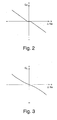
- Fig. 2 is a table for calculating the P term
- Fig. 3 is a table for calculating the I term
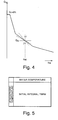
- Fig. 4 is a map showing a basic injection quantity when an accelerator opening is 0 %
- Fig. 5 is a two-dimensional map for determining an initial integral term
- Fig. 6 is a time chart showing results of engine tests of an embodiment according to the present invention and an example of a conventional manner.
- Fig 7 is a structural illustration showing an engine in the embodiment of the present invention.
- an engine revolution number is used as an engine revolution speed.
- An engine in this embodiment is a known common rail type diesel engine whose structure is shown in Fig. 7.
- fuel is injected into each cylinder from an injector 2.
- the pressurized fuel is accumulated in a common rail 3.
- a supply pump 4 supplies the fuel by pressure to the common rail 3
- an electronic control unit (ECU) 6 properly switches a pressure control valve 5 to a supply side from a leak side or to the leak side from the supply side, and thereby a common rail pressure is controlled.
- the common rail pressure is detected by a common rail pressure sensor 7, and is controlled by feedback in order to obtain an optimum value.
- the ECU 6 has a role of controlling fuel injection, and controls a fuel injection quantity by controlling the period for which electric current is supplied to the injector 2.
- a fuel injection quantity is controlled by feedback on the basis of output from an engine revolution sensor 8.
- the ECU 6 receives other kinds of information indicating an engine operation state from an accelerator opening sensor, a water temperature (engine temperature) sensor, an atmospheric temperature sensor, and so forth.
- Fig. 4 shows a basic injection quantity Q0 which is injected every engine revolution number Ne when an accelerator opening Ac is 0%.
- a target revolution number of the engine is set as an idling revolution number Nei (for example, 440 rpm)
- a basic injection quantity is Q0i.
- an actual engine revolution number is not equal to the idling revolution number Nei due to difference in using condition such as a warmup state of the engine, or an outside air temperature.
- the feedback control as stated above is carxzed out every predetermined timing.
- the above description is directed to the case of an idling operation, when the accelerator opening Ac is 0 %, the final injection quantity can be determined in the same manner also in the case where a state of the engine is not in idling.
- the P term is determined from a table of Fig. 2 which was stored in the ECU 6.
- the value QP of the P term is determined as one value on the basis of difference between the actual engine revolution number and the target revolution number. More specifically, the value QP is determined on the basis of difference ⁇ Ne which is the actual engine revolution number minus the target revolution number. When the ⁇ Ne is "0" or close to "0", the value QP is "0". The larger the ⁇ Ne becomes from the value close to "0", the smaller the value QP of the P term becomes (that is, the more the QP moves in a direction of the minus side).
- the QP of the term P causes the inclination of Fig. 4 to change (refer to the dashed line), and updates its own value every control timing.
- the I term is determined from a table of Fig. 3 which was stored in the ECU 6.
- the value QI of the I term is also determined as one value on the basis of the ⁇ Ne. In many cases, the graph of the QI crosses at the origin of the coordinate axis. Generally, only when the ⁇ Ne is "0", the value QI is "0". The larger the ⁇ Ne becomes from “0”, the smaller the value QI becomes (that is, the more the QI moves in a direction of the minus side). On the other hand, the smaller the ⁇ Ne becomes from "0", the larger the QI becomes (that is, the more the QI moves in a direction of the plus side).
- the value QI of the I term causes the actual engine revolution number to converge at the target revolution number when the actual engine revolution number reaches the target revolution number.
- the value QI is updated every control timing, and calculation of addition is carried out every timing. As known to those skilled in the art, this calculation of addition may be carried out such that if the current I term is QI(n) and the previous I term is QI(n-1), the current I term QI(n) is determined by adding the QI obtained from Fig. 3 to the previous I term QI(n-1).
- this QI indicates the current QI(n) of the I term.
- Fig. 1 shows condition during the engine startup period. On the assumption that an accelerator is not depressed and the accelerator opening Ac is 0 %, the condition of the engine will be described.
- cranking is started. The time the engine is started up may be the time the cranking begins. A cranking period is indicated by "A", but an end time of the cranking is varied depending on a driver.
- Ne that is, engine revolution speed
- Nei that is, stabilized
- the numeral 1 indicates the timing that the combustion begins, and the numeral 2 indicates the timing that the engine state reaches complete combustion.
- the complete combustion timing 2 is generally timing preceding the time when the engine revolution rises up to the most high point.
- an engine revolution number Neq at the complete combustion timing for example, 1000 rpm
- a cranking revolution number Nec (for example, 100 rpm) is lower than the idling revolution number Nei, but the Nec can vary in accordance with an engine warmup condition, a storage condition of a battery, or the like.
- the engine revolution number at the combustion start time 1 has a certain width for example, 150 to 200 rpm), is a little larger than the cranking revolution number Nec, and of course is smaller than the idling revolution number Nei.
- a startup revolution number Nes is predetermined.
- this startup revolution number is a predetermined startup revolution speed.
- the Nes is used for making judgment during the engine startup period when the engine control is carried out (this judgment will be understood later).
- the startup revolution number Nes is determined for each engine by a test of an actual engine or the like, and the value of the Nes is stored in the ECU 6.
- the startup revolution number Nes is generally a value larger than the cranking revolution number Nec and smaller than the complete combustion revolution number Neq. For the sake of convenience, assuming that the startup revolution number Nes is equal to the idling revolution number Nei, this example is described, but strictly speaking this assumption does not necessarily corresponds to an actual case.
- an initial value of the I term QI is set as "0", and the value QI is increased every moment from the time cranking begins.
- the cranking period A becomes longer. Therefore, there is a problem.
- the value QI of the I term leads to an overshooting value (assuming that an optimum value is indicated by QI0), and black smoke is generated at the same time combustion begins.
- the calculation of the I term is started from the cranking start time as indicated by "a" of Fig. 1, but does not affect the calculation of the final injection quantity (that is, although calculation is performed, the I term is set as "0").
- the I term is calculated and increased so as to affect the injection quantity (that is, the I term is made to appear).
- the cranking period A is short, black smoke is prevented from generating, but undershooting or the like occurs at the settling time 3.
- the cranking period A is long, the problem that black smoke is generated is not solved as ever.
- an initial integral term (an initial I term) QI0 is predetermined.
- the I term is set as "0" until the engine revolution number reaches the startup revolution number Nes. (That is, the integral term is held at a value of "0" from engine start to the time that the engine revolution speed reaches a predetermined startup revolution speed.)
- the initial integral term QI0 is used as the I term.
- the value of the startup revolution number Nes is determined as an optimum value which may be different from the conventional value. According to the test of the actual engine an inventor performs, the value of the Nes is preferably set as a value close to or equal to the idling revolution number Nei. In this embodiment according to the present invention, the value of Nes is set as a value equal to the idling revolution number Nei (for example, 440 rpm).
- an optimum value of the initial I term QI0 can be determined by testing the actual engine or the like on the basis of various parameters concerning a startup condition or requirement. This determined optimum value is also stored in the ECU 6.
- the initial I term QI0 is determined on the basis of a two-dimensional map of a water temperature and an atmospheric temperature as shown in Fig. 5. It should be noted that the initial I term QI0 may be determined on the basis of either the water temperature or the atmospheric temperature.
- the following is the method of controlling the startup of the engine in the embodiment according to the present invention (specifically, the method of carrying out revolution feedback control during an engine startup period by controlling fuel injection quantity, in which the fuel injection quantity is determined by adding at least fuel quantity correction based on an integral term to a basic fuel injection quantity).
- the condition of this embodiment is shown by the solid line of Fig. 1.
- the I term is set to be "0" during the cranking period A from the time key is changed to ON. Furthermore, even when time reaches the combustion start time 1, the I term still remains "0". After the combustion start time 1, the I term continues to be "0" until the engine revolution number reaches the startup revolution number Nes. At the moment when the engine revolution number reaches the startup revolution number Nes, the initial I term QI0 is used as the I term.
- the initial I term QIO is made to appear.
- the I term QI that follows the table of Fig. 3 is used to perform the calculation of the final injection quantity.
- the initial I term that is larger than a conventional value (a conventional initial value is "0") can be provided, so that when the time reaches the settling time 3, the fuel quantity does not become insufficient, and undershooting or hunting can be prevented. In this manner, black smoke generation during the startup period and undershooting and hunting at the settling time can be prevented together.
- the initial I term is preferably generated after the combustion start time 1 in order to prevent black smoke generation. It should be noted that generation of the initial I term is preferably advanced in order to use a sufficiently accumulated optimum I term at the settling time 3. Therefore, the startup revolution number Nes, which can determine the time when the I term is generated, is preferably set as a value at least greater than the cranking revolution number Nec and smaller than a complete combustion revolution number Neq.
- Fig. 6 shows a result of the engine test performed in order to compare this embodiment according to the present invention with an example of a conventional manner.
- This embodiment according to the present invention is indicated by the solid line, and the example of the conventional manner is indicated by the one-dot dashed line.
- the above-mentioned first conventional method is adopted.
- the engine revolution number Ne gently settles into the idling revolution number Nei from a higher point, and a desirable result that there is no sinking can be obtained.
- black smoke is not generated, and the advantages of the present invention are confirmed by this test of the actual engine.
- an embodiment of the present invention is not limited to the above-mentioned embodiment.
- the present invention can be applied to an embodiment in which the P term is not used to determine the final fuel injection.
- the present invention can be applied to any electronically controlled engine.
- the present invention can be applied to a diesel engine and a gasoline engine, but other type engines may be adopted to the present invention.
- the present invention can be applied to not only a common rail type engine but also an electronically controlled fuel injection pump type engine (for example, an engine having an electronic governor).
- the present invention can be applied to even a gas turbine engine.
- the term "revolution number" is used to represent an engine revolution speed.
- an idling revolution number Nei and a cranking revolution number Nec are respectively used for representing an idling revolution speed and a cranking revolution speed.
Landscapes
- Engineering & Computer Science (AREA)
- Chemical & Material Sciences (AREA)
- Combustion & Propulsion (AREA)
- Mechanical Engineering (AREA)
- General Engineering & Computer Science (AREA)
- Electrical Control Of Air Or Fuel Supplied To Internal-Combustion Engine (AREA)
- Combined Controls Of Internal Combustion Engines (AREA)
Abstract
Description
Claims (4)
- A method of carrying out revolution feedback control during an engine startup period by controlling fuel injection quantity, in which the fuel injection quantity is determined by adding at least fuel quantity correction based on an integral term to a basic fuel injection quantity, said method comprising:(a) holding the integral term at a value of "0" from engine start to the time that an engine revolution speed reaches a predetermined startup revolution speed; and(b) setting a predetermined initial integral term as the integral term at the time that the engine revolution speed reaches the predetermined startup revolution speed.
- The method according to claim 1, characterized in that the initial integral term is determined on the basis of one of, or both of, a water temperature and an atmospheric temperature.
- The method according to claim 1 or 2, characterized in that the startup revolution speed is a value higher than a cranking revolution speed and lower than a complete combustion revolution speed.
- The method according to any one of claims 1 to 3, characterized in that the predetermined startup revolution speed is approximately a value of an idling revolution speed.
Applications Claiming Priority (2)
| Application Number | Priority Date | Filing Date | Title |
|---|---|---|---|
| JP2000395620A JP2002195075A (en) | 2000-12-26 | 2000-12-26 | Engine start control method |
| JP2000395620 | 2000-12-26 |
Publications (2)
| Publication Number | Publication Date |
|---|---|
| EP1219807A2 true EP1219807A2 (en) | 2002-07-03 |
| EP1219807A3 EP1219807A3 (en) | 2003-07-09 |
Family
ID=18861056
Family Applications (1)
| Application Number | Title | Priority Date | Filing Date |
|---|---|---|---|
| EP01130731A Withdrawn EP1219807A3 (en) | 2000-12-26 | 2001-12-21 | A method of controlling an engine startup |
Country Status (3)
| Country | Link |
|---|---|
| US (1) | US6612297B2 (en) |
| EP (1) | EP1219807A3 (en) |
| JP (1) | JP2002195075A (en) |
Cited By (2)
| Publication number | Priority date | Publication date | Assignee | Title |
|---|---|---|---|---|
| WO2004044408A1 (en) * | 2002-11-12 | 2004-05-27 | Mtu Friedrichshafen Gmbh | Method for controlling an internal combustion engine generator unit |
| WO2006010695A1 (en) * | 2004-07-23 | 2006-02-02 | Siemens Aktiengesellschaft | Method and device for controlling an internal combustion engine |
Families Citing this family (2)
| Publication number | Priority date | Publication date | Assignee | Title |
|---|---|---|---|---|
| WO2004007938A2 (en) * | 2002-07-12 | 2004-01-22 | Cummins Inc. | Start -up control of internal combustion engines |
| CN115095433B (en) * | 2022-05-19 | 2023-10-20 | 潍柴动力股份有限公司 | A method and device for starting a natural gas engine |
Family Cites Families (7)
| Publication number | Priority date | Publication date | Assignee | Title |
|---|---|---|---|---|
| US4582036A (en) | 1983-09-12 | 1986-04-15 | Honda Giken Kogyo K.K. | Fuel supply control method for internal combustion engines immediately after cranking |
| JPH02104939A (en) | 1988-10-12 | 1990-04-17 | Honda Motor Co Ltd | Internal combustion engine idle speed control device |
| US5590638A (en) * | 1994-10-20 | 1997-01-07 | Honda Giken Kogyo Kabushiki Kaisha | Fuel metering control system for internal combustion engine |
| US5720265A (en) * | 1995-02-25 | 1998-02-24 | Honda Giken Kogyo Kabushiki Kaisha | Fuel metering control system for internal combustion engine |
| EP0728923B1 (en) * | 1995-02-25 | 2002-01-23 | Honda Giken Kogyo Kabushiki Kaisha | Fuel metering control system for internal combustion engine |
| JP3622290B2 (en) * | 1995-10-02 | 2005-02-23 | 日産自動車株式会社 | Control device for internal combustion engine |
| DE19740192C2 (en) | 1997-09-12 | 2000-03-16 | Siemens Ag | Method for starting an internal combustion engine |
-
2000
- 2000-12-26 JP JP2000395620A patent/JP2002195075A/en active Pending
-
2001
- 2001-12-20 US US10/027,118 patent/US6612297B2/en not_active Expired - Lifetime
- 2001-12-21 EP EP01130731A patent/EP1219807A3/en not_active Withdrawn
Cited By (3)
| Publication number | Priority date | Publication date | Assignee | Title |
|---|---|---|---|---|
| WO2004044408A1 (en) * | 2002-11-12 | 2004-05-27 | Mtu Friedrichshafen Gmbh | Method for controlling an internal combustion engine generator unit |
| US7072759B2 (en) | 2002-11-12 | 2006-07-04 | Mtu Friedrichshafen Gmbh | Method for controlling an internal combustion engine generator unit |
| WO2006010695A1 (en) * | 2004-07-23 | 2006-02-02 | Siemens Aktiengesellschaft | Method and device for controlling an internal combustion engine |
Also Published As
| Publication number | Publication date |
|---|---|
| US6612297B2 (en) | 2003-09-02 |
| US20020078922A1 (en) | 2002-06-27 |
| JP2002195075A (en) | 2002-07-10 |
| EP1219807A3 (en) | 2003-07-09 |
Similar Documents
| Publication | Publication Date | Title |
|---|---|---|
| US7055503B2 (en) | Fuel injection controller for engine | |
| EP0330934B1 (en) | Method for feedback controlling air and fuel ratio of the mixture supplied to internal combustion engine | |
| US7885752B2 (en) | Control system for internal combustion engine | |
| US5435285A (en) | Flexible fuel compensation system | |
| GB2328037A (en) | Controlling fuel delivery during transient engine conditions | |
| EP3361074B1 (en) | Fuel injection control device | |
| JP2008309036A (en) | Fuel estimation device | |
| US5365917A (en) | Hot soak for a flexible fuel compensation system | |
| US5163408A (en) | Electronic fuel injection control device for internal combustion engine and method thereof | |
| US6736114B2 (en) | Control system and control method for in-cylinder injection type internal combustion engine | |
| JP3721873B2 (en) | Engine fuel injection control device | |
| US6612297B2 (en) | Method of controlling an engine startup | |
| US6308698B1 (en) | Method and apparatus for controlling fuel injection in diesel engine | |
| JP4670771B2 (en) | Fuel injection control device | |
| US20040144369A1 (en) | Method and system for providing fuel injection time scheduling for internal combustion engines using engine speed prediction | |
| US6363916B2 (en) | Fuel injection control device | |
| US7168422B1 (en) | Control apparatus for an internal combustion engine | |
| JP4513757B2 (en) | Fuel injection control device | |
| EP2055915B1 (en) | Throttle valve control system for internal combustion engine | |
| US6474307B1 (en) | Fuel injection control device for internal combustion engine | |
| JP3651191B2 (en) | Fuel injection control device for internal combustion engine | |
| EP1433943A2 (en) | Fuel injection control device | |
| US6273068B1 (en) | Fuel supply system for an internal combustion engine, particularly of a motor vehicle | |
| JPH0131022B2 (en) | ||
| JPS63230944A (en) | Exhaust gas recirculation control system for diesel engine |
Legal Events
| Date | Code | Title | Description |
|---|---|---|---|
| PUAI | Public reference made under article 153(3) epc to a published international application that has entered the european phase |
Free format text: ORIGINAL CODE: 0009012 |
|
| AK | Designated contracting states |
Kind code of ref document: A2 Designated state(s): AT BE CH CY DE DK ES FI FR GB GR IE IT LI LU MC NL PT SE TR |
|
| AX | Request for extension of the european patent |
Free format text: AL;LT;LV;MK;RO;SI |
|
| PUAL | Search report despatched |
Free format text: ORIGINAL CODE: 0009013 |
|
| AK | Designated contracting states |
Designated state(s): AT BE CH CY DE DK ES FI FR GB GR IE IT LI LU MC NL PT SE TR |
|
| AX | Request for extension of the european patent |
Extension state: AL LT LV MK RO SI |
|
| 17P | Request for examination filed |
Effective date: 20031015 |
|
| 17Q | First examination report despatched |
Effective date: 20040115 |
|
| AKX | Designation fees paid |
Designated state(s): DE FR GB |
|
| 17Q | First examination report despatched |
Effective date: 20040115 |
|
| STAA | Information on the status of an ep patent application or granted ep patent |
Free format text: STATUS: THE APPLICATION HAS BEEN WITHDRAWN |
|
| 18W | Application withdrawn |
Effective date: 20070823 |