EP1219600A1 - Prostaglandin derivatives - Google Patents
Prostaglandin derivatives Download PDFInfo
- Publication number
- EP1219600A1 EP1219600A1 EP00951967A EP00951967A EP1219600A1 EP 1219600 A1 EP1219600 A1 EP 1219600A1 EP 00951967 A EP00951967 A EP 00951967A EP 00951967 A EP00951967 A EP 00951967A EP 1219600 A1 EP1219600 A1 EP 1219600A1
- Authority
- EP
- European Patent Office
- Prior art keywords
- group
- formula
- compound
- phenylene
- inter
- Prior art date
- Legal status (The legal status is an assumption and is not a legal conclusion. Google has not performed a legal analysis and makes no representation as to the accuracy of the status listed.)
- Withdrawn
Links
- 0 *C[C@](C(*)C[C@]1O)[C@]1C#C* Chemical compound *C[C@](C(*)C[C@]1O)[C@]1C#C* 0.000 description 2
Classifications
-
- C—CHEMISTRY; METALLURGY
- C07—ORGANIC CHEMISTRY
- C07C—ACYCLIC OR CARBOCYCLIC COMPOUNDS
- C07C405/00—Compounds containing a five-membered ring having two side-chains in ortho position to each other, and having oxygen atoms directly attached to the ring in ortho position to one of the side-chains, one side-chain containing, not directly attached to the ring, a carbon atom having three bonds to hetero atoms with at the most one bond to halogen, and the other side-chain having oxygen atoms attached in gamma-position to the ring, e.g. prostaglandins ; Analogues or derivatives thereof
-
- A—HUMAN NECESSITIES
- A61—MEDICAL OR VETERINARY SCIENCE; HYGIENE
- A61P—SPECIFIC THERAPEUTIC ACTIVITY OF CHEMICAL COMPOUNDS OR MEDICINAL PREPARATIONS
- A61P13/00—Drugs for disorders of the urinary system
- A61P13/12—Drugs for disorders of the urinary system of the kidneys
-
- A—HUMAN NECESSITIES
- A61—MEDICAL OR VETERINARY SCIENCE; HYGIENE
- A61P—SPECIFIC THERAPEUTIC ACTIVITY OF CHEMICAL COMPOUNDS OR MEDICINAL PREPARATIONS
- A61P25/00—Drugs for disorders of the nervous system
- A61P25/20—Hypnotics; Sedatives
-
- A—HUMAN NECESSITIES
- A61—MEDICAL OR VETERINARY SCIENCE; HYGIENE
- A61P—SPECIFIC THERAPEUTIC ACTIVITY OF CHEMICAL COMPOUNDS OR MEDICINAL PREPARATIONS
- A61P9/00—Drugs for disorders of the cardiovascular system
- A61P9/04—Inotropic agents, i.e. stimulants of cardiac contraction; Drugs for heart failure
-
- A—HUMAN NECESSITIES
- A61—MEDICAL OR VETERINARY SCIENCE; HYGIENE
- A61P—SPECIFIC THERAPEUTIC ACTIVITY OF CHEMICAL COMPOUNDS OR MEDICINAL PREPARATIONS
- A61P9/00—Drugs for disorders of the cardiovascular system
- A61P9/10—Drugs for disorders of the cardiovascular system for treating ischaemic or atherosclerotic diseases, e.g. antianginal drugs, coronary vasodilators, drugs for myocardial infarction, retinopathy, cerebrovascula insufficiency, renal arteriosclerosis
-
- A—HUMAN NECESSITIES
- A61—MEDICAL OR VETERINARY SCIENCE; HYGIENE
- A61P—SPECIFIC THERAPEUTIC ACTIVITY OF CHEMICAL COMPOUNDS OR MEDICINAL PREPARATIONS
- A61P9/00—Drugs for disorders of the cardiovascular system
- A61P9/12—Antihypertensives
Definitions
- the present invention relates to novel prostaglandin derivatives, pharmaceutically acceptable salts thereof and hydrates thereof.
- prostaglandin (hereinafter referred to as "PG") exhibits various important physiological actions in a trace amount
- the syntheses of a great number of the derivatives from natural PGs and the biological activities have been investigated with the intention of a practical use as medicines and have been reported in Japanese Patent Kokai Sho 52-100446, Japanese Patent Kohyo Hei 2-502009, etc.
- Japanese Patent Kohyo Hei 2-502009 discloses a group of PG derivatives substituted with a halogen atom at the 9-position.
- PG derivatives having a PGD 2 -like agonistic activity are reported by K-H Thierauch et al., in Drug of the Future, vol. 17, page 809 (1992).
- novel prostaglandin derivatives having a triple bond between the 13- and 14-positions represented by the following Formula (I) have an excellent PGD 2 -like agonistic activity, and thereby the present invention has been accomplished.
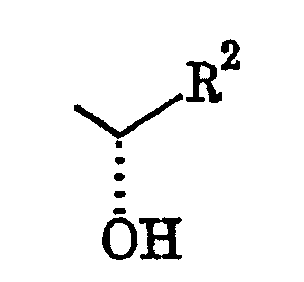
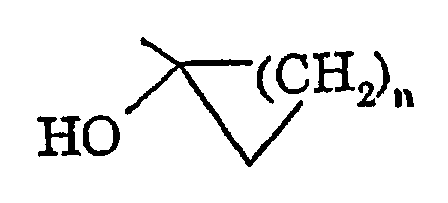
- the present invention is directed to a prostaglandin derivative represented by Formula (I): wherein X is a halogen atom, R 1 is a hydrogen atom, a C 1-10 alkyl group or a C 3-10 cycloalkyl group, m is an integer of 0 to 5, and Y is a group represented by the formula: wherein R 2 is a C 3-10 cycloalkyl group, a C 3-10 cycloalkyl group substituted with C 1-4 alkyl group(s), a C 1-4 alkyl group substituted with C 3-10 cycloalkyl group(s), a C 1-10 alkyl group, a C 2-10 alkenyl group, a C 2-10 alkynyl group or a bridged cyclic hydrocarbon group, or a group represented by the formula: wherein n is an integer of 1 to 8; a pharmaceutically acceptable salt thereof or a hydrate thereof.
- Formula (I) wherein X is a halogen atom, R
- the present invention is directed to a pharmaceutical composition which comprises the compound represented by the general formula (I), the pharmaceutically acceptable salt thereof or the hydrate thereof.
- the halogen atom refers to a fluorine atom, a chlorine atom, a bromine atom or an iodine atom.
- Examples of the C 3-10 cycloalkyl group are a cyclopropyl group, a cyclobutyl group, a cyclopentyl group, a cyclohexyl group and a cycloheptyl group.
- the C 1-10 alkyl group means a straight or branched alkyl group, and examples thereof are a methyl group, an ethyl group, a propyl group, an isopropyl group, a butyl group, an isobutyl group, a tert-butyl group, a pentyl group, an isopentyl group, a 2-ethylpropyl group, a hexyl group, an isohexyl group, a 1-ethylbutyl group, a heptyl group, an isoheptyl group, an octyl group, a nonyl group, a decyl group, a 1-methylpentyl group, a 2-methylpentyl group, a 1-methylhexyl group, a 2-methylhexyl group, a 2,4-dimethylpentyl group, a 2-ethylpentyl group, a 2-methylhepty
- the C 2-10 alkenyl group means a straight or branched alkenyl group, and examples thereof are a vinyl group, an allyl group, a butenyl group, a 3-pentenyl group, a 4-hexenyl group, a 5-heptenyl group, a 4-methyl-3-pentenyl group, a 2,4-dimethyl-4-pentenyl group, a 6-methyl-5-heptenyl group and a 2,6-dimethyl-5-heptenyl group.
- the C 2-10 alkynyl group means a straight or branched alkynyl group, and examples thereof are an ethynyl group, a 2-propynyl group, a 3-butynyl group, a 3-pentynyl group, a 3-hexynyl group, a 4-hexynyl group, a 1-methylpent-3-ynyl group, a 2-methylpent-3-ynyl group, a 1-methylhex-3-ynyl group and a 2-methylhex-3-ynyl group.
- bridged cyclic hydrocarbon group examples include a norbornyl group, an adamantyl group, a pinanyl group, a thujyl group, a caryl group, a bornyl group and a camphanyl group.
- Examples of the pharmaceutically acceptable salt are salts with alkali metals (e.g., sodium or potassium), alkali earth metals (e.g., calcium or magnesium), ammonia, methylamine, dimethylamine, cyclopentylamine, benzylamine, piperidine, monoethanolamine, diethanolamine, monomethylmonoethanolamine, tromethamine, lysine, a tetraalkyl ammonium and tris(hydroxymethyl)aminomethane.
- alkali metals e.g., sodium or potassium
- alkali earth metals e.g., calcium or magnesium
- ammonia methylamine, dimethylamine, cyclopentylamine, benzylamine, piperidine
- monoethanolamine diethanolamine, monomethylmonoethanolamine, tromethamine, lysine, a tetraalkyl ammonium and tris(hydroxymethyl)aminomethane.
- the compounds of Formula (I) can be prepared, for example, by the methods summarized by the following reaction scheme.
- TBS is a tertbutyldimethylsilyl group
- R 3 is a group obtained by protecting the hydroxyl group in Y with TBS or a triethylsilyl group
- R 4 is a straight or branched C 1-10 alkyl group or a C 3-10 cycloalkyl group
- X, Y and m are as defined above.
- the compounds of the present invention can be administered systemically or topically, or orally or parenterally in conventional dosage forms.
- they can be administered orally in the form such as tablets, powders, granules, dusting powders, capsules, solutions, emulsions or suspensions, each of which can be prepared according to conventional methods.
- dosage forms for intravenous administration there are used aqueous or non-aqueous solutions, emulsions, suspensions or solid preparations to be dissolved in a solvent for injection immediately before use.
- the compounds of the present invention can be formulated into the form of inclusion compounds with ⁇ -, ⁇ - or ⁇ -cyclodextrin, or methylated cyclodextrin.
- the compounds of the present invention can be administered by injection in the form of aqueous or non-aqueous solutions, emulsions, suspensions, etc.
- the dose is varied by the age, body weight, etc., but it generally is from 1 ng to 1 mg/day per adult, which can be administered in a single dose or divided doses.
- the compounds of the present invention have an excellent PGD 2 -like agonistic activity, therefore they are useful as therapeutic agents of circulatory diseases such as renal diseases, ischemic heart diseases, heart failure or hypertension, and sleep-inducing agents.
- EBTr [NBL-4] cells derived from bovine embryonic trachea were inoculated on 24-well plates (6x10 4 cells/well) (manufactured by Sumitomo Bakelite Co.), and cultured on a growth medium (MEM Earle's medium including 10% calf serum, 2 mM glutamine and non-essential amino acids) for 48 hours, followed by cultivation on 0.5 ml of a growth medium including the test compound and 0.5 mM 3-isobutyl-1-methylxanthine for 15 minutes.
- MEM Earle's medium including 10% calf serum, 2 mM glutamine and non-essential amino acids for 48 hours, followed by cultivation on 0.5 ml of a growth medium including the test compound and 0.5 mM 3-isobutyl-1-methylxanthine for 15 minutes.
- the cells were washed with a phosphate buffer (not including Ca ++ and Mg ++ ), 0.6 ml of 65% aqueous ethanol solution was added, followed by allowing to stand at 4°C for an hour, and the resulting cAMP was extracted. After evaporation of the solvent by a centrifugal evaporator, the amount of cAMP was measured by using a CAMP EIA System (manufactured by Amersham Co.).
- Results are shown in Table 3. 1x10 -9 M (concentration of compound added) cAMP production promoting action (percent to PGD 2 ) Compound 35 150 (Note) Compound 35 in Table is one which was prepared in the example described below. The test compound was used as a form of an ethanol solution, and compared with a vehicle-treated group as a control.
Landscapes
- Health & Medical Sciences (AREA)
- Chemical & Material Sciences (AREA)
- Organic Chemistry (AREA)
- Engineering & Computer Science (AREA)
- Bioinformatics & Cheminformatics (AREA)
- Veterinary Medicine (AREA)
- General Health & Medical Sciences (AREA)
- Public Health (AREA)
- Chemical Kinetics & Catalysis (AREA)
- General Chemical & Material Sciences (AREA)
- Medicinal Chemistry (AREA)
- Nuclear Medicine, Radiotherapy & Molecular Imaging (AREA)
- Animal Behavior & Ethology (AREA)
- Pharmacology & Pharmacy (AREA)
- Life Sciences & Earth Sciences (AREA)
- Cardiology (AREA)
- Heart & Thoracic Surgery (AREA)
- Urology & Nephrology (AREA)
- Vascular Medicine (AREA)
- Hospice & Palliative Care (AREA)
- Anesthesiology (AREA)
- Biomedical Technology (AREA)
- Neurology (AREA)
- Neurosurgery (AREA)
- Organic Low-Molecular-Weight Compounds And Preparation Thereof (AREA)
- Pharmaceuticals Containing Other Organic And Inorganic Compounds (AREA)
Abstract
A prostaglandin derivative represented by the formula: <CHEM> wherein X is a halogen atom, R<1> is a hydrogen atom, a C1-10 alkyl group or a C3-10 cycloalkyl group, m is an integer of 0 to 5, and Y is a group represented by the formula: <CHEM> wherein R<2> is a C3-10 cycloalkyl group, a C3-10 cycloalkyl group substituted with C1-4 alkyl group(s), a C1-4 alkyl group substituted with C3-10 cycloalkyl group(s), a C1-10 alkyl group, a C2-10 alkenyl group, a C2-10 alkynyl group or a bridged cyclic hydrocarbon group, or a group represented by the formula: <CHEM> wherein n is an integer of 1 to 8; a pharmaceutically acceptable salt thereof or a hydrate thereof.
Description
The present invention relates to novel prostaglandin
derivatives, pharmaceutically acceptable salts thereof and
hydrates thereof.
Since prostaglandin (hereinafter referred to as "PG")
exhibits various important physiological actions in a trace
amount, the syntheses of a great number of the derivatives
from natural PGs and the biological activities have been
investigated with the intention of a practical use as
medicines and have been reported in Japanese Patent Kokai
Sho 52-100446, Japanese Patent Kohyo Hei 2-502009, etc.
Among them, Japanese Patent Kohyo Hei 2-502009 discloses a
group of PG derivatives substituted with a halogen atom at
the 9-position. In addition, PG derivatives having a PGD2-like
agonistic activity are reported by K-H Thierauch et
al., in Drug of the Future, vol. 17, page 809 (1992).
As a result of the extensive studies, the present
inventors have found that novel prostaglandin derivatives
having a triple bond between the 13- and 14-positions
represented by the following Formula (I) have an excellent
PGD2-like agonistic activity, and thereby the present
invention has been accomplished.
That is, the present invention is directed to a
prostaglandin derivative represented by Formula (I):
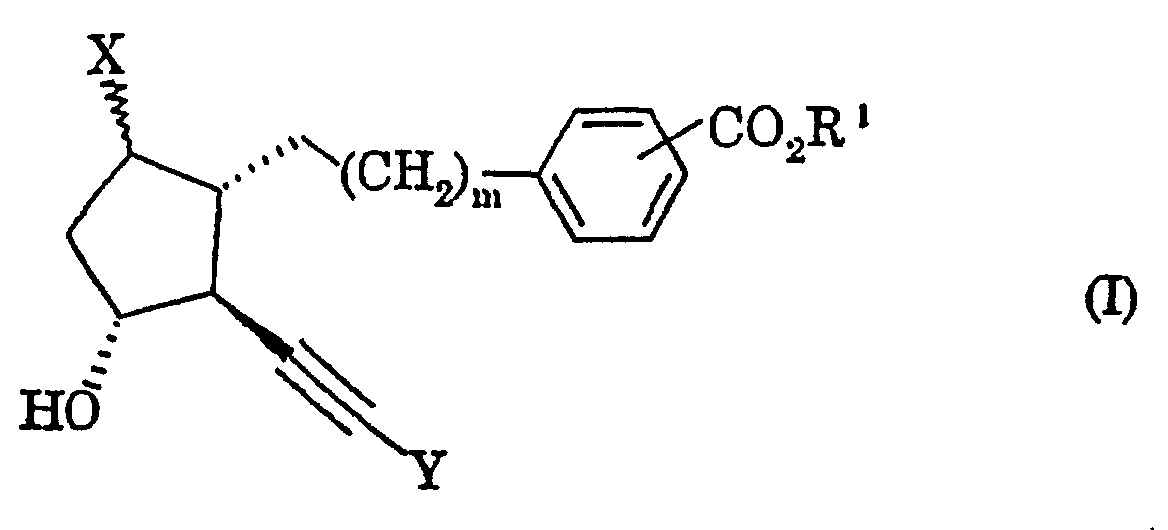
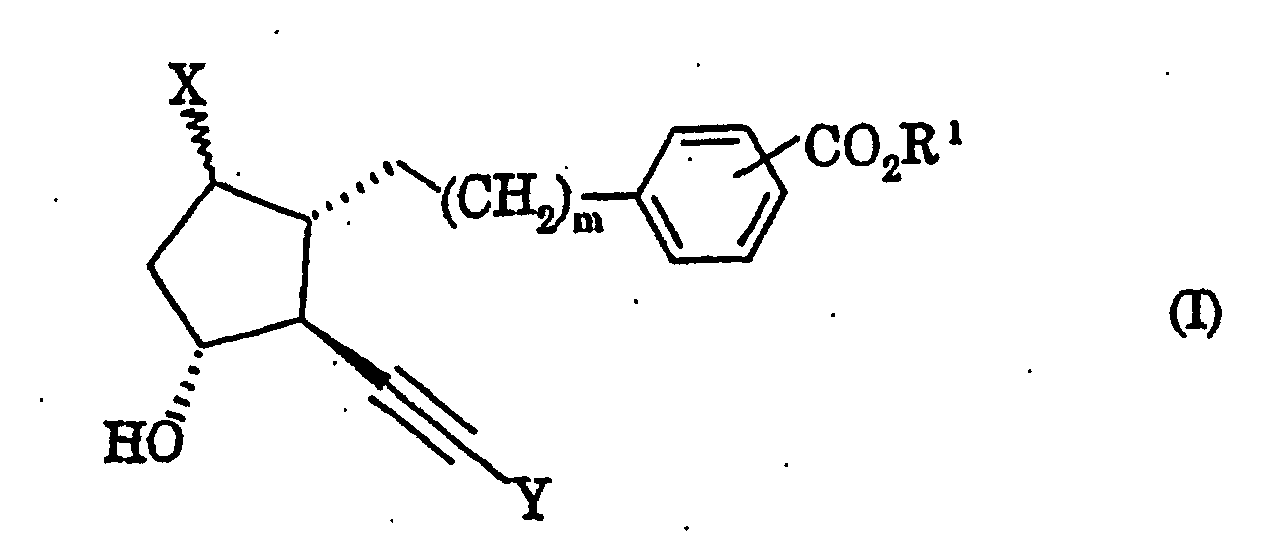 wherein X is a halogen atom, R1 is a hydrogen atom, a C1-10
alkyl group or a C3-10 cycloalkyl group, m is an integer of
0 to 5, and Y is a group represented by the formula:
wherein X is a halogen atom, R1 is a hydrogen atom, a C1-10
alkyl group or a C3-10 cycloalkyl group, m is an integer of
0 to 5, and Y is a group represented by the formula:
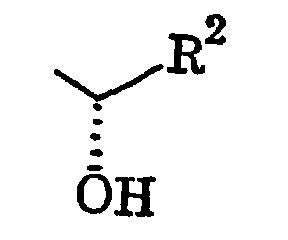
 wherein R2 is a C3-10 cycloalkyl group, a C3-10 cycloalkyl
group substituted with C1-4 alkyl group(s), a C1-4 alkyl
group substituted with C3-10 cycloalkyl group(s), a C1-10
alkyl group, a C2-10 alkenyl group, a C2-10 alkynyl group or
a bridged cyclic hydrocarbon group, or a group represented
by the formula:
wherein R2 is a C3-10 cycloalkyl group, a C3-10 cycloalkyl
group substituted with C1-4 alkyl group(s), a C1-4 alkyl
group substituted with C3-10 cycloalkyl group(s), a C1-10
alkyl group, a C2-10 alkenyl group, a C2-10 alkynyl group or
a bridged cyclic hydrocarbon group, or a group represented
by the formula:
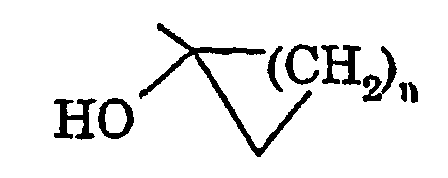 wherein n is an integer of 1 to 8; a pharmaceutically
acceptable salt thereof or a hydrate thereof.
wherein n is an integer of 1 to 8; a pharmaceutically
acceptable salt thereof or a hydrate thereof.
Furthermore, the present invention is directed to a
pharmaceutical composition which comprises the compound
represented by the general formula (I), the
pharmaceutically acceptable salt thereof or the hydrate
thereof.
In the present invention, the halogen atom refers to
a fluorine atom, a chlorine atom, a bromine atom or an
iodine atom.
Examples of the C3-10 cycloalkyl group are a
cyclopropyl group, a cyclobutyl group, a cyclopentyl group,
a cyclohexyl group and a cycloheptyl group.
The C1-10 alkyl group means a straight or branched
alkyl group, and examples thereof are a methyl group, an
ethyl group, a propyl group, an isopropyl group, a butyl
group, an isobutyl group, a tert-butyl group, a pentyl
group, an isopentyl group, a 2-ethylpropyl group, a hexyl
group, an isohexyl group, a 1-ethylbutyl group, a heptyl
group, an isoheptyl group, an octyl group, a nonyl group, a
decyl group, a 1-methylpentyl group, a 2-methylpentyl group,
a 1-methylhexyl group, a 2-methylhexyl group, a 2,4-dimethylpentyl
group, a 2-ethylpentyl group, a 2-methylheptyl
group, a 2-ethylhexyl group, a 2-propylpentyl
group, a 2-propylhexyl group and a 2,6-dimethylheptyl group.
The C2-10 alkenyl group means a straight or branched
alkenyl group, and examples thereof are a vinyl group, an
allyl group, a butenyl group, a 3-pentenyl group, a 4-hexenyl
group, a 5-heptenyl group, a 4-methyl-3-pentenyl
group, a 2,4-dimethyl-4-pentenyl group, a 6-methyl-5-heptenyl
group and a 2,6-dimethyl-5-heptenyl group.
The C2-10 alkynyl group means a straight or branched
alkynyl group, and examples thereof are an ethynyl group, a
2-propynyl group, a 3-butynyl group, a 3-pentynyl group, a
3-hexynyl group, a 4-hexynyl group, a 1-methylpent-3-ynyl
group, a 2-methylpent-3-ynyl group, a 1-methylhex-3-ynyl
group and a 2-methylhex-3-ynyl group.
Examples of the bridged cyclic hydrocarbon group are a
norbornyl group, an adamantyl group, a pinanyl group, a
thujyl group, a caryl group, a bornyl group and a camphanyl
group.
Examples of the pharmaceutically acceptable salt
are salts with alkali metals (e.g., sodium or potassium),
alkali earth metals (e.g., calcium or magnesium), ammonia,
methylamine, dimethylamine, cyclopentylamine, benzylamine,
piperidine, monoethanolamine, diethanolamine,
monomethylmonoethanolamine, tromethamine, lysine, a
tetraalkyl ammonium and tris(hydroxymethyl)aminomethane.
The compounds of Formula (I) can be prepared, for
example, by the methods summarized by the following
reaction scheme.

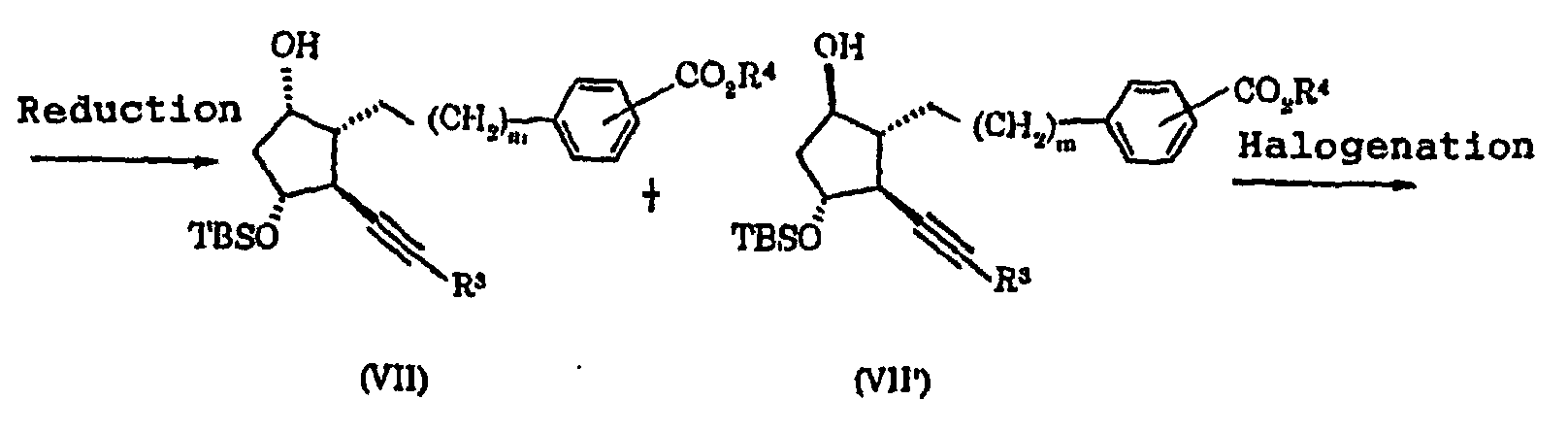
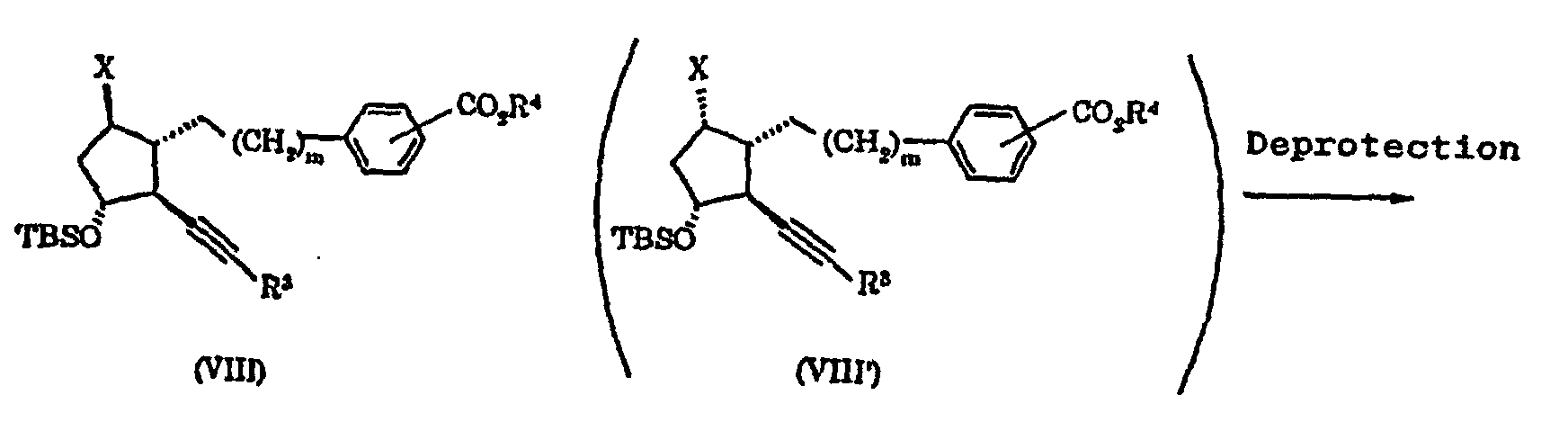
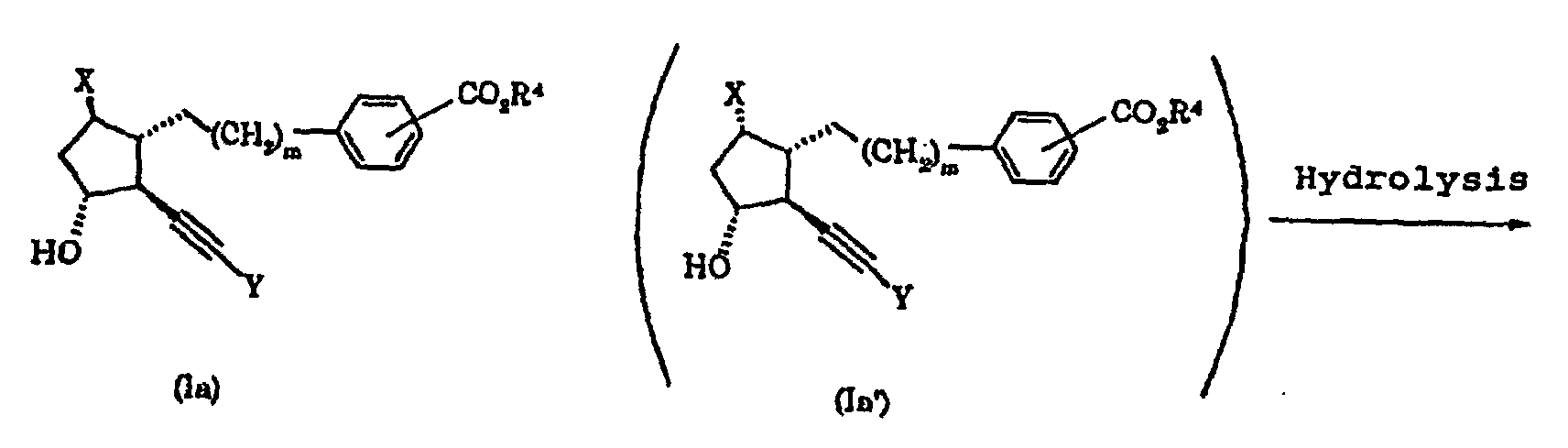
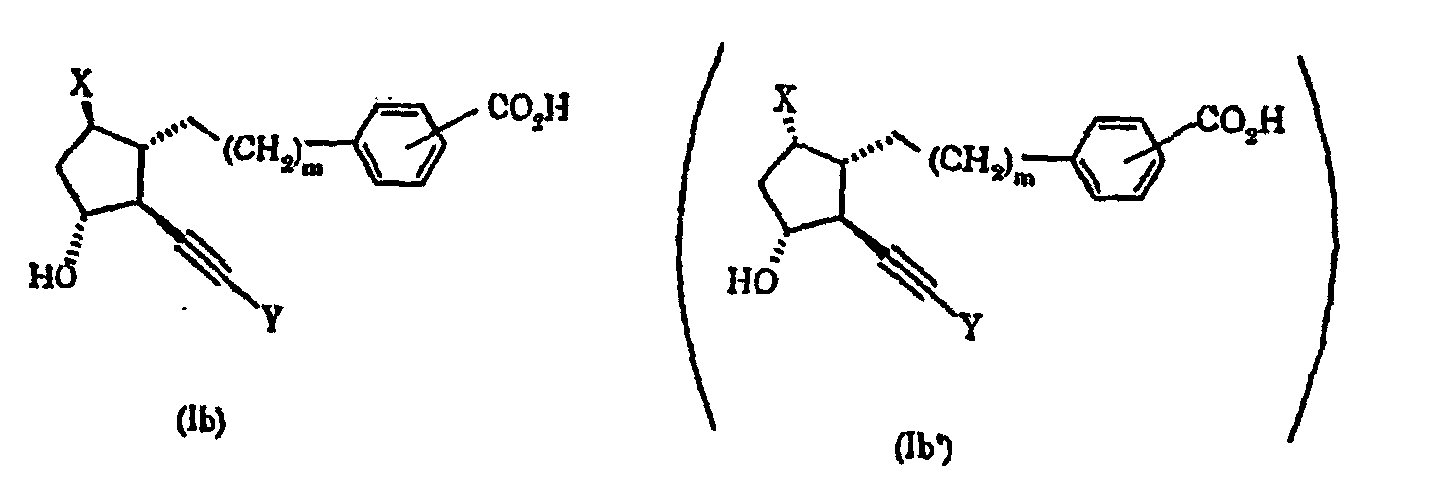
In the reaction scheme, TBS is a tertbutyldimethylsilyl
group, R3 is a group obtained by
protecting the hydroxyl group in Y with TBS or a
triethylsilyl group, R4 is a straight or branched C1-10
alkyl group or a C3-10 cycloalkyl group, and X, Y and m are
as defined above.
The above-mentioned reaction scheme is illustrated as
follows:
The compounds of the present invention can be
administered systemically or topically, or orally or
parenterally in conventional dosage forms. For example,
they can be administered orally in the form such as tablets,
powders, granules, dusting powders, capsules, solutions,
emulsions or suspensions, each of which can be prepared
according to conventional methods. As the dosage forms for
intravenous administration, there are used aqueous or non-aqueous
solutions, emulsions, suspensions or solid
preparations to be dissolved in a solvent for injection
immediately before use. Furthermore, the compounds of the
present invention can be formulated into the form of
inclusion compounds with α-, β- or γ-cyclodextrin, or
methylated cyclodextrin. In addition, the compounds of the
present invention can be administered by injection in the
form of aqueous or non-aqueous solutions, emulsions,
suspensions, etc. The dose is varied by the age, body
weight, etc., but it generally is from 1 ng to 1 mg/day per
adult, which can be administered in a single dose or
divided doses.
Representative compounds of Formula (I) of the
present invention are shown in Tables 1 and 2.


The compounds of the present invention have an
excellent PGD2-like agonistic activity, therefore they are
useful as therapeutic agents of circulatory diseases such
as renal diseases, ischemic heart diseases, heart failure
or hypertension, and sleep-inducing agents.
The effect of the present invention is more
specifically illustrated in the following experiment.
Measurement of cAMP production promoting action in
EBTr [NBL-4] cell derived from bovine embryonic trachea
According to the method of Ito et al. in Br. J.
Pharmacol., vol. 99, page 13 (1990), the following test was
carried out.
That is, EBTr [NBL-4] cells derived from bovine
embryonic trachea (produced by Dainippon Pharmaceutical
Co.) were inoculated on 24-well plates (6x10⁴ cells/well)
(manufactured by Sumitomo Bakelite Co.), and cultured on a
growth medium (MEM Earle's medium including 10% calf serum,
2 mM glutamine and non-essential amino acids) for 48 hours,
followed by cultivation on 0.5 ml of a growth medium
including the test compound and 0.5 mM 3-isobutyl-1-methylxanthine
for 15 minutes. After the completion of the
reaction, the cells were washed with a phosphate buffer
(not including Ca++ and Mg++), 0.6 ml of 65% aqueous
ethanol solution was added, followed by allowing to stand
at 4°C for an hour, and the resulting cAMP was extracted.
After evaporation of the solvent by a centrifugal
evaporator, the amount of cAMP was measured by using a CAMP
EIA System (manufactured by Amersham Co.).
Results are shown in Table 3.
| 1x10⁻⁹M (concentration of compound added) | cAMP production promoting action (percent to PGD2) |
| Compound 35 | 150 |
| (Note) Compound 35 in Table is one which was prepared in the example described below. The test compound was used as a form of an ethanol solution, and compared with a vehicle-treated group as a control. |
It is found from the above results that Compound 35
has a cAMP production promoting action.
The present invention is illustrated more
specifically by the following examples. In the
nomenclature of the compound such as, for example, 2, 3, 4-trinor-1,
5-inter-m-phenylene, "nor" means the lack of a
carbon chain at the position of interest, (i.e., in the
above case, it means the lack of carbon chains at the 2- to
4-positions), and "inter-phenylene" means the insertion of
a benzene ring between carbon atoms (i.e., in the above
case, it means that each of the carbon atoms at the 1- and
5-positions binds to the benzene ring at the meta-position).
To a dimethylformamide solution (49.5 ml) of 1-ethynyl-1-hydroxycyclopentane
(5.45 g, 49.5 mmol) were
added imidazole (6.74 g, 99.0 mmol) and
triethylchlorosilane (9.97 ml, 59.4 mmol) at room
temperature, followed by stirring for 30 minutes. The
reaction solution was added to a mixture of n-hexane and a
saturated aqueous sodium bicarbonate solution, and the
organic layer was separated. The aqueous layer was
extracted with hexane, and the organic layers were combined,
washed with a saturated aqueous sodium bicarbonate solution
and dried over anhydrous magnesium sulfate. After
filtration, the filtrate was evaporated under reduced
pressure to give the title compound (9.26 g).
b.p. 98°C/10.0 torr.
1H-NMR(CDCl3,200MHz)δppm;0.45-1.15(m,15H),1.48-2.04(m,8H),2.43(s,1H)
IR(neat);3308,2956,2913,2876,1459,1415,1321,1239,1204,1116, 1059,1008,946,850,743,729,655,623,519 cm-1
b.p. 98°C/10.0 torr.
1H-NMR(CDCl3,200MHz)δppm;0.45-1.15(m,15H),1.48-2.04(m,8H),2.43(s,1H)
IR(neat);3308,2956,2913,2876,1459,1415,1321,1239,1204,1116, 1059,1008,946,850,743,729,655,623,519 cm-1
Following the same manner as in Reference Example 1
using 1-ethynyl-1-hydroxycyclohexane in place of 1-ethynyl-1-hydroxycyclopentane
in Reference Example 1, thereby the
title compound was obtained.
b.p. 72°C/0.80 torr.
1H-NMR(CDCl3,200MHz) δppm;0.58-0.78(m,6H),0.87-1.08(m,9H), 1.14-1.95(m,10H),2.45(s,1H)
IR(neat);3309,2937,2876,1459,1415,1378,1341,1283,1240,1150, 1155,1105,1058,1004,950,905,884,868,843,815,797,743,728,654, 626,551,519 cm-1
b.p. 72°C/0.80 torr.
1H-NMR(CDCl3,200MHz) δppm;0.58-0.78(m,6H),0.87-1.08(m,9H), 1.14-1.95(m,10H),2.45(s,1H)
IR(neat);3309,2937,2876,1459,1415,1378,1341,1283,1240,1150, 1155,1105,1058,1004,950,905,884,868,843,815,797,743,728,654, 626,551,519 cm-1
Following the same manner as in Reference Example 1
using 1-ethynyl-1-hydroxycycloheptane in place of 1-ethynyl-1-hydroxycyclopentane
in Reference Example 1,
thereby the title compound was obtained.
b.p. 82°C/0.67 torr.
1H-NMR(CDCl3,200MHz)δppm;0.43-0.76(m,6H),0.86-1.04(m,9H), 1.36-2.03(m,12H),2.43(s,1H)
IR(neat);3308,2935,2876,1459,1415,1378,1282,1239,1190,1070, 1006,835,743,690,654,625,544 cm-1
b.p. 82°C/0.67 torr.
1H-NMR(CDCl3,200MHz)δppm;0.43-0.76(m,6H),0.86-1.04(m,9H), 1.36-2.03(m,12H),2.43(s,1H)
IR(neat);3308,2935,2876,1459,1415,1378,1282,1239,1190,1070, 1006,835,743,690,654,625,544 cm-1
9-Deoxy-9β-chloro-2, 3, 4, 16, 17, 18, 19, 20-octanor-1,
5-inter-p-phenylene-15, 15-pentamethylene-13,
14-didehydro-PGF1α methyl ester (Compound 12)
1H-NMR(CDCl3,200MHz)δppm;0.11(s,3H),0.14(s,3H),0.54-0.73(m,6H),0.80-1.02(m,9H),0.90(s,9H),0.80-1.02(m,9H),1.12-1.90(m,10H),2.34(dd,J=18.0,7.1Hz,1H),2.74(dd,J=18.0,6.4Hz,1 H),3.50-3.62(m,1H),4.23-4.37(m,1H),5.57(dd,J=2.6,0.7Hz,1H), 6.17(dd,J=2.9,0.7Hz,1H)
IR(neat);2935,2876,2858,2209,1736,1715,1621,1462,1412,1362, 1289,1255,1104,1063,1005,942,905,867,837,812,779,744,672cm-1
1H-NMR(CDCl3,200MHz)δppm;0.08(s,3H),0.11(s,3H),0.53-0.74(m,6H),0.78-1.04(m,9H),0.88(s,9H),1.15-1.94(m,14H), 2.07-2.30(m,1H),2.17(dd,J=18.2,6.8Hz,1H),2.58-2.78(m,4H), 3.90(s,3H),4.22-4.36(m,1H),7.19-7.29(m,2H),7.90-8.00(m,2H)
IR(neat);2934,2875,2858,2232,1929,1747,1725,1611,1461,1436, 1414,1376,1309,1279,1254,1179,1108,1058,1019,1005,971,905,8 68,838,811,779,744,705,671 cm-1
2, 3, 4, 16, 17, 18, 19, 20-Octanor-1, 5-inter-p-phenylene-15, 15-pentamethylene-13, 14-didehydro-PGF1α methyl ester 11-(tert-butyldimethylsilyl)-15-triethylsilyl ether
1H-NMR(CDCl3,200MHz)δppm;0.09(s,3H),0.10(s,3H),0.55-0.72(m,6H),0.83-1.02(m,9H),0.88(s,9H),1.13-2.07(m,17H),2.42-2.52(m,1H),2.57(d,J=9.7Hz,1H),2.66-2.78(m,2H),3.90(s,3H),4.05-4.20(m,1H),4.23-4.34(m,1H),7.23-7.30(m,2H),7.91-7.99(m,2H)
IR(neat);3467,2933,2875,2857,2230,1725,1610,1461,1436,1414, 1279,1254,1179,1107,1057,1019,1004,868,837,778,743,705 cm-1
2, 3, 4, 16, 17, 18, 19, 20-Octanor-1, 5-inter-p-phenylene-15, 15-pentamethylene-13, 14-didehydro-PGF1β methyl ester 11-(tert-butyldimethylsilyl)-15-triethylsilyl ether
1H-NMR(CDCl3,200MHz)δppm;0.07(s,3H),0.08(s,3H),0.55-0.73(m,6H),0.82-1.04(m,9H),0.87(s,9H),1.17-1.94(m,18H),2.25(dd,J=9.2,6.2Hz,1H),2.70(t,J=7.5Hz,1H),3.86 -4.29(m,2H),3.90(s,3H),7.21-7.29(m,2H),7.90-8.01(m,2H)
IR(neat);3467,2933,2874,2857,2229,1725,1610,1461,1436,1414, 1385,1279,1254,1178,1107,1057,1019,1004,868,837,778,743,705, 410 cm-1
Subsequently, this was dissolved in methanol (8.2 ml),
and conc. hydrochloric acid (0.041 ml) was added at room
temperature, followed by stirring for 2 hours. The
reaction solution was added to a mixture of ethyl acetate
and a saturated aqueous sodium bicarbonate solution, and
the organic layer was separated. The aqueous layer was
extracted with ethyl acetate, the organic layers were
combined, washed with a saturated aqueous sodium
bicarbonate solution, dried over anhydrous magnesium
sulfate and filtered. The filtrate was concentrated under
reduced pressure, and the resulting residue was purified by
a silica gel column chromatography (developing solvent; n-hexane
: AcOEt = 3:1 to 2:1) to give the title compound
(132 mg).
1H-NMR(CDCl3,200MHz)δppm;1.12-2.37(m,20H), 2.72(t,J=7.5Hz,2H),3.86-4.02(m,1H),3.91(s,3H), 4.36(ddd,J=12.8,6.4,3.5Hz,1H),7.22-7.30(m,2H),7.91-8.00(m,2H)
IR(neat);3400,2933,2857,2235,1721,1702,1610,1573,1510,1436, 1415,1311,1281,1179,1111,1062,1020,963,904,852,796,763,705, 530,418 cm-1
1H-NMR(CDCl3,200MHz)δppm;1.12-2.37(m,20H), 2.72(t,J=7.5Hz,2H),3.86-4.02(m,1H),3.91(s,3H), 4.36(ddd,J=12.8,6.4,3.5Hz,1H),7.22-7.30(m,2H),7.91-8.00(m,2H)
IR(neat);3400,2933,2857,2235,1721,1702,1610,1573,1510,1436, 1415,1311,1281,1179,1111,1062,1020,963,904,852,796,763,705, 530,418 cm-1
9-Deoxy-9β-chloro-2, 3, 4, 16, 17, 18, 19, 20-octanor-1,
5-inter-p-phenylene-15, 15-pentamethylene-13,
14-didehydro-PGF1α (Compound 13)
To a methanol (9.3 ml) - water (0.93 ml) solution of
the compound obtained in Example 1 (117 mg) was added
lithium hydroxide monohydrate (59 mg), followed by stirring
at room temperature for 7 hours. The mixture was
neutralized with 1N aqueous hydrochloric acid solution,
followed by concentration. To the residue was added ethyl
acetate (20 ml), the mixture was made acidic with 0.1N
hydrochloric acid and salted out with ammonium sulfate, and
the organic layer was separated. The organic layer was
dried over anhydrous magnesium sulfate and filtered. The
filtrate was concentrated under reduced pressure, and the
resulting residue was purified by a silica gel column
chromatography (developing solvent; n-hexane : AcOEt = 1:1
to 1:2) to give the title compound (98.1 mg).
1H-NMR(CDCl3,300MHz)δppm;1.10-1.98(m,17H),2.10-2.34(m,3H),
2.30(dd,J=9.7,6.4Hz,1H),2.74(t,J=7.6Hz,2H),3.89-4.00(m,1H), 4.31-4.40(m,1H),7.25-7.33(m,2H),7.98-8.05(m,2H)
IR(neat);3367,2935,2858,2661,2235,1692,1610,1575,1512,1445, 1418,1314,1284,1178,1117,1060,1019,961,905,852,757,703,667, 637,609,530 cm-1
2.30(dd,J=9.7,6.4Hz,1H),2.74(t,J=7.6Hz,2H),3.89-4.00(m,1H), 4.31-4.40(m,1H),7.25-7.33(m,2H),7.98-8.05(m,2H)
IR(neat);3367,2935,2858,2661,2235,1692,1610,1575,1512,1445, 1418,1314,1284,1178,1117,1060,1019,961,905,852,757,703,667, 637,609,530 cm-1
9-Deoxy-9β-chloro-2, 3, 4, 16, 17, 18, 19, 20-octanor-1,
5-inter-p-phenylene-15, 15-tetramethylene-13,
14-didehydro-PGF1α methyl ester (Compound 8)
1H-NMR(CDCl3,200MHz)δppm;0.11(s,3H),0.14(s,3H),0.54-0.72(m,6H),0.80-1.02(m,9H),0.90(s,9H),1.60-1.90(m,8H), 2.33(dd,J=17.9,7.4Hz,1H),2.72(dd,J=17.9,6.5Hz,1H),3.48-3.59(m,1H),4.20-4.35(m,1H),5.56(dd,J=2.6,0.7Hz,1H), 6.16(dd,J=3.1,0.7Hz,1H)
IR(neat);3401,2955,2876,2210,1737,1714,1621,1463,1412,1362, 1255,1187,1109,1063,1007,941,889,837,779,744,671cm-1
1H-NMR(CDCl3,200MHz)δppm;0.08(s,3H),0.11(s,3H),0.54-0.72(m,6H),0.79-1.02(m,9H),0.88(s,9H),1.20-1.90(m,12H), 2.16(dd,J=18.3,7.1Hz,1H),2.15-2.30(m,1H),2.60-2.75(m,4H), 3.90(s,3H),4.20-4.34(m,1H),7.19-7.29(m,2H),7.90-8.00(m,2H)
IR(neat);2952,2874,2858,1749,1724,1610,1462,1435,1414,1376, 1309,1279,1251,1178,1111,1058,1019,971,882,837,778,764,744, 705,670,418 cm-1
2, 3, 4, 16, 17, 18, 19, 20-Octanor-1, 5-inter-p-phenylene-15, 15-tetramethylene-13, 14-didehydro-PGF1α methyl ester 11-tert-butyldimethylsilyl-15-triethylsilyl ether
1H-NMR(CDCl3,200MHz)δppm;0.09(s,3H),0.10(s,3H),0.54-0.70(m,6H),0.88(s,9H),0.84-1.00(m,9H),1.50-2.06(m,15H), 2.39-2.56(m,1H),2.50(d,J=9.5Hz,1H),2.64-2.80(m,2H), 3.90(s,3H),4.06-4.18(m,1H),4.24-4.30(m,1H),7.20-7.32(m,2H),7.88-8.00(m,2H)
IR(neat);3467,2952,2874,2858,2231,1727,1610,1462,1435,1414, 1386,1310,1278,1251,1178,1110,1057,1019,970,894,837,778,744 cm-1
2, 3, 4, 16, 17, 18, 19, 20-Octanor-1, 5-inter-p-phenylene-15, 15-tetramethylene-13, 14-didehydro-PGF1β methyl ester 11-tert-butyldimethylsilyl-15-triethylsilyl ether
1H-NMR(CDCl3,200MHz)δppm;0.07(s,3H),0.08(s,3H),0.55-0.73(m,6H),0.88(s,9H),0.85-1.02(m,9H),1.44-2.00(m,16H), 2.22(dd,J=9.3,6.3Hz,1H),2.71(t,J=7.5Hz,2H),3.90(s,3H),3.88-4.04(m,1H),4.16-4.30(m,1H),7.20-7.32(m,2H),7.90-8.02(m,2H)
IR(neat);3436,2953,2874,2857,2232,1727,1707,1610,1574,1510, 1461,1436,1414,1361,1310,1280,1251,1179,1112,1058,1019,971, 877,836,777,765,744,706,670 cm-1
1H-NMR(CDCl3,300MHz)δppm;1.50-2.30(m,18H), 2.72(t,J=7.7Hz,2H),3.91(s,3H),3.88-3.98(m,1H), 4.21-4.38(m,1H),7.23-7.29(m,2H),7.92-7.99(m,2H)
IR(neat);3400,2945,2235,1720,1610,1437,1384,1281,1179,1111, 1020,763,707,499 cm-1
9-Deoxy-9β-chloro-2, 3, 4, 16, 17, 18, 19, 20-octanor-1,
5-inter-p-phenylene-15, 15-tetramethylene-13,
14-didehydro-PGF1α (Compound 9)
Following the substantially same manner as in Example
2 using the compound obtained in Example 3, thereby the
title compound was obtained.
1H-NMR(CDCl3,300MHz)δppm;1.50-1.95(m,15H),2.10-2.32(m,4H), 2.73(t,J=7.5Hz,2H),3.88-3.98(m,1H),4.36-4.39(m,1H),7.25-7.33(m,2H),7.85-8.05(m,2H)
IR(neat);3367,2942,2861,2657,2235,1691,1610,1575,1512,1419, 1315,1284,1178,1087,1019,991,946,907,857,758,703,636,524 cm-1
1H-NMR(CDCl3,300MHz)δppm;1.50-1.95(m,15H),2.10-2.32(m,4H), 2.73(t,J=7.5Hz,2H),3.88-3.98(m,1H),4.36-4.39(m,1H),7.25-7.33(m,2H),7.85-8.05(m,2H)
IR(neat);3367,2942,2861,2657,2235,1691,1610,1575,1512,1419, 1315,1284,1178,1087,1019,991,946,907,857,758,703,636,524 cm-1
9-Deoxy-9β-chloro-2, 3, 4, 16, 17, 18, 19, 20-octanor-1,
5-inter-p-phenylene-15-cyclohexyl-13, 14-didehydro-PGF1α
methyl ester (Compound 34)
1H-NMR(CDCl3,200MHz)δppm;0.08(s,3H),0.10(s,6H),0.13(s,3H), 0.83-1.92(m,11H),0.90(s,18H),2.33(dd,J=17.9,7.4Hz,1H), 2.72(dd,J=17.9,6.5Hz,1H),3.49-3.58(m,1H), 4.13(dd,J=6.1,1.6Hz,1H),4.22-4.34(m,1H), 5.56(dd,J=2.7,0.7Hz,1H),6.14(dd,J=3.1,0.7Hz,1H)
IR(neat):2929,2856,2234,1737,1645,1473,1463,1451,1381,1362, 1245,1104,1006,899,838,778,669 cm-1
1H-NMR(CDCl3,200MHz)δppm;0.06(s,3H),0.08(s,6H),0.11(s,3H), 0.74-1.90(m,15H),0.88(s,9H),0.89(s,9H),2.06-2.30(m,1H), 2.16(dd,J=18.3,7.1Hz,1H),2.57-2.76(m,4H),3.90(s,3H), 4.07(dd,J=6.2,1.5Hz,1H),4.21-4.35(m,1H),7.19-7.28(m,2H), 7.89-8.01(m,2H)
IR(neat);2929,2855,2234,1746,1723,1610,1471,1462,1436,1413, 1361,1279,1252,1179,1109,1020,939,897,837,778,705,670 cm-1
2, 3, 4, 16, 17, 18, 19, 20-Octanor-1, 5-inter-p-phenylene-15-cyclohexyl-13, 14-didehydro-PGF1α methyl ester 11, 15-bis(tert-butyldimethylsilyl ether)
1H-NMR(CDCl3,200MHz)δppm;0.06(s,3H),0.07(s,3H),0.09(s,3H), 0.10(s,3H),0.88(s,9H),0.89(s,9H),0.95-2.06(m,18H),2.39-2.50(m,1H),2.55(d,J=9.7Hz,1H),2.64-2.76(m,2H),3.90(s,3H), 4.02-4.18(m,1H),4.05(dd,J=6.4,2.0Hz,1H),4.24-4.32(m,1H), 7.21-7.31(m,2H),7.87-8.00(m,2H)
IR(neat);3467,2929,2855,2234,1726,1610,1471,1463,1435,1361, 1278,1251,1178,1107,1020,898,836,777,705,668 cm-1
2, 3, 4, 16, 17, 18, 19, 20-Octanor-1, 5-inter-p-phenylene-15-cyclohexyl-13, 14-didehydro-PGF1β methyl ester 11, 15-bis(tert-butyldimethylsilyl ether)
1H-NMR(CDCl3,200MHz)δppm;0.06(s,6H),0.07(s,3H), 0.09(s,3H),0.83-1.92(m,19H),0.87(s,9H),0.89(s,9H), 2.23(ddd,J=9.2,6.2,1.6Hz,1H),2.70(t,J=7.6Hz,2H),3.90(s,3H), 3.86-4.03(m,1H),4.06(dd,J=6.3,1.6Hz,1H),4.15-4.29(m,1H), 7.20-7.30(m,2H),7.90-8.00(m,2H)
IR(neat);3435,2928,2855,2234,1726,1707,1610,1471,1462,1436, 1414,1388,1361,1337,1310,1279,1251,1178,1109,1067,1020,1006, 962,939,927,898,836,777,705,669 cm-1
1H-NMR(CDCl3,200MHz)δppm;0.06(s,6H),0.07(s,3H),0.09(s,3H), 0.74-1.90(m,15H),0.86(s,9H),0.89(s,9H),2.02-2.20(m,3H), 2.23-2.33(m,1H),2.70(t,J=7.0Hz,2H),3.86-3.98(m,1H), 3.91(s,3H),4.06(dd,J=6.3,1.4Hz,1H),4.19-4.29(m,1H),7.21-7.31(m,2H),7.90-8.01(m,2H)
IR(neat);2929,2855,2235,1726,1610,1471,1462,1435,1413,1385, 1361,1278,1252,1178,1106,1071,1021,898,836,777,704 cm-1
1H-NMR(CDCl3,200MHz)δppm;0.97-2.05(m,17H),2.12-2.34(m,4H), 2.71(t,J=7.70Hz,2H),3.89-3.99(m,1H),3.91(s,3H),4.10-4.18(m,1H),4.32-4.42(m,1H),7.23-7.29(m,2H),7.93-7.99(m,2H) IR(neat);3400,2928,2853,2235,1721,1610,1574,1510,1436,1415, 1311,1281,1179,1110,1020,893,857,764,705 cm-1
9-Deoxy-9β-chloro-2, 3, 4, 16, 17, 18, 19, 20-octanor-1,
5-inter-p-phenylene-15-cyclohexyl-13, 14-didehydro-PGF1α
(Compound 35)
Following the substantially same manner as in Example
2 using the compound obtained in Example 5, thereby the
title compound was obtained.
1H-NMR(CDCl3,300MHz)δppm;0.90-1.95(m,18H),2.10-2.35(m,4H), 2.73(t,J=7.6Hz,2H),3.88-4.00(m,1H),4.13(dd,J=6.0,1.8Hz,1H), 4.31-4.41(m,1H),7.24-7.33(m,2H),7.97-8.07(m,2H)
IR(neat);3367,2929,2853,2662,2236,1932,1692,1610,1575,1512, 1449,1418,1314,1261,1178,1084,1018,948,893,858,798,757,702, 667,636,545 cm-1
1H-NMR(CDCl3,300MHz)δppm;0.90-1.95(m,18H),2.10-2.35(m,4H), 2.73(t,J=7.6Hz,2H),3.88-4.00(m,1H),4.13(dd,J=6.0,1.8Hz,1H), 4.31-4.41(m,1H),7.24-7.33(m,2H),7.97-8.07(m,2H)
IR(neat);3367,2929,2853,2662,2236,1932,1692,1610,1575,1512, 1449,1418,1314,1261,1178,1084,1018,948,893,858,798,757,702, 667,636,545 cm-1
Claims (6)
- A prostaglandin derivative represented by Formula (I):wherein X is a halogen atom, R1 is a hydrogen atom, a C1-10 alkyl group or a C3-10 cycloalkyl group, m is an integer of 0 to 5, and Y is a group represented by the formula:
 wherein R2 is a C3-10 cycloalkyl group, a C3-10 cycloalkyl group substituted with C1-4 alkyl group(s), a C1-4 alkyl group substituted with C3-10 cycloalkyl group(s), a C1-10 alkyl group, a C2-10 alkenyl group, a C2-10 alkynyl group or a bridged cyclic hydrocarbon group, or a group represented by the formula:
 wherein n is an integer of 1 to 8; a pharmaceutically acceptable salt thereof or a hydrate thereof.
- The prostaglandin derivative of Formula (I) according to Claim 1 wherein Y is a group represented by the formula:wherein R2 is a C3-10 cycloalkyl group, a C3-10 cycloalkyl group substituted with C1-4 alkyl group(s), a C1-4 alkyl group substituted with C3-10 cycloalkyl group(s), a C5-10 alkyl group, a C5-10 alkenyl group, a C5-10 alkynyl group or a bridged cyclic hydrocarbon group; the pharmaceutically acceptable salt thereof or the hydrate thereof.
- The prostaglandin derivative of Formula (I) according to Claim 1 wherein Y is a group represented by the formula:wherein n is an integer of 1 to 8; the pharmaceutically acceptable salt thereof or the hydrate thereof.
- The prostaglandin derivative of Formula (I) according to any one of Claims 1 to 3 wherein X is a chlorine atom or a bromine atom; the pharmaceutically acceptable salt thereof or the hydrate thereof.
- The prostaglandin derivative of Formula (I) according to Claim 1, 3 or 4 wherein Y is a group of the formula:wherein n is 3 to 5; the pharmaceutically acceptable salt thereof or the hydrate thereof.

- A pharmaceutical composition which comprises the prostaglandin derivative according to any one of Claims 1 to 5; the pharmaceutically acceptable salt thereof or the hydrate thereof.
Applications Claiming Priority (3)
| Application Number | Priority Date | Filing Date | Title |
|---|---|---|---|
| JP22916899 | 1999-08-13 | ||
| JP22916899 | 1999-08-13 | ||
| PCT/JP2000/005422 WO2001012596A1 (en) | 1999-08-13 | 2000-08-11 | Prostaglandin derivatives |
Publications (2)
| Publication Number | Publication Date |
|---|---|
| EP1219600A1 true EP1219600A1 (en) | 2002-07-03 |
| EP1219600A4 EP1219600A4 (en) | 2004-11-03 |
Family
ID=16887863
Family Applications (1)
| Application Number | Title | Priority Date | Filing Date |
|---|---|---|---|
| EP00951967A Withdrawn EP1219600A4 (en) | 1999-08-13 | 2000-08-11 | PROSTAGLANDIN DERIVATIVES |
Country Status (8)
| Country | Link |
|---|---|
| US (1) | US6822112B1 (en) |
| EP (1) | EP1219600A4 (en) |
| KR (1) | KR20020022798A (en) |
| CN (1) | CN1368959A (en) |
| AU (1) | AU770867B2 (en) |
| CA (1) | CA2382265A1 (en) |
| HK (1) | HK1048302A1 (en) |
| WO (1) | WO2001012596A1 (en) |
Families Citing this family (20)
| Publication number | Priority date | Publication date | Assignee | Title |
|---|---|---|---|---|
| EP1598335A4 (en) * | 2003-02-20 | 2006-04-12 | Taisho Pharmaceutical Co Ltd | PROSTAGLANDINE DERIVATIVES |
| EP2094839B1 (en) | 2006-12-08 | 2020-02-05 | University of Rochester | Expansion of hematopoietic stem cells |
| EP3533445A1 (en) | 2009-03-19 | 2019-09-04 | Fate Therapeutics, Inc. | Compositions comprising cyclic amp enhancers and/or ep ligands, and methods of preparing and using the same |
| EP2603227B1 (en) | 2010-08-12 | 2017-10-04 | Fate Therapeutics, Inc. | Improved hematopoietic stem and progenitor cell therapy |
| EP3269802B1 (en) | 2011-09-30 | 2019-10-23 | Bluebird Bio, Inc. | Compounds for improved viral transduction |
| US10111907B2 (en) | 2011-12-02 | 2018-10-30 | Fate Therapeutics, Inc. | Methods of treating ischemia |
| PT2785834T (en) | 2011-12-02 | 2020-11-13 | Fate Therapeutics Inc | Enhanced stem cell composition |
| WO2014150602A1 (en) | 2013-03-15 | 2014-09-25 | Fate Therapeutics, Inc. | Cell potency assay for therapeutic potential |
| US9943545B2 (en) | 2013-03-15 | 2018-04-17 | Fate Therapeutics, Inc. | Stem cell culture media and methods of enhancing cell survival |
| KR20180033537A (en) | 2015-07-21 | 2018-04-03 | 더 칠드런스 메디칼 센터 코포레이션 | PD-L1 expressing hematopoietic stem cells and uses |
| SG11201805186VA (en) | 2016-01-20 | 2018-07-30 | Fate Therapeutics Inc | Compositions and methods for immune cell modulation in adoptive immunotherapies |
| EP3405568A4 (en) | 2016-01-20 | 2019-12-04 | Fate Therapeutics, Inc. | COMPOSITIONS AND METHODS FOR MODULATION OF IMMUNE CELLS IN ADOPTIVE IMMUNOTHERAPIES |
| RU2021103425A (en) | 2016-02-12 | 2021-02-25 | Блубёрд Био, Инк. | COMPOSITIONS INCREASING THE NUMBER OF VECTOR COPIES (VECTOR COPIES) AND METHODS OF THEIR APPLICATION |
| EP3413896B1 (en) | 2016-02-12 | 2021-03-17 | Bluebird Bio, Inc. | Vcn enhancer compositions and methods of using the same |
| CN109641063B (en) | 2016-04-20 | 2022-11-15 | 能源环境和技术研究中心O.A., M.P. | Compositions and methods for enhancing gene expression of PKLR |
| JP7098615B2 (en) | 2016-12-05 | 2022-07-11 | フェイト セラピューティクス,インコーポレイテッド | Compositions and Methods for Immune Cell Regulation in Adoptive Cell Transfer |
| US11879137B2 (en) | 2017-09-22 | 2024-01-23 | The Children's Medical Center Corporation | Treatment of type 1 diabetes and autoimmune diseases or disorders |
| SG11202002263TA (en) | 2017-10-16 | 2020-04-29 | Centro De Investigaciones Energeticas Medioambientales Y Tecnologicas | Lentiviral vectors for delivery of pklr to treat pyruvate kinase deficiency |
| JP7576754B2 (en) | 2018-04-11 | 2024-11-01 | スペースクラフト セブン リミテッド ライアビリティ カンパニー | Compositions and methods for stem cell transplantation |
| EP4146797A1 (en) | 2020-05-06 | 2023-03-15 | Orchard Therapeutics (Europe) Limited | Treatment for neurodegenerative diseases |
Family Cites Families (6)
| Publication number | Priority date | Publication date | Assignee | Title |
|---|---|---|---|---|
| US4029681A (en) | 1976-02-13 | 1977-06-14 | The Upjohn Company | 13,14-Didehydro-PG analogs |
| HU188559B (en) * | 1981-12-01 | 1986-04-28 | Chinoin Gyogyszer Es Vegyeszeti Termekek Gyara Rt,Hu | Process for preparing new inter-m-phenylene-prostacyclin derivatives |
| HU190007B (en) | 1982-05-06 | 1986-08-28 | Chinoin Gyogyszer Es Vegyeszeti Termekek Gyara Rt,Hu | Process for producing new aromatic prostacylin analogues |
| US5891910A (en) | 1987-07-17 | 1999-04-06 | Schering Aktiengesellschaft | 9-halogen-(Z) prostaglandin derivatives, process for their production and their use as pharmaceutical agents |
| WO1989000559A1 (en) | 1987-07-17 | 1989-01-26 | Schering Aktiengesellschaft Berlin Und Bergkamen | 9-halogen-(z)-prostaglandin derivatives, process for manufacturing them, and their use as drugs |
| JP2502009B2 (en) | 1992-06-08 | 1996-05-29 | サンデン株式会社 | vending machine |
-
2000
- 2000-08-11 EP EP00951967A patent/EP1219600A4/en not_active Withdrawn
- 2000-08-11 CA CA002382265A patent/CA2382265A1/en not_active Abandoned
- 2000-08-11 WO PCT/JP2000/005422 patent/WO2001012596A1/en not_active Ceased
- 2000-08-11 AU AU64759/00A patent/AU770867B2/en not_active Ceased
- 2000-08-11 US US10/048,926 patent/US6822112B1/en not_active Expired - Fee Related
- 2000-08-11 CN CN00811542A patent/CN1368959A/en active Pending
- 2000-08-11 HK HK03100547.5A patent/HK1048302A1/en unknown
- 2000-08-11 KR KR1020027001674A patent/KR20020022798A/en not_active Withdrawn
Non-Patent Citations (2)
| Title |
|---|
| DATABASE CHEMABS [Online] CHEMICAL ABSTRACTS SERVICE, COLUMBUS, OHIO, US; SATO, FUMIE ET AL: "Preparation of prostaglandin derivatives and their use as ocular hypertensives" XP002294964 retrieved from STN Database accession no. 1995:929657 & JP 07 233143 A2 (TAISHO PHARMA CO., LTD., JAPAN) 5 September 1995 (1995-09-05) * |
| See also references of WO0112596A1 * |
Also Published As
| Publication number | Publication date |
|---|---|
| EP1219600A4 (en) | 2004-11-03 |
| HK1048302A1 (en) | 2003-03-28 |
| US6822112B1 (en) | 2004-11-23 |
| AU6475900A (en) | 2001-03-13 |
| CA2382265A1 (en) | 2001-02-22 |
| CN1368959A (en) | 2002-09-11 |
| AU770867B2 (en) | 2004-03-04 |
| KR20020022798A (en) | 2002-03-27 |
| WO2001012596A1 (en) | 2001-02-22 |
Similar Documents
| Publication | Publication Date | Title |
|---|---|---|
| US6822112B1 (en) | Prostaglandin derivatives | |
| EP1012136B1 (en) | Aromatic c 16?-c 20?-substituted tetrahydro prostaglandins useful as fp agonists | |
| EP0170258A2 (en) | 11-Substituted-16-phenoxy and 16-substituted phenoxy-prostatrienoic acid derivatives | |
| EP1083168B1 (en) | Prostaglandin derivative | |
| US5013758A (en) | Novel carbacyclins, processes for their preparation and their use as medicinal agents | |
| JPWO1999061419A1 (en) | Prostaglandin derivatives | |
| JPH07233144A (en) | Prostaglandin derivative, its salt and its use | |
| EP1159266A1 (en) | C-16 unsaturated fp-selective prostaglandins analogs | |
| US6740772B1 (en) | Prostaglandin derivatives | |
| JPWO2001019790A1 (en) | Prostaglandin derivatives | |
| EP0471856B1 (en) | 15-deoxyprostaglandin derivative | |
| JPWO2001012596A1 (en) | Prostaglandin derivatives | |
| JPH07285929A (en) | Prostaglandin derivative | |
| US20060270740A1 (en) | Prostaglandin derivatives | |
| EP0666257A1 (en) | Prostaglandin e 1? analog | |
| JP2000273082A (en) | Prostaglandin derivatives |
Legal Events
| Date | Code | Title | Description |
|---|---|---|---|
| PUAI | Public reference made under article 153(3) epc to a published international application that has entered the european phase |
Free format text: ORIGINAL CODE: 0009012 |
|
| 17P | Request for examination filed |
Effective date: 20020313 |
|
| AK | Designated contracting states |
Kind code of ref document: A1 Designated state(s): AT BE CH CY DE DK ES FI FR GB GR IE IT LI LU MC NL PT SE |
|
| A4 | Supplementary search report drawn up and despatched |
Effective date: 20040920 |
|
| STAA | Information on the status of an ep patent application or granted ep patent |
Free format text: STATUS: THE APPLICATION HAS BEEN WITHDRAWN |
|
| 18W | Application withdrawn |
Effective date: 20050511 |