EP1219478A2 - Electric air conditioner sustain system - Google Patents
Electric air conditioner sustain system Download PDFInfo
- Publication number
- EP1219478A2 EP1219478A2 EP01129438A EP01129438A EP1219478A2 EP 1219478 A2 EP1219478 A2 EP 1219478A2 EP 01129438 A EP01129438 A EP 01129438A EP 01129438 A EP01129438 A EP 01129438A EP 1219478 A2 EP1219478 A2 EP 1219478A2
- Authority
- EP
- European Patent Office
- Prior art keywords
- compressor
- electric motor
- engine
- variable displacement
- air conditioner
- Prior art date
- Legal status (The legal status is an assumption and is not a legal conclusion. Google has not performed a legal analysis and makes no representation as to the accuracy of the status listed.)
- Granted
Links
Images



Classifications
-
- B—PERFORMING OPERATIONS; TRANSPORTING
- B60—VEHICLES IN GENERAL
- B60H—ARRANGEMENTS OF HEATING, COOLING, VENTILATING OR OTHER AIR-TREATING DEVICES SPECIALLY ADAPTED FOR PASSENGER OR GOODS SPACES OF VEHICLES
- B60H1/00—Heating, cooling or ventilating devices
- B60H1/32—Cooling devices
- B60H1/3204—Cooling devices using compression
- B60H1/3222—Cooling devices using compression characterised by the compressor driving arrangements, e.g. clutches, transmissions or multiple drives
Definitions
- This invention relates to air-conditioning systems, and more particularly to air-conditioning systems that include a compressor operated with an electric motor and an engine.
- Compressors may operate within a refrigeration system, such as an air-conditioning system, to create cooling capacity by compression of a working fluid.
- a compressor typically includes a pulley that is rotated by a driving force to create compression.
- an engine that also provides for movement of the vehicle may supply the driving force.
- the driving force can be supplied by an electric motor energized by a battery or other device capable of generating electrical energy.
- variable displacement compressor A type of compressor known as a variable displacement compressor may be controlled to provide varying amounts of compression.
- the compression may be varied depending on the cooling capacity needed. Varying the amount of compression also varies the amount of driving force needed to rotate the compressor. In a non-variable displacement compressor, the compression is fixed.
- the engine or the electric motor may selectively rotate the compressor.
- the driving force provided by the electric motor or the engine is sufficient to rotate the compressor.
- the electric motor may be sized to provide less than the driving force necessary to rotate the variable displacement compressor when maximum compression is desired. In this configuration, the electric motor is only activated when the driving force that is required is below a predetermined threshold and otherwise the engine provides the driving force. Upon starting the electric motor in any of the above applications, sufficient driving force must be provided by the electric motor to initiate the rotation of the compressor.
- a known problem with electric motors is the potential for high inrush current when the motor is first energized from a stopped condition.
- the amount of inrush current is affected by the amount of starting torque, or driving force, required to initiate rotation of the electric motor.
- High inrush current requires the electric motor, conductors feeding the electric motor and a switch that activates and deactivates the electric motor to be sized to avoid damage due to the inrush current.
- an energy source supplying the electric motor is required to have sufficient capacity to supply the high inrush current. Further, the high inrush current may decrease the longevity of the supply from a battery or other similar energy source.
- the present invention is defined by the following claims, and nothing in this section should be taken as a limitation on those claims.
- the embodiments described below include a method and system for operating an air-conditioning system using an engine and an electric motor.
- the engine and the electric motor may be selectively activated to sustain operation of the air-conditioning system.
- the operation of the air-conditioning system may be sustained by the electric motor during times when the engine is turned off.
- the engine and the electric motor are operable to selectively rotate a compressor in the air-conditioning system.
- the engine also rotates the electric motor.
- the electric motor may be synchronously activated to maintain continuous rotation of the compressor thereby minimizing inrush current of the electric motor.
- the compressor is a variable displacement compressor.
- the engine and electric motor cooperatively operate as previously discussed.
- the electric motor may be sized to operate throughout the range of the variable displacement compressor.
- the electric motor may be sized to provide only enough driving force to operate the variable displacement compressor when the variable displacement compressor is not fully loaded. As such, the electric motor may only be activated when the load on the variable displacement compressor is below a predetermined amount and the engine stops. Since the electric motor is activated while the variable displacement compressor is still rotating, inrush current for the electric motor is minimized.
- a method of sustaining operation of an air-conditioning system comprises operating a compressor with an engine, operating the compressor with an electric motor and maintaining continuous operation of the compressor with the electric motor when the engine stops.
- Another embodiment describes a method of sustaining cooling using an air-conditioning system.
- the method comprises rotating a compressor with an engine.
- the method further comprises activating an electric motor to rotate the compressor when a rotational speed of the electric motor is within a predetermined range of a rotational speed of the compressor.
- the method comprises disengaging the engine from the compressor.
- Yet another embodiment describes a method of cooling using an air conditioner sustain system.
- the method comprises operating a variable displacement compressor with an electric motor, monitoring the loading of the variable displacement compressor, and adjusting an operating speed and a displacement of the variable displacement compressor to operate at an optimal efficiency point.
- An electric air conditioner sustain system where an engine operates a compressor within an air conditioner system is disclosed by another embodiment.
- the electric air conditioner sustain system comprises an electric motor coupled to the compressor and a controller electrically connected with the compressor and the electric motor.
- the controller is operable to activate the electric motor to maintain continuous operation of the compressor when the engine stops.
- FIG. 1 is a block diagram of one embodiment of a portion of an air-conditioning system.
- FIG. 2 is an expanded block diagram of a portion of the electrical system for the air-conditioning system depicted in FIG. 1.
- FIG. 3 is a graph illustrating a synchronization window for the air-conditioning system depicted in FIG. 1.
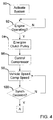
- FIG. 4 is a first part of a flow diagram illustrating operation of the air-conditioning system depicted in FIG. 1.
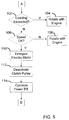
- FIG. 5 is a second part of the flow diagram illustrating operation of the air-conditioning system depicted in FIG. 1.
- FIG. 6 is a third part of the flow diagram illustrating operation of the air-conditioning system depicted in FIG. 1.
- Embodiments of an air-conditioning sustain system that includes an engine and an electric motor are disclosed.
- the electric motor and the engine are selectively activated to provide a driving force to maintain the operation of a compressor.
- the electric motor is synchronously energized in a manner that avoids high inrush current.
- By activating the electric motor to drive the compressor while the engine is still driving the compressor operation of the compressor is maintained. Maintaining continuous operation of the compressor avoids the production of high startup torque by the electric motor, thereby eliminating high inrush current when the electric motor is energized.
- FIG. 1 is one embodiment of an air-conditioning system 10 that includes an engine 12, a clutch pulley 14, a compressor 16, a condenser 18, a fluid reservoir 20, an expansion valve 22, an evaporator 24, an electric motor 26 and a controller 28.
- the air-conditioning system 10 is not limited to cooling air and may be operated in any capacity where a source of cooling capacity is desired. In one embodiment, the air-conditioning system 10 is operated in a vehicle such as, for example, an automobile.
- the engine 12 may be an internal combustion engine, a steam engine, a jet engine, an electric engine or any other device capable of converting any of various forms of energy to a driving force.
- the engine 12 is an internal combustion engine that rotates an engine shaft 30 to provide the driving force.
- the engine 12 of this embodiment may be fixedly mounted, and operates to rotate an engine pulley 32 in a well-known manner.
- the engine pulley 32 is rotatably coupled to the clutch pulley 14 by a belt 34.
- the belt 34 transfers the driving force to the clutch pulley 14.
- the clutch pulley 14 can be any device capable of selectively transferring the driving force provided by the engine 12.
- An example embodiment of the clutch pulley 14 is an electro-magnetic clutch pulley.
- One embodiment of the clutch pulley 14 rotatably cooperates with the belt 34 and is controllable to selectively transfer the driving force.
- the clutch pulley 14 of one embodiment includes a driving part (not shown) that can be selectively coupled with a driven part (not shown).
- the driving part is rotatable by the belt 34, and is capable of rotation independent of the driven part.
- the driven part is fixedly coupled to the compressor 16. When the clutch pulley is activated, the driven part of the clutch pulley 14 rotates with the driving part thereby rotating the compressor 16.
- the compressor 16 may be any device capable of compressing a working fluid within the air-conditioning system 10.
- the compressor 16 is fixedly mounted and includes a compressor shaft 36.
- the compressor shaft 36 is rotatable and is fixedly coupled with the driven part of the clutch pulley 14. During operation, the rotation of the compressor shaft 36 pressurizes a working fluid, such as a refrigerant (not shown).
- the compressor 16 may be a variable displacement compressor 16.
- the variable displacement compressor 16 may be a wobble type compressor, a scroll type compressor or any other type of compressor where the displacement of the compressor may be variably controlled.
- the displacement determines the pressurization, or compression, supplied by the variable displacement compressor 16.
- the displacement may be adjusted to increase loading. Increased loading requires larger amounts of torque to rotate the compressor shaft 36. Higher pressurization of the refrigerant provides additional cooling capacity in the air-conditioning system 10.
- the refrigerant may be circulated through the condenser 18, the reservoir 20, the expansion valve 22 and the evaporator 24 using a conduit 38.
- Arrows 40 illustrate circulation of the refrigerant through a portion of the air-conditioning system 10.
- the condenser 18, the reservoir 20, the expansion valve 22 and the evaporator 24 operate in a well-known manner to provide cooling while the compressor 16 is operating. As illustrated in FIG. 1, the refrigerant flows from the evaporator 24 to the electric motor 26.
- the electric motor 26 may be any machine capable of producing a driving force when activated by a source of electric power.
- One embodiment of the electric motor 26 is a fixed speed DC motor operating at 42 volts DC.
- the electric motor 26 may be capable of variable speed operation.
- the variable speed capability may result from control of the speed of the electric motor 26.
- control of a speed translation mechanism such as, for example, a fluid coupling, that is operable to receive and translate the driving force provides the variable speed capability.
- the electric motor 26 may be fixedly mounted or, in an alternative embodiment, the compressor 16 and the electric motor 26 may be fixedly coupled to form an integrated compressor/motor system. In this embodiment, the compressor 16 and the electric motor 26 may be coupled by threaded connection, welding, nuts and bolts or any other mechanism capable of providing a rigid connection.
- the electric motor 26 includes a motor shaft (not shown) that is rotatable.
- the motor shaft may be fixedly coupled to the compressor shaft 36 to form a common drive shaft for the compressor 16 and the electric motor 26.
- the electric motor 26 may be rotatably coupled to the compressor shaft 36 by a belt and pulley system, one or more gears or any other mechanism capable of providing rotational coupling.
- the conduit 38 illustrated in FIG. 1, is fixedly coupled to the electric motor 26 by press fit, threaded connection or some other coupling mechanism. Refrigerant flowing within the conduit 38 flows through the electric motor 26 and into the compressor 16. The refrigerant provides cooling of the internal components of the electric motor 26 thereby minimizing heating during operation.
- the electric motor 26 may include less insulation and smaller components than a comparable electric motor without cooling. Due to the cooling, the electric motor 26 may maintain similar or improved, performance, efficiency and durability characteristics. In one embodiment, the electric motor 26 also includes thermal overload protection to protect against overheating during operation.
- the amount of driving force produced by the electric motor 26 may be based on the amount of driving force required for the compressor 16.
- the electric motor 26 may be designed to produce the driving force required throughout the operating range of the variable displacement compressor 16.
- the electric motor 26 may be designed with enough driving force to rotate the compressor shaft 36 only when the variable displacement compressor 16 is operating within a predetermined range. For example, an electric motor 26 rated at 2 kilowatts is capable of driving the variable displacement compressor 16 in the displacement operating range from 0 to 2 kilowatts.
- the electric motor 26 is operable to produce a driving force when energized by the controller 28.
- the controller 28 is operable to control the overall operation of the air-conditioning system 10.
- the controller 28 may be a microprocessor, an electronic control unit, a relay control unit or any other device capable of selectively operating the air-conditioning system 10.
- the controller 28 is electrically connected with the engine 12, the clutch pulley 14, the compressor 16 and the electric motor 26 as illustrated in FIG. 1.
- the controller 28 monitors a plurality of inputs and acts as the user interface for operation of the air-conditioning system 10, as will be later discussed. Based on the status of the inputs, the controller 28 is operable to control the clutch pulley 14, the compressor 16 (where the compressor 16 is a variable displacement compressor 16) and the electric motor 26. Operable control by the controller 28 is not limited to the air-conditioning system 10.
- Fig. 2 is a block diagram of a portion of an electrical system 50 for one embodiment of the air-conditioning system 10.
- the electrical system 50 includes the controller 28, the clutch pulley 14, a user interface circuit 52, a compressor speed sensor 54, a temperature sensor 56, a vehicle speed sensor 58, a compressor suction sensor 60, a compression discharge sensor 62, an engine status sensor 64 and an electric motor circuit 66 that are electrically connected as illustrated.
- the electric motor circuit 66 includes the electric motor 26, an energy source 68, a motor switch 70 and a motor temperature sensor 72. Additional, fewer or different components may be included.
- the user interface circuit 52 may include switches, buttons, dials or any other mechanism capable of providing electrical signals to the controller 28.
- a user of the air-conditioning system 10 may initiate the electrical signals provided to the controller 28.
- the user interface circuit 52 may include indicators, gauges and other information responsive to electrical signals from the controller 28.
- the sensor inputs to the controller 28 may be used to provide electrical signals to the user interface circuit 52, as well as to control operation of the air-conditioning system 10.
- the compressor speed sensor 54 measures the rotational speed of the compressor 16.
- the temperature sensor 56 may be positioned within the medium being cooled by the air-conditioning system 10, for example, within the passenger space of a vehicle. In alternative embodiments, the temperature sensor 56 may be positioned within the air-conditioning system 10.
- the compressor suction sensor 60 and the compression discharge sensor 62 may be positioned near the inlet and the outlet, respectively, of the compressor 16 to monitor the performance thereof.
- the engine status sensor 64 may indicate the operational status of the engine 12.
- the electric motor 26 is electrically connected with the energy source 68, the motor switch 70 and the motor temperature sensor 72.
- the electric motor 26, the motor switch 70 and the motor temperature sensor 72 are also electrically connected with the controller 28 as illustrated.
- the energy source 68 may be a battery, a capacitor, a fuel cell or any other source of electrical power for the electric motor 26.
- the motor switch 70 may be an electromagnetic relay, a spring-loaded relay, a switching transistor or any other mechanism capable of controlling the flow of electrical energy between the electric motor 26 and the energy source 68.
- the motor temperature sensor 72 may be a thermocouple, an RTD or any other device capable of providing a temperature measurement.
- the motor temperature sensor 72 may be positioned to monitor the temperature of the electric motor 26.
- the controller 28 controls the air-conditioning system 10 to selectively utilize the engine 12 and the electric motor 26 in, for example, a vehicle (not shown) operating with a start/stop operating strategy.
- the start/stop operating strategy operates to turn the engine 12 off when the vehicle is stopped. For example, during operating conditions when the engine 12 would otherwise be idling, the engine 12 may be turned off by the controller 28.
- the engine 12 may be restarted when the controller 28 receives a request to move the vehicle, such as, for example, by depression of an accelerator pedal.
- Start/stop operating strategies provide improved fuel economy and reduced emissions by lowering the operating hours of the engine 12.
- Start/stop operating strategies are not limited to vehicles and may be applied anywhere an engine 12 operates to provide a driving force on an intermittent basis.
- the controller 28 controls the source of the driving force for the compressor 16.
- the controller 28 energizes the clutch pulley 14 to rotate the compressor 16.
- the controller 28 synchronizes the rotational speed of the compressor 16 with the speed of the electric motor 26 using a synchronization window.
- FIG. 3 is a graph illustrating the synchronization window for one embodiment of the air-conditioning system 10.
- the speed (S) 72 of the compressor 16 (FIG. 1) is shown on the Y-axis, and the X-axis represents time (t) 74.
- the engine 12 (FIG. 1) is turned off.
- the speed of the compressor 16 decreases as illustrated in FIG. 3.
- the controller 28 may maintain the speed of the compressor 16.
- the rotation of the compressor 16 is maintained by selectively energizing the electric motor 26.
- the controller 28 may energize the electric motor 26 when the speed is between a first speed (S1) 76 and a second speed (S2) 78.
- the synchronization window 84 represents the range of speed (S) 72 of the compressor 16 that is within an acceptable range of the speed of the electric motor 26. In other words, when the speed of the compressor 16 is sufficiently synchronized with the speed of the electric motor 26.
- the time from the first time (T1) 80 to the second time (T2) 82 represents a time frame for energizing the electric motor to avoid high inrush currents.
- the controller 28 may include the capability to determine whether the time required for energization of the electric motor 26 is within the time frame. In other words, the controller 28 may calculate the time required to energize the electric motor 26 and the rate of change of the speed of the compressor 16 to confirm the electric motor 26 may be activated within the synchronization window 84. If energization within the synchronization window 84 is not confirmed, the electric motor 26 may not be activated.
- the synchronization window operating strategy may be used where the electric motor 26 is a fixed speed motor.
- the electric motor 26 may be capable of variable speed operation.
- the speed of the electric motor 26 may be adjusted to effectively shift the synchronization window 84.
- the speed of the compressor 16 may fall within the shifted synchronization window 84 thereby sufficiently synchronizing the speed of the compressor 16 and the speed of the electric motor 26. Adjustment of the speed may occur prior to energization of the electric motor 26 to achieve a speed, upon energization, within an acceptable range of the speed of the compressor 16.
- the controller may also deenergize the clutch pulley 14, thereby disengaging the engine 12 from the compressor 16.
- the controller 28 controls the activation of the electric motor 26 and the deenergization of the clutch pulley 14 to maintain the rotation of the compressor 16 as the engine 12 stops rotating. Since the electric motor 26 may be energized while the compressor 16 is still rotating, the electric motor 26 takes advantage of the angular momentum of the rotating compressor 16. In this way, the electric motor 26 is not required to supply the relatively high startup torque that would otherwise be required to start the compressor 16 from a stopped condition.
- the inrush current of the electric motor 26 remains relatively low. With relatively low inrush current, the windings of the electric motor 26, the motor switch 70 and the interconnecting conductors may be designed with less current carrying capability. In addition, the longevity of the energy source 68 is improved due to the lower overall power demand of the electric motor 26.
- the compressor 16 comprises a variable displacement compressor 16.
- the electric motor 26 produces only enough driving force to rotate the compressor shaft 36 when the variable displacement compressor 16 is lightly loaded.
- the loading of the variable displacement compressor 16 may be determined based on a displacement sensor.
- the displacement sensor may measure the amount of displacement of the variable displacement compressor 16.
- the displacement sensor may be the temperature sensor 56, the compressor suction and discharge sensors 60, 62, or other similar system operating parameters that may be used to determine the loading of the variable displacement compressor 16.
- the controller 28 may monitor the displacement sensor.
- the electric motor 26 of this alternative embodiment is only energized when the loading of the variable displacement compressor 16 is within a predetermined range and the speed (S) 72 (FIG. 3) is within the synchronization window 84 (FIG. 3). Further, once the electric motor 26 is operating, the loading on the variable displacement compressor 16 may be maintained within the predetermined range. Alternatively, the electric motor 26 may be deenergized when the loading on the variable displacement compressor 16 goes outside the predetermined range. In yet another alternative, operation of the electric motor 26 may be based on a predetermined threshold value of loading instead of the predetermined range previously discussed.
- the controller 28 may control the loading of the variable displacement compressor 16.
- the loading of the variable displacement compressor 16 may be performed by a relay, a temperature controller or any other device capable of providing a variable signal to the variable displacement compressor 16.
- Control of the loading, or displacement, of the variable displacement compressor 16 may be based on a loading parameter.
- the loading parameter may be, for example, an electrical signal from the user interface circuit 52, the temperature sensor 56 or any other operational parameter(s) available in the air-conditioning system 10.
- the controller 28 determines the loading parameter based on logical analysis of a plurality of inputs provided to the controller 28, such as, for example, engine speed, cooling demand and/or other similar parameters.
- the controller 28 of one embodiment may also protect the electric motor 26.
- the protection of the electric motor 26 may be based on thermal overload type protection.
- the controller 28 monitors the motor temperature sensor 72. If the temperature of the electric motor 26 exceeds a predetermined value, the controller 28 may deactivate the electric motor 26.
- the controller 28 may adjust the displacement of the variable displacement compressor 16 to provide additional cooling to the electric motor 26.
- the controller 28 may also perform other protective functions such as, for example, monitoring the energy source 68 for low power conditions.
- the controller 28 performs similar synchronization of the engine 12 with the electric motor 26.
- the controller 28 switches from the driving force supplied by the electric motor 26 to the driving force supplied by the engine 12.
- the controller 28 of this embodiment monitors the engine status sensor 64 for operation of the engine 12.
- the synchronization window 84 (FIG. 3) is used to determine when the switch can be accomplished.
- the controller 28 controls the timing of the deenergization of the electric motor 26 and synchronous engagement of the compressor 16 with the engine 12 similar to the previously discussed embodiments.
- the air-conditioning system 10 of another embodiment includes the compressor 16 that comprises a variable displacement compressor 16 and an electric motor 26 capable of variable speed operation.
- the controller 28 of this embodiment includes at least one efficiency map (not shown) for the variable displacement compressor 16.
- the efficiency map may be included in a separate device, such as, for example, a memory storage device in communication with the controller 28.
- the efficiency map may be used to maximize efficiency of the air-conditioning system 10 when the electric motor 26 is driving the variable displacement compressor 16.
- the efficiency map may represent a series of efficiency curves for the variable displacement compressor 16.
- the efficiency curves may be developed through testing based on the displacement, speed and loading of the variable displacement compressor 16.
- the loading (i.e. the torque requirement) of the variable displacement compressor 16 is a function of the cooling capacity required.
- the speed and the displacement may be cooperatively varied to achieve a desired loading. For example, the same loading may be achieved with a relatively low speed and relatively high displacement as with a relatively high speed and a relatively low displacement. As such, the optimal speed and displacement to achieve a desired load may be based on maximizing efficiency.
- Optimal efficiency may be based on the power consumption of the electric motor 26, the efficient operation of the variable displacement compressor 16 or a combination of both. In alternative embodiments, additional efficiency related considerations within the air-conditioning system 10 may also be included in determining the optimal efficiency.
- By varying both the speed and the displacement of the variable displacement compressor 16 at least one optimal efficiency point may be identified for any given loading.
- An optimal efficiency point is an operating situation where the desired loading is achieved, and the air conditioning system 10 is operating at optimal efficiency.
- the efficiency map is used to adjust the speed of the electric motor 26 and the displacement of the variable displacement compressor 16. As in the previously discussed embodiments, the electric motor 26 is synchronously energized to maintain the rotation of the variable displacement compressor 16. If the electric motor 26 is sized to operate the variable displacement compressor 16 in a predetermined range, the efficiency map may be used to optimize efficiency within that predetermined range.
- FIG. 4 is a block diagram illustrating operation of an embodiment of the air-conditioning system 10.
- the operation now described includes reference to the air-conditioning system 10 previously discussed with reference to FIGs. 1, 2 and 3.
- the operation is discussed with reference to a variable displacement compressor 16; however, a non-variable compressor could alternatively be used with slight modification to the operation.
- the electric motor 26 discussed in the operation provides a driving force that cannot operate the variable displacement compressor 16 under full load; however, an electric motor with full load driving force capabilities could be used with slight modifications to the operation described.
- Operation of the air-conditioning system 10 begins at block 90 when a user activates the system.
- the controller 28 determines if the engine 12 is operating using the engine status sensor 64. If the engine 12 is not operating, the controller 28 continuously monitors for the engine 12 to begin operation. If, or once, the engine 12 is operating, the controller 28 energizes the clutch pulley 14 at block 94. Energization of the clutch pulley 14 transfers the driving force from the engine 12 to the variable displacement compressor 16. At block 96, the loading parameter is used to control the displacement of the variable displacement compressor 16.
- the controller 28 monitors the speed of the variable displacement compressor 16 and the vehicle speed using the compressor speed sensor 54 and the vehicle speed sensor 58, respectively. Based on the vehicle speed and the speed of the variable displacement compressor 16, the controller 28 makes an initial synchronizing decision at block 100.
- the initial synchronizing decision is based on a determination that the vehicle is stopping and that the engine 12 is in the process of being turned off, such as, for example, in a start/stop operating strategy.
- the amount of loading on the variable displacement compressor 16 is determined at block 102 using the displacement sensor. If the loading (i.e. the torque requirement) is too high for the electric motor 26, the variable displacement compressor 16 remains rotationally coupled with the engine 12 at block 104. If the loading does not exceed the driving force available from the electric motor 26, the rotational speed of the variable displacement compressor is monitored at block 106.
- variable displacement compressor 16 remains rotationally coupled with the engine 12 at block 108.
- the speed of the electric motor 26 may be adjusted to move the synchronization window 84.
- the electric motor 26 is energized at block 110.
- the clutch pulley 14 is deactivated so that the variable displacement compressor 16 is rotationally coupled with the electric motor 26.
- the speed and displacement are adjusted based on the loading to optimize efficiency.
- the controller 28 senses that the engine 12 is operating at block 116.
- the controller 28 monitors the rotational speed of the clutch pulley 14 and the variable displacement compressor 16 to determine if the speed of the clutch pulley 14 is within the synchronization window 84.
- the controller 28 deenergizes the electric motor 26 at block 120.
- the clutch pulley 14 is activated thereby rotationally coupling the variable displacement compressor 16 with the engine 12. Deenergization of the electric motor 26 and activation of the clutch pulley 14 may occur while the variable displacement compressor 16 continues to rotate.
- the embodiments of the air-conditioning system 10 herein described provide a low cost, durable solution that selectively sustains cool temperatures using the engine 12 and the electric motor 26.
- the electric motor 26 may be operated with a substantially smaller range of power requirements than conventional electric motors due to minimization of the inrush current.
- the cooling of the electric motor 26 with the refrigerant reduces the need for temperature related design considerations of the internal components of the electric motor 26.
- the electric motor 26 and associated circuitry may be advantageously configured with lower current carrying capacity components that may be lighter weight and less expensive while achieving operating performance that may be equal to or better than conventional electric motors.
- the air-conditioning system 10 may be used in applications such as refrigeration devices, airplanes, trains, buildings and any other purpose where sustained cooling is desired with alternative sources of driving force. It is therefore intended that the foregoing detailed description be understood as an illustration of the presently preferred embodiments of the invention, and not as a definition of the invention. It is only the following claims, including all equivalents that are intended to define the scope of this invention.
Landscapes
- Physics & Mathematics (AREA)
- Thermal Sciences (AREA)
- Engineering & Computer Science (AREA)
- Mechanical Engineering (AREA)
- Air-Conditioning For Vehicles (AREA)
- Air Conditioning Control Device (AREA)
Abstract
Description
- This invention relates to air-conditioning systems, and more particularly to air-conditioning systems that include a compressor operated with an electric motor and an engine.
- Compressors may operate within a refrigeration system, such as an air-conditioning system, to create cooling capacity by compression of a working fluid. A compressor typically includes a pulley that is rotated by a driving force to create compression. In a vehicle, such as an automobile, an engine that also provides for movement of the vehicle may supply the driving force. Alternatively, the driving force can be supplied by an electric motor energized by a battery or other device capable of generating electrical energy.
- A type of compressor known as a variable displacement compressor may be controlled to provide varying amounts of compression. The compression may be varied depending on the cooling capacity needed. Varying the amount of compression also varies the amount of driving force needed to rotate the compressor. In a non-variable displacement compressor, the compression is fixed.
- In some applications, the engine or the electric motor may selectively rotate the compressor. In these applications, the driving force provided by the electric motor or the engine is sufficient to rotate the compressor. In other applications, where a variable displacement compressor is used, the electric motor may be sized to provide less than the driving force necessary to rotate the variable displacement compressor when maximum compression is desired. In this configuration, the electric motor is only activated when the driving force that is required is below a predetermined threshold and otherwise the engine provides the driving force. Upon starting the electric motor in any of the above applications, sufficient driving force must be provided by the electric motor to initiate the rotation of the compressor.
- A known problem with electric motors is the potential for high inrush current when the motor is first energized from a stopped condition. The amount of inrush current is affected by the amount of starting torque, or driving force, required to initiate rotation of the electric motor. High inrush current requires the electric motor, conductors feeding the electric motor and a switch that activates and deactivates the electric motor to be sized to avoid damage due to the inrush current. In addition, an energy source supplying the electric motor is required to have sufficient capacity to supply the high inrush current. Further, the high inrush current may decrease the longevity of the supply from a battery or other similar energy source.
- The present invention is defined by the following claims, and nothing in this section should be taken as a limitation on those claims. By way of introduction, the embodiments described below include a method and system for operating an air-conditioning system using an engine and an electric motor. The engine and the electric motor may be selectively activated to sustain operation of the air-conditioning system.
- The operation of the air-conditioning system may be sustained by the electric motor during times when the engine is turned off. The engine and the electric motor are operable to selectively rotate a compressor in the air-conditioning system. During operation, when the engine is selected to rotate the compressor, the engine also rotates the electric motor. When the engine stops operating, the electric motor may be synchronously activated to maintain continuous rotation of the compressor thereby minimizing inrush current of the electric motor.
- In an alternative embodiment, the compressor is a variable displacement compressor. In this embodiment, the engine and electric motor cooperatively operate as previously discussed. The electric motor may be sized to operate throughout the range of the variable displacement compressor. Alternatively, the electric motor may be sized to provide only enough driving force to operate the variable displacement compressor when the variable displacement compressor is not fully loaded. As such, the electric motor may only be activated when the load on the variable displacement compressor is below a predetermined amount and the engine stops. Since the electric motor is activated while the variable displacement compressor is still rotating, inrush current for the electric motor is minimized.
- A method of sustaining operation of an air-conditioning system is described by one embodiment. The method comprises operating a compressor with an engine, operating the compressor with an electric motor and maintaining continuous operation of the compressor with the electric motor when the engine stops.
- Another embodiment describes a method of sustaining cooling using an air-conditioning system. The method comprises rotating a compressor with an engine. The method further comprises activating an electric motor to rotate the compressor when a rotational speed of the electric motor is within a predetermined range of a rotational speed of the compressor. In addition, the method comprises disengaging the engine from the compressor.
- Yet another embodiment describes a method of cooling using an air conditioner sustain system. The method comprises operating a variable displacement compressor with an electric motor, monitoring the loading of the variable displacement compressor, and adjusting an operating speed and a displacement of the variable displacement compressor to operate at an optimal efficiency point.
- An electric air conditioner sustain system, where an engine operates a compressor within an air conditioner system is disclosed by another embodiment. The electric air conditioner sustain system comprises an electric motor coupled to the compressor and a controller electrically connected with the compressor and the electric motor. The controller is operable to activate the electric motor to maintain continuous operation of the compressor when the engine stops.
- Further aspects and advantages of the invention are discussed below in conjunction with the preferred embodiments.
- FIG. 1 is a block diagram of one embodiment of a portion of an air-conditioning system.
- FIG. 2 is an expanded block diagram of a portion of the electrical system for the air-conditioning system depicted in FIG. 1.
- FIG. 3 is a graph illustrating a synchronization window for the air-conditioning system depicted in FIG. 1.
- FIG. 4 is a first part of a flow diagram illustrating operation of the air-conditioning system depicted in FIG. 1.
- FIG. 5 is a second part of the flow diagram illustrating operation of the air-conditioning system depicted in FIG. 1.
- FIG. 6 is a third part of the flow diagram illustrating operation of the air-conditioning system depicted in FIG. 1.
- Embodiments of an air-conditioning sustain system that includes an engine and an electric motor are disclosed. The electric motor and the engine are selectively activated to provide a driving force to maintain the operation of a compressor. The electric motor is synchronously energized in a manner that avoids high inrush current. By activating the electric motor to drive the compressor while the engine is still driving the compressor, operation of the compressor is maintained. Maintaining continuous operation of the compressor avoids the production of high startup torque by the electric motor, thereby eliminating high inrush current when the electric motor is energized.
- FIG. 1 is one embodiment of an air-
conditioning system 10 that includes an engine 12, aclutch pulley 14, acompressor 16, acondenser 18, afluid reservoir 20, anexpansion valve 22, anevaporator 24, anelectric motor 26 and acontroller 28. The air-conditioning system 10 is not limited to cooling air and may be operated in any capacity where a source of cooling capacity is desired. In one embodiment, the air-conditioning system 10 is operated in a vehicle such as, for example, an automobile. - The engine 12 may be an internal combustion engine, a steam engine, a jet engine, an electric engine or any other device capable of converting any of various forms of energy to a driving force. In one embodiment, the engine 12 is an internal combustion engine that rotates an
engine shaft 30 to provide the driving force. The engine 12 of this embodiment may be fixedly mounted, and operates to rotate anengine pulley 32 in a well-known manner. Theengine pulley 32, of one embodiment, is rotatably coupled to theclutch pulley 14 by abelt 34. Thebelt 34 transfers the driving force to theclutch pulley 14. - The
clutch pulley 14 can be any device capable of selectively transferring the driving force provided by the engine 12. An example embodiment of theclutch pulley 14 is an electro-magnetic clutch pulley. One embodiment of theclutch pulley 14 rotatably cooperates with thebelt 34 and is controllable to selectively transfer the driving force. Theclutch pulley 14 of one embodiment includes a driving part (not shown) that can be selectively coupled with a driven part (not shown). The driving part is rotatable by thebelt 34, and is capable of rotation independent of the driven part. The driven part is fixedly coupled to thecompressor 16. When the clutch pulley is activated, the driven part of theclutch pulley 14 rotates with the driving part thereby rotating thecompressor 16. - The
compressor 16 may be any device capable of compressing a working fluid within the air-conditioning system 10. In one embodiment, thecompressor 16 is fixedly mounted and includes acompressor shaft 36. Thecompressor shaft 36 is rotatable and is fixedly coupled with the driven part of theclutch pulley 14. During operation, the rotation of thecompressor shaft 36 pressurizes a working fluid, such as a refrigerant (not shown). - In an alternative embodiment, the
compressor 16 may be avariable displacement compressor 16. Thevariable displacement compressor 16 may be a wobble type compressor, a scroll type compressor or any other type of compressor where the displacement of the compressor may be variably controlled. The displacement determines the pressurization, or compression, supplied by thevariable displacement compressor 16. When higher pressurization of the refrigerant is desired, the displacement may be adjusted to increase loading. Increased loading requires larger amounts of torque to rotate thecompressor shaft 36. Higher pressurization of the refrigerant provides additional cooling capacity in the air-conditioning system 10. - The refrigerant may be circulated through the
condenser 18, thereservoir 20, theexpansion valve 22 and theevaporator 24 using aconduit 38.Arrows 40 illustrate circulation of the refrigerant through a portion of the air-conditioning system 10. Thecondenser 18, thereservoir 20, theexpansion valve 22 and theevaporator 24 operate in a well-known manner to provide cooling while thecompressor 16 is operating. As illustrated in FIG. 1, the refrigerant flows from theevaporator 24 to theelectric motor 26. - The
electric motor 26 may be any machine capable of producing a driving force when activated by a source of electric power. One embodiment of theelectric motor 26 is a fixed speed DC motor operating at 42 volts DC. In alternative embodiments, theelectric motor 26 may be capable of variable speed operation. The variable speed capability may result from control of the speed of theelectric motor 26. Alternatively, control of a speed translation mechanism, such as, for example, a fluid coupling, that is operable to receive and translate the driving force provides the variable speed capability. Theelectric motor 26 may be fixedly mounted or, in an alternative embodiment, thecompressor 16 and theelectric motor 26 may be fixedly coupled to form an integrated compressor/motor system. In this embodiment, thecompressor 16 and theelectric motor 26 may be coupled by threaded connection, welding, nuts and bolts or any other mechanism capable of providing a rigid connection. - In one embodiment, the
electric motor 26 includes a motor shaft (not shown) that is rotatable. The motor shaft may be fixedly coupled to thecompressor shaft 36 to form a common drive shaft for thecompressor 16 and theelectric motor 26. In alternative embodiments, theelectric motor 26 may be rotatably coupled to thecompressor shaft 36 by a belt and pulley system, one or more gears or any other mechanism capable of providing rotational coupling. - The
conduit 38, illustrated in FIG. 1, is fixedly coupled to theelectric motor 26 by press fit, threaded connection or some other coupling mechanism. Refrigerant flowing within theconduit 38 flows through theelectric motor 26 and into thecompressor 16. The refrigerant provides cooling of the internal components of theelectric motor 26 thereby minimizing heating during operation. Theelectric motor 26 may include less insulation and smaller components than a comparable electric motor without cooling. Due to the cooling, theelectric motor 26 may maintain similar or improved, performance, efficiency and durability characteristics. In one embodiment, theelectric motor 26 also includes thermal overload protection to protect against overheating during operation. - The amount of driving force produced by the
electric motor 26 may be based on the amount of driving force required for thecompressor 16. In alternative embodiments that include thevariable displacement compressor 16, theelectric motor 26 may be designed to produce the driving force required throughout the operating range of thevariable displacement compressor 16. Alternatively, theelectric motor 26 may be designed with enough driving force to rotate thecompressor shaft 36 only when thevariable displacement compressor 16 is operating within a predetermined range. For example, anelectric motor 26 rated at 2 kilowatts is capable of driving thevariable displacement compressor 16 in the displacement operating range from 0 to 2 kilowatts. Theelectric motor 26 is operable to produce a driving force when energized by thecontroller 28. - The
controller 28 is operable to control the overall operation of the air-conditioning system 10. Thecontroller 28 may be a microprocessor, an electronic control unit, a relay control unit or any other device capable of selectively operating the air-conditioning system 10. Thecontroller 28 is electrically connected with the engine 12, theclutch pulley 14, thecompressor 16 and theelectric motor 26 as illustrated in FIG. 1. During operation, thecontroller 28 monitors a plurality of inputs and acts as the user interface for operation of the air-conditioning system 10, as will be later discussed. Based on the status of the inputs, thecontroller 28 is operable to control theclutch pulley 14, the compressor 16 (where thecompressor 16 is a variable displacement compressor 16) and theelectric motor 26. Operable control by thecontroller 28 is not limited to the air-conditioning system 10. - Fig. 2 is a block diagram of a portion of an
electrical system 50 for one embodiment of the air-conditioning system 10. Theelectrical system 50 includes thecontroller 28, theclutch pulley 14, auser interface circuit 52, acompressor speed sensor 54, atemperature sensor 56, avehicle speed sensor 58, acompressor suction sensor 60, acompression discharge sensor 62, anengine status sensor 64 and anelectric motor circuit 66 that are electrically connected as illustrated. Theelectric motor circuit 66 includes theelectric motor 26, anenergy source 68, amotor switch 70 and amotor temperature sensor 72. Additional, fewer or different components may be included. - The
user interface circuit 52 may include switches, buttons, dials or any other mechanism capable of providing electrical signals to thecontroller 28. A user of the air-conditioning system 10 may initiate the electrical signals provided to thecontroller 28. In addition, theuser interface circuit 52 may include indicators, gauges and other information responsive to electrical signals from thecontroller 28. - The sensor inputs to the
controller 28 may be used to provide electrical signals to theuser interface circuit 52, as well as to control operation of the air-conditioning system 10. Thecompressor speed sensor 54 measures the rotational speed of thecompressor 16. Thetemperature sensor 56 may be positioned within the medium being cooled by the air-conditioning system 10, for example, within the passenger space of a vehicle. In alternative embodiments, thetemperature sensor 56 may be positioned within the air-conditioning system 10. Thecompressor suction sensor 60 and thecompression discharge sensor 62 may be positioned near the inlet and the outlet, respectively, of thecompressor 16 to monitor the performance thereof. Theengine status sensor 64 may indicate the operational status of the engine 12. - As further illustrated in FIG. 2, the
electric motor 26 is electrically connected with theenergy source 68, themotor switch 70 and themotor temperature sensor 72. In addition, theelectric motor 26, themotor switch 70 and themotor temperature sensor 72 are also electrically connected with thecontroller 28 as illustrated. Theenergy source 68 may be a battery, a capacitor, a fuel cell or any other source of electrical power for theelectric motor 26. Themotor switch 70 may be an electromagnetic relay, a spring-loaded relay, a switching transistor or any other mechanism capable of controlling the flow of electrical energy between theelectric motor 26 and theenergy source 68. Themotor temperature sensor 72 may be a thermocouple, an RTD or any other device capable of providing a temperature measurement. Themotor temperature sensor 72 may be positioned to monitor the temperature of theelectric motor 26. - Referring now to FIGs. 1 and 2, in one embodiment, the
controller 28 controls the air-conditioning system 10 to selectively utilize the engine 12 and theelectric motor 26 in, for example, a vehicle (not shown) operating with a start/stop operating strategy. The start/stop operating strategy operates to turn the engine 12 off when the vehicle is stopped. For example, during operating conditions when the engine 12 would otherwise be idling, the engine 12 may be turned off by thecontroller 28. The engine 12 may be restarted when thecontroller 28 receives a request to move the vehicle, such as, for example, by depression of an accelerator pedal. Start/stop operating strategies provide improved fuel economy and reduced emissions by lowering the operating hours of the engine 12. Start/stop operating strategies are not limited to vehicles and may be applied anywhere an engine 12 operates to provide a driving force on an intermittent basis. - In embodiments that include the start/stop operating strategy, the
controller 28 controls the source of the driving force for thecompressor 16. When the air-conditioning system 10 is activated and the engine 12 is operating, thecontroller 28 energizes theclutch pulley 14 to rotate thecompressor 16. When the engine 12 stops, thecontroller 28 synchronizes the rotational speed of thecompressor 16 with the speed of theelectric motor 26 using a synchronization window. - FIG. 3 is a graph illustrating the synchronization window for one embodiment of the air-
conditioning system 10. The speed (S) 72 of the compressor 16 (FIG. 1) is shown on the Y-axis, and the X-axis represents time (t) 74. When a vehicle, or other device using the start/stop operating strategy stops at, for example, a traffic light, the engine 12 (FIG. 1) is turned off. When the engine 12 ceases rotation, the speed of thecompressor 16 decreases as illustrated in FIG. 3. However, thecontroller 28 may maintain the speed of thecompressor 16. The rotation of thecompressor 16 is maintained by selectively energizing theelectric motor 26. - The
controller 28 may energize theelectric motor 26 when the speed is between a first speed (S1) 76 and a second speed (S2) 78. The first andsecond speeds synchronization window 84. Thesynchronization window 84 represents the range of speed (S) 72 of thecompressor 16 that is within an acceptable range of the speed of theelectric motor 26. In other words, when the speed of thecompressor 16 is sufficiently synchronized with the speed of theelectric motor 26. - In addition, the time from the first time (T1) 80 to the second time (T2) 82 represents a time frame for energizing the electric motor to avoid high inrush currents. The
controller 28 may include the capability to determine whether the time required for energization of theelectric motor 26 is within the time frame. In other words, thecontroller 28 may calculate the time required to energize theelectric motor 26 and the rate of change of the speed of thecompressor 16 to confirm theelectric motor 26 may be activated within thesynchronization window 84. If energization within thesynchronization window 84 is not confirmed, theelectric motor 26 may not be activated. - The synchronization window operating strategy may be used where the
electric motor 26 is a fixed speed motor. In an alternative embodiment, theelectric motor 26 may be capable of variable speed operation. In this embodiment, the speed of theelectric motor 26 may be adjusted to effectively shift thesynchronization window 84. The speed of thecompressor 16 may fall within the shiftedsynchronization window 84 thereby sufficiently synchronizing the speed of thecompressor 16 and the speed of theelectric motor 26. Adjustment of the speed may occur prior to energization of theelectric motor 26 to achieve a speed, upon energization, within an acceptable range of the speed of thecompressor 16. - Referring again to FIGs. 1 and 2, in addition to energization of the
electric motor 26, the controller may also deenergize theclutch pulley 14, thereby disengaging the engine 12 from thecompressor 16. Thecontroller 28 controls the activation of theelectric motor 26 and the deenergization of theclutch pulley 14 to maintain the rotation of thecompressor 16 as the engine 12 stops rotating. Since theelectric motor 26 may be energized while thecompressor 16 is still rotating, theelectric motor 26 takes advantage of the angular momentum of therotating compressor 16. In this way, theelectric motor 26 is not required to supply the relatively high startup torque that would otherwise be required to start thecompressor 16 from a stopped condition. - Since the
electric motor 26 is not subject to high startup torque, the inrush current of theelectric motor 26 remains relatively low. With relatively low inrush current, the windings of theelectric motor 26, themotor switch 70 and the interconnecting conductors may be designed with less current carrying capability. In addition, the longevity of theenergy source 68 is improved due to the lower overall power demand of theelectric motor 26. - In an alternative embodiment, the
compressor 16 comprises avariable displacement compressor 16. In this alternative embodiment, theelectric motor 26 produces only enough driving force to rotate thecompressor shaft 36 when thevariable displacement compressor 16 is lightly loaded. The loading of thevariable displacement compressor 16 may be determined based on a displacement sensor. The displacement sensor may measure the amount of displacement of thevariable displacement compressor 16. Alternatively, the displacement sensor may be thetemperature sensor 56, the compressor suction and dischargesensors variable displacement compressor 16. Thecontroller 28 may monitor the displacement sensor. - The
electric motor 26 of this alternative embodiment is only energized when the loading of thevariable displacement compressor 16 is within a predetermined range and the speed (S) 72 (FIG. 3) is within the synchronization window 84 (FIG. 3). Further, once theelectric motor 26 is operating, the loading on thevariable displacement compressor 16 may be maintained within the predetermined range. Alternatively, theelectric motor 26 may be deenergized when the loading on thevariable displacement compressor 16 goes outside the predetermined range. In yet another alternative, operation of theelectric motor 26 may be based on a predetermined threshold value of loading instead of the predetermined range previously discussed. - In one embodiment, the
controller 28 may control the loading of thevariable displacement compressor 16. In alternative embodiments, the loading of thevariable displacement compressor 16 may be performed by a relay, a temperature controller or any other device capable of providing a variable signal to thevariable displacement compressor 16. Control of the loading, or displacement, of thevariable displacement compressor 16 may be based on a loading parameter. The loading parameter may be, for example, an electrical signal from theuser interface circuit 52, thetemperature sensor 56 or any other operational parameter(s) available in the air-conditioning system 10. In an alternative embodiment, thecontroller 28 determines the loading parameter based on logical analysis of a plurality of inputs provided to thecontroller 28, such as, for example, engine speed, cooling demand and/or other similar parameters. - The
controller 28 of one embodiment may also protect theelectric motor 26. The protection of theelectric motor 26 may be based on thermal overload type protection. Thecontroller 28 monitors themotor temperature sensor 72. If the temperature of theelectric motor 26 exceeds a predetermined value, thecontroller 28 may deactivate theelectric motor 26. In addition, where thecompressor 16 comprises thevariable displacement compressor 16, thecontroller 28 may adjust the displacement of thevariable displacement compressor 16 to provide additional cooling to theelectric motor 26. In alternative embodiments, thecontroller 28 may also perform other protective functions such as, for example, monitoring theenergy source 68 for low power conditions. - In yet another embodiment, the
controller 28 performs similar synchronization of the engine 12 with theelectric motor 26. In this embodiment, thecontroller 28 switches from the driving force supplied by theelectric motor 26 to the driving force supplied by the engine 12. Thecontroller 28 of this embodiment monitors theengine status sensor 64 for operation of the engine 12. When the engine 12 begins operation, the rotational speed of theclutch pulley 14 and the rotational speed of thecompressor 16 are monitored by thecontroller 28. The synchronization window 84 (FIG. 3) is used to determine when the switch can be accomplished. Thecontroller 28 controls the timing of the deenergization of theelectric motor 26 and synchronous engagement of thecompressor 16 with the engine 12 similar to the previously discussed embodiments. - The air-
conditioning system 10 of another embodiment includes thecompressor 16 that comprises avariable displacement compressor 16 and anelectric motor 26 capable of variable speed operation. Thecontroller 28 of this embodiment includes at least one efficiency map (not shown) for thevariable displacement compressor 16. In alternative embodiments, the efficiency map may be included in a separate device, such as, for example, a memory storage device in communication with thecontroller 28. - The efficiency map may be used to maximize efficiency of the air-
conditioning system 10 when theelectric motor 26 is driving thevariable displacement compressor 16. The efficiency map may represent a series of efficiency curves for thevariable displacement compressor 16. The efficiency curves may be developed through testing based on the displacement, speed and loading of thevariable displacement compressor 16. The loading (i.e. the torque requirement) of thevariable displacement compressor 16 is a function of the cooling capacity required. The speed and the displacement may be cooperatively varied to achieve a desired loading. For example, the same loading may be achieved with a relatively low speed and relatively high displacement as with a relatively high speed and a relatively low displacement. As such, the optimal speed and displacement to achieve a desired load may be based on maximizing efficiency. - Optimal efficiency may be based on the power consumption of the
electric motor 26, the efficient operation of thevariable displacement compressor 16 or a combination of both. In alternative embodiments, additional efficiency related considerations within the air-conditioning system 10 may also be included in determining the optimal efficiency. By varying both the speed and the displacement of thevariable displacement compressor 16, at least one optimal efficiency point may be identified for any given loading. An optimal efficiency point is an operating situation where the desired loading is achieved, and theair conditioning system 10 is operating at optimal efficiency. - During operation, following energization of the
electric motor 26, the efficiency map is used to adjust the speed of theelectric motor 26 and the displacement of thevariable displacement compressor 16. As in the previously discussed embodiments, theelectric motor 26 is synchronously energized to maintain the rotation of thevariable displacement compressor 16. If theelectric motor 26 is sized to operate thevariable displacement compressor 16 in a predetermined range, the efficiency map may be used to optimize efficiency within that predetermined range. - FIG. 4 is a block diagram illustrating operation of an embodiment of the air-
conditioning system 10. The operation now described includes reference to the air-conditioning system 10 previously discussed with reference to FIGs. 1, 2 and 3. The operation is discussed with reference to avariable displacement compressor 16; however, a non-variable compressor could alternatively be used with slight modification to the operation. Further, theelectric motor 26 discussed in the operation provides a driving force that cannot operate thevariable displacement compressor 16 under full load; however, an electric motor with full load driving force capabilities could be used with slight modifications to the operation described. - Operation of the air-
conditioning system 10 begins atblock 90 when a user activates the system. Atblock 92, thecontroller 28 determines if the engine 12 is operating using theengine status sensor 64. If the engine 12 is not operating, thecontroller 28 continuously monitors for the engine 12 to begin operation. If, or once, the engine 12 is operating, thecontroller 28 energizes theclutch pulley 14 atblock 94. Energization of theclutch pulley 14 transfers the driving force from the engine 12 to thevariable displacement compressor 16. Atblock 96, the loading parameter is used to control the displacement of thevariable displacement compressor 16. - At
block 98, thecontroller 28 monitors the speed of thevariable displacement compressor 16 and the vehicle speed using thecompressor speed sensor 54 and thevehicle speed sensor 58, respectively. Based on the vehicle speed and the speed of thevariable displacement compressor 16, thecontroller 28 makes an initial synchronizing decision atblock 100. The initial synchronizing decision is based on a determination that the vehicle is stopping and that the engine 12 is in the process of being turned off, such as, for example, in a start/stop operating strategy. - Once the synchronizing decision is initiated, the amount of loading on the
variable displacement compressor 16 is determined atblock 102 using the displacement sensor. If the loading (i.e. the torque requirement) is too high for theelectric motor 26, thevariable displacement compressor 16 remains rotationally coupled with the engine 12 atblock 104. If the loading does not exceed the driving force available from theelectric motor 26, the rotational speed of the variable displacement compressor is monitored atblock 106. - If the speed is not within the
synchronization window 84, thevariable displacement compressor 16 remains rotationally coupled with the engine 12 atblock 108. Where theelectric motor 26 includes variable speed capability, the speed of theelectric motor 26 may be adjusted to move thesynchronization window 84. When the speed of thevariable displacement compressor 16 is within thesynchronization window 84, theelectric motor 26 is energized atblock 110. Atblock 112, theclutch pulley 14 is deactivated so that thevariable displacement compressor 16 is rotationally coupled with theelectric motor 26. Atblock 114, the speed and displacement are adjusted based on the loading to optimize efficiency. - When the vehicle or engine 12 is commanded to start or move, the
controller 28 senses that the engine 12 is operating atblock 116. Atblock 118, thecontroller 28 monitors the rotational speed of theclutch pulley 14 and thevariable displacement compressor 16 to determine if the speed of theclutch pulley 14 is within thesynchronization window 84. When the speed is within thesynchronization window 84, thecontroller 28 deenergizes theelectric motor 26 atblock 120. At block 122, theclutch pulley 14 is activated thereby rotationally coupling thevariable displacement compressor 16 with the engine 12. Deenergization of theelectric motor 26 and activation of theclutch pulley 14 may occur while thevariable displacement compressor 16 continues to rotate. - The embodiments of the air-
conditioning system 10 herein described provide a low cost, durable solution that selectively sustains cool temperatures using the engine 12 and theelectric motor 26. Through cooperative operation of the engine 12 and theelectric motor 26, theelectric motor 26 may be operated with a substantially smaller range of power requirements than conventional electric motors due to minimization of the inrush current. In addition, the cooling of theelectric motor 26 with the refrigerant reduces the need for temperature related design considerations of the internal components of theelectric motor 26. As such, theelectric motor 26 and associated circuitry may be advantageously configured with lower current carrying capacity components that may be lighter weight and less expensive while achieving operating performance that may be equal to or better than conventional electric motors. - While the invention has been described above by reference to various embodiments, it will be understood that many changes and modifications can be made without departing from the scope of the invention. For example, the air-
conditioning system 10 may be used in applications such as refrigeration devices, airplanes, trains, buildings and any other purpose where sustained cooling is desired with alternative sources of driving force. It is therefore intended that the foregoing detailed description be understood as an illustration of the presently preferred embodiments of the invention, and not as a definition of the invention. It is only the following claims, including all equivalents that are intended to define the scope of this invention.
Claims (27)
- A method of sustaining operation of an air-conditioning system (10), the method comprising:operating a compressor (16) with an engine (12);operating the compressor (16) with an electric motor (26); andmaintaining continuous operation of the compressor (16) with the electric motor (26) when the engine (12) stops.
- The method of claim 1, further comprising energizing the electric motor (26) when a rotational speed of the compressor (16) is in a predetermined range.
- The method of claim 2, further comprising determining the timing to energize the electric motor (26) based on a synchronization window (84).
- The method as in claims 2 or 3, further comprising calculating the time required to energize the electric motor (26) and the rate of change of the rotational speed of the compressor (16).
- The method as in claims 2, 3 or 4, further comprising varying a rotational speed of the electric motor (26) to be within the predetermined range of the rotational speed of the compressor (16) prior to energization.
- The method as in claims 2, 3 or 4, further comprising operating the electric motor (26) at a constant speed.
- The method as in claims 1, 2, 3, 4, 5 or 6, further comprising circulating a refrigerant through the electric motor (26).
- The method as in claims 1, 2, 3, 4, 5, 6 or 7, further comprising disengaging the engine (12) from the compressor (16) with a clutch pulley (14) when the engine (12) stops.
- The method as in claims 1, 2, 3, 4, 5, 6, 7 or 8, wherein the compressor (16) is a variable displacement compressor and the method further comprises operating the variable displacement compressor with the electric motor (26) when the displacement is within a predetermined range.
- A method of sustaining cooling using an air-conditioning system (10), the method comprising:rotating a compressor (16) with an engine (12);energizing an electric motor (26) to rotate the compressor (16) when a rotational speed of the electric motor (26) is within a predetermined range of a rotational speed of the compressor (16); anddisengaging the engine (12) from the compressor (16).
- The method of claim 10, further comprising:determining a synchronization window (84) based on the rotational speed of the compressor (16); andtiming energization of the electric motor (26) to be within the synchronization window (84).
- The method of claim 11, further comprising adjusting the rotational speed of the electric motor (26) to be within the synchronization window (84).
- The method as in claims 10, 11 or 12, further comprising:deenergizing the electric motor (26); andengaging the compressor (16) with the engine (12) to maintain rotation of the compressor (26).
- The method of claim 13, further comprising:determining a synchronization window (84) based on a rotational speed of the engine (12) and a rotational speed of the compressor (16); anddeenergizing the electric motor (26) within the synchronization window (84); andengaging the engine (12) with the compressor (16) to maintain rotation.
- The method as in claims 10, 11, 12, 13 or 14, wherein the compressor (16) is a variable displacement compressor and the method further comprises varying the loading of the variable displacement compressor.
- The method of claim 15, wherein energization of the electric motor (26) occurs only when loading of the variable displacement compressor is less than a predetermined threshold value of loading.
- The method of claim 16, further comprising adjusting the displacement of the variable displacement compressor in a range that is less than the predetermined threshold value of loading during operation of the electric motor (26).
- The method as in claims 15, 16 or 17, further comprising adjusting the speed of the electric motor (26) and the displacement of the variable displacement compressor to maximize efficiency.
- An electric air conditioner sustain system, wherein an engine (12) operates a compressor (16) within an air conditioner system (10), the electric air conditioner sustain system comprising:an electric motor (26) coupled with the compressor (16); anda controller (28) electrically connected with the compressor (16) and the electric motor (26), wherein the controller (28) is operable to activate the electric motor (26) to maintain continuous operation of the compressor (16) when the engine (12) stops.
- The electric air conditioner sustain system of claim 19, wherein the controller (28) is operable to synchronously activate the electric motor (26) using a synchronization window (84).
- The electric air conditioner sustain system as in claims 19 or 20, wherein the compressor (16) is operable to compress a working fluid that is channeled through the electric motor (26).
- The electric air conditioner sustain system as in claims 19, 20 or 21, wherein the electric motor (26) and the compressor (16) rotate with a common drive shaft.
- The electric air conditioner sustain system as in claims 19, 20, 21 or 22, further comprising a clutch pulley (14) rotatably coupled to the compressor (16) and the engine (12), wherein the clutch pulley (14) is operable to disengage the compressor (16) from the engine (12).
- The electric air conditioner sustain system as in claims 19, 20, 21, 22 or 23, wherein the electric air conditioner sustain system is operated in a vehicle.
- The electric air conditioner sustain system of claim 24, wherein the vehicle is operated with a start/stop operating strategy.
- The electric air conditioner sustain system as in claims 19, 20, 21, 22, 23, 24 or 25, wherein the compressor (16) is a variable displacement compressor.
- The electric air conditioner sustain system of claim 26, further comprising a displacement sensor electrically connected with the controller (28) operable to determine loading of the variable displacement compressor, wherein the electric motor (26) is only activated by the controller (28) when the engine (12) stops and the loading is within a predetermined range.
Applications Claiming Priority (2)
| Application Number | Priority Date | Filing Date | Title |
|---|---|---|---|
| US09/749,478 US6745585B2 (en) | 2000-12-26 | 2000-12-26 | Electric air conditioner sustain system |
| US749478 | 2000-12-26 |
Publications (3)
| Publication Number | Publication Date |
|---|---|
| EP1219478A2 true EP1219478A2 (en) | 2002-07-03 |
| EP1219478A3 EP1219478A3 (en) | 2004-04-21 |
| EP1219478B1 EP1219478B1 (en) | 2006-03-01 |
Family
ID=25013904
Family Applications (1)
| Application Number | Title | Priority Date | Filing Date |
|---|---|---|---|
| EP01129438A Expired - Lifetime EP1219478B1 (en) | 2000-12-26 | 2001-12-10 | Electric air conditioner sustain system |
Country Status (3)
| Country | Link |
|---|---|
| US (1) | US6745585B2 (en) |
| EP (1) | EP1219478B1 (en) |
| DE (1) | DE60117454T2 (en) |
Cited By (5)
| Publication number | Priority date | Publication date | Assignee | Title |
|---|---|---|---|---|
| EP1386765A1 (en) * | 2002-08-01 | 2004-02-04 | Sanden Corporation | Air conditioning system for a vehicle comprising a hybrid-drive compressor |
| EP1367258A3 (en) * | 2002-05-29 | 2004-12-22 | Kabushiki Kaisha Toyota Jidoshokki | Hybrid compressor system |
| EP1571023A1 (en) * | 2004-02-25 | 2005-09-07 | Lg Electronics Inc. | Engine-operated or electrically-operated air conditioner and control method for the same |
| FR2958341A1 (en) * | 2010-03-31 | 2011-10-07 | Valeo Sys Controle Moteur Sas | METHOD FOR MANAGING A HYBRID COMPRESSOR OF AIR CONDITIONING CIRCUIT |
| EP3277529A4 (en) * | 2015-04-03 | 2018-12-12 | Tiger Tool International, Incorporated | Systems and methods for disconnecting a dc load from a dc power source |
Families Citing this family (64)
| Publication number | Priority date | Publication date | Assignee | Title |
|---|---|---|---|---|
| DE10065303A1 (en) * | 2000-12-29 | 2002-07-11 | Siemens Ag | Motor vehicle with an electric motor drive and an on-board power supply |
| JP3855866B2 (en) * | 2001-12-26 | 2006-12-13 | 株式会社デンソー | Hybrid compressor device |
| US9694651B2 (en) | 2002-04-29 | 2017-07-04 | Bergstrom, Inc. | Vehicle air conditioning and heating system providing engine on and off operation |
| US6889762B2 (en) * | 2002-04-29 | 2005-05-10 | Bergstrom, Inc. | Vehicle air conditioning and heating system providing engine on and engine off operation |
| US6865901B2 (en) | 2002-05-29 | 2005-03-15 | Webasto Thermosysteme International Gmbh | System with an internal combustion engine, a fuel cell and a climate control unit for heating and/or cooling the interior of a motor vehicle and process for the operation thereof |
| JP3955504B2 (en) * | 2002-06-27 | 2007-08-08 | サンデン株式会社 | Method for starting hybrid compressor for vehicle air conditioner |
| JP2004189175A (en) * | 2002-12-13 | 2004-07-08 | Denso Corp | Vehicle air conditioner |
| JP3994874B2 (en) * | 2002-12-26 | 2007-10-24 | 株式会社デンソー | Air conditioner for vehicles |
| DE102004014847B4 (en) * | 2003-07-23 | 2020-01-09 | Mahle International Gmbh | Device for air conditioning a vehicle |
| US7080521B2 (en) * | 2004-08-31 | 2006-07-25 | Thermo King Corporation | Mobile refrigeration system and control |
| US20070151269A1 (en) * | 2005-12-30 | 2007-07-05 | Johnson Controls Technology Company | System and method for level control in a flash tank |
| US7832221B2 (en) * | 2006-10-20 | 2010-11-16 | Ford Global Technologies, Llc | Vehicle compressor control system and method |
| US8297943B2 (en) * | 2006-11-06 | 2012-10-30 | Magna Powertrain, Inc. | Pump control using overpressure source |
| US8863540B2 (en) * | 2006-11-15 | 2014-10-21 | Crosspoint Solutions, Llc | HVAC system controlled by a battery management system |
| US8381540B2 (en) * | 2006-11-15 | 2013-02-26 | Crosspoint Solutions, Llc | Installable HVAC systems for vehicles |
| US8030880B2 (en) | 2006-11-15 | 2011-10-04 | Glacier Bay, Inc. | Power generation and battery management systems |
| US7797958B2 (en) * | 2006-11-15 | 2010-09-21 | Glacier Bay, Inc. | HVAC system controlled by a battery management system |
| JP4325678B2 (en) * | 2007-01-26 | 2009-09-02 | ダイキン工業株式会社 | Refrigeration equipment for refrigeration vehicles |
| US8517087B2 (en) * | 2007-02-20 | 2013-08-27 | Bergstrom, Inc. | Combined heating and air conditioning system for vehicles |
| JP5101171B2 (en) * | 2007-06-07 | 2012-12-19 | サンデン株式会社 | Compressor control device |
| US20080314059A1 (en) * | 2007-06-20 | 2008-12-25 | Thermo King Corporation | Double clutch drive system |
| US8560124B2 (en) * | 2007-07-13 | 2013-10-15 | Cummins Inc. | Idle control system and method for adaptive temperature control |
| US8078339B2 (en) * | 2007-07-13 | 2011-12-13 | Cummins Inc. | Circuit board with integrated connector |
| WO2009029205A1 (en) * | 2007-08-30 | 2009-03-05 | Dimplex Thermal Solutions | Refrigeration power system for a storage compartment in a vehicle |
| DE112009000861T5 (en) * | 2008-04-17 | 2011-04-07 | Borgwarner Inc., Auburn Hills | Coolant pump |
| US20100005822A1 (en) * | 2008-07-09 | 2010-01-14 | Christopher Adam Bering | Vehicle with electric air conditioning and secondary cooling circuit |
| US8484985B2 (en) * | 2009-03-31 | 2013-07-16 | Delphi Technologies, Inc. | Air conditioner system having an externally controlled variable displacement compressor and a clutch and method of operating the same |
| US8330412B2 (en) * | 2009-07-31 | 2012-12-11 | Thermo King Corporation | Monitoring and control system for an electrical storage system of a vehicle |
| US8643216B2 (en) * | 2009-07-31 | 2014-02-04 | Thermo King Corporation | Electrical storage element control system for a vehicle |
| FR2958342B1 (en) * | 2010-03-31 | 2018-06-29 | Valeo Systemes De Controle Moteur | HYBRID COMPRESSOR FOR AIR CONDITIONING CIRCUIT |
| CN103328239B (en) * | 2011-01-26 | 2017-02-22 | 开利公司 | Efficient Control Algorithm for Start-Stop Operation of Engine Powered Refrigeration Units |
| WO2012138500A1 (en) | 2011-04-04 | 2012-10-11 | Carrier Corporation | Transport refrigeration system and method for operating |
| US8745997B2 (en) | 2011-06-02 | 2014-06-10 | Ford Global Technologies, Llc | Optimized cooling for vehicle with start-stop technology |
| US9688116B2 (en) | 2011-09-23 | 2017-06-27 | Ford Global Technologies, Llc | Method for operating a vehicle climate control system |
| US9272602B2 (en) | 2011-09-23 | 2016-03-01 | Ford Global Technologies, Llc | Method for controlling vehicle climate control system load |
| US8875529B2 (en) * | 2011-09-23 | 2014-11-04 | Ford Global Technologies, Llc | Method for transitioning between vehicle climate control system modes |
| WO2014100710A1 (en) * | 2012-12-21 | 2014-06-26 | Trane International Inc. | System and method for controlling a system that includes variable speed compressor |
| EP2969615B1 (en) | 2013-03-13 | 2021-06-02 | Bergstrom, Inc. | Air conditioning system utilizing thermal capacity from expansion of compressed fluid |
| EP2969613B1 (en) | 2013-03-13 | 2018-08-08 | Bergstrom, Inc. | Air conditioning system utilizing heat recovery ventilation for fresh air supply and climate control |
| US9242525B2 (en) | 2013-09-30 | 2016-01-26 | Herbert S Kobayashi | Rotating air conditioner and method |
| JP2015080960A (en) * | 2013-10-21 | 2015-04-27 | 株式会社デンソー | Air conditioning controller |
| CN105873778A (en) | 2013-11-04 | 2016-08-17 | 博格思众公司 | Low profile air conditioning system |
| US9783024B2 (en) | 2015-03-09 | 2017-10-10 | Bergstrom Inc. | System and method for remotely managing climate control systems of a fleet of vehicles |
| CN104807149B (en) * | 2015-05-06 | 2017-09-05 | 安徽江淮汽车集团股份有限公司 | Air conditioning system for vehicle and its control method |
| KR101632176B1 (en) * | 2015-05-06 | 2016-06-21 | 엘지전자 주식회사 | Air conditioner compressor united with starting motor |
| US10676077B2 (en) | 2015-12-10 | 2020-06-09 | Cummins, Inc. | Systems and methods of energy management and control of vehicle accessories |
| US10006684B2 (en) | 2015-12-10 | 2018-06-26 | Bergstrom, Inc. | Air conditioning system for use in vehicle |
| US9874384B2 (en) | 2016-01-13 | 2018-01-23 | Bergstrom, Inc. | Refrigeration system with superheating, sub-cooling and refrigerant charge level control |
| GB2546306A (en) | 2016-01-15 | 2017-07-19 | Ford Global Tech Llc | Improvements in or relating to mild hybrid vehicles |
| WO2017132260A1 (en) | 2016-01-25 | 2017-08-03 | Tiger Tool Intenational Incorporated | Air conditioning systems and methods for vehicle. |
| US10589598B2 (en) | 2016-03-09 | 2020-03-17 | Bergstrom, Inc. | Integrated condenser and compressor system |
| US12420616B2 (en) | 2016-08-22 | 2025-09-23 | Bergstrom, Inc. | Multi-compressor oil migration mitigation climate system |
| US10081226B2 (en) | 2016-08-22 | 2018-09-25 | Bergstrom Inc. | Parallel compressors climate system |
| US10562372B2 (en) | 2016-09-02 | 2020-02-18 | Bergstrom, Inc. | Systems and methods for starting-up a vehicular air-conditioning system |
| US10675948B2 (en) | 2016-09-29 | 2020-06-09 | Bergstrom, Inc. | Systems and methods for controlling a vehicle HVAC system |
| US10724772B2 (en) | 2016-09-30 | 2020-07-28 | Bergstrom, Inc. | Refrigerant liquid-gas separator having an integrated check valve |
| US10369863B2 (en) | 2016-09-30 | 2019-08-06 | Bergstrom, Inc. | Refrigerant liquid-gas separator with electronics cooling |
| EP3634793B1 (en) | 2017-06-06 | 2024-03-06 | Carrier Corporation | Transport refrigeration system |
| US11448441B2 (en) | 2017-07-27 | 2022-09-20 | Bergstrom, Inc. | Refrigerant system for cooling electronics |
| DE102017120754A1 (en) * | 2017-09-08 | 2019-03-14 | Voith Patent Gmbh | Compressor system and method of operating a compressor system |
| US11420496B2 (en) | 2018-04-02 | 2022-08-23 | Bergstrom, Inc. | Integrated vehicular system for conditioning air and heating water |
| US11407283B2 (en) | 2018-04-30 | 2022-08-09 | Tiger Tool International Incorporated | Cab heating systems and methods for vehicles |
| US11993130B2 (en) | 2018-11-05 | 2024-05-28 | Tiger Tool International Incorporated | Cooling systems and methods for vehicle cabs |
| US12030368B2 (en) | 2020-07-02 | 2024-07-09 | Tiger Tool International Incorporated | Compressor systems and methods for use by vehicle heating, ventilating, and air conditioning systems |
Family Cites Families (18)
| Publication number | Priority date | Publication date | Assignee | Title |
|---|---|---|---|---|
| US2251376A (en) | 1937-08-19 | 1941-08-05 | Oscar A Ross | Air conditioning system |
| US2968961A (en) | 1957-02-13 | 1961-01-24 | Gen Motors Corp | Refrigerating apparatus |
| US2962873A (en) | 1959-03-30 | 1960-12-06 | Polar Bear Inc | Refrigeration system |
| US3646773A (en) | 1969-09-26 | 1972-03-07 | Trane Co | Mobile refrigeration system |
| US3941012A (en) * | 1974-02-11 | 1976-03-02 | Westinghouse Electric Corporation | Dual drive mechanism |
| US4743176A (en) | 1986-06-18 | 1988-05-10 | Tecumseh Products Company | Gas flow system for a compressor |
| JPS646660A (en) | 1987-06-29 | 1989-01-11 | Toyoda Automatic Loom Works | Method of controlling operation of variable capacity compressor |
| JPH04126628A (en) | 1990-09-19 | 1992-04-27 | Hitachi Ltd | Driving method of compressor for vehicle cooling system |
| DE19513710B4 (en) | 1994-04-20 | 2006-05-04 | Volkswagen Ag | Method for operating an air conditioning system and arrangement thereof in a motor vehicle |
| FR2727902A1 (en) | 1994-12-09 | 1996-06-14 | Valeo Thermique Habitacle | DEVICE FOR AIR CONDITIONING A VEHICLE IN TRAFFIC AND PARKING |
| US5867996A (en) | 1997-02-24 | 1999-02-09 | Denso Corporation | Compressor control device for vehicle air conditioner |
| JP3305974B2 (en) | 1997-03-05 | 2002-07-24 | トヨタ自動車株式会社 | Air conditioning controller for hybrid vehicles |
| DE19738250C2 (en) | 1997-09-02 | 2000-11-16 | Daimler Chrysler Ag | Motor vehicle air conditioning with compressor unit |
| JP3948077B2 (en) | 1997-09-26 | 2007-07-25 | 株式会社エクォス・リサーチ | Vehicle control device |
| JP2000110734A (en) | 1998-08-07 | 2000-04-18 | Toyota Autom Loom Works Ltd | Hybrid compressor and its control system |
| JP4073575B2 (en) | 1998-12-11 | 2008-04-09 | カルソニックカンセイ株式会社 | Air conditioner for vehicles |
| JP3151452B2 (en) | 1999-01-08 | 2001-04-03 | 株式会社ゼクセルヴァレオクライメートコントロール | Hybrid compressor control device |
| JP2000291557A (en) * | 1999-04-07 | 2000-10-17 | Sanden Corp | Electric compressor |
-
2000
- 2000-12-26 US US09/749,478 patent/US6745585B2/en not_active Expired - Lifetime
-
2001
- 2001-12-10 DE DE60117454T patent/DE60117454T2/en not_active Expired - Lifetime
- 2001-12-10 EP EP01129438A patent/EP1219478B1/en not_active Expired - Lifetime
Non-Patent Citations (1)
| Title |
|---|
| None |
Cited By (7)
| Publication number | Priority date | Publication date | Assignee | Title |
|---|---|---|---|---|
| EP1367258A3 (en) * | 2002-05-29 | 2004-12-22 | Kabushiki Kaisha Toyota Jidoshokki | Hybrid compressor system |
| EP1386765A1 (en) * | 2002-08-01 | 2004-02-04 | Sanden Corporation | Air conditioning system for a vehicle comprising a hybrid-drive compressor |
| EP1571023A1 (en) * | 2004-02-25 | 2005-09-07 | Lg Electronics Inc. | Engine-operated or electrically-operated air conditioner and control method for the same |
| CN100424449C (en) * | 2004-02-25 | 2008-10-08 | Lg电子株式会社 | Control method of engine-operated or electrically-operated air conditioner |
| FR2958341A1 (en) * | 2010-03-31 | 2011-10-07 | Valeo Sys Controle Moteur Sas | METHOD FOR MANAGING A HYBRID COMPRESSOR OF AIR CONDITIONING CIRCUIT |
| WO2011124802A1 (en) * | 2010-03-31 | 2011-10-13 | Valeo Systemes De Controle Moteur | Method for managing a hybrid compressor of an air-conditioning circuit |
| EP3277529A4 (en) * | 2015-04-03 | 2018-12-12 | Tiger Tool International, Incorporated | Systems and methods for disconnecting a dc load from a dc power source |
Also Published As
| Publication number | Publication date |
|---|---|
| US20020078700A1 (en) | 2002-06-27 |
| EP1219478A3 (en) | 2004-04-21 |
| DE60117454T2 (en) | 2006-11-02 |
| US6745585B2 (en) | 2004-06-08 |
| EP1219478B1 (en) | 2006-03-01 |
| DE60117454D1 (en) | 2006-04-27 |
Similar Documents
| Publication | Publication Date | Title |
|---|---|---|
| US6745585B2 (en) | Electric air conditioner sustain system | |
| US6761037B2 (en) | Vehicle air conditioner using a hybrid compressor | |
| US9487063B2 (en) | Vehicle air conditioning and heating system providing engine on and engine off operation | |
| KR100572749B1 (en) | Hybrid compressor system | |
| US6755033B2 (en) | Hybrid compressor apparatus and method of controlling the same | |
| US5896750A (en) | Device for the air conditioning of a vehicle when running and parked | |
| CN106965642A (en) | On-board air conditioner driving method of the electric automobile based on entire car controller | |
| US20040178636A1 (en) | Automotive accessories control system | |
| CN114714861A (en) | Double-compressor air conditioning system, control method of condenser fan of double-compressor air conditioning system and vehicle | |
| JP2004066847A (en) | Air conditioner for vehicle | |
| US7207784B2 (en) | Hybrid compressor and control device | |
| EP1808317B1 (en) | Method for controlling compressor clutch | |
| JP3293316B2 (en) | Control drive of electric compressor for automobile | |
| CN115384275B (en) | Dual-compressor direct driving device for electric automobile thermal management system and control method | |
| JP2008309275A (en) | Electromagnetic clutch control device | |
| JP3552910B2 (en) | Compressor control device for hybrid electric vehicle | |
| JP4878272B2 (en) | Control device for variable capacity compressor, control method for variable capacity compressor, and variable capacity compressor | |
| JPH0221965B2 (en) | ||
| JPH0221966B2 (en) | ||
| KR20070018904A (en) | Cooling system, its cooling method and vehicle |
Legal Events
| Date | Code | Title | Description |
|---|---|---|---|
| PUAI | Public reference made under article 153(3) epc to a published international application that has entered the european phase |
Free format text: ORIGINAL CODE: 0009012 |
|
| AK | Designated contracting states |
Kind code of ref document: A2 Designated state(s): AT BE CH CY DE DK ES FI FR GB GR IE IT LI LU MC NL PT SE TR |
|
| AX | Request for extension of the european patent |
Free format text: AL;LT;LV;MK;RO;SI |
|
| PUAL | Search report despatched |
Free format text: ORIGINAL CODE: 0009013 |
|
| AK | Designated contracting states |
Kind code of ref document: A3 Designated state(s): AT BE CH CY DE DK ES FI FR GB GR IE IT LI LU MC NL PT SE TR |
|
| AX | Request for extension of the european patent |
Extension state: AL LT LV MK RO SI |
|
| 17P | Request for examination filed |
Effective date: 20040608 |
|
| 17Q | First examination report despatched |
Effective date: 20041014 |
|
| AKX | Designation fees paid |
Designated state(s): DE FR GB |
|
| GRAP | Despatch of communication of intention to grant a patent |
Free format text: ORIGINAL CODE: EPIDOSNIGR1 |
|
| GRAP | Despatch of communication of intention to grant a patent |
Free format text: ORIGINAL CODE: EPIDOSNIGR1 |
|
| GRAS | Grant fee paid |
Free format text: ORIGINAL CODE: EPIDOSNIGR3 |
|
| GRAA | (expected) grant |
Free format text: ORIGINAL CODE: 0009210 |
|
| AK | Designated contracting states |
Kind code of ref document: B1 Designated state(s): DE FR GB |
|
| REG | Reference to a national code |
Ref country code: GB Ref legal event code: FG4D |
|
| REF | Corresponds to: |
Ref document number: 60117454 Country of ref document: DE Date of ref document: 20060427 Kind code of ref document: P |
|
| ET | Fr: translation filed | ||
| PLBE | No opposition filed within time limit |
Free format text: ORIGINAL CODE: 0009261 |
|
| STAA | Information on the status of an ep patent application or granted ep patent |
Free format text: STATUS: NO OPPOSITION FILED WITHIN TIME LIMIT |
|
| 26N | No opposition filed |
Effective date: 20061204 |
|
| REG | Reference to a national code |
Ref country code: GB Ref legal event code: 732E Free format text: REGISTERED BETWEEN 20131003 AND 20131009 |
|
| REG | Reference to a national code |
Ref country code: FR Ref legal event code: TP Owner name: HALLA VISTEON CLIMATE CONTROL CORPORATION, KP Effective date: 20131001 |
|
| REG | Reference to a national code |
Ref country code: FR Ref legal event code: PLFP Year of fee payment: 15 |
|
| REG | Reference to a national code |
Ref country code: DE Ref legal event code: R082 Ref document number: 60117454 Country of ref document: DE Representative=s name: SPERLING, FISCHER & HEYNER PATENTANWAELTE, DE Ref country code: DE Ref legal event code: R081 Ref document number: 60117454 Country of ref document: DE Owner name: HALLA VISTEON CLIMATE CONTROL CORPORATION, KR Free format text: FORMER OWNER: VISTEON GLOBAL TECHNOLOGIES INC., VAN BUREN, MICH., US |
|
| REG | Reference to a national code |
Ref country code: FR Ref legal event code: PLFP Year of fee payment: 16 |
|
| REG | Reference to a national code |
Ref country code: FR Ref legal event code: CD Owner name: HANON SYSTEMS, KP Effective date: 20161213 |
|
| REG | Reference to a national code |
Ref country code: FR Ref legal event code: PLFP Year of fee payment: 17 |
|
| PGFP | Annual fee paid to national office [announced via postgrant information from national office to epo] |
Ref country code: FR Payment date: 20201125 Year of fee payment: 20 Ref country code: GB Payment date: 20201203 Year of fee payment: 20 Ref country code: DE Payment date: 20201124 Year of fee payment: 20 |
|
| REG | Reference to a national code |
Ref country code: DE Ref legal event code: R071 Ref document number: 60117454 Country of ref document: DE |
|
| REG | Reference to a national code |
Ref country code: GB Ref legal event code: PE20 Expiry date: 20211209 |
|
| PG25 | Lapsed in a contracting state [announced via postgrant information from national office to epo] |
Ref country code: GB Free format text: LAPSE BECAUSE OF EXPIRATION OF PROTECTION Effective date: 20211209 |