EP1218865B1 - Apparatus for and method of secure atm debit card and credit card payment transactions via the internet - Google Patents
Apparatus for and method of secure atm debit card and credit card payment transactions via the internet Download PDFInfo
- Publication number
- EP1218865B1 EP1218865B1 EP00957801A EP00957801A EP1218865B1 EP 1218865 B1 EP1218865 B1 EP 1218865B1 EP 00957801 A EP00957801 A EP 00957801A EP 00957801 A EP00957801 A EP 00957801A EP 1218865 B1 EP1218865 B1 EP 1218865B1
- Authority
- EP
- European Patent Office
- Prior art keywords
- pin
- consumer
- block
- merchant
- encrypted
- Prior art date
- Legal status (The legal status is an assumption and is not a legal conclusion. Google has not performed a legal analysis and makes no representation as to the accuracy of the status listed.)
- Expired - Lifetime
Links
Images






Classifications
-
- G—PHYSICS
- G06—COMPUTING OR CALCULATING; COUNTING
- G06Q—INFORMATION AND COMMUNICATION TECHNOLOGY [ICT] SPECIALLY ADAPTED FOR ADMINISTRATIVE, COMMERCIAL, FINANCIAL, MANAGERIAL OR SUPERVISORY PURPOSES; SYSTEMS OR METHODS SPECIALLY ADAPTED FOR ADMINISTRATIVE, COMMERCIAL, FINANCIAL, MANAGERIAL OR SUPERVISORY PURPOSES, NOT OTHERWISE PROVIDED FOR
- G06Q20/00—Payment architectures, schemes or protocols
- G06Q20/04—Payment circuits
-
- G—PHYSICS
- G06—COMPUTING OR CALCULATING; COUNTING
- G06Q—INFORMATION AND COMMUNICATION TECHNOLOGY [ICT] SPECIALLY ADAPTED FOR ADMINISTRATIVE, COMMERCIAL, FINANCIAL, MANAGERIAL OR SUPERVISORY PURPOSES; SYSTEMS OR METHODS SPECIALLY ADAPTED FOR ADMINISTRATIVE, COMMERCIAL, FINANCIAL, MANAGERIAL OR SUPERVISORY PURPOSES, NOT OTHERWISE PROVIDED FOR
- G06Q20/00—Payment architectures, schemes or protocols
- G06Q20/08—Payment architectures
- G06Q20/12—Payment architectures specially adapted for electronic shopping systems
-
- G—PHYSICS
- G06—COMPUTING OR CALCULATING; COUNTING
- G06Q—INFORMATION AND COMMUNICATION TECHNOLOGY [ICT] SPECIALLY ADAPTED FOR ADMINISTRATIVE, COMMERCIAL, FINANCIAL, MANAGERIAL OR SUPERVISORY PURPOSES; SYSTEMS OR METHODS SPECIALLY ADAPTED FOR ADMINISTRATIVE, COMMERCIAL, FINANCIAL, MANAGERIAL OR SUPERVISORY PURPOSES, NOT OTHERWISE PROVIDED FOR
- G06Q20/00—Payment architectures, schemes or protocols
- G06Q20/38—Payment protocols; Details thereof
- G06Q20/382—Payment protocols; Details thereof insuring higher security of transaction
- G06Q20/3823—Payment protocols; Details thereof insuring higher security of transaction combining multiple encryption tools for a transaction
-
- G—PHYSICS
- G07—CHECKING-DEVICES
- G07F—COIN-FREED OR LIKE APPARATUS
- G07F19/00—Complete banking systems; Coded card-freed arrangements adapted for dispensing or receiving monies or the like and posting such transactions to existing accounts, e.g. automatic teller machines
- G07F19/20—Automatic teller machines [ATMs]
- G07F19/211—Software architecture within ATMs or in relation to the ATM network
Definitions
- a system for transacting a secure purchase via the Internet including a consumer Internet access device having a merchant response software plug-in loaded into a web browser residing thereon for building an order.
- the merchant response system 10 includes a consumer personal computer 12 having a consumer merchant response software (cMRS) plug-in 14 that is loaded into the consumer's web browser as a Java applet.
- cMRS consumer merchant response software
- the PIN/PAD 16 is used to conduct secure financial transaction for credit cards or debit cards. In a typical financial transaction, information is read from a credit or debit card and then the user enters certain information via the PIN/PAD 16 including number keypad 30. An important data entered by the user is the user's PIN number.
- the PIN is assigned to the user by a financial institution and needs to be kept secure. Today, PINs are in common use with ATM credit cards. Even though a user may be able to select his/her own PIN, the PIN should be known only to the user and the financial institution.
- a magnetic card reader can be provided as part of computer system 1400 or the PIN/PAD 16.
- JVM Java run-time environment
- Sun Microsystems A Java run-time environment (JVM) by Sun Microsystems is installed on the consumer PC 12 and allows for plug-in access to consumer PC 12 hardware.
- the JVM is required to activate the PIN/PAD 16 from a web browser plug-in.
- the JVM also has added security and encryption routines that enable SSL communication from within an applet.
- the consumer PC 12 is connected to the Internet 18.
- An Internet merchant includes a server 20 including merchant response software (mMRS) 22 that resides on the merchants' web server 20.
- the merchants' web server 20 includes web pages for browsing by the consumer 12.
- the merchant server 20 is connected to the Internet 18.
- the cMRS 14 initiates an SSL 40 bit connection to the tMRS 32, and transmits the triple encrypted data through the STMS firewall 34.
- the data includes card/pin information, merchant number, tracking number from merchant and dollar amount of the transaction.
- the cMRS 14 then waits for a specified amount of time for a response. The consumer is informed of the time frame involved in the transaction.
- this portion of the process is complete.
- the tMRS 32 initiates a 40 bit SSL connection to the mMRS 22 on the merchant's web server 20 and transmits the status of the transaction and the action of the mMRS 22 is described in detail below.
- the tMRS 32 updates the tMRSdb 36 to indicate the mMRS 22 has successfully received the status message transmitted.
- the cMRS 14 upon receiving status at step 425, the cMRS 14 informs the consumer of the status. If the status is not successful, then the consumer will be provided with information on how to proceed.
- the consumer is redirected to a Uniform Resource Locator (URL) on the merchant's web server 20.
- URL Uniform Resource Locator
- the URL was provided as a parameter on initial loading of the cMRS 14.
- the mMRS 22 updates its transaction log.
- the mMRS 22 transmits e-mail to the consumer, thanking them for using the merchant's services and MRS. The message will also confirm that the transaction was completed and recorded by the merchant. This message can be customized to the merchant's liking. No sensitive information is contained in this message.
- the process is complete.
- the specifications and requirements of the cMRS 14 of the MRS are described below.
- the cMRS 14 requires browser support. Due to the nature of the cMRS 14 Java based plug-in that will be required, it will be necessary to require that consumers have one of the latest versions of Microsoft Internet Explorer (MSIE) or Netscape Navigator (NN). This requirement is due to the fact that older versions of Java were far too locked down and would not allow a Java applet to write data out to the keyboard device such as PIN/PAD 16. This is a necessity as the keypad that cards are swiped through requires at least an activation command.
- MSIE Microsoft Internet Explorer
- N Netscape Navigator
- the consumer Following checkout, the consumer would typically be directed to a secure web page depicted in Figure 6 in order to begin filling in the information that the merchant requires to fill the order.
- the secure page is indicated both by the S in https, and by the locked padlock in the lower left hand corner of the browser window.
- the consumer will be prompted to enter their PIN number into the PIN/PAD device 16. Notice that there is now an entry next to the log indicating that the consumer" card has been swiped. No pin is required for credit cards.
- tMRS 32-transaction number As depicted in Figure 12, after transmitting the request, there is a new entry in the log indicating a tMRS 32-transaction number. This number can be used by the consumer to obtain information in the event of a problem. This number can also be used by the cMRS 14 to automatically check the status in the event of an Internet communication failure.
- the transaction database 36 that resides on the STMS will contain detailed information about the valid merchants who may use tMRS 32 for transactions. Some of this information is listed below. The fields, tables and indices in this database can be expanded.
- the transaction database will contain detailed entries of all transaction requests from beginning to end. Some of this information is listed below. Information that is required in order to initiate a transaction from the cMRS it is indicated by an asterisk (*).
- This [bool] function shall create an entry in the mMRS_ConsumerTable. All fields listed above are required fields in order to create an entry in the database. This function can be called when a new consumer initiates a transaction with a merchant. This function is bypassed for returning consumers.
- Object type for This Bool Function mMRSConsumer mMRS_CreateLogEntry(NL):
- the mMRSLogEntry object shall be defined to return all possible values from the database.
- Object Type for This Bool Function mMRSLogEntry mMRS_QueryConsumer(varchar ConsumerID[]):
- Computer system 1400 includes a bus 1402 or other communication mechanism for communicating information, and a processor 1404 coupled with the bus 1402 for processing information.
- Computer system 1400 also includes a main memory 1406, such as a random access memory (RAM) or other dynamic storage device, coupled to the bus 1402 for storing information and instructions to be executed by processor 1404.
- Main memory 1406 also may be used for storing temporary variables or other intermediate information during execution of instructions to be executed by processor 1404.
- Computer system 1400 further includes a read only memory (ROM) 1408 or other static storage device coupled to the bus 1402 for storing static information and instructions for the processor 1404.
- ROM read only memory
- a storage device 1410 such as a magnetic disk or optical disk, is provided and coupled to the bus 1402 for storing information and instructions.
- Computer system 1400 also includes a communication interface 1418 coupled to the bus 1402.
- Communication interface 1408 provides a two-way data communication as is known.
- communication interface 1418 may be an integrated services digital network (ISDN) card or a modem to provide a data communication connection to a corresponding type of telephone line.
- ISDN integrated services digital network
- communication interface 1418 may be a local area network (LAN) card to provide a data communication connection to a compatible LAN.
- LAN local area network
- Wireless links may also be implemented.
- communication interface 1418 sends and receives electrical, electromagnetic or optical signals which carry digital data streams representing various types of information.
- the communications through interface 1418 may permit transmission or receipt of the secure Internet payment transactions.
- two or more computer systems 1400 may be networked together in a conventional manner with each using the communication interface 1418.
- Network link 1420 typically provides data communication through one or more networks to other data devices.
- network link 1420 may provide a connection through local network 1422 to a host computer 1424 or to data equipment operated by an Internet Service Provider (ISP) 1426.
- ISP 1426 in turn provides data communication services through the world wide packet data communication services through the world wide packet data communication network now commonly referred to as the "Internet" 1428.
- Internet 1428 uses electrical, electromagnetic or optical signals which carry digital data streams.
- the signals through the various networks and the signals on network link 1420 and through communication interface 1418, which carry the digital data to and from computer system 1400, are exemplary forms of carrier waves transporting the information.
- Computer system 1400 can send messages and receive data, including program code, through the network(s); network link 1420 and communication interface 1418.
- a server 1430 might transmit a requested code for an application program through Internet 1428, ISP 1426, local network 1422 and communication interface 1418.
- one such downloaded application provides for information discovery and visualization as described herein.
Landscapes
- Business, Economics & Management (AREA)
- Accounting & Taxation (AREA)
- Engineering & Computer Science (AREA)
- General Physics & Mathematics (AREA)
- Physics & Mathematics (AREA)
- Finance (AREA)
- Strategic Management (AREA)
- General Business, Economics & Management (AREA)
- Theoretical Computer Science (AREA)
- Software Systems (AREA)
- Computer Security & Cryptography (AREA)
- Management, Administration, Business Operations System, And Electronic Commerce (AREA)
- Financial Or Insurance-Related Operations Such As Payment And Settlement (AREA)
- Computer And Data Communications (AREA)
Abstract
Description
- The present invention relates generally to the field of secure communications, and more particularly, to the field of secure transactions using the Internet.
- There is much concern about the security of financial transactions using the Internet. While the Internet is very useful for browsing for information, many are quite hesitant to send their credit card and personal identification number (PIN) via the Internet, because there is a significant risk that the information can be intercepted on the Internet and stolen. One way to avoid the problems of the Internet is not to use it at all, however, this means that the benefits of the Internet cannot be realized.
- One proposed solution is described in U.S. Patent No. 5,809,143 issued on September 15, 1998. Apparatus and methods are disclosed in the '143 patent for transacting secure purchase and bill payment transactions. The method for transacting a secure purchase via an Internet uses a system including a computer, a first communication device coupled to the computer and to the Internet, and a secure keyboard, the secure keyboard including a controller, an interface between the controller and the computer, a removable media interface, an alphanumeric keypad, an encryption device, and a second communication device coupled to a secure host. The method using the disclosed system includes the steps of browsing the Internet via the first communication device, and retrieving item data for a purchase from the Internet via the first communication device, and accessing information from removable media using the removable media interface. The information includes a user identifier and an issuer identifier, and a PIN entered on the alphanumeric keypad. The PIN is encrypted using the encryption device and sent to secure host via the second communication device along with the information, the item data, and the encrypted PIN. The secure host blocks the information and the PIN from access by others on the Internet. The secure host requests authorization from a bank system for making the purchase using the information and PIN and proceeds with the purchase if the secure host receives from the bank system a bank authorization for the purchase. Otherwise the secure host cancels the purchase. The secure host sends purchase transaction data to the secure keyboard via the second communication device. The secure keyboard then prints a purchase transaction receipt.
- Disadvantageously, by definition, the "secure keyboard" disclosed in the '143 patent relies on the use of a second phone line to route transaction data securely around the Internet, rather than over the Internet. This approach is appropriate for securing sensitive data in commercial and military applications, however, the burden for a second line (in terms of both the ongoing cost and the initial installation complexity) is onerous and unacceptable to most consumers. Further, the approach of routing the transaction data over a second path, and merging it later back at the merchant's web site, adds an unacceptable level of difficulty to the implementation for merchants.
- Another disadvantage is that the "secure keyboard" requires a modem, printer and card reader integrated into a keyboard. This results in a very expensive device, that needlessly replicates hardware already present in a computer and therefore this is also impractical from a cost/market viewpoint.
- It is, therefore, an object of the invention to conduct secure Internet transactions over the Internet using simplified commercially available hardware off the shelf.
- Another object of the present invention is to conduct secure Internet transactions over the Internet using a single phone line.
- Yet another object of the present invention is to provide a method and system of software loaded onto a consumer computer, merchant server and a centralized secure transaction management software.
- It is yet a further object of the present invention to encrypt a PIN and credit card or ATM card information using DES and public/private key encryption.
- It is yet another object of the present invention to use a PIN/PAD to enter and encrypt a consumer PIN.
- These objects are carried out by the subject-matter of
Claims 1 and 9. - The present invention is directed to a combination software and/or hardware system that provides consumers and merchants with a secure method for making and accepting credit card and ATM card payments over the Internet. Using various software and/or hardware implementations, the system operates by:
- 1) creating (at the consumer's Internet access device) a Data Encryption Standard (DES) encrypted Personal Identification Number (PIN) Block meeting American National Standards Institute (ANSI) X9.8 and Automatic Teller Machine (ATM) network requirements (as a result of the consumer entering their PIN number and encryption automatically taking place);
- 2) using additional layer(s) of encryption (also performed at the consumer's Internet access device) to place the PIN block and card information in a public key/private key encrypted financial payment transaction data block ("FP Block").
- 3) transmitting the FP Block to the merchant, along with any necessary product or service order information, which may be transmitted over the Internet encrypted or in the clear according to the implementation method chosen by the system software at the merchant's web site;
- 4) software at the merchant location then forwards the FP Block to a secure transaction management system, where the FP Block is decrypted using a decryption algorithm matching that used by the software at the consumer's Internet access device. The financial data is then re-formatted for transmission to the appropriate transaction processing network, and forwarded to the payment service processor accordingly. The present invention is independent of the encryption algorithm(s) used, and may be implemented with any number of encryption algorithms.
-
- The encrypted PIN block remains encrypted until reaching the payment processor where existing DES encryption hardware decrypts the PIN block. The present invention also covers systems where the PIN block is decrypted at the secure transaction management server (rather than the payment processor) manage the encryption keys at the consumer's locations. The encryption of the PIN block at the consumer's location is done either by hardware or by software executed by the Internet access device. In the case of hardware, the present invention covers both hardware attached as a peripheral or add-on, and hardware incorporated into the original design and/or manufacture of the device. The transaction is then processed using the existing credit card or ATM POS (Point Of Sale) transaction processing functions.
- These and other objects of the present invention are achieved by a method of transacting a secure purchase via the Internet including browsing a merchant web site by a user. An encrypted PIN block is created. An order is built from the merchant web site including purchase information and the encrypted PIN block to form a data block. The data block is further encrypted to form an encrypted payment block. The encrypted payment block is forwarded to a secure host. A decrypted payment block formatted for use by a bank system is routed. The order is proceeded if the secure host receives from the bank system a bank authorization for the purchase, and if no authorization is received, then canceling the purchase. The authorization is forwarded to the merchant web site. An indication is sent of a completion of the purchase to the user.
- The foregoing and other objects of the present invention are achieved by a system for transacting a secure purchase via the Internet including a consumer Internet access device having a merchant response software plug-in loaded into a web browser residing thereon for building an order.
- A PIN/PAD is operatively connected to said consumer Internet access device for entering a consumer PIN.
- A merchant server has a merchant response software residing thereon for recording information about consumer transactions with the merchant server.
- A secure transaction management server has a merchant response software residing thereon for forwarding the PIN to a bank system and sending an authorization from the bank system to the merchant server and the consumer Internet access drive.
- Still other objects and advantages of the present invention will become readily apparent to those skilled in the art from the following detailed description, wherein the preferred embodiments of the invention are shown and described, simply by way of illustration of the best mode contemplated of carrying out the invention. As will be realized, the invention is capable of other and different embodiments, and its several details are capable of modifications in various obvious respects, all without departing from the invention. Accordingly, the drawings and description thereof are to be regarded as illustrative in nature, and not as restrictive.
- The present invention is illustrated by way of example, and not by limitation, in the figures of the accompanying drawings, wherein elements having the same reference numeral designations represent like elements throughout and wherein:
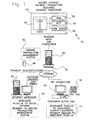
- Figure 1 is a high level block diagram of the secure Internet payment transaction system according to the present invention;
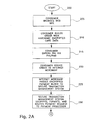
- Figures 2A and 2B are a high level flow diagram of the process according to the present invention;
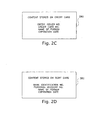
- Figures 2C and 2D illustrate data stored on a typical credit card and a typical ATM card, respectively;
- Figure 3 is a high flow diagram depicting one of the steps in Figure 2 in greater detail;
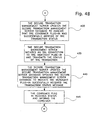
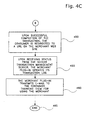
- Figures 4A-4C are flow diagrams depicting one or more of the steps in Figure 3 in greater detail;
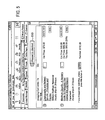
- Figure 5 is a screen shot depicting contents of a shopping cart on the merchant web site;
- Figure 6 is a screen shot of a secure web page;
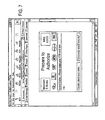
- Figure 7 is an exemplary screen shot of the consumer merchant response software display;
- Figure 8 is a screen shot depicting a prompt screen for entering a PIN number;
- Figure 9 is a screen shot depicting consumer confirmation of the transaction before beginning the transaction;
- Figure 10 is a screen shot depicting the initial connection between the consumer merchant response software and the secure server transaction server;
- Figure 12 is a screen shot depicting an entry in the log depicting the transaction number;
- Figure 13 is a screen shot asking the consumer to print the screen and maintain a copy for their records; and
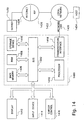
- Figure 14 is a high level block diagram of a computer system usable with the present invention.
-
- A method and apparatus for secure ATM debit card and credit card payment transactions via the Internet according to the present invention are described. In the following description, for purposes of explanation, numerous specific details are set forth in order to provide a thorough understanding of the present invention. It will be apparent, however, that the present invention may be practiced without these specific details. In other instances, well-known structures and devices are shown in block diagram form in order to avoid unnecessarily obscuring the present invention.
- There are various shopping cart systems in use on the Internet and the present invention appears to the consumer to be no different. Regardless of the shopping cart system, when the consumer is ready to purchase the items in the consumer's shopping cart the process for the financial transaction will be the same.
- Refer now to Figure 1 where the physical and logical architecture of the present invention is depicted. The
merchant response system 10 includes a consumerpersonal computer 12 having a consumer merchant response software (cMRS) plug-in 14 that is loaded into the consumer's web browser as a Java applet. Connected to theconsumer PC 12 is aPIN pad 16. The PIN/PAD 16 is used to conduct secure financial transaction for credit cards or debit cards. In a typical financial transaction, information is read from a credit or debit card and then the user enters certain information via the PIN/PAD 16 includingnumber keypad 30. An important data entered by the user is the user's PIN number. The PIN is assigned to the user by a financial institution and needs to be kept secure. Today, PINs are in common use with ATM credit cards. Even though a user may be able to select his/her own PIN, the PIN should be known only to the user and the financial institution. Optionally, as part ofcomputer system 1400 or the PIN/PAD 16, a magnetic card reader can be provided. - A Java run-time environment (JVM) by Sun Microsystems is installed on the
consumer PC 12 and allows for plug-in access toconsumer PC 12 hardware. The JVM is required to activate the PIN/PAD 16 from a web browser plug-in. The JVM also has added security and encryption routines that enable SSL communication from within an applet. Theconsumer PC 12 is connected to the Internet 18. An Internet merchant includes aserver 20 including merchant response software (mMRS) 22 that resides on the merchants'web server 20. The merchants'web server 20 includes web pages for browsing by theconsumer 12. Themerchant server 20 is connected to the Internet 18. - A secure
transaction manager server 30 handles all of the transaction requests (usually purchases or bill payments by a consumer using consumer PC 12) over the Internet 18. A secure transaction management merchant response software (tMRS) 32 resides on the securetransaction manager server 30. Afirewall 34 is located between the securetransaction management server 30 and the Internet 18. A secure transactionmanagement server database 36 is connected to the securetransaction management server 30. All purchase transactions are forwarded from the securetransaction management server 30 to a payment processor, generally indicated at 40. Thepayment processor 40 includes ahost 42 which can then route transaction requests to payment processors such asVisa 50,Master Card 52 and bank servicingATM debit cards 54. The purpose of thesecure server 20 and theserver 30 is to prevent data that is sent fromconsumer PC 12 via the modem from being available or sent to the insecure Internet 18. Thesecure host 30 has an interface to thebanking system 40. Thesecure host 30 sends only data that is necessary and prevents sensitive information such as credit card information and personal identification number (PIN) data from being sent to themerchant 20. Thesecure host 30 does send the needed credit card/debit card/smart card information to thebanking system 40 to request approval for financial transactions. - The present invention is described for one merchant and one consumer for convenience and it is to be understood that any number of merchants and consumers can utilize the present invention.
- The present invention uses one software program called merchant response software (MRS) distribute on three computers including the
consumer PC 12 where the consumer plug-in (cMRS) 14 resides, themerchant response server 20 where the merchant response software (mMRS) 22 resides, and the securetransaction management server 30 where the secure transaction managementmerchant response software 32 resides. - A brief overview of the process according to the present invention using the described architecture is illustrated in Figure 2. At
step 205, the consumer usingconsumer PC 12, browses a web site on theInternet merchant server 20 over the Internet 18. Atstep 210, the consumer usingconsumer PC 12 conducts a purchase transaction by selecting one or more items from the merchants' Internet web site. When the consumer finds something that he or she wishes to buy, the item data associated with the item is retrieved from the Internet and downloaded via modem toconsumer computer 12. Then the user is prompted via themonitor 12 to enter a card type, such as credit card or debit card. Then instep 215, the user is prompted to swipe the credit or debit card via the PIN/PAD 16. The information as illustrated in Figures 2C and 2D , is read from the card. - Figure 2C illustrates the data that is stored on a
typical credit card 280 and on a magnetic strip. Typical information includes a credit issuer number, a credit card number, the name of the person and the expiration date. Figure 2D illustrates the data that is stored on a typical credit card and on a magnetic strip. typical information includes a credit issuer number, a credit card number, the name of the person and the expiration date. The credit issuer number can be a bank for example. Note that the PIN is not stored on the cards. This prevents a thief from obtaining the PIN number if the card is stolen. The credit card number is the typical credit card number that is embossed on the front of the credit card. - Figure 2D shows the contents typically on a debit card such as an ATM card. This information is also stored on a magnetic strip on the back of the card. Typical information includes a bank identification number, a personal account number, the name of the person and an expiration date. This bank identification number is analogous to a credit issuer number or a credit card and identifies the bank that issued the debit card. The personal account number is the same as the account number embossed on the front of the debit card and is not to be confused with the PIN.
- The user uses the credit card or a debit card to make the purchase and can enter alternatively the information from the card into the PIN/
PAD 16 through pad keys or via a removable media interface which can read a credit card or a debit card. After the credit card or debit card has been read, then the user enters his or her PIN. The PIN entry may not be required for a credit card transaction. The PIN is then encrypted and the credit card information can also be encrypted and then the PIN, the order data and the credit card or debit card information are sent via modem 1418 (see Figure 14). - At
step 220, the consumer issues an order to theInternet merchant server 20. Atstep 225, theInternet merchant server 20 passes the encrypted payment block to the securetransaction management system 30 via the Internet 18. Atstep 230, the securetransaction management system 30 decrypts, formats and routes a payment request to the banking system orpayment processor 40. Atstep 235, thesecure host 30 sends the card information and the PIN to thebanking system 40. Thebanking system 40 checks to ensure that a proper credit card or debit card and PIN have been received and if the credit card or debit card and associated PIN is correct and the consumer's credit is satisfactory, then thebanking system 40 responds back to the securetransaction management server 30 with authorization to proceed with the transaction atstep 240. Atstep 245, thesecure server 30 notifies themerchant server 20 that there is purchase being made and thesecure server 30 can inform themerchant server 20 what the item is and also identify the user that is buying the item. Atstep 235, if thebanking system 40 decides not to authorize the payment, then atstep 254, the payment processor responds with no. Atstep 255, the securetransaction management system 30 forwards and logs no to the merchant plug-in 22 via the Internet 18. Atstep 260, themerchant plug 22 decrypts no and notifies themerchant 20. Atstep 265, themerchant server 20 sends completion to consumer plug-in 14 and the securetransaction management server 30. Atstep 240, the payment processor responds with "AUTH" and the securetransaction management system 30 forwards and logs "AUTH" to merchant plug-in 22 via the Internet 18. Atstep 245, the merchant plug-in 22 decrypts "AUTH" and notifiesmerchant 20. Atstep 250, themerchant server 20 sends "Completion" to theconsumer 12 and the securetransaction management system 30. Since the payment to the merchant account is all done within the banking system from the user's banking account to the merchant's banking account, it is in general not necessary, especially in a debit transaction to send any information about the debit card to the merchant host. However, in a credit card transaction, the merchant may feel more secure in at least knowing the credit card number of the user for the transaction. So in the case of credit cards, the communication between the secure host and the merchant host may include the credit card number. Atstep 252, the process is complete. - Step 205 is described in greater detail in Figure 3 where the process is started at
step 300. Atstep 305, the consumer initiates the ATM or the credit card transaction and duringstep 305, thecMRS 14 first checks to ensure that the current page was loaded usingSSL 40 bit encryption. IfSSL 40 bit encryption was not used, then thecMRS 14 initiates an SSL session to Merchant Response Software (mMRS) 22 inserting a failure status message into a transaction log in the Secure Transaction Manager Server (STMS) 32. The STMS then informs the consumer using consumer processing center (PC) 12 of the failure status. ThecMRS 14 also checks (if possible) whether the consumer has already registered their PIN/PAD 16 with thePC 12. Atstep 310, thecMRS 14 initiates secure communication with the PIN/PAD 16 and loads Data Encryption Standard (DES) session key. Atstep 315, thecMRS 14 prompts the consumer for a debit or credit card and the consumer either enters their credit card number or swipes their debit or credit card. ThecMRS 14 presents a screen ensuring the consumer that the PIN is being encrypted duringstep 310. Atstep 320 thecMRS 14 reads encrypted PIN block and card track II data from PIN/PAD 16 and atstep 325, thecMRS 14 then encrypts the DES encrypted information with public key encryption. Public key encryption is a solution to widespread open network security and is a more sophisticated form of code making, first developed by mathematicians at MIT in the 1970s. In this approach, each user creates two unique keys. For example, the customer would have his/her "public key" which is published in a directory. The user has his/her own "private key", which is kept secret. - The two keys work together as a match set. Whatever data one of the keys "locks" only the other can unlock. For example, the consumer wants to send a private transaction. The consumer plug-in
cMRS 12 uses the "public key" to encrypt the transaction. When thesecure server tMRS 30 receives the transaction, the "private key" converts the encrypted message back to the original message. - Advantageously, even if a would-be criminal intercepts the transaction on its way to the secure server, there is no way of deciphering the transaction because the would be criminal does not have the "private key".
- At
step 330, thecMRS 14 initiates anSSL 40 bit connection to thetMRS 32, and transmits the triple encrypted data through theSTMS firewall 34. The data includes card/pin information, merchant number, tracking number from merchant and dollar amount of the transaction. ThecMRS 14 then waits for a specified amount of time for a response. The consumer is informed of the time frame involved in the transaction. Atstep 335, this portion of the process is complete. - In Figure 4, the process of the STMS receiving and processing the transaction from the consumer in
step 330 is described in greater detail. Atstep 400, the process is started. Atstep 405, thetMRS 32 receives the transaction request from the consumer using thecMRS 14. TheSSL 40 bit is automatically decrypted by theweb server 20. ThetMRS 32 decrypts the public key/private key encryption and thetMRS 32 creates an entry in thetMRSdb 36 with the transaction information and sets the transaction status to pending. Atstep 410, thetMRS 32 initiates a transaction with the card processing center gateway, transmitting the appropriate information. Atstep 415, the processing center responds back to thetMRS 32 with the status of the transaction. Upon receiving a response from the processing center, thetMRS 32 updates thetMRSdb 36 with the new status of the transaction. Atstep 420, thetMRS 32 responds to thecMRS 14 with the status of the transaction using the same SSL socket as before. Atstep 425, thetMRS 32 sends e-mail to the consumer oncomputer 12 indicating the status of the transaction. Atstep 430, thetMRS 32 updates thetMRSdb 36 to indicate that theconsumer cMRS 14 was successfully notified of the transaction status. Atstep 435, thetMRS 32 initiates a 40 bit SSL connection to themMRS 22 on the merchant'sweb server 20 and transmits the status of the transaction and the action of themMRS 22 is described in detail below. Atstep 440, thetMRS 32 updates thetMRSdb 36 to indicate themMRS 22 has successfully received the status message transmitted. Atstep 445, upon receiving status atstep 425, thecMRS 14 informs the consumer of the status. If the status is not successful, then the consumer will be provided with information on how to proceed. Atstep 450, upon successful completion of the transaction, the consumer is redirected to a Uniform Resource Locator (URL) on the merchant'sweb server 20. The URL was provided as a parameter on initial loading of thecMRS 14. Atstep 455, upon receiving status from thetMRS 32, atstep 405, themMRS 22 updates its transaction log. Atstep 460, themMRS 22 transmits e-mail to the consumer, thanking them for using the merchant's services and MRS. The message will also confirm that the transaction was completed and recorded by the merchant. This message can be customized to the merchant's liking. No sensitive information is contained in this message. Atstep 465, the process is complete. - The specifications and requirements of the
cMRS 14 of the MRS are described below. ThecMRS 14 requires browser support. Due to the nature of thecMRS 14 Java based plug-in that will be required, it will be necessary to require that consumers have one of the latest versions of Microsoft Internet Explorer (MSIE) or Netscape Navigator (NN). This requirement is due to the fact that older versions of Java were far too locked down and would not allow a Java applet to write data out to the keyboard device such as PIN/PAD 16. This is a necessity as the keypad that cards are swiped through requires at least an activation command. - In order for the
cMRS 14 to successfully make a transaction request, obtain status of an outstanding transaction request, and recover from any failed requests, the following minimum parameters are required: merchant number; merchant/consumer tracking number which is a number assigned by the merchant to track the consumer's order; the total dollar amount of the transaction; consumer's e-mail address so that it can be logged in thetMRS database 36 in case the consumer needs to be notified of a failure or problem not involving the merchant; consumer's first and last name; consumer's phone number; and follow-up URL which is a merchant web page that cMRS 14 can redirect the consumer to upon successful completion of the transaction. These parameters are passed to thecMRS 14 by themerchant server 20 upon loading the plug-in 14 into the consumer's browser. - The security and encryption used by the
cMRS 14 includes 40 bit SSL connections for any confidential information exchanges between thecMRS 14 andtMRS 32/mMRS 22 and thecMRS 14 uses the DES when working with any card or PIN information run through the PIN/PAD 16. - The consumer is provided access to help and information when performing on-line transactions that come directly from a customer's checking account. It will be natural for a consumer to have concerns and questions. Throughout the entire authorization process, the
cMRS 14 displays links to detailed information about each step. These links will summarize the security of the transactions, and provide the consumer with ways to get more detailed information if desired. - The present invention can also be explained by reference to the following series of screen shots which show an example of what a consumer will experience when using the MRS. In this example, the merchant is a fictitious business called Merchant E-Books.
- In Figure 5, a consumer might see that they are viewing the contents of their shopping
cart using computer 12 on themerchant web site 20. Merchant shopping cart systems will of course vary drastically from merchant to merchant. The consumer would be able to click on a check outbutton 510 "proceed to checkout" to initiate their financial transaction as depicted in Figure 5. - Following checkout, the consumer would typically be directed to a secure web page depicted in Figure 6 in order to begin filling in the information that the merchant requires to fill the order. In the example depicted in Figure 6, the secure page is indicated both by the S in https, and by the locked padlock in the lower left hand corner of the browser window.
- Upon completion of the merchant required information, there would be a
final button 610 on the merchant web site directing the consumer to the secure authorization page. The consumer should be made aware of the requirements involved when choosing MRS as their transaction method. For example, "Pin/Pad required". - As depicted in Figure 7, after performing its initial requirement checks, the
cMRS 14 plug-in will display its opening screen to the consumer. The status of the plug-in at this point will simply be that it is waiting for a card to be swiped using PIN/PAD 16. due to security restrictions involved in allowing plug-ins to activate devices such as the PIN/PAD 16, the consumer may receive a confirmation message, asking if it is okay to givecMRS 14 this kind of access. The consumer must be asked if he is using his credit card or ATM/debit card. No pin is required for credit cards. - As depicted in Figure 8, the consumer will be prompted to enter their PIN number into the PIN/
PAD device 16. Notice that there is now an entry next to the log indicating that the consumer" card has been swiped. No pin is required for credit cards. - As depicted in Figure 9, the consumer confirmation of transaction is performed before beginning the transaction.
- As depicted in Figure 10, once the consumer has entered and confirmed the transaction, the
cMRS 14 makes its initial connection to thetMRS 32 program running on theSTMS 32 system. - As depicted in Figure 11, now that
STMS 32 has been contacted and the transaction set in motion, a large message is displayed indicating to the consumer they should not be interrupted. Upon contacting the site, thecMRS 14 updates its status and begins transmitting the transaction request. - As depicted in Figure 12, after transmitting the request, there is a new entry in the log indicating a tMRS 32-transaction number. This number can be used by the consumer to obtain information in the event of a problem. This number can also be used by the
cMRS 14 to automatically check the status in the event of an Internet communication failure. - As depicted in Figure 13, upon final completion, the consumer is asked to print the current screen and maintain a copy for their records. More detail for printing can be obtained by clicking on the "details about your order button".
- The
transaction database 36 that resides on the STMS will contain detailed information about the valid merchants who may usetMRS 32 for transactions. Some of this information is listed below. The fields, tables and indices in this database can be expanded. - Company name
- Merchant number
- Street address, city, state, zip code, country
- Financial contact name, number(s), address
- Technical contact name, number(s), address
- Web site address
- Special URL for mMRS access. Default is https://Company.com/MRS/mMRS
- Status - current, pending, revoked, etc.
- Special notes and circumstances
- SIC code
- The transaction database will contain detailed entries of all transaction requests from beginning to end. Some of this information is listed below. Information that is required in order to initiate a transaction from the cMRS it is indicated by an asterisk (*).
- Transaction number assigned by tMRS
- * Merchant number
- * Merchant tracking number assigned by merchant shopping cart system
- * Total dollar amount of the transaction
- * Consumer last name
- * Consumer first name
- * Consumer phone number, in case of problems
- * Consumer card number, possibly DES encrypted for added security
- Status - new, pending, success, fail, invalid
- Notes - error messages and/or logs by a MRS operator
- Time of initial entry and/or update of status field
- * E-mail address of consumer
- Card type
- Auth code
- Reference #
- Pin Pad ID
- Path The following additional entries are recommended for the sole purpose of tracking down possible hack attempts against the STMS system. This type of information is typically tracked and monitored by the firewall as well. Quality firewall software is configured to automatically block addresses when a possible hack is detected.
- TCP/IP address of requesting system
- Web browser type and version
- Ethernet/MAC address from dedicated connections if available.
- Just as the
tMRSdb 36 can be used to track detailed information on transactions, the mMRSdb can be used by merchants to track detailed information bout the transactions that are processed. Because merchants may have returning customers, the mMRS database will have a separate table to track consumer information. All fields listed below, are required fields and other fields can be added.
mMRS_ConsumerTable [Object Type mMRSConsumer] - Consumer ID
- Consumer full name
-
Consumer e-mail 1 & 2 -
Phone - Billing address
- Delivery address
- Comments
- Unique Key - Merchant Transaction Number
- Unique Key - tMRS Transaction Number, undefined to begin with
- Consumer ID
- Status of Transaction
- Dollar Amount
- Comments about the transaction or status codes
- Date/Time of Initiation
- Date/Time of last status update.
- Some functions of the mMRS product will be written as shared callable routines. This will allow merchant web masters to easily call the routines from standard web scripts supported by Unix and Windows based servers. These functions are summarized below.
mMRS_CreateConsumer(NL): - This [bool] function shall create an entry in the mMRS_ConsumerTable. All fields listed above are required fields in order to create an entry in the database. This function can be called when a new consumer initiates a transaction with a merchant. This function is bypassed for returning consumers.
Object type for This Bool Function:
mMRSConsumer
mMRS_CreateLogEntry(NL): - Prior to loading the cMRS plug-in into a consumer's web browser, the merchant must create an entry in the transaction log so that it can be updated by tMRS upon completion of the transaction. This is how merchants will be able to track the status of transactions. All fields listed above are required for this function.
Object Type for This Bool Function:
mMRSLogEntry
mMRS_QueryLog(varchar TransactionNumber[]): - This function will allow the merchant to get the status of a transaction from within a web page, or from any custom application developed by the merchant. The mMRSLogEntry object shall be defined to return all possible values from the database.
Object Type for This Bool Function:
mMRSLogEntry
mMRS_QueryConsumer(varchar ConsumerID[]): - This function will allow the merchant to get pertinent information on a consumer based on the Consumer ID passed to the function.
Object Type for This Bool Function:
nMRSConsumer
mMRS_UpdateLog()L - Merchants should be able to update their transaction logs if the need arises. For the most part,
tMRS 32 will be performing the status updates via an SSL connection to anothermMRS 22 utility described below.
Object Type for This Bool Function:
mMRSLogEntry - In order for
tMRS 32 to update and request status from the merchant's transaction log, some CGI functions will be required. These functions shall only be accessible via an SSL connection, and are summarized below. Because these are CGI-Scripts, there are no objects defined for them. Parameters must be passed from the postingcMRS 14 ortMRS 32 functions.
mMRS_Query: - Figure 14 is a block diagram illustrating an
exemplary computer system 1400 upon which an embodiment of the invention may be implemented. Thecomputer system 1400 can be used, for example. The present invention is usable with currently available personal computers, mini-mainframes and the like. -
Computer system 1400 includes abus 1402 or other communication mechanism for communicating information, and a processor 1404 coupled with thebus 1402 for processing information.Computer system 1400 also includes amain memory 1406, such as a random access memory (RAM) or other dynamic storage device, coupled to thebus 1402 for storing information and instructions to be executed by processor 1404.Main memory 1406 also may be used for storing temporary variables or other intermediate information during execution of instructions to be executed by processor 1404.Computer system 1400 further includes a read only memory (ROM) 1408 or other static storage device coupled to thebus 1402 for storing static information and instructions for the processor 1404. Astorage device 1410, such as a magnetic disk or optical disk, is provided and coupled to thebus 1402 for storing information and instructions. -
Computer system 1400 may be coupled via thebus 1402 to adisplay 1412, such as a cathode ray tube (CRT) or a flat panel display, for displaying information to a computer user. Aninput device 1414, including alphanumeric and other keys, is coupled to thebus 1402 for communicating information and command selections to the processor 1404. Another type of user input device iscursor control 1416, such as a mouse, a trackball, or cursor direction keys for communicating direction information and command selections to processor 1404 and for controlling cursor movement on thedisplay 1412. This input device typically has two degrees of freedom in two axes, a first axis (e.g., x) and a second axis (e.g.,) allowing the device to specify positions in a plane. - The invention is related to the use of a
computer system 1400, such as the illustrated system, to display and process secure Internet payment transactions. According to one embodiment of the invention, the processing of secure Internet payment transactions is provided bycomputer system 1400 in response to processor 1404 executing sequences of instructions contained inmain memory 1406. Such instructions may be read intomain memory 1406 from another computer-readable medium, such asstorage device 1410. However, the computer-readable medium is not limited to devices such asstorage device 1410. For example, the computer-readable medium may include a floppy disk, a flexible disk, hard disk, magnetic tape, or any other magnetic medium, a CD-ROM, any other optical medium, punch cards, paper tape, any other physical medium with patterns of holes, a RAM, a PROM, an EPROM, a FLASH-EPROM, any other memory chip or cartridge, a carrier wave embodied in an electrical, electromagnetic, infrared, or optical signal, or any other medium from which a computer can read. Execution of the sequences of instructions contained in themain memory 1406 causes the processor 1404 to perform the process steps described below. In alternative embodiments, hard-wired circuitry may be used in place of or in combination with computer software instructions to implement the invention. Thus, embodiments of the invention are not limited to any specific combination of hardware circuitry and software. -
Computer system 1400 also includes acommunication interface 1418 coupled to thebus 1402.Communication interface 1408 provides a two-way data communication as is known. For example,communication interface 1418 may be an integrated services digital network (ISDN) card or a modem to provide a data communication connection to a corresponding type of telephone line. As another example,communication interface 1418 may be a local area network (LAN) card to provide a data communication connection to a compatible LAN. In the preferredembodiment communication interface 1418 is coupled to a virtual blackboard. Wireless links may also be implemented. In any such implementation,communication interface 1418 sends and receives electrical, electromagnetic or optical signals which carry digital data streams representing various types of information. Of particular note, the communications throughinterface 1418 may permit transmission or receipt of the secure Internet payment transactions. For example, two ormore computer systems 1400 may be networked together in a conventional manner with each using thecommunication interface 1418. -
Network link 1420 typically provides data communication through one or more networks to other data devices. For example,network link 1420 may provide a connection throughlocal network 1422 to ahost computer 1424 or to data equipment operated by an Internet Service Provider (ISP) 1426.ISP 1426 in turn provides data communication services through the world wide packet data communication services through the world wide packet data communication network now commonly referred to as the "Internet" 1428.Local network 1422 andInternet 1428 both use electrical, electromagnetic or optical signals which carry digital data streams. The signals through the various networks and the signals onnetwork link 1420 and throughcommunication interface 1418, which carry the digital data to and fromcomputer system 1400, are exemplary forms of carrier waves transporting the information. -
Computer system 1400 can send messages and receive data, including program code, through the network(s);network link 1420 andcommunication interface 1418. In the Internet example, aserver 1430 might transmit a requested code for an application program throughInternet 1428,ISP 1426,local network 1422 andcommunication interface 1418. In accordance with the invention, one such downloaded application provides for information discovery and visualization as described herein. - The received code may be executed by processor 1404 as it is received, and/or stored in
storage device 1410, or other non-volatile storage for later execution. In this manner,computer system 1400 may obtain application code in the form of a carrier wave. - It should now be apparent that a method and system for providing secure Internet payments using either a credit card or ATM card has been described.
- It will be readily seen by one of ordinary skill in the art that the present invention fulfills all of the objects set forth above. After reading the foregoing specification, one of ordinary skill will be able to affect various changes, substitutions of equivalents and various other aspects of the invention as broadly disclosed herein. It is therefore intended that the protection granted hereon be limited only by the definition contained in the appended claims and equivalents thereof.
Claims (11)
- A method of transacting a secure purchase via the Internet, comprising:browsing a merchant web site (20) by a user (12) ;creating an encrypted PIN block;building an order from the merchant web site (20) including purchase information and the encrypted PIN block to form a data block and further encrypting the data block to form an encrypted payment block;forwarding the encrypted payment block to a secure host (30)routing a decrypted payment block formatted for use by a bank system (40) ;proceeding with the order if the secure host receives from the bank system (40) a bank authorization for the purchase, and if no authorization is received, then canceling the purchase;forwarding the authorization to the merchant web site (20); andsending an indicating of a completion of the purchase of the user (12).
- The method of claim 1, wherein the encrypted PIN block is encrypted to a DES standard.
- The method of claim 1, wherein the further encryption is a public/private key encryption.
- The method of claim 1, wherein said forwarding step forwards the encrypted payment block over the Internet.
- The method of claim 1, wherein said creating step is performed using a PIN/PAD 16.
- The method of claim 1, comprising decrypting the encrypted payment block by the secure host into a DES encrypted block.
- The method of claim 6, comprising reformatting for transmission the DES encrypted payment block to the bank system.
- The method of claim 7, comprising decrypting the DES encrypted payment block at the bank system.
- A system for transaction a secure purchase via the Internet, comprising:a consumer Internet access device having a merchant response software plug-in loaded into a web browser residing thereon for building an order;a PIN/PAD operatively connected to said consumer Internet access device for entering a consumer PIN and for encrypting an entered PIN into an encrypted PIN block;said consumer Internet access device for further encrypting said encrypted PIN block into a double encrypted PIN block;a merchant server having a merchant response software residing thereon for recording information about consumer transactions with the merchant server; anda server transaction management server having a merchant response software residing thereon for decrypting the double encrypting PIN block forwarding the PIN to a bank system and sending an authorization from the bank system to the merchant server and the consumer Internet access drive.
- The method of claim 9, comprising entering a personal identification number (PIN) on a PIN/PAD (16).
- The method of claim 9, wherein the PIN block is encrypted using data encryption standard (DES) encryption.
Applications Claiming Priority (6)
| Application Number | Priority Date | Filing Date | Title |
|---|---|---|---|
| US149178P | 1999-08-17 | ||
| US14917899P | 1999-09-24 | 1999-09-24 | |
| US155645P | 1999-09-24 | ||
| US09/450,996 US6834271B1 (en) | 1999-09-24 | 1999-11-29 | Apparatus for and method of secure ATM debit card and credit card payment transactions via the internet |
| US450996 | 1999-11-29 | ||
| PCT/US2000/023344 WO2001024129A1 (en) | 1999-09-24 | 2000-08-25 | Apparatus for and method of secure atm debit card and credit card payment transactions via the internet |
Publications (2)
| Publication Number | Publication Date |
|---|---|
| EP1218865A1 EP1218865A1 (en) | 2002-07-03 |
| EP1218865B1 true EP1218865B1 (en) | 2003-07-23 |
Family
ID=26846527
Family Applications (1)
| Application Number | Title | Priority Date | Filing Date |
|---|---|---|---|
| EP00957801A Expired - Lifetime EP1218865B1 (en) | 1999-09-24 | 2000-08-25 | Apparatus for and method of secure atm debit card and credit card payment transactions via the internet |
Country Status (4)
| Country | Link |
|---|---|
| EP (1) | EP1218865B1 (en) |
| AU (1) | AU6936900A (en) |
| CA (1) | CA2385671C (en) |
| WO (1) | WO2001024129A1 (en) |
Cited By (1)
| Publication number | Priority date | Publication date | Assignee | Title |
|---|---|---|---|---|
| US9336523B2 (en) | 2014-07-28 | 2016-05-10 | International Business Machines Corporation | Managing a secure transaction |
Families Citing this family (8)
| Publication number | Priority date | Publication date | Assignee | Title |
|---|---|---|---|---|
| US6941274B1 (en) * | 1997-11-28 | 2005-09-06 | Diebold, Incorporated | Automated transaction machine |
| US20020123972A1 (en) * | 2001-02-02 | 2002-09-05 | Hodgson Robert B. | Apparatus for and method of secure ATM debit card and credit card payment transactions via the internet |
| SG96618A1 (en) * | 2001-05-04 | 2003-06-16 | Ouzlov Oleg | New credit card with improved security of operation |
| DE10136414A1 (en) * | 2001-07-26 | 2003-02-20 | Giesecke & Devrient Gmbh | Method for purchasing a service offered via a data network in return for a payment transaction lets a user apply an end user system to order a service from a service provider and link the whole process via a secure user-defined identifier. |
| RU2311682C1 (en) * | 2006-06-13 | 2007-11-27 | Ирина Борисовна Эльдарханова | Method for affecting speed of selling of goods with usage of method and system for providing stimulations |
| GB2498326B (en) * | 2011-10-12 | 2016-04-20 | Technology Business Man Ltd | ID Authentication |
| US9832649B1 (en) | 2011-10-12 | 2017-11-28 | Technology Business Management, Limted | Secure ID authentication |
| WO2023284847A1 (en) * | 2021-07-16 | 2023-01-19 | BBPOS Limited | System and method for personal identification number entry in a commercial off the shelf communication device |
Family Cites Families (2)
| Publication number | Priority date | Publication date | Assignee | Title |
|---|---|---|---|---|
| US5809143A (en) | 1995-12-12 | 1998-09-15 | Hughes; Thomas S. | Secure keyboard |
| US6098053A (en) * | 1998-01-28 | 2000-08-01 | Citibank, N.A. | System and method for performing an electronic financial transaction |
-
2000
- 2000-08-25 EP EP00957801A patent/EP1218865B1/en not_active Expired - Lifetime
- 2000-08-25 WO PCT/US2000/023344 patent/WO2001024129A1/en not_active Ceased
- 2000-08-25 CA CA2385671A patent/CA2385671C/en not_active Expired - Lifetime
- 2000-08-25 AU AU69369/00A patent/AU6936900A/en not_active Abandoned
Cited By (1)
| Publication number | Priority date | Publication date | Assignee | Title |
|---|---|---|---|---|
| US9336523B2 (en) | 2014-07-28 | 2016-05-10 | International Business Machines Corporation | Managing a secure transaction |
Also Published As
| Publication number | Publication date |
|---|---|
| EP1218865A1 (en) | 2002-07-03 |
| AU6936900A (en) | 2001-04-30 |
| CA2385671C (en) | 2011-03-08 |
| WO2001024129A1 (en) | 2001-04-05 |
| CA2385671A1 (en) | 2001-04-05 |
Similar Documents
| Publication | Publication Date | Title |
|---|---|---|
| US6834271B1 (en) | Apparatus for and method of secure ATM debit card and credit card payment transactions via the internet | |
| US20020123972A1 (en) | Apparatus for and method of secure ATM debit card and credit card payment transactions via the internet | |
| US9836745B2 (en) | Secure payment card transactions | |
| EP2156397B1 (en) | Secure payment card transactions | |
| US7841523B2 (en) | Secure payment card transactions | |
| US7770789B2 (en) | Secure payment card transactions | |
| US7984172B2 (en) | System and method for transacting communication over an open network | |
| JP3390016B2 (en) | Trust agent for open distribution of electronic money | |
| US6302326B1 (en) | Financial transaction processing system and method | |
| US20010039535A1 (en) | Methods and systems for making secure electronic payments | |
| US5809143A (en) | Secure keyboard | |
| US20010042051A1 (en) | Network transaction system for minimizing software requirements on client computers | |
| US20040148254A1 (en) | Method for performing a secure cash-free payment transaction and a cash-free payment system | |
| WO2001001622A2 (en) | Apparatus and method for performing secure network transactions | |
| CA2670470A1 (en) | Systems and methods for secure pin-based transactions via a host based pin pad | |
| CA2385671C (en) | Apparatus for and method of secure atm debit card and credit card payment transactions via the internet | |
| US20050203843A1 (en) | Internet debit system | |
| WO2006128215A1 (en) | Method and system for secure authorisation of transactions | |
| KR100678556B1 (en) | Automatic trading device | |
| US20030221110A1 (en) | Method of disposable command encoding (DCE) for security and anonymity protection in information system operations | |
| WO2001092982A2 (en) | System and method for secure transactions via a communications network | |
| WO2002015077A1 (en) | Apparatus and method for performing secure network transactions | |
| KR100341419B1 (en) | A method for controlling standard SSL security on the internet browser | |
| WO2002027624A1 (en) | System and method for processing a secure consumer transaction through a network |
Legal Events
| Date | Code | Title | Description |
|---|---|---|---|
| PUAI | Public reference made under article 153(3) epc to a published international application that has entered the european phase |
Free format text: ORIGINAL CODE: 0009012 |
|
| 17P | Request for examination filed |
Effective date: 20020418 |
|
| AK | Designated contracting states |
Kind code of ref document: A1 Designated state(s): AT BE CH CY DE DK ES FI FR GB GR IE IT LI LU MC NL PT SE |
|
| AX | Request for extension of the european patent |
Free format text: AL;LT;LV;MK;RO;SI |
|
| GRAH | Despatch of communication of intention to grant a patent |
Free format text: ORIGINAL CODE: EPIDOS IGRA |
|
| GRAH | Despatch of communication of intention to grant a patent |
Free format text: ORIGINAL CODE: EPIDOS IGRA |
|
| GRAA | (expected) grant |
Free format text: ORIGINAL CODE: 0009210 |
|
| AK | Designated contracting states |
Designated state(s): AT BE CH CY DE DK ES FI FR GB GR IE IT LI LU MC NL PT SE |
|
| PG25 | Lapsed in a contracting state [announced via postgrant information from national office to epo] |
Ref country code: FI Free format text: LAPSE BECAUSE OF FAILURE TO SUBMIT A TRANSLATION OF THE DESCRIPTION OR TO PAY THE FEE WITHIN THE PRESCRIBED TIME-LIMIT Effective date: 20030723 Ref country code: CH Free format text: LAPSE BECAUSE OF FAILURE TO SUBMIT A TRANSLATION OF THE DESCRIPTION OR TO PAY THE FEE WITHIN THE PRESCRIBED TIME-LIMIT Effective date: 20030723 Ref country code: NL Free format text: LAPSE BECAUSE OF FAILURE TO SUBMIT A TRANSLATION OF THE DESCRIPTION OR TO PAY THE FEE WITHIN THE PRESCRIBED TIME-LIMIT Effective date: 20030723 Ref country code: AT Free format text: LAPSE BECAUSE OF FAILURE TO SUBMIT A TRANSLATION OF THE DESCRIPTION OR TO PAY THE FEE WITHIN THE PRESCRIBED TIME-LIMIT Effective date: 20030723 Ref country code: LI Free format text: LAPSE BECAUSE OF FAILURE TO SUBMIT A TRANSLATION OF THE DESCRIPTION OR TO PAY THE FEE WITHIN THE PRESCRIBED TIME-LIMIT Effective date: 20030723 |
|
| REG | Reference to a national code |
Ref country code: GB Ref legal event code: FG4D |
|
| REG | Reference to a national code |
Ref country code: CH Ref legal event code: EP |
|
| REG | Reference to a national code |
Ref country code: IE Ref legal event code: FG4D |
|
| PG25 | Lapsed in a contracting state [announced via postgrant information from national office to epo] |
Ref country code: LU Free format text: LAPSE BECAUSE OF NON-PAYMENT OF DUE FEES Effective date: 20030825 Ref country code: IE Free format text: LAPSE BECAUSE OF NON-PAYMENT OF DUE FEES Effective date: 20030825 Ref country code: CY Free format text: LAPSE BECAUSE OF FAILURE TO SUBMIT A TRANSLATION OF THE DESCRIPTION OR TO PAY THE FEE WITHIN THE PRESCRIBED TIME-LIMIT Effective date: 20030825 |
|
| REF | Corresponds to: |
Ref document number: 60004074 Country of ref document: DE Date of ref document: 20030828 Kind code of ref document: P |
|
| PG25 | Lapsed in a contracting state [announced via postgrant information from national office to epo] |
Ref country code: MC Free format text: LAPSE BECAUSE OF NON-PAYMENT OF DUE FEES Effective date: 20030831 |
|
| PG25 | Lapsed in a contracting state [announced via postgrant information from national office to epo] |
Ref country code: DK Free format text: LAPSE BECAUSE OF FAILURE TO SUBMIT A TRANSLATION OF THE DESCRIPTION OR TO PAY THE FEE WITHIN THE PRESCRIBED TIME-LIMIT Effective date: 20031023 Ref country code: SE Free format text: LAPSE BECAUSE OF FAILURE TO SUBMIT A TRANSLATION OF THE DESCRIPTION OR TO PAY THE FEE WITHIN THE PRESCRIBED TIME-LIMIT Effective date: 20031023 Ref country code: GR Free format text: LAPSE BECAUSE OF FAILURE TO SUBMIT A TRANSLATION OF THE DESCRIPTION OR TO PAY THE FEE WITHIN THE PRESCRIBED TIME-LIMIT Effective date: 20031023 |
|
| NLV1 | Nl: lapsed or annulled due to failure to fulfill the requirements of art. 29p and 29m of the patents act | ||
| PG25 | Lapsed in a contracting state [announced via postgrant information from national office to epo] |
Ref country code: PT Free format text: LAPSE BECAUSE OF FAILURE TO SUBMIT A TRANSLATION OF THE DESCRIPTION OR TO PAY THE FEE WITHIN THE PRESCRIBED TIME-LIMIT Effective date: 20031223 |
|
| LTIE | Lt: invalidation of european patent or patent extension |
Effective date: 20030723 |
|
| ET | Fr: translation filed | ||
| REG | Reference to a national code |
Ref country code: CH Ref legal event code: PL |
|
| REG | Reference to a national code |
Ref country code: ES Ref legal event code: FG2A Ref document number: 2203506 Country of ref document: ES Kind code of ref document: T3 |
|
| PLBE | No opposition filed within time limit |
Free format text: ORIGINAL CODE: 0009261 |
|
| STAA | Information on the status of an ep patent application or granted ep patent |
Free format text: STATUS: NO OPPOSITION FILED WITHIN TIME LIMIT |
|
| REG | Reference to a national code |
Ref country code: IE Ref legal event code: MM4A |
|
| 26N | No opposition filed |
Effective date: 20040426 |
|
| PGFP | Annual fee paid to national office [announced via postgrant information from national office to epo] |
Ref country code: FR Payment date: 20050823 Year of fee payment: 6 |
|
| PGFP | Annual fee paid to national office [announced via postgrant information from national office to epo] |
Ref country code: GB Payment date: 20050824 Year of fee payment: 6 |
|
| PGFP | Annual fee paid to national office [announced via postgrant information from national office to epo] |
Ref country code: DE Payment date: 20050825 Year of fee payment: 6 |
|
| PGFP | Annual fee paid to national office [announced via postgrant information from national office to epo] |
Ref country code: ES Payment date: 20050920 Year of fee payment: 6 |
|
| PGFP | Annual fee paid to national office [announced via postgrant information from national office to epo] |
Ref country code: BE Payment date: 20051013 Year of fee payment: 6 |
|
| PG25 | Lapsed in a contracting state [announced via postgrant information from national office to epo] |
Ref country code: BE Free format text: LAPSE BECAUSE OF NON-PAYMENT OF DUE FEES Effective date: 20060831 |
|
| PGFP | Annual fee paid to national office [announced via postgrant information from national office to epo] |
Ref country code: IT Payment date: 20060831 Year of fee payment: 7 |
|
| PG25 | Lapsed in a contracting state [announced via postgrant information from national office to epo] |
Ref country code: DE Free format text: LAPSE BECAUSE OF NON-PAYMENT OF DUE FEES Effective date: 20070301 |
|
| GBPC | Gb: european patent ceased through non-payment of renewal fee |
Effective date: 20060825 |
|
| REG | Reference to a national code |
Ref country code: FR Ref legal event code: ST Effective date: 20070430 |
|
| REG | Reference to a national code |
Ref country code: ES Ref legal event code: FD2A Effective date: 20060826 |
|
| PG25 | Lapsed in a contracting state [announced via postgrant information from national office to epo] |
Ref country code: GB Free format text: LAPSE BECAUSE OF NON-PAYMENT OF DUE FEES Effective date: 20060825 |
|
| BERE | Be: lapsed |
Owner name: *HODGSON ROBERT Effective date: 20060831 Owner name: *HARGENS HARRY Effective date: 20060831 |
|
| PG25 | Lapsed in a contracting state [announced via postgrant information from national office to epo] |
Ref country code: ES Free format text: LAPSE BECAUSE OF NON-PAYMENT OF DUE FEES Effective date: 20060826 |
|
| PG25 | Lapsed in a contracting state [announced via postgrant information from national office to epo] |
Ref country code: FR Free format text: LAPSE BECAUSE OF NON-PAYMENT OF DUE FEES Effective date: 20060831 |
|
| PG25 | Lapsed in a contracting state [announced via postgrant information from national office to epo] |
Ref country code: IT Free format text: LAPSE BECAUSE OF NON-PAYMENT OF DUE FEES Effective date: 20070825 |