EP1217681A2 - Sealed lead-acid cells and batteries - Google Patents
Sealed lead-acid cells and batteries Download PDFInfo
- Publication number
- EP1217681A2 EP1217681A2 EP01204456A EP01204456A EP1217681A2 EP 1217681 A2 EP1217681 A2 EP 1217681A2 EP 01204456 A EP01204456 A EP 01204456A EP 01204456 A EP01204456 A EP 01204456A EP 1217681 A2 EP1217681 A2 EP 1217681A2
- Authority
- EP
- European Patent Office
- Prior art keywords
- positive
- cell
- negative
- cover
- sealed
- Prior art date
- Legal status (The legal status is an assumption and is not a legal conclusion. Google has not performed a legal analysis and makes no representation as to the accuracy of the status listed.)
- Granted
Links
Images


Classifications
-
- H—ELECTRICITY
- H01—ELECTRIC ELEMENTS
- H01M—PROCESSES OR MEANS, e.g. BATTERIES, FOR THE DIRECT CONVERSION OF CHEMICAL ENERGY INTO ELECTRICAL ENERGY
- H01M10/00—Secondary cells; Manufacture thereof
- H01M10/04—Construction or manufacture in general
- H01M10/0413—Large-sized flat cells or batteries for motive or stationary systems with plate-like electrodes
-
- H—ELECTRICITY
- H01—ELECTRIC ELEMENTS
- H01M—PROCESSES OR MEANS, e.g. BATTERIES, FOR THE DIRECT CONVERSION OF CHEMICAL ENERGY INTO ELECTRICAL ENERGY
- H01M10/00—Secondary cells; Manufacture thereof
- H01M10/04—Construction or manufacture in general
- H01M10/045—Cells or batteries with folded plate-like electrodes
-
- H—ELECTRICITY
- H01—ELECTRIC ELEMENTS
- H01M—PROCESSES OR MEANS, e.g. BATTERIES, FOR THE DIRECT CONVERSION OF CHEMICAL ENERGY INTO ELECTRICAL ENERGY
- H01M10/00—Secondary cells; Manufacture thereof
- H01M10/04—Construction or manufacture in general
- H01M10/0459—Cells or batteries with folded separator between plate-like electrodes
-
- H—ELECTRICITY
- H01—ELECTRIC ELEMENTS
- H01M—PROCESSES OR MEANS, e.g. BATTERIES, FOR THE DIRECT CONVERSION OF CHEMICAL ENERGY INTO ELECTRICAL ENERGY
- H01M10/00—Secondary cells; Manufacture thereof
- H01M10/04—Construction or manufacture in general
- H01M10/0463—Cells or batteries with horizontal or inclined electrodes
-
- H—ELECTRICITY
- H01—ELECTRIC ELEMENTS
- H01M—PROCESSES OR MEANS, e.g. BATTERIES, FOR THE DIRECT CONVERSION OF CHEMICAL ENERGY INTO ELECTRICAL ENERGY
- H01M10/00—Secondary cells; Manufacture thereof
- H01M10/06—Lead-acid accumulators
- H01M10/12—Construction or manufacture
-
- H—ELECTRICITY
- H01—ELECTRIC ELEMENTS
- H01M—PROCESSES OR MEANS, e.g. BATTERIES, FOR THE DIRECT CONVERSION OF CHEMICAL ENERGY INTO ELECTRICAL ENERGY
- H01M10/00—Secondary cells; Manufacture thereof
- H01M10/06—Lead-acid accumulators
- H01M10/12—Construction or manufacture
- H01M10/16—Suspending or supporting electrodes or groups of electrodes in the case
-
- H—ELECTRICITY
- H01—ELECTRIC ELEMENTS
- H01M—PROCESSES OR MEANS, e.g. BATTERIES, FOR THE DIRECT CONVERSION OF CHEMICAL ENERGY INTO ELECTRICAL ENERGY
- H01M50/00—Constructional details or processes of manufacture of the non-active parts of electrochemical cells other than fuel cells, e.g. hybrid cells
- H01M50/10—Primary casings; Jackets or wrappings
- H01M50/102—Primary casings; Jackets or wrappings characterised by their shape or physical structure
- H01M50/103—Primary casings; Jackets or wrappings characterised by their shape or physical structure prismatic or rectangular
-
- H—ELECTRICITY
- H01—ELECTRIC ELEMENTS
- H01M—PROCESSES OR MEANS, e.g. BATTERIES, FOR THE DIRECT CONVERSION OF CHEMICAL ENERGY INTO ELECTRICAL ENERGY
- H01M50/00—Constructional details or processes of manufacture of the non-active parts of electrochemical cells other than fuel cells, e.g. hybrid cells
- H01M50/10—Primary casings; Jackets or wrappings
- H01M50/147—Lids or covers
- H01M50/166—Lids or covers characterised by the methods of assembling casings with lids
- H01M50/171—Lids or covers characterised by the methods of assembling casings with lids using adhesives or sealing agents
-
- H—ELECTRICITY
- H01—ELECTRIC ELEMENTS
- H01M—PROCESSES OR MEANS, e.g. BATTERIES, FOR THE DIRECT CONVERSION OF CHEMICAL ENERGY INTO ELECTRICAL ENERGY
- H01M50/00—Constructional details or processes of manufacture of the non-active parts of electrochemical cells other than fuel cells, e.g. hybrid cells
- H01M50/10—Primary casings; Jackets or wrappings
- H01M50/172—Arrangements of electric connectors penetrating the casing
- H01M50/174—Arrangements of electric connectors penetrating the casing adapted for the shape of the cells
- H01M50/176—Arrangements of electric connectors penetrating the casing adapted for the shape of the cells for prismatic or rectangular cells
-
- H—ELECTRICITY
- H01—ELECTRIC ELEMENTS
- H01M—PROCESSES OR MEANS, e.g. BATTERIES, FOR THE DIRECT CONVERSION OF CHEMICAL ENERGY INTO ELECTRICAL ENERGY
- H01M50/00—Constructional details or processes of manufacture of the non-active parts of electrochemical cells other than fuel cells, e.g. hybrid cells
- H01M50/20—Mountings; Secondary casings or frames; Racks, modules or packs; Suspension devices; Shock absorbers; Transport or carrying devices; Holders
- H01M50/204—Racks, modules or packs for multiple batteries or multiple cells
- H01M50/207—Racks, modules or packs for multiple batteries or multiple cells characterised by their shape
- H01M50/209—Racks, modules or packs for multiple batteries or multiple cells characterised by their shape adapted for prismatic or rectangular cells
-
- H—ELECTRICITY
- H01—ELECTRIC ELEMENTS
- H01M—PROCESSES OR MEANS, e.g. BATTERIES, FOR THE DIRECT CONVERSION OF CHEMICAL ENERGY INTO ELECTRICAL ENERGY
- H01M50/00—Constructional details or processes of manufacture of the non-active parts of electrochemical cells other than fuel cells, e.g. hybrid cells
- H01M50/20—Mountings; Secondary casings or frames; Racks, modules or packs; Suspension devices; Shock absorbers; Transport or carrying devices; Holders
- H01M50/253—Mountings; Secondary casings or frames; Racks, modules or packs; Suspension devices; Shock absorbers; Transport or carrying devices; Holders adapted for specific cells, e.g. electrochemical cells operating at high temperature
-
- H—ELECTRICITY
- H01—ELECTRIC ELEMENTS
- H01M—PROCESSES OR MEANS, e.g. BATTERIES, FOR THE DIRECT CONVERSION OF CHEMICAL ENERGY INTO ELECTRICAL ENERGY
- H01M50/00—Constructional details or processes of manufacture of the non-active parts of electrochemical cells other than fuel cells, e.g. hybrid cells
- H01M50/40—Separators; Membranes; Diaphragms; Spacing elements inside cells
- H01M50/463—Separators, membranes or diaphragms characterised by their shape
- H01M50/466—U-shaped, bag-shaped or folded
-
- H—ELECTRICITY
- H01—ELECTRIC ELEMENTS
- H01M—PROCESSES OR MEANS, e.g. BATTERIES, FOR THE DIRECT CONVERSION OF CHEMICAL ENERGY INTO ELECTRICAL ENERGY
- H01M50/00—Constructional details or processes of manufacture of the non-active parts of electrochemical cells other than fuel cells, e.g. hybrid cells
- H01M50/50—Current conducting connections for cells or batteries
- H01M50/543—Terminals
- H01M50/547—Terminals characterised by the disposition of the terminals on the cells
- H01M50/55—Terminals characterised by the disposition of the terminals on the cells on the same side of the cell
-
- H—ELECTRICITY
- H01—ELECTRIC ELEMENTS
- H01M—PROCESSES OR MEANS, e.g. BATTERIES, FOR THE DIRECT CONVERSION OF CHEMICAL ENERGY INTO ELECTRICAL ENERGY
- H01M50/00—Constructional details or processes of manufacture of the non-active parts of electrochemical cells other than fuel cells, e.g. hybrid cells
- H01M50/50—Current conducting connections for cells or batteries
- H01M50/543—Terminals
- H01M50/552—Terminals characterised by their shape
- H01M50/553—Terminals adapted for prismatic, pouch or rectangular cells
-
- H—ELECTRICITY
- H01—ELECTRIC ELEMENTS
- H01M—PROCESSES OR MEANS, e.g. BATTERIES, FOR THE DIRECT CONVERSION OF CHEMICAL ENERGY INTO ELECTRICAL ENERGY
- H01M50/00—Constructional details or processes of manufacture of the non-active parts of electrochemical cells other than fuel cells, e.g. hybrid cells
- H01M50/50—Current conducting connections for cells or batteries
- H01M50/543—Terminals
- H01M50/562—Terminals characterised by the material
-
- H—ELECTRICITY
- H01—ELECTRIC ELEMENTS
- H01M—PROCESSES OR MEANS, e.g. BATTERIES, FOR THE DIRECT CONVERSION OF CHEMICAL ENERGY INTO ELECTRICAL ENERGY
- H01M50/00—Constructional details or processes of manufacture of the non-active parts of electrochemical cells other than fuel cells, e.g. hybrid cells
- H01M50/10—Primary casings; Jackets or wrappings
- H01M50/116—Primary casings; Jackets or wrappings characterised by the material
- H01M50/121—Organic material
-
- Y—GENERAL TAGGING OF NEW TECHNOLOGICAL DEVELOPMENTS; GENERAL TAGGING OF CROSS-SECTIONAL TECHNOLOGIES SPANNING OVER SEVERAL SECTIONS OF THE IPC; TECHNICAL SUBJECTS COVERED BY FORMER USPC CROSS-REFERENCE ART COLLECTIONS [XRACs] AND DIGESTS
- Y02—TECHNOLOGIES OR APPLICATIONS FOR MITIGATION OR ADAPTATION AGAINST CLIMATE CHANGE
- Y02E—REDUCTION OF GREENHOUSE GAS [GHG] EMISSIONS, RELATED TO ENERGY GENERATION, TRANSMISSION OR DISTRIBUTION
- Y02E60/00—Enabling technologies; Technologies with a potential or indirect contribution to GHG emissions mitigation
- Y02E60/10—Energy storage using batteries
-
- Y—GENERAL TAGGING OF NEW TECHNOLOGICAL DEVELOPMENTS; GENERAL TAGGING OF CROSS-SECTIONAL TECHNOLOGIES SPANNING OVER SEVERAL SECTIONS OF THE IPC; TECHNICAL SUBJECTS COVERED BY FORMER USPC CROSS-REFERENCE ART COLLECTIONS [XRACs] AND DIGESTS
- Y02—TECHNOLOGIES OR APPLICATIONS FOR MITIGATION OR ADAPTATION AGAINST CLIMATE CHANGE
- Y02P—CLIMATE CHANGE MITIGATION TECHNOLOGIES IN THE PRODUCTION OR PROCESSING OF GOODS
- Y02P70/00—Climate change mitigation technologies in the production process for final industrial or consumer products
- Y02P70/50—Manufacturing or production processes characterised by the final manufactured product
Definitions
- the present invention relates to lead-acid cells and batteries, and more particularly to such cells and batteries capable of accommodating the positive grid growth which occurs in service while providing desirable performance.
- Sealed lead-acid cells and batteries for many application, have significant advantages in comparison to the use of conventional, flooded lead-acid cells and batteries.
- Such cells and batteries sometimes termed "VRLA” cells and batteries (i.e., valve-regulated, lead-acid), utilize a safety valve (e.g., a Bunsen valve) to maintain the desired internal pressure for an efficient oxygen recombination cycle.
- a safety valve e.g., a Bunsen valve
- Stationary cells and battery applications include use for stand-by or operational power, including telecommunications, utilities, emergency lighting for commercial buildings, stand-by power for cable television systems, and uninterruptible power supplies.
- Such uninterruptible power supplies concern, for example, systems which back-up computers and communication networks. Having a reliable uninterruptible power source accommodates the orderly shutdown of computers when there is a sudden interruption in the primary power source, typically during an electrical power outage. Such an uninterruptible power source will also accommodate short, or intermittent, losses in power. In the event of a power interruption, the uninterruptible power source is subject to a rapid, and sometimes deep, discharge.
- Another potential application for sealed lead-acid cells and batteries is a variety of motive power applications in which an array of cells or batteries provides the motive power for vehicles ranging from Class 1 to Class 3 trucks, various automated guided vehicles, mining vehicles and also railroad locomotives.
- the performance requirements for motive-powered vehicles are quite different from the performance requirements for stationary battery power sources.
- stationary applications the depth of discharge in service is relatively shallow, and the number of discharges is small, as most batteries are in float service.
- motive power applications require relatively deep depths of discharge to be achieved on a continuous cycling basis over a period of time.
- Class 1-3 trucks a common requirement for Class 1-3 trucks is that, in an 8-hour shift, the cell or battery assembly must be capable of delivering an 80% depth of discharge and that performance is required for about 300 cycles per year with a useful service life under those conditions of 4 or 5 years.
- design considerations need to address problems such as avoiding, in service, plate edge shorting, uneven separator saturation levels and electrolyte stratification. Insuring that the cell possesses satisfactory shock and vibration resistance must also be taken into account in designing sealed lead-acid cells.
- a primary object of the present invention to provide a sealed, VRLA lead-acid cell that at least minimizes, if not eliminates, the problems associated with positive plate growth during service.
- a related and more specific object provides such a cell which may be used to essentially prevent the growth of the positive plate in a direction toward the cover and terminal during service.
- Another object is to provide such a sealed cell having a design particularly well suited for cells having relatively high capacities.
- a still further object is to provide a cell which eliminates the need for a bushing in the cover and is more amenable to large scale and/or automated production.
- Yet another object is to provide a cell in which precise positioning of the cover and terminal during assembly is unnecessary.
- a further object is to provide a sealed cell amenable for large sized cells which provides improved performance, minimizing the problems due to shock and vibration resistance and plate shorting.
- a still further object is to provide such a cell that minimizes the problems due to uneven separator saturation levels and eliminates electrolyte stratification issues.
- the present invention is predicated on a sealed lead-acid cell design which, in essence, directs the positive grid growth that occurs in service away from the terminal-cover and container-cover seals. More particularly, by providing internal and external cell restraints, positive grid growth which occurs in service is directed toward the bottom of the container; and the positive plates are spaced sufficiently away from the bottom of the container so that grid growth in this direction is accommodated during the service life of the sealed lead-acid cell.
- Still other features of the present invention provide a sealed cell design amenable to the reliable production of cells of relatively large capacity, cell sizes up to 2,000 to 3,000 Ampere Hours and even larger can thus be provided. Such cells are likewise configured to provide a desired configuration in use.
- FIGURE 1 shows a sealed, VRLA cell, shown generally 10 having a container 12 (often termed a "jar") and a cover 14.
- a container 12 often termed a "jar"
- a cover 14 Any material useful for lead-acid cells and batteries can be used for the container and cover, and the many useful materials are known.
- conventionally used plastics materials include ethylenepropylene copolymers. Polycarbonates or other plastics materials suitable for withstanding higher thermal conditions are also known.
- Such containers and covers can be made by any technique desired, such as, for example, injection molding.
- Valve 16 a conventional safety valve, maintains the internal pressure to the level desired to provide efficient oxygen recombination, as is known. While the use of a safety valve and maintaining an internal cell pressure in the range of about 5 to 10 psig are often used, these are merely illustrative of useful pressures. The particular operating parameters are not within the scope of the present invention, and any parameters and/or valves considered appropriate for the particular application may be used.
- the cell 10 likewise includes positive terminals 18 and negative terminals 20. Any of the many known terminal designs may be employed. Indeed, the particular terminal design may be dictated by the particular application.
- cells of a relatively large capacity preferably include two or more positive and negative terminals. More particularly, to provide a cell having a nominal capacity of 2,000 Ampere Hours, it has been found preferable to utilize plates having dual lugs and terminals. Thus, in view of the relatively large plates which need to be used (e.g., a positive plate of a size rated at providing in the cell about 170 Ampere Hours and having a length and width of about 16 inches) such dual lugs and terminals provide both efficient current collection, but also enhance the reliability of the electrical connections.
- the use of these dual lugs and terminals lessens the probability that large current drains will result in melting or otherwise impairing the structural integrity of the straps and lugs used.
- the cells are even larger, i.e., up to about 3,000 Ampere Hours or more, it has been found useful to utilize plates having at least two lugs and three positive and negative terminals to carry the current level.
- the terminal-cover sealing can involve molding into the cover a metallic bushing (e.g., a lead or lead alloy material) which is then welded or fused with the terminal material, as is known.
- a metallic bushing e.g., a lead or lead alloy material
- container 12 is heat sealed to cover 14 as indicated generally at 22 and the cover-terminal seal is effected, as shown generally at 24.
- the positive and negative terminal construction includes a compatible plastic material (e.g., ethylene propylene copolymer where a similar material is used for the cover 14) which is molded about the exterior of the terminal so that the terminal-cover seals can be effected by heat sealing or the like.
- a compatible plastic material e.g., ethylene propylene copolymer where a similar material is used for the cover 14
- the terminal has a plastic exterior 26 molded about the periphery of the electrically conductive terminal, positive terminal 18 being shown.
- the plastic member 26 can be molded about the respective terminals at any point desired in the assembly process. It may be more effective from the standpoint of economy to mold the plastic member 26 about the terminal prior to assembly and during the making of the terminals which are typically separately manufactured.
- accomplishing the terminal-cover seal by heat sealing should provide both economy and a more desirable assembly, enhancing reliability in performance.
- creating a plastic-plastic terminal-cover seal also elevates the need for a satisfactory structure to prevent positive grid growth from weakening or rupturing the plastic-plastic, heat-sealed interface.
- further process simplification can be effected by designing the cover and terminal-plastic members such that an opening purposely remains. More particularly, to facilitate alignment for a heat sealing operation, the cover and plastic-terminal members are configured so that the resulting heat-sealed cell will have an annular opening area visible to anyone examining the assembled cell. Thus, as is shown in FIG. 2, opening 30 remains after completion of the heat sealing. The open area can then be filled, as by a hot melt adhesive. By coloring the hot melt adhesive the same color as the cover around the location of the hot melt adhesive, the resulting, filled-in cover will appear to be uniform, thereby providing desirable aesthetic effects.
- the terminal regions shown generally at 32 may be gray while the respective positive terminal 18 is red and the negative terminal 20 is black. In this fashion, precise alignment of the cover upon the container in assembly becomes unnecessary. The resulting assembled cell will cosmetically eliminate any irregularities due to slight misalignments since the overall color remains the same regardless.
- an internal cell restraint which cooperates in directing the positive grid growth away from the cover, protecting the terminal-cover and the container-cover seals.
- the-internal cell restraint cooperates with an external cell restraint that together direct the positive grid growth which occurs during service toward the bottom of the cell and away from the respective seals.
- an internal cell restraint 36 (FIG. 3) is provided which contacts the inner surface 38 of cover 14 while also resting on strap 40, as is shown in FIG. 4.
- the internal cell restraint 36 should be sufficiently rigid so as to adequately resist the forces resulting from positive grid growth in service.
- the internal cell restraint 36 in the illustrative embodiment (FIG. 3) comprises a unitary rigid plastic member having a base 42, terminal openings 44 about the terminal post of each positive terminal 18 which extends through the openings (as best seen in FIG. 4), upstanding end walls 46 and central support member 48, the end walls 46 and the central support member 48 being dimensioned to span the distance from the top of the plates and/or strap to the inner surface 38 of the cover 14.
- the particular configuration of the internal cell restraint 36 can be varied as desired so long as the functional objectives set forth herein are achieved.
- the illustrative internal cell restraint 36 should desirably distribute the forces resulting from positive grid growth while functioning together with the external cell restraint to insure that the reliability of the terminal-cover and the terminal-container seals are satisfactorily protected.
- the materials and construction of the internal cell restraint can be varied as desired.
- Exemplary useful plastics for the restraint include filled polypropylene materials. Any plastic having adequate rigidity for this application could be used including polyvinylchloride, acrylonitrile-butadiene-styrene polymers, styreneacrylonitrile polymers and polycarbonates.
- any alternative design may be utilized for the internal cell restraint so long as the function objectives of this invention are satisfied.
- the cell design must focus on insuring that positive grid growth is directed away from the cover.
- the internal cell restraint could be incorporated into the cover, i.e., molding the cover so that the inner surface contacts the positive strap and/or plates.
- a separate rigid part could be heat sealed to the underside of the cover, providing a spacer for positive strap/plate restraint and adding rigidity to the cover.
- the internal cell restraint could be built into the positive strap(s), shaping the strap such that it contacts the underside of the cover.
- the present invention utilizes an external cell restraint which cooperates with the internal cell restraint so as to direct the positive grid growth toward the bottom of the cell container and away from the cover.
- external cell restraint 50 comprises a faceplate that fits over the cover 14, allowing the safety valve 16, the positive terminals 18 and the negative terminals 20 to project through the complementally sized apertures for those components.
- External cell restraint 50 is then attached to an external support, i.e., the tray, rack or cabinet, or the like, used for the particular application.
- external cell restraint 50 is attached to cell support 52 with bolts 54.
- external cell restraint 50 can be varied as desired so long as the functional criteria are satisfied.
- external restraint 50 can be made of steel or the like, coated to provide electrical insulation. Any plastic or other metal with an insulating coating can be used so long as adequate strength is provided.
- the use of the cell restraint system described herein provides the ability to utilize terminal-cover seals effected through a plastic-plastic interface.
- the heat sealing technique involved facilitates assembly, but can be more susceptible to damage than when such seal is effected using a metallic bushing in the cover.
- the cell restraint system described herein thus offers the ability to facilitate assembly of the cells while still providing ample protection against damage during service.
- the positive plates should be sized so that such plates can grow toward the bottom of the cell container 14.
- the extent of grid growth can be satisfactorily estimated, based on the size of the plates and the like.
- an extremely large capacity cell e.g., 2,000 Ampere Hours or more
- the cell element comprises negative plates that contact the bottom of the cell container and the cell element is sized to tightly fit into the cell so that the positive plates are held in place via frictional force, which restricts, but does not prevent, growth of the positive plates during service toward the bottom of the cell container.
- a negative plate 56 with dual lugs 58 has a plurality of feet 60. The negative plates 56 are sized so that the feet 60 will rest upon the bottom of the cell container, thereby facilitating proper alignment of the cell element within the cell container during assembly, while minimizing the amount of material needed for the negative plates.
- the negative plates could be sized so that the bottom surface thereof would contact the container bottom, the extra material is unnecessary, costly, and would not add to the electrical performance of the cell. While utilizing negative plates having two feet are satisfactory, three or more feet could be used if desired for whatever reason. The use of this configuration is preferred because this avoids problems when the positive plates, in effect, simply hang from the strap (these problems include lower resistance to vibration, possible problems with the lug to strap bond and corrosion of that bond due to higher stress levels due to the plate weight and/or movement).
- Another aspect of the preferred embodiment of the present invention lies in the geometry of the plates utilized.
- many conventionally used sealed cells utilize plates having relatively tall, narrow plates; and the height dimension increases (generally while the plate width stays the same) to provide larger plates for increased electrical capacity (together, of course, with adding more plates).
- One preferred aspect of this invention is to utilize plates that have relatively low height-to-width aspect ratios, i.e., less than about 2:1, and, more preferably, approaching 1:1.
- individual plates can contribute more to achieving cells with larger electrical capacities than can be effectively achieved, simply by increasing the plate height. This is particularly important when cells having capacities of 2,000 Ampere Hours or more are desired. Even further, the cell depth required to achieve such large capacity cells is lessened, creating more desirable performance in service, particularly when the cells are oriented in service so that the plates are in a pancake orientation as will be described hereinafter.
- the sealed cells of the present invention can be used in any orientation, as is known. As is thus appreciated with sealed cells, since the necessary electrolyte is absorbed within the plates and separators, essentially no free electrolyte is contained in the cells so that these cells do not need to be used in an upright position, as would be the case with conventional flooded electrolyte lead-acid batteries.
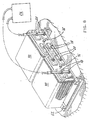
- the sealed cells are oriented in service so that the plates in the cells are in a pancake configuration, i.e., the plates are parallel to the ground or support surface, as contrasted with an upright orientation.
- the two cells 10 shown are positioned in service on their sides, resting on support 62 and are then connected to the application system or the like requiring the uninterruptible power source (e.g., telecommunications), as designated by block 64.
- the uninterruptible power source e.g., telecommunications
- the pancake orientation enhances electrical performance during use.
- the weight of the positive and negative plates, stacked one upon another in pancake fashion, spaced apart only by the absorbent separators, are sufficiently heavy in relation to the weight of the separator that appropriate compression is retained during service.
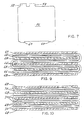
- Yet another aspect of the preferred embodiment of the present invention utilizes a one-piece absorbent separator wound between the pancake-oriented plates in serpentine fashion.
- absorbent separator 66 is wound between the respective positive and negative plates as is shown in FIG. 9, the plates being collectively indicated at 68.
- two, one-piece separators are used rather than one thicker separator. Two thinner separators, together providing the desired separator thickness may provide ease in assembly due to handleability and the like.
- a desirable alternative embodiment includes a double, or opposing, U-wrap in which each'plate is wrapped with a separator having a thickness which, together with the thickness of the separator wrapping the adjacent plate, provides the desired thickness.
- each plate is wrapped with an absorbent separator having approximately half the thickness desired of the composite separator.
- the respective positive and negative plates, generally indicated by 68 are each wrapped with a separator 70.
- the present invention provides a reliable design for sealed lead-acid batteries, facilitating both assembly as well as insuring desirable performance in service.
Landscapes
- Chemical & Material Sciences (AREA)
- Chemical Kinetics & Catalysis (AREA)
- Electrochemistry (AREA)
- General Chemical & Material Sciences (AREA)
- Engineering & Computer Science (AREA)
- Manufacturing & Machinery (AREA)
- Sealing Battery Cases Or Jackets (AREA)
- Connection Of Batteries Or Terminals (AREA)
- Secondary Cells (AREA)
- Charge And Discharge Circuits For Batteries Or The Like (AREA)
- Cell Separators (AREA)
Abstract
Description
Claims (36)
- A sealed lead-acid cell assembly for connection with additional cell assemblies to form a multicell battery for a stationary uninterruptible power source system, said assembly employing cells of a size susceptible to uneven separator saturation levels and electrolyte stratification, the sealed lead-acid cell assembly comprising
a cell support structure capable of supporting a plurality of sealed lead-acid cells,
at least one sealed lead-acid cell comprising
a cell container,
a cell element positioned in said cell container and comprising a plurality of positive and negative plates and an absorbent separator positioned between adjacent plates, the positive and negative plates and the separator being positioned in a pancake orientation, said separator saturation and said electrolyte stratification being minimized and electrical performance being enhanced, each of said positive and negative plates having at least one lug,
a cover sealed to said container and having an exterior and an interior surface,
at least one positive terminal sealed to said cover and at least one negative terminal sealed to said cover,
a positive strap electrically connecting the lugs of the respective positive plates together, the positive strap being electrically connected to the positive terminal, and
a negative strap electrically connecting the lugs of said negative plates together, the negative strap being electrically connected to the negative terminal. - The sealed lead-acid cell assembly of claim 1 wherein the cover is plastic, the positive an negative terminals comprise an electrically conductive metal material having plastic surrounding said metal material, and said terminals having been heat sealed to provide a terminal-cover seal.
- The sealed lead-acid cell assembly of claim 2 wherein said heat-sealed cover has an open area about the terminal and a hot melt adhesive being contained in said open area.
- The sealed lead-acid cell assembly of claim 3 wherein said hot meit adhesive and at least the portion of said cover surrounding said hot melt adhesive each are colored the same.
- The sealed lead-acid cell assembly of claim 4 where in the positive terminal is colored red, the negative terminal is colored black, and said cover is gray.
- The sealed lead-acid cell assembly of claim 1 wherein said cell support structure is a tray.
- The sealed lead-acid cell assembly of claim 1 wherein said cell support structure is a rack.
- The sealed lead-acid cell assembly of claim 1 wherein said cell support structure is a cabinet.
- The sealed lead-acid cell assembly of claim 1 wherein the container has a bottom having an internal bottom surface, said negative plates have at least two spaced feet contacting said internal bottom surface, said negative plates being otherwise spaced from said bottom internal surface, and said positive plates being dimensioned such that said positive plates are spaced from the internal bottom surface of said container a distance sufficient to allow positive plate growth in service to occur.
- The sealed lead-acid cell assembly of claim 1 in which each of said positive and negative plates has at least two lugs and said cell has an electrical capacity of at least 2,000 Ampere Hours.
- The sealed lead-acid cell assembly of claim 10 wherein each positive and negative plate has at least two lugs and said cell has an electrical capacity of at least about 3,000 Ampere Hours.
- The sealed lead-acid cell assembly of claim 1 wherein said positive and negative plates have a height to width ratio of less than 2:1.
- The sealed lead-acid cell assembly of claim 1 wherein said separator comprises at least one layer of a single piece of material wrapped about said positive and negative plates in a serpentine fashion.
- The sealed lead-acid cell assembly of claim 1 wherein said separator is positioned between and about said positive and negative plates in a double U-wrap configuration.
- A sealed lead-acid cell assembly for connection with additional cell assemblies to form a multicell battery for a stationary uninterruptible power source system, said assembly employing cells of a size susceptible to uneven separator saturation levels and electrolyte stratification, the sealed lead-acid cell assembly comprising
a cell support structure capable of supporting a plurality of sealed lead-acid cells,
at least one sealed lead-acid cell comprising
a cell container,
a cell element positioned in said cell container and comprising a plurality of positive and negative plates and an absorbent separator positioned between adjacent plates, the positive and negative plates and the separator being positioned in a pancake orientation, each of said positive and negative plates having at least one lug,
a cover sealed to said container and having an exterior and an interior surface,
at least one positive terminal sealed to said cover and at least one negative terminal sealed to said cover,
a positive strap electrically connecting the lugs of the respective positive plates together, the positive strap being electrically connected to the positive terminal,
a negative strap electrically connecting the lugs of said negative plates together, the negative strap being electrically connected to the negative terminal, and
an external restraint connected to said cell support structure and in contact with the exterior surface of the cover. - The sealed lead-acid cell assembly of claim 15 wherein said external restraint comprises a metallic face plate positioned on the exterior surface of the cover and attached to said cell support structure.
- A sealed lead-acid cell assembly for connection with additional cell assemblies to form a multicell battery for a stationary uninterruptible power source system, said assembly employing cells of a size susceptible to uneven separator saturation levels and electrolyte stratification, the sealed lead-acid cell assembly comprising
a cell support structure capable of supporting a plurality of sealed lead-acid cells,
at least one sealed lead-acid cell comprising
a cell container,
a cell element positioned in said cell container and comprising a plurality of positive and negative plates and an absorbent separator positioned between adjacent plates, the positive and negative plates and the separator being positioned in a pancake orientation, each of said positive and negative plates having at least one lug,
a cover sealed to said container and having an exterior and an interior surface,
at least one positive terminal sealed to said cover and at least one negative terminal sealed to said cover,
a positive strap electrically connecting the lugs of the respective positive plates together, the positive strap being electrically connected to the positive terminal,
a negative strap electrically connecting the lugs of said negative plates together, the negative strap being electrically connected to the negative terminal, and
an internal restraint contacting the interior surface of the cover and positioned between said positive plates and said cover. - The sealed lead-acid cell assembly of claim 17 wherein said internal restraint comprises a plastic insert resting on said positive plate strap when said cell in an upright position and having an opening allowing electrical connection between said positive strap and positive terminal to be made.
- A stationary uninterruptible power source system for an application system requiring an uninterruptible power source of particular electrical capacity, said stationary uninterruptible power source system employing cells of a size susceptible to uneven separator saturation levels and electrolyte stratification, said stationary uninterruptible power source system being located in an area having a floor, said stationary uninterruptible power source system comprising
a cell support structure resting on the floor, said cell support structure being capable of supporting a plurality of sealed lead-acid cells, said sealed lead-acid cells being electrically connected to said application system,
at least one sealed lead-acid cell comprising
a cell container,
a cell element positioned in said cell container and comprising a plurality of positive and negative plates and an absorbent separator positioned between adjacent plates, the positive and negative plates and the separator being positioned in a pancake orientation, said separator saturation and said electrolyte stratification being minimized and electrical performance being enhanced, each of said positive and negative plates having at least one lug,
a cover sealed to said container and having an exterior and an interior surface,
at least one positive terminal sealed to said cover and at least one negative terminal sealed to said cover,
a positive strap electrically connecting the lugs of the respective positive plates together, the positive strap being electrically connected to the positive terminal, and
a negative strap electrically connecting the lugs of said negative plates together, the negative strap being electrically connected to the negative terminal. - The stationary uninterruptible power source system of claim 19 wherein the cover is plastic, the positive an negative terminals comprise an electrically conductive metal material having plastic surrounding said metal material, and said terminals having been heat sealed to provide a terminal-cover seal.
- The stationary uninterruptible power source system of claim 20 wherein said heat-sealed cover has an open area about the terminal and a hot melt adhesive being contained in said open area.
- The stationary uninterruptible power source system of claim 21 wherein said hot melt adhesive and at least the portion of said cover surrounding said hot melt adhesive each are colored the same.
- The stationary uninterruptible power source system of claim 22 where in the positive terminal is colored red, the negative terminal is colored black, and said cover is gray.
- The stationary uninterruptible power source system of claim 19 wherein said cell support structure is a tray.
- The stationary uninterruptible power source system of claim 19 wherein said cell support structure is a rack.
- The stationary uninterruptible power source system of claim 19 wherein said cell support structure is a cabinet.
- The stationary uninterruptible power source system of claim 19 wherein the container has a bottom having an internal bottom surface, said negative plates have at least two spaced feet contacting said internal bottom surface, said negative plates being otherwise spaced from said bottom internal surface, and said positive plates being dimensioned such that said positive plates are spaced from the internal bottom surface of said container a distance sufficient to allow positive plate growth in service to occur.
- The stationary uninterruptible power source system of claim 19 in which each of said positive and negative plates has at least two lugs and said cell has an electrical capacity of at least 2,000 Ampere Hours.
- The stationary uninterruptible power source system of claim 28 wherein each positive and negative plate has at least two lugs and said cell has an electrical capacity of at least about 3,000 Ampere Hours.
- The stationary uninterruptible power source system of claim 19 wherein said positive and negative plates have a height to width ratio of less than 2:1.
- The stationary uninterruptible power source system of claim 19 wherein said separator comprises at least one layer of a single piece of material wrapped about said positive and negative plates in a serpentine fashion.
- The stationary uninterruptible power source system of claim 19 wherein said separator is positioned between and about said positive and negative plates in a double U-wrap configuration.
- A stationary uninterruptible power source system for an application system requiring an uninterruptible power source of particular electrical capacity, said stationary uninterruptible power source system employing cells of a size susceptible to uneven separator saturation levels and electrolyte stratification, said stationary uninterruptible power source system being located in an area having a floor, said stationary uninterruptible power source system comprising
a cell support structure resting on the floor, said cell support structure being capable of supporting a plurality of sealed lead-acid cells, said sealed lead-acid cells being electrically connected to said application system,
at least one sealed lead-acid cell comprising
a cell container,
a cell element positioned in said cell container and comprising a plurality of positive and negative plates and an absorbent separator positioned between adjacent plates, the positive and negative plates and the separator being positioned in a pancake orientation, each of said positive and negative plates having at least one lug,
a cover sealed to said container and having an exterior and an interior surface,
at least one positive terminal sealed to said cover and at least one negative terminal sealed to said cover,
a positive strap electrically connecting the lugs of the respective positive plates together, the positive strap being electrically connected to the positive terminal,
a negative strap electrically connecting the lugs of said negative plates together, the negative strap being electrically connected to the negative terminal, and
an external restraint connected to said cell support structure and in contact with the exterior surface of the cover. - The stationary uninterruptible power source system of claim 33 wherein said external restraint comprises a metallic face plate positioned on the exterior surface of the cover and attached to said cell support structure.
- A stationary uninterruptible power source system for an application system requiring an uninterruptible power source of particular electrical capacity, said stationary uninterruptible power source system employing cells of a size susceptible to uneven separator saturation levels and electrolyte stratification, said stationary uninterruptible power source system being located in an area having a floor, said stationary uninterruptible power source system comprising
a cell support structure resting on the floor, said cell support structure being capable of supporting a plurality of sealed lead-acid cells, said sealed lead-acid cells being electrically connected to said application system,
at least one sealed lead-acid cell comprising
a cell container,
a cell element positioned in said cell container and comprising a plurality of positive and negative plates and an absorbent separator positioned between adjacent plates, the positive and negative plates and the separator being positioned in a pancake orientation, each of said positive and negative plates having at least one lug,
a cover sealed to said container and having an exterior and an interior surface,
at least one positive terminal sealed to said cover and at least one negative terminal sealed to said cover,
a positive strap electrically connecting the lugs of the respective positive plates together, the positive strap being electrically connected to the positive terminal,
a negative strap electrically connecting the lugs of said negative plates together, the negative strap being electrically connected to the negative terminal, and
an internal restraint contacting the interior surface of the cover and positioned between said positive plates and said cover. - The stationary uninterruptible power source system of claim 35 wherein said internal restraint comprises a plastic insert resting on said positive plate strap when said cell in an upright position and having an opening allowing electrical connection between said positive strap and positive terminal to be made.
Applications Claiming Priority (3)
| Application Number | Priority Date | Filing Date | Title |
|---|---|---|---|
| US08/786,530 US5876873A (en) | 1997-01-21 | 1997-01-21 | Sealed lead-acid cells and batteries having internal and external restraint for accommodating plate growth |
| US786530 | 1997-01-21 | ||
| EP98300225A EP0854525B1 (en) | 1997-01-21 | 1998-01-14 | Sealed lead-acid cells and batteries |
Related Parent Applications (1)
| Application Number | Title | Priority Date | Filing Date |
|---|---|---|---|
| EP98300225A Division EP0854525B1 (en) | 1997-01-21 | 1998-01-14 | Sealed lead-acid cells and batteries |
Publications (3)
| Publication Number | Publication Date |
|---|---|
| EP1217681A2 true EP1217681A2 (en) | 2002-06-26 |
| EP1217681A3 EP1217681A3 (en) | 2002-07-10 |
| EP1217681B1 EP1217681B1 (en) | 2005-03-16 |
Family
ID=25138855
Family Applications (2)
| Application Number | Title | Priority Date | Filing Date |
|---|---|---|---|
| EP01204456A Expired - Lifetime EP1217681B1 (en) | 1997-01-21 | 1998-01-14 | Sealed lead-acid cells and batteries |
| EP98300225A Expired - Lifetime EP0854525B1 (en) | 1997-01-21 | 1998-01-14 | Sealed lead-acid cells and batteries |
Family Applications After (1)
| Application Number | Title | Priority Date | Filing Date |
|---|---|---|---|
| EP98300225A Expired - Lifetime EP0854525B1 (en) | 1997-01-21 | 1998-01-14 | Sealed lead-acid cells and batteries |
Country Status (10)
| Country | Link |
|---|---|
| US (2) | US5876873A (en) |
| EP (2) | EP1217681B1 (en) |
| JP (1) | JP4342000B2 (en) |
| CN (1) | CN1237647C (en) |
| AU (1) | AU722126B2 (en) |
| BR (1) | BR9800431A (en) |
| DE (2) | DE69829418T2 (en) |
| ES (2) | ES2240330T3 (en) |
| HK (1) | HK1047193B (en) |
| TW (1) | TW364220B (en) |
Cited By (4)
| Publication number | Priority date | Publication date | Assignee | Title |
|---|---|---|---|---|
| CN108075060A (en) * | 2016-11-09 | 2018-05-25 | 江森自控科技公司 | Battery pack with the housing made of two kinds of materials |
| US11177525B2 (en) | 2016-11-09 | 2021-11-16 | Cps Technology Holdings Llc | Battery pack |
| US11322794B2 (en) | 2016-11-09 | 2022-05-03 | Cps Technology Holdings Llc | Battery pack with gas discharging passage |
| US11742530B2 (en) | 2016-11-09 | 2023-08-29 | Cps Technology Holdings Llc | Battery pack with two end plates |
Families Citing this family (32)
| Publication number | Priority date | Publication date | Assignee | Title |
|---|---|---|---|---|
| USD435014S (en) * | 1999-10-13 | 2000-12-12 | Julian Electric, Inc. | End style three-position battery cable termination |
| USD434373S (en) * | 1999-10-13 | 2000-11-28 | Julian Electric, Inc. | In line three-position battery cable termination with auxiliary studs |
| US6447948B1 (en) | 2000-03-31 | 2002-09-10 | Accuma Corporation | Jar for industrial electric storage battery |
| USD462938S1 (en) | 2000-03-31 | 2002-09-17 | David M. Revak | Jar for industrial battery |
| JP4291987B2 (en) * | 2002-09-20 | 2009-07-08 | パナソニック株式会社 | Sealed secondary battery and battery module |
| EP1597782A2 (en) * | 2003-01-17 | 2005-11-23 | Philadelphia Scientific | Ultra safe lead acid battery cell |
| US7635537B2 (en) * | 2005-07-05 | 2009-12-22 | Concorde Battery Corporation | Lead-acid storage batteries with lightweight connectors |
| FR2888668B1 (en) | 2005-07-13 | 2013-05-24 | Batscap Sa | ELECTRICAL BONDING TERMINAL FOR ELECTRIC ENERGY STORAGE CELL |
| KR100925857B1 (en) * | 2006-03-14 | 2009-11-06 | 주식회사 엘지화학 | Multiple nested electrochemical cells with increased safety |
| CN201256161Y (en) * | 2008-08-26 | 2009-06-10 | 广州市凯捷电源实业有限公司 | Replaceable multifunctional enclosed lead acid batteries |
| MX338843B (en) | 2010-03-03 | 2016-05-03 | Johnson Controls Tech Co | Battery grids and methods for manufacturing same. |
| KR101831423B1 (en) | 2010-04-14 | 2018-02-22 | 존슨 컨트롤스 테크놀러지 컴퍼니 | Battery, battery plate assembly, and method of assembly |
| US9748578B2 (en) | 2010-04-14 | 2017-08-29 | Johnson Controls Technology Company | Battery and battery plate assembly |
| US8674218B2 (en) | 2010-12-15 | 2014-03-18 | General Electric Company | Restraint system for an energy storage device |
| CN102074674B (en) * | 2010-12-31 | 2013-03-20 | 东莞市龙行航空科技有限公司 | battery terminal block |
| US8765297B2 (en) | 2011-01-04 | 2014-07-01 | Exide Technologies | Advanced graphite additive for enhanced cycle-life of lead-acid batteries |
| US20120189894A1 (en) * | 2011-01-26 | 2012-07-26 | Samsung Sdi Co., Ltd. | Electrode assembly and secondary battery including the same |
| US9991730B2 (en) | 2011-09-07 | 2018-06-05 | Johnson Controls Technology Company | Battery charging devices and systems |
| ES2794017T3 (en) * | 2011-10-11 | 2020-11-17 | Zhejiang Narada Power Source | Battery box, battery and rack system with enhanced stacking |
| US9761883B2 (en) | 2011-11-03 | 2017-09-12 | Johnson Controls Technology Company | Battery grid with varied corrosion resistance |
| US10014520B2 (en) | 2012-10-31 | 2018-07-03 | Exide Technologies Gmbh | Composition that enhances deep cycle performance of valve-regulated lead-acid batteries filled with gel electrolyte |
| DE102013206503A1 (en) * | 2013-04-12 | 2014-10-16 | Robert Bosch Gmbh | Device for receiving battery cells, battery module and motor vehicle |
| TW201445797A (en) * | 2013-05-28 | 2014-12-01 | Td Hitech Energy Inc | Combined battery rack |
| DE202013012569U1 (en) | 2013-10-08 | 2017-07-17 | Johnson Controls Autobatterie Gmbh & Co. Kgaa | Grid arrangement for a plate-shaped battery electrode of an electrochemical accumulator and accumulator |
| DE102013111667A1 (en) | 2013-10-23 | 2015-04-23 | Johnson Controls Autobatterie Gmbh & Co. Kgaa | Grid arrangement for a plate-shaped battery electrode and accumulator |
| TWI469424B (en) * | 2013-11-13 | 2015-01-11 | Energy Control Ltd | Battery frame structure for a collection battery |
| CN103956445A (en) * | 2014-05-12 | 2014-07-30 | 谢娟 | Standby battery device of outdoor wireless communication equipment |
| US12451493B2 (en) | 2017-01-27 | 2025-10-21 | Cps Technology Holdings Llc | Battery grid |
| CN106953035B (en) * | 2017-03-30 | 2023-04-07 | 浙江锦泰电子有限公司 | Battery cover plate assembly and battery comprising same |
| TWI666848B (en) * | 2018-09-12 | 2019-07-21 | 財團法人工業技術研究院 | Fire control device for power storage system and operating method thereof |
| KR102285795B1 (en) * | 2019-08-12 | 2021-08-04 | 한국앤컴퍼니 주식회사 | Flooded Battery Strap Protection Cover for Short Protection |
| CN120109255A (en) * | 2023-12-06 | 2025-06-06 | 宁德时代新能源科技股份有限公司 | Battery cells, batteries, electrical equipment and energy storage devices |
Family Cites Families (24)
| Publication number | Priority date | Publication date | Assignee | Title |
|---|---|---|---|---|
| US2257489A (en) * | 1939-11-18 | 1941-09-30 | Willard Storage Battery Co | Storage battery |
| US2261597A (en) * | 1940-05-16 | 1941-11-04 | Willard Storage Battery Co | Storage battery |
| US2470163A (en) * | 1943-11-12 | 1949-05-17 | Electric Storage Battery Co | Plate support for electric accumulators |
| US2511943A (en) | 1946-07-23 | 1950-06-20 | Reed Battery Corp | Storage battery |
| US2774805A (en) * | 1952-10-22 | 1956-12-18 | Gen Motors Corp | Battery structure |
| US3443995A (en) * | 1966-10-13 | 1969-05-13 | Globe Union Inc | Battery construction |
| DE2356465C3 (en) * | 1973-11-12 | 1981-08-27 | Varta Batterie Ag, 3000 Hannover | Accumulator cell for vehicle batteries |
| US4221850A (en) * | 1975-12-06 | 1980-09-09 | Robert Bosch Gmbh | Storage battery with thermoplastic casing having internal members for immobilizing the battery plates |
| US4029855A (en) * | 1975-12-10 | 1977-06-14 | Globe-Union Inc. | Storage battery and method of making the same |
| DE7626233U1 (en) * | 1976-08-21 | 1976-12-16 | Varta Batterie Ag, 3000 Hannover | ELECTRIC ACCUMULATOR |
| DE2833416C2 (en) * | 1978-07-29 | 1980-06-26 | Accumulatorenwerk Hoppecke Carl Zoellner & Sohn, 5000 Koeln | Process for the production of a pole leadthrough for accumulators and their design |
| US4276361A (en) * | 1980-06-26 | 1981-06-30 | Gte Products Corporation | Electrochemical cell with electrode hold-down |
| US4401730A (en) * | 1980-10-03 | 1983-08-30 | Gnb Batteries Inc. | Sealed deep cycle lead acid battery |
| EP0082826B1 (en) * | 1981-12-21 | 1987-09-09 | Olimpio Stocchiero | Cell-container for electric-accumulators particularly for those meant for traction |
| US4455356A (en) * | 1983-04-04 | 1984-06-19 | Barrett Jr James H | Bellows boot for secondary battery terminals |
| IT1224215B (en) * | 1987-10-09 | 1990-09-26 | Stocchiero Olimpio | COVER FOR LEAD ACCUMULATORS WITH SEAT OF ELASTIC AND DEFORMABLE POLES |
| JPH0514462Y2 (en) * | 1988-02-29 | 1993-04-16 | ||
| US5140744A (en) | 1990-06-06 | 1992-08-25 | Miller Robert D | Modular multicell battery and rack |
| US5227266A (en) | 1991-12-04 | 1993-07-13 | Gnb Industrial Battery Company | Sealed lead-acid cell having a novel lug, and end cover assembly |
| AU654400B2 (en) * | 1991-12-04 | 1994-11-03 | Gnb Industrial Battery Company | Galvanic cells and batteries having a novel grid, strap and intercell weld arrangement |
| US5234779A (en) * | 1992-08-17 | 1993-08-10 | General Motors Corporation | Battery having a retainer plate for holding the cell elements |
| DE69427248T2 (en) | 1993-04-01 | 2001-09-13 | Gnb Industrial Battery Co., Lombard | Tray arrangement of gas-tight lead acid cells and motor vehicle using such a tray arrangement of cells |
| JPH0757764A (en) * | 1993-06-04 | 1995-03-03 | Shin Kobe Electric Mach Co Ltd | Lead acid battery |
| JPH08315849A (en) * | 1995-05-17 | 1996-11-29 | Matsushita Electric Ind Co Ltd | Sealed lead acid battery |
-
1997
- 1997-01-21 US US08/786,530 patent/US5876873A/en not_active Ceased
-
1998
- 1998-01-14 DE DE69829418T patent/DE69829418T2/en not_active Expired - Lifetime
- 1998-01-14 DE DE69805867T patent/DE69805867T2/en not_active Expired - Lifetime
- 1998-01-14 AU AU52055/98A patent/AU722126B2/en not_active Expired
- 1998-01-14 ES ES01204456T patent/ES2240330T3/en not_active Expired - Lifetime
- 1998-01-14 ES ES98300225T patent/ES2179426T3/en not_active Expired - Lifetime
- 1998-01-14 EP EP01204456A patent/EP1217681B1/en not_active Expired - Lifetime
- 1998-01-14 EP EP98300225A patent/EP0854525B1/en not_active Expired - Lifetime
- 1998-01-19 TW TW087100651A patent/TW364220B/en not_active IP Right Cessation
- 1998-01-20 JP JP00825598A patent/JP4342000B2/en not_active Expired - Lifetime
- 1998-01-21 CN CNB981056091A patent/CN1237647C/en not_active Expired - Lifetime
- 1998-01-21 BR BR9800431A patent/BR9800431A/en not_active IP Right Cessation
-
2000
- 2000-03-01 US US09/516,965 patent/USRE37804E1/en not_active Expired - Lifetime
-
2002
- 2002-11-22 HK HK02108479.1A patent/HK1047193B/en not_active IP Right Cessation
Cited By (7)
| Publication number | Priority date | Publication date | Assignee | Title |
|---|---|---|---|---|
| CN108075060A (en) * | 2016-11-09 | 2018-05-25 | 江森自控科技公司 | Battery pack with the housing made of two kinds of materials |
| US11177525B2 (en) | 2016-11-09 | 2021-11-16 | Cps Technology Holdings Llc | Battery pack |
| US11322794B2 (en) | 2016-11-09 | 2022-05-03 | Cps Technology Holdings Llc | Battery pack with gas discharging passage |
| US11724606B2 (en) | 2016-11-09 | 2023-08-15 | Cps Technology Holdings Llc | Battery pack |
| US11742530B2 (en) | 2016-11-09 | 2023-08-29 | Cps Technology Holdings Llc | Battery pack with two end plates |
| US12080904B2 (en) | 2016-11-09 | 2024-09-03 | Cps Technology Holdings Llc | Battery pack with housing made of two materials |
| EP3539169B1 (en) * | 2016-11-09 | 2025-01-08 | CPS Technology Holdings LLC | Battery pack with housing made of two materials |
Also Published As
| Publication number | Publication date |
|---|---|
| HK1047193B (en) | 2006-04-28 |
| EP1217681B1 (en) | 2005-03-16 |
| HK1047193A1 (en) | 2003-02-07 |
| US5876873A (en) | 1999-03-02 |
| AU5205598A (en) | 1998-07-23 |
| TW364220B (en) | 1999-07-11 |
| DE69805867T2 (en) | 2003-01-09 |
| BR9800431A (en) | 1999-06-29 |
| DE69805867D1 (en) | 2002-07-18 |
| EP0854525A3 (en) | 1999-10-06 |
| CN1192591A (en) | 1998-09-09 |
| ES2179426T3 (en) | 2003-01-16 |
| CN1237647C (en) | 2006-01-18 |
| EP0854525B1 (en) | 2002-06-12 |
| DE69829418T2 (en) | 2006-04-13 |
| ES2240330T3 (en) | 2005-10-16 |
| JPH10289727A (en) | 1998-10-27 |
| EP1217681A3 (en) | 2002-07-10 |
| EP0854525A2 (en) | 1998-07-22 |
| USRE37804E1 (en) | 2002-07-23 |
| DE69829418D1 (en) | 2005-04-21 |
| JP4342000B2 (en) | 2009-10-14 |
| AU722126B2 (en) | 2000-07-20 |
Similar Documents
| Publication | Publication Date | Title |
|---|---|---|
| EP0854525B1 (en) | Sealed lead-acid cells and batteries | |
| US12362416B2 (en) | Battery pack and vehicle comprising same | |
| KR102924942B1 (en) | Battery Cell, Battery Module and Battery Pack Having the Same | |
| US20260081270A1 (en) | Secondary battery and top cover component thereof | |
| JP4404628B2 (en) | Bipolar battery, bipolar battery manufacturing method, and biplate laminate | |
| KR101084055B1 (en) | Secondary battery | |
| KR101310015B1 (en) | Sealed battery | |
| EP2757609B1 (en) | Rechargeable battery | |
| US20130295445A1 (en) | Secondary battery | |
| KR20040033030A (en) | A bipolar battery and a biplate assembly | |
| US20070148542A1 (en) | Battery electrode design and a flat stack battery cell design and methods of making same | |
| US4645725A (en) | Battery comprising dual terminal bushings | |
| EP4557468A1 (en) | Top cover assembly, energy storage device, and energy storage system | |
| EP2482366B1 (en) | Secondary Battery | |
| US4701386A (en) | Battery comprising dual terminal bushings | |
| EP0545399B1 (en) | Novel sealed lead-acid cell having a novel lug and end cover assembly | |
| CA1153793A (en) | Side terminal battery and method of making same | |
| KR20080038663A (en) | Secondary battery | |
| CN220984803U (en) | Battery and battery module | |
| CN222365652U (en) | Battery cell, battery device and electricity utilization device | |
| US20230335865A1 (en) | Cylindrical Cell and Battery Module | |
| KR20260017793A (en) | Battery cell assembly and battery pack | |
| KR100719732B1 (en) | Secondary battery | |
| KR20260009577A (en) | Battery module | |
| KR20260037923A (en) | A gasket for a battery pack, and a battery pack and a vehicle including the same |
Legal Events
| Date | Code | Title | Description |
|---|---|---|---|
| PUAI | Public reference made under article 153(3) epc to a published international application that has entered the european phase |
Free format text: ORIGINAL CODE: 0009012 |
|
| PUAL | Search report despatched |
Free format text: ORIGINAL CODE: 0009013 |
|
| AC | Divisional application: reference to earlier application |
Ref document number: 854525 Country of ref document: EP |
|
| AK | Designated contracting states |
Kind code of ref document: A2 Designated state(s): DE ES FR GB IT SE |
|
| RIC1 | Information provided on ipc code assigned before grant |
Free format text: 7H 01M 2/06 A, 7H 01M 10/16 B, 7H 01M 2/10 B |
|
| AK | Designated contracting states |
Kind code of ref document: A3 Designated state(s): DE ES FR GB IT SE |
|
| AKX | Designation fees paid | ||
| 17P | Request for examination filed |
Effective date: 20021128 |
|
| RBV | Designated contracting states (corrected) |
Designated state(s): DE ES FR GB IT SE |
|
| REG | Reference to a national code |
Ref country code: DE Ref legal event code: 8566 |
|
| 17Q | First examination report despatched |
Effective date: 20030714 |
|
| GRAP | Despatch of communication of intention to grant a patent |
Free format text: ORIGINAL CODE: EPIDOSNIGR1 |
|
| GRAS | Grant fee paid |
Free format text: ORIGINAL CODE: EPIDOSNIGR3 |
|
| RAP1 | Party data changed (applicant data changed or rights of an application transferred) |
Owner name: EXIDE TECHNOLOGIES |
|
| GRAA | (expected) grant |
Free format text: ORIGINAL CODE: 0009210 |
|
| AC | Divisional application: reference to earlier application |
Ref document number: 0854525 Country of ref document: EP Kind code of ref document: P |
|
| AK | Designated contracting states |
Kind code of ref document: B1 Designated state(s): DE ES FR GB IT SE |
|
| REG | Reference to a national code |
Ref country code: GB Ref legal event code: FG4D |
|
| REF | Corresponds to: |
Ref document number: 69829418 Country of ref document: DE Date of ref document: 20050421 Kind code of ref document: P |
|
| REG | Reference to a national code |
Ref country code: SE Ref legal event code: TRGR |
|
| REG | Reference to a national code |
Ref country code: ES Ref legal event code: FG2A Ref document number: 2240330 Country of ref document: ES Kind code of ref document: T3 |
|
| PLBE | No opposition filed within time limit |
Free format text: ORIGINAL CODE: 0009261 |
|
| STAA | Information on the status of an ep patent application or granted ep patent |
Free format text: STATUS: NO OPPOSITION FILED WITHIN TIME LIMIT |
|
| ET | Fr: translation filed | ||
| 26N | No opposition filed |
Effective date: 20051219 |
|
| REG | Reference to a national code |
Ref country code: HK Ref legal event code: GR Ref document number: 1047193 Country of ref document: HK |
|
| PGFP | Annual fee paid to national office [announced via postgrant information from national office to epo] |
Ref country code: FR Payment date: 20110128 Year of fee payment: 14 Ref country code: IT Payment date: 20110118 Year of fee payment: 14 Ref country code: SE Payment date: 20110111 Year of fee payment: 14 Ref country code: DE Payment date: 20110112 Year of fee payment: 14 |
|
| PGFP | Annual fee paid to national office [announced via postgrant information from national office to epo] |
Ref country code: ES Payment date: 20110216 Year of fee payment: 14 Ref country code: GB Payment date: 20110112 Year of fee payment: 14 |
|
| REG | Reference to a national code |
Ref country code: SE Ref legal event code: EUG |
|
| GBPC | Gb: european patent ceased through non-payment of renewal fee |
Effective date: 20120114 |
|
| REG | Reference to a national code |
Ref country code: FR Ref legal event code: ST Effective date: 20120928 |
|
| PG25 | Lapsed in a contracting state [announced via postgrant information from national office to epo] |
Ref country code: DE Free format text: LAPSE BECAUSE OF NON-PAYMENT OF DUE FEES Effective date: 20120801 Ref country code: GB Free format text: LAPSE BECAUSE OF NON-PAYMENT OF DUE FEES Effective date: 20120114 Ref country code: SE Free format text: LAPSE BECAUSE OF NON-PAYMENT OF DUE FEES Effective date: 20120115 |
|
| REG | Reference to a national code |
Ref country code: DE Ref legal event code: R119 Ref document number: 69829418 Country of ref document: DE Effective date: 20120801 |
|
| PG25 | Lapsed in a contracting state [announced via postgrant information from national office to epo] |
Ref country code: IT Free format text: LAPSE BECAUSE OF NON-PAYMENT OF DUE FEES Effective date: 20120114 |
|
| PG25 | Lapsed in a contracting state [announced via postgrant information from national office to epo] |
Ref country code: FR Free format text: LAPSE BECAUSE OF NON-PAYMENT OF DUE FEES Effective date: 20120131 |
|
| REG | Reference to a national code |
Ref country code: ES Ref legal event code: FD2A Effective date: 20130705 |
|
| PG25 | Lapsed in a contracting state [announced via postgrant information from national office to epo] |
Ref country code: ES Free format text: LAPSE BECAUSE OF NON-PAYMENT OF DUE FEES Effective date: 20120115 |