EP1217568A2 - Method, system and program for searching fragments from data sequences - Google Patents
Method, system and program for searching fragments from data sequences Download PDFInfo
- Publication number
- EP1217568A2 EP1217568A2 EP01126048A EP01126048A EP1217568A2 EP 1217568 A2 EP1217568 A2 EP 1217568A2 EP 01126048 A EP01126048 A EP 01126048A EP 01126048 A EP01126048 A EP 01126048A EP 1217568 A2 EP1217568 A2 EP 1217568A2
- Authority
- EP
- European Patent Office
- Prior art keywords
- satisfies
- fragment
- logic
- fragments
- code segment
- Prior art date
- Legal status (The legal status is an assumption and is not a legal conclusion. Google has not performed a legal analysis and makes no representation as to the accuracy of the status listed.)
- Withdrawn
Links
Images




Classifications
-
- G—PHYSICS
- G16—INFORMATION AND COMMUNICATION TECHNOLOGY [ICT] SPECIALLY ADAPTED FOR SPECIFIC APPLICATION FIELDS
- G16B—BIOINFORMATICS, i.e. INFORMATION AND COMMUNICATION TECHNOLOGY [ICT] SPECIALLY ADAPTED FOR GENETIC OR PROTEIN-RELATED DATA PROCESSING IN COMPUTATIONAL MOLECULAR BIOLOGY
- G16B30/00—ICT specially adapted for sequence analysis involving nucleotides or amino acids
Definitions
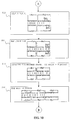
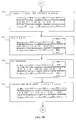
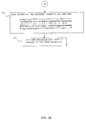
- two subfragments are selected 218, wherein a subpattem (p2.1) of Fx2.1 and Fy2.1 satisfies a subcondition (c2.1) which can be defined by users. It is preferred to determine that whether Fx2.1 or Fy2.1 is geographically closer to the pair of Fx1 and Fy1 220. If Fx2.1 is closer, a suitable gap is inserted into a region between Fx2.1 and Fx1 222 such that a part of data in Fx2 are excluded therefrom, whereby Fx2 becomes an updated fragment, designated as Fx2', which includes the gap but excludes the part of data in Fx2.
Landscapes
- Physics & Mathematics (AREA)
- Life Sciences & Earth Sciences (AREA)
- Chemical & Material Sciences (AREA)
- Analytical Chemistry (AREA)
- Biophysics (AREA)
- Proteomics, Peptides & Aminoacids (AREA)
- Health & Medical Sciences (AREA)
- Engineering & Computer Science (AREA)
- Bioinformatics & Cheminformatics (AREA)
- Bioinformatics & Computational Biology (AREA)
- Biotechnology (AREA)
- Evolutionary Biology (AREA)
- General Health & Medical Sciences (AREA)
- Medical Informatics (AREA)
- Spectroscopy & Molecular Physics (AREA)
- Theoretical Computer Science (AREA)
- Management, Administration, Business Operations System, And Electronic Commerce (AREA)
- Measuring Or Testing Involving Enzymes Or Micro-Organisms (AREA)
- Information Retrieval, Db Structures And Fs Structures Therefor (AREA)
Abstract
Description

Claims (30)
- A method of searching for a pair of fragments (Fx and Fy) from two data sequences (X and Y), wherein a pattern of Fx and Fy satisfies a predetermined criterion, said method comprising the steps of:(1.1) selecting a first fragment (Fx1) of X and a first fragment (Fy1) of Y, wherein a first pattern (p1) of Fx1 and Fy1 satisfies a first predetermined condition (c1);(1.2) extending a second fragment (Fx2) from Fx1 in a direction and extending a second fragment (Fy2) from Fy1 in the direction;(1.3) identifying a second pattern (p2) of Fx2 and Fy2; and(1.4) obtaining the pair of fragments (Fx and Fy) based on p2 in a predetermined manner.
- The method of claim 1, wherein said predetermined manner comprises the steps of:(2.1) determining if p2 satisfies a second predetermined condition (c2);(2.1.1) extending a third fragment (Fx3) from Fx2 in the direction and extending a third fragment (Fy3) from Fy2 in the direction if p2 satisfies c2; and(2.1.2) matching Fx2 and Fy2 if p2 does not satisfy c2.
- The method of claim 2, wherein the step (2.1.1) comprises the steps of:(3.1) identifying a third pattern (p3) of Fx3 and Fy3;(3.2) determining if p3 satisfies a third predetermined condition (c3); and(3.3) obtaining the pair of fragments (Fx and Fy)if p3 satisfies c3, wherein Fx includes Fx1, Fx2, and Fx3, and Fy includes Fy1,Fy2, and Fy3.
- The method of claim 2, wherein said step (2.1.2) of matching Fx2 and Fy2 comprises the steps of:(4.1) selecting a subfragment (Fx2.1) in FX2 and a subfragment (Fy2.1) in FY2, wherein a subpattern (p2.1) of Fx2.1 and Fy2.1 satisfies a predetermined subcondition (c2.1);(4.2) inserting a gap into a region between Fx2.1 and Fx1 to exclude a part of data in Fx2 therefrom, whereby Fx2 becomes an updated fragment (Fx2') which includes the gap, but the part of data in Fx2 is excluded;(4.3) identifying an updated p2 (p2') between Fx2' and Fy2;(4.4) determining if p2' satisfies a predetermined requirement (r);(4.4.1) extending a third fragment (Fx3) from Fx2' in the direction and extending a third fragment (Fy3) from Fy2 in the direction if p2' satisfies r, wherein Fx3 includes the part of data in Fx2; and(4.4.2) obtaining the pair of fragments (Fx and Fy) if p2' does not satisfy r, wherein Fx includes Fx1 and Fx2', and Fy includes Fy1 and Fy2.
- The method of claim 4, wherein the step (4.4.1) comprises the steps of:(5.1) identifying a third pattern (p3) of Fx3 and Fy3;(5.2) determining if p3 satisfies a third predetermined condition (c3); and(5.3) obtaining the pair of fragments (Fx and Fy) if p3 satisfies c3, wherein Fx includes Fx1, Fx2' and Fx3, and Fy includes Fy1,Fy2 and Fy3.
- A method of searching for a pair of fragments (Fx and Fy) from two biological sequences (X and Y), wherein a pattern of Fx and Fy satisfies a predetermined criterion, said method comprising the steps of:(6.1) selecting a first fragment (Fx1) of X and a first fragment (Fy1) of Y, wherein a first pattern (p1) of Fx1 and Fy1 satisfies a first predetermined condition (c1);(6.2) extending a second fragment (Fx2) from Fx1 in a direction and extending a second fragment (Fy2) from Fy1 in the direction;(6.3) identifying a second pattern (p2) of Fx2 and Fy2; and(6.4) obtaining the pair of fragments (Fx and Fy) based on p2 in a predetermined manner.
- The method of claim 6, wherein said predetermined manner comprises the steps of:(7.1) determining if p2 satisfies a second predetermined condition (c2);(7.1.1) extending a third fragment (Fx3) from Fx2 in the direction and extending a third fragment (Fy3) from Fy2 in the direction if p2 satisfies c2; and(7.1.2) matching Fx2 and Fy2 if p2 does not satisfy c2.
- The method of claim 7, wherein the step (7.1.1) comprises the steps of:(8.1) identifying a third pattern (p3) of Fx3 and Fy3;(8.2) determining if p3 satisfies a third predetermined condition (c3); and(8.3) obtaining the pair of fragments (Fx and Fy) if p3 satisfies c3, wherein Fx includes Fx1, Fx2, and Fx3, and Fy includes Fy1, Fy2, and Fy3.
- The method of claim 7, wherein said step (7.1.2) of matching Fx2 and Fy2 comprises the steps of:(9.1) selecting a subfragment (Fx2.1) in FX2 and a subfragment (Fy2.1) in FY2, wherein a subpattern (p2.1) of Fx2.1 and Fy2.1 satisfies a predetermined subcondition (c2.1);(9.2) inserting a gap into a region between Fx2.1 and Fx1 to exclude a part of biological data in Fx2 therefrom, whereby Fx2 becomes an updated fragment (Fx2') which includes the gap, but the part of biological data in Fx2 is excluded;(9.3) identifying an updated p2 (p2') between Fx2' and Fy2;(9.4) determining if p2' satisfies a predetermined requirement (r);(9.4.1) extending a third fragment (Fx3) from Fx2' in the direction and extending a third fragment (Fy3) from Fy2 in the direction if p2' satisfies r, wherein Fx3 includes the part of biological data in Fx2; and(9.4.2) obtaining the pair of fragments (Fx and Fy) if p2' does not satisfy r, wherein Fx includes Fx1 and Fx2', and Fy includes Fy1 and Fy2.
- The method of claim 9, wherein the step (9.4.1) comprises the steps of:(10.1) identifying a third pattern (p3) of Fx3 and Fy3;(10.2) determining if p3 satisfies a third predetermined condition (c3); and(10.3) obtaining the pair of fragments (Fx and Fy) if p3 satisfies c3, wherein Fx includes Fx1, Fx2' and Fx3, and Fy includes Fy1,Fy2 and Fy3.
- A system of searching for a pair of fragments (Fx and Fy) from two data sequences (X and Y), wherein a pattern of Fx and Fy satisfies a predetermined criterion, said system comprising:(11.1) logic that selects a first fragment (Fx1) of X and a first fragment (Fy1) of Y, wherein a first pattern (p1) of Fx1 and Fy1 satisfies a first predetermined condition (c1);(11.2) logic that extends a second fragment (Fx2) from Fx1 in a direction and extends a second fragment (Fy2) from Fy1 in the direction;(11.3) logic that identifies a second pattern (p2) of Fx2 and Fy2; and(11.4) logic that obtains the pair of fragments (Fx and Fy) based on p2 by a predetermined logic.
- The system of claim 11, wherein said predetermined logic comprises(12.1) logic that determines if p2 satisfies a second predetermined condition (c2);(12.1.1) logic that extends a third fragment (Fx3) from Fx2 in the direction and extending a third fragment (Fy3) from Fy2 in the direction if p2 satisfies c2; and(12.1.2) logic that matches Fx2 and Fy2 if p2 does not satisfy c2.
- The system of claim 12, wherein the logic (12.1.1) comprises(13.1) logic that identifies a third pattern (p3) of Fx3 and Fy3;(13.2) logic that determines if p3 satisfies a third predetermined condition (c3); and(13.3) logic that obtains the pair of fragments (Fx and Fy) if p3 satisfies c3, wherein Fx includes Fx1, Fx2 and Fx3, and Fy includes Fy1,Fy2 and Fy3.
- The system of claim 12, wherein said logic (12.1.2) that matches Fx2 and Fy2 comprises:(14.1) logic that selects a subfragment (Fx2.1) in FX2 and a subfragment (Fy2.1) in FY2, wherein a subpattern (p2.1) of Fx2.1 and Fy2.1 satisfies a predetermined subcondition (c2.1);(14.2) logic that inserts a gap into a region between Fx2.1 and Fx1 to exclude a part of data in Fx2 therefrom, whereby Fx2 becomes an updated fragment (Fx2') which includes the gap, but the part of data in Fx2 is excluded;(14.3) logic that identifies an updated p2 (p2') between Fx2' and Fy2;(14.4) logic that determines if p2' satisfies a predetermined requirement (r);(14.4.1) logic that extends a third fragment (Fx3) from Fx2' in the direction and extending a third fragment (Fy3) from Fy2 in the direction if p2' satisfies r, wherein Fx3 includes the part of data in Fx2; and(14.4.2) logic that obtains the pair of fragments (Fx and Fy) if p2' does not satisfy r, wherein Fx includes Fx1 and Fx2', and Fy includes Fy1 and Fy2.
- The system of claim 14, wherein the logic (14.4.1) comprises:(15.1) logic that identifies a third pattern (p3) of Fx3 and Fy3;(15.2) logic that determines if p3 satisfies a third predetermined condition (c3); and(15.3) logic that obtains the pair of fragments (Fx and Fy) if p3 satisfies c3, wherein Fx includes Fx1, Fx2', and Fx3, and Fy includes Fy1,Fy2, and Fy3.
- A system of searching for a pair of fragments (Fx and Fy) from two biological sequences (X and Y), wherein a pattern of Fx and Fy satisfies a predetermined criterion, said system comprises:(16.1) logic that selects a first fragment (Fx1) of X and a first fragment (Fy1) of Y, wherein a first pattern (p1) of Fx1 and Fy1 satisfies a first predetermined condition (c1);(16.2) logic that extends a second fragment (Fx2) from Fx1 in a direction and extending a second fragment (Fy2) from Fy1 in the direction;(16.3) logic that identifies a second pattern (p2) of Fx2 and Fy2; and(16.4) logic that obtains the pair of fragments (Fx and Fy) based on p2 by a predetermined logic.
- The system of claim 16, wherein said predetermined logic comprises:(17.1) logic that determines if p2 satisfies a second predetermined condition (c2);(17.1.1) logic that extends a third fragment (Fx3) from Fx2 in the direction and extending a third fragment (Fy3) from Fy2 in the direction if p2 satisfies c2; and(17.1.2) logic that matches Fx2 and Fy2 if p2 does not satisfy c2.
- The system of claim 17, wherein the logic (17.1.1) comprises:(18.1) logic that identifies a third pattern (p3) of Fx3 and Fy3;(18.2) logic that determines if p3 satisfies a third predetermined condition (c3); and(18.3) logic that obtains the pair of fragments (Fx and Fy) if p3 satisfies c3, wherein Fx includes Fx1, Fx2, and Fx3, and Fy includes Fy1, Fy2, and Fy3.
- The system of claim 17, wherein said logic (17.1.2) of matching Fx2 and Fy2 comprises:(19.1) logic that selects a subfragment (Fx2.1) in FX2 and a subfragment (Fy2.1) in FY2, wherein a subpattern (p2.1) of Fx2.1 and Fy2.1 satisfies a predetermined subcondition (c2.1);(19.2) logic that inserts a gap into a region between Fx2.1 and Fx1 to exclude a part of biological data in Fx2 therefrom, whereby Fx2 becomes an updated fragment (Fx2') which includes the gap, but the part of biological data in Fx2 is excluded;(19.3) logic that identifies an updated p2 (p2') between Fx2' and Fy2;(19.4) logic that determines if p2' satisfies a predetermined requirement (r);(19.4.1) logic that extends a third fragment (Fx3) from Fx2' in the direction and extending a third fragment (Fy3) from Fy2 in the direction if p2' satisfies r, wherein Fx3 includes the part of biological data in Fx2; and(19.4.2) logic that obtains the pair of fragments (Fx and Fy) if p2' does not satisfy r, wherein Fx includes Fx1 and Fx2', and Fy includes Fy1 and Fy2.
- The system of claim 19, wherein the logic (19.4.1) comprises(20.1) logic that identifies a third pattern (p3) of Fx3 and Fy3;(20.2) logic that determines if p3 satisfies a third predetermined condition (c3); and(20.3) logic that obtains the pair of fragments (Fx and Fy) if p3 satisfies c3, wherein Fx includes Fx1, Fx2' and Fx3, and Fy includes Fy1,Fy2 and Fy3.
- A computer program of searching for a pair of fragments (Fx and Fy) from two data sequences (X and Y), wherein a pattern of Fx and Fy satisfies a predetermined criterion, said computer program comprising :(21.1) a code segment that selects a first fragment (Fx1) of X and a first fragment (Fy1) of Y, wherein a first pattern (p1) of Fx1 and Fy1 satisfies a first predetermined condition (c1);(21.2) a code segment that extends a second fragment (Fx2) from Fx1 in a direction and extends a second fragment (Fy2) from Fy1 in the direction;(21.3) a code segment that identifies a second pattern (p2) of Fx2 and Fy2; and(21.4) a code segment that obtains the pair of fragments (Fx and Fy) based on p2 by a predetermined code segment.
- The computer program of claim 21, wherein said predetermined code segment comprises :(22.1) a code segment that determines if p2 satisfies a second predetermined condition (c2);(22.1.1) a code segment that extends a third fragment (Fx3) from Fx2 in the direction and extending a third fragment (Fy3) from Fy2 in the direction if p2 satisfies c2; and(22.1.2) a code segment that matches Fx2 and Fy2 if p2 does not satisfy c2.
- The computer program of claim 22, wherein the code segment (22.1.1) comprises(23.1) a code segment that identifies a third pattern (p3) of Fx3 and Fy3;(23.2) a code segment that determines if p3 satisfies a third predetermined condition (c3); and(23.3) a code segment that obtains the pair of fragments (Fx and Fy) if p3 satisfies c3, wherein Fx includes Fx1, Fx2 and Fx3, and Fy includes Fy1,Fy2 and Fy3.
- The computer program of claim 22, wherein said code segment (22.1.2) that matches Fx2 and Fy2 comprises:(24.1) a code segment that selects a subfragment (Fx2.1) in FX2 and a subfragment (Fy2.1) in FY2, wherein a subpattern (p2.1) of Fx2.1 and Fy2.1 satisfies a predetermined subcondition (c2.1);(24.2) a code segment that inserts a gap into a region between Fx2.1 and Fx1 to exclude a part of data in Fx2 therefrom, whereby Fx2 becomes an updated fragment (Fx2') which includes the gap, but the part of data in Fx2 is excluded;(24.3) a code segment that identifies an updated p2 (p2') between Fx2' and Fy2;(24.4) a code segment that determining if p2' satisfies a predetermined requirement (r);(24.4.1) a code segment that extends a third fragment (Fx3) from Fx2' in the direction and extending a third fragment (Fy3) from Fy2 in the direction if p2' satisfies r, wherein Fx3 includes the part of data in Fx2; and(24.4.2) a code segment that obtains the pair of fragments (Fx and Fy) if p2' does not satisfy r, wherein Fx includes Fx1 and Fx2', and Fy includes Fy1 and Fy2.
- The computer program of claim 24, wherein the code segment (24.4.1) comprises(25.1) a code segment that identifies a third pattern (p3) of Fx3 and Fy3;(25.2) a code segment that determines if p3 satisfies a third predetermined condition (c3); and(25.3) a code segment that obtains the pair of fragments (Fx and Fy) if p3 satisfies c3, wherein Fx includes Fx1, Fx2' and Fx3, and Fy includes Fy1,Fy2 and Fy3.
- A computer program of searching for a pair of fragments (Fx and Fy) from two biological sequences (X and Y), wherein a pattern of Fx and Fy satisfies a predetermined criterion, said computer program comprises:(26.1) a code segment that selects a first fragment (Fx1) of X and a first fragment (Fy1) of Y, wherein a first pattern (p1) of Fx1 and Fy1 satisfies a first predetermined condition (c1);(26.2) a code segment that extends a second fragment (Fx2) from Fx1 in a direction and extending a second fragment (Fy2) from Fy1 in the direction;(26.3) a code segment that identifies a second pattern (p2) of Fx2 and Fy2; and(26.4) a code segment that obtains the pair of fragments (Fx and Fy) based on p2 by a predetermined code segment.
- The computer program of claim 26, wherein said predetermined code segment comprises:(27.1) a code segment that determines if p2 satisfies a second predetermined condition (c2);(27.1.1) a code segment that extends a third fragment (Fx3) from Fx2 in the direction and extending a third fragment (Fy3) from Fy2 in the direction if p2 satisfies c2; and(27.1.2) a code segment that matches Fx2 and Fy2 if p2 does not satisfy c2.
- The computer program of claim 27, wherein the code segment (27.1.1) comprises:(28.1) a code segment that identifies a third pattern (p3) of Fx3 and Fy3;(28.2) a code segment that determines if p3 satisfies a third predetermined condition (c3); and(28.3) a code segment that obtains the pair of fragments (Fx and Fy) if p3 satisfies c3, wherein Fx includes Fx1, Fx2 and Fx3, and Fy includes Fy1,Fy2 and Fy3.
- The computer program of claim 27, wherein said code segment (27.1.2) of matching Fx2 and Fy2 comprises(29.1) a code segment that selects a subfragment (Fx2.1) in FX2 and a subfragment (Fy2.1) in FY2, wherein a subpattem (p2.1) of Fx2.1 and Fy2.1 satisfies a predetermined subcondition (c2.1);(29.2) a code segment that inserts a gap into a region between Fx2.1 and Fx1 to exclude a part of biological data in Fx2 therefrom, whereby Fx2 becomes an updated fragment (Fx2') which includes the gap, but the part of biological data in Fx2 is excluded;(29.3) a code segment that identifies an updated p2 (p2') between Fx2' and Fy2;(29.4) a code segment that determining if p2' satisfies a predetermined requirement (r);(29.4.1) a code segment that extends a third fragment (Fx3) from Fx2' in the direction and extending a third fragment (Fy3) from Fy2 in the direction if p2' satisfies r, wherein Fx3 includes the part of biological data in Fx2; and(29.4.2) a code segment that obtains the pair of fragments (Fx and Fy) if p2' does not satisfy r, wherein Fx includes Fx1 and Fx2', and Fy includes Fy1 and Fy2.
- The computer program of claim 29, wherein the code segment (29.4.1) comprises :(30.1) a code segment that identifies a third pattern (p3) of Fx3 and Fy3;(30.2) a code segment that determines if p3 satisfies a third predetermined condition (c3); and(30.3) a code segment that obtains the pair of fragments (Fx and Fy) if p3 satisfies c3, wherein Fx includes Fx1, Fx2' and Fx3, and Fy includes Fy1,Fy2 and Fy3.
Applications Claiming Priority (2)
| Application Number | Priority Date | Filing Date | Title |
|---|---|---|---|
| US741078 | 1996-10-30 | ||
| US09/741,078 US20020120403A1 (en) | 2000-12-21 | 2000-12-21 | Method, system, and program of searching for a pair of fragments from two data sequences |
Publications (2)
| Publication Number | Publication Date |
|---|---|
| EP1217568A2 true EP1217568A2 (en) | 2002-06-26 |
| EP1217568A3 EP1217568A3 (en) | 2006-06-07 |
Family
ID=24979289
Family Applications (1)
| Application Number | Title | Priority Date | Filing Date |
|---|---|---|---|
| EP01126048A Withdrawn EP1217568A3 (en) | 2000-12-21 | 2001-10-31 | Method, system and program for searching fragments from data sequences |
Country Status (4)
| Country | Link |
|---|---|
| US (2) | US20020120403A1 (en) |
| EP (1) | EP1217568A3 (en) |
| CN (1) | CN1360255A (en) |
| TW (1) | TW539983B (en) |
Families Citing this family (1)
| Publication number | Priority date | Publication date | Assignee | Title |
|---|---|---|---|---|
| TWI507908B (en) * | 2014-03-28 | 2015-11-11 | Univ Chaoyang Technology | Fast search method of biological virus sequence immune locus |
Family Cites Families (8)
| Publication number | Priority date | Publication date | Assignee | Title |
|---|---|---|---|---|
| US4905295A (en) * | 1986-11-13 | 1990-02-27 | Ricoh Company, Ltd. | Code sequence matching method and apparatus |
| US4845310A (en) * | 1987-04-28 | 1989-07-04 | Ppg Industries, Inc. | Electroformed patterns for curved shapes |
| US5168499A (en) * | 1990-05-02 | 1992-12-01 | California Institute Of Technology | Fault detection and bypass in a sequence information signal processor |
| ATE260486T1 (en) * | 1992-07-31 | 2004-03-15 | Ibm | FINDING CHARACTERS IN A DATABASE OF CHARACTERS |
| JP3611601B2 (en) * | 1994-09-01 | 2005-01-19 | 富士通株式会社 | List processing system and method |
| US5701256A (en) * | 1995-05-31 | 1997-12-23 | Cold Spring Harbor Laboratory | Method and apparatus for biological sequence comparison |
| US6108666A (en) * | 1997-06-12 | 2000-08-22 | International Business Machines Corporation | Method and apparatus for pattern discovery in 1-dimensional event streams |
| US6092065A (en) * | 1998-02-13 | 2000-07-18 | International Business Machines Corporation | Method and apparatus for discovery, clustering and classification of patterns in 1-dimensional event streams |
-
2000
- 2000-12-21 US US09/741,078 patent/US20020120403A1/en not_active Abandoned
-
2001
- 2001-10-26 TW TW090126496A patent/TW539983B/en not_active IP Right Cessation
- 2001-10-29 CN CN01137549A patent/CN1360255A/en active Pending
- 2001-10-31 EP EP01126048A patent/EP1217568A3/en not_active Withdrawn
-
2003
- 2003-07-01 US US10/609,657 patent/US20040243317A1/en not_active Abandoned
Also Published As
| Publication number | Publication date |
|---|---|
| US20020120403A1 (en) | 2002-08-29 |
| US20040243317A1 (en) | 2004-12-02 |
| TW539983B (en) | 2003-07-01 |
| CN1360255A (en) | 2002-07-24 |
| EP1217568A3 (en) | 2006-06-07 |
Similar Documents
| Publication | Publication Date | Title |
|---|---|---|
| US12040051B2 (en) | Methods and systems for genotyping genetic samples | |
| KR102727318B1 (en) | Methods and system for detecting sequence variants | |
| CN105637098A (en) | Methods and systems for aligning sequences | |
| WO2015058120A1 (en) | Methods and systems for aligning sequences in the presence of repeating elements | |
| AU3839101A (en) | Data analysis and display system for ligation-based dna sequencing | |
| JP2002533789A (en) | Knowledge-based strategy for N-best list in automatic speech recognition system | |
| JP2007132919A (en) | Method, apparatus and program product for classifying ionized molecular fragments | |
| Sagot et al. | A double combinatorial approach to discovering patterns in biological sequences | |
| US20020120403A1 (en) | Method, system, and program of searching for a pair of fragments from two data sequences | |
| US20190130064A1 (en) | Biological sequence fingerprints | |
| WO2025123211A1 (en) | Construction and application of polypeptide classifier | |
| JP2002229998A (en) | Method, system, and program for retrieving a pair of fragments from two data sequences | |
| Ganesh et al. | MOPAC: motif finding by preprocessing and agglomerative clustering from microarrays | |
| JP2907169B2 (en) | Stochastic motif discovery method for protein and gene sequences | |
| Wang et al. | Recognition of translation initiation sites of eukaryotic genes based on an EM algorithm | |
| JP4247026B2 (en) | Keyword frequency calculation method and program for executing the same | |
| Wu et al. | Proteomics Data Reveals Alternative Splicing Proteoforms | |
| CN112309500B (en) | A unique fragment sequence capture method based on single-cell sequencing data | |
| Yin et al. | Application of hidden Markov models to gene prediction in DNA | |
| JP3852059B2 (en) | HLA type discrimination database creation method and HLA type discrimination method. | |
| Nicorici et al. | Computational identification of exons in DNA with a hidden Markov model | |
| KR20250056440A (en) | Method for idntifying of de novo peptides and feature vector generation method for identification of de novo peptides | |
| Shiau et al. | EMPSC: A new method based on ellipsoidal model for protein structure comparison | |
| Plotz et al. | A new approach for HMM based protein sequence family modeling and its application to remote homology classification | |
| CN121838883A (en) | Peptide fragment pair identification method for protein cross-linked mass spectrum |
Legal Events
| Date | Code | Title | Description |
|---|---|---|---|
| PUAI | Public reference made under article 153(3) epc to a published international application that has entered the european phase |
Free format text: ORIGINAL CODE: 0009012 |
|
| AK | Designated contracting states |
Kind code of ref document: A2 Designated state(s): AT BE CH CY DE DK ES FI FR GB GR IE IT LI LU MC NL PT SE TR |
|
| AX | Request for extension of the european patent |
Free format text: AL;LT;LV;MK;RO;SI |
|
| PUAL | Search report despatched |
Free format text: ORIGINAL CODE: 0009013 |
|
| AK | Designated contracting states |
Kind code of ref document: A3 Designated state(s): AT BE CH CY DE DK ES FI FR GB GR IE IT LI LU MC NL PT SE TR |
|
| AX | Request for extension of the european patent |
Extension state: AL LT LV MK RO SI |
|
| 17P | Request for examination filed |
Effective date: 20061025 |
|
| AKX | Designation fees paid |
Designated state(s): AT BE CH CY DE DK ES FI FR GB GR IE IT LI LU MC NL PT SE TR |
|
| STAA | Information on the status of an ep patent application or granted ep patent |
Free format text: STATUS: THE APPLICATION HAS BEEN WITHDRAWN |
|
| 18W | Application withdrawn |
Effective date: 20071128 |