EP1217437A2 - Titanium oxide-containing ultraviolet shielding filter agent, and color diffusion transfer photographic filter unit - Google Patents

Titanium oxide-containing ultraviolet shielding filter agent, and color diffusion transfer photographic filter unit Download PDF

Info

Publication number
EP1217437A2
EP1217437A2 EP01129247A EP01129247A EP1217437A2 EP 1217437 A2 EP1217437 A2 EP 1217437A2 EP 01129247 A EP01129247 A EP 01129247A EP 01129247 A EP01129247 A EP 01129247A EP 1217437 A2 EP1217437 A2 EP 1217437A2
Authority
EP
European Patent Office
Prior art keywords
titanium oxide
image
layer
fine
ultraviolet shielding
Prior art date
Legal status (The legal status is an assumption and is not a legal conclusion. Google has not performed a legal analysis and makes no representation as to the accuracy of the status listed.)
Granted
Application number
EP01129247A
Other languages
German (de)
French (fr)
Other versions
EP1217437A3 (en
EP1217437B1 (en
Inventor
Hiroshi Hayashi
Current Assignee (The listed assignees may be inaccurate. Google has not performed a legal analysis and makes no representation or warranty as to the accuracy of the list.)
Fujifilm Corp
Original Assignee
Fuji Photo Film Co Ltd
Priority date (The priority date is an assumption and is not a legal conclusion. Google has not performed a legal analysis and makes no representation as to the accuracy of the date listed.)
Filing date
Publication date
Priority claimed from JP2000376723A external-priority patent/JP2002182350A/en
Priority claimed from JP2000376717A external-priority patent/JP2002182351A/en
Priority claimed from JP2000376719A external-priority patent/JP2002182352A/en
Application filed by Fuji Photo Film Co Ltd filed Critical Fuji Photo Film Co Ltd
Publication of EP1217437A2 publication Critical patent/EP1217437A2/en
Publication of EP1217437A3 publication Critical patent/EP1217437A3/en
Application granted granted Critical
Publication of EP1217437B1 publication Critical patent/EP1217437B1/en
Anticipated expiration legal-status Critical
Expired - Lifetime legal-status Critical Current

Links

Classifications

    • GPHYSICS
    • G03PHOTOGRAPHY; CINEMATOGRAPHY; ANALOGOUS TECHNIQUES USING WAVES OTHER THAN OPTICAL WAVES; ELECTROGRAPHY; HOLOGRAPHY
    • G03CPHOTOSENSITIVE MATERIALS FOR PHOTOGRAPHIC PURPOSES; PHOTOGRAPHIC PROCESSES, e.g. CINE, X-RAY, COLOUR, STEREO-PHOTOGRAPHIC PROCESSES; AUXILIARY PROCESSES IN PHOTOGRAPHY
    • G03C8/00Diffusion transfer processes or agents therefor; Photosensitive materials for such processes
    • G03C8/42Structural details
    • G03C8/44Integral units, i.e. the image-forming section not being separated from the image-receiving section
    • G03C8/48Integral units, i.e. the image-forming section not being separated from the image-receiving section characterised by substances used for masking the image-forming section
    • GPHYSICS
    • G03PHOTOGRAPHY; CINEMATOGRAPHY; ANALOGOUS TECHNIQUES USING WAVES OTHER THAN OPTICAL WAVES; ELECTROGRAPHY; HOLOGRAPHY
    • G03CPHOTOSENSITIVE MATERIALS FOR PHOTOGRAPHIC PURPOSES; PHOTOGRAPHIC PROCESSES, e.g. CINE, X-RAY, COLOUR, STEREO-PHOTOGRAPHIC PROCESSES; AUXILIARY PROCESSES IN PHOTOGRAPHY
    • G03C1/00Photosensitive materials
    • G03C1/76Photosensitive materials characterised by the base or auxiliary layers
    • G03C1/815Photosensitive materials characterised by the base or auxiliary layers characterised by means for filtering or absorbing ultraviolet light, e.g. optical bleaching

Definitions

  • the present invention relates to a color diffusion-transfer photographic film unit, and specifically, to a peel-apart-type photographic film unit, in which an image-receiving element is peeled from a light-sensitive element after processing. Further, the present invention relates to a light-sensitive material that exhibits excellent light-fastness, small dependence of image density fluctuation on peeling time, small image haze or stain due to the processing solution remaining in the image-receiving element at the time of peeling, and excellent surface gloss. Furthermore, the present invention relates to an ultraviolet shielding filter agent, containing titanium oxide, that can be used to produce the photographic film unit as described above, that is less in fluctuation of quality or property with the lapse of time, and that is low in chemical activity (toxicity).
  • Ultraviolet shielding filter agents using an ultraviolet absorber are widely known. Since the ultraviolet absorber used in these is made of an organic material, the absorber has many problems, such as coloration at a high pH, decomposition by light or reaction with another chemical agent, and low solubility in water. Thus, the process for producing or using the absorber is limited depending on use purposes. In addition, the absorber does not necessarily satisfy safety as chemicals, or the like. Therefore, an ultraviolet shielding filter agent that does not cause an absorption change with the lapse of time, and that has high safety, has been desired.
  • a color diffusion-transfer photographic process using an azo dye image-forming substance has been well known, in which an image-receiving element and a light-sensitive element are united in such a way that a diffusive azo dye different from the image-forming substance itself is formed, after development using a viscous alkaline solution to be developed between the image-receiving element and the light-sensitive element.
  • a peel-apart system in which the viscous solution is developed between the elements, and the elements are peeled from each other after development/transfer, so that an image is obtained.
  • the dye-providing compounds described in U.S. Patent No. 3,928,312 are known as dye-releasing compounds for use in this transfer system.
  • copolymers of a tertiary imidazole as described in JP-B-4-17418 ("JP-B” means examined Japanese patent publication) and J-P-A-8-62803 ("JP-A” means unexamined published Japanese patent application); copolymers having a quaternary ammonium salt group and a tertiary imidazole group, as described in JP-A-60-60643, are known to enhance mordanting performance and stability to light of the dyes.
  • JP-A-10-142765 discloses examples of peel-apart-type photographic film units that use a mordant containing an imidazole group. Further, it is known that a polymer containing a pyridine ring in the side chain is used as a mordant.
  • the improvement of stability against light-fading by using fine-particles of titanium oxide is disclosed in JP-A-6-118591.
  • the sphere-equivalent particle diameter of the titanium oxides (the diameter of a shape having a volume equivalent to an individual particle of titanium oxide) used in the examples in JP-A-6-118591 was 50 nm or more, and studies conducted later have revealed that the use of titanium oxide particles having a particle diameter falling in the above-mentioned range is accompanied by the problems of insufficient transparency and reduced image density.
  • the titanium oxide-containing layer constitutes a diffusion pathway of the image-forming dyes, and therefore the titanium oxide physically delays diffusion of the dyes, to thereby reduce the image density.
  • the particle diameter thereof falling in the range of about 50 nm or more was found to cause a conspicuous reduction in image density.
  • the aforementioned JP-A-6-118591 does not disclose any method for producing fine-particles of titanium oxide that exerts no influence on photographic density. According to JP-A-6-118591, titanium oxide is preferably dispersed and used in a hydrophobic binder system.
  • JP-A-6-118591 provides no information suggestive of an instant color photograph.
  • an object of the present invention is to provide a titanium oxide-containing ultraviolet shielding filter agent whose dispersibility and stability with the lapse of time are improved.
  • Another object of the present invention is to provide a peel-apart-type color diffusion-transfer film unit having improved stain prevention property, light-fastness, and film physical properties.
  • the present inventor has found that the use of titanium oxide having a primary particle diameter of 45 nm or less, remarkably improves, for example, stain prevention in an image, light-fastness, and film physical properties.
  • the stability of such a dispersion and further improvement in photographic image qualities has been attained based on further intensive studies, taken the above into consideration.
  • the objects of the invention can be attained by the following means (1) to (7):
  • the ultraviolet shielding filter agent of the present invention is a dispersant wherein the above-mentioned titanium oxide is dispersed in a medium (preferably, water) preferably containing a polyhydric alcohol.
  • titanium oxide that can be used in the present invention
  • many methods can be utilized. These methods include neutralizing hydrolysis of a titanium salt, neutralization of sodium titanate, hydrolysis of a titanium alkoxide, and gas phase decomposition of a titanium alkoxide.
  • the manufacturing process comprises the steps of hydrolysis of titanium tetrachloride, firing (burning), pulverization followed by particle size regulation, surface treatment, washing, drying, and final pulverization.
  • the manufacturing process comprises the steps of hydrolysis of sodium titanate, alkali-leaching treatment followed by acid-leaching treatment, and surface treatment, and therefore this manufacturing process does not include a firing step.
  • the manufacturing process that does not include a firing step is defined as a wet process.
  • the raw material titanium oxide that can be used in the present invention can be produced by firing process or wet process. Titanium oxide in the form of a cylinder or a spindle is preferably prepared by wet process. Difference in the particle diameter or aspect ratio thereof can be controlled by the purity of titanium tetrachloride as a raw material, the hydrolyzing speed, the firing-temperature, the drying-temperature, the conditions (concentration, time period, and temperature) for post-processing (leaching) with an acid and an alkali, a surface-treating agent (the kind and amount thereof), or the like. Titanium oxide resulting from wet process can be easily dispersed. On the other hand, according to firing process, the crystal system of titanium oxide or the amount of the surface-treating agent can be adjusted by firing-temperature or time. Titanium oxide resulting from firing process is excellent in weather resistance.
  • the average primary particle diameter or average primary short-axis particle diameter of the titanium oxide is 1 to 45 nm, preferably 3 to 40 nm, and more preferably 5 to 30 nm.
  • the wording "average primary particle diameter” means the average value of the sphere-equivalent diameters of primary particles in the case that the shape thereof is spherical or substantially spherical.
  • the wording "average primary short-axis particle diameter” means the average value of the short-axis particle diameters of primary particles in the case that the shape thereof is a cylindrical shape or a spindle shape.
  • the long-axis diameter thereof is generally from 3 to 200 nm, preferably from 5 to 150 nm, and more preferably from 10 to 100 nm.
  • the ratio of the long-axis diameter to the short-axis diameter (referred to as an aspect ratio hereinafter) thereof is generally from 2 to 10, preferably from 2.5 to 8, and more preferably from 3 to 6.
  • the rutile crystallinity is calculated as follows. Titanium oxide to be measured and silicon (specifically, silicon oxide or the like is used) are mixed with each other in the manner that the ratio by mass of the former to the latter will be 1/5. Thereafter, the ratio between the peak area of rutile (1,1,0) plane and the peak area of silica is obtained from X-ray diffraction. Such a ratio is measured about MT600B (trade name, fine-particle titanium oxide, made by Tayca Corp. and not surface-treated, the average primary particle diameter: 50 nm) as a standard sample. This value is used as 100% of the rutile crystallinity to calculate the ratio between this value and that of the sample to be measured. The resultant value (ratio) is defined as the rutile crystallinity in the present invention.
  • the rutile crystallinity of crystal When the rutile crystallinity of crystal is large, the crystal is firmly formed, so that the chemical resistance, the weather resistance and the like thereof are excellent but the refractive index thereof becomes high. Thus, the optical transparency thereof may be disadvantageously deteriorated.
  • the rutile crystallinity when the rutile crystallinity is low, the chemical resistance and the weather resistance are lowered but the refractive index becomes low. Thus, unfavorable refraction, interference, total reflection and the like are not easily caused in the boundary face between the crystal and the surrounding medium (the air, water or the like), so that the transparency of the resultant film may be advantageously high.
  • the rutile crystallinity is in the range of generally from 20 to 70%, preferably from 30 to 60%, and more preferably from 35 to 55%. If this value is too large in the present invention, the film may look like rainbow-colored dependently on a viewing angle. If the value is too low, the film may be cracked by influence of active oxygen or the like or the film may be colored due to oxidization of a coexisting organic compound, when the film is irradiated with intense light.
  • the rutile crystallinity can be controlled by the followings in the process for producing fine-particle titanium oxide, which will be described later: firing temperature after surface-treatment, drying temperature and time, temperature and time of post-treatment (leaching) with an acid and an alkali, and the concentration of the acid and the alkali.
  • the rutile crystallinity can also be controlled by the particle diameter of the titanium oxide.
  • a titanium oxide whose surface is treated with a surface-treating agent can also be preferably used, in which the surface-treating agent may be any of an inorganic material or an organic material.
  • the inorganic surface-treating agent include aluminum oxide, zirconium oxide, silicon oxide and zinc oxide.
  • a titanium oxide whose surface is treated with aluminum oxide and/or silicon dioxide can be used.
  • the amount to be used of aluminum oxide is preferably from 1 to 30% by mass, more preferably from 2 to 20% by mass, to the mass of titanium oxide.
  • the amount to be used of silicon oxide is preferably from 1 to 30% by mass, more preferably from 2 to 20% by mass. If the amount of the surface-treating agent is too small, bad dispersion or sedimentation of the dispersed matters with the lapse of time may be caused. If the amount is too large, the amount of titanium oxide is substantially reduced so that desired ultraviolet absorbing ability deteriorates.
  • the above-mentioned aluminum oxide and/or silicon dioxide can also be preferably used in combination with another surface-treating agent, which may be made of an inorganic material or an organic material.
  • Preferred examples of the inorganic surface-treating agent include zirconium oxide and zinc oxide.
  • examples of the organic surface-treating agent include siloxane, stearic acid, and trimethylolpropane.
  • the total amount of all the surface-treating agents to be used is preferably from 3 to 45% by mass, more preferably from 5 to 35% by mass, to the mass of titanium oxide. As the amount to be used of the treating agents is larger, dispersibility and the like become better. However, the amount of titanium oxide becomes relatively small so that absorption of ultraviolet light deteriorates. As a result, desired stability against light is damaged. For this reason, the amount should be appropriately selected to cope with the two performances.
  • titanium oxide can be surface-treated as follows.
  • Synthesized titanium oxide is dispersed with a phosphate such as sodium hexametaphosphate.
  • the pH thereof is adjusted dependently on the solubility of a surface-treating agent to be used.
  • a suspension of aluminum oxide and/or silicon oxide is added.
  • the pH thereof is adjusted to a pH to lower the solubility of the surface-treating agent. This results in the sedimentation and adhesion of the surface-treating agent onto the surface of titanium oxide.
  • the amount or the form of the adhesion can be changed, by adjusting the concentrations of the surface-treating agent and titanium oxide, or performing the reaction under high reaction temperature, or high-temperature treatment or the like after the reaction.
  • the coating amount of the ultraviolet shielding filter agent of the present invention can be selected dependently on purposes.
  • the ultraviolet shielding filter agent is used in the manner that the coated amount of the above-mentioned titanium oxide (which may be the above-mentioned surface-treated titanium oxide; the same is applied hereinafter) will be from 0.01 to 20 g/m 2 . If the amount to be used is large, ultraviolet light is largely absorbed but transparency deteriorates.
  • the ultraviolet shielding filter agent of the present invention is used in a color diffusion-transfer photographic film unit, it is preferable that the titanium oxide is used in a coated amount of 0.01 to 20 g/m 2 . As the amount to be used is increased, the absorption of ultraviolet light becomes larger.
  • the coated amount of the titanium oxide is preferably 0.02 to 10 g/m 2 and more preferably 0.05 to 2 g/m 2 .
  • the titanium oxide described above may be a commercially available one.
  • the titanium oxide may be selected from TTO-51, 55, S, M, and D series (trade names, manufactured by Ishihara Sangyo Kaisha Ltd.) and can be used in the present invention.
  • Titanium oxide may be made into a dispersion by dispersing the solid particles.
  • the amount of water to be used is preferably 0.67 to 32, more preferably 1 to 19 times the mass of titanium oxide.
  • a dispersing agent use can be made, for example, of a polyanionic compound and/or a condensed phosphate.
  • the polyanionic compound is a polyacrylic acid salt or a polymethacrylic acid salt.
  • condensed phosphate examples include sodium hexametaphosphate, sodium tripolyphosphate, sodium pyrophosphate, and sodium orthophosphate.
  • surface-active agents in common use e.g., sodium dodecylbenzenesulfonate and polyoxyethylene nonyl phenyl ether
  • water-soluble polymers e.g., polyvinyl alcohol, polyvinylpyrrolidone, hydroxymethyl cellulose, and polysaccharide
  • the amount of the polyanionic compound and/or condensed phosphate to be used is preferably within the range of 0.5 to 50% by mass, to the amount of titanium oxide.
  • the amount of the polyanionic compound and/or condensed phosphate to be used is increased, the ultraviolet-light-shielding effect is decreased because the proportion of titanium oxide diminishes substantially. On the other hand, if the amount is too small, the dispersion stability cannot be secured. Although the amount varies depending on the desired degree of dispersion and desired state of dispersion, the amount of the polyanionic compound and/or condensed phosphate to be used is more preferably 1 to 30% by mass and most preferably 3 to 25% by mass.
  • a polyhydric alcohol such as glycols as a dihydric alcohol, glycerins as a trihydric alcohol, pentitol as a pentahydric alcohol, or hexitol as a hexahydric alcohol
  • polyhydric alcohols an alcohol, which has a relatively small molecular weight and a high hydrophilicity, is preferred.
  • Glycerin or ethylene glycol can be preferably used.
  • the polyhydric alcohol may be added at the time when the titanium oxide is dispersed, or alternatively, the polyhydric alcohol may be added after the completion of dispersing of the titanium oxide.
  • the amount of the polyhydric alcohol to be used is preferably 1 to 100% by mass, more preferably 5 to 50% by mass, and most preferably 10 to 30% by mass, to the amount of the titanium oxide.
  • any disperser generally usable for dispersing solid particles may be used.
  • the disperser that can be used include a dissolver, a ball mill, a paint shaker, a sand grinder, a horizontal disperser for medium using dispersing media (commercialized under such trade names as DYNO-Mill, EIGER MILL, and the like), a kneader, an ultrasonic disperser, and a roll mill.
  • the ultraviolet shielding layer for use in the present invention can be applied (coated) by any known method. It is preferred to use, as a binder, a water-soluble polymer, such as gelatin, polyvinyl alcohol, or carboxymethyl cellulose.
  • a binder a water-soluble polymer, such as gelatin, polyvinyl alcohol, or carboxymethyl cellulose.
  • the amount of the binder can be freely selected dependently on a required purpose. This amount is preferably from 0.1 to 10 times, more preferably from 0.2 to 6 times the mass of titanium oxide.
  • a coating aid a well-known surfactant may be selected and used.
  • anionic dispersing agents such as alkylphenoxyethoxysulfonates, alkylbenzenesulfonates, alkylnaphthalenesulfonates, alkylsulfuric esters, alkylsulfosuccinates, sodium oleylmethyltauride, formaldehyde condensates of naphthalenesulfonic acid, polyacrylic acid, polymethacrylic acid, copolymers of maleic acid and acrylic acid, carboxymethyl cellulose, and cellulose sulfate; nonionic dispersing agents, such as polyoxyethylene alkyl ethers, esters of sorbitan fatty acids, esters of polyoxyethylene sorbitan fatty acids; cationic dispersing agents; betaine-series dispersing agents; and nonionic, cationic and anionic surfactants containing fluorine.
  • the ultraviolet shielding layer may be independently applied, or may be applied by simultaneous double-layer coating together with a mord
  • the color diffusion-transfer photographic film unit of the present invention is explained below.
  • the color diffusion-transfer photographic film unit of the present invention has, in the image-receiving element, an ultraviolet shielding layer that is formed by a coating solution containing the ultraviolet shielding filter agent of the present invention.
  • the ultraviolet shielding layer titanium oxide-containing layer
  • the ultraviolet shielding layer may be a single layer or may be divided into two or more layers.
  • the ultraviolet shielding layer is preferably provided as a layer of the image-receiving layer, and/or as an overlayer of the image-receiving layer (namely, a layer that is farther from the support than the image-receiving layer is).
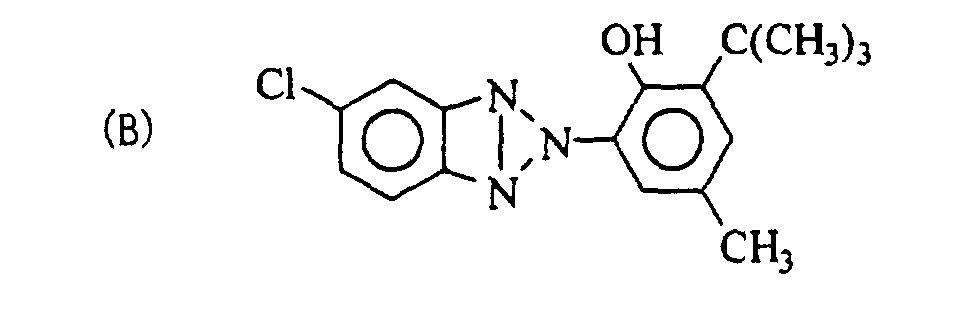
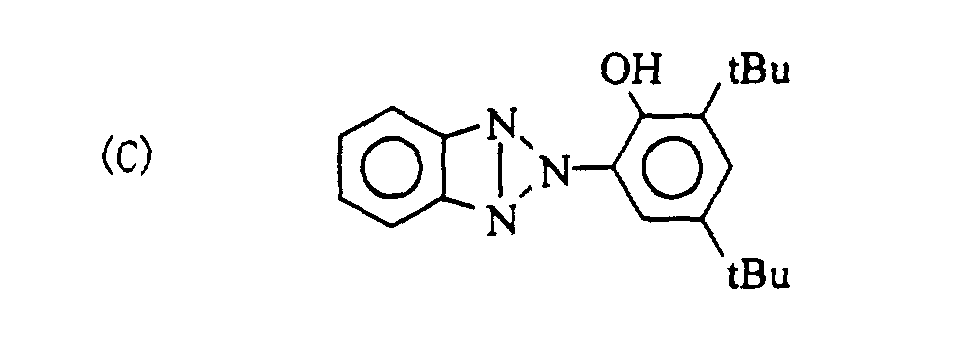
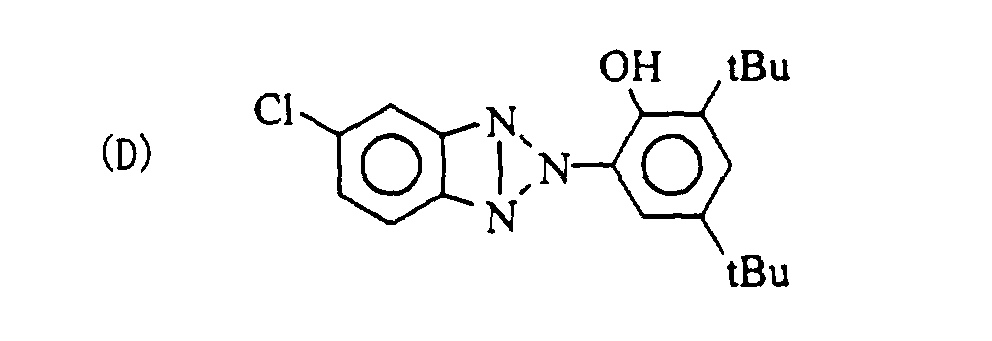
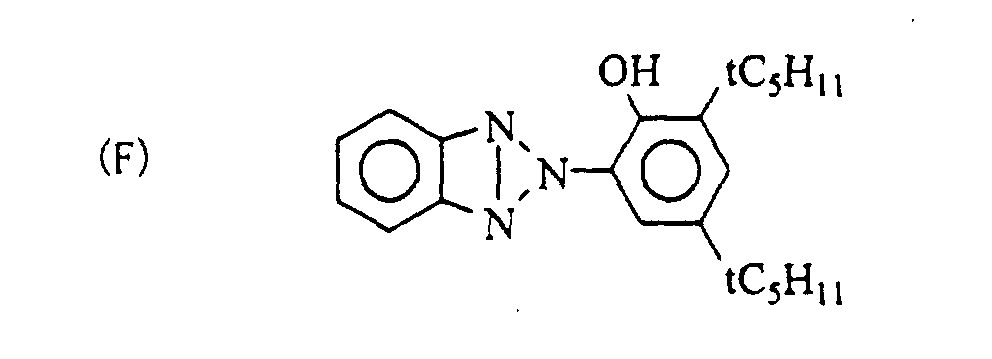
  • the ultraviolet shielding layer and/or the image-receiving layer may contain, in addition to the fine-particle titanium oxide, if necessary, an ultraviolet absorber (ultraviolet shielding agent) of an organic substance, such as a hydroxyarylbenzotriazole compound, a benzoxazole compound, a hydroxyaryltriazine compound, a benzophenone compound, an cinnamic ester compound, or a butadiene compound.
  • an ultraviolet absorber ultraviolet shielding agent
  • an organic substance such as a hydroxyarylbenzotriazole compound, a benzoxazole compound, a hydroxyaryltriazine compound, a benzophenone compound, an cinnamic ester compound, or a butadiene compound.
  • a hydroxyarylbenzotriazole compound and a hydroxyaryltriazine compound are particularly preferred.
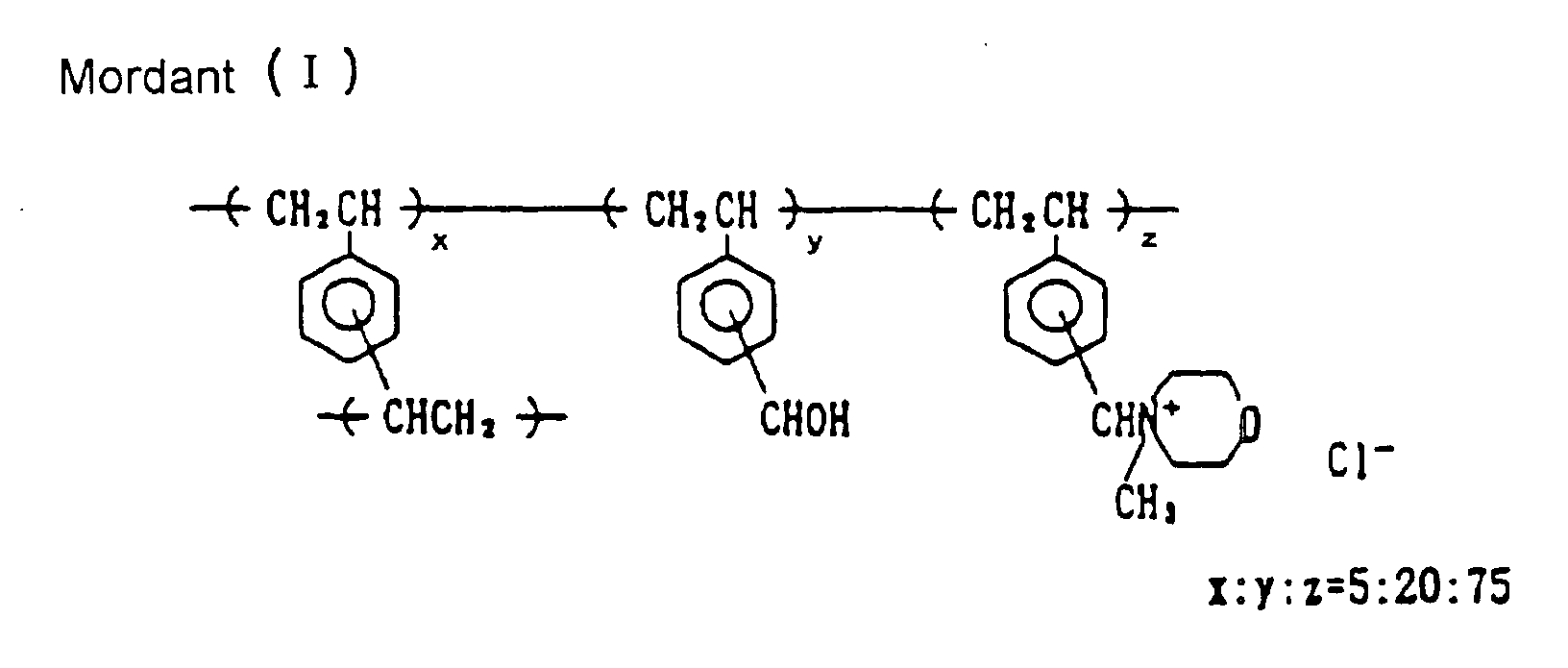
  • the mordant that can be used in the photographic film unit of the present invention is explained in detail below.
  • the mordant that can be used in the photographic film unit of the present invention may be added singly or together with a hydrophilic binder, such as gelatin or polyvinyl alcohol, into the image-receiving layer of the image-receiving element.
  • a hydrophilic binder such as gelatin or polyvinyl alcohol
  • the mordant is generally a polymer designed to immobilize diffusive dyes produced image-wise.
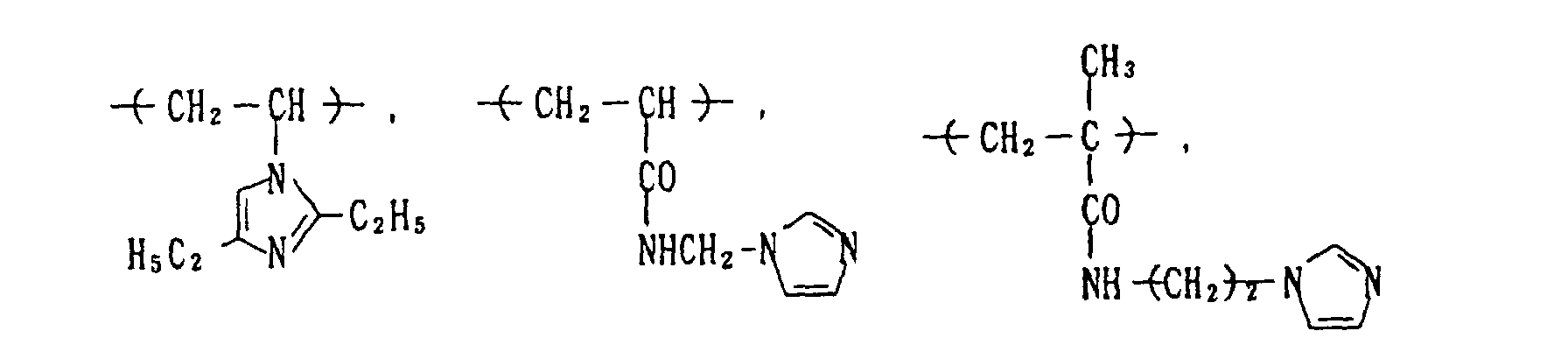
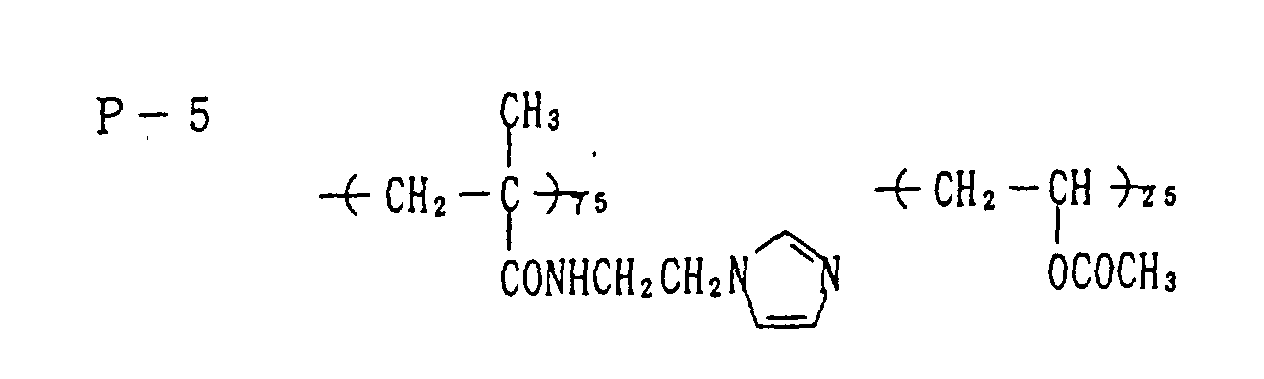
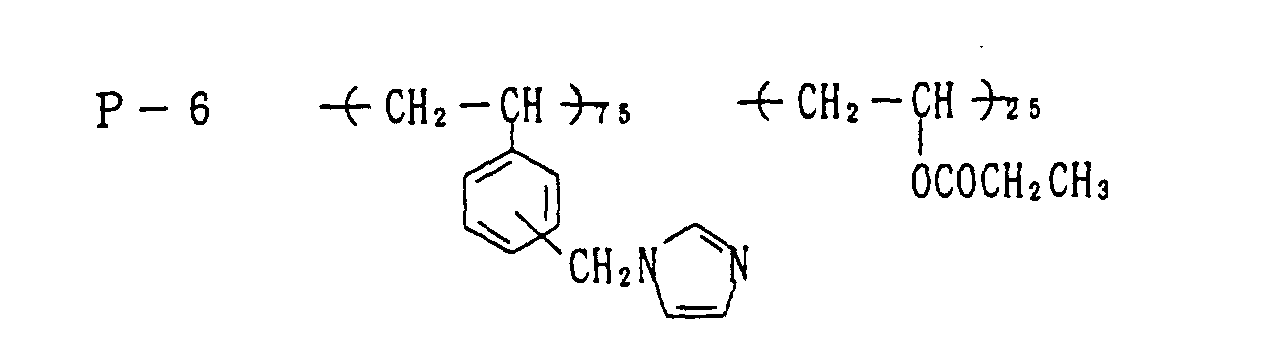
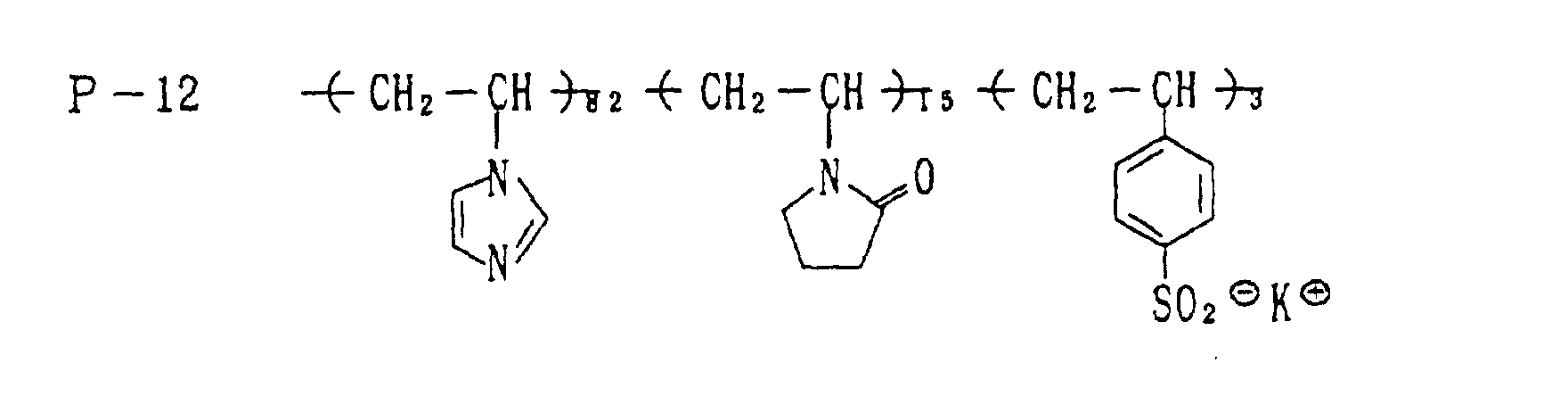
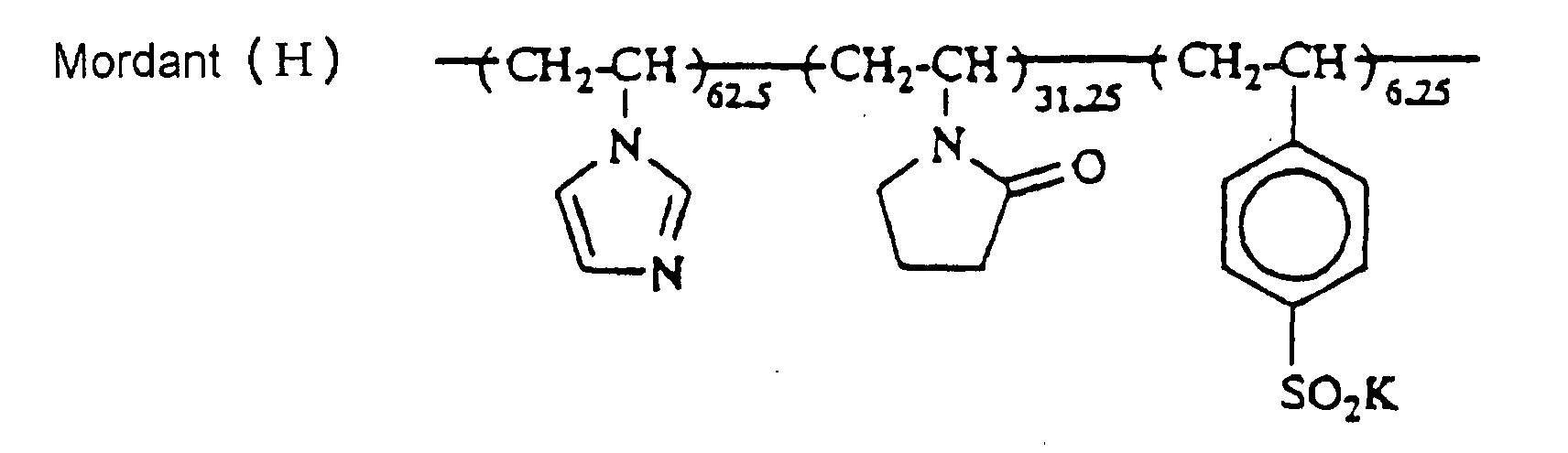
  • the mordant is a polymer that contains, as a constituent element, a repeating unit represented by the following formula (I) and at least one repeating unit selected from the group consisting of repeating units represented by the following formula (II), formula (III), formula (IV), or formula (V):
  • R 1 , R 2 , and R 3 each represent a hydrogen atom or an alkyl group having 1 to 6 carbon atoms, L represents a divalent linking group having 1 to 20 carbon atoms, and m is 0 or 1;
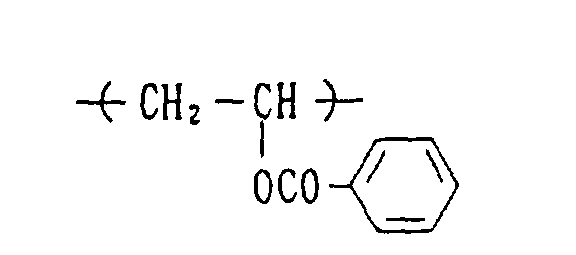
  • R 1 has the same meaning as R 1 in the formula (I), R 4 represents an alkyl group, an alkoxy group, an aryl group, or an aralkyl group, and n is 0 or 1;
  • R 1 has the same meaning as R 1 in the formula (I);
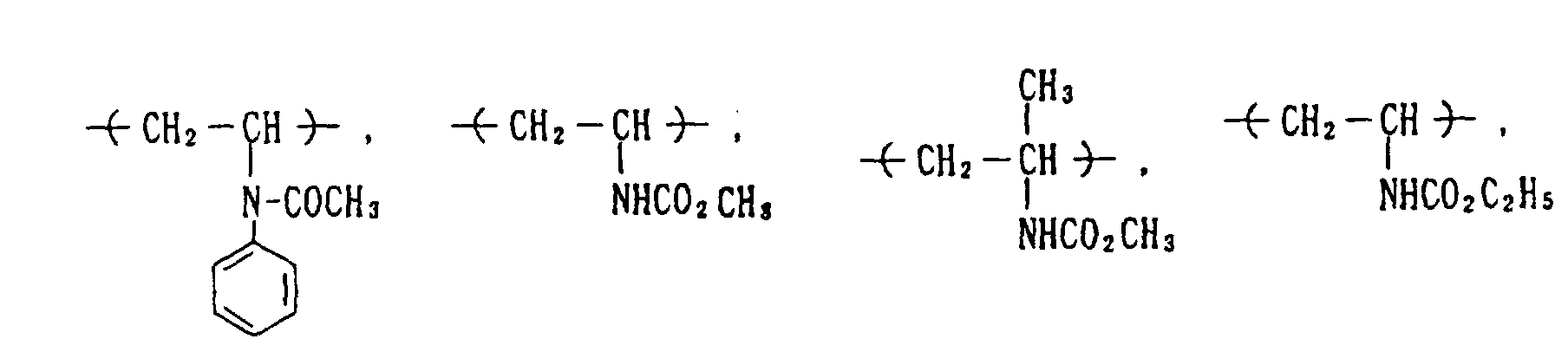
  • R 5 and R 6 each represent a hydrogen atom, an alkyl group, an alkoxy group, an aryl group, or an aralkyl group; and p and q are each 0 or 1;
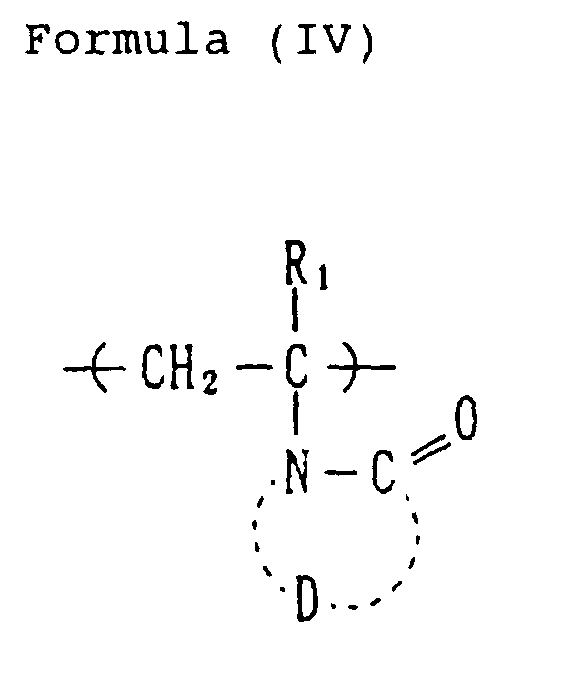
  • R 1 has the same meaning as R 1 in the formula (I), and D represents a divalent linking group necessary for forming a 5- to 7-membered ring together with the nitrogen atom and the carbonyl group;
  • R 1 , L, and m have the same meanings, respectively, as those in the formula (I); and E represents a divalent linking group necessary for forming a 5- to 7-membered ring together with the C, and M represents a hydrogen atom or an alkali metal element.
  • the polymeric mordant for use in the present invention may contain two or more repeating units included in different formulae selected from the formula (II), the formula (III), the formula (IV), and the formula (V).
  • the polymeric mordant for use in the present invention may contain two or more repeating units included in one formula selected from the formulae listed above.
  • R 1 , R 2 , and R 3 each represent a hydrogen atom or a lower alkyl group having 1 to 6 carbon atoms.
  • the lower alkyl group include methyl, ethyl, n-propyl, n-butyl, n-amyl, and n-hexyl groups.
  • R 1 , R 2 , and R 3 each are particularly preferably a hydrogen atom, a methyl group, or an ethyl group.
  • L represents a divalent linking group having 1 to 20 carbon atoms.
  • Example of the group represented by L include alkylene groups (e.g., methylene, ethylene, trimethylene, and hexamethylene groups), phenylene groups (e.g., o-, p-, or m-phenylene groups), arylenealkylene groups, -CO 2 -, -CO 2 -R 23 - (in which R 23 represents an alkylene group, a phenylene group, or an arylenealkylene group), -CONH-R 23 - (in which R 23 represents the same group as above), and -CON(-R 21 )-R 23 - (in which R 21 represents the same group as R 1 ; and R 23 represents the same group as the above R 23 ).
  • alkylene groups e.g., methylene, ethylene, trimethylene, and hexamethylene groups
  • phenylene groups e.g., o-, p-, or
  • -CO 2 - -CONH-, -CO 2 -CH 2 -CH 2 -, -CO 2 -CH 2 -CH 2 -CH 2 -, -CONH-CH 2 -, -CONH-CH 2 -CH 2 -, -CONH-CH 2 -CH 2 -CH 2 -CH 2 -
  • R 4 , R 5 , and R 6 each represent an alkyl group (preferably an alkyl group having 1 to 6 carbon atoms, for example, an unsubstituted alkyl group (methyl group, ethyl group, n-propyl group, n-butyl group, iso-butyl group, n-amyl group, hexyl group, n-nonyl group, n-decyl group, n-dodecyl group, and the like), and a substituted alkyl group (methoxyethyl group, 3-cyanopropyl group, ethoxycarbonylethyl group, acetoxyethyl group, hydroxyethyl group, 2-butenyl group, and the like)), an alkoxy group (methoxy group, ethoxy group, and the like), an aryl group (preferably an aryl group having 6 to 30 carbon atoms, for example, an unsubstituted alky
  • R 5 and R 6 each represent a hydrogen atom besides the groups listed above, and a hydrogen atom is particularly preferred in some cases.
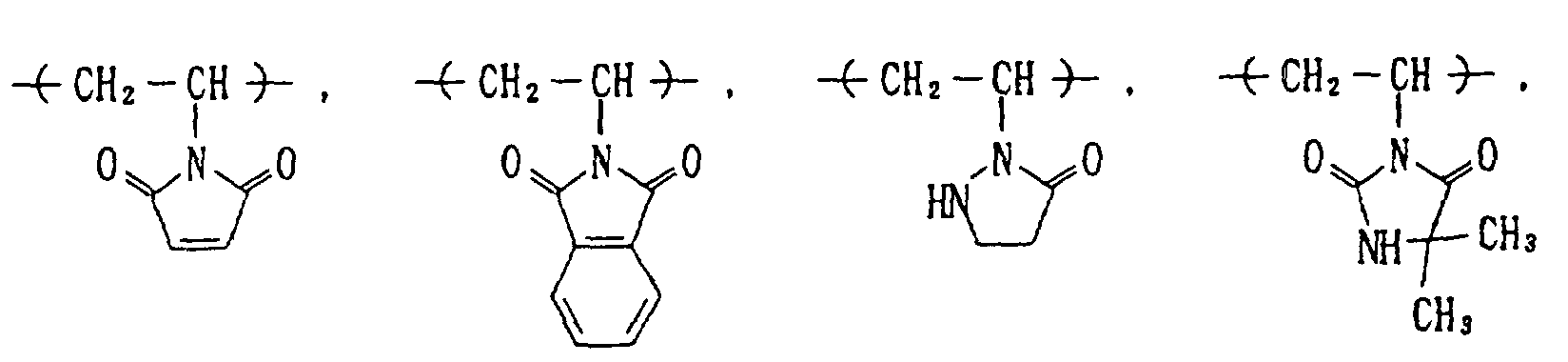
  • repeating unit represented by the formula (III) examples include the repeating units having a structure formed by the polymerization of the N-vinyl compounds described in "Gosei Kobunshi III", pages 1 to 51, edited by Murahashi, Imoto, and Tani, Asakura Shoten, 1971. Preferred specific examples of the repeating unit represented by the formula (III) are shown below.
  • D represents a divalent linking group necessary for forming a 5- to 7-membered ring together with the nitrogen atom and the carbonyl group.
  • Examples of the repeating unit represented by the formula (IV) include the repeating units having a structure formed by the polymerization of the N-vinyl compounds described in "Gosei Kobunshi III" mentioned above.
  • the divalent linking group E necessary for forming a 5- to 7-membered ring is preferably one that forms a benzene ring.
  • M is preferably hydrogen, potassium, or sodium.
  • the repeating unit represented by the formula (I) occupies preferably 10 to 98 mole %, more preferably 40 to 90 mole %, of the total repeating units.
  • the repeating unit represented by the formula (II), (III), (IV), or (V) occupies preferably 2 to 60 mole %, more preferably 3 to 50 mole %, of the total repeating units. It is also preferable that the mordant contains another repeating unit other than the repeating units listed above, and the proportion of the another repeating unit is preferably 40 mole % or less of the total repeating units.
  • repeating unit represented by the formula (II), (III), or (IV) is particularly preferable.
  • terminals of these polymers are not particularly limited, and the terminals may be any of a hydrogen atom, an alkyl group, and the like.
  • the molecular weight of the polymeric mordant for use in the photographic film unit of the present invention is preferably 5 ⁇ 10 3 to 1 ⁇ 10 7 . If the molecular weight is too small, the polymer becomes easily mobile, whereas, if the molecular weight is too large, coating of the mordant on an image-receiving material may be hindered.
  • the molecular weight of the polymeric mordant is more preferably 1 ⁇ 10 4 to 2 ⁇ 10 6 .
  • terminals of these polymeric compounds are not particularly limited, and the terminals may be any of a hydrogen atom, an alkyl group, and the like.
  • a coating aid use can be made of a dispersing agent and a surface active agent, such as anionic dispersing agents, e.g., alkylphenoxyethoxysulfonates, alkylbenzenesulfonates, alkylnaphthalenesulfonates, alkylsulfuric acid ester salts, alkylsulfosuccinates, sodium oleylmethyltauride, naphthalenesulfonic acid/formaldehyde condensation products, polyacrylic acids, polymethacrylic acids, maleic acid/acrylic acid copolymers, carboxymethyl cellulose, and cellulose sulfates; nonionic dispersing agents, e.g., polyoxyethylene alkyl ethers, sorbitan fatty acid esters, and polyoxyethylenesorbitan fatty acid esters; cationic dispersing agents; and betaine-type dispersing agents, as well as fluorine-containing noni
  • the ratio by mass of the coating aid to be used to the polymeric mordant is preferably 0.01 to 0.5 and more preferably 0.1 to 0.3.
  • the method of dispersing the polymeric mordant is not particularly limited and known methods can be employed.
  • the polymeric mordant is used exclusively with gelatin (including a derivative thereof) or is used with a combination of gelatin and another binder, in a mordant layer of the image-receiving material.
  • a hydrophilic binder can be used as this binder.
  • the hydrophilic binder other than gelatin are typically transparent or translucent hydrophilic colloids, which include naturally occurring materials, such as polysaccharides, e.g., cellulose derivatives, starch, and gum arabic, and synthetic polymers, such as polyvinylpyrrolidone, acrylamide polymers, and water-soluble polyvinyl compounds of polyvinyl alcohol.
  • the mixing ratio of the polymeric mordant/binder and the amount to be coated of the polymeric mordant can be easily determined by those skilled in the art based on the amount of the dyes to be mordanted, and the kind or composition of the polymeric mordant.
  • the ratio of the polymeric mordant/binder is 20/80 to 90/10 (by mass).
  • the amount to be coated of the polymeric mordant is preferably 0.2 to 15 g/m 2 and more preferably 0.5 to 8 g/m 2 .
  • the layer containing the polymeric mordant can be formed by an ordinary coating method and the drying can also be performed by an ordinary manner (i.e., solidification of the gelatin film at a low temperature, followed by gradual removal of water at 30 to 50°C).
  • an ordinary manner i.e., solidification of the gelatin film at a low temperature, followed by gradual removal of water at 30 to 50°C.
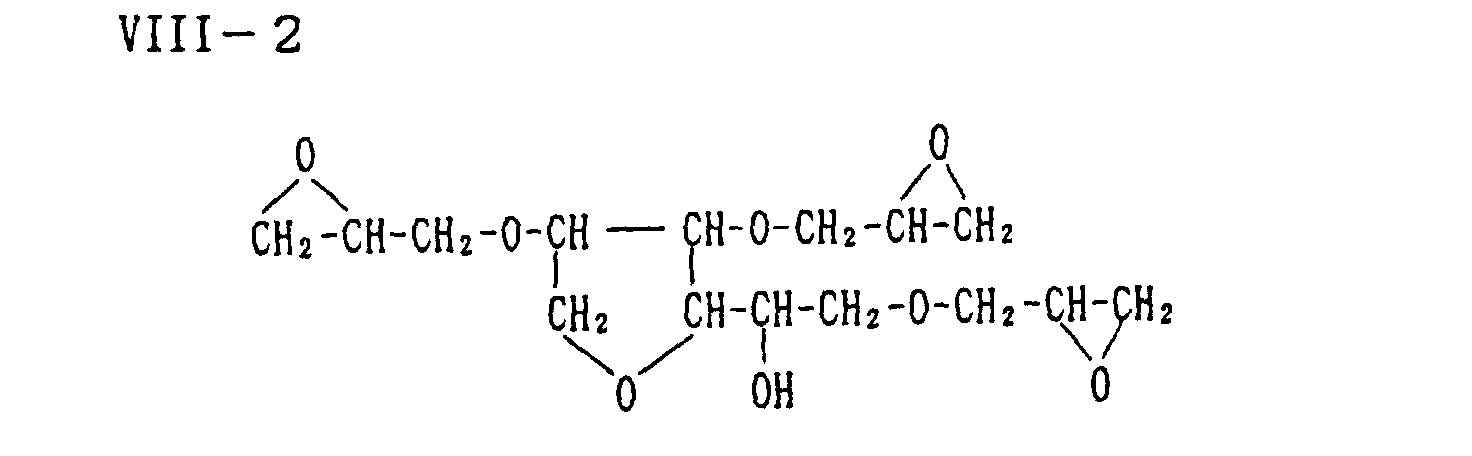
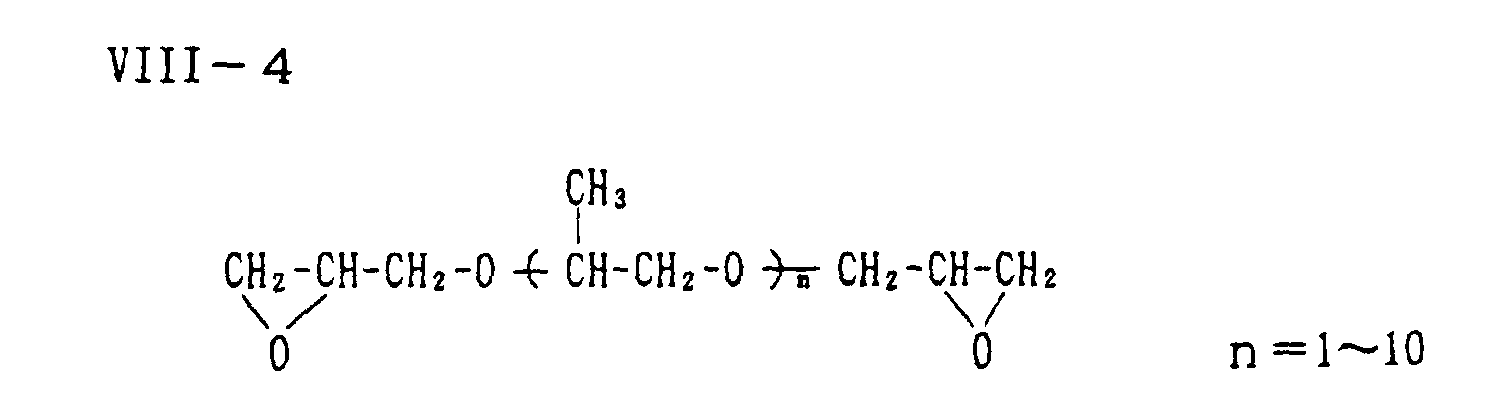
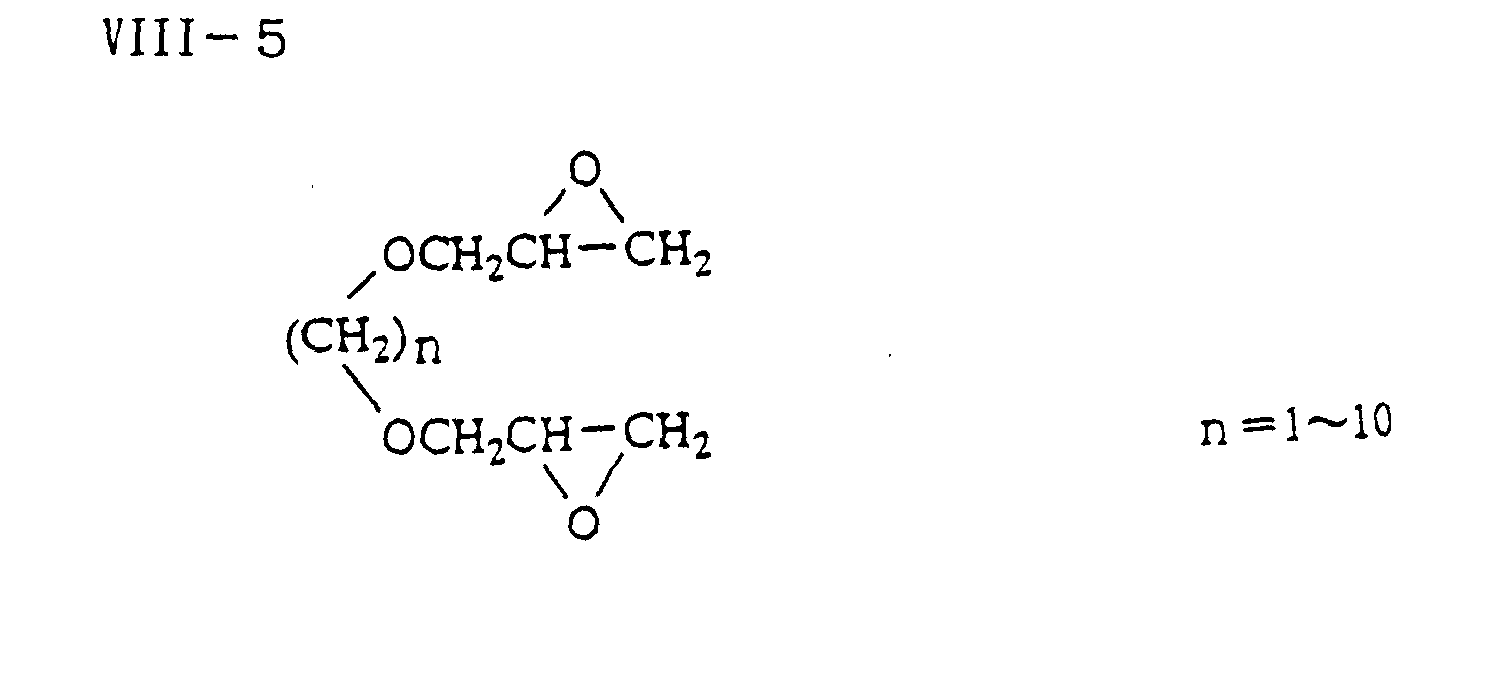
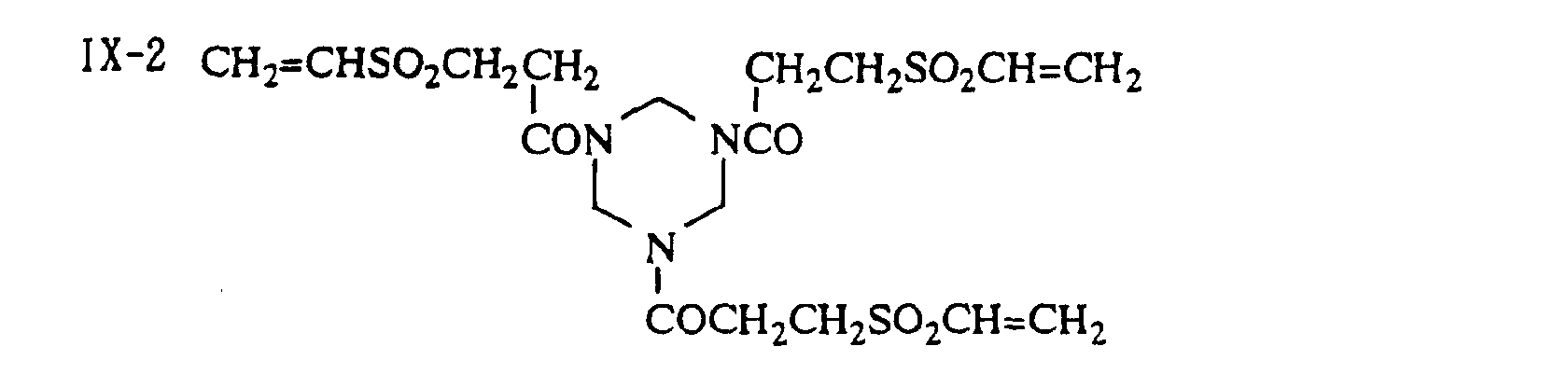
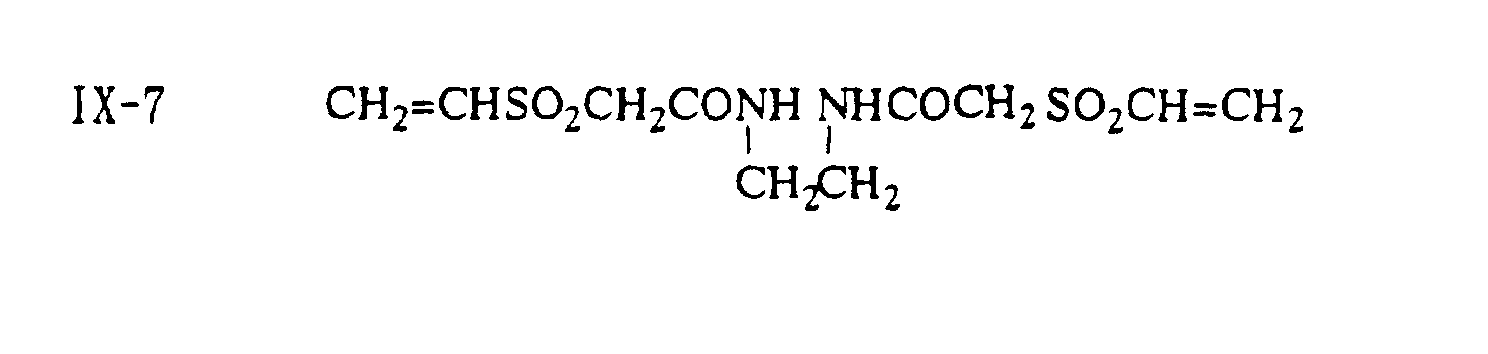
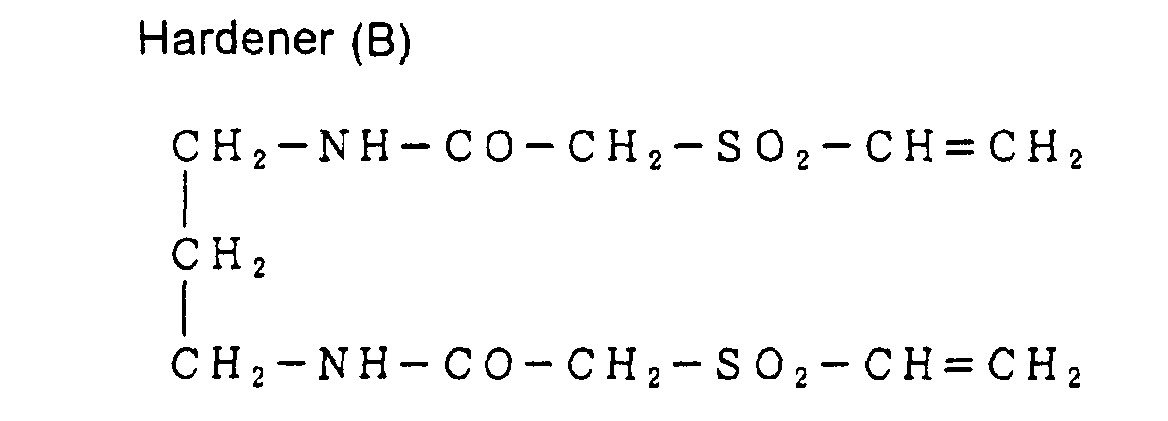
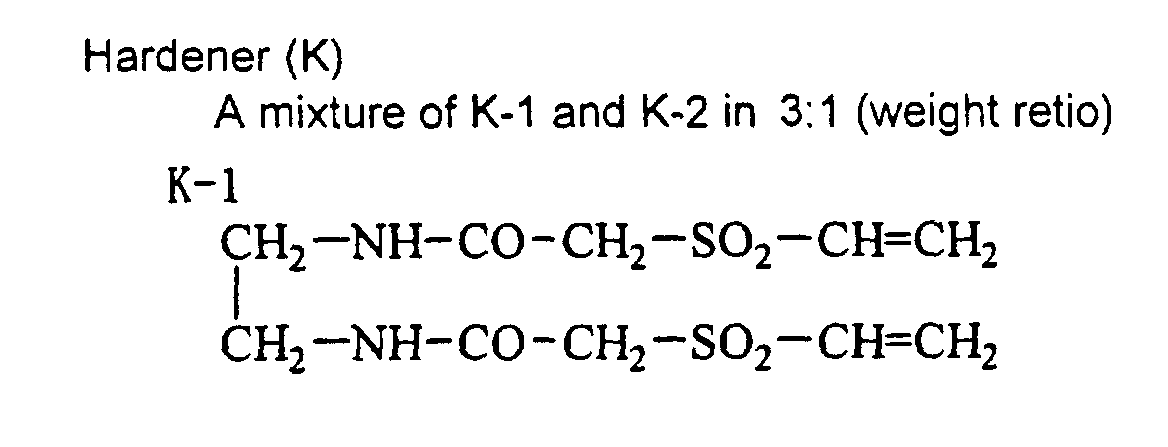
  • a common hardener (such as aldehyde, vinylsulfone, epoxy, or active-halogen compounds) can be used, in the layer containing the polymeric mordant.
  • the amount of the hardener to be used in the present invention is preferably 0.01 to 15% by mass, more preferably 0.1 to 5% by mass, to the amount of gelatin in the mordant layer.
  • the epoxy group-containing hardener, the vinylsulfone-group containing hardener, and the aldehyde-group containing hardener, each of which can be used in the photographic film unit of the present invention, are explained below.
  • the purpose of using these compounds is to cause crosslinking between the polymeric mordants, between the polymeric mordant and a binder such as gelatin, and/or between the binders such as gelatin, so that the water resistance and film physical properties of the layer containing the polymeric mordant become satisfactory.
  • vinylsulfone-series hardener examples include the following substances.
  • the amount (or the total amount of the hardeners if two or more hardeners are used together) of the hardener to be used in the photographic film unit of the present invention is preferably 0.01 to 30% by mass, more preferably 0.1 to 15% by mass, to the amount of gelatin in the mordant layer.
  • hydrophobic particles in the image-receiving element, because the use of the hydrophobic particles can improve the adhesive properties of the surface of the photographic material.
  • Particularly useful as the hydrophobic particles are matt agents which roughen the surface. Examples of the matt agent include particles of polymethyl methacrylate, particles of a methyl methacrylate/methacrylic acid copolymer, particles of silica (silicon dioxide), particles of strontium barium sulfate, and non-light-sensitive silver halide fine-grains.
  • a fluorine-containing surfactant, a silicone-series compound, a liquid paraffin, or the like can be a surface modifier that chemically changes the surface properties
  • a matt agent which physically modifies the surface properties, provides more preferable effects in the present invention.
  • a matt agent having a particle diameter larger than the thickness of the image-receiving layer to which the matt agent is to be added is preferable.
  • Preferable amount of the matt agent to be added vary depending on, for example, the material or particle diameter of the matt agent to be used.
  • a preferable amount of the matt agent to be used is in the range of 0.003 to 0.10 g/m 2 .
  • the hydrophobic particles may also be added to the ultraviolet shielding layer (titanium oxide-containing layer) formed by using a coating solution containing the ultraviolet shielding filter agent of the present invention, and to the peel layer, besides the image-receiving layer.
  • the thickness of the image-receiving layer is preferably 2 to 15 ⁇ m and more preferably 4 to 8 ⁇ m.
  • the ultraviolet shielding filter agent of the present invention is not limited to be used for photography, and the ultraviolet shielding filter agent can also be used as a filter material to be mixed in a plastic.
  • any one of smooth supports which are usually used for photographic light-sensitive materials, can be used.
  • the support is preferably provided with an undercoat layer.
  • the support preferably contains a minute amount of a dye or pigment, such as titanium oxide, in general, to prevent light-piping.
  • the thickness of the support is generally 50 to 350 ⁇ m, preferably 60 to 210 ⁇ m, and more preferably 70 to 150 ⁇ m.
  • a curl-balancing layer, or an oxygen-shielding layer as described in JP-A-56-78833 may be provided to the backside of the support, if necessary.
  • a light-shielding layer containing a light-shielding agent and a hydrophilic binder is provided between the support and the light-sensitive layer.
  • any material having a light-shielding function can be used, and carbon black is preferably used.
  • Decomposable dyes described, for example, in U.S. Patent No. 4,615,966 may also be used.
  • any binder may be used as far as it can disperse the light-shielding agent, such as carbon black, and gelatin is preferable.
  • raw materials of carbon black those produced by an arbitrary method, such as a channel method, thermal method, and furnace method, as described, for example, by Donnel Voet, "Carbon Black", Marcel Dekker, Inc. (1976), can be used. Although no particular limitation is imposed on the size of a carbon black particle, those having a particle size of 30 to 180 ⁇ m are preferable.
  • the amount of a black pigment to be added as the light-shielding agent may be controlled corresponding to the sensitivity of the light-sensitive material to be shielded, but the amount is preferably about 5 to about 10 in terms of optical density.
  • a light-sensitive layer comprising a silver halide emulsion layer combined with a dye-image-forming substance is provided as an upperlayer of the aforementioned light-shielding layer. Structural elements of the light-sensitive layer will be hereinafter explained.
  • the dye image-forming substance for use in the present invention is a nondiffusion compound that releases a diffusive dye (this may be a dye precursor), or a compound that is changed in its diffusibility, in association with silver development, and it is described in "The Theory of the Photographic Process", Macmillan, the Fourth edition.
  • formula (X) (DYE-Y) n -Z wherein DYE represents a dye group, a dye group that is temporarily short-waved, or a dye-precursor group, Y represents a simple bond or a linking group; Z represents a group having a property to produce a difference in diffusibility between the compounds represented by (DYE-Y) n -Z, or to release a DYE to produce a difference in diffusibility between the released DYE and the (DYE-Y) n -Z, corresponding to or inversely corresponding to a light-sensitive silver salt having a latent image image-wise; and, n is 1 or 2, in which two (DYE-Y) groups may be the same or different when n is 2.
  • these compounds are roughly classified into negative-type compounds that are changed to be diffusible in a silver developed area, and positive-type compounds that are changed to be diffusible in an undeveloped area.
  • negative type Z examples include those capable of being oxidized and cleft to release a diffusible dye as a result of development.
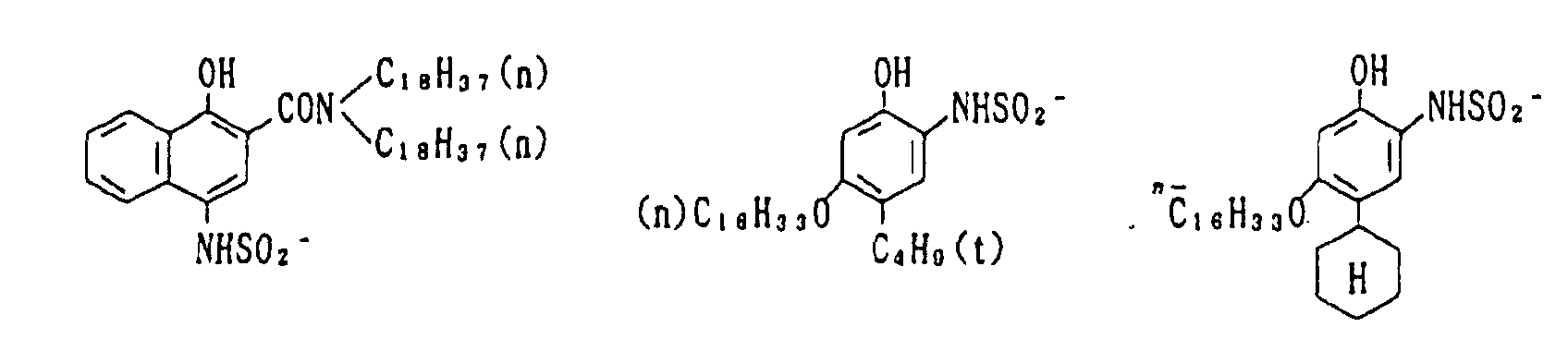
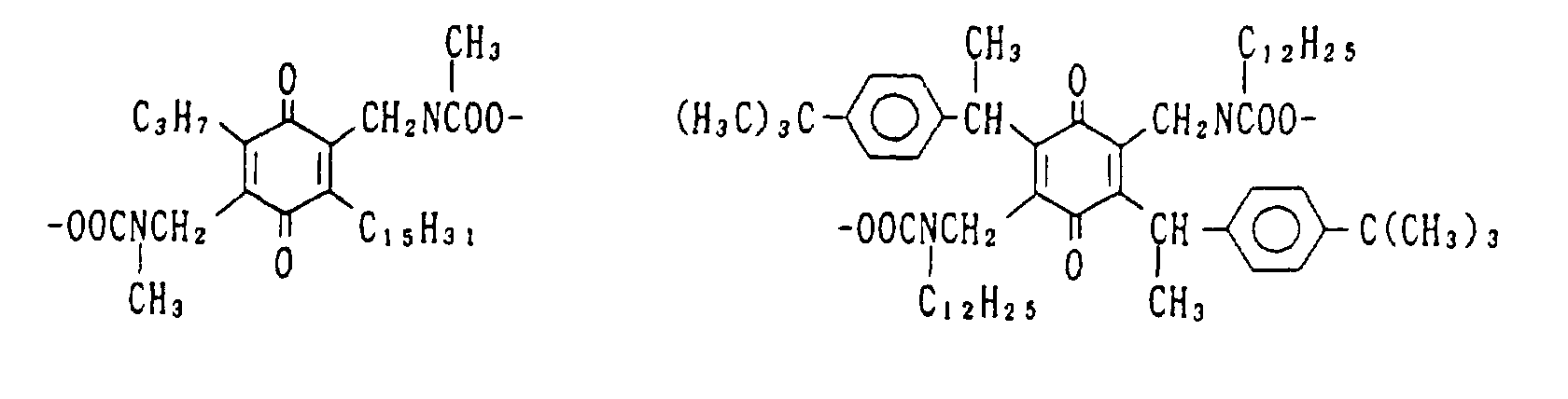
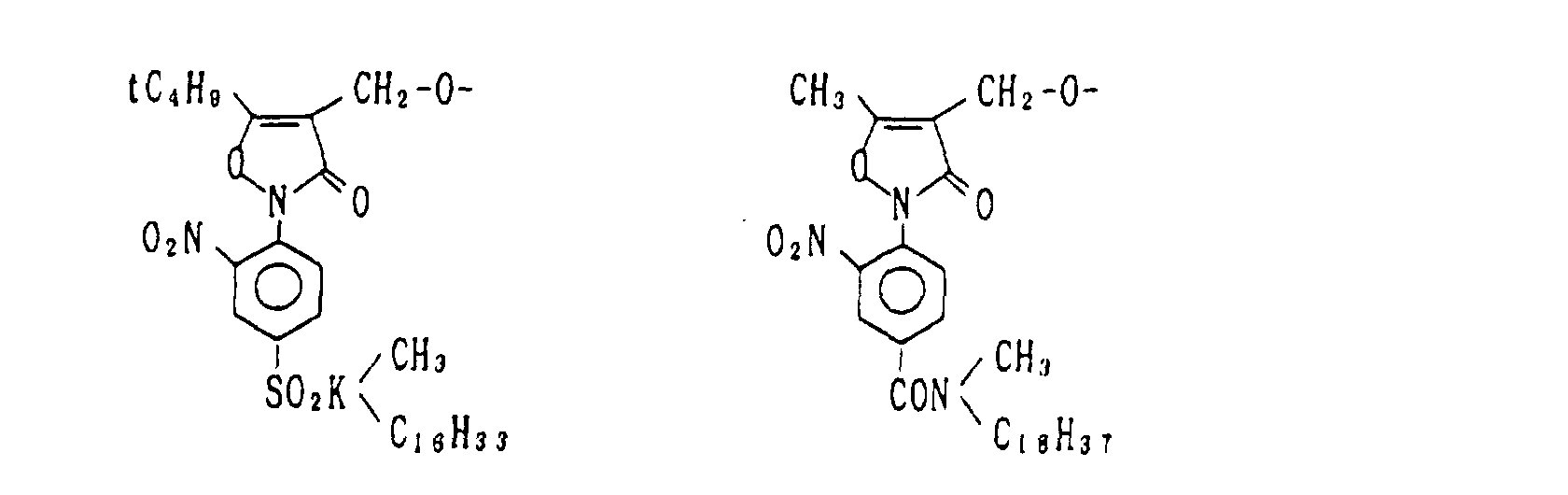
  • Examples of the particularly preferable group among Z of the negative-type dye-releasable redox compounds include N-substituted sulfamoyl groups (examples of the N-substituent include groups derived from aromatic hydrocarbon rings and heterocycles). Examples of typical groups of Z are shown below, but not limited to the following groups.
  • the positive type compound compounds (dye-developing agents) that are diffusible at the start in an alkaline condition and are oxidized by development to become non-diffusible, can be mentioned.
  • Typical examples of Z useful for compounds of this type include those described in U.S. Patent No. 2,983,606.
  • Another type is those that release a diffusible dye by, for example, self-ring-closing in an alkaline condition, but that substantially stop the release of the dye when being oxidized along with development.
  • Z having such a function are described, for example, in U.S. Patent No. 3,980,479, JP-A-53-69033, JP-A-54-130927 and U.S. Patents No. 3,421,964 and No. 4,199,355.
  • a further type includes those that themselves do not release any dye but release a dye when being reduced.
  • Compounds of this type are used in combination with an electron-donor, thereby they can release a diffusible dye image-wise due to the reaction with the remainder electron-donor oxidized image-wise by silver development.
  • Examples of the atomic group having such a function are described, for example, in U.S. Patents No. 4,183,753, No. 4,142,891, No. 4,278,750, No. 4,139,379 and No. 4,218,368, JP-A-53-110827, U.S. Patents No. 4,278,750, No. 4,356,249 and No.
  • a compound of this type When a compound of this type is used, preferably it is used in combination with an anti-diffusible electron-donating compound (well-known as an ED compound) or a precursor thereof.
  • an anti-diffusible electron-donating compound well-known as an ED compound
  • Examples of the ED compound are described, for example, in U.S. Patents No. 4,263,393 and No. 4,278,750 and JP-A-56-138736.
  • DYE represents a group to give a dye having the same meaning as described above, or a group to give a precursor of the dye.
  • magenta dyes examples include:
  • the silver halide emulsion for use in the present invention may be either a negative-type emulsion, which forms a latent image mainly on the surface of a silver halide grain, or an internal latent image-type direct positive emulsion, which forms a latent image inside of a silver halide grain.
  • Examples of the internal latent image type direct positive emulsion include a so-called “conversion type” emulsion, which is produced by making use of a difference in the solubility between silver halides; a “core/shell type” emulsion, which is produced by coating at least the light-sensitive site of an internal core particle of a silver halide with an external shell of a silver halide, wherein the internal core particle is doped with a metal ion, chemically sensitized or provided with the both treatments; and other emulsions.
  • conversion type emulsion
  • core/shell type which is produced by coating at least the light-sensitive site of an internal core particle of a silver halide with an external shell of a silver halide, wherein the internal core particle is doped with a metal ion, chemically sensitized or provided with the both treatments
  • other emulsions are described in U.S. Patents No. 2,592,250 and No. 3,206,313, U.K. Patent No. 1,
  • nucleating agent examples include hydrazines described in U.S. Patent Nos. 2,563,785 and 2,588,982; hydrazines and hydrazones described, for example, in U.S. Patent No. 3,227,552; heterocyclic quaternary salt compounds described in U.K. Patent No. 1,283,835, JP-A-52-69613, U.S. Patent Nos. 3,615,615, 3,719,494, 3,734,738, 4,094,683, and 4,115,122; sensitizing dyes having a substituent capable of nucleation, in the dye molecule, as described in U.S. Patent No.
  • a spectral sensitizing dye may be used, in combination with the negative-type emulsion and/or the internal latent image-type direct positive emulsion.
  • Specific examples of the spectral sensitizing dye are described in JP-A-59-180550, JP-A-60-140335, Research Disclosure (RD) No. 17029, U.S. Patent No. 1,846,300, U.S. Patent No. 2,078,233, U.S. Patent No. 2,089,129, U.S. Patent No. 2,165,338, U.S. Patent No. 2,231,658, U.S. Patent No. 2,917,516, U.S. Patent No. 3,352,857, U.S. Patent No.
  • a light-sensitive layer that comprises at least two combinations of the emulsion, which is spectrally sensitized by the above spectral sensitizing dye, and the aforementioned dye-image-forming substance, which donates a dye having selective spectral absorption in the same wavelength range as the emulsion, can be used.
  • the emulsion and the dye-image-forming substance may be coated such that they are overlapped as separate layers, or may be coated as one layer by mixing them.
  • the separate layer system is preferable.
  • the emulsion layer may be composed of a plurality of emulsion layers having different sensitivities each other, and further an optional layer may be provided between the emulsion layer and the dye-image-forming substance layer.
  • an optional layer may be provided between the emulsion layer and the dye-image-forming substance layer.
  • a layer containing a nucleating development accelerator as described in JP-A-60-173541, or a bulkhead layer as described in JP-B-60-15267 may be provided to increase the density of a resulting color image, and also a reflecting layer may be provided to increase the sensitivity of the light-sensitive element.
  • the reflecting layer is a layer generally containing a white pigment and a hydrophilic binder.
  • the white pigment is preferably titanium oxide and the hydrophilic binder is preferably gelatin.
  • the amount of titanium oxide to be coated is generally 0.1 g/m 2 to 8 g/m 2 , and preferably 0.2 g/m 2 to 4 g/m 2 . Examples of the reflecting layer are described in JP-A-60-91354.
  • a combination unit of a blue-sensitive emulsion, a combination unit of a green-sensitive emulsion, and a combination unit of a red-sensitive emulsion are arranged in this order, from the exposure side.
  • any arbitrary layer may be provided, as required, between the emulsion layer units.
  • an intermediate layer is preferably provided, to prevent undesirable influence that the effect due to development of a certain emulsion layer influences another emulsion layer unit.
  • the intermediate layer preferably contains a nondiffusive reducing agent, so as to prevent diffusion of an oxidized product of the developing agent.
  • a nondiffusive reducing agent include nondiffusive hydroquinones, sulfonamidophenols, sulfonamidonaphthols, and the like. Further, specific examples are described in JP-A-50-21249, JP-A-50-23813, JP-A-49-106329, and JP-A-49-129535, U.S. Patent Nos.
  • the intermediate layer contains a compound which supplements the silver ion.
  • an irradiation-preventing layer a layer containing a UV absorbing agent, a protective layer, and the like can also be provided in the present invention.
  • a support for the image-receiving element use can be made of a support that is able to withstand the processing temperature.
  • the support include paper and a synthetic polymer (film).
  • Specific examples of the usable support include polyethylene terephthalates, polycarbonates, polyvinyl chlorides, polystyrenes, polypropylenes, polyimides, and celluloses (e.g., triacetyl celluloses), as well as films thereof containing a pigment, such as titanium oxide, therein.
  • the support include film-process synthetic papers made from polypropylene or the like; mixed papers made from a pulp of a synthetic resin, such as polyethylene, and a natural pulp; Yankee papers, baryta papers, coated papers (cast-coated paper, in particular), metals, clothes, glasses, and the like.
  • the materials listed above may be used singly to make the support, or alternatively the support may be composed of any of these materials whose one side or both sides are laminated with a synthetic polymer such as polyethylene. Further, polyethylene containing carbon black kneaded therein may be inserted between sheets of paper, to thereby provide a light-shielding effect.
  • the supports described in JP-A-62-253159, pages (29) to (31) may also be used.
  • the surface of these supports may be coated with an antistatic agent, such as carbon black, a semiconducting metal oxide including tin oxide or alumina sol, and a hydrophilic binder.
  • a peel layer which is to be peeled off in any position of the image-receiving element inside the unit after processing, is provided. Therefore, the peel layer needs to be easily peeled off after the processing.
  • the materials of the peeling layer those described in, for example, JP-A-47-8237, JP-A-59-220727, JP-A-59-229555, JP-A-49-4653, U.S. Patents No. 3,220,835 and No. 4,359,518, JP-A-49-4334, JP-A-56-65133, JP-A-45-24075 and U.S. Patents No. 3,227,550, No. 2,759,825, No. 4,401,746 and No. 4,366,227, and the like, can be used.
  • water-soluble (or alkali-soluble) cellulose derivatives may be given.
  • cellulose derivative examples include hydroxyethyl cellulose, cellulose acetate phthalate, plasticized methyl cellulose, ethyl cellulose, cellulose nitrate, and carboxymethyl cellulose.
  • Other examples include a variety of natural polymers, for example, alginic acid, pectin, gum arabic, and the like.
  • various modified gelatins for example, an acetylated gelatin, a phthalated gelatin, and the like may be used.
  • water-soluble synthetic polymers can be mentioned. Examples thereof include polyvinyl alcohols, polyacrylates, polymethyl methacrylates, polybutyl methacrylates, or copolymers of these compounds, and the like.
  • the peeling layer may be a single layer, or one composed of a plurality of layers, as described in JP-A-59-220727, JP-A-60-60642, or the like.
  • the color diffusion-transfer light-sensitive material according to the present invention is given neutralizing function between the support and the light-sensitive layer, or between the support and the image-receiving layer, or on the image-receiving element.
  • the layer having a neutralizing function for use in the present invention is a layer generally containing an acidic substance in an amount enough to neutralize an alkali delivered from processing compositions, and it may be one having a multilayer structure comprising a neutralizing rate-controlling layer (timing layer), an adhesion-reinforced layer, and the like, according to the need.
  • a preferable acidic substance is a substance that contains an acidic group having a pKa of 9 or less (or a precursor group providing such an acidic group by hydrolysis). More preferable examples of the acidic substance include higher fatty acids, such as oleic acid, as described in U.S. Patent No.
  • the acidic polymer include a copolymer of a vinyl monomer, such as, ethylene, vinyl acetate and vinyl methyl ether, with malic acid anhydride, and its n-butylester, copolymer of butylacrylate and acrylic acid, cellulose, acetate/hydrogen phthalate, and the like.
  • the aforementioned polymer acid may be used by mixing with a hydrophilic polymer.
  • a hydrophilic polymer examples include polyacrylamide, polymethylpyrrolidone, polyvinyl alcohol (including partially saponified products), carboxymethyl cellulose, hydroxymethyl cellulose, hydroxyethyl cellulose, polymethyl vinyl ether, and the like. Among these compounds, polyvinyl alcohol is preferable.
  • a polymer such as cellulose acetate, other than the hydrophilic polymers, may be mixed with the above polymer acid.
  • the amount of the polymer acid to be applied is controlled corresponding to the amount of an alkali developed between the light-sensitive element and the image-receiving element.
  • the equivalent ratio of the polymer acid to the alkali per unit area is preferably 0.9 to 2.0. If the amount of the polymer acid is too small, the hue of a transferred dye may be changed, or stain may be occurred on a white background portion; whereas if the amount is too large, this may bring about such disadvantage as a change in the hue or reduced light resistance.
  • the equivalent ratio is more preferably 1.0 to 1.3.
  • the quality of photographs may also be lowered, if the amount of the hydrophilic polymer to be mixed is too large or too small.
  • the mass ratio of the hydrophilic polymer to the polymer acid is generally 0.1 to 10, and preferably 0.3 to 3.0.
  • any of additives may be incorporated in the layer having a neutralizing function, for various purposes.
  • a hardener well-known to a person skilled in the art may be added for the purpose of film-hardening of this layer, and a polyvalent hydroxyl compound, such as polyethylene glycol, polypropylene glycol, or glycerol, may be added for the purpose of improving brittleness of the film.
  • an antioxidant, a fluorescent whitening agent, a development inhibitor or its precursor, and the like may be added, if necessary.
  • a material for the timing layer that can be used in combination with the neutralizing layer useful are a polymer that reduces alkali-permeability, such as a gelatin, polyvinyl alcohol, partially acetalized polyvinyl alcohol, cellulose acetate, or partially hydrolyzed polyvinyl acetate; a latex polymer, which is produced by the copolymerization with a small amount of a hydrophilic comonomer such as an acrylic acid monomer, and which raises an active energy for the permeation of an alkali; and a polymer having a lactone ring.
  • a polymer that reduces alkali-permeability such as a gelatin, polyvinyl alcohol, partially acetalized polyvinyl alcohol, cellulose acetate, or partially hydrolyzed polyvinyl acetate
  • a latex polymer which is produced by the copolymerization with a small amount of a hydrophilic comonomer such as an acrylic acid monomer, and which raises
  • cellulose acetates used for forming the timing layer as disclosed in JP-A-54-136328, and U.S. Patents No. 4,267,262, No. 4,009,030, No. 4,029,849, and the like; latex polymers, which are produced by the copolymerization of a small amount of a hydrophilic comonomer such as an acrylic acid, as disclosed in JP-A-54-128335, JP-A-56-69629, JP-A-57-6843 and U.S. Patents No. 4,056,394, No. 4,061,496, No. 4,199,362, No. 4,250,243, No. 4,256,827, No.
  • a hydrophilic comonomer such as an acrylic acid
  • polymers having a lactone ring as disclosed in U.S. patent No. 4,229,516; and other polymers as disclosed in JP-A-56-25735, JP-A-56-97346, JP-A-57-6842, European Patent (EP) No. 31,957A1, EP No. 37,724A1 and EP No. 48,412A1, and the like, are particularly useful.
  • the timing layer using these materials may be a single layer, or a combination of two or more layers.
  • a development inhibitor and/or its precursor as disclosed in, for example, U.S. Patent No. 4,009,029, West Germany Patent Application (OLS) No. 2,913,164, ibid. No. 3,014,672, JP-A-54-155837, JP-A-55-138745 and the like, a hydroquinone precursor as disclosed in U.S. Patent No. 4,201,578, and other useful photographic additives or their precursors, may be incorporated.
  • JP-A-63-168648 and JP-A-63-168649 has an effect in view of reducing a change of transferred density due to the lapse of time after processing.
  • a layer containing the aforementioned polymeric mordant can be effectively used.
  • a backing layer may be provided, as layers having auxiliary functions.
  • the backing layer is provided to control curling, and to impart lubricity or a function of light shielding.
  • the processing composition for use in the present invention is designed for being developed uniformly between the light-sensitive element and the image-receiving element after exposure of the light-sensitive element so that the development of the light-sensitive layer is performed.
  • the composition contains, for example, an alkali, a viscosity-enhancing agent, a developing agent, further a development accelerator or development inhibitor for controlling development, an antioxidant for preventing deterioration of the developing agent, and the like.
  • the alkali is one sufficient to make the pH of a solution in a range from 12 to 14.
  • the alkali include hydroxides of an alkali metal (e.g., sodium hydroxide, potassium hydroxide, and lithium hydroxide), phosphates of an alkali metal (e.g., potassium phosphate), guanidines, and hydroxides of a quaternary amine (e.g., tetramethylammonium hydroxide).
  • potassium hydroxide and sodium hydroxide are preferable.
  • the viscosity-enhancing agent is used, for developing the processing solution uniformly, and for maintaining the adhesion between the light-sensitive layer and the cover sheet.
  • an alkali metal salt of polyvinyl alcohol, hydroxyethyl cellulose or carboxymethyl cellulose can be used, and preferably an alkali metal salt of hydroxyethyl cellulose or sodium carboxymethyl cellulose is used.
  • any one of those which cross-oxidize a dye-image-forming substance and cause substantially no stain even if it is oxidized can be used.
  • the developing agent may be used either singly or in a combination of two or more of the developing agent.
  • the developing agent can be used in the form of a precursor thereof.
  • the developing agent may be contained in a certain layer of the light-sensitive element, or in an alkaline processing solution.
  • aminophenols and pyrazolidinones can be given. Among these compounds, pyrazolidinones are particularly preferable because of less occurrence of stain.
  • pyrazolidinones include 1-phenyl-3-pyrazolidinone, 1-p-tolyl-4,4-dihydroxymethyl-3-pyrazolidinone, 1-(3'-methyl-phenyl)-4-methyl-4-hydroxymethyl-3-pyrazolidinone, 1-phenyl-4-methyl-4-hydroxymethyl-3-pyrazolidinone, 1-p-tolyl-4-methyl-4-hydroxymethyl-3-pyrazolidinone, and the like.
  • the alkaline processing composition (e.g. an alkali solution composition) is preferably transferred on the light-sensitive material, in a developed thickness (the amount of the processing solution per m 2 , after the processing solution is transferred) of 20 to 200 ⁇ m.
  • the processing temperature when processing the light-sensitive material for use in the present invention is preferably 0 to 50 °C, and more preferably 0 to 40 °C.
  • any of the light-sensitive element, the image-receiving element, and the alkaline processing composition may contain, for example, a development accelerator described on pp. 72-91, a hardener described on pp. 146-155, a surface-active agent described on pp. 201-210, a fluorine-containing compound described on pp. 210-222, a viscosity-enhancing agent described on pp. 225-227, an antistatic agent described on pp. 227-230, a polymer latex described on pp. 230-239, a matt agent described on page 240, each of the above are described in JP-A-62-215272.
  • the titanium oxide-containing ultraviolet shielding filter agent of the present invention is improved in dispersibility and stability with the lapse of time, and is preferable for photography.
  • the peel-apart-type color diffusion transfer film unit of the present invention, in which this ultraviolet shielding filter agent is used, is excellent in anti-stain property, light-resistant, and film physical properties.
  • the color diffusion transfer photographic film unit of the present invention has not only the improved light-resistance, film physical properties and anti-stain property, but also excellent photographic image quality of the resultant image, in some case. Further, the color diffusion transfer photographic film unit of the present invention can attain the improved productive stability, by incorporating a specific polyhydric alcohol into the ultraviolet shielding filter agent to be used, to improve stability of the filter agent with the lapse of time.
  • part and % mean part by mass and mass%, respectively, unless otherwise specified.
  • the dispersant A01 was mixed with gelatin so that the ratio of titanium oxide to gelatin would be 2 to 1, and further the mixture was applied onto a polyethylene telephthalate support so that the optical density at 350 nm would be 1 (a sample A01).
  • a sample B01 was prepared in the same manner as the sample A01, except that the above-mentioned fine-particle titanium oxide TI-A01 was changed to one having an average primary particle diameter of 55 nm and surface-treated with aluminum oxide of 10 %.
  • a sample D01 was produced in the same manner as the sample A01, except that glycerin was removed from (not used in) the sample A01.
  • the following layer structure was provided by coating on a support of 90- ⁇ m-thick transparent polyethylene terephthalate film, to produce a light-sensitive element (101).
  • Emulsion layer side is a first Emulsion layer side:
  • each of 1 g of a processing solution having the following composition was filled in a pod made of an aluminum foil, on which vinyl chloride was laminated, under a nitrogen atmosphere, to produce an alkaline processing composition.
  • Hydroxyethyl cellulose 42 g Zinc nitrate•6H 2 O 0.9 g 5-Methylbenzotriazole 5.4 g
  • Benzyl alcohol 3.4 ml Titanium dioxide 1.2 g
  • Potassium sulfite 1.0 g 1-Phenyl-4-hydroxy-4-hydroxymethyl-3-pyrazolidone 13.0 g Potassium hydroxide 63 g Water 854 ml
  • Image-receiving elements (0102) to (0107) were produced in the same manner as the image-receiving element (0101), except that the fine-particle titanium oxide TI-A01 in the image-receiving element 0101 was changed to titanium oxides TI-B01 to TI-G01, respectively, as shown in Table 2. Furthermore, an image-receiving element (0108) was produced in the same manner as the image-receiving element 0101, except that no glycerin was added to the dispersion of TI-A01.
  • the light-sensitive element (101) was exposed to light, imagewise, and then any one of the image-receiving elements (0101) to (0108) was superimposed on the exposed light-sensitive element (101). Then, the alkaline processing composition was developed between the resulting two elements to have a thickness of 51 ⁇ m.
  • the processing was performed at 25°C. After 90 seconds from the start of the processing, the light-sensitive element was peeled off from the image-receiving element. The peeled image-receiving element was irradiated with xenon light (85,000 lux) at 30°C in an atmosphere of 40% RH for 3 days. Thereafter, a drop in magenta density was measured (the density before irradiation: 1.0). A Fuji automatic record densitometer (made by Fuji Photo Film Co., Ltd.) was used to measure the minimum density.
  • the ratio between the absorbance at 400 nm and the absorbance at 350 nm was calculated and the ratio was used as an index of both the shading of ultraviolet light and a rise in absorption of visible light, which is an evil effect for shading ultraviolet light. As this ratio is larger, haze is weaker, so that the shade of ultraviolet light is favorably greater.
  • Image-receiving elements (0109) to (113) were prepared in the same manner as the image-receiving element 0101, except that the fine-particle titanium oxide TI-A01 was changed to TI-H01 to TI-L01, respectively, as shown in Table 3, in the image-receiving element 0101.
  • Example 1-2 the developing was carried out in the same manner as in Example 1-2, to measure the minimum density and the maximum density of the samples.
  • An image-receiving element (0114) was produced in the same manner as the image-receiving element 0101, except that the titanium oxide dispersion A01 (UV shielding filter agent) according to the present invention was added to the mordanting layer, in the same amount as in the element 0101, and the titanium oxide was omitted (not added) in the titanium oxide layer in the element 0101.
  • the resistance against light-fading of the sample (0114) was evaluated in the same manner as in Example 1-2, to give the value of 85%. It can be understood from this fact that the same advantageous effects are exhibited even if titanium oxide is incorporated into the image-receiving layer.
  • An image-receiving element was produced wherein glycerin was omitted in the titanium oxide dispersion in the image-receiving element 0101, and then the resultant element was tested. As a result, resistance against light-fading was confirmed to be improved, but a conspicuous rise in viscosity was caused in the titanium oxide dispersion at room temperature after one month. Thus, long-term productive stability was insufficient.
  • a light-sensitive element (502) was prepared, by providing the following layer structure on a 90 ⁇ m-thick opaque polyethylene terephthalate film support.
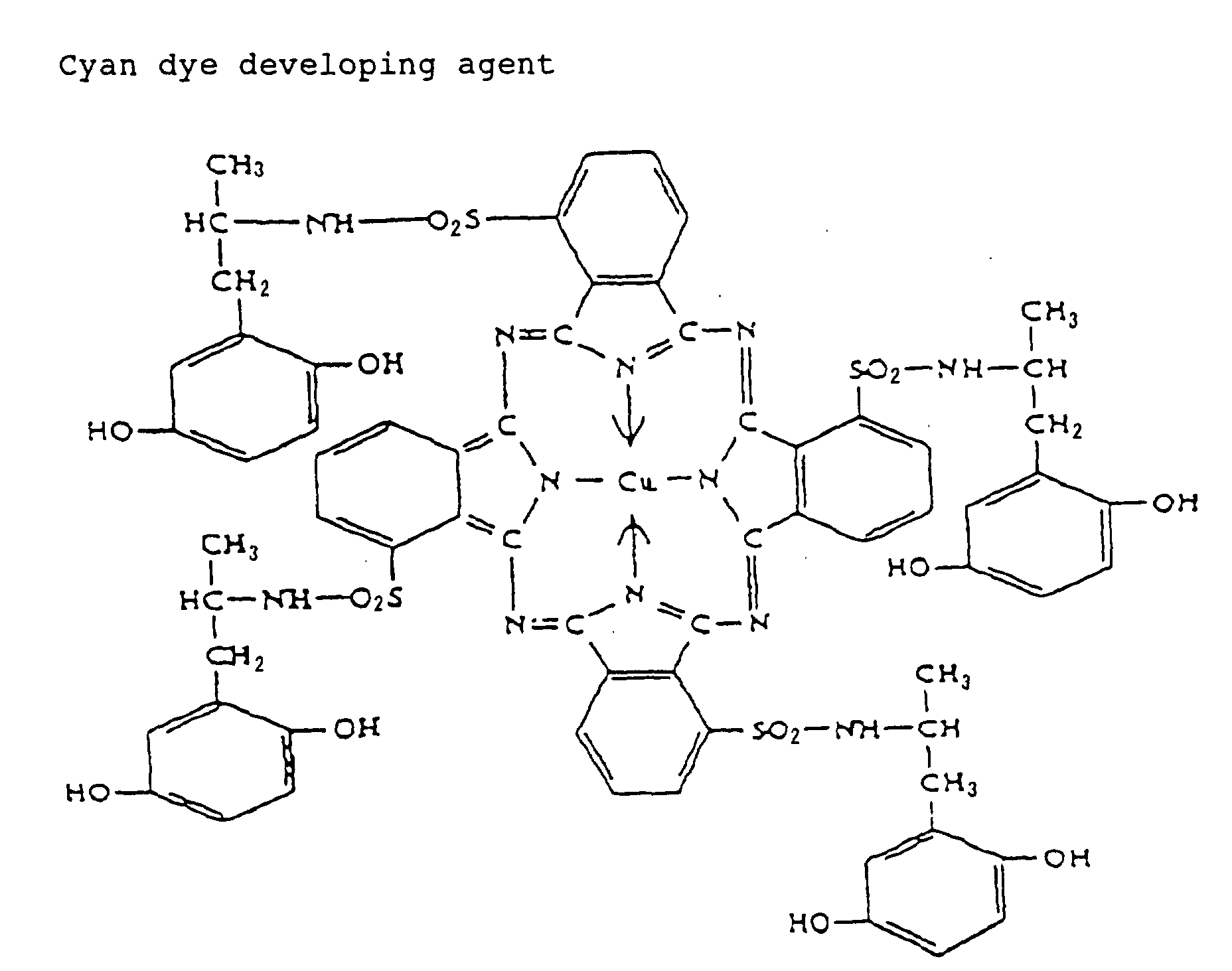
  • the layer contained the following cyan dye developer (960 mg/m 2 ), gelatin (540 mg/m 2 ), cellulose sulfate • sodium salt (12 mg/m 2 ), and phenylnorbornenylhydroquinone (245 mg/m 2 ).
  • the layer contained silver iodobromide emulsion grains having an average grain diameter of 0.6 ⁇ m and a silver iodide content of 1 mole % (780 mg/m 2 ), silver iodobromide emulsion grains having an average grain diameter of 1.5 ⁇ m and a silver iodide content of 3 mole % (420 mg/m 2 ), and polyvinyl hydrogenphthalate (18 mg/m 2 ).
  • the layer contained a copolymer of butyl acrylate/diacetone acrylamide/methacrylic acid/styrene/acrylic acid (2325 mg/m 2 ), polyacrylamide (97 mg/m 2 ), a hydantoin hardener (124 mg/m 2 ), and succindialdehyde (3 mg/m 2 ).
  • the layer contained the following magenta dye developer (455 mg/m 2 ), gelatin (298 mg/m 2 ), 2-phenylbenzimidazole (234 mg/m 2 ), phthalocyanine blue dye (14 mg/m 2 ), and cellulose sulfate • sodium salt (12 mg/m 2 ).
  • the layer contained a carboxylated styrene/butadiene latex (Dow 620 latex (trade name): 250 mg/m 2 ), gelatin (83 mg/m 2 ), and polyvinyl hydrogenphthalate (2 mg/m 2 ).
  • a carboxylated styrene/butadiene latex (Dow 620 latex (trade name): 250 mg/m 2 )
  • gelatin (83 mg/m 2 )
  • polyvinyl hydrogenphthalate (2 mg/m 2 ).
  • the layer contained silver iodobromide emulsion grains having an average grain diameter of 0.6 ⁇ m and a silver iodide content of 1 mole % (540 mg/m 2 ), silver iodobromide emulsion grains having an average grain diameter of 1.3 ⁇ m and a silver iodide content of 3 mole % (360 mg/m 2 ), gelatin (418 mg/m 2 ), and polyvinyl hydrogenphthalate (23 mg/m 2 ).
  • the layer contained phenylnorbornenylhydroquinone (263 mg/m 2 ), gelatin (131 mg/m 2 ), and cellulose sulfate • sodium salt (4 mg/m 2 ).
  • the layer contained a copolymer of butyl acrylate/diacetone acrylamide/methacrylic acid/styrene/acrylic acid (1448 mg/m 2 ), polyacrylamide (76 mg/m 2 ), and succindialdehyde (4 mg/m 2 ).
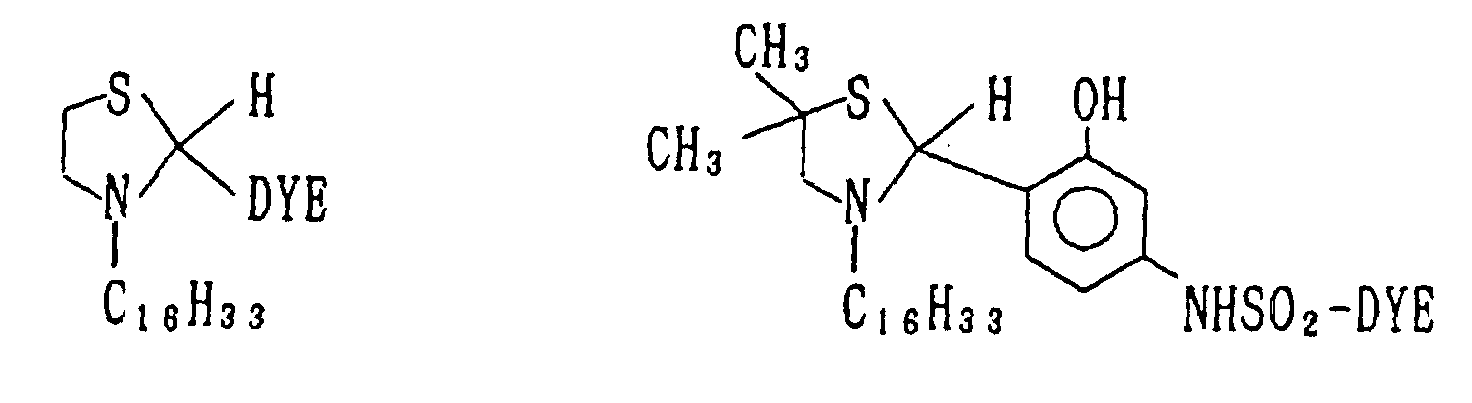
  • the layer contained 1-octadecyl-4,4-dimethyl-2- ⁇ 2-hydroxy-5-N-(7-caprolactamido)sulfonamido ⁇ thiazolidine (1000 mg/m 2 ), gelatin (405 mg/m 2 ), cellulose sulfate • sodium salt (12 mg/m 2 ), and quinacridone red- ⁇ (7 mg/m 2 ).
  • the layer contained benzidine yellow (241 mg/m 2 ), gelatin (68 mg/m 2 ), and cellulose sulfate • sodium salt (3 mg/m 2 ).
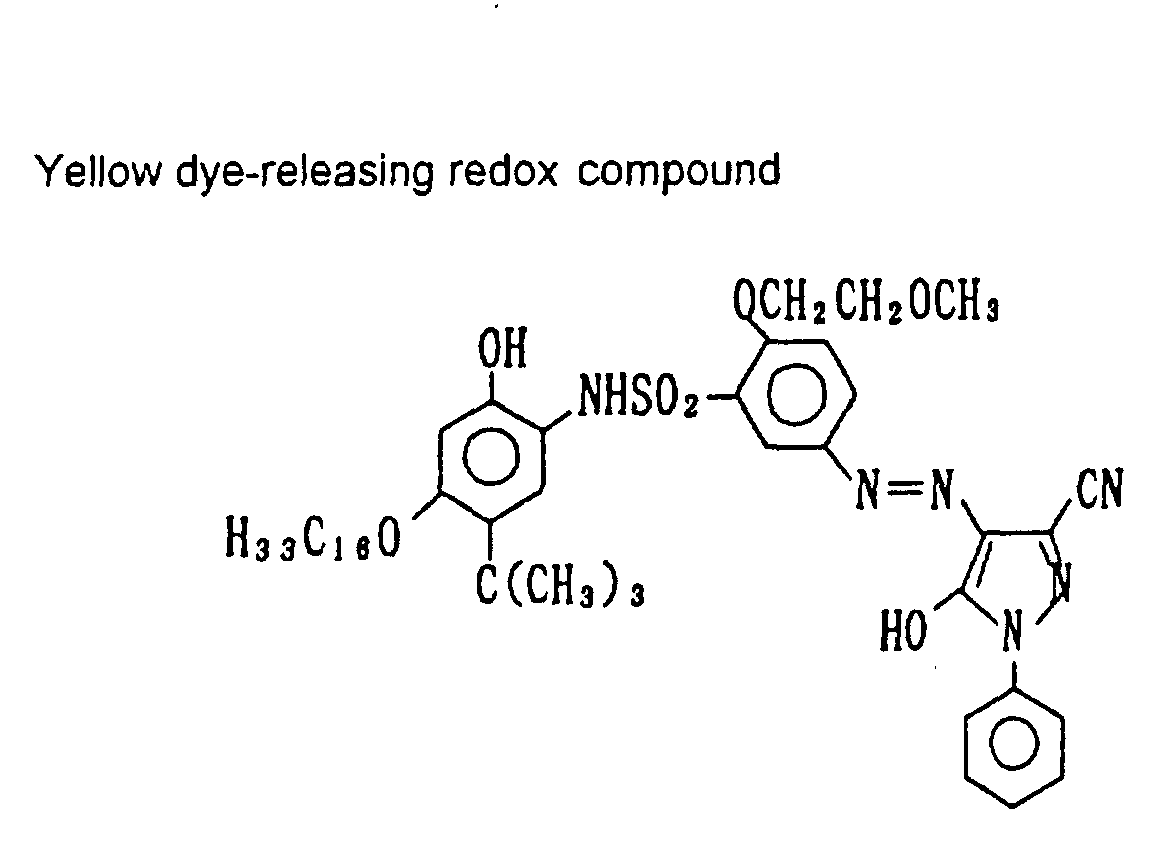
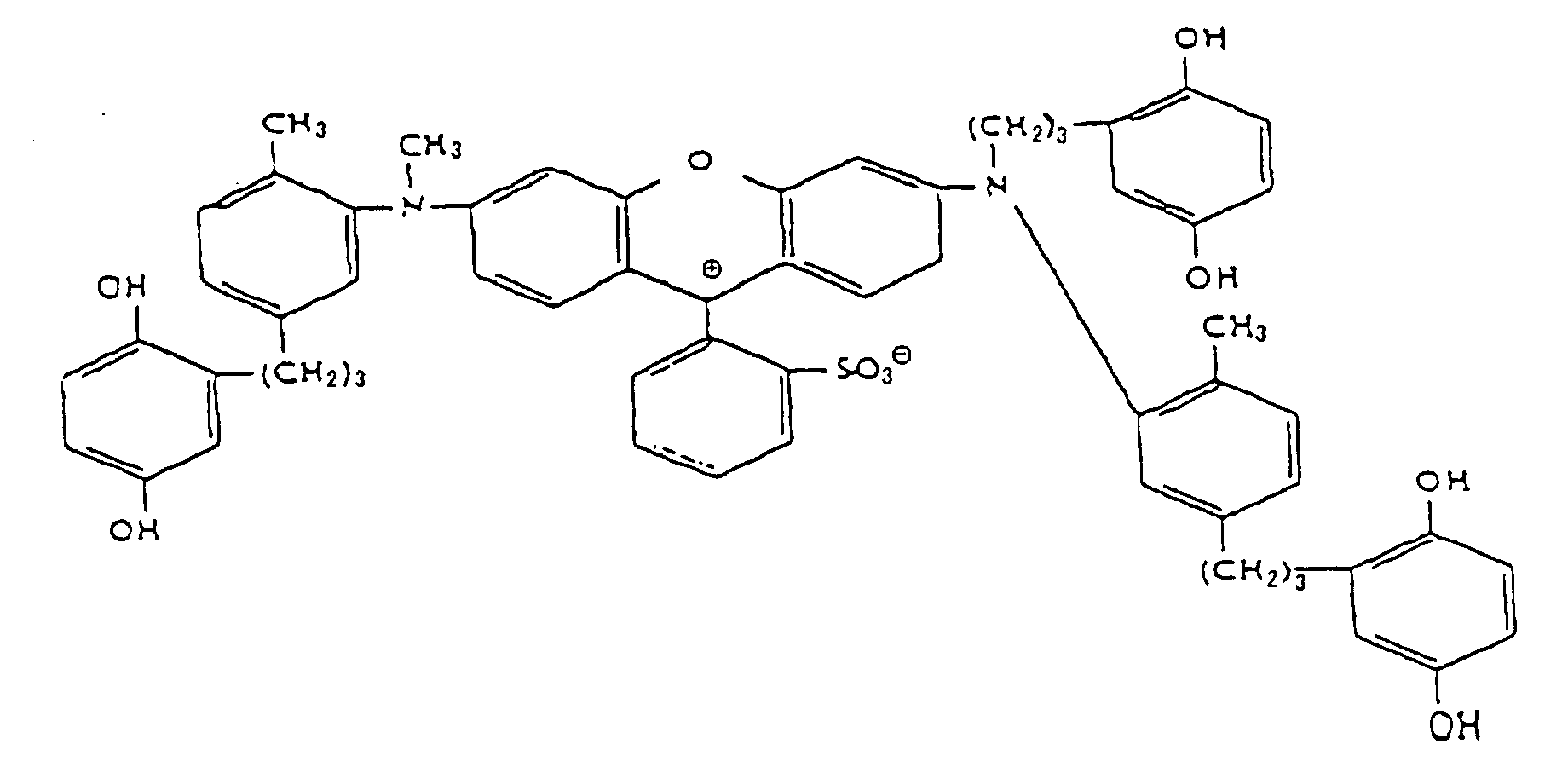
  • the layer contained the following yellow dye-releasing compound (1257 mg/m 2 ), gelatin (503 mg/m 2 ), and cellulose sulfate • sodium salt (20 mg/m 2 ).
  • the layer contained a phenyl,t-butylhydroquinone (450 mg/m 2 ), 5-t-butyl-2,3-bis ⁇ (1-phenyl-1H-tetrazole-5-yl)thio ⁇ -1,4-benzenediol-bis ⁇ (2-methanesulfonylethyl)carbamate ⁇ (100 mg/m 2 ), gelatin (250 mg/m 2 ), and polyvinyl hydrogenphthalate (33 mg/m 2 ).
  • a phenyl,t-butylhydroquinone 450 mg/m 2
  • 5-t-butyl-2,3-bis ⁇ (1-phenyl-1H-tetrazole-5-yl)thio ⁇ -1,4-benzenediol-bis ⁇ (2-methanesulfonylethyl)carbamate ⁇ 100 mg/m 2
  • gelatin 250 mg/m 2
  • polyvinyl hydrogenphthalate 33 mg/m 2
  • the layer contained silver iodobromide emulsion grains having an average grain diameter of 1.3 ⁇ m and a silver iodide content of 1 mole % (37 mg/m 2 ), silver iodobromide emulsion grains having an average grain diameter of 1.6 ⁇ m and a silver iodide content of 3 mole % (208 mg/m 2 ), gelatin (78 mg/m 2 ), and polyvinyl hydrogenphthalate (7 mg/m 2 ).
  • the layer contained Tinuvin (trade name, manufactured by Ciba-Geigy Corp., 500 mg/m 2 ), benzidine yellow (220 mg/m 2 ), gelatin (310 mg/m 2 ), and cellulose sulfate • sodium salt (23 mg/m 2 ).
  • Tinuvin trade name, manufactured by Ciba-Geigy Corp., 500 mg/m 2
  • benzidine yellow 220 mg/m 2
  • gelatin 310 mg/m 2
  • cellulose sulfate • sodium salt 23 mg/m 2 .
  • the layer contained gelatin (300 mg/m 2 ) and polyvinyl hydrogenphthalate (9 mg/m 2 ).
  • An image-receiving element (0501) was prepared, by providing the following layer structure, on a 160- ⁇ m-thick opaque polyethylene-clad paper support.
  • the layer contained a mixture (22219 mg/m 2 ) of the following polymer A and polymer B, in a ratio by mass of 9:11.
  • the layer contained a mixture (2691 mg/m 2 ) of Hycar 26349 (trade name, manufactured by B. F. Goodrich Co.) and the following polymer C, in a ratio by mass of 1:3.
  • Polymer C a copolymer of polyvinyl alcohol graft-copolymerized with diacetone alcohol and acrylamide (ratio by mass of the three components: 1:8.2:1.1)
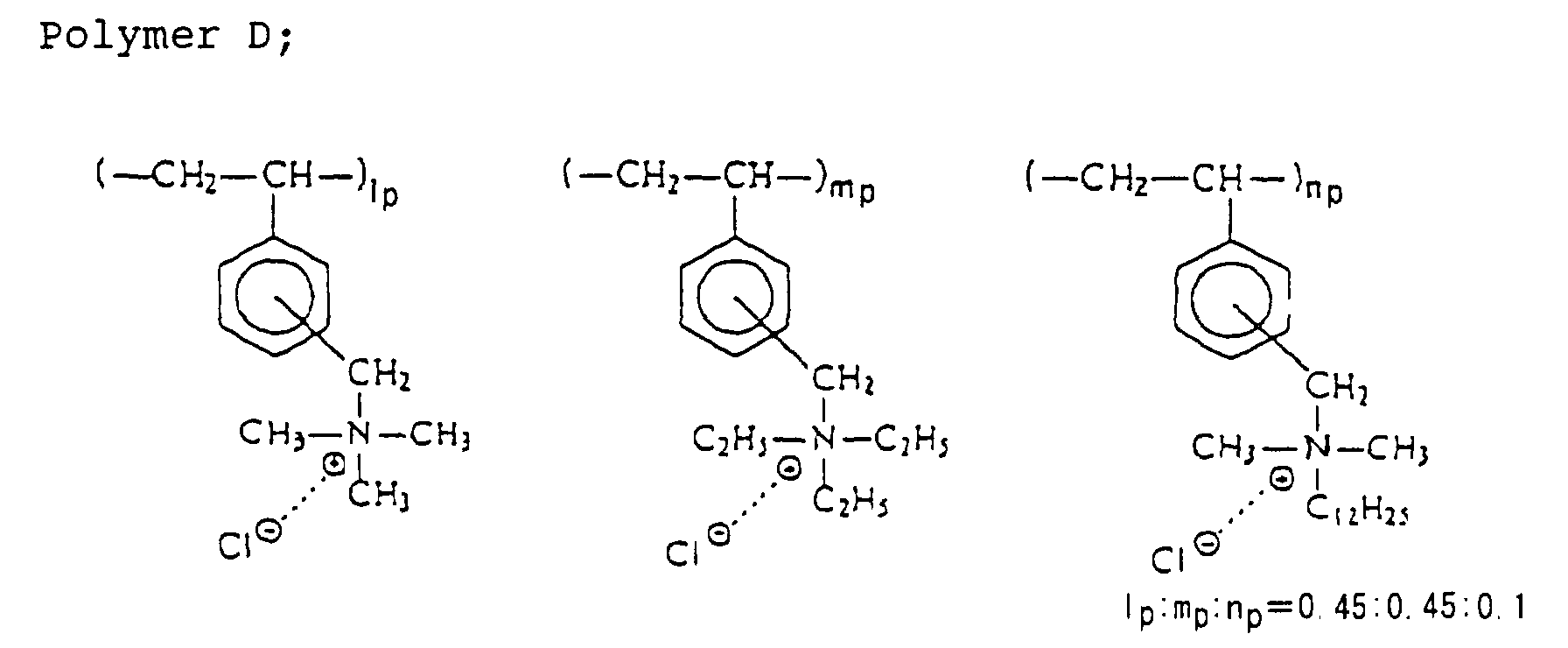
  • the layer contained a mixture (3983 mg/m 2 ) of a polymer D having the following structural formula, ultra-hydrophilic polyvinyl alcohol (AIRVOL 165, trade name, manufactured by Air Products Co.), and butanediol, in a ratio by mass of 2:1:1.
  • a polymer D having the following structural formula, ultra-hydrophilic polyvinyl alcohol (AIRVOL 165, trade name, manufactured by Air Products Co.), and butanediol, in a ratio by mass of 2:1:1.
  • the layer contained polyacrylic acid (162 mg/m 2 ).
  • Components Added amount Sodium hydroxide 7.25g N-butyl-a-picolinium bromide 1.79g 1-methylimidazole 0.24g 1,2,4-triazole 0.30g Hypoxanthine 0.82g PMT(phenylmercaptotetrazole) 0.0005g 6-benzylaminopurine 0.025g 2-(methylamino)ethanol 2.3 ⁇ 10 -3 mol Guanine 0.12g Boric acid 0.71g 5-amino-1-pentanol 1.6 ⁇ 10 -2 mol Hydroxyethyl cellulose 2.49g Sodium p-toluenesulfinate 0.41 g Titanium dioxide 0.16g 6-methyluracil 0.45g Water to make 100g
  • An image-receiving element (0502) was produced in the same manner as the image-receiving element 0501, except that 600 mg/m 2 of the fine-particle titanium oxide TI-A01 the same as that utilized in Example 1-2, was added, to the image-receiving layer.
  • the light-sensitive element (502) was exposed image-wise, and the image-receiving element (0501) or (0502) was superimposed on the exposed light-sensitive element 502.
  • the alkaline processing composition (501) was developed to the space between the two superimposed elements to have a thickness of 60 ⁇ m.
  • the same evaluation as in Example 1-2 was then carried out. It was confirmed that in the image-receiving element 0502, which was an example according to the present invention, the resistance against light-fading could be improved.
  • the dispersant A11 was mixed with gelatin so that the ratio of titanium oxide to gelatin would be 2 to 1, and further the mixture was applied onto a polyethylene telephthalate support so that the optical density at 350 nm would be 1 (sample A11).
  • a sample B11 was prepared in the same manner as the sample A11, except that the above-mentioned fine-particle titanium oxide TI-A11 was changed to one having an average primary particle diameter of 55 nm and surface-treated with aluminum oxide of 10 %.
  • a sample D11 was produced in the same manner as the sample A11, except that glycerin was omitted (not used) in the sample A11.
  • An Image-receiving element (1101) was produced in the same manner as the image-receiving element (0101) of Example 1-2, except that the fifth layer on the side of the image-receiving layer was changed to the following layer.
  • a titanium oxide layer which was formed, by using the coating solution containing the titanium oxide dispersion All of an example according to the present invention as prepared in Example 2-1, and which contained 0.6 g/m 2 of titanium oxide, 0.5 g/m 2 of gelatin, and 0.01 g/m 2 of the following surface active agent (M).
  • Image-receiving elements (1102) to (1106) were produced in the same manner as the image-receiving element (0101), except that the fine-particle titanium oxide TI-A11 in the image-receiving element 1101 was changed to any one of titanium oxides TI-B11 to TI-F11, respectively, as shown in Table 6. Furthermore, an image-receiving element (1107) was produced in the same manner as the image-receiving element 1101, except that no glycerin was added to the dispersion of TI-A11.
  • the light-sensitive element (101) was exposed to light imagewise, and then any one of the image-receiving elements (1101) to (1107) was superimposed on the exposed element (101).
  • the alkaline processing composition was developed between the two superimposed elements to have a thickness of 51 ⁇ m.
  • the light-sensitive element (101) and the alkaline processing composition which were prepared in the same manner as in Example 1-2, were used.
  • the processing was carried out at 25°C. After 90 seconds from the start of the processing, the light-sensitive element was peeled off from the image-receiving element. The peeled image-receiving element was irradiated with xenon light (85,000 lux) at 30°C in an atmosphere of 40% RH for 3 days. Thereafter, a drop in magenta density was measured (the density before irradiation: 1.0). A Fuji automatic record densitometer (made by Fuji Photo Film Co., Ltd.) was used to measure the minimum density.
  • the ratio between the absorbance at 400 nm and the absorbance at 350 nm was calculated, and the ratio was used as an index of shading of UV light and a rise in absorption of visible light, which is caused as a result of an evil influence due to shading of ultraviolet light. As this ratio is larger, haze is less, so that the shading of ultraviolet light is favorably greater.
  • TI-F11 the rutile crystallinity was too low, and the film was denaturated. (This was probably because its reactivity was high.) As a result, TI-F11 was low in weather resistance. Haze was also caused in the surface. In the sample (1107), to which no glycerin was added, fine cracks were occurred when the color of the sample was faded by xenon light. Therefore, the resistance against light-fading was resultantly deteriorated. Even if peeling was performed after 5 minutes or 10 minutes, instead of the peeling after 90 seconds, it was confirmed that improvement in the resistance against light-fading was observed in the example according to the present invention. It can be understood from this fact that anti-stain property was also improved.
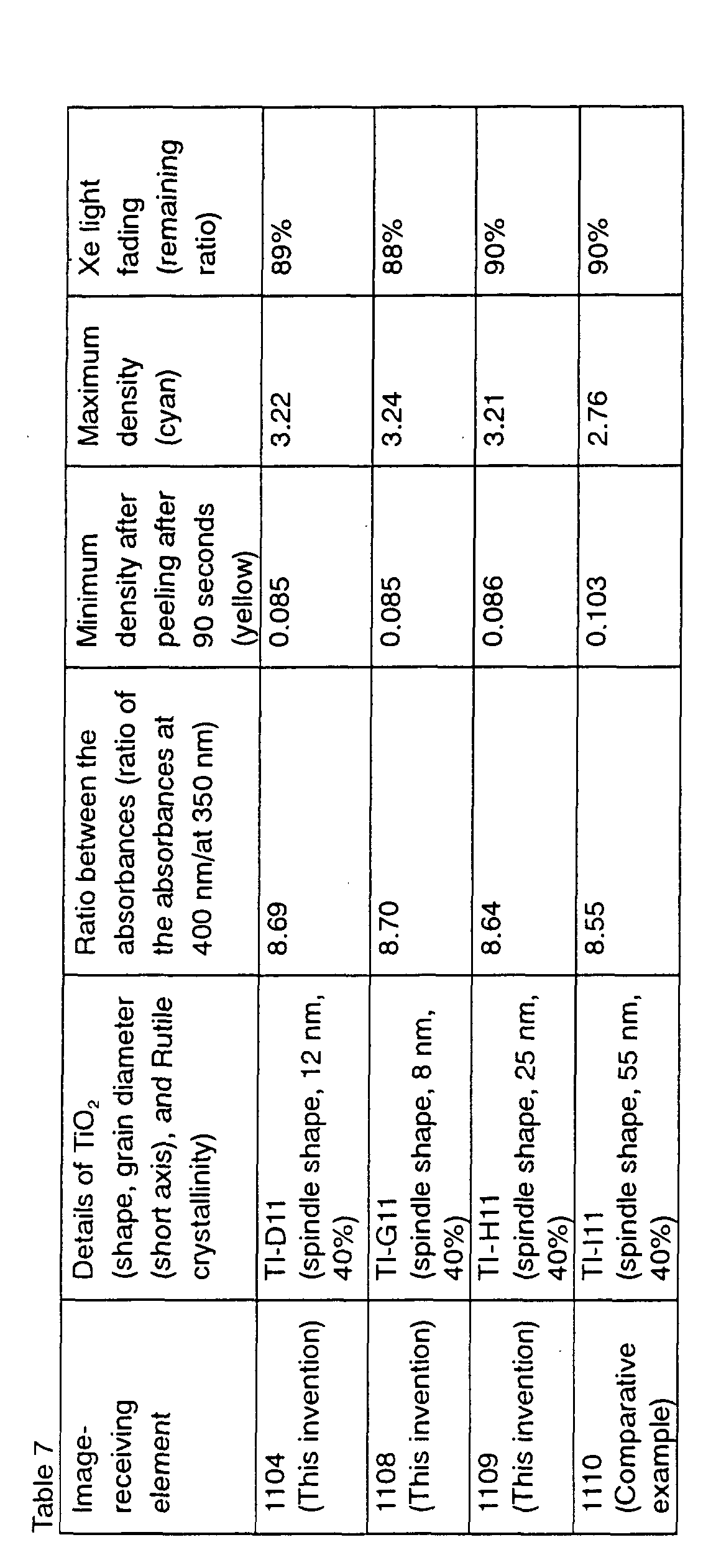
  • Image-receiving elements (1109) to (1112) were made in the same manner as the image-receiving element 1104, except that the fine-particle titanium oxide TI-D11 was changed to any one of TI-G11 to TI-I11, respectively, as shown in Table 7, in the image-receiving element 1104.
  • Example 2-2 the developing the same as in Example 2-2 was performed, to measure the minimum density and the maximum density of the samples.
  • An image-receiving element (1111) was produced in the same manner as the image-receiving element 1101, except that the titanium oxide dispersion A11 was added, in the same amount as in the element 1101, to the mordanting layer, and that the titanium oxide was omitted in the titanium oxide layer in the element 1101.
  • the resistance against light-fading was evaluated in the same manner as in Example 2-2. As a result, the value thereof was 85%. It can be understood from this fact that the same advantageous effects are exhibited even if the titanium oxide is incorporated into the image-receiving layer.
  • An image-receiving element was produced in the same manner as the image-receiving element 1101, except that glycerin was omitted in the titanium oxide dispersion in the image-receiving element 1101. Then the resultant element was tested. As a result, resistance against light-fading was confirmed to be improved, but a rise in viscosity was caused in the titanium oxide dispersion stored at room temperature after one month. Thus, long-term productive stability was insufficient.
  • An image-receiving element (1502) was produced in the same manner as the image-receiving element 0501 in Example 1-5, except that 600 mg/m 2 of the fine-particle titanium oxide TI-A11 the same as used in Example 2-1 was added, to the image-receiving layer, instead of the fine-particle titanium oxide as added in the image-receiving element 0501 of Example 1-5.
  • the light-sensitive element (502) was imagewise exposed, and the image-receiving element (0501) or (1502) was superimposed on the exposed light-sensitive element 502.
  • the alkaline processing composition (501) was developed to the space between the two superimposed elements to have a thickness of 60 ⁇ m. The evaluation same as in Example 2-2 was then carried out.
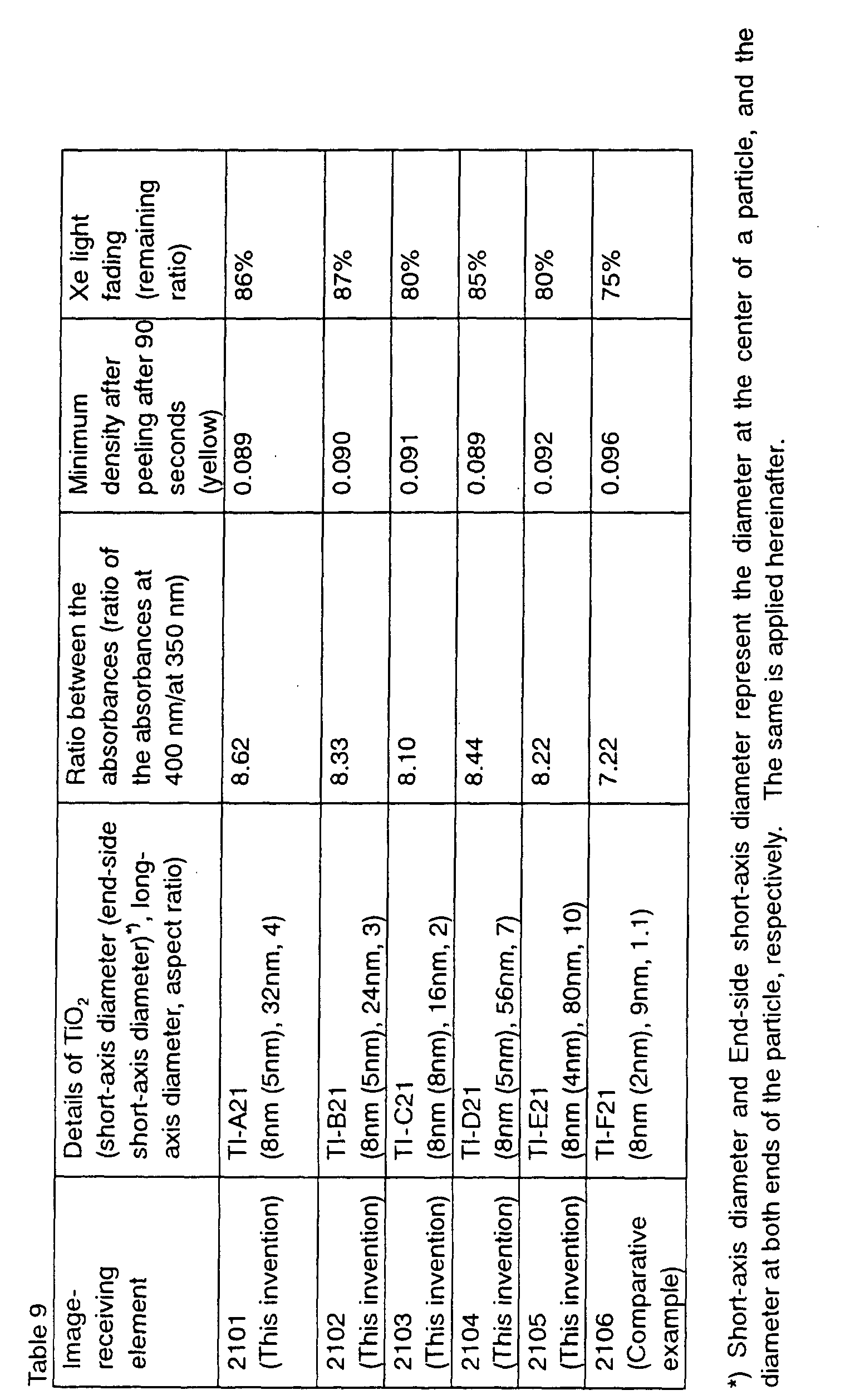
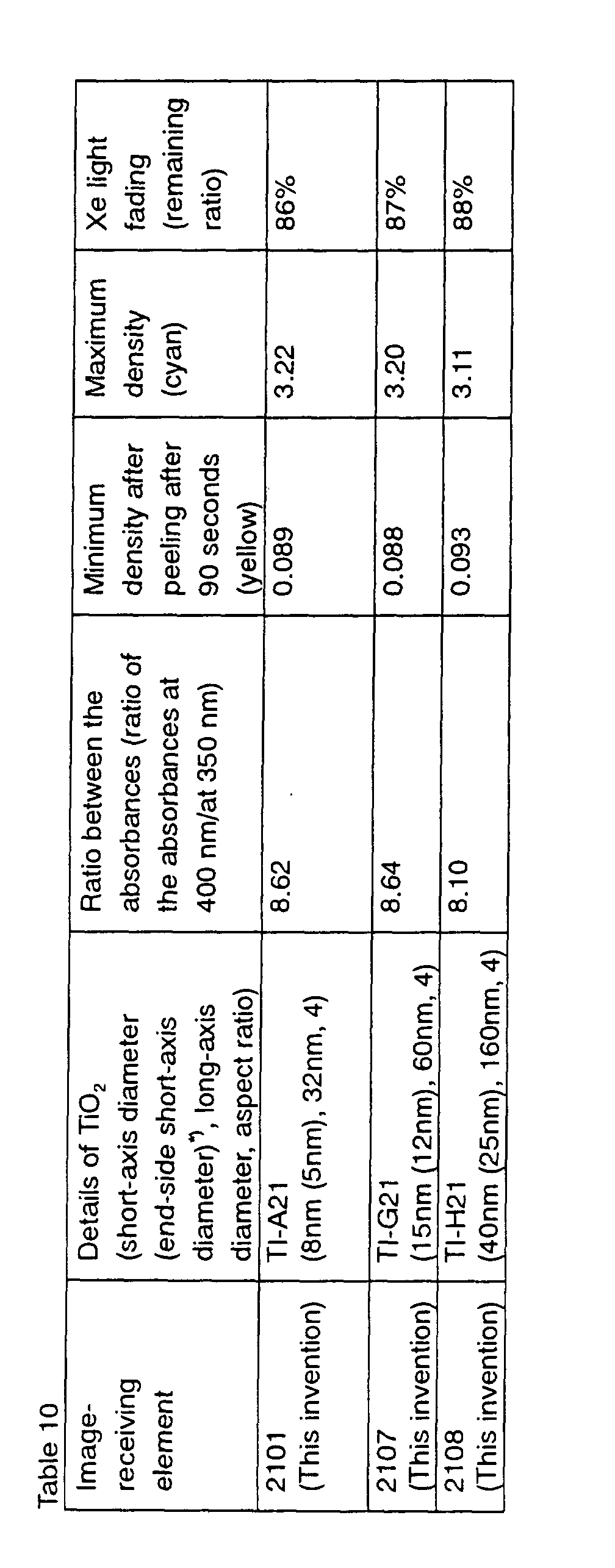
  • spindle-shape fine-particle titanium oxide TI-A21 (a short-axis diameter among average primary particle diameters: 8 nm (a short-axis diameter at both ends of particles: 5 nm), a long-axis diameter thereof: 32 nm, and an aspect ratio: 4), 5.2 parts of poly(sodium acrylate) as a dispersant (trade name: POIZ-530, manufactured by Kao Corporation), 10.5 parts of glycerin as a coagulation-preventing agent, and 49.3 parts of water were added and mixed, and the resultant mixture was dispersed for 30 minutes at 3000 revolutions/minute, by means of a dissolver (manufactured by Tokushu Kika Kogyo Co., Ltd.). After that, the mixture was passed through a horizontal sand grinder 5 times at 2500 revolutions/minute. In this way, a dispersion A21 was obtained.
  • the dispersant A21 was mixed with gelatin so that the ratio of titanium oxide to gelatin would be 2 to 1, and further the resultant mixture was applied onto a polyethylene telephthalate support so that the optical density at 350 nm would be 1 (a sample A21).
  • a sample B21 was prepared in the same manner as the sample A21, except that the above-mentioned fine-particle titanium oxide TI-A21 was changed to one having a short-axis diameter of its average primary particle diameter of 50 nm, a long-axis diameter of its average primary particle diameter of 200 nm, and an aspect ratio of 4.
  • Example 1-1 Two grams of each of the above-mentioned compounds A and B were mixed with 4 g of tricresyl phosphate, 5 ml of ethyl acetate and 2 g of gelatin, in the same manner as in Example 1-1.
  • the mixture was emulsified and dispersed at 5000 rotations per minute for 5 minutes in a dissolver (Tokusyu Kika Kogyou Co., Ltd.).
  • the resultant emulsion was applied onto a polyethylene telephthalate support so that the optical density at 350 nm would be 1 (a sample C21).
  • Image-receiving element (2101) was produced in the same manner as the image-receiving element (0101) of Example 1-2, except that the fifth layer on the side of the image-receiving layer was changed to the following layer.
  • a titanium oxide layer which was formed, by using the coating solution containing the titanium oxide dispersion A21 of an example according to the present invention as prepared in Example 3-1, and which contained 0.6 g/m 2 of titanium oxide, 0.5 g/m 2 of gelatin, and 0.01 g/m 2 of the following surface active agent (M).
  • Image-receiving elements (2102) to (2106) were produced in the same manner as the image-receiving element (2101), except that the spindle-shape fine-particle titanium oxide TI-A21 in the image-receiving element 2101 was changed to any one of spindle- or cylindrical-shape fine particle titanium oxides TI-B21 to TI-F21, respectively, as shown in Table 9.
  • the light-sensitive element (101) was imagewise exposed to light, and then any one of the image-receiving elements (2101) to (2106) was superimposed on the exposed element 101.
  • the alkaline processing composition was developed between the two superimposed elements to have a thickness of 51 ⁇ m.
  • the processing was performed at 25°C. After 90 seconds from the start of the processing, the light-sensitive element was peeled off from the image-receiving element. The peeled image-receiving element was irradiated with xenon light (85,000 lux) at 30°C in an atmosphere of 40% RH for 3 days. Thereafter, a drop in magenta density was measured (density before irradiation: 1.0). A Fuji automatic record densitometer (made by Fuji Photo Film Co., Ltd.) was used to measure the minimum density.
  • the ratio between the absorbance at 400 nm and the absorbance at 350 nm was calculated, and the ratio was used as an index of ultraviolet-shielding and a rise in absorption of visible light, which is caused as a result of an evil influence due to shading of ultraviolet light. As this ratio is larger, haze is weaker, so that the shade of ultraviolet light is favorably greater.
  • Image-receiving elements (2107) to (2108) were made in the same manner as the image-receiving element 2101, except that the spindle-shape fine-particle titanium oxide TI-A21 was changed to any one of spindle-shape fine-particle titanium oxides TI-G21 to TI-H21, respectively, as shown in Table 10, in the image-receiving element 2101.
  • Example 3-2 Then, the developing and measurement same as in Example 3-2 were carried out, to measure the maximum density of the samples.
  • An image-receiving element (2109) was produced in the same manner as the image-receiving element 2101, except that the titanium oxide dispersion A21 was added, in the same amount as in the element 2101, to the mordanting layer, and that the titanium oxide was omitted in the titanium oxide layer in the element 2101.
  • the resistance against light-fading was tested and evaluated in the same manner as in Example 3-2. As a result, the value thereof was 84%. It can be understood from this fact that the same advantageous effects as in Example 3-2 are exhibited even if the titanium oxide is incorporated into the image-receiving layer.
  • An image-receiving element was produced in the same manner as the image-receiving element 2101, except that glycerin was omitted in the titanium oxide dispersion in the image-receiving element 2101. Then the resultant element was tested in the same manner as in Example 3-2. As a result, the similar good results as in Example 3-2 were obtained.
  • An image-receiving element (2502) was produced in the same manner as the image-receiving element 0501 in Example 1-5, except that 600 mg/m 2 of the fine-particle titanium oxide TI-A21 same as used in Example 3-1 was added, to the image-receiving layer, instead of the fine-particle titanium oxide as used in the image-receiving element 0501 of Example 1-5.
  • Example 2-2 The same evaluation as in Example 2-2 was then carried out.

Landscapes

  • Physics & Mathematics (AREA)
  • Engineering & Computer Science (AREA)
  • General Physics & Mathematics (AREA)
  • Materials Engineering (AREA)
  • Structural Engineering (AREA)
  • Chemical & Material Sciences (AREA)
  • Architecture (AREA)
  • Compositions Of Macromolecular Compounds (AREA)
  • Optical Filters (AREA)
  • Inorganic Compounds Of Heavy Metals (AREA)
  • Color Television Image Signal Generators (AREA)
  • Optical Elements Other Than Lenses (AREA)
  • Decoration By Transfer Pictures (AREA)
  • Silicon Compounds (AREA)

Abstract

An ultraviolet shielding filter agent, which contains fine-particle titanium oxide, and which satisfies the following condition (A), (B) or (C): (A) that the fine-particle titanium oxide has an average primary particle diameter or average primary short-axis particle diameter of 1 to 45 nm and is surface-treated with a specific amount of aluminum oxide and/or silicon dioxide, and that the ultraviolet shielding filter agent further comprises a polyhydric alcohol; (B) that the fine-particle titanium oxide has an average primary particle diameter or average primary short-axis particle diameter from 1 to 45 nm, and has rutile crystallinity from 20 to 70%, and that the ultraviolet shielding filter agent further comprises a polyhydric alcohol; or (C) that the fine-particle titanium oxide has a primary particle shape of a cylindrical shape or a spindle shape, and that among average primary particle diameters of the fine-particle titanium oxide, a short-axis diameter is from 1 to 45 nm, a long-axis diameter is from 3 to 200 nm, and a ratio of the long-axis diameter to the short-axis diameter is from 2 to 10. A color diffusion transfer photographic film unit, which uses the ultraviolet shielding filter agent.

Description

FIELD OF THE INVENTION
The present invention relates to a color diffusion-transfer photographic film unit, and specifically, to a peel-apart-type photographic film unit, in which an image-receiving element is peeled from a light-sensitive element after processing. Further, the present invention relates to a light-sensitive material that exhibits excellent light-fastness, small dependence of image density fluctuation on peeling time, small image haze or stain due to the processing solution remaining in the image-receiving element at the time of peeling, and excellent surface gloss. Furthermore, the present invention relates to an ultraviolet shielding filter agent, containing titanium oxide, that can be used to produce the photographic film unit as described above, that is less in fluctuation of quality or property with the lapse of time, and that is low in chemical activity (toxicity).
BACKGROUND OF THE INVENTION
Ultraviolet shielding filter agents using an ultraviolet absorber, made of an organic material, are widely known. Since the ultraviolet absorber used in these is made of an organic material, the absorber has many problems, such as coloration at a high pH, decomposition by light or reaction with another chemical agent, and low solubility in water. Thus, the process for producing or using the absorber is limited depending on use purposes. In addition, the absorber does not necessarily satisfy safety as chemicals, or the like. Therefore, an ultraviolet shielding filter agent that does not cause an absorption change with the lapse of time, and that has high safety, has been desired.
Heretofore, a color diffusion-transfer photographic process using an azo dye image-forming substance, has been well known, in which an image-receiving element and a light-sensitive element are united in such a way that a diffusive azo dye different from the image-forming substance itself is formed, after development using a viscous alkaline solution to be developed between the image-receiving element and the light-sensitive element. In this photographic process, also well known is a peel-apart system, in which the viscous solution is developed between the elements, and the elements are peeled from each other after development/transfer, so that an image is obtained. The dye-providing compounds described in U.S. Patent No. 3,928,312 are known as dye-releasing compounds for use in this transfer system.
To immobilize the anionic dye after it is released, it is known to use a polymer containing a quaternary ammonium salt, as described, for example, in U.S. Patent Nos. 3,958,995, 3,898,088, as a mordant in the image-receiving layer of the image-receiving element. In addition, polymers having a tertiary imidazole ring in the side chain, as described in U.S. Patent Nos. 4,115,124, 4,282,305, and 4,273,853, are known to improve the fastness to light of the immobilized dyes. Further, for example, copolymers of a tertiary imidazole, as described in JP-B-4-17418 ("JP-B" means examined Japanese patent publication) and J-P-A-8-62803 ("JP-A" means unexamined published Japanese patent application); copolymers having a quaternary ammonium salt group and a tertiary imidazole group, as described in JP-A-60-60643, are known to enhance mordanting performance and stability to light of the dyes. Still further, JP-A-10-142765 discloses examples of peel-apart-type photographic film units that use a mordant containing an imidazole group. Further, it is known that a polymer containing a pyridine ring in the side chain is used as a mordant.
These polymeric mordants have been developed to increase the power to hold the anionic dyes coming in by transfer, and to enhance the stability of the dyes to light. However, in the peel-apart system, in which a viscous alkaline solution is developed, the above-mentioned polymer containing a quaternary ammonium salt, and the polymer containing a pyridine ring, are the only polymeric mordants that have been put to practical use.
Although the above-mentioned techniques described in JP-A-10-142765 and the like have alleviated the haze, stain, and other problems to some extent, the film physical properties after peeling and at the time of peeling, are still unsatisfactory, and further improvement in this regard has been required.
On the other hand, the improvement of stability against light-fading by using fine-particles of titanium oxide is disclosed in JP-A-6-118591. However, the sphere-equivalent particle diameter of the titanium oxides (the diameter of a shape having a volume equivalent to an individual particle of titanium oxide) used in the examples in JP-A-6-118591 was 50 nm or more, and studies conducted later have revealed that the use of titanium oxide particles having a particle diameter falling in the above-mentioned range is accompanied by the problems of insufficient transparency and reduced image density. Besides this optical influence, it has also been found that, in a peel-apart-type instant photograph, the titanium oxide-containing layer constitutes a diffusion pathway of the image-forming dyes, and therefore the titanium oxide physically delays diffusion of the dyes, to thereby reduce the image density. Also in connection with particle diameter of the titanium oxide, the particle diameter thereof falling in the range of about 50 nm or more was found to cause a conspicuous reduction in image density. The aforementioned JP-A-6-118591 does not disclose any method for producing fine-particles of titanium oxide that exerts no influence on photographic density. According to JP-A-6-118591, titanium oxide is preferably dispersed and used in a hydrophobic binder system. However, in the case of an instant color photograph, the image-forming dyes are soluble in water, and these dyes are entirely non-diffusive in the hydrophobic binder described in JP-A-6-118591, then satisfactory photographs are not formed. Therefore, JP-A-6-118591 provides no information suggestive of an instant color photograph.
SUMMARY OF THE INVENTION
Accordingly, an object of the present invention is to provide a titanium oxide-containing ultraviolet shielding filter agent whose dispersibility and stability with the lapse of time are improved. Another object of the present invention is to provide a peel-apart-type color diffusion-transfer film unit having improved stain prevention property, light-fastness, and film physical properties.
Other and further objects, features and advantages of the invention will appear more fully from the following description.
DETAILED DESCRIPTION OF THE INVENTION
As a result of studies, the present inventor has found that the use of titanium oxide having a primary particle diameter of 45 nm or less, remarkably improves, for example, stain prevention in an image, light-fastness, and film physical properties. However, there has been demand in the stability of such a dispersion and further improvement in photographic image qualities. The present invention has been attained based on further intensive studies, taken the above into consideration.
According to the present invention, the objects of the invention can be attained by the following means (1) to (7):
  • (1) An ultraviolet shielding filter agent, which comprises fine-particle titanium oxide, and which satisfies the following condition (A), (B) or (C):
  • (A) that the fine-particle titanium oxide has an average primary particle diameter or average primary short-axis particle diameter of 1 to 45 nm and is surface-treated with aluminum oxide and/or silicon dioxide of an amount of 1 to 30% by mass to the titanium oxide, and that the ultraviolet shielding filter agent further comprises a polyhydric alcohol;
  • (B) that the fine-particle titanium oxide has an average primary particle diameter or average primary short-axis particle diameter from 1 to 45 nm, and has rutile crystallinity from 20 to 70%, and that the ultraviolet shielding filter agent further comprises a polyhydric alcohol; or
  • (C) that the fine-particle titanium oxide has a primary particle shape of a cylindrical shape or a spindle shape, and that among average primary particle diameters of the fine-particle titanium oxide, a short-axis diameter is from 1 to 45 nm, a long-axis diameter is from 3 to 200 nm, and a ratio of the long-axis diameter to the short-axis diameter is from 2 to 10;
  • (2) A color diffusion transfer photographic film unit, which comprises:
  • an image-receiving element comprising, on a support, a layer having a neutralizing function, an image-receiving layer, and a peel layer, successively in this order from the support;
  • a light-sensitive element comprising at least one silver halide emulsion layer combined with at least one dye-image-forming compound, on a support having a light-shading layer; and
  • an alkaline processing composition capable of being developed between the image-receiving element and the light-sensitive element, and
    which gives an image, by developing the alkaline processing composition between these elements after exposure to light, and then peeling the image-receiving element and the light-sensitive element from each other,
  •    wherein the image-receiving element comprises an ultraviolet shielding layer that comprises an ultraviolet shielding filter agent, the ultraviolet shielding filter agent comprising fine-particle titanium oxide and satisfying the following condition (A), (B) or (C):
    • (A) that the fine-particle titanium oxide has an average primary particle diameter or average primary short-axis particle diameter of 1 to 45 nm and is surface-treated with aluminum oxide and/or silicon dioxide of an amount of 1 to 30% by mass to the titanium oxide, and that the ultraviolet shielding filter agent further comprises a polyhydric alcohol;
    • (B) that the fine-particle titanium oxide has an average primary particle diameter or average primary short-axis particle diameter from 1 to 45 nm, and has rutile crystallinity from 20 to 70%, and that the ultraviolet shielding filter agent further comprises a polyhydric alcohol; or
    • (C) that the fine-particle titanium oxide has a primary particle shape of a cylindrical shape or a spindle shape, and that among average primary particle diameters of the fine-particle titanium oxide, a short-axis diameter is from 1 to 45 nm, a long-axis diameter is from 3 to 200 nm, and a ratio of the long-axis diameter to the short-axis diameter is from 2 to 10;
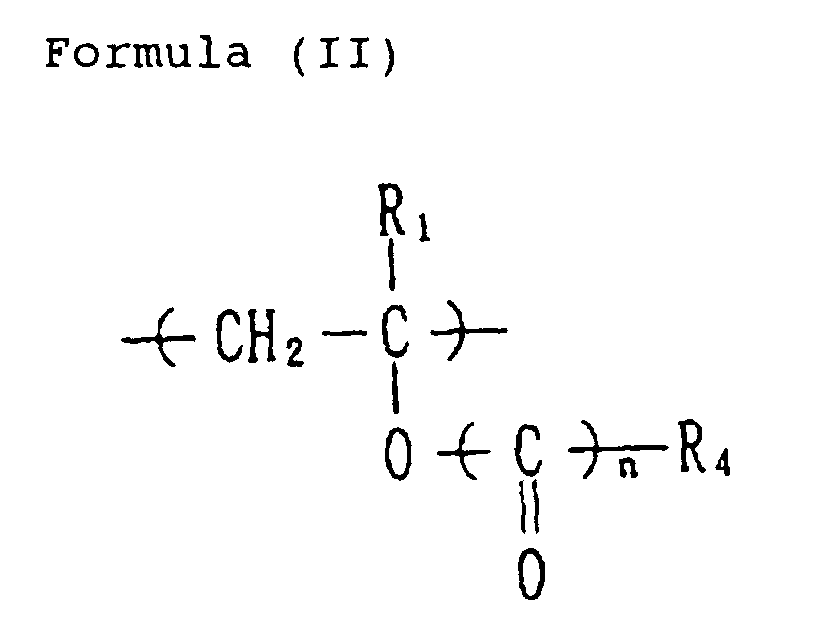
  • (3) The color diffusion transfer photographic film unit according to the item (2), wherein the ultraviolet shielding filter agent satisfies the (A), and the fine-particle titanium oxide has a spindle shape or a cylindrical shape;
  • (4) The color diffusion transfer photographic film unit according to the item (2), wherein the ultraviolet shielding filter agent satisfies the (B), and the fine-particle titanium oxide has a spindle shape;
  • (5) The color diffusion transfer photographic film unit according to the item (2), (3) or (4), wherein the polyhydric alcohol is glycerin;
  • (6) The color diffusion transfer photographic film unit according to the item (2), wherein the ultraviolet shielding filter agent satisfies the (C), and the ultraviolet shielding layer contains glycerin and/or ethylene glycol; and
  • (7) The color diffusion transfer photographic film unit according to the item (2), (3), (4), (5) or (6), wherein the ultraviolet shielding layer in the image-receiving element is positioned in the image-receiving layer, and/or as an overlayer of the image-receiving layer (further from its support in the image-receiving element).
  • The present invention will be specifically described hereinafter.
    First, the ultraviolet shielding filter agent of the present invention will be described in detail. The ultraviolet shielding filter agent of the present invention is a dispersant wherein the above-mentioned titanium oxide is dispersed in a medium (preferably, water) preferably containing a polyhydric alcohol.
    For the manufacture of the titanium oxide that can be used in the present invention, many methods can be utilized. These methods include neutralizing hydrolysis of a titanium salt, neutralization of sodium titanate, hydrolysis of a titanium alkoxide, and gas phase decomposition of a titanium alkoxide.
    More specifically, according to the neutralizing hydrolysis of a titanium salt, the manufacturing process comprises the steps of hydrolysis of titanium tetrachloride, firing (burning), pulverization followed by particle size regulation, surface treatment, washing, drying, and final pulverization. According to the neutralization of sodium titanate, the manufacturing process comprises the steps of hydrolysis of sodium titanate, alkali-leaching treatment followed by acid-leaching treatment, and surface treatment, and therefore this manufacturing process does not include a firing step. Herein, the manufacturing process that does not include a firing step is defined as a wet process.
    The raw material titanium oxide that can be used in the present invention can be produced by firing process or wet process. Titanium oxide in the form of a cylinder or a spindle is preferably prepared by wet process. Difference in the particle diameter or aspect ratio thereof can be controlled by the purity of titanium tetrachloride as a raw material, the hydrolyzing speed, the firing-temperature, the drying-temperature, the conditions (concentration, time period, and temperature) for post-processing (leaching) with an acid and an alkali, a surface-treating agent (the kind and amount thereof), or the like. Titanium oxide resulting from wet process can be easily dispersed. On the other hand, according to firing process, the crystal system of titanium oxide or the amount of the surface-treating agent can be adjusted by firing-temperature or time. Titanium oxide resulting from firing process is excellent in weather resistance.
    The average primary particle diameter or average primary short-axis particle diameter of the titanium oxide is 1 to 45 nm, preferably 3 to 40 nm, and more preferably 5 to 30 nm. The wording "average primary particle diameter" means the average value of the sphere-equivalent diameters of primary particles in the case that the shape thereof is spherical or substantially spherical. The wording "average primary short-axis particle diameter" means the average value of the short-axis particle diameters of primary particles in the case that the shape thereof is a cylindrical shape or a spindle shape. In the case of spindle-shaped or cylindrical particles (preferably spindle-shaped particles), the long-axis diameter thereof is generally from 3 to 200 nm, preferably from 5 to 150 nm, and more preferably from 10 to 100 nm. The ratio of the long-axis diameter to the short-axis diameter (referred to as an aspect ratio hereinafter) thereof is generally from 2 to 10, preferably from 2.5 to 8, and more preferably from 3 to 6.
    The following will describe the rutile crystallinity in the present invention.
    The rutile crystallinity is calculated as follows. Titanium oxide to be measured and silicon (specifically, silicon oxide or the like is used) are mixed with each other in the manner that the ratio by mass of the former to the latter will be 1/5. Thereafter, the ratio between the peak area of rutile (1,1,0) plane and the peak area of silica is obtained from X-ray diffraction. Such a ratio is measured about MT600B (trade name, fine-particle titanium oxide, made by Tayca Corp. and not surface-treated, the average primary particle diameter: 50 nm) as a standard sample. This value is used as 100% of the rutile crystallinity to calculate the ratio between this value and that of the sample to be measured. The resultant value (ratio) is defined as the rutile crystallinity in the present invention.
    When the rutile crystallinity of crystal is large, the crystal is firmly formed, so that the chemical resistance, the weather resistance and the like thereof are excellent but the refractive index thereof becomes high. Thus, the optical transparency thereof may be disadvantageously deteriorated. On the other hand, when the rutile crystallinity is low, the chemical resistance and the weather resistance are lowered but the refractive index becomes low. Thus, unfavorable refraction, interference, total reflection and the like are not easily caused in the boundary face between the crystal and the surrounding medium (the air, water or the like), so that the transparency of the resultant film may be advantageously high. In the present invention, the rutile crystallinity is in the range of generally from 20 to 70%, preferably from 30 to 60%, and more preferably from 35 to 55%. If this value is too large in the present invention, the film may look like rainbow-colored dependently on a viewing angle. If the value is too low, the film may be cracked by influence of active oxygen or the like or the film may be colored due to oxidization of a coexisting organic compound, when the film is irradiated with intense light.
    The rutile crystallinity can be controlled by the followings in the process for producing fine-particle titanium oxide, which will be described later: firing temperature after surface-treatment, drying temperature and time, temperature and time of post-treatment (leaching) with an acid and an alkali, and the concentration of the acid and the alkali. In connection with this, the rutile crystallinity can also be controlled by the particle diameter of the titanium oxide.
    As the titanium oxide that can be used in the present invention, a titanium oxide whose surface is treated with a surface-treating agent can also be preferably used, in which the surface-treating agent may be any of an inorganic material or an organic material. Preferred examples of the inorganic surface-treating agent include aluminum oxide, zirconium oxide, silicon oxide and zinc oxide.
    As the fine-particle titanium oxide that can be used in the present invention, more preferably, a titanium oxide whose surface is treated with aluminum oxide and/or silicon dioxide can be used. The amount to be used of aluminum oxide is preferably from 1 to 30% by mass, more preferably from 2 to 20% by mass, to the mass of titanium oxide. The amount to be used of silicon oxide is preferably from 1 to 30% by mass, more preferably from 2 to 20% by mass. If the amount of the surface-treating agent is too small, bad dispersion or sedimentation of the dispersed matters with the lapse of time may be caused. If the amount is too large, the amount of titanium oxide is substantially reduced so that desired ultraviolet absorbing ability deteriorates. The above-mentioned aluminum oxide and/or silicon dioxide can also be preferably used in combination with another surface-treating agent, which may be made of an inorganic material or an organic material. Preferred examples of the inorganic surface-treating agent include zirconium oxide and zinc oxide. Examples of the organic surface-treating agent include siloxane, stearic acid, and trimethylolpropane. The total amount of all the surface-treating agents to be used is preferably from 3 to 45% by mass, more preferably from 5 to 35% by mass, to the mass of titanium oxide. As the amount to be used of the treating agents is larger, dispersibility and the like become better. However, the amount of titanium oxide becomes relatively small so that absorption of ultraviolet light deteriorates. As a result, desired stability against light is damaged. For this reason, the amount should be appropriately selected to cope with the two performances.
    For example, titanium oxide can be surface-treated as follows.
    Synthesized titanium oxide is dispersed with a phosphate such as sodium hexametaphosphate. The pH thereof is adjusted dependently on the solubility of a surface-treating agent to be used. Thereto is added a suspension of aluminum oxide and/or silicon oxide. After the addition, the pH thereof is adjusted to a pH to lower the solubility of the surface-treating agent. This results in the sedimentation and adhesion of the surface-treating agent onto the surface of titanium oxide. If necessary, the amount or the form of the adhesion can be changed, by adjusting the concentrations of the surface-treating agent and titanium oxide, or performing the reaction under high reaction temperature, or high-temperature treatment or the like after the reaction.
    The coating amount of the ultraviolet shielding filter agent of the present invention can be selected dependently on purposes. Preferably, the ultraviolet shielding filter agent is used in the manner that the coated amount of the above-mentioned titanium oxide (which may be the above-mentioned surface-treated titanium oxide; the same is applied hereinafter) will be from 0.01 to 20 g/m2. If the amount to be used is large, ultraviolet light is largely absorbed but transparency deteriorates. When the ultraviolet shielding filter agent of the present invention is used in a color diffusion-transfer photographic film unit, it is preferable that the titanium oxide is used in a coated amount of 0.01 to 20 g/m2. As the amount to be used is increased, the absorption of ultraviolet light becomes larger. However, the drawback that is encountered as the amount to be used is increased is that the photographic density is slightly lowered. Therefore, it is preferable to properly select the amount. The coated amount of the titanium oxide is preferably 0.02 to 10 g/m2 and more preferably 0.05 to 2 g/m2.
    The titanium oxide described above may be a commercially available one. For example, the titanium oxide may be selected from TTO-51, 55, S, M, and D series (trade names, manufactured by Ishihara Sangyo Kaisha Ltd.) and can be used in the present invention.
    Titanium oxide may be made into a dispersion by dispersing the solid particles. The amount of water to be used is preferably 0.67 to 32, more preferably 1 to 19 times the mass of titanium oxide. As a dispersing agent, use can be made, for example, of a polyanionic compound and/or a condensed phosphate.
    Specific examples of the polyanionic compound that can be used in the present invention include polyacrylic acid salts (e.g., poly(sodium acrylate)), polymethacrylic acid salts (e.g., poly(sodium methacrylate)), polymaleic acid salts (e.g., poly(sodium maleate)), copolymers of an acrylic acid salt (e.g., sodium acrylate) and methyl acrylate, copolymers of maleic acid and methyl vinyl ether, carboxymethyl cellulose, carboxyethyl cellulose, and carboxyl-modified polyvinyl alcohol. Preferably, the polyanionic compound is a polyacrylic acid salt or a polymethacrylic acid salt. Examples of the condensed phosphate include sodium hexametaphosphate, sodium tripolyphosphate, sodium pyrophosphate, and sodium orthophosphate. Besides, surface-active agents in common use (e.g., sodium dodecylbenzenesulfonate and polyoxyethylene nonyl phenyl ether), water-soluble polymers (e.g., polyvinyl alcohol, polyvinylpyrrolidone, hydroxymethyl cellulose, and polysaccharide), and the like may also be used together with the polyanionic compound and/or condensed phosphate. The amount of the polyanionic compound and/or condensed phosphate to be used is preferably within the range of 0.5 to 50% by mass, to the amount of titanium oxide. As the amount of the polyanionic compound and/or condensed phosphate to be used is increased, the ultraviolet-light-shielding effect is decreased because the proportion of titanium oxide diminishes substantially. On the other hand, if the amount is too small, the dispersion stability cannot be secured. Although the amount varies depending on the desired degree of dispersion and desired state of dispersion, the amount of the polyanionic compound and/or condensed phosphate to be used is more preferably 1 to 30% by mass and most preferably 3 to 25% by mass.
    In the present invention, a polyhydric alcohol, such as glycols as a dihydric alcohol, glycerins as a trihydric alcohol, pentitol as a pentahydric alcohol, or hexitol as a hexahydric alcohol, can be used for prevention of the coagulation of titanium oxide after being dispersed. Among polyhydric alcohols, an alcohol, which has a relatively small molecular weight and a high hydrophilicity, is preferred. Glycerin or ethylene glycol can be preferably used. The polyhydric alcohol may be added at the time when the titanium oxide is dispersed, or alternatively, the polyhydric alcohol may be added after the completion of dispersing of the titanium oxide. The amount of the polyhydric alcohol to be used is preferably 1 to 100% by mass, more preferably 5 to 50% by mass, and most preferably 10 to 30% by mass, to the amount of the titanium oxide.
    For dispersing the titanium oxide, any disperser generally usable for dispersing solid particles may be used. Examples of the disperser that can be used include a dissolver, a ball mill, a paint shaker, a sand grinder, a horizontal disperser for medium using dispersing media (commercialized under such trade names as DYNO-Mill, EIGER MILL, and the like), a kneader, an ultrasonic disperser, and a roll mill.
    The ultraviolet shielding layer for use in the present invention can be applied (coated) by any known method. It is preferred to use, as a binder, a water-soluble polymer, such as gelatin, polyvinyl alcohol, or carboxymethyl cellulose. The amount of the binder can be freely selected dependently on a required purpose. This amount is preferably from 0.1 to 10 times, more preferably from 0.2 to 6 times the mass of titanium oxide. As a coating aid, a well-known surfactant may be selected and used. Examples thereof include anionic dispersing agents, such as alkylphenoxyethoxysulfonates, alkylbenzenesulfonates, alkylnaphthalenesulfonates, alkylsulfuric esters, alkylsulfosuccinates, sodium oleylmethyltauride, formaldehyde condensates of naphthalenesulfonic acid, polyacrylic acid, polymethacrylic acid, copolymers of maleic acid and acrylic acid, carboxymethyl cellulose, and cellulose sulfate; nonionic dispersing agents, such as polyoxyethylene alkyl ethers, esters of sorbitan fatty acids, esters of polyoxyethylene sorbitan fatty acids; cationic dispersing agents; betaine-series dispersing agents; and nonionic, cationic and anionic surfactants containing fluorine. The ultraviolet shielding layer may be independently applied, or may be applied by simultaneous double-layer coating together with a mordanting layer. The mordanting layer may contain fine-particle titanium oxide.
    The color diffusion-transfer photographic film unit of the present invention is explained below.
    The color diffusion-transfer photographic film unit of the present invention has, in the image-receiving element, an ultraviolet shielding layer that is formed by a coating solution containing the ultraviolet shielding filter agent of the present invention. The ultraviolet shielding layer (titanium oxide-containing layer) may be a single layer or may be divided into two or more layers. The ultraviolet shielding layer is preferably provided as a layer of the image-receiving layer, and/or as an overlayer of the image-receiving layer (namely, a layer that is farther from the support than the image-receiving layer is).
    In the photographic film unit of the present invention, the ultraviolet shielding layer and/or the image-receiving layer may contain, in addition to the fine-particle titanium oxide, if necessary, an ultraviolet absorber (ultraviolet shielding agent) of an organic substance, such as a hydroxyarylbenzotriazole compound, a benzoxazole compound, a hydroxyaryltriazine compound, a benzophenone compound, an cinnamic ester compound, or a butadiene compound. For such reason as less coloring in yellow due to high pH upon the completion of image formation, a hydroxyarylbenzotriazole compound and a hydroxyaryltriazine compound are particularly preferred.
    The mordant that can be used in the photographic film unit of the present invention is explained in detail below.
    The mordant that can be used in the photographic film unit of the present invention may be added singly or together with a hydrophilic binder, such as gelatin or polyvinyl alcohol, into the image-receiving layer of the image-receiving element. The mordant is generally a polymer designed to immobilize diffusive dyes produced image-wise.
    Preferable as the mordant is a polymer that contains, as a constituent element, a repeating unit represented by the following formula (I) and at least one repeating unit selected from the group consisting of repeating units represented by the following formula (II), formula (III), formula (IV), or formula (V):
    Figure 00230001
    In the formula (I), R1, R2, and R3 each represent a hydrogen atom or an alkyl group having 1 to 6 carbon atoms, L represents a divalent linking group having 1 to 20 carbon atoms, and m is 0 or 1;
    Figure 00230002
    In the formula (II), R1 has the same meaning as R1 in the formula (I), R4 represents an alkyl group, an alkoxy group, an aryl group, or an aralkyl group, and n is 0 or 1;
    Figure 00240001
    In the formula (III), R1 has the same meaning as R1 in the formula (I); R5 and R6 each represent a hydrogen atom, an alkyl group, an alkoxy group, an aryl group, or an aralkyl group; and p and q are each 0 or 1;
    Figure 00240002
    In the formula (IV), R1 has the same meaning as R1 in the formula (I), and D represents a divalent linking group necessary for forming a 5- to 7-membered ring together with the nitrogen atom and the carbonyl group;
    Figure 00250001
    In the formula (V), R1, L, and m have the same meanings, respectively, as those in the formula (I); and E represents a divalent linking group necessary for forming a 5- to 7-membered ring together with the C, and M represents a hydrogen atom or an alkali metal element.
    The polymeric mordant for use in the present invention may contain two or more repeating units included in different formulae selected from the formula (II), the formula (III), the formula (IV), and the formula (V). Alternatively, the polymeric mordant for use in the present invention may contain two or more repeating units included in one formula selected from the formulae listed above.
    In the formula (I), R1, R2, and R3 each represent a hydrogen atom or a lower alkyl group having 1 to 6 carbon atoms. Examples of the lower alkyl group include methyl, ethyl, n-propyl, n-butyl, n-amyl, and n-hexyl groups. R1, R2, and R3 each are particularly preferably a hydrogen atom, a methyl group, or an ethyl group.
    L represents a divalent linking group having 1 to 20 carbon atoms. Example of the group represented by L include alkylene groups (e.g., methylene, ethylene, trimethylene, and hexamethylene groups), phenylene groups (e.g., o-, p-, or m-phenylene groups), arylenealkylene groups, -CO2-, -CO2-R23- (in which R23 represents an alkylene group, a phenylene group, or an arylenealkylene group), -CONH-R23- (in which R23 represents the same group as above), and -CON(-R21)-R23- (in which R21 represents the same group as R1; and R23 represents the same group as the above R23). The following groups are particularly preferable.
    Figure 00260001
    -CO2-, -CONH-, -CO2-CH2-CH2-, -CO2-CH2-CH2-CH2-, -CONH-CH2-, -CONH-CH2-CH2-, -CONH-CH2-CH2-CH2-
    Preferred specific examples of the repeating unit represented by the formula (I) are shown below.
    Figure 00270001
    Figure 00270002
    Figure 00270003
    In the formulae (II) and (III), R4, R5, and R6 each represent an alkyl group (preferably an alkyl group having 1 to 6 carbon atoms, for example, an unsubstituted alkyl group (methyl group, ethyl group, n-propyl group, n-butyl group, iso-butyl group, n-amyl group, hexyl group, n-nonyl group, n-decyl group, n-dodecyl group, and the like), and a substituted alkyl group (methoxyethyl group, 3-cyanopropyl group, ethoxycarbonylethyl group, acetoxyethyl group, hydroxyethyl group, 2-butenyl group, and the like)), an alkoxy group (methoxy group, ethoxy group, and the like), an aryl group (preferably an aryl group having 6 to 30 carbon atoms, for example, phenyl group, tolyl group, naphthyl group, and the like), or an aralkyl group (preferably an aralkyl group having 7 to 30 carbon atoms, for example, an unsubstituted aralkyl group (benzyl group, phenethyl group, diphenylmethyl group, naphthylmethyl group, and the like), and a substituted aralkyl group (4-methylbenzyl group, 4-isopropylbenzyl group, 4-methoxylbenzyl group, 4-(4-methoxyphenyl)benzyl group, 3-chlorobenzyl group, and the like)). Among these groups, for example, a methyl group, ethyl group, n-butyl group, iso-butyl group, phenyl group, or benzyl group are particularly preferable. R5 and R6 each represent a hydrogen atom besides the groups listed above, and a hydrogen atom is particularly preferred in some cases.
    Preferred specific examples of the repeating unit represented by the formula (II) are shown below.
    Figure 00280001
    Figure 00280002
    Figure 00280003
    Examples of the repeating unit represented by the formula (III) include the repeating units having a structure formed by the polymerization of the N-vinyl compounds described in "Gosei Kobunshi III", pages 1 to 51, edited by Murahashi, Imoto, and Tani, Asakura Shoten, 1971. Preferred specific examples of the repeating unit represented by the formula (III) are shown below.
    Figure 00290001
    Figure 00290002
    Figure 00290003
    In the formula (IV), D represents a divalent linking group necessary for forming a 5- to 7-membered ring together with the nitrogen atom and the carbonyl group. Examples of the repeating unit represented by the formula (IV) include the repeating units having a structure formed by the polymerization of the N-vinyl compounds described in "Gosei Kobunshi III" mentioned above. Examples of the linking group D include a divalent linking group composed of carbon atoms (e.g., -CH2CH2CH2-, -CH2CH2CH2CH2-, -CH2CH2CH2CH2CH2-, -C(=O)-CH2CH2-, -C(=O)-CH2CH2CH2-, and the like), a divalent linking group composed of carbon and nitrogen atoms (e.g., -NHCH2CH2-, -C(=O)-NH-C(CH3)2-, -C(=O)-NHCH2CH2-, and the like), a divalent linking group composed of carbon and oxygen atoms (e.g., -OCH2CH2-, -C(=O)-OCH2CH2-, -C(=O)-O-C(CH3)2-, and the like), and a divalent linking group composed of carbon and sulfur atoms (e.g., -SCH2CH2-, -C(=O)-S-CH2CH2-, and the like). Particularly preferred is a divalent linking group composed of carbon and nitrogen atoms.
    Preferred specific examples of the repeating unit represented by the formula (IV) are shown below.
    Figure 00300001
    Figure 00300002
    Figure 00300003
    In the formula (V), the divalent linking group E necessary for forming a 5- to 7-membered ring is preferably one that forms a benzene ring. M is preferably hydrogen, potassium, or sodium.
    In the polymeric mordant that can be used in the photographic film unit of the present invention, the repeating unit represented by the formula (I) occupies preferably 10 to 98 mole %, more preferably 40 to 90 mole %, of the total repeating units. The repeating unit represented by the formula (II), (III), (IV), or (V) occupies preferably 2 to 60 mole %, more preferably 3 to 50 mole %, of the total repeating units. It is also preferable that the mordant contains another repeating unit other than the repeating units listed above, and the proportion of the another repeating unit is preferably 40 mole % or less of the total repeating units.
    Among the repeating units represented by the formula (II), (III), or (IV), the repeating unit selected from those represented by the formula (IV) is particularly preferable.
    Besides, the terminals of these polymers are not particularly limited, and the terminals may be any of a hydrogen atom, an alkyl group, and the like.
    The molecular weight of the polymeric mordant for use in the photographic film unit of the present invention is preferably 5 × 10³ to 1 × 10⁷. If the molecular weight is too small, the polymer becomes easily mobile, whereas, if the molecular weight is too large, coating of the mordant on an image-receiving material may be hindered. The molecular weight of the polymeric mordant is more preferably 1 × 10⁴ to 2 × 10⁶.
    Preferred specific examples of the polymeric mordant for use in the photographic film unit of the present invention are given below. The terminals of these polymeric compounds are not particularly limited, and the terminals may be any of a hydrogen atom, an alkyl group, and the like.
    Figure 00330001
    Figure 00330002
    Figure 00330003
    Figure 00330004
    Figure 00330005
    Figure 00340001
    Figure 00340002
    Figure 00340003
    Figure 00340004
    Figure 00340005
    Figure 00340006
    The above-mentioned polymeric mordants are described, in JP-B-4-17418 and the like, and other compounds can be synthesized according to the method described in this patent literature or the like.
    In the present invention, as a coating aid, use can be made of a dispersing agent and a surface active agent, such as anionic dispersing agents, e.g., alkylphenoxyethoxysulfonates, alkylbenzenesulfonates, alkylnaphthalenesulfonates, alkylsulfuric acid ester salts, alkylsulfosuccinates, sodium oleylmethyltauride, naphthalenesulfonic acid/formaldehyde condensation products, polyacrylic acids, polymethacrylic acids, maleic acid/acrylic acid copolymers, carboxymethyl cellulose, and cellulose sulfates; nonionic dispersing agents, e.g., polyoxyethylene alkyl ethers, sorbitan fatty acid esters, and polyoxyethylenesorbitan fatty acid esters; cationic dispersing agents; and betaine-type dispersing agents, as well as fluorine-containing nonionic, cationic or anionic surfactants.
    In the photographic film unit of the present invention, the ratio by mass of the coating aid to be used to the polymeric mordant is preferably 0.01 to 0.5 and more preferably 0.1 to 0.3.
    In the present invention, the method of dispersing the polymeric mordant is not particularly limited and known methods can be employed. For example, the polymeric mordant is used exclusively with gelatin (including a derivative thereof) or is used with a combination of gelatin and another binder, in a mordant layer of the image-receiving material. A hydrophilic binder can be used as this binder. Examples of the hydrophilic binder other than gelatin are typically transparent or translucent hydrophilic colloids, which include naturally occurring materials, such as polysaccharides, e.g., cellulose derivatives, starch, and gum arabic, and synthetic polymers, such as polyvinylpyrrolidone, acrylamide polymers, and water-soluble polyvinyl compounds of polyvinyl alcohol.
    In the present invention, the mixing ratio of the polymeric mordant/binder and the amount to be coated of the polymeric mordant can be easily determined by those skilled in the art based on the amount of the dyes to be mordanted, and the kind or composition of the polymeric mordant. Preferably, the ratio of the polymeric mordant/binder is 20/80 to 90/10 (by mass). The amount to be coated of the polymeric mordant is preferably 0.2 to 15 g/m2 and more preferably 0.5 to 8 g/m2.
    The layer containing the polymeric mordant can be formed by an ordinary coating method and the drying can also be performed by an ordinary manner (i.e., solidification of the gelatin film at a low temperature, followed by gradual removal of water at 30 to 50°C). However, in order to enhance the effect of the present invention, it is preferable to start drying of the layer once it is coated, at a high temperature of 80 to 120°C.
    A common hardener (such as aldehyde, vinylsulfone, epoxy, or active-halogen compounds) can be used, in the layer containing the polymeric mordant. The amount of the hardener to be used in the present invention is preferably 0.01 to 15% by mass, more preferably 0.1 to 5% by mass, to the amount of gelatin in the mordant layer.
    The epoxy group-containing hardener, the vinylsulfone-group containing hardener, and the aldehyde-group containing hardener, each of which can be used in the photographic film unit of the present invention, are explained below. The purpose of using these compounds is to cause crosslinking between the polymeric mordants, between the polymeric mordant and a binder such as gelatin, and/or between the binders such as gelatin, so that the water resistance and film physical properties of the layer containing the polymeric mordant become satisfactory.
    Preferred specific examples of the epoxy-series hardener that can be used in the photographic film unit of the present invention are shown below.
    Figure 00380001
    Figure 00380002
    Figure 00380003
    Figure 00380004
    Figure 00380005
    Specific examples of the vinylsulfone-series hardener include the following substances.
    Figure 00390001
    Figure 00390002
    Figure 00390003
    Figure 00390004
    Figure 00390005
    Figure 00390006
    Figure 00390007
    The amount (or the total amount of the hardeners if two or more hardeners are used together) of the hardener to be used in the photographic film unit of the present invention is preferably 0.01 to 30% by mass, more preferably 0.1 to 15% by mass, to the amount of gelatin in the mordant layer.
    In the present invention, it is preferable to use hydrophobic particles in the image-receiving element, because the use of the hydrophobic particles can improve the adhesive properties of the surface of the photographic material. Particularly useful as the hydrophobic particles are matt agents which roughen the surface. Examples of the matt agent include particles of polymethyl methacrylate, particles of a methyl methacrylate/methacrylic acid copolymer, particles of silica (silicon dioxide), particles of strontium barium sulfate, and non-light-sensitive silver halide fine-grains. Although a fluorine-containing surfactant, a silicone-series compound, a liquid paraffin, or the like can be a surface modifier that chemically changes the surface properties, a matt agent, which physically modifies the surface properties, provides more preferable effects in the present invention. The larger the particle diameter of a matt agent is, the more preferable it is. In particular, a matt agent having a particle diameter larger than the thickness of the image-receiving layer to which the matt agent is to be added is preferable. Preferable amount of the matt agent to be added vary depending on, for example, the material or particle diameter of the matt agent to be used. If the amount of the matt agent to be added is too large, haze and feel of touch become inferior and undesirable effects such as rough surface feel are brought about, although the adhesive properties mentioned above is improved. For these reasons, a preferable amount of the matt agent to be used is in the range of 0.003 to 0.10 g/m2.
    In the present invention, the hydrophobic particles may also be added to the ultraviolet shielding layer (titanium oxide-containing layer) formed by using a coating solution containing the ultraviolet shielding filter agent of the present invention, and to the peel layer, besides the image-receiving layer. In the photographic film unit of the present invention, the thickness of the image-receiving layer is preferably 2 to 15 µm and more preferably 4 to 8 µm.
    The ultraviolet shielding filter agent of the present invention is not limited to be used for photography, and the ultraviolet shielding filter agent can also be used as a filter material to be mixed in a plastic.
    The constituent elements included in the photographic film unit of the present invention are explained below one by one.
    I. Light-sensitive element A) Support
    As the support of the light-sensitive element for use in the present invention, any one of smooth supports, which are usually used for photographic light-sensitive materials, can be used. For example, paper, cellulose acetate, polystyrene, polyethylene terephthalate, polycarbonate, and the like is used. The support is preferably provided with an undercoat layer. The support preferably contains a minute amount of a dye or pigment, such as titanium oxide, in general, to prevent light-piping.
    The thickness of the support is generally 50 to 350 µm, preferably 60 to 210 µm, and more preferably 70 to 150 µm.
    A curl-balancing layer, or an oxygen-shielding layer as described in JP-A-56-78833 may be provided to the backside of the support, if necessary.
    B) Light-shielding layer
    A light-shielding layer containing a light-shielding agent and a hydrophilic binder is provided between the support and the light-sensitive layer.
    As the light-shielding agent, any material having a light-shielding function can be used, and carbon black is preferably used. Decomposable dyes described, for example, in U.S. Patent No. 4,615,966 may also be used.
    As the binder used to coat the light-shielding agent, any binder may be used as far as it can disperse the light-shielding agent, such as carbon black, and gelatin is preferable.
    As raw materials of carbon black, those produced by an arbitrary method, such as a channel method, thermal method, and furnace method, as described, for example, by Donnel Voet, "Carbon Black", Marcel Dekker, Inc. (1976), can be used. Although no particular limitation is imposed on the size of a carbon black particle, those having a particle size of 30 to 180 µm are preferable. The amount of a black pigment to be added as the light-shielding agent may be controlled corresponding to the sensitivity of the light-sensitive material to be shielded, but the amount is preferably about 5 to about 10 in terms of optical density.
    C) Light-sensitive layer
    In the present invention, a light-sensitive layer comprising a silver halide emulsion layer combined with a dye-image-forming substance is provided as an upperlayer of the aforementioned light-shielding layer. Structural elements of the light-sensitive layer will be hereinafter explained.
    (1) Dye-image-forming substance
    The dye image-forming substance for use in the present invention is a nondiffusion compound that releases a diffusive dye (this may be a dye precursor), or a compound that is changed in its diffusibility, in association with silver development, and it is described in "The Theory of the Photographic Process", Macmillan, the Fourth edition. These compounds each may be represented by the following formula (X): formula (X)
    (DYE-Y)n-Z
    wherein DYE represents a dye group, a dye group that is temporarily short-waved, or a dye-precursor group, Y represents a simple bond or a linking group; Z represents a group having a property to produce a difference in diffusibility between the compounds represented by (DYE-Y)n-Z, or to release a DYE to produce a difference in diffusibility between the released DYE and the (DYE-Y)n-Z, corresponding to or inversely corresponding to a light-sensitive silver salt having a latent image image-wise; and, n is 1 or 2, in which two (DYE-Y) groups may be the same or different when n is 2.
    Depending on the function of the Z group, these compounds are roughly classified into negative-type compounds that are changed to be diffusible in a silver developed area, and positive-type compounds that are changed to be diffusible in an undeveloped area.
    Given as specific examples of the negative type Z include those capable of being oxidized and cleft to release a diffusible dye as a result of development.
    Specific examples of Z are described, for example, in U.S. Patents No. 3,928,312, No. 3,993,638, No. 4,076,529, No. 4,152,153, No. 4,055,428, No. 4,053,312, No. 4,198,235, No. 4,179,291, No. 4,149,892, No. 3,844,785, No. 3,443,943, No. 3,751,406, No. 3,443,939, No. 3,443,940, No. 3,628,952, No. 3,980,479, No. 4,183,753, No. 4,142,891, No. 4,278,750, No. 4,139,379, No. 4,218,368, No. 3,421,964, No. 4,199,355, No. 4,199,354, No. 4,135,929, No. 4,336,322 and No. 4,139,389, JP-A-53-50736, JP-A-51-104343, JP-A-54-130122, JP-A-53-110827, JP-A-56-12642, JP-A-56-16131, JP-A-57-4043, JP-A-57-650, JP-A-57-20735, JP-A-53-69033, JP-A-54-130927, JP-A-56-164342 and JP-A-57-119345.
    Examples of the particularly preferable group among Z of the negative-type dye-releasable redox compounds include N-substituted sulfamoyl groups (examples of the N-substituent include groups derived from aromatic hydrocarbon rings and heterocycles). Examples of typical groups of Z are shown below, but not limited to the following groups.
    Figure 00460001
    Figure 00460002
    The positive-type compounds are described in "Angev. Chem. Int. Ed. Engl.", 22, 191 (1982).
    As specific examples of the positive type compound, compounds (dye-developing agents) that are diffusible at the start in an alkaline condition and are oxidized by development to become non-diffusible, can be mentioned. Typical examples of Z useful for compounds of this type include those described in U.S. Patent No. 2,983,606.
    Another type is those that release a diffusible dye by, for example, self-ring-closing in an alkaline condition, but that substantially stop the release of the dye when being oxidized along with development. Specific examples of Z having such a function are described, for example, in U.S. Patent No. 3,980,479, JP-A-53-69033, JP-A-54-130927 and U.S. Patents No. 3,421,964 and No. 4,199,355.
    A further type includes those that themselves do not release any dye but release a dye when being reduced. Compounds of this type are used in combination with an electron-donor, thereby they can release a diffusible dye image-wise due to the reaction with the remainder electron-donor oxidized image-wise by silver development. Examples of the atomic group having such a function are described, for example, in U.S. Patents No. 4,183,753, No. 4,142,891, No. 4,278,750, No. 4,139,379 and No. 4,218,368, JP-A-53-110827, U.S. Patents No. 4,278,750, No. 4,356,249 and No. 4,358,525, JP-A-53-110827, JP-A-54-130927, JP-A-56-164342, Published Technical report ("Kokai-Giho") 87-6199, and EP-A-220,746(A2).
    Specific examples of the above are exemplified below, but not limited to the following groups.
    Figure 00470001
    Figure 00470002
    When a compound of this type is used, preferably it is used in combination with an anti-diffusible electron-donating compound (well-known as an ED compound) or a precursor thereof. Examples of the ED compound are described, for example, in U.S. Patents No. 4,263,393 and No. 4,278,750 and JP-A-56-138736.
    As specific examples of further another type of dye-image-forming substance, the following compounds may also be used.
    Figure 00480001
    In the formulas, DYE represents a group to give a dye having the same meaning as described above, or a group to give a precursor of the dye.
    The details of this dye-image-forming substance are described in U.S. Patents No. 3,719,489 and No. 4,098,783.
    On the other hand, specific examples of the dye represented by the formula, "DYE", are described in the following literatures.
    Examples of yellow dyes:
    Those described in U.S. Patents No. 3,597,200, No. 3,309,199, No. 4,013,633, No. 4,245,028, No. 4,156,609, No. 4,139,383, No. 4,195,992, No. 4,148,641, No. 4,148,643, and No. 4,336,322; JP-A-51-114930, JP-A-56-71072; Research Disclosures No. 17630 (1978) and No. 16475 (1977).
    Examples of magenta dyes:
    Those described in U.S. Patents No. 3,453,107, No. 3,544,545, No. 3,932,380, No. 3,931,144, No. 3,932,308, No. 3,954,476, No. 4,233,237, No. 4,255,509, No. 4,250,246, No. 4,142,891, No. 4,207,104, and No. 4,287,292; JP-A-52-106727, JP-A-53-23628, JP-A-55-36804, JP-A-56-73057, JP-A-56-71060, JP-A-55-134.
    Examples of cyan dyes:
    Those described in U.S. Patents No. 3,482,972, No. 3,929,760, No. 4,013,635, No. 4,268,625, No. 4,171,220, No. 4,242,435, No. 4,142,891, No. 4,195,994, No. 4,147,544, No. 4,148,642; U.K. Patent No. 1,551,138; JP-A-54-99431, JP-A-52-8827, JP-A-53-47823, JP-A-53-143323, JP-A-54-99431, JP-A-56-71061; European Patents (EP) No. 53,037 and No. 53,040; Research Disclosures No. 17,630 (1978) and No. 16,475 (1977).
    These compounds can be dispersed using the method described in JP-A-62-215,272, pp.144-146. In these dispersions, the compound described in JP-A-62-215,272, pp.137-144 may be contained.
    (2) Silver halide emulsion
    The silver halide emulsion for use in the present invention may be either a negative-type emulsion, which forms a latent image mainly on the surface of a silver halide grain, or an internal latent image-type direct positive emulsion, which forms a latent image inside of a silver halide grain.
    Examples of the internal latent image type direct positive emulsion include a so-called "conversion type" emulsion, which is produced by making use of a difference in the solubility between silver halides; a "core/shell type" emulsion, which is produced by coating at least the light-sensitive site of an internal core particle of a silver halide with an external shell of a silver halide, wherein the internal core particle is doped with a metal ion, chemically sensitized or provided with the both treatments; and other emulsions. These emulsions are described in U.S. Patents No. 2,592,250 and No. 3,206,313, U.K. Patent No. 1,027,146, U.S. Patents No. 3,761,276, No. 3,935,014, No. 3,447,927, No. 2,297,875, No. 2,563,785, No. 3,551,662, and No. 4,395,478, West Germany Patent No. 2,728,108, U.S. Patent No. 4,431,730, and the like.
    When an internal latent image-type direct positive emulsion is used, it is necessary to provide surface fog nuclei by the use of light or a nucleating agent after image-wise exposure.
    Examples of the nucleating agent to be used for the above-mentioned purpose include hydrazines described in U.S. Patent Nos. 2,563,785 and 2,588,982; hydrazines and hydrazones described, for example, in U.S. Patent No. 3,227,552; heterocyclic quaternary salt compounds described in U.K. Patent No. 1,283,835, JP-A-52-69613, U.S. Patent Nos. 3,615,615, 3,719,494, 3,734,738, 4,094,683, and 4,115,122; sensitizing dyes having a substituent capable of nucleation, in the dye molecule, as described in U.S. Patent No. 3,718,470; thiourea linkage-type acylhydrazine-series compounds described, for example, in U.S. Patent Nos. 4,030,925, 4,031,127, 4,245,037, 4,255,511, 4,266,013, and 4,276,364, U.K. Patent No. 2,012,443; and acylhydrazine-series compounds, to which a thioamido ring or a heterocyclic group, such as triazole or tetrazole, is bonded, as an adsorbing group, as described in U.S. Patent Nos. 4,080,270 and 4,278,748, U.K. Patent No. 2,011,391B, and the like.
    In the present invention, a spectral sensitizing dye may be used, in combination with the negative-type emulsion and/or the internal latent image-type direct positive emulsion. Specific examples of the spectral sensitizing dye are described in JP-A-59-180550, JP-A-60-140335, Research Disclosure (RD) No. 17029, U.S. Patent No. 1,846,300, U.S. Patent No. 2,078,233, U.S. Patent No. 2,089,129, U.S. Patent No. 2,165,338, U.S. Patent No. 2,231,658, U.S. Patent No. 2,917,516, U.S. Patent No. 3,352,857, U.S. Patent No. 3,411,916, U.S. Patent No. 2,295,276, U.S. Patent No. 2,481,698, U.S. Patent No. 2,688,545, U.S. Patent No. 2,921,067, U.S. Patent No. 3,282,933, U.S. Patent No. 3,397,060, U.S. Patent No. 3,660,103, U.S. Patent No. 3,335,010, U.S. Patent No. 3,352,680, U.S. Patent No. 3,384,486, U.S. Patent No. 3,623,881, U.S. Patent No. 3,718,470, U.S. Patent No. 4,025,349, and the like.
    (3) Structure of the light-sensitive layer
    To reproduce a natural color by a subtractive color process, a light-sensitive layer that comprises at least two combinations of the emulsion, which is spectrally sensitized by the above spectral sensitizing dye, and the aforementioned dye-image-forming substance, which donates a dye having selective spectral absorption in the same wavelength range as the emulsion, can be used. The emulsion and the dye-image-forming substance may be coated such that they are overlapped as separate layers, or may be coated as one layer by mixing them. When the dye image-forming substance has absorption in the spectral sensitive range of the emulsion combined therewith, in the condition that the dye-image-forming substance is coated, the separate layer system is preferable. Also, the emulsion layer may be composed of a plurality of emulsion layers having different sensitivities each other, and further an optional layer may be provided between the emulsion layer and the dye-image-forming substance layer. For example, a layer containing a nucleating development accelerator as described in JP-A-60-173541, or a bulkhead layer as described in JP-B-60-15267, may be provided to increase the density of a resulting color image, and also a reflecting layer may be provided to increase the sensitivity of the light-sensitive element.
    The reflecting layer is a layer generally containing a white pigment and a hydrophilic binder. The white pigment is preferably titanium oxide and the hydrophilic binder is preferably gelatin. The amount of titanium oxide to be coated is generally 0.1 g/m2 to 8 g/m2, and preferably 0.2 g/m2 to 4 g/m2. Examples of the reflecting layer are described in JP-A-60-91354.
    In a preferable multilayer structure, a combination unit of a blue-sensitive emulsion, a combination unit of a green-sensitive emulsion, and a combination unit of a red-sensitive emulsion are arranged in this order, from the exposure side.
    Any arbitrary layer may be provided, as required, between the emulsion layer units. Particularly, an intermediate layer is preferably provided, to prevent undesirable influence that the effect due to development of a certain emulsion layer influences another emulsion layer unit.
    When a developing agent is used in combination with a nondiffusive dye-image-forming substance, the intermediate layer preferably contains a nondiffusive reducing agent, so as to prevent diffusion of an oxidized product of the developing agent. Specific examples of the nondiffusive reducing agent include nondiffusive hydroquinones, sulfonamidophenols, sulfonamidonaphthols, and the like. Further, specific examples are described in JP-A-50-21249, JP-A-50-23813, JP-A-49-106329, and JP-A-49-129535, U.S. Patent Nos. 2,336,327, 2,360,290, 2,403,721, 2,544,640, 2,732,300, 2,782,659, 2,937,086, 3,637,393, and 3,700,453, U.K. Patent No. 557,750, JP-A-57-24941, JP-A-58-21249, and the like. The methods of dispersing these substances are described in JP-A-60-238831 and JP-B-60-18978.
    When a compound that releases a diffusive dye by a silver ion, as described in JP-B-55-7576, is used, it is preferable that the intermediate layer contains a compound which supplements the silver ion.
    If necessary, an irradiation-preventing layer, a layer containing a UV absorbing agent, a protective layer, and the like can also be provided in the present invention.
    II. Image-receiving element A) Support
    In the present invention, as a support for the image-receiving element, use can be made of a support that is able to withstand the processing temperature. Generally, examples of the support include paper and a synthetic polymer (film). Specific examples of the usable support include polyethylene terephthalates, polycarbonates, polyvinyl chlorides, polystyrenes, polypropylenes, polyimides, and celluloses (e.g., triacetyl celluloses), as well as films thereof containing a pigment, such as titanium oxide, therein. Additional examples of the support include film-process synthetic papers made from polypropylene or the like; mixed papers made from a pulp of a synthetic resin, such as polyethylene, and a natural pulp; Yankee papers, baryta papers, coated papers (cast-coated paper, in particular), metals, clothes, glasses, and the like. The materials listed above may be used singly to make the support, or alternatively the support may be composed of any of these materials whose one side or both sides are laminated with a synthetic polymer such as polyethylene. Further, polyethylene containing carbon black kneaded therein may be inserted between sheets of paper, to thereby provide a light-shielding effect. Besides, the supports described in JP-A-62-253159, pages (29) to (31), may also be used. The surface of these supports may be coated with an antistatic agent, such as carbon black, a semiconducting metal oxide including tin oxide or alumina sol, and a hydrophilic binder.
    B) Peel layer
    In the present invention, a peel layer, which is to be peeled off in any position of the image-receiving element inside the unit after processing, is provided. Therefore, the peel layer needs to be easily peeled off after the processing.
    As the materials of the peeling layer, those described in, for example, JP-A-47-8237, JP-A-59-220727, JP-A-59-229555, JP-A-49-4653, U.S. Patents No. 3,220,835 and No. 4,359,518, JP-A-49-4334, JP-A-56-65133, JP-A-45-24075 and U.S. Patents No. 3,227,550, No. 2,759,825, No. 4,401,746 and No. 4,366,227, and the like, can be used. As one specific example of the material, water-soluble (or alkali-soluble) cellulose derivatives may be given. Examples of the cellulose derivative include hydroxyethyl cellulose, cellulose acetate phthalate, plasticized methyl cellulose, ethyl cellulose, cellulose nitrate, and carboxymethyl cellulose. Other examples include a variety of natural polymers, for example, alginic acid, pectin, gum arabic, and the like. Also, various modified gelatins, for example, an acetylated gelatin, a phthalated gelatin, and the like may be used. Further, as another examples, water-soluble synthetic polymers can be mentioned. Examples thereof include polyvinyl alcohols, polyacrylates, polymethyl methacrylates, polybutyl methacrylates, or copolymers of these compounds, and the like.
    The peeling layer may be a single layer, or one composed of a plurality of layers, as described in JP-A-59-220727, JP-A-60-60642, or the like.
    It is preferable that the color diffusion-transfer light-sensitive material according to the present invention is given neutralizing function between the support and the light-sensitive layer, or between the support and the image-receiving layer, or on the image-receiving element.
    C) Layer having a neutralizing function
    The layer having a neutralizing function for use in the present invention is a layer generally containing an acidic substance in an amount enough to neutralize an alkali delivered from processing compositions, and it may be one having a multilayer structure comprising a neutralizing rate-controlling layer (timing layer), an adhesion-reinforced layer, and the like, according to the need. A preferable acidic substance is a substance that contains an acidic group having a pKa of 9 or less (or a precursor group providing such an acidic group by hydrolysis). More preferable examples of the acidic substance include higher fatty acids, such as oleic acid, as described in U.S. Patent No. 2,983,606; and polymers of acrylic acids, methacrylic acids, or maleic acid, and its partial esters or acid anhydrides, as disclosed in U.S. Patent No. 3,362,819; copolymers of an acrylic acid and an acrylate, as disclosed in French Patent No. 2,290,699; and latex-type acidic polymers, as disclosed in U.S. Patent No. 4,139,383 or Research Disclosure No. 16102 (1977).
    Besides the above compounds, acidic substances as disclosed in U.S. Patent No. 4,088,493, JP-A-52-153739, JP-A-53-1023, JP-A-53-4540, JP-A-53-4541, JP-A-53-4542, and the like may be given as examples.
    Specific examples of the acidic polymer include a copolymer of a vinyl monomer, such as, ethylene, vinyl acetate and vinyl methyl ether, with malic acid anhydride, and its n-butylester, copolymer of butylacrylate and acrylic acid, cellulose, acetate/hydrogen phthalate, and the like.
    The aforementioned polymer acid may be used by mixing with a hydrophilic polymer. Examples of such a polymer include polyacrylamide, polymethylpyrrolidone, polyvinyl alcohol (including partially saponified products), carboxymethyl cellulose, hydroxymethyl cellulose, hydroxyethyl cellulose, polymethyl vinyl ether, and the like. Among these compounds, polyvinyl alcohol is preferable.
    Also, a polymer, such as cellulose acetate, other than the hydrophilic polymers, may be mixed with the above polymer acid.
    The amount of the polymer acid to be applied is controlled corresponding to the amount of an alkali developed between the light-sensitive element and the image-receiving element. The equivalent ratio of the polymer acid to the alkali per unit area is preferably 0.9 to 2.0. If the amount of the polymer acid is too small, the hue of a transferred dye may be changed, or stain may be occurred on a white background portion; whereas if the amount is too large, this may bring about such disadvantage as a change in the hue or reduced light resistance. The equivalent ratio is more preferably 1.0 to 1.3. The quality of photographs may also be lowered, if the amount of the hydrophilic polymer to be mixed is too large or too small. The mass ratio of the hydrophilic polymer to the polymer acid is generally 0.1 to 10, and preferably 0.3 to 3.0.
    In the present invention, any of additives may be incorporated in the layer having a neutralizing function, for various purposes. For example, a hardener well-known to a person skilled in the art may be added for the purpose of film-hardening of this layer, and a polyvalent hydroxyl compound, such as polyethylene glycol, polypropylene glycol, or glycerol, may be added for the purpose of improving brittleness of the film. In addition, an antioxidant, a fluorescent whitening agent, a development inhibitor or its precursor, and the like may be added, if necessary.
    As a material for the timing layer that can be used in combination with the neutralizing layer, useful are a polymer that reduces alkali-permeability, such as a gelatin, polyvinyl alcohol, partially acetalized polyvinyl alcohol, cellulose acetate, or partially hydrolyzed polyvinyl acetate; a latex polymer, which is produced by the copolymerization with a small amount of a hydrophilic comonomer such as an acrylic acid monomer, and which raises an active energy for the permeation of an alkali; and a polymer having a lactone ring.
    Among these polymers, cellulose acetates used for forming the timing layer, as disclosed in JP-A-54-136328, and U.S. Patents No. 4,267,262, No. 4,009,030, No. 4,029,849, and the like; latex polymers, which are produced by the copolymerization of a small amount of a hydrophilic comonomer such as an acrylic acid, as disclosed in JP-A-54-128335, JP-A-56-69629, JP-A-57-6843 and U.S. Patents No. 4,056,394, No. 4,061,496, No. 4,199,362, No. 4,250,243, No. 4,256,827, No. 4,268,604, and the like; polymers having a lactone ring, as disclosed in U.S. patent No. 4,229,516; and other polymers as disclosed in JP-A-56-25735, JP-A-56-97346, JP-A-57-6842, European Patent (EP) No. 31,957A1, EP No. 37,724A1 and EP No. 48,412A1, and the like, are particularly useful.
    In addition to the above, those described in the following literatures may also be used:
    U.S. Patent No. 3,421,893, U.S. Patent No. 3,455,686, U.S. Patent No. 3,575,701, U.S. Patent No. 3,778,265, U.S. Patent No. 3,785,815, U.S. Patent No. 3,847,615, U.S. Patent No. 4,088,493, U.S. Patent No. 4,123,275, U.S. Patent No. 4,148,653, U.S. Patent No. 4,201,587, U.S. Patent No. 4,288,523, U.S. Patent No. 4,297,431, West Germany Patent Application (OLS) No. 1,622,936, ibid. 2,162,277, and Research Disclosure 15162, No. 151 (1976).
    The timing layer using these materials may be a single layer, or a combination of two or more layers.
    To the timing layer made from any of these materials, a development inhibitor and/or its precursor, as disclosed in, for example, U.S. Patent No. 4,009,029, West Germany Patent Application (OLS) No. 2,913,164, ibid. No. 3,014,672, JP-A-54-155837, JP-A-55-138745 and the like, a hydroquinone precursor as disclosed in U.S. Patent No. 4,201,578, and other useful photographic additives or their precursors, may be incorporated.
    Moreover, as the layer having a neutralizing function, to provide an auxiliary neutralizing layer as described in JP-A-63-168648 and JP-A-63-168649 has an effect in view of reducing a change of transferred density due to the lapse of time after processing.
    D) Image-receiving layer
    A layer containing the aforementioned polymeric mordant can be effectively used.
    E) Others
    Other than the layer having a neutralizing function, a backing layer, an intermediate layer, and the like, may be provided, as layers having auxiliary functions.
    The backing layer is provided to control curling, and to impart lubricity or a function of light shielding.
    III. Alkaline processing composition
    The processing composition for use in the present invention is designed for being developed uniformly between the light-sensitive element and the image-receiving element after exposure of the light-sensitive element so that the development of the light-sensitive layer is performed. For this, the composition contains, for example, an alkali, a viscosity-enhancing agent, a developing agent, further a development accelerator or development inhibitor for controlling development, an antioxidant for preventing deterioration of the developing agent, and the like.
    The alkali is one sufficient to make the pH of a solution in a range from 12 to 14. Examples of the alkali include hydroxides of an alkali metal (e.g., sodium hydroxide, potassium hydroxide, and lithium hydroxide), phosphates of an alkali metal (e.g., potassium phosphate), guanidines, and hydroxides of a quaternary amine (e.g., tetramethylammonium hydroxide). Among these compounds, potassium hydroxide and sodium hydroxide are preferable.
    The viscosity-enhancing agent is used, for developing the processing solution uniformly, and for maintaining the adhesion between the light-sensitive layer and the cover sheet. For example, as the viscosity-enhancing agent, an alkali metal salt of polyvinyl alcohol, hydroxyethyl cellulose or carboxymethyl cellulose, can be used, and preferably an alkali metal salt of hydroxyethyl cellulose or sodium carboxymethyl cellulose is used.
    As a preferable developing agent, any one of those which cross-oxidize a dye-image-forming substance and cause substantially no stain even if it is oxidized, can be used. The developing agent may be used either singly or in a combination of two or more of the developing agent. The developing agent can be used in the form of a precursor thereof. The developing agent may be contained in a certain layer of the light-sensitive element, or in an alkaline processing solution. As specific examples of the developing agent, aminophenols and pyrazolidinones can be given. Among these compounds, pyrazolidinones are particularly preferable because of less occurrence of stain.
    Given as examples of these pyrazolidinones include 1-phenyl-3-pyrazolidinone, 1-p-tolyl-4,4-dihydroxymethyl-3-pyrazolidinone, 1-(3'-methyl-phenyl)-4-methyl-4-hydroxymethyl-3-pyrazolidinone, 1-phenyl-4-methyl-4-hydroxymethyl-3-pyrazolidinone, 1-p-tolyl-4-methyl-4-hydroxymethyl-3-pyrazolidinone, and the like.
    Also, the alkaline processing composition (e.g. an alkali solution composition) is preferably transferred on the light-sensitive material, in a developed thickness (the amount of the processing solution per m2, after the processing solution is transferred) of 20 to 200 µm.
    In the present invention, the processing temperature when processing the light-sensitive material for use in the present invention is preferably 0 to 50 °C, and more preferably 0 to 40 °C.
    Any of the light-sensitive element, the image-receiving element, and the alkaline processing composition may contain, for example, a development accelerator described on pp. 72-91, a hardener described on pp. 146-155, a surface-active agent described on pp. 201-210, a fluorine-containing compound described on pp. 210-222, a viscosity-enhancing agent described on pp. 225-227, an antistatic agent described on pp. 227-230, a polymer latex described on pp. 230-239, a matt agent described on page 240, each of the above are described in JP-A-62-215272.
    The titanium oxide-containing ultraviolet shielding filter agent of the present invention is improved in dispersibility and stability with the lapse of time, and is preferable for photography. The peel-apart-type color diffusion transfer film unit of the present invention, in which this ultraviolet shielding filter agent is used, is excellent in anti-stain property, light-resistant, and film physical properties.
    Further, the color diffusion transfer photographic film unit of the present invention has not only the improved light-resistance, film physical properties and anti-stain property, but also excellent photographic image quality of the resultant image, in some case. Further, the color diffusion transfer photographic film unit of the present invention can attain the improved productive stability, by incorporating a specific polyhydric alcohol into the ultraviolet shielding filter agent to be used, to improve stability of the filter agent with the lapse of time.
    The present invention will be explained in more detail by way of the following examples, but the invention is not intended to be limited thereto. Herein, "part" and "%" mean part by mass and mass%, respectively, unless otherwise specified.
    EXAMPLE Example 1-1
    To 35 parts of fine-particle titanium oxide TI-A01 (having an average primary particle diameter of 15 nm which had been surface-treated with aluminum oxide of 10%), 5.2 parts of poly(sodium acrylate) as a dispersant (trade name: POIZ-530, manufactured by Kao Corporation), 10.5 parts of glycerin as a coagulation-preventing agent, and 49.3 parts of water were added and mixed, and the resultant mixture was dispersed for 30 minutes at 3000 revolutions/minute, by means of a dissolver (manufactured by Tokushu Kika Kogyo Co., Ltd.). After that, the mixture was passed through a horizontal sand grinder 5 times at 2500 revolutions/minute. In this way, a dispersion A01 was obtained.
    The dispersant A01 was mixed with gelatin so that the ratio of titanium oxide to gelatin would be 2 to 1, and further the mixture was applied onto a polyethylene telephthalate support so that the optical density at 350 nm would be 1 (a sample A01).
    A sample B01 was prepared in the same manner as the sample A01, except that the above-mentioned fine-particle titanium oxide TI-A01 was changed to one having an average primary particle diameter of 55 nm and surface-treated with aluminum oxide of 10 %.
    Two grams of each of the following compounds A and B were mixed with 4 g of tricresylphosphate, 5 ml of ethyl acetate and 2 g of gelatin. The mixture was emulsified and dispersed at 5000 rotations per minute for 5 minutes in a dissolver (Tokusyu Kika Kogyou Co., Ltd.). In the same manner as in the production of the sample A01, the resultant emulsion was applied onto a polyethylene telephthalate support so that the optical density at 350 nm would be 1 (a sample C01).
    A sample D01 was produced in the same manner as the sample A01, except that glycerin was removed from (not used in) the sample A01.
    Figure 00680001
    Figure 00680002
    The optical density of the respective samples at 400 nm, the density change ratio (endurance) thereof when the samples were exposed to xenon light (100,000 lux) for 3 weeks, and change of state thereof observed with naked eyes were measured. The results are shown in Table 1.
    Sample No. Optical density 350nm Optical density 400nm Endurance against 100,000-lux xenon light (%) Change of state
    Sample A01 (This invention) 1 0.069 100 None
    Sample B01 (Comparative example) 1 0.208 100 None
    Sample C01 (Comparative example) 1 0.070 86 Haze was occurred.
    Sample D01 (Comparative example) 1 0.069 86 Fine cracks were occurred.
    It can be understood from Table 1 that the samples using the filter agent of the present invention in which fine-particle titanium oxide was used, each were superior to the samples of Comparative examples in all of ultraviolet light shading ability, visible-ray transparency, and endurance. Furthermore, it can be understood that increase in the haze observed in the sample C01 or the fine cracks observed in the sample D01 were not observed in the sample A01, and thus that the ultraviolet shielding filter agent used in the sample A01 was excellent one.
    Example 1-2
    The following layer structure was provided by coating on a support of 90-µm-thick transparent polyethylene terephthalate film, to produce a light-sensitive element (101).
    Backing layer side:
  • (a) A light-shielding layer containing 6.0 g/m2 of carbon black and 2.0 g/m2 of gelatin.
  • (b) A protective layer containing 0.5 g/m2 of gelatin.
  • Emulsion layer side:
  • (1) A layer containing 3.7 g/m2 of titanium dioxide and 0.5 g/m2 of gelatin.
  • (2) A color material layer containing 0.46 g/m2 of the following cyan dye-releasing redox compound, 0.07 g/m2 of tricyclohexyl phosphate, 0.05 g/m2 of the following dispersing agent (A), 0.06 g/m2 of the following. dispersing agent (B), and 0.5 g/m2 of gelatin.
    Figure 00710001
    Figure 00710002
  • (3) A layer containing 0.5 g/m2 of gelatin.
  • (4) A red-sensitive emulsion layer containing a red-sensitive internal latent image-type direct positive silver bromide emulsion (average grain diameter: 0.65 µm, 0.11 g/m2 in terms of the amount of silver), 0.3 g/m2 of gelatin, 0.003 g/m2 of the following nucleating agent, and 0.02 g/m2 of 2-sulfo-5-n-pentadecylhydroquinone sodium salt.
    Figure 00720001
  • (5) A red-sensitive emulsion layer containing a red-sensitive internal latent image-type direct positive silver bromide emulsion (average grain diameter: 0.98 µm, 0.23 g/m2 in terms of the amount of silver), 0.4 g/m2 of gelatin, 0.04 g/m2 of 2-sulfo-5-n-pentadecylhydroquinone sodium salt, and 0.005 mg/m2 of the nucleating agent the same as that of the layer (4).
  • (6) A color-mixing prevention layer containing 0.61 g/m2 of 2,5-di-t-pentadecylhydroquinone, 0.33 g/m2 of the following polymer dispersant, and 0.3 g/m2 of gelatin.
    Figure 00720002
  • (7) An intermediate layer containing 0.2 g/m2 of gelatin.
  • (8) A color material layer containing 0.46 g/m2 of the following magenta dye-releasing redox compound, 0.04 g/m2 of the dispersing agent (A) the same as that of the layer (2), and 0.07 g/m2 of the dispersing agent (B) the same as that of the layer (2), and 0.7 g/m2 of gelatin.
    Figure 00730001
  • (9) A green-sensitive emulsion layer containing a green-sensitive internal latent image-type direct positive silver bromide emulsion (average grain diameter: 0.65 µm, 0.11 g/m2 in terms of the amount of silver), 0.2 g/m2 of gelatin, 0.005 mg/m2 of the nucleating agent the same as that of the layer (4), and 0.02 g/m2 of 2-sulfo-5-n-pentadecylhydroquinone sodium salt.
  • (10) A green-sensitive emulsion layer containing a green-sensitive internal latent image-type direct positive silver bromide emulsion (average grain diameter: 0.98 µm, 0.26 g/m2 in terms of the amount of silver), 0.6 g/m2 of gelatin, 0.004 mg/m2 of the nucleating agent the same as that of the layer (4), and 0.04 g/m2 of 2-sulfo-5-n-pentadecylhydroquinone sodium salt.
  • (11) A color-mixing prevention layer containing 0.91 g/m2 of 2,5-di-t-pentadecylhydroquinone, 0.29 g/m2 of the following polymer dispersant, and 0.4 g/m2 of gelatin.
    Figure 00740001
  • (12) A layer the same as the layer (7).
  • (13) A color material layer containing 0.53 g/m2 of a yellow dye-releasing redox compound having the following structure, 0.16 g/m2 of tricyclohexyl phosphate, 0.05 g/m2 of the dispersing agent (A) the same as that of the layer (2), 0.03 g/m2 of the dispersing agent (B) the same as that of the layer (2), 0.035 g/m2 of the following dye-releasing accelerator (Q), 0.018 g/m2 of the following dye-releasing accelerator (R), and 0.5 g/m2 of gelatin.
    Figure 00750001
    Figure 00750002
  • (14) A blue-sensitive emulsion layer containing a blue-sensitive internal latent image-type direct positive silver bromide emulsion (average grain diameter: 0.65 µm, 0.15 g/m2 in terms of the amount of silver), 0.2 g/m2 of gelatin, 0.006 mg/m2 of the nucleating agent the same as that of the layer (4), 0.0014 g/m2 of the following compound (S), and 0.01 g/m2 of 2-sulfo-5-n-pentadecylhydroquinone sodium salt.
    Figure 00760001
  • (15) A blue-sensitive emulsion layer containing a blue-sensitive internal latent image-type direct positive silver bromide emulsion (average grain diameter: 0.98 µm, 0.23 g/m2 in terms of the amount of silver), 0.3 g/m2 of gelatin, 0.005 mg/m2 of the nucleating agent the same as that of the layer (4), and 0.01 g/m2 of 2-sulfo-5-n-pentadecylhydroquinone sodium salt.
  • (16) A ultraviolet absorbing layer containing 0.12 g/m2 of each of the following ultraviolet absorbers (A) and (B), and 0.5 g/m2 of gelatin.
    Figure 00760002
    Figure 00760003
  • (17) A protective layer containing 0.2 g/m2 of a matt agent (PMMA), 0.11 g/m2 of the following hardener (A), 0.03 g/m2 of the following hardener (B), and 0.4 g/m2 of gelatin.
    Figure 00770001
    Figure 00770002
  • Then, a layer structure as shown below was provided by coating on a 150-µm-thick paper support laminated with a 20-µm-thick polyethylene on each of both surfaces thereof, to produce an image-receiving element (0101). Backing layer side:
  • (a) A light-shielding layer containing 2.8 g/m2 of carbon black, and 4.8 g/m2 of gelatin.
  • (b) A white layer containing 4.1 g/m2 of titanium dioxide, and 1.0 g/m2 of gelatin.
  • (c) A protective layer containing 0.5 g/m2 of gelatin.
  • Image-receiving layer side:
  • (1) A neutralizing layer containing 5.9 g/m2 of diacetyl cellulose (degree of acetylation: 54.5%), 5.9 g/m2 of a methyl vinyl ether/maleic anhydride copolymer (mol ratio: 1:1, average molecular weight: 20,000), 0.09 g/m2 of the following compound (B), 0.17 g/m2 of the following compound (C), 0.12 g/m2 of the following compound (D), 0.08 g/m2 of the following compound (E), and 0.40 g/m2 of the following compound (F).
    Figure 00780001
    Figure 00780002
    Figure 00780003
    Figure 00780004
    Figure 00780005
    In the above formulae (B) to (F), Bu represents a butyl group.
  • (2) A timing layer containing 5.3 g/m2 of diacetyl cellulose (degree of acetylation: 51.3%), 0.16 g/m2 of a styrene/maleic anhydride copolymer (mol ratio: 1:1, average molecular weight: 10,000), and 0.35 g/m2 of the following compound (G).
    Figure 00790001
  • (3) A timing layer containing 0.05 g/m2 of a polymer latex (one produced, by emulsion-polymerization of styrene/butyl acrylate/N-methylolacrylamide, in a ratio by mass of 49.7/42.3/8), and 0.05 g/m2 of a polymer latex (one produced, by emulsion-polymerization of methyl methacrylate/acrylic acid/N-methylolacrylamide, in a ratio by mass of 93/3/4).
  • (4) A mordant layer containing 3.0 g/m2 of the following mordant (H), 0.6 g/m2 of the following mordant (I), 0.05 g/m2 of the following anti-fading agent (J), 0.2 g/m2 of the following hardener (K), 0.10 g/m2 of the following (L), and 2.8 g/m2 of gelatin.
    Figure 00800001
    Figure 00800002
    Figure 00810001
    Figure 00810002
    Figure 00810003
    Figure 00810004
  • (5) A titanium oxide layer, which was formed by using the coating solution containing the titanium oxide dispersion A01 of the example according to the present invention prepared in Example 1-1 and which contained 0.6 g/m2 of titanium oxide, 0.5 g/m2 of gelatin, and 0.01 g/m2 of the following surface-active agent (M).
    Figure 00820001
  • (6) A peeling layer containing 0.04 g/m2 of an acrylic acid/butyl methacrylate copolymer (mol ratio: 85:15, average molecular weight: 100,000).
  • Moreover, each of 1 g of a processing solution having the following composition was filled in a pod made of an aluminum foil, on which vinyl chloride was laminated, under a nitrogen atmosphere, to produce an alkaline processing composition.
    Hydroxyethyl cellulose 42 g
    Zinc nitrate•6H2O 0.9 g
    5-Methylbenzotriazole 5.4 g
    Benzyl alcohol 3.4 ml
    Titanium dioxide 1.2 g
    Aluminum nitrate•9H2O 15 g
    Potassium sulfite 1.0 g
    1-Phenyl-4-hydroxy-4-hydroxymethyl-3-pyrazolidone 13.0 g
    Potassium hydroxide 63 g
    Water 854 ml
    Image-receiving elements (0102) to (0107) were produced in the same manner as the image-receiving element (0101), except that the fine-particle titanium oxide TI-A01 in the image-receiving element 0101 was changed to titanium oxides TI-B01 to TI-G01, respectively, as shown in Table 2. Furthermore, an image-receiving element (0108) was produced in the same manner as the image-receiving element 0101, except that no glycerin was added to the dispersion of TI-A01.
    Separately, in order to measure spectral absorption of the titanium oxide layer, samples, wherein the titanium oxide was applied, in the same amount as applied in the image-receiving element, onto a transparent base, were produced.
    Then, the light-sensitive element (101) was exposed to light, imagewise, and then any one of the image-receiving elements (0101) to (0108) was superimposed on the exposed light-sensitive element (101). Then, the alkaline processing composition was developed between the resulting two elements to have a thickness of 51 µm.
    The processing was performed at 25°C. After 90 seconds from the start of the processing, the light-sensitive element was peeled off from the image-receiving element. The peeled image-receiving element was irradiated with xenon light (85,000 lux) at 30°C in an atmosphere of 40% RH for 3 days. Thereafter, a drop in magenta density was measured (the density before irradiation: 1.0). A Fuji automatic record densitometer (made by Fuji Photo Film Co., Ltd.) was used to measure the minimum density. With respect to the spectral absorption, the ratio between the absorbance at 400 nm and the absorbance at 350 nm was calculated and the ratio was used as an index of both the shading of ultraviolet light and a rise in absorption of visible light, which is an evil effect for shading ultraviolet light. As this ratio is larger, haze is weaker, so that the shade of ultraviolet light is favorably greater.
    The results of the above-mentioned minimum density, resistance against light-fading (light-resistance), and the ratio between the absorbances are shown in Table 2.
    Figure 00850001
    It can be understood from the results in Table 2 that in the case that any one of the image-receiving elements 0101-0103 and 0105-0107 (according to the present invention) was used, the ratio between the absorbances was high, the minimum density was low, and the xenon light resistance was high, which were excellent characteristics.
    In TI-D01, wherein the amount of the surface-treating agent was too large, the amount of titanium oxide was substantially small so that its xenon light resistance was poor. In the sample (0108) in which no glycerin was added, fine cracks were occurred when color of the sample was faded due to xenon light. Therefore, it can be understood that the fine cracks resulted in poor resistance against light-fading. Even if peeling was carried out after 5 minutes or 10 minutes, instead of the peeling after 90 seconds, it was confirmed that improvement in the resistance against light-fading was observed in the examples according to the present invention.
    Example 1-3
    Image-receiving elements (0109) to (113) were prepared in the same manner as the image-receiving element 0101, except that the fine-particle titanium oxide TI-A01 was changed to TI-H01 to TI-L01, respectively, as shown in Table 3, in the image-receiving element 0101.
    In the same manner as in Example 1-2, samples, wherein the titanium oxide was applied, in the same amount as applied in the image-receiving element, onto a transparent base, were produced.
    Then, the developing was carried out in the same manner as in Example 1-2, to measure the minimum density and the maximum density of the samples.
    The results of the minimum density, the maximum density, resistance against light-fading (light-resistance), and the ratio between the absorbances are shown in Table 3.
    Figure 00880001
    It can be understood from Table 3 that in the samples according to the present invention, high photographic performances were kept and the resistance against light-fading could be improved.
    Example 1-4
    An image-receiving element (0114) was produced in the same manner as the image-receiving element 0101, except that the titanium oxide dispersion A01 (UV shielding filter agent) according to the present invention was added to the mordanting layer, in the same amount as in the element 0101, and the titanium oxide was omitted (not added) in the titanium oxide layer in the element 0101. The resistance against light-fading of the sample (0114) was evaluated in the same manner as in Example 1-2, to give the value of 85%. It can be understood from this fact that the same advantageous effects are exhibited even if titanium oxide is incorporated into the image-receiving layer.
    Comparative Example 1-1
    An image-receiving element was produced wherein glycerin was omitted in the titanium oxide dispersion in the image-receiving element 0101, and then the resultant element was tested. As a result, resistance against light-fading was confirmed to be improved, but a conspicuous rise in viscosity was caused in the titanium oxide dispersion at room temperature after one month. Thus, long-term productive stability was insufficient.
    Example 1-5
    A light-sensitive element (502) was prepared, by providing the following layer structure on a 90 µm-thick opaque polyethylene terephthalate film support.
    1. Undercoat layer
    cellulose sulfate • sodium salt (amount to be coated: 19 mg/m2)
    2. Cyan dye developer layer
    The layer contained the following cyan dye developer (960 mg/m2), gelatin (540 mg/m2), cellulose sulfate • sodium salt (12 mg/m2), and phenylnorbornenylhydroquinone (245 mg/m2).
    Figure 00910001
    3. Red-sensitive silver iodobromide emulsion layer
    The layer contained silver iodobromide emulsion grains having an average grain diameter of 0.6 µm and a silver iodide content of 1 mole % (780 mg/m2), silver iodobromide emulsion grains having an average grain diameter of 1.5 µm and a silver iodide content of 3 mole % (420 mg/m2), and polyvinyl hydrogenphthalate (18 mg/m2).
    4. Intermediate layer 1
    The layer contained a copolymer of butyl acrylate/diacetone acrylamide/methacrylic acid/styrene/acrylic acid (2325 mg/m2), polyacrylamide (97 mg/m2), a hydantoin hardener (124 mg/m2), and succindialdehyde (3 mg/m2).
    5. Magenta dye developer layer
    The layer contained the following magenta dye developer (455 mg/m2), gelatin (298 mg/m2), 2-phenylbenzimidazole (234 mg/m2), phthalocyanine blue dye (14 mg/m2), and cellulose sulfate • sodium salt (12 mg/m2).
    Figure 00920001
    6. Intermediate layer 2
    The layer contained a carboxylated styrene/butadiene latex (Dow 620 latex (trade name): 250 mg/m2), gelatin (83 mg/m2), and polyvinyl hydrogenphthalate (2 mg/m2).
    7. Green-sensitive silver iodobromide emulsion layer
    The layer contained silver iodobromide emulsion grains having an average grain diameter of 0.6 µm and a silver iodide content of 1 mole % (540 mg/m2), silver iodobromide emulsion grains having an average grain diameter of 1.3 µm and a silver iodide content of 3 mole % (360 mg/m2), gelatin (418 mg/m2), and polyvinyl hydrogenphthalate (23 mg/m2).
    8. Intermediate layer 3
    The layer contained phenylnorbornenylhydroquinone (263 mg/m2), gelatin (131 mg/m2), and cellulose sulfate • sodium salt (4 mg/m2).
    9. Intermediate layer 4
    The layer contained a copolymer of butyl acrylate/diacetone acrylamide/methacrylic acid/styrene/acrylic acid (1448 mg/m2), polyacrylamide (76 mg/m2), and succindialdehyde (4 mg/m2).
    10. Scavenger layer
    The layer contained 1-octadecyl-4,4-dimethyl-2-{2-hydroxy-5-N-(7-caprolactamido)sulfonamido}thiazolidine (1000 mg/m2), gelatin (405 mg/m2), cellulose sulfate • sodium salt (12 mg/m2), and quinacridone red-ζ (7 mg/m2).
    11. Yellow-filter layer
    The layer contained benzidine yellow (241 mg/m2), gelatin (68 mg/m2), and cellulose sulfate • sodium salt (3 mg/m2).
    12. Yellow-dye-releasing layer
    The layer contained the following yellow dye-releasing compound (1257 mg/m2), gelatin (503 mg/m2), and cellulose sulfate • sodium salt (20 mg/m2).
    Figure 00940001
    13. Intermediate layer 5
    The layer contained a phenyl,t-butylhydroquinone (450 mg/m2), 5-t-butyl-2,3-bis{(1-phenyl-1H-tetrazole-5-yl)thio}-1,4-benzenediol-bis{(2-methanesulfonylethyl)carbamate} (100 mg/m2), gelatin (250 mg/m2), and polyvinyl hydrogenphthalate (33 mg/m2).
    14. Blue-sensitive silver iodobromide emulsion layer
    The layer contained silver iodobromide emulsion grains having an average grain diameter of 1.3 µm and a silver iodide content of 1 mole % (37 mg/m2), silver iodobromide emulsion grains having an average grain diameter of 1.6 µm and a silver iodide content of 3 mole % (208 mg/m2), gelatin (78 mg/m2), and polyvinyl hydrogenphthalate (7 mg/m2).
    15. UV filter layer
    The layer contained Tinuvin (trade name, manufactured by Ciba-Geigy Corp., 500 mg/m2), benzidine yellow (220 mg/m2), gelatin (310 mg/m2), and cellulose sulfate • sodium salt (23 mg/m2).
    16. Protective layer
    The layer contained gelatin (300 mg/m2) and polyvinyl hydrogenphthalate (9 mg/m2).
    An image-receiving element (0501) was prepared, by providing the following layer structure, on a 160-µm-thick opaque polyethylene-clad paper support.
    1. Neutralizing layer
    The layer contained a mixture (22219 mg/m2) of the following polymer A and polymer B, in a ratio by mass of 9:11.
  • Polymer A: a copolymer of methyl vinyl ether/maleic anhydride (GANTREZ S-97, trade name, manufactured by GAF Corp.)
  • Polymer B: a latex of a vinyl acetate/ethylene (AIRFLEX 465, trade name, manufactured by Air Products Co.)
  • 2. Timing layer
    The layer contained a mixture (2691 mg/m2) of Hycar 26349 (trade name, manufactured by B. F. Goodrich Co.) and the following polymer C, in a ratio by mass of 1:3. Polymer C: a copolymer of polyvinyl alcohol graft-copolymerized with diacetone alcohol and acrylamide (ratio by mass of the three components: 1:8.2:1.1)
    3. Image-receiving layer
    The layer contained a mixture (3983 mg/m2) of a polymer D having the following structural formula, ultra-hydrophilic polyvinyl alcohol (AIRVOL 165, trade name, manufactured by Air Products Co.), and butanediol, in a ratio by mass of 2:1:1.
    Figure 00960001
    4. Peel layer
    The layer contained polyacrylic acid (162 mg/m2).
    An alkaline processing composition (501) of the composition, as shown in Table 4, was prepared.
    Components Added amount
    Sodium hydroxide 7.25g
    N-butyl-a-picolinium bromide 1.79g
    1-methylimidazole 0.24g
    1,2,4-triazole 0.30g
    Hypoxanthine 0.82g
    PMT(phenylmercaptotetrazole) 0.0005g
    6-benzylaminopurine 0.025g
    2-(methylamino)ethanol 2.3 × 10⁻³ mol
    Guanine 0.12g
    Boric acid 0.71g
    5-amino-1-pentanol 1.6 × 10⁻² mol
    Hydroxyethyl cellulose 2.49g
    Sodium p-toluenesulfinate 0.41 g
    Titanium dioxide 0.16g
    6-methyluracil 0.45g
    Water to make 100g
    An image-receiving element (0502) was produced in the same manner as the image-receiving element 0501, except that 600 mg/m2 of the fine-particle titanium oxide TI-A01 the same as that utilized in Example 1-2, was added, to the image-receiving layer.
    Then, the light-sensitive element (502) was exposed image-wise, and the image-receiving element (0501) or (0502) was superimposed on the exposed light-sensitive element 502. The alkaline processing composition (501) was developed to the space between the two superimposed elements to have a thickness of 60 µm. The same evaluation as in Example 1-2 was then carried out. It was confirmed that in the image-receiving element 0502, which was an example according to the present invention, the resistance against light-fading could be improved.
    Example 2-1
    To 35 parts of fine-particle titanium oxide TI-All (having a spherical shape, an average primary particle diameter of 12 nm and rutile crystallinity of 44%, which had been surface-treated with aluminum oxide of 10% (the amount to titanium oxide)), 5.2 parts of poly(sodium acrylate) as a dispersant (trade name: POIZ-530, manufactured by Kao Corporation), 10.5 parts of glycerin as a coagulation-preventing agent, and 49.3 parts of water were added and mixed, and the resultant mixture was dispersed for 30 minutes at 3000 revolutions/minute, by means of a dissolver (manufactured by Tokushu Kika Kogyo Co., Ltd.). After that, the mixture was passed through a horizontal sand grinder 5 times at 2500 revolutions/minute. In this way, a dispersion A11 was obtained.
    The dispersant A11 was mixed with gelatin so that the ratio of titanium oxide to gelatin would be 2 to 1, and further the mixture was applied onto a polyethylene telephthalate support so that the optical density at 350 nm would be 1 (sample A11).
    A sample B11 was prepared in the same manner as the sample A11, except that the above-mentioned fine-particle titanium oxide TI-A11 was changed to one having an average primary particle diameter of 55 nm and surface-treated with aluminum oxide of 10 %.
    Two grams of each of the above-mentioned compounds A and B were mixed with 4 g of tricresyl phosphate, 5 ml of ethyl acetate, and 2 g of gelatin, in the same manner as in the Example 1-1. The resultant mixture was emulsified and dispersed at 5000 rotations per minute for 5 minutes in a dissolver (Tokusyu Kika Kogyou Co., Ltd.). In the same manner as in the production of the sample A11, the resultant emulsion was applied onto a polyethylene telephthalate support so that the optical density at 350 nm would be 1 (a sample C11).
    A sample D11 was produced in the same manner as the sample A11, except that glycerin was omitted (not used) in the sample A11.
    The optical density of the respective samples at 400 nm, the density change ratio (endurance) thereof when the samples were exposed to xenon light (100,000 lux) for 3 weeks, and change of state thereof observed with naked eyes were measured. The results are shown in Table 5.
    Sample No. Optical density 350nm Optical density 400nm Endurance against 100,000-lux xenon light (%) Change of state
    Sample A11 (This invention) set to be 1 0.067 100 None
    Sample B11 (Comparative example) set to be 1 0.208 100 None
    Sample C11 (Comparative example) set to be 1 0.070 86 Haze was occurred.
    Sample D11 (Comparative example) set to be 1 0.069 86 Fine cracks were occurred.
    It can be understood from Table 5 that the samples using the filter agent of the present invention, in which the fine-particle titanium oxide was utilized, were superior to the samples of Comparative Examples in all of ultraviolet light shading ability, visible-ray transparency, and endurance. Furthermore, it can be understood that increase in the haze observed in the sample C11 or the fine cracks observed in the sample D11 were not observed in the sample A11, and thus the ultraviolet shielding filter agent used in the sample A11 was excellent.
    Example 2-2
    An Image-receiving element (1101) was produced in the same manner as the image-receiving element (0101) of Example 1-2, except that the fifth layer on the side of the image-receiving layer was changed to the following layer.
    (5) A titanium oxide layer, which was formed, by using the coating solution containing the titanium oxide dispersion All of an example according to the present invention as prepared in Example 2-1, and which contained 0.6 g/m2 of titanium oxide, 0.5 g/m2 of gelatin, and 0.01 g/m2 of the following surface active agent (M).

    Figure 01010001
    Image-receiving elements (1102) to (1106) were produced in the same manner as the image-receiving element (0101), except that the fine-particle titanium oxide TI-A11 in the image-receiving element 1101 was changed to any one of titanium oxides TI-B11 to TI-F11, respectively, as shown in Table 6. Furthermore, an image-receiving element (1107) was produced in the same manner as the image-receiving element 1101, except that no glycerin was added to the dispersion of TI-A11.
    Separately, in order to measure spectral absorption of the titanium oxide layer, samples, wherein the titanium oxide was applied, in the same amount as applied in the image-receiving element, onto a transparent base, were produced.
    Then, the light-sensitive element (101) was exposed to light imagewise, and then any one of the image-receiving elements (1101) to (1107) was superimposed on the exposed element (101). The alkaline processing composition was developed between the two superimposed elements to have a thickness of 51 µm. The light-sensitive element (101) and the alkaline processing composition, which were prepared in the same manner as in Example 1-2, were used.
    The processing was carried out at 25°C. After 90 seconds from the start of the processing, the light-sensitive element was peeled off from the image-receiving element. The peeled image-receiving element was irradiated with xenon light (85,000 lux) at 30°C in an atmosphere of 40% RH for 3 days. Thereafter, a drop in magenta density was measured (the density before irradiation: 1.0). A Fuji automatic record densitometer (made by Fuji Photo Film Co., Ltd.) was used to measure the minimum density. With respect to spectral absorption, the ratio between the absorbance at 400 nm and the absorbance at 350 nm was calculated, and the ratio was used as an index of shading of UV light and a rise in absorption of visible light, which is caused as a result of an evil influence due to shading of ultraviolet light. As this ratio is larger, haze is less, so that the shading of ultraviolet light is favorably greater.
    The results of the above-mentioned minimum density, resistance against light-fading (light-resistance), and the ratio between the absorbances are shown in Table 6.
    Figure 01040001
    It can be understood from the results in Table 6 that the samples in which any one of the image-receiving elements 1101-1105 (according to the present invention) was used, the ratio between the absorbances was high, the minimum density was low, and the resistance against xenon light was quite high, which were excellent characteristics.
    In TI-F11, the rutile crystallinity was too low, and the film was denaturated. (This was probably because its reactivity was high.) As a result, TI-F11 was low in weather resistance. Haze was also caused in the surface. In the sample (1107), to which no glycerin was added, fine cracks were occurred when the color of the sample was faded by xenon light. Therefore, the resistance against light-fading was resultantly deteriorated. Even if peeling was performed after 5 minutes or 10 minutes, instead of the peeling after 90 seconds, it was confirmed that improvement in the resistance against light-fading was observed in the example according to the present invention. It can be understood from this fact that anti-stain property was also improved.
    Example 2-3
    Image-receiving elements (1109) to (1112) were made in the same manner as the image-receiving element 1104, except that the fine-particle titanium oxide TI-D11 was changed to any one of TI-G11 to TI-I11, respectively, as shown in Table 7, in the image-receiving element 1104.
    In the same manner as in Example 2-2, samples wherein the titanium oxide was applied, in the same amount as applied in the image-receiving element, onto a transparent base, were produced.
    Then, the developing the same as in Example 2-2 was performed, to measure the minimum density and the maximum density of the samples.
    The results of the minimum density, the maximum density, resistance against light-fading (light-resistance), and the ratio between the absorbances are shown in Table 7.
    Figure 01070001
    It can be understood from Table 7 that in the samples according to the present invention, high photographic performances were kept and the resistance against light-fading could be improved.
    Example 2-4
    An image-receiving element (1111) was produced in the same manner as the image-receiving element 1101, except that the titanium oxide dispersion A11 was added, in the same amount as in the element 1101, to the mordanting layer, and that the titanium oxide was omitted in the titanium oxide layer in the element 1101. The resistance against light-fading was evaluated in the same manner as in Example 2-2. As a result, the value thereof was 85%. It can be understood from this fact that the same advantageous effects are exhibited even if the titanium oxide is incorporated into the image-receiving layer.
    Comparative example 2-1
    An image-receiving element was produced in the same manner as the image-receiving element 1101, except that glycerin was omitted in the titanium oxide dispersion in the image-receiving element 1101. Then the resultant element was tested. As a result, resistance against light-fading was confirmed to be improved, but a rise in viscosity was caused in the titanium oxide dispersion stored at room temperature after one month. Thus, long-term productive stability was insufficient.
    Example 2-5
    An image-receiving element (1502) was produced in the same manner as the image-receiving element 0501 in Example 1-5, except that 600 mg/m2 of the fine-particle titanium oxide TI-A11 the same as used in Example 2-1 was added, to the image-receiving layer, instead of the fine-particle titanium oxide as added in the image-receiving element 0501 of Example 1-5.
    Then, the light-sensitive element (502) was imagewise exposed, and the image-receiving element (0501) or (1502) was superimposed on the exposed light-sensitive element 502. The alkaline processing composition (501) was developed to the space between the two superimposed elements to have a thickness of 60 µm. The evaluation same as in Example 2-2 was then carried out. The light-sensitive element (502) and the alkaline processing composition (501), which were prepared in the same manner as Example 1-5, were used.
    It was confirmed that in the image-receiving element 1502, which was an example according to the present invention, resistance against light-fading was improved.
    Example 3-1
    To 5 parts of spindle-shape fine-particle titanium oxide TI-A21 (a short-axis diameter among average primary particle diameters: 8 nm (a short-axis diameter at both ends of particles: 5 nm), a long-axis diameter thereof: 32 nm, and an aspect ratio: 4), 5.2 parts of poly(sodium acrylate) as a dispersant (trade name: POIZ-530, manufactured by Kao Corporation), 10.5 parts of glycerin as a coagulation-preventing agent, and 49.3 parts of water were added and mixed, and the resultant mixture was dispersed for 30 minutes at 3000 revolutions/minute, by means of a dissolver (manufactured by Tokushu Kika Kogyo Co., Ltd.). After that, the mixture was passed through a horizontal sand grinder 5 times at 2500 revolutions/minute. In this way, a dispersion A21 was obtained.
    The dispersant A21 was mixed with gelatin so that the ratio of titanium oxide to gelatin would be 2 to 1, and further the resultant mixture was applied onto a polyethylene telephthalate support so that the optical density at 350 nm would be 1 (a sample A21).
    Further, a sample B21 was prepared in the same manner as the sample A21, except that the above-mentioned fine-particle titanium oxide TI-A21 was changed to one having a short-axis diameter of its average primary particle diameter of 50 nm, a long-axis diameter of its average primary particle diameter of 200 nm, and an aspect ratio of 4.
    Two grams of each of the above-mentioned compounds A and B were mixed with 4 g of tricresyl phosphate, 5 ml of ethyl acetate and 2 g of gelatin, in the same manner as in Example 1-1. The mixture was emulsified and dispersed at 5000 rotations per minute for 5 minutes in a dissolver (Tokusyu Kika Kogyou Co., Ltd.). In the same manner as in the production of the sample A21, the resultant emulsion was applied onto a polyethylene telephthalate support so that the optical density at 350 nm would be 1 (a sample C21).
    The optical density of the respective samples at 400 nm, and the density change ratio (endurance) thereof when the samples were exposed to xenon light (100,000 lux) for 3 weeks, are shown in Table 8.
    Sample No. Optical density at 350nm Optical density at 400nm Endurance against 100,000-lux xenon light (%)
    Sample A21 (This invention) 1 0.076 100
    Sample B21 (Comparative example) 1 0.144 100
    Sample C21 (Comparative example) 1 0.070 86
    It can be understood from Table 8 that the samples using the filter agent of the present invention, in which the fine-particle titanium oxide was used, each were superior to the samples of Comparative Examples in all of ultraviolet light shading ability, visible-ray transparency, and film physical properties (endurance). Furthermore, it can be understood that increase in the haze observed in the sample C21 was not observed in the sample A21, and thus that the ultraviolet shielding filter agent used in the sample A21 was excellent.
    Example 3-2
    Image-receiving element (2101) was produced in the same manner as the image-receiving element (0101) of Example 1-2, except that the fifth layer on the side of the image-receiving layer was changed to the following layer.
    (5) A titanium oxide layer, which was formed, by using the coating solution containing the titanium oxide dispersion A21 of an example according to the present invention as prepared in Example 3-1, and which contained 0.6 g/m2 of titanium oxide, 0.5 g/m2 of gelatin, and 0.01 g/m2 of the following surface active agent (M).
    Figure 01130001
    Image-receiving elements (2102) to (2106) were produced in the same manner as the image-receiving element (2101), except that the spindle-shape fine-particle titanium oxide TI-A21 in the image-receiving element 2101 was changed to any one of spindle- or cylindrical-shape fine particle titanium oxides TI-B21 to TI-F21, respectively, as shown in Table 9.
    Separately, in order to measure spectral absorption of the titanium oxide layer, samples, wherein the titanium oxide was applied, in the same amount as applied in the image-receiving element, onto a transparent base, were produced.
    Then, the light-sensitive element (101) was imagewise exposed to light, and then any one of the image-receiving elements (2101) to (2106) was superimposed on the exposed element 101. The alkaline processing composition was developed between the two superimposed elements to have a thickness of 51 µm. The light-sensitive element (101) and the alkaline processing composition as prepared in the same manner as Example 1-2, were used.
    The processing was performed at 25°C. After 90 seconds from the start of the processing, the light-sensitive element was peeled off from the image-receiving element. The peeled image-receiving element was irradiated with xenon light (85,000 lux) at 30°C in an atmosphere of 40% RH for 3 days. Thereafter, a drop in magenta density was measured (density before irradiation: 1.0). A Fuji automatic record densitometer (made by Fuji Photo Film Co., Ltd.) was used to measure the minimum density. With respect to spectral absorption, the ratio between the absorbance at 400 nm and the absorbance at 350 nm was calculated, and the ratio was used as an index of ultraviolet-shielding and a rise in absorption of visible light, which is caused as a result of an evil influence due to shading of ultraviolet light. As this ratio is larger, haze is weaker, so that the shade of ultraviolet light is favorably greater.
    The results of the above-mentioned minimum density, resistance against light-fading (light-resistance), and the ratio between the absorbances are shown in Table 9.
    Figure 01150001
    It can be understood from the results in Table 9 that in the samples in which any one of the image-receiving elements 2101-2105 (according to the present invention) was used, the ratio between the absorbances was quite high and the resistance against xenon light was high.
    Further, even if peeling was performed after 5 minutes or 10 minutes instead of the peeling after 90 seconds, it was confirmed that improvement in the resistance against light-fading was observed in the example according to the present invention. It can be understood from this fact that anti-stain property was also improved.
    Example 3-3
    Image-receiving elements (2107) to (2108) were made in the same manner as the image-receiving element 2101, except that the spindle-shape fine-particle titanium oxide TI-A21 was changed to any one of spindle-shape fine-particle titanium oxides TI-G21 to TI-H21, respectively, as shown in Table 10, in the image-receiving element 2101.
    In the same manner as in Example 3-2, samples wherein the titanium oxide was applied, in the same amount as applied in the image-receiving element, onto a transparent base, were produced.
    Then, the developing and measurement same as in Example 3-2 were carried out, to measure the maximum density of the samples.
    The results of the minimum density, the maximum density, the resistance against light-fading (light-resistance), and the ratio between the absorbances are shown in Table 10.
    Figure 01180001
    It can be understood from Table 10 that in the samples according to the present invention, high photographic performances were kept and the resistance against light-fading could be improved.
    Example 3-4
    An image-receiving element (2109) was produced in the same manner as the image-receiving element 2101, except that the titanium oxide dispersion A21 was added, in the same amount as in the element 2101, to the mordanting layer, and that the titanium oxide was omitted in the titanium oxide layer in the element 2101. The resistance against light-fading was tested and evaluated in the same manner as in Example 3-2. As a result, the value thereof was 84%. It can be understood from this fact that the same advantageous effects as in Example 3-2 are exhibited even if the titanium oxide is incorporated into the image-receiving layer.
    Example 3-5
    An image-receiving element was produced in the same manner as the image-receiving element 2101, except that glycerin was omitted in the titanium oxide dispersion in the image-receiving element 2101. Then the resultant element was tested in the same manner as in Example 3-2. As a result, the similar good results as in Example 3-2 were obtained.
    In this case, a long-term test was performed, in which the viscosity of the titanium oxide dispersion (UV-shielding filter agent) was measured after one month, during which period the temperature of this dispersion was continuously kept at room temperature. As a result, it was confirmed that the viscosity of the titanium oxide dispersion was raised. This fact demonstrates that in the color diffusion transfer photographic film unit of the present invention, productive stability is further improved by incorporating glycerin into this unit.
    Example 3-6
    An image-receiving element (2502) was produced in the same manner as the image-receiving element 0501 in Example 1-5, except that 600 mg/m2 of the fine-particle titanium oxide TI-A21 same as used in Example 3-1 was added, to the image-receiving layer, instead of the fine-particle titanium oxide as used in the image-receiving element 0501 of Example 1-5.
    Then, the light-sensitive element (502) was imagewise exposed, and the image-receiving element (0501) or (2502) was superimposed on the exposed light-sensitive element. Then, the alkaline processing composition (501) was developed to the space between the resultant two superimposed elements, to have a thickness of 60 µm. The same evaluation as in Example 2-2 was then carried out. The light-sensitive element (502) and the alkaline processing composition (501), which were prepared in the same manner as Example 1-5, were used.
    As a result, it was confirmed that in the image-receiving element 2502, which was an example according to the present invention, resistance against light-fading was improved, as well as the similar good results as in Example 3-2 were exhibited.
    Having described our invention as related to the present embodiments, it is our intention that the invention not be limited by any of the details of the description, unless otherwise specified, but rather be construed broadly within its spirit and scope as set out in the accompanying claims.

    Claims (7)

    1. An ultraviolet shielding filter agent, which comprises fine-particle titanium oxide, and which satisfies the following condition (A), (B) or (C):
      (A) that the fine-particle titanium oxide has an average primary particle diameter or average primary short-axis particle diameter of 1 to 45 nm and is surface-treated with aluminum oxide and/or silicon dioxide of an amount of 1 to 30% by mass to the titanium oxide, and that the ultraviolet shielding filter agent further comprises a polyhydric alcohol;
      (B) that the fine-particle titanium oxide has an average primary particle diameter or average primary short-axis particle diameter from 1 to 45 nm, and has rutile crystallinity from 20 to 70%, and that the ultraviolet shielding filter agent further comprises a polyhydric alcohol; or
      (C) that the fine-particle titanium oxide has a primary particle shape of a cylindrical shape or a spindle shape, and that among average primary particle diameters of the fine-particle titanium oxide, a short-axis diameter is from 1 to 45 nm, a long-axis diameter is from 3 to 200 nm, and a ratio of the long-axis diameter to the short-axis diameter is from 2 to 10.
    2. A color diffusion transfer photographic film unit, which comprises:
      an image-receiving element comprising, on a support, a layer having a neutralizing function, an image-receiving layer, and a peel layer, successively in this order from the support;
      a light-sensitive element comprising at least one silver halide emulsion layer combined with at least one dye-image-forming compound, on a support having a light-shading layer; and
      an alkaline processing composition capable of being developed between the image-receiving element and the light-sensitive element, and
      which gives an image, by developing the alkaline processing composition between these elements after exposure to light, and then peeling the image-receiving element and the light-sensitive element from each other,
         wherein the image-receiving element comprises an ultraviolet shielding layer formed by applying an ultraviolet shielding filter agent, the ultraviolet shielding filter agent comprising fine-particle titanium oxide and satisfying the following condition (A), (B) or (C):
      (A) that the fine-particle titanium oxide has an average primary particle diameter or average primary short-axis particle diameter of 1 to 45 nm and is surface-treated with aluminum oxide and/or silicon dioxide of an amount of 1 to 30% by mass to the titanium oxide, and that the ultraviolet shielding filter agent further comprises a polyhydric alcohol;
      (B) that the fine-particle titanium oxide has an average primary particle diameter or average primary short-axis particle diameter from 1 to 45 nm, and has rutile crystallinity from 20 to 70%, and that the ultraviolet shielding filter agent further comprises a polyhydric alcohol; or
      (C) that the fine-particle titanium oxide has a primary particle shape of a cylindrical shape or a spindle shape, and that among average primary particle diameters of the fine-particle titanium oxide, a short-axis diameter is from 1 to 45 nm, a long-axis diameter is from 3 to 200 nm, and a ratio of the long-axis diameter to the short-axis diameter is from 2 to 10.
    3. The color diffusion transfer photographic film unit according to claim 2, wherein the ultraviolet shielding filter agent satisfies the (A), and the fine-particle titanium oxide has a spindle shape or a cylindrical shape.
    4. The color diffusion transfer photographic film unit according to claim 2, wherein the ultraviolet shielding filter agent satisfies the (B), and the fine-particle titanium oxide has a spindle shape.
    5. The color diffusion transfer photographic film unit according to claim 2, 3 or 4, wherein the polyhydric alcohol is glycerin.
    6. The color diffusion transfer photographic film unit according to claim 2, wherein the ultraviolet shielding filter agent satisfies the (C), and the ultraviolet shielding layer contains glycerin and/or ethylene glycol.
    7. The color diffusion transfer photographic film unit according to claim 2, 3, 4, 5 or 6, wherein the ultraviolet shielding layer in the image-receiving element is positioned in the image-receiving layer, and/or as an overlayer of the image-receiving layer (further from its support in the image-receiving element).
    EP01129247A 2000-12-11 2001-12-11 Color diffusion transfer photographic film unit Expired - Lifetime EP1217437B1 (en)

    Applications Claiming Priority (6)

    Application Number Priority Date Filing Date Title
    JP2000376723 2000-12-11
    JP2000376719 2000-12-11
    JP2000376723A JP2002182350A (en) 2000-12-11 2000-12-11 Titanium oxide-containing ultraviolet ray shielding filter material and color diffusion transfer photographic film unit
    JP2000376717 2000-12-11
    JP2000376717A JP2002182351A (en) 2000-12-11 2000-12-11 Titanium oxide-containing ultraviolet ray shielding filter material and color diffusion transfer photographic film unit
    JP2000376719A JP2002182352A (en) 2000-12-11 2000-12-11 Titanium oxide-containing ultraviolet ray shielding filter material and color diffusion transfer photographic film unit

    Publications (3)

    Publication Number Publication Date
    EP1217437A2 true EP1217437A2 (en) 2002-06-26
    EP1217437A3 EP1217437A3 (en) 2003-12-17
    EP1217437B1 EP1217437B1 (en) 2006-10-18

    Family

    ID=27345411

    Family Applications (1)

    Application Number Title Priority Date Filing Date
    EP01129247A Expired - Lifetime EP1217437B1 (en) 2000-12-11 2001-12-11 Color diffusion transfer photographic film unit

    Country Status (3)

    Country Link
    EP (1) EP1217437B1 (en)
    AT (1) ATE343156T1 (en)
    DE (1) DE60123912T2 (en)

    Family Cites Families (7)

    * Cited by examiner, † Cited by third party
    Publication number Priority date Publication date Assignee Title
    US2662822A (en) * 1949-04-21 1953-12-15 Polaroid Corp Photographic transfer processes and compositions for the practice of said processes
    JPS56151936A (en) * 1980-04-28 1981-11-25 Fuji Photo Film Co Ltd Photographic print by color diffusion transfer method
    JPS6456607A (en) * 1987-08-25 1989-03-03 Shiseido Co Ltd Aerosol cosmetic
    WO1997018793A1 (en) * 1995-11-22 1997-05-29 Shiseido Company, Ltd. Cosmetics
    DE19613992A1 (en) * 1996-04-09 1997-10-16 Agfa Gevaert Ag Silver halide colour photographic materials
    WO1998017730A1 (en) * 1996-10-23 1998-04-30 Kanebo, Ltd. Zinc oxide powder with suppressed activity and cosmetic preparation
    JP2002107890A (en) * 2000-09-29 2002-04-10 Fuji Photo Film Co Ltd Water dispersion material containing titanium oxide and color diffusion transfer photographic film unit

    Also Published As

    Publication number Publication date
    EP1217437A3 (en) 2003-12-17
    ATE343156T1 (en) 2006-11-15
    EP1217437B1 (en) 2006-10-18
    DE60123912D1 (en) 2006-11-30
    DE60123912T2 (en) 2007-05-10

    Similar Documents

    Publication Publication Date Title
    US3930864A (en) Auxiliary mordant layer for excess dye formed in integral color transfer assemblage
    CA1072800A (en) Timing layer containing a mixture of cellulose acetate and maleic anhydride copolymer
    US4356250A (en) Use of zinc salts to increase dye stability
    US4029504A (en) Photographic image transfer elements containing neutralizing layers comprising particulate materials
    EP1193550B1 (en) Aqueous dispersion containing titanium oxide and color diffusion-transfer photographic film unit
    EP1217437B1 (en) Color diffusion transfer photographic film unit
    US4542087A (en) Use of reflecting agent in yellow dye image-providing material layer
    JP2002182352A (en) Titanium oxide-containing ultraviolet ray shielding filter material and color diffusion transfer photographic film unit
    EP0737890B1 (en) Color diffusion transfer photographic material
    JPS59101647A (en) Formation of photographic color image by vidual dye diffusion transfer
    JP2698994B2 (en) Diffusion transfer photographic element
    JP2002182351A (en) Titanium oxide-containing ultraviolet ray shielding filter material and color diffusion transfer photographic film unit
    JP2000352807A (en) Color diffusion transfer photographic film unit
    JP2002182350A (en) Titanium oxide-containing ultraviolet ray shielding filter material and color diffusion transfer photographic film unit
    EP0617326B1 (en) Color diffusion transfer photosensitive material
    CA1178469A (en) Neutralizing-timing layer for color transfer assemblages including a carboxy-ester-lactone polymer
    US4966826A (en) Diffusion transfer photographic film units
    JP3317765B2 (en) Color diffusion transfer photosensitive element
    USH1343H (en) Direct positive silver halide emulsion and a color diffusion transfer photographic film unit having the emulsion
    CA1115109A (en) Cover sheet containing an alkali permeable hydrophilic layer between a barrier timing layer and an integral imaging receiver element
    US20050164117A1 (en) Diffusion transfer film unit for seal print
    US4423141A (en) Carboxy-ester lactone polymer neutralizing-timing layer for color transfer assemblages
    JPH1073908A (en) Photographic element having temporary barrier layer
    JPH08286344A (en) Color diffusion transfer photosensitive material
    JPH112890A (en) Photographic element having temporary barrier layer

    Legal Events

    Date Code Title Description
    PUAI Public reference made under article 153(3) epc to a published international application that has entered the european phase

    Free format text: ORIGINAL CODE: 0009012

    AK Designated contracting states

    Kind code of ref document: A2

    Designated state(s): AT BE CH CY DE DK ES FI FR GB GR IE IT LI LU MC NL PT SE TR

    AX Request for extension of the european patent

    Free format text: AL;LT;LV;MK;RO;SI

    PUAL Search report despatched

    Free format text: ORIGINAL CODE: 0009013

    AK Designated contracting states

    Kind code of ref document: A3

    Designated state(s): AT BE CH CY DE DK ES FI FR GB GR IE IT LI LU MC NL PT SE TR

    AX Request for extension of the european patent

    Extension state: AL LT LV MK RO SI

    17P Request for examination filed

    Effective date: 20040611

    AKX Designation fees paid

    Designated state(s): AT BE CH CY DE DK ES FI FR GB GR IE IT LI LU MC NL PT SE TR

    17Q First examination report despatched

    Effective date: 20040730

    GRAP Despatch of communication of intention to grant a patent

    Free format text: ORIGINAL CODE: EPIDOSNIGR1

    RTI1 Title (correction)

    Free format text: COLOR DIFFUSION TRANSFER PHOTOGRAPHIC FILM UNIT

    GRAS Grant fee paid

    Free format text: ORIGINAL CODE: EPIDOSNIGR3

    GRAA (expected) grant

    Free format text: ORIGINAL CODE: 0009210

    AK Designated contracting states

    Kind code of ref document: B1

    Designated state(s): AT BE CH CY DE DK ES FI FR GB GR IE IT LI LU MC NL PT SE TR

    PG25 Lapsed in a contracting state [announced via postgrant information from national office to epo]

    Ref country code: IT

    Free format text: LAPSE BECAUSE OF FAILURE TO SUBMIT A TRANSLATION OF THE DESCRIPTION OR TO PAY THE FEE WITHIN THE PRE;WARNING: LAPSES OF ITALIAN PATENTS WITH EFFECTIVE DATE BEFORE 2007 MAY HAVE OCCURRED AT ANY TIME BEFORE 2007. THE CORRECT EFFECTIVE DATE MAY BE DIFFERENT FROM THE ONE RECORDED.SCRIBED TIME-LIMIT

    Effective date: 20061018

    Ref country code: NL

    Free format text: LAPSE BECAUSE OF FAILURE TO SUBMIT A TRANSLATION OF THE DESCRIPTION OR TO PAY THE FEE WITHIN THE PRESCRIBED TIME-LIMIT

    Effective date: 20061018

    Ref country code: BE

    Free format text: LAPSE BECAUSE OF FAILURE TO SUBMIT A TRANSLATION OF THE DESCRIPTION OR TO PAY THE FEE WITHIN THE PRESCRIBED TIME-LIMIT

    Effective date: 20061018

    Ref country code: AT

    Free format text: LAPSE BECAUSE OF FAILURE TO SUBMIT A TRANSLATION OF THE DESCRIPTION OR TO PAY THE FEE WITHIN THE PRESCRIBED TIME-LIMIT

    Effective date: 20061018

    Ref country code: CH

    Free format text: LAPSE BECAUSE OF FAILURE TO SUBMIT A TRANSLATION OF THE DESCRIPTION OR TO PAY THE FEE WITHIN THE PRESCRIBED TIME-LIMIT

    Effective date: 20061018

    Ref country code: LI

    Free format text: LAPSE BECAUSE OF FAILURE TO SUBMIT A TRANSLATION OF THE DESCRIPTION OR TO PAY THE FEE WITHIN THE PRESCRIBED TIME-LIMIT

    Effective date: 20061018

    Ref country code: FI

    Free format text: LAPSE BECAUSE OF FAILURE TO SUBMIT A TRANSLATION OF THE DESCRIPTION OR TO PAY THE FEE WITHIN THE PRESCRIBED TIME-LIMIT

    Effective date: 20061018

    REG Reference to a national code

    Ref country code: GB

    Ref legal event code: FG4D

    REG Reference to a national code

    Ref country code: IE

    Ref legal event code: FG4D

    Ref country code: CH

    Ref legal event code: EP

    REF Corresponds to:

    Ref document number: 60123912

    Country of ref document: DE

    Date of ref document: 20061130

    Kind code of ref document: P

    PG25 Lapsed in a contracting state [announced via postgrant information from national office to epo]

    Ref country code: IE

    Free format text: LAPSE BECAUSE OF NON-PAYMENT OF DUE FEES

    Effective date: 20061211

    PG25 Lapsed in a contracting state [announced via postgrant information from national office to epo]

    Ref country code: MC

    Free format text: LAPSE BECAUSE OF NON-PAYMENT OF DUE FEES

    Effective date: 20061231

    PG25 Lapsed in a contracting state [announced via postgrant information from national office to epo]

    Ref country code: SE

    Free format text: LAPSE BECAUSE OF FAILURE TO SUBMIT A TRANSLATION OF THE DESCRIPTION OR TO PAY THE FEE WITHIN THE PRESCRIBED TIME-LIMIT

    Effective date: 20070118

    Ref country code: DK

    Free format text: LAPSE BECAUSE OF FAILURE TO SUBMIT A TRANSLATION OF THE DESCRIPTION OR TO PAY THE FEE WITHIN THE PRESCRIBED TIME-LIMIT

    Effective date: 20070118

    PG25 Lapsed in a contracting state [announced via postgrant information from national office to epo]

    Ref country code: ES

    Free format text: LAPSE BECAUSE OF FAILURE TO SUBMIT A TRANSLATION OF THE DESCRIPTION OR TO PAY THE FEE WITHIN THE PRESCRIBED TIME-LIMIT

    Effective date: 20070129

    RAP2 Party data changed (patent owner data changed or rights of a patent transferred)

    Owner name: FUJIFILM CORPORATION

    PG25 Lapsed in a contracting state [announced via postgrant information from national office to epo]

    Ref country code: PT

    Free format text: LAPSE BECAUSE OF FAILURE TO SUBMIT A TRANSLATION OF THE DESCRIPTION OR TO PAY THE FEE WITHIN THE PRESCRIBED TIME-LIMIT

    Effective date: 20070319

    NLV1 Nl: lapsed or annulled due to failure to fulfill the requirements of art. 29p and 29m of the patents act
    REG Reference to a national code

    Ref country code: CH

    Ref legal event code: PL

    EN Fr: translation not filed
    PLBE No opposition filed within time limit

    Free format text: ORIGINAL CODE: 0009261

    STAA Information on the status of an ep patent application or granted ep patent

    Free format text: STATUS: NO OPPOSITION FILED WITHIN TIME LIMIT

    26N No opposition filed

    Effective date: 20070719

    GBPC Gb: european patent ceased through non-payment of renewal fee

    Effective date: 20070118

    PG25 Lapsed in a contracting state [announced via postgrant information from national office to epo]

    Ref country code: GB

    Free format text: LAPSE BECAUSE OF NON-PAYMENT OF DUE FEES

    Effective date: 20070118

    PG25 Lapsed in a contracting state [announced via postgrant information from national office to epo]

    Ref country code: GR

    Free format text: LAPSE BECAUSE OF FAILURE TO SUBMIT A TRANSLATION OF THE DESCRIPTION OR TO PAY THE FEE WITHIN THE PRESCRIBED TIME-LIMIT

    Effective date: 20070119

    Ref country code: FR

    Free format text: LAPSE BECAUSE OF FAILURE TO SUBMIT A TRANSLATION OF THE DESCRIPTION OR TO PAY THE FEE WITHIN THE PRESCRIBED TIME-LIMIT

    Effective date: 20070601

    PG25 Lapsed in a contracting state [announced via postgrant information from national office to epo]

    Ref country code: LU

    Free format text: LAPSE BECAUSE OF NON-PAYMENT OF DUE FEES

    Effective date: 20061211

    Ref country code: TR

    Free format text: LAPSE BECAUSE OF FAILURE TO SUBMIT A TRANSLATION OF THE DESCRIPTION OR TO PAY THE FEE WITHIN THE PRESCRIBED TIME-LIMIT

    Effective date: 20061018

    PG25 Lapsed in a contracting state [announced via postgrant information from national office to epo]

    Ref country code: CY

    Free format text: LAPSE BECAUSE OF FAILURE TO SUBMIT A TRANSLATION OF THE DESCRIPTION OR TO PAY THE FEE WITHIN THE PRESCRIBED TIME-LIMIT

    Effective date: 20061018

    Ref country code: FR

    Free format text: LAPSE BECAUSE OF FAILURE TO SUBMIT A TRANSLATION OF THE DESCRIPTION OR TO PAY THE FEE WITHIN THE PRESCRIBED TIME-LIMIT

    Effective date: 20061018

    PGFP Annual fee paid to national office [announced via postgrant information from national office to epo]

    Ref country code: DE

    Payment date: 20091119

    Year of fee payment: 9

    PG25 Lapsed in a contracting state [announced via postgrant information from national office to epo]

    Ref country code: DE

    Free format text: LAPSE BECAUSE OF NON-PAYMENT OF DUE FEES

    Effective date: 20110701

    REG Reference to a national code

    Ref country code: DE

    Ref legal event code: R119

    Ref document number: 60123912

    Country of ref document: DE

    Effective date: 20110701