EP1216620A2 - Method of manufacture of natural cheese - Google Patents
Method of manufacture of natural cheese Download PDFInfo
- Publication number
- EP1216620A2 EP1216620A2 EP01310673A EP01310673A EP1216620A2 EP 1216620 A2 EP1216620 A2 EP 1216620A2 EP 01310673 A EP01310673 A EP 01310673A EP 01310673 A EP01310673 A EP 01310673A EP 1216620 A2 EP1216620 A2 EP 1216620A2
- Authority
- EP
- European Patent Office
- Prior art keywords
- milk
- fat
- milkfat
- percent
- concentrated
- Prior art date
- Legal status (The legal status is an assumption and is not a legal conclusion. Google has not performed a legal analysis and makes no representation as to the accuracy of the status listed.)
- Granted
Links
Images


Classifications
-
- A—HUMAN NECESSITIES
- A23—FOODS OR FOODSTUFFS; TREATMENT THEREOF, NOT COVERED BY OTHER CLASSES
- A23C—DAIRY PRODUCTS, e.g. MILK, BUTTER OR CHEESE; MILK OR CHEESE SUBSTITUTES; PREPARATION THEREOF
- A23C9/00—Milk preparations; Milk powder or milk powder preparations
- A23C9/15—Reconstituted or recombined milk products containing neither non-milk fat nor non-milk proteins
- A23C9/1516—Enrichment or recombination of milk (excepted whey) with milk fat, cream of butter without using isolated or concentrated milk proteins
-
- A—HUMAN NECESSITIES
- A23—FOODS OR FOODSTUFFS; TREATMENT THEREOF, NOT COVERED BY OTHER CLASSES
- A23C—DAIRY PRODUCTS, e.g. MILK, BUTTER OR CHEESE; MILK OR CHEESE SUBSTITUTES; PREPARATION THEREOF
- A23C19/00—Cheese; Cheese preparations; Making thereof
- A23C19/02—Making cheese curd
- A23C19/05—Treating milk before coagulation; Separating whey from curd
Definitions
- the present invention relates to a method for manufacturing natural cheese. More particularly, the present invention provides a method for incorporating concentrated milkfat into milk which can be used in the preparation of natural cheese. The method of incorporating the concentrated milkfat into milk helps insure that loss of milkfat during manufacture of the natural cheese is minimized.
- Natural cheeses are produced by combining various, but specific, ingredients to produce a resultant cheese, Natural cheeses are generally made by developing acidity in milk and setting the milk with a clotting agent, such as rennet, or by developing acidity to the isoelectric point of the protein. The set milk is cut and whey is separated from the resulting curd. The curd may be pressed to provide a cheese block. Curing typically takes place over a period of time under controlled conditions. Natural cheeses do not contain added emulsifiers and/or stabilizers.
- Natural cheeses are distinct from processed cheeses, which are a cheese product manufactured by combining a natural cheese with other ingredients.
- Processed cheeses are produced by processing (e.g., grinding) natural cheese and then mixing the prepared natural cheese with emulsifying agents (e.g., emulsifying salts). Typically, the resulting mixture is heated and worked to produce a homogenous mass of processed cheese. Accordingly, a processed cheese is literally a natural cheese which has subsequently been processed.
- An important step in producing natural cheeses is to provide a milk/milkfat blend with a desired fat level.
- One method for providing such a milk/milkfat blend is to blend concentrated milkfat with milk to provide a blend with the desired fat level.
- Concentrated milkfat must be thoroughly mixed with milk and/or cream at proper ratios to prevent the occurrence of defects in the final cheese product.
- a concentrated milkfat/milk blend must be mixed in a manner effective for preventing fat separation during additional processing steps. Prior to this invention, it has not been possible to use concentrated milkfat/milk blends to prepare natural cheeses.
- the present invention is directed to a method for incorporating concentrated milkfat (generally greater than about 70 percent fat) into milk to form a concentrated milkfat/milk blend or substrate which can be used in the preparation of natural cheese.
- the invention provides a cost effective method for blending concentrated milkfat and milk without the use of added stabilizers.
- This invention is also directed to a method for the production of natural cheese using a milk substrate prepared from a concentrated milkfat and milk blend.
- the method is effective for providing a concentrated milkfat/milk blend or substrate where fat does not separate during additional processing required in producing natural cheese.
- the cost of milkfat can vary significantly through the year. Generally, the cost is lower in the first half of the year and higher in the second half. For example, the maximum cost of concentrated milkfat in the second half of the year is often as much as 50 percent higher than the minimum cost in the first half. Thus, it would be very advantageous to collect and store milkfat during period of low cost for use at other times of the year. Concentrated and frozen milkfat can be stored for extended periods (generally at least about 12 months), thereby making it an excellent vehicle for storing milkfat for later use. Unfortunately, it has not been possible to use such concentrated milkfat for preparing natural cheeses since stabilizers have been required to form milk substrates using concentrated milkfat.
- This present invention provides a method for preparing concentrated milkfat/milk blends without the use of added emulsifiers and/or stabilizers. Using such concentrated milkfat/milk blends, natural cheeses can now be prepared which are virtually identical to natural cheeses prepared from natural milk. Using this invention, milkfat can be collected and stored as concentrated milkfat during periods of low cost for later conversion to natural cheeses.
- full-fat milk can be skimmed, the cream sold for other uses, and milkfat replaced using concentrated milkfat to produce a milk substrate that can be used to prepare natural cheeses, thereby increasing the overall efficiencies and economic return associated with the production of natural cheese.
- native fat in raw milk is reduced to provide a reduced-fat raw milk containing less than about 3 percent fat and preferably a skim milk containing about 0.05 to about 2 percent fat.
- the resulting cream can be sold as is or used in other products.
- a first portion of the reduced-fat raw milk is heated to about 125 to about 145°F [about 51.7 to about 62.8°C] and concentrated milkfat (or other fat), preferably in the form of relatively small particles, is added to the milk at a level of about 4 to about 10 percent to form a slurry.
- the slurry is maintaining at this elevated temperature until all of the concentrated milkfat has melted.
- the slurry is homogenized to obtain a concentrated milkfat/milk blend or substrate containing fat particles having an average particle size and a particles size distribution similar to natural milk. More specifically, the fat particles in the substrate have an average diameter of about 1.0 to about 10.0 microns and a particle size distribution such that at least about 90 percent of the fat particles in the substrate should have diameters of about 1.0 to about 10.0 microns. More preferably, the fat particles in the substrate have an average diameter of about 1.0 to about 5.0 microns and a particle size distribution such that at least about 90 percent of the fat particles in the substrate should have diameters of about 1.0 to about 5.0 microns.
- the homogenization is effected using a jet homogenizer, and more preferably an in-line jet homogenizer, at a pressure of about 90 to about 200 psig [about 0.62 to about 1.55 MPa gauge].
- the resulting milkfat/milk blend may be used for the production of natural cheese using conventional procedures. More preferably, the resulting milkfat/milk blend, after pasteurization and cooling (preferably to below about 100°F [about 37.8°C]), is blended with additional pasteurized reduced-fat milk (also preferably cooled to below about 100°F [about 37.8°C]), in a final blending step to form a standardized blended substrate which is then used for the production of natural cheese.
- additional reduced-fat milk preferably skim milk
- the resulting standardized blended substrate formed in the final blending step contains about 25 to about 50 percent milkfat/milk blend (i.e., the first portion from the separator) and about 50 to about 75 percent reduced-fat milk (i.e., the second portion from the separator), and even more preferably, about 25 to about 35 percent milkfat/milk blend and about 65 to about 75 reduced-fat milk.
- the fat droplet size of the resulting milkfat/milk blend and/or the standardized blended substrate is sufficiently small such that fat loss is minimized during the manufacture of the desired natural cheese.
- FIG. 2 Another embodiment of the present invention is illustrated in Figure 2, This embodiment differs from the first embodiment discussed above mainly in that the reduced-fat milk of portions 1 and 2 need not be taken directly from a cream separator and that the reduced-fat milk of portions 1 and 2 need not be taken from the same source and can, if fact, be different starting materials.
- the reduced-fat milk starting materials for portions 1 and 2 can differ, if desired, in fat content; protein content, and the like.
- the resulting standardized milk substrate can be used to prepare natural cheese using conventional cheese-making techniques.
- the present invention is directed to a method for incorporating concentrated milkfat into milk to produce a concentrated milkfat/milk blend which has fat particle size characteristics is essentially identical to natural milk.
- the present invention is directed to a method for incorporating concentrated milkfat into milk to produce a concentrated milkfat/milk blend which has fat particle size characteristics is essentially identical to natural milk and which can be used in the preparation of natural cheese.
- the invention provides a cost effective method for blending concentrated milk fat and milk without the use of added stabilizers.
- This invention is also directed to a method for the production of natural cheese using a milk substrate prepared from a concentrated milkfat and milk blend. In an important aspect of the invention, the method is effective for providing a concentrated milkfat/milk blend where fat does not separate during additional processing required in producing the natural cheese.
- concentrated milkfat describes a composition prepared by the separation of cream from milk to provide a dairy based composition which is at least about 70 percent milkfat.
- the concentrated milkfat may be fresh or provided as a frozen concentrate as described in U.S. Patent No. 6,096,352 (August 1, 2000)
- Substantially free of emulsifiers and/or “substantially free of stabilizers” are intended to denote compositions in which no significant amount of emulsifier, emulsifiers, stabilizer, and/or stabilizers have been added. Preferably, such a composition would contain less than about 2.5 percent emulsifier or stabilizer; and more preferably, less than about 0.1 percent emulsifier or stabilizer.
- conventional emulsifiers normally used to prepare process cheese such as, for example, disodium phosphate, trisodium phosphate, tripotassium citrate, trisodium citrate, and the like, are neither required or desired.
- natural cheeses refers to cheese that may be derived from the treatment of any dairy liquid or substrate that provides cheese curds upon renneting (regardless of whether it meets the current Standards of Identity) and which is substantially free of emulsifiers and/or stabilizers.
- dairy liquids include whole milk, reduced fat milk, skim milk, and any such milk further containing added dairy fractions.
- dairy fractions may be chosen, by way of nonlimiting example, from cream fractions, concentrated milk fractions obtained, for example, by evaporation, diafiltration and/or ultrafiltration of milk, and comparably treated dairy liquids.
- the dairy liquid employed in the cheese making fermentation may further contain dried solid components of milk fractions, such as non-fat dry milk, cream solids, and the like.
- dairy liquid relates to milk, milk products obtained by fractionating raw milk to provide a liquid fraction, or reconstituted solid milk fractions.
- the milk may be treated to remove some or all of the butterfat, providing low fat milk or skim milk, respectively.
- whole milk, low fat milk, or skim milk may be concentrated by methods such as evaporation and/or ultrafiltration (with or without diafiltration) and the like. Evaporation provides dairy liquids containing a higher concentration of all the nonvolatile components, whereas ultrafiltration provides dairy liquids with a higher concentration of the components that are nonpermeable to the ultrafiltration membrane.
- dairy proteins including casein and whey protein are included among the retained solids, such that their concentrations in the resulting liquids are increased.
- any of the above dairy liquids may be evaporated to dryness, providing milk solids originating from whole milk, low fat milk, or skim milk. Any of these solids may be reconstituted by the addition of water or a suitable aqueous composition including milk or a milk fraction. Reconstitution of dry milk thus provides dairy liquids that in general may have a broad range of final concentrations of the component proteins, butterfat, and other components. All the above liquids are included in the designation of "dairy liquids" as used herein.
- Rennet is a generic term used in the field of dairy science and in the field of cheese making to designate an activity obtained from the lining of the stomachs of immature mammals that consume maternal milk.
- the natural function of rennet is to initiate the digestion of the milk in order to provide the nutrition contained in the milk protein to the young mammal.
- cheese making rennet is used to clot the dairy liquids, thereby forming cheese curd and whey.
- the term “renneting” relates to the process of treating a dairy liquid with a rennet to provide a cheese curd and whey. Synonyms for "renneting” include “curding ,” “clotting ,” and “setting”.
- rennet connotes the enzyme earlier called “rennin” and now termed “chymosin”. Chymosin is a member of the family of proteases known as aspartyl endopeptidases.
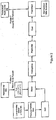
- the method of this invention are generally illustrated in Figures 1 and 2.
- native fat in raw milk is reduced to provide a reduced-fat raw milk containing less than about 3 percent fat and preferably a skim milk containing about 0.05 to about 2 percent fat.
- the resulting cream (preferably containing greater than about 16 percent fat, and more preferably about 40 to about 45 percent fat) can be sold as is or used in other products.
- a first portion of the reduced-fat raw milk is heated to about 125 to about 145°F [about 51.7 to about 62.8°C] and concentrated milkfat (or other fat), preferably in the form of relatively small particles, is added to the milk at a level of about 4 to about 10 percent to form a slurry.
- the concentrated milkfat normally in the form of large blocks (e.g., about 25 to about 55 Ibs [about 11.34 to about 24.95 kg]) at a temperature of less than about 32°F [about 0°C], and more preferably less than about 0°F [about -17.8°C], is first ground to relatively small particles (e.g., on the order of about fraction of inches [a few mm] to a few inches [a few cm] in any one dimension)in order to increase the surface area to make melting easier.
- the amount of concentrated milkfat added will, of course, depend on the amount of milkfat desired in the final milk substrate. Generally, the amount of concentrated milkfat added to the first portion of the reduced-fat raw milk is about 4 to about 10 percent.
- the slurry is maintained at this elevated temperature until all of the concentrated milkfat has melted.
- the slurry is homogenized to obtain a concentrated milkfat/milk blend or 5 substrate containing fat particles having an average particle size and a particles size distribution similar to natural milk.
- the fat particles in the substrate should have an average diameter of about 1.0 to about 10.0 microns and a particle size distribution such that at least about 90 percent of the fat particles in the substrate have diameters of about 1.0 to about 10.0 microns. More preferably, the fat particles in the substrate have an average diameter of about 1.0 to about 5.0 microns and a particle size distribution such that at least about 90 percent of the fat particles in the substrate have diameters of about 1.0 to about 5.0 microns.
- the homogenization can'be carried out with convention homogenizers so long as the desired particle size and particle size distribution can be achieved.
- the homogenization is effected using a jet homogenizer, and more preferably an in-line jet homogenizer, at a pressure of about 90 to about 200 psig [about 0.62 to about 1.55 MPa gauge].
- the resulting milkfat/milk blend may be used for the production of natural cheese using conventional procedures. More preferably, the resulting milkfat/milk blend, after pasteurization and cooling (preferably to below about 100°F [about 37.8°C]), is blended with additional pasteurized reduced-fat milk (also preferably cooled to below about 100°F [about 37.8°C]), in a final blending step to form a standardized blended substrate which is then used for the production of natural cheese.
- additional reduced-fat milk preferably skim milk
- the resulting standardized blended substrate formed in the final blending step contains about 25 to about 50 percent mifkfat/milk blend (i.e., the first portion from the separator) and'about 50 to about 75 percent reduced-fat milk (i.e., the second portion from the separator), and even more preferably, about 25 to about 35 percent milkfat/milk blend and about 65 to about 75 reduced-fat milk.
- the fat droplet size of the resulting milkfat/milk blend and/or the standardized blended substrate is sufficiently small such that fat loss is minimized during the manufacture of the desired natural cheese.
- Figure 2 illustrates another embodiment of the present invention.
- This embodiment differs from the first embodiment discussed above mainly in that the reduced-fat milk of portions 1 and 2 need not be taken directly from a cream separator and that the reduced-fat milk of portions 1 and 2 need not be taken from the same source and can, if fact, be different starting materials.
- the reduced-fat milk starting materials for portions 1 and 2 can differ, if desired, in fat content, protein content, and the like.
- the resulting standardized milk substrate can be used to prepare natural cheese using conventional cheese-making techniques.
- the standardized milk substrate produced in this invention is similar in many respects to natural milk and can be used to prepare natural cheeses. More specifically, the standardized milk substrate produced in this invention has an average particle size and a particle size distribution similar to natural milk. More specifically, the fat particles in the standardized milk substrate should have an average diameter of about 1.0 to about 10.0 microns and a particle size distribution such that at least about 90 percent of the fat particles in the standardized milk substrate have diameters of about 1.0 to about 10.0 microns. More preferably, the fat particles in the standardized milk substrate should have an average diameter of about 1.0 to about 5.0 microns and a particle size distribution such that at least about 90 percent of the fat particles in the standardized milk substrate have diameters of about 1.0 to about 5.0 microns.
- the homogenization can be carried out with conventional homogenizers so long as the desired particle size and particle size distribution can be achieved.
- the homogenization is effected using a jet homogenizer, and more preferably an in-line jet homogenizer, at a pressure of about 90 to about 200 psig [about 0.62 to about 1.55 MPa gauge].
- suitable jet homogenizers are provided in U.S. Patent 4,585,357 (April 29, 1986) and 5,958,495 (September 28, 1999).
- the ability of a homogenizer to reduce and control fat particle size is determined by the disruption of fat globules.
- the best measure and/or monitoring of this disruption is through controlling pressure generated within the homogenizer.
- the particle size and particle size distribution can be determined as a function of homogenization conditions in order to determine operating parameters to achieve the desired particle size and particle size distribution.
- For jet or impingement homogenizers see, e.g., Example 1
- fat globules are disrupted when two streams of substrate make contact with one another at high pressures and at a perpendicular angle. Because the angle is fixed, the only way to control particle size is to increase the velocity with which they make contact.
- Velocity is generated by a pump feeding liquid through the orifices of the homogenizer.
- the speed of the pump can be changed to generate different pressures, these different pressures are measured as back pressure at the inlet of the jet unit .
- Velocity can also be increased by reducing the number of orifices while maintaining the same overall flowrate through the homogenizer. This is accomplished but replacing one or more orifice nozzles with "plugs" to block flow and force fluid through a smaller overall cross-section of nozzle area.
- an APV Hydroshear 40 jet homogenizer was setup with a series of nozzles and plugs to produce 8 streams, and thus 4 impingement zones. The pressure can be controlled by changing the pump speed.
- Example 2 For piston homogenizers (see, e.g., Example 2), fat globules are disrupted when a piston forces the substrate at high velocity through a small channel into a metal impact ring. Homogenization occurs as both mechanical energy from the piston and cavitational energy from high and low pressure zones are imparted on the fat globules. Pressure is controlled by changing the cross-sectional area of the channel the fat is forced through. Feed pressure and channel size should be held constant to maintain a steady homogenization.
- Example 2 a two-stage piston APV Gaulin homogenizer with standard setup was fed with positive displacement pump at 60 psig [0.41 MPa gauge]. Both stages were used for homogenization.
- the channel was reduced to approximately 0.1 mm to generate about 500 psig [3.45 MPa gauge]; the second channel was closed until the total pressure reached 750 psig [5.17 MPa gauge].
- both stages are also employed.
- the channel on the first stage would be closed until 500 psig [3.45 MPa gauge] was generated, then the channel on the second stage was closed until the total desired pressure was reached.
- the concentrated milkfat/milk blends or substrates produced by the present invention can be used in a conventional cheese-making process to produce natural cheeses which are substantially free of emulsifiers and/or stabilizers.
- the following examples are intended to illustrate the invention and not to limit it. Unless otherwise indicated, all percentages and ratios are by weight.
- This example illustrates the production of cheddar cheese using the process of this invention employing a jet or impingement type homogenizer.
- Raw whole milk (575 Ibs [260.82 kg]; 3.8 percent fat, 3.2 percent protein, and 8.9 percent non-fat solids) was skimmed in a centrifugal separator to produce a reduced-fat milk (2.1 percent fat, 3.3 percent protein, and 9.2 percent non-fat solids).
- the reduced-fat milk (550 Ibs [249.48 kg]) was heated in a plate-and-frame heat exchanger (Thermaline, Auburn, WA) to a temperature of 135°F [57.2°C] and transferred to a jacketed kettle (Viatic, Charlevoix, Ml) equipped with an impeller mixer (Braun, Holland, Ml) while maintaining the temperature at about 135°F [about 57.2°C].
- Frozen concentrated milkfat 80 percent fat and 19 percent moisture; 55 Ibs [24.95 kg] blocks was size reduced to approximately 1 ⁇ 4" x 1 ⁇ 4" x 3" [6.35 mm x 6.35 mm x 76.20 mm] in an Extructor (Reetz, Santa Rosa, CA).
- the ground milkfat 48 Ibs [21.77 kg] was added to the heated reduced-fat milk (550 Ibs [249.48 kg]; ratio o f about 1:9) using mixing to produce turbulent conditions throughout the jacketed kettle; approximately 0.001 percent food grade defoamer was added to reduce froth during agitation.
- the temperature of the slurry was about 125°F [about 51.7°C] once the ground milkfat was completely melted.
- the slurry composition was about 8.4 percent fat, about 3.0 percent protein, and about 8.4 percent non-fat solids.
- a Waukesha 30 positive-displacement pump (Waukesha, Delevan, WI) was used to force the slurry through an APV Hydroshear 40 impingement homogenizer (APV Gaulin, Everett, MA) at a flowrate of about 36 Ibs/minute [about 16.33 kg/minute] and a back pressure of about 160 psig [about 1.10 MPa].
- the fat particles had an average particle size of about 5.3 microns after homogenization.
- the homogenized mixture was pasteurized at about 165°F (about 73.9°C] for about 15 seconds and then added to a 1000 Ib [453.59 kg] double-O cheese vat (Damrow, Fond Du Lac, WI).
- the homogenized mixture was blended with a pasteurized reduced-fat milk (600 Ibs [272.16 kg]; 2.0 percent fat, 3.3 percent protein, and 9.2 percent non-fat solids) at a ratio of 1:3 to produce a standardized milk substrate having 4.3 percent fat, 3.3 percent protein, and 9.0 percent non-fat solids.
- a pasteurized reduced-fat milk 600 Ibs [272.16 kg]; 2.0 percent fat, 3.3 percent protein, and 9.2 percent non-fat solids
- a cheddar cheese was prepared from the standardized milk substrate using the following procedure.
- the standardized milk substrate (900 Ibs [408.23 kg]) was heated to about 88°F [about 31.1°C] in a separate 1000 Ib [453.59 kg] double-O cheese vat.
- a DVS Lactococcus lactis starter culture 70 g (Chr. Hansen, Milwaukee, WI) was added, by 40 mL of an aqueous calcium chloride (40 percent) solution. After a 30 minute ripening period 60 mL of Chymax 2X rennet (Chr. Hansen, Milaukee, WI) was added to set the coagulum. After a 35 minute set, the coagulum was then cut.
- the curd was cooked at 102°F [38.9°C] for 35 minutes followed by 30 minutes stirring without further heating.
- the cooked curd was pumped to a drain table where it was matted and cheddared for 3 hours.
- the cheddar curd was milled and salted at 0.025 Ibs salt/lbs curd [0.025 kg salt/kg curd].
- the salted curd was hooped and pressed under 35 psig [0.24 MPa gauge] for 8 hours before vacuum packing in 40 Ibs [18.14 kg] blocks.
- a control cheddar cheese was prepared using essentially the same procedure starting with a conventional milk substrate.
- the conventional milk substrate was prepared by blending pasteurized whole milk (1000 Ibs [453.59 kg]; 3.8 percent fat, 3.2 percent protein, and 8.9 percent non-fat solids) and pasteurized sweet cream (9 Ibs [4.08 kg]; 43.9 percent fat; 1.8 percent protein, and 5.0 percent non-fat solids).
- the resulting conventional milk substrate had 4.2 percent fat, 3.2 percent protein, and 9.0 percent non-fat solids.
- the fat particles had an average particle size of about 4.8 microns.
- the cheddar cheese prepared form the inventive substrate and the conventional substrate, after ageing 30 days, are comparable in organoleptic and other properties.
- cheeses can be prepared from reduced-fat milk standardized with concentrated milkfat which are comparable to cheeses prepared from conventional milk substrates (e.g., reduced-fat milk standardized with cream).
- This example illustrates the production of cheddar cheese using the process of this invention employing a piston type homogenizer.
- Raw whole milk (2080 Ibs [943.47 kg]; 3.6 percent fat, 3.3 percent protein, and 8.9 percent non-fat solids) was skimmed in a centrifugal separator to reduce a reduced-fat milk (2.0 percent fat, 3.3 percent protein, and 9.1 percent non-fat solids).
- the reduced-fat milk 2000 Ibs [907.18 kg]
- Frozen concentrated milkfat (80 percent fat and 19 percent moisture; 55 Ibs [24.95 kg] blocks) was size reduced to approximately 1 ⁇ 4" x 1 ⁇ 4" x 3" [6.35 mm x 6.35 mm x 76.20 mm] in an Extractur (Reetz, Santa Rosa, CA).
- the ground milkfat (83 Ibs [37.65 kg]) was added to the heated reduced-fat milk (2000 Ibs [907.18 kg]; ratio of abut 1:25).
- Mixing provided by the double-O agitators kept the melted milkfat in suspension; approximately 0.001 percent food grade defoamer was added to minimize foam during agitation.
- the temperature of slurry was approximately 130°F [54.4°C] once the ground milkfat was completely melted.
- the slurry composition was 3.9 percent fat, 3.2 percent protein and 8.9 percent non-fat solids.
- a Waukesha 30 positive-displacement pump (Waukesha, Delavan, WI) was used to feed a Gaulin piston-type homogenizer 75DJF38BS (APV Gaulin, Everett, MA) at a feed pressure of 60 psig [0.41 MPa gauge].
- the slurry was homogenized using both stages of the two-stage homogenizer, with the first stage generating a pressure of 500 psig [3.45 MPa gauge] and the second stage generating 250 psig [1.72 MPa gauge] for a total of 750 psig [5.17 MPa gauge].
- the fat had an average particle size of 2.64 microns after homogenization.
- the homogenized mixture was pasteurized at 163°F [72.8°C] for 15 seconds and then added to a 1000 Ib [453.59 kg] double-O cheese vat (Damrow, Fond Du Lac, WI).
- the homogenized mixture (330 Ibs [149.69 kg]) was blended with a pasteurized reduced-fat milk (640 Ibs [290.30 kg]; 2.0 percent fat, 3.3 percent protein and 9.0 percent non-fat solids) and pasteurized cream (30 Ibs [13.61 kg]; 43.3 percent fat, 1.8 percent protein and 4.9 percent non-fat solids) to prepare a standardized milk substrate.
- the standardized milk substrate had the following particle size properties: Inventive Milk Substrate Specific Surface Area (cm 2 /cm 3 ) 25,545 Median Diameter ( ⁇ ) 2.5 Mean Diameter ( ⁇ ) 2.64 Mean Diameter ( ⁇ ) at percentage 10% 1.60 30% 2.09 50% 2.51 70% 2.98 90% 3.83 The particle size distribution of the this sample is also shown in Figure 3.
Landscapes
- Life Sciences & Earth Sciences (AREA)
- Chemical & Material Sciences (AREA)
- Engineering & Computer Science (AREA)
- Food Science & Technology (AREA)
- Polymers & Plastics (AREA)
- Dairy Products (AREA)
Abstract
Description
| Control Milk Substrate | Inventive Milk Substrate | |||
| Fat (%) | Protein (%) | Fat (%) | Protein (%) | |
| Milk | 3.8 | 3.2 | 2.1 | 3.3 |
| Sweet Cream | 43.9 | 1.8 | - | - |
| Milkfat Slurry | - | - | 8.4 | 3.0 |
| Standardized Milk Substrate | 4.2 | 3.2 | 4.3 | 3.2 |
| Whey (drain table) | 0.65 | - | 0.69 | - |
| Whey (at pressing) | 0.16 | - | 0.33 | - |
| Control Milk Substrate | Inventive Milk Substrate | ||
| Specific Surface Area (cm2/cm3) | 15,025 | 14,827 | |
| Median Diameter (µ) | 4.15 | 4.43 | |
| Mean Diameter(µ) | 4.84 | 5.34 | |
| Mean Diameter (µ) at | 10% | 2.60 | 2.37 |
| 30% | 3.35 | 3.30 | |
| 50% | 4.16 | 4.47 | |
| 70% | 5.44 | 6.37 | |
| 90% | 8.12 | 9.57 |
| Inventive Milk Substrate | ||
| Specific Surface Area (cm2/cm3) | 25,545 | |
| Median Diameter (µ) | 2.5 | |
| Mean Diameter (µ) | 2.64 | |
| Mean Diameter (µ) at | 10% | 1.60 |
| 30% | 2.09 | |
| 50% | 2.51 | |
| 70% | 2.98 | |
| 90% | 3.83 |
Claims (5)
- A method for incorporating concentrated milkfat into milk, the method comprising:wherein the concentrated milkfat/milk blend is suitable for preparing a natural cheese which is substantially free of emulsifiers or stabilizers.(1) blending concentrated milkfat with milk at a temperature sufficient to melt the concentrated milkfat to form a slurry; and(2) homogenizing the slurry to provide a concentrated milkfat milk blend having fat particles with an average diameter of from about 1.0 to about 10 microns and with at least about 90 percent of the fat particles having a particle size of about 1.0 to about 10 microns,
- A method according to claim 1, wherein the milk has a fat content of about 0.01 to about 3 percent.
- A method according to claim 1 or claim 2, wherein the slurry contains from about 4 to about 10 percent concentrated milkfat and about 90 to about 96 percent milk and wherein the slurry is heated to a temperature of about 125 to about 145°F [about 51.7 to about 62.8°C] prior to initiation of the homogenization.
- A method according to any one of claims 1 to 3, wherein the slurry is homogenized using a jet homogenizer operated at a pressure of about 90 to about 225 psig [about 0.62 to about 1.55 MPa gauge] or a piston type homogenizer operated at a pressure of about 500 to about 1500 psig [about 3.45 to about 10.34 MPa gauge].
- A method for preparing natural cheese using a concentrated milkfat/milk blend, said method comprising:wherein the natural cheese is substantially free of emulsifiers or stabilizers.(1) preparing a concentrated milkfat/milk blend by a process according to any one of claims 1 to 4;(2) pasteurizing the concentrated milkfat/milk blend;(3) cooling the pasteurized concentrated milkfat/milk blend to a temperature below about 100°F [about 37.8°C];(4) forming a standardized milk substrate by blending about 25 to about 50 percent of the cooled and pasteurized concentrated milkfat/milk blend with about 50 to 75 percent of a pasteurized reduced-fat milk;(5) treating the standardized milk substrate to form curd and whey;(6) separating the curd and whey; and(7) treating the curd to form the natural cheese;
Applications Claiming Priority (2)
| Application Number | Priority Date | Filing Date | Title |
|---|---|---|---|
| US09/742,903 US6358551B1 (en) | 2000-12-20 | 2000-12-20 | Method of manufacture of natural cheese |
| US742903 | 2000-12-20 |
Publications (3)
| Publication Number | Publication Date |
|---|---|
| EP1216620A2 true EP1216620A2 (en) | 2002-06-26 |
| EP1216620A3 EP1216620A3 (en) | 2002-07-10 |
| EP1216620B1 EP1216620B1 (en) | 2005-08-31 |
Family
ID=24986711
Family Applications (1)
| Application Number | Title | Priority Date | Filing Date |
|---|---|---|---|
| EP01310673A Expired - Lifetime EP1216620B1 (en) | 2000-12-20 | 2001-12-20 | Method of manufacture of natural cheese |
Country Status (5)
| Country | Link |
|---|---|
| US (1) | US6358551B1 (en) |
| EP (1) | EP1216620B1 (en) |
| CA (1) | CA2365972A1 (en) |
| DE (1) | DE60113049T2 (en) |
| ES (1) | ES2248247T3 (en) |
Cited By (1)
| Publication number | Priority date | Publication date | Assignee | Title |
|---|---|---|---|---|
| CN104542979A (en) * | 2013-10-16 | 2015-04-29 | 内蒙古伊利实业集团股份有限公司 | Method for preparing foamed milk and foamed milk prepared with method |
Families Citing this family (15)
| Publication number | Priority date | Publication date | Assignee | Title |
|---|---|---|---|---|
| US6893675B1 (en) | 2000-06-23 | 2005-05-17 | Afp Advanced Food Products Llc | Acidified imitation cheese sauce and pudding compositions and methods for producing such compositions |
| DK1406504T3 (en) | 2001-06-25 | 2017-01-30 | Afp Advanced Food Products Llc | Compositions of imitated cheese for use in making cheese in bread form, slices, and the like, and method for making such compositions |
| BR0211032A (en) * | 2001-06-25 | 2004-06-22 | Afp Advanced Food Products Llc | Imitation cheese compositions and method of producing such compositions |
| US20060062885A1 (en) * | 2001-06-25 | 2006-03-23 | Afp Advanced Food Products Ilc | Imitation cheese compositions for use in the manufacture of cheese loaves, slices, and the like, and method of producing such compositions |
| AU2003265631A1 (en) * | 2002-08-23 | 2004-03-11 | Fonterra Co-Operative Group Ltd. | Method for producing a food product from a concentrated protein |
| US8603554B2 (en) | 2004-05-03 | 2013-12-10 | Leprino Foods Company | Cheese and methods of making such cheese |
| US7579033B2 (en) * | 2004-05-03 | 2009-08-25 | Leprino Foods Company | Methods for making soft or firm/semi-hard ripened and unripened cheese and cheeses prepared by such methods |
| US7585537B2 (en) * | 2004-05-03 | 2009-09-08 | Leprino Foods Company | Cheese and methods of making such cheese |
| WO2005107487A1 (en) | 2004-05-03 | 2005-11-17 | Leprino Foods Company | Blended cheeses and methods for making such cheeses |
| US20060008555A1 (en) * | 2004-07-07 | 2006-01-12 | Leprino Foods | Food ingredients and food products treated with an oxidoreductase and methods for preparing such food ingredients and food products |
| US20120201926A1 (en) * | 2011-02-07 | 2012-08-09 | John Kieran Brody | Natural Cheese with Improved Melt Characteristics |
| US20130004644A1 (en) * | 2011-07-01 | 2013-01-03 | Ernster Sr John H | Method for manufacturing a whole milk cheese |
| US20140255584A1 (en) * | 2013-03-07 | 2014-09-11 | Kraft Foods Group Brands Llc | Emulsifying Salt-Free Cheese And Method Of Making Thereof Having A Blend Of Sheared And Non-Sheared Fat |
| CN114222497B (en) * | 2019-08-14 | 2023-04-28 | 利乐拉瓦尔集团及财务有限公司 | Method and system for homogenizing liquid food products |
| EP4040948A1 (en) * | 2019-10-10 | 2022-08-17 | Chr. Hansen A/S | Control of eyes formation in swiss type cheese and continental cheese type |
Family Cites Families (5)
| Publication number | Priority date | Publication date | Assignee | Title |
|---|---|---|---|---|
| NL7212074A (en) * | 1972-09-05 | 1974-03-07 | ||
| US4585357A (en) | 1984-10-18 | 1986-04-29 | Kazuo Ogata | Homogenizer |
| KR970067585A (en) * | 1996-03-25 | 1997-10-13 | 오노 시게오 | Measurement method of projection characteristics and projection exposure method |
| DE19700810A1 (en) | 1997-01-13 | 1998-07-16 | Bayer Ag | Method and device for homogenizing milk |
| US6096352A (en) | 1998-07-27 | 2000-08-01 | Kraft Foods, Inc. | Method of manufacture of cream cheese products |
-
2000
- 2000-12-20 US US09/742,903 patent/US6358551B1/en not_active Expired - Lifetime
-
2001
- 2001-12-20 DE DE60113049T patent/DE60113049T2/en not_active Expired - Fee Related
- 2001-12-20 EP EP01310673A patent/EP1216620B1/en not_active Expired - Lifetime
- 2001-12-20 ES ES01310673T patent/ES2248247T3/en not_active Expired - Lifetime
- 2001-12-20 CA CA002365972A patent/CA2365972A1/en not_active Abandoned
Cited By (1)
| Publication number | Priority date | Publication date | Assignee | Title |
|---|---|---|---|---|
| CN104542979A (en) * | 2013-10-16 | 2015-04-29 | 内蒙古伊利实业集团股份有限公司 | Method for preparing foamed milk and foamed milk prepared with method |
Also Published As
| Publication number | Publication date |
|---|---|
| DE60113049T2 (en) | 2006-01-26 |
| EP1216620A3 (en) | 2002-07-10 |
| US6358551B1 (en) | 2002-03-19 |
| DE60113049D1 (en) | 2005-10-06 |
| ES2248247T3 (en) | 2006-03-16 |
| EP1216620B1 (en) | 2005-08-31 |
| CA2365972A1 (en) | 2002-06-20 |
Similar Documents
| Publication | Publication Date | Title |
|---|---|---|
| EP1216620B1 (en) | Method of manufacture of natural cheese | |
| JP3164898B2 (en) | Method for producing non-fat cream cheese products | |
| Mistry et al. | Use of ultrafiltered sweet buttermilk in the manufacture of reduced fat Cheddar cheese | |
| EP1214884B1 (en) | High moisture cream cheese texture control | |
| EP1364583B1 (en) | Dairy products with reduced average particle size | |
| JP3277060B2 (en) | Low fat cheese products and manufacturing methods | |
| US6669978B2 (en) | Method for preparing process cheese containing increased levels of whey protein | |
| US20210127697A1 (en) | Method for producing cheese | |
| US20240057628A1 (en) | A method for the manufacture of a cream cheese | |
| EP0149671B1 (en) | A process for making portioned cheese | |
| CN1236557A (en) | Highly flavored cheese product and method for producing same | |
| US8080276B2 (en) | Method for producing a food product from a concentrated protein | |
| US20060057249A1 (en) | Method for fast production of cheese curds and cheese products produced therefrom | |
| US20250160356A1 (en) | A method for the manufacture of a cream cheese | |
| EP4093208A1 (en) | Preparation of brine-ripened cheese product | |
| WO2020115012A1 (en) | Preparation of pasta filata cheese precursor and pasta filata cheese | |
| US6902750B2 (en) | Method for the manufacture of process cheese | |
| EP4185118B1 (en) | Method of making cheese | |
| Cassidy | ALTERATION OF MANUFACTURING CONDITIONS TO PRODUCE LOW MOISTURE PART-SKIM MOZZARELLA CHEESE FROM HIGHLY CONCENTRATED MILK | |
| WO2020038969A1 (en) | Method for making cheese and use of casein | |
| HK1262602B (en) | Dairy product and processes | |
| IE56072B1 (en) | A process for making portioned cheese | |
| Sultana | Properties of the process capability index C (pc) |
Legal Events
| Date | Code | Title | Description |
|---|---|---|---|
| PUAI | Public reference made under article 153(3) epc to a published international application that has entered the european phase |
Free format text: ORIGINAL CODE: 0009012 |
|
| PUAL | Search report despatched |
Free format text: ORIGINAL CODE: 0009013 |
|
| AK | Designated contracting states |
Kind code of ref document: A2 Designated state(s): AT BE CH CY DE DK ES FI FR GB GR IE IT LI LU MC NL PT SE TR |
|
| AX | Request for extension of the european patent |
Free format text: AL;LT;LV;MK;RO;SI |
|
| AK | Designated contracting states |
Kind code of ref document: A3 Designated state(s): AT BE CH CY DE DK ES FI FR GB GR IE IT LI LU MC NL PT SE TR |
|
| AX | Request for extension of the european patent |
Free format text: AL;LT;LV;MK;RO;SI |
|
| RIC1 | Information provided on ipc code assigned before grant |
Free format text: 7A 23C 19/05 A, 7A 23C 9/15 B |
|
| 17P | Request for examination filed |
Effective date: 20030109 |
|
| AKX | Designation fees paid |
Designated state(s): DE ES GB IT |
|
| RIN1 | Information on inventor provided before grant (corrected) |
Inventor name: OSTERGAARD, SCOTT T. Inventor name: SADOWSKY IV, JOHN RICHARD Inventor name: TROP, SANDRA A. |
|
| 17Q | First examination report despatched |
Effective date: 20030925 |
|
| GRAP | Despatch of communication of intention to grant a patent |
Free format text: ORIGINAL CODE: EPIDOSNIGR1 |
|
| GRAS | Grant fee paid |
Free format text: ORIGINAL CODE: EPIDOSNIGR3 |
|
| GRAA | (expected) grant |
Free format text: ORIGINAL CODE: 0009210 |
|
| AK | Designated contracting states |
Kind code of ref document: B1 Designated state(s): DE ES GB IT |
|
| REG | Reference to a national code |
Ref country code: GB Ref legal event code: FG4D |
|
| REF | Corresponds to: |
Ref document number: 60113049 Country of ref document: DE Date of ref document: 20051006 Kind code of ref document: P |
|
| REG | Reference to a national code |
Ref country code: ES Ref legal event code: FG2A Ref document number: 2248247 Country of ref document: ES Kind code of ref document: T3 |
|
| PLBI | Opposition filed |
Free format text: ORIGINAL CODE: 0009260 |
|
| 26 | Opposition filed |
Opponent name: FRIESLAND BRANDS B.V. Effective date: 20060531 |
|
| PLAX | Notice of opposition and request to file observation + time limit sent |
Free format text: ORIGINAL CODE: EPIDOSNOBS2 |
|
| PLBB | Reply of patent proprietor to notice(s) of opposition received |
Free format text: ORIGINAL CODE: EPIDOSNOBS3 |
|
| PGFP | Annual fee paid to national office [announced via postgrant information from national office to epo] |
Ref country code: GB Payment date: 20061222 Year of fee payment: 6 |
|
| PGFP | Annual fee paid to national office [announced via postgrant information from national office to epo] |
Ref country code: ES Payment date: 20061226 Year of fee payment: 6 |
|
| PGFP | Annual fee paid to national office [announced via postgrant information from national office to epo] |
Ref country code: DE Payment date: 20070131 Year of fee payment: 6 |
|
| PGFP | Annual fee paid to national office [announced via postgrant information from national office to epo] |
Ref country code: IT Payment date: 20071222 Year of fee payment: 7 |
|
| PLAB | Opposition data, opponent's data or that of the opponent's representative modified |
Free format text: ORIGINAL CODE: 0009299OPPO |
|
| GBPC | Gb: european patent ceased through non-payment of renewal fee |
Effective date: 20071220 |
|
| PG25 | Lapsed in a contracting state [announced via postgrant information from national office to epo] |
Ref country code: DE Free format text: LAPSE BECAUSE OF NON-PAYMENT OF DUE FEES Effective date: 20080701 |
|
| PG25 | Lapsed in a contracting state [announced via postgrant information from national office to epo] |
Ref country code: GB Free format text: LAPSE BECAUSE OF NON-PAYMENT OF DUE FEES Effective date: 20071220 |
|
| REG | Reference to a national code |
Ref country code: ES Ref legal event code: FD2A Effective date: 20071221 |
|
| PLCK | Communication despatched that opposition was rejected |
Free format text: ORIGINAL CODE: EPIDOSNREJ1 |
|
| PG25 | Lapsed in a contracting state [announced via postgrant information from national office to epo] |
Ref country code: ES Free format text: LAPSE BECAUSE OF NON-PAYMENT OF DUE FEES Effective date: 20071221 |
|
| PLBN | Opposition rejected |
Free format text: ORIGINAL CODE: 0009273 |
|
| STAA | Information on the status of an ep patent application or granted ep patent |
Free format text: STATUS: OPPOSITION REJECTED |
|
| 27O | Opposition rejected |
Effective date: 20090507 |
|
| PG25 | Lapsed in a contracting state [announced via postgrant information from national office to epo] |
Ref country code: IT Free format text: LAPSE BECAUSE OF NON-PAYMENT OF DUE FEES Effective date: 20081220 |