EP1215658A2 - Visual activation of voice controlled apparatus - Google Patents
Visual activation of voice controlled apparatus Download PDFInfo
- Publication number
- EP1215658A2 EP1215658A2 EP01310005A EP01310005A EP1215658A2 EP 1215658 A2 EP1215658 A2 EP 1215658A2 EP 01310005 A EP01310005 A EP 01310005A EP 01310005 A EP01310005 A EP 01310005A EP 1215658 A2 EP1215658 A2 EP 1215658A2
- Authority
- EP
- European Patent Office
- Prior art keywords
- user
- voice
- speaking
- arrangement according
- voice control
- Prior art date
- Legal status (The legal status is an assumption and is not a legal conclusion. Google has not performed a legal analysis and makes no representation as to the accuracy of the status listed.)
- Withdrawn
Links
Images


Classifications
-
- G—PHYSICS
- G10—MUSICAL INSTRUMENTS; ACOUSTICS
- G10L—SPEECH ANALYSIS TECHNIQUES OR SPEECH SYNTHESIS; SPEECH RECOGNITION; SPEECH OR VOICE PROCESSING TECHNIQUES; SPEECH OR AUDIO CODING OR DECODING
- G10L15/00—Speech recognition
- G10L15/24—Speech recognition using non-acoustical features
-
- G—PHYSICS
- G06—COMPUTING OR CALCULATING; COUNTING
- G06F—ELECTRIC DIGITAL DATA PROCESSING
- G06F3/00—Input arrangements for transferring data to be processed into a form capable of being handled by the computer; Output arrangements for transferring data from processing unit to output unit, e.g. interface arrangements
- G06F3/16—Sound input; Sound output
- G06F3/167—Audio in a user interface, e.g. using voice commands for navigating, audio feedback
-
- G—PHYSICS
- G10—MUSICAL INSTRUMENTS; ACOUSTICS
- G10L—SPEECH ANALYSIS TECHNIQUES OR SPEECH SYNTHESIS; SPEECH RECOGNITION; SPEECH OR VOICE PROCESSING TECHNIQUES; SPEECH OR AUDIO CODING OR DECODING
- G10L25/00—Speech or voice analysis techniques not restricted to a single one of groups G10L15/00 - G10L21/00
- G10L25/78—Detection of presence or absence of voice signals
- G10L2025/783—Detection of presence or absence of voice signals based on threshold decision
Definitions
- the present invention relates to enabling the voice control of voice-controlled apparatus.
- a method of enabling voice control of voice-controlled apparatus involving at least:
- an arrangement for enabling voice control of voice-controlled apparatus comprising:
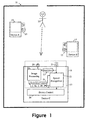
- FIG. 1 shows a work space 11 in which a user 10 is present.
- a user 10 Within the space 11 are three voice-controlled devices 14 (hereinafter referred to as devices A, B and C respectively) each with different functionality but each provided with a similar user interface subsystem 15 permitting voice control of the device by the user.
- devices A, B and C each with different functionality but each provided with a similar user interface subsystem 15 permitting voice control of the device by the user.
- the user-interface subsystem comprises:
- the image processing unit 24 Since the image processing unit 24 will take a finite time to analyse the camera image, a corresponding duration of the most recent output from the microphone is buffered so that what a user says when first looking towards the device is available to the speech recogniser when the latter is enabled as a consequence of the image processing unit producing a delayed indication that the user is looking towards the device.
- An alternative approach is to have the image processing unit operating continually (that is, the element 27 is omitted) with the most recent image analysis always being used as input to the activation control.
- the activation control block 25 keeps the speech recogniser 23 in an inhibited state and the latter therefore produces no output to the device control block 26.
- the image processing unit detects this and provides a corresponding indication to the activation control block 25.
- block 25 enables the speech recognition unit to receive and interpret voice commands from the user. This initial enablement only exists whilst the image processing unit 24 continues to indicate that the user is looking towards the device. Only if the user speaks during this initial enablement phase does the activation control block 25 continue to enable the speech recognition unit 23 after the user looks away.
- the block 25 is fed with an output from the speech recogniser that simply indicates whether or not the user is speaking.
- a delayed-disablement block 40 of control block 25 is activated if the output 28 indicates that the user is speaking during the initial enablement phase (that is, when the user is detected as looking at the apparatus).
- the delayed-disablement block 40 when activated ensures that the speech recognition unit 23 continues to be enabled, after the user looks away from the apparatus, but only whilst the user continues speaking and for a limited further period timed by timer 41 (and, for example, of 5 seconds duration) in case the user wishes to speak again to the device.
- the speech recogniser interprets the input and also indicates to block 25 that the user is speaking again; in this case, block 40 continues its enablement of unit 23 and resets timing out of the aforesaid limited period of silence allowed following speech cessation.
- the speech recognition block 23 is preferably arranged to characterise the voice speaking during initial enablement of the apparatus and then to check that any voice detected during the timeout period has the same characteristics (that is, is the same person) - if this check fails, that voice input is ignored.
- This voice characteristic check is preferably also applied to the voice input after the user turns away whilst speaking.
- the user can easily ensure that only one device at a time is responsive to voice control.
- the camera can be fitted with a wide-angle lens or with a scanning apparatus, or multiple cameras can be provided.
- access to the device C can be made dependent on the identity of the user by having the image processing block also carry out face recognition against a stored library of images of authorised personnel; with this arrangement, the processing block 24 only generates an output to activation control block 25 if the viewed face is recognised.
- Other forms of user recognition can be used alternatively, or additionally, to face recognition.
- the user could be identified by speaking a code word or by voice feature recognition (typically, these checks would be carried out by block 23 when activated).
- the user interface subsystem 15 is preferably arranged to recognise which of the persons facing the device is actually talking and only enable device utilisation if that person is authorised.
- One way in which this can be done is to check if the voice heard has characteristics corresponding to the pre-stored characteristics of the authorised person or persons viewed.
- Another possibility is to have the image processing block 24 seek to detect lip movement on the face of persons recognised as authorised. Suitable detection arrangements are described in references [15] and [16].
- the detection of lip movement by a user facing the device is advantageously made a condition of initial enablement of the device (independently of any user identity requirements) since even with only one person facing the device, the voice of another person may be picked up by the voice recogniser block 23 and trigger operation of the apparatus
- FIG. 2 shows another embodiment which whilst operating in the same general manner as the Figure 1 arrangement for effecting activation control of voice-controlled devices 14, utilises a set of four fixed room cameras 28 to determine when a user is looking at a particular device. These cameras feed image data via LAN 29 to a device activation manager 30 which incorporates an image processing unit 33 for determining when a user is looking at a particular device having regard to the direction of looking of the user and the user's position relative to the device positions.
- the unit 33 determines that the user is looking at a device 14 it informs a control block 34 which is responsible for informing the device concerned via an infrared link established between an IR transmitter 35 of the manager and an IR receiver 36 of the device.
- the manager 30 has an associated microphone 31 which, via sound activation control block 37, causes the image processing unit to be activated only when a sound is heard in the room.
- Each device 14 does, however, include control functionality that initially only enables its speech recognition unit whilst the user is looking at the device as indicated by manager 30, and then provided the user speaks during this initial enablement, maintains enablement of the speech recogniser whilst the speaking continues and for a timeout period thereafter (as for the Figure 1 embodiment) even if the user looks away from the device.
- FIG 3 shows a further camera-based embodiment in which the voice-controlled devices 14 (only two shown) are of substantially the same form as in the Figure 2 embodiment, but the camera system is now a camera 51 mounted on a head mounting carried by the user and facing directly forwards to show what the user is facing towards.
- This camera forms part of user-carried equipment 50 that further comprises an image processing unit 53, control block 54, and an infrared transmitter 35 for communicating with the devices 14 via their infrared receivers 36.
- the image from the camera 51 is fed to the image processing unit 53 where it is analysed to see if the user is facing towards a device 14.
- This analysis can be based simply on recognising the device itself or the recognition task can be facilitated by providing each device with a distinctive visual symbol, preferably well lit or, indeed, constituted by a distinctive optical or infrared signal.
- the unit 53 determines that the user is facing a device it informs the control block 54 which is then responsible for notifying the corresponding device via the IR transmitter 35 (or other communications link).
- the distinctive visual symbol may identify the device in terms of its address on a communications network.
- One possible form of distinctive symbol used to identify a device is a bar code and, preferably, a perspective invariant bar code.
- bar codes are already known.
- An example of a perspective invariant bar code uses a set of concentric black rings on a white background. The rings could be of two different thicknesses, to allow binary information to be coded in the ring thicknesses. The rings are reasonably viewpoint invariant because if the circles are viewed at an angle, ellipses will be perceived, which can be transformed by computer processing back to circles before decoding the binary information. Further information could be added by breaking (or not as the case may be) individual rings and by grouping rings.
- Simple image processing can be used to find groups of concentric ellipses in an image.
- the image is first be processed to obtain a threshold for black/white boundaries in the image, then, connected component analysis is used to find connected groups of black pixels on a white background.
- Ellipses can then be fitted around the inner and outer edge of each component group of black pixels.
- the ellipses can be transformed to circles and processing carried out to determine whether those circles share common centres and order the rings in terms of size. From there, a discrimination can be conducted between thick rings and thin rings. In order to achieve the latter, it will be necessary to have at least one thick and one thin ring in each pattern.
- Figure 4 shows a simplified version of the Figure 3 embodiment in which the user-carried camera and image processing unit are replaced by a directional transmitter (here shown as an IR transmitter 60) mounted on the user's head to point in the direction the user is facing.
- a directional transmitter here shown as an IR transmitter 60
- the IR transmitter 60 can be arranged to emit a modulated infra red beam, which modulation forms a binary code to particularly identify the wearer as a certain individual or a member of a group of individuals.
- a very high frequency radio (e.g. mmwave) transmitter or an ultrasound transmitter could be used instead.
- the speech recognizer of each device can be arranged to ignore voice input from the user unless, whilst the user is looking towards the apparatus, the user speaks a predetermined keyword.
- the speech recogniser is continually informed of when the user is looking towards the device and only provides an output when the key word is recognised (this output can either be in respect only of words spoken subsequent to the key words or can take account of all words spoken after enablement of the recogniser (the words spoken prior to the key word having been temporarily stored).
- the determination of when a user is looking towards a device can be effected by detecting the position of the user in the space 11 by any suitable technology and using a direction sensor (for example, a magnetic flux compass or solid state gyroscope) mounted on a user's head for sensing the direction of facing of the user, the output of this sensor and the position of the user being passed to a processing unit which then determines whether the user is facing towards a device (in known positions).
- a direction sensor for example, a magnetic flux compass or solid state gyroscope
Landscapes
- Engineering & Computer Science (AREA)
- Multimedia (AREA)
- Health & Medical Sciences (AREA)
- Audiology, Speech & Language Pathology (AREA)
- Human Computer Interaction (AREA)
- Physics & Mathematics (AREA)
- Acoustics & Sound (AREA)
- Computational Linguistics (AREA)
- Theoretical Computer Science (AREA)
- General Health & Medical Sciences (AREA)
- General Engineering & Computer Science (AREA)
- General Physics & Mathematics (AREA)
- Selective Calling Equipment (AREA)
- Telephonic Communication Services (AREA)
- User Interface Of Digital Computer (AREA)
Abstract
Description
- detection means for detecting when the user is looking towards the apparatus; and
- enablement control means for initially enabling the apparatus for voice control only if the detection means indicate that the user is looking towards the apparatus.
- Figure 1 is a diagram illustrating a room equipped with camera-equipped voice-controlled devices;
- Figure 2 is a diagram illustrating a camera-equipped room for controlling activation of voice-controlled devices in the room;
- Figure 3 is a diagram illustrating a room in which there is a user with a head-mounted camera arrangement for controlling activation of voice-controlled devices in the room; and
- Figure 4 is a diagram illustrating a room in which there is a user with a head-mounted infrared pointer for controlling activation of voice-controlled devices in the room.
- a
camera 20 feeding an image processing unit 16 that, when enabled, is operative to analyse the image provided by the camera to detect any human face in the image and determine whether the face image is a full frontal image indicating that the user is looking towards the camera and thus towards the device C. The visibility of both eyes can be used to determine whether the face image is a frontal one. A general face detector is described in reference [1] (see end of the present description). More refined systems that can be used to determine whether an individual is looking at the device concerned by means of gaze recognition are described in references [2] to [4]. It may also be useful to seek to recognise the face viewed in order to be able to implement identity-based access control to thedevices 14. Numerous face identification and recognition research systems exist such the MIT face recognition system developed by the Vision and modeling group of the MIT Media Lab; further examples of existing systems which are able to identify a face from an image are given in references [5] to [14]. - a
microphone 21 feeding aspeech recognition unit 23 which, when enabled, is operative to recognise a small vocabulary of command words associated with the device and output corresponding command signals to acontrol block 26 for controlling the main functionality of the device itself (the control block can also receive input from other types of input controls such as mechanical switches so as to provide an alternative to the voice-controlled interface 15). - a sound-
detection unit 27 fed bymicrophone 21 which triggers activation of the image processing unit upon detecting a sound (this need not be a speech sound). Once triggered, the image processing unit will initiate and complete an analyse of the current image fromcamera 20. - an activation control block 18 controlling activation of the
speech recognition unit 23 in dependence on the output of theimage processing unit 24; in particular, when the image processing unit indicates that the user is looking at the device, the block 18 enables the speech recognition unit.
Claims (49)
- A method of enabling voice control of voice-controlled apparatus, involving at least:(a) detecting when the user is looking towards the apparatus; and(b) initially enabling the apparatus for voice control only when the user is detected in (a) as looking towards the apparatus.
- A method according to claim 1, wherein the apparatus only remains enabled for voice control whilst the user continues to be detected in (a) as looking towards the apparatus.
- A method according to claim 1, further involving:detecting when the user is speaking, andwhere the user is detected as speaking whilst the apparatus is initially enabled for voice control, continuing enablement of the apparatus for voice control following the user ceasing to look towards the apparatus but only whilst the user continues speaking and for a timeout period thereafter, recommencement of speaking by the user during this timeout period continuing enablement of voice control with timing of the timeout period being reset.
- A method according to claim 1, further involving:detecting when the user is speaking and determining characteristics of the user's voice;where the user is detected as speaking whilst the apparatus is initially enabled for voice control, continuing enablement of the apparatus for voice control following the user ceasing to look towards the apparatus but only in respect of a voice having the same characteristics as that of the voice detected whilst the apparatus was initially enabled, and only whilst that voice continues speaking and for a timeout period thereafter, recommencement of speaking by the same voice during this timeout period continuing enablement of voice control with timing of the timeout period being reset.
- A method according to claim 1, wherein (a) is effected using a camera system mounted on the apparatus, images produced by the camera system being processed to determine if the user is looking towards the apparatus.
- A method according to claim 1, wherein (a) is effected using a camera system comprising one or more cameras mounted off the apparatus in fixed positions, images produced by the camera system being processed to determine if the user is looking towards the apparatus.
- A method according to claim 1, wherein (a) is effected using a camera system mounted on a user's head and arranged to point in the direction the user is facing or looking, images produced by the camera system being processed by an image processing subsystem to determine if the user is looking towards the apparatus.
- A method according to claim 7, wherein the apparatus carries an identifying mark that is used to identify the apparatus to the image processing subsystem.
- A method according to claim 8, wherein the identifying mark takes the form of a perspective invariant bar code.
- A method according to claim 8, wherein the identifying mark takes the form of an encoded optical or infrared signal.
- A method according to claim 8, wherein the identifying mark encodes a communications address at which the apparatus can be contacted.
- A method according to claim 1, wherein (a) is effected using a directional transmitter mounted on a user's head and arranged to point in the direction the user is facing, the apparatus having a receiver for detecting emissions from the directional transmitter.
- A method according to claim 1, wherein (a) is effected by detecting the position of the user and using a direction sensor mounted on a user's head for sensing the direction of facing of the user, the output of this sensor and the position of the user being used to determine whether the user is facing towards a known position of the apparatus.
- A method according to claim 1, wherein speech recognition means of the apparatus ignores voice input from the user unless whilst the user is looking towards the apparatus, the user speaks a predetermined key word.
- A method according to claim 1, wherein the initial enabling of the apparatus for voice control is only effected for specific persons as identified by the sending of an identifying code by a transmitting device associated with that person.
- A method according to claim 1, wherein the initial enabling of the apparatus for voice control is only effected for specific persons as identified by the recognition of the face of the person by an imaging system
- A method according to claim 16, wherein amongst multiple persons facing the apparatus, a person speaking to the apparatus is discerned by the detection of lip movement by an image processing subsystem, voice control of the apparatus only being enabled if the person speaking is a said specific person.
- A method according to claim 1, wherein the enabling of the apparatus for voice control is only effected for specific persons as identified by the recognition of the voice of the person by a voice characteristics recognizer.
- A method according to claim 18, wherein amongst multiple persons facing the apparatus, a person speaking to the apparatus is discerned by the detection of lip movement by an image processing subsystem, voice control of the apparatus only being enabled if the person speaking is a said specific person.
- A method according to claim 1, further involving:detecting lip movement by a user detected as facing the apparatus, andonly effecting initial enablement of the apparatus for voice control where the user detected as facing the apparatus is also moving their lips, indicating that the user is speaking.
- A method according to claim 1, further involving detecting when a user is speaking, initial enablement of the apparatus for voice control requiring that a user is detected as speaking simultaneously with a user being detected as looking at the apparatus.
- An arrangement for enabling voice control of voice-controlled apparatus, comprising:detection means for detecting when the user is looking towards the apparatus; andenablement control means for initially enabling the apparatus for voice control only if the detection means indicate that the user is looking towards the apparatus.
- An arrangement according to claim 22, wherein the control means is operative to keep the apparatus enabled for voice control only whilst the detection means continues to detect the user looking towards the apparatus.
- An arrangement according to claim 22, further comprising a speaking detector for detecting when a user is speaking, the control means comprising:the delayed-disablement means, when activated, being operative to keep the apparatus enabled for voice control following the detection means ceasing to detect that the user is looking towards the apparatus but only whilst the speaking detector continues to detect that the user is speaking and for the duration thereafter of the said timeout period as timed by the timing means, the delayed-disablement means being responsive to the speaking detector detecting recommencement of speaking by the user during this timeout period to reset timing of the timeout period.initial-enablement means for effecting the said initial enabling of the apparatus for voice control;delayed-disablement means including timing means for timing a timeout period; andmeans for activating the delayed-disablement means upon the speaking detector detecting a user speaking whilst the apparatus is initially enabled by the initial-enablement means;
- An arrangement according to claim 22, further comprising a speaking detector for detecting when a user is speaking, and a voice analyzer for determining characteristics of the user's voice, the control means comprising:the delayed-disablement means, when activated, being operative to keep the apparatus enabled for voice control following the detection means ceasing to detect that the user is looking towards the apparatus but only:initial-enablement means for effecting the said initial enabling of the apparatus for voice control;delayed-disablement means including timing means for timing a timeout period; andmeans for activating the delayed-disablement means upon the speaking detector detecting a user speaking whilst the apparatus is initially enabled by the initial-enablement means;in respect of a voice having the same characteristics, as determined by the voice analyser, as that of the detected voice giving rise to activation of the delayed disablement means; andwhilst the voice continues without a break greater than said timeout period as timed by the timing means.
- An arrangement according to claim 22, wherein the detection means comprises:a camera system mounted on the apparatus, andimage processing means for processing images produced by the camera system to determine if the user is looking towards the apparatus.
- An arrangement according to claim 22, wherein the detection means comprises:a camera system comprising one or more cameras mounted off the apparatus in fixed positions, andimage processing means for processing images produced by the camera system to determine if the user is looking towards the apparatus.
- An arrangement according to claim 22, wherein the detection means comprises:a camera system mounted on a user's head and arranged to point in the direction the user is facing or looking, andimage processing means for processing images produced by the camera system to determine if the user is looking towards the apparatus.
- An arrangement according to claim 28, wherein the image processing means is operative to recognise identifying marks of a predetermined type carried by the apparatus.
- An arrangement according to claim 29, wherein the said predetermined type of identifying mark is an invariant bar code.
- An arrangement according to claim 29, wherein the said predetermined type of identifying mark is an encoded optical or infrared signal.
- An arrangement according to claim 28, wherein the said predetermined type of identifying mark is an encoded communications address at which the apparatus can be contacted.
- An arrangement according to claim 22, wherein the detection means comprises:a directional transmitter for mounting on a user's head such as to point in the direction the user is facing, anda receiver, at the apparatus, for detecting emissions from the directional transmitter.
- An arrangement according to claim 22, wherein the detection means comprises:user-position detection system for detecting the position of the user,a direction sensor for mounting on a user's head to sense the direction of facing of the user,processing means, responsive to the user position detected by the user-position detection system and the user direction of facing sensed by the direction sensor, to determine whether the user is facing towards a known position of the apparatus.
- An arrangement according to claim 22, further comprising speech recognition means for recognizing the speaking of a predetermined key word by a user, the control means being operative to inhibit voice control of the apparatus unless whilst the user is looking towards the apparatus as detected by the detection means, the user speaks said predetermined key word.
- An arrangement according to claim 22, further comprising a receiver for receiving a code sent by a user-carried transmitting device, the control means being arranged to initially enable the apparatus for voice control only if said code is received by the receiver substantially contemporaneously with the detection means detecting a user looking towards the apparatus.
- An arrangement according to claim 22, wherein the detection means comprises an imaging system comprising:a camera subsystem, andfirst image processing means for determining when a person is facing the apparatus; the imaging system further comprising second image processing means for recognizing specific persons from their image as produced by the camera subsystem; and the control means being operative to initially enable the apparatus for voice control only where the imaging system detects a said specific person facing the apparatus.
- An arrangement according to claim 37, wherein the imaging system further comprises third image processing means for determining which person, amongst multiple persons facing the apparatus, is speaking to the apparatus by detecting lip movement, the control means being operative to initially enable voice control of the apparatus only if the person determined as speaking to the apparatus is a said specific person.
- An arrangement according to claim 22, further comprising a voice analyzer for recognizing the voice of specific persons, the control means being operative to initially enable the apparatus for voice control only where the voice analyzer recognizes a said specific person substantially contemporaneously with the detection means detecting a user looking towards the apparatus.
- An arrangement according to claim 39, wherein the detection means comprises an imaging system comprising:a camera subsystem, andfirst image processing means for determining when a person is facing the apparatus; the image system further comprising second image processing means for determining which person, amongst multiple persons facing the apparatus, is speaking to the apparatus by detecting lip movement; and the control means being operative to initially enable voice control of the apparatus only if the person determined as speaking to the apparatus by an image processing means is a said specific person.
- An arrangement according to claim 22, wherein the detection means comprises an imaging system comprising:a camera subsystem, andfirst image processing means for determining when a person is facing the apparatus; the imaging system further comprising second image processing means for detecting lip movement by the person facing the apparatus, and the control means being operative to initially enable the apparatus for voice control only where the image processing means detects lip movement by a person facing the apparatus.
- An arrangement according to claim 22, further comprising means for detecting when a user is speaking, the control means being operative to initially enable the apparatus for voice control only upon a user being detected as speaking simultaneously with a user being detected as looking at the apparatus.
- An installation for accommodating at least one voice-controlled apparatus, the installation including an arrangement according to claim 22 wherein the control means includes a communication subsystem for transmitting enablement signals to said apparatus.
- An installation for accommodating at least one voice-controlled apparatus, the installation including an arrangement according to claim 27 wherein the control means includes a communication subsystem for transmitting enablement signals to said apparatus.
- An installation for accommodating at least one voice-controlled apparatus, the installation including an arrangement according to claim 28 wherein the control means includes a communication subsystem for transmitting enablement signals to said apparatus.
- An installation for accommodating at least one voice-controlled apparatus, the installation including an arrangement according to claim 34 wherein the control means includes a communication subsystem for transmitting enablement signals to said apparatus.
- Voice-controlled apparatus including an arrangement according to claim 22.
- Voice-controlled apparatus including an arrangement according to claim 26.
- Voice-controlled apparatus including an arrangement according to claim 33.
Applications Claiming Priority (4)
| Application Number | Priority Date | Filing Date | Title |
|---|---|---|---|
| GB0029571 | 2000-12-05 | ||
| GB0029571A GB0029571D0 (en) | 2000-12-05 | 2000-12-05 | Activation of voice-controlled apparatus |
| GB0105949A GB0105949D0 (en) | 2000-12-05 | 2001-03-12 | Activation of voice-controlled apparatus |
| GB0105949 | 2001-03-12 |
Publications (2)
| Publication Number | Publication Date |
|---|---|
| EP1215658A2 true EP1215658A2 (en) | 2002-06-19 |
| EP1215658A3 EP1215658A3 (en) | 2002-08-14 |
Family
ID=26245374
Family Applications (1)
| Application Number | Title | Priority Date | Filing Date |
|---|---|---|---|
| EP01310005A Withdrawn EP1215658A3 (en) | 2000-12-05 | 2001-11-29 | Visual activation of voice controlled apparatus |
Country Status (2)
| Country | Link |
|---|---|
| US (1) | US6970824B2 (en) |
| EP (1) | EP1215658A3 (en) |
Cited By (21)
| Publication number | Priority date | Publication date | Assignee | Title |
|---|---|---|---|---|
| DE102004028082A1 (en) * | 2004-06-09 | 2005-12-29 | BSH Bosch und Siemens Hausgeräte GmbH | Household appliance e.g. oven, has detection device for evaluating image signal in order to identify sound spoken by operator, and outputting control commands to control unit, such that control unit controls function unit accordingly |
| EP1895510A1 (en) * | 2006-08-29 | 2008-03-05 | Aisin Aw Co., Ltd. | Voice recognition method and voice recognition apparatus |
| US7974781B2 (en) | 2006-06-30 | 2011-07-05 | Aisin Aw Co., Ltd. | Navigation apparatuses, methods, and programs for generation of a 3D movie |
| WO2014023257A1 (en) * | 2012-08-09 | 2014-02-13 | 华为终端有限公司 | Instruction processing method, apparatus, and system |
| CN104820556A (en) * | 2015-05-06 | 2015-08-05 | 广州视源电子科技股份有限公司 | Method and device for waking up voice assistant |
| WO2015176950A1 (en) * | 2014-05-21 | 2015-11-26 | Vorwerk & Co. Interholding Gmbh | Electrically operated domestic appliance having a voice recognition device |
| WO2015187764A1 (en) * | 2014-06-05 | 2015-12-10 | Microsoft Technology Licensing, Llc | Conversation cues within audio conversations |
| CN105340011A (en) * | 2013-06-28 | 2016-02-17 | 哈曼国际工业有限公司 | Wireless control of linked devices |
| GB2534274A (en) * | 2014-11-12 | 2016-07-20 | Lenovo Singapore Pte Ltd | Gaze triggered voice recognition |
| CN105912092A (en) * | 2016-04-06 | 2016-08-31 | 北京地平线机器人技术研发有限公司 | Voice waking up method and voice recognition device in man-machine interaction |
| CN107223280A (en) * | 2017-03-03 | 2017-09-29 | 深圳前海达闼云端智能科技有限公司 | robot awakening method, device and robot |
| CN107679506A (en) * | 2017-10-12 | 2018-02-09 | Tcl通力电子(惠州)有限公司 | Awakening method, intelligent artifact and the computer-readable recording medium of intelligent artifact |
| CN107678793A (en) * | 2017-09-14 | 2018-02-09 | 珠海市魅族科技有限公司 | Voice assistant starts method and device, terminal and computer-readable recording medium |
| CN108055617A (en) * | 2017-12-12 | 2018-05-18 | 广东小天才科技有限公司 | Microphone awakening method and device, terminal equipment and storage medium |
| WO2018093005A1 (en) | 2016-11-16 | 2018-05-24 | Lg Electronics Inc. | Mobile terminal and method for controlling the same |
| CN108198553A (en) * | 2018-01-23 | 2018-06-22 | 北京百度网讯科技有限公司 | Voice interactive method, device, equipment and computer readable storage medium |
| EP2925198B1 (en) | 2012-11-29 | 2018-11-07 | Vorwerk & Co. Interholding GmbH | Kitchen machine |
| WO2018210219A1 (en) * | 2017-05-18 | 2018-11-22 | 刘国华 | Device-facing human-computer interaction method and system |
| EP3483877A1 (en) * | 2014-10-09 | 2019-05-15 | Google LLC | Hotword detection on multiple devices |
| CN110136714A (en) * | 2019-05-14 | 2019-08-16 | 北京探境科技有限公司 | Natural interaction sound control method and device |
| EP3684064A1 (en) * | 2012-10-30 | 2020-07-22 | Samsung Electronics Co., Ltd. | Electronic device and control method thereof |
Families Citing this family (52)
| Publication number | Priority date | Publication date | Assignee | Title |
|---|---|---|---|---|
| DE10208468A1 (en) * | 2002-02-27 | 2003-09-04 | Bsh Bosch Siemens Hausgeraete | Electric domestic appliance, especially extractor hood with voice recognition unit for controlling functions of appliance, comprises a motion detector, by which the position of the operator can be identified |
| DE10208469A1 (en) * | 2002-02-27 | 2003-09-04 | Bsh Bosch Siemens Hausgeraete | Electrical device, in particular extractor hood |
| DE10208466A1 (en) * | 2002-02-27 | 2004-01-29 | BSH Bosch und Siemens Hausgeräte GmbH | Household electrical appliance |
| KR100434545B1 (en) * | 2002-03-15 | 2004-06-05 | 삼성전자주식회사 | Method and apparatus for controlling devices connected with home network |
| JP2004037998A (en) * | 2002-07-05 | 2004-02-05 | Denso Corp | Voice control device |
| DE10236937A1 (en) * | 2002-08-12 | 2004-02-26 | BSH Bosch und Siemens Hausgeräte GmbH | Operating panel for household device, e.g. washing machine, with movement detector to activate indicator displays and lights on panel only when user is nearby to save power |
| US7567908B2 (en) * | 2004-01-13 | 2009-07-28 | International Business Machines Corporation | Differential dynamic content delivery with text display in dependence upon simultaneous speech |
| WO2006006108A2 (en) | 2004-07-08 | 2006-01-19 | Philips Intellectual Property & Standards Gmbh | A method and a system for communication between a user and a system |
| US7518631B2 (en) * | 2005-06-28 | 2009-04-14 | Microsoft Corporation | Audio-visual control system |
| US7567828B1 (en) * | 2005-07-01 | 2009-07-28 | Plantronics, Inc. | Look and tune mobile communication device |
| US8645985B2 (en) * | 2005-09-15 | 2014-02-04 | Sony Computer Entertainment Inc. | System and method for detecting user attention |
| US7697827B2 (en) | 2005-10-17 | 2010-04-13 | Konicek Jeffrey C | User-friendlier interfaces for a camera |
| US8467672B2 (en) * | 2005-10-17 | 2013-06-18 | Jeffrey C. Konicek | Voice recognition and gaze-tracking for a camera |
| US8355913B2 (en) * | 2006-11-03 | 2013-01-15 | Nokia Corporation | Speech recognition with adjustable timeout period |
| US20100169792A1 (en) * | 2008-12-29 | 2010-07-01 | Seif Ascar | Web and visual content interaction analytics |
| US20120259638A1 (en) * | 2011-04-08 | 2012-10-11 | Sony Computer Entertainment Inc. | Apparatus and method for determining relevance of input speech |
| US9526127B1 (en) | 2011-11-18 | 2016-12-20 | Google Inc. | Affecting the behavior of a user device based on a user's gaze |
| US20140244259A1 (en) * | 2011-12-29 | 2014-08-28 | Barbara Rosario | Speech recognition utilizing a dynamic set of grammar elements |
| US9178997B2 (en) * | 2012-06-01 | 2015-11-03 | Callpromise, Llc | System and method for simulating virtual queuing of calls |
| US9263044B1 (en) * | 2012-06-27 | 2016-02-16 | Amazon Technologies, Inc. | Noise reduction based on mouth area movement recognition |
| EP2871640B1 (en) * | 2012-07-09 | 2021-01-06 | LG Electronics, Inc. | Speech recognition apparatus and method |
| WO2014025012A1 (en) * | 2012-08-10 | 2014-02-13 | 株式会社ホンダアクセス | Speech recognition method and speech recognition device |
| US9123340B2 (en) | 2013-03-01 | 2015-09-01 | Google Inc. | Detecting the end of a user question |
| JP6064737B2 (en) * | 2013-03-27 | 2017-01-25 | ブラザー工業株式会社 | Speech recognition apparatus and speech recognition program |
| US9747900B2 (en) | 2013-05-24 | 2017-08-29 | Google Technology Holdings LLC | Method and apparatus for using image data to aid voice recognition |
| US9966079B2 (en) * | 2014-03-24 | 2018-05-08 | Lenovo (Singapore) Pte. Ltd. | Directing voice input based on eye tracking |
| US9569174B2 (en) | 2014-07-08 | 2017-02-14 | Honeywell International Inc. | Methods and systems for managing speech recognition in a multi-speech system environment |
| US9881610B2 (en) | 2014-11-13 | 2018-01-30 | International Business Machines Corporation | Speech recognition system adaptation based on non-acoustic attributes and face selection based on mouth motion using pixel intensities |
| US9626001B2 (en) | 2014-11-13 | 2017-04-18 | International Business Machines Corporation | Speech recognition candidate selection based on non-acoustic input |
| US10475439B2 (en) * | 2015-03-23 | 2019-11-12 | Sony Corporation | Information processing system and information processing method |
| CN104991473A (en) * | 2015-06-10 | 2015-10-21 | 安庆市鸿裕工业产品设计有限公司 | Sound control equipment working apparatus |
| JP6739907B2 (en) * | 2015-06-18 | 2020-08-12 | パナソニック インテレクチュアル プロパティ コーポレーション オブ アメリカPanasonic Intellectual Property Corporation of America | Device specifying method, device specifying device and program |
| WO2017035768A1 (en) * | 2015-09-01 | 2017-03-09 | 涂悦 | Voice control method based on visual wake-up |
| CN105204628A (en) * | 2015-09-01 | 2015-12-30 | 涂悦 | Voice control method based on visual awakening |
| US9990921B2 (en) * | 2015-12-09 | 2018-06-05 | Lenovo (Singapore) Pte. Ltd. | User focus activated voice recognition |
| JP2017117371A (en) * | 2015-12-25 | 2017-06-29 | パナソニック インテレクチュアル プロパティ コーポレーション オブ アメリカPanasonic Intellectual Property Corporation of America | Control method, control device, and program |
| JP2018074366A (en) * | 2016-10-28 | 2018-05-10 | 京セラ株式会社 | Electronic device, control method and program |
| US10210866B2 (en) | 2017-01-20 | 2019-02-19 | Essential Products, Inc. | Ambient assistant device |
| CN108235745B (en) * | 2017-05-08 | 2021-01-08 | 深圳前海达闼云端智能科技有限公司 | Robot awakening method, device and robot |
| US10762335B2 (en) | 2017-05-16 | 2020-09-01 | Apple Inc. | Attention detection |
| US10642335B2 (en) | 2017-06-03 | 2020-05-05 | Apple Inc. | Attention detection service |
| CN110710185B (en) * | 2017-06-03 | 2021-09-28 | 苹果公司 | Attention detection service |
| WO2018222231A1 (en) * | 2017-06-03 | 2018-12-06 | Apple Inc. | Attention detection service |
| CN114860187B (en) * | 2018-01-03 | 2025-03-18 | 腾讯科技(深圳)有限公司 | Intelligent voice device control method, device, computer device and storage medium |
| KR101972545B1 (en) | 2018-02-12 | 2019-04-26 | 주식회사 럭스로보 | A Location Based Voice Recognition System Using A Voice Command |
| KR20190107618A (en) * | 2019-09-02 | 2019-09-20 | 엘지전자 주식회사 | Electronic apparatus for managing noise and controlling method of the same |
| US11289086B2 (en) * | 2019-11-01 | 2022-03-29 | Microsoft Technology Licensing, Llc | Selective response rendering for virtual assistants |
| US11211072B2 (en) | 2020-01-23 | 2021-12-28 | International Business Machines Corporation | Placing a voice response system into a forced sleep state |
| DE102020206849A1 (en) | 2020-06-02 | 2021-12-02 | Robert Bosch Gesellschaft mit beschränkter Haftung | Electrical device of a smart home system |
| CN111883130A (en) * | 2020-08-03 | 2020-11-03 | 上海茂声智能科技有限公司 | A fusion speech recognition method, apparatus, system, device and storage medium |
| CN115086096A (en) * | 2021-03-15 | 2022-09-20 | Oppo广东移动通信有限公司 | Method, apparatus, device and storage medium for responding control voice |
| US20250118300A1 (en) * | 2023-10-10 | 2025-04-10 | Lenovo (Singapore) Pte. Ltd. | Electronic device with voice control |
Family Cites Families (19)
| Publication number | Priority date | Publication date | Assignee | Title |
|---|---|---|---|---|
| US5086385A (en) * | 1989-01-31 | 1992-02-04 | Custom Command Systems | Expandable home automation system |
| JPH0373775A (en) | 1989-08-14 | 1991-03-28 | Toshiba Corp | Information input device for elevator |
| FR2696560B1 (en) * | 1992-10-02 | 1994-11-18 | Sextant Avionique | Self-adapting virtual command execution device. |
| AU6267294A (en) * | 1993-02-02 | 1994-08-29 | Label Vision Systems, Inc. | Method and apparatus for decoding bar code data from a video signal and applications thereof |
| DK0718823T3 (en) * | 1994-12-23 | 2001-01-29 | Siemens Ag | Method for converting speech-read information into machine-readable data |
| US5677834A (en) * | 1995-01-26 | 1997-10-14 | Mooneyham; Martin | Method and apparatus for computer assisted sorting of parcels |
| US5637849A (en) * | 1995-05-31 | 1997-06-10 | Metanetics Corporation | Maxicode data extraction using spatial domain features |
| JPH0981309A (en) * | 1995-09-13 | 1997-03-28 | Toshiba Corp | Input device |
| US6012102A (en) * | 1996-04-02 | 2000-01-04 | Infogear Technology Corporation | System using machine-readable printed symbols created from encoded data resource specifiers to establish connection to data resource on data communications network |
| US6629642B1 (en) * | 1996-08-02 | 2003-10-07 | Symbol Technologies, Inc. | Data system and method for accessing a computer network using a collection of bar code symbols |
| US5867817A (en) * | 1996-08-19 | 1999-02-02 | Virtual Vision, Inc. | Speech recognition manager |
| US5991726A (en) * | 1997-05-09 | 1999-11-23 | Immarco; Peter | Speech recognition devices |
| GB2326490A (en) | 1997-06-19 | 1998-12-23 | Mitel Corp | Voice activated control system and method |
| US6243683B1 (en) * | 1998-12-29 | 2001-06-05 | Intel Corporation | Video control of speech recognition |
| WO2000041065A1 (en) * | 1999-01-06 | 2000-07-13 | Koninklijke Philips Electronics N.V. | Speech input device with attention span |
| DE19924257A1 (en) * | 1999-05-27 | 2000-11-30 | Sick Ag | Process for the detection of luminescent marks |
| US6230138B1 (en) * | 2000-06-28 | 2001-05-08 | Visteon Global Technologies, Inc. | Method and apparatus for controlling multiple speech engines in an in-vehicle speech recognition system |
| US6754373B1 (en) * | 2000-07-14 | 2004-06-22 | International Business Machines Corporation | System and method for microphone activation using visual speech cues |
| US6795806B1 (en) * | 2000-09-20 | 2004-09-21 | International Business Machines Corporation | Method for enhancing dictation and command discrimination |
-
2001
- 2001-11-29 EP EP01310005A patent/EP1215658A3/en not_active Withdrawn
- 2001-12-04 US US10/005,378 patent/US6970824B2/en not_active Expired - Lifetime
Cited By (36)
| Publication number | Priority date | Publication date | Assignee | Title |
|---|---|---|---|---|
| DE102004028082A1 (en) * | 2004-06-09 | 2005-12-29 | BSH Bosch und Siemens Hausgeräte GmbH | Household appliance e.g. oven, has detection device for evaluating image signal in order to identify sound spoken by operator, and outputting control commands to control unit, such that control unit controls function unit accordingly |
| US7974781B2 (en) | 2006-06-30 | 2011-07-05 | Aisin Aw Co., Ltd. | Navigation apparatuses, methods, and programs for generation of a 3D movie |
| EP1895510A1 (en) * | 2006-08-29 | 2008-03-05 | Aisin Aw Co., Ltd. | Voice recognition method and voice recognition apparatus |
| WO2014023257A1 (en) * | 2012-08-09 | 2014-02-13 | 华为终端有限公司 | Instruction processing method, apparatus, and system |
| US9704503B2 (en) | 2012-08-09 | 2017-07-11 | Huawei Device Co., Ltd. | Command handling method, apparatus, and system |
| EP3684064A1 (en) * | 2012-10-30 | 2020-07-22 | Samsung Electronics Co., Ltd. | Electronic device and control method thereof |
| EP4654593A3 (en) * | 2012-10-30 | 2026-02-18 | Samsung Electronics Co., Ltd. | Electronic device and control method thereof |
| EP2925198B1 (en) | 2012-11-29 | 2018-11-07 | Vorwerk & Co. Interholding GmbH | Kitchen machine |
| CN105340011A (en) * | 2013-06-28 | 2016-02-17 | 哈曼国际工业有限公司 | Wireless control of linked devices |
| CN106537490A (en) * | 2014-05-21 | 2017-03-22 | 德国福维克控股公司 | Electrically operated domestic appliance having a voice recognition device |
| EP3145376B1 (en) | 2014-05-21 | 2018-07-11 | Vorwerk & Co. Interholding GmbH | Electrically operated food processor with speech recognition unit |
| WO2015176950A1 (en) * | 2014-05-21 | 2015-11-26 | Vorwerk & Co. Interholding Gmbh | Electrically operated domestic appliance having a voice recognition device |
| US9966070B2 (en) | 2014-05-21 | 2018-05-08 | Vorwerk & Co., Interholding Gmbh | Electrically operated domestic appliance having a voice recognition device |
| WO2015187764A1 (en) * | 2014-06-05 | 2015-12-10 | Microsoft Technology Licensing, Llc | Conversation cues within audio conversations |
| US11955121B2 (en) | 2014-10-09 | 2024-04-09 | Google Llc | Hotword detection on multiple devices |
| US11024313B2 (en) | 2014-10-09 | 2021-06-01 | Google Llc | Hotword detection on multiple devices |
| US10665239B2 (en) | 2014-10-09 | 2020-05-26 | Google Llc | Hotword detection on multiple devices |
| EP3483877A1 (en) * | 2014-10-09 | 2019-05-15 | Google LLC | Hotword detection on multiple devices |
| US10347253B2 (en) | 2014-10-09 | 2019-07-09 | Google Llc | Hotword detection on multiple devices |
| GB2534274A (en) * | 2014-11-12 | 2016-07-20 | Lenovo Singapore Pte Ltd | Gaze triggered voice recognition |
| GB2534274B (en) * | 2014-11-12 | 2019-07-17 | Lenovo Singapore Pte Ltd | Gaze triggered voice recognition |
| US10228904B2 (en) | 2014-11-12 | 2019-03-12 | Lenovo (Singapore) Pte. Ltd. | Gaze triggered voice recognition incorporating device velocity |
| CN104820556A (en) * | 2015-05-06 | 2015-08-05 | 广州视源电子科技股份有限公司 | Method and device for waking up voice assistant |
| CN105912092A (en) * | 2016-04-06 | 2016-08-31 | 北京地平线机器人技术研发有限公司 | Voice waking up method and voice recognition device in man-machine interaction |
| WO2018093005A1 (en) | 2016-11-16 | 2018-05-24 | Lg Electronics Inc. | Mobile terminal and method for controlling the same |
| EP3542523A4 (en) * | 2016-11-16 | 2020-07-01 | LG Electronics Inc. -1- | MOBILE TERMINAL AND RELATED CONTROL METHOD |
| CN107223280A (en) * | 2017-03-03 | 2017-09-29 | 深圳前海达闼云端智能科技有限公司 | robot awakening method, device and robot |
| WO2018210219A1 (en) * | 2017-05-18 | 2018-11-22 | 刘国华 | Device-facing human-computer interaction method and system |
| US11163356B2 (en) | 2017-05-18 | 2021-11-02 | Guohua Liu | Device-facing human-computer interaction method and system |
| CN107678793A (en) * | 2017-09-14 | 2018-02-09 | 珠海市魅族科技有限公司 | Voice assistant starts method and device, terminal and computer-readable recording medium |
| CN107679506A (en) * | 2017-10-12 | 2018-02-09 | Tcl通力电子(惠州)有限公司 | Awakening method, intelligent artifact and the computer-readable recording medium of intelligent artifact |
| CN108055617A (en) * | 2017-12-12 | 2018-05-18 | 广东小天才科技有限公司 | Microphone awakening method and device, terminal equipment and storage medium |
| CN108198553A (en) * | 2018-01-23 | 2018-06-22 | 北京百度网讯科技有限公司 | Voice interactive method, device, equipment and computer readable storage medium |
| US10991372B2 (en) | 2018-01-23 | 2021-04-27 | Beijing Baidu Netcom Scienc And Technology Co., Ltd. | Method and apparatus for activating device in response to detecting change in user head feature, and computer readable storage medium |
| CN108198553B (en) * | 2018-01-23 | 2021-08-06 | 北京百度网讯科技有限公司 | Voice interaction method, apparatus, device, and computer-readable storage medium |
| CN110136714A (en) * | 2019-05-14 | 2019-08-16 | 北京探境科技有限公司 | Natural interaction sound control method and device |
Also Published As
| Publication number | Publication date |
|---|---|
| EP1215658A3 (en) | 2002-08-14 |
| US6970824B2 (en) | 2005-11-29 |
| US20020105575A1 (en) | 2002-08-08 |
Similar Documents
| Publication | Publication Date | Title |
|---|---|---|
| US6970824B2 (en) | Enabling voice control of voice-controlled apparatus using a head mounted camera system | |
| US7236611B2 (en) | Gesture activated home appliance | |
| EP3451335B1 (en) | Optimum control method based on multi-mode command of operation-voice, and electronic device to which same is applied | |
| US20030026461A1 (en) | Recognition and identification apparatus | |
| EP3729308B1 (en) | Monitoring device having 360 degree sensing capabilities | |
| WO2010033295A1 (en) | Infrared derived user presence and associated remote control | |
| WO2007138503A1 (en) | Method of driving a speech recognition system | |
| KR102044526B1 (en) | Method of increasing speech recognition based on artificial intelligence and device of implementing thereof | |
| CN110262767B (en) | Voice input wake-up apparatus, method, and medium based on near-mouth detection | |
| JP2007121579A (en) | Operation device | |
| US20080289002A1 (en) | Method and a System for Communication Between a User and a System | |
| JP2002543686A (en) | A system that provides personalized services | |
| KR102617740B1 (en) | Speaker system based artificial intelligence | |
| US20250370550A1 (en) | Using Gestures to Control a Media Player | |
| CN113936656A (en) | A voice control system with spatial position recognition function | |
| CN109346077B (en) | Voice system suitable for portable intelligent equipment and use method thereof | |
| US20080169933A1 (en) | Sound control system with an automatic sound receiving function | |
| JP2015064473A (en) | Voice recognition device, method, and computer program | |
| US12537004B2 (en) | Voice recognition device having barge-in function and method thereof | |
| CN109256131A (en) | Intelligent equipment control method and device | |
| KR20190064383A (en) | Device and method for recognizing wake-up word using information related to speech signal | |
| KR102484779B1 (en) | Remote controller capable of remotely controlling a plurality of device, and method for operating the same | |
| TW202618532A (en) | Smart response method for pop-up window and electronic device using the same | |
| JP2009188946A (en) | Communication method and communication apparatus | |
| KR19990002510A (en) | Remote controller and method which can input sound command |
Legal Events
| Date | Code | Title | Description |
|---|---|---|---|
| PUAI | Public reference made under article 153(3) epc to a published international application that has entered the european phase |
Free format text: ORIGINAL CODE: 0009012 |
|
| AK | Designated contracting states |
Kind code of ref document: A2 Designated state(s): AT BE CH CY DE DK ES FI FR GB GR IE IT LI LU MC NL PT SE TR |
|
| AX | Request for extension of the european patent |
Free format text: AL;LT;LV;MK;RO;SI |
|
| PUAL | Search report despatched |
Free format text: ORIGINAL CODE: 0009013 |
|
| RIC1 | Information provided on ipc code assigned before grant |
Free format text: 7G 10L 15/24 A, 7G 10L 15/26 B, 7G 06K 19/06 B |
|
| AK | Designated contracting states |
Kind code of ref document: A3 Designated state(s): AT BE CH CY DE DK ES FI FR GB GR IE IT LI LU MC NL PT SE TR |
|
| AX | Request for extension of the european patent |
Free format text: AL;LT;LV;MK;RO;SI |
|
| 17P | Request for examination filed |
Effective date: 20021007 |
|
| AKX | Designation fees paid |
Designated state(s): DE FR GB |
|
| STAA | Information on the status of an ep patent application or granted ep patent |
Free format text: STATUS: THE APPLICATION HAS BEEN WITHDRAWN |
|
| 18W | Application withdrawn |
Effective date: 20050802 |