EP1215587A2 - Adenosine monophosphate deaminase crystal structure - Google Patents
Adenosine monophosphate deaminase crystal structure Download PDFInfo
- Publication number
- EP1215587A2 EP1215587A2 EP01309996A EP01309996A EP1215587A2 EP 1215587 A2 EP1215587 A2 EP 1215587A2 EP 01309996 A EP01309996 A EP 01309996A EP 01309996 A EP01309996 A EP 01309996A EP 1215587 A2 EP1215587 A2 EP 1215587A2
- Authority
- EP
- European Patent Office
- Prior art keywords
- ampda
- crystal
- polynucleotide
- inhibitor
- compound
- Prior art date
- Legal status (The legal status is an assumption and is not a legal conclusion. Google has not performed a legal analysis and makes no representation as to the accuracy of the status listed.)
- Withdrawn
Links
Images


Classifications
-
- C—CHEMISTRY; METALLURGY
- C12—BIOCHEMISTRY; BEER; SPIRITS; WINE; VINEGAR; MICROBIOLOGY; ENZYMOLOGY; MUTATION OR GENETIC ENGINEERING
- C12N—MICROORGANISMS OR ENZYMES; COMPOSITIONS THEREOF; PROPAGATING, PRESERVING, OR MAINTAINING MICROORGANISMS; MUTATION OR GENETIC ENGINEERING; CULTURE MEDIA
- C12N9/00—Enzymes; Proenzymes; Compositions thereof; Processes for preparing, activating, inhibiting, separating or purifying enzymes
- C12N9/14—Hydrolases (3)
- C12N9/78—Hydrolases (3) acting on carbon to nitrogen bonds other than peptide bonds (3.5)
-
- A—HUMAN NECESSITIES
- A61—MEDICAL OR VETERINARY SCIENCE; HYGIENE
- A61P—SPECIFIC THERAPEUTIC ACTIVITY OF CHEMICAL COMPOUNDS OR MEDICINAL PREPARATIONS
- A61P11/00—Drugs for disorders of the respiratory system
-
- A—HUMAN NECESSITIES
- A61—MEDICAL OR VETERINARY SCIENCE; HYGIENE
- A61P—SPECIFIC THERAPEUTIC ACTIVITY OF CHEMICAL COMPOUNDS OR MEDICINAL PREPARATIONS
- A61P25/00—Drugs for disorders of the nervous system
- A61P25/28—Drugs for disorders of the nervous system for treating neurodegenerative disorders of the central nervous system, e.g. nootropic agents, cognition enhancers, drugs for treating Alzheimer's disease or other forms of dementia
-
- A—HUMAN NECESSITIES
- A61—MEDICAL OR VETERINARY SCIENCE; HYGIENE
- A61P—SPECIFIC THERAPEUTIC ACTIVITY OF CHEMICAL COMPOUNDS OR MEDICINAL PREPARATIONS
- A61P43/00—Drugs for specific purposes, not provided for in groups A61P1/00-A61P41/00
-
- A—HUMAN NECESSITIES
- A61—MEDICAL OR VETERINARY SCIENCE; HYGIENE
- A61P—SPECIFIC THERAPEUTIC ACTIVITY OF CHEMICAL COMPOUNDS OR MEDICINAL PREPARATIONS
- A61P9/00—Drugs for disorders of the cardiovascular system
-
- A—HUMAN NECESSITIES
- A61—MEDICAL OR VETERINARY SCIENCE; HYGIENE
- A61P—SPECIFIC THERAPEUTIC ACTIVITY OF CHEMICAL COMPOUNDS OR MEDICINAL PREPARATIONS
- A61P9/00—Drugs for disorders of the cardiovascular system
- A61P9/04—Inotropic agents, i.e. stimulants of cardiac contraction; Drugs for heart failure
-
- A—HUMAN NECESSITIES
- A61—MEDICAL OR VETERINARY SCIENCE; HYGIENE
- A61P—SPECIFIC THERAPEUTIC ACTIVITY OF CHEMICAL COMPOUNDS OR MEDICINAL PREPARATIONS
- A61P9/00—Drugs for disorders of the cardiovascular system
- A61P9/10—Drugs for disorders of the cardiovascular system for treating ischaemic or atherosclerotic diseases, e.g. antianginal drugs, coronary vasodilators, drugs for myocardial infarction, retinopathy, cerebrovascula insufficiency, renal arteriosclerosis
Definitions
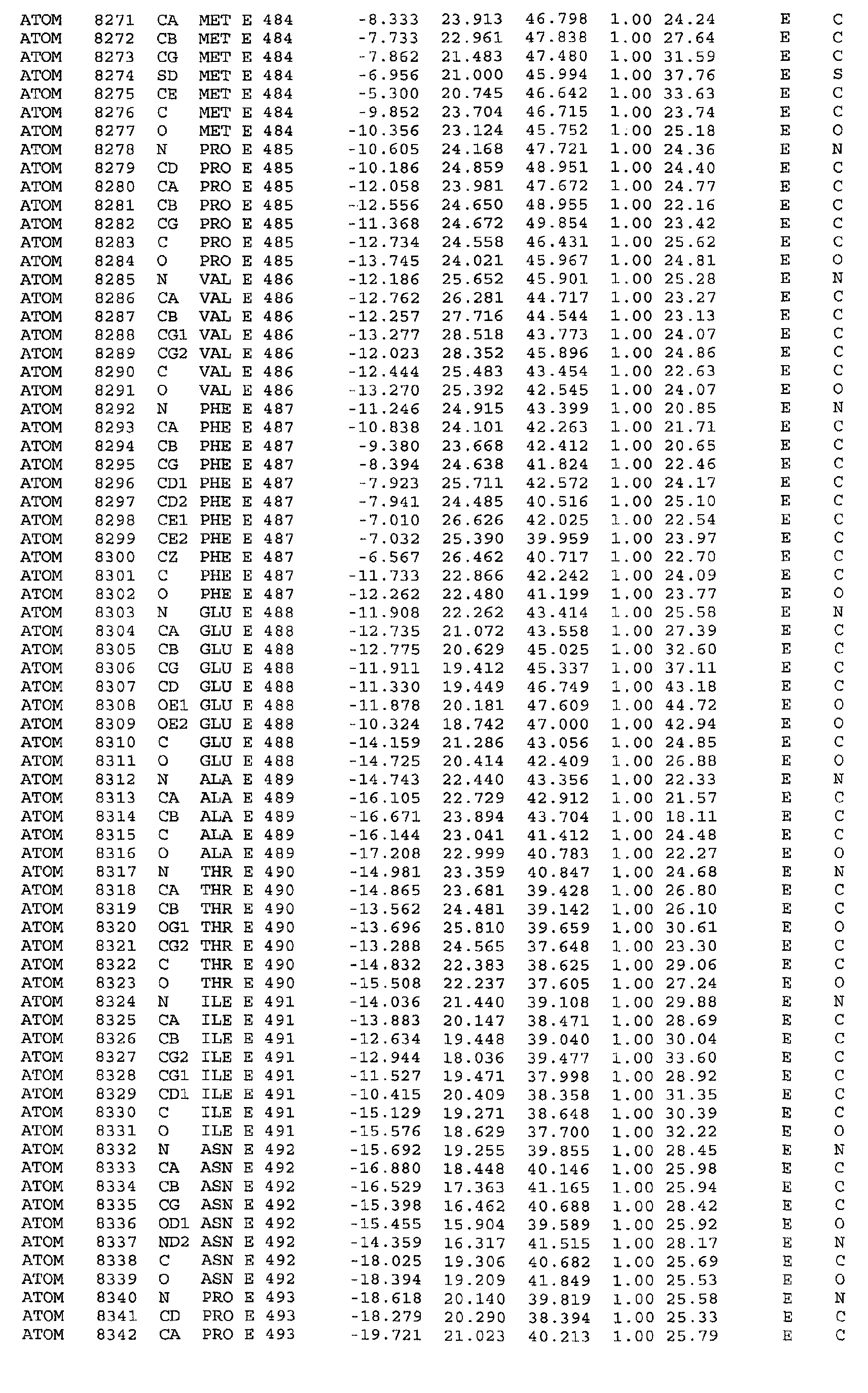
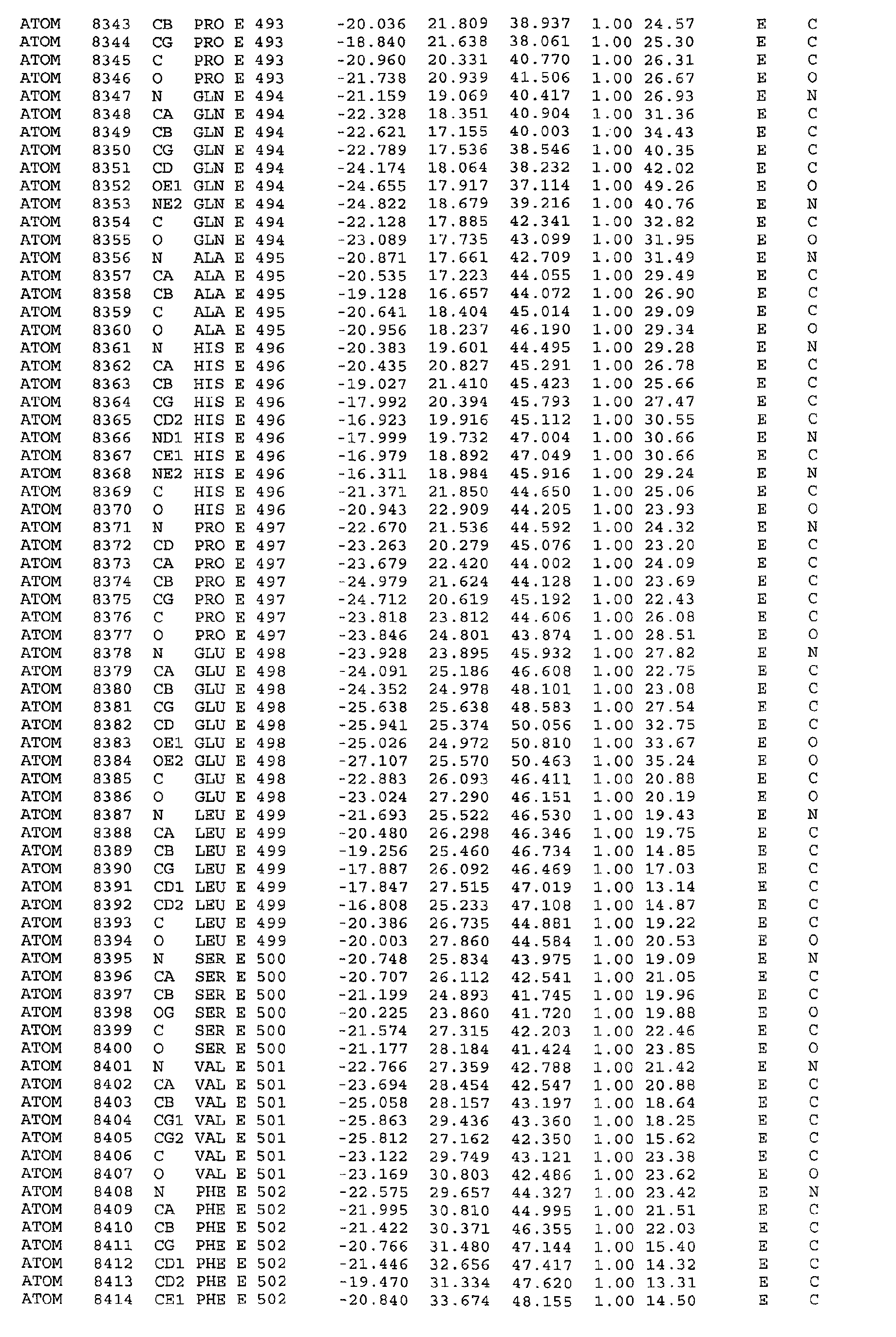
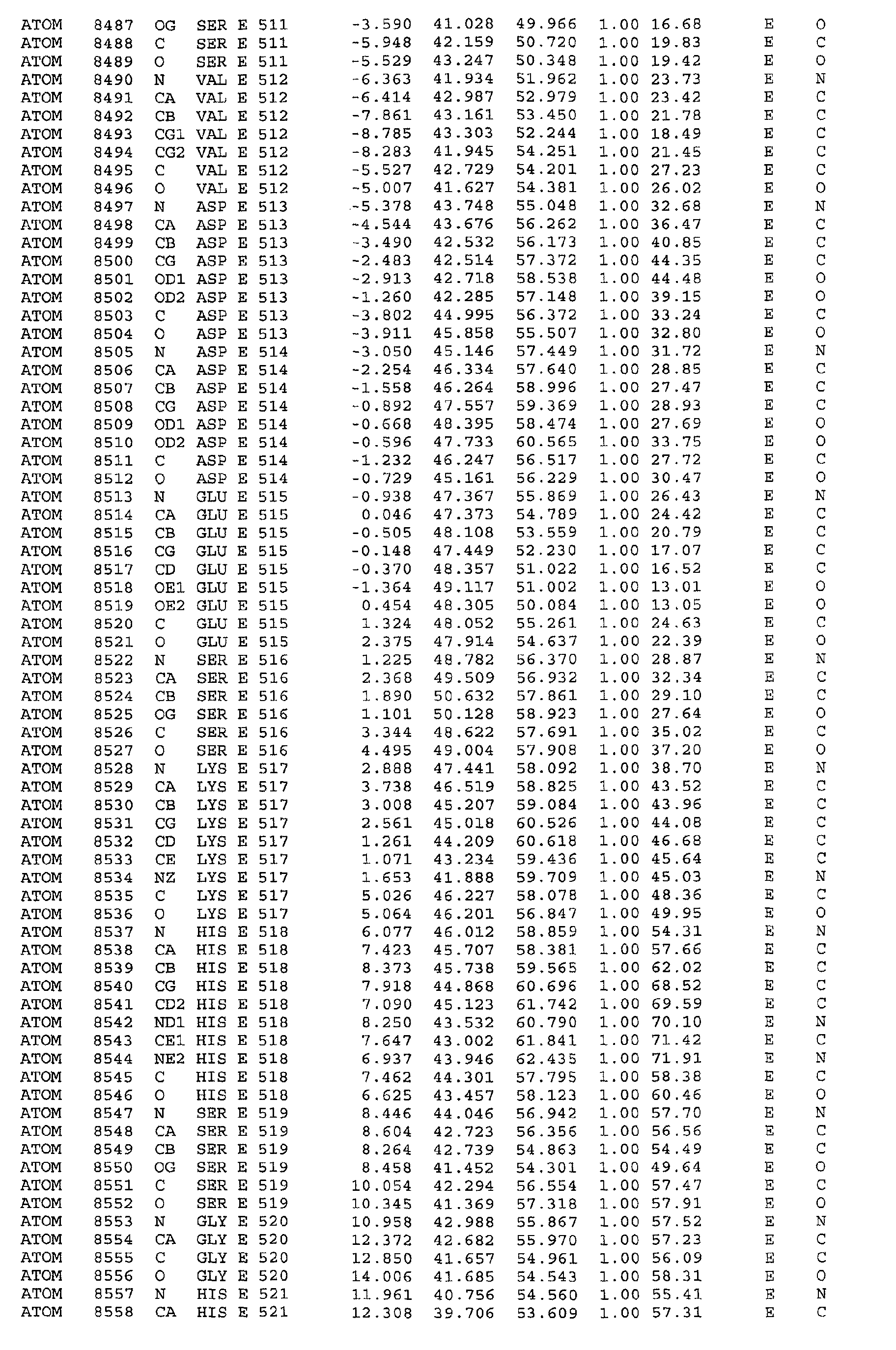
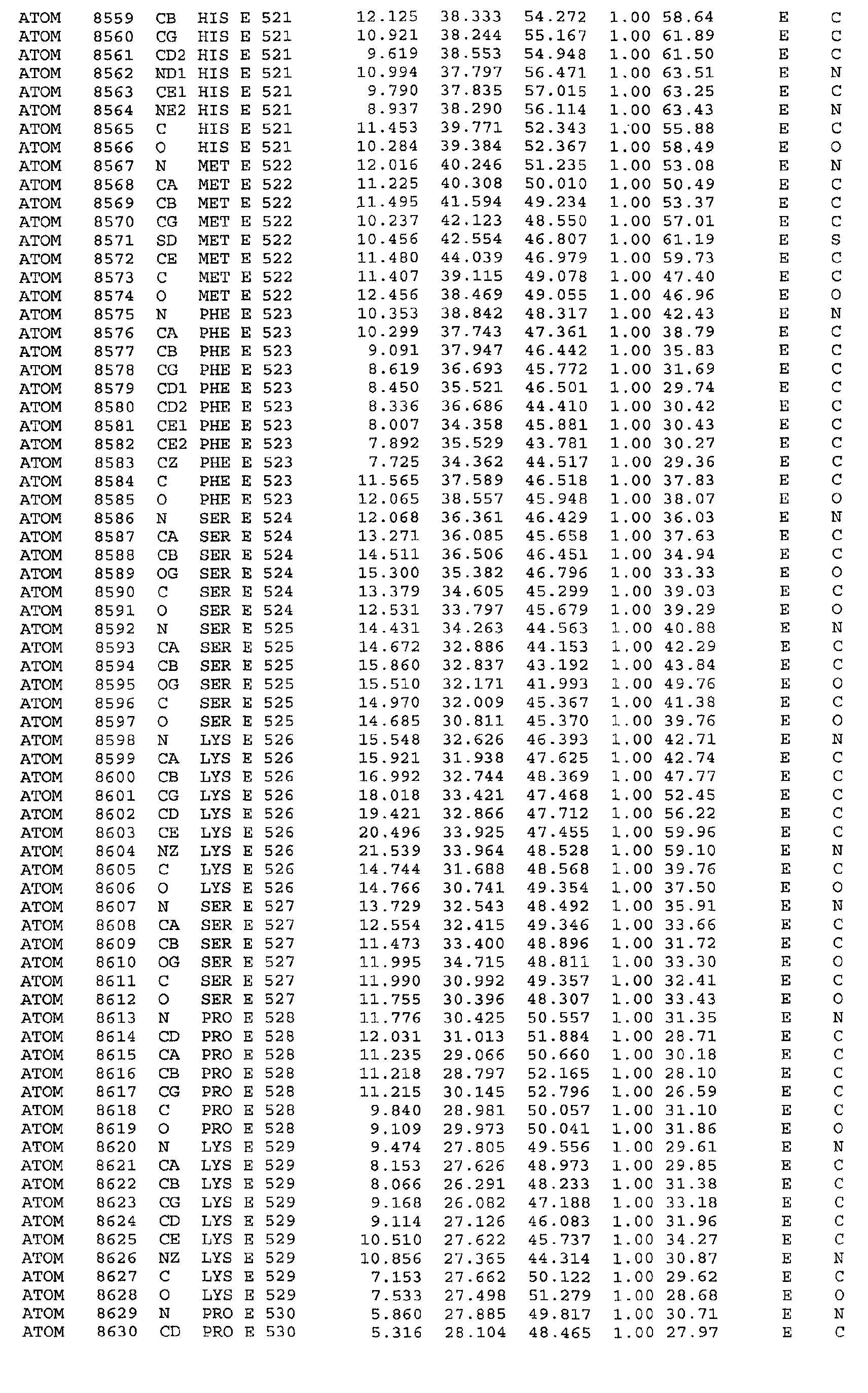
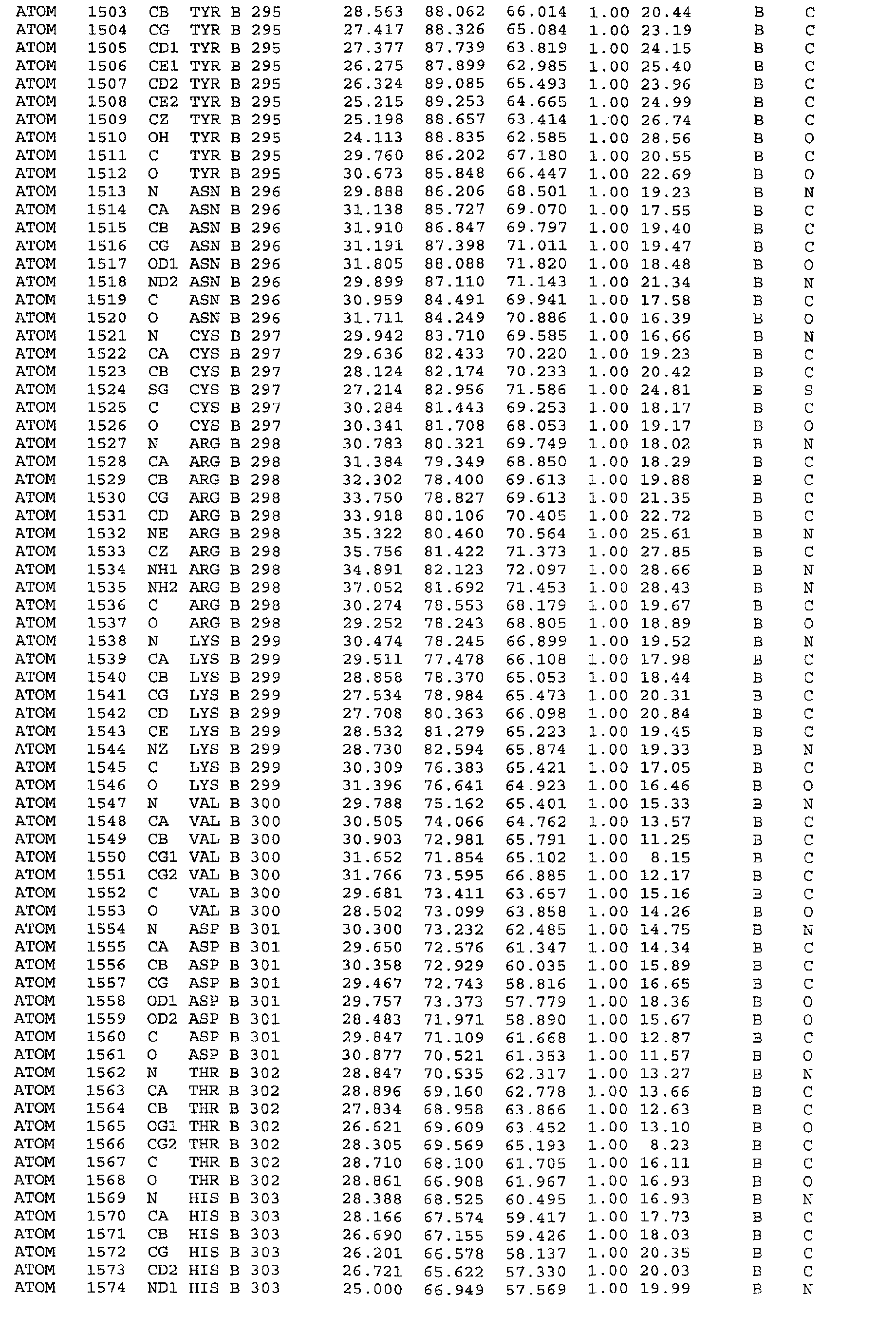
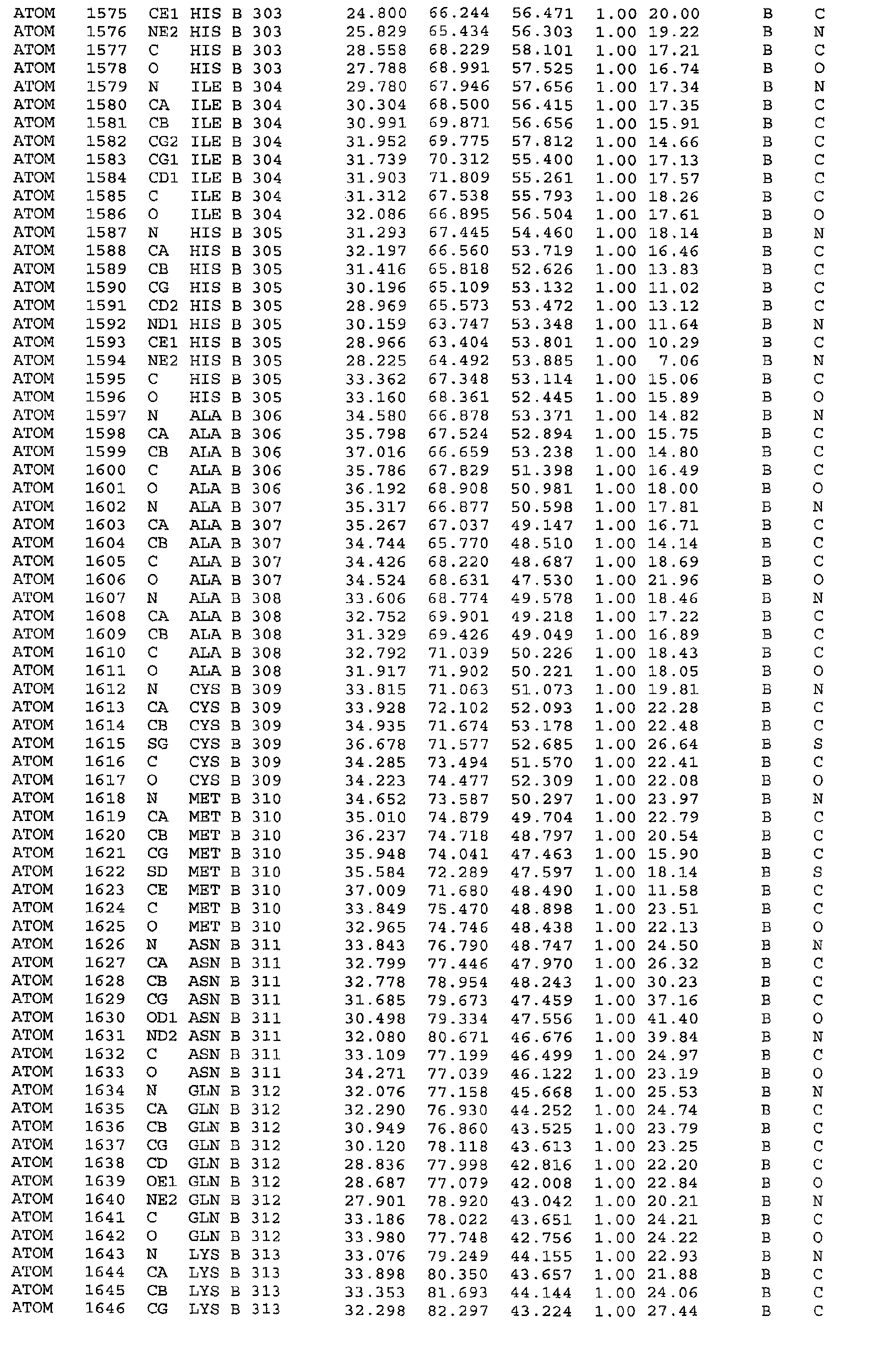
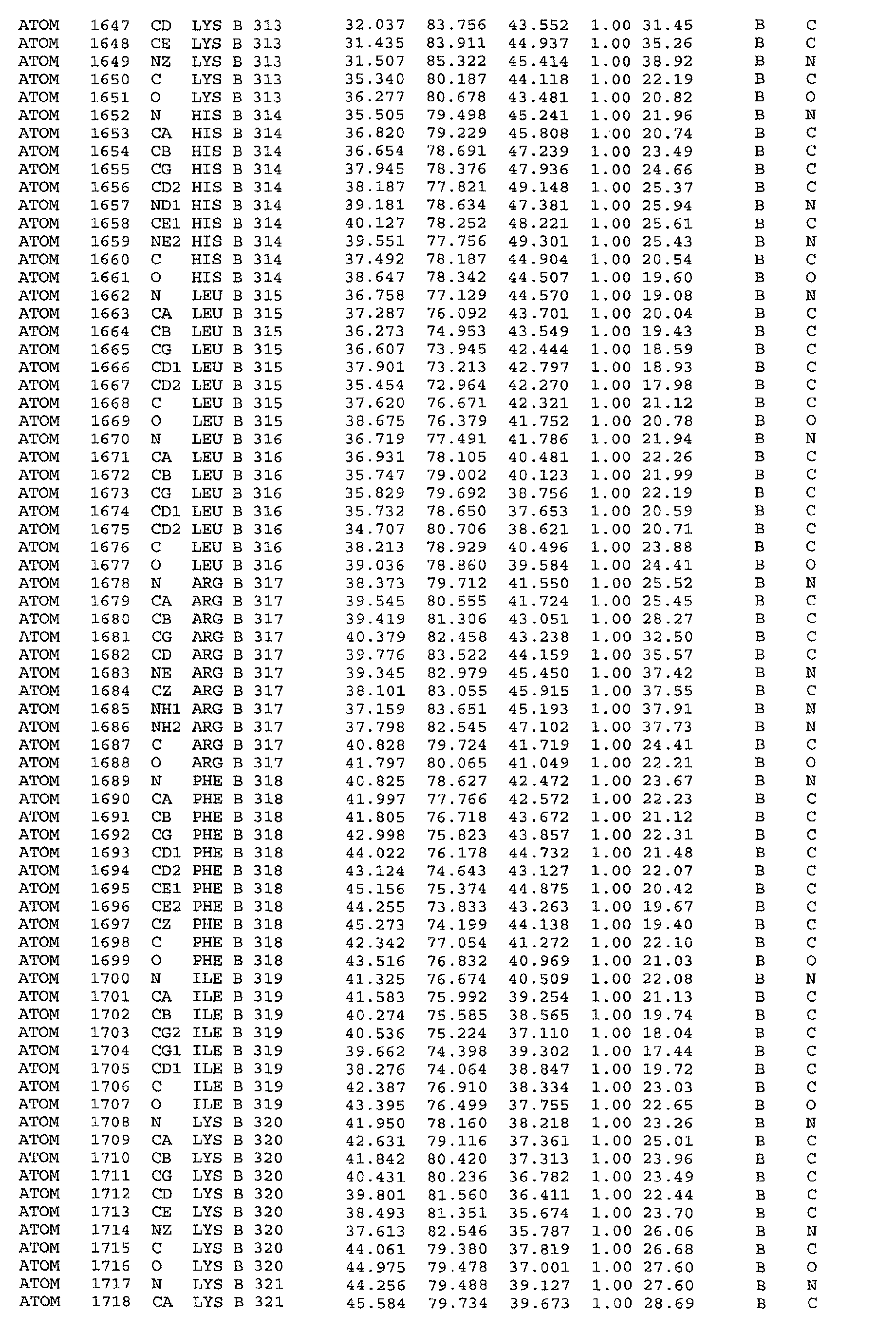
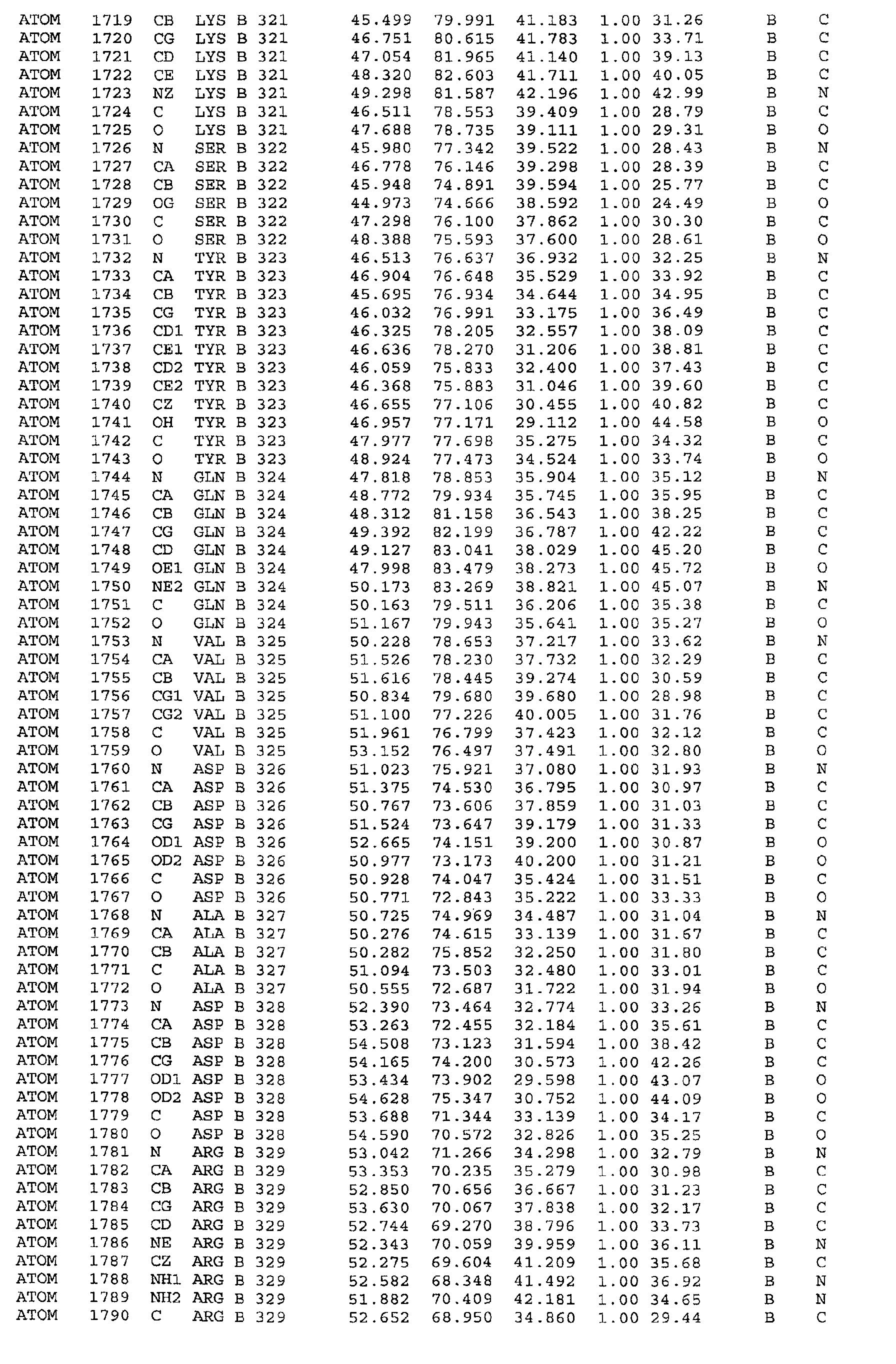
- the present invention relates to crystals of adenosine monophosphate deaminase (AMPDA), and more particularly to the high resolution structure of AMPDA obtained by X-ray diffraction.
- AMPDA adenosine monophosphate deaminase
- the invention further relates to the use of the three-dimensional structure so determined to identify, design or select compounds that bind to AMPDA or its active site.
- AMP deaminase (AMPDA; EC 3.5.4.6) is an integral enzyme of purine nucleotide interconversion.
- the zinc dependent enzyme catalyses the irreversible hydrolysis of 5' adenosine monophosphate (AMP) to form inosine monophosphate (IMP) and ammonia.
- AMP 5' adenosine monophosphate
- IMP inosine monophosphate
- This reaction represents a branch-point in the energy-generating adenylate catabolic pathway regulating the availability of adenosine nucleotides, including ATP, within the cell.
- the enzyme is a target e.g. for the treatment of ischemia-related diseases. Blocking the pathway reduces the depletion of the total adenine pool observed in ischemic tissues (Erion, M.D., et al.
- CAD coronary artery disease
- AMPDA is a diverse, oligomeric, and highly regulated enzyme ubiquitous in eukaryotic cells. Multiple isoforms have been purified and characterised from rat and human tissues, which are encoded by transcripts from a multigene family (Morisaki, T., Sabina, R.L. & Holmes, E.W. (1990) J. Biol. Chem. 265, 11482-11486; Baush-Jurken, M.T., et al (1992) J. Biol. Chem. 267, 22407-22413).
- ampd 1 which encodes the isoenzyme expressed at high levels in skeletal muscle (M-AMPDA)
- ampd 2 and ampd 3 which are expressed in a wide range of tissues and are called the smooth and cardiac muscle isoenzymes (or L-AMPDA and E-AMPDA) respectively.
- L-AMPDA smooth and cardiac muscle isoenzymes
- E-AMPDA smooth and cardiac muscle isoenzymes
- K + ion concentration modulates the enzyme activity which has also been shown to increase under the mildly acidic (pH6.5) conditions found in exercising muscle (Sabina, R.L. & Mahnke-Zizelman, D.K. (2000) Pharmacol. Ther. 87, 279-283; Ranieri-Raggi, M. & Raggi, A. (1990) Biochem. J. 272, 755-759; Ranieri-Raggi, M. & Raggi, A. (1980) Biochem. J. 189, 367-368; Ranieri-Raggi, M. & Raggi, A. (1979) FEBS Lett. 102, 59-63; Thakkar, J.K., et al (1993) Biochem. J. 290, 335-341; Hisatome, I., et al. (1998) Am J. Physiol. 275, C870-C881).
- the purification of the enzyme from rabbit muscle has been reported by Smiley, K.L., Berry, A.J. & Suelter, C.H. ((1967) J. Biol. Chem. 242, 2502-2506).
- the protein is unstable and on storage the N-terminal domain (7kDa) is removed, an effect that can be reproduced by limited trypsin proteolysis cleaving the enzyme after lysine 95 (Sabina, R.L. & Mahnke-Zizelman, D.K. (2000) Pharmacol. Ther. 87, 279-283).
- the C-terminal domain retains catalytic activity.
- Enzyme has since been produced from a number of sources including chicken (Chilson, O.P., Kelly-Chilson, A.E. & Siegel, N.R. (1997) Comp. Biochem. Physiol. 116B, 371-377) and rat (Coffee, C.J. & Kofke, W.A. (1975), J. Biol. Chem.
- Trimers have been reported for the truncated form of the enzyme, but controlled limited proteolysis has demonstrated that the enzymes purified from mammalian skeletal muscle are most likely homo-tetramers of the truncated enzyme (Sabina, R.L. & Mahnke-Zizelman, D.K. (2000) Pharmacol. Ther. 87, 279-283).
- AMPDA is also inhibited by alkylsulfonate compounds (Yoshino, M. & Murakami, K. (1998) Env Tox Pharmacol 5, 215-217).
- alkylsulfonate compounds Yoshino, M. & Murakami, K. (1998) Env Tox Pharmacol 5, 215-217.
- the design and optimisation of such compounds is difficult.
- the invention relates to novel crystals of AMPDA which are of tetragonal form.
- Preferred embodiments include crystals
- a preferred embodiment is a heavy atom derivative of the above mentioned crystals; preferably, the heavy atoms are lead, silver or xenon.
- AMPDA crystals with inhibitors soaked in more preferably wherein the inhibitors are AMPDA transition state analogues, preferably coformycin analogues, even more preferably wherein the inhibitor is coformycin or wherein the inhibitor is UK-384,858.
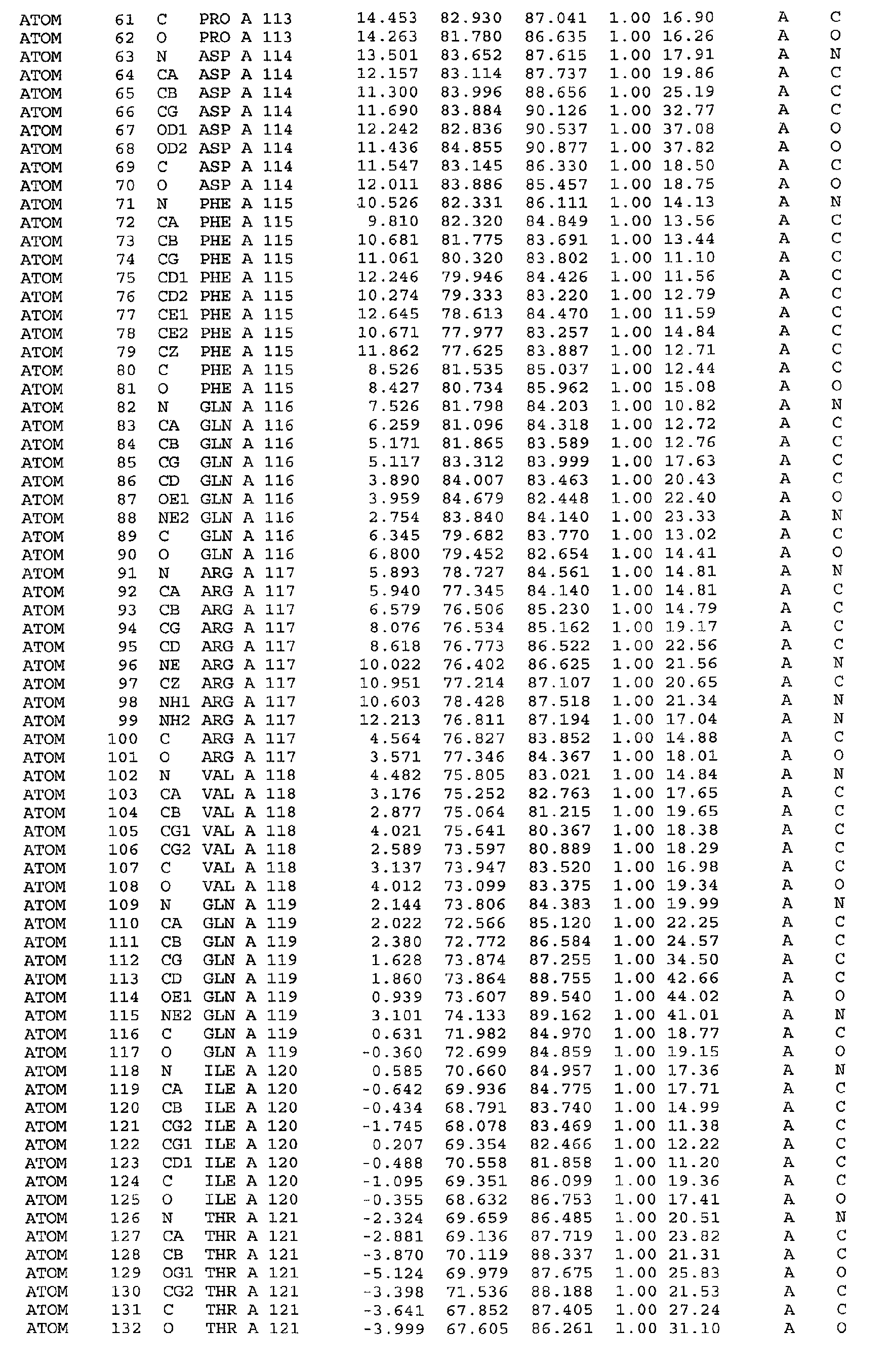
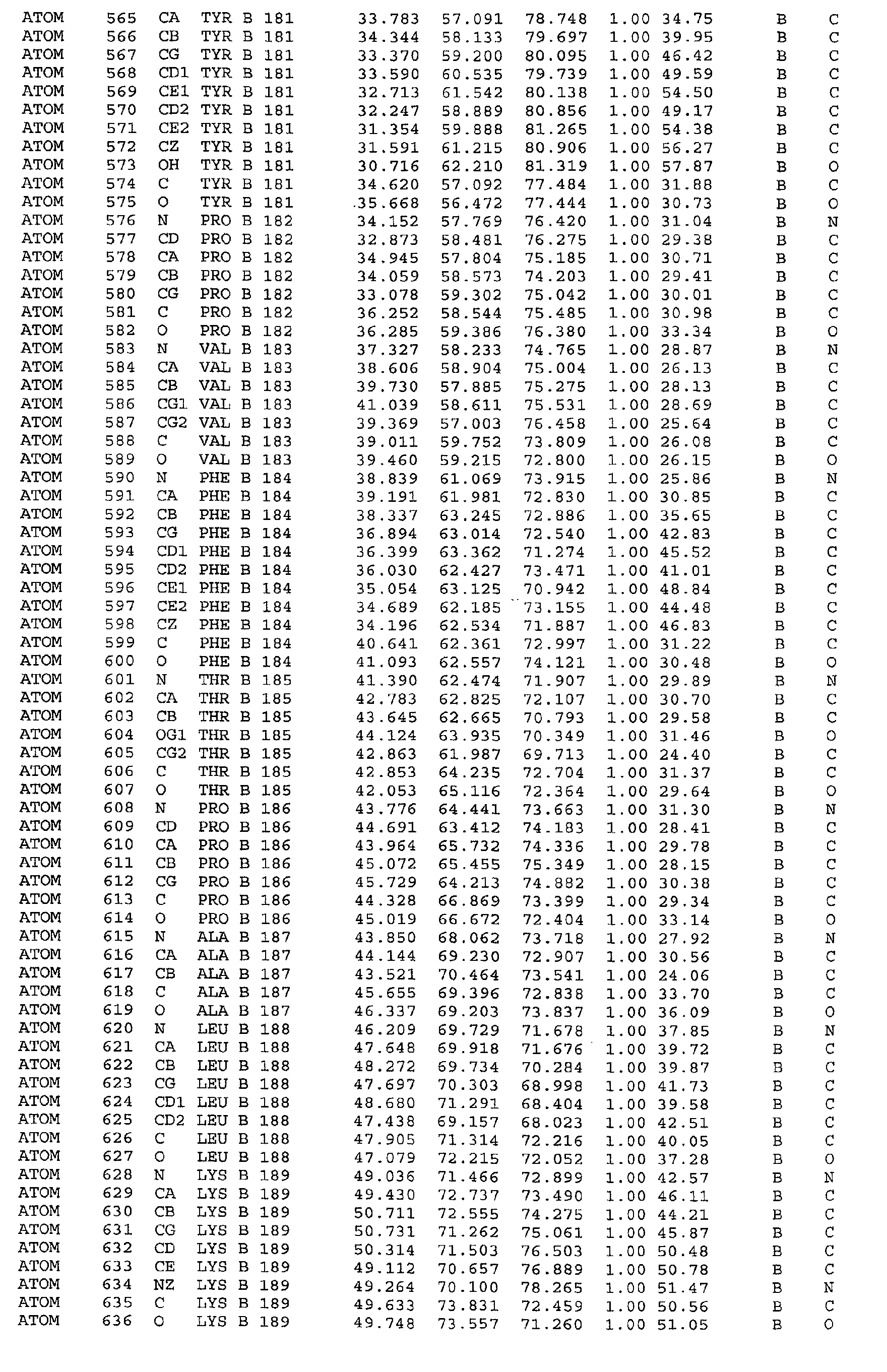
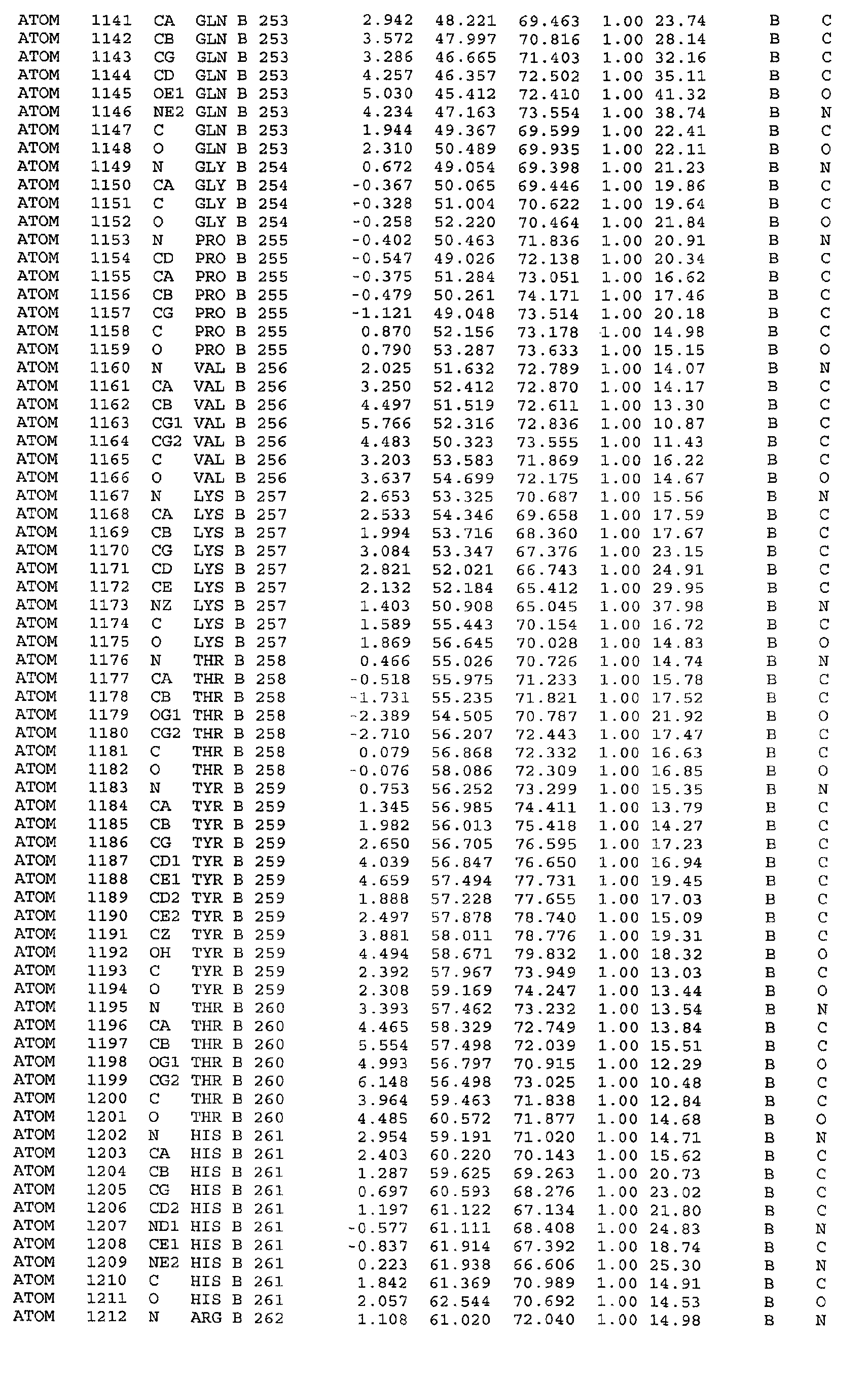
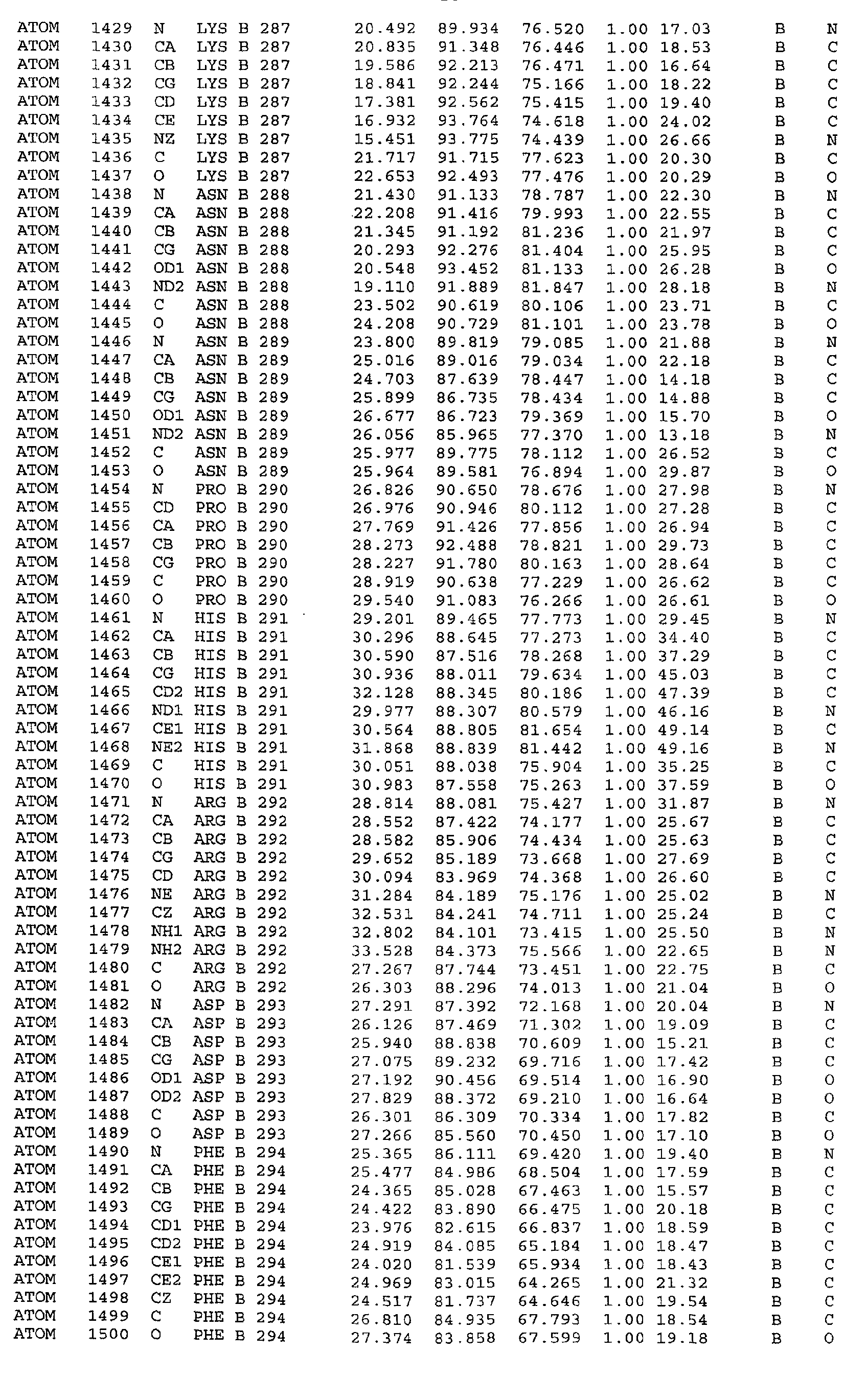
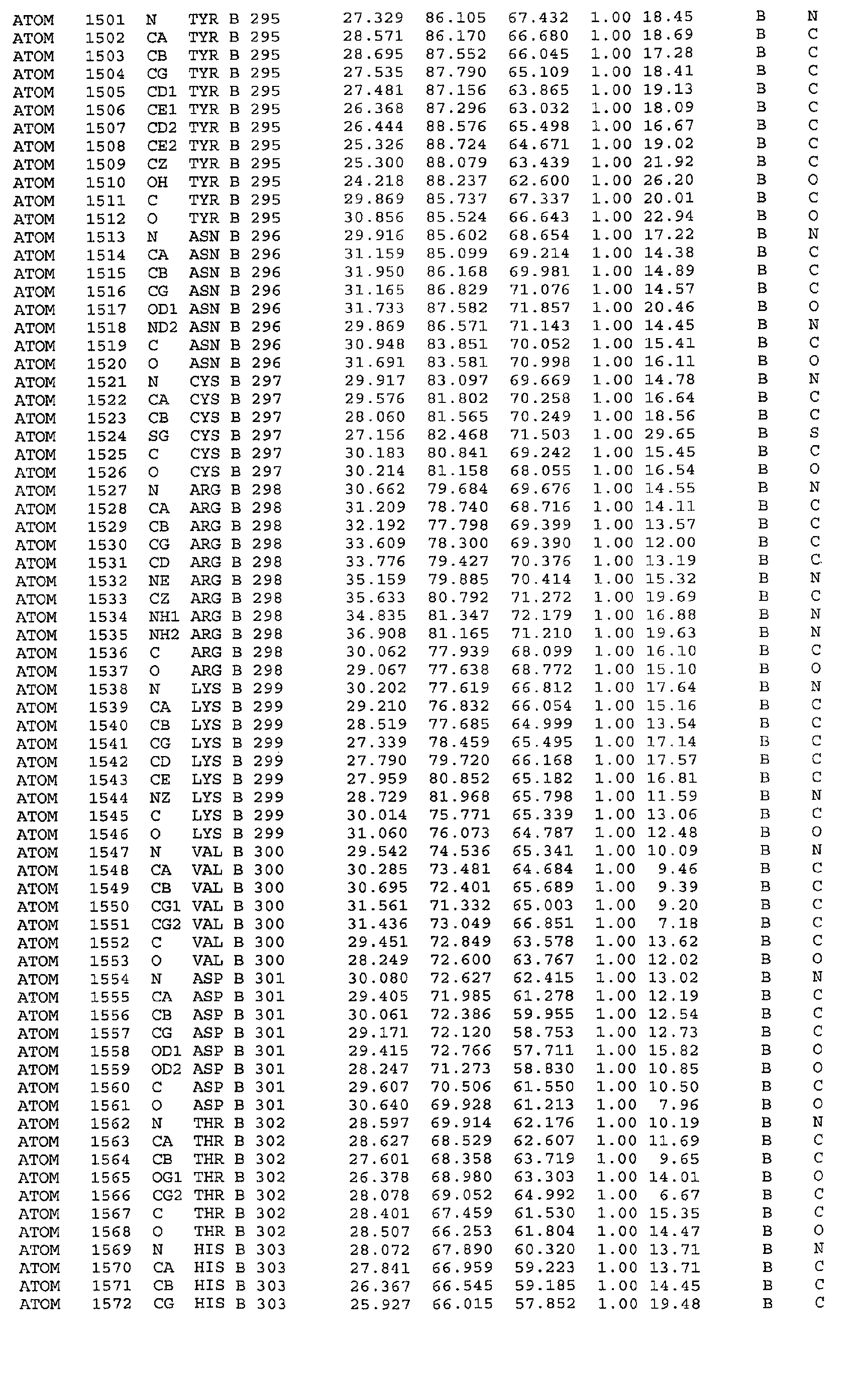
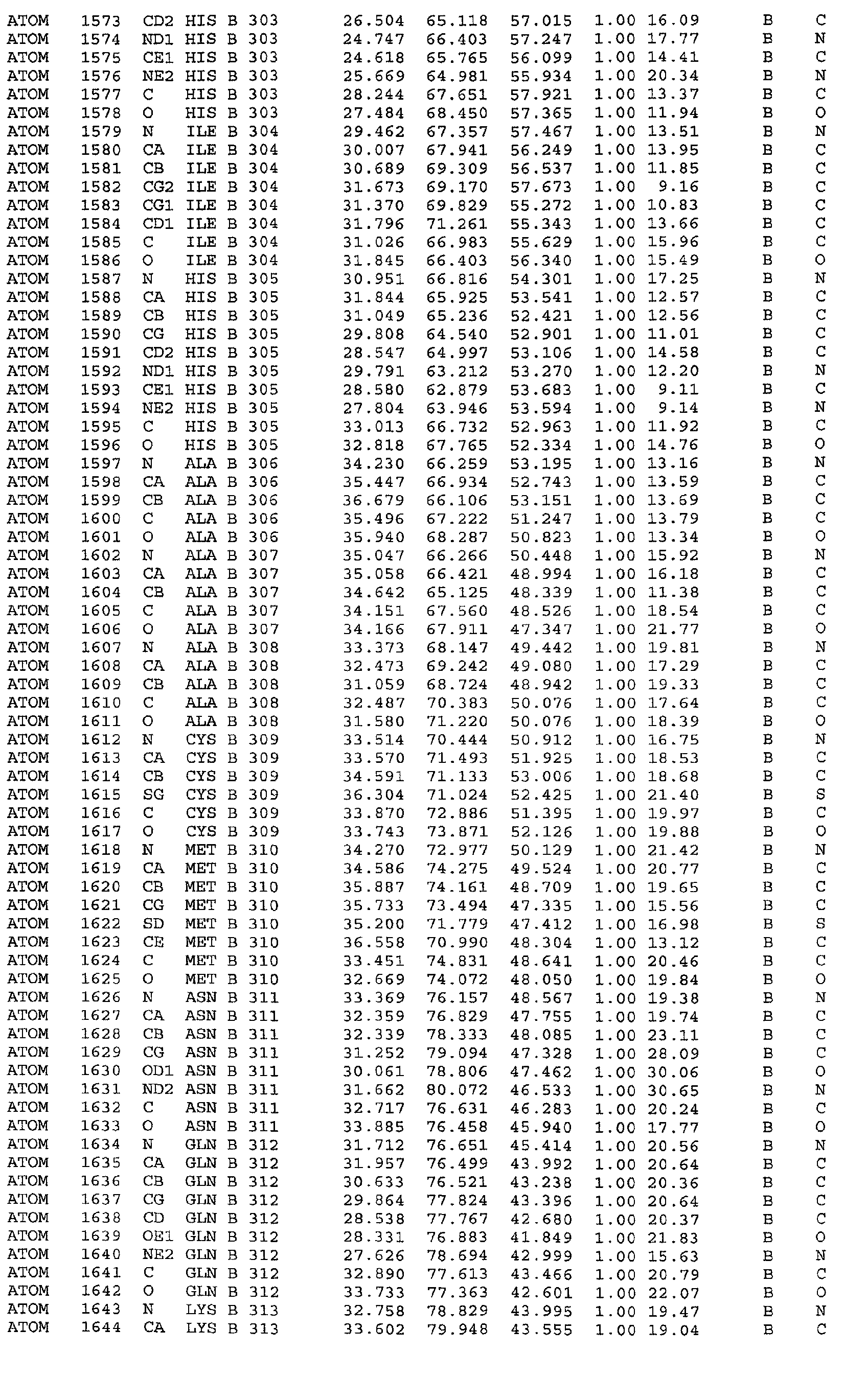
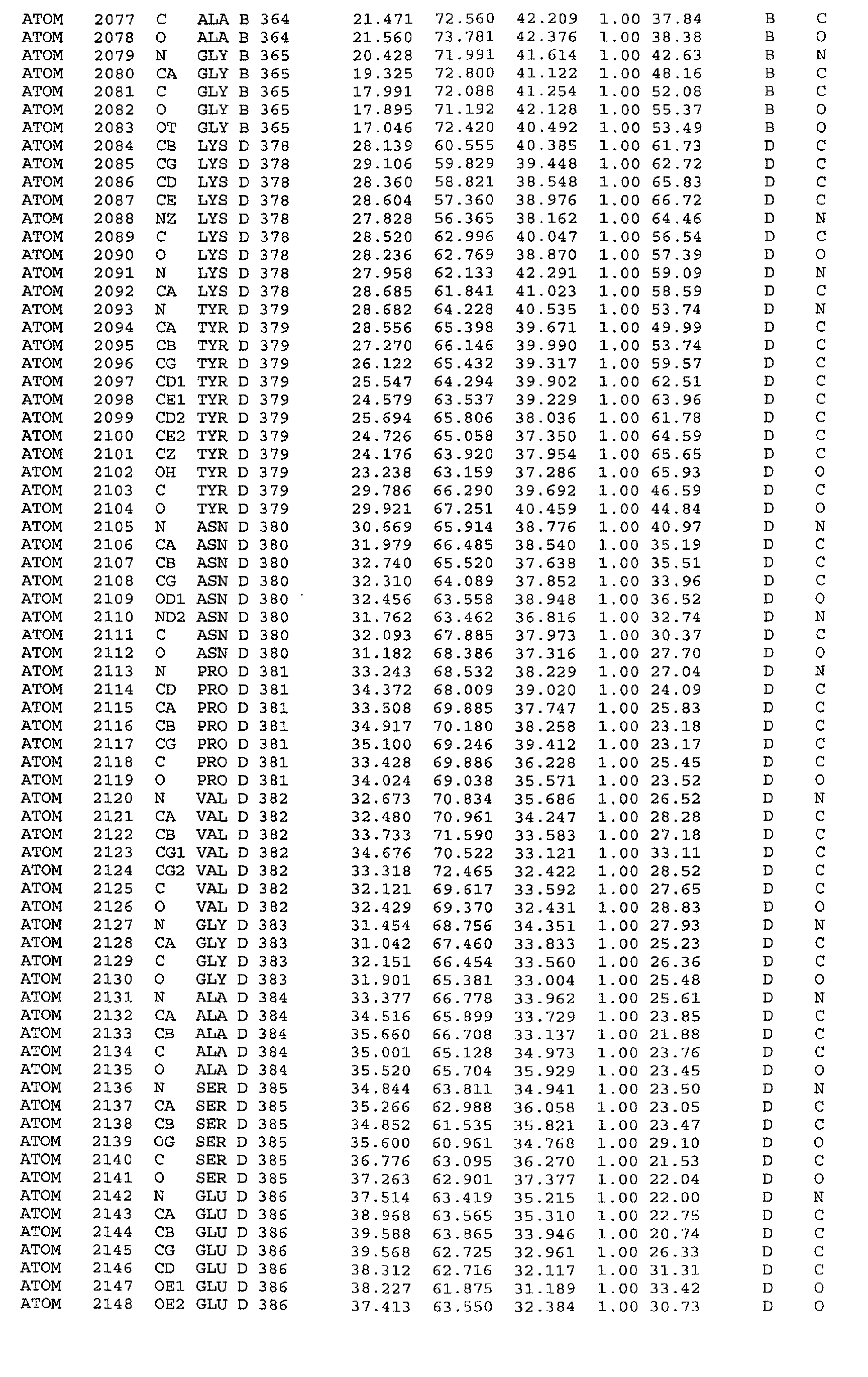
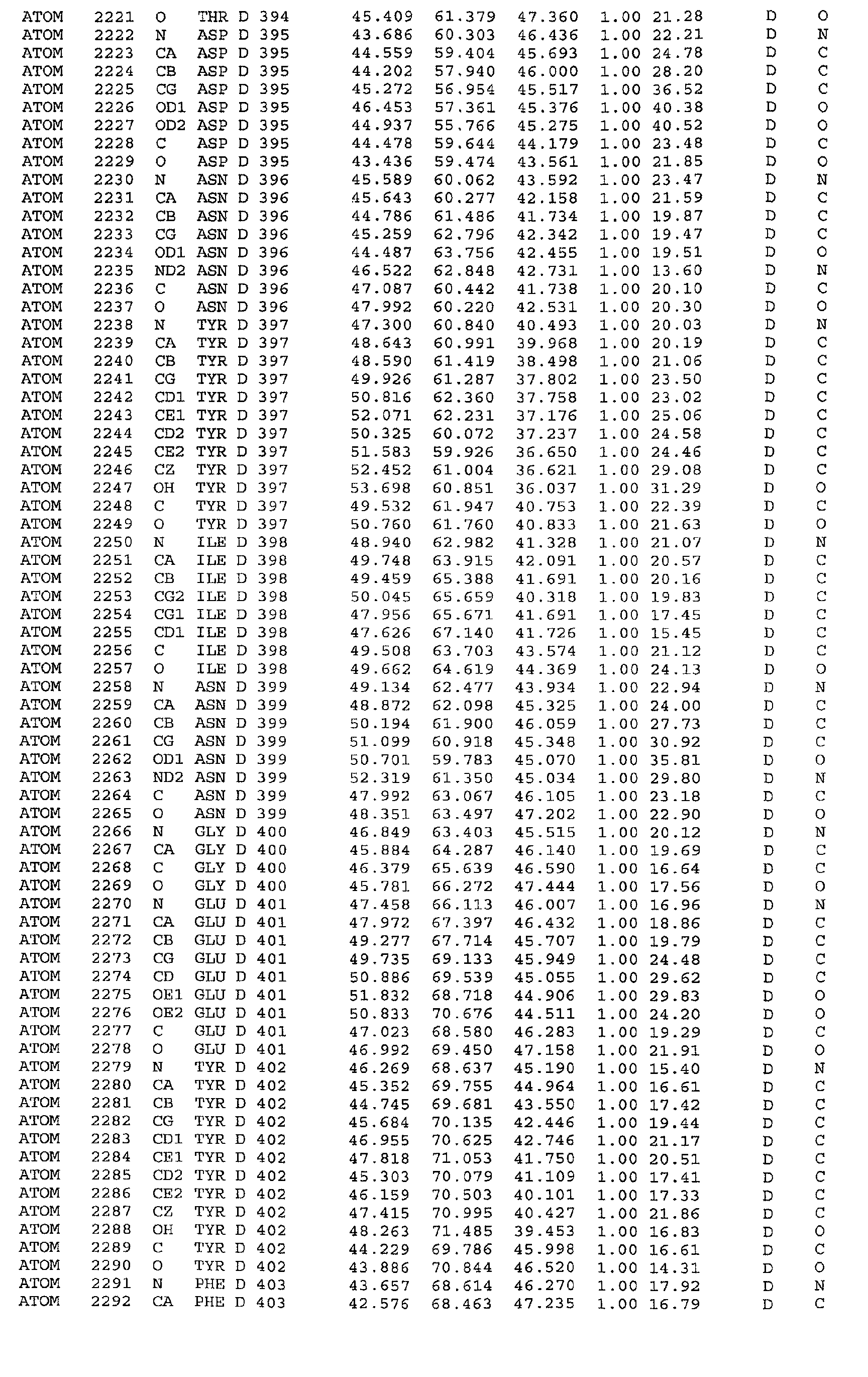
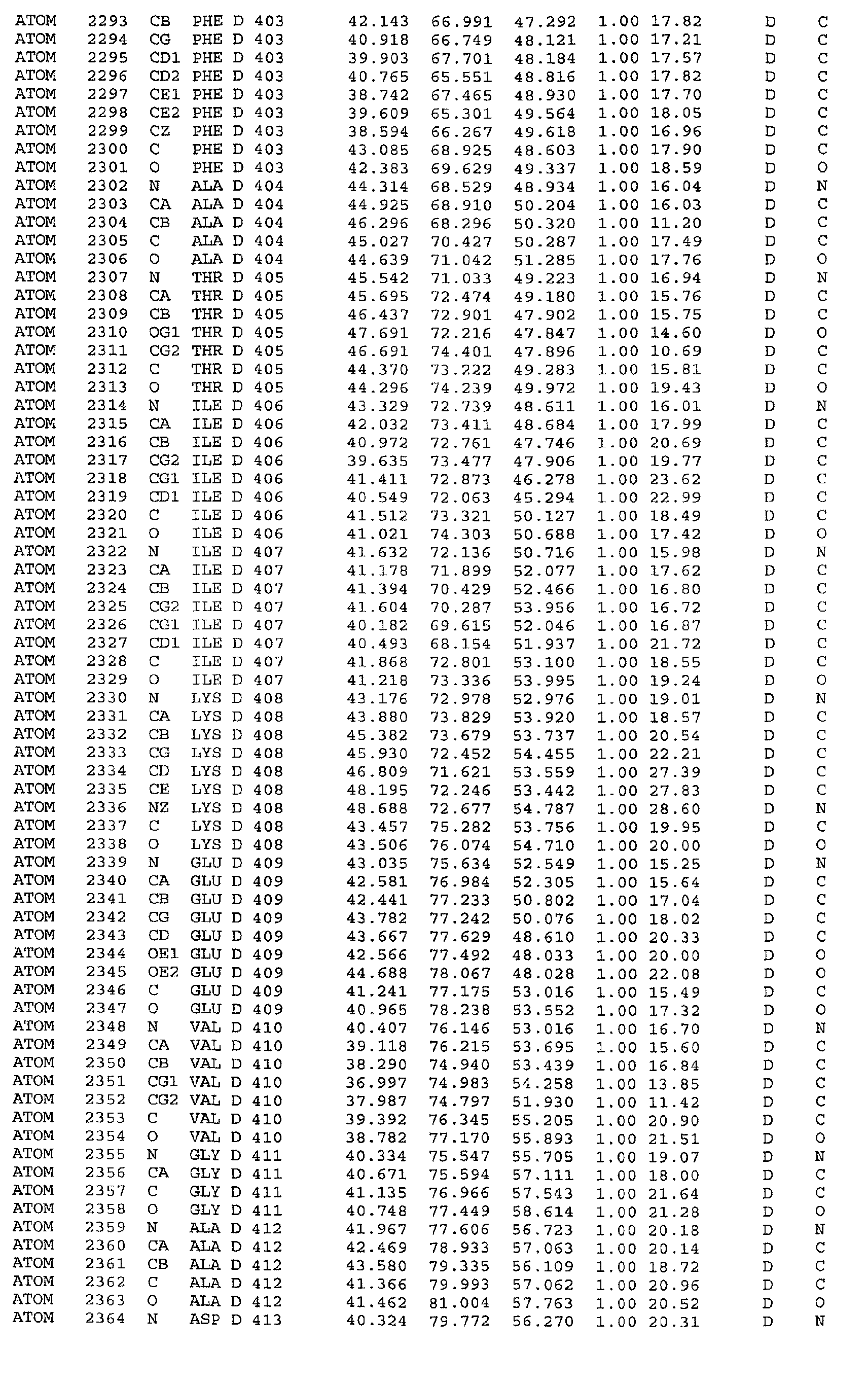
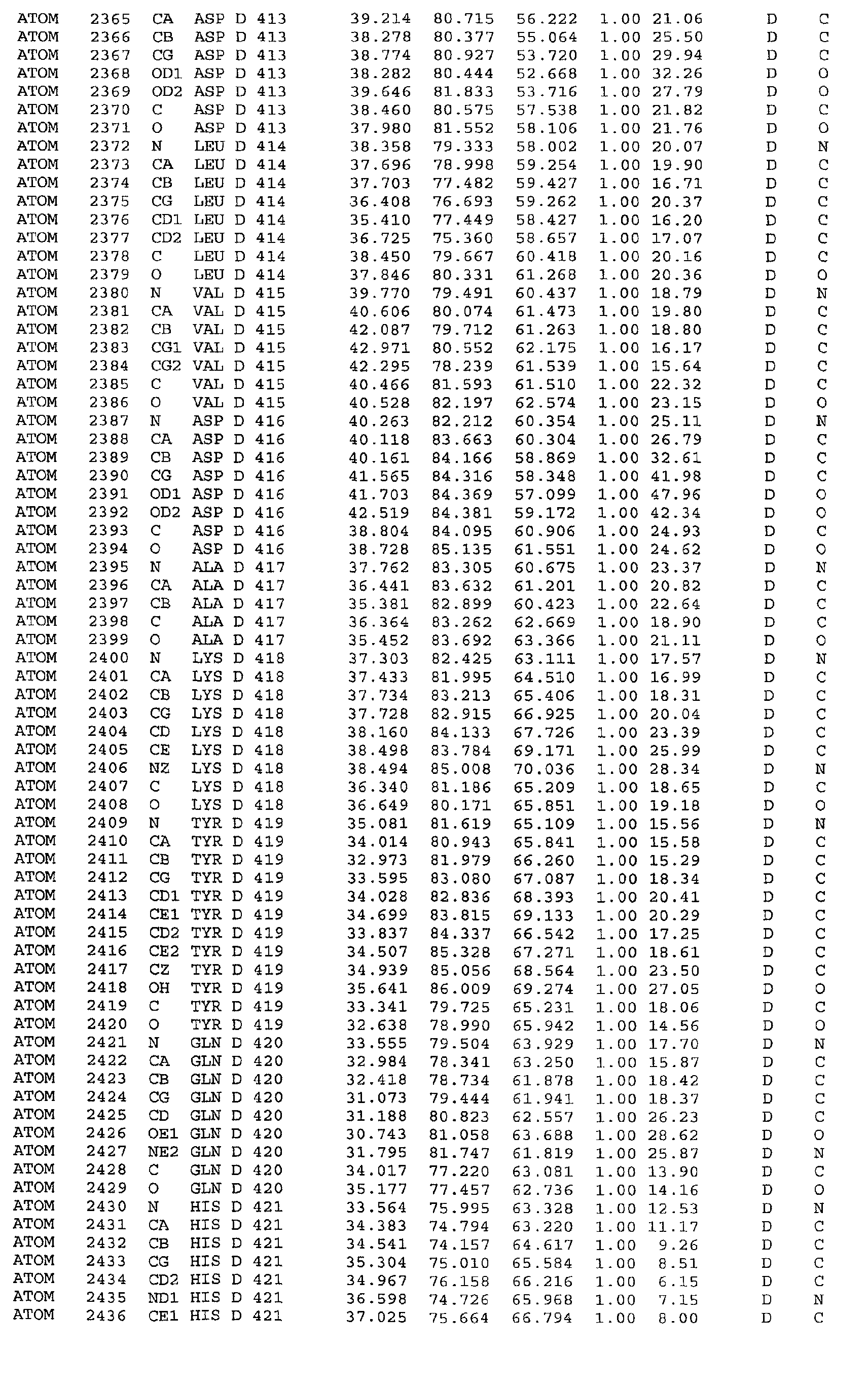
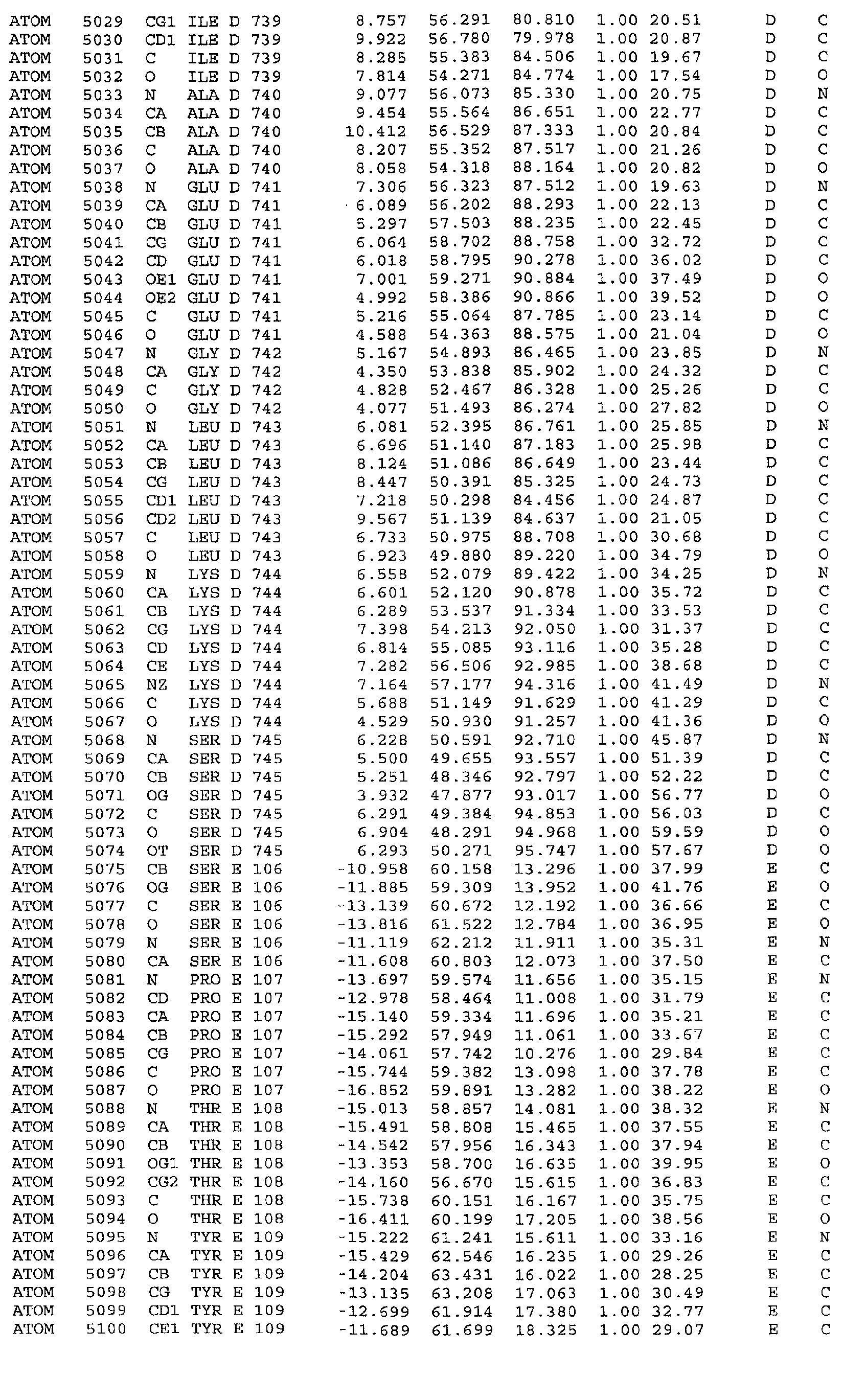
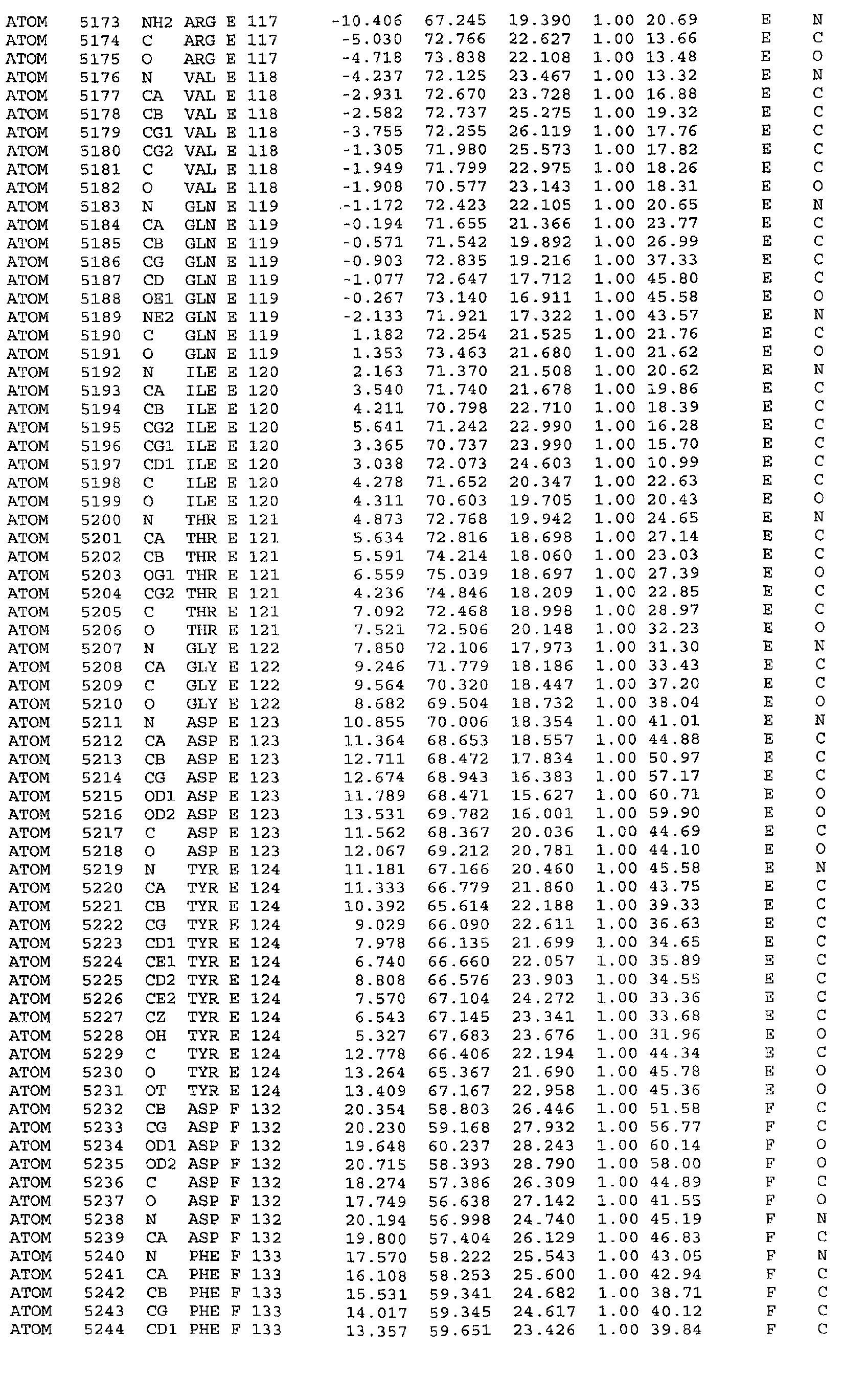
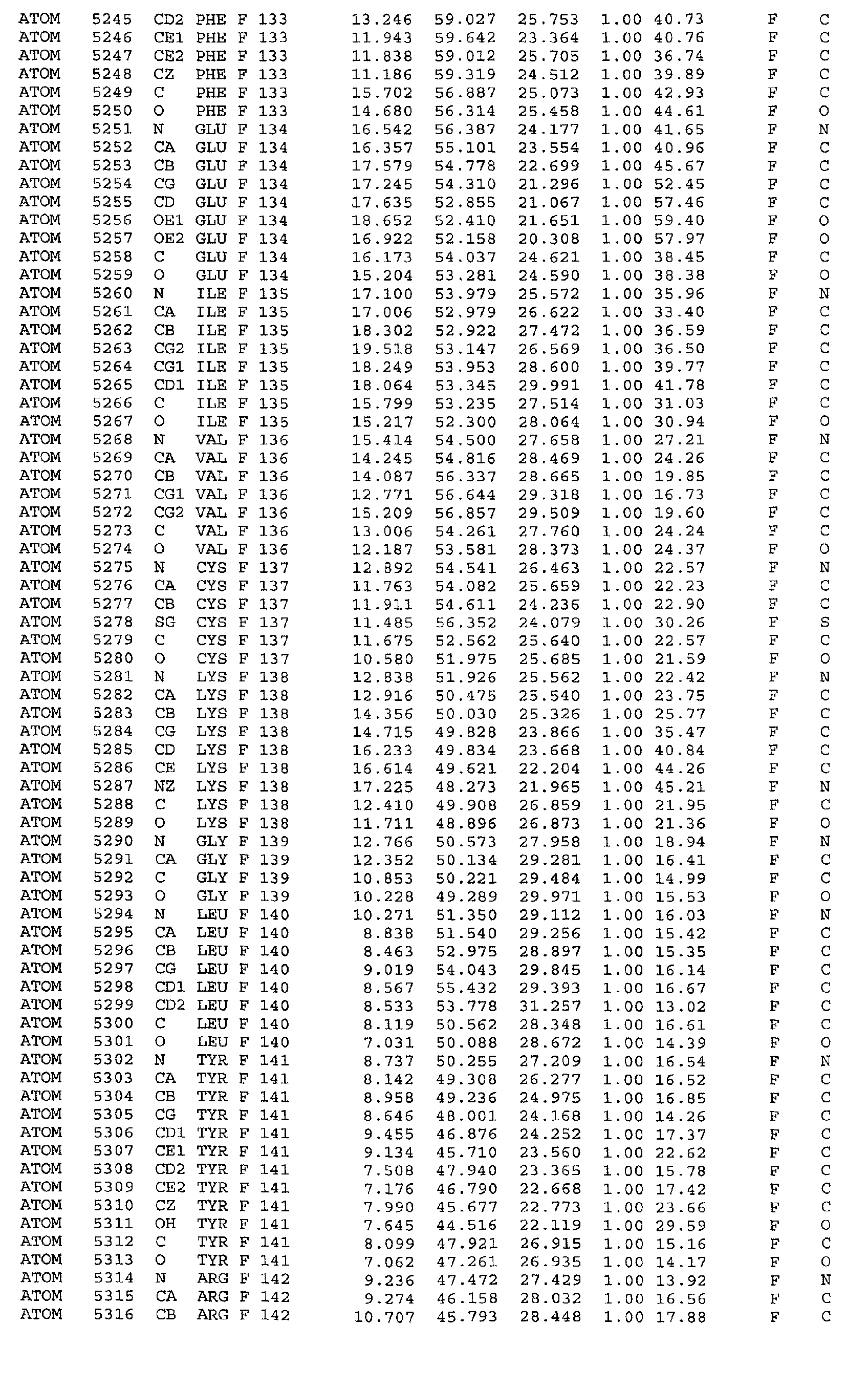
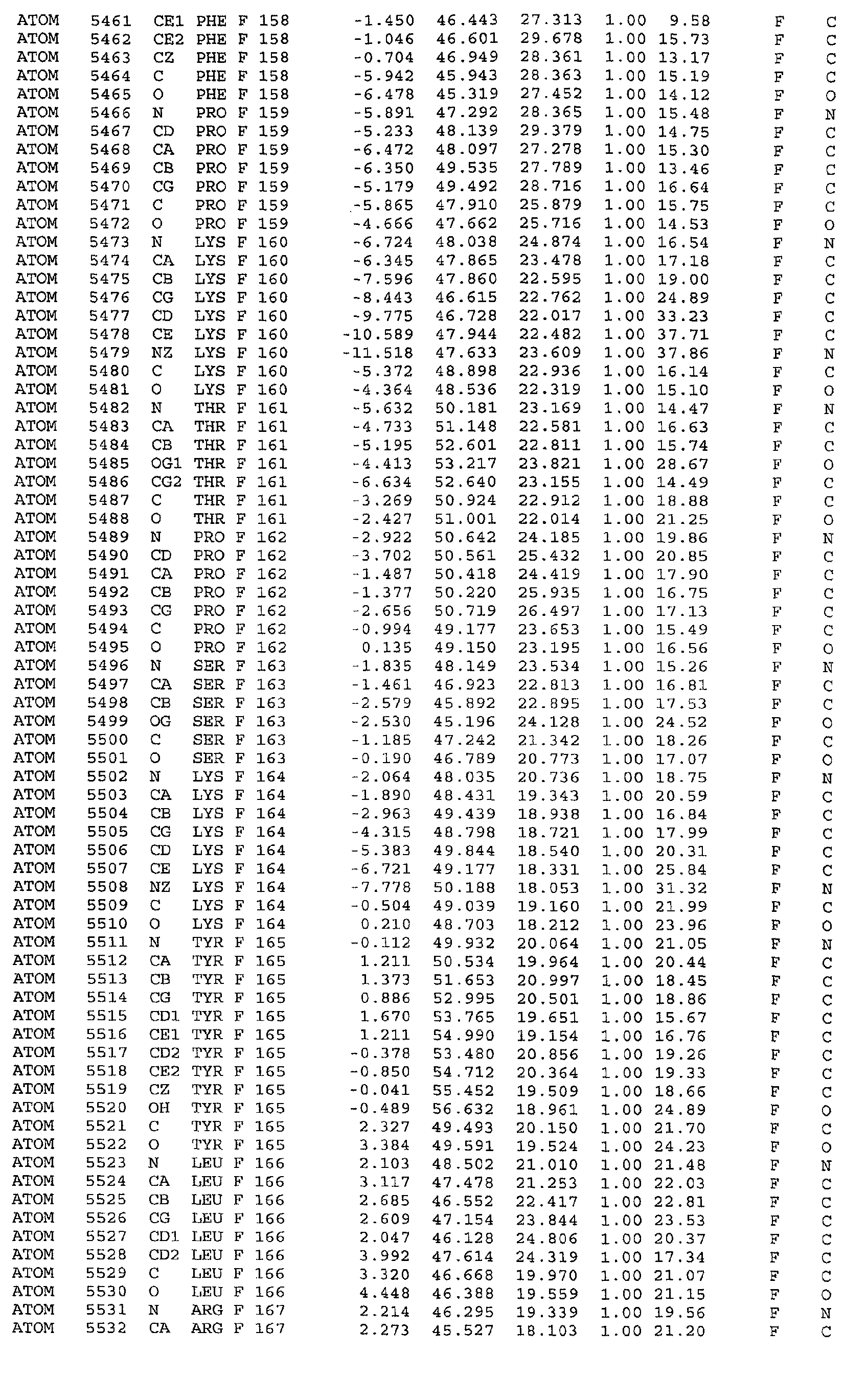
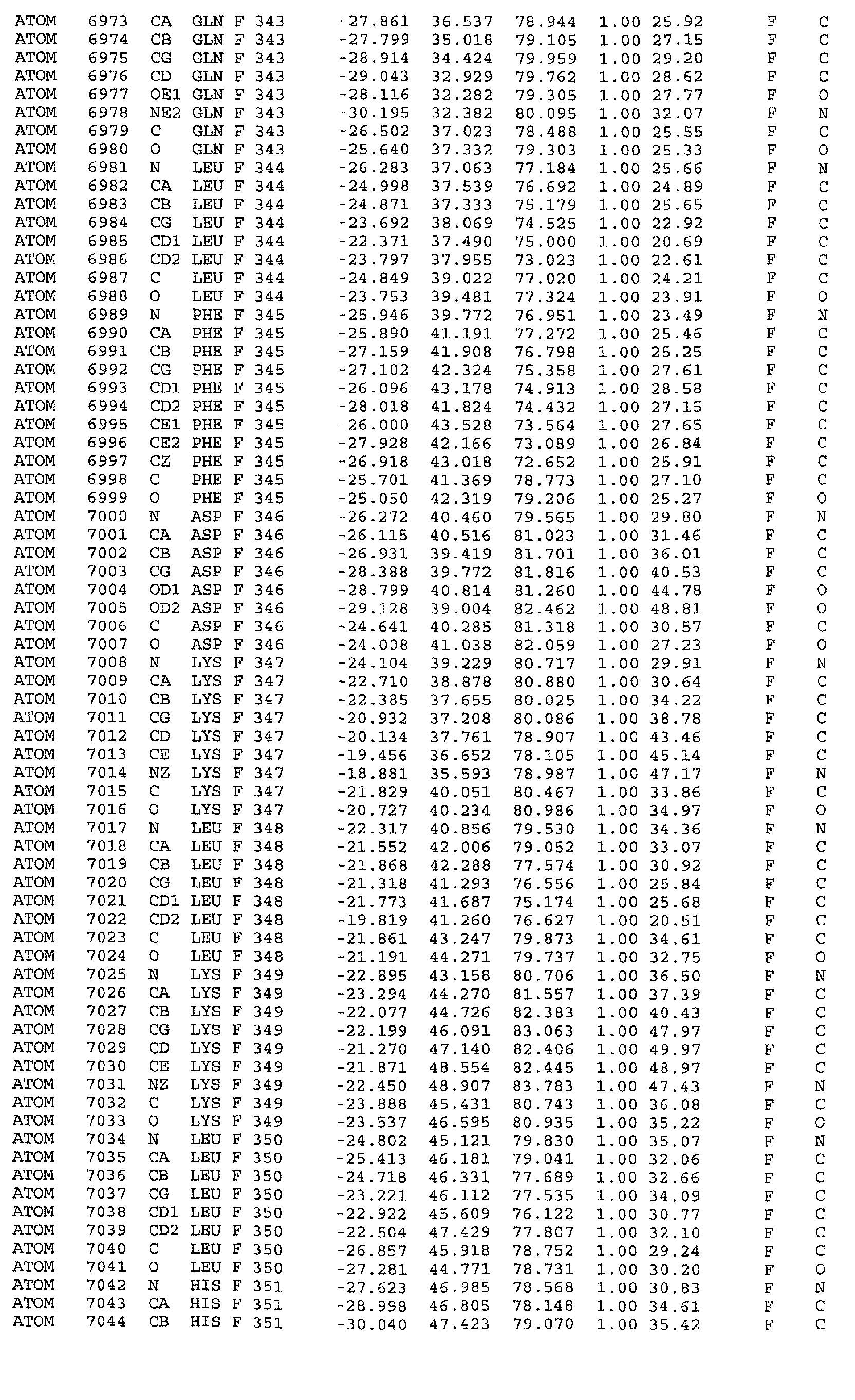
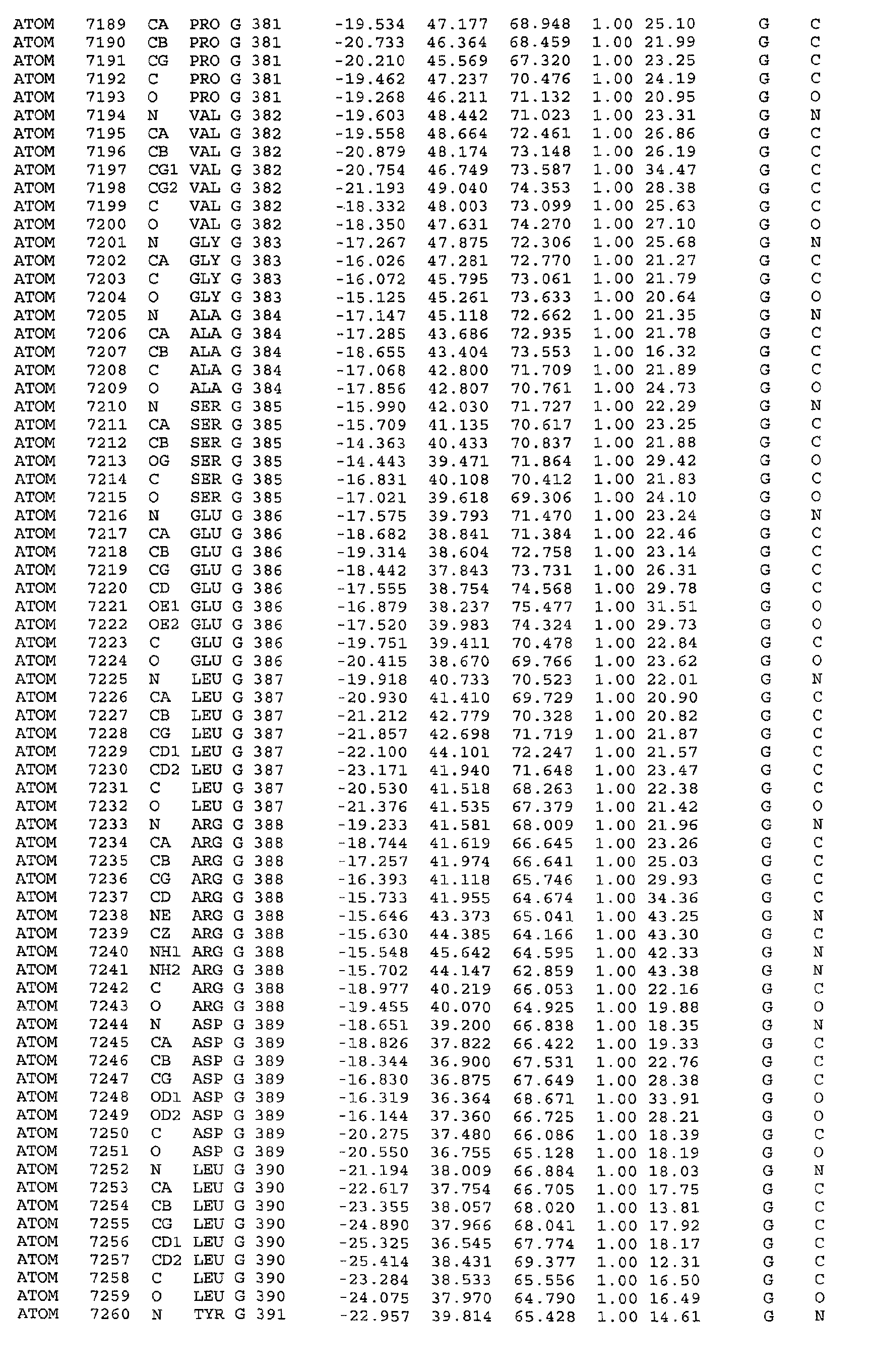
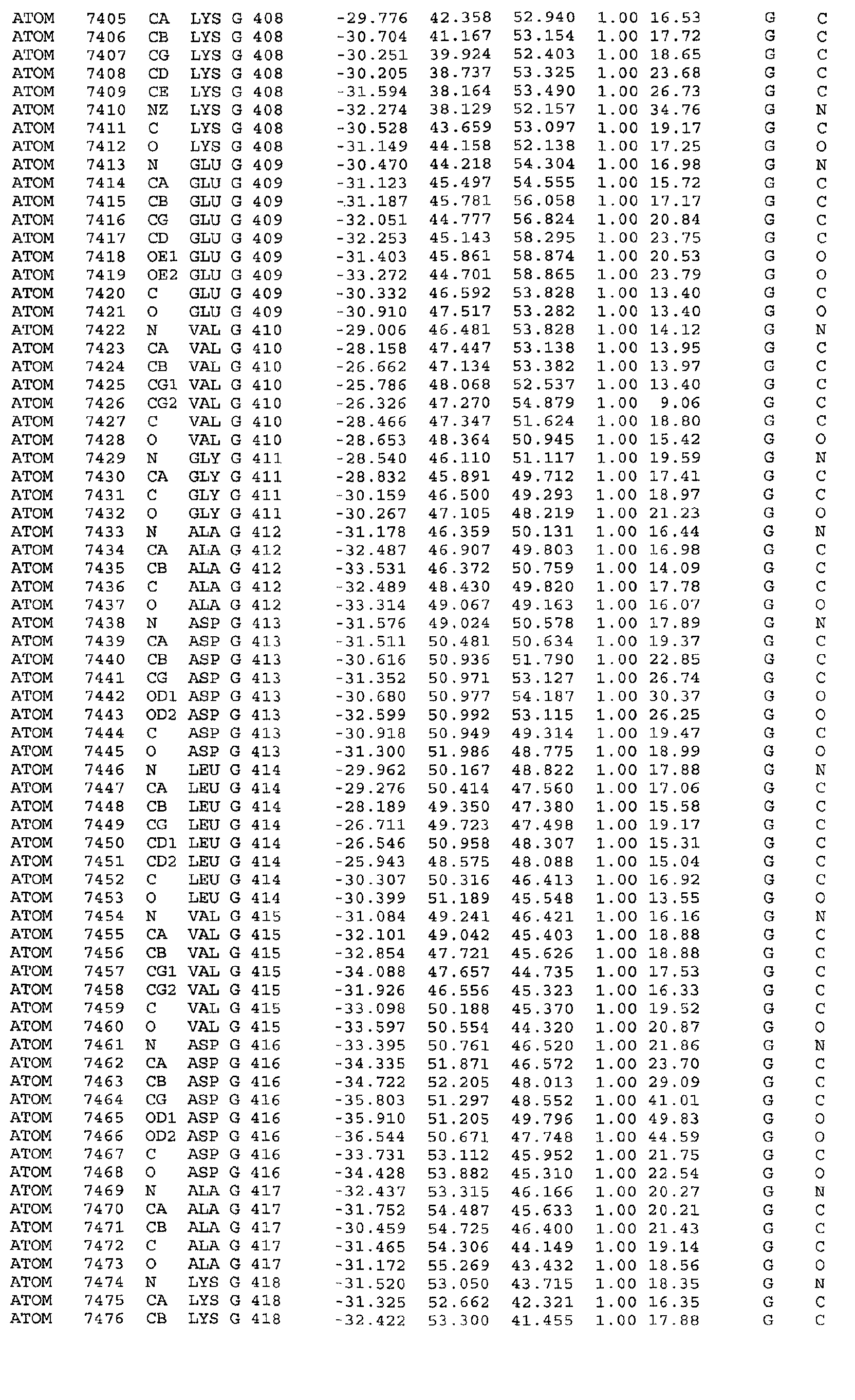
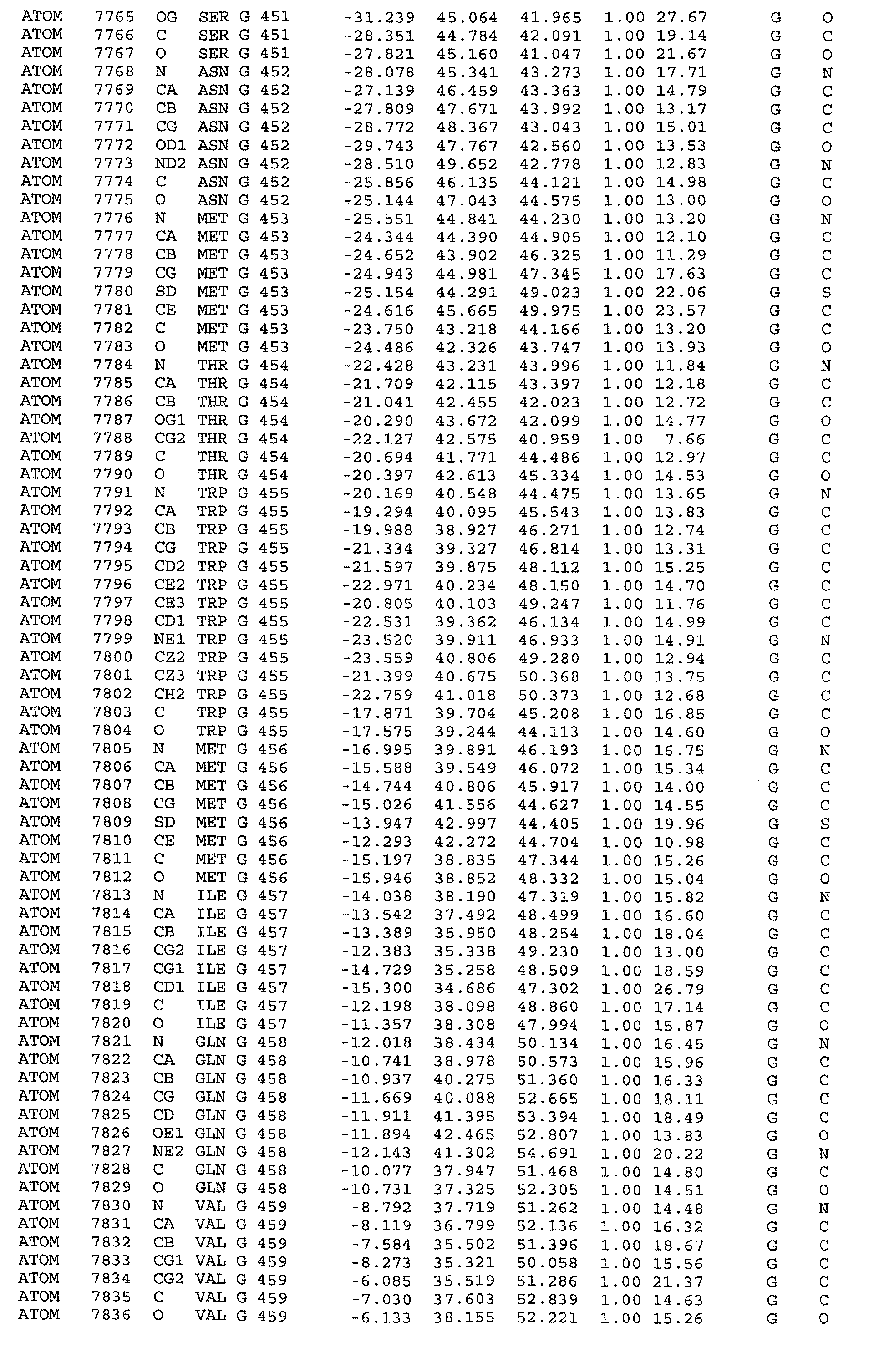
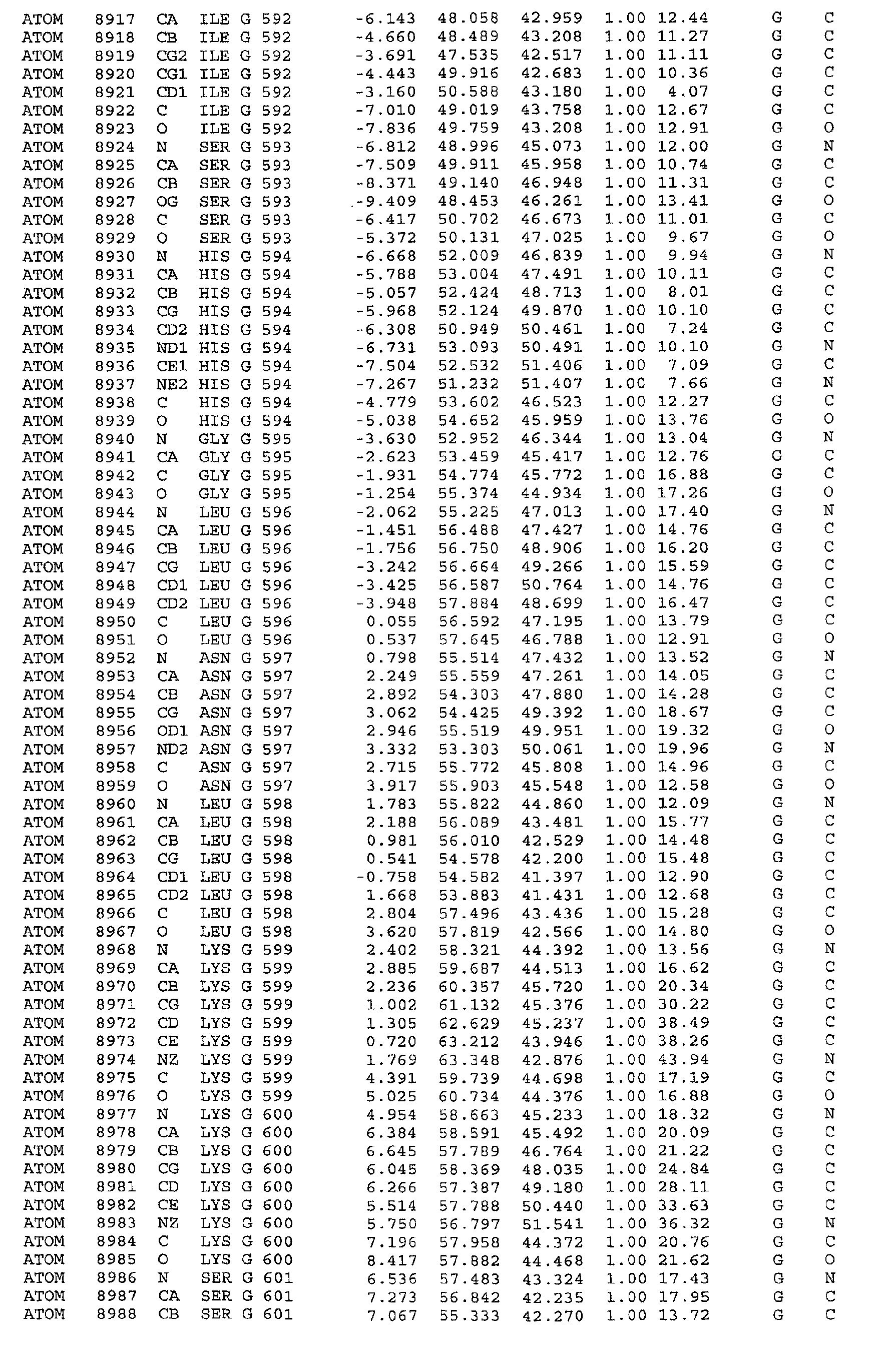
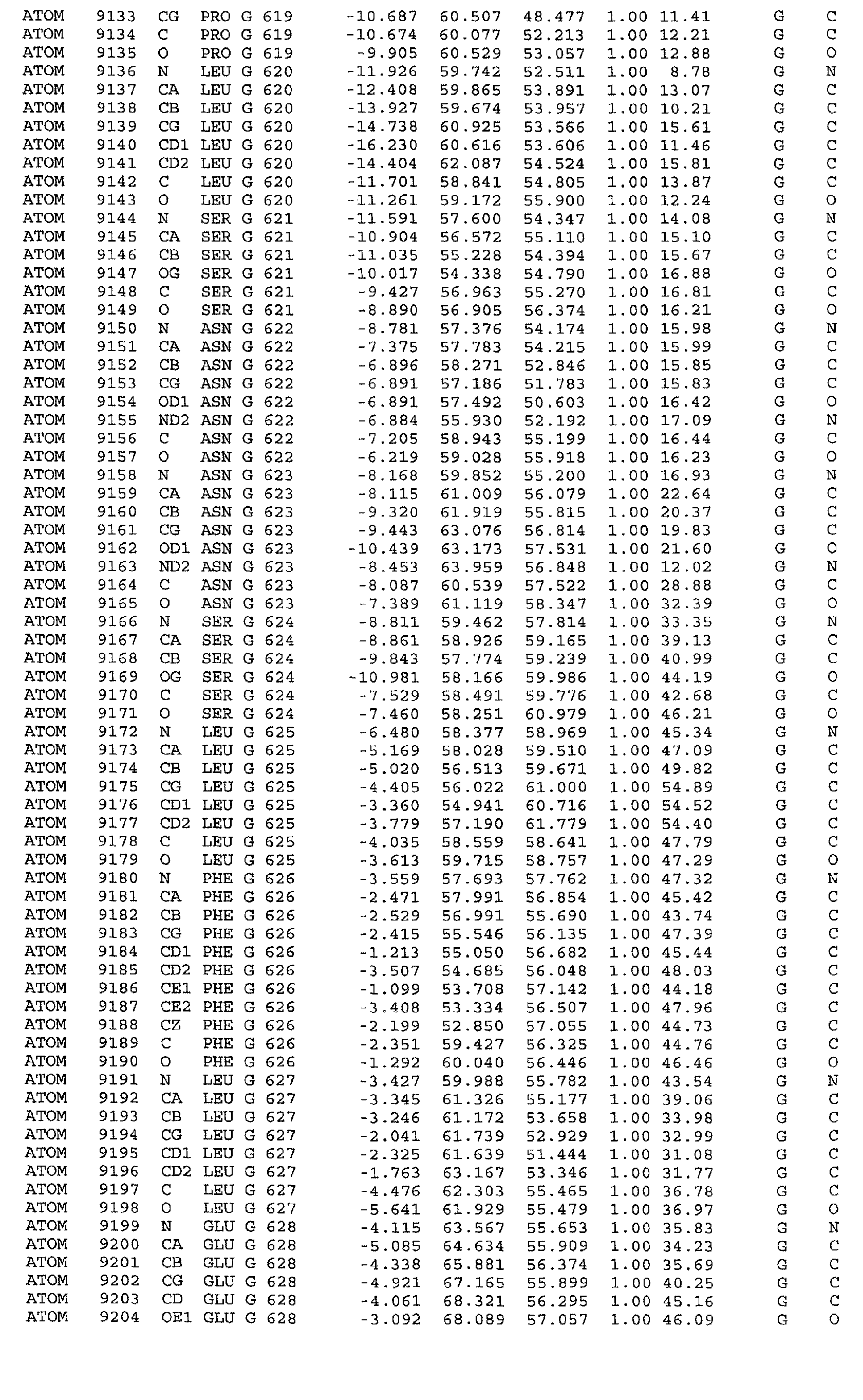
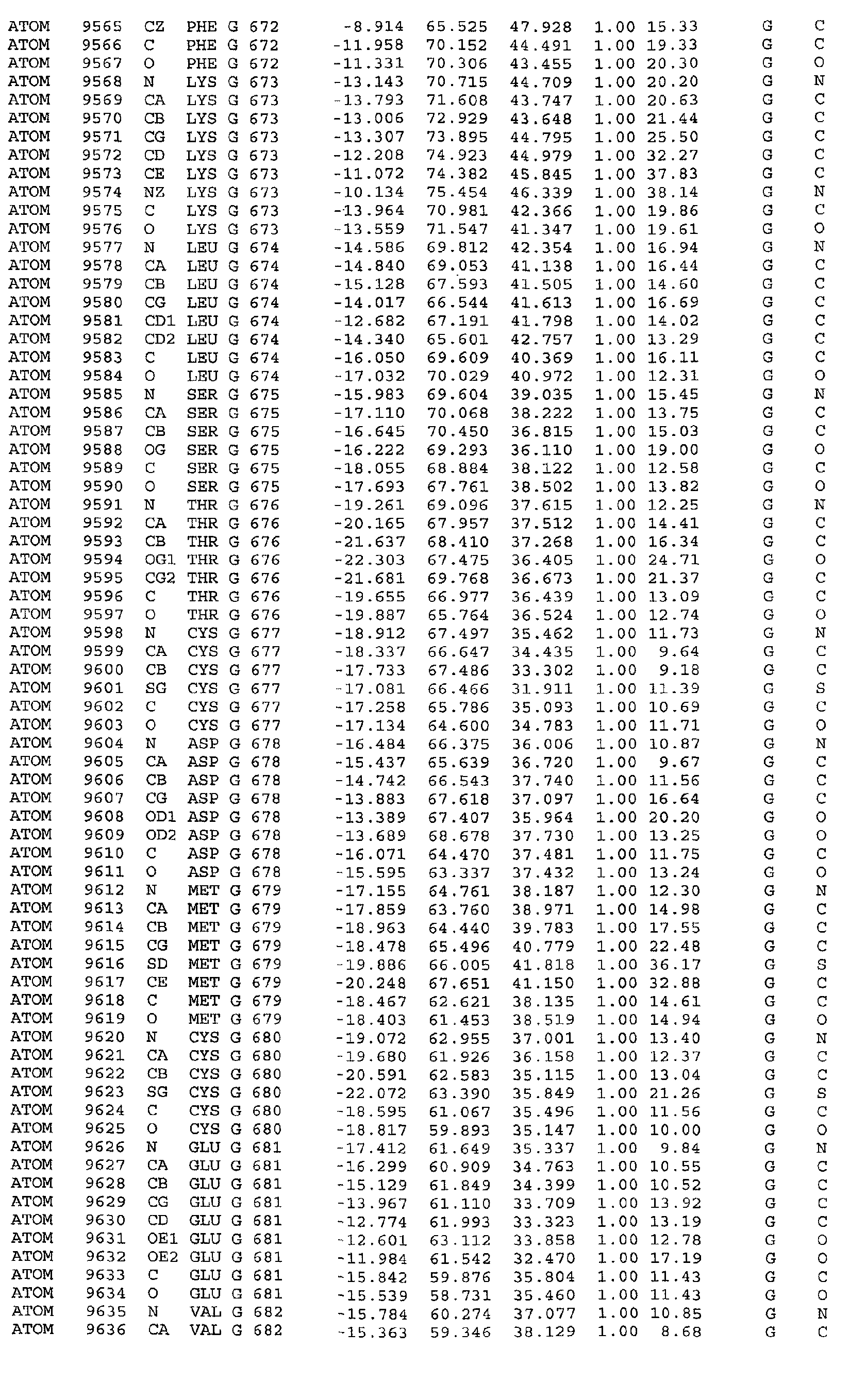
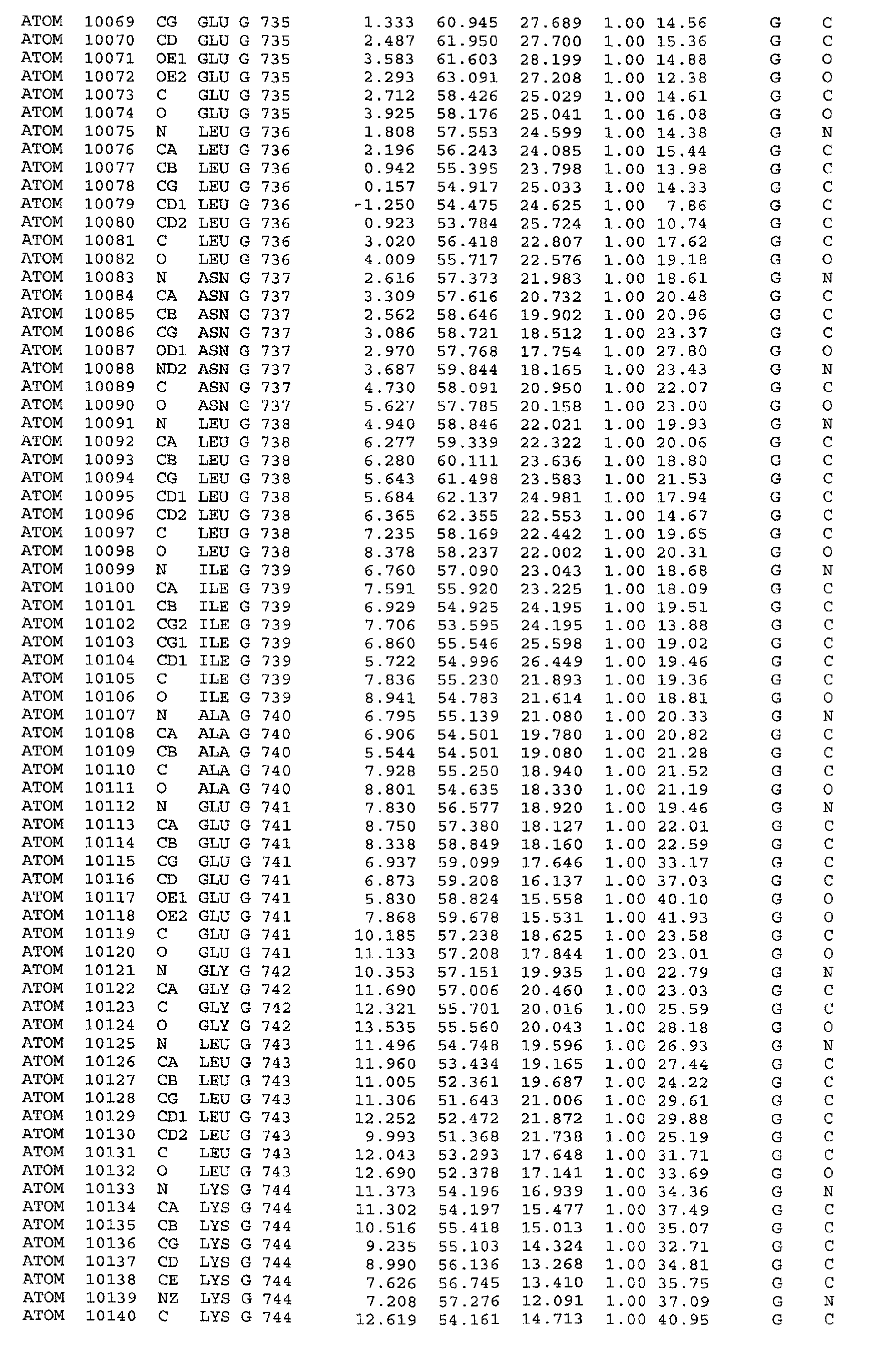
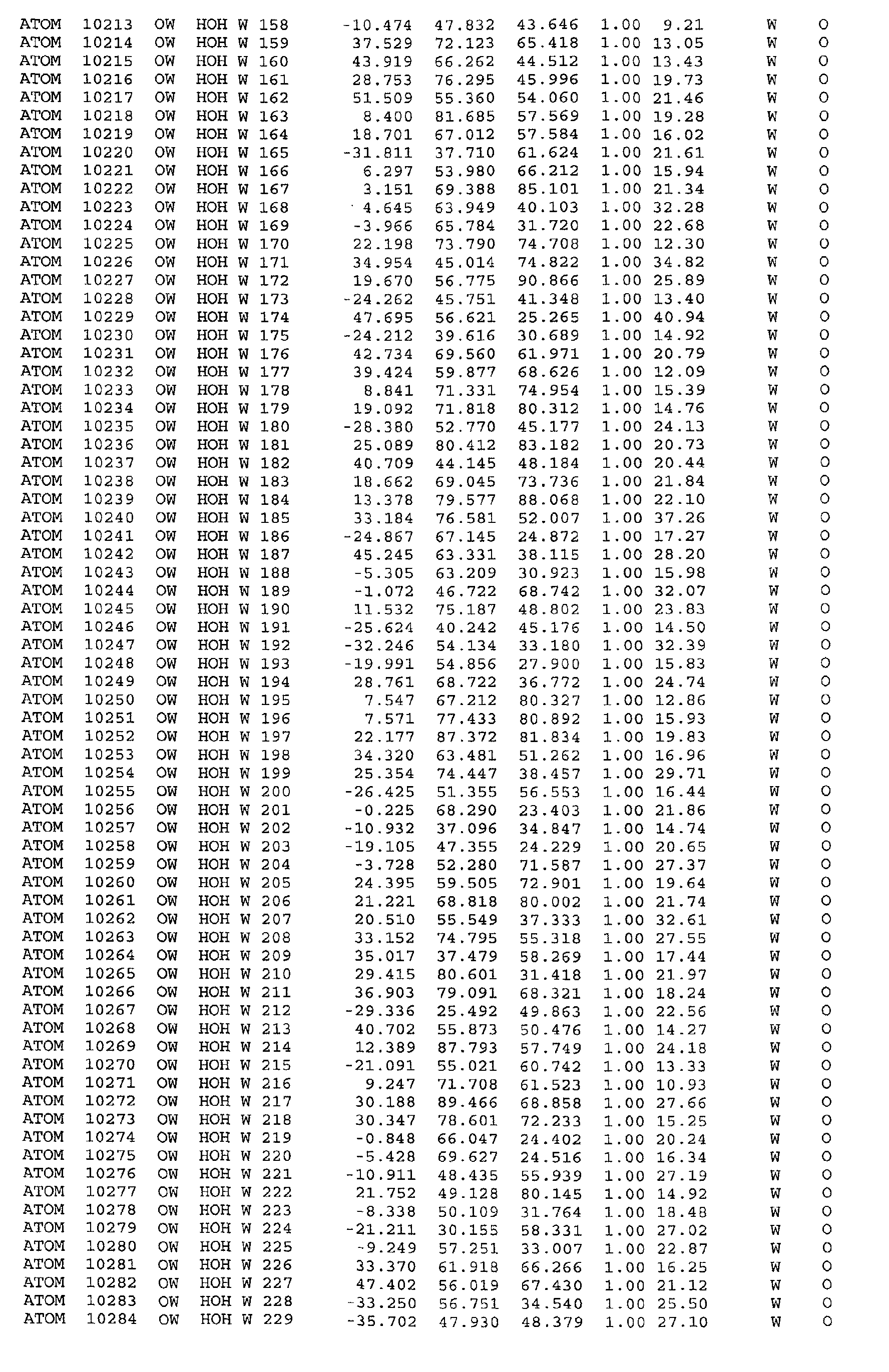
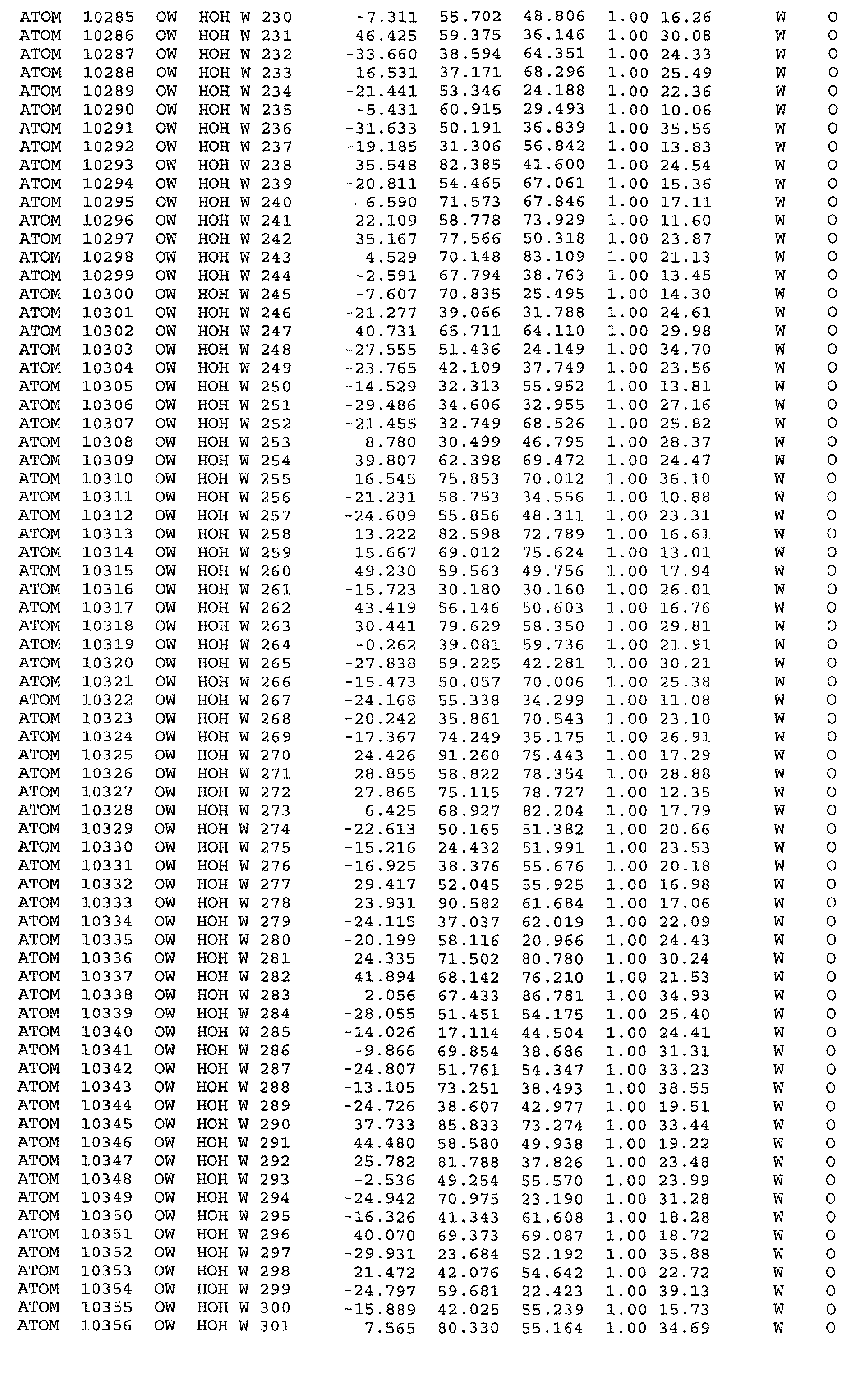
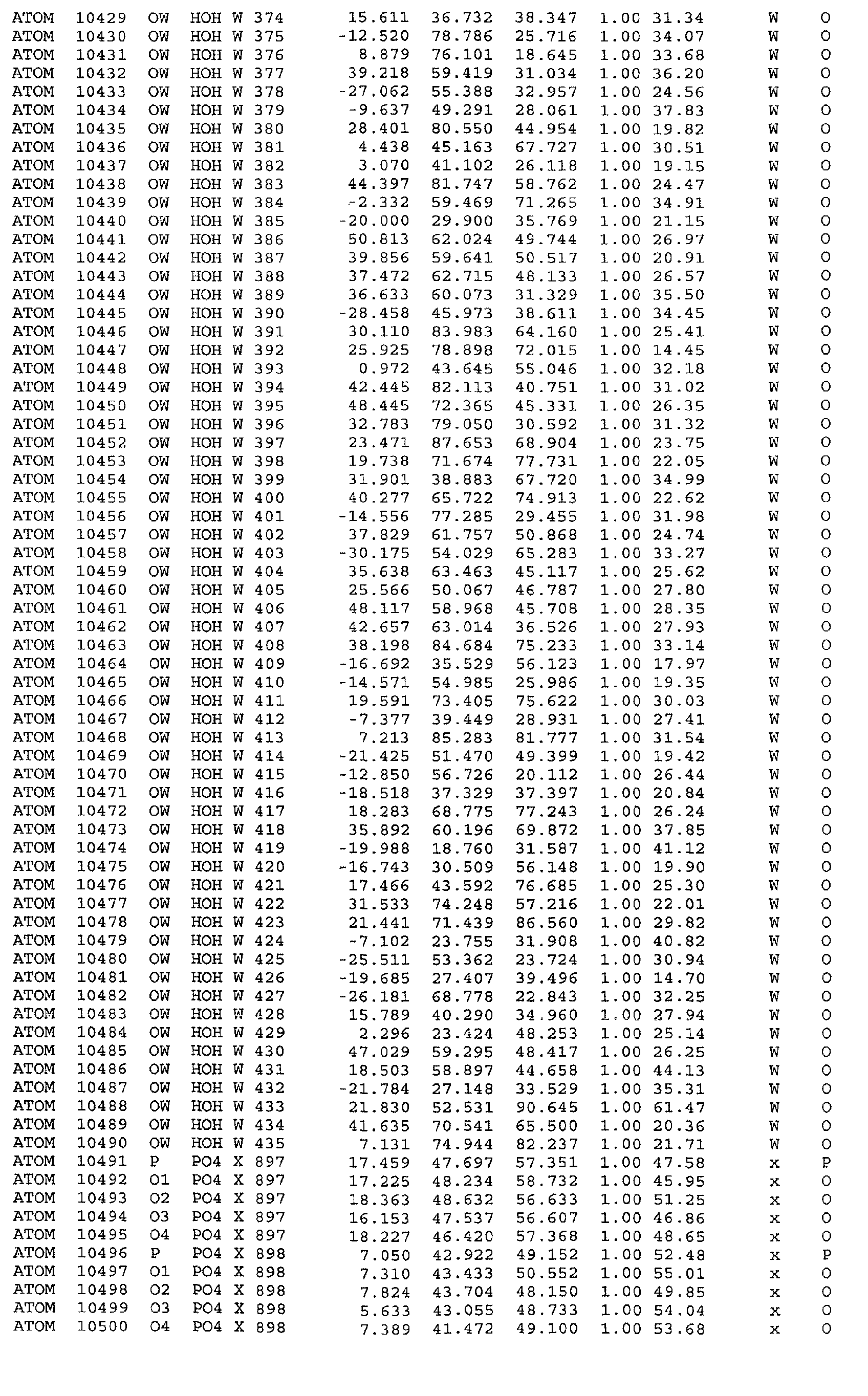
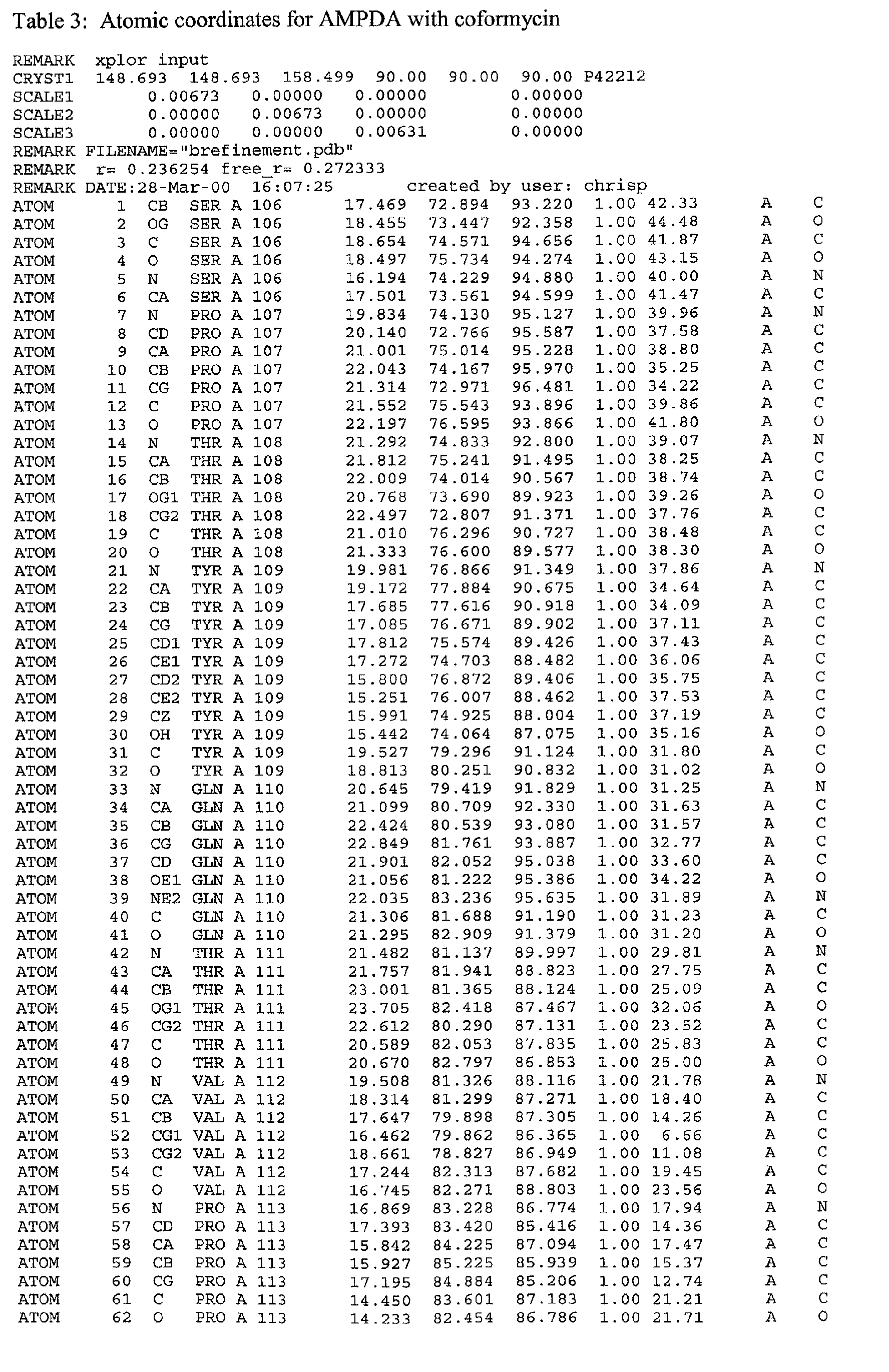
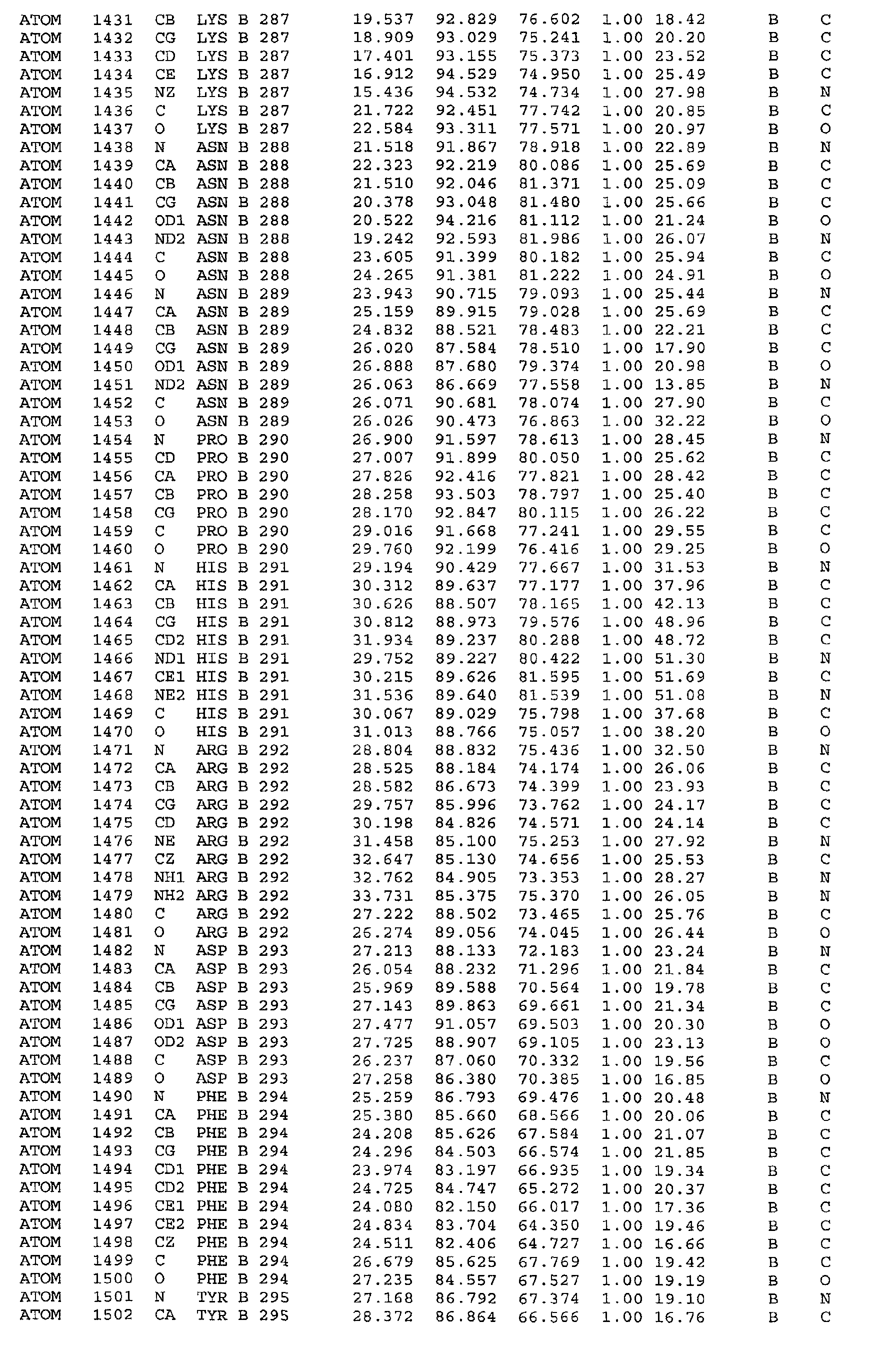
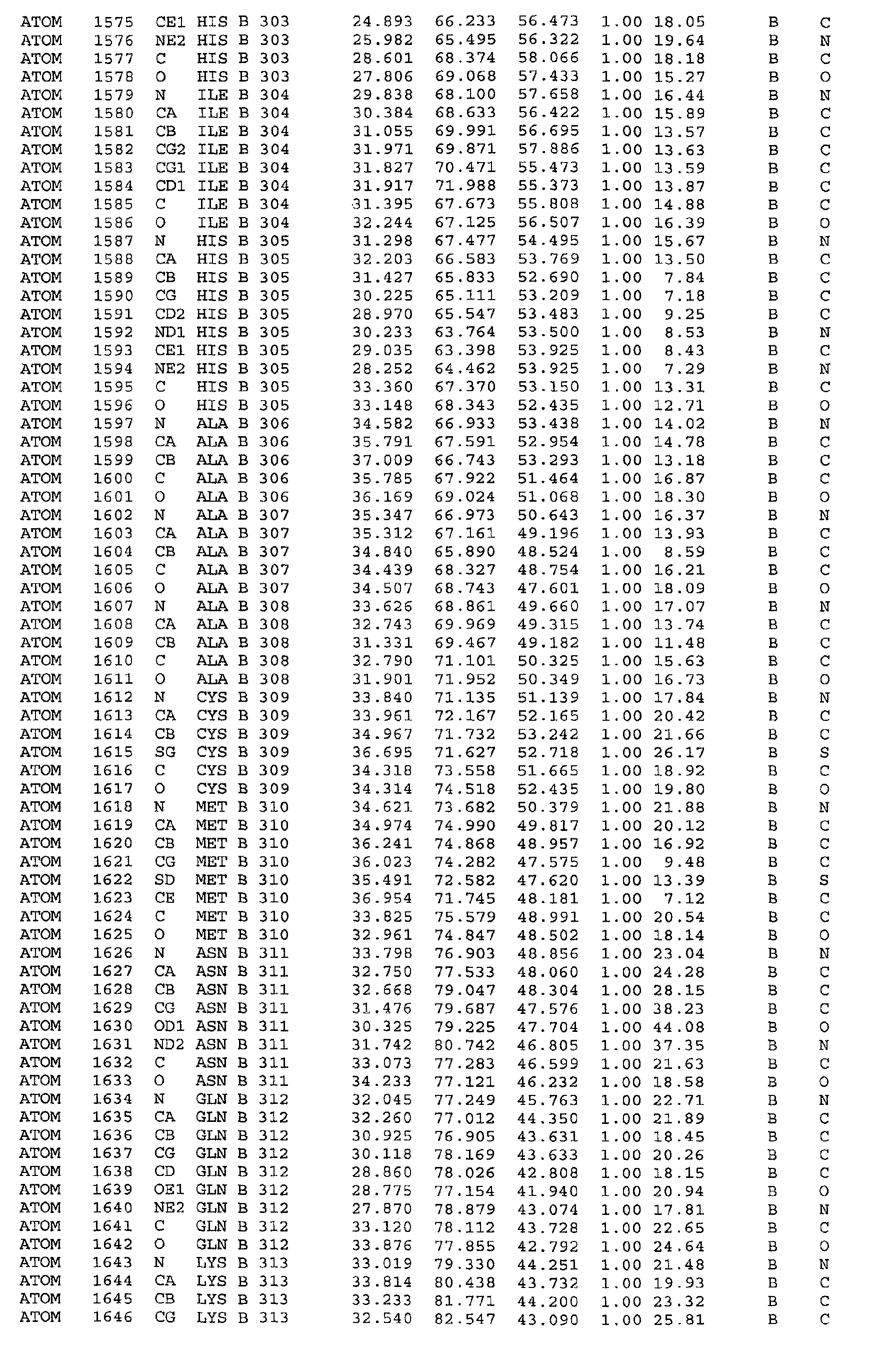
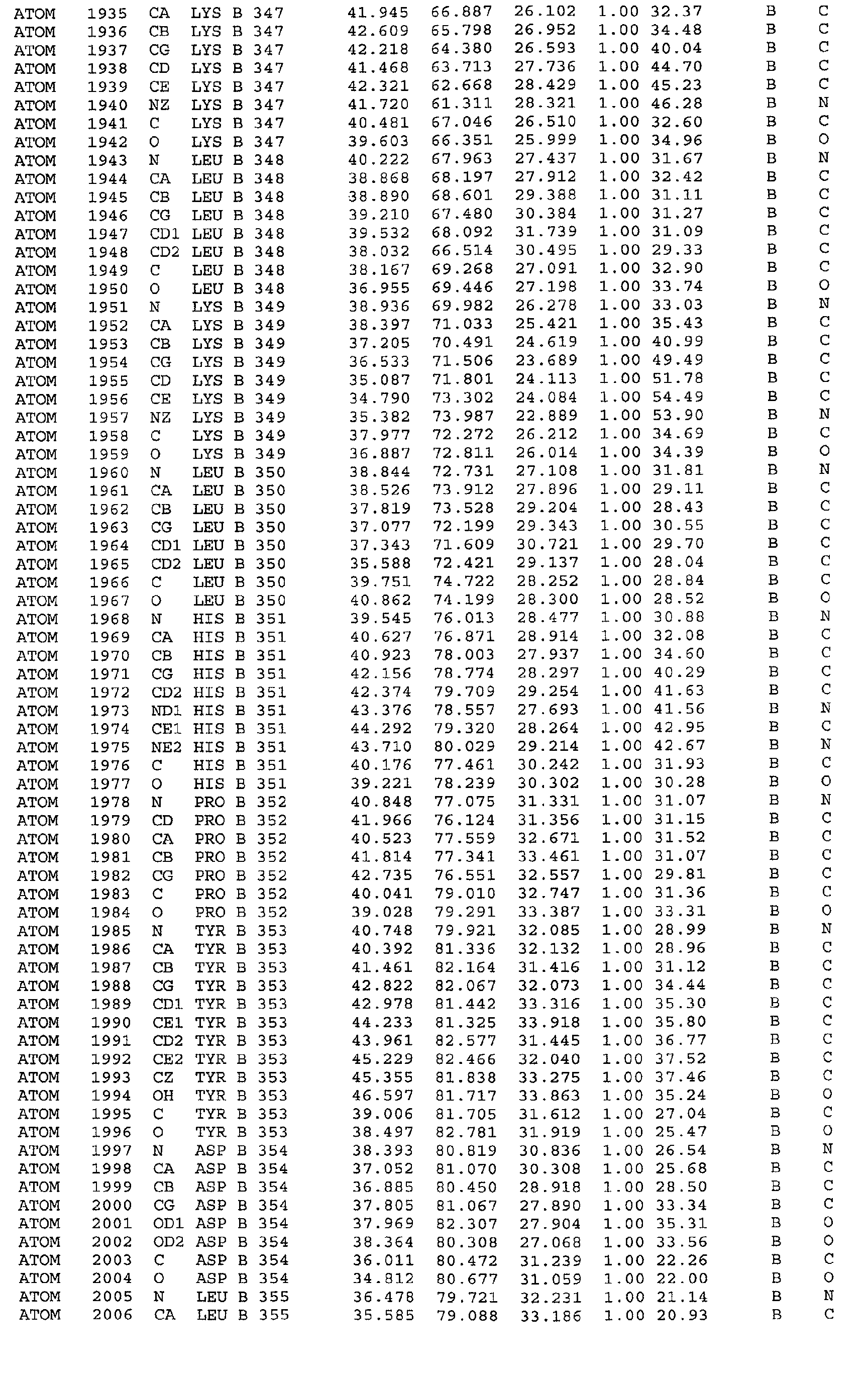
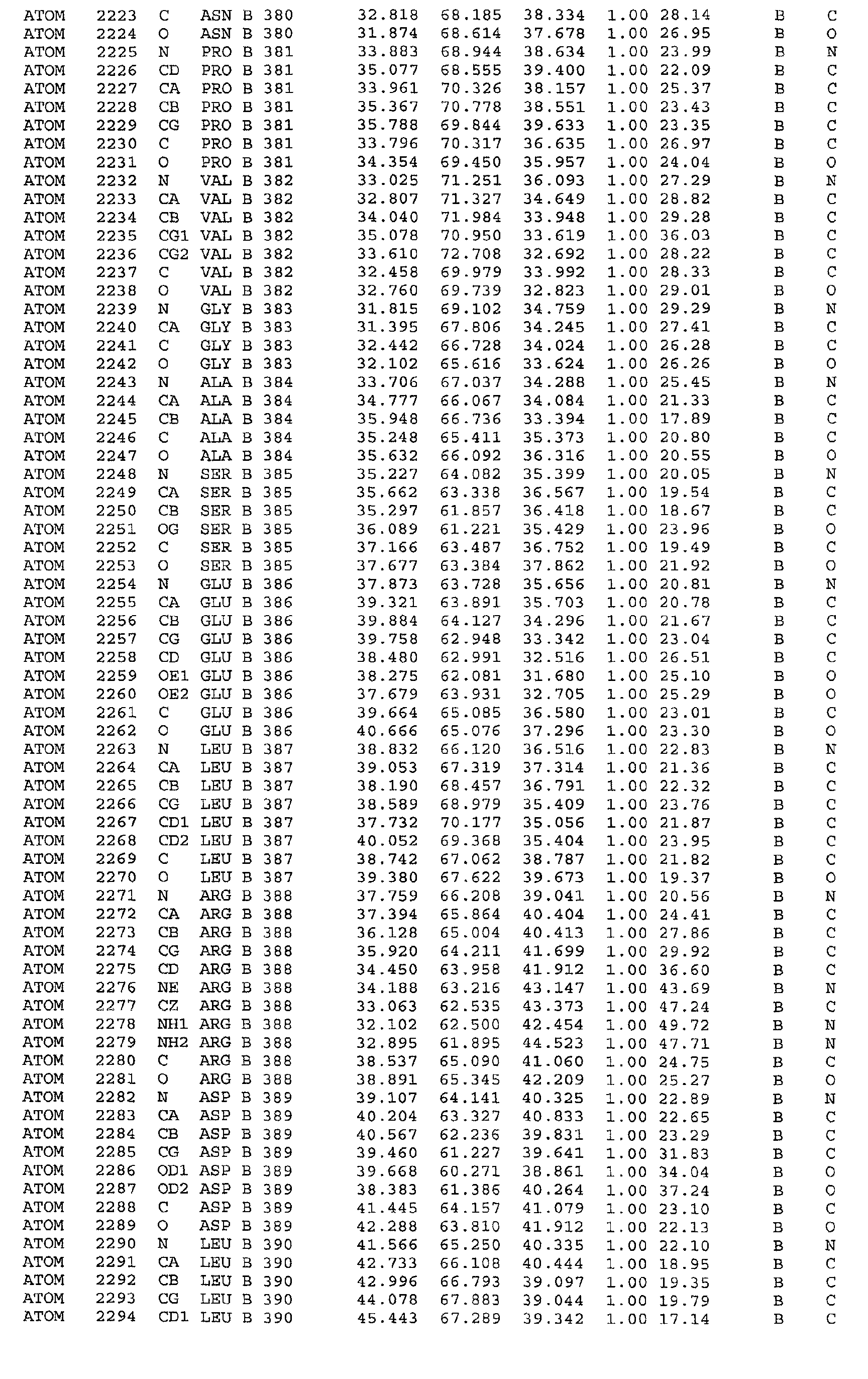
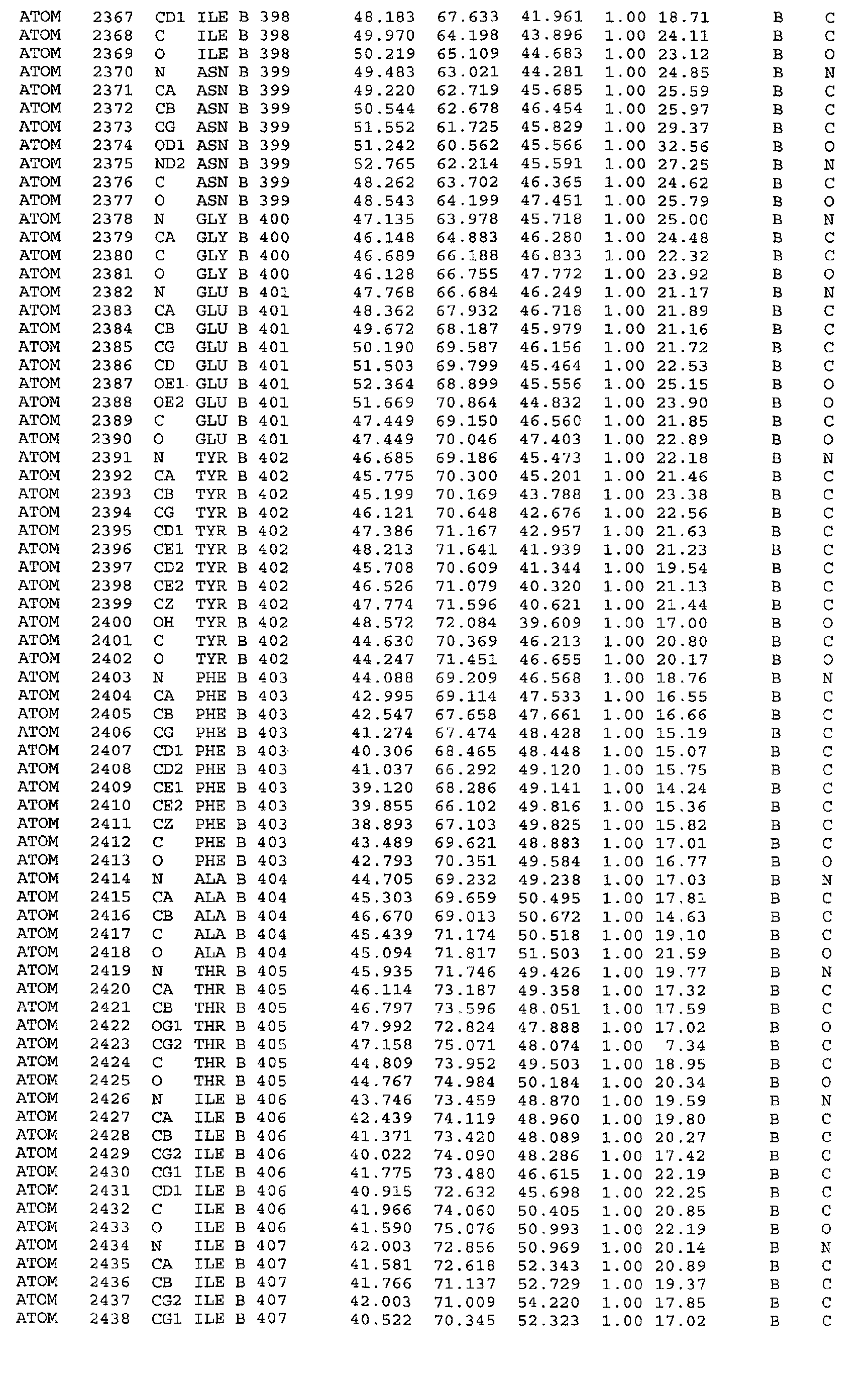
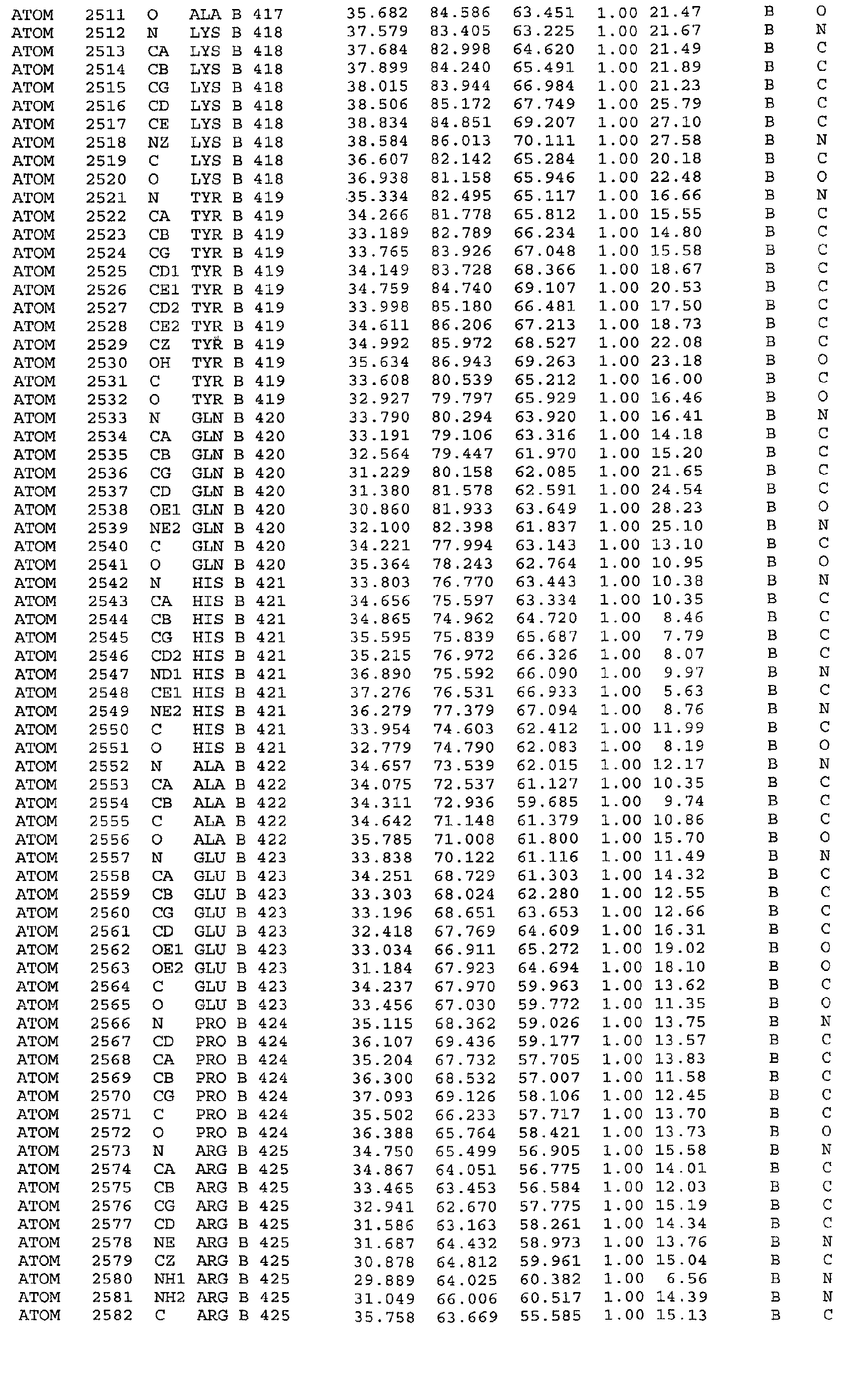
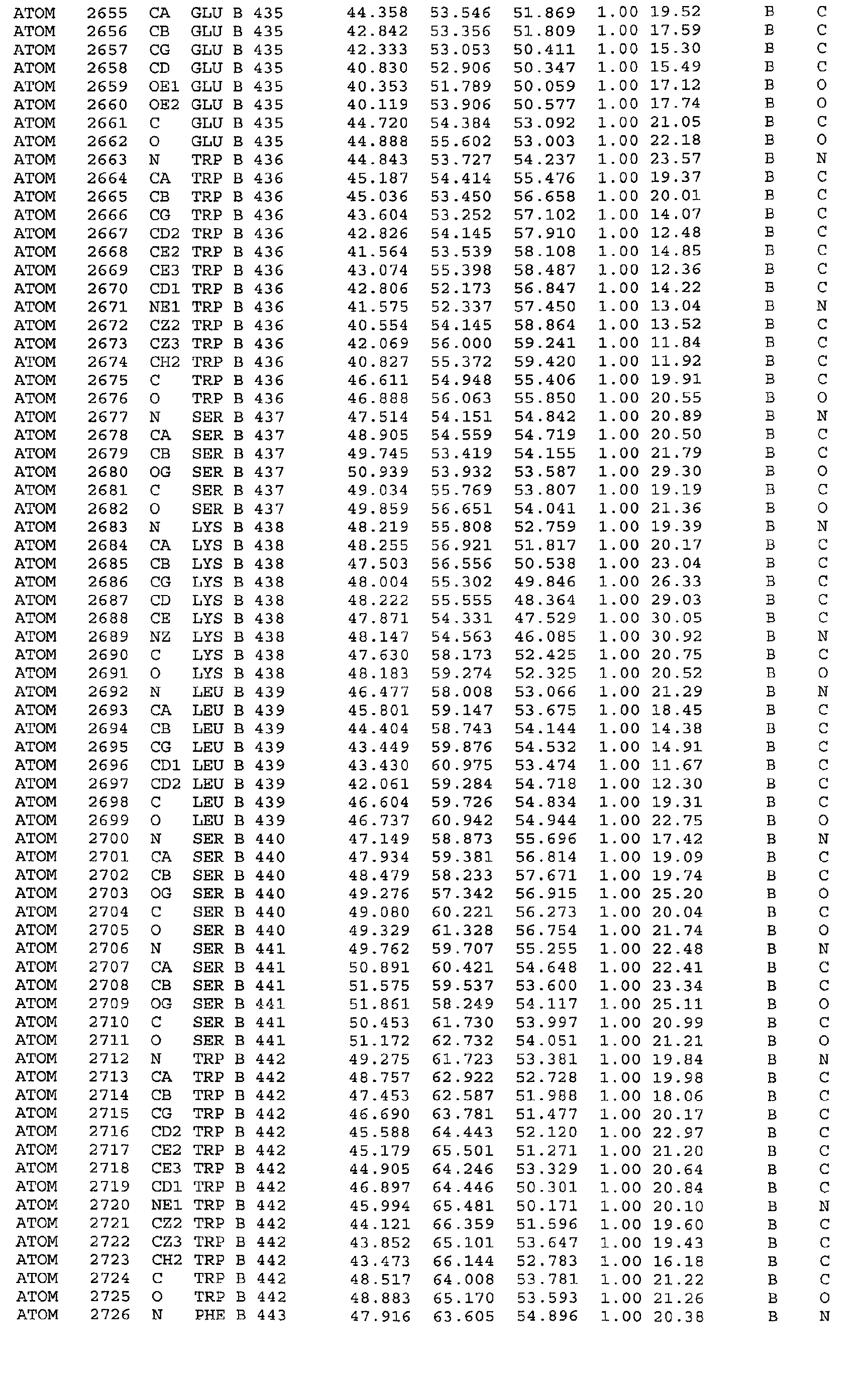
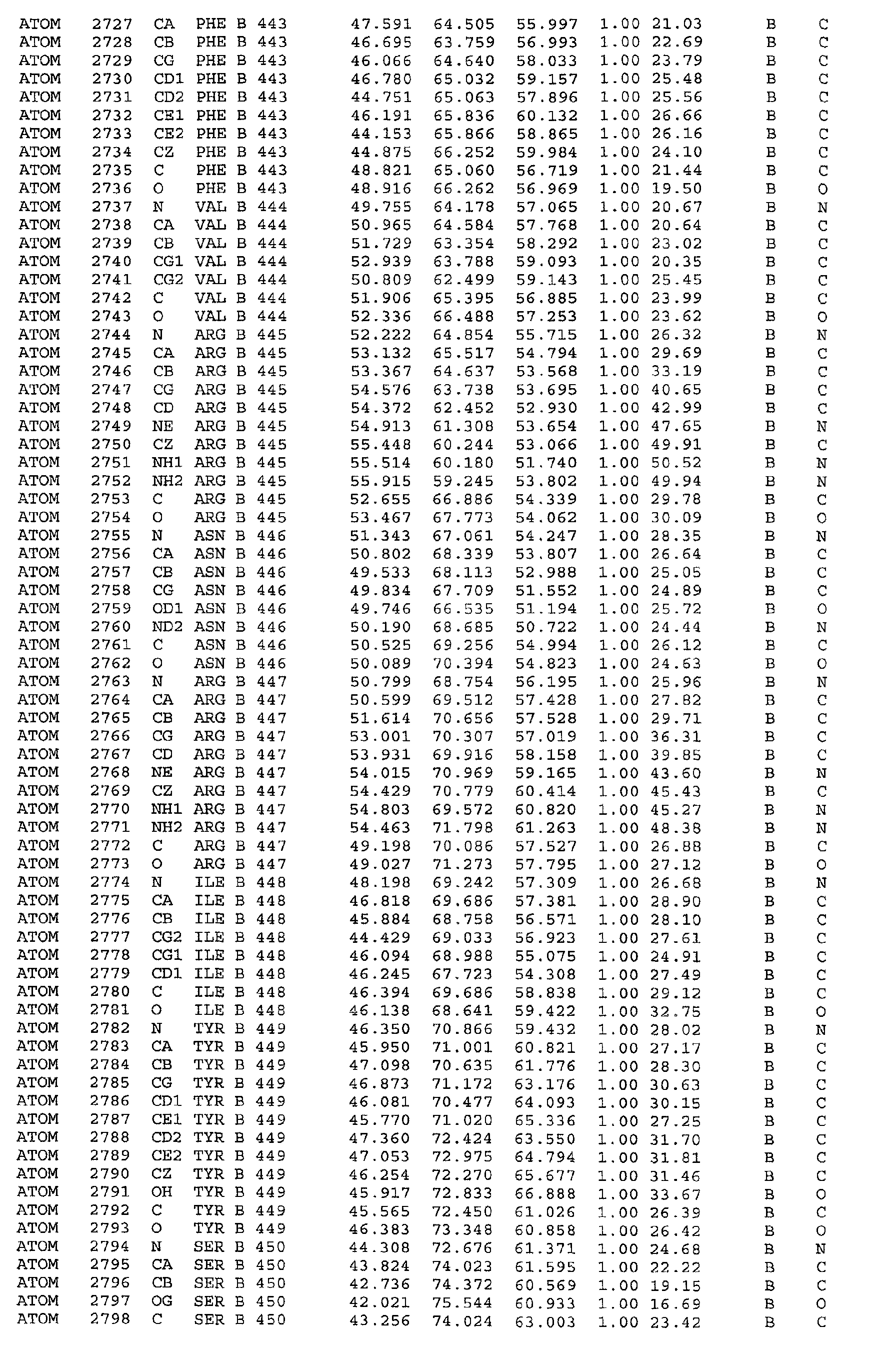
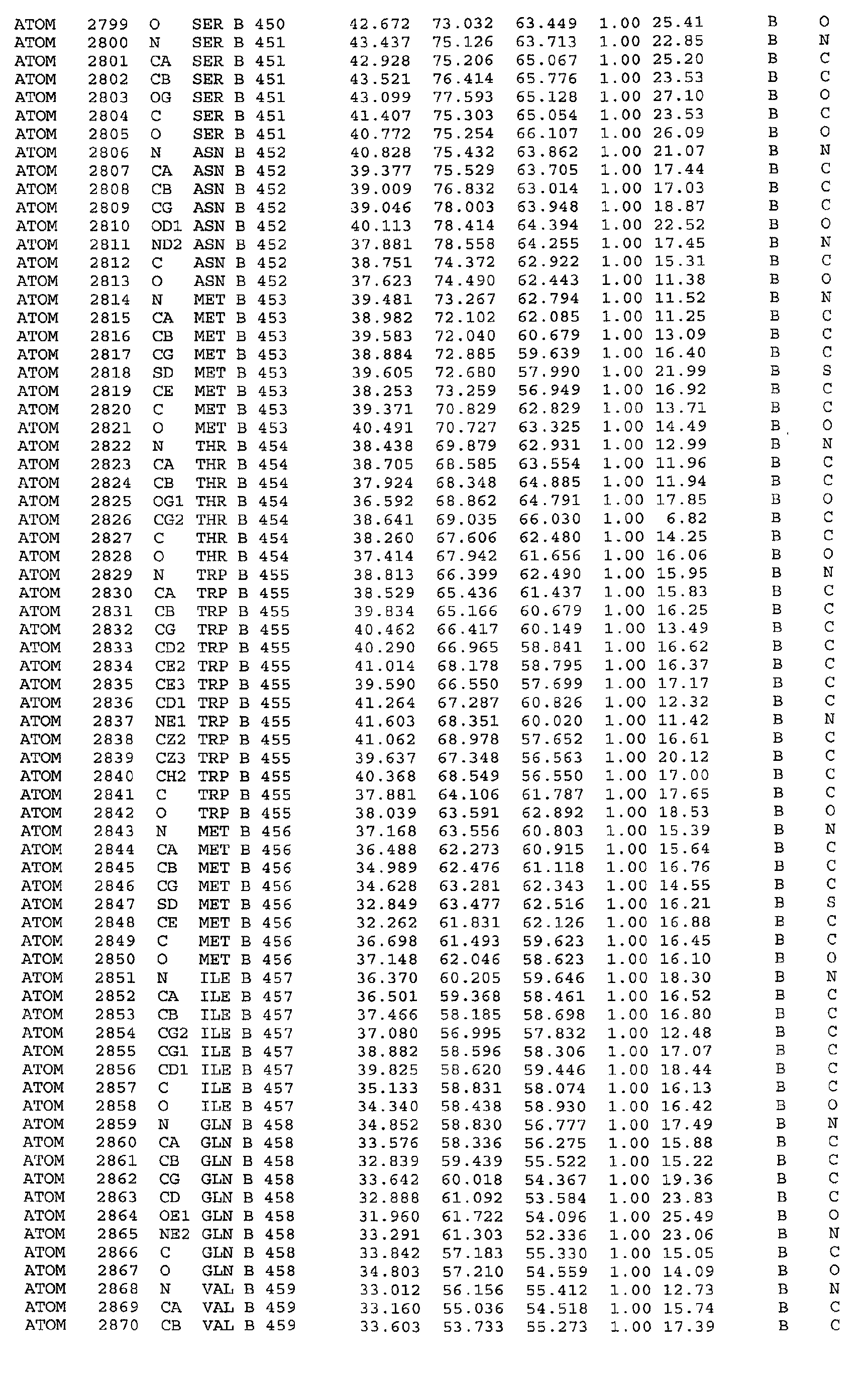
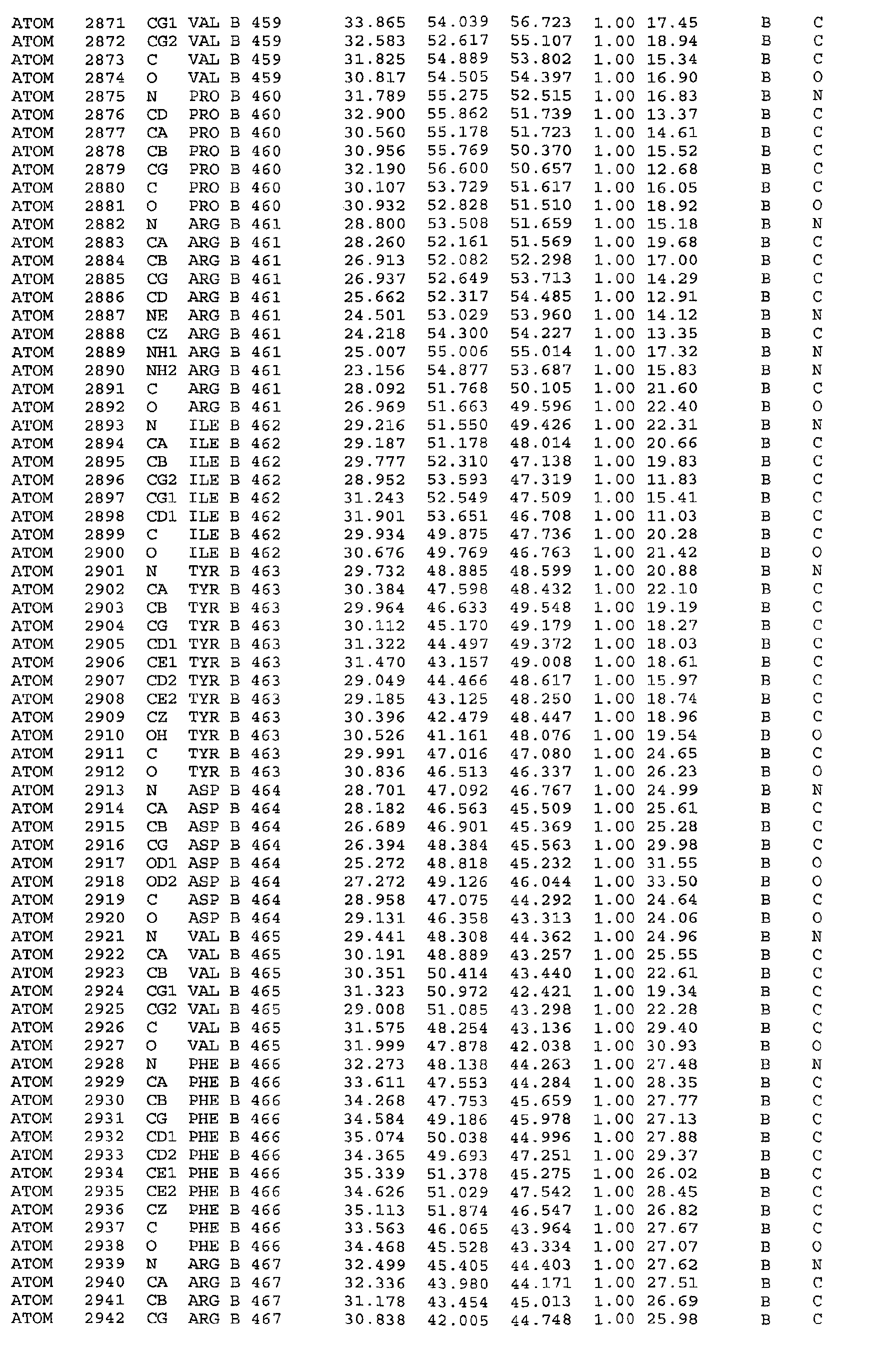
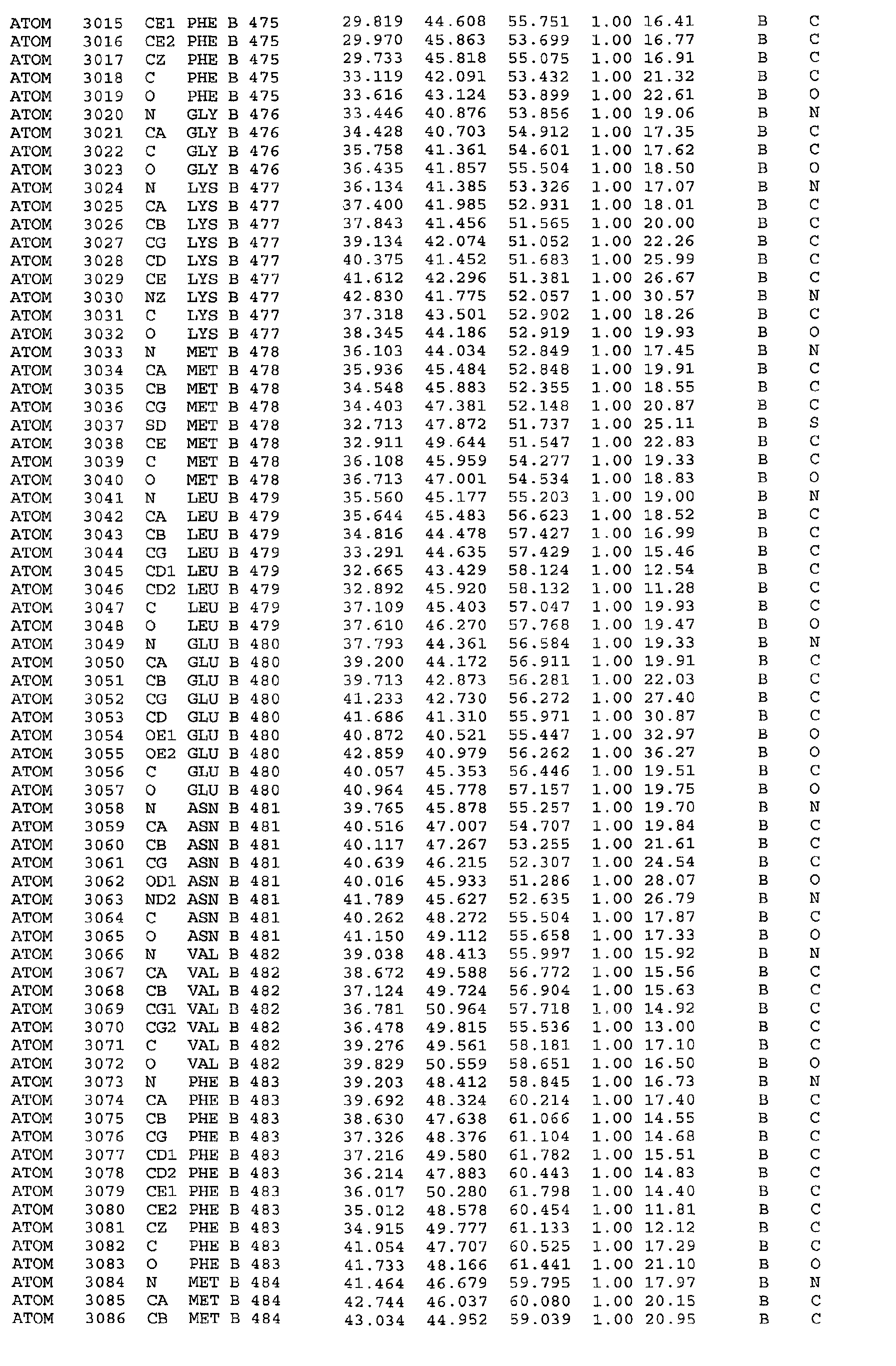
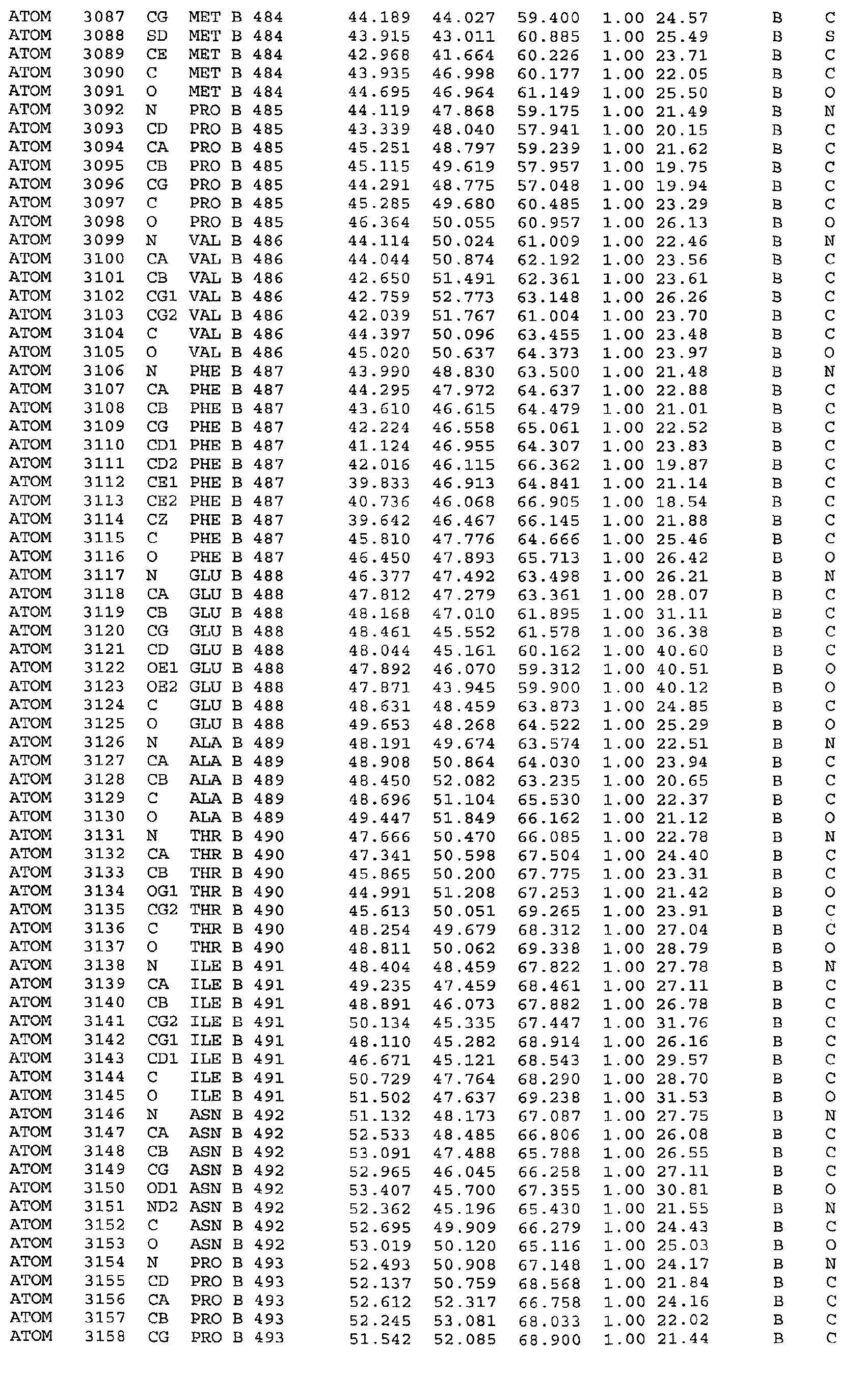
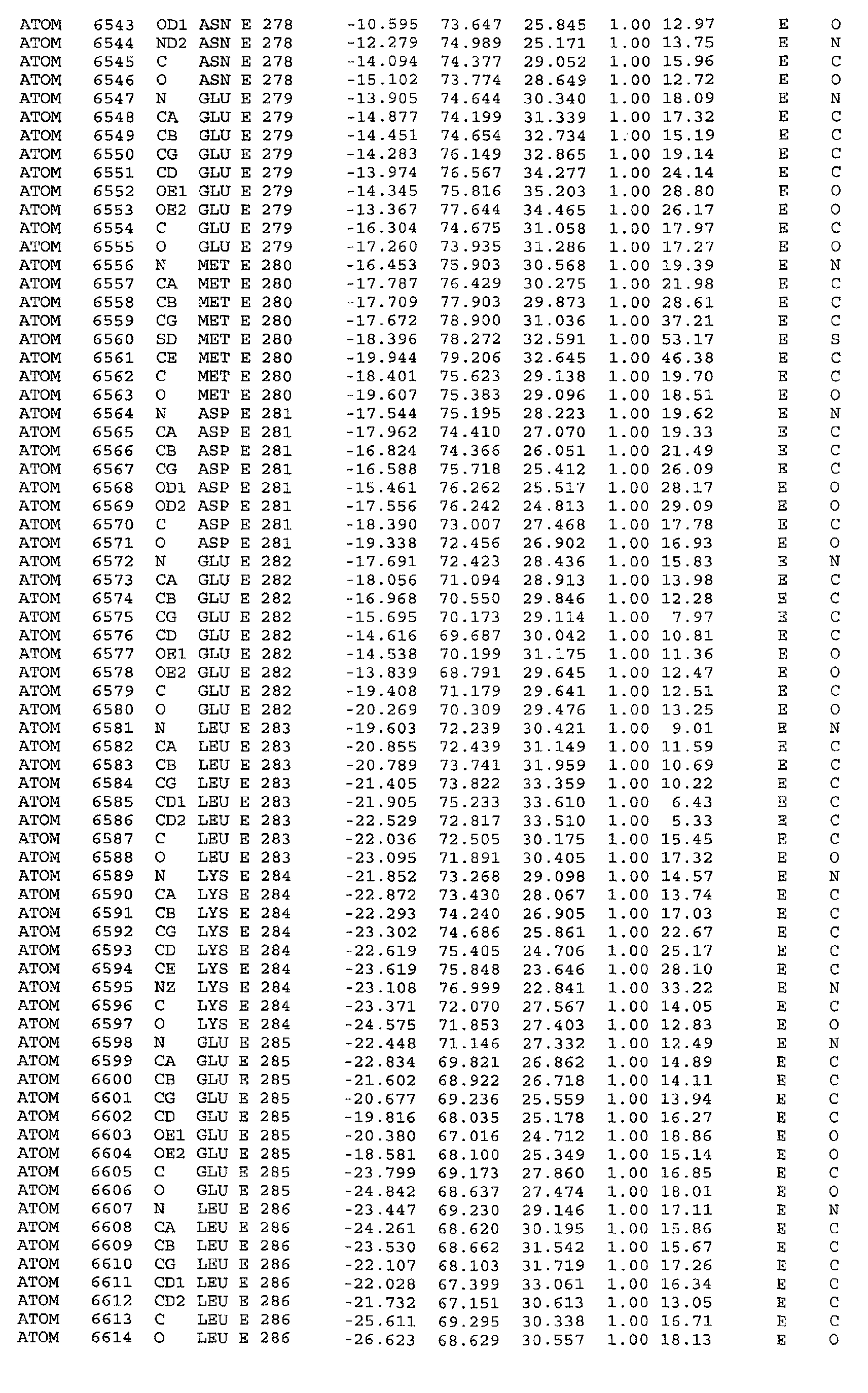
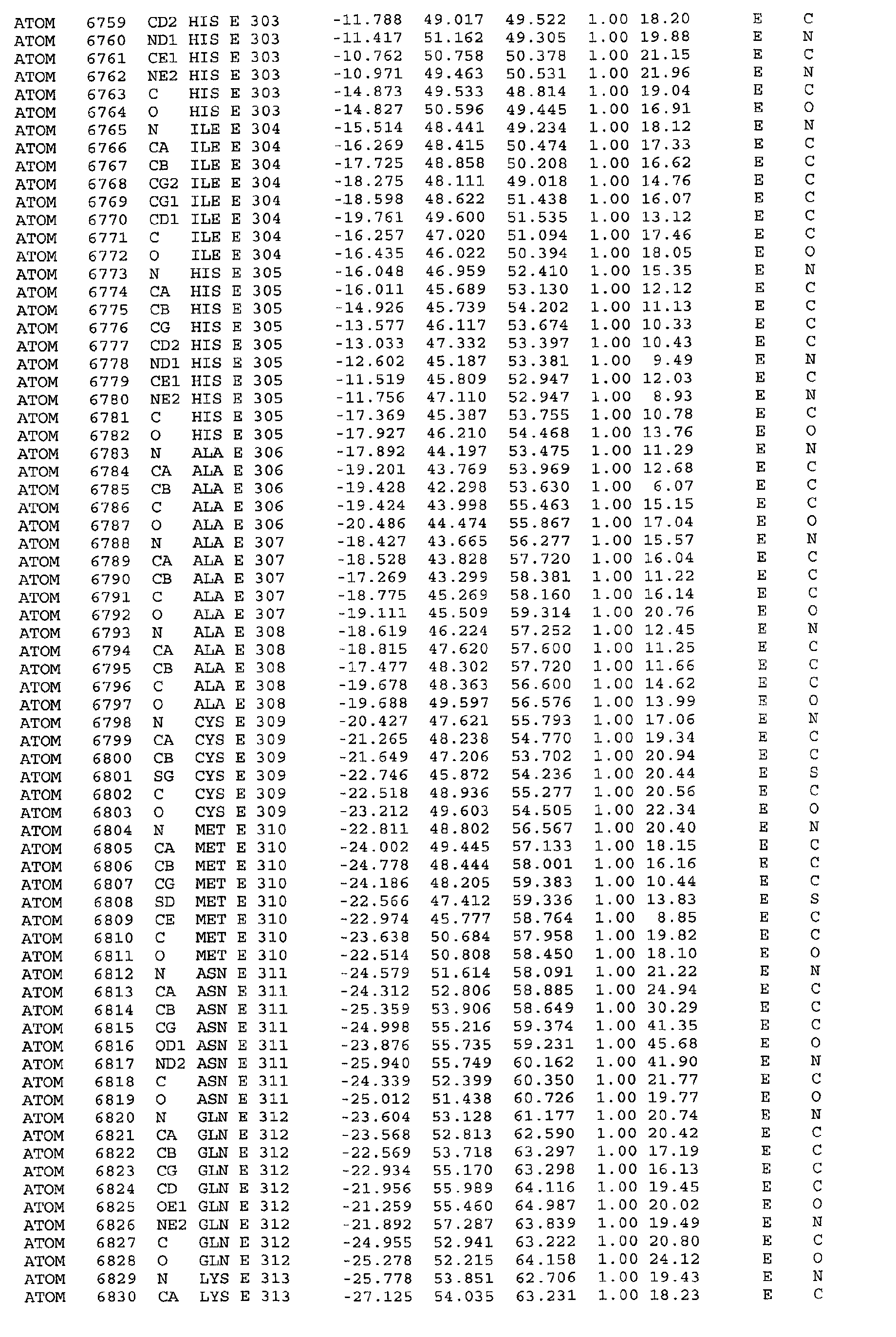
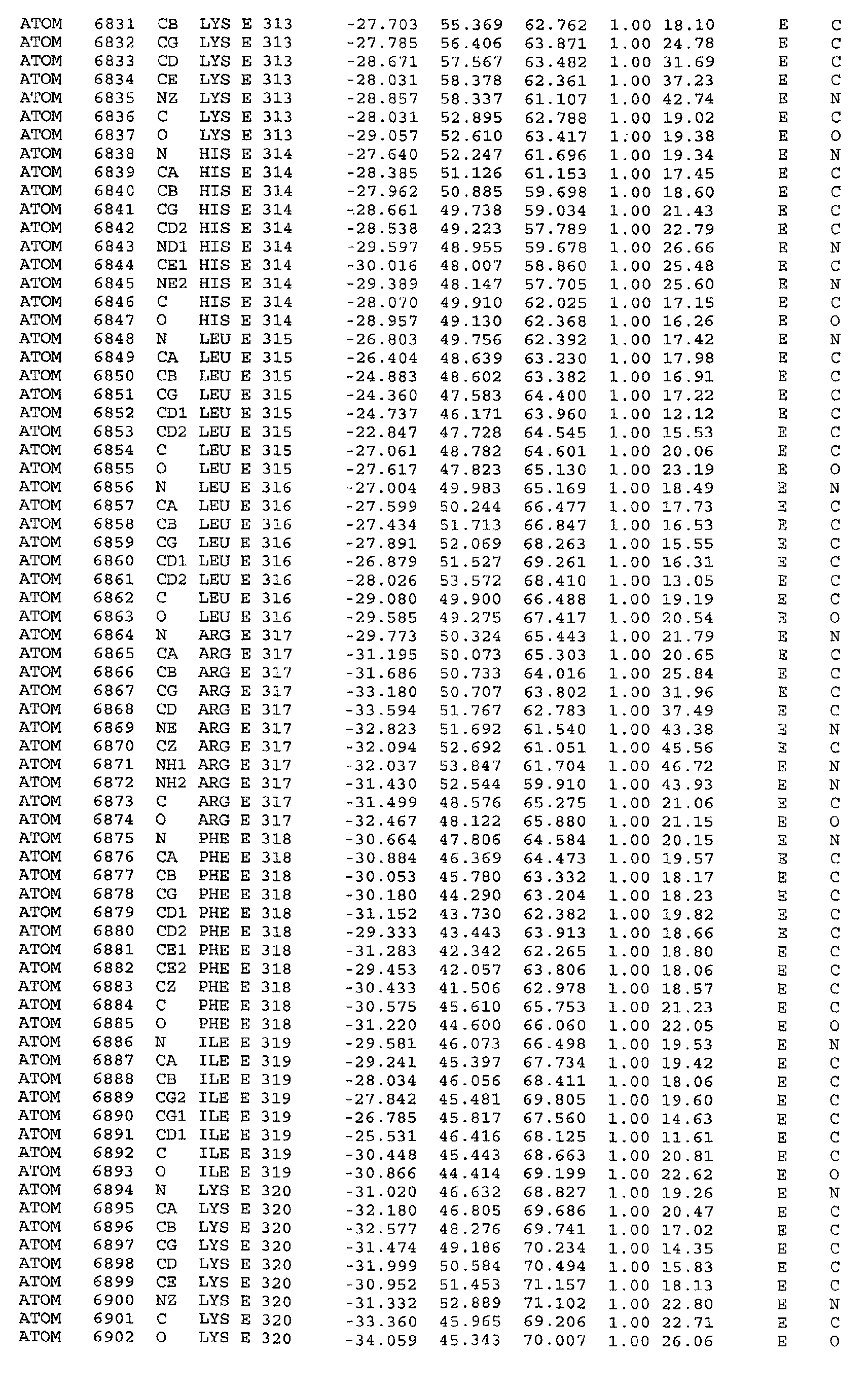
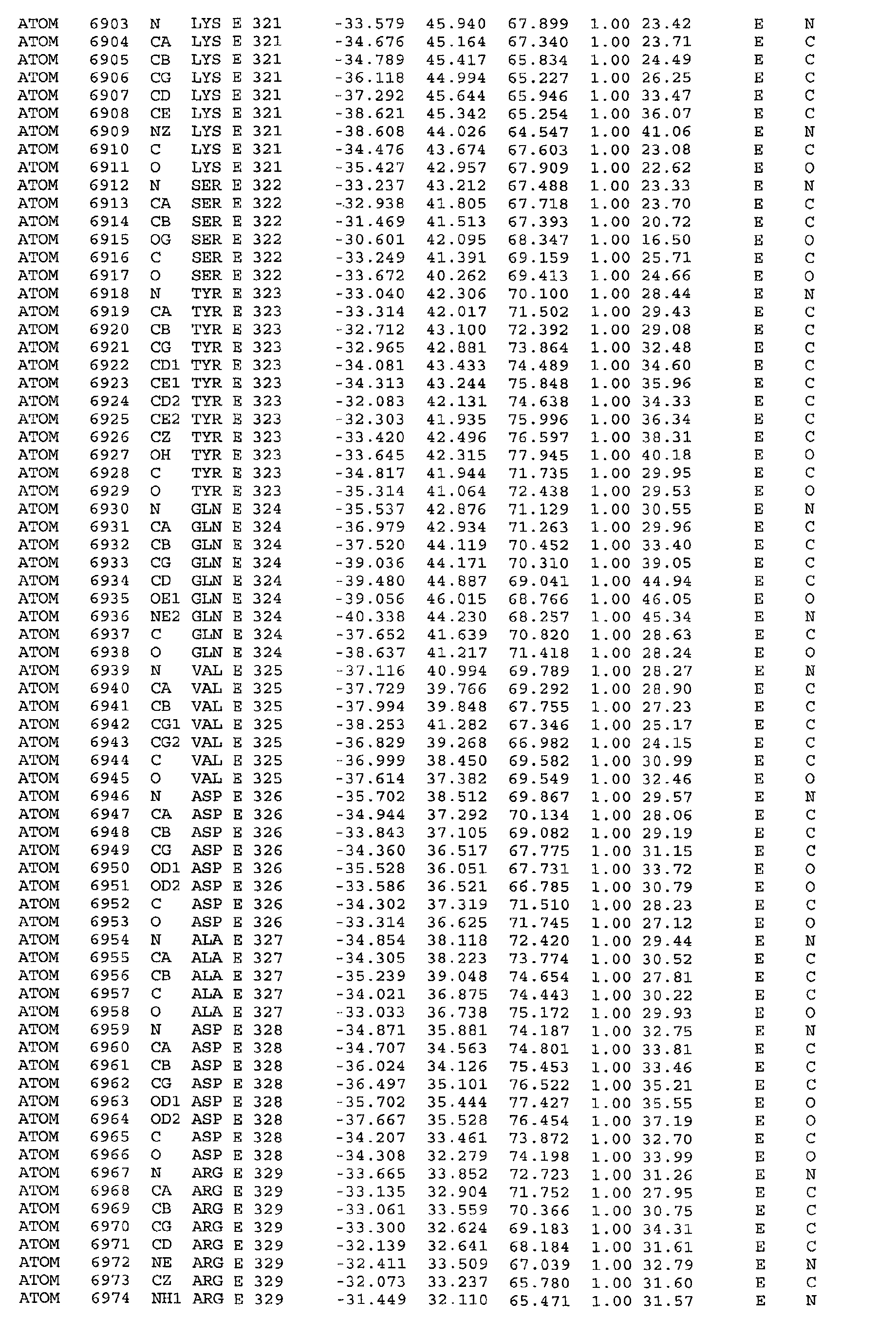
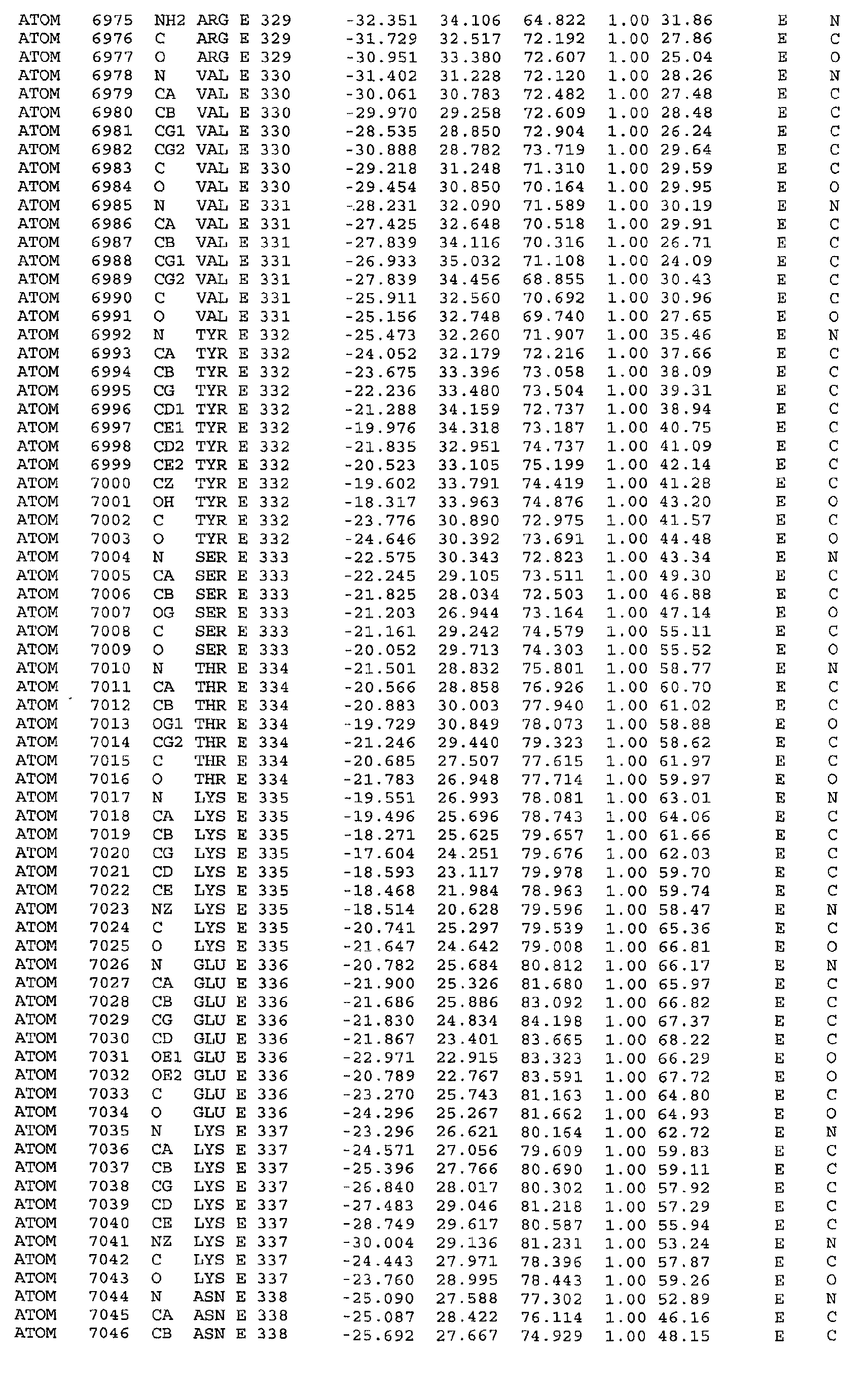
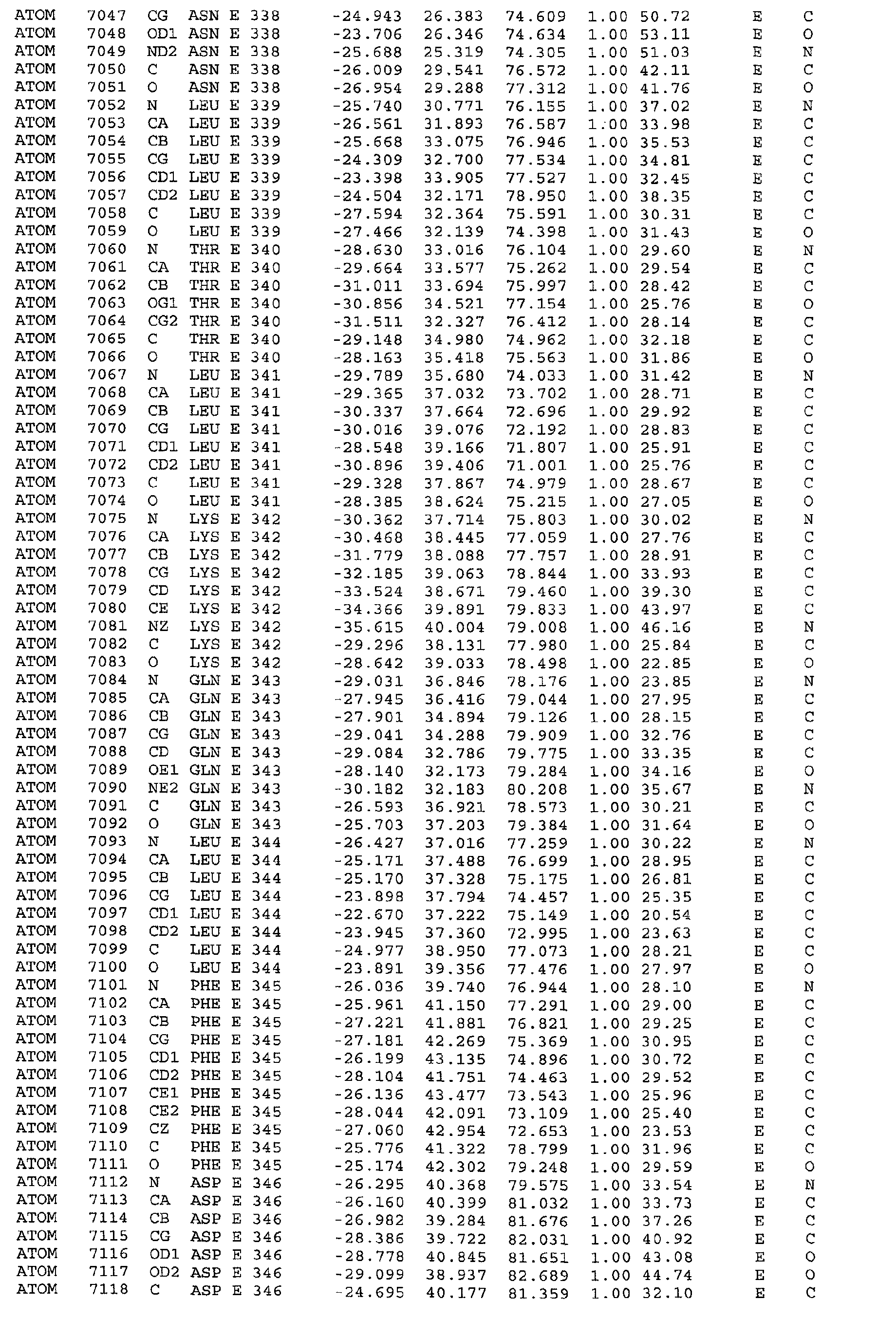
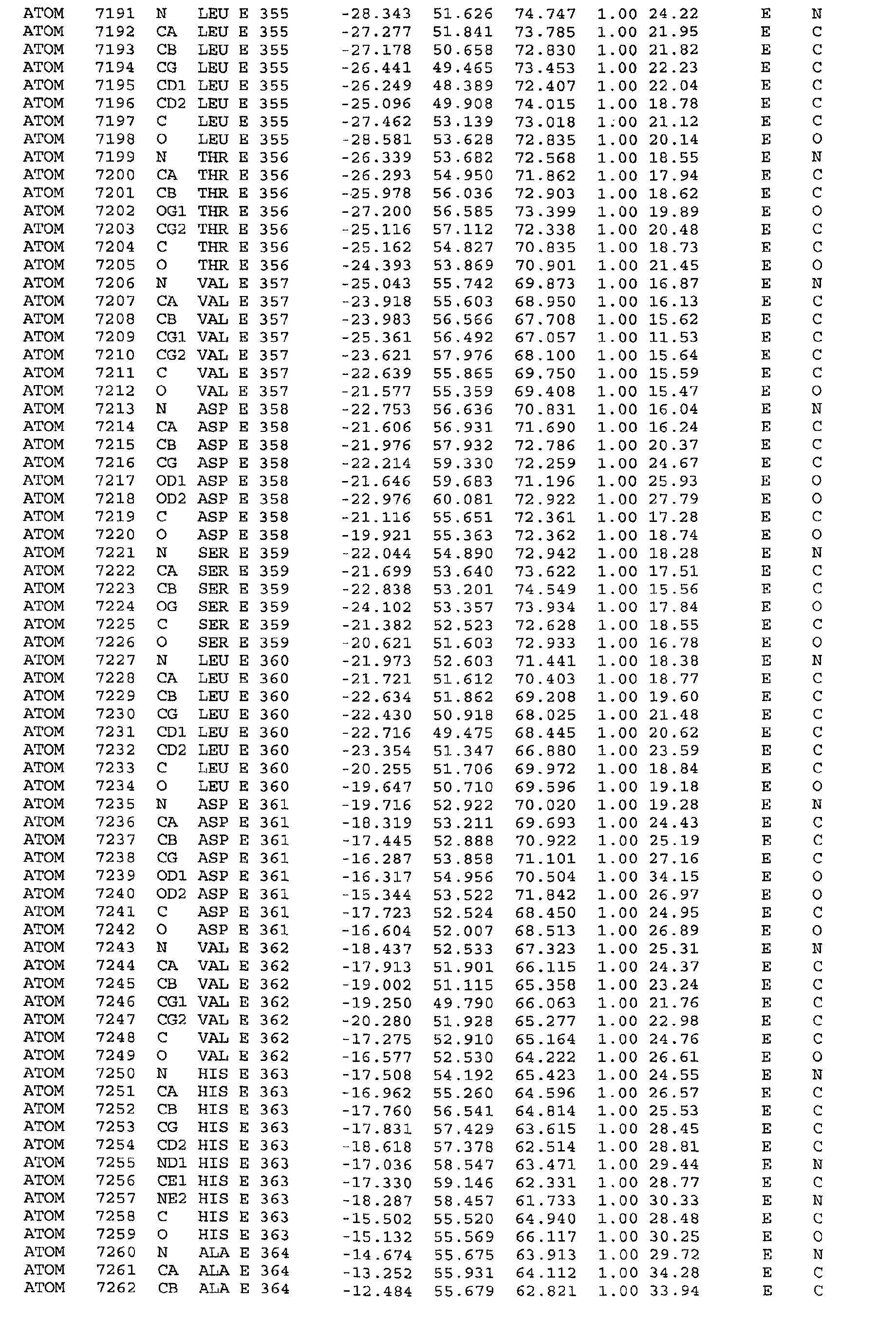
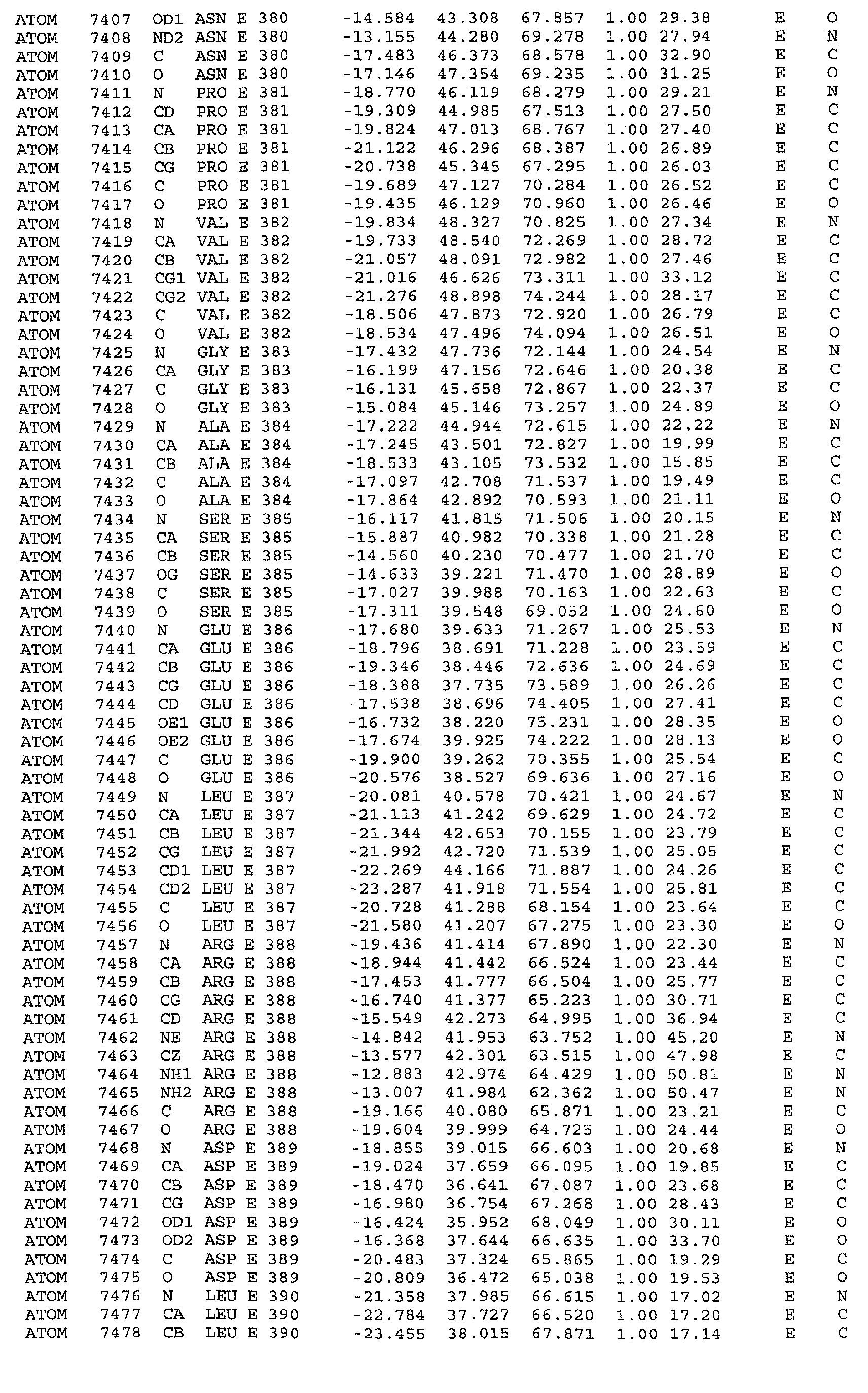
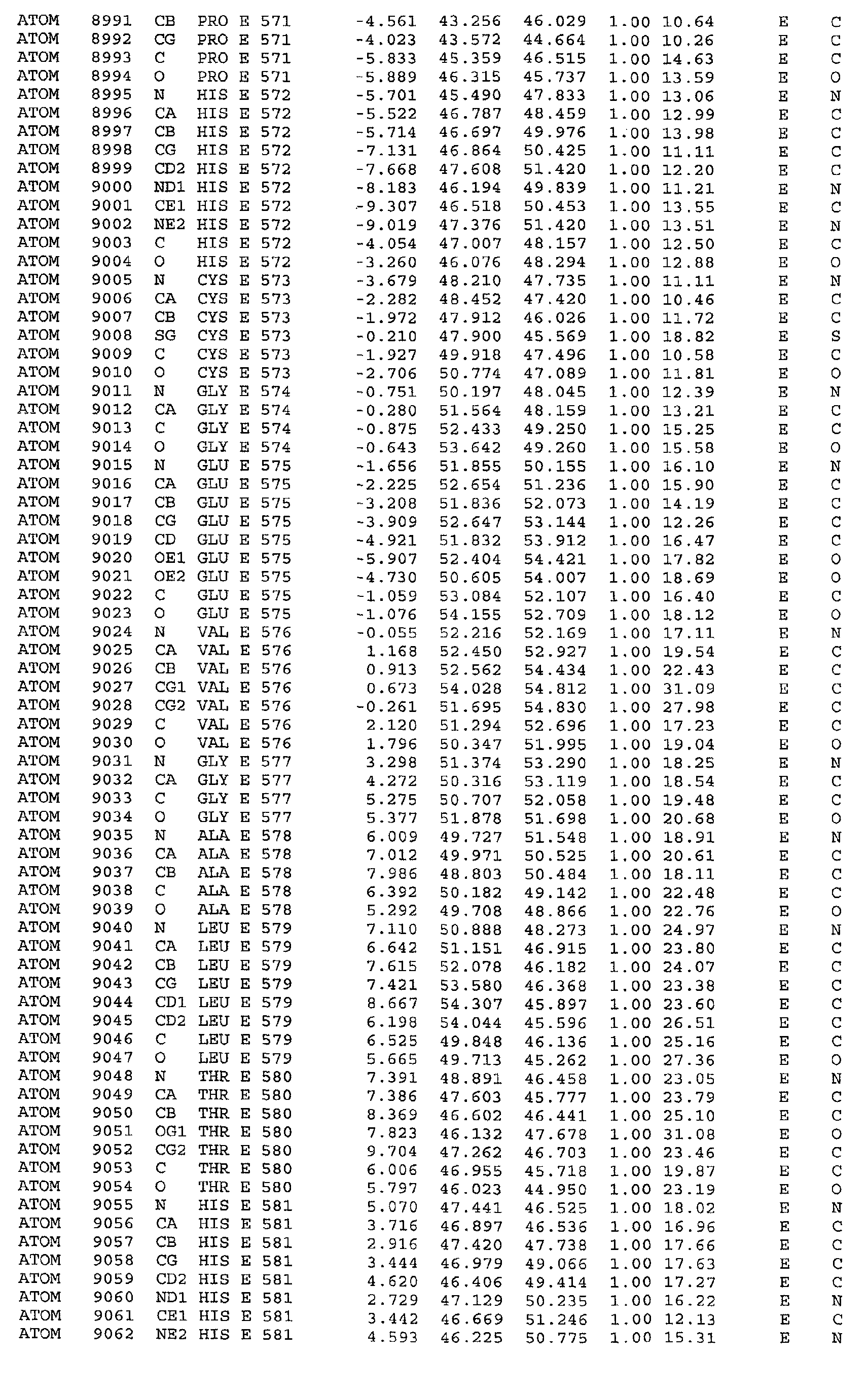
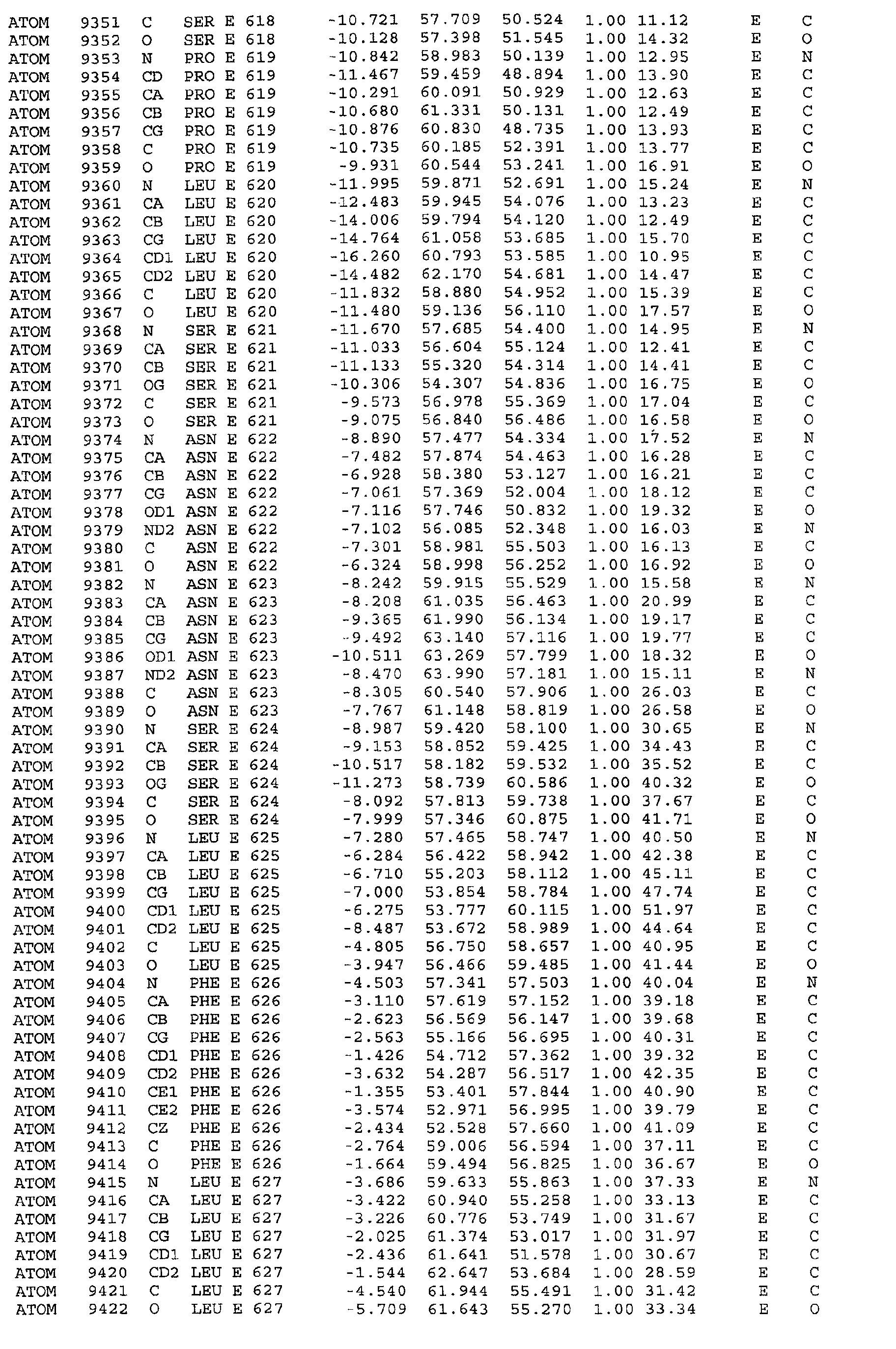
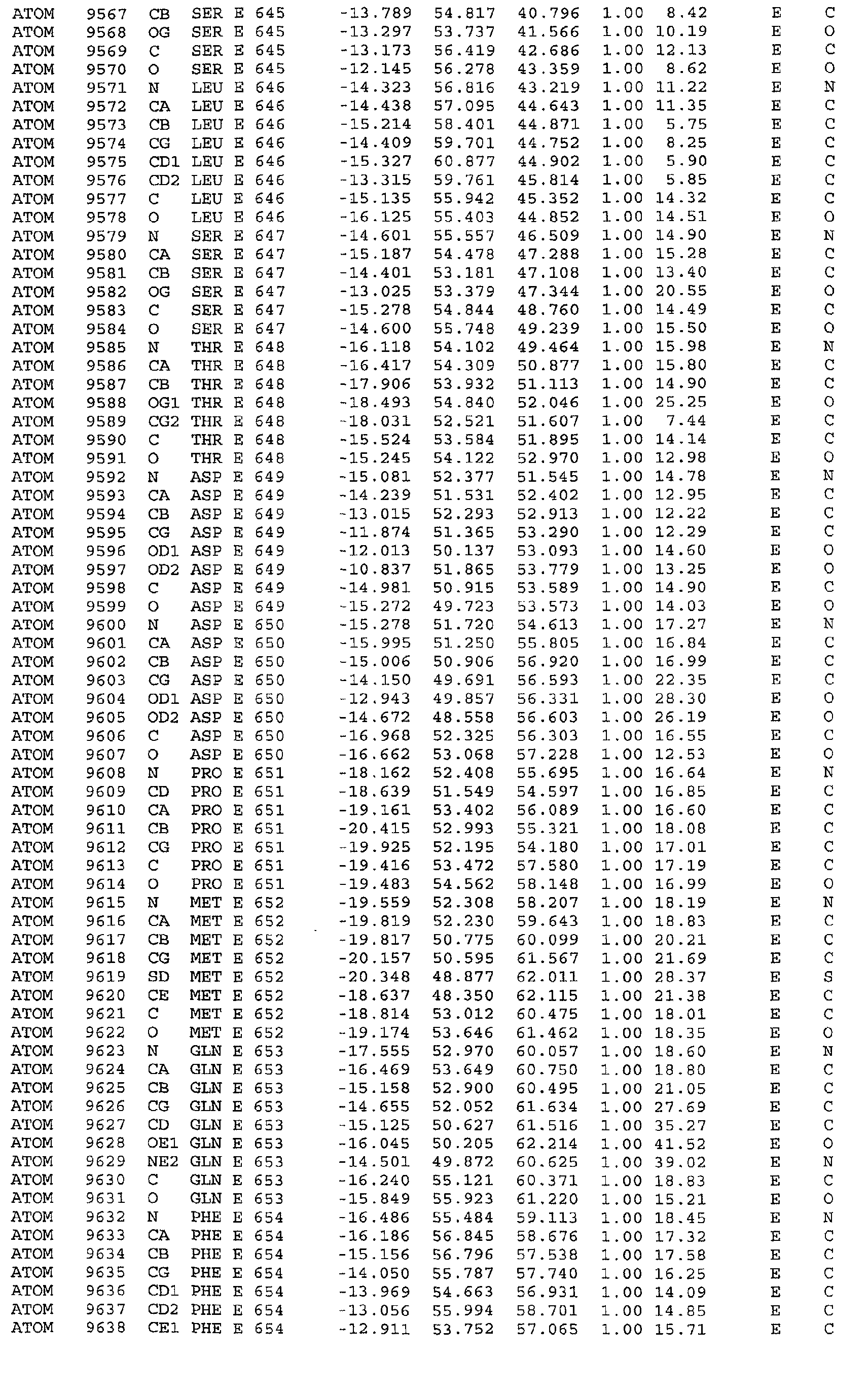
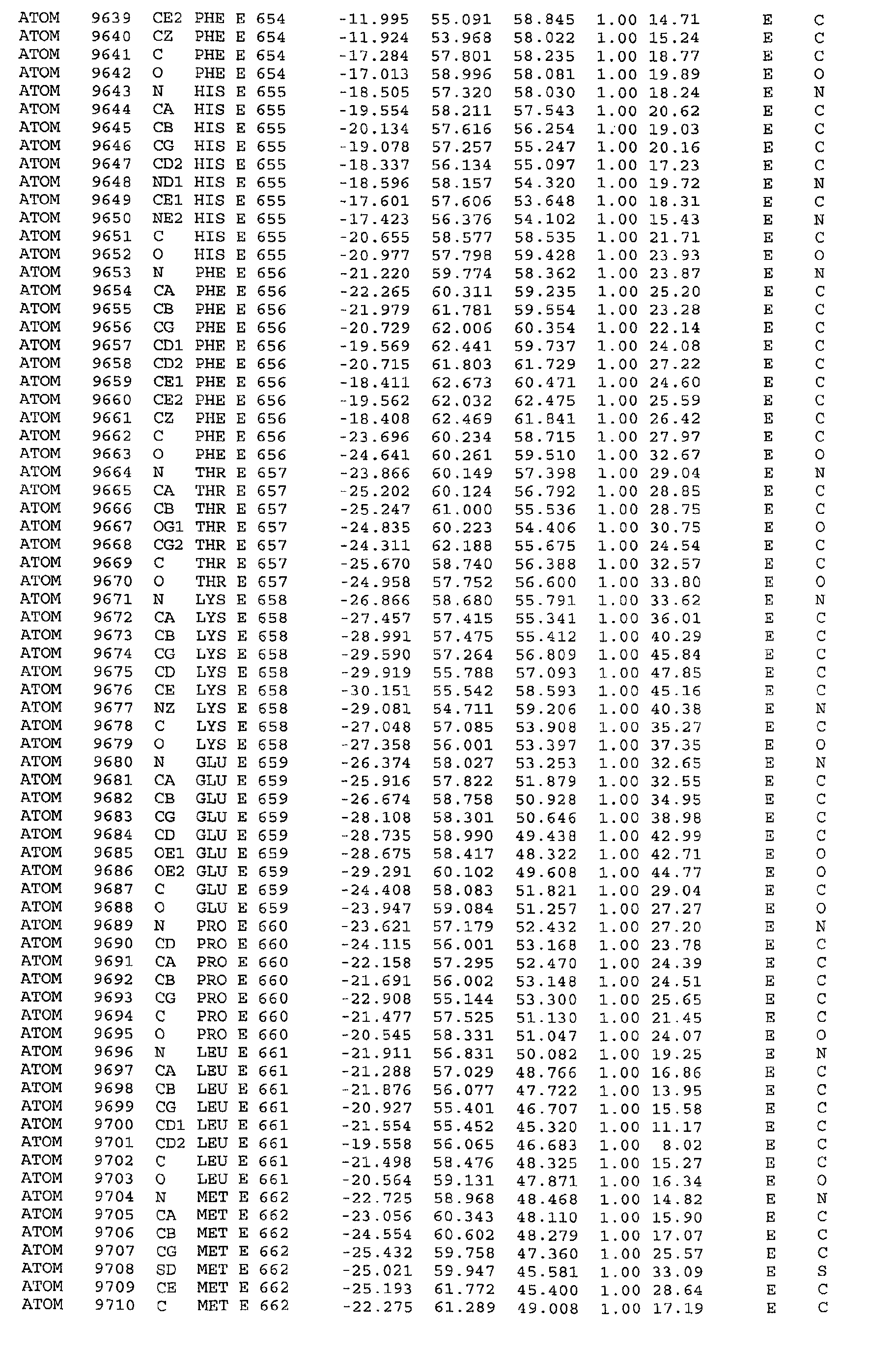
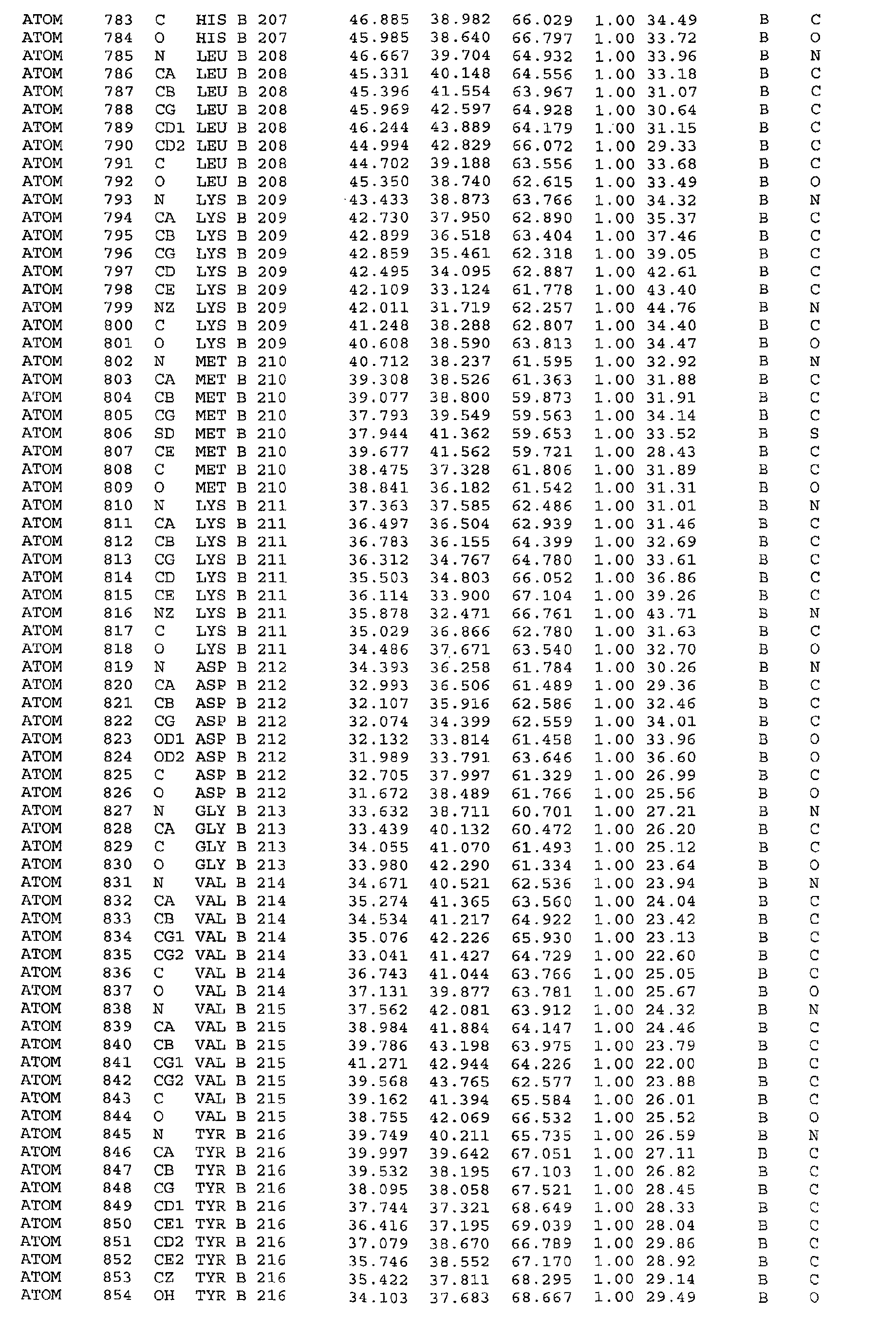
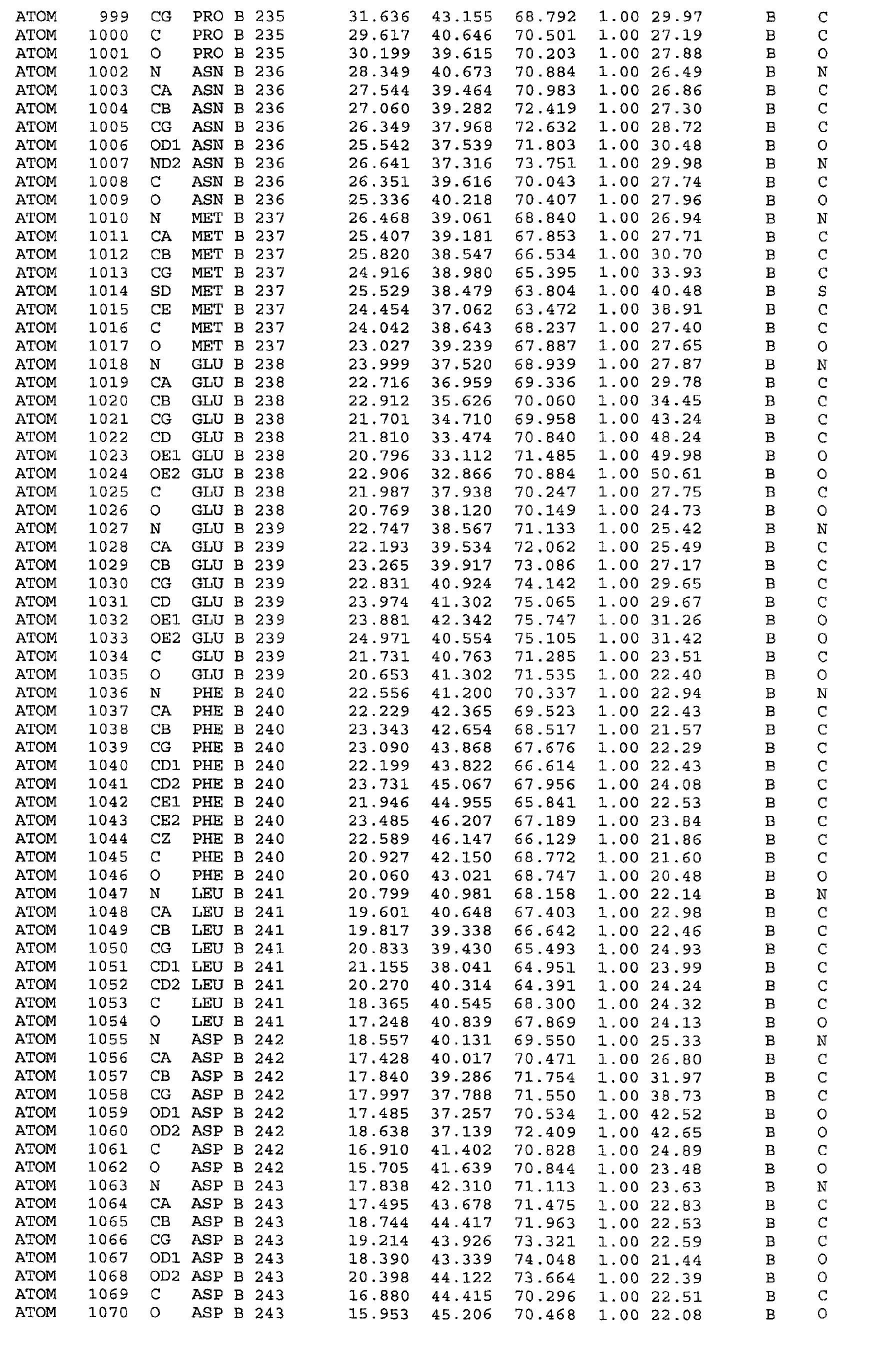
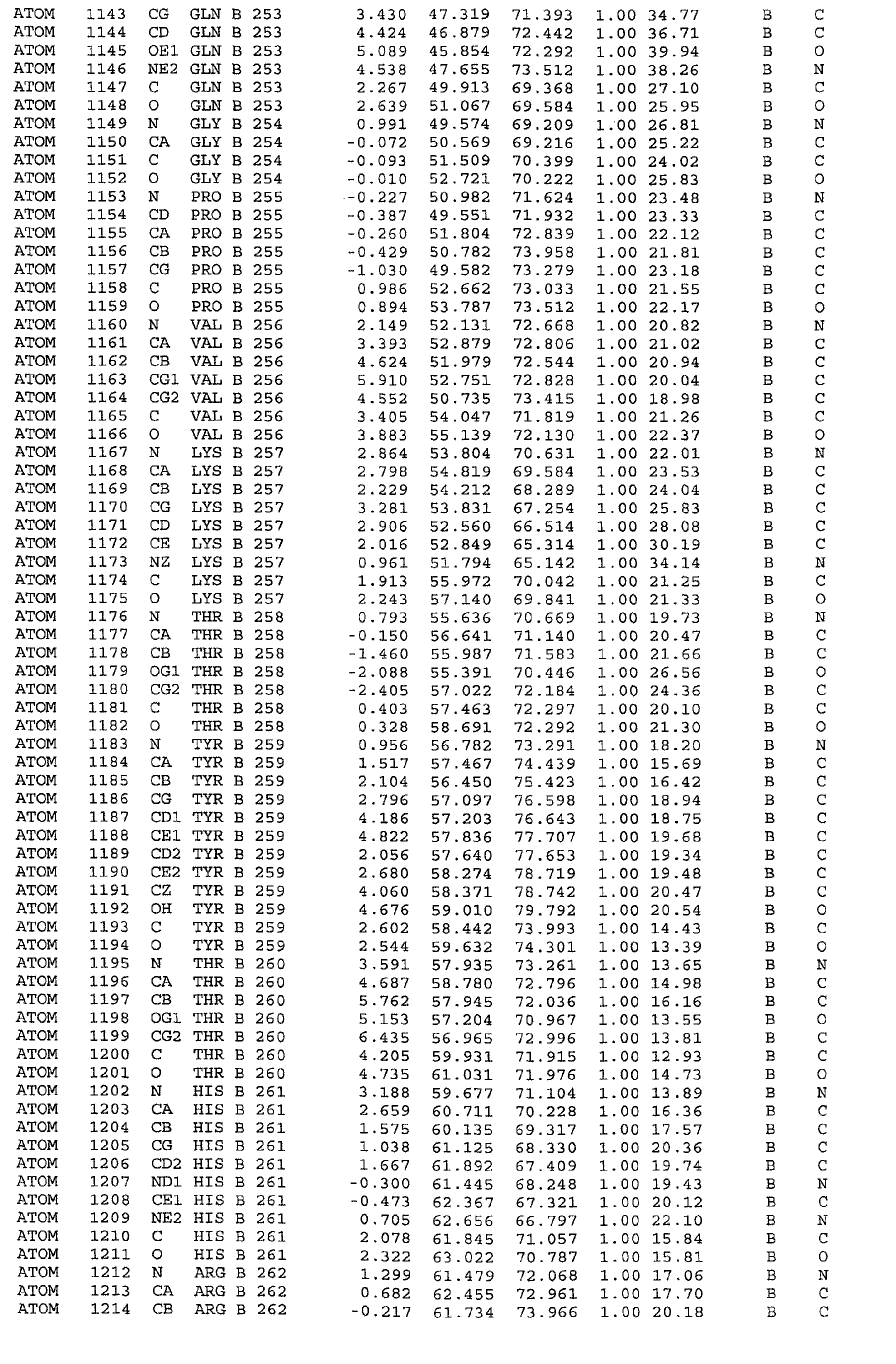
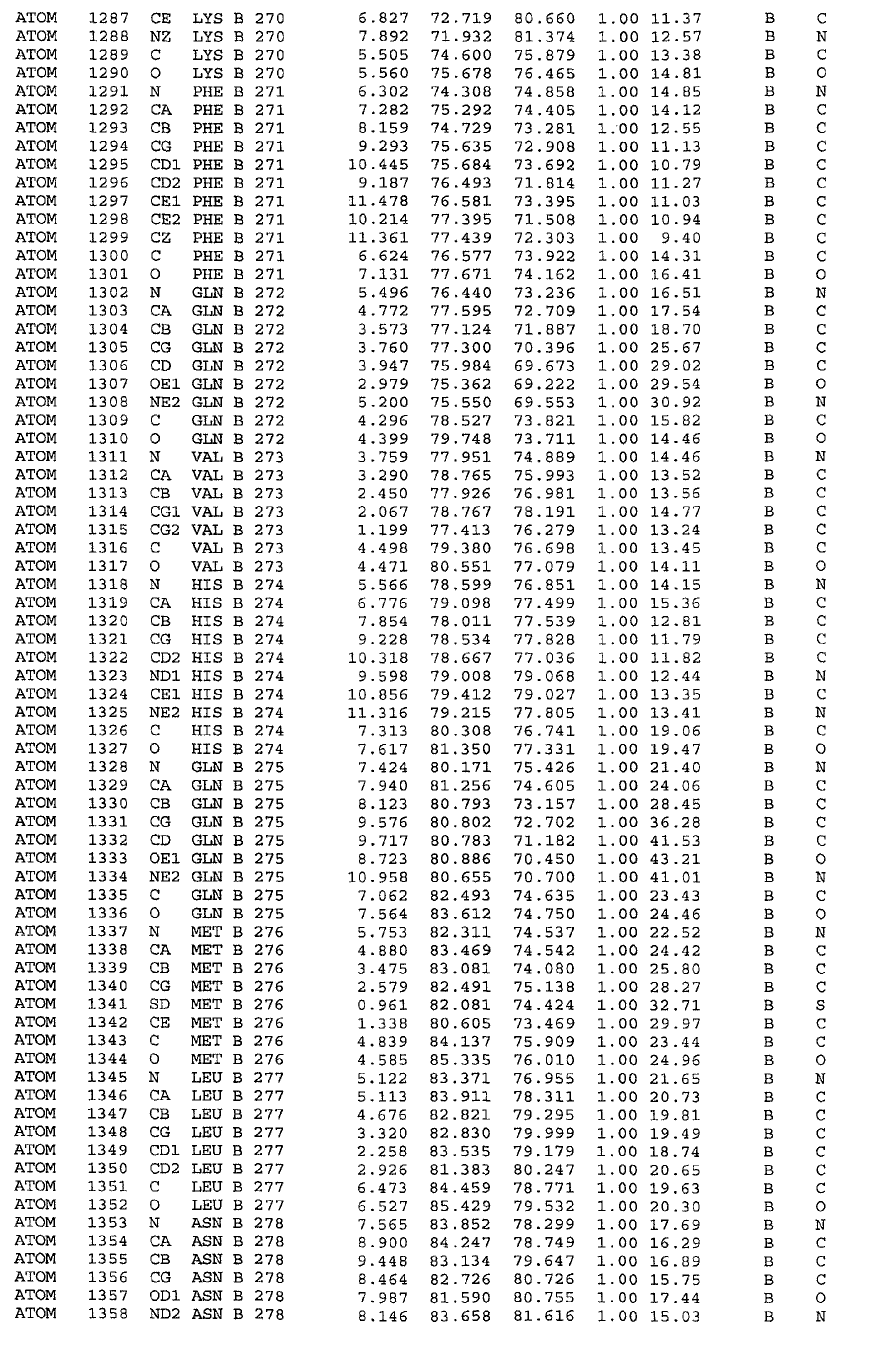
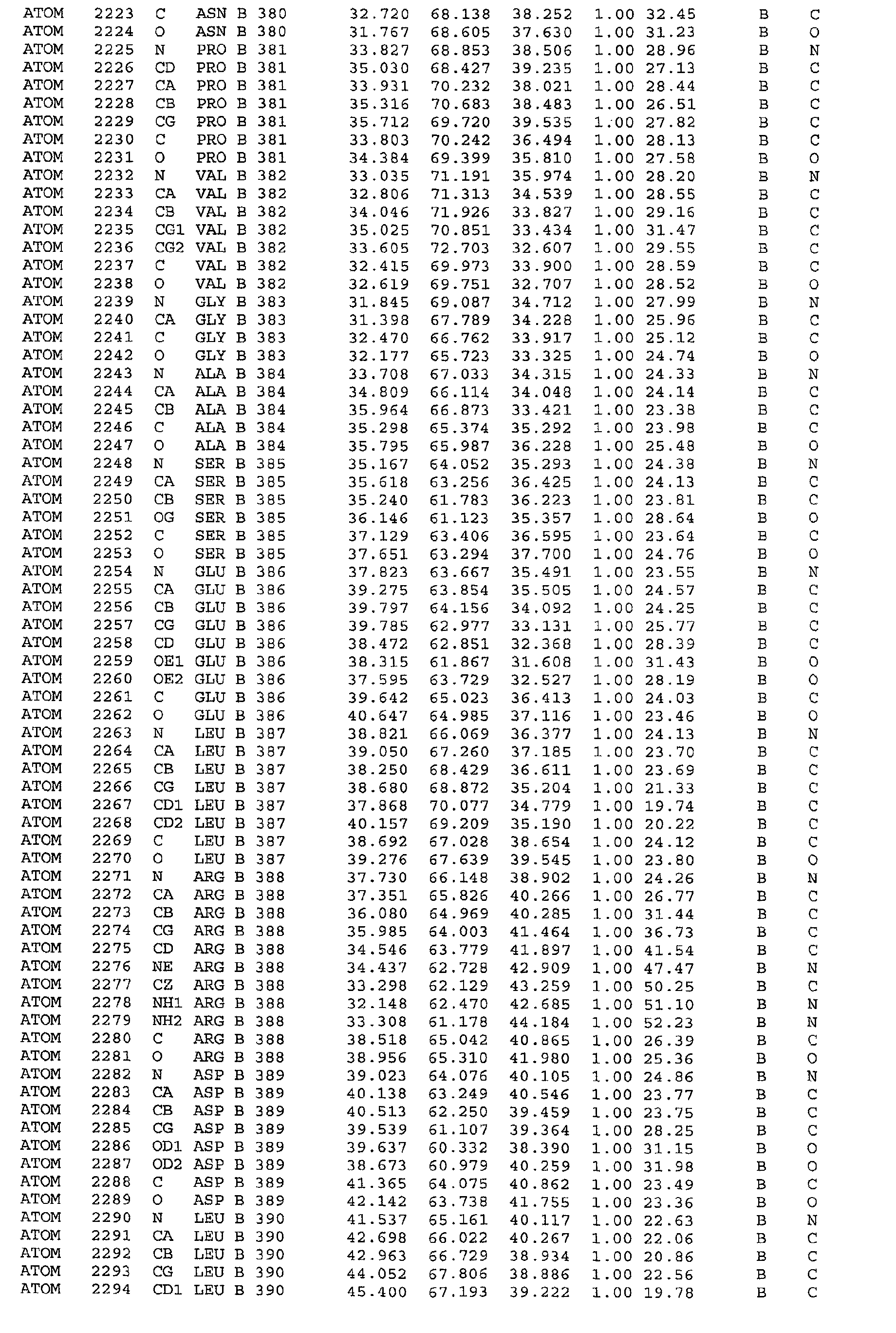
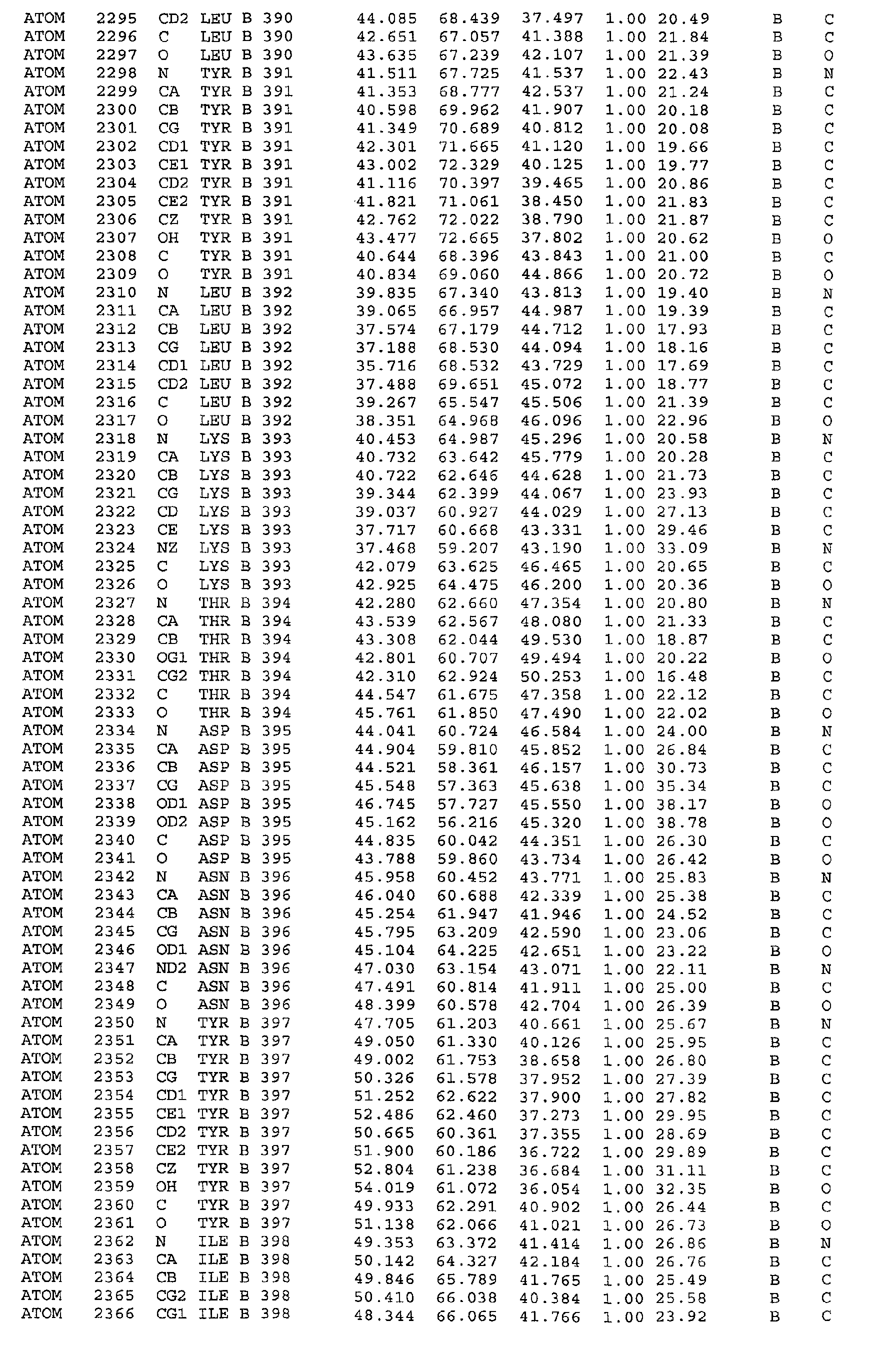
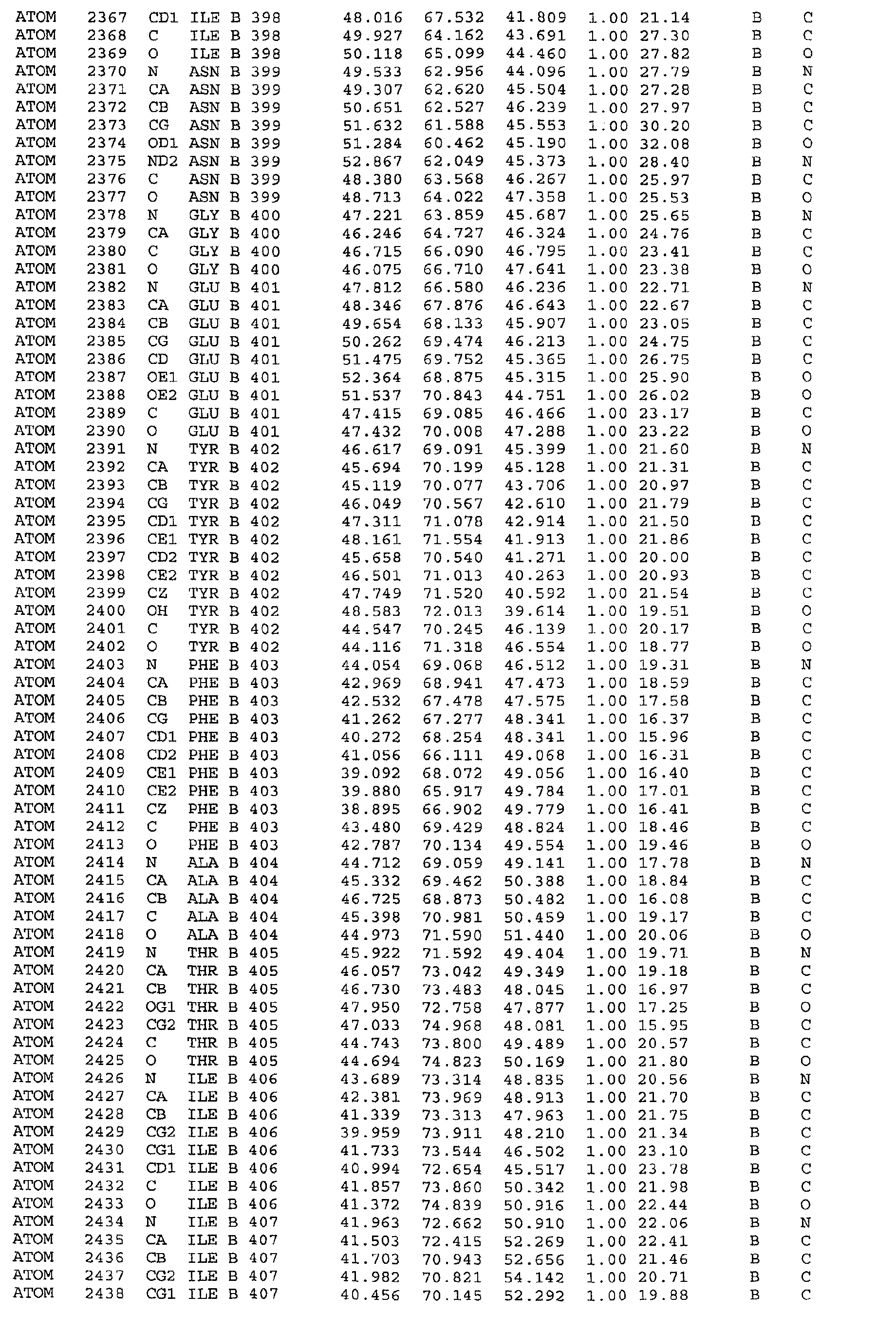
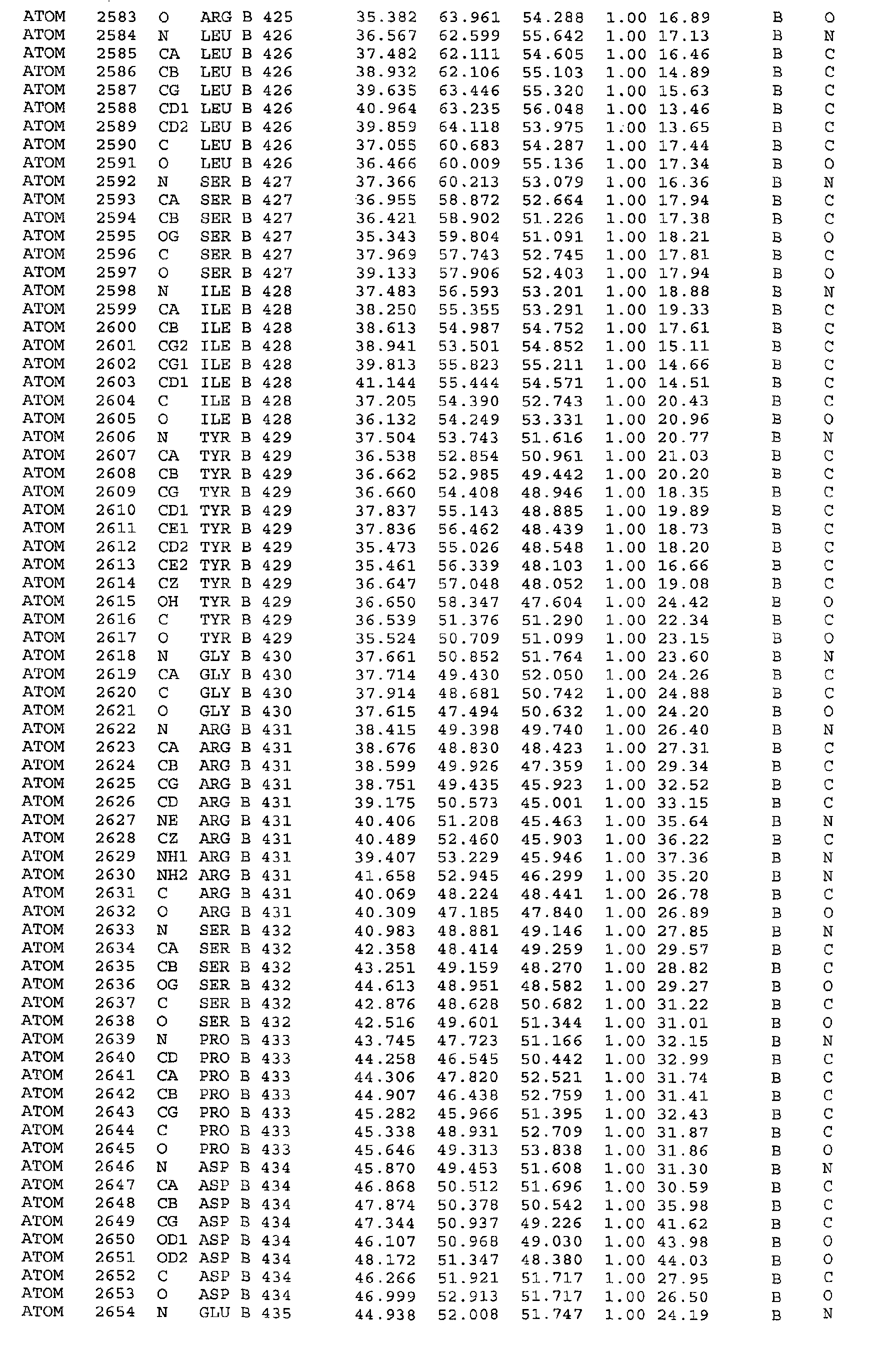
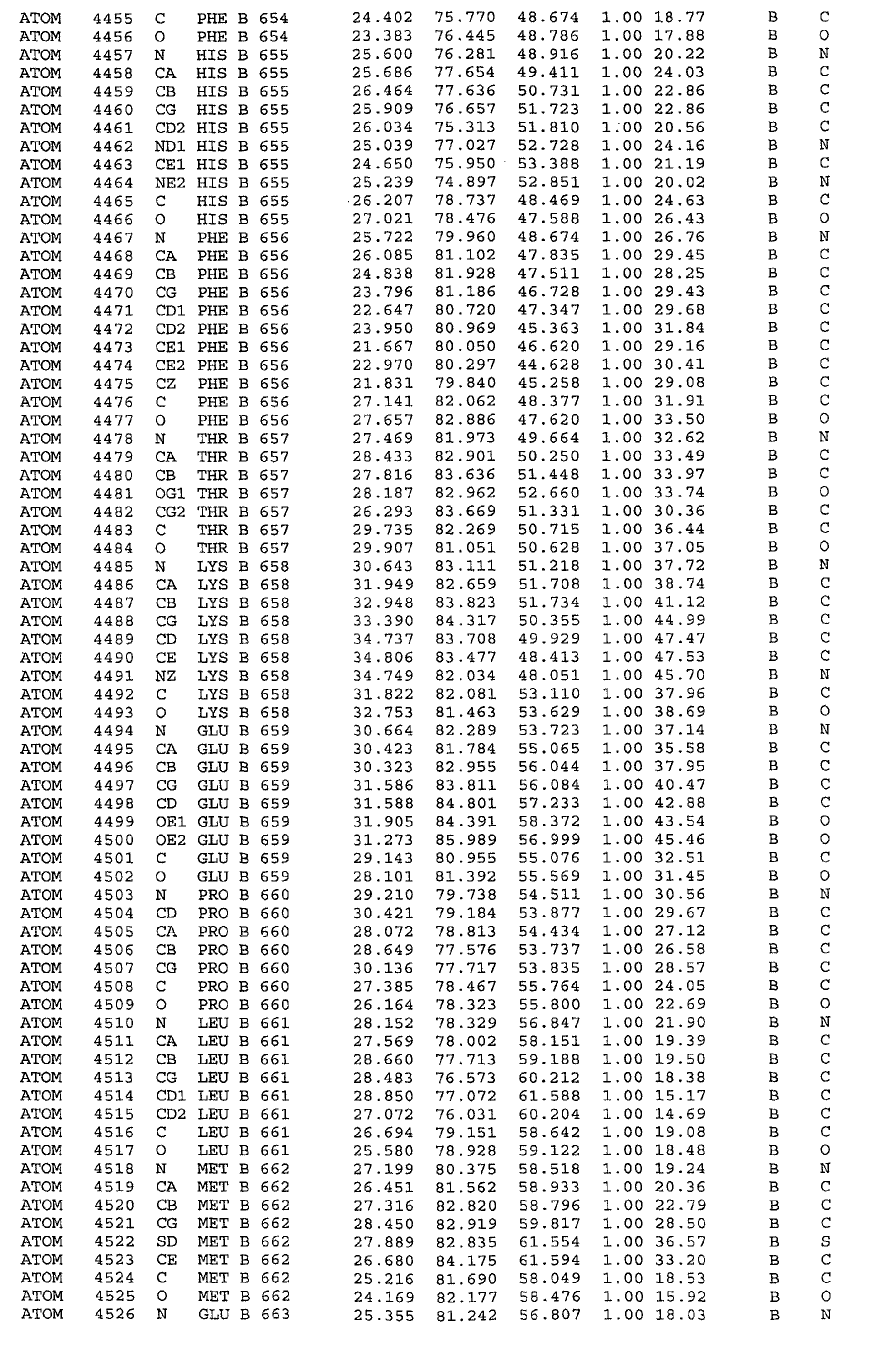
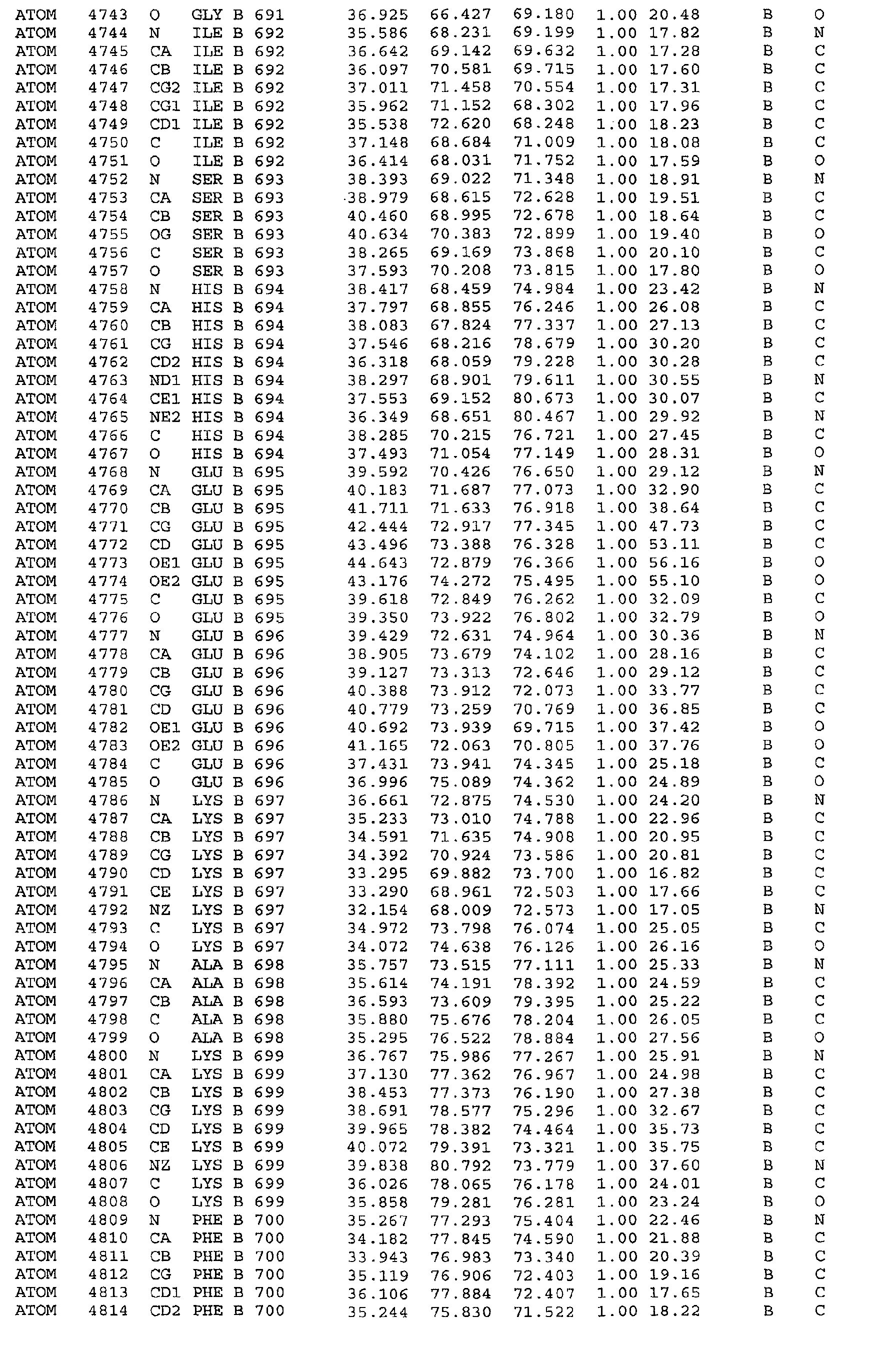
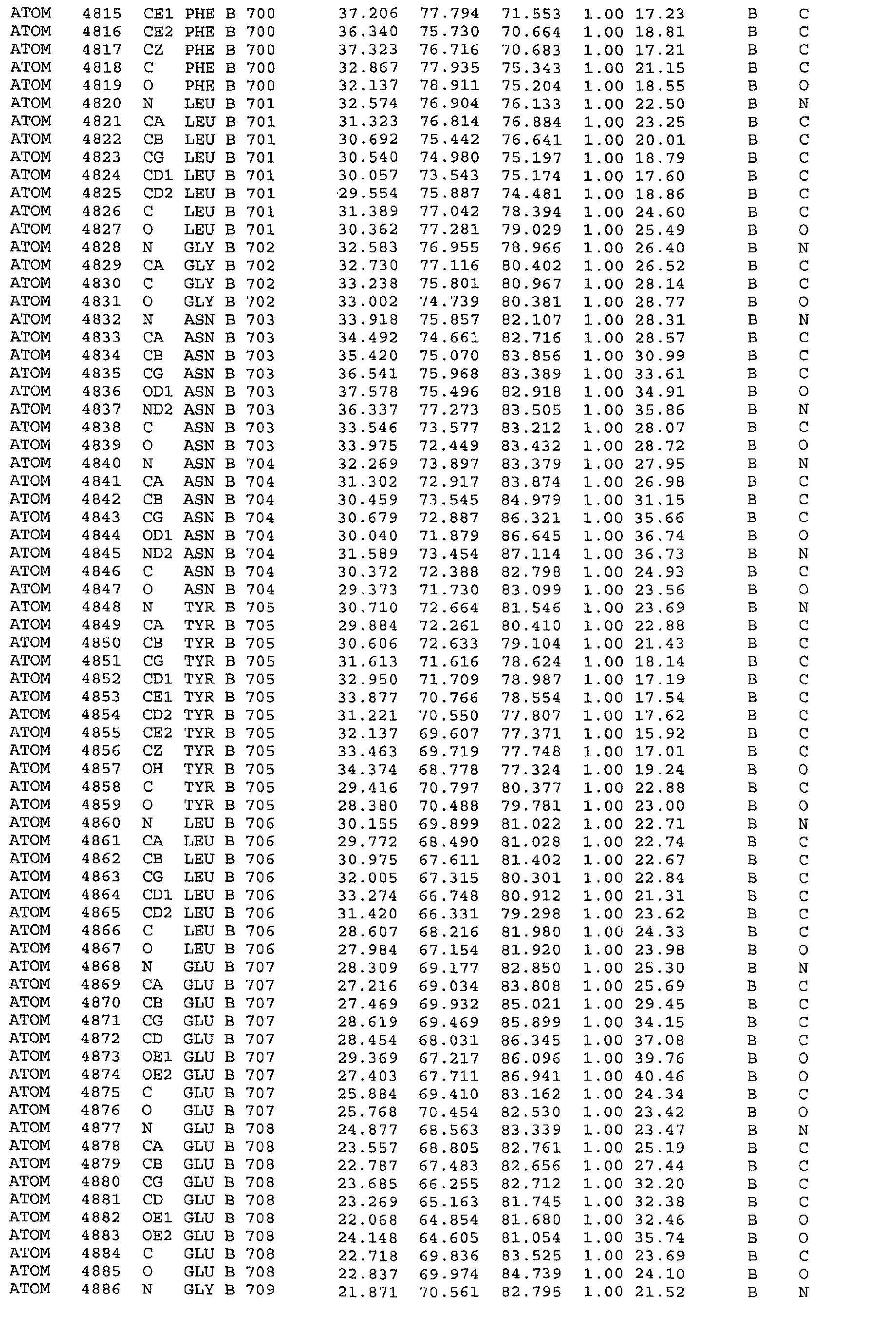
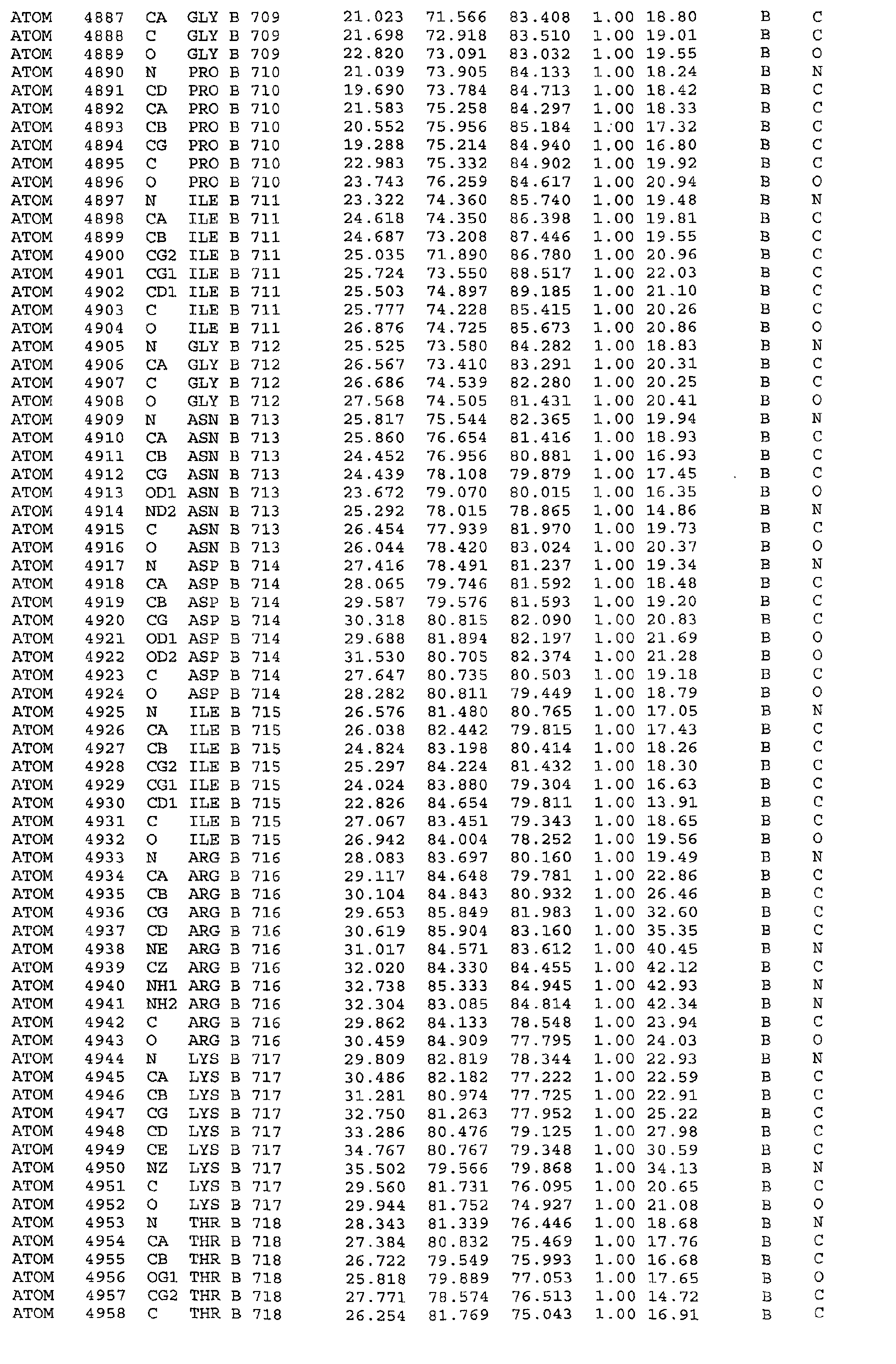
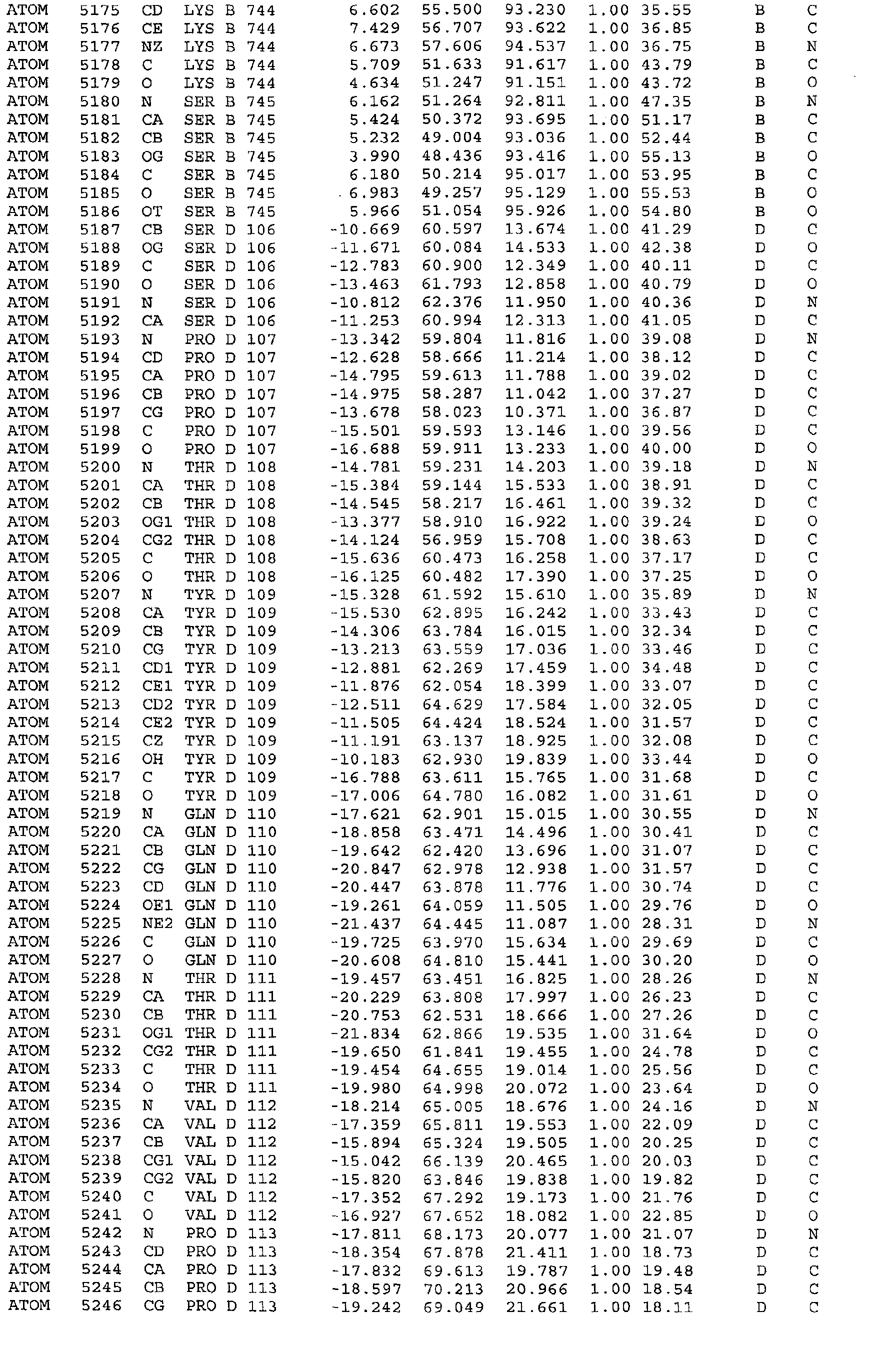
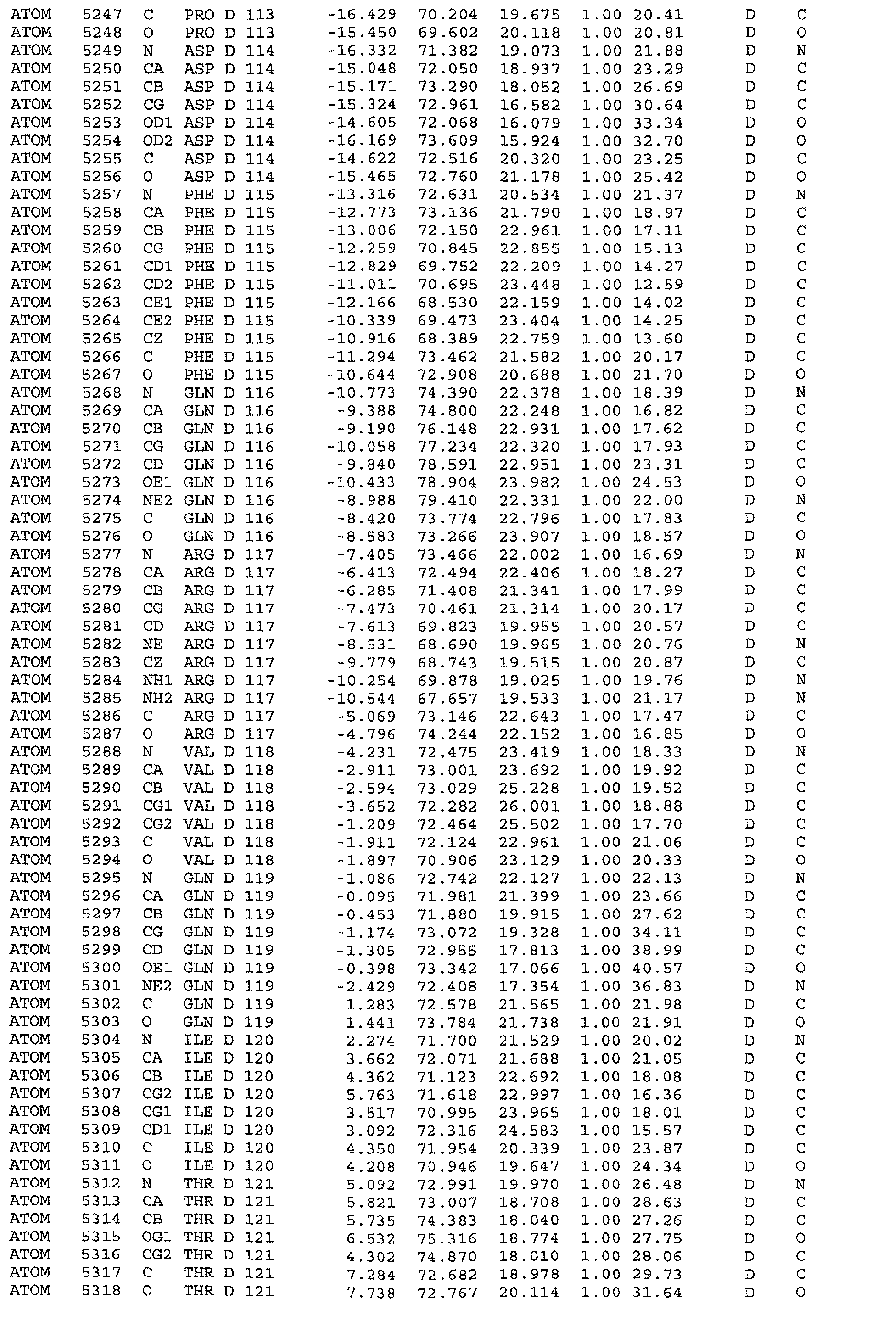
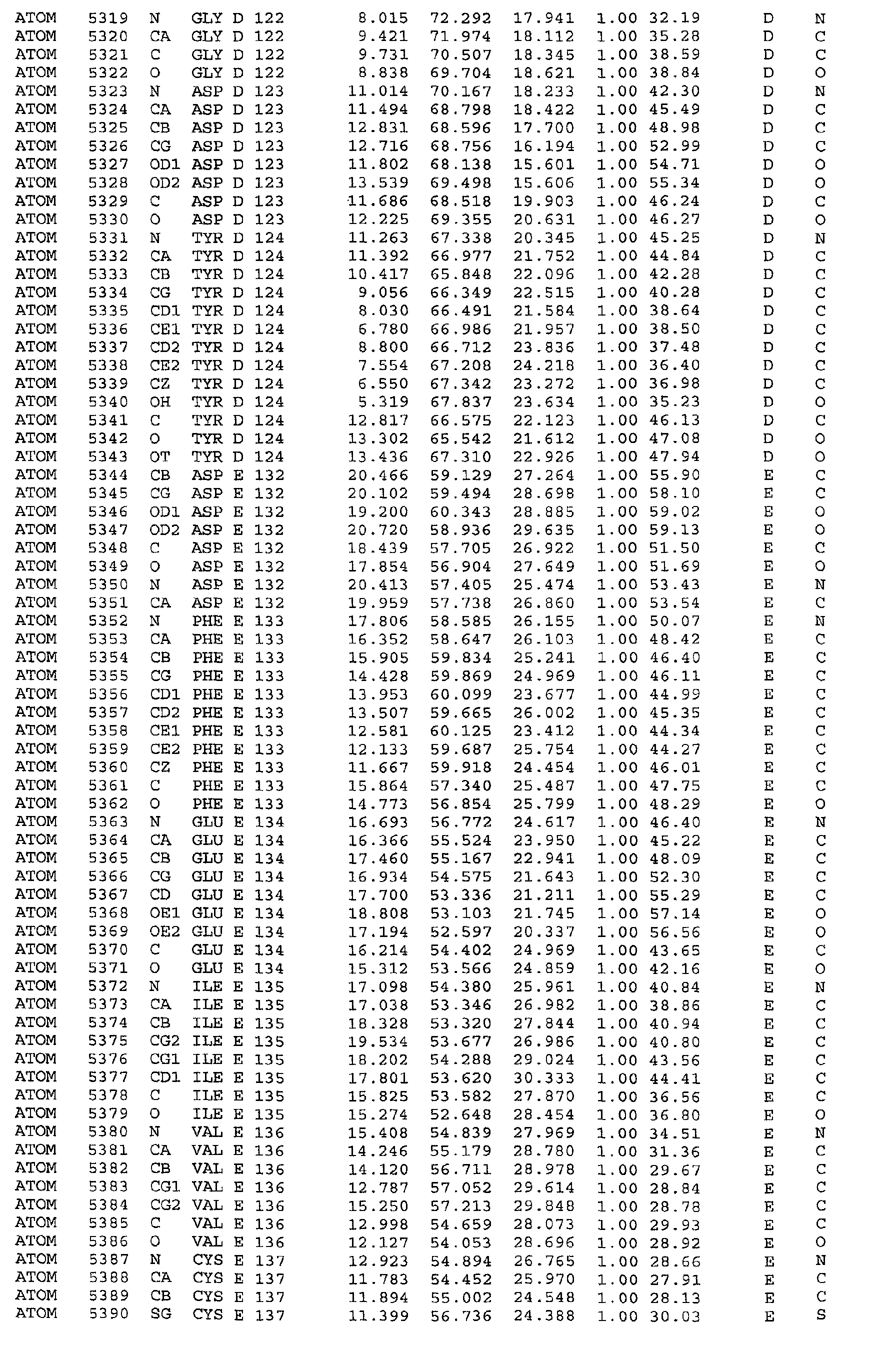
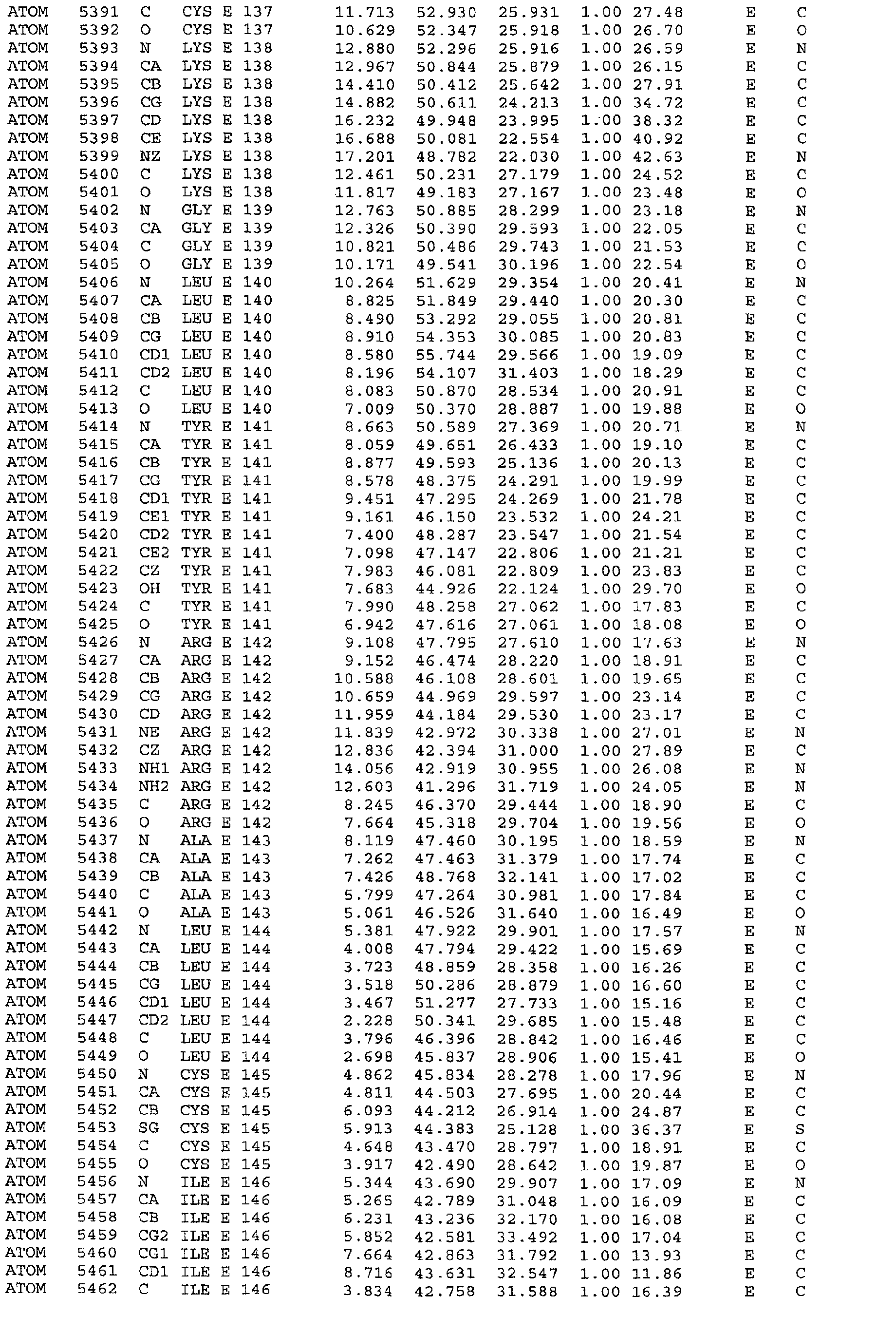
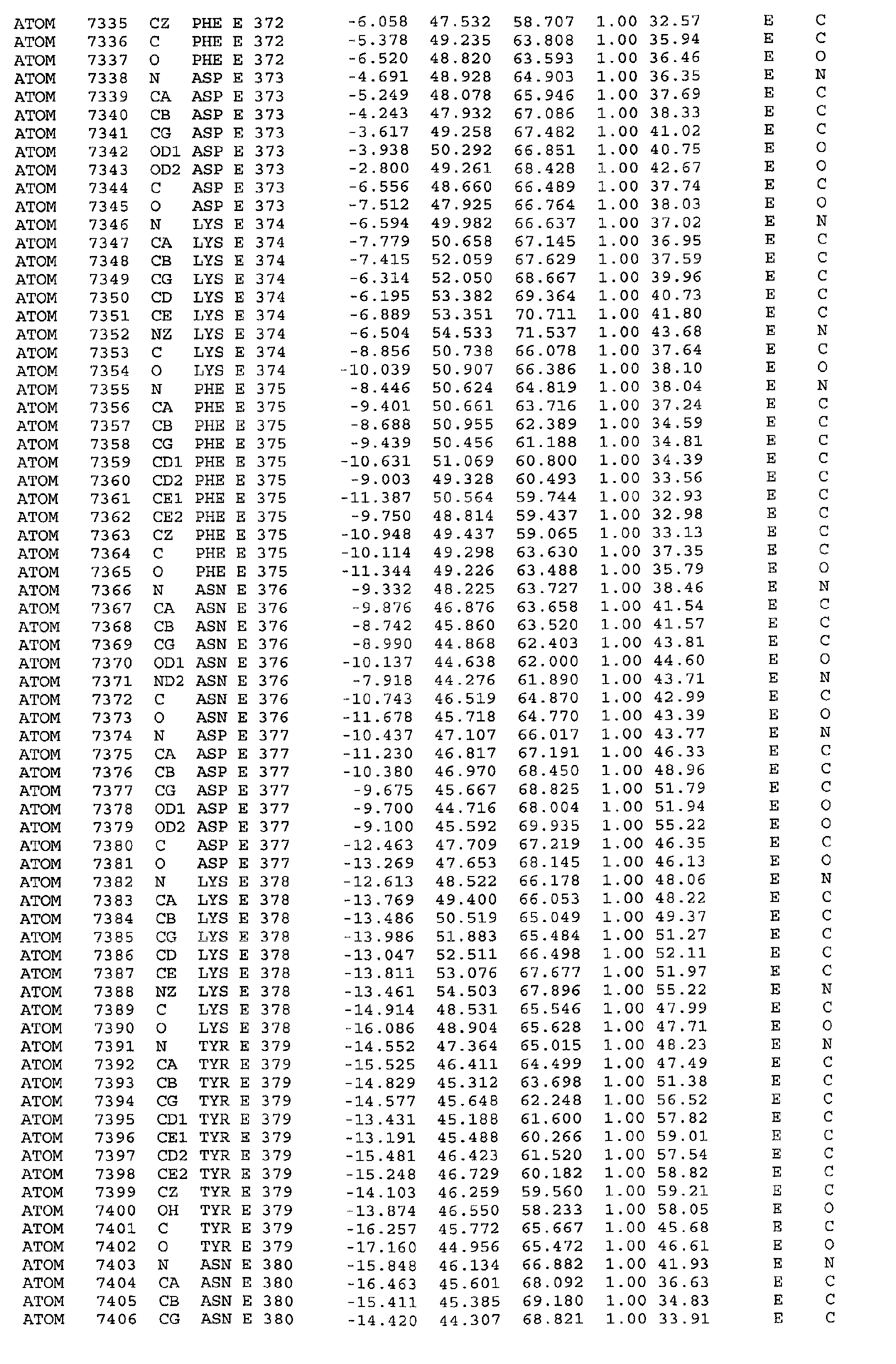
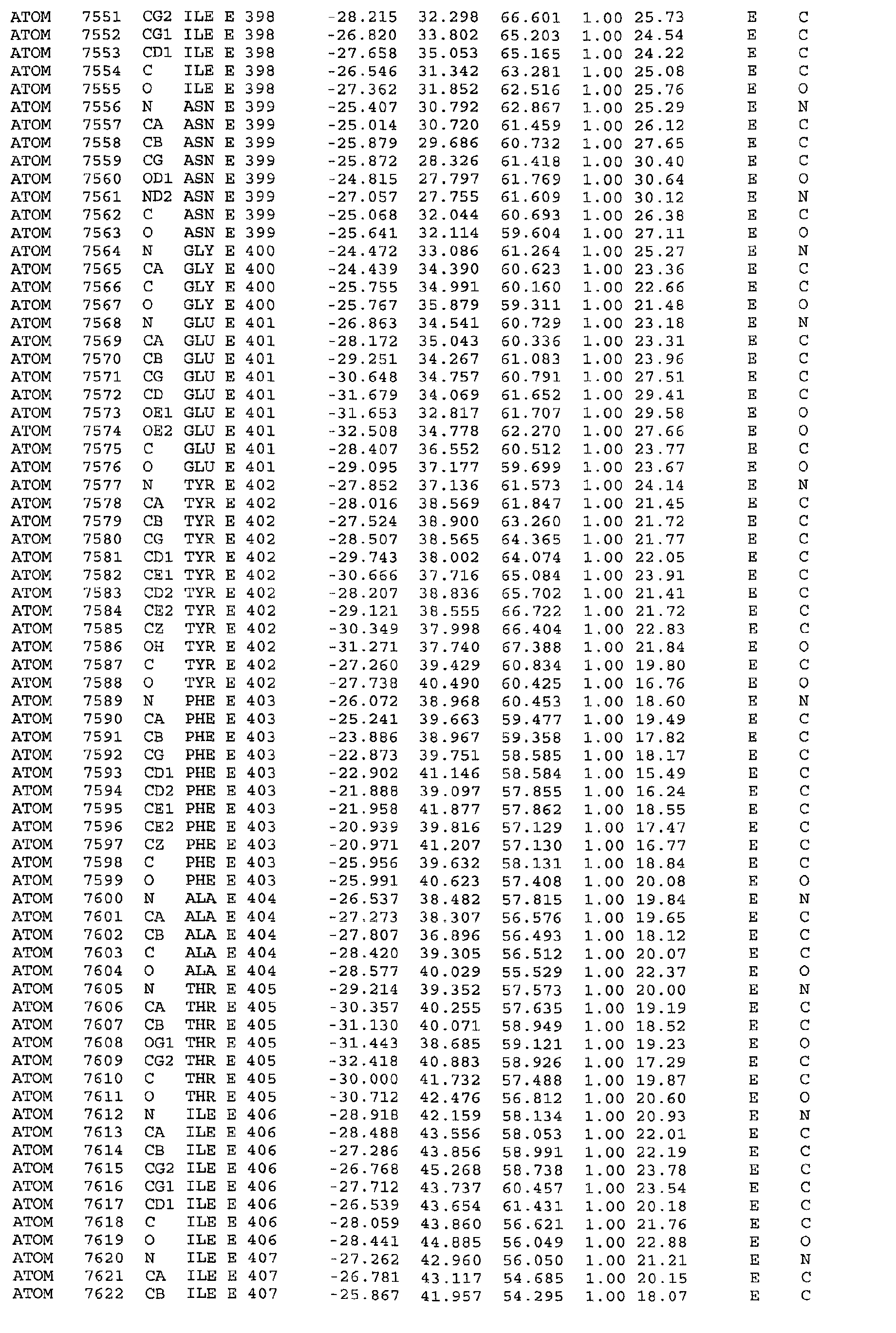
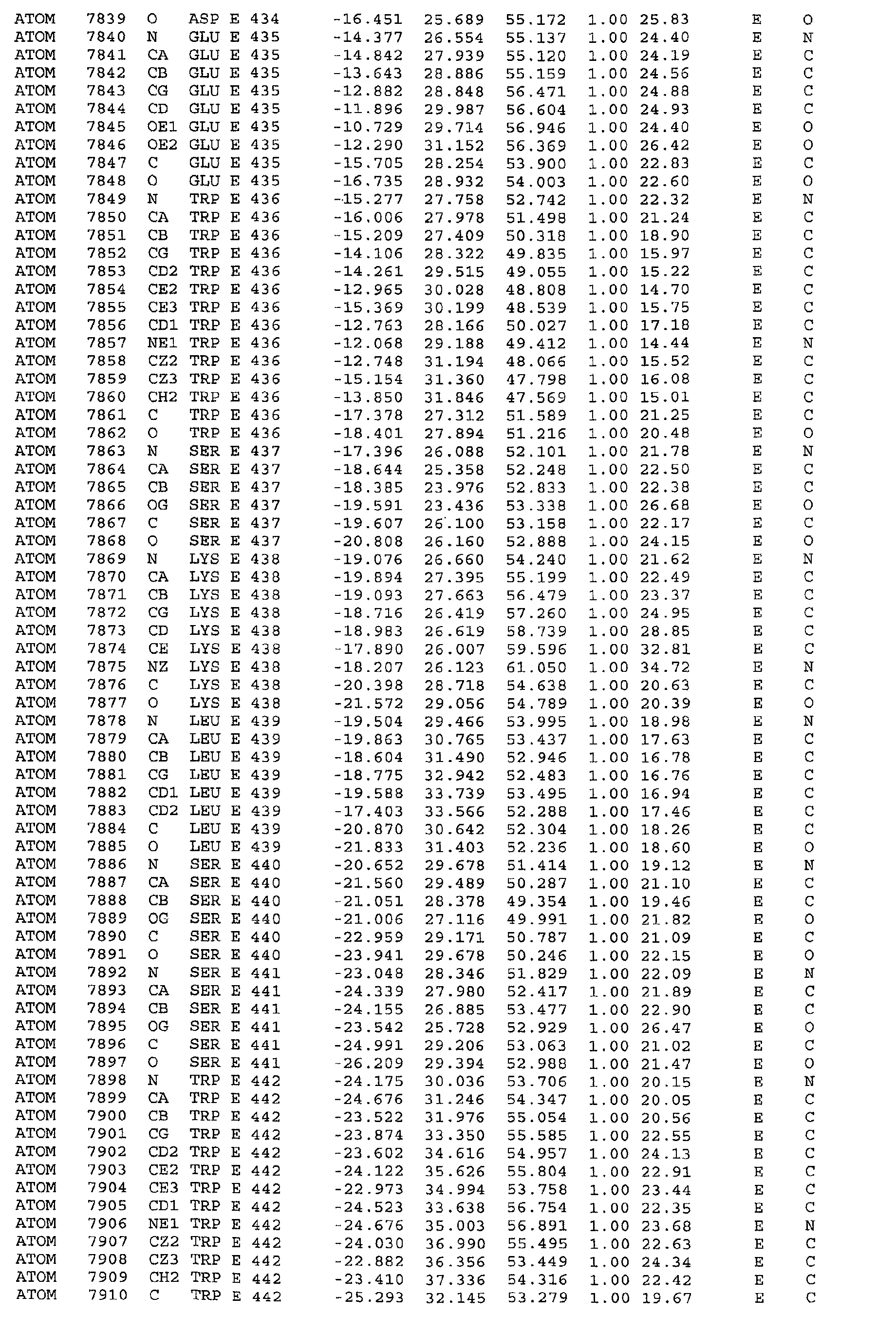
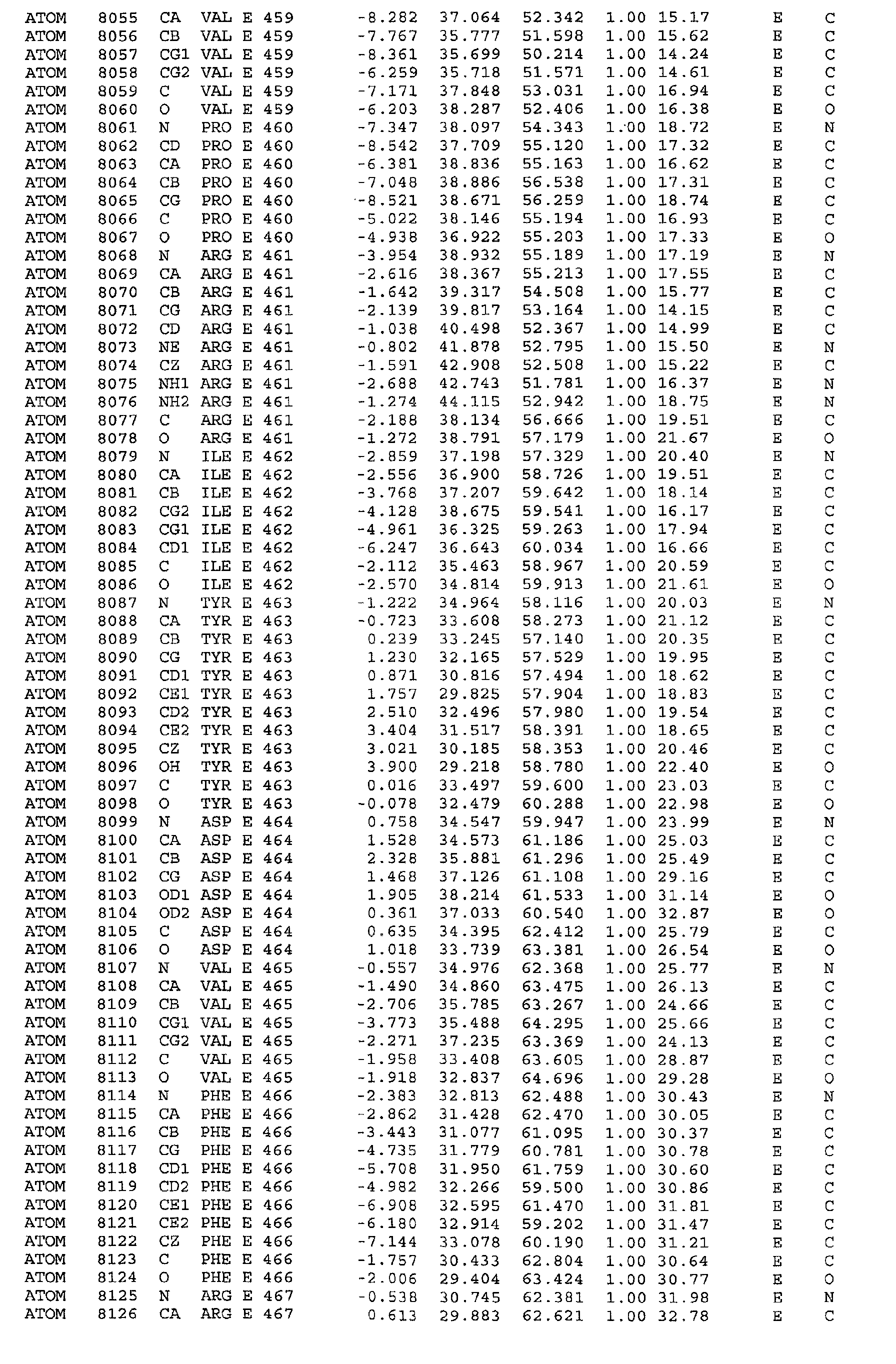
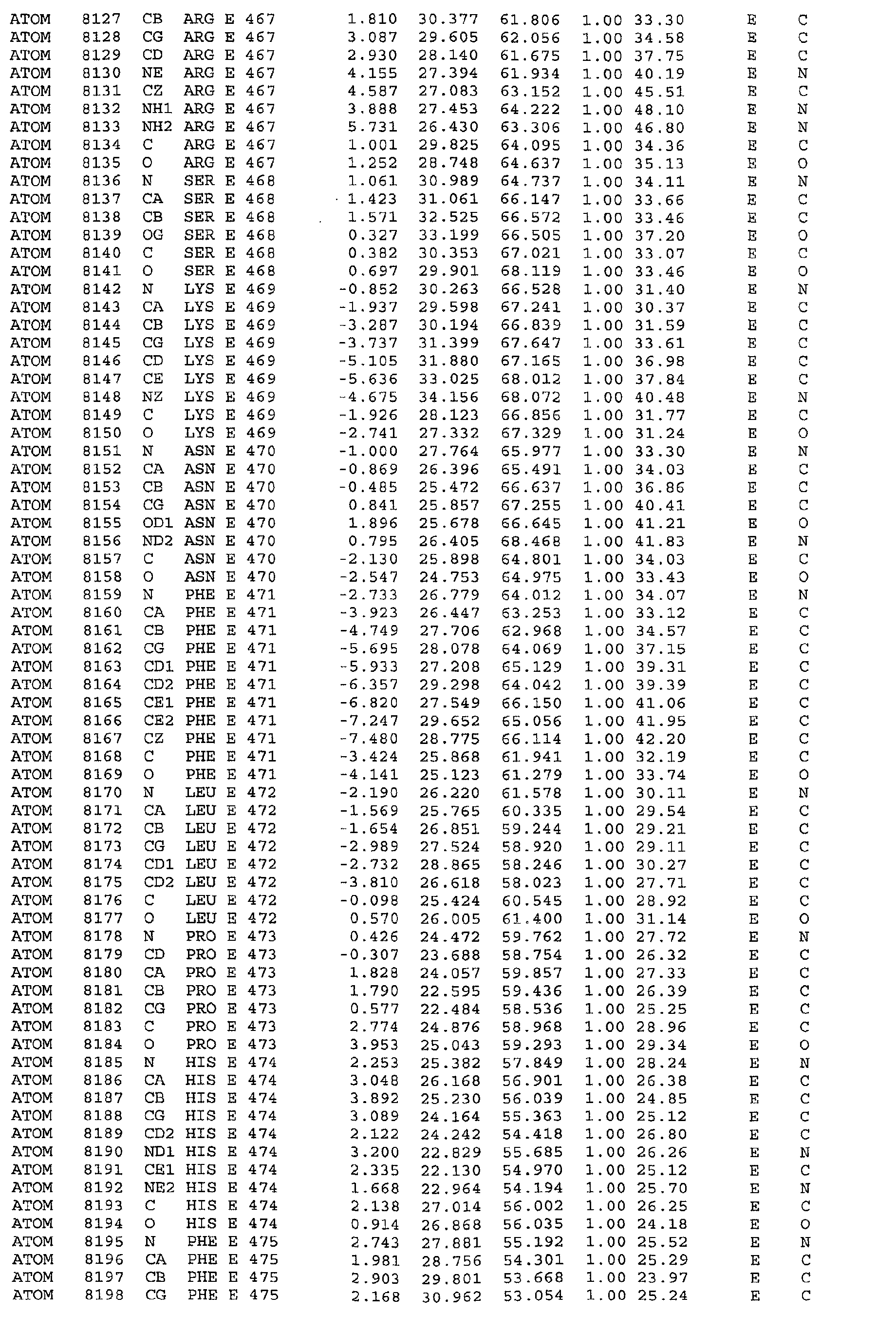
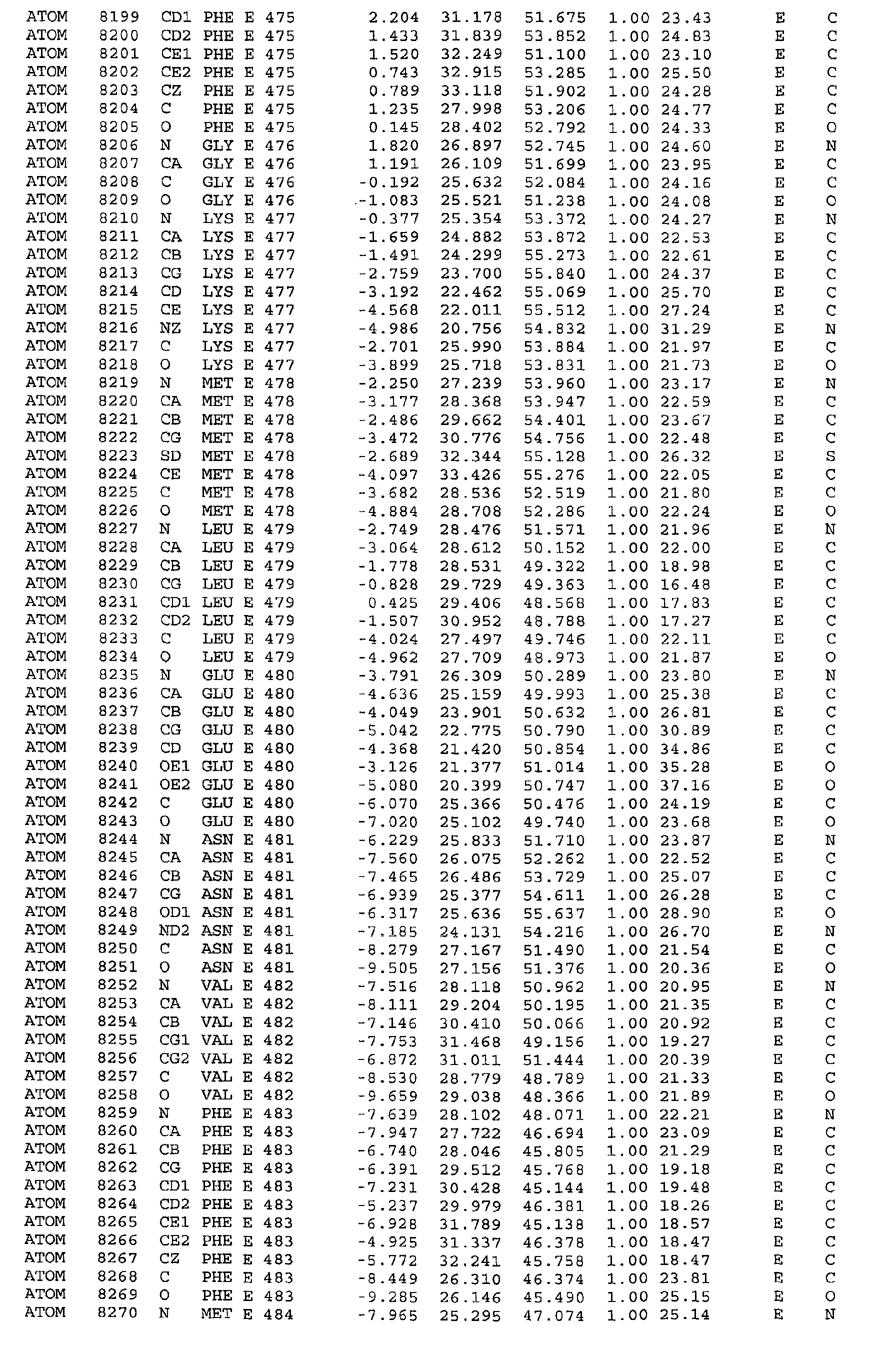
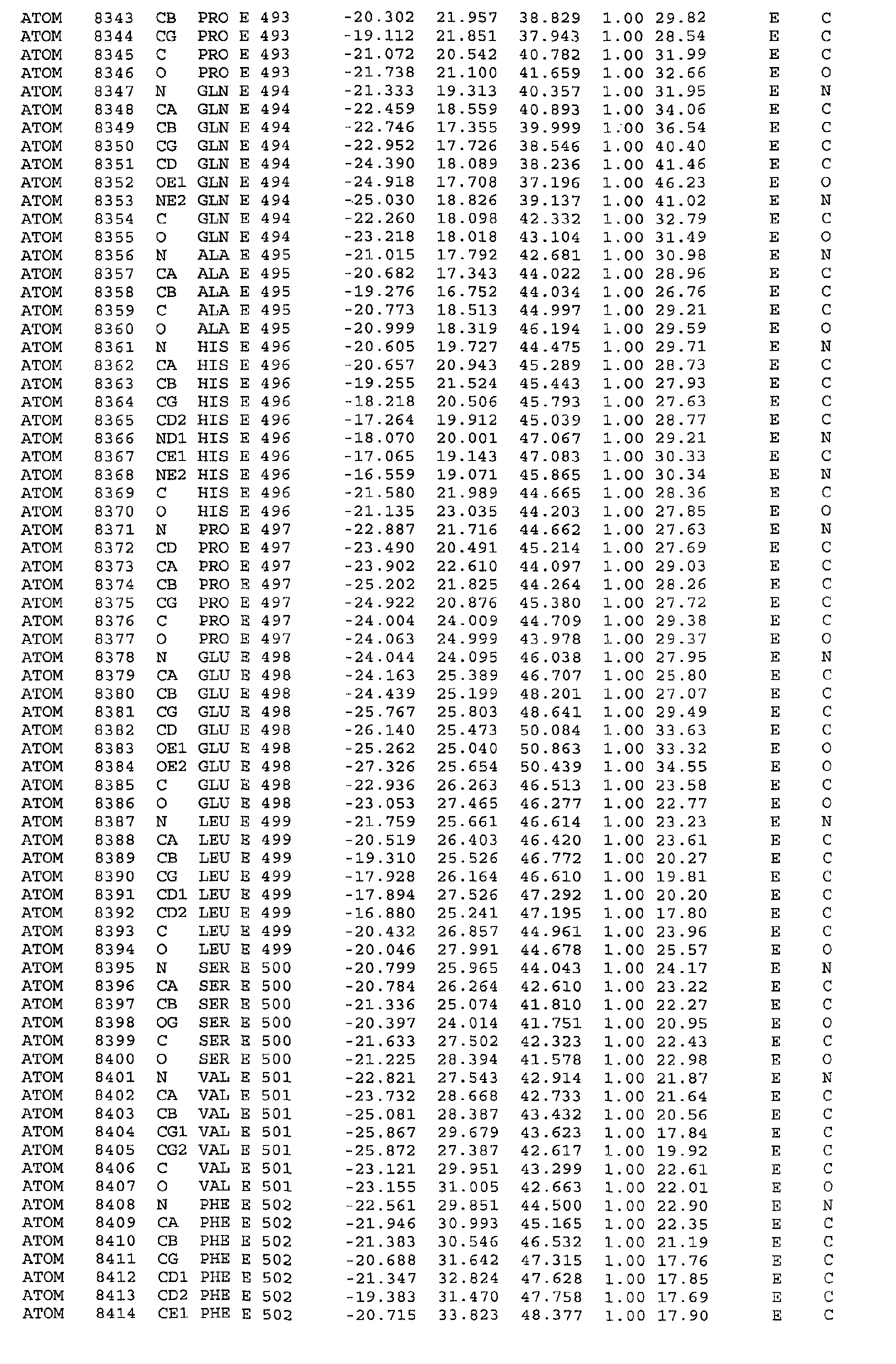
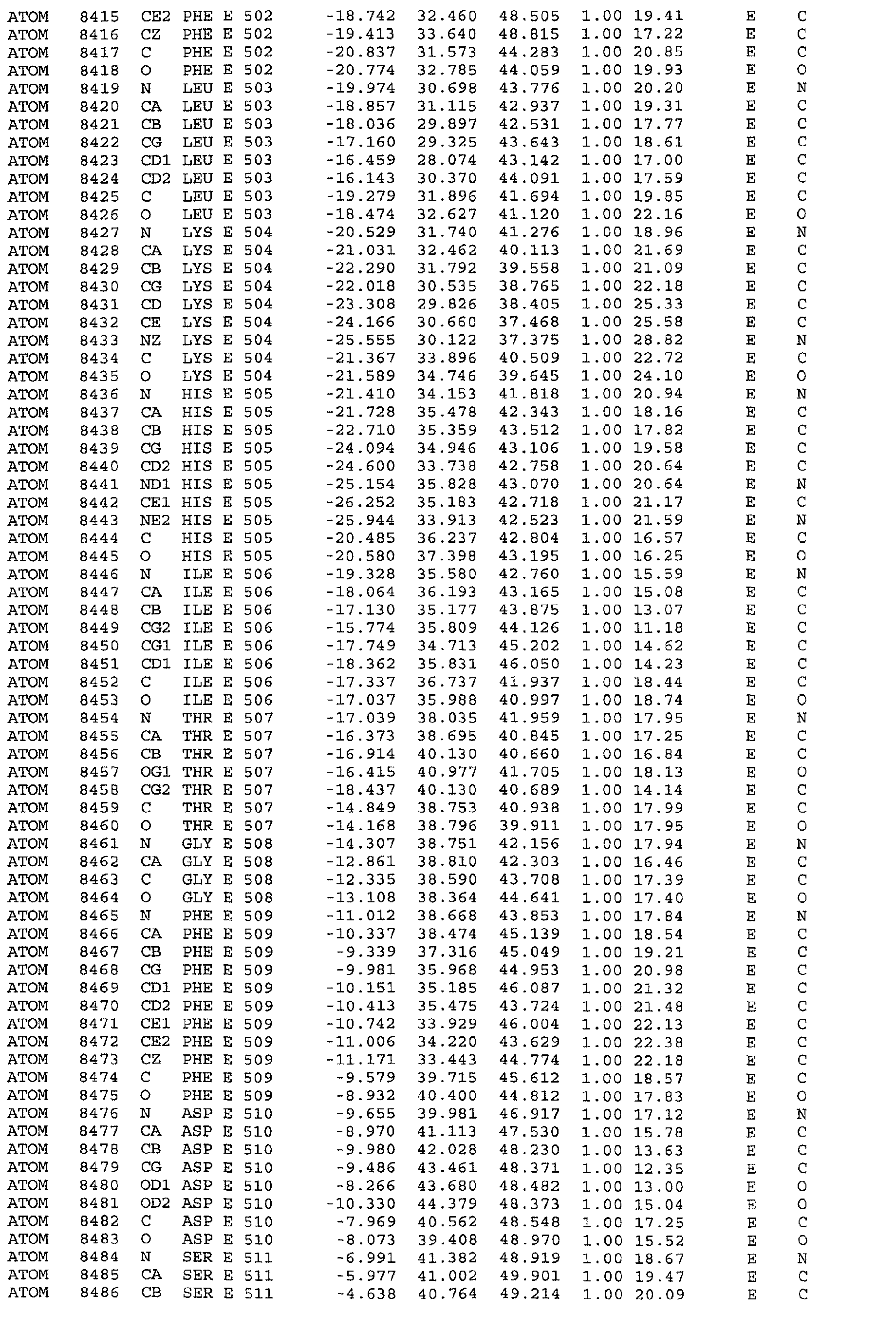
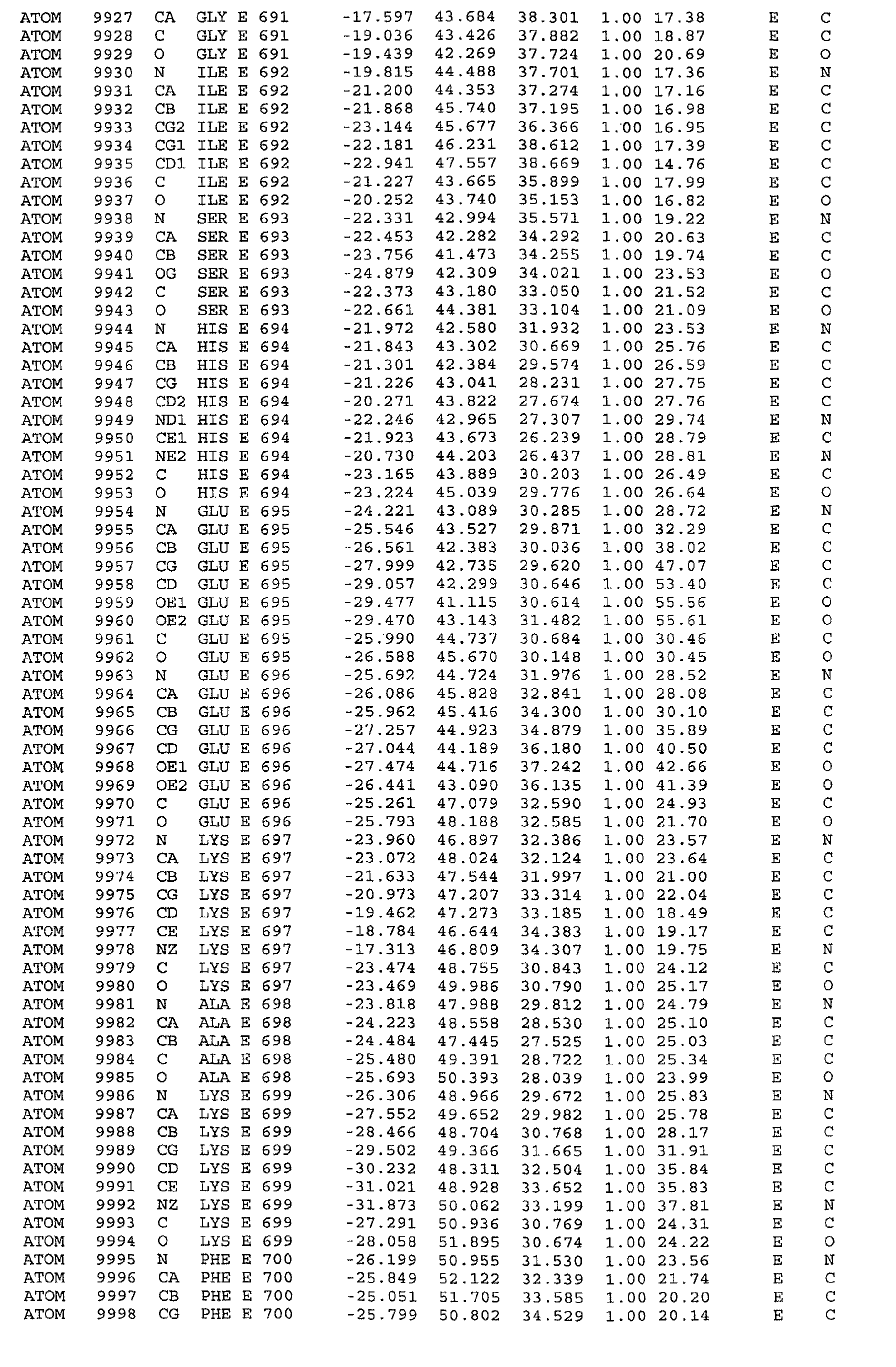
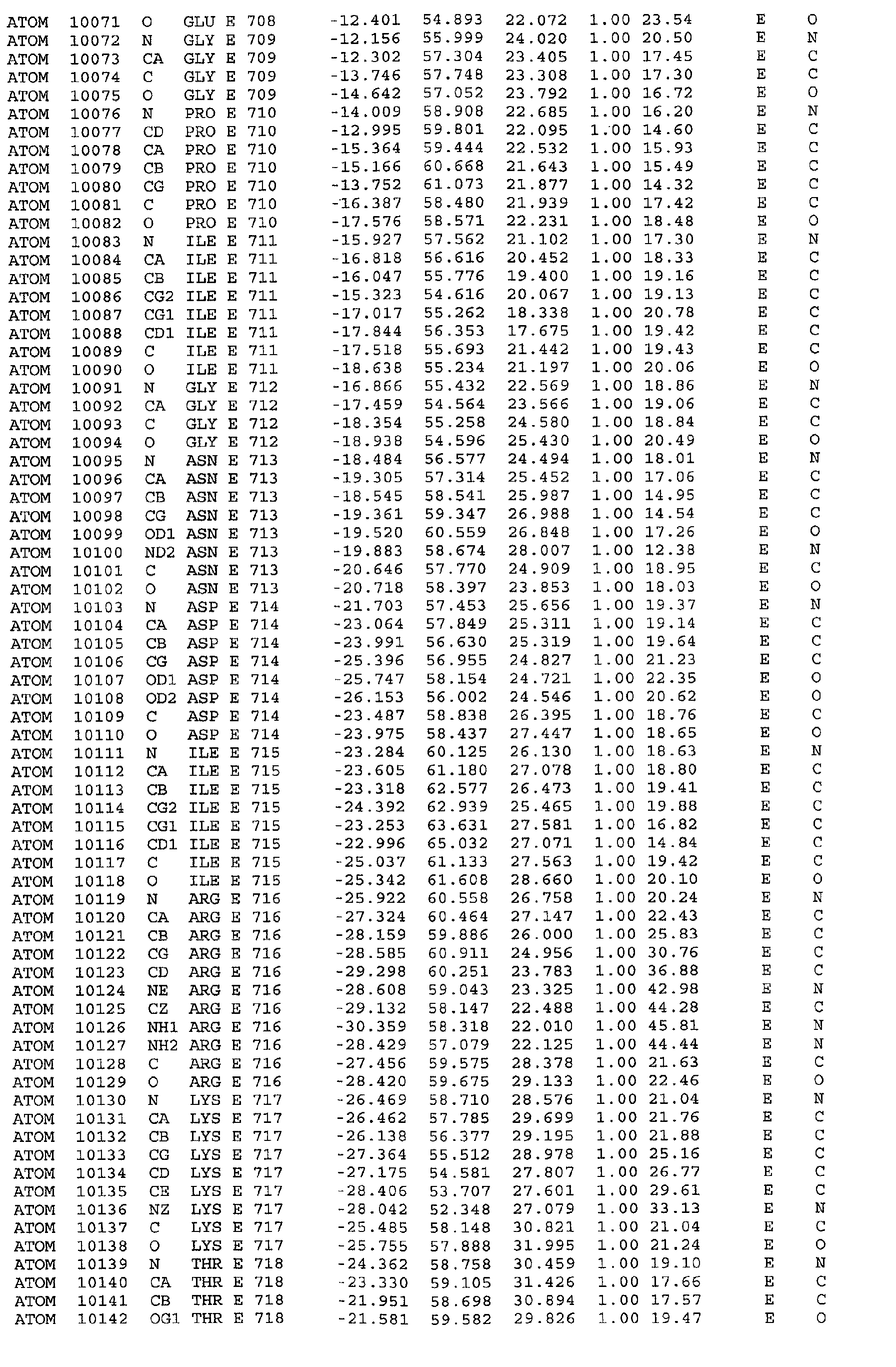
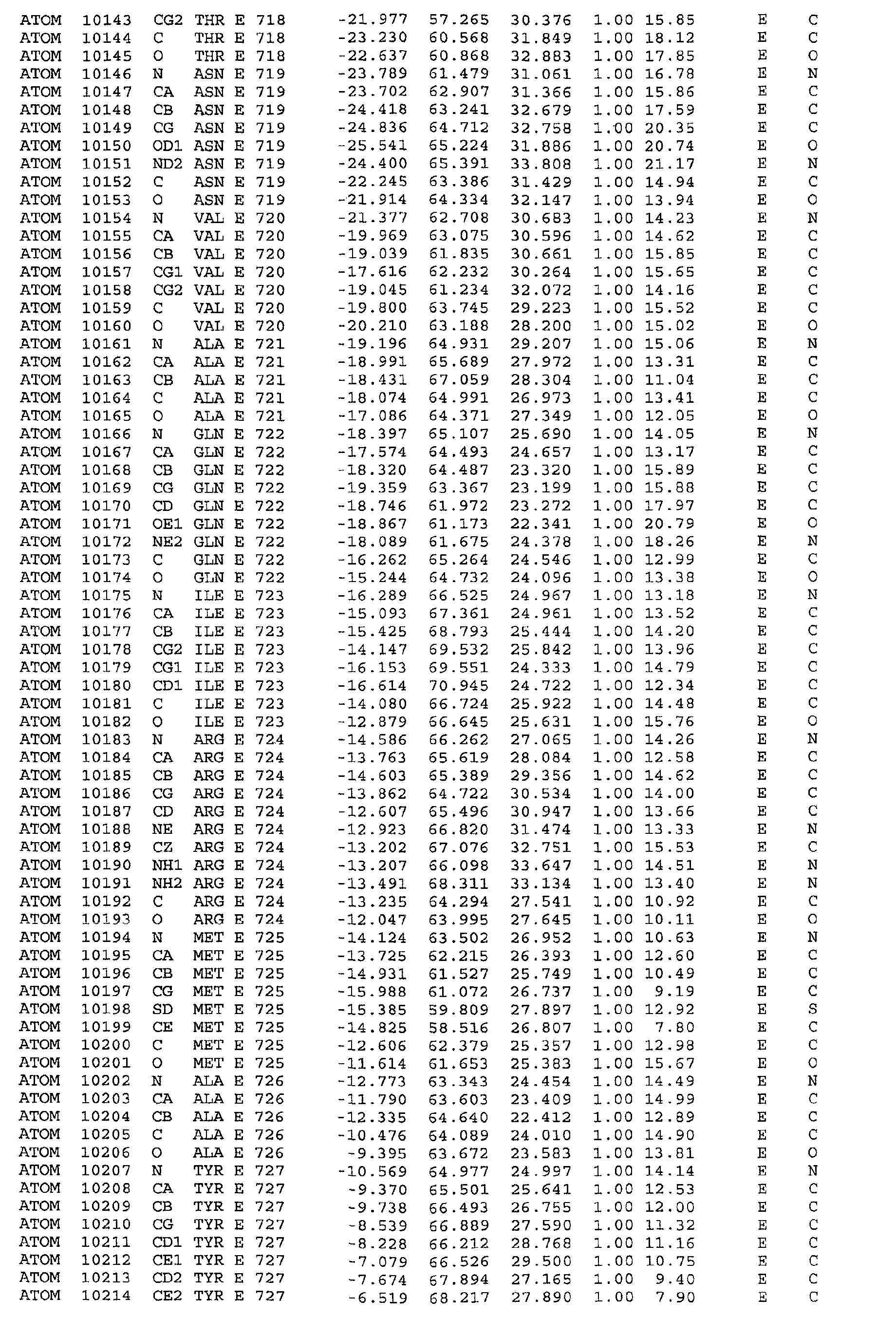
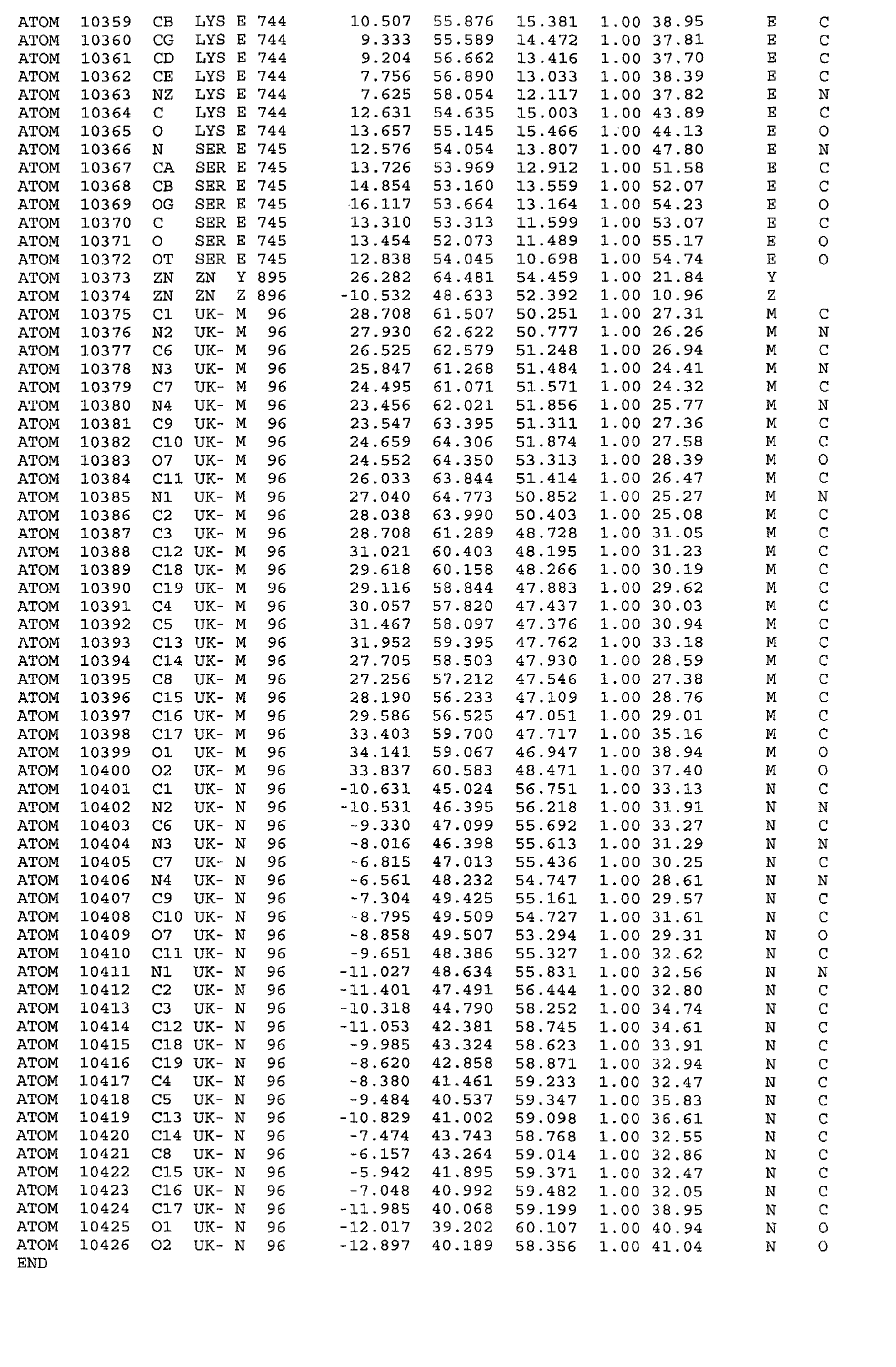
- a preferred embodiment of the invention is an AMPDA crystal with coformycin soaked in, having the atomic coordinates as set out in Table 3, or a derivative set as expressed in any reference frame; another preferred embodiment is an AMPDA crystal with UK-384,858 soaked in, having the atomic coordinates as set out in Table 4, or a derivative set as expressed in any reference frame.
- a further embodiment of the invention is a crystal of AMPDA wherein the primary sequence of the AMPDA has 90%, preferably 95%, even more preferably 98% identity at amino acid level to the sequence shown in SEQ ID NO:2.
- a further embodiment of the invention is the use of atomic coordinates obtained by X-ray diffraction studies of the above mentioned crystals for deriving the three-dimensional structure of AMPDA.
- Preferred embodiments of the invention are the use of the three-dimensional structure of AMPDA so determined for computationally or otherwise evaluating the binding interactions of a chemical compound with AMPDA, preferably the active site of AMPDA; and for designing compounds, preferably inhibitors of AMPDA, capable of associating with the enzyme, or preferably with the active site of the enzyme.
- a preferred embodiment is a compound evaluated or designed as described above.
- Another embodiment of the invention is a method of selecting an AMPDA inhibitor from a group of potential AMPDA inhibitor compounds by creating a three-dimensional representation of the enzyme, preferably the active site cavity of AMPDA, as derived from the three-dimensional structure determined above, in a suitable computer program; displaying and superimposing the model of said test compound on the model of said enzyme, or preferably the active site of it, and assessing whether the test compound model fits the enzyme, or preferably its active site.
- the method can further comprise incorporating the test compound in a biological AMPDA activity assay, and determining whether the test compound inhibits AMPDA activity in this assay.
- a compound selected by such method is also an embodiment of the invention.
- compositions of any of the compounds evaluated, designed, or selected as described above, as well as their use in the manufacture of a medicament for the treatment of diseases where AMPDA is implicated include but are not limited to, ischemia-related diseases such as congestive heart failure, peripheral vascular disease, and chronic obstructive pulmonary disease.
- diseases include coronary artery disease (CAD) and Alzheimer's disease.
- CAD coronary artery disease
- Another embodiment of the invention is the use of the atomic coordinates of AMPDA as mentioned above, or portions thereof, to solve a crystal form of a mutant, homologue, or co-complex of AMPDA, e.g. by molecular replacement or difference Fourier analysis, as well as the use of the atomic coordinates to produce a model of the three-dimensional structure of related enzymes.
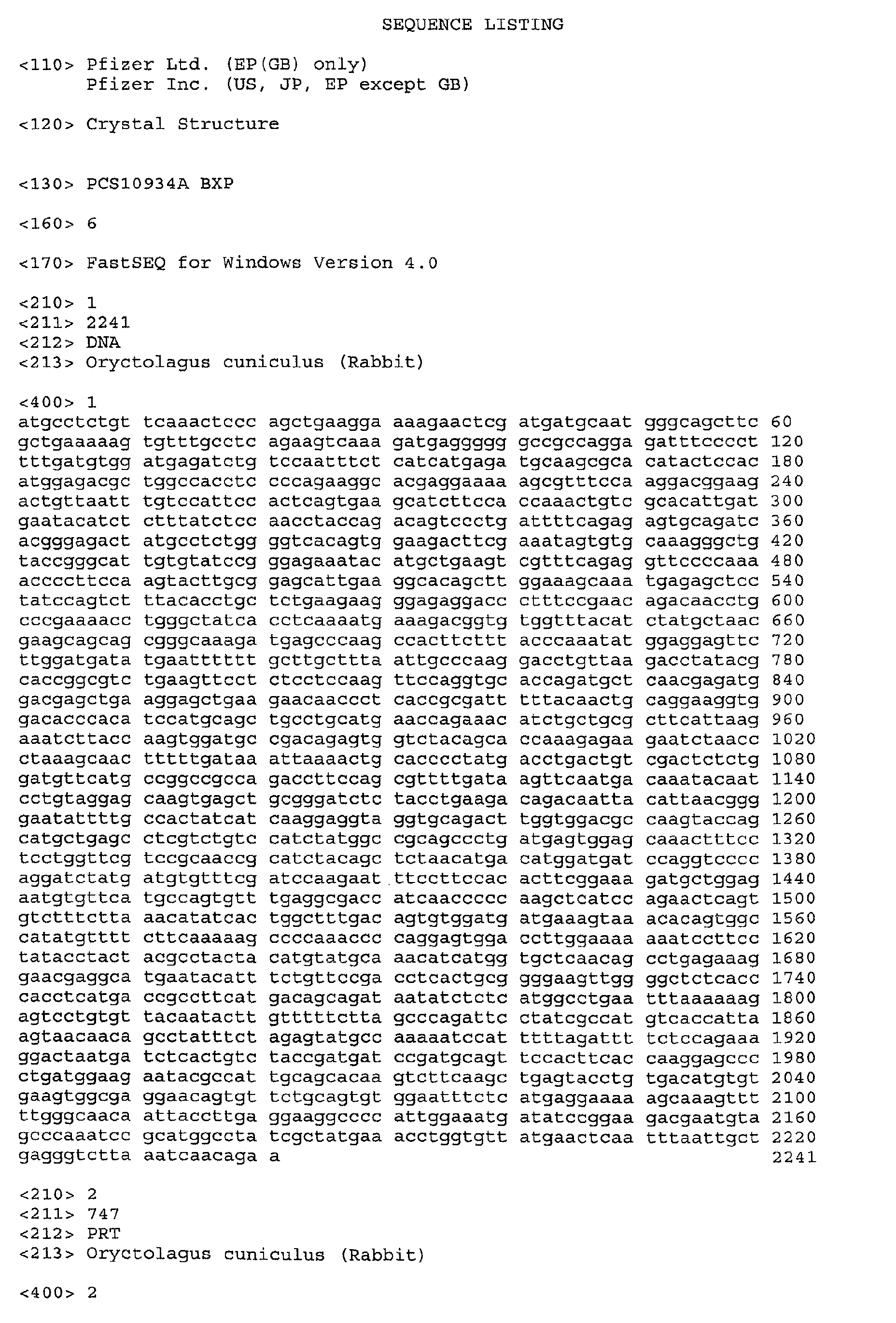
- a further embodiment of the invention is an isolated and/or purified polynucleotide comprising a polynucleotide encoding the polypeptide as set forth in SEQ ID NO: 2; a polynucleotide comprising a nucleotide sequence of SEQ ID NO: 1; a polynucleotide comprising a nucleotide sequence that has at least 91%, preferably 95%, even more preferably 98% identity to the polynucleotide mentioned above; a polynucleotide comprising a nucleotide sequence which is capable of hybridising to the polynucleotide mentioned above under high stringency conditions (washing with 0.1x SSC, 0.1% SDS at 65°C); a complement to any of the polynucleotide mentioned above, or a polynucleotide fragment of any of these polynucleotides.
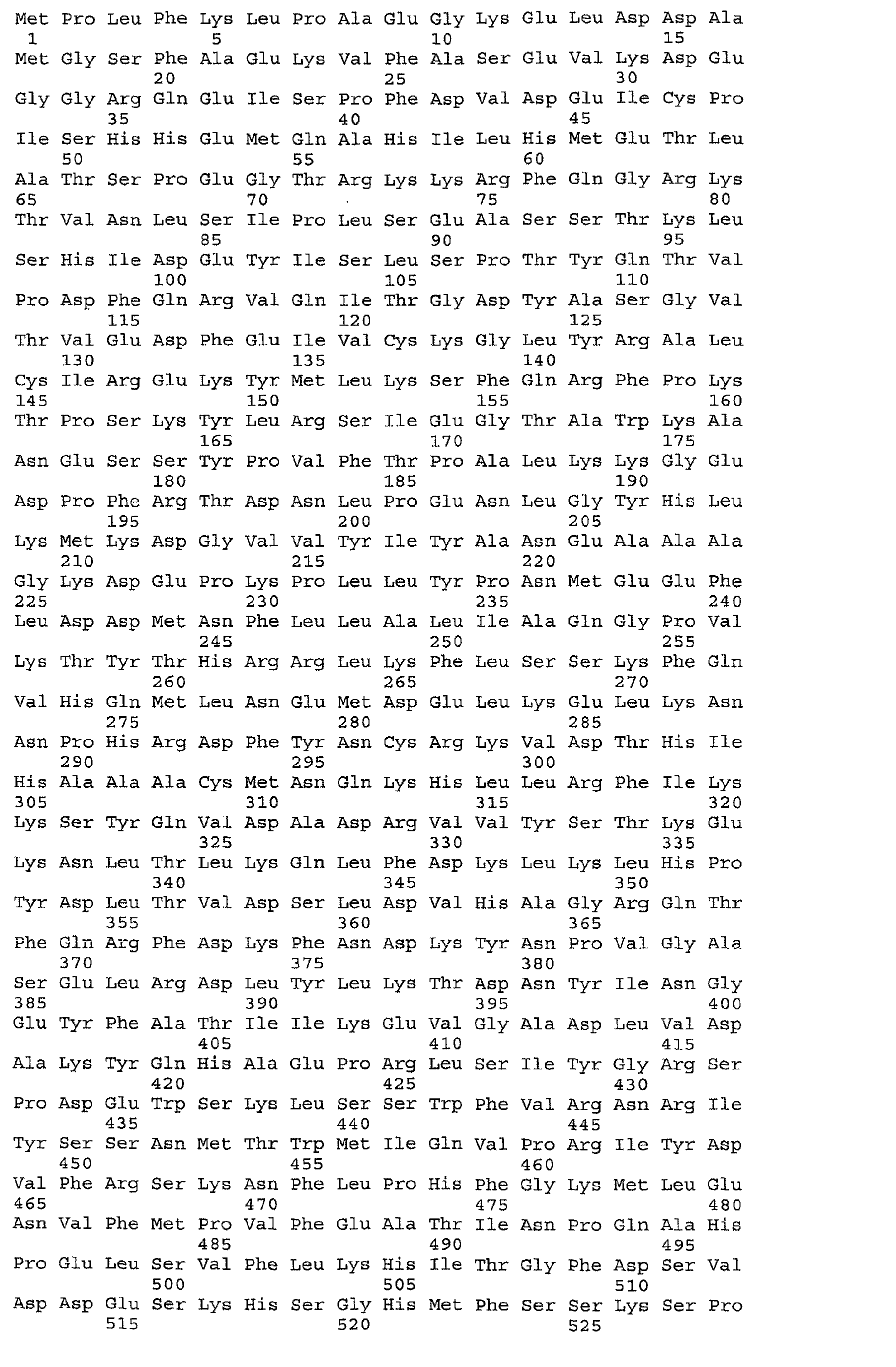
- a further embodiment of the invention is a polypeptide having the deduced amino acid sequence translated from the polynucleotide sequence in SEQ ID NO: 1 and variants, fragments, homologues, analogues and derivatives thereof; or a polypeptide of SEQ ID NO: 2 and variants, fragments, homologues, analogues and derivatives thereof.
- a preferred embodiment is a polypeptide of SEQ ID NO: 2 but starting at position Leu96.
- AMPDA AMP deaminase (E.C. 3.5.4.6) - catalyzes the deamination of AMP to IMP as part of the purine catabolic pathway.
- AMPDA catalytic domain the C-terminal part of the enzyme, sufficient for catalytic activity (usually lacking the N-terminal 80-100 residues).
- M-AMPDA, L-AMPDA and E-AMPDA isoenzymes Products of different genes ( ampd 1, ampd 2 and ampd 3), but all encoding AMP deaminase, i.e. the same activity; the isoenzymes are differentially expressed in different tissues.
- Polynucleotide DNA or RNA in isolated form, made by recombinant or synthetic routes.
- Polypeptide interchangeable with the term protein, includes single-chain polypeptides as well as complexes of single-chain polypeptides linked by covalent or non-covalent means.
- variants in relation to the amino acid sequence for the polypeptide of the present invention include any substitution of, variation of, modification of, replacement of, deletion of or addition of one (or more) amino acid from or to the sequence providing the resultant polypeptide retains 90%, preferably 95%, even more preferably 98% sequence identity to the sequence shown in SEQ ID No:2.
- Sequence identity is determined by standard bioinformatics software tools such as Blast2 or Fasta, which generate an optimal alignment between two sequences and then calculate the % identity on this basis, using default parameters.
- Mutant of AMPDA refers to AMPDA where changes in one or more amino acid residues have been introduced artificially by processes like site-directed mutagenesis, or where deletions or insertions have been introduced into the AMPDA sequence, whether or not the resulting proteins retain enzyme activity. It also refers to naturally occurring variants of AMPDA, whether or not they retain enzyme activity.
- Related protein refers to a protein the structure of which has not yet been determined, which displays significant sequence similarity (>30% sequence identity at protein level), or a significantly large portion of such a protein which would retain some of the structural features of the protein, or such a protein which does not display any similarity at the sequence level, but has a similar ( ⁇ ) 8 fold as AMPDA.
- the compounds of the invention can be administered alone but will generally be administered in admixture with a suitable pharmaceutical excipient, diluent or carrier selected with regard to the intended route of administration and standard pharmaceutical practice.
- the compounds, and their pharmaceutically acceptable salts can be administered orally, buccally or sublingually in the form of tablets, capsules, ovules, elixirs, solutions or suspensions, which may contain flavouring or colouring agents, for immediate-, delayed-, modified-, sustained-, pulsed- or controlled-release applications.
- the compounds can also be administered parenterally, for example, intravenously, intra-arterially, intraperitoneally, intrathecally, intraventricularly, intraurethrally, intrasternally, intracranially, intramuscularly or subcutaneously, or they may be administered by infusion or needleless injection techniques.
- parenteral administration they are best used in the form of a sterile aqueous solution which may contain other substances, for example, enough salts or glucose to make the solution isotonic with blood.
- the aqueous solutions should be suitably buffered (preferably to a pH of from 3 to 9), if necessary.
- the preparation of suitable parenteral formulations under sterile conditions is readily accomplished by standard pharmaceutical techniques well-known to those skilled in the art.
- a ⁇ gt10 rabbit chest muscle cDNA library was purchased (Clontech TL3000a) and used as the source of cDNA for the amplification of rabbit AMPDA by polymerase chain reaction (PCR).
- PCR polymerase chain reaction
- Four primers were designed using the human skeletal muscle AMPDA sequence (Sabina R.L. et al (1992) Neurology 42, 170-179); two of these primers, AMPDA1 and AMPDA2, were complementary to the 5' and 3' ends of the coding sequence of human AMPDA, respectively; primers AMPDA3 and AMPDA4 were internal primers, designed to enable the sequence to be amplified in two halves.
- Primers AMPDA1 and AMPDA4 were used to amplify the N-terminal portion, and AMPDA2 and AMPDA3 to amplify the C-terminal portion of the coding sequence:
- Amplification was carried out using the above mentioned cDNA library as template, Taq polymerase (Life Technologies) and a MasterAmpTM PCR optimisation kit from Epicentre Technologies (Cambio).
- the amplification products were TA-cloned into pCRII (Invitrogen) as per manufacturer's protocol, and the DNA sequence determined by Lark Technologies (Saffron Walden, UK).
- the rabbit cDNA sequence and the resulting translation product are shown in SEQ ID NOs: 1 and 2.
- cellulose phosphate (Whatman) was prepared according to the manufacturer's instructions. The prepared cellulose phosphate was added directly to the supernatant fraction and stirred at room temperature. After one hour the cellulose phosphate was recovered by means of a sintered glass suction funnel, the filtrate being discarded. The cellulose phosphate was transferred to an XK 50/20 column and washed with 0.45 M potassium chloride, pH 7.0, 5 mM ⁇ -mercaptoethanol. When a stable UV absorbance was achieved, the column was eluted with 1.0 M KCl, pH 7.0, 5 mM ⁇ -mercaptoethanol. The eluted protein was stored at 4°C for at least two weeks.
- the initial model of AMPDA was traced using the QUANTA package (Molecular Simulations Inc) and refined using all data to 2.2 ⁇ with X-PLOR (Brünger, A.T. (1993) X-PLOR Version 3.1 A system for X-ray crystallography and NMR, Yale University Press, New Haven, CT).
- the torsion angle refinement procedure was used to escape initial local minima.
- Strict NCS constraints were applied through several cycles of model building and refinement. Individual B-factors were refined.
- the monomer structure can be described as follows.
- the catalytic domain of AMPDA is constructed around a core comprising the well precedented ( ⁇ ) 8 barrel fold (Bränden, C.-I. (1991) Curr. Op. Struc. Biol. 1, 978-983).
- N-terminal to this barrel are five helices, a large loop and two short anti-parallel strands. These features wrap around the barrel forming an outer layer to the domain.
- Several additional secondary structural features are inserted between the secondary structural elements that comprise the barrel. Three helices are inserted in the loop between the first strand and helix of the barrel, and two short helices are inserted immediately after the barrel's third strand and third helix respectively.
- C-terminal to the ( ⁇ ) 8 motif are three further helices, the first lies across the NH 2 -terminal of the ⁇ -barrel, the second is short and packs anti-parallel to the first, while the third makes extensive contacts with the additional N-terminal helices.
- the enzyme contains 21 helices and 10 strands.
- Helices inserted within the barrel-fold are termed ⁇ 1'1 through ⁇ 1'3, ⁇ 3' and ⁇ 4' to indicate their position in the fold, while the C-terminal helices are referred to as ⁇ 9 through ⁇ 11 (The nomenclature scheme is adapted from that of Wilson, D.K., Rudolph, F.B. & Quiocho, F.A. ((1991) Science 252, 1278-1284).
- a Zn 2+ ion is bound at the C-terminus of the barrel at the bottom of a large cleft in the enzyme surface. The sides of this cleft are formed by the additional helices between the first and second strands of the barrel and the helix immediately following the third strand. This cleft contains the enzyme's active site.
- the structure is depicted in figure 1.
- the Zn 2+ co-ordination geometry best fits the trigonal bipyramid class (Alberts, I.L., Nadassy, K. & Wodak, S.J. (1998) Protein Science 7, 1700-1716), involving four residues, three histidines (His303, 305 and 572) and Asp649.
- the remaining coordination site can be accounted for as a discrete density peak about 1.8 ⁇ from the Zn 2+ was observed throughout refinement and was modelled as the activated water molecule required for catalysis.
- a tetramer is observed in the crystals (figure 2).
- Two sub-units are packed around a non-crystallographic diad axis forming the asymmetric unit. This dimer is packed around the crystallographic 2-fold axis in z to give the physiologically observed tetramer.
- An extensive buried surface indicates that the tetramer is tightly associated, and inter-subunit contacts are made almost exclusively by the helices additional to the ( ⁇ ) 8 barrel.
- the coformycin and UK-384,858 enzyme inhibitor complexes were prepared by soaking the crystals in a solution corresponding to the well solution plus 10mM inhibitor.
- the crystals were shown to tolerate DMSO concentrations of 10% and higher, allowing inhibitors with a relatively low solubility, such as UK-384,858, to be used.
- the structure of the enzyme complexed with coformycin shows the inhibitor bound at the base of the active site cleft.
- the seven-membered ring binds in a pocket which can accommodate the substrate's adenosine group.
- the 8-hydroxyl displaces the activated water seen in the apo-structure and hydrogen bonds the Zn 2+ .
- the hydroxyl to Zn 2+ distance is 1.8 ⁇ .
- the tetrahedral geometry observed at the C8 position is consistent with coformycin being a transition-state analogue inhibitor of the enzyme.
- the 370 helix is amphipathic and the hydrophobic face contains two phenylalanine residues (Phe372 and Phe375) which pack against the inhibitor entirely enclosing this portion of the binding site from solvent.
- the stacking interactions made between the inhibitor ring system and these aromatic residues stabilise the disordered loop.
- Key inhibitor recognition features include two hydrogen bonds made by acidic residues in the binding site.
- Asp650 forms a hydrogen bond with N1 of coformycin (D650 O ⁇ 1 - N1, 2.3 ⁇ ) and is co-planar with the ring, while Glu575 is 2.9 ⁇ from N6 and has good geometry to accept a proton.
- the main chain amide group of Asp513 is positioned to act as a hydrogen bond donating group with the N4 atom of the inhibitor as the acceptor, the distance between these two atoms is however too large (4.4 ⁇ ) for a good hydrogen bond to be made.
- Additional residues involved in van der Waals interactions in the purine binding pocket include the Zn 2+ co-ordinating residues His305 and His594.
- the bicyclic ring system of the inhibitor packs against the plane of these histidine residues and is essentially sandwiched between these aromatic side chains and the two ordered phenylalanine residues of the 370 helix (figure 4).
- the ribose binding site is less tightly defined.
- Two hydrogen bonds are made by hydroxyl groups, the 2'-OH is 3.0 ⁇ from Asn376 N ⁇ 2 and the 5'-OH group is 3.2 ⁇ from Gln458 N ⁇ 1.
- the orientation of Gln458 is fixed in a position to form this hydrogen bond by a hydrogen bonding network through His305 to the catalytic zinc.
- van der Waals interactions are made by the ribose ring to four hydrophobic side-chains, namely Pro460, Val512, Phe375 and Tyr379 (figure 4).
- the location of the phosphate binding site can be predicted from the structure of the complex with coformycin, the basic residues Lys393 and Arg388 are ideally positioned to co-ordinate a phosphate group as are the main-chain NH groups of the flexible loop of alanine residues 306-308.
- the complex is consistent with that observed with coformycin; the ordering of the active site, tetrahedral transition state geometry binding of the Zn 2+ , and all previously described interactions in the purine binding site are observed.
- the naphthalene group is seen to pack in a highly hydrophobic environment making van der Waals interactions with residues Pro460, Ile462, Phe372 and the C ⁇ atom of Asp513.
- the ethyl linker group is also involved in hydrophobic contacts with Phe375.
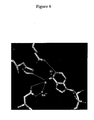
- the acidic group is shown to be within hydrogen bonding distance of Tyr429, Ser427 and Arg388 (figure 5).
- AMPDA adenosine deaminase
- ADA is a monomeric, 40 kDalton, protein which catalyses the hydrolysis of adenosine to inosine (Wilson, D.K., Rudolph, F.B. & Quiocho, F.A. (1991) Science 252, 1278-1284).
- ADA co-ordinates a catalytic zinc atom within a ( ⁇ ) 8 barrel.
- the inserted loop, containing 3 helices, between the first stand and helix of the barrel is common to both enzymes and forms part of a highly conserved purine binding site (Sharff, A.J. et al (1992) J. Mol. Biol. 226, 917-921).
- ADA The mechanism of ADA has been examined extensively by a combination of crystallographic (Wang, Z. & Quiocho, F.A. (1998) Biochemistry 37, 8314-8324) and site-directed mutagenesis studies (Sideraki, V. et al (1996) Biochemistry 35, 15019-15028). All the residues identified as being important for the mechanism of ADA are equivalent in AMPDA and it is clear that the mechanism has been conserved in evolution.
- the reaction has been described in two stages: an initial stereo-specific hydroxide addition to form a tetrahedral (at the substrate C6 position) transition-state intermediate, and a final ammonia elimination to form the inosine product.
- the Zn 2+ acts as a powerful electrophile, as demonstrated by the presence of the hydroxide ion (activated water) in the apo-AMPDA structure and the analogous observation reported in an ADA inhibitor complex structure (Wilson, D.K. & Quiocho, F.A. (1993) Biochemistry 32, 1689-1694).
- the transition state is stabilised by the Glu575 - substrate N6 interaction.
- His238 in ADA which is equivalent to His594 in AMPDA, has been shown to promote hydroxide formation, while Asp649 is positioned to orientate the hydroxide oxygen in line for addition to C6 (figure 6).
- the position of the Zn 2+ ion and Asp649 dictate the pro-S stereo-specificity of the reaction.
Landscapes
- Health & Medical Sciences (AREA)
- Engineering & Computer Science (AREA)
- Bioinformatics & Cheminformatics (AREA)
- Life Sciences & Earth Sciences (AREA)
- Chemical & Material Sciences (AREA)
- Organic Chemistry (AREA)
- Medicinal Chemistry (AREA)
- General Health & Medical Sciences (AREA)
- Veterinary Medicine (AREA)
- General Chemical & Material Sciences (AREA)
- Chemical Kinetics & Catalysis (AREA)
- Nuclear Medicine, Radiotherapy & Molecular Imaging (AREA)
- Public Health (AREA)
- Pharmacology & Pharmacy (AREA)
- Animal Behavior & Ethology (AREA)
- Cardiology (AREA)
- Heart & Thoracic Surgery (AREA)
- Biomedical Technology (AREA)
- Genetics & Genomics (AREA)
- Zoology (AREA)
- Hospice & Palliative Care (AREA)
- Neurology (AREA)
- Neurosurgery (AREA)
- Wood Science & Technology (AREA)
- Vascular Medicine (AREA)
- Molecular Biology (AREA)
- Biotechnology (AREA)
- Pulmonology (AREA)
- Microbiology (AREA)
- Psychiatry (AREA)
- Urology & Nephrology (AREA)
- Biochemistry (AREA)
- General Engineering & Computer Science (AREA)
- Enzymes And Modification Thereof (AREA)
- Pharmaceuticals Containing Other Organic And Inorganic Compounds (AREA)
- Saccharide Compounds (AREA)
- Medicines That Contain Protein Lipid Enzymes And Other Medicines (AREA)
Abstract
Description
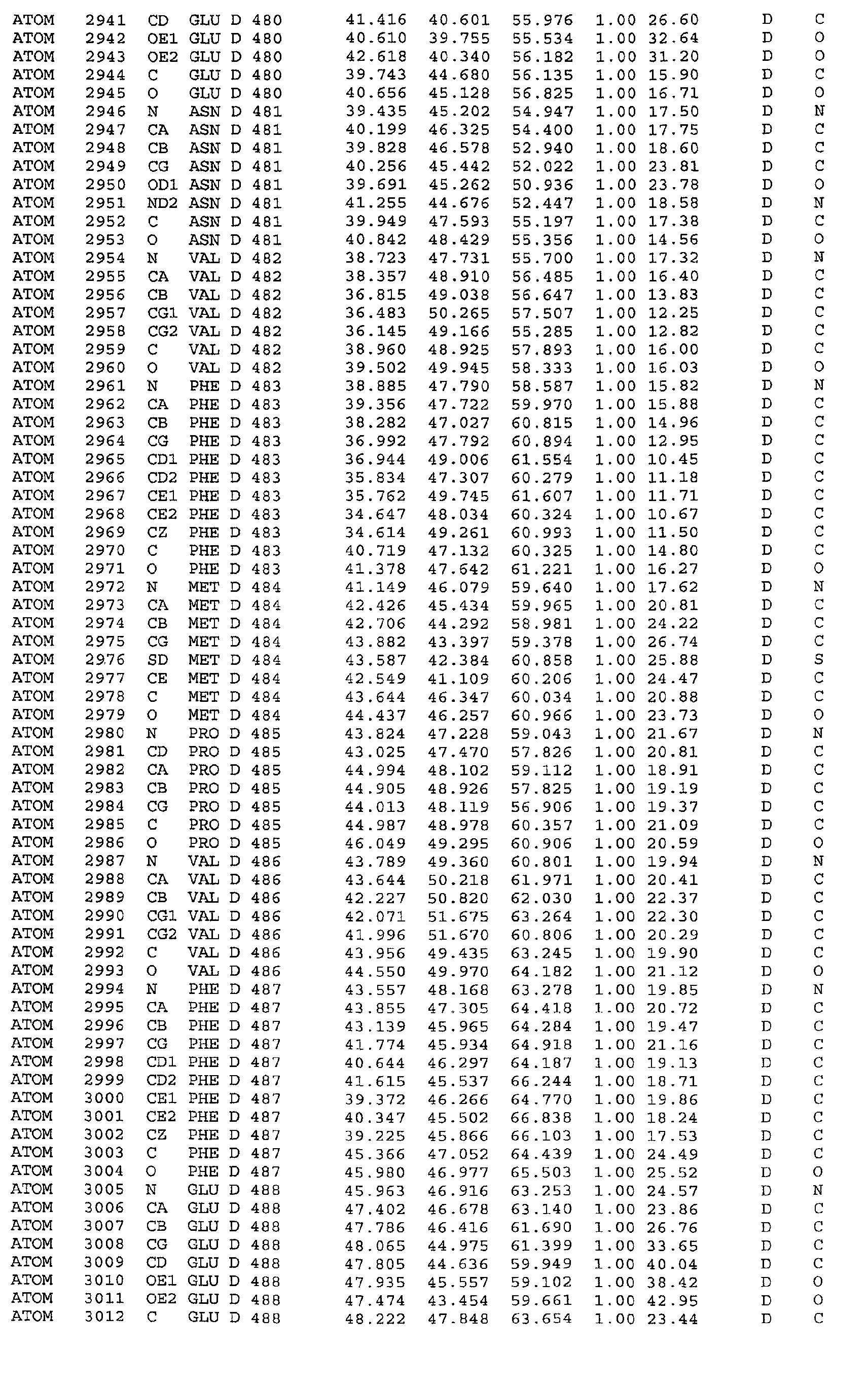
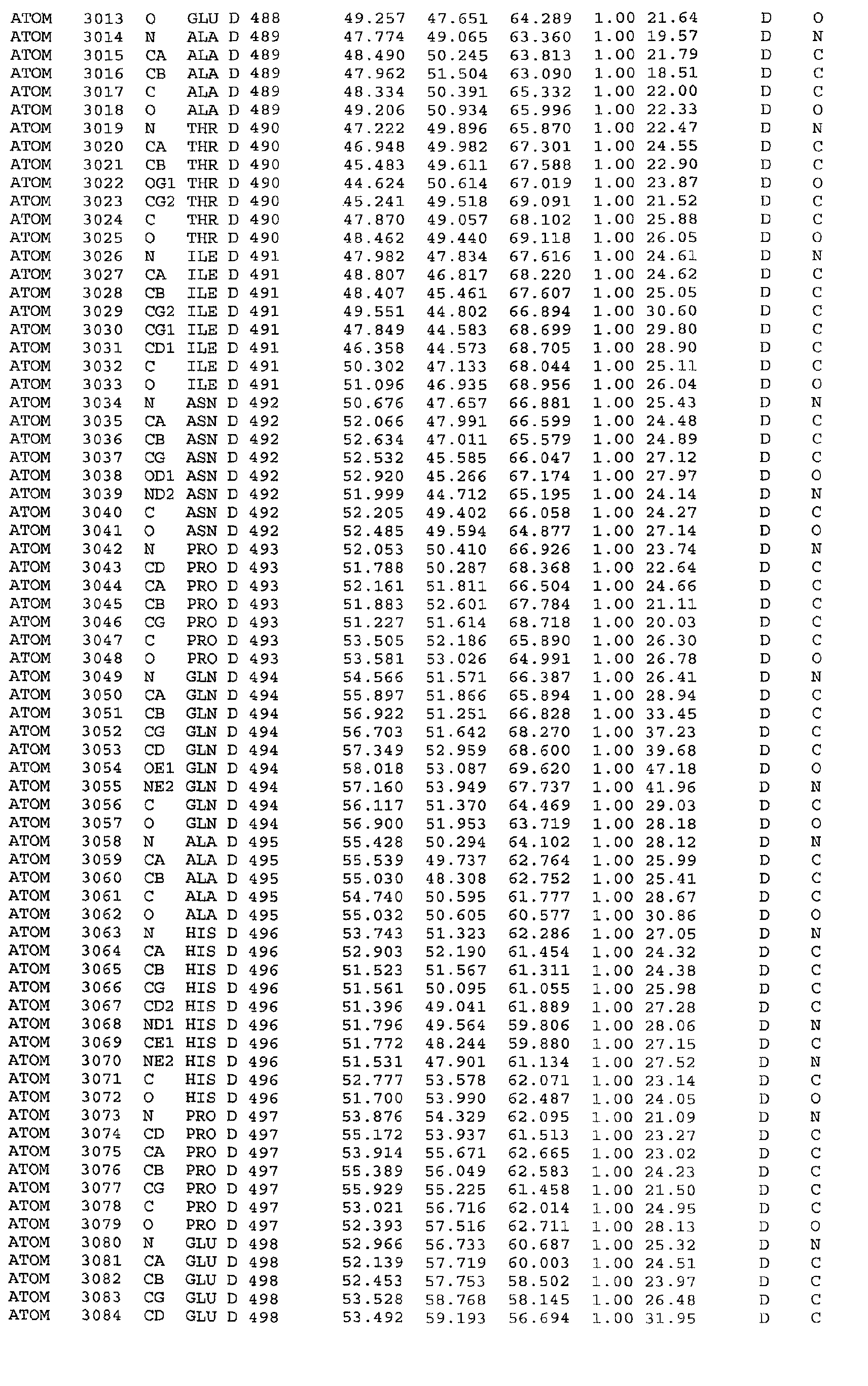
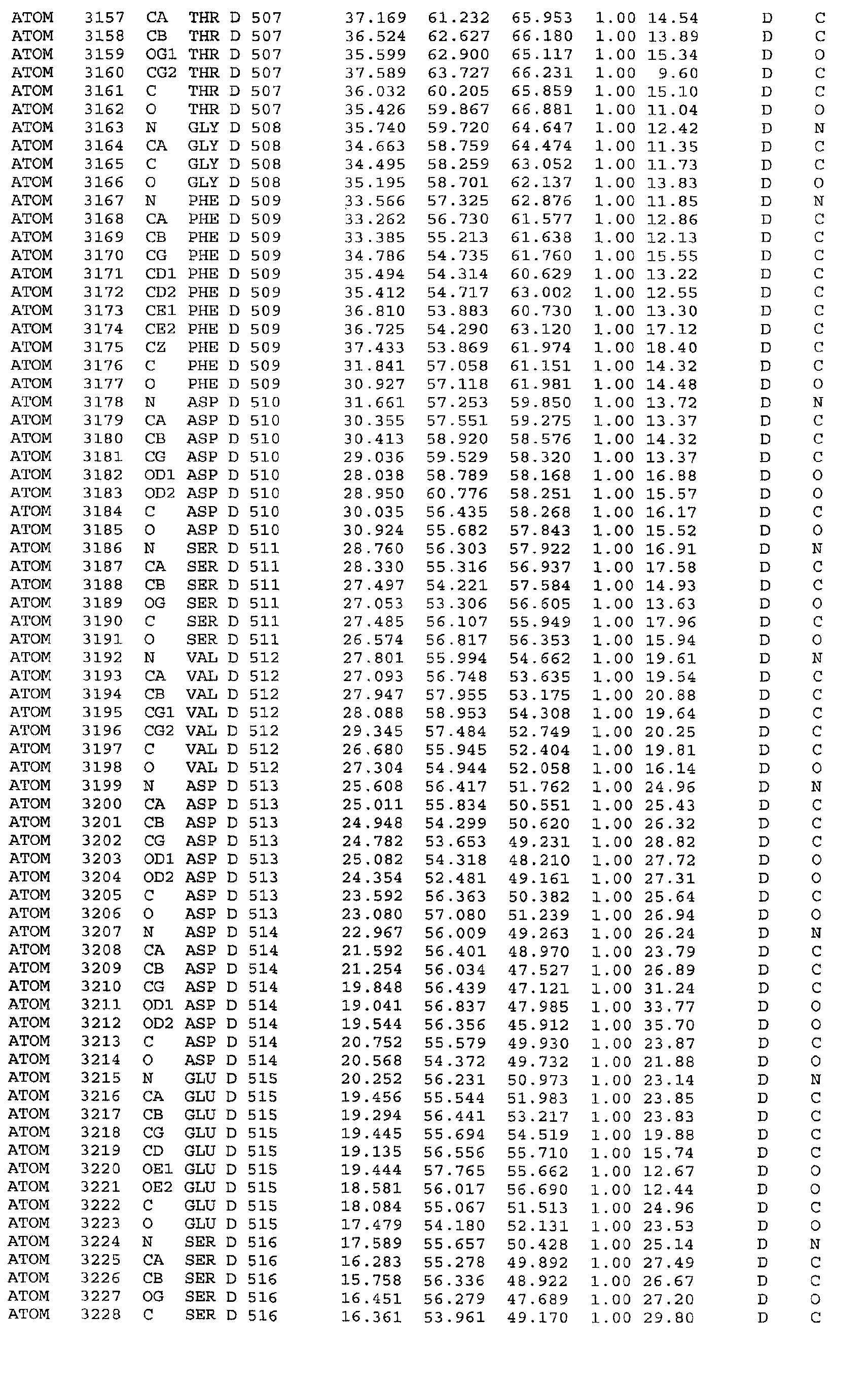
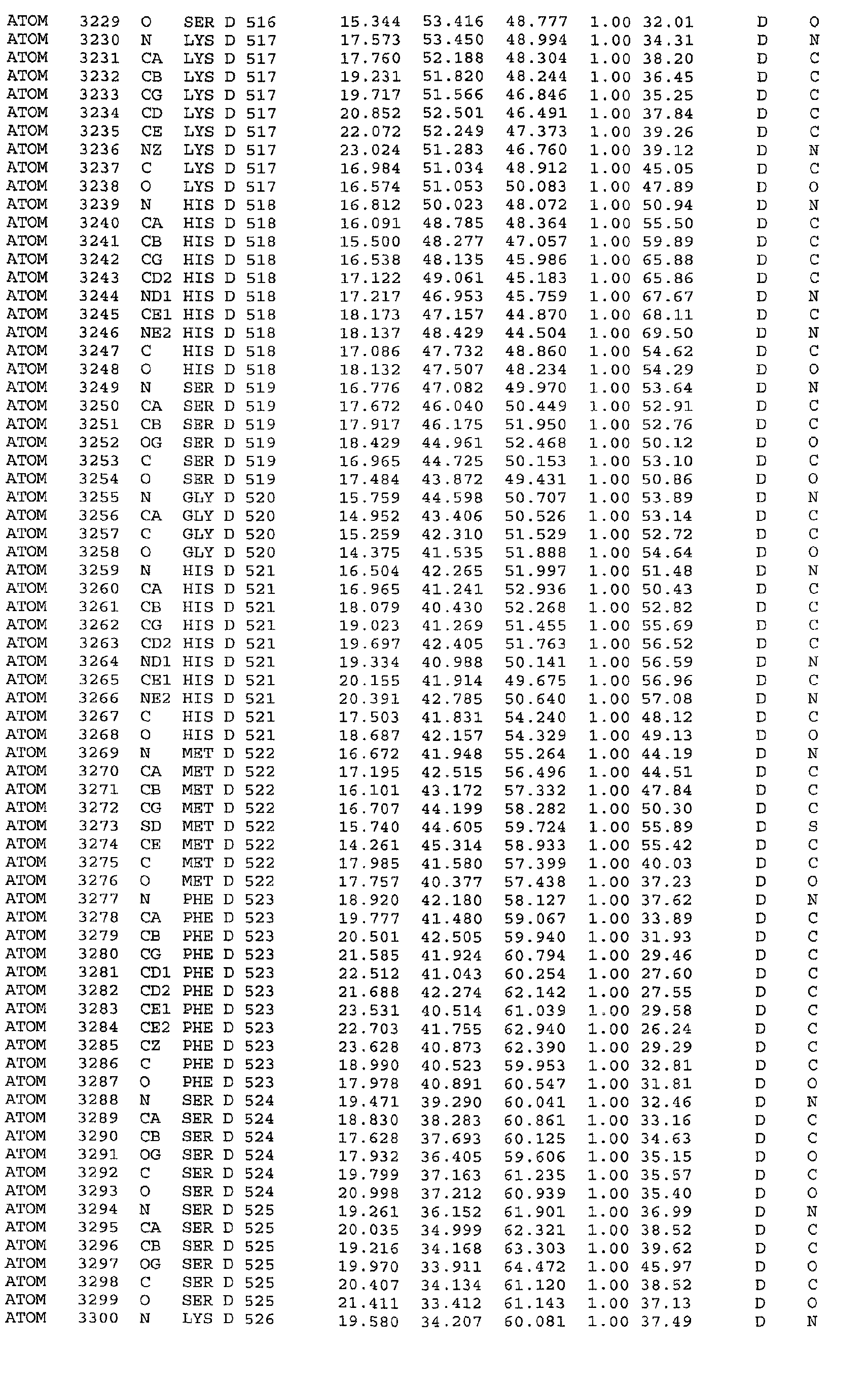
- wherein the AMPDA consists of the catalytic domain,
- wherein the AMPDA is from a mammal,
- wherein the AMPDA is from a rabbit,
- wherein the AMPDA has the sequence as in SEQ ID NO: 2 but starting at position Leu96;
- wherein the crystal has been grown with citric acid as the precipitating agent;
- wherein the crystal has been grown in the pH range of 7.80-8.20;
- wherein the crystal has been grown in the presence of imidazole;
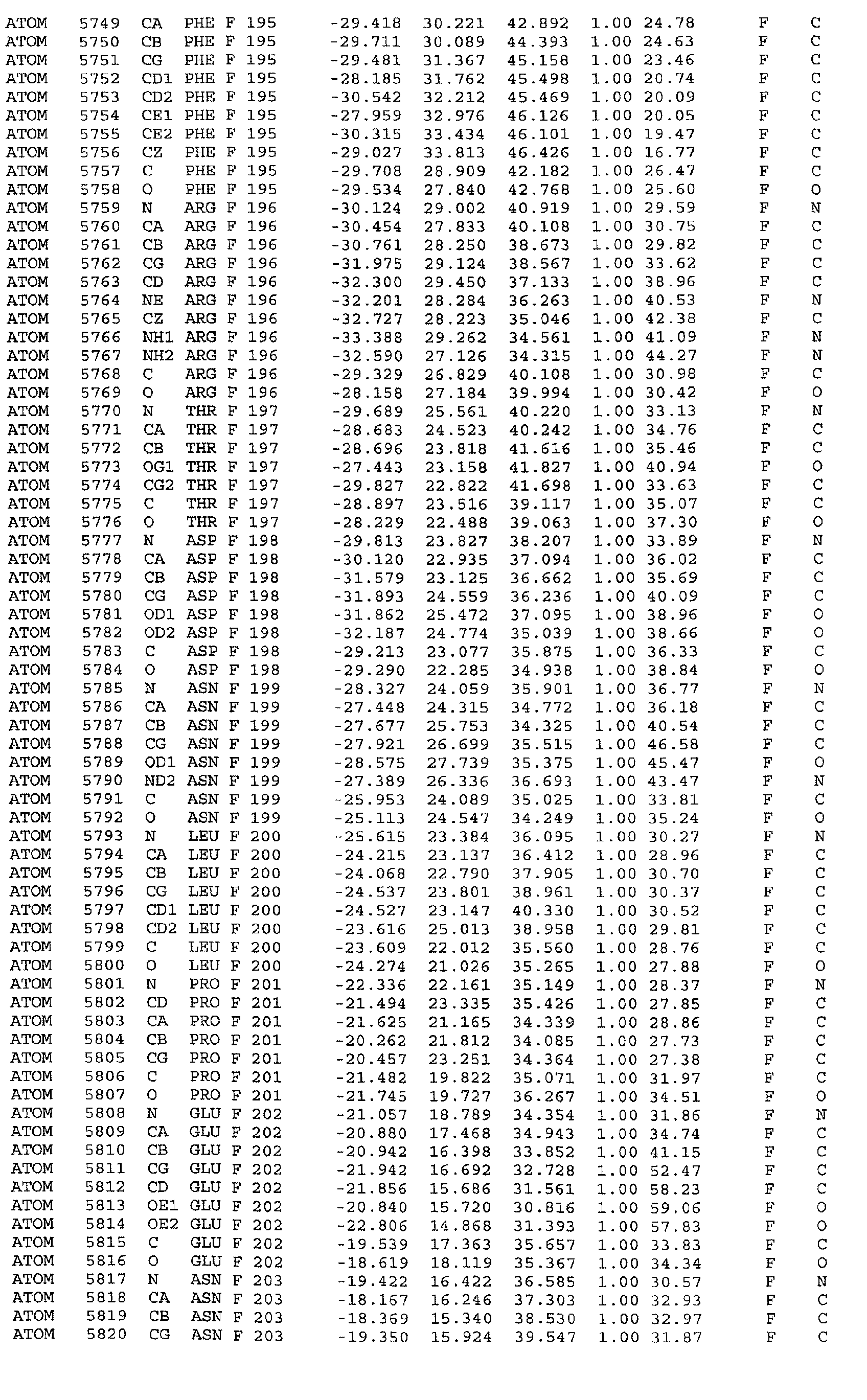
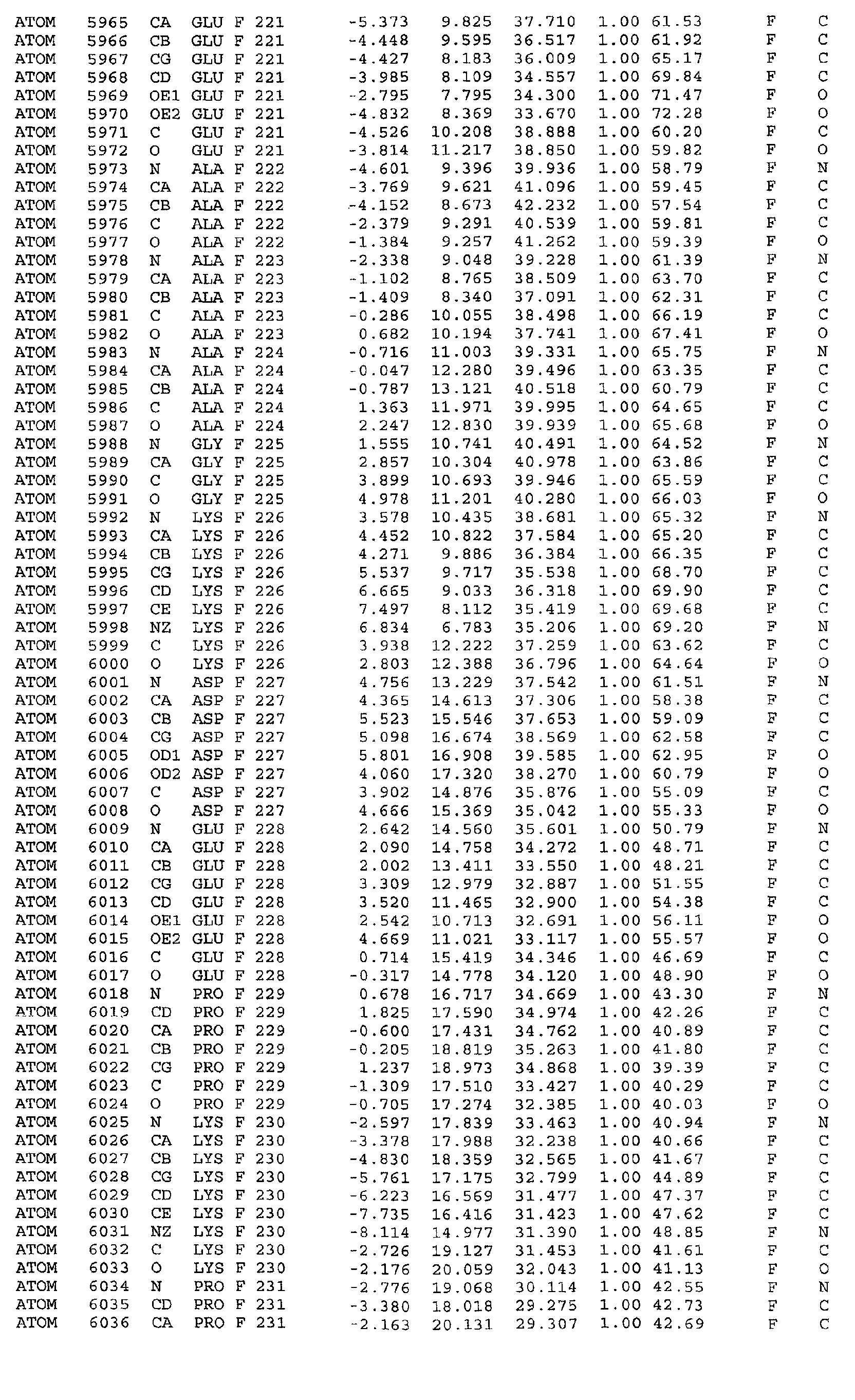
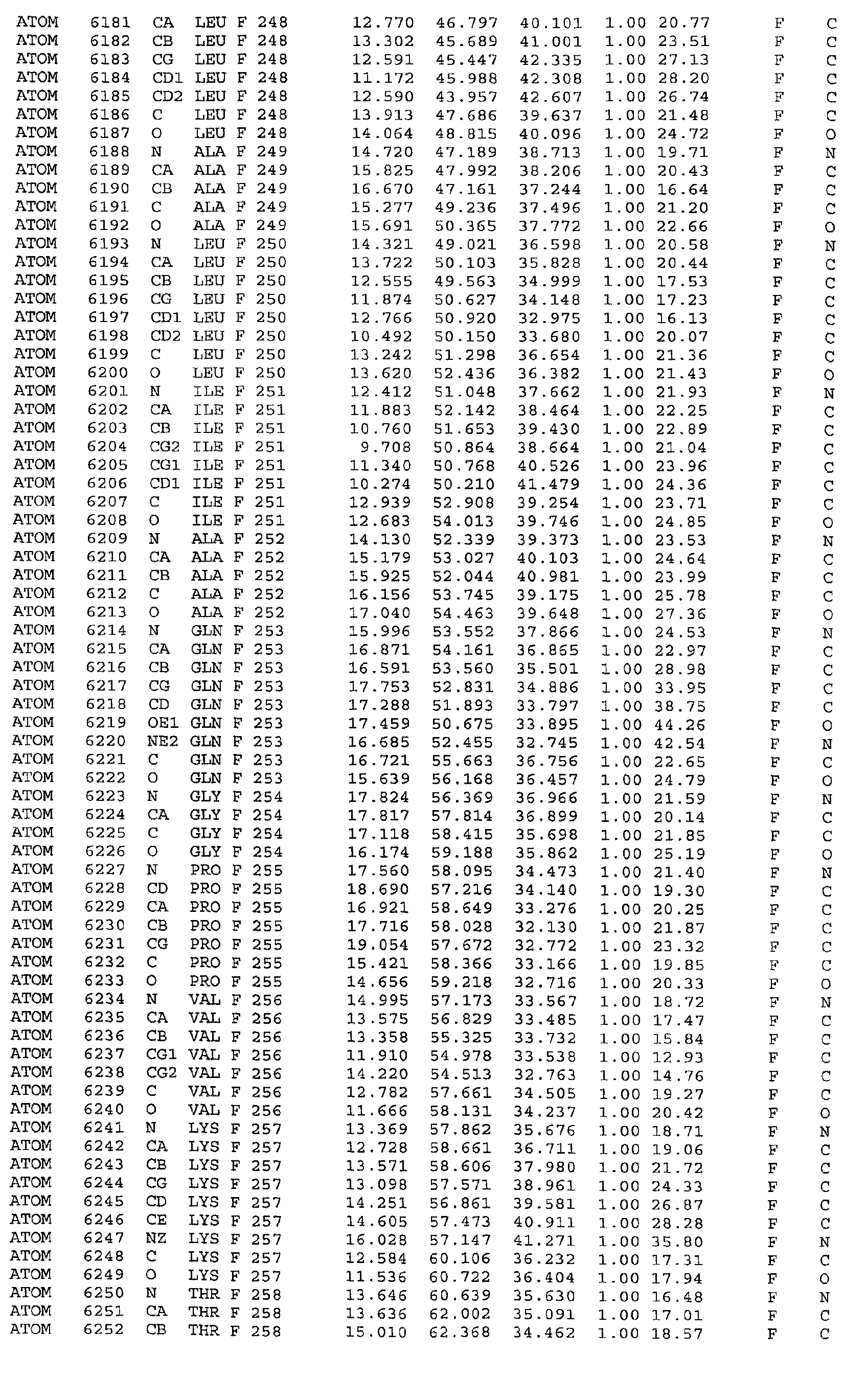
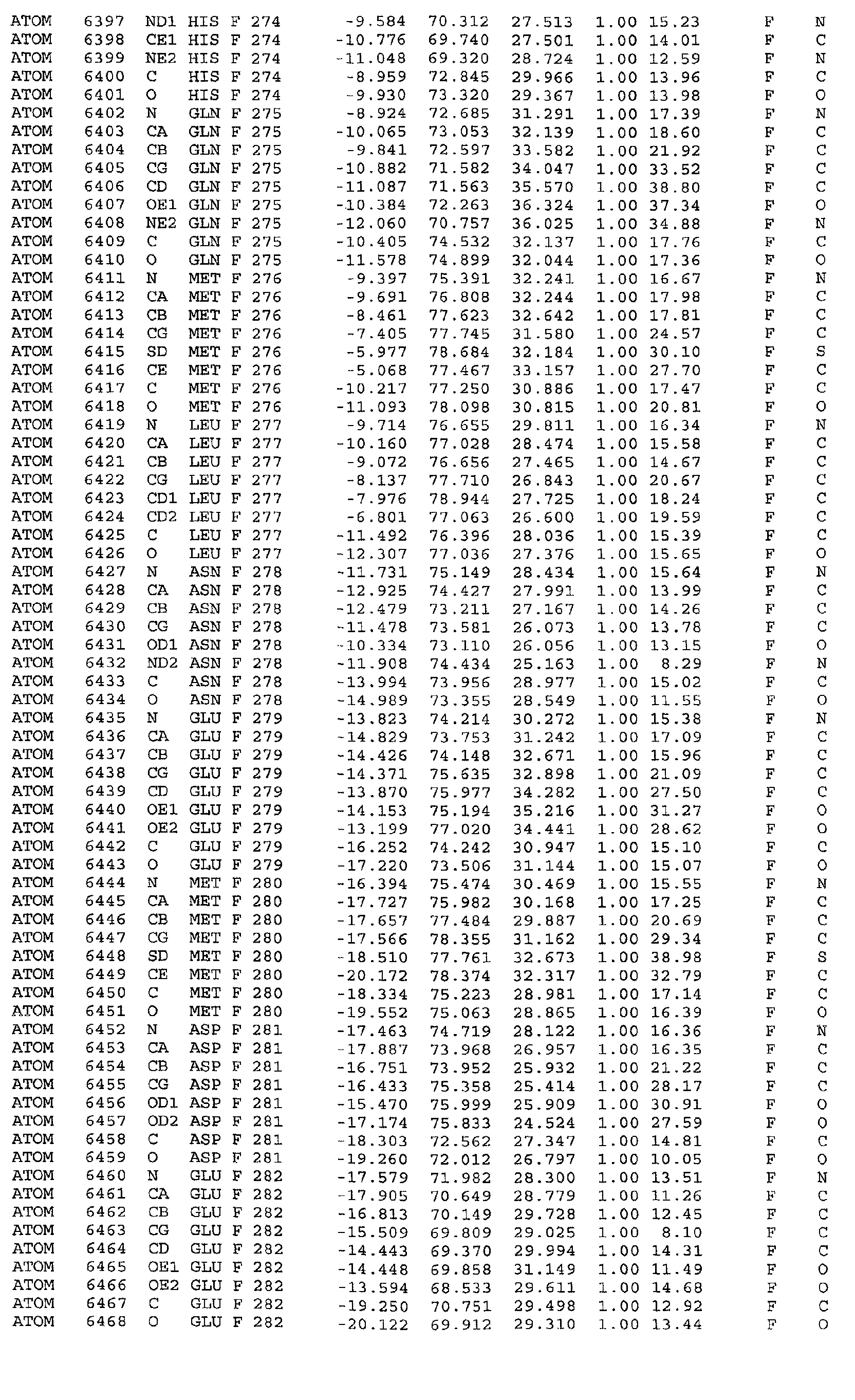
- wherein the crystal has a
space group P4 2212; - wherein the crystal has unit cell dimensions of a=b=149Å +/-3Å, c=159Å +/-3Å, more preferably wherein the crystal has unit cell dimensions of a=b=148.7Å, c=158.6Å,
- wherein there is a dimer of two AMPDA molecules in the asymmetric unit;
- wherein two AMPDA dimers form tightly associated tetramers, each monomer having a (βα)8 barrel fold, where the intersubunit contacts are almost exclusively made by the helices additional to the (βα)8 barrel;
- wherein the AMPDA has a Zn2+ coordination site involving residues His303, His305, His 572, and Asp649, with a further coordination site contributed by an activated water molecule required for catalysis;
- wherein the active site of AMPDA is contained in a cleft formed by the additional helices between the first and second strand of the (βα)8 barrel fold, and the helix immediately following the third strand;
- wherein the AMPDA has a pocket which can accommodate the adenosine group of AMP, which pocket is formed by amino acid residues including, but not limited to, residues His305, Phe372, Phe375, Asp513, Glu575, His594, and Asp650;
- wherein the AMPDA has a pocket which can accommodate the ribose and phosphate groups of AMP, which pocket is formed by amino acid residues including, but not limited to, residues His305, Ala306, Ala307, Ala308, Phe375, Asn376, Tyr379, Arg388, Lys393, Ser427, Tyr429, Pro460, Ile462, Val512, and Asp513;
- which diffracts X-rays to 3.5Å, preferably to 2.8Å, 2.5Å, or 2.2Å resolution;
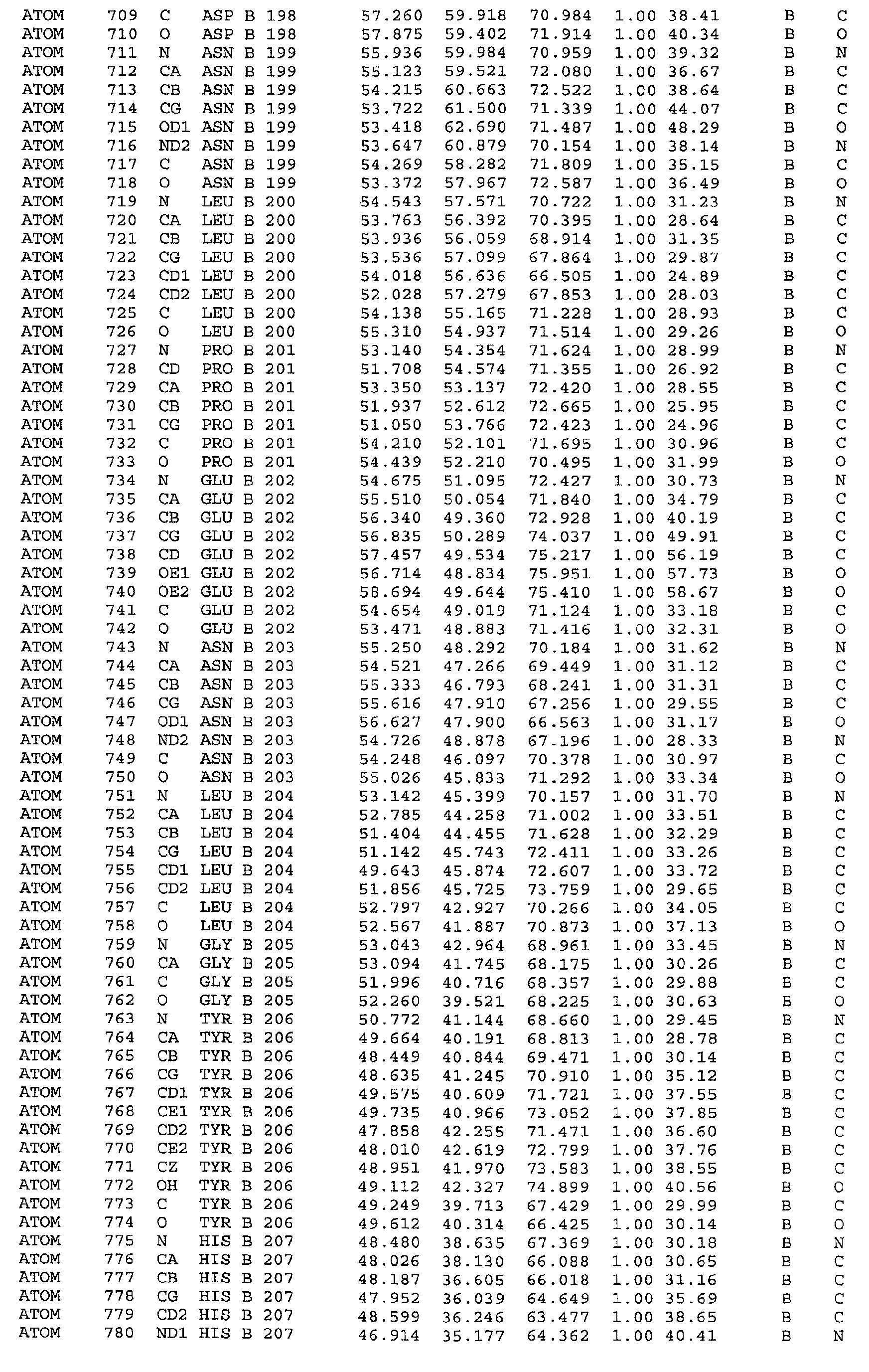
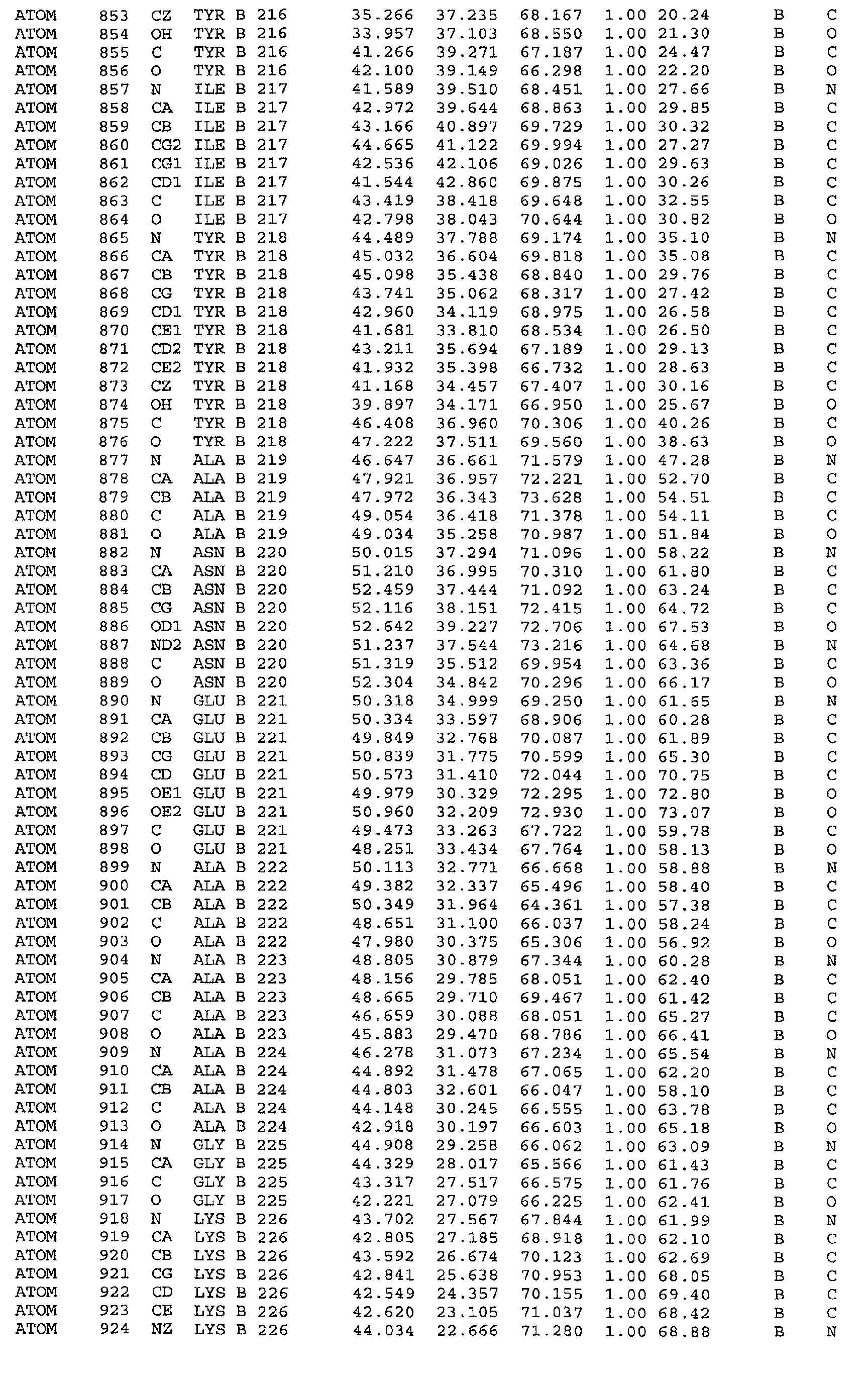
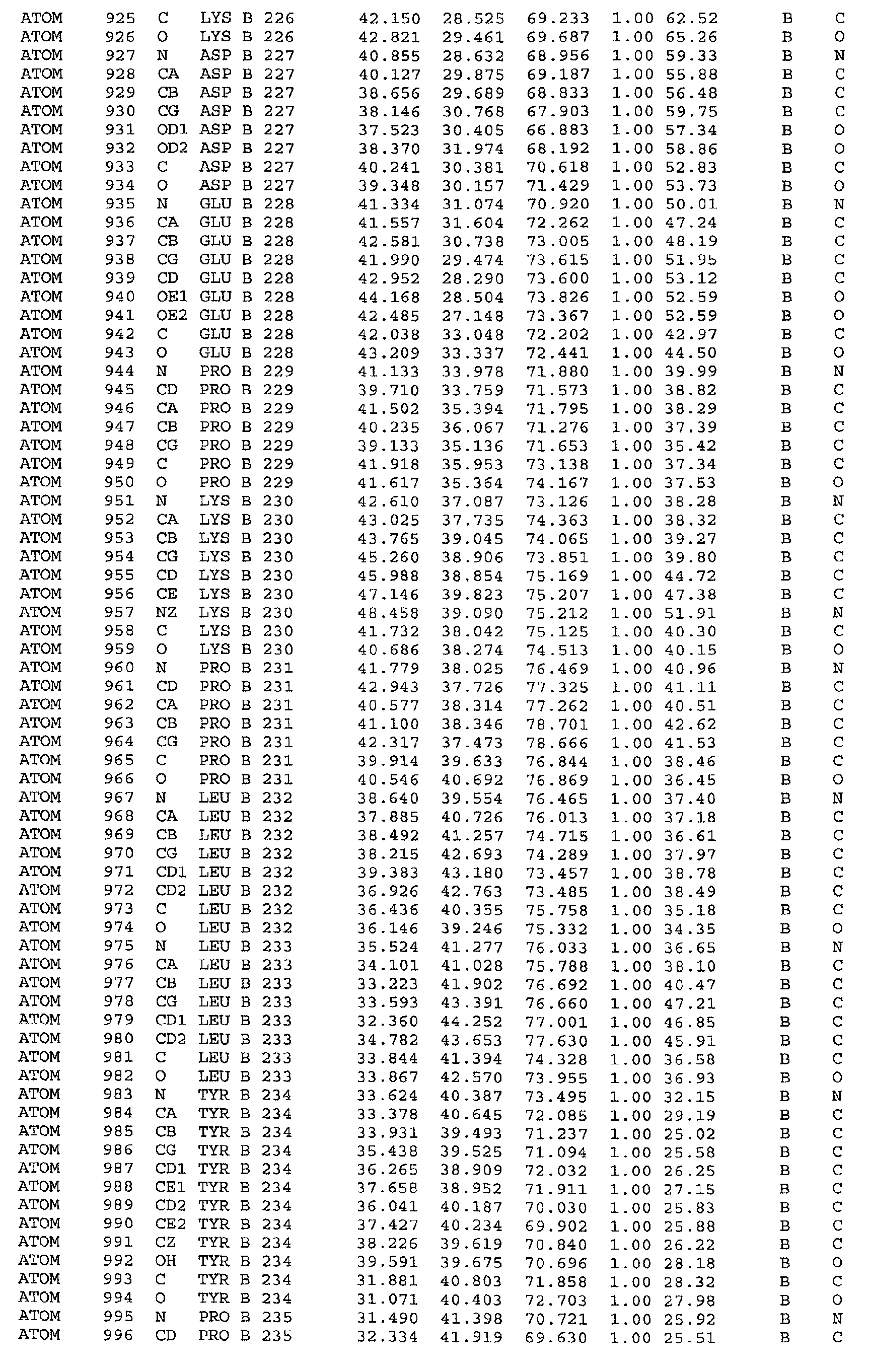
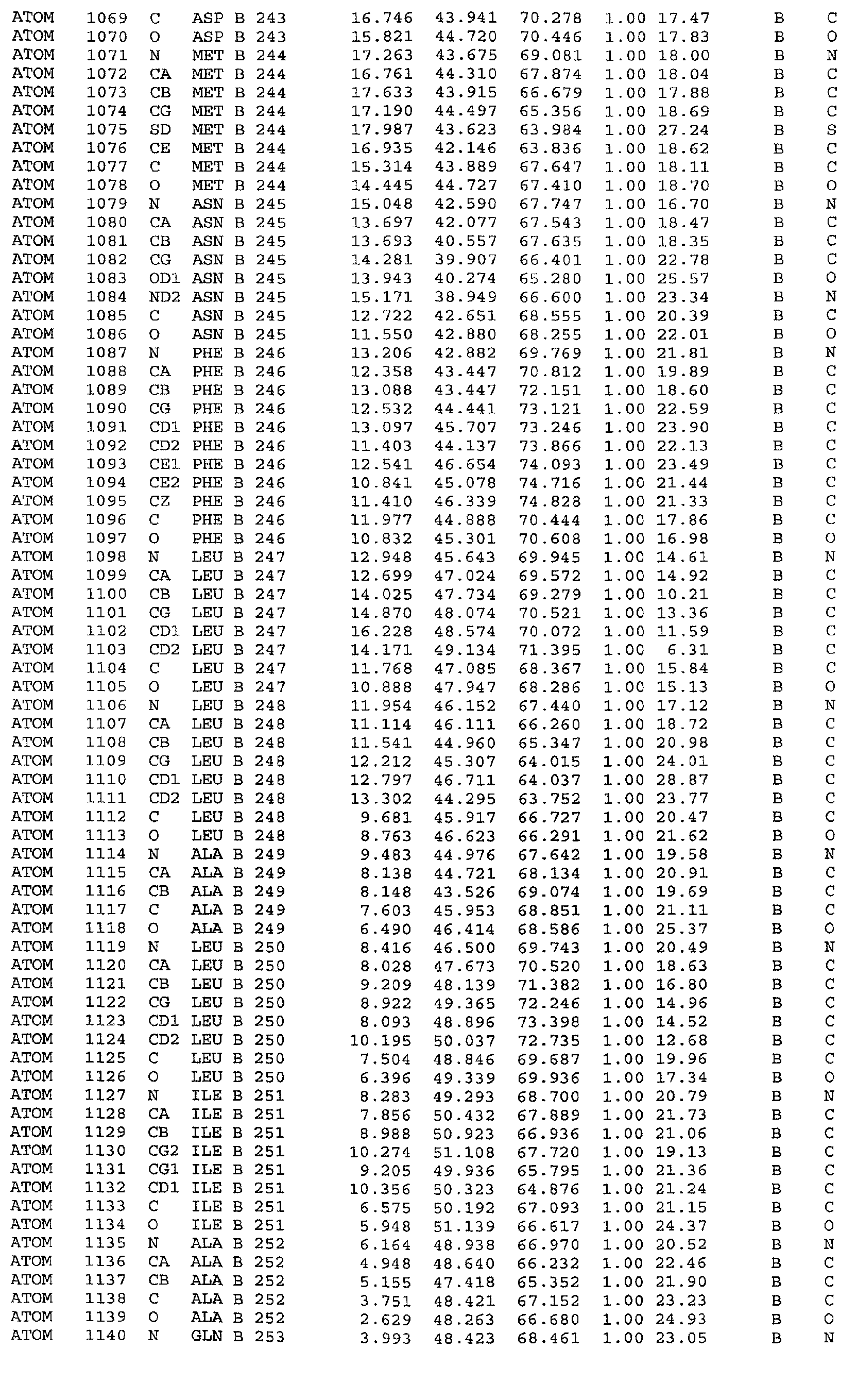
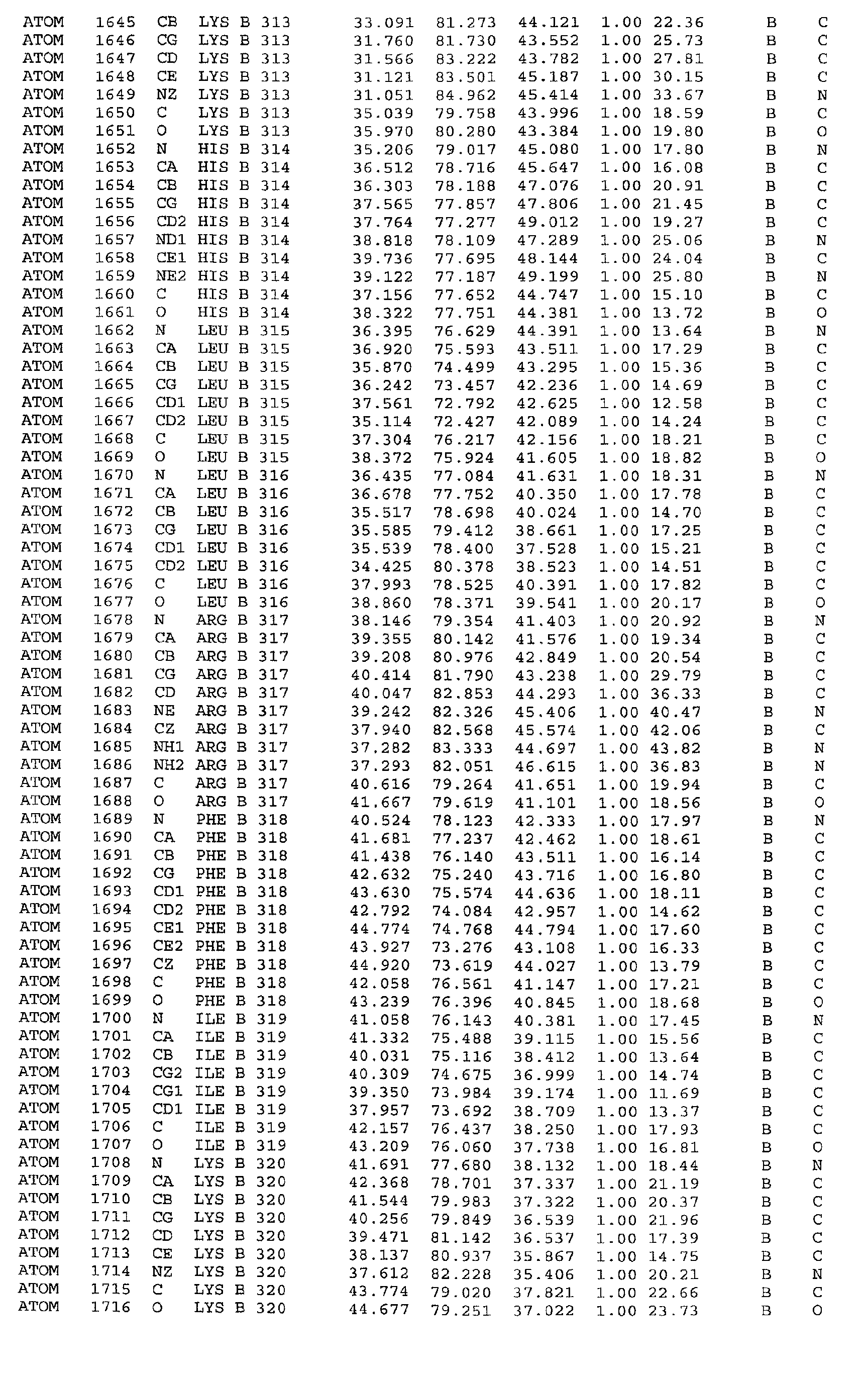
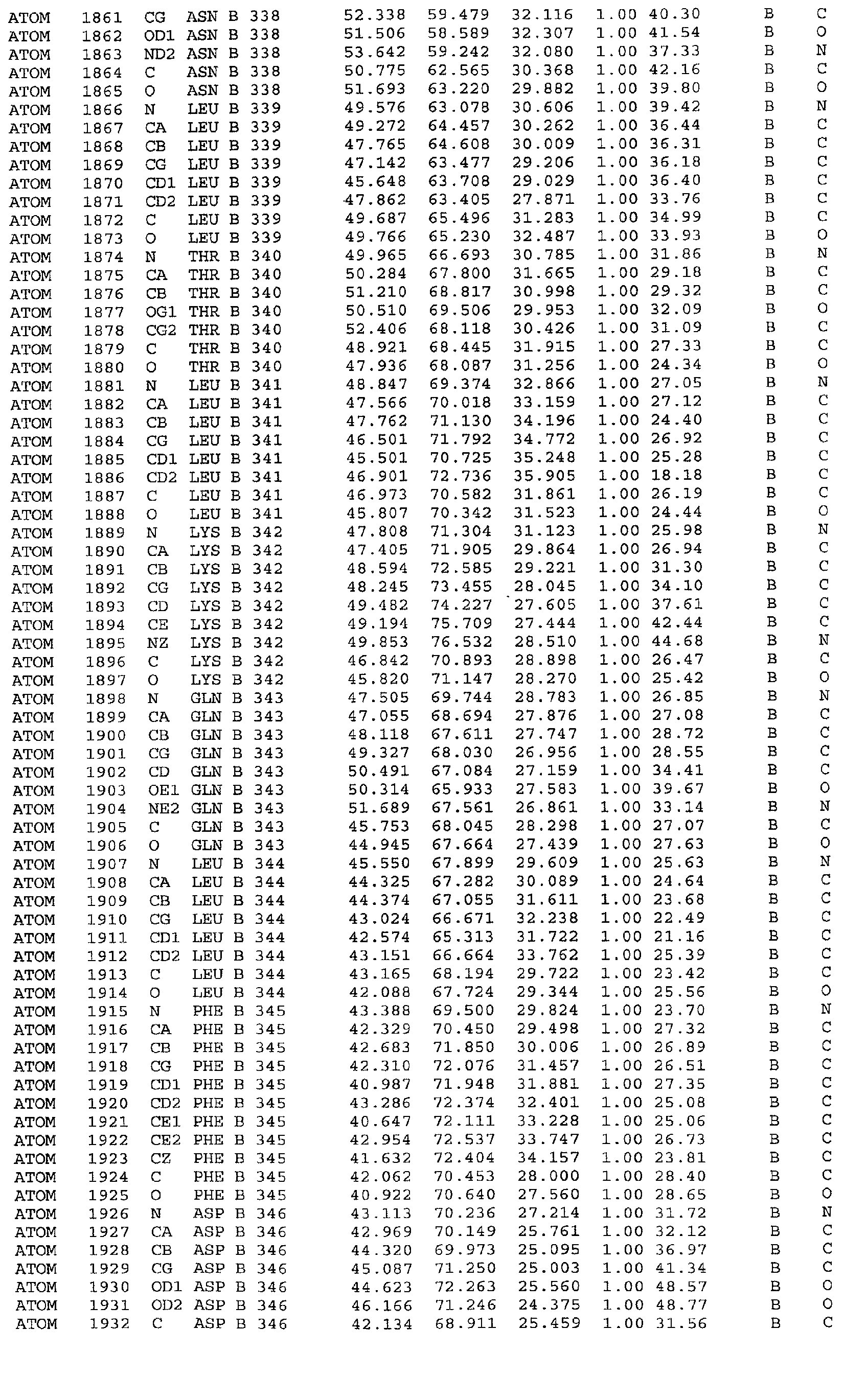
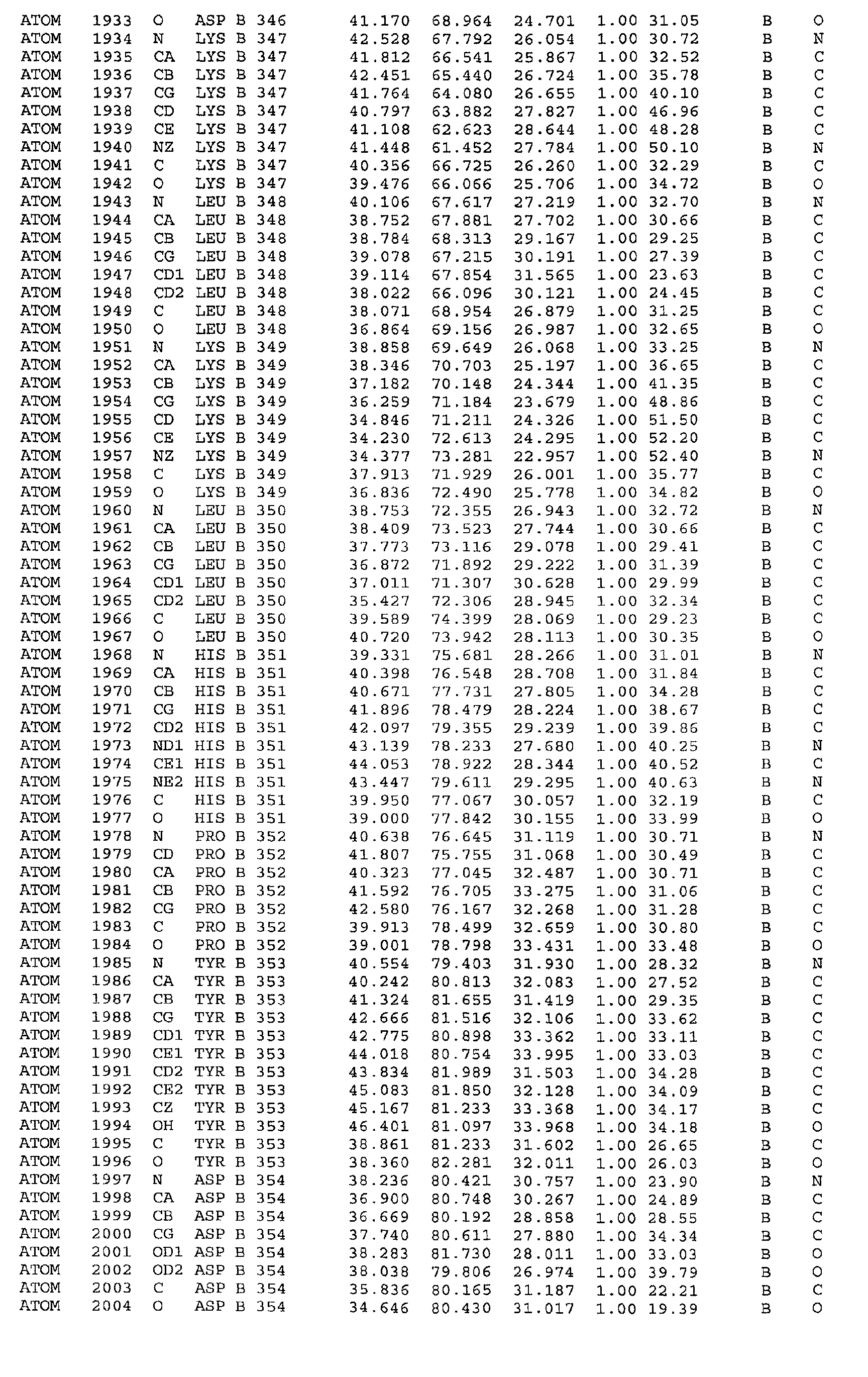
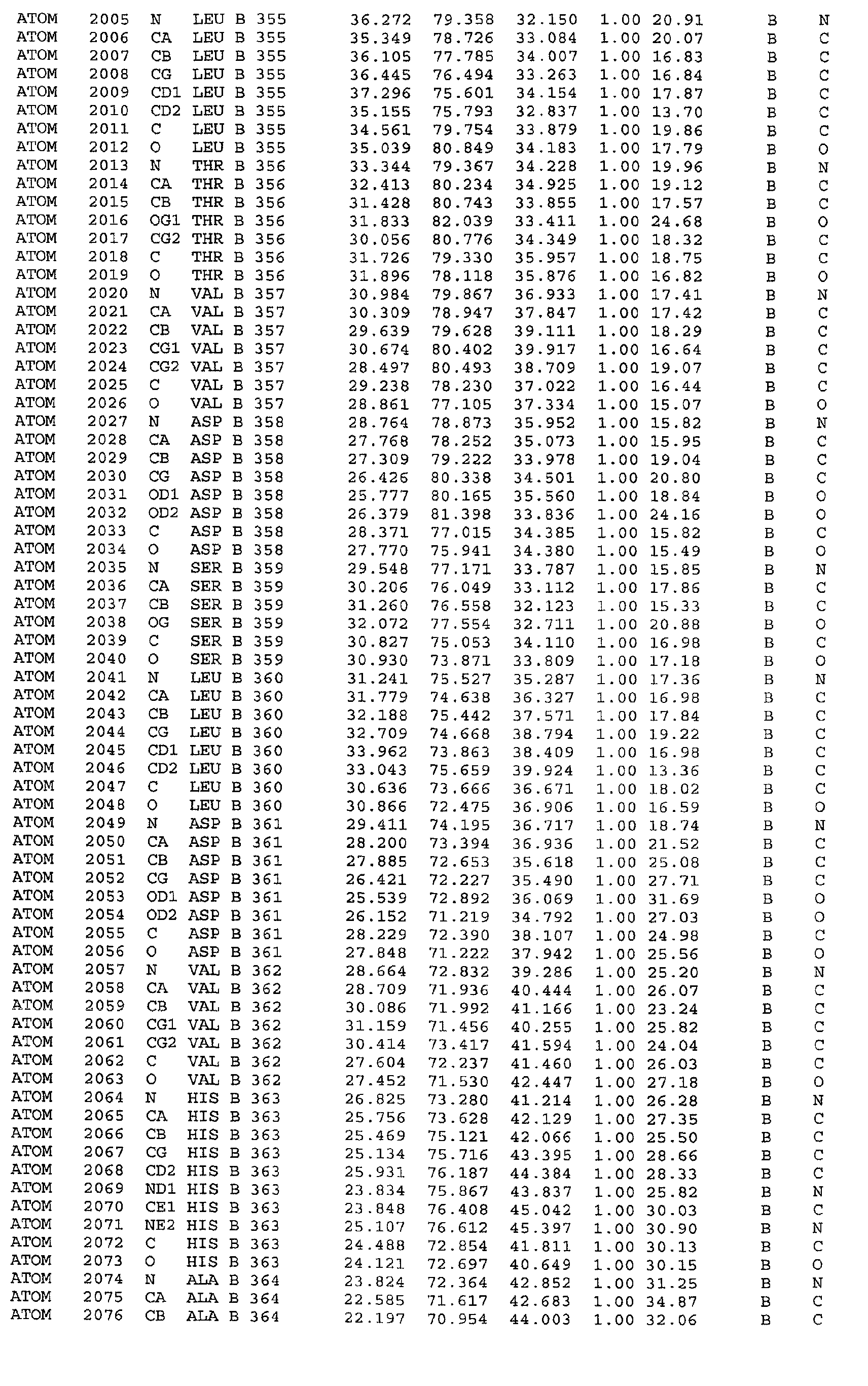
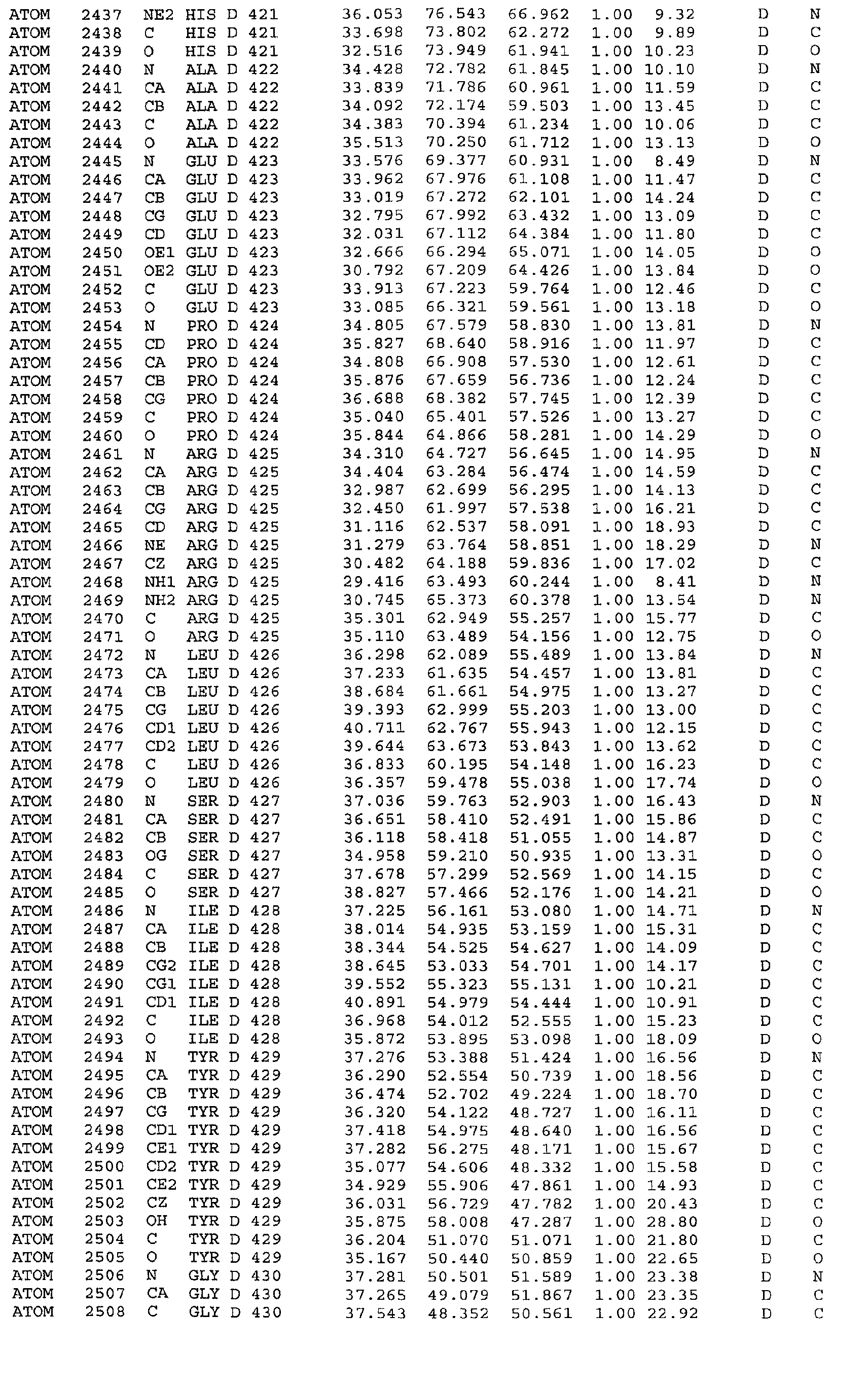
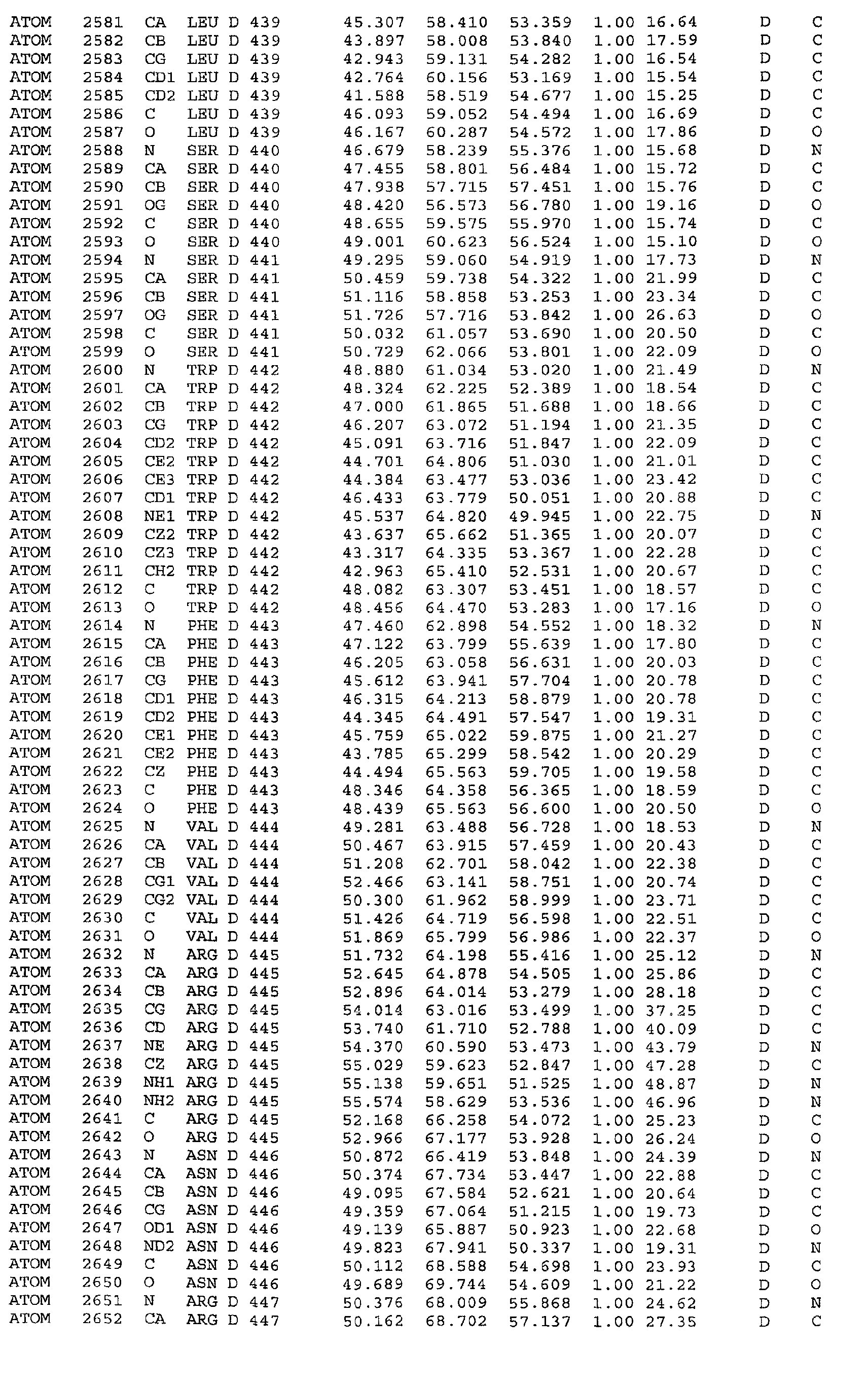
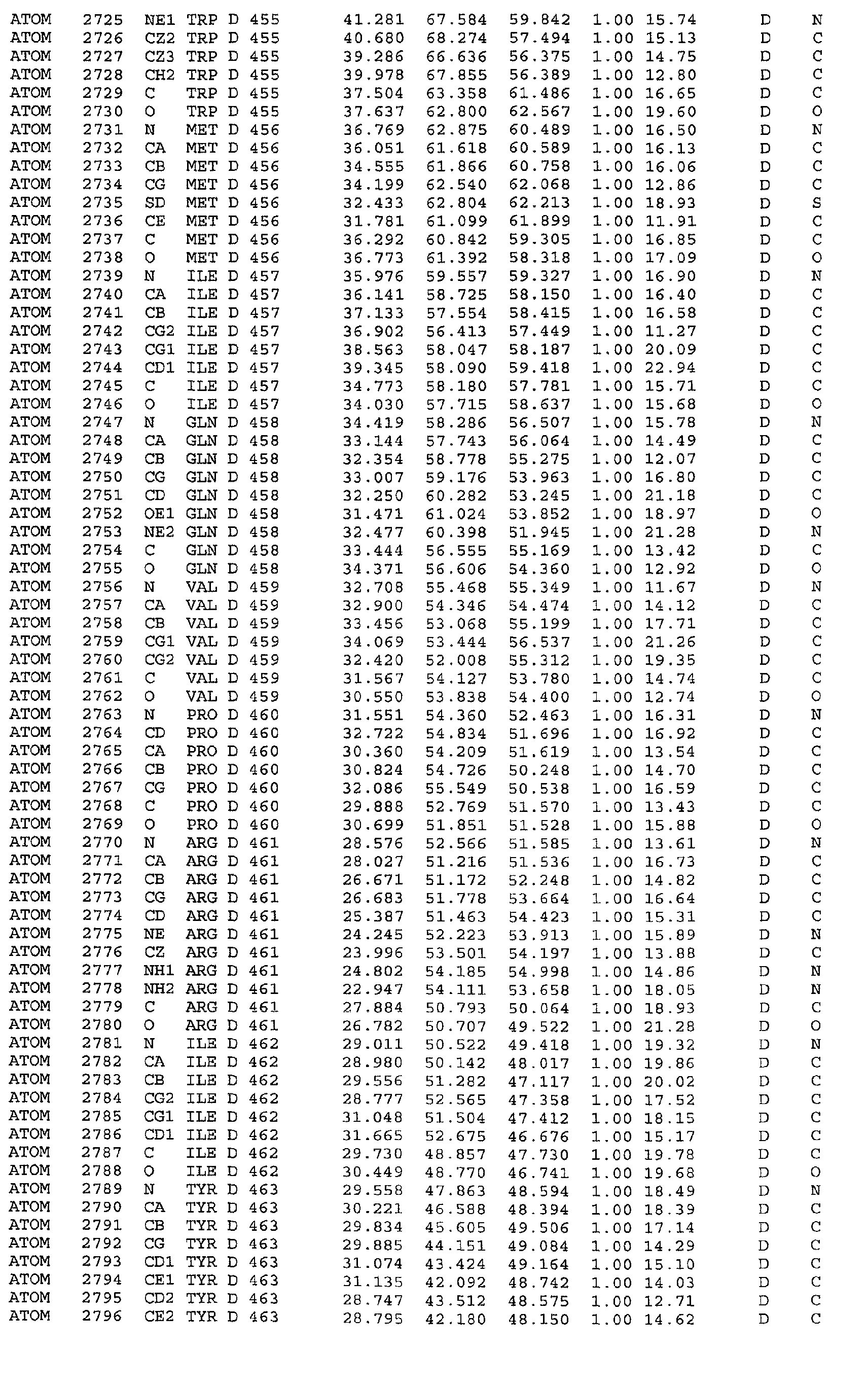
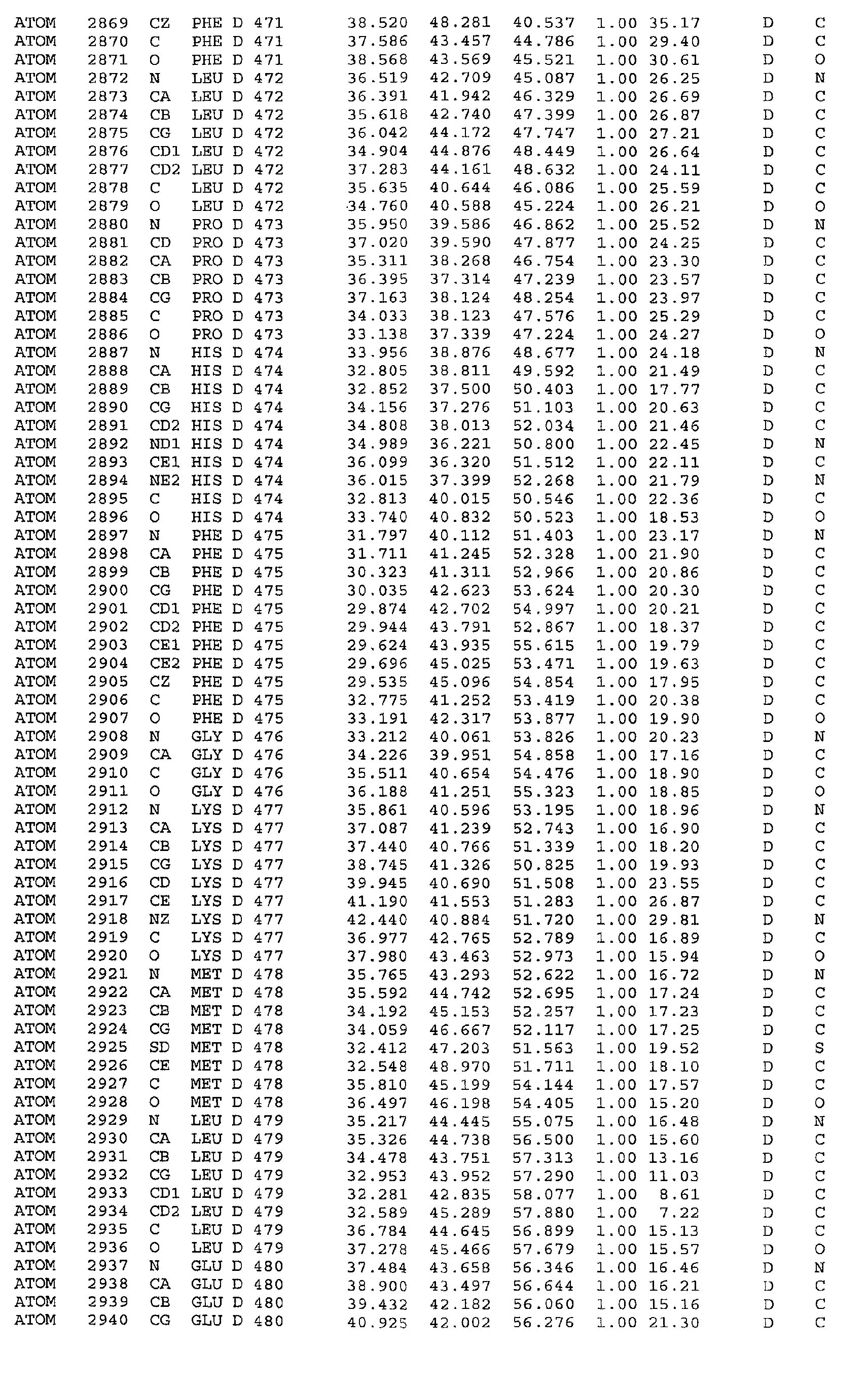
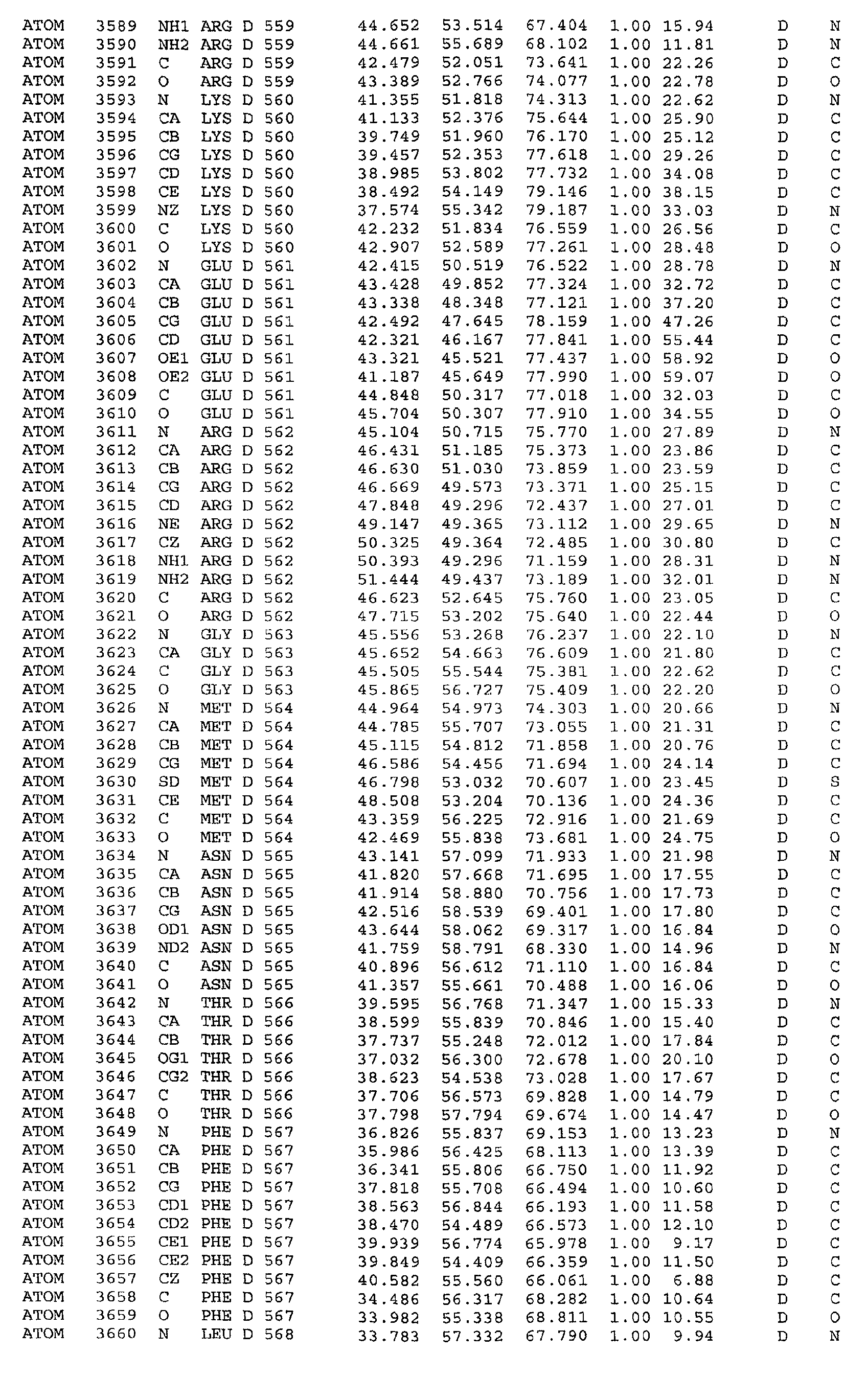
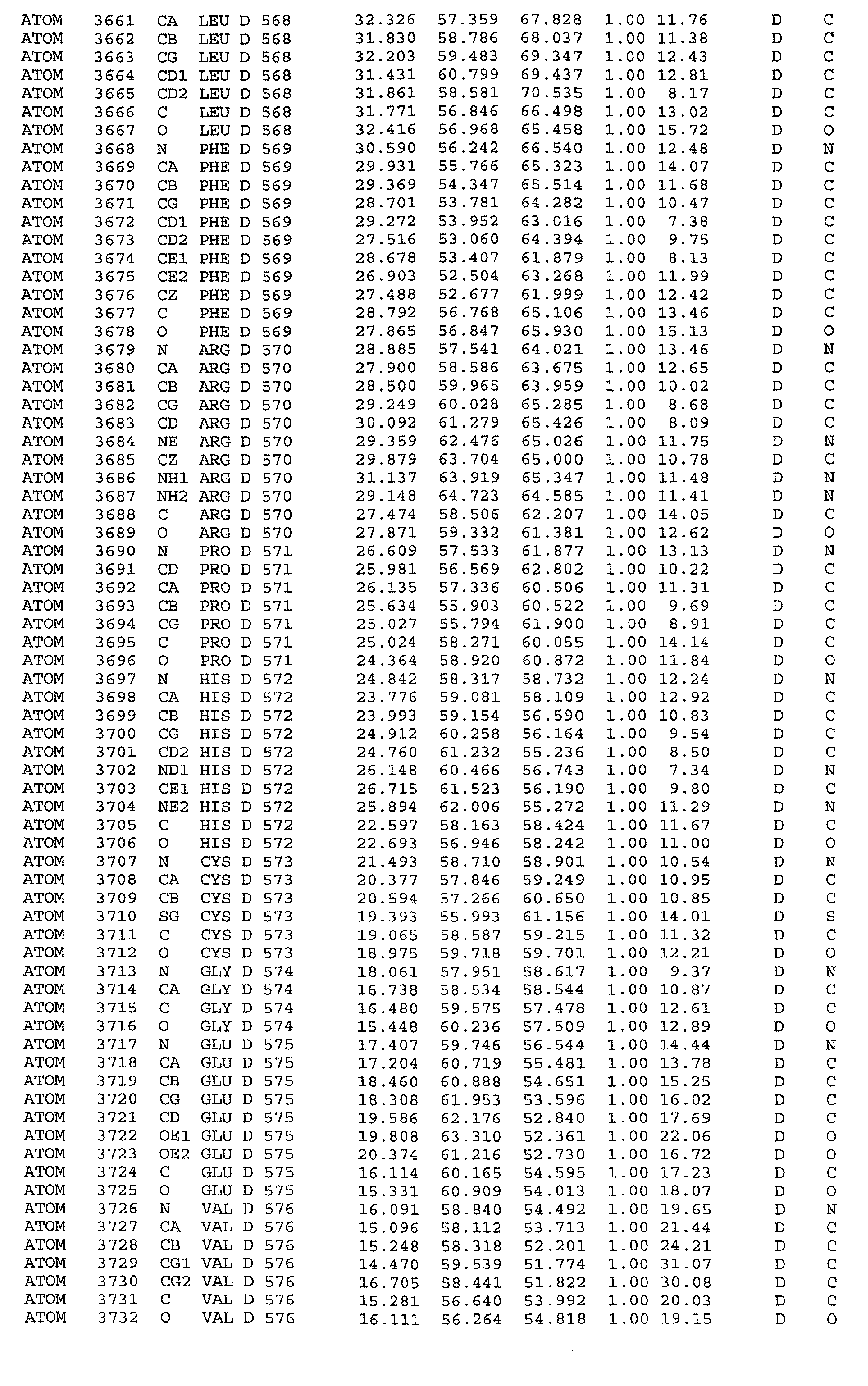
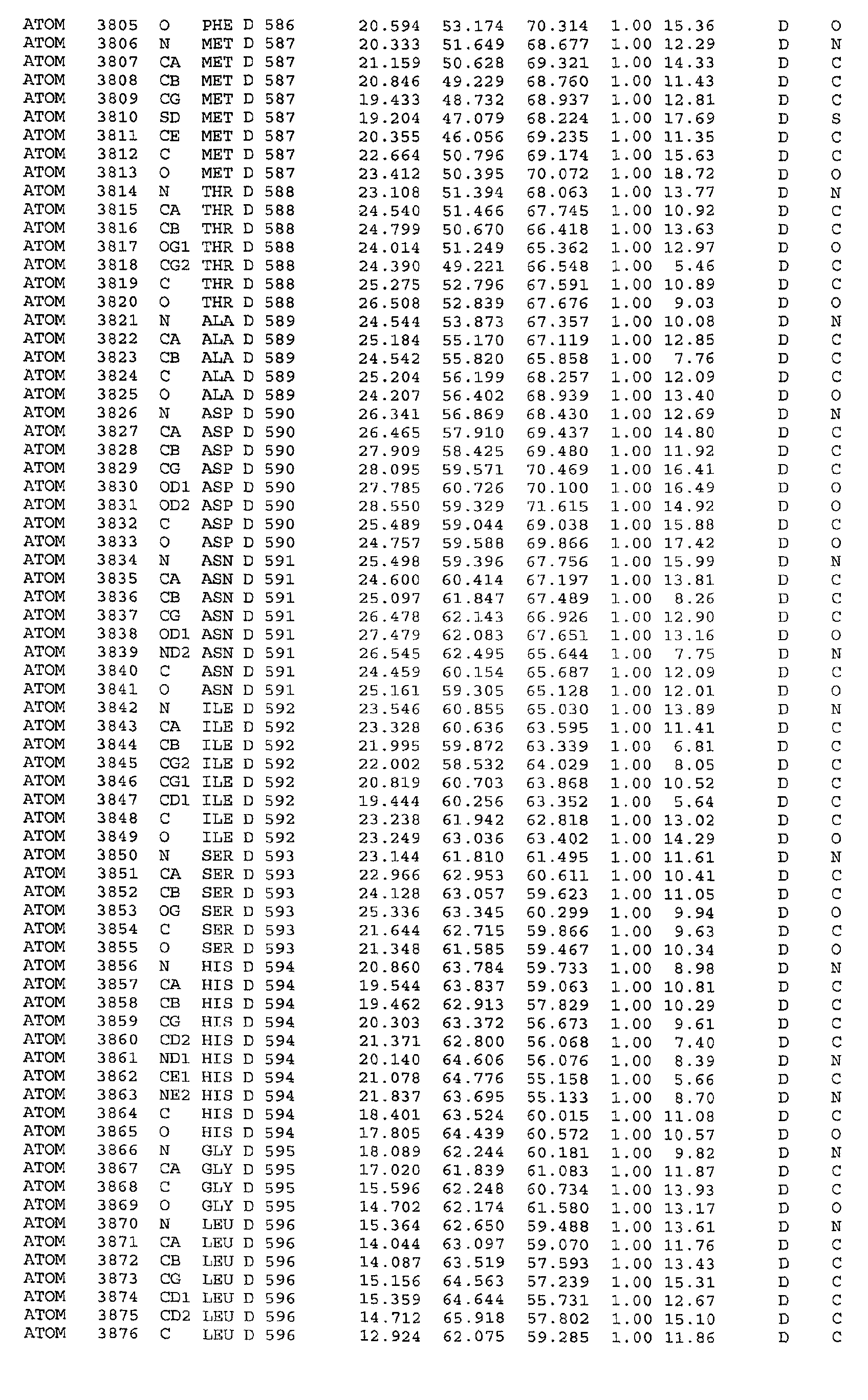
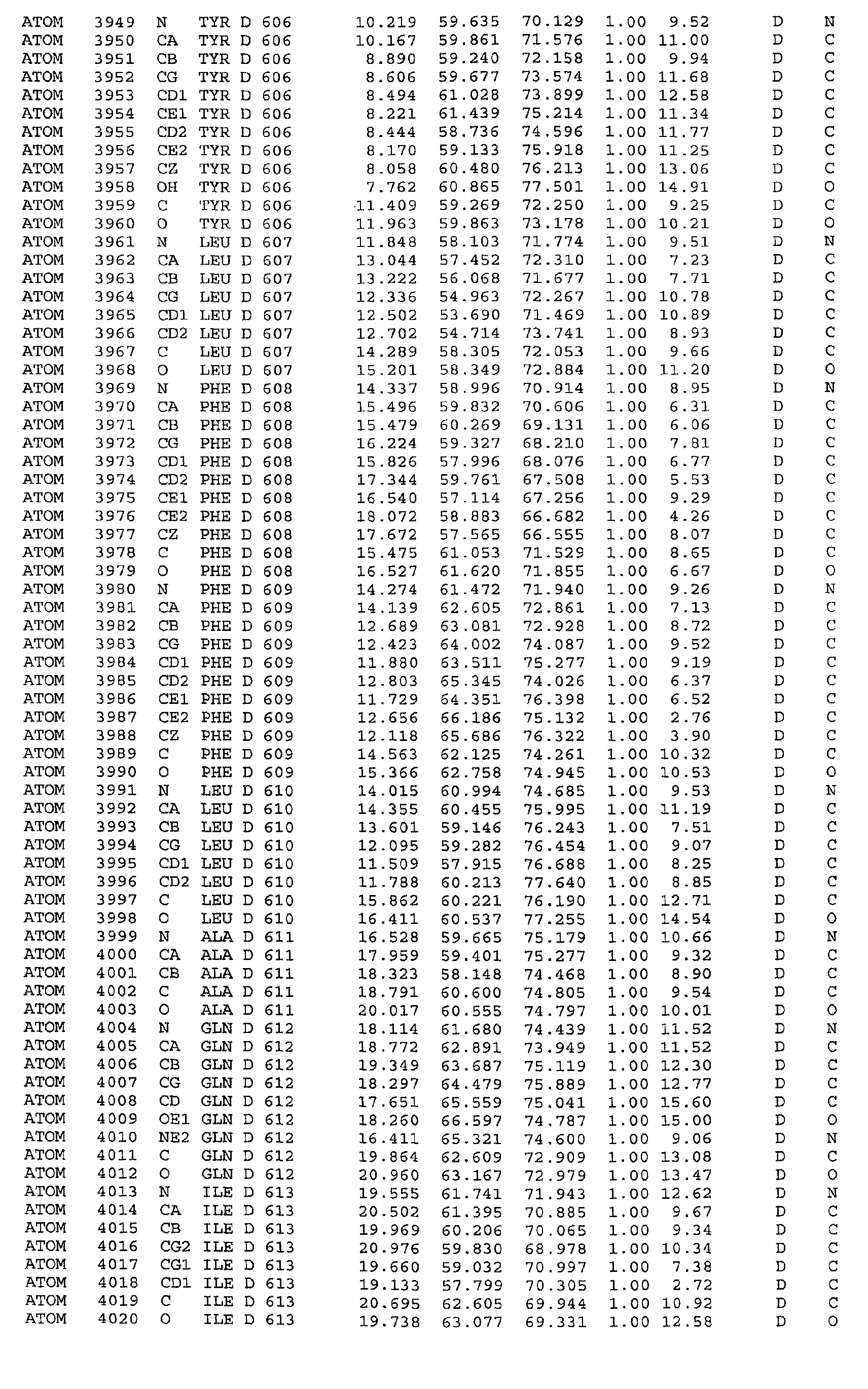
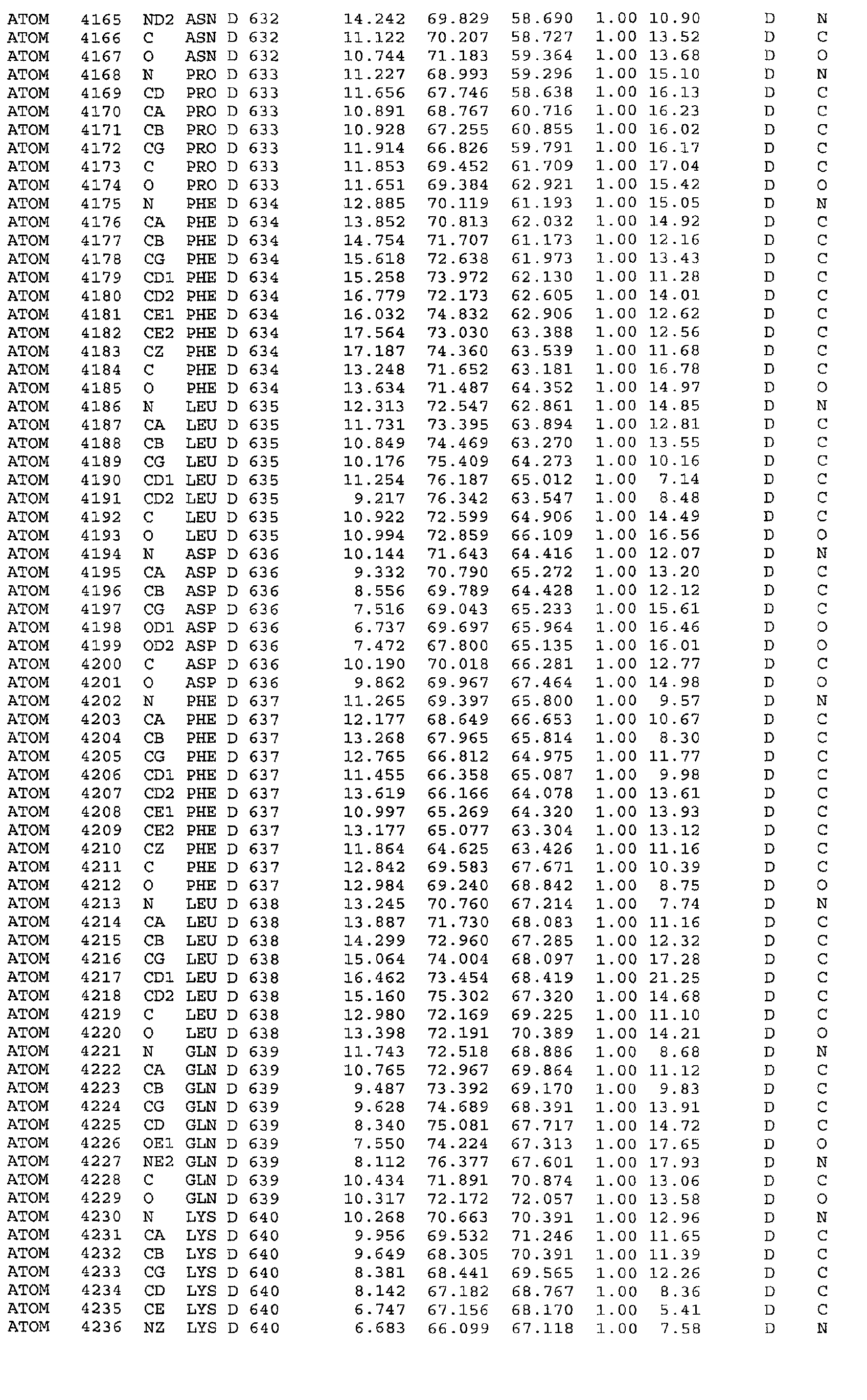
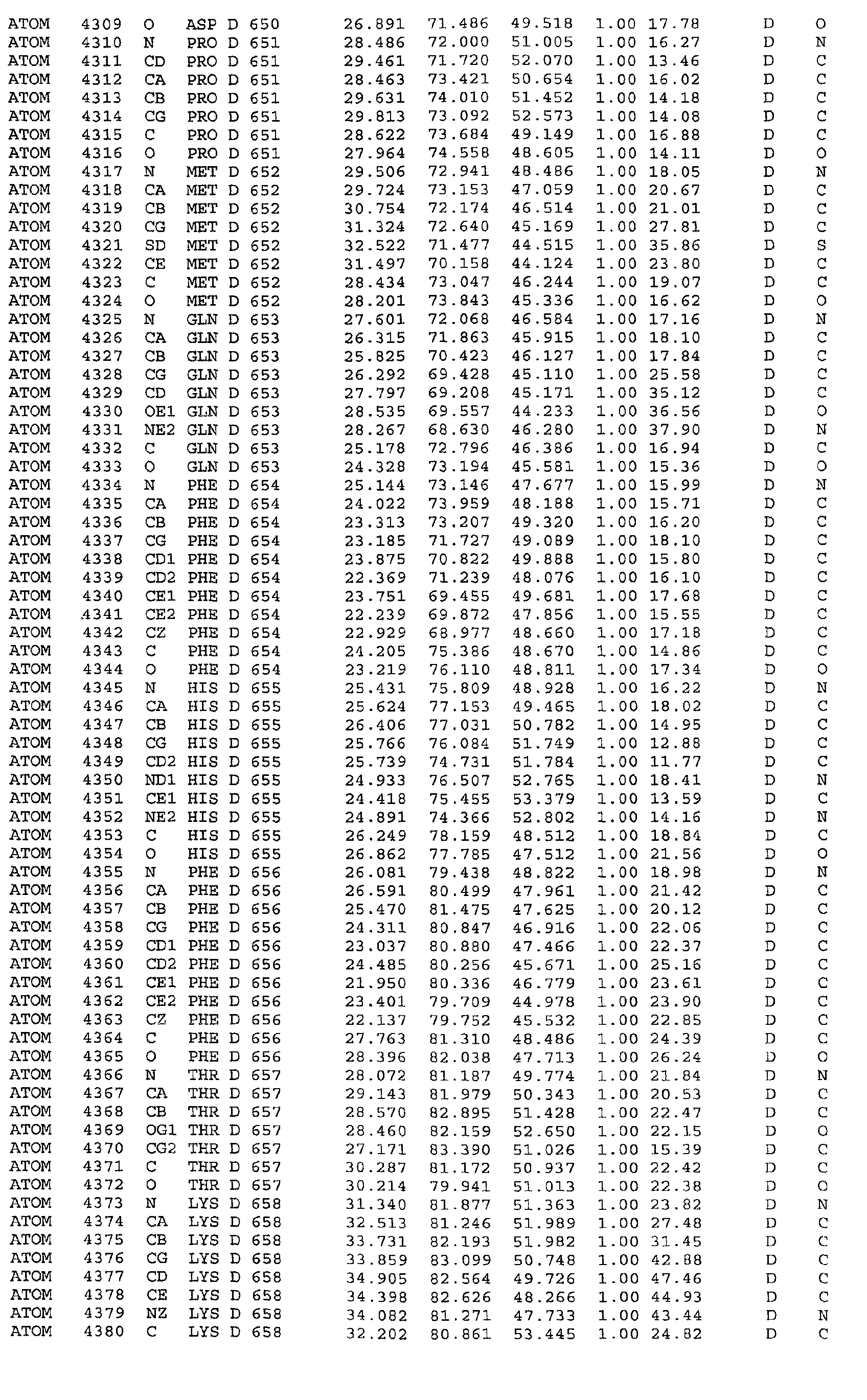
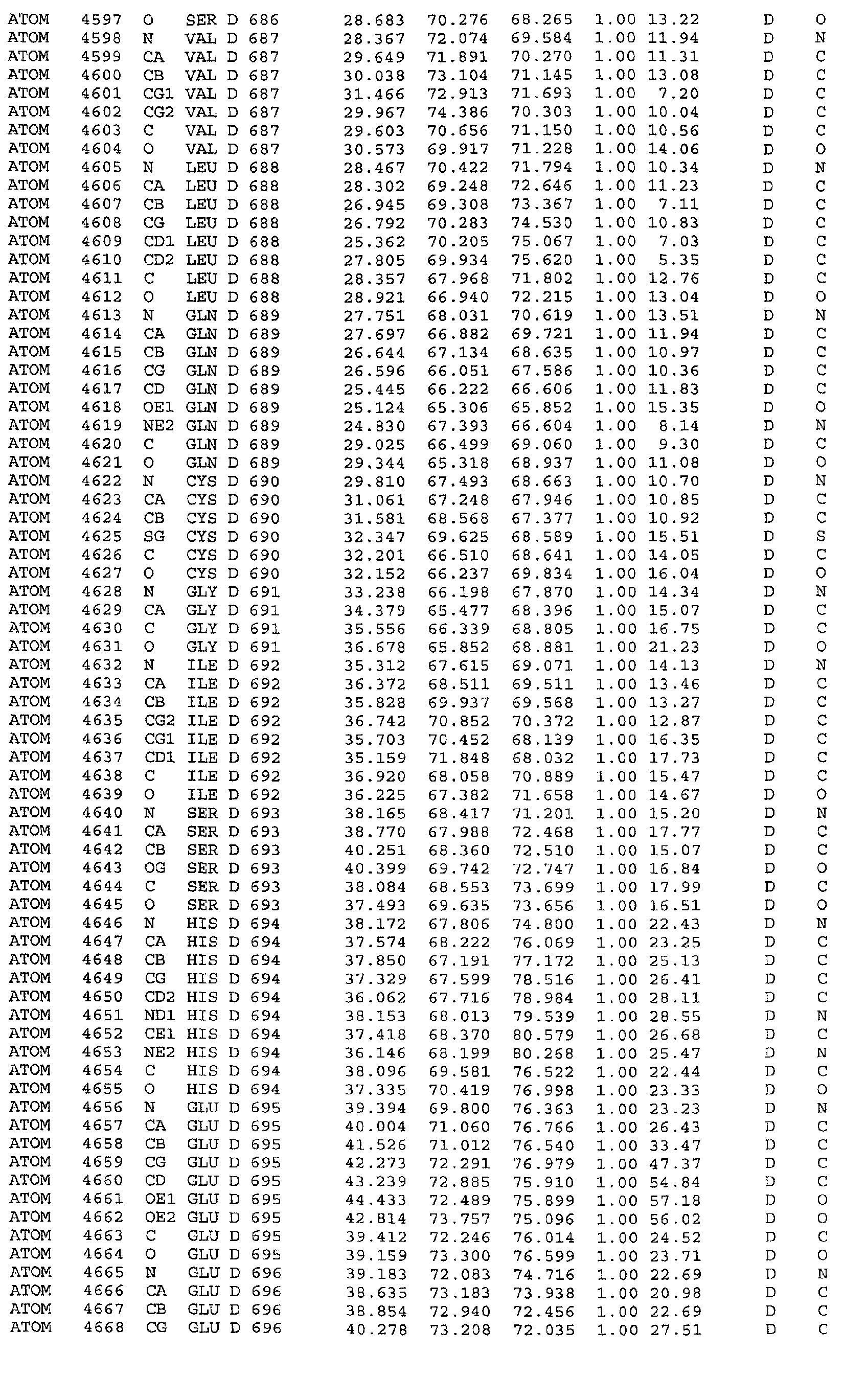
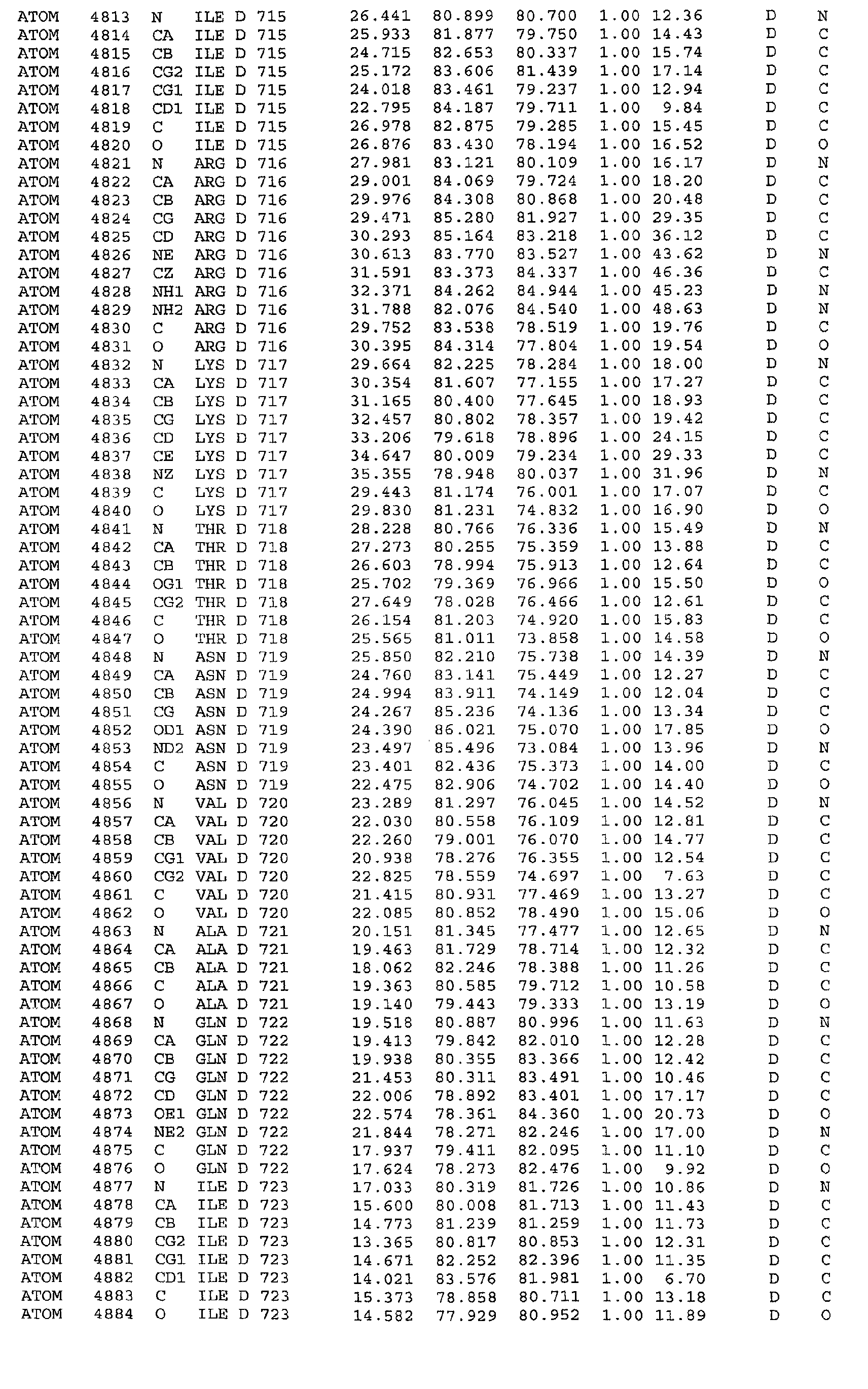
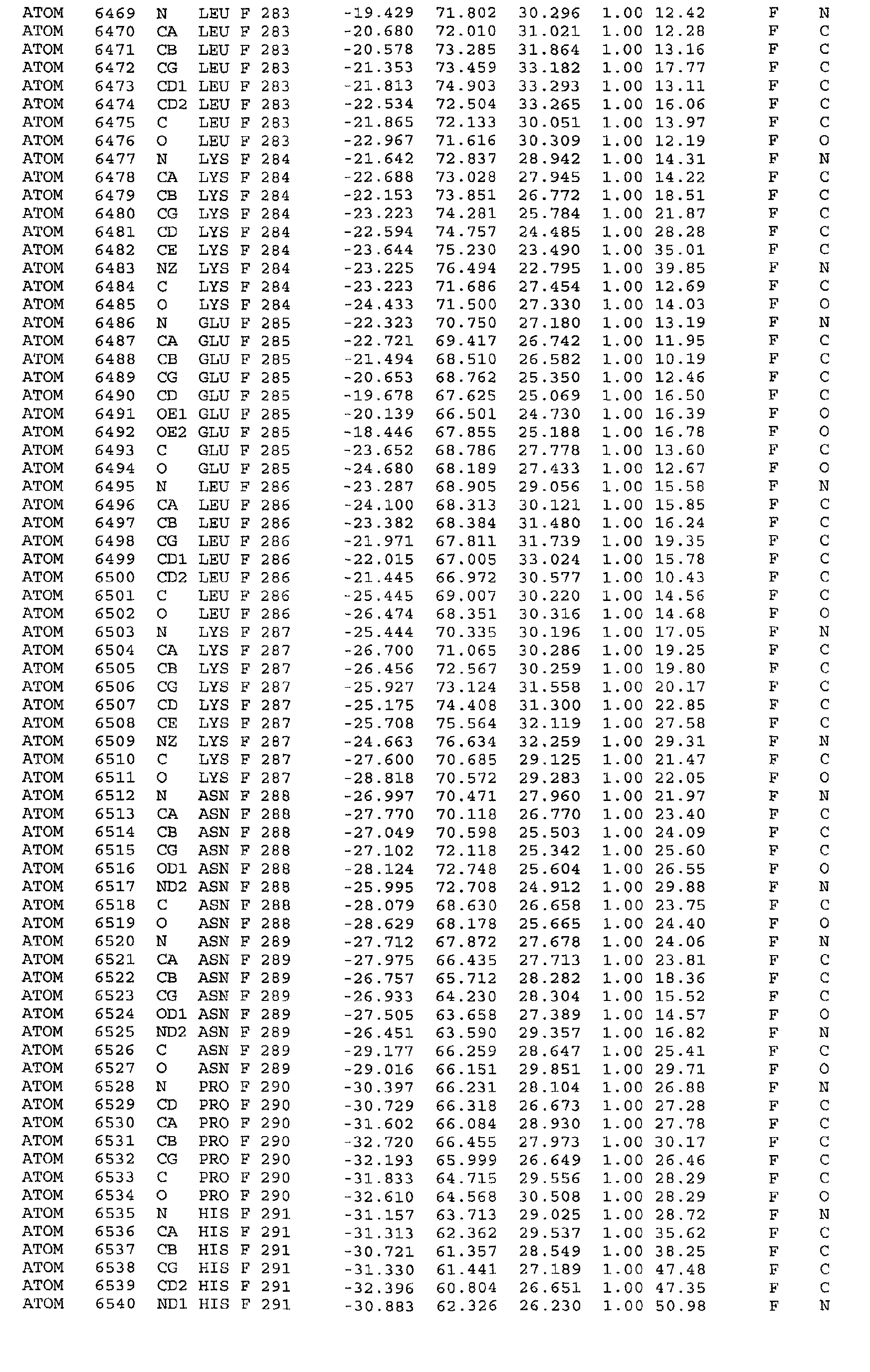
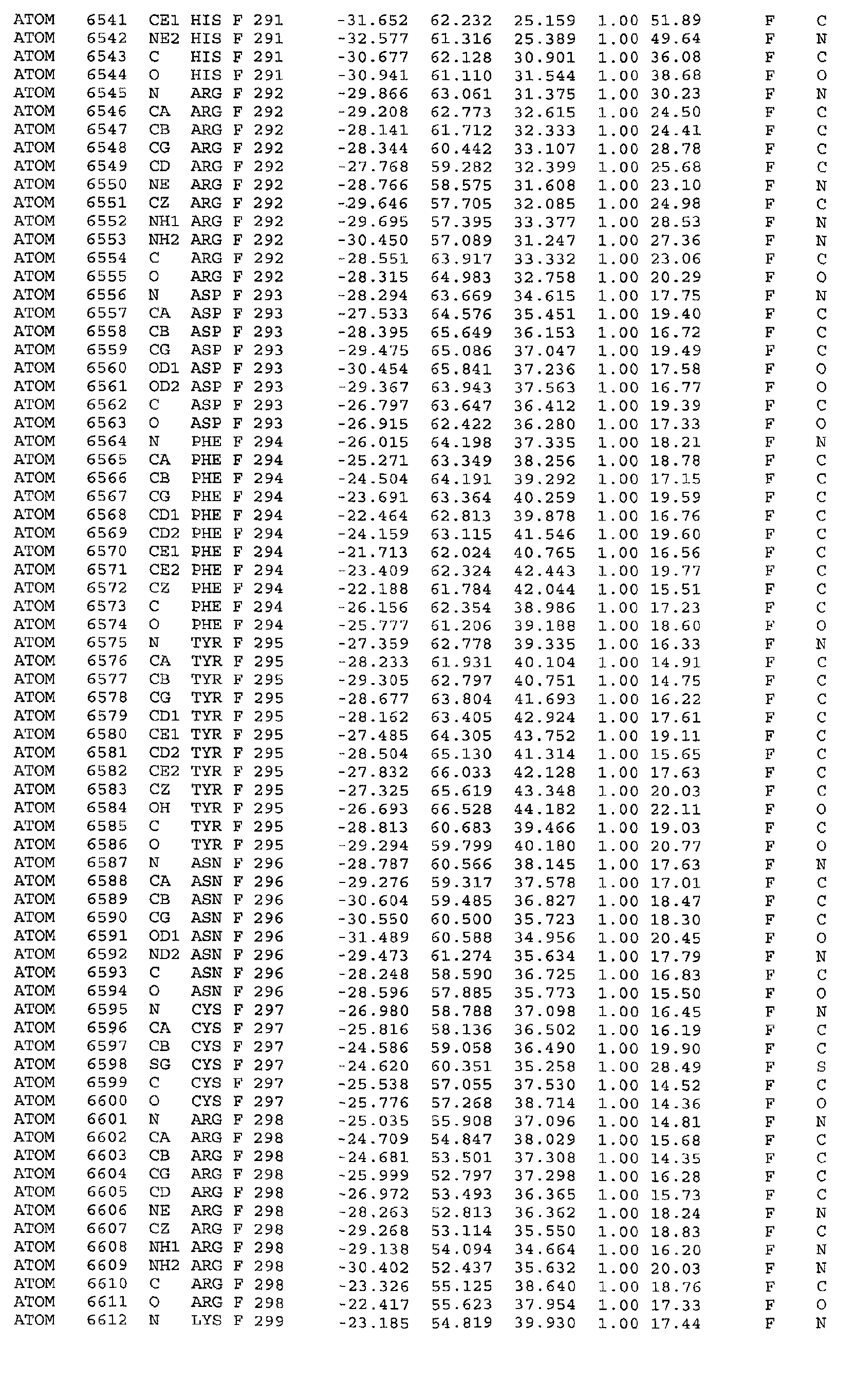
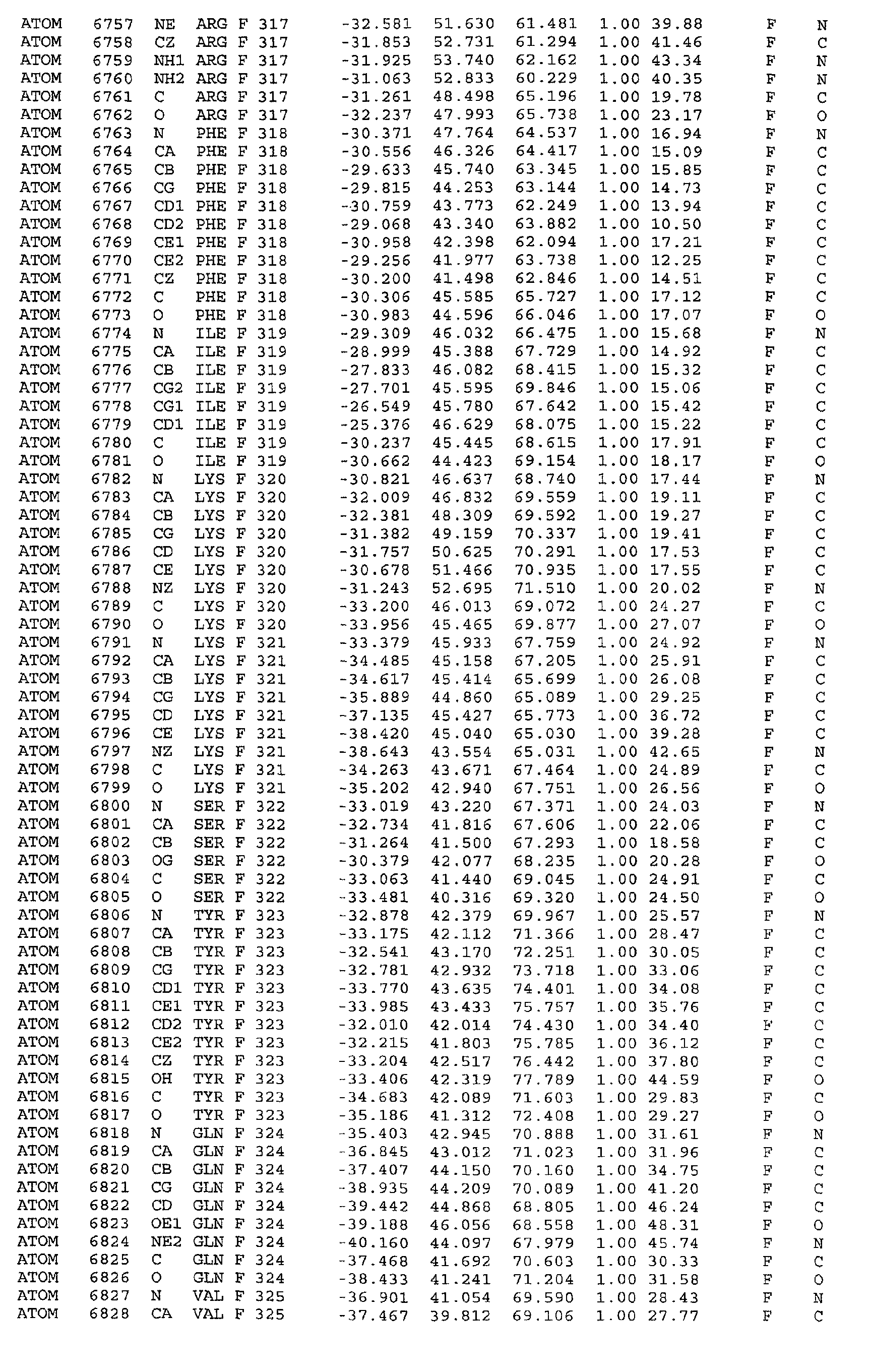
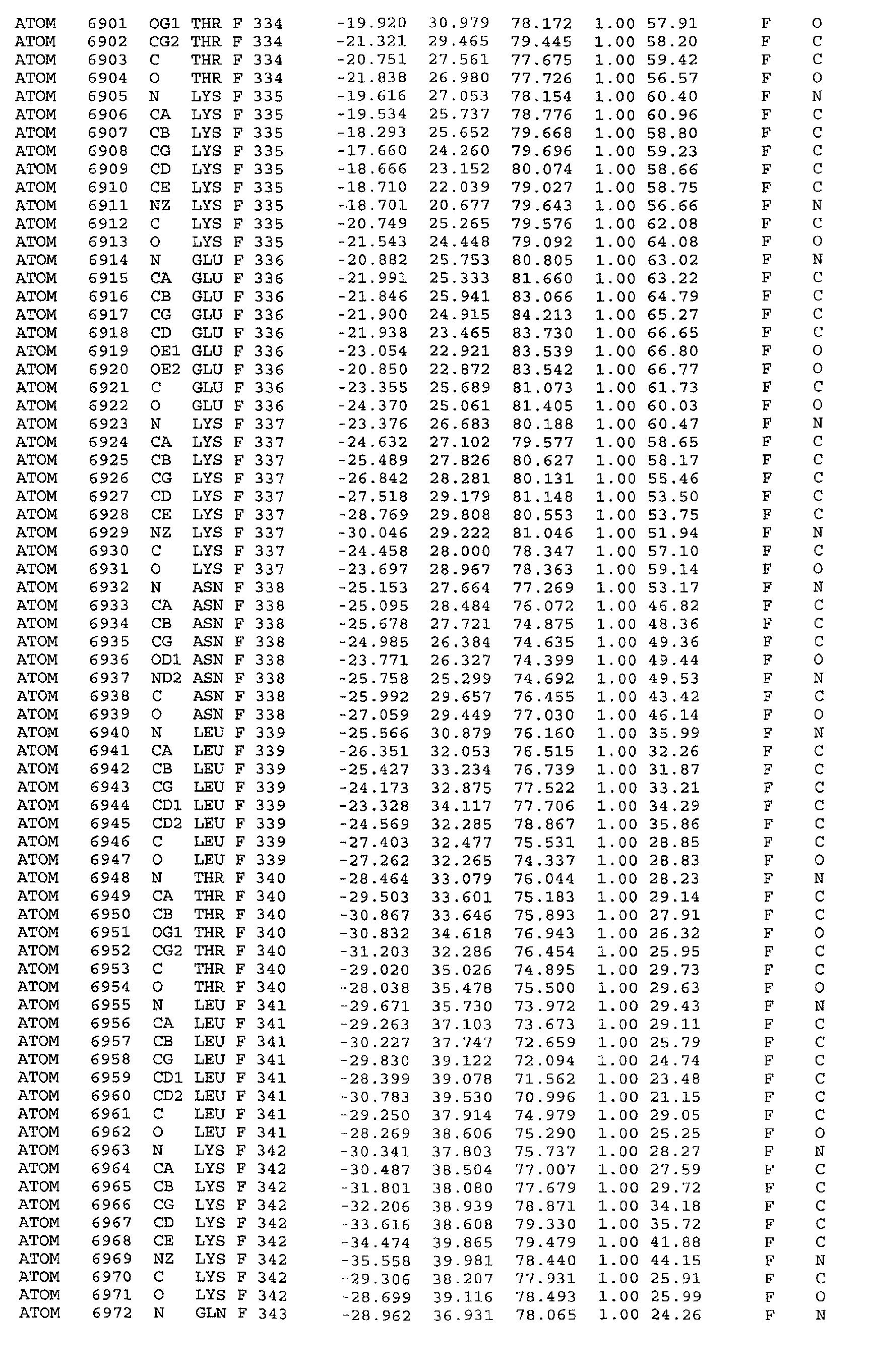
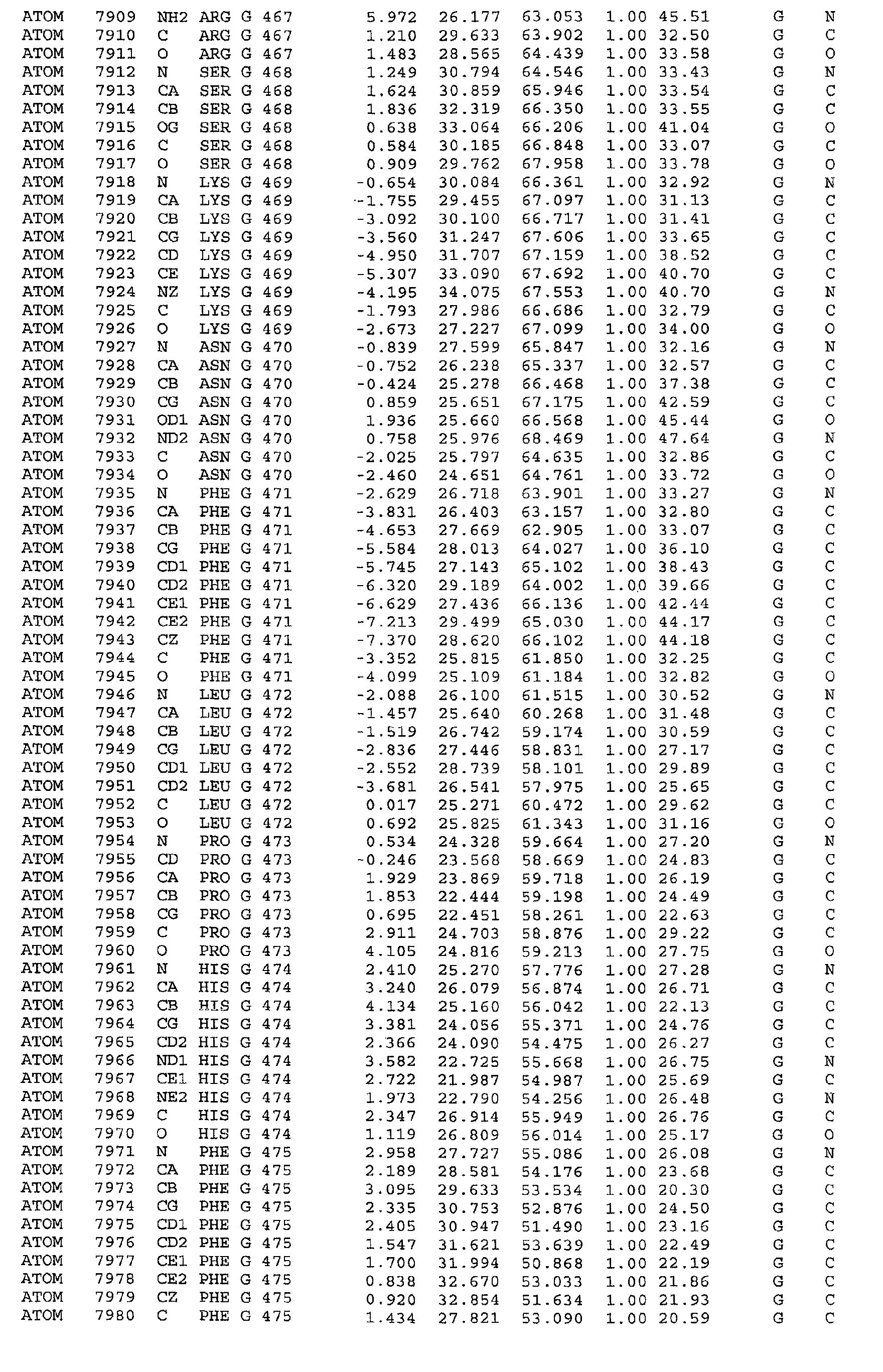
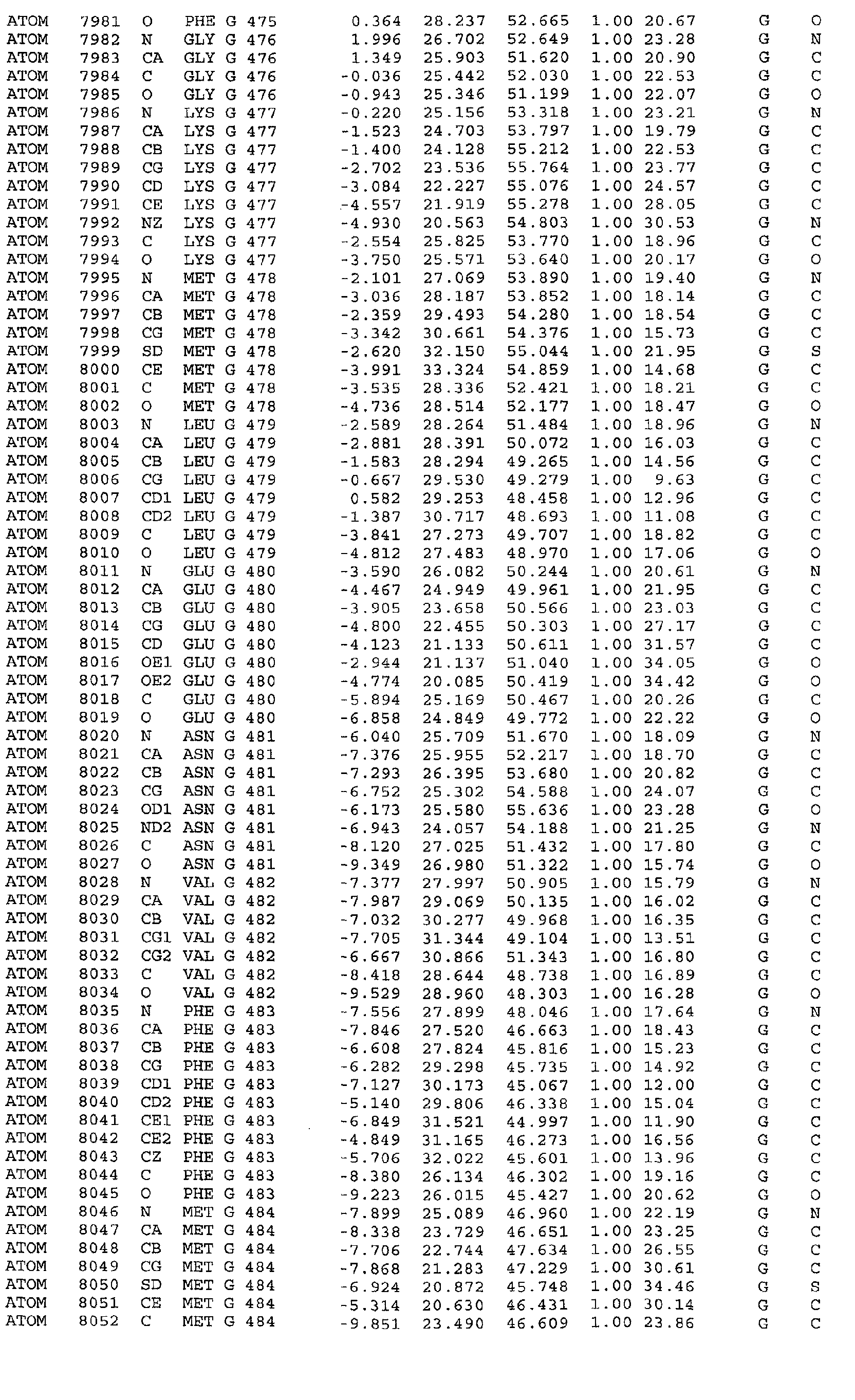
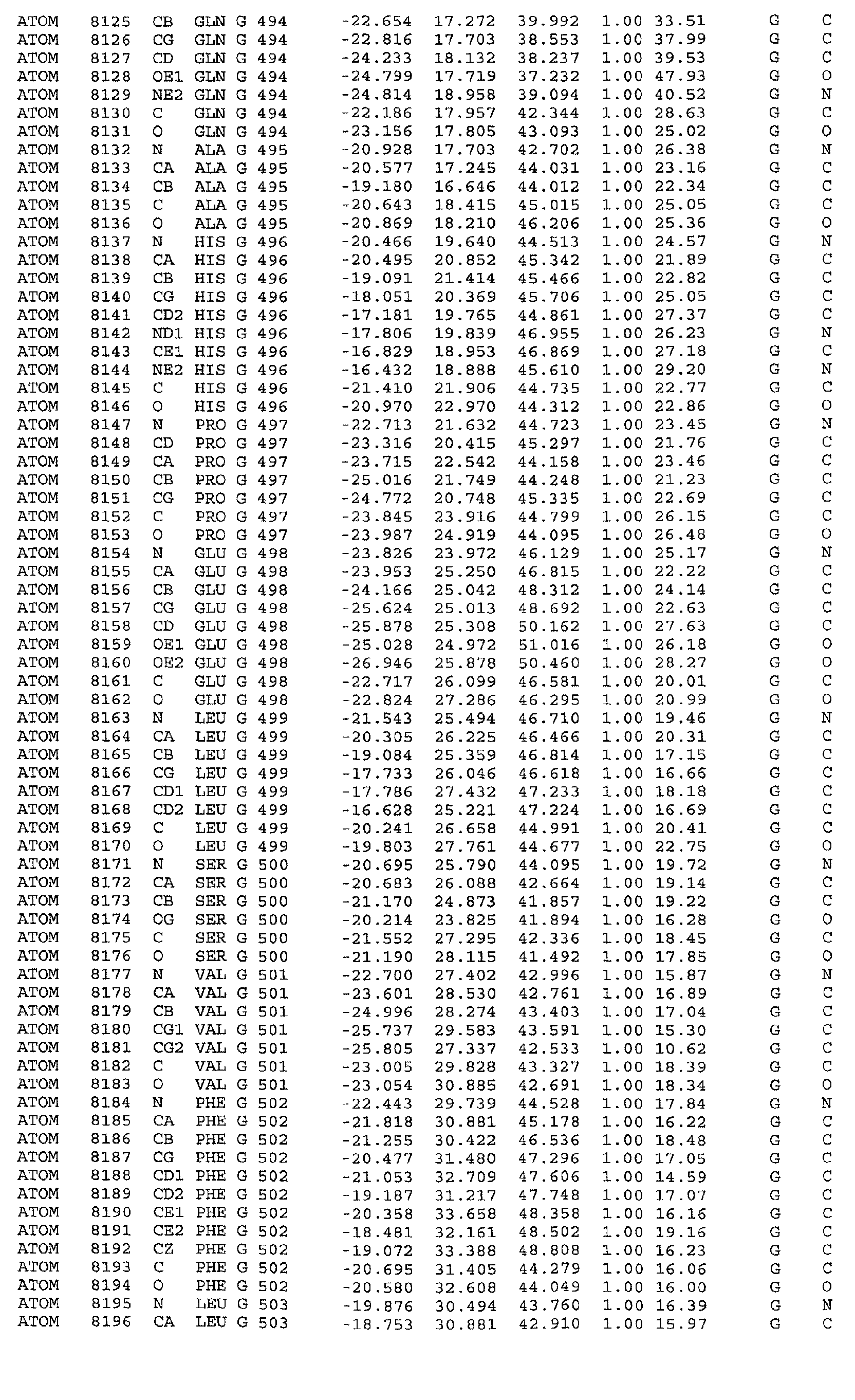
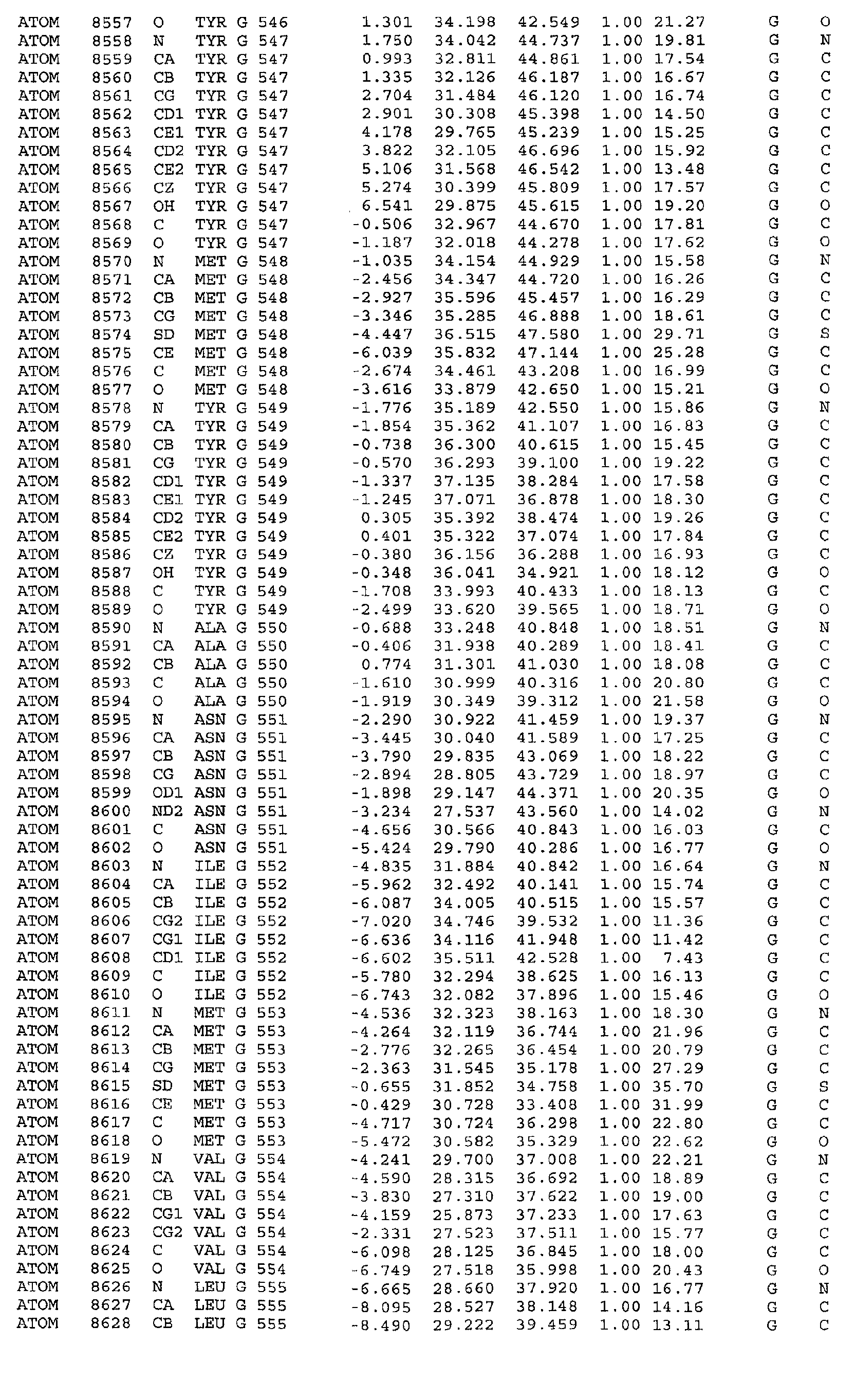
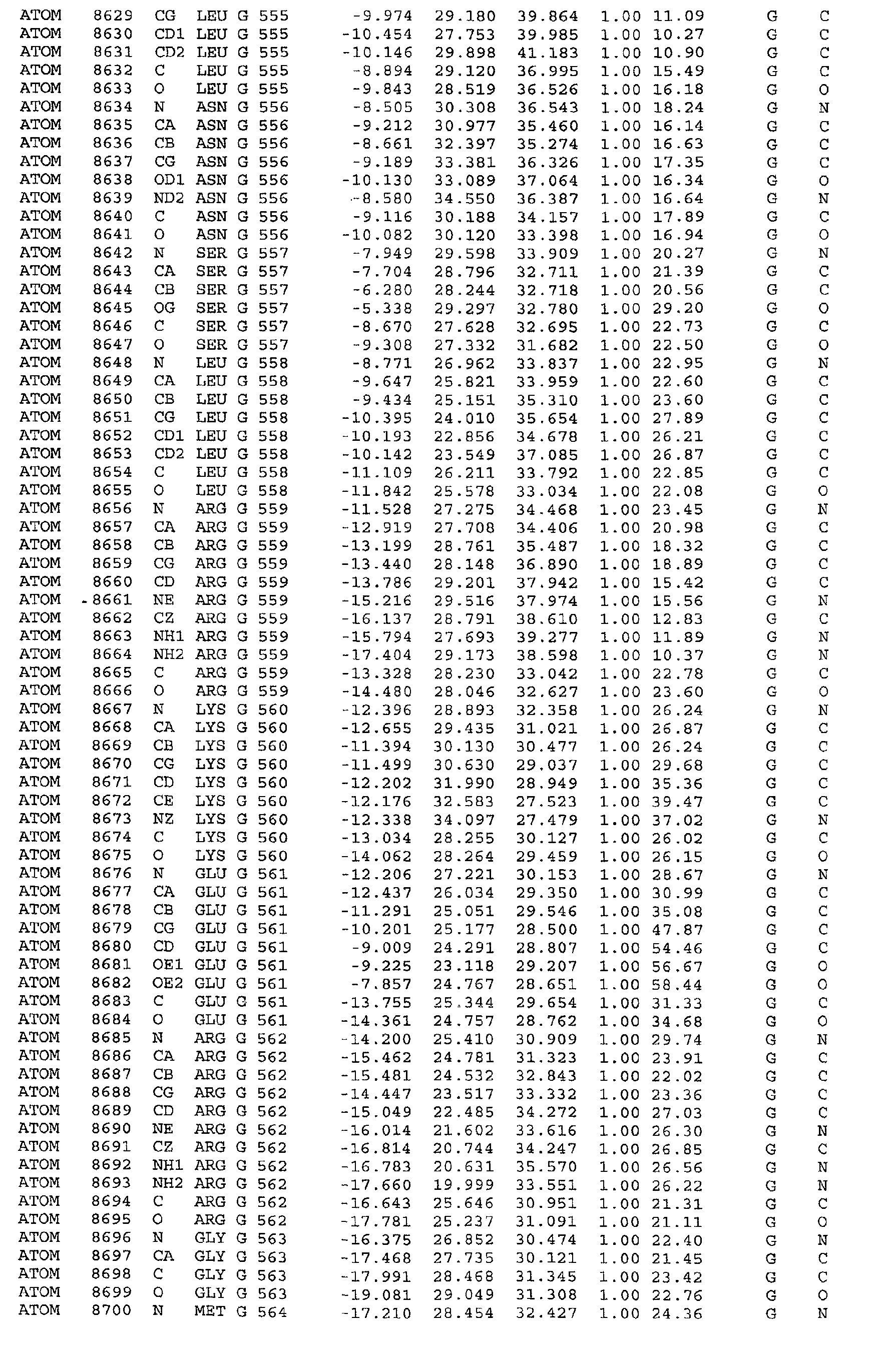
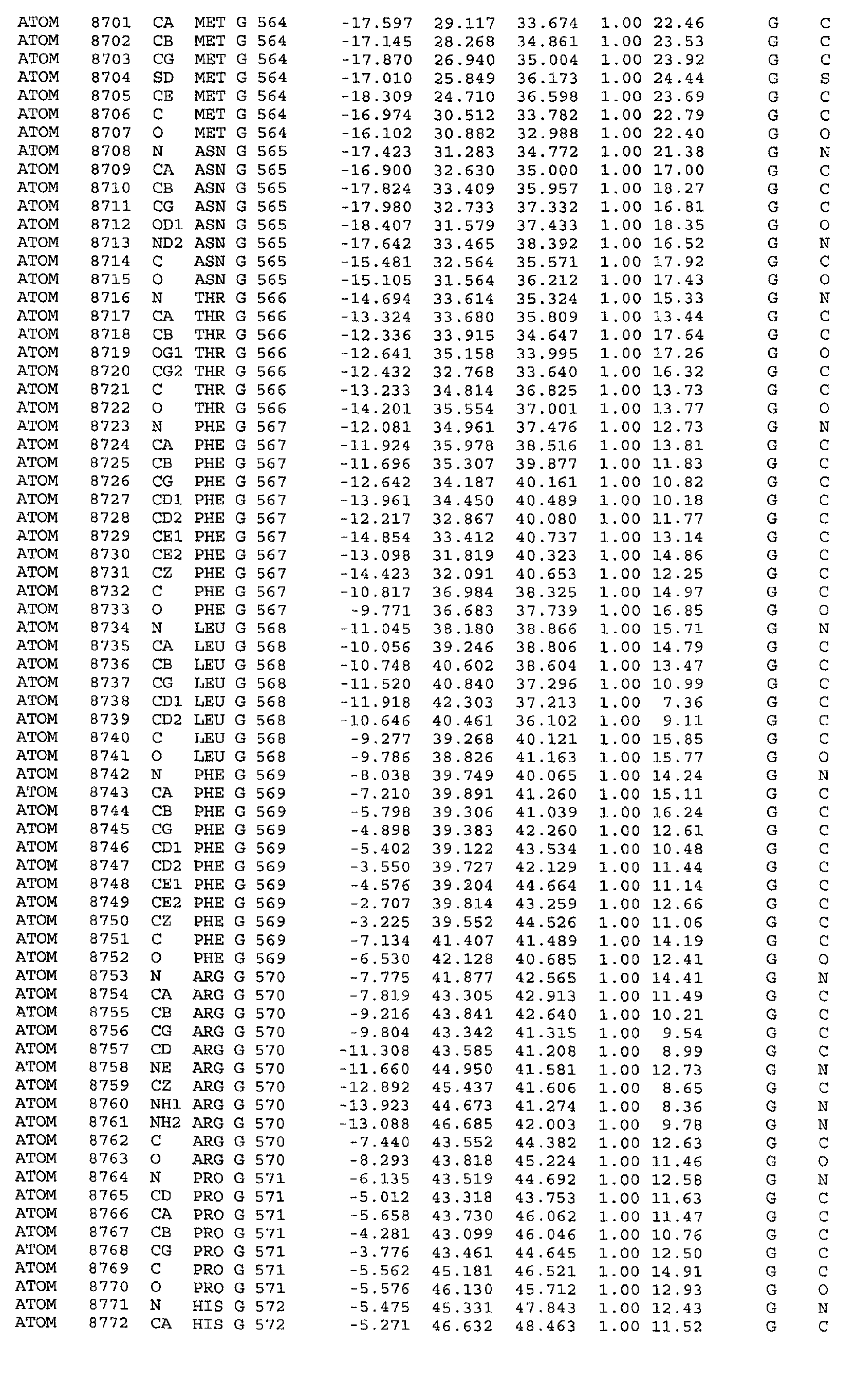
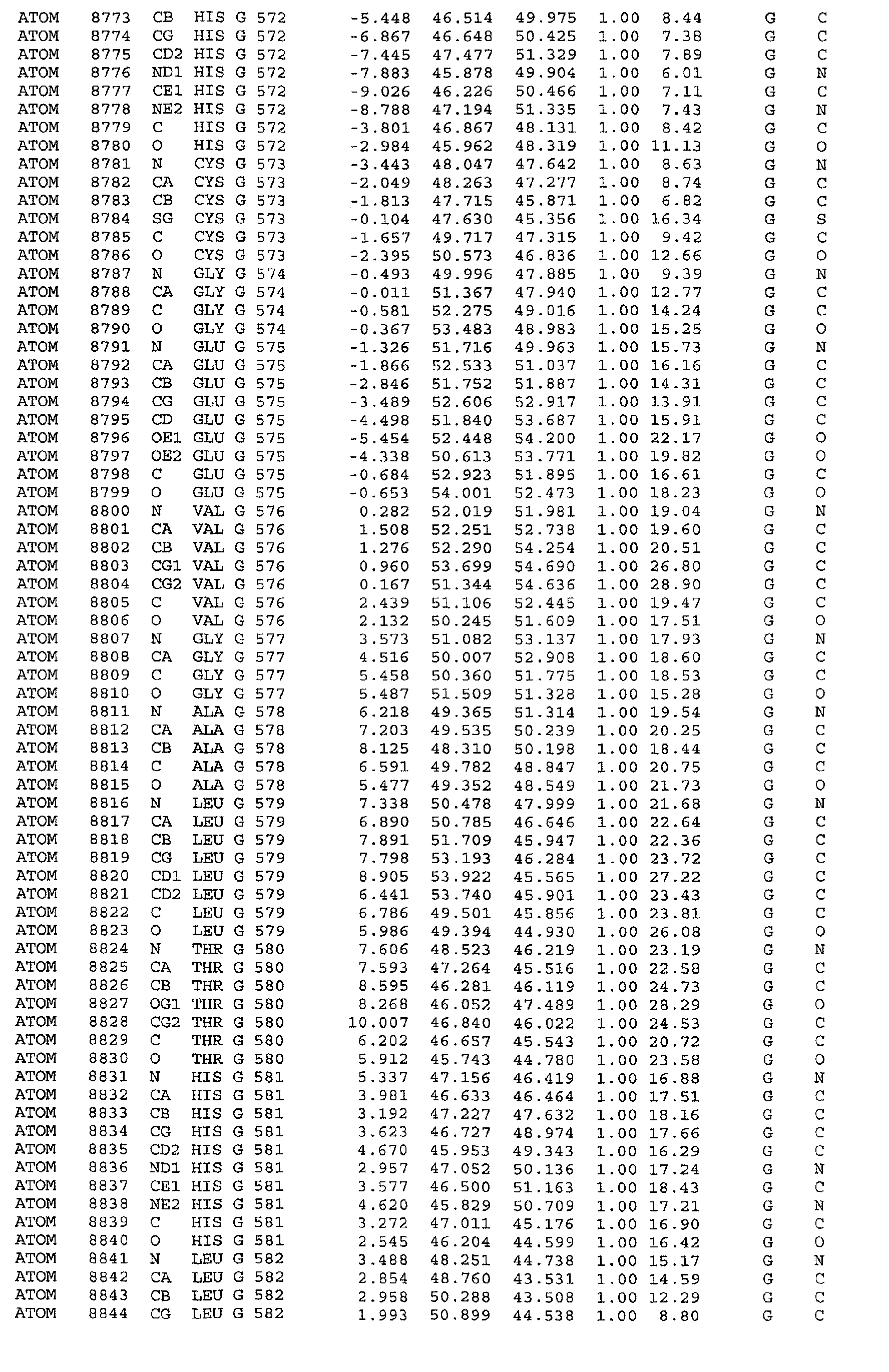
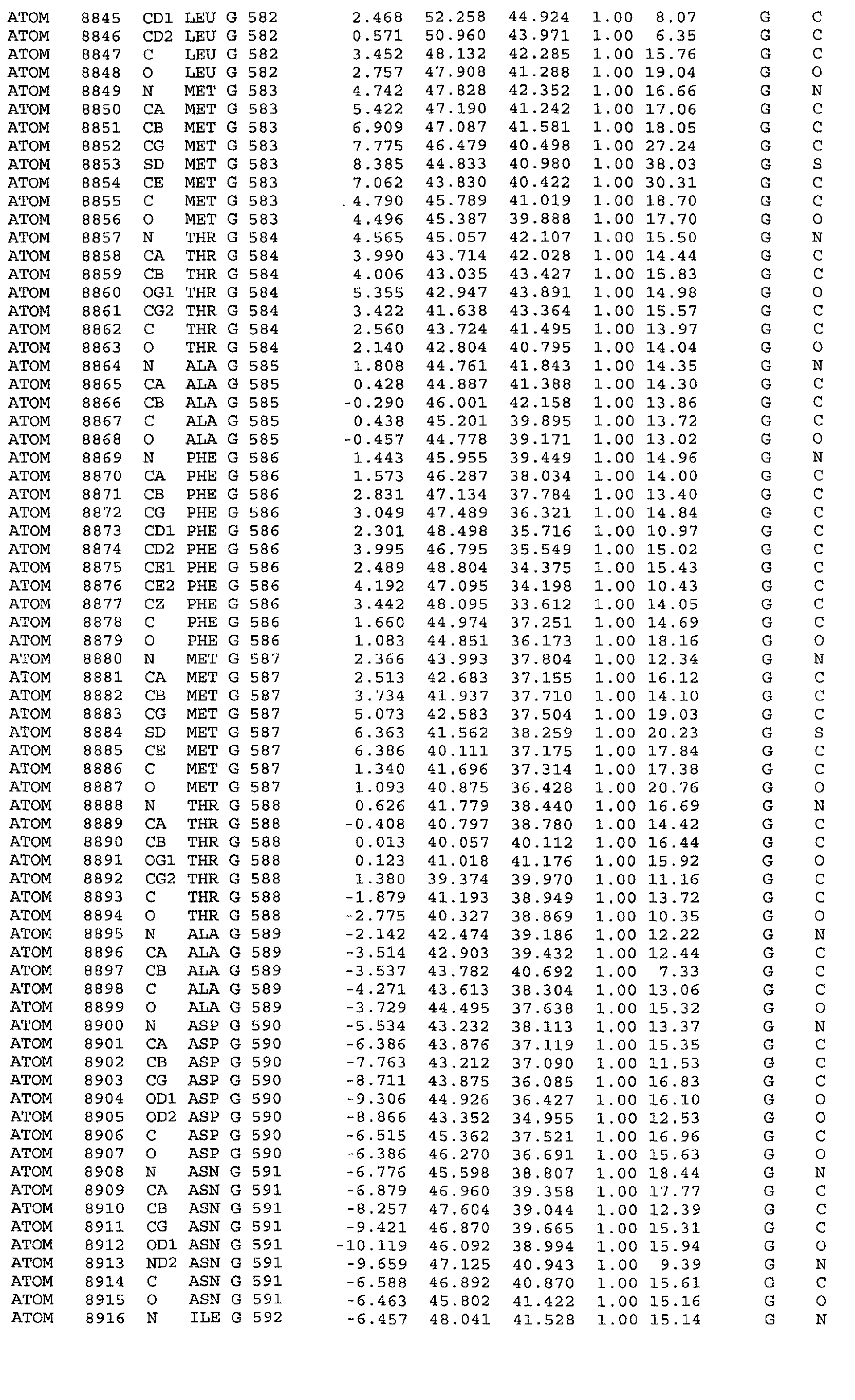
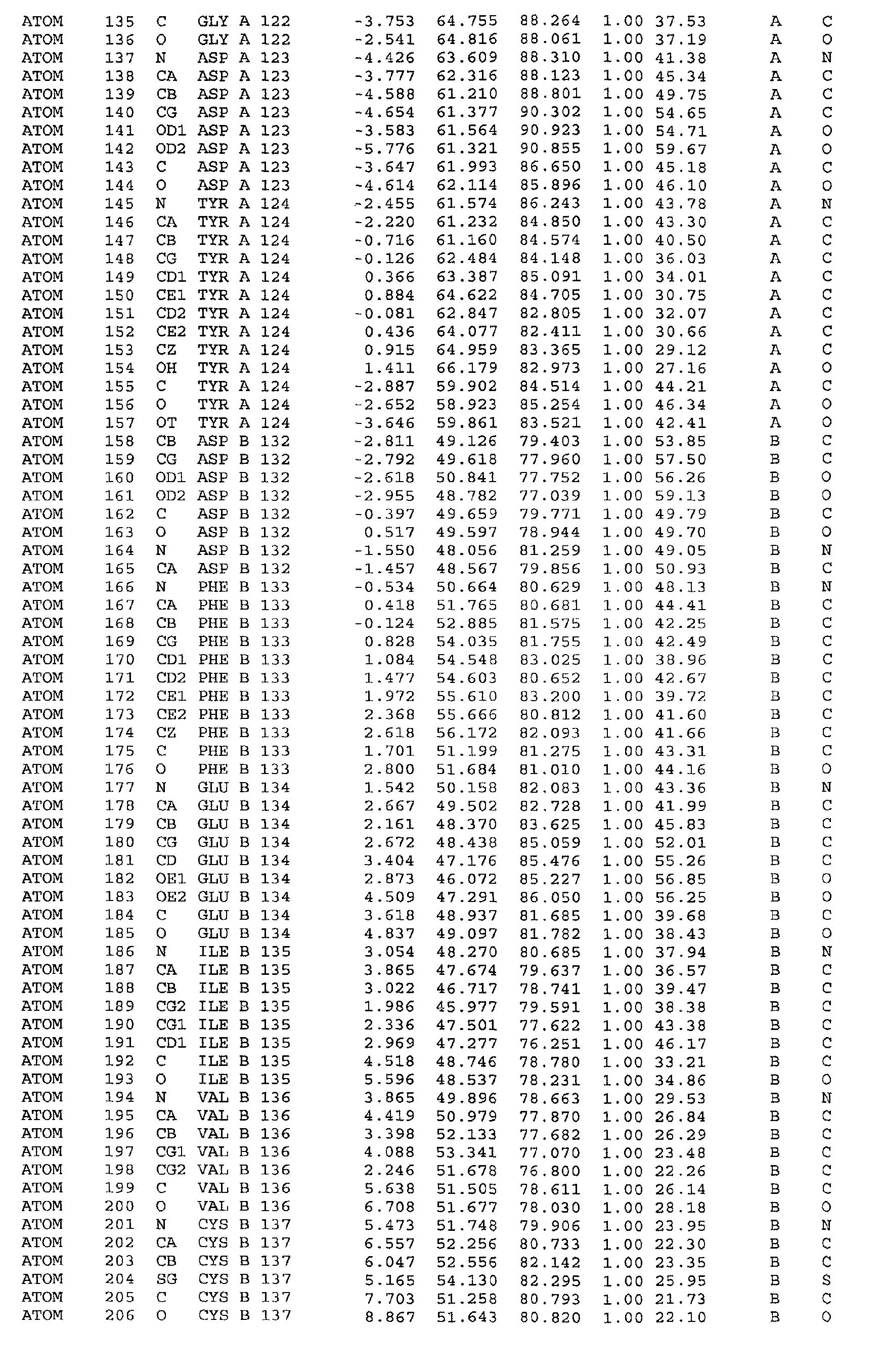
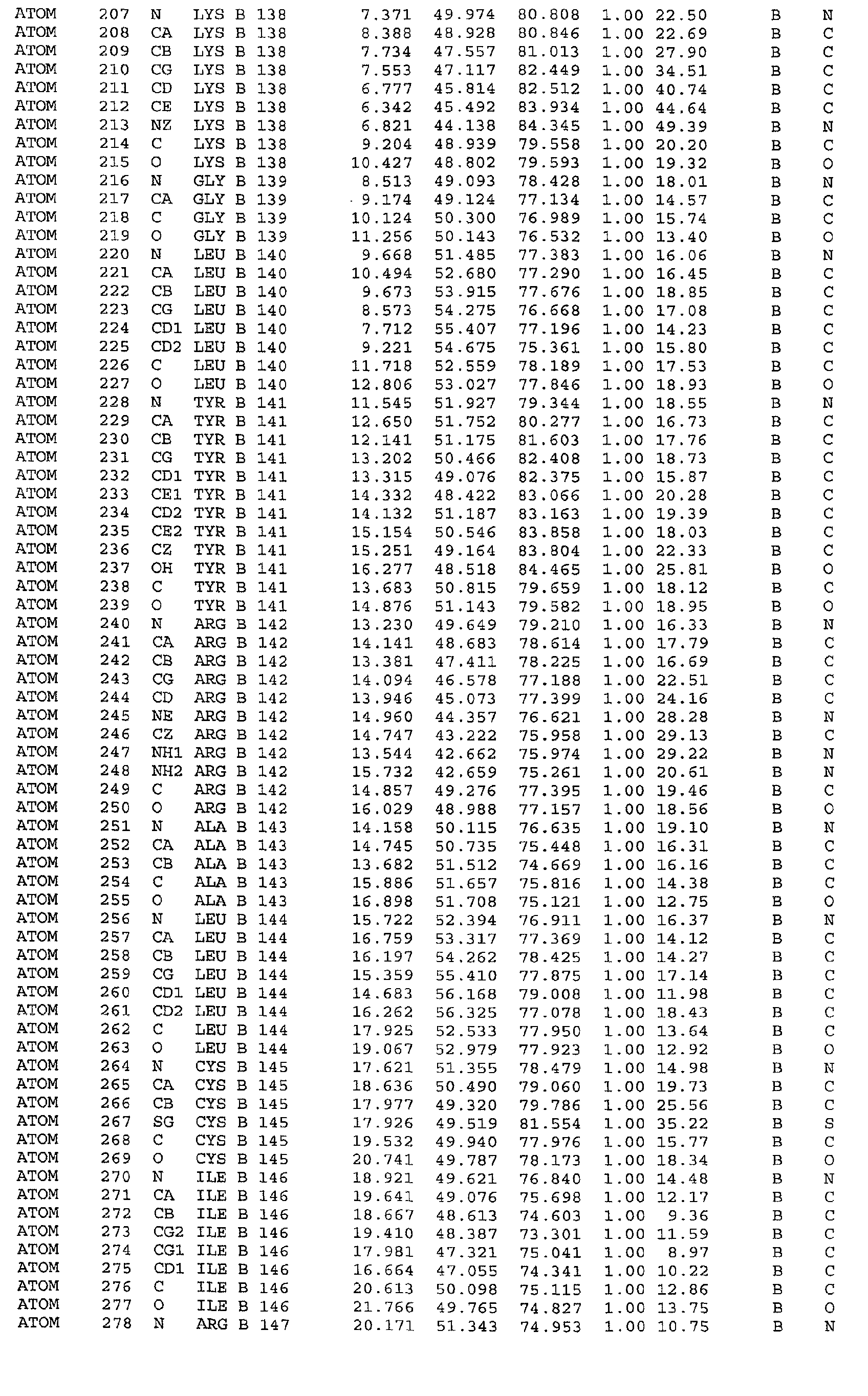
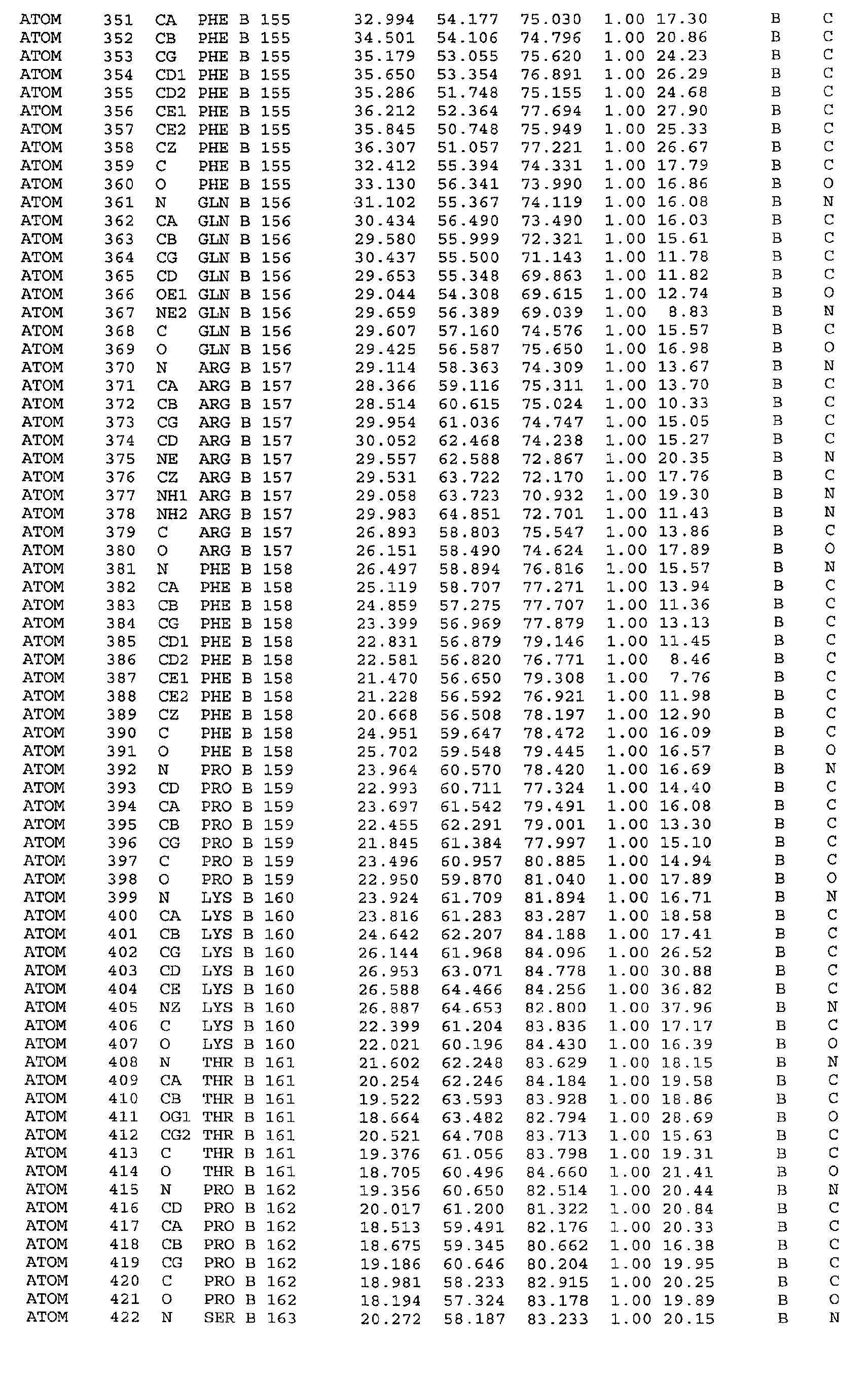
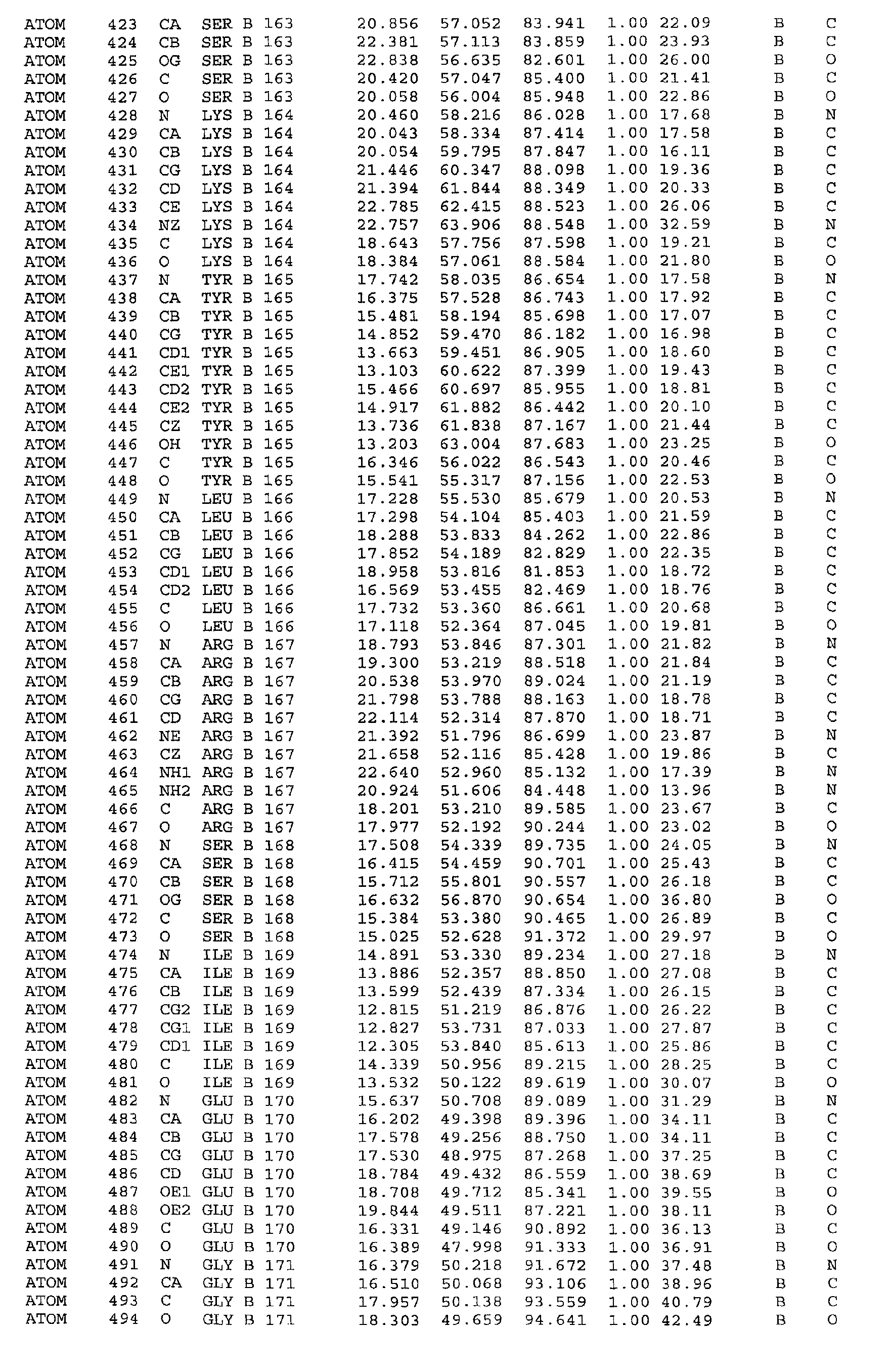
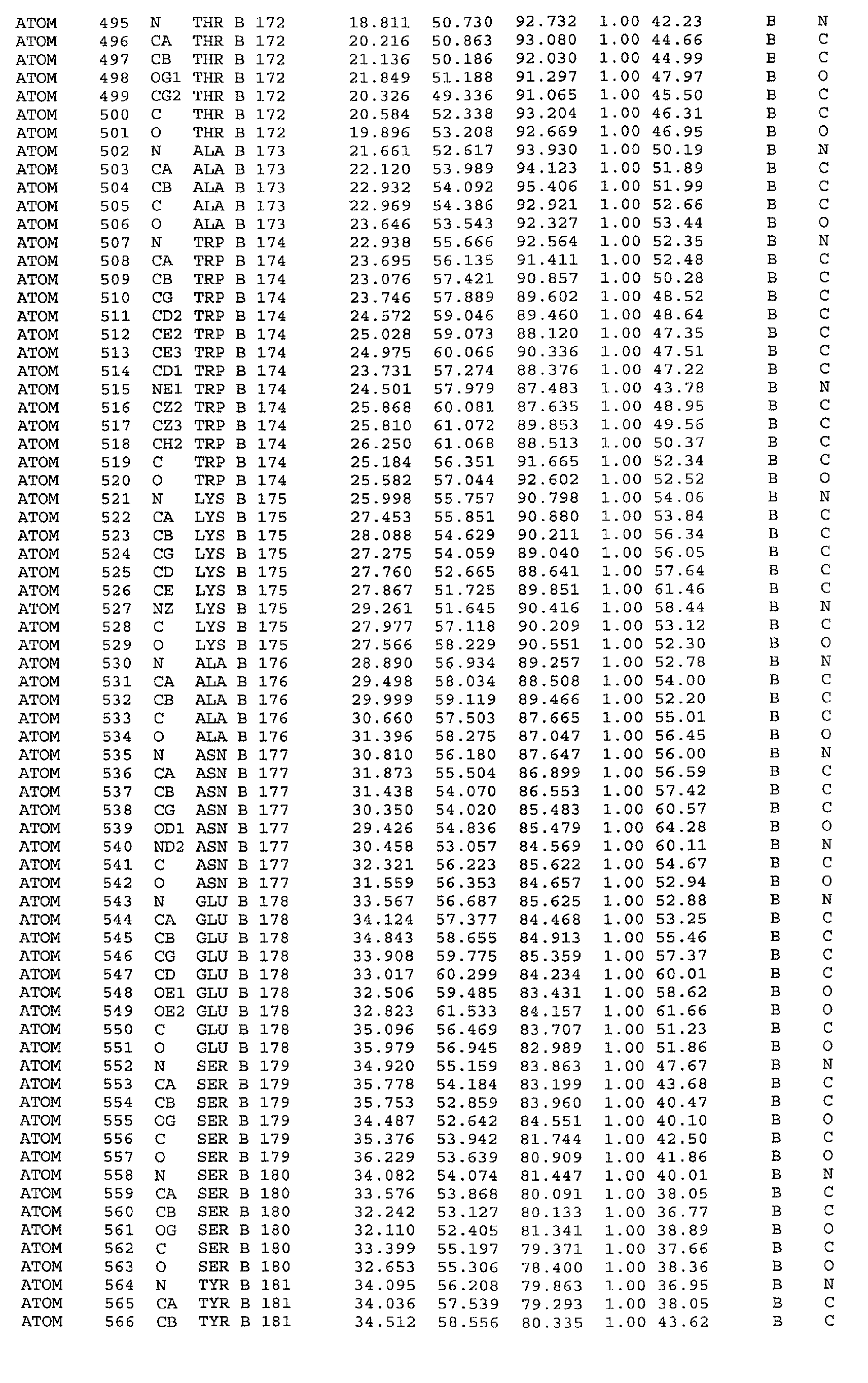
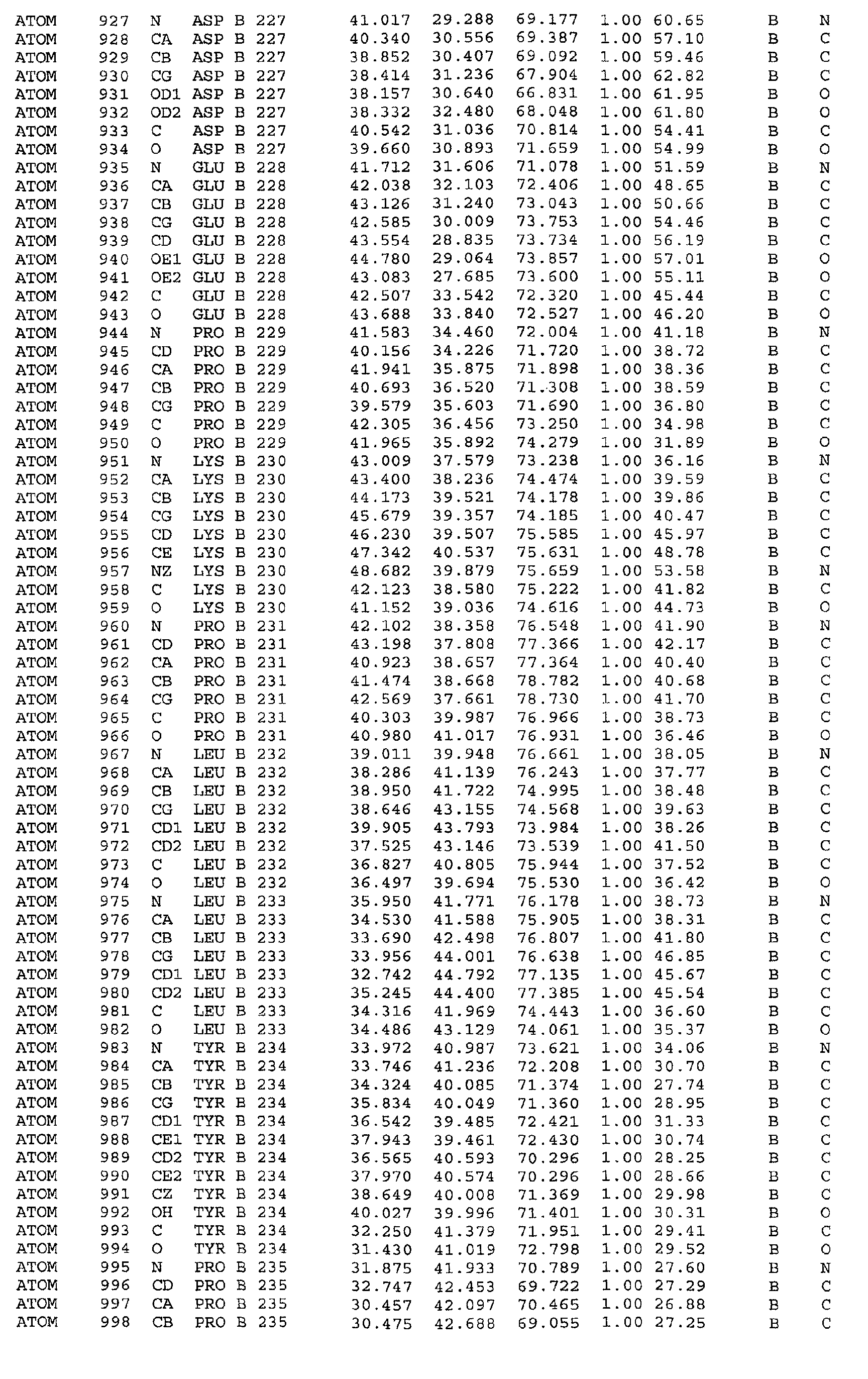
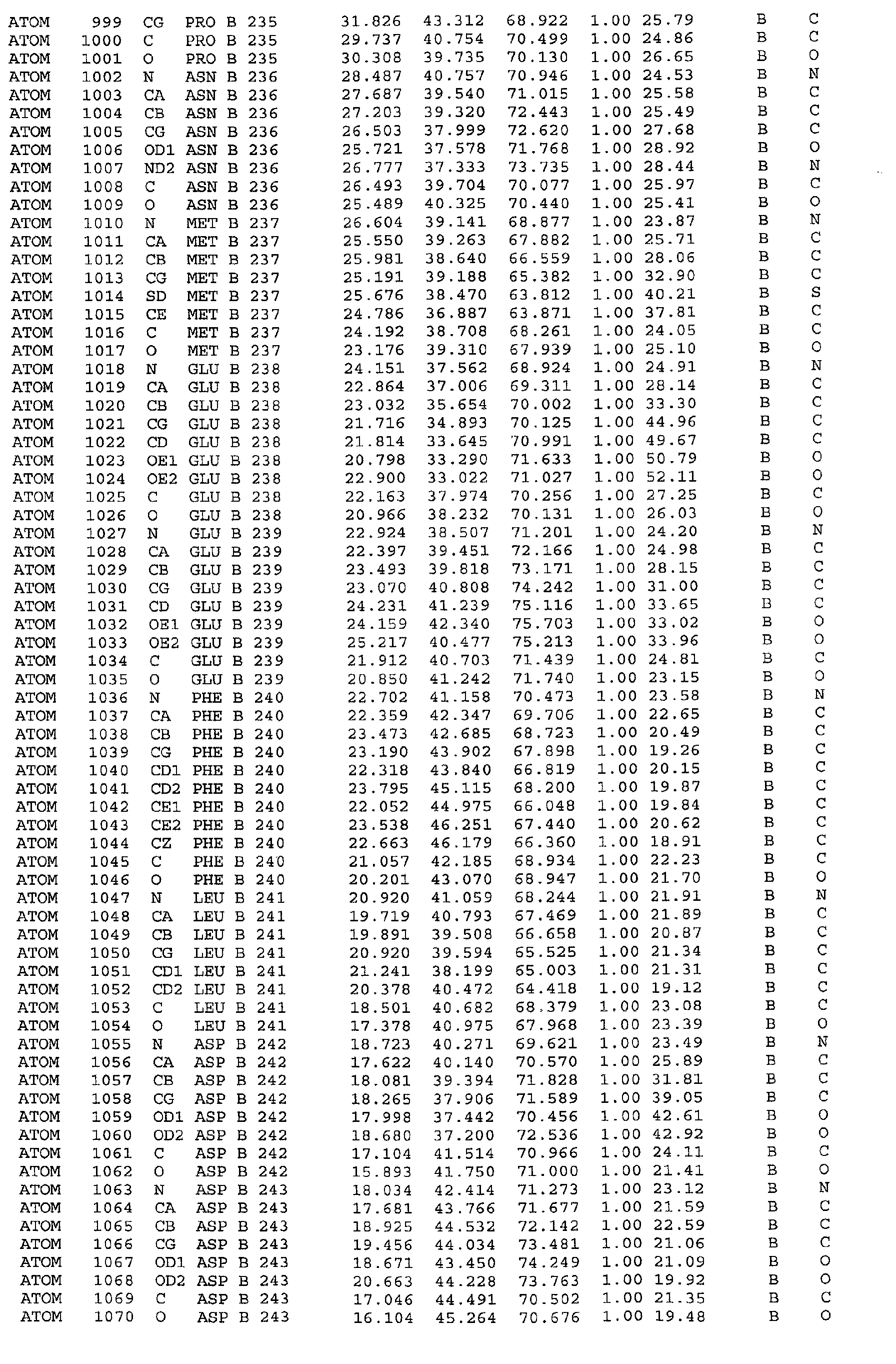
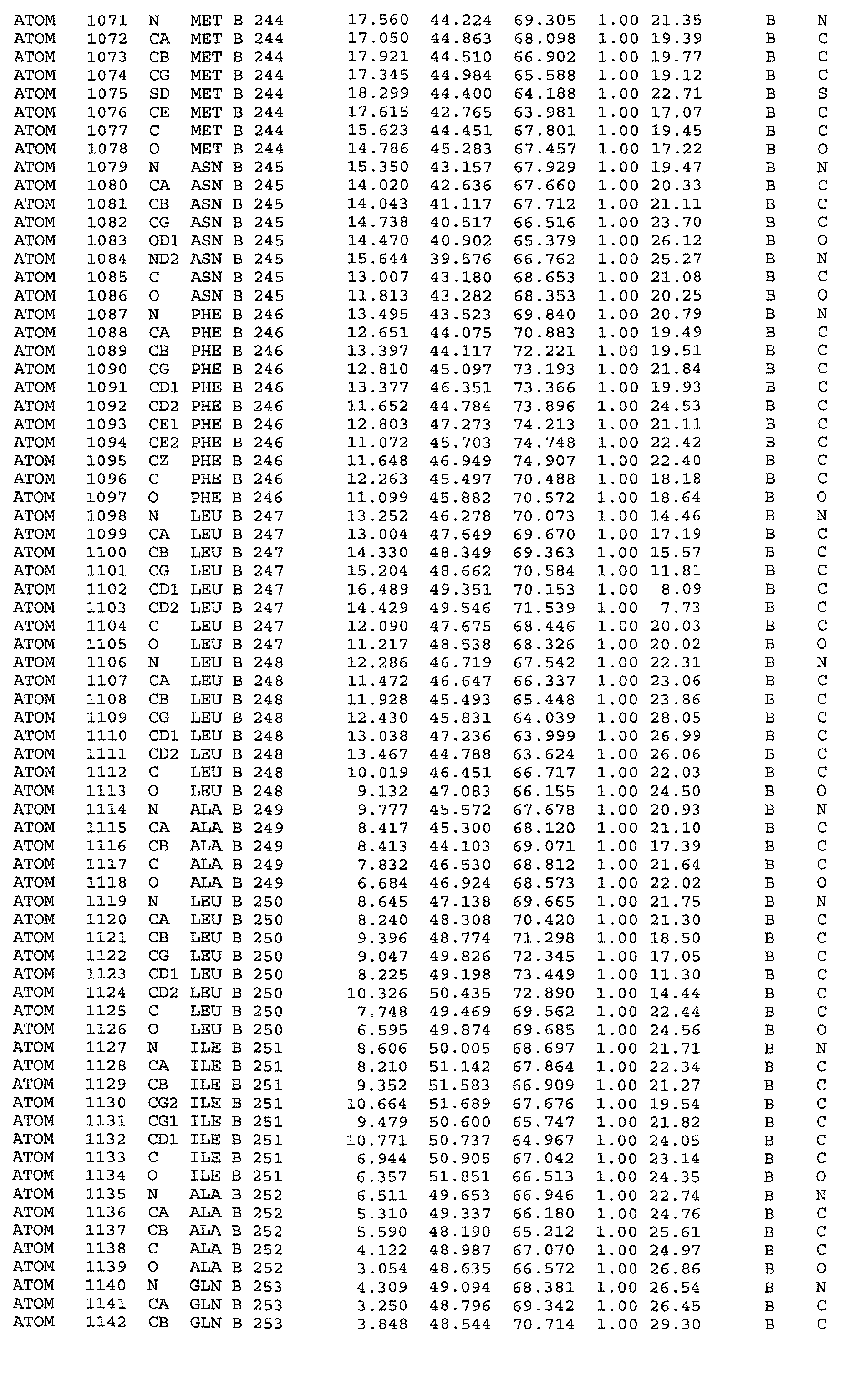
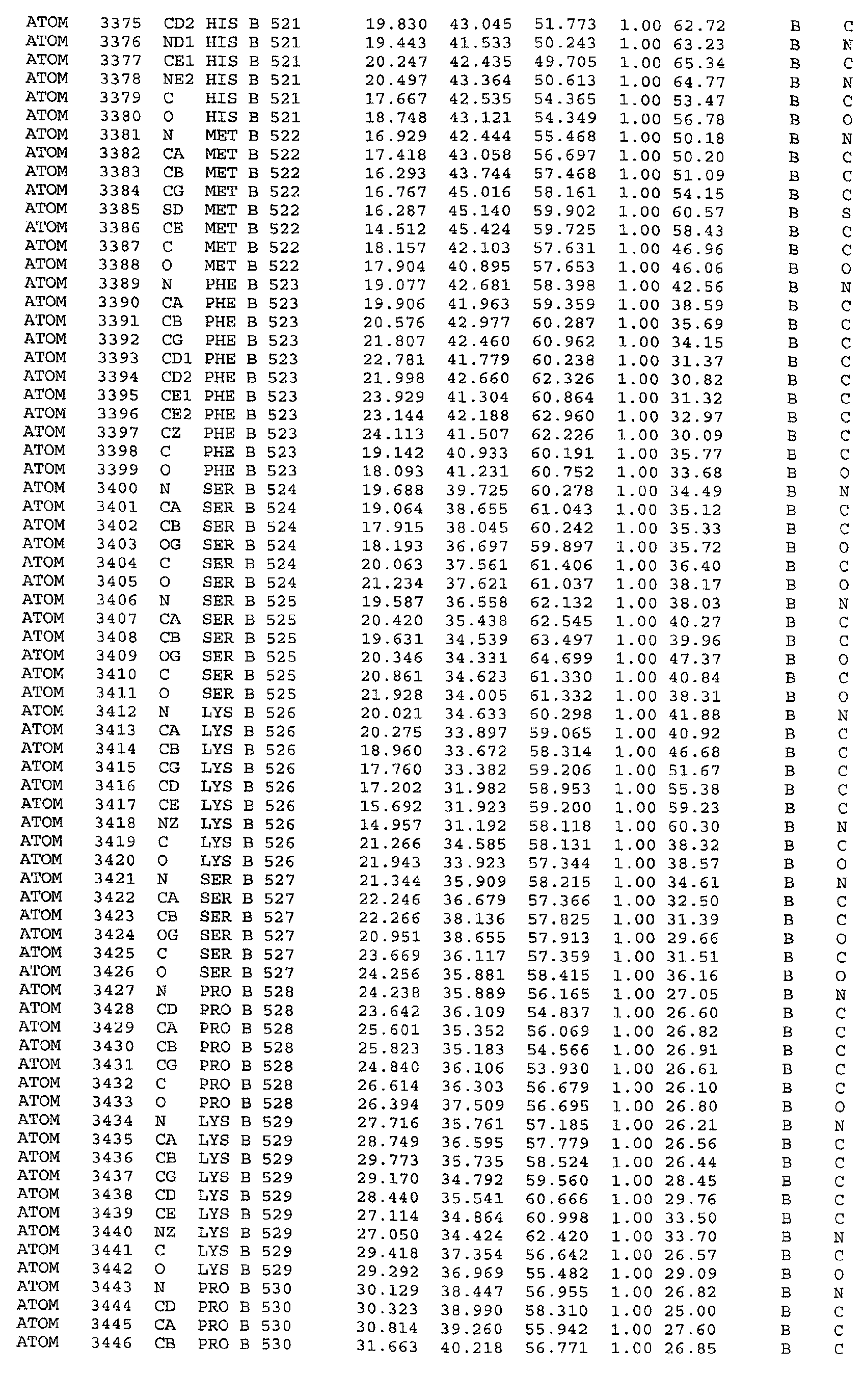
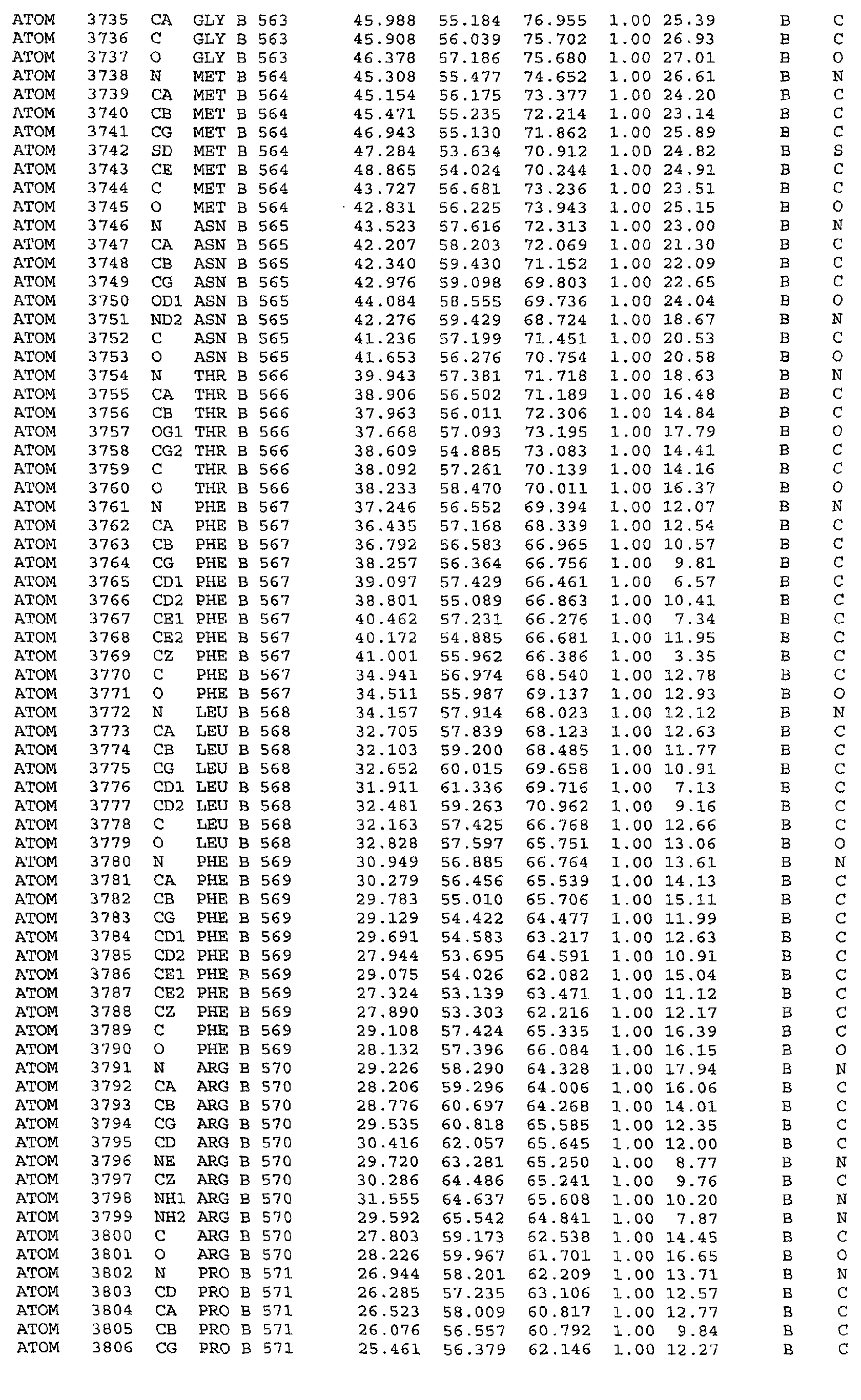
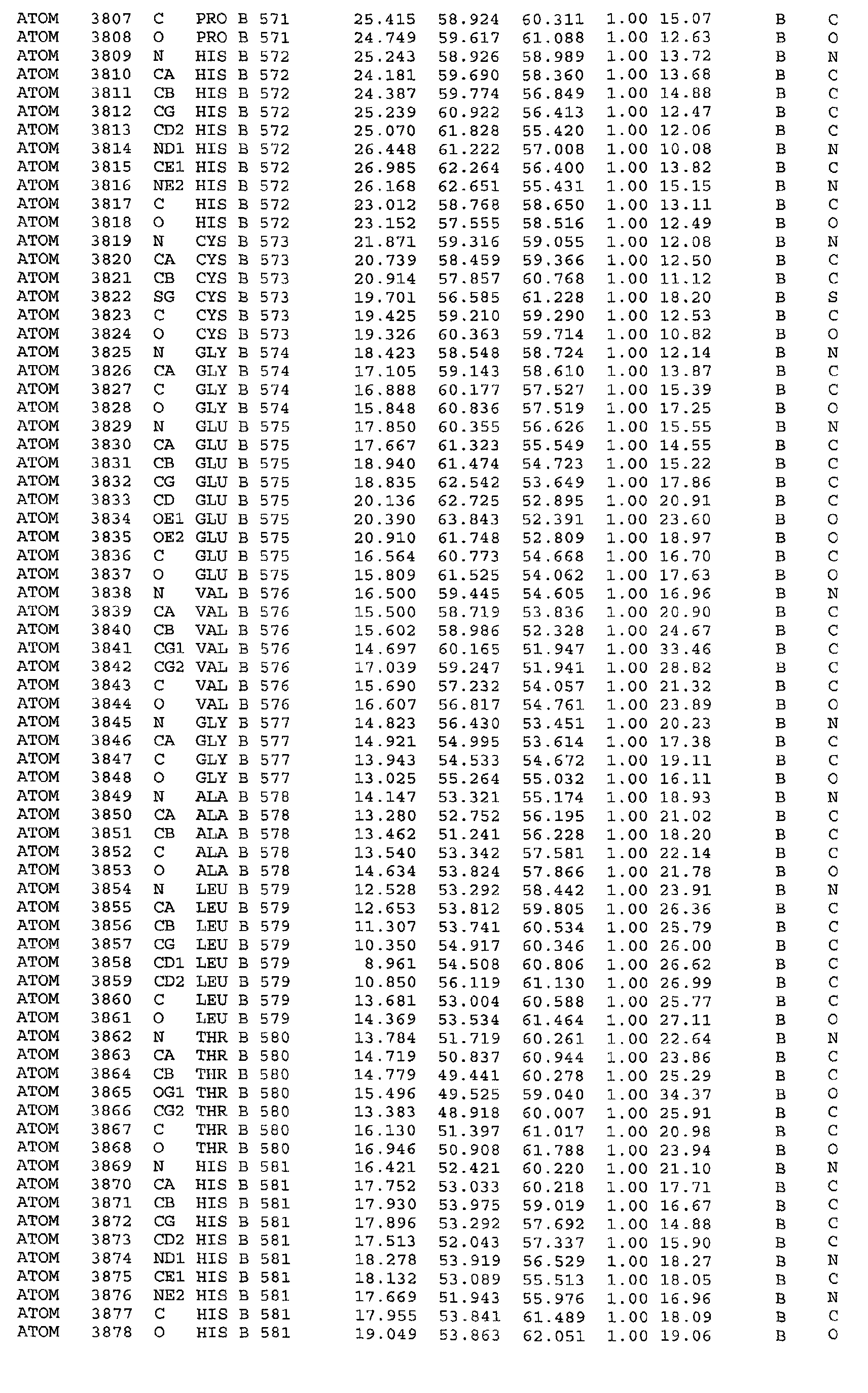
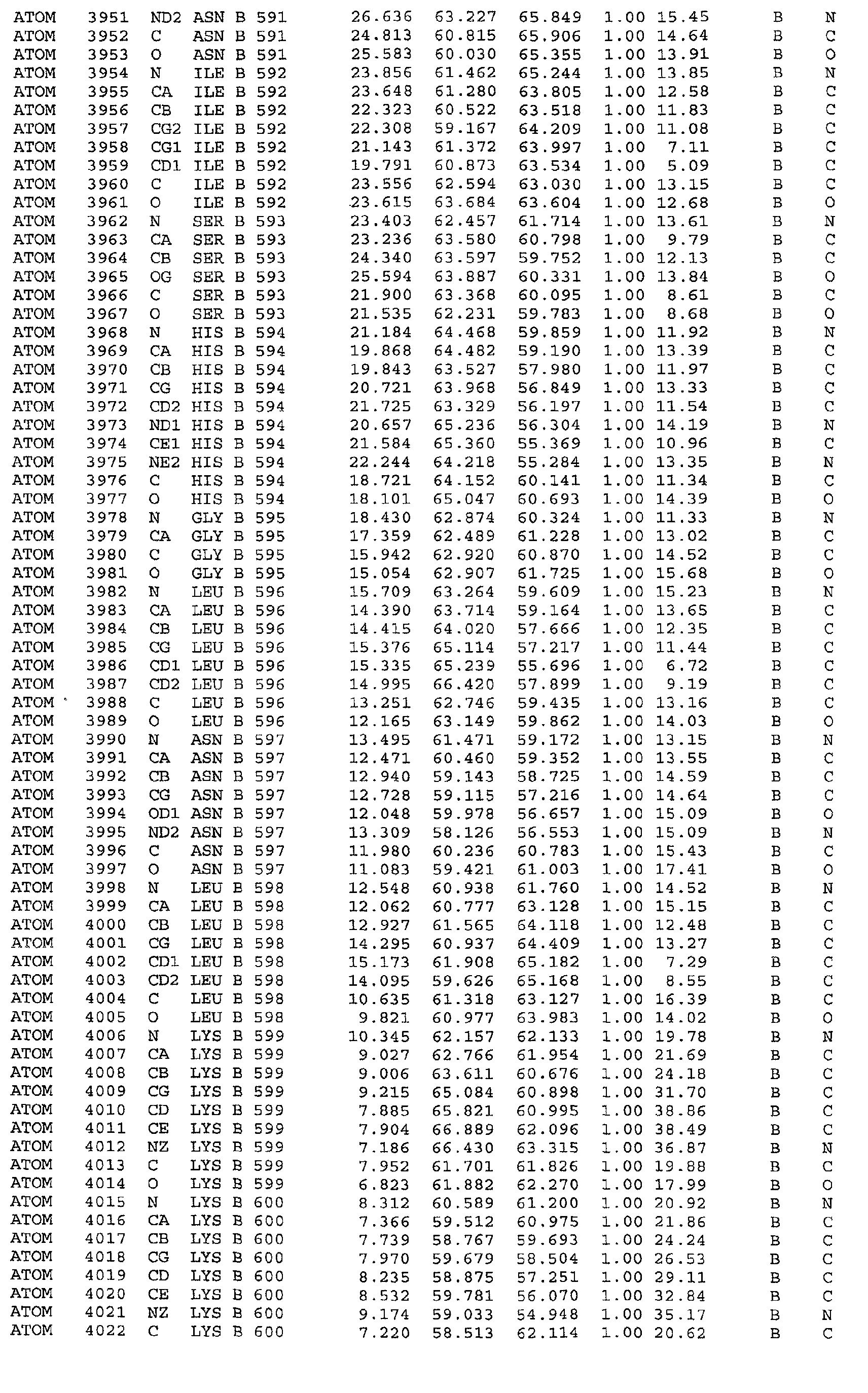
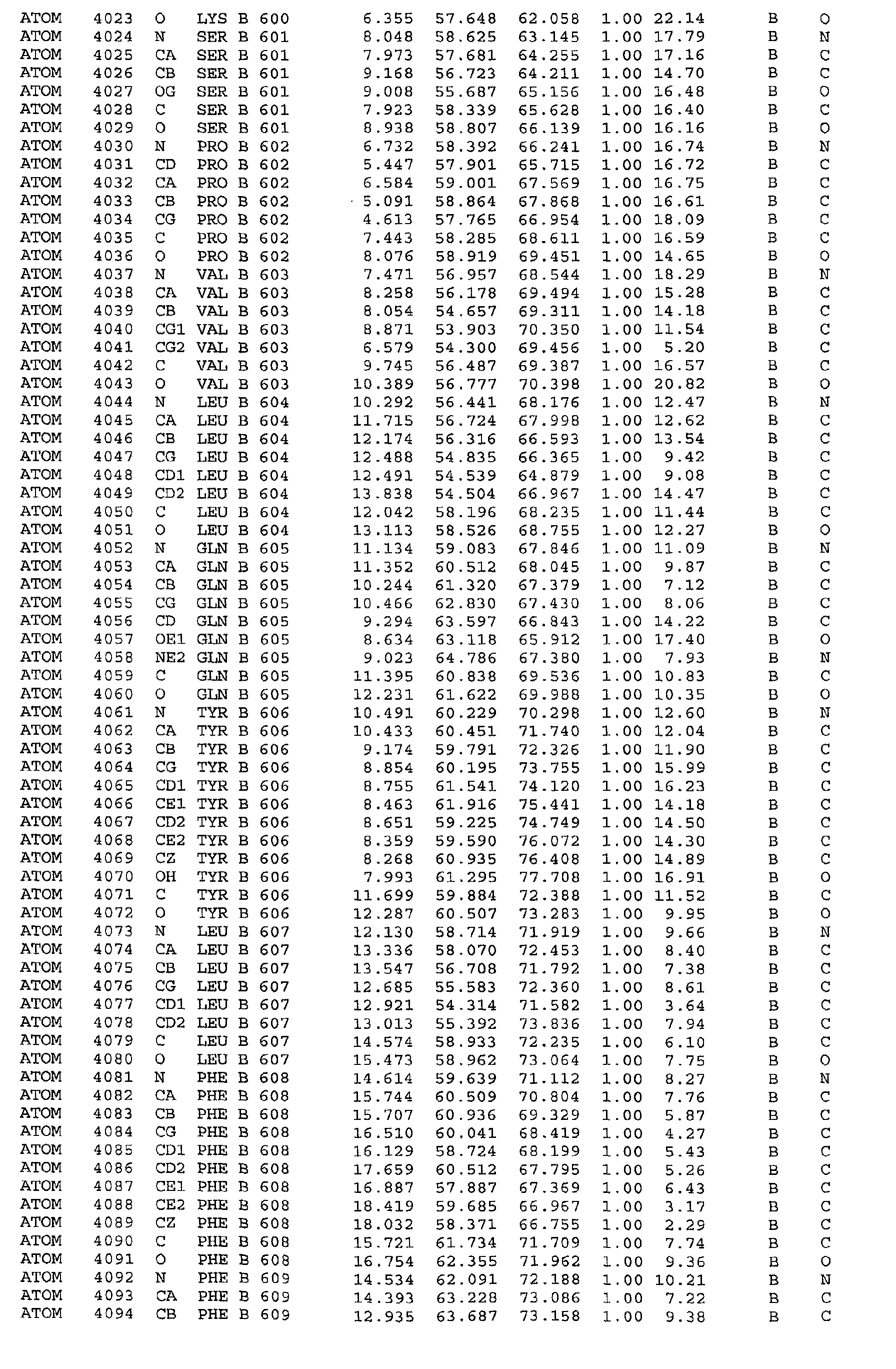
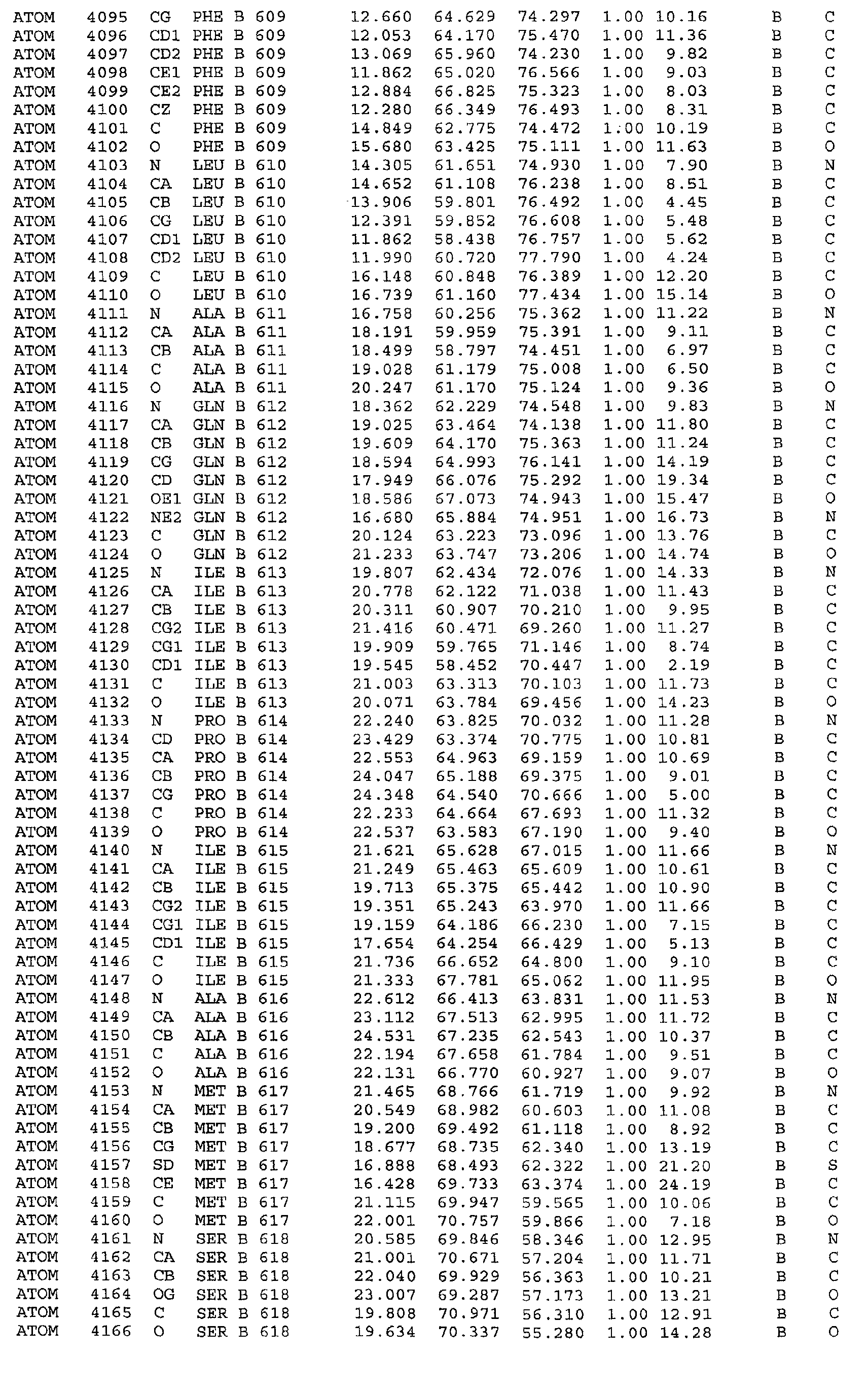
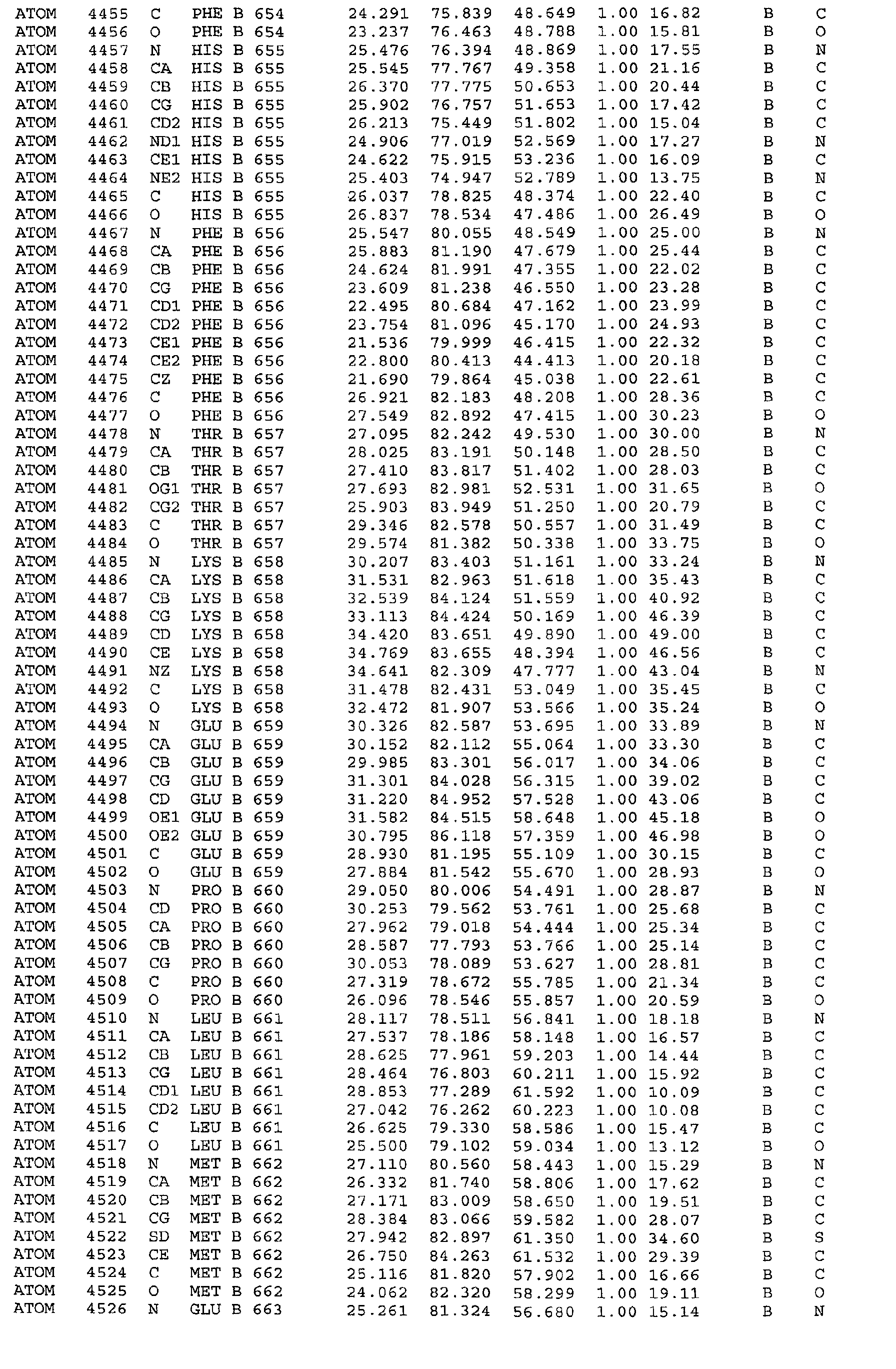
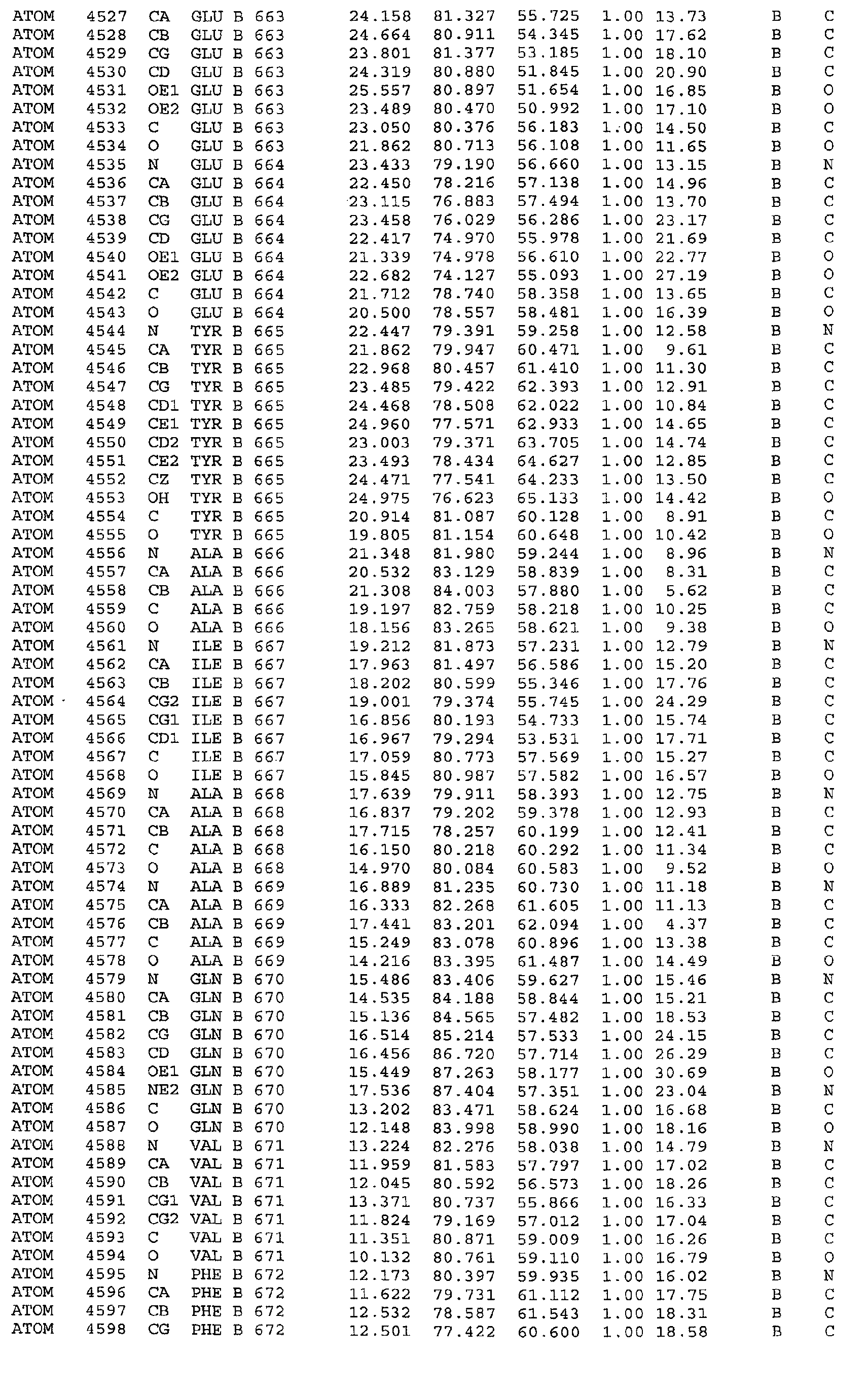
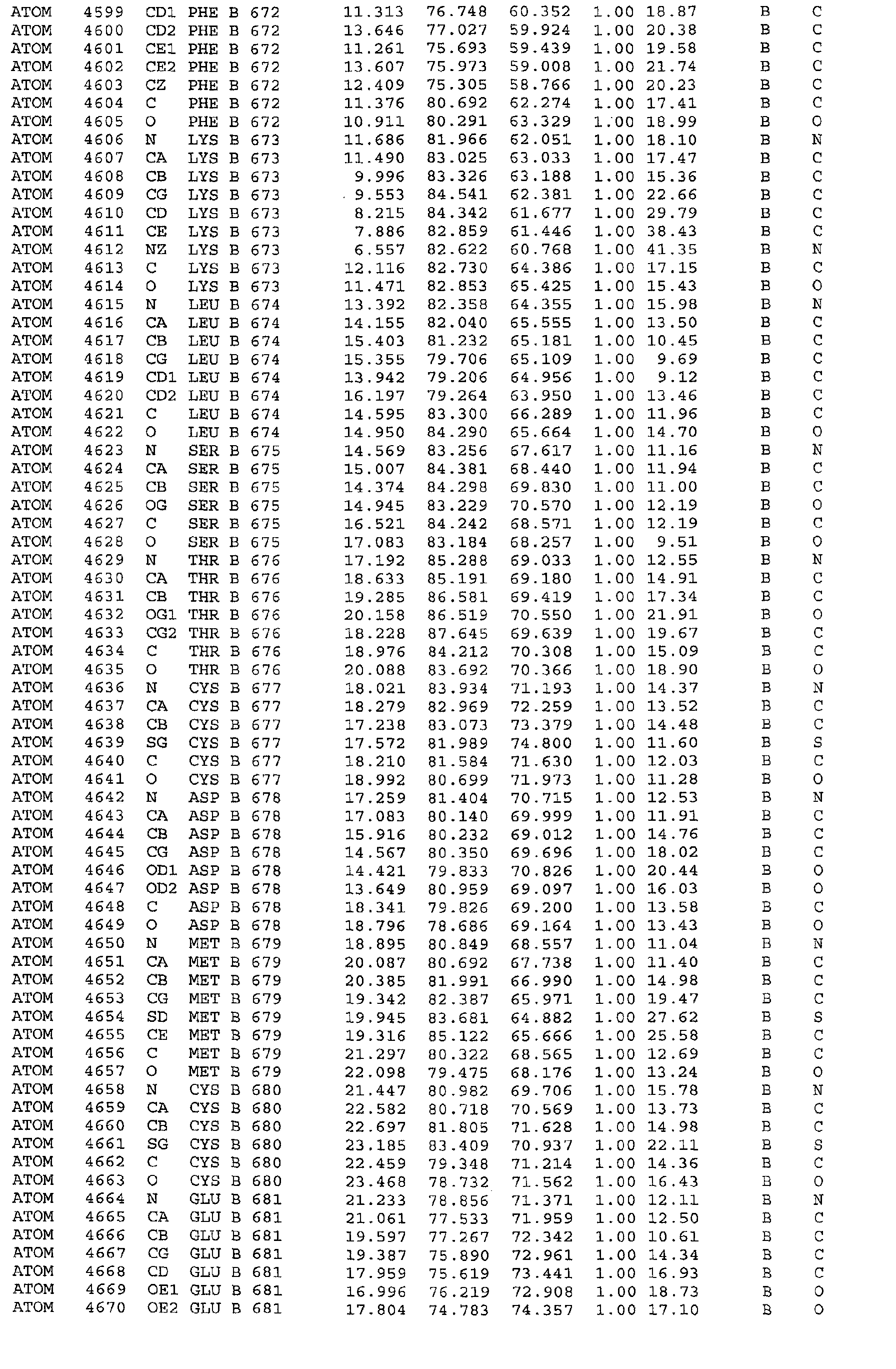
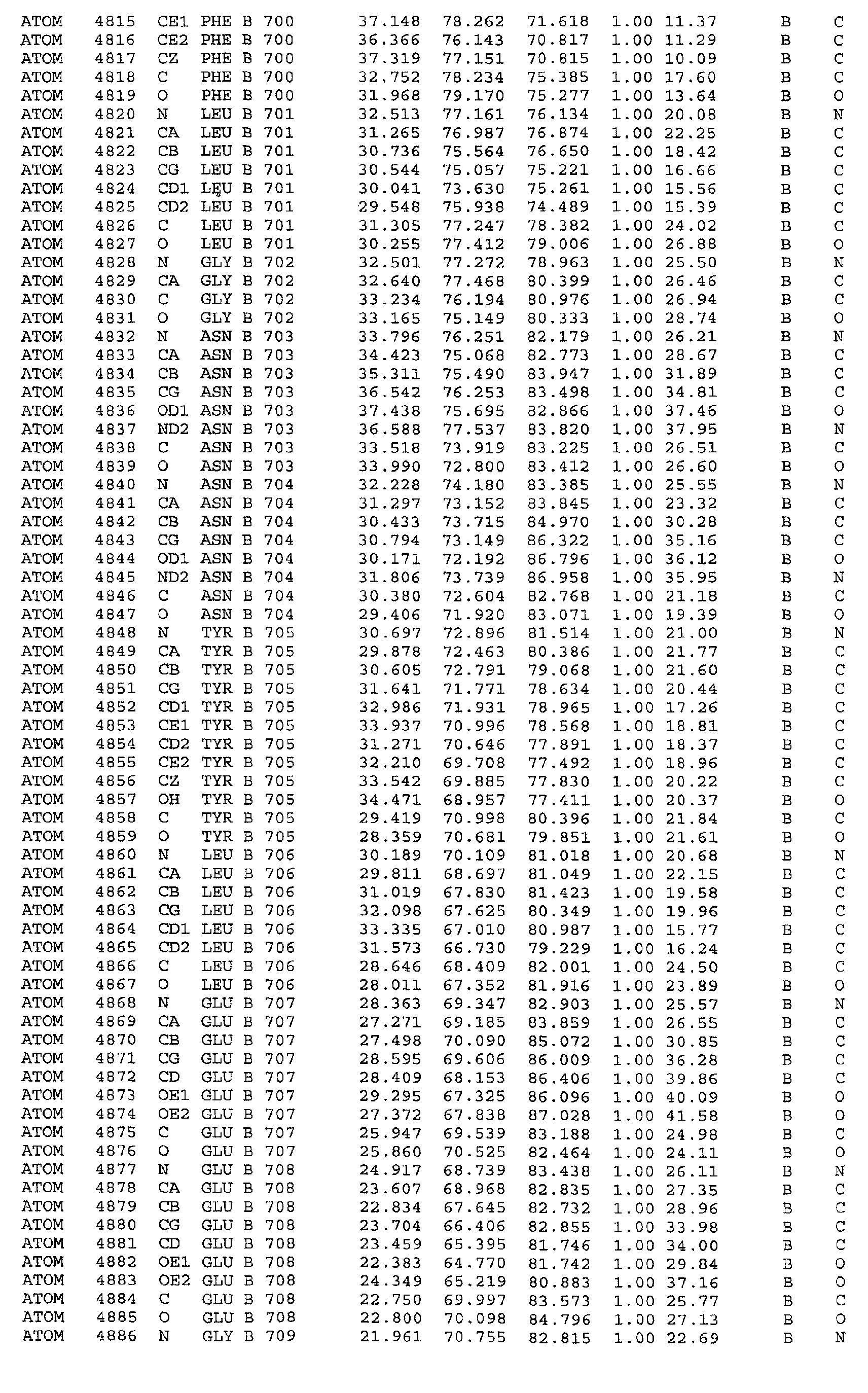
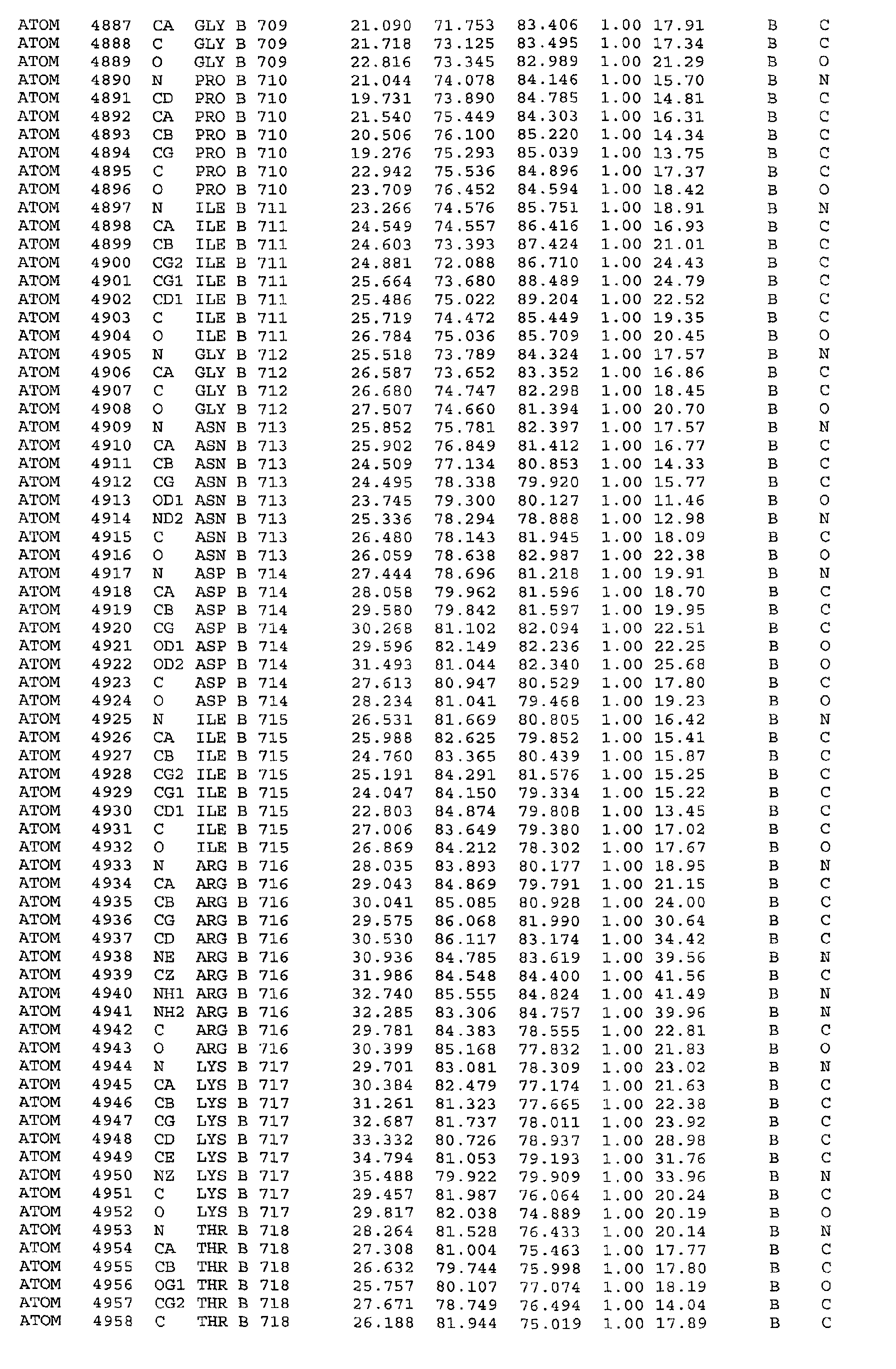
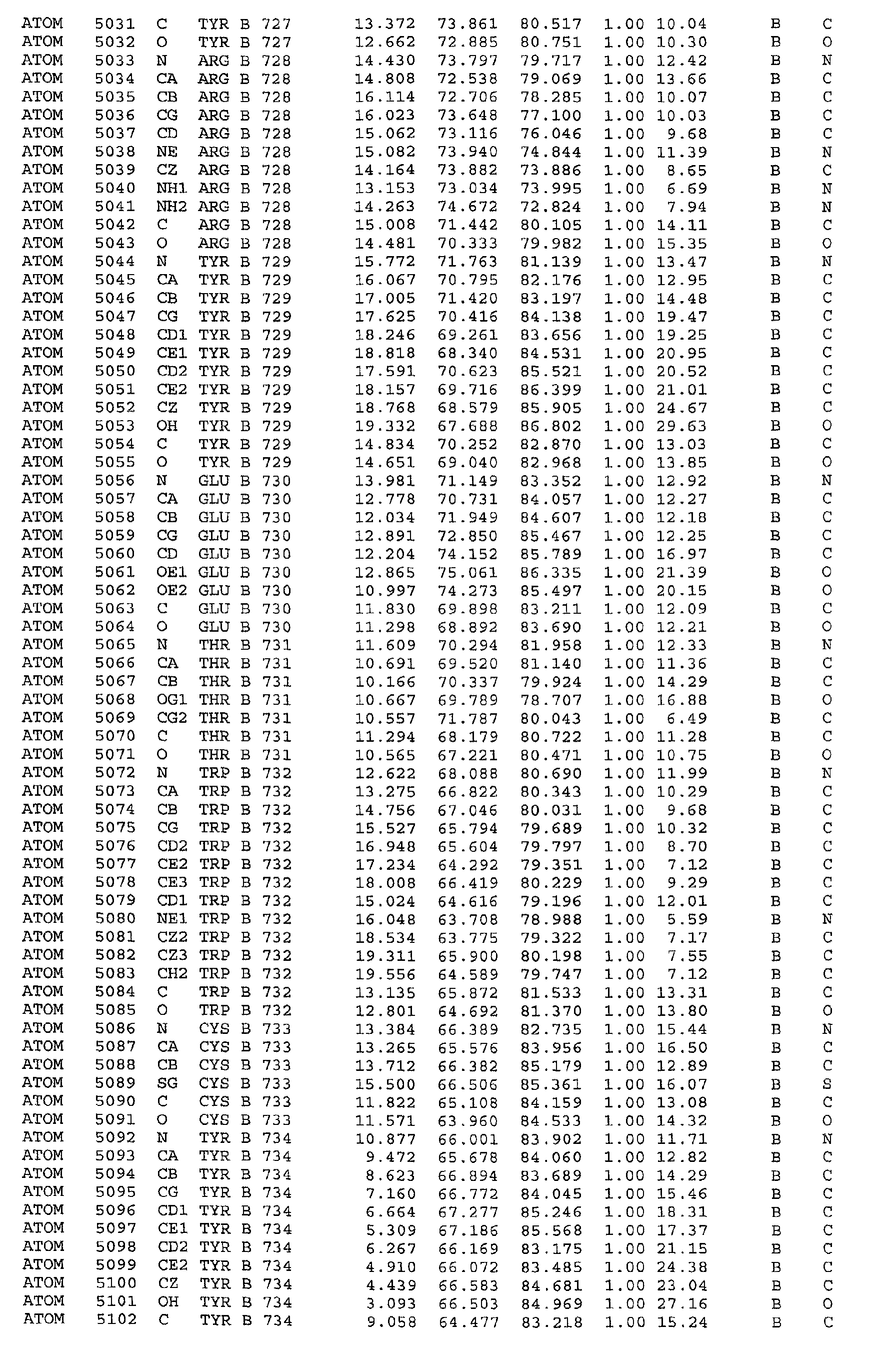
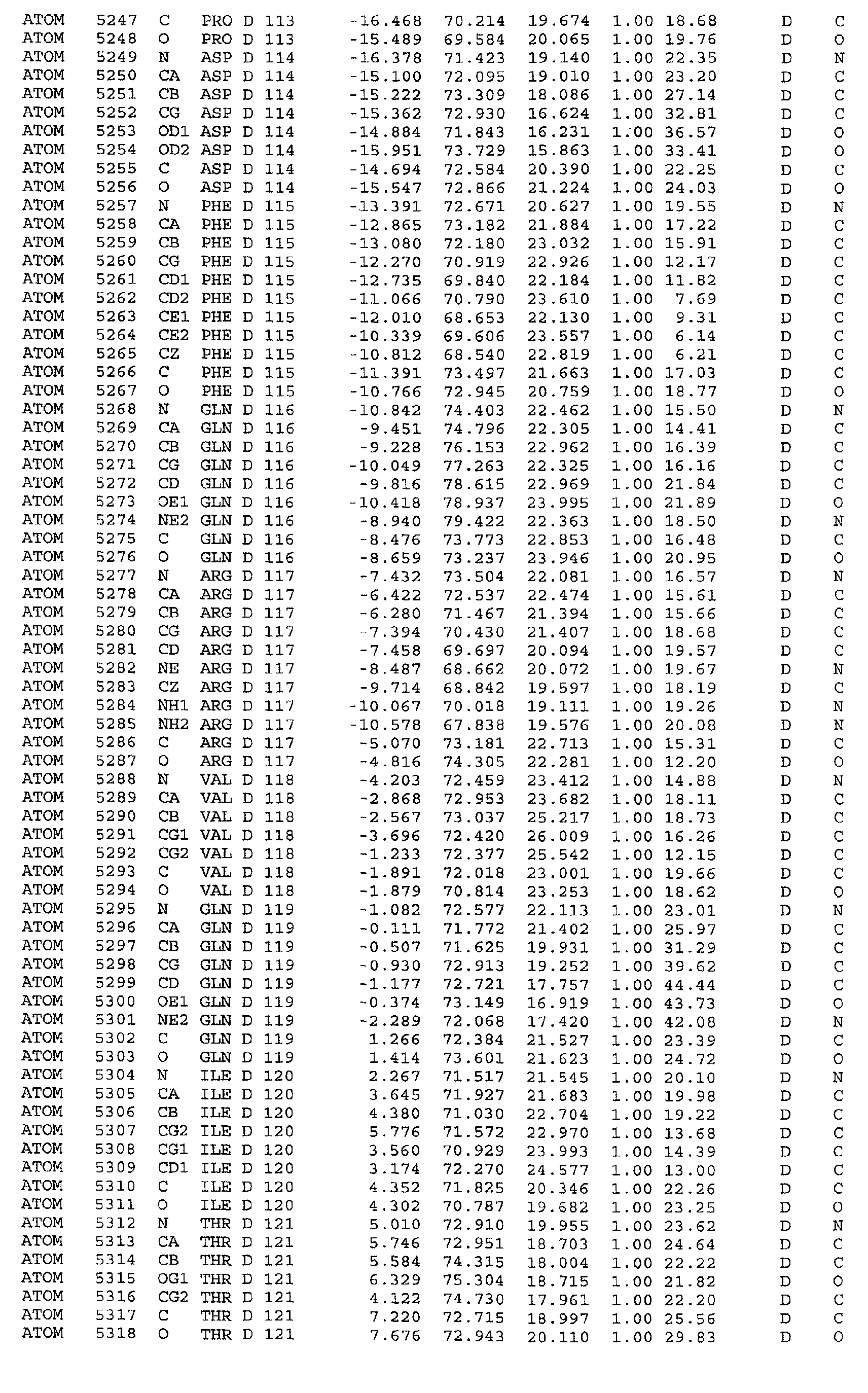
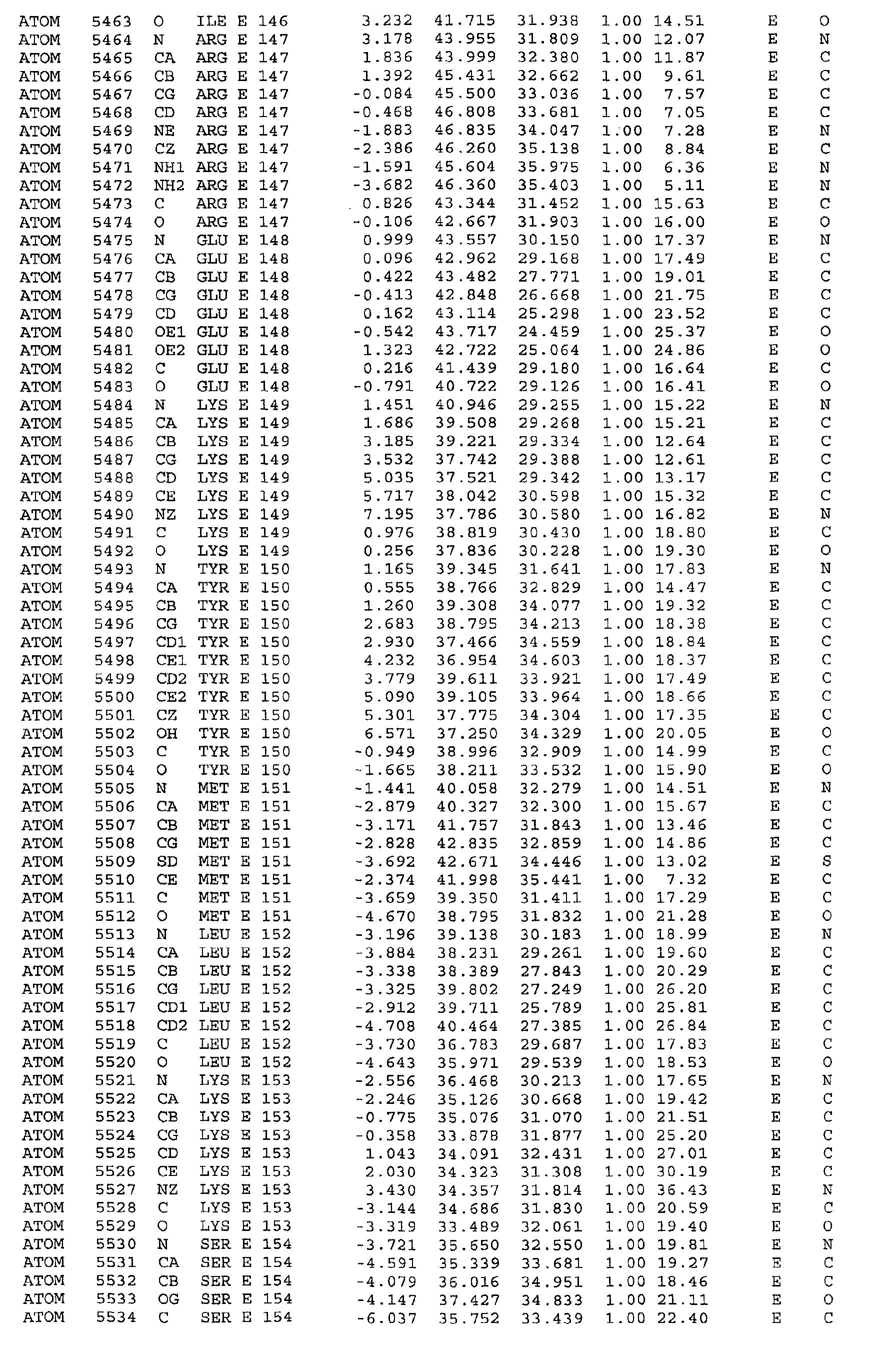
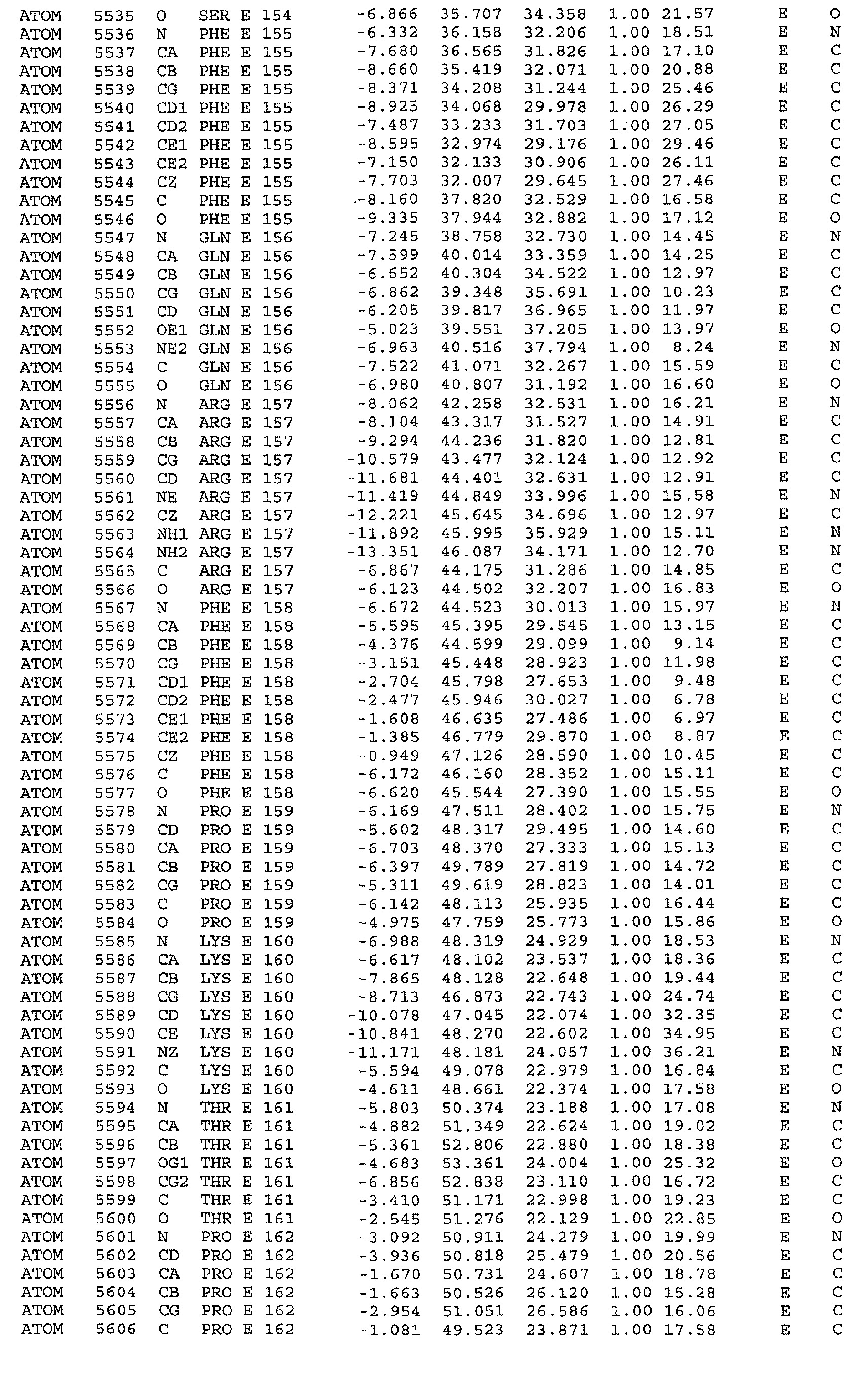
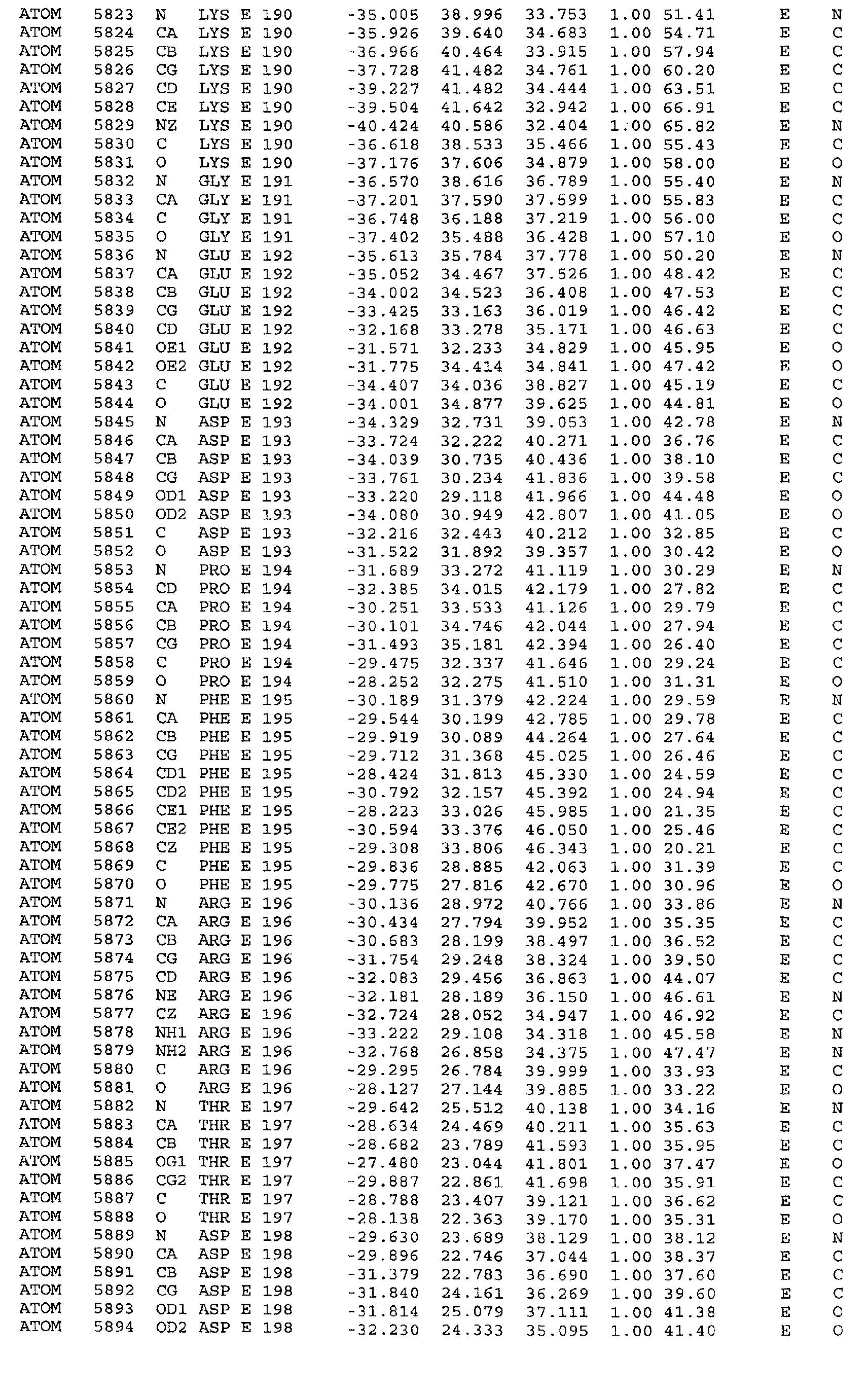
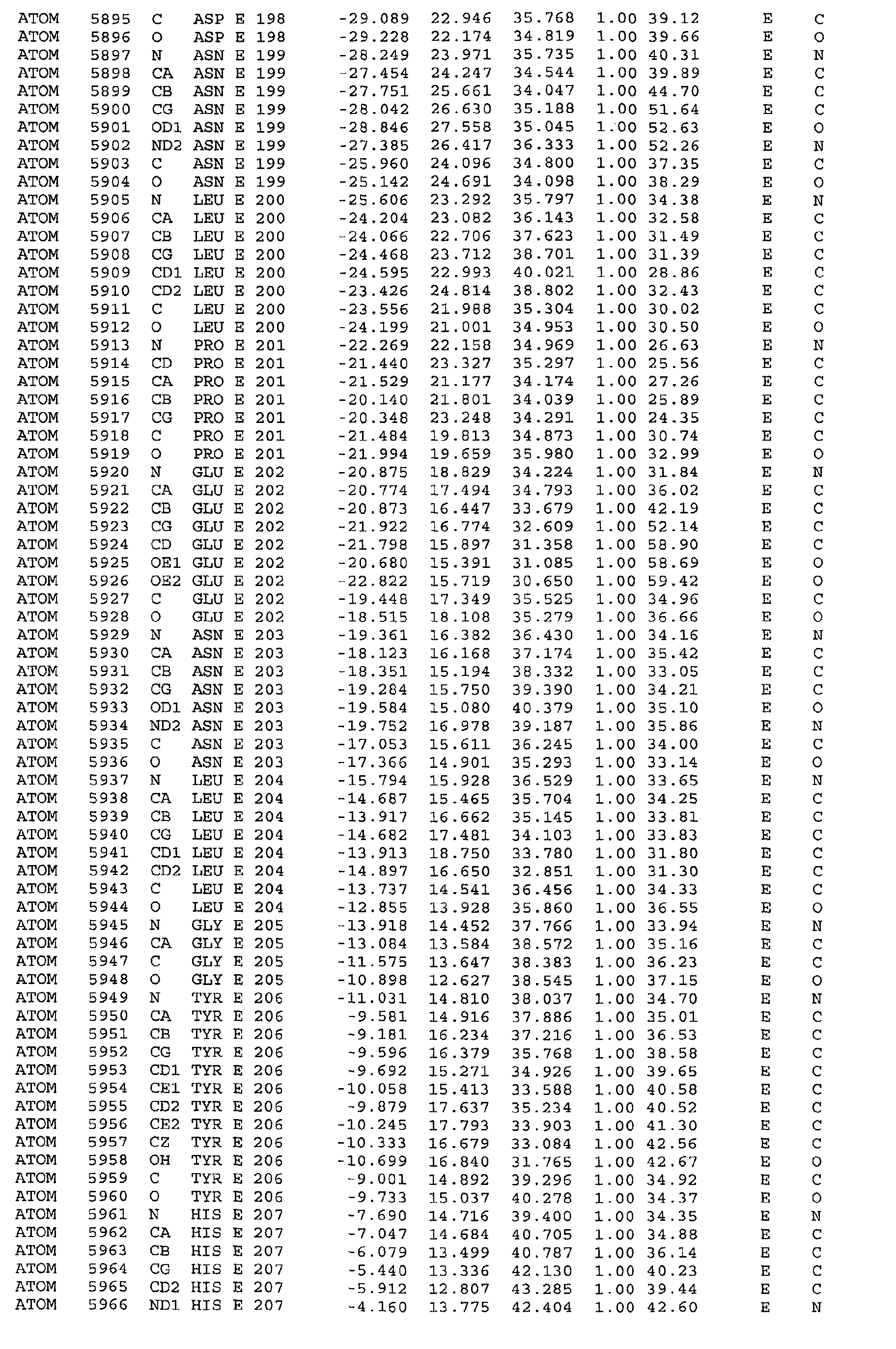
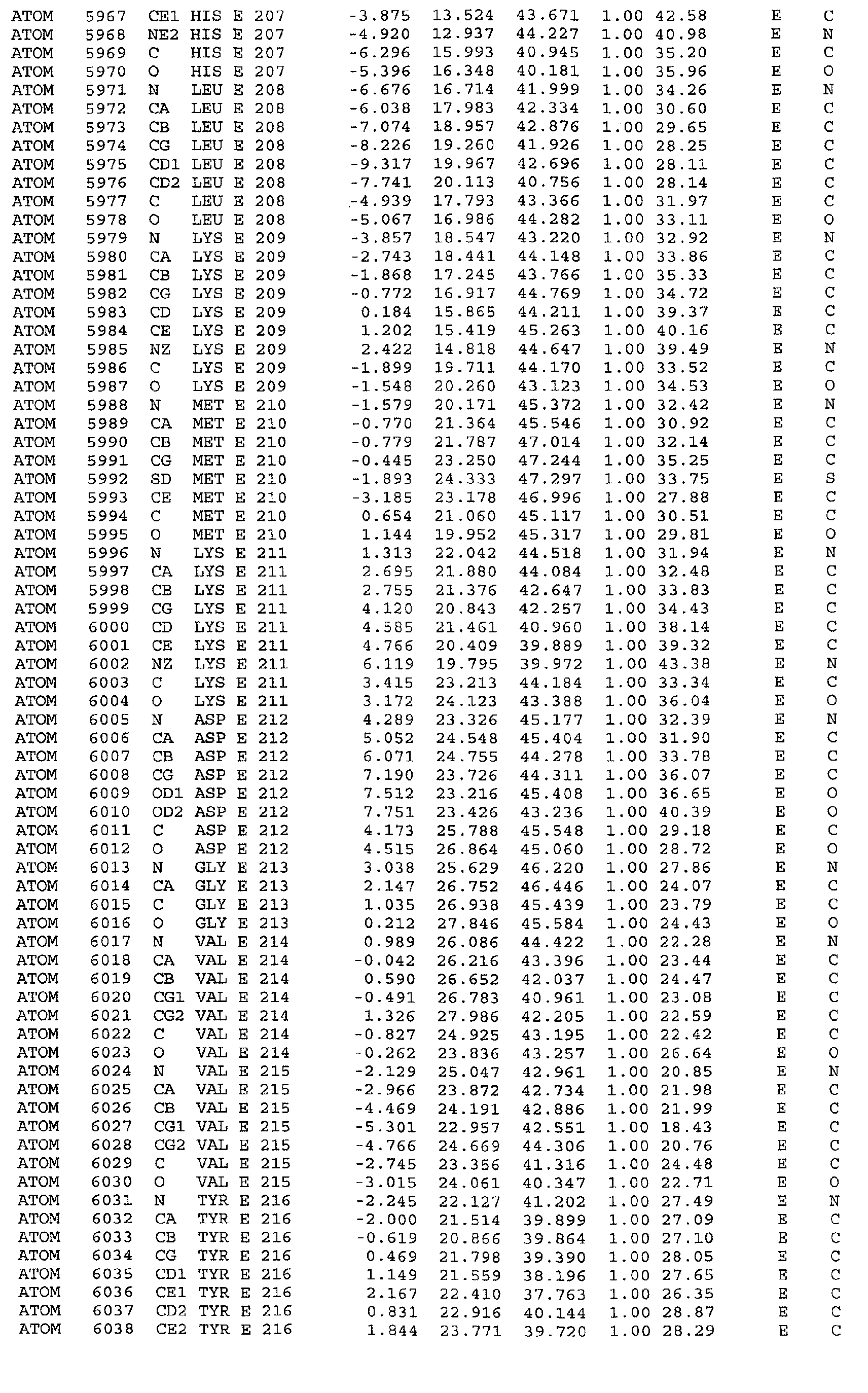
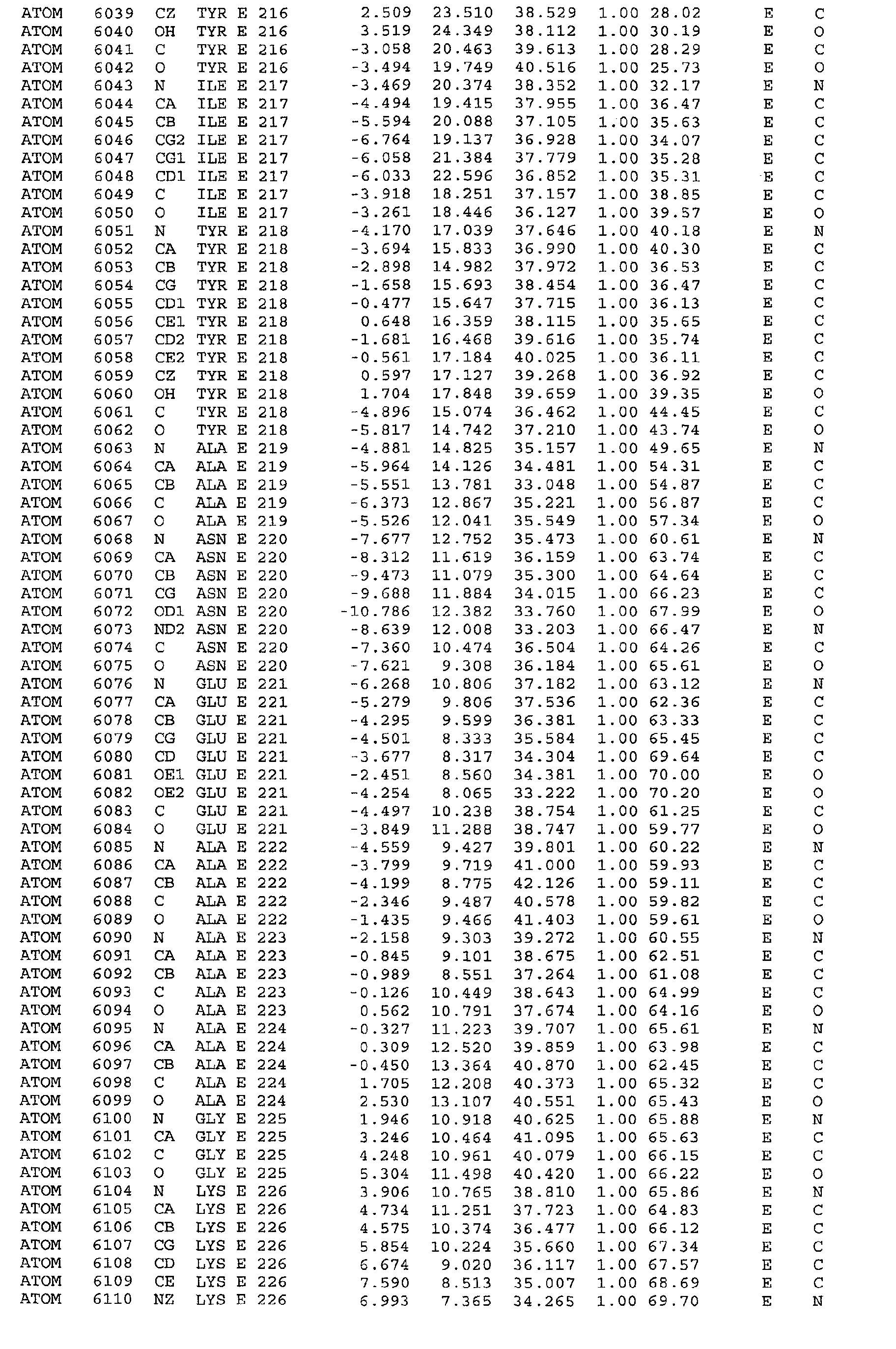
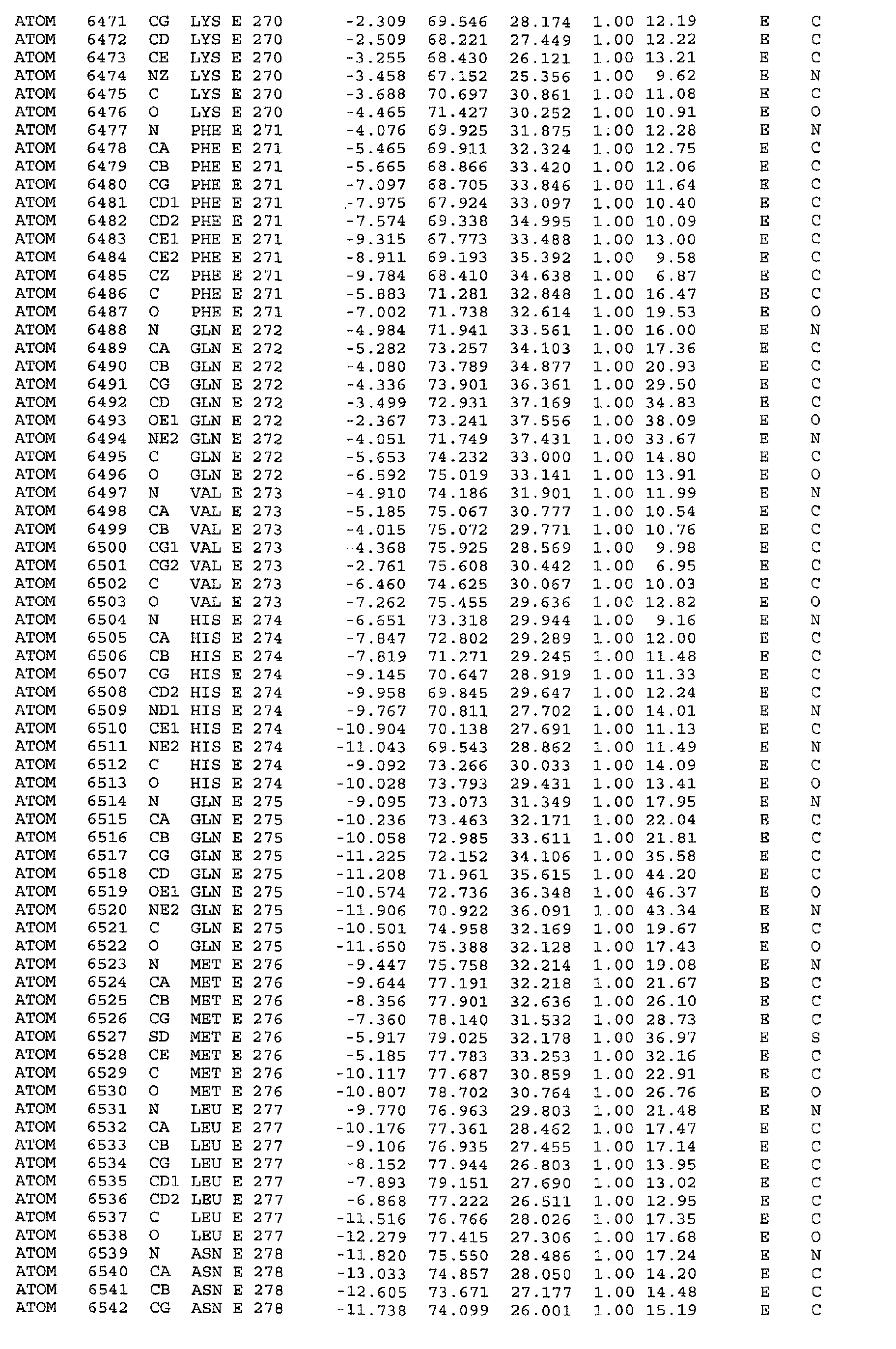
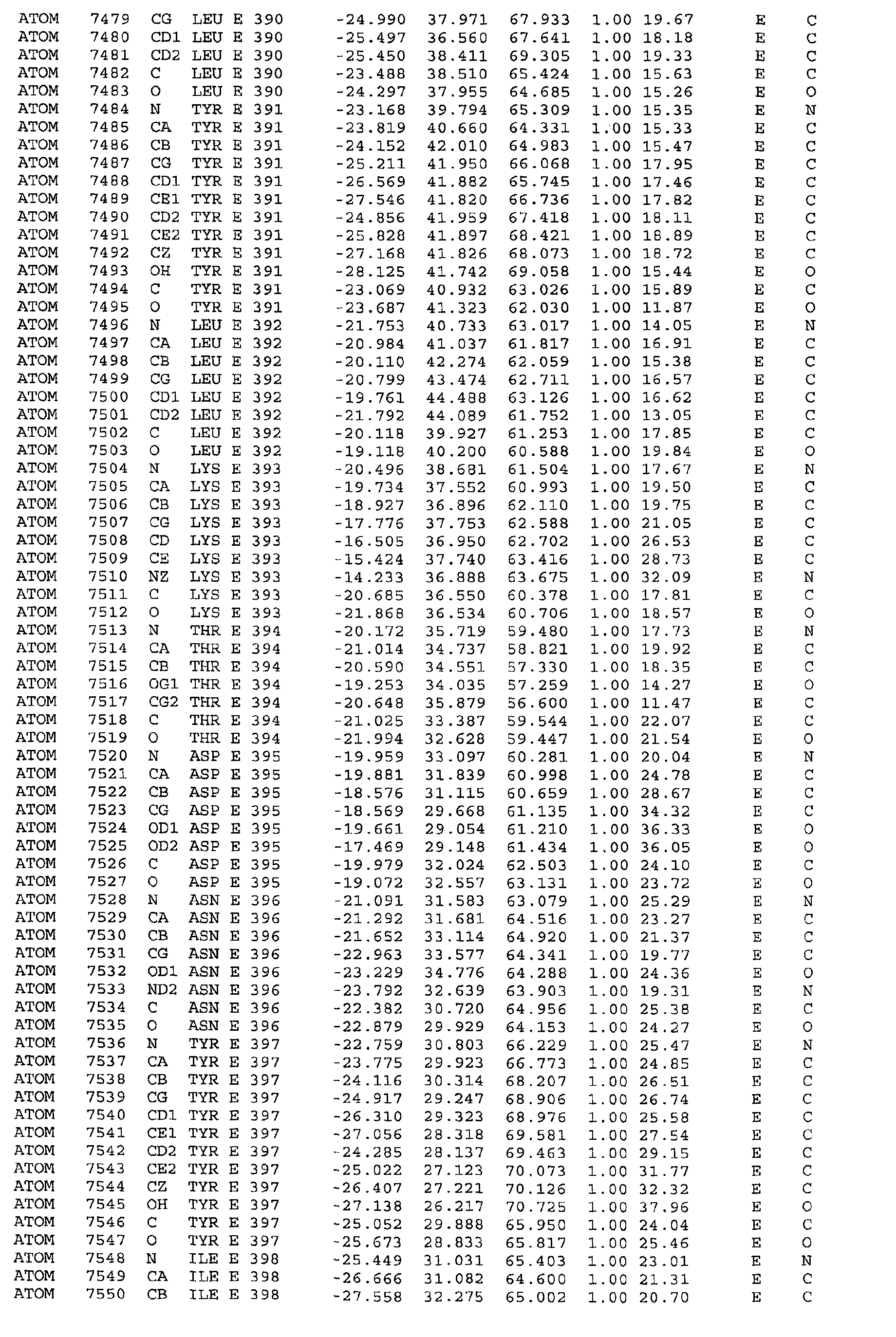
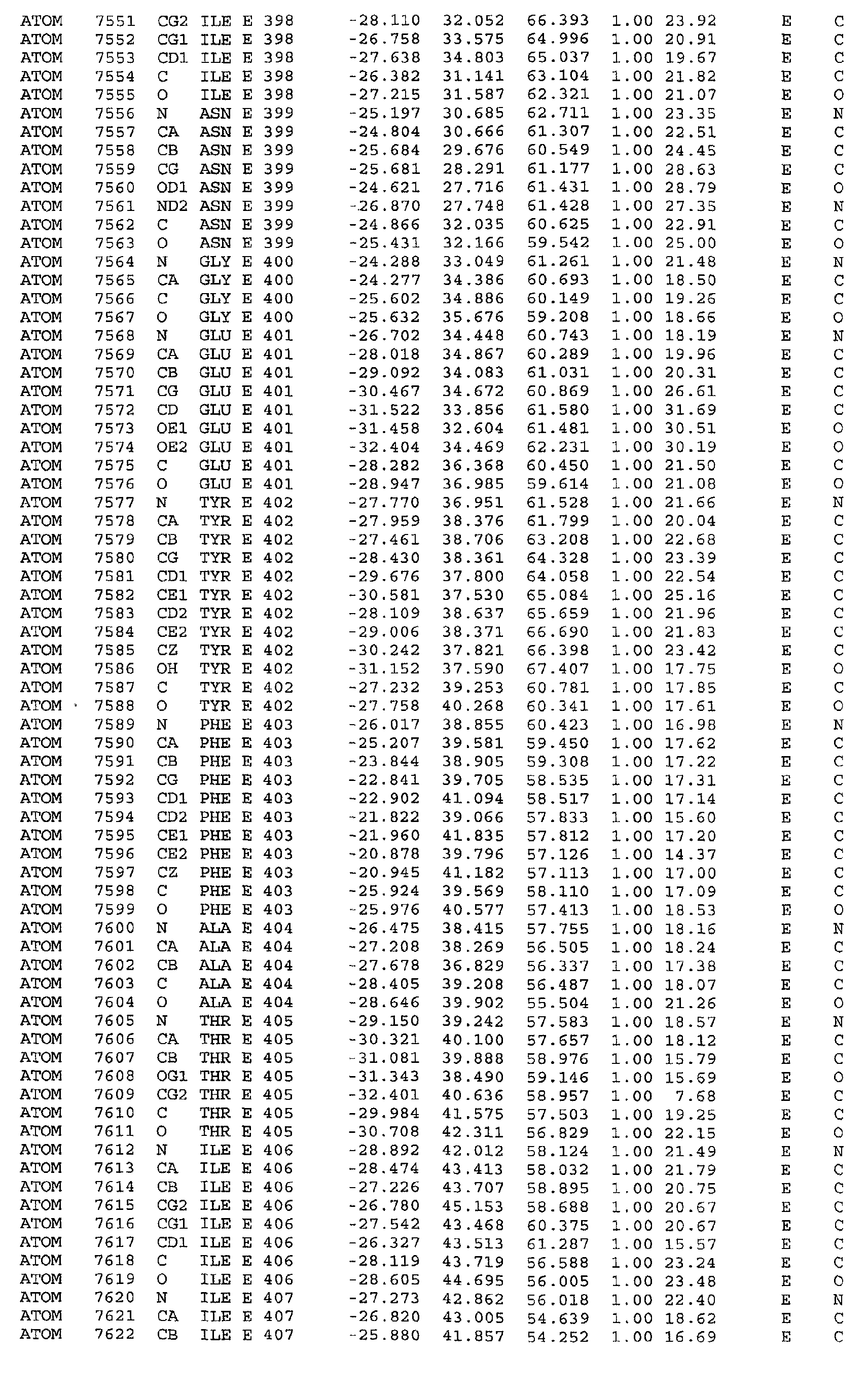
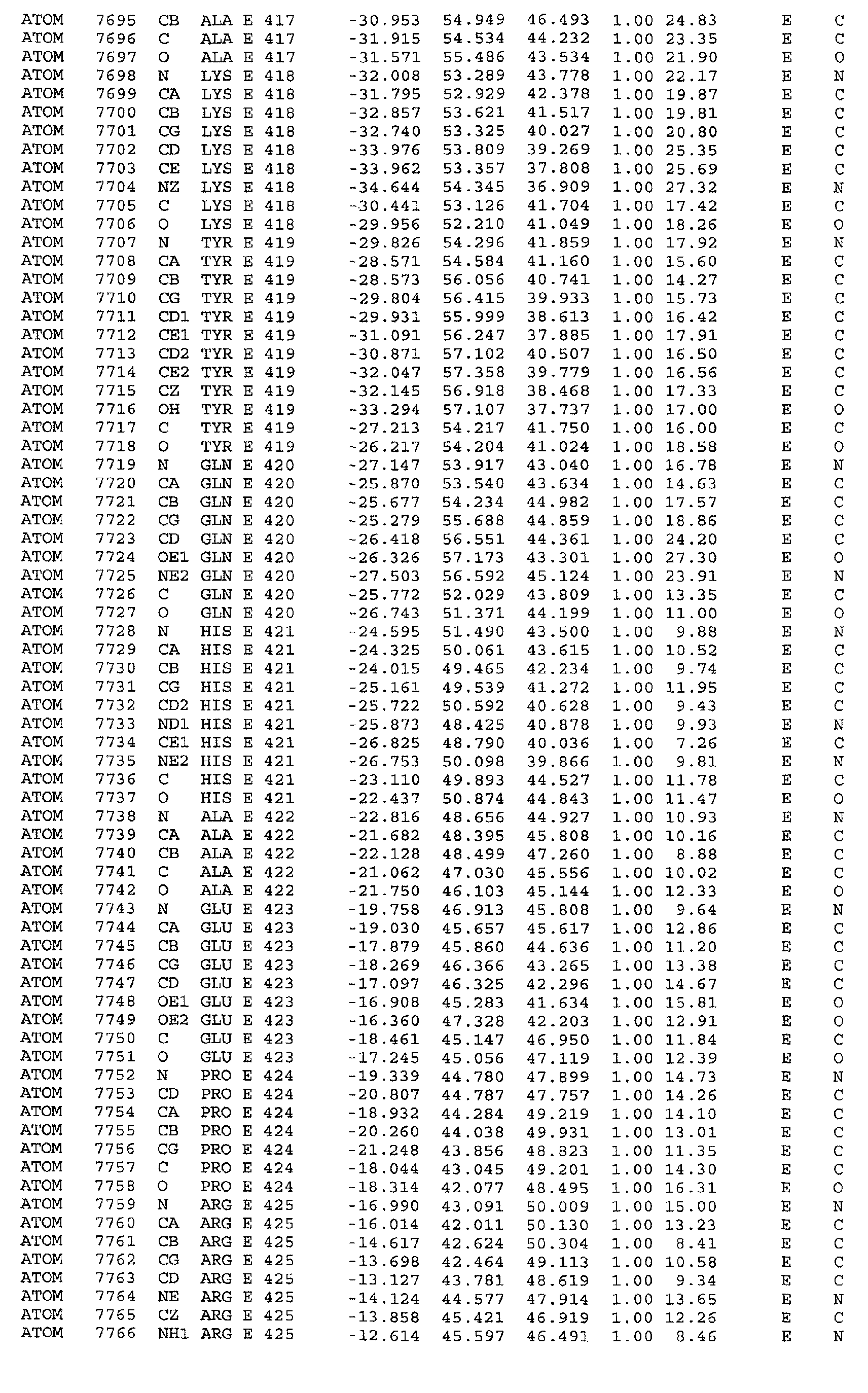
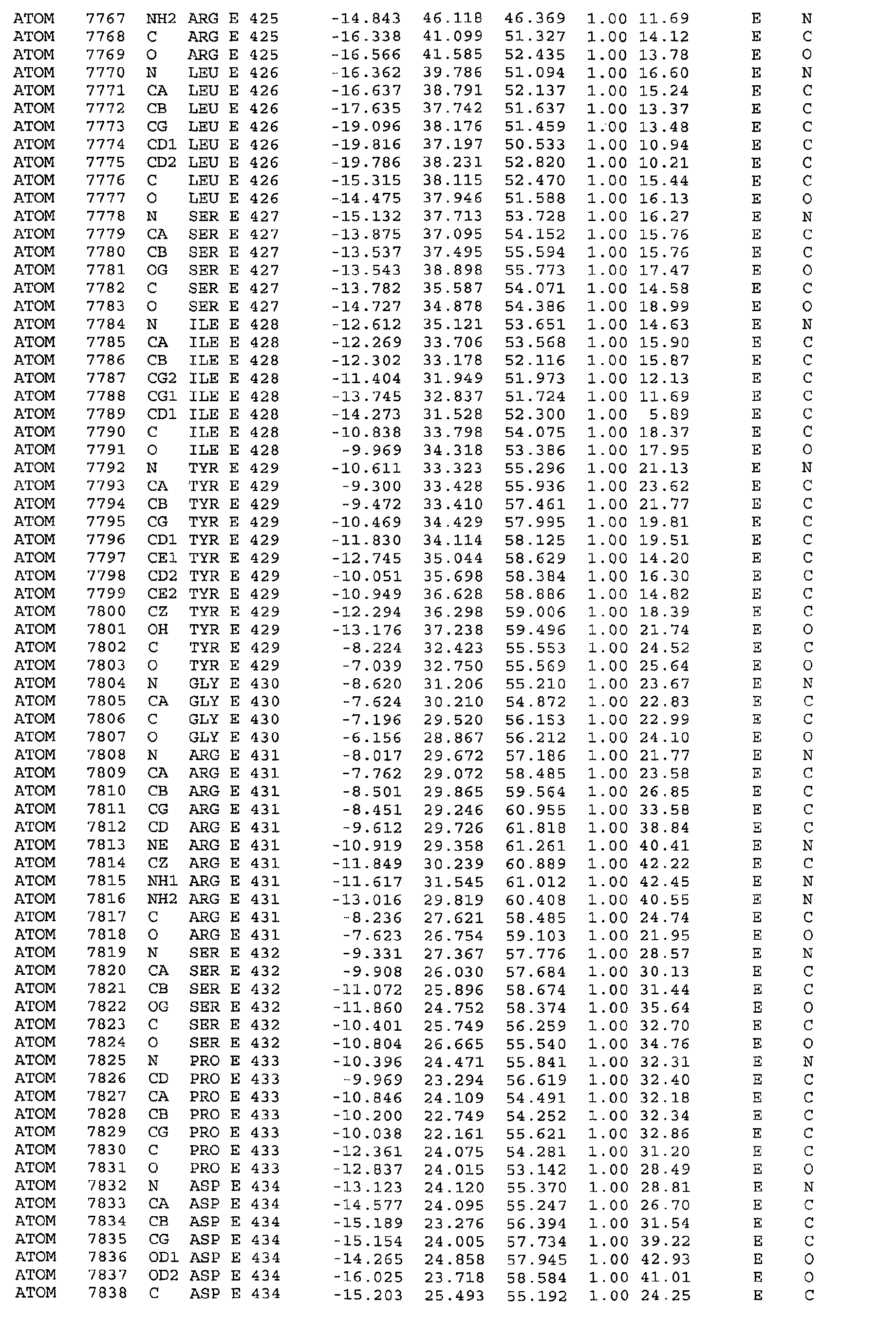
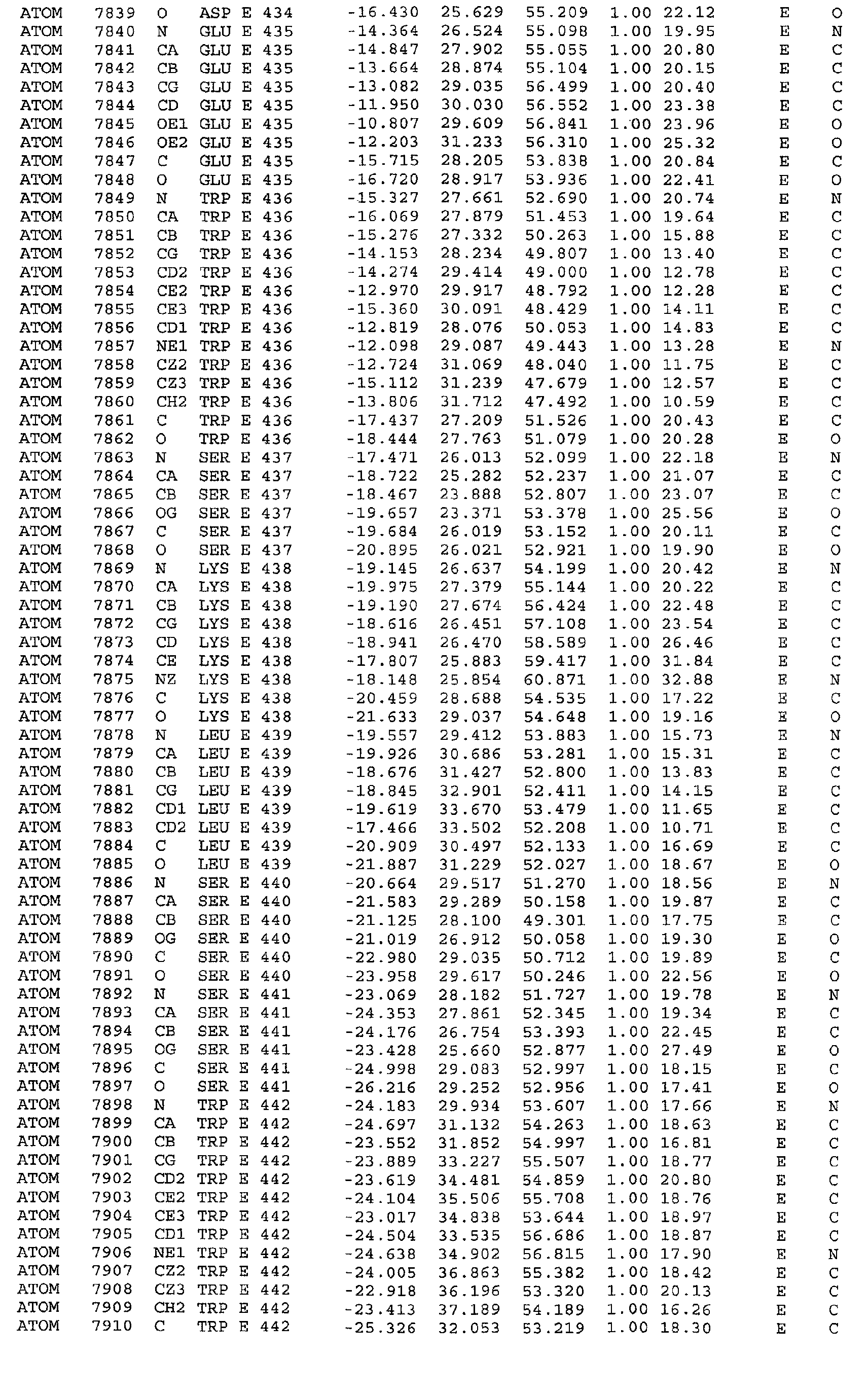
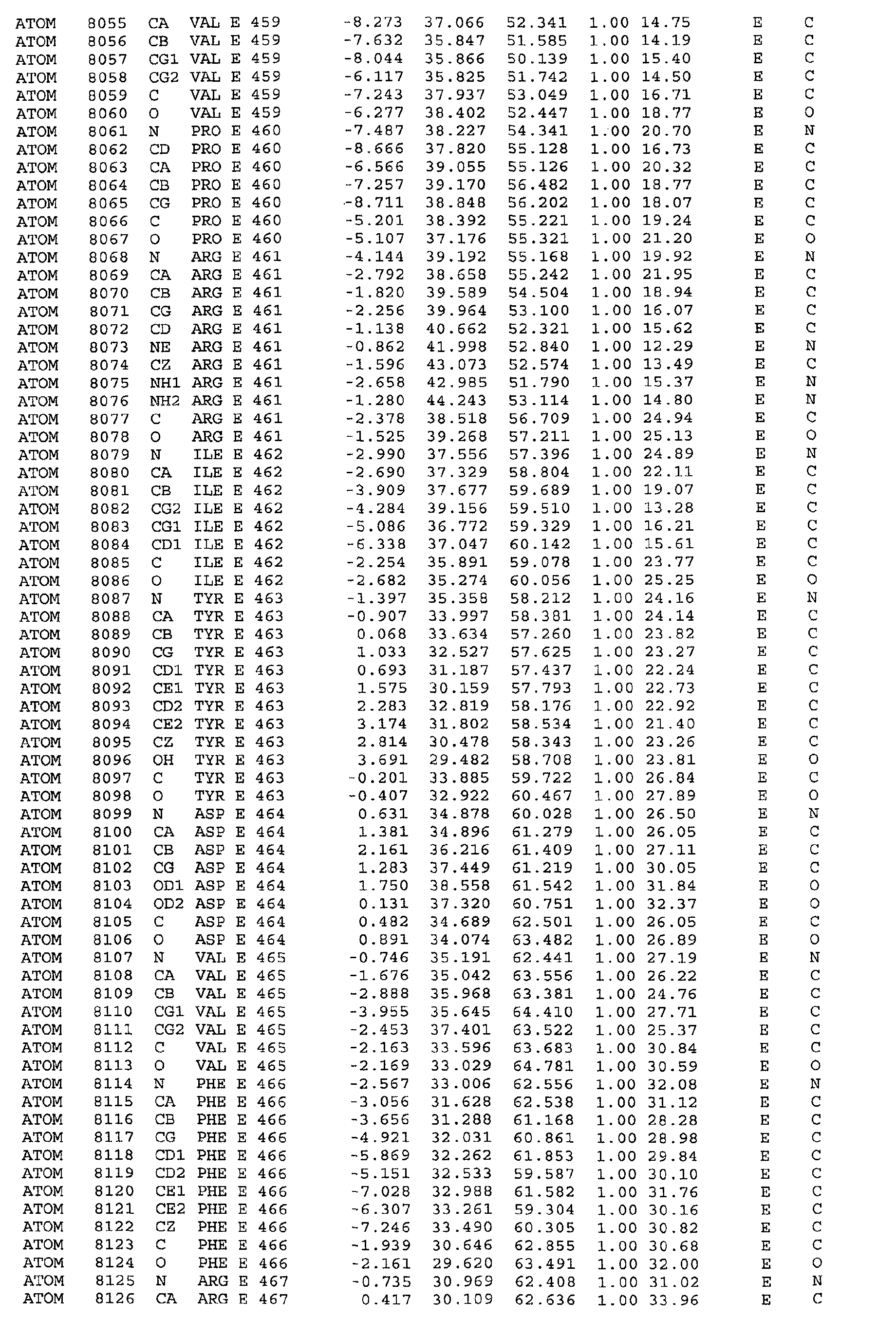
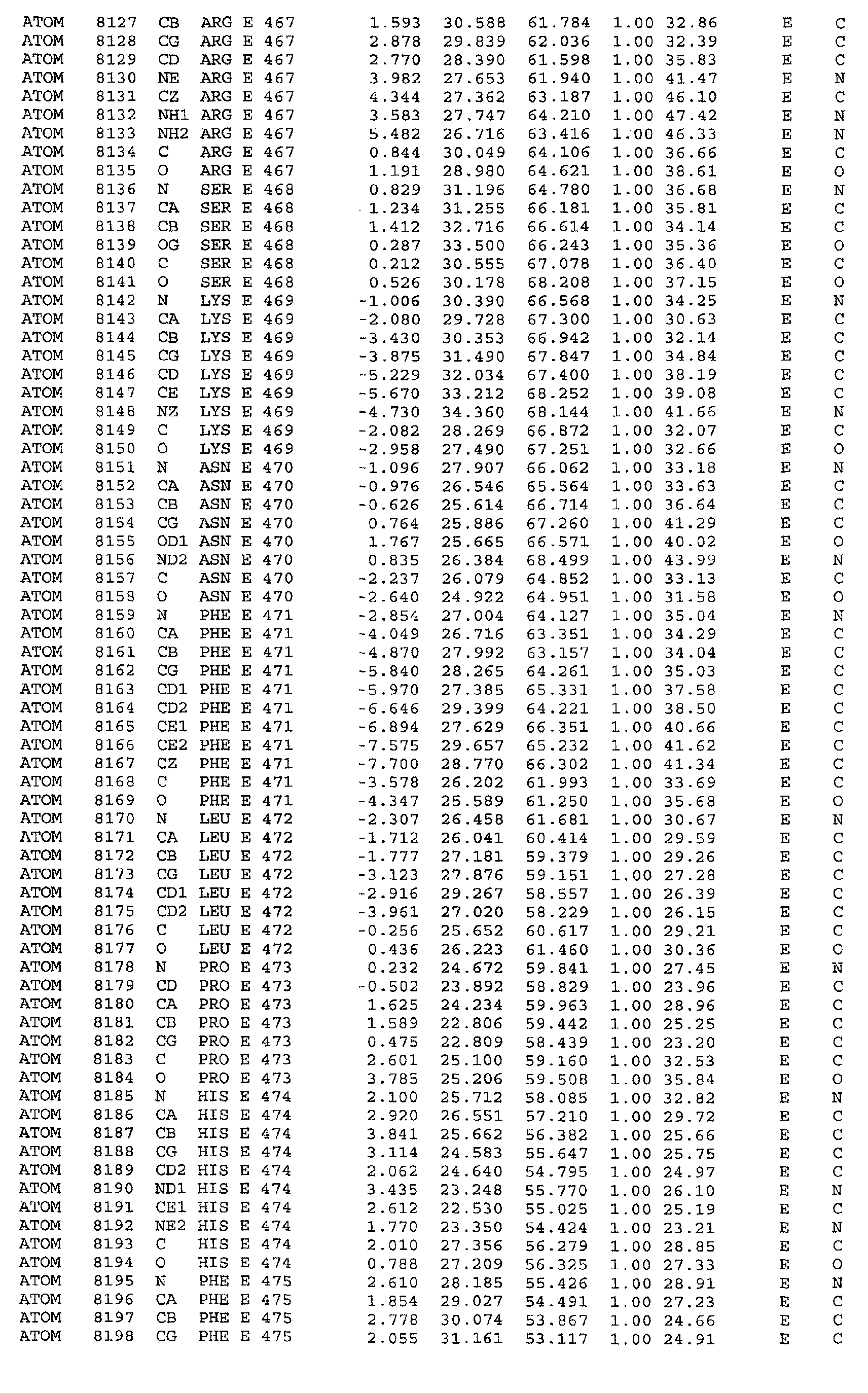
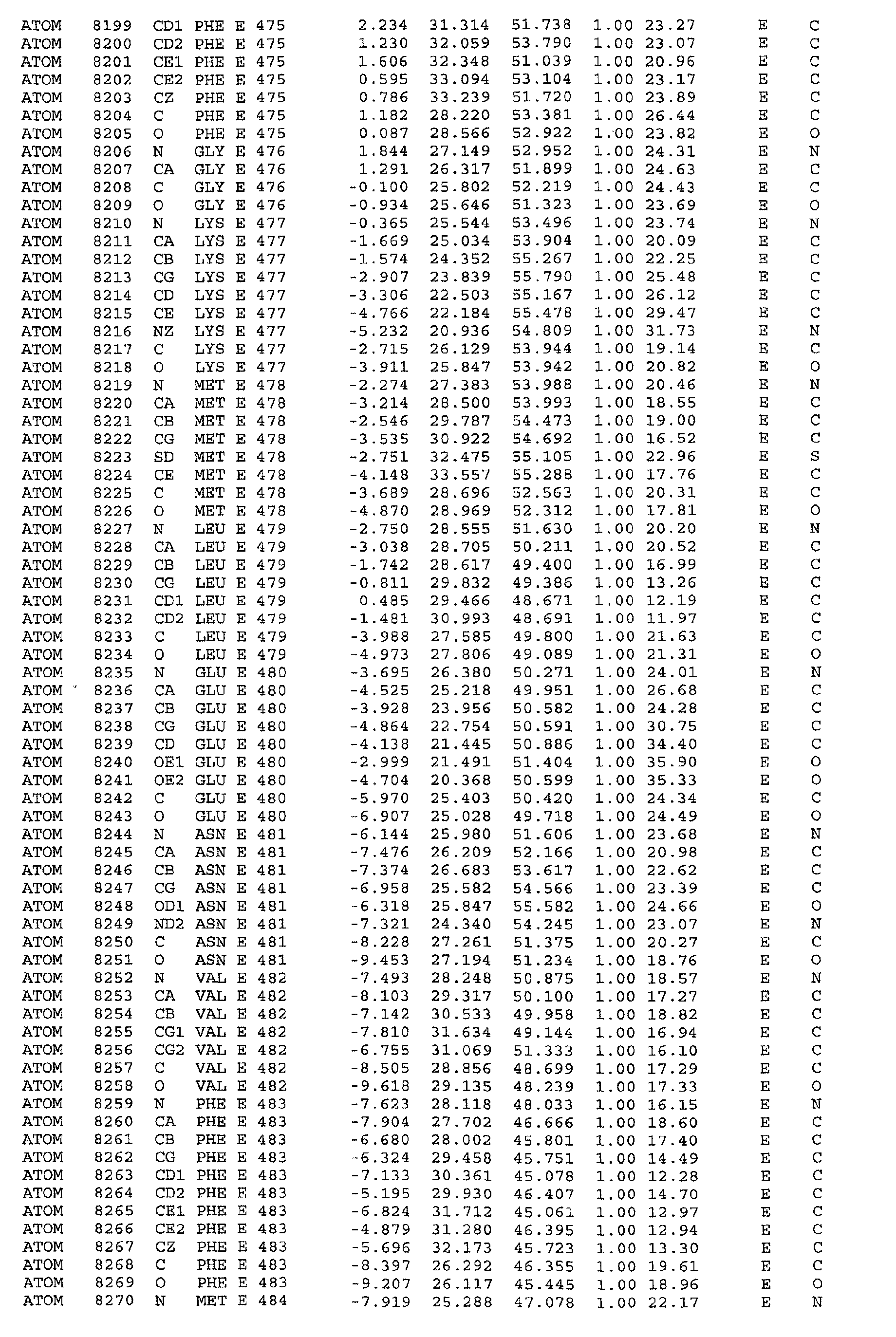
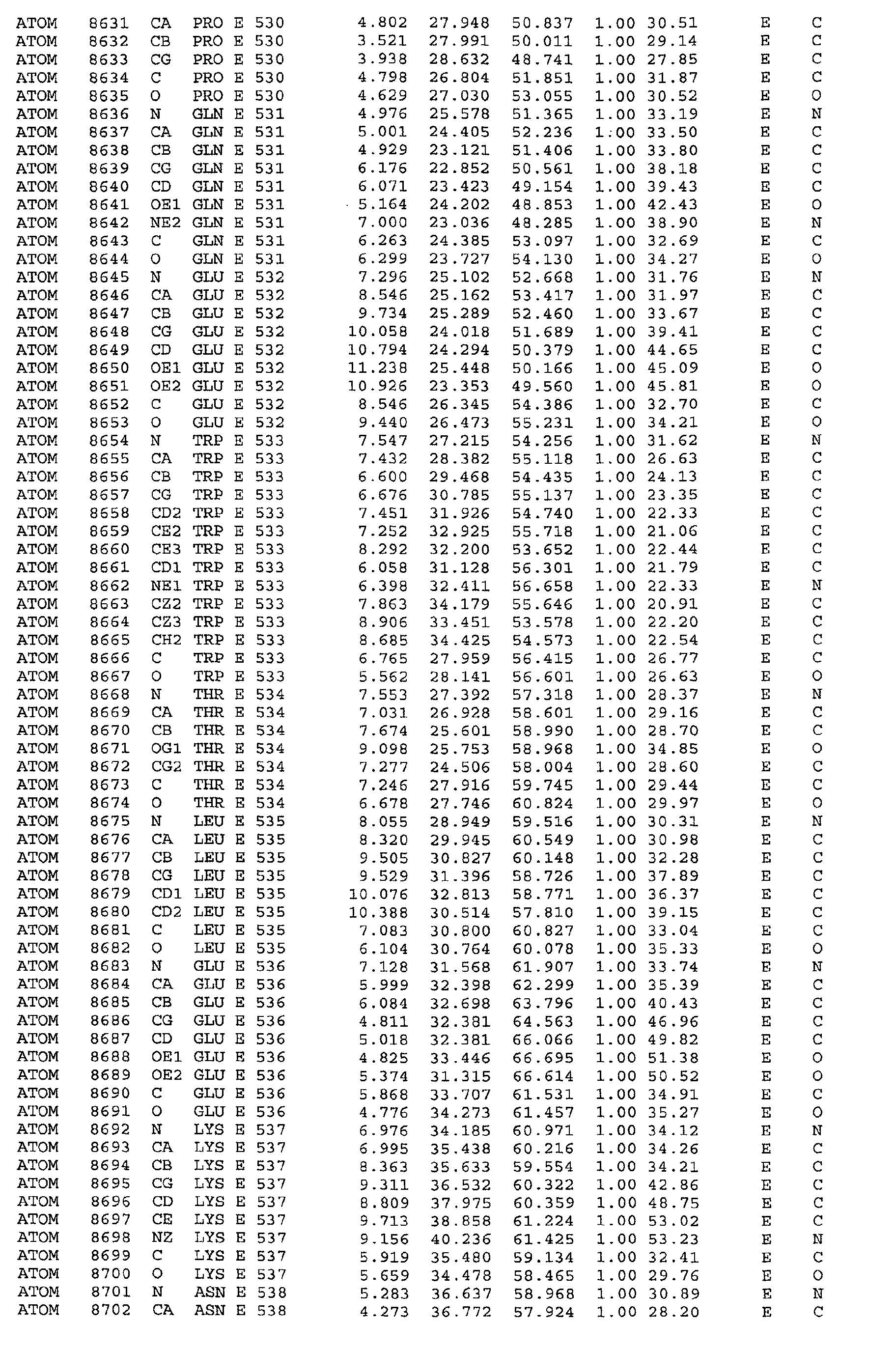
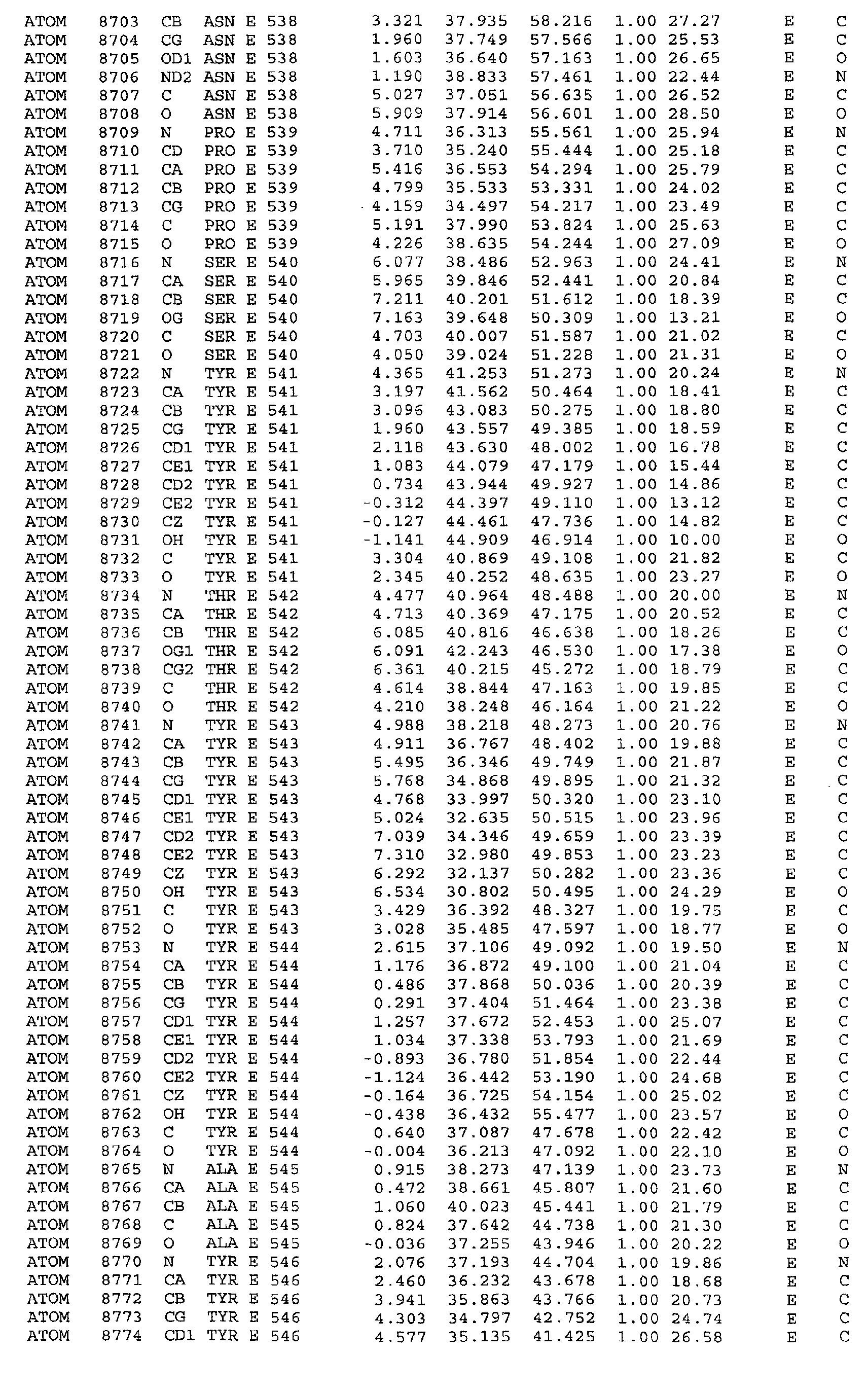
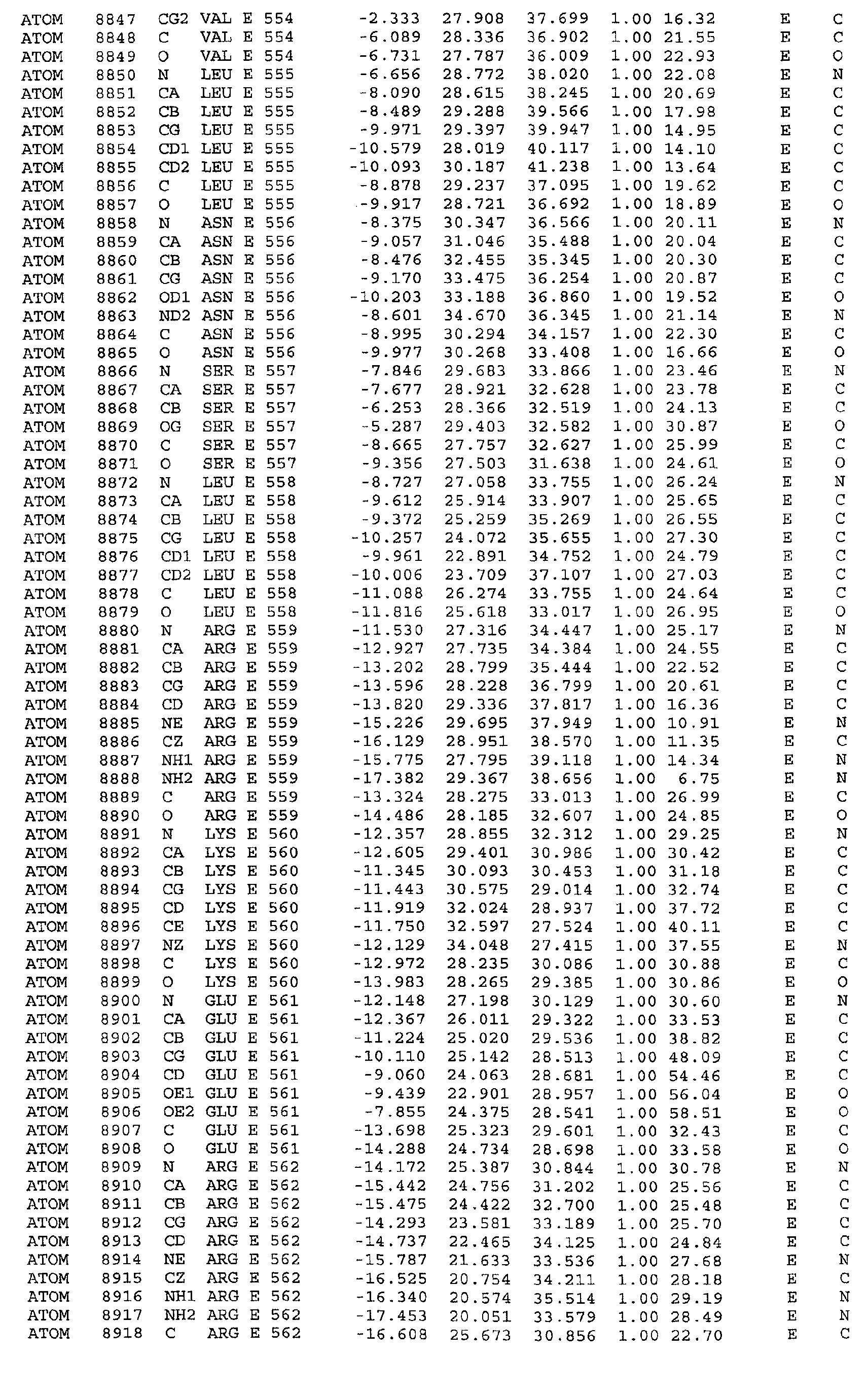
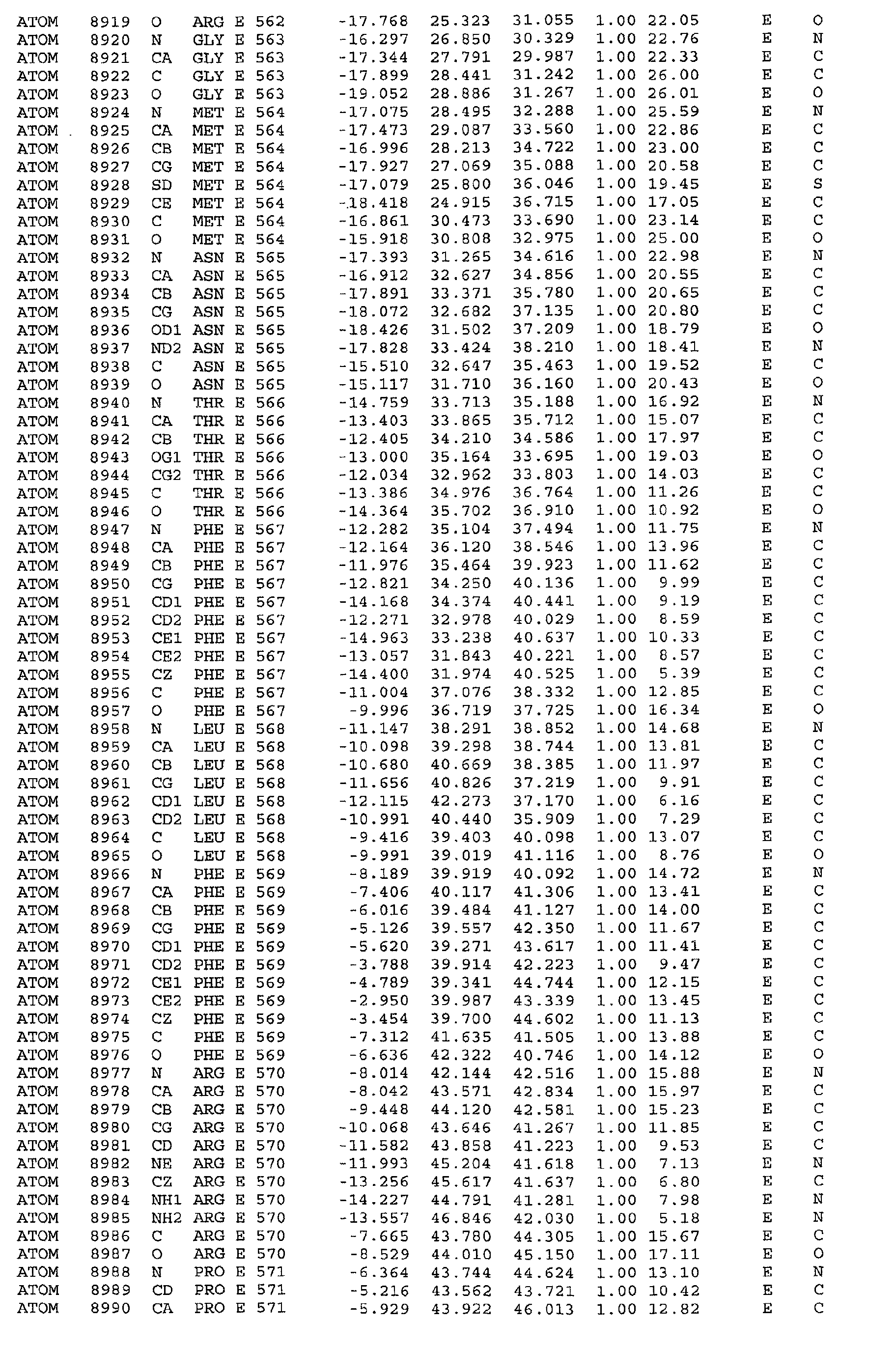
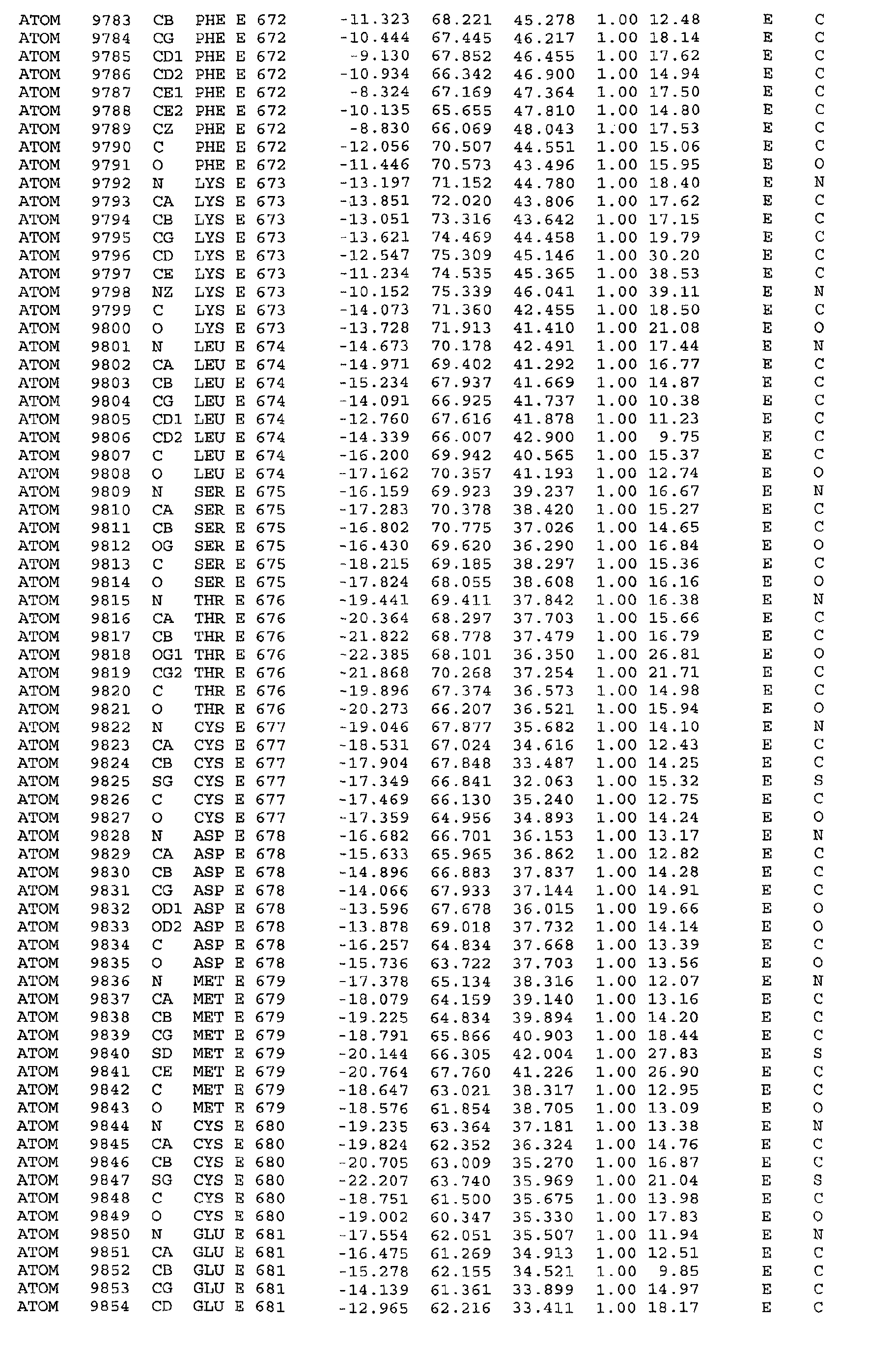
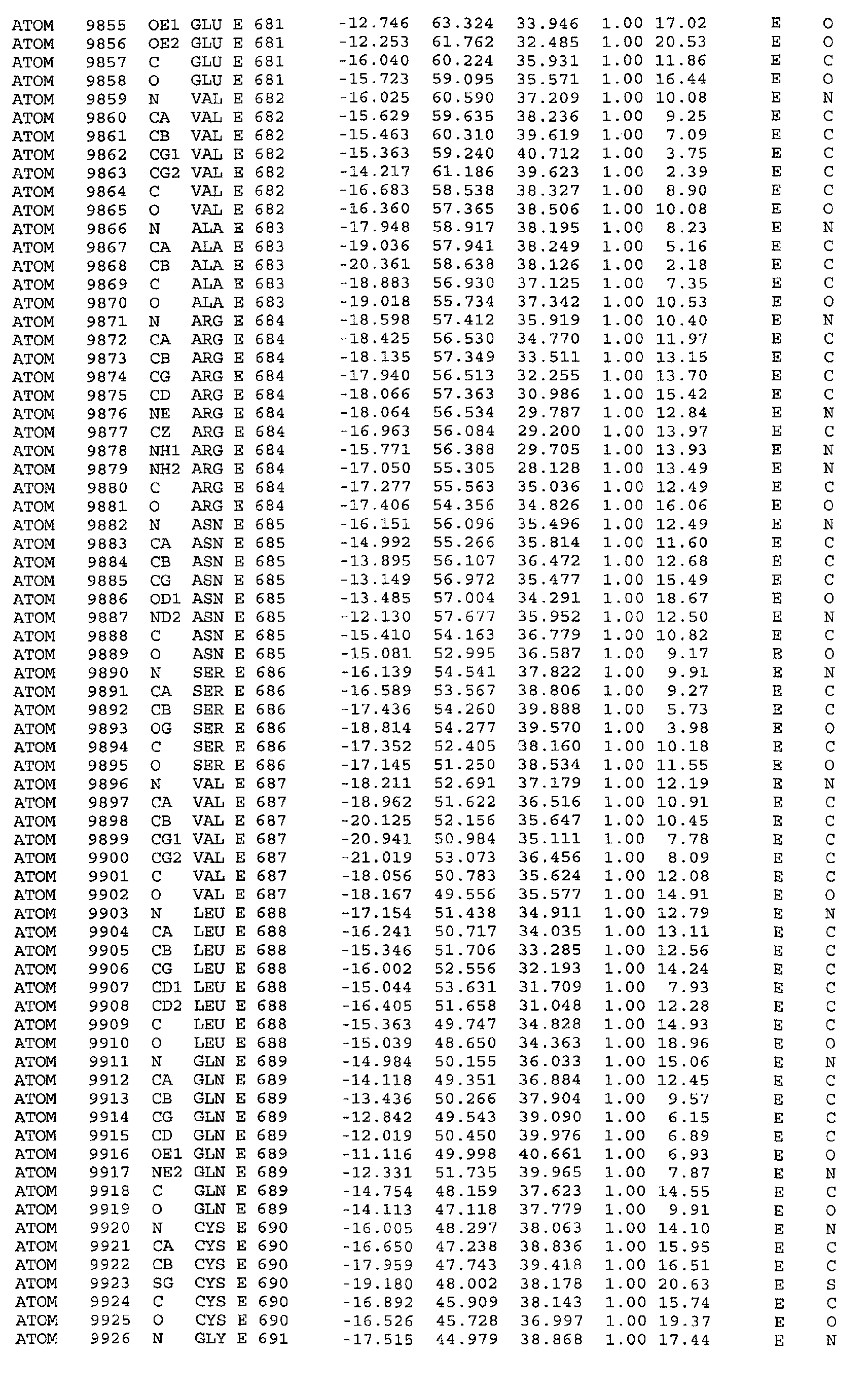
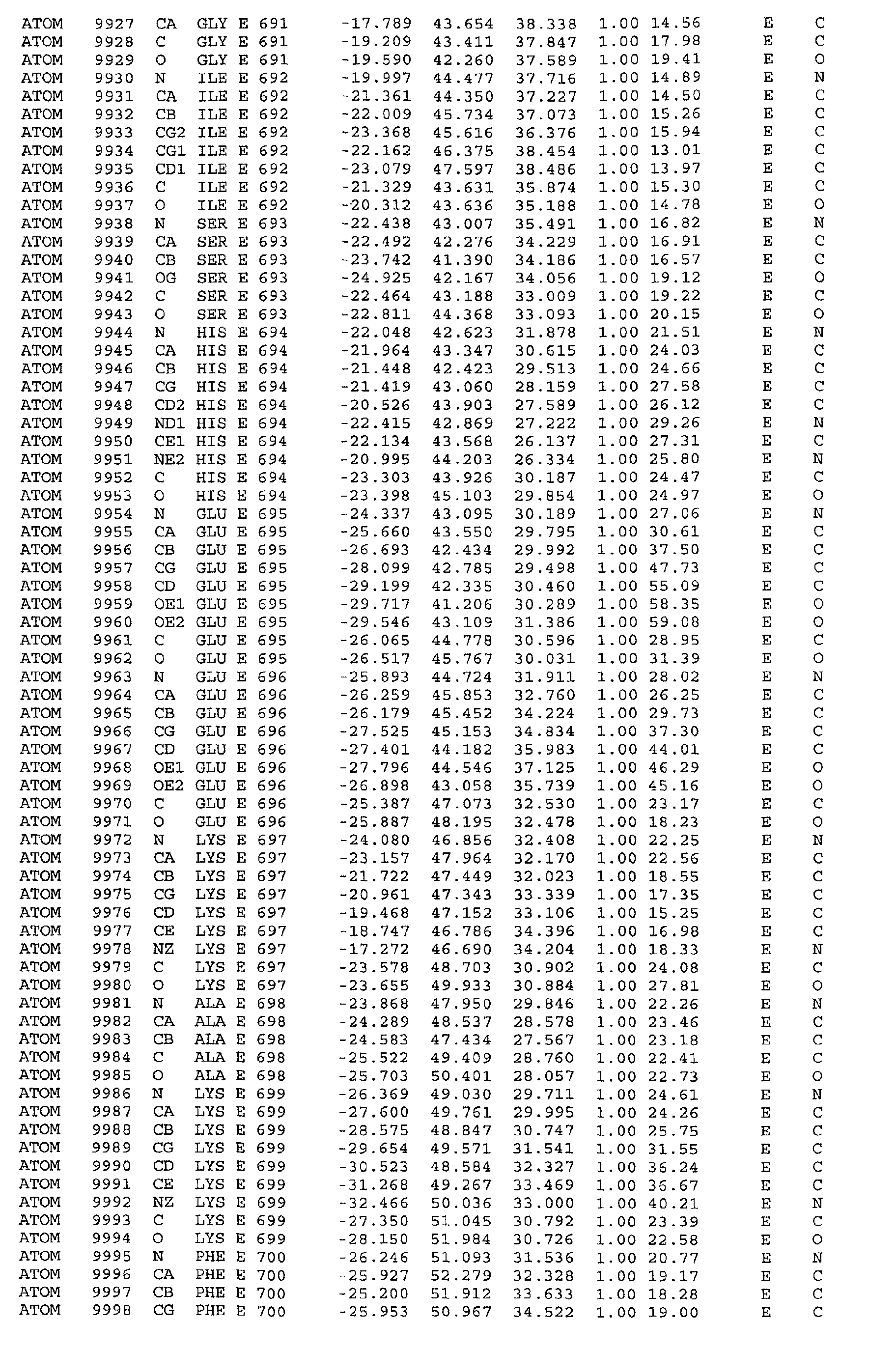
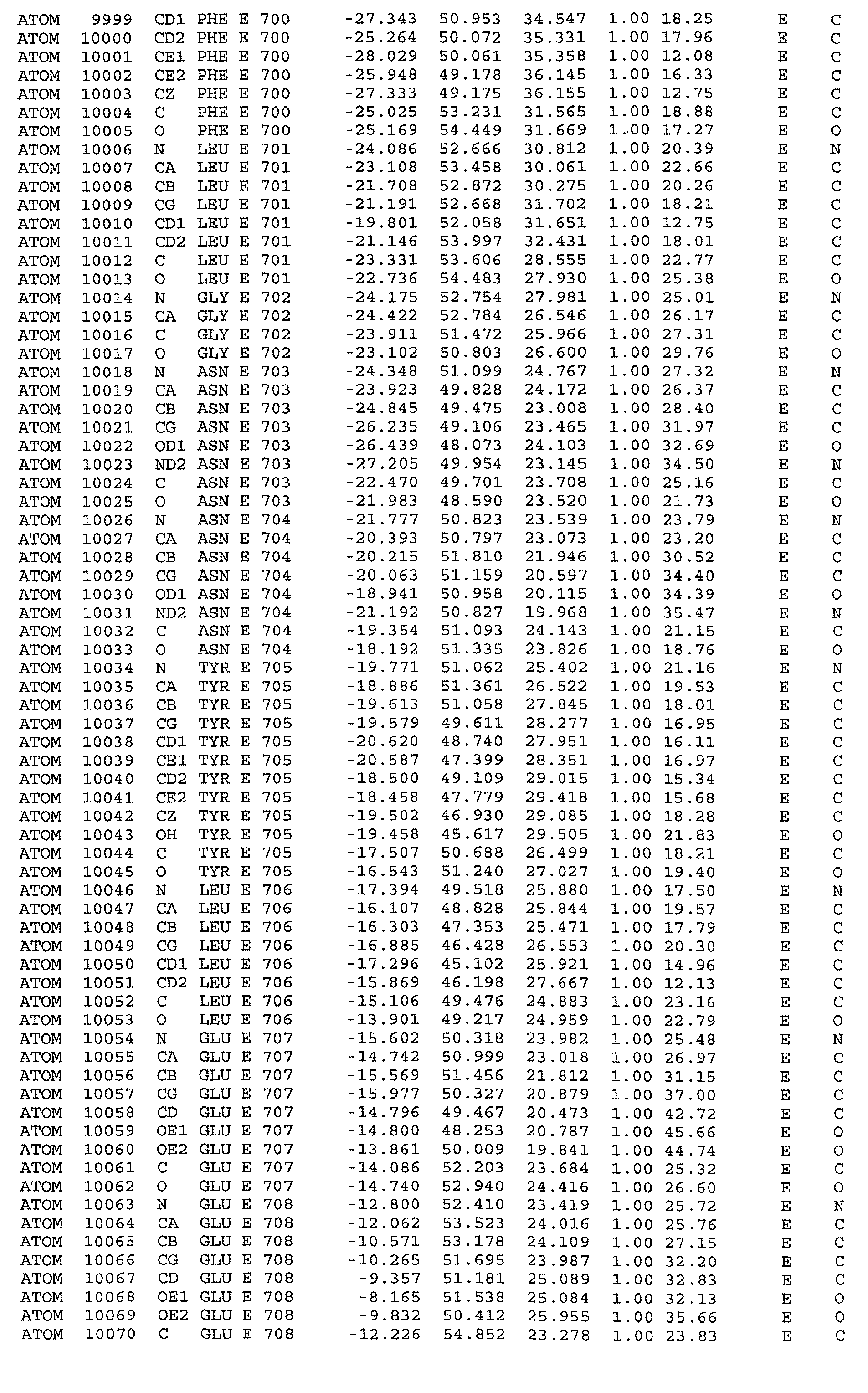
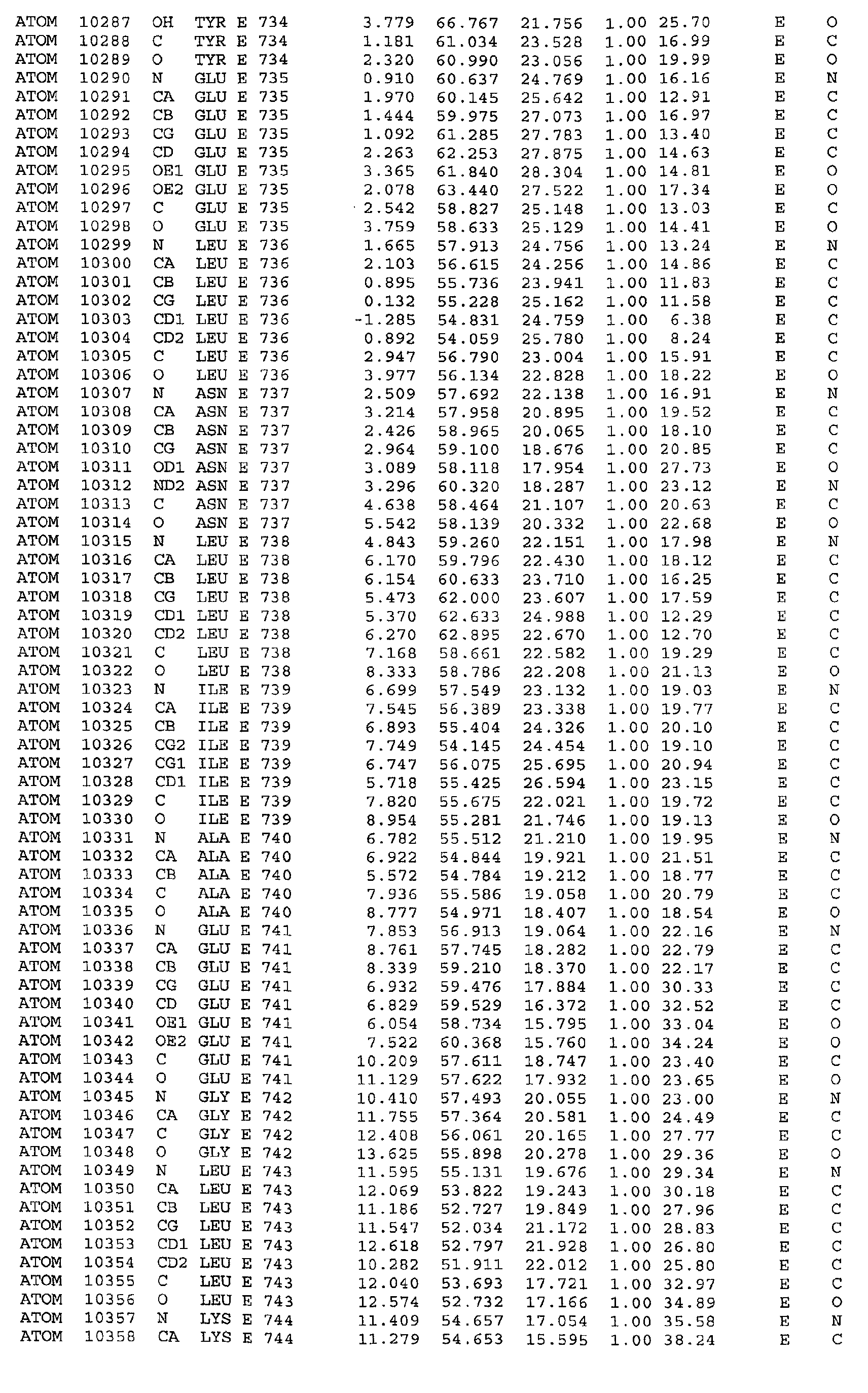
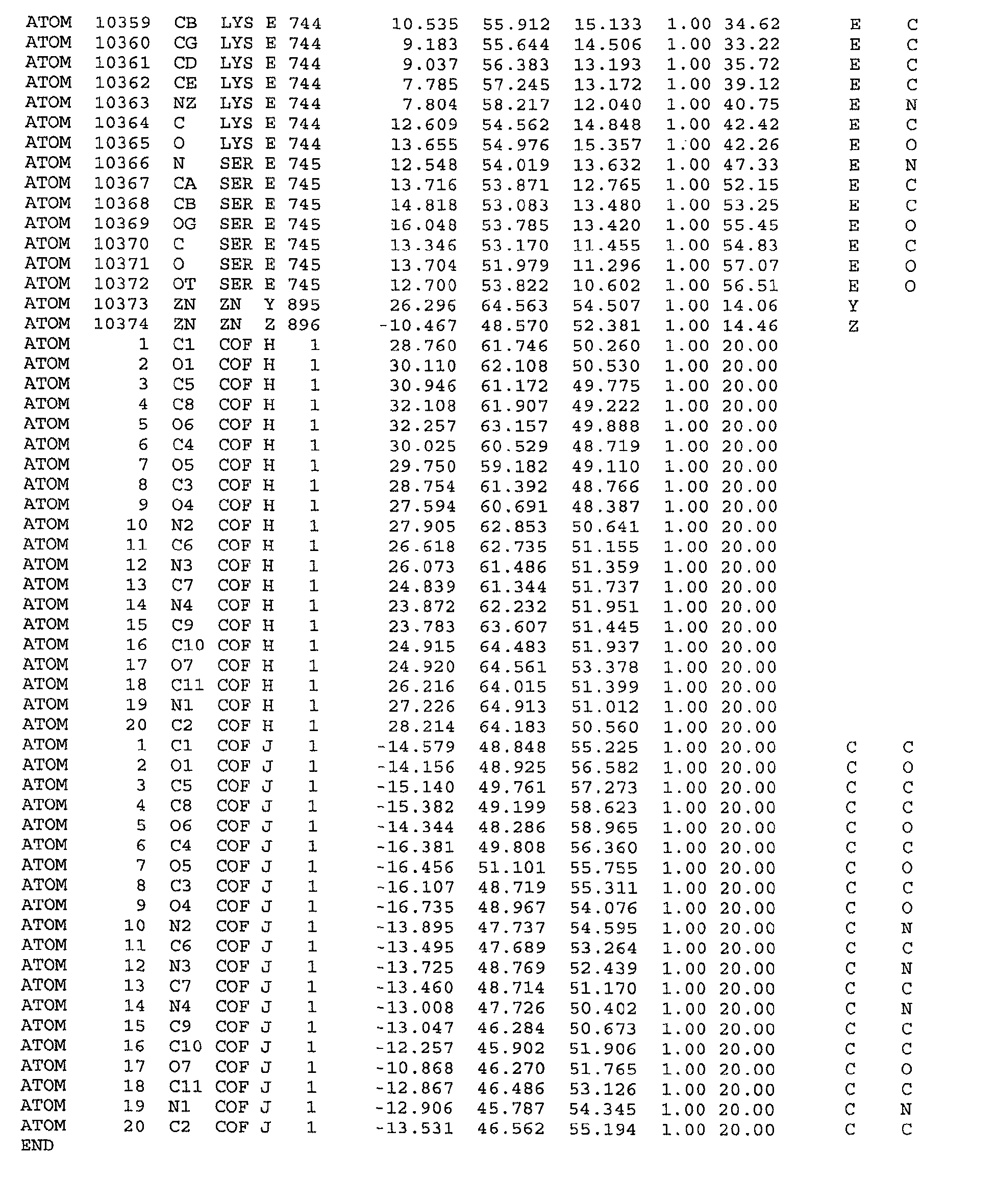
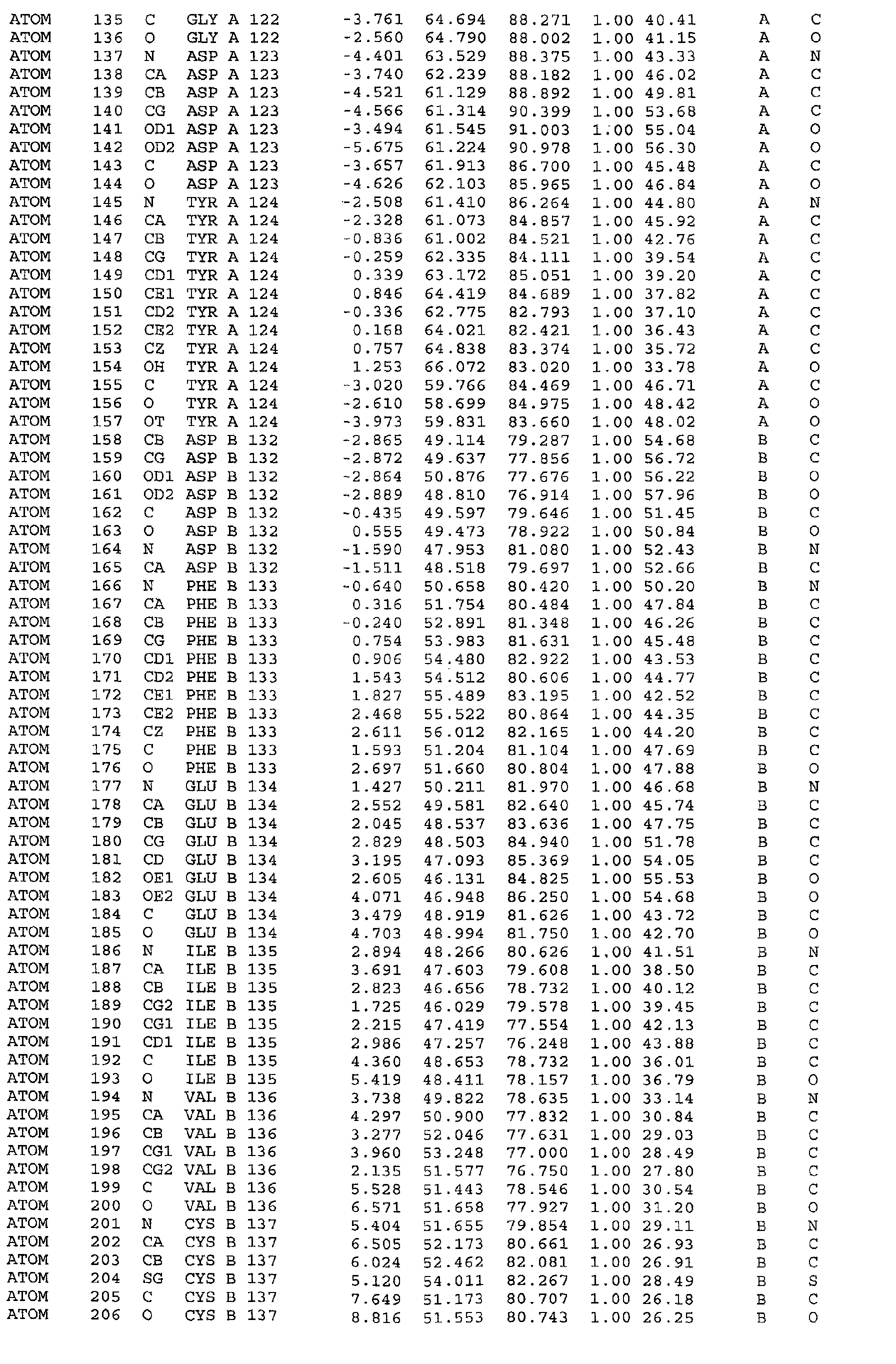
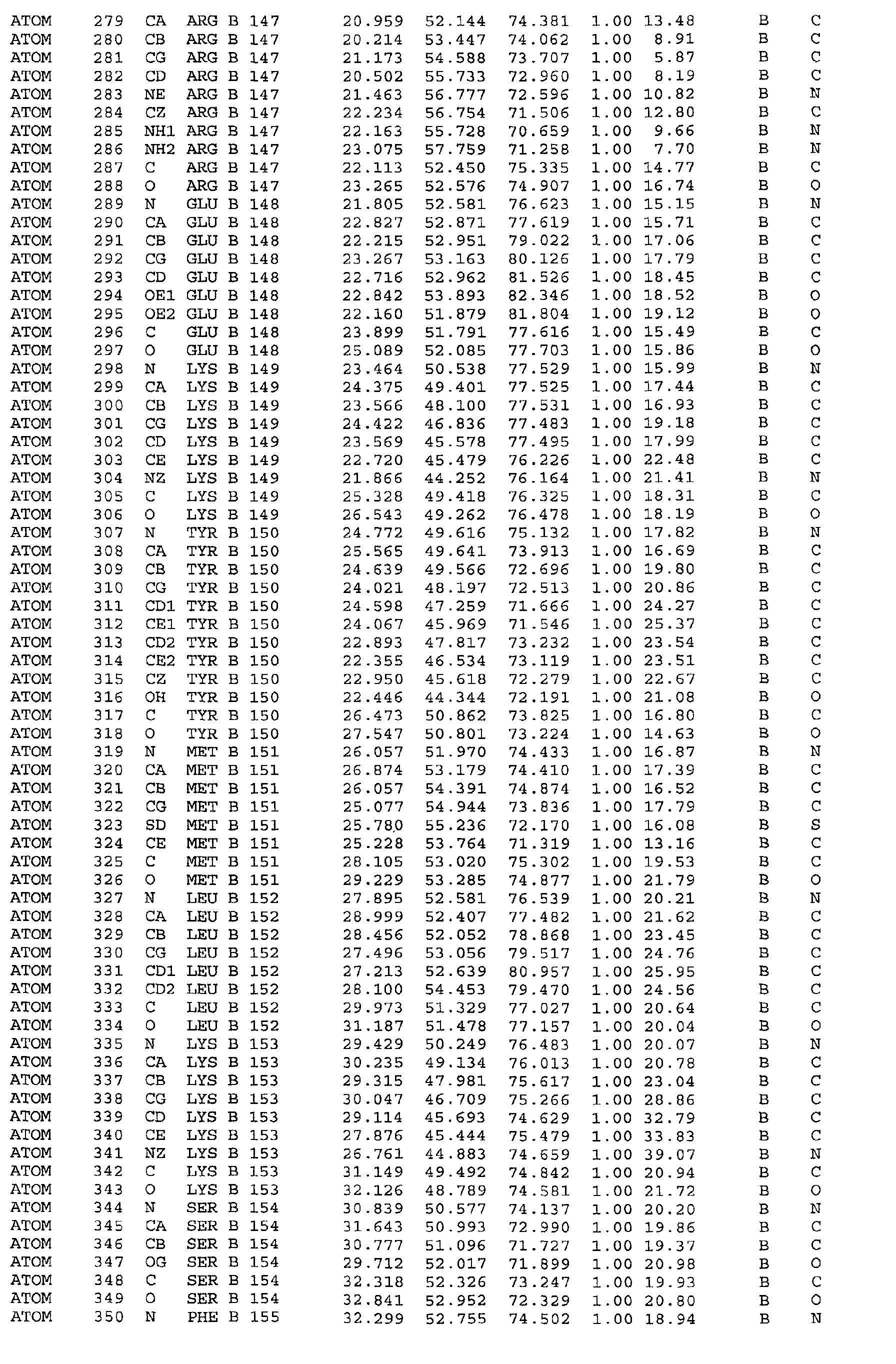
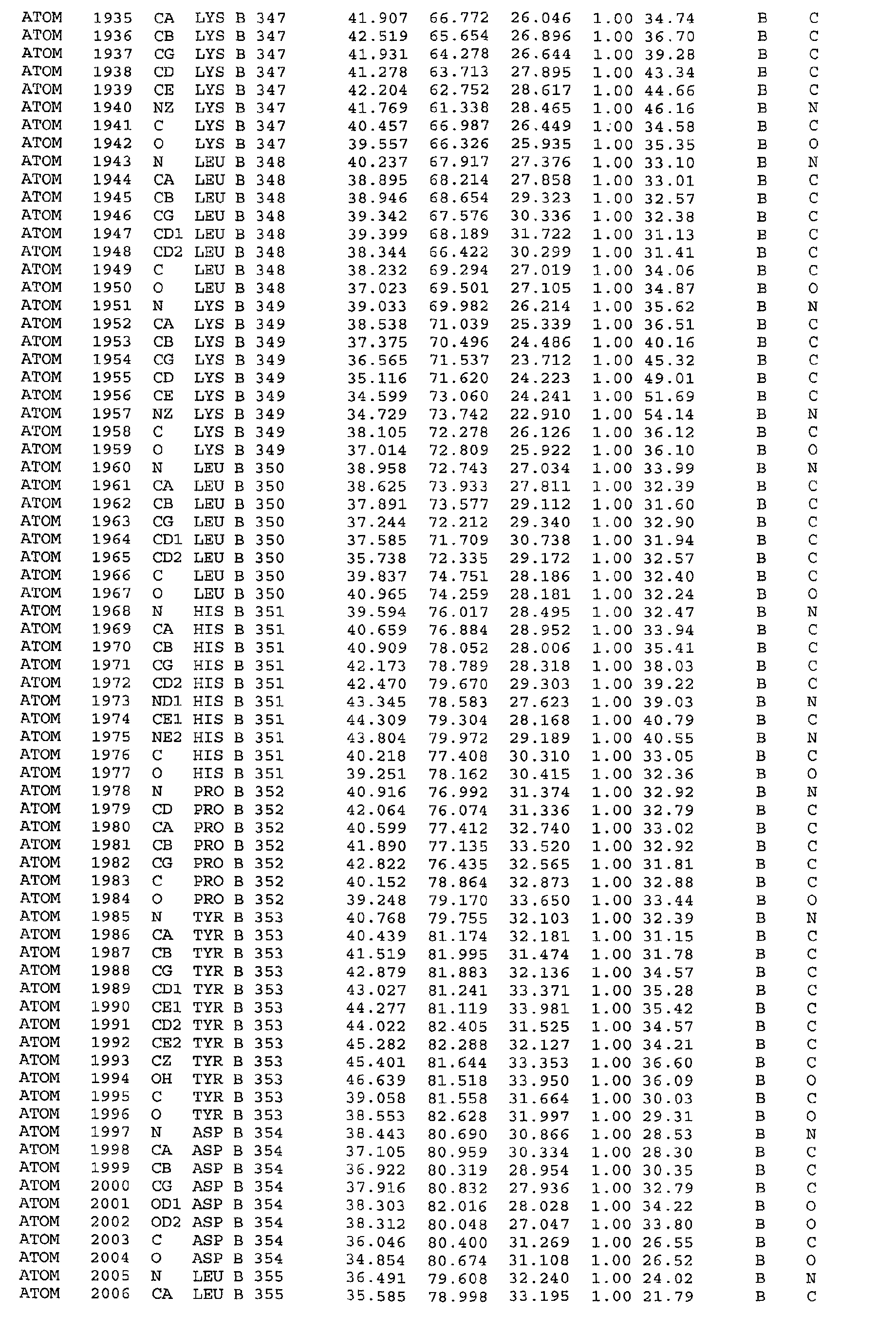
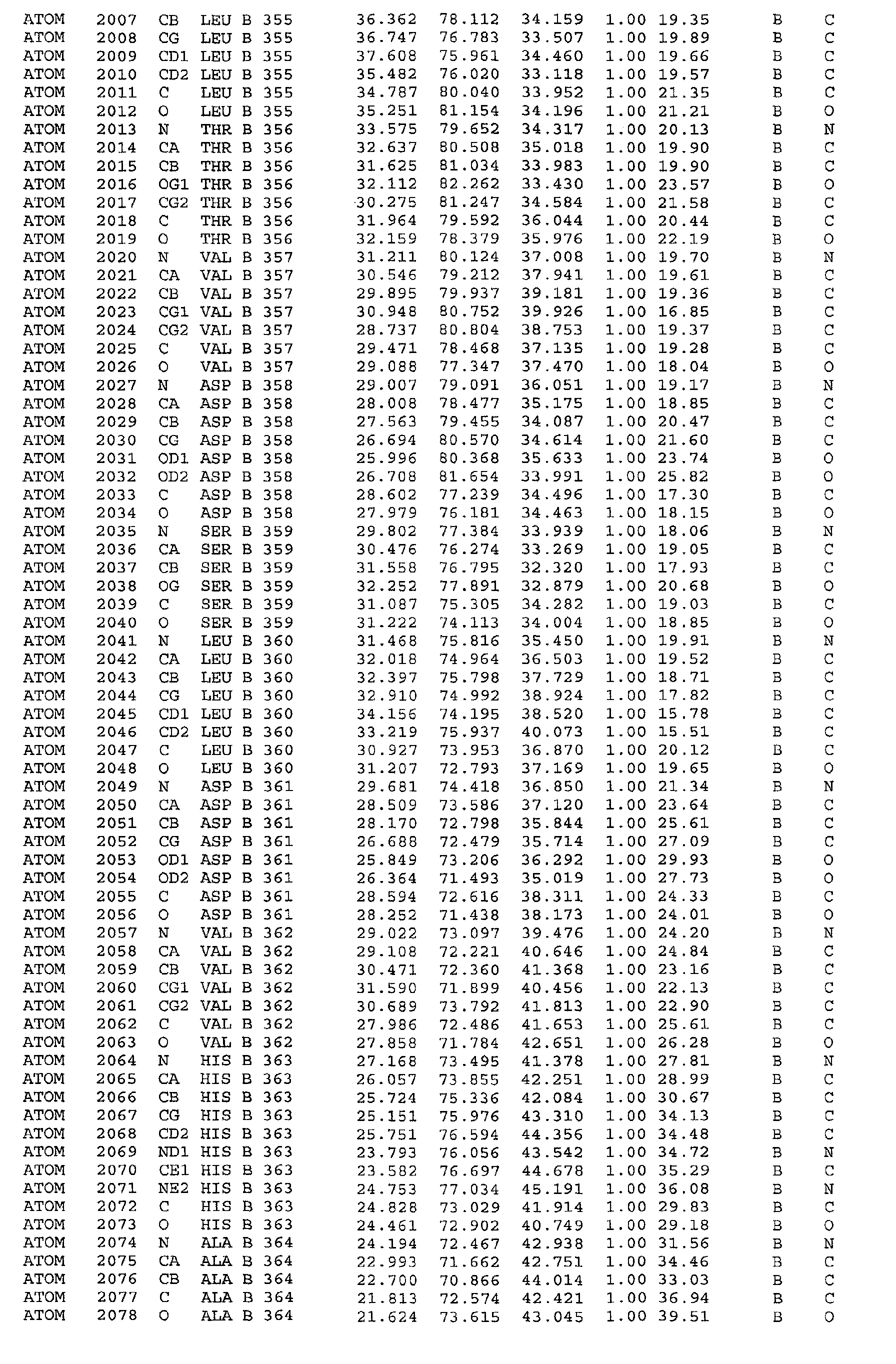
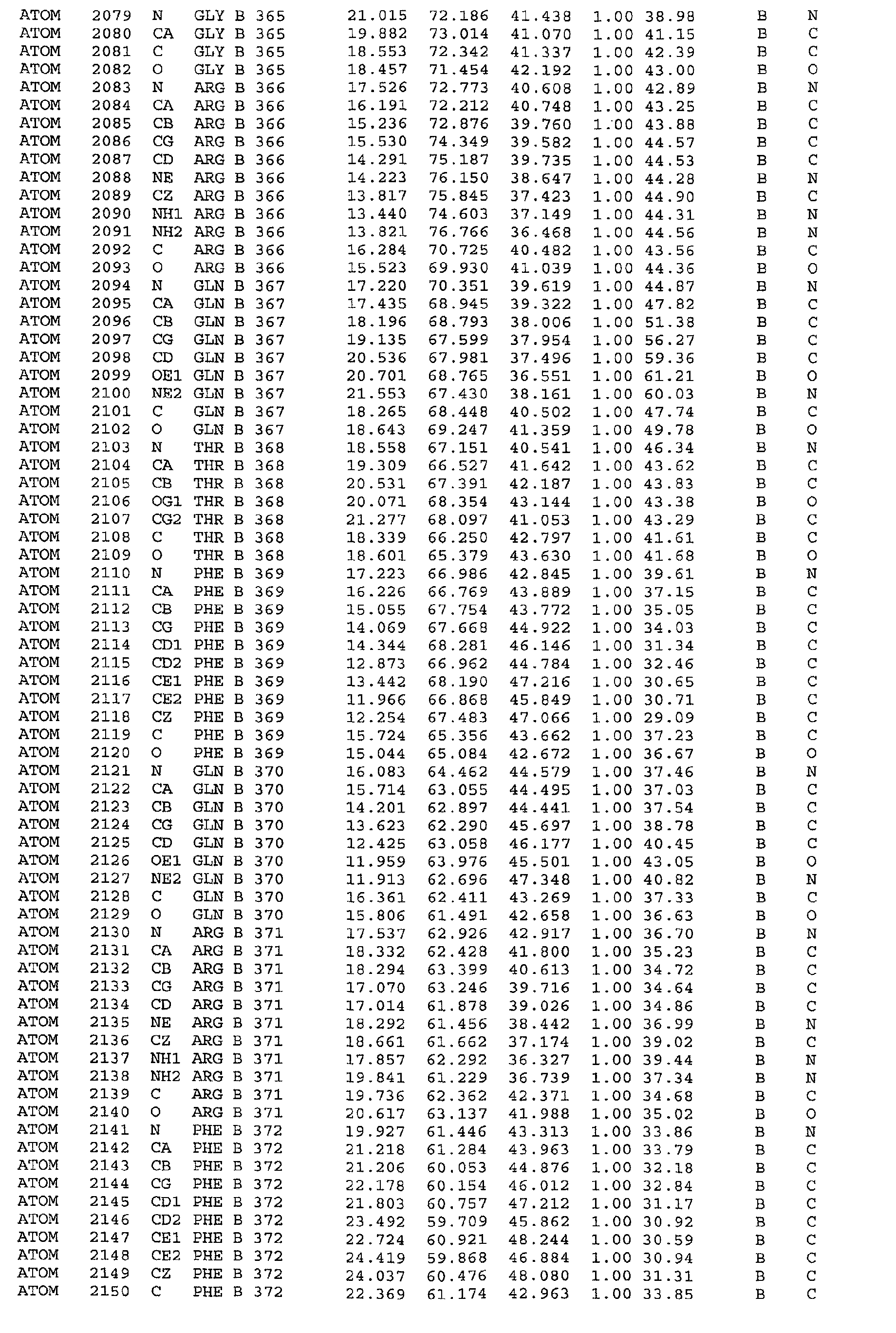
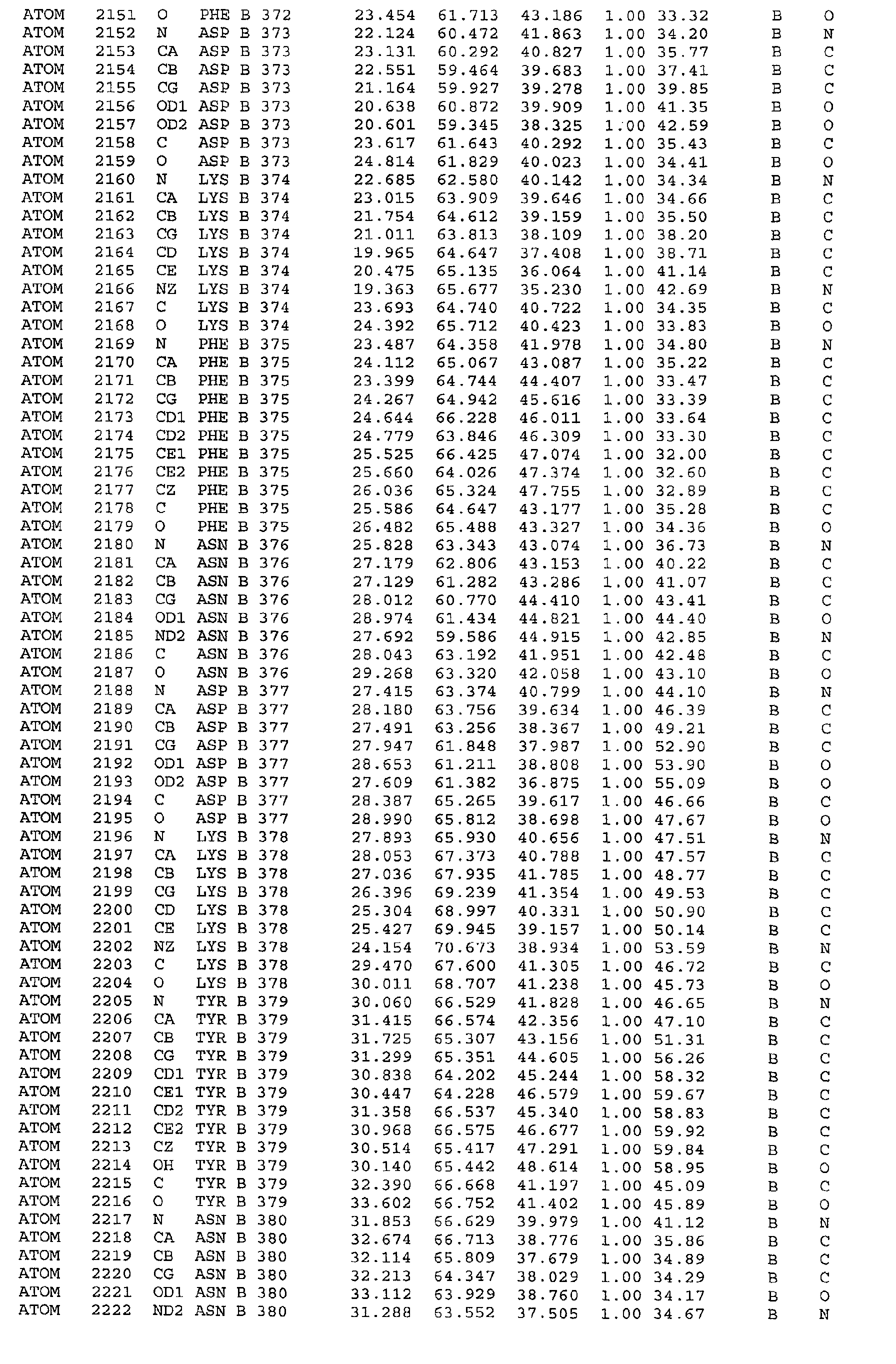
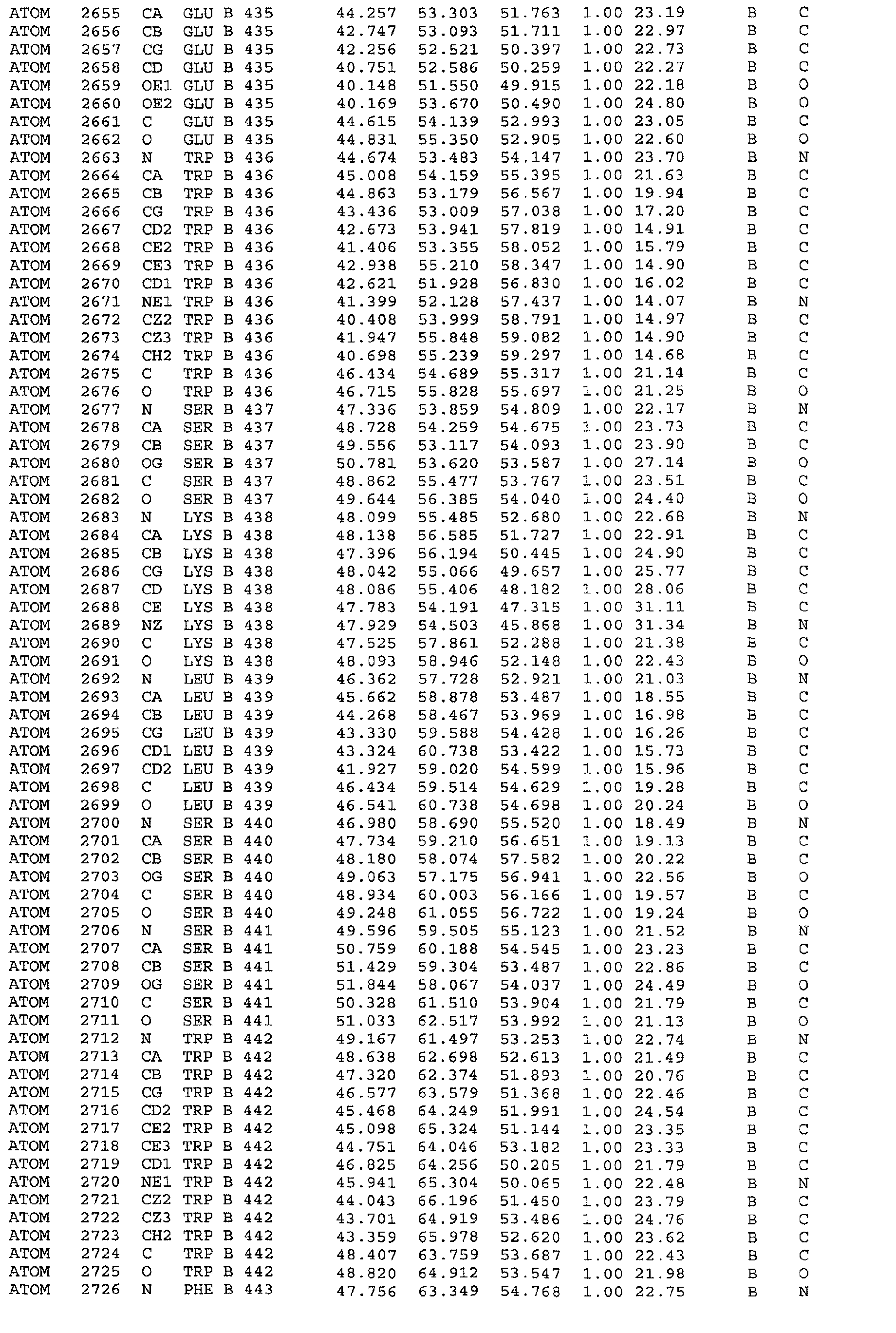
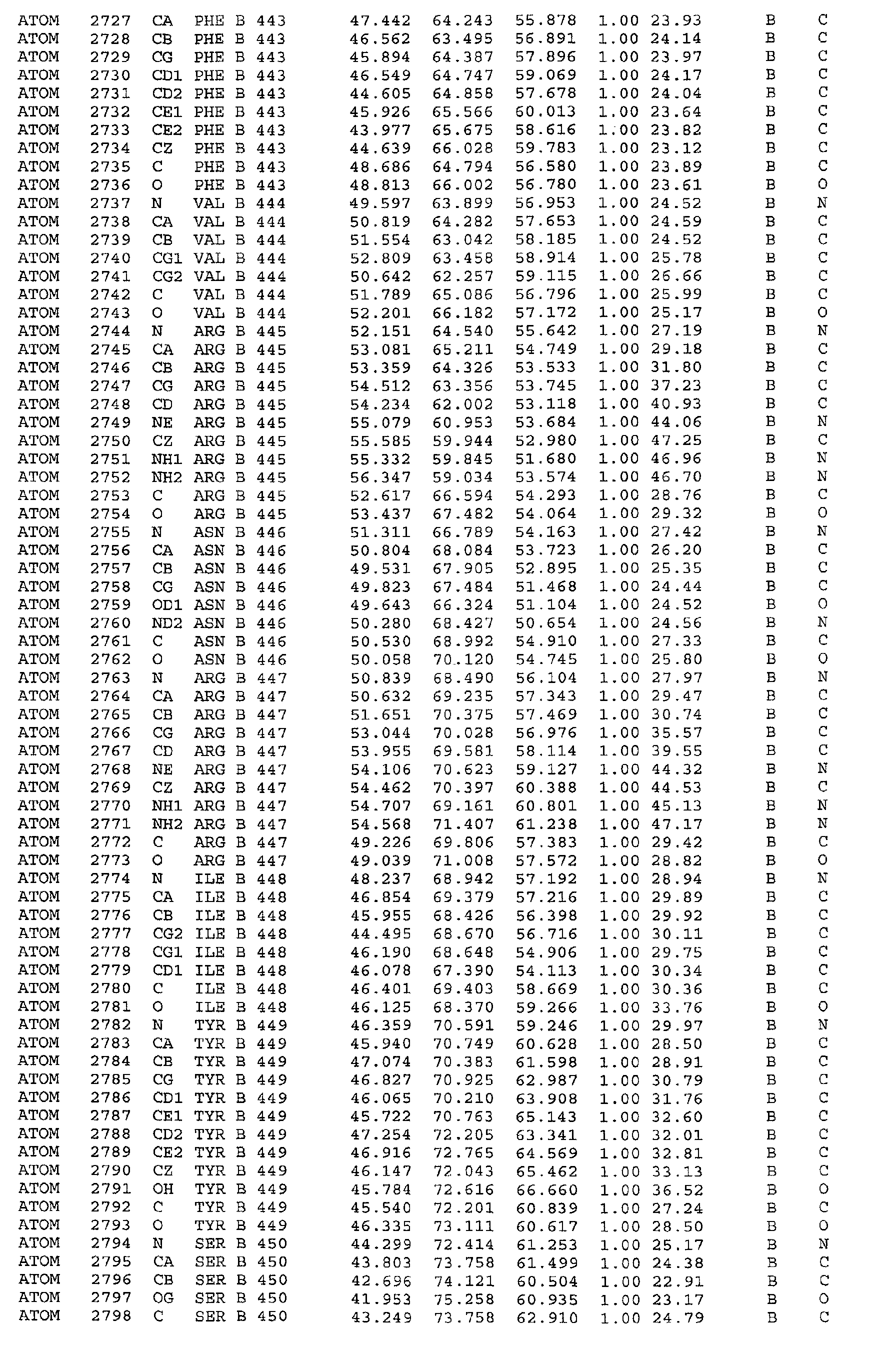
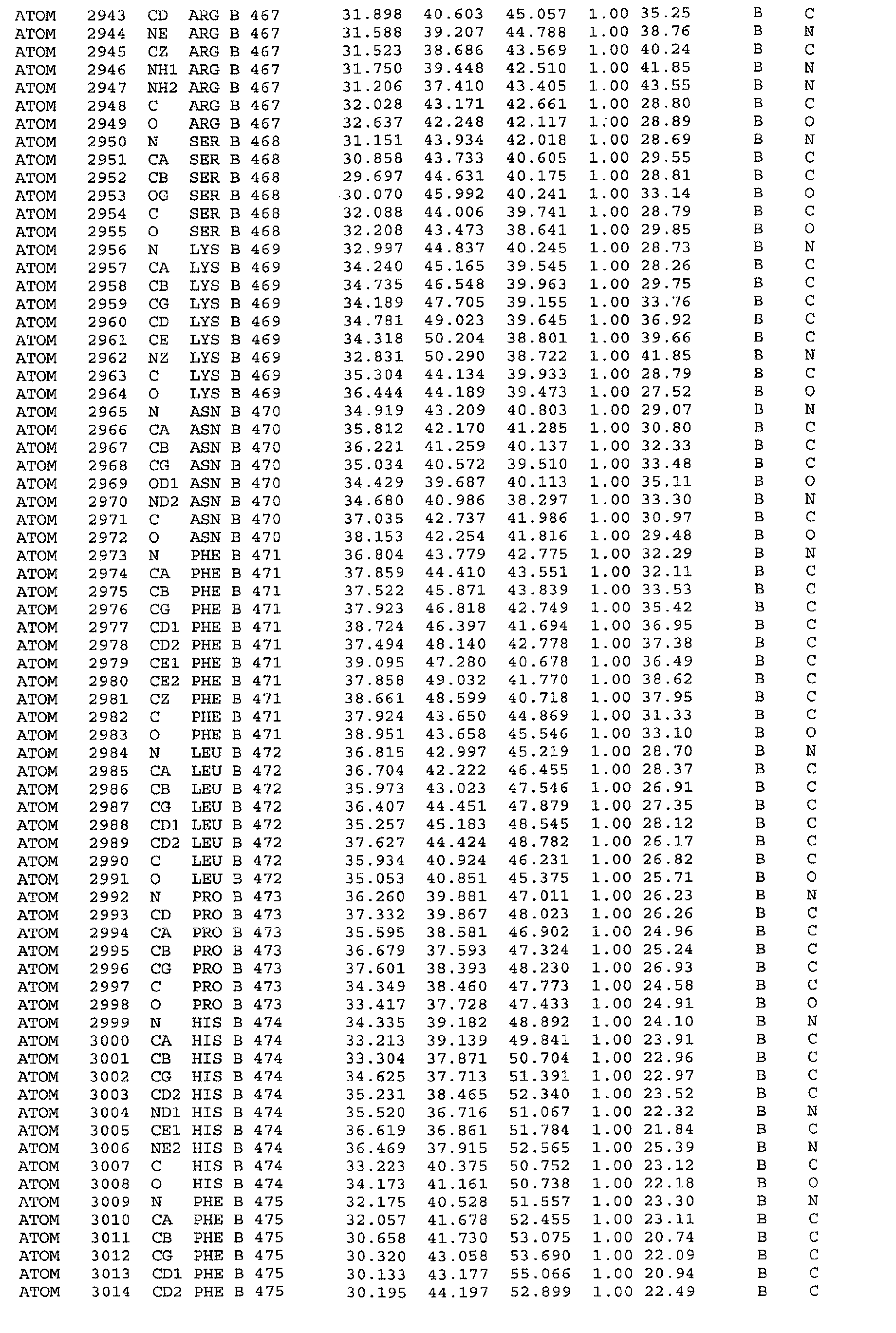
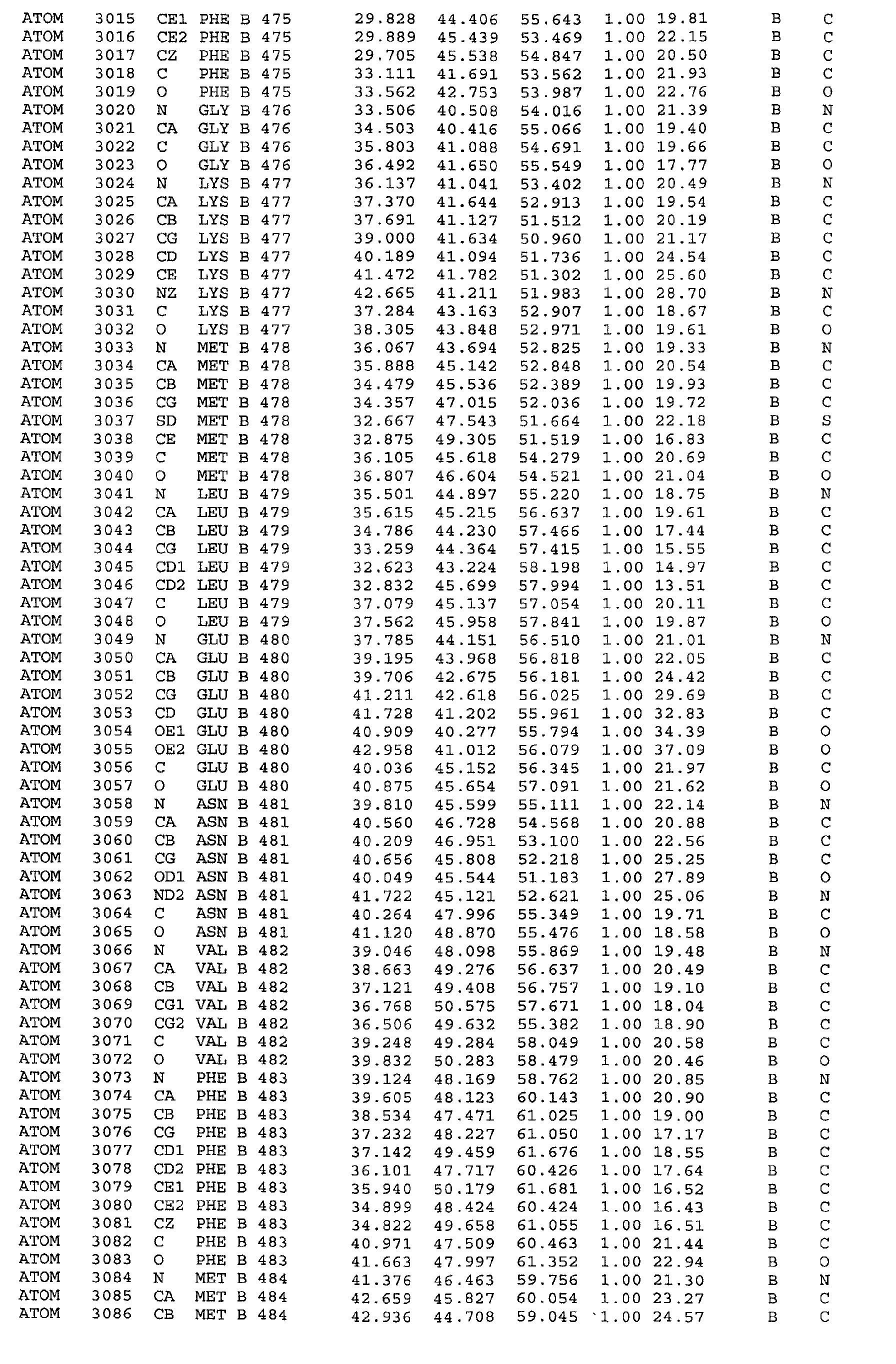
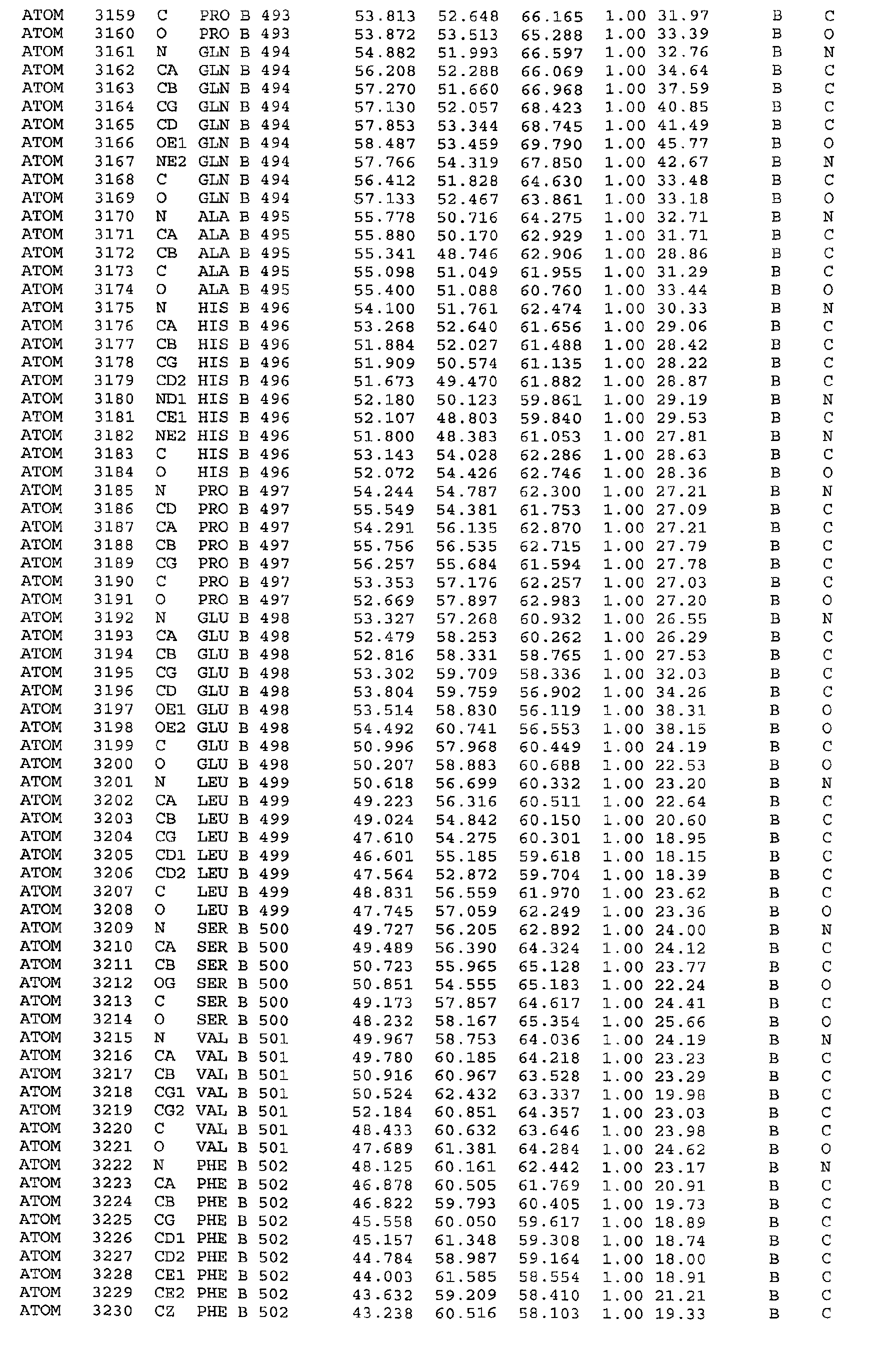
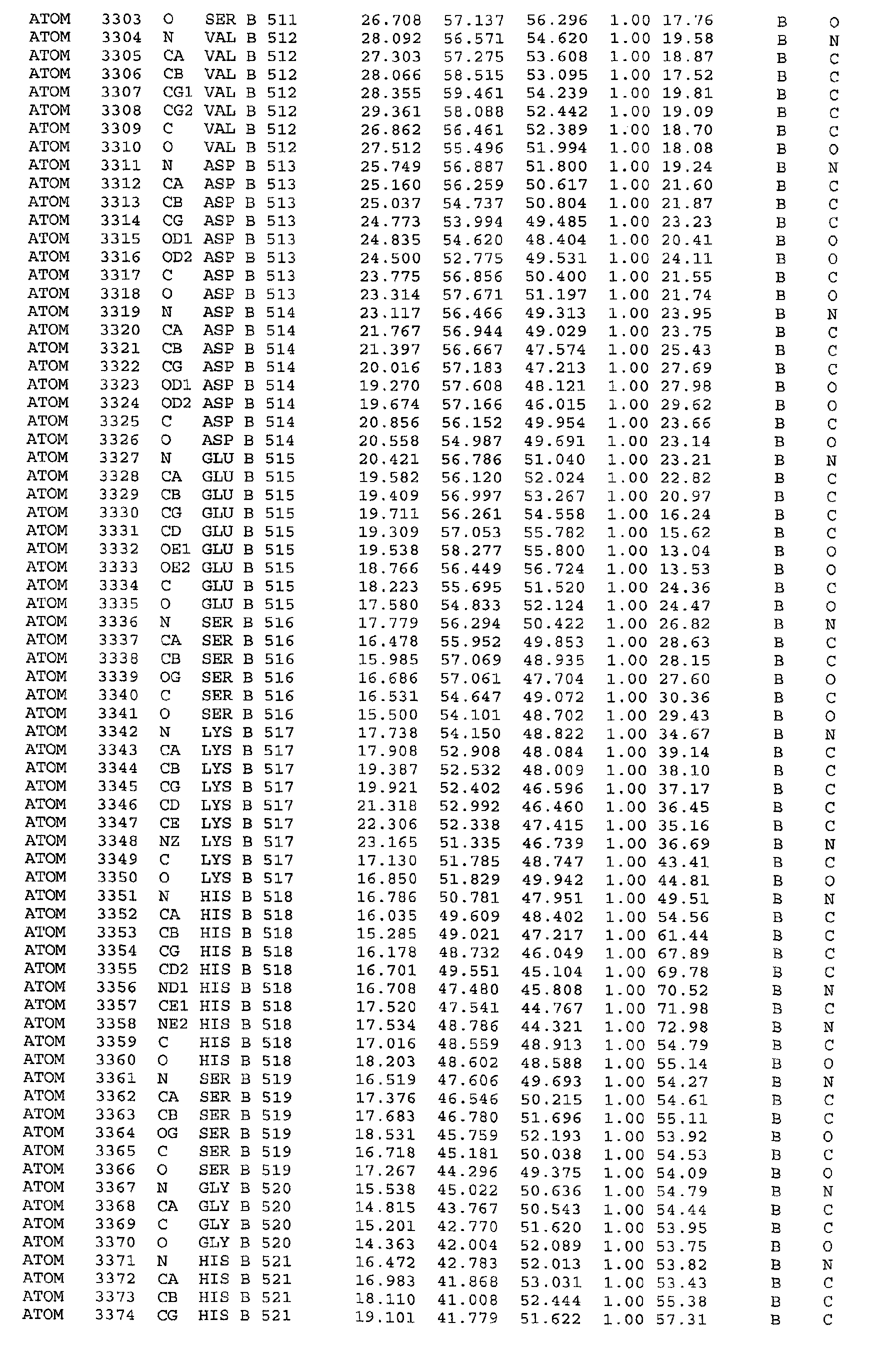
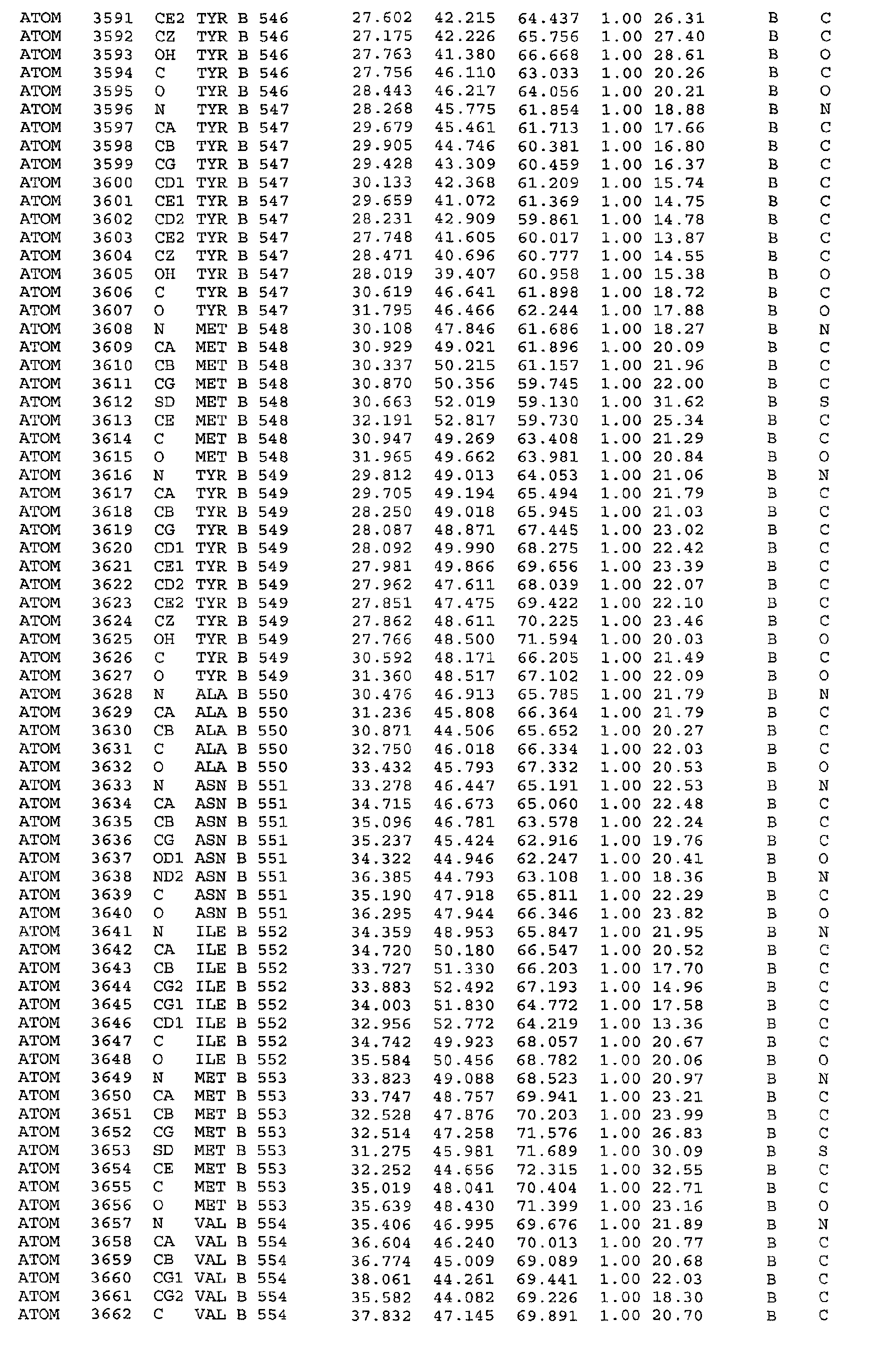
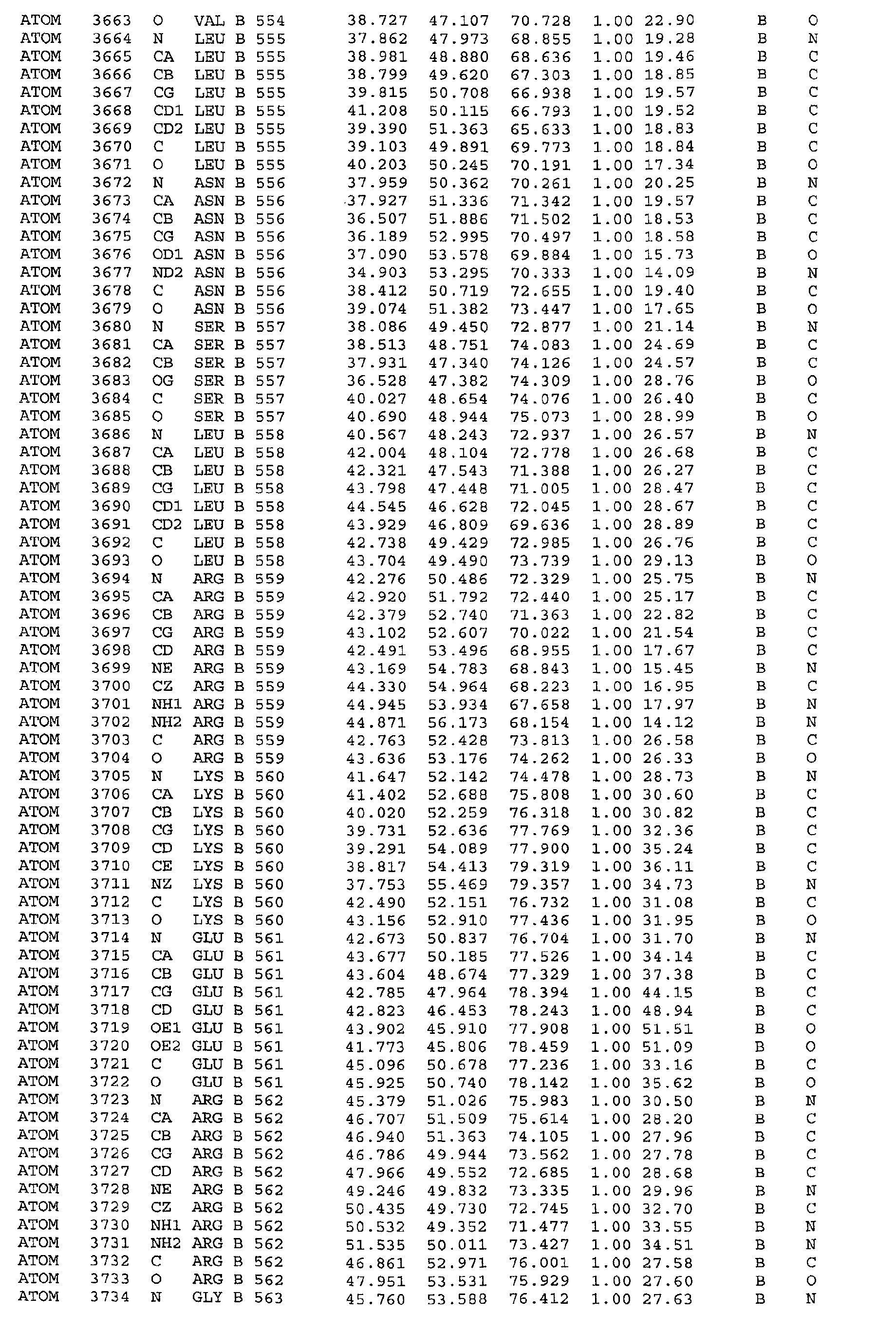
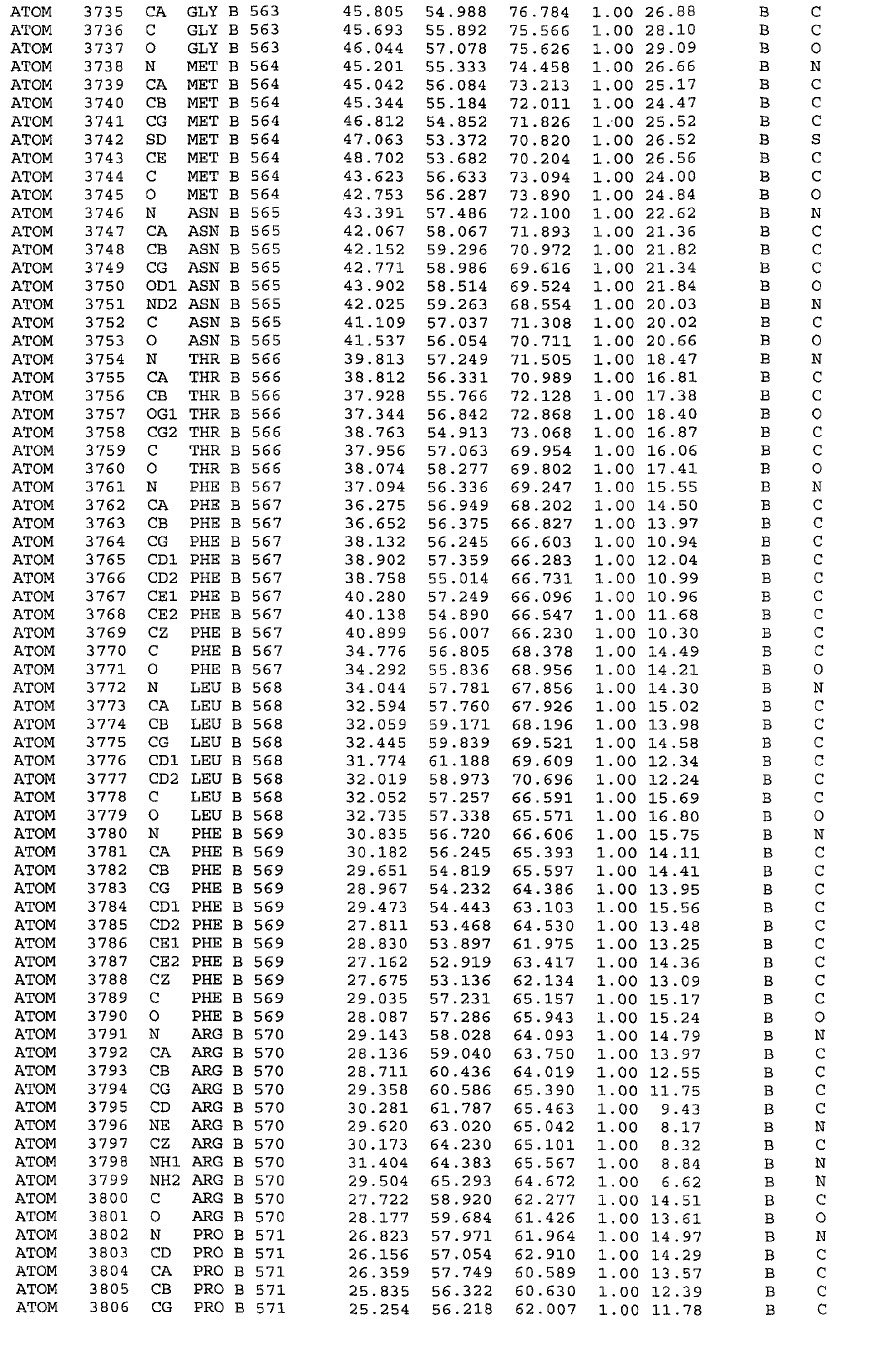
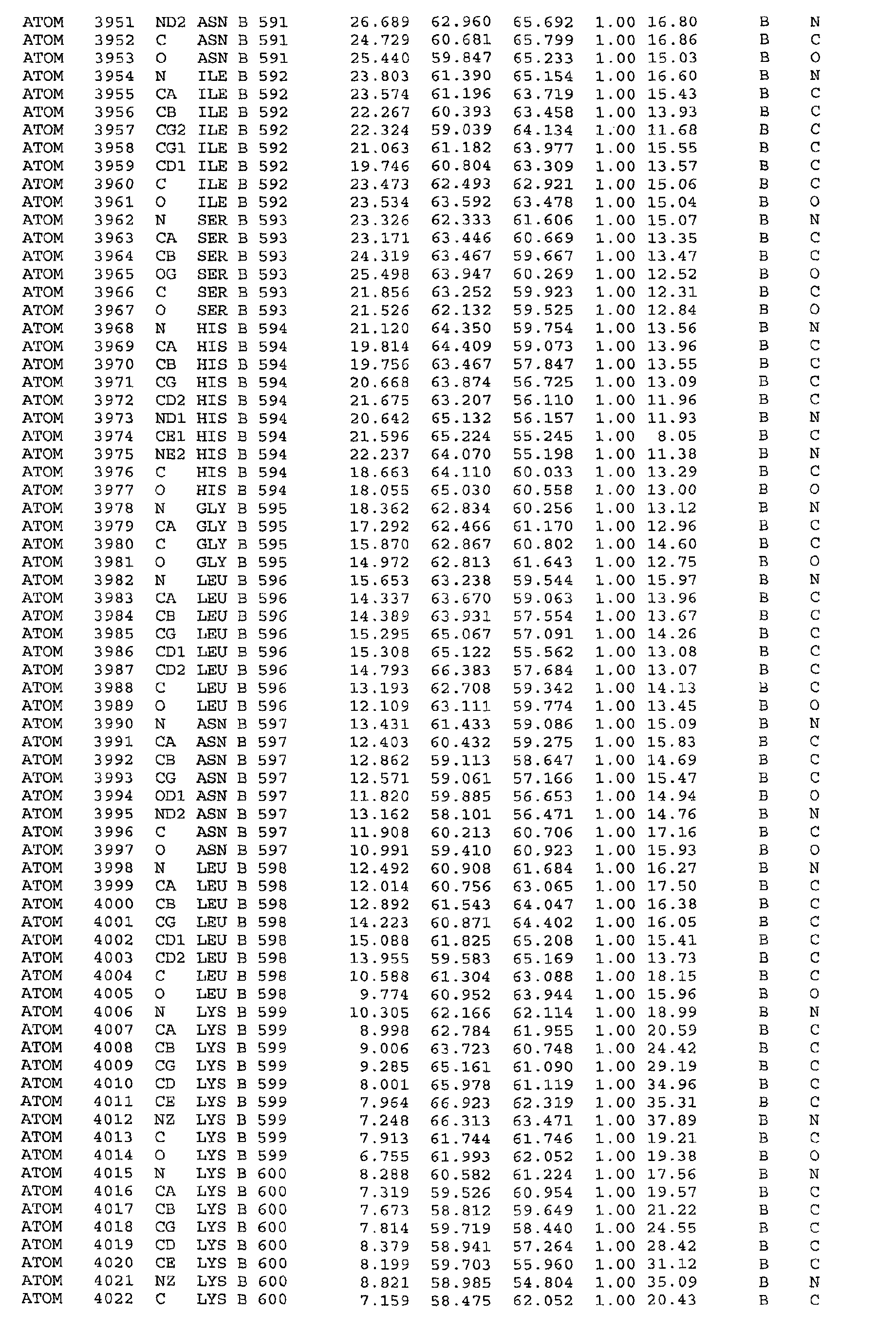
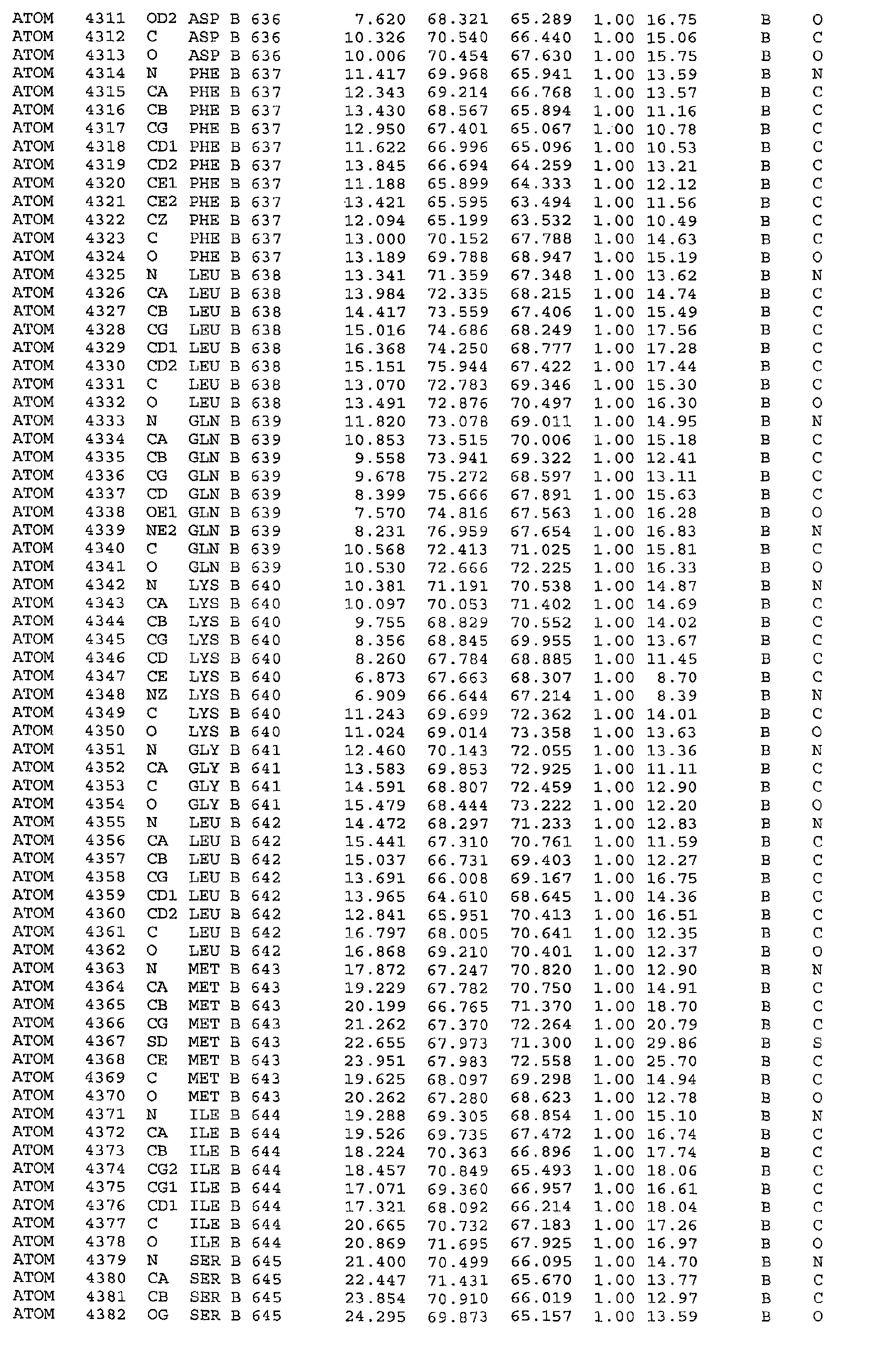
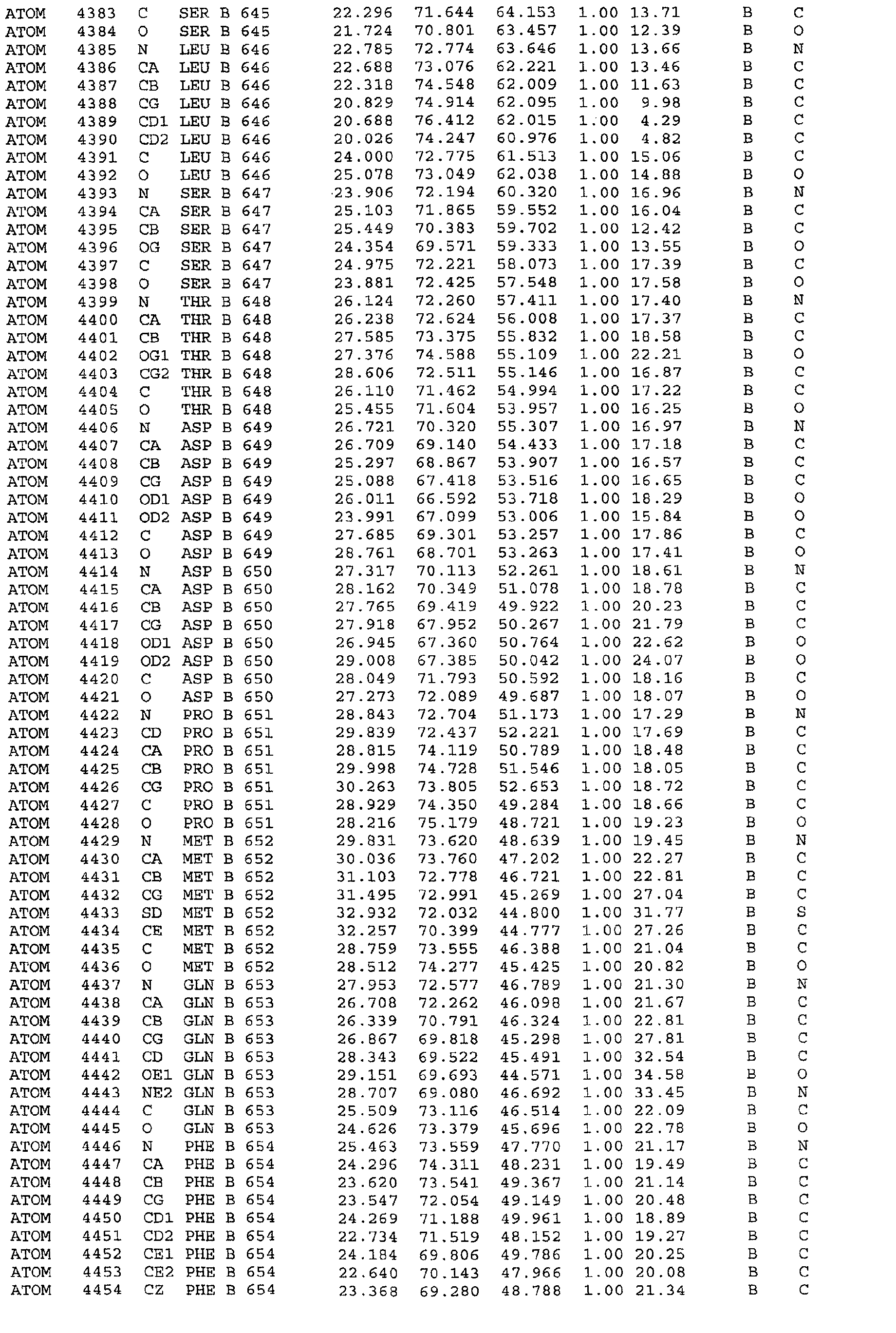
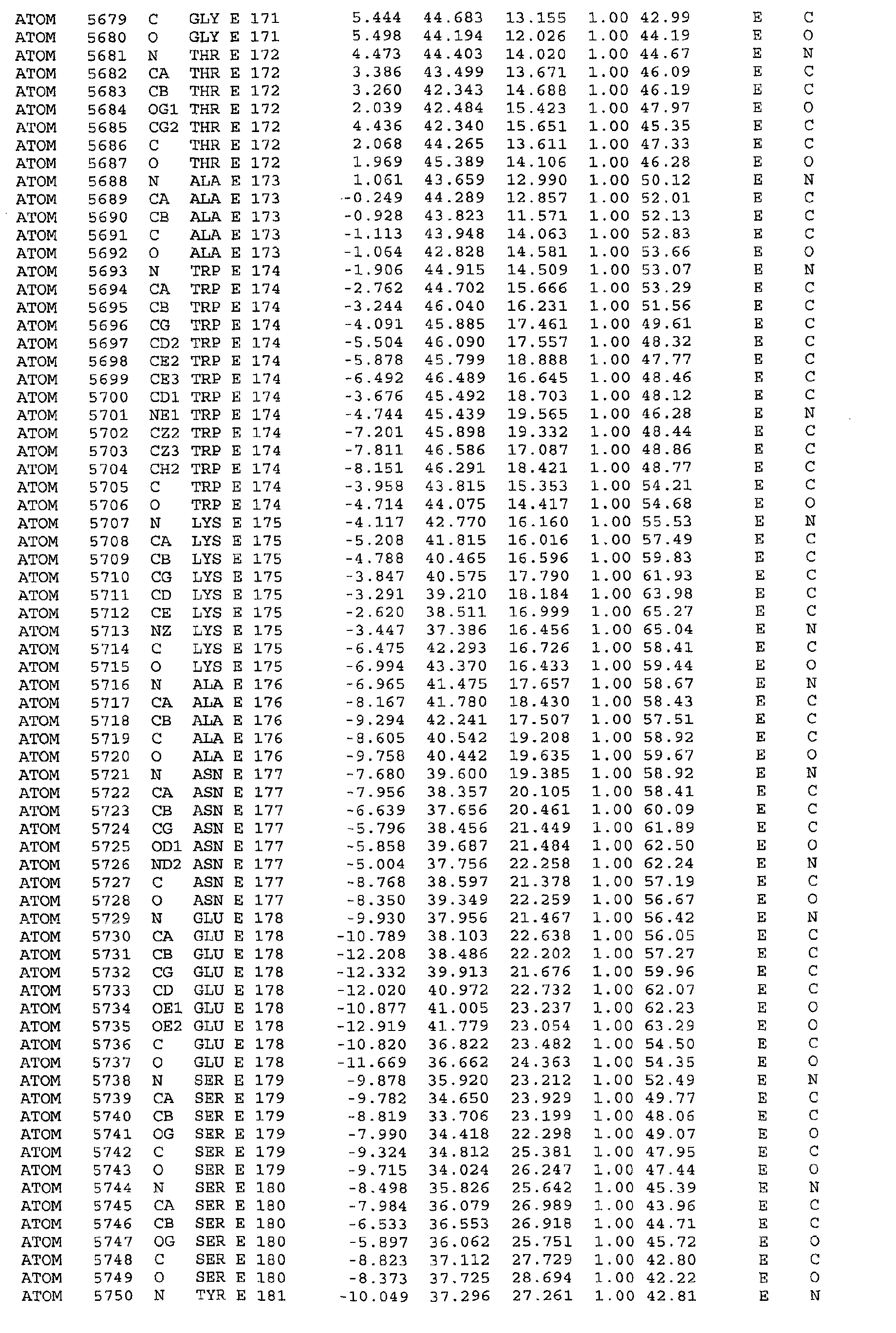
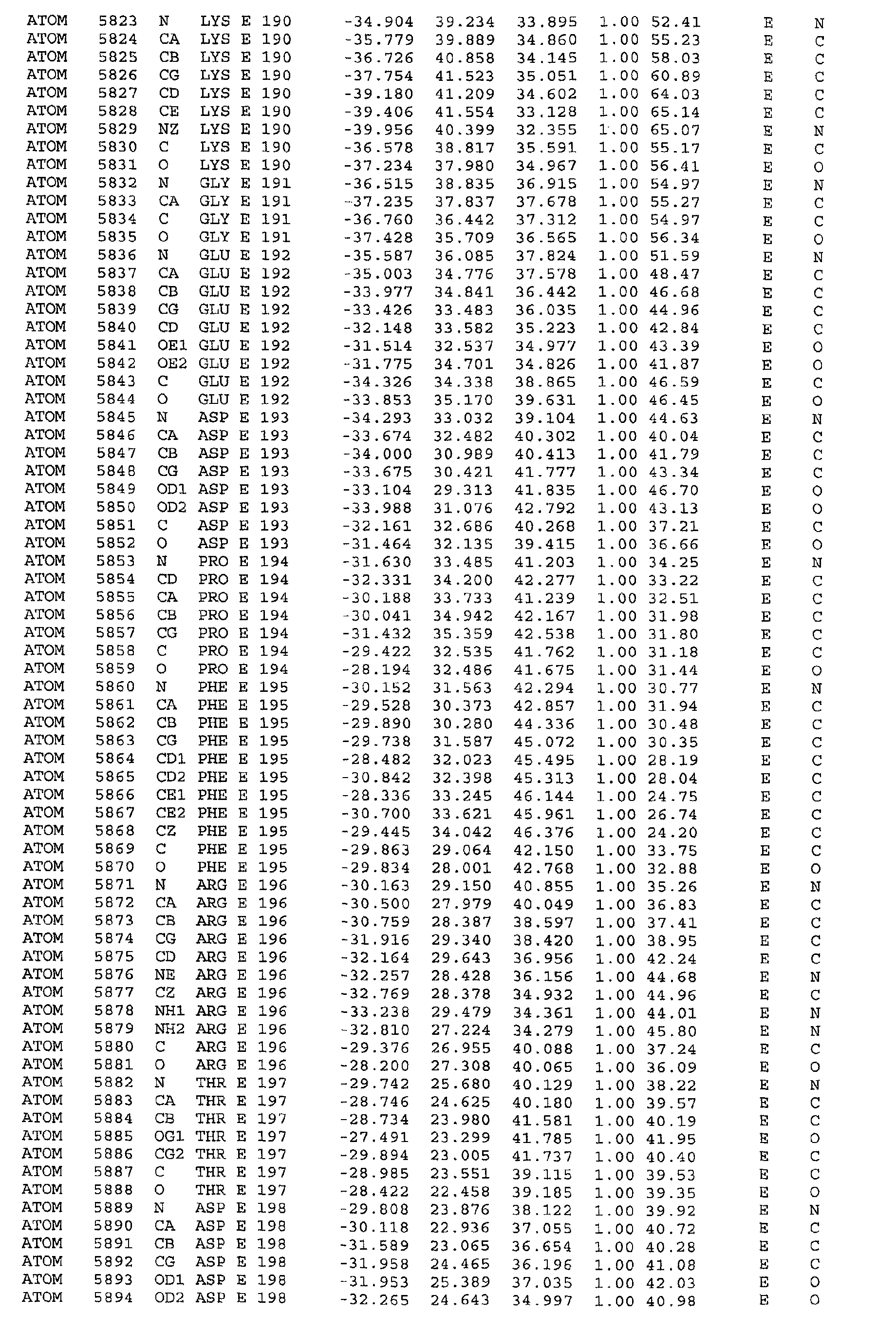
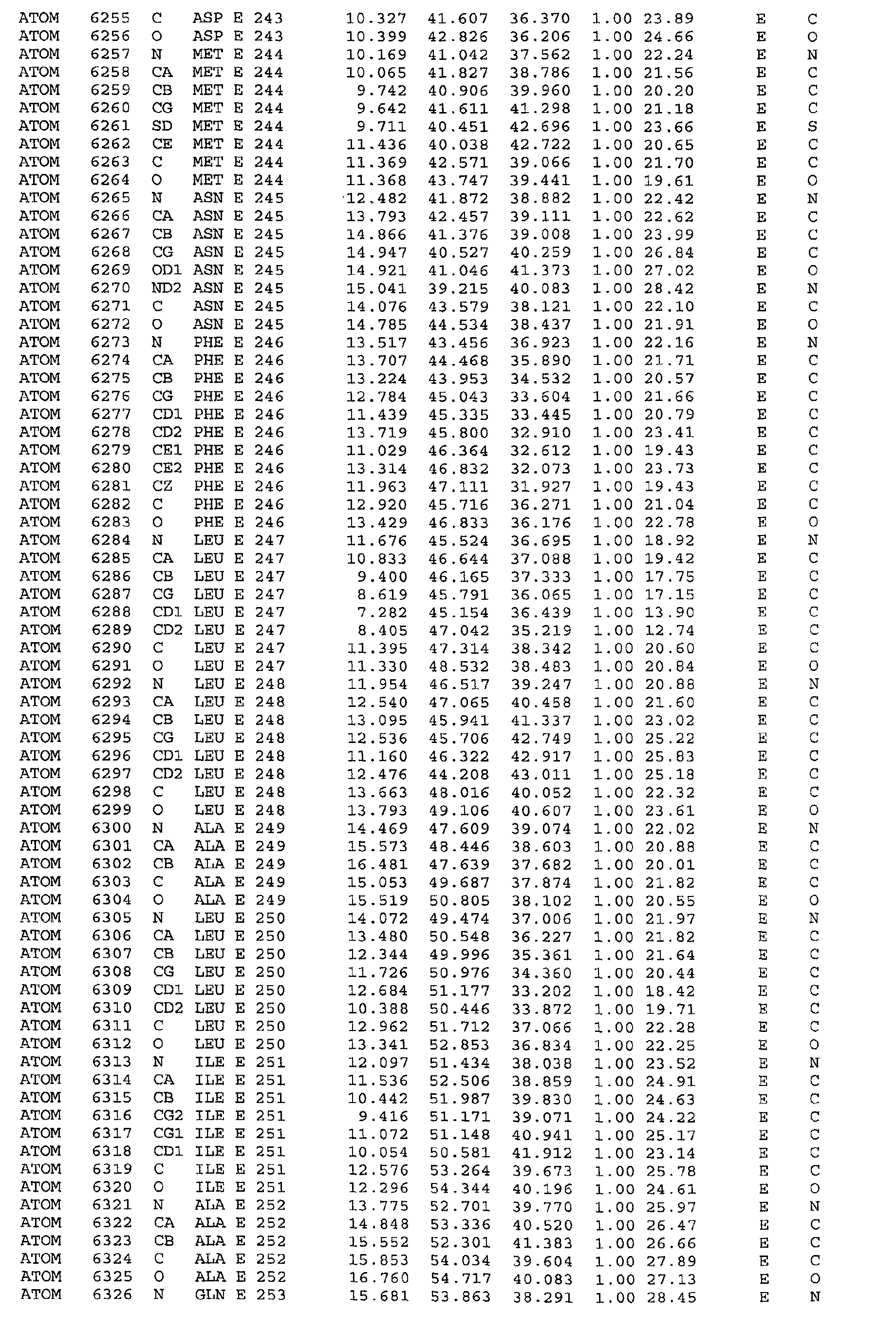
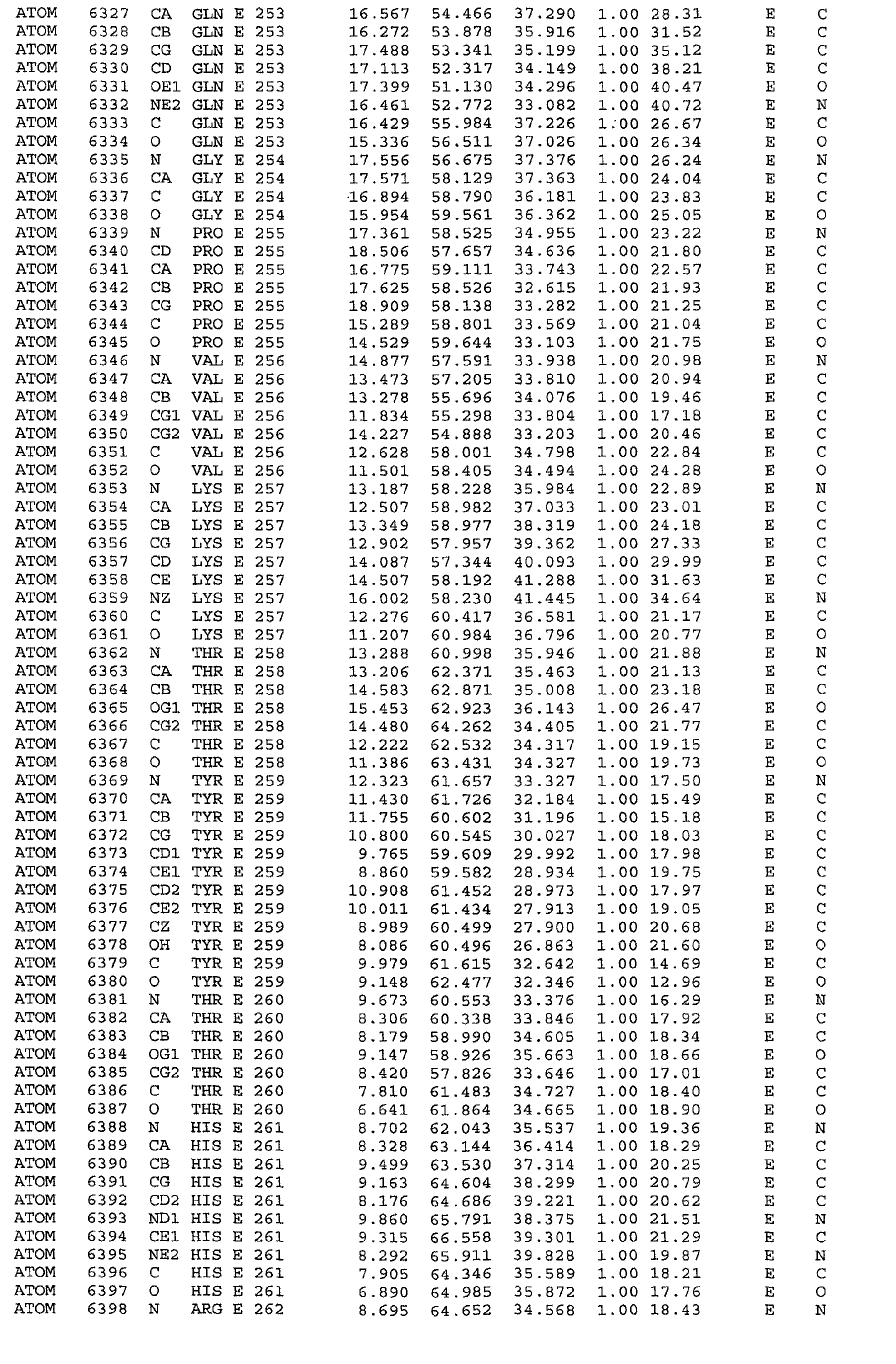
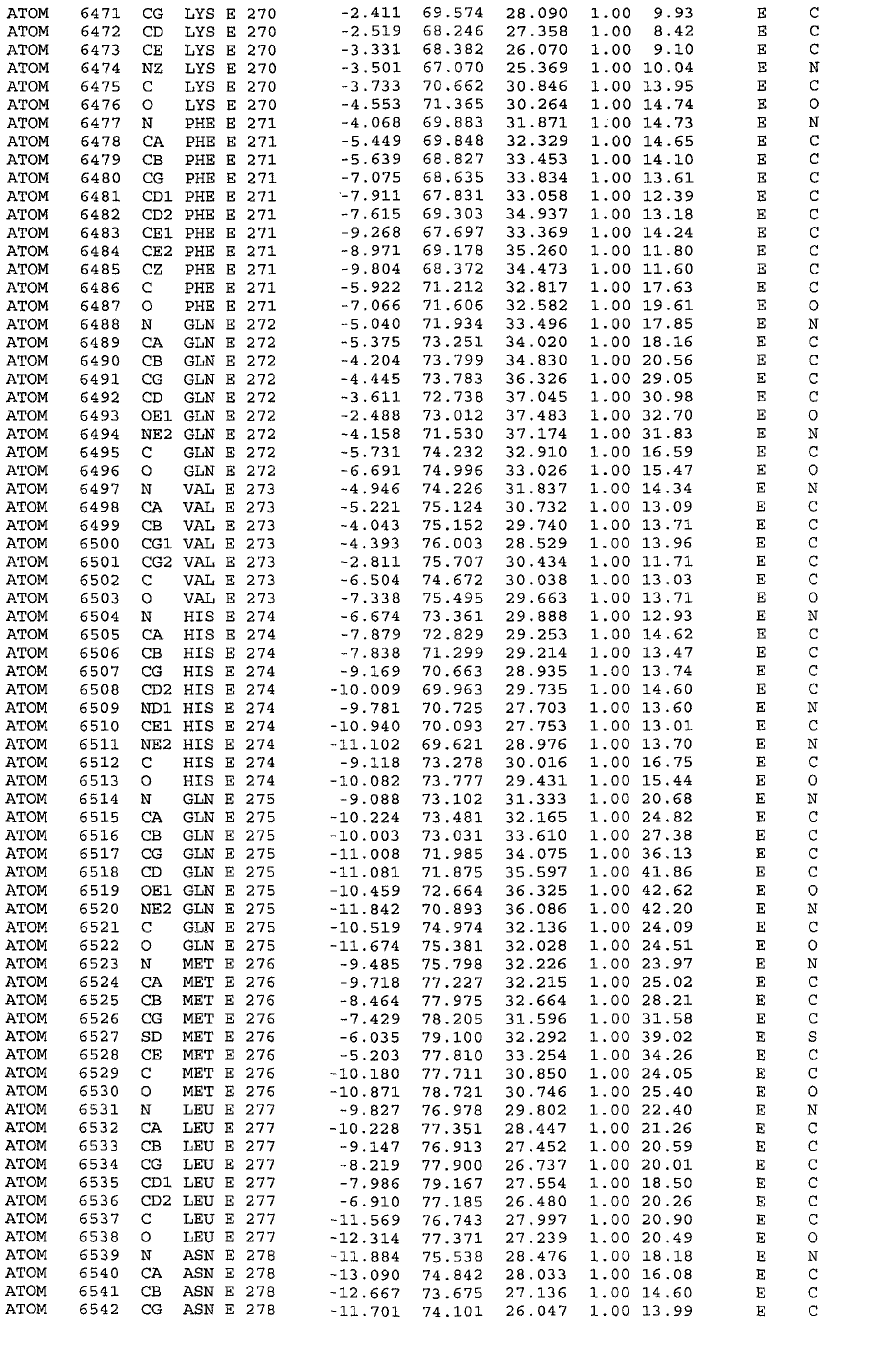
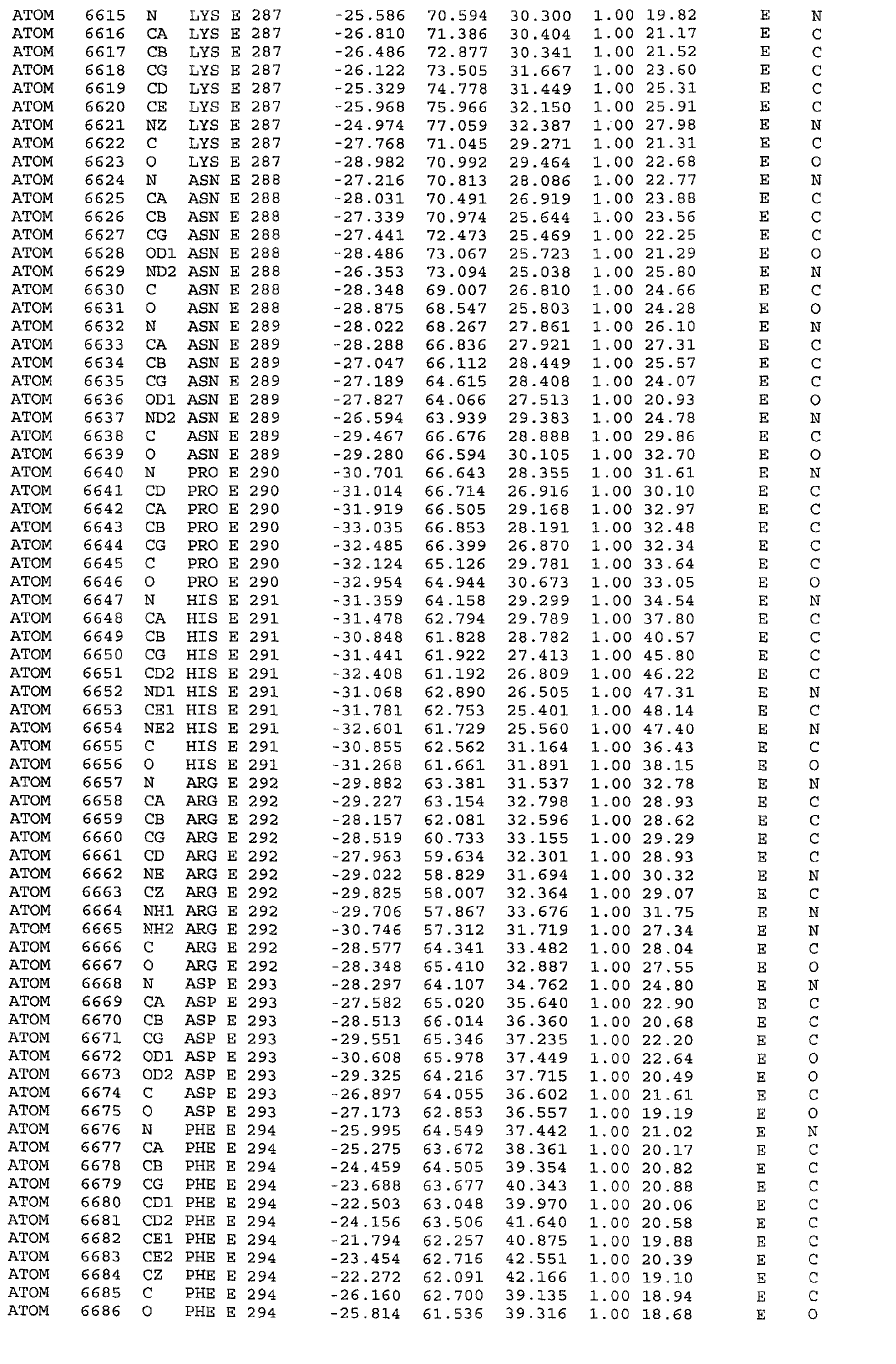
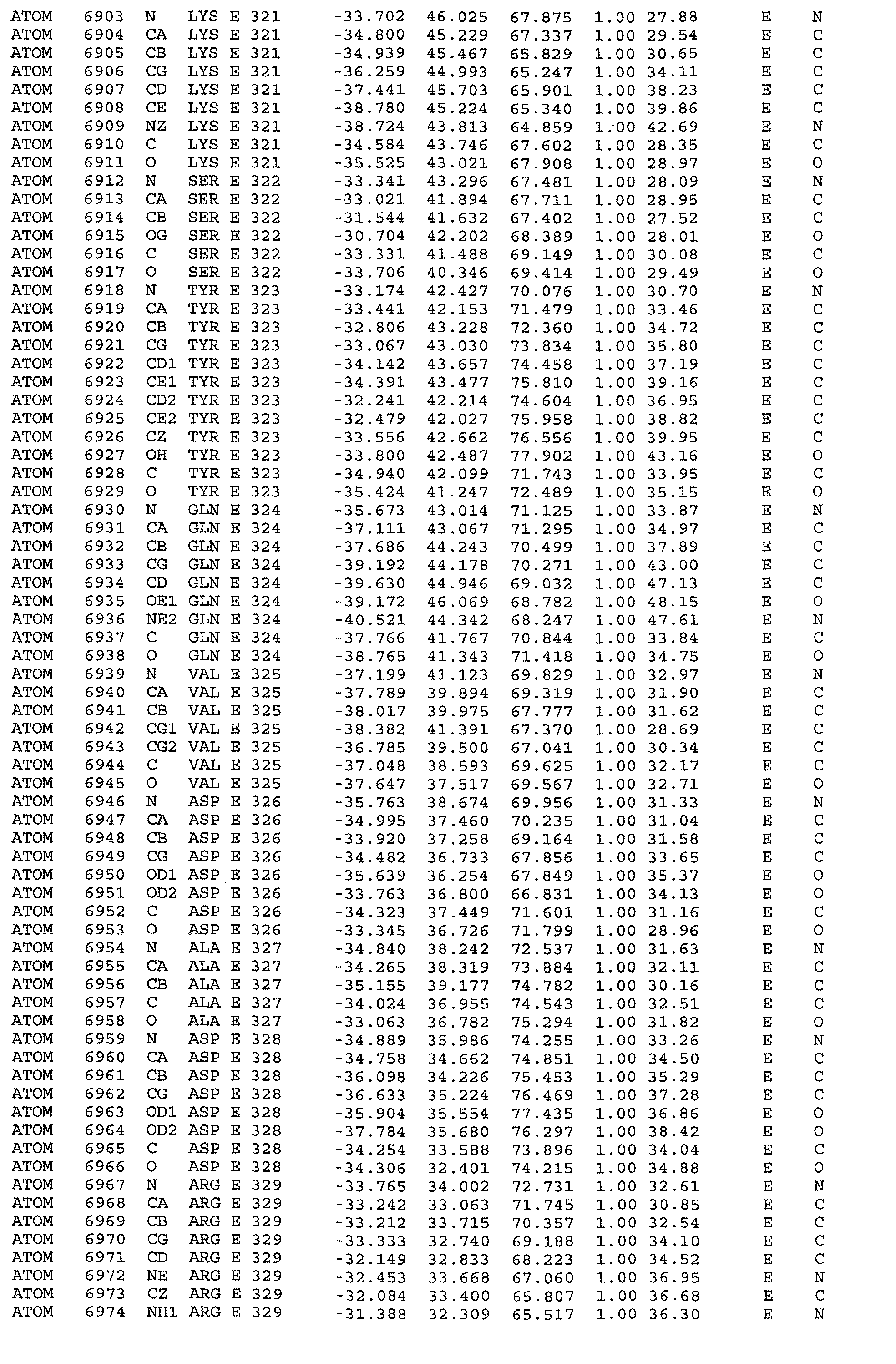
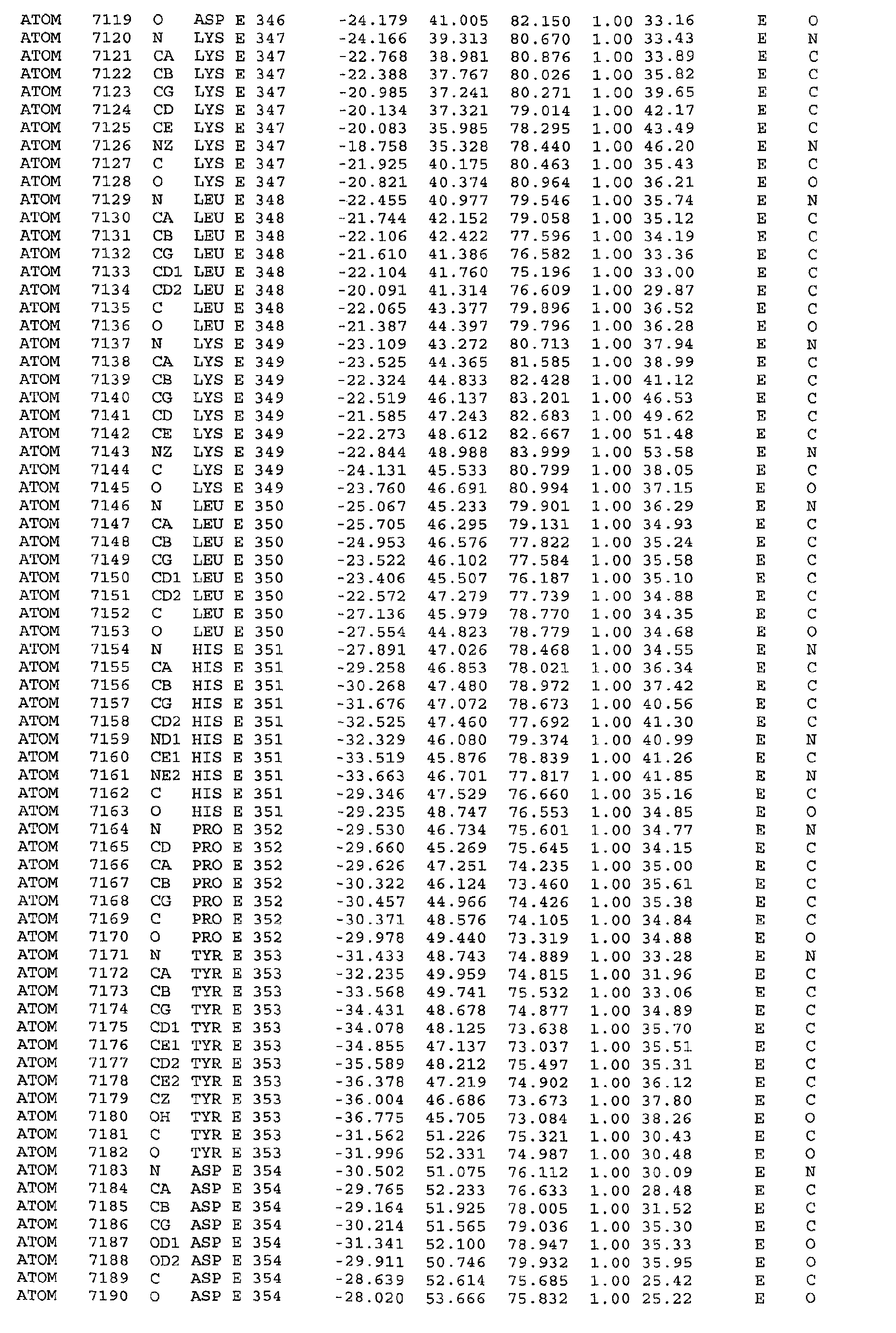
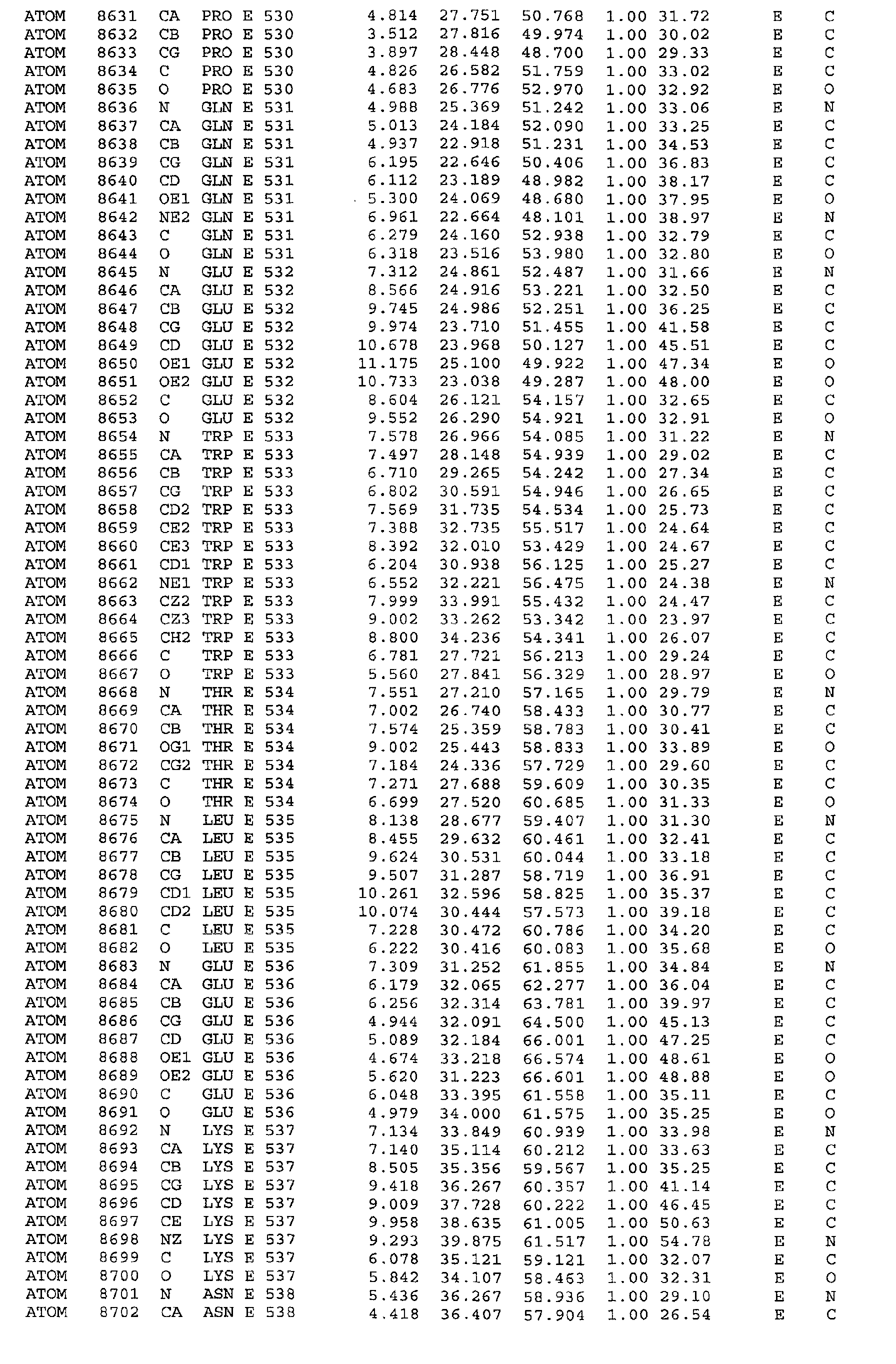
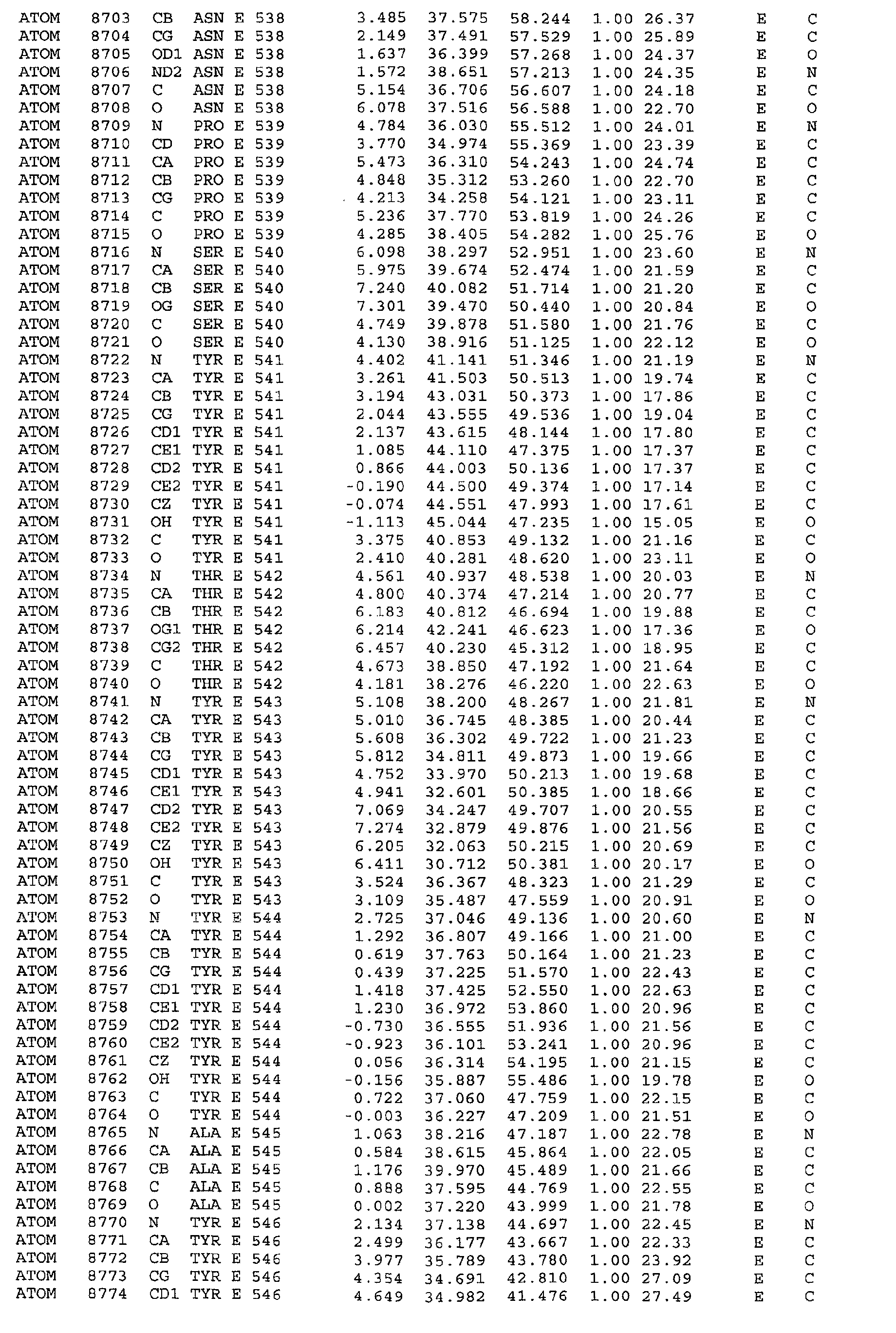
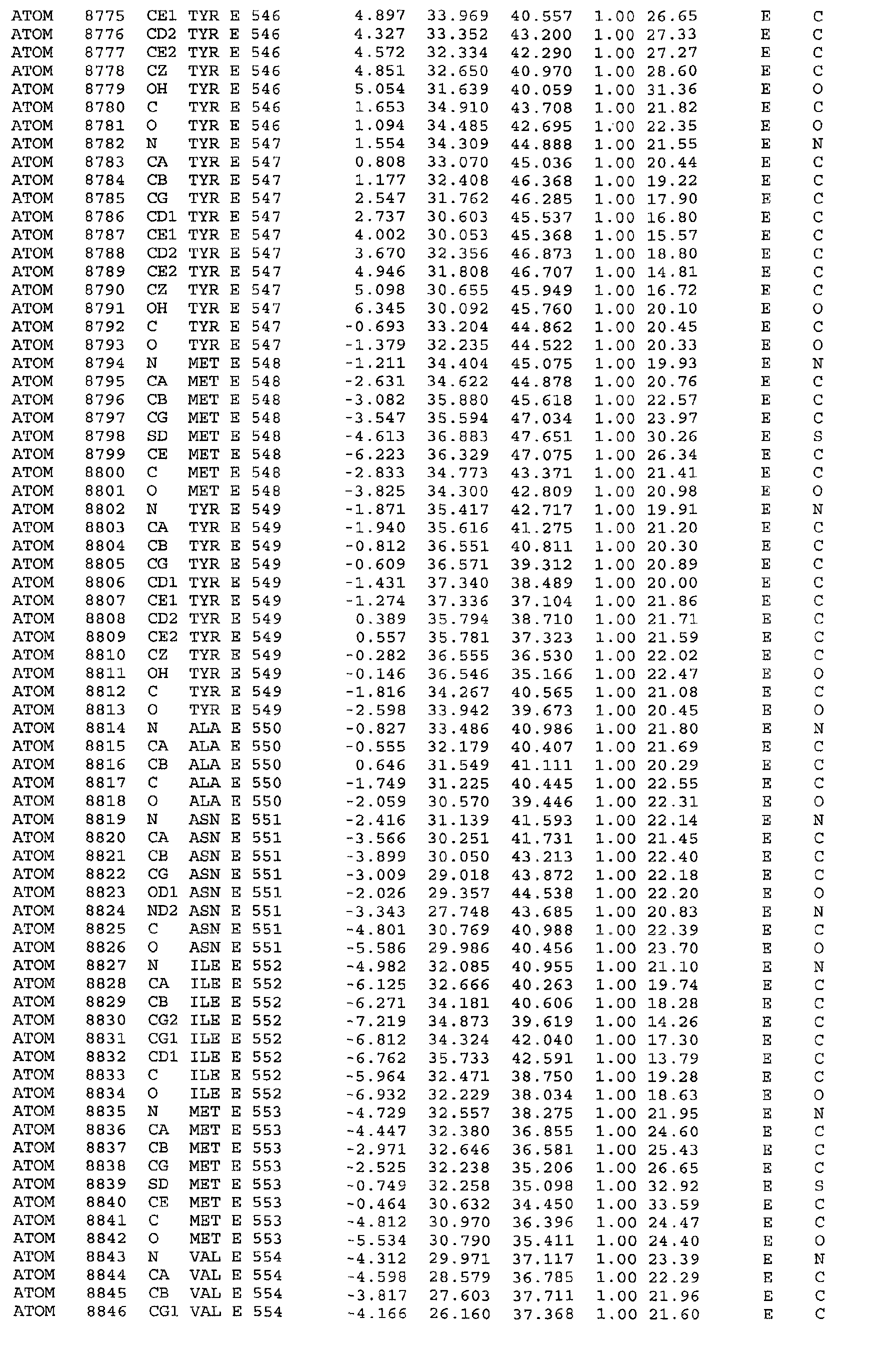
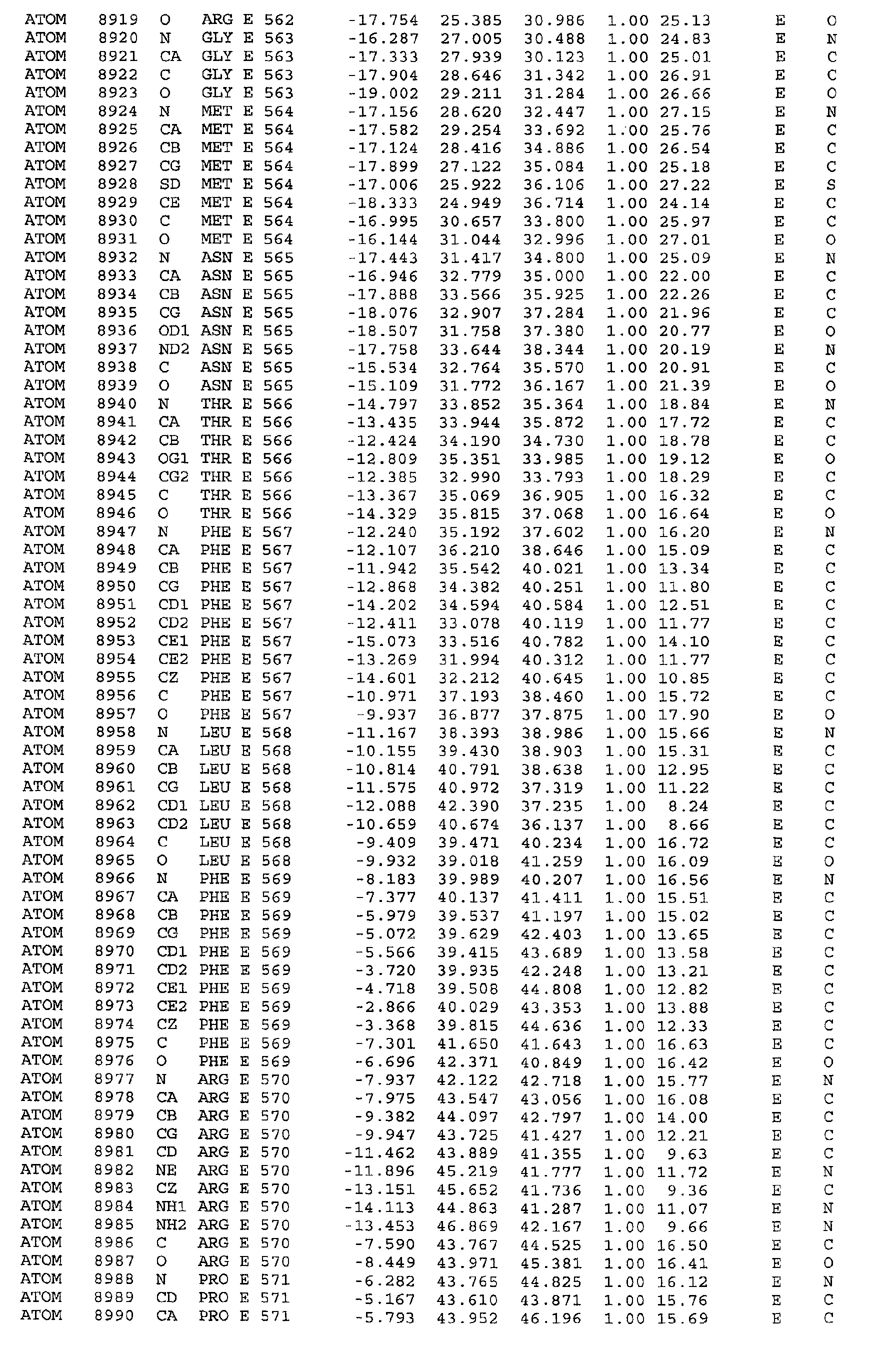
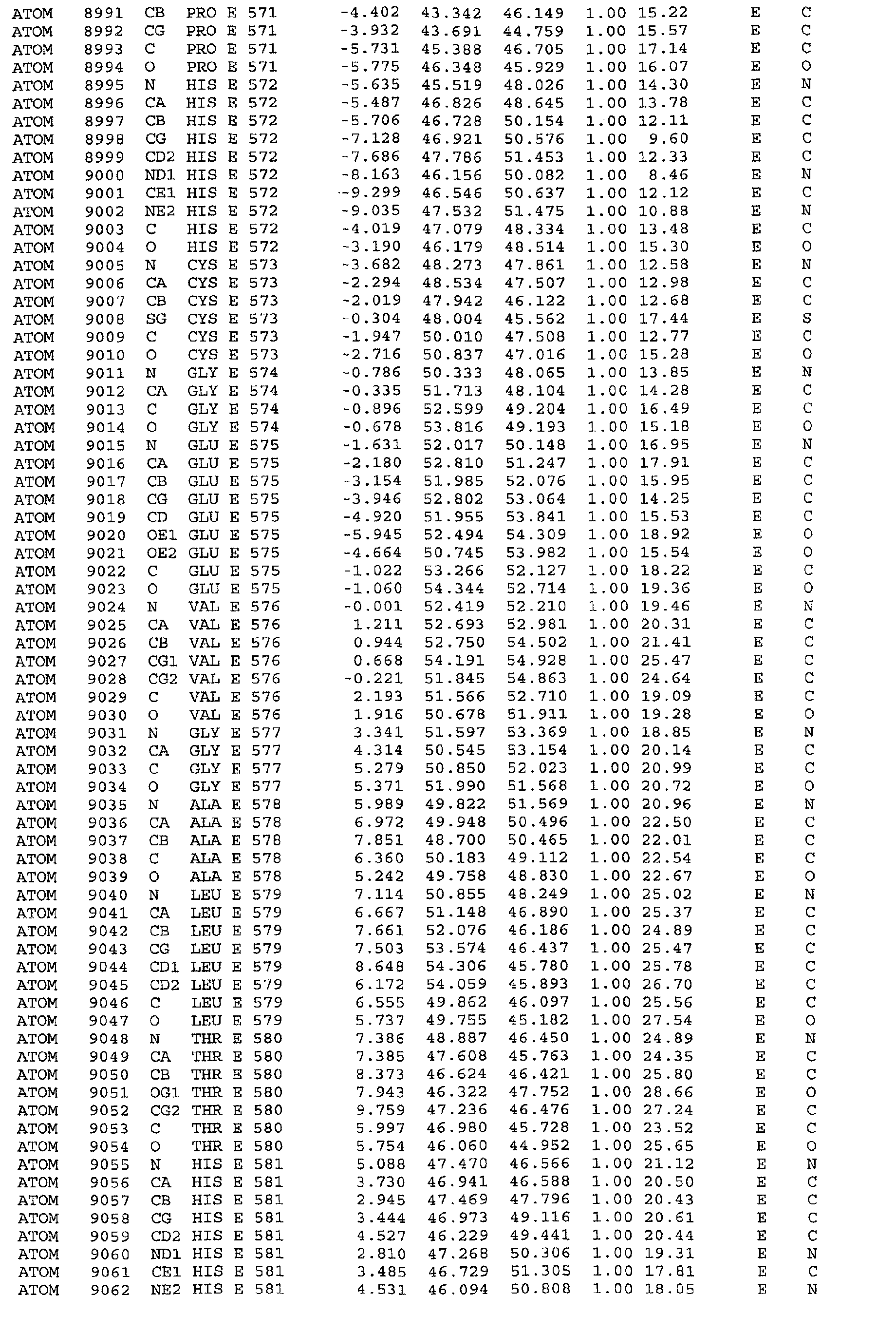
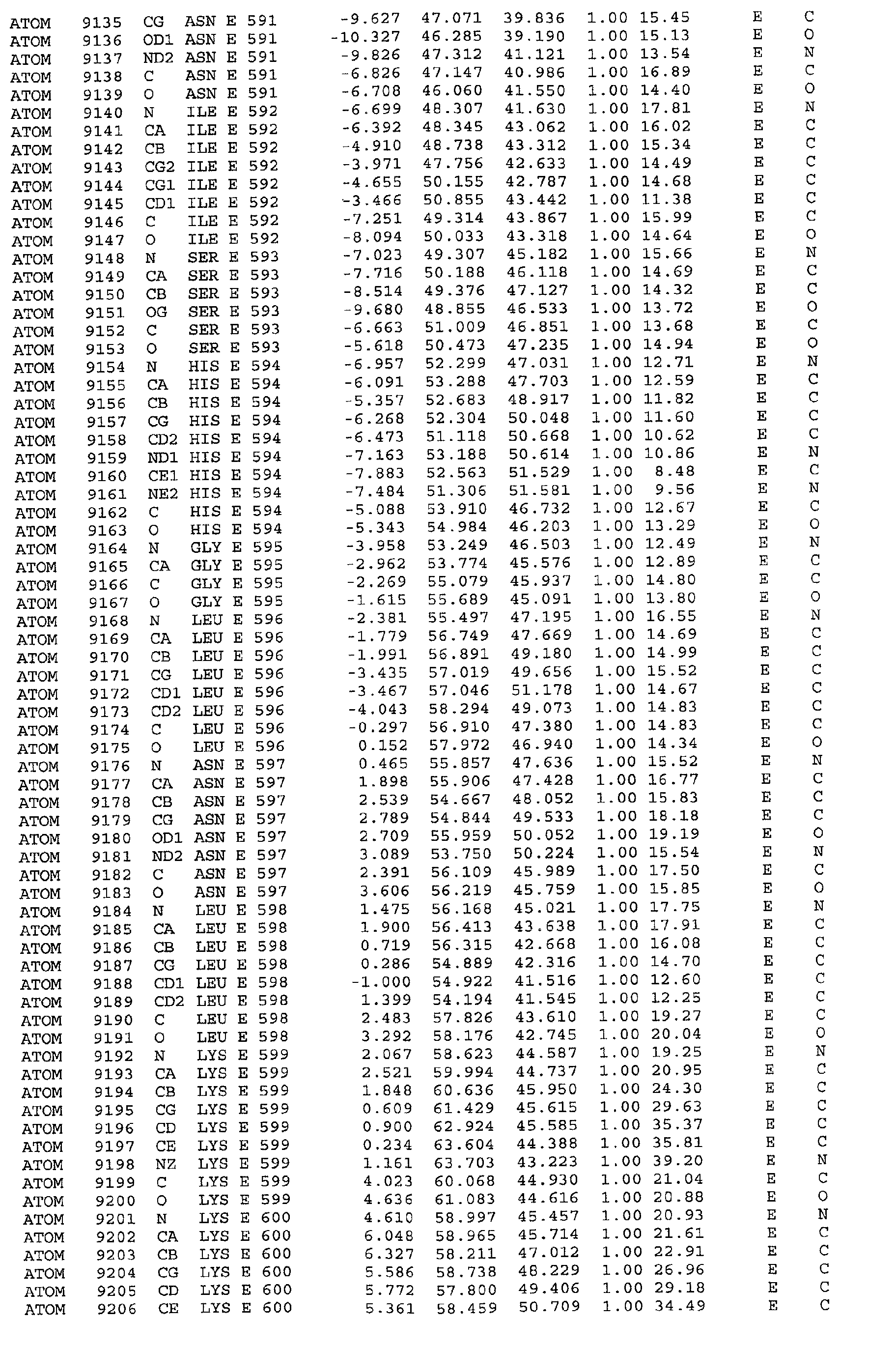
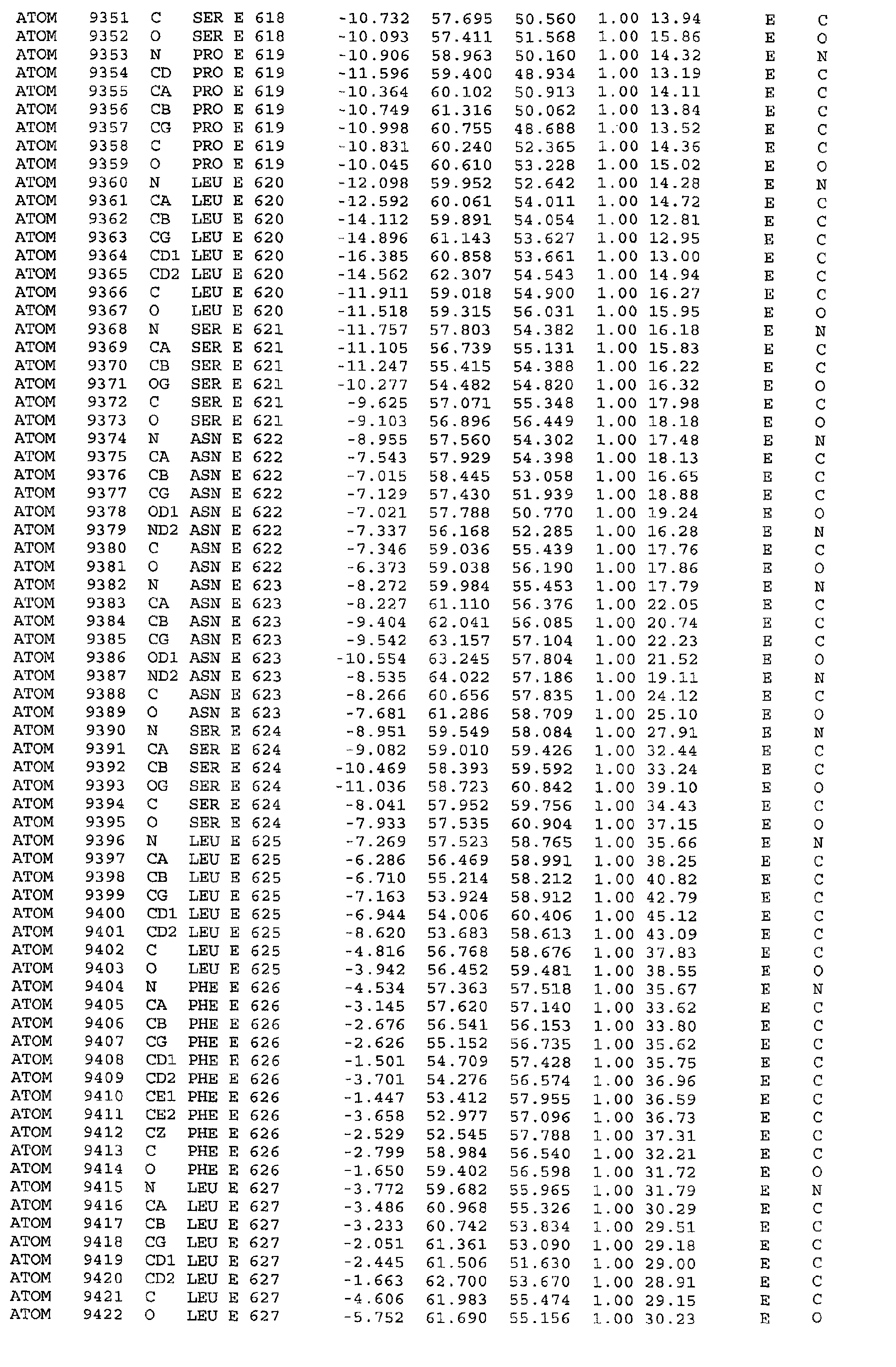
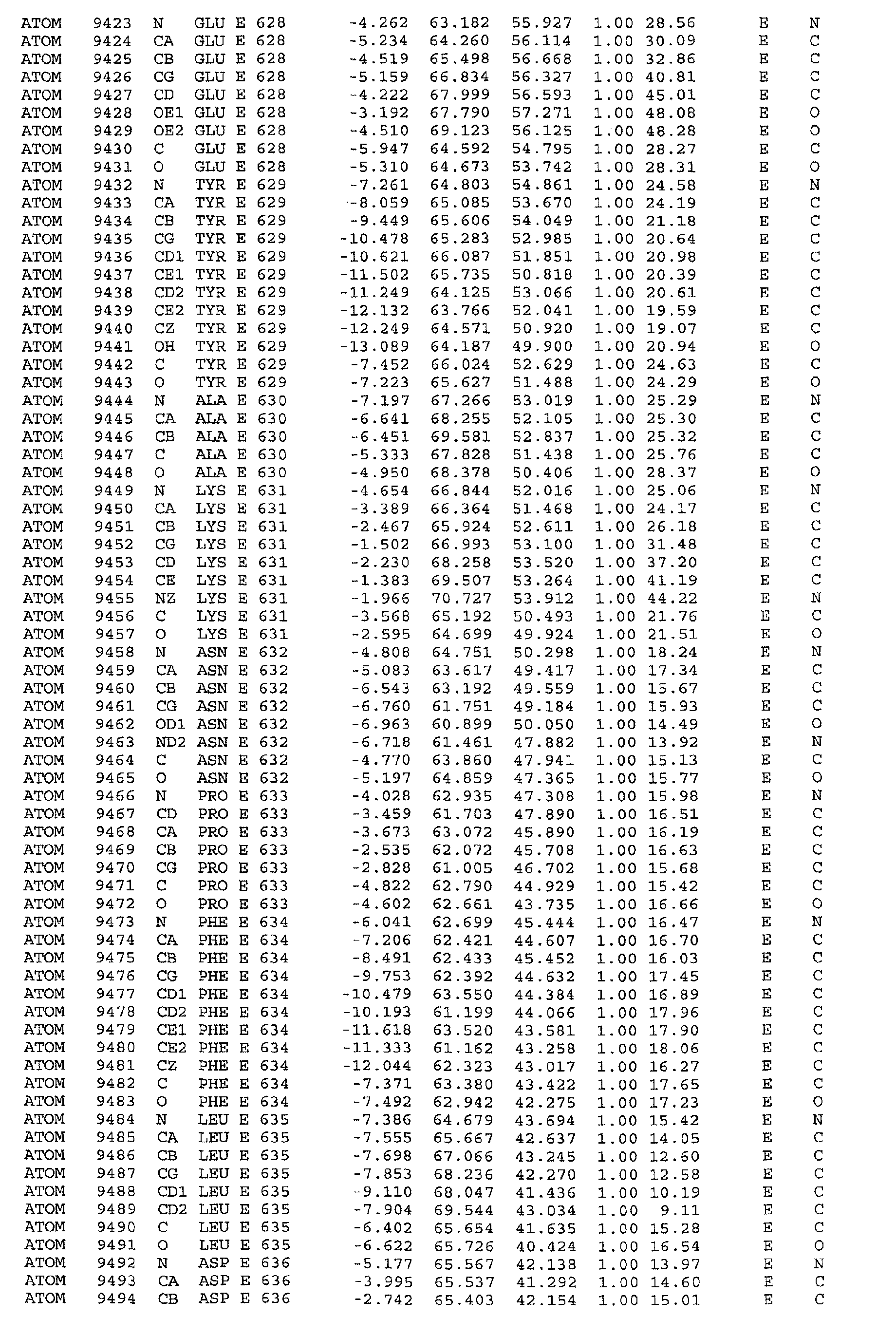
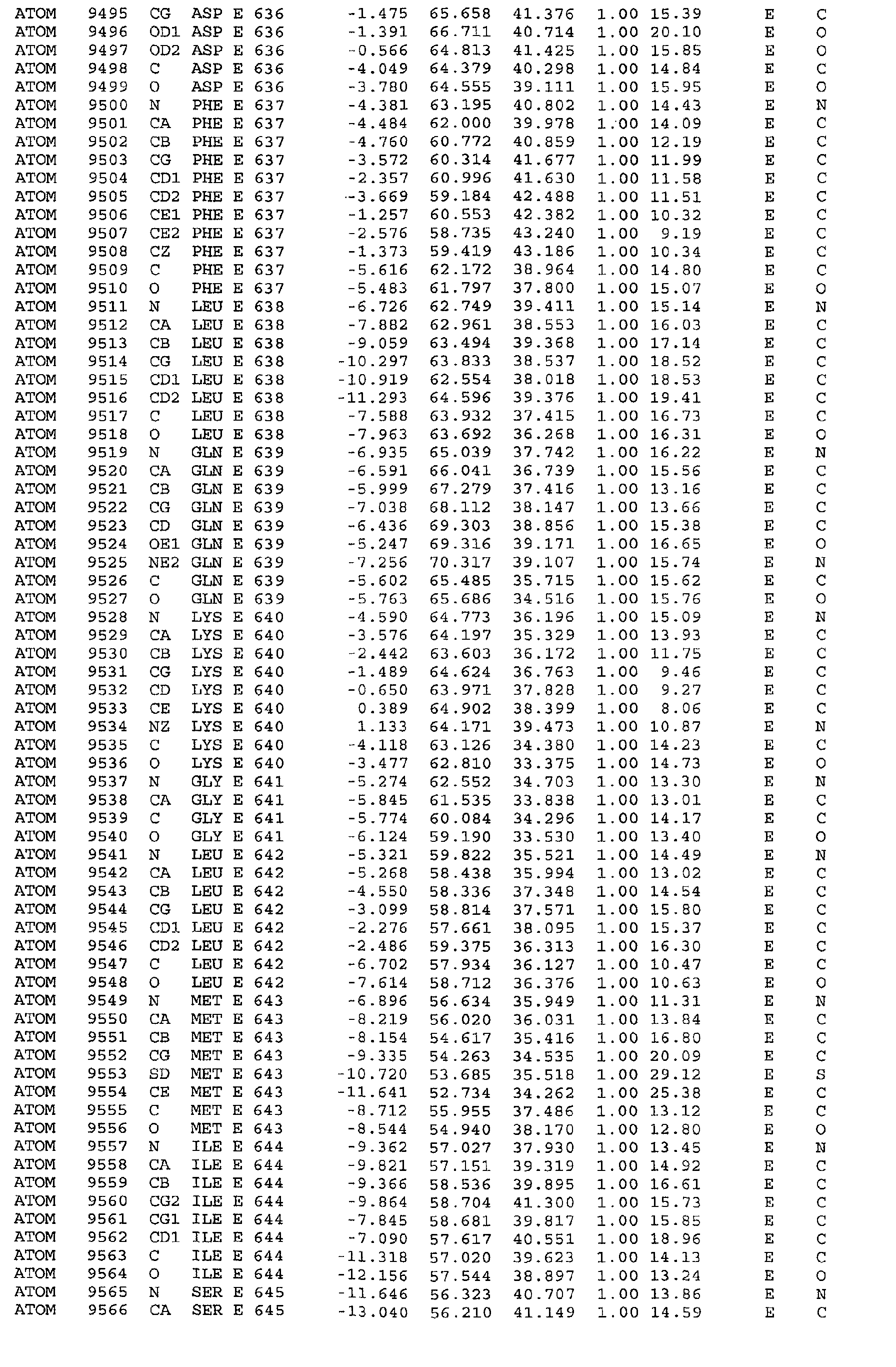
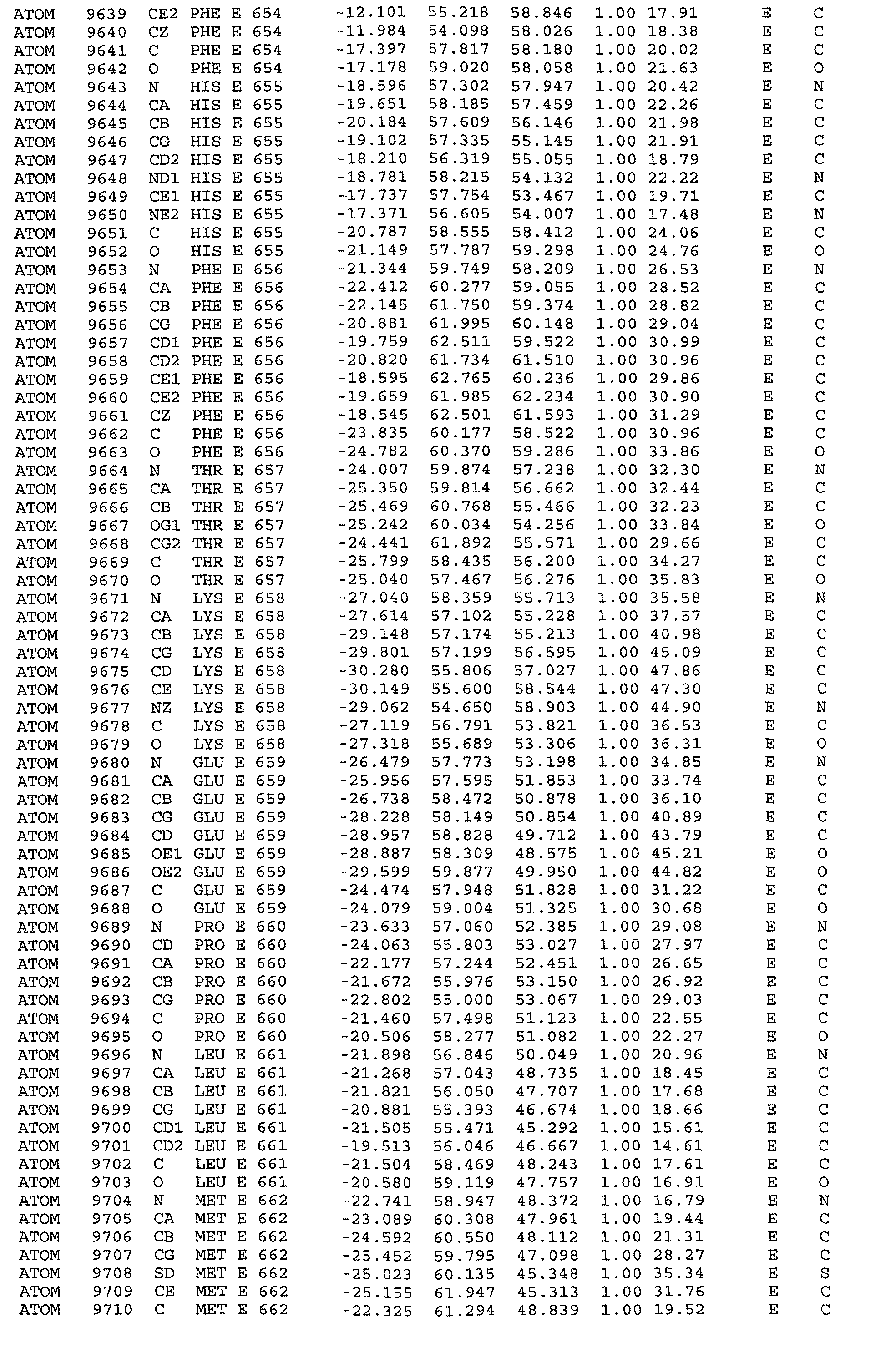
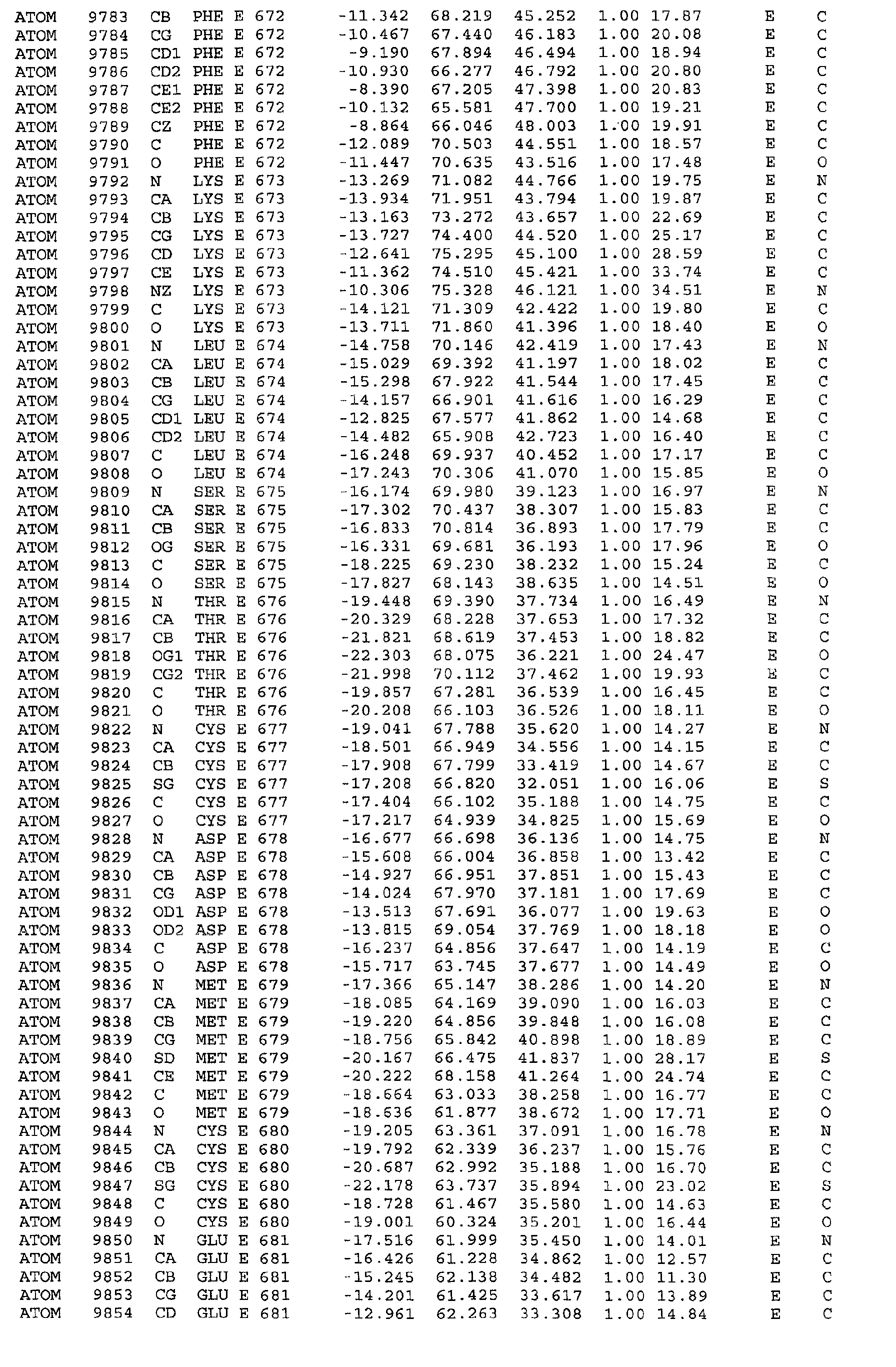
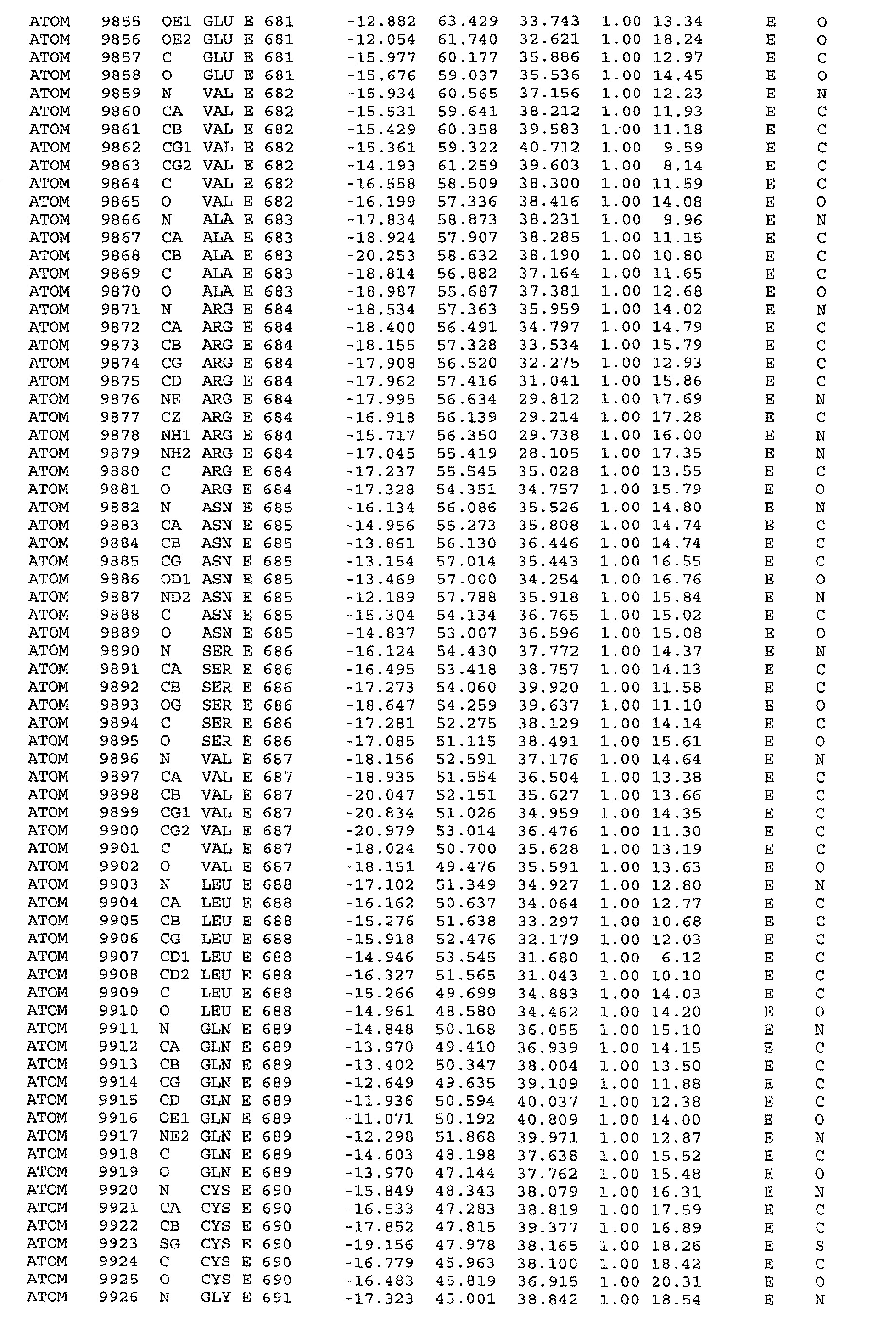
- which has the atomic coordinates set out in Table 2, or a derivative set as expressed in any reference frame.
- Figure 1 illustrates the monomer structure of AMPDA; coloured by greyscale from the N-terminus to the C-terminus (dark to light). Helices and sheets additional to the core (βα)8 barrel region are labelled. The zinc is depicted as a grey sphere.
- Figure 2 illustrates the tetramer structure of AMPDA;
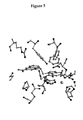
- Figure 3 shows the structures of coformycin (A) and UK-384,858 (B); atom positions are numbered for the seven membered ring system of coformycin;
- Figure 4 shows the structure of the AMPDA-coformycin complex;
- Figure 5 shows the structure of the AMPDA-UK-384,858 complex; and
- Figure 6 shows the transition state model.
















































































































































































Claims (36)
- An AMP deaminase (AMPDA) crystal, wherein said crystal is tetragonal.
- The crystal as claimed in claim 1, wherein the AMPDA consists of the catalytic domain of AMPDA.
- The crystal as claimed in claim 1 or claim 2, wherein the AMPDA is from a mammal.
- The crystal as claimed in any one of claims 1 to 3, wherein the AMPDA is from a rabbit.
- The crystal as claimed in claim 4, wherein the AMPDA sequence is as shown in SEQ ID NO: 2, but starting at position 96.
- The crystal as claimed in any one of the preceding claims, which is grown using citric acid as precipitating agent.
- The crystal as claimed in any one of the preceding claims, which is grown in the pH range of 7.80-8.20.
- The crystal as claimed in any one of the preceding claims, which is grown in the presence of imidazole.
- The crystal as claimed in any one of the preceding claims, wherein the crystal has a space group P42212.
- The crystal as claimed in any one of the preceding claims, wherein the crystal has unit cell dimensions of a=b=149Å +/- 3Å, c=159Å +/- 3Å.
- The crystal as claimed in any one of the preceding claims, wherein the active site of AMPDA is contained in a cleft formed by the additional helices between the first and second strand of the (βα)8 barrel fold, and the helix immediately following the third strand.
- The crystal as claimed in any one of the preceding claims, wherein the AMPDA has a pocket which can accommodate the adenosine group of AMP, which pocket is formed by amino acid residues including, but not limited to, residues His305, Phe372, Phe375, Asp513, Glu575, His594, and Asp650.
- The crystal as claimed in any one of the preceding claims, wherein the AMPDA has a pocket which can accommodate the ribose and phosphate groups of AMP, which pocket is formed by amino acid residues including, but not limited to, residues His305, Ala306, Ala307, Ala308, Phe375, Asn376, Tyr379, Arg388, Lys393, Ser427, Tyr429, Pro460, Ile462, Val512, and Asp513.
- The crystal as claimed in any one of the preceding claims, which diffracts X-rays to 3.5Å or higher resolution.
- The crystal as claimed in claim 14, having the atomic coordinates set out in Table 2, or a derivative set as expressed in any reference frame.
- A heavy atom derivative of the crystal as claimed in any one of the preceding claims.
- The crystal as claimed in any one of claims 1 to 15, wherein an AMPDA inhibitor has been soaked in.
- The crystal as claimed in claim 17, wherein the inhibitor is an AMPDA transition state analogue.
- The crystal as claimed in claim 17, wherein the inhibitor is a coformycin analogue.
- The crystal as claimed in claim 17, wherein the inhibitor is coformycin or UK-384,858.
- The crystal as claimed in claim 20, having the atomic coordinates set out in Table 3 or in Table 4, or a derivative set as expressed in any reference frame.
- A crystal of AMPDA, wherein the primary sequence of the AMPDA has 90% or higher identity at amino acid level to the sequence shown in SEQ ID NO:2.
- The use of atomic coordinates of a crystal as claimed in any one of the preceding claims for deriving the three-dimensional structure of AMPDA.
- The use of the three-dimensional structure of AMPDA as derived in claim 23 to computationally or otherwise evaluate the binding interactions of a chemical compound with AMPDA.
- The use of the three-dimensional structure of AMPDA as derived in claim 23 to design a compound capable of associating with the enzyme.
- The use according to claim 24 or claim 25, wherein the compound is an inhibitor of AMPDA.
- A method of selecting an AMPDA inhibitor compound from a group of potential AMPDA inhibitor compounds, comprising the following steps:a) creating a three-dimensional representation of the structure of AMPDA as derived in claim 23;b) displaying and superimposing the model of said test compound on the model of the AMPDA structure;c) assessing whether the test compound model fits the AMPDA structure.
- A method of selecting an AMPDA inhibitor compound from a group of potential AMPDA inhibitor compounds, comprising the following steps:a) creating a three-dimensional representation of the active site cavity of AMPDA as derived in claim 23, in a suitable computer program;b) displaying and superimposing the model of said test compound on the model of said active site;c) assessing whether the test compound model fits the active site.
- The method as claimed in claim 27 or claim 28, further comprising the following steps:d) incorporating the test compound in a biological AMPDA activity assay;e) determining whether the test compound inhibits AMPDA activity in this assay.
- A compound selected by the method as claimed in claim 27, claim 28 or claim 29, or designed by the use of the three-dimensional structure as claimed in claim 24 or in claim 25.
- A pharmaceutical composition comprising the compound of claim 30.
- Use of a compound as claimed in claim 30 in the manufacture of a medicament for the treatment of diseases, wherein the inhibition of AMPDA is beneficial.
- Use as claimed in claim 32, wherein the diseases are ischemia-related diseases such as congestive heart failure, peripheral vascular disease, chronic obstructive pulmonary disease, or coronary artery disease, or Alzheimer's disease.
- The use of the atomic coordinates of AMPDA as defined in claim 15 or in claim 21, or portions thereof, to solve a crystal form of a mutant, homologue or co-complex of AMPDA.
- An isolated and/or purified polynucleotide comprising one or more of:a) a polynucleotide encoding the polypeptide as set forth in SEQ ID NO: 2;b) a polynucleotide comprising a nucleotide sequence of SEQ ID NO: 1;c) a polynucleotide comprising a nucleotide sequence that has at least 91% identity to the polynucleotide of any one of (a) to (b);d) a polynucleotide comprising a nucleotide sequence that has at least 95% identity to the polynucleotide of any one of (a) to (c);e) a polynucleotide comprising a nucleotide sequence which is capable of hybridising to the polynucleotide of any one of (a) to (d) under high stringency conditions;f) a complement to the polynucleotide of any one of (a) to (e); org) a polynucleotide fragment of the polynucleotide of any one of (a) to (f)
- A polypeptide comprising:a) a polypeptide having the deduced amino acid sequence translated from the polynucleotide sequence in SEQ ID NO: 1 and variants, fragments, homologues, analogues and derivatives thereof; orb) a polypeptide of SEQ ID NO: 2 and variants, fragments, homologues, analogues and derivatives thereof.
Applications Claiming Priority (2)
| Application Number | Priority Date | Filing Date | Title |
|---|---|---|---|
| GB0030424 | 2000-12-13 | ||
| GBGB0030424.6A GB0030424D0 (en) | 2000-12-13 | 2000-12-13 | Crystal structure |
Publications (2)
| Publication Number | Publication Date |
|---|---|
| EP1215587A2 true EP1215587A2 (en) | 2002-06-19 |
| EP1215587A3 EP1215587A3 (en) | 2002-08-14 |
Family
ID=9905021
Family Applications (1)
| Application Number | Title | Priority Date | Filing Date |
|---|---|---|---|
| EP01309996A Withdrawn EP1215587A3 (en) | 2000-12-13 | 2001-11-29 | Adenosine monophosphate deaminase crystal structure |
Country Status (4)
| Country | Link |
|---|---|
| EP (1) | EP1215587A3 (en) |
| JP (1) | JP2003052382A (en) |
| CA (1) | CA2363575A1 (en) |
| GB (2) | GB0030424D0 (en) |
Cited By (1)
| Publication number | Priority date | Publication date | Assignee | Title |
|---|---|---|---|---|
| EP1874799A4 (en) * | 2005-04-05 | 2011-06-01 | Nat Res Lab Ltd | High resolution methods and precipitating reagents for isolating proteins from proteinaceous material |
Family Cites Families (1)
| Publication number | Priority date | Publication date | Assignee | Title |
|---|---|---|---|---|
| IL108524A0 (en) * | 1993-02-03 | 1994-05-30 | Gensia Inc | Imidazodiazepine analogs |
-
2000
- 2000-12-13 GB GBGB0030424.6A patent/GB0030424D0/en not_active Ceased
-
2001
- 2001-11-29 GB GB0128661A patent/GB2373504B/en not_active Expired - Fee Related
- 2001-11-29 EP EP01309996A patent/EP1215587A3/en not_active Withdrawn
- 2001-12-05 JP JP2001371620A patent/JP2003052382A/en active Pending
- 2001-12-11 CA CA002363575A patent/CA2363575A1/en not_active Abandoned
Cited By (1)
| Publication number | Priority date | Publication date | Assignee | Title |
|---|---|---|---|---|
| EP1874799A4 (en) * | 2005-04-05 | 2011-06-01 | Nat Res Lab Ltd | High resolution methods and precipitating reagents for isolating proteins from proteinaceous material |
Also Published As
| Publication number | Publication date |
|---|---|
| GB0030424D0 (en) | 2001-01-24 |
| EP1215587A3 (en) | 2002-08-14 |
| GB2373504B (en) | 2003-10-22 |
| GB0128661D0 (en) | 2002-01-23 |
| GB2373504A (en) | 2002-09-25 |
| JP2003052382A (en) | 2003-02-25 |
| CA2363575A1 (en) | 2002-06-13 |
Similar Documents
| Publication | Publication Date | Title |
|---|---|---|
| Aleshin et al. | Crystal structures of mutant monomeric hexokinase I reveal multiple ADP binding sites and conformational changes relevant to allosteric regulation | |
| Juers et al. | High resolution refinement of β‐galactosidase in a new crystal form reveals multiple metal‐binding sites and provides a structural basis for α‐complementation | |
| Le Du et al. | Crystal structure of alkaline phosphatase from human placenta at 1.8 Å resolution: implication for a substrate specificity | |
| Harrington et al. | The high resolution crystal structure of deoxyhemoglobin S | |
| Blaszczyk et al. | Crystal structure of unligated guanylate kinase from yeast reveals GMP-induced conformational changes | |
| Barinka et al. | A high-resolution structure of ligand-free human glutamate carboxypeptidase II | |
| Oikonomakos et al. | Allosteric inhibition of glycogen phosphorylase a by the potential antidiabetic drug 3-isopropyl 4-(2-chlorophenyl)-1, 4-dihydro-1-ethyl-2-methyl-pyridine-3, 5, 6-tricarboxylate | |
| Koski et al. | The active site of an algal prolyl 4-hydroxylase has a large structural plasticity | |
| Bauer et al. | Crystal structure of Schizosaccharomyces pombe riboflavin kinase reveals a novel ATP and riboflavin-binding fold | |
| US20040077065A1 (en) | Three dimensional coordinates of HPTPbeta | |
| Jin et al. | Crystal structures of the FXIa catalytic domain in complex with ecotin mutants reveal substrate-like interactions | |
| SHI et al. | Human ornithine transcarbamylase: crystallographic insights into substrate recognition and conformational changes | |
| Pekkala et al. | The peptide-substrate-binding domain of collagen prolyl 4-hydroxylases is a tetratricopeptide repeat domain with functional aromatic residues | |
| Funabashi et al. | Structures of human peptidylarginine deiminase type III provide insights into substrate recognition and inhibitor design | |
| Dattagupta et al. | Refined crystal structure (2.3 Å) of a double‐headed winged bean α‐chymotrypsin inhibitor and location of its second reactive site | |
| WO2008127387A2 (en) | Modulators of protein phosphatase 2a holoenzyme | |
| Cabrera et al. | Crystallographic structure of phosphofructokinase-2 from Escherichia coli in complex with two ATP molecules. Implications for substrate inhibition | |
| AU782516B2 (en) | Crystallization and structure determination of Staphylococcus aureus UDP-N-acetylenolpyruvylglucosamine reductase (S. aureus MurB) | |
| Myllykoski et al. | Crystallographic analysis of the reaction cycle of 2′, 3′-cyclic nucleotide 3′-phosphodiesterase, a unique member of the 2H phosphoesterase family | |
| Dandanell et al. | Escherichia coli purine nucleoside phosphorylase II, the product of the xapA gene | |
| Kambara et al. | Functional significance of the conserved residues in the flexible hinge region of the myosin motor domain | |
| US6083711A (en) | Proteases compositions capable of binding to said site, and methods of use thereof | |
| Corral-Rodríguez et al. | Structural basis of thrombin-mediated factor V activation: the Glu666-Glu672 sequence is critical for processing at the heavy chain–B domain junction | |
| US20040050316A1 (en) | Crystal structure | |
| Magracheva et al. | Structure of the lamin A/C R482W mutant responsible for dominant familial partial lipodystrophy (FPLD) |
Legal Events
| Date | Code | Title | Description |
|---|---|---|---|
| PUAI | Public reference made under article 153(3) epc to a published international application that has entered the european phase |
Free format text: ORIGINAL CODE: 0009012 |
|
| 17P | Request for examination filed |
Effective date: 20011211 |
|
| AK | Designated contracting states |
Kind code of ref document: A2 Designated state(s): AT BE CH CY DE DK ES FI FR GB GR IE IT LI LU MC NL PT SE TR |
|
| AX | Request for extension of the european patent |
Free format text: AL;LT;LV;MK;RO;SI |
|
| PUAL | Search report despatched |
Free format text: ORIGINAL CODE: 0009013 |
|
| AK | Designated contracting states |
Kind code of ref document: A3 Designated state(s): AT BE CH CY DE DK ES FI FR GB GR IE IT LI LU MC NL PT SE TR |
|
| AX | Request for extension of the european patent |
Free format text: AL;LT;LV;MK;RO;SI |
|
| AKX | Designation fees paid |
Designated state(s): AT BE CH CY DE DK ES FI FR GB GR IE IT LI LU MC NL PT SE TR |
|
| STAA | Information on the status of an ep patent application or granted ep patent |
Free format text: STATUS: THE APPLICATION IS DEEMED TO BE WITHDRAWN |
|
| 18D | Application deemed to be withdrawn |
Effective date: 20070601 |