EP1214344B1 - Dipeptidyl peptidases - Google Patents
Dipeptidyl peptidases Download PDFInfo
- Publication number
- EP1214344B1 EP1214344B1 EP00962085A EP00962085A EP1214344B1 EP 1214344 B1 EP1214344 B1 EP 1214344B1 EP 00962085 A EP00962085 A EP 00962085A EP 00962085 A EP00962085 A EP 00962085A EP 1214344 B1 EP1214344 B1 EP 1214344B1
- Authority
- EP
- European Patent Office
- Prior art keywords
- dpp8
- pro
- pna
- peptide
- peptide according
- Prior art date
- Legal status (The legal status is an assumption and is not a legal conclusion. Google has not performed a legal analysis and makes no representation as to the accuracy of the status listed.)
- Expired - Lifetime
Links
- 102000003779 Dipeptidyl-peptidases and tripeptidyl-peptidases Human genes 0.000 title abstract description 20
- 108090000194 Dipeptidyl-peptidases and tripeptidyl-peptidases Proteins 0.000 title abstract description 20
- 210000004027 cell Anatomy 0.000 claims abstract description 59
- 108020004707 nucleic acids Proteins 0.000 claims abstract description 25
- 102000039446 nucleic acids Human genes 0.000 claims abstract description 25
- 150000007523 nucleic acids Chemical class 0.000 claims abstract description 25
- 239000013598 vector Substances 0.000 claims abstract description 15
- 108090000765 processed proteins & peptides Proteins 0.000 claims description 74
- 239000000758 substrate Substances 0.000 claims description 64
- 150000001413 amino acids Chemical group 0.000 claims description 41
- 239000003112 inhibitor Substances 0.000 claims description 36
- 230000003197 catalytic effect Effects 0.000 claims description 35
- 108091032973 (ribonucleotides)n+m Proteins 0.000 claims description 31
- 238000000034 method Methods 0.000 claims description 29
- 108091005804 Peptidases Proteins 0.000 claims description 27
- 235000001014 amino acid Nutrition 0.000 claims description 15
- 229940024606 amino acid Drugs 0.000 claims description 15
- WUOZBACYMYYTOQ-CABZTGNLSA-N (2s)-1-[(2s)-2-aminopropanoyl]-n-(4-nitrophenyl)pyrrolidine-2-carboxamide Chemical compound C[C@H](N)C(=O)N1CCC[C@H]1C(=O)NC1=CC=C([N+]([O-])=O)C=C1 WUOZBACYMYYTOQ-CABZTGNLSA-N 0.000 claims description 14
- 210000001744 T-lymphocyte Anatomy 0.000 claims description 14
- 238000003776 cleavage reaction Methods 0.000 claims description 14
- 230000002401 inhibitory effect Effects 0.000 claims description 14
- 230000007017 scission Effects 0.000 claims description 14
- ONIBWKKTOPOVIA-UHFFFAOYSA-N Proline Natural products OC(=O)C1CCCN1 ONIBWKKTOPOVIA-UHFFFAOYSA-N 0.000 claims description 12
- 239000004365 Protease Substances 0.000 claims description 11
- 210000004899 c-terminal region Anatomy 0.000 claims description 11
- 239000012634 fragment Substances 0.000 claims description 11
- IUMFVSMNETWFNX-KBPBESRZSA-N (2s)-1-[(2s)-2-amino-5-(diaminomethylideneamino)pentanoyl]-n-(4-nitrophenyl)pyrrolidine-2-carboxamide Chemical compound NC(=N)NCCC[C@H](N)C(=O)N1CCC[C@H]1C(=O)NC1=CC=C([N+]([O-])=O)C=C1 IUMFVSMNETWFNX-KBPBESRZSA-N 0.000 claims description 10
- 150000001875 compounds Chemical class 0.000 claims description 8
- 108020001507 fusion proteins Proteins 0.000 claims description 7
- 102000037865 fusion proteins Human genes 0.000 claims description 7
- 230000003301 hydrolyzing effect Effects 0.000 claims description 7
- 210000004408 hybridoma Anatomy 0.000 claims description 6
- 239000000203 mixture Substances 0.000 claims description 5
- 108091036066 Three prime untranslated region Proteins 0.000 claims description 4
- 230000027455 binding Effects 0.000 claims description 4
- 239000012528 membrane Substances 0.000 claims description 4
- 108091026898 Leader sequence (mRNA) Proteins 0.000 claims description 3
- 125000000613 asparagine group Chemical group N[C@@H](CC(N)=O)C(=O)* 0.000 claims description 2
- 150000001720 carbohydrates Chemical class 0.000 claims description 2
- 102100037486 Reverse transcriptase/ribonuclease H Human genes 0.000 claims 5
- FWMNVWWHGCHHJJ-SKKKGAJSSA-N 4-amino-1-[(2r)-6-amino-2-[[(2r)-2-[[(2r)-2-[[(2r)-2-amino-3-phenylpropanoyl]amino]-3-phenylpropanoyl]amino]-4-methylpentanoyl]amino]hexanoyl]piperidine-4-carboxylic acid Chemical compound C([C@H](C(=O)N[C@H](CC(C)C)C(=O)N[C@H](CCCCN)C(=O)N1CCC(N)(CC1)C(O)=O)NC(=O)[C@H](N)CC=1C=CC=CC=1)C1=CC=CC=C1 FWMNVWWHGCHHJJ-SKKKGAJSSA-N 0.000 claims 1
- 102100025012 Dipeptidyl peptidase 4 Human genes 0.000 abstract description 110
- 101000684208 Homo sapiens Prolyl endopeptidase FAP Proteins 0.000 abstract description 80
- 241000282414 Homo sapiens Species 0.000 abstract description 54
- 108090000623 proteins and genes Proteins 0.000 abstract description 49
- 102000004169 proteins and genes Human genes 0.000 abstract description 29
- 101000930822 Giardia intestinalis Dipeptidyl-peptidase 4 Proteins 0.000 abstract description 19
- 101000908391 Homo sapiens Dipeptidyl peptidase 4 Proteins 0.000 abstract description 9
- 210000002950 fibroblast Anatomy 0.000 abstract description 7
- 230000004913 activation Effects 0.000 abstract description 5
- 101000804947 Homo sapiens Dipeptidyl peptidase 8 Proteins 0.000 description 224
- 102100036968 Dipeptidyl peptidase 8 Human genes 0.000 description 207
- 230000000694 effects Effects 0.000 description 38
- 230000014509 gene expression Effects 0.000 description 36
- 239000002299 complementary DNA Substances 0.000 description 34
- 239000000047 product Substances 0.000 description 28
- 238000003752 polymerase chain reaction Methods 0.000 description 25
- 235000018102 proteins Nutrition 0.000 description 24
- 102000035195 Peptidases Human genes 0.000 description 22
- 108020004999 messenger RNA Proteins 0.000 description 20
- 239000000523 sample Substances 0.000 description 19
- 238000000636 Northern blotting Methods 0.000 description 18
- 102000004196 processed proteins & peptides Human genes 0.000 description 17
- 210000001519 tissue Anatomy 0.000 description 16
- 238000004458 analytical method Methods 0.000 description 15
- 235000019833 protease Nutrition 0.000 description 15
- 108020004414 DNA Proteins 0.000 description 14
- 102100037838 Prolyl endopeptidase Human genes 0.000 description 13
- 102000004190 Enzymes Human genes 0.000 description 12
- 108090000790 Enzymes Proteins 0.000 description 12
- 229940088598 enzyme Drugs 0.000 description 12
- 210000004185 liver Anatomy 0.000 description 12
- 101150112076 DPP8 gene Proteins 0.000 description 11
- 101100010317 Homo sapiens DPP8 gene Proteins 0.000 description 11
- 239000000499 gel Substances 0.000 description 11
- 102000052412 human DPP8 Human genes 0.000 description 11
- 208000037265 diseases, disorders, signs and symptoms Diseases 0.000 description 10
- 210000000349 chromosome Anatomy 0.000 description 9
- 201000010099 disease Diseases 0.000 description 9
- 102000012479 Serine Proteases Human genes 0.000 description 8
- 108010022999 Serine Proteases Proteins 0.000 description 8
- 210000004698 lymphocyte Anatomy 0.000 description 8
- 230000003169 placental effect Effects 0.000 description 8
- 108091060211 Expressed sequence tag Proteins 0.000 description 7
- 238000009396 hybridization Methods 0.000 description 7
- 230000031864 metaphase Effects 0.000 description 7
- 230000002441 reversible effect Effects 0.000 description 7
- 102000005593 Endopeptidases Human genes 0.000 description 6
- 108010059378 Endopeptidases Proteins 0.000 description 6
- LFQSCWFLJHTTHZ-UHFFFAOYSA-N Ethanol Chemical compound CCO LFQSCWFLJHTTHZ-UHFFFAOYSA-N 0.000 description 6
- 102000004157 Hydrolases Human genes 0.000 description 6
- 108090000604 Hydrolases Proteins 0.000 description 6
- ONIBWKKTOPOVIA-BYPYZUCNSA-N L-Proline Chemical compound OC(=O)[C@@H]1CCCN1 ONIBWKKTOPOVIA-BYPYZUCNSA-N 0.000 description 6
- 241001529936 Murinae Species 0.000 description 6
- -1 cell adhesion Proteins 0.000 description 6
- 229940090124 dipeptidyl peptidase 4 (dpp-4) inhibitors for blood glucose lowering Drugs 0.000 description 6
- RAXXELZNTBOGNW-UHFFFAOYSA-N imidazole Natural products C1=CNC=N1 RAXXELZNTBOGNW-UHFFFAOYSA-N 0.000 description 6
- 238000001727 in vivo Methods 0.000 description 6
- 235000019419 proteases Nutrition 0.000 description 6
- 238000010561 standard procedure Methods 0.000 description 6
- WHUUTDBJXJRKMK-UHFFFAOYSA-N Glutamic acid Natural products OC(=O)C(N)CCC(O)=O WHUUTDBJXJRKMK-UHFFFAOYSA-N 0.000 description 5
- 101001095266 Homo sapiens Prolyl endopeptidase Proteins 0.000 description 5
- 241000124008 Mammalia Species 0.000 description 5
- 241000699666 Mus <mouse, genus> Species 0.000 description 5
- 241000699670 Mus sp. Species 0.000 description 5
- 230000004988 N-glycosylation Effects 0.000 description 5
- MTCFGRXMJLQNBG-UHFFFAOYSA-N Serine Natural products OCC(N)C(O)=O MTCFGRXMJLQNBG-UHFFFAOYSA-N 0.000 description 5
- 239000000872 buffer Substances 0.000 description 5
- 210000004978 chinese hamster ovary cell Anatomy 0.000 description 5
- 238000010367 cloning Methods 0.000 description 5
- 230000001086 cytosolic effect Effects 0.000 description 5
- 230000006870 function Effects 0.000 description 5
- 102000006602 glyceraldehyde-3-phosphate dehydrogenase Human genes 0.000 description 5
- 108020004445 glyceraldehyde-3-phosphate dehydrogenase Proteins 0.000 description 5
- 210000002826 placenta Anatomy 0.000 description 5
- 229920001184 polypeptide Polymers 0.000 description 5
- 238000003757 reverse transcription PCR Methods 0.000 description 5
- 108010054576 Deoxyribonuclease EcoRI Proteins 0.000 description 4
- KCXVZYZYPLLWCC-UHFFFAOYSA-N EDTA Chemical compound OC(=O)CN(CC(O)=O)CCN(CC(O)=O)CC(O)=O KCXVZYZYPLLWCC-UHFFFAOYSA-N 0.000 description 4
- 241000588724 Escherichia coli Species 0.000 description 4
- 206010016654 Fibrosis Diseases 0.000 description 4
- 102000051325 Glucagon Human genes 0.000 description 4
- 108060003199 Glucagon Proteins 0.000 description 4
- 208000031886 HIV Infections Diseases 0.000 description 4
- 208000037357 HIV infectious disease Diseases 0.000 description 4
- CKLJMWTZIZZHCS-REOHCLBHSA-N L-aspartic acid Chemical compound OC(=O)[C@@H](N)CC(O)=O CKLJMWTZIZZHCS-REOHCLBHSA-N 0.000 description 4
- FAPWRFPIFSIZLT-UHFFFAOYSA-M Sodium chloride Chemical compound [Na+].[Cl-] FAPWRFPIFSIZLT-UHFFFAOYSA-M 0.000 description 4
- MGSKVZWGBWPBTF-UHFFFAOYSA-N aebsf Chemical compound NCCC1=CC=C(S(F)(=O)=O)C=C1 MGSKVZWGBWPBTF-UHFFFAOYSA-N 0.000 description 4
- 108010069020 alanyl-prolyl-glycine Proteins 0.000 description 4
- 230000014107 chromosome localization Effects 0.000 description 4
- 230000007882 cirrhosis Effects 0.000 description 4
- 208000019425 cirrhosis of liver Diseases 0.000 description 4
- 238000012217 deletion Methods 0.000 description 4
- 230000037430 deletion Effects 0.000 description 4
- 239000000284 extract Substances 0.000 description 4
- MASNOZXLGMXCHN-ZLPAWPGGSA-N glucagon Chemical compound C([C@@H](C(=O)N[C@H](C(=O)N[C@@H](CCC(N)=O)C(=O)N[C@@H](CC=1C2=CC=CC=C2NC=1)C(=O)N[C@@H](CC(C)C)C(=O)N[C@@H](CCSC)C(=O)N[C@@H](CC(N)=O)C(=O)N[C@@H]([C@@H](C)O)C(O)=O)C(C)C)NC(=O)[C@H](CC(O)=O)NC(=O)[C@H](CCC(N)=O)NC(=O)[C@H](C)NC(=O)[C@H](CCCNC(N)=N)NC(=O)[C@H](CCCNC(N)=N)NC(=O)[C@H](CO)NC(=O)[C@H](CC(O)=O)NC(=O)[C@H](CC(C)C)NC(=O)[C@H](CC=1C=CC(O)=CC=1)NC(=O)[C@H](CCCCN)NC(=O)[C@H](CO)NC(=O)[C@H](CC=1C=CC(O)=CC=1)NC(=O)[C@H](CC(O)=O)NC(=O)[C@H](CO)NC(=O)[C@@H](NC(=O)[C@H](CC=1C=CC=CC=1)NC(=O)[C@@H](NC(=O)CNC(=O)[C@H](CCC(N)=O)NC(=O)[C@H](CO)NC(=O)[C@@H](N)CC=1NC=NC=1)[C@@H](C)O)[C@@H](C)O)C1=CC=CC=C1 MASNOZXLGMXCHN-ZLPAWPGGSA-N 0.000 description 4
- 229960004666 glucagon Drugs 0.000 description 4
- 208000033519 human immunodeficiency virus infectious disease Diseases 0.000 description 4
- 238000002372 labelling Methods 0.000 description 4
- 239000013642 negative control Substances 0.000 description 4
- 239000000243 solution Substances 0.000 description 4
- 210000001550 testis Anatomy 0.000 description 4
- 238000001890 transfection Methods 0.000 description 4
- 208000001072 type 2 diabetes mellitus Diseases 0.000 description 4
- 238000001262 western blot Methods 0.000 description 4
- FWBHETKCLVMNFS-UHFFFAOYSA-N 4',6-Diamino-2-phenylindol Chemical compound C1=CC(C(=N)N)=CC=C1C1=CC2=CC=C(C(N)=N)C=C2N1 FWBHETKCLVMNFS-UHFFFAOYSA-N 0.000 description 3
- 201000001321 Bardet-Biedl syndrome Diseases 0.000 description 3
- 108020004705 Codon Proteins 0.000 description 3
- UGTHTQWIQKEDEH-BQBZGAKWSA-N L-alanyl-L-prolylglycine zwitterion Chemical compound C[C@H](N)C(=O)N1CCC[C@H]1C(=O)NCC(O)=O UGTHTQWIQKEDEH-BQBZGAKWSA-N 0.000 description 3
- ZDXPYRJPNDTMRX-VKHMYHEASA-N L-glutamine Chemical compound OC(=O)[C@@H](N)CCC(N)=O ZDXPYRJPNDTMRX-VKHMYHEASA-N 0.000 description 3
- OUYCCCASQSFEME-QMMMGPOBSA-N L-tyrosine Chemical compound OC(=O)[C@@H](N)CC1=CC=C(O)C=C1 OUYCCCASQSFEME-QMMMGPOBSA-N 0.000 description 3
- 206010056715 Laurence-Moon-Bardet-Biedl syndrome Diseases 0.000 description 3
- 108010006035 Metalloproteases Proteins 0.000 description 3
- 102000005741 Metalloproteases Human genes 0.000 description 3
- 108700026244 Open Reading Frames Proteins 0.000 description 3
- 241000283973 Oryctolagus cuniculus Species 0.000 description 3
- 238000012300 Sequence Analysis Methods 0.000 description 3
- 125000000539 amino acid group Chemical group 0.000 description 3
- 230000003321 amplification Effects 0.000 description 3
- 206010003246 arthritis Diseases 0.000 description 3
- 230000000747 cardiac effect Effects 0.000 description 3
- 230000015556 catabolic process Effects 0.000 description 3
- 238000012512 characterization method Methods 0.000 description 3
- 206010012601 diabetes mellitus Diseases 0.000 description 3
- 229940079593 drug Drugs 0.000 description 3
- 239000003814 drug Substances 0.000 description 3
- 238000001952 enzyme assay Methods 0.000 description 3
- ZMMJGEGLRURXTF-UHFFFAOYSA-N ethidium bromide Chemical compound [Br-].C12=CC(N)=CC=C2C2=CC=C(N)C=C2[N+](CC)=C1C1=CC=CC=C1 ZMMJGEGLRURXTF-UHFFFAOYSA-N 0.000 description 3
- 229960005542 ethidium bromide Drugs 0.000 description 3
- 239000013604 expression vector Substances 0.000 description 3
- BRZYSWJRSDMWLG-CAXSIQPQSA-N geneticin Chemical compound O1C[C@@](O)(C)[C@H](NC)[C@@H](O)[C@H]1O[C@@H]1[C@@H](O)[C@H](O[C@@H]2[C@@H]([C@@H](O)[C@H](O)[C@@H](C(C)O)O2)N)[C@@H](N)C[C@H]1N BRZYSWJRSDMWLG-CAXSIQPQSA-N 0.000 description 3
- 230000005764 inhibitory process Effects 0.000 description 3
- 230000000527 lymphocytic effect Effects 0.000 description 3
- 230000004060 metabolic process Effects 0.000 description 3
- 238000002887 multiple sequence alignment Methods 0.000 description 3
- 238000003199 nucleic acid amplification method Methods 0.000 description 3
- 210000003819 peripheral blood mononuclear cell Anatomy 0.000 description 3
- 238000002360 preparation method Methods 0.000 description 3
- 230000004083 survival effect Effects 0.000 description 3
- PIEPQKCYPFFYMG-UHFFFAOYSA-N tris acetate Chemical compound CC(O)=O.OCC(N)(CO)CO PIEPQKCYPFFYMG-UHFFFAOYSA-N 0.000 description 3
- QDZOEBFLNHCSSF-PFFBOGFISA-N (2S)-2-[[(2R)-2-[[(2S)-1-[(2S)-6-amino-2-[[(2S)-1-[(2R)-2-amino-5-carbamimidamidopentanoyl]pyrrolidine-2-carbonyl]amino]hexanoyl]pyrrolidine-2-carbonyl]amino]-3-(1H-indol-3-yl)propanoyl]amino]-N-[(2R)-1-[[(2S)-1-[[(2R)-1-[[(2S)-1-[[(2S)-1-amino-4-methyl-1-oxopentan-2-yl]amino]-4-methyl-1-oxopentan-2-yl]amino]-3-(1H-indol-3-yl)-1-oxopropan-2-yl]amino]-1-oxo-3-phenylpropan-2-yl]amino]-3-(1H-indol-3-yl)-1-oxopropan-2-yl]pentanediamide Chemical compound C([C@@H](C(=O)N[C@H](CC=1C2=CC=CC=C2NC=1)C(=O)N[C@@H](CC(C)C)C(=O)N[C@@H](CC(C)C)C(N)=O)NC(=O)[C@@H](CC=1C2=CC=CC=C2NC=1)NC(=O)[C@H](CCC(N)=O)NC(=O)[C@@H](CC=1C2=CC=CC=C2NC=1)NC(=O)[C@H]1N(CCC1)C(=O)[C@H](CCCCN)NC(=O)[C@H]1N(CCC1)C(=O)[C@H](N)CCCNC(N)=N)C1=CC=CC=C1 QDZOEBFLNHCSSF-PFFBOGFISA-N 0.000 description 2
- RMYMOVDNWWDGFU-DEYYWGMASA-N (2s)-2-[[(2s)-2-[[(2s)-2-aminopropanoyl]amino]propanoyl]amino]-n-(4-nitrophenyl)-3-phenylpropanamide Chemical compound C([C@H](NC(=O)[C@H](C)NC(=O)[C@@H](N)C)C(=O)NC=1C=CC(=CC=1)[N+]([O-])=O)C1=CC=CC=C1 RMYMOVDNWWDGFU-DEYYWGMASA-N 0.000 description 2
- DDYAPMZTJAYBOF-ZMYDTDHYSA-N (3S)-4-[[(2S)-1-[[(2S)-1-[[(2S)-5-amino-1-[[(2S)-1-[[(2S)-1-[[(2S)-1-[[(2S)-4-amino-1-[[(2S,3R)-1-[[(2S)-6-amino-1-[[(2S)-1-[[(2S)-4-amino-1-[[(2S)-1-[[(2S)-4-amino-1-[[(2S)-4-amino-1-[[(2S,3S)-1-[[(1S)-1-carboxyethyl]amino]-3-methyl-1-oxopentan-2-yl]amino]-1,4-dioxobutan-2-yl]amino]-1,4-dioxobutan-2-yl]amino]-5-carbamimidamido-1-oxopentan-2-yl]amino]-1,4-dioxobutan-2-yl]amino]-5-carbamimidamido-1-oxopentan-2-yl]amino]-1-oxohexan-2-yl]amino]-3-hydroxy-1-oxobutan-2-yl]amino]-1,4-dioxobutan-2-yl]amino]-4-methylsulfanyl-1-oxobutan-2-yl]amino]-4-methyl-1-oxopentan-2-yl]amino]-3-(1H-indol-3-yl)-1-oxopropan-2-yl]amino]-1,5-dioxopentan-2-yl]amino]-3-methyl-1-oxobutan-2-yl]amino]-1-oxo-3-phenylpropan-2-yl]amino]-3-[[(2S)-5-amino-2-[[(2S)-2-[[(2S)-2-[[(2S)-2-[[(2S)-2-[[(2S)-2-[[(2S)-2-[[(2S)-2-[[(2S)-6-amino-2-[[(2S)-2-[[(2S)-2-[[(2S)-2-[[(2S)-2-[[(2S,3R)-2-[[(2S)-2-[[(2S,3R)-2-[[2-[[(2S)-5-amino-2-[[(2S)-2-[[(2S)-2-amino-3-(1H-imidazol-4-yl)propanoyl]amino]-3-hydroxypropanoyl]amino]-5-oxopentanoyl]amino]acetyl]amino]-3-hydroxybutanoyl]amino]-3-phenylpropanoyl]amino]-3-hydroxybutanoyl]amino]-3-hydroxypropanoyl]amino]-3-carboxypropanoyl]amino]-3-(4-hydroxyphenyl)propanoyl]amino]-3-hydroxypropanoyl]amino]hexanoyl]amino]-3-(4-hydroxyphenyl)propanoyl]amino]-4-methylpentanoyl]amino]-3-carboxypropanoyl]amino]-3-hydroxypropanoyl]amino]-5-carbamimidamidopentanoyl]amino]-5-carbamimidamidopentanoyl]amino]propanoyl]amino]-5-oxopentanoyl]amino]-4-oxobutanoic acid Chemical class [H]N[C@@H](CC1=CNC=N1)C(=O)N[C@@H](CO)C(=O)N[C@@H](CCC(N)=O)C(=O)NCC(=O)N[C@@H]([C@@H](C)O)C(=O)N[C@@H](CC1=CC=CC=C1)C(=O)N[C@@H]([C@@H](C)O)C(=O)N[C@@H](CO)C(=O)N[C@@H](CC(O)=O)C(=O)N[C@@H](CC1=CC=C(O)C=C1)C(=O)N[C@@H](CO)C(=O)N[C@@H](CCCCN)C(=O)N[C@@H](CC1=CC=C(O)C=C1)C(=O)N[C@@H](CC(C)C)C(=O)N[C@@H](CC(O)=O)C(=O)N[C@@H](CO)C(=O)N[C@@H](CCCNC(N)=N)C(=O)N[C@@H](CCCNC(N)=N)C(=O)N[C@@H](C)C(=O)N[C@@H](CCC(N)=O)C(=O)N[C@@H](CC(O)=O)C(=O)N[C@@H](CC1=CC=CC=C1)C(=O)N[C@@H](C(C)C)C(=O)N[C@@H](CCC(N)=O)C(=O)N[C@@H](CC1=CNC2=C1C=CC=C2)C(=O)N[C@@H](CC(C)C)C(=O)N[C@@H](CCSC)C(=O)N[C@@H](CC(N)=O)C(=O)N[C@@H]([C@@H](C)O)C(=O)N[C@@H](CCCCN)C(=O)N[C@@H](CCCNC(N)=N)C(=O)N[C@@H](CC(N)=O)C(=O)N[C@@H](CCCNC(N)=N)C(=O)N[C@@H](CC(N)=O)C(=O)N[C@@H](CC(N)=O)C(=O)N[C@@H]([C@@H](C)CC)C(=O)N[C@@H](C)C(O)=O DDYAPMZTJAYBOF-ZMYDTDHYSA-N 0.000 description 2
- BCJVBDBJSMFBRW-UHFFFAOYSA-N 4-diphenylphosphanylbutyl(diphenyl)phosphane Chemical compound C=1C=CC=CC=1P(C=1C=CC=CC=1)CCCCP(C=1C=CC=CC=1)C1=CC=CC=C1 BCJVBDBJSMFBRW-UHFFFAOYSA-N 0.000 description 2
- 101710169336 5'-deoxyadenosine deaminase Proteins 0.000 description 2
- 102000055025 Adenosine deaminases Human genes 0.000 description 2
- 108010039627 Aprotinin Proteins 0.000 description 2
- 108010017640 Aspartic Acid Proteases Proteins 0.000 description 2
- 102000004580 Aspartic Acid Proteases Human genes 0.000 description 2
- 241000894006 Bacteria Species 0.000 description 2
- 102100036845 C-C motif chemokine 22 Human genes 0.000 description 2
- 102100032367 C-C motif chemokine 5 Human genes 0.000 description 2
- 108010083701 Chemokine CCL22 Proteins 0.000 description 2
- 108010055166 Chemokine CCL5 Proteins 0.000 description 2
- 102000006573 Chemokine CXCL12 Human genes 0.000 description 2
- 108010008951 Chemokine CXCL12 Proteins 0.000 description 2
- 102000019034 Chemokines Human genes 0.000 description 2
- 108010012236 Chemokines Proteins 0.000 description 2
- 108091026890 Coding region Proteins 0.000 description 2
- 108091035707 Consensus sequence Proteins 0.000 description 2
- 108010067722 Dipeptidyl Peptidase 4 Proteins 0.000 description 2
- 102100023688 Eotaxin Human genes 0.000 description 2
- 101710139422 Eotaxin Proteins 0.000 description 2
- 102000013382 Gelatinases Human genes 0.000 description 2
- 108010026132 Gelatinases Proteins 0.000 description 2
- 108010088406 Glucagon-Like Peptides Proteins 0.000 description 2
- WQZGKKKJIJFFOK-GASJEMHNSA-N Glucose Natural products OC[C@H]1OC(O)[C@H](O)[C@@H](O)[C@@H]1O WQZGKKKJIJFFOK-GASJEMHNSA-N 0.000 description 2
- 102000005720 Glutathione transferase Human genes 0.000 description 2
- 108010070675 Glutathione transferase Proteins 0.000 description 2
- 108010065920 Insulin Lispro Proteins 0.000 description 2
- 229930182816 L-glutamine Natural products 0.000 description 2
- HNDVDQJCIGZPNO-YFKPBYRVSA-N L-histidine Chemical compound OC(=O)[C@@H](N)CC1=CN=CN1 HNDVDQJCIGZPNO-YFKPBYRVSA-N 0.000 description 2
- AIXUQKMMBQJZCU-IUCAKERBSA-N Lys-Pro Chemical compound NCCCC[C@H](N)C(=O)N1CCC[C@H]1C(O)=O AIXUQKMMBQJZCU-IUCAKERBSA-N 0.000 description 2
- TWRXJAOTZQYOKJ-UHFFFAOYSA-L Magnesium chloride Chemical compound [Mg+2].[Cl-].[Cl-] TWRXJAOTZQYOKJ-UHFFFAOYSA-L 0.000 description 2
- 101710151321 Melanostatin Proteins 0.000 description 2
- 108010090054 Membrane Glycoproteins Proteins 0.000 description 2
- 102000012750 Membrane Glycoproteins Human genes 0.000 description 2
- 206010028980 Neoplasm Diseases 0.000 description 2
- 102400000064 Neuropeptide Y Human genes 0.000 description 2
- 108090000189 Neuropeptides Proteins 0.000 description 2
- 108091028043 Nucleic acid sequence Proteins 0.000 description 2
- 208000008589 Obesity Diseases 0.000 description 2
- 101710178372 Prolyl endopeptidase Proteins 0.000 description 2
- 241000700159 Rattus Species 0.000 description 2
- 238000002105 Southern blotting Methods 0.000 description 2
- 102400000096 Substance P Human genes 0.000 description 2
- 101800003906 Substance P Proteins 0.000 description 2
- 230000020385 T cell costimulation Effects 0.000 description 2
- 230000006052 T cell proliferation Effects 0.000 description 2
- 206010052779 Transplant rejections Diseases 0.000 description 2
- 229920004890 Triton X-100 Polymers 0.000 description 2
- 239000013504 Triton X-100 Substances 0.000 description 2
- HCHKCACWOHOZIP-UHFFFAOYSA-N Zinc Chemical compound [Zn] HCHKCACWOHOZIP-UHFFFAOYSA-N 0.000 description 2
- 230000002378 acidificating effect Effects 0.000 description 2
- 238000010171 animal model Methods 0.000 description 2
- 230000002788 anti-peptide Effects 0.000 description 2
- 229960004405 aprotinin Drugs 0.000 description 2
- 235000003704 aspartic acid Nutrition 0.000 description 2
- 230000005784 autoimmunity Effects 0.000 description 2
- 230000008901 benefit Effects 0.000 description 2
- PXXJHWLDUBFPOL-UHFFFAOYSA-N benzamidine Chemical compound NC(=N)C1=CC=CC=C1 PXXJHWLDUBFPOL-UHFFFAOYSA-N 0.000 description 2
- OQFSQFPPLPISGP-UHFFFAOYSA-N beta-carboxyaspartic acid Natural products OC(=O)C(N)C(C(O)=O)C(O)=O OQFSQFPPLPISGP-UHFFFAOYSA-N 0.000 description 2
- 239000013553 cell monolayer Substances 0.000 description 2
- 230000001413 cellular effect Effects 0.000 description 2
- 238000006243 chemical reaction Methods 0.000 description 2
- RGWHQCVHVJXOKC-SHYZEUOFSA-J dCTP(4-) Chemical compound O=C1N=C(N)C=CN1[C@@H]1O[C@H](COP([O-])(=O)OP([O-])(=O)OP([O-])([O-])=O)[C@@H](O)C1 RGWHQCVHVJXOKC-SHYZEUOFSA-J 0.000 description 2
- 238000004925 denaturation Methods 0.000 description 2
- 230000036425 denaturation Effects 0.000 description 2
- 238000013461 design Methods 0.000 description 2
- 238000001962 electrophoresis Methods 0.000 description 2
- 210000001163 endosome Anatomy 0.000 description 2
- 238000005516 engineering process Methods 0.000 description 2
- 210000003754 fetus Anatomy 0.000 description 2
- 238000000684 flow cytometry Methods 0.000 description 2
- 230000037433 frameshift Effects 0.000 description 2
- 230000004927 fusion Effects 0.000 description 2
- 239000008103 glucose Substances 0.000 description 2
- 239000003102 growth factor Substances 0.000 description 2
- HNDVDQJCIGZPNO-UHFFFAOYSA-N histidine Natural products OC(=O)C(N)CC1=CN=CN1 HNDVDQJCIGZPNO-UHFFFAOYSA-N 0.000 description 2
- 102000045598 human DPP4 Human genes 0.000 description 2
- 210000003917 human chromosome Anatomy 0.000 description 2
- 238000002649 immunization Methods 0.000 description 2
- ZPNFWUPYTFPOJU-LPYSRVMUSA-N iniprol Chemical compound C([C@H]1C(=O)NCC(=O)NCC(=O)N[C@H]2CSSC[C@H]3C(=O)N[C@@H](CCCCN)C(=O)N[C@@H](C)C(=O)N[C@@H](CCCNC(N)=N)C(=O)N[C@H](C(N[C@H](C(=O)N[C@@H](CCCNC(N)=N)C(=O)N[C@@H](CC=4C=CC(O)=CC=4)C(=O)N[C@@H](CC=4C=CC=CC=4)C(=O)N[C@@H](CC=4C=CC(O)=CC=4)C(=O)N[C@@H](CC(N)=O)C(=O)N[C@@H](C)C(=O)N[C@@H](CCCCN)C(=O)N[C@@H](C)C(=O)NCC(=O)N[C@@H](CC(C)C)C(=O)N[C@@H](CSSC[C@H](NC(=O)[C@H](CC(O)=O)NC(=O)[C@H](CCC(O)=O)NC(=O)[C@H](C)NC(=O)[C@H](CO)NC(=O)[C@H](CCCCN)NC(=O)[C@H](CC=4C=CC=CC=4)NC(=O)[C@H](CC(N)=O)NC(=O)[C@H](CC(N)=O)NC(=O)[C@H](CCCNC(N)=N)NC(=O)[C@H](CCCCN)NC(=O)[C@H](C)NC(=O)[C@H](CCCNC(N)=N)NC2=O)C(=O)N[C@@H](CCSC)C(=O)N[C@@H](CCCNC(N)=N)C(=O)N[C@@H]([C@@H](C)O)C(=O)N[C@@H](CSSC[C@H](NC(=O)[C@H](CC=2C=CC=CC=2)NC(=O)[C@H](CC(O)=O)NC(=O)[C@H]2N(CCC2)C(=O)[C@@H](N)CCCNC(N)=N)C(=O)N[C@@H](CC(C)C)C(=O)N[C@@H](CCC(O)=O)C(=O)N2[C@@H](CCC2)C(=O)N2[C@@H](CCC2)C(=O)N[C@@H](CC=2C=CC(O)=CC=2)C(=O)N[C@@H]([C@@H](C)O)C(=O)NCC(=O)N2[C@@H](CCC2)C(=O)N3)C(=O)NCC(=O)NCC(=O)N[C@@H](C)C(O)=O)C(=O)N[C@@H](CCC(N)=O)C(=O)N[C@H](C(=O)N[C@@H](CC=2C=CC=CC=2)C(=O)N[C@H](C(=O)N1)C(C)C)[C@@H](C)O)[C@@H](C)CC)=O)[C@@H](C)CC)C1=CC=C(O)C=C1 ZPNFWUPYTFPOJU-LPYSRVMUSA-N 0.000 description 2
- 102000006495 integrins Human genes 0.000 description 2
- 108010044426 integrins Proteins 0.000 description 2
- 210000003734 kidney Anatomy 0.000 description 2
- 208000019423 liver disease Diseases 0.000 description 2
- 210000003712 lysosome Anatomy 0.000 description 2
- 230000001868 lysosomic effect Effects 0.000 description 2
- 239000002609 medium Substances 0.000 description 2
- 238000001823 molecular biology technique Methods 0.000 description 2
- 238000010369 molecular cloning Methods 0.000 description 2
- 239000000178 monomer Substances 0.000 description 2
- URPYMXQQVHTUDU-OFGSCBOVSA-N nucleopeptide y Chemical compound C([C@@H](C(=O)N[C@@H]([C@@H](C)CC)C(=O)N[C@@H](CC(N)=O)C(=O)N[C@@H](CC(C)C)C(=O)N[C@@H]([C@@H](C)CC)C(=O)N[C@@H]([C@@H](C)O)C(=O)N[C@@H](CCCNC(N)=N)C(=O)N[C@@H](CCC(N)=O)C(=O)N[C@@H](CCCNC(N)=N)C(=O)N[C@@H](CC=1C=CC(O)=CC=1)C(N)=O)NC(=O)[C@H](CC=1NC=NC=1)NC(=O)[C@H](CCCNC(N)=N)NC(=O)[C@H](CC(C)C)NC(=O)[C@H](C)NC(=O)[C@H](CO)NC(=O)[C@H](CC=1C=CC(O)=CC=1)NC(=O)[C@H](CC=1C=CC(O)=CC=1)NC(=O)[C@H](CCCNC(N)=N)NC(=O)[C@H](C)NC(=O)[C@H](CC(C)C)NC(=O)[C@H](CC(O)=O)NC(=O)[C@H](CCC(O)=O)NC(=O)[C@H](C)NC(=O)[C@H]1N(CCC1)C(=O)[C@H](C)NC(=O)[C@H](CC(O)=O)NC(=O)[C@H](CCC(O)=O)NC(=O)CNC(=O)[C@H]1N(CCC1)C(=O)[C@H](CC(N)=O)NC(=O)[C@H](CC(O)=O)NC(=O)[C@H]1N(CCC1)C(=O)[C@H](CCCCN)NC(=O)[C@H](CO)NC(=O)[C@H]1N(CCC1)C(=O)[C@@H](N)CC=1C=CC(O)=CC=1)C1=CC=C(O)C=C1 URPYMXQQVHTUDU-OFGSCBOVSA-N 0.000 description 2
- 239000002773 nucleotide Substances 0.000 description 2
- 125000003729 nucleotide group Chemical group 0.000 description 2
- 235000020824 obesity Nutrition 0.000 description 2
- 210000001672 ovary Anatomy 0.000 description 2
- 210000005259 peripheral blood Anatomy 0.000 description 2
- 239000011886 peripheral blood Substances 0.000 description 2
- 239000008363 phosphate buffer Substances 0.000 description 2
- 230000017854 proteolysis Effects 0.000 description 2
- 230000001105 regulatory effect Effects 0.000 description 2
- 239000011347 resin Substances 0.000 description 2
- 229920005989 resin Polymers 0.000 description 2
- 238000012340 reverse transcriptase PCR Methods 0.000 description 2
- 150000003839 salts Chemical class 0.000 description 2
- 238000012216 screening Methods 0.000 description 2
- 238000012163 sequencing technique Methods 0.000 description 2
- 210000002966 serum Anatomy 0.000 description 2
- 239000011780 sodium chloride Substances 0.000 description 2
- 229910000162 sodium phosphate Inorganic materials 0.000 description 2
- 239000001488 sodium phosphate Substances 0.000 description 2
- 230000001225 therapeutic effect Effects 0.000 description 2
- RYFMWSXOAZQYPI-UHFFFAOYSA-K trisodium phosphate Chemical compound [Na+].[Na+].[Na+].[O-]P([O-])([O-])=O RYFMWSXOAZQYPI-UHFFFAOYSA-K 0.000 description 2
- 230000004614 tumor growth Effects 0.000 description 2
- 230000002227 vasoactive effect Effects 0.000 description 2
- 238000005406 washing Methods 0.000 description 2
- 239000011701 zinc Substances 0.000 description 2
- 229910052725 zinc Inorganic materials 0.000 description 2
- JIAARYAFYJHUJI-UHFFFAOYSA-L zinc dichloride Chemical compound [Cl-].[Cl-].[Zn+2] JIAARYAFYJHUJI-UHFFFAOYSA-L 0.000 description 2
- NWONKYPBYAMBJT-UHFFFAOYSA-L zinc sulfate Chemical compound [Zn+2].[O-]S([O-])(=O)=O NWONKYPBYAMBJT-UHFFFAOYSA-L 0.000 description 2
- AZZRYXNWFZSSTO-NSHDSACASA-N (2S)-2-[(2-aminoacetyl)amino]-5-(diaminomethylideneamino)-N-(4-nitrophenyl)pentanamide Chemical compound NC(N)=NCCC[C@H](NC(=O)CN)C(=O)NC1=CC=C([N+]([O-])=O)C=C1 AZZRYXNWFZSSTO-NSHDSACASA-N 0.000 description 1
- 108020005029 5' Flanking Region Proteins 0.000 description 1
- 102100032488 Acylamino-acid-releasing enzyme Human genes 0.000 description 1
- 108010061216 Acylaminoacyl-peptidase Proteins 0.000 description 1
- WPWUFUBLGADILS-WDSKDSINSA-N Ala-Pro Chemical compound C[C@H](N)C(=O)N1CCC[C@H]1C(O)=O WPWUFUBLGADILS-WDSKDSINSA-N 0.000 description 1
- 102100027211 Albumin Human genes 0.000 description 1
- 108010088751 Albumins Proteins 0.000 description 1
- 239000012103 Alexa Fluor 488 Substances 0.000 description 1
- 239000012110 Alexa Fluor 594 Substances 0.000 description 1
- 101710134735 Attractin Proteins 0.000 description 1
- 102100027936 Attractin Human genes 0.000 description 1
- 108091003079 Bovine Serum Albumin Proteins 0.000 description 1
- 241000283707 Capra Species 0.000 description 1
- 201000009030 Carcinoma Diseases 0.000 description 1
- 241000282693 Cercopithecidae Species 0.000 description 1
- 241000282552 Chlorocebus aethiops Species 0.000 description 1
- 108091060290 Chromatid Proteins 0.000 description 1
- 101100007328 Cocos nucifera COS-1 gene Proteins 0.000 description 1
- 241000699802 Cricetulus griseus Species 0.000 description 1
- 108010005843 Cysteine Proteases Proteins 0.000 description 1
- 102000005927 Cysteine Proteases Human genes 0.000 description 1
- 102000004127 Cytokines Human genes 0.000 description 1
- 108090000695 Cytokines Proteins 0.000 description 1
- 230000006820 DNA synthesis Effects 0.000 description 1
- 206010012735 Diarrhoea Diseases 0.000 description 1
- 102000004860 Dipeptidases Human genes 0.000 description 1
- 108090001081 Dipeptidases Proteins 0.000 description 1
- 101710092625 Dipeptidyl aminopeptidase-like protein 6 Proteins 0.000 description 1
- 102100036966 Dipeptidyl aminopeptidase-like protein 6 Human genes 0.000 description 1
- 102100029921 Dipeptidyl peptidase 1 Human genes 0.000 description 1
- 101710087078 Dipeptidyl peptidase 1 Proteins 0.000 description 1
- 239000006144 Dulbecco’s modified Eagle's medium Substances 0.000 description 1
- 238000002965 ELISA Methods 0.000 description 1
- 208000034454 F12-related hereditary angioedema with normal C1Inh Diseases 0.000 description 1
- 101150092780 GSP1 gene Proteins 0.000 description 1
- 108700028146 Genetic Enhancer Elements Proteins 0.000 description 1
- 101800000221 Glucagon-like peptide 2 Proteins 0.000 description 1
- 208000002705 Glucose Intolerance Diseases 0.000 description 1
- 206010018429 Glucose tolerance impaired Diseases 0.000 description 1
- 206010056438 Growth hormone deficiency Diseases 0.000 description 1
- 101000756632 Homo sapiens Actin, cytoplasmic 1 Proteins 0.000 description 1
- 241000701024 Human betaherpesvirus 5 Species 0.000 description 1
- VEXZGXHMUGYJMC-UHFFFAOYSA-N Hydrochloric acid Chemical compound Cl VEXZGXHMUGYJMC-UHFFFAOYSA-N 0.000 description 1
- 206010061218 Inflammation Diseases 0.000 description 1
- FFEARJCKVFRZRR-BYPYZUCNSA-N L-methionine Chemical compound CSCC[C@H](N)C(O)=O FFEARJCKVFRZRR-BYPYZUCNSA-N 0.000 description 1
- GDBQQVLCIARPGH-UHFFFAOYSA-N Leupeptin Natural products CC(C)CC(NC(C)=O)C(=O)NC(CC(C)C)C(=O)NC(C=O)CCCN=C(N)N GDBQQVLCIARPGH-UHFFFAOYSA-N 0.000 description 1
- 241000579835 Merops Species 0.000 description 1
- 101000908390 Mus musculus Dipeptidyl peptidase 4 Proteins 0.000 description 1
- 101000804944 Mus musculus Dipeptidyl peptidase 8 Proteins 0.000 description 1
- 239000000020 Nitrocellulose Substances 0.000 description 1
- 238000012408 PCR amplification Methods 0.000 description 1
- 229930040373 Paraformaldehyde Natural products 0.000 description 1
- 108010068563 PepT tripeptidase Proteins 0.000 description 1
- 206010035226 Plasma cell myeloma Diseases 0.000 description 1
- 102100040918 Pro-glucagon Human genes 0.000 description 1
- 108050005913 Proline-specific peptidases Proteins 0.000 description 1
- 102000056251 Prolyl Oligopeptidases Human genes 0.000 description 1
- 108700015930 Prolyl Oligopeptidases Proteins 0.000 description 1
- 102100023832 Prolyl endopeptidase FAP Human genes 0.000 description 1
- 108010029485 Protein Isoforms Proteins 0.000 description 1
- 102000001708 Protein Isoforms Human genes 0.000 description 1
- 238000012180 RNAeasy kit Methods 0.000 description 1
- 238000010240 RT-PCR analysis Methods 0.000 description 1
- 101100393821 Saccharomyces cerevisiae (strain ATCC 204508 / S288c) GSP2 gene Proteins 0.000 description 1
- SFZKGGOGCNQPJY-CIUDSAMLSA-N Ser-Asp-His Chemical compound C1=C(NC=N1)C[C@@H](C(=O)O)NC(=O)[C@H](CC(=O)O)NC(=O)[C@H](CO)N SFZKGGOGCNQPJY-CIUDSAMLSA-N 0.000 description 1
- 230000006044 T cell activation Effects 0.000 description 1
- 239000008049 TAE buffer Substances 0.000 description 1
- 108010070926 Tripeptide aminopeptidase Proteins 0.000 description 1
- 108010046516 Wheat Germ Agglutinins Proteins 0.000 description 1
- PTFCDOFLOPIGGS-UHFFFAOYSA-N Zinc dication Chemical compound [Zn+2] PTFCDOFLOPIGGS-UHFFFAOYSA-N 0.000 description 1
- 238000002835 absorbance Methods 0.000 description 1
- HGEVZDLYZYVYHD-UHFFFAOYSA-N acetic acid;2-amino-2-(hydroxymethyl)propane-1,3-diol;2-[2-[bis(carboxymethyl)amino]ethyl-(carboxymethyl)amino]acetic acid Chemical compound CC(O)=O.OCC(N)(CO)CO.OC(=O)CN(CC(O)=O)CCN(CC(O)=O)CC(O)=O HGEVZDLYZYVYHD-UHFFFAOYSA-N 0.000 description 1
- 230000001154 acute effect Effects 0.000 description 1
- 239000011543 agarose gel Substances 0.000 description 1
- 108010087924 alanylproline Proteins 0.000 description 1
- 238000000137 annealing Methods 0.000 description 1
- 230000003466 anti-cipated effect Effects 0.000 description 1
- 229940019748 antifibrinolytic proteinase inhibitors Drugs 0.000 description 1
- 238000013459 approach Methods 0.000 description 1
- 229940009098 aspartate Drugs 0.000 description 1
- 238000003556 assay Methods 0.000 description 1
- 238000000211 autoradiogram Methods 0.000 description 1
- 208000036201 autosomal recessive hearing loss Diseases 0.000 description 1
- 210000003719 b-lymphocyte Anatomy 0.000 description 1
- 210000004369 blood Anatomy 0.000 description 1
- 239000008280 blood Substances 0.000 description 1
- 230000021164 cell adhesion Effects 0.000 description 1
- 238000004113 cell culture Methods 0.000 description 1
- 239000013592 cell lysate Substances 0.000 description 1
- 210000000170 cell membrane Anatomy 0.000 description 1
- 238000005119 centrifugation Methods 0.000 description 1
- 230000008859 change Effects 0.000 description 1
- 210000004756 chromatid Anatomy 0.000 description 1
- 230000002759 chromosomal effect Effects 0.000 description 1
- 230000000112 colonic effect Effects 0.000 description 1
- 238000012790 confirmation Methods 0.000 description 1
- 230000001276 controlling effect Effects 0.000 description 1
- 230000000139 costimulatory effect Effects 0.000 description 1
- 239000012228 culture supernatant Substances 0.000 description 1
- 235000018417 cysteine Nutrition 0.000 description 1
- XUJNEKJLAYXESH-UHFFFAOYSA-N cysteine Natural products SCC(N)C(O)=O XUJNEKJLAYXESH-UHFFFAOYSA-N 0.000 description 1
- 125000000151 cysteine group Chemical group N[C@@H](CS)C(=O)* 0.000 description 1
- 230000016396 cytokine production Effects 0.000 description 1
- 239000007857 degradation product Substances 0.000 description 1
- 238000006731 degradation reaction Methods 0.000 description 1
- 238000000432 density-gradient centrifugation Methods 0.000 description 1
- 230000001419 dependent effect Effects 0.000 description 1
- 238000011161 development Methods 0.000 description 1
- 230000018109 developmental process Effects 0.000 description 1
- 238000001085 differential centrifugation Methods 0.000 description 1
- 238000006471 dimerization reaction Methods 0.000 description 1
- 208000035475 disorder Diseases 0.000 description 1
- 238000009826 distribution Methods 0.000 description 1
- VHJLVAABSRFDPM-QWWZWVQMSA-N dithiothreitol Chemical compound SC[C@@H](O)[C@H](O)CS VHJLVAABSRFDPM-QWWZWVQMSA-N 0.000 description 1
- 239000003937 drug carrier Substances 0.000 description 1
- 230000002708 enhancing effect Effects 0.000 description 1
- 230000002255 enzymatic effect Effects 0.000 description 1
- 239000002532 enzyme inhibitor Substances 0.000 description 1
- 239000012091 fetal bovine serum Substances 0.000 description 1
- 108010072257 fibroblast activation protein alpha Proteins 0.000 description 1
- 231100000221 frame shift mutation induction Toxicity 0.000 description 1
- 230000005714 functional activity Effects 0.000 description 1
- TWSALRJGPBVBQU-PKQQPRCHSA-N glucagon-like peptide 2 Chemical compound C([C@@H](C(=O)N[C@H](C(=O)N[C@@H](CC(N)=O)C(=O)N[C@@H](CC=1C2=CC=CC=C2NC=1)C(=O)N[C@@H](CC(C)C)C(=O)N[C@@H]([C@@H](C)CC)C(=O)N[C@@H](CCC(N)=O)C(=O)N[C@@H]([C@@H](C)O)C(=O)N[C@@H](CCCCN)C(=O)N[C@@H]([C@@H](C)CC)C(=O)N[C@@H]([C@@H](C)O)C(=O)N[C@@H](CC(O)=O)C(O)=O)[C@@H](C)CC)NC(=O)[C@H](CC(O)=O)NC(=O)[C@H](CCCNC(N)=N)NC(=O)[C@H](C)NC(=O)[C@H](C)NC(=O)[C@H](CC(C)C)NC(=O)[C@H](CC(N)=O)NC(=O)[C@H](CC(O)=O)NC(=O)[C@H](CC(C)C)NC(=O)[C@@H](NC(=O)[C@@H](NC(=O)[C@H](CC(N)=O)NC(=O)[C@H](CCSC)NC(=O)[C@H](CCC(O)=O)NC(=O)[C@H](CC(O)=O)NC(=O)[C@H](CO)NC(=O)[C@H](CC=1C=CC=CC=1)NC(=O)[C@H](CO)NC(=O)CNC(=O)[C@H](CC(O)=O)NC(=O)[C@H](C)NC(=O)[C@@H](N)CC=1NC=NC=1)[C@@H](C)O)[C@@H](C)CC)C1=CC=CC=C1 TWSALRJGPBVBQU-PKQQPRCHSA-N 0.000 description 1
- WHUUTDBJXJRKMK-VKHMYHEASA-L glutamate group Chemical group N[C@@H](CCC(=O)[O-])C(=O)[O-] WHUUTDBJXJRKMK-VKHMYHEASA-L 0.000 description 1
- 150000002306 glutamic acid derivatives Chemical class 0.000 description 1
- 125000000291 glutamic acid group Chemical group N[C@@H](CCC(O)=O)C(=O)* 0.000 description 1
- 108010067216 glycyl-glycyl-glycine Proteins 0.000 description 1
- PCHJSUWPFVWCPO-UHFFFAOYSA-N gold Chemical compound [Au] PCHJSUWPFVWCPO-UHFFFAOYSA-N 0.000 description 1
- 239000010931 gold Substances 0.000 description 1
- 229910052737 gold Inorganic materials 0.000 description 1
- 210000002288 golgi apparatus Anatomy 0.000 description 1
- 230000005484 gravity Effects 0.000 description 1
- 230000036541 health Effects 0.000 description 1
- 230000002440 hepatic effect Effects 0.000 description 1
- 208000016861 hereditary angioedema type 3 Diseases 0.000 description 1
- 229940088597 hormone Drugs 0.000 description 1
- 239000005556 hormone Substances 0.000 description 1
- 210000005260 human cell Anatomy 0.000 description 1
- 238000003384 imaging method Methods 0.000 description 1
- 230000002519 immonomodulatory effect Effects 0.000 description 1
- 230000001900 immune effect Effects 0.000 description 1
- 230000036737 immune function Effects 0.000 description 1
- 210000000987 immune system Anatomy 0.000 description 1
- 230000037189 immune system physiology Effects 0.000 description 1
- 238000003365 immunocytochemistry Methods 0.000 description 1
- 230000016784 immunoglobulin production Effects 0.000 description 1
- 229960003444 immunosuppressant agent Drugs 0.000 description 1
- 239000003018 immunosuppressive agent Substances 0.000 description 1
- 238000007901 in situ hybridization Methods 0.000 description 1
- 238000000338 in vitro Methods 0.000 description 1
- 238000011065 in-situ storage Methods 0.000 description 1
- 230000002779 inactivation Effects 0.000 description 1
- 230000004054 inflammatory process Effects 0.000 description 1
- 238000002347 injection Methods 0.000 description 1
- 239000007924 injection Substances 0.000 description 1
- 239000002198 insoluble material Substances 0.000 description 1
- 230000003914 insulin secretion Effects 0.000 description 1
- 230000000968 intestinal effect Effects 0.000 description 1
- PGLTVOMIXTUURA-UHFFFAOYSA-N iodoacetamide Chemical compound NC(=O)CI PGLTVOMIXTUURA-UHFFFAOYSA-N 0.000 description 1
- 238000002955 isolation Methods 0.000 description 1
- 210000000265 leukocyte Anatomy 0.000 description 1
- GDBQQVLCIARPGH-ULQDDVLXSA-N leupeptin Chemical compound CC(C)C[C@H](NC(C)=O)C(=O)N[C@@H](CC(C)C)C(=O)N[C@H](C=O)CCCN=C(N)N GDBQQVLCIARPGH-ULQDDVLXSA-N 0.000 description 1
- 108010052968 leupeptin Proteins 0.000 description 1
- 239000003446 ligand Substances 0.000 description 1
- 230000004807 localization Effects 0.000 description 1
- 239000006166 lysate Substances 0.000 description 1
- 229910001629 magnesium chloride Inorganic materials 0.000 description 1
- 230000003211 malignant effect Effects 0.000 description 1
- 239000003550 marker Substances 0.000 description 1
- 230000007246 mechanism Effects 0.000 description 1
- 230000001404 mediated effect Effects 0.000 description 1
- 210000002752 melanocyte Anatomy 0.000 description 1
- 201000001441 melanoma Diseases 0.000 description 1
- 229910052751 metal Inorganic materials 0.000 description 1
- 239000002184 metal Substances 0.000 description 1
- 229930182817 methionine Natural products 0.000 description 1
- 230000003278 mimic effect Effects 0.000 description 1
- 238000003032 molecular docking Methods 0.000 description 1
- 230000004784 molecular pathogenesis Effects 0.000 description 1
- 239000003068 molecular probe Substances 0.000 description 1
- 210000001616 monocyte Anatomy 0.000 description 1
- 210000004877 mucosa Anatomy 0.000 description 1
- 201000000050 myeloid neoplasm Diseases 0.000 description 1
- 239000006225 natural substrate Substances 0.000 description 1
- 230000009826 neoplastic cell growth Effects 0.000 description 1
- 230000001613 neoplastic effect Effects 0.000 description 1
- 230000007935 neutral effect Effects 0.000 description 1
- 229920001220 nitrocellulos Polymers 0.000 description 1
- 238000010422 painting Methods 0.000 description 1
- 229920002866 paraformaldehyde Polymers 0.000 description 1
- 230000007170 pathology Effects 0.000 description 1
- 229950000964 pepstatin Drugs 0.000 description 1
- 108010091212 pepstatin Proteins 0.000 description 1
- FAXGPCHRFPCXOO-LXTPJMTPSA-N pepstatin A Chemical compound OC(=O)C[C@H](O)[C@H](CC(C)C)NC(=O)[C@H](C)NC(=O)C[C@H](O)[C@H](CC(C)C)NC(=O)[C@H](C(C)C)NC(=O)[C@H](C(C)C)NC(=O)CC(C)C FAXGPCHRFPCXOO-LXTPJMTPSA-N 0.000 description 1
- 239000000137 peptide hydrolase inhibitor Substances 0.000 description 1
- PHEDXBVPIONUQT-RGYGYFBISA-N phorbol 13-acetate 12-myristate Chemical compound C([C@]1(O)C(=O)C(C)=C[C@H]1[C@@]1(O)[C@H](C)[C@H]2OC(=O)CCCCCCCCCCCCC)C(CO)=C[C@H]1[C@H]1[C@]2(OC(C)=O)C1(C)C PHEDXBVPIONUQT-RGYGYFBISA-N 0.000 description 1
- 230000026731 phosphorylation Effects 0.000 description 1
- 238000006366 phosphorylation reaction Methods 0.000 description 1
- 230000035479 physiological effects, processes and functions Effects 0.000 description 1
- 230000035790 physiological processes and functions Effects 0.000 description 1
- 239000013612 plasmid Substances 0.000 description 1
- 239000013641 positive control Substances 0.000 description 1
- 230000002028 premature Effects 0.000 description 1
- XJMOSONTPMZWPB-UHFFFAOYSA-M propidium iodide Chemical compound [I-].[I-].C12=CC(N)=CC=C2C2=CC=C(N)C=C2[N+](CCC[N+](C)(CC)CC)=C1C1=CC=CC=C1 XJMOSONTPMZWPB-UHFFFAOYSA-M 0.000 description 1
- 210000002307 prostate Anatomy 0.000 description 1
- 229940024999 proteolytic enzymes for treatment of wounds and ulcers Drugs 0.000 description 1
- 238000000746 purification Methods 0.000 description 1
- 239000012264 purified product Substances 0.000 description 1
- 239000011541 reaction mixture Substances 0.000 description 1
- 238000003259 recombinant expression Methods 0.000 description 1
- 230000008929 regeneration Effects 0.000 description 1
- 238000011069 regeneration method Methods 0.000 description 1
- 230000010076 replication Effects 0.000 description 1
- 238000011160 research Methods 0.000 description 1
- 108091008146 restriction endonucleases Proteins 0.000 description 1
- 238000012552 review Methods 0.000 description 1
- 210000003079 salivary gland Anatomy 0.000 description 1
- 238000004621 scanning probe microscopy Methods 0.000 description 1
- 239000003001 serine protease inhibitor Substances 0.000 description 1
- 230000011664 signaling Effects 0.000 description 1
- 238000002741 site-directed mutagenesis Methods 0.000 description 1
- 210000000813 small intestine Anatomy 0.000 description 1
- 238000000527 sonication Methods 0.000 description 1
- 230000009870 specific binding Effects 0.000 description 1
- 210000000952 spleen Anatomy 0.000 description 1
- 210000004989 spleen cell Anatomy 0.000 description 1
- 238000010186 staining Methods 0.000 description 1
- 210000004500 stellate cell Anatomy 0.000 description 1
- 230000000638 stimulation Effects 0.000 description 1
- 239000006228 supernatant Substances 0.000 description 1
- 230000001629 suppression Effects 0.000 description 1
- 238000001356 surgical procedure Methods 0.000 description 1
- 150000003573 thiols Chemical class 0.000 description 1
- 210000001541 thymus gland Anatomy 0.000 description 1
- 239000003053 toxin Substances 0.000 description 1
- 231100000765 toxin Toxicity 0.000 description 1
- 238000012546 transfer Methods 0.000 description 1
- 238000002054 transplantation Methods 0.000 description 1
- OUYCCCASQSFEME-UHFFFAOYSA-N tyrosine Natural products OC(=O)C(N)CC1=CC=C(O)C=C1 OUYCCCASQSFEME-UHFFFAOYSA-N 0.000 description 1
- 230000000007 visual effect Effects 0.000 description 1
- 239000011592 zinc chloride Substances 0.000 description 1
- 235000005074 zinc chloride Nutrition 0.000 description 1
- 229960001763 zinc sulfate Drugs 0.000 description 1
- 229910000368 zinc sulfate Inorganic materials 0.000 description 1
- 239000011686 zinc sulphate Substances 0.000 description 1
- 235000009529 zinc sulphate Nutrition 0.000 description 1
Images


Classifications
-
- C—CHEMISTRY; METALLURGY
- C12—BIOCHEMISTRY; BEER; SPIRITS; WINE; VINEGAR; MICROBIOLOGY; ENZYMOLOGY; MUTATION OR GENETIC ENGINEERING
- C12N—MICROORGANISMS OR ENZYMES; COMPOSITIONS THEREOF; PROPAGATING, PRESERVING, OR MAINTAINING MICROORGANISMS; MUTATION OR GENETIC ENGINEERING; CULTURE MEDIA
- C12N9/00—Enzymes; Proenzymes; Compositions thereof; Processes for preparing, activating, inhibiting, separating or purifying enzymes
- C12N9/14—Hydrolases (3)
- C12N9/48—Hydrolases (3) acting on peptide bonds (3.4)
-
- A—HUMAN NECESSITIES
- A61—MEDICAL OR VETERINARY SCIENCE; HYGIENE
- A61P—SPECIFIC THERAPEUTIC ACTIVITY OF CHEMICAL COMPOUNDS OR MEDICINAL PREPARATIONS
- A61P19/00—Drugs for skeletal disorders
- A61P19/02—Drugs for skeletal disorders for joint disorders, e.g. arthritis, arthrosis
-
- A—HUMAN NECESSITIES
- A61—MEDICAL OR VETERINARY SCIENCE; HYGIENE
- A61P—SPECIFIC THERAPEUTIC ACTIVITY OF CHEMICAL COMPOUNDS OR MEDICINAL PREPARATIONS
- A61P31/00—Antiinfectives, i.e. antibiotics, antiseptics, chemotherapeutics
- A61P31/12—Antivirals
- A61P31/14—Antivirals for RNA viruses
- A61P31/18—Antivirals for RNA viruses for HIV
-
- A—HUMAN NECESSITIES
- A61—MEDICAL OR VETERINARY SCIENCE; HYGIENE
- A61P—SPECIFIC THERAPEUTIC ACTIVITY OF CHEMICAL COMPOUNDS OR MEDICINAL PREPARATIONS
- A61P37/00—Drugs for immunological or allergic disorders
-
- A—HUMAN NECESSITIES
- A61—MEDICAL OR VETERINARY SCIENCE; HYGIENE
- A61P—SPECIFIC THERAPEUTIC ACTIVITY OF CHEMICAL COMPOUNDS OR MEDICINAL PREPARATIONS
- A61P37/00—Drugs for immunological or allergic disorders
- A61P37/02—Immunomodulators
- A61P37/06—Immunosuppressants, e.g. drugs for graft rejection
-
- C—CHEMISTRY; METALLURGY
- C12—BIOCHEMISTRY; BEER; SPIRITS; WINE; VINEGAR; MICROBIOLOGY; ENZYMOLOGY; MUTATION OR GENETIC ENGINEERING
- C12Q—MEASURING OR TESTING PROCESSES INVOLVING ENZYMES, NUCLEIC ACIDS OR MICROORGANISMS; COMPOSITIONS OR TEST PAPERS THEREFOR; PROCESSES OF PREPARING SUCH COMPOSITIONS; CONDITION-RESPONSIVE CONTROL IN MICROBIOLOGICAL OR ENZYMOLOGICAL PROCESSES
- C12Q1/00—Measuring or testing processes involving enzymes, nucleic acids or microorganisms; Compositions therefor; Processes of preparing such compositions
- C12Q1/34—Measuring or testing processes involving enzymes, nucleic acids or microorganisms; Compositions therefor; Processes of preparing such compositions involving hydrolase
- C12Q1/37—Measuring or testing processes involving enzymes, nucleic acids or microorganisms; Compositions therefor; Processes of preparing such compositions involving hydrolase involving peptidase or proteinase
-
- A—HUMAN NECESSITIES
- A61—MEDICAL OR VETERINARY SCIENCE; HYGIENE
- A61K—PREPARATIONS FOR MEDICAL, DENTAL OR TOILETRY PURPOSES
- A61K38/00—Medicinal preparations containing peptides
-
- G—PHYSICS
- G01—MEASURING; TESTING
- G01N—INVESTIGATING OR ANALYSING MATERIALS BY DETERMINING THEIR CHEMICAL OR PHYSICAL PROPERTIES
- G01N2333/00—Assays involving biological materials from specific organisms or of a specific nature
- G01N2333/90—Enzymes; Proenzymes
- G01N2333/914—Hydrolases (3)
- G01N2333/948—Hydrolases (3) acting on peptide bonds (3.4)
- G01N2333/95—Proteinases, i.e. endopeptidases (3.4.21-3.4.99)
- G01N2333/964—Proteinases, i.e. endopeptidases (3.4.21-3.4.99) derived from animal tissue
- G01N2333/96425—Proteinases, i.e. endopeptidases (3.4.21-3.4.99) derived from animal tissue from mammals
Definitions
- the invention relates to a dipeptidyl peptidase, to a nucleic acid molecule which encodes it, and to uses of the peptidase.
- the dipeptidyl peptidase (DPP) IV-like gene family is a family of molecules which have related protein structure and function [1-3].
- the gene family includes the following molecules: DPPIV (CD26), dipeptidyl aminopeptidase-like protein (DPP6) and fibroblast activation protein (FAP) [1,2,4,5]. Another possible member is DPPIV- ⁇ [6].
- the molecules of the DPPIV-like gene family are serine proteases, they are members of the peptidase family S9b, and together with prolyl endopeptidase (S9a) and acylaminoacyl peptidase (S9c), they are comprised in the prolyl oligopeptidase family[5,7].
- DPPIV and FAP both have similar postproline dipeptidyl amino peptidase activity, however, unlike DPPIV, FAP also has gelatinase activity[8,9].
- DPPIV substrates include chemokines such as RANTES, eotaxin, macrophage-derived chemokine and stromal-cell-derived factor 1; growth factors such as glucagon and glucagon-like peptides 1 and 2; neuropeptides including neuropeptide Y and substance P; and vasoactive peptides[10-12].
- chemokines such as RANTES, eotaxin, macrophage-derived chemokine and stromal-cell-derived factor 1
- growth factors such as glucagon and glucagon-like peptides 1 and 2
- neuropeptides including neuropeptide Y and substance P
- DPPIV and FAP also have non-catalytic activity; DPPIV binds adenosine deaminase, and FAP binds to ⁇ 3 ⁇ 1 and ⁇ 5 ⁇ 1 integrin[13-14].
- the DPPIV-like family members are likely to have roles in intestinal and renal handling of proline containing peptides, cell adhesion, peptide metabolism, including metabolism of cytokines, neuropeptides, growth factors and chemokines, and immunological processes, specifically T cell stimulation[3,11,12] .
- DPPIV-like family members are likely to be involved in the pathology of disease, including for example, tumour growth and biology, type II diabetes, cirrhosis, autoimmunity, graft rejection and HIV infection [3, 15-18] .
- DPPIV inhibitors of DPPIV have been shown to suppress arthritis, and to prolong cardiac allograft survival in animal models in vivo [19,20]. Some DPPIV inhibitors are reported to inhibit HIV infection[21]. It is anticipated that DPPIV inhibitors will be useful in other therapeutic applications including treating diarrhoea, growth hormone deficiency, lowering glucose levels in non insulin dependent diabetes mellitus and other disorders involving glucose intolerance, enhancing mucosal regeneration and as immunosuppressants[3,21-24].
- DPPIV-like gene family There is a need to identify members of the DPPIV-like gene family as this will allow the identification of inhibitor(s) with specificity for particular family member(s), which can then be administered for the purpose of treatment of disease. Alternatively, the identified member may of itself be useful for the treatment of disease.
- EMBL Database Acc. No. AA417787 provides Homo sapiens cDNA clone IMAGE:746184 5' similar to TR:G577284 dipeptidyl peptidase IV.
- EMBL Database Acc. No. AA278625 provides Homo sapiens cDNA clone IMAGE:703652 5' similar to SW:DPP4_Rat P14740 dipeptidyl peptidase IV.
- EMBL Database Acc. No. AA496257 provides a Homo sapiens cDNA clone IMAGE:814167 3' similar to SW:DPP6_human P42658 dipeptidyl peptidase IV like protein.
- the present invention seeks to address the above identified need and in a first aspect provides a peptide according to Claim 1.
- This peptide has substrate specificity for the following compounds: H-Ala-Pro-pNA, H-Gly-Pro-pNA and H-Arg-Pro-pNA. Therefore, it is a prolyl oligopeptidase and a dipeptidyl peptidase, because it is capable of hydrolysing the peptide bond C-terminal to proline in each of these compounds.
- the peptide is homologous with human DPPIV, and importantly, identity between the sequences of DPPIV and SEQ ID NO: 1 is observed at the region of DPPIV containing the catalytic triad residues and the two glutamate residues of the ⁇ -propeller domain essential for DPPIV enzyme activity.
- the observation of amino acid sequence homology means that the peptide which has the amino acid sequence shown in SEQ ID NO:1 is a member of the DPPIV-like gene family. Accordingly the peptide was provisionally named DPPIVL1, and is now named and described herein as DPP8.
- the following sequences of the human DPPIV amino acid sequence are important for the catalytic activity of DPPIV: (i) Tyr 627 GlyTrpSerTyrGlyGlyTyrVal; (ii) Ala 707 AspAspAsnValHisPhe; (iii) Glu 738 AspHisGlyIleAlaGln; and (iv) Tyr 201 ValTyrGluGluGluVal [25-28].
- the invention provides a peptide comprising the following amino acid sequences: His 736 GlyTrpSerTyrGlyGlyTyrLeu; Leu 816 AspGluAsnValHisPheAlaHis; Glu 847 ArgHisSerIleArg and Phe 255 ValLeuGlnGluGluPhe; which has the substrate specificity of the sequence shown in SEQ ID NO:1.
- the invention provides a peptide which has at least 60% amino acid identity with the amino acid sequence shown in SEQ ID NO:1, and which has the substrate specificity of the sequence shown in SEQ ID NO:1.
- the amino acid identity is 75%. More preferably, the amino acid identity is 95%.
- the non-human DPP8 comprises the following sequences: His 736 GlyTrpSerTyrGlyGlyTyrLeu; Leu 816 AspGluAsnValHisPheAlaHis; Glu 847 ArgHisSerIleArg and Phe 255 ValLeuGlnGluGluPhe.
- DPPIV amino acid sequences
- tertiary structure of DPP8 is likely to include the seven-blade ⁇ -propeller domain and the ⁇ / ⁇ hydrolase domain of DPPIV.
- These structures in DPP8 are likely to be conferred by the regions comprising ⁇ -propeller, Gly 180 to Asp 606 , ⁇ / ⁇ hydrolase, Ser 607 to Ile 882 and about 70 to 100 residues in the region Arg 39 to Gln 179 .
- DPP8 truncated forms of DPP8 can be produced, which have the substrate specificity of the sequence shown in SEQ ID NO:1, comprising the regions referred to above (His 736 GlyTrpSerTyrGlyGlyTyrLeu; Leu 816 AspGluAsnValHisPheAlaHis; Glu 847 ArgHisSerIleArg and Phe 255 ValLeuGlnGluGluPhe) which confer the catalytic specificity of DPP8.
- truncated forms of DPP8 which might be prepared are those in which the region conferring the ⁇ -propeller domain and the ⁇ / ⁇ hydrolase domain are spliced together.
- Other examples of truncated forms include those which are encoded by splice variants of DPP8 mRNA.
- the biochemical characterisation of DPP8 shows that DPP8 consists of 882 amino acids and has a molecular weight of about 100kDa, it is recognised that truncated forms of DPP8 which have the substrate specificity of the sequence shown in SEQ ID NO:1, may be prepared using standard techniques [30,31].
- the invention provides a fragment of the sequence shown in SEQ ID NO: 1, which has the substrate specificity of the sequence shown in SEQ ID NO:1.
- the fragment has an amino acid sequence shown in SEQ ID NO: 3, 5 or 7.
- an asparagine residue in the peptide of the first aspect of the invention is not linked to a carbohydrate molecule.
- DPP8 expression shows that it is likely that DPP8 is expressed as a cytoplasmic protein.
- the expression of DPP8 is therefore distinguished from other DPPIV-like gene family members, which are expressed on the cytoplasmic membrane, or in other words, the cell surface membrane.
- the peptide of the first aspect of the invention is not expressed on a cell surface membrane of a cell.
- DPP8 may be fused, or in other words, linked to a further amino acid sequence, to form a fusion protein which has the substrate specificity of the sequence shown in SEQ ID NO:1.
- a fusion protein is described herein which comprises the sequence shown in SEQ ID NO:1 which is linked to a further amino acid sequence: a "tag" sequence which consists of an amino acid sequence encoding the V5 epitope and a His tag.
- An example of another further amino acid sequence which may be linked with DPP8 is a glutathione S transferase (GST) domain [30].
- GST glutathione S transferase
- Another example of a further amino acid sequence is a portion of CD8 ⁇ [8].
- the invention provides a fusion protein comprising the amino acid sequence shown in SEQ ID NO:1 linked with a further amino acid sequence, the fusion protein having the substrate specificity of the sequence shown in SEQ ID NO:1.
- the peptide of the first aspect of the invention may be comprised in a polypeptide, so that the polypeptide has the substrate specificity of DPP8.
- the polypeptide may be useful, for example, for altering the protease susceptibility of DPP8, when used in in vivo applications.
- An example of a polypeptide which may be useful in this regard, is albumin.
- the peptide of the first aspect is comprised in a polypeptide which has the substrate specificity of DPP8.
- the isolation and characterisation of DPP8 is necessary for identifying inhibitors of DPP8 catalytic activity, which may be useful for the treatment of disease.
- a method for identifying inhibitors of DPP8 catalytic activity, described herein has identified that various inhibitors of DPPIV and serine proteases, zinc and mimetic peptides, Ala-Pro-Gly and Lys-Pro, but not inhibitors of metalloproteinases, aspartyl proteinases or cysteinyl proteinases, inhibit DPP8 catalytic activity.
- the invention provides a method of identifying a molecule capable of inhibiting cleavage of a substrate by DPP8, the method comprising the following steps:
- the invention provides a method of identifying a molecule capable of inhibiting specifically, the cleavage of a substrate by DPP8, the method comprising the following steps:
- the invention provides a method of reducing or inhibiting the catalytic activity of DPP8, the method comprising the step of contacting DPP8 with an inhibitor of DPP8 catalytic activity.
- DPPIV catalytic activity As various inhibitors of DPPIV catalytic activity are shown herein to inhibit DPP8 catalytic activity, it is recognised that other inhibitors of DPPIV may be useful for inhibiting DPP8 catalytic activity. Examples of inhibitors suitable for use in the seventh aspect are described in [21,32,33]. Other inhibitors useful for inhibiting DPP8 catalytic activity can be identified by the methods of the fifth or sixth aspects of the invention, which methods are exemplified herein.
- the catalytic activity of DPP8 is reduced or inhibited in a mammal by administering the inhibitor of DPP8 catalytic activity to the mammal. It is recognised that these inhibitors have been used to reduce or inhibit DPPIV catalytic activity in vivo, and therefore, may also be used for inhibiting DPP8 catalytic activity in vivo. Examples of inhibitors useful for this purpose are disclosed in the following [21,32-34].
- the catalytic activity of DPP8 in a mammal is reduced or inhibited in the mammal, for the purpose of treating a disease in the mammal.
- Diseases which are likely to be treated by an inhibitor of DPP8 catalytic activity are those in which DPPIV-like gene family members are associated [3,10,11,17,21,36], including for example, neoplasia, type II diabetes, cirrhosis, autoimmunity, graft rejection and HIV infection.
- the inhibitor for use in the seventh aspect of the invention is one which inhibits the cleavage of a peptide bond C-terminal adjacent to proline.
- these inhibitors are 4-(2-aminoethyl)benzenesulfonylfluoride, aprotinin, benzamidine/HCl, Ala-Pro-Gly, H-Lys-Pro-OH HCl salt and zinc ions, for example, zinc sulfate or zinc chloride.
- the inhibitor is one which specifically inhibits DPP8 catalytic activity, and which does not inhibit the catalytic activity of other serine proteases, including, for example DPPIV or FAP.
- the invention provides a method of cleaving a substrate which comprises contacting the substrate with DPP8 in conditions sufficient for cleavage of the substrate by DPP8, to cleave the substrate.
- DPP8 examples of molecules which can be cleaved by the method are H-Ala-Pro-pNA, H-Gly-Pro-pNA and H-Arg-Pro-pNA. The conditions sufficient for cleaving the substrate are described herein.
- Molecules which are cleaved by DPPIV including RANTES, eotaxin, macrophage-derived chemokine, stromal-cell-derived factor 1, glucagon and glucagon-like peptides 1 and 2, neuropeptide Y, substance P and vasoactive peptide are also likely to be cleaved by DPP8 [11,12].
- the substrate is cleaved by cleaving a peptide bond C-terminal adjacent to proline in the substrate.
- the molecules cleaved by DPP8 may have Ala, or Trp, Ser, Gly, Val or Leu in the Pl position, in place of Pro [11,12].
- the invention provides a method of detecting an activated T cell, the method comprising the step of detecting the level of DPP8 gene expression in a T cell.
- the level of DPP8 gene expression is detected by measuring the amount of DPP8 mRNA in the cell, as described herein.
- the inventors have characterised the sequence of a nucleic acid molecule which encodes the amino acid sequence shown in SEQ ID NO:1.
- the invention provides a nucleic acid molecule which encodes the amino acid sequence shown in SEQ ID NO:1.
- the invention provides a nucleic acid molecule which consists of the sequence shown in SEQ ID NO:2.
- splice variants of DPP8 RNA which have an open reading frame from 2.6 to 3.1 kb in length are observed.
- a frame shift mutation or termination signal was not observed in the sequence of these splice variants, and as the coding sequence of two of the splice variants includes a sequence which encodes the amino acid sequence associated with catalytic activity, it is recognised that some of the peptides encoded by the splice variants are likely to have the substrate specificity of DPP8.
- the nucleic acid molecule is a fragment of the sequence shown in SEQ ID NO: 1 which is about 2.6 to 3.1 kb in length and which encodes a peptide which has the substrate specificity of the sequence shown in SEQ ID NO:1.
- the nucleic acid molecule has a sequence shown in any one of SEQ ID NO.s: 4, 6 and 8.
- the invention provides a nucleic acid molecule which is capable of hybridising to a nucleic acid molecule consisting of the sequence shown in SEQ ID NO:2 in stringent conditions, and which encodes a peptide which has the substrate specificity of the sequence shown in SEQ ID NO:1.
- DPP8 mRNA hybridises specifically to the sequence shown in SEQ ID NO:2, after washing in 2XSSC/ 1.0%SDS at 37°C, or after washing in 0.1XSSC/0.1% SDS at 50°C.
- Stringent conditions are conditions in which the nucleic acid molecule is exposed to 2XSSC/ 1.0% SDS.
- the nucleic acid molecule is capable of hybridising to a molecule consisting of the sequence shown in SEQ ID NO:2 in high stringent conditions.
- High stringent conditions are conditions in which the nucleic acid molecule is exposed to 0.1XSSC/ 0.1%SDS at 50°C.
- the inventors believe that the gene which encodes DPP8 is located at band q22 on human chromosome 15.
- the location of the DPP8 gene is distinguished from genes encoding other prolyl oligopeptidases, which are located on chromosome 2, at bands 2q24.3 and 2q23, or chromosome 7.
- the nucleic acid molecule is one capable of hybridising to a gene which is located at band q22 on human chromosome 15.
- nucleic acid molecule which encodes the amino acid sequence shown in SEQ ID NO:1, or which comprises has the sequence shown in SEQ ID NO:2, could be made by producing the fragment of the sequence which is translated, using standard techniques [30,31].
- the nucleic acid molecule does not contain 5' or 3' untranslated sequences.
- the invention provides a vector which comprises a nucleic acid molecule of the tenth aspect of the invention.
- the vector is capable of replication in a COS-7 cell, CHO cell or 293T cell, or E.coli.
- the vector is selected from the group consisting of ⁇ TripleEx, pTripleEx, pGEM-T Easy Vector, pSecTag2Hygro, pet15b, pEE14.HCMV.gs and pCDNA3.1/V5/His.
- the invention provides a cell which comprises a vector of the thirteenth aspect of the invention.
- the cell is an E.coli cell.
- the E. coli is MC1061, DH5 ⁇ , JM109, BL21DE3, pLysS.
- the cell is a COS-7, COS-1, 293T or CHO cell.
- the invention provides a method for making a peptide of the first aspect of the invention comprising, maintaining a cell according to the fourteenth aspect of the invention in conditions sufficient for expression of the peptide by the cell.
- the conditions sufficient for expression are described herein.
- the method comprises the further step of isolating the peptide.
- the invention provides a peptide when produced by the method of the fifteenth aspect.
- the invention provides a composition comprising a peptide of the first aspect and a pharmaceutically acceptable carrier.
- the invention provides an antibody which is capable of binding a peptide according to the first aspect of the invention.
- the antibody can be prepared by immunising a subject with purified DPP8 or a fragment thereof according to standard techniques [35]. As described herein, an antibody was prepared by immunising with transiently transfected DPP8 + cells. It is recognised that the antibody is useful for inhibiting activity of DPP8, or for detecting increased gene expression of DPP8, for the purpose of identifying an activated T cell.
- the antibody of the eighth aspect of the invention is produced by a hybridoma cell.
- the invention provides a hybridoma cell which secretes an antibody of the nineteenth aspect.
- PBMCs Human peripheral blood monocytes
- AIM-V medium Life Technologies, Gaithersburg, MD, USA
- 2 mM L-glutamine were stimulated with either 1 ⁇ g.mL -1 phytohaemagglutinin (Wellcome) or 100ng.mL -1 OKT3 (Orthoclone, FL, USA) for 72 h.
- the human cell lines Jurkat, CCRF-CEM, Raji, Daudi and HepG2 were grown to confluence in Dulbecco's modified Eagle's medium (Trace Biosciences, NSW, Australia) supplemented with 10% fetal bovine serum and 2mM L-glutamine.
- RNA Liver and placental RNA were prepared from snap-frozen human tissue as described previously [37]. However, RNA was prepared from PBMCs and cell lines using an RNAeasy kit (Qiagen, Germany).
- DPP8 dipeptidyl peptidase 8
- ESTAA417787 was used to design forward (caa ata gaa att gac gat cag gtg) and reverse (tct tga agg tag tgc aaa aga tgc) DPP8 primers for polymerase chain reaction (PCR) from ESTAA417787.
- the PCR conditions were as follows: 94°C for 5 min, followed by 35 cycles of 94°C for 1 minute, 55°C for 30 sec and 70°C for 1 min.
- This 484 bp PCR product was gel purified, 32 P- ⁇ labelled using Megaprime Labeling Kit (Amersham Pharmacia Biotec, UK) and hybridized to a Master RNA blot (CLONTECH, Palo Alto, CA, USA) that contained poly A + from 50 adult and fetal tissues immobilized in dots as per manufacturers' instructions. This Master RNA blot was also probed with DPP4 for comparison of mRNA tissue expression.
- the forward and reverse DPP8 primers were used for PCR to screen a human placental ⁇ STRETCH PLUS library (CLONTECH, Palo Alto, CA, USA) for the presence of DPP8 cDNA in the library.
- the library was then screened by standard molecular biology techniques [30,31]. After primary screening, 23 clones were selected for secondary screening, after which 22 remained positive.
- ⁇ TripleEx were converted into pTriplEx plasmids and transformed into BM25.8 E. coli recipient bacteria. The plated bacteria were screened and it was confirmed that all 22 clones were positive. Two of these clones, T8 and T21 were selected for further study.
- a 5' RACE Version 2.0 kit (Gibco BRL, Life technologies) was applied on activated T cell (ATC) and placental RNA as prescribed in the kit instructions.
- the T8 DNA sequence was used to design GSP 1 (TCC TTC CTT CAG CAT CAA TC) and GSP2 (CTT AAA AGT GAC TTT AGG ATT TGC TGT ACC).
- 5' RACE PCR products were cloned into pGEM-T Easy® Vector (Promega Co., Madison, WI, USA) and sequenced by primer walking.
- Reverse transcriptase PCR was carried out on ATC RNA using DPP8-pr23 (GGA AGA AGA TGC CAG ATC AGC TGG) and DPP8-pr19r (TCC GTG TAT CCT GTA TCA TAG AAG) to span across the junction between the RACE product and the EST and library clones.
- DPP8-pr23 GGA AGA AGA TGC CAG ATC AGC TGG
- TTCC GTG TAT CCT GTA TCA TAG AAG TAT CCT GTA TCA TAG AAG
- the ATC RACE product, the ATCd3-2-1 (1603bp) junction fragment and the library clone T21 were joined together and cloned into the expression vector pcDNA3.1/V5/His A (Invitrogen, the Netherlands) to form a DPP8 cDNA of 3.1 kb with an open reading frame of 882 aa.
- the first construct was made using three sequential cloning steps. Firstly, a Eco RV / Xba I fragment of T21 (containing 3' DPP8, stop codon and 3' untranslated region on DPP8 cDNA) was ligated into the vector pcDNA3.1/V5/His A which had been digested with Eco RV / Xba I.
- a Northern blot containing 10 ug of total liver RNA per lane was made using standard methods [31].
- the RNA was derived from male and female mice of two strains, C57B16 and Balb/c.
- the Northern blot was prehybridized in Express Hybridization solution (CLONTECH, Palo Alto, USA) for 1 hr at 60°C.
- a 2.4kb human DPP8 cDNA (PCR product) was radiolabeled using the Megaprime Labeling kit (Amersham Pharmacia Biotech) and [ 32 P]dCTP (NEN Dupont).
- Mouse liver RNA was reverse transcribed using the Superscript II enzyme kit (Gibco BRL, Gaithersburg, MD) as described previously [42].
- the cDNA was diluted 1 in 4 and stored in aliquots at - 70°C.
- PCR using mouseDPP8-pr1F (atg att acc acc cag gaa gcg) as the forward primer and mouseDPP8-pr2R (atc tcc gac atc ttg aaa gtg acc) as the reverse primer was used to detect mouse DPP8 mRNA.
- PCR One ul of diluted cDNA was amplified in a 50 ul PCR reaction which contained: 0.2 mM dNTPs, 1 ul of 50 x Advantage 2 Polymerase Mix (Clontech), 1 X Advantage 2 PCR buffer (Clontech) and 100 ng of each primer.
- the PCR involved an initial step of 95°C for 1 min to inactivate the TaqStart Antibody. This was followed by 35 cycles; denaturation at 95°C for 30 sec, 68°C for 1 min, followed by a final step of 68°C for 1 min.
- the amplified products were analysed by electrophoresis of 10 ⁇ l of PCR reaction on a 3:1 Nusieve gel (FMC Bioproducts, Rockville, MD) plus 0.5 ⁇ g/ml ethidium bromide in TAE buffer (0.04M Tris acetate, 0.001 M EDTA, pH 8.0). The gel was then Southern Blotted using standard techniques [31]. The Southern blot was hybridized at 60°C for 2hr with the 2.4 kb human DPP8 cDNA probe prepared as described above. Washes were performed at low stringency (2 x SSC/0.05% SDS for 1 h at 37°C followed by 0.1x SSC/0.1% SDS for 40 min at 50°C). The blot was exposed to XAR5 Kodak film for 30 min at RT.
- Reverse transcriptase PCR was performed on human ATC RNA, human placental RNA and human liver RNA using TED primers DPP8/pr3 (GCA CTA CCT TCA AGA AAA CCT TGG) and DPP8/pr20R (TAT GGT ATT GCT GGG TCT CTC AGG) to give a 293 bp product.
- Monkey kidney fibroblast (COS-7) cells (American Type Culture Collection, CRL-1651) were grown and transfected as described previously [39].
- Geneticin G418; Gibco-BRL was added to the medium, beginning 24 h after transfection.
- - COS cell extracts were prepared by sonication followed by differential centrifugation and neither boiled nor reduced before SDS/PAGE (10% gel) and transfer to nitrocellulose, as described previously [40,9].
- the presence of DPP8 fused with the V5 epitope was detected using an anti-V5 mAb (Invitrogen).
- COS cell monolayers were fixed in cold ethanol before staining with anti-V5 mAb [39,41,9].
- the resin was washed with 50 mM sodium phosphate, containing 300 mM NaCl and 5 mM imidazole, and proteins were eluted using the same buffer containing 150 mM imidazole. Enzyme activity was used to monitor eluted fractions.
- Enzyme assays were performed as described previously [1]. Either clarified cell extract from 1 x 10 4 sonicated COS-7 cells or purified protein derived from 1 x 10 5 cells was incubated with substrate in 70 ⁇ L phosphate buffer, pH 7.4, for 30 min at 37°C, except where otherwise indicated.
- H-Ala-Pro-pNA/HCl H-Arg-Pro-pNA acetate salt
- H-Lys-Ala-pNA.2HCl H-Asp-Pro-pNA
- H-Ala-Ala-pNA/HCl H-Ala-Ala-Pro-pNA/HCl
- H-Ala-Ala-Phe-pNA succinyl-Ala-Pro-pNA
- H-Ala-Phe-Pro-pNA and Z-Ala-Pro-p-NA from Bachem (Switzerland).
- H-Ala-Pro-4-methoxypNA/HCl, Z-Lys-Pro-4-methoxy ⁇ NAformate salt, H-Lys-Pro-4-methoxy ⁇ NA/HCl, Z-Ala-Pro-4-methoxy ⁇ NA, H-Gly-Pro- ⁇ NA and H-His-Ser-4-methoxy ⁇ NAacetate salt (Bachem) were tested for their ability to stain unfixed transfected cells. All inhibitors were (see Table 2) incubated with each purified enzyme in phosphate buffer, pH 7.4, for 15 min before the addition of substrate.
- DPP8 was localized using two different probes, the DPP8 EST and the T8 clone.
- the probes were nick-translated with biotin-C 14 -dATP and hybridized in situ at a final concentration of 10ng/ul to metaphases from two normal males.
- the FISH method was modified from that previously described [37] in that chromosomes were stained before analysis with both propidium iodide (as counterstain) and DAPI (for chromosomal identification). Images of metaphase preparations were captured by a cooled CCD camera using the Cyto Vision Ultra image collection and enhancement system (Applied Imaging International Ltd). FISH signals and the DAPI banding pattern were merged for figure preparation.
- RNA (1 ⁇ g) was reverse-transcribed using the Superscript II enzyme kit (Gibco-BRL) as described previously [42]. PCR using DPP8-pr18 (CTGTGACGCCACTAATTATCTATG) as the forward primer and DPP8-pr26R (CCTAGAGAGGCTAGGGTATTCAAG) as the reverse primer was used to detect full-length DPP8 mRNA.
- the glyceraldehyde-3-phosphate dehydrogenase (G3PDH) control primer set was G3PDH for (ACCACAGTCCATGCCATCAC) and G3PDHrev (TCCACCACCCTGTTGCTGTA) to give a 470-bp product.
- cDNA (diluted 1 : 4; 1 ⁇ g) was amplified in a 25- ⁇ L PCR mixture which contained: 0.2 mM dNTPs, 0.125 unit Amplitaq Gold enzyme (Perkin-Elmer), 1 x buffer II (Perkin-Elmer), 1.5 mM MgCl 2 and 100ng mL -1 each primer.
- the 35-cycle PCR was performed as follows: denaturation at 94°C for 1 min, primer annealing at 55°C for 30 s, and an extension step at 72°C for 1 min.
- the amplified products were analyzed by electrophoresis of 15 ⁇ L PCR mixture on a 3 : 1 Nusieve gel (FMC Bioproducts, Rockville, MD, USA) plus 0.5 ⁇ g mL -1 ethidium bromide in Tris/acetate/EDTA buffer (0.04 M Tris/acetate, 0.001 M EDTA, pH 8.0).
- mice were immunized with 2 x10 7 live COS-7 (African Green Monkey Kidney) cells that had been transiently transfected with the DPP8 cDNA in the pcDNA3 vector.
- the final immunisation was with CHO (Chinese Hamster Ovary) cells stably transfected with DPP8 cDNA in the pEE14 vector.
- Spleen cells were fused with a standard fusion partner, X63Ag8 myeloma cells.
- Hybridoma culture supernatants were tested by immunoperoxidase histochemistry on monolayers of the DPP8-transfected CHO cell line, using untransfected CHO cells as the negative control. Hybridomas that produced antibody activity were cloned.
- the insert in ATCC EST AA417787 was 795 bp in length, containing 527 bp of coding sequence, a TAA stop codon and 258 bp of 3' noncoding sequence ( Figure 1).
- the 5' RACE technique was utilized on both ATC RNA and placental RNA to obtain the 5' end of the DPP8 gene.
- the RACE product obtained from activated T cell RNA was 0.2 kb larger than that from placental RNA but otherwise identical ( Figure 1).
- the first methionine within a Kozak sequence was found 214 bp from the 5' end of the activated T cell RACE product.
- This 5' 211bp region was 70.5 % GC rich and contained a number of potential promoter and enhancer elements (Sp1, Ap1 and ETF sites) and so was deduced to be the 5' flanking region of the DPP8 gene.
- RT-PCR was carried out to span across the junction between the RACE product and T8 cDNA library clone.
- the RT-PCR on ATC RNA produced two clones ATCd3-2-1 and ATC3-3-10 ( Figure 1). Compared to T8 and T21, both clones had an additional insert region of 144bp (48 aa) immediately adjacent to the splice site of T8. Sequence homology analysis of this additional insert region found a homologous region in both the C. elegans homologue and DPP4. This clearly showed that T8 and T21 library clones represented splice variants of DPP8.
- the smaller clone ATCd3-3-10 was also found to represent another splice variant of DPP8 as it contained a 516 bp deletion at the 5' end which would result in a deletion of 175 aa.
- DPP8 is a cytoplasmic protein ( Figure 2).
- the predicted DPP8 protein shared 51 % amino acid similarity and 27 % amino acid identity with human DPP4; the C termini of these proteins exhibited the most homology ( Figure 3).
- RNA blot was probed with a 484 nt PCR product produced by the forward and reverse DDP8 primers as mentioned previously.
- the mRNA tissue expression of DPP8 was ubiquitous in all human adult and fetal tissues. A similar ubiquitous expression pattern was observed using DPP4 cDNA as a probe (data not shown). However, by visual assessment the greatest levels of expression using each gene specific probe were in different tissues. The most intense signals using the DPP8 probe were in testis followed by placenta whereas the most intense signals using the DPP4 probe were in salivary gland and prostate gland followed by placenta (data not shown). The probes did not bind any of the negative controls on the blot.
- the human DPP8 cDNA sequence cross-hybridized with murine derived liver RNA.
- Two mRNA transcripts of murine DPP8 were present. This is a similar pattern to that observed for human DPP8. These transcripts probably represent different length 5' and 3' untranslated regions of the murine DPP8 gene.
- the presence of DPP8 mRNA in the mouse liver was also demonstrated using rt-PCR. The primers tested generated a 537bp PCR product. A Southern blot of this product confirmed that the murine DPP8 cross-hybridizes with human DPP8 ( Figure 9B).
- DPP8 protein containing a full length DPP8 cDNA of 3.1 kb was cloned into the Xba I site of pcDNA3.1A/V5/His expression vector to produce two constructs.
- Mammalian expression constructs were stably transfected into COS-7 cells and cellular sonicates prepared.
- DPP8 is a dipeptidyl peptidase
- DPPIV and DPP8 suggested functional similarities, so cell lysates of DPP8-transfected cells were examined for proline-specific peptidase activity.
- DPPIV expressed in COS-7 cells with or without the V5/His tag were positive controls, and negative controls included vector-only transfected COS07 cells.
- Extracts of DPP8-transfected COS-7 cells hydrolyzed H-Ala-Pro-pNA and H-Arg-Pro-pNA but not H-Gly-Pro-pNA, H-Gly-Arg-pNA, H-Gly-Pro-toluenesulfonate or H-Gly-Pro-7-amino-4-trifluoromethylcoumarin above the levels exhibited by untransfected COS-7 cells (data not shown).
- the pH optimum of DPP8 enzyme activity was 7.4 (Fig. 5A), similar to the pH 7.8 optimum DPPIV enzyme activity [43,44].
- DPP8 exhibited little activity below pH 6.3, suggesting that it is not an enzyme of the lysosome/endosome compartment. Of all the substrates tested on cell monolayers, only Ala-Pro-4M ⁇ NA/HCl stained DPP8-transfected COS cells and CHO cells (data not shown).
- DPP8 enzyme activity was significantly inhibited by serine proteinase inhibitors and was insensitive to inhibitors of metalloproteinases, aspartyl proteinases and cysteine proteinases.
- DPP8 enzyme activity was significantly inhibited by zinc, which completely inhibits DPPIV enzyme activity [46].
- the peptides Ala-Pro-Gly and Lys-Pro mimic DPP8 substrates and probably competitively inhibited DPP8.
- DPPIV is expressed by most lymphocytes and lymphocytic cell lines but upregulated on activated lymphocytes [47, 41, 48, 49].
- the various splice variants of DPP8 might not encode functional protein, so the PCR was designed to detect only mRNA that contained full-length sequence (Fig. 1).
- amplification product of the expected size (783 bp) was readily observed in OKT3-stimulated PBMCs (six of six subjects; Fig 8) but not in unstimulated PBMCs from most subjects (four of five, Fig. 8A), suggesting that more DPP8 mRNA is expressed in activated T cells than in unstimulated PBMCs.
- DPP8 a novel human DPPIV-related postproline peptidase that we have named DPP8.
- DPP8 exhibited dipeptidyl aminopeptidase but not tripeptidyl peptidase or endopeptidase activity.
- DPP8 was found to exhibit significant mRNA expression in activated T cells. Clear indications that DPP8 is a monomeric, nonglycosylated, soluble, cytoplasmic protein, which are characteristics of PEP but not of DPPIV, FAP or DPP6, were provided by our sequence and localisation data. DPP8 enzyme activity had a neutral pH optimum, suggesting that it is not active in the acidic lysosome/endosome compartment.
- DPP8 is a member of the DPPIV-like gene family, a member of the prolyl oligopeptidase family S9b, and a member of the enzyme clan SC.
- the residues in DPP8 that potentially form the charge-relay system are Ser739, Asp817 and His849 (Fig.2).
- the dipeptidyl peptidase activity of DPP8 and the absence of detectable tripeptidyl peptidase or endopeptidase activities by purified DPP8 further support its placement in the S9b family.
- the DPP8 substrate specificity was indistinguishable from that of the structurally related peptidases DPPIV and FAP.
- DPPIV-specific inhibitors suppress both DNA synthesis and cytokine production in vitro [48, 49, 52]. In addition, DPPIV-specific inhibitors decrease phorbol myristate acetate-induced tyrosine phosphorylation in human lymphocytes, further suggesting a role for DPPIV enzyme activity in lymphocyte activation [54]. In vivo, inhibitors of DPPIV suppress arthritis [20] and prolong cardiac allograft survival in animal models [55]. The ability of DPP8 to cleave DPPIV substrates indicates that DPPIV inhibitors may also inhibit DPP8 and that inhibitor studies may require further interpretation. Indeed, DPP8 may be responsible for some of the physiological functions that have been assigned to DPPIV.
- FAP and DPPIV are integral membrane glycoproteins and require dimerization for catalytic activity [9, 56, 57].
- DPP8 and PEP are non-glycosylated cytosolic proteins that are catalytically active as monomers [58] and cleave Pro-Xaa bonds [43,59].
- the substrate specificity of PEP is distinct from DPP8.
- PEP is an endopeptidase that does not cleave if a free ⁇ -amine lies N-terminal to the proline (e.g. it does not cleave H-Ala-Pro).
- DPPIV is similar to that of PEP in having a seven-blade ⁇ -propeller domain and an ⁇ / ⁇ -hydrolase domain [3, 39, 1].
- the significant sequence identity between DPP8 and DPPIV indicates that the tertiary structures of DPP8 and DPPIV are similar.
- DPP8 contains 110 amino acids more than DPPIV, so it could have an additional element of tertiary structure such as an eighth propeller blade.
- DPP8 was localized to 15q22.
- DPP6 and PEP have been localized to chromosome 7 [62] and 6q22 respectively [63].
- Two human disease loci have been mapped to 15q22. These loci are an autosomal recessive deafness locus [64] and a form of Bardet-Biedl syndrome, type 4 [65]. Two of the clinical manifestations of Bardet-Biedl syndrome are obesity and diabetes. Attractin [66] and DPPIV have roles in obesity [67] and diabetes [22, 68, 15] respectively and as their substrate specificities overlap with that of DPP8, it is possible that DPP8 may be involved in Bardet-Biedl syndrome.
- DPPIV is expressed on the surface of T cells and is a costimulatory molecule called CD26 [3].
- CD26-negative cell lines have residual DPPIV enzyme activity and PBMC have non-DPPIV derived activity against Ala-Pro substrates [69], indicating the existence of other peptidase(s) with DPPIV-like activity.
- DPPIV- ⁇ exhibits a peptidase activity similar to DPPIV but is a 70-80 kDa cell surface glycoprotein [70] and is therefore distinct from DPP8.
- the predicted sizes of splice variants of DPP8 ranged from 2.6 to 3.1 kb whereas the large transcripts seen in most tissues examined in the Northern blots were 8.5 kb and 5.0 kb respectively.
- DPPIV and DPP6 exhibit mRNA transcripts in Northern blots that are much larger than the cDNA size [60, 61].
- the major transcripts for DPP8 mRNA and its splice variants lie within the 5 kb band while the 8.5 kb transcript(s) may contain additional 5' and 3' untranslated sequences.
- DPP8 appears to be like DPPIV in having a ubiquitous mRNA expression pattern by Northern analysis while being upregulated in activated T cells.
- the similarities between DPP8 and DPPIV suggest that DPP8 may, like DPPIV, play a role in T cell costimulation and proliferation.
- the development of DPP8 specific antibodies or inhibitors will facilitate work in this area.
- DPP8 dipeptidyl aminopeptidase DPP8 with structural and functional similarities to DPPIV and FAP.
- DPPIV dipeptidyl aminopeptidase
- FAP tumor growth and liver disease
Landscapes
- Health & Medical Sciences (AREA)
- Life Sciences & Earth Sciences (AREA)
- Chemical & Material Sciences (AREA)
- Organic Chemistry (AREA)
- Engineering & Computer Science (AREA)
- Bioinformatics & Cheminformatics (AREA)
- Zoology (AREA)
- Wood Science & Technology (AREA)
- General Health & Medical Sciences (AREA)
- Immunology (AREA)
- Medicinal Chemistry (AREA)
- Genetics & Genomics (AREA)
- Molecular Biology (AREA)
- Chemical Kinetics & Catalysis (AREA)
- Animal Behavior & Ethology (AREA)
- Public Health (AREA)
- Veterinary Medicine (AREA)
- General Engineering & Computer Science (AREA)
- Biochemistry (AREA)
- Pharmacology & Pharmacy (AREA)
- Nuclear Medicine, Radiotherapy & Molecular Imaging (AREA)
- General Chemical & Material Sciences (AREA)
- Microbiology (AREA)
- Biotechnology (AREA)
- Proteomics, Peptides & Aminoacids (AREA)
- Analytical Chemistry (AREA)
- Virology (AREA)
- Physics & Mathematics (AREA)
- Biomedical Technology (AREA)
- Biophysics (AREA)
- Physical Education & Sports Medicine (AREA)
- AIDS & HIV (AREA)
- Transplantation (AREA)
- Orthopedic Medicine & Surgery (AREA)
- Rheumatology (AREA)
- Communicable Diseases (AREA)
- Oncology (AREA)
- Tropical Medicine & Parasitology (AREA)
- Enzymes And Modification Thereof (AREA)
- Peptides Or Proteins (AREA)
Abstract
Description
- The invention relates to a dipeptidyl peptidase, to a nucleic acid molecule which encodes it, and to uses of the peptidase.
- The dipeptidyl peptidase (DPP) IV-like gene family is a family of molecules which have related protein structure and function [1-3]. The gene family includes the following molecules: DPPIV (CD26), dipeptidyl aminopeptidase-like protein (DPP6) and fibroblast activation protein (FAP) [1,2,4,5]. Another possible member is DPPIV-β[6].
- The molecules of the DPPIV-like gene family are serine proteases, they are members of the peptidase family S9b, and together with prolyl endopeptidase (S9a) and acylaminoacyl peptidase (S9c), they are comprised in the prolyl oligopeptidase family[5,7].
- DPPIV and FAP both have similar postproline dipeptidyl amino peptidase activity, however, unlike DPPIV, FAP also has gelatinase activity[8,9].
- DPPIV substrates include chemokines such as RANTES, eotaxin, macrophage-derived chemokine and stromal-cell-derived
factor 1; growth factors such as glucagon and glucagon-like peptides - DPPIV and FAP also have non-catalytic activity; DPPIV binds adenosine deaminase, and FAP binds to α3β1 and α5β1 integrin[13-14].
- In view of the above activities, the DPPIV-like family members are likely to have roles in intestinal and renal handling of proline containing peptides, cell adhesion, peptide metabolism, including metabolism of cytokines, neuropeptides, growth factors and chemokines, and immunological processes, specifically T cell stimulation[3,11,12] .
- Consequently, the DPPIV-like family members are likely to be involved in the pathology of disease, including for example, tumour growth and biology, type II diabetes, cirrhosis, autoimmunity, graft rejection and HIV infection [3, 15-18] .
- Inhibitors of DPPIV have been shown to suppress arthritis, and to prolong cardiac allograft survival in animal models in vivo[19,20]. Some DPPIV inhibitors are reported to inhibit HIV infection[21]. It is anticipated that DPPIV inhibitors will be useful in other therapeutic applications including treating diarrhoea, growth hormone deficiency, lowering glucose levels in non insulin dependent diabetes mellitus and other disorders involving glucose intolerance, enhancing mucosal regeneration and as immunosuppressants[3,21-24].
- There is a need to identify members of the DPPIV-like gene family as this will allow the identification of inhibitor(s) with specificity for particular family member(s), which can then be administered for the purpose of treatment of disease. Alternatively, the identified member may of itself be useful for the treatment of disease.
- EMBL Database Acc. No. AA417787 provides Homo sapiens cDNA clone IMAGE:746184 5' similar to TR:G577284 dipeptidyl peptidase IV.
- EMBL Database Acc. No. AA278625 provides Homo sapiens cDNA clone IMAGE:703652 5' similar to SW:DPP4_Rat P14740 dipeptidyl peptidase IV.
- EMBL Database Acc. No. AA496257 provides a Homo sapiens cDNA clone IMAGE:814167 3' similar to SW:DPP6_human P42658 dipeptidyl peptidase IV like protein.
- The present invention seeks to address the above identified need and in a first aspect provides a peptide according to
Claim 1. - This peptide has substrate specificity for the following compounds: H-Ala-Pro-pNA, H-Gly-Pro-pNA and H-Arg-Pro-pNA. Therefore, it is a prolyl oligopeptidase and a dipeptidyl peptidase, because it is capable of hydrolysing the peptide bond C-terminal to proline in each of these compounds.
- The peptide is homologous with human DPPIV, and importantly, identity between the sequences of DPPIV and SEQ ID NO: 1 is observed at the region of DPPIV containing the catalytic triad residues and the two glutamate residues of the β-propeller domain essential for DPPIV enzyme activity. The observation of amino acid sequence homology means that the peptide which has the amino acid sequence shown in SEQ ID NO:1 is a member of the DPPIV-like gene family. Accordingly the peptide was provisionally named DPPIVL1, and is now named and described herein as DPP8.
- The following sequences of the human DPPIV amino acid sequence are important for the catalytic activity of DPPIV: (i) Tyr627GlyTrpSerTyrGlyGlyTyrVal; (ii) Ala707AspAspAsnValHisPhe; (iii) Glu738AspHisGlyIleAlaGln; and (iv) Tyr201ValTyrGluGluGluVal [25-28]. As described herein, the alignment of the following sequences of DPP8: His736GlyTrpSerTyrGlyGlyTyrLeu Leu816AspGluAsnValHisPheAla; Glu847ArgHisSerIleArg and Phe255ValLeuGlnGluGluPhe with sequences (i) to (iv) above, respectively, suggests that these sequences of DPP8 are likely to confer the catalytic activity of DPP8. Thus, in a second aspect, the invention provides a peptide comprising the following amino acid sequences: His736GlyTrpSerTyrGlyGlyTyrLeu; Leu816 AspGluAsnValHisPheAlaHis; Glu847ArgHisSerIleArg and Phe255ValLeuGlnGluGluPhe; which has the substrate specificity of the sequence shown in SEQ ID NO:1.
- Also described herein, using multiple sequence alignment, it is observed that DPP8 has 55% amino acid similarity and 32% amino acid identity with a C. elegans protein.
Further, as shown herein, a nucleic acid molecule which encodes DPP8, is capable of hybridising specifically with DPP8 sequences derived from non-human species. Together these data suggest that DPP8 is expressed in non-human species. Thus in a third aspect, the invention provides a peptide which has at least 60% amino acid identity with the amino acid sequence shown in SEQ ID NO:1, and which has the substrate specificity of the sequence shown in SEQ ID NO:1. Preferably, the amino acid identity is 75%.
More preferably, the amino acid identity is 95%. Amino acid identity is calculated using GAP software [GCGVersion 8, Genetics Computer Group, Madison, WI, USA] as described further herein. Typically, the non-human DPP8 comprises the following sequences:
His 736GlyTrpSerTyrGlyGlyTyrLeu;
Leu816AspGluAsnValHisPheAlaHis; Glu847ArgHisSerIleArg and
Phe255 ValLeuGlnGluGluPhe. - In view of the homology between DPPIV and DPP8 amino acid sequences, it is expected that these sequences will have similar tertiary structure. This means that the tertiary structure of DPP8 is likely to include the seven-blade β-propeller domain and the α/β hydrolase domain of DPPIV. These structures in DPP8 are likely to be conferred by the regions comprising β-propeller, Gly180 to Asp606, α/β hydrolase, Ser607 to Ile882 and about 70 to 100 residues in the region Arg39 to Gln179. As it is known that the β-propeller domain regulates proteolysis mediated by the catalytic triad in the α/β hydrolase domain of prolyl oligopeptidase, [29] it is expected that truncated forms of DPP8 can be produced, which have the substrate specificity of the sequence shown in SEQ ID NO:1, comprising the regions referred to above
(His736GlyTrpSerTyrGlyGlyTyrLeu;
Leu816AspGluAsnValHisPheAlaHis; Glu847ArgHisSerIleArg and Phe255ValLeuGlnGluGluPhe) which confer the catalytic specificity of DPP8. Examples of truncated forms of DPP8 which might be prepared are those in which the region conferring the β-propeller domain and the α/β hydrolase domain are spliced together. Other examples of truncated forms include those which are encoded by splice variants of DPP8 mRNA. Thus although, as described herein, the biochemical characterisation of DPP8 shows that DPP8 consists of 882 amino acids and has a molecular weight of about 100kDa, it is recognised that truncated forms of DPP8 which have the substrate specificity of the sequence shown in SEQ ID NO:1, may be prepared using standard techniques [30,31]. Thus in a fourth aspect, the invention provides a fragment of the sequence shown in SEQ ID NO: 1, which has the substrate specificity of the sequence shown in SEQ ID NO:1. Preferably, the fragment has an amino acid sequence shown in SEQ ID NO: 3, 5 or 7. - As described herein, the sequence shown in SEQ ID NO:1 does not contain a consensus sequence for N-linked glycosylation. Therefore it is unlikely that DPP8 is associated with N-linked glycosylation. In this regard, DPP8 is distinguished from other DPPIV-like gene family members, which contain between 6 and 9 consensus sequences for N-linked glycosylation. Thus in one embodiment, an asparagine residue in the peptide of the first aspect of the invention is not linked to a carbohydrate molecule.
- The analysis of DPP8 expression described herein shows that it is likely that DPP8 is expressed as a cytoplasmic protein. The expression of DPP8 is therefore distinguished from other DPPIV-like gene family members, which are expressed on the cytoplasmic membrane, or in other words, the cell surface membrane. Thus in another embodiment, the peptide of the first aspect of the invention is not expressed on a cell surface membrane of a cell.
- It is recognised that DPP8 may be fused, or in other words, linked to a further amino acid sequence, to form a fusion protein which has the substrate specificity of the sequence shown in SEQ ID NO:1. An example of a fusion protein is described herein which comprises the sequence shown in SEQ ID NO:1 which is linked to a further amino acid sequence: a "tag" sequence which consists of an amino acid sequence encoding the V5 epitope and a His tag. An example of another further amino acid sequence which may be linked with DPP8 is a glutathione S transferase (GST) domain [30]. Another example of a further amino acid sequence is a portion of CD8α [8]. Thus in one aspect, the invention provides a fusion protein comprising the amino acid sequence shown in SEQ ID NO:1 linked with a further amino acid sequence, the fusion protein having the substrate specificity of the sequence shown in SEQ ID NO:1.
- It is also recognised that the peptide of the first aspect of the invention may be comprised in a polypeptide, so that the polypeptide has the substrate specificity of DPP8. The polypeptide may be useful, for example, for altering the protease susceptibility of DPP8, when used in in vivo applications. An example of a polypeptide which may be useful in this regard, is albumin. Thus in another embodiment, the peptide of the first aspect is comprised in a polypeptide which has the substrate specificity of DPP8.
- As described above, the isolation and characterisation of DPP8 is necessary for identifying inhibitors of DPP8 catalytic activity, which may be useful for the treatment of disease. A method for identifying inhibitors of DPP8 catalytic activity, described herein, has identified that various inhibitors of DPPIV and serine proteases, zinc and mimetic peptides, Ala-Pro-Gly and Lys-Pro, but not inhibitors of metalloproteinases, aspartyl proteinases or cysteinyl proteinases, inhibit DPP8 catalytic activity. Accordingly, in a fifth aspect, the invention provides a method of identifying a molecule capable of inhibiting cleavage of a substrate by DPP8, the method comprising the following steps:
- (a) contacting DPP8 with the molecule;
- (b) contacting DPP8 of step (a) with a substrate capable of being cleaved by DPP8, in conditions sufficient for cleavage of the substrate by DPP8; and
- (c) detecting substrate not cleaved by DPP8, to identify that the molecule is capable of inhibiting cleavage of the substrate by DPP8.
- It is recognised that although inhibitors of DPP8 may also inhibit DPPIV and other serine proteases, as described herein, the alignment of the DPP8 amino acid sequence with most closely related molecules,(i.e. DPPIV), reveals that the DPP8 amino acid is distinctive, particularly at the regions controlling substrate specificity. Accordingly, it is expected that it will be possible to identify inhibitors which inhibit DPP8 catalytic activity specifically, which do not inhibit catalytic activity of DPPIV-like gene family members, or other serine proteases. Thus, in a sixth aspect, the invention provides a method of identifying a molecule capable of inhibiting specifically, the cleavage of a substrate by DPP8, the method comprising the following steps:
- (a) contacting DPP8 and a further protease with the molecule;
- (b) contacting DPP8 and the further protease of step (a) with a substrate capable of being cleaved by DPP8 and the further protease, in conditions sufficient for cleavage of the substrate by DPP8 and the further protease; and
- (c) detecting substrate not cleaved by DPP8, but cleaved by the further protease, to identify that the molecule is capable of inhibiting specifically, the cleavage of the substrate by DPP8.
- In a seventh aspect, the invention provides a method of reducing or inhibiting the catalytic activity of DPP8, the method comprising the step of contacting DPP8 with an inhibitor of DPP8 catalytic activity. As various inhibitors of DPPIV catalytic activity are shown herein to inhibit DPP8 catalytic activity, it is recognised that other inhibitors of DPPIV may be useful for inhibiting DPP8 catalytic activity. Examples of inhibitors suitable for use in the seventh aspect are described in [21,32,33]. Other inhibitors useful for inhibiting DPP8 catalytic activity can be identified by the methods of the fifth or sixth aspects of the invention, which methods are exemplified herein.
- In one embodiment, the catalytic activity of DPP8 is reduced or inhibited in a mammal by administering the inhibitor of DPP8 catalytic activity to the mammal. It is recognised that these inhibitors have been used to reduce or inhibit DPPIV catalytic activity in vivo, and therefore, may also be used for inhibiting DPP8 catalytic activity in vivo. Examples of inhibitors useful for this purpose are disclosed in the following [21,32-34].
- Preferably, the catalytic activity of DPP8 in a mammal is reduced or inhibited in the mammal, for the purpose of treating a disease in the mammal. Diseases which are likely to be treated by an inhibitor of DPP8 catalytic activity are those in which DPPIV-like gene family members are associated [3,10,11,17,21,36], including for example, neoplasia, type II diabetes, cirrhosis, autoimmunity, graft rejection and HIV infection.
- Preferably, the inhibitor for use in the seventh aspect of the invention is one which inhibits the cleavage of a peptide bond C-terminal adjacent to proline. As described herein, examples of these inhibitors are 4-(2-aminoethyl)benzenesulfonylfluoride, aprotinin, benzamidine/HCl, Ala-Pro-Gly, H-Lys-Pro-OH HCl salt and zinc ions, for example, zinc sulfate or zinc chloride. More preferably, the inhibitor is one which specifically inhibits DPP8 catalytic activity, and which does not inhibit the catalytic activity of other serine proteases, including, for example DPPIV or FAP.
- In an eighth aspect, the invention provides a method of cleaving a substrate which comprises contacting the substrate with DPP8 in conditions sufficient for cleavage of the substrate by DPP8, to cleave the substrate. Examples of molecules which can be cleaved by the method are H-Ala-Pro-pNA, H-Gly-Pro-pNA and H-Arg-Pro-pNA. The conditions sufficient for cleaving the substrate are described herein. Molecules which are cleaved by DPPIV including RANTES, eotaxin, macrophage-derived chemokine, stromal-cell-derived
factor 1, glucagon and glucagon-like peptides - As described herein, DPP8 gene expression is upregulated in stimulated lymphocyte and lymphocytic cell lines which suggests that DPP8 may have a functional role in T cell costimulation and proliferation. It is recognised therefore that measuring DPP8 gene expression is useful for detecting T cell activation. Thus in a ninth aspect, the invention provides a method of detecting an activated T cell, the method comprising the step of detecting the level of DPP8 gene expression in a T cell. In one embodiment, the level of DPP8 gene expression is detected by measuring the amount of DPP8 mRNA in the cell, as described herein.
- The inventors have characterised the sequence of a nucleic acid molecule which encodes the amino acid sequence shown in SEQ ID NO:1. Thus in a tenth aspect, the invention provides a nucleic acid molecule which encodes the amino acid sequence shown in SEQ ID NO:1.
- In an eleventh aspect, the invention provides a nucleic acid molecule which consists of the sequence shown in SEQ ID NO:2.
- As described herein, at least three splice variants of DPP8 RNA which have an open reading frame from 2.6 to 3.1 kb in length are observed. As a frame shift mutation or termination signal was not observed in the sequence of these splice variants, and as the coding sequence of two of the splice variants includes a sequence which encodes the amino acid sequence associated with catalytic activity, it is recognised that some of the peptides encoded by the splice variants are likely to have the substrate specificity of DPP8. Thus in an embodiment, the nucleic acid molecule is a fragment of the sequence shown in SEQ ID NO: 1 which is about 2.6 to 3.1 kb in length and which encodes a peptide which has the substrate specificity of the sequence shown in SEQ ID NO:1. Preferably, the nucleic acid molecule has a sequence shown in any one of SEQ ID NO.s: 4, 6 and 8.
- In a twelfth aspect, the invention provides a nucleic acid molecule which is capable of hybridising to a nucleic acid molecule consisting of the sequence shown in SEQ ID NO:2 in stringent conditions, and which encodes a peptide which has the substrate specificity of the sequence shown in SEQ ID NO:1. As shown in the Northern blot analysis described herein, DPP8 mRNA hybridises specifically to the sequence shown in SEQ ID NO:2, after washing in 2XSSC/ 1.0%SDS at 37°C, or after washing in 0.1XSSC/0.1% SDS at 50°C. "Stringent conditions" are conditions in which the nucleic acid molecule is exposed to 2XSSC/ 1.0% SDS. Preferably, the nucleic acid molecule is capable of hybridising to a molecule consisting of the sequence shown in SEQ ID NO:2 in high stringent conditions. "High stringent conditions" are conditions in which the nucleic acid molecule is exposed to 0.1XSSC/ 0.1%SDS at 50°C.
- As described herein, the inventors believe that the gene which encodes DPP8 is located at band q22 on human chromosome 15. The location of the DPP8 gene is distinguished from genes encoding other prolyl oligopeptidases, which are located on
chromosome 2, at bands 2q24.3 and 2q23, orchromosome 7. Thus in an embodiment, the nucleic acid molecule is one capable of hybridising to a gene which is located at band q22 on human chromosome 15. - It is recognised that a nucleic acid molecule which encodes the amino acid sequence shown in SEQ ID NO:1, or which comprises has the sequence shown in SEQ ID NO:2, could be made by producing the fragment of the sequence which is translated, using standard techniques [30,31].
- Thus in an embodiment, the nucleic acid molecule does not contain 5' or 3' untranslated sequences.
- In a thirteenth aspect, the invention provides a vector which comprises a nucleic acid molecule of the tenth aspect of the invention. In one embodiment, the vector is capable of replication in a COS-7 cell, CHO cell or 293T cell, or E.coli. In another embodiment, the vector is selected from the group consisting of λTripleEx, pTripleEx, pGEM-T Easy Vector, pSecTag2Hygro, pet15b, pEE14.HCMV.gs and pCDNA3.1/V5/His.
- In a fourteenth aspect, the invention provides a cell which comprises a vector of the thirteenth aspect of the invention. In one embodiment, the cell is an E.coli cell.
Preferably, the E. coli is MC1061, DH5α, JM109, BL21DE3, pLysS. In another embodiment, the cell is a COS-7, COS-1, 293T or CHO cell. - In a fifteenth aspect, the invention provides a method for making a peptide of the first aspect of the invention comprising, maintaining a cell according to the fourteenth aspect of the invention in conditions sufficient for expression of the peptide by the cell. The conditions sufficient for expression are described herein. In one embodiment, the method comprises the further step of isolating the peptide.
- In a sixteenth aspect, the invention provides a peptide when produced by the method of the fifteenth aspect.
- In a seventeenth aspect, the invention provides a composition comprising a peptide of the first aspect and a pharmaceutically acceptable carrier.
- In an eighteenth aspect, the invention provides an antibody which is capable of binding a peptide according to the first aspect of the invention. The antibody can be prepared by immunising a subject with purified DPP8 or a fragment thereof according to standard techniques [35].
As described herein, an antibody was prepared by immunising with transiently transfected DPP8+ cells. It is recognised that the antibody is useful for inhibiting activity of DPP8, or for detecting increased gene expression of DPP8, for the purpose of identifying an activated T cell. In one embodiment, the antibody of the eighth aspect of the invention is produced by a hybridoma cell. - In a nineteenth aspect, the invention provides a hybridoma cell which secretes an antibody of the nineteenth aspect.
-
- Figure 1. Cloning strategy for isolating full-length DPP8 cDNA and the alternative splicing variants of DPP8 observed. Representation of three splice variants is shown including loss of serine recognition site by one splice variant (T8).
- Figure 2. Nucleotide sequence and amino acid sequence of human DPP8. The nucleotide and predicted one letter code amino acid sequence are shown. This sequence shows no putative membrane spanning domain (deduced from hydrophobicity plots) or potential N-linked glycosylation sites. The putative serine recognition site and aspartic acid and histidine which form the Ser-Asp-His catalytic triad are marked. Base pairs are numbered in the right margin.
- Figure 3. Alignment of the deduced amino acid residue sequence of DPP8 with the C. elegans homolog of DPP8 and human DPPIV. Amino-acid residues are numbered in the right margin. Amino-acid residues identical in all three proteins are boxed. Asterisks mark the putative catalytic triad residues and two glutamates of the β-propeller domain essential for DPPIV enzyme activity. The grey shading denotes the α/β hydrolase domain of these proteins. Filled triangles joined by lines indicate starts and ends of alternatively spliced transcripts, stPBMCdy3-3-10 (solid lines), T8(dashed lines) and T21 (solid lines). The alignment was constructed using the PILEUP program in GCG.
- Figure 4. Northern Blot analysis of DPP8 expression. Human multiple tissue Northern blots (CLONTECH) containing 2 µg per lane of poly A+ RNA were hybridized with a 32P labeled DPP8 probe at 68°C and washed at high stringency. The autoradiograph was exposed for 1 day at -70°C with a BIOMAX MS screen. Molecular mass markers are indicated in base pairs on the left side of each autoradiogram. Figure 4a. Master RNA (CLONTECH) blot of poly A+ RNA was hybridized with a 32P labelled DPP8 probe at 65°C and washed at high stringency. The autoradiograph was exposed for 3 days at - 70°C with BIOMAX MS screen. DPP8 mRNA was detected in all tissues examined.
- Figure 5. Chromosomal localization of human DPP8. Metaphase showing FISH with the biotinylated DPP8 cDNA probe. Normal male chromosomes stained with DAPI. Hybridization sites on chromosome 15 are indicated by an arrow.
- Figure 6. Western blot analysis of transfected cell lines. Analysis of lysates of stable cell lines. DPP8 protein was seen in DPP8 /V5/His stable cell lines but not in DPP4 or vector-only stable cell lines. The electrophoretic mobility of the protein was not altered when samples were boiled. The band of greater mobility was probably a breakdown product of intact DPP8.
- Figure 7. DPP8 enzyme activity. (A) pH-dependence of DPP8 enzyme activity. (B) DPP8 and DPPIV enzyme kinetics. Means +/- SD of absorbance change per minute, multiplied by 1000 are shown. Curve fitting assumed Michaelis-Menten kinetics.
- Figure 8. RT-PCR analysis of DPP8 expression. PCR amplifications with primers specific for either a portion of human DPP8 that contained no alternate splicing, Val416 to Gly 679 (top of each gel) or glyceraldehyde-3-phosphate dehydrogenase (G3PDH) (bottom of each gel. (A) Top gel, lanes 1-5 contain PCR products from unstimulated PBMC cDNA from five subjects. Bottom gel,
lanes 6 to 11 contain PCR products from OKT3-stimulated PBMC cDNA from six subjects. (B). PCR products are from cDNA from lymphocytic cell lines, liver or placenta as indicated. Negative control amplifications contained reaction mix, enzyme and no cDNA template. Each PCR was performed for 35 cycles. The PCR products were electrophoresed on agarose gels and stained with ethidium bromide. The left lane of each gel contains PUC19 digested with HaeIII as size markers. - Figure 9. Northern blot analysis of murine DPP8 expression. A murine Northern blot containing 10 µg per lane of total RNA was hybridized with a 32P-labeled human DPP8 probe at 60°C and washed at low stringency. Autoradiographic exposure was for 3 days at -70°C with a BIOMAX MS screen.
- Restriction enzymes and other enzymes used in cloning were obtained from Boehringer Mannheim Roche. Standard molecular biology techniques were used [31] unless indicated otherwise.
- An EST clone (GENBANK™ accession number AA417787) was obtained from American Type Culture Collection. The DNA insert of this clone was sequenced on both strands using automated sequencing at SUPAMAC (Sydney, Australia).
- Human peripheral blood monocytes (PBMCs) were isolated by Ficoll-Hypaque density-gradient centrifugation (Pharmacia, Uppsala, Sweden) of blood obtained from healthy donors. The PBMCs were incubated in AIM-V medium (Life Technologies, Gaithersburg, MD, USA) supplemented with 2 mM L-glutamine and were stimulated with either 1 µg.mL-1 phytohaemagglutinin (Wellcome) or 100ng.mL-1 OKT3 (Orthoclone, FL, USA) for 72 h. The human cell lines Jurkat, CCRF-CEM, Raji, Daudi and HepG2 were grown to confluence in Dulbecco's modified Eagle's medium (Trace Biosciences, NSW, Australia) supplemented with 10% fetal bovine serum and 2mM L-glutamine.
- Liver and placental RNA were prepared from snap-frozen human tissue as described previously [37]. However, RNA was prepared from PBMCs and cell lines using an RNAeasy kit (Qiagen, Germany).
- BLAST programs [38] and all multiple sequence alignments were performed through the Australian National Genomic Information Service (ANGIS, Sydney, NSW, Australia). PILEUP (
GCG Version 8, Genetics Computer Group, Madison, WI, USA) was used for multiple sequence alignments of proteins. - A BLAST search was performed on the public expressed sequence tag (EST) database using the complete human DPPIV (GenBank™ accession number X60708) and FAP (accession number U09278) nucleotide sequences as query sequences.
An EST clone (accession number AA417787) was obtained from the American Type Culture Collection. The DNA insert of this clone was sequenced on both strands using automated sequencing at SUPAMAC (Sydney, NSW, Australia). Because of its homology with DPPIV, this new gene was named dipeptidyl peptidase 8 (DPP8). - ESTAA417787 was used to design forward (caa ata gaa att gac gat cag gtg) and reverse (tct tga agg tag tgc aaa aga tgc) DPP8 primers for polymerase chain reaction (PCR) from ESTAA417787. The PCR conditions were as follows: 94°C for 5 min, followed by 35 cycles of 94°C for 1 minute, 55°C for 30 sec and 70°C for 1 min. This 484 bp PCR product was gel purified, 32P-α labelled using Megaprime Labeling Kit (Amersham Pharmacia Biotec, UK) and hybridized to a Master RNA blot (CLONTECH, Palo Alto, CA, USA) that contained poly A+ from 50 adult and fetal tissues immobilized in dots as per manufacturers' instructions. This Master RNA blot was also probed with DPP4 for comparison of mRNA tissue expression.
- The forward and reverse DPP8 primers were used for PCR to screen a human placental λ STRETCH PLUS library (CLONTECH, Palo Alto, CA, USA) for the presence of DPP8 cDNA in the library. The library was then screened by standard molecular biology techniques [30,31]. After primary screening, 23 clones were selected for secondary screening, after which 22 remained positive. For the tertiary screen the clones contained in λTripleEx were converted into pTriplEx plasmids and transformed into BM25.8 E. coli recipient bacteria. The plated bacteria were screened and it was confirmed that all 22 clones were positive. Two of these clones, T8 and T21 were selected for further study.
- A 5' RACE Version 2.0 kit (Gibco BRL, Life technologies) was applied on activated T cell (ATC) and placental RNA as prescribed in the kit instructions. The T8 DNA sequence was used to design GSP 1 (TCC TTC CTT CAG CAT CAA TC) and GSP2 (CTT AAA AGT GAC TTT AGG ATT TGC TGT ACC). 5' RACE PCR products were cloned into pGEM-T Easy® Vector (Promega Co., Madison, WI, USA) and sequenced by primer walking.
- Reverse transcriptase PCR was carried out on ATC RNA using DPP8-pr23 (GGA AGA AGA TGC CAG ATC AGC TGG) and DPP8-pr19r (TCC GTG TAT CCT GTA TCA TAG AAG) to span across the junction between the RACE product and the EST and library clones. Two gel purified products ATCd3-2-1 (1603bp) and ATC3-3-10 (1077bp) were cloned into pGEM-T Easy® (Promega Co., Madison, WI, USA) and sequenced.
- The ATC RACE product, the ATCd3-2-1 (1603bp) junction fragment and the library clone T21 were joined together and cloned into the expression vector pcDNA3.1/V5/His A (Invitrogen, the Netherlands) to form a DPP8 cDNA of 3.1 kb with an open reading frame of 882 aa. The first construct was made using three sequential cloning steps. Firstly, a Eco RV/Xba I fragment of T21 (containing 3' DPP8, stop codon and 3' untranslated region on DPP8 cDNA) was ligated into the vector pcDNA3.1/V5/His A which had been digested with Eco RV/Xba I. An Eco RI/Eco RV fragment of ATCd3-2-1 was then added to this construct digested with Eco RI/Eco RV. Finally the RACE product was cut with Eco RI and cloned into the Eco RI site of the previous construct to form the complete 3.1 kb DPP8 cDNA. This construct pcDNA3.1-DPP8 expressed protein with no detectable tag. In addition the stop codon in the DPP8 expression construct in pcDNA3.1/V5/His V5 was genetically altered using PCR to create a C-terminal fusion with the V5 and His tag contained in the vector. This construct was named pcDNA3.1- DPP8/V5/His. All expression constructs subcloned into pcDNA3.1/V5/His were verified by full sequence analysis.
- Human multiple tissue Northern blots (CLONTECH) containing 2 ug of poly A+ RNA were prehybridized in Express Hybridization solution (CLONTECH) for 30 min at 68°C.
Both the DPP8 484 bp product and the 5' RACE ATC product were radiolabeled using a Megaprime Labeling kit (Amersham Pharmacia Biotech) and [32P]dCTP (NEN Dupont). Unincorporated label was removed using a NICK column (Amersham Pharmacia Biotech) and the denatured probe was incubated for 2 hrs at 68°C in Express Hybridization solution. Washes were performed at high stringency and blots exposed to BIOMAX MS film for overnight with a BIOMAX MS screen at -70°C. - A Northern blot containing 10 ug of total liver RNA per lane was made using standard methods [31]. The RNA was derived from male and female mice of two strains, C57B16 and Balb/c. The Northern blot was prehybridized in Express Hybridization solution (CLONTECH, Palo Alto, USA) for 1 hr at 60°C. A 2.4kb human DPP8 cDNA (PCR product) was radiolabeled using the Megaprime Labeling kit (Amersham Pharmacia Biotech) and [32P]dCTP (NEN Dupont). Unincorporated label was removed using a NICK column (Amersham Pharmacia Biotech) and the denatured probe was incubated with the blot overnight at 60°C in Express Hybridization solution. Washes were performed at low stringency (2 x SSC/0.05% SDS for 1 h at 37°C followed by 0.1x SSC/0.1% SDS for 30 min at 40°C) and blots exposed to BIOMAX MS film for three days with a BIOMAX MS screen at - 70°C.
- Mouse liver RNA was reverse transcribed using the Superscript II enzyme kit (Gibco BRL, Gaithersburg, MD) as described previously [42]. The cDNA was diluted 1 in 4 and stored in aliquots at - 70°C. PCR using mouseDPP8-pr1F (atg att acc acc cag gaa gcg) as the forward primer and mouseDPP8-pr2R (atc tcc gac atc ttg aaa gtg acc) as the reverse primer was used to detect mouse DPP8 mRNA.
- One ul of diluted cDNA was amplified in a 50 ul PCR reaction which contained: 0.2 mM dNTPs, 1 ul of 50
x Advantage 2 Polymerase Mix (Clontech), 1X Advantage 2 PCR buffer (Clontech) and 100 ng of each primer. The PCR involved an initial step of 95°C for 1 min to inactivate the TaqStart Antibody. This was followed by 35 cycles; denaturation at 95°C for 30 sec, 68°C for 1 min, followed by a final step of 68°C for 1 min. The amplified products were analysed by electrophoresis of 10 µl of PCR reaction on a 3:1 Nusieve gel (FMC Bioproducts, Rockville, MD) plus 0.5 µg/ml ethidium bromide in TAE buffer (0.04M Tris acetate, 0.001 M EDTA, pH 8.0). The gel was then Southern Blotted using standard techniques [31]. The Southern blot was hybridized at 60°C for 2hr with the 2.4 kb human DPP8 cDNA probe prepared as described above. Washes were performed at low stringency (2 x SSC/0.05% SDS for 1 h at 37°C followed by 0.1x SSC/0.1% SDS for 40 min at 50°C). The blot was exposed to XAR5 Kodak film for 30 min at RT. - Reverse transcriptase PCR was performed on human ATC RNA, human placental RNA and human liver RNA using TED primers DPP8/pr3 (GCA CTA CCT TCA AGA AAA CCT TGG) and DPP8/pr20R (TAT GGT ATT GCT GGG TCT CTC AGG) to give a 293 bp product.
- Monkey kidney fibroblast (COS-7) cells (American Type Culture Collection, CRL-1651) were grown and transfected as described previously [39]. For making stable cell lines, Geneticin (G418; Gibco-BRL) was added to the medium, beginning 24 h after transfection.- COS cell extracts were prepared by sonication followed by differential centrifugation and neither boiled nor reduced before SDS/PAGE (10% gel) and transfer to nitrocellulose, as described previously [40,9]. The presence of DPP8 fused with the V5 epitope was detected using an anti-V5 mAb (Invitrogen). COS cell monolayers were fixed in cold ethanol before staining with anti-V5 mAb [39,41,9]. Some monolayers were fixed in 4% paraformaldehyde and permeabilized with 0.1% Triton X-100 [35], then double-stained with wheat germ agglutinin to label Golgi apparatus and with goat anti-mouse IgG to label DPP8, conjugated to Alexa Fluor 488 and Alexa Fluor 594, respectively (Molecular Probes, Eugene, OR, USA). Flow cytometry and confocal scanning microscopy using a Leica TCS-NT confocal microscope have been described previously [39,9].
- Cells (1 x 10⁷) expressing each protein were sonicated in native buffer (50mM sodium phosphate, 300 mM NaCl), then treated with 700 U DNAse for 20 min at room temperature. DPPIV is expressed at the cell surface, so 1% Triton X-100 was used to solubilize DPPIV/V5/His. Insoluble material was removed by centrifugation. The supernatant was incubated with 1 mL Talon® Metal Affinity Resin (Clontech) following the manufacturer's instructions for a batch/gravity flow procedure. The resin was washed with 50 mM sodium phosphate, containing 300 mM NaCl and 5 mM imidazole, and proteins were eluted using the same buffer containing 150 mM imidazole. Enzyme activity was used to monitor eluted fractions.
- Enzyme assays were performed as described previously [1]. Either clarified cell extract from 1 x 10⁴ sonicated COS-7 cells or purified protein derived from 1 x 10⁵ cells was incubated with substrate in 70µL phosphate buffer, pH 7.4, for 30 min at 37°C, except where otherwise indicated. The specific DPPIV substrates, Gly-Pro-toluenesulfonate, H-Gly-Pro-p-nitroanilide (NA)/HCl (Sigma, St Louis, MO, USA) and Gly-Pro-7-amino-4-trifluromethylcoumarin (Calbiochem, San Diego, CA, USA) were tested. Other substrates tested were H-Ala-Pro-pNA/HCl, H-Arg-Pro-pNA acetate salt, H-Lys-Ala-pNA.2HCl, H-Asp-Pro-pNA, H-Ala-Ala-pNA/HCl, H-Ala-Ala-Pro-pNA/HCl, H-Ala-Ala-Phe-pNA, succinyl-Ala-Pro-pNA, H-Ala-Phe-Pro-pNA and Z-Ala-Pro-p-NA from Bachem (Switzerland). H-Ala-Pro-4-methoxypNA/HCl, Z-Lys-Pro-4-methoxyβNAformate salt, H-Lys-Pro-4-methoxyβNA/HCl, Z-Ala-Pro-4-methoxyβNA, H-Gly-Pro-βNA and H-His-Ser-4-methoxyβNAacetate salt (Bachem) were tested for their ability to stain unfixed transfected cells.
All inhibitors were (see Table 2) incubated with each purified enzyme in phosphate buffer, pH 7.4, for 15 min before the addition of substrate. After the addition of 1mM H-Ala-Pro-pNA substrate for purified DPP8 and 1 mM H-Gly-Pro-pNA substrate for purified DPPIV, samples were incubated for 60 min at 37°C. All enzyme assays were performed in triplicate. - DPP8 was localized using two different probes, the DPP8 EST and the T8 clone. The probes were nick-translated with biotin-C14-dATP and hybridized in situ at a final concentration of 10ng/ul to metaphases from two normal males. The FISH method was modified from that previously described [37] in that chromosomes were stained before analysis with both propidium iodide (as counterstain) and DAPI (for chromosomal identification). Images of metaphase preparations were captured by a cooled CCD camera using the Cyto Vision Ultra image collection and enhancement system (Applied Imaging International Ltd). FISH signals and the DAPI banding pattern were merged for figure preparation.
- RNA (1µg) was reverse-transcribed using the Superscript II enzyme kit (Gibco-BRL) as described previously [42]. PCR using DPP8-pr18 (CTGTGACGCCACTAATTATCTATG) as the forward primer and DPP8-pr26R (CCTAGAGAGGCTAGGGTATTCAAG) as the reverse primer was used to detect full-length DPP8 mRNA. The glyceraldehyde-3-phosphate dehydrogenase (G3PDH) control primer set was G3PDH for (ACCACAGTCCATGCCATCAC) and G3PDHrev (TCCACCACCCTGTTGCTGTA) to give a 470-bp product.
- cDNA (diluted 1 : 4; 1µg) was amplified in a 25-µL PCR mixture which contained: 0.2 mM dNTPs, 0.125 unit Amplitaq Gold enzyme (Perkin-Elmer), 1 x buffer II (Perkin-Elmer), 1.5 mM MgCl2 and 100ng mL-1 each primer. The 35-cycle PCR was performed as follows: denaturation at 94°C for 1 min, primer annealing at 55°C for 30 s, and an extension step at 72°C for 1 min. The amplified products were analyzed by electrophoresis of 15µL PCR mixture on a 3 : 1 Nusieve gel (FMC Bioproducts, Rockville, MD, USA) plus 0.5 µg mL-1 ethidium bromide in Tris/acetate/EDTA buffer (0.04 M Tris/acetate, 0.001 M EDTA, pH 8.0).
- Methods followed are described in Current Protocols in Immunology [35]. Two peptides were chosen using the software MacVector to predict antigenicity. The two peptides were custom synthesized (Auspep, Melbourne) and conjugated to diptheria toxin (Auspep, Melbourne). Rabbits were immunized with both peptides and serum collected at time zero and after each injection (IMVS, Adelaide.
-
- PEPTIDE Name: TEDDA-N
- SEQUENCE: CTGYTERYMGHPDQNEQG-NH2
- This is amino acids 773 to 789, plus a Cys at the N-terminus.
- PEPTIDE Name: TEDDR-C
- SEQUENCE: GKPYDLQIYPQERHSC-NH2
- This is amino acids 836 to 850, plus a Cys at the C-terminus.
- These sequences were taken from the C-terminal portion of DPP8.
- Standard methods were used for antibody production [35]. Mice were immunized with 2 x10⁷ live COS-7 (African Green Monkey Kidney) cells that had been transiently transfected with the DPP8 cDNA in the pcDNA3 vector. The final immunisation was with CHO (Chinese Hamster Ovary) cells stably transfected with DPP8 cDNA in the pEE14 vector. Spleen cells were fused with a standard fusion partner, X63Ag8 myeloma cells. Hybridoma culture supernatants were tested by immunoperoxidase histochemistry on monolayers of the DPP8-transfected CHO cell line, using untransfected CHO cells as the negative control. Hybridomas that produced antibody activity were cloned.
- The insert in ATCC EST AA417787 was 795 bp in length, containing 527 bp of coding sequence, a TAA stop codon and 258 bp of 3' noncoding sequence (Figure 1).
- The hybridization of the Master RNA blot revealed that the gene comprising ESTAA417787 has ubiquitous tissue expression, with high levels of expression in testis and placenta. Based on this expression pattern, a placental cDNA library was screened with a 484 bp PCR product produced by the forward and reverse DPP8 primers.
Sequence homology analysis revealed that only 2 of 23 clones contained 5' sequence additional to the sequence of ESTAA417787. These cDNA clones were designated T8 and T21, and were 1669 bp and 1197 bp respectively (Figure 1). In addition, comparison of these sequences to ESTAA417787 revealed that T8 cDNA lacked a 153 bp (51aa) region that was present in T21 cDNA and ESTAA417787. This deletion would result in the loss of the catalytic serine (GWSYGG) in T8 cDNA. Many of the other clones characterized appeared to contain unrelated sequence which are probably intronic sequences as a result of incomplete splicing. - The 5' RACE technique was utilized on both ATC RNA and placental RNA to obtain the 5' end of the DPP8 gene. The RACE product obtained from activated T cell RNA was 0.2 kb larger than that from placental RNA but otherwise identical (Figure 1). The first methionine within a Kozak sequence was found 214 bp from the 5' end of the activated T cell RACE product. This 5' 211bp region was 70.5 % GC rich and contained a number of potential promoter and enhancer elements (Sp1, Ap1 and ETF sites) and so was deduced to be the 5' flanking region of the DPP8 gene. In order to confirm the identity of the 5' RACE product as the 5' end of DPP8, RT-PCR was carried out to span across the junction between the RACE product and T8 cDNA library clone. The RT-PCR on ATC RNA produced two clones ATCd3-2-1 and ATC3-3-10 (Figure 1). Compared to T8 and T21, both clones had an additional insert region of 144bp (48 aa) immediately adjacent to the splice site of T8. Sequence homology analysis of this additional insert region found a homologous region in both the C. elegans homologue and DPP4. This clearly showed that T8 and T21 library clones represented splice variants of DPP8. The smaller clone ATCd3-3-10 was also found to represent another splice variant of DPP8 as it contained a 516 bp deletion at the 5' end which would result in a deletion of 175 aa.
- A full-length DPP8 clone was created using the larger RACE product, ATC3-2-1 and the T21 library clone. This generated a putative DPP8 cDNA of 3.1 kb (including 5' and 3' untranslated regions) with an open reading frame of 882 aa for further sequence analysis and examining DPP8 function. This 882 putative DPP8 protein contained no N-linked glycosylation sites and Kyte-Doolittle hydrophobicity analyses revealed it lacked a transmembrane domain, unlike DPP4, FAP and DPP6. Thus it is likely that DPP8 is a cytoplasmic protein (Figure 2). The predicted DPP8 protein shared 51 % amino acid similarity and 27 % amino acid identity with human DPP4; the C termini of these proteins exhibited the most homology (Figure 3).
- A master RNA blot was probed with a 484 nt PCR product produced by the forward and reverse DDP8 primers as mentioned previously. The mRNA tissue expression of DPP8 was ubiquitous in all human adult and fetal tissues. A similar ubiquitous expression pattern was observed using DPP4 cDNA as a probe (data not shown). However, by visual assessment the greatest levels of expression using each gene specific probe were in different tissues. The most intense signals using the DPP8 probe were in testis followed by placenta whereas the most intense signals using the DPP4 probe were in salivary gland and prostate gland followed by placenta (data not shown). The probes did not bind any of the negative controls on the blot.
- Northern blot analysis was performed on mRNA derived from different human tissues (Figure 4). Two DPP8 specific probes indicated the presence of transcripts in all tissues examined. A transcript approximately 3.0 kb in size consistent with the approximate expected size of DPP8 message was detected only in the testis. However, two transcripts of 8.0 and 5.0 kb respectively were present in testis, spleen, peripheral blood leukocytes and ovary at high levels; in prostrate, small intestine, and colonic mucosa at moderate levels; and in the thymus at lower levels. The Multiple tissue Northern blot was also probed with radiolabeled human β-actin probe and a common 2.0 kb transcript was seen in all tissues (Figure 4).
- The human DPP8 cDNA sequence cross-hybridized with murine derived liver RNA. The Northern blot containing total RNA from mouse liver hybridized to a human DPP8 probe, showing that DPP8 mRNA is expressed in mouse liver (Figure 9A). Two mRNA transcripts of murine DPP8 were present. This is a similar pattern to that observed for human DPP8. These transcripts probably represent different length 5' and 3' untranslated regions of the murine DPP8 gene. The presence of DPP8 mRNA in the mouse liver was also demonstrated using rt-PCR. The primers tested generated a 537bp PCR product. A Southern blot of this product confirmed that the murine DPP8 cross-hybridizes with human DPP8 (Figure 9B).
- To assess the function of DPP8 protein, the full length DPP8 cDNA of 3.1 kb was cloned into the Xba I site of pcDNA3.1A/V5/His expression vector to produce two constructs. The first construct, pcDNA3.1-DPP8, expressed DPP8 protein on its own whilst the second construct, pcDNA3.1-DPP8/V5/His expressed a protein with the V5 epitope and His tag fused to the C-terminus of DPP8 to facilitate analysis of protein expression. Mammalian expression constructs were stably transfected into COS-7 cells and cellular sonicates prepared. Consistent with the molecular weight predicted from the amino acid sequence a 100 kDa monomer was detected by Western blotting of stable DPP8/V5/His expressing cells (Figure 6). DPP8/V5/His protein was detected in the cytoplasmic compartment but not on the surface of ethanol fixed stable DPPB/V5/His expressing COS cells, using the anti-V5 mAb.
- Sequence homology between DPPIV and DPP8 suggested functional similarities, so cell lysates of DPP8-transfected cells were examined for proline-specific peptidase activity. DPPIV expressed in COS-7 cells with or without the V5/His tag were positive controls, and negative controls included vector-only transfected COS07 cells. Extracts of DPP8-transfected COS-7 cells hydrolyzed H-Ala-Pro-pNA and H-Arg-Pro-pNA but not H-Gly-Pro-pNA, H-Gly-Arg-pNA, H-Gly-Pro-toluenesulfonate or H-Gly-Pro-7-amino-4-trifluoromethylcoumarin above the levels exhibited by untransfected COS-7 cells (data not shown). The pH optimum of DPP8 enzyme activity was 7.4 (Fig. 5A), similar to the pH 7.8 optimum DPPIV enzyme activity [43,44]. DPP8 exhibited little activity below pH 6.3, suggesting that it is not an enzyme of the lysosome/endosome compartment. Of all the substrates tested on cell monolayers, only Ala-Pro-4MβNA/HCl stained DPP8-transfected COS cells and CHO cells (data not shown).
- Both purified recombinant DPP8/V5/His and purified recombinant DPPIV/V5/His hydrolyzed H-Ala-Pro-pNA, G-Gly-Pro-pNA and H-Arg-Pro-pNA. Transfection with DPP8 possibly causes increased dipeptidase, tripeptidase and endopeptidase activities, similar to an effect of DPPIV transfection of melanoma cells [18]. Indeed, our results showed that DPP8 transfected COS-7 cells, but not purified recombinant DPP8, exhibited tripeptidyl peptidase activity using the substrate H-Ala-Ala-Pro-pNA and endopeptidase activity using the substrate Z-Ala-Pro-pNA (data not shown). This was investigated further, and neither of the tripeptidyl peptidase substrates H-Ala-Ala-Phe-pNA or H-Ala-Phe-Pro-pNA [45] nor the prolyl endopeptidase substrates Z-Ala-Pro-pNA or succinyl-Ala-Pro-pNA were cleaved by purified DPP8. Our data clearly demonstrate that DPP8 is a dipeptidyl peptidase and lacks tripeptidyl peptidase or endopeptidase activities.
- The nature of the catalytic mechanism of DPP8 was further investigated using various inhibitors. DPP8 enzyme activity was significantly inhibited by serine proteinase inhibitors and was insensitive to inhibitors of metalloproteinases, aspartyl proteinases and cysteine proteinases. DPP8 enzyme activity was significantly inhibited by zinc, which completely inhibits DPPIV enzyme activity [46]. The peptides Ala-Pro-Gly and Lys-Pro mimic DPP8 substrates and probably competitively inhibited DPP8.
- Two probes were used for FISH analysis, ESTAA417787 and the T8 clone from the placental library. Seventeen metaphases from the first normal male were examined for fluorescent signal. All of these metaphases showed signal on one or both chromatids of 15 at band q22 (Figure 5). There were a total of 2 non-specific background dots observed in these metaphases. A similar result was obtained from the hybridization of the probe to 15 metaphases from the second normal male (data not shown).
- DPPIV is expressed by most lymphocytes and lymphocytic cell lines but upregulated on activated lymphocytes [47, 41, 48, 49]. The various splice variants of DPP8 might not encode functional protein, so the PCR was designed to detect only mRNA that contained full-length sequence (Fig. 1). At 35 cycles, amplification product of the expected size (783 bp) was readily observed in OKT3-stimulated PBMCs (six of six subjects; Fig 8) but not in unstimulated PBMCs from most subjects (four of five, Fig. 8A), suggesting that more DPP8 mRNA is expressed in activated T cells than in unstimulated PBMCs. Similar RT-PCR data were obtained from PBMCs stimulated with phytohaemagglutinin (data not shown). In addition, DPP8 mRNA was expressed in all B and T cell lines examined and in both liver and placenta( Fig. 8B).
- The sera of two rabbits were tested by ELISA in peptide-coated wells. Both sera bound both peptides whereas the pre-immunisation serum samples did not exhibit specific binding. Western blots on extracts of cell lines, cell lines transfected with DPP8 cDNA and activated human lymphocytes showed that a rabbit antiserum to the two DPP8 peptides binds a 100kDa band, which is the size of DPP8. (Data not shown).
Table 1. K m and V max values for DPP8 and DPPIV Km (mM) Vmax (ΔA min-1 x 1000) DPPIV DPP8 DPPIV DPP8 H-Ala-Pro-pNA 0.374 ± 0.134 0.991 ± 0.171 9.6 ± 1.0 12.4 ± 0.9 H-Gly-Pro-pNA 0.347 ± 0.088 0.467 ± 0.064 7.2 ± 0.49 3.5 ± 0.14 Table 2. Inhibition of the peptidase activity of DPP8 in comparison with DPPIV. Common proteinase inhibitors of various enzyme types were incubated with the purified peptidases before assay with the substrates H-Ala-Pro-pNA on DPP8 or H-Gly-Pro-pNA on DPPIV. AEBSF, 4-(2-aminoethyl)benzenesulfonylfluoride. Residual activity (% of control) Type of inhibitor Concentration DPP8 DPPIV None 100 100 Serine proteinase AEBSF 4 mM 40 52 Aprotinin 4 µg mL-1 47 81 Benzamidine/ HCl 10 mN 82 89 Peptides Gly-Gly- Gly 10 mM 99 106 Ala-Pro-Gly 10 mM 51 67 H-Lys-Pro-OH HCl salt 4 mM 63 45 Zinc sulphate 2 mM 25 0 Metalloproteinase EDTA 2 mM 115 99 Aspartate(acidic) proteinase Pepstatin 2 µg mL-1 107 110 Leupeptin 0.1 mM 93 104 Cysteine(thiol) proteinase Iodoacetamide 2 mM 100 115 Dithiothreitol 2 mM 108 109 - We describe the cloning, recombinant expression, biochemistry and tissue expression of a novel human DPPIV-related postproline peptidase that we have named DPP8. DPP8 exhibited dipeptidyl aminopeptidase but not tripeptidyl peptidase or endopeptidase activity. Like DPPIV, DPP8 was found to exhibit significant mRNA expression in activated T cells. Clear indications that DPP8 is a monomeric, nonglycosylated, soluble, cytoplasmic protein, which are characteristics of PEP but not of DPPIV, FAP or DPP6, were provided by our sequence and localisation data. DPP8 enzyme activity had a neutral pH optimum, suggesting that it is not active in the acidic lysosome/endosome compartment.
- By homology with DPPIV, DPP8 is a member of the DPPIV-like gene family, a member of the prolyl oligopeptidase family S9b, and a member of the enzyme clan SC. The residues in DPP8 that potentially form the charge-relay system are Ser739, Asp817 and His849 (Fig.2). The dipeptidyl peptidase activity of DPP8 and the absence of detectable tripeptidyl peptidase or endopeptidase activities by purified DPP8 further support its placement in the S9b family. Furthermore, the DPP8 substrate specificity was indistinguishable from that of the structurally related peptidases DPPIV and FAP.
- The role of DPPIV in human lymphocytes has been studied in detail using enzyme inhibitors [49, 50-54]. DPPIV-specific inhibitors suppress both DNA synthesis and cytokine production in vitro [48, 49, 52]. In addition, DPPIV-specific inhibitors decrease phorbol myristate acetate-induced tyrosine phosphorylation in human lymphocytes, further suggesting a role for DPPIV enzyme activity in lymphocyte activation [54]. In vivo, inhibitors of DPPIV suppress arthritis [20] and prolong cardiac allograft survival in animal models [55]. The ability of DPP8 to cleave DPPIV substrates indicates that DPPIV inhibitors may also inhibit DPP8 and that inhibitor studies may require further interpretation. Indeed, DPP8 may be responsible for some of the physiological functions that have been assigned to DPPIV.
- FAP and DPPIV are integral membrane glycoproteins and require dimerization for catalytic activity [9, 56, 57]. In contrast, DPP8 and PEP are non-glycosylated cytosolic proteins that are catalytically active as monomers [58] and cleave Pro-Xaa bonds [43,59]. However, the substrate specificity of PEP is distinct from DPP8. PEP is an endopeptidase that does not cleave if a free α-amine lies N-terminal to the proline (e.g. it does not cleave H-Ala-Pro). Recently we have proposed that the tertiary structure of DPPIV is similar to that of PEP in having a seven-blade β-propeller domain and an α/β-hydrolase domain [3, 39, 1]. The significant sequence identity between DPP8 and DPPIV indicates that the tertiary structures of DPP8 and DPPIV are similar. However, DPP8 contains 110 amino acids more than DPPIV, so it could have an additional element of tertiary structure such as an eighth propeller blade.
- The ancestral relationships between DPP8, DPPIV and FAP are reflected in their chromosomal localization. While DPPIV and FAP have both been localized to the long arm of
chromosome 2, 2q24.3 [60] and 2q23 [61] respectively, DPP8 was localized to 15q22. The related genes DPP6 and PEP have been localized to chromosome 7 [62] and 6q22 respectively [63]. - Two human disease loci have been mapped to 15q22. These loci are an autosomal recessive deafness locus [64] and a form of Bardet-Biedl syndrome, type 4 [65]. Two of the clinical manifestations of Bardet-Biedl syndrome are obesity and diabetes. Attractin [66] and DPPIV have roles in obesity [67] and diabetes [22, 68, 15] respectively and as their substrate specificities overlap with that of DPP8, it is possible that DPP8 may be involved in Bardet-Biedl syndrome.
- DPPIV is expressed on the surface of T cells and is a costimulatory molecule called CD26 [3]. CD26-negative cell lines have residual DPPIV enzyme activity and PBMC have non-DPPIV derived activity against Ala-Pro substrates [69], indicating the existence of other peptidase(s) with DPPIV-like activity. DPPIV-β exhibits a peptidase activity similar to DPPIV but is a 70-80 kDa cell surface glycoprotein [70] and is therefore distinct from DPP8.
- The biological significance of the three splice variants of DPP8 that we discovered is unknown. None of these splice variants result in a frame shift or premature protein termination (Fig. 1). Two of the splice variants contain all the predicted catalytic triad residues and thus potentially produce proteins with peptidase activity. Alternate splice forms of FAP mRNA have also been observed [71, 72]. It is possible that expression of splice variants may be used to regulate the levels of active protein. DPP8 Northern blots revealed a number of differently sized transcripts. The predicted sizes of splice variants of DPP8 ranged from 2.6 to 3.1 kb whereas the large transcripts seen in most tissues examined in the Northern blots were 8.5 kb and 5.0 kb respectively. Similarly, two other members of the DPPIV-like gene family, DPPIV and DPP6, exhibit mRNA transcripts in Northern blots that are much larger than the cDNA size [60, 61]. We propose that the major transcripts for DPP8 mRNA and its splice variants lie within the 5 kb band while the 8.5 kb transcript(s) may contain additional 5' and 3' untranslated sequences. DPP8 appears to be like DPPIV in having a ubiquitous mRNA expression pattern by Northern analysis while being upregulated in activated T cells. The similarities between DPP8 and DPPIV suggest that DPP8 may, like DPPIV, play a role in T cell costimulation and proliferation. The development of DPP8 specific antibodies or inhibitors will facilitate work in this area.
- In summary, we have identified and characterized a novel human dipeptidyl aminopeptidase DPP8 with structural and functional similarities to DPPIV and FAP. With many diverse biological roles suggested for DPPIV, particularly in the immune system, and the roles of FAP in tumor growth and liver disease, it will be interesting to investigate the roles of this new member of the DPPIV-like gene family in these systems. Further work in understanding this novel protein and the elucidation of inhibitors and physiological substrates will help identify the specific functions of individual members of this gene family.
-
- 1. Abbott CA, GW McCaughan & MD Gorrell 1999 Two highly conserved glutamic acid residues in the predicted beta propeller domain of dipeptidyl peptidase IV are required for its enzyme activity FEBS Letters 458: 278-84.
- 2. Abbott CA, DMT Yu, GW McCaughan &
MD Gorrell 2000 Post proline peptidases having DP IV like enzyme activity Advances in Experimental Medicine and Biology 477: 103-9. - 3. McCaughan GW, MD Gorrell, GA Bishop, CA Abbott, NA Shackel, PH McGuinness, MT Levy, AF Sharland, DG Bowen, D Yu, L Slaitini, WB Church &
J Napoli 2000 Molecular pathogenesis of liver disease: an approach to hepatic inflammation, cirrhosis and liver transplant tolerance Immunological Reviews 174: 172-91. - 4. Scanlan MJ, BK Raj, B Calvo, P Garin-Chesa, MP Sanz-Moncasi, JH Healey, LJ Old & WJ Rettig 1994 Molecular cloning of fibroblast activation protein alpha, a member of the serine protease family selectively expressed in stromal fibroblasts of epithelial cancers Proceedings of the National Academy of Sciences United States of America 91: 5657-61.
- 5. Handbook of Proteolytic Enzymes. Barrett AJ, ND Rawlings & JF Woess. 1998., London: Academic Press. 1666.
- 6. Jacotot E, C Callebaut, J Blanco, B Krust, K Neubert, A Barth & AG Hovanessian 1996 Dipeptidyl-peptidase IV-beta, a novel form of cell-surface-expressed protein with dipeptidyl-peptidase IV activity European Journal of Biochemistry 239: 248-58.
- 7. Rawlings ND & AJ Barrett 1999 MEROPS: the peptidase database Nucleic Acids Research 27: 325-31.
- 8. Park JE, MC Lenter, RN Zimmermann, P Garin-Chesa, LJ Old & WJ Rettig 1999 Fibroblast activation protein: A dual-specificity serine protease expressed in reactive human tumor stromal fibroblasts Journal of Biological Chemistry 274: 36505-12.
- 9. Levy MT, GW McCaughan, CA Abbott, JE Park, AM Cunningham, E Muller, WJ Rettig & MD Gorrell 1999 Fibroblast activation protein: A cell surface dipeptidyl peptidase and gelatinase expressed by stellate cells at the tissue remodelling interface in human cirrhosis Hepatology 29: 1768-78.
- 10. De Meester I, S Korom, J Van Damme & S Scharpé 1999 CD26, let it cut or cut it down Immunology Today 20: 367-75.
- 11. Natural substrates of dipeptidyl peptidase IV. De Meester I, C Durinx, G Bal, P Proost, S Struyf, F Goossens, K Augustyns & S Scharpé. 2000, in Cellular Peptidases in Immune Functions and Diseases II, J Langner & S Ansorge, Editor. Kluwer: New York. p. 67-88.
- 12. Mentlein R 1999 Dipeptidyl-peptidase IV (CD26): role in the inactivation of regulatory peptides Regulatory Peptides 85: 9-24.
- 13. Morrison ME, S Vijayasaradhi, D Engelstein, AP Albino & AN Houghton 1993 A marker for neoplastic progression of human melanocytes is a cell surface ectopeptidase Journal of Experimental Medicine 177: 1135-43.
- 14. Mueller SC, G Ghersi, SK Akiyama, QXA Sang, L Howard, M Pineiro-Sanchez, H Nakahara, Y Yeh & WT Chen 1999 A novel protease-docking function of integrin at invadopodia Journal of Biological Chemistry 274: 24947-52.
- 15. Holst JJ & CF Deacon 1998 Inhibition of the activity of dipeptidyl-peptidase IV as a treatment for
type 2 diabetes Diabetes 47: 1663-70. - 16. Marguet D, L Baggio, T Kobayashi, AM Bernard, M Pierres, PF Nielsen, U Ribel, T Watanabe, DJ Drucker &
N Wagtmann 2000 Enhanced insulin secretion and improved glucose tolerance in mice lacking CD26 Proceedings of the National Academy of Sciences of the United States of America 97: 6874-9. - 17. Ohtsuki T, H Tsuda &
C Morimoto 2000 Good or evil: CD26 and HIV infection Journal of Dermatological Science 22: 152-60. - 18. Wesley UV, AP Albino, S Tiwari & AN Houghton 1999 A role for dipeptidyl peptidase IV in suppressing the malignant phenotype of melanocytic cells Journal of Experimental Medicine 190: 311-22.
- 19. Korom S, I De Meester, THW Stadlbauer, A Chandraker, M Schaub, MH Sayegh, A Belyaev, A Haemers, S Scharpé & JW Kupiecweglinski 1997 Inhibition of CD26/dipeptidyl peptidase IV activity in vivo prolongs cardiac allograft survival in rat recipients Transplantation 63: 1495-500.
- 20. Tanaka S, T Murakami, H Horikawa, M Sugiura, K Kawashima & T Sugita 1997 Suppression of arthritis by the inhibitors of dipeptidyl peptidase IV International Journal of Immunopharmacology 19: 15-24.
- 21. Augustyns K, G Bal, G Thonus, A Belyaev, XM Zhang, W Bollaert, AM Lambeir, C Durinx, F Goossens & A Haemers 1999 The unique properties of dipeptidyl-peptidase IV (DPP IV / CD26) and the therapeutic potential of DPP IV inhibitors Current Medicinal Chemistry 6: 311-27.
- 22. Hinke SA, JA Pospisilik, HU Demuth, S Mannhart, K Kuhn-Wache, T Hoffmannn, E Nishimura, RA Pederson &
CHS McIntosh 2000 Dipeptidyl peptidase IV (DPIV/CD26) degradation of glucagon - Characterization of glucagon degradation products and DPIV-resistant analogs Journal of Biological Chemistry 275: 3827-34. - 23. Korom S, I De Meester, A Coito, E Graser, HD Volk, K Schwemmle, S Scharpe & JW Kupiec-Weglinski 1999 Immunomodulatory influence of CD26 dipeptidylpeptidase IV during acute and accelerated rejection Langenbecks Archives of Surgery 1: 241-5.
- 24. Tavares W, DJ Drucker &
PL Brubaker 2000 Enzymatic- and renal-dependent catabolism of the intestinotropic hormone glucagon-like peptide-2 in rats American Journal of Physiology Endocrinology and Metabolism 278: E134-E9. - 25. David F, AM Bernard, M Pierres & D Marguet 1993 Identification of serine 624, aspartic acid 702, and histidine 734 as the catalytic triad residues of mouse dipeptidyl-peptidase IV (CD26). A member of a novel family of nonclassical serine hydrolases J Biol Chem 268: 17247-52.
- 26. Ogata S, Y Misumi, E Tsuji, N Takami, K Oda & Y Ikehara 1992 Identification of the active site residues in dipeptidyl peptidase IV by affinity labeling and sitedirected mutagenesis Biochemistry 31: 2582-7.
- 27. Dipeptidyl peptidase IV (DPPIV/CD26):
biochemistry and control of cell-surface expression. Trugnan G, T Ait-Slimane, F David, L Baricault, T Berbar, C Lenoir & C Sapin. 1997, in Cell-Surface Peptidases in Health and Disease, AJ Kenny & CM Boustead, Editor. BIOS Scientific Publishers: Oxford. p. 203-17. - 28. Steeg C, U Hartwig & B Fleischer 1995 Unchanged signaling capacity of mutant CD26/dipeptidylpeptidase IV molecules devoid of enzymatic activity Cell Immunol 164: 311-5.
- 29. Fülop V, Z Bocskei & L Polgar 1998 Prolyl oligopeptidase - an unusual beta-propeller domain regulates proteolysis Cell 94: 161-70.
- 30. Ausubel FM, R Brent, RE Kingston, DD Moore, JG Seidman, JA Smith & K Struhl, ed. Current Protocols in Molecular Biology. 1998, John Wiley & Sons: USA.
- 31. Molecular cloning: a laboratory manual. Sambrook J, EF Fritsch & T Maniatis. 1989. 2nd ed., Cold Spring Harbor: Cold Spring Harbor Laboratory Press.
- 32. Augustyns KJL, AM Lambeir, M Borloo, I Demeester, I Vedernikova, G Vanhoof, D Hendriks, S Scharpe & A Haemers 1997 Pyrrolidides - synthesis and structure-activity relationship as inhibitors of dipeptidyl peptidase IV European Journal of Medicinal Chemistry 32: 301-9.
- 33. Stockel-Maschek A, C Mrestani-Klaus, B Stiebitz, HU Demuth &
K Neubert 2000 Thioxo amino acid pyrrolidides and thiazolidides: new inhibitors of proline specific peptidases Biochimica et Biophysica Acta - Protein Structure & Molecular Enzymology 1479: 15-31. - 34. Schön E, I Born, HU Demuth, J Faust, K Neubert, T Steinmetzer, A Barth & S Ansorge 1991 Dipeptidyl peptidase IV in the immune system. Effects of specific enzyme inhibitors on activity of dipeptidyl peptidase IV and proliferation of human lymphocytes Biological Chemistry Hoppe Seyler 372: 305-11.
- 35. Coligan JE, AM Kruisbeek, DH Margulies, EM Shevach & W Strober, eds. Current Protocols in Immunology. 1998, John Wiley & Sons: USA.
- 36. Fibroblast activation protein. Rettig WJ. 1998, in Handbook of Proteolytic Enzymes, AJ Barrett, ND Rawlings & JF Woessner, Editor. Academic Press: San Diego. p. 387-9.
- 37. McCaughan, G. W., Siah, C. L., Abbott, C., Wickson, J., Ballesteros, M. & Bishop, G. A. (1993) Dipeptidyl peptidase IV is down-regulated in rat hepatoma cells at the mRNA level, J. Gastroenterol. Hepatol. 8, 142-5.
- 38. Altschul, S. F., Gish, W., Miller, W., Myers, E. W. & Lipman, D. J. (1990) Basic local alignment search tool, J. Mol. Biol. 215, 403-410.
33. Callen, D. F., Baker, E., Eyre, H. J., Chernos, J. E., Bell, J. A. & Sutherland, G. R. (1990) Reassessment of two apparent deletions of chromosome 16p to an ins(11;16) and a t(1;16) by chromosome painting, Annales De Genetique. 33, 219-21. - 39. Abbott, C. A., McCaughan, G. W., Levy, M. T., Church, W. B. & Gorrell, M. D. (1999) Binding to human dipeptidyl peptidase IV by adenosine deaminase and antibodies that inhibit ligand binding involves overlapping, discontinuous sites on a predicted beta propeller domain, Eur. J. Biochem. 266, 798-810.
- 40. McCaughan, G. W., Wickson, J. E., Creswick, P. F. & Gorrell, M. D. (1990) Identification of the bile canalicular cell surface molecule GP110 as the ectopeptidase dipeptidyl peptidase IV: an analysis by tissue distribution, purification and N-terminal amino acid sequence, Hepatology. 11, 534-44.
- 41. Gorrell, M. D., Wickson, J. & McCaughan, G. W. (1991) Expression of the rat CD26 antigen (dipeptidyl peptidase IV) on subpopulations of rat lymphocytes, Cell. Immunol. 134, 205-215.
- 42. Bishop, G. A., Rokahr, K. L., Napoli, J. & McCaughan, G. W. (1993) Intragraft cytokine mRNA levels in human liver allograft rejection analysed by reverse transcription and semiquantitative polymerase chain reaction amplification, Transplant Immunol. 1, 253-61.
- 43. Yoshimoto, T., Fischl, M., Orlowski, R. C. & Walter, R. (1978) Post-proline cleaving enzyme and post-proline dipeptidylpeptidase, J. Biol. Chem. 253, 3708-3716.
- 44. Fukasawa, K. M., Fukasawa, K., Hiraoka, B. Y. & Harada, M. (1981) Comparison of dipeptidyl peptidase IV prepared from pig liver and kidney, Biochim. Biophys. Acta. 657, 179-89.
- 45. Banbula, A., Mak, P., Bugno, M., Silberring, J., Dubin, A., Nelson, D., Travis, J. & Potempa, J. (1999) Prolyl tripeptidyl peptidase from Porphyromonas gingivalis. A novel enzyme with possible pathological implications for the development of periodontitis, J. Biol. Chem. 274, 9246-9252.
- 46. Wolf, G. B., Scherberich, J. E., Fischer, P. & Schoeppe, W. (1989) Isolation and characterization of dipeptidyl aminopeptidase IV from human kidney cortex, Clin. Chim. Acta. 179, 61-71.
- 47. Fox, D. A., Hussey, R. E., Fitzgerald, K. A., Acuto, O., Poole, C., Palley, L., Daley, J. F., Schlossman, S. F. & Reinherz, E. L. (1984) Tal, a novel 105 KD human T cell activation antigen defined by a monoclonal antibody, J. Immunol. 133, 1250-6.
- 48. Bühling, F., Kunz, D., Reinhold, D., Ulmer, A. J., Ernst, M., Flad, H. D. & Ansorge, S. (1994) Expression and functional role of dipeptidyl peptidase IV (CD26) on human natural killer cells, Natural Immunity. 13, 270-9.
- 49. Bühling, F., Junker, U., Reinhold, D., Neubert, K., Jager, L. & Ansorge, S. (1995) Functional role of CD26 on human B lymphocytes, Immunol Lett. 45, 47-51.
- 50. Flentke, G. R., Munoz, E., Huber, B. T., Plaut, A. G., Kettner, C. A. & Bachovchin, W. W. (1991) Inhibition of dipeptidyl aminopeptidase IV (DP-IV) by Xaa-boroPro dipeptides and use of these inhibitors to examine the role of DP-IV in T-cell function, Proc. Natl. Acad. Sci. USA. 88, 1556-9.
- 51. Schön, E., Jahn, S., Kiessig, S. T., Demuth, H. U., Neubert, K., Barth, A., Von-Bähr, R. & Ansorge, S. (1987) The role of dipeptidyl peptidase IV in human T lymphocyte activation. Inhibitors and antibodies against dipeptidyl peptidase IV suppress lymphocyte proliferation and immunoglobulin synthesis in vitro, Eur. J. Immunol. 17, 1821-6.
- 52. Schön, E., Born, I., Demuth, H. U., Faust, J., Neubert, K., Steinmetzer, T., Barth, A. & Ansorge, S. (1991) Dipeptidyl peptidase IV in the immune system. Effects of specific enzyme inhibitors on activity of dipeptidyl peptidase IV and proliferation of human lymphocytes, Biol. Chem. Hoppe Seyler. 372, 305-11.
- 53. Reinhold, D., Hemmer, B., Gran, B., Born, I., Faust, J., Neubert, K., McFarland, H. F., Martin, R. & Ansorge, S. (1998) Inhibitors of dipeptidyl peptidase IV/CD26 suppress activation of human MBP-specific CD4+ T cell clones, J. Neuroimmunol. 87, 203-9.
- 54. Kähne, T., Neubert, K., Faust, J. & Ansorge, S. (1998) Early phosphorylation events induced by DPIV/CD26-specific inhibitors, Cell. Immunol. 189, 60-66.
- 55. Korom, S., De Meester, I., Stadlbauer, T. H. W., Chandraker, A., Schaub, M., Sayegh, M. H., Belyaev, A., Haemers, A., Scharpé, S. & Kupiecweglinski, J. W. (1997) Inhibition of CD26/dipeptidyl peptidase IV activity in vivo prolongs cardiac allograft survival in rat recipients, Transplantation. 63, 1495-1500.
- 56. Bednarczyk, J. L., Carroll, S. M., Marin, C. & McIntyre, B. W. (1991) Triggering of the proteinase dipeptidyl peptidase IV (CD26) amplifies human T lymphocyte proliferation, J. Cell. Biochem. 46, 206-18.
- 57. De Meester, I., Vanhoof, G., Hendriks, D., Demuth, H. U., Yaron, A. & Scharpé, S. (1992) Characterization of dipeptidyl peptidase IV (CD26) from human lymphocytes, Clin. Chim. Acta. 210, 23-34.
- 58. Goossens, F., De Meester, I., Vanhoof, G., Hendriks, D., Vriend, G. & Scharpé, S. (1995) The purification, characterization and analysis of primary and secondary-structure of prolyl oligopeptidase from human lymphocytes. Evidence that the enzyme belongs to the alpha/beta hydrolase fold family, Eur. J. Biochem. 233, 432-441.
- 59. Walter, R., Simmons, W. H. & Yoshimoto, T. (1980) Proline specific endo- and exopeptidases, Mol. Cell. Bioc. 30, 111-27.
- 60. Abbott, C. A., Baker, E., Sutherland, G. R. & McCaughan, G. W. (1994) Genomic organisation, exact localization, and tissue expression of the human CD26 (dipeptidyl peptidase IV) gene, Immunogenetics. 40, 331-338.
- 61. Mathew, S., Scanlan, M. J., Mohan Raj, B. K., Murty, V. V., Garin-Chesa, P., Old, L. J., Rettig, W. J. & Chaganti, R. S. (1995) The gene for fibroblast activation protein alpha (FAP), a putative cell surface-bound serine protease expressed in cancer stroma and wound healing, maps to chromosome band 2q23, Genomics. 25, 335-337.
- 62. Yokotani, N., Doi, K., Wenthold, R. J. & Wada, K. (1993) Non-conservation of a catalytic residue in a dipeptidyl aminopeptidase IV-related protein encoded by a gene on
human chromosome 7, Hum. Mol. Genet. 2, 1037-9. - 63. Goossens, F. J., Wauters, J. G., Vanhoof, G. C., Bossuyt, P. J., Schatteman, K. A., Loens, K. & Scharpé, S. (1996) Subregional mapping of the human lymphocyte prolyl oligopeptidase gene (PREP) to human chromosome 6q22, Cytogenet Cell Genet. 74, 99-101.
- 64. Campbell, D. A., McHale, D. P., Brown, K. A., Moynihan, L. M., Houseman, M., Karbani, G., Parry, G., Janjua, A. H., Newton, V., Al-Gazali, L.; Markham, A. F., Lench, N. J. & Mueller, R. F. (1997) A new locus for non-syndromal, autosomal recessive, sensorineural hearing loss (DFNB16) maps to human chromosome 15q21-q22, J. Med. Genet. 34, 1015-7.
- 65. Bruford, E. A., Riise, R., Teague, P. W., Porter, K., Thomson, K. L., Moore, A. T., Jay, M., Warburg, M., Schinzel, A., Tommerup, N., Tornqvist, K., Rosenberg, T., Patton, M., Mansfield, D. C. & Wright, A. F. (1997) Linkage mapping in 29 Bardet-Biedl syndrome families confirms loci in chromosomal regions 11q13, 15q22.3-q23, and 16q21, Genomics. 41, 93-9.
- 66. Duke-Cohan, J. S., Gu, J., McLaughlin, D. F., Xu, Y., Freeman, G. J. & Schlossman, S. F. (1998) Attractin (DPPT-L), a member of the CUB family of cell adhesion and guidance proteins, is secreted by activated human T lymphocytes and modulates immune cell interactions, Proc. Natl. Acad. Sci. USA. 95, 11336-11341.
- 67. Gunn, T. M., Miller, K. A., He, L., Hyman, R. V., Davis, R. W., Azarani, A., Schlossman, S. F., Duke-Cohan, J. S. & Barsh, G. S. (1999) The mouse mahogany locus encodes a transmembrane form of human attractin, Nature. 398, 152-156.
- 68. Drucker, D. J., Shi, Q., Crivici, A., Sumnersmith, M., Tavares, W., Hill, M., Deforest, L., Cooper, S. & Brubaker, P. L. (1997) Regulation of the biological activity of glucagon-
like peptide 2 in vivo by dipeptidyl peptidase IV, Nature Biotechnol. 15, 673-677. - 69. Smith, R. E., Reynolds, C. J. & Elder, E. A. (1992) The evolution of proteinase substrates with special reference to dipeptidylpeptidase IV, Histochem. J. 24, 637-47.
- 70. Blanco, J., Nguyen, C., Callebaut, C., Jacotot, E., Krust, B., Mazaleyrat, J. P., Wakselman, M. & Hovanessian, A. G. (1998) Dipeptidyl-peptidase IV-beta. Further characterization and comparison to dipeptidyl-peptidase IV activity of CD26, Eur. J. Biochem. 256, 369-78.
- 71. Niedermeyer, J., Scanlan, M. J., Garin-Chesa, P., Daiber, C., Fiebig, H. H., Old, L. J., Rettig, W. J. & Schnapp, A. (1997) Mouse fibroblast activation protein: molecular cloning, alternative splicing and expression in the reactive stroma of epithelial cancers, Int. J. Cancer. 71, 383-9.
- 72. Goldstein, L. A. & Chen, W. T. (2000) Identification of an alternatively spliced seprase mRNA that encodes a novel intracellular isoform, J. Biol. Chem. 275, 2554-2559.
- 73. Hough, R. B., Lengeling, A., Bedian, V., Lo, C. & Bucan, M. (1998) Rump white inversion in the mouse disrupts dipeptidyl aminopeptidase-
like protein 6 and causes dysregulation of Kit expression, Proc. Natl. Acad. Sci. USA. 95, 13800-13805 -
- <110> THE UNIVERSITY OF SYDNEY
- <120> DIPEPTIDYL PEPTIDASE
- <130> P37354
- <150> AU PQ2762
<151> 1999-09-10 - <150> AU PQ5709
<151> 2000-02-18 - <160> 8
- <170> PatentIn version 3.0
- <210> 1
<211> 882
<212> PRT
<213> Homo sapiens - <400> 1


- <210> 2
<211> 3120
<212> DNA
<213> Homo sapiens - <400> 2


- <210> 3
<211> 310
<212> PRT
<213> Homo sapiens - <400> 3

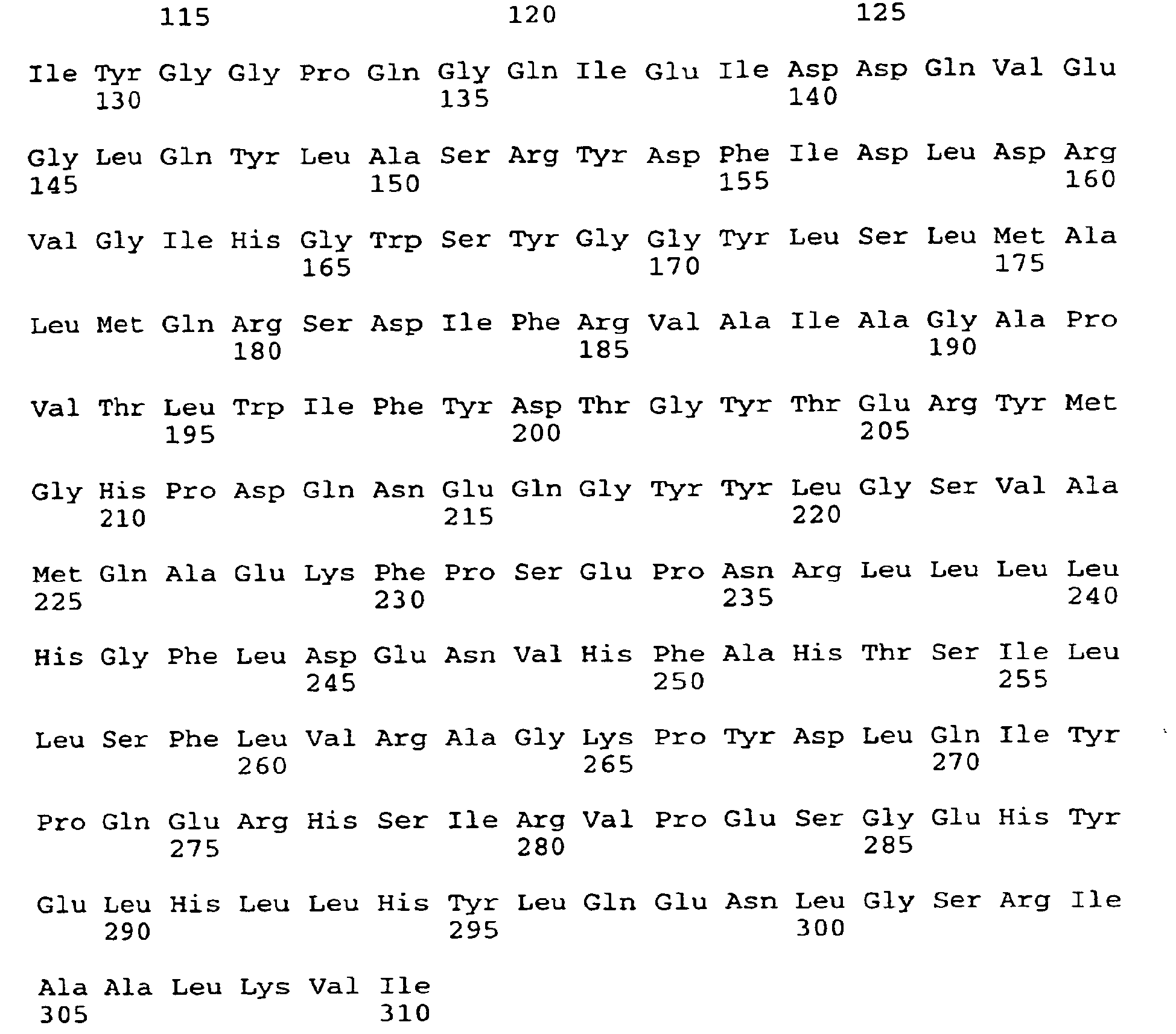
- <210> 4
<211> 1197
<212> DNA
<213> Homo sapiens - <400> 4


- <210> 5
<211> 465
<212> PRT
<213> Homo sapiens - <400> 5


- <210> 6
<211> 1669
<212> DNA
<213> Homo sapiens - <400> 6


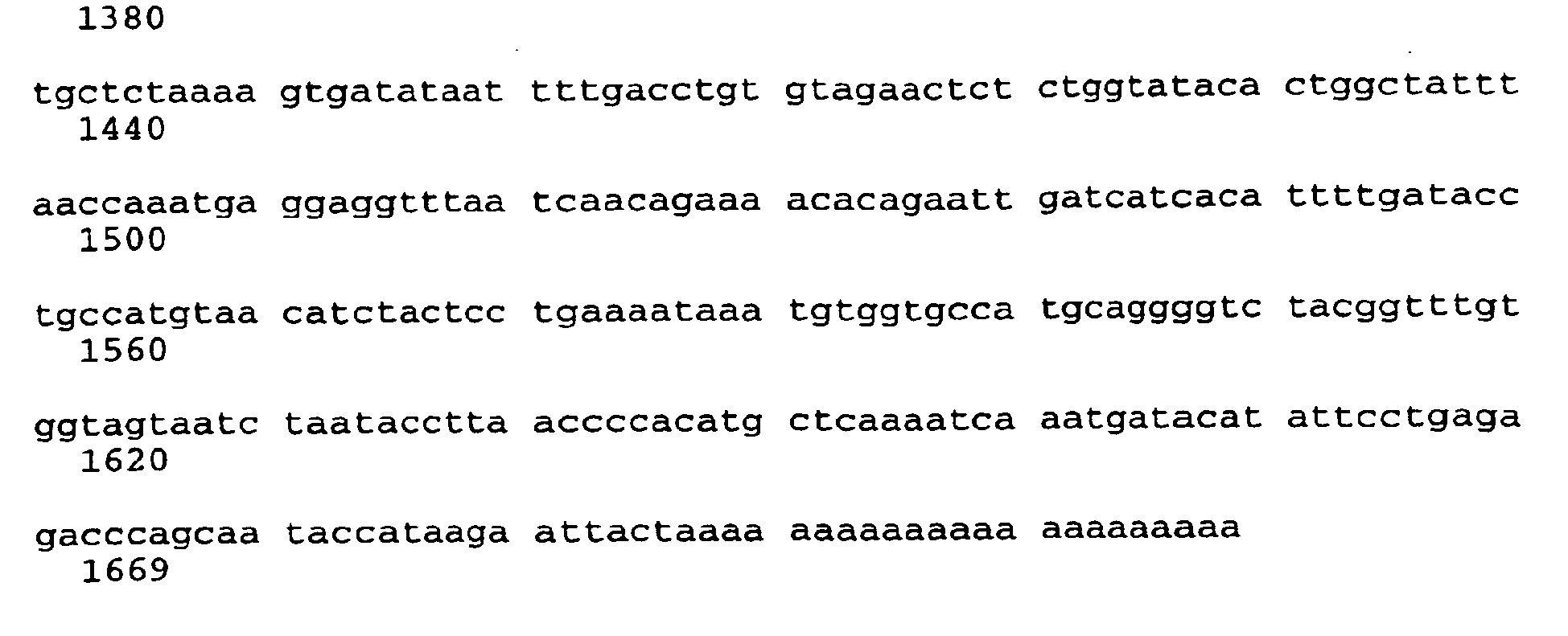
- <210> 7
<211> 360
<212> PRT
<213> Homo sapiens - <400> 7


- <210> 8
<211> 1083
<212> DNA
<213> Homo sapiens - <400> 8


-
- <110> THE UNIVERSITY OF SYDNEY
- <120> DIPEPTIDYL PEPTIDASE
- <130> P37354
- <150> AU PQ2762
- <151> 1999-09-10
- <150> AU PQ5709
<151> 2000-02-18 - <160> 8
- <170> PatentIn version 3.0
- <210> 1
<211> 882
<212> PRT
<213> Homo sapiens - <400> 1


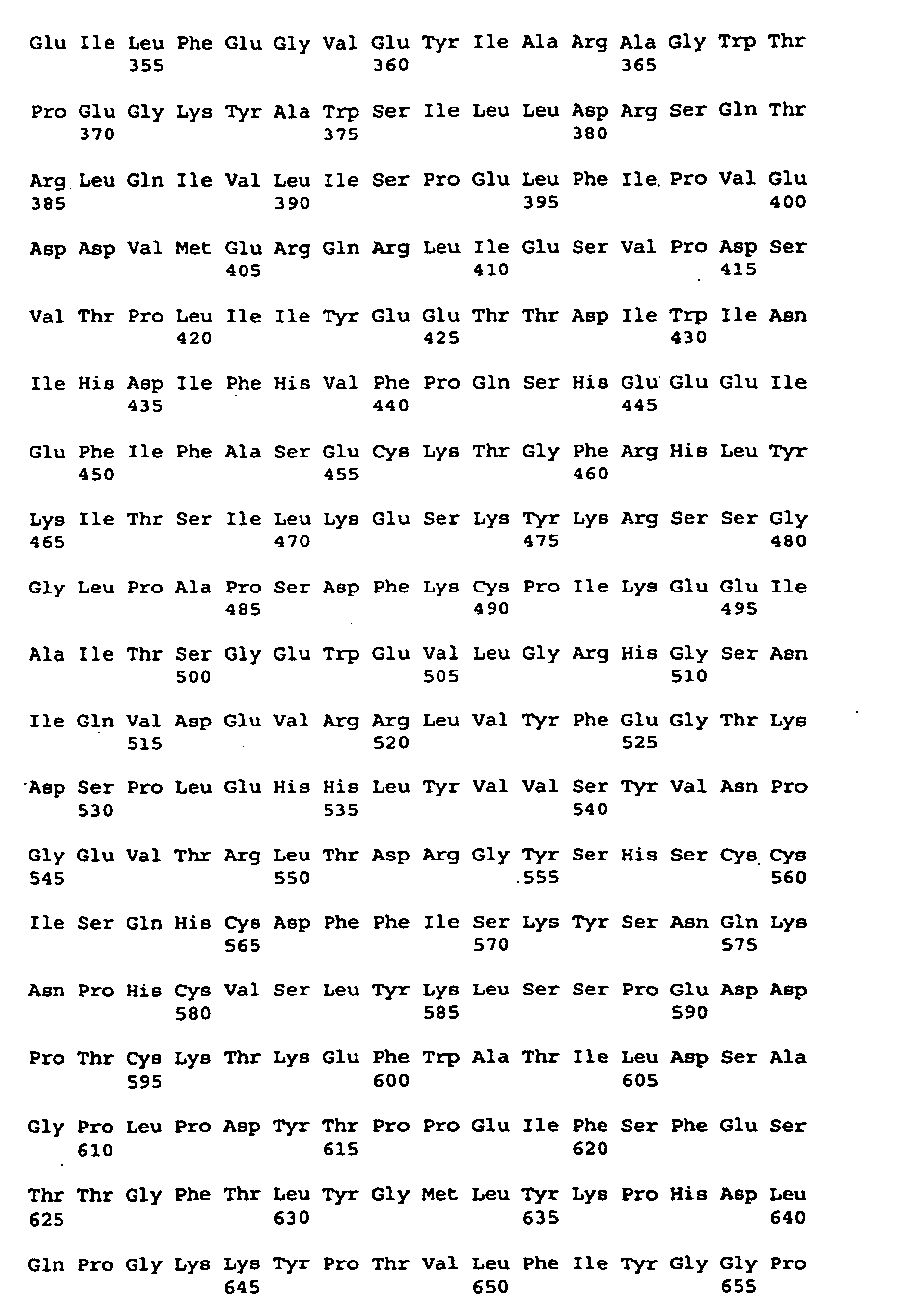

- <210> 2
<211> 3120
<212> DNA
<213> Homo sapiens - <400> 2


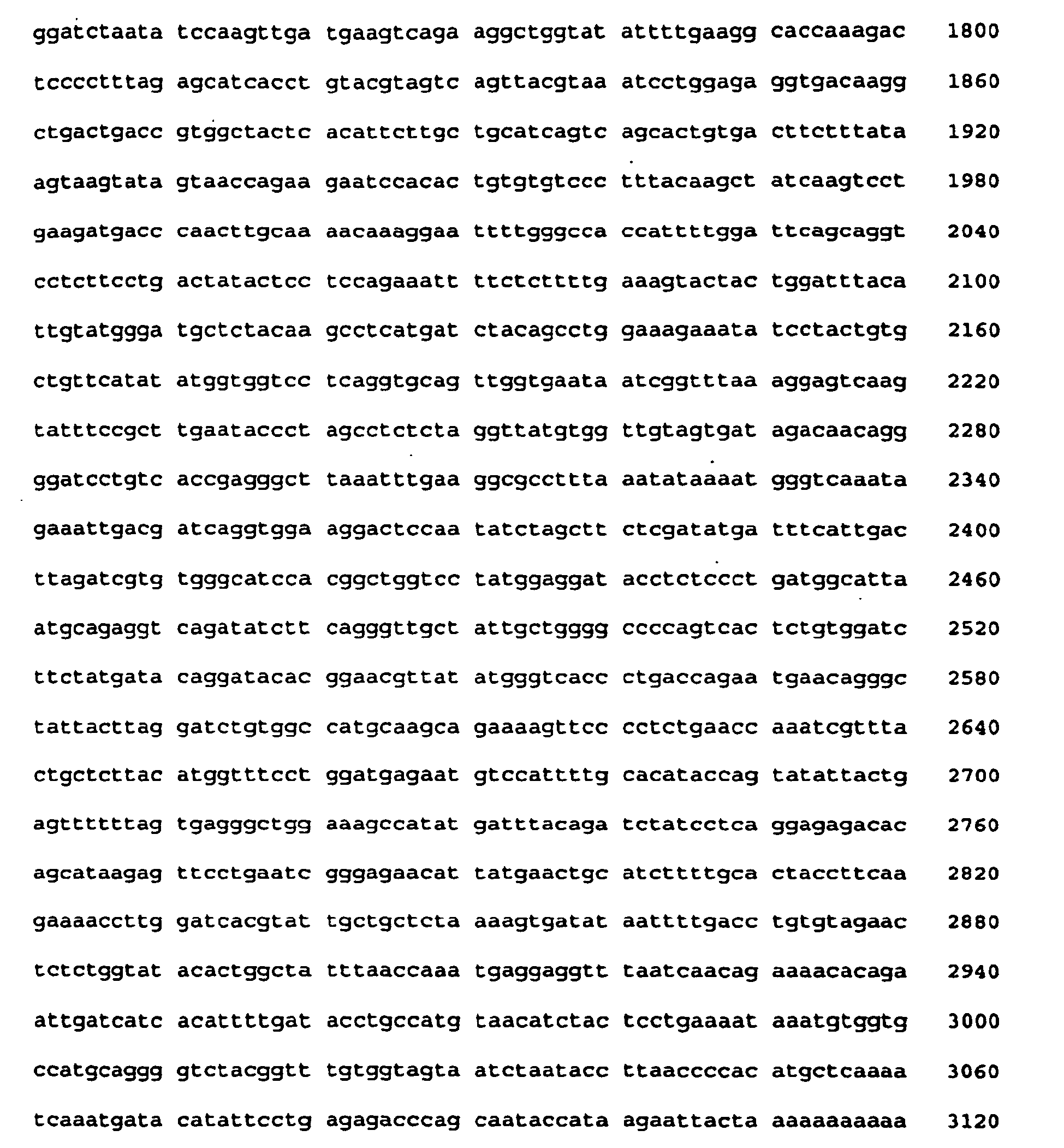
- <210> 3
<211> 310
<212> PRT
<213> Homo sapiens - <400> 3


- <210> 4
<211> 1197
<212> DNA
<213> Homo sapiens - <400> 4

- <210> 5
<211> 465
<212> PRT
<213> Homo sapiens - <400> 5


- <210> 6
<211> 1669
<212> DNA
<213> Homo sapiens - <400> 6

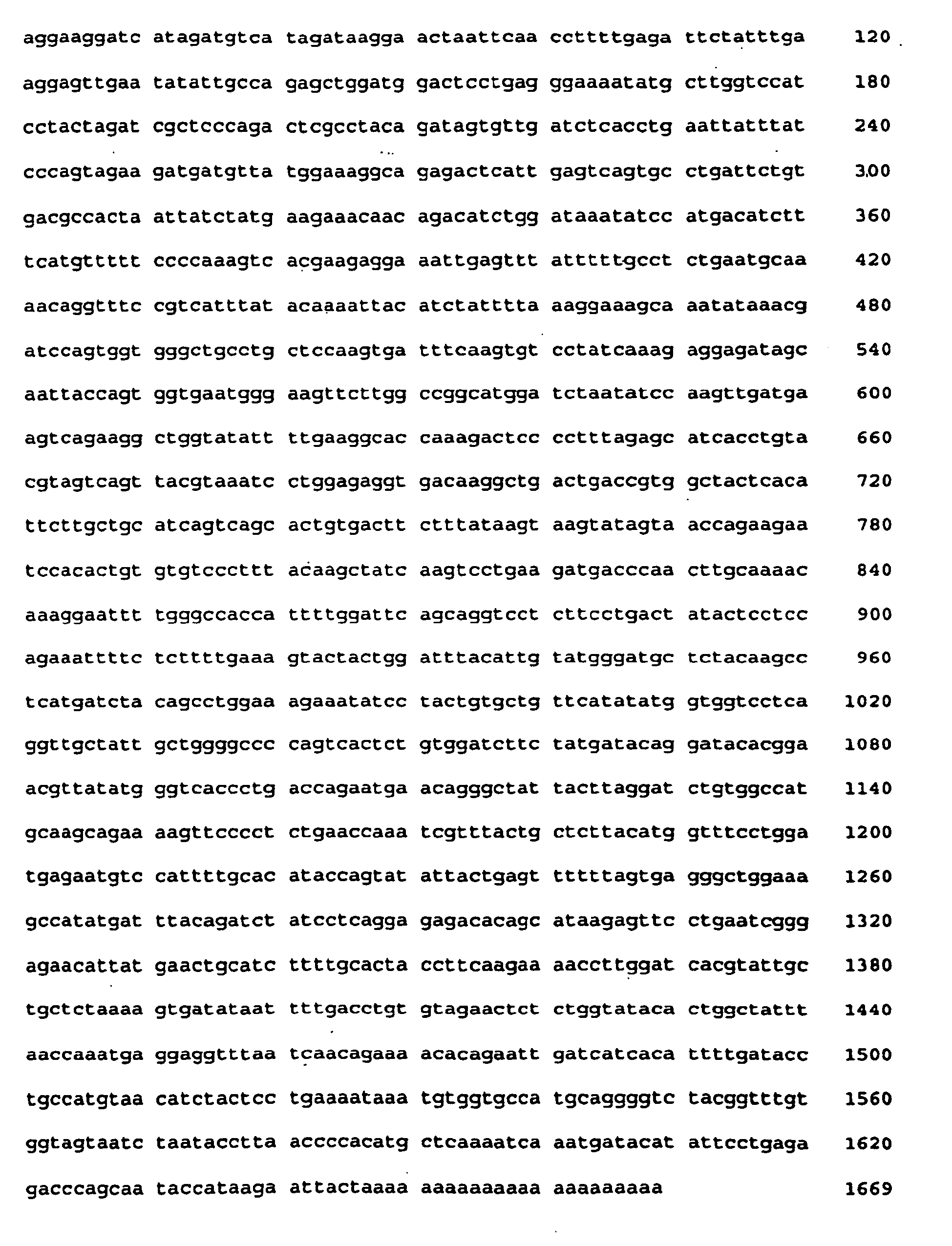
- <210> 7
<211> 360
<212> PRT
<213> Homo sapiens - <400> 7


- <210> 8
<211> 1083
<212> DNA
<213> Homo sapiens - <400> 8


-
- <110> THE UNIVERSITY OF SYDNEY
- <120> DIPEPTIDYL PEPTIDASE
- <130> P37354
- <150> AU PQ2762
<151> 1999-09-10 - <150> AU PQ5709
<151> 2000-02-18 - <160> 8
- <170> Patent In version 3.0
- <210> 1
<211> 882
<212> PRT
<213> Homo sapiens - <400> 1


- <210> 2
<211> 3120
<212> DNA
<213> Homo sapiens - <400> 2


- <210> 3
<211> 310
<212> PRT
<213> Homo sapiens - <400> 3


- <210> 4
<211> 1197
<212> DNA
<213> Homo sapiens - <400> 4

- <210> 5
<211> 465
<212> PRT
<213> Homo sapiens - <400> 5


- <210> 6
<211> 1669
<212> DNA
<213> Homo sapiens - <400> 6


- <210> 7
<211> 360
<212> PRT
<213> Homo sapiens - <400> 7


- <210> 8
<211> 1083
<212> DNA
<213> Homo sapiens - <400> 8
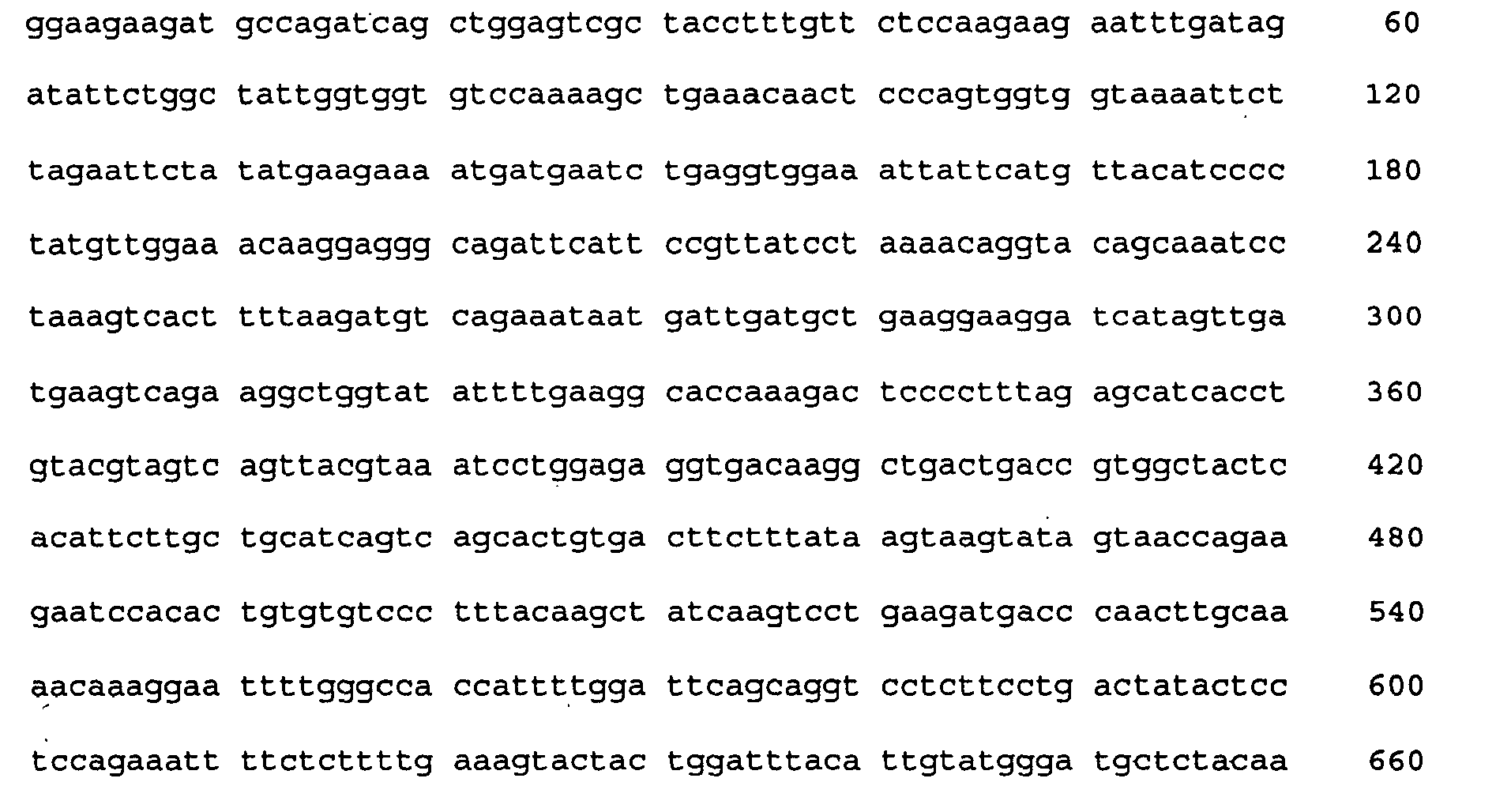

Claims (25)
- A peptide comprising:(a) a sequence as shown in SEQ ID NO: 1;
or(b) amino acid sequences: His736GlyTrpSerTyrGIyGlyTyrLeu; Leu816AspGluAsnValHisPheAlaHis; Glu847ArgHisSerlleArg and Phe255ValLeuGlnGluGluPhe, and that is capable of hydrolysing a peptide bond C-terminal to proline in any one of the following compounds:H-Ala-Pro-pNA;H-Gly-Pro-pNA; andH-Arg-Pro-pNA;or(c) a sequence having at least 60% identity with the sequence shown in SEQ ID NO:1, and that is capable of hydrolysing a peptide bond C-terminal to proline in any one of the following compounds:H-Ala-Pro-pNA;H-Gly-Pro-pNA; andH-Arg-Pro-pNA. - A peptide according to Claim 1(c), wherein the amino acid identity is at least 75%.
- A peptide according to Claim 1(c) wherein the amino acid identity is at least 95%.
- A fragment of the sequence shown in SEQ ID NO: 1 that is capable of hydrolysing a peptide bond C-terminal to proline in anyone of the following compounds:H-Ala-Pro-pNA;H-Gly-Pro-pNA; andH-Arg-Pro-pNA.
- A peptide according to Claim 1, wherein an asparagine residue in the peptide is not linked to a carbohydrate molecule.
- A peptide according to Claim 1, wherein the peptide is not expressed on the cell surface membrane of a cell.
- A fusion protein comprising the amino acid sequence shown in SEQ ID NO: 1 that is capable of hydrolysing a peptide bond C-terminal to proline in any one of the following compounds:H-Ala-Pro-pNA;H-Gly-Pro-pNA; andH-Arg-Pro-pNA,the fusion protein linked with a further amino acid sequence.
- A fusion protein according to Claim 7 wherein the further amino acid sequence is selected from the group consisting of GST, V5 epitope and His tag.
- A method of identifying a molecule capable of inhibiting cleavage of a substrate by a peptide according to Claim 1 comprising the following steps:(a) contacting a peptide according to Claim 1 with the molecule;(b) contacting the peptide according to Claim 1 of step (a) with a substrate capable of being cleaved by the peptide according to Claim 1, in conditions sufficient for cleavage of the substrate by the peptide according to Claim 1; and(c) detecting substrate not cleaved by the peptide according to Claim 1, to identify that the molecule is capable of inhibiting cleavage of the substrate by the peptide according to Claim 1.
- A method of identifying a molecule capable of specifically inhibiting the cleavage of a substrate by a peptide according to Claim 1, the method comprising the following steps:(a) contacting a peptide according to Claim 1 and a further protease with the molecule;(b) contacting the peptide according to Claim 1 and the further protease of step (a) with a substrate capable of being cleaved by the peptide according to Claim 1 and the further protease, in conditions sufficient for cleavance of the substrate by the peptide according to Claim 1 and the further protease; and(c) detecting substrate not cleaved by the peptide according to Claim 1, but cleaved by the further protease, to identify that the molecule is capable of specifically inhibiting the cleavage of the substrate by a peptide according to Claim 1.
- A method of reducing or inhibiting the catalytic activity of a peptide according to Claim 1, the method comprising the step of contacting a peptide according to Claim 1 with an inhibitor of the catalytic activity of a peptide according to Claim 1.
- A method of cleaving a substrate comprising the step of contacting the substrate with a peptide according to Claim 1 in conditions sufficient for cleavage of the substrate by the peptide according to Claim 1.
- A method of detecting an activated T cell, the method comprising the step of measuring the level of a peptide according to Claim 1 in a T cell.
- A method according to Claim 13, wherein the level of a peptide according to Claim 1 is detected by detecting the amount of RNA that encodes a peptide according to Claim 1.
- A nucleic acid molecule that:(a) encodes a sequence as shown in SEQ ID NO:1; or(b) consists of a sequence as shown in SEQ ID NO:2; or(c) is capable of hybridizing to a nucleic acid molecule consisting of the sequence shown in SEQ ID NO:2 in stringent conditions, and encodes a peptide that is capable of hydrolysing a peptide bond C-terminal to proline in any one of the following compounds:H-Ala-Pro-pNA;H-Gly-Pro-pNA; andH-Arg-Pro-pNA;
- A nucleic acid molecule according to Claim 15(c), wherein the molecule is capable of hybridizing in high stringent conditions.
- A nucleic acid molecule according to Claim 15 that does not contain 5' or 3' untranslated regions.
- A fragment of a nucleic acid molecule consisting of the sequence shown in SEQ ID NO: 2 that encodes a peptide that is capable of hydrolysing a peptide bond C-terminal to proline in any one of the following compounds:H-Ala-Pro-pNA;H-Gly-Pro-pNA; andH-Arg-Pro-pNA;
- A fragment according to Claim 18 that consists of the sequence shown in any one of SEQ ID NOs:4, 6 or 8.
- A vector comprising a nucleic acid molecule according to Claim 15.
- A cell comprising a vector according to Claim 20.
- A composition comprising a peptide according to Claim 1.
- An antibody which is capable of binding to a peptide according to Claim 1.
- An antibody according to Claim 23 which is produced by a hybridoma cell.
- A hybridoma cell capable of making an antibody according to Claim 24.
Applications Claiming Priority (5)
| Application Number | Priority Date | Filing Date | Title |
|---|---|---|---|
| AUPQ2762A AUPQ276299A0 (en) | 1999-09-10 | 1999-09-10 | Peptide and nucleic acid molecule |
| AUPQ276299 | 1999-09-10 | ||
| AUPQ570900 | 2000-02-18 | ||
| AUPQ5709A AUPQ570900A0 (en) | 2000-02-18 | 2000-02-18 | Peptide and nucleic acid molecule |
| PCT/AU2000/001085 WO2001019866A1 (en) | 1999-09-10 | 2000-09-11 | Dipeptidyl peptidases |
Publications (3)
| Publication Number | Publication Date |
|---|---|
| EP1214344A1 EP1214344A1 (en) | 2002-06-19 |
| EP1214344A4 EP1214344A4 (en) | 2004-03-10 |
| EP1214344B1 true EP1214344B1 (en) | 2006-07-05 |
Family
ID=25646142
Family Applications (1)
| Application Number | Title | Priority Date | Filing Date |
|---|---|---|---|
| EP00962085A Expired - Lifetime EP1214344B1 (en) | 1999-09-10 | 2000-09-11 | Dipeptidyl peptidases |
Country Status (9)
| Country | Link |
|---|---|
| US (2) | US6881564B1 (en) |
| EP (1) | EP1214344B1 (en) |
| JP (1) | JP4748908B2 (en) |
| AT (1) | ATE332366T1 (en) |
| CA (1) | CA2384135A1 (en) |
| DE (1) | DE60029230T2 (en) |
| DK (1) | DK1214344T3 (en) |
| ES (1) | ES2269178T3 (en) |
| WO (1) | WO2001019866A1 (en) |
Families Citing this family (32)
| Publication number | Priority date | Publication date | Assignee | Title |
|---|---|---|---|---|
| CA2304206A1 (en) * | 1997-09-29 | 1999-04-08 | Point Therapeutics, Inc. | Stimulation of hematopoietic cells in vitro |
| US6979697B1 (en) * | 1998-08-21 | 2005-12-27 | Point Therapeutics, Inc. | Regulation of substrate activity |
| JP4748908B2 (en) * | 1999-09-10 | 2011-08-17 | ザ・ユニバーシティ・オブ・シドニー | Dipeptidyl peptidase |
| EP1280922A2 (en) * | 2000-04-18 | 2003-02-05 | Millennium Pharmaceuticals, Inc. | 21953, a human prolyl oligopeptidase family member and uses thereof |
| US20040047853A1 (en) * | 2000-06-09 | 2004-03-11 | Dahl Soren W | Purified proenzyme of dipeptidyl peptidase i (pro-dppi) |
| CN101270362A (en) * | 2000-10-12 | 2008-09-24 | 凡林有限公司 | Novel serine protease genes related to DPPIV |
| AUPR107800A0 (en) | 2000-10-27 | 2000-11-23 | University Of Sydney, The | Peptide and nucleic acid molecule ii |
| DE10100053A1 (en) * | 2001-01-02 | 2002-08-22 | Keyneurotek Ag I G | Use of enzyme inhibitors of dipeptidyl peptidase IV and aminopeptidase N and pharmaceutical preparations therefrom for the prevention and / or therapy of ischemia-related acute and chronic neurodegenerative processes and diseases |
| WO2002066627A1 (en) * | 2001-02-16 | 2002-08-29 | Bayer Aktiengesellschaft | Regulation of human dipeptidyl peptidase 8 |
| DE10150203A1 (en) | 2001-10-12 | 2003-04-17 | Probiodrug Ag | Use of dipeptidyl peptidase IV inhibitor in treatment of cancer |
| CN1723196A (en) | 2001-06-27 | 2006-01-18 | 史密丝克莱恩比彻姆公司 | Fluoropyrrolidines as dipeptidyl peptidase inhibitors |
| EP2316470A3 (en) * | 2001-11-26 | 2011-08-24 | Trustees Of Tufts College | Peptidomimetic inhibitors of post-proline cleaving enzymes |
| PT1528931E (en) | 2002-08-09 | 2008-08-13 | Prosidion Ltd | Dipeptidyl peptidase iv inhibitors for decreasing the rate of chronic weight gain |
| US7638638B2 (en) | 2003-05-14 | 2009-12-29 | Takeda San Diego, Inc. | Dipeptidyl peptidase inhibitors |
| KR20060041309A (en) | 2003-08-13 | 2006-05-11 | 다케다 야쿠힌 고교 가부시키가이샤 | 4-pyrimidone derivatives and their use as peptidyl peptidase inhibitors |
| US7678909B1 (en) | 2003-08-13 | 2010-03-16 | Takeda Pharmaceutical Company Limited | Dipeptidyl peptidase inhibitors |
| US7169926B1 (en) | 2003-08-13 | 2007-01-30 | Takeda Pharmaceutical Company Limited | Dipeptidyl peptidase inhibitors |
| US7732446B1 (en) | 2004-03-11 | 2010-06-08 | Takeda Pharmaceutical Company Limited | Dipeptidyl peptidase inhibitors |
| WO2005106021A1 (en) * | 2004-04-28 | 2005-11-10 | Bayer Healthcare Ag | Diagnostics and therapeutics for diseases associated with dipeptidyl-peptidase 8 (dpp8) |
| US20080166357A1 (en) * | 2004-05-11 | 2008-07-10 | Stefan Golz | Diagnostics and Therapeutics for Diseases Associated with Dipeptidyl-Peptidase 6 (Dpp6) |
| JP2008501714A (en) | 2004-06-04 | 2008-01-24 | 武田薬品工業株式会社 | Dipeptidyl peptidase inhibitor |
| WO2006019965A2 (en) | 2004-07-16 | 2006-02-23 | Takeda San Diego, Inc. | Dipeptidyl peptidase inhibitors |
| US20060063719A1 (en) * | 2004-09-21 | 2006-03-23 | Point Therapeutics, Inc. | Methods for treating diabetes |
| AU2006290205B2 (en) | 2005-09-14 | 2012-12-13 | Takeda Pharmaceutical Company Limited | Dipeptidyl peptidase inhibitors for treating diabetes |
| CA2622642C (en) | 2005-09-16 | 2013-12-31 | Takeda Pharmaceutical Company Limited | Dipeptidyl peptidase inhibitors |
| WO2007054577A1 (en) | 2005-11-14 | 2007-05-18 | Probiodrug Ag | Cyclopropyl-fused pyrrolidine derivatives as dipeptidyl peptidase iv inhibitors |
| WO2007112347A1 (en) | 2006-03-28 | 2007-10-04 | Takeda Pharmaceutical Company Limited | Dipeptidyl peptidase inhibitors |
| BRPI0709984A2 (en) | 2006-04-12 | 2011-08-02 | Probiodrug Ag | enzyme inhibitors |
| TW200838536A (en) | 2006-11-29 | 2008-10-01 | Takeda Pharmaceutical | Polymorphs of succinate salt of 2-[6-(3-amino-piperidin-1-yl)-3-methyl-2,4-dioxo-3,4-dihydro-2H-pyrimidin-1-ylmethy]-4-fluor-benzonitrile and methods of use therefor |
| CA2990822A1 (en) * | 2015-06-26 | 2016-12-29 | Dupont Nutrition Biosciences Aps | Aminopeptidases for protein hydrlyzates |
| ES2988845T3 (en) | 2017-01-09 | 2024-11-21 | Onkosxcel Therapeutics Llc | Predictive and diagnostic procedures for prostate cancer |
| DE102018107224A1 (en) | 2018-02-21 | 2019-08-22 | Immatics Biotechnologies Gmbh | Peptides and combinations of peptides of non-canonical origin for use in immunotherapy against various cancers |
Family Cites Families (14)
| Publication number | Priority date | Publication date | Assignee | Title |
|---|---|---|---|---|
| US4977085A (en) * | 1984-02-29 | 1990-12-11 | The Board Of Regents Of The Univ. Of California | Cloning and expression of yeast STE13 and Dpp2 genes encoding dipeptidyl aminopeptidase A and B |
| US5231126A (en) * | 1985-04-01 | 1993-07-27 | Shi Guan Yi | Beta-crystalline form of isotactic polypropylene and method for forming the same |
| DE69809192T2 (en) * | 1997-02-07 | 2003-07-24 | Exxonmobil Chemical Patents Inc., Baytown | PROPYLENE POLYMERS CONTAINING POLYETHYLENE MACROMONOMERS |
| US20040132158A1 (en) | 1999-01-11 | 2004-07-08 | Incyte Corporation | Human peptidases |
| JP4748908B2 (en) | 1999-09-10 | 2011-08-17 | ザ・ユニバーシティ・オブ・シドニー | Dipeptidyl peptidase |
| EP1263909A2 (en) * | 1999-12-22 | 2002-12-11 | ExxonMobil Chemical Patents Inc. | Polypropylene-based adhesive compositions |
| US20030198953A1 (en) | 2000-03-30 | 2003-10-23 | Spytek Kimberly A. | Novel proteins and nucleic acids encoding same |
| CN101270362A (en) | 2000-10-12 | 2008-09-24 | 凡林有限公司 | Novel serine protease genes related to DPPIV |
| US20020123538A1 (en) * | 2000-12-29 | 2002-09-05 | Peiguang Zhou | Hot-melt adhesive based on blend of amorphous and crystalline polymers for multilayer bonding |
| US6774069B2 (en) * | 2000-12-29 | 2004-08-10 | Kimberly-Clark Worldwide, Inc. | Hot-melt adhesive for non-woven elastic composite bonding |
| US7223822B2 (en) * | 2002-10-15 | 2007-05-29 | Exxonmobil Chemical Patents Inc. | Multiple catalyst and reactor system for olefin polymerization and polymers produced therefrom |
| BR0315341B1 (en) * | 2002-10-15 | 2014-02-18 | Adhesives comprising polyolefin. | |
| US7700707B2 (en) * | 2002-10-15 | 2010-04-20 | Exxonmobil Chemical Patents Inc. | Polyolefin adhesive compositions and articles made therefrom |
| US7550528B2 (en) * | 2002-10-15 | 2009-06-23 | Exxonmobil Chemical Patents Inc. | Functionalized olefin polymers |
-
2000
- 2000-09-11 JP JP2001523643A patent/JP4748908B2/en not_active Expired - Fee Related
- 2000-09-11 ES ES00962085T patent/ES2269178T3/en not_active Expired - Lifetime
- 2000-09-11 DK DK00962085T patent/DK1214344T3/en active
- 2000-09-11 AT AT00962085T patent/ATE332366T1/en active
- 2000-09-11 EP EP00962085A patent/EP1214344B1/en not_active Expired - Lifetime
- 2000-09-11 WO PCT/AU2000/001085 patent/WO2001019866A1/en not_active Ceased
- 2000-09-11 CA CA002384135A patent/CA2384135A1/en not_active Abandoned
- 2000-09-11 DE DE60029230T patent/DE60029230T2/en not_active Expired - Lifetime
- 2000-09-11 US US10/070,464 patent/US6881564B1/en not_active Expired - Fee Related
-
2004
- 2004-04-15 US US10/825,632 patent/US7148338B2/en not_active Expired - Fee Related
Also Published As
| Publication number | Publication date |
|---|---|
| ATE332366T1 (en) | 2006-07-15 |
| ES2269178T3 (en) | 2007-04-01 |
| JP4748908B2 (en) | 2011-08-17 |
| EP1214344A1 (en) | 2002-06-19 |
| WO2001019866A1 (en) | 2001-03-22 |
| US6881564B1 (en) | 2005-04-19 |
| DK1214344T3 (en) | 2006-11-06 |
| US7148338B2 (en) | 2006-12-12 |
| DE60029230D1 (en) | 2006-08-17 |
| US20040191826A1 (en) | 2004-09-30 |
| EP1214344A4 (en) | 2004-03-10 |
| DE60029230T2 (en) | 2007-06-06 |
| JP2003509041A (en) | 2003-03-11 |
| CA2384135A1 (en) | 2001-03-22 |
Similar Documents
| Publication | Publication Date | Title |
|---|---|---|
| US6881564B1 (en) | Dipeptidyl peptidases | |
| Abbott et al. | Cloning, expression and chromosomal localization of a novel human dipeptidyl peptidase (DPP) IV homolog, DPP8 | |
| Smyth et al. | Expression of recombinant human granzyme B. A processing and activation role for dipeptidyl peptidase I. | |
| US7662944B2 (en) | Nucleic acid molecules encoding prolyl dipeptidyl peptidases | |
| Ajami et al. | Dipeptidyl peptidase 9 has two forms, a broad tissue distribution, cytoplasmic localization and DPIV-like peptidase activity | |
| Guo et al. | Inhibition of MEPE cleavage by Phex | |
| McGuire et al. | Generation of active myeloid and lymphoid granule serine proteases requires processing by the granule thiol protease dipeptidyl peptidase I. | |
| Skidgel et al. | Angiotensin converting enzyme (ACE) and neprilysin hydrolyze neuropeptides: a brief history, the beginning and follow-ups to early studies | |
| Lee et al. | Proteolytic Processing of Big Endothelin-3 by the Kell Blood Group Protein: Presented in part in abstract form at the 40th annual meeting of the American Society of Hematology, December, 1998. | |
| Skidgel et al. | Cellular carboxypeptidases | |
| Hecquet et al. | Human bradykinin B2 receptor is activated by kallikrein and other serine proteases | |
| Kisiel et al. | Characterization of a protein C activator from Agkistrodon contortrix contortrix venom. | |
| Bermpohl et al. | Rat dipeptidyl peptidase IV (DPP IV) exhibits endopeptidase activity with specificity for denatured fibrillar collagens | |
| Jutras et al. | Prorenin processing by cathepsin B in vitro and in transfected cells | |
| US6753176B2 (en) | Aggrecan degrading metallo proteases | |
| Bonvouloir et al. | Molecular cloning, tissue distribution, and chromosomal localization of MMEL2, a gene coding for a novel human member of the neutral endopeptidase-24.11 family | |
| Abbott et al. | The Family of CD26/DPIV and Related Ectopeptidases: The DPIV family | |
| CN101291953A (en) | Mutant timp-3 | |
| AU767005B2 (en) | Dipeptidyl peptidases | |
| US20130059788A1 (en) | Prodomain modulators of adam 10 | |
| Umland et al. | Mouse ADAM33: two splice variants differ in protein maturation and localization | |
| Boudjennah et al. | Expression of collagenase/gelatinase activity from basement‐membrane fibronectin: Isolation after limited proteolysis of a bovine lens capsule and molecular definition of this thiol‐dependent zinc metalloproteinase | |
| Turner et al. | Structural studies of aminopeptidase P: A novel cellular peptidase | |
| Soubrier et al. | Angiotensin I-converting enzyme (ACE) gene structure and polymorphism: Relation to enzyme function and gene expression | |
| Bauer | Cytosol nonspecific dipeptidase |
Legal Events
| Date | Code | Title | Description |
|---|---|---|---|
| PUAI | Public reference made under article 153(3) epc to a published international application that has entered the european phase |
Free format text: ORIGINAL CODE: 0009012 |
|
| 17P | Request for examination filed |
Effective date: 20020410 |
|
| AK | Designated contracting states |
Kind code of ref document: A1 Designated state(s): AT BE CH CY DE DK ES FI FR GB GR IE IT LI LU MC NL PT SE |
|
| AX | Request for extension of the european patent |
Free format text: AL;LT;LV;MK;RO;SI |
|
| RIC1 | Information provided on ipc code assigned before grant |
Ipc: 7C 12N 15/57 B Ipc: 7C 12N 9/48 A |
|
| A4 | Supplementary search report drawn up and despatched |
Effective date: 20040128 |
|
| 17Q | First examination report despatched |
Effective date: 20050330 |
|
| GRAC | Information related to communication of intention to grant a patent modified |
Free format text: ORIGINAL CODE: EPIDOSCIGR1 |
|
| GRAP | Despatch of communication of intention to grant a patent |
Free format text: ORIGINAL CODE: EPIDOSNIGR1 |
|
| GRAS | Grant fee paid |
Free format text: ORIGINAL CODE: EPIDOSNIGR3 |
|
| GRAA | (expected) grant |
Free format text: ORIGINAL CODE: 0009210 |
|
| AK | Designated contracting states |
Kind code of ref document: B1 Designated state(s): AT BE CH CY DE DK ES FI FR GB GR IE IT LI LU MC NL PT SE |
|
| PG25 | Lapsed in a contracting state [announced via postgrant information from national office to epo] |
Ref country code: FI Free format text: LAPSE BECAUSE OF FAILURE TO SUBMIT A TRANSLATION OF THE DESCRIPTION OR TO PAY THE FEE WITHIN THE PRESCRIBED TIME-LIMIT Effective date: 20060705 |
|
| REG | Reference to a national code |
Ref country code: GB Ref legal event code: FG4D |
|
| REG | Reference to a national code |
Ref country code: CH Ref legal event code: EP |
|
| REG | Reference to a national code |
Ref country code: IE Ref legal event code: FG4D |
|
| REF | Corresponds to: |
Ref document number: 60029230 Country of ref document: DE Date of ref document: 20060817 Kind code of ref document: P |
|
| PG25 | Lapsed in a contracting state [announced via postgrant information from national office to epo] |
Ref country code: MC Free format text: LAPSE BECAUSE OF NON-PAYMENT OF DUE FEES Effective date: 20060930 |
|
| REG | Reference to a national code |
Ref country code: SE Ref legal event code: TRGR |
|
| REG | Reference to a national code |
Ref country code: DK Ref legal event code: T3 |
|
| REG | Reference to a national code |
Ref country code: CH Ref legal event code: NV Representative=s name: ZIMMERLI, WAGNER & PARTNER AG |
|
| PG25 | Lapsed in a contracting state [announced via postgrant information from national office to epo] |
Ref country code: PT Free format text: LAPSE BECAUSE OF FAILURE TO SUBMIT A TRANSLATION OF THE DESCRIPTION OR TO PAY THE FEE WITHIN THE PRESCRIBED TIME-LIMIT Effective date: 20061205 |
|
| ET | Fr: translation filed | ||
| REG | Reference to a national code |
Ref country code: ES Ref legal event code: FG2A Ref document number: 2269178 Country of ref document: ES Kind code of ref document: T3 |
|
| PLBE | No opposition filed within time limit |
Free format text: ORIGINAL CODE: 0009261 |
|
| STAA | Information on the status of an ep patent application or granted ep patent |
Free format text: STATUS: NO OPPOSITION FILED WITHIN TIME LIMIT |
|
| 26N | No opposition filed |
Effective date: 20070410 |
|
| PG25 | Lapsed in a contracting state [announced via postgrant information from national office to epo] |
Ref country code: GR Free format text: LAPSE BECAUSE OF FAILURE TO SUBMIT A TRANSLATION OF THE DESCRIPTION OR TO PAY THE FEE WITHIN THE PRESCRIBED TIME-LIMIT Effective date: 20061006 |
|
| PG25 | Lapsed in a contracting state [announced via postgrant information from national office to epo] |
Ref country code: LU Free format text: LAPSE BECAUSE OF NON-PAYMENT OF DUE FEES Effective date: 20060911 |
|
| PG25 | Lapsed in a contracting state [announced via postgrant information from national office to epo] |
Ref country code: CY Free format text: LAPSE BECAUSE OF FAILURE TO SUBMIT A TRANSLATION OF THE DESCRIPTION OR TO PAY THE FEE WITHIN THE PRESCRIBED TIME-LIMIT Effective date: 20060705 |
|
| REG | Reference to a national code |
Ref country code: CH Ref legal event code: PFA Owner name: THE UNIVERSITY OF SYDNEY Free format text: THE UNIVERSITY OF SYDNEY#PARRAMATTA ROAD#SYDNEY, NEW SOUTH WALES 2006 (AU) -TRANSFER TO- THE UNIVERSITY OF SYDNEY#PARRAMATTA ROAD#SYDNEY, NEW SOUTH WALES 2006 (AU) |
|
| REG | Reference to a national code |
Ref country code: CH Ref legal event code: NV Representative=s name: WAGNER PATENT AG, CH |
|
| PGFP | Annual fee paid to national office [announced via postgrant information from national office to epo] |
Ref country code: NL Payment date: 20140328 Year of fee payment: 14 Ref country code: DK Payment date: 20140328 Year of fee payment: 14 Ref country code: CH Payment date: 20140327 Year of fee payment: 14 Ref country code: IE Payment date: 20140328 Year of fee payment: 14 Ref country code: SE Payment date: 20140328 Year of fee payment: 14 Ref country code: DE Payment date: 20140328 Year of fee payment: 14 |
|
| PGFP | Annual fee paid to national office [announced via postgrant information from national office to epo] |
Ref country code: AT Payment date: 20140328 Year of fee payment: 14 |
|
| PGFP | Annual fee paid to national office [announced via postgrant information from national office to epo] |
Ref country code: GB Payment date: 20140328 Year of fee payment: 14 |
|
| PGFP | Annual fee paid to national office [announced via postgrant information from national office to epo] |
Ref country code: BE Payment date: 20140327 Year of fee payment: 14 |
|
| PGFP | Annual fee paid to national office [announced via postgrant information from national office to epo] |
Ref country code: IT Payment date: 20140331 Year of fee payment: 14 Ref country code: FR Payment date: 20140328 Year of fee payment: 14 |
|
| REG | Reference to a national code |
Ref country code: DE Ref legal event code: R119 Ref document number: 60029230 Country of ref document: DE |
|
| REG | Reference to a national code |
Ref country code: DK Ref legal event code: EBP Effective date: 20140930 |
|
| REG | Reference to a national code |
Ref country code: CH Ref legal event code: PL |
|
| REG | Reference to a national code |
Ref country code: SE Ref legal event code: EUG |
|
| REG | Reference to a national code |
Ref country code: AT Ref legal event code: MM01 Ref document number: 332366 Country of ref document: AT Kind code of ref document: T Effective date: 20140911 |
|
| GBPC | Gb: european patent ceased through non-payment of renewal fee |
Effective date: 20140911 |
|
| PG25 | Lapsed in a contracting state [announced via postgrant information from national office to epo] |
Ref country code: SE Free format text: LAPSE BECAUSE OF NON-PAYMENT OF DUE FEES Effective date: 20140912 |
|
| REG | Reference to a national code |
Ref country code: IE Ref legal event code: MM4A |
|
| REG | Reference to a national code |
Ref country code: FR Ref legal event code: ST Effective date: 20150529 |
|
| PG25 | Lapsed in a contracting state [announced via postgrant information from national office to epo] |
Ref country code: NL Free format text: LAPSE BECAUSE OF NON-PAYMENT OF DUE FEES Effective date: 20150401 Ref country code: BE Free format text: LAPSE BECAUSE OF NON-PAYMENT OF DUE FEES Effective date: 20140930 |
|
| PG25 | Lapsed in a contracting state [announced via postgrant information from national office to epo] |
Ref country code: DE Free format text: LAPSE BECAUSE OF NON-PAYMENT OF DUE FEES Effective date: 20150401 Ref country code: CH Free format text: LAPSE BECAUSE OF NON-PAYMENT OF DUE FEES Effective date: 20140930 Ref country code: LI Free format text: LAPSE BECAUSE OF NON-PAYMENT OF DUE FEES Effective date: 20140930 Ref country code: GB Free format text: LAPSE BECAUSE OF NON-PAYMENT OF DUE FEES Effective date: 20140911 |
|
| PGFP | Annual fee paid to national office [announced via postgrant information from national office to epo] |
Ref country code: ES Payment date: 20150831 Year of fee payment: 14 |
|
| PG25 | Lapsed in a contracting state [announced via postgrant information from national office to epo] |
Ref country code: IT Free format text: LAPSE BECAUSE OF NON-PAYMENT OF DUE FEES Effective date: 20140911 Ref country code: IE Free format text: LAPSE BECAUSE OF NON-PAYMENT OF DUE FEES Effective date: 20140911 Ref country code: FR Free format text: LAPSE BECAUSE OF NON-PAYMENT OF DUE FEES Effective date: 20140930 Ref country code: AT Free format text: LAPSE BECAUSE OF NON-PAYMENT OF DUE FEES Effective date: 20140911 |
|
| REG | Reference to a national code |
Ref country code: ES Ref legal event code: FD2A Effective date: 20151029 |
|
| PG25 | Lapsed in a contracting state [announced via postgrant information from national office to epo] |
Ref country code: DK Free format text: LAPSE BECAUSE OF NON-PAYMENT OF DUE FEES Effective date: 20140930 |
|
| PG25 | Lapsed in a contracting state [announced via postgrant information from national office to epo] |
Ref country code: ES Free format text: LAPSE BECAUSE OF NON-PAYMENT OF DUE FEES Effective date: 20140912 |
|
| PG25 | Lapsed in a contracting state [announced via postgrant information from national office to epo] |
Ref country code: ES Free format text: LAPSE BECAUSE OF NON-PAYMENT OF DUE FEES Effective date: 20140912 |
|
| PGFP | Annual fee paid to national office [announced via postgrant information from national office to epo] |
Ref country code: ES Payment date: 20221001 Year of fee payment: 14 |
|
| PGFP | Annual fee paid to national office [announced via postgrant information from national office to epo] |
Ref country code: ES Payment date: 20221001 Year of fee payment: 14 |