EP1213353A1 - Peptide leukotriene receptor - Google Patents
Peptide leukotriene receptor Download PDFInfo
- Publication number
- EP1213353A1 EP1213353A1 EP00960984A EP00960984A EP1213353A1 EP 1213353 A1 EP1213353 A1 EP 1213353A1 EP 00960984 A EP00960984 A EP 00960984A EP 00960984 A EP00960984 A EP 00960984A EP 1213353 A1 EP1213353 A1 EP 1213353A1
- Authority
- EP
- European Patent Office
- Prior art keywords
- ltc
- receptor
- protein
- cells
- dna
- Prior art date
- Legal status (The legal status is an assumption and is not a legal conclusion. Google has not performed a legal analysis and makes no representation as to the accuracy of the status listed.)
- Granted
Links
Images




Classifications
-
- C—CHEMISTRY; METALLURGY
- C07—ORGANIC CHEMISTRY
- C07K—PEPTIDES
- C07K14/00—Peptides having more than 20 amino acids; Gastrins; Somatostatins; Melanotropins; Derivatives thereof
- C07K14/435—Peptides having more than 20 amino acids; Gastrins; Somatostatins; Melanotropins; Derivatives thereof from animals; from humans
- C07K14/705—Receptors; Cell surface antigens; Cell surface determinants
-
- A—HUMAN NECESSITIES
- A61—MEDICAL OR VETERINARY SCIENCE; HYGIENE
- A61P—SPECIFIC THERAPEUTIC ACTIVITY OF CHEMICAL COMPOUNDS OR MEDICINAL PREPARATIONS
- A61P43/00—Drugs for specific purposes, not provided for in groups A61P1/00-A61P41/00
-
- A—HUMAN NECESSITIES
- A61—MEDICAL OR VETERINARY SCIENCE; HYGIENE
- A61P—SPECIFIC THERAPEUTIC ACTIVITY OF CHEMICAL COMPOUNDS OR MEDICINAL PREPARATIONS
- A61P9/00—Drugs for disorders of the cardiovascular system
- A61P9/08—Vasodilators for multiple indications
-
- G—PHYSICS
- G01—MEASURING; TESTING
- G01N—INVESTIGATING OR ANALYSING MATERIALS BY DETERMINING THEIR CHEMICAL OR PHYSICAL PROPERTIES
- G01N33/00—Investigating or analysing materials by specific methods not covered by groups G01N1/00 - G01N31/00
- G01N33/48—Biological material, e.g. blood, urine; Haemocytometers
- G01N33/50—Chemical analysis of biological material, e.g. blood, urine; Testing involving biospecific ligand binding methods; Immunological testing
- G01N33/68—Chemical analysis of biological material, e.g. blood, urine; Testing involving biospecific ligand binding methods; Immunological testing involving proteins, peptides or amino acids
- G01N33/6893—Chemical analysis of biological material, e.g. blood, urine; Testing involving biospecific ligand binding methods; Immunological testing involving proteins, peptides or amino acids related to diseases not provided for elsewhere
-
- A—HUMAN NECESSITIES
- A61—MEDICAL OR VETERINARY SCIENCE; HYGIENE
- A61K—PREPARATIONS FOR MEDICAL, DENTAL OR TOILETRY PURPOSES
- A61K38/00—Medicinal preparations containing peptides
-
- G—PHYSICS
- G01—MEASURING; TESTING
- G01N—INVESTIGATING OR ANALYSING MATERIALS BY DETERMINING THEIR CHEMICAL OR PHYSICAL PROPERTIES
- G01N2500/00—Screening for compounds of potential therapeutic value
-
- G—PHYSICS
- G01—MEASURING; TESTING
- G01N—INVESTIGATING OR ANALYSING MATERIALS BY DETERMINING THEIR CHEMICAL OR PHYSICAL PROPERTIES
- G01N2500/00—Screening for compounds of potential therapeutic value
- G01N2500/04—Screening involving studying the effect of compounds C directly on molecule A (e.g. C are potential ligands for a receptor A, or potential substrates for an enzyme A)
Definitions
- the present invention relates to novel peptide leukotriene receptor proteins, DNA encoding the novel proteins, vector which contains the DNA, transformed cells which contain the vector, and methods for screening drugs using the transformed cells.
- Eicosanoids such as prostaglandin, thromboxanes, and leukotrienes, are one of the families of metabolites of arachidonic acid. To maintain homeostasis of the living body, eicosanoids show various physiological effects (see “Koza prostaglandin 1-8", Makoto Katori, Seiitsu Murota, Shozo Yamamoto Ed. (1988)). These physiological effects purportedly appear through a specific cell membrane receptor of each eicosanoid.
- Leukotrienes one of the eicosanoids, are a series of physiologically active lipids that show a strong physiological activity at low concentrations among the metabolites of arachidonic acid in the 5-lipoxygenase pathway (Samuelsson, B. et al. (1987) Science. 237, 1171-1176).
- Leukotrienes are divided roughly into two kinds, namely leukotriene B4 (LTB 4 ) and the peptide leukotriene in which peptides are bound to fatty acids.
- Leukotriene C4 LTC 4
- leukotriene D4 LTD 4
- leukotriene E4 LTE 4
- the LTB 4 is a strong activator of leukocytes, and plays important roles in inflammatory immune reaction, infection protection, and the like (Chen, X. S. et al. (1994) Nature 372. p179-182).
- LTC 4 , LTD 4 , and LTE 4 have actions such as contraction of various smooth muscles (including the airway smooth muscle), stimulation of the mucos secretion in the airway, constriction of arteriolae and venule, and edudation of plasma protein (Taylor, G. W. et al. (1986) Trends Pharmacol. Sci. 7, p100-103).
- peptide leukotriene is involved in the crisis, ingravescent, exacerbation of inflammation and allergic symptoms, for instance, respiratory diseases such as asthma, bronchitis, and allergic rhinitis, dermatosis such as psoriasis and dermatitis, and intestinal diseases such as inflammatory bowel disease and ulcerative colitis (Makoto Katori, Seiitsu Murota, Shozo Yamamoto Ed. (1988) "Koza prostaglandin 3", 225-227, 484-486; Piper, P. J. et al., (1984) Physiol.Rev. 64. 744-761; Taylor, G. W. et al. (1986) Trends Pharmacol. Sci. 7.
- the subject of the present invention is to provide a human LTC 4 receptor or a protein with a function equivalent thereto and genes encoding same.
- a further object of the present invention is to provide a method of screening for a compound useful as a medicine targeting the peptide leukotriene receptor using the LTC 4 receptor protein.
- the isolation of the LTC 4 receptor protein has not been accomplished though it was desired. Therefore, there is a need to try a quite new approach .
- the isolation of an unknown protein could be expeditiously identified by using a full-length cDNA library, which surely contains the protein-coding region. This is because the function of the protein can be easily confirmed by transfecting the full-length cDNA with the translational initiation codon into cells.
- the present inventors synthesized a human cDNA library with a high full-length rate using the oligo cap method (K. Maruyama and S. Sugano, Gene, 138: 171-174 (1994); Y. Suzuki et al., Gene, 200: 149-156 (1997)). Then, the human full-length cDNA was cloned from the clone isolated from the cDNA library. Further, to select cDNA presumed to encode a membrane receptor, cDNA clones encoding the amino acid sequence comprising the signal sequence or the transmembrane domain were selected from the full-length cDNA clones.
- a cDNA encoding a protein with leukotriene C4 (LTC 4 ) receptor activity was identified by the transformation into COS cells.
- the protein encoded by the cDNA enables the screening for compounds that modify the activity of the LTC 4 receptor.
- pig and rat homologues of this cDNA were isolated, and it was determined that both encode a protein with LTC 4 receptor activity.
- the present inventors discovered that the receptors of the present invention have not only the LTC 4 receptor activity but also simultaneously a LTD 4 receptor activity, and completed the present invention.
- the present invention relates to the following proteins, DNA encoding the proteins, and the use of same.
- the present invention relates to the use of antagonists of proteins having leukotriene C4 receptor activity described in (1) or (2) in manufacturing a pharmaceutical composition for anti-inflammation, anti-allergy, and vasodilation, such pharmaceutical compositions comprising the antagonist and pharmaceutically acceptable additive.
- the present invention relates to the antagonists of proteins having leukotriene C4 receptor activity described in (1) or (2), which can be obtained by the screening method described in (8). Additionally, the present invention relates to the use of compounds that can be obtained by the screening method described in (8), as an antagonist of proteins having leukotriene C4 receptor activity described in (1) or (2).
- amino acid sequences of the pig and rat homologues of this protein and'the nucleotide sequences encoding same are also novel.
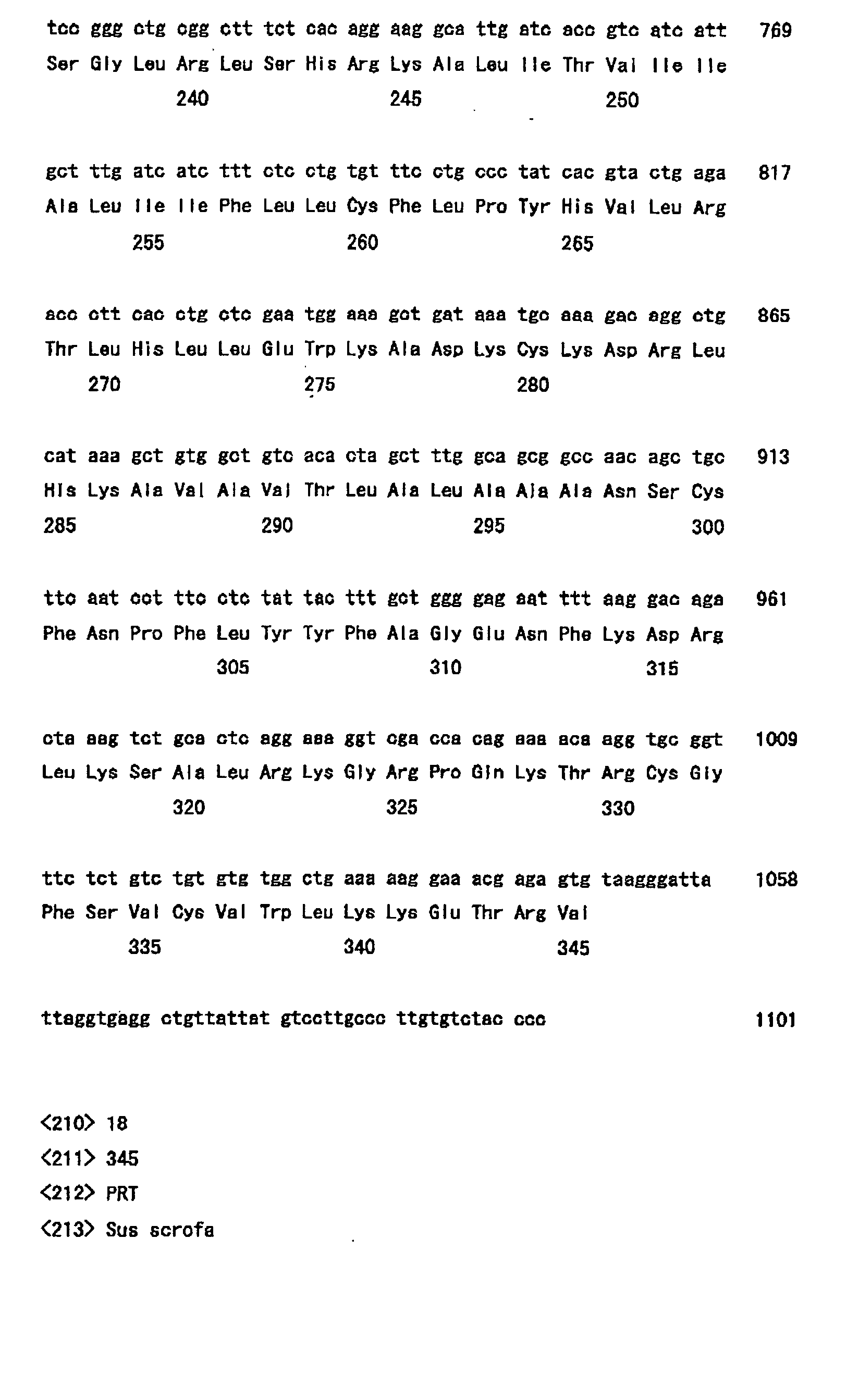
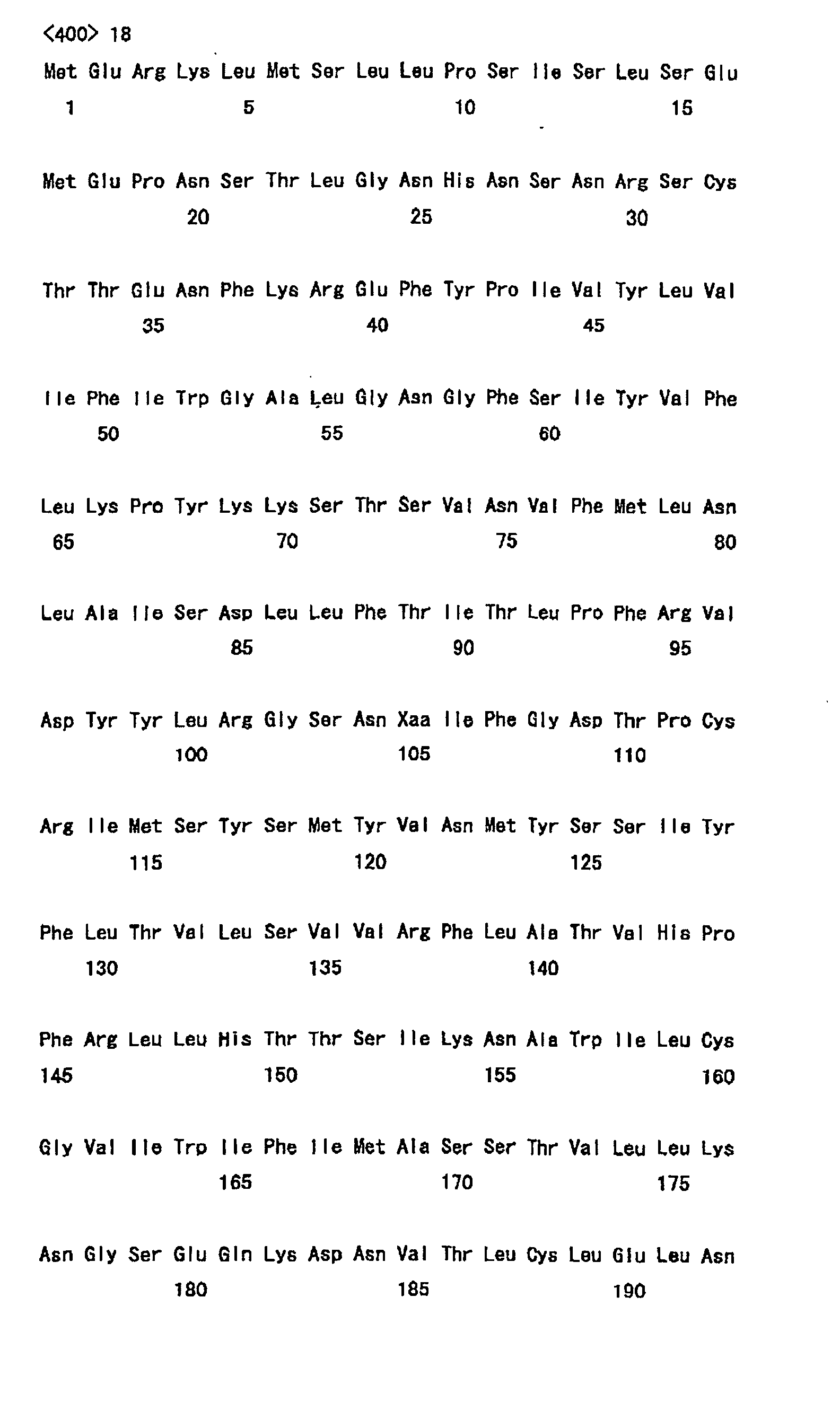
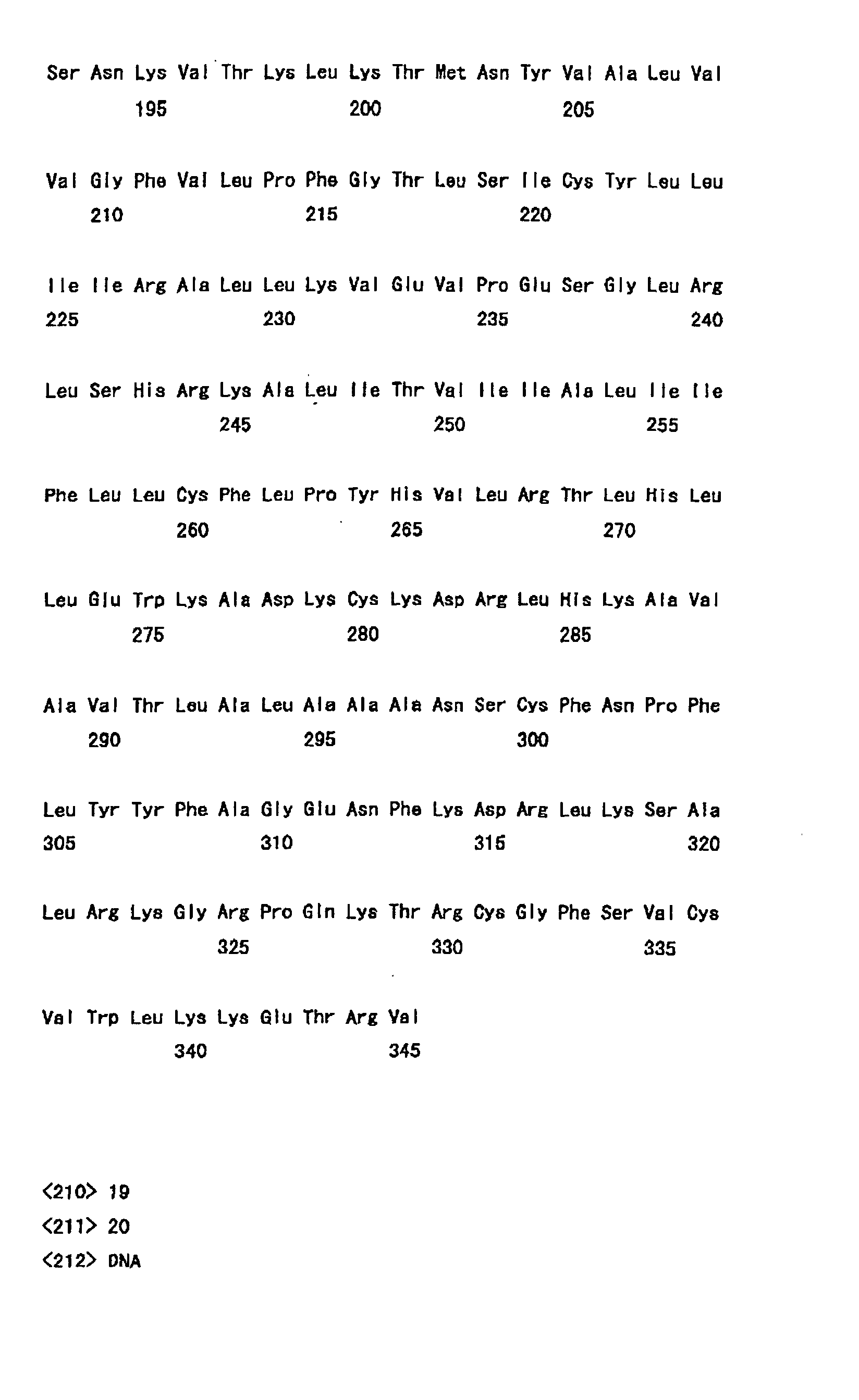
- the amino acid sequence of the protein derived from pig is shown in SEQ ID NO: 18, and the nucleotide sequence of the corresponding cDNA is shown in SEQ ID NO: 17.
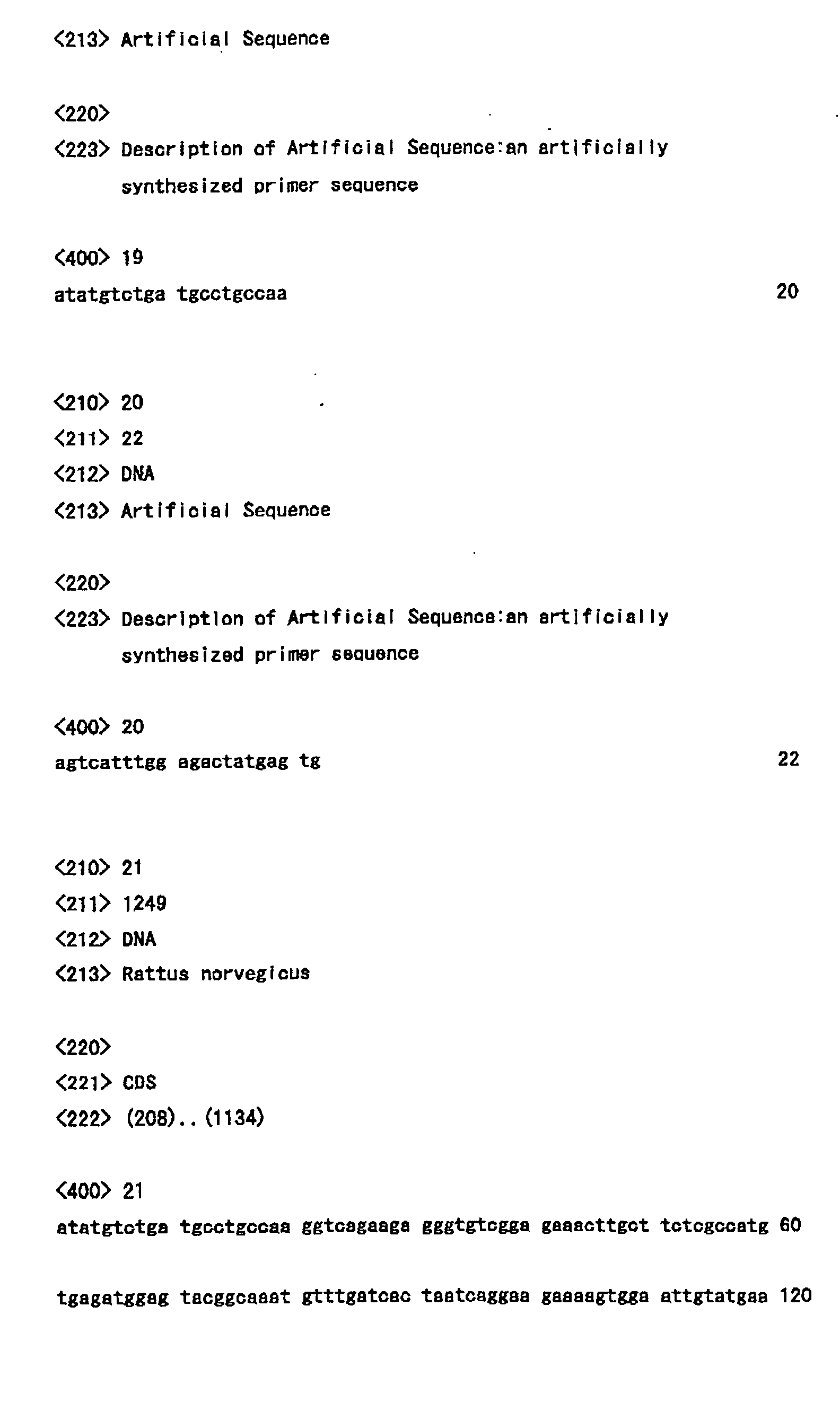
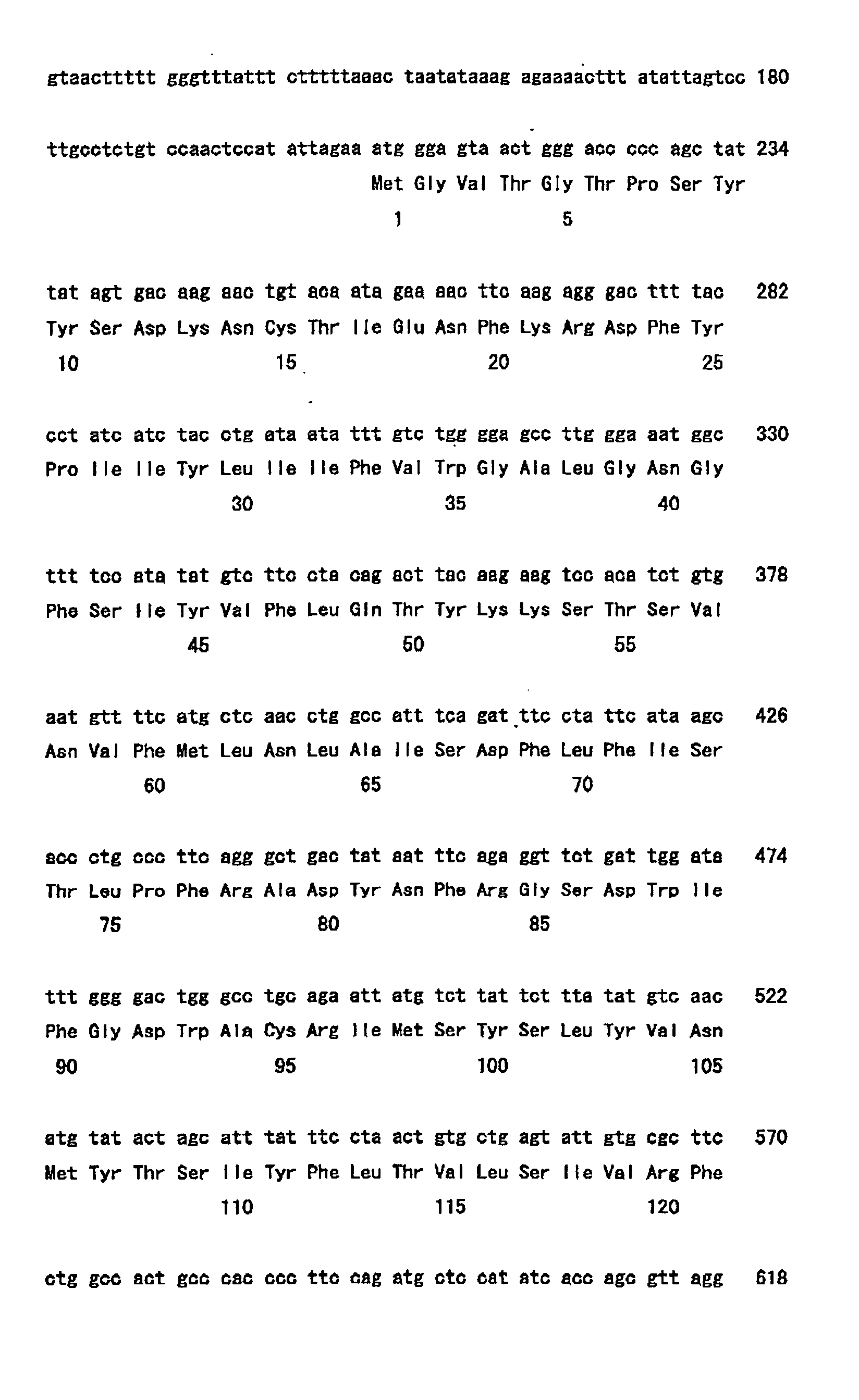
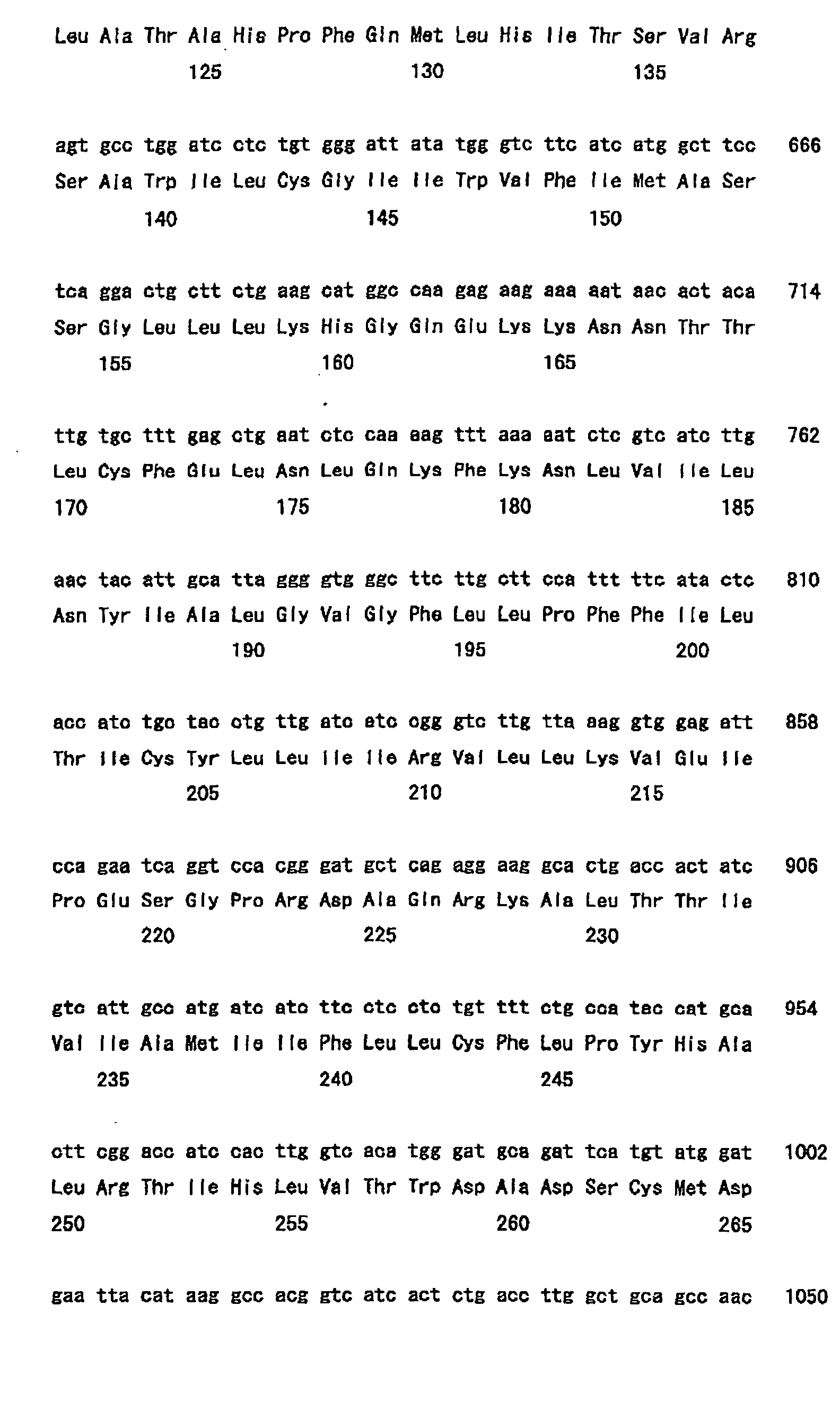
- the amino acid sequence of the protein derived from rat is shown in SEQ ID NO: 22, and the nucleotide sequence of the corresponding cDNA is shown in SEQ ID NO: 19.
- the amino acid sequence of the LTC 4 receptor protein of the present invention showed a homology of 31% and 20% to well-known human CysLT1 receptor and human BLT receptor, respectively.
- comparison of proteins derived from pig and rat with the human protein revealed structural similarities as follows. Amino acid residue Homology to human Human 346 - Pig 345 77.7% Rat 309 72.6%
- peptide leukotrienes such as LTC 4 and LTD 4 are involved in the crisis, ingravescent, exacerbation of respiratory diseases such as asthma, bronchitis, or allergic rhinitis; dermatosis such as psoriasis and dermatitis; intestinal diseases such as inflammatory bowel disease and ulcerative colitis; and the like.
- peptide leukotrienes (LTC 4 and LTD 4 ) have been shown to be relevant to cardiovascular disturbances . Therefore, the LTC 4 receptor provided by the present invention is considered to play an important role in these diseases and their symptoms . Therefore, compounds modifying the activity of the LTC 4 receptor are useful as pharmaceuticals for the treatment and/or prevention of these diseases.
- a compound that interferes with the binding between LTC 4 receptor and LTC 4 and does not stimulate to the LTC 4 receptor acts as an antagonist (blocker) of LTC 4 .
- Such a compound is useful in the treatment and the prevention of diseases mediated by the LTC 4 receptor.
- receptors of the present invention have the LTD 4 receptor activity, the antagonist of present receptors acts as an antagonist of the LTD 4 receptor. Therefore, it can be a better medicine for the remedy and prevention of diseases in which both of above-mentioned LTC 4 and LTD 4 are involved.
- the protein of the present invention can be prepared as a recombinant protein or a natural protein.
- the recombinant protein can be prepared by, for instance, transfecting into a suitable host cell a vector in which the DNA of the present invention is inserted, and purifying the protein expressed in the transformant as described below.
- it is also possible to prepare the protein of the present invention by in vitro translation see for example, "On the fidelity of mRNA translation in the nuclease-treated rabbit reticulocyte lysate system. Dasso, M. C., Jackson, R. J. (1989) NAR 17: 3129-3144" or the like.
- the natural protein can be prepared using an affinity column, which conjugates antibodies against the protein of the present invention described below (Current Protocols in Molecular Biology edit. Ausubel et al. (1987) Publish. Jhon Wily & Sons Section 16.1-16.19).
- the antibodies to be used for affinity purification may be either monoclonal antibodies or polyclonal antibodies.
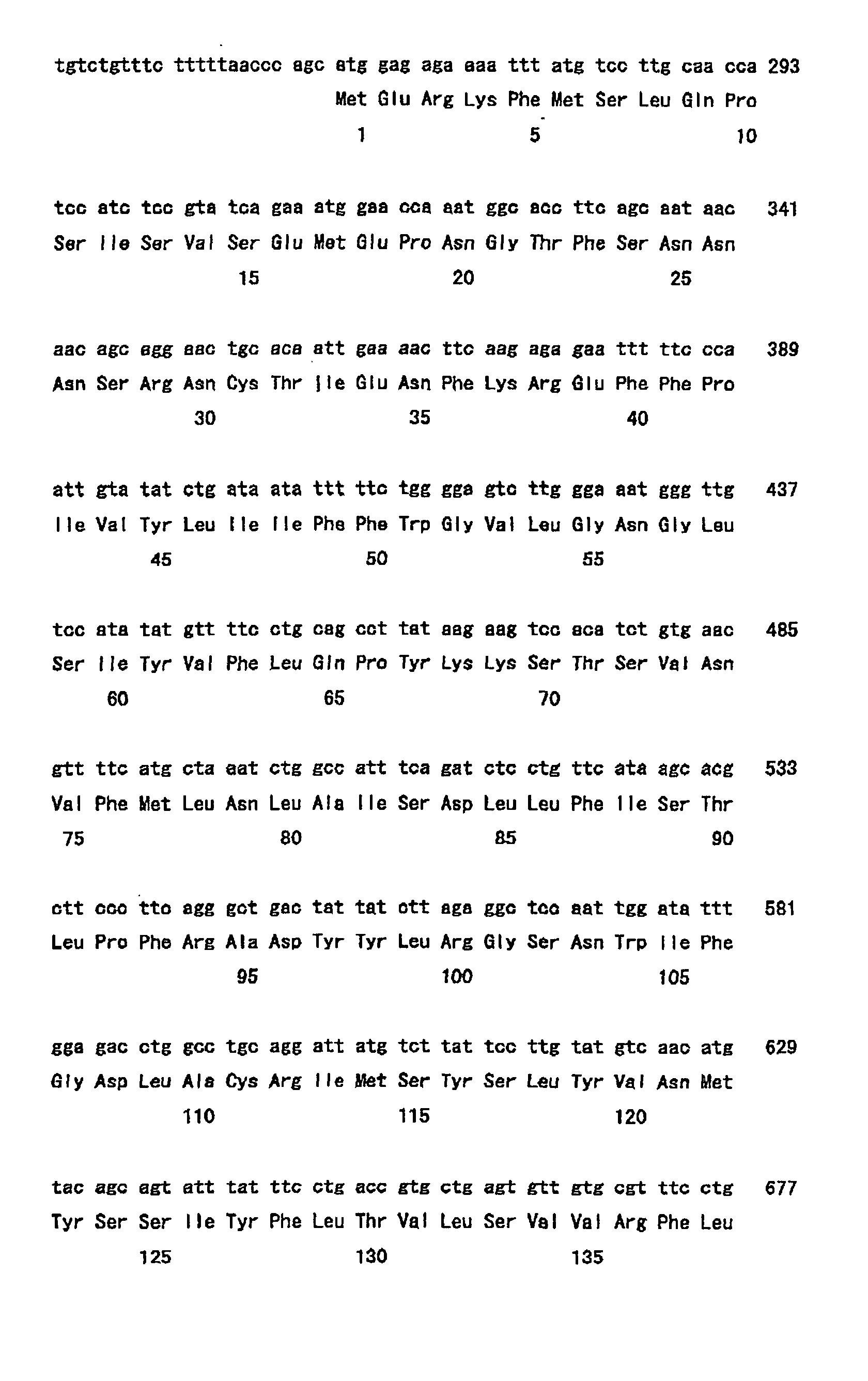
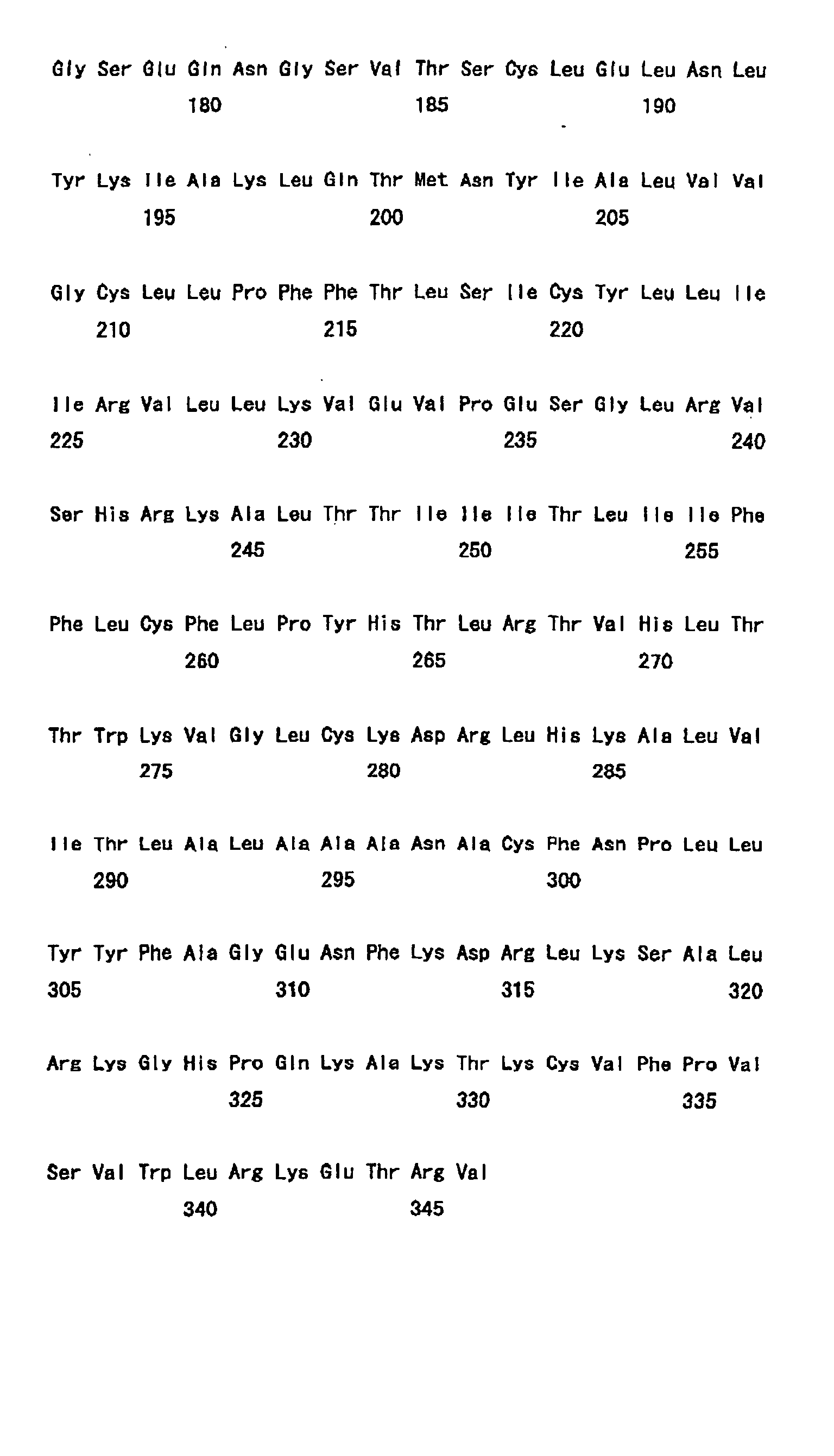
- the present invention includes not only the protein of the amino acid sequence of SEQ ID NO: 2, but also the proteins "functionally equivalent” to the protein comprising the amino acid sequence of SEQ ID NO: 2, wherein one or more amino acid is modified by deletion, addition, insertion and/or substitution with other amino acids.
- “Functionally equivalent” means that the object protein has an equivalent biological characteristic to the protein of SEQ ID NO: 2.
- the biological characteristic of interest of the protein of SEQ ID NO: 2 is its ability to function as the receptor of LTC 4 s.
- LTC 4 receptor activity is defined as an activity to have binding affinity to LTC 4 and increase intracellular Ca ++ concentration in a LTC 4 dose-dependent manner by the binding of LTC 4 .
- proteins with equivalent biological characteristic to protein of the present invention preferably also have LTD 4 receptor activity.
- LTD 4 receptor activity is defined as an activity to have a binding affinity to LTD 4 and to increase the intracellular Ca ++ concentration in a LTD 4 dose-dependent manner by the binding of LTD 4 .
- the number of mutations and mutation sites of amino acid in the protein is typically no more than 10%, preferably no more than 5%, more preferably no more than 1%, of all amino acids.
- a partial peptide fragment of the protein of the present invention can be obtained based on the present invention.
- a partial peptide fragment which has a binding affinity for the ligand and functions as a competitive inhibitor of the protein of the present invention can be provided.
- an antigen peptide for antibody preparation can be obtained.
- Partial peptide fragments consist of amino acid sequence selected from at least 7, preferably 8 or more, more preferably 9 or more continuous amino acids of the amino acid sequence described in SEQ ID NO: 2, so that they are specific to the protein of the present invention.
- the partial peptide fragments of the present invention can be used in the screening of ligands which bind to the protein of the present invention, and so on.
- a partial peptide fragment of the present invention can be produced, for instance, by a genetic engineering technique, well-known peptide synthesis methods, or by digesting the protein of the present invention by a suitable peptidase.
- the present invention relates to DNAs encoding the above-mentioned proteins of the present invention.
- a DNA of the present invention genomic DNA and chemosynthetic DNA and the like as well as cDNA are included, with no special limitation to its form so long as it can encode the protein of the present invention.
- a DNA with any nucleotide sequence is included in the present invention so long as it can encode a protein of the present invention.
- nucleotide sequences can be determined according to conventional methods, in the consideration of the codon usage of the host (Crantham, R. et al. (1981) Nucleic Acids Res., 9, r43-r74).
- codons of these nucleotide sequences can be modified by site specific mutagenesis (Mark, D. F. et al. (1984) Proc. Natl. Acad. Sci. USA, 81, 5662-5666), using primers which consist of synthetic oligonucleotides encoding the desired alteration, and the like.
- the DNA of the present invention can be isolated by conventional methods, such as the hybridization method, using the DNA sequence (SEQ ID NO: 1) encoding the protein comprising SEQ ID NO: 2 or a portion thereof as probes, or the PCR method, using primers synthesized based on the DNA sequences.
- a cDNA may be synthesized using mRNA extracted from human cells or tissues capable of producing an LTC 4 receptor protein of the present invention as the template, and then be integrated into a vector to prepare a cDNA library.
- human spleen can be used as the cells or tissues which have the ability to produce the LTC 4 receptor of the present invention.
- one skilled in the art can generally isolate a DNA having a high homology with the nucleotide sequence (SEQ ID NO: 1) encoding the protein consisting of SEQ ID NO: 2 or parts thereof, using hybridization techniques (Current Protocols in Molecular Biology edit. Ausubel et al. (1987) Publish. Jhon Wily & Sons Section 6.3-6.4), and can thereby obtain a DNA encoding a protein functionally equivalent to the protein of the present invention. Such a DNA obtained in this manner is included in the present invention.
- the stringency of hybridization required to isolate a DNA encoding a functionally equivalent protein is normally "1x SSC, 0.1% SDS, 37°C” or so, a more stringent condition being “0.5x SSC, 0.1% SDS, 42°C” or so, and a much more stringent condition being"0.2x SSC, 0.1% SDS, 65°C” or so as a washing condition. As the stringency becomes higher, isolation of a DNA with higher homology to the probe sequence can be expected.
- the proteins encoded by the DNA of the present invention isolated by using such hybridization techniques normally have high homology in their amino acid sequences to the protein of SEQ ID NO: 2.
- High homology indicates a sequence identity of at least 60% or more, desirably 70% or more.
- high homology refers to a sequence identity of 90% or more, more preferably 95% or more, further more preferably 99% or more.
- Homology can be determined by using the BLAST search algorithm.
- DNA of the present invention are finally isolated by confirming the LTC 4 receptor activity of the obtained proteins encoded by the DNA consisting of the nucleotide sequence having high homology to the nucleotide sequence of SEQ ID NO: 1.
- the LTC 4 receptor activity can be identified by transforming animal cells with cDNA to be translated to proteins, and then screening them for the binding of antibodies or LTC 4 to LTC 4 receptors as an index. In addition to animal cells, in vitro translation can be used for the translation of the protein.
- the present invention includes proteins thus isolated and DNAs encoding them. Namely, the present invention provides a DNA indicated in SEQ ID NO: 17 and the LTC 4 receptor derived from pig consisting of the amino acid sequence (SEQ ID NO: 18) encoded by the DNA. Further, the present invention provides a DNA described in SEQ ID NO: 21 and the LTC 4 receptor derived from rat consisting of the amino acid sequence (SEQ ID NO: 22) encoded by the DNA.
- eukaryotic genes show polymorphism, as known in interferon genes (see, for example, Nishi, T. et al. (1985) J. Biochem., 97, 153-159), and such.
- One or more amino acid(s) may be substituted by the polymorphism, or the amino acid sequence may not be changed at all through the nucleotide sequence changes.
- the DNA with mutation in the nucleotide sequence based on these polymorphisms are included in the DNA of the present invention.
- the present invention further relates to vectors in which the DNA of the present invention are inserted.
- the vector of the present invention is not limited, so long as it can stably carry the inserted DNA.
- vectors such as pBluescript (Stratagene), and the like are preferred cloning vectors when using E . coli as the host. If the vector is to be used for the purpose of producing proteins of the present invention, expression vectors are especially useful.
- the expression vector is not limited so long as it expresses the protein of interest in vitro, in E . coli , in culture cells, and in vivo .
- the pBEST vector Promega
- the pET vector Invitrogen
- an expression vector having a promoter located upstream to the gene to be expressed, as well as an RNA splice site, a polyadenylation site, a transcriptional termination signal, and the like can be generally used. If necessary, the expression vector may also have an replication origin. Examples of such expression vectors include pSV2dhfr (Subramani, S. et al. (1981) Mol. Cell. Biol., 1, 854-864), which has the early promoter of SV40; pEF-BOS (Mizushima, S. and Nagata, S.
- Insertion of the DNA of the present invention into the vector can be accomplished by the conventional method of ligase reaction using restriction sites (Current protocols in Molecular Biology edit. Ausubel et al. (1987) Publish. John Wiley & Sons, Section 11.4-11.11).
- the present invention relates to transformants carrying a vector of the present invention.
- the host cell into which the vector of the present invention is transfected and various host cells are used according to the particular purpose.
- Cells of eukaryote such as vertebrate, insects, or yeasts can be used as the host cell for the overexpression of proteins.
- simian COS cells Gluzman, Y. (1981) Cell, 23, 175-182
- CHO Chinese hamster ovary
- an expression vector having the SV40 replication origin to autonomously replicate in COS cells, as well as a transcription promoter, a transcription termination signal, and an RNA splice site can be used.
- vectors such as pME18S (Maruyama, K. and Takebe, Y. (1990) Med. Immunol., 20, 27-32), pEF-BOS (Mizushima, S. and Nagata, S. (1990) Nucleic Acids Res., 18, 5322), and pCDM8 (Seed, B. (1987) Nature, 329, 840-842) can be exemplified.
- a vector which is capable of expressing the neo gene functioning as a G418 resistant marker such as pRSVneo (Sambrook, J. et al. (1989): “Molecular Cloning-A Laboratory Manual” Cold Spring Harbor Laboratory, NY) or pSV2-neo (Southern, P. J. and Berg, P. (1982) J. Mol. Appl. Genet., 1, 327-341) may be co-transfected with the expression vector.
- pRSVneo Standardbrook, J. et al. (1989): "Molecular Cloning-A Laboratory Manual” Cold Spring Harbor Laboratory, NY
- pSV2-neo Southern, P. J. and Berg, P. (1982) J. Mol. Appl. Genet., 1, 327-341
- target transformed cells can be obtained by using an expression vector such as pCEP4 (Invitrogen), having the replication origin of Epstein Barr Virus that is able to autonomously replicate in the 293-EBNA cells.
- pCEP4 Invitrogen
- the transformed cells of the present invention express the LTC 4 receptor on the cell membrane in a biologically active form. Therefore, when LTC 4 is made to act on these transformed cells, the response to the stimulation of LTC 4 is observed in the transformed cells.
- Such transformed cells can be used in the screening for compounds that modulate the binding activity of the LTC 4 receptor, as described below.
- the transformant of the present invention can be cultured according to any conventional method, and the LTC 4 receptor of the present invention can be produced intracellularly or on the cell surface by the culture.
- a medium to be used in the culture various commonly used media can be properly selected according to the host cells employed.
- medium such as RPMI-1640 medium or Dulbecco's modified Eagle's minimal essential medium (DMEM) can be used, and, in case of necessity, supplemented with serum component such as fetal bovine serum (FBS).
- FBS fetal bovine serum
- medium such as Dulbecco's modified Eagle's minimal essential medium (DMEM) supplemented with serum component such as fetal bovine serum (FBS) can be used by adding G418.
- the LTC 4 receptor of the present invention produced intracellularly or on the surface of the transformant by culturing the cells, can be separated and purified by various known separation methods.
- the separation and purification may be conducted as follows: for instance, after the membrane fraction containing LTC 4 receptor proteins has been solubilized, any of the following may be performed - treatment with ordinary protein precipitant; ultrafiltration; various liquid chromatography, such as molecular sieve chromatography (gel filtration), adsorption chromatography, ion-exchange chromatography, affinity chromatography, high-performance liquid chromatography (HPLC), and the like; dialysis; or a combination thereof.
- the membrane fraction can be obtained according to any conventional method.
- cells expressing LTC 4 receptors of the present invention on the surface can be cultured, and, after suspending them in the buffer, the desired membrane fraction can be obtained by homogenization and centrifugation.
- a solubilizing agent as mild as possible (CHAPS, Triton X-100, digitonin, etc.) , the characteristic of receptors can be held even after solubilization.
- the expression of the LTC 4 receptor of the present invention as a fusion protein, with marker sequences in frame, enables confirmation of the expression of the LTC 4 receptors and its intracellular localization, as well as purification of them, and such .
- Example of the marker sequences includes the FLAG epitope, Hexa-Histidine tag, Hemagglutinin tag, and myc epitope, and the like.
- proteases such as enterokinase, factor Xa, and thrombin
- the present invention further relates to DNAs which hybridize specifically with the DNA consisting of the nucleotide sequences described in SEQ ID NO: 1 and have a strand length of at least 15 nucleotides.
- the phrase "hybridize specifically" with the DNA of the present invention indicates that the DNA hybridizes with the DNA of the present invention and does not hybridize with other DNAs under the ordinary hybridization condition, preferably under a stringent condition.
- Such DNAs can be used as probes, to detect and isolate the DNA of the present invention, and as primers, for amplification of the DNA of the present invention.
- DNAs used as primers generally have a chain length of 15 bp to 100 bp, preferably 15 bp to 40 bp.
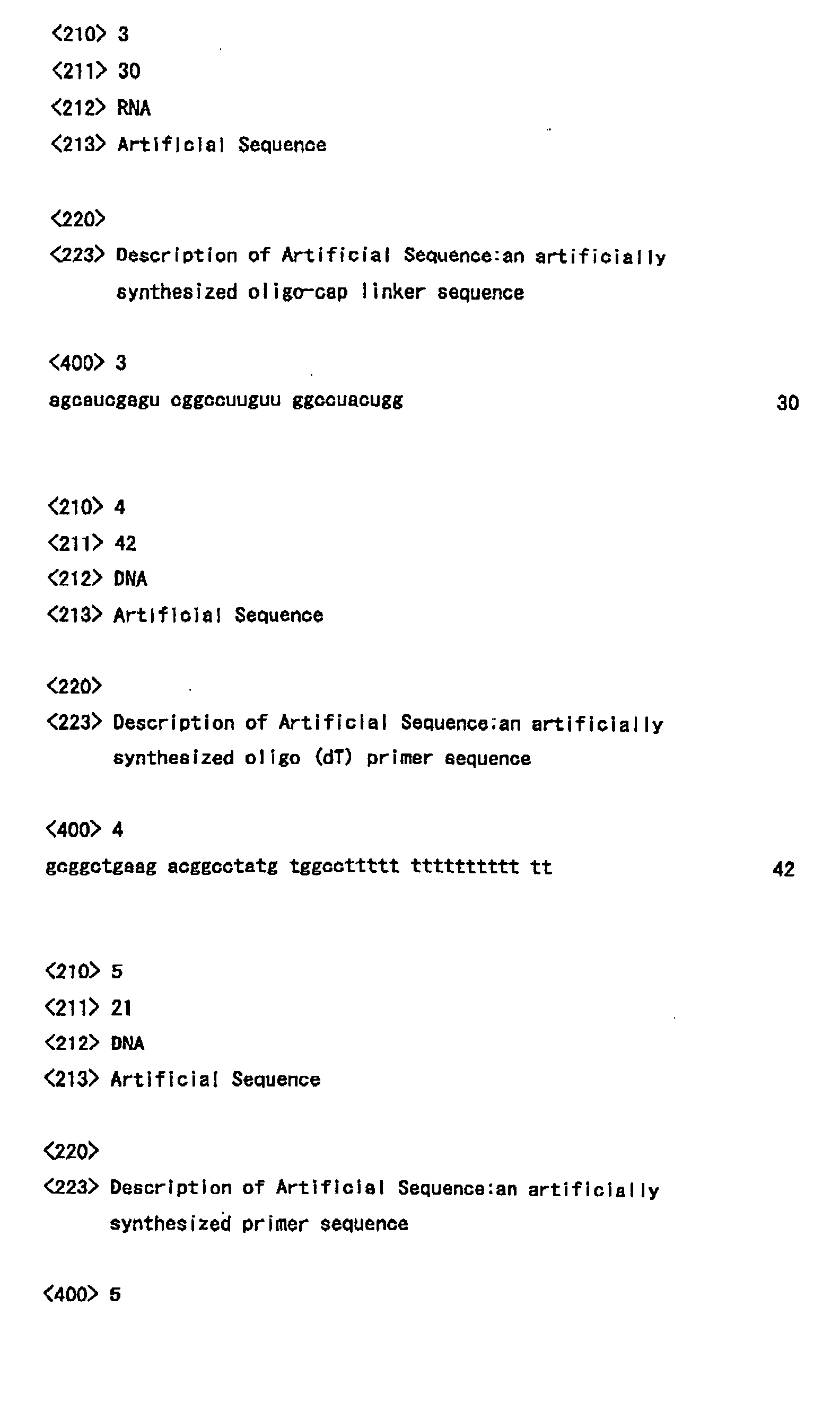
- SEQ ID NO: 7 forward primer
- SEQ ID NO: 8 reverse primer
- DNAs used as probes preferably have at least a part or the full sequence of the DNA of the present invention (or its complementary sequence) and have a chain length of at least 15 bp.
- Probes and primers of the present invention can be used to detect variants of the LTC 4 receptor gene which relate to dysfunction.
- Deletion mutations and insertion mutations can be detected by the change in the size of the amplified product compared with that of a normal genotype.
- Point mutations can be identified by hybridizing the amplified DNA with labeled LTC 4 receptor nucleotides. It is known that completely matched and mismatched double strands are distinguished by RNase digestion or by a difference in melting temperature .
- differences in the DNA sequence can be detected by determining the nucleotide sequence of regions where the sequence should be compared. Alternatively, the differences may be detected by mobility shift of electrophoresis of the DNA fragment, with or without denaturing agent in the gel (Myers, R. M. et al. (1985) Science. 230, 1242-1246).
- An array of oligonucleotide probes which contain the nucleotide sequence of the LTC 4 receptor or fragments thereof can be constructed based on the present invention.
- the array technique is known, and is used to analyze gene expressions, genetic linkages, and genetic variabilities (Chee, M. et al. (1996) Science,.274, 610-613).
- a method of measuring an abnormal decrease or increase of the level of the LTC 4 receptor from the sample obtained from the subject can be used for the diagnosis of diseases or susceptibility for the diseases resulting from hypoexpression, overexpression, and changed expression of LTC 4 receptors.
- the decrease or increase in expression can be measured at the RNA level by any polynucleotide quantitation method known to one skilled in the art, for example, PCR, RT-PCR, RNase protection, Northern blotting, and other hybridization methods.
- the sample for the diagnosis based on these DNAs can be obtained from cells of subjects, for instance, blood, urine, saliva, biopsy, or autopsy specimens of tissue specimens.
- a DNA which hybridizes specifically with the DNA described in SEQ ID NO : 1, with a chain length of at least 15 nucleotides includes antisense DNA, for inhibition of expression of the protein of the present invention.
- the antisense DNA has a chain length of at least 15 bp or more, preferably 100 bp or more, more preferably 500 bp or more, to provoke the antisense effect. Generally, it has a chain length of 3000 bp or less, preferably 2000 bp or less.
- Such antisense DNAs may be applied to gene therapy of diseases caused by abnormalities of the protein of the present invention (e.g. dysfunction or expression disorder) and such.
- the antisense DNA can be prepared, for instance, by the phosphorothioate method (Stein, 1988 Physicochemical properties of phosphorothioate oligodeoxynucleotides. Nucleic Acids Res 16, 3209-21 (1988)) based on the sequence information of the DNA encoding the protein of the present invention (e.g. the DNA described in SEQ ID NO: 1). By knocking out the LTC 4 receptor gene using an antisense DNA of the present invention, elucidation of diseases in which LTC 4 receptor is involved can proceed.
- DNA or antisense DNA of the present invention can be administered to patients by ex vivo or in vivo method and such, using virus vectors such as retrovirus vector, adenovirus vector, and adeno-associated virus vector, nonviral vector such as liposome, and the like.
- virus vectors such as retrovirus vector, adenovirus vector, and adeno-associated virus vector, nonviral vector such as liposome, and the like.
- the present invention further relates to antibodies which bind to the proteins of the present invention.
- antibodies which bind to the proteins of the present invention.
- polyclonal antibodies, monoclonal antibodies, or parts thereof having the antigen binding capacity are included.
- antibodies of all classes are included.
- special antibodies like humanized antibodies and such, are considered to be antibodies of the present invention.
- Antibodies that react with the LTC 4 receptor of the present invention can be obtained by directly administering the LTC 4 receptor or fragments thereof to various animals. Moreover, it can be also obtained by the DNA vaccine method (Raz, E. et al. (1994) Proc. Natl. Acad. Sci. USA, 91, 9519-9523; Donnelly, J. J. et al. (1996) J. Infect. Dis., 173, 314-320), using a plasmid into which a gene encoding LTC 4 receptor of the present invention has been cloned.
- Polyclonal antibodies are produced from sera or eggs of an animal such as rabbit, rat, goat, and chicken, in which the animals are immunized and sensitized by LTC 4 receptor protein or fragments thereof emulsified in suitable adjuvant such as Freund's complete adjuvant by intraperitoneal, subcutaneous, intravenous administration.
- suitable adjuvant such as Freund's complete adjuvant by intraperitoneal, subcutaneous, intravenous administration.
- Polyclonal antibodies can be separated and purified from the sera or eggs according to conventional methods for protein isolation and purification. Examples of the separation and purification methods suitable for polyclonal antibodies include, for instance, centrifugal separation, dialysis, salting-out with ammonium sulfate, chromatographic technique using such as DEAE-cellulose, hydroxyapatite, protein A agarose, and the like.
- Monoclonal antibodies can be easily produced by one skilled in the art, according to the cell fusion method of Kohler and Milstein (Kohler, G. and Milstein, C. (1975) Nature, 256, 495-497).
- Mice are immunized intraperitoneally, subcutaneously, or intravenously for several times at an interval of few weeks by repeatedly inoculating emulsions, in which the LTC 4 receptor of the present invention or fragments thereof are emulsified into suitable adjuvant such as the Freund's complete adjuvant.
- suitable adjuvant such as the Freund's complete adjuvant.
- the spleen cells are taken out after the final immunization, and then fused with the myeloma cell to prepare the hybridoma.
- myeloma cell for obtaining a hybridoma myeloma cells having markers, such as deficiency in hypoxanthine guanine phosphoribosyl transferase or thymidinekinase, for instance, the mouse myeloma cell line P3X63Ag8.U1 are preferred.
- polyethylene glycol may be used as a fusing agent.
- media for preparation of hybridomas conventionally used media such as the Eagle's minimal essential medium, Dulbecco's modified minimal essential medium, RPMI-1640 can be used by adding properly 10 to 30% fetal bovine serum. The fused strains are selected by the HAT selection method.
- the culture supernatant of the hybridoma is screened by well-known methods, such as the ELISA procedure and immunohistological staining method, to select the hybridoma clone secreting the target antibody. Moreover, the monoclonality of the selected hybridoma is guaranteed by repeating subcloning by the limiting dilution method.
- Antibodies at an amount which can be purified are produced by culturing the thus obtained hybridoma in the medium for 2 to 4 days, or in the peritoneal cavity of pristane-pretreated BALB/c strain mouse for 10 to 20 days.
- the hybridoma can be cultured in media, such as those described above.
- Monoclonal antibodies produced in the ascites or culture supernatant can be isolated and purified by conventional protein isolation and purification methods. Examples include centrifugal separation, dialysis, salting-out with ammonium sulfate, chromatographic technique using such as DEAE-cellulose, hydroxyapatite, and protein A agarose. Alternatively, monoclonal antibodies, or antibody fragments comprising parts thereof, can be also produced by inserting the whole or parts of gene encoding the antibody to the expression vector, and transfecting it into E . coli, yeast, or animal cells.
- an antibody of the present invention which reacts with the LTC 4 receptor can be also obtained in the form of single chain Fv or Fab, according to methods of Clackson et al. or Zebedee et al. (Clackson, T. et al. (1991) Nature, 352, 624-628; Zebedee, S. et al. (1992) Proc. Natl. Acad. Sci. USA, 89, 3175-3179).
- human antibodies can be also obtained by immunizing transgenic mice in which the antibody genes of the mouse are substituted by the human antibody genes (Lonberg, N. et al. (1994) Nature, 368, 856-859).
- humanized antibodies can be prepared by genetic recombination, using hypervariable region of monoclonal antibodies (Methods in Enzymology 203, 99-121(1991)).
- Antibody fragments comprising active parts of the antibody, for example, F(ab') 2 , Fab, Fab' or Fv, can be obtained by digesting polyclonal or monoclonal antibodies of the present invention with proteases such as pepsin and papain by conventional methods, and isolating and purifying the resultant by standard protein isolation and purification methods.
- proteases such as pepsin and papain
- Antibodies binding to the proteins of the present invention may be used, for example, in the diagnosis of expression disorders and structural abnormalities of proteins of the present invention, in addition to purification of protein of the present invention. Specifically, the presence of abnormality in expression or structure can be tested and diagnosed through the detection of the protein of the present invention by methods such as Western blot, competitive binding assay, immunoprecipitation, and ELISA, in which test samples are prepared by extracting protein from tissues, blood, cells, and so on.
- the present invention further relates to methods for detecting LTC 4 receptor activity of the test compound using the protein of the present invention, and also to methods of screening for compounds that modulate the LTC 4 receptor activity, based on the detection method.
- the detection method of the present invention includes the steps of, (1) contacting the protein of the present invention with a test compound, and (2) measuring changes of the LTC 4 receptor activity of the protein of the present invention.
- the screening method of the present invention can be conducted by selecting substances that modulate or modify the LTC 4 receptor activity.
- the term "modifying the LTC 4 receptor activity" means that it transduces signals by its binding to the LTC 4 receptor, or inhibits signal transduction elicited by LTC 4 by competing with LTC 4 .
- Compounds which bind to the LTC 4 receptor of the present invention can be screened by the ligand binding assay method.
- cell membranes expressing the LTC 4 receptor protein or purified sample of LTC 4 receptor protein are prepared.
- Cell membranes expressing the LTC 4 receptor protein or purified sample of LTC 4 receptor protein are incubated together with the labeled ligand and test compound for a certain time in a buffer solution, wherein assay conditions such as buffer, ion, pH are optimized.
- assay conditions such as buffer, ion, pH are optimized.
- [ 3 H]LTC 4 can be used as the labeled ligand.
- the radioactivity remaining on the filter is measured by using a liquid scintillation counter, for example.
- a compound which binds the LTC 4 receptor can be screened, using as an index the inhibition of specific binding of the labeled ligand under the existence of test compound.
- LTC 4 receptor of the present invention Compounds which modify the activity of LTC 4 receptor of the present invention can be screened by the GTP ⁇ S binding method (Lazareno, S. and Birdsall, N.J.M. (1993) Br. J. Pharmacol. 109, 1120-1127).
- Cell membranes expressing the LTC 4 receptors are mixed with 400 pM of 35 S labeled GTP ⁇ S in a solution of 20 mM HEPES (pH 7.4), 100 mM NaCl, 10 mM MgCl 2 , and 50 mM GDP. After incubating with or without the test compound, the resultant is filtered by such as glass filters, and the bound GTP ⁇ S radioactivity is measured by using a liquid scintillation counter, and so on.
- Compounds which modify the LTC 4 receptor activity of the present invention can be screened by utilizing the changes of intracellular Ca ++ or cAMP concentration in cells expressing the LTC 4 receptor.
- the measurement of Ca ++ concentrations can be accomplished by using fura2, fluo3, and such, and that of cAMP concentration can be accomplished by using a commercially available cAMP measuring kit (Amersham, etc.) .
- cAMP concentration can be indirectly measured.
- Compounds with antagonistic activity can be defined as compounds competing with LTC 4 or LTD 4 against the LTC 4 receptor of the present invention, and not transducing any signals upon binding to the LTC 4 receptor.
- affinity of antagonists for the LTC 4 receptor of the present invention is not limited, compounds with an IC50 of 10 ⁇ M or less, especially 1 ⁇ M or less are desirable.
- the term antagonist is used as a synonymous term with blocking agent.
- Pharmaceuticals can be obtained using compounds, isolated by the screening methods described above, that modulate or modify the activity of LTC 4 receptor protein, as the main component and which target is the LTC 4 receptor.
- compound A N-(3,4-dimethyl-5-isoxazolyl)-6-(1-propyl-1H-benzimidazol-2-yl) -1-naphthalenesulfonamide
- IC50 1.2 ⁇ M
- Compound A inhibits the binding of LTC 4 to LTC 4 receptor in a dose-dependent manner.
- the pharmaceutical preparations containing the compound that modulate the activity of the LTC 4 receptor protein of the present invention as the active ingredient can be prepared, according to the type of the active ingredient, using a carrier, vehicle, and other additive normally used for pharmaceutical preparation.
- Administration methods like oral administration of tablets, pills, capsules, granules, fine granules, powder, liquid medicine for oral administration, and such, as well as parenteral administration of injection agents such as intravenous injection and intramuscular injection, suppositories, transdermal administration agents, transmucosal administration agents, and so on can be mentioned.
- parenteral administration such as intravenous injection, is preferable for peptides that tend to be digested in the stomach.
- one or more active substances are mixed with at least one of the inactive diluents, such as lactose, mannitol, glucose, microcrystalline cellulose, hydroxypropylcellulose, starch, polyvinylpyrrolidone, and magnesium aluminometasilicate.
- the composition may contain inactive additive other than diluents, for example, lubricants, disintegrators, stabilizing agents, solubilizing agents, solubilizers, and such according to the conventional method. Tablets and pills may be coated with sugar or films of intestine-soluble substances or stomach-soluble substances, if necessary.
- Liquid compositions for oral administration include emulsions, liquid agents, suspensions, syrups, and elixirs, and also generally used inert diluents such as purified water and ethanol.
- the composition may contain additive other than inert diluents, such as humectants, suspensions, sweeteners, flavoring agents, and preservatives.
- the composition is sterilized, for instance, by filtration through a bacteria reservation filter, mixing of a sterilizer, or irradiation.
- sterile solid compositions can be produced, and dissolved in sterile injection media such as sterile water before usage.
- the dosage of the drug of the present invention is properly determined in consideration of the activity of the active ingredient selected by the screening method described above, symptom, age and sex of the subject to be administered, etc.
- the usual dosage for adult is about 0.1 to 100 mg, preferably 0.1 to 50 mg per day.
- 0.01 to 50 mg per day preferably 0.01 to 10 mg per day in the form of injection.
- Figure 1 is a graph showing the saturation curve of the specific binding of [ 3 H]-LTC 4 to the LTC 4 receptor. According to the figure, the vertical axis shows the amount of bound [ 3 H]-LTC 4 (fmol) per 1 mg protein, and the horizontal axis shows the [ 3 H]-LTC 4 concentration (nM) in the reaction solution.
- Figure 2 shows the result of the Scatchard analysis of the specific binding of [ 3 H]-LTC 4 to the LTC 4 receptor.
- the vertical axis shows the binding ratio (bound/free ratio)
- the horizontal axis shows the amount of bound [ 3 H]-LTC 4 (fmol) per 1 mg protein.
- Example 14 Increase of intracellular Ca ++ concentration by LTC 4 in coronary arterial smooth muscle cells and inhibition by LTC 4 receptor antagonist
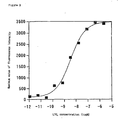
- the changes of intracellular Ca ++ concentration by LTC 4 were measured using FLIPR at the same condition as in Example 6. As the result of measurement for 0, 10 -6 to 10 -9 M of LTC 4 , LTC 4 was confirmed to induce increase of the intracellular Ca ++ concentration in a dose-dependent manner in the human coronary arterial smooth muscle cells.
- changes of intracellular Ca ++ concentration of coronary arterial smooth muscle cells by LTC 4 were measured after pre-treating 5 min with a certain concentration of compound A selected in Example 11, or Nifedipine (Funakoshi), a calcium channel blocker. Results are shown in Figure 8. The compound was confirmed to inhibit. dose-dependently the increase of intracellular Ca ++ concentration of coronary arterial smooth muscle cells by LTC 4 .
- cDNA was obtained by PCR using a combination of oligonucleotides shown in SEQ ID NO: 13 and 14, and a combination of oligonucleotide shown in SEQ ID NO: 15 and 16, designed based on the sequence information of gene PSEC0146 shown in SEQ ID NO: 1.
- PCR was carried out using pig genomic DNA obtained from pig skeletal muscle by using ISOTISSUE (Nippon Gene) as the template and Pyrobest DNA polymerase, under the existence of 5% DMSO, with 34 cycles of 98°C (10 sec)/50°C (30 sec) /72°C (2 min). As a result, DNA fragments of about 1.0 kbp and 0.6 kbp were amplified respectively.
- the fragment was cloned into pCR-blunt, and the nucleotide sequences of obtained clones were determined by using ABI377 DNA Sequencer by the dideoxy-terminator method.
- the clarified nucleotide sequence is shown in SEQ ID NO: 21.
- the sequence has an open reading frame of 930 bases.
- the amino acid sequence estimated from the open reading frame (309 amino acids) is shown in SEQ ID NO: 22.
- the amino acid sequence was revealed to have a homology of 72.6% to the amino acid sequence of human LTC 4 receptor.
- PCR was carried out using Pyrobest DNA polymerase under the existence of 5% DMSO with 34 cycles of 98°C (10 sec) /55°C (30 sec)/72°C (2 min). As a result, a DNA fragment of about 1.0 kbp was amplified. The fragment was digested with XbaI, and cloned into pEF-BOS. The resultant plasmid was used as pEF-BOS-pig LTC 4 receptor.
- the membrane fraction of COS-1 cells into which pEF-BOS-pig LTC 4 receptor had been transfected was prepared under the same condition as in Example 4, and [ 3 H]-LTC 4 binding assay was carried out using 20 ⁇ g of the membrane fraction.
- the saturation curve of specific binding of [ 3 H]-LTC 4 toward the membrane fraction of COS-1 cells into which pEF-BOS-pig LTC 4 receptor had been transfected was plotted as in Example 5.
- the present pig LTC 4 receptor was confirmed to have a high affinity to LTC 4 , and induces increase of intracellular Ca ++ concentration dose-dependently in response to LTC 4 and LTD 4 .
- Example 16 The LTC 4 receptor activity of the protein encoded by rat LTC 4 receptor DNA obtained in Example 16 was confirmed by experiments as follows.
- the pCR-blunt in which rat LTC 4 receptor gene was cloned in Example 16 was digested with XbaI, and rat LTC 4 receptor DNA was cloned into pEF-BOS. This plasmid was designated as pEF-BOS-rat LTC 4 receptor.
- the changes of intracellular Ca ++ concentration were measured using HEK293-EBNA cells under the same condition as in Example 5. Dose-dependence of the increase of intracellular Ca ++ concentration elicited by LTC 4 and LTD 4 in HEK293-EBNA cells, into which pEF-BOS-rat LTC 4 receptor had been transfected, was analyzed by Logistic regression. As a result, it was revealed that the EC50 of LTC 4 is 19 nM, and that of LTD 4 is 7.7 nM.
- the present rat LTC 4 receptor was confirmed to induce the increase of intracellular Ca ++ concentration dose-dependently in response to LTC 4 and LTD 4 .
- the LTC 4 receptor provided by the present invention is useful for the identification and evaluation of drugs that act on the receptor as preventive and/or therapeutic agents of diseases caused by human LTC 4 , for instance, inflammatory disease such as bronchitis and dermatitis, and diseases of cardiovascular system such as cardiac infarction.
- LTC 4 receptor has become available to be used as purified protein or transformed cells that respond to LTC 4 , and thus enables the in vitro binding experiment of LTC 4 receptor.
- the in vitro binding experiment actualizes an ideal assay environment, excluding the effect of other proteins acting as LTC 4 receptor.
- useful compounds can be selected as therapeutic agents for diseases related to the receptor.
- the DNA encoding the LTC 4 receptor of the present invention is not only useful for the production of LTC 4 receptors, but also are useful for diagnosis of diseases caused by mutations or abnormalities in the expression of the LTC 4 receptor.
- the antibody recognizing the LTC 4 receptor can be used as drugs act on LTC 4 receptor, diagnostic, means for separation and purification of the polypeptides, and the like.
Landscapes
- Health & Medical Sciences (AREA)
- Life Sciences & Earth Sciences (AREA)
- Chemical & Material Sciences (AREA)
- Engineering & Computer Science (AREA)
- Organic Chemistry (AREA)
- Immunology (AREA)
- Molecular Biology (AREA)
- General Health & Medical Sciences (AREA)
- Medicinal Chemistry (AREA)
- Biomedical Technology (AREA)
- Cell Biology (AREA)
- Hematology (AREA)
- Biochemistry (AREA)
- Urology & Nephrology (AREA)
- Proteomics, Peptides & Aminoacids (AREA)
- Zoology (AREA)
- Nuclear Medicine, Radiotherapy & Molecular Imaging (AREA)
- Physics & Mathematics (AREA)
- Food Science & Technology (AREA)
- General Physics & Mathematics (AREA)
- Pathology (AREA)
- Toxicology (AREA)
- Microbiology (AREA)
- Gastroenterology & Hepatology (AREA)
- Biophysics (AREA)
- Genetics & Genomics (AREA)
- Biotechnology (AREA)
- Bioinformatics & Cheminformatics (AREA)
- Chemical Kinetics & Catalysis (AREA)
- General Chemical & Material Sciences (AREA)
- Analytical Chemistry (AREA)
- Pharmacology & Pharmacy (AREA)
- Animal Behavior & Ethology (AREA)
- Public Health (AREA)
- Veterinary Medicine (AREA)
- Cardiology (AREA)
- Heart & Thoracic Surgery (AREA)
- Peptides Or Proteins (AREA)
- Micro-Organisms Or Cultivation Processes Thereof (AREA)
- Medicines That Contain Protein Lipid Enzymes And Other Medicines (AREA)
Abstract
Description
| Amino acid residue | Homology to human | |
| Human | 346 | - |
| Pig | 345 | 77.7% |
| Rat | 309 | 72.6% |
GC MS; 244(M+)
1H NMR (90 MHz, CDCl3); 0.85 (t, 3H), 1.74-1.99 (m, 2H), 4.18-4.35 (m, 2H), 7.25-8.21 (m, 11H)
GC MS; 286 (M+)
1H NMR (400 MHz, DMSO-d6); 0.72 (t, 3H), 1.72 (q, 2H), 4.42 (t, 2H), 7.29-7.38 (m, 2H), 7.74-7.79 (m, 3H), 8.14 (q, 1H), 8.24 (q, 1H), 8.48 (d, 1H), 8.60 (d, 1H), 8.76 (d, 1H)
FAB MS; 461 (M++1)







Claims (10)
- A protein with leukotriene C4 receptor activity, comprising an amino acid sequence of any one of SEQ ID NO: 2, 18, and 22, or amino acid sequence of any one of SEQ ID NO: 2, 18, and 22, wherein one or more amino acid(s) in the sequence is modified by deletion, addition, insertion and/or substitution by other amino acids.
- A protein with leukotriene C4 receptor activity, encoded by a DNA which hybridizes under stringent conditions to a DNA consisting of the nucleotide sequence of any one of SEQ ID NO: 1, 17, and 21.
- A DNA encoding the protein of claims 1 or 2.
- A transformant carrying the DNA of claim 3 in an expressible manner.
- A method for producing the protein of claims 1 or 2, comprising the steps of culturing the transformant of claim 4, and recovering the expressed product.
- An antibody against the protein of claims 1 or 2.
- A method for detecting the ability of a test compound to modulate leukotriene C4 receptor activity, comprising the steps of:(a) contacting a test compound with the protein of claim 1 or 2, or transformed cells expressing said protein, under the existence of a ligand for leukotriene C4 receptor, and(b) measuring changes in leukotriene C4 receptor activity.
- A method of screening for a compound which modulates leukotriene C4 receptor activity, comprising the steps of:(a) contacting a test compound with the protein of claims 1 or 2, or transformed cells expressing said protein, under the existence of a ligand for leukotriene C4 receptor,(b) measuring changes in leukotriene C4 receptor activity, and(c) selecting the compound that modulates leukotriene C4 receptor activity.
- A pharmaceutical composition for anti-inflammation or anti-allergy, comprising an antagonist of a protein having leukotriene C4 receptor activity described in claim 1 or 2 and pharmaceutically acceptable additive.
- A pharmaceutical composition for vasodilation comprising an antagonist of a protein having leukotriene C4 receptor activity described in claim 1 or 2 and pharmaceutically acceptable additive.
Priority Applications (1)
| Application Number | Priority Date | Filing Date | Title |
|---|---|---|---|
| EP05018471A EP1614425A3 (en) | 1999-09-14 | 2000-09-13 | Leukotriene receptor antagonist |
Applications Claiming Priority (3)
| Application Number | Priority Date | Filing Date | Title |
|---|---|---|---|
| JP25998699 | 1999-09-14 | ||
| JP25998699 | 1999-09-14 | ||
| PCT/JP2000/006265 WO2001019986A1 (en) | 1999-09-14 | 2000-09-13 | Peptide leukotriene receptor |
Related Child Applications (2)
| Application Number | Title | Priority Date | Filing Date |
|---|---|---|---|
| EP05018471A Division EP1614425A3 (en) | 1999-09-14 | 2000-09-13 | Leukotriene receptor antagonist |
| EP05018471.2 Division-Into | 2005-08-25 |
Publications (3)
| Publication Number | Publication Date |
|---|---|
| EP1213353A1 true EP1213353A1 (en) | 2002-06-12 |
| EP1213353A4 EP1213353A4 (en) | 2003-05-28 |
| EP1213353B1 EP1213353B1 (en) | 2005-11-16 |
Family
ID=17341703
Family Applications (2)
| Application Number | Title | Priority Date | Filing Date |
|---|---|---|---|
| EP00960984A Expired - Lifetime EP1213353B1 (en) | 1999-09-14 | 2000-09-13 | Peptide leukotriene receptor |
| EP05018471A Withdrawn EP1614425A3 (en) | 1999-09-14 | 2000-09-13 | Leukotriene receptor antagonist |
Family Applications After (1)
| Application Number | Title | Priority Date | Filing Date |
|---|---|---|---|
| EP05018471A Withdrawn EP1614425A3 (en) | 1999-09-14 | 2000-09-13 | Leukotriene receptor antagonist |
Country Status (9)
| Country | Link |
|---|---|
| US (2) | US6878525B1 (en) |
| EP (2) | EP1213353B1 (en) |
| JP (1) | JP3307922B2 (en) |
| AT (1) | ATE310086T1 (en) |
| AU (1) | AU7312100A (en) |
| CA (1) | CA2375605C (en) |
| DE (1) | DE60024108T2 (en) |
| ES (1) | ES2250185T3 (en) |
| WO (1) | WO2001019986A1 (en) |
Families Citing this family (11)
| Publication number | Priority date | Publication date | Assignee | Title |
|---|---|---|---|---|
| WO2001059113A2 (en) * | 2000-02-08 | 2001-08-16 | Curagen Corporation | G-protein coupled receptor proteins and nucleic acids encoding same |
| GB0003079D0 (en) * | 2000-02-10 | 2000-03-29 | Glaxo Group Ltd | Novel protein |
| US6586205B1 (en) * | 2000-02-11 | 2003-07-01 | Millennium Pharmaceuticals, Inc. | 43239 a novel GPCR-like molecule and uses thereof |
| GB0003902D0 (en) * | 2000-02-18 | 2000-04-05 | Glaxo Group Ltd | Assay |
| US20040220092A1 (en) * | 2000-03-29 | 2004-11-04 | Policky Jennifer L. | G-protein coupled receptors |
| GB0008504D0 (en) * | 2000-04-05 | 2000-05-24 | Pfizer Ltd | Novel polypeptide |
| WO2001077149A2 (en) * | 2000-04-07 | 2001-10-18 | Bayer Aktiengesellschaft | Regulation of human cyslt2-like gpcr protein |
| US20040071695A1 (en) * | 2000-06-06 | 2004-04-15 | Franz-Werner Kluxen | Novel g-protein coupled receptor |
| US7531310B2 (en) | 2000-11-17 | 2009-05-12 | Bristol-Myers Squibb Company | Methods of diagnosing Crohn's disease by measuring expression level of RNA encoding human G-protein coupled receptor, HGPRBMY11 |
| JP2006021997A (en) * | 2002-07-09 | 2006-01-26 | Ono Pharmaceut Co Ltd | CysLT1 / cysLT2 both receptor antagonist respiratory disease therapeutic agent |
| US20150152172A1 (en) * | 2013-10-25 | 2015-06-04 | Lpath, Inc. | Compositions and methods for binding cysteinyl leukotrienes (cyslts) for treatment of disease |
Family Cites Families (6)
| Publication number | Priority date | Publication date | Assignee | Title |
|---|---|---|---|---|
| US5011912A (en) * | 1986-12-19 | 1991-04-30 | Immunex Corporation | Hybridoma and monoclonal antibody for use in an immunoaffinity purification system |
| IL149569A0 (en) * | 1999-11-17 | 2002-11-10 | Arena Pharm Inc | Endogenous and non-endogenous versions of human g protein-coupled receptors |
| WO2001042269A1 (en) | 1999-12-10 | 2001-06-14 | University Of Virginia Patent Foundation | Human cysteinyl leukotriene receptor |
| GB0003079D0 (en) | 2000-02-10 | 2000-03-29 | Glaxo Group Ltd | Novel protein |
| US6586205B1 (en) | 2000-02-11 | 2003-07-01 | Millennium Pharmaceuticals, Inc. | 43239 a novel GPCR-like molecule and uses thereof |
| US20040071695A1 (en) * | 2000-06-06 | 2004-04-15 | Franz-Werner Kluxen | Novel g-protein coupled receptor |
-
2000
- 2000-09-13 CA CA2375605A patent/CA2375605C/en not_active Expired - Lifetime
- 2000-09-13 EP EP00960984A patent/EP1213353B1/en not_active Expired - Lifetime
- 2000-09-13 AT AT00960984T patent/ATE310086T1/en active
- 2000-09-13 WO PCT/JP2000/006265 patent/WO2001019986A1/en not_active Ceased
- 2000-09-13 DE DE60024108T patent/DE60024108T2/en not_active Expired - Lifetime
- 2000-09-13 EP EP05018471A patent/EP1614425A3/en not_active Withdrawn
- 2000-09-13 AU AU73121/00A patent/AU7312100A/en not_active Abandoned
- 2000-09-13 JP JP2001523757A patent/JP3307922B2/en not_active Expired - Lifetime
- 2000-09-13 ES ES00960984T patent/ES2250185T3/en not_active Expired - Lifetime
- 2000-09-13 US US09/979,603 patent/US6878525B1/en not_active Expired - Lifetime
-
2004
- 2004-09-02 US US10/932,004 patent/US7217800B2/en not_active Expired - Lifetime
Also Published As
| Publication number | Publication date |
|---|---|
| CA2375605C (en) | 2011-05-10 |
| US20050037968A1 (en) | 2005-02-17 |
| US7217800B2 (en) | 2007-05-15 |
| WO2001019986A1 (en) | 2001-03-22 |
| JP3307922B2 (en) | 2002-07-29 |
| DE60024108T2 (en) | 2006-08-03 |
| EP1614425A3 (en) | 2006-01-25 |
| EP1614425A2 (en) | 2006-01-11 |
| CA2375605A1 (en) | 2001-03-22 |
| EP1213353B1 (en) | 2005-11-16 |
| EP1213353A4 (en) | 2003-05-28 |
| ATE310086T1 (en) | 2005-12-15 |
| AU7312100A (en) | 2001-04-17 |
| DE60024108D1 (en) | 2005-12-22 |
| US6878525B1 (en) | 2005-04-12 |
| ES2250185T3 (en) | 2006-04-16 |
Similar Documents
| Publication | Publication Date | Title |
|---|---|---|
| US7173118B2 (en) | Nogo receptor homologs | |
| AU2002211539A1 (en) | Nogo receptor homologs | |
| EP1213353B1 (en) | Peptide leukotriene receptor | |
| WO1999046378A1 (en) | Novel g protein-coupled receptor proteins | |
| JPWO2001019986A1 (en) | Peptide leukotriene receptors | |
| EP0912610B1 (en) | A novel galanin receptor | |
| WO2001070975A1 (en) | Novel melanin concentrating hormone receptor | |
| US20050159355A1 (en) | Novel leukotriene, B4 receptor | |
| JPH11511030A (en) | Novel human G-protein coupled receptor | |
| US20030096751A1 (en) | G-protein coupled receptor polynucleotides and methods of use thereof | |
| EP1382678B1 (en) | Guanosine triphosphate-binding protein-coupled recepotr place 6002312 and its gene and production and use of the same | |
| EP1673436A2 (en) | Nucleic acid molecules encoding novel human low-voltage activated calcium channel proteins, designated - alpha 1i-1 and alpha 1i-2, encoded proteins and methods of use thereof | |
| US20070178462A1 (en) | Nucleic acid molecules encoding novel murine low-voltage activated calcium channel proteins, designated-alpha1h, encoded proteins and methods of use thereof | |
| JP2003012549A (en) | Peptide leukotriene receptor | |
| GB2372503A (en) | Voltage-gated potassium channel polypeptides | |
| JP2005232001A (en) | Novel leukotriene B4 receptor | |
| JP2004350677A (en) | Substance having activity of promoting platelet aggregation | |
| EP1507006A1 (en) | Method of screening remedy for renal failure | |
| JP2005229803A (en) | Novel leukotriene B4 receptor | |
| JP2005027666A (en) | Novel polynucleotide | |
| JPWO1999046378A1 (en) | Novel G protein-coupled receptor protein | |
| JPH07327676A (en) | Vasopressin V1b receptor |
Legal Events
| Date | Code | Title | Description |
|---|---|---|---|
| PUAI | Public reference made under article 153(3) epc to a published international application that has entered the european phase |
Free format text: ORIGINAL CODE: 0009012 |
|
| 17P | Request for examination filed |
Effective date: 20011128 |
|
| AK | Designated contracting states |
Kind code of ref document: A1 Designated state(s): AT BE CH CY DE DK ES FI FR GB GR IE IT LI LU MC NL PT SE |
|
| AX | Request for extension of the european patent |
Free format text: AL;LT;LV;MK;RO;SI |
|
| RAP1 | Party data changed (applicant data changed or rights of an application transferred) |
Owner name: HELIX RESEARCH INSTITUTE Owner name: YAMANOUCHI PHARMACEUTICAL CO. LTD. |
|
| A4 | Supplementary search report drawn up and despatched |
Effective date: 20030410 |
|
| RAP1 | Party data changed (applicant data changed or rights of an application transferred) |
Owner name: YAMANOUCHI PHARMACEUTICAL CO. LTD. |
|
| 17Q | First examination report despatched |
Effective date: 20041014 |
|
| GRAP | Despatch of communication of intention to grant a patent |
Free format text: ORIGINAL CODE: EPIDOSNIGR1 |
|
| GRAS | Grant fee paid |
Free format text: ORIGINAL CODE: EPIDOSNIGR3 |
|
| RAP1 | Party data changed (applicant data changed or rights of an application transferred) |
Owner name: ASTELLAS PHARMA INC. |
|
| GRAA | (expected) grant |
Free format text: ORIGINAL CODE: 0009210 |
|
| AK | Designated contracting states |
Kind code of ref document: B1 Designated state(s): AT BE CH CY DE DK ES FI FR GB GR IE IT LI LU MC NL PT SE |
|
| PG25 | Lapsed in a contracting state [announced via postgrant information from national office to epo] |
Ref country code: FI Free format text: LAPSE BECAUSE OF FAILURE TO SUBMIT A TRANSLATION OF THE DESCRIPTION OR TO PAY THE FEE WITHIN THE PRESCRIBED TIME-LIMIT Effective date: 20051116 |
|
| REG | Reference to a national code |
Ref country code: GB Ref legal event code: FG4D |
|
| REG | Reference to a national code |
Ref country code: CH Ref legal event code: EP |
|
| REG | Reference to a national code |
Ref country code: IE Ref legal event code: FG4D |
|
| REF | Corresponds to: |
Ref document number: 60024108 Country of ref document: DE Date of ref document: 20051222 Kind code of ref document: P |
|
| REG | Reference to a national code |
Ref country code: CH Ref legal event code: NV Representative=s name: NOVAGRAAF INTERNATIONAL SA |
|
| PG25 | Lapsed in a contracting state [announced via postgrant information from national office to epo] |
Ref country code: GR Free format text: LAPSE BECAUSE OF FAILURE TO SUBMIT A TRANSLATION OF THE DESCRIPTION OR TO PAY THE FEE WITHIN THE PRESCRIBED TIME-LIMIT Effective date: 20060216 Ref country code: DK Free format text: LAPSE BECAUSE OF FAILURE TO SUBMIT A TRANSLATION OF THE DESCRIPTION OR TO PAY THE FEE WITHIN THE PRESCRIBED TIME-LIMIT Effective date: 20060216 |
|
| REG | Reference to a national code |
Ref country code: SE Ref legal event code: TRGR |
|
| REG | Reference to a national code |
Ref country code: ES Ref legal event code: FG2A Ref document number: 2250185 Country of ref document: ES Kind code of ref document: T3 |
|
| PG25 | Lapsed in a contracting state [announced via postgrant information from national office to epo] |
Ref country code: PT Free format text: LAPSE BECAUSE OF FAILURE TO SUBMIT A TRANSLATION OF THE DESCRIPTION OR TO PAY THE FEE WITHIN THE PRESCRIBED TIME-LIMIT Effective date: 20060417 |
|
| RAP2 | Party data changed (patent owner data changed or rights of a patent transferred) |
Owner name: ASTELLAS PHARMA INC. |
|
| ET | Fr: translation filed | ||
| NLT2 | Nl: modifications (of names), taken from the european patent patent bulletin |
Owner name: ASTELLAS PHARMA INC. Effective date: 20060524 |
|
| PG25 | Lapsed in a contracting state [announced via postgrant information from national office to epo] |
Ref country code: IE Free format text: LAPSE BECAUSE OF NON-PAYMENT OF DUE FEES Effective date: 20060913 |
|
| PLBE | No opposition filed within time limit |
Free format text: ORIGINAL CODE: 0009261 |
|
| STAA | Information on the status of an ep patent application or granted ep patent |
Free format text: STATUS: NO OPPOSITION FILED WITHIN TIME LIMIT |
|
| PG25 | Lapsed in a contracting state [announced via postgrant information from national office to epo] |
Ref country code: MC Free format text: LAPSE BECAUSE OF NON-PAYMENT OF DUE FEES Effective date: 20060930 |
|
| 26N | No opposition filed |
Effective date: 20060817 |
|
| REG | Reference to a national code |
Ref country code: IE Ref legal event code: MM4A |
|
| PG25 | Lapsed in a contracting state [announced via postgrant information from national office to epo] |
Ref country code: LU Free format text: LAPSE BECAUSE OF NON-PAYMENT OF DUE FEES Effective date: 20060913 |
|
| PG25 | Lapsed in a contracting state [announced via postgrant information from national office to epo] |
Ref country code: CY Free format text: LAPSE BECAUSE OF FAILURE TO SUBMIT A TRANSLATION OF THE DESCRIPTION OR TO PAY THE FEE WITHIN THE PRESCRIBED TIME-LIMIT Effective date: 20051116 |
|
| REG | Reference to a national code |
Ref country code: CH Ref legal event code: PFA Owner name: ASTELLAS PHARMA INC. Free format text: ASTELLAS PHARMA INC.#3-11, NIHONBASHI-HONCHO 2-CHOME,#CHUO-KU, TOKYO (JP) -TRANSFER TO- ASTELLAS PHARMA INC.#3-11, NIHONBASHI-HONCHO 2-CHOME,#CHUO-KU, TOKYO (JP) |
|
| REG | Reference to a national code |
Ref country code: FR Ref legal event code: PLFP Year of fee payment: 17 |
|
| REG | Reference to a national code |
Ref country code: FR Ref legal event code: PLFP Year of fee payment: 18 |
|
| REG | Reference to a national code |
Ref country code: FR Ref legal event code: PLFP Year of fee payment: 19 |
|
| PGFP | Annual fee paid to national office [announced via postgrant information from national office to epo] |
Ref country code: NL Payment date: 20190814 Year of fee payment: 20 |
|
| PGFP | Annual fee paid to national office [announced via postgrant information from national office to epo] |
Ref country code: SE Payment date: 20190910 Year of fee payment: 20 Ref country code: FR Payment date: 20190815 Year of fee payment: 20 Ref country code: IT Payment date: 20190917 Year of fee payment: 20 Ref country code: DE Payment date: 20190903 Year of fee payment: 20 |
|
| PGFP | Annual fee paid to national office [announced via postgrant information from national office to epo] |
Ref country code: BE Payment date: 20190815 Year of fee payment: 20 |
|
| PGFP | Annual fee paid to national office [announced via postgrant information from national office to epo] |
Ref country code: AT Payment date: 20190827 Year of fee payment: 20 Ref country code: GB Payment date: 20190912 Year of fee payment: 20 |
|
| PGFP | Annual fee paid to national office [announced via postgrant information from national office to epo] |
Ref country code: CH Payment date: 20190913 Year of fee payment: 20 |
|
| PGFP | Annual fee paid to national office [announced via postgrant information from national office to epo] |
Ref country code: ES Payment date: 20191002 Year of fee payment: 20 |
|
| REG | Reference to a national code |
Ref country code: DE Ref legal event code: R071 Ref document number: 60024108 Country of ref document: DE |
|
| REG | Reference to a national code |
Ref country code: CH Ref legal event code: PL |
|
| REG | Reference to a national code |
Ref country code: NL Ref legal event code: MK Effective date: 20200912 |
|
| REG | Reference to a national code |
Ref country code: GB Ref legal event code: PE20 Expiry date: 20200912 |
|
| REG | Reference to a national code |
Ref country code: BE Ref legal event code: MK Effective date: 20200913 |
|
| PG25 | Lapsed in a contracting state [announced via postgrant information from national office to epo] |
Ref country code: GB Free format text: LAPSE BECAUSE OF EXPIRATION OF PROTECTION Effective date: 20200912 |
|
| REG | Reference to a national code |
Ref country code: AT Ref legal event code: MK07 Ref document number: 310086 Country of ref document: AT Kind code of ref document: T Effective date: 20200913 |
|
| PG25 | Lapsed in a contracting state [announced via postgrant information from national office to epo] |
Ref country code: ES Free format text: LAPSE BECAUSE OF EXPIRATION OF PROTECTION Effective date: 20200914 |