EP1211243A1 - Polymorphs of donepezil hydrochloride and process for production - Google Patents
Polymorphs of donepezil hydrochloride and process for production Download PDFInfo
- Publication number
- EP1211243A1 EP1211243A1 EP02005248A EP02005248A EP1211243A1 EP 1211243 A1 EP1211243 A1 EP 1211243A1 EP 02005248 A EP02005248 A EP 02005248A EP 02005248 A EP02005248 A EP 02005248A EP 1211243 A1 EP1211243 A1 EP 1211243A1
- Authority
- EP
- European Patent Office
- Prior art keywords
- polymorph
- donepezil hydrochloride
- donepezil
- producing
- hydrochloride
- Prior art date
- Legal status (The legal status is an assumption and is not a legal conclusion. Google has not performed a legal analysis and makes no representation as to the accuracy of the status listed.)
- Granted
Links
- 229960003135 donepezil hydrochloride Drugs 0.000 title claims abstract description 222
- XWAIAVWHZJNZQQ-UHFFFAOYSA-N donepezil hydrochloride Chemical compound [H+].[Cl-].O=C1C=2C=C(OC)C(OC)=CC=2CC1CC(CC1)CCN1CC1=CC=CC=C1 XWAIAVWHZJNZQQ-UHFFFAOYSA-N 0.000 title claims abstract description 222
- 238000000034 method Methods 0.000 title claims description 85
- 238000004519 manufacturing process Methods 0.000 title description 9
- VEXZGXHMUGYJMC-UHFFFAOYSA-N Hydrochloric acid Chemical compound Cl VEXZGXHMUGYJMC-UHFFFAOYSA-N 0.000 claims abstract description 197
- IOLCXVTUBQKXJR-UHFFFAOYSA-M potassium bromide Chemical compound [K+].[Br-] IOLCXVTUBQKXJR-UHFFFAOYSA-M 0.000 claims abstract description 62
- 238000000634 powder X-ray diffraction Methods 0.000 claims abstract description 28
- 238000000862 absorption spectrum Methods 0.000 claims abstract description 20
- 238000010521 absorption reaction Methods 0.000 claims abstract description 15
- PAMIQIKDUOTOBW-UHFFFAOYSA-N 1-methylpiperidine Chemical compound CN1CCCCC1 PAMIQIKDUOTOBW-UHFFFAOYSA-N 0.000 claims abstract description 5
- LFQSCWFLJHTTHZ-UHFFFAOYSA-N Ethanol Chemical compound CCO LFQSCWFLJHTTHZ-UHFFFAOYSA-N 0.000 claims description 205
- ADEBPBSSDYVVLD-UHFFFAOYSA-N donepezil Chemical compound O=C1C=2C=C(OC)C(OC)=CC=2CC1CC(CC1)CCN1CC1=CC=CC=C1 ADEBPBSSDYVVLD-UHFFFAOYSA-N 0.000 claims description 180
- XLYOFNOQVPJJNP-UHFFFAOYSA-N water Substances O XLYOFNOQVPJJNP-UHFFFAOYSA-N 0.000 claims description 147
- OKKJLVBELUTLKV-UHFFFAOYSA-N Methanol Chemical compound OC OKKJLVBELUTLKV-UHFFFAOYSA-N 0.000 claims description 132
- 238000003756 stirring Methods 0.000 claims description 100
- 239000013078 crystal Substances 0.000 claims description 95
- 229960003530 donepezil Drugs 0.000 claims description 90
- 238000001035 drying Methods 0.000 claims description 82
- CSCPPACGZOOCGX-UHFFFAOYSA-N Acetone Chemical compound CC(C)=O CSCPPACGZOOCGX-UHFFFAOYSA-N 0.000 claims description 71
- IXCSERBJSXMMFS-UHFFFAOYSA-N hydrogen chloride Substances Cl.Cl IXCSERBJSXMMFS-UHFFFAOYSA-N 0.000 claims description 42
- 229910000041 hydrogen chloride Inorganic materials 0.000 claims description 42
- RTZKZFJDLAIYFH-UHFFFAOYSA-N Diethyl ether Chemical compound CCOCC RTZKZFJDLAIYFH-UHFFFAOYSA-N 0.000 claims description 36
- ZAFNJMIOTHYJRJ-UHFFFAOYSA-N Diisopropyl ether Chemical compound CC(C)OC(C)C ZAFNJMIOTHYJRJ-UHFFFAOYSA-N 0.000 claims description 35
- WYURNTSHIVDZCO-UHFFFAOYSA-N Tetrahydrofuran Chemical compound C1CCOC1 WYURNTSHIVDZCO-UHFFFAOYSA-N 0.000 claims description 32
- BZLVMXJERCGZMT-UHFFFAOYSA-N Methyl tert-butyl ether Chemical compound COC(C)(C)C BZLVMXJERCGZMT-UHFFFAOYSA-N 0.000 claims description 30
- 239000000203 mixture Substances 0.000 claims description 28
- YMWUJEATGCHHMB-UHFFFAOYSA-N Dichloromethane Chemical compound ClCCl YMWUJEATGCHHMB-UHFFFAOYSA-N 0.000 claims description 24
- VLKZOEOYAKHREP-UHFFFAOYSA-N n-Hexane Chemical compound CCCCCC VLKZOEOYAKHREP-UHFFFAOYSA-N 0.000 claims description 20
- YXFVVABEGXRONW-UHFFFAOYSA-N Toluene Chemical compound CC1=CC=CC=C1 YXFVVABEGXRONW-UHFFFAOYSA-N 0.000 claims description 18
- 238000000926 separation method Methods 0.000 claims description 13
- KFZMGEQAYNKOFK-UHFFFAOYSA-N Isopropanol Chemical compound CC(C)O KFZMGEQAYNKOFK-UHFFFAOYSA-N 0.000 claims description 12
- 208000024827 Alzheimer disease Diseases 0.000 claims description 9
- 201000010099 disease Diseases 0.000 claims description 9
- 208000037265 diseases, disorders, signs and symptoms Diseases 0.000 claims description 9
- 206010039966 Senile dementia Diseases 0.000 claims description 8
- YLQBMQCUIZJEEH-UHFFFAOYSA-N tetrahydrofuran Natural products C=1C=COC=1 YLQBMQCUIZJEEH-UHFFFAOYSA-N 0.000 claims description 7
- 102000012440 Acetylcholinesterase Human genes 0.000 claims description 5
- 108010022752 Acetylcholinesterase Proteins 0.000 claims description 5
- 229940022698 acetylcholinesterase Drugs 0.000 claims description 5
- 230000000694 effects Effects 0.000 claims description 4
- 238000002360 preparation method Methods 0.000 claims description 4
- 239000003814 drug Substances 0.000 claims description 3
- 230000001225 therapeutic effect Effects 0.000 claims description 3
- 239000002244 precipitate Substances 0.000 claims 3
- 150000001875 compounds Chemical class 0.000 description 95
- 238000001914 filtration Methods 0.000 description 88
- 239000000243 solution Substances 0.000 description 47
- 238000010438 heat treatment Methods 0.000 description 46
- XEKOWRVHYACXOJ-UHFFFAOYSA-N Ethyl acetate Chemical compound CCOC(C)=O XEKOWRVHYACXOJ-UHFFFAOYSA-N 0.000 description 45
- WEVYAHXRMPXWCK-UHFFFAOYSA-N Acetonitrile Chemical compound CC#N WEVYAHXRMPXWCK-UHFFFAOYSA-N 0.000 description 28
- 239000012298 atmosphere Substances 0.000 description 20
- 238000010992 reflux Methods 0.000 description 16
- IAZDPXIOMUYVGZ-UHFFFAOYSA-N Dimethylsulphoxide Chemical compound CS(C)=O IAZDPXIOMUYVGZ-UHFFFAOYSA-N 0.000 description 15
- 238000001816 cooling Methods 0.000 description 15
- ZMXDDKWLCZADIW-UHFFFAOYSA-N N,N-Dimethylformamide Chemical compound CN(C)C=O ZMXDDKWLCZADIW-UHFFFAOYSA-N 0.000 description 13
- 238000004455 differential thermal analysis Methods 0.000 description 13
- 238000002411 thermogravimetry Methods 0.000 description 13
- 238000002844 melting Methods 0.000 description 12
- 230000008018 melting Effects 0.000 description 12
- 238000000354 decomposition reaction Methods 0.000 description 11
- 239000012535 impurity Substances 0.000 description 10
- 239000005457 ice water Substances 0.000 description 9
- 239000002904 solvent Substances 0.000 description 9
- 239000007789 gas Substances 0.000 description 8
- 238000005342 ion exchange Methods 0.000 description 8
- 239000008213 purified water Substances 0.000 description 8
- 238000003860 storage Methods 0.000 description 8
- 238000005259 measurement Methods 0.000 description 7
- 230000002378 acidificating effect Effects 0.000 description 5
- 238000004458 analytical method Methods 0.000 description 5
- 238000009423 ventilation Methods 0.000 description 5
- XKRFYHLGVUSROY-UHFFFAOYSA-N Argon Chemical compound [Ar] XKRFYHLGVUSROY-UHFFFAOYSA-N 0.000 description 4
- 238000002425 crystallisation Methods 0.000 description 4
- 230000008025 crystallization Effects 0.000 description 4
- 238000002347 injection Methods 0.000 description 4
- 239000007924 injection Substances 0.000 description 4
- -1 1-benzyl-4-[(5 Chemical compound 0.000 description 3
- 230000000977 initiatory effect Effects 0.000 description 3
- 239000000463 material Substances 0.000 description 3
- 239000012907 medicinal substance Substances 0.000 description 3
- 0 *c(cc1CC2CC3CCN(Cc4ccccc4)CC3)c(*)cc1C2=O Chemical compound *c(cc1CC2CC3CCN(Cc4ccccc4)CC3)c(*)cc1C2=O 0.000 description 2
- CFKMVGJGLGKFKI-UHFFFAOYSA-N 4-chloro-m-cresol Chemical compound CC1=CC(O)=CC=C1Cl CFKMVGJGLGKFKI-UHFFFAOYSA-N 0.000 description 2
- ISWSIDIOOBJBQZ-UHFFFAOYSA-N Phenol Chemical compound OC1=CC=CC=C1 ISWSIDIOOBJBQZ-UHFFFAOYSA-N 0.000 description 2
- 229920001213 Polysorbate 20 Polymers 0.000 description 2
- 238000002441 X-ray diffraction Methods 0.000 description 2
- 229910052786 argon Inorganic materials 0.000 description 2
- 238000003556 assay Methods 0.000 description 2
- 235000019438 castor oil Nutrition 0.000 description 2
- 239000004359 castor oil Substances 0.000 description 2
- 238000009826 distribution Methods 0.000 description 2
- 238000007429 general method Methods 0.000 description 2
- ZEMPKEQAKRGZGQ-XOQCFJPHSA-N glycerol triricinoleate Natural products CCCCCC[C@@H](O)CC=CCCCCCCCC(=O)OC[C@@H](COC(=O)CCCCCCCC=CC[C@@H](O)CCCCCC)OC(=O)CCCCCCCC=CC[C@H](O)CCCCCC ZEMPKEQAKRGZGQ-XOQCFJPHSA-N 0.000 description 2
- 238000004128 high performance liquid chromatography Methods 0.000 description 2
- 239000004615 ingredient Substances 0.000 description 2
- 238000010255 intramuscular injection Methods 0.000 description 2
- 239000007927 intramuscular injection Substances 0.000 description 2
- 238000010253 intravenous injection Methods 0.000 description 2
- 239000000825 pharmaceutical preparation Substances 0.000 description 2
- 239000012071 phase Substances 0.000 description 2
- 239000000256 polyoxyethylene sorbitan monolaurate Substances 0.000 description 2
- 235000010486 polyoxyethylene sorbitan monolaurate Nutrition 0.000 description 2
- 239000000244 polyoxyethylene sorbitan monooleate Substances 0.000 description 2
- 235000010482 polyoxyethylene sorbitan monooleate Nutrition 0.000 description 2
- 229920000053 polysorbate 80 Polymers 0.000 description 2
- 229940068968 polysorbate 80 Drugs 0.000 description 2
- 239000003755 preservative agent Substances 0.000 description 2
- 230000002335 preservative effect Effects 0.000 description 2
- 230000002265 prevention Effects 0.000 description 2
- GEHJYWRUCIMESM-UHFFFAOYSA-L sodium sulfite Chemical compound [Na+].[Na+].[O-]S([O-])=O GEHJYWRUCIMESM-UHFFFAOYSA-L 0.000 description 2
- 239000003381 stabilizer Substances 0.000 description 2
- 239000006190 sub-lingual tablet Substances 0.000 description 2
- 238000010254 subcutaneous injection Methods 0.000 description 2
- 239000007929 subcutaneous injection Substances 0.000 description 2
- 239000000126 substance Substances 0.000 description 2
- 239000000829 suppository Substances 0.000 description 2
- 239000000375 suspending agent Substances 0.000 description 2
- QTWJRLJHJPIABL-UHFFFAOYSA-N 2-methylphenol;3-methylphenol;4-methylphenol Chemical compound CC1=CC=C(O)C=C1.CC1=CC=CC(O)=C1.CC1=CC=CC=C1O QTWJRLJHJPIABL-UHFFFAOYSA-N 0.000 description 1
- 206010050013 Abulia Diseases 0.000 description 1
- 241000220479 Acacia Species 0.000 description 1
- 101000878595 Arabidopsis thaliana Squalene synthase 1 Proteins 0.000 description 1
- 241000416162 Astragalus gummifer Species 0.000 description 1
- 206010003591 Ataxia Diseases 0.000 description 1
- 208000036864 Attention deficit/hyperactivity disease Diseases 0.000 description 1
- CURLTUGMZLYLDI-UHFFFAOYSA-N Carbon dioxide Chemical compound O=C=O CURLTUGMZLYLDI-UHFFFAOYSA-N 0.000 description 1
- 206010065559 Cerebral arteriosclerosis Diseases 0.000 description 1
- 206010008111 Cerebral haemorrhage Diseases 0.000 description 1
- 206010008190 Cerebrovascular accident Diseases 0.000 description 1
- LYCAIKOWRPUZTN-UHFFFAOYSA-N Ethylene glycol Chemical compound OCCO LYCAIKOWRPUZTN-UHFFFAOYSA-N 0.000 description 1
- 201000011240 Frontotemporal dementia Diseases 0.000 description 1
- 206010019196 Head injury Diseases 0.000 description 1
- 208000023105 Huntington disease Diseases 0.000 description 1
- 239000004354 Hydroxyethyl cellulose Substances 0.000 description 1
- 229920000663 Hydroxyethyl cellulose Polymers 0.000 description 1
- 235000010643 Leucaena leucocephala Nutrition 0.000 description 1
- 208000000609 Pick Disease of the Brain Diseases 0.000 description 1
- 229920003171 Poly (ethylene oxide) Polymers 0.000 description 1
- 208000006011 Stroke Diseases 0.000 description 1
- 206010043118 Tardive Dyskinesia Diseases 0.000 description 1
- 229920001615 Tragacanth Polymers 0.000 description 1
- DFPAKSUCGFBDDF-ZQBYOMGUSA-N [14c]-nicotinamide Chemical compound N[14C](=O)C1=CC=CN=C1 DFPAKSUCGFBDDF-ZQBYOMGUSA-N 0.000 description 1
- DPXJVFZANSGRMM-UHFFFAOYSA-N acetic acid;2,3,4,5,6-pentahydroxyhexanal;sodium Chemical compound [Na].CC(O)=O.OCC(O)C(O)C(O)C(O)C=O DPXJVFZANSGRMM-UHFFFAOYSA-N 0.000 description 1
- OIPILFWXSMYKGL-UHFFFAOYSA-N acetylcholine Chemical compound CC(=O)OCC[N+](C)(C)C OIPILFWXSMYKGL-UHFFFAOYSA-N 0.000 description 1
- 229960004373 acetylcholine Drugs 0.000 description 1
- 208000015802 attention deficit-hyperactivity disease Diseases 0.000 description 1
- 230000003542 behavioural effect Effects 0.000 description 1
- 239000002775 capsule Substances 0.000 description 1
- 235000011089 carbon dioxide Nutrition 0.000 description 1
- 239000001768 carboxy methyl cellulose Substances 0.000 description 1
- 229960001777 castor oil Drugs 0.000 description 1
- 230000002490 cerebral effect Effects 0.000 description 1
- 206010008118 cerebral infarction Diseases 0.000 description 1
- 206010008129 cerebral palsy Diseases 0.000 description 1
- 208000026106 cerebrovascular disease Diseases 0.000 description 1
- 238000006243 chemical reaction Methods 0.000 description 1
- 239000003795 chemical substances by application Substances 0.000 description 1
- 229960002242 chlorocresol Drugs 0.000 description 1
- 229930003836 cresol Natural products 0.000 description 1
- 229940013361 cresol Drugs 0.000 description 1
- 239000012043 crude product Substances 0.000 description 1
- 230000003111 delayed effect Effects 0.000 description 1
- 235000014113 dietary fatty acids Nutrition 0.000 description 1
- 239000002552 dosage form Substances 0.000 description 1
- 230000002996 emotional effect Effects 0.000 description 1
- 206010014599 encephalitis Diseases 0.000 description 1
- BEFDCLMNVWHSGT-UHFFFAOYSA-N ethenylcyclopentane Chemical compound C=CC1CCCC1 BEFDCLMNVWHSGT-UHFFFAOYSA-N 0.000 description 1
- 125000004494 ethyl ester group Chemical group 0.000 description 1
- 235000010228 ethyl p-hydroxybenzoate Nutrition 0.000 description 1
- 239000004403 ethyl p-hydroxybenzoate Substances 0.000 description 1
- 229940043351 ethyl-p-hydroxybenzoate Drugs 0.000 description 1
- NUVBSKCKDOMJSU-UHFFFAOYSA-N ethylparaben Chemical compound CCOC(=O)C1=CC=C(O)C=C1 NUVBSKCKDOMJSU-UHFFFAOYSA-N 0.000 description 1
- 239000000194 fatty acid Substances 0.000 description 1
- 229930195729 fatty acid Natural products 0.000 description 1
- 150000004665 fatty acids Chemical class 0.000 description 1
- 239000012458 free base Substances 0.000 description 1
- 238000004108 freeze drying Methods 0.000 description 1
- 235000019447 hydroxyethyl cellulose Nutrition 0.000 description 1
- 230000002401 inhibitory effect Effects 0.000 description 1
- 201000005851 intracranial arteriosclerosis Diseases 0.000 description 1
- 238000002955 isolation Methods 0.000 description 1
- 125000001449 isopropyl group Chemical group [H]C([H])([H])C([H])(*)C([H])([H])[H] 0.000 description 1
- 229960003511 macrogol Drugs 0.000 description 1
- 206010027175 memory impairment Diseases 0.000 description 1
- 229920000609 methyl cellulose Polymers 0.000 description 1
- 235000010270 methyl p-hydroxybenzoate Nutrition 0.000 description 1
- 239000004292 methyl p-hydroxybenzoate Substances 0.000 description 1
- 239000001923 methylcellulose Substances 0.000 description 1
- 235000010981 methylcellulose Nutrition 0.000 description 1
- LXCFILQKKLGQFO-UHFFFAOYSA-N methylparaben Chemical compound COC(=O)C1=CC=C(O)C=C1 LXCFILQKKLGQFO-UHFFFAOYSA-N 0.000 description 1
- WHQSYGRFZMUQGQ-UHFFFAOYSA-N n,n-dimethylformamide;hydrate Chemical compound O.CN(C)C=O WHQSYGRFZMUQGQ-UHFFFAOYSA-N 0.000 description 1
- 239000003921 oil Substances 0.000 description 1
- 239000003002 pH adjusting agent Substances 0.000 description 1
- VLTRZXGMWDSKGL-UHFFFAOYSA-N perchloric acid Chemical compound OCl(=O)(=O)=O VLTRZXGMWDSKGL-UHFFFAOYSA-N 0.000 description 1
- 229960003742 phenol Drugs 0.000 description 1
- 239000000047 product Substances 0.000 description 1
- 238000001953 recrystallisation Methods 0.000 description 1
- 238000011160 research Methods 0.000 description 1
- 238000005070 sampling Methods 0.000 description 1
- 230000035945 sensitivity Effects 0.000 description 1
- XGVXKJKTISMIOW-ZDUSSCGKSA-N simurosertib Chemical compound N1N=CC(C=2SC=3C(=O)NC(=NC=3C=2)[C@H]2N3CCC(CC3)C2)=C1C XGVXKJKTISMIOW-ZDUSSCGKSA-N 0.000 description 1
- 235000019812 sodium carboxymethyl cellulose Nutrition 0.000 description 1
- 229920001027 sodium carboxymethylcellulose Polymers 0.000 description 1
- HRZFUMHJMZEROT-UHFFFAOYSA-L sodium disulfite Chemical compound [Na+].[Na+].[O-]S(=O)S([O-])(=O)=O HRZFUMHJMZEROT-UHFFFAOYSA-L 0.000 description 1
- 235000010265 sodium sulphite Nutrition 0.000 description 1
- 239000007790 solid phase Substances 0.000 description 1
- 235000010199 sorbic acid Nutrition 0.000 description 1
- 239000004334 sorbic acid Substances 0.000 description 1
- 229940075582 sorbic acid Drugs 0.000 description 1
- 241000894007 species Species 0.000 description 1
- 208000024891 symptom Diseases 0.000 description 1
- 208000011580 syndromic disease Diseases 0.000 description 1
- 239000003826 tablet Substances 0.000 description 1
- 238000002076 thermal analysis method Methods 0.000 description 1
- 239000012929 tonicity agent Substances 0.000 description 1
- 239000000196 tragacanth Substances 0.000 description 1
- 235000010487 tragacanth Nutrition 0.000 description 1
- 229940116362 tragacanth Drugs 0.000 description 1
Images














Classifications
-
- C—CHEMISTRY; METALLURGY
- C07—ORGANIC CHEMISTRY
- C07D—HETEROCYCLIC COMPOUNDS
- C07D211/00—Heterocyclic compounds containing hydrogenated pyridine rings, not condensed with other rings
- C07D211/04—Heterocyclic compounds containing hydrogenated pyridine rings, not condensed with other rings with only hydrogen or carbon atoms directly attached to the ring nitrogen atom
- C07D211/06—Heterocyclic compounds containing hydrogenated pyridine rings, not condensed with other rings with only hydrogen or carbon atoms directly attached to the ring nitrogen atom having no double bonds between ring members or between ring members and non-ring members
- C07D211/08—Heterocyclic compounds containing hydrogenated pyridine rings, not condensed with other rings with only hydrogen or carbon atoms directly attached to the ring nitrogen atom having no double bonds between ring members or between ring members and non-ring members with hydrocarbon or substituted hydrocarbon radicals directly attached to ring carbon atoms
- C07D211/18—Heterocyclic compounds containing hydrogenated pyridine rings, not condensed with other rings with only hydrogen or carbon atoms directly attached to the ring nitrogen atom having no double bonds between ring members or between ring members and non-ring members with hydrocarbon or substituted hydrocarbon radicals directly attached to ring carbon atoms with substituted hydrocarbon radicals attached to ring carbon atoms
- C07D211/30—Heterocyclic compounds containing hydrogenated pyridine rings, not condensed with other rings with only hydrogen or carbon atoms directly attached to the ring nitrogen atom having no double bonds between ring members or between ring members and non-ring members with hydrocarbon or substituted hydrocarbon radicals directly attached to ring carbon atoms with substituted hydrocarbon radicals attached to ring carbon atoms with hydrocarbon radicals, substituted by doubly bound oxygen or sulfur atoms or by two oxygen or sulfur atoms singly bound to the same carbon atom
- C07D211/32—Heterocyclic compounds containing hydrogenated pyridine rings, not condensed with other rings with only hydrogen or carbon atoms directly attached to the ring nitrogen atom having no double bonds between ring members or between ring members and non-ring members with hydrocarbon or substituted hydrocarbon radicals directly attached to ring carbon atoms with substituted hydrocarbon radicals attached to ring carbon atoms with hydrocarbon radicals, substituted by doubly bound oxygen or sulfur atoms or by two oxygen or sulfur atoms singly bound to the same carbon atom by oxygen atoms
-
- A—HUMAN NECESSITIES
- A61—MEDICAL OR VETERINARY SCIENCE; HYGIENE
- A61P—SPECIFIC THERAPEUTIC ACTIVITY OF CHEMICAL COMPOUNDS OR MEDICINAL PREPARATIONS
- A61P25/00—Drugs for disorders of the nervous system
- A61P25/28—Drugs for disorders of the nervous system for treating neurodegenerative disorders of the central nervous system, e.g. nootropic agents, cognition enhancers, drugs for treating Alzheimer's disease or other forms of dementia
Definitions
- the present invention relates to the stable polymorphs of Donepezil hydrochloride, that is, 1-benzyl-4-[(5,6-dimethoxy-1-indanon)-2-yl]methyl-piperidine hydrochloride, disclosed in the example 4 of US-A 4,895,841 or EP-A 296560, having an excellent efficacy as pharmaceuticals, and industrial processes for producing them.
- Donepezil hydrochloride shows the acetylcholine esterase-inhibitory action and is useful for the treatment of all kinds of senile dementia, in particular being useful for prevention, treatment and amelioration of Alzheimer Disease.
- Donepezil hydrochloride is administered orally as usual and it may be placed for distribution and storage in a period of time before the administration. It may then be stored at patient's home for about one month at the maximum because of the property of the target disease. The stability of this medicinal substance (bulk pharmaceutical chemicals) against heat and humidity during the storage period is very important. A more stable medicinal substance of Donepezil hydrochloride is, therefore, desired. It is not known, however, that polymorphs of Donepezil hydrochloride exist. No sufficiently stable medicinal substance of Donepezil hydrochloride has been found.
- US-A 4,895,841 discloses in Example 4 that recrystalization of the crude product mixture of Donepezil hydrochloride from ethanol/isopropyl ether afforded a purified Donepezil hydrochloride. If there is a more stable crystalline form of Donepezil hydrochloride for a long period, it is more practical for distribution and storage.
- the present inventors have proceeded with extensive research. As a result, it has been found that novel polymorphs of Donepezil hydrochloride (I) to (IV) and (V) can be produced and have an excellent stability, establishing the present invention.
- the present invention offers the five forms or species of novel polymorphs of Donepezil hydrochloride and industrially excellent processes for producing them.
- the present invention relates to the five polymorphs (I) to (V) of Donepezil hydrochloride represented by the following chemical structure, the polymorphs being specified by the peaks appearing in the powder X-ray diffraction pattern and infrared absorption spectra in potassium bromide.
- X-ray diffraction patterns were measured on each 100mg of the samples by the following condition.
- Peaks in the powder X-ray diffraction pattern are: Diffraction angles (2 ⁇ ,°) Intensity (I/I 0 ) 9.94 24 10.60 19 12.66 69 13.12 55 13.66 44 13.86 40 14.92 49 15.26 17 16.08 35 16.86 34 17.50 34 17.58 42 18.42 20 19.28 27 19.80 45 19.94 45 21.22 100 22.00 32 22.54 31 22.98 49 23.60 56 23.78 75 23.92 78 26.46 33 28.02 25 29.50 37.
- Peaks in the powder X-ray diffraction pattern are: Diffraction angles (2 ⁇ ,°) Intensity (I/I 0 ) 7.40 8 9.88 100 12.36 13 15.54 40 16.10 38 16.22 38 16.48 35 17.30 17 18.04 20 18.44 17 18.84 19 19.34 19 19.84 47 21.16 24 22.40 19 23.18 33 24.02 22 24.92 25 25.72 27 26.40 18 27.22 14.
- Peaks in the powder X-ray diffraction pattern are: Diffraction angles (2 ⁇ ,°) Intensity (I/I 0 ) 6.56 30 9.94 8 13.00 17 15.00 47 15.26 14 15.74 6 16.48 35 17.42 4 18.10 21 18.50 56 19.50 17 20.10 32 20.94 21 21.66 100 22.32 25 22.92 17 23.92 19 24.68 17 26.00 44 27.20 23 28.02 29 28.22 40 28.60 13.
- Peaks in the powder X-ray diffraction pattern are: Diffraction angles (2 ⁇ ,°) Intensity (I/I 0 ) 6.24 15 9.66 12 11.04 22 12.12 24 12.54 67 12.76 61 13.98 27 14.42 15 14.88 11 16.34 12 17.46 100 18.12 25 18.60 32 19.06 15 19.98 74 20.42 41 20.62 34 21.30 48 21.80 63 22.58 78 23.04 46 24.00 32 24.54 49 25.14 90 25.36 99 26.06 34 28.10 41 28.58 39 29.30 31 29.44 28.
- Peaks in the powder X-ray diffraction pattern are: Diffraction angles (2 ⁇ ,°) Intensity (I/I 0 ) 9.82 13 10.48 18 12.52 93 13.02 69 13.52 34 13.74 37 14.78 31 16.00 45 16.76 37 17.46 34 19.18 26 19.66 32 21.04 100 21.16 82 22.92 52 23.82 72 24.14 32.
- Peaks in the powder X-ray diffraction pattern are: Diffraction angles (2 ⁇ ,°) Intensity (I/I 0 ) 10.10 76 12.64 14 15.74 85 15.82 86 16.20 100 16.46 87 17.40 50 17.50 48 17.88 31 18.36 28 18.58 51 18.66 46 19.48 42 20.18 81 20.80 36 22.26 45 23.38 86 23.52 59 24.06 34 24.32 55 25.14 44 25.44 50 25.72 39 25.96 35 26.14 25 28.06 25 28.20 34 28.38 34.
- Peaks in the powder X-ray diffraction pattern are: Diffraction angles (2 ⁇ ,° ) Intensity (I/I 0 ) 6.48 21 9.84 7 12.96 19 14.94 45 15.20 13 16.44 31 18.04 20 18.46 55 19.44 17 20.02 30 20.86 20 21.02 13 21.58 100 22.22 23 22.90 15 23.92 13 24.64 15 25.92 40 26.18 17 27.14 21 28.14 37 28.56 11 29.94 12.
- Peaks in the powder X-ray diffraction pattern are: Diffraction angles (2 ⁇ ,° ) Intensity (I/I 0 ) 9.64 11 10.92 11 12.46 63 12.72 17 13.86 27 14.42 12 17.36 100 18.54 39 19.90 37 21.18 35 21.74 39 22.48 60 22.96 36 24.10 17 25.28 70 28.00 27 28.50 27.
- a melting point in US-P-4,895,841 is 211-212° C (decomposition). Melting point of the polymorph (I) 225-226° C (decomposition), Melting point of the polymorph (II) 224-226° C (decomposition), Melting point of the polymorph (III) 229-231° C (decomposition), Melting point of the polymorph (IV) 226-228° C (decomposition), Melting point of the polymorph (V) 218-220° C (decomposition), [Melting point of the amorphous form 220-222° C (decomposition)].
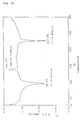
- thermogravimetric and differential thermal analysis (TG-DTA) of the present polymorphs measured under the following condition show different patterns from the prior art. It is noted accordingly that their crystalline forms are completely different from the prior art.
- Donepezil means a free base of the Donepezil hydrochloride, i.e., 1-benzyl-4-[(5,6-dimethoxy-1-indanon)-2-yl]methylpiperidine.
- the aforementioned processes (1-5), (2-6) and (3-6) comprise dissolving Donepezil in ethanol, followed by addition of hydrochloric acid or hydrogen chloride, and then adding diisopropyl ether.
- Any of these processes can produce polymorph (I), (II) or (III) by controlling an interval in time taken from recrystallization to isolation of crystals by filtration. These time lag may differ by the crystallization conditions, such as temperature, stirring velocity and a volume of a solvent. The following may be usually used.
- the invention provides a method for treating a disease accompanied by acetylcholinesterase activity by administering to a human patient a pharmacologically effective amount of the Donepezil hydrochloride in the form of polymorph as above for inhibiting the acetylcholinesterase activity.
- the invention further provides a therapeutical composition which comprises a pharmacologically effective amount of Donepezil hydrochloride in the form of polymorph as above and a pharmacologically acceptable carrier.
- the compound in the form of polymorph of the present invention is effective for treatment, prevention, remission, improvement, etc. of various kinds of senile dementia, particularly senile dementia of the Alzheimer type; cerebrovascular diseases accompanying cerebral apoplexy, e.g. cerebral hemorrhage or cerebral infarcts, cerebral arteriosclerosis, head injury, etc.; and aprosexia, disturbance of speech, hypobulia, emotional changes, attention deficit/hyperactivity disorder, recent memory disturbance, hallucinatory-paranoid syndrome, behavioral changes, etc. accompanying encephalitis, cerebral palsy, etc.
- cerebrovascular diseases accompanying cerebral apoplexy e.g. cerebral hemorrhage or cerebral infarcts, cerebral arteriosclerosis, head injury, etc.
- aprosexia disturbance of speech, hypobulia, emotional changes, attention deficit/hyperactivity disorder, recent memory disturbance, hallucinatory-paranoid syndrome, behavioral changes, etc. accompanying encephalitis, cerebral palsy,
- the compound in the form of polymorph of the present invention has a strong and highly selective acetylcholinesterase action, which renders the compound of the present invention useful also as a pharmaceutical based on this kind of action.
- the compound in the form of polymorph of the present invention is effective for, for example, Huntington's chorea, Pick's disease and delayed ataxia or tardive dyskinesia other than senile dementia of the Alzheimer type.
- the compound in the form of polymorph of the present invention When used as a pharmaceutical for these diseases, it may be orally or parenterally administered. In general, it is parenterally administered in the form of injections, such as intravenous, subcutaneous, and intramuscular injections, suppositories, or sublingual tablets.
- injections such as intravenous, subcutaneous, and intramuscular injections, suppositories, or sublingual tablets.
- the dose will remarkably vary depending upon the symptom; age, sex, weight, and sensitivity of patients; method of administration; time and intervals of administration and properties, dispensing, and kind of pharmaceutical preparations; kind of effective ingredients, etc., so that there is no particular limitation with respect to the dose.
- the compound may be administered in a dose of about 1.0 to 300 mg, preferably 1 to 100 mg, per day per adult, ordinarily in one to four portions.
- compositions in the dosage form of, e.g., injections, suppositories, sublingual tablets, tablets, and capsules are prepared according to a method which is commonly accepted in the art.
- the effective ingredient is blended, if necessary, with a pH modifier, a buffer, a suspending agent, a solubilizing agent, a stabilizer, a tonicity agent, a preservative, etc., followed by preparation of an intravenous, subcutaneous, or intramuscular injection according to an ordinary method. In this case, if necessary, it is possible to lyophilize these preparations according to an ordinary method.
- suspending agents examples include methylcellulose, Polysorbate 80, hydroxyethylcellulose, acacia, powdered tragacanth, sodium carboxymethylcellulose, and polyoxyethylene sorbitan monolaurate.
- solubility agent examples include polyoxyethylene hydrogenated castor oil, Polysorbate 80, nicotinamide, polyoxyethylene sorbitan monolaurate, Macrogol, and an ethyl ester of castor oil fatty acid.
- examples of the stabilizer include sodium sulfite, sodium metasulfite and ether, and examples of the preservative include methyl p-hydroxybenzoate, ethyl p-hydroxybenzoate, sorbic acid, phenol, cresol, and chlorocresol.
- Donepezil hydrochloride was dissolved in 5 ml of methanol. Adding 10 ml of diisopropyl ether and stirring the mixture in a bath containing ice water, filtration of the separated crystal and drying under atmosphere afforded 0.9 g of the title compound.
- Donepezil hydrochloride was dissolved in 5 ml of methanol under heating. After cooling to room temperature, 10 ml of isopropyl ether was added. Stirring was continued for 30 minutes at room temperature, then filtration of the separated crystal and drying under atmosphere afforded 0.9 g of the title compound.
- Donepezil hydrochloride was dissolved in 5 ml of methanol under heating. After initiation of cooling the solution, it started to separate crystal at 15°C of the inner temperature. After 10 minutes, 10 ml of isopropyl ether was added. Stirring was continued for 1 hour at room temperature, then filtration of the separated crystal and drying under atmosphere afforded 0.9 g of the title compound.
- Donepezil hydrochloride was dissolved in 15 ml of dichloromethane under heating. After cooling to room temperature, 15 ml of n-hexane was added hereinto under stirring, followed by cooling in a bath containing ice water. Stirring was continued for 1 hour. Filtration of the crystals and drying at room temperature afforded 0.9 g of the title compound.
- Donepezil hydrochloride 15.0 g was dissolved in 300 ml of water. The solution was frozen in a bath containing dry ice and acetone and freezing-dried (lyophilizated) for 4 days at -82°C. 14.8 g of the title compound was obtained.
- IPA isopropyl alcohol
- DMSO dimethylsulfoxide
- Example 108 Amorphous Form & Polymorph (IV) of Donepezil hydrochloride
- Polymorphs (I) to (IV) were stored under atmosphere having the following relative humidities at 25°C. Water contents were measured according to the general method (Karl Fischer Method) introduced by the Japanese Pharmacopoeia. Results (refer to Fig. 20) Relative Humidity Water contents(%) Polymorph (%) (I) (II) (III) (IV) Amorphous Initiation 4.34 0.26 0.11 12.87 2.03 10.6 4.54 0.28 0.15 10.70 4.09 22.2 4.75 0.29 0.14 10.60 4.78 31.0 5.07 0.32 0.26 10.77 5.61 42.8 5.25 0.39 0.13 11.03 7.80 51.0 5.38 0.43 0.15 11.28 9.29 61.8 5.49 0.40 0.18 11.40 12.01 75.0 5.65 1.73 0.15 11.62 13.89 84.0 5.64 13.70 0.16 11.72 13.74 93.0 5.76 13.99 0.15 11.84 14.51 96.6 5.88 14.18 0.17 11.80 14.53 100.0 10.37 15.93 9.71 12.26 15.44
- the polymorphs (I) to (IV) did not show hygroscopicity until a relative humidity of 96.6%, until 75.0%, until 96.6%, until 100%, respectively.
- the amorphous Donepezil hydrochloride showed hygroscopicity at and thereafter 10.6%.
- Those experimental results show that the polymorphs of Donepezil hydrochloride (I) to (IV) have an excellent, heat stability and a low hygroscopicity.
Landscapes
- Chemical & Material Sciences (AREA)
- Organic Chemistry (AREA)
- Health & Medical Sciences (AREA)
- Engineering & Computer Science (AREA)
- Bioinformatics & Cheminformatics (AREA)
- Biomedical Technology (AREA)
- Neurology (AREA)
- Neurosurgery (AREA)
- General Chemical & Material Sciences (AREA)
- Life Sciences & Earth Sciences (AREA)
- Psychiatry (AREA)
- Medicinal Chemistry (AREA)
- Nuclear Medicine, Radiotherapy & Molecular Imaging (AREA)
- Hospice & Palliative Care (AREA)
- Pharmacology & Pharmacy (AREA)
- Chemical Kinetics & Catalysis (AREA)
- Animal Behavior & Ethology (AREA)
- General Health & Medical Sciences (AREA)
- Public Health (AREA)
- Veterinary Medicine (AREA)
- Pharmaceuticals Containing Other Organic And Inorganic Compounds (AREA)
- Hydrogenated Pyridines (AREA)
- Organic Low-Molecular-Weight Compounds And Preparation Thereof (AREA)
Abstract
Description
- The present invention relates to the stable polymorphs of Donepezil hydrochloride, that is, 1-benzyl-4-[(5,6-dimethoxy-1-indanon)-2-yl]methyl-piperidine hydrochloride, disclosed in the example 4 of US-A 4,895,841 or EP-A 296560, having an excellent efficacy as pharmaceuticals, and industrial processes for producing them.
- Donepezil hydrochloride shows the acetylcholine esterase-inhibitory action and is useful for the treatment of all kinds of senile dementia, in particular being useful for prevention, treatment and amelioration of Alzheimer Disease. Donepezil hydrochloride is administered orally as usual and it may be placed for distribution and storage in a period of time before the administration. It may then be stored at patient's home for about one month at the maximum because of the property of the target disease. The stability of this medicinal substance (bulk pharmaceutical chemicals) against heat and humidity during the storage period is very important. A more stable medicinal substance of Donepezil hydrochloride is, therefore, desired. It is not known, however, that polymorphs of Donepezil hydrochloride exist. No sufficiently stable medicinal substance of Donepezil hydrochloride has been found.
- US-A 4,895,841 discloses in Example 4 that recrystalization of the crude product mixture of Donepezil hydrochloride from ethanol/isopropyl ether afforded a purified Donepezil hydrochloride. If there is a more stable crystalline form of Donepezil hydrochloride for a long period, it is more practical for distribution and storage.
- Regarding the foregoing problems, the present inventors have proceeded with extensive research. As a result, it has been found that novel polymorphs of Donepezil hydrochloride (I) to (IV) and (V) can be produced and have an excellent stability, establishing the present invention. The present invention offers the five forms or species of novel polymorphs of Donepezil hydrochloride and industrially excellent processes for producing them.
In detail, the present invention relates to the five polymorphs (I) to (V) of Donepezil hydrochloride represented by the following chemical structure, the polymorphs being specified by the peaks appearing in the powder X-ray diffraction pattern and infrared absorption spectra in potassium bromide.
- X-ray diffraction patterns were measured on each 100mg of the samples by the following condition.
-
Target Cu Filter monochro Voltage 40 KV Current 20 mA Slit DS 1, RS 0.15, SS 1 Scan speed 2 deg/min. Range 5-30 Step/Sample 0.02 deg - Infrared absorption spectra in potassium bromide were measured according to the general method recorded in the Japanese Pharmacopoeia.
- Peaks in the powder X-ray diffraction pattern are:
Diffraction angles
(2,°)Intensity
(I/I0)9.94 24 10.60 19 12.66 69 13.12 55 13.66 44 13.86 40 14.92 49 15.26 17 16.08 35 16.86 34 17.50 34 17.58 42 18.42 20 19.28 27 19.80 45 19.94 45 21.22 100 22.00 32 22.54 31 22.98 49 23.60 56 23.78 75 23.92 78 26.46 33 28.02 25 29.50 37. - Wave numbers (cm-1) of infrared absorption spectra in potassium bromide are:
- 463, 502, 563, 589, 604, 701, 750, 759, 799, 860, 922, 947, 972, 1012, 1038, 1104, 1120, 1128, 1175, 1192, 1218, 1250, 1267, 1316, 1368, 1410, 1433, 1440, 1455, 1472, 1502, 1591, 1606, 1644, 1684, 2412, 2530, 2559, 2595, 2620, 2717, 2840, 2858, 2924, 3004, 3074, 3259, 3373, 3547, 3589 cm-1.
-
- Peaks in the powder X-ray diffraction pattern are:
Diffraction angles
(2,°)Intensity
(I/I0)7.40 8 9.88 100 12.36 13 15.54 40 16.10 38 16.22 38 16.48 35 17.30 17 18.04 20 18.44 17 18.84 19 19.34 19 19.84 47 21.16 24 22.40 19 23.18 33 24.02 22 24.92 25 25.72 27 26.40 18 27.22 14. - Wave numbers (cm-1) of infrared absorption spectra in potassium bromide are:
- 699, 748, 762, 845, 947, 1009, 1035, 1067, 1103, 1118, 1129, 1174, 1193, 1206, 1222, 1247, 1267, 1317, 1365, 1422, 1436, 1456, 1465, 1502, 1592, 1607, 1688, 2412, 2489, 2627, 2846, 2868, 2913, 2928, 3435 cm-1.
-
- Peaks in the powder X-ray diffraction pattern are:
Diffraction angles
(2,°)Intensity
(I/I0)6.56 30 9.94 8 13.00 17 15.00 47 15.26 14 15.74 6 16.48 35 17.42 4 18.10 21 18.50 56 19.50 17 20.10 32 20.94 21 21.66 100 22.32 25 22.92 17 23.92 19 24.68 17 26.00 44 27.20 23 28.02 29 28.22 40 28.60 13. - Wave numbers (cm-1) of infrared absorption spectrum in potassium bromide are:
- 559, 641, 648, 702, 749, 765, 786, 807, 851, 872, 927, 949, 966, 975, 982, 1007, 1034, 1071, 1080, 1111, 1119, 1131, 1177, 1190, 1205, 1217, 1230, 1250, 1265, 1292-, 1313, 1367, 1389, 1420, 1438, 1453, 1461, 1470, 1500, 1589, 1605, 1697, 2407, 2419, 2461, 2624, 2641, 2651, 2667, 2837, 2848, 2873, 2924, 2954, 2961, 2993, 3007, 3377, 3433 cm-1.
-
- Peaks in the powder X-ray diffraction pattern are:
Diffraction angles
(2,°)Intensity
(I/I0)6.24 15 9.66 12 11.04 22 12.12 24 12.54 67 12.76 61 13.98 27 14.42 15 14.88 11 16.34 12 17.46 100 18.12 25 18.60 32 19.06 15 19.98 74 20.42 41 20.62 34 21.30 48 21.80 63 22.58 78 23.04 46 24.00 32 24.54 49 25.14 90 25.36 99 26.06 34 28.10 41 28.58 39 29.30 31 29.44 28. - Wave numbers (cm-1) of infrared absorption spectra in potassium bromide are:
- 401, 431, 459, 467, 490, 506, 518, 561, 586, 606, 631, 651, 709, 758, 766, 857, 944, 1009, 1041, 1106, 1119, 1132, 1213, 1225, 1265, 1304, 1318, 1429, 1458, 1470, 1500, 1589, 1605, 1630, 1647, 1683, 2562, 2577, 2608, 2634, 2689, 2717, 2836, 2924, 2949, 2989, 3007, 3032, 3061, 3322, 3376, 3422 cm-1.
-
- Additional analysis data of polymorphs (I) to (V) are represented as following.
- Peaks in the powder X-ray diffraction pattern are:
Diffraction angles
(2,°)Intensity
(I/I0)9.82 13 10.48 18 12.52 93 13.02 69 13.52 34 13.74 37 14.78 31 16.00 45 16.76 37 17.46 34 19.18 26 19.66 32 21.04 100 21.16 82 22.92 52 23.82 72 24.14 32. - Wave numbers (cm-1) of infrared absorption spectra in potassium bromide are:
- 562.7, 603.2, 700.4, 749.6, 798.1, 859.2, 896.0, 921.3, 946.3, 971.8, 1038.0, 1119.3, 1216.8, 1266.0, 1315.4, 1367.7, 1454.1, 1501.5, 1537.8, 1555.9, 1590.7, 1643.7, 1681.9, 2350.9, 2534.0, 2922.1, 3381.8, 3585.2 cm-1.
-
- Peaks in the powder X-ray diffraction pattern are:
Diffraction angles
(2,°)Intensity
(I/I0)10.10 76 12.64 14 15.74 85 15.82 86 16.20 100 16.46 87 17.40 50 17.50 48 17.88 31 18.36 28 18.58 51 18.66 46 19.48 42 20.18 81 20.80 36 22.26 45 23.38 86 23.52 59 24.06 34 24.32 55 25.14 44 25.44 50 25.72 39 25.96 35 26.14 25 28.06 25 28.20 34 28.38 34. - Wave numbers (cm-1) of infrared absorption spectra in potassium bromide are:
- 560.1, 698.9, 749.1, 846.2, 947.6, 1036.1, 1119.3, 1222.7, 1266.4, 1318.7, 1364.1, 1458.3, 1500.9, 1522.3, 1534.0, 1542.6, 1560.2, 1570.3, 1592.0, 1637.0, 1647.9, 1654.4, 1689.5, 1718.3, 1734.7, 1751.7, 1773.9, 1793.8, 1830.7, 1846.0, 1870.1, 2345.1, 2489.9, 2927.9, 3448.1 cm-1.
-
- Peaks in the powder X-ray diffraction pattern are:
Diffraction angles
(2,° )Intensity
(I/I0)6.48 21 9.84 7 12.96 19 14.94 45 15.20 13 16.44 31 18.04 20 18.46 55 19.44 17 20.02 30 20.86 20 21.02 13 21.58 100 22.22 23 22.90 15 23.92 13 24.64 15 25.92 40 26.18 17 27.14 21 28.14 37 28.56 11 29.94 12. - Wave numbers (cm-1) of infrared absorption spectrum in potassium bromide are:
- 558.3, 641.1, 702.4, 748.5, 765.0, 786.1, 807.3, 850.8, 872.0, 926.8, 974.9, 1034.1, 1071.5, 1111.6, 1190.1, 1216.6, 1265.4, 1291.9, 1312.9, 1364.4, 1420.2, 1438.1, 1458.8, 1499.1, 1522.2, 1542.6, 1560.1, 1570.2, 1589.1, 1638.8, 1647.8, 1654.3, 1697.3, 1718.1, 1734.5, 1751.4, 1773.7, 1793.5, 1845.8, 2345.3, 2461.6, 2924.2, 3447.9 cm-1.
-
- Peaks in the powder X-ray diffraction pattern are:
Diffraction angles
(2,° )Intensity
(I/I0)9.64 11 10.92 11 12.46 63 12.72 17 13.86 27 14.42 12 17.36 100 18.54 39 19.90 37 21.18 35 21.74 39 22.48 60 22.96 36 24.10 17 25.28 70 28.00 27 28.50 27. - Wave numbers (cm-1) of infrared absorption spectra in potassium bromide are:
- 561.5, 709.0, 766.2, 786.3, 804.9, 857.0, 944.3, 979.3, 1041.5, 1118.7, 1264.6, 1318.7, 1364.1, 1458.1, 1499.2, 1542.5, 1560.1, 1588.1, 1636.6, 1647.8, 1654.3, 1684.3, 1718.2, 1734.4, 1751.4, 1773.7, 1793.5, 1830.5, 1845.8, 1870.1, 2344.8, 2369.3, 2719.2, 2922.9, 3324.0 cm-1.
-
-
Diffraction angles
(2,°)Intensity
(I/I0)6.58 7 6.86 27 10.12 32 12.54 33 12.90 43 13.64 64 15.58 27 17.22 69 18.44 72 18.96 19 19.30 25 19.64 19 19.74 25 20.30 19 20.46 17 21.10 15 21.96 100 22.24 32 24.22 63 24.66 96 25.36 60 26.14 15 26.82 44 27.52 24 27.96 15 28.20 49 29.58 13 29.66 17 29.76 17. - Wave numbers (cm-1) of infrared absorption spectra in potassium bromide are:
- 506.5, 559.7, 594.4, 698.0, 740.8, 805.1, 861.9, 948.5, 972.1, 1039.9, 1120.8, 1220.7, 1264.8, 1314.6, 1364.1, 1458.0, 1499.5, 1542.5, 1560.2, 1592.1, 1692.9, 2500.1, 2924.2, 2998.9, 3422.1 cm-1.
-
- Melting points of the novel Polymorphs (I) to (V) disclosed in the present invention are different from that of example 4 in US-A-4,895,841.
- A melting point in US-P-4,895,841 is 211-212° C (decomposition).
Melting point of the polymorph (I) 225-226° C (decomposition), Melting point of the polymorph (II) 224-226° C (decomposition), Melting point of the polymorph (III) 229-231° C (decomposition), Melting point of the polymorph (IV) 226-228° C (decomposition), Melting point of the polymorph (V) 218-220° C (decomposition), [Melting point of the amorphous form 220-222° C (decomposition)]. - Furthermore, the thermogravimetric and differential thermal analysis (TG-DTA) of the present polymorphs measured under the following condition show different patterns from the prior art. It is noted accordingly that their crystalline forms are completely different from the prior art.
- About 3 to 6 mg of Samples were taken and subjected to thermal analysis under the following condition.
Reference empty Scan speed 5° C/min. Sampling 0.7 sec. Upper limit 300° C Lower limit Room temperature. - Detailed processes for preparing the novel polymorphs are as follows. In these processes, "Donepezil" means a free base of the Donepezil hydrochloride, i.e., 1-benzyl-4-[(5,6-dimethoxy-1-indanon)-2-yl]methylpiperidine.
- (1) Processes for preparing the polymorph (I) are:
- (1-1) Recrystalization of Donepezil hydrochloride from methanol,
- (1-2) Dissolving Donepezil hydrochloride in methanol, followed by addition of diethyl ether or diisopropyl ether,
- (1-3) Dissolving Donepezil in methanol, followed by addition of hydrochloric acid or hydrogen chloride,
- (1-4) Dissolving Donepezil in ethanol, followed by addition of diisopropyl ether, and hydrochloric acid or hydrogen chloride successively; or
- (1-5) Dissolving Donepezil in ethanol, followed by addition of hydrochloric acid or hydrogen chloride, and diisopropyl ether successively, then filtration of the crystals immediately after separation. Process (1-5) is preferred. This process is illustrated in Example 7.
- (2) Processes for preparing the polymorph (II). are:
- (2-1) Dissolving Donepezil hydrochloride in ethanol, followed by addition of diethyl ether or diisopropyl ether,
- (2-2) Dissolving Donepezil hydrochloride in ethanol, followed by addition of diisopropyl ether, then filtration of the crystals after 10 to 30 minutes from the separation,
- (2-3) Dissolving Donepezil and hydrochloric acid or hydrogen chloride in ethanol, followed by addition of diethyl ether,
- (2-4) Dissolving Donepezil in ethanol, followed by addition of hydrochloric acid or hydrogen chloride, then concentration,
- (2-5) Dissolving Donepezil in ethanol, followed by addition of hydrochloric acid or hydrogen chloride, and diisopropyl ether successively; or
- (2-6) Dissolving Donepezil in ethanol, followed by addition of hydrochloric acid or hydrogen chloride, and diisopropyl ether successively, then filtration of the crystals after 10 to 60 minutes, preferably 10 to 30 minutes from the separation. Process (2-6) is preferred. This process is illustrated in Example 14.
- (3) Processes for preparing the polymorph (III) are:
- (3-1) Dissolving Donepezil hydrochloride in ethanol, followed by addition of diethyl ether,
- (3-2) Dissolving Donepezil hydrochloride in dichloromethane, followed by addition of n-hexane,
- (3-3) Dissolving Donepezil in acetone, followed by addition of hydrochloric acid or hydrogen chloride,
- (3-4) Dissolving Donepezil in ethyl acetate, followed by addition of hydrochloric acid or hydrogen chloride,
- (3-5) Dissolving Donepezil in ethanol, followed by addition of hydrochloric acid or hydrogen chloride, then addition of at least one solvent selected from diethyl ether, diisopropyl ether and n-hexane,
- (3-6) According to a process (3-5) wherein the selected solvent is diisopropyl ether, filtration of the crystals after 1 hour, preferably 2 hours, more preferably 6 hours from the separation; or
- (3-7) Heating of the polymorph (I) or (II). Processes (3-5) and (3-6) are preferred. These processes are illustrated, respectively, in Examples 23 and 18.
- (4) A process for preparing the polymorph (IV) is:
- (4-1) Humidification of the polymorph (II). Process (4-1) is illustrated in Example 24.
-
- The aforementioned processes (1-5), (2-6) and (3-6) comprise dissolving Donepezil in ethanol, followed by addition of hydrochloric acid or hydrogen chloride, and then adding diisopropyl ether. Anyone of these processes can produce polymorph (I), (II) or (III) by controlling an interval in time taken from recrystallization to isolation of crystals by filtration. These time lag may differ by the crystallization conditions, such as temperature, stirring velocity and a volume of a solvent. The following may be usually used.
- (1) Filtration of the crystals immediately after separation affords the polymorph (I).
- (2) Filtration of the crystals after 10 to 60 minutes, preferably 10 to 30 minutes from the separation affords the polymorph (II).
- (3) Filtration of the crystals after 1 hour, preferably 2 hours, more preferably 6 hours from the separation affords the polymorph (III).
-
- Further Detailed processes for preparing the novel polymorphs are as follows.
- (1) Processes for preparing the polymorph (I) are:
- (1-6) Dissolving Donepezil in methanol, followed by addition of hydrochloric acid or hydrogen chloride,
- (1-7) Dissolving Donepezil in methanol, followed by addition of hydrochloric acid or hydrogen chloride and addition of tert-butyl methyl ether, diisopropyl ether or ethyl acetate successively,
- (1-8) Dissolving Donepezil in ethanol, tetrahydrofuran or acetonitrile, followed by addition of hydrochloric acid or hydrogen chloride,
- (1-9) Dissolving Donepezil hydrochloride in methanol, followed by addition of tert-butyl methyl ether, ethyl acetate or n-hexane,
- (1-10) Recrystalization of Donepezil hydrochloride from ethanol; or
- (1-11) Dissolving Donepezil hydrochloride in ethanol, followed by addition of tert-butyl methyl ether. Process (1-7) is preferred. This process is illustrated in Example 30, 31 and 32.
- (2) Processes for preparing the polymorph (II) are:
- (2-7) Dissolving Donepezil in ethanol, followed by addition of hydrochloric acid or hydrogen chloride and addition of tert-butyl methyl ether successively,
- (2-8) Dissolving Donepezil in isopropyl alcohol, acetone or tetrahydrofran, followed by addition of hydrochloric acid or hydrogen chloride,
- (2-9) Dissolving Donepezil in methylene chloride, followed by addtion of hydrochloric acid or hydrogen chloride and addition of diisopropyl ether successively,
- (2-10) Dissolving Donepezil hydrochloride in ethanol, followed
by addition of tert-butyl methyl ether or diisopropyl ether and
stirring
blow 10 °C, - (2-11) Dissolving Donepezil hydrochloride in methylene chloride, followed by addition of tert-butyl methyl ether or diisopropyl ether; or
- (2-12) Heating the polymorph (I) or amorphous form of Donepezil hydrochloride. Process (2-7) is preferred. This process is illustrated in Example 45.
- (3) Processes for preparing the polymorph (III) are:
- (3-8) Dissolving Donepezil in methanol, followed by addition of hydrochloric acid or hydrogen chloride and addition of acetone successively,
- (3-9) Dissolving Donepezil in ethanol, followed by addition of hydrochloric acid or hydrogen chloride and addition of tert-butyl methyl ether successively,
- (3-10) Dissolving Donepezil in acetonitrile, acetone, a mixture of acetone and water, tetrahydrofuran or N,N-dimethylformamide, followed by addition of hydrochloric acid or hydrogen chloride,
- (3-11) Dissolving Donepezil in ethyl acetate, followed by addition of hydrochloric acid or hydrogen chloride and addition of tert-butyl methyl ether successively,
- (3-12) Dissolving Donepezil in dimethylsulfoxide, followed by addition of hydrochloric acid or hydrogen chloride and addition of tert-butyl methyl ether successively,
- (3-13) Dissolving Donepezil in toluene, followed by addition of hydrochloric acid or hydrogen chloride,
- (3-14) Recrystalization of Donepezil hydrochloride from methanol not lower than 10°C,
- (3-15) Dissolving Donepezil hydrochloride in methanol, followed by addition of tert-butyl methyl ether or acetonitrile,
- (3-16) Dissolving Donepezil hydrochloride in ethanol, followed by addition of tert-butyl methyl ether or acetonitrile and stirring not lower than 10°C,
- (3-17) Dissolving Donepezil hydrochloride in N,N-dimethylformamide or dimethylsulfoxide, followed by addition of tert-butyl methyl ether,
- (3-18) Recrystalization of Donepezil hydrochloride from isopropyl alcohol,
- (3-19) Conversion of polymorph (I), (II), (IV), (V) or amorphous form of Donepezil hydrochloride in solvent; or
- (3-20) According to a process (3-19) wherein the solvent is selected from methanol, ethanol, ethyl acetate or acetone. Process (3-11) is preferred. This process is illustrated in Examples 59.
- (4) A process for preparing the polymorph (IV) are:
- (4-2) Dissolving Donepezil in hydrochloric acid, followed by filtration of the separated crystals,
- (4-3) Dissolving Donepezil in hydrochloric acid, followed by addition of tetrahydrofuran,
- (4-4) Dissolving Donepezil in a mixture of water and tetrahydrofuran, followed by addition of hydrochloric acid or hydrogen chloride,
- (4-5) Dissolving Donepezil in methanol, toluene or n-hexane, followed by addition of hydrochloric acid,
- (4-6) Dissolving Donepezil in a mixture of methanol and hydrochloric acid,
- (4-7) Dissolving Donepezil in water, followed by addition of hydrochloric acid or hydrogen chloride,
- (4-8) Recrystalization of Donepezil hydrochloride from water,
- (4-9) Humidification of the polymorph (II) of Donepezil hydrochloride; or
- (4-10) Humidification of the amorphous form of Donepezil hydrochloride. Process (4-4) is preferred. This process is illustrated in Example 101.
- (5) A process for preparing the polymorph (V) is:
- (5-1) Heating the polymorph (IV) of Donepezil hydrochloride. Process (5-1) is illustrated in Example 109.
-
- In the aforementioned process (3-6) for obtaining the polymorph (III), comprising from dissolving Donepezil in ethanol, followed by addition of hydrochloric acid or hydrogen chloride, and then adding diisopropyl ether, the preferred crystallization time depends on stirring velocity, volume of solvent e.t.c. However, higher temperature shortens the crystallization time. These changes are illustrated in Example 96 to 98.
- The invention provides a method for treating a disease accompanied by acetylcholinesterase activity by administering to a human patient a pharmacologically effective amount of the Donepezil hydrochloride in the form of polymorph as above for inhibiting the acetylcholinesterase activity.
- The invention further provides a therapeutical composition which comprises a pharmacologically effective amount of Donepezil hydrochloride in the form of polymorph as above and a pharmacologically acceptable carrier.
- The compound in the form of polymorph of the present invention is effective for treatment, prevention, remission, improvement, etc. of various kinds of senile dementia, particularly senile dementia of the Alzheimer type; cerebrovascular diseases accompanying cerebral apoplexy, e.g. cerebral hemorrhage or cerebral infarcts, cerebral arteriosclerosis, head injury, etc.; and aprosexia, disturbance of speech, hypobulia, emotional changes, attention deficit/hyperactivity disorder, recent memory disturbance, hallucinatory-paranoid syndrome, behavioral changes, etc. accompanying encephalitis, cerebral palsy, etc.
- Further, the compound in the form of polymorph of the present invention has a strong and highly selective acetylcholinesterase action, which renders the compound of the present invention useful also as a pharmaceutical based on this kind of action.
- Specifically, the compound in the form of polymorph of the present invention is effective for, for example, Huntington's chorea, Pick's disease and delayed ataxia or tardive dyskinesia other than senile dementia of the Alzheimer type.
- When the compound in the form of polymorph of the present invention is used as a pharmaceutical for these diseases, it may be orally or parenterally administered. In general, it is parenterally administered in the form of injections, such as intravenous, subcutaneous, and intramuscular injections, suppositories, or sublingual tablets. The dose will remarkably vary depending upon the symptom; age, sex, weight, and sensitivity of patients; method of administration; time and intervals of administration and properties, dispensing, and kind of pharmaceutical preparations; kind of effective ingredients, etc., so that there is no particular limitation with respect to the dose. Normally the compound may be administered in a dose of about 1.0 to 300 mg, preferably 1 to 100 mg, per day per adult, ordinarily in one to four portions.
- Pharmaceutical preparations in the dosage form of, e.g., injections, suppositories, sublingual tablets, tablets, and capsules are prepared according to a method which is commonly accepted in the art.
- In preparing injections, the effective ingredient is blended, if necessary, with a pH modifier, a buffer, a suspending agent, a solubilizing agent, a stabilizer, a tonicity agent, a preservative, etc., followed by preparation of an intravenous, subcutaneous, or intramuscular injection according to an ordinary method. In this case, if necessary, it is possible to lyophilize these preparations according to an ordinary method.
- Examples of the suspending agents include methylcellulose,
Polysorbate 80, hydroxyethylcellulose, acacia, powdered tragacanth, sodium carboxymethylcellulose, and polyoxyethylene sorbitan monolaurate. - Examples of the solubility agent include polyoxyethylene hydrogenated castor oil,
Polysorbate 80, nicotinamide, polyoxyethylene sorbitan monolaurate, Macrogol, and an ethyl ester of castor oil fatty acid. - Examples of the stabilizer include sodium sulfite, sodium metasulfite and ether, and examples of the preservative include methyl p-hydroxybenzoate, ethyl p-hydroxybenzoate, sorbic acid, phenol, cresol, and chlorocresol.
-
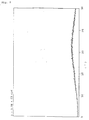
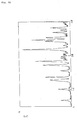
- Fig. 1 is powder X-ray diffraction pattern of the polymorph (I).
- Fig. 2 is powder X-ray diffraction pattern of the polymorph (II).
- Fig. 3 is powder X-ray diffraction pattern of the polymorph (III).
- Fig. 4 is powder X-ray diffraction pattern of the polymorph (IV) .
- Fig. 5 is powder X-ray diffraction pattern of the Amorphous form.
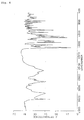
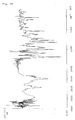
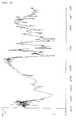
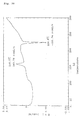
- Fig. 6 is infrared absorption in potassium bromide of the polymorph (I).
- Fig. 7 is infrared absorption in potassium bromide of the polymorph (II).
- Fig. 8 is infrared absorption in potassium bromide of the polymorph (III).
- Fig. 9 is infrared absorption in potassium bromide of the polymorph (IV).
- Fig. 10 is infrared absorption in potassium bromide of the amorphous form.
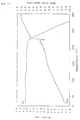
- Fig. 11 is thermogravimetric and differential thermal analysis (TG-DTA) of the polymorph (I).
- Fig. 12 is thermogravimetric and differential thermal analysis (TG-DTA) of the polymorph (II).
- Fig. 13 is thermogravimetric and differential thermal analysis (TG-DTA) of the polymorph (III).
- Fig. 14 is thermogravimetric and differential thermal analysis (TG-DTA) of the polymorph (IV).
- Fig. 15 is thermogravimetric and differential thermal analysis (TG-DTA) of the amorphous form.
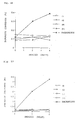
- Fig. 16 is change of impurity contents for each polymorphs and amorphous form stored at -20°C.
- Fig. 17 is change of impurity contents for each polymorphs and amorphous form stored at 40° C.
- Fig. 18 is change of impurity contents for each polymorphs and amorphous form stored at 60°C.
- Fig. 19 is change of impurity contents for each polymorphs and amorphous form stored at 80°C.
- Fig. 20 is water contents for each polymorphs and amorphous form stored at 25°C under various relative humidity condition.
- Fig. 21 is clear powder X-ray diffraction pattern of the polymorph (I).
- Fig. 22 is clear powder X-ray diffraction pattern of the polymorph (II).
- Fig. 23 is clear powder X-ray diffraction pattern of the polymorph (III).
- Fig. 24 is clear powder X-ray diffraction pattern of the polymorph (IV).
- Fig. 25 is clear powder X-ray diffraction pattern of the polymorph (V).
- Fig. 26 is clear powder X-ray diffraction pattern of the Amorphous form.
- Fig. 27 is clear infrared absorption in potassium bromide of the polymorph (I).
- Fig. 28 is clear infrared absorption in potassium bromide of the polymorph (II).
- Fig. 29 is clear infrared absorption in potassium bromide of the polymorph (III).
- Fig. 30 is clear infrared absorption in potassium bromide of the polymorph (IV).
- Fig. 31 is clear infrared absorption in potassium bromide of the polymorph (V).
- Fig. 32 is clear infrared absorption in potassium bromide of the amorphous form.
- Fig. 33 is clear thermogravimetric and differential thermal analysis (TG-DTA) of the polymorph (I).
- Fig. 34 is clear thermogravimetric and differential thermal analysis (TG-DTA) of the polymorph (II).
- Fig. 35 is clear thermogravimetric and differential thermal analysis (TG-DTA) of the polymorph (III).
- Fig. 36 is clear thermogravimetric and differential thermal analysis (TG-DTA) of the polymorph (IV).
- Fig. 37 is clear thermogravimetric and differential thermal analysis (TG-DTA) of the polymorph (V).
- Fig. 38 is clear thermogravimetric and differential thermal analysis (TG-DTA) of the amorphous form.
-
- The products shown in Figs. 1 to 15 were again confirmed experimentally to obtain a more clear chart.
- The present invention will now be described in more detail with reference to the following Examples. It is needless to say that the technical scope of the present invention is not limited to these Examples.
- Examples 1 to 8 relates to processes for preparing a polymorph (I).
- Examples 9 to 15, processes for preparing a polymorph (II).
- Examples 16 to 27, processes for preparing a polymorph (III).
- Examples 28, process for preparing a polymorph (IV).
- Reference Examples 1, process for preparing a amorphous form of Donepezil hydrochloride.
-
- One gram of Donepezil hydrochloride was dissolved in 5 ml of methanol. Adding 10 ml of diisopropyl ether and stirring the mixture in a bath containing ice water, filtration of the separated crystal and drying under atmosphere afforded 0.9 g of the title compound.
- One gram of Donepezil hydrochloride was dissolved in 5 ml of methanol under heating. After cooling to room temperature, 10 ml of isopropyl ether was added. Stirring was continued for 30 minutes at room temperature, then filtration of the separated crystal and drying under atmosphere afforded 0.9 g of the title compound.
- One gram of Donepezil hydrochloride was dissolved in 5 ml of methanol under heating. After initiation of cooling the solution, it started to separate crystal at 15°C of the inner temperature. After 10 minutes, 10 ml of isopropyl ether was added. Stirring was continued for 1 hour at room temperature, then filtration of the separated crystal and drying under atmosphere afforded 0.9 g of the title compound.
- 5 g of Donepezil hydrochloride was dissolved in 25 ml of methanol under heating, followed by cooling the mixture in a bath containing ice water. Filtration of the separated crystal and drying under atmosphere afforded 4.6 g of the title compound.
- 0.3 g of Donepezil was dissolved in 1.5 ml of methanol, followed by addition of 0.97 ml of 10%-hydrochloric acid in methanol mixture. Filtration of the separated crystal and drying under atmosphere afforded 0.2 g of the title compound.
- 0.3 g of Donepezil was dissolved in 3 ml of ethanol under heating, followed by addition of 3 ml of diisopropyl ether and 0.79 ml of 10%-hydrochloric acid in methanol mixture.
Filtration of the separated crystal and drying under atmosphere afforded 0.2 g of the title compound. - 10 g of Donepezil was dissolved in 100 ml of ethanol under heating. Under stirring, a mixture of concentrated hydrochloric acid (3.1 g) and ethanol (28 ml) was added hereinto, followed by addition of 150 ml of diisopropyl ether. Filtration of the crystals after 10 seconds from the separation and drying under atmosphere afforded 9.36g of the title compound with a yield of 85.4%, a water content of 5.17% and melting point of 225-226° C (Decomposition).
- 10 g of Donepezil hydrochloride was dissolved in 50 ml of methanol under heating. Under stirring in a bath containing ice water, 600 ml of diethyl ether was added. Stirring was continued for 1 hour in the same condition, then filtration of the crystals and drying under atmosphere afforded 10.0 g of the title compound.
- 13.7 g of Donepezil and 4.4ml of hydrochloric acid were dissolved in 100 ml of ethanol under heating. Under stirring at room temperature, 200 ml of diisopropyl ether was added. Filtration of the crystals and drying under vacuum afforded 11.2 g of the title compound.
- 50 g of Donepezil was dissolved in 200 ml of ethanol under heating. After cooling to room temperature, 27.3 g of 18%-hydrogen chloride in ethanol solution was added. After setting calmly for 1 hour, the mixture was concentrated under vacuum, then drying the obtained crystal under atmosphere afforded 55.0 g of the title compound.
- 0.5 g of Donepezil was dissolved in 5 ml of ethanol under heating. Under stirring at room temperature, 1.31 ml of 10%-concentrated hydrochloric acid in ethanol was added, followed by addition of 5 ml of diisopropyl ether. Filtration of the crystals after 10 minutes from the separation and drying under atmosphere afforded 0.4 g of the title compound.
- 5.6 g of Donepezil hydrochloride was dissolved in 30 ml of ethanol, followed by addition of 100 ml of diisopropyl ether. The mixture was cooled in a bath containing ice water. Then filtration of the crystals and drying at 50° C for three days afforded 4.9 g of the title compound.
- 23.3 g of Donepezil hydrochloride was dissolved in 250 ml of ethanol under heating. Under stirring in a bath containing ice water, 600 ml of diethyl ether was added. After setting calmly for 3 hours, filtration of the crystals and drying at 85° C for 22 hours afforded 22.7 g of the title compound.
- 10 g of Donepezil was dissolved in 100 ml of ethanol under heating. Under stirring, 150 ml of a mixture of concentrated hydrochloric acid (3.1 g) and ethanol (28 ml) was added, followed by addition of 150 ml of diisopropyl ether. Filtration of the crystals after 15 minutes from the separation and drying under atmosphere afforded 9.0 g of the title compound with a yield of 82.1% and melting point of 224-226° C (Decomposition).
- 40.0 g of Donepezil hydrochloride was dissolved in 700 ml of ethanol under heating. Under cooling in a bath containing ice water, 500 ml of diisopropyl ether was added, and crystallization was done by rubbing the flask wall with spatula.
- Then filtration of the crystals and drying at 50° C for 12 hours afforded 31.4 g of the title compound.
- 161 g of Donepezil hydrochloride was dissolved in 2,000 ml of ethanol under heating. After cooling to room temperature, 5,000 ml of diethyl ether was added under stirring. Then filtration of the crystals and drying at 35° C for 12 hours afforded 120 g of the title compound with a yield of 74.5% and a water content of 0.15%.
- 308 g of Donepezil was dissolved in 700 ml of ethanol. Under stirring, 230 ml of 10%-hydrogen chloride in ethanol solution and 5000 ml of diethyl ether were added successively. Filtration of the crystals and drying at 50° C for 1 hour, then at 60° C for 30 minutes, then at 85° C for 12 hours afforded 269g of the title compound.
- 59 g of Donepezil was dissolved in 590 ml of ethanol. Under cooling in a bath containing ice water, 17.8 g of concentrated hydrochloric acid and 885 ml of diisopropyl ether were added successively. After stirring over night at room temperature, filtration of the crystals and drying at 55° C for 22 hours afforded 62 g of the title compound.
- 5 g of Donepezil hydrochloride was dissolved in 100 ml of ethanol under heating. After cooling to room temperature, 100 ml of n-hexane was added hereinto under stirring, followed by cooling in a bath containing ice water. Stirring was continued for 1 hour. Filtration of the crystals and drying at room temperature afforded 4 g of the title compound.
- One gram of Donepezil hydrochloride was dissolved in 15 ml of dichloromethane under heating. After cooling to room temperature, 15 ml of n-hexane was added hereinto under stirring, followed by cooling in a bath containing ice water. Stirring was continued for 1 hour. Filtration of the crystals and drying at room temperature afforded 0.9 g of the title compound.
- 0.5 g of Donepezil was dissolved in 10 ml of acetone under heating. Under stirring at room temperature, 0.13 ml of concentrated hydrochloric acid was added hereinto. Stirring was continued for 30 minutes. Filtration of the crystals and drying at 85°C for 16 hours afforded 0.5 g of the title compound.
- 0.3 g of Donepezil was dissolved in 3 ml of ethyl acetate under heating. Under stirring at room temperature, 0.79 ml of 10%-hydrogen chloride in ethanol solution was added. Filtration of the crystals and drying at 85° C for 3 hours, then at 70° C for 16 hours afforded 0.3g of the title compound.
- 10 g of Donepezil was dissolved in 100 ml of ethanol under heating. Under stirring, a mixture of 3.1 g of concentrated hydrochloric acid and 28 ml of ethanol and then 150 ml of diisopropyl ether were added successively. Stirring was continued for 1 hour from the separation of crystals. Filtration of the crystals and drying at room temperature afforded 9.86g of the title compound with a yield of 90%, a water content of 0.26% and melting point of 229-231° C (Decomposition).
- 5.0 g of The polymorph (I) of Donepezil hydrochloride was spread on a laboratory dish (Schale) and was allowed to stand for 7 days under ventilation of air at 85° C. 4.9 g of the title compound was obtained.
- 5.0g of the polymorph (I) of Donepezil hydrochloride was spread on a laboratory dish (Schale) and was allowed to stand for 2 days under ventilation of air at 85° C, then for 3 days under ventilation of air at 105°C. 4.8 g of the title compound was obtained.
- 5.0 g of The polymorph (I) of Donepezil hydrochloride was spread on a laboratory dish (Schale) and was allowed to stand for 5 days under ventilation of air at 85° C. 4.9 g of the title compound was obtained.
- 5.0 g of the polymorph (I) of Donepezil hydrochloride was spread on a laboratory dish (Schale) and was allowed to stand for 3 days under ventilation of air at 105° C. 4.9 g of the title compound was obtained.
- 15.0 g of the polymorph (II) of Donepezil hydrochloride was spread on a laboratory dish (Schale) and was continued to stand for 2 weeks under atmosphere having a relative humidity of 100%. 14.8 g of the title compound was obtained with melting point of 226-228°C (Decomposition).
- 15.0 g of Donepezil hydrochloride was dissolved in 300 ml of water. The solution was frozen in a bath containing dry ice and acetone and freezing-dried (lyophilizated) for 4 days at -82°C. 14.8 g of the title compound was obtained.
- The present invention will be futhermore described in detail with reference to the following Examples.
- Examples 29 to 44, processes for preparing a polymorph (I).
- Examples 45 to 57, processes for preparing a polymorph (II).
- Examples 58 to 98, process for preparing a polymorph (III).
- Examples 99 to 108 relates to processes for preparing a polymorph (IV).
- Example 109, process for preparing a polymorph (V).
-
- 1.0 g of Donepezil was dissolved in 4 ml of methanol under heating at 40°C. The solution was cooled in an iced water bath. 0.31 g of Concentrated hydrochloric acid in 1 ml of methanol was added hereinto at 10°C inner temperature. It continued stirring for 90 minutes in an iced water bath. Filtration of the separated crystals followed by drying afforded 0.43 g of the title compound. (water content: 5.33%)
- 1.0 g of Donepezil was dissolved in 4 ml of methanol under heating at 40°C. The solution was cooled in an iced water bath. 0.31 g of Concentrated hydrochloric acid in 1 ml of methanol was added hereinto. After 5 minutes, 30 ml of tert-butyl methyl ether (hereinafter, abbreviated as TBME) was added at 3°C inner temperature. It continued stirring for 30 minutes in an iced water bath. Filtration of the separated crystals followed by drying afforded 1.10 g of the title compound. (water content: 5.60%)
- 1.0 g of Donepezil was dissolved in 4 ml of methanol under heating at 40°C. The solution was cooled in an iced water bath. 0.31 g of Concentrated hydrochloric acid in 1 ml of methanol was added hereinto. After 5 minutes, 30 ml of diisopropyl ether (hereinafter, abbreviated as IPE) was added at 3°C inner temperature. It continued stirring for 30 minutes in an iced water bath. Filtration of the separated crystals followed by drying afforded 1.13 g of the title compound. (water content: 5.50%)
- 1.0 g of Donepezil was dissolved in 4 ml of methanol under heating at 40°C. The solution was cooled in an iced water bath. 0.31 g of Concentrated hydrochloric acid in 1 ml of methanol was added hereinto at 12°C inner temperature. After 7 minutes, 30 ml of ethyl acetate was added at 3°C inner temperature successively. It continued stirring for 30 minutes in an iced water bath. Filtration of the separated crystals followed by drying afforded 0.71 g of the title compound. (water content: 5.22%)
- 1.0 g of Donepezil was dissolved in 4 ml of ethanol under heating at 40°C. The solution was cooled in an iced water bath. After cooling for 5 minutes, 0.31 g of concentrated hydrochloric acid in 1 ml of ethanol was added hereinto. It continued stirring for 30 minutes in an iced water bath. A small portion of the polymorph (I) of Donepezil hydrochloride was added hereinto. It continued stirring for further 30 minutes in an iced water bath. Filtration of the separated crystals followed by drying afforded 0.70 g of the title compound. (water content: 5.33%)
- 1.0 g of Donepezil was dissolved in 4 ml of tetrahydrofuran (hereinafter, abbreviated as THF) at 24°C. The solution was cooled in an iced water bath. 0.31 g of Concentrated hydrochloric acid in 1 ml of THF was added hereinto. It continued stirring for 40 minutes in an iced water bath. Filtration of the separated crystals followed by drying afforded 1.00 g of the title compound. (water content: 5.67%)
- 1.0 g of Donepezil was dissolved in 9 ml of acetonitrile under heating at 40°C . The solution was cooled in an iced water bath. After cooling for 2 minutes, 0.31 g of concentrated hydrochloric acid in 1 ml of acetonitrile was added hereinto. It continued stirring for 50 minutes in an iced water bath. Filtration of the separated crystals followed by drying afforded 0.63 g of the title compound. (water content: 5.59%)
- 4.0 g of Donepezil was dissolved in 20 ml of methanol under heating at 40°C. The solution was cooled in an iced water bath. Hydrogen chloride gas was blown hereinto at 3°C inner temperature, until the atmosphere turns acidic. It continued stirring for 20 minutes in an iced water bath. Filtration of the separated crystals followed by drying afforded 3.40 g of the title compound. (water content: 5.19%)
- 10.0 g of Donepezil hydrochloride was dissolved in 60 ml of methanol under reflux. Heating was ceased. 120 ml of IPE was added hereinto at 60°C inner temperature. It continued stirring for 20 minutes in an iced water bath. Filtration of the separated crystals followed by drying afforded 9.80 g of the title compound. (water content: 5.87%)
- 3.0 g of Donepezil hydrochloride was dissolved in 18 ml of methanol under reflux. Heating was ceased. 36 ml of IPE was added hereinto at 54°C inner temperature. It continued stirring for 20 minutes in an iced water bath. Filtration of the separated crystals followed by drying afforded 2.95 g of the title compound. (water content: 5.55%)
- Elementary Analysis:
C H N Cl found(%) 65.55 7.53 3.05 8.16 - 1.0 g of Donepezil hydrochloride was dissolved in 5 ml of methanol under reflux. The solution was cooled in an iced water bath. 30 ml of TBME was added hereinto at 3°C inner temperature. It continued stirring for 30 minutes in an iced water bath. Filtration of the separated crystals followed by drying afforded 1.00 g of the title compound. (water content: 5.40%)
- 1.0 g of Donepezil hydrochloride was dissolved in 5 ml of methanol under reflux. The solution was cooled in an iced water bath. After cooling for 2 minutes, it started to separate crystals. 1 Minutes passed from the initiation of separation, 30 ml of ethyl acetate was added hereinto. It continued stirring for 30 minutes in an iced water bath. Filtration of the separated crystals followed by drying afforded 1.00 g of the title compound. (water content: 5.60%)
- 1.0 g of Donepezil hydrochloride was dissolved in 5 ml of methanol under reflux. The solution was cooled in an iced water bath. 30 ml of n-hexane was added hereinto at 3°C inner temperature. It continued stirring for 70 minutes in an iced water bath. Filtration of the separated crystals followed by drying afforded 0.89 g of the title compound. (water content: 5.66%)
- 1.0 g of Donepezil hydrochloride was dissolved in 20 ml of ethanol under reflux. The solution was cooled in an iced water bath. It continued stirring for 70 minutes in an iced water bath. Filtration of the separated crystals followed by drying afforded 0.48 g of the title compound. (water content: 5.72%)
- 1.0 g of Donepezil hydrochloride was dissolved in 25 ml of ethanol under reflux. The solution was cooled in an iced water bath. 50 ml of IPE was added at 3°C inner temperature. It continued stirring for 5 minutes in an iced water bath. Filtration of the separated crystals followed by drying afforded 0.86 g of the title compound. (water content: 5.32%)
- 1.0 g of Donepezil hydrochloride was dissolved in 20 ml of ethanol under reflux. The solution was cooled in an iced water bath. 30 ml of TBME was added hereinto at 3°C inner temperature. It continued stirring for 30 minutes in an iced water bath. Filtration of the separated crystals followed by drying afforded 1.00 g of the title compound. (water content: 5.33%)
- 1.0 g of Donepezil was dissolved in 4 ml of ethanol under heating at 40°C. The solution was cooled in an iced water bath. After cooling for 4 minutes, 0.31 g of concentrated hydrochloric acid in 1 ml of ethanol was added hereinto. After 3 minutes, 30 ml of TBME was added hereinto. It continued stirring for 50 minutes in an iced water bath. Filtration of the separated crystals followed by drying afforded 1.08 g of the title compound. (water content: 1.78%)
- 1.0 g of Donepezil was dissolved in 9 ml of isopropyl alcohol (hereinafter, abbreviated as IPA) under heating at 40°C. The solution was cooled in an iced water bath. 0.31 g of Concentrated hydrochloric acid in 1 ml of IPA was added hereinto. It continued stirring for 30 minutes in an iced water bath. Filtration of the separated crystals followed by drying afforded 0.87 g of the title compound. (water content: 1.10%)
- 1.0 g of Donepezil was dissolved in 9 ml of acetone at 19°C. 0.31 g of Concentrated hydrochloric acid in 1 ml of acetone was added hereinto. It continued stirring for 5 minutes at room temperature. Filtration of the separated crystals followed by drying afforded 0.87 g of the title compound. (water content: 0.83%)
- 1.0 g of Donepezil was dissolved in 9 ml of acetone at 24°C. 0.31 g of Concentrated hydrochloric acid in 1 ml of acetone was added hereinto. It continued stirring for 30 minutes in an iced water bath. Filtration of the separated crystals followed by drying afforded 0.92 g of the title compound. (water content: 0.61%)
- 1.0 g of Donepezil was dissolved in 9 ml of THF at 24°C. 0.31 g of Concentrated hydrochloric acid in 1 ml of THF was added hereinto. It continued stirring for 30 minutes in an iced water bath. Filtration of the separated crystals followed by drying afforded 1.09 g of the title compound. (water content: 0.78%)
- 3.0 g of Donepezil was dissolved in 30 ml of acetone at 21°C. Hydrogen chloride gas was blown hereinto at room temperature, until the atmosphere turns acidic. After stirring for 3 minutes, filtration of the separated crystals followed by drying afforded 2.80 g of the title compound. (water content: 2.78%)
- 4.0 g of Donepezil was dissolved in 20 ml of methylene chloride at 18°C . The solution was cooled in an iced water bath. Hydrogen chloride gas was blown hereinto at 4°C inner temperature, until the atmosphere turns acidic. Argon gas was blown hereinto. After stirring for 2 hours in an iced water bath, filtration of the separated crystals followed by drying afforded 4.09 g of the title compound. (water content: 0.81%)
- 1.0 g of Donepezil hydrochloride was dissolved in 20 ml of ethanol under reflux. The solution was cooled in an iced water bath. 30 ml of TBME was added hereinto at 20°C inner temperature. It continued stirring for 3 hours in an iced water bath. Filtration of the separated crystals followed by drying afforded 0.92 g of the title compound. (water content: 0.79%)
- 1.0 g of Donepezil hydrochloride was dissolved in 20 ml of ethanol under reflux. The solution was cooled to room temperature in an iced water bath. 30 ml of TBME was added hereinto at 20°C inner temperature. It continued stirring for 20 minutes at room temperature. Filtration of the separated crystals followed by drying afforded 0.80 g of the title compound. (water content: 0.52%)
- 10.0 g of Donepezil hydrochloride was dissolved in 100 ml of ethanol under reflux. Under stirring, the solution was added into 200 ml of IPE cooled in an iced water bath. It continued stirring for 5 minutes Filtration of the separated crystals followed by drying afforded 9.40 g of the title compound. (water content: 0.19%)
- Elementary Analysis:
C H N Cl found(%) 69.12 7.20 3.32 8.61 - 1.0 g of Donepezil hydrochloride was dissolved in 20 ml of methylene chloride at 18°C. The solution was cooled in an iced water bath. 30 ml of TBME was added hereinto. After stirring for 3 minutes in an iced water bath, filtration of the separated crystals followed by drying afforded 0.88 g of the title compound. (water content: 2.33%)
- 2.0 g of The polymorph (I) of Donepezil hydrochloride was spread on an laboratory dish (Schale) and was allowed to stand for 16 hours under reduced pressure at 80°C. 1.89 g of the title compound was obtained. (water content: 0.22%)
- 2.0 g of The amorphous form of Donepezil hydrochloride was spread on an laboratory dish (Schale) and was allowed to stand for 16 hours under reduced pressure at 80°C. 1.98 g of the title compound was obtained. (water content: 1.15%)
- 1.0 g of Donepezil was dissolved in 4 ml of methanol under heating at 40°C. The solution was cooled in an iced water bath. 0.31 g of Concentrated hydrochloric acid in 1 ml of methanol was added hereinto at 7°C inner temperature. After 5 minutes stirring, 30 ml of acetone was added hereinto successively. It continued stirring for 1 hour in an iced water bath. Filtration of the separated crystals followed by drying afforded 0.44 g of the title compound. (water content: 0.11%)
- 1.0 g of Donepezil was dissolved in 4 ml of ethanol under heating at 40°C. The solution was cooled to room temperature in an iced water bath. 0.31 g of Concentrated hydrochloric acid in 1 ml of ethanol was added hereinto. After 5 minutes, 30 ml of TBME was added hereinto at 22°C inner temperature. It continued stirring over night at room temperature. Filtration of the separated crystals followed by drying afforded 1.09 g of the title compound. (water content: 0.19%)
- Elementary Analysis:
C H N Cl found(%) 69.27 7.23 3.34 8.58 - 1.0 g of Donepezil was dissolved in 9 ml of ethyl acetate under heating at 40°C. The solution was cooled in an iced water bath. 0.31 g of Concentrated hydrochloric acid in 1 ml of ethyl acetate was added hereinto. It continued stirring for 30 minutes at room temperature. Filtration of the separated crystals followed by drying afforded 1.08 g of the title compound. (water content: 0.21%)
- 1.0 g of Donepezil was almost dissolved in 9 ml of acetonitrile at 21°C. The solution was cooled in an iced water bath. 0.31 g of Concentrated hydrochloric acid in 1 ml of acetonitrile was added hereinto. The solution became homogeneous. It continued stirring over night at room temperature. Filtration of the separated crystals followed by drying afforded 1.05 g of the title compound. (water content: 0.05%)
- 1.0 g of Donepezil was dissolved in 9 ml of acetone under heating at 40°C. The solution was cooled to room temperature in an iced water bath. 0.31 g of Concentrated hydrochloric acid in 1 ml of acetone was added hereinto. It continued stirring over night at room temperature. Filtration of the separated crystals followed by drying afforded 1.08 g of the title compound. (water content: 0.03%)
- 1.0 g of Donepezil was dissolved in the mixture comprising from 29 ml of acetone and 1 ml of ion exchange purified water under stirring at 20°C. The solution was cooled in an iced water bath. 0.31 g of Concentrated hydrochloric acid in 1 ml of acetone was added hereinto. After stirring for 30 minutes in an iced water bath, filtration of the separated crystals followed by drying afforded 0.83 g of the title compound. (water content: 0.56%)
- 1.0 g of Donepezil was dissolved in 9 ml of THF at 24°C. 0.31 g of Concentrated hydrochloric acid in 1 ml of THF was added hereinto. It continued stirring for 30 minutes in an iced water bath. Filtration of the separated crystals followed by drying afforded 1.09 g of the title compound. (water content: 0.54%)
- 1.0 g of Donepezil was dissolved in 4 ml of DMF under heating at 40°C. The solution was cooled in an iced water bath. 0.31 g of Concentrated hydrochloric acid in 1 ml of DMF was added hereinto. It continued stirring for 30 minutes in an iced water bath. Filtration of the separated crystals followed by drying afforded 1.08 g of the title compound. (water content: 0.72%)
- 1.0 g of Donepezil was almost dissolved in 9 ml of DMSO at 20°C. 0.31 g of Concentrated hydrochloric acid in 1 ml of DMSO was added hereinto. After stirring for 1 hour at room temperature, 30 ml of TBME was added hereinto. It continued stirring over night at room temperature. Filtration of the separated crystals followed by drying afforded 0.97 g of the title compound. (water content: 0.25%)
- 2.0 g of Donepezil was dissolved in 20 ml of ethanol under heating at 40°C. The solution was cooled to room temperature in an iced water bath. Hydrogen chloride gas was blown hereinto at 24°C inner temperature, until the atmosphere turns acidic. After stirring for 10 minutes, 50 ml of TBME was added. It continued stirring over night at room temperature. Filtration of the separated crystals followed by drying afforded 2.11 g of the title compound. (water content: 0.07%)
- 2.0 g of Donepezil was dissolved in 30 ml of toluene at 20°C. Hydrogen chloride gas was blown hereinto at room temperature, until the atmosphere turns acidic. Argon gas was blown hereinto. After stirring for 30 minutes, filtration of the separated crystals followed by drying afforded 2.21 g of the title compound. (water content: 0.65%)
- 1.0 g of Donepezil hydrochloride was dissolved in 5 ml of methanol under reflux. Heating was ceased. After stirring over night at room temperature, it continued stirring 2 hours additionally in an iced water. Filtration of the separated crystals followed by drying afforded 0.90 g of the title compound. (water content: 0.05%)
- 1.0 g of Donepezil hydrochloride was dissolved in 5 ml of methanol under reflux. The solution was cooled, then 30 ml of TBME was added hereinto at 40°C inner temperature. It continued stirring for 3 hours at 40°C. The mixture was cooled in an iced water bath, and was kept for 45 minutes under stirring. Filtration of the separated crystals followed by drying afforded 0.94 g of the title compound. (water content: 0.13%)
- 1.0 g of Donepezil hydrochloride was dissolved in 5 ml of methanol under reflux. The solution was cooled in an iced water bath. After 4 minutes, it started to separate crystals. 30 ml of Acetonitrile was added hereinto, then the crystal was dissolved immediately. After stirring over night at room temperature, filtration of the separated crystals followed by drying afforded 0.10 g of the title compound. (water content: 0.09%)
- 1.0 g of Donepezil hydrochloride was dissolved in 20 ml of ethanol under reflux. The solution was cooled, then 30 ml of TBME was added hereinto at 40°C inner temperature. It continued stirring for 3 hours at 40°C. The mixture was cooled in an iced water bath, and was kept for 20 minutes under stirring. Filtration of the separated crystals followed by drying afforded 0.97 g of the title compound. (water content: 0.14%)
- 1.0 g of Donepezil hydrochloride was dissolved in 120 ml of IPA under reflux. Heating was ceased. It was kept under stirring over night at room temperature. It continued stirring for 1 hour in an iced water bath. Filtration of the separated crystals followed by drying afforded 0.92 g of the title compound. (water content: 0.21%)
- 1.0 g of Donepezil hydrochloride was dissolved in 15 ml of N,N-dimethylformamide at 100°C. Heating was ceased, and the solution was kept over night under stirring. 30 ml of TBME was added hereinto at 20°C inner temperature. The mixture was cooled in an iced water bath, and was kept for 3 hours under stirring. Filtration of the separated crystals followed by drying afforded 0.90 g of the title compound. (water content: 0.10%)
- 1.0 g of Donepezil hydrochloride was dissolved in 15 ml of dimethylsulfoxide (hereinafter, abbreviated as DMSO) under heating at 80°C. The solution was cooled to room temperature in an iced water bath. 30 ml of TBME was added hereinto at 20°C inner temperature. It continued stirring over night at room temperature. Filtration of the separated crystals followed by drying afforded 1.01 g of the title compound. (water content: 0.08%)
- 1.0 g of the material shown in the below table was suspended in 10 ml of the solvent shown in the below table at room temperature. It continued stirring over night at room temperature. Filtration of the separated crystals followed by drying afforded the title compound.
Example Material Solvent Yield 76 polymorph (I) methanol 0.91g 77 polymorph (I) ethanol 0.94g 78 polymorph (I) ethyl acetate 0.93 g 79 polymorph (I) acetone 0.93 g 80 polymorph (II) methanol 0.93 g 81 polymorph (II) ethanol 0.95g 82 polymorph (II) ethyl acetate 0.95 g 83 polymorph (II) acetone 0.94g 84 polymorph (IV) methanol 0.92g 85 polymorph (IV) ethanol 0.90g 86 polymorph (IV) ethyl acetate 0.92g 87 polymorph (IV) acetone 0.94g 88 polymorph (V) methanol 0.96g 89 polymorph (V) ethanol 0.93g 90 polymorph (V) ethyl acetate 0.97g 91 polymorph (V) acetone 0.92g 92 amorphous form methanol 0.94 g 93 amorphous form ethanol 0.94g 94 amorphous form ethyl acetate 0.92 g 95 amorphous form acetone 0.96g - 10.0 g of Donepezil was dissolved in 100 ml of ethanol under heating at 40°C. The solution was cooled to room temperature. 3.01 g of Concentrated hydrochloric acid was added hereinto at 20°C inner temperature. The solution was set in an iced water bath. After 9 minutes stirring, 150 ml of isopropyl ether was added hereinto at 3°C inner temperature. It continued stirring for 300 minutes in an iced water bath. Filtration of the separated crystals followed by drying afforded the title compound.
- 10.0 g of Donepezil was dissolved in 100 ml of ethanol under heating at 40°C. The solution was cooled to room temperature. 3.01 g of Concentrated hydrochloric acid was added hereinto at 20°C inner temperature. After 9 minutes stirring, 150 ml of isopropyl ether was added hereinto at 20°C inner temperature. It continued stirring for 120 minutes at room temperature. Filtration of the separated crystals followed by drying afforded the title compound.
- 10.0 g of Donepezil was dissolved in 100 ml of ethanol under heating at 40°C . The solution was cooled to room temperature. 3.01 g of Concentrated hydrochloric acid was added hereinto at 20°C inner temperature. The solution was set in an oil bath, and was heated to 40°C inner temperature. 150 ml of isopropyl ether was added hereinto at 40°C inner temperature. It continued stirring for 20 minutes at 60°C inner temperature. Filtration of the separated crystals followed by drying afforded the title compound.
- 2.0 g of Donepezil was dissolved in the mixture comprising from 0.65 g of concentrated hydrochloric acid and 10 ml of ion exchange purified water under stirring at 22°C. After stirring at room temperature for 1 hour, filtration of the separated crystals followed by drying afforded 1.80 g of the title compound. (water content: 11.00%)
- 1.0 g of Donepezil was dissolved in the mixture comprising from 0.31 g of concentrated hydrochloric acid and 4 ml of ion exchange purified water under stirring at 22°C. 100 ml of THF was added hereinto. It continued stirring for 30 minutes at room temperature. Filtration of the separated crystals followed by drying afforded 1.06 g of the title compound. (water content: 11.14%)
- 3.0 g of Donepezil was dissolved in the mixture comprising from 88 ml of THF and 3 ml of ion exchange purified water under stirring at 20°C. 0.93 g of Concentrated hydrochloric acid in 2 ml of THF was added hereinto. After stirring for 30 minutes in an iced water bath, filtration of the separated crystals followed by drying afforded 3.21 g of the title compound. (water content: 11.34%)
- Elementary Analysis:
C H N Cl found(%) 61.30 7.76 2.86 7.68 - 1.0 g of Donepezil was dissolved in 9 ml of toluene at 22°C. 0.31 g of Concentrated hydrochloric acid in 1 ml of toluene was added hereinto. It continued stirring over night at room temperature. Filtration of the separated crystals followed by drying afforded 1.23 g of the title compound. (water content: 11.40%)
- 1.0 g of Donepezil was dissolved in 9 ml of n-hexane at 21°C. 0.31 g of Concentrated hydrochloric acid in 1 ml of n-hexane was added hereinto. It continued stirring over night at room temperature. Filtration of the separated crystals followed by drying afforded 1.23 g of the title compound. (water content: 11.24%)
- 1.0 g of Donepezil was dissolved in the mixture comprising from 1 ml of methanol, 3 ml of ion exchange purified water and 0.93g of concentrated hydrochloric acid at 20°C. It continued stirring for 3 days at room temperature. Filtration of the separated crystals followed by drying afforded 0.83 g of the title compound. (water content: 11.04%)
- 2.0 g of Donepezil was suspended in 10 ml of ion exchange purified water. Hydrogen chloride gas was blown hereinto at 23°C inner temperature, until it became homogeneous. After stirring for 2.5 hours at room temperature, filtration of the separated crystals followed by drying afforded 1.77 g of the title compound. (water content: 11.10%)
- 1.0 g of Donepezil hydrochloride was dissolved in 5 ml of ion exchange purified water under heating at 60°C. The solution was cooled to room temperature. After stirring over night at room temperature, filtration of the separated crystals followed by drying afforded 0.92 g of the title compound. (water content: 11.12%)
- 1.0 g of The polymorph (II) of Donepezil hydrochloride was spread on an laboratory dish (Schale) and was allowed to stand for 24 hours under atmosphere having an relative humidity of 90%. 1.15 g of the Polymorph (IV) was obtained. (water content: 12.33%)
- 10.0 g of the polymorph (III) of Donepezil hydrochloride was spread on an laboratory dish (Schale, =250mm), and was dissolved in 300 ml of ion exchange purified water at 21°C. This solution was moved into freeze-drying apparatus, and dried for 3 days to afford 9.90 g of amorphous form. This material was kept standing for 24 hours under atmosphere having an relative humidity of 90%. 11.20 g of the Polymorph (IV) was obtained. (water content: 11.21%)
- 2.0 g of the polymorph (IV) of Donepezil hydrochloride was spread on an laboratory dish (Schale, =250mm), and was allowed to stand for 16 hours under reduced pressure at 80°C. 1.75 g of The title compound was obtained. (water content: 0.28%)
- Finally, the efficacy of the present invention in view of the stability or hygroscopicity will now be described in comparison with amorphous form of Donepezil hydrochloride. The invention provides advantageous results as follows:
- 10mg of each of the polymorphs (I) to (IV) of Donepezil hydrochloride was taken as a couple of samples into tubes, respectively. They were stored under the following conditions and impurity's contents were measured periodically.
Condition Storage Period 80° C 1 week 2 weeks 60° C 2 weeks 1 month 40° C 1 month 3 months -20° C 1 week 2 weeks 1 month 3 months - 10ml of the following mobile phase for HPLC was added into each tube of the aforementioned samples. Then impurity's contents were measured for each sample under the following conditions. The average was calculated from two results.
Column (Solid phase) Inertsil ODS-II (4.6 mm I.D. × 150 mm) Mobile Phase CH3CN/water/70% HClO4
(V/V/V=300:700:1)Detector UV271 nm Flow rate 1.0 ml/min. Injection Volume 5 ml Column Temperature room temperature -
1) Storage at -20°C. (refer to Fig. 16) Impurity(%) months 0 1 week 2 weeks 1 month 3 Polymorph (I) 0.11 0.12 0.12 0.13 0.11 Polymorph (II) 0.09 0.09 0.13 0.10 0.09 Polymorph (III) 0.15 0.14 0.13 0.13 0.15 Polymorph (IV) 0.08 0.08 0.08 0.08 0.08 Amorphous 0.12 0.14 0.15 0.15 0.14 2) Storage at 40°C. (refer to Fig. 17) Impurity(%) 0 1 month 3 months Polymorph (I) 0.11 0.12 0.13 Polymorph (II) 0.09 0.08 0.08 Polymorph (III) 0.15 0.14 0.15 Polymorph (IV) 0.08 0.08 0.07 Amorphous 0.12 0.20 0.45 3) Storage at 60°C. (refer to Fig. 18) Impurity(%) 0 2 weeks 1 month Polymorph (I) 0.11 0.12 0.13 Polymorph (II) 0.09 0.12 0.09 Polymorph (III) 0.15 0.14 0.14 Polymorph (IV) 0.08 0.09 0.13 Amorphous 0.12 0.30 0.39 4) Storage at 80°C. (refer to Fig. 19) Impurity(%) 0 1 week 2 weeks Polymorph (I) 0.11 0.12 0.19 Polymorph (II) 0.09 0.20 0.22 Polymorph (III) 0.15 0.14 0.14 Polymorph (IV) 0.08 0.09 0.19 Amorphous 0.12 2.02 3.29 - It is evident from the above results that the polymorphs (I) to (IV) is superior in stability against heat to the amorphous form.
- Polymorphs (I) to (IV) were stored under atmosphere having the following relative humidities at 25°C. Water contents were measured according to the general method (Karl Fischer Method) introduced by the Japanese Pharmacopoeia.
Results (refer to Fig. 20) Relative Humidity Water contents(%)
Polymorph(%) (I) (II) (III) (IV) Amorphous Initiation 4.34 0.26 0.11 12.87 2.03 10.6 4.54 0.28 0.15 10.70 4.09 22.2 4.75 0.29 0.14 10.60 4.78 31.0 5.07 0.32 0.26 10.77 5.61 42.8 5.25 0.39 0.13 11.03 7.80 51.0 5.38 0.43 0.15 11.28 9.29 61.8 5.49 0.40 0.18 11.40 12.01 75.0 5.65 1.73 0.15 11.62 13.89 84.0 5.64 13.70 0.16 11.72 13.74 93.0 5.76 13.99 0.15 11.84 14.51 96.6 5.88 14.18 0.17 11.80 14.53 100.0 10.37 15.93 9.71 12.26 15.44 - In the above results, the polymorphs (I) to (IV) did not show hygroscopicity until a relative humidity of 96.6%, until 75.0%, until 96.6%, until 100%, respectively. The amorphous Donepezil hydrochloride showed hygroscopicity at and thereafter 10.6%. Those experimental results show that the polymorphs of Donepezil hydrochloride (I) to (IV) have an excellent, heat stability and a low hygroscopicity.
Process (1-9) is also preferred. This process is illustrated in Example 39, 40 and 41.
Process (2-10) is also preferred. This process is illustrated in Example 52, 53 and 54.
Process (3-16) is also preferred. This process is illustrated in Examples 72.
Process (3-19) is also preferred. This process is illustrated in Examples 76 to 95.
Process (4-8) is also preferred. This process is illustrated in Example 106.
Claims (39)
- Donepezil hydrochloride, 1-benzyl-4-[(5,6-dimethoxy-1-indanon)-2-yl]methylpiperidine hydrochloride, in the form of polymorphs selected from the group consisting of (II), and (IV), each Polymorphs being specified by peaks at below shown diffraction degrees with the below shown intensity in terms of I/I0 in powder X-ray diffraction pattern and the below shown absorption peaks in infrared absorption spectra in potassium bromide in terms of reciprocal centimeters:(2) Polymorphs (II)
Peaks in the powder X-ray diffraction pattern are:Diffraction angles
(2,°)Intensity
(I/I0)7.40 8 9.88 100 12.36 13 15.54 40 16.10 38 16.22 38 16.48 35 17.30 17 18.04 20 18.44 17 18.84 19 19.34 19 19.84 47 21.16 24 22.40 19 23.18 33 24.02 22 24.92 25 25.72 27 26.40 18 27.22 14. 699, 748, 762, 845, 947, 1009, 1035, 1067, 1103, 1118, 1129, 1174, 1193, 1206, 1222, 1247, 1267, 1317, 1365, 1422, 1436, 1456, 1465, 1502, 1592, 1607, 1688, 2412, 2489, 2627, 2846, 2868, 2913, 2928, 3435 cm-1.(4) Polymorphs (IV)
Peaks in the powder X-ray diffraction pattern are:Diffraction angles
(2,° )Intensity
(I/I0)6.24 15 9.66 12 11.04 22 12.12 24 12.54 67 12.76 61 13.98 27 14.42 15 14.88 11 16.34 12 17.46 100 18.12 25 18.60 32 19.06 15 19.98 74 20.42 41 20.62 34 21.30 48 21.80 63 22.58 78 23.04 46 24.00 32 24.54 49 25.14 90 25.36 99 26.06 34 28.10 41 28.58 39 29.30 31 29.44 28. 401, 431, 459, 467, 490, 506, 518, 561, 586, 606, 631, 651, 709, 758, 766, 857, 944, 1009, 1041, 1106, 1119, 1132, 1213, 1225, 1265, 1304, 1318; 1429, 1458, 1470, 1500, 1589, 1605, 1630, 1647, 1683, 2562, 2577, 2608, 2634, 2689, 2717, 2836, 2924, 2949, 2989, 3007, 3032, 3061, 3322, 3376, 3422 cm-1. - A process for producing the polymorph (II) of Donepezil hydrochloride as defined in Claim 1, which comprises the steps of dissolving Donepezil hydrochloride in ethanol and adding diethyl ether or isopropyl ether to the solution.
- A process for producing the polymorph (II) of Donepezil hydrochloride as defined in Claim 1, which comprises the steps of dissolving Donepezil hydrochloride in ethanol, adding isopropyl ether to the solution, stirring the mixture for 10 to 30 minutes after having precipitated and filtrating the crystalline precipitates.
- A process for producing the polymorph (II) of Donepezil hydrochloride as defined in Claim 1, which comprises the steps of dissolving Donepezil and hydrochloric acid or hydrogen chloride in ethanol and adding diethyl ether to the solution.
- A process for producing the polymorph (II) of Donepezil hydrochloride as defined in Claim 1, which comprises the steps of dissolving Donepezil in ethanol, adding hydrochloric acid or hydrogen chloride to the solution and concentrating the mixture.
- A process for producing the polymorph (II) of Donepezil hydrochloride as defined in Claim 1, which comprises the steps of dissolving Donepezil in ethanol, adding hydrochloric acid or hydrogen chloride to the solution and adding isopropyl ether to the mixture.
- The process as claimed in Claim 6, which further comprises filtrating crystalline precipitates after having stirred for 10 to 60 minutes.
- A process for producing the polymorph (IV) of Donepezil hydrochloride as defined in claim 1, which comprises the step of humidifying the polymorph (II) as defined in claim 1.
- Use of a pharmacologically effective amount of Donepezil hydrochloride in the form of a polymorph as defined in claim 1 for the preparation of a medicament for the treatment of a disease accompanied by acetylcholinesterase activity.
- Use according to claim 9, in which the disease is senile dementia.
- Use according to claim 9, in which the disease is senile dementia of the Alzheimer type.
- A therapeutical composition which comprises a pharmacologically effective amount of Donepezil hydrochloride in the form of polymorph as defined in claim 1 and a pharmacologically acceptable carrier.
- The Donepezil hydrochloride as claimed in claim 1, which is in the form of polymorph (II).
- The Donepezil hydrochloride as claimed in claim 1, which is in the form of polymorph (IV).
- Donepezil hydrochloride, 1-benzyl-4-[(5,6-dimethoxy-1-indanon)-2-yl]methylpiperidine hydrochloride, in the form of polymorphs selected from the group consisting of (II), (IV) and (V), each Polymorphs being specified by peaks at below shown diffraction degrees with the below shown intensity in terms of I/I0 in powder X-ray diffraction pattern and the below shown absorption peaks in infrared absorption spectra in potassium bromide in terms of reciprocal centimeters:(2) Polymorphs (II)
Peaks in the powder X-ray diffraction pattern are:Diffraction angles
(2,° )Intensity
(I/I0)10.10 76 12.64 14 15.74 85 15.82 86 16.20 100 16.46 87 17.40 50 17.50 48 17.88 31 18.36 28 18.58 51 18.66 46 19.48 42 20.18 81 20.80 36 22.26 45 23.38 86 23.52 59 24.06 34 24.32 55 25.14 44 25.44 50 25.72 39 25.96 35 26.14 25 28.06 25 28.20 34 28.38 34. 560.1, 698.9, 749.1, 846.2, 947.6, 1036.1, 1119.3, 1222.7, 1266.4, 1318.7, 1364.1, 1458.3, 1500.9, 1522.3, 1534.0, 1542.6, 1560.2, 1570.3, 1592.0, 1637.0, 1647.9, 1654.4, 1689.5, 1718.3, 1734.7, 1751.7, 1773.9, 1793.8, 1830.7, 1846.0, 1870.1, 2345.1, 2489.9, 2927.9, 3448.1 cm-1.(4) Polymorphs (IV)
Peaks in the powder X-ray diffraction pattern are:Diffraction angles
(2,° )Intensity
(I/I0)9.64 11 10.92 11 12.46 63 12.72 17 13.86 27 14.42 12 17.36 100 18.54 39 19.90 37 21.18 35 21.74 39 22.48 60 22.96 36 24.10 17 25.28 70 28.00 27 28.50 27. 561.5, 709.0, 766.2, 786.3, 804.9, 857.0, 944.3, 979.3, 1041.5, 1118.7, 1264.6, 1318.7, 1364.1, 1458.1, 1499.2, 1542.5, 1560.1, 1588.1, 1636.6, 1647.8, 1654.3, 1684.3, 1718.2, 1734.4, 1751.4, 1773.7, 1793.5, 1830.5, 1845.8, 1870.1, 2344.8, 2369.3, 2719.2, 2922.9, 3324.0 cm-1.(5) Polymorphs (V)Diffraction angles
(2,° )Intensity
(I/I0)6.58 7 6.86 27 10.12 32 12.54 33 12.90 43 13.64 64 15.58 27 17.22 69 18.44 72 18.96 19 19.30 25 19.64 19 19.74 25 20.30 19 20.46 17 21.10 15 21.96 100 22.24 32 24.22 63 24.66 96 25.36 60 26.14 15 26.82 44 27.52 24 27.96 15 28.20 49 29.58 13 29.66 17 29.76 17. 506.5, 559.7, 594.4, 698.0, 740.8, 805.1, 861.9, 948.5, 972.1, 1039.9, 1120.8, 1220.7, 1264.8, 1314.6, 1364.1, 1458.0, 1499.5, 1542.5, 1560.2, 1592.1, 1692.9, 2500.1, 2924.2, 2998.9, 3422.1 cm-1. - A process for producing the polymorph (II) of Donepezil hydrochloride as defined in claim 15, which comprises the steps of dissolving Donepezil in ethanol, adding hydrochloric acid or hydrogen chloride to the solution and adding tert-butyl methyl ether successively.
- A process for producing the polymorph (II) of Donepezil hydrochloride as defined in claim 15, which comprises the steps of dissolving Donepezil in isopropyl alcohol or in methylene chloride and adding hydrochloric acid or hydrogen chloride to the solution.
- A process for producing the polymorph (II) of Donepezil hydrochloride as defined in claim 15, which comprises the steps of dissolving Donepezil in acetone, adding hydrochloric acid or hydrogen chloride to the solution and filtrating the crystalline precipitates within 30 minuets from the separation of crystals.
- A process for producing the polymorph (II) of Donepezil hydrochloride as defined in claim 15, which comprises the steps of dissolving Donepezil hydrochloride in ethanol and adding tert-butyl methyl ether to the solution at temperature in the range of 10 to 30°C.
- A process for producing the polymorph (II) of Donepezil hydrochloride as defined in claim 15, which comprises the steps of dissolving Donepezil hydrochloride in ethanol and adding this solution to diisopropyl ether.
- A process for producing the polymorph (II) of Donepezil hydrochloride as defined in claim 15, which comprises the steps of dissolving Donepezil hydrochloride in methylene chloride and adding tert-butyl methyl ether to the solution.
- A process for producing the polymorph (II) of Donepezil hydrochloride as defined in claim l5, which comprises the step of drying the polymorph (I) or amorphous form of Donepezil hydrochloride, wherein polymorph (I) is defined as follows:(1) Polymorphs (I)
Peaks in the powder X-ray diffraction pattern are:Diffraction angles
(2,° )Intensity
(I/I0)9.82 13 10.48 18 12.52 93 13.02 69 13.52 34 13.74 37 14.78 31 16.00 45 16.76 37 17.46 34 19.18 26 19.66 32 21.04 100 21.16 82 22.92 52 23.82 72 24.14 32. 562.7, 603.2, 700.4, 749.6, 798.1, 859.2, 896.0, 921.3, 946.3, 971.8, 1038.0, 1119.3, 1216.8, 1266.0, 1315.4, 1367.7, 1454.1, 1501.5, 1537.8, 1555.9, 1590.7, 1643.7, 1681.9, 2350.9, 2534.0, 2922.1, 3381.8, 3585.2 cm-1. - A process for producing the polymorph (IV) of Donepezil hydrochloride as defined in Claim 15, which comprises the step of humidifying the polymorph (II) as defined in Claim 15.
- A process for producing the polymorph (IV) of Donepezil hydrochloride as defined in claim 15, which comprises the steps of dissolving Donepezil in water with or without tetrahydrofuran and adding hydrochloric acid or hydrogen chloride to the solution.
- A process for producing the polymorph (IV) of Donepezil hydrochloride as defined in claim 15, which comprises the steps of dissolving Donepezil in hydrochloric acid and adding tetrahydrofuran to the solution.
- A process for producing the polymorph (IV) of Donepezil hydrochloride as defined in claim 15, which comprises the steps of dissolving Donepezil in toluene and adding hydrochloric acid to the solution.
- A process for producing the polymorph (IV) of Donepezil hydrochloride as defined in claim 15, which comprises the steps of dissolving Donepezil in n-hexane and adding hydrochloric acid to the solution.
- A process for producing the polymorph (IV) of Donepezil hydrochloride as defined in claim 15, which comprises the step of crystallizing Donepezil in a mixture of methanol and hydrochloric acid.
- A process for producing the polymorph (IV) of Donepezil hydrochloride as defined in claim 15, which comprises the step of crystallizing Donepezil hydrochloride from water.
- A process for producing the polymorph (IV) of Donepezil hydrochloride as defined in claim 15, which comprises the step of humidifying the amorphous form of Donepezil hydrochloride.
- A process for producing the polymorph (IV) of Donepezil hydrochloride as defined in claim 15, which comprises the step of humidifying the polymorph (II) of Donepezil hydrochloride.
- A process for producing the polymorph (V) of Donepezil hydrochloride as defined in claim 15, which comprises the step of drying the polymorph (IV) of Donepezil hydrochloride.
- Use of a pharmacologically effective amount of the Donepezil hydrochloride in the form of a polymorph as defined in claim 15 for the preparation of a medicament for the treatment of a disease accompanied by acetylcholinesterase activity.
- Use as claimed in claim 33, in which the disease is senile dementia.
- Use as claimed in claim 33, in which the disease is senile dementia of the Alzheimer type.
- A therapeutical composition which comprises a pharmacologically effective amount of Donepezil hydrochloride in the form of polymorph as defined in claim 15 and a pharmacologically acceptable carrier.
- The Donepezil hydrochloride as claimed in claim l5, which is in the form of polymorph (II).
- The Donepezil hydrochloride as claimed in claim 15, which is in the form of polymorph (IV).
- The Donepezil hydrochloride as claimed in claim 15, which is in the form of polymorph (V).
Applications Claiming Priority (7)
| Application Number | Priority Date | Filing Date | Title |
|---|---|---|---|
| JP14629396 | 1996-06-07 | ||
| JP14629396 | 1996-06-07 | ||
| PCT/JP1996/003881 WO1997046526A1 (en) | 1996-06-07 | 1996-12-27 | Stable polymorphs of donepezil (1-benzyl-4-[(5,6-dimethoxy-1-indanon)-2-yl]methylpiperidine) hydrochloride and process for production |
| WOPCT/JP96/03881 | 1996-12-27 | ||
| US08/774,802 US6140321A (en) | 1996-06-07 | 1996-12-30 | Polymorphs of donepezil hydrochloride and process for production |
| US774802 | 1996-12-30 | ||
| EP97924337A EP1019374B1 (en) | 1996-06-07 | 1997-06-06 | Polymorphs of donepezil hydrochloride and process for production |
Related Parent Applications (1)
| Application Number | Title | Priority Date | Filing Date |
|---|---|---|---|
| EP97924337A Division EP1019374B1 (en) | 1996-06-07 | 1997-06-06 | Polymorphs of donepezil hydrochloride and process for production |
Related Child Applications (1)
| Application Number | Title | Priority Date | Filing Date |
|---|---|---|---|
| EP06015406 Division | 2006-07-24 |
Publications (2)
| Publication Number | Publication Date |
|---|---|
| EP1211243A1 true EP1211243A1 (en) | 2002-06-05 |
| EP1211243B1 EP1211243B1 (en) | 2009-10-14 |
Family
ID=27307991
Family Applications (2)
| Application Number | Title | Priority Date | Filing Date |
|---|---|---|---|
| EP97924337A Expired - Lifetime EP1019374B1 (en) | 1996-06-07 | 1997-06-06 | Polymorphs of donepezil hydrochloride and process for production |
| EP02005248A Expired - Lifetime EP1211243B1 (en) | 1996-06-07 | 1997-06-06 | Polymorphs of donepezil hydrochloride and process for production |
Family Applications Before (1)
| Application Number | Title | Priority Date | Filing Date |
|---|---|---|---|
| EP97924337A Expired - Lifetime EP1019374B1 (en) | 1996-06-07 | 1997-06-06 | Polymorphs of donepezil hydrochloride and process for production |
Country Status (11)
| Country | Link |
|---|---|
| EP (2) | EP1019374B1 (en) |
| AU (1) | AU731282B2 (en) |
| CA (1) | CA2252806C (en) |
| DK (1) | DK1019374T3 (en) |
| ES (1) | ES2188946T3 (en) |
| NO (1) | NO321267B1 (en) |
| NZ (1) | NZ333197A (en) |
| RU (1) | RU2190603C2 (en) |
| SI (1) | SI9720038B (en) |
| SK (1) | SK285312B6 (en) |
| WO (1) | WO1997046527A1 (en) |
Cited By (3)
| Publication number | Priority date | Publication date | Assignee | Title |
|---|---|---|---|---|
| WO2004092137A1 (en) * | 2003-04-16 | 2004-10-28 | Hetero Drugs Limited | Novel crystalline forms of donepezil hydrochloride |
| WO2006090263A1 (en) * | 2005-02-28 | 2006-08-31 | Ranbaxy Laboratories Limited | Stable form i donepezil hydrochloride and process for its preparation and use in pharmaceutical compositions |
| WO2011151359A1 (en) | 2010-06-02 | 2011-12-08 | Noscira, S.A. | Combined treatment with a cholinesterase inhibitor and a thiadiazolidinedione derivative |
Families Citing this family (31)
| Publication number | Priority date | Publication date | Assignee | Title |
|---|---|---|---|---|
| DK0971713T3 (en) | 1997-03-03 | 2003-09-22 | Eisai Co Ltd | Use of cholinesterase inhibitors to treat attention disorders |
| GB9716879D0 (en) * | 1997-08-08 | 1997-10-15 | Shire Int Licensing Bv | Treatment of attention deficit disorders |
| EP1048653B1 (en) * | 1997-12-05 | 2004-03-03 | Eisai Co., Ltd. | Donepezil polycrystals and process for producing the same |
| US6193993B1 (en) * | 1998-03-03 | 2001-02-27 | Eisai Co., Ltd. | Suppository containing an antidementia medicament |
| SK18812000A3 (en) * | 1998-06-16 | 2002-01-07 | Eli Lilly And Company | Methods for increasing levels of acetylcholine |
| US6288108B1 (en) | 1998-06-16 | 2001-09-11 | Eli Lilly And Company | Methods for increasing levels of acetylcholine |
| JP2002518329A (en) * | 1998-06-16 | 2002-06-25 | イーライ・リリー・アンド・カンパニー | How to increase acetylcholine levels |
| WO2001066114A1 (en) | 2000-03-03 | 2001-09-13 | Eisai Co., Ltd. | Novel methods using cholinesterase inhibitors |
| SI21223A (en) * | 2002-06-19 | 2003-12-31 | Krka, Tovarna Zdravil, D.D., Novo Mesto | Pharmaceutical composition with stabilised amorphous donepezil,chloride |
| IL150509A (en) | 2002-07-01 | 2007-07-04 | Joseph Kaspi | Pharmaceutical compositions containing donepezil hydrocholoride |
| WO2004041281A1 (en) * | 2002-11-01 | 2004-05-21 | Oregon Health And Science University | Treatment of hyperkinetic movement disorder with donepezil |
| US7186842B2 (en) | 2003-02-12 | 2007-03-06 | Usv, Ltd. | Polymorph of (1-benzyl-4-[(5,6-dimethoxy-1-indanone)-2-y1] methyl piperidine hydrochloride (Donepezil hydrochloride) and a process for producing thereof |
| US20050288330A1 (en) * | 2004-06-29 | 2005-12-29 | Avinash Naidu | Process for producing a polymorphic form of (1-Benzyl-4-[(5,6-dimethoxy-1-indanone)-2-yl] methyl piperidine hydrochloride (donepezil hydrochloride) |
| WO2006011154A1 (en) * | 2004-07-28 | 2006-02-02 | Usv Limited | A novel polymorph of (1-benzyl-4-[(5,6-dimethoxy-1-indanone)-2-yl] methyl piperidine hydrochloride (donepezil hydrochloride) and a process for producing thereof |
| US20080114173A1 (en) * | 2004-07-30 | 2008-05-15 | Mathad Vijayavitthal Thippanna | Crystalline Form of Donepezil Hydrochloride |
| HUP0401850A3 (en) * | 2004-09-15 | 2008-03-28 | Egis Gyogyszergyar Nyilvanosan | Donepezil salts for producing pharmaceutical composition |
| EA012220B1 (en) | 2004-10-19 | 2009-08-28 | Крка, Товарна Здравил, Д. Д., Ново Место | Solid pharmaceutical composition comprising donepezil hydrochloride |
| WO2006097341A1 (en) * | 2005-03-17 | 2006-09-21 | Synthon B.V. | Process for making crystalline donepezil hydrochloride monohydrate |
| WO2006111983A2 (en) * | 2005-04-21 | 2006-10-26 | Jubilant Organosys Limited | NOVEL POLYMORPHIC FORM OF (l-BENZYL-4-[(5,6-DIMETHOXY-l- INDANONE)-2-YL]METHYL PIPERIDINE HYDROCHLORIDE AND PROCESS FOR PREPARING THE SAME |
| GB0515803D0 (en) * | 2005-07-30 | 2005-09-07 | Pliva Hrvatska D O O | Intermediate compounds |
| HU227474B1 (en) * | 2005-12-20 | 2011-07-28 | Richter Gedeon Nyrt | Process for industrial scale production of high purity donepezil hydrochloride polymorph i. |
| PL2032521T3 (en) | 2006-06-27 | 2010-05-31 | Sandoz Ag | New method for salt preparation |
| EP2114166A4 (en) | 2006-12-11 | 2011-05-25 | Reviva Pharmaceuticals Inc | Compositions, synthesis, and methods of using indanone based cholinesterase inhibitors |
| DE102007037932A1 (en) | 2007-08-11 | 2009-02-12 | Alfred E. Tiefenbacher Gmbh & Co.Kg | Donepezil hydrochloride in amorphous form containing tablet |
| CN102603612A (en) * | 2007-09-28 | 2012-07-25 | 天津和美生物技术有限公司 | Polymorphic substance of Donepezil salt, and preparation and application thereof |
| WO2010071216A1 (en) * | 2008-12-17 | 2010-06-24 | Eisai R&D Management Co., Ltd. | Polymorphic crystal of donepezil and process for producing the same |
| DE102010010998A1 (en) | 2010-03-10 | 2011-09-15 | Stada Arzneimittel Ag | A solid pharmaceutical composition comprising donepezil hydrochloride of crystalline polymorphic form I |
| EP2502620A1 (en) | 2011-03-24 | 2012-09-26 | Krka Tovarna Zdravil, D.D., Novo Mesto | Solid pharmaceutical composition comprising donepezil |
| CN110393440B (en) * | 2019-06-28 | 2021-08-13 | 顾美红 | An instant water boiler |
| CN120513081A (en) | 2022-12-28 | 2025-08-19 | 考里安有限责任公司 | Method of preparing transdermal delivery system |
| JP2025542471A (en) | 2022-12-28 | 2025-12-25 | コリウム, エルエルシー | Premixing method of preparing a transdermal delivery system |
Citations (1)
| Publication number | Priority date | Publication date | Assignee | Title |
|---|---|---|---|---|
| EP0296560A2 (en) * | 1987-06-22 | 1988-12-28 | Eisai Co., Ltd. | 1,4-Substituted piperidines as acetylcholinesterase inhibitors and their use for the treatment of Alzheimer's disease |
-
1997
- 1997-06-06 ES ES97924337T patent/ES2188946T3/en not_active Expired - Lifetime
- 1997-06-06 EP EP97924337A patent/EP1019374B1/en not_active Expired - Lifetime
- 1997-06-06 SK SK1676-98A patent/SK285312B6/en not_active IP Right Cessation
- 1997-06-06 WO PCT/JP1997/001932 patent/WO1997046527A1/en not_active Ceased
- 1997-06-06 EP EP02005248A patent/EP1211243B1/en not_active Expired - Lifetime
- 1997-06-06 NZ NZ333197A patent/NZ333197A/en not_active IP Right Cessation
- 1997-06-06 AU AU29792/97A patent/AU731282B2/en not_active Expired
- 1997-06-06 DK DK97924337T patent/DK1019374T3/en active
- 1997-06-06 CA CA002252806A patent/CA2252806C/en not_active Expired - Lifetime
- 1997-06-06 SI SI9720038A patent/SI9720038B/en active Search and Examination
- 1997-06-06 RU RU99100325/04A patent/RU2190603C2/en active
-
1998
- 1998-12-07 NO NO19985721A patent/NO321267B1/en not_active IP Right Cessation
Patent Citations (2)
| Publication number | Priority date | Publication date | Assignee | Title |
|---|---|---|---|---|
| EP0296560A2 (en) * | 1987-06-22 | 1988-12-28 | Eisai Co., Ltd. | 1,4-Substituted piperidines as acetylcholinesterase inhibitors and their use for the treatment of Alzheimer's disease |
| EP0673927A1 (en) * | 1987-06-22 | 1995-09-27 | Eisai Co., Ltd. | 4-[2-indanyl-1-one]alkylpiperidines as anticholinergic agents |
Cited By (4)
| Publication number | Priority date | Publication date | Assignee | Title |
|---|---|---|---|---|
| WO2004092137A1 (en) * | 2003-04-16 | 2004-10-28 | Hetero Drugs Limited | Novel crystalline forms of donepezil hydrochloride |
| US7560560B2 (en) * | 2003-04-16 | 2009-07-14 | Hetero Drugs Limited | Crystalline forms of donepezil hydrochloride |
| WO2006090263A1 (en) * | 2005-02-28 | 2006-08-31 | Ranbaxy Laboratories Limited | Stable form i donepezil hydrochloride and process for its preparation and use in pharmaceutical compositions |
| WO2011151359A1 (en) | 2010-06-02 | 2011-12-08 | Noscira, S.A. | Combined treatment with a cholinesterase inhibitor and a thiadiazolidinedione derivative |
Also Published As
| Publication number | Publication date |
|---|---|
| SI9720038B (en) | 2010-06-30 |
| EP1211243B1 (en) | 2009-10-14 |
| ES2188946T3 (en) | 2003-07-01 |
| NO321267B1 (en) | 2006-04-10 |
| NZ333197A (en) | 2001-03-30 |
| EP1019374B1 (en) | 2003-01-02 |
| CA2252806C (en) | 2005-11-22 |
| NO985721D0 (en) | 1998-12-07 |
| SK167698A3 (en) | 1999-06-11 |
| WO1997046527A1 (en) | 1997-12-11 |
| NO985721L (en) | 1999-01-28 |
| HK1020952A1 (en) | 2000-05-26 |
| AU731282B2 (en) | 2001-03-29 |
| CA2252806A1 (en) | 1997-12-11 |
| RU2190603C2 (en) | 2002-10-10 |
| EP1019374A1 (en) | 2000-07-19 |
| DK1019374T3 (en) | 2003-04-07 |
| SK285312B6 (en) | 2006-10-05 |
| SI9720038A (en) | 1999-06-30 |
| AU2979297A (en) | 1998-01-05 |
Similar Documents
| Publication | Publication Date | Title |
|---|---|---|
| EP1019374B1 (en) | Polymorphs of donepezil hydrochloride and process for production | |
| US5985864A (en) | Polymorphs of donepezil hydrochloride and process for production | |
| US6140321A (en) | Polymorphs of donepezil hydrochloride and process for production | |
| EP1048653B1 (en) | Donepezil polycrystals and process for producing the same | |
| KR100629825B1 (en) | Crystalline Form of EC2C-CH2- (R) Cgl-Av-Pa-OH | |
| US20100010229A1 (en) | Fexofenadine polymorph | |
| JPH1053576A (en) | Polymorphic crystal of donepezil hydrochloride and its production | |
| RU2382032C2 (en) | Donepezil salts applicable for preparing pharmaceutical compositions | |
| DE69718216T2 (en) | POLYMORPH OF DONEPEZYL HYDROCHLORIDE AND METHOD FOR THE PRODUCTION THEREOF | |
| KR100522574B1 (en) | Polymorphs of donepezil hydrochloride and process for production | |
| HK1080078B (en) | Polymorphs of donepezil hydrochloride and process for production | |
| EP0298890A2 (en) | New 2-(P-isobutylphenyl)-propionic acid ester and process for the preparation thereof | |
| HK1034721B (en) | Crystalline forms of eto2c-ch2-(r)cgl-aze-pab-oh | |
| HK1129097A (en) | Processes for preparing anhydrous and hydrate forms of antihstaminic piperidine derivatives, polymorphs and pseudormophs thereof | |
| HK1137742B (en) | Processes for preparing anhydrous and hydrate forms of antihstaminic piperidine derivatives, polymorphs and pseudormophs thereof |
Legal Events
| Date | Code | Title | Description |
|---|---|---|---|
| PUAI | Public reference made under article 153(3) epc to a published international application that has entered the european phase |
Free format text: ORIGINAL CODE: 0009012 |
|
| AC | Divisional application: reference to earlier application |
Ref document number: 1019374 Country of ref document: EP |
|
| AK | Designated contracting states |
Kind code of ref document: A1 Designated state(s): AT BE CH DE DK ES FI FR GB GR IE IT LI LU MC NL PT SE |
|
| RIN1 | Information on inventor provided before grant (corrected) |
Inventor name: NABARU, YUKIO Inventor name: IMAI, AKIO Inventor name: ISHIHAMA, YASUSHI Inventor name: WATANABE, HIDEAKI Inventor name: TANAKA, TOMOHIDE Inventor name: KAJIMA, TAKASHI Inventor name: OHTSUKA, AKIYO |
|
| 17P | Request for examination filed |
Effective date: 20021127 |
|
| AKX | Designation fees paid |
Designated state(s): AT BE CH DE DK ES FI FR GB GR IE IT LI LU MC NL PT SE |
|
| 17Q | First examination report despatched |
Effective date: 20030903 |
|
| APBN | Date of receipt of notice of appeal recorded |
Free format text: ORIGINAL CODE: EPIDOSNNOA2E |
|
| APBR | Date of receipt of statement of grounds of appeal recorded |
Free format text: ORIGINAL CODE: EPIDOSNNOA3E |
|
| APBD | Information on interlocutory revision deleted |
Free format text: ORIGINAL CODE: EPIDOSDIRAPE |
|
| APBV | Interlocutory revision of appeal recorded |
Free format text: ORIGINAL CODE: EPIDOSNIRAPE |
|
| APAF | Appeal reference modified |
Free format text: ORIGINAL CODE: EPIDOSCREFNE |
|
| APAF | Appeal reference modified |
Free format text: ORIGINAL CODE: EPIDOSCREFNE |
|
| APBT | Appeal procedure closed |
Free format text: ORIGINAL CODE: EPIDOSNNOA9E |
|
| 17Q | First examination report despatched |
Effective date: 20030903 |
|
| RAP1 | Party data changed (applicant data changed or rights of an application transferred) |
Owner name: EISAI R&D MANAGEMENT CO., LTD. |
|
| GRAP | Despatch of communication of intention to grant a patent |
Free format text: ORIGINAL CODE: EPIDOSNIGR1 |
|
| GRAJ | Information related to disapproval of communication of intention to grant by the applicant or resumption of examination proceedings by the epo deleted |
Free format text: ORIGINAL CODE: EPIDOSDIGR1 |
|
| GRAP | Despatch of communication of intention to grant a patent |
Free format text: ORIGINAL CODE: EPIDOSNIGR1 |
|
| GRAS | Grant fee paid |
Free format text: ORIGINAL CODE: EPIDOSNIGR3 |
|
| GRAA | (expected) grant |
Free format text: ORIGINAL CODE: 0009210 |
|
| AC | Divisional application: reference to earlier application |
Ref document number: 1019374 Country of ref document: EP Kind code of ref document: P |
|
| AK | Designated contracting states |
Kind code of ref document: B1 Designated state(s): AT BE CH DE DK ES FI FR GB GR IE IT LI LU MC NL PT SE |
|
| REG | Reference to a national code |
Ref country code: GB Ref legal event code: FG4D |
|
| REG | Reference to a national code |
Ref country code: CH Ref legal event code: EP |
|
| REG | Reference to a national code |
Ref country code: CH Ref legal event code: NV Representative=s name: MICHELI & CIE SA |
|
| REG | Reference to a national code |
Ref country code: PT Ref legal event code: SC4A Free format text: AVAILABILITY OF NATIONAL TRANSLATION Effective date: 20091030 |
|
| REG | Reference to a national code |
Ref country code: IE Ref legal event code: FG4D |
|
| REF | Corresponds to: |
Ref document number: 69739622 Country of ref document: DE Date of ref document: 20091126 Kind code of ref document: P |
|
| REG | Reference to a national code |
Ref country code: ES Ref legal event code: FG2A Ref document number: 2330997 Country of ref document: ES Kind code of ref document: T3 |
|
| REG | Reference to a national code |
Ref country code: SE Ref legal event code: TRGR |
|
| REG | Reference to a national code |
Ref country code: GR Ref legal event code: EP Ref document number: 20090403269 Country of ref document: GR |
|
| REG | Reference to a national code |
Ref country code: DK Ref legal event code: T3 |
|
| PLBE | No opposition filed within time limit |
Free format text: ORIGINAL CODE: 0009261 |
|
| STAA | Information on the status of an ep patent application or granted ep patent |
Free format text: STATUS: NO OPPOSITION FILED WITHIN TIME LIMIT |
|
| 26N | No opposition filed |
Effective date: 20100715 |
|
| PGFP | Annual fee paid to national office [announced via postgrant information from national office to epo] |
Ref country code: IT Payment date: 20120628 Year of fee payment: 16 |
|
| PG25 | Lapsed in a contracting state [announced via postgrant information from national office to epo] |
Ref country code: IT Free format text: LAPSE BECAUSE OF NON-PAYMENT OF DUE FEES Effective date: 20130606 |
|
| REG | Reference to a national code |
Ref country code: FR Ref legal event code: PLFP Year of fee payment: 19 |
|
| PGFP | Annual fee paid to national office [announced via postgrant information from national office to epo] |
Ref country code: MC Payment date: 20150612 Year of fee payment: 19 Ref country code: DK Payment date: 20150618 Year of fee payment: 19 Ref country code: SE Payment date: 20150618 Year of fee payment: 19 Ref country code: PT Payment date: 20150530 Year of fee payment: 19 Ref country code: GB Payment date: 20150618 Year of fee payment: 19 Ref country code: CH Payment date: 20150618 Year of fee payment: 19 Ref country code: LU Payment date: 20150624 Year of fee payment: 19 Ref country code: DE Payment date: 20150619 Year of fee payment: 19 Ref country code: FI Payment date: 20150611 Year of fee payment: 19 Ref country code: ES Payment date: 20150619 Year of fee payment: 19 |
|
| PGFP | Annual fee paid to national office [announced via postgrant information from national office to epo] |
Ref country code: GR Payment date: 20150611 Year of fee payment: 19 Ref country code: FR Payment date: 20150619 Year of fee payment: 19 Ref country code: AT Payment date: 20150619 Year of fee payment: 19 Ref country code: NL Payment date: 20150618 Year of fee payment: 19 Ref country code: IE Payment date: 20150618 Year of fee payment: 19 Ref country code: BE Payment date: 20150618 Year of fee payment: 19 |
|
| PG25 | Lapsed in a contracting state [announced via postgrant information from national office to epo] |
Ref country code: BE Free format text: LAPSE BECAUSE OF NON-PAYMENT OF DUE FEES Effective date: 20160630 |
|
| REG | Reference to a national code |
Ref country code: DE Ref legal event code: R119 Ref document number: 69739622 Country of ref document: DE |
|
| REG | Reference to a national code |
Ref country code: DK Ref legal event code: EBP Effective date: 20160630 |
|
| PG25 | Lapsed in a contracting state [announced via postgrant information from national office to epo] |
Ref country code: FI Free format text: LAPSE BECAUSE OF NON-PAYMENT OF DUE FEES Effective date: 20160606 Ref country code: MC Free format text: LAPSE BECAUSE OF NON-PAYMENT OF DUE FEES Effective date: 20160630 |
|
| REG | Reference to a national code |
Ref country code: SE Ref legal event code: EUG Ref country code: CH Ref legal event code: PL |
|
| REG | Reference to a national code |
Ref country code: NL Ref legal event code: MM Effective date: 20160701 |
|
| REG | Reference to a national code |
Ref country code: AT Ref legal event code: MM01 Ref document number: 445603 Country of ref document: AT Kind code of ref document: T Effective date: 20160606 |
|
| PG25 | Lapsed in a contracting state [announced via postgrant information from national office to epo] |
Ref country code: SE Free format text: LAPSE BECAUSE OF NON-PAYMENT OF DUE FEES Effective date: 20160607 Ref country code: PT Free format text: LAPSE BECAUSE OF NON-PAYMENT OF DUE FEES Effective date: 20161206 |
|
| GBPC | Gb: european patent ceased through non-payment of renewal fee |
Effective date: 20160606 |
|
| REG | Reference to a national code |
Ref country code: GR Ref legal event code: ML Ref document number: 20090403269 Country of ref document: GR Effective date: 20170109 |
|
| REG | Reference to a national code |
Ref country code: IE Ref legal event code: MM4A |
|
| REG | Reference to a national code |
Ref country code: FR Ref legal event code: ST Effective date: 20170228 |
|
| PG25 | Lapsed in a contracting state [announced via postgrant information from national office to epo] |
Ref country code: GR Free format text: LAPSE BECAUSE OF NON-PAYMENT OF DUE FEES Effective date: 20170109 Ref country code: LI Free format text: LAPSE BECAUSE OF NON-PAYMENT OF DUE FEES Effective date: 20160630 Ref country code: CH Free format text: LAPSE BECAUSE OF NON-PAYMENT OF DUE FEES Effective date: 20160630 Ref country code: DE Free format text: LAPSE BECAUSE OF NON-PAYMENT OF DUE FEES Effective date: 20170103 Ref country code: FR Free format text: LAPSE BECAUSE OF NON-PAYMENT OF DUE FEES Effective date: 20160630 |
|
| PG25 | Lapsed in a contracting state [announced via postgrant information from national office to epo] |
Ref country code: AT Free format text: LAPSE BECAUSE OF NON-PAYMENT OF DUE FEES Effective date: 20160606 Ref country code: GB Free format text: LAPSE BECAUSE OF NON-PAYMENT OF DUE FEES Effective date: 20160606 Ref country code: NL Free format text: LAPSE BECAUSE OF NON-PAYMENT OF DUE FEES Effective date: 20160701 Ref country code: IE Free format text: LAPSE BECAUSE OF NON-PAYMENT OF DUE FEES Effective date: 20160606 |
|
| PG25 | Lapsed in a contracting state [announced via postgrant information from national office to epo] |
Ref country code: DK Free format text: LAPSE BECAUSE OF NON-PAYMENT OF DUE FEES Effective date: 20160630 |
|
| PG25 | Lapsed in a contracting state [announced via postgrant information from national office to epo] |
Ref country code: PT Free format text: LAPSE BECAUSE OF EXPIRATION OF PROTECTION Effective date: 20170614 |
|
| REG | Reference to a national code |
Ref country code: ES Ref legal event code: FD2A Effective date: 20180507 |
|
| PG25 | Lapsed in a contracting state [announced via postgrant information from national office to epo] |
Ref country code: ES Free format text: LAPSE BECAUSE OF NON-PAYMENT OF DUE FEES Effective date: 20160607 |
|
| PG25 | Lapsed in a contracting state [announced via postgrant information from national office to epo] |
Ref country code: LU Free format text: LAPSE BECAUSE OF NON-PAYMENT OF DUE FEES Effective date: 20160606 |
|
| PG25 | Lapsed in a contracting state [announced via postgrant information from national office to epo] |
Ref country code: PT Free format text: LAPSE BECAUSE OF EXPIRATION OF PROTECTION Effective date: 20150606 |