EP1211239A1 - Process for the preparation of 2,3-dihydroazepine compounds - Google Patents
Process for the preparation of 2,3-dihydroazepine compounds Download PDFInfo
- Publication number
- EP1211239A1 EP1211239A1 EP00956925A EP00956925A EP1211239A1 EP 1211239 A1 EP1211239 A1 EP 1211239A1 EP 00956925 A EP00956925 A EP 00956925A EP 00956925 A EP00956925 A EP 00956925A EP 1211239 A1 EP1211239 A1 EP 1211239A1
- Authority
- EP
- European Patent Office
- Prior art keywords
- optionally substituted
- group
- formula
- compound
- salt
- Prior art date
- Legal status (The legal status is an assumption and is not a legal conclusion. Google has not performed a legal analysis and makes no representation as to the accuracy of the status listed.)
- Withdrawn
Links
Classifications
-
- C—CHEMISTRY; METALLURGY
- C07—ORGANIC CHEMISTRY
- C07D—HETEROCYCLIC COMPOUNDS
- C07D223/00—Heterocyclic compounds containing seven-membered rings having one nitrogen atom as the only ring hetero atom
- C07D223/14—Heterocyclic compounds containing seven-membered rings having one nitrogen atom as the only ring hetero atom condensed with carbocyclic rings or ring systems
- C07D223/16—Benzazepines; Hydrogenated benzazepines
-
- C—CHEMISTRY; METALLURGY
- C07—ORGANIC CHEMISTRY
- C07C—ACYCLIC OR CARBOCYCLIC COMPOUNDS
- C07C229/00—Compounds containing amino and carboxyl groups bound to the same carbon skeleton
- C07C229/02—Compounds containing amino and carboxyl groups bound to the same carbon skeleton having amino and carboxyl groups bound to acyclic carbon atoms of the same carbon skeleton
- C07C229/04—Compounds containing amino and carboxyl groups bound to the same carbon skeleton having amino and carboxyl groups bound to acyclic carbon atoms of the same carbon skeleton the carbon skeleton being acyclic and saturated
- C07C229/06—Compounds containing amino and carboxyl groups bound to the same carbon skeleton having amino and carboxyl groups bound to acyclic carbon atoms of the same carbon skeleton the carbon skeleton being acyclic and saturated having only one amino and one carboxyl group bound to the carbon skeleton
- C07C229/18—Compounds containing amino and carboxyl groups bound to the same carbon skeleton having amino and carboxyl groups bound to acyclic carbon atoms of the same carbon skeleton the carbon skeleton being acyclic and saturated having only one amino and one carboxyl group bound to the carbon skeleton the nitrogen atom of the amino group being further bound to carbon atoms of six-membered aromatic rings
Definitions
- the present invention relates to a process for the preparation of 2,3-dihydrobenzazepine compounds as useful intermediates for compounds having CCR5 antagonistic activity.
- the present inventors have extensively studied and, as a result, they have found a process for preparing 2,3-dihydrobenzazepine derivatives at low cost in a simple and easy manner using 4-(2-substituted-N-substituted anilino)-butyric acids as intermediates. Based on such knowledge, they have further studied and reached the completion of the present invention.
- the present invention relates to:
- the "electron-withdrawing group" as used herein may include: (i) an optionally esterified or amidated carboxyl group; (ii) a group of formula -(CO)R 20 wherein R 20 is hydrogen or an optionally substituted hydrocarbon group; (iii) a nitrile group; (iv) a nitro group; (v) a group of formula -(SO m )R 10 wherein m is 1 or 2, and R 10 is an optionally substituted hydrocarbon group; (vi) a group of formula -PR 11 R 12 wherein R 11 and R 12 are independently an optionally substituted hydrocarbon group; (vii) a group of formula -(PO) (OR 13 ) (OR 14 ) wherein R 13 and R 14 are independently hydrogen or an optionally substituted hydrocarbon group; (viii) an optionally substituted aryl group; (ix) an optionally substituted alkenyl group; (x) a halogen atom (e.g.
- an optionally esterified or amidated carboxyl group a group of formula -(CO)R 9 , a nitrile group, a nitro group, a group of formula -(SO m )R 10 , a group of formula -PR 11 R 12 , and a group of formula (PO) (OR 13 ) (OR 14 ). More preferred are an optionally esterified carboxyl group ( e.g ., C 1-4 alkyl-esterified carboxyl group such as methoxycarbonyl, ethoxycarbonyl, and t-butoxycarbonyl).
- the "esterified carboxyl group” in the “optionally esterified or amidated carboxyl group” described above in (i) may include a group of formula -(CO)OR 15 wherein R 15 is hydrogen or an optionally substituted hydrocarbon group.
- the "amidated carboxyl group” may include a group of formula -(CO)NR 16 R 17 wherein R 16 and R 17 are independently hydrogen or an optionally substituted hydrocarbon group, or R 16 and R 17 may be combined together with an adjacent nitrogen atom to form 5- to 7-membered (preferably, 5- to 6-membered) cyclic amino (e.g. , tetrahydropyrrole, piperazine, piperidine, morpholine, thiomorpholine, pyrrole, imidazole).
- These divalent groups may have a substituent(s).
- the substituent may include a hydroxyl group, halogen, C 1-4 alkyl, and C 1-4 alkoxy.
- the "aryl group" in the optionally substituted aryl group described above in (viii) may include C 6-14 aryl such as phenyl and naphthyl, preferably C 6-10 aryl, and more preferably phenyl.
- the aryl group may have 1 to 3 substituents which are the same substituents as those optionally carried by the "optionally substituted hydrocarbon group” as described below.
- alkenyl group in the optionally substituted alkenyl group described above in (ix) may include alkenyl of 2 to 10 carbon atoms, such as vinyl, allyl, crotyl, 2-pentenyl, and 3-hexenyl, preferably lower (C 2-6 ) alkenyl, and more preferably vinyl.
- the alkenyl group may have 1 to 3 substituents which are the same substituents as those optionally carried by the "optionally substituted hydrocarbon group” as described below.
- hydrocarbon group in the “optionally substituted hydrocarbon group” as used herein may include:
- alkyl more preferred is C 1-4 alkyl such as methyl or ethyl, and in particular, preferably used is methyl.
- the hydrocarbon group may have a substituent(s).
- the substituent may include halogen (e.g. , fluorine, chlorine, bromine, iodine), nitro, cyano, a hydroxyl group, an optionally substituted thiol group ( e.g. , thiol, C 1-4 alkylthio), an optionally substituted amino group (e.g.
- amino, mono-C 1-4 alkylamino, di-C 1-4 alkylamino, 5- to 6-membered cyclic amino such as tetrahydropyrrole, piperazine, piperidine, morpholine, thiomorpholine, pyrrole, and imidazole
- an optionally esterified or amidated carboxyl group e.g., carboxyl, C 1-4 alkoxy carbonyl, carbamoyl, mono-C 1-4 alkylcarbamoyl, di-C 1-4 alkylcarbamoyl
- C 1-4 alkyl optionally substituted with a halogen atom or C 1-4 alkoxy (e.g.
- C 1-4 alkoxy optionally substituted with a halogen atom or C 1-4 alkoxy (e.g., methoxy, ethoxy, trifluoromethoxy, and trifluoroethoxy), formyl, C 2-4 alkanoyl ( e.g. , acetyl, propionyl), C 1-4 alkylsulfonyl ( e.g. , methanesulfonyl, ethanesulfonyl), and C 1-4 alkylsulfinyl ( e.g. , methanesulfinyl, ethanesulfinyl).
- the number of substituents may preferably be 1 to 3.
- R 1 and R 2 , R 1 and R 4 , R 2 and R 3 , R 4 and R 5 , or R 2 and R 4 may be combined together with an adjacent carbon atom or with adjacent carbon and nitrogen atoms to form a ring by forming lower (C 2-6 ) alkylene (e.g., dimethylene, trimethylene, tetramethylene), lower (C 2-6 ) alkenylene (e.g.
- these divalent groups may have a substituent(s).
- the substituent may include a hydroxyl group, halogen, C 1-4 alkyl, and C 1-4 alkoxy.
- halogen atom represented by X, R 2 , R 3 , R 4 , R 5 , R 6 , or R 7 in the above formulas may include fluorine, chlorine, bromine, and iodine.
- the "optionally substituted amino group" represented by R 2 , R 3 , R 4 , R 5 , R 6 , or R 7 in the above formulas may include the amino group optionally substituted with the "optionally substituted hydrocarbon group" as described above.
- the number of substituents may be any of 0 to 2 and, when two substituents are present, these two substituents may be the same or different.
- two substituents may be combined together with an adjacent nitrogen atom to form 5- to 7-membered (preferably, 5- to 6-membered) cyclic amino (e.g ., tetrahydropyrrole, piperazine, piperidine, morpholine, thiomorpholine, pyrrole, imidazole).
- the "optionally substituted hydroxyl group" represented by R 2 , R 3 , R 4 , R 5 , R 6 , or R 7 in the above formulas may include a hydroxyl group optionally substituted with the "optionally substituted hydrocarbon group" as described above.
- the "optionally substituted thiol group" represented by R 2 , R 3 , R 4 , R 5 , R 6 , or R 7 in the above formulas may include a thiol group optionally substituted with the "optionally substituted hydrocarbon group" as described above.
- heterocyclic ring in the “optionally substituted heterocyclic group” represented by R 2 , R 3 , R 4 , R 5 , R 6 , or R 7 in the above formulas may include a 5- to 7-membered aromatic heterocyclic ring, and a saturated or unsaturated non-aromatic heterocyclic ring (aliphatic heterocyclic ring) containing at least one (preferably 1 to 4, more preferably 1 or 2) of one to three kinds (preferably, one to two kinds) of heteroatoms selected from an oxygen atom, a sulfur atom, a nitrogen atom, and the like.
- the "aromatic heterocyclic ring” may include 5- to 6-membered aromatic monocyclic heterocyclic rings (e.g. , furan, thiophene, pyrrole, oxazole, isooxazole, thiazole, isothiazole, imidazole, pyrazole, 1,2,3-oxadiazole, 1,2,4-oxadiazole, 1,3,4-oxadiazole, furazane, 1,2,3-thiadiazole, 1,2,4-thiadiazole, 1,3,4-thiadiazole, 1,2,3-triazole, 1,2,4-triazole, tetrazole, pyridine, pyridazine, pyrimidine, pyrazine, triazine).
- 5- to 6-membered aromatic monocyclic heterocyclic rings e.g. , furan, thiophene, pyrrole, oxazole, isooxazole, thiazole, isothiazo
- non-aromatic heterocyclic ring may include 5- to 7-membered (preferably, 5- to 6-membered) saturated or unsaturated (preferably, saturated) non-aromatic heterocyclic rings (aliphatic heterocyclic rings) such as pyrrolidine, tetrahydrofuran, thiolane, piperidine, tetrahydropyran, morpholine, thiomorpholine, piperazine, and pyran); and 5- to 6-membered non-aromatic heterocyclic rings in which some or all of the double bonds in the above aromatic monocyclic heterocyclic rings have been saturated.
- the heterocyclic rings preferred are 5- to 6-membered aromatic rings.
- furan, thiophene, pyrrole, and pyridine preferably, 6-membered ring
- the substituents optionally carried by the heterocyclic rings may include the same substituents as those optionally carried by the "optionally substituted hydrocarbon group" as described above.
- the number of substituents may be 1 to 3.
- the Y may preferably be an optionally substituted acyl group.
- preferred is a group of the formula -(CO)R 20 wherein R 20 is hydrogen or an optionally substituted hydrocarbon group.
- the R 1 may preferably be an optionally substituted hydrocarbon group.
- the R 2 , R 3 , R 4 , or R 5 may preferably be a hydrogen atom or an optionally substituted hydrocarbon group, more preferably a hydrogen atom.
- the R 9 may preferably be a hydrogen atom.
- the R 6 or R 7 may preferably be combined together to form an optionally substituted benzene ring.
- the substituents optionally carried by the "optionally substituted benzene ring” as used herein may include the same substituents as those optionally carried by the "optionally substituted hydrocarbon group” as described above; the above “optionally substituted aryl group” which may be bonded through a spacer ( e.g. , a divalent group of 1 to 4 atoms forming a straight chain moiety) (preferably, the above "optionally substituted aryl group” which is directly bonded). In particular, it may preferably be an electron-donating group.
- the number of substituents may be 1 to 4.
- the ring formed by combining R 6 and R 7 may include 5-to 7-membered (preferably, 5- to 6-membered) unsaturated alicyclic hydrocarbons such as C 5-7 cycloalkene (e.g., 1-cyclopentene, 2-cyclopentene, 3-cyclopentene, 2-cyclohexne, 3-cyclohexne) and C 5-6 cycloalkadiene (e.g.
- the "aromatic heterocyclic rings” may include 5- to 6-membered aromatic monocyclic heterocyclic rings (e.g. , furan, thiophene, pyrrole, oxazole, isooxazole, thiazole, isothiazole, imidazole, pyrazole, 1,2,3-oxadiazole, 1,2,3-thiadiazole, 1,2,3-triazole, pyridine, pyridazine, pyrimidine, pyrazine).
- the "non-aromatic heterocyclic rings” may include 5- to 6-membered non-aromatic heterocyclic rings in which some of the double bonds in the above aromatic monocyclic heterocyclic rings are saturated.
- the ring formed by combining R 6 and R 7 may preferably be a 5- to 6-membered aromatic ring. Further, preferred are benzene, furan, thiophene, pyrrole, and pyridine (preferably, 6-membered rings). In particular, benzene is preferred.
- the ring formed by combining R 6 and R 7 may have a substituent(s).
- the substituents may include the same substituents as those optionally carried by the benzene ring in the "optionally substituted benzene ring" as described above.
- One to three of the same or different substituents may be attached to any replaceable position.
- the leaving group used herein may include a halogen atom (e.g. , fluorine, chlorine, bromine, iodine) and a group of formula -O(SO m )R wherein m is 1 or 2, and R is an optionally substituted hydrocarbon group (preferably, optionally halogenated C 1-4 alkyl, and more preferably trifluoromethyl).
- a halogen atom e.g. , fluorine, chlorine, bromine, iodine
- R is an optionally substituted hydrocarbon group (preferably, optionally halogenated C 1-4 alkyl, and more preferably trifluoromethyl).
- a halogen atom e.g. , fluorine, chlorine, bromine, iodine
- R is an optionally substituted hydrocarbon group (preferably, optionally halogenated C 1-4 alkyl, and more preferably trifluoromethyl).
- the "optionally substituted acyl group” represented by R 1 in the above formulas may include a group of formula -(CO)R' wherein R' is a hydrogen atom, an optionally substituted hydrocarbon group, or an optionally substituted heterocyclic group.
- the "optionally substituted heterocyclic group” represented by R' may include the same as the "optionally substituted heterocyclic group” represented by R 2 , R 3 , R 4 , R 5 , R 6 , or R 7 .
- the "substituted sulfonyl group” represented by R 1 in the above formulas may include a group of formula -(SO 2 )R" wherein R'' is an optionally substituted hydrocarbon group or an optionally substituted heterocyclic group.
- the "optionally substituted heterocyclic group” represented by P'' may include the same as the "optionally substituted heterocyclic group” represented by R 2 , R 3 , R 4 , R 5 , R 6 , or R 7 .
- the acid may be any one, so long as it does not adversely affect the reaction.
- examples thereof may include inorganic acids such as hydrochloric acid, hydrobromic acid, phosphoric acid, sulfuric acid, nitric acid, and sulfamic acid; organic acids such as formic acid, acetic acid, trifluoroacetic acid, tartaric acid, citric acid, fumaric acid, maleic acid, succinic acid, malic acid, p-toluenesulfonic acid, methanesulfonic acid, and benzenesulfonic acid; and acidic amino acids such as aspartic acid and glutamic acid.
- the resulting compounds are salts, they may be converted into free bases according to the ordinary method.
- the salt with a base may be a salt with any base, so long as it does not adversely affect the reaction.
- examples thereof may include salts with inorganic bases, salts with organic bases, and salts with basic amino acids.
- Preferred examples of the salts with inorganic bases may include alkali metal salts such as sodium salts and potassium salts; alkaline earth metal salts such as calcium salts and magnesium salts; as well as aluminum salts and ammonium salts.
- Preferred examples of the salts with organic bases may include salts with trimethylamine, triethylamine, pyridine, picoline, ethanolamine, diethanolamine, triethanolamine, dicyclohexylamine, and N,N'-dibenzylethylenediamine.
- Preferred examples of the salts with basic amino acids may include salts with arginine, lysine, and ornithine. When the resulting compounds are salts, they may be converted into free acids according to the ordinary method.
- reaction described above in (1) is carried out, for example, under the following reaction conditions.
- a compound of the formula: wherein each variable is as defined above, or a salt thereof, is reacted with a compound of the formula: wherein each variable is as defined above, or a salt thereof, to give a compound of the formula: wherein each variable is as defined above, or a salt thereof.
- the reaction described above in (1) is preferably carried out in the presence of a base.
- the base may include metal hydrides (e.g ., alkali metal hydrides such as sodium hydride and potassium hydride), metal hydrocarbons ( e.g. , compounds each having a chemical bond in which C 1-4 alkyl is directly bonded with an alkali metal, such as n-butyl lithium), alcoholates ( e.g. , compounds in which the hydrogen of a hydroxyl group in a C 1-4 alcohol is replaced with an alkali metal, such as NaOMe, NaOEt, t-BuONa, and t-BuOK), alkali metal hydroxides (e.g.
- basic carbonates e.g., carbonates with alkali metal salts such as sodium salts, potassium salts, and cesium salts, or with alkaline earth metal salts such as calcium salts and magnesium salts
- basic bicarbonates e.g. , hydrogencarbonates with alkali metal salts such as sodium salts and potassium salts
- organic bases e.g.
- bases preferably used are basic carbonates (e.g. , carbonates with alkali metal salts such as sodium salts, potassium salts, and cesium salts, or with alkaline earth metal salts such as calcium salts and magnesium salts).
- the amount of base used in the reaction described above in (1) is about 0.1 to 100 equivalents, preferably about 0.5 to 5 equivalents.
- each variable is as defined above, or a salt thereof
- the compound of the formula: wherein each variable is as defined above, or a salt thereof is used at about 0.1 to 100 equivalents, preferably about 0.5 to 5 equivalents.
- halogen solvents e.g. , methylene chloride, dichloroethane, chloroform
- aliphatic hydrocarbons e.g. , n-hexane
- aromatic hydrocarbons e.g ., benzene, toluene
- ethers e.g ., tetrahydrofuran (THF), diethyl ether, isopropyl ether (IPE)
- polar solvents e.g ., water, acetonitrile, dimethylformamide (DMF), dimethyl sulfoxide (DMSO), dimethylacetamide (DMAC)
- protonic solvents e.g.
- alcohols such as methanol, ethanol, propanol, isopropanol, n-butanol, and 2-methoxyethanol.
- a suitable mixed solvent may be used.
- polar solvents preferably, water-containing DMSO and water-containing DMAC.
- the reaction temperature is usually about 0°C to 200°C, preferably about 50°C to 150°C.
- the reaction time is usually about 0.5 to 100 hours, preferably about 1 to 50 hours.
- reaction described above in (5) is carried out, for example, by the following step.
- reaction described above in (5) is carried out under the same reaction conditions as those for the reaction described above in (1).
- reaction described above in (6) is carried out, for example, under the following reaction conditions:
- each variable is as defined above, or a salt thereof
- hydrolyzed to give a compound of the formula: wherein each variable is as defined above, or a salt thereof
- the resulting compound or a salt thereof is subjected to the reaction described above in (1) to give a compound of the formula: wherein each variable is as defined above, or a salt thereof.
- the intermediate may or may not be isolated; however, two steps may preferably be carried out continuously without isolating the intermediate.
- the above hydrolysis can be carried out according to the method known per se and, for example, can be carried out by hydrolysis with an acid or an alkali.
- the acid for example, hydrochloric acid, sulfuric acid, or hydrobromic acid is used.
- the alkali lithium hydroxide, potassium hydroxide, sodium hydroxide, calcium hydroxide, or barium hydroxide is used.
- reaction described above in (16) is carried out, for example, under the following reaction conditions.
- each variable is as defined above, or a salt thereof, which is obtained by the reaction described above in (1), is subjected to esterification to give a compound of the formula: wherein each variable is as defined above, or a salt thereof.
- esters can be prepared by reacting free acids or their reactive derivatives with alcohols (R 8 -OH) corresponding to substituent R 8 , or reacting free acids or their salts with halogenated alkyl compounds (X-R 5 wherein X is a halogen atom) corresponding to substituent R 8 .
- reaction described above in (20) is carried out, for example, by the following step.
- reaction described above in (20) is carried out, for example, under the same reaction conditions as those for the reaction described above in (16).
- reaction described above in (21) is carried out, for example, under the following conditions.
- the reaction described above in (21) may preferably be carried out in the presence of a base.
- the base may include metal hydrides (e.g., alkali metal hydrides such as sodium hydride and potassium hydride), metal hydrocarbons ( e.g., compounds each having a chemical bond in which C 1-4 alkyl is directly bonded with an alkali metal, such as n-butyl lithium), alcoholates ( e.g., compounds in which the hydrogen of a hydroxy group in a C 1-4 alcohol is replaced with an alkali metal, such as NaOMe, NaOEt, t-BuONa, and t-BuOK), alkali metal hydroxides (e.g.
- basic carbonates e.g ., carbonates with alkali metal salts such as sodium salts, potassium salts, and cesium salts, or with alkaline earth metal salts such as calcium salts and magnesium salts
- basic bicarbonates e.g ., bicarbonates with alkali metal salts such as sodium salts and potassium salts
- organic bases e.g.
- alcoholates e.g. , compounds in which the hydrogen of a hydroxy group in a C 1-4 alcohol is replaced with an alkali metal, such as NaOMe, NaOEt, t-BuONa, and t-BuOk).
- the amount of base used in the reaction described above in (21) is about 0.1 to 100 equivalents, preferably about 0.5 to 5 equivalents.
- halogen solvents e.g ., methylene chloride, dichloroethane, chloroform
- aliphatic hydrocarbons e.g., n-hexane
- aromatic hydrocarbons e.g., benzene, toluene
- ethers e.g. , tetrahydrofuran (THF), diethyl ether, isopropyl ether (IPE)
- polar solvents e.g. , water, acetonitrile, dimethylformamide (DMF), dimethyl sulfoxide (DMSO), DMAC
- protonic solvents e.g.
- alcohols such as methanol, ethanol, propanol, isopropanol, n-butanol, and 2-methoxyethanol
- carbonic acid diesters e.g. , carbonic acid di-C 1-4 alkyl esters such as dimethyl carbonate and diethyl carbonate
- formic acid esters e.g. , formic acid C 1-4 alkyl esters
- oxalic acid diesters e.g ., oxalic acid di-C 1-4 alkyl ester.
- a suitable mixed solvent may be used.
- solvents preferably used are solvents containing carbonic acid diesters.
- the reaction temperature is usually about -20°C to 200°C, preferably about 10°C to 100°C.
- the reaction time is usually about 0.1 to 100 hours, preferably about 0.5 to 50 hours.
- reaction described above in (26) is carried out, for example, by the following step.
- reaction described above in (26) is carried out, for example, under the same reaction conditions as those for the reaction described above in (21).
- R 1 is an optionally substituted hydrocarbon group, an optionally substituted acyl group, or a substituted sulfonyl group
- R 2 , R 3 , R 4 , R 5 , R 6 , and R 7 are independently a hydrogen atom, a halogen atom, an optionally substituted amino group, an optionally substituted hydroxyl group, an optionally substituted thiol group, an optionally substituted hydrocarbon group, or an optionally substituted heterocyclic group; or R 1 and R 2 , R 1 and R 4 , R 2 and R 3 , R 4 and R 5 , R 2 and R 4 , or R 6 and R 7 may form a ring, or a salt thereof, which is obtained by the reaction described above in (1); and the compound of the formula: wherein Y is an electron-withdrawing group; ring A is an optionally substituted benzene ring; R 1 is an optionally substituted hydrocarbon
- each variable is as defined above, or a salt thereof, which is obtained by the reaction described above in (26)
- the "optionally substituted heterocyclic group" represented by R 23 or R 24 may include the same groups as the "optionally substituted heterocyclic group” represented by R 2 , R 3 , R 4 , R 5 , R 6 , or R 7 .
- the R 23 may preferably be an optionally substituted straight chain hydrocarbon group (e.g., optionally substituted alkyl, optionally substituted alkenyl), more preferably an optionally substituted lower C 1-6 alkyl group, and particularly preferred is a methyl group.
- the R 24 may preferably be an optionally substituted alicyclic hydrocarbon group (e.g. , optionally substituted cycloalkyl or cycloalkenyl; preferably, an optionally substituted lower C 3-8 cycloalkyl group; more preferably cyclohexyl) or an optionally substituted alicyclic heterocyclic group (preferably, an optionally substituted saturated alicyclic heterocyclic group (preferably, 6-membered cyclic group); more preferably, optionally substituted tetrahydropyranyl, optionally substituted tetrahydrothiopyranyl, or optionally substituted piperidyl; particularly preferably, tetrahydropyranyl).
- an optionally substituted alicyclic hydrocarbon group e.g. , optionally substituted cycloalkyl or cycloalkenyl; preferably, an optionally substituted lower C 3-8 cycloalkyl group; more preferably cyclohexyl
- the concentrate was purified on a silica gel column (n-hexane/ethyl acetate (4/1)) to give 4-(4-bromo-2-formyl-N-methylanilino)butyric acid ethyl ester (0.84g, 77% yield) as an oil.
- the concentrate was purified on a silica gel column (n-hexane/ethyl acetate (4/1)) to give 4-(4-bromo-2-formyl-N-methylanilino)butyric acid ethyl ester (0.98 g, 90% yield) as an oil.
- the concentrate was purified on a silica gel column (n-hexane/ethyl acetate (4/1)) to give 4-(4-bromo-2-formyl-N-methylanilino)butyric acid methyl ester (1.76 g, 84% yield) as an oil.
- the concentrate was purified on a silica gel column (n-hexane/ethyl acetate (4/1)) to give 7-bromo-1-methyl-2,3-dihydro-1-benzazepine-4-carboxylic acid ethyl ester (0.86 g, 83% yield) as yellow crystals.
- the aqueous layer was washed with IPE, and the organic layer was extracted with 2N aqueous sodium hydroxide (25 ml).
- the organic layer was concentrated, and the concentrate was then purified on a silica gel column (n-hexane/ethyl acetate (2/1, then 1/1)) to give 4-(4-bromo-2-formyl-N-butylanilino)butyric acid (7.20 g, 84% yield) as an oil.
- the concentrate was then purified on a silica gel column (n-hexane/ethyl acetate (10/1)) to give 7-bromo-1-butyl-2,3-dihydro-1-benzazepine-4-carboxylic acid ethyl ester (0.83 g, 81% yield) as an oil.
- the mixture was extracted with ethyl acetate (20 ml) and then further extracted with ethyl acetate/THF (20 ml/10 ml).
- the combined organic layer was washed with a saturated aqueous sodium chloride solution/water (10 ml/10 ml ⁇ 2) and then concentrated.
- the concentrate was purified on a silica gel column (n-hexane/ethyl acetate (4/1, then 2/1)) to give 4-(4-bromo-2-formyl-N-propylanilino)butyric acid (2.90 g, 88% yield) as an oil.
- the concentrate was purified on a silica gel column (n-hexane, then n-hexane/ethyl acetate (20/1, then 15/1, then 10/1)) to give 4-(4-bromo-2-formyl-N-propylanilino)butyric acid ethyl ester (3.74 g, 64% yield) as an oil.
- the concentrate was purified on a silica gel column (n-hexane, then n-hexane/ethyl acetate (10/1, then 7/1)) to give 7-bromo-1-propyl-2,3-dihydro-1-benzazepine-4-carboxylic acid methyl ester (2.34 g, 82% yield) as an oil.
- 2,3-dihydroazepine derivatives can be prepared in a few steps with safety by a process suitable for large-scale synthesis.
Landscapes
- Chemical & Material Sciences (AREA)
- Organic Chemistry (AREA)
- Pharmaceuticals Containing Other Organic And Inorganic Compounds (AREA)
- Organic Low-Molecular-Weight Compounds And Preparation Thereof (AREA)
- Plural Heterocyclic Compounds (AREA)
- Nitrogen- Or Sulfur-Containing Heterocyclic Ring Compounds With Rings Of Six Or More Members (AREA)
Abstract
As a process for preparing 2,3-dihydroazepine compounds at low cost in a simple and easy manner, there is provided a process for the preparation of compounds of the formula: <CHEM> or salts thereof, characterized in that compounds of the formula: <CHEM> or salts thereof are reacted with compounds of the formula: <CHEM> or salts thereof to give compounds of the formula: <CHEM> or salts thereof, which are then subjected to esterification and ring-closing reaction.
Description
The present invention relates to a process for the
preparation of 2,3-dihydrobenzazepine compounds as useful
intermediates for compounds having CCR5 antagonistic activity.
So far, for 2,3-dihydrobenzazpine derivatives, there
has been described a process for synthesizing them by ring-closing
diester derivatives of anthranilic acid by Dieckmann-type
cyclization, followed by reduction and dehydration
(U.S. Patent No. 4952573). However, this process has
a number of steps and requires complicated procedures.
Under these circumstances, there has been desired a
simple and easy process for the preparation of 2,3-dihydrobenzazepine
derivatives.
The present inventors have extensively studied and, as
a result, they have found a process for preparing 2,3-dihydrobenzazepine
derivatives at low cost in a simple and
easy manner using 4-(2-substituted-N-substituted anilino)-butyric
acids as intermediates. Based on such knowledge,
they have further studied and reached the completion of the
present invention.
That is, the present invention relates to:

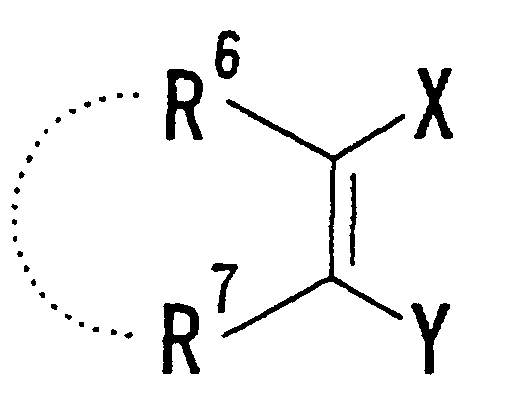

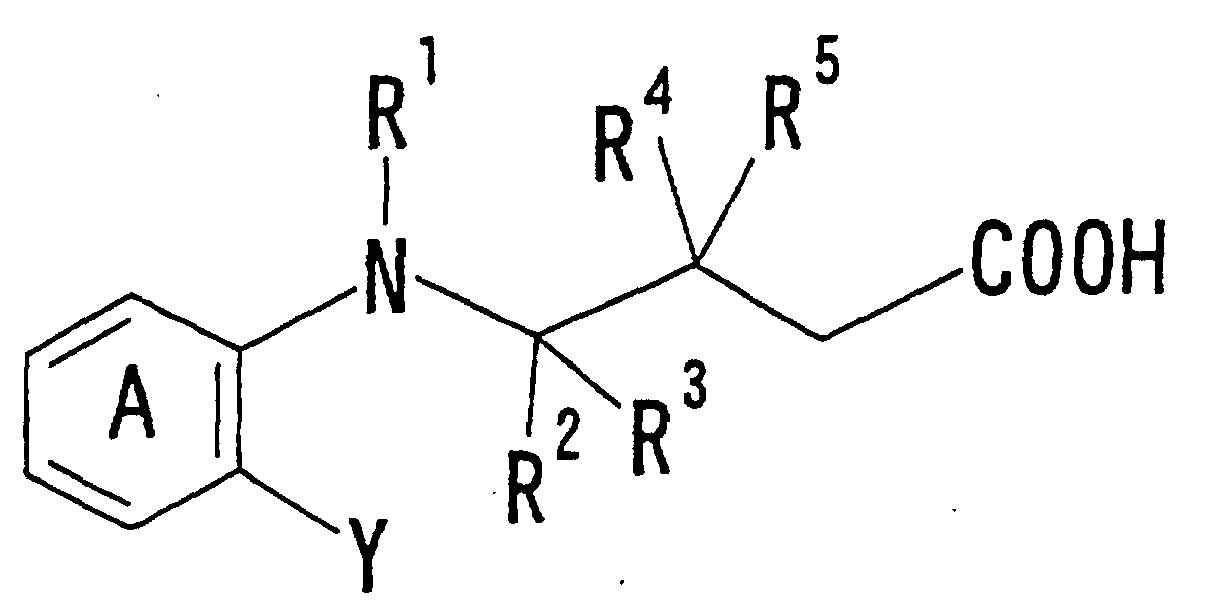

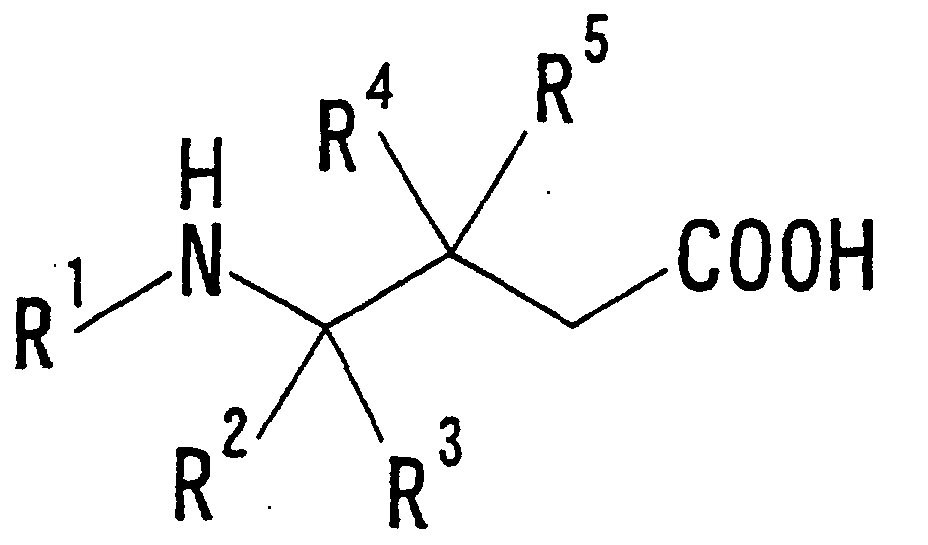

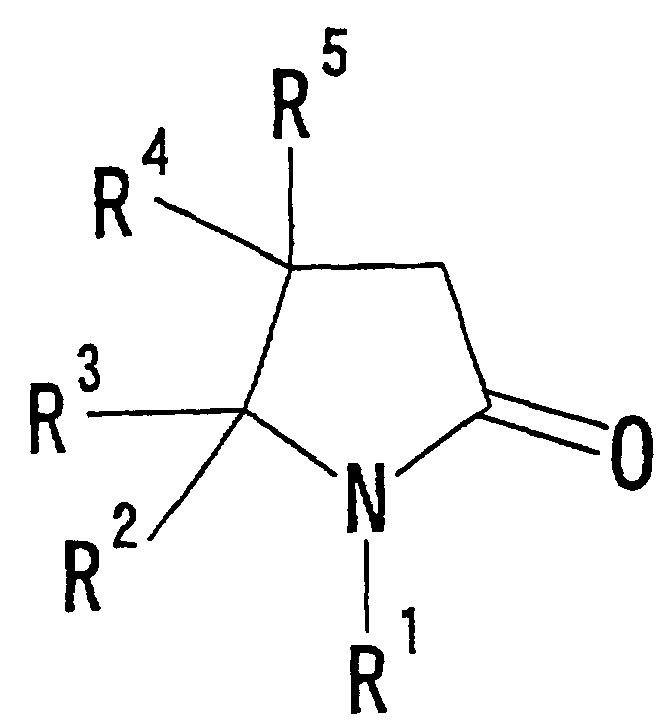
characterized in that the compound of the formula:
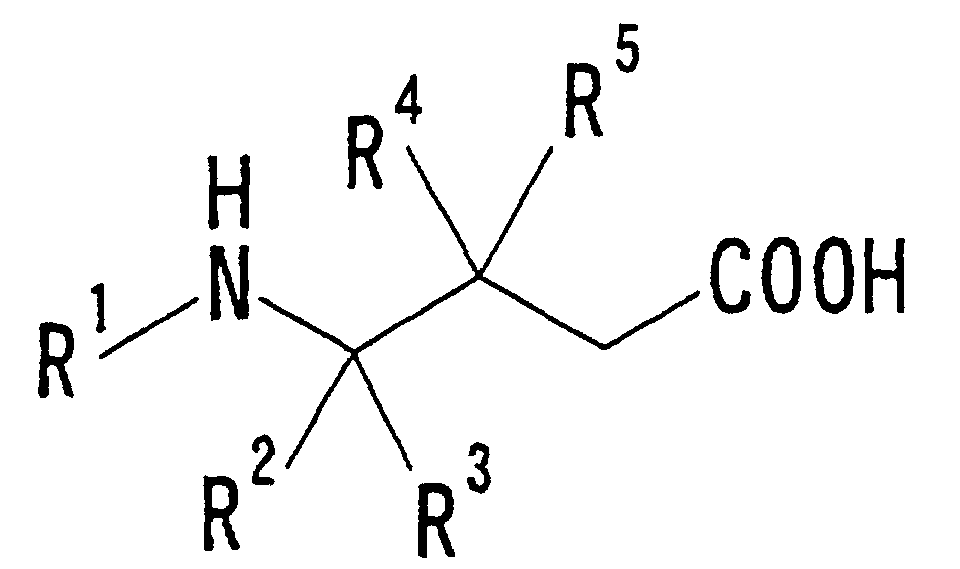
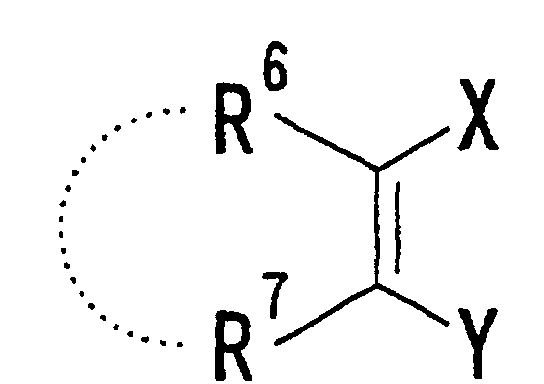

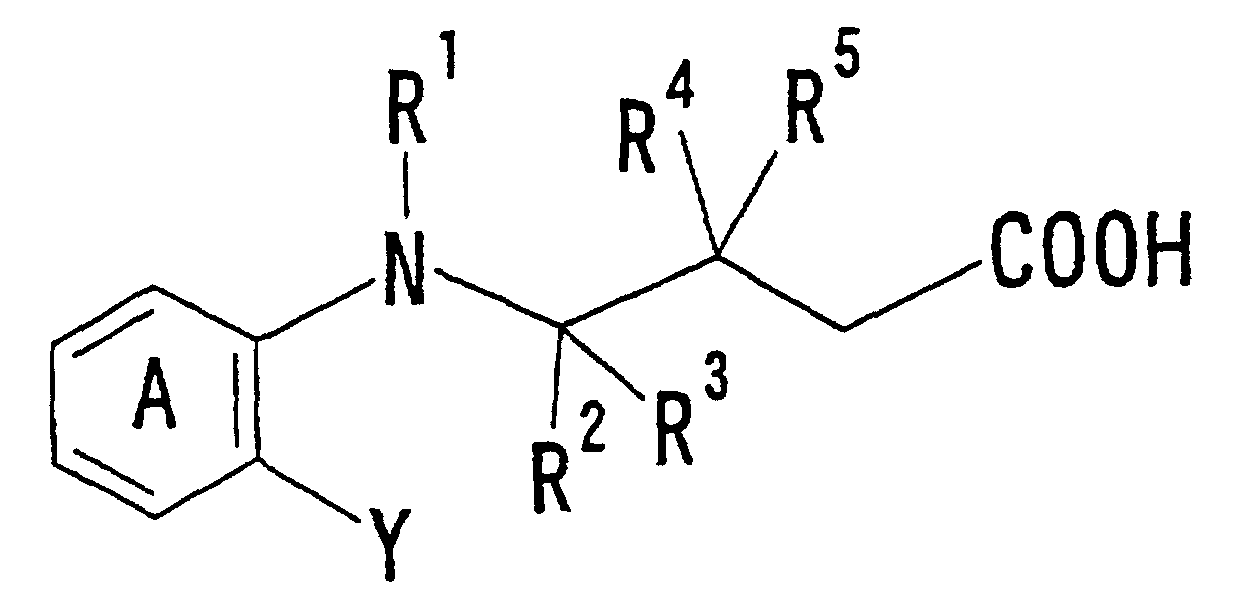

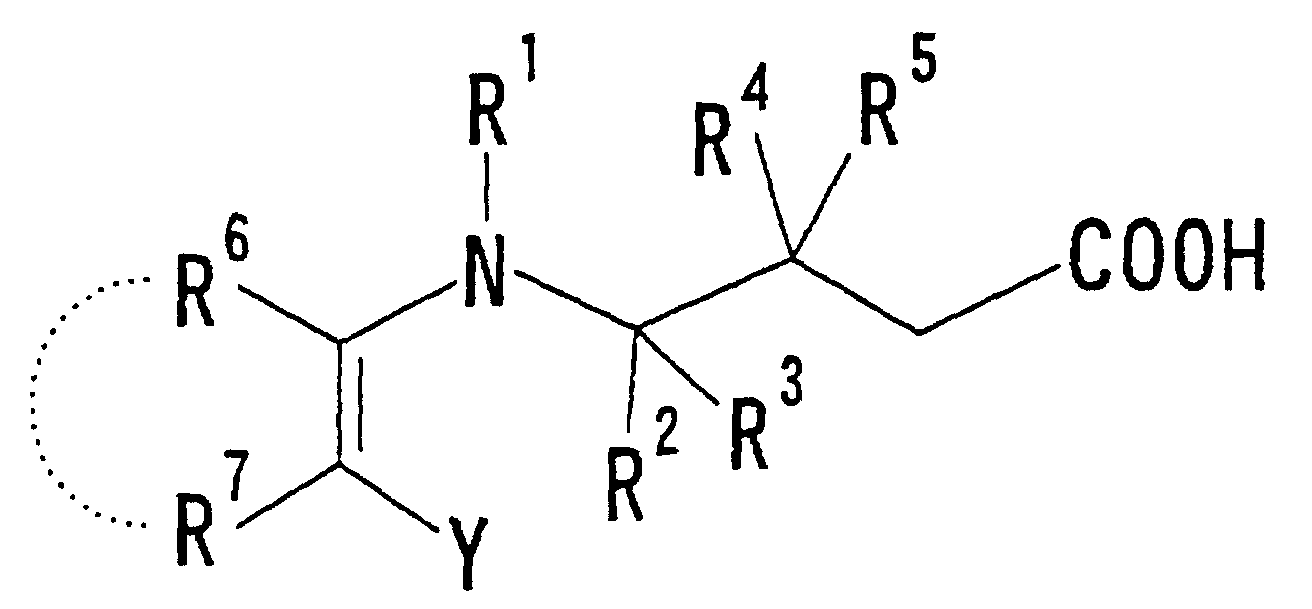


The "electron-withdrawing group" as used herein may
include: (i) an optionally esterified or amidated carboxyl
group; (ii) a group of formula -(CO)R20 wherein R20 is
hydrogen or an optionally substituted hydrocarbon group;
(iii) a nitrile group; (iv) a nitro group; (v) a group of
formula -(SOm)R10 wherein m is 1 or 2, and R10 is an optionally
substituted hydrocarbon group; (vi) a group of formula
-PR11R12 wherein R11 and R12 are independently an optionally
substituted hydrocarbon group; (vii) a group of formula
-(PO) (OR13) (OR14) wherein R13 and R14 are independently hydrogen
or an optionally substituted hydrocarbon group; (viii)
an optionally substituted aryl group; (ix) an optionally
substituted alkenyl group; (x) a halogen atom (e.g., fluorine,
chlorine, bromine, iodine); and (xi) a nitroso group.
Preferred are an optionally esterified or amidated carboxyl
group, a group of formula -(CO)R9, a nitrile group, a nitro
group, a group of formula -(SOm)R10, a group of formula
-PR11R12, and a group of formula (PO) (OR13) (OR14). More
preferred are an optionally esterified carboxyl group (e.g.,
C1-4 alkyl-esterified carboxyl group such as methoxycarbonyl,
ethoxycarbonyl, and t-butoxycarbonyl).
The "esterified carboxyl group" in the "optionally
esterified or amidated carboxyl group" described above in
(i) may include a group of formula -(CO)OR15 wherein R15 is
hydrogen or an optionally substituted hydrocarbon group.
The "amidated carboxyl group" may include a group of formula
-(CO)NR16R17 wherein R16 and R17 are independently hydrogen
or an optionally substituted hydrocarbon group, or R16
and R17 may be combined together with an adjacent nitrogen
atom to form 5- to 7-membered (preferably, 5- to 6-membered)
cyclic amino (e.g., tetrahydropyrrole, piperazine,
piperidine, morpholine, thiomorpholine, pyrrole, imidazole).
In addition, in the formula described above in (vi) or
(vii), R11 and R12 or R13 and R14 may be combined together to
form lower (C2-6) alkylene (e.g., dimethylene, trimethylene,
tetramethylene), lower (C2-6) alkenylene (e.g., -CH2-CH=CH-,
-CH2-CH2-CH=CH-, -CH2-CH=CH-CH2-), and lower (C4-6) alkadienylene
(e.g., -CH=CH-CH=CH-), preferably lower (C1-6)
alkylene, and more preferably lower (C2-4) alkylene. These
divalent groups may have a substituent(s). The substituent
may include a hydroxyl group, halogen, C1-4 alkyl, and C1-4
alkoxy.
The "aryl group" in the optionally substituted aryl
group described above in (viii) may include C6-14 aryl such
as phenyl and naphthyl, preferably C6-10 aryl, and more preferably
phenyl. The aryl group may have 1 to 3 substituents
which are the same substituents as those optionally
carried by the "optionally substituted hydrocarbon group"
as described below.
The "alkenyl group" in the optionally substituted
alkenyl group described above in (ix) may include alkenyl
of 2 to 10 carbon atoms, such as vinyl, allyl, crotyl,
2-pentenyl, and 3-hexenyl, preferably lower (C2-6) alkenyl,
and more preferably vinyl. The alkenyl group may have 1 to
3 substituents which are the same substituents as those
optionally carried by the "optionally substituted hydrocarbon
group" as described below.
The "hydrocarbon group" in the "optionally substituted
hydrocarbon group" as used herein may include:
Among all these groups, preferred is alkyl, more preferred
is C1-4 alkyl such as methyl or ethyl, and in particular,
preferably used is methyl.
The hydrocarbon group may have a substituent(s). The
substituent may include halogen (e.g., fluorine, chlorine,
bromine, iodine), nitro, cyano, a hydroxyl group, an
optionally substituted thiol group (e.g., thiol, C1-4 alkylthio),
an optionally substituted amino group (e.g., amino,
mono-C1-4 alkylamino, di-C1-4 alkylamino, 5- to 6-membered
cyclic amino such as tetrahydropyrrole, piperazine, piperidine,
morpholine, thiomorpholine, pyrrole, and imidazole),
an optionally esterified or amidated carboxyl group (e.g.,
carboxyl, C1-4 alkoxy carbonyl, carbamoyl, mono-C1-4 alkylcarbamoyl,
di-C1-4 alkylcarbamoyl), C1-4 alkyl optionally
substituted with a halogen atom or C1-4 alkoxy (e.g., trifluoromethyl,
methyl, ethyl), C1-4 alkoxy optionally substituted
with a halogen atom or C1-4 alkoxy (e.g., methoxy,
ethoxy, trifluoromethoxy, and trifluoroethoxy), formyl, C2-4
alkanoyl (e.g., acetyl, propionyl), C1-4 alkylsulfonyl (e.g.,
methanesulfonyl, ethanesulfonyl), and C1-4 alkylsulfinyl
(e.g., methanesulfinyl, ethanesulfinyl). The number of
substituents may preferably be 1 to 3.
In the above formulas, R1 and R2, R1 and R4, R2 and R3,
R4 and R5, or R2 and R4 may be combined together with an
adjacent carbon atom or with adjacent carbon and nitrogen
atoms to form a ring by forming lower (C2-6) alkylene (e.g.,
dimethylene, trimethylene, tetramethylene), lower (C2-6)
alkenylene (e.g., -CH2-CH=CH-, -CH2-CH2-CH-CH-, -CH2-CH=CH-CH2),
and lower (C4-6) alkadienylene (e.g., -CH=CH-CH=CH-),
preferably lower (C1-6) alkylene, and more preferably lower
(C2-4) alkylene. In addition, these divalent groups may
have a substituent(s). The substituent may include a
hydroxyl group, halogen, C1-4 alkyl, and C1-4 alkoxy.
The "halogen atom" represented by X, R2, R3, R4, R5, R6,
or R7 in the above formulas may include fluorine, chlorine,
bromine, and iodine.
The "optionally substituted amino group" represented
by R2, R3, R4, R5, R6, or R7 in the above formulas may
include the amino group optionally substituted with the
"optionally substituted hydrocarbon group" as described
above. The number of substituents may be any of 0 to 2 and,
when two substituents are present, these two substituents
may be the same or different. Alternatively, two substituents
may be combined together with an adjacent nitrogen
atom to form 5- to 7-membered (preferably, 5- to 6-membered)
cyclic amino (e.g., tetrahydropyrrole, piperazine,
piperidine, morpholine, thiomorpholine, pyrrole, imidazole).
The "optionally substituted hydroxyl group" represented
by R2, R3, R4, R5, R6, or R7 in the above formulas may
include a hydroxyl group optionally substituted with the
"optionally substituted hydrocarbon group" as described
above.
The "optionally substituted thiol group" represented
by R2, R3, R4, R5, R6, or R7 in the above formulas may
include a thiol group optionally substituted with the
"optionally substituted hydrocarbon group" as described
above.
The "heterocyclic ring" in the "optionally substituted
heterocyclic group" represented by R2, R3, R4, R5, R6, or R7
in the above formulas may include a 5- to 7-membered
aromatic heterocyclic ring, and a saturated or unsaturated
non-aromatic heterocyclic ring (aliphatic heterocyclic
ring) containing at least one (preferably 1 to 4, more
preferably 1 or 2) of one to three kinds (preferably, one
to two kinds) of heteroatoms selected from an oxygen atom,
a sulfur atom, a nitrogen atom, and the like.
The "aromatic heterocyclic ring" may include 5- to 6-membered
aromatic monocyclic heterocyclic rings (e.g.,
furan, thiophene, pyrrole, oxazole, isooxazole, thiazole,
isothiazole, imidazole, pyrazole, 1,2,3-oxadiazole, 1,2,4-oxadiazole,
1,3,4-oxadiazole, furazane, 1,2,3-thiadiazole,
1,2,4-thiadiazole, 1,3,4-thiadiazole, 1,2,3-triazole,
1,2,4-triazole, tetrazole, pyridine, pyridazine, pyrimidine,
pyrazine, triazine). The "non-aromatic heterocyclic ring"
may include 5- to 7-membered (preferably, 5- to 6-membered)
saturated or unsaturated (preferably, saturated) non-aromatic
heterocyclic rings (aliphatic heterocyclic rings)
such as pyrrolidine, tetrahydrofuran, thiolane, piperidine,
tetrahydropyran, morpholine, thiomorpholine, piperazine,
and pyran); and 5- to 6-membered non-aromatic heterocyclic
rings in which some or all of the double bonds in the above
aromatic monocyclic heterocyclic rings have been saturated.
As the heterocyclic rings, preferred are 5- to 6-membered
aromatic rings. Further, furan, thiophene, pyrrole, and
pyridine (preferably, 6-membered ring) are preferred.
The substituents optionally carried by the heterocyclic
rings may include the same substituents as those
optionally carried by the "optionally substituted hydrocarbon
group" as described above. The number of substituents
may be 1 to 3.
In the above formulas, the Y may preferably be an
optionally substituted acyl group. In particular, preferred
is a group of the formula -(CO)R20 wherein R20 is
hydrogen or an optionally substituted hydrocarbon group.
The R1 may preferably be an optionally substituted hydrocarbon
group. The R2, R3, R4, or R5 may preferably be a
hydrogen atom or an optionally substituted hydrocarbon
group, more preferably a hydrogen atom. The R9 may preferably
be a hydrogen atom. The R6 or R7 may preferably be
combined together to form an optionally substituted benzene
ring.
The substituents optionally carried by the "optionally
substituted benzene ring" as used herein may include the
same substituents as those optionally carried by the
"optionally substituted hydrocarbon group" as described
above; the above "optionally substituted aryl group" which
may be bonded through a spacer (e.g., a divalent group of
1 to 4 atoms forming a straight chain moiety) (preferably,
the above "optionally substituted aryl group" which is
directly bonded). In particular, it may preferably be an
electron-donating group. The number of substituents may be
1 to 4.
The "spacer" may include -(CH2)a- [wherein a is an
integer of 1 to 4 (preferably, integer of 1 to 2)],
-(CH2)b-X'- [wherein b is an integer of 0 to 3 (preferably
0 or 1) and X' is an optionally substituted imino group
(e.g., an imino group optionally substituted with lower
(C1-6) lower alkyl, lower (C3-7) cycloalkyl, formyl, lower
(C2-7) lower alkanoyl, lower (C1-6) lower alkoxy-carbonyl, or
the like), a carbonyl group, an oxygen atom or an optionally
oxidized sulfur atom (e.g., -S(O)n- wherein n is an
integer of 0 to 2)], -CH=CH-, -C≡C-, -CO-NH-, and -SO2-NH-(preferably-(CH2)b-X'-,
more preferably -CH2-O-). These
groups may be bonded with the "optionally substituted
benzene ring" through either their right or left bond.
They may preferably be bonded with the "optionally
substituted benzene ring" through their right bond.
The ring formed by combining R6 and R7 may include 5-to
7-membered (preferably, 5- to 6-membered) unsaturated
alicyclic hydrocarbons such as C5-7 cycloalkene (e.g., 1-cyclopentene,
2-cyclopentene, 3-cyclopentene, 2-cyclohexne,
3-cyclohexne) and C5-6 cycloalkadiene (e.g., 2,4-cyclopentadiene,
2,4-cyclohexadiene, 2,4-cyclohexadiene); 6-membered
aromatic hydrocarbons such as benzene; 5- to 7-membered
aromatic heterocyclic rings and unsaturated non-aromatic
heterocyclic rings (aliphatic heterocyclic rings), which
contain at least one (preferably 1 to 4, more preferably
1 or 2) of one to three kinds (preferably, one or two
kinds) of heteroatoms selected from an oxygen atom, a
sulfur atom, a nitrogen atom, and the like.
The "aromatic heterocyclic rings" may include 5- to 6-membered
aromatic monocyclic heterocyclic rings (e.g.,
furan, thiophene, pyrrole, oxazole, isooxazole, thiazole,
isothiazole, imidazole, pyrazole, 1,2,3-oxadiazole, 1,2,3-thiadiazole,
1,2,3-triazole, pyridine, pyridazine, pyrimidine,
pyrazine). The "non-aromatic heterocyclic rings" may
include 5- to 6-membered non-aromatic heterocyclic rings in
which some of the double bonds in the above aromatic monocyclic
heterocyclic rings are saturated.
The ring formed by combining R6 and R7 may preferably
be a 5- to 6-membered aromatic ring. Further, preferred
are benzene, furan, thiophene, pyrrole, and pyridine
(preferably, 6-membered rings). In particular, benzene is
preferred.
The ring formed by combining R6 and R7 may have a
substituent(s). The substituents may include the same
substituents as those optionally carried by the benzene
ring in the "optionally substituted benzene ring" as
described above. One to three of the same or different
substituents may be attached to any replaceable position.
The leaving group used herein may include a halogen
atom (e.g., fluorine, chlorine, bromine, iodine) and a
group of formula -O(SOm)R wherein m is 1 or 2, and R is an
optionally substituted hydrocarbon group (preferably,
optionally halogenated C1-4 alkyl, and more preferably
trifluoromethyl). Among all these groups, preferred is a
halogen atom, and particularly preferred is a fluorine atom.
The "optionally substituted acyl group" represented by
R1 in the above formulas may include a group of formula
-(CO)R' wherein R' is a hydrogen atom, an optionally substituted
hydrocarbon group, or an optionally substituted
heterocyclic group. The "optionally substituted heterocyclic
group" represented by R' may include the same as the
"optionally substituted heterocyclic group" represented by
R2, R3, R4, R5, R6, or R7.
The "substituted sulfonyl group" represented by R1 in
the above formulas may include a group of formula -(SO2)R"
wherein R'' is an optionally substituted hydrocarbon group
or an optionally substituted heterocyclic group. The
"optionally substituted heterocyclic group" represented by
P'' may include the same as the "optionally substituted
heterocyclic group" represented by R2, R3, R4, R5, R6, or R7.
Depending upon the kinds of substituents as described
above, when compounds having these substituents are basic
compounds, they can be converted into salts by the use of
an acid according to the ordinary method. The acid may be
any one, so long as it does not adversely affect the reaction.
Examples thereof may include inorganic acids such as
hydrochloric acid, hydrobromic acid, phosphoric acid, sulfuric
acid, nitric acid, and sulfamic acid; organic acids
such as formic acid, acetic acid, trifluoroacetic acid,
tartaric acid, citric acid, fumaric acid, maleic acid,
succinic acid, malic acid, p-toluenesulfonic acid, methanesulfonic
acid, and benzenesulfonic acid; and acidic amino
acids such as aspartic acid and glutamic acid. When the
resulting compounds are salts, they may be converted into
free bases according to the ordinary method.
On the other hand, depending upon the kinds of substituents
as described above, when compounds having these
substituents are acidic compounds, they can be converted
into salts by the use of a base according to the ordinary
method. The salt with a base may be a salt with any base,
so long as it does not adversely affect the reaction.
Examples thereof may include salts with inorganic bases,
salts with organic bases, and salts with basic amino acids.
Preferred examples of the salts with inorganic bases may
include alkali metal salts such as sodium salts and potassium
salts; alkaline earth metal salts such as calcium
salts and magnesium salts; as well as aluminum salts and
ammonium salts. Preferred examples of the salts with
organic bases may include salts with trimethylamine, triethylamine,
pyridine, picoline, ethanolamine, diethanolamine,
triethanolamine, dicyclohexylamine, and N,N'-dibenzylethylenediamine.
Preferred examples of the salts
with basic amino acids may include salts with arginine,
lysine, and ornithine. When the resulting compounds are
salts, they may be converted into free acids according to
the ordinary method.
The reaction described above in (1) is carried out,
for example, under the following reaction conditions.
A compound of the formula:
 wherein each variable is as defined above, or a salt thereof,
is reacted with a compound of the formula:
wherein each variable is as defined above, or a salt thereof,
is reacted with a compound of the formula:
 wherein each variable is as defined above, or a salt thereof,
to give a compound of the formula:
wherein each variable is as defined above, or a salt thereof,
to give a compound of the formula:
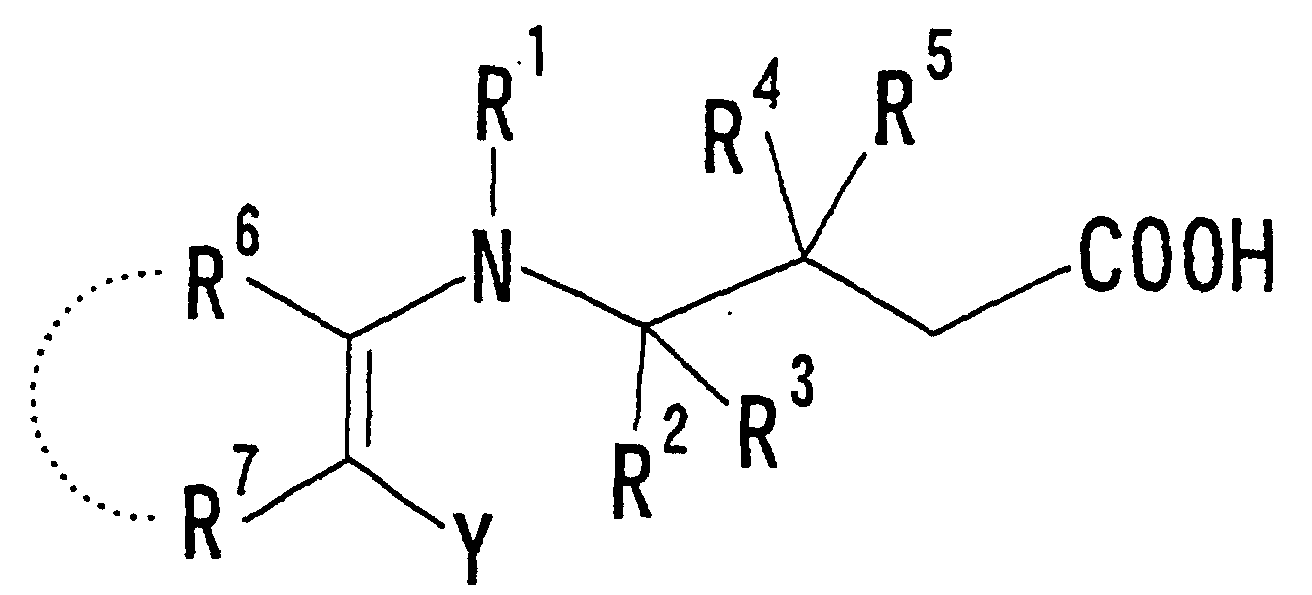 wherein each variable is as defined above, or a salt thereof.
The reaction described above in (1) is preferably
carried out in the presence of a base. The base may
include metal hydrides (e.g., alkali metal hydrides such as
sodium hydride and potassium hydride), metal hydrocarbons
(e.g., compounds each having a chemical bond in which C1-4
alkyl is directly bonded with an alkali metal, such as
n-butyl lithium), alcoholates (e.g., compounds in which the
hydrogen of a hydroxyl group in a C1-4 alcohol is replaced
with an alkali metal, such as NaOMe, NaOEt, t-BuONa, and
t-BuOK), alkali metal hydroxides (e.g., NaOH, KOH), basic
carbonates (e.g., carbonates with alkali metal salts such
as sodium salts, potassium salts, and cesium salts, or with
alkaline earth metal salts such as calcium salts and magnesium
salts), basic bicarbonates (e.g., hydrogencarbonates
with alkali metal salts such as sodium salts and potassium
salts), organic bases (e.g., trimethylamine, triethylamine,
diisopropylethylamine, pyridine, picoline, N-methylpyrrolidine,
N-methylmorpholine, 1,5-diazabicyclo[4.3.0]non-5-ene,
1,4-diazabicyclo[2.2.2]octane, and 1,8-diazabicyclo[5.4.0]-7-undecene).
Among all these bases, preferably used are
basic carbonates (e.g., carbonates with alkali metal salts
such as sodium salts, potassium salts, and cesium salts, or
with alkaline earth metal salts such as calcium salts and
magnesium salts).
The amount of base used in the reaction described
above in (1) is about 0.1 to 100 equivalents, preferably
about 0.5 to 5 equivalents.
Relative to the compound of the formula:
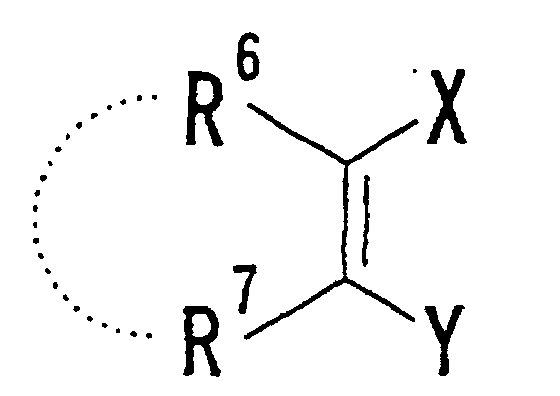 wherein each variable is as defined above, or a salt thereof,
the compound of the formula:
wherein each variable is as defined above, or a salt thereof,
the compound of the formula:
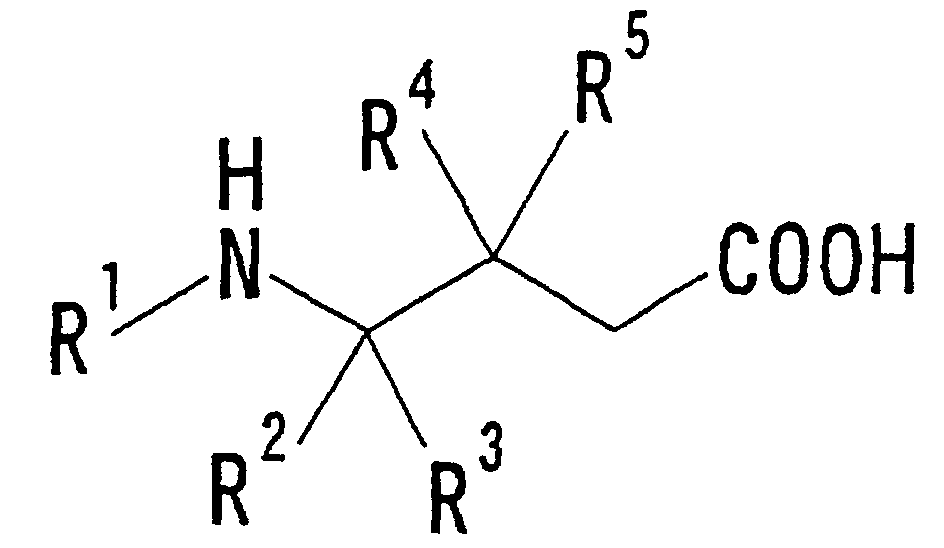 wherein each variable is as defined above, or a salt thereof,
is used at about 0.1 to 100 equivalents, preferably
about 0.5 to 5 equivalents.
wherein each variable is as defined above, or a salt thereof,
is used at about 0.1 to 100 equivalents, preferably
about 0.5 to 5 equivalents.
As the reaction solvent, used are halogen solvents
(e.g., methylene chloride, dichloroethane, chloroform),
aliphatic hydrocarbons (e.g., n-hexane), aromatic hydrocarbons
(e.g., benzene, toluene), ethers (e.g., tetrahydrofuran
(THF), diethyl ether, isopropyl ether (IPE)), polar
solvents (e.g., water, acetonitrile, dimethylformamide
(DMF), dimethyl sulfoxide (DMSO), dimethylacetamide (DMAC)),
and protonic solvents (e.g., alcohols such as methanol,
ethanol, propanol, isopropanol, n-butanol, and 2-methoxyethanol).
In the reaction, a suitable mixed solvent may be
used. Among all these solvents, preferably used are polar
solvents (preferably, water-containing DMSO and water-containing
DMAC).
The reaction temperature is usually about 0°C to 200°C,
preferably about 50°C to 150°C. The reaction time is usually
about 0.5 to 100 hours, preferably about 1 to 50 hours.
The reaction described above in (5) is carried out,
for example, by the following step.
The compound of the formula:
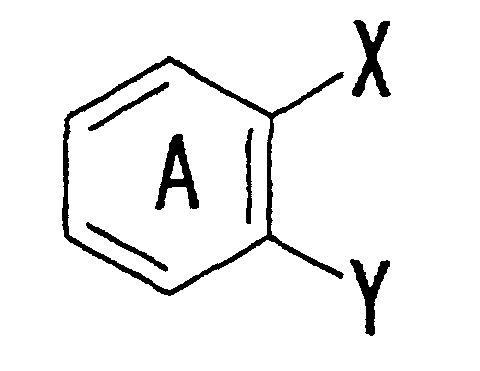 wherein each variable is as defined above, or a salt thereof,
is reacted with the compound of the formula:
wherein each variable is as defined above, or a salt thereof,
is reacted with the compound of the formula:
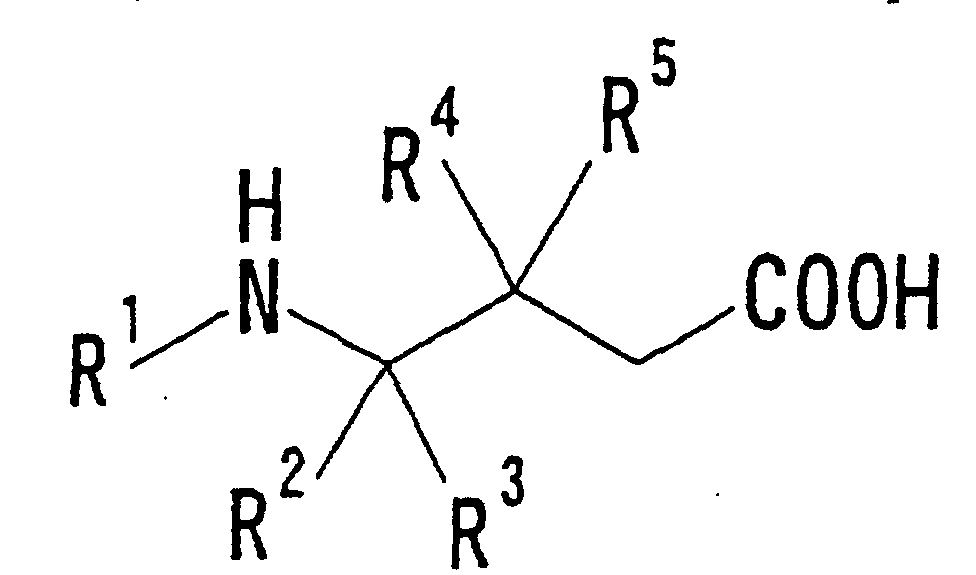 wherein each variable is as defined above, or a salt thereof,
to give a compound of the formula:
wherein each variable is as defined above, or a salt thereof,
to give a compound of the formula:
 wherein each variable is as defined above, or a salt thereof.
The reaction described above in (5) is carried out
under the same reaction conditions as those for the reaction
described above in (1).
The reaction described above in (6) is carried out,
for example, under the following reaction conditions:
The compound of the formula:
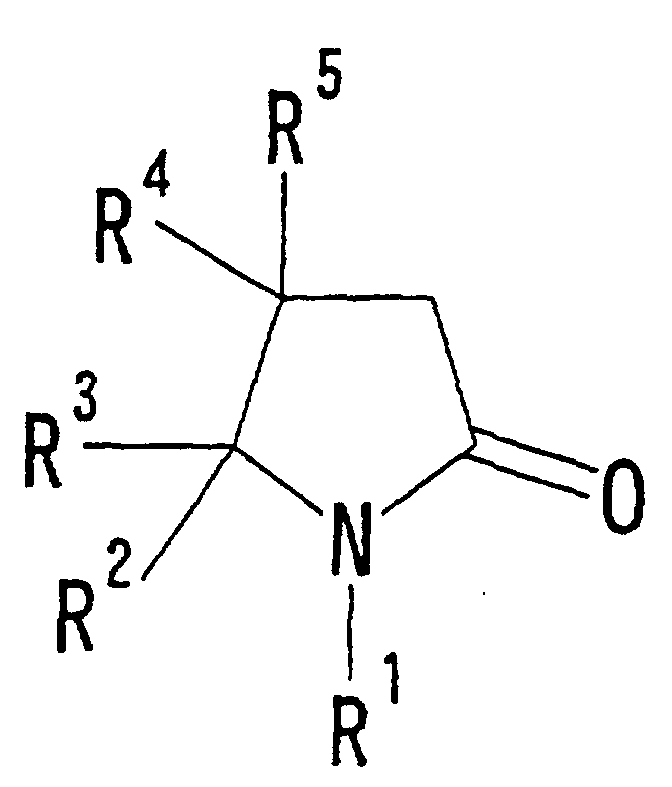 wherein each variable is as defined above, or a salt thereof,
is hydrolyzed to give a compound of the formula:
wherein each variable is as defined above, or a salt thereof,
is hydrolyzed to give a compound of the formula:
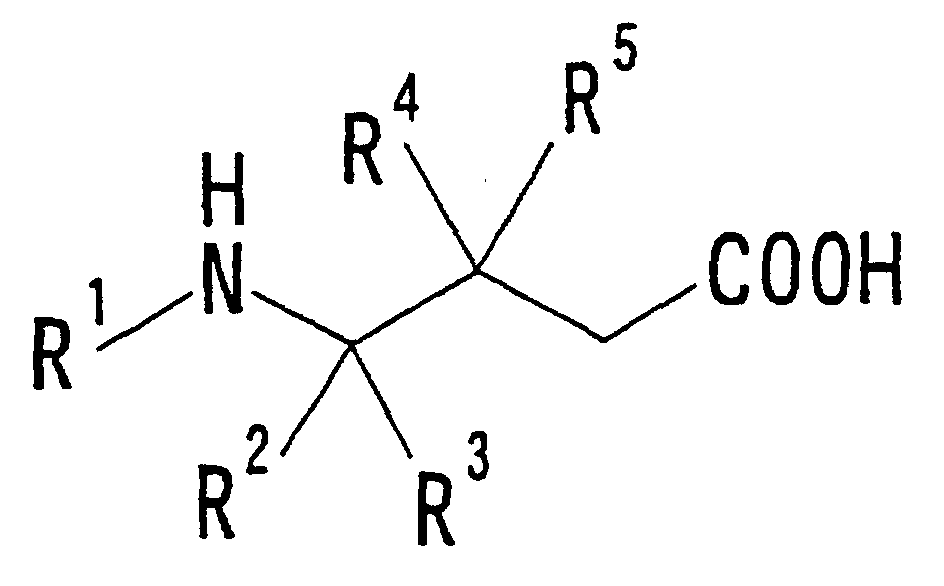 wherein each variable is as defined above, or a salt thereof,
and the resulting compound or a salt thereof is subjected
to the reaction described above in (1) to give a
compound of the formula:
wherein each variable is as defined above, or a salt thereof,
and the resulting compound or a salt thereof is subjected
to the reaction described above in (1) to give a
compound of the formula:
 wherein each variable is as defined above, or a salt thereof.
In this reaction, the intermediate may or may not be
isolated; however, two steps may preferably be carried out
continuously without isolating the intermediate.
wherein each variable is as defined above, or a salt thereof.
In this reaction, the intermediate may or may not be
isolated; however, two steps may preferably be carried out
continuously without isolating the intermediate.
The above hydrolysis can be carried out according to
the method known per se and, for example, can be carried
out by hydrolysis with an acid or an alkali. As the acid,
for example, hydrochloric acid, sulfuric acid, or hydrobromic
acid is used. As the alkali, lithium hydroxide,
potassium hydroxide, sodium hydroxide, calcium hydroxide,
or barium hydroxide is used.
The reaction described above in (16) is carried out,
for example, under the following reaction conditions.
The compound of the formula:
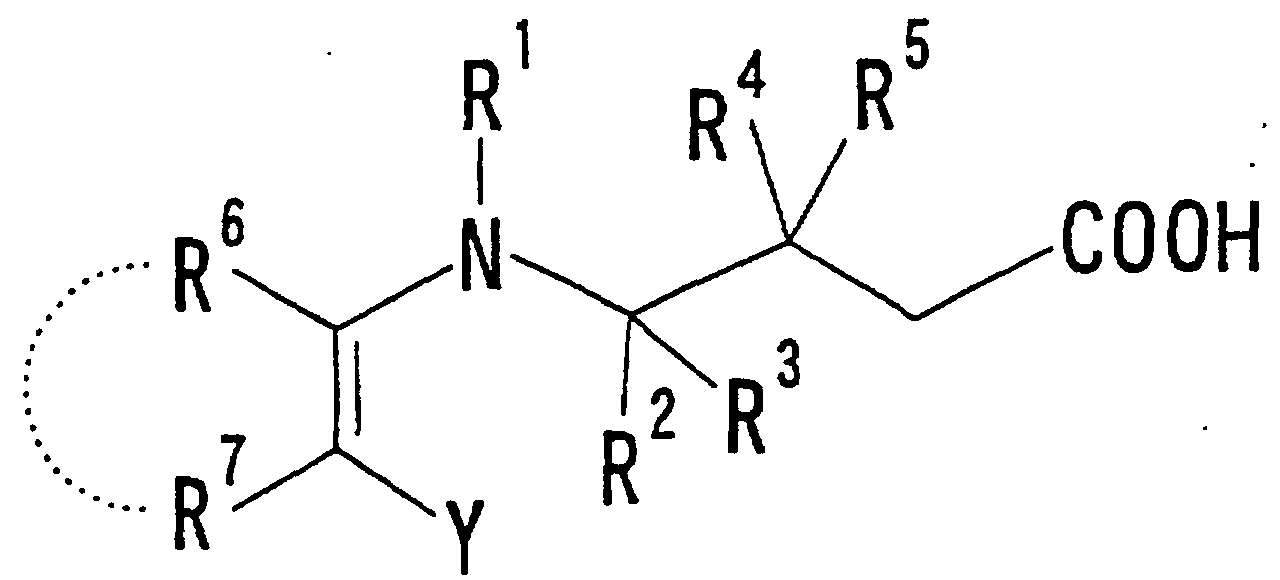 wherein each variable is as defined above, or a salt thereof,
which is obtained by the reaction described above in
(1), is subjected to esterification to give a compound of
the formula:
wherein each variable is as defined above, or a salt thereof,
which is obtained by the reaction described above in
(1), is subjected to esterification to give a compound of
the formula:
 wherein each variable is as defined above, or a salt thereof.
The esterification is a reaction for converting free
acids into esters by the means known per se. For example,
esters can be prepared by reacting free acids or their
reactive derivatives with alcohols (R8-OH) corresponding to
substituent R8, or reacting free acids or their salts with
halogenated alkyl compounds (X-R5 wherein X is a halogen
atom) corresponding to substituent R8.
The reaction described above in (20) is carried out,
for example, by the following step.
The compound of the formula:
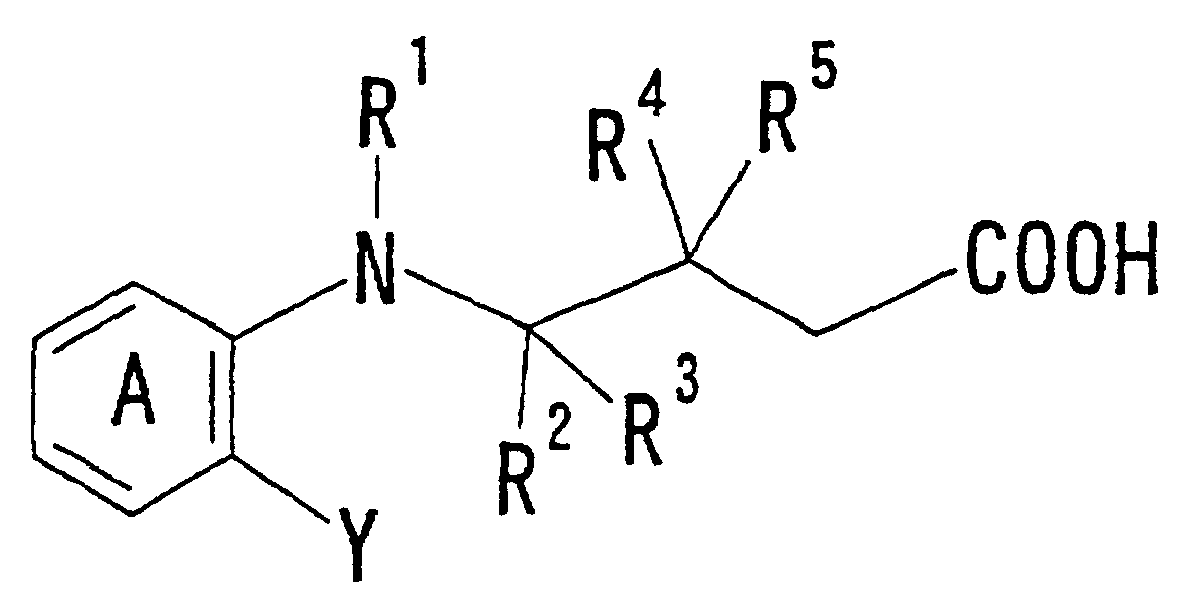 wherein each variable is as defined above, or a salt thereof,
which is obtained by the process described above in (5),
is subjected to esterification to give a compound of the
formula:
wherein each variable is as defined above, or a salt thereof,
which is obtained by the process described above in (5),
is subjected to esterification to give a compound of the
formula:
 wherein each variable is as defined above, or a salt thereof.
The reaction described above in (20) is carried out,
for example, under the same reaction conditions as those
for the reaction described above in (16).
The reaction described above in (21) is carried out,
for example, under the following conditions.
The compound of the formula:
 wherein each variable is as defined above, or a salt thereof,
which is obtained by the reaction described above in
(16), is subjected to ring-closing reaction to give a
compound of the formula:
wherein each variable is as defined above, or a salt thereof,
which is obtained by the reaction described above in
(16), is subjected to ring-closing reaction to give a
compound of the formula:
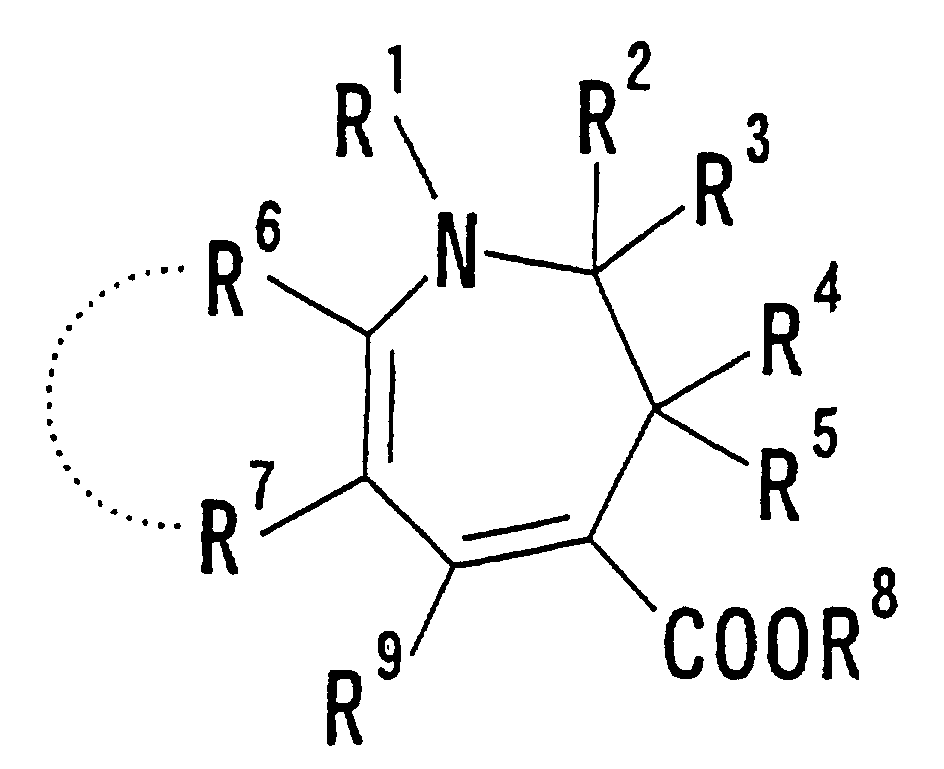 wherein each variable is as defined above, or a salt thereof.
In this reaction, the intermediate obtained by the
reaction described above in (16) may or may not be isolated;
however, two steps may preferably be carried out
continuously without isolating the intermediate.
wherein each variable is as defined above, or a salt thereof.
In this reaction, the intermediate obtained by the
reaction described above in (16) may or may not be isolated;
however, two steps may preferably be carried out
continuously without isolating the intermediate.
The reaction described above in (21) may preferably be
carried out in the presence of a base. The base may
include metal hydrides (e.g., alkali metal hydrides such as
sodium hydride and potassium hydride), metal hydrocarbons
(e.g., compounds each having a chemical bond in which C1-4
alkyl is directly bonded with an alkali metal, such as
n-butyl lithium), alcoholates (e.g., compounds in which the
hydrogen of a hydroxy group in a C1-4 alcohol is replaced
with an alkali metal, such as NaOMe, NaOEt, t-BuONa, and
t-BuOK), alkali metal hydroxides (e.g., NaOH, KOH), basic
carbonates (e.g., carbonates with alkali metal salts such
as sodium salts, potassium salts, and cesium salts, or with
alkaline earth metal salts such as calcium salts and magnesium
salts), basic bicarbonates (e.g., bicarbonates with
alkali metal salts such as sodium salts and potassium
salts), organic bases (e.g., trimethylamine, triethylamine,
diisopropylethylamine, pyridine, picoline, N-methylpyrrolidine,
N-methylmorpholine, 1,5-diazabicyclo[4.3.0]non-5-ene,
1,4-diazabicyclo[2.2.2]octane, 1,8-diazabicyclo[5.4.0]-7-undecene).
Among all these bases, preferably used are
alcoholates (e.g., compounds in which the hydrogen of a
hydroxy group in a C1-4 alcohol is replaced with an alkali
metal, such as NaOMe, NaOEt, t-BuONa, and t-BuOk).
The amount of base used in the reaction described
above in (21) is about 0.1 to 100 equivalents, preferably
about 0.5 to 5 equivalents.
As the reaction solvent, used are halogen solvents
(e.g., methylene chloride, dichloroethane, chloroform),
aliphatic hydrocarbons (e.g., n-hexane), aromatic hydrocarbons
(e.g., benzene, toluene), ethers (e.g., tetrahydrofuran
(THF), diethyl ether, isopropyl ether (IPE)), polar
solvents (e.g., water, acetonitrile, dimethylformamide
(DMF), dimethyl sulfoxide (DMSO), DMAC), protonic solvents
(e.g., alcohols such as methanol, ethanol, propanol, isopropanol,
n-butanol, and 2-methoxyethanol), carbonic acid
diesters (e.g., carbonic acid di-C1-4 alkyl esters such as
dimethyl carbonate and diethyl carbonate), formic acid
esters (e.g., formic acid C1-4 alkyl esters), and oxalic
acid diesters (e.g., oxalic acid di-C1-4 alkyl ester). In
the reaction, a suitable mixed solvent may be used. Among
all these solvents, preferably used are solvents containing
carbonic acid diesters.
The reaction temperature is usually about -20°C to
200°C, preferably about 10°C to 100°C. The reaction time
is usually about 0.1 to 100 hours, preferably about 0.5 to
50 hours.
The reaction described above in (26) is carried out,
for example, by the following step.
The compound of the formula:
 wherein each variable is as defined above, or a salt thereof,
which is obtained by the reaction described above in
(20), is subjected to ring-closing reaction to give a
compound of the formula:
wherein each variable is as defined above, or a salt thereof,
which is obtained by the reaction described above in
(20), is subjected to ring-closing reaction to give a
compound of the formula:
 wherein each variable is as defined above, or a salt thereof.
The reaction described above in (26) is carried out,
for example, under the same reaction conditions as those
for the reaction described above in (21).
The compound of the formula:
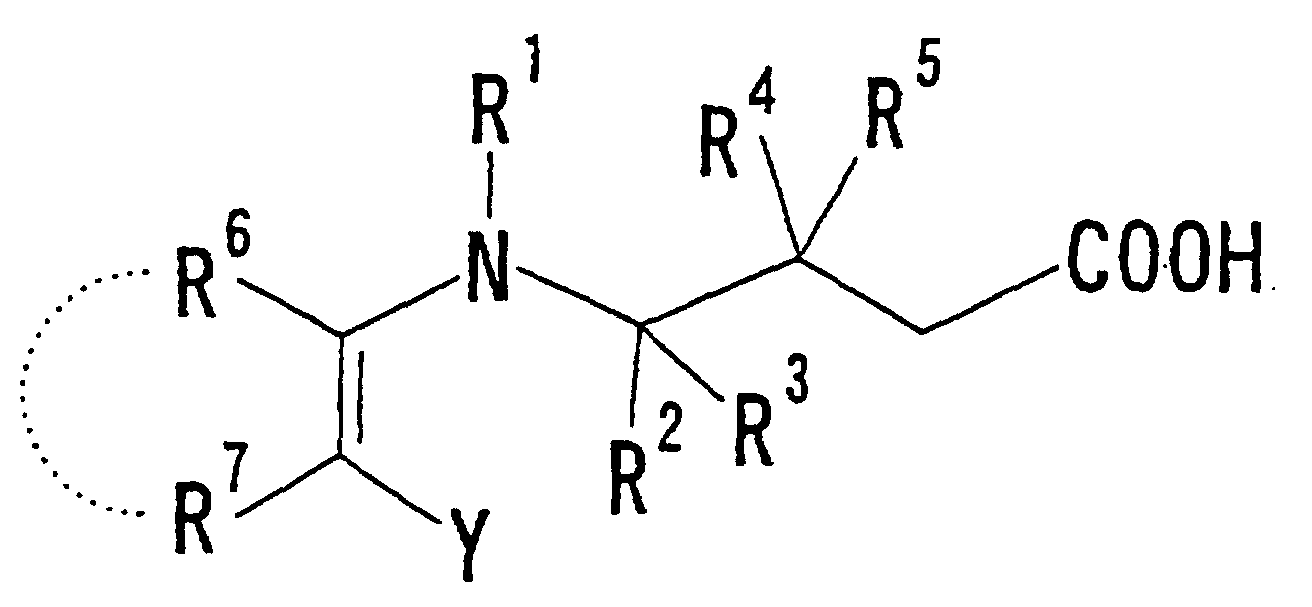 wherein Y is an electron-withdrawing group; R1 is an
optionally substituted hydrocarbon group, an optionally
substituted acyl group, or a substituted sulfonyl group;
R2, R3, R4, R5, R6, and R7 are independently a hydrogen atom,
a halogen atom, an optionally substituted amino group, an
optionally substituted hydroxyl group, an optionally substituted
thiol group, an optionally substituted hydrocarbon
group, or an optionally substituted heterocyclic group; or
R1 and R2, R1 and R4, R2 and R3, R4 and R5, R2 and R4, or R6
and R7 may form a ring, or a salt thereof, which is
obtained by the reaction described above in (1); and the
compound of the formula:
wherein Y is an electron-withdrawing group; R1 is an
optionally substituted hydrocarbon group, an optionally
substituted acyl group, or a substituted sulfonyl group;
R2, R3, R4, R5, R6, and R7 are independently a hydrogen atom,
a halogen atom, an optionally substituted amino group, an
optionally substituted hydroxyl group, an optionally substituted
thiol group, an optionally substituted hydrocarbon
group, or an optionally substituted heterocyclic group; or
R1 and R2, R1 and R4, R2 and R3, R4 and R5, R2 and R4, or R6
and R7 may form a ring, or a salt thereof, which is
obtained by the reaction described above in (1); and the
compound of the formula:
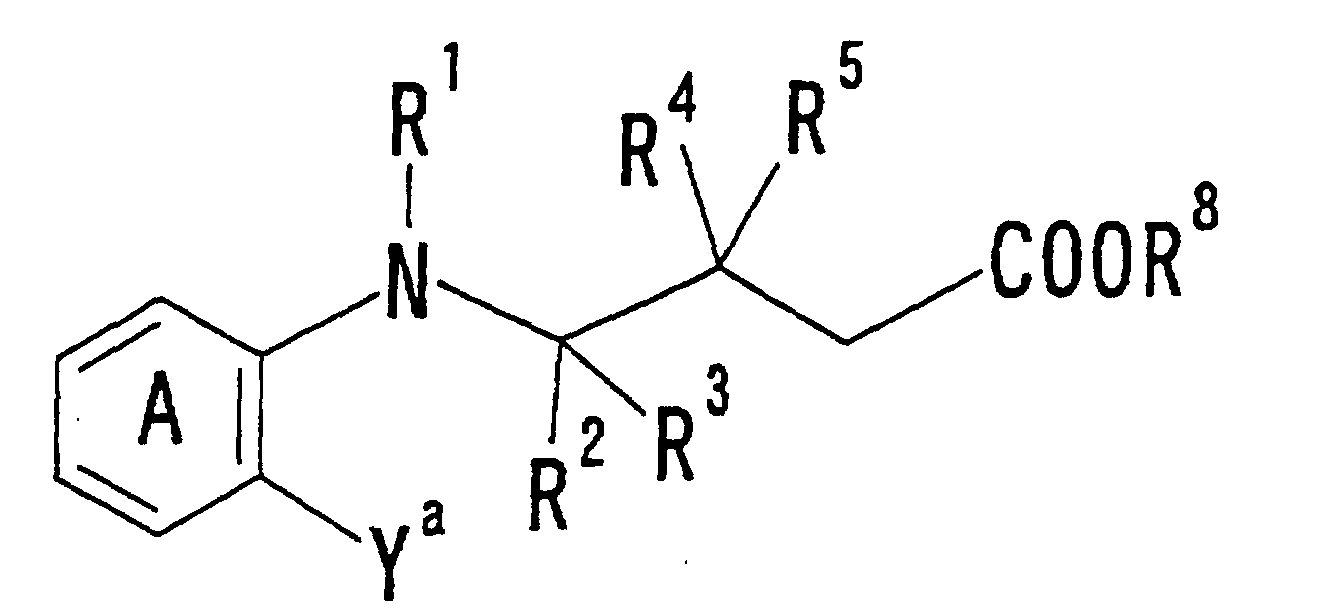
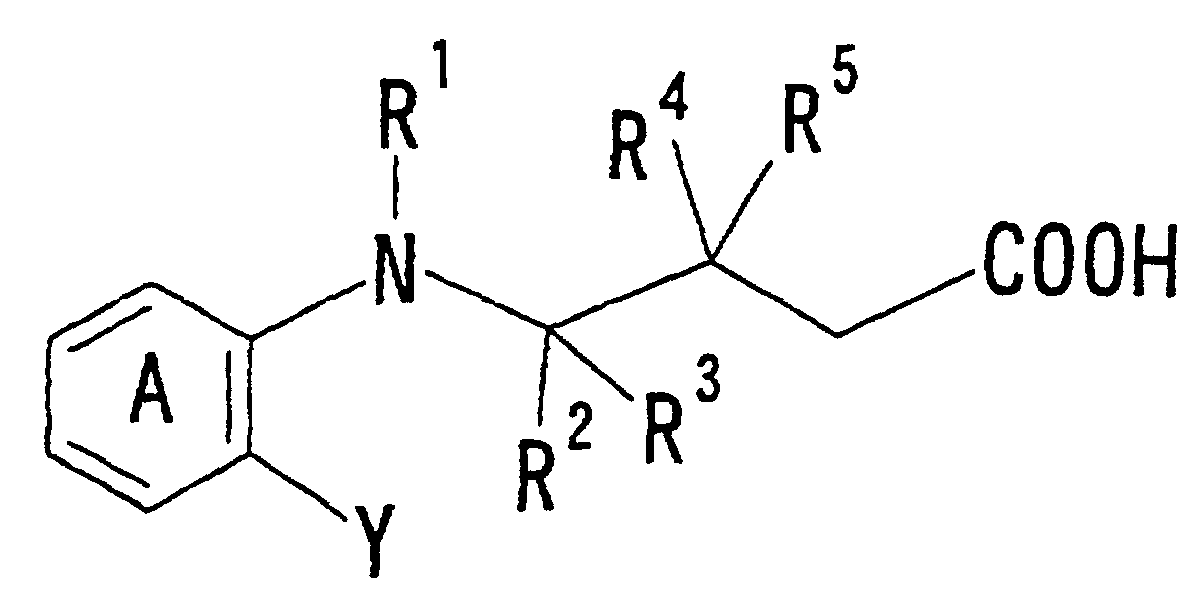 wherein Y is an electron-withdrawing group; ring A is an
optionally substituted benzene ring; R1 is an optionally
substituted hydrocarbon group, an optionally substituted
acyl group, or a substituted sulfonyl group; R2, R3, R4, and
R5 are independently a hydrogen atom, a halogen atom, an
optionally substituted amino group, an optionally substituted
hydroxyl group, an optionally substituted thiol group,
an optionally substituted hydrocarbon group, or an optionally
substituted heterocyclic group; or R1 and R2, R1 and R4,
R2 and R3, R4 and R5, or R2 and R4 may form a ring, or a salt
thereof, are novel compounds and useful as intermediates
for synthesizing anilide derivatives described, for example,
in WO99/32100, WO99/32468, and Japanese Patent Application
No. 11-170345, by their being subjected to esterification
and ring-closing reaction according to the reactions
described above in (16) and (21), respectively, followed by
the optional hydrolysis of the resulting esters, and then
condensation with aniline derivatives according to the
method known per se.
wherein Y is an electron-withdrawing group; ring A is an
optionally substituted benzene ring; R1 is an optionally
substituted hydrocarbon group, an optionally substituted
acyl group, or a substituted sulfonyl group; R2, R3, R4, and
R5 are independently a hydrogen atom, a halogen atom, an
optionally substituted amino group, an optionally substituted
hydroxyl group, an optionally substituted thiol group,
an optionally substituted hydrocarbon group, or an optionally
substituted heterocyclic group; or R1 and R2, R1 and R4,
R2 and R3, R4 and R5, or R2 and R4 may form a ring, or a salt
thereof, are novel compounds and useful as intermediates
for synthesizing anilide derivatives described, for example,
in WO99/32100, WO99/32468, and Japanese Patent Application
No. 11-170345, by their being subjected to esterification
and ring-closing reaction according to the reactions
described above in (16) and (21), respectively, followed by
the optional hydrolysis of the resulting esters, and then
condensation with aniline derivatives according to the
method known per se.
In addition, the compound of the formula:
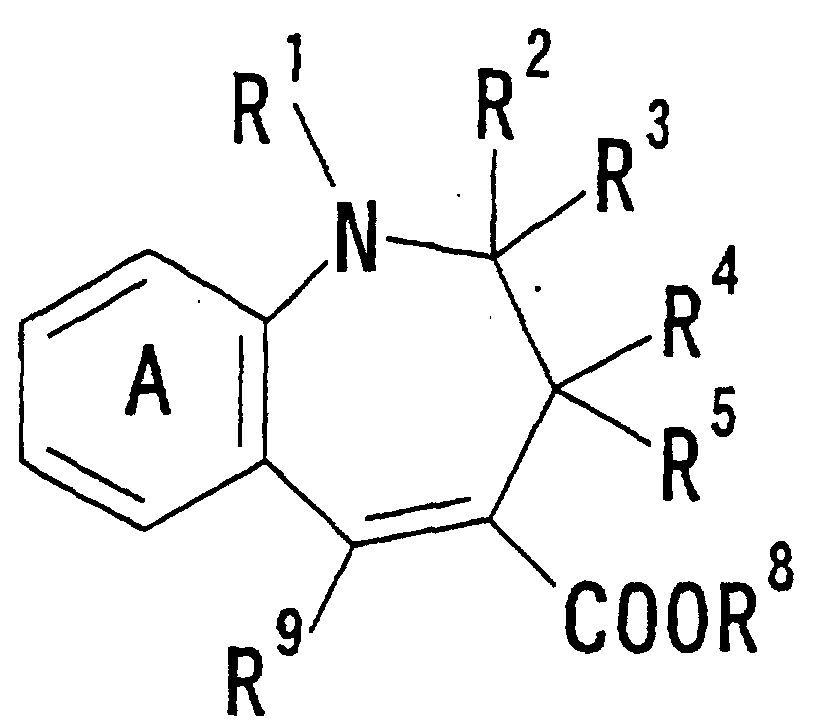 wherein each variable is as defined above, or a salt thereof,
which is obtained by the reaction described above in
(26), can be converted into a free acid, a salt thereof, or
a reactive derivative thereof, and then subjected to
condensation with the compound of the formula:
wherein each variable is as defined above, or a salt thereof,
which is obtained by the reaction described above in
(26), can be converted into a free acid, a salt thereof, or
a reactive derivative thereof, and then subjected to
condensation with the compound of the formula:
 wherein R23 and R24 are independently an optionally substituted
hydrocarbon group or an optionally substituted
heterocyclic group, or a salt thereof (well-known condensation
described, for example, in WO99/32100 or WO99/32468)
to give a compound of the formula:
wherein R23 and R24 are independently an optionally substituted
hydrocarbon group or an optionally substituted
heterocyclic group, or a salt thereof (well-known condensation
described, for example, in WO99/32100 or WO99/32468)
to give a compound of the formula:
 wherein each variable is as defined above, or a salt thereof.
In the above formulas, the "optionally substituted
heterocyclic group" represented by R23 or R24 may include
the same groups as the "optionally substituted heterocyclic
group" represented by R2, R3, R4, R5, R6, or R7.
In the above formulas, the R23 may preferably be an
optionally substituted straight chain hydrocarbon group
(e.g., optionally substituted alkyl, optionally substituted
alkenyl), more preferably an optionally substituted lower
C1-6 alkyl group, and particularly preferred is a methyl
group.
The R24 may preferably be an optionally substituted
alicyclic hydrocarbon group (e.g., optionally substituted
cycloalkyl or cycloalkenyl; preferably, an optionally substituted
lower C3-8 cycloalkyl group; more preferably cyclohexyl)
or an optionally substituted alicyclic heterocyclic
group (preferably, an optionally substituted saturated alicyclic
heterocyclic group (preferably, 6-membered cyclic
group); more preferably, optionally substituted tetrahydropyranyl,
optionally substituted tetrahydrothiopyranyl, or
optionally substituted piperidyl; particularly preferably,
tetrahydropyranyl).
The present invention will be further illustrated by
reference to the following Reference Examples and Examples;
however, these are only illustrative and do not limit the
present invention in any way.
To a suspension of 5-bromo-2-fluorobenzaldehyde
(20.3 g) and 4-methylaminobutyric acid hydrochloride
(18.4 g) in DMSO/water(100 ml/100 ml) was slowly add sodium
carbonate (25.4 g), followed by stirring at 105°C to 110°C
for 3.5 hours. The mixture was cooled to 50°C to 60°C, at
which temperature 6N hydrochloric acid was added dropwise
to adjust the pH to 3. The mixture was extracted with
ethyl acetate (200 ml + 100 ml), and the organic layer was
washed with a saturated aqueous sodium chloride solution
(40 ml × 2) and water (40ml). The organic layer was concentrated,
and the concentrate was then dissolved in IPE
(50 ml), to which n-hexane (50 ml) was added dropwise. The
precipitates were filtered out and washed with IPE/n-hexane
(16 ml/4 ml). The filter cake was dried under reduced
pressure at room temperature for 4 hours to give 4-(4-bromo-2-formyl-N-methylanilino)butyric
acid (25.9 g, 86%
yield) as yellow crystals.
1H-NMR (CDCl3, δ, 300 MHz): 1.95 (2H, tt, J = 6.5, 7.4
Hz), 2.38 (2H, t, J = 6.5 Hz), 2.88 (3H, s), 3.17 (2H, t, J
= 7.4 Hz), 7.01 (1H, d, J = 8.7 Hz), 7.55 (1H, dd, J = 8.7,
2.5 Hz), 7.87 (1H, d, J = 2.5 Hz), 10.16 (1H, s).
To a suspension of 4-(4-bromo-2-folmyl-N-methylanilino)butyric
acid (1.00 g) and potassium carbonate
(0.51 g) in DMF (5ml) was added ethyl iodide (0.26 ml),
followed by stirring at room temperature for 24 hours. To
the reaction mixture was added water, followed by extraction
with ethyl acetate. The organic layer was washed with
a saturated aqueous sodium chloride solution, dried over
anhydrous sodium sulfate, and then concentrated. The
concentrate was purified on a silica gel column (n-hexane/ethyl
acetate (4/1)) to give 4-(4-bromo-2-formyl-N-methylanilino)butyric
acid ethyl ester (0.84g, 77% yield) as an
oil.
1H-NMR (CDCl3, δ, 300 MHz): 1.24 (3H, t, J = 7.1 Hz),
1.93 (2H, tt, J = 7.1, 7.7 Hz), 2.30 (2H, t, J = 7.1 Hz),
2.88 (3H, s), 3.15 (2H, t, J = 7.7 Hz), 4.12 (2H, q, J =
7.1 Hz), 7.01 (1H, d, J = 8.8 Hz), 7.55 (1H, dd, J = 8.8,
2.5 Hz), 7.87 (1H, d, J = 2.5 Hz), 10.17 (1H, s).
To a suspension of 4-(4-bromo-2-formyl-N-methylanilino)butyric
acid (1.00 g) and potassium carbonate
(0.55 g) in DMF (5 ml) was added ethyl bromide (0.30 ml),
followed by stirring at room temperature for 10 hours. To
the reaction mixture was added water, followed by extraction
with ethyl acetate. The organic layer was washed with
a saturated aqueous sodium chloride solution, dried over
anhydrous sodium sulfate, and then concentrated. The
concentrate was purified on a silica gel column (n-hexane/ethyl
acetate (4/1)) to give 4-(4-bromo-2-formyl-N-methylanilino)butyric
acid ethyl ester (0.98 g, 90% yield) as an
oil.
To a suspension of 4-(4-bromo-2-formyl-N-methylanilino)butyric
acid (2.00 g) and potassium carbonate
(1.01 g) in DMF (10 ml) was added ethyl iodide (0.46 ml),
followed by stirring at room temperature for 2 hours. To
the reaction mixture was added water, followed by extraction
with ethyl acetate. The organic layer was washed with
a saturated aqueous sodium chloride solution, dried over
anhydrous sodium sulfate, and then concentrated. The
concentrate was purified on a silica gel column (n-hexane/ethyl
acetate (4/1)) to give 4-(4-bromo-2-formyl-N-methylanilino)butyric
acid methyl ester (1.76 g, 84% yield) as an
oil.
1H-NMR (CDCl3, δ, 300 MHz): 1.94 (2H, tt, J = 7.2, 7.5
Hz), 2.32 (2H, t, J = 7.2 Hz), 2.87 (3H, s), 3.15 (2H, t, J
= 7.5 Hz), 3.66 (3H, s), 7.01 (1H, d, J = 8.8 Hz), 7.55 (1H,
dd, J = 8.8, 2.5 Hz), 7.87 (1H, d, J = 2.5 Hz), 10.17 (1H,
s) .
To a solution of 4-(4-bromo-2-formyl-N-methylanilino)-butyric
acid ethyl ester (0.97 g) in diethyl carbonate
(20 ml) was added a 20% ethanolic sodium ethylate solution
(1.21 g), followed by stirring at room temperature for
4 hours. The mixture was neutralized with 1N hydrochloric
acid, followed by extraction with ethyl acetate. The
organic layer was washed with water, dried over anhydrous
sodium sulfate, and then concentrated to give 7-bromo-1-methyl-2,3-dihydro-1-benzazepine-4-carboxylic
acid ethyl
ester (0.83 g, 90% yield) as yellow crystals.
1H-NMR (CDCl3, δ, 300 MHz): 1.34 (3H, t, J = 7.0 Hz),
2.84 (2H, t, J = 4.5 Hz), 3.01 (3H, s), 3.22 (2H, t, J =
4.5 Hz), 4.25 (2H, q, J = 7.0 Hz), 6.65 (1H, d, J = 8.9 Hz),
7.26 (1H, dd, J = 8.9, 2.4 Hz), 7.42 (1H, d, J = 2.4 Hz),
7.56 (1H, s).
To a suspension of 4-(4-bromo-2-formyl-N-methylanilino)butyric
acid (1.00 g) and potassium carbonate
(0.55 g) in DMF(3 ml) was added ethyl bromide (0.30 ml),
followed by stirring at room temperature overnight. Then
added were diethyl carbonate (6 ml) and a 20% ethanolic
sodium ethylate solution (2.72 g), followed by stirring at
50°C for 1 hour. The mixture was neutralized with 2N
hydrochloric acid, followed by extraction with ethyl
acetate. The organic layer was washed with water, dried
over anhydrous sodium sulfate, and then concentrated. The
concentrate was purified on a silica gel column (n-hexane/ethyl
acetate (4/1)) to give 7-bromo-1-methyl-2,3-dihydro-1-benzazepine-4-carboxylic
acid ethyl ester (0.86 g, 83%
yield) as yellow crystals.
To a solution of 4-(4-bromo-2-formyl-N-methylanilino)-butyric
acid methyl ester (0.50 g) in dimethyl carbonate
(10 ml) was added a 28% methanolic sodium methylate solution
(0.37 g), followed by stirring at room temperature for
5.5 hours. The mixture was neutralized with 1N hydrochloric
acid, followed by extraction with ethyl acetate. The
organic layer was washed with water, dried over anhydrous
sodium sulfate, and then concentrated. To the concentrate
was added IPE (5ml), followed by stirring at room temperature
for 0.5 hour. The crystals were filtered out, washed
with IPE (5mL), and dried under reduced pressure at room
temperature for 4 hours to give 7-bromo-1-methyl-2,3-dihydro-1-benzazepeine-4-carboxylic
acid methyl ester (0.39 g,
83% yield) as yellow crystals.
1H-NMR (CDCl3, δ, 300 MHz): 2.85 (2H, t, J = 5.1 Hz),
3.00 (3H, s), 3.23 (2H, t, J = 5.1 Hz), 3.80 (3H, s) , 6.67
(1H, d, J = 8.8 Hz), 7.26 (1H, dd, J = 8.8, 2.4 Hz), 7.42
(1H, d, J = 2.4 Hz), 7.56 (1H, s).
A solution of 1-butyl-2-pyrrolidone (3.75 ml) in
concentrated hydrochloric acid (7 ml) was refluxed for
24 hours. The pH was adjusted to 6 with 6N aqueous sodium
hydroxide. Further added were water (8 ml), sodium carbonate
(10.60 g), and a solution of 5-bromo-2-fluorobenzaldehyde
(5.10 g) in DMSO (25 ml), followed by stirring at
105°C to 110°C for 5.5 hours. The mixture was cooled to
50°C to 60°C, at which temperature 6N hydrochloric acid was
added dropwise to adjust the pH to 6. The aqueous layer
was washed with IPE, and the organic layer was extracted
with 2N aqueous sodium hydroxide (25 ml). The aqueous
layer was adjusted to pH = 1 and extracted with ethyl acetate/THF
(4/1, 25 ml × 3), after which the organic layer
was washed with a saturated aqueous sodium chloride solution
(25 ml × 2). The organic layer was concentrated, and
the concentrate was then purified on a silica gel column
(n-hexane/ethyl acetate (2/1, then 1/1)) to give 4-(4-bromo-2-formyl-N-butylanilino)butyric
acid (7.20 g, 84%
yield) as an oil.
1H-NMR (CDCl3, δ, 300 MHz): 0.85 (3H, t, J = 7.3 Hz),
1.23-1.28 (2H, m), 1.43-1.48 (2H, m), 1.86 (2H, tt, J = 7.1,
7.3 Hz), 2.34 (2H, t, J = 7.1 Hz), 3.11 (2H, t, J = 7.6 Hz),
3.19 (2H, t, J = 7.3 Hz), 7.06 (1H, d, J = 8.7 Hz), 7.57
(1H, dd, J = 8.7, 2.5 Hz), 7.90 (1H, d, J = 2.5 Hz), 10.22
(1H, s).
To a suspension of 4-(4-bromo-2-formyl-N-butylanilino)butyric
acid (1.00 g) and potassium carbonate (0.49 g)
in DMF(3 ml) was added ethyl bromide (0.26 ml), followed by
stirring at room temperature for 24 hours. Then added were
diethyl carbonate (6 ml) and a 20% ethanolic sodium ethylate
solution (2.39 g), followed by stirring at 50°C for
1.5 hours. The mixture was neutralized with 2N hydrochloric
acid, followed by extraction with ethyl acetate.
The organic layer was washed with water and concentrated.
The concentrate was then purified on a silica gel column
(n-hexane/ethyl acetate (10/1)) to give 7-bromo-1-butyl-2,3-dihydro-1-benzazepine-4-carboxylic
acid ethyl ester
(0.83 g, 81% yield) as an oil.
1H-NMR (CDCl3, δ, 300 MHz): 0.96 (3H, t, J = 7.3 Hz),
1.28-1.37 (5H, m), 1.60-1.66 (2H, m), 2.79 (2H, t, J = 4.4
Hz), 3.19-3.29 (4H, m), 4.25 (2H, q, J = 7.2 Hz), 6.68 (1H,
d, J = 8.9 Hz), 7.23 (1H, dd, J = 8.9, 2.4 Hz), 7.41 (1H, d,
J = 2.4 Hz), 7.55 (1H, s).
A suspension of 2-pyrrolidone (40.0 g), propionaldehyde
(109.0 g), anhydrous sodium sulfate (106.0 g), and 20%
Pd-C (wet, 10.0 g) in ethyl acetate (470 ml) was stirred
under an atmosphere of 4 MPa hydrogen at 100°C for 4 hours.
After cooling to room temperature, insolubles were filtered
and washed with ethyl acetate. The mother liquid was concentrated,
and the concentrate was then distilled under
reduced pressure (72°C to 77°C/5 mmHg) to give 1-propyl-2-pyrrolidone
(56.2 g, 94% yield) as a colorless oil.
1H-NMR (CDCl3, δ, 300 MHz): 0.90 (3H, t, 7.4 Hz), 1.49-1.61
(2H, m), 1.97-2.05 (2H, m), 2.40 (2H, t, J = 8.3 Hz),
3.25 (2H, t, J = 7.6 Hz), 3.39 (2H, t, J = 7.1 Hz).
A suspension of potassium hydroxide (36.3g) and tetrabutylammonium
bromide (9.5 g) in toluene (250 ml) was refluxed
using Dean Stark apparatus. Under the same conditions,
a solution of 2-pyrrolidone (50.0 g) and propane
bromide (94.0 g) in toluene (50 ml) was added dropwise over
2 hours, followed by stirring for 1.5 hours. After cooling
to room temperature, insolubles were filtered. The filtrate
was washed with a saturated aqueous sodium chloride
solution/water (100 ml/100 ml), dried over anhydrous sodium
sulfate, and then concentrated. The concentrate was then
distilled under reduced pressure to give 1-propyl-2-pyrrolidone
(41.5 g, 56% yield) as a colorless oil.
To a solution of 1-propyl-2-pyrrolidone (11.9 g) in
water (150 ml) was added barium hydroxide octahydrate
(53.25 g), followed by heating under reflux for 24 hours.
After cooling, dry ice was added to precipitate insolubles.
After filtration, insolubles were precipitated by the addition
of sulfuric acid to the mother liquid. The insolubles
were filtered out, and the solvent was then distilled out
to give 4-propylaminobutyric acid (9.8 g, 72% yield) as a
white solid.
1H-NMR (D2O, δ, 300 MHz): 0.69 (3H, t, J = 7.4 Hz),
1.47-1.40 (2H, m), 1.67-1.60 (2H, m), 2.01 (2H, t, J = 7.2
Hz), 2.82-2.69 (4H, m).
To a solution of 4-propylaminobutyric acid (5.8 g) in
DMSO/water (40 ml/40 ml) were added 5-bromo-2-fluorobenzaldhyde
(4.06 g) and sodium carbonate (6.36 g), followed by
heating to reflux for 6 hours. After cooling, water (40ml)
was added, and the mixture was washed with 50ml of IPE.
The organic layer was extracted with 2N aqueous sodium
hydroxide (30 ml). The combined aqueous layer was adjusted
to around pH = 3, and extracted with ethyl acetate/THF
(50 ml/50 ml). The aqueous layer was extracted with ethyl
acetate (50 ml × 2). The combined organic layer was washed
with a saturated aqueous sodium chloride solution, and the
solvent was then distilled out to give 4-(4-bromo-2-formyl-N-propylanilino)butyric
acid (5.4 g, 82% yield) as an oil.
1H-NMR (CDCl3, δ, 300 MHz): 0.83 (3H, t, J = 7.4 Hz),
1,54-1.47 (2H, m), 1.88-1.81 (2H, m), 2.34 (2H, t, J = 7.2
Hz), 3.11-3.06 (2H, m), 3.22-3.18 (2H, m), 7.07 (1H, d, J =
8.7 Hz), 7.57 (1H, dd, J = 8.7, 2.5 Hz), 7.90 (1H, d, J =
2.5 Hz), 10.22 (1H, s).
A solution of 1-propyl-2-pyrrolidone (2.54 g) in a 4N
aqueous sodium hydroxide solution (10ml) was stirred for
8 hours, while heating under reflux. After cooling, concentrated
hydrochloric acid (3.3 ml) was added. Then added
were a solution of 5-bromo-2-fluorobenzaldehyde (2.03 g) in
DMSO (20 ml) and sodium carbonate (4.24 g), followed by
heating under reflux for 7 hours. After cooling, water
(10 ml) and THF (10 ml) were added, and the mixture was
adjusted to pH = 3.5 with 6N hydrochloric acid. The mixture
was extracted with ethyl acetate (20 ml) and then
further extracted with ethyl acetate/THF (20 ml/10 ml).
The combined organic layer was washed with a saturated
aqueous sodium chloride solution/water (10 ml/10 ml × 2)
and then concentrated. The concentrate was purified on a
silica gel column (n-hexane/ethyl acetate (4/1, then 2/1))
to give 4-(4-bromo-2-formyl-N-propylanilino)butyric acid
(2.90 g, 88% yield) as an oil.
To a suspension of 4-(4-bromo-2-formyl-N-propylanilino)butyric
acid (5.4 g) and potassium carbonate
(2.74 g) in DMF (25 ml) was added ethyl bromide (1.5 ml),
followed by stirring at room temperature for 24 hours.
Water (30 ml) was added, followed by extraction with ethyl
acetate (50 ml). Further, the aqueous layer was extracted
with ethyl acetate (25 ml × 2). The combined organic layer
was washed with a saturated aqueous sodium chloride solution
and then concentrated. The concentrate was purified
on a silica gel column (n-hexane, then n-hexane/ethyl acetate
(20/1, then 15/1, then 10/1)) to give 4-(4-bromo-2-formyl-N-propylanilino)butyric
acid ethyl ester (3.74 g,
64% yield) as an oil.
1H-NMR (CDCl3, δ, 300 MHz): 0.83 (3H, t, J = 7.4 Hz),
1.23 (3H, t, J = 7.1 Hz), 1.52-1.49 (2H, m), 1.84-1.79 (2H,
m), 2,27 (2H, t, J = 7.2 Hz), 3.11-3.06 (2H, m), 3.20-3.16
(2H, m), 4.10 (2H, q, J = 7.1 Hz), 7.07 (1H, d, J = 8.7 Hz),
7.56 (1H, dd, J = 8.7, 2.6 Hz), 7.90 (1H, d, J = 2.6 Hz),
10.22 (1H, s).
To a solution of 4-(4-bromo-2-formyl-N-propylanilino)-butyric
acid ethyl ester (3.00 g) in diethyl carbonate
(60 ml) was added dropwise a 20% ethanolic sodium ethoxide
solution (3.44 g), followed by stirring at room temperature
for 4 hours. Under ice-cooling, the mixture was adjusted
to pH = 2 with 1N hydrochloric acid (10 ml), and the layers
were separated. Further, the aqueous layer was extracted
with ethyl acetate (30 ml). The combined organic layer was
washed with a saturated aqueous sodium chloride solution
and then concentrated. The concentrate was purified on a
silica gel column (n-hexane, then n-hexane/ethyl acetate
(10/1, then 7/1)) to give 7-bromo-1-propyl-2,3-dihydro-1-benzazepine-4-carboxylic
acid methyl ester (2.34 g, 82%
yield) as an oil.
1H-NMR (CDCl3, δ, 300 MHz): 0.94 (3H, t, J = 7.4 Hz),
1.34 (3H, t, J = 7.1 Hz), 1.72-1.64 (2H, m), 2.81-2.78 (2H,
m), 3.25-3.19 (4H, m), 4.25 (2H, q, J = 7.1 Hz), 6.68 (1H,
d, J = 8.9 Hz), 7.22 (1H, dd, J = 8.9, 2.4 Hz), 7.41 (1H, d,
J = 2.4 Hz), 7.55 (1H, s).
To a suspension of 4-(4-bromo-2-formyl-N-propylanilino)butyric
acid (4.00 g) and potassium carbonate (2.02 g)
in DMF (12 ml) was added ethyl bromide (1.1 ml), followed
by stirring at room temperature for 6 hours. Then added
was diethyl carbonate (24 ml), to which a 20% ethanolic
sodium ethoxide solution (10.00 g) was added dropwise,
followed by stirring at 60°C for 1 hour. Under ice-cooling,
the mixture was adjusted to pH = 2 with 1N hydrochloric
acid (50 ml), and the layers were separated. Further, the
aqueous layer was extracted with ethyl acetate (50 ml).
The combined organic layer was washed with a saturated
aqueous sodium chloride solution and then concentrated.
The concentrate was purified on a silica gel column
(n-hexane, then n-hexane/ethyl acetate (10/1, then 7/1)) to
give 7-bromo-1-propyl-2,3-dihydro-1-benzazepiene-4-caboxylic
acid ethyl ester (3.41 g, 83% yield) as an oil.
Under an argon atmosphere, magnesium (0.076 g) was
suspended in THF (6.75 ml), to which a solution of 4-butoxyethoxybromobenzene
(0.83 g) in THF (2.25 ml) was added
dropwise, while heating under reflux, followed by stirring
at the same temperature for 2 hours. After cooling, a
solution of trimethoxyborane (0.32 g) in THF (2.25 ml) was
added dropwise at -10°C or below. After stirring at the
same temperature for 0.5 hour, the mixture was stirred at
room temperature for 1 hour. The mixture was concentrated
under reduced pressure, and to the resulting residue were
added toluene (6 ml), ethanol (2 ml), palladium acetate
(3.4 mg), and triphenylphosphine (16 mg), followed by
stirring at room temperature for 0.5 hour. 4-(4-Bromo-2-formyl-N-propylanilino)butyric
acid (0.5 g) and an aqueous
solution of potassium carbonate (1.1 g) in water (2 ml)
were added. While heating under reflux, the mixture was
stirred for 3.5 hours. After cooling, 2N hydrochloric acid
(11 ml) was added dropwise, and the pH was adjusted to 3
using a 2N aqueous sodium hydroxide solution. After the
layers were separated, toluene (10 ml) was added to the
aqueous layer, followed by extraction. The organic layers
were combined, washed with a 20% aqueous sodium chloride
solution (7.5 ml × 2), and concentrated under reduced
pressure. The resulting residue was purified on a silica
gel column (n-hexane/ethyl acetate = 2 : 1) to give 4-(4-butoxyethoxyphenyl-2-formyl-N-propylanilino)butyric
acid
(0.5 g, 75.5% yield).
1H-NMR (CDCl3, δ, 300 MHz): 0.84 (3H, t, J = 7.4 Hz),
0.93 (3H, t, J = 7.3 Hz), 1.3-1.45 (2H, m), 1.50-1.68 (4H,
m), 1,80-1.95 (2H, m), 2.30-2.38 (2H, m), 3.09-3.14 (2H, m),
3.53-3.58 (2H, m), 3.55 (2H, t, J = 6.7 Hz), 3.78-3.83 (2H,
m), 4.13-4.18 (2H, m), 6.99 (2H, d, J = 8.7 Hz), 7.22 (1H,
d, J = 8.5 Hz), 7.51 (2H, d, J = 8.7 Hz), 7.69 (1H, dd, J =
8.5, 2.4 Hz), 7.99 (1H, d, J = 2.4 Hz), 10.37(1H, s).
Under an argon atmosphere, magnesium (4.9 g) was suspended
in THF (270 ml), to which a solution of 4-butoxyethoxybromobenzene
(53.8 g) in THF (90 ml) was added dropwise,
while heating under reflux, followed by stirring at
the same temperature for 2 hours. After cooling, a solution
of trimethoxyborane (20.5 g) in THF (90 ml) was added
dropwise at -10°C. After stirring at the same temperature
for 0.5 hour, the mixture was stirred at room temperature
for 1 hour. Palladium acetate (221 mg) and triphenylphosphine
(1.03 g) were added, and the mixture was stirred at
room temperature for 0.5 hour. 5-Bromo-2-fluorobenzaldehyde
(20 g) and an aqueous solution of potassium carbonate
(71.5 g) in water (85 ml) were added. The mixture was
stirred for 2.5 hours, while heating under reflux. After
cooling, 2N hydrochloric acid (450 ml) was added dropwise,
and the layers were separated. To the aqueous layer was
added toluene (450ml), followed by extraction. The organic
layers were combined, and washed with 2N hydrochloric acid
(300 ml), a 2N aqueous sodium hydroxide solution (300 ml ×
2), and a 20% aqueous sodium chloride solution (300 ml x 3).
To the organic layer was added active carbon (1 g), followed
by stirring at room temperature for 20 hours. The
active carbon was filtered out, followed by concentration
under reduced pressure. The resulting residue was purified
on a silica gel column (n-hexane/ethyl acetate = 5 : 1) to
give 5-(4-butoxyethoxyphenyl)-2-fluorobenzaldehyde (28.2 g,
90.5% yield).
1H-NMR (CDCl3, δ, 300 MHz): 0.93 (3H, t, J = 7.3 Hz),
1.26-1.46 (2H, m), 1.56-1.66 (2H, m), 3.55 (2H, t, J = 6.6
Hz), 3.78-3.81 (2H, m), 4.12-4.18 (2H, m), 7.00 (2H, dd, J
= 6.6, 2.1 Hz), 7.21 (1H, dd, J = 9.9, 8.7 Hz), 7.49 (2H,
dd, J = 6.6, 2.1 Hz), 7.47-7.79 (1H, m), 8.02 (1H, dd, J =
6.5, 2.5 Hz), 10.40 (1H, s).
1-Propyl-2-pyrrolidone (0.8 g) was dissolved in a 2N
aqueous sodium hydroxide solution (6.3 ml), followed by
stirring for 8 hours, while heating under reflux. After
cooling, 12N hydrochloric acid (1 ml) was added for neutralization,
and a solution of sodium carbonate (1.34 g)
and 5-(4-butoxyethoxyphenyl)-2-fluorobenzaldehyde (1 g) in
dimethyl sulfoxide (7.3 ml) was added. The mixture was
stirred for 49 hours, while heating under reflux. After
cooling, 2N hydrochloric acid (12 ml) was added, and the pH
was adjusted to 3 using a 2N aqueous sodium hydroxide solution.
The mixture was extracted with toluene (10 ml × 2).
The organic layer was washed with a 20% aqueous sodium
chloride solution (10 ml × 2), dried over anhydrous magnesium
sulfate, and then concentrated under reduced pressure.
The resulting residue was purified on a silica gel column
(n-hexane/ethyl acetate = 2 : 1) to give 4-(4-butoxyethoxyphenyl-2-formyl-N-propylanilino)butyric
acid (0.2 g, 15%
yield).
Using 2-fluorobenzaldehyde, the reaction was carried
out in the same manner as described in Example 1 to give
4-(2-formyl-N-methylanilino)butyric acid in 78% yield as a
brown oil.
EI-MS m/z: 221 (M+)
1H-NMR (CDCl3, δ, 300 MHz): 1.92 (2H, tt, J = 7.2, 7.3 Hz), 2.36 (2H, t, J = 7.2 Hz), 2.85 (3H, s), 3.15 (2H, t, J = 7.3 Hz), 7.06-7.10 (2H, m), 7.43-7.49 (1H, m), 7.75 (1H, dd, J = 7.7, 1.7 Hz), 10.23 (1H, s).
IR (neat, cm-1): 2960, 1708, 1683, 1596.
EI-MS m/z: 221 (M+)
1H-NMR (CDCl3, δ, 300 MHz): 1.92 (2H, tt, J = 7.2, 7.3 Hz), 2.36 (2H, t, J = 7.2 Hz), 2.85 (3H, s), 3.15 (2H, t, J = 7.3 Hz), 7.06-7.10 (2H, m), 7.43-7.49 (1H, m), 7.75 (1H, dd, J = 7.7, 1.7 Hz), 10.23 (1H, s).
IR (neat, cm-1): 2960, 1708, 1683, 1596.
Using 2-chloro-5-nitrobenzaldehyde, the reaction was
carried out in the same manner as described in Example 1 to
give 4-(2-formyl-4-nitro-N-methylanilino)butyric acid in
92% yield as yellow crystals.
IR (KBr, cm-1): 1693, 1598, 1315, 1257, 1228.
Using 4-(2-formyl-N-methylanilino)butyric acid, the
reaction was carried out in the same manner as described in
Example 6 to give 1-methyl-2,3-dihydro-1-benzaldehyde-4-carboxylic
acid ethyl ester in 74% yield as a yellow oil.
EI-MS m/z: 231 (M+).
1H-NMR (CDCl3, δ, 300 MHz): 1.31 (3H, t, J = 7.1 Hz), 2.81 (2H, t, J = 4.3 Hz), 3.00 (3H, s) , 3.22 (2H, t, J = 4.9 Hz), 4.22 (2H, q, J = 7.1 Hz), 6.75-6.80 (2H, m), 7.16-7.30 (2H, m), 7.66 (1H, s).
IR (neat, cm-1) : 1702, 1689, 1498, 1255, 1186.
EI-MS m/z: 231 (M+).
1H-NMR (CDCl3, δ, 300 MHz): 1.31 (3H, t, J = 7.1 Hz), 2.81 (2H, t, J = 4.3 Hz), 3.00 (3H, s) , 3.22 (2H, t, J = 4.9 Hz), 4.22 (2H, q, J = 7.1 Hz), 6.75-6.80 (2H, m), 7.16-7.30 (2H, m), 7.66 (1H, s).
IR (neat, cm-1) : 1702, 1689, 1498, 1255, 1186.
Using 4-(2-formyl-4-nitro-N-methylanilino)butyric acid,
the reaction was carried out in the same manner as described
in Example 6 to give 1-methyl-7-nitro-2,3-dihydro-1-benzaldehyde-4-carboxylic
acid ethyl ester in yield 72%
as yellow crystals.
IR (KBr, cm-1): 1697, 1596, 1565, 1321, 1299, 1257, 1187.
Using 4-[4-(butoxyethxyphenyl)-2-formyl-N-propylanilino]butyric
acid, the reaction was carried out in the same
manner as described in Example 14 to give 7-[4-(butoxyethoxyphenyl)]-1-propyl-2,3-dihydro-1-benzazepine-4-carboxylic
acid ethyl ester in 76% yield as a yellow oil.
EI-MS m/z: 451 (M+).
1H-NMR (CDCl3, δ, 300 MHz): 0.93-1.00 (6H, m), 1.34-1.45 (5H, m), 1.57-1.65 (2H, m), 1.72-1.78 (2H, m), 2.82-2.86 (2H, m), 3.28-3.35 (4H, m), 3.57 (2H, t, J = 6.6 Hz), 3.82 (2H, t, J = 4.7 Hz), 4.18 (2H, t, J = 5.2 Hz), 4.29 (2H, q, J = 7.1 Hz), 6.88 (1H, d, J = 8.6 Hz), 7.00 (2H, d, J = 8.6 Hz), 7.41 (1H, dd, J = 8.6, 2.0 Hz), 7.51 (2H, d, J = 8.6 Hz), 7.53 (1H, d, J = 2.0 Hz), 7.77 (1H, s).
IR (neat, cm-1): 1697, 1500, 1241, 1178.
1H-NMR (CDCl3, δ, 300 MHz): 0.93-1.00 (6H, m), 1.34-1.45 (5H, m), 1.57-1.65 (2H, m), 1.72-1.78 (2H, m), 2.82-2.86 (2H, m), 3.28-3.35 (4H, m), 3.57 (2H, t, J = 6.6 Hz), 3.82 (2H, t, J = 4.7 Hz), 4.18 (2H, t, J = 5.2 Hz), 4.29 (2H, q, J = 7.1 Hz), 6.88 (1H, d, J = 8.6 Hz), 7.00 (2H, d, J = 8.6 Hz), 7.41 (1H, dd, J = 8.6, 2.0 Hz), 7.51 (2H, d, J = 8.6 Hz), 7.53 (1H, d, J = 2.0 Hz), 7.77 (1H, s).
IR (neat, cm-1): 1697, 1500, 1241, 1178.
Using N-isopropyl-2-pyrrolidone, the reaction was
carried out in the same manner as described in Example 11
to give 4-(4-bromo-2-formyl-N-isopropylanilino)butyric acid
in 22% yield as yellow crystals.
IR (KBr, cm-1): 2969, 1700, 1675, 1473, 1213, 1178.
Using N-cyclohexyl-2-pyrrolidone, the reaction was
carried out in the same manner as described in Example 11
to give 4-(4-bromo-2-formyl-N-cyclohexylanilino)butyric
acid in 3% yield as a brown oil.
EI-MS m/z: 367(M+).
1H-NMR (CDCl3, δ, 300 MHz): 1.08-1.38 (5H, m) , 1.52-1.85 (7H, m), 2.33 (2H, t, J = 7.0 Hz), 2.74-2.88 (1H, m), 3.20 (2H, t, J = 7.3 Hz), 7.12 (1H, d, J = 8.7 Hz), 7.57 (1H, dd, J = 8.7, 2.5 Hz), 7.93 (1H, d, J = 2.5 Hz), 10.21 (1H, s).
IR (neat, cm-1) : 2931, 2856, 1706, 1681, 1471.
EI-MS m/z: 367(M+).
1H-NMR (CDCl3, δ, 300 MHz): 1.08-1.38 (5H, m) , 1.52-1.85 (7H, m), 2.33 (2H, t, J = 7.0 Hz), 2.74-2.88 (1H, m), 3.20 (2H, t, J = 7.3 Hz), 7.12 (1H, d, J = 8.7 Hz), 7.57 (1H, dd, J = 8.7, 2.5 Hz), 7.93 (1H, d, J = 2.5 Hz), 10.21 (1H, s).
IR (neat, cm-1) : 2931, 2856, 1706, 1681, 1471.
Using N-allyl-2-pyrrolidone, the reaction was carried
out in the same manner as described in Example 11 to give
4-(4-bromo-2-formyl-N-allylanilino)butyric acid in 50%
yield as a brown oil.
El-MS m/z: 325 (M+).
1H-NMR (CDCl3, δ, 300 MHz): 1.85 (2H, tt, J = 7.1, 7.4 Hz), 2.35 (2H, t, J = 7.1 Hz), 3.19 (2H, t, J = 7.4 Hz), 3.71 (2H, d, J = 6.3 Hz), 5.17-5.23 (2H, m), 5.73-5.84 (1H, m), 7.05 (1H, d, J = 8.7 Hz), 7.58 (1H, dd, J = 8.7, 2.5 Hz), 7.90 (1H, d, J = 2.5 Hz), 10.24 (1H, s).
IR (neat, cm-1): 2962, 1708, 1681, 1261, 1178.
El-MS m/z: 325 (M+).
1H-NMR (CDCl3, δ, 300 MHz): 1.85 (2H, tt, J = 7.1, 7.4 Hz), 2.35 (2H, t, J = 7.1 Hz), 3.19 (2H, t, J = 7.4 Hz), 3.71 (2H, d, J = 6.3 Hz), 5.17-5.23 (2H, m), 5.73-5.84 (1H, m), 7.05 (1H, d, J = 8.7 Hz), 7.58 (1H, dd, J = 8.7, 2.5 Hz), 7.90 (1H, d, J = 2.5 Hz), 10.24 (1H, s).
IR (neat, cm-1): 2962, 1708, 1681, 1261, 1178.
To a solution of 2-methoxybenzaldehyde (3.0 g) in
methanol (42 ml) were added 4-aminobutyric acid (2.3 g) and
1N sodium hydroxide (22 ml). A Kolben was purged with
argon, to which 20% Pd-C (wet, 0.3 g) was added. The
Kolben was purged with hydrogen, followed by stirring at
room temperature for 4 hours. The Pd-C was filtered out,
and the mixture was then washed with methanol. To the
filtrate was added 6N hydrochloric acid (3.7 ml), followed
by concentration to dryness. Then added were DMSO/water
(29 ml/15 ml), 5-bromo-4-fluorobenzaldehyde (2.2 g), and
sodium carbonate (4.7 g), followed by stirring for 5 hours,
while heating under reflux. After cooling to room temperature,
the pH was adjusted to about 3.5 with 6N hydrochloric
acid. After extraction with ethyl acetate, the
organic layer was washed with a saturated aqueous sodium
chloride solution, dried over anhydrous sodium sulfate, and
then concentrated. The concentrate was purified on a silica
gel column (n-hexane/ethyl acetate = 2/1), and the
effective fractions were concentrated to give 4-[4-bromo-2-formyl-N-(2-methoxybenzyl)anilino]butyric
acid (3.5 g, 90%
content, 70% yield) as a brown oil.
FAB-MS m/z: 428 (M+ + Na).
1H-NMR (CDCl3, δ, 300 MHz): 1.95 (2H, tt, J = 7.2, 6.9 Hz), 2.35 (2H, t, J = 7.2 Hz), 3.16 (2H, t, J = 6.9 Hz), 3.66 (3H, s), 4.28 (2H, s), 6.79-6.86 (2H, m), 6.98-7.06 (2H, m), 7.25 (1H, d, J = 8.7 Hz), 7.53 (1H, dd, J = 8.7, 2.5 Hz), 7.88 (1H, d, J = 2.5 Hz), 10.23 (1H, s).
IR (neat, cm-1) : 1706, 1671, 1475, 1245.
FAB-MS m/z: 428 (M+ + Na).
1H-NMR (CDCl3, δ, 300 MHz): 1.95 (2H, tt, J = 7.2, 6.9 Hz), 2.35 (2H, t, J = 7.2 Hz), 3.16 (2H, t, J = 6.9 Hz), 3.66 (3H, s), 4.28 (2H, s), 6.79-6.86 (2H, m), 6.98-7.06 (2H, m), 7.25 (1H, d, J = 8.7 Hz), 7.53 (1H, dd, J = 8.7, 2.5 Hz), 7.88 (1H, d, J = 2.5 Hz), 10.23 (1H, s).
IR (neat, cm-1) : 1706, 1671, 1475, 1245.
Using 4-(4-bromo-2-formyl-N-isopropylanilino)butyric
acid, the reaction was carried out in the same manner as
described in Example 14 to give 7-bromo-1-isopropyl-2,3-dihydro-1-benzazepine-4-carboxylic
acid ethyl ester in 73%
yield as a brown oil.
EI-MS m/z: 337 (M+).
1H-NMR (CDCl3, δ, 300 MHz): 1.23 (6H, d, J = 6.6 Hz), 1.34 (3H, t, J = 7.1 Hz), 2.75-2.78 (2H, m), 3.12-3.15 (2H, m), 3.94-4.02 (1H, m), 4.25 (2H, q, J = 7.1 Hz), 6.70 (1H, d, J = 8.9 Hz), 7.24 (1H, dd, J = 8.9, 2.4 Hz), 7.42 (1H, d, J = 2.4 Hz), 7.54 (1H, s).
IR (neat, cm-1): 1698, 1492, 1251, 1213, 1184.
EI-MS m/z: 337 (M+).
1H-NMR (CDCl3, δ, 300 MHz): 1.23 (6H, d, J = 6.6 Hz), 1.34 (3H, t, J = 7.1 Hz), 2.75-2.78 (2H, m), 3.12-3.15 (2H, m), 3.94-4.02 (1H, m), 4.25 (2H, q, J = 7.1 Hz), 6.70 (1H, d, J = 8.9 Hz), 7.24 (1H, dd, J = 8.9, 2.4 Hz), 7.42 (1H, d, J = 2.4 Hz), 7.54 (1H, s).
IR (neat, cm-1): 1698, 1492, 1251, 1213, 1184.
Using 4-(4-bromo-2-formyl-N-cyclohexylanilino)butyric
acid, the reaction was carried out in the same manner as
described in Example 14 to give 7-bromo-1-cyclohexyl-2,3-dihydro-1-benzazepine-4-carboxylic
acid ethyl ester in 44%
yield as yellow crystals.
1H-NMR (CDCl3, δ, 300 MHz): 1.33 (3H, t, J = 7.1 Hz),
1.14-2.04 (10H, m), 2.73 (2H, m), 3.19 (2H, m), 3.49 (1H,
m), 4.24 (2H, q, J = 7.1 Hz), 6.67 (1H, d, J = 8.9 Hz),
7.21 (1H, dd, J = 8.9, 2.3 Hz), 7.41 (1H, d, J = 2.3 Hz),
7.53 (1H, s).
IR (KBr,cm-1): 2929, 1695, 1488, 1253, 1240.
IR (KBr,cm-1): 2929, 1695, 1488, 1253, 1240.
Using 4-(4-bromo-2-formyl-N-allylanilino)butyric acid,
the reaction was carried out in the same manner as
described in Example 14 to give 1-allyl-7-bromo-2,3-dihydro-1-benzazepine-4-carboxylic
acid methyl ester in 50%
yield as yellow crystals.
IR (KBr, cm-1) ; 1698, 1496, 1265, 1238, 1176.
Using 4-[4-bromo-2-formyl-N-(2-methoxybenzyl)anilino]-butyric
acid, the reaction was carried out in the same
manner as described in Example 14 to give 7-bromo-1-(2-methoxybenzyl)-2,3-dihydro-1-benzazepine-4-carboxylic
acid
ethyl ester in 90% yield as a yellow oil.
EI-MS m/z: 415 (M+).
1H-NMR (CDCl3, δ, 300 MHz): 1.30 (3H, t, J = 7.1 Hz), 2.77 (2H, m), 3.26 (2H, m), 3.84 (3H, s), 4.23 (2H, q, J = 7.1 Hz), 4.47 (2H, s), 6.57 (1H, d, J = 8.8 Hz), 6.86-6.91 (2H, m), 7.03 (1H, d, J = 6.2 Hz), 7.13 (1H, dd, J = 8.8, 2.4 Hz), 7.26 (1H, d, J = 6.2 Hz), 7.43 (1H, d, J = 2.4 Hz), 7.60 (1H, s).
IR (neat, cm-1): 1697, 1488, 1240, 1176.
EI-MS m/z: 415 (M+).
1H-NMR (CDCl3, δ, 300 MHz): 1.30 (3H, t, J = 7.1 Hz), 2.77 (2H, m), 3.26 (2H, m), 3.84 (3H, s), 4.23 (2H, q, J = 7.1 Hz), 4.47 (2H, s), 6.57 (1H, d, J = 8.8 Hz), 6.86-6.91 (2H, m), 7.03 (1H, d, J = 6.2 Hz), 7.13 (1H, dd, J = 8.8, 2.4 Hz), 7.26 (1H, d, J = 6.2 Hz), 7.43 (1H, d, J = 2.4 Hz), 7.60 (1H, s).
IR (neat, cm-1): 1697, 1488, 1240, 1176.
According to the present invention, 2,3-dihydroazepine
derivatives can be prepared in a few steps with safety by a
process suitable for large-scale synthesis.
Claims (30)
- A process for the preparation of a compound of the formula:wherein each variable is as defined below, or a salt thereof, characterized in that a compound of the formula:
 wherein X is a halogen atom; Y is an electron-withdrawing group; R6 and R7 are independently a hydrogen atom, a halogen atom, an optionally substituted amino group, an optionally substituted hydroxyl group, an optionally substituted thiol group, an optionally substituted hydrocarbon group, or an optionally substituted heterocyclic group; or R6 and R7 may form a ring, or a salt thereof, is allowed to react with a compound of the formula:
 wherein R1 is an optionally substituted hydrocarbon group, an optionally substituted acyl group, or an optionally substituted sulfonyl group; R2, R3, R4, and R5 are independently a hydrogen atom, a halogen atom, an optionally substituted amino group, an optionally substituted hydroxyl group, an optionally substituted thiol group, an optionally substituted hydrocarbon group, or an optionally substituted heterocyclic group; or R1 and R2, R1 and R4, R2 and R3, R4 and R5, or R2 and R4 may form a ring, or a salt thereof.
- The preparation process according to claim 1, wherein Y is an optionally substituted acyl group.
- The preparation process according to claim 1, wherein R2, R3, R4, and R5 are hydrogen atoms.
- The preparation process according to claim 1, wherein R1 is an optionally substituted hydrocarbon group.
- A process for the preparation of a compound of the formula:wherein each variable is as defined below, or a salt thereof, characterized in that a compound of the formula:
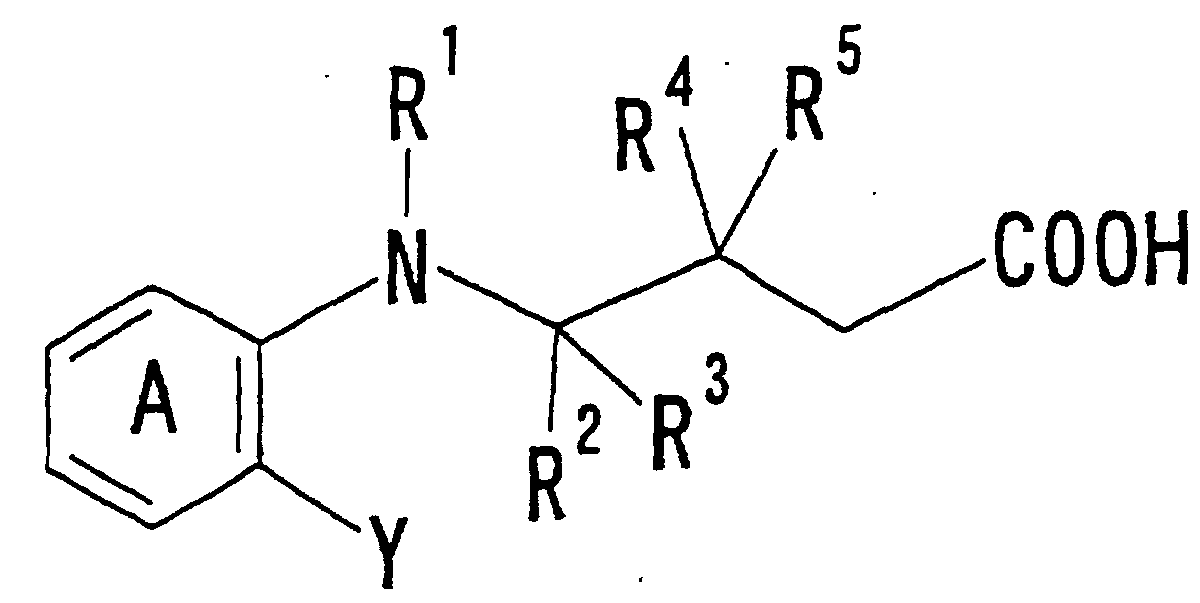 wherein X is a halogen atom; Y is an electron-withdrawing group; and ring A is an optionally substituted benzene ring, or a salt thereof, is allowed to react with a compound of the formula:
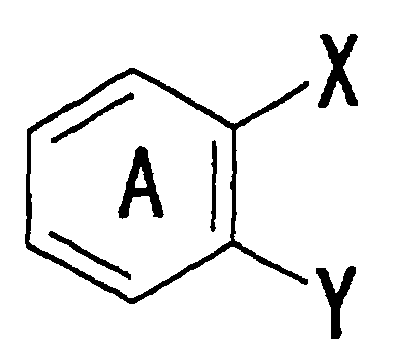 wherein R1 is an optionally substituted hydrocarbon group, an optionally substituted acyl group, or an optionally substituted sulfonyl group; R2, R3, R4, and R5 are independently a hydrogen atom, a halogen atom, an optionally substituted amino group, an optionally substituted hydroxyl group, an optionally substituted thiol group, an optionally substituted hydrocarbon group, or an optionally substituted heterocyclic group; or R1 and R2, R1 and R4, R2 and R3, R4 and R5, or R2 and R4 may form a ring, or a salt thereof.
- The preparation process according to claim 1, characterized in that a compound of the formula:wherein each variable is as defined in claim 1, or a salt thereof, is used, which is obtained by hydrolyzing a compound of the formula:
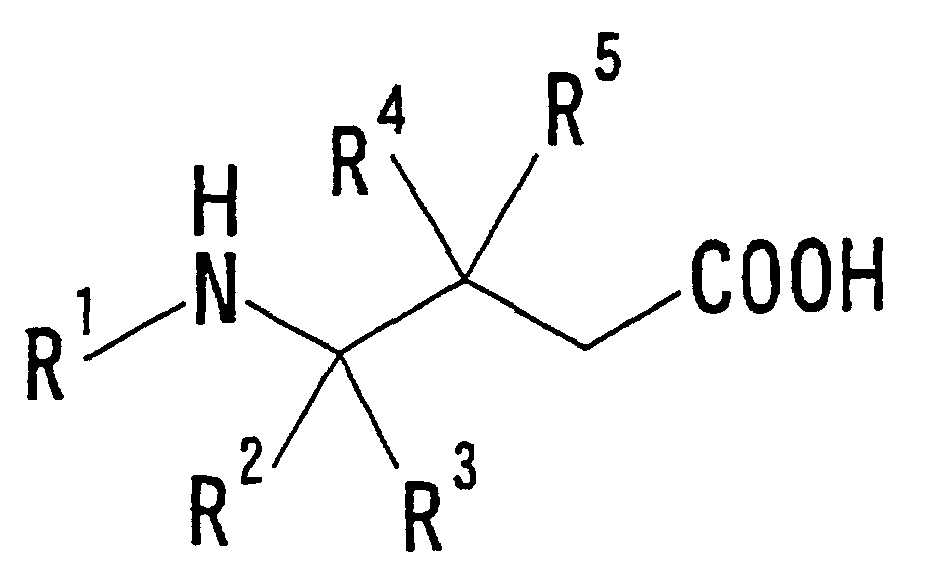 wherein each variable is as defined in claim 1, or a salt thereof.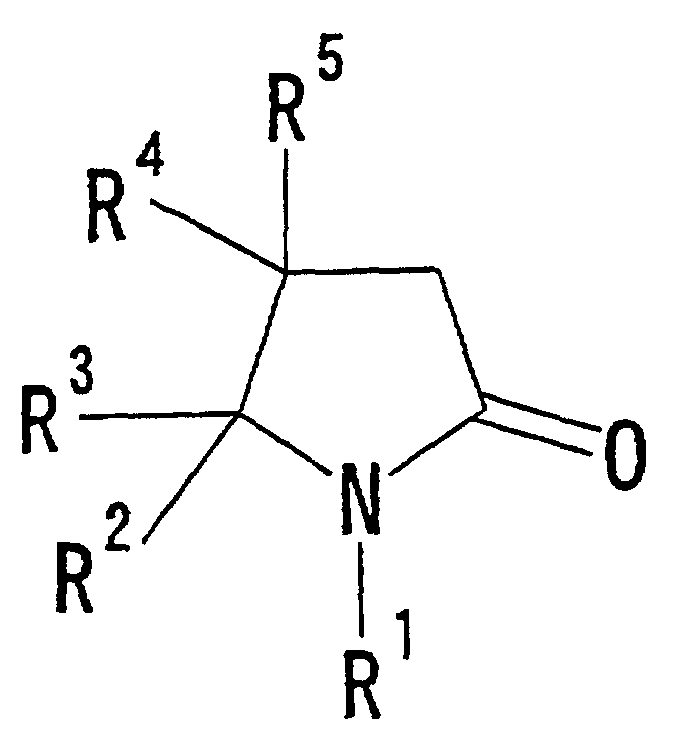
- The preparation process according to claim 6,
characterized in that the compound of the formula:wherein each variable is as defined in claim 1, or a salt thereof, is subjected, without being isolated, to the reaction with the compound of the formula: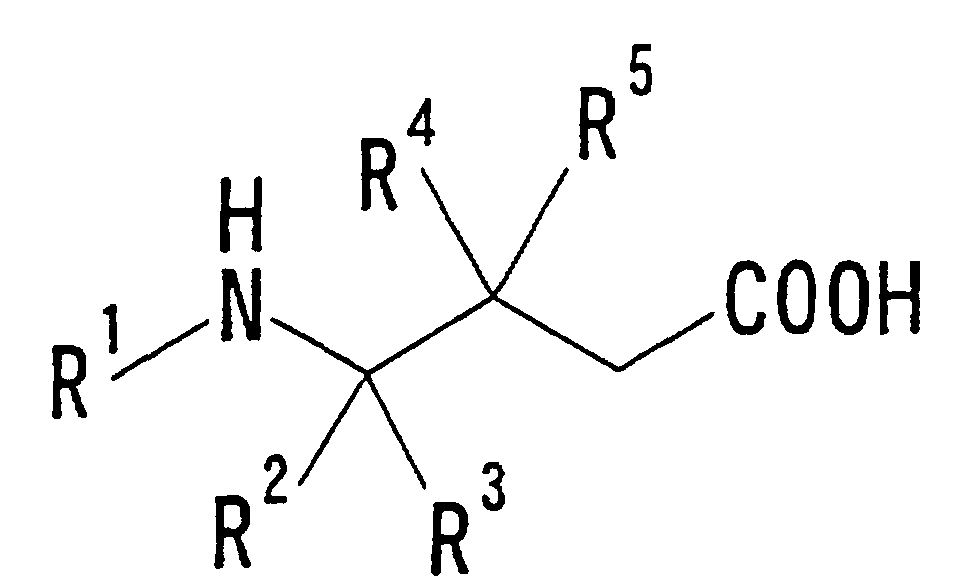 wherein each variable is as defined in claim 1, or a salt thereof.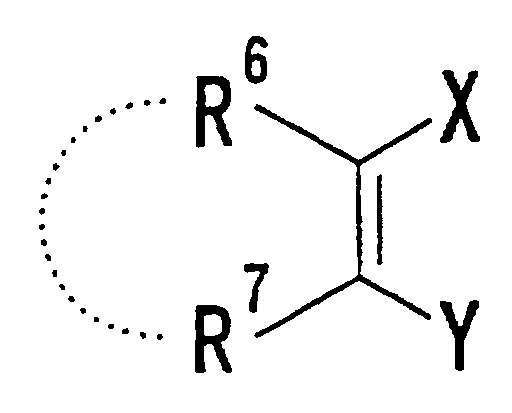
- A compound of the formula:wherein Y is an electron-withdrawing group; R1 is an optionally substituted hydrocarbon group, an optionally substituted acyl group, or an optionally substituted sulfonyl group; R2, R3, R4, R5, R6, and R7 are independently a hydrogen atom, a halogen atom, an optionally substituted amino group, an optionally substituted hydroxyl group, an optionally substituted thiol group, an optionally substituted hydrocarbon group, or an optionally substituted heterocyclic group; or R1 and R2, R1 and R4, R2 and R3, R4 and R5, R2 and R4, or R6 and R7 may form a ring, or a salt thereof.

- The compound according to claim 8, wherein Y is an optionally substituted acyl group.
- The compound according to claim 8, wherein R2, R3, R4, and R5 are hydrogen atoms.
- The compound according to claim 8, wherein R1 is an optionally substituted hydrocarbon group.
- A compound of the formula:wherein Y is an electron-withdrawing group; ring A is an optionally substituted benzene ring; R1 is an optionally substituted hydrocarbon group, an optionally substituted acyl group, or an optionally substituted sulfonyl group; R2, R3, R4, and R5 are independently a hydrogen atom, a halogen atom, an optionally substituted amino group, an optionally substituted hydroxyl group, an optionally substituted thiol group, an optionally substituted hydrocarbon group, or an optionally substituted heterocyclic group; or R1 and R2, R1 and R4, R2 and R3, R4 and R5, or R2 and R4 may form a ring, or a salt thereof.
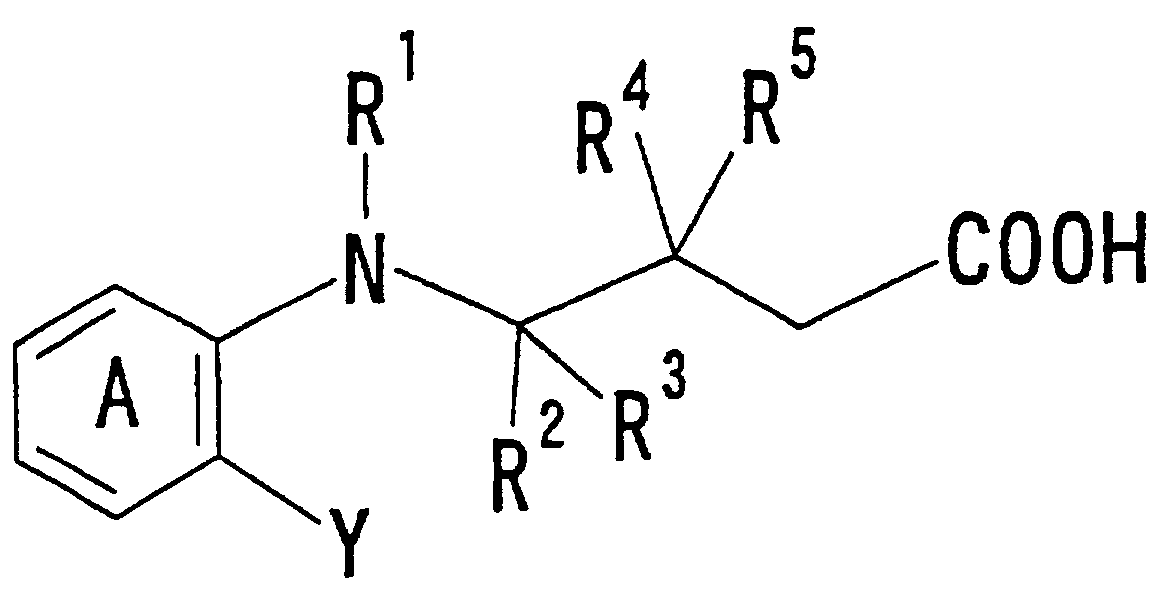
- The compound according to claim 12, wherein Y is an optionally substituted acyl group.
- The compound according to claim 12, wherein R2, R3, R4, and R5 are hydrogen atoms.
- The compound according to claim 12, wherein R1 is an optionally substituted hydrocarbon group.
- A process for the preparation of a compound of the formula:wherein R8 is an optionally substituted hydrocarbon group and the other variables are as defined below, or a salt thereof, characterized in that a compound of the formula:
 wherein each variable is as defined in claim 1, or a salt thereof, which is obtained by the preparation process according to claim 1, is subjected to esterification.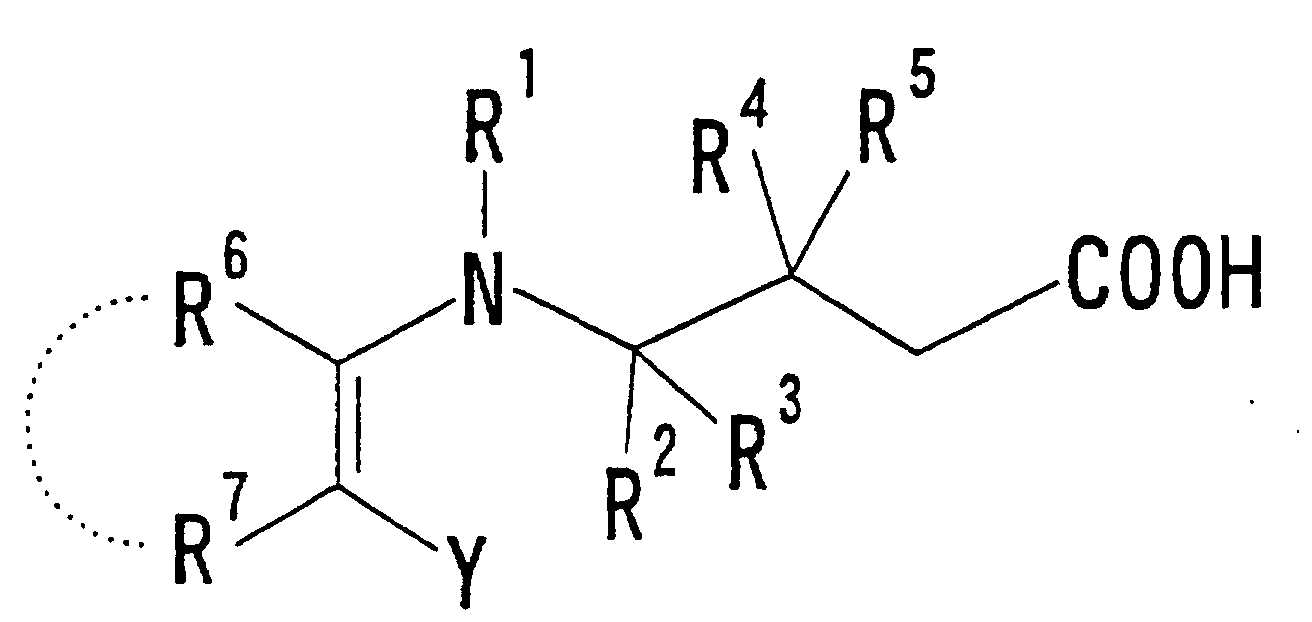
- The preparation process according to claim 16, wherein Y is an optionally substituted acyl group.
- The preparation process according to claim 16, wherein R2, R3, R4, and R5 are hydrogen atoms.
- The preparation process according to claim 16, wherein R1 is an optionally substituted hydrocarbon group.
- A process for the preparation of a compound of the formula:wherein R8 is an optionally substituted hydrocarbon group and the other variables are as defined below, or a salt thereof, characterized in that a compound of the formula:
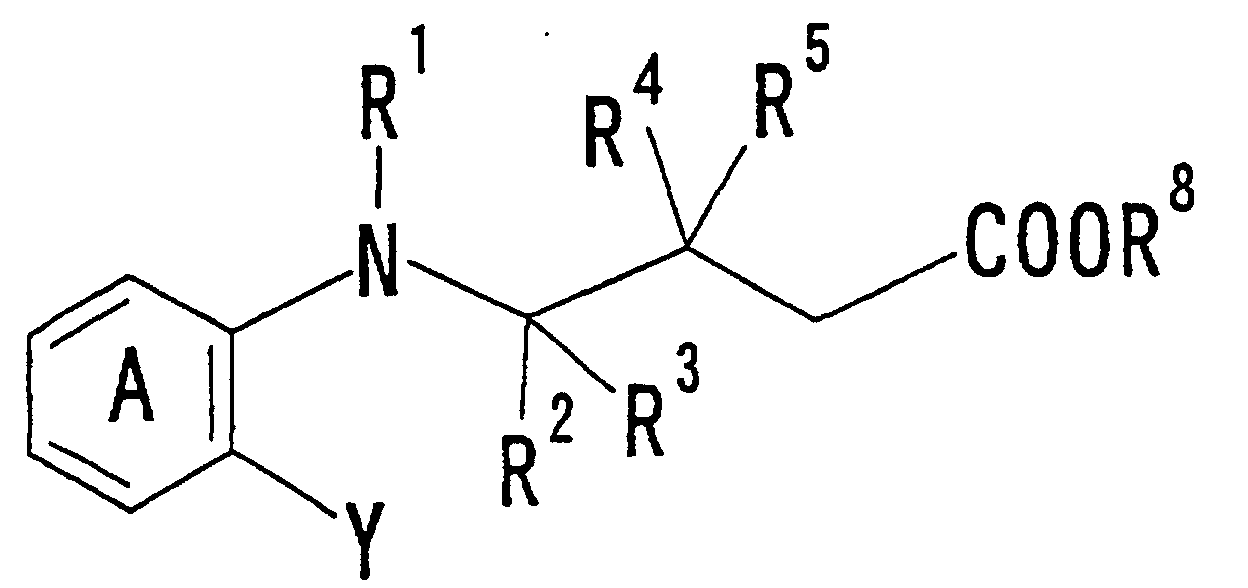 wherein each variable is as defined in claim 5, or a salt thereof, which is obtained by the preparation process according to claim 5, is subjected to esterification.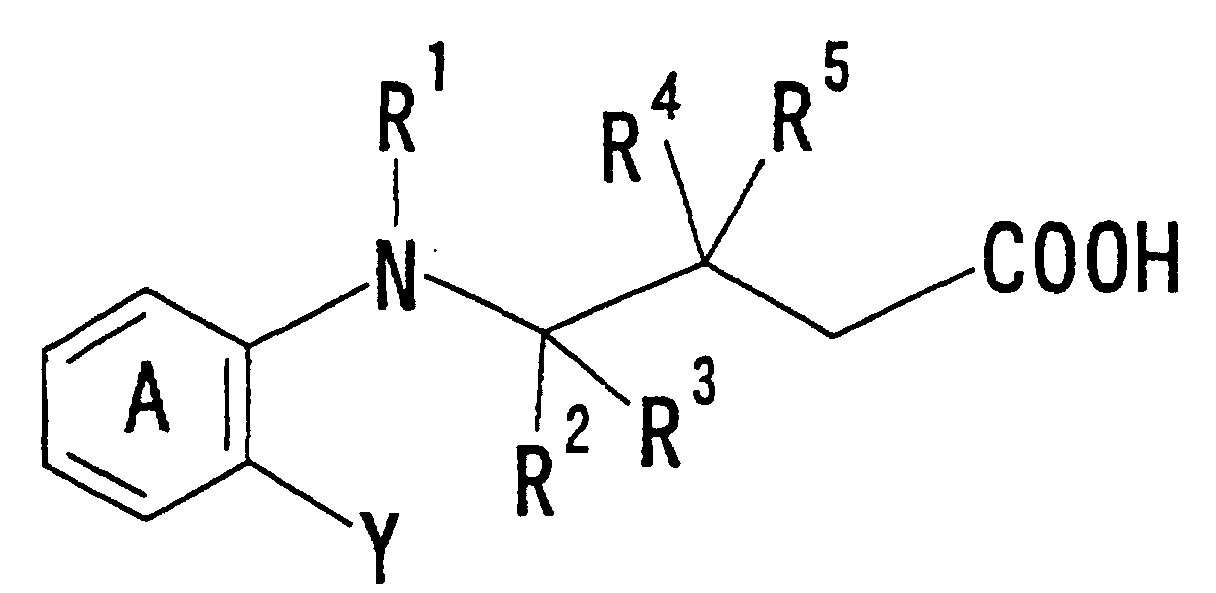
- A process for the preparation of a compound of the formula:wherein R9 is a hydrogen atom or an optionally substituted hydrocarbon group, and the other variables are as defined below, or a salt thereof, characterized in that a compound of the formula:
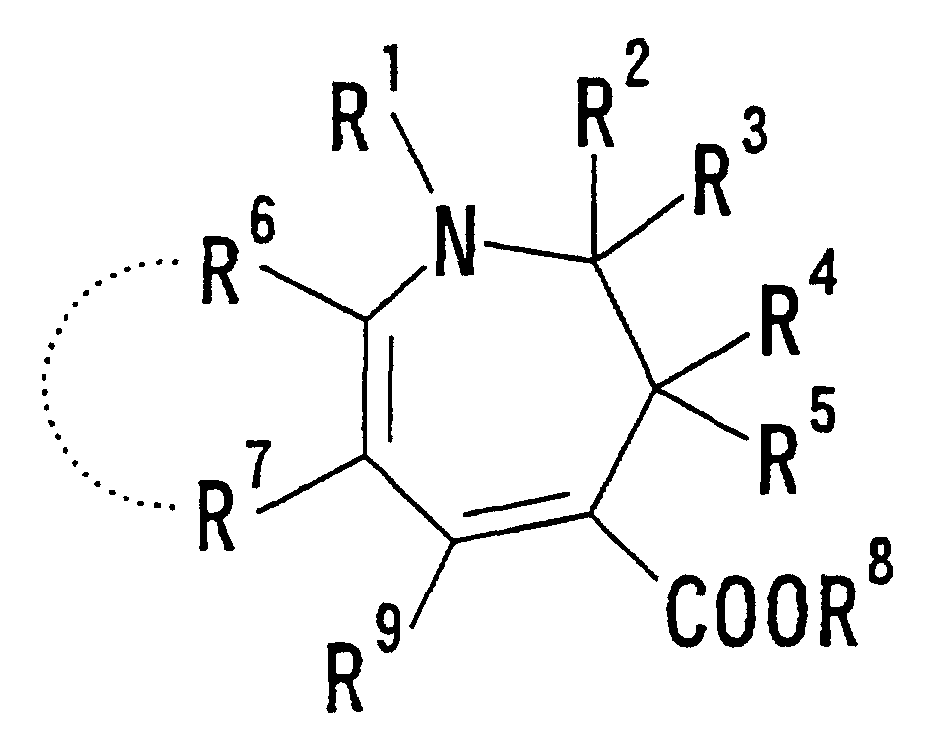 wherein Ya is a group of formula -COR9 wherein R9 is a hydrogen atom or an optionally substituted hydrocarbon group, and the other variables are as defined in claim 16, or a salt thereof, which is obtained by the preparation process according to claim 16, is subjected to ring-closing reaction.
- The preparation process according to claim 21, wherein R9 is a hydrogen atom.
- The preparation process according to claim 21, wherein R2, R3, R4, and R5 are hydrogen atoms.
- The process according to claim 21, wherein R1 is an optionally substituted hydrocarbon group.
- The preparation process according to claim 21, characterized in that a compound of the formula:wherein Ya is a group of formula -COR9 wherein R9 is a hydrogen atom or an optionally substituted hydrocarbon group, and the other variables are as defined in claim 16, or a salt thereof, which is obtained by the preparation process according to claim 16, is subjected, without being isolated, to ring-closing reaction.

- A process for the preparation of a compound of the formula:wherein R9 is a hydrogen atom or an optionally substituted hydrocarbon group, and the other variables are as defined below, or a salt thereof, characterized in that a compound of the formula:
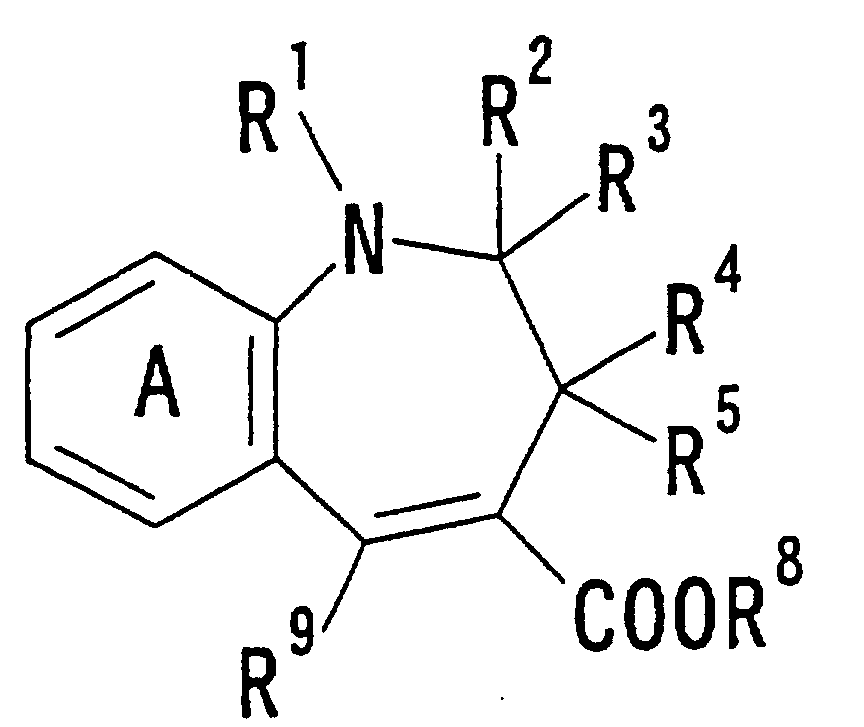 wherein Ya is a group of formula -COR9 wherein R9 is a hydrogen atom or an optionally substituted hydrocarbon group, and the other variables are as defined in claim 20, or a salt thereof, which is obtained by the preparation process according to claim 20, is subjected to ring-closing reaction.
- The preparation process according to claim 26, wherein R9 is a hydrogen atom.
- The preparation process according to claim 26, wherein R2, R3, R4, and R5 are hydrogen atoms.
- The preparation process according to claim 26, wherein R1 is an optionally substituted hydrocarbon group.
- The preparation process according to claim 26, characterized in that a compound of the formula:wherein Ya is a group of formula -COR9 wherein R9 is a hydrogen atom or an optionally substituted hydrocarbon group, and the other variables are as defined in claim 20, or a salt thereof, which is obtained by the preparation process according to claim 20, is subjected, without being isolated, to ring-closing reaction.
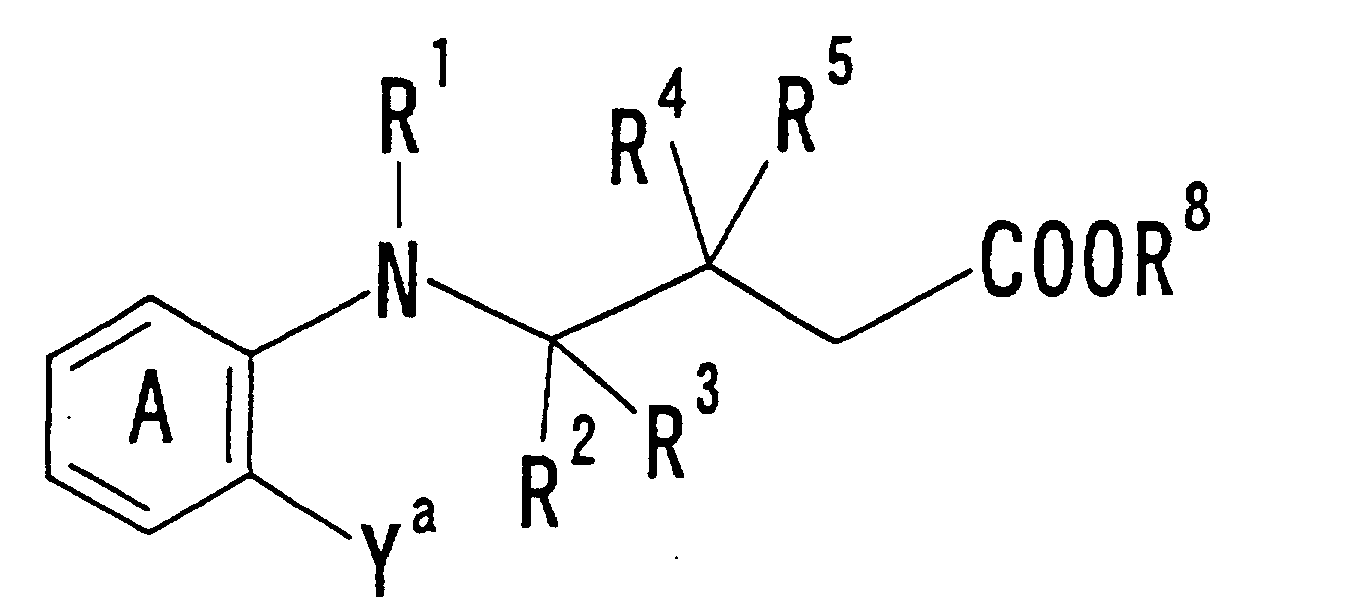
Applications Claiming Priority (3)
| Application Number | Priority Date | Filing Date | Title |
|---|---|---|---|
| JP25233499 | 1999-09-06 | ||
| JP25233499 | 1999-09-06 | ||
| PCT/JP2000/006012 WO2001017947A1 (en) | 1999-09-06 | 2000-09-05 | Process for the preparation of 2,3-dihydroazepine compounds |
Publications (2)
| Publication Number | Publication Date |
|---|---|
| EP1211239A1 true EP1211239A1 (en) | 2002-06-05 |
| EP1211239A4 EP1211239A4 (en) | 2003-08-06 |
Family
ID=17235832
Family Applications (1)
| Application Number | Title | Priority Date | Filing Date |
|---|---|---|---|
| EP00956925A Withdrawn EP1211239A4 (en) | 1999-09-06 | 2000-09-05 | METHOD FOR PRODUCING 2,3-DIHYDROAZEPINE DERIVATIVES |
Country Status (4)
| Country | Link |
|---|---|
| EP (1) | EP1211239A4 (en) |
| AU (1) | AU6870600A (en) |
| CA (1) | CA2384145A1 (en) |
| WO (1) | WO2001017947A1 (en) |
Cited By (3)
| Publication number | Priority date | Publication date | Assignee | Title |
|---|---|---|---|---|
| EP1266881A4 (en) * | 2000-02-21 | 2003-05-07 | Takeda Chemical Industries Ltd | METHOD FOR PRODUCING CYCLIC CONNECTIONS |
| CN106928079A (en) * | 2017-03-21 | 2017-07-07 | 广东第二师范学院 | Trefanocide haptens and its preparation method and application |
| RU2725888C2 (en) * | 2014-12-23 | 2020-07-07 | Тобира Терапьютикс, Инк. | Method of producing cenicriviroc and related analogues |
Families Citing this family (3)
| Publication number | Priority date | Publication date | Assignee | Title |
|---|---|---|---|---|
| EP1889839B1 (en) | 2001-08-08 | 2013-11-06 | Tobira Therapeutics, Inc. | Bicyclic compound, production and use as HIV inhibitors |
| RU2019101242A (en) | 2016-06-21 | 2020-07-21 | Тобира Терапьютикс, Инк. | PURIFIED CENICRIVER AND CLEANED INTERMEDIATE CONNECTIONS FOR OBTAINING CENICRIVER |
| BR112019003987A2 (en) | 2016-08-31 | 2019-05-28 | Tobira Therapeutics Inc | cenicriviroc mesylate solid forms and production processes of cenicriviroc mesylate solid forms |
Family Cites Families (16)
| Publication number | Priority date | Publication date | Assignee | Title |
|---|---|---|---|---|
| FR1604832A (en) * | 1968-06-05 | 1972-04-17 | Anilino phenyl acetyl esters of salicylic acid - - antiinflammatories analgesics and antipyretics | |
| US3632636A (en) * | 1968-06-11 | 1972-01-04 | American Home Prod | N-aryl-omega-aminoacids |
| US3780095A (en) * | 1970-04-08 | 1973-12-18 | Byk Gulden Lomberg Chem Fab | Acylated anilino-carboxylic acids and their salts |
| FR2098587A5 (en) * | 1970-07-21 | 1972-03-10 | Aries Robert | N-salicyloyl-3-anilinophenylalkanoic acids and salts - with antirheum antiinflammatory, analgesic antipyretic activity |
| DK140082B (en) * | 1972-03-10 | 1979-06-18 | Hercules Inc | Herbicide containing as active ingredient an aromatic amine compound. |
| EP0126294B1 (en) * | 1983-05-06 | 1986-11-20 | Duphar International Research B.V | New diphenyl ethers having herbicidal activity |
| US4556739A (en) * | 1983-09-29 | 1985-12-03 | Ortho Pharmaceutical Corporation | 3,4-Dialkoxy-2-alkylcarbonyl analino compounds |
| DE3608725A1 (en) * | 1986-03-15 | 1987-09-17 | Hoechst Ag | N-SUBSTITUTED AMINO ALKANIC ACIDS, METHOD FOR THE PRODUCTION THEREOF, THEIR USE AND PHARMACEUTICAL PREPARATIONS BASED ON THESE COMPOUNDS |
| US4952573A (en) * | 1988-03-23 | 1990-08-28 | Laboratoirs Alcon S.A. | Compounds having GABA like activity, and use of same in tissue irrigating solutions |
| US4988496A (en) * | 1988-05-31 | 1991-01-29 | Neorx Corporation | Metal radionuclide chelating compounds for improved chelation kinetics |
| JPH05197054A (en) * | 1992-01-20 | 1993-08-06 | Fuji Photo Film Co Ltd | Silver halide photographic sensitive material |
| JPH05320143A (en) * | 1992-03-18 | 1993-12-03 | Mochida Pharmaceut Co Ltd | Novel pyrimidine derivative |
| GB9525620D0 (en) * | 1995-12-15 | 1996-02-14 | Glaxo Group Ltd | Chemical compounds |
| GB9604400D0 (en) * | 1996-03-01 | 1996-05-01 | Pfizer Ltd | Compounds useful in therapy |
| US6172061B1 (en) * | 1997-12-19 | 2001-01-09 | Takeda Chemical Industries, Ltd. | Pharmaceutical composition for antagonizing CCR5 comprising anilide derivative |
| ID21538A (en) * | 1997-12-19 | 1999-06-24 | Takeda Chemical Industries Ltd | ANILIDA DESCRIPTION, PRODUCTION AND USAGE |
-
2000
- 2000-09-05 AU AU68706/00A patent/AU6870600A/en not_active Abandoned
- 2000-09-05 WO PCT/JP2000/006012 patent/WO2001017947A1/en not_active Ceased
- 2000-09-05 CA CA002384145A patent/CA2384145A1/en not_active Abandoned
- 2000-09-05 EP EP00956925A patent/EP1211239A4/en not_active Withdrawn
Cited By (6)
| Publication number | Priority date | Publication date | Assignee | Title |
|---|---|---|---|---|
| EP1266881A4 (en) * | 2000-02-21 | 2003-05-07 | Takeda Chemical Industries Ltd | METHOD FOR PRODUCING CYCLIC CONNECTIONS |
| US6864367B2 (en) | 2000-02-21 | 2005-03-08 | Takeda Chemical Industries, Ltd. | Process for producing cyclic compound |
| US7038042B2 (en) | 2000-02-21 | 2006-05-02 | Takeda Pharmaceutical Company Limited | Process for producing cyclic compound |
| EP1760054A3 (en) * | 2000-02-21 | 2009-12-30 | Takeda Pharmaceutical Company Limited | Process for producing cyclic compound |
| RU2725888C2 (en) * | 2014-12-23 | 2020-07-07 | Тобира Терапьютикс, Инк. | Method of producing cenicriviroc and related analogues |
| CN106928079A (en) * | 2017-03-21 | 2017-07-07 | 广东第二师范学院 | Trefanocide haptens and its preparation method and application |
Also Published As
| Publication number | Publication date |
|---|---|
| CA2384145A1 (en) | 2001-03-15 |
| AU6870600A (en) | 2001-04-10 |
| WO2001017947A1 (en) | 2001-03-15 |
| EP1211239A4 (en) | 2003-08-06 |
Similar Documents
| Publication | Publication Date | Title |
|---|---|---|
| US4794185A (en) | Process for the preparation of imidazopyridines | |
| DE69925023T2 (en) | SYNTHESIS OF ACYCLIC NUCLEOSIDE DERIVATIVES | |
| IE881716L (en) | Preparation of oxophthalazinyl acetic acids | |
| US4868301A (en) | Processes and intermediates for the preparation of oxophthalazinyl acetic acids having benzothiazole or other heterocyclic side chains | |
| CA1271769A (en) | 4-alkoxy-3-pyrrolin-2-on-1-yl acetic acid alkyl esters and their production | |
| CA2384145A1 (en) | Process for the preparation of 2,3-dihydroazepine compounds | |
| NO166712B (en) | PROCEDURE FOR THE PREPARATION OF PYRROLIDO DERIVATIVES. | |
| US4927970A (en) | Substituted 3-cyclobutene-1,2-dione intermediates | |
| FI88292C (en) | FRAME STARTING FOR N- (SULPHONYLMETHYL) FORMAMIDER | |
| KR100293858B1 (en) | Method for preparing 2,5-disubstituted pyridine | |
| US5290939A (en) | Process for the manufacture of brofaromine and analogs thereof | |
| JP2023548919A (en) | Dipyrromethen-1-one compound and method for producing the same | |
| JPWO2001017947A1 (en) | Method for producing 2,3-dihydroazepine compounds | |
| JP3026238B2 (en) | Novel 4-methoxy-2- (2-tetrahydropyranyloxymethyl) pyridine compounds, intermediates for producing the same, and methods for producing them | |
| IE881459L (en) | Chemical intermediates and process | |
| NO863769L (en) | PROCEDURE FOR THE PREPARATION OF 4-HYDROXY-2-OXOPYRROLIN-1-YL-ACETAMIDE. | |
| US5532381A (en) | Process for preparing pyrrolizine derivatives | |
| KR800001048B1 (en) | Method for preparing 4-halo methyl-2-pyrrolidinone | |
| KR101896349B1 (en) | Process for the preparation of dimiracetam | |
| RU2283304C1 (en) | Method for preparing synthetic intermediate indoline compounds | |
| US6566535B1 (en) | Processes for the preparation of 2,3-dihydrothiepine derivatives | |
| US4900844A (en) | Intermediates for the preparation of oxophthalazinyl acetic acids having benzothiazole or other heterocyclic side chains | |
| SU1468412A3 (en) | Method of producing alkyl ethers of 4-alkoxy-3-pyrrolin-2-on-1-yl acetic acid | |
| JP2001151741A (en) | Method for producing 2,3-dihydroazepine compound | |
| FI91148B (en) | Alkyl 3-alkoxycarbonyl-2-pyrrolidinylidene carboxylates and process for their preparation |
Legal Events
| Date | Code | Title | Description |
|---|---|---|---|
| PUAI | Public reference made under article 153(3) epc to a published international application that has entered the european phase |
Free format text: ORIGINAL CODE: 0009012 |
|
| 17P | Request for examination filed |
Effective date: 20020312 |
|
| AK | Designated contracting states |
Kind code of ref document: A1 Designated state(s): AT BE CH CY DE DK ES FI FR GB GR IE IT LI LU MC NL PT SE |
|
| AX | Request for extension of the european patent |
Free format text: AL;LT;LV;MK;RO;SI |
|
| A4 | Supplementary search report drawn up and despatched |
Effective date: 20030619 |
|
| RAP1 | Party data changed (applicant data changed or rights of an application transferred) |
Owner name: TAKEDA PHARMACEUTICAL COMPANY LIMITED |
|
| STAA | Information on the status of an ep patent application or granted ep patent |
Free format text: STATUS: THE APPLICATION HAS BEEN WITHDRAWN |
|
| 18W | Application withdrawn |
Effective date: 20050322 |