EP1210105B1 - High density lipoprotein against organ dysfunction following haemorrhagic shock - Google Patents
High density lipoprotein against organ dysfunction following haemorrhagic shock Download PDFInfo
- Publication number
- EP1210105B1 EP1210105B1 EP00956651A EP00956651A EP1210105B1 EP 1210105 B1 EP1210105 B1 EP 1210105B1 EP 00956651 A EP00956651 A EP 00956651A EP 00956651 A EP00956651 A EP 00956651A EP 1210105 B1 EP1210105 B1 EP 1210105B1
- Authority
- EP
- European Patent Office
- Prior art keywords
- apo
- hdl
- high density
- density lipoprotein
- resuscitation
- Prior art date
- Legal status (The legal status is an assumption and is not a legal conclusion. Google has not performed a legal analysis and makes no representation as to the accuracy of the status listed.)
- Expired - Lifetime
Links
Images






Classifications
-
- A—HUMAN NECESSITIES
- A61—MEDICAL OR VETERINARY SCIENCE; HYGIENE
- A61K—PREPARATIONS FOR MEDICAL, DENTAL OR TOILETRY PURPOSES
- A61K38/00—Medicinal preparations containing peptides
- A61K38/16—Peptides having more than 20 amino acids; Gastrins; Somatostatins; Melanotropins; Derivatives thereof
- A61K38/17—Peptides having more than 20 amino acids; Gastrins; Somatostatins; Melanotropins; Derivatives thereof from animals; from humans
- A61K38/1703—Peptides having more than 20 amino acids; Gastrins; Somatostatins; Melanotropins; Derivatives thereof from animals; from humans from vertebrates
- A61K38/1709—Peptides having more than 20 amino acids; Gastrins; Somatostatins; Melanotropins; Derivatives thereof from animals; from humans from vertebrates from mammals
-
- A—HUMAN NECESSITIES
- A61—MEDICAL OR VETERINARY SCIENCE; HYGIENE
- A61K—PREPARATIONS FOR MEDICAL, DENTAL OR TOILETRY PURPOSES
- A61K38/00—Medicinal preparations containing peptides
- A61K38/16—Peptides having more than 20 amino acids; Gastrins; Somatostatins; Melanotropins; Derivatives thereof
- A61K38/17—Peptides having more than 20 amino acids; Gastrins; Somatostatins; Melanotropins; Derivatives thereof from animals; from humans
-
- A—HUMAN NECESSITIES
- A61—MEDICAL OR VETERINARY SCIENCE; HYGIENE
- A61P—SPECIFIC THERAPEUTIC ACTIVITY OF CHEMICAL COMPOUNDS OR MEDICINAL PREPARATIONS
- A61P39/00—General protective or antinoxious agents
Definitions
- the present invention relates to the manufacture of medicaments for protecting against organ damage following haemorrhagic shock, using high-density lipoproteins (HDLs) and derivatives thereof.
- HDLs high-density lipoproteins
- the present invention relates to manufacture of medicaments for treatment and prevention of end-stage organ failure following haemorrhagic shock.
- a pharmaceutical agent which can be administered as soon as possible after the physical injury, preferably at the site of the accident in order to prevent end stage organ failure, and which can also be used subsequently while transporting the victim from the accident site to casualty/hospital, and while the physical wounds are being treated.
- High-density lipoproteins form a range of lipoprotein particles found in normal serum.
- Mature HDL particles are present in the form of a globular structure containing proteins and lipids. Within the outer layer of these particles are the more polar lipids, phospholipids and free cholesterol, all having charged groups pointing outwards towards the aqueous environment. The more hydrophobic lipids, such as esterified cholesterol and triglycerides, reside in the core of the particle.
- Newly formed, or nascent, HDL particles lack the lipid core and are discoidal in shape. Protein components are embedded in the outer layer.
- the main protein component is apolipoprotein A-I (apo A-I), with smaller amounts of apo A-II, apo A-IV, apo CIII, apo D, apo E and apo J.
- apo A-I apolipoprotein A-I
- apo A-IV apolipoprotein A-I
- apo CIII apo D
- apo E apo J
- Various other proteins reside on the HDL particle, such as lecithin-cholesterol acetyl transferase, PAF acetylhydrolase and paraoxonase.
- the binding of activated leukocytes to the endothelium is the earliest observable cellular event in a number of acute and chronic inflammatory diseases. This binding is mediated by the expression of adhesion molecules on the surface of the endothelial cells which bind to corresponding molecules of similar function on leukocytes. Recently we have shown that pre-treatment of endothelial cells, in vitro, with HDL was able to inhibit the cytokine-induced expression of these adhesion molecules (Cockerill GW, Rye K-A, Gamble JR, Vadas MA, Barter PJ. Arterioscler Thromb. Vasc. Biol.
- HDL can inhibit cytokine-induced adhesion molecule expression in an acute inflammatory model in the pig (Cockerill et al., Arterioscler Thromb. Vasc. Biol. 1999, 19, 910-917). The antiflammatory effects of HDL have thus been demonstrated in these models where cells/animals are pre-treated with lipoprotein.
- Patent application EP-A-0 780 128 discloses the use of HDL in combination with crotonic acid derivatives for treating various diseases, inter alia acute transplant rejection.
- JP-A-10025248 discloses the use of Apolipoprotein AI for treating restenosis after angioplasty.
- WO-A-9706822 discloses a method for reducing the probability of incidence of organ failure after a polytraumatic event, comprising administering an anti-selectin antibody.
- End-stage organ failure following haemorrhagic shock results from the adhesion of polymorphonuclear leukocytes (PMNs)to the endothelium following their activation caused by ischaemia and reperfusion injury.
- PMNs polymorphonuclear leukocytes
- high density lipoprotein and/or a derivative thereof is used in the manufacture of a medicament for the prevention or treatment of organ dysfunction following haemorrhagic shock.
- the medicament is for the treatment of end-stage organ injury or failure.
- HDL is able to perturb the damaging effects when given after the initial hypovolaemia has occurred.
- Our work suggests that at physiological levels (both in vitro and in vivo), native HDL particles are active in inhibiting the expression of adhesion proteins on endothelial cells. Prevention of expression of adhesion proteins on endothelial cells prevents binding of PMNs to the endothelium; thus administration of HDL prevents end-stage organ failure.
- the high density lipoprotein may be the component of HDL that inhibits adhesion to the endothelial cells and subsequent activation of leukocytes or a derivative, molecule, homologue, or mimic thereof.
- the inhibiting effect is not only present in venous endothelial cells but also on arterial endothelial cells and is independent of the nature of the lipid present in the HDL particles.
- Two effector molecules mediate the inhibitory effect namely apolipoprotein A-I (apo A-I) and apolipoprotein A-II (apo A-II) (Brouillette C.G. and Anatharamaiah G.M. Biochem.Biophys. Acta. 1256: 103-129. 1995; Massey J.B., Pownall H.J. Biochem.Biophys Acta. 999 : 111-120. 198); these two molecules have different efficacy of inhibition.
- the high density lipoprotein or derivative thereof is a peptide or protein derivative of the sequence of apo A-I or apo A-II, or a peptide or protein derivative functionally homologous to the active portions of apo A-I or apo A-II.
- the medicament may be administered to a patient in any conventional manner.
- the medicament is administered intravenously.
- the medicament is administered using saline as a vehicle.
- the medicament is provided in a portable dispenser, for example, for use at the site of an accident.
- Experiment 1 describes the effects of human high-density lipoprotein (HDL) on the circulatory failure and multiple organ dysfunction injury (MODS) such as renal dysfunction and liver dysfunction caused by severe haemorrhage and resuscitation in the anesthetised rat. It should be noted that this is a model of end stage organ failure generated by haemorrhagic shock, and is not known to be a result of endotoxin release.
- HDL high-density lipoprotein
- MODS multiple organ dysfunction injury
- MAP mean arterial blood pressure
- HR heart rate
- the right carotid artery was cannulated to bleed the animals (see hereafter).
- the jugular vein was cannulated for the administration of drugs.
- the bladder was also cannulated to facilitate urine flow and to prevent the possibility of development of post-renal failure.
- cardiovascular parameters were allowed to stabilise for 15 mins. Then, blood was withdrawn from the catheter placed in the carotid artery in order to achieve a fall in MAP to 50mmHg within 10 mins.
- MAP was maintained at 50mmHg for a total period of 90 mins by either withdrawal (during the compensation period) or re-injection of blood.
- the amount of shed blood re-injected during the 90 min period of haemorrhage did not exceed 10% of the total amount of the blood withdrawn.
- the amount of blood withdrawn for rats subjected to haemorrhage and treated with vehicle (control group) was 7.0 ⁇ 0.4ml (SD); the amount of blood withdrawn from rats subjected to haemorrhage and treated with HDL (treatment group) was 7.0 ⁇ 0.3ml (p>0.05).
- the shed blood and an equivalent volume of Ringer lactic solution was re-injected into the animal.
- the administration regimes are detailed more fully in the text accompanying Fig.1A.
- nHDL did not affect the delayed circulatory failure associated with haemorrhage and resuscitation (see Fig 1 and Fig.1A (Table 1)).
- Organ dysfunction as measured by the degree of disruption of tissue architecture was reduced by treatment with HDLs.
- Organ (lung, kidney and small intestine) biopsies were taken at the end of Experiment 1 and fixed for one week in buffered formaldehyde solution (10% in PBS) at ambient temperature, dehydrated by graded ethanol, and embedded in ParaplastTM (Sherwood Medical, Mahwah, NJ, USA). Sections (7 ⁇ m thick) were deparafinised with xylene, and stained using either Van Gieson's Trichrome or Fuchsin, and examined using light microscopy (Dialux 22, Leitz).
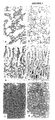
- Figure 3 shows photomicrographs of representative sections of lung (upper panels), small intestine (middled panels), and kidney (lower panels) from animals following haemorrhage for 90 min. and given vehicle (saline) along with shed blood at the beginning of resuscitation (A), or nHDLCs (80mg/kg i.v. bolus injection) prior to resuscitation (B).
- Sections were visualised using Van Geison's trichrome stain. Original magnification x 100.
- FIG.3 demonstrates that the lung (top panels), small intestine (middle panels) and kidney (bottom panels), when subjected to haemorrhage and resuscitation (A), show oedema with loss of normal tissue structure.
- organs from animals which had received nHDLs (B) prior to resuscitation showed no significant change in morphology, and were not significantly different from the sham-operated rats (not shown).
- MPO Myeloperoxidase activity
- PMN polymorphonuclear leukocyte
- MPO myeloperoxidase
- Malondialdehyde (MDA) levels in the lung and kidney were determined as an indicator of lipid peroxidation.
- Tissues were homogenised in 1.15% KCI solution. An aliquot (100 ⁇ l) of the homogenate was added to a reaction mixture containing 200 ⁇ l 8.1% SDS, 1500 ⁇ l 20% acetic acid (pH 3.5), 1500 ⁇ l 0.8% thiobarbituric acid and 700 ⁇ l distilled water. Samples were then boiled for 1 hour at 95°C and centrifuged 3,000 x g for 10 min. The absorbance of the supernatant was measured spectrophotometrically at 650 nm.
- HDLs have been shown to have anti-oxidant properties.
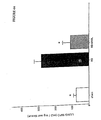
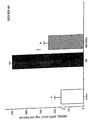
- the ability of HDLs to influence the MDA levels in lung (Figure 5A) and kidney ( Figure 5B) was investigated.
- rats subjects to haemorrhage and resuscitation (solid bars) showed a marked increase in tissue MDA activity. This activity was reduced in rats which had been treated with nHDLs prior to resuscitation [HS - nHDL, ].
- nHDL attenuates the renal, liver and pancreatic dysfunction following haemorrhagic shock.
- HDL effective therapeutic agent
- Flow cytometry Cells were plated at 1 x 10 5 cells/30 mm well and incubated overnight at 37°C in 5% CO 2 . Confluent monolayer cultures were then incubated (at concentrations indicated) for 19 hours with either, phosphate buffered saline (PBS) (vehicle control), native HDL, free apo A-I, phospholipid vesicles or discoidal HDL prepared with only apo A-I or apo A-II. Following these treatments the cells were washed gently in complete medium and TNF ⁇ (Miles Scientific) was added at 10ng/ml. Cells were then stained at 4 hours post stimulation in the following manner.
- PBS phosphate buffered saline
- TNF ⁇ Miles Scientific
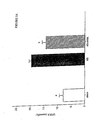
- FIG. 6 shows that neither free apo A-I nor unilamellar vesicles (SUV) were able to inhibit TNF ⁇ -induced expression of E-selectin.
- Apo A-I the most abundant apolipoprotein in HDL, must be in a lipid particle in order to mediate inhibition of cytokine-induced adhesion molecule expression in endothelial cells.
- Both umbilical-derived venous (HUVEC) and arterial (HUAEC) endothelial cells were able to support the dose-dependent inhibition of cytokine-induced E-selectin expression by HDL (as shown by the decrease in intensity with increase of apo AI HDL from 0.25 t0 1.0mg/ml).
- HDL The therapeutic action of HDL is afforded by the apolipoprotein presented in a lipid particle, and cannot be mimicked by the whole protein alone, or lipid alone.
- Human umbilical vein-derived endothelial cells (HUVEC) and human umbilical-derived artery endothelial cells (HUAEC) (Cockerill et al., 19994) were grown on gelatin-coated tissue culture flasks (Costar, High Wycombe, Bucks, UK) in medium 199 with Earle's salts (Gibco, Paisley, Scotland), supplemented with 20% foetal calf serum (FCS) (Gibco, Australia), 20 mM HEPES, 2mM glutamine, 1mM sodium pyruvate, nonessential amino acids, penicillin and streptomycin, 50 ⁇ g/ml endothelial cell growth supplement (Sigma, Dorset, UK) and 50 ⁇ g/ml heparin (normal growth medium).
- FCS foetal calf serum
- Flow cytometry Cells were plated at 1 x 10 5 cells/30 mm well and incubated overnight at 37°C in 5% CO 2 . Confluent monolayer cultures were then incubated (at concentrations indicated) for 19 hours with either reconstituted discoidal HDL prepared with only apo A-I or apo A-II. Following these treatments the cells were washed gently in complete medium and TNF ⁇ (Miles Scientific) was added at 10ng/ml. Cells were then stained at 4 hours post stimulation in the following manner. Cells were washed in serum free medium and 200 ⁇ l anti-E-selectin (1.2B6) was added for 1 hour at 37°C.
- PBS phosphate buffered saline
- Discoidal reconstituted A-I HDLs were prepared by the cholate dialysis method from egg yolk phosphatidylcholine, unesterified cholesterol, and apo A-I/apo A-II (Matz CE, Jonas A. Micellar complexes of human apolipoprotein A-I with phosphatidycholines and cholesterol prepared from cholate-lipid dispersion. J.Biol.Chem.1982; 257; 4535-4540 ).
- Egg yolk phosphatidycholine, unesterified cholesterol and sodium cholate were obtained from Sigma and used without further purification. Particle size was measured by nondenaturing gradient gel electrophoresis, and concentration of apo A-I and apo A-II was measured immunoturbidimetrically.
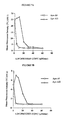
- Figure 7a (HUVEC) and 7b (HuAEC) show reconstituted HDL containing apo A-I, as the sole proteins, having a t1/2 max of approximately 3 ⁇ Molar, whilst reconstituted HDL containing apo A-II as the sole protein has a give five-fold greater t1/2 max of 15 ⁇ Molar.
Landscapes
- Health & Medical Sciences (AREA)
- Life Sciences & Earth Sciences (AREA)
- Pharmacology & Pharmacy (AREA)
- Veterinary Medicine (AREA)
- Public Health (AREA)
- Chemical & Material Sciences (AREA)
- General Health & Medical Sciences (AREA)
- Animal Behavior & Ethology (AREA)
- Medicinal Chemistry (AREA)
- Bioinformatics & Cheminformatics (AREA)
- Proteomics, Peptides & Aminoacids (AREA)
- Epidemiology (AREA)
- Immunology (AREA)
- Engineering & Computer Science (AREA)
- Gastroenterology & Hepatology (AREA)
- Zoology (AREA)
- Marine Sciences & Fisheries (AREA)
- General Chemical & Material Sciences (AREA)
- Chemical Kinetics & Catalysis (AREA)
- Nuclear Medicine, Radiotherapy & Molecular Imaging (AREA)
- Organic Chemistry (AREA)
- Toxicology (AREA)
- Acyclic And Carbocyclic Compounds In Medicinal Compositions (AREA)
- Medicines That Contain Protein Lipid Enzymes And Other Medicines (AREA)
- Pharmaceuticals Containing Other Organic And Inorganic Compounds (AREA)
- Medicines Containing Material From Animals Or Micro-Organisms (AREA)
- Peptides Or Proteins (AREA)
Abstract
Description
or (ii) haemorrhage for 1.5 h and upon resuscitation with the shed blood, control rats were treated with the vehicle (HS open circles, saline 3ml/kg i.v. bolus; n=10)
or nHDL (HS - nHDL open triangle, 80 mg/kg i.v. bolus injection) [nHDL = native HDL ];
prior to resuscitation. There were no significant differences in the heart rates between any of the experimental groups.
Claims (4)
- Use of high density lipoprotein and/or a derivative thereof in the manufacture of a medicament for the prevention or treatment of organ dysfunction following haemorrhagic shock.
- Use according to claim 1 where the medicament is for the treatment of end-stage organ injury or failure.
- Use according to claim 1 or 2 where the high density lipoprotein or derivative thereof is a peptide or protein derivative of the sequence of apolipoprotein A-I or apolipoprotein A-II, or a peptide or protein derivative functionally homologous to the active portions of apolipoprotein A-I or apolipoprotein A-II.
- Use according to claim 1 or 2 where the high density lipoprotein is native HDL.
Priority Applications (1)
| Application Number | Priority Date | Filing Date | Title |
|---|---|---|---|
| EP03076918A EP1369124B1 (en) | 1999-08-19 | 2000-08-16 | High density lipoprotein against organ dysfunction following haemorrhagic shock |
Applications Claiming Priority (3)
| Application Number | Priority Date | Filing Date | Title |
|---|---|---|---|
| GB9919713 | 1999-08-19 | ||
| GBGB9919713.9A GB9919713D0 (en) | 1999-08-19 | 1999-08-19 | New medical use of high density lipoprotein |
| PCT/GB2000/003182 WO2001013939A1 (en) | 1999-08-19 | 2000-08-16 | High density lipoprotein against organ dysfunction following haemorrhagic shock |
Related Child Applications (1)
| Application Number | Title | Priority Date | Filing Date |
|---|---|---|---|
| EP03076918A Division EP1369124B1 (en) | 1999-08-19 | 2000-08-16 | High density lipoprotein against organ dysfunction following haemorrhagic shock |
Publications (2)
| Publication Number | Publication Date |
|---|---|
| EP1210105A1 EP1210105A1 (en) | 2002-06-05 |
| EP1210105B1 true EP1210105B1 (en) | 2003-11-12 |
Family
ID=10859485
Family Applications (2)
| Application Number | Title | Priority Date | Filing Date |
|---|---|---|---|
| EP00956651A Expired - Lifetime EP1210105B1 (en) | 1999-08-19 | 2000-08-16 | High density lipoprotein against organ dysfunction following haemorrhagic shock |
| EP03076918A Expired - Lifetime EP1369124B1 (en) | 1999-08-19 | 2000-08-16 | High density lipoprotein against organ dysfunction following haemorrhagic shock |
Family Applications After (1)
| Application Number | Title | Priority Date | Filing Date |
|---|---|---|---|
| EP03076918A Expired - Lifetime EP1369124B1 (en) | 1999-08-19 | 2000-08-16 | High density lipoprotein against organ dysfunction following haemorrhagic shock |
Country Status (10)
| Country | Link |
|---|---|
| US (1) | US6998388B1 (en) |
| EP (2) | EP1210105B1 (en) |
| AT (2) | ATE397454T1 (en) |
| AU (1) | AU779578B2 (en) |
| CA (1) | CA2376260C (en) |
| DE (2) | DE60006548T2 (en) |
| DK (1) | DK1210105T3 (en) |
| ES (2) | ES2209961T3 (en) |
| GB (1) | GB9919713D0 (en) |
| WO (1) | WO2001013939A1 (en) |
Families Citing this family (11)
| Publication number | Priority date | Publication date | Assignee | Title |
|---|---|---|---|---|
| DE10035352A1 (en) | 2000-07-20 | 2002-01-31 | Zlb Bioplasma Ag Bern | Procedure for the treatment of unstable angina pectoris |
| EP1285662A1 (en) * | 2001-08-20 | 2003-02-26 | ZLB Bioplasma AG | Reconstituted HDL for the treatment of stroke and ischemic conditions |
| ES2304452T3 (en) * | 2001-08-20 | 2008-10-16 | Csl Behring Ag | AN HDL FOR THE TREATMENT OF AN ICTUS AND OTHER ISCHEMICAL CONDITIONS. |
| JP2007517550A (en) | 2004-01-02 | 2007-07-05 | アドヴァンスド カーディオヴァスキュラー システムズ, インコーポレイテッド | Medical device coated with high density lipoprotein |
| US7759315B2 (en) * | 2005-03-09 | 2010-07-20 | Csl Behring Ag | Treatment of inflammatory conditions of the intestine |
| US8206750B2 (en) | 2005-03-24 | 2012-06-26 | Cerenis Therapeutics Holding S.A. | Charged lipoprotein complexes and their uses |
| US7956035B2 (en) | 2007-03-01 | 2011-06-07 | Csl Limited | Treatment of endothelial dysfunction in diabetic patients |
| US8734853B2 (en) | 2008-11-17 | 2014-05-27 | University Of North Texas Health Science Center At Fort Worth | HDL particles for delivery of nucleic acids |
| LT2673296T (en) | 2011-02-07 | 2019-02-25 | Cerenis Therapeutics Holding Sa | Lipoprotein complexes and manufacturing and uses thereof |
| RU2016144908A (en) | 2014-05-02 | 2018-06-05 | Серени Терапеутикс Холдинг Са | MARKERS OF HDL THERAPY |
| CN107708670A (en) | 2015-06-01 | 2018-02-16 | 奥托泰利克有限责任公司 | Phospholipid-coated therapeutic agent nanoparticles and related methods |
Family Cites Families (4)
| Publication number | Priority date | Publication date | Assignee | Title |
|---|---|---|---|---|
| JPH08198406A (en) | 1995-01-20 | 1996-08-06 | Hitachi Ltd | Automatic warehouse equipment |
| HUP9901673A3 (en) | 1995-08-17 | 2001-06-28 | Scil Biomedicals Gmbh | Anti-selectin antibodies for prevention of multiple organ failure and acute organ damage |
| DE19547648A1 (en) * | 1995-12-20 | 1997-06-26 | Hoechst Ag | Preparation containing high density lipoproteins and crotonic acid amide derivatives |
| JPH1025248A (en) * | 1996-07-08 | 1998-01-27 | Chemo Sero Therapeut Res Inst | Anti-vascular remodeling agent |
-
1999
- 1999-08-19 GB GBGB9919713.9A patent/GB9919713D0/en not_active Ceased
-
2000
- 2000-08-16 EP EP00956651A patent/EP1210105B1/en not_active Expired - Lifetime
- 2000-08-16 DE DE60006548T patent/DE60006548T2/en not_active Expired - Lifetime
- 2000-08-16 WO PCT/GB2000/003182 patent/WO2001013939A1/en not_active Ceased
- 2000-08-16 AT AT03076918T patent/ATE397454T1/en active
- 2000-08-16 ES ES00956651T patent/ES2209961T3/en not_active Expired - Lifetime
- 2000-08-16 AU AU68525/00A patent/AU779578B2/en not_active Expired
- 2000-08-16 ES ES03076918T patent/ES2307869T3/en not_active Expired - Lifetime
- 2000-08-16 DE DE60039130T patent/DE60039130D1/en not_active Expired - Lifetime
- 2000-08-16 AT AT00956651T patent/ATE253931T1/en active
- 2000-08-16 CA CA2376260A patent/CA2376260C/en not_active Expired - Lifetime
- 2000-08-16 EP EP03076918A patent/EP1369124B1/en not_active Expired - Lifetime
- 2000-08-16 DK DK00956651T patent/DK1210105T3/en active
- 2000-08-16 US US10/069,157 patent/US6998388B1/en not_active Expired - Lifetime
Also Published As
| Publication number | Publication date |
|---|---|
| EP1369124A1 (en) | 2003-12-10 |
| DE60006548D1 (en) | 2003-12-18 |
| DK1210105T3 (en) | 2004-03-22 |
| EP1210105A1 (en) | 2002-06-05 |
| ES2209961T3 (en) | 2004-07-01 |
| ATE253931T1 (en) | 2003-11-15 |
| AU779578B2 (en) | 2005-01-27 |
| GB9919713D0 (en) | 1999-10-20 |
| WO2001013939A1 (en) | 2001-03-01 |
| DE60006548T2 (en) | 2004-09-23 |
| ES2307869T3 (en) | 2008-12-01 |
| ATE397454T1 (en) | 2008-06-15 |
| CA2376260C (en) | 2010-09-28 |
| US6998388B1 (en) | 2006-02-14 |
| EP1369124B1 (en) | 2008-06-04 |
| CA2376260A1 (en) | 2001-03-01 |
| AU6852500A (en) | 2001-03-19 |
| DE60039130D1 (en) | 2008-07-17 |
Similar Documents
| Publication | Publication Date | Title |
|---|---|---|
| Cockeril et al. | High density lipoproteins reduce organ injury and organ dysfunction in a rat model of hemorrhagic shock | |
| Dimayuga et al. | Reconstituted HDL containing human apolipoprotein A-1 reduces VCAM-1 expression and neointima formation following periadventitial cuff-induced carotid injury in apoE null mice | |
| US5858400A (en) | Method of suppressing a rise in LDL concentrations after administration of an agent having small acceptors | |
| EP0526544B1 (en) | Therapeutic uses of actin-binding compounds | |
| EP2268299B1 (en) | Compositions for reducing scar formation in wound healing | |
| JP6109081B2 (en) | FXII inhibitors for administration associated with medical procedures involving contact with artificial surfaces | |
| EP1369124B1 (en) | High density lipoprotein against organ dysfunction following haemorrhagic shock | |
| MXPA04011312A (en) | Method of treating dyslipidemic disorders. | |
| Yu et al. | The PI3K/Akt pathway mediates the nongenomic cardioprotective effects of estrogen following trauma-hemorrhage | |
| CN1306964C (en) | Bait composition for treating and preventing inflammatory diseases | |
| JP2012530070A (en) | Use of LCAT to treat anemia and erythrocyte dysfunction | |
| Liu et al. | Platelet protects angiotensin II-driven abdominal aortic aneurysm formation through inhibition of inflammation | |
| Lin et al. | Sodium octanoate alleviates cardiac and cerebral injury after traumatic cardiac arrest in a porcine model | |
| Henry et al. | The effect of experimental hemorrhagic shock on pulmonary alveolar surfactant | |
| Chen et al. | Effects of mesenchymal stem cells on postresuscitation renal and intestinal injuries in a porcine cardiac arrest model | |
| Nold et al. | Activated protein C downregulates p38 mitogen-activated protein kinase and improves clinical parameters in an in-vivo model of septic shock | |
| Rotstein | Oxidants and antioxidant therapy | |
| Keeler | The effect of bilateral nephrectomy on the production and distribution of muramidase (lysozyme) in the rat | |
| Poon et al. | L-2-oxothiazolidine-4-carboxylic acid prevents endotoxin-induced cardiac dysfunction | |
| Heber et al. | Low density lipoprotein receptor regulation and the cellular basis of atherosclerosis: implications for nutritional and pharmacologic treatment of hypercholesterolemia | |
| Bhimji et al. | Coronary artery ligation and reperfusion in alloxan-diabetic rabbits: ultrastructural and haemodynamic changes | |
| US5290549A (en) | Method for reducing atherosclerotic lesions in a mammal | |
| Haniuda et al. | Suppressive effect of ulinastatin on plasma fibronectin depression after cardiac surgery | |
| WO2013151910A1 (en) | Methods and compositions for reducing the incidence of post-surgical adhesions | |
| RU2191583C1 (en) | Method for correcting hemorrhagic shock |
Legal Events
| Date | Code | Title | Description |
|---|---|---|---|
| PUAI | Public reference made under article 153(3) epc to a published international application that has entered the european phase |
Free format text: ORIGINAL CODE: 0009012 |
|
| 17P | Request for examination filed |
Effective date: 20020318 |
|
| AK | Designated contracting states |
Kind code of ref document: A1 Designated state(s): AT BE CH CY DE DK ES FI FR GB GR IE IT LI LU MC NL PT SE |
|
| AX | Request for extension of the european patent |
Free format text: AL;LT;LV;MK;RO;SI |
|
| RIN1 | Information on inventor provided before grant (corrected) |
Inventor name: COCKERILL, GILLIAN Inventor name: THIEMERMANN, CHRISTOPH Inventor name: MACDONALD, MICHELLE Inventor name: MILLER, NORMAN |
|
| GRAH | Despatch of communication of intention to grant a patent |
Free format text: ORIGINAL CODE: EPIDOS IGRA |
|
| GRAH | Despatch of communication of intention to grant a patent |
Free format text: ORIGINAL CODE: EPIDOS IGRA |
|
| GRAA | (expected) grant |
Free format text: ORIGINAL CODE: 0009210 |
|
| AK | Designated contracting states |
Kind code of ref document: B1 Designated state(s): AT BE CH CY DE DK ES FI FR GB GR IE IT LI LU MC NL PT SE |
|
| PG25 | Lapsed in a contracting state [announced via postgrant information from national office to epo] |
Ref country code: CY Free format text: LAPSE BECAUSE OF FAILURE TO SUBMIT A TRANSLATION OF THE DESCRIPTION OR TO PAY THE FEE WITHIN THE PRESCRIBED TIME-LIMIT Effective date: 20031112 Ref country code: FI Free format text: LAPSE BECAUSE OF FAILURE TO SUBMIT A TRANSLATION OF THE DESCRIPTION OR TO PAY THE FEE WITHIN THE PRESCRIBED TIME-LIMIT Effective date: 20031112 |
|
| RAP1 | Party data changed (applicant data changed or rights of an application transferred) |
Owner name: QUEEN MARY AND WESTFIELD COLLEGE |
|
| REG | Reference to a national code |
Ref country code: GB Ref legal event code: FG4D |
|
| RIN1 | Information on inventor provided before grant (corrected) |
Inventor name: COCKERILL, GILLIAN Inventor name: THIEMERMANN, CHRISTOPH Inventor name: MACDONALD, MICHELLE Inventor name: MILLER, NORMAN |
|
| REG | Reference to a national code |
Ref country code: CH Ref legal event code: EP |
|
| REF | Corresponds to: |
Ref document number: 60006548 Country of ref document: DE Date of ref document: 20031218 Kind code of ref document: P |
|
| REG | Reference to a national code |
Ref country code: IE Ref legal event code: FG4D |
|
| PG25 | Lapsed in a contracting state [announced via postgrant information from national office to epo] |
Ref country code: GR Free format text: LAPSE BECAUSE OF FAILURE TO SUBMIT A TRANSLATION OF THE DESCRIPTION OR TO PAY THE FEE WITHIN THE PRESCRIBED TIME-LIMIT Effective date: 20040212 |
|
| REG | Reference to a national code |
Ref country code: SE Ref legal event code: TRGR |
|
| REG | Reference to a national code |
Ref country code: CH Ref legal event code: NV Representative=s name: MICHELI & CIE INGENIEURS-CONSEILS |
|
| REG | Reference to a national code |
Ref country code: DK Ref legal event code: T3 |
|
| LTIE | Lt: invalidation of european patent or patent extension |
Effective date: 20031112 |
|
| REG | Reference to a national code |
Ref country code: ES Ref legal event code: FG2A Ref document number: 2209961 Country of ref document: ES Kind code of ref document: T3 |
|
| PG25 | Lapsed in a contracting state [announced via postgrant information from national office to epo] |
Ref country code: LU Free format text: LAPSE BECAUSE OF NON-PAYMENT OF DUE FEES Effective date: 20040816 |
|
| ET | Fr: translation filed | ||
| PG25 | Lapsed in a contracting state [announced via postgrant information from national office to epo] |
Ref country code: MC Free format text: LAPSE BECAUSE OF NON-PAYMENT OF DUE FEES Effective date: 20040831 |
|
| PLBE | No opposition filed within time limit |
Free format text: ORIGINAL CODE: 0009261 |
|
| STAA | Information on the status of an ep patent application or granted ep patent |
Free format text: STATUS: NO OPPOSITION FILED WITHIN TIME LIMIT |
|
| 26N | No opposition filed |
Effective date: 20040813 |
|
| REG | Reference to a national code |
Ref country code: CH Ref legal event code: PUE Owner name: ZLB BEHRING AG Free format text: QUEEN MARY AND WESTFIELD COLLEGE#UNIVERSITY OF LONDON MILE END ROAD#LONDON EC1 4NS (GB) -TRANSFER TO- ZLB BEHRING AG#WANKDORFSTRASSE 10#3000 BERN 22 (CH) |
|
| REG | Reference to a national code |
Ref country code: GB Ref legal event code: 732E |
|
| NLS | Nl: assignments of ep-patents |
Owner name: ZLB BEHRING AG Effective date: 20051222 |
|
| REG | Reference to a national code |
Ref country code: ES Ref legal event code: PC2A |
|
| REG | Reference to a national code |
Ref country code: FR Ref legal event code: TP |
|
| PG25 | Lapsed in a contracting state [announced via postgrant information from national office to epo] |
Ref country code: PT Free format text: LAPSE BECAUSE OF NON-PAYMENT OF DUE FEES Effective date: 20040412 |
|
| REG | Reference to a national code |
Ref country code: CH Ref legal event code: PFA Owner name: CSL BEHRING AG Free format text: ZLB BEHRING AG#WANKDORFSTRASSE 10#3000 BERN 22 (CH) -TRANSFER TO- CSL BEHRING AG#WANKDORFSTRASSE 10#3000 BERN 22 (CH) |
|
| NLT1 | Nl: modifications of names registered in virtue of documents presented to the patent office pursuant to art. 16 a, paragraph 1 |
Owner name: CSL BEHRING AG |
|
| REG | Reference to a national code |
Ref country code: FR Ref legal event code: CD |
|
| REG | Reference to a national code |
Ref country code: ES Ref legal event code: PC2A |
|
| REG | Reference to a national code |
Ref country code: FR Ref legal event code: PLFP Year of fee payment: 16 |
|
| REG | Reference to a national code |
Ref country code: FR Ref legal event code: PLFP Year of fee payment: 17 |
|
| REG | Reference to a national code |
Ref country code: FR Ref legal event code: PLFP Year of fee payment: 18 |
|
| REG | Reference to a national code |
Ref country code: FR Ref legal event code: PLFP Year of fee payment: 19 |
|
| PGFP | Annual fee paid to national office [announced via postgrant information from national office to epo] |
Ref country code: BE Payment date: 20190617 Year of fee payment: 20 |
|
| PGFP | Annual fee paid to national office [announced via postgrant information from national office to epo] |
Ref country code: NL Payment date: 20190814 Year of fee payment: 20 |
|
| PGFP | Annual fee paid to national office [announced via postgrant information from national office to epo] |
Ref country code: DK Payment date: 20190813 Year of fee payment: 20 Ref country code: ES Payment date: 20190902 Year of fee payment: 20 Ref country code: FR Payment date: 20190711 Year of fee payment: 20 Ref country code: IE Payment date: 20190813 Year of fee payment: 20 Ref country code: IT Payment date: 20190821 Year of fee payment: 20 Ref country code: DE Payment date: 20190806 Year of fee payment: 20 Ref country code: SE Payment date: 20190813 Year of fee payment: 20 |
|
| PGFP | Annual fee paid to national office [announced via postgrant information from national office to epo] |
Ref country code: GB Payment date: 20190816 Year of fee payment: 20 Ref country code: AT Payment date: 20190725 Year of fee payment: 20 |
|
| PGFP | Annual fee paid to national office [announced via postgrant information from national office to epo] |
Ref country code: CH Payment date: 20190819 Year of fee payment: 20 |
|
| REG | Reference to a national code |
Ref country code: DE Ref legal event code: R071 Ref document number: 60006548 Country of ref document: DE |
|
| REG | Reference to a national code |
Ref country code: DK Ref legal event code: EUP Expiry date: 20200816 |
|
| REG | Reference to a national code |
Ref country code: NL Ref legal event code: MK Effective date: 20200815 |
|
| REG | Reference to a national code |
Ref country code: CH Ref legal event code: PL |
|
| REG | Reference to a national code |
Ref country code: GB Ref legal event code: PE20 Expiry date: 20200815 |
|
| REG | Reference to a national code |
Ref country code: SE Ref legal event code: EUG |
|
| REG | Reference to a national code |
Ref country code: IE Ref legal event code: MK9A |
|
| REG | Reference to a national code |
Ref country code: BE Ref legal event code: MK Effective date: 20200816 |
|
| REG | Reference to a national code |
Ref country code: AT Ref legal event code: MK07 Ref document number: 253931 Country of ref document: AT Kind code of ref document: T Effective date: 20200816 |
|
| PG25 | Lapsed in a contracting state [announced via postgrant information from national office to epo] |
Ref country code: GB Free format text: LAPSE BECAUSE OF EXPIRATION OF PROTECTION Effective date: 20200815 Ref country code: IE Free format text: LAPSE BECAUSE OF EXPIRATION OF PROTECTION Effective date: 20200816 |
|
| REG | Reference to a national code |
Ref country code: ES Ref legal event code: FD2A Effective date: 20201126 |
|
| PG25 | Lapsed in a contracting state [announced via postgrant information from national office to epo] |
Ref country code: ES Free format text: LAPSE BECAUSE OF EXPIRATION OF PROTECTION Effective date: 20200817 |