EP1209468A2 - Detection of ligands by refractive surface methods - Google Patents
Detection of ligands by refractive surface methods Download PDFInfo
- Publication number
- EP1209468A2 EP1209468A2 EP01125771A EP01125771A EP1209468A2 EP 1209468 A2 EP1209468 A2 EP 1209468A2 EP 01125771 A EP01125771 A EP 01125771A EP 01125771 A EP01125771 A EP 01125771A EP 1209468 A2 EP1209468 A2 EP 1209468A2
- Authority
- EP
- European Patent Office
- Prior art keywords
- binding
- ligand
- receptor
- refractive index
- change
- Prior art date
- Legal status (The legal status is an assumption and is not a legal conclusion. Google has not performed a legal analysis and makes no representation as to the accuracy of the status listed.)
- Granted
Links
Images



Classifications
-
- G—PHYSICS
- G01—MEASURING; TESTING
- G01N—INVESTIGATING OR ANALYSING MATERIALS BY DETERMINING THEIR CHEMICAL OR PHYSICAL PROPERTIES
- G01N33/00—Investigating or analysing materials by specific methods not covered by groups G01N1/00 - G01N31/00
- G01N33/48—Biological material, e.g. blood, urine; Haemocytometers
- G01N33/50—Chemical analysis of biological material, e.g. blood, urine; Testing involving biospecific ligand binding methods; Immunological testing
- G01N33/53—Immunoassay; Biospecific binding assay; Materials therefor
- G01N33/543—Immunoassay; Biospecific binding assay; Materials therefor with an insoluble carrier for immobilising immunochemicals
- G01N33/54366—Apparatus specially adapted for solid-phase testing
- G01N33/54373—Apparatus specially adapted for solid-phase testing involving physiochemical end-point determination, e.g. wave-guides, FETS, gratings
-
- Y—GENERAL TAGGING OF NEW TECHNOLOGICAL DEVELOPMENTS; GENERAL TAGGING OF CROSS-SECTIONAL TECHNOLOGIES SPANNING OVER SEVERAL SECTIONS OF THE IPC; TECHNICAL SUBJECTS COVERED BY FORMER USPC CROSS-REFERENCE ART COLLECTIONS [XRACs] AND DIGESTS
- Y10—TECHNICAL SUBJECTS COVERED BY FORMER USPC
- Y10S—TECHNICAL SUBJECTS COVERED BY FORMER USPC CROSS-REFERENCE ART COLLECTIONS [XRACs] AND DIGESTS
- Y10S435/00—Chemistry: molecular biology and microbiology
- Y10S435/808—Optical sensing apparatus
-
- Y—GENERAL TAGGING OF NEW TECHNOLOGICAL DEVELOPMENTS; GENERAL TAGGING OF CROSS-SECTIONAL TECHNOLOGIES SPANNING OVER SEVERAL SECTIONS OF THE IPC; TECHNICAL SUBJECTS COVERED BY FORMER USPC CROSS-REFERENCE ART COLLECTIONS [XRACs] AND DIGESTS
- Y10—TECHNICAL SUBJECTS COVERED BY FORMER USPC
- Y10S—TECHNICAL SUBJECTS COVERED BY FORMER USPC CROSS-REFERENCE ART COLLECTIONS [XRACs] AND DIGESTS
- Y10S435/00—Chemistry: molecular biology and microbiology
- Y10S435/964—Chemistry: molecular biology and microbiology including enzyme-ligand conjugate production, e.g. reducing rate of nonproductive linkage
-
- Y—GENERAL TAGGING OF NEW TECHNOLOGICAL DEVELOPMENTS; GENERAL TAGGING OF CROSS-SECTIONAL TECHNOLOGIES SPANNING OVER SEVERAL SECTIONS OF THE IPC; TECHNICAL SUBJECTS COVERED BY FORMER USPC CROSS-REFERENCE ART COLLECTIONS [XRACs] AND DIGESTS
- Y10—TECHNICAL SUBJECTS COVERED BY FORMER USPC
- Y10S—TECHNICAL SUBJECTS COVERED BY FORMER USPC CROSS-REFERENCE ART COLLECTIONS [XRACs] AND DIGESTS
- Y10S436/00—Chemistry: analytical and immunological testing
- Y10S436/805—Optical property
-
- Y—GENERAL TAGGING OF NEW TECHNOLOGICAL DEVELOPMENTS; GENERAL TAGGING OF CROSS-SECTIONAL TECHNOLOGIES SPANNING OVER SEVERAL SECTIONS OF THE IPC; TECHNICAL SUBJECTS COVERED BY FORMER USPC CROSS-REFERENCE ART COLLECTIONS [XRACs] AND DIGESTS
- Y10—TECHNICAL SUBJECTS COVERED BY FORMER USPC
- Y10T—TECHNICAL SUBJECTS COVERED BY FORMER US CLASSIFICATION
- Y10T436/00—Chemistry: analytical and immunological testing
- Y10T436/24—Nuclear magnetic resonance, electron spin resonance or other spin effects or mass spectrometry
Definitions
- the present invention relates to detection of ligand-receptor interactions by monitoring changes in refractive index and in particular to detection of such interactions between relatively small ligands and relatively large receptors.
- Refractive index is defined as the ratio of the velocity of a specific radiation in a vacuum to its velocity in a given medium.
- the direction of a ray of light is changed (i.e., refracted) upon passage from one medium to another of different density or when traversing a medium whose density is not uniform.
- One method of monitoring such refraction is Surface Plasmon Resonance (SPR), which is based upon the phenomenon of total internal reflection, wherein light traveling through a medium of higher refractive index (e.g., glass) is totally internally reflected upon encountering a medium of lower refractive index (e.g., solution) at a sufficiently oblique angle.
- SPR Surface Plasmon Resonance
- the intensity of the reflected light is dampened by the presence of a metal surface at the interface of the two media.
- the decrease in intensity occurs at a well-defined angle, which is dependent on the refractive indices of the two media, referred to as the "resonance angle".
- the refractive index of the solution near the interface changes, shifting the angle at which the reflected light is dampened (i.e, shifting the resonance angle).
- Detection of the shift in the resonance angle is the basis of an apparatus called the BiacoreTM, in which one ligand is immobilized onto a chemically modified gold surface, and the association and dissociation of a soluble ligand to the immobilized ligand is monitored as a function of real time.
- This optically based sensor allows direct detection of proteins in complex solutions, such as fermentation media (H. V. Hsieh, et al., 1998. Vaccine 16, 997-1003).
- the signal output of the BiacoreTM is referred to as a resonance unit (RU) and reflects the resonance angle. In general for proteins, 1 RU is approximately 1 pg/mm 2 .
- SPR and similar techniques have been used to analyze the binding of ligands and receptors. Because the refractive index of the solution near the solid-liquid interface can be affected by the mass of the molecules at the interface, in general binding of a ligand and receptor increases mass and results in an increase in the angle of reflection. SPR instruments such as the BiacoreTM monitor the binding event continuously. Using these techniques, binding kinetics and affinity can be analyzed.
- SPR SPR analysis of ligand/receptor interactions
- the change in mass upon binding must be large enough to be detected as a change in refractive index.
- SPR is typically used for monitoring binding of relatively large ligands to immobilized receptors (e.g., antibody/antigen binding). This binding is accompanied by a relatively large increase in signal because the significant increase in mass of the complex results in a large change in refractive index.
- immobilized receptors e.g., antibody/antigen binding
- This binding is accompanied by a relatively large increase in signal because the significant increase in mass of the complex results in a large change in refractive index.
- instruments such as the BiacoreTM are quite sensitive, binding of very small ligands to the surface is typically not detectable because the increase in mass is too small to be detected as an increase in refractive index.
- Optical fiber long period grating (LPG)-sensors have been used for detection of biological targets by applying affinity coatings to the fiber surface (M. E. Jones, et al. 2000, NSF Design and Manuf. Research Conf., Vancouver, Poster Number SBIR-510).
- the LPG scatters out light at a particular wavelength based on grating period, fiber refractive index and the refractive index of the surrounding medium.
- affinity coating absorbs the target molecule the refractive index changes and causes a shift in the wavelength of scattered light "seen” by the LPG.
- changes in refractive index can be used to detect binding of ligands to immobilized receptors when the receptor (e.g., a binding protein) or the receptor-surface complex undergoes a conformational change upon binding to the ligand.
- the conformational change is detectable even when the ligand is small and the receptor is large, which would not be predicted based on the increase in mass upon ligand binding.
- binding of such allosteric binding agents to their ligands may produce negative deviations in the optical response on SPR (i.e., a decrease in resonance angle).
- the present invention therefore provides a novel optical method for detecting and analyzing binding of allosteric receptors to their ligands.
- the methods of the invention are particularly useful for small ligands which would not be expected to be detectable by changes in surface refractive index because they do not add significant mass upon binding.
- receptor typically refers to the larger of the two binding partners, and it is generally the member of the binding pair which undergoes conformational change upon binding.
- the "ligand” is typically smaller than the receptor and is bound by the receptor. With respect to SPR assays according to the present invention, it is preferred that the receptor is the immobilized molecule and the ligand is the molecule in solution. This configuration is the opposite of what Biacore recommends.
- the methods of the invention may be used to detect or analyze the ligand or the ligand-receptor interaction, to analyze binding of the ligand to the receptor, or to analyze the receptor.
- the selected method monitors surface refractive index changes upon receptor-ligand binding, such as SPR or LPG-based methods
- the receptors of the invention are preferably allosteric, i.e., they change conformation upon binding to the ligand, whether at the binding site itself or elsewhere in the molecule.
- allosteric binding involves "closing" of the receptor around the ligand, but for some allosteric receptors ligand binding causes "opening" of the receptor conformation.
- Receptors of this type are often referred to as allosteric receptors or allosteric binding agents and include binding proteins as are well known in the art.
- binding proteins include maltose binding protein (MBP), glucose binding protein (GBP), other proteins which bind small sugars, periplasmic binding proteins, CaM and transglutaminase, however, many other binding proteins with the appropriate properties for use in the invention as described herein are known to those skilled in the art.
- MBP maltose binding protein
- GBP glucose binding protein
- CaM periplasmic binding proteins
- transglutaminase transglutaminase
- Additional allosteric receptors if not already known to be allosteric, may be easily evaluated for use in the invention without the exercise of inventive skill by using the receptor in the methods of the invention and determining whether or not a change in SPR signal is observed upon binding to a small ligand. Such a screening technique will quickly provide information about whether conformational changes are occurring and whether the selected receptor and its ligand can be analyzed using the methods of the invention.
- the allosteric receptor may be any size, mass or molecular weight but is preferably large relative to the selected ligand so that the change in hydrodynamic volume upon binding is also relatively large. Large allosteric receptors are typically greater than about 15,000 molecular weight, often between about 15,000 molecular weight and about 100,000 molecular weight, but receptors of other molecular weights may be useful in the invention depending on the size of the selected ligand and the extent of the conformational change.
- Ligands for use in the invention are preferably but not necessarily less than about 1500 molecular weight, more preferably about 30-400 molecular weight, and include amino acids and peptides, nucleotides and oligonucleotides, sugars, ions and other small moieties known in the art.
- Preferred ligands produce a relatively large change in the conformation of the receptor upon binding. It should be noted that the methods of the present invention do not depend on the absolute relative sizes of the ligand and its receptor. Of more importance is that a selected ligand is small relative to the magnitude of the conformational change in the receptor upon binding. That is, binding of a small ligand to a relatively small receptor may be detected using the methods of the invention if the conformational change in the receptor upon binding is large.
- the change in refractive index signal observed when an allosteric binding agent binds to its ligand may be at least partially due to the associated conformational change in the receptor. That is, a decrease in hydrodynamic volume of the allosteric binding agent or receptor as it "closes" on a ligand may be greater than the change in mass caused by the addition of the ligand. This results in a net decrease in volume of the complex and a net decrease in the refractive index. Similarly, an increase in the refractive index observed for allosteric binding agents which "open" upon binding to their ligands may be due to an increase in hydrodynamic volume which is greater than the added mass of the ligand. This phenomenon has not previously been recognized in studies using refractive index and it was not previously appreciated or expected that the change in refractive index associated with allosteric binding would provide for simple detection of receptor/ligand binding even when the ligand is small.
- MBP was prepared from osmotic shock lysates and coupled to a CM5 (carboxymethyl dextran) chip (Biacore) using standard EDC/NHS procedures performed with reagents from the Biacore EDC/NHS coupling_kit.
- MBP was 10 ⁇ M at pH 4.5 in 10 mM NaOAc.
- Hepes Buffered Saline-EP HBS-EP: 0.01 M HEPES pH 7.4, 0.15 M NaCl, 3 mM EDTA, 0.005% surfactant P20; BiacoreTM AB
- HBS-EP 0.01 M HEPES pH 7.4, 0.15 M NaCl, 3 mM EDTA, 0.005% surfactant P20; BiacoreTM AB
- Ethanolamine (1.0 M, pH 8.0) was used to quench unreacted esters and was also found to be effective at removing non-covalently adsorbed protein from the chip surface.
- Maltose solutions were prepared in dH 2 O at the desired concentrations. Injections of maltose were 20 ⁇ L at a flow rate of 10 ⁇ L/min (2 minute contact time). Report points were collected at 100 seconds post injection. Report points from injections over a blank surface were subtracted. Data points were discarded for data collected during obvious anomalies, such as air bubbles.
- Running buffer was HBS-EP (Biacore) supplemented with 5 mM CaCl 2 .
- Bound maltose was removed by 20 ⁇ L injection of 100 mM glucose in 10 mM NaOAc pH 4.5.
- the glucose was recrystallized once from water as the monohydrate to remove possible maltose impurities. After regeneration the surface was allowed to stabilize for 300 seconds before additional ligand injections.
- Glucose/Galactose Binding Protein was prepared from osmotic shock lysates and coupled to the CM5 chip surface at 20 ⁇ M at pH 4.5 in 10 mM NaOAc using standard NHS/EDC procedures. Ethanolamine (1.0 M, pH 8.0) was used to quench unreacted esters and was also found to be effective at removing non-covalently adsorbed protein from the chip surface. Buffer flow was maintained overnight to remove additional non-covalently bound GGBP from the surface before ligand injections were performed. A surface bearing 2000 RU of GGBP was used for experiments. Ligands were prepared in dH 2 O at the desired concentrations.
- Injections were 20 ⁇ L at a flow rate of 10 ⁇ L/min (2 minute contact time). Report points were collected at 100 seconds post injection. Report points from injections over a blank surface were subtracted. Typical injections over the blank control surface gave minimal ( ⁇ 5 RU) signals, but were subtracted nonetheless. Ligand injections were repeated 3-5 times and the order of injection was reversed periodically. Data points were discarded for data collected during obvious anomolies, such as air bubbles. Remaining data was subjected to Q tests and error represents single standard deviations. A single set of sugar solutions was used for injection over the control and test surfaces. Running buffer was HBS-EP (Biacore) supplemented with 5 mM CaCl 2 . Bound GGBP ligands were removed either by injection of 100 mM ⁇ -methyl mannoside in 10 mM NaOAc pH 4.5 or by 500-1000 seconds of running buffer wash.
- Tissue transglutaminase was obtained from Sigma and prepared at 1.3 mg/mL at pH 4.5 in 10 mM NaOAc.
- a surface bearing 2500 RU of tTG was prepared using standard EDC/NHS coupling chemistry and was used for all experiments.
- Ethanolamine 1.0 M, pH 8.0
- Calcium chloride was prepared in dH 2 O at the desired concentrations.
- Injections were 20 ⁇ L at a flow rate of 10 ⁇ L/min (2 minute contact time). Report points were collected at 100 seconds post injection. Report points from injections over a blank surface were subtracted. Typical injections over the blank control surface gave minimal ( ⁇ 5 RU) signals, but were subtracted nonetheless.
- Running buffer was HBS-EP (Biacore) without calcium supplementation. Calcium was removed from transglutaminase by injection of 5 mM EDTA pH 8.0. After EDTA injection the surface was allowed to stabilize for 300 seconds before additional calcium injections.
- Bovine brain calmodulin (CaM) was obtained from Calbiochem and immobilized onto carboxymethyl dextran gold surfaces using standard Biacore EDC/NHS coupling chemistry.
- HBS-EP was used as an eluent.
- CaM was injected at 0.5mg/mL in 10mM sodium acetate, pH 4.0 (54 minute injection). This procedure immobilized approximately 480 RU of calmodulin. During the immobilizations, the flow rate was 5 ⁇ L/min.
- the BiacoreTM 3000 was used.
- a BiacoreTM Upgrade was used. In general, injections were run at a flow rate of 5 or 10 ⁇ L/min, in HBP-EP buffer. Varying concentrations of CaCl 2 in HBS-EP (3.5-50 mM) were injected on the CaM and blank surfaces. A reduction in signal was observed for all concentrations.
- LPG fiber sensors with a CMD (carboxymethyl dextran) modified surface were obtained from Luna Innovations, Inc. (Blacksburg, VA).
- the fiber surface was activated by incubation of the LPG sensor for one hour with a solution composed of 37 mg/mL EDC and 7.5 mg/mL NHS in 20 mM MES, pH 6.8.
- the activated sensor was washed with 20 mM MES, pH 6.8, and 10 mM NaOAc pH 5.0, then transferred to a solution of 20 ⁇ M GGBP in 10 mM NaOAc and incubated for two hours at room temperature.
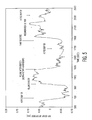
- the modified sensor and an unmodified reference sensor were exposed to the following solutions (see Table). Between each solution the probes were rinsed with base buffer (HEPES). The trace for the reference channel was subtracted from the GGBP channel to correct for bulk refractive index effects on the sensor performance. The results indicate a detectable and reversible response to glucose levels of 10 ⁇ M and 1 mM (Fig. 5).
- Reagent Solution Time 10 mM HEPES, 150 mM NaCl, 0.005% Polysorbate 20 (v/v), 7.4 0 10 ⁇ M Glucose 950 Regeneration Buffer (a-methyl-mannoside) 1265 HEPES Buffer 1700 1 mM Glucose 1850 Regeneration Buffer 2100 HEPES Buffer 2290
- the present invention provides methods for detection of small molecules without the need for high molecular weight competitors. It has now been found that binding of receptors that undergo conformational changes to a small ligand may be monitored directly by changes is surface refractive index. Such conformational changes may be used to report on the presence of low molecular weight analytes.
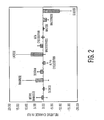
- Receptors that decrease hydrodynamic volume upon ligand binding e.g., MBP, GGBP and CaM
- Receptors that increase hydrodynamic volume upon ligand binding e.g., tTG
- the positivity or negativity of the response detected upon small ligand binding may vary depending on the method selected for monitoring of the surface refractive index. For example, LPG analysis of GGBP binding to glucose produced a positive response rather than the negative response observed on SPR.
Landscapes
- Health & Medical Sciences (AREA)
- Immunology (AREA)
- Life Sciences & Earth Sciences (AREA)
- Engineering & Computer Science (AREA)
- Molecular Biology (AREA)
- Biomedical Technology (AREA)
- Chemical & Material Sciences (AREA)
- Hematology (AREA)
- Urology & Nephrology (AREA)
- Biotechnology (AREA)
- Microbiology (AREA)
- Cell Biology (AREA)
- Food Science & Technology (AREA)
- Medicinal Chemistry (AREA)
- Physics & Mathematics (AREA)
- Analytical Chemistry (AREA)
- Biochemistry (AREA)
- General Health & Medical Sciences (AREA)
- General Physics & Mathematics (AREA)
- Pathology (AREA)
- Investigating Or Analysing Materials By Optical Means (AREA)
- Investigating Or Analysing Biological Materials (AREA)
Abstract
Description
| Reagent Solution | Time (seconds) |
| 10 mM HEPES, 150 mM NaCl, 0.005% Polysorbate 20 (v/v), 7.4 | 0 |
| 10 µM Glucose | 950 |
| Regeneration Buffer (a-methyl-mannoside) | 1265 |
| | 1700 |
| 1 mM Glucose | 1850 |
| | 2100 |
| HEPES Buffer | 2290 |
Claims (10)
- A method for detecting or analyzing binding of a ligand to a receptor for the ligand which undergoes a conformational change upon such binding, the method comprising binding the ligand to the receptor and detecting such binding by a change in surface refractive index, wherein the ligand has a mass which is small relativeto the conformational change of the receptor upon binding .
- The method of Claim 1 wherein the receptor is a binding protein.
- The method of Claim 1 wherein the change in surface refractive index is detected by a change in surface resonance properties or by a change in a wavelength of scattered light.
- The method of Claim 1 wherein ligand mass is small relative to receptor mass.
- The method of Claim 1 wherein the ligand is selected from the group consisting of amino acids, peptides, nucleotides, oligonucleotides, sugars and ions.
- A method for detecting or analyzing formation of a complex between a ligand and a receptor for the ligand which undergoes a conformational change upon binding to the ligand, the method comprising binding the ligand to the receptor to form the complex and detecting the presence of the complex by a change in surface refractive index, wherein the ligand has a mass which is small relative to the conformational change in the receptor upon binding.
- The method of Claim 6 wherein the receptor is a binding protein.
- The method of Claim 6 wherein the presence of the complex is detected by a change in resonance angle on surface plasmon resonance or by a change in a wavelength of scattered light.
- The method of Claim 6 wherein the ligand mass is small relative to receptor mass.
- The method of Claim 6 wherein the ligand is selected from the group consisting of amino acids, peptides, nucleotides, oligonucleotides, sugars and ions.
Applications Claiming Priority (2)
| Application Number | Priority Date | Filing Date | Title |
|---|---|---|---|
| US09/716,566 US6576430B1 (en) | 2000-11-20 | 2000-11-20 | Detection of ligands by refractive surface methods |
| US716566 | 2000-11-20 |
Publications (3)
| Publication Number | Publication Date |
|---|---|
| EP1209468A2 true EP1209468A2 (en) | 2002-05-29 |
| EP1209468A3 EP1209468A3 (en) | 2003-05-14 |
| EP1209468B1 EP1209468B1 (en) | 2006-02-15 |
Family
ID=24878522
Family Applications (1)
| Application Number | Title | Priority Date | Filing Date |
|---|---|---|---|
| EP01125771A Expired - Lifetime EP1209468B1 (en) | 2000-11-20 | 2001-10-29 | Detection of ligands by refractive surface methods |
Country Status (6)
| Country | Link |
|---|---|
| US (1) | US6576430B1 (en) |
| EP (1) | EP1209468B1 (en) |
| JP (1) | JP4040287B2 (en) |
| CA (1) | CA2361248C (en) |
| DE (1) | DE60117211T2 (en) |
| ES (1) | ES2257373T3 (en) |
Cited By (2)
| Publication number | Priority date | Publication date | Assignee | Title |
|---|---|---|---|---|
| EP2034313A1 (en) * | 2007-09-05 | 2009-03-11 | Fujifilm Corporation | Method for measuring interaction between physiologically active substance and test substance |
| US7630799B2 (en) | 2004-05-28 | 2009-12-08 | Eads Deutschland Gmbh | Flight sensor for electronic components for use in aircraft, method of controlling electronic components on board aircraft, and electronic component |
Families Citing this family (26)
| Publication number | Priority date | Publication date | Assignee | Title |
|---|---|---|---|---|
| US7064103B2 (en) * | 2002-01-04 | 2006-06-20 | Becton, Dickinson And Company | Binding protein as biosensors |
| EP1563067A4 (en) * | 2002-11-04 | 2006-06-07 | Icogenex Corp | Methods for the identification of agents that modulate the structure and processing of a membrane bound precursor protein |
| WO2004083909A2 (en) * | 2003-03-19 | 2004-09-30 | Luna Innovations, Inc. | Fiber-optic apparatus and method for making simultaneous multiple parameter measurements |
| US7019847B1 (en) | 2003-12-09 | 2006-03-28 | The United States Of America As Represented By The Administrator Of The National Aeronautics And Space Administration | Ring-interferometric sol-gel bio-sensor |
| US20050148277A1 (en) * | 2004-01-02 | 2005-07-07 | Stephen Lister | Interactive command-repeater toy system |
| US8158340B2 (en) * | 2005-12-28 | 2012-04-17 | Corning Incorporated | Methods for detecting conformational changes in bioentities |
| WO2007124464A2 (en) | 2006-04-20 | 2007-11-01 | Becton, Dickinson And Company | Thermostable proteins and methods of making and using thereof |
| WO2009039466A1 (en) | 2007-09-20 | 2009-03-26 | Vanderbilt University | Free solution measurement of molecular interactions by backscattering interferometry |
| US9375529B2 (en) * | 2009-09-02 | 2016-06-28 | Becton, Dickinson And Company | Extended use medical device |
| EP2376142B1 (en) | 2009-01-12 | 2018-06-20 | Becton, Dickinson and Company | Infusion set and/or patch pump having at least one of an in-dwelling rigid catheter with flexible features and/or a flexible catheter attachment |
| US20100316764A1 (en) * | 2009-06-10 | 2010-12-16 | Engrain, LLC | Flour supplement compositions and methods for preparing wheat flour |
| US8939928B2 (en) | 2009-07-23 | 2015-01-27 | Becton, Dickinson And Company | Medical device having capacitive coupling communication and energy harvesting |
| US10092691B2 (en) | 2009-09-02 | 2018-10-09 | Becton, Dickinson And Company | Flexible and conformal patch pump |
| US8741591B2 (en) | 2009-10-09 | 2014-06-03 | The Research Foundation For The State University Of New York | pH-insensitive glucose indicator protein |
| WO2011156713A1 (en) | 2010-06-11 | 2011-12-15 | Vanderbilt University | Multiplexed interferometric detection system and method |
| US8814831B2 (en) | 2010-11-30 | 2014-08-26 | Becton, Dickinson And Company | Ballistic microneedle infusion device |
| US8795230B2 (en) | 2010-11-30 | 2014-08-05 | Becton, Dickinson And Company | Adjustable height needle infusion device |
| US9950109B2 (en) | 2010-11-30 | 2018-04-24 | Becton, Dickinson And Company | Slide-activated angled inserter and cantilevered ballistic insertion for intradermal drug infusion |
| US9562853B2 (en) | 2011-02-22 | 2017-02-07 | Vanderbilt University | Nonaqueous backscattering interferometric methods |
| WO2013148957A1 (en) | 2012-03-28 | 2013-10-03 | Becton, Dickinson And Company | Hydrogel adhesion to molded polymers |
| US9273949B2 (en) | 2012-05-11 | 2016-03-01 | Vanderbilt University | Backscattering interferometric methods |
| US10004845B2 (en) | 2014-04-18 | 2018-06-26 | Becton, Dickinson And Company | Split piston metering pump |
| US9416775B2 (en) | 2014-07-02 | 2016-08-16 | Becton, Dickinson And Company | Internal cam metering pump |
| WO2016118812A1 (en) | 2015-01-23 | 2016-07-28 | Vanderbilt University | A robust interferometer and methods of using same |
| EP3408649B1 (en) | 2016-01-29 | 2023-06-14 | Vanderbilt University | Free-solution response function interferometry |
| CN116148223A (en) * | 2023-02-17 | 2023-05-23 | 南京邮电大学 | Device and method for measuring conformational change of single protein molecule |
Family Cites Families (15)
| Publication number | Priority date | Publication date | Assignee | Title |
|---|---|---|---|---|
| CA1237645A (en) * | 1982-12-21 | 1988-06-07 | John H. Fisher | Assay technique |
| GB8618133D0 (en) * | 1986-07-24 | 1986-09-03 | Pa Consulting Services | Biosensors |
| DE68907519T2 (en) * | 1988-05-10 | 1993-10-21 | Amersham Int Plc | Biosensors. |
| US5478755A (en) * | 1988-07-25 | 1995-12-26 | Ares Serono Research & Development Ltd. | Long range surface plasma resonance immunoassay |
| DE69010506T2 (en) * | 1989-10-04 | 1994-12-22 | Du Pont | DETERMINATION METHOD FOR BIOLOGICAL TARGET COMPLEXES ON THE SURFACE OF A BIOSENSOR. |
| US5955377A (en) * | 1991-02-11 | 1999-09-21 | Biostar, Inc. | Methods and kits for the amplification of thin film based assays |
| GB9212416D0 (en) * | 1992-06-11 | 1992-07-22 | Medical Res Council | Reversible binding substances |
| SE9201984D0 (en) * | 1992-06-29 | 1992-06-29 | Pharmacia Biosensor Ab | IMPROVEMENT IN OPTICAL ASSAYS |
| US5494829A (en) * | 1992-07-31 | 1996-02-27 | Biostar, Inc. | Devices and methods for detection of an analyte based upon light interference |
| US5538850A (en) * | 1994-04-15 | 1996-07-23 | Hewlett-Packard Company | Apparatus and method for intracavity sensing of microscopic properties of chemicals |
| US5573957A (en) * | 1994-09-28 | 1996-11-12 | Spectral Diagnostics, Inc. | Monoclonal antibody to human cardiac myoglobin |
| DE69724249T2 (en) * | 1996-05-23 | 2004-06-09 | Inverness Medical Switzerland Gmbh | IMPROVEMENTS IN OR WITH REGARD TO SPECIFIC BINDING ASSAYS |
| SE9604575D0 (en) | 1996-12-12 | 1996-12-12 | Biacore Ab | Method and system for analyte determination |
| US5955378A (en) * | 1997-08-20 | 1999-09-21 | Challener; William A. | Near normal incidence optical assaying method and system having wavelength and angle sensitivity |
| US6432723B1 (en) * | 1999-01-22 | 2002-08-13 | Clinical Micro Sensors, Inc. | Biosensors utilizing ligand induced conformation changes |
-
2000
- 2000-11-20 US US09/716,566 patent/US6576430B1/en not_active Expired - Lifetime
-
2001
- 2001-10-29 ES ES01125771T patent/ES2257373T3/en not_active Expired - Lifetime
- 2001-10-29 EP EP01125771A patent/EP1209468B1/en not_active Expired - Lifetime
- 2001-10-29 DE DE60117211T patent/DE60117211T2/en not_active Expired - Lifetime
- 2001-11-02 CA CA2361248A patent/CA2361248C/en not_active Expired - Lifetime
- 2001-11-20 JP JP2001354021A patent/JP4040287B2/en not_active Expired - Fee Related
Cited By (2)
| Publication number | Priority date | Publication date | Assignee | Title |
|---|---|---|---|---|
| US7630799B2 (en) | 2004-05-28 | 2009-12-08 | Eads Deutschland Gmbh | Flight sensor for electronic components for use in aircraft, method of controlling electronic components on board aircraft, and electronic component |
| EP2034313A1 (en) * | 2007-09-05 | 2009-03-11 | Fujifilm Corporation | Method for measuring interaction between physiologically active substance and test substance |
Also Published As
| Publication number | Publication date |
|---|---|
| EP1209468B1 (en) | 2006-02-15 |
| CA2361248A1 (en) | 2002-05-20 |
| US6576430B1 (en) | 2003-06-10 |
| JP2002350336A (en) | 2002-12-04 |
| CA2361248C (en) | 2011-06-14 |
| EP1209468A3 (en) | 2003-05-14 |
| DE60117211D1 (en) | 2006-04-20 |
| ES2257373T3 (en) | 2006-08-01 |
| DE60117211T2 (en) | 2006-08-17 |
| JP4040287B2 (en) | 2008-01-30 |
Similar Documents
| Publication | Publication Date | Title |
|---|---|---|
| US6576430B1 (en) | Detection of ligands by refractive surface methods | |
| Edwards et al. | Kinetics of protein-protein interactions at the surface of an optical biosensor | |
| Schneider et al. | Optical chip immunoassay for hCG in human whole blood | |
| Meyer et al. | SPR-based immunosensor for the CRP detection—A new method to detect a well known protein | |
| Dillon et al. | Immunoassay for the determination of morphine-3-glucuronide using a surface plasmon resonance-based biosensor | |
| AU774421B2 (en) | Method and kit for detecting betalactam-containing compounds | |
| EP0700519B1 (en) | A method of determining affinity and kinetic properties | |
| US5656504A (en) | Method of preventing undesired binding in solid phase assays | |
| Haake et al. | Label-free detection of biomolecular interaction by optical sensors | |
| US20080227206A1 (en) | Method and system for determination of molecular interaction parameters | |
| JP2002530643A (en) | Refractometer and method for qualitative and quantitative measurements | |
| Pei et al. | Real-time immunoassay of antibody activity in serum by surface plasmon resonance biosensor | |
| AU2004245883B2 (en) | Method and system for determination of molecular interaction parameters | |
| US7320879B2 (en) | Method of determining site-specificity and kit therefor | |
| Kausaite-Minkstimiene et al. | Gold nanoparticle-assisted SPR immunosensor for quantification of SARS-CoV-2 anti-RBD antibodies | |
| EP1116034A1 (en) | Diagnostic method | |
| Proll et al. | Monitoring an antibody affinity chromatography with a label-free optical biosensor technique | |
| WO1993025910A1 (en) | Assay for multiple analytes with co-immobilized ligands | |
| Navrátilová et al. | Immunosensor for the measurement of human serum albumin in urine based on the Spreeta surface plasmon resonance sensor | |
| RU2315999C2 (en) | Nanodiagnosis test-system for detecting hepatitis b virus | |
| KR100405898B1 (en) | Method for detecting analyzed materials with surface plasmon resonance sensor using colloidal gold | |
| Chinowsky et al. | Improving surface plasmon resonance sensor performance using critical-angle compensation | |
| CN107918020A (en) | Neutrophil gelatinase-associated lipocalin assay kit | |
| Al-Jawdah et al. | AP0844 High Sensitive Biosensor for in vitro Detection of Patulin Based on Optical Planar Waveguide | |
| WO2010021586A1 (en) | A method of characterizing antibodies |
Legal Events
| Date | Code | Title | Description |
|---|---|---|---|
| PUAI | Public reference made under article 153(3) epc to a published international application that has entered the european phase |
Free format text: ORIGINAL CODE: 0009012 |
|
| AK | Designated contracting states |
Kind code of ref document: A2 Designated state(s): AT BE CH CY DE DK ES FI FR GB GR IE IT LI LU MC NL PT SE TR |
|
| AX | Request for extension of the european patent |
Free format text: AL;LT;LV;MK;RO;SI |
|
| PUAL | Search report despatched |
Free format text: ORIGINAL CODE: 0009013 |
|
| AK | Designated contracting states |
Designated state(s): AT BE CH CY DE DK ES FI FR GB GR IE IT LI LU MC NL PT SE TR |
|
| AX | Request for extension of the european patent |
Extension state: AL LT LV MK RO SI |
|
| 17P | Request for examination filed |
Effective date: 20031021 |
|
| AKX | Designation fees paid |
Designated state(s): DE ES FR GB IT |
|
| 17Q | First examination report despatched |
Effective date: 20030105 |
|
| GRAP | Despatch of communication of intention to grant a patent |
Free format text: ORIGINAL CODE: EPIDOSNIGR1 |
|
| GRAS | Grant fee paid |
Free format text: ORIGINAL CODE: EPIDOSNIGR3 |
|
| RAP1 | Party data changed (applicant data changed or rights of an application transferred) |
Owner name: BECTON, DICKINSON AND COMPANY |
|
| GRAA | (expected) grant |
Free format text: ORIGINAL CODE: 0009210 |
|
| AK | Designated contracting states |
Kind code of ref document: B1 Designated state(s): DE ES FR GB IT |
|
| PG25 | Lapsed in a contracting state [announced via postgrant information from national office to epo] |
Ref country code: IT Free format text: LAPSE BECAUSE OF FAILURE TO SUBMIT A TRANSLATION OF THE DESCRIPTION OR TO PAY THE FEE WITHIN THE PRESCRIBED TIME-LIMIT;WARNING: LAPSES OF ITALIAN PATENTS WITH EFFECTIVE DATE BEFORE 2007 MAY HAVE OCCURRED AT ANY TIME BEFORE 2007. THE CORRECT EFFECTIVE DATE MAY BE DIFFERENT FROM THE ONE RECORDED. Effective date: 20060215 |
|
| REG | Reference to a national code |
Ref country code: GB Ref legal event code: FG4D |
|
| REF | Corresponds to: |
Ref document number: 60117211 Country of ref document: DE Date of ref document: 20060420 Kind code of ref document: P |
|
| REG | Reference to a national code |
Ref country code: ES Ref legal event code: FG2A Ref document number: 2257373 Country of ref document: ES Kind code of ref document: T3 |
|
| ET | Fr: translation filed | ||
| PLBE | No opposition filed within time limit |
Free format text: ORIGINAL CODE: 0009261 |
|
| STAA | Information on the status of an ep patent application or granted ep patent |
Free format text: STATUS: NO OPPOSITION FILED WITHIN TIME LIMIT |
|
| 26N | No opposition filed |
Effective date: 20061116 |
|
| REG | Reference to a national code |
Ref country code: FR Ref legal event code: PLFP Year of fee payment: 16 |
|
| REG | Reference to a national code |
Ref country code: FR Ref legal event code: PLFP Year of fee payment: 17 |
|
| REG | Reference to a national code |
Ref country code: FR Ref legal event code: PLFP Year of fee payment: 18 |
|
| PGFP | Annual fee paid to national office [announced via postgrant information from national office to epo] |
Ref country code: FR Payment date: 20200917 Year of fee payment: 20 Ref country code: GB Payment date: 20200921 Year of fee payment: 20 |
|
| PGFP | Annual fee paid to national office [announced via postgrant information from national office to epo] |
Ref country code: ES Payment date: 20201102 Year of fee payment: 20 Ref country code: IT Payment date: 20200917 Year of fee payment: 20 Ref country code: DE Payment date: 20200917 Year of fee payment: 20 |
|
| REG | Reference to a national code |
Ref country code: DE Ref legal event code: R071 Ref document number: 60117211 Country of ref document: DE |
|
| REG | Reference to a national code |
Ref country code: GB Ref legal event code: PE20 Expiry date: 20211028 |
|
| PG25 | Lapsed in a contracting state [announced via postgrant information from national office to epo] |
Ref country code: GB Free format text: LAPSE BECAUSE OF EXPIRATION OF PROTECTION Effective date: 20211028 |
|
| REG | Reference to a national code |
Ref country code: ES Ref legal event code: FD2A Effective date: 20220204 |
|
| PG25 | Lapsed in a contracting state [announced via postgrant information from national office to epo] |
Ref country code: ES Free format text: LAPSE BECAUSE OF EXPIRATION OF PROTECTION Effective date: 20211030 |