BACKGROUND OF THE INVENTION
The present invention relates to
simultaneous-linear-equations solving method and
apparatus for calculating numerical solutions of
simultaneous linear equations. In particular, it
relates to a technology that is effective when applied
to a simultaneous-linear-equations solving apparatus
for calculating the numerical solutions in a manner of
being independent of the type (i.e., the non-zero
structure) of the coefficient matrix of the
simultaneous linear equations.
From conventionally, as the solving methods
of solving the simultaneous linear equations the
coefficient matrix of which is a dense matrix, there
have existed many methods such as the Gauss method and
the Crout transformation method. These methods are
described in, for example, Gene H. Golub and Charles F.
Van Loan, "Matrix Computations", published by Johns
Hopkins University Press, 3rd edition, 1996, pp. 94 -
104. In the case where the coefficient matrix has been
already found to be a sparse matrix, starting with the
Skyline method, there exist many solving methods as
data storing methods where attention is focused on the
structure of the non-zero elements of the coefficient
matrix and as the solving methods of solving the
simultaneous linear equations the coefficient matrix of
which is the sparse matrix and which are suitable for
the above-described data storing methods. The methods
of solving the simultaneous linear equations the
coefficient matrix of which is the sparse matrix are
disclosed in, for example, "Matrix Computation
Software-WS, Super Computer, and Parallel Computer",
edited/written by Tutomu Oguni, Maruzen Co., Ltd., pp.
229-231. In order to reduce the resource amount and
the wasteful calculation of the zero elements needed
for the data storage, it is important to select a most-suitable
optimum solving method in correspondence with
the structure of the non-zero elements of the
coefficient matrix. This selection of the solving
method necessitates the empirical and professional
knowledge.
In the conventional numerical solving methods
for the simultaneous linear equations, in the case of
solving the simultaneous linear equations the
coefficient matrix of which is the sparse matrix, the
selection of the optimum solving method has
necessitated the empirical and professional knowledge.
As a result, a user who has no empirical and
professional knowledge has found it difficult to solve
the simultaneous linear equations the coefficient
matrix of which is the sparse matrix.
SUMMARY OF THE INVENTION
Also, in the conventional numerical solving
methods for the simultaneous linear equations, in the
case where the coefficient matrix of the simultaneous
linear equations to be solved is the sparse matrix, the
use of the dense matrix-suitable solving methods has
caused so much waste to be produced. This is
especially apparent when compared with the case of
using the sparse matrix-suitable solving methods in
both the resource amount and the calculation amount
needed for the data storage. In recent years, in a
mass-storage-memory mounting apparatus the
representative of which is a distributed-memory-type
parallel computer or the like, the above-described
waste of storing the zero elements has been becoming a
less serious problem. However, there still remains the
problem of the increase in the calculation amount,
which occurs in the case where the dense matrix-suitable
solving methods are used for solving the
simultaneous linear equations the coefficient matrix of
which is the sparse matrix.
It is an object of the present invention to
provide a technology that makes the following possible:
To solve the above-described problem, to implement an
enhancement in the operability of an information
processing apparatus for calculating numerical
solutions of simultaneous linear equations, and to
reduce the calculation amount needed for determining
the solutions.
In the present invention, in the
simultaneous-linear-equations solving apparatus for
calculating the numerical solutions of the simultaneous
linear equations the coefficient matrix of which is the
sparse matrix, too, all the elements of the sparse
matrix including the zero elements are stored into an
array in much the same way as the case of the dense
matrix. After that, a decomposition processing and a
forward/backward substitution processing are executed
concerning within the range of the non-zero elements
thereof, thereby determining the solutions.
In the present invention, all the elements of
the coefficient matrix elements of the sparse matrix
including the zero elements, and all the elements of
the right-side vector elements are stored into an array
in much the same way as the case of the dense matrix.
Next, the values stored into the above-described
array are examined, thereby creating a non-zero-structure-specifying
index table for indicating
the row number of a terminal-end non-zero element in
each column and the column number of a terminal-end
non-zero element in each row within the above-described
array.
Moreover, of the coefficient matrix elements
within the above-described array, the decomposition
processing is executed concerning within the range of
the non-zero elements indicated by the above-described
created non-zero-structure-specifying index table. In
addition, the forward/backward substitution processing
is executed toward the coefficient matrix elements
subjected to the above-described decomposition
processing and the right-side vector elements stored
into the above-described array, thereby determining the
solutions.
As described earlier, according to the
present invention, the waste of storing the zero
elements is tolerated, and the same data storing
methods as those for the dense matrix are employed for
whatever coefficient matrix in a manner of being
independent of the structure of the non-zero elements
of the coefficient matrix, thereby implementing the
enhancement in the operability. Namely, there is no
necessity to store, into the memory, programs for
causing the computer to execute the various types of
solving methods for solving the simultaneous linear
equations the coefficient matrix of which is the sparse
matrix. Also, there is no necessity for a user to
select one solving method from among the various types
of solving methods. Furthermore, the calculations are
executed concerning only the elements existing within
the range indicated by the above-described created non-zero-structure-specifying
index table. This allows the
simultaneous linear equations to be solved in such a
manner that the calculation amount therefor has been
reduced.
As described so far, according to the
simultaneous-linear-equations solving apparatus of the
present invention, all the elements of the sparse
matrix including the zero elements are stored into the
array in much the same way as the case of the dense
matrix. After that, using the above-described index
table, the decomposition processing and the
forward/backward substitution processing are executed
concerning within the range of the non-zero elements
thereof, thereby determining the solutions. This
method makes it possible to implement the enhancement
in the operability of the information processing
apparatus for calculating the numerical solutions of
the simultaneous linear equations, and to reduce the
calculation amount needed for determining the
solutions.
BRIEF DESCRIPTION OF THE DRAWINGS
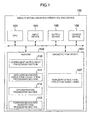
FIG. 1 is a diagram for illustrating the
schematic configuration of a simultaneous-linear-equations
solving apparatus in the present embodiment;
FIG. 2 is a diagram for illustrating one
example of a non-zero-structure-specifying index table
107 in the present embodiment;
FIG. 3 is a diagram for illustrating one
example of an index IMTB 201 and that of an index JMTB
202 in the present embodiment;
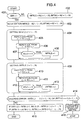
FIG. 4 is a flow chart for illustrating the
processing steps of the non-zero-elements structure
calculation processing in the present embodiment;
FIG. 5 is a flow chart for illustrating the
processing steps of the decomposition processing in the
prior art;
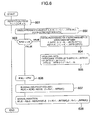
FIG. 6 is a flow chart for illustrating the
processing steps of the decomposition processing in the
present embodiment; and
FIG. 7 is a flow chart for illustrating the
processing steps of the forward/backward substitution
processing in the present embodiment.
DESCRIPTION OF THE EMBODIMENT
Hereinafter, the explanation will be given
below concerning an embodiment of the simultaneous-linear-equations
solving apparatus for calculating the
numerical solutions of the simultaneous linear
equations the coefficient matrix of which is the sparse
matrix.
FIG. 1 is a diagram for illustrating the
schematic configuration of a simultaneous-linear-equations
solving apparatus 100 in the present
embodiment. As illustrated in FIG. 1, the
simultaneous-linear-equations solving apparatus 100 in
the present embodiment includes a CPU 101, a memory
102, a magnetic disk device 103, an input device 104,
an output device 105, a CD-ROM device 106, and a non-zero-structure-specifying
index table 107.
The CPU 101 is an apparatus for controlling
the operation of the simultaneous-linear-equations
solving apparatus 100 as a whole. The memory 102 is a
memory apparatus that, when controlling the operation
of the simultaneous-linear-equations solving apparatus
100 as a whole, loads the various types of programs and
data therefor.
The magnetic disk device 103 is a memory
device for storing the above-described various types of
programs and data. The input device 104 is a device
for performing the various types of inputs for
calculating the numerical solutions of the above-described
sparse-matrix simultaneous linear equations.
The output device 105 is a device for performing the
various types of outputs accompanying the calculation
of the numerical solutions of the sparse-matrix
simultaneous linear equations.
The CD-ROM device 106 is a device for reading
out the contents of a CD-ROM storing the above-described
various types of programs. The non-zero-structure-specifying
index table 107 is a table for
storing, of the coefficient matrix elements within the
array, the row number of a terminal-end non-zero
element in a designated column and the column number of
a terminal-end non-zero element in a designated row.
Also, the simultaneous-linear-equations
solving apparatus 100 includes a coefficient matrix
input processing section 110, a non-zero-elements
structure calculation processing section 111, a
decomposition processing section 112, and a
forward/backward substitution processing section 113.
The coefficient matrix input processing
section 110 is a processing section for storing all the
elements of the coefficient matrix elements of the
sparse matrix including the zero elements and all the
elements of the right-side vector elements into the
array independently of the structure of the non-zero
elements thereof and in much the same way as the case
of the dense matrix. The non-zero-elements structure
calculation processing section 111 is a processing
section for storing, into the non-zero-structure-specifying
index table 107, the row number of a
terminal-end non-zero element in each column and the
column number of a terminal-end non-zero element in
each row within the above-described array.
The decomposition processing section 112 is a
processing section for executing the decomposition
processing toward the elements within the range
indicated by the above-described created non-zero-structure-specifying
index table 107. Moreover, if a
pivoting occurs by a partial pivoting based on a row
exchange for enhancing the accuracy of the solutions,
the decomposition processing section updates the
contents of the non-zero-structure-specifying index
table 107. The forward/backward substitution
processing section 113 is a processing section for
executing the forward/backward substitution processing
toward the coefficient matrix elements subjected to the
above-described decomposition processing and the right-side
vector elements stored into the above-described
array, and for, thereby, determining the solutions.
The programs for causing the simultaneous-linear-equations
solving apparatus 100 to function as
the coefficient matrix input processing section 110,
the non-zero-elements structure calculation processing
section 111, the decomposition processing section 112,
and the forward/backward substitution processing
section 113 are recorded into a recording medium such
as the CD-ROM. These programs are loaded onto the
memory directly or via the magnetic disk, then being
executed by the CPU 101. Incidentally, the recording
medium for recording the above-described programs may
be another recording medium other than the CD-ROM.
The coefficient matrix input processing
section 110 of the simultaneous-linear-equations
solving apparatus 100 in the present embodiment
executes the following: Inputting the values of the
coefficient matrix elements A of the sparse matrix and
the values of the right-side vector elements B which
are presented by an expression Ax = B, storing all the
elements of the coefficient matrix elements A of the
sparse matrix including the zero elements into a 2-dimensional
array A on the memory of the coefficient
matrix input processing section 110 independently of
the structure of the non-zero elements thereof and in
much the same way as the case of the dense matrix, and
storing the right-side vector elements into a 1-dimensional
array B.
The non-zero-elements structure calculation
processing section 111 of the simultaneous-linear-equations
solving apparatus 100 executes the following:
Making reference to the values of the coefficient
matrix elements A stored into above-described array,
and creating the non-zero-structure-specifying index
table 107 for indicating, of the coefficient matrix
elements A within the array, the row number of a
terminal-end non-zero element in a designated column
and the column number of a terminal-end non-zero
element in a designated row.
FIG. 2 illustrates one example of the non-zero-structure-specifying
index table 107 created by
the non-zero-elements structure calculation processing
section 111.
An index IMTB 201 is an index for indicating
the row number of a terminal-end non-zero element in
the J-th column. An index JMTB 202 is an index for
indicating the column number of a terminal-end non-zero
element in the I-th row. Here, I, J each take on the
values in the range of 1 to N, i.e., the number of
dimensions of the coefficient matrix. The terminal-end
non-zero element in the J-th column refers to a non-zero
element the row number of which is the largest in
the J-th column. Similarly, the terminal-end non-zero
element in the I-th row refers to a non-zero element
the column number of which is the largest in the I-th
row. A table including the index IMTB 201 and the
index JMTB 202 is defined as the non-zero-structure-specifying
index table 107.
Employing, as an example, a sparse matrix 301
whose number of dimensions is 8 and which is
illustrated in FIG. 3, the explanation will be given
below concerning the configuration of the non-zero-structure-specifying
index table 107.
Non-zero elements 302 denoted by a mark ""
in FIG. 3 indicate elements whose values are non-zero
of the coefficient matrix elements of the sparse matrix
301. A calculation range 303 represented by a dashed
line indicates the range of the elements surrounded by
the values in the index IMTB 201 and the index JMTB
202. A mark "O" denotes zero elements within the
calculation range 303.
An example 304 of the terminal-end non-zero
element's row number in the index IMTB 201 illustrated
in FIG. 2 indicates a numerical value example set in an
index IMTB (3). Since, as seen from FIG. 3, the row
number of the terminal-end non-zero element in the 3rd
column is equal to "6", the index IMTB (3) is given by
IMTB (3) = 6. Similarly, an example 305 of the
terminal-end non-zero element's column number in the
index JMTB 202 illustrated in FIG. 2 indicates a
numerical value example set in an index JMTB (4). In
the example of the sparse matrix 301 in FIG. 3, the
column number of the terminal-end non-zero element in
the 4th row is equal to "6". In the present
embodiment, however, the setting is performed so that
the following relations will hold: IMTB (J) ≥ IMTB (J-1),
JMTB (I) ≥ JMTB (I-1) (I, J = 2, ..., N) These
relations are given in order that modifications in the
indexes will be minimized even toward a variation in
the non-zero structure caused by the pivoting. As a
result, eventually, the index JMTB (4) is given by JMTB
(4) = 7.
FIG. 4 is a flow chart for illustrating the
processing steps of the non-zero-elements structure
calculation processing in the present embodiment. At
first, the non-zero-elements structure calculation
processing section 111 inputs the value of a variable
ISW capable of being designated from the outside and
indicating whether or not to calculate the structure of
the non-zero elements, and judges whether or not the
value of ISW is equal to "1" (step 401). Here, if ISW
is not equal to "1", it is assumed to indicate that all
the elements of the coefficient matrix are non-zero and
thus there is no necessity to calculate the structure
of the non-zero elements. In the case where all the
elements of the coefficient matrix have been found to
be non-zero, the setting of this ISW makes it possible
to omit steps 403 to 415.
As the result of judging the value of ISW at
the step 401, if it is judged not to calculate the
structure of the non-zero elements, i.e., ISW is not
equal to "1", the processing goes to a step 402 and all
the values in the indexes IMTB 201 and JMTB 202 are set
to be N. Namely, with respect to the simultaneous
linear equations the coefficient matrix of which is the
dense matrix, too, the embodiment of the present
invention allows the solutions to be calculated in much
the same way as in the prior art.
Also, if, at the step 401, ISW is equal to
"1" and it is judged to calculate the structure of the
non-zero elements, the steps 403 to 415 explained
hereinafter are executed. Namely, at first, at the
step 403, all the values in the indexes IMTB 201 and
JMTB 202 are initialized to be "0".
Next, at the step 404, the index IMTB 201 is
calculated. At the step 404, on the inner side of a
processing (step 405) in which, while incrementing J
from 1 up to N on a one-by-one basis, the iteration is
performed, there exists a processing (step 406) in
which, while decrementing I from N down to 1 on a one-by-one
basis, the iteration is performed. On the even
inner side, it is judged whether or not an element A
(I, J) of the coefficient matrix designated by the row
number I and the column number J is equal to "0" (step
407). If the element A is not equal to "0", I is set
into IMTB (J), then terminating the iteration
processing at the step 406 (step 408).
At the step 409, the index JMTB 202 is
calculated. At the step 409, on the inner side of a
processing (step 410) in which, while incrementing I
from 1 up to N on a one-by-one basis, the iteration is
performed, there exists a processing (step 411) in
which, while decrementing J from N down to 1 on a one-by-one
basis, the iteration is performed. On the even
inner side, it is judged whether or not the element A
(I, J) of the coefficient matrix designated by the row
number I and the column number J is equal to "0" (step
412). If the element A is not equal to "0", J is set
into JMTB (I), then terminating the iteration
processing at the step 411 (step 413).
Next, at the step 414, it is judged whether
or not a number the value of which is equal to "0"
exists within the index IMTB or JMTB. If "0" exists, a
row or a column including only zero elements turns out
to exist. From this condition, the given coefficient
matrix is judged to be a singular matrix, then
terminating the processing (step 416).
If "0" does not exist within the indexes IMTB
and JMTB, the values in the indexes IMTB 201 and JMTB
202 are set so that the following relations will hold
(step 415): IMTB (J) ≥ IMTB (J - 1), JMTB (I) ≥ JMTB (I
- 1) (I, J = 2, ..., N) These relations are given in
order that the modifications in the indexes will be
minimized even toward the variation in the non-zero
structure caused by the pivoting. In this way, the
elements existing outside the range indicated by the
index table 107 in the coefficient matrix can be
omitted as out-of-processing targets.
Incidentally, in the case where the
processings at the steps 403 to 415 are executed with
the coefficient matrix of the dense matrix whose
elements are all non-zero elements, all the values in
the indexes IMTB 201 and JMTB 202 are set to be N.
FIG. 5 is a flow chart for illustrating the
processing steps of the decomposition processing in the
prior art. FIG. 5 illustrates the processing steps of
the decomposition processing where the Gauss method
with respect to the dense matrix is executed without
using the non-zero-structure-specifying index table
107.
In this decomposition processing, processings
at steps 502 to 507 are repeated, while incrementing K
from 1 up to N on a one-by-one basis at a step 501.
At the step 502, after making reference to
the values of a pivot column A (I, K) (I = K+1, ...,
N), the value of I of an element whose absolute value
is the largest is substituted into a variable KPIV.
Next, a comparison is made between the value of KPIV
and that of K (step 503). If the values are not equal
to each other, A (KPIV, J) (J = K, ..., N) in the KPIV-th
row and A (K, J) (J = K, ..., N) in the K-th row are
exchanged with each other (step 504). At the step 505,
the values of the pivot row KPIV selected in the K-th
stage are stored into an array IP (K), thereby being
held. This information will be utilized in the
forward/backward substitution processing.
Next, at the step 506, the pivot column A (I,
K) (I = K+1, ..., N) is eliminated with a pivot element
A (K, K). Namely, as shown by a mathematical
expression illustrated at the step 506 in FIG. 5, A (I,
K)/ A (K, K) is substituted into A (I, K), thereby
updating the values of A (I, K). In this way, in the
present embodiment, the term "eliminate" is assumed to
represent "update". At the step 507, as shown by a
mathematical expression illustrated at the step 507 in
FIG. 5, A (I, J) is eliminated from the pivot column A
(I, K) (I = K+1, ..., N) and a pivot row A (K, J) (J =
K+1, ..., N) (step 507).
FIG. 6 is a flow chart for illustrating the
processing steps of the decomposition processing in the
present embodiment. Unlike the processings in FIG. 5,
FIG. 6 illustrates the processing steps of the
decomposition processing where, using the non-zero-structure-specifying
index table 107, the Gauss method
is applied to the matrix elements of the sparse matrix
as is the case with the dense matrix.
In the decomposition processing section 112
in the present embodiment, processings at steps 602 to
608 are repeated, while incrementing K from 1 up to N
on a one-by-one basis at a step 601.
At the step 602, after making reference to
the values of a pivot column A (I, K) (I = K+1, ...,
IMTB(K)), the value of I of an element whose absolute
value is the largest is substituted into the variable
KPIV. In this processing at the step 602, in
comparison with the step 502, the selection range has
been decreased from N down to IMTB(K).
Next, a comparison is made between the value
of KPIV and that of K (step 603). If the values are
not equal to each other, A (KPIV, J) (J = K, ...,
JMTB(KPIV)) in the KPIV-th row and A (K, J) (J =
K, ..., JMTB (KPIV)) in the K-th row are exchanged with
each other (step 604). In this processing at the step
604, in comparison with the step 504, the selection
range has been decreased from N down to JMTB(KPIV).
At the step 605, the values in the index JMTB
are updated in accompaniment with the pivoting. Also,
the values in JMTB(I) (I = K+1, ..., N) are set so that
the relation JMTB (I) ≧ JMTB (I-1) (I = 2, ..., N) is
satisfied. In the present embodiment, here, the values
in the index IMTB have been set so that the relation
IMTB (J) ≧ IMTB (J-1) (J = 2, ..., N) is satisfied.
This condition makes it unnecessary to update the
values in the index IMTB toward the variation in the
non-zero structure caused by the pivoting, thereby
making it possible to decrease the number of the
arithmetic operations needed for modifying the index.
At the step 606, the values of the pivot row
KPIV selected in the K-th stage are stored into the
array IP (K), thereby being held. This information
will be utilized in the forward/backward substitution
processing section 113.
Next, at the step 607, as shown by a
mathematical expression illustrated at the step 607 in
FIG. 6, the pivot column A (I, K) (I = K+1, ...,
IMTB(K)) is eliminated with the pivot element A (K, K).
In this processing as well, in comparison with the step
506, the elimination range has been decreased from N
down to IMTB(K). At the step 608, as shown by a
mathematical expression illustrated at the step 608 in
FIG. 6, A (I, J) is eliminated from the pivot column A
(I, K) (I = K+1, ..., IMTB(K)) and a pivot row A (K, J)
(J = K+1, ..., JMTB(K)). In this processing as well,
in comparison with the step 507, the elimination range
has been decreased from N down to IMTB(K), JMTB(K).
FIG. 7 is a flow chart for illustrating the
processing steps of the forward/backward substitution
processing in the present embodiment. FIG. 7
illustrates the processing steps of the
forward/backward substitution processing that uses the
non-zero-structure-specifying index table 107.
In the forward/backward substitution
processing section 113 in the present embodiment,
processings at steps 702 to 705 are repeated, while
incrementing K from 1 up to N ―1 on a one-by-one basis
at a step 701.
At the step 702, the values of the pivot row
KPIV selected in the K-th stage and set at the step 606
are extracted from the array IP (K), then being
substituted into the variable KPIV.
Next, a comparison is made between the value
of the above-described extracted KPIV and that of K
(step 703). If the values are not equal to each other,
B (KPIV) and B (K) are exchanged with each other (step
704). Here, B is the array into which the values of
the right-side vector have been stored.
At the step 705, as shown by a mathematical
expression illustrated at the step 705 in FIG. 7, B (I)
(I = K+1, ..., IMTB(K)) is eliminated from B (K) and A
(I, K) (I = K+1, ..., IMTB(K)). In this processing,
the use of the index IMTB has decreased the elimination
range from N down to IMTB(K).
At a step 706, a processing at a step 707 is
repeated, while decrementing K from N down to 1 on a
one-by-one basis. At the step 707, as shown by
mathematical expressions illustrated at the step 707 in
FIG. 7, the solutions of the simultaneous linear
equations are calculated from B (J), A (K, J) (J =
K+1, ..., JMTB(K)), and A (K, K), then being stored
into B (K). Here, the iteration processing at the step
707 of repeating (J = K+1, ..., JMTB(K)) is a
processing of incrementing J from K+1 up to JMTB(K) on
a one-by-one basis. Incidentally, if K is equal to N,
J becomes larger than JMTB(K). Accordingly, directly
employing S = 0 as it is without executing this
iteration processing, the forward/backward substitution
processing section 113 executes the calculation of B
(N), then substituting B (N)/A (N, N) into B (N). In
this processing, the use of the index JMTB has
decreased the calculation range from N down to JMTB(K).
As having been described earlier, according
to the present embodiment, the waste of storing the
zero elements is tolerated, and the same data storing
methods as those for the dense matrix are employed for
whatever coefficient matrix in a manner of being
independent of the structure of the non-zero elements
of the coefficient matrix. This makes it possible to
present whatever coefficient matrix as the dense matrix
without necessitating the empirical and professional
knowledge and without being conscious of the structure
of the non-zero elements of the coefficient matrix.
This, further, eliminates the conventional task of
selecting a simultaneous-linear-equations solving
program dedicated specifically for each structure of
the non-zero elements of each coefficient matrix,
thereby making it possible to implement an enhancement
in the operability. Also, in the present embodiment,
the calculations are executed concerning only the
elements existing within the range indicated by the
above-described created non-zero-structure-specifying
index table. This allows the simultaneous linear
equations to be solved in such a manner that the
calculation amount therefor has been reduced.