EP1206556B1 - Signal peptides isolated from lactococcus lactis - Google Patents
Signal peptides isolated from lactococcus lactis Download PDFInfo
- Publication number
- EP1206556B1 EP1206556B1 EP00951271A EP00951271A EP1206556B1 EP 1206556 B1 EP1206556 B1 EP 1206556B1 EP 00951271 A EP00951271 A EP 00951271A EP 00951271 A EP00951271 A EP 00951271A EP 1206556 B1 EP1206556 B1 EP 1206556B1
- Authority
- EP
- European Patent Office
- Prior art keywords
- seq
- nuc
- secretion
- dna
- lactis
- Prior art date
- Legal status (The legal status is an assumption and is not a legal conclusion. Google has not performed a legal analysis and makes no representation as to the accuracy of the status listed.)
- Expired - Lifetime
Links
- 108010076504 Protein Sorting Signals Proteins 0.000 title claims abstract description 83
- 235000014897 Streptococcus lactis Nutrition 0.000 title description 8
- 241000194035 Lactococcus lactis Species 0.000 title 1
- 108020004414 DNA Proteins 0.000 claims abstract description 72
- 241000894006 Bacteria Species 0.000 claims abstract description 32
- JVTAAEKCZFNVCJ-UHFFFAOYSA-N lactic acid Chemical compound CC(O)C(O)=O JVTAAEKCZFNVCJ-UHFFFAOYSA-N 0.000 claims abstract description 32
- 108091028043 Nucleic acid sequence Proteins 0.000 claims abstract description 21
- 239000004310 lactic acid Substances 0.000 claims abstract description 16
- 235000014655 lactic acid Nutrition 0.000 claims abstract description 16
- 102000053602 DNA Human genes 0.000 claims abstract description 14
- 230000004927 fusion Effects 0.000 claims abstract description 13
- 108090000623 proteins and genes Proteins 0.000 claims description 94
- 239000013612 plasmid Substances 0.000 claims description 38
- 238000004519 manufacturing process Methods 0.000 claims description 14
- 101150100619 nuc gene Proteins 0.000 claims description 8
- 230000028327 secretion Effects 0.000 abstract description 98
- 230000017105 transposition Effects 0.000 abstract description 23
- 108700008625 Reporter Genes Proteins 0.000 abstract description 22
- 238000000034 method Methods 0.000 abstract description 20
- 238000011144 upstream manufacturing Methods 0.000 abstract description 10
- 108020004705 Codon Proteins 0.000 abstract description 7
- 244000057717 Streptococcus lactis Species 0.000 description 73
- 102000004169 proteins and genes Human genes 0.000 description 48
- ULGZDMOVFRHVEP-RWJQBGPGSA-N Erythromycin Chemical compound O([C@@H]1[C@@H](C)C(=O)O[C@@H]([C@@]([C@H](O)[C@@H](C)C(=O)[C@H](C)C[C@@](C)(O)[C@H](O[C@H]2[C@@H]([C@H](C[C@@H](C)O2)N(C)C)O)[C@H]1C)(C)O)CC)[C@H]1C[C@@](C)(OC)[C@@H](O)[C@H](C)O1 ULGZDMOVFRHVEP-RWJQBGPGSA-N 0.000 description 32
- 238000004458 analytical method Methods 0.000 description 27
- 239000012634 fragment Substances 0.000 description 27
- 238000010276 construction Methods 0.000 description 26
- 230000000694 effects Effects 0.000 description 24
- 101710163270 Nuclease Proteins 0.000 description 23
- 238000003780 insertion Methods 0.000 description 21
- 230000037431 insertion Effects 0.000 description 21
- 230000035772 mutation Effects 0.000 description 21
- 238000012217 deletion Methods 0.000 description 19
- 230000037430 deletion Effects 0.000 description 19
- 241000588724 Escherichia coli Species 0.000 description 16
- 229960003276 erythromycin Drugs 0.000 description 16
- 230000002209 hydrophobic effect Effects 0.000 description 15
- 238000002474 experimental method Methods 0.000 description 14
- 239000000047 product Substances 0.000 description 14
- 238000012216 screening Methods 0.000 description 14
- 210000004899 c-terminal region Anatomy 0.000 description 13
- 210000004027 cell Anatomy 0.000 description 13
- 230000014509 gene expression Effects 0.000 description 13
- 101150066555 lacZ gene Proteins 0.000 description 13
- 238000012545 processing Methods 0.000 description 13
- 108091081024 Start codon Proteins 0.000 description 12
- 239000012228 culture supernatant Substances 0.000 description 12
- 238000003556 assay Methods 0.000 description 11
- 230000012010 growth Effects 0.000 description 10
- 210000004897 n-terminal region Anatomy 0.000 description 9
- 108010087967 type I signal peptidase Proteins 0.000 description 9
- 210000000349 chromosome Anatomy 0.000 description 8
- 230000001419 dependent effect Effects 0.000 description 8
- 239000002609 medium Substances 0.000 description 8
- 238000006467 substitution reaction Methods 0.000 description 8
- 101100384273 Dictyostelium discoideum clua gene Proteins 0.000 description 7
- OPIFSICVWOWJMJ-AEOCFKNESA-N 5-bromo-4-chloro-3-indolyl beta-D-galactoside Chemical compound O[C@@H]1[C@@H](O)[C@@H](O)[C@@H](CO)O[C@H]1OC1=CNC2=CC=C(Br)C(Cl)=C12 OPIFSICVWOWJMJ-AEOCFKNESA-N 0.000 description 6
- PEDCQBHIVMGVHV-UHFFFAOYSA-N Glycerine Chemical compound OCC(O)CO PEDCQBHIVMGVHV-UHFFFAOYSA-N 0.000 description 6
- SEQKRHFRPICQDD-UHFFFAOYSA-N N-tris(hydroxymethyl)methylglycine Chemical compound OCC(CO)(CO)[NH2+]CC([O-])=O SEQKRHFRPICQDD-UHFFFAOYSA-N 0.000 description 6
- 150000001413 amino acids Chemical class 0.000 description 6
- 230000001580 bacterial effect Effects 0.000 description 6
- 239000013611 chromosomal DNA Substances 0.000 description 6
- 238000010367 cloning Methods 0.000 description 6
- 238000007747 plating Methods 0.000 description 6
- 238000003906 pulsed field gel electrophoresis Methods 0.000 description 6
- 230000009466 transformation Effects 0.000 description 6
- 108091026890 Coding region Proteins 0.000 description 5
- 241000192125 Firmicutes Species 0.000 description 5
- 241000194036 Lactococcus Species 0.000 description 5
- 230000004075 alteration Effects 0.000 description 5
- 230000002759 chromosomal effect Effects 0.000 description 5
- 108020001507 fusion proteins Proteins 0.000 description 5
- 102000037865 fusion proteins Human genes 0.000 description 5
- 239000000499 gel Substances 0.000 description 5
- 230000001105 regulatory effect Effects 0.000 description 5
- 238000002741 site-directed mutagenesis Methods 0.000 description 5
- 241000894007 species Species 0.000 description 5
- 239000013598 vector Substances 0.000 description 5
- 241000191967 Staphylococcus aureus Species 0.000 description 4
- 241000194017 Streptococcus Species 0.000 description 4
- 238000000855 fermentation Methods 0.000 description 4
- 230000004151 fermentation Effects 0.000 description 4
- 230000006872 improvement Effects 0.000 description 4
- 230000010354 integration Effects 0.000 description 4
- 230000037361 pathway Effects 0.000 description 4
- 238000012163 sequencing technique Methods 0.000 description 4
- 238000002415 sodium dodecyl sulfate polyacrylamide gel electrophoresis Methods 0.000 description 4
- 101100365087 Arabidopsis thaliana SCRA gene Proteins 0.000 description 3
- 241000193830 Bacillus <bacterium> Species 0.000 description 3
- 108700010070 Codon Usage Proteins 0.000 description 3
- 102100029091 Exportin-2 Human genes 0.000 description 3
- 101710147878 Exportin-2 Proteins 0.000 description 3
- 108050001049 Extracellular proteins Proteins 0.000 description 3
- 230000005526 G1 to G0 transition Effects 0.000 description 3
- 241000186660 Lactobacillus Species 0.000 description 3
- 241000194034 Lactococcus lactis subsp. cremoris Species 0.000 description 3
- 238000012300 Sequence Analysis Methods 0.000 description 3
- HEMHJVSKTPXQMS-UHFFFAOYSA-M Sodium hydroxide Chemical compound [OH-].[Na+] HEMHJVSKTPXQMS-UHFFFAOYSA-M 0.000 description 3
- 241000191940 Staphylococcus Species 0.000 description 3
- UZMAPBJVXOGOFT-UHFFFAOYSA-N Syringetin Natural products COC1=C(O)C(OC)=CC(C2=C(C(=O)C3=C(O)C=C(O)C=C3O2)O)=C1 UZMAPBJVXOGOFT-UHFFFAOYSA-N 0.000 description 3
- 239000007997 Tricine buffer Substances 0.000 description 3
- 230000003698 anagen phase Effects 0.000 description 3
- 210000000170 cell membrane Anatomy 0.000 description 3
- 230000008859 change Effects 0.000 description 3
- 238000012512 characterization method Methods 0.000 description 3
- 238000003776 cleavage reaction Methods 0.000 description 3
- 101150114352 clua gene Proteins 0.000 description 3
- 238000011161 development Methods 0.000 description 3
- 230000018109 developmental process Effects 0.000 description 3
- 101150045804 dexB gene Proteins 0.000 description 3
- KCFYHBSOLOXZIF-UHFFFAOYSA-N dihydrochrysin Natural products COC1=C(O)C(OC)=CC(C2OC3=CC(O)=CC(O)=C3C(=O)C2)=C1 KCFYHBSOLOXZIF-UHFFFAOYSA-N 0.000 description 3
- 238000009826 distribution Methods 0.000 description 3
- 238000004520 electroporation Methods 0.000 description 3
- 229940039696 lactobacillus Drugs 0.000 description 3
- 230000000670 limiting effect Effects 0.000 description 3
- 230000007246 mechanism Effects 0.000 description 3
- 238000013508 migration Methods 0.000 description 3
- 230000005012 migration Effects 0.000 description 3
- 238000002703 mutagenesis Methods 0.000 description 3
- 231100000350 mutagenesis Toxicity 0.000 description 3
- 108090000765 processed proteins & peptides Proteins 0.000 description 3
- 230000007017 scission Effects 0.000 description 3
- 230000003248 secreting effect Effects 0.000 description 3
- 239000006228 supernatant Substances 0.000 description 3
- 101150118377 tet gene Proteins 0.000 description 3
- 230000001131 transforming effect Effects 0.000 description 3
- 230000005945 translocation Effects 0.000 description 3
- 229920001817 Agar Polymers 0.000 description 2
- 102000004190 Enzymes Human genes 0.000 description 2
- 108090000790 Enzymes Proteins 0.000 description 2
- 241001646716 Escherichia coli K-12 Species 0.000 description 2
- 241001302160 Escherichia coli str. K-12 substr. DH10B Species 0.000 description 2
- DHMQDGOQFOQNFH-UHFFFAOYSA-N Glycine Chemical compound NCC(O)=O DHMQDGOQFOQNFH-UHFFFAOYSA-N 0.000 description 2
- 241000192132 Leuconostoc Species 0.000 description 2
- 241000192130 Leuconostoc mesenteroides Species 0.000 description 2
- 108090001030 Lipoproteins Proteins 0.000 description 2
- 102000004895 Lipoproteins Human genes 0.000 description 2
- KDXKERNSBIXSRK-UHFFFAOYSA-N Lysine Natural products NCCCCC(N)C(O)=O KDXKERNSBIXSRK-UHFFFAOYSA-N 0.000 description 2
- 101100134303 Mus musculus Nucb1 gene Proteins 0.000 description 2
- 241000202223 Oenococcus Species 0.000 description 2
- 229920002472 Starch Polymers 0.000 description 2
- 235000014962 Streptococcus cremoris Nutrition 0.000 description 2
- 239000008272 agar Substances 0.000 description 2
- 125000000539 amino acid group Chemical group 0.000 description 2
- 229960000723 ampicillin Drugs 0.000 description 2
- AVKUERGKIZMTKX-NJBDSQKTSA-N ampicillin Chemical compound C1([C@@H](N)C(=O)N[C@H]2[C@H]3SC([C@@H](N3C2=O)C(O)=O)(C)C)=CC=CC=C1 AVKUERGKIZMTKX-NJBDSQKTSA-N 0.000 description 2
- 238000013528 artificial neural network Methods 0.000 description 2
- 108010058966 bacteriophage T7 induced DNA polymerase Proteins 0.000 description 2
- 230000033228 biological regulation Effects 0.000 description 2
- 235000014048 cultured milk product Nutrition 0.000 description 2
- 238000001514 detection method Methods 0.000 description 2
- 229940088598 enzyme Drugs 0.000 description 2
- LRMHFDNWKCSEQU-UHFFFAOYSA-N ethoxyethane;phenol Chemical compound CCOCC.OC1=CC=CC=C1 LRMHFDNWKCSEQU-UHFFFAOYSA-N 0.000 description 2
- 230000006870 function Effects 0.000 description 2
- 238000002743 insertional mutagenesis Methods 0.000 description 2
- 238000002955 isolation Methods 0.000 description 2
- 239000000463 material Substances 0.000 description 2
- 238000005259 measurement Methods 0.000 description 2
- 125000003729 nucleotide group Chemical group 0.000 description 2
- 230000036961 partial effect Effects 0.000 description 2
- 125000002924 primary amino group Chemical group [H]N([H])* 0.000 description 2
- 230000012743 protein tagging Effects 0.000 description 2
- 230000009467 reduction Effects 0.000 description 2
- 230000000717 retained effect Effects 0.000 description 2
- 238000010186 staining Methods 0.000 description 2
- 239000008107 starch Substances 0.000 description 2
- 235000019698 starch Nutrition 0.000 description 2
- 238000012360 testing method Methods 0.000 description 2
- 108091005703 transmembrane proteins Proteins 0.000 description 2
- 102000035160 transmembrane proteins Human genes 0.000 description 2
- 230000032258 transport Effects 0.000 description 2
- 229920000936 Agarose Polymers 0.000 description 1
- IJYZHIOOBGIINM-WDSKDSINSA-N Arg-Ser Chemical compound OC[C@@H](C(O)=O)NC(=O)[C@@H](N)CCCN=C(N)N IJYZHIOOBGIINM-WDSKDSINSA-N 0.000 description 1
- 239000004475 Arginine Substances 0.000 description 1
- 241000194108 Bacillus licheniformis Species 0.000 description 1
- 108700016332 Bacillus subtilis SpoVG Proteins 0.000 description 1
- UXVMQQNJUSDDNG-UHFFFAOYSA-L Calcium chloride Chemical compound [Cl-].[Cl-].[Ca+2] UXVMQQNJUSDDNG-UHFFFAOYSA-L 0.000 description 1
- 108010078791 Carrier Proteins Proteins 0.000 description 1
- 108010078140 Cation Transport Proteins Proteins 0.000 description 1
- 238000001712 DNA sequencing Methods 0.000 description 1
- 108090000204 Dipeptidase 1 Proteins 0.000 description 1
- 241000196324 Embryophyta Species 0.000 description 1
- 241000206602 Eukaryota Species 0.000 description 1
- 102100029095 Exportin-1 Human genes 0.000 description 1
- WQZGKKKJIJFFOK-GASJEMHNSA-N Glucose Natural products OC[C@H]1OC(O)[C@H](O)[C@@H](O)[C@@H]1O WQZGKKKJIJFFOK-GASJEMHNSA-N 0.000 description 1
- 101001005389 Homo sapiens Protein LTV1 homolog Proteins 0.000 description 1
- 102000003918 Hyaluronan Synthases Human genes 0.000 description 1
- 108090000320 Hyaluronan Synthases Proteins 0.000 description 1
- ODKSFYDXXFIFQN-BYPYZUCNSA-P L-argininium(2+) Chemical compound NC(=[NH2+])NCCC[C@H]([NH3+])C(O)=O ODKSFYDXXFIFQN-BYPYZUCNSA-P 0.000 description 1
- KDXKERNSBIXSRK-YFKPBYRVSA-N L-lysine Chemical compound NCCCC[C@H](N)C(O)=O KDXKERNSBIXSRK-YFKPBYRVSA-N 0.000 description 1
- 240000001046 Lactobacillus acidophilus Species 0.000 description 1
- 235000013956 Lactobacillus acidophilus Nutrition 0.000 description 1
- 239000004472 Lysine Substances 0.000 description 1
- 108010052285 Membrane Proteins Proteins 0.000 description 1
- 102000018697 Membrane Proteins Human genes 0.000 description 1
- 108090000301 Membrane transport proteins Proteins 0.000 description 1
- 102000003939 Membrane transport proteins Human genes 0.000 description 1
- 125000000729 N-terminal amino-acid group Chemical group 0.000 description 1
- 101100241454 Neurospora crassa (strain ATCC 24698 / 74-OR23-1A / CBS 708.71 / DSM 1257 / FGSC 987) nuc-2 gene Proteins 0.000 description 1
- 101100522042 Oryza sativa subsp. japonica PSS3 gene Proteins 0.000 description 1
- 102100025932 Protein LTV1 homolog Human genes 0.000 description 1
- 108090000233 Signal peptidase II Proteins 0.000 description 1
- 241000194019 Streptococcus mutans Species 0.000 description 1
- 241000187747 Streptomyces Species 0.000 description 1
- 101150096719 USP1 gene Proteins 0.000 description 1
- 101150034565 USP2 gene Proteins 0.000 description 1
- 101150115929 Usp45 gene Proteins 0.000 description 1
- 238000007792 addition Methods 0.000 description 1
- 239000011543 agarose gel Substances 0.000 description 1
- 230000002776 aggregation Effects 0.000 description 1
- 238000004220 aggregation Methods 0.000 description 1
- 239000003242 anti bacterial agent Substances 0.000 description 1
- 238000013459 approach Methods 0.000 description 1
- ODKSFYDXXFIFQN-UHFFFAOYSA-N arginine Natural products OC(=O)C(N)CCCNC(N)=N ODKSFYDXXFIFQN-UHFFFAOYSA-N 0.000 description 1
- 230000002238 attenuated effect Effects 0.000 description 1
- 108010019077 beta-Amylase Proteins 0.000 description 1
- 102000005936 beta-Galactosidase Human genes 0.000 description 1
- 108010005774 beta-Galactosidase Proteins 0.000 description 1
- 102000006635 beta-lactamase Human genes 0.000 description 1
- 230000003115 biocidal effect Effects 0.000 description 1
- 230000015572 biosynthetic process Effects 0.000 description 1
- 235000014121 butter Nutrition 0.000 description 1
- 239000001110 calcium chloride Substances 0.000 description 1
- 229910001628 calcium chloride Inorganic materials 0.000 description 1
- 239000002775 capsule Substances 0.000 description 1
- 230000015556 catabolic process Effects 0.000 description 1
- 230000006037 cell lysis Effects 0.000 description 1
- 235000013351 cheese Nutrition 0.000 description 1
- 239000002962 chemical mutagen Substances 0.000 description 1
- 230000021615 conjugation Effects 0.000 description 1
- 238000007796 conventional method Methods 0.000 description 1
- 235000013365 dairy product Nutrition 0.000 description 1
- 230000007547 defect Effects 0.000 description 1
- 238000006731 degradation reaction Methods 0.000 description 1
- 238000013461 design Methods 0.000 description 1
- 230000029087 digestion Effects 0.000 description 1
- 230000008034 disappearance Effects 0.000 description 1
- 238000011143 downstream manufacturing Methods 0.000 description 1
- 239000003814 drug Substances 0.000 description 1
- 239000003623 enhancer Substances 0.000 description 1
- 235000020774 essential nutrients Nutrition 0.000 description 1
- 108700002148 exportin 1 Proteins 0.000 description 1
- 239000013604 expression vector Substances 0.000 description 1
- 230000002349 favourable effect Effects 0.000 description 1
- 235000013305 food Nutrition 0.000 description 1
- 238000010230 functional analysis Methods 0.000 description 1
- 230000002068 genetic effect Effects 0.000 description 1
- 239000008103 glucose Substances 0.000 description 1
- 239000001963 growth medium Substances 0.000 description 1
- 229940094991 herring sperm dna Drugs 0.000 description 1
- 238000001727 in vivo Methods 0.000 description 1
- 238000011534 incubation Methods 0.000 description 1
- 230000006698 induction Effects 0.000 description 1
- 229940039695 lactobacillus acidophilus Drugs 0.000 description 1
- 238000012423 maintenance Methods 0.000 description 1
- 239000003550 marker Substances 0.000 description 1
- 108020004999 messenger RNA Proteins 0.000 description 1
- 230000004060 metabolic process Effects 0.000 description 1
- 230000000813 microbial effect Effects 0.000 description 1
- 244000005700 microbiome Species 0.000 description 1
- 239000000203 mixture Substances 0.000 description 1
- 230000004048 modification Effects 0.000 description 1
- 238000012986 modification Methods 0.000 description 1
- 239000000178 monomer Substances 0.000 description 1
- 101150015886 nuc-1 gene Proteins 0.000 description 1
- 239000002773 nucleotide Substances 0.000 description 1
- 235000015097 nutrients Nutrition 0.000 description 1
- 230000007030 peptide scission Effects 0.000 description 1
- 230000004962 physiological condition Effects 0.000 description 1
- 229920001184 polypeptide Polymers 0.000 description 1
- 238000001556 precipitation Methods 0.000 description 1
- 238000002360 preparation method Methods 0.000 description 1
- 230000008569 process Effects 0.000 description 1
- 102000004196 processed proteins & peptides Human genes 0.000 description 1
- 238000012514 protein characterization Methods 0.000 description 1
- 230000012846 protein folding Effects 0.000 description 1
- 238000011084 recovery Methods 0.000 description 1
- 230000002829 reductive effect Effects 0.000 description 1
- 238000009877 rendering Methods 0.000 description 1
- 230000003362 replicative effect Effects 0.000 description 1
- 238000011160 research Methods 0.000 description 1
- 230000009962 secretion pathway Effects 0.000 description 1
- 238000004904 shortening Methods 0.000 description 1
- 238000007711 solidification Methods 0.000 description 1
- 230000008023 solidification Effects 0.000 description 1
- 101150002464 spoVG gene Proteins 0.000 description 1
- 239000007858 starting material Substances 0.000 description 1
- 238000003786 synthesis reaction Methods 0.000 description 1
- 230000008685 targeting Effects 0.000 description 1
- 231100000331 toxic Toxicity 0.000 description 1
- 230000002588 toxic effect Effects 0.000 description 1
- 238000013518 transcription Methods 0.000 description 1
- 230000035897 transcription Effects 0.000 description 1
- 230000007704 transition Effects 0.000 description 1
- 238000013519 translation Methods 0.000 description 1
- 238000009281 ultraviolet germicidal irradiation Methods 0.000 description 1
- 229960005486 vaccine Drugs 0.000 description 1
- 235000013618 yogurt Nutrition 0.000 description 1
Images


Classifications
-
- C—CHEMISTRY; METALLURGY
- C12—BIOCHEMISTRY; BEER; SPIRITS; WINE; VINEGAR; MICROBIOLOGY; ENZYMOLOGY; MUTATION OR GENETIC ENGINEERING
- C12N—MICROORGANISMS OR ENZYMES; COMPOSITIONS THEREOF; PROPAGATING, PRESERVING, OR MAINTAINING MICROORGANISMS; MUTATION OR GENETIC ENGINEERING; CULTURE MEDIA
- C12N15/00—Mutation or genetic engineering; DNA or RNA concerning genetic engineering, vectors, e.g. plasmids, or their isolation, preparation or purification; Use of hosts therefor
- C12N15/09—Recombinant DNA-technology
- C12N15/10—Processes for the isolation, preparation or purification of DNA or RNA
- C12N15/1034—Isolating an individual clone by screening libraries
-
- C—CHEMISTRY; METALLURGY
- C12—BIOCHEMISTRY; BEER; SPIRITS; WINE; VINEGAR; MICROBIOLOGY; ENZYMOLOGY; MUTATION OR GENETIC ENGINEERING
- C12N—MICROORGANISMS OR ENZYMES; COMPOSITIONS THEREOF; PROPAGATING, PRESERVING, OR MAINTAINING MICROORGANISMS; MUTATION OR GENETIC ENGINEERING; CULTURE MEDIA
- C12N15/00—Mutation or genetic engineering; DNA or RNA concerning genetic engineering, vectors, e.g. plasmids, or their isolation, preparation or purification; Use of hosts therefor
- C12N15/09—Recombinant DNA-technology
- C12N15/11—DNA or RNA fragments; Modified forms thereof; Non-coding nucleic acids having a biological activity
- C12N15/62—DNA sequences coding for fusion proteins
- C12N15/625—DNA sequences coding for fusion proteins containing a sequence coding for a signal sequence
-
- C—CHEMISTRY; METALLURGY
- C12—BIOCHEMISTRY; BEER; SPIRITS; WINE; VINEGAR; MICROBIOLOGY; ENZYMOLOGY; MUTATION OR GENETIC ENGINEERING
- C12N—MICROORGANISMS OR ENZYMES; COMPOSITIONS THEREOF; PROPAGATING, PRESERVING, OR MAINTAINING MICROORGANISMS; MUTATION OR GENETIC ENGINEERING; CULTURE MEDIA
- C12N15/00—Mutation or genetic engineering; DNA or RNA concerning genetic engineering, vectors, e.g. plasmids, or their isolation, preparation or purification; Use of hosts therefor
- C12N15/09—Recombinant DNA-technology
- C12N15/63—Introduction of foreign genetic material using vectors; Vectors; Use of hosts therefor; Regulation of expression
- C12N15/74—Vectors or expression systems specially adapted for prokaryotic hosts other than E. coli, e.g. Lactobacillus, Micromonospora
- C12N15/746—Vectors or expression systems specially adapted for prokaryotic hosts other than E. coli, e.g. Lactobacillus, Micromonospora for lactic acid bacteria (Streptococcus; Lactococcus; Lactobacillus; Pediococcus; Enterococcus; Leuconostoc; Propionibacterium; Bifidobacterium; Sporolactobacillus)
-
- C—CHEMISTRY; METALLURGY
- C07—ORGANIC CHEMISTRY
- C07K—PEPTIDES
- C07K2319/00—Fusion polypeptide
- C07K2319/01—Fusion polypeptide containing a localisation/targetting motif
- C07K2319/02—Fusion polypeptide containing a localisation/targetting motif containing a signal sequence
-
- C—CHEMISTRY; METALLURGY
- C07—ORGANIC CHEMISTRY
- C07K—PEPTIDES
- C07K2319/00—Fusion polypeptide
- C07K2319/01—Fusion polypeptide containing a localisation/targetting motif
- C07K2319/036—Fusion polypeptide containing a localisation/targetting motif targeting to the medium outside of the cell, e.g. type III secretion
-
- C—CHEMISTRY; METALLURGY
- C07—ORGANIC CHEMISTRY
- C07K—PEPTIDES
- C07K2319/00—Fusion polypeptide
- C07K2319/61—Fusion polypeptide containing an enzyme fusion for detection (lacZ, luciferase)
Definitions
- the present invention relates to the field of microbial expression systems, in particular to means of improving the level of secretion of homologous or heterologous gene products in recombinant host cells. Specifically, there is provided novel signal peptides isolated from Lactococcus spp., and mutants of such signal peptides having enhanced efficiency.
- the group of Gram-positive bacteria that are generally referred to as lactic acid bacteria including Lactococcus spp. such as Lactococcus lactis , Lactobacillus spp., Streptococcus spp., Leuconostoc spp. and Oenococcus spp. are commonly used in the manufacturing of food products and feedstuffs, e.g. as dairy starter cultures in the manufacturing of fermented milk products such as butter, cheese and yoghurt. Lactococcus lactis is a typical example of a Gram-positive bacterium used for the manufacturing of a wide range of fermented milk products.
- lactic acid bacteria are currency used as recombinant host cells for the production of heterologous and homologous gene products such as pharmaceutically active products or enzymes.
- heterologous and homologous gene products such as pharmaceutically active products or enzymes.
- recent work by the inventors has focused on the production of heterologous proteins with a potential as vaccines, therapeutics or enzymes.
- the expression system used includes a strong regulated promoter and has allowed a high-level production of recombinant Leuconostoc mesenteroides ⁇ -galactosidase, LacLM (Madsen et al., 1999).
- the process of secretion in bacteria includes events that occur just after translation of the mRNA, i.e. the subsequent recognition of the signal peptide (SP) in the nascent unfolded polypeptide chain by the Sec apparatus and cleavage by signal peptidase upon translocation through the cell membrane.
- SP signal peptide
- the Sec-dependent pathway is the best studied system for protein export. Although it is known that virtually all proteins exported via this mechanism require a SP, it is not clearly understood how the structure of the SP interacts with the different components of the secretion machinery in the cell.
- the recent characterization of a Sec-independent pathway that is conserved between E. coli and plants illustrates the fact that proteins are exported through a number of distinct pathways (Settles and Martienssen, 1998; Stephens 1998). The mechanisms involved normally require the presence of sequence motifs in the exported protein.
- SPs are the N-terminal extensions present in Sec-dependent secreted proteins.
- the structure of a typical SP includes three distinct regions: (i) an N-terminal region that contains a number of positively charged amino acids, lysine and arginine; (ii) a central hydrophobic core and; (iii) a hydrophilic C-terminus that contains the sequence motif recognised by the signal peptidase (von Heijne 1990).
- a hydrophilic C-terminus that contains the sequence motif recognised by the signal peptidase (von Heijne 1990).
- the characterisation of numerous extracellular proteins has allowed development of a method for the prediction of the presence and location of signal peptide cleavage sites in amino acid sequences from different organisms including Gram-positive and Gram-negative prokaryotes, and eukaryotes (Nielsen et al., 1997).
- the method involves a prediction of cleavage sites and a signal peptide/non-signal peptide prediction based on a combination of several artificial neural networks.
- the use of this method permits the preliminary design and analysis of SP derivatives prior to their construction and test in vivo.
- Proteins that are targeted for secretion include a signal sequence or signal peptide (SP) at the N-terminus. SPs are recognised and cleaved by a leader or signal peptidase, a component of the secretion machinery of the cell, during translocation across the cell membrane (Martoglio and Dobberstein, 1998). SPs are normally 25 to over 35 amino acids (aa) in size in Gram-positive bacteria. SPs do not share sequence homology, but are often composed of an amino terminus that includes one or more basic aa, a central hydrophobic core of seven or more aa, and a hydrophilic carboxy terminus containing the motif that is recognized by signal peptidases (Martoglio and Dobberstein, 1998).
- SPs are recognised and cleaved by a leader or signal peptidase, a component of the secretion machinery of the cell, during translocation across the cell membrane (Martoglio and Dobberstein, 1998). SPs are normally 25 to over 35 amino acids (a
- the invention pertains in a first aspect to an isolated DNA molecule comprising a DNA sequence coding for a signal peptide selected from the group consisting of 310mut1 (SEQ ID NO:42), 310mut2 (SEQ ID NO:43), 310mut3 (SEQ ID NO:44), 310mut4 (SEQ ID NO:45), 310mut5 (SEQ ID NO:46), 310mut6 (SEQ ID NO:47), 310mut7 (SEQ ID NO:48), 310mut8 (SEQ ID NO:49), 310mut10 (SEQ ID NO:51), 310mut11 (SEQ ID NO:52), 310mutA (SEQ ID NO:53), 310mutB (SEQ ID NO:54), 310mutC (SEQ ID NO:55), 310mutA1 (SEQ ID NO:56), 310mutB1 (SEQ ID NO:57), 310mutD2 (SEQ ID NO,58), 310mutD7 (SEQ ID NO:59), 310mutE2 (SEQ ID
- the present invention relates to an isolated DNA molecule comprising a DNA sequence coding for the signal peptide SP310 (SEQ ID NO:41).
- Still further aspects of the present invention relate to a recombinant plasmid and a recombinant bacterium comprising a DNA sequence according to the invention.
- the present invention relates to the use of a bacterium according to the invention for the production of a desired gene product.
- a major objective of the present invention is to provide a novel transposable element that permits the direct identification, i.e. without the use of an intermediate bacterial species. in the genome of a lactic acid bacterium of a sequence coding for a SP.
- Such an element may be provided by a method of constructing a transposon derivative for identifying in a lactic acid bacterium a DNA sequence coding for a signal peptide (SP).
- SP signal peptide
- a DNA molecule is selected that comprises a transposon including between its left terminus (LR) and its right terminus (RR) a sequence comprising a promoterless promoter reporter gene and a ribosome binding site (RBS).
- LR left terminus
- RR right terminus
- RBS ribosome binding site
- one such useful DNA molecule is one comprising the Tn917 transposon or a derivative hereof.
- a particularly useful Tn917 derivative is the plasmid pLTV1 that in addition to the Tn917 transposon comprises a promoterless lacZ gene and a ribosome-binding site (RBS).
- a region, located between the LR and the promoterless reporter gene, is deleted to obtain a modified DNA molecule that has retained its transposability and its RBS, followed by inserting a unique restriction site into the remaining region located between the LR and the promoterless reporter gene and inserting into said unique restriction site a DNA sequence coding for a secretion reporter molecule that does not include a sequence coding for a SP.
- transposon derivative is without stop codons in-frame with the secretion reporter molecule permitting, upon transposition, translational fusions from upstream the LR.
- nucleases include the Staphylococcus aureus nuclease (Nuc), a naturally extracellular protein that has been shown to be useful in L. lactis as secretion reporter (Poquet et al., 1998).
- Nuc is suitable for the screening for SPs since the protein is inactive intracellularly and its structure is remarkably simple (it is a monomer, lacks disulfide bonds).
- the codon usage in the nuc gene is appropriate for high level expression in lactococci, and the plate assay for detection of secretion is not toxic, eliminating the need for replica plating.
- Transposon derivative molecules are useful for the identification in a lactic acid bacterium of a DNA sequence coding for a signal peptide (SP).
- SP signal peptide
- Such a molecule comprises a first element in the form of a DNA molecule comprising a transposon element including between its left terminus (LR) and its right terminus (RR) a sequence comprising a promoterless promoter reporter gene and a ribosome-binding site.
- LR left terminus
- RR right terminus
- a useful promoter reporter gene is the lacZ gene.
- the DNA molecule is without stop codons in the region upstream of the promoter reporter gene that are in-frame with the secretion reporter molecule of the below second element, which permits, upon transposition of the transposon derivative, the expression of translational fusions from upstream the LR.
- the transposon derivative molecule comprises, as a second element, a DNA sequence that codes for a secretion reporter molecule, said DNA sequence is without a sequence coding for a SP.
- the secretion reporter gene is a gene coding for a nuclease such as the nuc gene derived from Staphylococcus aureus .
- the transposon derivative is derived from Tn917 or a derivative hereof including pLTV1.
- a particularly useful transposon derivative according to the invention is pTn Nuc , the construction and function of which are described in details in the following examples.
- the transposon derivative may further comprise a selection marker, e.g. an antibiotic resistance gene or a mutation conferring auxotrophy against an essential nutrient component.
- Identifying, in a lactic acid bacterium, a DNA sequence coding for a signal peptide (SP) may be achieved by the method described herein.
- the method comprises the steps of transforming a lactic acid bacterium with a transposon derivative molecule as described above and selecting from the transformed lactic acid bacterium, cells in which the promoterless promoter reporter gene is expressed and the gene product of the DNA sequence coding for a secretion reporter molecule is secreted.
- an expression of the promoter reporter gene is an indication that the transposable element has been integrated into a gene of the lactic acid bacterial cell at a position where it is operably linked to a promoter in the chromosome of the cell.
- Simultaneous screening for expression of the promoterless reporter gene and the secretion reporter gene on media which are indicative for the fusion product of the promoter reporter gene and the secretion reporter gene permits the direct identification of clones comprising a sequence coding for a functional SP.
- the lactic acid bacterium which is used in the above as a source for functional SPs, can be of any species belonging to the group of bacteria generally referred to as lactic acid bacteria.
- This group includes Lactococcus spp. such as Lactococcus lactis, Lactobacillus spp. including as examples Lactobacillus acidophilus and Lactobacillus plantanum, Leuconostoc spp. such as Leuconostoc mesenteroides , Oenococcus spp. and Streptococcus spp.
- the transposon derivative is transposed randomly or quasi-randomly.
- Suitable DNA molecules include such molecules where the DNA sequence coding for a signal peptide is the SP310 described in the following examples, and a mutant thereof.
- mutants include those designated herein as 310mut1, 310mut2, 310mut3, 310mut4, 310mut5, 310mut6, 310mut7, 310mut8, 310mut10, 310mut11, 310mutA, 310mutB, 310mutC, 310mutA1, 310mutB1, 310mutD2, 310mutD7, 310mutE2, 310mutE11 and 310mutF2, respectively.
- the invention also provides recombinant plasmids comprising an isolated DNA molecule of the invention.
- a plasmid includes ⁇ 310::Nuc as described herein.
- the recombinant plasmid according to the invention comprises a regulatable promoter operably linked to the secretion reporter gene.
- the regulation of the promoter activity is preferably caused by growth condition factors for the host cell carrying the plasmid such as the growth temperature, the pH, the growth phase and changes of the nutrient composition of the medium occurring during growth of the host cell.
- one useful promoter is the P170 promoter as described hereinbelow.
- the invention pertains to a recombinant bacterium comprising a DNA sequence of the invention.
- a recombinant bacterium is any Gram-positive or Gram-negative bacterium that is used as host cell in the production of desired gene products.
- Typical examples of Gram-positive bacteria include lactic acid bacterial species, Bacillus spp. and Streptomyces species and examples of Gram-negative bacteria include as a typical example E. coli.
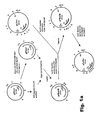
- Fig. 1A illustrates the construction of pTn Nuc , a secretion reporter tool in L. lactis. Details of the construction of Tn Nuc are described in Example 1. Plasmids are not drawn to scale and only relevant features are shown. Restriction sites. A: Aat II; B: Bsm I; E: Eco RV; N: Nsi I; R: Rsr II; S: Sma I .
- the pPRA plasmids contain the 3.1 Eco RV fragment from pLTV1 spanning from the coding region of the tet gene (open tet arrow) to within the lacZ gene (stripped lacZ arrow) and including the left repeat of Tn 917 (filled LR box). This fragment (open LTV1 box) and the position of the LR (filled LR box) are shown in pPRA plasmids for clarity. The region deleted between the LR and lacZ is depicted as an open triangle in pPRA4B.
- Fig. 1 B illustrate details of the nt positions used in the deletion analysis of the Tn 917 derivative in pLTV1 are indicated together with the functionality of the different pPRA5 derivatives in transposition;
- Fig. 2. summarises an analysis of secretion efficiency for selected L. lactis SPs. Concentrated (20-fold) supernatants of strain PRA157 (lane 1), PRA158 (lane 2) and PRA159 (lane 3) were run on a 16% Tricine gel and Coomasie stained. The volume loaded represents the total protein content from 100 ⁇ l (PRA157 and PRA158) or 50 ⁇ l (PRA159) of culture supernatant. The migration of molecular weight markers in kDa is shown to the left. The position of NucA and the corresponding full length protein ( ⁇ 13::Nuc, ⁇ 307::Nuc and ⁇ 310::Nuc is shown to the right). A weaker band with similar migration to ⁇ 13::Nuc and present in all strains corresponds to Usp45, the major secreted protein from L. lactis (van Asseldonk et al., 1990);
- Fig. 3. is an overview of the site-directed mutagenesis strategy for SP31 0 and Nuclease secretion.
- the profile obtained from the analysis of the wild type SP31 0 (SP310) using SignalP is shown above.
- C, S and Y scores are the three parameters used in SignalP for the identification of a SP.
- the arrow indicates the suggested main processing site between residues Ala34-Ala35, sequence alterations are underlined; and
- Fig. 4 shows secreted nuclease yield in L. lactis strains containing an altered SP310.
- Supernatants from overnight cultures were concentrated about 50-fold by TCA-precipitation.
- a volume corresponding to 0.5 ml culture supernatant was run on a 14% SDS PAGE (Novex).
- Lane 1 strain PRA76 (Usp45SP-Nuc); lane 2: strain PRA159 (original construction with 60 aa from the SP310 sequence fused to the mature Nuc); lane 3: strain PRA162 (only the 35 aa of SP310 fused to Nuc); lane 4: strain PRA164 (310mut2-Nuc); lane 5: strain PRA170 (310mutB-Nuc); lane 6: strain PRA250 (310mut6-Nuc); The migration of molecular weight markers is indicated to the left in kDa.
- aa amino acid(s); B .: Bacillus; bp: base pair; E .: Escherichia coli; Em: Erythromycin; L .: Lactococcus; LR: left repeat; nuc : Nuclease coding gene; Nuc: Nuclease protein; nt: nucleotide; S.: Staphylococcus; SP(s): signal peptide(s) or secretion signal; St.: Streptococcus
- Tn Nuc a new Tn917 -transposon derivative, termed Tn Nuc , which includes the Staphylococcus aureus nuclease gene (nuc) as a reporter for secretion is described.
- Tn Nuc also includes lacZ, a reporter used for identification of relevant clones from the library, i.e. clones with Lac + phenotype resulting from transposition of Tn Nuc into a functional gene on the L . lactis chromosome.
- Tn Nuc was used for the identification of novel secretion signals from L . lactis.
- the sequences identified included known and unknown lactococcal secreted proteins containing either a signal peptidase-I recognition sequence or a peptidase-II recognition sequence.
- the gene identified codes for a transmembrane protein.
- the identified sequences were used to study functionality when located in a plasmid under the control of the pH and growth phase-dependent promoter P170 (Madsen et al. 1999). In all cases concurrent secretion of nuclease was observed during induction of P170 in a chemostat.
- Escherichia coli K-12 strain DH10B (Grant et al., 1990) grown in LB supplemented, if appropriate, with 100 ⁇ g/ml ampicillin or 200 ⁇ g/ml erythromycin (Em), at 37°C was used for cloning purposes, rescue of plasmid DNA and propagation of plasmid DNA.
- Lactococcus lactis cremoris strain MG1614 (Gasson 1983) was used in experiments involving construction of transposon insertions, screening, analysis of transposon insertions and plasmid rescue of DNA adjacent to site of insertion.
- L. lactis subsp. cremoris strain MG1614 (Gasson 1983) were used for analysis of isolated translocation signals. L.
- lactis strains were grown in GM17 or ArgM17 (Israelsen et al., 1995) at 30°C supplemented, if appropriate, with 1 ⁇ g/ml erythromycin (GM17Em or ArgM17Em).
- GM17Em or ArgM17Em 1 ⁇ g/ml erythromycin
- a defined medium, 3 x SAIV Jensen and Hammer, 1993 was used and pH was maintained using KOH.
- Transformation of bacteria was performed by electroporation, according to published procedures for E. coli (Sambrook et al., 1989) and L. lactis (Holo and Nes 1989), respectively.
- Fig. 1 The strategy for the construction and analysis of deletion derivatives of Tn 91 7-LTV1 (Camilli et al., 1990) is illustrated in Fig. 1.
- the 3.1 kb Eco RV fragment from pLTV1, spanning from the 3' end of the lacZ gene to the coding region of the tet gene (positions 12208 to 15335) was subcloned into Eco RV-digested pBluescript SK- (Stratagene), resulting in pPRA2.
- Plasmid DNA from pPRA2 was used as a template for PCR using primer PSS1b (5'-CGATG AATGC C GGACCGAAT TGATACACTA ATGCTTTTAT ATAGGG-3'(SEQ ID NO:1) containing restriction site for Bsm I (underlined) and Rsr II (italics), respectively; position 13374-13348 in pLTV1) and primer PSS14 (5'-GTGTAGTCGG TTTATGCAGC-3'(SEQ ID NO:2); position 12672-12691 in the lacZ gene).
- the amplified 720-bp fragment was digested with Bsm I and Aat II (unique site in the 3,1 kb pLTV1 fragment in pPRA2, Fig.
- primer PSS4 (5'-GCATCGGTCC GTAGGCGCTC GGGACCCC-3' (SEQ ID NO:4), position 13665 to 13647 in pLTV1)
- primer PSS6 (5'-GCATCGGTCC GTTCTTATCG ATACAAATTC CTCG-3' (SEQ ID NO:5), position 13648 to 13626 in pLTV1)
- primer PSS8 (5'-GCATCGGTCC GAAATTTTTA AATCTATTTC TTATC-3' (SEQ ID NO:6), position 13633 to 13608 in pLTV1)
- primer PSS10 (5'-GCATCGGTCC GTAAATGTAC AAAATAACAG CGAAAT-3' (SEQ ID NO:7), position 13613 to 13589 in pLTV1).
- Fragments 2A to 2D were digested with Rsr II and Nsi I (a unique Nsi I site in the 3.1 kb Eco RV fragment from pLTV1, see Fig. 1) and cloned into likewise digested pPRA3, resulting in pPRA4A to pPRA4D, respectively.
- pPRA4A to pPRA4D were digested with Eco RV and the 2.8-2.9 kb inserts were cloned into Eco RV-digested pLTV1 to replace the original 3.1 kb fragment, resulting in plasmids pPRA5A tp pPRA5D (Fig. 1).
- pPRA5B was chosen to construct Tn Nuc. Using pBS::Nuc (Le Loir et al., 1997) as DNA template and primers PSSnuc1 (5'-GCAT CGGACC G TCACAAACA GATAACGGCG-3' (SEQ ID NO:8), Rswr II site in italics) and PSSnuc2 (GCAT CGGTCC G CATTATTGA CCTGAATCAG-3' (SEQ ID NO:9), Rsr II site in italics), a 531 bp fragment was obtained. Digestion with Rsr II and subsequent ligation into likewise treated pPRA5B was carried out and resulted in pTn Nuc . The nuc fragment codes for the NucB form of the protein (Poquet et al., 1998).
- Transposon insertions were made by transforming L . lactis with the vector carrying the Tn 917 derivative and growing these with erythromycin selection. Plates with transformants were either replica plated on X-gal plates as decribed by Israelsen et al. (1995) followed by Nuclease plate (Nuc) assays of LacZ + -klones or a library of transposon insertions was generated by plating transformed L . lactis with high density on 140 mm petri dishes each with 200 ml SGM17 agar suplemented with 1 ⁇ g/ml Em.
- pAMJ206 contains the L . lactis regulated promoter P170 (Madsen et al., 1999) located upstream of the ribosome binding site (RBS) from pAK80 (Israelsen et al., 1995). Unique Bgl II and Sal I sites are conveniently located just downstream of the RBS.
- a PCR fragment was obtained from pBS:Nuc (Le Loir et al., 1997) using primers Nuc1 and Nuc2 (respectively, 5'-GGA AGATCT T CACAAACAGA TAACGGC-3' (SEQ ID NO:10) and 5'-ACGC GTCGAC GAATTCGATC TAAAATTAT AAAAGTGCC-3' (SEQ ID NO:11) restriction sites in italics), digested with Bgl II and Sal I and ligated into pAMJ206, resulting in p ⁇ SPNuc
- This plasmid was used for the construction of plasmid pPRA157, pPRA158 and pPRA159 as follows.
- pPRA157 a PCR fragment was amplified from chromosomal DNA of L . lactis MG1614 using primer PSScluA-A and PSScluA-B (respectively, 5'-GCAT CCCGGG TCTAGATTAG GGTAACTTTG AAAGGATATT CCTC atgAAA AAAACATTGA GAGACCAGTTACTTG-3' (SEQ ID NO:12) and 5'-GCAT AGATCT ACTCCAACTA TCACCTGTTG CATTTGCTC-3' (SEQ ID NO:13), restriction sites, Smal and Bgl II in italics, the sequence from the expression vector pAMJ203 is underlined and the cluA gene ATG start codon is shown in lower case).
- This fragment spans from the start codon of the cluA gene to a position 1200 bp downstream. At this position, insertion of Tn Nuc was observed in clone SP13. This fragment was cloned into Sma I -Bgl II digested p ⁇ SPNuc resulting in an in-frame fusion protein CluA::Nuc containing just two aa differences (Arg-Ser, derived from the cloning sites) to the protein produced in SP13.
- strain AMJ627 was constructed by cloning a PCR fragment containing the N-terminal 29 aa that include the SP from Usp45 (SP Usp , amplified using primers Usp1 (5'-TAGTAGGATC CCGGGTCTAG ATTAGGGTAA CTTTGAAAGG ATATTCCTCatg AAAAAAAA GATTATCTCAGC-3' (SEQ ID NO:18), Sma I site in italics, usp45 ATG start codon in lower case) and Usp2 (5'-ACGCGTCGAC CTGCAG AGAT CT TGTGTCAG CGTAAACACC-3' (SEQ ID NO:19), Bgl II site in italics) into Sma I- Bgl I-digested p ⁇ SPNuc. All plasmid constructions were confirmed by sequencing the relevant regions.
- Nuclease assay on plates was performed by the colony overlay method as described by Lachica et al. (1971), with the following modifications: 0,1% sonicated herring sperm DNA and 40 ⁇ M CaCl 2 was used in overlay and 1% agar was substituted with 0.6% agarose. Colonies were grown on GM17Em, ArgM17Em or LBEm plates with 0,3% glucose. The plates were incubated for 30 minutes to 6h at 37°C after solidification of overlay. Nuclease-secreting colonies developed as clear orange zone on a blue-green background.
- Transposon insertion experiments were performed by transforming L . lactis with the vector carrying the Tn 917 derivative and growing these with erythromycin selection. Primary transformants were replica plated on X-gal plates as decribed by Israelsen et al. (1995) followed by Nuclease plate assays of LacZ + -clones. Alternatively, a library of transposon insertions was generated by plating transformed L. lactis with high density on 140 mm petri dishes each with 200 ml SGM17 supplemented with 1 ⁇ g/ml Em. Plates were incubated 4 days at 30°C and clones were pooled by resuspending colonies in GM17Em and 17% glycerol.
- the constructed library was frozen in small aliquots. Aliquots were subsequently thawed and plated at a density of c. 500 cfu/plate on either GM17 or ArgM17 supplemented with Em. Plate assay was then performed on colonies to identify clones secreting nuclease.
- DNA from regions flanking the integrated Tn nuc transposon was characterised as follows.
- chromosomal DNA (2 ⁇ g) was digested with Eco RI, religated in a large volume (200 ⁇ l) to favour intramolecular ligation and transformed into E. coli DH10B.
- chromosomal DNA was digested with either Mlul or Bsi WI before religation and transformation of E. coli DH10B.
- Plasmid constructions and rescued plasmid DNA were sequenced using a Thermo Sequenase fluorescent labelled primer cycle sequencing kit (Amersham), Cy5-labelled primers and an ALFexpress DNA Sequencer (Pharmacia Biotech). DNA sequence data were analysed using the Wisconsin package from the Genetics Computer Group, Inc. Possible secretion signals were analyzed using the SignalP WWW server (Nielsen et al. 1997).
- Fermentation experiments were carried out using bench top fermentors (Applikon) containing 1 litre of medium and set to operate at 30°C and to maintain pH above 5.2.
- Tn 917 derivative included in pLTV1 was demonstrated during the search for regulated promoters in L . lactis (Israelsen et al., 1995).
- This derivative contains a promoterless lacZ gene at the transposon left terminus and a ribosome binding site derived from the Bacillus subtilis spoVG gene.
- the SpoVG::lacZ sequence is inserted 278 bp from the end of Tn 917 , at a position where this insertion does not abolish transposition (Youngman, 1987).
- a transposon-based screening tool for the identification of secretion signals from L In order to develop a transposon-based screening tool for the identification of secretion signals from L .
- Plasmids pPRA5A to pPRA5D were constructed as derivatives of pLTV1, each containing a small deletion that spans from a position within (pPRA5A) or adjacent to (pPRA5B to pPRA5D) the LR of Tn 917 to the region just upstream of spoVG::lacZ (Fig. 1).
- L. lactis MG1614 was transformed using pLTV1 and pPRA5A-D. Transformants were grown through four rounds of replica plating in GM17Em plates. A large number of the initial transformants ceased to grow during replica plating. These corresponded presumably to isolates containing a poorly free replicating plasmid that was lost during subsequent growth on plates, rendering them Em-sensitive. Stable Em-resistant clones represent transposition of the Tn 917 derivative into the L. lactis chromosome, although the possibility of integration of the plasmid carrying the transposon cannot be excluded in a fraction of the clones (Israelsen et al., 1995). Transformation of L .
- lactis MG1614 with pLTV1, pPRA5B, pPRA5C and pPRA5D resulted in a similar frequency of stable transformants. However, no stable transformants were obtained using pPRA5A.
- the Tn 917 derivative in pPRA5A contains a partial deletion of the LR of the element. Alteration of this structural feature may be responsible for the observed lack of transposition in L. lactis. Sequence integrity in this region is required to delimit the boundaries of the element and high sequence homology is observed among Tn3-related elements like Tn 917 (Sherrat et al., 1989).
- pPRA5B included the largest deletion and retained functionality, it was chosen to clone a secretion reporter, the S . aureus nuc gene.
- a PCR fragment including the entire nuc coding region downstream of the SP was cloned into the unique Rsr II site of pPRA5B, resulting in pTn Nuc (Fig. 1). In this construction, stop codons in-frame with the nuc gene are avoided allowing translational fusions from upstream the LR.
- the new transposon, named Tn Nuc was used for the construction of a collection of mutants in L . lactis MG1614. Tn Nuc retains the original lacZ coding region and ribosome binding site.
- TnNuc provides a phenotypic trait (Lac + ) to reveal the presence of promoter activity from sequences upstream of the LR upon transposition, regardless of the gene function.
- Lac + phenotypic trait
- Tn Nuc In order to study the distribution of Tn Nuc in L. lactis chromosome, PFGE was carried out on Sma l-digested chromosomal DNA from 49 independent LacZ + clones. The presence of Tn Nuc introduces two adjacent S m aI sites, included in the Tn Nuc sequence (Fig. 1), in the L. lactis chromosome. Thus, the disappearance of a single SmaI fragment from the PFGE profile of L. lactis MG1363 and the presence of two novel Sma I bands demonstrate the presence of Tn Nuc . Among the clones examined, 35 showed the presence of Tn Nuc in the largest, 600 kb Sma I chromosomal fragment.
- lactis chromosome was identified adjacent to the LR of Tn Nuc , representing true transposition events. DNA analysis revealed the presence of stop codons in the sequence just upstream of the Tn Nuc insertion, in-frame with the nuc gene in 10 clones. Among the remaining 18 clones, SP13 and SP36 included a Tn Nuc insertion in the cluA gene.
- CluA is a transmembrane protein involved in cell aggregation between donor and recipient bacteria during lactococcal conjugation (Godon et al., 1994). CluA has indeed a typical signal peptide, target for the signal peptidase I (Table 1). Nine clones were identified which contained a Tn Nuc insertion at 5 different positions within the same gene.
- This gene encodes a putative protein containing a signal peptide.
- a representative clone from this group, SP310 showed strong Nuc activity and low LacZ activity, indicating an effective signal sequence responsible for the secreted Nuc. Table 1. Analysis of expression and secretion of selected TnNuc integrants. Homology search and type of signal peptide. Clone No. isolated 1 Nuc activity 2 LacZ activity 3 Protein or putative homologue Signal Peptide Type 4 SP10 1 (1) + +++ PA243 5 , unknown I SP11 2 (2) +++ ++ Unknown - SP13 2(2) + + CluA (Godon et al.
- Clone SP10 contained Tn Nuc insertion in a chromosomal locus adjacent to the thr operon that was previously identified during the search for regulated lactococcal promoters using pLTV1 (Madsen et al., 1996). SP10 showed strong promoter activity (LacZ), as it was reported for the pLTV1 integrant in the same locus, PA234 (Madsen et al. 1996). The protein encoded contained a putative signal peptide (Table 1).
- Clone SP307 harboured a Tn Nuc insertion in a gene encoding a homologue of the streptococcal hyaluronase synthase (HAS), involved in capsule synthesis (Ashbaugh et al., 1998).
- HAS streptococcal hyaluronase synthase
- a lipoprotein signal peptide is present at the N-terminus of the encoded protein (Table 1).
- SP240 and SP330 no SP was identified in the targeted gene.
- a database search identified significant homology to the St. mutans dexB gene.
- dexB encodes an exoglycosylase involved in the degradation of extracellular starch (Whiting et al., 1993).
- no SP is found in DexB (Table 1).
- the mechanism underlying the observed Nuc secretion in SP240 and SP330 remains unclear.
- plasmid constructions were carried out to clone the minimal region (i.e., the closest position of insertion to the corresponding ATG start codon, see section 2.2).
- Preliminary results showed that a CIuA-Nuc protein fusion carrying an N-terminal CluA region including the first 60-150 aa did not yield detectable amounts of secreted Nuc (data not shown). Therefore, a region including the N-terminal 400 aa of CluA corresponding to the closest position of Tn Nuc insertion to the 5' end of cluA identified herein was used for comparison (SP13).
- a 60 aa N-terminal region of the protein (SP10, SP307 and SP310) was introduced as a protein fusion with Nuc (hereafter called ⁇ 10::Nuc, ⁇ 13::Nuc, ⁇ 307::Nuc and ⁇ 310::Nuc, respectively), resulting in strain PRA156 ( ⁇ 10::Nuc) , PRA157 ( ⁇ 13::Nuc), PRA158 ( ⁇ 307::Nuc) and PRA159 ( ⁇ 310::Nuc).
- the Nuc fragment used in this study corresponds to the NucB form of the protein. This form is further processed into a 19-to-21 aa shorter form, NucA (Pouquet et al., 1998).
- Strains PRA156 to PRA159 include a pH and growth-phase dependent promoter, P170, for regulated expression (Madsen et al., 1999). P170-driven expression occurs during transition to stationary phase, when the growth medium is kept at pH-6.5. Fermentor experiments were carried out using the above strains, and samples were taken at the onset of the stationary phase where maximum production levels have been obtained (Madsen et al., 1999). Initial measurements showed only background Nuc activity levels in culture supernatants of PRA156. This strain was therefore not analysed further.
- strain AMJ627 was used.
- AMJ627 harbours a construction similar to the above, and that includes the full SP from Usp45 fused to Nuc (SP Usp ::Nuc; see section 2.2).
- the values obtained confirmed the efficiency of the SP from Usp45 in secretion.
- the SP used in PRA159 ( ⁇ 310::Nuc) secreted 67 mg/L Nuc, or about 60% compared to SP Usp .
- Activity levels were lower for PRA158 (31 %) and PRA157 (6%).
- Table 2 Nuclease activity in culture supernatants of selected clones.
- SP310 showed the highest level of secretion. However, the levels obtained were lower than those obtained using the signal peptide of Usp45 (SPUSP), the major secreted lactococcal protein.
- SPUSP signal peptide of Usp45
- SP310mut2 One of the mutants analyzed, SP310mut2, showed a secretion level similar to SPUSP, yielding more than 150 mg/L Staphylococcus aureus Nuclease (Nuc) in fermentor. This represents a 45% improvement with respect to the wild type SP310 sequence.
- Nuc secretion in the mutants allowed the establishment of some of the requirements for efficient secretion in L. lactis. Common features for the L. lactis Sec-dependent secretion pathway differ from the features reported for Escherichia coli.
- Escherichia coli K-12 strain DH10B grown in LB or TB supplemented, if appropriate, with 100 ⁇ g/ml ampicillin or 200 ⁇ g/ml erythromycin (Em) at 37°C was used for cloning purposes, rescue of plasmid DNA and propagation of plasmid DNA.
- Lactococcus lactis cremoris strain MG1363 (Gasson 1983) was used for analysis of SP.
- L. lactis strains were grown in GM17 (Israelsen et al., 1995) at 30°C supplemented, if appropriate, with 1 ⁇ g/ml erythromycin (GM17Em or ArgM17Em).
- PSS310-A (5'-GCATCCCGGG TCTAGATTAG GGTAACTTTG AAAGGATATT CCTCATGAAA TTTAATAAAA AAAGAGTTGC AATAGCC-3' (SEQ ID NO:20), S m aI site in italics) and PSS310-B0 (5'-CTATTGGTTT GATTACGTCG GCTT TCTAGA TACG-3' (SEQ ID NO:21), Bgl II site in italics) were used to amplify the wild type SP310 sequence (herefter designated SP310) using pPRA159 DNA as template. The amplified fragment was digested with Sma I and Bgl II, purified from agarose gels and cloned.
- PSS310-A and PSS310-B1 For the construction of 310mut1, PSS310-A and PSS310-B1 (5'-GGTTCTATTG GTT C GATTAC GTCGGCTT TC TAGA TACG-3' (SEQ ID NO:22), Bgl II site in italics, mutation underlined) were used.
- PSS310-A and PSS310-B2 (5'-GTTATAGTAG TTAGGTTCTA CGA GTT---- --CGTCGGCTT TCTAGA TACG-3' (SEQ ID NO:23), Bgl II site in italics, mutations underlined and deletion shown as lines) were used to obtain 310mut2.
- PSS310-A and PSS310-B3 5'-CTATAAACAT TCAAAAAAAT GTTAT---- -TAGG G T--TTG TGAC GA G T T CGTCGGCT T TCTAGA TAC G-3' (SEQ ID NO:24), Bgl II site in italics, mutations underlined and deletion shown as lines).
- PSS310-A and PSS310-B4 5'-CTATAAACAT TCAAAAAAAT GTTAT---- -TAGGTT--- TTGGTTTGAT TACGTCGGCT T TCTAGA TAC G-3' (SEQ ID NO:25), Bgl II site in italics, mutations underlined and deletion shown as lines).
- PSS310-A and PSS310-B5 5'-CTATAAACAT TCAAAAAAAT GTTAT---- -TAGGTT--- TTGGTT C GAT TACGTCGGCT T TCTAGA TAC G-3' (SEQ ID NO:26), Bg/II site in italics, mutations underlined and deletion shown as lines).
- PSS310-A and PSS310-B6 were constructed using primer PSS310-A and PSS310-B6 (5'-GTTATAGTAG TTAGGTTCTA CGA GTT--- --CGTC TATG A TCTAGA TAC G-3' (SEQ ID NO:27), Bgl II site in italics, mutations underlined and deletion shown as lines).
- PSS310-A and PSS310-B2 ⁇ D 5'-GTTATAGTAG TTAGGTT--- CGA GTT-----CGTCGGCT T TCTAGA TAC G-3' (SEQ ID NO: 29), Bg /II site in italics, mutations underlined and deletion shown as lines).
- PSS310-A and PSS310-B21F were constructed using primer PSS310-A and PSS310-B21F (5'-CGTTATCGGT GCAAATAAAA AAACTATAAA CATTCAAAAA AATGTTATAG TAGTTAGGTT CTA CGA GTT- ----CGTCG GCTT TCTAGA TACG-3' (SEQ ID NO:30), Bg/II site in italics, mutations underlined and deletion shown as lines).
- primer PSS310- AA (5'-CCTCCC GGG T CTAGATTAGG GTAACTTTGA AAGGATATTC CTCatgAAAT TTAATAAAAA AAGAGTTGCA ATAGCC TT GT TTATTGCTTT GATATTTGTA CT TTTTTTT C TT ATATCATC-3' (SEQ ID NO:32), Sma I site in italics, ATG start codon in lower case and mutations underlined) and PSS310-BO were used.
- 310mutB was obtained using primer PSS310-AB (5'-CCT CCCGGGT CTAGATTAGGG TAACTTTGAAA GGATATTCCTC atgAAATTTA ATAAAAAAAG AGTT CTT ATA CTTTT GTTTA TT CT TTTGAT ATTTGTA CT T TTTTTT CTT A TATCATC-3' (SEQ ID NO:33), Sma I site in italics, ATG start codon in lower case and mutations underlined) and PSS310-B0.
- PSS310-AC 5'-CCT CCCGGG T CTAGATTAGG GTAACTTTGA AAGGATATTC CTCatgAAAT TTAATAAAAA AAGA CTTTTG CTTTTGCTTTTGCT T TTACTTCTT TTG -3' (SEQ ID NO:34), Sma I site in italics, ATG start codon in lower case and mutations underlined
- PSS310-BC 5'- GAAAATGAAG AAAACGAAAA CGAA TATAGT AGTTAGGTTC TATTGGTTTG ATTACGTCGG CTT TCTAGA T ACG-3' (SEQ ID NO:35), Bg /II site in italics and mutations underlined).
- 310mutA1 was constructed using primer PSS310-AA and PSS310-B1 (5'-GGTTCTATTG GTT C GATTAC GTCGGCTT TC TAGA TACG-3' (SEQ ID NO:36), Bg /II site in italics and mutation underlined).
- 310mutB1 was obtained using primer PSS310-AB (5'- CCT CCCGGG T CTAGATTAGG GTAACTTTGA AAGGATATTC CTCatgAAAT TTAATAAAA AAAGAGTT CT T ATA CTTTT G TTTATT CT TT TGATATTTGT A CT TTTTTTT CTT ATATCAT C-3' (SEQ ID NO:37), Sma I site in italics, ATG start codon in lower case and mutations underlined) and PSS310-B1.
- Construction of 310mutD2 was performed using primer PSS310-A ⁇ F (5'-GCAT CCCGGG TCTAGATTAG GGTAACTTTG AAAGGATATT CCTCatgAAA ---AATAAAA AAAGAGTTGC AATAGCC-3' (SEQ ID NO:38), Sma I site in italics, ATG start codon in lower case, mutations underlined and deletions shown as lines) and PSS310-B2.
- 310mutD7 was constructed using primer PSS310-A ⁇ F and PSS310-B2 ⁇ Q.
- 310mut E2 was obtained using primer PSS310-A ⁇ N (5'-GCAT CCCGGG TCTAGATTAG GGTAACTTTG AAAGGATATT CCTCatgAAA TTT---AAAA AAAGAGTTGC AATAGCC-3' (SEQ ID NO:39), Sma I site in italics, ATG start codon in lower case and deletions shown as lines) and PSS310-B2.
- Construction of 310mutE11 was performed using primer PSS310-A ⁇ F and PSS310-B22F.
- PSS310-AK 5'-GCATCCCGGG TCTAGATTAG GGTAACTTTG AAAGGATATT CCTCatgAAA TTT AAA AAAA AAAGAGTTGC AATAGCC-3' (SEQ ID NO:40), Sma I site in italics, ATG start codon in lower case and mutations underlined
- PSS310-B2 5'-GCATCCCGGG TCTAGATTAG GGTAACTTTG AAAGGATATT CCTCatgAAA TTT AAA AAAA AAAGAGTTGC AATAGCC-3' (SEQ ID NO:40), Sma I site in italics, ATG start codon in lower case and mutations underlined
- Fermentation experiments were carried out using bench top fermentors (Applikon), containing 1 liter of medium and set to operate at 30°C and to maintain the pH above 5.2.
- Example 1 a number of novel SPs were constructed using insertional mutagenesis with a Tn 917 derivative containing the nuc gene.
- SP310 was selected for further work since its use resulted in the highest yields of Nuclease (Nuc) secretion, when expression of the SP310 -nuc gene fusion was driven by promoter P170 on a multicopy plasmid.
- SPUSP the major secreted lactococcal protein
- the Nuc secretion yield obtained using SP310 was significantly lower.
- SP310 sequence depicts the suggested hydrophobic core of the signal sequence.
- the values obtained for SPUSP (strain AMJ627) are also shown at the bottom.
- the sequences 310mut0-310mutF2 are included as SEQ ID NO:41-62.
- N-terminal residues of the mature protein may also be important for effective processing by the secretion machinery.
- Asp and Thr are the first two aa in the processed protein (Table 4).
- a mutant was studied that included these two aa at position +1 and +2, preserving the sequence of 310mut2 in the SP.
- this mutant 310mut6 secreted a slightly lower amount of Nuc compared to 310mut2, although the levels obtained were higher compared to SP310 (Table 3).
- the production levels using the P170-dependent expression system of L. lactis are at least 20-fold higher during controlled growth in defined medium in fermentor as compared to the levels obtained in overnight cultures grown in rich GM17 medium. Therefore, the wild type SP310 and three mutants representing maximal (310mut2), middle (310mut6) or low (310mutB) secretion efficiency were used in comparison to AMJ627 (SPUSP). As shown, 310mut2 yielded over 150 mg/L Nuc representing a 45% improvement with respect to SP310 (Table 5 below). For 310mut6, the values obtained confirmed a better performance (25% improvement compared to SP310) and 310mutB yielded 50% of the amount secreted using SP310 resembling the results of the initial screening in GM17.
Landscapes
- Health & Medical Sciences (AREA)
- Genetics & Genomics (AREA)
- Life Sciences & Earth Sciences (AREA)
- Engineering & Computer Science (AREA)
- Biomedical Technology (AREA)
- Chemical & Material Sciences (AREA)
- Wood Science & Technology (AREA)
- Organic Chemistry (AREA)
- Biotechnology (AREA)
- General Engineering & Computer Science (AREA)
- Bioinformatics & Cheminformatics (AREA)
- Zoology (AREA)
- Molecular Biology (AREA)
- Biophysics (AREA)
- Microbiology (AREA)
- Plant Pathology (AREA)
- Biochemistry (AREA)
- General Health & Medical Sciences (AREA)
- Physics & Mathematics (AREA)
- Crystallography & Structural Chemistry (AREA)
- Micro-Organisms Or Cultivation Processes Thereof (AREA)
- Peptides Or Proteins (AREA)
- Measuring Or Testing Involving Enzymes Or Micro-Organisms (AREA)
- Preparation Of Compounds By Using Micro-Organisms (AREA)
Abstract
Description
- The present invention relates to the field of microbial expression systems, in particular to means of improving the level of secretion of homologous or heterologous gene products in recombinant host cells. Specifically, there is provided novel signal peptides isolated from Lactococcus spp., and mutants of such signal peptides having enhanced efficiency.
- The group of Gram-positive bacteria that are generally referred to as lactic acid bacteria including Lactococcus spp. such as Lactococcus lactis, Lactobacillus spp., Streptococcus spp., Leuconostoc spp. and Oenococcus spp. are commonly used in the manufacturing of food products and feedstuffs, e.g. as dairy starter cultures in the manufacturing of fermented milk products such as butter, cheese and yoghurt. Lactococcus lactis is a typical example of a Gram-positive bacterium used for the manufacturing of a wide range of fermented milk products.
- Besides, lactic acid bacteria are currency used as recombinant host cells for the production of heterologous and homologous gene products such as pharmaceutically active products or enzymes. Among the emerging industrial applications for L. lactis, recent work by the inventors has focused on the production of heterologous proteins with a potential as vaccines, therapeutics or enzymes. The expression system used includes a strong regulated promoter and has allowed a high-level production of recombinant Leuconostoc mesenteroides β-galactosidase, LacLM (Madsen et al., 1999).
- With the development of microorganisms as cell factories for the production of heterologous proteins, a number of genetic tools for improved gene expression have been established. These include strong promoters, high copy number vectors, optimised codon usage and improved production strains, and their use has resulted in an increase of production levels.
- Using these optimised tools, secretion of heterologous proteins into the culture supernatant might represent a limiting step. Therefore, the molecular knowledge of protein secretion is also emerging as a subject of applied research. To facilitate downstream processing of recombinantly produced protein, secretion of the protein is generally desired. To achieve efficient secretion of heterologous gene products it is required that constructs are used in which the gene coding for the desired gene product is operably linked to a gene coding for an effective signal peptide that can be recognised by the signal peptidases of the host cell.
- The process of secretion in bacteria includes events that occur just after translation of the mRNA, i.e. the subsequent recognition of the signal peptide (SP) in the nascent unfolded polypeptide chain by the Sec apparatus and cleavage by signal peptidase upon translocation through the cell membrane.
- The Sec-dependent pathway is the best studied system for protein export. Although it is known that virtually all proteins exported via this mechanism require a SP, it is not clearly understood how the structure of the SP interacts with the different components of the secretion machinery in the cell. The recent characterization of a Sec-independent pathway that is conserved between E. coli and plants illustrates the fact that proteins are exported through a number of distinct pathways (Settles and Martienssen, 1998; Stephens 1998). The mechanisms involved normally require the presence of sequence motifs in the exported protein.
- SPs are the N-terminal extensions present in Sec-dependent secreted proteins. The structure of a typical SP includes three distinct regions: (i) an N-terminal region that contains a number of positively charged amino acids, lysine and arginine; (ii) a central hydrophobic core and; (iii) a hydrophilic C-terminus that contains the sequence motif recognised by the signal peptidase (von Heijne 1990). Despite structural similarities, large sequence variation is observed between different SPs. This variation has recently been related to specific targeting of the secreted proteins (Martoglio and Dobberstein, 1998).
- Studies of secretion in Escherichia coli have shown the influence of the hydrophobic core region of SP on efficient processing. SPs with highly hydrophobic core regions supported a high rate of transport even when an altered N-terminal region with negative charge is used (Izard et al., 1996). PhoA has been used as a model protein for detailed secretion studies in this bacterium. The effect of the removal of helix-breaking residues (Gly or Pro) can be compensated by increased hydrophobicity (Izard et al., 1995). In competition experiments, two identical SPs were placed N-terminal to PhoA and the rate of utilization of either SP was shown to be dependent on small increases in the hydrophobicity of one of the SP (Chen et al., 1996). Moreover, it was shown that a reduced negative charge at the amino terminus resulted in a lower overall affinity for the transport pathway (Izard et al., 1996).
- The characterisation of numerous extracellular proteins has allowed development of a method for the prediction of the presence and location of signal peptide cleavage sites in amino acid sequences from different organisms including Gram-positive and Gram-negative prokaryotes, and eukaryotes (Nielsen et al., 1997). The method involves a prediction of cleavage sites and a signal peptide/non-signal peptide prediction based on a combination of several artificial neural networks. The use of this method permits the preliminary design and analysis of SP derivatives prior to their construction and test in vivo.
- Proteins that are targeted for secretion include a signal sequence or signal peptide (SP) at the N-terminus. SPs are recognised and cleaved by a leader or signal peptidase, a component of the secretion machinery of the cell, during translocation across the cell membrane (Martoglio and Dobberstein, 1998). SPs are normally 25 to over 35 amino acids (aa) in size in Gram-positive bacteria. SPs do not share sequence homology, but are often composed of an amino terminus that includes one or more basic aa, a central hydrophobic core of seven or more aa, and a hydrophilic carboxy terminus containing the motif that is recognized by signal peptidases (Martoglio and Dobberstein, 1998). A survey of available SPs from L. lactis suggested the use of the SP from Usp45, the major secreted lactococcal protein (van Asseldonk et al., 1990). This SP was reported to be functional in the secretion of several heterologous proteins in L. lactis (van Asseldonk et al., 1993).
- Traditional strategies for the identification of SPs in L. lactis have followed the construction of genomic libraries in a vector carrying a promoterless reporter gene. In general, work in Gram-positive bacteria has involved the use of reporter genes with a demonstrated functionality for the identification of SPs in Gram-negative bacteria. These reporters include BlaM, the E. coli β-lactamase (Sibakov et al., 1991; Perez-Martinez et al., 1992). The use of BlaM for the identification of L. lactis SPs implied a limitation on the possibility of direct screening in L. lactis and this has been assumed to be due to differences in codon usage and protein folding requirements for BlaM (Pouquet et al, 1998). Therefore, primary screening of Gram-positive bacterial genomic libraries has up till now been carried out in E. coli and positive clones subsequently tested in L. lactis (Sibakov et al., 1991; Perez-Martinez et al., 1992) thereby imposing a tedious and labour consuming selection step for functionality in the primary host. A more appropriate secretion reporter, the extracellular β-amylase from Bacillus licheniformis has also been used in screening for lactococcal SPs, but following the same screening strategy (Perez-Martinez et al., 1992). These strategies resulted in the isolation of SPs of type I exclusively. Moreover, some of the functionality of the sequences identified was due to the presence of amino acid residues derived from the multiple cloning site in the vector. These amino acids matched the requirements for the C-terminal region of this type of SPs (Perez-Martinez et al., 1992).
- Accordingly, the invention pertains in a first aspect to an isolated DNA molecule comprising a DNA sequence coding for a signal peptide selected from the group consisting of 310mut1 (SEQ ID NO:42), 310mut2 (SEQ ID NO:43), 310mut3 (SEQ ID NO:44), 310mut4 (SEQ ID NO:45), 310mut5 (SEQ ID NO:46), 310mut6 (SEQ ID NO:47), 310mut7 (SEQ ID NO:48), 310mut8 (SEQ ID NO:49), 310mut10 (SEQ ID NO:51), 310mut11 (SEQ ID NO:52), 310mutA (SEQ ID NO:53), 310mutB (SEQ ID NO:54), 310mutC (SEQ ID NO:55), 310mutA1 (SEQ ID NO:56), 310mutB1 (SEQ ID NO:57), 310mutD2 (SEQ ID NO,58), 310mutD7 (SEQ ID NO:59), 310mutE2 (SEQ ID NO:60), 310mutE11 (SEQ ID NO:61) and 310mutF2 (SEQ ID NO:62).
- In a further aspect, the present invention relates to an isolated DNA molecule comprising a DNA sequence coding for the signal peptide SP310 (SEQ ID NO:41).
- Still further aspects of the present invention relate to a recombinant plasmid and a recombinant bacterium comprising a DNA sequence according to the invention.
- In an even further aspect the present invention relates to the use of a bacterium according to the invention for the production of a desired gene product.
- A major objective of the present invention is to provide a novel transposable element that permits the direct identification, i.e. without the use of an intermediate bacterial species. in the genome of a lactic acid bacterium of a sequence coding for a SP. Such an element may be provided by a method of constructing a transposon derivative for identifying in a lactic acid bacterium a DNA sequence coding for a signal peptide (SP).
- In a first step, a DNA molecule is selected that comprises a transposon including between its left terminus (LR) and its right terminus (RR) a sequence comprising a promoterless promoter reporter gene and a ribosome binding site (RBS). In the present context, one such useful DNA molecule is one comprising the Tn917 transposon or a derivative hereof. A particularly useful Tn917 derivative is the plasmid pLTV1 that in addition to the Tn917 transposon comprises a promoterless lacZ gene and a ribosome-binding site (RBS).
- From the selected basic transposable DNA molecule a region, located between the LR and the promoterless reporter gene, is deleted to obtain a modified DNA molecule that has retained its transposability and its RBS, followed by inserting a unique restriction site into the remaining region located between the LR and the promoterless reporter gene and inserting into said unique restriction site a DNA sequence coding for a secretion reporter molecule that does not include a sequence coding for a SP.
- By deleting the region located between the LR and the promoterless reporter gene it is achieved that the thus obtained transposon derivative is without stop codons in-frame with the secretion reporter molecule permitting, upon transposition, translational fusions from upstream the LR.
- Among secretion reporters that can be used in L. lactis and other lactic acid bacterial species, genes coding for nucleases are presently preferred, including the Staphylococcus aureus nuclease (Nuc), a naturally extracellular protein that has been shown to be useful in L. lactis as secretion reporter (Poquet et al., 1998). Nuc is suitable for the screening for SPs since the protein is inactive intracellularly and its structure is remarkably simple (it is a monomer, lacks disulfide bonds). Furthermore, the codon usage in the nuc gene is appropriate for high level expression in lactococci, and the plate assay for detection of secretion is not toxic, eliminating the need for replica plating.
- Transposon derivative molecules are useful for the identification in a lactic acid bacterium of a DNA sequence coding for a signal peptide (SP). Such a molecule comprises a first element in the form of a DNA molecule comprising a transposon element including between its left terminus (LR) and its right terminus (RR) a sequence comprising a promoterless promoter reporter gene and a ribosome-binding site. One example of a useful promoter reporter gene is the lacZ gene.
- It is a significant feature of this first element that the DNA molecule is without stop codons in the region upstream of the promoter reporter gene that are in-frame with the secretion reporter molecule of the below second element, which permits, upon transposition of the transposon derivative, the expression of translational fusions from upstream the LR.
- The transposon derivative molecule comprises, as a second element, a DNA sequence that codes for a secretion reporter molecule, said DNA sequence is without a sequence coding for a SP. In a presently preferred embodiment, the secretion reporter gene is a gene coding for a nuclease such as the nuc gene derived from Staphylococcus aureus.
- In useful embodiments, the transposon derivative is derived from Tn917 or a derivative hereof including pLTV1. A particularly useful transposon derivative according to the invention is pTnNuc, the construction and function of which are described in details in the following examples. In addition to the above first and second elements, the transposon derivative may further comprise a selection marker, e.g. an antibiotic resistance gene or a mutation conferring auxotrophy against an essential nutrient component.
- Identifying, in a lactic acid bacterium, a DNA sequence coding for a signal peptide (SP) may be achieved by the method described herein. The method comprises the steps of transforming a lactic acid bacterium with a transposon derivative molecule as described above and selecting from the transformed lactic acid bacterium, cells in which the promoterless promoter reporter gene is expressed and the gene product of the DNA sequence coding for a secretion reporter molecule is secreted.
- It will be appreciated that an expression of the promoter reporter gene is an indication that the transposable element has been integrated into a gene of the lactic acid bacterial cell at a position where it is operably linked to a promoter in the chromosome of the cell. Simultaneous screening for expression of the promoterless reporter gene and the secretion reporter gene on media which are indicative for the fusion product of the promoter reporter gene and the secretion reporter gene permits the direct identification of clones comprising a sequence coding for a functional SP.
- The lactic acid bacterium, which is used in the above as a source for functional SPs, can be of any species belonging to the group of bacteria generally referred to as lactic acid bacteria. This group includes Lactococcus spp. such as Lactococcus lactis, Lactobacillus spp. including as examples Lactobacillus acidophilus and Lactobacillus plantanum, Leuconostoc spp. such as Leuconostoc mesenteroides, Oenococcus spp. and Streptococcus spp.
- In preferred embodiments, the transposon derivative is transposed randomly or quasi-randomly.
- It will be appreciated that when clones comprising a sequence coding for a functional SP have been identified using the above method, such a sequence can be isolated in accordance with conventional techniques for isolating nucleotide sequences. Having isolated such a sequence it can, if desired, be inserted into homologous or heterologous species with the aim of improving or optimising the secretion of desired gene products.
- Suitable DNA molecules include such molecules where the DNA sequence coding for a signal peptide is the SP310 described in the following examples, and a mutant thereof.
- It has been found that it is possible to enhance the secretion efficiency of a desired gene product by operably linking the gene coding for the gene product to a mutant of a sequence coding for a naturally occurring SP. Such a mutation can be produced by conventional mutagenesis techniques such as mutagenesis by means of UV irradiation or by using chemical mutagens. However, site-directed mutagenesis has been found to be a convenient and effective means of producing SP mutants having improved functional characteristics. Such a mutagenesis may result in substitution, deletion or addition of one or more amino acid residue. In the following examples, a range of such mutated SPs are described, of which several show a higher secretion efficiency than the corresponding wild type SP. These mutants include those designated herein as 310mut1, 310mut2, 310mut3, 310mut4, 310mut5, 310mut6, 310mut7, 310mut8, 310mut10, 310mut11, 310mutA, 310mutB, 310mutC, 310mutA1, 310mutB1, 310mutD2, 310mutD7, 310mutE2, 310mutE11 and 310mutF2, respectively.
- The invention also provides recombinant plasmids comprising an isolated DNA molecule of the invention. One example of such a plasmid includes Δ310::Nuc as described herein. In useful embodiments, the recombinant plasmid according to the invention comprises a regulatable promoter operably linked to the secretion reporter gene. The regulation of the promoter activity is preferably caused by growth condition factors for the host cell carrying the plasmid such as the growth temperature, the pH, the growth phase and changes of the nutrient composition of the medium occurring during growth of the host cell. In the present context, one useful promoter is the P170 promoter as described hereinbelow.
- In a still further aspect, the invention pertains to a recombinant bacterium comprising a DNA sequence of the invention. Such a recombinant bacterium is any Gram-positive or Gram-negative bacterium that is used as host cell in the production of desired gene products. Typical examples of Gram-positive bacteria include lactic acid bacterial species, Bacillus spp. and Streptomyces species and examples of Gram-negative bacteria include as a typical example E. coli.
- The invention will now be illustrated in the following non-limiting examples and the drawings wherein
- Fig. 1A illustrates the construction of pTnNuc, a secretion reporter tool in L. lactis. Details of the construction of TnNuc are described in Example 1. Plasmids are not drawn to scale and only relevant features are shown. Restriction sites. A: AatII; B: BsmI; E: EcoRV; N: NsiI; R: RsrII; S: SmaI. The pPRA plasmids contain the 3.1 EcoRV fragment from pLTV1 spanning from the coding region of the tet gene (open tet arrow) to within the lacZ gene (stripped lacZ arrow) and including the left repeat of Tn917 (filled LR box). This fragment (open LTV1 box) and the position of the LR (filled LR box) are shown in pPRA plasmids for clarity. The region deleted between the LR and lacZ is depicted as an open triangle in pPRA4B.
- Fig. 1 B illustrate details of the nt positions used in the deletion analysis of the Tn917 derivative in pLTV1 are indicated together with the functionality of the different pPRA5 derivatives in transposition;
- Fig. 2. summarises an analysis of secretion efficiency for selected L. lactis SPs. Concentrated (20-fold) supernatants of strain PRA157 (lane 1), PRA158 (lane 2) and PRA159 (lane 3) were run on a 16% Tricine gel and Coomasie stained. The volume loaded represents the total protein content from 100 µl (PRA157 and PRA158) or 50 µl (PRA159) of culture supernatant. The migration of molecular weight markers in kDa is shown to the left. The position of NucA and the corresponding full length protein (Δ13::Nuc, Δ307::Nuc and Δ310::Nuc is shown to the right). A weaker band with similar migration to Δ13::Nuc and present in all strains corresponds to Usp45, the major secreted protein from L. lactis (van Asseldonk et al., 1990);
- Fig. 3. is an overview of the site-directed mutagenesis strategy for SP31 0 and Nuclease secretion. The profile obtained from the analysis of the wild type SP31 0 (SP310) using SignalP is shown above. C, S and Y scores are the three parameters used in SignalP for the identification of a SP. The arrow indicates the suggested main processing site between residues Ala34-Ala35, sequence alterations are underlined; and
- Fig. 4 shows secreted nuclease yield in L. lactis strains containing an altered SP310. Supernatants from overnight cultures were concentrated about 50-fold by TCA-precipitation. A volume corresponding to 0.5 ml culture supernatant was run on a 14% SDS PAGE (Novex). Lane 1: strain PRA76 (Usp45SP-Nuc); lane 2: strain PRA159 (original construction with 60 aa from the SP310 sequence fused to the mature Nuc); lane 3: strain PRA162 (only the 35 aa of SP310 fused to Nuc); lane 4: strain PRA164 (310mut2-Nuc); lane 5: strain PRA170 (310mutB-Nuc); lane 6: strain PRA250 (310mut6-Nuc); The migration of molecular weight markers is indicated to the left in kDa.
- Abbreviations: aa: amino acid(s); B.: Bacillus; bp: base pair; E.: Escherichia coli; Em: Erythromycin; L.: Lactococcus; LR: left repeat; nuc: Nuclease coding gene; Nuc: Nuclease protein; nt: nucleotide; S.: Staphylococcus; SP(s): signal peptide(s) or secretion signal; St.: Streptococcus
- The construction of a new Tn917-transposon derivative, termed TnNuc, which includes the Staphylococcus aureus nuclease gene (nuc) as a reporter for secretion is described. Transposition of TnNuc into the L. lactis chromosome permits the generation of fusions in-frame with the nuc gene. TnNuc also includes lacZ, a reporter used for identification of relevant clones from the library, i.e. clones with Lac+ phenotype resulting from transposition of TnNuc into a functional gene on the L. lactis chromosome. The presence of a functional signal sequence at the upstream flanking region of the left repeat of the transposed element results in the detection of nuclease activity using a sensitive plate assay. TnNuc was used for the identification of novel secretion signals from L. lactis. The sequences identified included known and unknown lactococcal secreted proteins containing either a signal peptidase-I recognition sequence or a peptidase-II recognition sequence. In one case, the gene identified codes for a transmembrane protein. The identified sequences were used to study functionality when located in a plasmid under the control of the pH and growth phase-dependent promoter P170 (Madsen et al. 1999). In all cases concurrent secretion of nuclease was observed during induction of P170 in a chemostat.
- Escherichia coli K-12 strain DH10B (Grant et al., 1990) grown in LB supplemented, if appropriate, with 100 µg/ml ampicillin or 200 µg/ml erythromycin (Em), at 37°C was used for cloning purposes, rescue of plasmid DNA and propagation of plasmid DNA. Lactococcus lactis cremoris strain MG1614 (Gasson 1983) was used in experiments involving construction of transposon insertions, screening, analysis of transposon insertions and plasmid rescue of DNA adjacent to site of insertion. L. lactis subsp. cremoris strain MG1614 (Gasson 1983) were used for analysis of isolated translocation signals. L. lactis strains were grown in GM17 or ArgM17 (Israelsen et al., 1995) at 30°C supplemented, if appropriate, with 1 µg/ml erythromycin (GM17Em or ArgM17Em). In fermentor experiments, a defined medium, 3 x SAIV (Jensen and Hammer, 1993) was used and pH was maintained using KOH.
- Transformation of bacteria was performed by electroporation, according to published procedures for E. coli (Sambrook et al., 1989) and L. lactis (Holo and Nes 1989), respectively.
- The strategy for the construction and analysis of deletion derivatives of Tn917-LTV1 (Camilli et al., 1990) is illustrated in Fig. 1. The 3.1 kb EcoRV fragment from pLTV1, spanning from the 3' end of the lacZ gene to the coding region of the tet gene (positions 12208 to 15335) was subcloned into EcoRV-digested pBluescript SK- (Stratagene), resulting in pPRA2. Plasmid DNA from pPRA2 was used as a template for PCR using primer PSS1b (5'-CGATGAATGC CGGACCGAAT TGATACACTA ATGCTTTTAT ATAGGG-3'(SEQ ID NO:1) containing restriction site for BsmI (underlined) and RsrII (italics), respectively; position 13374-13348 in pLTV1) and primer PSS14 (5'-GTGTAGTCGG TTTATGCAGC-3'(SEQ ID NO:2); position 12672-12691 in the lacZ gene). The amplified 720-bp fragment was digested with BsmI and AatII (unique site in the 3,1 kb pLTV1 fragment in pPRA2, Fig. 1) and cloned into BsmI and AatII-digested pPRA2, resulting in pPRA3. Four different PCR products (designated 2A to 2D) were amplified using pPRA2 DNA as template. PCR was carried out using primer PSS3 (5'-CACACATACC AATACATGC-3' (SEQ ID NO:3); position 14391-14373 in pLTV1, see Fig. 1) in combination with the following primers containing a unique RsrII site (italics): (i) for 2A, primer PSS4 (5'-GCATCGGTCC GTAGGCGCTC GGGACCCC-3' (SEQ ID NO:4),
position 13665 to 13647 in pLTV1); (ii) for 2B, primer PSS6 (5'-GCATCGGTCC GTTCTTATCG ATACAAATTC CTCG-3' (SEQ ID NO:5), position 13648 to 13626 in pLTV1); (iii) for 2C, primer PSS8 (5'-GCATCGGTCC GAAATTTTTA AATCTATTTC TTATC-3' (SEQ ID NO:6), position 13633 to 13608 in pLTV1) and (iv) for 2D, primer PSS10 (5'-GCATCGGTCC GTAAATGTAC AAAATAACAG CGAAAT-3' (SEQ ID NO:7), position 13613 to 13589 in pLTV1). -
Fragments 2A to 2D were digested with RsrII and NsiI (a unique NsiI site in the 3.1 kb EcoRV fragment from pLTV1, see Fig. 1) and cloned into likewise digested pPRA3, resulting in pPRA4A to pPRA4D, respectively. pPRA4A to pPRA4D were digested with EcoRV and the 2.8-2.9 kb inserts were cloned into EcoRV-digested pLTV1 to replace the original 3.1 kb fragment, resulting in plasmids pPRA5A tp pPRA5D (Fig. 1). - pPRA5B was chosen to construct TnNuc. Using pBS::Nuc (Le Loir et al., 1997) as DNA template and primers PSSnuc1 (5'-GCATCGGACC GTCACAAACA GATAACGGCG-3' (SEQ ID NO:8), RswrII site in italics) and PSSnuc2 (GCATCGGTCC GCATTATTGA CCTGAATCAG-3' (SEQ ID NO:9), RsrII site in italics), a 531 bp fragment was obtained. Digestion with RsrII and subsequent ligation into likewise treated pPRA5B was carried out and resulted in pTnNuc. The nuc fragment codes for the NucB form of the protein (Poquet et al., 1998).
- Transposon insertions were made by transforming L. lactis with the vector carrying the Tn917 derivative and growing these with erythromycin selection. Plates with transformants were either replica plated on X-gal plates as decribed by Israelsen et al. (1995) followed by Nuclease plate (Nuc) assays of LacZ+-klones or a library of transposon insertions was generated by plating transformed L. lactis with high density on 140 mm petri dishes each with 200 ml SGM17 agar suplemented with 1 µg/ml Em. Plates were incubated 4 days at 30°C and clones were pooled by resuspending colonies in GM17Em and 17% glycerol. The constructed library was frozen in small aliquots. An aliquot was subsequently plated at a density of c. 500 cfu/plate on either GM17Em or ArgM17Em. Nuc assays were then performed on colonies to identify Nuc secreting clones.
- For the analysis of the functionality of the isolated SPs on plasmid, pAMJ206 was used. pAMJ206 contains the L. lactis regulated promoter P170 (Madsen et al., 1999) located upstream of the ribosome binding site (RBS) from pAK80 (Israelsen et al., 1995). Unique BglII and SalI sites are conveniently located just downstream of the RBS. A PCR fragment was obtained from pBS:Nuc (Le Loir et al., 1997) using primers Nuc1 and Nuc2 (respectively, 5'-GGAAGATCTT CACAAACAGA TAACGGC-3' (SEQ ID NO:10) and 5'-ACGCGTCGAC GAATTCGATC TAAAATTAT AAAAGTGCC-3' (SEQ ID NO:11) restriction sites in italics), digested with BglII and SalI and ligated into pAMJ206, resulting in pΔSPNuc This plasmid was used for the construction of plasmid pPRA157, pPRA158 and pPRA159 as follows. In pPRA157, a PCR fragment was amplified from chromosomal DNA of L. lactis MG1614 using primer PSScluA-A and PSScluA-B (respectively, 5'-GCATCCCGGG TCTAGATTAG GGTAACTTTG AAAGGATATT CCTCatgAAA AAAACATTGA GAGACCAGTTACTTG-3' (SEQ ID NO:12) and 5'-GCATAGATCT ACTCCAACTA TCACCTGTTG CATTTGCTC-3' (SEQ ID NO:13), restriction sites, Smal and BglII in italics, the sequence from the expression vector pAMJ203 is underlined and the cluA gene ATG start codon is shown in lower case). This fragment spans from the start codon of the cluA gene to a position 1200 bp downstream. At this position, insertion of TnNuc was observed in clone SP13. This fragment was cloned into SmaI-BglII digested pΔSPNuc resulting in an in-frame fusion protein CluA::Nuc containing just two aa differences (Arg-Ser, derived from the cloning sites) to the protein produced in SP13.
- Construction of pPRA158 and pPRA159 was carried out similarly, but cloning a PCR fragment corresponding to the first 120 bp of the coding region for the genes inactivated by TnNuc insertion in clone SP307 (fragment amplified using primers PSS307-A, 5'-GCATCCCGGG TCTAGATTAG GGTAACTTTG AAAGGATATT CCTCATGAAT AAATCAAAAA TTATTGCTTT CTCTGC-3' (SEQ ID NO:14) and PSS307-B, 5'-GCATAGATCT ATCAATGGAA TTAACATCAG CTGCCATGC-3' (SEQ ID BO15), respectively, SmaI and BglII sites in italics) and SP310 (fragment amplified using primers PSS310-A, 5'-GCATCCCGGG TCTAGATTAG GGTAACTTTG AAAGGATATT CCTCATGAAA TTTATAAAAA AAAGAGTTGC AATAGCC-3' (SEQ ID NO:16) and PSS310-B, 5'-GCATAGATCT GTTATCATTA AAATCACTCC GATTAAGAG-3' (SEQ ID NO:17), respectively, Smal and BglII sites in italics), respectively in pΔSPNuc.
- Additionally, strain AMJ627 was constructed by cloning a PCR fragment containing the N-terminal 29 aa that include the SP from Usp45 (SPUsp, amplified using primers Usp1 (5'-TAGTAGGATC CCGGGTCTAG ATTAGGGTAA CTTTGAAAGG ATATTCCTCatg AAAAAAAA GATTATCTCAGC-3' (SEQ ID NO:18), SmaI site in italics, usp45 ATG start codon in lower case) and Usp2 (5'-ACGCGTCGAC CTGCAGAGAT CTTGTGTCAG CGTAAACACC-3' (SEQ ID NO:19), BglII site in italics) into SmaI-BglI-digested pΔSPNuc. All plasmid constructions were confirmed by sequencing the relevant regions.
- Nuclease assay on plates was performed by the colony overlay method as described by Lachica et al. (1971), with the following modifications: 0,1% sonicated herring sperm DNA and 40 µM CaCl2 was used in overlay and 1% agar was substituted with 0.6% agarose. Colonies were grown on GM17Em, ArgM17Em or LBEm plates with 0,3% glucose. The plates were incubated for 30 minutes to 6h at 37°C after solidification of overlay. Nuclease-secreting colonies developed as clear orange zone on a blue-green background.
- Transposon insertion experiments were performed by transforming L. lactis with the vector carrying the Tn917 derivative and growing these with erythromycin selection. Primary transformants were replica plated on X-gal plates as decribed by Israelsen et al. (1995) followed by Nuclease plate assays of LacZ+-clones. Alternatively, a library of transposon insertions was generated by plating transformed L. lactis with high density on 140 mm petri dishes each with 200 ml SGM17 supplemented with 1 µg/ml Em. Plates were incubated 4 days at 30°C and clones were pooled by resuspending colonies in GM17Em and 17% glycerol. The constructed library was frozen in small aliquots. Aliquots were subsequently thawed and plated at a density of c. 500 cfu/plate on either GM17 or ArgM17 supplemented with Em. Plate assay was then performed on colonies to identify clones secreting nuclease.
- PFGE of Smal-digested chromosomal DNA from L. lactis clones with integrated transposons was carried out as described (Israelsen and Hansen, 1993) to test the random distribution of TnNuc.
- DNA from regions flanking the integrated Tnnuc transposon was characterised as follows. For the DNA region flanking the transposon LR, chromosomal DNA (2 µg) was digested with EcoRI, religated in a large volume (200 µl) to favour intramolecular ligation and transformed into E. coli DH10B. For the DNA region adjacent to the RR, chromosomal DNA was digested with either Mlul or BsiWI before religation and transformation of E. coli DH10B.
- Alternative culture supernatants were concentrated 20- to 30-fold using the Phenol-Ether procedure (Sauvé et al., 1995). Samples were run on 16% Tricine gels (Novex), according to the manufacturer. The gels were stained overnight using the colloidal Coomasie staining kit (Novex). The Mark 12 Wide Range Standard was used to estimate molecular sizes.
- Plasmid constructions and rescued plasmid DNA were sequenced using a Thermo Sequenase fluorescent labelled primer cycle sequencing kit (Amersham), Cy5-labelled primers and an ALFexpress DNA Sequencer (Pharmacia Biotech). DNA sequence data were analysed using the Wisconsin package from the Genetics Computer Group, Inc. Possible secretion signals were analyzed using the SignalP WWW server (Nielsen et al. 1997).
- Fermentation experiments were carried out using bench top fermentors (Applikon) containing 1 litre of medium and set to operate at 30°C and to maintain pH above 5.2.
- Transposition of the Tn917 derivative included in pLTV1 was demonstrated during the search for regulated promoters in L. lactis (Israelsen et al., 1995). This derivative contains a promoterless lacZ gene at the transposon left terminus and a ribosome binding site derived from the Bacillus subtilis spoVG gene. The SpoVG::lacZ sequence is inserted 278 bp from the end of Tn917, at a position where this insertion does not abolish transposition (Youngman, 1987). In order to develop a transposon-based screening tool for the identification of secretion signals from L. lactis, a reporter gene encoding a secreted protein must be inserted at the left terminus of the element, to allow the generation of in-frame fusions with genes encoding secreted proteins upon transposition. This requires a short distance from the left terminus of Tn917 together with the avoidance of stop codons that would prevent in-frame fusions with the reporter gene. Plasmids pPRA5A to pPRA5D were constructed as derivatives of pLTV1, each containing a small deletion that spans from a position within (pPRA5A) or adjacent to (pPRA5B to pPRA5D) the LR of Tn917 to the region just upstream of spoVG::lacZ (Fig. 1). A unique RsrII site was introduced in all derivatives upon deletion. L. lactis MG1614 was transformed using pLTV1 and pPRA5A-D. Transformants were grown through four rounds of replica plating in GM17Em plates. A large number of the initial transformants ceased to grow during replica plating. These corresponded presumably to isolates containing a poorly free replicating plasmid that was lost during subsequent growth on plates, rendering them Em-sensitive. Stable Em-resistant clones represent transposition of the Tn917 derivative into the L. lactis chromosome, although the possibility of integration of the plasmid carrying the transposon cannot be excluded in a fraction of the clones (Israelsen et al., 1995). Transformation of L. lactis MG1614 with pLTV1, pPRA5B, pPRA5C and pPRA5D resulted in a similar frequency of stable transformants. However, no stable transformants were obtained using pPRA5A. The Tn917 derivative in pPRA5A contains a partial deletion of the LR of the element. Alteration of this structural feature may be responsible for the observed lack of transposition in L. lactis. Sequence integrity in this region is required to delimit the boundaries of the element and high sequence homology is observed among Tn3-related elements like Tn917 (Sherrat et al., 1989).
- In L. lactis MG1614, transformation with pLTV1 resulted in about 15% blue colonies among the stable Em-resistant clones on plates containing X-gal (Israelsen et al., 1995). Blue colonies result from Tn917 transposition downstream of a promoter in the L. lactis chromosome. No significant differences in the frequency of blue clones were observed with pPRA5B, pPRA5C or pPRA5D, compared to pLTV1 (data not shown) indicating that these derivatives were functional in L. lactis.
- Since pPRA5B included the largest deletion and retained functionality, it was chosen to clone a secretion reporter, the S. aureus nuc gene.
- A PCR fragment including the entire nuc coding region downstream of the SP (see section 2.2) was cloned into the unique RsrII site of pPRA5B, resulting in pTnNuc (Fig. 1). In this construction, stop codons in-frame with the nuc gene are avoided allowing translational fusions from upstream the LR. The new transposon, named TnNuc, was used for the construction of a collection of mutants in L. lactis MG1614. TnNuc retains the original lacZ coding region and ribosome binding site. This additional feature of TnNuc provides a phenotypic trait (Lac+) to reveal the presence of promoter activity from sequences upstream of the LR upon transposition, regardless of the gene function. Thus, primary screening for blue colonies identifies L. lactis clones where true transposition occurs and where transcription into TnNuc occurs. Among them, a proportion of clones is expected to contain TnNuc adjacent to the 5' end of a gene encoding a secreted protein.
- Two independent transformation experiments of L. lactis MG1614 were carried out with pTnNuc. Since identification of a functional signal peptide requires both an active promoter and a gene encoding a secreted protein, initial screening focused on transposition events leading to expression of lacZ, excluding integration events not resulting in a fusion with a promoter in the correct orientation. In the first experiment, 147 Lac+ clones were isolated and assayed for nuclease secretion using the plate overlay assay. A number of clones that formed dark blue colonies on X-gal plates showed weak Nuc activity on plates. These clones represented transposition of TnNuc into a strongly expressed gene, and the low level of Nuc on plates might be the result of limited cell lysis and not actual secretion. Twelve clones showing a weak Lac+ phenotype and a low level of Nuc simultaneously were selected for further analysis, since in these cases true secretion of Nuc was more conceivable.
- In the second type of experiments, an improved procedure was devised to reduce the elaborate and sequential screening mentioned above and to allow for the recovery of clones that would be lost during replica plating of primary integrants due to limiting promoter activity resulting in white colonies on X-gal plates. In this procedure, primary transformants were plated on SGM15Em plates and incubated for 4 days. This long incubation served the purpose of selection for true and stable Em-resistant integrants. Colonies were pooled and stored as a library that contained approximately 104 independent transposants. Subsequent analysis of the library was carried out using the Nuc assay on plates. Nuc+ clones were then tested for LacZ activity. Out of 108 Nuc+ clones obtained, 20 clones showing either (i) a strong Nuc+ phenotype or (ii) a weak Nuc+ together with a weak Lac+ phenotype were selected for further analysis. These latter clones were assumed to include a TnNuc integration into a functional L. lactis gene.
- In order to study the distribution of TnNuc in L. lactis chromosome, PFGE was carried out on Smal-digested chromosomal DNA from 49 independent LacZ+ clones. The presence of TnNuc introduces two adjacent SmaI sites, included in the TnNuc sequence (Fig. 1), in the L. lactis chromosome. Thus, the disappearance of a single SmaI fragment from the PFGE profile of L. lactis MG1363 and the presence of two novel SmaI bands demonstrate the presence of TnNuc. Among the clones examined, 35 showed the presence of TnNuc in the largest, 600 kb SmaI chromosomal fragment. This frequency (71 %) is consistent with the previously reported transposition frequency (60%) of a similar Tn917 system, TV32, into the same chromosomal region in L. lactis MG1614 (Israelsen and Hansen, 1993). Two clones had one or two copies of TnNuc, respectively, in the 310 kb SmaI chromosomal fragment. TnNuc transposition into the 280 kb, 140 kb and 120 kb SmaI chromosomal fragments was observed for 3, 2 and 2 clones, respectively. For the remaining 6 clones, no apparent change in the PFGE profile was detected. Insertion of TnNuc in one of the smaller SmaI fragments is assumed since size change for these fragments would not be detected under the conditions used for PFGE (Israelsen and Hansen, 1993). These results confirmed the quasi-random distribution of TnNuc transposition in L. lactis.
- All 32 clones obtained showing a positive Nuc+/Lac+ phenotype were used in plasmid rescue experiments to characterize the genes affected by TnNuc transposition. In two cases, plasmid rescue in E. coli did not yield any transformants and the corresponding clones were not analysed further. Chromosomal DNA (300 to 400 bp) flanking the LR of TnNuc was sequenced on the rescued plasmids. In two cases, the sequence obtained corresponded to pTnNuc. Integration of pTnNuc but not transposition may have occurred in these L. lactis clones. For the remaining 28 clones, a sequence from the L. lactis chromosome was identified adjacent to the LR of TnNuc, representing true transposition events. DNA analysis revealed the presence of stop codons in the sequence just upstream of the TnNuc insertion, in-frame with the nuc gene in 10 clones. Among the remaining 18 clones, SP13 and SP36 included a TnNuc insertion in the cluA gene. CluA is a transmembrane protein involved in cell aggregation between donor and recipient bacteria during lactococcal conjugation (Godon et al., 1994). CluA has indeed a typical signal peptide, target for the signal peptidase I (Table 1). Nine clones were identified which contained a TnNuc insertion at 5 different positions within the same gene. This gene encodes a putative protein containing a signal peptide. A representative clone from this group, SP310, showed strong Nuc activity and low LacZ activity, indicating an effective signal sequence responsible for the secreted Nuc.
Table 1. Analysis of expression and secretion of selected TnNuc integrants. Homology search and type of signal peptide. Clone No. isolated1 Nuc activity2 LacZ activity3 Protein or putative homologue Signal Peptide Type4 SP10 1 (1) + +++ PA2435, unknown I SP11 2 (2) +++ ++ Unknown - SP13 2(2) + + CluA (Godon et al. 1994) I SP240 1 (1) ++ + DexB6 ND SP307 1 (1) +++ +++ Hyaluronan synthase7 II SP310 9 (5) ++ ++ Unknown I SP323 1 (1) + + Membrane transporter8 ND SP330 1 (1) + + Unknown - 1The number of independent clones with a TnNuc insertion at the same locus is shown. Also the number of different locations within the target gene are given in brackets.
2Nuc activity was scored on plates using the overlay assay (see section 2.3).
3LacZ activity was scored on plates containing X-gal.
4Signal peptide analysis using the SignaIP neural network (Nielsen et al., 1997); I: signal peptide type I; II: signal peptide type II (lipoprotein).
5Identical gene interrupted than in the previously isolated transposon integrant PA243 (Israelsen et al., 1995)
6 Streptococcus mutans dexB, encodes an exoglycosylase involved n the metabolism of extracellular starch (Whiting et al., 1993).
7Hyaluronan synthase (HAS) from Streptococcus equilisimus (Ashbaugh et al., 1998).
8Homology to cation transporter proteins from E. coli.
ND: Sequence not available for the 5' end of the relevant gene. - Clone SP10 contained TnNuc insertion in a chromosomal locus adjacent to the thr operon that was previously identified during the search for regulated lactococcal promoters using pLTV1 (Madsen et al., 1996). SP10 showed strong promoter activity (LacZ), as it was reported for the pLTV1 integrant in the same locus, PA234 (Madsen et al. 1996). The protein encoded contained a putative signal peptide (Table 1).
- Clone SP307 harboured a TnNuc insertion in a gene encoding a homologue of the streptococcal hyaluronase synthase (HAS), involved in capsule synthesis (Ashbaugh et al., 1998). A lipoprotein signal peptide (von Hejne, 1989)) is present at the N-terminus of the encoded protein (Table 1).
- Analysis of clone SP11 and SP25 revealed an insertion of TnNuc at two different positions, 103 and 49 bp, respectively from the ATG start codon of the disrupted gene. For SP25, the short sequence is not sufficiently long to conform to a SP. However, a favourable ratio between Nuc and LacZ activity was observed from both SP11 and SP25 (Table 1). The observed nuclease activity may be due to partial processing and secretion of the Nuc fusion protein. Alternatively, the inactivated gene may be responsible for a component of the secretion machinery or the cell membrane, leading to increased secretion or protein leakage.
- In two clones, SP240 and SP330, no SP was identified in the targeted gene. For SP240, a database search identified significant homology to the St. mutans dexB gene. dexB encodes an exoglycosylase involved in the degradation of extracellular starch (Whiting et al., 1993). Interestingly, no SP is found in DexB (Table 1). The mechanism underlying the observed Nuc secretion in SP240 and SP330 remains unclear.
- Finally a gene encoding a membrane protein was the insertion target in clone SP323. The putative protein showed homology to Mg2+ transporters of E. coli (Table 1).
- Four SPs representing sequences from known (SP13) and previously unknown genes (SP10, SP307 and SP310) and belonging to SPs recognized by signal peptidase I or II, were chosen for further analysis. To analyse secretion efficiency for the fusion partners identified with TnNuc in the wild type background, plasmid constructions were carried out to clone the minimal region (i.e., the closest position of insertion to the corresponding ATG start codon, see section 2.2). Preliminary results showed that a CIuA-Nuc protein fusion carrying an N-terminal CluA region including the first 60-150 aa did not yield detectable amounts of secreted Nuc (data not shown). Therefore, a region including the N-terminal 400 aa of CluA corresponding to the closest position of TnNuc insertion to the 5' end of cluA identified herein was used for comparison (SP13).
- For all other SPs, a 60 aa N-terminal region of the protein (SP10, SP307 and SP310) was introduced as a protein fusion with Nuc (hereafter called Δ10::Nuc, Δ13::Nuc, Δ307::Nuc and Δ310::Nuc, respectively), resulting in strain PRA156 (Δ10::Nuc) , PRA157 (Δ13::Nuc), PRA158 (Δ307::Nuc) and PRA159 (Δ310::Nuc). The Nuc fragment used in this study corresponds to the NucB form of the protein. This form is further processed into a 19-to-21 aa shorter form, NucA (Pouquet et al., 1998). Strains PRA156 to PRA159 include a pH and growth-phase dependent promoter, P170, for regulated expression (Madsen et al., 1999). P170-driven expression occurs during transition to stationary phase, when the growth medium is kept at pH-6.5. Fermentor experiments were carried out using the above strains, and samples were taken at the onset of the stationary phase where maximum production levels have been obtained (Madsen et al., 1999). Initial measurements showed only background Nuc activity levels in culture supernatants of PRA156. This strain was therefore not analysed further.
- Concentrated culture supernatants from PRA157, PRA158 and PRA159 were used to run SDS-PAGE. As shown, secretion of NucA was observed in all three strains (a 19-kDa band in lanes 1-3, Fig. 2). An additional band that corresponded in size to the full-length fusion protein was identified in PRA157 (a 42-kDa band) and PRA158 (a 22-kDa band; Fig. 2). In strain PRA159, two additional products of similar size (approximately 23 kDa) were detected, suggesting alternative processing sites of the SP in SP310). This possibility was supported by the identification of two putative processing sites of the primary aa sequence, at
positions 27 and 34 from the initial Met, using SignalP (available at http://www.cbs.dtu.dk/services/SignalP, data not shown). Overall, the secretion efficiency was highest for PRA159 (Δ310::Nuc) and lowest for PRA157 (ΔCluA::Nuc). The samples were used for measurement of Nuc activity (Table 2). - As a comparison, strain AMJ627 was used. AMJ627 harbours a construction similar to the above, and that includes the full SP from Usp45 fused to Nuc (SPUsp::Nuc; see section 2.2). The values obtained confirmed the efficiency of the SP from Usp45 in secretion. The SP used in PRA159 (Δ310::Nuc) secreted 67 mg/L Nuc, or about 60% compared to SPUsp. Activity levels were lower for PRA158 (31 %) and PRA157 (6%).
Table 2. Nuclease activity in culture supernatants of selected clones. Strain Nuc activity (Fusion protein)1 Total (mg/L) mg/L x OD600 PRA157 (ΔCluA::Nuc) 6.5 2.3 PRA158 (Δ307::Nuc) 34,1 10.0 PRA159 (Δ310::Nuc) 67,0 24.8 AMJ627 (SPUsp::Nuc) 108,4 40.4 Stationary phase culture supernatants from fermentor experiments were used.
1See section 2.2 for construction details - Among the signal peptides (SP) identified in Example 1, SP310 showed the highest level of secretion. However, the levels obtained were lower than those obtained using the signal peptide of Usp45 (SPUSP), the major secreted lactococcal protein. In this example is describes a site-directed mutagenesis approach for SP310 designed to improve secretion levels and to study the requirements for Sec-dependent secretion in L. lactis. One of the mutants analyzed, SP310mut2, showed a secretion level similar to SPUSP, yielding more than 150 mg/L Staphylococcus aureus Nuclease (Nuc) in fermentor. This represents a 45% improvement with respect to the wild type SP310 sequence. The analysis of Nuc secretion in the mutants allowed the establishment of some of the requirements for efficient secretion in L. lactis. Common features for the L. lactis Sec-dependent secretion pathway differ from the features reported for Escherichia coli.
- Escherichia coli K-12 strain DH10B grown in LB or TB supplemented, if appropriate, with 100 µg/ml ampicillin or 200 µg/ml erythromycin (Em) at 37°C was used for cloning purposes, rescue of plasmid DNA and propagation of plasmid DNA. Lactococcus lactis cremoris strain MG1363 (Gasson 1983) was used for analysis of SP. L. lactis strains were grown in GM17 (Israelsen et al., 1995) at 30°C supplemented, if appropriate, with 1 µg/ml erythromycin (GM17Em or ArgM17Em). In fermentor experiments, a defined medium, SAIV (Jensen and Hammer, 1993) was used and pH was maintained using HCl or NaOH. Transformation of bacteria was performed by electroporation, according to published procedures for E. coli (Sambrook et al., 1989) and L. lactis (Holo and Nes 1989), respectively.
- Primers PSS310-A (5'-GCATCCCGGG TCTAGATTAG GGTAACTTTG AAAGGATATT CCTCATGAAA TTTAATAAAA AAAGAGTTGC AATAGCC-3' (SEQ ID NO:20), SmaI site in italics) and PSS310-B0 (5'-CTATTGGTTT GATTACGTCG GCTTTCTAGA TACG-3' (SEQ ID NO:21), BglII site in italics) were used to amplify the wild type SP310 sequence (herefter designated SP310) using pPRA159 DNA as template.The amplified fragment was digested with SmaI and BglII, purified from agarose gels and cloned.
- For the construction of 310mut1, PSS310-A and PSS310-B1 (5'-GGTTCTATTG GTTCGATTAC GTCGGCTTTC TAGATACG-3' (SEQ ID NO:22), BglII site in italics, mutation underlined) were used. PSS310-A and PSS310-B2 (5'-GTTATAGTAG TTAGGTTCTA CGAGTT---- --CGTCGGCTTTCTAGATACG-3' (SEQ ID NO:23), BglII site in italics, mutations underlined and deletion shown as lines) were used to obtain 310mut2.
- 310mut3 was produced by using PSS310-A and PSS310-B3 (5'-CTATAAACAT TCAAAAAAAT GTTAT---- -TAGGGT--TTGTGACGAG TTCGTCGGCT TTCTAGATAC G-3' (SEQ ID NO:24), BglII site in italics, mutations underlined and deletion shown as lines).
- 310mut4 was constructed using PSS310-A and PSS310-B4 (5'-CTATAAACAT TCAAAAAAAT GTTAT---- -TAGGTT--- TTGGTTTGAT TACGTCGGCT TTCTAGATAC G-3' (SEQ ID NO:25), BglII site in italics, mutations underlined and deletion shown as lines).
- 310mut5 was obtained using PSS310-A and PSS310-B5 (5'-CTATAAACAT TCAAAAAAAT GTTAT---- -TAGGTT--- TTGGTTCGAT TACGTCGGCT TTCTAGATAC G-3' (SEQ ID NO:26), Bg/II site in italics, mutations underlined and deletion shown as lines).
- 310mut6 was constructed using primer PSS310-A and PSS310-B6 (5'-GTTATAGTAG TTAGGTTCTA CGAGTT--- --CGTCTATG A TCTAGATAC G-3' (SEQ ID NO:27), BglII site in italics, mutations underlined and deletion shown as lines).
- 310mut7 was obtained using primers PSS310-A and PSS310-B2ΔQ (5'-GTTATAGTAG TTAG---CTA CGAGTT-----CGTCGGCTTTCTAGATAC G-3' (SEQ ID NO:28), BglII site in italics, mutations underlined and deletion shown as lines).
- 310mut8 was produced using primer PSS310-A and PSS310-B2ΔD (5'-GTTATAGTAG TTAGGTT--- CGAGTT-----CGTCGGCT TTCTAGATAC G-3' (SEQ ID NO: 29), Bg/II site in italics, mutations underlined and deletion shown as lines).
- 310mut10 was constructed using primer PSS310-A and PSS310-B21F (5'-CGTTATCGGT GCAAATAAAA AAACTATAAA CATTCAAAAA AATGTTATAG TAGTTAGGTT CTACGAGTT- ----CGTCG GCTTTCTAGA TACG-3' (SEQ ID NO:30), Bg/II site in italics, mutations underlined and deletion shown as lines).
- 310mut11 was obtained using primer PSS310-A and PSS310-B22F (5'-CGTTATCGGT GCAAATAAAA AAACTATAAA CATAAAAAAA AATGTTATAG TAGTTAGGTT CTACGAGTT-----CGTCG GCTTTCTAGA TACG-3' (SEQ ID NO:31), Bg/II site in italics, mutations underlined and deletion shown as lines).
- For the construction of 310mutA, primer PSS310-AA (5'-CCTCCCGGGT CTAGATTAGG GTAACTTTGA AAGGATATTC CTCatgAAAT TTAATAAAAA AAGAGTTGCA ATAGCCTTGT TTATTGCTTT GATATTTGTA CTTTTTTTTC TTATATCATC-3' (SEQ ID NO:32), SmaI site in italics, ATG start codon in lower case and mutations underlined) and PSS310-BO were used.
- 310mutB was obtained using primer PSS310-AB (5'-CCTCCCGGGT CTAGATTAGGG TAACTTTGAAA GGATATTCCTC atgAAATTTA ATAAAAAAAG AGTTCTTATA CTTTTGTTTA TTCTTTTGAT ATTTGTACTT TTTTTTCTTA TATCATC-3' (SEQ ID NO:33), SmaI site in italics, ATG start codon in lower case and mutations underlined) and PSS310-B0. 310mutC was obtained using primer PSS310-AC (5'-CCTCCCGGGT CTAGATTAGG GTAACTTTGA AAGGATATTC CTCatgAAAT TTAATAAAAA AAGACTTTTG CTTTTGCTTT TGCTTTTGCT TTTACTTCTT TTG-3' (SEQ ID NO:34), SmaI site in italics, ATG start codon in lower case and mutations underlined) and PSS310-BC (5'-GAAAATGAAG AAAACGAAAA CGAATATAGT AGTTAGGTTC TATTGGTTTG ATTACGTCGG CTTTCTAGAT ACG-3' (SEQ ID NO:35), Bg/II site in italics and mutations underlined).
- 310mutA1 was constructed using primer PSS310-AA and PSS310-B1 (5'-GGTTCTATTG GTTCGATTAC GTCGGCTTTC TAGATACG-3' (SEQ ID NO:36), Bg/II site in italics and mutation underlined).
- 310mutB1 was obtained using primer PSS310-AB (5'- CCTCCCGGGT CTAGATTAGG GTAACTTTGA AAGGATATTC CTCatgAAAT TTAATAAAA AAAGAGTTCT TATACTTTTG TTTATTCTTT TGATATTTGT ACTTTTTTTT CTTATATCAT C-3' (SEQ ID NO:37), SmaI site in italics, ATG start codon in lower case and mutations underlined) and PSS310-B1.
- Construction of 310mutD2 was performed using primer PSS310-AΔF (5'-GCATCCCGGG TCTAGATTAG GGTAACTTTG AAAGGATATT CCTCatgAAA ---AATAAAA AAAGAGTTGC AATAGCC-3' (SEQ ID NO:38), SmaI site in italics, ATG start codon in lower case, mutations underlined and deletions shown as lines) and PSS310-B2.
- 310mutD7 was constructed using primer PSS310-AΔF and PSS310-B2ΔQ. 310mut E2 was obtained using primer PSS310-AΔN (5'-GCATCCCGGG TCTAGATTAG GGTAACTTTG AAAGGATATT CCTCatgAAA TTT---AAAA AAAGAGTTGC AATAGCC-3' (SEQ ID NO:39), SmaI site in italics, ATG start codon in lower case and deletions shown as lines) and PSS310-B2.
- Construction of 310mutE11 was performed using primer PSS310-AΔF and PSS310-B22F.
- 310mutF2 was constructed using primer PSS310-AK (5'-GCATCCCGGG TCTAGATTAG GGTAACTTTG AAAGGATATT CCTCatgAAA TTTAAAAAAA AAAGAGTTGC AATAGCC-3' (SEQ ID NO:40), SmaI site in italics, ATG start codon in lower case and mutations underlined) and PSS310-B2.
- In all cases, clones were introduced in E. coli by electroporation, and the presence of mutations in the 310 sequence was confirmed by sequencing both strands using a Thermo Sequenase fluorescently labelled primer cycle sequencing kit (Amersham), Cy5-labelled primers and an ALFexpress DNA Sequencer (Pharmacia Biotech). Plasmid DNA was subsequently introduced into L. lactis MG1363.
- Culture supernatants were concentrated 20- to 30-fold using the Phenol-Ether procedure (Sauvé et al., 1995). Samples were run on 16% Tricine gels (Novex), according to the manufacturer. The gels were stained overnight using the Colloidal Coomassie Staining Kit (Novex). The Mark 12 Wide Range Standard (Novex) was used to estimate molecular sizes.
- Derivatives of SP310 were analysed using the SignalP WWW server available at http://www.cbs.dtu.dk/services/SignalP/index.html (Nielsen et al. 1997) to predict their suitability as SP.
- Fermentation experiments were carried out using bench top fermentors (Applikon), containing 1 liter of medium and set to operate at 30°C and to maintain the pH above 5.2.
- In Example 1 a number of novel SPs were constructed using insertional mutagenesis with a Tn917 derivative containing the nuc gene. Among these, SP310 was selected for further work since its use resulted in the highest yields of Nuclease (Nuc) secretion, when expression of the SP310-nuc gene fusion was driven by promoter P170 on a multicopy plasmid. Compared to the SP from Usp45 (SPUSP), the major secreted lactococcal protein, the Nuc secretion yield obtained using SP310 was significantly lower.
- In order to improve the secretion level of SP31 0 and to allow for the easy identification of mutants with enhanced secretion of Nuc, the levels of Nuc in culture supernatants from overnight cultures grown in GM17 were compared to the level obtained during growth in fermentor in SAIV medium. As shown, the use of the minimal SP 35 aa wild type sequence including the Ala at position +1 (Ala+1, the N-terminal aa of the processed protein) resulted in a secretion level of 5,67 mg/L of Nuc. This represents about 78% of the level observed using SPUSP (strain PRA76) after overnight growth in GM17 (Table 3). Total values of secreted Nuc were lower than the Nuc levels obtained in fermentor, but the relative efficiency of SP310 was in the same order of magnitude compared to SPUSP, i.e. over 58% (106 vs. 182 mg/L respectively). Thus, it was decided to measure Nuc secretion in overnight culture supernatants grown in GM17 for the initial screening of SP310 mutants.
- Overall, about 20-fold decrease in the total amount of Nuc secretion was obtained in GM17 overnight cultures compared to fermentors. This is mainly due to different regulation of the P170 promoter, the unequal physiological conditions and the media used. For SP310, 5,67 mg/L were measured in GM17 culture supernatants and 106 mg/L in fermentor. The results of the GM17 cultures are summarised in table 3.
Table 3. Amino acid sequences of SP310 and mutants, and secretion levels in GM17 overnight cultures. Name Sequence Nuc (mg/L) % SP310 M K F N K K R V A I A T F I A L I F V S F F T I S S I Q D N Q T N A A E R S 5.67 ± 1.20 100 310mut1 M K F N K K R V A I A T F I A L I F V S F F T I S S I Q D N Q A N A A E R S 6.40 ± 0.66 113 310mut2 M K F N K K R V A I A T F I A L I F V S F F T I S S I Q D A Q - - A A E R S 7.03 ± 0.74 124 310mut3 M K F N K K R V A I A T F I A L I F V S F F T I - - I P - N T A Q A A E R S 6.16 ± 0.03 109 310mut4 M K F N K K R V A I A T F I A L I F V S F F T I - - I Q - N Q T N A A E R S 3.93 ± 0.72 69 310mut5 M K F N K K R V A I A T F I A L I F V S F F T I - - I Q - N Q A N A A E R S 3.90±0.97 69 310mut6 M K F N K K R V A I A T F I A L I F V S F F T I S S I Q D A Q - - A D T R S 6.40±0.49 113 310mut7 M K F N K K R V A I A T F I A L I F V S F F T I S S I - D A Q - - A A E R S 5.01±0.08 88 310mut8 M K F N K K R V A I A T F I A L I F V S F F T I S S I Q - A Q - - A A E R S 3.44±1.27 61 310mut10 M K F N K K R V A I A T F I F L I F V S F F T I S S I Q D A Q - - A A E R S 5.52±1.33 97 310mutA M K F N K K R V A I A L F I A L I F V L F F L I S S I Q D N Q T N A A E R S 2.64±0.74 46 310mutB M K F N K K R V L I L L F I L L I F V L F F L I S S I Q D N Q T N A A E R S 2.30±0.50 41 310mutC M K F N K K R L L L L L L L L L L L L L L L L I S S I Q D N Q T N A A E R S 1.99 ± 0.03 35 310mutA1 M K F N K K R V A I A L F I A L I F V L F F L I S S Q D N Q A N A A E R S 3.60 ± 0.58 63 310mutB1 M K F N K K R V L I L L F I L L I F V L F F L I S S I Q D N Q A N A A E R S 2.21 ± 0.02 39 310mutD2 M K - N K K R V A I A T F I A L I F V S F F T I S S I Q D A Q - - A A E R S 6.31 ± 1.41 111 310mutD7 M K - N K K R V A I A T F I A L I F V S F F T I S S I - D A Q - - A A E R S 5.79 ± 1.03 102 310mutE2 M K F - K K R V A I A T F I A L I F V S F F T I S S I Q D A Q - - A A E R S 7.02 ± 0.17 124 310mutE11 M K - N K K R V A I A T F I F L I F V F F F T I S S I Q D A Q - - A A E R S 3.62 ± 1.15 64 310mutF2 M K F K K K R V A I A T F I A L I F V S F F T I S S I Q D A Q - - A A E R S 1.40 ± 0.25 25 SPUSP 7.27 ± 0.07 128 Nuclease yields from two independent growth experiments are shown as mg/L and as percentage of the activity shown by the wild type SP310 (100%). An open box in the SP310 sequence depicts the suggested hydrophobic core of the signal sequence. The values obtained for SPUSP (strain AMJ627) are also shown at the bottom. The sequences 310mut0-310mutF2 are included as SEQ ID NO:41-62. - Initial analysis of the primary SP310 aa sequence was carried out using SignalP. Efficient bacterial SPs show an Ala at position -3, -1 and +1. The sequence of SP310 included a Thr, a relatively infrequent aa, at position -3 (Thr-3) . As shown, substitution of the Thr-3 residue to Ala-3 (in strain 310mut1) resulted in a significant increase in Nuc secretion (Table 3). It was evident that the C-terminal region of SP31 0 (Fig. 3), was unusually long and included a number of residues (position -10 to -2; Ser-9, Ser-10, Asn-5, Gln-4, Gln-7, Asp-6 and Thr-3) normally not present in this domain of Gram-positive SPs. Deletion of Thr-3 and Asn-2 and substitution of Asn-5 to Ala-3 was therefore incorporated into 310mut2. This mutant retains Ala at position -3, -1 and +1 (Fig. 3). Analysis of Nuc secretion in 310mut2 showed an increase of up to 24% compared to the wild type SP310 and also an increase with respect to the levels observed with 310mut1 in overnight cultures grown in GM17 (Table 3). These results confirmed that shortening of the C-terminal region and maintenance of Ala residues at the cleavage site resulted in a considerable improvement in Nuc secretion in L. lactis.
- The analysis of SP from Gram-positive bacteria using SignalP predicted that a turn favoring aa (e.g. Gly or Pro) is often located at the position between the hydrophobic core and the C-terminal domain. In SP310, two Ser residues (Ser-10 and Ser-9) are located in this region. We constructed a mutant lacking these two residues and Asp-6 (310mut4). These alterations resulted in a considerable reduction in the level of Nuc compared to SP310 (Table 3), suggesting that the presence of Ser and/or Asp in the C-terminal region of SP310 is a requirement for effective secretion in L. lactis. A single substitution in 310mut4 to incorporate an Ala residue at position -3 (in 310mut5) did not affect secretion efficiency (Table 3), strongly pointing out the essential role of these residues. However, substitution of Asn-2, Gln-4 to more frequent aa found at these positions (Gln-2 and Thr-4), together with a substitution of Gln-6 to Pro-6 in 310mut3 resulted in a higher level of secretion as compared to SP310, but lower than 310mut2. Pro is also found in this region in the SP of two major extracellular L. lactis proteins, PrtP and Usp45 (Table 4 below) and the results obtained with 310mut3 support the role of this aa in secretion. Interestingly, a double Ser is also present in this region in Exp2, another L. lactis extracellular protein whose SP was recently identified (Poquet et al., 1998).
Table 4. Signal peptide structure in L. lactis. Protein Positive Charge Hydrophobic Core Processing Region Mature Protein SP310 MKFNKKR VAIATFIALIFVSFFTI SSIQDNQTNA AERS 310mut2 MKFNKKR VAIATFIALIFVSFFTI SSIQDAQA AERS Usp45 MKKKIIS AILMSTVILSAAA PLSGVYA DTNSD PrtP MQRKKKG LSILLAGTVALGALAVL PVGEIQAKA AISQQ Exp1 MKNLIPKKIKQ VGILVGALLMLLSVLPVNLL GVMKVDA DSSQTEV Exp2 MKK IAIIFCTLLMSLSVL SSFAVSA DTTTTTNN - Analysis of additional changes designed to shorten the C-terminal region by removing either Gln-7 (strain 310mut7) or Asp-6 (strain 310mut8) resulted in a significant decrease in secretion (Table 3). It remains unclear whether the length change or the alteration in charge in the C-terminal region is responsible for the decrease in secretion efficiency.
- The N-terminal residues of the mature protein may also be important for effective processing by the secretion machinery. In the L. lactis Usp45 and Exp2, Asp and Thr are the first two aa in the processed protein (Table 4). Thus, a mutant was studied that included these two aa at position +1 and +2, preserving the sequence of 310mut2 in the SP. As shown, this mutant, 310mut6 secreted a slightly lower amount of Nuc compared to 310mut2, although the levels obtained were higher compared to SP310 (Table 3).
- A series of mutants were constructed and characterized to study the role of the hydrophobic core in secretion in L. lactis. In E. coli, the hydrophobic core appears to effect an essential role in secretion, and increasing the hydrophobicity of this region compensates defects in either the N-terminus or the processing region (REF). Therefore, substitution of Ala-20 alone (in 310mut10) or in combination with Ser-15 (strain 310mut11) to Phe was analyzed. As shown, a correlation between the decrease in secretion efficiency and the number of Phe introduced was observed. Nuc secretion in strain 310mut11 was much lower than in 310mut2 and slightly lower than SP310 (Table 3).
- In E. coli the presence of Leu in the hydrophobic region has also proven as an enhancer of secretion. A series of mutants were therefore constructed that included three, six or fourteen Leu residues in addition to the Leu-19 present in SP310. In 310mutA, 310mutB and 310mutC, Leu was introduced at different positions in the hydrophobic region maintaining the wild type sequence at the C-terminal region (Table 3). A large reduction in efficiency (46% compared to SP310) was observed in 310mutA, and even lower yields were obtained in 310mutB (41%) and 310mutC (35%), indicating that increasing amounts of Leu result in a gradual decrease in the secretion level. A modified version of 310mutA and 310mutB that incorporated also an Ala at position -3 (corresponding to the C-terminal region of 310mut1) was studied. In one of these mutants, 310mutA1, the level of secretion was somewhat higher (63% compared to SP310) indicating that conserved Ala positions in the processing region partially compensate the presence of moderate excess Leu in the hydrophobic core in L. lactis. However when six Leu were present (strain 310mutB1), the yield obtained was similar to 310mutB, indicating that the higher Leu content in the hydrophobic core cannot be compensated by the presence of Ala-3 (Table 3).
- A series of mutants was constructed to investigate the influence of the N-terminal region in secretion. In this series, the C-terminal region of 310mut2 (or 310mut7) was used and removal of Phe or Asn from the N-terminal region was carried out, to increase the overall positive charge. In 310mutD2, removal of Phe-33 resulted in secretion levels higher than SP310 but lower than 310mut2 (Table 3). When the C-terminal region of 310mut7 was used an even lower yield was obtained, providing additional evidence that the lack of Gln-7 is attenuated in a SP carrying a shorter or more polar N-terminal region. Removal of Asn-32 (strain 310mutE2) resulted in maximal levels of secretion identical to 310mut2 (Table 3), suggesting a minimal role of this residue in efficiency. A dramatic decrease was observed when the hydrophobic and C-terminal region of 310mut11 were combined with the N-terminal region of 310mutD2 in strain 310mutE11. strongly confirming the main role of the hydrophobic core in the overall performance during secretion (Table 3). In strain 310mutF2, the N-terminal region was modified by substitution of Asn-32 to Lys, to increase the net positive charge. This alteration resulted in the lowest level of Nuc secretion observed among all mutants analysed (Table 3). Thus, the net charge of the N-terminal region of SP310 might represent the maximum allowed for efficient secretion in L. lactis.
- Supernatants from overnight cultures of AMJ627, PRA159 and mutants PRA164, 310mutB and 310mutB were analysed in SDS-PAGE. In AMJ627, a strong band corresponding in size to the processed Nuc protein was observed, in addition to the main 45 kDa Usp45 protein (Fig. 4, lane 1). For PRA159, the gene fusion includes the full length SP310 and 25 additional codons corresponding to the N-terminus of the processed protein (Example 1). A main 19 kD band was observed that is the expected size of a full length Nuc with a 25 aa N-terminal extension. Minor bands in this preparation might correspond to further processing of the fusion protein into full-length Nuc (a 16 kDa band was detected; Fig. 4, lane 2). In strain PRA164, the presence of two major Nuc bands supported the alternative processing site suggested by the sequence analysis using SignalP (Fig. 3). A single Nuc band was detected in PRA164, 310mutB and 310mut6, indicating that a single processing site is used in these mutants. The relative amounts of Nuc were in agreement with the activity levels measured in these strains (Table 3).
- As mentioned above, the production levels using the P170-dependent expression system of L. lactis are at least 20-fold higher during controlled growth in defined medium in fermentor as compared to the levels obtained in overnight cultures grown in rich GM17 medium. Therefore, the wild type SP310 and three mutants representing maximal (310mut2), middle (310mut6) or low (310mutB) secretion efficiency were used in comparison to AMJ627 (SPUSP). As shown, 310mut2 yielded over 150 mg/L Nuc representing a 45% improvement with respect to SP310 (Table 5 below). For 310mut6, the values obtained confirmed a better performance (25% improvement compared to SP310) and 310mutB yielded 50% of the amount secreted using SP310 resembling the results of the initial screening in GM17. Interestingly, the yield of 310mut2 in fermentor is comparable to SPUSP, reaching 85% of the amount of Nuc secreted by the latter.
Table 5. Nuclease secretion in fermentor Strain (SP) Nuc (mg/L) Relative amount (%) PRA162 (310mut0) 106 ± 1.7 100 PRA164 (310mut2) 154 ± 3.1 145 PRA250 (310mut6) 132 ± 0.2 125 PRA170 (310mutB) 54 ± 3.3 51 AMJ627 (SPUSP) 182 ± x.x 172 - Strains were grown in SAIV in a fermentor set at 30°C, pH 5.2.
-
- Ashbaugh, C.D., Alberti, S. and Wessels, M.R. (1998) Molecular analysis of the capsule gene region of group A Streptococcus: the hasAB genes are sufficient for capsule expression. J Bacteriol 180:4955-4959.
- Camilli, A., Portnoy, A. and Youngman, P. (1990) Insertional mutagenesis of Listeria monocytogenes with a novel Tn917 derivative that allows direct cloning of DNA flanking transposon insertions. J Bacteriol 172:3738-3744.
- Chen, M., and Nagarajan, V. (1994) Effect of alteration of charged residues at the N termini of signal peptides on protein export in Bacillus subtilis. J Bacteriol 176:5796-5801.
- Chen, H., Kim, J., and Kendall, D.A. (1996) Competition between functional signal peptides demonstrates variation in affinity for the secretion pathway. J Bacteriol 178:6658-6664.
- Collier, D.N. (1994) Escherichia coli signal peptides direct inefficient secretion of an outer membrane protein (OmpA) and periplasmic proteins (maltose-binding protein, ribose-Binding protein, and alkaline phosphatase) in Bacillus subtilis. J Bacteriol 176:3013-3020.
- Gasson, M. (1983) Plasmid complements of Streptococcus lactis NCD0712 and other lactic streptococci after protoplast-induced curing. J Bacteriol 154:1-9.
- Godon, J.J., Jury, K., Shearman, C.A. and Gasson M.J. (1994) The Lactococcus lactis sex-factor aggregation gene cluA. Mol Microbiol 12:655-663
- Grant, S.G., Jesse, J., Bloom, F.R. and Hanahan, D. (1990) Differential plasmid rescue from transgenic mouse DNAs into Escherichia coli methylation-restriction mutants. Proc Natl Acad Sci USA 87:4645-4649.
- Holo, H., and Nes, I.F. (1989) High-frequency transformation, by electroporation of Lactococcus lactis subsp. cremoris grown with glycine in osmotically stabilized media. Appl Environ Microbiol 55:3119-3123.
- Israelsen, H. and Hansen, E.B. (1993) Insertion of transposon Tn917 derivatives into the Lactococcus lactis subsp. lactis chromosome. Appl Environ Microbiol 59:21-26.
- Israelsen, H., Madsen, S.M., Vrang, A., Hansen, E.B., and Johansen, E. (1995) Cloning and partial characterization of regulated promoters from Lactococcus lactis Tn917-lacZ integrants with the new promoter probe vector pAK80. Appl Environ Microbiol 61:2540-2547.
- Jensen, P.R., and Hammer, K. (1993) Minimal requirements for exponential growth Lactococcus lactis. Appl Environ Microbiol 59:4363-4366.
- Izard, J.W., Doughty, M.B., Kendall, D.A. (1995) Physical and conformational properties of synthetic idealized signal sequences parallel their biological function. Biochemistry 34:9904-9912.
- Izard, J.W., Rusch, S.L., and Kendall, D.A. (1996) The amino-terminal charge and core region hydrophobicity interdependently contribute to the function of signal sequences. J Biol Chem 271:21579-21582.
- Lachica, R.V., Genigeorgis, C. and Hoeprich, P.D. (1971) Metachromatic agar-diffusion methods for detecting staphylococcal nuclease activity. Appl Microbiol 21:585-587.
- Le Loir, Y., Gruss, A., Ehrlich, S.D., and Langella, P. (1994) Direct screening of recombinants in gram-positive bacteria using the secreted staphylococcal nuclease as a reporter. J Bacteriol 176:5135-5139.
- Madsen S.M., Albrechtsen, B., Hansen, E.B. and Israelsen, H. (1996) Cloning and transcriptional analysis of two threonine biosynthetic genes from Lactococcus lactis MG1614. J Bacteriol 178:3689-3694
- Madsen, S.M., Arnau, J., Vrang, A., Givskov, M., and Israelsen, H. (1999) Molecular characterization of the pH-inducible and growth phase-dependent promoter P170 of Lactococcus lactis. Mol Microbiol 32:75-87.
- Martoglio, B., and Dobberstein, B. (1998) Signal sequences: more than just greasy peptides. Trends Cell Biol 8:410-415.
- Nielsen, H., Engelbrecht, J., Brunak, S., and von Heijne, G. (1997) A neural network method for identification of prokaryotic and eukaryotic signal peptides and prediction of their cleavage sites. Int. Neural Sys 8:581-599.
- Poquet, I., Ehrlich, S.D., and Gruss, A. (1998) An export-specific reporter designed for gram-positive bacteria: application to Lactococcus lactis. J Bacteriol 180:1904-1912.
- Ravn, P., Arnau, J., Madsen, S., Vrang, A., and Israelsen, H. (1999) The development of TnNuc and its use for the isolation of novel secretion signals in Lactococcus lactis. (in press)
- Sambrook, J., Fritsch, E.F., and Maniatis, T. (1989) Molecular cloning: a laboratory manual, 2nd ed. Cold Spring Harbor Laboratory, Cold Spring Harbor, N. Y.
- Santini, C.L., Ize, B., Chanal, A., Muller, M., Giordano, G., Wu, L.F. (1998) A novel sec-independent periplasmic protein translocation pathway in Escherichia coli. EMBO J 17:101-112.
- Sauve, D.M., Ho, D.T. and Roberge, M. (1995) Concentration of dilute protein for gel electrophoresis. Anal Biochem 226:382-383.
- Settles, A.M., and Martienssen, R. (1998) Old and new pathways of protein export in chloroplasts and bacteria. Trends Cell Biol 8:494-501.
- Sherrat, D. (1989) Tn3 and related transposable elements: site-specific recombination and transposition. In: Berg, E.D. and Howe, M.M. (eds.) Mobile DNA, American Society for Microbiology, Washington DC, USA, pp. 163-184.
- Stephens, C. (1998) Protein secretion: getting folded proteins across membranes. Curr Biol 8:578-581.
- Takimura, Y., Kato, M., Ohta, T., Yamagata, H., and Udaka, S. (1997) Secretion of human interleukin-2 in biologically active form by Bacillus brevis directly into culture medium. Bio-sci Biotechnol Biochem 61:1858-1861.
- van Asseldonk M., Rutten, G., Oteman, M., Siezen, R.J., de Vos, W.M. and Simons G. (1990) Cloning of usp45, a gene encoding a secreted protein from Lactococcus lactis subsp. lactis MG1363. Gene 95:155-60.
- van Asseldonk M., de Vos. W.M., and Simons, G. (1993) Functional analysis of the Lactococcus lactis usp45 secretion signal in the secretion of a homologous proteinase and a heterologous alpha-amylase. Mol Gen Genet 240:428-434.
- von Heijne, G. (1990) The signal peptide. J Mol Biol 115:195-201.
- Wang, L.F., Kortt, A.A., and Stewart, D.J. (1993) Use of a gram- signal peptide for protein secretion by gram+ hosts: basic protease of Dichelobacter nodosus is produced and secreted by Bacillus subtilis. Gene 131:97-102.
- Weiner, J.H., Bilous, P.T., Shaw, G.M., Lubitz, S.P., Frost, L., Thomas, G.H., Cole, J.A. and Turne- R.J. (1998) A novel and ubiquitous system for membrane targeting and secretion of cofactor-containing proteins. Cell 93:93-101.
- Whiting, G.C., Sutcliffe, I.C. and Russell, R.R. (1993) Metabolism of polysaccharides by the Streptococcus mutants dexB gene product. J Gen Microbiol 139:2019-2026.
- Youngman, P. (1987) Plasmid vectors for recovering and exploiting Tn917 transpositions in Bacillus and other Gram-positive bacteria. In: Hardy, K.G. (ed) Plasmids, a practical approach, IRL Press, Oxford, UK, pp. 79-103.
-
- <110> Bioteknologisk Institut
- <120> METHOD OF ISOLATING SECRETION SIGNALS IN LACTIC ACID BACTERIA AND NOVEL SECRETION SIGNALS ISOLATED FROM LACTOCOCCUS LACTIS
- <130> 21813PC1
- <160> 62
- <170> FastSEQ for Windows Version 3.0
- <210> 1
<211> 46
<212> DNA
<213> Artificial Sequence - <220>
<223> Synthetic primer - <400> 1
cgatgaatgc cggaccgaat tgatacacta atgcttttat ataggg 46 - <210> 2
<211> 20
<212> DNA
<213> Artificial Sequence - <400> 2
gtgtagtcgg tttatgcagc 20 - <210> 3
<211> 19
<212> DNA
<213> Artificial Sequence - <400> 3
cacacatacc aatacatgc 19 - <210> 4
<211> 28
<212> DNA
<213> Artificial Sequence - <400> 4
gcatcggtcc gtaggcgctc gggacccc 28 - <210> 5
<211> 34
<212> DNA
<213> Artificial Sequence - <400> 5
gcatcggtcc gttcttatcg atacaaattc ctcg 34 - <210> 6
<211> 35
<212> DNA
<213> Artificial Sequence - <400> 6
gcatcggtcc gaaattttta aatctatttc ttatc 35 - <210> 7
<211> 36
<212> DNA
<213> Artificial Sequence - <400> 7
gcatcggtcc gtaaatgtac aaaataacag cgaaat 36 - <210> 8
<211> 30
<212> DNA
<213> Artificial Sequence - <400> 8
gcatcggacc gtcacaaaca gataacggcg 30 - <210> 9
<211> 30
<212> DNA
<213> Artificial Sequence - <400> 9
gcatcggtcc gcattattga cctgaatcag 30 - <210> 10
<211> 27
<212> DNA
<213> Artificial Sequence - <400> 10
ggaagatctt cacaaacaga taacggc 27 - <210> 11
<211> 38
<212> DNA
<213> Artificial Sequence - <400> 11
acgcgtcgac gaattcgatc taaaattata aaagtgcc 38 - <210> 12
<211> 75
<212> DNA
<213> Artificial Sequence - <400> 12

- <210> 13
<211> 39
<212> DNA
<213> Artificial Sequence - <400> 13
gcatagatct actccaacta tcacctgttg catttgctc 39 - <210> 14
<211> 76
<212> DNA
<213> Artificial Sequence - <400> 14

- <210> 15
<211> 39
<212> DNA
<213> Artificial Sequence - <400> 15
gcatagatct atcaatggaa ttaacatcag ctgccatgc 39 - <210> 16
<211> 77
<212> DNA
<213> Artificial Sequence - <400> 16

- <210> 17
<211> 39
<212> DNA
<213> Artificial Sequence - <400> 17
gcatagatct gttatcatta aaatcactcc gattaagag 39 - <210> 18
<211> 72
<212> DNA
<213> Artificial Sequence - <400> 18

- <210> 19
<211> 40
<212> DNA
<213> Artificial Sequence - <400> 19
acgcgtcgac ctgcagagat cttgtgtcag cgtaaacacc 40 - <210> 20
<211> 77
<212> DNA
<213> Artificial Sequence - <400> 20

- <210> 21
<211> 34
<212> DNA
<213> Artificial Sequence - <400> 21
ctattggttt gattacgtcg gctttctaga tacg 34 - <210> 22
<211> 38
<212> DNA
<213> Artificial Sequence - <400> 22
ggttctattg gttcgattac gtcggctttc tagatacg 38 - <210> 23
<211> 45
<212> DNA
<213> Artificial Sequence - <400> 23
gttatagtag ttaggttcta cgagttcgtc ggctttctag atacg 45 - <210> 24
<211> 62
<212> DNA
<213> Artificial Sequence - <400> 24

- <210> 25
<211> 62
<212> DNA
<213> Artificial Sequence - <400> 25

- <210> 26
<211> 62
<212> DNA
<213> Artificial Sequence - <400> 26

- <210> 27
<211> 45
<212> DNA
<213> Artificial Sequence - <400> 27
gttatagtag ttaggttcta cgagttcgtc tatgatctag atacg 45 - <210> 28
<211> 42
<212> DNA
<213> Artificial Sequence - <400> 28
gttatagtag ttagctacga gttcgtcggc tttctagata cg 42 - <210> 29
<211> 42
<212> DNA
<213> Artificial Sequence - <400> 29
gttatagtag ttaggttcga gttcgtcggc tttctagata cg 42 - <210> 30
<211> 88
<212> DNA
<213> Artificial Sequence - <400> 30

- <210> 31
<211> 88
<212> DNA
<213> Artificial Sequence - <400> 31

- <210> 32
<211> 120
<212> DNA
<213> Artificial Sequence - <400> 32

- <210> 33
<211> 120
<212> DNA
<213> Artificial Sequence - <400> 33

- <210> 34
<211> 103
<212> DNA
<213> Artificial Sequence - <400> 34

- <210> 35
<211> 73
<212> DNA
<213> Artificial Sequence - <400> 35

- <210> 36
<211> 38
<212> DNA
<213> Artificial Sequence - <400> 36
ggttctattg gttcgattac gtcggctttc tagatacg 38 - <210> 37
<211> 120
<212> DNA
<213> Artificial Sequence - <400> 37

- <210> 38
<211> 74
<212> DNA
<213> Artificial Sequence - <400> 38

- <210> 39
<211> 74
<212> DNA
<213> Artificial Sequence - <400> 39

- <210> 40
<211> 77
<212> DNA
<213> Artificial Sequence - <400> 40

- <210> 41
<211> 38
<212> PRT
<213> Artificial Sequence - <220>
<223> Synthetic peptide - <400> 41

- <210> 42
<211> 38
<212> PRT
<213> Artificial Sequence - <400> 42

- <210> 43
<211> 36
<212> PRT
<213> Artificial Sequence - <400> 43

- <210> 44
<211> 35
<212> PRT
<213> Artificial Sequence - <400> 44

- <210> 45
<211> 35
<212> PRT
<213> Artificial Sequence - <400> 45

- <210> 46
<211> 35
<212> PRT
<213> Artificial Sequence - <400> 46

- <210> 47
<211> 36
<212> PRT
<213> Artificial Sequence - <400> 47

- <210> 48
<211> 35
<212> PRT
<213> Artificial Sequence - <400> 48

- <210> 49
<211> 35
<212> PRT
<213> Artificial Sequence - <400> 49


- <210> 50
<211> 36
<212> PRT
<213> Artificial Sequence - <400> 50

- <210> 51
<211> 36
<212> PRT
<213> Artificial Sequence - <400> 51

- <210> 52
<211> 36
<212> PRT
<213> Artificial Sequence - <400> 52

- <210> 53
<211> 38
<212> PRT
<213> Artificial Sequence - <220>
<223> Synthetic signal peptide - <400> 53


- <210> 54
<211> 38
<212> PRT
<213> Artificial Sequence - <400> 54

- <210> 55
<211> 38
<212> PRT
<213> Artificial Sequence - <400> 55

- <210> 56
<211> 38
<212> PRT
<213> Artificial Sequence - <400> 56

- <210> 57
<211> 38
<212> PRT
<213> Artificial Sequence - <400> 57

- <210> 58
<211> 35
<212> PRT
<213> Artificial Sequence - <400> 58

- <210> 59
<211> 34
<212> PRT
<213> Artificial Sequence - <400> 59

- <210> 60
<211> 35
<212> PRT
<213> Artificial Sequence - <400> 60

- <210> 61
<211> 35
<212> PRT
<213> Artificial Sequence - <400> 61

- <210> 62
<211> 36
<212> PRT
<213> Artificial Sequence - <400> 62

Claims (8)
- An isolated DNA molecule comprising a DNA sequence coding for a signal peptide selected from the group consisting of SEQ ID NO:42 (310mut1), SEQ ID NO:43 (310mut2), SEQ ID NO:44 (310mut3), SEQ ID NO:45 (310mut4), SEQ ID NO:46 (310mut5), SEQ ID NO:47 (310mut6), SEQ ID NO:48 (310mut7), SEQ ID NO:49 (310mut8), SEQ ID NO:51 (310mut10), SEQ ID NO:52 (310mut11), SEQ ID NO:53 (310mutA), SEQ ID NO:54 (310mutB), SEQ ID NO:55 (310mutC), SEQ ID NO:56 (310mutA1), SEQ ID NO:57 (310mutB1), SEQ ID NO:58 (310mutD2), SEQ ID NO:59 (310mutD7), SEQ ID NO:60 (310mutE2), SEQ ID NO:61 (310mutE11) and SEQ ID NO:62 (310mutF2).
- An isolated DNA molecule comprising a DNA sequence coding for the signal peptide SEQ ID NO:41 (SP310).
- A recombinant plasmid comprising the DNA sequence according to claim 1 or 2.
- The plasmid according to claim 3 that further comprises a regulatable promotor operably linked to a fusion of said signal peptide and the nuc gene.
- A recombinant bacterium comprising the DNA sequence according to claim 1 or 2.
- The bacterium according to claim 5, wherein the DNA sequence is operably linked to a gene expressing a desired gene product whereby the gene product is secreted.
- The bacterium according to claim 5 or 6 which is a lactic acid bacterium.
- Use of a bacterium according to any of claims 5-7 for the production of a desired gene product.
Applications Claiming Priority (3)
| Application Number | Priority Date | Filing Date | Title |
|---|---|---|---|
| DKPA199901105 | 1999-08-06 | ||
| DK110599 | 1999-08-06 | ||
| PCT/DK2000/000437 WO2001011060A2 (en) | 1999-08-06 | 2000-08-04 | Method of isolating secretion signals in lactic acid bacteria and novel secretion signals isolated from lactococcus lactis |
Publications (2)
| Publication Number | Publication Date |
|---|---|
| EP1206556A2 EP1206556A2 (en) | 2002-05-22 |
| EP1206556B1 true EP1206556B1 (en) | 2007-01-17 |
Family
ID=8101062
Family Applications (1)
| Application Number | Title | Priority Date | Filing Date |
|---|---|---|---|
| EP00951271A Expired - Lifetime EP1206556B1 (en) | 1999-08-06 | 2000-08-04 | Signal peptides isolated from lactococcus lactis |
Country Status (11)
| Country | Link |
|---|---|
| US (1) | US7186815B2 (en) |
| EP (1) | EP1206556B1 (en) |
| JP (1) | JP4271396B2 (en) |
| AT (1) | ATE351912T1 (en) |
| AU (1) | AU772650B2 (en) |
| CA (1) | CA2381184C (en) |
| DE (1) | DE60033037T2 (en) |
| DK (1) | DK1206556T3 (en) |
| ES (1) | ES2276691T3 (en) |
| NZ (1) | NZ517079A (en) |
| WO (1) | WO2001011060A2 (en) |
Families Citing this family (10)
| Publication number | Priority date | Publication date | Assignee | Title |
|---|---|---|---|---|
| JP4507319B2 (en) | 1999-12-17 | 2010-07-21 | ソニー株式会社 | Information processing device, information processing method, program, recording medium, terminal device, system, and system method |
| CN1288244C (en) * | 2000-04-07 | 2006-12-06 | 诺沃奇梅兹有限公司 | signal sequence capture |
| PT1356073E (en) * | 2000-10-20 | 2010-02-15 | Bioneer As | PERFERRED FERMENTATION METHOD FOR THE PRODUCTION OF HETEROLOGICAL GENETIC PRODUCTS IN BACTERIA OF LACTIC ACID |
| FR2852325B1 (en) | 2003-03-13 | 2005-06-03 | NUCLEIC ACID DIRECTING THE EXPRESSION OF A POLYPEPTIDE OF INTEREST IN POST-LEPIDOPTERA SERICIGENIC GLANDS, AND USES THEREOF | |
| JP2009505652A (en) * | 2005-08-26 | 2009-02-12 | セレニス セラピューティクス ホールディング エスア | Compositions and methods for producing apolipoprotein gene products in lactic acid bacteria |
| US20080293102A1 (en) * | 2007-02-28 | 2008-11-27 | Cerenis Therapeutics Holding, S.A. | Compositions and methods for producing apolipoprotein |
| CN104480203A (en) * | 2014-12-08 | 2015-04-01 | 上海理工大学 | Primer, method and kit for rapidly detecting lactococcus lactis |
| US11661447B2 (en) | 2017-08-03 | 2023-05-30 | The Cleveland Clinic Foundation | Human β2-glycoprotein I expression |
| GB2569631B (en) | 2017-12-21 | 2022-10-19 | Kohler Mira Ltd | A flow dispersion device |
| WO2024124138A2 (en) * | 2022-12-08 | 2024-06-13 | The Board Of Trustees Of The University Of Illinois | A molecular toolkit for heterologous protein secretion in bacteroides species |
Family Cites Families (7)
| Publication number | Priority date | Publication date | Assignee | Title |
|---|---|---|---|---|
| US4914025A (en) * | 1985-12-05 | 1990-04-03 | Colin Manoil | Export of intra-cellular substances |
| US5242821A (en) | 1989-07-10 | 1993-09-07 | Valio, Finnish Co-Operative Dairies' Association | Lactococcus promoter and signal sequences for expression in bacteria |
| EP0550428A1 (en) * | 1990-08-30 | 1993-07-14 | Genesit Oy | Promoter probe vectors, able to replicate in e.coli, b.subtilis, lactococci and lactobacillus as well as uses thereof |
| PT677110E (en) * | 1992-12-30 | 2005-05-31 | Chr Hansen As | RECOMBINANT LACTICAL BACTERIA CONTAINING AN INSERTION PROMOTER |
| DE19521312A1 (en) * | 1995-06-12 | 1996-12-19 | Max Planck Gesellschaft | Procedure for the identification of secretory genes from Helicobacter pylori |
| NZ334521A (en) | 1996-09-06 | 2000-03-27 | Bioteknologisk Inst | A lactic acid bacterial regulatable expression system |
| EP1100920A2 (en) * | 1998-07-27 | 2001-05-23 | Microbial Technics Limited | Nucleic acids and proteins from group b streptococcus |
-
2000
- 2000-08-04 CA CA2381184A patent/CA2381184C/en not_active Expired - Lifetime
- 2000-08-04 DE DE60033037T patent/DE60033037T2/en not_active Expired - Lifetime
- 2000-08-04 DK DK00951271T patent/DK1206556T3/en active
- 2000-08-04 AU AU64267/00A patent/AU772650B2/en not_active Expired
- 2000-08-04 ES ES00951271T patent/ES2276691T3/en not_active Expired - Lifetime
- 2000-08-04 JP JP2001515845A patent/JP4271396B2/en not_active Expired - Lifetime
- 2000-08-04 WO PCT/DK2000/000437 patent/WO2001011060A2/en not_active Ceased
- 2000-08-04 EP EP00951271A patent/EP1206556B1/en not_active Expired - Lifetime
- 2000-08-04 NZ NZ517079A patent/NZ517079A/en not_active IP Right Cessation
- 2000-08-04 AT AT00951271T patent/ATE351912T1/en active
-
2003
- 2003-05-08 US US10/431,577 patent/US7186815B2/en not_active Expired - Lifetime
Also Published As
| Publication number | Publication date |
|---|---|
| DE60033037D1 (en) | 2007-03-08 |
| DK1206556T3 (en) | 2007-05-21 |
| CA2381184C (en) | 2011-08-02 |
| WO2001011060A3 (en) | 2001-08-23 |
| US20040038263A1 (en) | 2004-02-26 |
| ES2276691T3 (en) | 2007-07-01 |
| JP4271396B2 (en) | 2009-06-03 |
| EP1206556A2 (en) | 2002-05-22 |
| NZ517079A (en) | 2003-08-29 |
| WO2001011060A2 (en) | 2001-02-15 |
| AU6426700A (en) | 2001-03-05 |
| CA2381184A1 (en) | 2001-02-15 |
| DE60033037T2 (en) | 2007-07-19 |
| US7186815B2 (en) | 2007-03-06 |
| ATE351912T1 (en) | 2007-02-15 |
| JP2003516119A (en) | 2003-05-13 |
| AU772650B2 (en) | 2004-05-06 |
Similar Documents
| Publication | Publication Date | Title |
|---|---|---|
| Ravn et al. | The development of TnNuc and its use for the isolation of novel secretion signals in Lactococcus lactis | |
| Savijoki et al. | High level heterologous protein production in Lactococcus and Lactobacillus using a new secretion system based on the Lactobacillus brevis S-layer signals | |
| EP1356073B1 (en) | Fermentation method for production of heterologous gene products in lactic acid bacteria | |
| KR100530598B1 (en) | System for expressing hyperthermostable protease | |
| Cheng et al. | The com locus controls genetic transformation in Streptococcus pneumoniae | |
| AU693569B2 (en) | Synthetic leader peptide sequences | |
| Koivula et al. | Isolation and characterization of Lactococcus lactis subsp. lactis promoters | |
| Sibakov et al. | Secretion of TEM beta-lactamase with signal sequences isolated from the chromosome of Lactococcus lactis subsp. lactis | |
| WO1998010080A1 (en) | Salt-inducible promoter derivable from a lactic acid bacterium, and its use in a lactic acid bacterium for production of a desired protein | |
| Akutsu et al. | Molecular structure and immunity specificity of colicin E6, an evolutionary intermediate between E-group colicins and cloacin DF13 | |
| RU1776276C (en) | Production of polypeptide with properties of hirudin | |
| JPS62501538A (en) | Replicable expression vehicle containing the araB promoter | |
| US7186815B2 (en) | Method of isolating secretion signals in lactic acid bacteria and novel secretion signals isolated from Lactococcus lactis | |
| Mankovich et al. | Nucleotide sequence of the Salmonella typhimurium mutL gene required for mismatch repair: homology of MutL to HexB of Streptococcus pneumoniae and to PMS1 of the yeast Saccharomyces cerevisiae | |
| CN107058366A (en) | The double selection markers secretion expression carriers of Lactococcus lactis food-sate, the engineered strain containing the carrier, its construction method and application | |
| JP2970811B2 (en) | Expression systems for preparing polypeptides in prokaryotic cells | |
| Fleming et al. | Physical and genetic characterization of cloned enterobactin genomic sequences from Escherichia coli K-12 | |
| CN101168741A (en) | Lactococcus lactis food-grade secretion expression vector and its preparation method and application | |
| JPH11500604A (en) | Production of modified herring | |
| US5939317A (en) | Use of a Sec-dependent secretion system for secreting proteins that are usually secreted by a Sec-independent secretion system, bacteria containing it and their use | |
| JPH05292952A (en) | Production of chemical substance by biosynthesis | |
| Wells et al. | Cloning and expression vectors for lactococci | |
| US6319692B1 (en) | Methods for transferring gene into chromosome | |
| WO1994006917A1 (en) | Production of desired proteins or polypeptides by culturing a transformed lactic acid bacterium | |
| Brockmeier | New strategies to optimize the secretion capacity for heterologous proteins in Bacillus subtilis |
Legal Events
| Date | Code | Title | Description |
|---|---|---|---|
| PUAI | Public reference made under article 153(3) epc to a published international application that has entered the european phase |
Free format text: ORIGINAL CODE: 0009012 |
|
| 17P | Request for examination filed |
Effective date: 20020306 |
|
| AX | Request for extension of the european patent |
Free format text: AL;LT;LV;MK;RO;SI |
|
| 17Q | First examination report despatched |
Effective date: 20040706 |
|
| RAP1 | Party data changed (applicant data changed or rights of an application transferred) |
Owner name: BIONEER A/S |
|
| GRAP | Despatch of communication of intention to grant a patent |
Free format text: ORIGINAL CODE: EPIDOSNIGR1 |
|
| RTI1 | Title (correction) |
Free format text: SIGNAL PEPTIDES ISOLATED FROM LACTOCOCCUS LACTIS |
|
| GRAS | Grant fee paid |
Free format text: ORIGINAL CODE: EPIDOSNIGR3 |
|
| GRAA | (expected) grant |
Free format text: ORIGINAL CODE: 0009210 |
|
| AK | Designated contracting states |
Kind code of ref document: B1 Designated state(s): AT BE CH CY DE DK ES FI FR GB GR IE IT LI LU MC NL PT SE |
|
| REG | Reference to a national code |
Ref country code: GB Ref legal event code: FG4D |
|
| REG | Reference to a national code |
Ref country code: CH Ref legal event code: EP |
|
| REG | Reference to a national code |
Ref country code: IE Ref legal event code: FG4D |
|
| REF | Corresponds to: |
Ref document number: 60033037 Country of ref document: DE Date of ref document: 20070308 Kind code of ref document: P |
|
| REG | Reference to a national code |
Ref country code: CH Ref legal event code: NV Representative=s name: KIRKER & CIE S.A. |
|
| REG | Reference to a national code |
Ref country code: SE Ref legal event code: TRGR |
|
| REG | Reference to a national code |
Ref country code: DK Ref legal event code: T3 |
|
| PG25 | Lapsed in a contracting state [announced via postgrant information from national office to epo] |
Ref country code: PT Free format text: LAPSE BECAUSE OF FAILURE TO SUBMIT A TRANSLATION OF THE DESCRIPTION OR TO PAY THE FEE WITHIN THE PRESCRIBED TIME-LIMIT Effective date: 20070618 |
|
| REG | Reference to a national code |
Ref country code: ES Ref legal event code: FG2A Ref document number: 2276691 Country of ref document: ES Kind code of ref document: T3 |
|
| ET | Fr: translation filed | ||
| PLBE | No opposition filed within time limit |
Free format text: ORIGINAL CODE: 0009261 |
|
| STAA | Information on the status of an ep patent application or granted ep patent |
Free format text: STATUS: NO OPPOSITION FILED WITHIN TIME LIMIT |
|
| 26N | No opposition filed |
Effective date: 20071018 |
|
| PG25 | Lapsed in a contracting state [announced via postgrant information from national office to epo] |
Ref country code: GR Free format text: LAPSE BECAUSE OF FAILURE TO SUBMIT A TRANSLATION OF THE DESCRIPTION OR TO PAY THE FEE WITHIN THE PRESCRIBED TIME-LIMIT Effective date: 20070418 Ref country code: MC Free format text: LAPSE BECAUSE OF NON-PAYMENT OF DUE FEES Effective date: 20070831 |
|
| PG25 | Lapsed in a contracting state [announced via postgrant information from national office to epo] |
Ref country code: CY Free format text: LAPSE BECAUSE OF FAILURE TO SUBMIT A TRANSLATION OF THE DESCRIPTION OR TO PAY THE FEE WITHIN THE PRESCRIBED TIME-LIMIT Effective date: 20070117 |
|
| PG25 | Lapsed in a contracting state [announced via postgrant information from national office to epo] |
Ref country code: LU Free format text: LAPSE BECAUSE OF NON-PAYMENT OF DUE FEES Effective date: 20070804 |
|
| REG | Reference to a national code |
Ref country code: FR Ref legal event code: PLFP Year of fee payment: 17 |
|
| REG | Reference to a national code |
Ref country code: FR Ref legal event code: PLFP Year of fee payment: 18 |
|
| REG | Reference to a national code |
Ref country code: FR Ref legal event code: PLFP Year of fee payment: 19 |
|
| PGFP | Annual fee paid to national office [announced via postgrant information from national office to epo] |
Ref country code: NL Payment date: 20190819 Year of fee payment: 20 |
|
| PGFP | Annual fee paid to national office [announced via postgrant information from national office to epo] |
Ref country code: IE Payment date: 20190819 Year of fee payment: 20 Ref country code: DE Payment date: 20190819 Year of fee payment: 20 Ref country code: DK Payment date: 20190816 Year of fee payment: 20 Ref country code: FI Payment date: 20190820 Year of fee payment: 20 Ref country code: ES Payment date: 20190902 Year of fee payment: 20 Ref country code: SE Payment date: 20190816 Year of fee payment: 20 Ref country code: IT Payment date: 20190822 Year of fee payment: 20 Ref country code: FR Payment date: 20190815 Year of fee payment: 20 |
|
| PGFP | Annual fee paid to national office [announced via postgrant information from national office to epo] |
Ref country code: BE Payment date: 20190819 Year of fee payment: 20 |
|
| PGFP | Annual fee paid to national office [announced via postgrant information from national office to epo] |
Ref country code: AT Payment date: 20190821 Year of fee payment: 20 Ref country code: GB Payment date: 20190816 Year of fee payment: 20 |
|
| PGFP | Annual fee paid to national office [announced via postgrant information from national office to epo] |
Ref country code: CH Payment date: 20190820 Year of fee payment: 20 |
|
| REG | Reference to a national code |
Ref country code: DE Ref legal event code: R071 Ref document number: 60033037 Country of ref document: DE |
|
| REG | Reference to a national code |
Ref country code: NL Ref legal event code: MK Effective date: 20200803 |
|
| REG | Reference to a national code |
Ref country code: DK Ref legal event code: EUP Expiry date: 20200804 |
|
| REG | Reference to a national code |
Ref country code: CH Ref legal event code: PL |
|
| REG | Reference to a national code |
Ref country code: GB Ref legal event code: PE20 Expiry date: 20200803 |
|
| REG | Reference to a national code |
Ref country code: BE Ref legal event code: MK Effective date: 20200804 |
|
| REG | Reference to a national code |
Ref country code: AT Ref legal event code: MK07 Ref document number: 351912 Country of ref document: AT Kind code of ref document: T Effective date: 20200804 |
|
| REG | Reference to a national code |
Ref country code: FI Ref legal event code: MAE |
|
| REG | Reference to a national code |
Ref country code: SE Ref legal event code: EUG |
|
| REG | Reference to a national code |
Ref country code: IE Ref legal event code: MK9A |
|
| PG25 | Lapsed in a contracting state [announced via postgrant information from national office to epo] |
Ref country code: IE Free format text: LAPSE BECAUSE OF EXPIRATION OF PROTECTION Effective date: 20200804 Ref country code: GB Free format text: LAPSE BECAUSE OF EXPIRATION OF PROTECTION Effective date: 20200803 |
|
| REG | Reference to a national code |
Ref country code: ES Ref legal event code: FD2A Effective date: 20201201 |
|
| PG25 | Lapsed in a contracting state [announced via postgrant information from national office to epo] |
Ref country code: ES Free format text: LAPSE BECAUSE OF EXPIRATION OF PROTECTION Effective date: 20200805 |