EP1205932A2 - Recording-medium reproduction method and apparatus - Google Patents
Recording-medium reproduction method and apparatus Download PDFInfo
- Publication number
- EP1205932A2 EP1205932A2 EP01308466A EP01308466A EP1205932A2 EP 1205932 A2 EP1205932 A2 EP 1205932A2 EP 01308466 A EP01308466 A EP 01308466A EP 01308466 A EP01308466 A EP 01308466A EP 1205932 A2 EP1205932 A2 EP 1205932A2
- Authority
- EP
- European Patent Office
- Prior art keywords
- frame
- read
- reproduction
- next frame
- reading
- Prior art date
- Legal status (The legal status is an assumption and is not a legal conclusion. Google has not performed a legal analysis and makes no representation as to the accuracy of the status listed.)
- Granted
Links
Images







Classifications
-
- H—ELECTRICITY
- H04—ELECTRIC COMMUNICATION TECHNIQUE
- H04N—PICTORIAL COMMUNICATION, e.g. TELEVISION
- H04N9/00—Details of colour television systems
- H04N9/79—Processing of colour television signals in connection with recording
- H04N9/80—Transformation of the television signal for recording, e.g. modulation, frequency changing; Inverse transformation for playback
- H04N9/804—Transformation of the television signal for recording, e.g. modulation, frequency changing; Inverse transformation for playback involving pulse code modulation of the colour picture signal components
- H04N9/8042—Transformation of the television signal for recording, e.g. modulation, frequency changing; Inverse transformation for playback involving pulse code modulation of the colour picture signal components involving data reduction
-
- G—PHYSICS
- G11—INFORMATION STORAGE
- G11B—INFORMATION STORAGE BASED ON RELATIVE MOVEMENT BETWEEN RECORD CARRIER AND TRANSDUCER
- G11B27/00—Editing; Indexing; Addressing; Timing or synchronising; Monitoring; Measuring tape travel
- G11B27/10—Indexing; Addressing; Timing or synchronising; Measuring tape travel
- G11B27/102—Programmed access in sequence to addressed parts of tracks of operating record carriers
- G11B27/105—Programmed access in sequence to addressed parts of tracks of operating record carriers of operating discs
-
- G—PHYSICS
- G11—INFORMATION STORAGE
- G11B—INFORMATION STORAGE BASED ON RELATIVE MOVEMENT BETWEEN RECORD CARRIER AND TRANSDUCER
- G11B27/00—Editing; Indexing; Addressing; Timing or synchronising; Monitoring; Measuring tape travel
- G11B27/10—Indexing; Addressing; Timing or synchronising; Measuring tape travel
- G11B27/11—Indexing; Addressing; Timing or synchronising; Measuring tape travel by using information not detectable on the record carrier
-
- G—PHYSICS
- G11—INFORMATION STORAGE
- G11B—INFORMATION STORAGE BASED ON RELATIVE MOVEMENT BETWEEN RECORD CARRIER AND TRANSDUCER
- G11B27/00—Editing; Indexing; Addressing; Timing or synchronising; Monitoring; Measuring tape travel
- G11B27/10—Indexing; Addressing; Timing or synchronising; Measuring tape travel
- G11B27/19—Indexing; Addressing; Timing or synchronising; Measuring tape travel by using information detectable on the record carrier
- G11B27/28—Indexing; Addressing; Timing or synchronising; Measuring tape travel by using information detectable on the record carrier by using information signals recorded by the same method as the main recording
- G11B27/30—Indexing; Addressing; Timing or synchronising; Measuring tape travel by using information detectable on the record carrier by using information signals recorded by the same method as the main recording on the same track as the main recording
- G11B27/3027—Indexing; Addressing; Timing or synchronising; Measuring tape travel by using information detectable on the record carrier by using information signals recorded by the same method as the main recording on the same track as the main recording used signal is digitally coded
-
- G—PHYSICS
- G11—INFORMATION STORAGE
- G11B—INFORMATION STORAGE BASED ON RELATIVE MOVEMENT BETWEEN RECORD CARRIER AND TRANSDUCER
- G11B27/00—Editing; Indexing; Addressing; Timing or synchronising; Monitoring; Measuring tape travel
- G11B27/36—Monitoring, i.e. supervising the progress of recording or reproducing
-
- G—PHYSICS
- G11—INFORMATION STORAGE
- G11B—INFORMATION STORAGE BASED ON RELATIVE MOVEMENT BETWEEN RECORD CARRIER AND TRANSDUCER
- G11B2220/00—Record carriers by type
- G11B2220/20—Disc-shaped record carriers
- G11B2220/25—Disc-shaped record carriers characterised in that the disc is based on a specific recording technology
- G11B2220/2537—Optical discs
- G11B2220/2562—DVDs [digital versatile discs]; Digital video discs; MMCDs; HDCDs
-
- G—PHYSICS
- G11—INFORMATION STORAGE
- G11B—INFORMATION STORAGE BASED ON RELATIVE MOVEMENT BETWEEN RECORD CARRIER AND TRANSDUCER
- G11B27/00—Editing; Indexing; Addressing; Timing or synchronising; Monitoring; Measuring tape travel
- G11B27/10—Indexing; Addressing; Timing or synchronising; Measuring tape travel
- G11B27/34—Indicating arrangements
-
- H—ELECTRICITY
- H04—ELECTRIC COMMUNICATION TECHNIQUE
- H04N—PICTORIAL COMMUNICATION, e.g. TELEVISION
- H04N5/00—Details of television systems
- H04N5/76—Television signal recording
- H04N5/84—Television signal recording using optical recording
- H04N5/85—Television signal recording using optical recording on discs or drums
-
- H—ELECTRICITY
- H04—ELECTRIC COMMUNICATION TECHNIQUE
- H04N—PICTORIAL COMMUNICATION, e.g. TELEVISION
- H04N9/00—Details of colour television systems
- H04N9/79—Processing of colour television signals in connection with recording
- H04N9/80—Transformation of the television signal for recording, e.g. modulation, frequency changing; Inverse transformation for playback
- H04N9/804—Transformation of the television signal for recording, e.g. modulation, frequency changing; Inverse transformation for playback involving pulse code modulation of the colour picture signal components
- H04N9/806—Transformation of the television signal for recording, e.g. modulation, frequency changing; Inverse transformation for playback involving pulse code modulation of the colour picture signal components with processing of the sound signal
- H04N9/8063—Transformation of the television signal for recording, e.g. modulation, frequency changing; Inverse transformation for playback involving pulse code modulation of the colour picture signal components with processing of the sound signal using time division multiplex of the PCM audio and PCM video signals
-
- H—ELECTRICITY
- H04—ELECTRIC COMMUNICATION TECHNIQUE
- H04N—PICTORIAL COMMUNICATION, e.g. TELEVISION
- H04N9/00—Details of colour television systems
- H04N9/79—Processing of colour television signals in connection with recording
- H04N9/80—Transformation of the television signal for recording, e.g. modulation, frequency changing; Inverse transformation for playback
- H04N9/82—Transformation of the television signal for recording, e.g. modulation, frequency changing; Inverse transformation for playback the individual colour picture signal components being recorded simultaneously only
- H04N9/8205—Transformation of the television signal for recording, e.g. modulation, frequency changing; Inverse transformation for playback the individual colour picture signal components being recorded simultaneously only involving the multiplexing of an additional signal and the colour video signal
- H04N9/8227—Transformation of the television signal for recording, e.g. modulation, frequency changing; Inverse transformation for playback the individual colour picture signal components being recorded simultaneously only involving the multiplexing of an additional signal and the colour video signal the additional signal being at least another television signal
Definitions
- the present invention relates to recording-medium reproduction methods and recording-medium reproduction apparatuses, and more specifically, to a recording-medium reproduction method and a recording-medium reproduction apparatus which restart reproduction from a portion where reading can be performed if reading becomes impossible during reproduction.
- Recording-medium reproduction apparatuses read a reproduction order specified in reproduction data stored in a loaded recording medium and perform reproduction according to the read reproduction order.
- the recording-medium reproduction apparatuses also allow the user to specify a stop operation, a fast-forward operation, and a fast-rewinding operation.
- an object of the present invention is to provide a recording-medium reproduction method and a recording-medium reproduction apparatus which do not stop reproduction even if it becomes impossible to read a reproduction order, which automatically fast-forward to a point where a reproduction order specified in reproduction data can be read, and which restart reproduction.
- a recording-medium reproduction method for reading, by a pickup, reproduction data stored in a recording medium in units of frames and for reproducing it, including the steps of reading the start-position information of the next frame and that of a predetermined frame other than the next frame; storing the read start-position information of the frames; controlling the pickup according to the read start-position information of the next frame; reading the next frame; if the next frame can be read, reproducing the reproduction data of the next frame; and if the next frame cannot be read, reading a frame other than the next frame according to the stored start-position information of the predetermined frame and reproducing the reproduction data of a frame which can be read. Therefore, a fast-forward operation can be automatically achieved until a reproduction order is read in reproduction data.
- a recording-medium reproduction method for reading, by a pickup, reproduction data stored in a recording medium in units of frames and for reproducing it, including the steps of reading the start-position information of the next frame and that of a plurality of types of predetermined frames other than the next frame; storing the read start-position information of the next frame and that of the plurality of types of predetermined frames other than the next frame; controlling the pickup according to the read start-position information of the next frame; reading the next frame; if the next frame can be read, reproducing the reproduction data of the next frame; and if the next frame cannot be read, reading a frame other than the next frame according to the stored start-position information of the plurality of types of predetermined frames and reproducing the reproduction data of a frame which can be read. Therefore, a fast-forward operation can be automatically achieved until a reproduction order is read in reproduction data.
- a recording-medium reproduction apparatus for reading, by a pickup, reproduction data stored in a recording medium in units of frames and for reproducing it, including frame-start-position-information reading means for reading the start-position information of the next frame and that of a predetermined frame other than the next frame; a memory for storing the information read by the frame-start-position-information reading means; and reproduction control means for controlling the pickup according to the start-position information of the next frame, read by the frame-start-position-information reading means, for reading the next frame, for reproducing the reproduction data of the next frame if the next frame can be read, and for reading a frame other than the next frame according to the start-position information of the predetermined frame, stored in the memory and reproducing the reproduction data of a frame which can be read if the next frame cannot be read. Therefore, even if reading a reproduction order becomes impossible and reproduction is stopped, a fast-forward operation is automatically achieved until a reproduction order is read in reproduction data,
- a recording-medium reproduction apparatus for reading, by a pickup, reproduction data stored in a recording medium in units of frames and for reproducing it, including frame-start-position-information reading means for reading the start-position information of the next frame and that of a plurality of types of predetermined frames other than the next frame; a memory for storing the information read by the frame-start-position-information reading means; and reproduction control means for controlling the pickup according to the start-position information of the next frame, read by the frame-start-position-information reading means, for reading the next frame, for reproducing the reproduction data of the next frame if the next frame can be read, and for reading a frame other than the next frame according to the start-position information of the plurality of types of predetermined frames, stored in the memory and reproducing the reproduction data of a frame which can be read if the next frame cannot be read. Therefore, even if reading a reproduction order becomes impossible and reproduction is stopped, a fast-forward operation is automatically achieved until
- a recording-medium reproduction apparatus for reading, by a pickup, reproduction data stored in a recording medium in units of frames and for reproducing it, including a frame-start-position-information reading section for reading the start-position information of the next frame and that of a predetermined frame other than the next frame; a memory for storing the information read by the frame-start-position-information reading section; and a reproduction control section for controlling the pickup according to the start-position information of the next frame, read by the frame-start-position-information reading section, for reading the next frame, for reproducing the reproduction data of the next frame if the next frame can be read, and for reading a frame other than the next frame according to the start-position information of the predetermined frame, stored in the memory and reproducing the reproduction data of a frame which can be read if the next frame cannot be read. Therefore, even if reading a reproduction order becomes impossible and reproduction is stopped, a fast-forward operation is automatically achieved until a reproduction order is
- a recording-medium reproduction apparatus for reading, by a pickup, reproduction data stored in a recording medium in units of frames and for reproducing it, including a frame-start-position-information reading section for reading the start-position information of the next frame and that of a plurality of types of predetermined frames other than the next frame; a memory for storing the information read by the frame-start-position-information reading section; and a reproduction control section for controlling the pickup according to the start-position information of the next frame, read by the frame-start-position-information reading section, for reading the next frame, for reproducing the reproduction data of the next frame if the next frame can be read, and for reading a frame other than the next frame according to the start-position information of the plurality of types of predetermined frames, stored in the memory and reproducing the reproduction data of a frame which can be read if the next frame cannot be read.
- Fig. 1 is a structural view of a recording-medium reproduction apparatus according to a first embodiment of the present invention.
- a DVD reproduction apparatus serves as a recording-medium reproduction apparatus.
- a DVD 101 serving as a recording medium
- a spindle motor 102 for rotating the DVD 101
- a pickup 103 for emitting laser light having a predetermined wavelength to the DVD 101 and for converting reflected light into an electric signal
- a head amplifier 104 for applying amplification, waveform shaping, and digital processing to the electric signal sent from the pickup 103
- a demodulation/error-correcting section 105 for applying demodulation and error-correcting to a signal input from the head amplifier 104.
- a CCS processing section 106 performs mutual authentication between the DVD 101 and the DVD reproduction apparatus.
- a demultiplexer 107 separates a signal read from the DVD 101 into audio, video, sub-picture, and navigation-data packetized elementary streams (PESs).
- PESs navigation-data packetized elementary streams
- An audio decoder 108 applies audio decoding conforming to an audio compressed-encoding method, such as MPEG, AAC, or AC3, to the audio PES separated by the demultiplexer 107.
- An MPEG2 image decoder 109 decodes the video PES separated by the demultiplexer 107.
- a sub-picture decoder 110 decodes the sub-picture PES separated by the demultiplexer 107.
- a navigation manager 111 reads the navigation data separated by the demultiplexer 107 and performs reproduction control of the DVD 101.
- the navigation manager 111 includes a frame-start-position-information reading section 111a for reading the reading order of data from the DVD 101 and a memory 111b for storing information read by the frame-start-position-information reading section 111a.
- a presentation engine 112 synchronizes an audio signal decoded by the audio decoder 108, a video signal decoded by the MPEG2 image decoder 109, and a sub-picture signal decoded by the sub-picture decoder 110, applies superposition processing to the video signal and the sub-picture signal, performs encoding conforming to a television method, such as NTSC or PAL, and outputs a PCM video signal and a PCM audio signal.
- a television method such as NTSC or PAL
- a menu-data generation section 113 generates a menu screen and an audio guidance for guiding the user to the operations of the DVD reproduction apparatus, and inputs them to the presentation engine 112.
- a D/A converter 114 converts the PCM audio signal to an analog audio signal and outputs it to the outside.
- a D/A converter 115 converts the PCM video signal to an analog video signal and outputs it to the outside.
- An operation section 116 includes a remote controller and an operation panel (not shown), and sends an operation input of the user to the navigation manager 111.
- An access control section 117 selects a DVD to be reproduced, selects a multi-story, and controls special reproduction operations such as a fast-forward operation, a rewinding operation, and a halt operation, under the control of the navigation manager 111.
- the access control section 117 includes a search control section 117a for applying search to the DVD 101 when the navigation manager 111 inputs an instruction of reading frame-start-position information, and a search-restart section 117b for inputting a search-restart instruction for a predetermined frame to the search control section 117a when the frame-start-position-information reading section 111a of the navigation manager 111 inputs a signal indicating that the start position of the next frame cannot be read, such as that indicating the pickup 103 cannot be locked, or the type of read data does not match what is expected.
- Fig. 2 is a view showing a data structure in the DVD 101.
- the volume space of the DVD is formed of a Volume and File structure, a DVD-Video zone, and a DVD others zone.
- the DVD-Video zone includes a video manager (VMG) which is a content table of all video title sets, and video title sets (VTSs) which are sets of titles.
- VMG is formed of control data called video manager information, a video object set for a VMG menu, and a backup of the control data.
- a VTS is formed of control data called VTSI, a video object set for a VTSM (VTSM_VOBS), a video object set for titles in the VTS (VTSTT_VOBS), and a backup VTSI.
- the VTSTT_VOBS is a set of video objects (VOBs).
- a VOB is an MPEG program stream formed of a plurality of elementary streams.
- One VOB is divided into cell groups each formed of a plurality of video object units (VOBUs).
- a VOBU is a pack string arranged in the order of recording. It always starts with one navigation pack (NV_PCK); includes a set of packs, such as an audio pack (A_PCK), a video pack (V_PCK), and a sub-picture pack (SP_PCK); ends immediately before the next NV_PCK disposed in the same VOB or at the end of the VOB.
- NV_PCK navigation pack
- A_PCK audio pack
- V_PCK video pack
- SP_PCK sub-picture pack
- One VOBU has a reproduction period of at least 0.4 seconds to the maximum value of 1 second, except the last VOBU in a cell.
- the last VOBU in a cell has a reproduction period of at least 0.4 seconds to the maximum value of 1.2 seconds.
- NV_PCK includes a presentation control information packet (PCI_PKT) and a data search information packet (DSI_PKT), and is always disposed at the top of a VOBU.
- PCI_PKT presentation control information packet
- DSI_PKT data search information packet
- DSI is navigation data for executing VOBU seamless reproduction.
- DSI is formed of five types of information, DSI general information (DSI_GI), seamless-reproduction information (SML_PBI), seamless angle information (SML_AGLI), VOBU search information (VOBU_SRI), and synchronization information (SYNCI).
- DSI_GI DSI general information
- SML_PBI seamless-reproduction information
- SML_AGLI seamless angle information
- VOBU_SRI VOBU search information
- SYNCI synchronization information
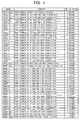
- VOBU_SRI describes the start addresses of VOBUs to be reproduced 0.5 x n seconds before and after the reproduction start time of the VOBU which includes the present DSI in the cell, as shown in Fig. 3 and Fig. 4.
- FWDI Video describes the start address of the VOBU nearest in time among VOBUs having video streams in the following VOBUs.
- FWDIn describes the start address of the VOBU to be reproduced 0.5 x n seconds after the reproduction start time of the present VOBU which includes the present DSI, and a flag indicating whether the VOBU having that address or VOBUs disposed between the present VOBU to the VOBU having that address have video data.
- FWDI Next describes the start address of the next VOBU, and a flag indicating whether the next VOBU has video data.
- BWDI Prev describes the start address of the VOBU disposed immediately before, and a flag indicating whether the VOBU has video data.
- BWDIn describes the start address of the VOBU to be reproduced 0.5 x n seconds before the reproduction start time of the present VOBU which includes the present DSI, and a flag indicating whether the VOBU having that address or VOBUs disposed between the present VOBU to the VOBU having that address have video data.
- BWDI Video describes the start address of the first VOBU having a video stream in VOBUs disposed before.
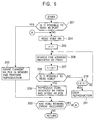
- Fig. 5 is a flowchart of operations in the first embodiment of the present invention.
- the frame-start-position-information reading section 111a determines whether it is possible to read NV_PCK from the DVD 101, by checking, for example, whether the pickup 103 cannot be locked, or whether the type of read data is correct (in step 201).
- the current information of NV_PCK is stored in the memory 111b, and reproduction is continued according to a reproduction order included in the stored NV_PCK information (in step 202).
- the frame-start-position-information reading section 111a determines whether a VOBU reading error has occurred during reproduction, by checking, for example, whether the pickup 103 cannot be locked, or whether the type of read data is correct (in step 203). When no error has occurred, the next VOBU is to be reproduced and the process of step 201 is performed.
- VOBU_SRI obtained immediately before reading became impossible, stored in the memory 111b is read (in step 204).
- the navigation manager 111 sets "n" to 1 in the memory 111b (in step 205).
- the search control section 117a searches for the address indicated by the FWDIn (in step 206).
- the navigation manager 111 increments "n" by 1 in the memory 111b (in step 207).
- the frame-start-position-information reading section 111a determines whether the VOBU searched for can be read (in step 208).
- the navigation manager 111 instructs the search restart section 117b to search for the VOBU indicated by FWDIn in the VOBU_SRI searched for in step 206, stores NV_PCK in the memory 111b, and restarts reproduction (in step 209).
- the navigation manager 111 determines whether "n" in the memory 111b is equal to or larger than, for example, 15 (in step 210). When “n” is smaller than 15, the processing returns to step 206 and the following processes are executed. When “n” is equal to or larger than 15, the frame-start-position-information reading section 111b instructs the search control section 117a to stop searching to stop reproduction (in step 211).
- the structure of a recording-medium reproduction apparatus according to a second embodiment of the present invention is the same as that shown in Fig. 1.
- data indicating the reproduction order of cells stored in the DVD 101 is used.
- the data indicating the reproduction order of cells will be described below.
- C_POSI is information in a program chain (PGC) included in the DVD 101.
- PGC program chain
- the PGC is formed of program-chain information (PGCI) and a plurality of video objects (VOBs).
- the PGCI is formed of the area of a pre-command which is executed before the PGC is reproduced by the recording-medium reproduction apparatus, such as a DVD video reproduction apparatus; the area of a post-command which is executed after the PGC is reproduced; and a reproduction control block.
- the reproduction control block includes the start address of each cell and a cell-reproduction-information table which specifies the order of cells.
- a program is a set of cells defined in the PGCI.
- a program is used for dividing the PGC.
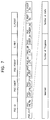
- Fig. 7 is a view showing a data structure in the PGCI.
- the PGCI is formed of general program-chain information (PGC_GI) which is information related to the PGC; a program-chain-command table (PGC_CMDT) which is a description area for the pre-command, the post-command, and cell commands in the PGC; a program-chain-program map (PGC_PGMAP) which is a map indicating the structures of programs in the PGC; a cell-reproduction-information table (C_PBIT) which is a table defining the reproduction order of cells in the PGC; and a cell-position-information table (C_POSIT) which describes the VOB ID numbers and the cell ID numbers of the cells used in the PGC.
- PPC_GI general program-chain information
- PGC_CMDT program-chain-command table
- PGC_PGMAP program-chain-program map
- C_PBIT cell-reproduction-information table
- C_POSIT cell-position-information table
- PGC_CNT is formed of Number of Programs which indicates the number of programs in the PGC by a numeral from 0 to 99, Number of Cells which indicates the number of cells in the PGC by a numeral from 0 to 255, and a reserved area for future function extension.
- PGC_PB_TM describes the total reproduction time of the programs in the PGC.
- PGC_UOP_CTL describes a user operation not allowed during PGC reproduction.
- PGC_AST_CTLT describes a PGC audio stream control table.
- PGC_SPST_CTLT describes a PGC sub-picture stream control table.
- PGC_NV_CTL describes PGC navigation control.
- PGC_SP_PLT is a PGC sub-picture pallet.
- PGC_CMDT_SA describes the start address of PGC_CMDT.
- PGC_PGMAP_SA describes the start address of PGC_PGMAP
- C_PBIT_SA describes the start address of C_PBIT
- C_POSIT_SA describes the start address of C_POSIT.
- C_PBIT The cell-reproduction-information table (C_PBIT), which is the table defining the reproduction order of cells in the PGC, will be described next. As shown in Fig. 8, C_PBIT describes cell reproduction information (C_PBI) successively, and cell numbers are assigned in the order in which C_PBI is described.
- C_PBI is formed of C_CAT indicating the category of the cell; C_PBTM indicating a cell reproduction time; C_FVOBU_SA indicating the start address of the top VOBU of the cell; C_FILVU_EA indicting the end address of the top ILVU of the cell; C_LVOBU_SA indicating the start address of the last VOBU of the cell; and C_LVOBU_SA indicating the end address of the last VOBU of the cell.
- C_POSIT The cell-position-information table (C_POSIT), which describes the VOB ID numbers and the cell ID numbers of the cells used in the PGC, will be described next.
- C_POSIT describes the cell position information (C_POSI) corresponding to the cell numbers defined in C_PBIT in the same order as C_PBI.
- C_POSI is formed of C_VOB_IDN indicating the VOB ID number of the VOB which includes the cell; a reserved area for future function extension; and C_IDN describing the ID number of the cell.
- Fig. 9 is a flowchart of operations in the second embodiment of the present invention.
- the frame-start-position-information reading section 111a determines whether it is possible to read NV_PCK from the DVD 101, by checking, for example, whether the pickup 103 cannot be locked, or whether the type of read data is correct (in step 401).
- the current cell-position information is stored in the memory 111b, and reproduction is continued according to a reproduction order included in the stored cell-position information (in step 402).
- the frame-start-position-information reading section 111a determines whether a VOBU reading error has occurred during reproduction, by checking, for example, whether the pickup 103 cannot be locked, or whether the type of read data is correct (in step 403).
- step 401 When no error has occurred, the next VOBU is to be reproduced and the process of step 401 is performed.
- the C_PBIT of the cell stored in the memory 111b is read (in step 404).
- the navigation manager 111 sets "k" to the current C_PBI in the memory 111b (in step 405).
- the search control section 117a searches for the VOBU having the next C_PBI number indicated by C_PBIT (in step 406).
- the navigation manager 111 increments "k" by 1 in the memory 111b (in step 407).
- the frame-start-position-information reading section 111a determines whether the VOBU searched for in step 406 can be read (in step 408).
- the navigation manager 111 instructs the search restart section 117b to search for the VOBU searched for in step 406, stores the cell-position information in the memory 111b, and restarts reproduction (in step 409).
- the navigation manager 111 determines whether "k" in the memory 111b is equal to or larger than the number (n) of cells described in Number of Cells (in step 410). When “k” is smaller than “n,” the processing returns to step 406 and the following processes are executed. When “k” is equal to or larger than “n,” the frame-start-position-information reading section 111b instructs the search control section 117a to stop searching to stop reproduction (in step 411).
- the structure of a recording-medium reproduction apparatus according to a third embodiment of the present invention is the same as that shown in Fig. 1.
- data indicating the reproduction order of PGs stored in the DVD 101 is used.
- the data indicating the reproduction order of PGs will be described below.
- PGC_PGMAP is information in the program chain (PGC) included in the DVD 101. As shown in Fig. 6, the PGC is formed of the program-chain information (PGCI) and a plurality of video objects (VOBs).
- PGCI program-chain information
- VOBs video objects
- PGC_PGMAP is a map indicating programs in the PGC. As shown in Fig. 10, entry cell numbers (EN_CNs) indicating the start cell numbers of the programs are described in an ascending order, and an EN_CN describes the start cell number of each program.
- Fig. 11 is a flowchart of operations in the third embodiment of the present invention.
- the frame-start-position-information reading section 111a determines whether it is possible to read NV_PCK from the DVD 101, by checking, for example, whether the pickup 103 cannot be locked, or whether the type of read data is correct (in step 501).
- the information of the current PGC_PGMAP and Number of Programs in the PGC_GI is stored in the memory 111b, and reproduction is continued according to a reproduction order included in the stored information (in step 502).
- the frame-start-position-information reading section 111a determines whether a VOBU reading error has occurred during reproduction, by checking, for example, whether the pickup 103 cannot be locked, or whether the type of read data is correct (in step 503). When no error has occurred, the next VOBU is to be reproduced and the process of step 501 is performed.
- the PGC_PGMAP and Number of Programs in the PGC_GI, stored in the memory 111b are read (in step 504).
- the navigation manager 111 sets "1" to the current entry cell number in the memory 111b (in step 505).
- the search control section 117a searches for the VOBU corresponding to the entry cell number indicated by PGC_PGMAP (in step 506).
- the navigation manager 111 increments "1" by 1 in the memory 111b (in step 507).
- the frame-start-position-information reading section 111a determines whether the VOBU searched for in step 506 can be read (in step 508).
- the navigation manager 111 instructs the search restart section 117b to search for the VOBU searched for in step 508, stores the current entry cell number in the memory 111b, and restarts reproduction (in step 509).
- the navigation manager 111 determines whether "1" in the memory 111b is equal to or larger than the number (n) of programs described in Number of Programs (in step 510). When “1" is smaller than “n,” the processing returns to step 506 and the following processes are executed. When “1" is equal to or larger than "n,” the frame-start-position-information reading section 111b instructs the search control section 117a to stop searching to stop reproduction (in step 511).
- the structure of a recording-medium reproduction apparatus according to a fourth embodiment of the present invention is the same as that shown in Fig. 1.
- Next_PGCN stored in the DVD 101 is used.
- Next_PGCN is information in the program chain (PGC) included in the DVD 101.
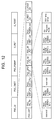
- PGC_NV_CTL is formed of Next_PGCN to be reproduced after the PGC currently being reproduced; Prev_PGCN which indicates the PGCN immediately before the PGC currently being reproduced; GoUp_PGCN which indicates the PGCN to which the process is to be returned from the PGC currently being reproduced; a PG Playback mode describing the PG reproduction mode of the PGC; a Still time value describing a still time obtained after the PGC currently being reproduced is reproduced; and reserved areas used for future function extension.
- VTS_PGCI has the same number as VTS_PGCI included in VTS_PGCIT in VTSI (Fig. 2).
- the VTSI is formed of video-title-set information (VTSI_MAT); a video-title-set PTT search-pointer table (VTS_PTT_SRPT); a video-tittle-set program-chain-information table (VTS_PGCIT); a video-title-set-menu PGCI unit table (VTSM_PGCI_UT); a video-title-set time-map table (VTS_TMAPT); a video-title-set cell-address table (VTSM_C_ADT); a video-title-set-menu video-object-unit-address map (VTSM_VOBU_ADMAP); a video-title-set cell-address table (VTS_C_ADT); and a video-title-set video-object-unit-address map (VTS_VOBU_ADMAP).
- VTS_PGCIT is formed of video-title-set PGCI-table information (VTS_PGCITI), VTS_PGCI search pointers (VTS_PGCI_SRP#n), and VTS_PGCIs.
- Fig. 14 is a flowchart of operations in the fourth embodiment of the present invention.
- the frame-start-position-information reading section 111a determines whether it is possible to read NV_PCK from the DVD 101, by checking, for example, whether the pickup 103 cannot be locked, or whether the type of read data is correct (in step 601).
- the information of the current PGC_NV_CTL and VTSI is stored in the memory 111b, and reproduction is continued according to a reproduction order included in the stored information (in step 602).
- the frame-start-position-information reading section 111a determines whether a VOBU reading error has occurred during reproduction, by checking, for example, whether the pickup 103 cannot be locked, or whether the type of read data is correct (in step 603).
- step 601 When no error has occurred, the next VOBU is to be reproduced and the process of step 601 is performed.
- the PGC_NV_CTL and VTSI stored in the memory 111b are read (in step 604).
- the search control section 117a searches for the PGCI indicated by Next_PGCN (in step 605).
- the frame-start-position-information reading section 111a determines whether the PGCI searched for can be read (in step 606).
- the navigation manager 111 instructs the search restart section 117b to search for the PGCI searched for in step 605, stores PGC_NV_CTL and VTSI in the memory 111b, and restarts reproducing the VOBU according to the PGCI (in step 607).
- step 606 when the PGCI searched for cannot be read, the frame-start-position-information reading section 111b sends to the search control section 117a an instruction to stop searching to stop reproduction (in step 608).
- the structure of a recording-medium reproduction apparatus according to a fifth embodiment of the present invention is the same as that shown in Fig. 1. Operations are performed according to the flowcharts shown in Fig. 5 and Fig. 9 with the processes of step 401 and the subsequent steps shown in Fig. 9 following the process of step 211 shown in Fig. 5.
- the structure of a recording-medium reproduction apparatus according to a sixth embodiment of the present invention is the same as that shown in Fig. 1. Operations are performed according to the flowcharts shown in Fig. 9 and Fig. 11 with the processes of step 501 and the subsequent steps shown in Fig. 11 following the process of step 411 shown in Fig. 9.
- the structure of a recording-medium reproduction apparatus according to a seventh embodiment of the present invention is the same as that shown in Fig. 1. Operations are performed according to the flowcharts shown in Fig. 11 and Fig. 14 with the processes of step 601 and the subsequent steps shown in Fig. 14 following the process of step 511 shown in Fig. 11.
- the structure of a recording-medium reproduction apparatus is the same as that shown in Fig. 1. Operations are performed according to the flowcharts shown in Fig. 5, Fig. 9, and Fig. 11 with the processes of step 401 and the subsequent steps shown in Fig. 9 following the process of step 211 shown in Fig. 5, and the processes of step 501 and the subsequent steps shown in Fig. 11 following the process of step 411 shown in Fig. 9.
- the structure of a recording-medium reproduction apparatus is the same as that shown in Fig. 1. Operations are performed according to the flowcharts shown in Fig. 9, Fig. 11, and Fig. 14 with the processes of step 501 and the subsequent steps shown in Fig. 11 following the process of step 411 shown in Fig. 9, and the processes of step 601 and the subsequent steps shown in Fig. 14 following the process of step 511 shown in Fig. 11.
- the structure of a recording-medium reproduction apparatus is the same as that shown in Fig. 1.
- Operations are performed according to the flowcharts shown in Fig. 5, Fig. 9, Fig. 11, and Fig. 14 with the processes of step 401 and the subsequent steps shown in Fig. 9 following the process of step 211 shown in Fig. 5; the processes of step 501 and the subsequent steps shown in Fig. 11 following the process of step 411 shown in Fig. 9; and the processes of step 601 and the subsequent steps shown in Fig. 14 following the process of step 511 shown in Fig. 11.
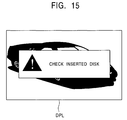
- a disk problem may be indicated to the user on a display unit as shown in Fig. 15.
- DVD video reproduction apparatuses are used in the above embodiments.
- a DVD audio reproduction apparatus may be used.
Landscapes
- Engineering & Computer Science (AREA)
- Multimedia (AREA)
- Signal Processing (AREA)
- Signal Processing For Digital Recording And Reproducing (AREA)
- Television Signal Processing For Recording (AREA)
- Management Or Editing Of Information On Record Carriers (AREA)
- Indexing, Searching, Synchronizing, And The Amount Of Synchronization Travel Of Record Carriers (AREA)
Abstract
Description
Claims (14)
- A recording-medium reproduction method for reading, by a pickup, reproduction data stored in a recording medium in units of frames and for reproducing it, comprising the steps of:reading the start-position information of the next frame and that of a predetermined frame other than the next frame;storing the read start-position information of the frames;controlling the pickup according to the read start-position information of the next frame;reading the next frame;if the next frame can be read, reproducing the reproduction data of the next frame; andif the next frame cannot be read, reading a frame other than the next frame according to the stored start-position information of the predetermined frame and reproducing the reproduction data of a frame which can be read.
- A recording-medium reproduction method according to Claim 1, wherein the start-position information of the predetermined frame is data indicating the reproduction order of VOBUs in a digital video disk.
- A recording-medium reproduction method according to Claim 1, wherein the start-position information of the predetermined frame is data indicating the reproduction order of cells in a digital video disk.
- A recording-medium reproduction method according to Claim 1, wherein the start-position information of the predetermined frame is data indicating the reproduction order of PGs in a digital video disk.
- A recording-medium reproduction method according to Claim 1, wherein the start-position information of the predetermined frame is Next_PGCN in a digital video disk.
- A recording-medium reproduction method for reading, by a pickup, reproduction data stored in a recording medium in units of frames and for reproducing it, comprising the steps of:reading the start-position information of the next frame and that of a plurality of types of predetermined frames other than the next frame;storing the read start-position information of the next frame and that of the plurality of types of predetermined frames other than the next frame;controlling the pickup according to the read start-position information of the next frame;reading the next frame;if the next frame can be read, reproducing the reproduction data of the next frame; andif the next frame cannot be read, reading a frame other than the next frame according to the stored start-position information of the plurality of types of predetermined frames and reproducing the reproduction data of a frame which can be read.
- A recording-medium reproduction method according to Claim 6, wherein the start-position information of the plurality of types of predetermined frames is data indicating the reproduction order of VOBUs and data indicating the reproduction order of cells in a digital video disk; if the next frame cannot be read, a frame other than the next frame is read according to the stored data indicating the reproduction order of VOBUs; and if even that frame cannot be read, a frame other than the next frame is read according to the stored data indicating the reproduction order of cells.
- A recording-medium reproduction method according to Claim 6, wherein the start-position information of the plurality of types of predetermined frames is data indicating the reproduction order of cells and data indicating the reproduction order of PGs in a digital video disk; if the next frame cannot be read, a frame other than the next frame is read according to the stored data indicating the reproduction order of cells; and if even that frame cannot be read, a frame other than the next frame is read according to the stored data indicating the reproduction order of PGs.
- A recording-medium reproduction method according to Claim 6, wherein the start-position information of the plurality of types of predetermined frames is data indicating the reproduction order of PGs and Next_PGCN in a digital video disk; if the next frame cannot be read, a frame other than the next frame is read according to the stored data indicating the reproduction order of PGs; and if even that frame cannot be read, a frame other than the next frame is read according to Next_PGCN.
- A recording-medium reproduction method according to Claim 6, wherein the start-position information of the plurality of types of predetermined frames is data indicating the reproduction order of VOBUs, data indicating the reproduction order of cells, and data indicating the reproduction order of PGs in a digital video disk; if the next frame cannot be read, a frame other than the next frame is read according to the stored data indicating the reproduction order of VOBUs; if even that frame cannot be read, a frame other than the next frame is read according to the stored data indicating the reproduction order of cells; and if further even that frame cannot be read, a frame other than the next frame is read according to the stored data indicating the reproduction order of PGs.
- A recording-medium reproduction method according to Claim 6, wherein the start-position information of the plurality of types of predetermined frames is data indicating the reproduction order of cells, data indicating the reproduction order of PGs, and Next_PGCN in a digital video disk; if the next frame cannot be read, a frame other than the next frame is read according to the stored data indicating the reproduction order of cells; if even that frame cannot be read, a frame other than the next frame is read according to the stored data indicating the reproduction order of PGs; and if further even that frame cannot be read, a frame other than the next frame is read according to the stored Next_PGCN.
- A recording-medium reproduction method according to Claim 6, wherein the start-position information of the plurality of types of predetermined frames is data indicating the reproduction order of VOBUs, data indicating the reproduction order of cells, data indicating the reproduction order of PGs, and Next_PGCN in a digital video disk; if the next frame cannot be read, a frame other than the next frame is read according to the stored data indicating the reproduction order of VOBUs; if even that frame cannot be read, a frame other than the next frame is read according to the stored data indicating the reproduction order of cells; if further even that frame cannot be read, a frame other than the next frame is read according to the stored data indicating the reproduction order of PGs; and if furthermore even that frame cannot be read, a frame other than the next frame is read according to the stored Next_PGCN.
- A recording-medium reproduction apparatus for reading, by a pickup, reproduction data stored in a recording medium in units of frames and for reproducing it, comprising:frame-start-position-information reading means (111a) for reading the start-position information of the next frame and that of a predetermined frame other than the next frame;a memory (111b) for storing the information read by the frame-start-position-information reading means; andreproduction control means (117) for controlling the pickup according to the start-position information of the next frame, read by the frame-start-position-information reading means, for reading the next frame, for reproducing the reproduction data of the next frame if the next frame can be read, and for reading a frame other than the next frame according to the start-position information of the predetermined frame, stored in the memory and reproducing the reproduction data of a frame which can be read if the next frame cannot be read.
- A recording-medium reproduction apparatus for reading, by a pickup, reproduction data stored in a recording medium in units of frames and for reproducing it, comprising:frame-start-position-information reading means (111a) for reading the start-position information of the next frame and that of a plurality of types of predetermined frames other than the next frame;a memory (111b) for storing the information read by the frame-start-position-information reading means; andreproduction control means (117) for controlling the pickup according to the start-position information of the next frame, read by the frame-start-position-information reading means, for reading the next frame, for reproducing the reproduction data of the next frame if the next frame can be read, and for reading a frame other than the next frame according to the start-position information of the plurality of types of predetermined frames, stored in the memory and reproducing the reproduction data of a frame which can be read if the next frame cannot be read.
Applications Claiming Priority (2)
| Application Number | Priority Date | Filing Date | Title |
|---|---|---|---|
| JP2000346061 | 2000-11-14 | ||
| JP2000346061A JP2002152681A (en) | 2000-11-14 | 2000-11-14 | Method and device for reproducing recording medium |
Publications (3)
| Publication Number | Publication Date |
|---|---|
| EP1205932A2 true EP1205932A2 (en) | 2002-05-15 |
| EP1205932A3 EP1205932A3 (en) | 2005-09-28 |
| EP1205932B1 EP1205932B1 (en) | 2011-01-19 |
Family
ID=18819990
Family Applications (1)
| Application Number | Title | Priority Date | Filing Date |
|---|---|---|---|
| EP01308466A Expired - Lifetime EP1205932B1 (en) | 2000-11-14 | 2001-10-03 | Recording-medium reproduction method and apparatus |
Country Status (5)
| Country | Link |
|---|---|
| US (1) | US7200319B2 (en) |
| EP (1) | EP1205932B1 (en) |
| JP (1) | JP2002152681A (en) |
| CN (1) | CN1165163C (en) |
| DE (1) | DE60143875D1 (en) |
Families Citing this family (8)
| Publication number | Priority date | Publication date | Assignee | Title |
|---|---|---|---|---|
| JP3461165B2 (en) | 2000-12-01 | 2003-10-27 | 三洋電機株式会社 | Optical disc playback device |
| JP2005235333A (en) * | 2004-02-20 | 2005-09-02 | Canon Inc | Playback device |
| EP1722364A1 (en) * | 2004-03-02 | 2006-11-15 | Pioneer Corporation | Information reproduction device and information reproduction method |
| CN1321416C (en) * | 2004-03-24 | 2007-06-13 | 无敌科技股份有限公司 | Method for recording and replying termination address of digital storage medium |
| KR20060063601A (en) | 2004-12-03 | 2006-06-12 | 엘지전자 주식회사 | Method and device to download / update data to local storage |
| KR20060081323A (en) * | 2005-01-07 | 2006-07-12 | 엘지전자 주식회사 | Record media playback method and playback device using local storage |
| JP4591594B2 (en) * | 2008-11-21 | 2010-12-01 | ソニー株式会社 | Audio signal reproducing apparatus and method, and program |
| CN101521671B (en) * | 2009-04-02 | 2011-10-12 | 北京九方中实电子科技有限责任公司 | Data frame transmission chain table structure |
Family Cites Families (5)
| Publication number | Priority date | Publication date | Assignee | Title |
|---|---|---|---|---|
| US5367341A (en) * | 1992-10-20 | 1994-11-22 | Canon Information Systems, Inc. | Digital video editor having lost video frame protection |
| TW385431B (en) * | 1995-09-29 | 2000-03-21 | Matsushita Electric Industrial Co Ltd | A method and an apparatus for encoding a bitstream with plural possible searching reproduction paths information useful in multimedia optical disk |
| US5784527A (en) * | 1996-03-22 | 1998-07-21 | Cirrus Logic, Inc. | System and method for error handling during playback of an audio/video data stream |
| JPH10126743A (en) * | 1996-10-22 | 1998-05-15 | Toshiba Corp | Image reproducing apparatus and image reproducing method |
| JP3307579B2 (en) | 1998-01-28 | 2002-07-24 | インターナショナル・ビジネス・マシーンズ・コーポレーション | Data storage system |
-
2000
- 2000-11-14 JP JP2000346061A patent/JP2002152681A/en active Pending
-
2001
- 2001-10-03 DE DE60143875T patent/DE60143875D1/en not_active Expired - Lifetime
- 2001-10-03 EP EP01308466A patent/EP1205932B1/en not_active Expired - Lifetime
- 2001-10-31 US US10/003,661 patent/US7200319B2/en not_active Expired - Fee Related
- 2001-11-14 CN CNB01135013XA patent/CN1165163C/en not_active Expired - Fee Related
Also Published As
| Publication number | Publication date |
|---|---|
| DE60143875D1 (en) | 2011-03-03 |
| EP1205932B1 (en) | 2011-01-19 |
| EP1205932A3 (en) | 2005-09-28 |
| JP2002152681A (en) | 2002-05-24 |
| CN1165163C (en) | 2004-09-01 |
| CN1353419A (en) | 2002-06-12 |
| US20020057904A1 (en) | 2002-05-16 |
| US7200319B2 (en) | 2007-04-03 |
Similar Documents
| Publication | Publication Date | Title |
|---|---|---|
| KR100899784B1 (en) | Method and device for real time information recording | |
| US6889001B1 (en) | Disk player with location marking capability | |
| US7359627B2 (en) | DVD player and DVD playing method | |
| US6735152B2 (en) | Information playback apparatus for playing back data recorded in an information recording medium | |
| US7362951B2 (en) | Disk playback apparatus and disk playback method | |
| US7116898B2 (en) | DVD auto-changer capable of setting all-repeat-mode | |
| US7200319B2 (en) | Recording-medium reproduction method and recording-medium reproduction apparatus | |
| US7257313B2 (en) | Method and apparatus for reproducing optical disk player having quick video playback function | |
| JPH10271449A (en) | Data reproducing apparatus and data reproducing method | |
| JP4363671B2 (en) | Data reproducing apparatus and data reproducing method | |
| JP3747470B2 (en) | Optical disk playback device | |
| JPH1169308A (en) | optical disk | |
| JP3814928B2 (en) | Data reproducing apparatus and data reproducing method | |
| JPH10271450A (en) | Method and apparatus for reproducing encoded data | |
| US20060159417A1 (en) | Information playback apparatus and information playback method | |
| US8059500B2 (en) | Optical disc device | |
| US20070230908A1 (en) | Information recording medium playback apparatus, information recording medium playback method, and information recording medium | |
| JP3814927B2 (en) | Data reproducing apparatus and data reproducing method | |
| JP4279875B2 (en) | Information reproducing apparatus and information reproducing method, etc. | |
| JP4850140B2 (en) | Disc playback apparatus and disc playback method | |
| JPH10271453A5 (en) | ||
| JP4886625B2 (en) | Disc playback apparatus and disc playback method | |
| JPH1169307A (en) | optical disk | |
| JPH10271452A5 (en) | ||
| JP2000311419A (en) | Disk player |
Legal Events
| Date | Code | Title | Description |
|---|---|---|---|
| PUAI | Public reference made under article 153(3) epc to a published international application that has entered the european phase |
Free format text: ORIGINAL CODE: 0009012 |
|
| AK | Designated contracting states |
Kind code of ref document: A2 Designated state(s): AT BE CH CY DE DK ES FI FR GB GR IE IT LI LU MC NL PT SE TR |
|
| AX | Request for extension of the european patent |
Free format text: AL;LT;LV;MK;RO;SI |
|
| PUAL | Search report despatched |
Free format text: ORIGINAL CODE: 0009013 |
|
| AK | Designated contracting states |
Kind code of ref document: A3 Designated state(s): AT BE CH CY DE DK ES FI FR GB GR IE IT LI LU MC NL PT SE TR |
|
| AX | Request for extension of the european patent |
Extension state: AL LT LV MK RO SI |
|
| RIC1 | Information provided on ipc code assigned before grant |
Ipc: 7G 11B 27/10 A |
|
| 17P | Request for examination filed |
Effective date: 20051125 |
|
| AKX | Designation fees paid |
Designated state(s): DE FR GB |
|
| 17Q | First examination report despatched |
Effective date: 20060901 |
|
| 17Q | First examination report despatched |
Effective date: 20060901 |
|
| GRAP | Despatch of communication of intention to grant a patent |
Free format text: ORIGINAL CODE: EPIDOSNIGR1 |
|
| GRAC | Information related to communication of intention to grant a patent modified |
Free format text: ORIGINAL CODE: EPIDOSCIGR1 |
|
| GRAS | Grant fee paid |
Free format text: ORIGINAL CODE: EPIDOSNIGR3 |
|
| GRAA | (expected) grant |
Free format text: ORIGINAL CODE: 0009210 |
|
| AK | Designated contracting states |
Kind code of ref document: B1 Designated state(s): DE FR GB |
|
| REG | Reference to a national code |
Ref country code: GB Ref legal event code: FG4D |
|
| REF | Corresponds to: |
Ref document number: 60143875 Country of ref document: DE Date of ref document: 20110303 Kind code of ref document: P |
|
| REG | Reference to a national code |
Ref country code: DE Ref legal event code: R096 Ref document number: 60143875 Country of ref document: DE Effective date: 20110303 |
|
| PLBE | No opposition filed within time limit |
Free format text: ORIGINAL CODE: 0009261 |
|
| STAA | Information on the status of an ep patent application or granted ep patent |
Free format text: STATUS: NO OPPOSITION FILED WITHIN TIME LIMIT |
|
| 26N | No opposition filed |
Effective date: 20111020 |
|
| REG | Reference to a national code |
Ref country code: DE Ref legal event code: R097 Ref document number: 60143875 Country of ref document: DE Effective date: 20111020 |
|
| PGFP | Annual fee paid to national office [announced via postgrant information from national office to epo] |
Ref country code: DE Payment date: 20141022 Year of fee payment: 14 Ref country code: FR Payment date: 20141022 Year of fee payment: 14 Ref country code: GB Payment date: 20141021 Year of fee payment: 14 |
|
| REG | Reference to a national code |
Ref country code: DE Ref legal event code: R119 Ref document number: 60143875 Country of ref document: DE |
|
| GBPC | Gb: european patent ceased through non-payment of renewal fee |
Effective date: 20151003 |
|
| PG25 | Lapsed in a contracting state [announced via postgrant information from national office to epo] |
Ref country code: DE Free format text: LAPSE BECAUSE OF NON-PAYMENT OF DUE FEES Effective date: 20160503 Ref country code: GB Free format text: LAPSE BECAUSE OF NON-PAYMENT OF DUE FEES Effective date: 20151003 |
|
| REG | Reference to a national code |
Ref country code: FR Ref legal event code: ST Effective date: 20160630 |
|
| PG25 | Lapsed in a contracting state [announced via postgrant information from national office to epo] |
Ref country code: FR Free format text: LAPSE BECAUSE OF NON-PAYMENT OF DUE FEES Effective date: 20151102 |