EP1205554B1 - Enzyme or cell preparation with inulinase activity - Google Patents
Enzyme or cell preparation with inulinase activity Download PDFInfo
- Publication number
- EP1205554B1 EP1205554B1 EP00870264A EP00870264A EP1205554B1 EP 1205554 B1 EP1205554 B1 EP 1205554B1 EP 00870264 A EP00870264 A EP 00870264A EP 00870264 A EP00870264 A EP 00870264A EP 1205554 B1 EP1205554 B1 EP 1205554B1
- Authority
- EP
- European Patent Office
- Prior art keywords
- enzyme
- cell
- activity
- nucleotide sequence
- purified
- Prior art date
- Legal status (The legal status is an assumption and is not a legal conclusion. Google has not performed a legal analysis and makes no representation as to the accuracy of the status listed.)
- Expired - Lifetime
Links
- 108090000790 Enzymes Proteins 0.000 title claims abstract description 55
- 102000004190 Enzymes Human genes 0.000 title claims abstract description 54
- 230000000694 effects Effects 0.000 title claims abstract description 48
- 108010090785 inulinase Proteins 0.000 title description 65
- 238000002360 preparation method Methods 0.000 title description 24
- 229920001202 Inulin Polymers 0.000 claims abstract description 35
- JYJIGFIDKWBXDU-MNNPPOADSA-N inulin Chemical compound O[C@H]1[C@H](O)[C@@H](CO)O[C@@]1(CO)OC[C@]1(OC[C@]2(OC[C@]3(OC[C@]4(OC[C@]5(OC[C@]6(OC[C@]7(OC[C@]8(OC[C@]9(OC[C@]%10(OC[C@]%11(OC[C@]%12(OC[C@]%13(OC[C@]%14(OC[C@]%15(OC[C@]%16(OC[C@]%17(OC[C@]%18(OC[C@]%19(OC[C@]%20(OC[C@]%21(OC[C@]%22(OC[C@]%23(OC[C@]%24(OC[C@]%25(OC[C@]%26(OC[C@]%27(OC[C@]%28(OC[C@]%29(OC[C@]%30(OC[C@]%31(OC[C@]%32(OC[C@]%33(OC[C@]%34(OC[C@]%35(OC[C@]%36(O[C@@H]%37[C@@H]([C@@H](O)[C@H](O)[C@@H](CO)O%37)O)[C@H]([C@H](O)[C@@H](CO)O%36)O)[C@H]([C@H](O)[C@@H](CO)O%35)O)[C@H]([C@H](O)[C@@H](CO)O%34)O)[C@H]([C@H](O)[C@@H](CO)O%33)O)[C@H]([C@H](O)[C@@H](CO)O%32)O)[C@H]([C@H](O)[C@@H](CO)O%31)O)[C@H]([C@H](O)[C@@H](CO)O%30)O)[C@H]([C@H](O)[C@@H](CO)O%29)O)[C@H]([C@H](O)[C@@H](CO)O%28)O)[C@H]([C@H](O)[C@@H](CO)O%27)O)[C@H]([C@H](O)[C@@H](CO)O%26)O)[C@H]([C@H](O)[C@@H](CO)O%25)O)[C@H]([C@H](O)[C@@H](CO)O%24)O)[C@H]([C@H](O)[C@@H](CO)O%23)O)[C@H]([C@H](O)[C@@H](CO)O%22)O)[C@H]([C@H](O)[C@@H](CO)O%21)O)[C@H]([C@H](O)[C@@H](CO)O%20)O)[C@H]([C@H](O)[C@@H](CO)O%19)O)[C@H]([C@H](O)[C@@H](CO)O%18)O)[C@H]([C@H](O)[C@@H](CO)O%17)O)[C@H]([C@H](O)[C@@H](CO)O%16)O)[C@H]([C@H](O)[C@@H](CO)O%15)O)[C@H]([C@H](O)[C@@H](CO)O%14)O)[C@H]([C@H](O)[C@@H](CO)O%13)O)[C@H]([C@H](O)[C@@H](CO)O%12)O)[C@H]([C@H](O)[C@@H](CO)O%11)O)[C@H]([C@H](O)[C@@H](CO)O%10)O)[C@H]([C@H](O)[C@@H](CO)O9)O)[C@H]([C@H](O)[C@@H](CO)O8)O)[C@H]([C@H](O)[C@@H](CO)O7)O)[C@H]([C@H](O)[C@@H](CO)O6)O)[C@H]([C@H](O)[C@@H](CO)O5)O)[C@H]([C@H](O)[C@@H](CO)O4)O)[C@H]([C@H](O)[C@@H](CO)O3)O)[C@H]([C@H](O)[C@@H](CO)O2)O)[C@@H](O)[C@H](O)[C@@H](CO)O1 JYJIGFIDKWBXDU-MNNPPOADSA-N 0.000 claims abstract description 35
- 229940029339 inulin Drugs 0.000 claims abstract description 35
- 125000003275 alpha amino acid group Chemical group 0.000 claims abstract description 25
- 239000005715 Fructose Substances 0.000 claims abstract description 11
- 229930091371 Fructose Natural products 0.000 claims abstract description 10
- RFSUNEUAIZKAJO-ARQDHWQXSA-N Fructose Chemical compound OC[C@H]1O[C@](O)(CO)[C@@H](O)[C@@H]1O RFSUNEUAIZKAJO-ARQDHWQXSA-N 0.000 claims abstract description 10
- 238000004519 manufacturing process Methods 0.000 claims abstract description 10
- 239000000463 material Substances 0.000 claims abstract description 7
- 230000015556 catabolic process Effects 0.000 claims abstract 2
- 238000006731 degradation reaction Methods 0.000 claims abstract 2
- 235000021433 fructose syrup Nutrition 0.000 claims abstract 2
- 239000002773 nucleotide Substances 0.000 claims description 33
- 125000003729 nucleotide group Chemical group 0.000 claims description 33
- 239000013612 plasmid Substances 0.000 claims description 25
- 239000013598 vector Substances 0.000 claims description 18
- 230000002255 enzymatic effect Effects 0.000 claims description 12
- 108090000765 processed proteins & peptides Proteins 0.000 claims description 11
- 239000000284 extract Substances 0.000 claims description 9
- 244000005700 microbiome Species 0.000 claims description 8
- 241000588724 Escherichia coli Species 0.000 claims description 6
- 240000004808 Saccharomyces cerevisiae Species 0.000 claims description 6
- 102000004196 processed proteins & peptides Human genes 0.000 claims description 6
- 229920001184 polypeptide Polymers 0.000 claims description 5
- 241000894006 Bacteria Species 0.000 claims description 4
- 241000233866 Fungi Species 0.000 claims description 4
- 239000007787 solid Substances 0.000 claims description 3
- 108020004414 DNA Proteins 0.000 description 47
- 241000985510 Penicillium restrictum Species 0.000 description 43
- 229940088598 enzyme Drugs 0.000 description 40
- 210000004027 cell Anatomy 0.000 description 39
- 239000012634 fragment Substances 0.000 description 26
- 108090000623 proteins and genes Proteins 0.000 description 19
- 239000000243 solution Substances 0.000 description 16
- 239000002609 medium Substances 0.000 description 13
- 235000018102 proteins Nutrition 0.000 description 13
- 102000004169 proteins and genes Human genes 0.000 description 13
- FAPWRFPIFSIZLT-UHFFFAOYSA-M Sodium chloride Chemical compound [Na+].[Cl-] FAPWRFPIFSIZLT-UHFFFAOYSA-M 0.000 description 12
- 239000000203 mixture Substances 0.000 description 12
- 230000007062 hydrolysis Effects 0.000 description 11
- 238000006460 hydrolysis reaction Methods 0.000 description 11
- 238000012163 sequencing technique Methods 0.000 description 11
- 108091034117 Oligonucleotide Proteins 0.000 description 10
- 239000000872 buffer Substances 0.000 description 10
- 238000000034 method Methods 0.000 description 10
- 108091008146 restriction endonucleases Proteins 0.000 description 9
- 150000001413 amino acids Chemical class 0.000 description 8
- 230000014509 gene expression Effects 0.000 description 7
- 239000012528 membrane Substances 0.000 description 7
- 210000001938 protoplast Anatomy 0.000 description 7
- 240000006439 Aspergillus oryzae Species 0.000 description 6
- 235000002247 Aspergillus oryzae Nutrition 0.000 description 6
- 238000000746 purification Methods 0.000 description 6
- XLYOFNOQVPJJNP-UHFFFAOYSA-N water Substances O XLYOFNOQVPJJNP-UHFFFAOYSA-N 0.000 description 6
- 241000228212 Aspergillus Species 0.000 description 5
- 229940041514 candida albicans extract Drugs 0.000 description 5
- 238000006243 chemical reaction Methods 0.000 description 5
- 230000029087 digestion Effects 0.000 description 5
- 238000000605 extraction Methods 0.000 description 5
- 239000001963 growth medium Substances 0.000 description 5
- 239000007788 liquid Substances 0.000 description 5
- 230000001105 regulatory effect Effects 0.000 description 5
- 239000011780 sodium chloride Substances 0.000 description 5
- 239000012138 yeast extract Substances 0.000 description 5
- QKNYBSVHEMOAJP-UHFFFAOYSA-N 2-amino-2-(hydroxymethyl)propane-1,3-diol;hydron;chloride Chemical compound Cl.OCC(N)(CO)CO QKNYBSVHEMOAJP-UHFFFAOYSA-N 0.000 description 4
- DLFVBJFMPXGRIB-UHFFFAOYSA-N Acetamide Chemical compound CC(N)=O DLFVBJFMPXGRIB-UHFFFAOYSA-N 0.000 description 4
- IJGRMHOSHXDMSA-UHFFFAOYSA-N Atomic nitrogen Chemical compound N#N IJGRMHOSHXDMSA-UHFFFAOYSA-N 0.000 description 4
- 108091026890 Coding region Proteins 0.000 description 4
- FBPFZTCFMRRESA-FSIIMWSLSA-N D-Glucitol Natural products OC[C@H](O)[C@H](O)[C@@H](O)[C@H](O)CO FBPFZTCFMRRESA-FSIIMWSLSA-N 0.000 description 4
- TWRXJAOTZQYOKJ-UHFFFAOYSA-L Magnesium chloride Chemical compound [Mg+2].[Cl-].[Cl-] TWRXJAOTZQYOKJ-UHFFFAOYSA-L 0.000 description 4
- 108091028043 Nucleic acid sequence Proteins 0.000 description 4
- 108700026244 Open Reading Frames Proteins 0.000 description 4
- ISWSIDIOOBJBQZ-UHFFFAOYSA-N Phenol Chemical compound OC1=CC=CC=C1 ISWSIDIOOBJBQZ-UHFFFAOYSA-N 0.000 description 4
- JLCPHMBAVCMARE-UHFFFAOYSA-N [3-[[3-[[3-[[3-[[3-[[3-[[3-[[3-[[3-[[3-[[3-[[5-(2-amino-6-oxo-1H-purin-9-yl)-3-[[3-[[3-[[3-[[3-[[3-[[5-(2-amino-6-oxo-1H-purin-9-yl)-3-[[5-(2-amino-6-oxo-1H-purin-9-yl)-3-hydroxyoxolan-2-yl]methoxy-hydroxyphosphoryl]oxyoxolan-2-yl]methoxy-hydroxyphosphoryl]oxy-5-(5-methyl-2,4-dioxopyrimidin-1-yl)oxolan-2-yl]methoxy-hydroxyphosphoryl]oxy-5-(6-aminopurin-9-yl)oxolan-2-yl]methoxy-hydroxyphosphoryl]oxy-5-(6-aminopurin-9-yl)oxolan-2-yl]methoxy-hydroxyphosphoryl]oxy-5-(6-aminopurin-9-yl)oxolan-2-yl]methoxy-hydroxyphosphoryl]oxy-5-(6-aminopurin-9-yl)oxolan-2-yl]methoxy-hydroxyphosphoryl]oxyoxolan-2-yl]methoxy-hydroxyphosphoryl]oxy-5-(5-methyl-2,4-dioxopyrimidin-1-yl)oxolan-2-yl]methoxy-hydroxyphosphoryl]oxy-5-(4-amino-2-oxopyrimidin-1-yl)oxolan-2-yl]methoxy-hydroxyphosphoryl]oxy-5-(5-methyl-2,4-dioxopyrimidin-1-yl)oxolan-2-yl]methoxy-hydroxyphosphoryl]oxy-5-(5-methyl-2,4-dioxopyrimidin-1-yl)oxolan-2-yl]methoxy-hydroxyphosphoryl]oxy-5-(6-aminopurin-9-yl)oxolan-2-yl]methoxy-hydroxyphosphoryl]oxy-5-(6-aminopurin-9-yl)oxolan-2-yl]methoxy-hydroxyphosphoryl]oxy-5-(4-amino-2-oxopyrimidin-1-yl)oxolan-2-yl]methoxy-hydroxyphosphoryl]oxy-5-(4-amino-2-oxopyrimidin-1-yl)oxolan-2-yl]methoxy-hydroxyphosphoryl]oxy-5-(4-amino-2-oxopyrimidin-1-yl)oxolan-2-yl]methoxy-hydroxyphosphoryl]oxy-5-(6-aminopurin-9-yl)oxolan-2-yl]methoxy-hydroxyphosphoryl]oxy-5-(4-amino-2-oxopyrimidin-1-yl)oxolan-2-yl]methyl [5-(6-aminopurin-9-yl)-2-(hydroxymethyl)oxolan-3-yl] hydrogen phosphate Polymers Cc1cn(C2CC(OP(O)(=O)OCC3OC(CC3OP(O)(=O)OCC3OC(CC3O)n3cnc4c3nc(N)[nH]c4=O)n3cnc4c3nc(N)[nH]c4=O)C(COP(O)(=O)OC3CC(OC3COP(O)(=O)OC3CC(OC3COP(O)(=O)OC3CC(OC3COP(O)(=O)OC3CC(OC3COP(O)(=O)OC3CC(OC3COP(O)(=O)OC3CC(OC3COP(O)(=O)OC3CC(OC3COP(O)(=O)OC3CC(OC3COP(O)(=O)OC3CC(OC3COP(O)(=O)OC3CC(OC3COP(O)(=O)OC3CC(OC3COP(O)(=O)OC3CC(OC3COP(O)(=O)OC3CC(OC3COP(O)(=O)OC3CC(OC3COP(O)(=O)OC3CC(OC3COP(O)(=O)OC3CC(OC3COP(O)(=O)OC3CC(OC3CO)n3cnc4c(N)ncnc34)n3ccc(N)nc3=O)n3cnc4c(N)ncnc34)n3ccc(N)nc3=O)n3ccc(N)nc3=O)n3ccc(N)nc3=O)n3cnc4c(N)ncnc34)n3cnc4c(N)ncnc34)n3cc(C)c(=O)[nH]c3=O)n3cc(C)c(=O)[nH]c3=O)n3ccc(N)nc3=O)n3cc(C)c(=O)[nH]c3=O)n3cnc4c3nc(N)[nH]c4=O)n3cnc4c(N)ncnc34)n3cnc4c(N)ncnc34)n3cnc4c(N)ncnc34)n3cnc4c(N)ncnc34)O2)c(=O)[nH]c1=O JLCPHMBAVCMARE-UHFFFAOYSA-N 0.000 description 4
- 239000011543 agarose gel Substances 0.000 description 4
- 238000001962 electrophoresis Methods 0.000 description 4
- 239000000499 gel Substances 0.000 description 4
- 238000002955 isolation Methods 0.000 description 4
- 239000001965 potato dextrose agar Substances 0.000 description 4
- 239000000600 sorbitol Substances 0.000 description 4
- 239000000758 substrate Substances 0.000 description 4
- 238000011282 treatment Methods 0.000 description 4
- OSBLTNPMIGYQGY-UHFFFAOYSA-N 2-amino-2-(hydroxymethyl)propane-1,3-diol;2-[2-[bis(carboxymethyl)amino]ethyl-(carboxymethyl)amino]acetic acid;boric acid Chemical compound OB(O)O.OCC(N)(CO)CO.OC(=O)CN(CC(O)=O)CCN(CC(O)=O)CC(O)=O OSBLTNPMIGYQGY-UHFFFAOYSA-N 0.000 description 3
- UXVMQQNJUSDDNG-UHFFFAOYSA-L Calcium chloride Chemical compound [Cl-].[Cl-].[Ca+2] UXVMQQNJUSDDNG-UHFFFAOYSA-L 0.000 description 3
- 102000012410 DNA Ligases Human genes 0.000 description 3
- 108010061982 DNA Ligases Proteins 0.000 description 3
- 244000115658 Dahlia pinnata Species 0.000 description 3
- 235000012040 Dahlia pinnata Nutrition 0.000 description 3
- 108010076504 Protein Sorting Signals Proteins 0.000 description 3
- 238000012181 QIAquick gel extraction kit Methods 0.000 description 3
- 239000008051 TBE buffer Substances 0.000 description 3
- 238000000246 agarose gel electrophoresis Methods 0.000 description 3
- BFNBIHQBYMNNAN-UHFFFAOYSA-N ammonium sulfate Chemical compound N.N.OS(O)(=O)=O BFNBIHQBYMNNAN-UHFFFAOYSA-N 0.000 description 3
- 229910052921 ammonium sulfate Inorganic materials 0.000 description 3
- AVKUERGKIZMTKX-NJBDSQKTSA-N ampicillin Chemical compound C1([C@@H](N)C(=O)N[C@H]2[C@H]3SC([C@@H](N3C2=O)C(O)=O)(C)C)=CC=CC=C1 AVKUERGKIZMTKX-NJBDSQKTSA-N 0.000 description 3
- 229960000723 ampicillin Drugs 0.000 description 3
- 239000001110 calcium chloride Substances 0.000 description 3
- 229910001628 calcium chloride Inorganic materials 0.000 description 3
- 229910052799 carbon Inorganic materials 0.000 description 3
- 238000005119 centrifugation Methods 0.000 description 3
- 238000004128 high performance liquid chromatography Methods 0.000 description 3
- 238000009396 hybridization Methods 0.000 description 3
- 150000002482 oligosaccharides Polymers 0.000 description 3
- 229920002401 polyacrylamide Polymers 0.000 description 3
- 239000000047 product Substances 0.000 description 3
- 108010009004 proteose-peptone Proteins 0.000 description 3
- 239000000523 sample Substances 0.000 description 3
- 238000000926 separation method Methods 0.000 description 3
- 239000011734 sodium Substances 0.000 description 3
- 239000000725 suspension Substances 0.000 description 3
- 230000009466 transformation Effects 0.000 description 3
- 229920001817 Agar Polymers 0.000 description 2
- 241000228195 Aspergillus ficuum Species 0.000 description 2
- 241000892910 Aspergillus foetidus Species 0.000 description 2
- 241000351920 Aspergillus nidulans Species 0.000 description 2
- OKTJSMMVPCPJKN-UHFFFAOYSA-N Carbon Chemical compound [C] OKTJSMMVPCPJKN-UHFFFAOYSA-N 0.000 description 2
- 108010017826 DNA Polymerase I Proteins 0.000 description 2
- 102000004594 DNA Polymerase I Human genes 0.000 description 2
- KCXVZYZYPLLWCC-UHFFFAOYSA-N EDTA Chemical compound OC(=O)CN(CC(O)=O)CCN(CC(O)=O)CC(O)=O KCXVZYZYPLLWCC-UHFFFAOYSA-N 0.000 description 2
- 241001302160 Escherichia coli str. K-12 substr. DH10B Species 0.000 description 2
- ZHNUHDYFZUAESO-UHFFFAOYSA-N Formamide Chemical compound NC=O ZHNUHDYFZUAESO-UHFFFAOYSA-N 0.000 description 2
- 108700007698 Genetic Terminator Regions Proteins 0.000 description 2
- 244000285963 Kluyveromyces fragilis Species 0.000 description 2
- 235000014663 Kluyveromyces fragilis Nutrition 0.000 description 2
- 241000228143 Penicillium Species 0.000 description 2
- 238000002105 Southern blotting Methods 0.000 description 2
- 229930006000 Sucrose Natural products 0.000 description 2
- CZMRCDWAGMRECN-UGDNZRGBSA-N Sucrose Chemical compound O[C@H]1[C@H](O)[C@@H](CO)O[C@@]1(CO)O[C@@H]1[C@H](O)[C@@H](O)[C@H](O)[C@@H](CO)O1 CZMRCDWAGMRECN-UGDNZRGBSA-N 0.000 description 2
- 101710181960 Sucrose:sucrose 1-fructosyltransferase Proteins 0.000 description 2
- 230000002378 acidificating effect Effects 0.000 description 2
- 239000008272 agar Substances 0.000 description 2
- 238000013019 agitation Methods 0.000 description 2
- 235000011130 ammonium sulphate Nutrition 0.000 description 2
- 238000004458 analytical method Methods 0.000 description 2
- 238000003556 assay Methods 0.000 description 2
- 230000001580 bacterial effect Effects 0.000 description 2
- 230000015572 biosynthetic process Effects 0.000 description 2
- AIYUHDOJVYHVIT-UHFFFAOYSA-M caesium chloride Chemical compound [Cl-].[Cs+] AIYUHDOJVYHVIT-UHFFFAOYSA-M 0.000 description 2
- 239000003795 chemical substances by application Substances 0.000 description 2
- 238000010367 cloning Methods 0.000 description 2
- 238000010276 construction Methods 0.000 description 2
- 238000012258 culturing Methods 0.000 description 2
- 238000004925 denaturation Methods 0.000 description 2
- 230000036425 denaturation Effects 0.000 description 2
- 238000001514 detection method Methods 0.000 description 2
- 238000000502 dialysis Methods 0.000 description 2
- 229940079919 digestives enzyme preparation Drugs 0.000 description 2
- 238000004520 electroporation Methods 0.000 description 2
- 238000002474 experimental method Methods 0.000 description 2
- 238000000855 fermentation Methods 0.000 description 2
- 230000004151 fermentation Effects 0.000 description 2
- 238000001914 filtration Methods 0.000 description 2
- 239000008187 granular material Substances 0.000 description 2
- 230000003301 hydrolyzing effect Effects 0.000 description 2
- 208000015181 infectious disease Diseases 0.000 description 2
- 239000004615 ingredient Substances 0.000 description 2
- 108010005131 levanase Proteins 0.000 description 2
- 230000004807 localization Effects 0.000 description 2
- 229910001629 magnesium chloride Inorganic materials 0.000 description 2
- 230000000813 microbial effect Effects 0.000 description 2
- 229910052757 nitrogen Inorganic materials 0.000 description 2
- 108010090409 novozym 234 Proteins 0.000 description 2
- 229920001542 oligosaccharide Polymers 0.000 description 2
- 229920001223 polyethylene glycol Polymers 0.000 description 2
- 230000028327 secretion Effects 0.000 description 2
- 239000007974 sodium acetate buffer Substances 0.000 description 2
- 241000894007 species Species 0.000 description 2
- 239000005720 sucrose Substances 0.000 description 2
- 235000000346 sugar Nutrition 0.000 description 2
- 150000008163 sugars Chemical class 0.000 description 2
- 238000003786 synthesis reaction Methods 0.000 description 2
- 238000013518 transcription Methods 0.000 description 2
- 230000035897 transcription Effects 0.000 description 2
- 238000000108 ultra-filtration Methods 0.000 description 2
- FLDFNEBHEXLZRX-RUAPLKMPSA-N (2S,5S)-2-[(2S,5R)-2-[[(2R,5R)-2-[[(2R,5R)-3,4-dihydroxy-2,5-bis(hydroxymethyl)oxolan-2-yl]oxymethyl]-3,4-dihydroxy-5-(hydroxymethyl)oxolan-2-yl]oxymethyl]-3,4-dihydroxy-5-(hydroxymethyl)oxolan-2-yl]oxy-6-(hydroxymethyl)oxane-3,4,5-triol Chemical compound OC[C@H]1O[C@@](CO)(OC[C@@]2(OC[C@@]3(O[C@@H]4OC(CO)[C@@H](O)C(O)C4O)O[C@H](CO)C(O)C3O)O[C@H](CO)C(O)C2O)C(O)C1O FLDFNEBHEXLZRX-RUAPLKMPSA-N 0.000 description 1
- WDMUXYQIMRDWRC-UHFFFAOYSA-N 2-hydroxy-3,4-dinitrobenzoic acid Chemical compound OC(=O)C1=CC=C([N+]([O-])=O)C([N+]([O-])=O)=C1O WDMUXYQIMRDWRC-UHFFFAOYSA-N 0.000 description 1
- QTBSBXVTEAMEQO-UHFFFAOYSA-M Acetate Chemical compound CC([O-])=O QTBSBXVTEAMEQO-UHFFFAOYSA-M 0.000 description 1
- 241000186046 Actinomyces Species 0.000 description 1
- 241000186045 Actinomyces naeslundii Species 0.000 description 1
- 241000228251 Aspergillus phoenicis Species 0.000 description 1
- 102000005575 Cellulases Human genes 0.000 description 1
- 108010084185 Cellulases Proteins 0.000 description 1
- 244000298479 Cichorium intybus Species 0.000 description 1
- 235000007542 Cichorium intybus Nutrition 0.000 description 1
- KRKNYBCHXYNGOX-UHFFFAOYSA-K Citrate Chemical compound [O-]C(=O)CC(O)(CC([O-])=O)C([O-])=O KRKNYBCHXYNGOX-UHFFFAOYSA-K 0.000 description 1
- 108020004705 Codon Proteins 0.000 description 1
- 108020004635 Complementary DNA Proteins 0.000 description 1
- LXJXRIRHZLFYRP-VKHMYHEASA-N D-glyceraldehyde 3-phosphate Chemical compound O=C[C@H](O)COP(O)(O)=O LXJXRIRHZLFYRP-VKHMYHEASA-N 0.000 description 1
- 101710088194 Dehydrogenase Proteins 0.000 description 1
- SHIBSTMRCDJXLN-UHFFFAOYSA-N Digoxigenin Natural products C1CC(C2C(C3(C)CCC(O)CC3CC2)CC2O)(O)C2(C)C1C1=CC(=O)OC1 SHIBSTMRCDJXLN-UHFFFAOYSA-N 0.000 description 1
- 241000196324 Embryophyta Species 0.000 description 1
- 241000282326 Felis catus Species 0.000 description 1
- 229920002670 Fructan Polymers 0.000 description 1
- 241000223221 Fusarium oxysporum Species 0.000 description 1
- WQZGKKKJIJFFOK-GASJEMHNSA-N Glucose Natural products OC[C@H]1OC(O)[C@H](O)[C@@H](O)[C@@H]1O WQZGKKKJIJFFOK-GASJEMHNSA-N 0.000 description 1
- 240000008892 Helianthus tuberosus Species 0.000 description 1
- 235000003230 Helianthus tuberosus Nutrition 0.000 description 1
- 229930010555 Inosine Natural products 0.000 description 1
- UGQMRVRMYYASKQ-KQYNXXCUSA-N Inosine Chemical compound O[C@@H]1[C@H](O)[C@@H](CO)O[C@H]1N1C2=NC=NC(O)=C2N=C1 UGQMRVRMYYASKQ-KQYNXXCUSA-N 0.000 description 1
- 102000004195 Isomerases Human genes 0.000 description 1
- 108090000769 Isomerases Proteins 0.000 description 1
- FFEARJCKVFRZRR-BYPYZUCNSA-N L-methionine Chemical compound CSCC[C@H](N)C(O)=O FFEARJCKVFRZRR-BYPYZUCNSA-N 0.000 description 1
- 241000186660 Lactobacillus Species 0.000 description 1
- BACYUWVYYTXETD-UHFFFAOYSA-N N-Lauroylsarcosine Chemical compound CCCCCCCCCCCC(=O)N(C)CC(O)=O BACYUWVYYTXETD-UHFFFAOYSA-N 0.000 description 1
- 102000004316 Oxidoreductases Human genes 0.000 description 1
- 108090000854 Oxidoreductases Proteins 0.000 description 1
- 239000002033 PVDF binder Substances 0.000 description 1
- 241000519895 Penicillium janczewskii Species 0.000 description 1
- 102000035195 Peptidases Human genes 0.000 description 1
- 108091005804 Peptidases Proteins 0.000 description 1
- 108010002747 Pfu DNA polymerase Proteins 0.000 description 1
- 229920001030 Polyethylene Glycol 4000 Polymers 0.000 description 1
- 108010059820 Polygalacturonase Proteins 0.000 description 1
- 239000004365 Protease Substances 0.000 description 1
- 241000204709 Pseudomonas mucidolens Species 0.000 description 1
- 235000018368 Saccharomyces fragilis Nutrition 0.000 description 1
- 229920002684 Sepharose Polymers 0.000 description 1
- VMHLLURERBWHNL-UHFFFAOYSA-M Sodium acetate Chemical compound [Na+].CC([O-])=O VMHLLURERBWHNL-UHFFFAOYSA-M 0.000 description 1
- 108060008539 Transglutaminase Proteins 0.000 description 1
- 229920004890 Triton X-100 Polymers 0.000 description 1
- 239000013504 Triton X-100 Substances 0.000 description 1
- 241000700605 Viruses Species 0.000 description 1
- 108010048241 acetamidase Proteins 0.000 description 1
- 239000008351 acetate buffer Substances 0.000 description 1
- 238000005273 aeration Methods 0.000 description 1
- QVGXLLKOCUKJST-UHFFFAOYSA-N atomic oxygen Chemical compound [O] QVGXLLKOCUKJST-UHFFFAOYSA-N 0.000 description 1
- WQZGKKKJIJFFOK-VFUOTHLCSA-N beta-D-glucose Chemical compound OC[C@H]1O[C@@H](O)[C@H](O)[C@@H](O)[C@@H]1O WQZGKKKJIJFFOK-VFUOTHLCSA-N 0.000 description 1
- 230000000903 blocking effect Effects 0.000 description 1
- 150000001720 carbohydrates Chemical class 0.000 description 1
- 125000002091 cationic group Chemical group 0.000 description 1
- 238000012512 characterization method Methods 0.000 description 1
- 239000007795 chemical reaction product Substances 0.000 description 1
- 239000003153 chemical reaction reagent Substances 0.000 description 1
- YTRQFSDWAXHJCC-UHFFFAOYSA-N chloroform;phenol Chemical compound ClC(Cl)Cl.OC1=CC=CC=C1 YTRQFSDWAXHJCC-UHFFFAOYSA-N 0.000 description 1
- 238000004587 chromatography analysis Methods 0.000 description 1
- 210000000349 chromosome Anatomy 0.000 description 1
- 239000013065 commercial product Substances 0.000 description 1
- 239000012141 concentrate Substances 0.000 description 1
- 235000008504 concentrate Nutrition 0.000 description 1
- 230000021615 conjugation Effects 0.000 description 1
- 239000000356 contaminant Substances 0.000 description 1
- 238000007796 conventional method Methods 0.000 description 1
- 239000012228 culture supernatant Substances 0.000 description 1
- 238000011033 desalting Methods 0.000 description 1
- 238000011026 diafiltration Methods 0.000 description 1
- 235000013325 dietary fiber Nutrition 0.000 description 1
- QONQRTHLHBTMGP-UHFFFAOYSA-N digitoxigenin Natural products CC12CCC(C3(CCC(O)CC3CC3)C)C3C11OC1CC2C1=CC(=O)OC1 QONQRTHLHBTMGP-UHFFFAOYSA-N 0.000 description 1
- SHIBSTMRCDJXLN-KCZCNTNESA-N digoxigenin Chemical compound C1([C@@H]2[C@@]3([C@@](CC2)(O)[C@H]2[C@@H]([C@@]4(C)CC[C@H](O)C[C@H]4CC2)C[C@H]3O)C)=CC(=O)OC1 SHIBSTMRCDJXLN-KCZCNTNESA-N 0.000 description 1
- 238000010790 dilution Methods 0.000 description 1
- 239000012895 dilution Substances 0.000 description 1
- 238000001035 drying Methods 0.000 description 1
- 238000010410 dusting Methods 0.000 description 1
- 239000003480 eluent Substances 0.000 description 1
- 230000007071 enzymatic hydrolysis Effects 0.000 description 1
- 238000006047 enzymatic hydrolysis reaction Methods 0.000 description 1
- 238000012869 ethanol precipitation Methods 0.000 description 1
- 238000001704 evaporation Methods 0.000 description 1
- 230000008020 evaporation Effects 0.000 description 1
- 230000001747 exhibiting effect Effects 0.000 description 1
- 108010093305 exopolygalacturonase Proteins 0.000 description 1
- 239000013604 expression vector Substances 0.000 description 1
- 239000000706 filtrate Substances 0.000 description 1
- 239000012467 final product Substances 0.000 description 1
- 235000013305 food Nutrition 0.000 description 1
- 238000004108 freeze drying Methods 0.000 description 1
- BJHIKXHVCXFQLS-UYFOZJQFSA-N fructose group Chemical group OCC(=O)[C@@H](O)[C@H](O)[C@H](O)CO BJHIKXHVCXFQLS-UYFOZJQFSA-N 0.000 description 1
- 230000002068 genetic effect Effects 0.000 description 1
- 239000008103 glucose Substances 0.000 description 1
- 125000002791 glucosyl group Chemical group C1([C@H](O)[C@@H](O)[C@H](O)[C@H](O1)CO)* 0.000 description 1
- 150000004676 glycans Chemical class 0.000 description 1
- 230000013595 glycosylation Effects 0.000 description 1
- 238000006206 glycosylation reaction Methods 0.000 description 1
- 125000001475 halogen functional group Chemical group 0.000 description 1
- 238000010438 heat treatment Methods 0.000 description 1
- 108010002430 hemicellulase Proteins 0.000 description 1
- 230000006801 homologous recombination Effects 0.000 description 1
- 238000002744 homologous recombination Methods 0.000 description 1
- 230000001900 immune effect Effects 0.000 description 1
- 229960003786 inosine Drugs 0.000 description 1
- 238000003780 insertion Methods 0.000 description 1
- 230000037431 insertion Effects 0.000 description 1
- 229940031154 kluyveromyces marxianus Drugs 0.000 description 1
- 238000002372 labelling Methods 0.000 description 1
- 229940039696 lactobacillus Drugs 0.000 description 1
- 239000002502 liposome Substances 0.000 description 1
- 239000003550 marker Substances 0.000 description 1
- 229930182817 methionine Natural products 0.000 description 1
- 239000000178 monomer Substances 0.000 description 1
- 150000007524 organic acids Chemical class 0.000 description 1
- 235000005985 organic acids Nutrition 0.000 description 1
- 230000002018 overexpression Effects 0.000 description 1
- 229910052760 oxygen Inorganic materials 0.000 description 1
- 239000001301 oxygen Substances 0.000 description 1
- 125000001997 phenyl group Chemical group [H]C1=C([H])C([H])=C(*)C([H])=C1[H] 0.000 description 1
- 239000013600 plasmid vector Substances 0.000 description 1
- 229920000642 polymer Polymers 0.000 description 1
- 229920005862 polyol Polymers 0.000 description 1
- 150000003077 polyols Chemical class 0.000 description 1
- 229920001282 polysaccharide Polymers 0.000 description 1
- 239000005017 polysaccharide Substances 0.000 description 1
- 229920002981 polyvinylidene fluoride Polymers 0.000 description 1
- 239000000843 powder Substances 0.000 description 1
- 238000011533 pre-incubation Methods 0.000 description 1
- 235000013406 prebiotics Nutrition 0.000 description 1
- 239000011541 reaction mixture Substances 0.000 description 1
- 238000004064 recycling Methods 0.000 description 1
- 239000011347 resin Substances 0.000 description 1
- 229920005989 resin Polymers 0.000 description 1
- 230000000717 retained effect Effects 0.000 description 1
- 238000004366 reverse phase liquid chromatography Methods 0.000 description 1
- 238000012552 review Methods 0.000 description 1
- 108700004121 sarkosyl Proteins 0.000 description 1
- 238000012216 screening Methods 0.000 description 1
- 239000001632 sodium acetate Substances 0.000 description 1
- 235000017281 sodium acetate Nutrition 0.000 description 1
- 239000002689 soil Substances 0.000 description 1
- 238000001694 spray drying Methods 0.000 description 1
- 239000003381 stabilizer Substances 0.000 description 1
- 238000010561 standard procedure Methods 0.000 description 1
- 239000007858 starting material Substances 0.000 description 1
- 150000005846 sugar alcohols Chemical class 0.000 description 1
- 239000006228 supernatant Substances 0.000 description 1
- 235000020357 syrup Nutrition 0.000 description 1
- 239000006188 syrup Substances 0.000 description 1
- 238000010361 transduction Methods 0.000 description 1
- 230000026683 transduction Effects 0.000 description 1
- 238000001890 transfection Methods 0.000 description 1
- 102000003601 transglutaminase Human genes 0.000 description 1
Images


Classifications
-
- C—CHEMISTRY; METALLURGY
- C12—BIOCHEMISTRY; BEER; SPIRITS; WINE; VINEGAR; MICROBIOLOGY; ENZYMOLOGY; MUTATION OR GENETIC ENGINEERING
- C12N—MICROORGANISMS OR ENZYMES; COMPOSITIONS THEREOF; PROPAGATING, PRESERVING, OR MAINTAINING MICROORGANISMS; MUTATION OR GENETIC ENGINEERING; CULTURE MEDIA
- C12N9/00—Enzymes; Proenzymes; Compositions thereof; Processes for preparing, activating, inhibiting, separating or purifying enzymes
- C12N9/14—Hydrolases (3)
- C12N9/24—Hydrolases (3) acting on glycosyl compounds (3.2)
- C12N9/2402—Hydrolases (3) acting on glycosyl compounds (3.2) hydrolysing O- and S- glycosyl compounds (3.2.1)
-
- C—CHEMISTRY; METALLURGY
- C12—BIOCHEMISTRY; BEER; SPIRITS; WINE; VINEGAR; MICROBIOLOGY; ENZYMOLOGY; MUTATION OR GENETIC ENGINEERING
- C12Y—ENZYMES
- C12Y302/00—Hydrolases acting on glycosyl compounds, i.e. glycosylases (3.2)
- C12Y302/01—Glycosidases, i.e. enzymes hydrolysing O- and S-glycosyl compounds (3.2.1)
- C12Y302/01007—Inulinase (3.2.1.7)
Definitions
- the present invention relates to enzyme or cell preparations with inulinase activities from Penicillium restrictum, to their obtention and to their use in the hydrolysis of fructan polymers.
- Inulin is a polydisperse composition made of oligo- and polysaccharides which are composed of fructose units linked together by ⁇ (2-1) linkages. Most molecules are terminated by a glucose unit. They can be hydrolyzed into monomers by acidic treatment (pH 1-2) for 1 to 2 hours at high temperature. However, undesirable secondary products may appear during this process, leading to a lower yield.
- a known alternative to this process is the enzymatic hydrolysis.
- Enzymes preparations obtained from cultures of various micro-organisms have been described to hydrolyse inulin.
- yeasts Kluyveromyces marxianus Debaromyces, Candida kefyr, the moulds Aspergillus oryzae, Aspergillus ficuum, Fusarium oxysporum and some bacterial species from the genus Actinomyces or Lactobacillus.
- Another aim of the present invention is related to the use of said enzyme preparation, preferably in the absence of cells or cell debris, preferably in the form of extracellular medium comprising most of the enzymatic activity of said inulinase, for the enzymatic treatment of inulin and inulin containing materials or the synthesis of fructose oligomers.
- the present invention is related to a new strain of Penicillium restrictum isolated, purified and characterised by the inventors, namely Penicillium restrictum A191, which produces an improved enzyme preparation with inulinase activity that presents advantageously the above-mentioned properties.
- This strain has been deposited in the MUCL ("Mycotheque de l'éclairage Catholique de Louvain") under the accession number MUCL 42612.
- the inulinase preparation from Penicillium restrictum A191, may be obtained by culturing the strain in a suitable culture medium.
- Such medium may be, for example, the MRI medium.
- MRI medium is composed of casein peptone (1%), yeast extract (1%) and inulin (1.5%).
- Other media like the well-known Czapeck medium may be used accordingly, provided that it is supplemented with inulin as carbon source.
- the strain is grown in a fermenter in controlled conditions such as pH control, temperature control, dissolved oxygen control, etc.
- the enzyme preparation may be recovered from the extracellular culture medium.
- the enzyme preparation may be further purified using techniques known in the art such as chromatography, dialysis, etc.
- the enzyme preparation may be treated to obtain a product under the desired form.
- treatments may include (but are not restricted to) concentration and/or diafiltration by ultrafiltration, drying by freeze-drying or spray-drying or evaporation or a combination of these techniques. Thereafter, the final product may be recovered either in a liquid or a solid form.
- a further aspect of the present invention is related to an isolated and purified (from possible contaminants) inulinase amino acid sequence possibly glycosylated presenting more than 75%, preferably more than 80 or 85%, more preferably more than 90% or 95% sequence identity (or homology) with the amino acid sequence SEQ ID NO 12.
- Said inulinase amino acid sequence or peptide possibly glycosylated is preferably extracellularly or intracellularly expressed and/or secreted by a recombinant host cell according to the invention and described hereafter.
- the isolated and purified inulinase amino acid sequence possibly glycosylated has the amino acid sequence of SEQ ID NO 12 or a smaller active portion of said amino acid sequence (of more than 30 or 50 amino-acids, preferably more than 100 amino-acids), which present at least more than 80% of the inulinase activity of the complete amino-acid sequence SEQ ID NO 12 (preferably more than 95% of the inulinase activity of the complete inulinase activity of the complete amino-acid sequence SEQ ID NO 12).
- the isolated and purified inulinase amino acid sequence according to the invention may be deleted partially, while maintaining its enzymatic activity, which may be measured upon specific substrate by methods well known by the person skilled in the art.
- the purified complete inulinase enzyme according to the invention is also characterized by a molecular weight of about 70-75 KD optimum pH around pH 5.0 and a temperature profile having its maximum activity at about 65°C. More generally, the maximum activity of the enzyme is comprised between pH 4.0 and 6.0, at a temperature comprised between 55 to 70°C (see enclosed figure 1).
- the optimum temperature is advantageously higher than those described in the available literature.
- the maximal activities of the Aspergillus ficuum (Ettalibi et al,1990, Agric. Biol. Chem., vol 54, p.61), Aspergillus phoenicis (EP application 0043169), Penicillium janczewskii (Pessoni et al,1999, J. Appl. Microbiol., vol 87, p. 141) inulinases are respectively 60°C, 60°C, and 55°C.
- Yeast and bacterial inulinases display generally a lower optimal temperature. See also the reviews of Vandamme & al (1983, Adv. Appl. Microbiol., vol 29, p. 139) and of Pandey & al (1999, Appl. Biochem. Biotechnol., vol 81, p. 35).
- the inulinase of the present invention retains more than 80% of its activity after being preincubated in diluted conditions at 60°C for 240 min, and more than 65% of its activity after being preincubated in diluted conditions at 65°c for 240 min (see figure 2).
- the present invention is also related to an isolated and purified nucleotidic sequence from a micro-organism origin, encoding the inulinase according to the invention.
- said micro-organism is selected from the group consisting of bacteria or fungi (including yeast), preferably the Penicillium species fungi, more preferably the Penicillium restrictum.
- said micro-organism is Penicillium restrictum A191 having the deposit number MUCL 42612.
- said nucleotide sequence presents more than 75%, preferably more than 80%, more preferably more than 90% or 95% sequence identity (or homology) with the sequence SEQ ID NO 9 described hereafter.
- said isolated and purified nucleotide sequence corresponds to the nucleotide sequence SEQ ID NO 9 or an active portion thereof encoding a peptide having a inulinase activity.
- an active portion of the nucleotide sequence SEQ ID NO 9 a fragment of said sequence SEQ ID NO 9 having more than 90 nucleotides, preferably more than 100 nucleotides or more than 120 nucleotides, of said nucleotide sequence and encoding a protein characterised by an inulinase enzymatic activity similar to the inulinase activity of the complete amino-acid sequence SEQ ID NO 12.
- said portion has a inulinase enzymatic activity corresponding to more than 80% of the initial inulinase enzymatic activity of the complete enzyme defined by its amino-acid sequence SEQ ID NO 12, preferably has a inulinase enzymatic activity corresponding to the one of the amino acid sequence SEQ ID NO 12.
- Another aspect of the present invention is related to a recombinant nucleotide sequence comprising, operably linked to the nucleotide sequence according to the invention and above-described, one or more adjacent regulatory sequence(s), preferably originating from homologous micro-organisms.
- adjacent regulatory sequences may also be originating from heterologous micro-organisms.
- These adjacent regulatory sequences are specific sequences such as promoter sequences, secretion signal sequences and terminator sequences.
- Another aspect of the invention is related to the vector comprising the nucleotide sequence(s) originating from homologous or from heterologous micro-organisms.
- a vector any biochemical construct which may be used for the introduction of a nucleotide sequence (by transduction, transfection, transformation, infection, conjugation, etc) into a target cell.
- the vector according to the invention is selected from the group consisting of plasmids, viruses, phagemids, chromosomes, transposons, liposomes, cationic vesicles or a mixture thereof.
- Said vector may comprise already one or more of the above-described adjacent regulatory sequence(s) (able to allow its expression and its transcription into a corresponding peptide by said cell).
- said vector is a plasmid incorporated in Escherichia coli and having the deposit number LMBP 4252.
- the present invention is also related to the host target cell, preferably a recombinant host cell, "transformed" by the nucleotide sequence or the vector above-described, which means by a cell having incorporated said nucleotide sequence or said vector and which does not comprise naturally (originally) said nucleotide sequence.
- the transformed host cell may be also a cell having incorporated said vector or said nucleotide sequence by genetic transformation, preferably by homologous recombination or other method.
- said host cell is also capable of overexpressing (higher expression than the expression observed in the initial cell) said nucleotide sequence or said vector and allows advantageously a high production of an amino acid sequence encoded by said nucleotide sequence or by said vector.
- the isolated and purified nucleotide sequence according to the invention may be either integrated into the genome of the selected host cell or present on an episomal vector in said host cell.
- the recombinant host cell according to the invention is selected from the group consisting of the microbial world, preferably bacteria or fungi, including yeast.
- said recombinant host cell is modified to obtain an expression of the inulinase enzyme at high level obtained by the use of adjacent regulatory sequences being capable of directing the overexpression of the nucleotide sequence according to the invention in the recombinant host cell or by increasing the number of copies of the nucleotide sequences according to the invention.
- the original production species and/or a suitable host cell transformed with a DNA construct designed to express the said enzyme are present in a suitable growth medium.
- said protein with inulinolytic activity may be isolated from the medium and/or purified (culture, isolation and purification conditions are derived from conventional methods well-known to person skilled in the art).
- the new strain, or the enzymatic preparation with inulinase activity according to the present invention may be used for the treatment of inulin-containing materials (such as, but not restricted to chicory roots, dahlia tubers or jerusalem artichokes).
- inulin-containing materials such as, but not restricted to chicory roots, dahlia tubers or jerusalem artichokes.
- the said preparation shows an hydrolytic activity in the presence of inulin-containing material.
- the said preparation may be used for the production of high-fructose syrups.
- Another application of the enzymatic preparation with inulinase activity according to the present invention is the obtention of oligomers of fructose by uncomplete hydrolysis of inulin.
- Oligomers of fructose with various chain length derived from the partial hydrolysis of the inulin are food and/or feed ingredients that are used for example as dietary fiber, prebiotic, low caloric products.
- a further application of the enzymatic preparation with inulinase activity according to the present invention is the synthesis of fructose oligomers starting from low molecular weight saccharides such as sucrose.
- the effect of the enzyme with inulinolytic activity of the present invention may be further improved by adding other enzymes in combination with said enzyme.
- Such enzymes may belong (but are not restricted) to hydrolytic enzymes families such as glucanases, proteases, cellulases, hemicellulases or pectinases.
- Other enzymes are transglutaminases, oxido-reductases, isomerases, etc.
- the enzyme with inulinolytic activity according to the invention may be used under several forms.
- the strain MUCL 42612 or recombinant cells expressing the enzyme, such as yeast, fungi, archeabacteria or bacteria, may be used directly in an industrial or experimental process.
- Said enzyme preparation may be used as a cell extract, a cell-free extract (i.e. portions of the cell that has been submitted to one or more disruption, centrifugation and/or extraction steps) or as a purified protein. Any of the above-described forms may be used in combination with one or more enzyme(s) under any of the above-described forms.
- These whole cells, cell extracts, cell-free extracts, enzyme preparations or purified enzymes may be immobilised by any conventional mean on a solid support to allow protection of the enzyme, continuous hydrolysis of substrate and/or recycling of the enzymatic preparation.
- Said cells, cells extracts, cell-free extracts, enzyme preparations or purified enzymes may be mixed with different ingredients, e.g.
- a dry powder or a granulate, in particular a non-dusting granulate in a form of a liquid, for example with stabilizers such as polyols, sugars, organic acids, sugar alcohols according to well-established methods.
- Figure 1 shows the effect of the temperature on the Penicillium restrictum A191 inulinase activity.
- Figure 2 shows the residual activity of the inulinase preparation after preliminary heat treatment.
- Figure 3 shows the residual inulin amount after hydrolysis with the Penicillium restrictum A191 inulinase.
- Figure 4 shows a SDS-polyacrylamide gel of the proteins recovered after the successive purification steps of the enzyme with inulinolytic activity.
- Figure 5 shows the complete genetic sequence of the inulinase according to the present invention.
- Example 1 Isolation of an inulinase producing strain.
- the inulinase activity was determined by measuring the release of reducing sugars from inulin using the dinitrosalicylic acid method (MILLER, 1959, Anal. Chem., vol 31, p. 426).
- the substrate used was inulin from Dahlia obtained from Sigma at a final concentration of 5%.
- Fructose was used as standard.
- One unit of inulinase is defined as the amount of enzyme which released 1 ⁇ mole of fructose per minute in the assay conditions.
- Penicillium restrictum A191 were obtained by culturing the strain on PDA medium (Potato Dextrose Agar - DIFCO). Two 3 days-old 250 ml cultures were used to inoculate a 20 1 fermentor (Biolafitte).
- the culture medium was the following : casein peptone 1%, Yeast extract 1% and inulin 1.5%.
- the fermentation parameters were the following : temperature 30°C, Aeration 1vvm, agitation 200 rpm.
- the initial pH was 5.8 and was not controlled during the fermentation. After 120 hours, the culture supernatant was separated from the cells by centrifugation.
- the optimal temperature of the inulinase was determined by measuring the activity at various temperatures and was found to be around 65°C (figure 1).
- the enzyme retains more than 80% of its activity in the range 60 to 70°C.
- the optimal pH for the inulinase activity is around pH 5.0.
- Penicillium restrictum A191 inulinase preparation to hydrolyse inulin has been tested by incubating a 25% inulin solution at 65°C and pH 5.0 with increasing concentrations of the enzyme.
- the residual inulin concentration has been determined by HPLC using a Supelcogel Ca column TM (Supelco) to separate the mono and di-saccharides from the higher oligosaccharides.
- the concentration was expressed as the percentage of the residual oligosaccharides peak area compared to untreated inulin.
- the figure 3 shows that the inulinase of the present invention could hydrolyse completely the inulin solution.
- the residual percentage is due to non-inulin contaminating material present in the inulin solution.
- Penicillium restrictum A191 was cultivated at 30°C in 2 litres of Aspergillus Minimal Medium (Ponteverco et al., 1953, Adv. Genet.; vol 5, p. 142), adjusted at pH 6.5 and supplemented with 1% inulin from chicory root (Sigma). After 72 hours, the culture was filtered through a Miracloth filter (Calbiochem) to remove the mycelium. The filtrate was concentrated by ultrafiltration in a Pellicon device with a 10kDa Biomax 10 cassette (Millipore) to a final volume of 100 ml. The concentrate was desalted on a Pharmacia Hiprep 26/10 desalting column TM using as eluent a 50mM sodium acetate buffer containing 10 mM NaCl (pH 4.3).
- Example 5 Determination of the amino acid sequence of the enzyme with inulinolytic activity
- SEQ ID NO 1 The following sequence (SEQ ID NO 1) has been obtained with the N-terminal sequencing of the protein with an apparent molecular weight of 77 kDa SEQ ID NO 1:
- Example 6 Cloning of a gene coding for an enzyme with inulinolytic activity
- the genomic DNA (gDNA) from Penicillium restrictum A191 was isolated according to Boel et al. (EMBO J., 1984, vol 7, p. 1581). The strain was grown in 50 ml Aspergillus Minimum Medium supplemented with 0.5% Yeast Extract (Difco). After 24 hours, the mycelium was harvested by filtration on a Miracloth filter and washed twice with water. 1 g mycelium was incubated in 10 ml solution A (sorbitol 1 M, EDTA 25 mM, pH 8.0) for 30 min at 30°c.
- 10 ml solution A sorbitol 1 M, EDTA 25 mM, pH 8.0
- the cells were then centrifuged and suspended in 10 ml solution B (Novozym 234 20 mg, sorbitol 1 M, Na citrate 0.1 M, EDTA 10 mM, pH 5.8). After 30 min at 30°c, the cells were centrifuged and lysed with 15 ml of solution C (phenol 40%, SDS 1%). DNA was separated from the contaminating material by successive extractions with phenol and phenolchloroform, followed by ethanol precipitation.
- degenerated synthetic oligonucleotides mixtures with the sequences SEQ ID NO 3 and SEQ ID NO 4 were designed based on the N-terminal sequence and the internal peptide sequence, respectively.
- Amplified DNA fragments (c.a. 200 bp) were isolated by agarose gel electrophoresis and purification with the QIAquick gel extraction kit (Qiagen) according to the manufacturer's protocol and recovered in a final volume of 30 ⁇ l. Both termini of the isolated fragments were filled using 1 unit Klenow fragment of DNA polymerase I (Pharmacia) in the presence of all four dNTPs (0.5mM) and 1x One-Phor-All buffer PLUS (Pharmacia).
- the DNA fragments were again purified with the QiaQuick PCR purification kit (Qiagen) and recovered in a final volume of 30 ⁇ l
- the DNA fragments were then inserted into a plasmid vector and cloned in Escherichia coli.
- the ligation was performed using 3 ⁇ l of DNA fragments, 0.25 ⁇ g of EcoRV digested pBluescript SK(+) (Stratagene) plasmid DNA, 3 units of T4 DNA ligase (Pharmacia), 1 mM ATP in a final volume of 30 ⁇ l (1 x One-Phor-All buffer PLUS, 16°C, 16 h).
- the ligation mixture was then dialysed on a VSWP 013 membrane (Millipore) against water during 20 min. 1 ⁇ l of this ligation mixture was electroporated into 40 ⁇ l electrocompetent Escherichia coli DH10b cells (BRL-Gibco) according to the BRL-Gibco protocol. After electroporation, cells were plated on LB plates supplemented with 100 ⁇ g/ml ampicillin to select the transformed cells. Plasmid DNA from some transformants were purified using the QIAprep spin miniprep kit (Qiagen). The inserts of the plasmids were sequenced on a ABI 377 sequencer (Applied Biosystem) with 3 pmoles reverse primer. The partial sequence of one of the plasmids was the following : The sequence of SEQ ID NO 5 could be translated into a peptide with the sequence SEQ ID NO 6. SEQ ID NO 6
- sequence of SEQ ID NO 6 shows partial homology with a sucrose:sucrose 1-fructosyltransferase from Aspergillus foetidus, a levanase from Actinomyces naeslundii and an exo-inulinase from Pseudomonas mucidolens.
- the 9 last amino acids of the sequence SEQ ID NO 6 are identical to the first 9 amino acids of the sequence SEQ ID NO 2, confirming that the cloned DNA fragment codes to a portion of the inulinase.
- Genomic DNA (0.5 ⁇ g) obtained as described above was digested overnight at 37°C with either 2 units of the restriction enzyme BglI (Pharmacia), or 2 units of each restriction enzymes HindIII and BglI (Pharmacia), or 2 units of each restriction enzymes HindIII in a final volume of 20 ⁇ l (buffer: 1x One-Phor-All buffer PLUS (Pharmacia)).
- the digested DNAs were loaded on a 0.8% agarose gel in 1x TBE buffer. After electrophoresis, the restricted fragments were transferred onto a Hybond-N+ membrane (Amersham).
- the cloned PCR fragments described above (1 ⁇ l) were labelled with digoxigenin using the DIG High Prime DNA Labelling and Detection Starter Kit II (Boehringer Mannheim).
- the membrane was hybridised overnight at 42°C in the presence of a standard hybridisation buffer (SSC 5x, formamide 50%, N-lauroylsarcosine 0.1%, SDS 0.02%, Blocking reagent) and a probe concentration of ca. 10 ng/ml (denatured during 5 min at 97°C).
- SSC 5x standard hybridisation buffer
- SDS formamide 50%, N-lauroylsarcosine 0.1%, SDS 0.02%, Blocking reagent
- a probe concentration ca. 10 ng/ml (denatured during 5 min at 97°C).
- the membrane was first washed at 55°C with 2 x SSC, 0.1% SDS (2 x 15 min) followed with 3 washes with a 0.5x SSC, 0.1%
- the Southern blot revealed that under the hybridisation conditions tested, only one DNA fragment hybridised with the probe for each enzyme.
- the HindIII digestion revealed a DNA fragment of about 5 kb length whereas the HindIII-BglI digestion as well as the BglI alone digestion revealed DNA fragments of the same length (c.a. 1 kb).
- Penicillium restrictum A191 genomic DNA (5 ⁇ g) was digested overnight at 37°C with 10 units of restriction enzyme HindIII (Pharmacia) in a final volume of 100 ⁇ l. The restriction fragments were separated by electrophoresis on a 0.8% agarose gel in 1x TBE buffer. Pieces of the gel corresponding to DNA fragments between 4.0 and 6.0 kb in length were cutted off. The DNA was purified out of these pieces of agarose gel using the Qiaquick gene extraction kit (QIAGEN) and resuspended in a final volume of 50 ⁇ l.
- QIAGEN Qiaquick gene extraction kit
- the purified fragments were cloned by insertion into the HindIII restriction site of the pBluescript II SK(+) vector (Stratagene). 1 ⁇ g of pBluescript SK(+) plasmid DNA was first digested with 5 units of the HindIII restriction enzyme (Pharmacia) in 50 ⁇ l (37°C, 16 h) and subsequently purified using the Qiaquick gene extraction kit.
- the ligation was performed using 3 ⁇ l of purified genomic DNA fragments, 0.25 ⁇ g of digested pBluescript SK(+) DNA, 3 units of T4 DNA ligase (Pharmacia) and 1 mM ATP in a final volume of 30 ⁇ l (1 x One-Phor-All buffer PLUS, 16°C, 16 h).
- the ligation mixture was then dialysed on a VSWP 013 membrane (Millipore) against water during 20 min. 1 ⁇ l of this ligation mixture was electroporated into 40 ⁇ l electrocompetent Escherichia coli DH10b cells (BRL-Gibco) according to the BRL-Gibco protocol. After electroporation, cells were plated on LB plates supplemented with 100 ⁇ g/ml ampicillin to select the transformed cells.
- the above-described library was screened progressively using PCR reactions on pools of transformants.
- the PCR reaction conditions were the same as described above with the exception that the template DNA was the mixture of plasmids purified from 3 ml cultures of pooled Escherichia coli transformants with the High Pure Plasmid Isolation Kit (Boehringer Mannheim). A 0.2 kb fragment was amplified in one transformant out of ca. 1200 clones analysed.
- the plasmid recovered from this clone (pPRINU) contained a HindIII insert of c.a. 5.5 kb length.
- An Escherichia coli strain containing the plasmid with reference pPRINU has deposited on 10/10/2000 in the Plasmid Collection (BCCM/LMBP) of the Laboratorium Voor Mole Les Biologie at the Universiteit Gent, Ledenganckstraat, 35, B-9000 Gent, Belgium under the accession number LMBP 4252.
- a partial sequence of the insert of the pPRINU plasmid was determined on both strands by primer walking using inter alia the oligonucleotides with the sequences SEQ ID NO 7 and SEQ ID NO 8 as sequencing primers.
- the nucleotide sequence SEQ ID NO 9 contains on the same strand two coding regions for the polypeptides with the amino acid sequences SEQ ID NO 10 and SEQ ID NO 11, and whose lenghts are respectively 131 and 412 amino acids.
- sequence SEQ ID NO 12 is the complete amino acid sequence of the P. restrictum A191 inulinase according to the invention.
- a signal sequence driving the secretion of the enzyme covers the 19 first amino acids of the sequence.
- the amino acid sequence SEQ ID NO 13 represent the sequence of the mature protein.
- the mature inulinase is 524 amino acids long.
- the calculated molecular weight is 58.860 Da. This indicates that the inulinase secreted by Penicillium restrictum A191 is modified post-translationnally e.g. by glycosylation.
- the figure 5 shows the complete sequence of the inulinase gene as well as the corresponding amino-acid sequence, the position of the intron and the position of the signal sequence.
- the inverse complementary nucleotide sequence of the sequence SEQ ID NO 9 contains another 918 bp lenght open reading frame (ORF). This ORF is located into the region encoding the inulinase protein, but on the other strand in the opposite direction.
- the ORF encodes a putative amino acid sequence of 306 amino acids (SEQ ID NO 14) with no known homologous protein as deduced from a homology search in GENBANK (20/10/2000) with the BLASTP 2.1.1. software.
- Example 7 Expression of the inulinolytic enzyme gene in Aspergillus oryzae
- a DNA fragment covering the Penicillium restrictum A191 inulinase coding region as well as its terminator region was amplified by PCR.
- the first synthetic oligonucleotide used as primer (SEQ ID NO 15) was choosen to contain the ATG codon corresponding to the first methionine of the coding region of the polypeptide as well as a recognition site for the restriction enzyme Nco I.
- the second primer oligonucleotide was the M13/pUC Reverse Sequencing Primer (cat N°#S1201S New England Biolabs Inc.).
- Both primers (40 pmoles) were used for a PCR reaction with ca. 40 ng of pPRINU plasmid DNA as template.
- the 100 ⁇ l PCR reaction contained also 2.5 units Pfu DNA polymerase (Stratagene) and 1 ⁇ g BSA in the following buffer: Tris-HCl pH 8.0 20 mM, KCl 10 mM, MgCl 2 2 mM, (NH4) 2 SO 4 6 mM and Triton X-100 0.1%.
- Tris-HCl pH 8.0 20 mM Tris-HCl pH 8.0 20 mM
- KCl 10 mM MgCl 2 2 mM
- (NH4) 2 SO 4 6 mM Triton X-100 0.1%.
- the amplified DNA fragment was purified with the QiaQuick PCR purification kit (Qiagen) according to the manufacturer's protocol and recovered in a final volume of 50 ⁇ l.
- the extremities of the fragment were removed by digestion with the NcoI and HindIII restriction enzymes (5 units of each enzyme (Pharmacia), 1 x One-Phor-All buffer PLUS, final volume 60 ⁇ l, 37°C, overnight).
- the fragment was then purified with the QIAquick gel extraction kit (Qiagen) after separation by electrophoresis on an agarose gel in 1x TBE buffer and recovered in 30 ⁇ l water.
- the inulinase encoding gene was ligated downstream of the glyceraldehyde-3-P dehydrogenase promotor of A. nidulans.
- This promoter allows a strong constitutive transcription of the genes located downstream of it (Punt et al., 1990, Gene, vol 93, p. 101; Punt et al., 1991, J. Biotechnol., vol 17, p. 19).
- the plasmid pFGPDGLAT2 contains this promoter followed by two restriction sites NcoI and HindIII between which protein encoding nucleotide sequences can be inserted.
- the vector was prepared as follows: 0.5 ⁇ g pFGPDGLAT2 DNA was digested with 5 units each of the NcoI and HindIII restriction enzymes (Pharmacia) (final volume 20 ⁇ l, 2x One-Phor-All buffer PLUS, 37°C, overnight). After separation by agarose gel electrophoresis, the open vector was purified with the QIAquick gel extraction kit (Qiagen) and recovered in 30 ⁇ l water.
- the strain Aspergillus oryzae MUCL 14492 was transformed by generating protoplasts according to the protocol described by Punt et al. (Meth. Enzymol, 1992, vol 216, p. 447).
- the pGPD-PRINU plasmid was cotransformed with the p3SR2 plasmid that contains a selection marker used to recover transformants (the Aspergillus nidulans acetamidase gene - Hynes et al., 1983, Mol. Cell. Biol., vol 3, p. 1430). Transformants were selected on minimum medium plates containing acetamide as sole nitrogen source.
- the strain Aspergillus oryzae MUCL 14492 was grown in 500 ml Aspergillus Minimum Liquid medium (Pontecorvo et al., 1953, op. cit.) during 16 hours at 30°C.
- the culture was filtered through a Miracloth filter to collect the mycelium.
- the mycelium was washed with the Osm solution (CaCl 2 0.27 M, NaCl 0.6 M). and then incubated with 20 ml solution Osm/g mycelium supplemented with 20 mg Novozym 234 (Sigma). After 1 hour at 30°C with slow agitation (80 rpm), the protoplasts were formed and the suspension was putted on ice.
- the protoplasts were separated from intact mycelium by filtration through a sterile Miracloth filter and diluted with 1 volume STC1700 solution (sorbitol 1.2 M, Tris-HCl pH 7.5 10 mM, CaCl 2 50 mM, NaCl 35 mM). The protoplasts were then collected by centrifugation at 2000 rpm, 10 min, 4°C and washed twice with STC1700 solution. They were resuspended in 100 ⁇ l of STC1700 (108 protoplasts/ml) in the presence of 3 ⁇ g p3SR2 plasmid DNA and 9 ⁇ g pGPD-PRINU plasmid DNA.
- STC1700 solution sorbitol 1.2 M, Tris-HCl pH 7.5 10 mM, CaCl 2 50 mM, NaCl 35 mM.
- STC1700 solution sorbitol 1.2 M, Tris-HCl pH 7.5 10 mM, CaCl 2 50 mM, NaC
- PEG solution PEG 4000 60%, Tris-HCl pH 7. 5 10 mM and CaCl 2 50 mM
- PEG treated protoplast suspensions were diluted by the addition of 10 ml STC1700 and centrifugated 10 min at 4°C, 2000 rpm.
- the protoplasts were then resuspended in 200 ⁇ l STC 1700 and plated onto Aspergillus Minimum Agar Medium osmotically stabilized with 1.2 M sorbitol.
- the nitrogen sources in the plates were replaced by 10 mM acetamide and 12 mM CsCl.
- transformants were analysed for their inulolytic enzyme expression. They were grown in Aspergillus Minimum Liquid Medium supplemented with 3% sucrose as carbon source and 0.5% Bacto yeast extract (Difco). After 75 hours at 30°C and 130 rpm, the supernatants of the cutures were assayed for inulinase activity. 5 transformants showed a significantly higher inulinolytic activity as compared to a control strain transformed only with the p3SR2 plasmid.
Landscapes
- Chemical & Material Sciences (AREA)
- Life Sciences & Earth Sciences (AREA)
- Organic Chemistry (AREA)
- Health & Medical Sciences (AREA)
- Genetics & Genomics (AREA)
- Engineering & Computer Science (AREA)
- Bioinformatics & Cheminformatics (AREA)
- Zoology (AREA)
- Wood Science & Technology (AREA)
- General Health & Medical Sciences (AREA)
- Biochemistry (AREA)
- General Engineering & Computer Science (AREA)
- Microbiology (AREA)
- Biotechnology (AREA)
- Biomedical Technology (AREA)
- Molecular Biology (AREA)
- Medicinal Chemistry (AREA)
- Enzymes And Modification Thereof (AREA)
- Micro-Organisms Or Cultivation Processes Thereof (AREA)
- Paints Or Removers (AREA)
- Preparation Of Compounds By Using Micro-Organisms (AREA)
Abstract
Description
- The present invention relates to enzyme or cell preparations with inulinase activities from Penicillium restrictum, to their obtention and to their use in the hydrolysis of fructan polymers.
- Inulin is a polydisperse composition made of oligo- and polysaccharides which are composed of fructose units linked together by β(2-1) linkages. Most molecules are terminated by a glucose unit. They can be hydrolyzed into monomers by acidic treatment (pH 1-2) for 1 to 2 hours at high temperature. However, undesirable secondary products may appear during this process, leading to a lower yield.
- A known alternative to this process is the enzymatic hydrolysis. Enzymes preparations obtained from cultures of various micro-organisms have been described to hydrolyse inulin. Among these are the yeasts Kluyveromyces marxianus, Debaromyces, Candida kefyr, the moulds Aspergillus oryzae, Aspergillus ficuum, Fusarium oxysporum and some bacterial species from the genus Actinomyces or Lactobacillus. There are also some plants that synthesize inulinases.
- Some parameters are required for an economical and realistic industrial process of inulin hydrolysis:
- The working temperature needs to be high (above 60°C) (required to achieve an adequate level of inulin concentration in the solution to be treated, but minimizes also microbial infections).
- The working pH should be slightly acidic (pH 4-6) to keep a good stability of the fructose reaction product.
- The enzyme preparation should be stable in the working conditions.
- The hydrolysis of the inulin should be as complete as possible, giving at least 98% of glucose and fructose yield on a dry weight basis.
- The enzyme preparation should work in concentrated inulin solution (20% and higher).
- It is therefore highly desirable to have an improved inulinase preparation and that preferably presents the following characteristics :
- optimal temperature above 60°C, preferably at about 65°C.
- optimal pH between about 4.0 and about 6.0.
- high stability in working conditions.
- achievement of a complete hydrolysis.
- substrate concentration of about 20% or higher.
- Another aim of the present invention is related to the use of said enzyme preparation, preferably in the absence of cells or cell debris, preferably in the form of extracellular medium comprising most of the enzymatic activity of said inulinase, for the enzymatic treatment of inulin and inulin containing materials or the synthesis of fructose oligomers.
- The present invention is related to a new strain of Penicillium restrictum isolated, purified and characterised by the inventors, namely Penicillium restrictum A191, which produces an improved enzyme preparation with inulinase activity that presents advantageously the above-mentioned properties. This strain has been deposited in the MUCL ("Mycotheque de l'Université Catholique de Louvain") under the accession number MUCL 42612.
- The inulinase preparation from Penicillium restrictum A191, may be obtained by culturing the strain in a suitable culture medium.
- Such medium may be, for example, the MRI medium. MRI medium is composed of casein peptone (1%), yeast extract (1%) and inulin (1.5%). Other media like the well-known Czapeck medium may be used accordingly, provided that it is supplemented with inulin as carbon source.
- In a preferred embodiment of this invention, the strain is grown in a fermenter in controlled conditions such as pH control, temperature control, dissolved oxygen control, etc.
- After culture for a period between 3 to 9 days, the enzyme preparation may be recovered from the extracellular culture medium. The enzyme preparation may be further purified using techniques known in the art such as chromatography, dialysis, etc.
- Alternatively or in addition, the enzyme preparation may be treated to obtain a product under the desired form. Such treatments may include (but are not restricted to) concentration and/or diafiltration by ultrafiltration, drying by freeze-drying or spray-drying or evaporation or a combination of these techniques. Thereafter, the final product may be recovered either in a liquid or a solid form.
- A further aspect of the present invention is related to an isolated and purified (from possible contaminants) inulinase amino acid sequence possibly glycosylated presenting more than 75%, preferably more than 80 or 85%, more preferably more than 90% or 95% sequence identity (or homology) with the amino acid sequence SEQ ID NO 12.
- Said inulinase amino acid sequence or peptide possibly glycosylated is preferably extracellularly or intracellularly expressed and/or secreted by a recombinant host cell according to the invention and described hereafter.
- According to a preferred embodiment of the present invention, the isolated and purified inulinase amino acid sequence possibly glycosylated has the amino acid sequence of SEQ ID NO 12 or a smaller active portion of said amino acid sequence (of more than 30 or 50 amino-acids, preferably more than 100 amino-acids), which present at least more than 80% of the inulinase activity of the complete amino-acid sequence SEQ ID NO 12 (preferably more than 95% of the inulinase activity of the complete inulinase activity of the complete amino-acid sequence SEQ ID NO 12). In other words, the isolated and purified inulinase amino acid sequence according to the invention may be deleted partially, while maintaining its enzymatic activity, which may be measured upon specific substrate by methods well known by the person skilled in the art.
- The purified complete inulinase enzyme according to the invention is also characterized by a molecular weight of about 70-75 KD optimum pH around pH 5.0 and a temperature profile having its maximum activity at about 65°C. More generally, the maximum activity of the enzyme is comprised between pH 4.0 and 6.0, at a temperature comprised between 55 to 70°C (see enclosed figure 1).
- The optimum temperature is advantageously higher than those described in the available literature. The maximal activities of the Aspergillus ficuum (Ettalibi et al,1990, Agric. Biol. Chem.,
vol 54, p.61), Aspergillus phoenicis (EP application 0043169), Penicillium janczewskii (Pessoni et al,1999, J. Appl. Microbiol., vol 87, p. 141) inulinases are respectively 60°C, 60°C, and 55°C. Yeast and bacterial inulinases display generally a lower optimal temperature. See also the reviews of Vandamme & al (1983, Adv. Appl. Microbiol., vol 29, p. 139) and of Pandey & al (1999, Appl. Biochem. Biotechnol.,vol 81, p. 35). - Moreover the inulinase of the present invention retains more than 80% of its activity after being preincubated in diluted conditions at 60°C for 240 min, and more than 65% of its activity after being preincubated in diluted conditions at 65°c for 240 min (see figure 2).
- The present invention is also related to an isolated and purified nucleotidic sequence from a micro-organism origin, encoding the inulinase according to the invention. Preferably, said micro-organism is selected from the group consisting of bacteria or fungi (including yeast), preferably the Penicillium species fungi, more preferably the Penicillium restrictum.
- According to a preferred embodiment of the present invention, said micro-organism is Penicillium restrictum A191 having the deposit number MUCL 42612.
- According to the invention, said nucleotide sequence presents more than 75%, preferably more than 80%, more preferably more than 90% or 95% sequence identity (or homology) with the sequence
SEQ ID NO 9 described hereafter. - According to a preferred embodiment of the present invention, said isolated and purified nucleotide sequence corresponds to the nucleotide sequence
SEQ ID NO 9 or an active portion thereof encoding a peptide having a inulinase activity. - It is meant by "an active portion of the nucleotide sequence
SEQ ID NO 9", a fragment of said sequenceSEQ ID NO 9 having more than 90 nucleotides, preferably more than 100 nucleotides or more than 120 nucleotides, of said nucleotide sequence and encoding a protein characterised by an inulinase enzymatic activity similar to the inulinase activity of the complete amino-acid sequence SEQ ID NO 12. Preferably, said portion has a inulinase enzymatic activity corresponding to more than 80% of the initial inulinase enzymatic activity of the complete enzyme defined by its amino-acid sequence SEQ ID NO 12, preferably has a inulinase enzymatic activity corresponding to the one of the amino acid sequence SEQ ID NO 12. - Another aspect of the present invention is related to a recombinant nucleotide sequence comprising, operably linked to the nucleotide sequence according to the invention and above-described, one or more adjacent regulatory sequence(s), preferably originating from homologous micro-organisms.
- However, said adjacent regulatory sequences may also be originating from heterologous micro-organisms. These adjacent regulatory sequences are specific sequences such as promoter sequences, secretion signal sequences and terminator sequences.
- Another aspect of the invention is related to the vector comprising the nucleotide sequence(s) originating from homologous or from heterologous micro-organisms.
- It is meant by "a vector", any biochemical construct which may be used for the introduction of a nucleotide sequence (by transduction, transfection, transformation, infection, conjugation, etc) into a target cell. Advantageously, the vector according to the invention is selected from the group consisting of plasmids, viruses, phagemids, chromosomes, transposons, liposomes, cationic vesicles or a mixture thereof. Said vector may comprise already one or more of the above-described adjacent regulatory sequence(s) (able to allow its expression and its transcription into a corresponding peptide by said cell). Preferably, said vector is a plasmid incorporated in Escherichia coli and having the deposit number LMBP 4252.
- The present invention is also related to the host target cell, preferably a recombinant host cell, "transformed" by the nucleotide sequence or the vector above-described, which means by a cell having incorporated said nucleotide sequence or said vector and which does not comprise naturally (originally) said nucleotide sequence. The transformed host cell may be also a cell having incorporated said vector or said nucleotide sequence by genetic transformation, preferably by homologous recombination or other method.
- Preferably, said host cell is also capable of overexpressing (higher expression than the expression observed in the initial cell) said nucleotide sequence or said vector and allows advantageously a high production of an amino acid sequence encoded by said nucleotide sequence or by said vector. The isolated and purified nucleotide sequence according to the invention may be either integrated into the genome of the selected host cell or present on an episomal vector in said host cell.
- Advantageously, the recombinant host cell according to the invention is selected from the group consisting of the microbial world, preferably bacteria or fungi, including yeast.
- Preferably, said recombinant host cell is modified to obtain an expression of the inulinase enzyme at high level obtained by the use of adjacent regulatory sequences being capable of directing the overexpression of the nucleotide sequence according to the invention in the recombinant host cell or by increasing the number of copies of the nucleotide sequences according to the invention.
- The following description described also the conditions (culture media, temperature and pH conditions, etc) for the culture of the host selected for the expression of the inulinase according to the invention. For this purpose, the original production species and/or a suitable host cell transformed with a DNA construct designed to express the said enzyme are present in a suitable growth medium.
- According to the present invention, said protein with inulinolytic activity may be isolated from the medium and/or purified (culture, isolation and purification conditions are derived from conventional methods well-known to person skilled in the art).
- The new strain, or the enzymatic preparation with inulinase activity according to the present invention may be used for the treatment of inulin-containing materials (such as, but not restricted to chicory roots, dahlia tubers or jerusalem artichokes). In particular, the said preparation shows an hydrolytic activity in the presence of inulin-containing material. More particularly the said preparation may be used for the production of high-fructose syrups.
- Another application of the enzymatic preparation with inulinase activity according to the present invention is the obtention of oligomers of fructose by uncomplete hydrolysis of inulin. Oligomers of fructose with various chain length derived from the partial hydrolysis of the inulin are food and/or feed ingredients that are used for example as dietary fiber, prebiotic, low caloric products.
- A further application of the enzymatic preparation with inulinase activity according to the present invention is the synthesis of fructose oligomers starting from low molecular weight saccharides such as sucrose.
- The effect of the enzyme with inulinolytic activity of the present invention may be further improved by adding other enzymes in combination with said enzyme. Such enzymes may belong (but are not restricted) to hydrolytic enzymes families such as glucanases, proteases, cellulases, hemicellulases or pectinases. Other enzymes are transglutaminases, oxido-reductases, isomerases, etc.
- The enzyme with inulinolytic activity according to the invention may be used under several forms. The strain MUCL 42612 or recombinant cells expressing the enzyme, such as yeast, fungi, archeabacteria or bacteria, may be used directly in an industrial or experimental process.
- Said enzyme preparation may be used as a cell extract, a cell-free extract (i.e. portions of the cell that has been submitted to one or more disruption, centrifugation and/or extraction steps) or as a purified protein. Any of the above-described forms may be used in combination with one or more enzyme(s) under any of the above-described forms. These whole cells, cell extracts, cell-free extracts, enzyme preparations or purified enzymes may be immobilised by any conventional mean on a solid support to allow protection of the enzyme, continuous hydrolysis of substrate and/or recycling of the enzymatic preparation. Said cells, cells extracts, cell-free extracts, enzyme preparations or purified enzymes may be mixed with different ingredients, e.g. in the form of a dry powder or a granulate, in particular a non-dusting granulate, in a form of a liquid, for example with stabilizers such as polyols, sugars, organic acids, sugar alcohols according to well-established methods.
- The invention will be described in further details in the following examples by reference to the enclosed drawings, which are not in any way intended to limit the scope of the invention as claimed.
- Figure 1 shows the effect of the temperature on the Penicillium restrictum A191 inulinase activity.
- Figure 2 shows the residual activity of the inulinase preparation after preliminary heat treatment.
- Figure 3 shows the residual inulin amount after hydrolysis with the Penicillium restrictum A191 inulinase.
- Figure 4 shows a SDS-polyacrylamide gel of the proteins recovered after the successive purification steps of the enzyme with inulinolytic activity.
- Figure 5 shows the complete genetic sequence of the inulinase according to the present invention.
- The inulinase activity was determined by measuring the release of reducing sugars from inulin using the dinitrosalicylic acid method (MILLER, 1959, Anal. Chem., vol 31, p. 426). The substrate used was inulin from Dahlia obtained from Sigma at a final concentration of 5%. Fructose was used as standard. One unit of inulinase is defined as the amount of enzyme which released 1 µmole of fructose per minute in the assay conditions.
- 5 grams of a soil sample from Belgium were suspended in 50 ml of a saline solution (NaCl 0.9%). After appropriate dilutions, aliquots were spread onto PDA plates (Potato Dextrose Agar 3.9% - Difco Laboratories) supplemented with 100 µg/ml of ampicillin.
- After growth at 30°C, the emerging colonies were re-isolated on individual plates and replicated onto MRI plates (casein peptone 1%, yeast extract 1%, inulin from Dahlia 1.5%, agar 1.5%). The strains that gave an inulin hydrolysis halo around the colonies were cultivated in liquid MRI. Extracellular enzymes were further characterized with regard to the properties of the inulinase activity. A strain exhibiting an inulinase activity with a high optimum temperature and a pH optimum around 5.0 was retained. This strain, with the reference number A191, was identified as Penicillium restrictum. It has been deposited on 18/02/2000 in the BCCM/MUCL (Mycothèque de l'Université Catholique de Louvain, Université Catholique de Louvain, Place Croix du Sud, 3, B-1348 Louvain-la-Neuve, Belgium) under the accession number MUCL 42612.
- Spores of Penicillium restrictum A191 were obtained by culturing the strain on PDA medium (Potato Dextrose Agar - DIFCO). Two 3 days-old 250 ml cultures were used to inoculate a 20 1 fermentor (Biolafitte). The culture medium was the following : casein peptone 1%, Yeast extract 1% and inulin 1.5%. The fermentation parameters were the following :
temperature 30°C, Aeration 1vvm,agitation 200 rpm. The initial pH was 5.8 and was not controlled during the fermentation. After 120 hours, the culture supernatant was separated from the cells by centrifugation. - The optimal temperature of the inulinase was determined by measuring the activity at various temperatures and was found to be around 65°C (figure 1). The enzyme retains more than 80% of its activity in the
range 60 to 70°C. - The optimal pH for the inulinase activity is around pH 5.0.
- The stability of the enzyme in diluted conditions has been evaluated by preincubation at 60°C and 65°C and compared to a commercial inulinase preparation (Fructozym™- Novo Nordisk A/S). The results of a typical experiment are presented in the figure 2.
- The ability of the Penicillium restrictum A191 inulinase preparation to hydrolyse inulin has been tested by incubating a 25% inulin solution at 65°C and pH 5.0 with increasing concentrations of the enzyme. The residual inulin concentration has been determined by HPLC using a Supelcogel Ca column™ (Supelco) to separate the mono and di-saccharides from the higher oligosaccharides. The concentration was expressed as the percentage of the residual oligosaccharides peak area compared to untreated inulin. The figure 3 shows that the inulinase of the present invention could hydrolyse completely the inulin solution. The residual percentage is due to non-inulin contaminating material present in the inulin solution.
The overall performance of the A191 strain of Penicillium restrictum compared to a commercial product (Fructozym™-Novo Nordisk) and a publicly available Penicillium restrictum strain (CBS 367 48) has been demonstrated by comparing the hydrolysis of a 20% inulin solution at 65°C and at pH 5.0 for 24 and 48 hours using 5.7 inulinase units/gr of inulin. The results of a typical experiment are shown on the following table.Residual inulin concentration (%) A191 Fructozym™ CBS36748 0 h 100 100 100 24 h 10.0 11.3 68.1 48 h 4.3 8.2 70.6 - Penicillium restrictum A191 was cultivated at 30°C in 2 litres of Aspergillus Minimal Medium (Ponteverco et al., 1953, Adv. Genet.;
vol 5, p. 142), adjusted at pH 6.5 and supplemented with 1% inulin from chicory root (Sigma). After 72 hours, the culture was filtered through a Miracloth filter (Calbiochem) to remove the mycelium. The filtrate was concentrated by ultrafiltration in a Pellicon device with a10kDa Biomax 10 cassette (Millipore) to a final volume of 100 ml. The concentrate was desalted on a Pharmacia Hiprep 26/10 desalting column™ using as eluent a 50mM sodium acetate buffer containing 10 mM NaCl (pH 4.3). - This solution was loaded at 2 ml/min on a Pharmacia XK16/20 column™ filled with 30 ml of Bio-Rad Macro High S resin equilibrated in 50 mM sodium acetate pH 4.3. Proteins were eluted with a linear increasing NaCl gradient from 0 to 1 M NaCl in 50 mM sodium acetate buffer pH 4.4. Inulinase activity was determined in the eluted fractions. 45% of the inulinase activity loaded on the column was recovered in one peak. Active fractions were pooled and equilibrated in 1.3 M ammonium sulfate, 50 mM Na acetate pH 4.88 in a final volume of 9 ml.
- These fractions were applied on a Phenyl Sepharose HP column™ (Pharmacia) and eluted at 2.5 ml/min with a 1.3M-0M ammonium sulfate linear gradient in a 50 mM Na acetate buffer pH 4.88. Inulinase activity was determined in the eluted fractions. The inulinase activity was collected as one peak whose conductivity was around 145 mS/cm.
- One major protein was present in this peak as shown by SDS-polyacrylamide gel (Figure 4).
- General procedures were followed to perform the N-terminal sequencing of the protein purified as in Example 4 after electrophoresis on a 12% SDS-polyacrylamide gel and electroblotting on a PVDF Immobilon-P membrane™ (Millipore). An automatic 477A Protein Sequencer coupled to a HPLC 120A Analyser (Applied Biosystem) was used.
- The following sequence (SEQ ID NO 1) has been obtained with the N-terminal sequencing of the protein with an apparent molecular weight of 77 kDa
SEQ ID NO 1: - L (G) Y T E P Y R (P-G) Q Y T F (S) P D Q E N (V) (M)
- D L T H W D E Q P V A
- The genomic DNA (gDNA) from Penicillium restrictum A191 was isolated according to Boel et al. (EMBO J., 1984, vol 7, p. 1581). The strain was grown in 50 ml Aspergillus Minimum Medium supplemented with 0.5% Yeast Extract (Difco). After 24 hours, the mycelium was harvested by filtration on a Miracloth filter and washed twice with water. 1 g mycelium was incubated in 10 ml solution A (sorbitol 1 M,
EDTA 25 mM, pH 8.0) for 30 min at 30°c. The cells were then centrifuged and suspended in 10 ml solution B (Novozym 234 20 mg, sorbitol 1 M, Na citrate 0.1 M,EDTA 10 mM, pH 5.8). After 30 min at 30°c, the cells were centrifuged and lysed with 15 ml of solution C (phenol 40%, SDS 1%). DNA was separated from the contaminating material by successive extractions with phenol and phenolchloroform, followed by ethanol precipitation. - The degenerated synthetic oligonucleotides mixtures with the sequences
SEQ ID NO 3 and SEQ ID NO 4 were designed based on the N-terminal sequence and the internal peptide sequence, respectively. - SEQ ID NO 3: CCA CAR TAY ACI TTC
- SEQ ID NO 4: ACN GGY TGY TCR TCC CAA TG
- Amplified DNA fragments (c.a. 200 bp) were isolated by agarose gel electrophoresis and purification with the QIAquick gel extraction kit (Qiagen) according to the manufacturer's protocol and recovered in a final volume of 30 µl. Both termini of the isolated fragments were filled using 1 unit Klenow fragment of DNA polymerase I (Pharmacia) in the presence of all four dNTPs (0.5mM) and 1x One-Phor-All buffer PLUS (Pharmacia). The DNA fragments were again purified with the QiaQuick PCR purification kit (Qiagen) and recovered in a final volume of 30 µl The DNA fragments were then inserted into a plasmid vector and cloned in Escherichia coli. The ligation was performed using 3 µl of DNA fragments, 0.25 µg of EcoRV digested pBluescript SK(+) (Stratagene) plasmid DNA, 3 units of T4 DNA ligase (Pharmacia), 1 mM ATP in a final volume of 30 µl (1 x One-Phor-All buffer PLUS, 16°C, 16 h). The ligation mixture was then dialysed on a VSWP 013 membrane (Millipore) against water during 20 min. 1 µl of this ligation mixture was electroporated into 40 µl electrocompetent Escherichia coli DH10b cells (BRL-Gibco) according to the BRL-Gibco protocol. After electroporation, cells were plated on LB plates supplemented with 100 µg/ml ampicillin to select the transformed cells.
Plasmid DNA from some transformants were purified using the QIAprep spin miniprep kit (Qiagen). The inserts of the plasmids were sequenced on a ABI 377 sequencer (Applied Biosystem) with 3 pmoles reverse primer. The partial sequence of one of the plasmids was the following :The sequence of
SEQ ID NO 5 could be translated into a peptide with the sequenceSEQ ID NO 6.
SEQ ID NO 6 - PQYHXSPAKHWTNDPAGLFYYDGTYHMFFQYNPGGIEWGNMSWGHATSKDLTHWDEQP
- The sequence of
SEQ ID NO 6 shows partial homology with a sucrose:sucrose 1-fructosyltransferase from Aspergillus foetidus, a levanase from Actinomyces naeslundii and an exo-inulinase from Pseudomonas mucidolens. - The 9 last amino acids of the sequence SEQ ID NO 6 are identical to the first 9 amino acids of the sequence SEQ ID NO 2, confirming that the cloned DNA fragment codes to a portion of the inulinase.
- Genomic DNA (0.5 µg) obtained as described above was digested overnight at 37°C with either 2 units of the restriction enzyme BglI (Pharmacia), or 2 units of each restriction enzymes HindIII and BglI (Pharmacia), or 2 units of each restriction enzymes HindIII in a final volume of 20µl (buffer: 1x One-Phor-All buffer PLUS (Pharmacia)). The digested DNAs were loaded on a 0.8% agarose gel in 1x TBE buffer. After electrophoresis, the restricted fragments were transferred onto a Hybond-N+ membrane (Amersham). The cloned PCR fragments described above (1 µl) were labelled with digoxigenin using the DIG High Prime DNA Labelling and Detection Starter Kit II (Boehringer Mannheim). The membrane was hybridised overnight at 42°C in the presence of a standard hybridisation buffer (SSC 5x,
formamide 50%, N-lauroylsarcosine 0.1%, SDS 0.02%, Blocking reagent) and a probe concentration of ca. 10 ng/ml (denatured during 5 min at 97°C). After the hybridisation, the membrane was first washed at 55°C with 2 x SSC, 0.1% SDS (2 x 15 min) followed with 3 washes with a 0.5x SSC, 0.1% SDS solution (30 min). After immunological detection, the hybridising bands were identified by a 8 hours exposition to a Kodak X-OMAT AR film at room temperature. - The Southern blot revealed that under the hybridisation conditions tested, only one DNA fragment hybridised with the probe for each enzyme. The HindIII digestion revealed a DNA fragment of about 5 kb length whereas the HindIII-BglI digestion as well as the BglI alone digestion revealed DNA fragments of the same length (c.a. 1 kb).
- Penicillium restrictum A191 genomic DNA (5µg) was digested overnight at 37°C with 10 units of restriction enzyme HindIII (Pharmacia) in a final volume of 100 µl. The restriction fragments were separated by electrophoresis on a 0.8% agarose gel in 1x TBE buffer. Pieces of the gel corresponding to DNA fragments between 4.0 and 6.0 kb in length were cutted off. The DNA was purified out of these pieces of agarose gel using the Qiaquick gene extraction kit (QIAGEN) and resuspended in a final volume of 50 µl.
- The purified fragments were cloned by insertion into the HindIII restriction site of the pBluescript II SK(+) vector (Stratagene). 1 µg of pBluescript SK(+) plasmid DNA was first digested with 5 units of the HindIII restriction enzyme (Pharmacia) in 50 µl (37°C, 16 h) and subsequently purified using the Qiaquick gene extraction kit. The ligation was performed using 3 µl of purified genomic DNA fragments, 0.25 µg of digested pBluescript SK(+) DNA, 3 units of T4 DNA ligase (Pharmacia) and 1 mM ATP in a final volume of 30 µl (1 x One-Phor-All buffer PLUS, 16°C, 16 h). The ligation mixture was then dialysed on a VSWP 013 membrane (Millipore) against water during 20 min. 1 µl of this ligation mixture was electroporated into 40 µl electrocompetent Escherichia coli DH10b cells (BRL-Gibco) according to the BRL-Gibco protocol. After electroporation, cells were plated on LB plates supplemented with 100 µg/ml ampicillin to select the transformed cells.
- The above-described library was screened progressively using PCR reactions on pools of transformants. The PCR reaction conditions were the same as described above with the exception that the template DNA was the mixture of plasmids purified from 3 ml cultures of pooled Escherichia coli transformants with the High Pure Plasmid Isolation Kit (Boehringer Mannheim). A 0.2 kb fragment was amplified in one transformant out of ca. 1200 clones analysed. The plasmid recovered from this clone (pPRINU) contained a HindIII insert of c.a. 5.5 kb length. An Escherichia coli strain containing the plasmid with reference pPRINU has deposited on 10/10/2000 in the Plasmid Collection (BCCM/LMBP) of the Laboratorium Voor Moleculaire Biologie at the Universiteit Gent, Ledenganckstraat, 35, B-9000 Gent, Belgium under the accession number LMBP 4252. A partial sequence of the insert of the pPRINU plasmid was determined on both strands by primer walking using inter alia the oligonucleotides with the sequences SEQ ID NO 7 and SEQ ID NO 8 as sequencing primers.
- SEQ ID NO 7 TCT CCT GCT AAG CAC TGG
- SEQ ID NO 8 : ATG GGT CAG ATC TTT GCT GGT AG
- The nucleotide sequence
SEQ ID NO 9 according to the invention contains on the same strand two coding regions for the polypeptides with the amino acid sequencesSEQ ID NO 10 and SEQ ID NO 11, and whose lenghts are respectively 131 and 412 amino acids.

- Because these two amino acid sequences
SEQ ID NO 10 and SEQ ID NO 11 could be both aligned with the A. foetidus sucrose: sucrose 1-fructosyltransferase (emb:CAA04131.1), it is concluded that both sequences are part of the same mature polypeptide and that an intron separates the corresponding nucleotide sequences within the sequenceSEQ ID NO 9. The intron presence and localisation was also deduced and confirmed from alignments of the P. restrictum A191 sequence with other homologous levanase and inulinase protein sequences obtained from a homology search in GENBANK (20/10/2000) with the BLASTP 2.1.1. software (Altschul et al., 1997, Nucl. Ac. Res.,vol 25, p. 3389). This localisation was further confirmed by the presence of the putative lariat-formation internal sequence and with the definition of the consensus 5' and 3' splice-junction sequences ('GT-AG' rule). - The sequence SEQ ID NO 12 is the complete amino acid sequence of the P. restrictum A191 inulinase according to the invention.

- A signal sequence driving the secretion of the enzyme covers the 19 first amino acids of the sequence. The amino acid sequence SEQ ID NO 13 represent the sequence of the mature protein. The mature inulinase is 524 amino acids long. The calculated molecular weight is 58.860 Da. This indicates that the inulinase secreted by Penicillium restrictum A191 is modified post-translationnally e.g. by glycosylation. The figure 5 shows the complete sequence of the inulinase gene as well as the corresponding amino-acid sequence, the position of the intron and the position of the signal sequence.


- The inverse complementary nucleotide sequence of the sequence
SEQ ID NO 9 contains another 918 bp lenght open reading frame (ORF). This ORF is located into the region encoding the inulinase protein, but on the other strand in the opposite direction. The ORF encodes a putative amino acid sequence of 306 amino acids (SEQ ID NO 14) with no known homologous protein as deduced from a homology search in GENBANK (20/10/2000) with the BLASTP 2.1.1. software.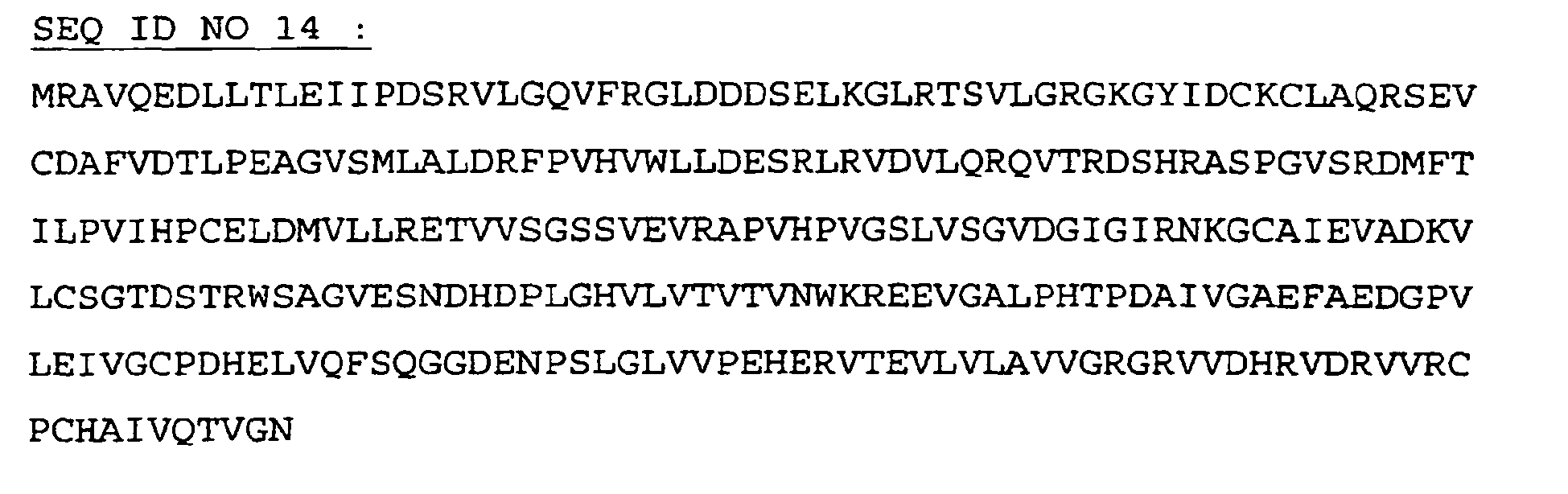
- A DNA fragment covering the Penicillium restrictum A191 inulinase coding region as well as its terminator region was amplified by PCR. The first synthetic oligonucleotide used as primer (SEQ ID NO 15) was choosen to contain the ATG codon corresponding to the first methionine of the coding region of the polypeptide as well as a recognition site for the restriction enzyme NcoI. The second primer oligonucleotide was the M13/pUC Reverse Sequencing Primer (cat N°#S1201S New England Biolabs Inc.).
- SEQ ID NO 15 : TCCACCATGGTCAAGTTTGCGAGCGCCTTCG
- Both primers (40 pmoles) were used for a PCR reaction with ca. 40 ng of pPRINU plasmid DNA as template. The 100 µl PCR reaction contained also 2.5 units Pfu DNA polymerase (Stratagene) and 1 µg BSA in the following buffer: Tris-HCl pH 8.0 20 mM,
KCl 10 mM, MgCl2 2 mM, (NH4)2SO4 6 mM and Triton X-100 0.1%. After denaturation of the DNA during 4 min at 94°C, 15 cycles of elongation were performed [30s at 94°C, 30s at 55°C and 180s at 72°C] followed by a final elongation step of 7 min at 72°C. The amplified DNA fragment was purified with the QiaQuick PCR purification kit (Qiagen) according to the manufacturer's protocol and recovered in a final volume of 50 µl. The extremities of the fragment were removed by digestion with the NcoI and HindIII restriction enzymes (5 units of each enzyme (Pharmacia), 1 x One-Phor-All buffer PLUS,final volume 60 µl, 37°C, overnight). The fragment was then purified with the QIAquick gel extraction kit (Qiagen) after separation by electrophoresis on an agarose gel in 1x TBE buffer and recovered in 30 µl water. - The inulinase encoding gene was ligated downstream of the glyceraldehyde-3-P dehydrogenase promotor of A. nidulans. This promoter allows a strong constitutive transcription of the genes located downstream of it (Punt et al., 1990, Gene, vol 93, p. 101; Punt et al., 1991, J. Biotechnol., vol 17, p. 19). The plasmid pFGPDGLAT2 contains this promoter followed by two restriction sites NcoI and HindIII between which protein encoding nucleotide sequences can be inserted.
- The vector was prepared as follows: 0.5 µg pFGPDGLAT2 DNA was digested with 5 units each of the NcoI and HindIII restriction enzymes (Pharmacia) (
final volume 20 µl, 2x One-Phor-All buffer PLUS, 37°C, overnight). After separation by agarose gel electrophoresis, the open vector was purified with the QIAquick gel extraction kit (Qiagen) and recovered in 30 µl water. - 2 µl of the PCR DNA fragment were ligated with this vector (1 µl) in the presence of ATP (1 mM), 1 unit of T4 DNA ligase (Pharmacia) and 1x One-Phor-All buffer PLUS (
final volume 10 µl, 16°C, overnight). 1 µl of the ligation mixture was electroporated into competent Escherichia coli JM109 cells after dialysis against water. A positive clone was selected after analysis of some transformants by plasmid extraction, plasmid digestion with the appropriate restriction enzymes and separation of the DNA fragments by agarose gel electrophoresis using standard procedures. The new plasmid was termed pGPD-PRINU. - The strain Aspergillus oryzae MUCL 14492 was transformed by generating protoplasts according to the protocol described by Punt et al. (Meth. Enzymol, 1992,
vol 216, p. 447). The pGPD-PRINU plasmid was cotransformed with the p3SR2 plasmid that contains a selection marker used to recover transformants (the Aspergillus nidulans acetamidase gene - Hynes et al., 1983, Mol. Cell. Biol.,vol 3, p. 1430). Transformants were selected on minimum medium plates containing acetamide as sole nitrogen source. - The strain Aspergillus oryzae MUCL 14492 was grown in 500 ml Aspergillus Minimum Liquid medium (Pontecorvo et al., 1953, op. cit.) during 16 hours at 30°C. The culture was filtered through a Miracloth filter to collect the mycelium. The mycelium was washed with the Osm solution (CaCl2 0.27 M, NaCl 0.6 M). and then incubated with 20 ml solution Osm/g mycelium supplemented with 20 mg Novozym 234 (Sigma). After 1 hour at 30°C with slow agitation (80 rpm), the protoplasts were formed and the suspension was putted on ice. The protoplasts were separated from intact mycelium by filtration through a sterile Miracloth filter and diluted with 1 volume STC1700 solution (sorbitol 1.2 M, Tris-HCl pH 7.5 10 mM,
CaCl 2 50 mM, NaCl 35 mM). The protoplasts were then collected by centrifugation at 2000 rpm, 10 min, 4°C and washed twice with STC1700 solution. They were resuspended in 100 µl of STC1700 (108 protoplasts/ml) in the presence of 3 µg p3SR2 plasmid DNA and 9 µg pGPD-PRINU plasmid DNA. After 20 min at 20°C, 250, 250 and 850 µl PEG solution (PEG 4000 60%, Tris-HCl pH 7. 5 10 mM andCaCl 2 50 mM) were added successively and the suspension was further incubated for 20 min at 20°C. PEG treated protoplast suspensions were diluted by the addition of 10 ml STC1700 and centrifugated 10 min at 4°C, 2000 rpm. The protoplasts were then resuspended in 200 µl STC 1700 and plated onto Aspergillus Minimum Agar Medium osmotically stabilized with 1.2 M sorbitol. To select the transformants, the nitrogen sources in the plates were replaced by 10 mM acetamide and 12 mM CsCl. - 22 transformants were analysed for their inulolytic enzyme expression. They were grown in Aspergillus Minimum Liquid Medium supplemented with 3% sucrose as carbon source and 0.5% Bacto yeast extract (Difco). After 75 hours at 30°C and 130 rpm, the supernatants of the cutures were assayed for inulinase activity. 5 transformants showed a significantly higher inulinolytic activity as compared to a control strain transformed only with the p3SR2 plasmid.
-
- <110> PURATOS Naamloze Vennootschap
- <120> ENZYME OR CELL PREPARATION WITH INULINASE ACTIVITY
- <130> P.PURA.13/EP
- <140>
<141> - <160> 15
- <170> PatentIn Ver. 2.1
- <210> 1
<211> 21
<212> PRT
<213> Penicillium restrictum A191 - <400> 1

- <210> 2
<211> 11
<212> PRT
<213> Penicillium restrictum A191 - <400> 2

- <210> 3
<211> 15
<212> DNA
<213> Artificial Sequence - <220>
<221> modified_base
<222> (12)
<223> i - <220>
<223> Description of Artificial Sequence: degenerated synthetic oligonucleotide - <400> 3
- ccacartaya cnttc 15
- <210> 4
<211> 20
<212> DNA
<213> Artificial Sequence - <220>
<223> Description of Artificial Sequence: degenerated synthetic oligonucleotide - <400> 4
-
acnggytgyt crtcccaatg 20
-
- <210> 5
<211> 175
<212> DNA
<213> Penicillium restrictum A191 - <220>
<221> CDS
<222> (1)..(174) - <400> 5

- <210> 6
<211> 58
<212> PRT
<213> Penicillium restrictum A191 - <400> 6

- <210> 7
<211> 18
<212> DNA
<213> Artificial Sequence - <220>
<223> Description of Artificial Sequence: sequencing primers - <400> 7
-
tctcctgcta agcactgg 18
-
- <210> 8
<211> 23
<212> DNA
<213> Artificial Sequence - <220>
<223> Description of Artificial Sequence: sequencing primers - <400> 8
- atgggtcaga tctttgctgg tag 23
- <210> 9
<211> 2870
<212> DNA
<213> Penicillium restrictum A191 - <220>
<221> CDS
<222> (572)..(964) - <220>
<221> CDS
<222> (1030)..(2265) - <400> 9


- <210> 10
<211> 131
<212> PRT
<213> Penicillium restrictum A191 - <400> 10

- <210> 11
<211> 412
<212> PRT
<213> Penicillium restrictum A191 - <400> 11


- <210> 12
<211> 543
<212> PRT
<213> Penicillium restrictum A191 - <400> 12


- <210> 13
<211> 524
<212> PRT
<213> Penicillium restrictum A191 - <400> 13


- <210> 14
<211> 306
<212> PRT
<213> Penicillium restrictum A191 - <400> 14


- <210> 15
<211> 31
<212> DNA
<213> Artificial Sequence - <220>
<223> Description of Artificial Sequence: M13/pUC Reverse Sequencing Primer - <400> 15
- tccaccatgg tcaagtttgc gagcgccttc g 31
-
- <110> PURATOS Naamloze Vennootschap
- <120> ENZYME OR CELL PREPARATION WITH INULINASE ACTIVITY
- <130> P.PURA.13/EP
- <140>
<141> - <160> 15
<170> PatentIn Ver. 2.1 - <210> 1
<211> 21
<212> PRT
<213> Penicillium restrictum A191 - <400> 1

- <210> 2
<211> 11
<212> PRT
<213> Penicillium restrictum A191 - <400> 2

- <210> 3
<211> 15
<212> DNA
<213> Artificial Sequence - <220>
<221> modified_base
<222> (12)
<223> i - <220>
<223> Description of Artificial Sequence: degenerated synthetic oligonucleotide - <400> 3
- ccacartaya cnttc 15
- <210> 4
<211> 20
<212> DNA
<213> Artificial Sequence - <220>
<223> Description of Artificial Sequence: degenerated synthetic oligonucleotide - <400> 4
-
acnggytgyt crtcccaatg 20
-
- <210> 5
<211> 175
<212> DNA
<213> Penicillium restrictum A191 - <220>
<221> CDS
<222> (1)..(174) - <400> 5

- <210> 6
<211> 58
<212> PRT
<213> Penicillium restrictum A191 - <400> 6

- <210> 7
<211> 18
<212> DNA
<213> Artificial Sequence - <220>
<223> Description of Artificial Sequence: sequencing primers - <400> 7
-
tctcctgcta agcactgg 18
-
- <210> 8
<211> 23
<212> DNA
<213> Artificial Sequence - <220>
<223> Description of Artificial Sequence: sequencing primers - <400> 8
- atgggtcaga tctttgctgg tag 23
- <210> 9
<211> 2870
<212> DNA
<213> Penicillium restrictum A191 - <220>
<221> CDS
<222> (572)..(964) - <220>
<221> CDS
<222> (1030)..(2265) - <400> 9


- <210> 10
<211> 131
<212> PRT
<213> Penicillium restrictum A191 - <400> 10

- <210> 11
<211> 412
<212> PRT
<213> Penicillium restrictum A191 - <400> 11

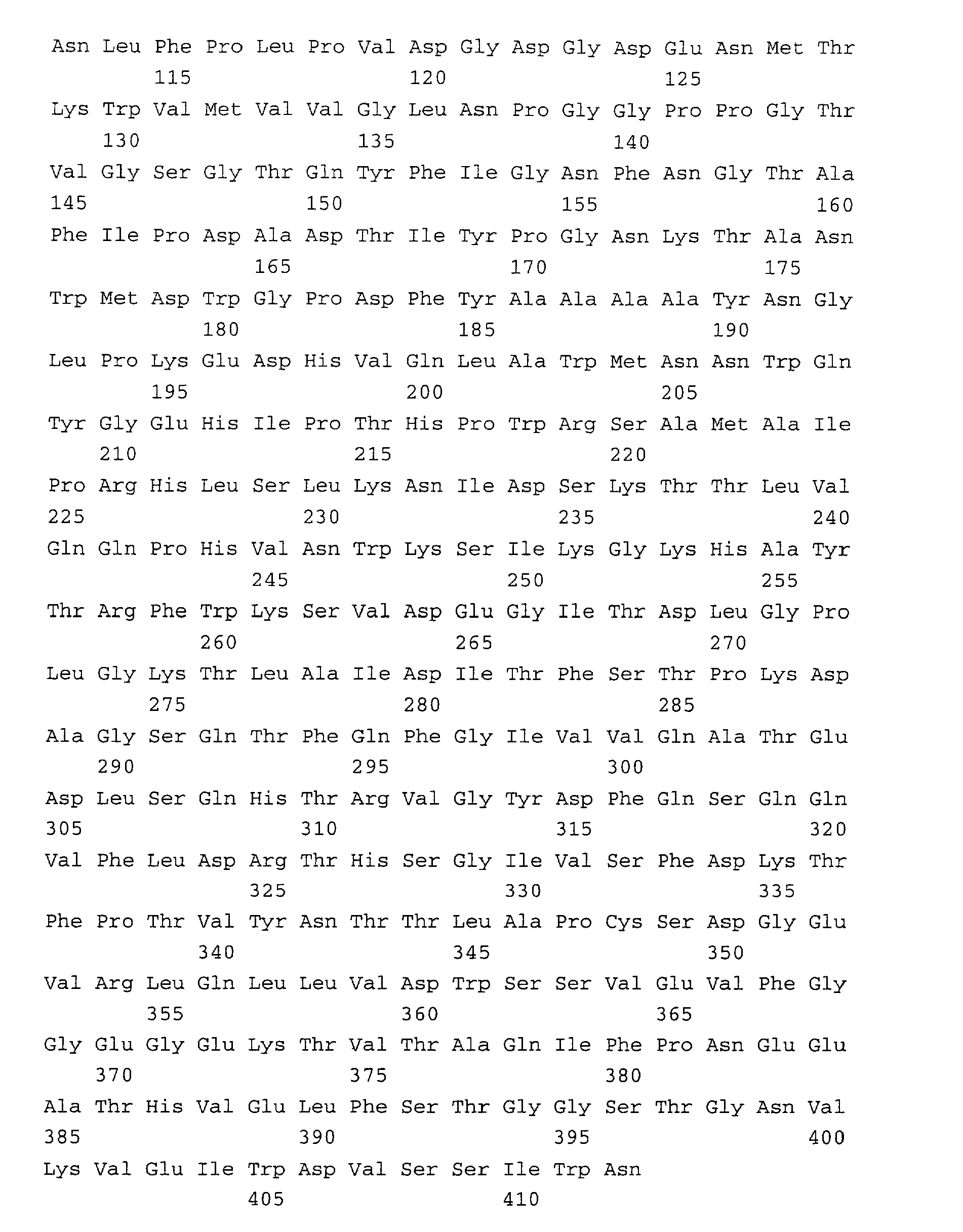
- <210> 12
<211> 543
<212> PRT
<213> Penicillium restrictum A191 - <400> 12


- <210> 13
<211> 524
<212> PRT
<213> Penicillium restrictum A191 - <400> 13


- <210> 14
<211> 306
<212> PRT
<213> Penicillium restrictum A191 - <400> 14


- <210> 15
<211> 31
<212> DNA
<213> Artificial Sequence - <220>
<223> Description of Artificial Sequence: M13/pUC Reverse Sequencing Primer - <400> 15
- tccaccatgg tcaagtttgc gagcgccttc g 31
SEQ ID NO 2 :
The PCR reaction was carried out with 10 ng gDNA of Penicillium restrictum A191 in the presence of 10 pmole of the synthetic oligonucleotides mixture with the sequence


Claims (23)
- An isolated and purified enzyme with inulinolytic activity having more than 75% sequence identity with the amino acid sequence SEQ ID NO 12.
- The enzyme according to claim 1, having more than 80%, preferably more than 90%, sequence identity with the amino acid sequence SEQ ID NO 12.
- An isolated and purified enzyme amino acid sequence having the amino acid sequence of SEQ ID NO 12 or a portion thereof having an inulinolytic activity.
- The enzyme according to any of the preceding claims, characterized in that it presents an optimum enzymatic activity at a pH between about 4.0 and about 6.0 and at a temperature between about 60 and about 70°C.
- An isolated and purified nucleotide sequence encoding the enzyme according to any one of the preceding claims 1 to 4.
- An isolated and purified nucleotide sequence which encodes a polypeptide having a inulinolytic activity, characterized in that it has more than 75% sequence identity with the nucleotide sequence SEQ ID NO 9.
- The isolated and purified nucleotide according to claim 6, characterized in that it has more than 80%, preferably more than 90% or 95%, sequence identity with the nucleotide sequence SEQ ID NO 9.
- An isolated and purified nucleotide sequence SEQ ID NO 9 or a portion thereof encoding a polypeptide having an inulinolytic activity.
- A recombinant nucleotide sequence comprising, operably linked to the nucleotide sequence according to any of the claims 5 to 8, one or more adjacent regulator sequence(s), preferably originating from homologous microorganisms.
- A vector comprising the nucleotide sequence according to any one of the claims 5 to 9.
- The vector according to claim 10, being a plasmid incorporated in Escherichia coli and having the deposit number LMBP-4252.
- A host cell transformed by the nucleotide sequence according to any of the claims 5 to 9, the recombinant host cell overexpressing the nucleotide sequence according to any of the claims 5 to 9 compared to the initial cell.
- A recombinant host cell comprising a vector according to claim 10 or 11.
- The recombinant host cell according to claim 12 or 13, characterized in that it is selected from the group consisting of bacteria or fungi, including yeast.
- An isolated and purified cell producing the enzyme according to any of the claims 1 to 4.
- The cell of claim 15, said cell having the deposit number MUCL-42612.
- The cell according to any one of the preceding claims 12 to 16, characterized in that the enzyme is extra-cellularly expressed by said cell.
- The cell according to any one of the claims 12 to 16, characterized in that the enzyme is intra-cellularly expressed by said cell.
- A cell extract of the cell according to claims 12, 13, 15, 16 or 18, said extract comprising the enzyme with inulinolytic activity as defined in any one of the claims 1 to 4.
- A solid support fixing an element selected from the group consisting of the cell according to claims 12, 13, 15, 16 or 18, the cell extract according to claim 19, and/or the isolated and purified enzyme with inulinolytic activity according to any one of the claims 1 to 4.
- Use of the cell or the recombinant host cell according to any of claims 12 to 18, or the enzyme with inulinolytic activity according to any of the claims 1 to 4 for the degradation of inulin or inulin-containing plant material.
- Use according to claim 21 for the production of fructose syrups.
- Use according to claim 21 for the production of oligomers of fructose.
Priority Applications (7)
| Application Number | Priority Date | Filing Date | Title |
|---|---|---|---|
| DE60034575T DE60034575T2 (en) | 2000-11-09 | 2000-11-09 | Enzyme or cell preparation with inulinase activity |
| EP00870264A EP1205554B1 (en) | 2000-11-09 | 2000-11-09 | Enzyme or cell preparation with inulinase activity |
| DK00870264T DK1205554T3 (en) | 2000-11-09 | 2000-11-09 | Enzyme or cell preparation with inulinase activity |
| AT00870264T ATE360699T1 (en) | 2000-11-09 | 2000-11-09 | ENZYME OR CELL PREPARATION WITH INULINASE ACTIVITY |
| AU89324/01A AU784278B2 (en) | 2000-11-09 | 2001-11-08 | Enzyme or cell preparation with inulinase activity |
| US10/006,937 US6518047B1 (en) | 2000-11-09 | 2001-11-09 | Enzyme or cell preparation with inulinase activity |
| CA002361788A CA2361788A1 (en) | 2000-11-09 | 2001-11-09 | Enzyme or cell preparation with inulinase activity |
Applications Claiming Priority (1)
| Application Number | Priority Date | Filing Date | Title |
|---|---|---|---|
| EP00870264A EP1205554B1 (en) | 2000-11-09 | 2000-11-09 | Enzyme or cell preparation with inulinase activity |
Publications (2)
| Publication Number | Publication Date |
|---|---|
| EP1205554A1 EP1205554A1 (en) | 2002-05-15 |
| EP1205554B1 true EP1205554B1 (en) | 2007-04-25 |
Family
ID=8175849
Family Applications (1)
| Application Number | Title | Priority Date | Filing Date |
|---|---|---|---|
| EP00870264A Expired - Lifetime EP1205554B1 (en) | 2000-11-09 | 2000-11-09 | Enzyme or cell preparation with inulinase activity |
Country Status (7)
| Country | Link |
|---|---|
| US (1) | US6518047B1 (en) |
| EP (1) | EP1205554B1 (en) |
| AT (1) | ATE360699T1 (en) |
| AU (1) | AU784278B2 (en) |
| CA (1) | CA2361788A1 (en) |
| DE (1) | DE60034575T2 (en) |
| DK (1) | DK1205554T3 (en) |
Families Citing this family (2)
| Publication number | Priority date | Publication date | Assignee | Title |
|---|---|---|---|---|
| US20050069627A1 (en) * | 2003-03-27 | 2005-03-31 | Mysore Nagaraja Rao Ramesh | Process for preparation of fructooligosaccharides (FOS) |
| CN112725305B (en) * | 2021-01-13 | 2022-11-04 | 云南师范大学 | Heat-salt-sensitive inulinase mutant MutY119D and preparation method thereof |
Family Cites Families (2)
| Publication number | Priority date | Publication date | Assignee | Title |
|---|---|---|---|---|
| NL8003723A (en) | 1980-06-27 | 1982-01-18 | Stamicarbon | INULINASE. |
| AU5811194A (en) * | 1992-12-11 | 1994-07-04 | Quest International B.V. | The use of the (kluyveromyces marxianus) inulinase gene promoter for protein production |
-
2000
- 2000-11-09 AT AT00870264T patent/ATE360699T1/en not_active IP Right Cessation
- 2000-11-09 EP EP00870264A patent/EP1205554B1/en not_active Expired - Lifetime
- 2000-11-09 DE DE60034575T patent/DE60034575T2/en not_active Expired - Fee Related
- 2000-11-09 DK DK00870264T patent/DK1205554T3/en active
-
2001
- 2001-11-08 AU AU89324/01A patent/AU784278B2/en not_active Ceased
- 2001-11-09 US US10/006,937 patent/US6518047B1/en not_active Expired - Fee Related
- 2001-11-09 CA CA002361788A patent/CA2361788A1/en not_active Abandoned
Also Published As
| Publication number | Publication date |
|---|---|
| DE60034575D1 (en) | 2007-06-06 |
| AU784278B2 (en) | 2006-03-02 |
| DK1205554T3 (en) | 2007-09-03 |
| US6518047B1 (en) | 2003-02-11 |
| AU8932401A (en) | 2002-05-16 |
| ATE360699T1 (en) | 2007-05-15 |
| CA2361788A1 (en) | 2003-05-09 |
| DE60034575T2 (en) | 2008-01-17 |
| EP1205554A1 (en) | 2002-05-15 |
Similar Documents
| Publication | Publication Date | Title |
|---|---|---|
| DK175036B1 (en) | Method for producing a polypeptide by growing a transformed microorganism, a transformed microorganism suitable therefor, and DNA sequences suitable for the preparation of such a microorganism | |
| AU686574B2 (en) | Pullulanase, microorganisms which produce it, processes for the preparation of this pullulanase and the uses thereof | |
| Gielkens et al. | Arabinoxylan degradation by fungi: characterization of the arabinoxylan-arabinofuranohydrolase encoding genes from Aspergillus niger and Aspergillus tubingensis | |
| JP4571604B2 (en) | Tripeptidyl aminopeptidase | |
| CA2159314A1 (en) | An .alpha.-galactosidase enzyme | |
| JPH08507695A (en) | EG III Cellulase Purification and Molecular Cloning | |
| CA2205411A1 (en) | Lysophospholipase produced from aspergillus by recombinant methods | |
| JP3683280B2 (en) | Regulatory sequence of cellulase cbh1 gene derived from Trichoderma vide and mass production system of protein or peptide using the same | |
| AU651194B2 (en) | Cloning and expression of DNA molecules encoding arabinan-degrading enzymes of fungal origin | |
| US5529926A (en) | Cloning and expression of DNA encoding a ripening form of a polypeptide having sulfhydryl oxidase activity | |
| Kanai et al. | Recombinant thermostable cycloinulo-oligosaccharide fructanotransferase produced by Saccharomyces cerevisiae | |
| US6379938B1 (en) | Epoxide hydrolase | |
| US6518047B1 (en) | Enzyme or cell preparation with inulinase activity | |
| US7001751B1 (en) | PyrF gene and the utilization thereof | |
| US7041486B1 (en) | Enzyme having decolorizing activity and method for decolorizing dyes by using the same | |
| US5637491A (en) | Dextranase enzyme, method for its production and DNA encoding the enzyme | |
| JPH11502113A (en) | Aspergillus arabinofuranosidase | |
| US5989887A (en) | Cloning and expression of DNA molecules incoding arabinan-degrading enzymes of fungal origin | |
| CA2334041C (en) | Enzyme with xylanase activity | |
| Yoshigi et al. | Cloning and sequencing of the endo-cellulase cDNA from Robillarda sp. Y-20 | |
| Pařenicová et al. | pgaD encodes a new type of endopolygalacturonase from Aspergillus niger | |
| JP3969797B2 (en) | Mutated ascorbate oxidase | |
| CN101084306B (en) | Overexpressed and purified aspergillus ficuum oxidase and nucleic acid encoding the same | |
| Xu et al. | Structural and functional properties of chicken lysozyme fused serine-rich heptapeptides at the C-terminus | |
| CN111690622A (en) | Laccase g2589 derived from fungi as well as gene and application thereof |
Legal Events
| Date | Code | Title | Description |
|---|---|---|---|
| PUAI | Public reference made under article 153(3) epc to a published international application that has entered the european phase |
Free format text: ORIGINAL CODE: 0009012 |
|
| AK | Designated contracting states |
Kind code of ref document: A1 Designated state(s): AT BE CH CY DE DK ES FI FR GB GR IE IT LI LU MC NL PT SE TR |
|
| AX | Request for extension of the european patent |
Free format text: AL;LT;LV;MK;RO;SI |
|
| 17P | Request for examination filed |
Effective date: 20020528 |
|
| AKX | Designation fees paid |
Designated state(s): AT BE CH CY DE DK ES FI FR GB GR IE IT LI LU MC NL PT SE TR |
|
| GRAP | Despatch of communication of intention to grant a patent |
Free format text: ORIGINAL CODE: EPIDOSNIGR1 |
|
| GRAS | Grant fee paid |
Free format text: ORIGINAL CODE: EPIDOSNIGR3 |
|
| GRAA | (expected) grant |
Free format text: ORIGINAL CODE: 0009210 |
|
| AK | Designated contracting states |
Kind code of ref document: B1 Designated state(s): AT BE CH CY DE DK ES FI FR GB GR IE IT LI LU MC NL PT SE TR |
|
| PG25 | Lapsed in a contracting state [announced via postgrant information from national office to epo] |
Ref country code: FI Free format text: LAPSE BECAUSE OF FAILURE TO SUBMIT A TRANSLATION OF THE DESCRIPTION OR TO PAY THE FEE WITHIN THE PRESCRIBED TIME-LIMIT Effective date: 20070425 Ref country code: LI Free format text: LAPSE BECAUSE OF FAILURE TO SUBMIT A TRANSLATION OF THE DESCRIPTION OR TO PAY THE FEE WITHIN THE PRESCRIBED TIME-LIMIT Effective date: 20070425 Ref country code: CH Free format text: LAPSE BECAUSE OF FAILURE TO SUBMIT A TRANSLATION OF THE DESCRIPTION OR TO PAY THE FEE WITHIN THE PRESCRIBED TIME-LIMIT Effective date: 20070425 |
|
| REG | Reference to a national code |
Ref country code: GB Ref legal event code: FG4D |
|
| REG | Reference to a national code |
Ref country code: IE Ref legal event code: FG4D |
|
| REG | Reference to a national code |
Ref country code: CH Ref legal event code: EP |
|
| REF | Corresponds to: |
Ref document number: 60034575 Country of ref document: DE Date of ref document: 20070606 Kind code of ref document: P |
|
| PG25 | Lapsed in a contracting state [announced via postgrant information from national office to epo] |
Ref country code: SE Free format text: LAPSE BECAUSE OF FAILURE TO SUBMIT A TRANSLATION OF THE DESCRIPTION OR TO PAY THE FEE WITHIN THE PRESCRIBED TIME-LIMIT Effective date: 20070725 |
|
| PG25 | Lapsed in a contracting state [announced via postgrant information from national office to epo] |
Ref country code: ES Free format text: LAPSE BECAUSE OF FAILURE TO SUBMIT A TRANSLATION OF THE DESCRIPTION OR TO PAY THE FEE WITHIN THE PRESCRIBED TIME-LIMIT Effective date: 20070805 |
|
| REG | Reference to a national code |
Ref country code: DK Ref legal event code: T3 |
|
| PG25 | Lapsed in a contracting state [announced via postgrant information from national office to epo] |
Ref country code: PT Free format text: LAPSE BECAUSE OF FAILURE TO SUBMIT A TRANSLATION OF THE DESCRIPTION OR TO PAY THE FEE WITHIN THE PRESCRIBED TIME-LIMIT Effective date: 20070925 |
|
| ET | Fr: translation filed | ||
| REG | Reference to a national code |
Ref country code: CH Ref legal event code: PL |
|
| PG25 | Lapsed in a contracting state [announced via postgrant information from national office to epo] |
Ref country code: AT Free format text: LAPSE BECAUSE OF FAILURE TO SUBMIT A TRANSLATION OF THE DESCRIPTION OR TO PAY THE FEE WITHIN THE PRESCRIBED TIME-LIMIT Effective date: 20070425 |
|
| PLBE | No opposition filed within time limit |
Free format text: ORIGINAL CODE: 0009261 |
|
| STAA | Information on the status of an ep patent application or granted ep patent |
Free format text: STATUS: NO OPPOSITION FILED WITHIN TIME LIMIT |
|
| 26N | No opposition filed |
Effective date: 20080128 |
|
| PG25 | Lapsed in a contracting state [announced via postgrant information from national office to epo] |
Ref country code: IT Free format text: LAPSE BECAUSE OF FAILURE TO SUBMIT A TRANSLATION OF THE DESCRIPTION OR TO PAY THE FEE WITHIN THE PRESCRIBED TIME-LIMIT Effective date: 20070425 Ref country code: GR Free format text: LAPSE BECAUSE OF FAILURE TO SUBMIT A TRANSLATION OF THE DESCRIPTION OR TO PAY THE FEE WITHIN THE PRESCRIBED TIME-LIMIT Effective date: 20070726 |
|
| PG25 | Lapsed in a contracting state [announced via postgrant information from national office to epo] |
Ref country code: MC Free format text: LAPSE BECAUSE OF NON-PAYMENT OF DUE FEES Effective date: 20071130 |
|
| PG25 | Lapsed in a contracting state [announced via postgrant information from national office to epo] |
Ref country code: IE Free format text: LAPSE BECAUSE OF NON-PAYMENT OF DUE FEES Effective date: 20071109 |
|
| PGFP | Annual fee paid to national office [announced via postgrant information from national office to epo] |
Ref country code: DE Payment date: 20081126 Year of fee payment: 9 Ref country code: DK Payment date: 20081023 Year of fee payment: 9 Ref country code: NL Payment date: 20081028 Year of fee payment: 9 |
|
| PGFP | Annual fee paid to national office [announced via postgrant information from national office to epo] |
Ref country code: BE Payment date: 20081031 Year of fee payment: 9 |
|
| PGFP | Annual fee paid to national office [announced via postgrant information from national office to epo] |
Ref country code: FR Payment date: 20081126 Year of fee payment: 9 |
|
| PGFP | Annual fee paid to national office [announced via postgrant information from national office to epo] |
Ref country code: GB Payment date: 20081029 Year of fee payment: 9 |
|
| PG25 | Lapsed in a contracting state [announced via postgrant information from national office to epo] |
Ref country code: CY Free format text: LAPSE BECAUSE OF FAILURE TO SUBMIT A TRANSLATION OF THE DESCRIPTION OR TO PAY THE FEE WITHIN THE PRESCRIBED TIME-LIMIT Effective date: 20070425 |
|
| PG25 | Lapsed in a contracting state [announced via postgrant information from national office to epo] |
Ref country code: LU Free format text: LAPSE BECAUSE OF NON-PAYMENT OF DUE FEES Effective date: 20071109 |
|
| PG25 | Lapsed in a contracting state [announced via postgrant information from national office to epo] |
Ref country code: TR Free format text: LAPSE BECAUSE OF FAILURE TO SUBMIT A TRANSLATION OF THE DESCRIPTION OR TO PAY THE FEE WITHIN THE PRESCRIBED TIME-LIMIT Effective date: 20070425 |
|
| BERE | Be: lapsed |
Owner name: PURATOS N.V. Effective date: 20091130 |
|
| REG | Reference to a national code |
Ref country code: NL Ref legal event code: V1 Effective date: 20100601 |
|
| REG | Reference to a national code |
Ref country code: DK Ref legal event code: EBP |
|
| GBPC | Gb: european patent ceased through non-payment of renewal fee |
Effective date: 20091109 |
|
| REG | Reference to a national code |
Ref country code: FR Ref legal event code: ST Effective date: 20100730 |
|
| PG25 | Lapsed in a contracting state [announced via postgrant information from national office to epo] |
Ref country code: FR Free format text: LAPSE BECAUSE OF NON-PAYMENT OF DUE FEES Effective date: 20091130 Ref country code: NL Free format text: LAPSE BECAUSE OF NON-PAYMENT OF DUE FEES Effective date: 20100601 Ref country code: BE Free format text: LAPSE BECAUSE OF NON-PAYMENT OF DUE FEES Effective date: 20091130 |
|
| PG25 | Lapsed in a contracting state [announced via postgrant information from national office to epo] |
Ref country code: DE Free format text: LAPSE BECAUSE OF NON-PAYMENT OF DUE FEES Effective date: 20100601 |
|
| PG25 | Lapsed in a contracting state [announced via postgrant information from national office to epo] |
Ref country code: GB Free format text: LAPSE BECAUSE OF NON-PAYMENT OF DUE FEES Effective date: 20091109 |
|
| PG25 | Lapsed in a contracting state [announced via postgrant information from national office to epo] |
Ref country code: DK Free format text: LAPSE BECAUSE OF NON-PAYMENT OF DUE FEES Effective date: 20091130 |