EP1202540A2 - Handheld communication and processing device and method of operation thereof - Google Patents
Handheld communication and processing device and method of operation thereof Download PDFInfo
- Publication number
- EP1202540A2 EP1202540A2 EP01307968A EP01307968A EP1202540A2 EP 1202540 A2 EP1202540 A2 EP 1202540A2 EP 01307968 A EP01307968 A EP 01307968A EP 01307968 A EP01307968 A EP 01307968A EP 1202540 A2 EP1202540 A2 EP 1202540A2
- Authority
- EP
- European Patent Office
- Prior art keywords
- handheld device
- handheld
- information management
- command
- voice command
- Prior art date
- Legal status (The legal status is an assumption and is not a legal conclusion. Google has not performed a legal analysis and makes no representation as to the accuracy of the status listed.)
- Withdrawn
Links
Images



Classifications
-
- H—ELECTRICITY
- H04—ELECTRIC COMMUNICATION TECHNIQUE
- H04M—TELEPHONIC COMMUNICATION
- H04M1/00—Substation equipment, e.g. for use by subscribers
- H04M1/26—Devices for calling a subscriber
- H04M1/27—Devices whereby a plurality of signals may be stored simultaneously
- H04M1/271—Devices whereby a plurality of signals may be stored simultaneously controlled by voice recognition
-
- H—ELECTRICITY
- H04—ELECTRIC COMMUNICATION TECHNIQUE
- H04M—TELEPHONIC COMMUNICATION
- H04M1/00—Substation equipment, e.g. for use by subscribers
- H04M1/72—Mobile telephones; Cordless telephones, i.e. devices for establishing wireless links to base stations without route selection
- H04M1/724—User interfaces specially adapted for cordless or mobile telephones
- H04M1/72403—User interfaces specially adapted for cordless or mobile telephones with means for local support of applications that increase the functionality
-
- H—ELECTRICITY
- H04—ELECTRIC COMMUNICATION TECHNIQUE
- H04M—TELEPHONIC COMMUNICATION
- H04M1/00—Substation equipment, e.g. for use by subscribers
- H04M1/60—Substation equipment, e.g. for use by subscribers including speech amplifiers
- H04M1/6033—Substation equipment, e.g. for use by subscribers including speech amplifiers for providing handsfree use or a loudspeaker mode in telephone sets
- H04M1/6041—Portable telephones adapted for handsfree use
-
- H—ELECTRICITY
- H04—ELECTRIC COMMUNICATION TECHNIQUE
- H04M—TELEPHONIC COMMUNICATION
- H04M2250/00—Details of telephonic subscriber devices
- H04M2250/74—Details of telephonic subscriber devices with voice recognition means
Definitions
- the invention pertains to a handheld communication and processing device that is responsive to a voice command received during communication with a remote terminal so that the device can remain positioned adjacent to the user's face during operation thereof.
- PDAs personal digital assistants
- Mobile phones can be used for essentially unrestricted communication, and PDA's can be used to perform a variety of functions such as determining time-zones, storing credit card numbers, storing addresses and phone numbers, storing appointments, etc. It is often desired to access the information stored in a PDA or to use the PDA to perform any number of functions while talking on the phone.
- the communication features of the mobile phone are embodied in a separate and distinct device from the functional tools of the PDA.
- the user must carry multiple devices and coordinate the use of each (e.g., talk on the phone while locating and operating the PDA).
- the functions of the mobile phone and those of the PDA have been combined into a single device, the functions must be used separately. That is, the device can be used for communication, or the device can be used as a PDA. However, the device cannot be used simultaneously for communication and as a PDA.
- the user when the device is being used for a phone conversation and the user wants to use the PDA to check the availability of a proposed meeting time being discussed during the phone conversation, the user must reposition the device to view the display and operate the PDA keypad, thus interrupting the conversation.
- the handheld device combines the communication functions of a phone and the functional tools of a personal digital assistant (PDA).
- PDA personal digital assistant
- the handheld device is operable in a similar manner to a conventional phone for communicating with a remote terminal (e.g., another handheld device, a desktop computer, etc.).
- the communication and processing device can also receive one or more voice commands. Voice commands can be spoken during communication with the device positioned adjacent to the user's face.
- the user operates a switch (e.g., presses a button) to activate a microphone or to open a connection between the mouth piece of the phone and the voice recognition component for receiving voice commands.
- the voice recognition component distinguishes the voice commands from among the other voice communications (i.e., the underlying conversation).
- a voice recognition component converts the received voice commands to commands that are executable by the processor. For example, when the voice command "Check Availability of August Tenth at One P.M.” is received, an executable command is generated causing the processor to access a calendar and check the availability of the requested date. That is, the processor activates a function or routine in response to receiving the executable command. The function or routine searches for the requested date (e.g., in a calendar database).
- the processor When the command is executed, the processor generates an acknowledgment (preferably an audible alarm) so that the user knows the command has been executed. For example, where the search returns empty, the processor generates a voice acknowledgment (e.g., "Available").
- the handheld communication and processing device also includes a keypad and a display for more conventional computing input and output.
- two or more similar handheld devices each check appointment availability in response to a voice command initiated at one of the devices.
- Each device can report back separately (i.e., to the user of that device), or data can be synchronized therebetween to report back separately or as a group.
- data can be synchronized by each handheld device receiving the voice command and checking the requested appointment availability at that device.
- the availability (and preferably alternative availabilities) can be transmitted among the other connected devices either one at a time or simultaneously to each. Once a common availability is determined (i.e., either each device indicates the requested time or an alternative time is available or not available), an audio signal is generated either at the device where the voice command was issued or at each of the participating devices.
- the audio signal is generated only atthe device where the voice command was issued
- the audio signal is audible to the users at each handheld device (i.e., it is transmitted over the communication path).
- the voice command can be initiated from a conventional phone that is participating in the communication, and the command can be executed at the handheld device.
- the communication functions of the mobile phone and the functional tools of the PDA into the handheld device of the present invention, only a single device is needed to perform the functions of either component.
- the functional tools of the handheld device are operable while the user is talking on the phone of the handheld device so that an underlying conversation can continue uninterrupted.
- An added advantage is that the user can readily schedule appointments, transfer data, and/or perform any other of a variety of functions while continuing the underlying conversation.
- FIG. 1 shows a communication network 10 over which the device and method of the present invention can be implemented.
- a handheld communication and processing device 100 is shown connected to a remote terminal 110 and/or 120 via a communication network 10.
- the handheld device 100 establishes a wireless connection (shown by the dashed line in FIG. 1) with the communication network 10, and can then be conventionally linked with any remote terminal 110, 120, including but not limited to, another handheld communication and processing device, a conventional wireless phone (e.g., digital, cellular), a conventional circuit switched telephone terminal, a laptop or desktop personal computer (PC) or other computer system (e.g., voicemail, automated caller response system), etc.
- a conventional wireless phone e.g., digital, cellular
- PC personal computer
- other computer system e.g., voicemail, automated caller response system
- the network 10 can be any suitable communication network including, but not limited to, a public switched telephone network (PSTN), a packet-based network (e.g., the Internet), a cellular or digital telephone network, radio network, satellite network, etc., or a combination thereof.
- PSTN public switched telephone network
- packet-based network e.g., the Internet
- cellular or digital telephone network radio network, satellite network, etc., or a combination thereof.
- the signals are routed over the network 10 to establish a communication channel between the handheld device 100 and the remote terminal 110, 120.
- the handheld device 100 can establish a direct link 105 such as a radio link with a remote terminal (e.g., 110) and thus bypass the communication network 10 altogether.
- the handheld device 100 can be linked to one or more remote terminals 110, 120 at the same time (e.g., a conference call).
- the handheld device 100 includes a telephony portion or phone 200 for telephony services such as communicating with the remote terminal 110, 120 and an information management portion or personal digital assistant (PDA) 250 for information management services such as making appointments, storing and transferring data, etc.
- the phone 200 has a transmitter/receiver 210 and associated antenna 220.
- the handheld device 100 also includes a microphone 230 and a speaker 240.
- the microphone 230 and the speaker 240 can be provided separately and in addition to those conventionally associated with the phone 200, or preferably the microphone 230 and the speaker 240 are linked to function both with the phone 200 and with the PDA 250.
- the handheld device 100 also includes a display 280 and a keypad 290.
- the display 280 can be any interface such as a liquid crystal display (LCD) or digital display, either of which might display a graphical user interface (GUI), text interface, etc.
- the keypad 290 can have numeric keys, letter ortext keys, function keys, etc. or a combination thereof.
- the display 280 and the keypad 290 can be provided separately and in addition to those conventionally associated with the phone 200, or preferably the display 280 and the keypad 290 are linked to function both with the phone 200 and with the PDA 250.
- the display 280 and keypad 290 can be directly linked 285 or integrally combined (e.g., a touch screen).
- the display 280 and the keypad 290 can also be used for both input (e.g., numerical sequences, text, commands stored in function keys, etc.) and for output (e.g., displaying numerical sequences, text, etc.) purposes.
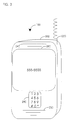
- the phone 200, the PDA 250, and associated components of the device 100 are housed together (e.g., see FIG. 3).
- the handheld device 100 can be positioned adjacent to the face of a user during communication (e.g., a conversation) with the remote terminal 110, 120, when a voice command issued by the user is received at the microphone 230. That is, the handheld device 100 can be conventionally held by the user when communicating via the phone 200, with the microphone 230 near the user's mouth and the speaker 240 near the user's ear, and need not be repositioned (i.e., held in front of the user) for operation of the PDA 250 by voice command.
- a headset having a microphone and a speaker can also be used with the handheld device 100 of the present invention.
- the housing 300 shown in FIG. 3 can be readily manufactured by one skilled in the art (e.g., a plastic case) and the size and shape will depend on design considerations such as ergonomics, mobility, aesthetics, etc.
- the housing 300 can be a single integral unit, or multiple units combined at manufacture or for combination by the user prior to use. For example, a user may initially purchase either a phone or a PDA, and then later purchase the remaining device as an "add-on" module.
- the display 280 and keypad 290 are conventionally available and can be modified within the scope of the present invention (e.g., to include functional keys, text keys, etc.). Indeed, the handheld device 100 of the present invention need not even have a display 280 and/or a keypad 290, and can be exclusively used with audio input and output.
- connections to the handheld device can be provided.
- peripheral devices e.g., a PC, a conventional PDA, a printer, a monitor, a scanner, a zip drive, etc.
- phone jacks, DSL or other network connections can be provided, as can connections to alternative sources of power.
- ports can also be provided for receiving batteries, PC cards, storage devices (e.g., diskettes), etc. within the handheld device 100.
- FIG. 4 shows the steps of a method for integrating telephony services (i.e., those provided by the phone 200) and information management services (those provided by the PDA 250).
- a communication channel is established between the handheld device 100 and at least one of the remote terminals 110, 120 (e.g., over communication network 10).
- the handheld device 100 receives a voice command (500 in FIG. 5) issued by the user at the microphone 230.
- the user operates a switch (e.g., a button on the housing of the handheld device 100, not shown) to activate the microphone 230 or otherwise open a link to the voice recognition component (510 in FIG. 5).
- the voice recognition component 510 distinguishes the voice command 500 from the other voice communications (i.e., the underlying conversation).
- the received voice command 500 is converted (e.g., using the speech recognition component 510 or a separate conversion component 520) to executable commands in step 420.
- the processor 260 executes the converted command, and optionally, in step 440 an acknowledgment (580 in FIG. 5) is generated (i.e., by the processor 260 and delivered over speaker 240).
- the acknowledgment 580 informs the user of the handheld device 100 that the command has been executed, and preferably, the results of the executed command (e.g., that a requested appointment time is unavailable, that a requested appointment has been scheduled, that the data has been sent or received, etc.).
- two or more similar handheld devices each check appointment availability in response to a voice command 500 (FIG. 5) initiated at one of the devices 100, 110.
- Each device 100, 110 can report back separately (i.e., to the user of that device 100, 110), or data can be synchronized therebetween and each device 100, 110 reports back separately or as a group.
- each handheld device 100, 110 receives the voice command 500 and checks for the requested appointment availability at that device 100, 110. To determine availability among the other devices, each device 100, 110 transmits data to the other devices indicating that the requested time and preferably an alternative time is available or not available.
- the data (i.e., the requested and alternative appointment availability) is transmitted among the other connected devices either one at a time (e.g., where there are more than two devices 100, 110) or simultaneously to each.
- an audio signal is generated either at the device 100, 110 where the voice command 500 was initially issued or at each of the participating devices 100, 110.
- the audio signal is audible to the users at each handheld device (i.e., it is transmitted over a common communication channel).
- the voice command can be initiated from a conventional phone 120 that is participating in the communication and the command can be executed at the handheld device 100.
- a user of the handheld device 100 keys the phone number of the remote terminal 110 into the keypad 290, which is displayed on display 280, and a communication channel (see FIG. 1) is established between the handheld device 100 and the remote terminal 110 over the communication network 10 (step 400).
- the user of the handheld device 100 issues the voice command 500 "Am I Available On August Tenth at One P.M.”.
- the voice command 500 is received at the microphone 230 and distinguished from the underlying conversation as a voice command by the voice recognition component (step 410).
- the voice recognition component 510 or a separate conversion component 520 converts the received voice command to an executable command (step 420).
- a function or routine is activated that causes the processor to access a calendar (i.e., a database stored in memory 270 or on the Internet) and to check the availability of the requested date (i.e., searching the data and time fields of the database).
- the voice command can cause the processor 260 to log an appointment where the user is making an appointment, or retrieve and report or store information such as a credit card number, password, phone number, etc.
- an acknowledgment 580 such as a voice recording "You Are Available" is generated by the processor 260 and returned to the user of the handheld device 100.
- the acknowledgment 580 is an audible alarm such as a tone or simulated/recorded voice.
- any suitable acknowledgment 580 can be generated, including but not limited to a graphical representation in display 280, a vibration, etc.
- other PDA alarms can be sounded through the speaker 240 during a phone call or communication. For example, where a user is talking to someone at a remote terminal 120 and has an appointment in five minutes, the PDA can sound an alarm to alert the user of the appointment so that the user can end the conversation and proceed to the appointment.
- the acknowledgment 580 can be sophisticated (e.g., a voice simulation or recording) or simple (e.g., a tone), or a combination thereof.
- the voice command 500 can be sophisticated or simple, or a combination thereof.
- the voice command 500 can be specific, such as "Calendar-Check Availability - August Tenth - One P.M.”.
- the voice command 500 can be general, such as "Am I Available For A Meeting On August Tenth At One P.M.”.
- the handheld device 100 can accept a voice command 500 issued from the remote terminal 110, 120. For example, where the voice command 500 "Are You Available August Tenth At One P.M.” is issued at the remote terminal 110, 120, the handheld device 100 receives the voice command 500 (i.e., over the communication channel), searches the calendar for the requested date and time, and returns an acknowledgment 580.
- this feature can be activated or deactivated by the user of the handheld device 100 (e.g., by pressing a button on the housing, preprogramming the handheld device 100, speaking a command such as "Automatic Response - Off", etc.).
- a voice command can be received at the handheld device 100 (e.g., steps 410 and 420) that causes the PDA 250 to initiate communication with the remote terminal 110, 120 (e.g., steps 430 and 400).
- the processor 250 searches a phonebook database stored in the memory 270 to find the phone number of the user's accountant, and then establishes a communication channel through the phone 200 (e.g., by transmitting a DTMF sequence) with the remote terminal 110, 120 of the user's accountant.
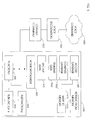
- FIG. 5 illustrates the functional components of the handheld device 100 of the present invention.
- a voice command 500 is received (i.e., by the microphone 230) and distinguished by the voice recognition component 510 of the handheld device 100.
- the voice recognition component 510 can be software stored in the memory 270 and executed by the processor 260, hardware (e.g., a dedicated chip programmed to perform a voice recognition routine), or a combination thereof.
- the voice command 500 is then converted by component 520 to an executable command 530.
- the conversion component 520 can also be software, hardware, or a combination thereof, and can be part of the voice recognition component 510 or a separate component.
- the executable command can be any suitable function or subfunction performed by the processor 260, as illustrated by the following examples.
- the voice command 500 of “Check My Availability For August Tenth at One P.M.” is received at the microphone 230.
- the voice recognition component 510 parses the voice command 500 into suitable individual commands such as "Availability”, “August Tenth”, and “One P.M.”.
- the parsed commands are then converted to executable commands 530 by the conversion component 520.
- the first command, "Availability” (in its converted format) instructs the processor 260 to access a calendar 540 (i.e., a database stored in memory 270) and query or search the entries for "August Tenth” at "One P.M.”. If the query returns empty, the processor generates an acknowledgment 580 to signal the user that the requested time is available.
- the acknowledgment 580 can be selected from a list of voice responses stored in memory 270 so that the user hears the response "That Time Is Available” at the speaker 240.
- the processor 260 can continue to search for the next available time (e.g., a subfunction 593, 595) and return an acknowledgment 580 such as "That Time Is Not Available - The Next Available Time Is August Tenth at One Thirty P.M.”.
- a data coordination function 550 can be used to automatically schedule an appointment between two or more devices.
- the processor 260 uses the phone 200 to establish a data link (see FIG. 1) between the handheld device 100 and the remote terminal 110, 120 (e.g., a computer, another handheld device, etc.). Once the data link is established, the processor 260 coordinates data transfer between the handheld device 100 and the remote terminal 110, 120. For example, where the remote terminal is another handheld device 100 (or otherwise connected to a PC, PDA, or the like), and the voice command 500 "Schedule An Appointment For Next Monday" is issued, a data channel is established between the two handheld devices 100.
- Each processor 260 at each handheld device 100 searches the respective calendar database for available times and exchanges available times with the other processor 260. The available times are compared and, using a suitable algorithm (e.g., first available match), an appointment is scheduled and recorded in each of the respective calendar databases.
- the format of the data transmission between each device 100, 110 can vary based on design considerations.
- the data transmission can be that of a conventional modem or fax transmission.
- the underlying conversation can be temporarily paused while the data is transmitted from one device to the other.
- the data transmission can be established over a second link altogether separate from the voice communications link between the two devices.
- the data can be transmitted over the same link, but at a distinct frequency from the voice communication.
- the data can be transmitted simultaneously with the voice communication.
- the data transmission and the voice communication can be packetized for exchange over a packet switched network. Separate packets can contain either voice or data communications with distinct destination addresses (i.e., that of either the phone 200 or the PDA 250).
- the data transmission can be voice commands issued from the PDA 250 of one device 100 to the PDA of the other device.
- Other exchange scenarios can also be used under the teachings of the present invention.
- the coordination function 550 can also be used to account for differences in time zones when scheduling an appointment.
- each device 100, 110 can be programmed in advance with a time zone code such as "mountain time”.
- a function e.g. 590
- the time zone can be determined by the area code of the called device, a signal sent from one device to another specifying the time zone, etc.
- the function 590 makes the appropriate conversion (i.e., adding or subtracting one hour) and preferably returns an appointment time with the appropriate time zone identification (i.e., "the appointment is scheduled for one P.M. mountain time).
- the time zone coordination function is particularly useful when communicating across the International Date Line, when it is often difficult to schedule appointments during the business hours of each time zone. For example, a voice command can be "schedule an appointment for early afternoon, mountain time”.
- the devices 100, 110 automatically schedule an appointment as described above, using the time zone identification (i.e., "mountain time") to limit the appointment between 12 noon and Two P.M., mountain time, factoring in date and time considerations of the different time zones.
- time zone identification i.e., "mountain time”
- executable commands 530 are also shown in FIG. 5.
- the processor 260 can be programmed to access any suitable database including the calendar discussed in the above example, a phone and address book, a list of passwords, credit cards, prices, etc.
- the processor 260 can be programmed to retrieve data from and/or write to the accessed database (543, 545, respectively).
- the data coordination function 550 can be used to update the user's calendar stored in the handheld device 100 and/or the user's calendar stored at the user's office computer.
- the processor 260 can be programmed to transmit data 560, or to receive data 570, such as email, Internet sites (i.e., hypertext markup language or HTML pages), text files, etc.
- Any suitable function 590 and subfunctions 593, 595 can be programmed for execution by the processor 260 (e.g., dialing another remote terminal to establish a conference call).
- any suitable executable command 530 can be programmed for execution by the processor 260 and that those shown and described above with respect to FIG. 5. are merely illustrative and are not intended to limit the scope of the present invention. Voice recognition and conversion to executable commands is well known in the art and the related software and hardware is conventionally available. Likewise, programming routines and subroutines and the processor 260 to execute the voice commands 500 and to generate an acknowledgment 580 is also well understood.
Landscapes
- Engineering & Computer Science (AREA)
- Human Computer Interaction (AREA)
- Signal Processing (AREA)
- Computer Networks & Wireless Communication (AREA)
- Telephone Function (AREA)
- Telephonic Communication Services (AREA)
Abstract
Description
Claims (10)
- A handheld communication and processing device (100) comprising:a phone (200) for communicating with a remote terminal (110, 120), said phone having a microphone for receiving a voice command (500) at said phone;a processor (260) for executing said received voice command;a housing (300) having said phone, said microphone, and said processor each housed therein so that said device is positionable adjacent to the face of a user during communication with said remote terminal when said voice command is received.
- The handheld communication and processing device (100) of claim 1 wherein an acknowledgment (580) is generated by said processor (260) when said voice command (500) is executed.
- The handheld communication and processing device (100) of claim 1 further comprising a speech recognition component (510) for converting said voice command (500) to an executable command (530), wherein said speech recognition component is software executable by said processor (260).
- A method for integrating telephony services and information management services, comprising:providing a user with a wireless, handheld device (100) comprising a telephony portion (200) and an information management portion (250); andsounding through a speaker (240) of the telephony portion of the handheld device, while the telephony portion of the handheld device is in use, alarms (580) generated by the information management portion ofthe handheld device.
- A method as in claim 4, further comprising converting voice commands (500) received by the telephony portion (200) of the handheld device (100) into executable commands (530) which are executed by the information management portion (250) of the handheld device, wherein said alarms (580) comprise acknowledgments that said executable commands are executed.
- A method as in claim 5, wherein the voice commands (500) are received by the telephony portion (200) of the handheld device (100) over a communication channel which exists between the handheld device and a remote terminal (110, 120).
- A method as in claim 5, wherein said information management portion (250) of the handheld device (100) further coordinates an appointment between time zones.
- A method as in claim 5, wherein said voice commands (500) comprise a command that the information management portion (250) of the handheld device (100) retrieve and report information which is managed by the information management portion of the handheld device.
- A method as in claim 5, wherein said voice commands (500) comprise a command that the information management portion (250) of the handheld device (100) store information which is to be managed by the information management portion of the handheld device.
- A method as in claim 5 wherein said user is a first user and said handheld device (100) is a first handheld device, the method further comprising:wherein, when said first and second users open a communication channel between their first and second handheld devices, at least some of said alarms sounded by the first handheld device are converted into executable commands which are executed by the information management portion of the second handheld device.providing a second user with a second wireless, handheld device (100) comprising a telephony portion (200) and an information management portion (250);sounding through a speaker (240) of the telephony portion of the second handheld device, while the telephony portion of the second handheld device is in use, alarms (580) generated by the information management portion of the second handheld device;
Applications Claiming Priority (2)
| Application Number | Priority Date | Filing Date | Title |
|---|---|---|---|
| US69748200A | 2000-10-26 | 2000-10-26 | |
| US697482 | 2000-10-26 |
Publications (2)
| Publication Number | Publication Date |
|---|---|
| EP1202540A2 true EP1202540A2 (en) | 2002-05-02 |
| EP1202540A3 EP1202540A3 (en) | 2003-12-17 |
Family
ID=24801294
Family Applications (1)
| Application Number | Title | Priority Date | Filing Date |
|---|---|---|---|
| EP01307968A Withdrawn EP1202540A3 (en) | 2000-10-26 | 2001-09-19 | Handheld communication and processing device and method of operation thereof |
Country Status (3)
| Country | Link |
|---|---|
| EP (1) | EP1202540A3 (en) |
| JP (1) | JP2002204289A (en) |
| CN (1) | CN1351459A (en) |
Cited By (8)
| Publication number | Priority date | Publication date | Assignee | Title |
|---|---|---|---|---|
| WO2013071738A1 (en) * | 2011-11-14 | 2013-05-23 | Hou Wanchun | Personal dedicated living auxiliary equipment and method |
| US20140047001A1 (en) * | 2012-08-10 | 2014-02-13 | Nuance Communications, Inc. | Virtual agent communication for electronic device |
| US8898219B2 (en) | 2010-02-12 | 2014-11-25 | Avaya Inc. | Context sensitive, cloud-based telephony |
| US8959030B2 (en) | 2010-02-12 | 2015-02-17 | Avaya Inc. | Timeminder for professionals |
| US20150088514A1 (en) * | 2013-09-25 | 2015-03-26 | Rawles Llc | In-Call Virtual Assistants |
| US20160055847A1 (en) * | 2014-08-19 | 2016-02-25 | Nuance Communications, Inc. | System and method for speech validation |
| US10133612B2 (en) * | 2016-03-17 | 2018-11-20 | Nuance Communications, Inc. | Session processing interaction between two or more virtual assistants |
| US10534623B2 (en) | 2013-12-16 | 2020-01-14 | Nuance Communications, Inc. | Systems and methods for providing a virtual assistant |
Families Citing this family (5)
| Publication number | Priority date | Publication date | Assignee | Title |
|---|---|---|---|---|
| CN104935759A (en) * | 2006-02-07 | 2015-09-23 | 纽昂斯通信有限公司 | A method and system for enhancing voice calls, such as enhancing voice calls with data services |
| US8554831B2 (en) * | 2009-06-02 | 2013-10-08 | Ford Global Technologies, Llc | System and method for executing hands-free operation of an electronic calendar application within a vehicle |
| JP2010063158A (en) * | 2009-12-08 | 2010-03-18 | Kyocera Corp | Portable telephone set and control method thereof |
| US9953643B2 (en) * | 2010-12-23 | 2018-04-24 | Lenovo (Singapore) Pte. Ltd. | Selective transmission of voice data |
| CN105204743A (en) * | 2015-09-28 | 2015-12-30 | 百度在线网络技术(北京)有限公司 | Interaction control method and device for speech and video communication |
Family Cites Families (4)
| Publication number | Priority date | Publication date | Assignee | Title |
|---|---|---|---|---|
| US5465401A (en) * | 1992-12-15 | 1995-11-07 | Texas Instruments Incorporated | Communication system and methods for enhanced information transfer |
| JPH08307509A (en) * | 1995-04-19 | 1996-11-22 | Texas Instr Inc <Ti> | Method and device for dialing a telephone without using hands |
| US5802467A (en) * | 1995-09-28 | 1998-09-01 | Innovative Intelcom Industries | Wireless and wired communications, command, control and sensing system for sound and/or data transmission and reception |
| US5950167A (en) * | 1998-01-26 | 1999-09-07 | Lucent Technologies Inc. | Screen-less remote voice or tone-controlled computer program operations via telephone set |
-
2001
- 2001-06-26 CN CN01122318A patent/CN1351459A/en active Pending
- 2001-09-19 EP EP01307968A patent/EP1202540A3/en not_active Withdrawn
- 2001-10-26 JP JP2001328785A patent/JP2002204289A/en active Pending
Cited By (14)
| Publication number | Priority date | Publication date | Assignee | Title |
|---|---|---|---|---|
| US8959030B2 (en) | 2010-02-12 | 2015-02-17 | Avaya Inc. | Timeminder for professionals |
| US8898219B2 (en) | 2010-02-12 | 2014-11-25 | Avaya Inc. | Context sensitive, cloud-based telephony |
| WO2013071738A1 (en) * | 2011-11-14 | 2013-05-23 | Hou Wanchun | Personal dedicated living auxiliary equipment and method |
| US10154070B2 (en) * | 2012-08-10 | 2018-12-11 | Nuance Communications, Inc. | Virtual agent communication for electronic device |
| US20140047001A1 (en) * | 2012-08-10 | 2014-02-13 | Nuance Communications, Inc. | Virtual agent communication for electronic device |
| US10999335B2 (en) | 2012-08-10 | 2021-05-04 | Nuance Communications, Inc. | Virtual agent communication for electronic device |
| US11388208B2 (en) | 2012-08-10 | 2022-07-12 | Nuance Communications, Inc. | Virtual agent communication for electronic device |
| US20150088514A1 (en) * | 2013-09-25 | 2015-03-26 | Rawles Llc | In-Call Virtual Assistants |
| WO2015047932A1 (en) * | 2013-09-25 | 2015-04-02 | Rawles Llc | In-call virtual assistants |
| US10134395B2 (en) | 2013-09-25 | 2018-11-20 | Amazon Technologies, Inc. | In-call virtual assistants |
| US10534623B2 (en) | 2013-12-16 | 2020-01-14 | Nuance Communications, Inc. | Systems and methods for providing a virtual assistant |
| US20160055847A1 (en) * | 2014-08-19 | 2016-02-25 | Nuance Communications, Inc. | System and method for speech validation |
| US10133612B2 (en) * | 2016-03-17 | 2018-11-20 | Nuance Communications, Inc. | Session processing interaction between two or more virtual assistants |
| US10671448B2 (en) | 2016-03-17 | 2020-06-02 | Nuance Communications, Inc. | Session processing interaction between two or more virtual assistants |
Also Published As
| Publication number | Publication date |
|---|---|
| JP2002204289A (en) | 2002-07-19 |
| CN1351459A (en) | 2002-05-29 |
| EP1202540A3 (en) | 2003-12-17 |
Similar Documents
| Publication | Publication Date | Title |
|---|---|---|
| US8855722B2 (en) | Integrated handheld computing and telephony device | |
| US6516202B1 (en) | Mobile computer system designed for wireless communication expansion | |
| KR101169045B1 (en) | System, method and computer readable medium for providing voice and visual ARS service | |
| US7203479B2 (en) | Using a mobile station for productivity tracking | |
| US7409394B2 (en) | Method for automatically managing information using hyperlink features of a mobile terminal | |
| CN101416475B (en) | Method and apparatus for managing mobile terminal events | |
| EP0542900A1 (en) | Portable office cordless telephone | |
| CA2641610A1 (en) | Advanced voice and data operations in a mobile data communication device | |
| KR100301219B1 (en) | Voice Portal Service System Using Speech Recognition/Text-to-Speech at Communication Network and Method thereof | |
| WO1997050222A9 (en) | Wireless smart phone | |
| KR20040089232A (en) | method for sending phone number on line | |
| JP2002204289A (en) | Handheld communication / processing device and method of operating the same | |
| US20080126087A1 (en) | Method and systems for information retrieval during communication | |
| KR100594448B1 (en) | Method of checking memo during call of mobile terminal and mobile terminal using same | |
| JP2003188978A (en) | Communication terminal and program | |
| US20050233775A1 (en) | Mobile phone providing religious prayers and method for the same | |
| US8379809B2 (en) | One-touch user voiced message | |
| WO2002035869A1 (en) | Smart communication interface device, applications and enhanced mobile productivity features | |
| JP2008109263A (en) | Portable terminal device, application start method, and application start program | |
| KR20030030779A (en) | Customer Management Method Using Caller ID and It's Recorded Medium | |
| KR100477635B1 (en) | Mode and Mail Retrieval Apparatus in Computer and Telephone Integration System | |
| CN112437199B (en) | Voice-hidden communication method | |
| KR100462588B1 (en) | Selective mail retrieval device and method using wireless communication device | |
| CN1332566A (en) | Combination system of paging personal digital assistant and mobile phone module | |
| KR20030026141A (en) | phone number information system |
Legal Events
| Date | Code | Title | Description |
|---|---|---|---|
| PUAI | Public reference made under article 153(3) epc to a published international application that has entered the european phase |
Free format text: ORIGINAL CODE: 0009012 |
|
| AK | Designated contracting states |
Kind code of ref document: A2 Designated state(s): AT BE CH CY DE DK ES FI FR GB GR IE IT LI LU MC NL PT SE TR |
|
| AX | Request for extension of the european patent |
Free format text: AL;LT;LV;MK;RO;SI |
|
| RAP1 | Party data changed (applicant data changed or rights of an application transferred) |
Owner name: AGILENT TECHNOLOGIES, INC. (A DELAWARE CORPORATION |
|
| PUAL | Search report despatched |
Free format text: ORIGINAL CODE: 0009013 |
|
| AK | Designated contracting states |
Kind code of ref document: A3 Designated state(s): AT BE CH CY DE DK ES FI FR GB GR IE IT LI LU MC NL PT SE TR |
|
| AX | Request for extension of the european patent |
Extension state: AL LT LV MK RO SI |
|
| RIC1 | Information provided on ipc code assigned before grant |
Ipc: 7H 04M 1/737 B Ipc: 7H 04M 1/02 B Ipc: 7H 04M 1/253 B Ipc: 7H 04M 1/27 B Ipc: 7H 04M 1/725 A |
|
| AKX | Designation fees paid | ||
| REG | Reference to a national code |
Ref country code: DE Ref legal event code: 8566 |
|
| STAA | Information on the status of an ep patent application or granted ep patent |
Free format text: STATUS: THE APPLICATION IS DEEMED TO BE WITHDRAWN |
|
| 18D | Application deemed to be withdrawn |
Effective date: 20040618 |