EP1202515A2 - Outer code for CSMA systems which use multicarrier transmission - Google Patents
Outer code for CSMA systems which use multicarrier transmission Download PDFInfo
- Publication number
- EP1202515A2 EP1202515A2 EP01125138A EP01125138A EP1202515A2 EP 1202515 A2 EP1202515 A2 EP 1202515A2 EP 01125138 A EP01125138 A EP 01125138A EP 01125138 A EP01125138 A EP 01125138A EP 1202515 A2 EP1202515 A2 EP 1202515A2
- Authority
- EP
- European Patent Office
- Prior art keywords
- outer code
- coding scheme
- coding
- code
- generating
- Prior art date
- Legal status (The legal status is an assumption and is not a legal conclusion. Google has not performed a legal analysis and makes no representation as to the accuracy of the status listed.)
- Withdrawn
Links
Images
Classifications
-
- H—ELECTRICITY
- H04—ELECTRIC COMMUNICATION TECHNIQUE
- H04L—TRANSMISSION OF DIGITAL INFORMATION, e.g. TELEGRAPHIC COMMUNICATION
- H04L1/00—Arrangements for detecting or preventing errors in the information received
- H04L1/004—Arrangements for detecting or preventing errors in the information received by using forward error control
- H04L1/0056—Systems characterized by the type of code used
- H04L1/0057—Block codes
-
- H—ELECTRICITY
- H04—ELECTRIC COMMUNICATION TECHNIQUE
- H04L—TRANSMISSION OF DIGITAL INFORMATION, e.g. TELEGRAPHIC COMMUNICATION
- H04L1/00—Arrangements for detecting or preventing errors in the information received
- H04L1/004—Arrangements for detecting or preventing errors in the information received by using forward error control
- H04L1/0056—Systems characterized by the type of code used
- H04L1/0064—Concatenated codes
- H04L1/0065—Serial concatenated codes
-
- H—ELECTRICITY
- H04—ELECTRIC COMMUNICATION TECHNIQUE
- H04L—TRANSMISSION OF DIGITAL INFORMATION, e.g. TELEGRAPHIC COMMUNICATION
- H04L1/00—Arrangements for detecting or preventing errors in the information received
- H04L1/004—Arrangements for detecting or preventing errors in the information received by using forward error control
- H04L1/0056—Systems characterized by the type of code used
- H04L1/0071—Use of interleaving
-
- H—ELECTRICITY
- H04—ELECTRIC COMMUNICATION TECHNIQUE
- H04L—TRANSMISSION OF DIGITAL INFORMATION, e.g. TELEGRAPHIC COMMUNICATION
- H04L27/00—Modulated-carrier systems
- H04L27/26—Systems using multi-frequency codes
- H04L27/2601—Multicarrier modulation systems
- H04L27/2602—Signal structure
Definitions
- This invention relates to the addition of an outer coding scheme for any carriersense multiple access (CSMA) based scheme that uses an orthogonal frequency division multiple access (OFDM) physical layer, such as 802.11a.
- CSMA carriersense multiple access
- OFDM orthogonal frequency division multiple access
- IEEE 802.11 The IEEE's standard for wireless LANs, designated IEEE 802.11, provides two different ways to configure a network: ad-hoc and infrastructure.
- ad-hoc network computers form a network "on the fly," with each computer or 802.11 device joining the network as is able to send and receive signals.
- SEA spokesman election algorithm
- Another algorithm in ad-hoc network architectures uses a broadcast and flooding method to all other nodes to establish the identity of all nodes in the network.
- the infrastructure architecture provides fixed network access points for communications with mobile nodes. These network access points (APs) are sometime connected to land lines to widen the LAN's capability by bridging wireless nodes to other wired nodes. If service areas overlap, handoffs may occur between wireless LANs. This structure is very similar to that used in cellular networks.
- IEEE 802.11 places specifications on the parameters of both the physical (PHY) and medium access control (MAC) layers of the network.
- the PHY layer which actually handles the transmission of data between nodes, may use either direct sequence spread spectrum, frequency-hopping spread spectrum, or infrared (IR) pulse position modulation.
- IEEE 802.11 makes provisions for data rates of up to 11 Mbps, and requires operation in the 2.4 - 2.4835 GHz frequency band, in the case of spread-spectrum transmission, which is an unlicensed band for industrial, scientific, and medical (ISM) applications; and in the 300 - 428,000 GHz frequency band for IR transmission.
- ISM industrial, scientific, and medical
- Infrared is generally considered to be more secure to eavesdropping, because IR transmissions require absolute line-of-sight links, i.e ., no transmission is possible outside any simply connected space or around comers, as opposed to radio frequency transmissions, which can penetrate walls and be intercepted by third parties unknowingly.
- infrared transmissions can be adversely affected by sunlight, and the spread-spectrum protocol of 802.11 does provide some rudimentary security for typical data transfers.
- IEEE 802.11a allows for transmission in the 5 GHz UNII bands, 5.15GHz to 5.25 GHz and 5.25 GHz to 5.356 GHz, at data rates up to 54 Mbps.
- the MAC layer includes a set of protocols which is responsible for maintaining order in the use of a shared medium.
- the 802.11 standard specifies a carrier sense multiple access with collision avoidance (CSMA/CA) protocol.
- CSMA/CA carrier sense multiple access with collision avoidance
- a node when a node receives a packet to be transmitted, it first listens to ensure no other node is transmitting. If the channel is clear, it then transmits the packet. Otherwise, it chooses a random "backoff factor,” which determines the amount of time the node must wait until it is allowed to transmit its packet.
- the transmitting node decrements its backoff counter. When the channel is busy it does not decrement its backoff counter. When the backoff counter reaches zero, the node transmits the packet.
- ACK acknowledgment
- CRC cyclic redundancy check
- node A can communicate with node B, and node B can communicate with node C.
- node A cannot communicate node C.
- node A may sense the channel to be clear, node C may in fact be transmitting to node B.
- the protocol described above alerts node A that node B is busy, and requires node A to wait before transmitting its packet.
- 802.11 provides a reliable means of wireless data transfer, some improvements to it have been proposed.
- the use of wireless LANs is expected to increase dramatically in the future as businesses discover the enhanced productivity and the increased mobility that wireless communications can provide.
- the IEEE Standard P802.11a, July, 1999 provides background for this invention.
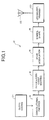
- the 802.11a PHY layer transmit chain is depicted generally at 10.
- Chain 10 includes a convolution encoder 12, and interleaver/construction mapper 14, an OFDM modulator 16, a symbol shaper 18, an upconverter/transmitter 20, and an antenna 22.
- 802.11a uses only convolutional encoder 12 to provide forward error correction (FEC).
- FEC forward error correction
- QoS Quality of Service
- IEEE 802.11a uses the automated response query (ARQ) mechanism, which imposes longer delay and jitter, and can impede the enforcement of QoS policies.
- ARQ automated response query
- the channel link is designed, for various received signal levels, to maintain a 90% packet throughput in the absence of collisions. If a packet is successfully received, an ACK is sent to the sending station (STA). If an ACK is not received, after a suitable time, the packet is re-sent.
- STA sending station
- the loss of packets in 802.11 systems adds considerable latency to the system, as well as jitter, i.e ., the packet delivery can vary with time.
- 802.11a is a leading, if not the leading, candidate for home network deployment in the 5GHz band.
- a goal of the invention is to provide less than one frame error in 10 hours of transmission, with at most, one packet retry, assuming the link conditions are met for 802.11a.
- a coding scheme for use with a CSMA protocol to enable transmission of high data rate information signals thereover includes providing an outer coding generator; generating outer code words containing coded and uncoded data therein in the outer code generator; wherein, the generated outer code words fit with a small multiple of data bits with an OFDM symbol having a fixed number of data bits, thereby providing fro transmission of high data rate information using the outer code and the CSMA protocol inner code at a data rate of at least 24 Mbps and at a packet error rate of less than 1.5 ⁇ 10 -9 .
- An object of the invention is to provide a minimal increase in interframe spacings specified for 802.11a and other CSMA systems, while maintaining minimum latency.
- Another object of the invention is to provide early detection of failed packets.
- a further object of the invention is to provide a modification to 802.11a which fits within the framework of currently proposed Quality of Service enhancements for 802.11.
- Another object of the invention is to provide a coding scheme suited for use with MPEG transport streams.
- Yet another object of the invention is to provide a coding scheme for integration into 802.11a and 802.11e packet formatting which allows non-FEC capable devices to read FEC coded packets.
- Another object of the invention is to provide less than one frame error in 10 hours of transmission.
- an outer code with error correcting requirements described herein, will enable wireless video transmission with less than 1 frame error in 10 hours due to an error in the MAC protocol data unit, with up to one retry allowed, provided that the contention free mode of 802.11 is used, and yet still not significantly impact channel efficiency.
- this invention can enable the use of 802.11a for high quality transmission of audio-visual (AV) signals, such as MPEG-2, as well as other applications, in a uniform manner. It can also provide enterprise networks with "near wireline" equivalent transmission.
- AV audio-visual
- CSMA Collision Sense Multiple Access
- OFDM Orthogonal Frequency Division Multiple Access
- PHY Physical Layer
- the invention differs from the known prior art in (1) the use of an outer coding scheme for the 802.11a PHY, which is consistent with 802.11 MAC parameters, particularly interframe spacing parameters, that produces minimal additional overhead, while meeting requirements for a very low packet loss rate; and (2) the use of a frame format which enables decoding to be done on subsets of the payload, to enable speedy frame transmission, reduce jitter, and to enable aggregated packets to be sent to higher layers separately, assuming separate frame check sums are present on each segment.
- any systematic code i.e. , a code where code words include uncoded data, block coding scheme that corrects at least two errors in twelve four-bit data symbols, or three errors in twenty-six eight-bit symbols is applicable.
- codes which correct eight eight-bit symbols in 239 symbols or less, as obtained through the use of a 255,239 code may be an (n, k) code, where n symbols are coded and k symbols are uncoded.
- Nonsystematic codes may also be used, however, they do not provide separate data and "parity" fields, and thus do not prevent non-FEC capable stations, or devices, from reading the uncoded data.
- an outer block code wherein (1) the code words and the uncoded data are such that they fit with a "small", i . e ., less than 20, with respect to interframe spacing, multiple of data bits contained within an OFDM symbol which contains a fixed number of data bits; and (2) the code, combined with an inner code, provides for packet error rates less than 1.5•10 -9 , may accomplish the same functionality as for 802.11a systems.
- any outer block code wherein (1) the code words and the uncoded data fit with a "small" multiple of data bits contained within an OFDM symbol which contains a fixed number of data bits; (2) the code, combined with an inner code, provides for packet error rates less than 1.5•10 -9 ; and (3) the use of different block codes for shorter and longer payloads, so as to minimize overhead; will work successfully.
- This invention describes the use and structure of additional coding necessary for premium services over 802.11 systems, with special attention to 802.11a and 802.11e.
- the coding scheme of the invention is applicable to 802.11b and higher rate PHYs, which are presently being developed.
- 802.11a requires, for packet sizes of 1000 bytes, an error rate of 0.1 packets lost. However, in order to cope with an error rate approaching wireline quality, an error rate of ⁇ 1.5•10 -9 is required. Parameters relevant to the coding problem for the current implementations of 802.11a. Data Rate. Mbps 24 Frames per second 30 Packet Rate per second at 1000 bytes/packet 24000 Total Number of error-free hours 10 Number of packets /hour 86400000 Packet Error rate desired 1.15741•10 -9 BER of Present 802 11a PHY 1 313•10 -5
- IEEE 802.11-00/071 discusses the use of an FEC option for protecting MAC headers, with additional FEC provided separately for the MAC service data unit (MSDU).
- MSDU MAC service data unit
- An objection may be raised to this proposal that an outer code more appropriately belongs in the MAC.
- the coding may as well be performed in either the MAC or PHY, with a caveat that if no additional coding is performed on the Physical Layer Convergence Protocol (PLCP) header, the signal excesses which virtually guarantee PLCP header decoding at higher rates will not be present at lower rates.
- the PLCP header is that portion of the packet which, in the PHY, is used to determine the transmitted rate and packet length.
- the scrambler portion of the header limits the error rate of the packet, and can be set to an initial value via, e . g ., management frames.
- Some video coding standards such as H.260, ITU J standards, specify optional coding schemes. Additionally, application layers implement rate adaptation, error resiliency, and error concealment. However, these schemes are not uniform, and a given coder may or may not have coding built in. Thus, for maximum flexibility, it would be desirable to have additional coding at the MAC or PHY. Furthermore, because QoS mechanisms should effect controls where they are needed - and 802.11a, at this time, is far from wireline quality in behavior - an outer coding option provides uniform transmission quality to applications.
- Outer coding schemes when applied to 802.11a, may rely upon re-transmission of error-containing frames, which, in 802.11, is typically acknowledged. If an acknowledged mode is supported, as in 802.11, some means of ensuring highly reliable transmission of acknowledgements is required as well.
- PHY Allows PLCP header protection at 6Mbps. 2. Guarantees error rate independent of application. 3. Frame check sequence (FCS) can be done on outer code decoded payload, increasing reliability. 1. would require a new PAR, and its attendant time, jeopardizing time to market, and impacting hardware already in development. 2. Code may pose limits on protocol data unit (PDU) size since a code of a minimum length may have to be specified to meet error correction/burst error robustness requirements. 3. Coding delay may potentially affect 802.11 parameter settings- e . g ., PIFS, DIES, etc. MAC 1.
- PDU protocol data unit
- FCS can be done on outer code decoded payload, increasing reliability. 1. Does not protect PLCP header at 6Mbps. 2. Code may pose additional constraints on PDU size. 3. Coding delay may potentially affect 802.11 parameter settings-e.g., PIFS, DIFS, etc. Higher Layers 1. Simplifies the MAC and PHY. 2. Reduces time to develop a standard. 1. Requires possibly FCS failed packets to be passed up to higher layers. 2. would involve additional retransmit/fragmentation delays, since at present, the standard does not support sending error-containing frames to higher layers. 3. Does not protect PLCP header. 4. Does not provide a unified, application independent solution to low error rate communication over 802.11
- either the MAC or PHY is appropriate for high data rate transfer FEC. Relying solely upon the application will not only increase delay, it will cause performance to vary from application to application; however, coding for the MAC, as per the Joint Proposal, seems to be the preferred alternative.
- 802.11a in order to meet the short interframe spacing time (SIFS) of 16 ⁇ sec, required to differentiate transmitted packets in a time, and RxTx turnaround time of 2 ⁇ sec, which is required for the receiver to complete a reception of a packet settle internal transients, and prepare to transmit a MAC-level FEC, the system must operate with either a delayed acknowledgement, or no acknowledgement of reception.
- SIFS short interframe spacing time
- RxTx turnaround time 2 ⁇ sec
- the outer code is a block code, capable of correcting up to t symbols of m bits per symbol in a block length of N 1 symbols.
- the packet is composed of N 2 symbols, and, to make the computations easier, and also posing a constraint on the packet length for high quality transmission, the packet length of N bits is partitioned into N/N 1 blocks. This constraint however, is not unreasonable for streaming transmission.
- Reed-Solomon (RS) codes are capable of achieving the above coding properties.
- the packet error rate is 5.9•10 -21 .
- a code that fits at least within the traceback length of the convolution decoder can also be used.
- the probability of error within 25 information bits is 4.25•10 -16
- the probability of an errored 1000 byte packet is 1.09•10 -13 .
- the overhead for this code is approximately 25%.
- An additional advantage of such codes is that they produce the required frame error rates, and yet do not produce a great increase in latency, which is required in order to have high channel efficiency for a CSMA, system such as 802.11 CSMA systems .
- signals in a CSMA system provide a "guard time" between packets, also known as frames, sent to reduce the likelihood of collision, due to possible timing errors in contention free modes of these multiple access systems. It is desirable to make this guard time, or interframe spacing, as short as possible to maximize channel efficiency. This is achieved by the codes for the point coordination function in 802.11a, or other OFDM systems, where the interframe spacing is shortened for the contention free mode relative to the contention mode.
- B is either an administrated parameter, a parameter set in the mangement information base (MIB) of the network, or, simply assigned to certain classes of frames which are known always to be less than B bytes.
- MIB mangement information base
- Reed-Solomon codes can be implemented as systematic codes, they can be represented using separate data and "parity" fields. A code that intersperses frame and parity check fields is used. This has two advantages: (1) it allows for early discovery of bad packets, if a bad part of a packet is discovered early; and (2) it allows for early decoding of payload information, which can help reduce overall buffer jitter.
- Table 3 One form of the proposed packet format is illustrated in Table 3, which includes separate coding for the MAC header and for the frame body, wherein the middle row indicates the number of bytes in each field in the frame format: MAC Header MSDU or MMPDU 24 or 28 2 0 or 4 6 or 12 FEC 0-4 1 k48 k8 k48 k8 MAC header Virtual Stream ID Security Field (Opt.) (12 if Security field present) Secuity FEC MPDU 1 FEC . . . MPDUj FEC . . . This format utilizes the (16,12) Reed-Soloinon code.
- MPDU j denotes the j th 48 byte multiple segment of payload.
- k is a constant greater than one. If payload sizes do not fit in an integral multiple of 48 bytes, padding of zeroes is assumed at the transmitter, and reconstructed at the receiver. Note that the maximum 2304 byte payload is reduced accordingly.
- This structure allows the MAC header to be separately protected and the MSDU or MMPDU to be protected by systemic code. The structure also allows a device or STA to ignore the fields and instantiate decoding via management frames. The uncoded data portion may be used for transmitting MPEG2, and future MPEG, transports streams. Further, the packet formatting provided FEC, or enhanced FEC, but still allows legacy, non-FEC capable devices to decode the packets.
Landscapes
- Engineering & Computer Science (AREA)
- Computer Networks & Wireless Communication (AREA)
- Signal Processing (AREA)
- Detection And Prevention Of Errors In Transmission (AREA)
- Compression Or Coding Systems Of Tv Signals (AREA)
- Time-Division Multiplex Systems (AREA)
Abstract
Description
| Parameters relevant to the coding problem for the current implementations of 802.11a. | |
| Data Rate. | 24 |
| Frames per second | 30 |
| Packet Rate per second at 1000 bytes/packet | 24000 |
| Total Number of error- | 10 |
| Number of packets /hour | 86400000 |
| Packet Error rate desired | 1.15741•10-9 |
| BER of Present 802 11a PHY | 1 313•10-5 |

| Where | Advantages | Disadvantages |
| PHY | 1.Allows PLCP header protection at 6Mbps. 2. Guarantees error rate independent of application. 3. Frame check sequence (FCS) can be done on outer code decoded payload, increasing reliability. | 1. Would require a new PAR, and its attendant time, jeopardizing time to market, and impacting hardware already in development. 2. Code may pose limits on protocol data unit (PDU) size since a code of a minimum length may have to be specified to meet error correction/burst error robustness requirements. 3. Coding delay may potentially affect 802.11 parameter settings-e.g., PIFS, DIES, etc. |
| MAC | 1. Provides protection of payload, and allows for less communication to higher layers (because bad frames aren't sent up). 2. Guarantees error rate independent of application. 3. FCS can be done on outer code decoded payload, increasing reliability. | 1. Does not protect PLCP header at 6Mbps. 2. Code may pose additional constraints on PDU size. 3. Coding delay may potentially affect 802.11 parameter settings-e.g., PIFS, DIFS, etc. |
| Higher Layers | 1. Simplifies the MAC and PHY. 2. Reduces time to develop a standard. | 1. Requires possibly FCS failed packets to be passed up to higher layers. 2. Would involve additional retransmit/fragmentation delays, since at present, the standard does not support sending error-containing frames to higher layers. 3. Does not protect PLCP header. 4. Does not provide a unified, application independent solution to low error rate communication over 802.11 |


For such a code therefore, for a packet length of 5*188 bits, the packet error rate is 5.9•10-21.
| MAC Header | MSDU or | ||||||||||
| 24 or 28 | 2 | 0 or 4 | 6 or 12 FEC | 0-4 | 1 | k48 | k8 | k48 | k8 | ||
| MAC header | Virtual Stream ID | Security Field (Opt.) | (12 if Security field present) | Secuity | FEC | MPDU1 | FEC | . . . | MPDUj | FEC | . . . |
Claims (26)
- A coding scheme for use with a CSMA protocol to enable transmission of high data rate information signals thereover between devices, wherein the protocol includes an OFDM physical layer, a MAC layer, a CSMA protocol inner code and a systemic code, comprising:wherein, the generated outer code words fit with a small multiple of data bits with an OFDM symbol having a fixed number of data bits, thereby providing for transmission of high data rate information using the outer code and the CSMA protocol inner code at a data rate of at least 24 Mbps and at a packet error rate of less than 1.5·10-9.providing an outer coding generator;generating outer code words containing coded and uncoded data therein in the outer code generator;
- The coding scheme of claim 1 wherein said generating outer code words includes generating outer code words of different lengths as a function of the data being transmitted.
- The coding scheme of claim 1 wherein said generating outer code words includes generating outer code words in multiples of 24.
- The coding scheme of claim 1 wherein said generating outer code words includes generating separate header coding and parity check symbols and separate frame body coding.
- The coding scheme of claim 1 wherein said generating outer code words includes generating outer coding words operable with MPEG transport streams.
- The coding scheme of claim 5 wherein said generating outer code words includes generating an uncoded data portion for transmitting the MPEG transport stream.
- The coding scheme of claim 1 which includes a management frame and wherein said generating outer code words includes generating a systemic code portion for use by a device wherein the device ignores code fields and instantiates decoding from management frames.
- The coding scheme of claim 1 wherein said generating outer code words includes formatting packets in outer coding words with forward error correction, wherein packets are decodabie by non-forward error correcting device.
- The coding scheme of claim 1 wherein said generating includes generating outer code words having a frame format of:
MAC Header MSDU or MMPDU 24 or 28 2 0 or 4 6 or 12 FEC 0-4 1 k48 k8 k48 k8 MAC header Virtual Stream ID Security Field (Opt.) (12 if Security field present) Secuity FEC MPDU1 FEC .
.
.MPDUj FEC .
.
. - A coding scheme for use with a CSMA protocol to enable transmission of high data rate information signals thereover between devices, wherein the protocol includes an OFDM physical layer, a MAC layer, a CSMA protocol inner code and a systemic code, comprising:wherein, said outer code words fit with a small multiple of data bits with an OFDM symbol having a fixed number of data bits, thereby providing for transmission of high data rate information using the outer code and the CSMA protocol inner code at a data rate of at least 24 Mbps and at a packet error rate of less than 1.5·10-9.an outer coding generator;outer code words containing coded and uncoded data therein in the outer code generator, including an uncoded data portion for transmitting the MPEG transport stream;
- The coding scheme of claim 10 wherein said outer code words are of different lengths as a function of the data being transmitted.
- The coding scheme of claim 10 wherein said outer code word includes a separate header code and a separate frame body code.
- The coding scheme of claim 10 which includes a management frame and wherein said outer code word includes a systemic code portion for use by a device wherein the device ignores code fields and instantiates decoding from management frames.
- The coding scheme of claim 10 wherein said outer code word includes packet formatting with forward error correction, wherein said packet formatting are decodable by non-forward error correcting device.
- The coding scheme of claim 10 wherein said outer code words has a frame format of:
MAC Header MSDU or MMPDU 24 or 28 2 0 or 4 6 or 12 FEC 0-4 1 k48 k8 k48 k8 MAC header Virtual Stream ID Security Field (Opt.) (12 if Security field present) Secuity FEC MPDU1 FEC .
.
.MPDUj FEC .
.
. - The coding scheme of claim 10 wherein each coded word includes multiple coded fields, and wherein each coded field is decoded sequentially, and decoding stops on detection of an uncorrectable error, and the packet is discarded.
- The coding scheme of claim 10 wherein a short interframe spacing time is present between frames having coded words therein, and wherein the acknowledgement policy is deferred in time for a period at least two-times that of the SIFS time.
- A coding scheme for use with a CSMA protocol to enable transmission of high data rate information signals thereover between devices, wherein the protocol includes an OFDM physical layer, a MAC layer, a CSMA protocol inner code and a systemic code, comprising:wherein, the generated outer code words fit with a small multiple of data bits with an OFDM symbol having a fixed number of data bits, thereby providing for transmission of high data rate information using the outer code and the CSMA protocol inner code at a data rate of at least 24 Mbps and at a packet error rate of less than 1.5·10-9.providing an outer coding generator;generating outer code words containing coded and uncoded data therein in the outer code generator, including formatting packets in the outer coding words with forward error correction, wherein packets are decodable by non-forward error correcting device;
- The coding scheme of claim 18 wherein said generating outer code words includes generating outer code words of different lengths as a function of the data being transmitted.
- The coding scheme of claim 18 wherein said generating outer code words includes generating separate header coding and parity check symbols and separate frame body coding.
- The coding scheme of claim 18 wherein said generating outer code words includes generating outer coding words operable with MPEG transport streams.
- The coding scheme of claim 21 wherein said generating outer code words includes generating an uncoded data portion for transmitting the MPEG transport stream.
- The coding scheme of claim 18 which includes a management frame and wherein said generating outer code words includes generating a systemic code portion for use by a device wherein the device ignores code fields and instantiates decoding from management frames.
- The coding scheme of claim 18 wherein said generating includes generating outer code words having a frame format of:
MAC Header MSDU or MMPDU 24 or 28 2 0 or 4 6 or 12 FEC 0-4 1 k48 k8 k48 k8 MAC header Virtual Stream ID Security Field (Opt.) (12 if Security field present) Secuity FEC MPDU1 FEC .
.
.MPDUj FEC .
.
. - The coding scheme of claim 18 wherein each coded word includes multiple coded fields, and wherein each coded field is decoded sequentially, and decoding stops on detection of an uncorrectable error, and the packet is discarded.
- The coding scheme of claim 18 wherein a short interframe spacing time is present between frames having coded words therein, and wherein the acknowledgement policy is deferred in time for a period at least two-times that of the SIFS time.
Applications Claiming Priority (4)
| Application Number | Priority Date | Filing Date | Title |
|---|---|---|---|
| US24400900P | 2000-10-27 | 2000-10-27 | |
| US244009P | 2000-10-27 | ||
| US09/800,449 US7031249B2 (en) | 2000-10-27 | 2001-03-05 | Outer code for CSMA systems using an OFDM physical layer in contention-free mode |
| US800449 | 2001-03-05 |
Publications (2)
| Publication Number | Publication Date |
|---|---|
| EP1202515A2 true EP1202515A2 (en) | 2002-05-02 |
| EP1202515A3 EP1202515A3 (en) | 2005-07-27 |
Family
ID=26936254
Family Applications (1)
| Application Number | Title | Priority Date | Filing Date |
|---|---|---|---|
| EP01125138A Withdrawn EP1202515A3 (en) | 2000-10-27 | 2001-10-23 | Outer code for CSMA systems which use multicarrier transmission |
Country Status (3)
| Country | Link |
|---|---|
| US (1) | US7031249B2 (en) |
| EP (1) | EP1202515A3 (en) |
| JP (1) | JP2002198936A (en) |
Cited By (11)
| Publication number | Priority date | Publication date | Assignee | Title |
|---|---|---|---|---|
| WO2004042991A1 (en) * | 2002-11-08 | 2004-05-21 | Infineon Technologies Ag | A method of error control coding and decoding of messages in a packet-based data transmission system |
| WO2005055505A3 (en) * | 2003-11-25 | 2005-08-11 | Intel Corp | Forward error correction coding in communication networks |
| WO2006132508A1 (en) * | 2005-06-09 | 2006-12-14 | Samsung Electronics Co., Ltd. | Method and apparatus for receiving data with down compatibility in high throughput wireless network |
| WO2006132511A1 (en) * | 2005-06-09 | 2006-12-14 | Samsung Electronics Co., Ltd. | Method and apparatus for receiving data with down compatibility in high throughput wireless network |
| EP2015502A3 (en) * | 2007-07-10 | 2009-04-01 | Qualcomm Incorporated | Communication of identifiers for peer discovery in a peer-to-peer network |
| WO2010027800A3 (en) * | 2008-08-25 | 2011-04-28 | Aware, Inc. | Identification of packet traffic transmitted by various devices operated in multiple overlapped frequency bands in packet-based ofdm systems |
| CN101502072B (en) * | 2006-08-09 | 2012-07-18 | 三星电子株式会社 | Method and apparatus with extended fixed size MAC header in wireless HD |
| US8494007B2 (en) | 2007-07-10 | 2013-07-23 | Qualcomm Incorporated | Coding methods of communicating identifiers in peer discovery in a peer-to-peer network |
| US8520704B2 (en) | 2007-07-10 | 2013-08-27 | Qualcomm Incorporated | Coding methods of communicating identifiers in peer discovery in a peer-to-peer network |
| US8630281B2 (en) | 2007-07-10 | 2014-01-14 | Qualcomm Incorporated | Coding methods of communicating identifiers in peer discovery in a peer-to-peer network |
| US9848372B2 (en) | 2007-07-10 | 2017-12-19 | Qualcomm Incorporated | Coding Methods of communicating identifiers in peer discovery in a peer-to-peer network |
Families Citing this family (51)
| Publication number | Priority date | Publication date | Assignee | Title |
|---|---|---|---|---|
| WO2001097401A1 (en) * | 2000-06-14 | 2001-12-20 | Rohde & Schwarz Gmbh & Co. Kg | System for data transmission according to the frequency hopping method |
| US7089478B2 (en) * | 2001-06-22 | 2006-08-08 | Broadcom Corporation | FEC block reconstruction system, method and computer program product for mitigating burst noise in a communications system |
| US7631242B2 (en) * | 2001-06-22 | 2009-12-08 | Broadcom Corporation | System, method and computer program product for mitigating burst noise in a communications system |
| US7187691B2 (en) * | 2001-12-18 | 2007-03-06 | Sharp Laboratories Of America, Inc. | Securing the channel for a QoS manager in a CSMA/CA ad hoc network |
| US7471667B2 (en) * | 2002-01-09 | 2008-12-30 | Nxp B.V. | Coexistence of modulation schemes in a WLAN |
| US7251768B2 (en) * | 2002-04-22 | 2007-07-31 | Regents Of The University Of Minnesota | Wireless communication system having error-control coder and linear precoder |
| US7522673B2 (en) * | 2002-04-22 | 2009-04-21 | Regents Of The University Of Minnesota | Space-time coding using estimated channel information |
| US7224744B2 (en) * | 2002-04-22 | 2007-05-29 | Regents Of The University Of Minnesota | Space-time multipath coding schemes for wireless communication systems |
| US7280604B2 (en) * | 2002-04-22 | 2007-10-09 | Regents Of The University Of Minnesota | Space-time doppler coding schemes for time-selective wireless communication channels |
| US7292647B1 (en) * | 2002-04-22 | 2007-11-06 | Regents Of The University Of Minnesota | Wireless communication system having linear encoder |
| US7177658B2 (en) | 2002-05-06 | 2007-02-13 | Qualcomm, Incorporated | Multi-media broadcast and multicast service (MBMS) in a wireless communications system |
| US7567537B1 (en) * | 2002-07-29 | 2009-07-28 | Cisco Technology, Inc. | Point-to-point MAC protocol for high speed wireless bridging |
| US7379417B2 (en) * | 2003-02-19 | 2008-05-27 | Wipro Limited | Orthogonal frequency division multiplexing transmitter system and VLSI implementation thereof |
| US20040174850A1 (en) * | 2003-02-19 | 2004-09-09 | Anna-Mari Vimpari | Method and device for providing a predetermined transmission rate for an auxiliary information |
| US20040170121A1 (en) | 2003-02-28 | 2004-09-02 | Samsung Electronics Co., Ltd. | Apparatus and method for transmitting header information in an ultra wide band communication system |
| JP2004304268A (en) * | 2003-03-28 | 2004-10-28 | Matsushita Electric Ind Co Ltd | Wireless transmitting device, wireless receiving device and method |
| US7317687B2 (en) * | 2003-06-12 | 2008-01-08 | Koninklijke Philips Electronics N.V. | Transmitting data frames with less interframe space (ifs) time |
| US8804761B2 (en) * | 2003-08-21 | 2014-08-12 | Qualcomm Incorporated | Methods for seamless delivery of broadcast and multicast content across cell borders and/or between different transmission schemes and related apparatus |
| US8694869B2 (en) * | 2003-08-21 | 2014-04-08 | QUALCIMM Incorporated | Methods for forward error correction coding above a radio link control layer and related apparatus |
| US7590118B2 (en) * | 2003-12-23 | 2009-09-15 | Agere Systems Inc. | Frame aggregation format |
| US7489688B2 (en) * | 2003-12-23 | 2009-02-10 | Agere Systems Inc. | Frame aggregation |
| US7586948B2 (en) * | 2003-12-24 | 2009-09-08 | Agere Systems Inc. | Packet sub-frame structure for selective acknowledgment |
| US7573946B2 (en) | 2003-12-31 | 2009-08-11 | Intel Corporation | Apparatus and associated methods to perform space-frequency interleaving in a multicarrier wireless communication channel |
| JP2005286426A (en) * | 2004-03-26 | 2005-10-13 | Sharp Corp | Home network server, digital broadcast program delivery method, wireless terminal, home network system, program, and recording medium |
| US7633970B2 (en) * | 2004-05-07 | 2009-12-15 | Agere Systems Inc. | MAC header compression for use with frame aggregation |
| WO2006001351A1 (en) * | 2004-06-28 | 2006-01-05 | Sanyo Electric Co., Ltd | Sending method and device |
| JP2006050573A (en) | 2004-06-28 | 2006-02-16 | Sanyo Electric Co Ltd | Transmitting method and apparatus, and receiving method and apparatus |
| CN1981467B (en) * | 2004-07-07 | 2011-01-12 | 三星电子株式会社 | Apparatus and method for transmitting a pilot signal in a bwa communication system using a plurality of transmit antennas |
| US7492702B2 (en) * | 2004-07-28 | 2009-02-17 | Texas Instruments Incorporated | Versatile system for optimizing data fragmentation in digital communications |
| US20060193310A1 (en) * | 2005-02-25 | 2006-08-31 | Telkonet, Inc. | Local area network above telephony methods and devices |
| US20060193336A1 (en) * | 2005-02-25 | 2006-08-31 | Telkonet, Inc. | Local area network above cable television methods and devices |
| US20060193313A1 (en) * | 2005-02-25 | 2006-08-31 | Telkonet, Inc. | Local area network above telephony infrastructure |
| US7839775B2 (en) * | 2005-03-15 | 2010-11-23 | Cornell Research Foundation, Inc. | Methods and systems for channel sensing multiple access communications with multipacket reception |
| WO2007100185A1 (en) * | 2006-02-28 | 2007-09-07 | Lg Electronics Inc. | Digital broadcasting system and method of processing data |
| US7782836B2 (en) * | 2006-03-24 | 2010-08-24 | Samsung Electronics Co., Ltd. | Method and system for transmission of different types of information in wireless communication |
| WO2007133051A2 (en) * | 2006-05-17 | 2007-11-22 | Lg Electronics Inc. | A method of implementing superposition coding for a forward link in a wireless commnication system |
| US8259647B2 (en) * | 2006-06-12 | 2012-09-04 | Samsung Electronics Co., Ltd. | System and method for wireless communication of uncompressed video having a link control and bandwidth reservation scheme for control/management message exchanges and asynchronous traffic |
| KR101352980B1 (en) | 2006-11-01 | 2014-01-22 | 삼성전자주식회사 | Method and apparatus for transmitting and receiving control information and packet data in Downlink |
| US7912057B2 (en) | 2007-01-12 | 2011-03-22 | Wi-Lan Inc. | Convergence sublayer for use in a wireless broadcasting system |
| US8774229B2 (en) * | 2007-01-12 | 2014-07-08 | Wi-Lan, Inc. | Multidiversity handoff in a wireless broadcast system |
| US8548520B2 (en) | 2007-01-26 | 2013-10-01 | Wi-Lan Inc. | Multiple network access system and method |
| US9722763B2 (en) * | 2007-02-07 | 2017-08-01 | Valens Semiconductor Ltd. | Highly utilized communication channel with order and retransmissions |
| US10284483B2 (en) | 2007-02-07 | 2019-05-07 | Valens Semiconductor Ltd. | Indicating delays added to packets due to retransmission |
| US10749642B2 (en) * | 2007-02-07 | 2020-08-18 | Valens Semiconductor Ltd. | Dynamic retransmissions with fixed and minimum delays |
| US20080192774A1 (en) * | 2007-02-13 | 2008-08-14 | Samsung Electronics Co., Ltd. | Method and system for aggregating multiple small packets in wireless communication |
| US8711833B2 (en) * | 2007-04-18 | 2014-04-29 | Wi-Lan, Inc. | Base station synchronization for a single frequency network |
| US7903604B2 (en) * | 2007-04-18 | 2011-03-08 | Wi-Lan Inc. | Method and apparatus for a scheduler for a macro-diversity portion of a transmission |
| US9253742B1 (en) * | 2007-11-29 | 2016-02-02 | Qualcomm Incorporated | Fine timing for high throughput packets |
| US8250441B2 (en) * | 2007-12-11 | 2012-08-21 | Wi-Lan Inc. | Outer coding framework for application packet error rate minimization |
| US8335198B2 (en) * | 2009-08-03 | 2012-12-18 | Intel Corporation | Variable short interframe space |
| EP3465957B1 (en) * | 2016-05-25 | 2020-12-09 | Telefonaktiebolaget LM Ericsson (PUBL) | A transmitting node, a receiving node and methods therein for providing enhanced channel concatenated coding with systematic inner code and low complexity decoding |
Family Cites Families (11)
| Publication number | Priority date | Publication date | Assignee | Title |
|---|---|---|---|---|
| FR2606239A1 (en) * | 1986-10-30 | 1988-05-06 | Bull Sa | METHOD AND DEVICE FOR TRANSMITTING DIGITAL DATA |
| EP0944180A3 (en) | 1991-08-23 | 2000-06-28 | Kabushiki Kaisha Toshiba | Radio information communication system using multi-carrier spread spectrum transmission system and error correction method |
| CA2119188A1 (en) * | 1993-04-05 | 1994-10-06 | Patricia A. Spears | Detection and identification of mycobacteria |
| US5475716A (en) | 1994-01-18 | 1995-12-12 | Gi Corporation | Method for communicating block coded digital data with associated synchronization/control data |
| US5949796A (en) | 1996-06-19 | 1999-09-07 | Kumar; Derek D. | In-band on-channel digital broadcasting method and system |
| US6314102B1 (en) * | 1997-07-10 | 2001-11-06 | Alcatel | Telecommunications system for providing both narrowband and broadband services to subscribers |
| US6192026B1 (en) * | 1998-02-06 | 2001-02-20 | Cisco Systems, Inc. | Medium access control protocol for OFDM wireless networks |
| US6823483B1 (en) * | 1999-04-22 | 2004-11-23 | Broadcom Corporation | Physical coding sublayer for a multi-pair gigabit transceiver |
| US6289000B1 (en) * | 2000-05-19 | 2001-09-11 | Intellon Corporation | Frame control encoder/decoder for robust OFDM frame transmissions |
| US6907044B1 (en) * | 2000-08-04 | 2005-06-14 | Intellon Corporation | Method and protocol to support contention-free intervals and QoS in a CSMA network |
| US6671284B1 (en) * | 2000-08-04 | 2003-12-30 | Intellon Corporation | Frame control for efficient media access |
-
2001
- 2001-03-05 US US09/800,449 patent/US7031249B2/en not_active Expired - Lifetime
- 2001-10-17 JP JP2001319092A patent/JP2002198936A/en active Pending
- 2001-10-23 EP EP01125138A patent/EP1202515A3/en not_active Withdrawn
Cited By (30)
| Publication number | Priority date | Publication date | Assignee | Title |
|---|---|---|---|---|
| DE10393682B4 (en) * | 2002-11-08 | 2011-09-15 | Infineon Technologies Ag | A method for error protection coding and decoding of messages in a packet-switched data transmission system |
| US7162682B2 (en) | 2002-11-08 | 2007-01-09 | Infineon Technologies Wireless Solutions Sweden Ab | Method of error control coding and decoding of messages in a packet-based data transmission system |
| WO2004042991A1 (en) * | 2002-11-08 | 2004-05-21 | Infineon Technologies Ag | A method of error control coding and decoding of messages in a packet-based data transmission system |
| WO2005055505A3 (en) * | 2003-11-25 | 2005-08-11 | Intel Corp | Forward error correction coding in communication networks |
| US7685500B2 (en) | 2003-11-25 | 2010-03-23 | Intel Corporation | Forward error correction coding in communication networks |
| WO2006132508A1 (en) * | 2005-06-09 | 2006-12-14 | Samsung Electronics Co., Ltd. | Method and apparatus for receiving data with down compatibility in high throughput wireless network |
| WO2006132511A1 (en) * | 2005-06-09 | 2006-12-14 | Samsung Electronics Co., Ltd. | Method and apparatus for receiving data with down compatibility in high throughput wireless network |
| CN101502072B (en) * | 2006-08-09 | 2012-07-18 | 三星电子株式会社 | Method and apparatus with extended fixed size MAC header in wireless HD |
| US8520704B2 (en) | 2007-07-10 | 2013-08-27 | Qualcomm Incorporated | Coding methods of communicating identifiers in peer discovery in a peer-to-peer network |
| US9848372B2 (en) | 2007-07-10 | 2017-12-19 | Qualcomm Incorporated | Coding Methods of communicating identifiers in peer discovery in a peer-to-peer network |
| US7961708B2 (en) | 2007-07-10 | 2011-06-14 | Qualcomm Incorporated | Coding methods of communicating identifiers in peer discovery in a peer-to-peer network |
| CN101790852A (en) * | 2007-07-10 | 2010-07-28 | 高通股份有限公司 | Communication of identifiers for peer discovery in a peer-to-peer network |
| WO2009009355A3 (en) * | 2007-07-10 | 2009-04-16 | Qualcomm Inc | Communication of identifiers for peer discovery in a peer-to-peer network |
| US8494007B2 (en) | 2007-07-10 | 2013-07-23 | Qualcomm Incorporated | Coding methods of communicating identifiers in peer discovery in a peer-to-peer network |
| EP2015502A3 (en) * | 2007-07-10 | 2009-04-01 | Qualcomm Incorporated | Communication of identifiers for peer discovery in a peer-to-peer network |
| CN101790852B (en) * | 2007-07-10 | 2016-04-13 | 高通股份有限公司 | Delivery of identifiers for peer discovery in a peer-to-peer network |
| US8630281B2 (en) | 2007-07-10 | 2014-01-14 | Qualcomm Incorporated | Coding methods of communicating identifiers in peer discovery in a peer-to-peer network |
| US9198148B2 (en) | 2007-07-10 | 2015-11-24 | Qualcomm Incorporated | Coding methods of communicating identifiers in peer discovery in a peer-to-peer network |
| US8537796B2 (en) | 2008-08-25 | 2013-09-17 | Aware, Inc. | Identification of packet traffic transmitted by various devices operated in multiple overlapped frequency bands in packet-based OFDM systems |
| US9363121B2 (en) | 2008-08-25 | 2016-06-07 | Applied Transform, Llc | Identification of packet traffic transmitted by various devices operated in multiple overlapped frequency bands in packet-based OFDM systems |
| US9596327B2 (en) | 2008-08-25 | 2017-03-14 | Applied Transform, Llc | Method of detecting packet bandwidth in a wireless OFDM network with multiple overlapped frequency bands |
| US9602637B2 (en) | 2008-08-25 | 2017-03-21 | Applied Transform, Llc | Transceiver that detects the packet bandwidth in a wireless OFDM network with multiple overlapped frequency bands |
| US9609092B2 (en) | 2008-08-25 | 2017-03-28 | Applied Trensform, Llc | Method of indicating packet bandwidth in a wireless OFDM network with multiple overlapped frequency bands |
| US9609091B2 (en) | 2008-08-25 | 2017-03-28 | Applied Transform, Llc | Transceiver that indicates the packet bandwidth in a wireless OFDM network with multiple overlapped frequency bands |
| WO2010027800A3 (en) * | 2008-08-25 | 2011-04-28 | Aware, Inc. | Identification of packet traffic transmitted by various devices operated in multiple overlapped frequency bands in packet-based ofdm systems |
| US10091337B2 (en) | 2008-08-25 | 2018-10-02 | Applied Transform, Llc | Identification of packet traffic transmitted by various devices operated in multiple overlapped frequency bands in packet-based OFDM systems |
| US10637971B2 (en) | 2008-08-25 | 2020-04-28 | Applied Transform, Llc | Identification of packet traffic transmitted by various devices operated in multiple overlapped frequency bands in packet-based OFDM systems |
| US11032401B2 (en) | 2008-08-25 | 2021-06-08 | Applied Transform, Llc | Identification of packet traffic transmitted by various devices operated in multiple overlapped frequency bands in packet-based OFDM systems |
| US11736247B2 (en) | 2008-08-25 | 2023-08-22 | Applied Transform, Llc | Identification of packet traffic transmitted by various devices operated in multiple overlapped frequency bands in packet-based OFDM systems |
| US12323347B2 (en) | 2008-08-25 | 2025-06-03 | Applied Transform, Llc | Identification of packet traffic transmitted by various devices operated in multiple overlapped frequency bands in packet-based OFDM systems |
Also Published As
| Publication number | Publication date |
|---|---|
| US20020167962A1 (en) | 2002-11-14 |
| JP2002198936A (en) | 2002-07-12 |
| US7031249B2 (en) | 2006-04-18 |
| EP1202515A3 (en) | 2005-07-27 |
Similar Documents
| Publication | Publication Date | Title |
|---|---|---|
| US7031249B2 (en) | Outer code for CSMA systems using an OFDM physical layer in contention-free mode | |
| CN101502072B (en) | Method and apparatus with extended fixed size MAC header in wireless HD | |
| EP2060075B1 (en) | System and method for wireless communication of uncompressed video having a composite frame format | |
| JP4372688B2 (en) | Error control coding and decoding method of messages in packet-based data transmission system | |
| US20090103485A1 (en) | System and method for wireless data communication having multiple checksums per frame | |
| US8201057B2 (en) | System and method for inter-packet channel coding and decoding | |
| US20080037466A1 (en) | System and method for wireless communication of uncompressed video having acknowledgment (ACK) frames | |
| US20080037465A1 (en) | System and method for wireless communication of uncompressed video having acknowledgement (ACK) frames | |
| EP1472822A1 (en) | Enhancement of data frame re-transmission by using an alternative modulation scheme in a wlan | |
| US8284680B2 (en) | Method and apparatus for multicast transmission in wireless network | |
| CA2486977A1 (en) | Hybrid arq for a wireless ad-hoc network and a method for using the same | |
| US6687259B2 (en) | ARQ MAC for ad-hoc communication networks and a method for using the same | |
| US7035412B2 (en) | WLAN error control | |
| US20050083847A1 (en) | Method for transmitting data including an error control mechanism designed for unreliable networks and error resilience applications | |
| US20110206022A1 (en) | QoS WIRELESS NETWORKING FOR HOME ENTERTAINMENT | |
| Basalamah et al. | Adaptive FEC reliable multicast MAC protocol for WLAN | |
| JPH06232871A (en) | Wireless communication system | |
| Basalamah et al. | A comparison of packet-level and byte-level reliable FEC multicast protocols for WLANs | |
| Masala et al. | Link-level partial checksum for real-time video transmission over 802.11 wireless networks | |
| Choi et al. | CLPC: cross-layer product code for video multicast over IEEE 802.11 | |
| Choi et al. | Reliable multicast for wireless LAN | |
| JP2005532008A (en) | Wireless LAN error control | |
| Basalamah et al. | An FEC adaptive multicast MAC protocol for providing reliability in WLANs | |
| KR101205499B1 (en) | System and method for wireless communication of uncompressed video having acknowledgementack frames | |
| 최문환 | High-Quality Video Streaming over Wireless Networks |
Legal Events
| Date | Code | Title | Description |
|---|---|---|---|
| PUAI | Public reference made under article 153(3) epc to a published international application that has entered the european phase |
Free format text: ORIGINAL CODE: 0009012 |
|
| AK | Designated contracting states |
Kind code of ref document: A2 Designated state(s): AT BE CH CY DE DK ES FI FR GB GR IE IT LI LU MC NL PT SE TR |
|
| AX | Request for extension of the european patent |
Free format text: AL;LT;LV;MK;RO;SI |
|
| PUAL | Search report despatched |
Free format text: ORIGINAL CODE: 0009013 |
|
| AK | Designated contracting states |
Kind code of ref document: A3 Designated state(s): AT BE CH CY DE DK ES FI FR GB GR IE IT LI LU MC NL PT SE TR |
|
| AX | Request for extension of the european patent |
Extension state: AL LT LV MK RO SI |
|
| AKX | Designation fees paid | ||
| STAA | Information on the status of an ep patent application or granted ep patent |
Free format text: STATUS: THE APPLICATION IS DEEMED TO BE WITHDRAWN |
|
| 18D | Application deemed to be withdrawn |
Effective date: 20060128 |
|
| REG | Reference to a national code |
Ref country code: DE Ref legal event code: 8566 |