EP1202204A1 - Quantifying the effectiveness of an operation such as an inspection procedure - Google Patents
Quantifying the effectiveness of an operation such as an inspection procedure Download PDFInfo
- Publication number
- EP1202204A1 EP1202204A1 EP01309130A EP01309130A EP1202204A1 EP 1202204 A1 EP1202204 A1 EP 1202204A1 EP 01309130 A EP01309130 A EP 01309130A EP 01309130 A EP01309130 A EP 01309130A EP 1202204 A1 EP1202204 A1 EP 1202204A1
- Authority
- EP
- European Patent Office
- Prior art keywords
- inspection
- steps
- effectiveness
- probability
- performance
- Prior art date
- Legal status (The legal status is an assumption and is not a legal conclusion. Google has not performed a legal analysis and makes no representation as to the accuracy of the status listed.)
- Withdrawn
Links
Images







Classifications
-
- G—PHYSICS
- G06—COMPUTING OR CALCULATING; COUNTING
- G06Q—INFORMATION AND COMMUNICATION TECHNOLOGY [ICT] SPECIALLY ADAPTED FOR ADMINISTRATIVE, COMMERCIAL, FINANCIAL, MANAGERIAL OR SUPERVISORY PURPOSES; SYSTEMS OR METHODS SPECIALLY ADAPTED FOR ADMINISTRATIVE, COMMERCIAL, FINANCIAL, MANAGERIAL OR SUPERVISORY PURPOSES, NOT OTHERWISE PROVIDED FOR
- G06Q10/00—Administration; Management
- G06Q10/10—Office automation; Time management
Definitions
- This invention relates to a method of performing an operation in which the effectiveness of the operation is quantified.
- the invention is particularly, although not exclusively, concerned with the performance of an operation in the form of an inspection procedure such as an inspection procedure on a component of a gas turbine engine in an aircraft.
- a plan can be formulated to manage the safety of the fleet (i.e. all other aircraft susceptible to the same failure) against the possibility of reoccurrence.
- One or more compensating actions will be introduced to keep the fleet flying safely.
- the entire fleet may be grounded, but the economic consequences of this action are severe, and so it is rarely feasible to ground a fleet until the failed component has been replaced by one which has been redesigned to eliminate the possibility of future failure. Consequently, a common approach is to introduce an inspection task which is intended to have a sufficiently high probability of finding a potential weakness or incipient failure before it becomes a functional failure.
- the failure probability of a component which is subject to periodic inspection is dependent on two sets of variables: an understanding and numerical quantification of 1) the component characteristic life and 2) the probability of the inspection effectiveness. While formal scientific methods have been developed and are commonly used to derive numerical quantification of component life, inspection effectiveness is generally determined by expert judgement applied in varying degrees and on some occasion by experiment. As a result, errors may arise in the assessment of inspection effectiveness, which can have serious consequences. Also, it is frequently difficult to justify objectively the effectiveness of an inspection.
- a method of performing an operation comprising operation steps and evaluation steps, the evaluation steps comprising:
- the operation is an inspection process.
- the operation is an inspection process carried out on a component of a gas turbine engine.
- the operation steps may be carried out before or after the evaluation steps.
- the effectiveness value may be used to vary one or more of the operation steps, or the conditions under which they are carried out, of a future similar operation. If the operation steps are carried out after the evaluation steps, the effectiveness value may be used to determine one or more of the operation steps, or the conditions under which they are carried out.
- the conditions under which operation steps are carried out may include, by way of example, the nature, qualifications or experience of personnel conducting the respective operation steps, the ambient conditions or the equipment used.
- the effectiveness value may be employed in conjunction with other factors to assess the safety of continued operation of an aircraft, vessel or other means of transport, or of fixed or moveable equipment such as a power plant, for example a nuclear power plant.
- a method of assessing the safety of equipment including a component subject to periodic inspection, the inspection comprising inspection steps and evaluation steps, the evaluation steps comprising:
- the methods in accordance with the first and second aspects of the present invention are embodied in computer programs, and consequently, in accordance with a third aspect of the present invention there is provided a computer programmed to perform a method in accordance with the first and second aspects of the present invention.
- the field of inspection can be grouped into three categories:
- Category 1 and 2 inspections are generally conducted in good to ideal conditions. The inspection is done on clean components in a clean environment by a qualified, experienced and full-time inspector sat at an inspection table, often in an air conditioned room with ideal lighting. At worst they are carried out in a workshop.
- Category 3 inspections are often carried out in poor conditions, with the components installed in the engine, and with the engine installed in an aircraft. Two examples of the kind of conditions encountered in category 3 inspections are:
- Inspection of components, whether as part of an assembly inside a run engine or in component form at a workstation have varying degrees of difficulty for the inspector.
- the degree of difficulty is determined by the position of the component in the engine, the type of fault that is being looked for, and the amount of masking the defect may have.
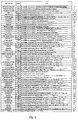
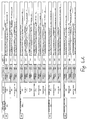
- FIG. 1 A table listing a typical set of performance shaping factors in these four domains for a borescope inspection task is illustrated in Figure 1.
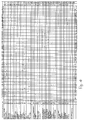
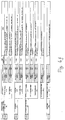
- the understanding of these relationships was assisted by and developed by organising the performance shaping factors into the matrix illustrated in Figure 4.
- the matrix is made up of a column containing all the performance shaping factors. Each factor is numbered and the numbers in the row at the top (and at the bottom) of the matrix refer to the same factor. Each is taken in turn and a determination is made whether any of the other factors have an effect on it.
- the symbols X in the matrix represents a degree of effect.
- An example from the matrix is the performance shaping factor "Stress Physical". Physical Stress is caused by i) the environment in which the inspection procedure is conducted, ii) the "Working Hours" which the inspector or inspection team have worked, and iii) the "Accessibility" of the area of the engine to be inspected by the inspector.
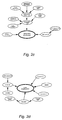
- each performance shaping factor becomes a node and each relationship generated in the matrix becomes an arrow which shows the direction of the relationship (cause and effect).
- This direction of relationship is important because it must describe the direction of the effect.
- Stress Physical is caused by long Working Hours, a poor Environment and poor Accessibility but none of these three factors are caused by Physical Stress.
- the arrows go from the three cause factors towards "Stress Physical" effect factor.
- the model would be applied generically to begin with and could be applied to specific personnel once the inspector(s) have been determined. While some of the performance shaping factors can objectively be determined, others like "Determination" are subjective. Only experience with application of this model will result in a fair and less subjective use.
- the node titled "Equipment Type” is an "or" gate (Boolean) which is switched to the appropriate inspection technique as appropriate to the design of the component or to the required inspection effectiveness. This means that if an eddy current inspection delivers the required probability of inspection effectiveness whereas a borescope inspection will not the eddy current inspection will have to be advised.
- This mathematical model works by allocating a probability to each parent mode with an understanding that in each case, the performance shaping factor is analysed in isolation to determine the effect the factor has on the inspection being 100% successful. For example if a component is contaminated, how effective will the inspection be? With no contamination the inspection will be 100% effective or have a probability of success of 1.0. Conversely if the component is heavily contaminated the probability of inspection success attributable to this factor in isolation will be low, say 0.2. However, if, despite the contamination, the inspection is conducted by an experienced inspector under ideal conditions, the probability of the inspection being effective can be improved from the 0.2 figure mentioned above.
- Figure 2d shows that one of the variables which affect Task Complexity is the problem of Masking. If the component is covered or coated, this makes finding a crack or other potential failure causing defect potentially difficult to find.
- a component is inspected at a work bench, it is possible to rotate the component in the field of view so that any defect may be viewed from several angles. This helps considerably when trying to locate defects. During a borescope inspection, this ability is either extremely difficult or more generally impossible to achieve.
- the component is dirty (contaminated) or has a coating such as Platinum Aluminium the defect can be even more difficult to locate. Dirt or Contamination can conceal the defect while coatings can change the appearance of the defect. Platinum aluminium can for example cause an inspector to think there is a defect where there is none.
- the effect in this case looks a little like the swirling opalescent patterns on the inside of an Oyster shell.
- a defect may be missed, or how an inspector may interpret markings resulting from a coating as a defect, when no defect is, in fact, present.
- Colour banding caused by temperature is another example of this.
- Masking due to dirt can vary dependant upon where in the engine the component is situated.
- a probability value can be allocated, as mentioned above, against the anticipated degree of difficulty caused by the coating and/or contamination for the component to be inspected. It is known know from the GTE configuration control whether the component was coated or not when new. There is less certainty about the state of the coating in an engine that requires inspection. It may have worn away and the appearance will vary from engine to engine for other reasons. It is necessary to allocate a probability value that reflects the belief in the average state (across the fleet of GTE to be inspected) of the coating. This value should reflect the perceived probability of finding a fault given the estimated state of the coating.
- conditional probabilities for MG are
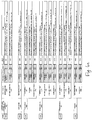
- Figure 5 shows the Data Interface Sheet of the model where data (i.e. a probability value) on the probability of each performance shaping factor (that is a Parent Node) can be entered.
- data i.e. a probability value
- Parent Node is used in Bayesian Belief Networks to describe a node which is a point at which a belief in the form of a probability may be entered.
- Prob Probability value
- the weighting values shown in Figure 6a for the performance shaping factor PE gives Training a conditional probability of 0.4, and Stress Mental and
- Training is believed to have a greater impact on Personnel Factors than either form of Stress.
- Stress Physical is itself influenced by Working Hours, Conducive Environment and Accessibility.
- the Stress Physical probability of 0.773 is entered at P(SP) against Personnel Factors in Figure 6a.
- Figure 6f also shows as its final line a Fleet Risk section.
- the probability attributable to Fleet Risk is determined independently on the basis of engineering assessments of the characteristic life of the component in question.
- Figure 7 shows a matrix of hazard risk index values.
- the Fleet Risk can be expressed as failures per one million flying hours, and the numbers in the boxes below the headings represent the Fleet Risk in these terms (e.g. ">1000" means a risk of more than 1000 failures in one million flying hours.
- the carrying out of inspections reduces this risk.
- the derived effectiveness value in the computation of Fleet Risk, a realistic and justifiable result can be achieved, which can be used in an assessment of the airworthiness of a fleet or of an individual aircraft.
- the process of deriving the effectiveness value focuses on the individual performance shaping factors and so provides an opportunity to determine areas of the inspection process which can be modified to improve the effectiveness value.
Landscapes
- Engineering & Computer Science (AREA)
- Business, Economics & Management (AREA)
- Strategic Management (AREA)
- Entrepreneurship & Innovation (AREA)
- Human Resources & Organizations (AREA)
- Operations Research (AREA)
- Economics (AREA)
- Marketing (AREA)
- Data Mining & Analysis (AREA)
- Quality & Reliability (AREA)
- Tourism & Hospitality (AREA)
- Physics & Mathematics (AREA)
- General Business, Economics & Management (AREA)
- General Physics & Mathematics (AREA)
- Theoretical Computer Science (AREA)
- Testing Of Devices, Machine Parts, Or Other Structures Thereof (AREA)
Abstract
Description
The "Rain, Snow or Ice" option must nevertheless still be incorporated into the model in order to accommodate exceptional circumstances. "Protective Clothing" could be cold weather clothing or NBC (nuclear, biological and chemical) suits. Cold weather clothing will affect "Motor Skills" whereas NBC will affect "Motor Skills" and "Visual Acuity".
If P(CT) good = 0.85 then P(CT) poor = 1 - P(CT) good = 0.15
And P(CN) good = 0.90 then P(CN) poor = 1 - P(CN) good = 0.10.
Claims (13)
- A method of performing an operation comprising operation steps and evaluation steps, the evaluation steps comprising:identifying a set of performance shaping factors which influence the outcome of the operation;allocating a probability value to each performance shaping factor, the probability value representing the influence of the respective performance shaping factor on the performance of the operation;allocating a weighting value to each performance shaping factor, the weighting value representing the significance of the respective performance shaping factor relative to at least one other of the performance shaping factors;calculating, from the probability values and the weighting values, an effectiveness value representing the effectiveness of the operation.
- A method as claimed in claim 1, characterised in that the operation is an inspection process.
- A method as claimed in claim 2, characterised in that the inspection process is carried out on a component of a gas turbine engine.
- A method as claimed in any one of the preceding claims, characterised in that the operation steps are carried out before the evaluation steps.
- A method as claimed in claim 4, characterised in that the effectiveness value is used to determine one or more of the operation steps, or the conditions under which they are carried out.
- A method as claimed in any one of claims 1 to 3, characterised in that the operation steps are carried out after the evaluation steps.
- A method as claimed in claim 6, characterised in that the effectiveness value is used to vary one or more of the operation steps, or the conditions under which they are carried out, of a future similar operation.
- A method as claimed in any one of the preceding claims, characterised in that the performance shaping factors include any one or more of the following:a) Factors relating to personnel conducting the inspection stepsb) Factors relating to the environment in which the inspection steps are conductedc) Factors relating to equipment employed to perform at least one of the inspection stepsd) Factors relating to the complexity of the at least one of the inspection steps.
- A method of assessing the safety of equipment including a component subject to periodic inspection, the inspection comprising inspection steps and evaluation steps, the evaluation steps comprising:identifying a set of performance shaping factors which influence the outcome of the inspection;allocating a probability value to each performance shaping factor, the probability value representing the influence of the respective performance shaping factor on the performance of the inspection;allocating a weighting value to each performance shaping factor, the weighting value representing the significance of the respective performance shaping factor relative to at least one other of the performance shaping factors;calculating, from the probability values and the weighting values, an effectiveness value representing the effectiveness of the inspection;utilising the effectiveness value to determine the probability of undetected failure of the component; determining the consequence of failure of the component in operation of the equipment; andcomparing the probability of undetected failure and the consequence of failure with predetermined criteria and, on the basis of the comparison, either withdrawing the equipment from operational service or continuing operational service.
- A method as claimed in claim 9, characterised in that the equipment comprises an aircraft or a fleet of aircraft.
- A method as claimed in any one of the preceding claims, characterised in that at least some of the evaluation steps are carried out by means of a computer program.
- A computer programmed to carry out at least some of the evaluation steps of a method in accordance with any one of the preceding claims.
- A method for quantifying the effectiveness of an inspection procedure comprising:entering a multiplicity of inputs each representing an estimate, measurement or evaluation of a variable parameter which to a greater or lesser extent affects the inspection procedure,each input being assigned an individual weighting factor that represents a measure of the influence of that parameter,the weighted inputs being combined according to a set of logic rules to produce intermediate values which are further combined in accordance with further logic rules o finally a yield a single objective figure representing the effectiveness of the inspection procedure.
Applications Claiming Priority (2)
| Application Number | Priority Date | Filing Date | Title |
|---|---|---|---|
| GB0026465 | 2000-10-30 | ||
| GBGB0026465.5A GB0026465D0 (en) | 2000-10-30 | 2000-10-30 | Quantifying the effectiveness of an inspection procedure |
Publications (1)
| Publication Number | Publication Date |
|---|---|
| EP1202204A1 true EP1202204A1 (en) | 2002-05-02 |
Family
ID=9902179
Family Applications (1)
| Application Number | Title | Priority Date | Filing Date |
|---|---|---|---|
| EP01309130A Withdrawn EP1202204A1 (en) | 2000-10-30 | 2001-10-29 | Quantifying the effectiveness of an operation such as an inspection procedure |
Country Status (3)
| Country | Link |
|---|---|
| US (1) | US6697747B2 (en) |
| EP (1) | EP1202204A1 (en) |
| GB (1) | GB0026465D0 (en) |
Families Citing this family (8)
| Publication number | Priority date | Publication date | Assignee | Title |
|---|---|---|---|---|
| US20030229509A1 (en) * | 2002-04-12 | 2003-12-11 | William Hall | Risk management system |
| DE10217904C1 (en) * | 2002-04-22 | 2003-10-02 | Kendro Lab Prod Gmbh | Safety work station, for microbiological samples, has working chamber surrounded by housing, and monitoring system having processor which couples measured data determined during the operation of the work station |
| US7467054B2 (en) * | 2003-05-02 | 2008-12-16 | Bio-Rad Laboratories, Inc. | System and method for integrating the internal and external quality control programs of a laboratory |
| WO2006044569A2 (en) * | 2004-10-13 | 2006-04-27 | Site Inspections, Llc | Method for managing property inspection reports |
| US8516312B2 (en) * | 2009-03-16 | 2013-08-20 | Peter Beasley | Behavior-based invention for predicting and avoiding network downtime |
| US8370046B2 (en) * | 2010-02-11 | 2013-02-05 | General Electric Company | System and method for monitoring a gas turbine |
| US10400624B2 (en) * | 2017-05-09 | 2019-09-03 | United Technologies Corporation | System and method for planning engine borescope inspections based on FOD probability estimation |
| CN113052431B (en) * | 2021-02-19 | 2022-08-12 | 中国人民解放军战略支援部队航天工程大学 | An Efficiency Evaluation Method of Aerospace Measurement and Development System Based on ADCP Model |
Family Cites Families (7)
| Publication number | Priority date | Publication date | Assignee | Title |
|---|---|---|---|---|
| US4023911A (en) | 1976-04-12 | 1977-05-17 | Bell Telephone Laboratories, Incorporated | Stereopsis test patterns for adjustment of stereomicroscopes in the inspection of three-dimensional objects |
| US5684964A (en) * | 1992-07-30 | 1997-11-04 | Teknekron Infoswitch Corporation | Method and system for monitoring and controlling the performance of an organization |
| US5408405A (en) * | 1993-09-20 | 1995-04-18 | Texas Instruments Incorporated | Multi-variable statistical process controller for discrete manufacturing |
| US5442562A (en) * | 1993-12-10 | 1995-08-15 | Eastman Kodak Company | Method of controlling a manufacturing process using multivariate analysis |
| US5852818A (en) * | 1996-12-23 | 1998-12-22 | Oracle Corporation | Non-recursive method for parameter evaluation within an information management system |
| US5991525A (en) * | 1997-08-22 | 1999-11-23 | Voyan Technology | Method for real-time nonlinear system state estimation and control |
| GB9813454D0 (en) * | 1998-06-23 | 1998-08-19 | Northern Telecom Ltd | Dynamic prediction for process control |
-
2000
- 2000-10-30 GB GBGB0026465.5A patent/GB0026465D0/en not_active Ceased
-
2001
- 2001-10-26 US US09/983,980 patent/US6697747B2/en not_active Expired - Fee Related
- 2001-10-29 EP EP01309130A patent/EP1202204A1/en not_active Withdrawn
Non-Patent Citations (1)
| Title |
|---|
| No Search * |
Also Published As
| Publication number | Publication date |
|---|---|
| GB0026465D0 (en) | 2000-12-13 |
| US20020082788A1 (en) | 2002-06-27 |
| US6697747B2 (en) | 2004-02-24 |
Similar Documents
| Publication | Publication Date | Title |
|---|---|---|
| Latorella et al. | A review of human error in aviation maintenance and inspection | |
| Yearley | Making systematic sense of public discontents with expert knowledge: two analytical approaches and a case study | |
| Gramopadhye et al. | Training strategies for visual inspection | |
| O'Hare | The'artful'decision maker: A framework model for aeronautical decision making | |
| Nebeker | Situational favorability and perceived environmental uncertainty: An integrative approach | |
| US6697747B2 (en) | Quantifying the effectiveness of an operation such as an inspection procedure | |
| Leitch | Basic Reliability Engineering Analysis: Butterworths Basic Series | |
| Klyatis | Trends in development of accelerated testing for automotive and aerospace engineering | |
| dos Santos | Embraer perspective on the challenges for the introduction of scheduled SHM (S-SHM) applications into commercial aviation maintenance programs | |
| Ayeko | Integrated safety investigation methodology (isim)-investigating for risk mitigation | |
| Himawan | Reactor operational experience review and analysis based on un-intended reactor trip data | |
| Walker et al. | Small group processes relevant to data monitoring committees in controlled clinical trials: an overview of reviews | |
| Arama et al. | SELECTION AND USE OF EMAS III INDICATORS AND AHP METHODOLOGY IN ANALYSIS OF ORGANIZATION ENVIRONMENTAL PERFORMANCE. | |
| Hauptmanns | Computer-aided valuation of safety management | |
| Alexander | A systems approach to assessing, interpreting and applying human error mishap data to mitigate risk of future incidents in a space exploration ground processing operations environment | |
| Jacobs | Reducing Maintenance Workload Through Reliability‐Centered Maintenance (RCM) | |
| Wilcox et al. | Methodology for risk-based technology applications to marine system safety | |
| Teal et al. | A planned maintenance program for aircraft wiring | |
| Stary et al. | Implementing the directive for VDU work-the EU-state of the art | |
| Kunzo | Field data on the assessment of incumbent expertise in job analysis | |
| Kim et al. | Decision analysis based on AHP and GTST methodologies with application to CCF-defense strategies | |
| OHara et al. | Methodological issues in the validation of complex human-machine systems | |
| Proctor et al. | Evaluation of Risk Assessment as Evidence for Decision Making | |
| Green et al. | Development of an incident investigation process | |
| Clements | The Design of an Experiment to Examine Repair Process Errors of Military Vehicle Mechanics. |
Legal Events
| Date | Code | Title | Description |
|---|---|---|---|
| PUAI | Public reference made under article 153(3) epc to a published international application that has entered the european phase |
Free format text: ORIGINAL CODE: 0009012 |
|
| AK | Designated contracting states |
Kind code of ref document: A1 Designated state(s): AT BE CH CY DE DK ES FI FR GB GR IE IT LI LU MC NL PT SE TR Kind code of ref document: A1 Designated state(s): DE FR GB |
|
| AX | Request for extension of the european patent |
Free format text: AL;LT;LV;MK;RO;SI |
|
| 17P | Request for examination filed |
Effective date: 20021028 |
|
| AKX | Designation fees paid |
Free format text: DE FR GB |
|
| 17Q | First examination report despatched |
Effective date: 20090420 |
|
| RAP1 | Party data changed (applicant data changed or rights of an application transferred) |
Owner name: ROLLS-ROYCE PLC |
|
| STAA | Information on the status of an ep patent application or granted ep patent |
Free format text: STATUS: THE APPLICATION IS DEEMED TO BE WITHDRAWN |
|
| 18D | Application deemed to be withdrawn |
Effective date: 20160503 |