EP1202116A2 - Concentrated photographic fixer additive and fixing compositions and method of photographic processing - Google Patents
Concentrated photographic fixer additive and fixing compositions and method of photographic processing Download PDFInfo
- Publication number
- EP1202116A2 EP1202116A2 EP01203605A EP01203605A EP1202116A2 EP 1202116 A2 EP1202116 A2 EP 1202116A2 EP 01203605 A EP01203605 A EP 01203605A EP 01203605 A EP01203605 A EP 01203605A EP 1202116 A2 EP1202116 A2 EP 1202116A2
- Authority
- EP
- European Patent Office
- Prior art keywords
- fixing
- composition
- photographic
- concentrated
- mol
- Prior art date
- Legal status (The legal status is an assumption and is not a legal conclusion. Google has not performed a legal analysis and makes no representation as to the accuracy of the status listed.)
- Withdrawn
Links
Classifications
-
- G—PHYSICS
- G03—PHOTOGRAPHY; CINEMATOGRAPHY; ANALOGOUS TECHNIQUES USING WAVES OTHER THAN OPTICAL WAVES; ELECTROGRAPHY; HOLOGRAPHY
- G03C—PHOTOSENSITIVE MATERIALS FOR PHOTOGRAPHIC PURPOSES; PHOTOGRAPHIC PROCESSES, e.g. CINE, X-RAY, COLOUR, STEREO-PHOTOGRAPHIC PROCESSES; AUXILIARY PROCESSES IN PHOTOGRAPHY
- G03C7/00—Multicolour photographic processes or agents therefor; Regeneration of such processing agents; Photosensitive materials for multicolour processes
- G03C7/30—Colour processes using colour-coupling substances; Materials therefor; Preparing or processing such materials
- G03C7/42—Bleach-fixing or agents therefor ; Desilvering processes
- G03C7/421—Additives other than bleaching or fixing agents
Definitions
- This invention relates to novel concentrated photographic fixer additive and concentrated photographic fixing compositions. It also relates to methods of using these concentrated compositions in photoprocessing. Thus, this invention relates to the photographic industry and to photochemical processing in particular.
- the conventional image-forming process of silver halide photography includes imagewise exposure of a photographic silver halide recording material to actinic radiation (such as actinic light), and the eventual manifestation of a useable image by wet photochemical processing of that exposed material.
- actinic radiation such as actinic light
- a fundamental step of photochemical processing is the treatment of the material with one or more developing agents to reduce silver halide to silver metal.
- the metallic silver usually comprises the image.
- the useful image consists of one or more images in organic dyes produced from an oxidized developing agent formed wherever silver halide is reduced to metallic silver.
- Fixing is typically carried out using a fixing composition that includes one or more fixing agents such as thiosulfate salts. Both ammonium and sodium thiosulfate salts are known. Fixing solutions containing ammonium ions are preferred for providing more rapid fixing, but they present environmental concerns. Thus, fixing solutions containing sodium ions, while slower, are also advantageous.
- fixing agents such as thiosulfate salts. Both ammonium and sodium thiosulfate salts are known. Fixing solutions containing ammonium ions are preferred for providing more rapid fixing, but they present environmental concerns. Thus, fixing solutions containing sodium ions, while slower, are also advantageous.
- Color photographic silver halide materials often contain various sensitizing dyes that extend the inherent photosensitivity of the photosensitive silver halide emulsions to electromagnetic radiation.
- sensitizing dyes are carbocyanine sensitizing dyes that are commonly included in silver halide emulsion layers in photographic silver halide films, for example in color reversal photographic silver halide films (films normally used to provide positive color images).
- photographic silver halide elements contain residual sensitizing dyes after photoprocessing.
- the level of retained sensitizing dyes is inconsequential and thus, unobservable.
- the high level of retained sensitizing dye results in undesirably high dye stain (or unwanted color) in the elements.
- compositions that solve the residual dye stain problem are described in US-A-6,013,425 (Craver et al). These compositions contain certain triazinylstilbene compounds as stain reducing agents. While they are quite effective in this regard, keeping them in solution may require the presence of one or more water-soluble stabilizing compounds such as glycols.
- the present invention provides a concentrated aqueous fixer additive composition that is characterized as consisting essentially of at least 0.01 mol/l of a compound having the structure I wherein R is carboxy or sulfo, m is an integer of from 0 to 5 and n is an integer of from 2 to 7.
- This concentrated fixer additive composition can be used to advantage to prepare the concentrated aqueous fixing composition of this invention, which composition has a pH of 8 or less and consists essentially of:
- this invention further provides a method of making an aqueous working strength fixing composition comprising the steps of:
- This invention further provides a method for providing a color image comprising:
- Step B of this method can also be carried out by diluting, at least 2 times, the concentrated aqueous photographic fixing composition described above.
- the advantages of this invention are several.
- the concentrated fixer additive composition can be manufactured, provided and stored for considerable time without precipitation of the stain reducing agent, thereby reducing the costs associated with volume and storage.
- the fixer additive composition volume can be small enough so as not to significantly dilute the concentrate to which it is added. Because there is no need for solvents other than water, there is no additional environmental burden.
- the resulting working strength fixing composition is also highly stable, and can be used to advantage to reduce stain from retained sensitizing dyes in processing photographic silver halide elements.
- Working strength fixing compositions can be prepared in several ways using the present invention.
- the concentrated fixer additive composition can be added directly to a working strength composition containing a suitable fixing agent, or mixed with the appropriate fixing agents in appropriate amounts to form the concentrated aqueous fixing composition. This composition can then be diluted in an appropriate manner and used for photoprocessing.
- the concentrated and working strength photographic fixing compositions described herein perform only one photoprocessing function, fixing. They do not perform a bleaching function, so the compositions are not bleach-fixing compositions.
- the language "consisting essentially of” is intended to indicate that no photographic bleaching agents (such as iron chelates, peroxides or persulfates) are intentionally added to the fixing composition of this invention. Any small amounts of bleaching agents may be present merely because of carryover from previous photoprocessing baths.
- fixing compositions refers to both the concentrated and working strength fixing compositions.
- photographic fixing agents include, but not limited to, thiosulfates (for example sodium thiosulfate, potassium thiosulfate and ammonium thiosulfate), thiocyanates (for example sodium thiocyanate, potassium thiocyanate and ammonium thiocyanate), thioethers (such as ethylenebisthioglycolic acid and 3,6-dithia-1,8-octanediol), imides and thiourea.
- Thiosulfates and thiocyanates are preferred, and thiosulfates are more preferred. Ammonium thiosulfate is most preferred.
- fixing accelerators include, but are not limited to, ammonium salts, guanidine, ethylenediamine and other amines, quaternary ammonium salts and other amine salts, thiourea, thioethers, thiols and thiolates. Examples of useful thioether fixing accelerators are described in US-A-5,633,124 (Schmittou et al).
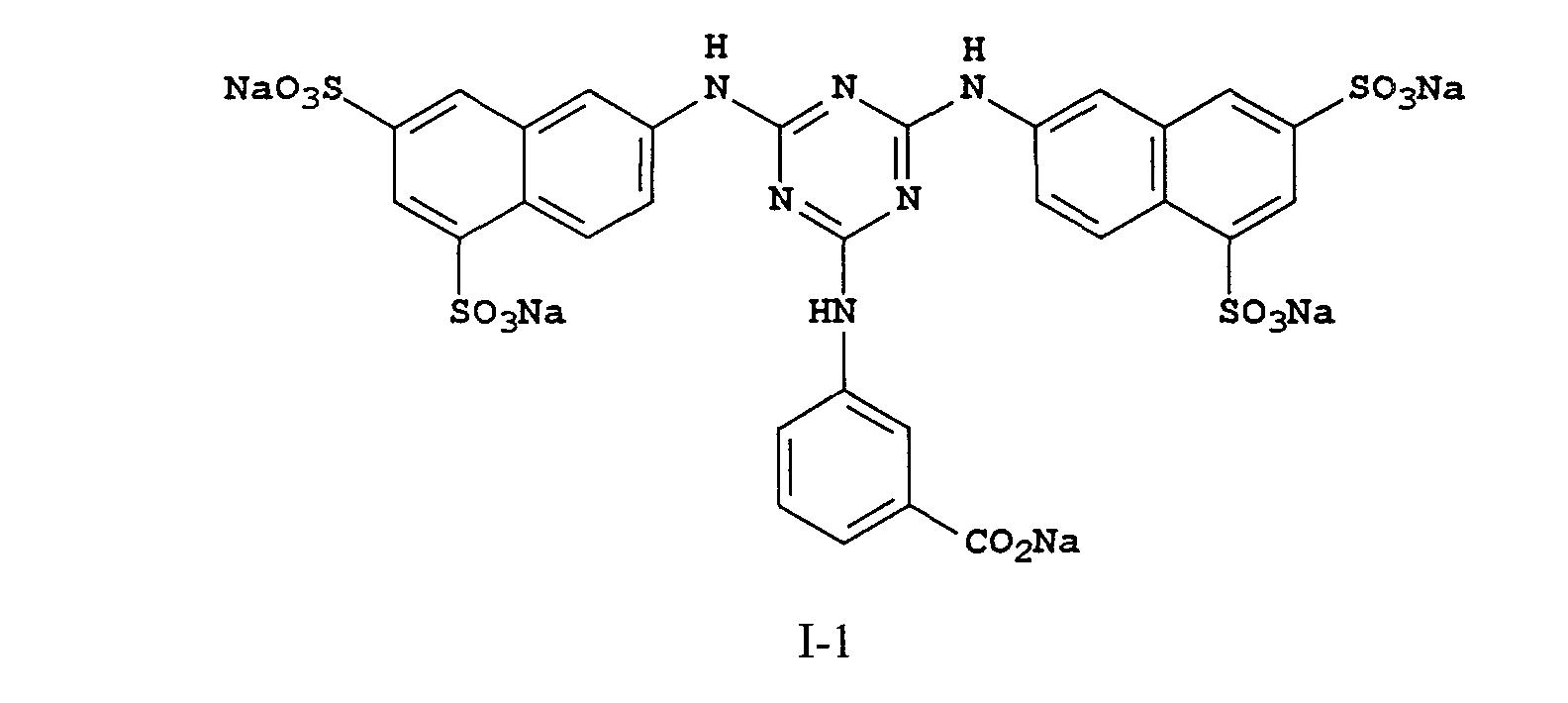
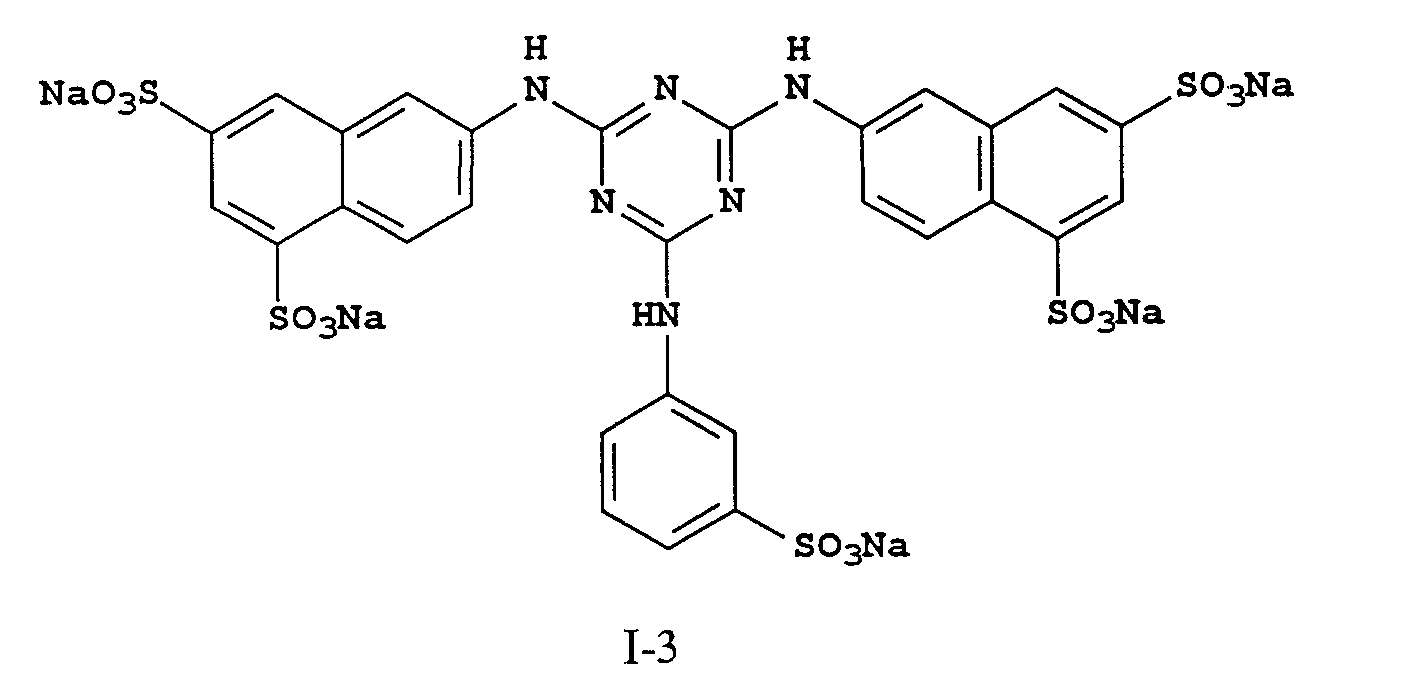
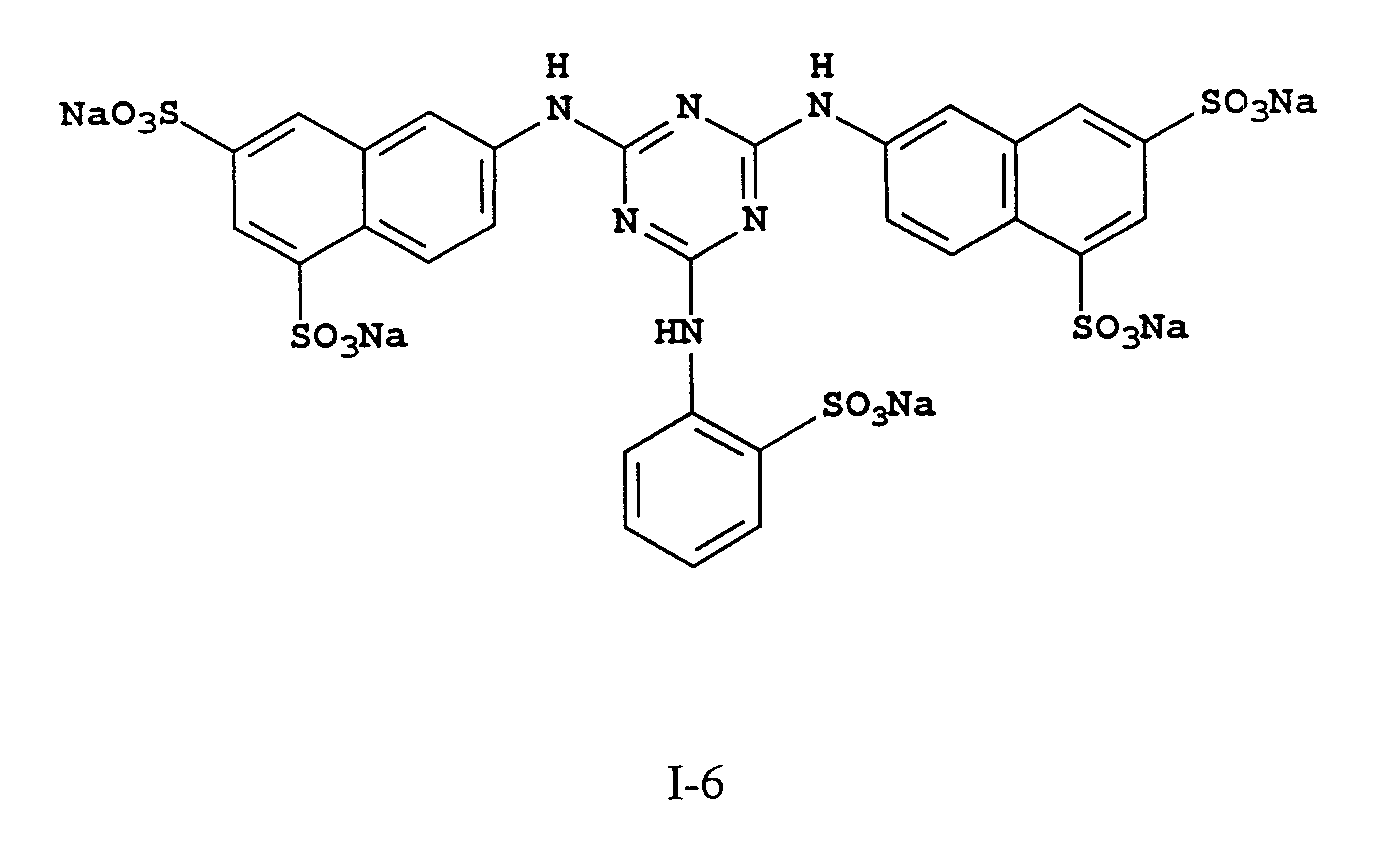
- a critical component of the concentrated fixer additive and photographic fixing compositions of this invention is a spectral sensitizing dye stain reducing agent that is a 2,6-dinaphthylaminotriazine compound as represented by Structure I (or mixture thereof). These compounds have at least four sulfonate solubilizing groups attached to the naphthyl rings and specific substituents attached to the triazine ring.
- R is carboxy (or salt thereof) or sulfo (or salt thereof), m is an integer of from 0 to 5, and n is an integer of from 2 to 7.
- R is carboxy
- m is an integer of 1 to 2
- n is 2.
- 2,6-dinaphthylaminotriazine compounds can be prepared using the methods described for example in WO 97/10887.
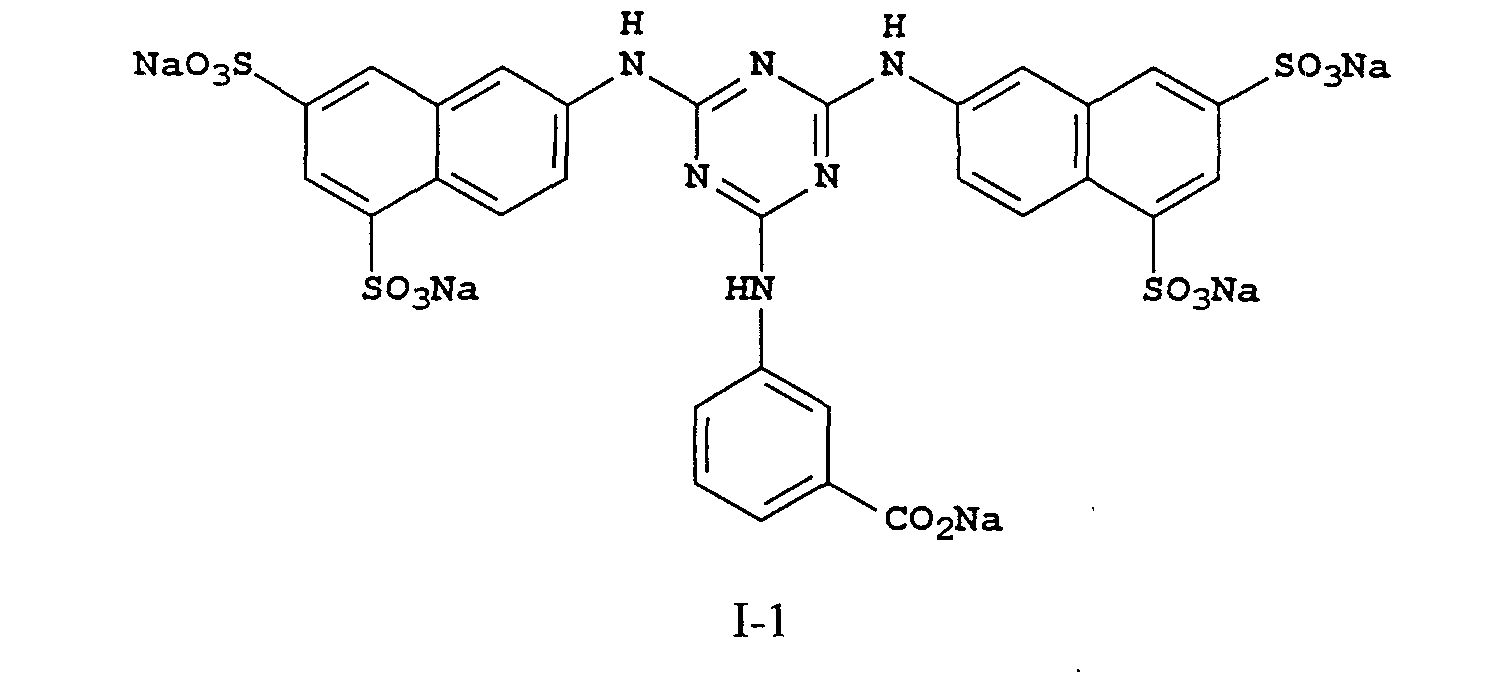
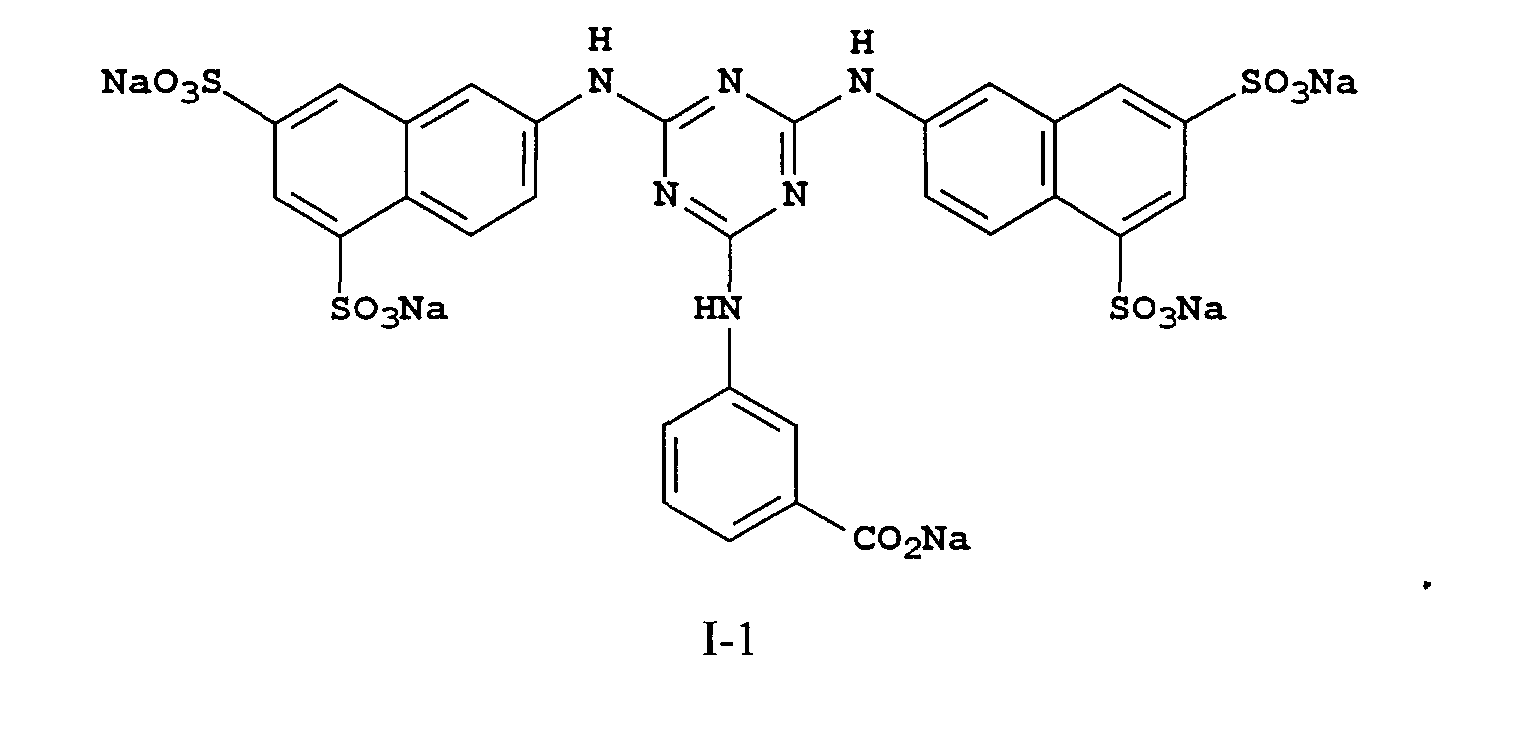
- a representative synthesis of preferred Compound I-1 is provided below.
- the concentrated fixer additive compositions of this invention have only two essential components: one or more compounds of Structure I and water. However, optional and nonessential components may be present if desired. Such components include buffers, sequestering agents, preservatives (such as sulfites), and other addenda that would be readily apparent to one skilled in the art.
- the concentrated fixing compositions of this invention have only three essential components: one or more fixing agents, one or more compounds of Structure I, and water, they can also include one or more of various nonessential addenda optionally but commonly used in such compositions for various purposes, including hardening agents, preservatives (such as sulfites or bisulfites), metal sequestering agents (such as polycarboxylic acids and organophosphonic acids), buffers, and fixing accelerators.
- hardening agents preservatives (such as sulfites or bisulfites), metal sequestering agents (such as polycarboxylic acids and organophosphonic acids), buffers, and fixing accelerators.
- preservatives such as sulfites or bisulfites
- metal sequestering agents such as polycarboxylic acids and organophosphonic acids
- the desired pH of the fixing compositions of this invention is 8 or less, and can be achieved and maintained using any useful combination of acids and bases, as well as various buffers.
- the pH of the concentrated fixing composition can vary from that of the working strength fixing composition.
- TABLE I shows the general and preferred pH and amounts of essential components of the concentrated additive composition and the fixing compositions of this invention.
- the preferred ranges are listed in parentheses (), and all of the ranges are considered to be approximate or "about" in the upper and lower end points.
- the working strength fixing composition concentrations are based on a dilution rate of from 2 to 15 of the concentrated fixing composition.
- the fixing composition in the processor may accumulate dissolved silver halide, and other substances that are extracted from the processed photographic element.
- Such materials, and particularly silver halide can be removed using known means, such as ion exchange, electroysis, electrodialysis and precipitation.
- Fixing can be carried out using a single working strength fixing composition bath (single stage), or multistage methods. Agitation or recirculation can also be used if desired. Fixing can also be carried out using any known method for contacting a fixing composition and the photographic element. Such methods include, but not limited to, immersing the photographic element in the working strength fixing composition, laminating a cover sheet containing the fixing composition to the photographic element, and applying the fixing composition by high velocity jet or spraying.
- any processing sequence can be used for processing either black-and-white or color photographic elements.
- Representative processing sequences are described for example in Research Disclosure publication 308119, December 1989, publication 17643, December 1978, and publication 38957, September 1996.
- Research Disclosure is a publication of Kenneth Mason Publications Ltd., Dudley House, 12 North Street, Emsworth, Hampshire PO10 7DQ England.
- fixing is usually preceded by a developing step, and may be followed with one or more washing or stabilizing steps.
- compositions of the present invention are used to process color photographic elements, including but not limited to, color negative photographic films, color reversal photographic films, and color photographic papers.
- color photographic elements including but not limited to, color negative photographic films, color reversal photographic films, and color photographic papers.
- the general sequence of steps and conditions (times and temperatures) for processing are well known as Process C-41 and Process ECN-2 for color negative films, Process E-6 and Process K-14 for color reversal films, and Process RA-4 for color papers.
- the processing solutions used for the various processing steps in such processing sequences are also well known (except for the fixing steps carried out in this invention).
- compositions are used to provide positive color images in color reversal photographic films.
- the typical sequence of steps includes first development (black-and-white development), reversal processing step, color developing, bleaching, fixing, and stabilizing. There may be various washing steps between other steps, as well as a pre-bleach step or conditioning step before bleaching. Alternatively, stabilizing can occur between color developing and bleaching. Many details of such processes are provided in US-A-5,552,264 (Cullinan et al). Other details are provided in Research Disclosure, publication 38957 (noted above), and references noted therein.
- Color reversal films are comprised of a support having thereon a plurality of photosensitive silver halide emulsion layers that can contain any conventional silver halide (or mixture thereof). Such films generally have silver halide emulsions having at least 1 mol % iodide based on total silver.
- Useful supports are well known and include polyester films, polycarbonate films and cellulose acetate films.
- the silver halide layers include conventional binder materials, and other conventional addenda.
- Some specific commercially available color reversal photographic films that can be processed using this invention include EKTACHROME Color Reversal Films (Eastman Kodak Company), FUJICHROME Color Reversal Films (Fuji Photo Film Co., Ltd.), AGFACHROME Color Reversal Films (AGFA), KONICACHROME Color Reversal Films (Konica) and SCOTCHCHROME Color Reversal Films (3M Corporation).
- the first developing step is usually carried out using a conventional black-and-white developing solution that can contain black-and-white developing agents, auxiliary co-developing agents, preservatives, antifoggants, anti-sludging agents, buffers and other conventional addenda.
- Color developing is generally carried out using one or more conventional color developing agents, such as primary amino color developing agents.
- the color developing solution can also include various other conventional addenda including preservatives (including hydroxylamine and its derivatives), fluorescent dyes, sulfites, sequestering agents, corrosion inhibitors and buffers.
- Bleaching is generally carried out using one or more bleaching agents that convert metallic silver to silver ions.
- Binary and ternary ferric complexes of aminopolycarboxylic acids are common bleaching agents, as well as persulfates and peroxides.
- Other components of the bleaching solution include buffers, halides and sequestering agents.
- a photographic stabilizing step can be carried out using any dye stabilizing solution known in the art. Alternatively, a final rinsing step can be used.
- the concentrated fixing composition of this invention can be diluted up 15 times, and preferably from 2 to 15 times (more preferably from 5 to 12 times), to provide a working strength or fixing replenishing composition. Dilution can be carried out during or prior to its use in the image formation process.
- the concentrated fixing composition can be added to the fixing solution bath, or to the fixer replenisher.
- Fixing is generally carried out for conventional times and under conventional conditions.
- the fixing compositions of this invention can be used in what would be considered “rapid" processing wherein the fixing step is carried out for as few as 10 seconds.
- Processing can be carried out using any suitable processing equipment, including deep tank processors, and "low volume thin tank” processes including rack and tank and automatic tray designs, as described for example in US-A-5,436,118 (Carli et al), and publications noted therein.
- Rotary tube processors can also be used for processing color reversal films.
- the concentrated fixing composition of this invention is prepared by mixing the fixing agent and other fixing composition components (in appropriate amounts) with the concentrated additive composition of this invention.
- the Structure I compound can be added directly to the concentrated fixing composition.
- the working strength composition can be prepared either by diluting the concentrated fixing composition appropriately with water and/or buffers, or by adding the concentrated fixing composition directly to the fixing bath or fixer replenisher.
- Cyanuric chloride (133.0 g, 0.72 mole) was dissolved in 3 liters of acetone in a 12-liter flask equipped with a mechanical stirrer. Crushed ice (3 kg) was added to it. To this cold mixture was added all at once, while stirring, a solution containing 6-amino-1,3-naphthalenedisulfonic acid disodium salt (605 g, 88% purity, 1.53 mole) in 1800 ml water and 1200 g of ice. An aqueous solution (200 ml) of sodium hydroxide (57.6 g, 1.44 mole) was added portion-wise with stirring to the resulting mixture, as the reaction pH became acidic.
- the first 100 ml portion was added over 15 minutes while the reaction temperature was still less than 0°C. This reaction mixture was then heated gradually by using a steam bath. The remaining 100 ml were added gradually over the next 1.25 hours while the reaction temperature was raised to 60°C. The reaction mixture was stirred at 60°C for an additional 2 hours and was then cooled to room temperature.
- the resulting reaction mixture was slowly poured into a solvent mixture containing 60 liters of acetone and 6 liters of methanol, while stirring. It was then allowed to settle overnight and 40 liters of solvent was removed by decanting. The resulting solid was collected on an 11.5 inch (29.2 cm) diameter funnel using a VWR #413 filter paper. The solid was then washed with acetone and P950 ligroin, and was air-dried on the funnel. The resulting solid clumps were crushed and the powder was dried in a vacuum oven overnight, giving rise to 560 g (yield: 96.5%) of the desired chloro intermediate.
- the resulting amber oil was added to a mixture of 25 liters of acetone and 2.5 liters of methanol, and was stirred for 10 minutes.
- the resulting solid was collected on an 11.5 inch (29.2 cm) diameter funnel using a VWR #413 filter paper.
- the resulting solid was first washed with a mixture containing 10:1 acetone: methanol (5 liters), then with acetone (5 liters), and finally with P950 ligroin (5 liters).
- the solid was then air-dried on the funnel.
- the solid clumps were crushed and the powder was dried in a vacuum oven at 50°C for 2 days, giving rise to 547 g (yield: 87.8%) of the desired Compound I-1.
- a preferred concentrated fixer additive composition of this invention was prepared by mixing Compound I-1 (0.28 mol/l) in water.
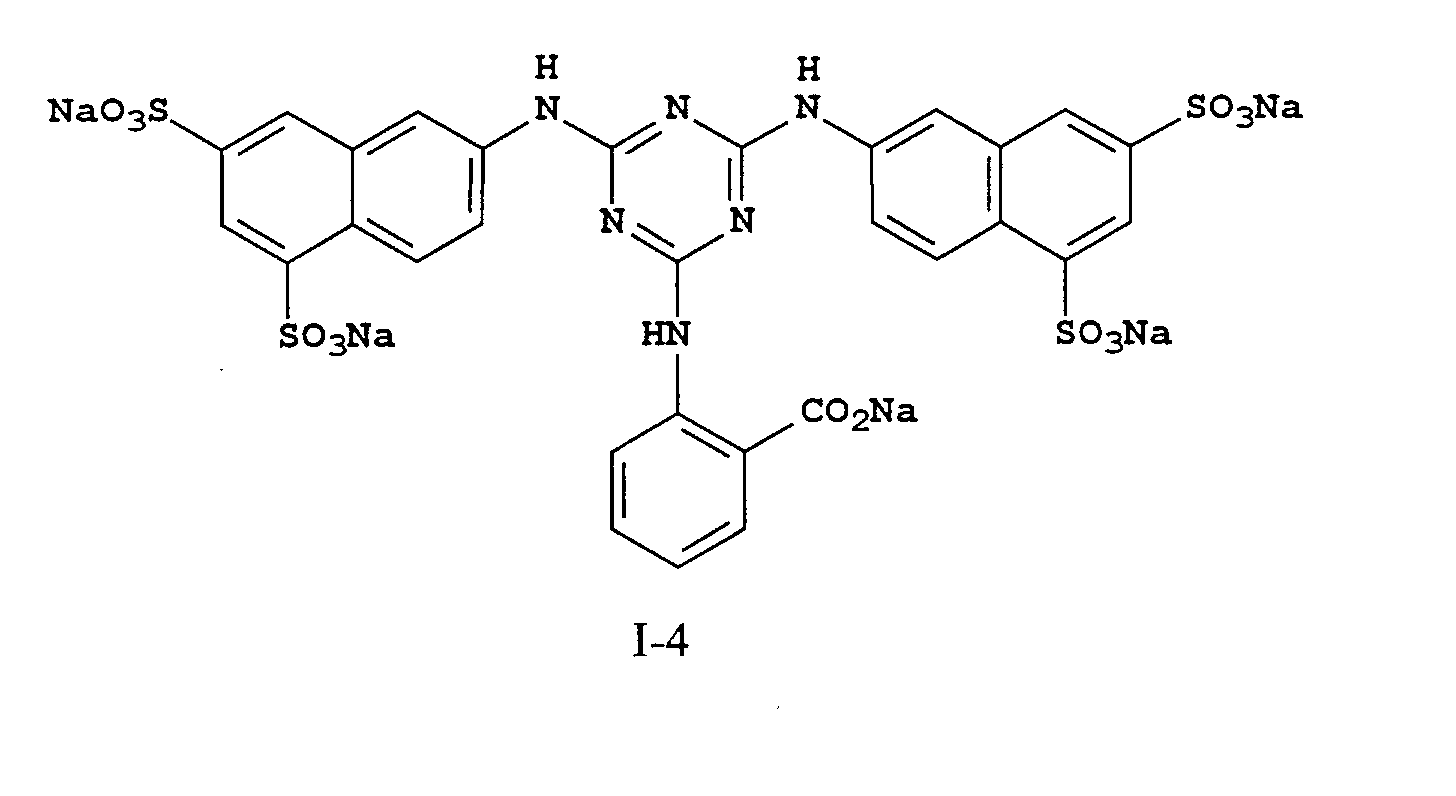
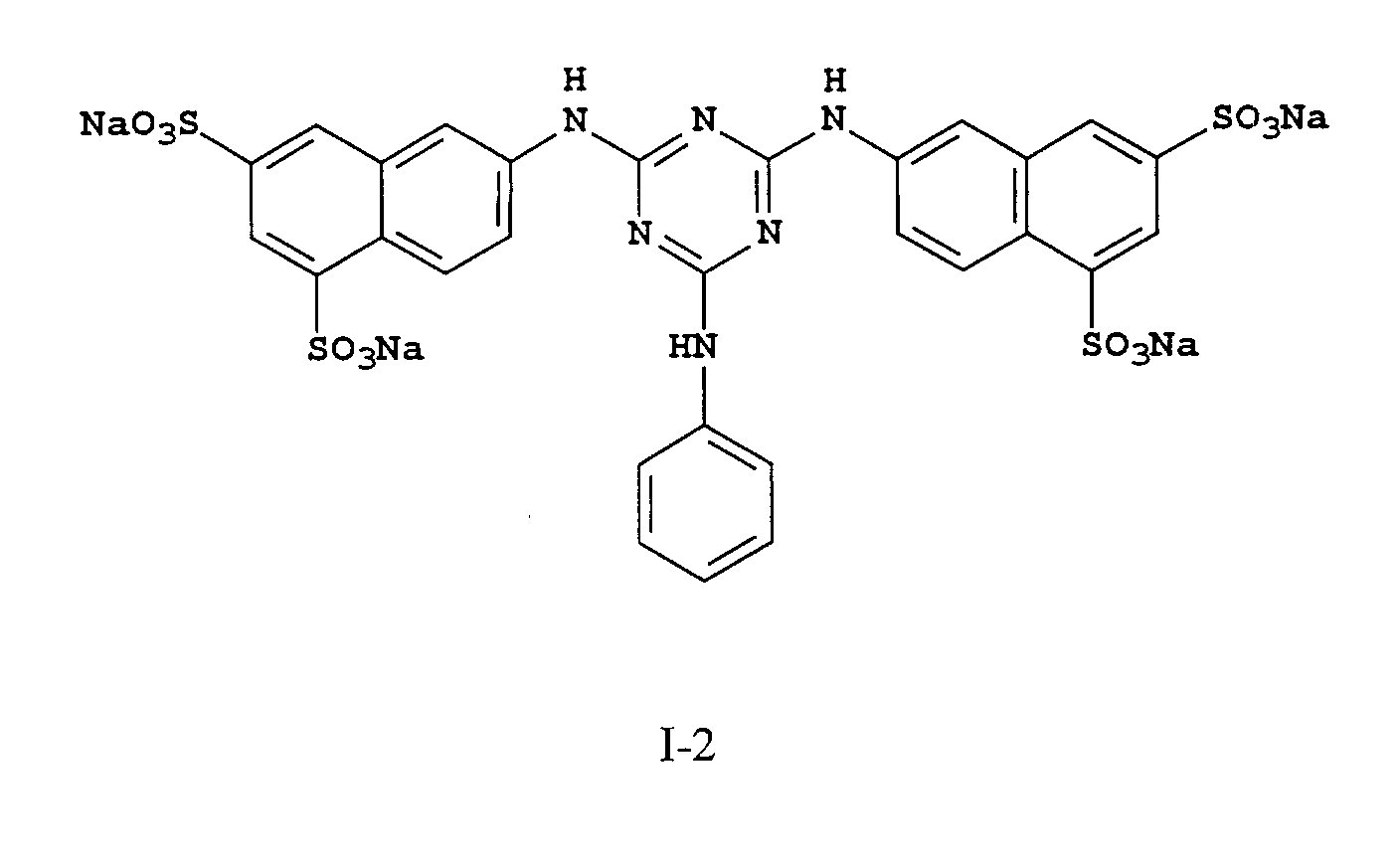
- compositions of this invention were prepared by adding Compounds I-1 (0.22 mol/l), I-2 (0.22 mol/l), I-3 (0.14 mol/l), I-4 (0.20 mol/l), I-5 (0.22 mol/l), I-6 (0.20 mol/l), or I-7 (0.22 mol/l) to water as described in Example 1. These compositions were subjected to three stability tests as described in Example 1, except that the amount of compound used in tests a) and c) was 47 g instead of 66 g. All of these compounds passed all three stability tests.
- a preferred concentrated fixing composition of this invention was prepared by mixing the concentrated fixer additive of Example 1 and other components to provide the following formulation: Ammonium thiosulfate fixing agent 4.76 mol/l Compound I-1 0.0037 mol/l Sodium metabisulfite 0.6 mol/l Ethylenediaminetetraacetic acid 0.02 mol/l Sodium hydroxide 0.25 mol/l pH 6.18
- a working strength fixing composition was prepared by diluting the concentrated fixing composition of Example 9, ten times with water.
- the working strength fixing compositions were used both in processor fixing baths as well as fixing replenishers to process several commercially available color reversal photographic films in the following manner.
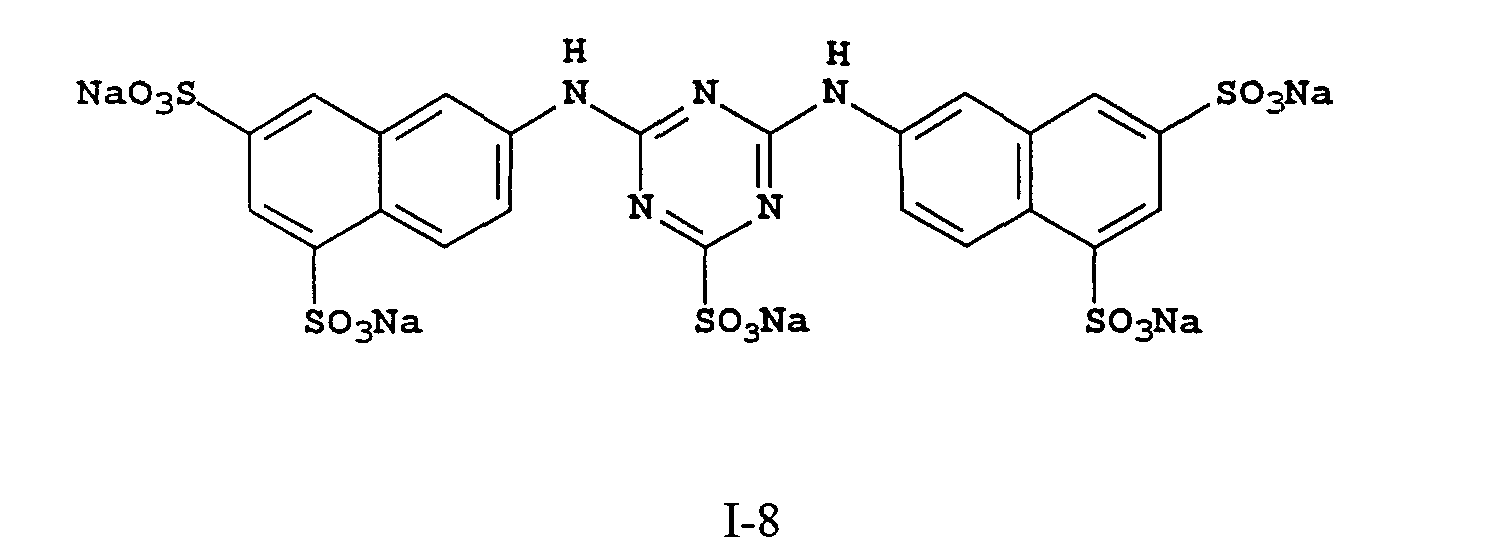
- a concentrated fixer additive composition outside of this invention was prepared by mixing Compound I-8 shown below (0.075 mol/l) in water.
- This Compound I-8 was tested for stability using the three minimal standard stability tests a), b) and c) described above. It did not pass test c).
Landscapes
- Physics & Mathematics (AREA)
- General Physics & Mathematics (AREA)
- Silver Salt Photography Or Processing Solution Therefor (AREA)
Abstract
Description






| COMPONENT | CONCENTRATED FIXER ADDITIVE COMPOSITION | CONCENTRATED FIXING COMPOSITION | WORKING STRENGTH FIXING COMPOSITION |
| Fixing agent | None | 2 - 6 mol/l (3 - 5 mol/l) | 0.1 - 2 mol/l (0.2 - 1 mol/l) |
| 2,6-dinaphthylaminotriazine | 0.01 - 0.5 mol/l (0.05 - 0.3 mol/l) | 0.0001 - 0.015 mol/l (0.0002 - 0.01 mol/l) | 0.00005 - 0.001 mol/l (0.0001 - 0.001 mol/l) |
| pH | Not relevant | 4.5 - 8 (5.5 - 7.5) | 4.5 - 8 (5.5 - 7.5) |
| Ammonium thiosulfate fixing agent | 4.76 mol/l |
| Compound I-1 | 0.0037 mol/l |
| Sodium metabisulfite | 0.6 mol/l |
| Ethylenediaminetetraacetic acid | 0.02 mol/l |
| Sodium hydroxide | 0.25 mol/l |
| pH | 6.18 |
| PROCESSING STEP | PROCESSING COMPOSITION | PROCESSING TIME | PROCESSING TEMPERATURE |
| First Development | KODAK First Developer, Process E-6 | 360 seconds | 38 °C |
| Washing | Water | 120 seconds | 38 °C |
| Reversal bath | KODAK Process E-6 AR Reversal Bath & Replenisher | 120 seconds | 38 °C |
| Color development | KODAK Color Developer, Process E-6 | 360 seconds | 38 °C |
| Conditioning or Prebleaching | HUNT C6R Conditioner & Replenisher, or KODAK Prebleach Replenisher II, Process E-6, or KODAK Conditioner and Replenisher, Process E-6AR/MX-1600 | 120 seconds | 38 ° C |
| Bleaching | KODAK Bleach, Process E-6 | 360 seconds | 38 °C |
| Fixing | Example 3 or 4 | 120 seconds, 240 seconds or 360 seconds | 38 °C |
| Washing | Water | 120 seconds | 38 °C |
| Stabilizing or Final rinsing | HUNT C6R Stabilizer & Replenisher, Process E-6 or KODAK Final Rinse & Replenisher, Process E-6AR or KODAK Stabilizer and Replenisher, Process E-6AR/MX-1600 | 60 seconds | 38 °C |
Claims (10)
- A concentrated aqueous fixer additive composition characterized as consisting essentially of at least 0.01 mol/l of a compound of having Structure Iwherein R is carboxy or sulfo, m is an integer of from 0 to 5 and n is an integer of from 2 to 7.

- The composition of claim 1 wherein the compound of Structure I is present in the composition in an amount of from 0.01 to 0.5 mol/l.
- The composition of claim 1 or 2 wherein R is carboxy, m is 1 or 2, and n is 2.
- The composition of any of claims 1 to 3 wherein the compound of Structure I is:




- A concentrated aqueous photographic fixing composition having a pH of 8 or less and consisting essentially of:characterized as also including at least 0.0001 mol/l of a compound represented by Structure Ia) at least 2 mol/l of a photographic fixing agent,

- The composition of claim 5 having a pH of from 4.5 to 8, and wherein the fixing agent is present in an amount of from 2 to 6 mol/l, the compound of Structure I is present in an amount of from 0.0002 to 0.01 mol/l.
- The composition of claim 5 or 6 wherein the compound of Structure I is


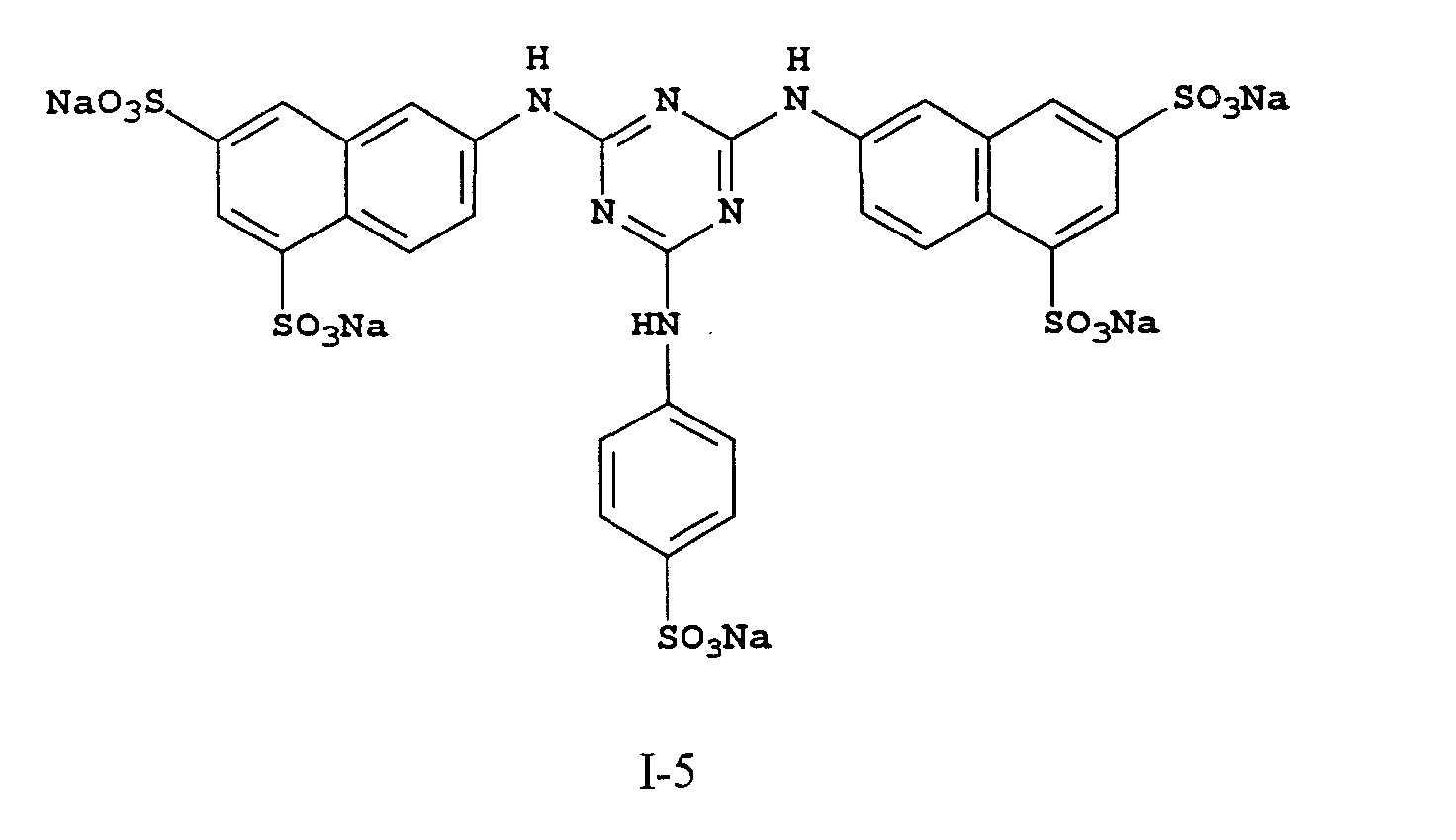
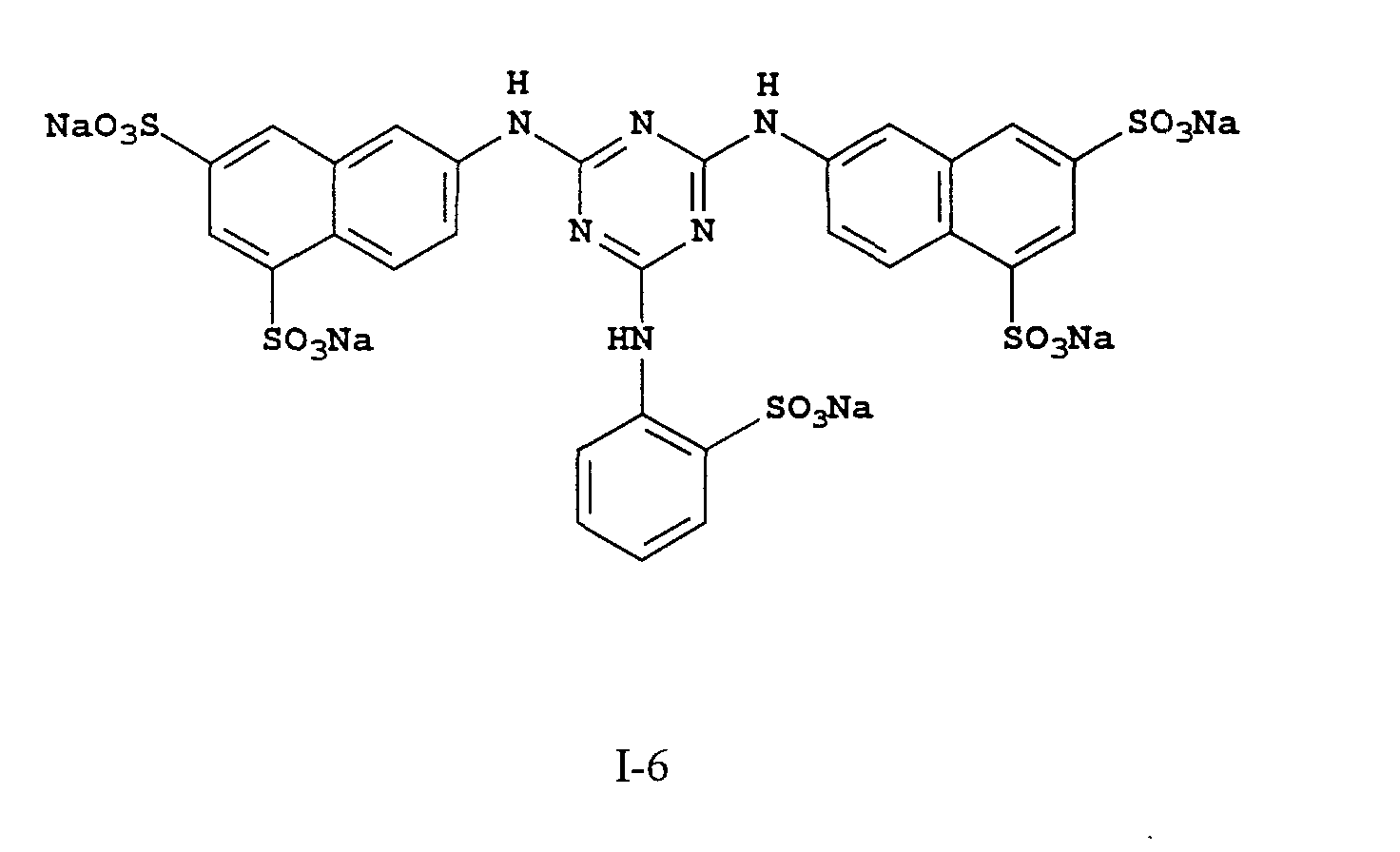
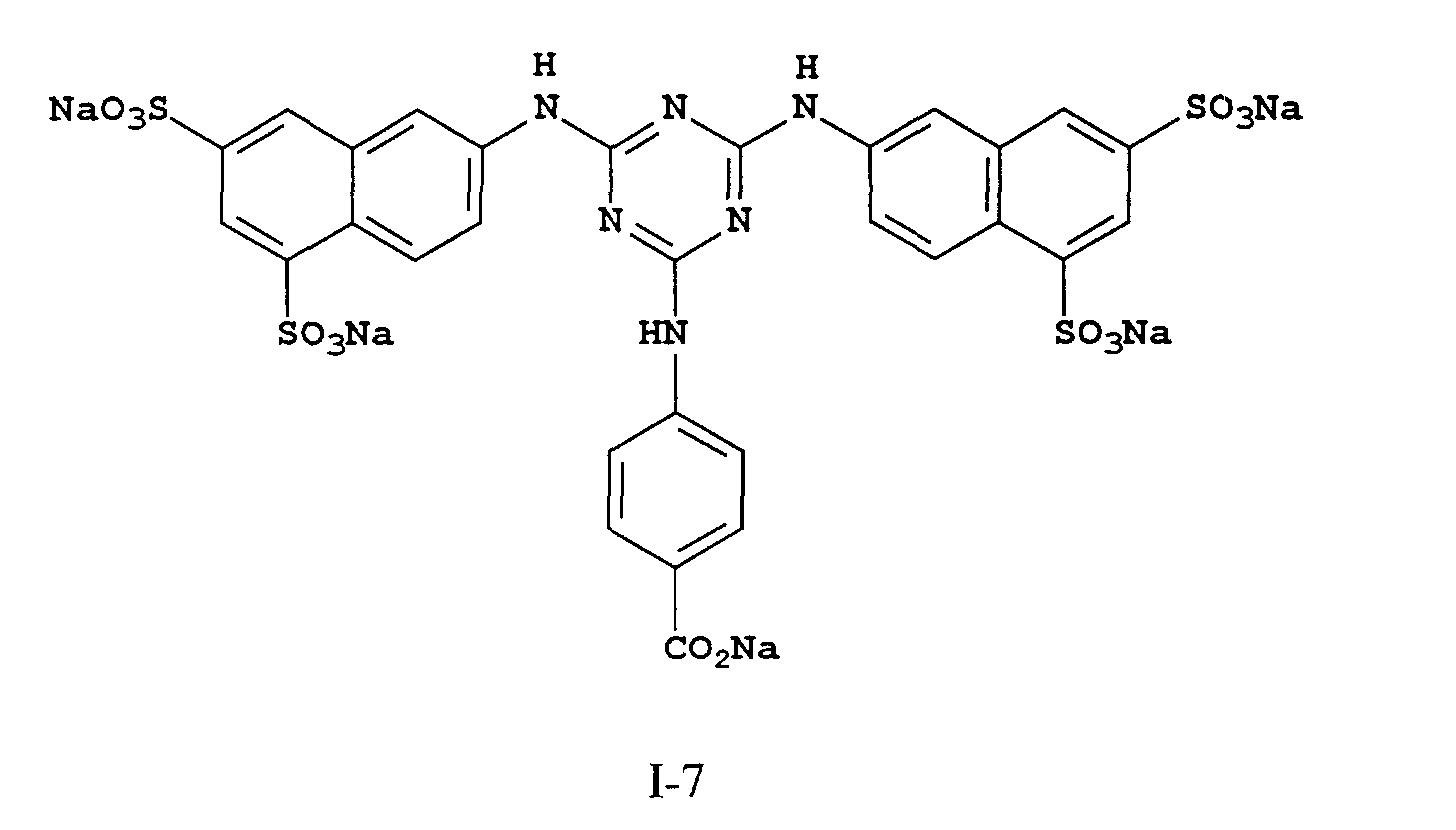
- A method for providing a color image comprising the steps of:A) bleaching an imagewise exposed and color developed color silver halide photographic element, andB) prior to or after step A, fixing the photographic element with a working strength photographic fixing composition having a pH of 8 or less, the working strength photographic fixing composition prepared by diluting, at least 2 times, the concentrated aqueous photographic fixing composition of any of Claims 5 to 7.
- The method of claim 8 wherein the concentrated aqueous photographic fixing composition is diluted from 5 to 12 times.
- The method of claim 8 or 9 wherein the color silver halide photographic element is a color reversal silver halide photographic element.
Applications Claiming Priority (2)
| Application Number | Priority Date | Filing Date | Title |
|---|---|---|---|
| US680385 | 2000-10-05 | ||
| US09/680,385 US6440651B1 (en) | 2000-10-05 | 2000-10-05 | Concentrated photographic fixer additive and fixing compositions and method of photographic processing |
Publications (2)
| Publication Number | Publication Date |
|---|---|
| EP1202116A2 true EP1202116A2 (en) | 2002-05-02 |
| EP1202116A3 EP1202116A3 (en) | 2003-05-07 |
Family
ID=24730881
Family Applications (1)
| Application Number | Title | Priority Date | Filing Date |
|---|---|---|---|
| EP01203605A Withdrawn EP1202116A3 (en) | 2000-10-05 | 2001-09-24 | Concentrated photographic fixer additive and fixing compositions and method of photographic processing |
Country Status (3)
| Country | Link |
|---|---|
| US (2) | US6440651B1 (en) |
| EP (1) | EP1202116A3 (en) |
| JP (1) | JP2002156734A (en) |
Cited By (1)
| Publication number | Priority date | Publication date | Assignee | Title |
|---|---|---|---|---|
| EP1686419A1 (en) * | 2005-01-31 | 2006-08-02 | Konica Minolta Photo Imaging, Inc. | Stabilization processing composition of silver halide light-sensitive color photographic material and processing method using the same |
Family Cites Families (17)
| Publication number | Priority date | Publication date | Assignee | Title |
|---|---|---|---|---|
| BE707403A (en) * | 1966-12-03 | 1968-04-16 | ||
| JPS54107345A (en) | 1978-02-10 | 1979-08-23 | Konishiroku Photo Ind Co Ltd | Treating method of silver halide color photographic material |
| JPS5949537A (en) | 1982-09-14 | 1984-03-22 | Konishiroku Photo Ind Co Ltd | Method for processing silver halide photosensitive material |
| JPS61170742A (en) | 1985-01-24 | 1986-08-01 | Konishiroku Photo Ind Co Ltd | Method for processing silver halide color photographic sensitive material |
| JPH07117740B2 (en) | 1987-12-11 | 1995-12-18 | 富士写真フイルム株式会社 | Processing method of silver halide color photographic light-sensitive material |
| US5221597A (en) | 1988-02-13 | 1993-06-22 | Fuji Photo Film Co., Ltd. | Method for processing silver halide color photographic materials |
| US5272044A (en) | 1989-11-02 | 1993-12-21 | Fuji Photo Film Co., Ltd. | Silver halide photographic material and processing solution and process for the processing thereof |
| US5147765A (en) | 1989-11-07 | 1992-09-15 | Fuji Photo Film Co., Ltd. | Process comprising bleaching, bleach-fix and fixing silver halide color photographic material |
| JP2958589B2 (en) | 1992-04-06 | 1999-10-06 | 富士写真フイルム株式会社 | Processing method of silver halide photographic material |
| JP3538221B2 (en) * | 1993-11-19 | 2004-06-14 | 富士写真フイルム株式会社 | Fixing concentrate and processing method of silver halide photographic material using the same |
| GB9519197D0 (en) | 1995-09-20 | 1995-11-22 | Affinity Chromatography Ltd | Novel affinity ligands and their use |
| JPH10104809A (en) | 1996-10-01 | 1998-04-24 | Fuji Photo Film Co Ltd | Method for developing silver halide color photographic sensitive material for photographing |
| JP3705461B2 (en) * | 1996-12-26 | 2005-10-12 | 富士写真フイルム株式会社 | Method for producing silver halide emulsion and silver halide photographic emulsion |
| US5998083A (en) * | 1997-03-01 | 1999-12-07 | Agfa-Gevaert, N.V. | System and method for radiological image formation |
| US5955248A (en) | 1998-07-06 | 1999-09-21 | Eastman Kodak Company | Concentrated photographic fixer additive and fixing compositions containing triazinylstilbene and method of photographic processing |
| US6153364A (en) * | 1999-12-16 | 2000-11-28 | Eastman Kodak Company | Photographic processing methods using compositions containing stain reducing agent |
| US6153365A (en) * | 1999-12-16 | 2000-11-28 | Eastman Kodak Company | Photographic processing compositions containing stain reducing agent |
-
2000
- 2000-10-05 US US09/680,385 patent/US6440651B1/en not_active Expired - Fee Related
-
2001
- 2001-09-24 EP EP01203605A patent/EP1202116A3/en not_active Withdrawn
- 2001-09-28 JP JP2001301959A patent/JP2002156734A/en active Pending
-
2002
- 2002-06-05 US US10/164,124 patent/US6528242B2/en not_active Expired - Fee Related
Cited By (1)
| Publication number | Priority date | Publication date | Assignee | Title |
|---|---|---|---|---|
| EP1686419A1 (en) * | 2005-01-31 | 2006-08-02 | Konica Minolta Photo Imaging, Inc. | Stabilization processing composition of silver halide light-sensitive color photographic material and processing method using the same |
Also Published As
| Publication number | Publication date |
|---|---|
| US6528242B2 (en) | 2003-03-04 |
| EP1202116A3 (en) | 2003-05-07 |
| US6440651B1 (en) | 2002-08-27 |
| US20020187441A1 (en) | 2002-12-12 |
| JP2002156734A (en) | 2002-05-31 |
Similar Documents
| Publication | Publication Date | Title |
|---|---|---|
| EP1037105A1 (en) | Low replenishment color development using chloride ion-free color developer concentrate | |
| US6153364A (en) | Photographic processing methods using compositions containing stain reducing agent | |
| US6232053B1 (en) | Potographic processing compositions containing stain reducing agent | |
| US5523195A (en) | Photographic conditioning solution containing bleach accelerator, formaldehyde precursor and secondary amine and method of use | |
| US6509143B2 (en) | Concentrated photographic color developing composition containing stain reducing agent | |
| US6528242B2 (en) | Concentrated photographic fixer additive and fixing compositions and method of photographic processing | |
| US5955248A (en) | Concentrated photographic fixer additive and fixing compositions containing triazinylstilbene and method of photographic processing | |
| JPH0533383B2 (en) | ||
| US5962204A (en) | Photographic reversal process prebleach concentrate container | |
| US6500606B2 (en) | Photographic processing compositions and methods of using in color reversal image formation | |
| JPS62242938A (en) | Method for processing silver halide photographic sensitive material giving dye image with high maximum density of developed color | |
| US6013422A (en) | Method of processing color reversal films with reduced iron retention | |
| US6077650A (en) | Stabilized bleaching compositions and method of processing color elements | |
| US6013424A (en) | Photographic fixing composition containing aminoalkyltriazole and method of rapid photographic processing | |
| US6159669A (en) | Photographic fixing composition containing a 1,3-thiazolidine-2-thione and method of rapid photographic processing | |
| US6007972A (en) | Photographic fixing composition containing an oxadiazolethione and method of rapid photographic processing | |
| JP3000248B2 (en) | Color developing solution and processing method of silver halide color photographic light-sensitive material using the same | |
| JPH01321434A (en) | Photographic processing composition | |
| EP0996035A1 (en) | A method for rapid photographic processing | |
| JPH02186341A (en) | Bleach-fixing solution for silver halide color photographic sensitive material | |
| JPS6314149A (en) | Processing method for silver halide color photographic sensitive material |
Legal Events
| Date | Code | Title | Description |
|---|---|---|---|
| PUAI | Public reference made under article 153(3) epc to a published international application that has entered the european phase |
Free format text: ORIGINAL CODE: 0009012 |
|
| AK | Designated contracting states |
Kind code of ref document: A2 Designated state(s): AT BE CH CY DE DK ES FI FR GB GR IE IT LI LU MC NL PT SE TR |
|
| AX | Request for extension of the european patent |
Free format text: AL;LT;LV;MK;RO;SI |
|
| PUAL | Search report despatched |
Free format text: ORIGINAL CODE: 0009013 |
|
| AK | Designated contracting states |
Designated state(s): AT BE CH CY DE DK ES FI FR GB GR IE IT LI LU MC NL PT SE TR |
|
| AX | Request for extension of the european patent |
Extension state: AL LT LV MK RO SI |
|
| 17P | Request for examination filed |
Effective date: 20031007 |
|
| AKX | Designation fees paid |
Designated state(s): DE FR GB |
|
| STAA | Information on the status of an ep patent application or granted ep patent |
Free format text: STATUS: THE APPLICATION IS DEEMED TO BE WITHDRAWN |
|
| 18D | Application deemed to be withdrawn |
Effective date: 20060331 |