This invention relates to the use of aqueous silver halide emulsions
precipitated in the presence of cationic starch peptizing agent to formulate
imaging forming compositions that are useful in aqueous photothermographic
imaging elements.
Photothermographic materials are well known in the photographic
art. Photothermographic materials are also known as heat developable
photographic materials. The photothermographic materials, after imagewise
exposure, are heated to moderately elevated temperatures to produce a developed
image in the absence of separate processing solutions or baths. The heat
development can provide a developed silver image in the photothermographic
material.
An example of a known photothermographic silver halide material
comprises (a) a hydrophilic photosensitive silver halide emulsion containing a
gelatino peptizer with (b) an organic solvent mixture, (c) a hydrophobic binder
and (d) an oxidation-reduction image-forming composition. The oxidation-reduction
imaging forming composition typically comprises (i) an organic silver
compound that can be a silver salt of a long-chain fatty acid, such as silver
behenate or silver stearate, in combination with (ii) an organic reducing agent,
such as a phenolic reducing agent. It has been desirable to have hydrophilic
photosensitive silver halide emulsion containing a gelatino peptizer in such a
photothermographic material because of the higher photosensitivity of these silver
halide emulsions and the ease of control in preparation of the emulsion based on
conventional aqueous silver halide gelatino emulsion technology.
A problem that has been solved in the prior art relates to the
preparation of these photothermographic silver halide materials. This problem
involves the mixing of a hydrophilic photosensitive silver halide emulsion
containing a gelatino peptizer with an oxidation-reduction imaging forming
composition. The imaging forming composition contains hydrophobic
components including a hydrophobic binder, such as poly(vinyl butyral), and a
silver salt of a long-chain fatty acid, such as a silver salt of behenic acid.
Typically, when the hydrophilic photosensitive silver halide emulsion is mixed
with the hydrophobic imaging forming materials and then coated on a suitable
support to produce a photothermographic element, the resulting element produces
a less than desired degree of photosensitivity, contrast and maximum density upon
exposure and heat processing. This problem has been encountered in
photothermographic silver halide materials, as described in, for example, U.S.
Patent No. 3,666,477 of Goffe, issued May 30, 1972. Goffe proposed addition of
alkylene oxide polymers and a mercaptotetrazole derivative to the
photothermographic material to help provide increased photosensitivity. This
problem has been substantially solved by formulating aqueous based
photothermographic elements.
In addition, a variety of organic solvents have been proposed in
order to help prepare a photothermographic silver halide composition containing
the described image-forming components. The organic solvents that have been
proposed include isopropanol, acetone, toluene, methanol, 2-methoxyethanol,
chlorinated solvents, acetone-toluene mixtures and certain non-aqueous polar
organic solvents. The described individual solvents, such as isopropanol, have not
provided the desired improved properties. There has been a continuing need to
reduce fog (Dmin) and to prevent fog growth on raw stock keeping.
The use of cationic starches as a peptizer for the precipitation of
high bromide {111} tabular grain emulsions is taught by Maskasky U.S. Patents
5,604,085, issued February 18, 1997, 5,620,840, issued April 15, 1997, 5,667,955,
issued September 16, 1997, 5,691,131, issued November 25, 1997, and 5,733,718,
issued March 31, 1998. Oxidized cationic starches are advantageous in exhibiting
lower levels of viscosity than gelatino-peptizers. This facilitates mixing. Under
comparable levels of chemical sensitization higher photographic speeds can be
realized using cationic starch peptizers. Alternatively, speeds equal to those
obtained using gelatino-peptizers and lower Dmin densities can be achieved at
lower precipitation and/or sensitization temperatures, thereby avoiding unwanted
grain ripening. Furthermore, cationic starch peptized emulsions have been
disclosed for use in gelatin based elements that are processed in aqueous
processing solutions.
There is a continuing need for aqueous based photothermographic
elements that exhibit good image discrimination while maintaining good keeping
properties and low fog.
In one aspect of the invention, there is provided an aqueous
photothermographic composition comprising a) a photosensitive silver halide
emulsion containing a cationic starch peptizer and b) an oxidation-reduction
imaging forming composition comprising (i) an aqueous dispersion of organic
silver compound particles and (ii) an organic reducing agent. The described
photothermographic composition can be coated on a support to provide a useful
photothermographic element.
The silver halide grains to be used in the invention may be
prepared, similar to methods known in the art, such as those described in Research
Disclosure, item 38957, I. Emulsion Grains and Their Preparation. These
methods generally involve mixing a water soluble silver salt with a water soluble
halide salt in the presence of a protective colloid (often refereed to as a peptizer,
usually gelatin). The temperature, pAg, pH values, etc, are controlled at suitable
values during formation of the silver halide grains by precipitation.
In the described photothermographic elements and processes, it has
been found that photosensitive silver halide grains made using water dispersible
cationic starch solved the problems of higher than desired fog and less than
optimum raw stock keeping.
The term "starch" is employed to include both natural starch and
modified derivatives, such as dextrinated, hydrolyzed, alkylated,
hydroxyalkylated, acetylated or frationated starch. The starch can be of any
origin, such as corn starch, wheat starch, potato starch, tapioca starch, sago starch,
rice starch, waxy corn starch (which consists essentially of amylopectin) or high
amylose corn starch.
The term "cationic" in referring to starch indicates that the starch
molecule has a net positive charge at the pH of intended use.
The term "water dispersible" in referring to cationic starches
indicates that, after boiling the cationic starch in water for 30 minutes, the water
contains, dispersed to at least a colloidal level, at least 1.0 percent by weight of the
total cationic starch.
Starches are generally comprised of two structurally distinctive
polysaccharides, α-amylose and amylopectin. Both are comprised of α-D-glucopyranose
units. In α-amylose the α-D-glucopyranose units form a 1,4-straight
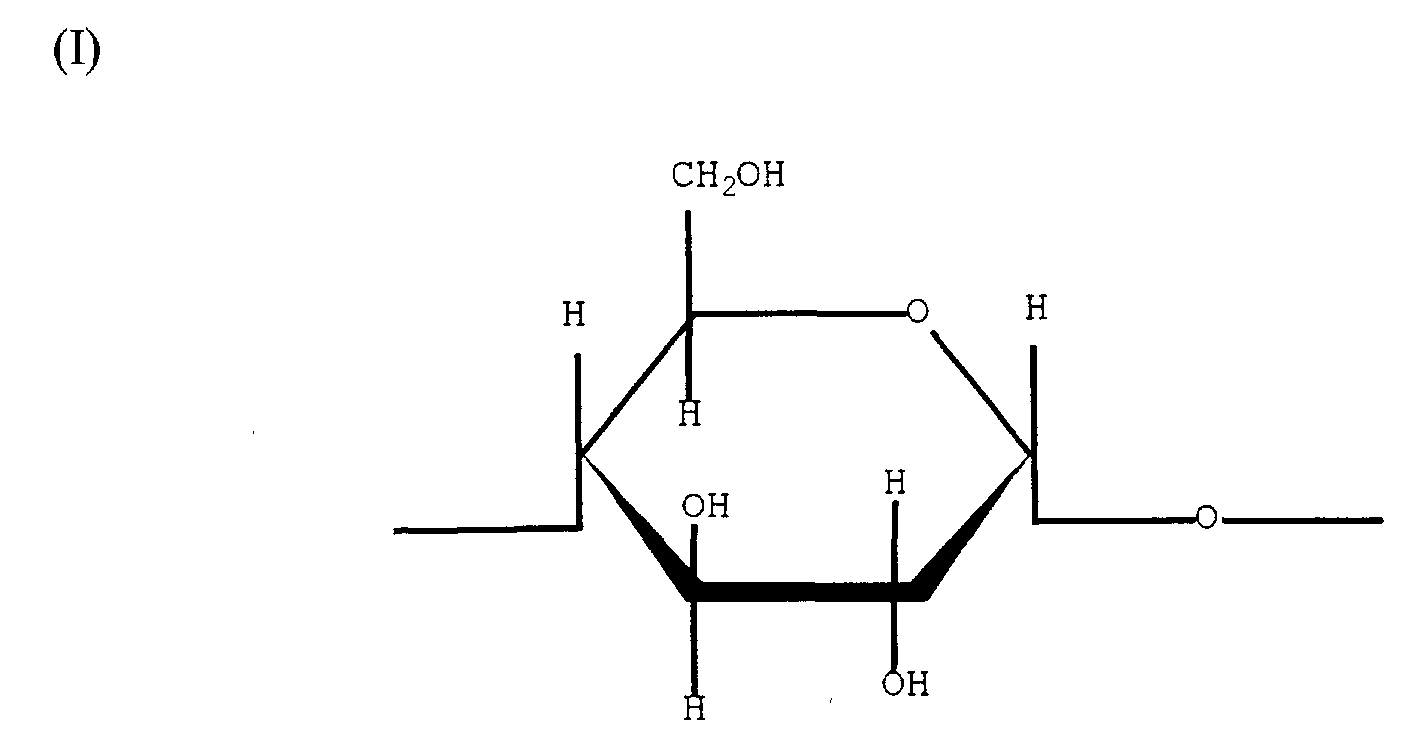
chain polymer. The repeating units take the following form:
In amylopectin, in addition to the 1,4-bonding of repeating units, 6-position chain
branching (at the site of the -CH
2OH group above) is also in evidence, resulting in
a branched chain polymer. The repeating units of starch and cellulose are
diasteroisomers that impart different overall geometries to the molecules. The α
anomer, found in starch and shown in formula I above, results in a polymer that is
capable of crystallization and some degree of hydrogen bonding between
repeating units in adjacent molecules, but not to the same degree as the β anomer
repeating units of cellulose and cellulose derivatives. Polymer molecules formed
by the β anomers show strong hydrogen bonding between adjacent molecules,
resulting in clumps of polymer molecules and a much higher propensity for
crystallization. Lacking the alignment of substituents that favors strong
intermolecular bonding, found in cellulose repeating units, starch and starch
derivatives are much more readily dispersed in water.
The water dispersible starches employed in the practice of the
invention are cationic--that is, they contain an overall net positive charge when
dispersed in water. Starches are conventionally rendered cationic by attaching a
cationic substituent to the α-D-glucopyranose units, usually by esterification or
etherification at one or more free hydroxyl sites. Reactive cationogenic reagents
typically include a primary, secondary or tertiary amino group (which can be
subsequently protonated to a cationic form under the intended conditions of use)
or a quaternary ammonium, sulfonium or phosphonium group.
To be useful as a peptizer the cationic starch must be water
dispersible. Many starches disperse in water upon heating to temperatures up to
boiling for a short time. High sheer mixing also facilitates starch dispersion. The
presence of cationic substituents increases the polar character of the starch
molecule and facilitates dispersion. The starch molecules preferably achieve at
least a colloidal level of dispersion and ideally are dispersed at a molecular level--
i.e., dissolved.
The following teachings illustrate water dispersible cationic
starches that are useful in the invention:
It is preferred to employ an oxidized cationic starch. The term
"oxidized" in referring to starch indicates a starch in which, on average, at least
one □-D-glucopyranose repeating unit per starch molecule has been ring opened
by cleavage of the 2 to 3 ring position carbon-to-carbon bond. The starch can be
oxidized before (* patents above) or following the addition of cationic
substituents. This can be accomplished by treating the starch with a strong
oxidizing agent. Both hypochlorite (ClO-) or periodate (IO4 -) have been
extensively used and investigated in the preparation of commercial starch
derivatives and preferred and are useful to produce the starch peptizers used in the
present invention. While any convenient oxidizing agent counter ion can be
employed, preferred counter ions are those fully compatible with silver halide
emulsion preparation, such as alkali and alkaline earth cations, most commonly
sodium, potassium or calcium.
When the oxidizing agent opens the □-D-glucopyranose ring, the
oxidation sites are usually at the 2 and 3 position carbon atoms forming the □-D-glucopyranose
ring. The 2 and 3 position
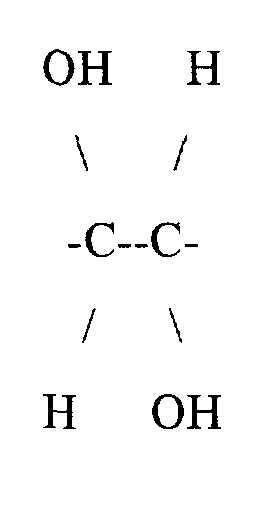
groups are commonly referred to as the glycol groups. The carbon-to-carbon
bond between the glycol groups is replaced in the following manner
where R represents the atoms completing an aldehyde group or a carboxyl group.
The hypochlorite oxidation of starch is most extensively employed
in commercial use. The hypochlorite is used in small quantities to modify
impurities in starch. Any modification of the starch at these low levels is minimal,
at most affecting only the polymer chain terminating aldehyde groups, rather than
the □-D-glucopyranose repeating units themselves. Further oxidation, such as
bromine oxidation during or following precipitation, produces the desired
sensitometric effects (e.g. fog reduction). At levels of oxidation that affect the □-D-glucopyranose
repeating units the hypochlorite affects the 2, 3 and 6 positions,
forming aldehyde groups at lower levels of oxidation and carboxyl groups at
higher levels of oxidation. Oxidation is conducted at mildly acidic and alkaline
pH (e.g., >5 to 11). The oxidation reaction is exothermic, requiring cooling of the
reaction mixture. Temperatures of less than 45°C are preferably maintained.
Using a hypobromite oxidizing agent is known to produce similar results as
hypochlorite.
Hypochlorite oxidation is catalyzed by the presence of bromide
ions. Since silver halide emulsions are conventionally precipitated in the presence
of a stoichiometric excess of the halide to avoid inadvertent silver ion reduction
(fogging), it is conventional practice to have bromide ions in the dispersing media
of high bromide silver halide emulsions. Thus, it is specifically contemplated to
add bromide ion to the starch prior to performing the oxidation step in the
concentrations known to be useful in the high bromide {111} tabular grain
emulsions e.g., up to a pBr of 3.0.
Cescato U.S. Patent 3,706,584 discloses techniques for the
hypochlorite oxidation of cationic starch. These techniques are useful to produce
the starch peptizers used in the present invention. Sodium bromite, sodium
chlorite and calcium hypochlorite are named as alternatives to sodium
hypochlorite. Further teachings of the hypochlorite oxidation of starches is
provided by the following: R.L. Whistler, E.G. Linke and S. Kazeniac, "Action of
Alkaline Hypochlorite on Corn Starch Amylose and Methyl 4-O-Methyl-D-glucopyranosides",
Journal Amer. Chem. Soc., Vol. 78, pp. 4704-9 (1956); R.L.
Whistler and R. Schweiger, "Oxidation of Amylopectin with Hypochlorite at
Different Hydrogen Ion Concentrations, Journal Amer. Chem. Soc., Vol. 79, pp.
6460-6464 (1957); J. Schmorak, D. Mejzler and M. Lewin, "A Kinetic Study of
the Mild Oxidation of Wheat Starch by Sodium Hypochloride in the Alkaline pH
Range", Journal of Polymer Science, Vol. XLIX, pp. 203-216 (1961); J.
Schmorak and M. Lewin, "The Chemical and Physico-chemical Properties of
Wheat Starch with Alkaline Sodium Hypochlorite", Journal of Polymer Science:
Part A, Vol. 1, pp. 2601-2620 (1963); K.F. Patel, H.U. Mehta and H.C.
Srivastava, "Kinetics and Mechanism of Oxidation of Starch with Sodium
Hypochlorite", Journal of Applied Polymer Science, Vol. 18, pp. 389-399 (1974);
R.L. Whistler, J.N. Bemiller and E.F. Paschall, Starch: Chemistry and
Technology, Chapter X, Starch Derivatives: Production and Uses, II.
Hypochlorite-Oxidized Starches, pp. 315-323, Academic Press, 1984; and O.B.
Wurzburg, Modified Starches: Properties and Uses, III. Oxidized or
Hypochlorite-Modified Starches, pp. 23-28 and pp. 245-246, CRC Press (1986).
Although hypochlorite oxidation is normally carried out using a soluble salt, the
free acid can alternatively be employed, as illustrated by M.E. McKillican and
C.B. Purves, "Estimation of Carboxyl, Aldehyde and Ketone Groups in
Hypochlorous Acid Oxystarches", Can. J. Chem., Vol. 312-321 (1954).
Periodate oxidizing agents are of particular interest, since they are
known to be highly selective. The periodate oxidizing agents produce starch
dialdehydes by the reaction shown in the formula (II) above without significant
oxidation at the site of the 6 position carbon atom. Unlike hypochlorite oxidation,
periodate oxidation does not produce carboxyl groups and does not produce
oxidation at the 6 position. Mehltretter U.S. Patent 3,251,826, discloses the use of
periodic acid to produce a starch dialdehyde that is subsequently modified to a
cationic form. Mehltretter also discloses for use as oxidizing agents the soluble
salts of periodic acid and chlorine. Further teachings of the periodate oxidation of
starches is provided by the following: V.C. Barry and P.W.D. Mitchell,
"Properties of Periodate-oxidized Polysaccharides. Part II. The Structure of some
Nitrogen-containing Polymers", Journal Amer. Chem. Soc., 1953, pp. 3631-3635;
P.J. Borchert and J. Mirza, "Cationic Dispersions of Dialdehyde Starch I. Theory
and Preparation", Tappi, Vol. 47, No. 9, pp. 525-528 (1964); J.E. McCormick,
"Properties of Periodate-oxidized Polysaccharides. Part VII. The Structure of
Nitrogen-containing Derivatives as deduced from a Study of Monosaccharide
Analogues", Journal Amer. Chem. Soc., pp. 2121-2127 (1966); and O.B.
Wurzburg, Modified Starches: Properties and Uses, III. Oxidized or
Hypochlorite-Modified Starches, pp. 28-29, CRC Press (1986).
Starch oxidation by electrolysis is disclosed by F.F. Farley and
R.M. Hixon, "Oxidation of Raw Starch Granules by Electrolysis in Alkaline
Sodium Chloride Solution", Ind. Eng. Chem., Vol. 34, pp. 677-681 (1942).
Depending upon the choice of oxidizing agents employed, one or
more soluble salts may be released during the oxidation step. Where the soluble
salts correspond to or are similar to those conventionally present during silver
halide precipitation, the soluble salts need not be separated from the oxidized
starch prior to silver halide precipitation. It is, of course, possible to separate
soluble salts from the oxidized cationic starch prior to precipitation using any
conventional separation technique. For example, removal of halide ion in excess
of that desired to be present during grain precipitation can be undertaken. Simply
decanting solute and dissolved salts from oxidized cationic starch particles is a
simple alternative. Washing under conditions that do not solubilize the oxidized
cationic starch is another preferred option. Even if the oxidized cationic starch is
dispersed in a solute during oxidation, it can be separated using conventional
ultrafiltration techniques, since there is a large molecular size separation between
the oxidized cationic starch and soluble salt by-products of oxidation.
The carboxyl groups formed by oxidation take the form -C(O)OH,
but, if desired, the carboxyl groups can, by further treatment, take the form-C(O)OR',
where R' represents the atoms forming a salt or ester. Any organic
moiety added by esterification preferably contains from 1 to 6 carbon atoms and
optimally from 1 to 3 carbon atoms.
The minimum degree of oxidation contemplated is that required to
reduce the viscosity of the starch. It is generally accepted (see citations above)
that opening an □-D-glucopyranose ring in a starch molecule disrupts the helical
configuration of the linear chain of repeating units which in turn reduces viscosity
in solution. It is contemplated that at least one □-D-glucopyranose repeating unit
per starch polymer, on average, be ring opened in the oxidation process. As few
as two or three opened □-D-glucopyranose rings per polymer has a profound
effect on the ability of the starch polymer to maintain a linear helical
configuration. It is generally preferred that at least 1 percent of the glucopyranose
rings be opened by oxidation.
A preferred objective of the oxidation is to reduce the viscosity of
the cationic starch by oxidation to less than four times (400 percent of) the
viscosity of water at the starch concentrations employed in silver halide
precipitation. Although this viscosity reduction objective can be achieved with
much lower levels of oxidation, starch oxidations of up to 90 percent of the □-D-glucopyranose
repeating units have been reported (Wurzburg, cited above, p. 29).
A typical convenient range of oxidation ring-opens from 3 to 50 percent of the □-D-glucopyranose
rings.
The water dispersible cationic starch is present during the
precipitation (during nucleation and grain growth or during grain growth) of
photosensitive silver halide grains. Preferably, precipitation is conducted by
substituting the water dispersible cationic starch for all of the conventional
gelatino-peptizers. In substituting the selected cationic starch peptizer for
conventional gelatino-peptizers, the concentrations of the selected peptizer and the
point or points of addition can correspond to those employed using gelatino-peptizers.
It is well known, as illustrated by Mignot U.S. Patent 4,334,012,
issued June 8, 1982, that no peptizer is required to be present during grain
nucleation. If desired, addition of the selected peptizer can be deferred until grain
growth has progressed to the point that peptizer is actually required to avoid grain
agglomeration.
The temperature of the reaction vessel within which the
silver halide emulsion is prepared is typically maintained within a
temperature range of 20°C to 75°C. during the composition preparation.
The temperature range and duration of the preparation can be altered to
produce the desired emulsion grain size and desired composition
properties. The silver halide emulsion can be prepared by means of
emulsion preparation techniques and apparatus known in the photographic
art.
It has been discovered that the minimum density can be reduced or
eliminated by treating the emulsion with an oxidizing agent during or subsequent
to grain precipitation. Preferred oxidizing agents are those that in a reduced form
have little or no impact on the performance properties of the emulsions in which
they are incorporated. Strong oxidizing agents noted above to be useful in
oxidizing cationic starch, such as hypochlorite (ClO-) or periodate (IO4 -), are
specifically contemplated. Specifically preferred oxidizing agents are halogen--
e.g., bromine (Br2) or iodine (I2). When bromine or iodine is used as an oxidizing
agent, the bromine or iodine is reduced to Br- or I-. These halide ions can remain
with other excess halide ions in the dispersing medium of the emulsion or be
incorporated within the grains without adversely influencing photographic
performance. Any level of oxidizing agent can be utilized that is effective in
reducing minimum density. Concentrations of oxidizing agent added to the
emulsion as low as 1 X 10⁻⁶ mole per Ag mole are contemplated. Since very low
levels of Ago are responsible for increases in minimum density, no useful purpose
is served by employing oxidizing agent concentrations of greater than 0.1 mole
per Ag mole. A specifically preferred oxidizing agent range is from 1 X 10⁻⁴ to 1
X 10-2 mole per Ag mole. The silver basis is the total silver at the conclusion of
precipitation of the silver halide emulsion, regardless of whether the oxidizing
agent is added during or after precipitation.
High bromide {111} tabular grain emulsions (particularly when
blended with other silver halide grains having different morphology) precipitated
in the presence of a cationic starch are and are disclosed in the following patents:
Maskasky U.S. Patents 5,604,085, issued February 18, 1997, 5,620,840, issued
April 15, 1997, 5,667,955, issued September 16, 1997, 5,691,131, November 25,
1997, and 5,733,718, issued March 31,1998.
Conventional dopants can be incorporated into the grains during
their precipitation, as illustrated by the patents cited above and Research
Disclosure, Item 38957 Section I. Emulsion grains and their preparation, D. Grain
modifying conditions and adjustments, paragraphs (3), (4) and (5). It is
specifically contemplated to incorporate shallow electron trapping (SET) site
providing dopants in the grains, further disclosed in Research Disclosure, Vol.
367, November 1994, Item 36736, and Olm et al U.S. Patent 5,576,171, issued
November 19, 1996.
The emulsions useful in the invention would be expected to
show sensitivity enhancements when chemically sensitized employing one
or a combination of noble metal, middle chalcogen (sulfur, selenium
and/or tellurium) and reduction chemical sensitization techniques.
Conventional chemical sensitizations by these techniques are summarized
in Research Disclosure , Item 38957 Section IV. Chemical sensitizations.
It is preferred to employ at least one of noble metal (typically gold) and
middle chalcogen (typically sulfur) and, most preferably, a combination of
both in preparing the emulsions used in the invention for photographic use.
The use of a cationic starch peptizer allows distinct advantages relating to
chemical sensitization to be realized. Under comparable levels of
chemical sensitization higher photographic speeds can be realized using
cationic starch peptizers. When comparable photographic speeds are
sought, a cationic starch peptizer in the absence of gelatin allows lower
levels of chemical sensitizers to be employed and results in better
incubation keeping. When chemical sensitizer levels remain unchanged,
speeds equal to those obtained using gelatino-peptizers can be achieved at
lower precipitation and/or sensitization temperatures, thereby avoiding
unwanted grain ripening.
The silver halide emulsions used in the present invention
are preferably free of soluble salts. The soluble salts can be removed by
decantation, filtration, and/or chill setting and leaching, as illustrated by
Craft U.S. Pat. No. 2,316,845 and McFall et al U.S. Pat. No. 3,396,027; by
coagulation washing, as illustrated by Hewitson et al. U.S. Pat. No.
2,618,556, Yutzy et al. U.S. Pat. No. 2,614,928, Yackel U.S. Pat. No.
2,565,418, Hart et al. U.S. Pat. No.3,241,969, Waller et al. U.S. Pat. No.
2,489,341, Klinger U.K. Pat. No. 1,305,409 and Dersch et al. U.K. Pat.
No. 1,167,159; by centrifugation and decantation of a coagulated
dispersion as illustrated by Murray U.S. Pat. No. 2,463,794, Ujihara et al.
U.S. Pat. No. 3,707,378, Audran U.S. Pat. No. 2,996,287 and Timson U.S.
Pat. No. 3,498,454; by employing hydrocyclones alone or in combination
with centrifuges, as illustrated by U.K. Pat. No. 1,336,692, Claes U.K. Pat.
No. 1,356,573 and Ushomirskii et al. Soviet Chemical Industry, Vol. 6,
No. 3, 1974, pp. 181-185; by diafiltration with a semipermeable membrane,
as illustrated by Research Disclosure, Vol. 102, October 1972, Item 10208,
Hagemaier et al. Research Disclosure, Vol. 131, March 1975, Item 13122,
Bonnet Research Disclosure, Vol. 135, July 1975, Item 13577, Berg et al.
German OLS No. 2,436,461, Bolton U.S. Pat. No. 2,495,918, and Mignot
U.S. Pat. No. 4,334,012 or by employing an ion exchange resin, as
illustrated by Maley U.S. Pat. No. 3,782,953 and Noble U.S. Pat. No.
2,827,428.
The described starch peptized emulsions can be used in
photothermographic elements. Exposure of the silver halide produces a
latent image that is then developed by an oxidation-reduction composition
including organic silver compound particles. An aqueous
photothermographic composition can be prepared by very thoroughly
mixing (I) a hydrophilic photosensitive silver halide emulsion with (II) (a)
a hydrophilic binder and (b) an oxidation-reduction image-forming
composition comprising (i) an aqueous dispersion of a silver organic
compound such as silver carboxylate with (ii) an organic reducing agent in
water. A photothermographic element can be prepared by coating the
resulting photothermographic composition on a suitable support.
The aqueous photothermographic materials comprise a
photosensitive silver halide. The photosensitive silver halide is in the form of a
hydrophilic photosensitive silver halide emulsion containing a cationic starch
peptizer. A typical concentration of hydrophilic photosensitive silver halide
emulsion containing a cationic starch peptizer and the imaging forming
composition is within the range of 0.02 to 1.0 mole of photosensitive silver halide
per mole of the described silver compound in the photothermographic material.
Other photosensitive materials can be useful in combination with the described
photosensitive silver halide if desired. Preferred photosensitive silver halides are
silver chloride, silver iodobromide, silver bromide, silver iodobromochloride,
silver chlorobromide or mixtures thereof. For purposes of the invention, silver
iodide is also considered to be a photosensitive silver halide.
A range of grain size and grain morphology of
photosensitive silver halide from very coarse grain to very fine grain and
from 3D to tabular silver halide is useful. Tabular grain photosensitive
silver halide is useful, as described in, for example, U.S. Patent No.
4,435,499, of Reeves; issued March 6, 1984. Particularly useful are ultrathin
tabular silver halide grains made using as peptizer a water dispersible
cationic starch as described in U.S. Patent No. 5,667,955, of Maskasky,
issued September 16, 1997 and U.S Patent No. 5,604,085, of Maskasky,
issued February 18, 1997. Very fine grain silver halide is preferred.
Blends of fine grain silver halide with coarser silver halide grains are also
useful.
The hydrophilic photosensitive silver halide emulsion
containing a cationic starch peptizer can be prepared by any of the
procedures known in the photographic art which involve the preparation of
photographic silver halide emulsion. Useful procedures and forms of
photosensitive silver halide emulsions for purposes of the invention are
described in, for example, the Product Licensing Index, Volume 92,
December 1971, Publication 9232 on page 107, published by Industrial
Opportunities Limited, Homewell, Havant Hampshire, P09 1EF, UK. The
photographic silver halide, as described, can be washed or unwashed, can
be chemically sensitized using chemical sensitization procedures.
Materials known in the photographic art can be protected against the
production of fog and stabilized against loss of sensitivity during keeping
as described in the mentioned Product Licensing Index publication.
The photosensitive silver halide emulsion can contain a
range of concentration of the cationic starch peptizer. Typically, the
concentration of the starch peptizer is within the range of 1 gram to 500
grams of cationic starch peptizer, per mole of silver in the silver halide
emulsion. This is described herein as a low-peptizer silver halide
emulsion. A preferably useful concentration of cationic starch peptizer is
within the range of 5 to 100 grams of a cationic starch peptizer per mole of
silver in the silver halide emulsion. A most preferably useful
concentration of cationic starch peptizer is within the range of 10 to 50
grams of cationic starch peptizer per mole of silver in the silver halide
emulsion. The optimum concentration of the cationic starch peptizer will
depend upon such factors as the particular photosensitive silver halide, the
desired image, the particular components of the photothermographic
composition, coating conditions and the like. All of the selected peptizer
required for the preparation of an emulsion through the optional step of
chemical sensitization can be present in the reaction vessel prior to grain
nucleation.
Emulsions precipitated in the presence of cationic starch
peptizing agent have been successfully incorporated with the other
necessary ingredients into an aqueous photothermographic imaging
element and successfully exposed and thermally processed using a laser
printer and thermal processor.
The described materials offer several advantages over the
materials using gelatino-peptizing agents. Many of the commonly used
gelatino peptizing agents often cause adverse photographic effects, in
particular fog, loss of contrast, loss of maximum density, and poor
keeping. The silver halide emulsions, precipitated in the presence of
cationic starch peptizing agent offer the advantage that they do not show
these adverse photographic effects.
The present invention provides a photothermographic imaging
element comprising a support having thereon an aqueous photothermographic
composition comprising a) a photosensitive silver halide emulsion precipitated in
the presence of a cationic starch peptizer and b) an oxidation-reduction imaging
forming composition comprising (i) an aqueous dispersion of organic silver
compound particles, and (ii) an organic reducing agent.
The organic silver compound for the oxidation-reduction
imaging forming composition can be a silver carboxylate such as the silver
salt of a long-chain fatty acid.
Other silver salts or complexes have been proposed for heat
developable photographic materials. These include, for example, silver salts of
benzotriazole, silver salts of saccharin and related silver salts or complexes.
These are described, for example, in heat developable photographic materials in
U.S. Pat. Nos. 3,617,289 of Ohkubo et al, issued Oct. 2, 1971; 3,666,477 of Goffe,
issued May 30, 1972; 3,672,904 of deMauriac, issued June 27, 1972; 3,832,186 of
Masuda et al, issued Aug. 27, 1974; British specification No. 1,205,500 published
Sept. 16, 1970; 3,689,270 of Anderson et al, issued Sept. 5, 1972; and German
Offenlegungsschrift No. 2,326,865 published Dec. 6, 1973. Other silver
complexes or salts in heat developable materials, which include silver salts of
nitrogen acids, are described in Research Disclosure, October 1976, Item 15026,
pages 18-21, of R. A. deMauriac.
Nanoparticulate silver carboxylate dispersions can be
prepared by a precipitation process commonly used for the precipitation of
photographic silver halide emulsions. Into a vigorously stirred reaction is
introduced a surface modifier. Frequently, the surface modifier initially
introduced into the reaction vessel is at least 10 percent, preferably 20 to
100 percent, by weight based on total weight of the surface modifier
present in the nanoparticulate silver carboxylate at the conclusion of grain
precipitation. Since surface modifier can be removed from the reaction
vessel by ultrafiltration during silver carboxylate grain precipitation, as
taught by Mignot U.S. Pat. No. 4,334,012, issued June 8, 1982, it is
appreciated that the weight of surface modifier initially present in the
reaction vessel can equal or even exceed the dry weight of the silver
carboxylate present in the reaction vessel at the conclusion of the
precipitation. The surface modifier initially introduced into the reaction
vessel is preferably aqueous solution or an aqueous dispersion of surface
modifier, optionally containing other ingredients, such as one or more
antifoggant and/or various dopants, more specifically described below.
Where a surface modifier is initially present, it is preferably employed in a
concentration of at least 10 percent, most preferably at least 20 percent, of
the total surface modifier present at the completion of nanoparticulate
silver carboxylate precipitation. Additional surface modifier is added to
the reaction vessel with the water soluble silver salts and can also be
introduced through a separate jet.
During precipitation silver and carboxylate salts are added
to the reaction vessel by techniques well known in the precipitation of
photographic silver halide grains. The carboxylate salts are typically
introduced as aqueous salt solutions, such as aqueous solutions of one or
more soluble ammonium, alkali metal (e.g., sodium or potassium), or
alkaline earth metal (e.g., magnesium or calcium) carboxylate salts. The
silver salt is at least initially introduced into the reaction vessel separately
from the carboxylate salt.
With the introduction of silver salt into the reaction vessel
the nucleation stage of silver carboxylate grain formation is initiated. A
population of grain nuclei is formed which is capable of serving as
precipitation sites for silver carboxylate as the introduction of silver and
(or) carboxylic acid salts continues. The precipitation of silver
carboxylate onto existing grain nuclei constitutes the growth stage of
nanoparticulate grain formation.
As an alternative to the introduction of silver and (or)
carboxylic acid salts as aqueous solutions, it is specifically contemplated
to introduce the silver salt and carboxylic acid, initially or in the growth
stage, in the form of ultrafine grains suspended in dispersing medium. The
grain size is such that they readily react to form a nanoparticulate silver
carboxylate grains. The maximum useful grain sizes will depend on the
specific conditions within the reaction vessel, such as temperature and the
presence of solubilizing agents.
The organic silver compound, e.g.silver and carboxylic salt
or carboxylic acid grains, are preferably very fine e.g., less than 1.0 micron
in mean diameter and more preferrably less than 0.2 micron.
Where the organic silver compound is a silver carboxylate,
the concentrations and rates of silver, carboxylic acid salt introductions
can take any convenient conventional form. The silver and carboxylic acid
salts are preferably introduced in concentrations of from 0.1 to 5 moles per
liter, although broader conventional concentration ranges, such as from
0.01 mole per liter to saturation, for example, are contemplated.
Specifically preferred precipitation techniques are those which achieve
shortened precipitation times by increasing the rate of silver and
carboxylic acid salt introduction during the run. The rate of silver and or
carboxylic acid salt introduction can be increased either by increasing the
rate at which the silver and or carboxylic acid salts are introduced or by
increasing the concentrations of the silver and carboxylic acid salts within
the solution.
The individual silver and (or) carboxylic acid salts can be
added to the reaction vessel through surface or subsurface delivery tubes
by gravity feed or by delivery apparatus for maintaining control of the rate
of delivery and the pH, and/or pAg of the reaction vessel contents, as
illustrated by Culhane et al. U.S. Pat. No. 3,821,002, Oliver U.S. Pat. No.
3,031,304 and Claes et al., Photographische Korrespondenz, Band 102,
Nov. 10, 1967, p. 162. In order to obtain rapid distribution of the reactants
within the reaction vessel, specially constructed mixing devices can be
employed, as illustrated by Audran U.S. Pat. No. 2,996,287, McCrossen et
al. U.S. Pat. No. 3,342,605, Frame et al. U.S. Pat. No. 3,415,650, Porter et
al. U.S. Pat. No. 3,785,777, issued January 15, 1974, Finnicum et al. U.S.
Pat. No. 4,147,551, issued April 3, 1979, Verhille et al. U.S. Pat. No.
4,171,224, issued October 16, 1979, Calamur U.K. Patent Application No.
2,022,431A, Saito et al. German OLS Nos. 2,555,364 and 2,556,885, and
Research Disclosure, Volume 166, February 1978, Item 16662.
In forming silver carboxylate dispersions in the presence of
a surface modifier, a surface modifier is initially contained in the reaction
vessel. In a preferred form the surface modifier is comprised of an aqueous
solution. Surface modifier concentrations of from 0.1 to 30 percent by
weight, based on the total weight of dispersion components in the reaction
vessel, can be employed. It is desirable to maintain the concentration of the
surface modifier in the reaction vessel in the range of below 25 percent,
based on the total weight, prior to and during silver carboxylate formation.
It is contemplated that the silver carboxylate dispersion as initially formed
will contain from 1 to 200 grams of surface modifier per mole of silver
carboxylate preferably 10 to 100 grams of surface modifier per mole of
silver carboxylate. Additional surface modifier can be added later to bring
the concentration up to as high as 200 grams per mole of silver
carboxylate.
Vehicles (which include both binders and peptizers) can be
employed. Preferred peptizers are hydrophilic colloids, which can be
employed alone or in combination with hydrophobic materials. Suitable
hydrophilic materials include substances such as proteins, protein
derivatives, cellulose derivatives e.g., cellulose esters, gelatin e.g., alkali-treated
gelatin (cattle bone or hide gelatin) or acid-treated gelatin (pigskin
gelatin), gelatin derivatives e.g., acetylated gelatin, phthalated gelatin and
the like, polysaccharides such as dextran, gum arabic, zein, casein, pectin,
collagen derivatives, agaragar, arrowroot, albumin and the like as
described in Yutzy et al. U.S. Pat. Nos. 2,614,928 and '929, Lowe et al.,
U.S. Pat. Nos. 2,691,582, 2,614,930, '931, 2,327,808 and 2,448,534, Gates
et al. U.S. Pat. Nos. 2,787,545 and 2,956,880, Himmelmann et al. U.S. Pat.
No. 3,061,436, Farrell et al. U.S. Pat. No. 2,816,027, Ryan U.S. Pat. Nos.
3,132,945, 3,138,461 and 3,186,846, Dersch et al. U.K. Pat. No. 1,167,159
and U.S. Pat. Nos. 2,960,405 and 3,436,220, Geary U.S. Pat. No.
3,486,896, Gazzard U.K. Pat. No. 793,549, Gates et al. U.S. Pat. Nos.
2,992,213, 3,157,506, 3,184,312 and 3,539,353, Miller et al. U.S. Pat.
No.3,227,571, Boyer et al. U.S. Pat. No. 3,532,502, Malan U.S. Pat. No.
3,551,151, Lohmer et al. U.S. Pat. No. 4,018,609, issued April 19, 1977,
Luciani et al. U.K. Pat. No. 1,186,790, Hori et al. U.K. Pat. No. 1,489,080
and Belgian Pat. No. 856,631, U.K. Pat. No. 1,490,644, U.K. Pat. No.
1,483,551, Arase et al. U.K. Pat. No. 1,459,906, Salo U.S. Pat. Nos.
2,110,491 and 2,311,086, Fallesen U.S. Pat. No. 2,343,650, Yutzy U.S.
Pat. No. 2,322,085, Lowe U.S. Pat. No.2,563,791, Talbot et al. U.S. Pat.
No. 2,725,293, Hilborn U.S. Pat. No. 2,748,022, DePauw et al. U.S. Pat.
No 2,956,883, Ritchie U.K. Pat. No. 2,095, DeStubner U.S. Pat. No.
1,752,069, Sheppard et al. U.S. Pat. No.2,127,573, Lierg U.S. Pat. No.
2,256,720, Gaspar U.S. Pat. No. 2,361,936, Farmer U.K. Pat. No. 15,727,
Stevens U.K. Pat. No. 1,062,116 and Yamamoto et al. U.S. Pat. No.
3,923,517.
Other materials commonly employed in combination with
hydrophilic colloid peptizers as vehicles (including vehicle extenders--e.g.,
materials in the form of lattices) include starches and synthetic polymeric
peptizers, carriers and/or binders such as poly(vinyl lactams), acrylamide
polymers, polyvinyl alcohol and its derivatives, polyvinyl acetals,
polymers of alkyl and sulfoalkyl acrylates and methacrylates, hydrolyzed
polyvinyl acetates, polyamides, polyvinyl pyridine, acrylic acid polymers,
maleic anhydride copolymers, polyalkylene oxides, methacrylamide
copolymers, polyvinyl oxazolidinones, maleic acid copolymers,
vinylamine copolymers, methacrylic acid copolymers,
acryloyloxyalkylsulfonic acid copolymers, sulfoalkylacrylamide
copolymers, polyalkyleneimine copolymers, polyamines, N,N-dialkylaminoalkyl
acrylates, vinyl imidazole copolymers, vinyl sulfide
copolymers, halogenated styrene polymers, amineacrylamide polymers,
polypeptides and the like as described in Hollister et al. U.S. Pat. Nos.
3,679,425, 3,706,564 and 3,813,251, Lowe U.S. Pat. Nos.2,253,078,
2,276,322, '323, 2,281,703, 2,311,058 and 2,414,207, Lowe et al. U.S. Pat.
Nos. 2,484,456, 2,541,474 and 2,632,704, Perry et al. U.S. Pat. No.
3,425,836, Smith et al. U.S. Pat. Nos. 3,415,653 and 3,615,624, Smith U.S.
Pat. No. 3,488,708, Whiteley et al. U.S. Pat. Nos. 3,392,025 and
3,511,818, Fitzgerald U.S. Pat. Nos. 3,681,079, 3,721,565, issued March
20, 1973, 3,852,073, issued December 3, 1974, 3,861,918, issued January
21, 1975, and 3,925,083, issued December 9, 1975, Fitzgerald et al. U.S.
Pat. No. 3,879,205, issued April 22, 1975, Nottorf U.S. Pat. No. 3,142,568,
Houck et al. U.S. Pat. Nos. 3,062,674 and 3,220,844, Dann et al. U.S. Pat.
No. 2,882,161, Schupp U.S. Pat. No. 2,579,016, Weaver U.S. Pat. No.
2,829,053, Alles et al. U.S. Pat. No. 2,698,240, Priest et al. U.S. Pat.
No.3,003,879, Merrill et al. U.S. Pat. No. 3,419,397, Stonham U.S. Pat.
No. 3,284,207, Lohmer et al. U.S. Pat. No. 3,167,430, Williams U.S. Pat.
Nos. 2,957,767, Dawson et al. U.S. Pat. No. 2,893,867, Smith et al. U.S.
Pat. Nos.2,860,986 and 2,904,539, Ponticello et al. U.S. Pat. Nos.
3,929,482, issued December 30, 1975 and 3,860,428, issued January 14,
1975, Ponticello U.S. Pat. No.3,939,130, issued February 17, 1976,
Dykstra U.S. Pat. No. 3,411,911 and Dykstra et al. Canadian Pat. No.
774,054, Ream et al. U.S. Pat. No.3,287,289, Smith U.K. Pat. No.
1,466,600, Stevens U.K. Pat. No. 1,062,116, Fordyce U.S. Pat. No.
2,211,323, Martinez U.S. Pat. No. 2,284,877, Watkins U.S. Pat. No.
2,420,455, Jones U.S. Pat. No. 2,533,166, Bolton U.S. Pat. No. 2,495,918,
Graves U.S. Pat. No. 2,289,775, Yackel U.S. Pat. No. 2,565,418, Unruh et
al. U.S. Pat. Nos.2,865,893 and 2,875,059, Rees et al. U.S. Pat. No.
3,536,491, Broadhead et al. U.K. Pat. No. 1,348,815, Taylor et al. U.S.
Pat. No. 3,479,186, Merrill et al. U.S. Pat. No. 3,520,857, Bacon et al. U.S.
Pat. No. 3,690,888, Bowman U.S. Pat. No. 3,748,143, Dickinson et al.
U.K. Pat. Nos. 808,227 and '228, Wood U.K. Pat. No. 822,192 and Iguchi
et al. U.K. Pat. No. 1,398,055. These additional materials need not be
present in the reaction vessel during silver carboxylate precipitation, but
rather are conventionally added to the dispersion prior to coating. The
vehicle materials, including particularly the hydrophilic colloids, as well as
the hydrophobic materials useful in combination therewith can be
employed not only in the emulsion layers of the photothermographic
elements of this invention, but also in other layers, such as overcoat layers,
interlayers and layers positioned beneath the emulsion layers.
A variety of hydrophilic binders are useful in the described
photothermographic materials. The binders that are useful include various
colloids alone or in combination as vehicles and/or binding agents. The
hydrophilic binders which are suitable include transparent or translucent
materials and include both naturally occurring substances, such as
proteins, gelatin, gelatin derivatives, cellulose derivatives,
polysaccharides, such as dextrin, gum arabic and the like: and synthetic
polymeric substances such as water-soluble polyvinyl compounds like
polyvinyl alcohol, poly(vinyl pyrrolidone), acrylamide polymers and the
like. Other synthetic polymeric compounds, which can be employed
include dispersed vinyl compounds such as latex form and particularly
those that increase dimensional stability of photographic materials. A
range of concentration of hydrophilic binder can be useful in
photothermographic silver halide. Typically, the concentration of
hydrophilic binder in a photothermographic silver halide composition is
within the range of 50 to 1000mg/dm2. An optimum concentration of the
described binder can vary depending upon such factors as the particular
binder, other components of the photothermographic material, coating
conditions, desired image, processing temperature and conditions and the
like.
If desired, a portion of the photographic silver halide in the
photothermographic composition can be prepared in situ in the
photothermographic material. The photothermographic composition, for
example, can contain a portion of the photographic silver halide that is
prepared in or on one or more of the other components of the described
photothermographic material rather than prepared separate from the
described components and then admixed with them. Such a method of
preparing silver halide in situ is described in, for example, U.S. Pat. No.
3,457,075 of Morgan et al., issued July 22, 1969.
The described photothermographic composition comprises
an oxidation-reduction image-forming combination can contain a silver
carboxylate, which can be a long-chain fatty acid silver salt, with a suitable
reducing agent. The oxidation-reduction reaction resulting from this
combination upon heating is believed to be catalyzed by the latent image
silver from the photosensitive silver halide produced upon imagewise
exposure of the photothermographic material followed by overall heating
of the photothermographic material. The exact mechanism of image
formation is not fully understood.
A variety of silver salts of long-chain fatty acids are useful
in the photothermographic material. The term "long-chain" as used herein
is intended to refer to a fatty acid containing 8 to 30 carbon atoms and
which is typically resistant to darkening upon exposure to light. Useful
long-chain fatty acid silver salts include, for example, silver stearate, silver
behenate, silver caprate, silver hydroxystearate, silver myristate and silver
palmitate. A minor proportion of another silver salt oxidizing agent which
is not a long-chain fatty acid silver salt can be useful in combination with
the silver salt of the long-chain fatty acid if desired. Such silver salts
which can be useful in combination with the described silver salts of a
long-chain fatty acid include, for example, silver benzotriazole, silver
imidazole, silver benzoate and the like. Combinations of silver salts of
long-chain fatty acids can be useful in the described photothermographic
materials if desired.
A variety of organic reducing agents are useful in the
described photothermographicoxidation-reduction composition. These are
typically silver halide developing agents that produce the desired
oxidation-reduction image-forming reaction upon exposure and heating of
the described photothermographic silver halide material. Examples of
useful reducing agents include: polyhydroxybenzenes, such as
hydroquinone and alkyl substituted hydroquinones; catechols and
pyrogallol; phenylenediamine developing agents; aminophenol developing
agents; ascorbic acid developing agents, such as ascorbic acid and ascorbic
acid ketals and other ascorbic acid derivatives; hydroxylamine developing
agents; 3-pyrazolidone developing agents such as 1-phenyl-3-pyrazolidone
and 4-methyl-4-hydroxymethyl-1-phenyl-3-pyrazolidone; hydroxytetronic
acid and hydroxytetronamide developing agents; reductone developing
agents; bis-naphthol reducing agents; sulfonamidophenol reducing agents
and the like. Combinations of organic reducing agents can be useful in the
described photothermographic silver halide materials. Sulfonamidophenol
developing agents, such as described in Belgian Pat. No. 802,519 issued
Jan. 18, 1974 can be especially useful in the photothermographic silver
halide composition.
A range of concentration of the organic reducing agent can
be useful in the described photothermographic silver halide materials. The
concentration of organic reducing agent is typically within the range of 5
mg/dm2 to 20 mg/dm2, such as within the range of 10 to 17 mg/dm2. The
optimum concentration of organic reducing agent will depend upon such
factors as the particular carboxylate, e.g. long-chain fatty acid, the desired
image, processing conditions, the particular solvent mixture, coating
conditions and the like.
The order of addition of the described components for
preparing the photothermographic composition before coating the
composition onto a suitable support is important to obtain optimum
photographic speed, contrast and maximum density.
A variety of mixing devices is useful for preparing the
described compositions. However, the mixing device should be one that
provides very thorough mixing. Mixing devices that are useful are
commercially available colloid mill mixers and dispersator mixers known
in the photographic art.
It is desirable, in some cases, to have what is described as a
toning agent, also known as an activator-toning agent, in the
photothermographic materia. Combinations of toning agents can often be
useful. Typical toning agents include, for example, phthalimide,
succinimide, N-hydroxyphthalimide, N-hydroxy-1,8-naphthalimide, N-hydroxysuccinimide,
1-(2H)phthalazinone and phthalazinone derivatives.
Photothermographic materials can contain other addenda
that are useful in imaging. Suitable addenda in the described
photothermographic materials include development modifiers that function
as speed-increasing compounds, hardeners, antistatic layers, plasticizers
and lubricants, coating aids, brighteners, spectral sensitizing dyes,
antifoggants, charge control agents, absorbing and filter dyes, matting
agents and the like.
The specific addenda depend on the exact nature of the
imaging element. Photothermographic materials are useful for forming
laser output media useful for reproducing x-ray images; it is useful for
forming microfilm elements and it is useful to form graphic arts elements.
Each of these applications has well known features requiring specialized
addenda known in the respective arts for these elements.
As noted, the present invention uses a silver halide
emulsion precipitated in the presence of a cationic starch peptizer. These
emulsions are incorporated into an aqueous photothermographic imaging
element. An important advantage of these compositions is that they can be
coated from an aqueous environment. Several current commercial
elements (not using a starch peptizer) of this type are currently coated from
organic solvents. The present invention can be used to convert these
products into aqueous coated products. In this process, some of the
components typically found in these elements might not be as soluble in
water as desired. These components also can be made into nanoparticulate
dispersions. [Needs to be placed into context.] It is useful in certain cases
to include a stabilizer in the described photothermographic material. This
can help in stabilization of a developed image. Combinations of stabilizers
can be useful if desired. Typical stabilizers or stabilizer precursors include
certain halogen compounds, such as tetrabromobutane and 2-(tribromomethylsulfonyl,
benzothiazole, which provide improved
postprocessing stability and azothioethers and blocked azoline thione
stabilizer precursors.
A photothermographic element can have a transparent
protective layer. This protective layer can comprise a film forming binder,
preferable a hydrophilic film forming binder. Such binders include, for
example, crosslinked polyvinyl alcohol, gelatin, poly(silicic acid), and the
like. Particularly preferred are binders comprising poly(silicic acid) alone
or in combination with a water-soluble hydroxyl-containing monomer or
polymer as described in the US Patent No. 4,828,971 of Przezkziecki,
issued May 9, 1989.
The term "protective layer" is used to mean a transparent,
image insensitive layer that can be an overcoat layer, that is a layer that
overlies the image sensitive layer(s). The protective layer can also be a
backing layer, that is, a layer that is on the opposite side of the support
from the image sensitive layer(s). The imaging element can contain an
adhesive interlayer or adhesion promoting interlayer between the
protective layer and the underlying layer(s). The protective layer is not
necessarily the outermost layer of the imaging element.
The protective layer can contain an electrically conductive
layer having a surface resistivity of less than 5 x 10¹¹ ohms/square. Such
electrically conductive overcoat layers are described, for example, in US
Patent No. 5,547,821 of Melpolder et al, issued August 20, 1996.
A photothermographic imaging element can include at least
one transparent protective layer containing matte particles. Either organic
or inorganic matte particles can be used. Examples of organic matte
particles are beads of polymers such as polymeric esters of acrylic and
methacrylic acid, e.g., poly(methylmethacrylate), styrene polymers and
copolymers, and the like. Examples of inorganic matte particles are glass,
silicon dioxide, titanium dioxide, magnesium oxide, aluminum oxide,
barium sulfate, calcium carbonate, and the like. Matte particles and the
way they are used are further described in U.S. Patent Nos. 3,411,907 of
Smith et al, issued January 3, 1995, 3,754,924 of DeGeest et al, issued
August 28, 1973, 4,855,219 of Bagchi et al, issued August 8, 1989,
5,279,934 of Smith et al, issued issued January 18, 1994, 5,288,598 of
Sterman et al, issued February 22, 1994, 5,378,577 of Smith et al, issued
January 3, 1995, 5,563,226 of Muehibauer et al, issued October 8, 1996
and 5,750,328 of Melpolder et al, issued May 12, 1998.
A wide variety of materials can be used to prepare the
protective backing layer that is compatible with the requirements of
photothermographic elements. The protective layer should be transparent
and should not adversely affect sensitometric characteristics of the
photothermographic element such as minimum density, maximum density
and photographic speed. Useful protective layers include those comprised
of poly(silicic acid) and a water-soluble hydroxyl containing monomer or
polymer that is compatible with poly(silicic acid) as described in U.S.
Patent 4,741,992 of Przezdziecki, issued May 3, 1988 and 4,828,971 of
Przezdziecki, issued May 9, 1989. A combination of poly(silicic acid) and
poly(vinyl alcohol) is particularly useful. Other useful protective layers
include those formed from polymethylmethacrylate, acrylamide polymers,
cellulose acetate, crosslinked polyvinyl alcohol, terpolymers of
acrylonitrile, vinylidene chloride, and 2-(methacryloyloxy)ethyl-trimethylammonium
methosulfate, crosslinked gelatin, polyesters and
polyurethanes.
Particularly preferred protective layers are described in U.S.
PatentNos. 5,310,640 of Markin et al, issued May 10, 1994 and 5,547,821
of Melpolder et al, issued August 20, 1996.
The photothermographic elements can comprise a variety of
supports that can tolerate the processing temperatures useful in developing
an image. Typical supports include cellulose ester, poly(vinyl acetal),
poly(ethylene terephthalate), polycarbonate and polyester film supports.
Related film and resinous support materials, as well as paper, glass, metal
and the like supports that can withstand the described processing
temperatures are also useful. Typically a flexible support is most useful.
Coating procedures known in the photographic art can coat
the photothermographic compositions on a suitable support. Useful
methods including dip coating, air-knife coating, bead coating using
hoppers, curtain coating or extrusion coating using hoppers. If desired,
two or more layers can be coated simultaneously.
The described silver halide and oxidation-reduction image-forming
combination can be in any suitable location in the
photothermographic element which produces the desired image. In some
cases it can be desirable to include certain percentages of the described
reducing agent, the silver salt oxidizing agent and/or other addenda in a
protective layer or overcoat layer over the layer containing the other
components of the element as described. The components, however, must
be in a location that enables their desired interaction upon processing.
It is necessary that the photosensitive silver halide, as
described, and other components of the imaging combination be "in
reactive association" with each other in order to produce the desired image.
The term "in reactive association," as employed herein, is intended to
mean that the photosensitive silver halide and the image-forming
combination are in a location with respect to each other, which enables the
desired processing and produces a useful image.
A useful embodiment of the invention is a
photothermographic silver halide composition capable of being coated on
a support. The composition comprises (a) an aqueous photosensitive silver
halide emulsion containing a cationic starch peptizer with (b) a hydrophilic
polymeric binder consisting essentially of a polyvinylalcohol and (c) an
oxidation-reduction image-forming combination comprising (i) an
aqueous, silver salt of a long-chain fatty acid consisting essentially of
silver behenate and a surface modifier (ii) an organic reducing agent
consisting essentially of a sulfonamidophenol. This composition can be
coated on a suitable support to produce a photothermographic element.
Another embodiment is a method of preparing a photothermographic
element comprising coating the resulting composition onto a suitable
support to produce a photothermographic element as desired.
Elements of the invention can be imaged using a variety of
methods. The elements can be imaged using any suitable source of
radiation to which the photothermographic material is sensitive. The
imaging materials are typically sensitive to the ultraviolet and blue regions
of the spectrum and exposure sources that provide this radiation are useful.
Typically, however, if a spectral sensitizing dye (or
combination of spectral sensitizing dyes) is present in the
photothermographic material, exposure using other ranges of the
electromagnetic spectrum can be useful. Typically, a photothermographic
material is exposed imagewise with a visible light source, such as a
tungsten lamp or laser or an infrared light source, such as a laser or a light
emitting diode (LED). Other sources of radiation can be useful and
include, for instance, electron beams, X-ray sources and the like. The
photothermographic materials are typically exposed imagewise to produce
a developable latent image.
A visible image can be developed in the
photothermographic material within a short time, such as within several
seconds, merely by heating the photothermographic material to moderately
elevated temperatures. For example, the exposed photothermographic
material can be heated to a temperature within the range of 100°C. to
200°C., such as a temperature within the range of 110°C. to 140°C.
Heating is carried out until a desired image is developed, typically within 2
to 30 seconds, such as 2 to 15 seconds. Selection of an optimum
processing time and temperature will depend upon such factors as the
desired image, particular components of the photothermographic element,
the particular latent image and the like.
The necessary heating of the described photothermographic
material to develop the desired image can be accomplished in a variety of
ways. Heating can be accomplished using a simple hot plate, iron, roller,
infrared heater, hot air or the like.
Processing is typically carried out under ambient conditions
of pressure and humidity. Pressures and humidity outside normal
atmospheric conditions can be useful if desired; however, normal
atmospheric conditions are preferred.
Examples
Example 1:
Emulsion ES1: Precipitation of Silver Halide Emulsion in the Presence of a
Water Dispersible Cationic Starch Peptizer
A starch solution was prepared by heating at 80°C for 30 min a
stirred mixture of 4L distilled water and 240 g of STA-LOK® 140, an oxidized
cationic waxy corn starch. (The starch derivative, STA-LOK® 140 is 100%
amylopectin that had been treated to contain quaternary ammonium groups and
oxidized with 2 wt % chlorine bleach. It contains 0.31 wt % nitrogen and 0.00 wt
% phosphorous. It was obtained from A. E. Staley Manufacturing Co., Decatur,
IL.) After cooling to 30°C, the weight was adjusted to 4.0 kg with distilled water
and 4g of sodium acetate trihydrate was added. The pBr was adjusted to 3.35
with a dilute NaBr solution, then while maintaining the pH at 5.0, 2.0 mL of
saturated bromine water (∼0.9 mmole) was added dropwise with stirring. The
bromine water addition was completed a few minutes prior to the start of the
precipitation.
To a vigorously stirred reaction vessel of this starch solution, at
30°C and maintained at pH 5.0 throughout the emulsion precipitation, a 2.5 M
AgNO3 solution was added at 250 mL per min until 4.0 moles of silver had been
added. Concurrently, a salt solution, 2.43 M in NaBr, 0.075 in M KI, and 0.47 g/L
in bromine, was added at a rate needed to maintain a pBr of 3.35.
The resulting fine grain emulsion was washed by ultrafiltration at
30°C to a conductivity of 3 mS ("mS" refers to millisiemens, a recognized
measure of ionic conductivity) while adding a dilute NaBr solution, as necessary,
to maintain a pBr of at least 3.35.
The resulting emulsion, ES-1, consisted of iodobromide (3%I),
cubic grains of a mean edge length of 47 nanometers and a standard deviation in
edge length of 1.19. It contained approximately 60 g of oxidized cationic starch
per mole silver.
Dispersion MSBH: Aqueous Microparticulate Silver Behenate Colloidal
Dispersion
A). Silver Behenate Wet Cake
A 3785 L reactor was initially charged with 1060 kg demineralized
water, 96 kg methanol, and 54.4 kg of behenic acid (nominally 90% behenic acid
(Unichema) recrystallized from isopropanol). The reactor was then heated to
70°C. When the reactor reached 70°C, 76.4 kg of 10.85 % w/w KOH solution
were added to the reactor using a gear pump. The reactor was then heated to 85°C
and held for 30 minutes. The reactor was then cooled to 70°C. Once the
temperature had reached 70°C, a silver nitrate solution consisting of 24.74 kg of
silver nitrate dissolved in 140 kg of demineralized water was added to the reactor
at a constant rate during 30 minutes. The reactor was then cooled to 20°C. When
the reactor reached 20°C, 1440 kg of demineralized water was added to the
reactor. After stirring for 10 minutes, the stirrer was turned off. After one hour,
the mixture had separated into two layers. The bottom layer consisted of clear
liquors while the product had floated into the top layer. The bottom layer was
discarded, and the wash procedure was repeated.
After the washes were completed, the remaining silver behenate
suspension was deliquored using a centrifugal basket filter that was lined with a
canvas filter media and then washed with demineralized water. After deliquoring,
the yield was 173 kg of 40% w/w silver behenate "wet cake".
B). Aqueous Silver Behenate Microparticulate Dispersion.
Into a 5 liter container were added 600 grams of, 35%
solids, aqueous silver behenate (AgBeh) "wet cake", and 271 grams of
6.2% aqueous solution of polyvinyl alcohol (PVA, Elvanol™ 52-22 86-89%
hydrolyzed (Dupont))
The resulting mixture was mixed in a blender for 2 hours at
high-speed (4200 rpm) using a Cowles-type saw tooth impeller (40mm
diameter) at the temperature of 21°C to make Dispersion MSBH.
Coating IE-1 (An element of the invention)
Aqueous Photothermographic Imaging Element Formulated Using Silver
Behenate Dispersion and Starch precipitated Emulsion
The coating melt was prepared by mixing 149.5 grams of 7.0%
aqueous solution of polyvinyl alcohol (PVA, Elvanol 52-22 86-89% hydrolyzed
(DuPont)) with 97.6 grams of Dispersion MSBH. Then 3.06 grams of
succinimide, 2.01 grams of 185g/l aqueous solution of sodium iodide, and 3.54 g
of 4g/l aqueous solution of mercuric bromide was added. The mixture was stirred
overnight. Next was added 45.5 g of a well stirred mixture consisting of 23.5g of a
0.19% 1:1 methanol water solution of the spectral sensitizing dye RD-1 and 17.57
mmole of the ES-1 emulsion. To the resulting mixture was added 42.8 g of a solid
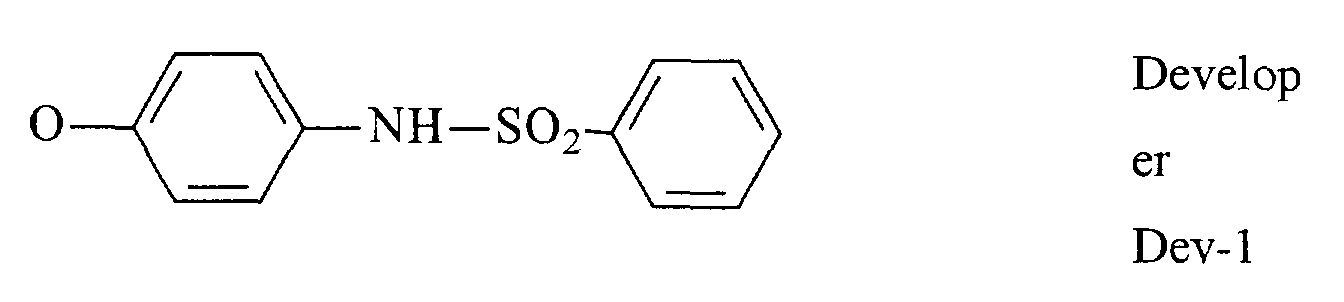
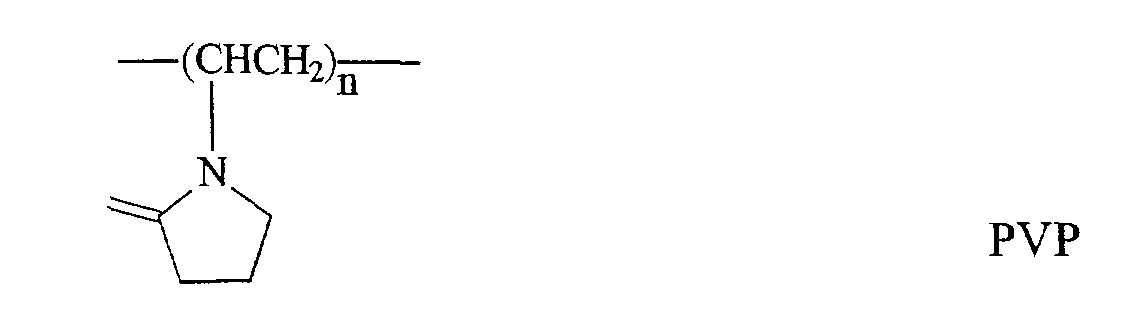
particle dispersion of developer Dev-1. (The solid particle dispersion had been
prepared by milling a 15 % solution of Dev-1, with 1.2% PVP and 0.3% SDS in
water.)
The above prepared coating melt was coated onto a clear gelatin-subbed,
0.178-mm thick poly(ethylene terephthalate) support at a laydown of
86.95 g/m
2 to form an imaging layer of the dry composition shown in Table 1.
| Photothermographic Imaging Layer Dry Coverage |
| Components | Dry Coverage (g/m2) |
| Succinimide | 0.761 |
| Dev-1 | 1.594 |
| Starch precipitated cube silver laydown | 0.472 |
| RSD-1 | 0.011 |
| Silver behenate | 6.956 |
| Polyvinyl Alcohol (PVA, Elvanol 52-22 from DuPont, 86-89% hydrolyzed) | 3.260 |
| Sodium Iodide, USP | .092 |
| Mercuric bromide | 0.00196 |
The resulting imaging layer was then overcoated with a mixture of polyvinyl
alcohol and hydrolyzed tetraethyl orthosilicate as described in Table 2 at a
coverage of 40.4 cc/m
2 to have the composition as shown in Table 3.
| Overcoat Solution |
| Component | Grams |
| Distilled Water | 1158.85grams |
| Polyvinyl Alcohol (PVA, Elvanol 52-22 | 763.43 |
| from DuPont, 86-89% hydrolyzed) (6.2% |
| by weight in distilled water) |
| Tetraethyl Orthosilicate solution | 489.6 |
| comprising of 178.5grams of water |
| 1.363grams of p-Toluene Sulfonic Acid, |
| 199.816grams of Methanol, 207.808grams |
| of Tetraethyl Orthosilicate |
| Aerosol OT (0.15% by weight in distilled | 75.00 |
| water. (Aerosol OT is a sodium bis-2- |
| ethylhexyl sulfosuccinate surfactant and |
| is available from the Cytec Industries, Inc.., |
| U.S.A.) |
| Zonyl FSN (0.05% by weight in distilled | 3.13 |
| water. (Zonyl FSN surfactant is a mixture |
| of fluoro-alkyl poly(ethyleneoxide) |
| alcohols and is a trademark of and |
| available from the Dupont Corp., U.S.A.) |
| Silica (1.5 micron) | 3.0 |
| Overcoat Layer Dry Coverage |
| PSA (Silicate) | 1.302 |
| PVA | 0.872 |
| Aerosol OT | 0.0624 |
| Zonyl FSN | 0.0207 |
This comparative control, Example IE-2, was prepared similar to
Example IE-1 except that a silver iodobromide emulsion made using gelatin as the
peptizer, Emulsion ES-2, and was substituted for Emulsion ES-1. Emulsion ES-2
consisted of silver iodobromide (3%I), cubic grains of a mean edge length of 57
nanometers and contained 20 g gelatin per mole of silver.
Exposure and Processing
The Coating IE-1 (of the invention) and Coating IE-2
(comparative control) were exposed using the 683 nm, 50mW, diode laser
sensitometer and heat processed at 123C for 5 sec to produce a developed silver
image.
Both of the images had a Dmax of >2.75. A comparison of the
Dmin values of the resulting images is show in Table 4.
H3(CH2)11―SO4 -Na+
| Photothermographic Response in Dmin |
| | Dmin Density Comparative Example Gelatin precipitated | Dmin Density Patent Example Starch precipitated |
| Fresh | 0.249 | 0.169 |
| Natural age 30 days | 0.261 | 0.167 |
| Natural age 60 days | 0.310 | 0.195 |
| Natural age 90 days | 0.364 | 0.222 |
| 1 week/120F/50%RH | 0.353 | 0.223 |