EP1200107B1 - Composition having steroidal estrogen effect without increasing the risk of breast cancer - Google Patents
Composition having steroidal estrogen effect without increasing the risk of breast cancer Download PDFInfo
- Publication number
- EP1200107B1 EP1200107B1 EP00945665A EP00945665A EP1200107B1 EP 1200107 B1 EP1200107 B1 EP 1200107B1 EP 00945665 A EP00945665 A EP 00945665A EP 00945665 A EP00945665 A EP 00945665A EP 1200107 B1 EP1200107 B1 EP 1200107B1
- Authority
- EP
- European Patent Office
- Prior art keywords
- breast cancer
- estrogen
- composition
- use according
- effect
- Prior art date
- Legal status (The legal status is an assumption and is not a legal conclusion. Google has not performed a legal analysis and makes no representation as to the accuracy of the status listed.)
- Revoked
Links
Images



Classifications
-
- A—HUMAN NECESSITIES
- A61—MEDICAL OR VETERINARY SCIENCE; HYGIENE
- A61K—PREPARATIONS FOR MEDICAL, DENTAL OR TOILETRY PURPOSES
- A61K36/00—Medicinal preparations of undetermined constitution containing material from algae, lichens, fungi or plants, or derivatives thereof, e.g. traditional herbal medicines
- A61K36/18—Magnoliophyta (angiosperms)
- A61K36/185—Magnoliopsida (dicotyledons)
- A61K36/71—Ranunculaceae (Buttercup family), e.g. larkspur, hepatica, hydrastis, columbine or goldenseal
-
- A—HUMAN NECESSITIES
- A61—MEDICAL OR VETERINARY SCIENCE; HYGIENE
- A61P—SPECIFIC THERAPEUTIC ACTIVITY OF CHEMICAL COMPOUNDS OR MEDICINAL PREPARATIONS
- A61P15/00—Drugs for genital or sexual disorders; Contraceptives
- A61P15/12—Drugs for genital or sexual disorders; Contraceptives for climacteric disorders
Definitions
- the present application relates to the use of a composition comprising substances contained in Cimifuga Racemosa extract, for the preparation of a medicament for the treatment of estrogen deficiency.
- This composition has steroidal estrogen effect, however, does not have the steroidal estrogen side-effect of increasing the risk of development or the tendency to relapse of breast cancer.
- menopausal symptoms are associated with various somatic and psychological disorders which are clinically summarised as menopausal symptoms.
- the most characteristic and frequent symptoms are cessation of menstrual bleeding, hot flushes, depression, nervousness and insomnia.
- menopausal symptoms are the result of substantially reduced steroid production of the ovaries.
- one possibility for treatment of menopausal symptoms is substitution treatment with ovarian hormones.
- Steroidal estrogens have been the treatment of choice, even though it is well known that this type of treatment may increase the risk of cancer development.
- stage 1 and stage 2 A large fraction of women with early stage breast cancer (stage 1 and stage 2) experience cure of their disease after initial surgical treatment. It is, however, difficult to clearly define which women are most likely to have their disease return. Approximately 70% of all primary breast cancers express estrogen receptors and are therefore potentially estrogen sensitive and dependent, i.e. the growth of the cancer cells is stimulated by or dependent on estrogens (17, 18). It is therefore routinely recommended that these patients do not use steroidal estrogenic compounds at any time after the surgical resection of the primary breast cancer.
- steroidal estrogens which are most often used in hormone replacement therapy, do not discriminate between tissues or cell types.
- steroidal estrogens being used in clinical practice today may, while they provide a positive effect on estrogen deficiency symptoms and diseases, also carry the potential of enhancing cancer risk in women since they can stimulate cellular proliferation in several types of tissues, most notably breast tissue. Women with a family history of breast cancer and thereby with increased risk of developing breast cancer are therefore advised not to use steroidal estrogenic compounds.
- the present invention relates to means for relieving or curing symptoms or diseases which are caused by estrogen deficiency in mammals, in particular female mammals, in particular women, who suffer from breast cancer, or have a risk of recurrent breast cancer, or have a high risk of developing breast cancer.
- the invention relates to the use of a composition comprising substances contained in Cimifuga Racemosa extract for preparing a medicament for use in a method for relieving or curing symptoms or diseases which are caused by estrogen deficiency, in a mammal who suffers from breast cancer, or has a risk of recurrent breast cancer, or has a high risk of developing breast cancer.
- the composition has an estrogen-like effect, as evidenced by a capability of the composition of inducing known physiological estrogenic effects in target tissues, and is free from interaction with breast cancer cells, in particular free from a stimulating effect on breast cancer thereby treating the estrogen deficiency-conditioned symptom or disease without introducing a risk of provoking the development of clinically evident breast cancer and/or stimulating growth of existing breast cancer cells in the mammal.
- the composition is a composition containing substances contained in Cimicifuga Racemosa extract.
- the composition may be or may contain Cimicifuga Racemosa extract (either in a liquid form or in the dry form).
- Doses of the extract may be from, e.g. 1 mg to 20 mg daily on the basis of the extract, such as 2-3 mg twice daily for a woman, and doses of other active principles than the Cimicifuga Racemosa extract described herein (SPP-001) can be assessed by the person skilled in the art based on the relative activity compared to SPP-001 extract, or based on the experiments explained in the following.
- Another use of the invention is to combine the composition with various pharmaceutical compounds to broaden the estrogen like effect of these compounds without interfering with any simultaneous anti-estrogenic effects of the compounds on breast cancer cells.
- raloxifene methanone, [6-hydroxy-2-(4-hydroxyphenyl)benzo[b]thien-3-yl][4-(1-piperidinyl)ethoxy]phenyl]-hydrochloride
- non-steroidal anti-estrogens such as tamoxifen, droloxifene.
- the composition could also be combined with biphosphonates.
- the method for screening for substances or compositions contained in the Cimifuga Racemosa extract with the described properties comprises subjecting test substances or compositions to
- Example 1 the estrogenic effect of SPP-001 on mouse uterine tissue is described.
- the dose selected was based on the recommended daily intake of SPP-001 in women, which is 2.4 mg/kg twice daily.
- SPP-001 has estrogen-like effect on murine uterine tissue and that the applied administration and dose of SPP-001 is sufficient to induce this effect.
- Example 2 describes the effect of SPP-001 on tumour development and growth of an estrogen receptor-negative human breast cancer grown in nude mice. Using the same dose of SPP-001 which induced increase in uterine weight, no effect was observed on the human breast cancer xenograft.
- Example 3 the estrogen receptor-positive human breast cancer cell line MCF-7 (ATCC HTB-22) was inoculated into nude mice and treated with estradiol or SPP-001.
- the SPP-001 dose was either the same as used in Example 1 and 2 or a 10 fold higher dose.
- the MCF-7 human breast cancer only forms tumours in ovariectomized or intact female nude mice in the presence of estrogen supplementation.
- estrogen supplementation resulted in the development of growing tumours, while untreated mice did not develop any tumours.
- Treatment with SPP-001 in both dose groups did not result in tumour development in any of the mice studied.
- Example 4 describes the effect of orally administered SPP-001 and subcutaneously administered estradiol on tumour development and tumour growth of the estrogen receptor-positive and estrogen dependent MCF-7 human breast cancer xenograft in nude mice.
- SPP-001 dose was 100 fold higher than the recommended daily dose for humans.
- the treatment with SPP-001 and estradiol was given both alone and in combination.
- SPP-001 had no growth supportive effect or growth inhibitory effect whether given alone or in combination with E2, suggesting that SPP-001 has neither potentiating nor inhibitory effect on estrogen sensitive breast cancer cells.
- the results further imply that SPP-001 does not bind to estrogen receptors of the MCF-7 cells, in that it does not antagonize the growth stimulatory effect of estradiol.
- Example 5 describes an experimental model system for the testing of compositions or compounds ("drugs") with putative differential estrogen-like effects in normal tissues and in breast cancer.
- Possible estrogen-like effects in normal tissues are tested by e.g. measuring increase in mouse uterine weight as the end point, whereas possible estrogenic effect in breast cancer is tested by measuring growth supportive effect in the estrogen sensitive MCF-7 breast cancer xenograft as the end point.
- the tests can be performed in the same mice or in identical mice.
- Example 6 describes a clinical protocol for safety studies of SPP-001 treatment in women with advanced breast cancer. Patients are randomized to treatment with SPP-001 or placebo and will be followed until death. Survival curves for each group will be constructed in order to determine the possible effect of SPP-001 in this patient population. It will be understood that this protocol can be adapted for use for safety studies of treatment with any CR-based composition which fulfils the criteria for being useful in the method according to the invention.
- Example 7 describes a clinical protocol for safety studies of SPP-001 treatment in women with advanced breast cancer and who have obtained a complete or partial response upon conventional antineoplastic therapy. Patients are randomized to treatment with SPP-001 or placebo and will be followed until death. Time to progression in each treatment group will be determined and compared in order to establish whether SPP-001 has any effect on cancer progression in this patient population. Again, it will be understood that this protocol can be adapted for use for safety studies of treatment with any CR-based composition which fulfils the criteria for being useful in the method according to the invention.
- a clinical protocol is described for safety studies of SPP-001 treatment in women with a prior diagnosis of breast cancer and with no indication of recurrence. Patients are randomized to treatment with SPP-001 or placebo and will be followed for 5 years. Univariate recurrence-free and overall survival curves will be constructed and compared in order to establish whether SPP-001 has any effect on these two parameters. Also this protocol can be adapted for use for safety studies of treatment with any CR-based composition which fulfils the criteria for being useful in the method according to the invention.
- Example 9 describes clinical SPP-001 treatment of estrogen deficiency conditions other than menopausal symptoms in women with current breast cancer, with a prior diagnosis of breast cancer, and with an increased risk of developing breast cancer.
- the diseases include osteoporosis, osteochondrosis, hyperlipidaemia, hypercholesterolaemia, arteriosclerosis and other conditions which can be cured or relieved by estrogen replacement therapy.
- compositions or substances contained in Cimifuga Racemosa extract capable of inducing a physiological estrogen-like effect without interacting with breast cancer cells for the preparation of a medicament for the treatment of estrogen deficiency symptoms or diseases of a mammal suffering from or having a high risk of developing an estrogen dependent tumour.
- the present invention is based on in vivo investigations performed on human breast cancer xenografts in immune deficient nude mice. Numerous studies have demonstrated that the responses of these breast cancer xenografts to endocrine treatment, i.e. ablative, inhibitive, additive; and competitive treatment are comparable to those obtained with these treatment modalities in breast cancer patients (2, 6-10). It is thus justified to presume that the response to SPP-001 of breast cancer in situ is comparable to the response obtained in the xenografts.
- Estrogen has many physiological effects as estrogen is required for the normal maturation of the female e.g. by stimulating the development of the vagina, uterus, and uterine tubes as well as the secondary sex characteristics.
- Estrogen stimulates stromal development and ductal growth in the breast and is responsible for the accelerated growth phase and the closing of the epiphyses of the long bones that occur at puberty.
- Estrogen contributes to the growth of the axillary and pubic hair and alter the distribution of body fat so as to produce typical female body contours.
- Large quantities of estrogen also stimulate development of pigmentation in the skin most prominent in the region of the nipples and areolas and in the genital region.
- Estrogen also plays an important role in the development of the endometrial lining.
- Estrogen also haS a number of important metabolic effects. It is responsible for the maintenance of the normal structure of the skin and blood vessels in women. Estrogen decreases the rate of resorption of bone by antagonizing the effect of parathyroid hormone on bone but does not stimulate bone formation. In the liver, Estrogen alters the metabolism so that there is a higher circulating level of proteins such as transcortin (CBG), thyroxin binding globulin (TBG), sex hormone-binding globulin (SHBG), transferring, renin substrate, and fibrinogen. This leads to increased circulating levels of e.g. thyroxine, estrogen, testosterone, iron, and copper.
- CBG transcortin
- TBG thyroxin binding globulin
- SHBG sex hormone-binding globulin
- Preferred physiological effects used as a measurement of consequence of treatment with the substance are stimulation of vaginal cells in, e.g., vaginal smear from a test animal, and measuring changes in gonadotropins, e.g. FSH and LH.
- the physiological estrogen-like effect is uterine growth as determined by an increase in uterine weight compared to controls after administration of the substance contained in Cimifuga Racemosa extract to ovariectomized female athymic nude mice.
- a physiological estrogen-like effect is uterine growth as determined by an increase in mean uterine weight compared to controls of at least 0.10 g after administration of the substance to ovariectomized NMRI female athymic nude mice for 8 days.
- the estrogen-like effect possessed by the composition used according to the invention manifests itself in the composition being capable of inducing an increase in uterine weight in adult ovariectomized NMRI female athymic nude mice, and for preferred compositions, the increase in uterine weight following a dose comparable to a normal dose for the mammal to be treated may correspond to a uterine weight increase seen in the same test animal following estradiol treatment, which will often be substantially the maximum uterine weight increase obtainable in the same test animal by estrogen treatment.
- Cimifuga Racemosa extract is one which has substantially no effect on the growth of breast cancer cells, neither a positive, agonising, effect, nor a negative, antagonising, effect, and that this applies both for estrogen receptor-negative breast cancer cells (and also includes lack of indirect effect) and for estrogen receptor-positive breast cancer cells.
- the preferred lack of an antagonistic effect of the substance contained in Cimifuga Racemosa extract is based on the experimental reports demonstrating stimulation of breast and endometrial cancer cell growth following antiestrogen treatment of cells propagated in culture or athymic nude mice (22) and the often observed "flare" response to antiestrogens.
- the substance contained in Cimifuga Racemosa extract does not stimulate cancer cells that are estrogen receptor-positive. Likewise, it is preferred that said substance does not stimulate cancer cells that are estrogen receptor-negative. Furthermore, the substance should have no substantive effect on the breast cancer cells' capability of metastasizing or adhesion.
- lack of stimulation of breast cancer cells is determined by no effect of the substance contained in Cimifuga Racemosa extract on growth of the estrogen and progesterone receptor negative MDA-MB-231 (ATCC HTB-26) human breast cancer cell line inoculated into six-week-old female athymic nude mice compared to a control wherein the tumours show increasing size during at least six consecutive growth recordings.
- Such method is also described in details in example 2.
- lack of stimulation of breast cancer cells is determined by no effect of the substance contained in Cimifuga Racemosa extract on growth of the estrogen dependent and estrogen receptor-positive MCF-7 human breast cancer cell line inoculated into six-week-old female athymic nude mice compared to a control wherein the tumours show increasing size during at least six consecutive growth recordings.
- Such method is also described in details in example 3.
- lack of stimulation of breast cancer cells is determined by no effect of the substance contained in Cimifuga Racemosa extract when given in combination with estradiol on growth of the estrogen dependent and estrogen receptor-positive MCF-7 human breast cancer cell line inoculated into six-week-old female athymic nude mice compared to a control wherein the tumours show increasing size during at least six consecutive growth recordings.
- Such method is also described in details in example 4.
- Ovariectomized rodents are suitable animal models for the study of estrogenic effects (2, 6-11). Administration of steroidal estrogens or other estrogenic compounds will result in increased uterine tissue weight. By using immune deficient rodents, the effects of steroidal estrogens and other estrogenic compounds can be studied simultaneously in the uterine tissue and in xenotransplanted human tumours.
- women who either suffer from breast cancer, or women who have suffered from breast cancer, and who in addition are suffering from menopausal symptoms may due to the lack of estrogenic effects on breast cancer cells choose to use CR composition, e.g. SPP-001 to relieve their complaints.
- women who have a high risk of developing breast cancer due to a family history of breast cancer and/or due to carcinoma in situ lesions in their breast tissue may choose to use CR composition e.g. SPP-001 to relieve their menopausal symptoms.
- women who either suffer from breast cancer, or women who have suffered from breast cancer, and who in addition are suffering from menopausal symptoms may due to the lack of estrogenic effects on breast cancer cells choose to use CR compositions, e.g. SPP-001, to relieve their complaints.
- women who have a high risk of developing breast cancer due to a family history of breast cancer genetic alterations related to an increase of breast cancer, nullipari, early menarche, late menopause, adipositas, prior use of steroidal estrogens, and carcinoma in situ lesion in their breast tissue, may choose to use CR composition, e.g. SPP-001 to relieve their menopausal symptoms.
- high risk is defined as a risk of developing breast cancer which is higher than 10% as compared to normal, i.e. a hazard ratio which is higher than 1,1 which is comparable to the increased risk of developing breast cancer when taking conventional contraceptive pills (hazard ratio of 1.1-1.2).
- estrogen has a plethora of physiological effects.
- the symptoms of estrogen deficiency will vary.
- the substance contained in Cimifuga Racemosa extract will consequently alleviate estrogen deficiency-conditioned symptom or disease selected from the group consisting of menopausal symptoms; dermatological disorders such as ageing of the skin, wrinkles, dry skin and other estrogen deficiency related dermatological disorders; dryness of mucous membranes (e.g.
- vaginal and intestine brain related disease such as Alzheimer's including other types of dementia; bone and joint related diseases such as osteoporosis, osteochondrosis, osteoarthritis, rheumatoid arthritis, healing of bone fractures, and reduction in skeletal fractures; vaginal estrogen deficiency such as vaginal dryness and dyspareuni; coronary heart diseases such as arteriosclerosis; and disease such as hyperlipidaemia and hypercholesterolaemia.
- Cimicifuga Racemosa extract a preferred substance to be used according to the invention is a composition containing substances contained in Cimicifuga Racemosa extract.
- a Cimicifuga Racemosa extract SPP-001 a Cimicifuga Racemosa extract SPP-001.
- the invention is specifically based on the novel finding that a specific extract of CR (Cimicifuga racemosa) gives rise to a specific composition (SPP-001) which shows a unique combination of a very pronounced estrogenic effect, as assessed by support of uterus growth, and, in doses which give a maximum increase in uterus growth, comparable to the best increases obtainable by treatment with estradiol, shows a lack of estrogenic effects of SPP-001 on human breast cancer cells, hormone-sensitive and -dependent as well as hormone-resistant and -independent breast cancer cells.
- the treatment according to the invention is based on extracts of Cimicifuga Racemosa (CR), which have known beneficial effects on menopausal problems in women (1, 12-15, 20, 21).
- CR Cimicifuga Racemosa
- Such extracts may be water soluble and/or substantially soluble in organic solvent systems, e.g., by alcohol extraction of Cimicifuga Racemosa material, in particular such as root stem.
- the estrogen-like effect of CR is further documented by the expected chances in gonadotropins following CR treatment (12, 14).
- the composition may also be a composition comprising Cimicifuga Racemosa plant parts, or it may be a composition containing one or more chemical compounds contained in Cimicifuga Racemosa extract.
- the composition may also be used in combination with a drug which has a selective estrogen receptor modulating (SERM) activity.
- SERM selective estrogen receptor modulating
- drugs having SERM activity may be raloxifene (methanone, [6-hydroxy-2-(4-hydroxyphenyl)benzo[b]thien-3-yl][4-(1-piperidinyl)ethoxy]phenyl]-hydrochloride) and associated compounds.
- Other examples are non-steroidal anti-estrogens such as tamoxifen, droloxifene.
- the composition could also be combined with biphosphonates.
- composition to be used according to the invention may be an oral composition or a composition suitable for any other appropriate route of administration, and examples of suitable pharmaceutical preparations can, e.g., be found in the literature, including the above-mentioned patent literature.
- the capability of the substance or composition contained in Cimifuga Racemosa extract of inducing physiological estrogen effects e.g. uterine growth female mammals is tested by testing the capability of the substance or composition of effecting uterine weight increase in ovariectomized female NMRI athymic nude mice, the lack of effect of the substance or composition on the growth of estrogen receptor-negative cancer cells is assessed as the lack of capability of the substance or composition of supporting growth of MDA-MB231 xenografts in female NMRI athymic nude mice, and the lack of effect of the substance or composition on the growth of estrogen receptor-positive cancer cells is assessed as the lack of capability of said substance or composition of supporting growth of MCF-7 xenografts in female NMRI athymic nude mice.
- said substance or compound should not support the growth of breast cancer cells even if combined with estradiol and even if the compound or substance is given in doses which are 10 or even 100 times higher than a dose giving, in the same strain of nude mice, a maximum uterus weight increase.
- This example describes the measurement of physiological estrogenic effects of orally administered SPP-001 in mice.
- mice (10 weeks old NMRI mice) were ovariectomized and randomized at day 0.
- the animals were observed daily during the experimental period of 8 days.
- the desired extraction solution was made from 100 mg CR material and 1660 ml sterile water, vortexed and then kept at room temperature for 30 minutes. This final CR composition was named SPP-001. SP- 001 was made freshly for each experimental day and always stored at +4°C for a maximum of 24 hours. For each day of the experiment the above described procedure was repeated.
- Dosing was performed orally with a dosing volume of 0.1 ml of SPP-001 to each mouse twice daily. Each mouse in the SPP-001 group received approximately 0.40-0.60 mg SPP-001 material/kg/day.
- estradiol slow release pellet (Innovative Research, Toledo, USA, cat. no. SE-121) was inoculated subcutaneously in the neck of the mice using a trocar.
- the calculated mean uterine weights and the corresponding ranges were 0.08 g [0.05 - 0.11], 0.13 g [0.11 - 0.15], and 0.14 g [0.11 - 0.21] in the control, estradiol and SPP-001 groups, respectively ( Table 1 and Figure 1 ).
- Individual uterine weights (g) Untreated controls Estradiol (E 2 ) CR composition 0.09 0.11 0.14 0.11 0.15 0.11 0.08 0.14 0.13 0.06 0.12 0.21 0.05 0.15 0.11 0.12 Effect of CR composition on uterine weight of ovariectomized adult NMRI/BomTM female athymic nude mice.
- CR composition was given orally, 0.24 mg/kg twice daily.
- E 2 treatment was given by subcutaneous inoculation of a 0.72 mg slow release pellet (Innovative Research) in the neck.
- the SPP-001 dose was chosen to simulate the daily recommended dose.
- SPP-001 had an in vivo effect on mouse uterine weight which was comparable to that seen following E2 treatment.
- Other methods to determine physiological estrogenic activity such as changes in gonadotropins (decrease) and changes in cytology of the vaginal cells (maintaining normal histological profile) can be used either in addition or as an alternative.
- This example describes the effect of orally administered SPP-001 on tumour development and tumour growth of the estrogen receptor-negative and estrogen resistant and independent MDA-MB-231 human breast cancer xenograft in nude mice (4).
- the human mammary cancer cell line MDA-MB-231 (ATCC HTB-26) was used. Near confluent in vitro grown cells were harvested using a cell scraper. After centrifugation an aliquot of the cells was stained by Trypan Blue and counted. The cells were resuspended in fresh medium to a final concentration of 1 x 10 6 viable cells per inoculum (0.2 ml).
- the experiment was performed in a total of 21 six-week-old female META/BomTM athymic nude mice. An acclimatization period of one week was allowed in order to exclude animals in poor condition.
- mice were kept under sterile conditions in laminar air flow clean benches. Type III Macrolon cages (42 x 26 x 15 cm) with five animals in each cage was used. The mice were allowed sterile water and food pellets ad libitum.
- the cages and the bedding were changed once a week.
- the room temperature was 25 ⁇ 2°C, and the relative humidity 55 ⁇ 5%.
- the room was illuminated 24 hours a day.
- mice After acclimatization, the animals were randomized to a group of 11 treated animals and a group of 10 control mice. Each animal was identified by earmarks and each cage was marked to identify group and animal earmarks.
- mice were then randomized into either treatment with SPP-001 (example 1) or treatment with sterile water.
- the mice of the SPP-001 treatment group were given SPP-001 orally (0,1 ml) twice daily from the day of cell inoculation and until termination of the experiment. Control mice received sterile water twice daily.
- the animals were observed daily during the experimental period of 38 days.
- tumours When the tumours became measurable they were measured in two dimensions three times a week using a sliding gauge. Tumour growth curves were constructed and growth curve parameters were calculated (19).
- the specific growth rate, ⁇ ( Table 2 ) of treated tumours was 0.0144 compared to 0.0165 of the vehicle treated control tumours, and as a consequence the calculated tumour volume doubling times (TD) were 14.9 days and 13.0 days of the treated and control tumours, respectively.
- Group Growth curve analysis Tumours 1) No. Gompertz growth curve parameters T D 3) days ⁇ x 10 3 ⁇ x 10 3 r Controls 15 16.5 96.3 0.992 13.0 CR composition 16 14.4 80.3 0.994 14.9
- A(t) A(0)exp ⁇ (1-exp(- ⁇ t)) ⁇ / ⁇
- A(0) is the tumour area at the time of tumour cell inoculation
- A(t) is the tumour area at time t after inoculation
- ⁇ and ⁇ are constants determining the course of the growth curves.
- A(max) is the theoretical maximal tumour area
- ⁇ represents the slope
- r is the coefficient of correlation
- results of the growth curve analysis indicate that the applied dose of SPP-001 had no effect on growth of the estrogen and progesterone receptor negative MDA-MB-231 human breast cancer cell line. Similar experiments as those described in this example can be performed using other estrogen receptor-negative human breast cancer cell lines, e.g. MDA-MB-435S (ATCC HTB 129).
- This example describes the effect of orally administered SPP-001 on tumour development and tumour growth of the estrogen receptor-positive and estrogen dependent MCF-7 human breast cancer xenograft in nude mice (4).
- the estrogen and progesterone receptor positive human mammary cancer cell line MCF-7 (ATCC HTB-22) was used.
- tumours in intact female nude mice were used as the source for the experiments.
- 1-2 mm diameter tumour blocks were prepared and inoculated into the right flank of recipient mice.
- the experiment was performed in a total of 80 six-week-old female NMRI/BomTM athymic nude mice. An acclimatisation period of one week was allowed in order to exclude animals in poor condition.
- mice were kept under sterile conditions in laminar air flow clean benches. Type III Macrolon cages (42 x 26 x 15 cm) with five animals in each cage were used. The mice were allowed sterile water and food pellets ad libitum .
- the cages and the bedding were changed once a week.
- the room temperature was 25 ⁇ 2°C, and the relative humidity 55 ⁇ 5%.
- the room was illuminated 24 hours a day.
- estradiol slow release pellet (Innovative Research) was inoculated subcutaneously in the neck of the mice using a trocar.
- tumours were observed daily during the experimental periods. When the tumours became measurable, they were measured in two dimensions three times a week using a sliding gauge. Tumour growth curves were constructed and growth curve parameters were calculated (19).
- the experiment was terminated when growing tumours had shown increase in size during at least six consecutive growth recordings. At termination of the experiment, the animals were sacrificed by cervical dislocation.
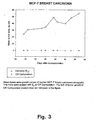
- Figure 3 shows the mean tumour area growth curve constructed from the individual tumour measurements of the E2 treated tumours, and the lack of tumour growth in SPP-001 treated mice is indicated in the figure.
- Calculated tumour growth curve parameters are listed in Table 3.
- Group Growth curve analysis Tumours No. Gompertz growth curve parameters T D days ⁇ x 10 3 ⁇ x 10 3 r Estradiol Estradiol (E 2 ) 7/10 7.6 34.6 0.903 28.3 CR composition 0/10 - - - - Growth analysis of human MCF-7 breast carcinoma xenografts grown in CR composition and E 2 treated female NMRI/BomTM athymic nude mice.
- tumour growth was only observed in the E2 treatment group of Study 1 , the results of this experiment was inconclusive due to the low take rate. This was probably caused by a relatively low cell dose of the inocula (10 6 cells). Therefore the cell dose was increased to 10 7 cells/inoculum in Study 2, resulting in a take rate comparable to that obtained with transplantation of tumour blocks in Study 3.
- the SPP-001 dose of 0.40-0.60 mg/kg/day was chosen to simulate the recommended daily intake of CR.
- the results showed that even a 10-fold increase in the dose of SPP-001 did not support the growth of MCF-7.
- the MCF-7 breast carcinoma in nude mice is a slow growing tumour (3).
- This example describes the effect of orally administered SPP-001 and subcutaneously administered estrogen on tumour development and tumour growth of the estrogen receptor-positive and estrogen dependent MCF-7 (ATCC HTB-22) human breast cancer xenograft in nude mice (4).
- the estrogen and progesterone receptor positive human mammary cancer cell line MCF-7 was used.
- the experiment was performed in a total of 32 six-week-old female NMRI/BomTM athymic nude mice. An acclimatization period of one week was allowed in order to exclude animals in poor condition.
- mice were kept under sterile conditions in laminar air flow clean benches. The mice were allowed sterile water and food pellets ad libitum. The cages and the bedding were changed once a week. The room temperature was 25 ⁇ 2°C. and the relative humidity 55 ⁇ 5%.
- tumour blocks After inoculation of tumour blocks the animals were randomized into treatment groups according to the study design. Each animal was identified by earmarks and each cage was marked to identify group and animal earmarks.
- mice Thirty-two intact female nude mice were transplanted with approximately 1-mm-diameter blocks of MCF-7 tumour into both flanks of recipient mice, and the mice were randomized into four treatment groups:
- estradiol slow release pellet (Innovative Research) was inoculated subcutaneously in the neck of the mice using a trocar.
- tumours were observed daily during the experimental period. When the tumours became measurable, they were measured in two dimensions three times a week using a sliding gauge. Tumour growth curves were constructed and growth curve parameters were calculated (19).
- the experiment was terminated when the growing had shown increase in size during at least six consecutive growth recordings. At termination of the experiment, the animals were sacrificed by cervical dislocation.
- tumour inocula As expected, the untreated control tumours showed no significant growth. At day 20 after transplantation 10 persisting tumour inocula were evaluable ( Figure 4 ). The SPP-001 treatment did not support the growth of the MCF-7 tumour. The mean tumour area of 5 evaluable tumour inocula at 20 days after transplantation was the same as that of the control group.
- the E2 treatment had growth supportive effect on the MCF-7 tumour xenograft.
- 8 tumours showed growth, and at day 20 the tumours had reached a mean tumour area of 39 sq mm ( Figure 4) .
- the addition of the SPP-001 to E2 did not influence the growth of the tumour.
- the mean tumour area of 11 evaluable tumours in the combined treatment group was the same as that of the E2 group.
- mice received both SPP-001 and estrogen treatment no differences were seen when compared to the estrogen treatment only. This suggests that SPP-001 neither has a potentiating nor an inhibitory (antagonizing) effect on estrogen sensitive breast tumours. The observation further implies that this SPP-001 does not bind to estrogen receptors in MCF-7 cells.
- This example describes an experimental model system for the investigation of drugs or combination of drugs with putative differential estrogenic effects in normal tissues and in breast cancer.
- the investigation includes an estradiol treatment group which serves as a functional control of the study system.
- Specimen Smear, collected from vaginal vault or lateral wall, is spread onto pre-labelled glass slides and promptly spray- or wet-fixed.
- Cytological examination will detect dysplasia, neoplasia, and some infections e.g. infection with Trichomonas vaginalis or Candida albicans.
- mice Six-eight-week-old female NMRI/BomTM athymic nude ( nu / nu ) mice are used. After acclimatization the mice are ovariectomized in order to avoid influence of endogenous estrogen. The mice are randomised into treatment groups and a group of untreated controls.
- mice are ovariectomized and randomised at day 0.
- E2 estradiol
- the animals are observed daily during the experimental period of 8 days. Animals dying before termination of the experiment are excluded from the analysis.
- composition(s) of the drug(s) is/are prepared using appropriate methods for extraction, purification, solubilisation and vehicle systems.
- the treatment is given by the most convenient route of administration (dermally, orally, intraperitoneally, or intravenously) and with appropriate dosing volume(s).
- Dose(s) of the drug(s) is/are selected in relevant dose range(s), and schedule(s) with expected higher efficiency are selected.
- the experiment is terminated at day 8 after ovariectomy. All animals are sacrificed by cervical dislocation and the mouse uterine weights are determined.
- the mouse uterine weight data are used to calculate mean uterine weights of the control, estradiol, and test groups, respectively.
- a significant increase in mean uterine weight of the E2 group compared to the controls serves as functional control of the study system.
- test drug(s) treatment group(s) A significant increase in mean uterine weight of the test drug(s) treatment group(s) are considered evidence of estrogenic effect on normal tissues.
- Comparison of the increase in mean uterine weight in the E2 group and test group(s) are used to semiquantitate the estrogenic effect of the investigated drug(s), dose(s), and schedule(s).
- tumours MDA-MB-231
- MCF-7 estrogen and progesterone receptor positive, and estrogen sensitive and dependent (4).
- the reason for inclusion of the receptor negative breast tumour xenograft in the test system is to identify possible unspecific effects, i.e. non-estrogenic effects which are independent of binding of the drug(s) to estrogen receptors of the tumour cells.
- the investigation includes estradiol treatment of the estrogen sensitive MCF-7 tumour xenografts which serves as a functional control of the study system.
- the human mammary cancer cell lines MDA-MB-231 (ATCC HTB-26) and MCF-7 (HTB-22) are used. Near confluent in vitro grown cells are harvested using a cell scraper. After centrifugation an aliquot of the cells is stained by Trypan Blue and counted to determine the fraction of viable cells. The cells are resuspended in fresh medium to a final concentration of 10 6 - 10 7 viable cells per inoculum (0.1-0.2 ml). The cells are inoculated subcutaneously into both flanks of ovariectomized or intact female nude mice.
- mice Six-week-old female athymic NMRI/BomTM nude ( nu / nu ) mice are used. An acclimatization period of one week is allowed in order to exclude animals in poor condition. The experiments described in this example can be performed with other strains of mice.
- Ovariectomy is performed under general anaesthesia and using standard procedures following acclimatization of the animals.
- mice are kept under sterile conditions in laminar air flow clean benches.
- the mice are allowed sterile water and food pellets ad libitum.
- the room temperature is 25 ⁇ 2°C, and the relative humidity 55 ⁇ 5%.
- the E2 treatment group is only included in the treatment of MCF-7 xenograft.
- tumours are observed daily during the experimental period. When the tumours become measurable they are measured in two dimensions three times a week using a sliding gauge. Tumour growth curves are constructed and growth curve parameters are calculated (19).
- the experiment is terminated when growing tumours have shown increasing size during at least six consecutive growth recordings. At termination of the experiment, the animals are sacrificed by cervical dislocation.
- tumour measurements are used to construct mean growth curves and to calculate tumour growth curve parameters (19).
- a growth supportive effect of the drug(s) in the MCF-7 xenograft indicates an estrogen-like effect mediated through estrogen receptors of the cancer cells. If a growth supportive effect of the drug(s) is also found in the MDA-MB-231 xenograft, this is considered evidence that the effect observed is not mediated through the estrogen receptors of the tumour cells. However, in order to be chosen as a candidate for a substance or composition useful in the method of the invention, the substance or composition should show neither growth supportive effect in the MCF-7 xenograft nor growth supportive effect (which would then be an indirect growth supportive effect) in the MDA-MB-231 xenograft.
- This example describes a clinical protocol for safety studies of SPP-001 in women with advanced breast cancer.
- Advanced breast cancer patients with measurable disease will be included.
- the patients should suffer from menopausal symptoms.
- No chemotherapy or endocrine therapy should be given concomitantly with the SPP-001 treatment.
- Estrogen receptor (ER) status on the cancer cells should be determined.
- the SPP-001 should be administered orally twice daily at a corresponding dose of 0.40-0.60 mg SPP-001 /kg. Treatment period should be 3 months.
- Increased and/or decreased dose(s) and/or administration schedule(s) involving single or multiple dosing of various time intervals can be used.
- Measurable lesions should be defined and measured before commencement of SPP-001 treatment. Effect of CR on menopausal symptoms will be registered. Any site effects associated with SPP-001 treatment will be registered. In addition s-FSH and s-LH will be monitored during the treatment period. Furthermore, quantitative PCR or alike can be applied to determine potential effects on estrogen regulated genes such as the progesterone receptor gene and the pS2 gene.
- Example 7 CLINICAL EVALUATION OF THE SAFETY OF SPP-001 TREATMENT IN WOMEN WITH ADVANCED BREAST CANCER
- This example describes a clinical protocol for safety studies of SPP-001 treatment in women with advanced breast cancer.
- Advanced breast cancer patients who have obtained a complete or partial response upon conventional antineoplastic therapy will be included.
- the patients should suffer from menopausal symptoms.
- No chemotherapy or endocrine therapy should be given concomitantly with the SPP-001 treatment.
- ER status on the cancer cells should be determined.
- the SPP-001 should be administered orally twice daily at a corresponding dose of 0.40-0.60 mg SPP-001 /kg. Treatment period should be 3 months.
- Dose(s) and schedule(s) can be subjected to changes.
- Time to progression in each treatment group will be determined and compared between groups in order to determine whether SPP-001 has any effect on cancer progression in this patient population.
- This example describes a clinical protocol for safety studies of SPP-001 in women with a prior diagnosis of breast cancer and with no indication of recurrence.
- the SPP-001 should be administered orally twice daily at a corresponding dose of 0.40-0.60 mg SPP-001 /kg. Treatment period should be 1 year.
- Dose(s) and schedule(s) can be subjected to changes.
- Time to recurrence of disease will be determined. Effect of SPP-001 on menopausal symptoms and gonadotropins will be registered. Any side-effects associated SPP-001 treatment will be registered.
- This example describes SPP-001 treatment of estrogen deficiency conditions including dermatological disorders such as ageing of the skin, dryness of mucous membranes (e.g. vaginal and intestine), brain related disease such as Alzheimer's including other types of dementia, bone and joint related disease such as osteoporosis, osteochondrosis, osteoarthritis, rheumatoid arthritis, healing of bone fractures, and reduce in skeletal fractures and disease such as hyperlipidaemia, hypercholesterolaemia, arteriosclerosis, etc. in the subgroup of women who are currently suffering from breast cancer, who have a prior history of breast cancer, or women with an increased risk of developing breast cancer.
- dermatological disorders such as ageing of the skin, dryness of mucous membranes (e.g. vaginal and intestine)
- brain related disease such as Alzheimer's including other types of dementia
- bone and joint related disease such as osteoporosis, osteochondrosis, osteoarthritis, rheumatoid arthritis, healing of
- women belonging to one of the above mentioned three breast cancer related groups and suffering from diseases which can be cured or relieved by estrogen replacement therapy, can be included in this treatment study.
- SPP-001 should be administered twice daily at a corresponding dose of 0.40-0.60 SPP-001 /kg.
- Dose(s) and schedule(s) can be subjected to changes.
- This example describes methods to determine physiological estrogenic effects of SPP-001 and similar compositions in the human female suffering from estrogen deficiencies.
- Serum levels of FSH and LH will be determined pre-treatment and at 1 month and 2 months of treatment. Standard commercial assays will be used. Vaginal smear cytology will be performed before and after treatment for 60 days. Bone mineral density will be determined pre-treatment and following two months of treatment. Standard DXA assay will be used.
- Example 11 SKIN APPLICATIONS OF SPP-001 OR ALIKE FOR CONDITIONS WHICH COULD BE ALLEVIATED OR CORRECTED BY ESTROGENS
- Example 12 VAGINAL APPLICATION OF SPP-001 TO ALLEVIATE SYMPTOMS OF VAGINAL DRYNESS AND ESTROGEN DEFICIENCY RELATED CONDITIONS
- SPP-001 An appropriate dose of SPP-001 is given to alleviate the vaginal symptoms by direct application to the mucous membrane or by oral or parenteral administration. Used when needed.
- Example 13 APPLICATIONS OF SPP-001 OR ALIKE FOR CORONARY HEART APPLICATION (CHD) CONDITIONS WHICH COULD BE ALLEVIATED OR CORRECTED BY ESTROGENS
- Estrogens have been generally regarded as cardiac protective in the female population. SPP-001 and alike can be used because of their estrogen beneficial activity, but without its unwanted negative issues, for treatment and alleviation of symptoms of arterial and venous diseases, including heart and brain.
Landscapes
- Health & Medical Sciences (AREA)
- Natural Medicines & Medicinal Plants (AREA)
- Life Sciences & Earth Sciences (AREA)
- Pharmacology & Pharmacy (AREA)
- Chemical & Material Sciences (AREA)
- Engineering & Computer Science (AREA)
- Veterinary Medicine (AREA)
- Public Health (AREA)
- General Health & Medical Sciences (AREA)
- Medicinal Chemistry (AREA)
- Animal Behavior & Ethology (AREA)
- Botany (AREA)
- Reproductive Health (AREA)
- Epidemiology (AREA)
- Microbiology (AREA)
- Medical Informatics (AREA)
- Biotechnology (AREA)
- Alternative & Traditional Medicine (AREA)
- Bioinformatics & Cheminformatics (AREA)
- Endocrinology (AREA)
- Mycology (AREA)
- Chemical Kinetics & Catalysis (AREA)
- General Chemical & Material Sciences (AREA)
- Nuclear Medicine, Radiotherapy & Molecular Imaging (AREA)
- Organic Chemistry (AREA)
- Pharmaceuticals Containing Other Organic And Inorganic Compounds (AREA)
- Medicines Containing Plant Substances (AREA)
- Acyclic And Carbocyclic Compounds In Medicinal Compositions (AREA)
- Medicines Containing Material From Animals Or Micro-Organisms (AREA)
Abstract
Description
| Individual uterine weights (g) | ||
| Untreated controls | Estradiol (E2) | CR composition |
| 0.09 | 0.11 | 0.14 |
| 0.11 | 0.15 | 0.11 |
| 0.08 | 0.14 | 0.13 |
| 0.06 | 0.12 | 0.21 |
| 0.05 | 0.15 | 0.11 |
| 0.12 | ||
| Effect of CR composition on uterine weight of ovariectomized adult NMRI/Bom™ female athymic nude mice. |
| Group | Growth curve analysis | ||||
| Tumours1) No. | Gompertz growth curve parameters | TD 3) days | |||
| α x 103 | β x 103 | r | |||
| Controls | 15 | 16.5 | 96.3 | 0.992 | 13.0 |
| CR composition | 16 | 14.4 | 80.3 | 0.994 | 14.9 |
- Study 1
- Forty ovariectomized animals were inoculated with 106 MCF-7 cells, and the mice were randomized into four treatment groups: Untreated controls, 0.40-0.60 mg/kg/day SPP-001, 4 - 6 mg/kg/day SPP-001, and 0.72 mg estradiol slow release pellet (Innovative Research).
- Study 2
- Twenty intact female nude mice were inoculated with 107 MCF-7 cells, and the mice were randomized into two treatment groups: 4 - 6 mg/kg/day SPP-001 or 0.72 mg estradiol slow release pellet (Innovative Research).
- Study 3
- Twenty intact female nude mice were inoculated with tumour blocks of MCF-7 xenografts into the right flank of recipient mice, and the mice were randomized into two treatment groups: 4 - 6 mg/kg/day SPP-001 or 0.72 mg estradiol slow release pellet (Innovative Research), respectively.
| Group | Growth curve analysis | ||||
| Tumours No. | Gompertz growth curve parameters | TD days | |||
| α x 103 | β x 103 | r | |||
| Estradiol Estradiol (E2) | 7/10 | 7.6 | 34.6 | 0.903 | 28.3 |
| | 0/10 | - | - | - | - |
| Growth analysis of human MCF-7 breast carcinoma xenografts grown in CR composition and E2 treated female NMRI/Bom™ athymic nude mice. |
- 1:
- 40-60 mg/kg/day SPP-001 orally.
- 2:
- 0.72 mg slow release estradiol pellet s.c. (Innovative Research).
- 3:
- 40-60 mg/kg/day SPP-001 and 0.72 mg estradiol slow release pellet (Innovative Research).
- 4:
- Sterile water p.o. twice daily.
Application: Investigation of vaginal bleeding or discharge; follow up smears after previous cervical or endometrial dysplasia or following hysterectomy for malignancy. Cyto-hormonal evaluation is occasionally helpful in assessing hormonal status.
- 1
- Beuscher, N. Cimicifuga racemosa L. - Die Traubensilberkerze. Z.Phytotherapei, 16: 301-310, 1995.
- 2
- Brünner, N., Bastert, G.B.A., Poulsen, H.S., Spang-Thomsen, M., Engelholm, S.A., Vindeløv, L., Nielsen, A., Tommerup, N., and Elling, F. Characterization of the T61 human breast carcinoma established in nude mice. Eur.J.Cancer Clin.Oncol., 21: 833-843, 1985.
- 3
- Brünner, N., Bronzert, D., Vindeløv, L.L., Rygaard, K., Spang-Thomsen, M., and Lippman, M.E. Effect on growth and cell cycle kinetics of estradiol and tamoxifen on MCF-7 human breast cancer cells grown in vitro and in Nude mice. Cancer Res., 49: 1515-1520, 1989.
- 4
- Brünner, N., Moser, C., Clarke, R., and Cullen, K. IGF-I and IGF-II expression in human breast cancer xenografts: relationship to hormone independence. Breast Cancer Res.Treat., 22: 39-45, 1992.
- 5
- Brünner, N., Osborne, C.K., and Spang-Thomsen, M. Endocrine therapy of human breast cancer grown in nude mice. Breast Cancer Res.Treat., 10: 229-242, 1987.
- 6
- Brünner, N., Spang-Thomsen, M., Poulsen, H.S., Engelholm, S.A., Nielsen, A., and Vindeløv, L. Endocrine sensitivity of the receptor-positive T61 human breast carcinoma serially grown in nude mice. Int.J.Cancer, 35: 59-64, 1985.
- 7
- Brünner, N., Spang-Thomsen, M., Poulsen, H.S., Vindeløv, L.L., and Engelholm, S.A. Characterization of the T60 human breast carcinoma grown in nude mice. In: J. Rygaard, N. Brünner, N. Græm and M. Spang-Thomsen (eds.), Immune-Deficient Animals in Biomedical Research, pp. 234-241, Basel: Karger. 1987.
- 8
- Brünner, N., Spang-Thomsen, M., Vindeløv, L., and Nielsen, A. Effect of 17□-oestradiol on growth curves and flow cytometric DNA distribution of two human breast carcinomas grown in nude mice. Br.J.Cancer, 47: 641-647, 1983.
- 9
- Brünner, N., Spang-Thomsen, M., Vindeløv, L., Nielsen, A., Engelholm, S.A., and Svenstrup, B. Dose-dependent effect of 17 β-estradiol determined by growth curves and flow cytometric DNA analysis of a human breast carcinoma (T61) grown in nude mice. Exp.Cell Biol., 53: 220-232, 1985.
- 10
- Brünner, N., Spang-Thomsen, M., Vindeløv, L., Wolff, J., and Engelholm, S.A. Effect of tamoxifen on the receptor-positive T61 and the receptor-negative T60 human breast carcinomas grown in nude mice. Eur.J.Cancer Clin.Oncol., 21: 1349-1354, 1985.
- 11
- Brünner, N., Svenstrup, B., Spang-Thomsen, M., Bennet, P., Nielsen, A., and Nielsen, J. Serum steroid levels in intact and endocrine ablated BALB/c nude mice and their intact littermates. J.Steroid Biochem., 25: 429-432, 1986.
- 12
- Düker, E.-M., Kopanski, L., Jarry, H., and Wuttke, W. Effects of extracts from Cimicifuga racemosa on godnadotropin release in menopausal women. Planta Med., 57: 420-424, 1991.
- 13
- Harnischfeger, G. and Stolze, H. Traubensilberkerze. Notabene Medici, 10: 446-450, 1980.
- 14
- Jarry, H., Gorkow, C., and Wuttke, W. Treatment of menopausal symptoms with extracts of Cimicifuga Racemosa: In vivo and in vitro evidence for estrogenic activity. Unknown, 1999.
- 15
- Liske, E. and Düker, E. Cimicifuga racemosa in Klinik und Forschung. Ars Medici, 7: 426-430, 1993.
- 16
- Martin, P.M., Horwitz, K.B., Ryan, D.S., and McGuire, W.L. Phytoestrogen interaction with estrogen receptors in human breast cancer cells. Endocrinology, 103: 1860-1867, 1978.
- 17
- McGuire, W.L. Current status of estrogen receptors in human breast cancer. Cancer, 36: 638-644, 1975.
- 18
- McGuire, W.L. Steroid receptors in human breast cancer. Cancer Res., 38: 4289-4291, 1978.
- 19
- Rygaard, K. and Spang-Thomsen, M. Quantitation and Gompertzian analysis of tumour growth. Breast Cancer Res.Treat., 46: 303-312, 1997.
- 20
- Warnecke, G. Beeinflussung klimakterischer Beschwerden durch ein Phytotherapeutikum. Medwelt., 36: 871-874, 1985.
- 21
- Vorberg, G. Therapie klimakterischer Beschwerden. Z.Allg.Med., 60: 626-629, 1984.
- 22
- Gottardis MM., Wagner RJ., Borden EC., and Jordan VC. Differential ability of antiestrogens to stimulate breast cancer cell (MCF-7) growth in vivo and in vitro. Cancer Res 1989 49(17):4765-69
Claims (28)
- Use of a composition comprising substances contained in Cimicifuga Racemosa extract, which induces a physiological estrogen-like effect without interacting with breast cancer cells, for the preparation of a medicament for the treatment of estrogen deficiency symptoms or diseases of a mammal suffering from or having a high risk of developing breast cancer.
- Use according to claim 1, wherein the composition induces a physiological estrogen-like effect without stimulating breast cancer cells.
- Use according to any of the preceding claims, wherein the physiological estrogen-like effect is uterine growth as determined by an increase in uterine weight compared to controls after administration of the composition to ovariectomized female athymic nude mice.
- Use according to any of the preceding claims, wherein the physiological estrogen-like effect is uterine growth as determined by an increase in mean uterine weight compared to controls of at least 0.10 g after administration of the composition to ovariectomized NMRI female athymic nude mice for 8 days.
- Use according to any of the preceding claims, wherein the physiological estrogen-like effect is a change in gonadotropins (FSH and/or LH) as determined by available validated radioimmuno assay techniques.
- Use according to any of the preceding claims, wherein the physiological estrogen-like effect is a change in cytology of the vaginal cells as determined by cytological counts.
- Use according to any of the preceding claims, wherein the composition does not interact, in particular stimulate, cancer cells that are estrogen receptor-negative.
- Use according to any of the preceding claims, wherein the lack of stimulation of breast cancer cells is determined by no effect of the composition compared to a control on growth of the estrogen and progesterone receptor negative MDA-MB-231 (ATCC HTB-26) human breast cancer cell line inoculated into six-week-old female athymic nude mice determined when control tumours show increasing size during at least six consecutive growth recordings.
- Use according to any of the preceding claims, wherein the composition does not interact, in particular stimulate, cancer cells that are estrogen receptor-positive.
- Use according to any of the preceding claims, wherein the composition is one which has substantially no agonizing and substantially no antagonizing effect on the effect of estrogen such as estradiol on breast cancer cells, even where the breast cancer cells are documented as being estrogen receptor-positive.
- Use according to any of the preceding claims, wherein the composition is one which substantially does not bind to estrogen receptors of cancer cells.
- Use according to any of the preceding claims, wherein the lack of stimulation of breast cancer cells is determined by no effect of the composition compared to a control on growth of the estrogen dependent and estrogen receptor-positive MCF-7 (ATCC HTB-22) human breast cancer cell line inoculated into six-week-old female athymic-nude mice determined when control tumours show increasing size during at least six consecutive growth recordings.
- Use according to any of the preceding claims, wherein the lack of stimulation of breast cancer cells is determined by no effect of the composition when given in combination with estradiol compared to a control on growth of the estrogen dependent and estrogen receptor-positive MCF-7 (ATCC HTB-22) human breast cancer cell line inoculated into six-week-old female athymic nude mice determined when control tumours show increasing size during at least six consecutive growth recordings.
- Use according to any of claims 15 or 16, wherein the lack of stimulation of breast cancer cells is determined by no effect of the composition, even where the composition is administered in a dose which is 10 or even 100 times higher than a dose which in the same strain of nude mice induces a maximum uterus weight increase.
- Use according to any of the preceding claims for the treatment of estrogen deficiency symptoms or diseases of women having breast cancer, having a high risk of recurrent breast cancer, or having a risk (such as high risk) of developing breast cancer.
- Use according to any of the preceding claims, wherein the estrogen deficiency conditioned symptoms are menopausal symptoms.
- Use according to any of the preceding claims for the treatment of dermatological disorders such as ageing of the skin, wrinkles, dry skin and other estrogen deficiency related dermatological disorders of women having breast cancer, having a high risk of recurrent breast cancer, or having a risk (such as high risk) of developing breast cancer.
- Use according to any of the preceding claims for the treatment of dryness of mucous membranes, e.g. vaginal and intestine, of women having breast cancer, having a high risk of recurrent breast cancer, or having a risk (such as high risk) of developing breast cancer.
- Use according to any of the preceding claims for the treatment of brain related disease such as Alzheimer's including other types of dementia of women having breast cancer, having a high risk of recurrent breast cancer, or having a risk (such as high risk) of developing breast cancer.
- Use according to any of the preceding claims for the treatment of bone and joint related diseases such as osteoporosis, osteochondrosis, osteoarthritis, rheumatoid arthritis, healing of bone fractures, and reduction in skeletal fractures of women having breast cancer, having a high risk of recurrent breast cancer, or having a risk (such as high risk) of developing breast cancer.
- Use according to any of the preceding claims for the treatment of vaginal estrogen deficiency such as vaginal dryness and dyspareuni of women having breast cancer, having a high risk of recurrent breast cancer, or having a risk (such as high risk) of developing breast cancer.
- Use according to any of the preceding claims for the treatment of coronary heart diseases such as arteriosclerosis of women having breast cancer, having a high risk of recurrent breast cancer, or having a risk (such as high risk) of developing breast cancer.
- Use according to any of the preceding claims for the treatment of estrogen deficiency-conditioned diseases such as hyperlipidaemia and hypercholesterolaemia of women having breast cancer, having a high risk of recurrent breast cancer, or having a risk (such as high risk) of developing breast cancer.
- Use according to any of the preceding claims, wherein the composition is Cimicifuga Racemosa extract.
- Use according to any of the preceding claims, wherein the composition is a composition comprising Cimicifuga Racemosa plant parts.
- Use according to any of the preceding claims, wherein the composition is a composition comprising SPP-001.
- Use according to any of the preceding claims, wherein the composition is a composition containing one or more chemical compounds contained in Cimicifuga Racemosa extract.
- Use according to any of the preceding claims, wherein the composition is combined with a drug which has a selective estrogen receptor modulating (SERM) actitivty.
Applications Claiming Priority (3)
| Application Number | Priority Date | Filing Date | Title |
|---|---|---|---|
| DKPA199901034 | 1999-07-15 | ||
| DK103499 | 1999-07-15 | ||
| PCT/DK2000/000406 WO2001005415A2 (en) | 1999-07-15 | 2000-07-17 | Composition having steroidal estrogen effect without increasing the risk of breast cancer |
Publications (2)
| Publication Number | Publication Date |
|---|---|
| EP1200107A2 EP1200107A2 (en) | 2002-05-02 |
| EP1200107B1 true EP1200107B1 (en) | 2005-09-07 |
Family
ID=8100258
Family Applications (1)
| Application Number | Title | Priority Date | Filing Date |
|---|---|---|---|
| EP00945665A Revoked EP1200107B1 (en) | 1999-07-15 | 2000-07-17 | Composition having steroidal estrogen effect without increasing the risk of breast cancer |
Country Status (7)
| Country | Link |
|---|---|
| EP (1) | EP1200107B1 (en) |
| AT (1) | ATE303814T1 (en) |
| AU (1) | AU771581B2 (en) |
| DE (1) | DE60022517T2 (en) |
| DK (1) | DK1200107T3 (en) |
| ES (1) | ES2249278T3 (en) |
| WO (1) | WO2001005415A2 (en) |
Families Citing this family (5)
| Publication number | Priority date | Publication date | Assignee | Title |
|---|---|---|---|---|
| US20050271756A1 (en) * | 2003-07-01 | 2005-12-08 | Axel Brattstrom | Plant extraction method and extract |
| KR20090029237A (en) | 2006-06-02 | 2009-03-20 | 피어 트리 파머슈티칼스 인코포레이티드 | How to treat atrophic vaginitis |
| MX366970B (en) | 2012-07-03 | 2019-08-01 | Zeller Max Soehne Ag | Novel pharmacological use of cimicifuga extract. |
| RU2680603C1 (en) * | 2018-11-08 | 2019-02-25 | Ильясов Шамиль Сионович | Application of 3-o-sulfamate-16,16-dimethyl-d-homoequilinine for treatment of oncological diseases |
| IT201900000343A1 (en) | 2019-01-10 | 2020-07-10 | Herbal E Antioxidant Derivatives S R L Ed In Forma Abbreviata H&Ad S R L | COMPOSITIONS FOR THE TREATMENT OF MENOPAUSE, OSTEOPENIA AND OSTEOPOROSIS, METABOLIC AND VASCULAR DISORDERS RELATED TO CLIMATER |
Family Cites Families (1)
| Publication number | Priority date | Publication date | Assignee | Title |
|---|---|---|---|---|
| DE19652183C1 (en) * | 1996-12-14 | 1998-02-12 | Schaper & Bruemmer Gmbh | Treating oestrogen-dependent tumour with Cimicifuga racemosa extract |
-
2000
- 2000-07-17 EP EP00945665A patent/EP1200107B1/en not_active Revoked
- 2000-07-17 WO PCT/DK2000/000406 patent/WO2001005415A2/en not_active Ceased
- 2000-07-17 DK DK00945665T patent/DK1200107T3/en active
- 2000-07-17 ES ES00945665T patent/ES2249278T3/en not_active Expired - Lifetime
- 2000-07-17 DE DE60022517T patent/DE60022517T2/en not_active Expired - Fee Related
- 2000-07-17 AU AU59669/00A patent/AU771581B2/en not_active Ceased
- 2000-07-17 AT AT00945665T patent/ATE303814T1/en not_active IP Right Cessation
Also Published As
| Publication number | Publication date |
|---|---|
| AU5966900A (en) | 2001-02-05 |
| AU771581B2 (en) | 2004-03-25 |
| EP1200107A2 (en) | 2002-05-02 |
| ES2249278T3 (en) | 2006-04-01 |
| WO2001005415A2 (en) | 2001-01-25 |
| DE60022517D1 (en) | 2005-10-13 |
| ATE303814T1 (en) | 2005-09-15 |
| DE60022517T2 (en) | 2006-08-03 |
| DK1200107T3 (en) | 2006-01-16 |
| WO2001005415A3 (en) | 2001-05-25 |
Similar Documents
| Publication | Publication Date | Title |
|---|---|---|
| US7223424B2 (en) | Compositions and methods for prostate and kidney health and disorders, an herbal preparation | |
| Adlercreutz et al. | Dietary phytoestrogens and cancer: in vitro and in vivo studies | |
| US20030108629A1 (en) | Compositions and methods for prostate and kidney health and disorders, an herbal preparation | |
| US20090304825A1 (en) | Estrogenic extracts for use in treating vaginal and vulvar atrophy | |
| Seidlova-Wuttke et al. | Belamcanda chinensis and the thereof purified tectorigenin have selective estrogen receptor modulator activities | |
| Shen et al. | Combined tamoxifen and gefitinib in non-small cell lung cancer shows antiproliferative effects | |
| Han et al. | Glutamic acid ameliorates estrogen deficiency–induced menopausal-like symptoms in ovariectomized mice | |
| EP2285394A2 (en) | Estrogenic extracts of anemarrhena asphodeloides bge from the liliaceae family and uses thereof | |
| AU771581B2 (en) | Composition having steroidal estrogen effect without increasing the risk of breast cancer | |
| EP3403656B1 (en) | Composition, containing loganin or a derivative thereof as an active ingredient for preventing, remedying, or treating female climacteric syndrome | |
| Agbadua et al. | Evaluating the protective and ameliorative potential of unripe palm kernel seeds on monosodium glutamate-induced uterine fibroids | |
| Nowak et al. | Effect of long-term administration of mangiferin from Belamcanda chinensis on bone metabolism in ovariectomized rats | |
| Tsikouras et al. | in Menopausal Symptomatic as Alternative Treatment Option | |
| Muechler et al. | Estradiol binding by human endometrial tissue | |
| Quinn | Hormonal treatment of endometrial cancer | |
| CN114652750B (en) | Application of traditional Chinese medicine composition in preparation of colorectal cancer prevention medicines | |
| CN107007611B (en) | Application of nomegestrol acetate in the preparation of drugs for the treatment of endometrial cancer | |
| Kristensen et al. | Growth inhibition in response to estrogen withdrawal and tamoxifen therapy of human breast cancer xenografts evaluated by in vivo 31P magnetic resonance spectroscopy, creatine kinase activity, and apoptotic index | |
| CN114081926A (en) | Traditional Chinese medicine Li medicine composition for reducing ovarian reserve function and preparation method and application thereof | |
| VICTORY et al. | ANTI FIBROID ACTIVITY OF THE ETHANOL EXTRACT OF TETRAPLEURA TETRAPTERA PODS (SCHUMM. AND THONN.) TAUBERT (FABACEAE-MIMOSOIDEAE) | |
| JP7841696B2 (en) | Anti-aging agent | |
| Gusberg | The dysfunctional and the neoplastic: Clinical investigation in the service of patient care in endometrial cancer | |
| Power et al. | 19 Flaxseed and Lignans: Effects on Breast Cancer | |
| TW202327618A (en) | Use of terpenoids in the treatment of mastocytoma | |
| AU2008296136A1 (en) | Estrogenic extracts of Scuttelaria barbata D. Don of the Labiatae Family and uses thereof |
Legal Events
| Date | Code | Title | Description |
|---|---|---|---|
| PUAI | Public reference made under article 153(3) epc to a published international application that has entered the european phase |
Free format text: ORIGINAL CODE: 0009012 |
|
| 17P | Request for examination filed |
Effective date: 20020215 |
|
| AK | Designated contracting states |
Kind code of ref document: A2 Designated state(s): AT BE CH CY DE DK ES FI FR GB GR IE IT LI LU MC NL PT SE |
|
| AX | Request for extension of the european patent |
Free format text: AL;LT;LV;MK;RO;SI |
|
| 17Q | First examination report despatched |
Effective date: 20031218 |
|
| GRAP | Despatch of communication of intention to grant a patent |
Free format text: ORIGINAL CODE: EPIDOSNIGR1 |
|
| RAP1 | Party data changed (applicant data changed or rights of an application transferred) |
Owner name: KOBENHAVNS UNIVERSITET Owner name: RIGSHOSPITALET |
|
| GRAS | Grant fee paid |
Free format text: ORIGINAL CODE: EPIDOSNIGR3 |
|
| GRAA | (expected) grant |
Free format text: ORIGINAL CODE: 0009210 |
|
| AK | Designated contracting states |
Kind code of ref document: B1 Designated state(s): AT BE CH CY DE DK ES FI FR GB GR IE IT LI LU MC NL PT SE |
|
| PG25 | Lapsed in a contracting state [announced via postgrant information from national office to epo] |
Ref country code: CH Free format text: LAPSE BECAUSE OF FAILURE TO SUBMIT A TRANSLATION OF THE DESCRIPTION OR TO PAY THE FEE WITHIN THE PRESCRIBED TIME-LIMIT Effective date: 20050907 Ref country code: LI Free format text: LAPSE BECAUSE OF FAILURE TO SUBMIT A TRANSLATION OF THE DESCRIPTION OR TO PAY THE FEE WITHIN THE PRESCRIBED TIME-LIMIT Effective date: 20050907 Ref country code: AT Free format text: LAPSE BECAUSE OF FAILURE TO SUBMIT A TRANSLATION OF THE DESCRIPTION OR TO PAY THE FEE WITHIN THE PRESCRIBED TIME-LIMIT Effective date: 20050907 Ref country code: BE Free format text: LAPSE BECAUSE OF FAILURE TO SUBMIT A TRANSLATION OF THE DESCRIPTION OR TO PAY THE FEE WITHIN THE PRESCRIBED TIME-LIMIT Effective date: 20050907 Ref country code: NL Free format text: LAPSE BECAUSE OF FAILURE TO SUBMIT A TRANSLATION OF THE DESCRIPTION OR TO PAY THE FEE WITHIN THE PRESCRIBED TIME-LIMIT Effective date: 20050907 Ref country code: FI Free format text: LAPSE BECAUSE OF FAILURE TO SUBMIT A TRANSLATION OF THE DESCRIPTION OR TO PAY THE FEE WITHIN THE PRESCRIBED TIME-LIMIT Effective date: 20050907 |
|
| REG | Reference to a national code |
Ref country code: GB Ref legal event code: FG4D |
|
| REG | Reference to a national code |
Ref country code: CH Ref legal event code: EP |
|
| REG | Reference to a national code |
Ref country code: IE Ref legal event code: FG4D |
|
| REF | Corresponds to: |
Ref document number: 60022517 Country of ref document: DE Date of ref document: 20051013 Kind code of ref document: P |
|
| PG25 | Lapsed in a contracting state [announced via postgrant information from national office to epo] |
Ref country code: SE Free format text: LAPSE BECAUSE OF FAILURE TO SUBMIT A TRANSLATION OF THE DESCRIPTION OR TO PAY THE FEE WITHIN THE PRESCRIBED TIME-LIMIT Effective date: 20051207 Ref country code: GR Free format text: LAPSE BECAUSE OF FAILURE TO SUBMIT A TRANSLATION OF THE DESCRIPTION OR TO PAY THE FEE WITHIN THE PRESCRIBED TIME-LIMIT Effective date: 20051207 |
|
| REG | Reference to a national code |
Ref country code: DK Ref legal event code: T3 |
|
| PG25 | Lapsed in a contracting state [announced via postgrant information from national office to epo] |
Ref country code: PT Free format text: LAPSE BECAUSE OF FAILURE TO SUBMIT A TRANSLATION OF THE DESCRIPTION OR TO PAY THE FEE WITHIN THE PRESCRIBED TIME-LIMIT Effective date: 20060207 |
|
| NLV1 | Nl: lapsed or annulled due to failure to fulfill the requirements of art. 29p and 29m of the patents act | ||
| REG | Reference to a national code |
Ref country code: CH Ref legal event code: PL |
|
| REG | Reference to a national code |
Ref country code: ES Ref legal event code: FG2A Ref document number: 2249278 Country of ref document: ES Kind code of ref document: T3 |
|
| ET | Fr: translation filed | ||
| PLBI | Opposition filed |
Free format text: ORIGINAL CODE: 0009260 |
|
| PLAX | Notice of opposition and request to file observation + time limit sent |
Free format text: ORIGINAL CODE: EPIDOSNOBS2 |
|
| 26 | Opposition filed |
Opponent name: SCHAPER & BRUEMMER GMBH & CO. KG Effective date: 20060606 |
|
| PGFP | Annual fee paid to national office [announced via postgrant information from national office to epo] |
Ref country code: DE Payment date: 20060714 Year of fee payment: 7 Ref country code: FR Payment date: 20060714 Year of fee payment: 7 |
|
| PG25 | Lapsed in a contracting state [announced via postgrant information from national office to epo] |
Ref country code: IE Free format text: LAPSE BECAUSE OF NON-PAYMENT OF DUE FEES Effective date: 20060717 |
|
| PGFP | Annual fee paid to national office [announced via postgrant information from national office to epo] |
Ref country code: GB Payment date: 20060720 Year of fee payment: 7 |
|
| PGFP | Annual fee paid to national office [announced via postgrant information from national office to epo] |
Ref country code: ES Payment date: 20060728 Year of fee payment: 7 |
|
| PG25 | Lapsed in a contracting state [announced via postgrant information from national office to epo] |
Ref country code: MC Free format text: LAPSE BECAUSE OF NON-PAYMENT OF DUE FEES Effective date: 20060731 |
|
| PGFP | Annual fee paid to national office [announced via postgrant information from national office to epo] |
Ref country code: IT Payment date: 20060731 Year of fee payment: 7 |
|
| PLAF | Information modified related to communication of a notice of opposition and request to file observations + time limit |
Free format text: ORIGINAL CODE: EPIDOSCOBS2 |
|
| REG | Reference to a national code |
Ref country code: IE Ref legal event code: MM4A |
|
| PLAY | Examination report in opposition despatched + time limit |
Free format text: ORIGINAL CODE: EPIDOSNORE2 |
|
| REG | Reference to a national code |
Ref country code: DK Ref legal event code: EBP |
|
| GBPC | Gb: european patent ceased through non-payment of renewal fee |
Effective date: 20070717 |
|
| PG25 | Lapsed in a contracting state [announced via postgrant information from national office to epo] |
Ref country code: DE Free format text: LAPSE BECAUSE OF NON-PAYMENT OF DUE FEES Effective date: 20080201 |
|
| PGFP | Annual fee paid to national office [announced via postgrant information from national office to epo] |
Ref country code: DK Payment date: 20060714 Year of fee payment: 7 |
|
| PG25 | Lapsed in a contracting state [announced via postgrant information from national office to epo] |
Ref country code: GB Free format text: LAPSE BECAUSE OF NON-PAYMENT OF DUE FEES Effective date: 20070717 |
|
| REG | Reference to a national code |
Ref country code: FR Ref legal event code: ST Effective date: 20080331 |
|
| PG25 | Lapsed in a contracting state [announced via postgrant information from national office to epo] |
Ref country code: DK Free format text: LAPSE BECAUSE OF NON-PAYMENT OF DUE FEES Effective date: 20070731 Ref country code: LU Free format text: LAPSE BECAUSE OF NON-PAYMENT OF DUE FEES Effective date: 20060717 |
|
| PLBC | Reply to examination report in opposition received |
Free format text: ORIGINAL CODE: EPIDOSNORE3 |
|
| PG25 | Lapsed in a contracting state [announced via postgrant information from national office to epo] |
Ref country code: FR Free format text: LAPSE BECAUSE OF NON-PAYMENT OF DUE FEES Effective date: 20070731 |
|
| RDAF | Communication despatched that patent is revoked |
Free format text: ORIGINAL CODE: EPIDOSNREV1 |
|
| REG | Reference to a national code |
Ref country code: ES Ref legal event code: FD2A Effective date: 20070718 |
|
| PG25 | Lapsed in a contracting state [announced via postgrant information from national office to epo] |
Ref country code: CY Free format text: LAPSE BECAUSE OF FAILURE TO SUBMIT A TRANSLATION OF THE DESCRIPTION OR TO PAY THE FEE WITHIN THE PRESCRIBED TIME-LIMIT Effective date: 20050907 |
|
| RDAG | Patent revoked |
Free format text: ORIGINAL CODE: 0009271 |
|
| STAA | Information on the status of an ep patent application or granted ep patent |
Free format text: STATUS: PATENT REVOKED |
|
| PG25 | Lapsed in a contracting state [announced via postgrant information from national office to epo] |
Ref country code: ES Free format text: LAPSE BECAUSE OF NON-PAYMENT OF DUE FEES Effective date: 20070718 |
|
| 27W | Patent revoked |
Effective date: 20081012 |
|
| PG25 | Lapsed in a contracting state [announced via postgrant information from national office to epo] |
Ref country code: IT Free format text: LAPSE BECAUSE OF NON-PAYMENT OF DUE FEES Effective date: 20070717 |