EP1199078A1 - Analgesics - Google Patents
Analgesics Download PDFInfo
- Publication number
- EP1199078A1 EP1199078A1 EP00937186A EP00937186A EP1199078A1 EP 1199078 A1 EP1199078 A1 EP 1199078A1 EP 00937186 A EP00937186 A EP 00937186A EP 00937186 A EP00937186 A EP 00937186A EP 1199078 A1 EP1199078 A1 EP 1199078A1
- Authority
- EP
- European Patent Office
- Prior art keywords
- pain
- prevention
- treatment
- formula
- active ingredient
- Prior art date
- Legal status (The legal status is an assumption and is not a legal conclusion. Google has not performed a legal analysis and makes no representation as to the accuracy of the status listed.)
- Withdrawn
Links
- 229940035676 analgesics Drugs 0.000 title 1
- 239000000730 antalgic agent Substances 0.000 title 1
- 208000002193 Pain Diseases 0.000 claims abstract description 40
- 230000036407 pain Effects 0.000 claims abstract description 40
- 208000004454 Hyperalgesia Diseases 0.000 claims abstract description 25
- -1 piperidine compound Chemical class 0.000 claims abstract description 23
- 230000002265 prevention Effects 0.000 claims abstract description 23
- 150000003839 salts Chemical class 0.000 claims abstract description 21
- 239000004480 active ingredient Substances 0.000 claims abstract description 16
- NQRYJNQNLNOLGT-UHFFFAOYSA-N tetrahydropyridine hydrochloride Natural products C1CCNCC1 NQRYJNQNLNOLGT-UHFFFAOYSA-N 0.000 claims abstract description 14
- 208000035154 Hyperesthesia Diseases 0.000 claims abstract description 13
- 206010053552 allodynia Diseases 0.000 claims abstract description 11
- 239000002253 acid Substances 0.000 claims description 17
- 125000004178 (C1-C4) alkyl group Chemical group 0.000 claims description 6
- 125000004169 (C1-C6) alkyl group Chemical group 0.000 claims description 6
- 125000002837 carbocyclic group Chemical group 0.000 claims description 6
- 210000005036 nerve Anatomy 0.000 claims description 6
- 230000002093 peripheral effect Effects 0.000 claims description 5
- 125000000882 C2-C6 alkenyl group Chemical group 0.000 claims description 4
- 125000003601 C2-C6 alkynyl group Chemical group 0.000 claims description 4
- 208000032131 Diabetic Neuropathies Diseases 0.000 claims description 4
- 206010028980 Neoplasm Diseases 0.000 claims description 4
- 208000028389 Nerve injury Diseases 0.000 claims description 4
- 201000011510 cancer Diseases 0.000 claims description 4
- 125000005843 halogen group Chemical group 0.000 claims description 4
- 230000008764 nerve damage Effects 0.000 claims description 4
- 125000003386 piperidinyl group Chemical group 0.000 claims description 4
- 125000004429 atom Chemical group 0.000 claims description 2
- 229910052799 carbon Inorganic materials 0.000 claims description 2
- 125000004432 carbon atom Chemical group C* 0.000 claims description 2
- 125000004435 hydrogen atom Chemical group [H]* 0.000 claims description 2
- 150000001875 compounds Chemical class 0.000 abstract description 28
- 230000000202 analgesic effect Effects 0.000 abstract description 7
- 231100000252 nontoxic Toxicity 0.000 abstract description 3
- 230000003000 nontoxic effect Effects 0.000 abstract description 3
- MWUXSHHQAYIFBG-UHFFFAOYSA-N Nitric oxide Chemical compound O=[N] MWUXSHHQAYIFBG-UHFFFAOYSA-N 0.000 description 24
- 241000700159 Rattus Species 0.000 description 19
- WSFSSNUMVMOOMR-UHFFFAOYSA-N Formaldehyde Chemical compound O=C WSFSSNUMVMOOMR-UHFFFAOYSA-N 0.000 description 16
- 238000002347 injection Methods 0.000 description 14
- 239000007924 injection Substances 0.000 description 14
- 239000003112 inhibitor Substances 0.000 description 10
- 238000000034 method Methods 0.000 description 10
- 230000004044 response Effects 0.000 description 8
- LFQSCWFLJHTTHZ-UHFFFAOYSA-N Ethanol Chemical compound CCO LFQSCWFLJHTTHZ-UHFFFAOYSA-N 0.000 description 7
- 210000003141 lower extremity Anatomy 0.000 description 7
- 239000000126 substance Substances 0.000 description 7
- VEXZGXHMUGYJMC-UHFFFAOYSA-N Hydrochloric acid Chemical compound Cl VEXZGXHMUGYJMC-UHFFFAOYSA-N 0.000 description 6
- FAPWRFPIFSIZLT-UHFFFAOYSA-M Sodium chloride Chemical compound [Na+].[Cl-] FAPWRFPIFSIZLT-UHFFFAOYSA-M 0.000 description 6
- 210000004027 cell Anatomy 0.000 description 6
- 230000000694 effects Effects 0.000 description 6
- 239000007787 solid Substances 0.000 description 6
- 230000003040 nociceptive effect Effects 0.000 description 5
- 238000007911 parenteral administration Methods 0.000 description 5
- 239000011780 sodium chloride Substances 0.000 description 5
- 238000012360 testing method Methods 0.000 description 5
- 239000004698 Polyethylene Substances 0.000 description 4
- 230000006698 induction Effects 0.000 description 4
- 239000007788 liquid Substances 0.000 description 4
- HQKMJHAJHXVSDF-UHFFFAOYSA-L magnesium stearate Chemical compound [Mg+2].CCCCCCCCCCCCCCCCCC([O-])=O.CCCCCCCCCCCCCCCCCC([O-])=O HQKMJHAJHXVSDF-UHFFFAOYSA-L 0.000 description 4
- 239000000203 mixture Substances 0.000 description 4
- 230000004962 physiological condition Effects 0.000 description 4
- 229920000573 polyethylene Polymers 0.000 description 4
- XLYOFNOQVPJJNP-UHFFFAOYSA-N water Chemical compound O XLYOFNOQVPJJNP-UHFFFAOYSA-N 0.000 description 4
- FBPFZTCFMRRESA-KVTDHHQDSA-N D-Mannitol Chemical compound OC[C@@H](O)[C@@H](O)[C@H](O)[C@H](O)CO FBPFZTCFMRRESA-KVTDHHQDSA-N 0.000 description 3
- KCWZGJVSDFYRIX-YFKPBYRVSA-N N(gamma)-nitro-L-arginine methyl ester Chemical compound COC(=O)[C@@H](N)CCCN=C(N)N[N+]([O-])=O KCWZGJVSDFYRIX-YFKPBYRVSA-N 0.000 description 3
- QGMRQYFBGABWDR-UHFFFAOYSA-M Pentobarbital sodium Chemical compound [Na+].CCCC(C)C1(CC)C(=O)NC(=O)[N-]C1=O QGMRQYFBGABWDR-UHFFFAOYSA-M 0.000 description 3
- DNIAPMSPPWPWGF-UHFFFAOYSA-N Propylene glycol Chemical compound CC(O)CO DNIAPMSPPWPWGF-UHFFFAOYSA-N 0.000 description 3
- 239000002775 capsule Substances 0.000 description 3
- KRKNYBCHXYNGOX-UHFFFAOYSA-N citric acid Chemical compound OC(=O)CC(O)(C(O)=O)CC(O)=O KRKNYBCHXYNGOX-UHFFFAOYSA-N 0.000 description 3
- 239000003085 diluting agent Substances 0.000 description 3
- 239000003814 drug Substances 0.000 description 3
- 230000003511 endothelial effect Effects 0.000 description 3
- 238000011156 evaluation Methods 0.000 description 3
- 210000000929 nociceptor Anatomy 0.000 description 3
- 108091008700 nociceptors Proteins 0.000 description 3
- 230000001473 noxious effect Effects 0.000 description 3
- 230000001575 pathological effect Effects 0.000 description 3
- 230000003389 potentiating effect Effects 0.000 description 3
- 238000002360 preparation method Methods 0.000 description 3
- 239000000243 solution Substances 0.000 description 3
- 239000002904 solvent Substances 0.000 description 3
- 239000007921 spray Substances 0.000 description 3
- 239000003381 stabilizer Substances 0.000 description 3
- 230000002889 sympathetic effect Effects 0.000 description 3
- 210000001519 tissue Anatomy 0.000 description 3
- 206010002091 Anaesthesia Diseases 0.000 description 2
- OYPRJOBELJOOCE-UHFFFAOYSA-N Calcium Chemical compound [Ca] OYPRJOBELJOOCE-UHFFFAOYSA-N 0.000 description 2
- 208000001387 Causalgia Diseases 0.000 description 2
- 206010064012 Central pain syndrome Diseases 0.000 description 2
- 208000023890 Complex Regional Pain Syndromes Diseases 0.000 description 2
- 108010010803 Gelatin Proteins 0.000 description 2
- WHUUTDBJXJRKMK-UHFFFAOYSA-N Glutamic acid Natural products OC(=O)C(N)CCC(O)=O WHUUTDBJXJRKMK-UHFFFAOYSA-N 0.000 description 2
- 208000007514 Herpes zoster Diseases 0.000 description 2
- 229920002153 Hydroxypropyl cellulose Polymers 0.000 description 2
- 108010044467 Isoenzymes Proteins 0.000 description 2
- CKLJMWTZIZZHCS-REOHCLBHSA-N L-aspartic acid Chemical compound OC(=O)[C@@H](N)CC(O)=O CKLJMWTZIZZHCS-REOHCLBHSA-N 0.000 description 2
- WHUUTDBJXJRKMK-VKHMYHEASA-N L-glutamic acid Chemical compound OC(=O)[C@@H](N)CCC(O)=O WHUUTDBJXJRKMK-VKHMYHEASA-N 0.000 description 2
- MRAUNPAHJZDYCK-BYPYZUCNSA-N L-nitroarginine Chemical compound OC(=O)[C@@H](N)CCCNC(=N)N[N+]([O-])=O MRAUNPAHJZDYCK-BYPYZUCNSA-N 0.000 description 2
- 229930195725 Mannitol Natural products 0.000 description 2
- 229920000168 Microcrystalline cellulose Polymers 0.000 description 2
- NTNWOCRCBQPEKQ-YFKPBYRVSA-N N(omega)-methyl-L-arginine Chemical compound CN=C(N)NCCC[C@H](N)C(O)=O NTNWOCRCBQPEKQ-YFKPBYRVSA-N 0.000 description 2
- 229910002651 NO3 Inorganic materials 0.000 description 2
- NHNBFGGVMKEFGY-UHFFFAOYSA-N Nitrate Chemical compound [O-][N+]([O-])=O NHNBFGGVMKEFGY-UHFFFAOYSA-N 0.000 description 2
- 102000008299 Nitric Oxide Synthase Human genes 0.000 description 2
- 108010021487 Nitric Oxide Synthase Proteins 0.000 description 2
- 102100022397 Nitric oxide synthase, brain Human genes 0.000 description 2
- 101710111444 Nitric oxide synthase, brain Proteins 0.000 description 2
- 101710090055 Nitric oxide synthase, endothelial Proteins 0.000 description 2
- 208000010886 Peripheral nerve injury Diseases 0.000 description 2
- 208000004983 Phantom Limb Diseases 0.000 description 2
- 206010056238 Phantom pain Diseases 0.000 description 2
- 230000009471 action Effects 0.000 description 2
- 239000008186 active pharmaceutical agent Substances 0.000 description 2
- 239000000654 additive Substances 0.000 description 2
- 239000002671 adjuvant Substances 0.000 description 2
- 230000001618 algogenic effect Effects 0.000 description 2
- 230000037005 anaesthesia Effects 0.000 description 2
- 235000003704 aspartic acid Nutrition 0.000 description 2
- 210000000227 basophil cell of anterior lobe of hypophysis Anatomy 0.000 description 2
- OQFSQFPPLPISGP-UHFFFAOYSA-N beta-carboxyaspartic acid Natural products OC(=O)C(N)C(C(O)=O)C(O)=O OQFSQFPPLPISGP-UHFFFAOYSA-N 0.000 description 2
- 210000004556 brain Anatomy 0.000 description 2
- 239000006172 buffering agent Substances 0.000 description 2
- 239000011575 calcium Substances 0.000 description 2
- 229910052791 calcium Inorganic materials 0.000 description 2
- CHRHZFQUDFAQEQ-UHFFFAOYSA-L calcium;2-hydroxyacetate Chemical compound [Ca+2].OCC([O-])=O.OCC([O-])=O CHRHZFQUDFAQEQ-UHFFFAOYSA-L 0.000 description 2
- 239000003795 chemical substances by application Substances 0.000 description 2
- 239000011248 coating agent Substances 0.000 description 2
- 230000002860 competitive effect Effects 0.000 description 2
- 208000014439 complex regional pain syndrome type 2 Diseases 0.000 description 2
- QFXKXRXFBRLLPQ-UHFFFAOYSA-N diphenyleneiodonium Chemical compound C1=CC=C2[I+]C3=CC=CC=C3C2=C1 QFXKXRXFBRLLPQ-UHFFFAOYSA-N 0.000 description 2
- 239000007884 disintegrant Substances 0.000 description 2
- 239000012153 distilled water Substances 0.000 description 2
- ZOQWONKTSYEVDD-UHFFFAOYSA-N dithiophen-2-yliodanium Chemical compound C=1C=CSC=1[I+]C1=CC=CS1 ZOQWONKTSYEVDD-UHFFFAOYSA-N 0.000 description 2
- 229940079593 drug Drugs 0.000 description 2
- 239000003995 emulsifying agent Substances 0.000 description 2
- 239000000839 emulsion Substances 0.000 description 2
- 238000009472 formulation Methods 0.000 description 2
- 230000002496 gastric effect Effects 0.000 description 2
- 229920000159 gelatin Polymers 0.000 description 2
- 239000008273 gelatin Substances 0.000 description 2
- 235000019322 gelatine Nutrition 0.000 description 2
- 235000011852 gelatine desserts Nutrition 0.000 description 2
- 235000013922 glutamic acid Nutrition 0.000 description 2
- 239000004220 glutamic acid Substances 0.000 description 2
- 208000010726 hind limb paralysis Diseases 0.000 description 2
- 239000001863 hydroxypropyl cellulose Substances 0.000 description 2
- 235000010977 hydroxypropyl cellulose Nutrition 0.000 description 2
- 238000002513 implantation Methods 0.000 description 2
- 230000005764 inhibitory process Effects 0.000 description 2
- 230000003834 intracellular effect Effects 0.000 description 2
- 238000007913 intrathecal administration Methods 0.000 description 2
- 210000004153 islets of langerhan Anatomy 0.000 description 2
- 239000000865 liniment Substances 0.000 description 2
- 239000000314 lubricant Substances 0.000 description 2
- 235000019359 magnesium stearate Nutrition 0.000 description 2
- 239000000594 mannitol Substances 0.000 description 2
- 235000010355 mannitol Nutrition 0.000 description 2
- 238000004519 manufacturing process Methods 0.000 description 2
- 239000008108 microcrystalline cellulose Substances 0.000 description 2
- 235000019813 microcrystalline cellulose Nutrition 0.000 description 2
- 229940016286 microcrystalline cellulose Drugs 0.000 description 2
- 230000001537 neural effect Effects 0.000 description 2
- 208000004296 neuralgia Diseases 0.000 description 2
- 239000002858 neurotransmitter agent Substances 0.000 description 2
- 229960001412 pentobarbital Drugs 0.000 description 2
- 239000003755 preservative agent Substances 0.000 description 2
- 230000002335 preservative effect Effects 0.000 description 2
- 230000011514 reflex Effects 0.000 description 2
- 230000001105 regulatory effect Effects 0.000 description 2
- 210000003497 sciatic nerve Anatomy 0.000 description 2
- 208000020431 spinal cord injury Diseases 0.000 description 2
- 238000013222 sprague-dawley male rat Methods 0.000 description 2
- 230000000638 stimulation Effects 0.000 description 2
- 239000000758 substrate Substances 0.000 description 2
- 239000000829 suppository Substances 0.000 description 2
- 239000000375 suspending agent Substances 0.000 description 2
- 239000000725 suspension Substances 0.000 description 2
- 208000024891 symptom Diseases 0.000 description 2
- 239000003826 tablet Substances 0.000 description 2
- 230000033912 thigmotaxis Effects 0.000 description 2
- 231100000419 toxicity Toxicity 0.000 description 2
- 230000001988 toxicity Effects 0.000 description 2
- VZCYOOQTPOCHFL-UHFFFAOYSA-N trans-butenedioic acid Natural products OC(=O)C=CC(O)=O VZCYOOQTPOCHFL-UHFFFAOYSA-N 0.000 description 2
- 230000002792 vascular Effects 0.000 description 2
- 210000003556 vascular endothelial cell Anatomy 0.000 description 2
- LBLYYCQCTBFVLH-UHFFFAOYSA-M 2-methylbenzenesulfonate Chemical compound CC1=CC=CC=C1S([O-])(=O)=O LBLYYCQCTBFVLH-UHFFFAOYSA-M 0.000 description 1
- QTBSBXVTEAMEQO-UHFFFAOYSA-M Acetate Chemical compound CC([O-])=O QTBSBXVTEAMEQO-UHFFFAOYSA-M 0.000 description 1
- GUBGYTABKSRVRQ-XLOQQCSPSA-N Alpha-Lactose Chemical compound O[C@@H]1[C@@H](O)[C@@H](O)[C@@H](CO)O[C@H]1O[C@@H]1[C@@H](CO)O[C@H](O)[C@H](O)[C@H]1O GUBGYTABKSRVRQ-XLOQQCSPSA-N 0.000 description 1
- 208000023275 Autoimmune disease Diseases 0.000 description 1
- 0 CCC(C1C)C1NC(C)=* Chemical compound CCC(C1C)C1NC(C)=* 0.000 description 1
- BLJRZYDWKDLJTQ-VDOFNTLDSA-N C[C@@H](CC(N[C@@H]12)=N)C1(C)[C@H]2Cl Chemical compound C[C@@H](CC(N[C@@H]12)=N)C1(C)[C@H]2Cl BLJRZYDWKDLJTQ-VDOFNTLDSA-N 0.000 description 1
- 102000004631 Calcineurin Human genes 0.000 description 1
- 108010042955 Calcineurin Proteins 0.000 description 1
- KRKNYBCHXYNGOX-UHFFFAOYSA-K Citrate Chemical compound [O-]C(=O)CC(O)(CC([O-])=O)C([O-])=O KRKNYBCHXYNGOX-UHFFFAOYSA-K 0.000 description 1
- 108090000695 Cytokines Proteins 0.000 description 1
- 102000004127 Cytokines Human genes 0.000 description 1
- RGHNJXZEOKUKBD-SQOUGZDYSA-M D-gluconate Chemical compound OC[C@@H](O)[C@@H](O)[C@H](O)[C@@H](O)C([O-])=O RGHNJXZEOKUKBD-SQOUGZDYSA-M 0.000 description 1
- AEMOLEFTQBMNLQ-AQKNRBDQSA-N D-glucopyranuronic acid Chemical compound OC1O[C@H](C(O)=O)[C@@H](O)[C@H](O)[C@H]1O AEMOLEFTQBMNLQ-AQKNRBDQSA-N 0.000 description 1
- FEWJPZIEWOKRBE-JCYAYHJZSA-N Dextrotartaric acid Chemical compound OC(=O)[C@H](O)[C@@H](O)C(O)=O FEWJPZIEWOKRBE-JCYAYHJZSA-N 0.000 description 1
- 108090000790 Enzymes Proteins 0.000 description 1
- 102000004190 Enzymes Human genes 0.000 description 1
- 102000009123 Fibrin Human genes 0.000 description 1
- 108010073385 Fibrin Proteins 0.000 description 1
- BWGVNKXGVNDBDI-UHFFFAOYSA-N Fibrin monomer Chemical compound CNC(=O)CNC(=O)CN BWGVNKXGVNDBDI-UHFFFAOYSA-N 0.000 description 1
- VZCYOOQTPOCHFL-OWOJBTEDSA-N Fumaric acid Chemical compound OC(=O)\C=C\C(O)=O VZCYOOQTPOCHFL-OWOJBTEDSA-N 0.000 description 1
- WQZGKKKJIJFFOK-GASJEMHNSA-N Glucose Natural products OC[C@H]1OC(O)[C@H](O)[C@@H](O)[C@@H]1O WQZGKKKJIJFFOK-GASJEMHNSA-N 0.000 description 1
- CPELXLSAUQHCOX-UHFFFAOYSA-N Hydrogen bromide Chemical compound Br CPELXLSAUQHCOX-UHFFFAOYSA-N 0.000 description 1
- 206010061218 Inflammation Diseases 0.000 description 1
- 108090000174 Interleukin-10 Proteins 0.000 description 1
- 108090000978 Interleukin-4 Proteins 0.000 description 1
- UYZFAUAYFLEHRC-LURJTMIESA-N L-NIO Chemical compound CC(N)=NCCC[C@H](N)C(O)=O UYZFAUAYFLEHRC-LURJTMIESA-N 0.000 description 1
- ODKSFYDXXFIFQN-BYPYZUCNSA-N L-arginine Chemical compound OC(=O)[C@@H](N)CCCN=C(N)N ODKSFYDXXFIFQN-BYPYZUCNSA-N 0.000 description 1
- 229930064664 L-arginine Natural products 0.000 description 1
- 235000014852 L-arginine Nutrition 0.000 description 1
- JVTAAEKCZFNVCJ-UHFFFAOYSA-M Lactate Chemical compound CC(O)C([O-])=O JVTAAEKCZFNVCJ-UHFFFAOYSA-M 0.000 description 1
- GUBGYTABKSRVRQ-QKKXKWKRSA-N Lactose Natural products OC[C@H]1O[C@@H](O[C@H]2[C@H](O)[C@@H](O)C(O)O[C@@H]2CO)[C@H](O)[C@@H](O)[C@H]1O GUBGYTABKSRVRQ-QKKXKWKRSA-N 0.000 description 1
- 241001465754 Metazoa Species 0.000 description 1
- AFVFQIVMOAPDHO-UHFFFAOYSA-N Methanesulfonic acid Chemical compound CS(O)(=O)=O AFVFQIVMOAPDHO-UHFFFAOYSA-N 0.000 description 1
- 241000699670 Mus sp. Species 0.000 description 1
- UYZFAUAYFLEHRC-UHFFFAOYSA-N NG-iminoethyl-L-ornithine Natural products CC(N)=NCCCC(N)C(O)=O UYZFAUAYFLEHRC-UHFFFAOYSA-N 0.000 description 1
- NTNWOCRCBQPEKQ-UHFFFAOYSA-N NG-mono-methyl-L-arginine Natural products CN=C(N)NCCCC(N)C(O)=O NTNWOCRCBQPEKQ-UHFFFAOYSA-N 0.000 description 1
- 108010076864 Nitric Oxide Synthase Type II Proteins 0.000 description 1
- 102100028452 Nitric oxide synthase, endothelial Human genes 0.000 description 1
- 102100029438 Nitric oxide synthase, inducible Human genes 0.000 description 1
- MUBZPKHOEPUJKR-UHFFFAOYSA-N Oxalic acid Chemical compound OC(=O)C(O)=O MUBZPKHOEPUJKR-UHFFFAOYSA-N 0.000 description 1
- 229910019142 PO4 Inorganic materials 0.000 description 1
- 239000002202 Polyethylene glycol Substances 0.000 description 1
- PMZURENOXWZQFD-UHFFFAOYSA-L Sodium Sulfate Chemical compound [Na+].[Na+].[O-]S([O-])(=O)=O PMZURENOXWZQFD-UHFFFAOYSA-L 0.000 description 1
- 229920002472 Starch Polymers 0.000 description 1
- QAOWNCQODCNURD-UHFFFAOYSA-L Sulfate Chemical compound [O-]S([O-])(=O)=O QAOWNCQODCNURD-UHFFFAOYSA-L 0.000 description 1
- 102000004887 Transforming Growth Factor beta Human genes 0.000 description 1
- 108090001012 Transforming Growth Factor beta Proteins 0.000 description 1
- 206010052779 Transplant rejections Diseases 0.000 description 1
- 206010067584 Type 1 diabetes mellitus Diseases 0.000 description 1
- NIXOWILDQLNWCW-UHFFFAOYSA-N acrylic acid group Chemical group C(C=C)(=O)O NIXOWILDQLNWCW-UHFFFAOYSA-N 0.000 description 1
- 230000000844 anti-bacterial effect Effects 0.000 description 1
- 230000000259 anti-tumor effect Effects 0.000 description 1
- 150000001483 arginine derivatives Chemical class 0.000 description 1
- 206010003246 arthritis Diseases 0.000 description 1
- 229940077388 benzenesulfonate Drugs 0.000 description 1
- SRSXLGNVWSONIS-UHFFFAOYSA-M benzenesulfonate Chemical compound [O-]S(=O)(=O)C1=CC=CC=C1 SRSXLGNVWSONIS-UHFFFAOYSA-M 0.000 description 1
- WPYMKLBDIGXBTP-UHFFFAOYSA-N benzoic acid Chemical compound OC(=O)C1=CC=CC=C1 WPYMKLBDIGXBTP-UHFFFAOYSA-N 0.000 description 1
- WQZGKKKJIJFFOK-VFUOTHLCSA-N beta-D-glucose Chemical compound OC[C@H]1O[C@@H](O)[C@H](O)[C@@H](O)[C@@H]1O WQZGKKKJIJFFOK-VFUOTHLCSA-N 0.000 description 1
- 239000011230 binding agent Substances 0.000 description 1
- 230000015572 biosynthetic process Effects 0.000 description 1
- 230000037396 body weight Effects 0.000 description 1
- 239000000872 buffer Substances 0.000 description 1
- 239000001913 cellulose Substances 0.000 description 1
- 229920002678 cellulose Polymers 0.000 description 1
- 235000010980 cellulose Nutrition 0.000 description 1
- 230000002490 cerebral effect Effects 0.000 description 1
- 238000000576 coating method Methods 0.000 description 1
- 239000007891 compressed tablet Substances 0.000 description 1
- 239000003246 corticosteroid Substances 0.000 description 1
- 230000003247 decreasing effect Effects 0.000 description 1
- 201000010099 disease Diseases 0.000 description 1
- 208000037265 diseases, disorders, signs and symptoms Diseases 0.000 description 1
- 230000000351 effect on allodynia Effects 0.000 description 1
- 210000002889 endothelial cell Anatomy 0.000 description 1
- 239000002158 endotoxin Substances 0.000 description 1
- 230000002255 enzymatic effect Effects 0.000 description 1
- 210000000981 epithelium Anatomy 0.000 description 1
- CCIVGXIOQKPBKL-UHFFFAOYSA-M ethanesulfonate Chemical compound CCS([O-])(=O)=O CCIVGXIOQKPBKL-UHFFFAOYSA-M 0.000 description 1
- 229950003499 fibrin Drugs 0.000 description 1
- 210000002950 fibroblast Anatomy 0.000 description 1
- 239000000796 flavoring agent Substances 0.000 description 1
- 235000013355 food flavoring agent Nutrition 0.000 description 1
- 235000003599 food sweetener Nutrition 0.000 description 1
- 210000004907 gland Anatomy 0.000 description 1
- 229940050410 gluconate Drugs 0.000 description 1
- 239000008103 glucose Substances 0.000 description 1
- 235000001727 glucose Nutrition 0.000 description 1
- 229940097042 glucuronate Drugs 0.000 description 1
- 239000008187 granular material Substances 0.000 description 1
- 239000007902 hard capsule Substances 0.000 description 1
- 210000003494 hepatocyte Anatomy 0.000 description 1
- 150000004677 hydrates Chemical class 0.000 description 1
- XMBWDFGMSWQBCA-UHFFFAOYSA-N hydrogen iodide Chemical compound I XMBWDFGMSWQBCA-UHFFFAOYSA-N 0.000 description 1
- 229920003132 hydroxypropyl methylcellulose phthalate Polymers 0.000 description 1
- 229940031704 hydroxypropyl methylcellulose phthalate Drugs 0.000 description 1
- 238000005286 illumination Methods 0.000 description 1
- 230000001976 improved effect Effects 0.000 description 1
- 230000001939 inductive effect Effects 0.000 description 1
- 230000004054 inflammatory process Effects 0.000 description 1
- 230000002401 inhibitory effect Effects 0.000 description 1
- 230000000977 initiatory effect Effects 0.000 description 1
- 238000001990 intravenous administration Methods 0.000 description 1
- 238000010253 intravenous injection Methods 0.000 description 1
- 208000023589 ischemic disease Diseases 0.000 description 1
- 230000000302 ischemic effect Effects 0.000 description 1
- SUMDYPCJJOFFON-UHFFFAOYSA-N isethionic acid Chemical compound OCCS(O)(=O)=O SUMDYPCJJOFFON-UHFFFAOYSA-N 0.000 description 1
- 239000008101 lactose Substances 0.000 description 1
- 210000002540 macrophage Anatomy 0.000 description 1
- 210000005165 macula densa Anatomy 0.000 description 1
- 238000012423 maintenance Methods 0.000 description 1
- VZCYOOQTPOCHFL-UPHRSURJSA-N maleic acid Chemical compound OC(=O)\C=C/C(O)=O VZCYOOQTPOCHFL-UPHRSURJSA-N 0.000 description 1
- 239000000463 material Substances 0.000 description 1
- 231100000682 maximum tolerated dose Toxicity 0.000 description 1
- 230000007459 negative regulation of leukocyte migration Effects 0.000 description 1
- 210000002569 neuron Anatomy 0.000 description 1
- 210000000440 neutrophil Anatomy 0.000 description 1
- 239000002674 ointment Substances 0.000 description 1
- 210000000056 organ Anatomy 0.000 description 1
- 230000008506 pathogenesis Effects 0.000 description 1
- 230000037361 pathway Effects 0.000 description 1
- 229960002275 pentobarbital sodium Drugs 0.000 description 1
- 210000000578 peripheral nerve Anatomy 0.000 description 1
- 230000002688 persistence Effects 0.000 description 1
- 239000008194 pharmaceutical composition Substances 0.000 description 1
- 230000000144 pharmacologic effect Effects 0.000 description 1
- NBIIXXVUZAFLBC-UHFFFAOYSA-K phosphate Chemical compound [O-]P([O-])([O-])=O NBIIXXVUZAFLBC-UHFFFAOYSA-K 0.000 description 1
- 239000010452 phosphate Substances 0.000 description 1
- 239000006187 pill Substances 0.000 description 1
- 239000004033 plastic Substances 0.000 description 1
- 229920003023 plastic Polymers 0.000 description 1
- 229920001223 polyethylene glycol Polymers 0.000 description 1
- 239000000244 polyoxyethylene sorbitan monooleate Substances 0.000 description 1
- 235000010482 polyoxyethylene sorbitan monooleate Nutrition 0.000 description 1
- 229940068968 polysorbate 80 Drugs 0.000 description 1
- 229920000053 polysorbate 80 Polymers 0.000 description 1
- 239000001267 polyvinylpyrrolidone Substances 0.000 description 1
- 229920000036 polyvinylpyrrolidone Polymers 0.000 description 1
- 235000013855 polyvinylpyrrolidone Nutrition 0.000 description 1
- 239000000843 powder Substances 0.000 description 1
- 108090000623 proteins and genes Proteins 0.000 description 1
- 239000008213 purified water Substances 0.000 description 1
- 230000002040 relaxant effect Effects 0.000 description 1
- 239000012266 salt solution Substances 0.000 description 1
- 230000035945 sensitivity Effects 0.000 description 1
- 206010040560 shock Diseases 0.000 description 1
- 230000035939 shock Effects 0.000 description 1
- 210000000329 smooth muscle myocyte Anatomy 0.000 description 1
- 239000001509 sodium citrate Substances 0.000 description 1
- NLJMYIDDQXHKNR-UHFFFAOYSA-K sodium citrate Chemical compound O.O.[Na+].[Na+].[Na+].[O-]C(=O)CC(O)(CC([O-])=O)C([O-])=O NLJMYIDDQXHKNR-UHFFFAOYSA-K 0.000 description 1
- 229910052938 sodium sulfate Inorganic materials 0.000 description 1
- 235000011152 sodium sulphate Nutrition 0.000 description 1
- 239000007901 soft capsule Substances 0.000 description 1
- 210000000278 spinal cord Anatomy 0.000 description 1
- 208000010110 spontaneous platelet aggregation Diseases 0.000 description 1
- 239000008107 starch Substances 0.000 description 1
- 235000019698 starch Nutrition 0.000 description 1
- 239000008223 sterile water Substances 0.000 description 1
- 235000000346 sugar Nutrition 0.000 description 1
- 239000003765 sweetening agent Substances 0.000 description 1
- 238000003786 synthesis reaction Methods 0.000 description 1
- 239000006188 syrup Substances 0.000 description 1
- 235000020357 syrup Nutrition 0.000 description 1
- 229940095064 tartrate Drugs 0.000 description 1
- 229940124597 therapeutic agent Drugs 0.000 description 1
- 230000001225 therapeutic effect Effects 0.000 description 1
- 230000000451 tissue damage Effects 0.000 description 1
- 231100000827 tissue damage Toxicity 0.000 description 1
- 230000002103 transcriptional effect Effects 0.000 description 1
- 238000002054 transplantation Methods 0.000 description 1
- 208000035408 type 1 diabetes mellitus 1 Diseases 0.000 description 1
- 230000000304 vasodilatating effect Effects 0.000 description 1
- 235000015112 vegetable and seed oil Nutrition 0.000 description 1
- 239000008158 vegetable oil Substances 0.000 description 1
- 210000003462 vein Anatomy 0.000 description 1
- 239000000080 wetting agent Substances 0.000 description 1
Images

Classifications
-
- C—CHEMISTRY; METALLURGY
- C07—ORGANIC CHEMISTRY
- C07D—HETEROCYCLIC COMPOUNDS
- C07D221/00—Heterocyclic compounds containing six-membered rings having one nitrogen atom as the only ring hetero atom, not provided for by groups C07D211/00 - C07D219/00
- C07D221/02—Heterocyclic compounds containing six-membered rings having one nitrogen atom as the only ring hetero atom, not provided for by groups C07D211/00 - C07D219/00 condensed with carbocyclic rings or ring systems
- C07D221/04—Ortho- or peri-condensed ring systems
-
- A—HUMAN NECESSITIES
- A61—MEDICAL OR VETERINARY SCIENCE; HYGIENE
- A61K—PREPARATIONS FOR MEDICAL, DENTAL OR TOILETRY PURPOSES
- A61K31/00—Medicinal preparations containing organic active ingredients
- A61K31/33—Heterocyclic compounds
- A61K31/395—Heterocyclic compounds having nitrogen as a ring hetero atom, e.g. guanethidine or rifamycins
- A61K31/435—Heterocyclic compounds having nitrogen as a ring hetero atom, e.g. guanethidine or rifamycins having six-membered rings with one nitrogen as the only ring hetero atom
-
- A—HUMAN NECESSITIES
- A61—MEDICAL OR VETERINARY SCIENCE; HYGIENE
- A61K—PREPARATIONS FOR MEDICAL, DENTAL OR TOILETRY PURPOSES
- A61K31/00—Medicinal preparations containing organic active ingredients
- A61K31/33—Heterocyclic compounds
- A61K31/395—Heterocyclic compounds having nitrogen as a ring hetero atom, e.g. guanethidine or rifamycins
- A61K31/435—Heterocyclic compounds having nitrogen as a ring hetero atom, e.g. guanethidine or rifamycins having six-membered rings with one nitrogen as the only ring hetero atom
- A61K31/438—The ring being spiro-condensed with carbocyclic or heterocyclic ring systems
-
- A—HUMAN NECESSITIES
- A61—MEDICAL OR VETERINARY SCIENCE; HYGIENE
- A61K—PREPARATIONS FOR MEDICAL, DENTAL OR TOILETRY PURPOSES
- A61K31/00—Medicinal preparations containing organic active ingredients
- A61K31/33—Heterocyclic compounds
- A61K31/395—Heterocyclic compounds having nitrogen as a ring hetero atom, e.g. guanethidine or rifamycins
- A61K31/435—Heterocyclic compounds having nitrogen as a ring hetero atom, e.g. guanethidine or rifamycins having six-membered rings with one nitrogen as the only ring hetero atom
- A61K31/439—Heterocyclic compounds having nitrogen as a ring hetero atom, e.g. guanethidine or rifamycins having six-membered rings with one nitrogen as the only ring hetero atom the ring forming part of a bridged ring system, e.g. quinuclidine
-
- A—HUMAN NECESSITIES
- A61—MEDICAL OR VETERINARY SCIENCE; HYGIENE
- A61P—SPECIFIC THERAPEUTIC ACTIVITY OF CHEMICAL COMPOUNDS OR MEDICINAL PREPARATIONS
- A61P29/00—Non-central analgesic, antipyretic or antiinflammatory agents, e.g. antirheumatic agents; Non-steroidal antiinflammatory drugs [NSAID]
Definitions
- the invention relates to an analgesic which comprise, as an active ingredient, a condensed piperidine compound represented by formula (I), a non-toxic salt thereof or a hydrate thereof, wherein all the symbols have the same meanings as defined hereinafter.
- Non-noxious stimulus such as touch or pressure is transmitted from peripheral non-nociceptor to central nerve system, but the stimulus does not cause pain under physiological condition.
- pathological condition light touch and cold stimulation can cause pain.
- This symptom is so called “allodynia”. Allodynia is associated with pain caused by peripheral nerve injury (e.g. causalgia, sympathetic reflex dystrophy), central nerve injury (e.g. phantom limb pain, post-zoster neuralgia (post-herpetic pain), thalamic pain, pain after spinal cord injury), diabetic neuropathy or nerve invasive cancer.
- nitric oxide was biologically synthesized in the body ( Proc. Natl. Acad. Sci., U.S.A., Vol. 82, pp.7738-7742 (1985) and J Immunol. , Vol. 138, pp.550-565(1987)).
- EDRF endothelial cell-derived relaxing factor
- NO which has recently been found being produced in the body, is synthesized from L-arginine as a substrate through the following pathway by an enzymatic action of nitric oxide synthase (hereinafter abbreviated as NOS).
- NOS includes at least a constitutive isozyme (endothelial type and neuronal type) and an inducible isozyme.
- Endothelial NOS mainly exists in vascular endothelial cells, and its activity is regulated by an intracellular calcium concentration.
- Neuronal NOS exists in central nerve cells, peripheral nerve cells, islet ⁇ cells, gastrointestinal nerves, the medulla of the suprarenal glands, renal macula densa, etc. Its activity is also regulated by the intracellular calcium concentration as well as the endothelial type NOS.
- the constitutive NOS (inclusive of endothelial type and neuronal type, hereinafter abbreviated as c-NOS) exist in the cells and the amount of enzymes is hardly changed under physiological conditions.
- the inducible NOS hereinafter abbreviated as i-NOS
- i-NOS is not present in cells under physiological condition, however, it can be induced by the stimulation of endotoxin and/or various cytokines in hepatocytes, neutrophil, macrophages, smooth muscle cells, fibroblasts, mesangium cells, gastrointestinal epithelium cells, islet ⁇ cells, vascular smooth cells, gliocyte, etc.
- NO synthesized by NOS exerts a wide variety of actions, such as vascular relaxation, inhibition of platelet aggregation and adherence, inhibition of leukocyte migration and adherence, inhibition of sympathetic activity, anti-tumor action, bactericidal action and NO itself can plays as a neurotransmitter.
- NO might be involved in the pathogenesis in endotoxin- or cytokine- induced hypotention, ischemic cerebral cell disturbances, induction of autoimmune diseases, insulin dependent diabetes mellitus, arthritis, induction of post-transplantation tissue disturbances, and graft rejection, so on.
- NOS inhibitor NO synthase inhibitor
- arginine analogues such as N ⁇ -monomethyl-L-arginine (L-NMMA), N ⁇ -nitro-L-arginine (L-NNA), N ⁇ -iminoethylornithine (L-NIO) are known as a substrate competitive agent.
- Known cofactor competitive inhibitors include diphenylene iodonium (DPI), di-2-thienyl iodonium (DTI), and calcineurin.
- DPI diphenylene iodonium
- DTI di-2-thienyl iodonium
- Known inhibitor of gene transcriptional induction include corticosteroid, TGF ⁇ , IL-4 and IL-10.
- NO behaves as a neurotransmitter to exert nociceptive response in spinal cord ( pain , Vol. 52, pp.127-136 (1993)) and NO plays a role as chemical mediator in a model of the thermal hyperalgesia in rats ( Neuroscience , Vol. 5, pp.7-10 (1992)). Moreover, it is reported that treatment of 50 ⁇ mol/kg of L-NAME showed effect on allodynia model in rats ( Neuroreport , Vol. 9, pp.367-372 (1998)).
- NOS inhibitor is useful for the treatment of various diseases where NO might be involved, because it can inhibit NO synthesis in the body.
- specific compounds such as L-NAME, have an action to relieve pain.
- L-NAME which is NOS inhibitor, is useful for hyperalgesia and allodynia, but the effect is week.
- the invention relates to prevention and/or treatment of pain as defined hereinafter.
- the compound used in the present invention may be administered in the form of the acid addition salt thereof.
- Suitable acid addition salts include inorganic salts (e.g., hydrochloride, hydrobromide, hydroiodide, sulfate, phosphate, nitrate); and/organic acid salts (e.g., acetate, lactate, tartrate, oxalate, fumarate, maleate, citrate, benzoate, methanesulfonate, ethanesulfonate, benzenesulfonate, toluenesulfonate, isethionate, glucuronate, gluconate). Hydrochloride is preferable.
- the compound of formula (I) of the present invention or a salt thereof can be converted to its hydrate in known manner.
- the compound of formula (I) of the present invention may be preperated by methods described in EP870763A.
- the compound of formula (I) of the present invention has a potent NOS inhibitory activity.
- the compound of formula (IA-1) of the present invention showed analgetic effects in the formalin test and Bennett model in rats.
- the toxicity of the compounds of the present invention is very low and therefore the compounds may be considered safe for pharmaceutical use.
- maximum tolerated dose with an intravenous injection is 30mg/kg in mice.
- the compound of formula (I) of the present invention an acid addition salt thereof or a hydrate thereof has analgetic effect and is useful for prevention and/or treatment of pain, hyperalgesia or allodynia. It is useful for the prevention and/or the treatment of allodynia associated with pain caused by peripheral nerve injury (e.g. causalgia, sympathetic reflex dystrophy), central nerve injury (e.g., phantom limb pain, post-zoster neuralgia (post-herpetic pain), thalamic pain, pain after spinal cord injury), and diabetic neuropathy or nerve invasive cancer.
- peripheral nerve injury e.g. causalgia, sympathetic reflex dystrophy
- central nerve injury e.g., phantom limb pain, post-zoster neuralgia (post-herpetic pain), thalamic pain, pain after spinal cord injury
- diabetic neuropathy or nerve invasive cancer e.g. diabetic neuropathy or nerve invasive cancer.
- the compounds of formulae (I) of the present invention may be normally administered systemically or locally, usually by oral or parenteral administration.
- the doses to be administered are determined depending upon, for example, age, body weight, symptom, the desired therapeutic effect, the route of administration, and the duration of the treatment.
- the doses per person are generally from 1 mg to 1000 mg, by oral administration, up to several times per day, and from 0.1 mg to 100 mg, by parenteral administration (preferably intravenous administration), up to several times per day, or continuous administration from 1 to 24 hours per day from vein.
- the doses to be used depend upon various conditions. Therefore, there are cases in which doses lower than or greater than the ranges specified above may be used.
- the compounds of the present invention may be administered in the form of, for example, solid forms for oral administration, liquid forms for oral administration, injections, liniments or suppositories for parenteral administration.
- Solid forms for oral administration include compressed tablets, pills, capsules, dispersible powders, and granules.
- Capsules include hard capsules and soft capsules.
- one or more of the active compound(s) may be admixed with vehicles (such as lactose, mannitol, glucose, microcrystalline cellulose, starch), binders (such as hydroxypropyl cellulose, polyvinylpyrrolidone or magnesium metasilicate aluminate), disintegrants (such as cellulose calcium glycolate), lubricants (such as magnesium stearate), stabilizing agents, and solution adjuvants (such as glutamic acid or aspartic acid) and prepared according to methods well known in normal pharmaceutical practice.
- vehicles such as lactose, mannitol, glucose, microcrystalline cellulose, starch
- binders such as hydroxypropyl cellulose, polyvinylpyrrolidone or magnesium metasilicate aluminate
- disintegrants such as cellulose calcium glycolate
- lubricants such as magnesium stearate
- stabilizing agents such as glutamic acid or aspartic acid
- the solid forms may, if desired, be coated with coating agents (such as sugar, gelatin, hydroxypropyl cellulose or hydroxypropylmethyl cellulose phthalate), or be coated with two or more films. And further, coating may include containment within capsules of absorbable materials such as gelatin.
- coating agents such as sugar, gelatin, hydroxypropyl cellulose or hydroxypropylmethyl cellulose phthalate
- coating may include containment within capsules of absorbable materials such as gelatin.
- Liquid forms for oral administration include pharmaceutically acceptable solutions, suspensions and emulsions, syrups and elixirs.
- one or more of the active compound(s) may be dissolved, suspended or emulized into diluent(s) commonly used in the art (such as purified water, ethanol or a mixture thereof).
- diluent(s) commonly used in the art (such as purified water, ethanol or a mixture thereof).
- Besides such liquid forms may also comprise some additives, such as wetting agents, suspending agents, emulsifying agents, sweetening agents, flavoring agents, aroma, preservative or buffering agent.
- Injections for parenteral administration include sterile aqueous, suspensions, emulsions and solid forms which are dissolved or suspended into solvent(s) for injection immediately before use.
- one or more of the active compound(s) may be dissolved, suspended or emulized into solvent(s).
- the solvents may include distilled water for injection, physiological salt solution, vegetable oil, propylene glycol, polyethylene glycol, alcohol, e.g. ethanol, or a mixture thereof.
- Injections may comprise some additives, such as stabilizing agents, solution adjuvants (such as glutamic acid, aspartic acid or POLYSORBATE80 (registered trade mark)), suspending agents, emulsifying agents, soothing agent, buffering agents, preservative. They may be sterilized at a final step, or may be prepared and compensated according to sterile methods. They may also be manufactured in the form of sterile solid forms such as freeze-dried products, which may be dissolved in sterile water or some other sterile diluent(s) for injection immediately before use.
- parenteral administration examples include liquids for external use, ointments and endermic liniments, inhalations, sprays, suppositories and pessaries for vaginal administration which comprise one or more of the active compound(s) and may be prepared by methods known per se.
- Sprays may comprise additional substances other than diluents, such as stabilizing agents (such as sodium sulfate), isotonic buffers (such as sodium chloride, sodium citrate or citric acid).
- stabilizing agents such as sodium sulfate
- isotonic buffers such as sodium chloride, sodium citrate or citric acid
- the rat was mounted on the brain stereotaxis apparatus under sodium pentobarbital anesthesia and a polyethylene tube filled with saline was threaded approximately 3cm into intraspinal side through the cisternal incision.
- rat was placed in transparent acrylic cage installed with infrared rays from a halogenlamp illuminating from below the cage in a left-right crossover manner to target on the plantar side of hindlimb.
- interval response latency to nociceptive thermostimulus
- the nociceptive sensitivity was indexed by the difference in score (DS, expressed in second) derived from subtraction of the response latency of the sham-operated hindlimb from that of operated hindlimb.
- DS difference in score
- the compound of formula (IA-1) ((+)-trans-3-imino-5-methyl-7-chloro-2-azabicyclo[4.1.0]heptane Monohydrochloride) of the present invention was dissolved in saline, subsequently the dose of 0.2, 2 or 20 ⁇ g/10 ⁇ l/rat was administered intrathecally via polyethylene tube 20min prior to the planter test.
- the hyperalgesia to nociceptive thermostimulus was improved in rats treated with the compound of the present invention compared to vehicle treated rats.
Landscapes
- Health & Medical Sciences (AREA)
- Chemical & Material Sciences (AREA)
- Pharmacology & Pharmacy (AREA)
- Veterinary Medicine (AREA)
- Public Health (AREA)
- General Health & Medical Sciences (AREA)
- Animal Behavior & Ethology (AREA)
- Medicinal Chemistry (AREA)
- Life Sciences & Earth Sciences (AREA)
- Organic Chemistry (AREA)
- Epidemiology (AREA)
- Nuclear Medicine, Radiotherapy & Molecular Imaging (AREA)
- General Chemical & Material Sciences (AREA)
- Chemical Kinetics & Catalysis (AREA)
- Rheumatology (AREA)
- Pain & Pain Management (AREA)
- Pharmaceuticals Containing Other Organic And Inorganic Compounds (AREA)
Abstract
The prevention and/or treatment of pain, hyperalgesia and allodynia according
to claim 1 which comprise, as an active ingredient, a condensed piperidine
compound represented by formula (I), a non-toxic salt thereof, wherein all the
symbols have the same meanings as defined in the specification.
The compound of formula (I) of the present invention has analgetic effect in
lower doses.
Description
The invention relates to an analgesic which comprise, as an active ingredient,
a condensed piperidine compound represented by formula (I), a non-toxic salt
thereof or a hydrate thereof, wherein all the symbols have the same meanings
as defined hereinafter.

Pain is not only a warning response for the life maintenance against external
noxious stimuli and pathological situations in the body but also pain brings
harmful stage to the body by itself, that is, pain has binary character. Under
physiological condition, pain is produced as a warning response against a
noxious stimuli which activate nociceptor localized in the peripheral tissue
followed by the liberation of algogenic substances. Under pathological conditions
such as inflammation in peripheral tissues and tissue damage, however, a
persistence production of algogenic substances can continuously activate
nociceptor, which results in lowering the threshold for noxious stimulus of heat,
mechanical and chemical stimuli. This situation brings "hyperalgesia" stage.
Non-noxious stimulus such as touch or pressure is transmitted from peripheral
non-nociceptor to central nerve system, but the stimulus does not cause pain
under physiological condition. On the other hand, under pathological condition
light touch and cold stimulation can cause pain. This symptom is so called
"allodynia". Allodynia is associated with pain caused by peripheral nerve injury
(e.g. causalgia, sympathetic reflex dystrophy), central nerve injury (e.g. phantom
limb pain, post-zoster neuralgia (post-herpetic pain), thalamic pain, pain after
spinal cord injury), diabetic neuropathy or nerve invasive cancer.
On one hand, the discovery that microphages, one of immuno-competent cells,
produced a large quantity of nitrate led to the discovery that nitric oxide (NO)
was biologically synthesized in the body (Proc. Natl. Acad. Sci., U.S.A., Vol. 82,
pp.7738-7742 (1985) and J Immunol., Vol. 138, pp.550-565(1987)). In the field
of circulatory organs, a substance having vasodilating action released from
vascular endothelial cells was discovered and named the endothelial cell-derived
relaxing factor (EDRF). It was found later that the substance of EDRF
was NO (Nature, Vol. 327, pp.524-526 (1987)).
NO, which has recently been found being produced in the body, is synthesized
from L-arginine as a substrate through the following pathway by an enzymatic
action of nitric oxide synthase (hereinafter abbreviated as NOS).

NOS includes at least a constitutive isozyme (endothelial type and neuronal
type) and an inducible isozyme. Endothelial NOS mainly exists in vascular
endothelial cells, and its activity is regulated by an intracellular calcium
concentration. Neuronal NOS exists in central nerve cells, peripheral nerve cells,
islet β cells, gastrointestinal nerves, the medulla of the suprarenal glands, renal
macula densa, etc. Its activity is also regulated by the intracellular calcium
concentration as well as the endothelial type NOS.
The constitutive NOS (inclusive of endothelial type and neuronal type,
hereinafter abbreviated as c-NOS) exist in the cells and the amount of enzymes
is hardly changed under physiological conditions. On the other hand, the
inducible NOS (hereinafter abbreviated as i-NOS) is not present in cells under
physiological condition, however, it can be induced by the stimulation of
endotoxin and/or various cytokines in hepatocytes, neutrophil, macrophages,
smooth muscle cells, fibroblasts, mesangium cells, gastrointestinal epithelium
cells, islet β cells, vascular smooth cells, gliocyte, etc.
NO synthesized by NOS exerts a wide variety of actions, such as vascular
relaxation, inhibition of platelet aggregation and adherence, inhibition of
leukocyte migration and adherence, inhibition of sympathetic activity, anti-tumor
action, bactericidal action and NO itself can plays as a neurotransmitter.
Moreover, NO might be involved in the pathogenesis in endotoxin- or cytokine-
induced hypotention, ischemic cerebral cell disturbances, induction of
autoimmune diseases, insulin dependent diabetes mellitus, arthritis, induction of
post-transplantation tissue disturbances, and graft rejection, so on.
It is conceivable to use NO synthase inhibitor (NOS inhibitor) to analyze the
physiological role of NO, and more importantly, it would be useful as a possible
therapeutic agent in the treatment of shocks or ischemic diseases. Therefore, a
considerable effort has been made to develop NOS inhibitors.
For example, arginine analogues, such as N ω-monomethyl-L-arginine (L-NMMA),
N ω-nitro-L-arginine (L-NNA), N ω-iminoethylornithine (L-NIO) are
known as a substrate competitive agent. Known cofactor competitive inhibitors
include diphenylene iodonium (DPI), di-2-thienyl iodonium (DTI), and calcineurin.
Known inhibitor of gene transcriptional induction include corticosteroid, TGFβ,
IL-4 and IL-10.
On one hand, it is known that NO behaves as a neurotransmitter to exert
nociceptive response in spinal cord (pain, Vol. 52, pp.127-136 (1993)) and NO
plays a role as chemical mediator in a model of the thermal hyperalgesia in rats
(Neuroscience, Vol. 5, pp.7-10 (1992)). Moreover, it is reported that treatment
of 50 µmol/kg of L-NAME showed effect on allodynia model in rats (Neuroreport,
Vol. 9, pp.367-372 (1998)).
It is known that NOS inhibitor is useful for the treatment of various diseases
where NO might be involved, because it can inhibit NO synthesis in the body.
Wherein it is known that specific compounds, such as L-NAME, have an action
to relieve pain.
However, they are not enough for the treatment of pain because its effect is
weak. Therefore, it is necessary to develop a novel NOS inhibitor with having a
potent analgetic effect.
As described previously, it is known L-NAME, which is NOS inhibitor, is useful
for hyperalgesia and allodynia, but the effect is week.
The inventors have found that the compounds represented by formula (I),
which were disclosed as NOS inhibitors in EP870763A specification, are much
potent inhibitors against NOS. In fact, it has been found that the compounds are
useful for prevention and/or treatment of pain, hyperalgesia and allodynia in a
low dose range. The present invention has been completed based on this
finding.
That is, the invention relates to prevention and/or treatment of pain as defined
hereinafter.
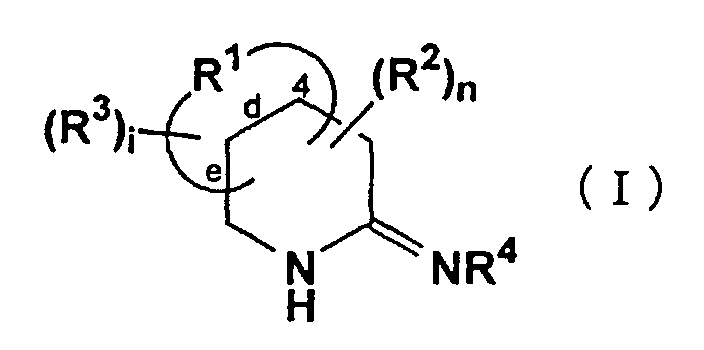
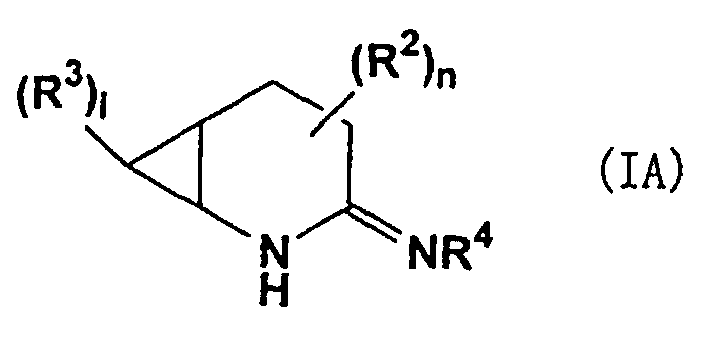
The compound used in the present invention may be administered in the form
of the acid addition salt thereof.
It is desirable for the acid addition salt be non-toxic and water-soluble.
Suitable acid addition salts include inorganic salts (e.g., hydrochloride,
hydrobromide, hydroiodide, sulfate, phosphate, nitrate); and/organic acid salts
(e.g., acetate, lactate, tartrate, oxalate, fumarate, maleate, citrate, benzoate,
methanesulfonate, ethanesulfonate, benzenesulfonate, toluenesulfonate,
isethionate, glucuronate, gluconate). Hydrochloride is preferable.
The compound of formula (I) of the present invention or a salt thereof can be
converted to its hydrate in known manner.
The compound of formula (I) of the present invention may be preperated by
methods described in EP870763A.
The compound of formula (I) of the present invention has a potent NOS
inhibitory activity. As described hereinafter, the compound of formula (IA-1) of the
present invention showed analgetic effects in the formalin test and Bennett
model in rats.
The toxicity of the compounds of the present invention is very low and
therefore the compounds may be considered safe for pharmaceutical use. For
example, maximum tolerated dose with an intravenous injection is 30mg/kg in
mice.
The compound of formula (I) of the present invention, an acid addition salt
thereof or a hydrate thereof has analgetic effect and is useful for prevention
and/or treatment of pain, hyperalgesia or allodynia. It is useful for the prevention
and/or the treatment of allodynia associated with pain caused by peripheral
nerve injury (e.g. causalgia, sympathetic reflex dystrophy), central nerve injury
(e.g., phantom limb pain, post-zoster neuralgia (post-herpetic pain), thalamic
pain, pain after spinal cord injury), and diabetic neuropathy or nerve invasive
cancer.
For the purpose above described, the compounds of formulae (I) of the
present invention, acid addition salts or hydrates thereof may be normally
administered systemically or locally, usually by oral or parenteral administration.
The doses to be administered are determined depending upon, for example,
age, body weight, symptom, the desired therapeutic effect, the route of
administration, and the duration of the treatment. In the human adult, the
doses per person are generally from 1 mg to 1000 mg, by oral administration, up
to several times per day, and from 0.1 mg to 100 mg, by parenteral
administration (preferably intravenous administration), up to several times per
day, or continuous administration from 1 to 24 hours per day from vein.
As mentioned above, the doses to be used depend upon various conditions.
Therefore, there are cases in which doses lower than or greater than the ranges
specified above may be used.
The compounds of the present invention may be administered in the form of,
for example, solid forms for oral administration, liquid forms for oral
administration, injections, liniments or suppositories for parenteral
administration.
Solid forms for oral administration include compressed tablets, pills, capsules,
dispersible powders, and granules. Capsules include hard capsules and soft
capsules.
In such solid forms, one or more of the active compound(s) may be admixed
with vehicles (such as lactose, mannitol, glucose, microcrystalline cellulose,
starch), binders (such as hydroxypropyl cellulose, polyvinylpyrrolidone or
magnesium metasilicate aluminate), disintegrants (such as cellulose calcium
glycolate), lubricants (such as magnesium stearate), stabilizing agents, and
solution adjuvants (such as glutamic acid or aspartic acid) and prepared
according to methods well known in normal pharmaceutical practice. The solid
forms may, if desired, be coated with coating agents (such as sugar, gelatin,
hydroxypropyl cellulose or hydroxypropylmethyl cellulose phthalate), or be
coated with two or more films. And further, coating may include containment
within capsules of absorbable materials such as gelatin.
Liquid forms for oral administration include pharmaceutically acceptable
solutions, suspensions and emulsions, syrups and elixirs. In such forms, one
or more of the active compound(s) may be dissolved, suspended or emulized
into diluent(s) commonly used in the art (such as purified water, ethanol or a
mixture thereof). Besides such liquid forms may also comprise some additives,
such as wetting agents, suspending agents, emulsifying agents, sweetening
agents, flavoring agents, aroma, preservative or buffering agent.
Injections for parenteral administration include sterile aqueous, suspensions,
emulsions and solid forms which are dissolved or suspended into solvent(s) for
injection immediately before use. In injections, one or more of the active
compound(s) may be dissolved, suspended or emulized into solvent(s). The
solvents may include distilled water for injection, physiological salt solution,
vegetable oil, propylene glycol, polyethylene glycol, alcohol, e.g. ethanol, or a
mixture thereof.
Injections may comprise some additives, such as stabilizing agents, solution
adjuvants (such as glutamic acid, aspartic acid or POLYSORBATE80 (registered
trade mark)), suspending agents, emulsifying agents, soothing agent, buffering
agents, preservative. They may be sterilized at a final step, or may be prepared
and compensated according to sterile methods. They may also be
manufactured in the form of sterile solid forms such as freeze-dried products,
which may be dissolved in sterile water or some other sterile diluent(s) for
injection immediately before use.
Other forms for parenteral administration include liquids for external use,
ointments and endermic liniments, inhalations, sprays, suppositories and
pessaries for vaginal administration which comprise one or more of the active
compound(s) and may be prepared by methods known per se. Sprays may
comprise additional substances other than diluents, such as stabilizing agents
(such as sodium sulfate), isotonic buffers (such as sodium chloride, sodium
citrate or citric acid). For preparation of such sprays, for example, the method
described in the United States Patent No. 2,868,691 or 3,095,355 may be used.
The following examples illustrate the present invention, but do not limit the
present invention.
Eight weeks old male Sprague-Dawley rats were used. According to the
method of Yaksh et al., the rat was mounted on the brain stereotaxis apparatus
under sodium pentobarbital anesthesia and a polyethylene tube filled with saline
was threaded approximately 3cm into intraspinal side through the cisternal
incision.
A day after implantation, the rat had no hindlimb paralysis was administered
50µl of 5% formalin subcutaneously and was placed in the observational plastic
cage immediately. Formalin injection time was regarded as 0min and for 1min
every 5min until 60min, number of leg-up response (flinch) was counted. The
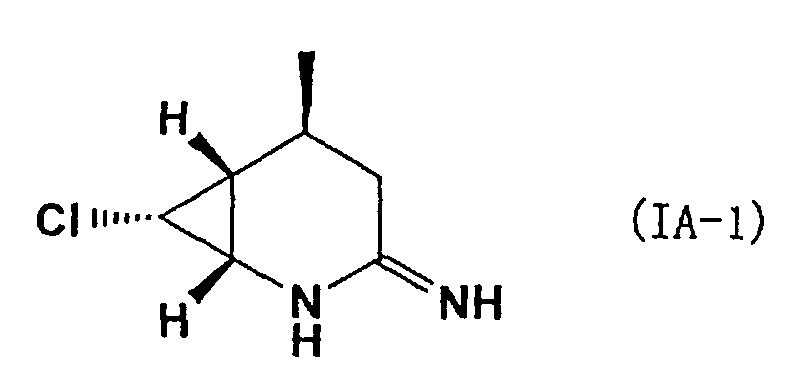
compound of formula (IA-1) ((+)-trans-3-imino-5-methyl-7-chloro-2-azabicyclo[4.1.0]heptane
Monohydrochloride) of the present invention was
dissolved in saline, subsequently the dose of 2 or 20µg/10µl/rat was
administered intrathecally via polyethylene tube 10min prior to the formalin
injection.
As shown in figure 1, number of flinch in the rats treated with both doses of the
compound of the present invention was decreased in the first phase (0-10min
after formalin injection) and the second phase (10-60min after formalin injection)
compared to that in vehicle treated group.
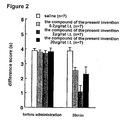
Seven weeks old male Sprague-Dawley rats were used. According to the
method of Yaksh et al. (J.Physiol. Behav. Vol.17, pp.1031-1036, 1976), the rat
was mounted on the brain stereotaxis apparatus under sodium pentobarbital
anesthesia and a polyethylene tube filled with saline was threaded about 3cm
into intraspinal side through the cisternal incision.
A day after implantation, rats had no hindlimb paralysis were restrained in a
prostrate position after induction of anesthetization with pentobarbital sodium.
According to the method of Bennett and Xie et al. (Pain, Vol.33, pp.87-107,
1988), an incision of 2cm was cut along the skin of the femoral region of the right
hindlimb, and the exposed sciatic nerve was constricted with 2 pieces of gut
suture at 2 distal sites, and the incision was closed with a piece of silk suture.
The left hindlimb was similarly operated on without performing any constriction of
the sciatic nerve (sham-operated hindlimb).
Six days after the operation, the response latency to nociceptive
thermostimulus was determined with the plantar test device, and rats with
hyperalgesia were selected for the drug evaluation study on next day. Briefly,
rat was placed in transparent acrylic cage installed with infrared rays from a
halogenlamp illuminating from below the cage in a left-right crossover manner to
target on the plantar side of hindlimb. By using a digital timer installed in the
plantar testing device, the interval (response latency) from initiation of
illumination to the time required for the animal to lift the hindlimb in an attempt to
escape was measured. The nociceptive sensitivity was indexed by the
difference in score (DS, expressed in second) derived from subtraction of the
response latency of the sham-operated hindlimb from that of operated hindlimb.
To select individuals with stabilized hyperalgesia by nociceptive thermostimulus,
evaluation of the response latency was made. Rats exhibited stabilized
hyperalgesia defined as DS of <-3.0 s in two consecutive examinations were
used for the drug evaluation study on the next day. The compound of formula
(IA-1) ((+)-trans-3-imino-5-methyl-7-chloro-2-azabicyclo[4.1.0]heptane
Monohydrochloride) of the present invention was dissolved in saline,
subsequently the dose of 0.2, 2 or 20µg/10µl/rat was administered intrathecally
via polyethylene tube 20min prior to the planter test.
As shown in figure 2, the hyperalgesia to nociceptive thermostimulus was
improved in rats treated with the compound of the present invention compared to
vehicle treated rats.
The following components were mixed and tableted in a conventional manner
to obtain 100 tablets each containing 100 mg of the active ingredient.
| (+)-trans-3-imino-5-methyl-7-chloro-2-azabicyclo[4.1.0]heptane Monohydrochloride | 10g |
| Fibrin calcium glycolate (disintegrant) | 200mg |
| Magnesium stearate (lubricant) | 100mg |
| Microcrystalline cellulose | 9.7g |
(+)-trans-3-imino-5-methyl-7-chloro-2-azabicyclo[4.1.0]heptane
Monohydrochloride (100mg) and mannitol (2000mg) were dissolved into distilled
water (100ml), placed 10 ml portions into 50 ml ampoules and freeze-dried in a
conventional manner to obtain 10 ampoules each containing 10 mg of active
ingredient.
Claims (9)
- A prevention and/or treatment of pain which comprise, as an active ingredient, a condensed piperidine compound represented by formula (I), an acid addition salt thereof or a hydrate thereof:wherein -R1- represents a 3- or 4-membred carbocyclic ring together with the carbon atom or atoms to which it is bonded, the carbocyclic ring being condensed to side d or e of the piperidine ring or bonded to the 4-position of the piperidine ring through a spiro-bond;
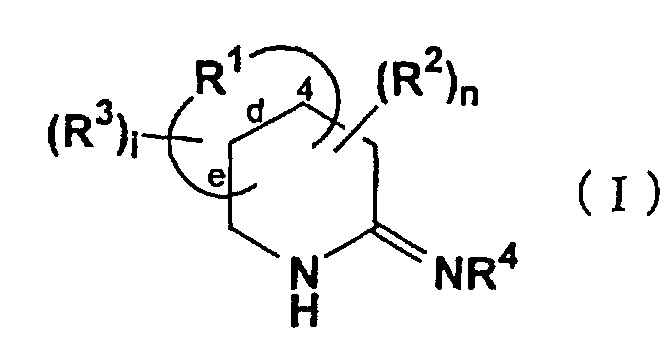 the plural R2's or R3's are the same or different.R2 represents a C1-6 alkyl group;R3 represents a C1-6 alkyl group, a C2-6 alkenyl group, a C2-6 alkynyl group or halogen atom;R4 represents a hydrogen atom, an amino-C1-4 alkyl group or a carbocyclic ring-C1-4 alkyl group which may be substituted with an amino-C1-4 alkyl group;i represents 0 or an integer of 1 to 3;n represents 0 or an integer of 1 to 3; and
 - The prevention and/or treatment of pain according to claim 1 which comprise, as an active ingredient, a condensed piperidine compound represented by formula (IA), an acid addition salt thereof or a hydrate thereof:wherein all the symbols have the same meanings as defined in claim 1.

- The prevention and/or treatment of pain according to claim 1 which comprise, as an active ingredient, a condensed piperidine compound represented by formula (I), an acid addition salt thereof or a hydrate thereof, wherein i is zero.
- The prevention and/or treatment of pain according to claim 1 which comprise, as an active ingredient, a condensed piperidine compound represented by formula (I), an acid addition salt thereof or a hydrate thereof, wherein i is one, two or three, and R3 is selected from the group consisting of a C1-6 alkyl group, a C2-6 alkenyl group, and C2-6 alkynyl group.
- The prevention and/or treatment of pain according to claim 1 which comprise, as an active ingredient, a condensed piperidine compound represented by formula (I), an acid addition salt thereof or a hydrate thereof, wherein i is one, two or three, and at least one of the plural R3's is a halogen atom.
- The prevention and/or treatment of pain according to claim 1 which comprise, as an active ingredient, a condensed piperidine compound represented by formula (IA-1), an acid addition salt thereof or a hydrate thereof:

- The prevention and/or treatment described in any one of claim 1 to 6 of pain, which is hyperalgesia.
- The prevention and/or treatment described in any one of claim 1 to 6 of pain, which is allodynia.
- The prevention and/or treatment described in any one of claim 1 to 8 of pain, which is allodynia with pain caused by peripheral or central nerve injury, diabetic neuropathy or nerve invasive cancer.
Applications Claiming Priority (3)
| Application Number | Priority Date | Filing Date | Title |
|---|---|---|---|
| JP16255899 | 1999-06-09 | ||
| JP16255899 | 1999-06-09 | ||
| PCT/JP2000/003721 WO2000074678A1 (en) | 1999-06-09 | 2000-06-08 | Analgesics |
Publications (1)
| Publication Number | Publication Date |
|---|---|
| EP1199078A1 true EP1199078A1 (en) | 2002-04-24 |
Family
ID=15756879
Family Applications (1)
| Application Number | Title | Priority Date | Filing Date |
|---|---|---|---|
| EP00937186A Withdrawn EP1199078A1 (en) | 1999-06-09 | 2000-06-08 | Analgesics |
Country Status (4)
| Country | Link |
|---|---|
| EP (1) | EP1199078A1 (en) |
| KR (1) | KR20020008215A (en) |
| AU (1) | AU5246000A (en) |
| WO (1) | WO2000074678A1 (en) |
Family Cites Families (3)
| Publication number | Priority date | Publication date | Assignee | Title |
|---|---|---|---|---|
| DE4418097A1 (en) * | 1994-05-24 | 1995-11-30 | Cassella Ag | Use of tetrahydropteridine derivatives as inhibitors of NO synthase |
| JPH10265450A (en) * | 1997-03-25 | 1998-10-06 | Mitsui Chem Inc | New amidine derivative having nitrogen monoxide synthetase-inhibiting action |
| US6110930A (en) * | 1997-04-10 | 2000-08-29 | Ono Pharmaceutical Co., Ltd. | Condensed piperidine compound |
-
2000
- 2000-06-08 AU AU52460/00A patent/AU5246000A/en not_active Abandoned
- 2000-06-08 KR KR1020017015684A patent/KR20020008215A/en not_active Withdrawn
- 2000-06-08 WO PCT/JP2000/003721 patent/WO2000074678A1/en not_active Ceased
- 2000-06-08 EP EP00937186A patent/EP1199078A1/en not_active Withdrawn
Non-Patent Citations (1)
| Title |
|---|
| See references of WO0074678A1 * |
Also Published As
| Publication number | Publication date |
|---|---|
| KR20020008215A (en) | 2002-01-29 |
| AU5246000A (en) | 2000-12-28 |
| WO2000074678A8 (en) | 2001-03-15 |
| WO2000074678A1 (en) | 2000-12-14 |
Similar Documents
| Publication | Publication Date | Title |
|---|---|---|
| US4816488A (en) | Method of treatment | |
| US5516807A (en) | Method for treating vascular proliferative disorders following balloon angioplasty | |
| JP2010511616A (en) | Means for improving cognitive function and memory based on hydrogenated pyrido (4,3-b) indoles (isomers), pharmacological means based on the means, and methods for use of the means | |
| EP1219624B1 (en) | Remedies for neuropathic pain and model animals of neuropathic pain | |
| US5512573A (en) | Use of phthaloylhydrazide derivatives as anti-hypoxic and defensive agents | |
| MX2010012179A (en) | Pharmaceutical composition for the treatment of premature ejaculation. | |
| KR20040025882A (en) | Medicines for Treatment and Prevention of Neurogenic Pain | |
| US20020013280A1 (en) | Pharmaceutical composition for preventing and treating sexual dysfunction and vasculargenic disease comprising icariin | |
| EP0650723A2 (en) | Novel pharmaceutical use of forskolin derivatives | |
| US5232950A (en) | Method for using ketamine for prevention or reduction of the effects of stroke in a subject having increased risk for stroke | |
| WO1999004783A1 (en) | Composition for protection from damage by ischemia | |
| JPWO2000074678A1 (en) | painkillers | |
| KR20020008215A (en) | Analgesics | |
| EP0291594B1 (en) | Pyrazine for use in the treatment of haemodynamic and metabolic disorders | |
| EP0254313B1 (en) | Use of ketamine for the manufacturing of medicaments for prevention or reduction of the effects of stroke in a subject having increased risk for stroke | |
| US5747495A (en) | Method for treating hypertension using pyrazolopyrimidine derivatives | |
| US20040235890A1 (en) | Remedies for allergic diseases | |
| WO1993025203A1 (en) | Method of treating and protecting against central nervous system ischemia, hypoxia, degeneration, and trauma with a 5-aminocarbonyl-sh-dibenzo[a,d]cyclohepten-5,10-imine | |
| US20010041744A1 (en) | Angiogenesis inhibitors | |
| EP1256353A1 (en) | Remedies for sjoegren's syndrome | |
| JP3533491B2 (en) | Angiogenesis inhibitor | |
| EP1710243A1 (en) | Therapeutic agent for vasospasm accompanying bypass operation | |
| WO1993023066A1 (en) | Platelet growth promoter | |
| WO2018034351A1 (en) | Preventative or therapeutic agent for pulmonary hypertension including crude drug component | |
| JP2005320247A (en) | Prevention and treatment of disseminated intravascular coagulation syndrome |
Legal Events
| Date | Code | Title | Description |
|---|---|---|---|
| PUAI | Public reference made under article 153(3) epc to a published international application that has entered the european phase |
Free format text: ORIGINAL CODE: 0009012 |
|
| 17P | Request for examination filed |
Effective date: 20011207 |
|
| AK | Designated contracting states |
Kind code of ref document: A1 Designated state(s): AT BE CH CY DE DK ES FI FR GB GR IE IT LI LU MC NL PT SE |
|
| AX | Request for extension of the european patent |
Free format text: AL;LT;LV;MK;RO;SI |
|
| STAA | Information on the status of an ep patent application or granted ep patent |
Free format text: STATUS: THE APPLICATION HAS BEEN WITHDRAWN |
|
| 18W | Application withdrawn |
Effective date: 20030127 |