EP1197798A2 - Photographic element containing cyan dye-forming coupler - Google Patents
Photographic element containing cyan dye-forming coupler Download PDFInfo
- Publication number
- EP1197798A2 EP1197798A2 EP01203484A EP01203484A EP1197798A2 EP 1197798 A2 EP1197798 A2 EP 1197798A2 EP 01203484 A EP01203484 A EP 01203484A EP 01203484 A EP01203484 A EP 01203484A EP 1197798 A2 EP1197798 A2 EP 1197798A2
- Authority
- EP
- European Patent Office
- Prior art keywords
- group
- unsubstituted
- substituted
- photographic element
- coupler
- Prior art date
- Legal status (The legal status is an assumption and is not a legal conclusion. Google has not performed a legal analysis and makes no representation as to the accuracy of the status listed.)
- Withdrawn
Links
Classifications
-
- G—PHYSICS
- G03—PHOTOGRAPHY; CINEMATOGRAPHY; ANALOGOUS TECHNIQUES USING WAVES OTHER THAN OPTICAL WAVES; ELECTROGRAPHY; HOLOGRAPHY
- G03C—PHOTOSENSITIVE MATERIALS FOR PHOTOGRAPHIC PURPOSES; PHOTOGRAPHIC PROCESSES, e.g. CINE, X-RAY, COLOUR, STEREO-PHOTOGRAPHIC PROCESSES; AUXILIARY PROCESSES IN PHOTOGRAPHY
- G03C7/00—Multicolour photographic processes or agents therefor; Regeneration of such processing agents; Photosensitive materials for multicolour processes
- G03C7/30—Colour processes using colour-coupling substances; Materials therefor; Preparing or processing such materials
- G03C7/3003—Materials characterised by the use of combinations of photographic compounds known as such, or by a particular location in the photographic element
- G03C7/3005—Combinations of couplers and photographic additives
- G03C7/3006—Combinations of phenolic or naphtholic couplers and photographic additives
-
- G—PHYSICS
- G03—PHOTOGRAPHY; CINEMATOGRAPHY; ANALOGOUS TECHNIQUES USING WAVES OTHER THAN OPTICAL WAVES; ELECTROGRAPHY; HOLOGRAPHY
- G03C—PHOTOSENSITIVE MATERIALS FOR PHOTOGRAPHIC PURPOSES; PHOTOGRAPHIC PROCESSES, e.g. CINE, X-RAY, COLOUR, STEREO-PHOTOGRAPHIC PROCESSES; AUXILIARY PROCESSES IN PHOTOGRAPHY
- G03C7/00—Multicolour photographic processes or agents therefor; Regeneration of such processing agents; Photosensitive materials for multicolour processes
- G03C7/30—Colour processes using colour-coupling substances; Materials therefor; Preparing or processing such materials
- G03C7/32—Colour coupling substances
- G03C7/34—Couplers containing phenols
- G03C7/346—Phenolic couplers
-
- G—PHYSICS
- G03—PHOTOGRAPHY; CINEMATOGRAPHY; ANALOGOUS TECHNIQUES USING WAVES OTHER THAN OPTICAL WAVES; ELECTROGRAPHY; HOLOGRAPHY
- G03C—PHOTOSENSITIVE MATERIALS FOR PHOTOGRAPHIC PURPOSES; PHOTOGRAPHIC PROCESSES, e.g. CINE, X-RAY, COLOUR, STEREO-PHOTOGRAPHIC PROCESSES; AUXILIARY PROCESSES IN PHOTOGRAPHY
- G03C7/00—Multicolour photographic processes or agents therefor; Regeneration of such processing agents; Photosensitive materials for multicolour processes
- G03C7/30—Colour processes using colour-coupling substances; Materials therefor; Preparing or processing such materials
- G03C7/388—Processes for the incorporation in the emulsion of substances liberating photographically active agents or colour-coupling substances; Solvents therefor
- G03C7/3885—Processes for the incorporation in the emulsion of substances liberating photographically active agents or colour-coupling substances; Solvents therefor characterised by the use of a specific solvent
-
- G—PHYSICS
- G03—PHOTOGRAPHY; CINEMATOGRAPHY; ANALOGOUS TECHNIQUES USING WAVES OTHER THAN OPTICAL WAVES; ELECTROGRAPHY; HOLOGRAPHY
- G03C—PHOTOSENSITIVE MATERIALS FOR PHOTOGRAPHIC PURPOSES; PHOTOGRAPHIC PROCESSES, e.g. CINE, X-RAY, COLOUR, STEREO-PHOTOGRAPHIC PROCESSES; AUXILIARY PROCESSES IN PHOTOGRAPHY
- G03C7/00—Multicolour photographic processes or agents therefor; Regeneration of such processing agents; Photosensitive materials for multicolour processes
- G03C7/30—Colour processes using colour-coupling substances; Materials therefor; Preparing or processing such materials
- G03C7/392—Additives
- G03C7/39208—Organic compounds
- G03C7/39288—Organic compounds containing phosphorus or silicon
Definitions
- This invention relates to conventional and to redox-amplified silver halide colour photographic materials and more particularly to such materials which contain a dye-forming coupler in combination with certain non-imaging compounds.
- the resulting dyes exhibit an exceptional combination of photographic properties, especially in regard to hue and stability.
- the application is related to UK application number 00230896.6 of even date herewith.
- a colour image is formed when the element is exposed to light and then subjected to colour development, generally with a primary aromatic amine developer.
- Colour development results in imagewise reduction of silver halide and production of oxidized developer.
- Oxidized developer reacts with one or more incorporated dye-forming couplers to form an imagewise distribution of dye.
- the dyes so formed should have certain properties. For instance the dyes should be bright in colour, absorbing light in the appropriate spectral region, with very little secondary absorption so that good colour reproducibility is obtained.
- the dyes that are formed by any colour coupler during processing have a tendency to fade over time as a result of exposure to light, heat, humidity and oxygen. Since the three image dyes may not fade at the same rate, an apparent change in image colour may result. It is thus paramount that the formed photographic dye images should be resistant towards fading by heat, humidity and light.
- the coupler should produce a dye which has the aforementioned desirable properties and the efficiency of the dye-forming reaction must be high. Additionally, the coupler must be easily dispersible, must itself be resistant towards the deleterious effects of light, heat and humidity and must have a low propensity to form fog.
- JP 59102234 teaches that certain phenolic coupler solvents tend to shift the dye absorption band derived from the fluorobenzamide-substituted couplers mentioned above to longer wavelengths.
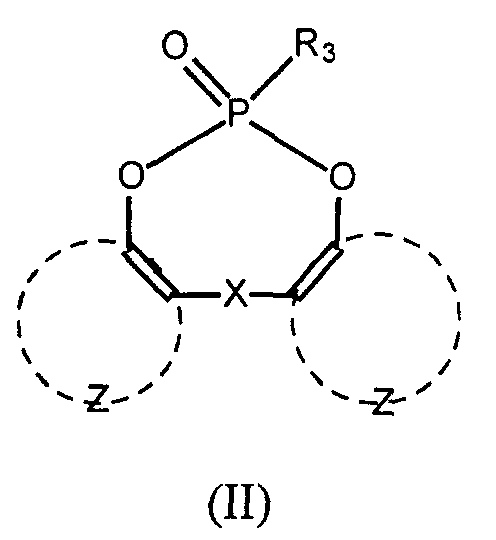
- a photographic element comprising a light sensitive silver halide emulsion layer having associated therewith (A) a cyan dye-forming coupler of formula (I) and (B) a bisphenol derivative compound of formula (II):- (A) wherein
- a multi-colour photographic element comprising a support bearing yellow, magenta and cyan image-dye-forming units comprising at least one blue-, green- or red-sensitive silver halide emulsion layer having associated therewith at least one yellow, magenta or cyan dye-forming coupler respectively, wherein the element is as herein described.
- the element of the invention provides an image dye of good hue, exhibiting exceptional stability against the effects of light, without significant degradation of other photographic properties.
- the combination of the invention is generally as described in the Summary of the Invention.
- the combination comprises the compounds of formulae (I) and (II).
- the cyan dye-forming coupler has the formula (I):- wherein
- R 2 is an amino or alkoxy group it may, for example, be substituted with a halogen, aryloxy or alkyl- or aryl-sulfonyl group.
- R 2 is selected from an unsubstituted or substituted alkyl or aryl group or a 5-10 membered heterocyclic ring, such as a pyridyl, morpholino, imidazolyl or pyridazolyl group.
- R 2 is more preferably an alkyl group substituted, for example, with a halogen, alkyl, aryloxy or alkyl- or aryl- sulfonyl group, which may be further substituted, for example with an alkyl, alkoxy, hydroxy, halogen, alkyl sulfonamido or alkylsulfonyl group.
- R 2 may be a group of the formula: wherein Ar is an unsubstituted or substituted aryl group, L' is a divalent linking group such as -O-, -SO- or -SO 2 - and R a and R b are independently H or an alkyl group.
- R a is an alkyl group
- R b is H
- L' is -SO 2 -.
- R 2 is the group wherein
- alkyl refers to an unsaturated or saturated, straight or branched chain alkyl group, including alkenyl and aralkyl, and includes cyclic alkyl groups, including cycloalkenyl, having 3-8 carbon atoms and the term "aryl” includes specifically fused aryl.
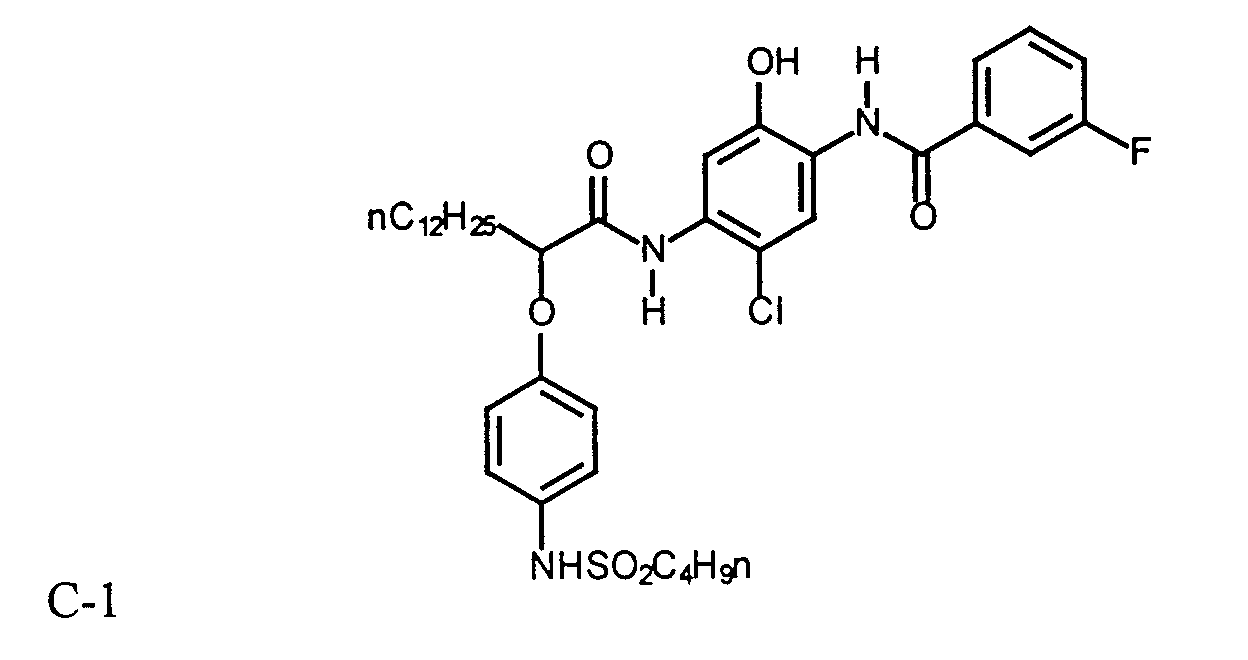
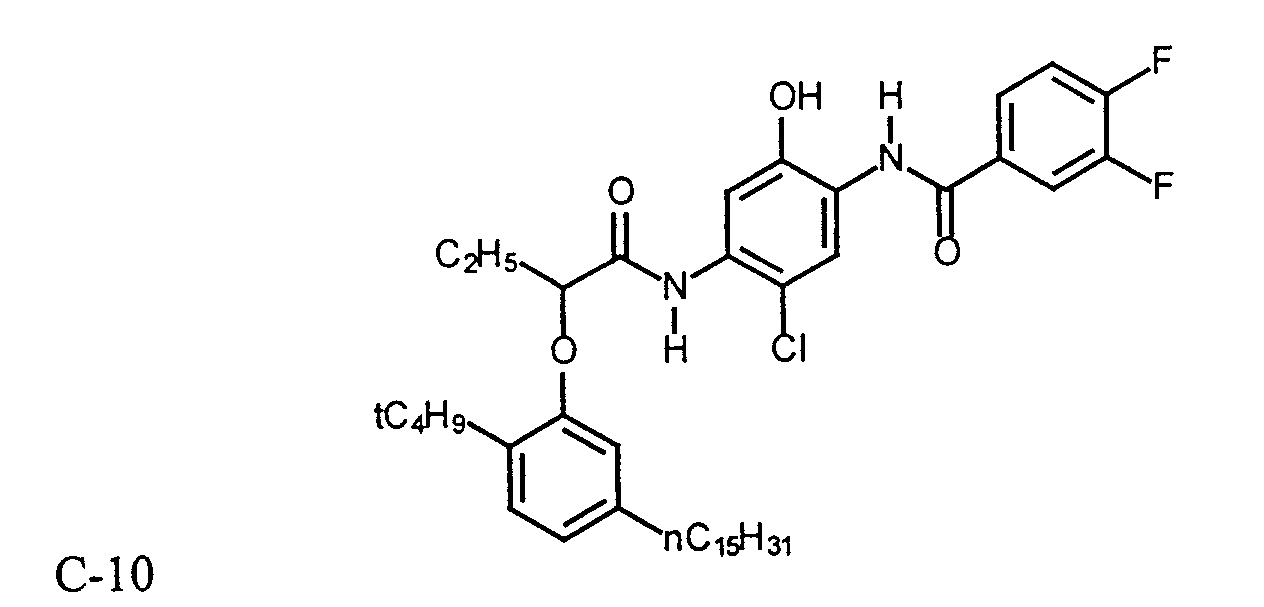
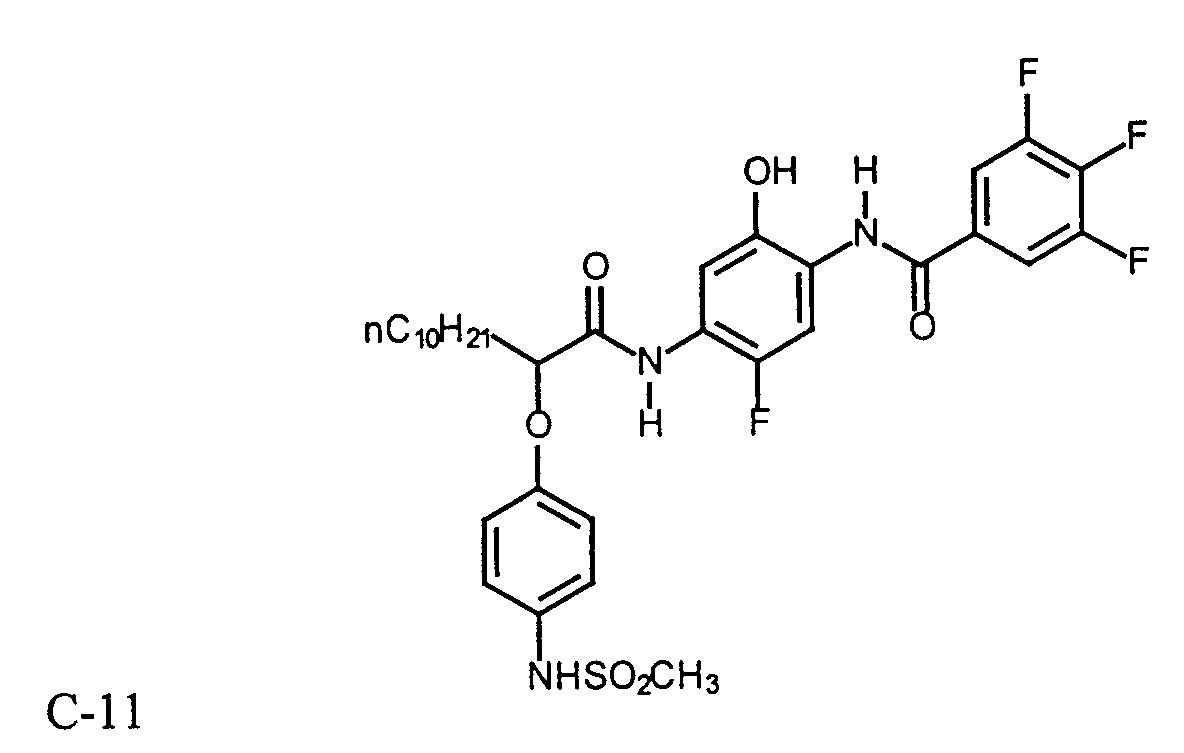
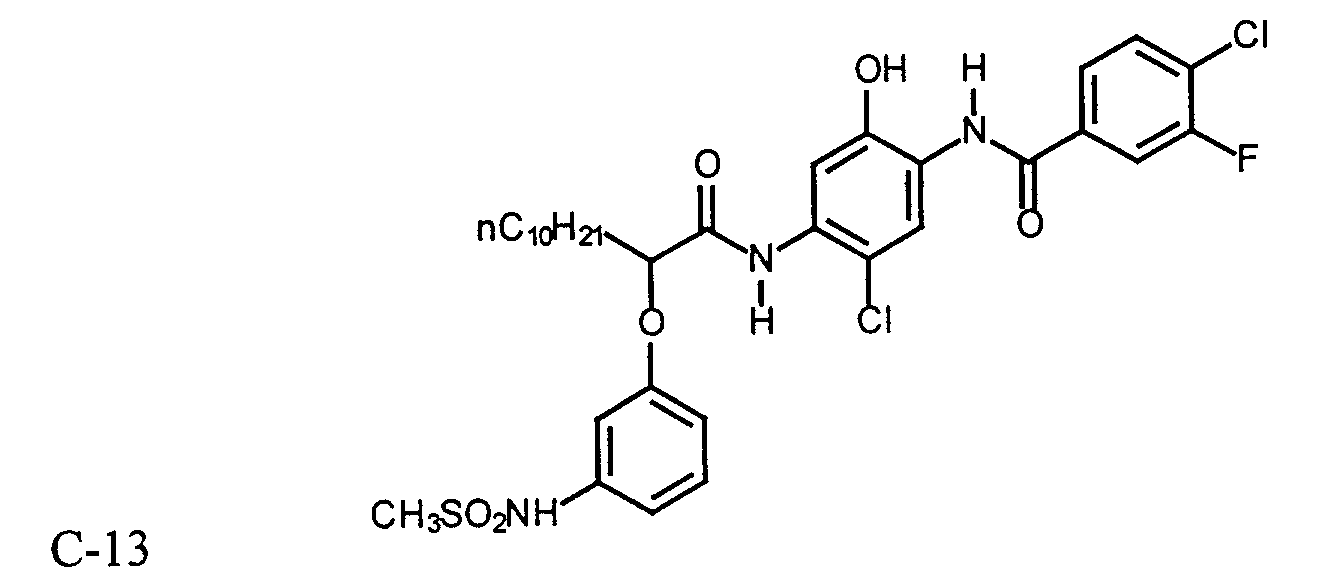
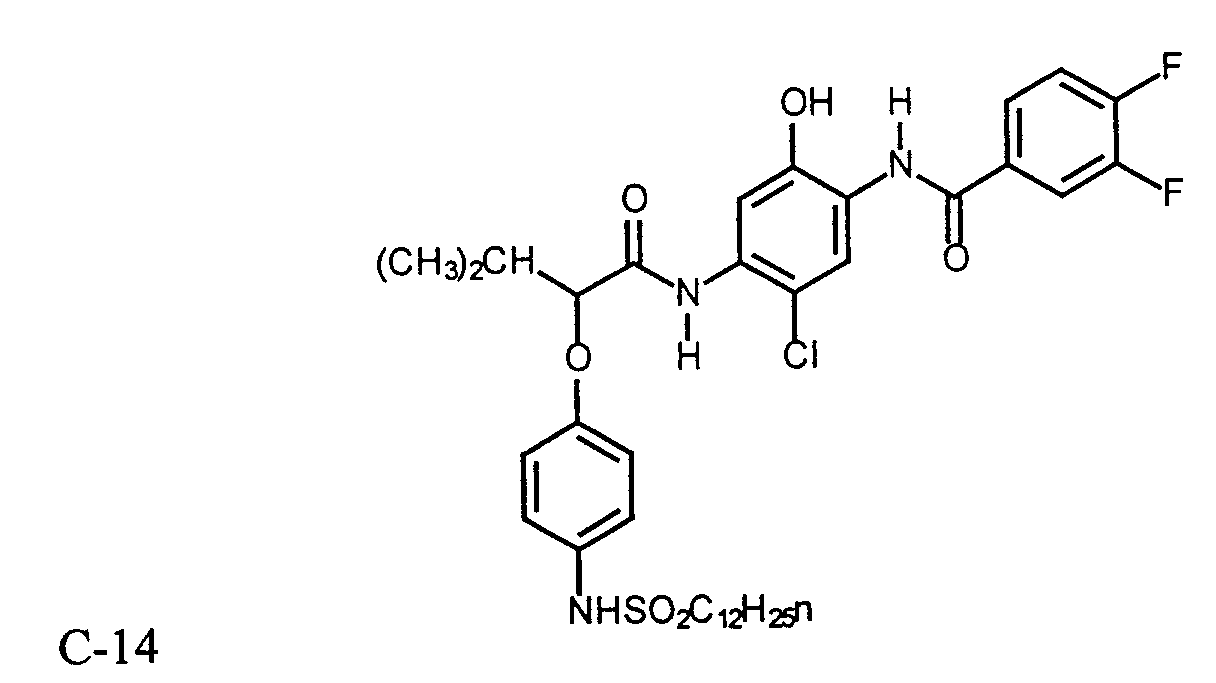
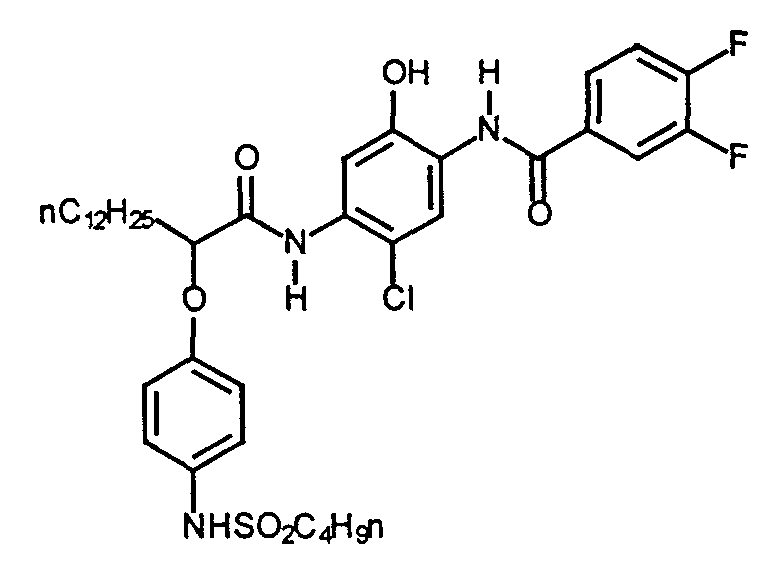
- couplers of formula (I) include the following although the invention is not to be construed as limited thereto:-
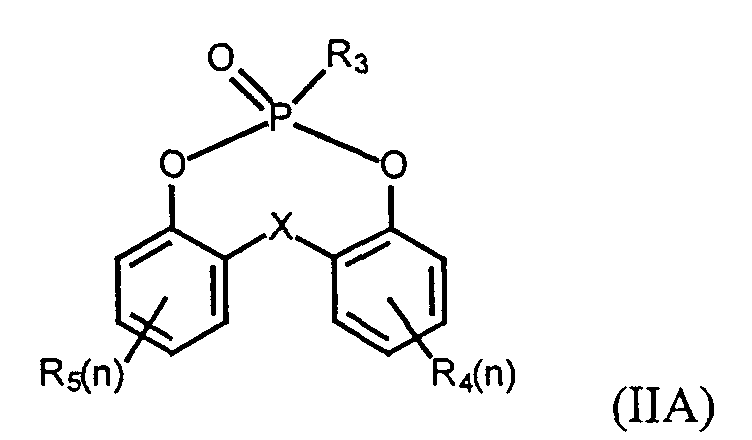
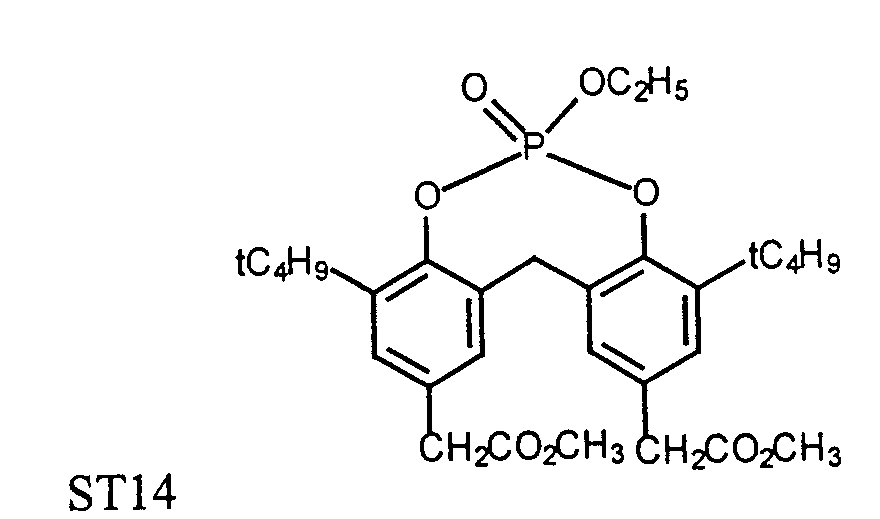
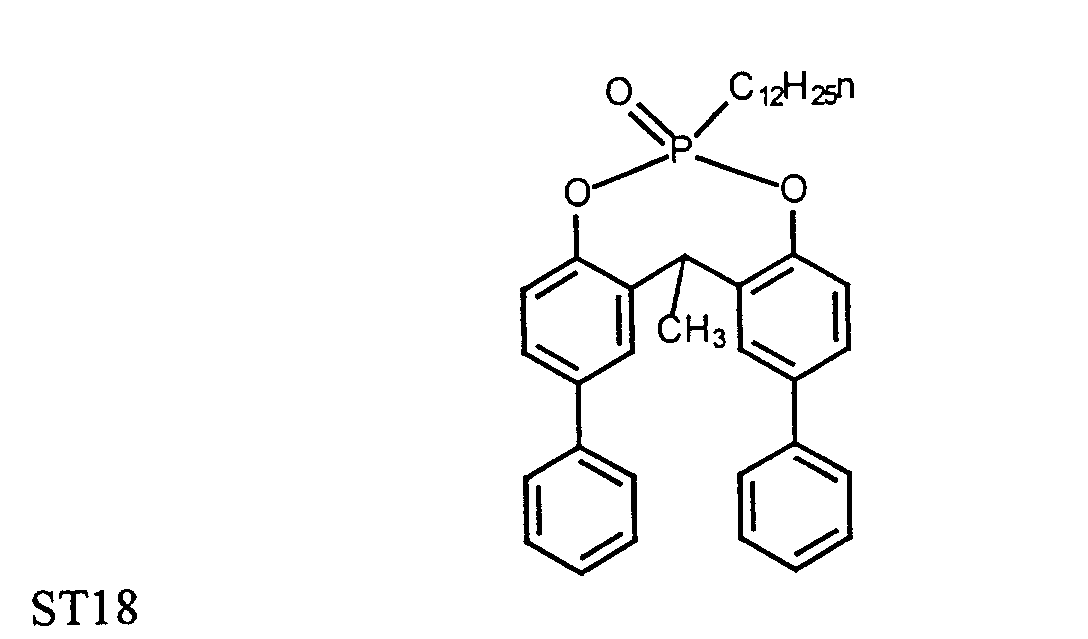
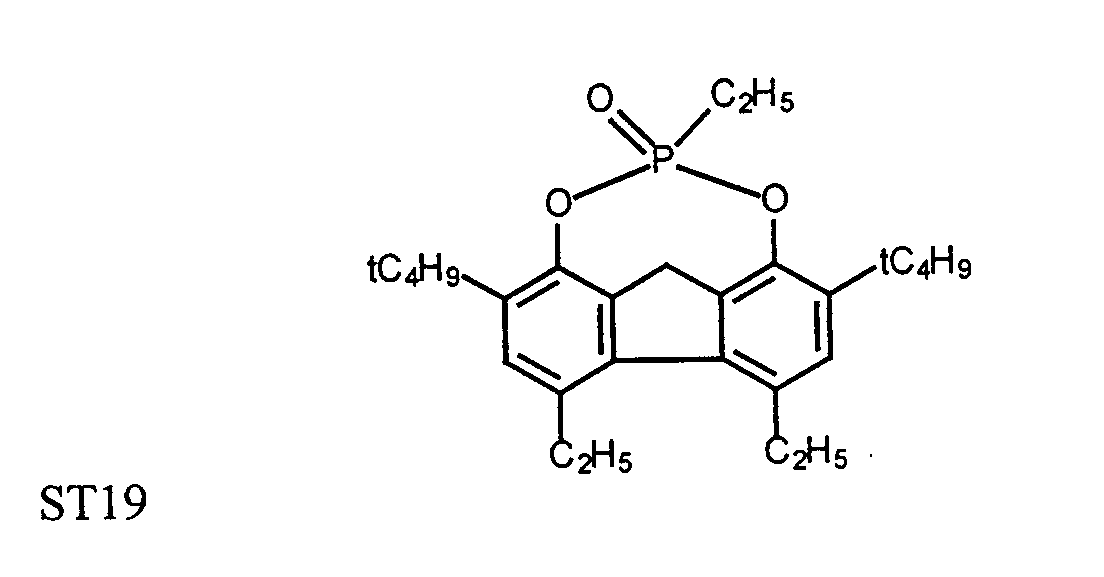
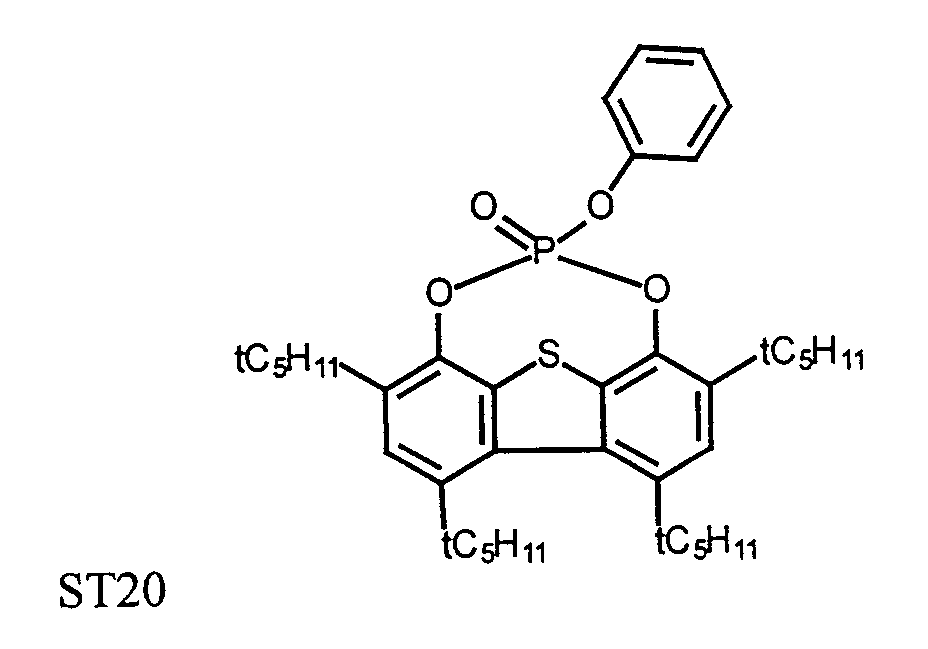
- the bisphenol stabilizer has the formula (II):- wherein
- R 4 and R 5 may be the same or different, conveniently they are the same for ease of synthesis and are preferably selected from unsubstituted or substituted alkyl, aryl or alkoxy groups or halogen atoms, most preferably unsubstituted alkyl groups. Conveniently each n is 2 and the substituents are preferably in the ortho and para positions.
- the stabilizer has the formula (IIB) wherein R 6 , R 7 , R 8 and R 9 are independently selected from hydrogen or halogen atoms or unsubstituted or substituted alkyl, aryl or alkoxy groups, preferably alkyl groups and especially secondary or tertiary alkyl groups.
- R 6 , R 7 , R 8 and R 9 may be the same or different, conveniently R 6 and R 9 are the same for ease of synthesis, especially alkyl groups, as are R 7 and R 8, which are especially halogen atoms or alkyl groups.
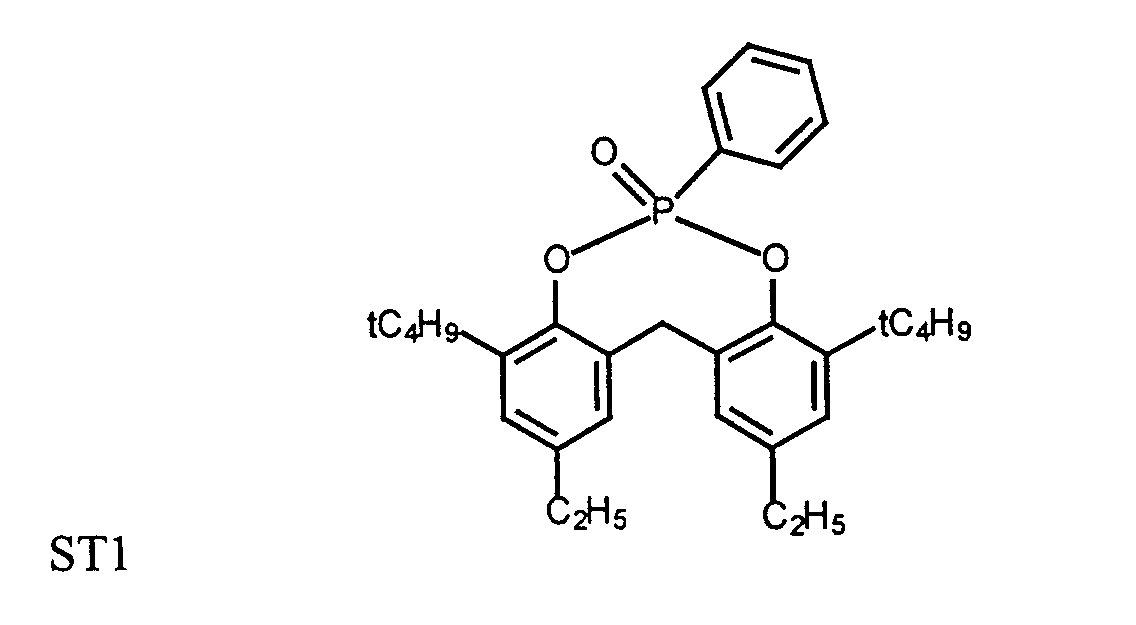
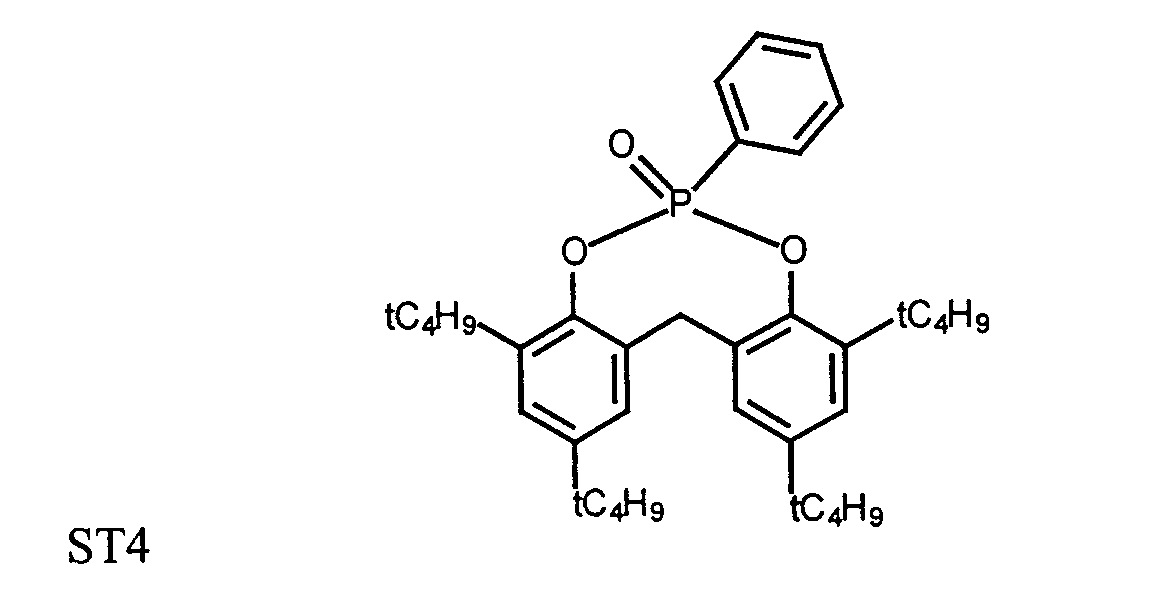
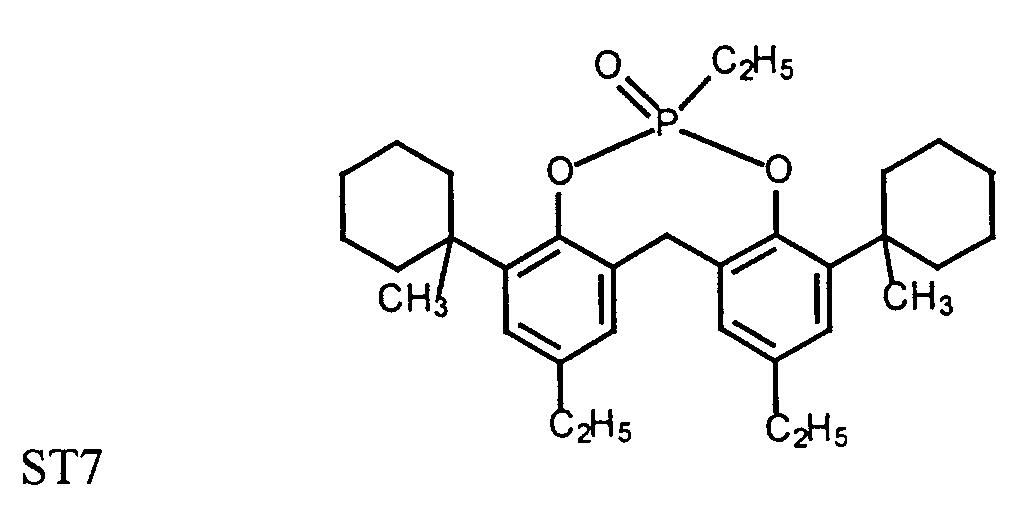
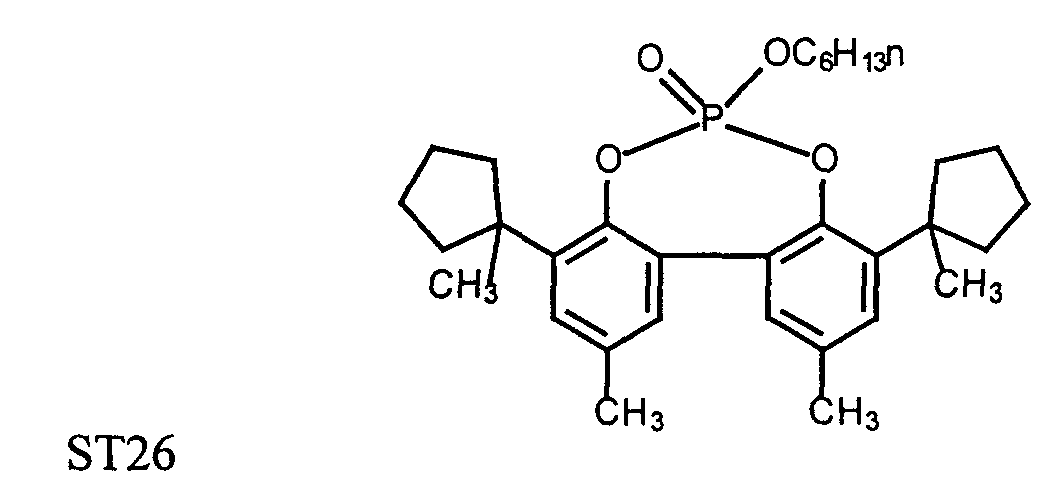
- a stabilizer of formula (II) include the following although the invention is not to be construed as limited thereto:-
- the stabilizer and couplers for use in the invention are incorporated by dissolving the materials in one or more high-boiling permanent organic solvents, with or without a low-boiling or partially water-soluble auxiliary organic solvent.
- a blend of permanent solvents may be advantageous to optimise the desired features, such as solubility, dye hue, thermal or light stability or the coupling reactivity of the dispersions.
- the resulting organic solution may then be mixed with an aqueous gelatin solution and the mixture passed through a mechanical mixing device suitable for high-shear or turbulent mixing generally suitable for preparing photographic emulsified dispersions, as described in EP-A-1 037 103, incorporated herein by reference.
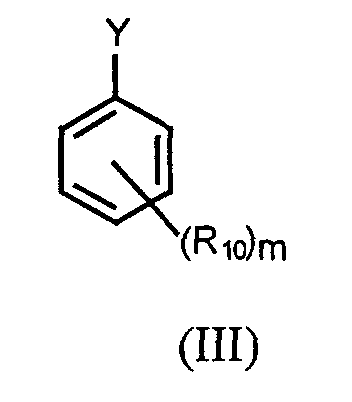
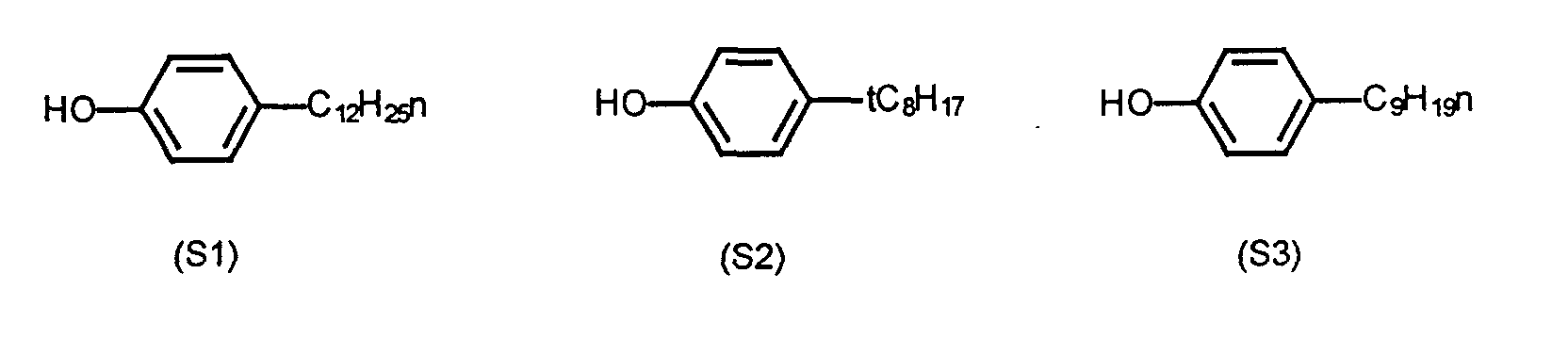
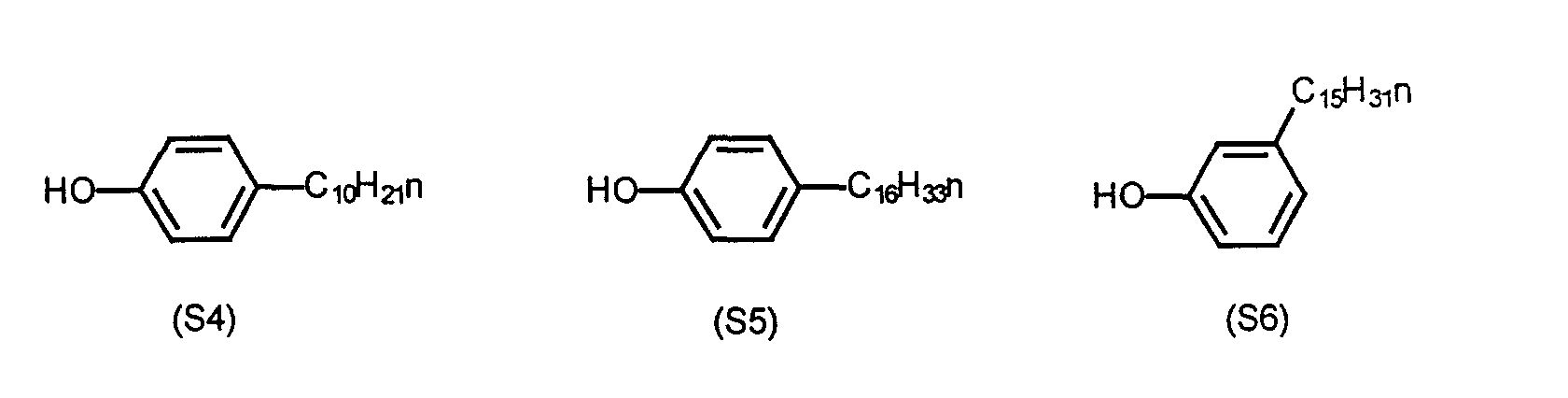
- the solvent has the formula (III):- wherein
- the size of the substituent group(s) is influential in accomplishing both of these results.
- at least one of the groups is an alkyl group or a substituted alkoxy group.
- Typical examples are a single alkyl group of 8 to 15 carbon atoms or two alkyl groups of 4 or 5 carbon atoms each.
- Suitable laydowns of the cyan dye-forming coupler are from about 0.1 g/m 2 to about 2 g/m 2 , preferably from about 0.3 g/m 2 to about 0.7 g/m 2 .
- the ratio of stabilizer to coupler by weight is from about 0.1:1 to about 5:1, preferably from about 0.5:1 to about 2:1, but more preferably the stabilizer and coupler are in about equal amounts by weight.
- the ratio of solvent to coupler by weight is from about 0.2:1 to about 4:1, preferably from about 0.5:1 to about 2:1.
- a substituent group contains a substitutable hydrogen, to encompass not only the substituent's unsubstituted form, but also its form further substituted with any group or groups as herein mentioned, so long as the group does not destroy properties necessary for photographic utility.
- a substituent group may be halogen or may be bonded to the remainder of the molecule by an atom of carbon, silicon, oxygen, nitrogen, phosphorus, or sulfur.
- the substituent may be, for example, halogen, such as chlorine, bromine or fluorine; nitro; hydroxyl; cyano; carboxyl; or groups which may be further substituted, such as alkyl, including straight or branched chain or cyclic alkyl, such as methyl, trifluoromethyl, ethyl, t -butyl, 3-(2,4-di-t-pentyl-phenoxy) propyl, and tetradecyl; alkenyl, such as ethylene, 2-butene; alkoxy, such as methoxy, ethoxy, propoxy, butoxy, 2-methoxyethoxy, sec -butoxy, hexyloxy, 2-ethylhexyloxy, tetradecyloxy, 2-(2,4-di- t -pentylphenoxy)ethoxy, and 2-dodecyl-oxyethoxy; aryl such as phenyl, 4-t-buty
- substituents may themselves be further substituted one or more times with the described substituent groups.
- the particular substituents used may be selected by those skilled in the art to attain the desired photographic properties for a specific application and can include, for example, hydrophobic groups, solubilizing groups, blocking groups, releasing or releasable groups, etc.
- the above groups and substituents thereof may include those having up to 48 carbon atoms, typically 1 to 36 carbon atoms and usually less than 24 carbon atoms, but greater numbers are possible depending on the particular substituents selected.
- the materials for use in the invention can be used in any of the ways and in any of the combinations known in the art.
- the materials are incorporated in a silver halide emulsion and the emulsion coated as a layer on a support to form part of a photographic element.
- they can be incorporated at a location adjacent to the silver halide emulsion layer where, during development, they will be in reactive association with development products such as oxidized colour developing agent.
- the term "associated" signifies that the compound is in the silver halide emulsion layer or in an adjacent location where, during processing, it is capable of reacting with silver halide development products.
- ballast groups include substituted or unsubstituted alkyl or aryl groups containing 8 to 48 carbon atoms.
- substituents on such groups include alkyl, aryl, alkoxy, aryloxy, alkylthio, hydroxy, halogen, alkoxycarbonyl, aryloxcarbonyl, carboxy, acyl, acyloxy, amino, anilino, carbonamido, carbamoyl, alkylsulfonyl, arylsulfonyl, sulfonamido, and sulfamoyl groups wherein the substituents typically contain 1 to 42 carbon atoms. Such substituents can also be further substituted.
- the photographic elements can be single colour elements or multicolour elements.
- Multicolour elements contain image dye-forming units sensitive to each of the three primary regions of the spectrum.
- Each unit can comprise a single emulsion layer or multiple emulsion layers sensitive to a given region of the spectrum.
- the layers of the element, including the layers of the image-forming units, can be arranged in various orders as known in the art.
- the emulsions sensitive to each of the three primary regions of the spectrum can be disposed as a single segmented layer.
- a typical multicolour photographic element comprises a support bearing a cyan dye image-forming unit comprised of at least one red-sensitive silver halide emulsion layer having associated therewith at least one cyan dye-forming coupler, a magenta dye image-forming unit comprising at least one green-sensitive silver halide emulsion layer having associated therewith at least one magenta dye-forming coupler, and a yellow dye image-forming unit comprising at least one blue-sensitive silver halide emulsion layer having associated therewith at least one yellow dye-forming coupler.
- the element can contain additional layers, such as filter layers, interlayers, overcoat layers and subbing layers.
- the photographic element can be used in conjunction with an applied magnetic layer as described in Research Disclosure, November 1992, Item 34390 published by Kenneth Mason Publications, Ltd., Dudley Annex, 12a North Street, Emsworth, Hampshire P010 7DQ, ENGLAND, and as described in Hatsumi Kyoukai Koukai Gihou No. 94-6023, published March 15, 1994, available from the Japanese Patent Office, the contents of which are incorporated herein by reference.
- inventive materials in a small format film, Research Disclosure, June 1994, Item 36230, provides suitable embodiments.
- the silver halide emulsion containing elements employed in this invention can be either negative-working or positive-working as indicated by the type of processing instructions (i.e. colour negative, reversal, or direct positive processing) provided with the element.
- Suitable emulsions and their preparation as well as methods of chemical and spectral sensitization are described in Sections I through V.
- Various additives such as UV dyes, brighteners, antifoggants, stabilizers, light absorbing and scattering materials, and physical property modifying addenda such as hardeners, coating aids, plasticizers, lubricants and matting agents are described, for example, in Sections II and VI through VIII. Colour materials are described in Sections X through XIII.
- Coupling-off groups are well known in the art. Such groups can determine the chemical equivalency of a coupler, i.e., whether it is a 2-equivalent or a 4-equivalent coupler, or modify the reactivity of the coupler. Such groups can advantageously affect the layer in which the coupler is coated, or other layers in the photographic recording material, by performing, after release from the coupler, functions such as dye formation, dye hue adjustment, development acceleration or inhibition, bleach acceleration or inhibition, electron transfer facilitation and colour correction.
- the presence of hydrogen at the coupling site provides a 4-equivalent coupler, and the presence of another coupling-off group usually provides a 2-equivalent coupler.
- Representative classes of such coupling-off groups include, for example, chloro, alkoxy, aryloxy, heterooxy, sulfonyloxy, acyloxy, acyl, heterocyclyl, sulfonamido, mercaptotetrazole, benzothiazole, mercaptopropionic acid, phosphonyloxy, arylthio, and arylazo.
- Image dye-forming couplers may be included in the element such as couplers that form cyan dyes upon reaction with oxidized color developing agents which are described in such representative patents and publications as: U.S. Pat. Nos. 2,367,531, 2,423,730, 2,474,293, 2,772,162, 2,895,826, 3,002,836, 3,034,892, 3,041,236, 4,333,999, 4,883,746 and "Farbkuppler-eine Literature Ubersicht,” published in Agfa Mitannonen, Band III, pp. 156-175 (1961).
- couplers are phenols and naphthols that form cyan dyes on reaction with oxidized color developing agent.
- Couplers that form magenta dyes upon reaction with oxidized color developing agent are described in such representative patents and publications as: U.S. Pat. Nos. 2,311,082, 2,343,703, 2,369,489, 2,600,788, 2,908,573, 3,062,653, 3,152,896, 3,519,429, 3,758,309, 4,540,654, and "Farbkuppler-eine Literature Ubersicht,” published in Agfa Mitannonen, Band III, pp. 126-156 (1961).
- couplers are pyrazolones, pyrazolotriazoles, or pyrazolobenzimidazoles that form magenta dyes upon reaction with oxidized color developing agents.
- Couplers that form yellow dyes upon reaction with oxidized color developing agent are described in such representative patents and publications as: U.S. Pat. Nos. 2,298,443, 2,407,210, 2,875,057, 3,048,194, 3,265,506, 3,447,928, 4,022,620, 4,443,536, and "Farbkuppler-eine Literature Ubersicht,” published in Agfa Mitteilungen, Band III, pp. 112-126 (1961).
- Such couplers are typically open chain ketomethylene compounds.
- Couplers that form colourless products upon reaction with oxidized colour developing agent are described in such representative patents as: UK. Patent No. 861,138; U.S. Patent. Nos. 3,632,345, 3,928,041, 3,958,993 and 3,961,959.
- couplers are cyclic carbonyl containing compounds that form colourless products on reaction with an oxidized colour developing agent.
- Couplers that form black dyes upon reaction with oxidized colour developing agent are described in such representative patents as U.S. Patent Nos. 1,939,231; 2,181,944; 2,333,106; and 4,126,461; German OLS No. 2,644,194 and German OLS No. 2,650,764.
- couplers are resorcinols or m-aminophenols that form black or neutral products on reaction with oxidized colour developing agent.
- Couplers of this type are described, for example, in U.S. Patent Nos. 5,026,628, 5,151,343, and 5,234,800.
- couplers any of which may contain known ballasts or coupling-off groups such as those described in U.S. Patent 4,301,235; U.S. Patent 4,853,319 and U.S. Patent 4,351,897.
- the coupler may contain solubilizing groups such as described in U.S. Patent 4,482,629.
- the coupler may also be used in association with "wrong" coloured couplers (e.g. to adjust levels of interlayer correction) and, in colour negative applications, with masking couplers such as those described in EP 0 213 490; Japanese Published Application 58-172,647; U.S. Patent Nos.
- the materials for use in the invention may be used in association with materials that release "photographically useful groups” (PUGS) that accelerate or otherwise modify the processing steps e.g. of bleaching or fixing to improve the quality of the image.
- PGS photographically useful groups
- Bleach accelerator releasing couplers such as those described in EP 0 193 389; EP 0 301 477; U.S. 4,163,669; U.S. 4,865,956; and U.S. 4,923,784, may be useful.
- Also contemplated is use of the compositions in association with nucleating agents, development accelerators or their precursors (UK Patent 2,097,140; UK. Patent 2,131,188); electron transfer agents (U.S. 4,859,578; U.S.
- antifogging and anti colour-mixing agents such as derivatives of hydroquinones, aminophenols, amines, gallic acid; catechol; ascorbic acid; hydrazides; sulfonamidophenols; and non colour-forming couplers.
- the materials for use in the invention may also be used in combination with filter dye layers comprising colloidal silver sol or yellow, cyan, and/or magenta filter dyes, either as oil-in-water dispersions, latex dispersions or as solid particle dispersions. Additionally, they may be used with "smearing" couplers (e.g. as described in U.S. 4,366,237; EP 96,570; U.S. 4,420,556 and U.S. 4,543,323.) Also, the compositions may be blocked or coated in protected form as described, for example, in Japanese Application 61/258,249 or U.S. 5,019,492.
- the materials for use in the invention may further be used in combination with image-modifying compounds that release PUGS such as "developer inhibitor-releasing” compounds (DIRs).
- DIRs useful in conjunction with the compositions used in the invention are known in the art and examples are described in U.S. Patent Nos.
- DIR Developer-Inhibitor-Releasing Couplers for Colour Photography
- C.R. Barr J.R. Thirtle and P.W. Vittum in Photographic Science and Engineering, Vol. 13, p. 174 (1969)
- the developer inhibitor-releasing (DIR) couplers include a coupler moiety and an inhibitor coupling-off moiety (IN).
- the inhibitor-releasing couplers may be of the time-delayed type (DIAR couplers) which also include a timing moiety or chemical switch which produces a delayed release of inhibitor.
- inhibitor moieties are: oxazoles, thiazoles, diazoles, triazoles, oxadiazoles, thiadiazoles, oxathiazoles, thiatriazoles, benzotriazoles, tetrazoles, benzimidazoles, indazoles, isoindazoles, mercaptotetrazoles, selenotetrazoles, mercaptobenzothiazoles, selenobenzothiazoles, mercaptobenzoxazoles, selenobenzoxazoles, mercaptobenzimidazoles, selenobenzimidazoles, benzodiazoles, mercaptooxazoles, mercaptothiadiazoles, mercaptothiazoles, mercaptotriazoles, mercaptooxadiazoles, mercaptodiazoles, mercaptooxathiazoles, telleurotetrazoles or benz
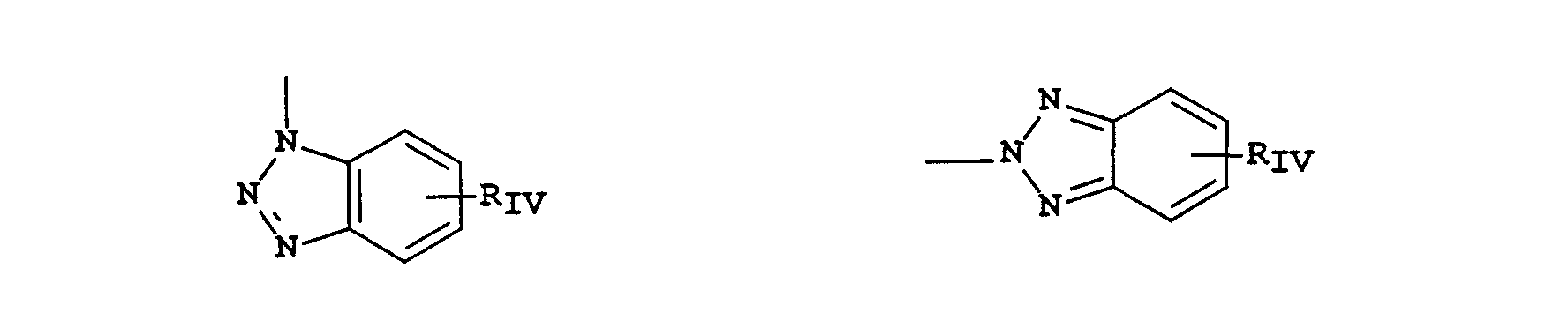
- the inhibitor moiety or group is selected from the following formulae: wherein R I is selected from the group consisting of straight and branched alkyls of from 1 to about 8 carbon atoms, benzyl, phenyl, and alkoxy groups and such groups containing none, one or more than one such substituent; R II is selected from R I and -SR I ; R III is a straight or branched alkyl group of from 1 to about 5 carbon atoms and m is from 1 to 3; and R IV is selected from the group consisting of hydrogen, halogens and alkoxy, phenyl and carbonamido groups, -COOR V and -NHCOOR V wherein R V is selected from substituted and unsubstituted alkyl and aryl groups.
- the coupler moiety included in the developer inhibitor-releasing coupler forms an image dye corresponding to the layer in which it is located, it may also form a different colour as one associated with a different film layer. It may also be useful that the coupler moiety included in the developer inhibitor-releasing coupler forms colourless products and/or products that wash out of the photographic material during processing (so-called "universal" couplers).
- a compound such as a coupler may release a PUG directly upon reaction of the compound during processing, or indirectly through a timing or linking group.
- a timing group produces the time-delayed release of the PUG such groups using an intramolecular nucleophilic substitution reaction (U.S. 4,248,962); groups utilizing an electron transfer reaction along a conjugated system (U.S. 4,409,323; 4,421,845; 4,861,701, Japanese Applications 57-188035; 58-98728; 58-209736; 58-209738); groups that function as a coupler or reducing agent after the coupler reaction (U.S. 4,438,193; U.S. 4,618,571) and groups that combine the features describe above.
- an intramolecular nucleophilic substitution reaction U.S. 4,248,962
- groups utilizing an electron transfer reaction along a conjugated system U.S. 4,409,323; 4,421,845; 4,861,701, Japanese Applications 57-188035; 58-987
- timing group is of one of the formulae: wherein IN is the inhibitor moiety, Z is selected from the group consisting of nitro, cyano, alkylsulfonyl; sulfamoyl (-SO 2 NR 2 ); and sulfonamido (-NRSO 2 R) groups; n is 0 or 1; and R VI is selected from the group consisting of substituted and unsubstituted alkyl and phenyl groups.
- the oxygen atom of each timing group is bonded to the coupling-off position of the respective coupler moiety of the DIAR.
- the timing or linking groups may also function by electron transfer down an unconjugated chain.
- Linking groups are known in the art under various names. Often they have been referred to as groups capable of utilizing a hemiacetal or iminoketal cleavage reaction or as groups capable of utilizing a cleavage reaction due to ester hydrolysis such as U.S. 4,546,073.
- This electron transfer down an unconjugated chain typically results in a relatively fast decomposition and the production of carbon dioxide, formaldehyde, or other low molecular weight by-products.
- the groups are exemplified in EP 464,612, EP 523,451, U.S. 4,146,396, Japanese Kokai 60-249148 and 60-249149.
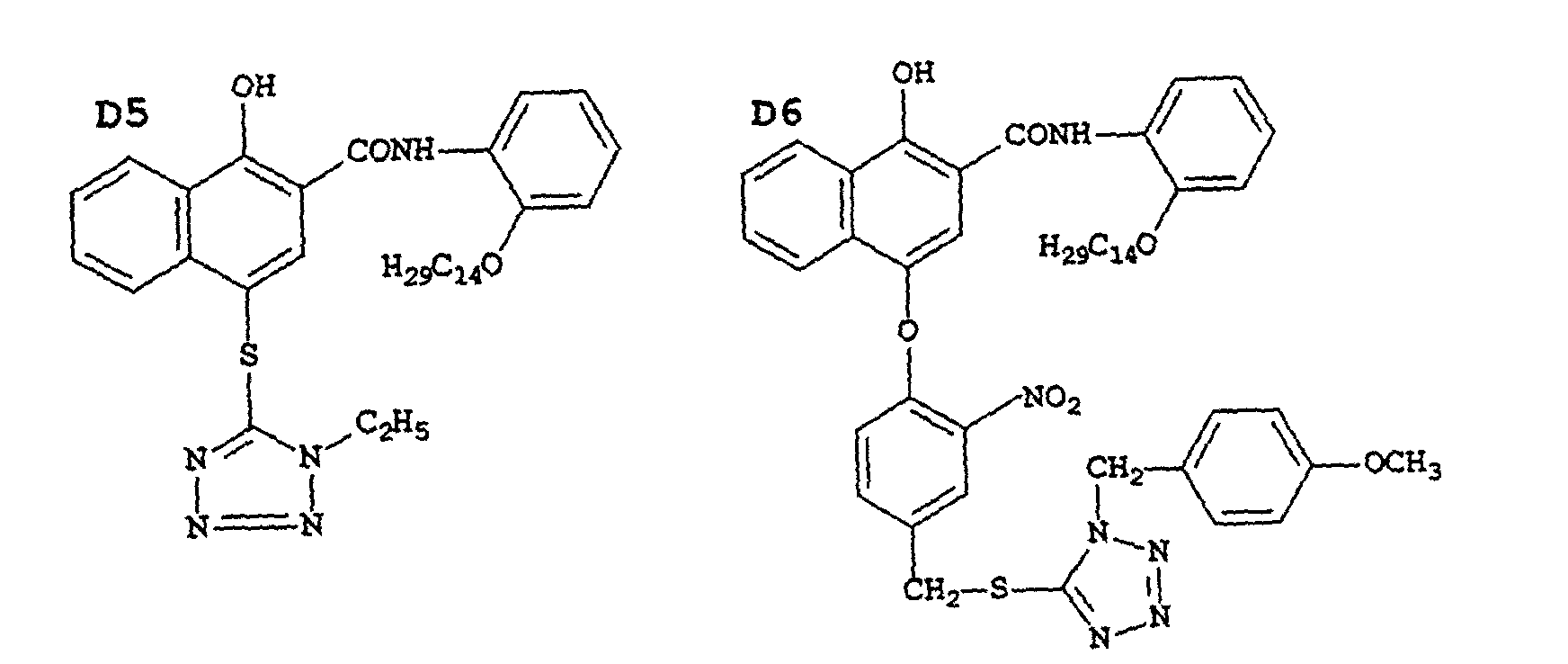
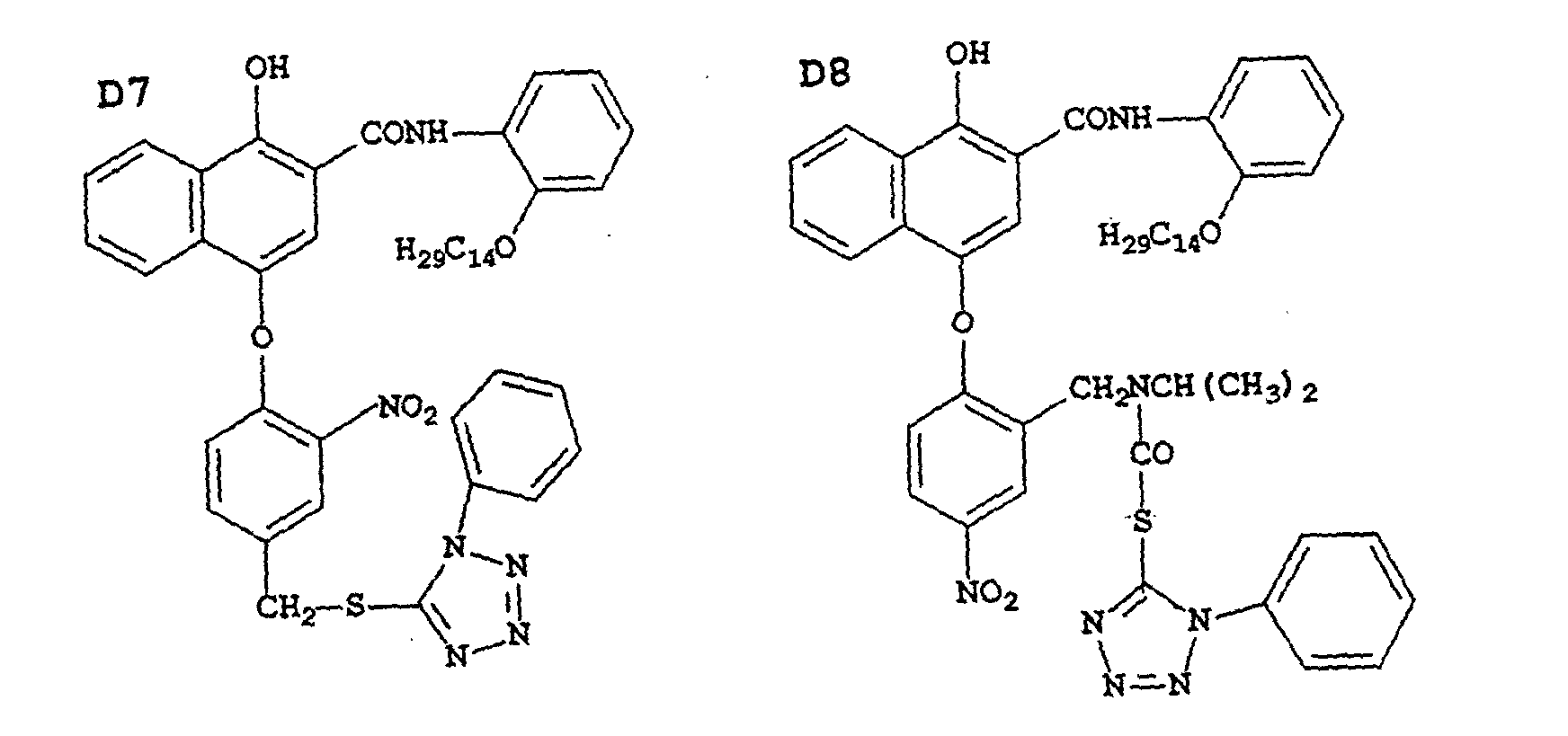
- Suitable developer inhibitor-releasing couplers for use in the present invention include, but are not limited to, the following:
- the concepts of the present invention may be employed to obtain reflection colour prints as described in Research Disclosure, November 1979, Item 18716, available from Kenneth Mason Publications, Ltd, Dudley Annex, 12a North Street, Emsworth, Hampshire P0101 7DQ, England, incorporated herein by reference.
- Materials for use in the invention may be coated on pH adjusted support as described in U.S. 4,917,994; on a support with reduced oxygen permeability (EP 0 553 339); with epoxy solvents (EP 0 164 961); with nickel complex stabilizers (U.S. 4,346,165; U.S. 4,540,653 and U.S. 4,906,559 for example); with ballasted chelating agents such as those in U.S.
- any silver halide combination can be used for the photographic element, such as silver chloride, silver chlorobromide, silver chlorobromo-iodide, silver bromide, silver bromoiodide or silver chloroiodide.
- the minor component may be added in the crystal formation or after formation as part of the sensitization or melting.
- the shape of the silver halide emulsion grain can be cubic, pseudo-cubic, octahedral, tetradecahedral or tabular.
- the emulsions may be precipitated in any suitable environment such as a ripening environment, a reducing environment or an oxidizing environment as described in EP-A-1 037 103, incorporated herein by reference.
- the average useful ECD of photographic emulsions can range up to about 10 micrometers, although in practice emulsion ECDs seldom exceed about 4 micrometers. Since both photographic speed and granularity increase with increasing ECDs, it is generally preferred to employ the smallest tabular grain ECDs compatible with achieving aim speed requirements.
- Emulsion tabularity increases markedly with reductions in tabular grain thickness. It is generally preferred that aim tabular grain projected areas be satisfied by thin (t ⁇ 0.2 micrometer) tabular grains. To achieve the lowest levels of granularity it is preferred that aim tabular grain projected areas be satisfied with ultrathin (t ⁇ 0.07 micrometer) tabular grains. Tabular grain thicknesses typically range down to about 0.02 micrometer. However, still lower tabular grain thicknesses are contemplated. For example, Daubendiek et al U.S. Patent 4,672,027 reports a 3 mol percent iodide tabular grain silver bromoiodide emulsion having a grain thickness of 0.017 micrometer. Ultrathin tabular grain high chloride emulsions are disclosed by Maskasky U.S. 5,217,858.
- tabular grains of less than the specified thickness account for at least 50 percent of the total grain projected area of the emulsion.
- tabular grains satisfying the stated thickness criterion account for the highest conveniently attainable percentage of the total grain projected area of the emulsion.
- tabular grains satisfying the stated thickness criteria above account for at least 70 percent of the total grain projected area.
- tabular grains satisfying the thickness criteria above account for at least 90 percent of total grain projected area.
- Suitable tabular grain emulsions can be selected from among a variety of conventional teachings, such as those of the following: Research Disclosure, Item 22534, January 1983, published by Kenneth Mason Publications, Ltd., Emsworth, Hampshire P010 7DD, England; U.S. Patent Nos.
- the emulsions can be surface-sensitive emulsions, i.e., emulsions that form latent images primarily on the surfaces of the silver halide grains, or the emulsions can form internal latent images predominantly in the interior of the silver halide grains.
- the emulsions can be negative-working emulsions, such as surface-sensitive emulsions or unfogged internal latent image-forming emulsions, or direct-positive emulsions of the unfogged, internal latent image-forming type, which are positive-working when development is conducted with uniform light exposure or in the presence of a nucleating agent.
- Photographic elements can be exposed to actinic radiation, typically in the visible region of the spectrum, to form a latent image and can then be processed to form a visible dye image.
- Processing to form a visible dye image includes the step of contacting the element with a colour developing agent to reduce developable silver halide and oxidize the colour developing agent. Oxidized colour developing agent in turn reacts with the coupler to yield a dye.
- a colour negative film is designed for image capture.
- Speed the sensitivity of the element to low light conditions
- Such elements are typically silver bromoiodide emulsions and may be processed, for example, in known colour negative processes such as the Kodak C-41TM process as described in The British Journal of Photography Annual of 1988, pages 191-198.
- a colour negative film element is to be subsequently employed to generate a viewable projection print as for a motion picture, a process such as the Kodak ECN-2TM process described in the H-24 Manual available from Eastman Kodak Co. may be employed to provide the colour negative image on a transparent support.
- Colour negative development times are typically 3min.15sec. or less and desirably 90 or even 60 sec. or less.
- the photographic element of the invention can be incorporated into exposure structures intended for repeated use or exposure structures intended for limited use, variously referred to by names such as “single use cameras”, “lens with film” or “photosensitive material package units”.
- colour negative element is a colour print.
- Such an element is designed to receive an image optically printed from an image capture colour negative element.
- a colour print element may be provided on a reflective support for reflective viewing (e.g. a snap shot) or on a transparent support for projection viewing as in a motion picture.
- Elements destined for colour reflection prints are provided on a reflective support, typically paper, employ silver chloride emulsions, and may be optically printed using the so-called negative-positive process where the element is exposed to light through a colour negative film which has been processed as described above.
- the print may then be processed to form a positive reflection image using, for example, the Kodak R.A-4TM process as described in The British Journal of Photography Annual of 1988, pp 198-199.
- Colour projection prints may be processed, for example, in accordance with the Kodak ECP-2TM process as described in the H-24 Manual. Colour print development times are typically 90 sec. or less and desirably 45 or even 30 sec. or less.
- a reversal element is capable of forming a positive image without optical printing.
- the colour development step is preceded by development with a non-chromogenic developing agent to develop exposed silver halide, but not form dye, and followed by uniformly fogging the element to render unexposed silver halide developable.
- a non-chromogenic developing agent to develop exposed silver halide, but not form dye
- uniformly fogging the element to render unexposed silver halide developable Such reversal emulsions are typically sold with instructions to process using a colour reversal process such as the Kodak E-6TM process.
- a direct positive emulsion can be employed to obtain a positive image.
- the above emulsions are typically sold with instructions to process using the appropriate method such as the mentioned colour negative (Kodak C-41TM), colour print (Kodak RA-4TM), or reversal (Kodak E-6TM) process.
- Preferred colour developing agents are p -phenylenediamines such as:
- Development is usually followed by the conventional steps of bleaching, fixing, or bleach-fixing, to remove silver or silver halide, washing, and drying.
- the bisphenol derivative compounds of formula (II) can be prepared from the corresponding commercially available bisphenol as described in EP-A-0 913 729 and as exemplified below in Example 2 for ST1.
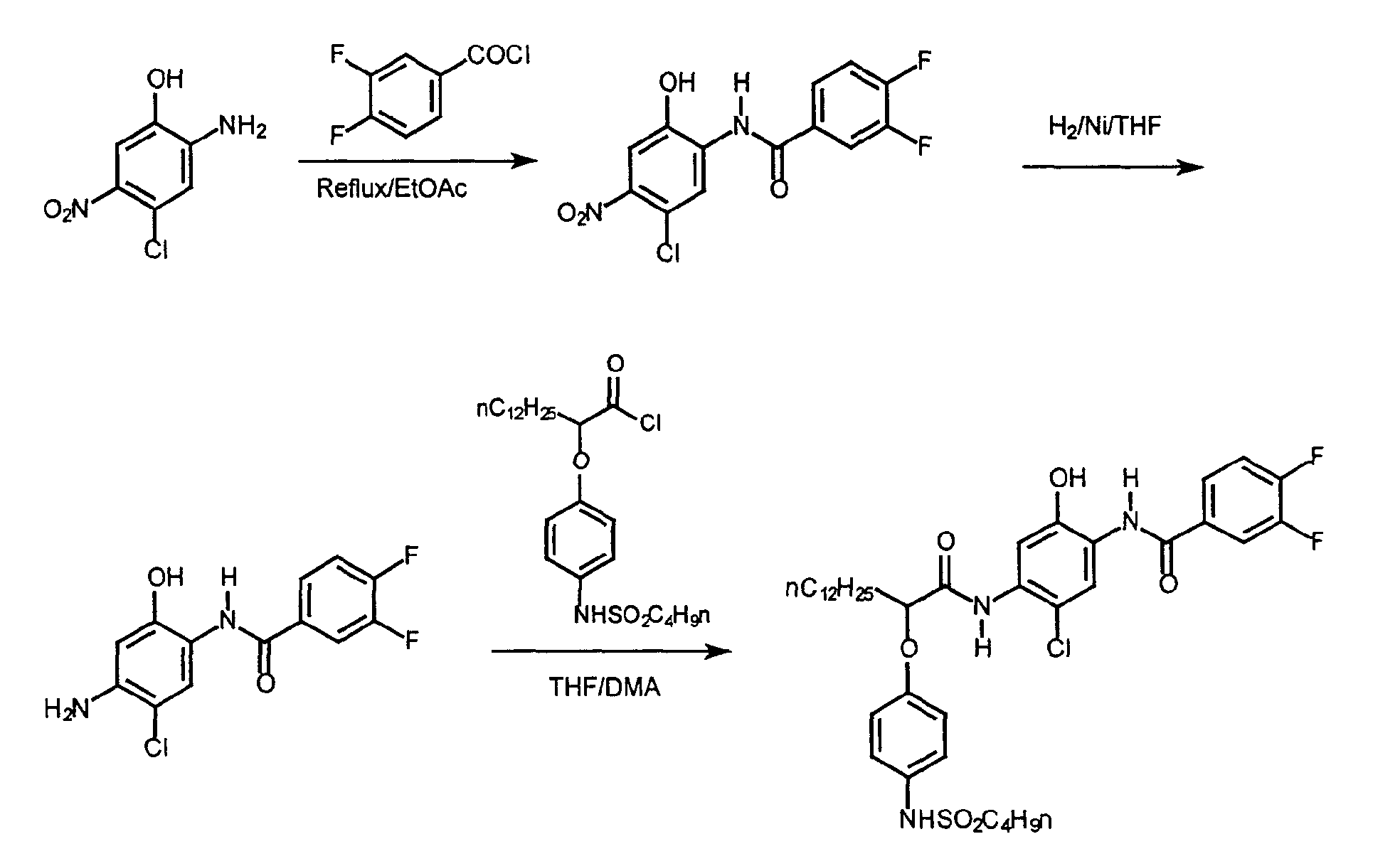
- the nitrophenol (25.0g, 0.075 mol) was taken up in tetahydrofuran (THF) (250ml) and dimethylformamide (DMF) (50ml).
- THF tetahydrofuran
- DMF dimethylformamide
- the solution was hydrogenated over Raney Nickel at 3,040kPa/25°C for 15 h.
- the catalyst was removed by filtration through a Kieselguhr pad and the crude aminophenol solution used immediately for the next stage of the reaction.
- 2,2'-Methylenebis(6-t-butyl-4-ethylphenol) (74.0g, 0.2 mol) was dissolved in toluene (300ml) and stirred in an acetone-ice bath.
- Triethylamine (46.0g, 0.45 mol) and 4-dimethylaminopyridine (6.0g, 0.05 mol) were added followed the controlled addition of phenyl phosphonic dichloride (0.22 mol) over 0.5h. Stirring was allowed to continue at room temperature for a further 16h., then the heavy precipitate of triethylamine hydrochloride filtered off and discarded.
- Coupler C-1 was dispersed in gelatin according to the following procedure:
- Coupler C-1 (4.94g, 6.88mmol) and an equal weight of stabilizer ST1 were dissolved in a mixture of coupler solvent S1 (4.94g) and ethyl acetate (2g). The mixture was heated to effect solution. After adding aqueous gelatin (40g, 10%), containing 0.25% di-isopropylnaphthalene sulfonic acid (sodium salt) surfactant, at 60C, the mixture was dispersed by ultrasonic agitation for 2 min., using a Dawe Instruments "Soniprobe". The resultant dispersion was diluted to 60g with water.
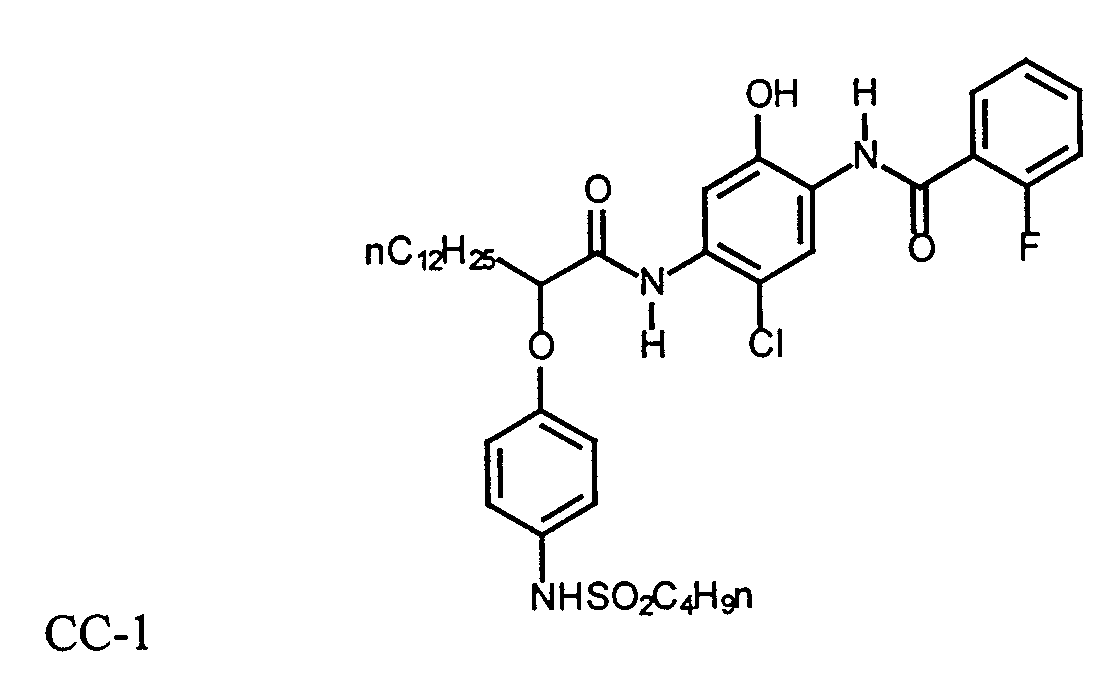
- Couplers C2-C9 Similar dispersions of couplers C2-C9 were likewise prepared, using the same molar weight of coupler in each, with proportionate adjustment of the weight of stabilizer ST1 and coupler solvent S1. A further two dispersions were subsequently prepared in the same fashion, replacing the above couplers with the comparison couplers CC1-CC2.
- Each of the above dispersions was mixed with appropriate quantities of aqueous gelatin and a red-sensitive cubic silver chloride photographic emulsion (average edge length: 0.36 ⁇ m) before coating on a resin-coated paper support carrying a pre-coated gel pad (3g.m -2 ).
- the silver and coupler coverages were, respectively, 0.21g.m -2 and 0.831mmol.m -2 .
- a protective gelatin supercoat (1.0g.m -2 ), containing an appropriate quantity of bis-(vinylsulfonylmethane) hardener, was applied over the photosensitive layer.
- Sample strips of the coatings were exposed through a step tablet (density range 0 - 3, 0.15 inc.) and developed through standard KODAK RA4TM process solutions. Sensitometric curves were generated for each coating and the spectral absorption characteristics of the image dyes were also measured using a spectrophotometer operating in reflection mode. The light stability of the image dyes was assessed using standard simulated daylight fading equipment incorporating a Xenon arc source, delivering an exposure intensity of 50klx at the sample plane.
- the sample strips were mounted in the fader under a UV-absorbing filter, comprising Tinuvin-328TM (Ciba-Geigy), dispersed in gelatin and coated on a transparent polyester sheet at a coverage of 1.0 g.m- 2 .
- a UV-absorbing filter comprising Tinuvin-328TM (Ciba-Geigy)
- dispersed in gelatin dispersed in gelatin and coated on a transparent polyester sheet at a coverage of 1.0 g.m- 2 .
- the sensitometric curves were re-read and compared with the initial curves. Status "A" red density losses from an initial value of 1.0 were recorded.
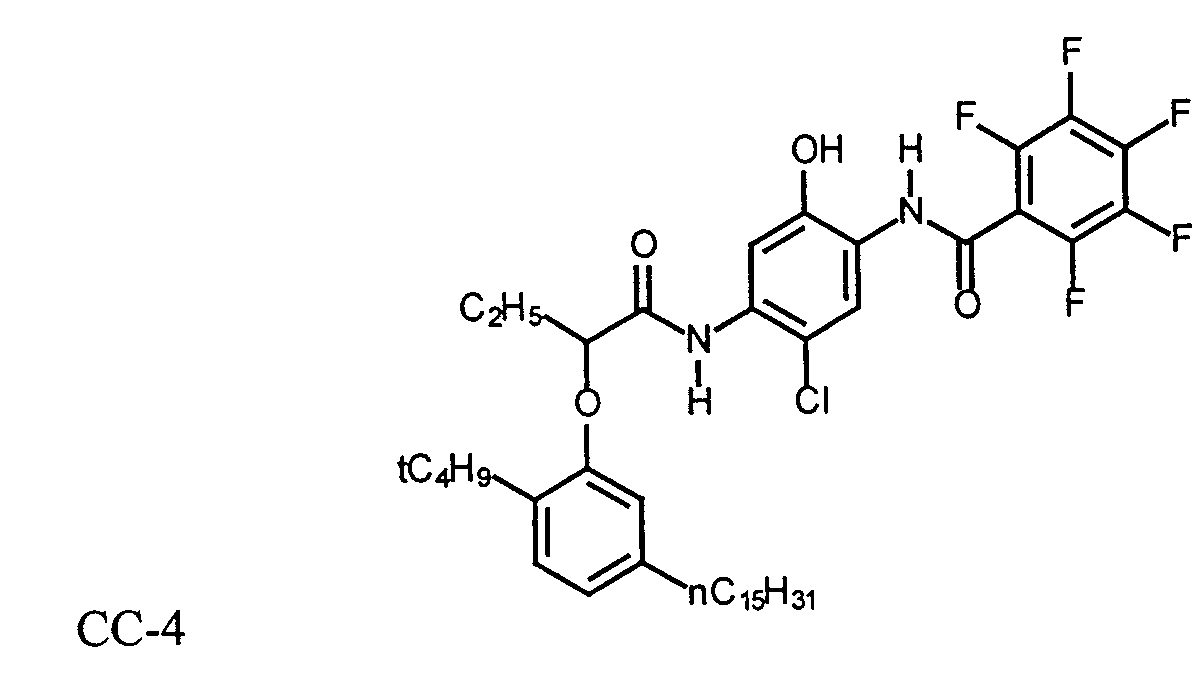
- the coupler C-10 was dispersed and coated according to the procedures outlined in Example 3. Analogous coatings of the comparison couplers CC-3 and CC-4 were prepared in the same way. The resultant coatings were exposed and processed as described in Example 3 to provide sample strips for image stability and hue evaluation. The test procedures matched those described in Example 3, except that the light stability test was extended to 6 weeks. The results are reproduced in TABLE 2, where it is shown that the coupler C-10 gives superior image dye light stability to the otherwise identically substituted ortho and meta-fluoro-, and pentafluoro-substituted comparison couplers CC-3 and CC-4. Photographic Evaluation of Couplers in Monochrome Format (1:1:1 Coupler/ST1/S1) No. Coating No.
- TABLE 3 shows further results from coatings of the coupler C-6 and comparison coupler CC-5.
- the coatings illustrated in TABLE 3 were made from dispersions of the couplers prepared to the formulation described in Example 3, except that the coupler solvent S1 was replaced with one or other of the compounds S10 or S11.
- the coating formulation and evaluation procedures were the same as those outlined in Example 3. Photographic Evaluation of Couplers in Monochrome Format (1:1:1 Coupler/ST1/Solvent) Coating No. Coupler No. Solvent ⁇ max (nm) HBW (nm) HID Fade 1.
- C-6 S11 652 156 -0.16 (inv.) 3.
Landscapes
- Physics & Mathematics (AREA)
- General Physics & Mathematics (AREA)
- Silver Salt Photography Or Processing Solution Therefor (AREA)
Abstract


Description
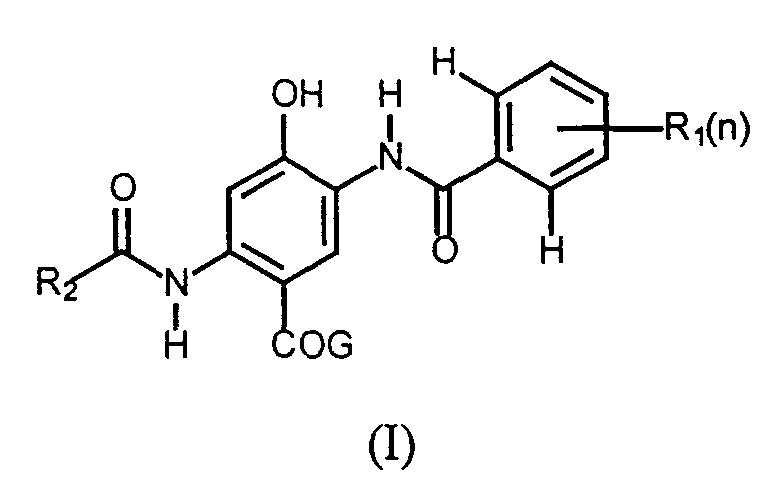
provided that

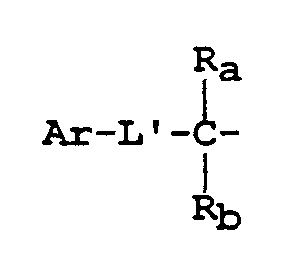
Ar is an unsubstituted or substituted aryl group, L' is a divalent linking group such as -O-, -SO- or -SO2- and Ra and Rb are independently H or an alkyl group. In one embodiment, Ra is an alkyl group, Rb is H, and L' is -SO2-.

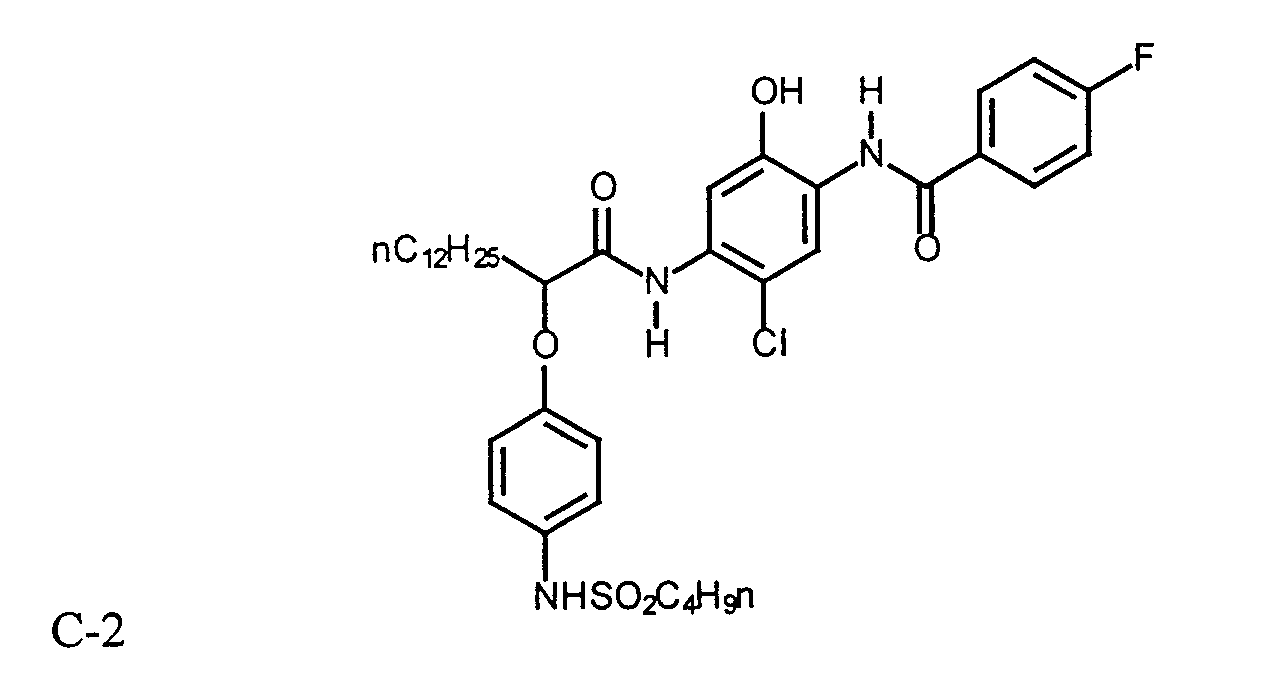

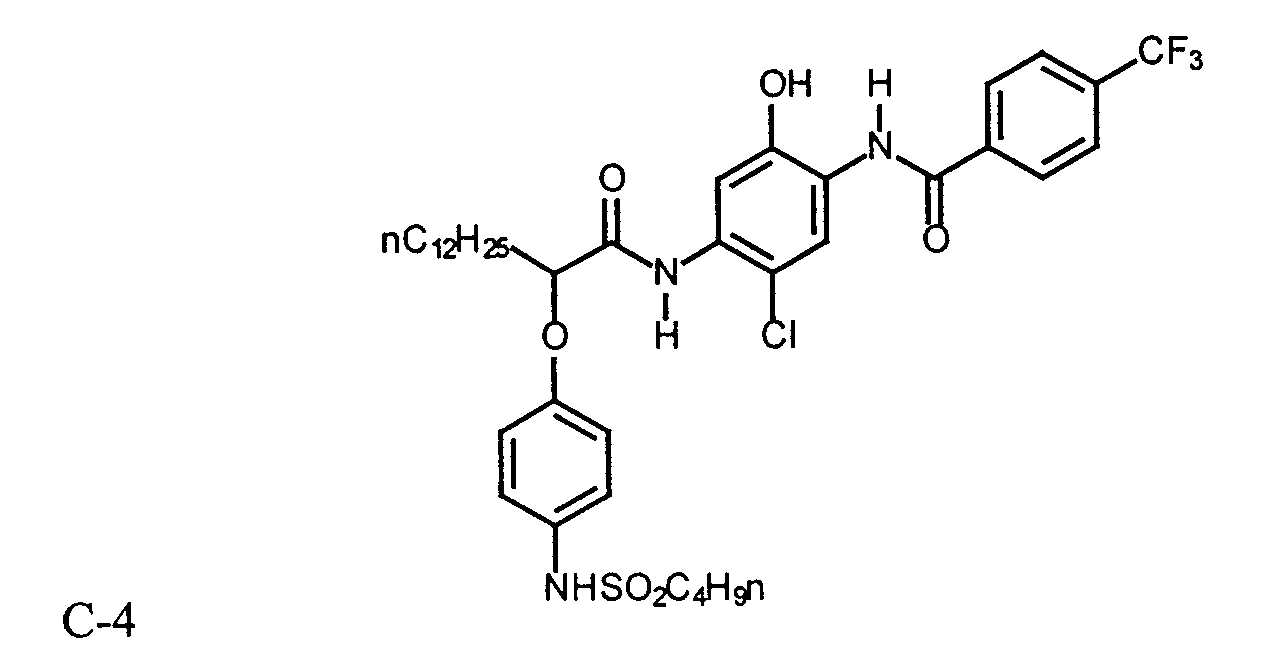

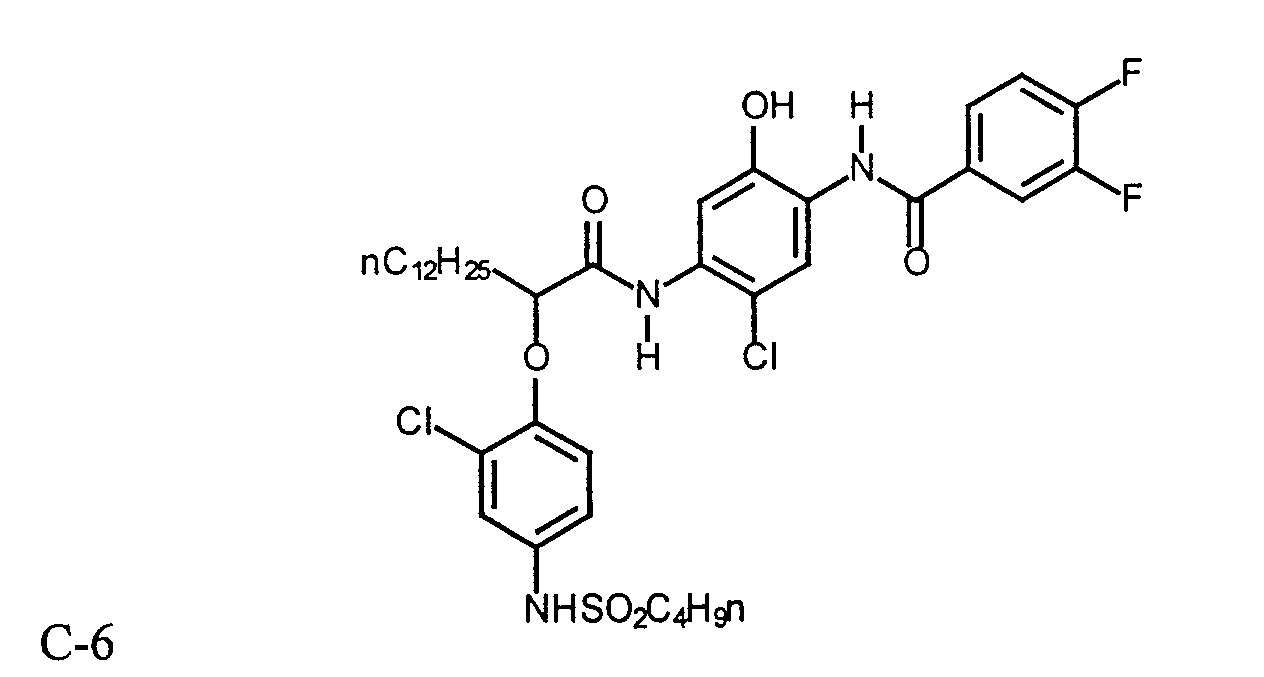


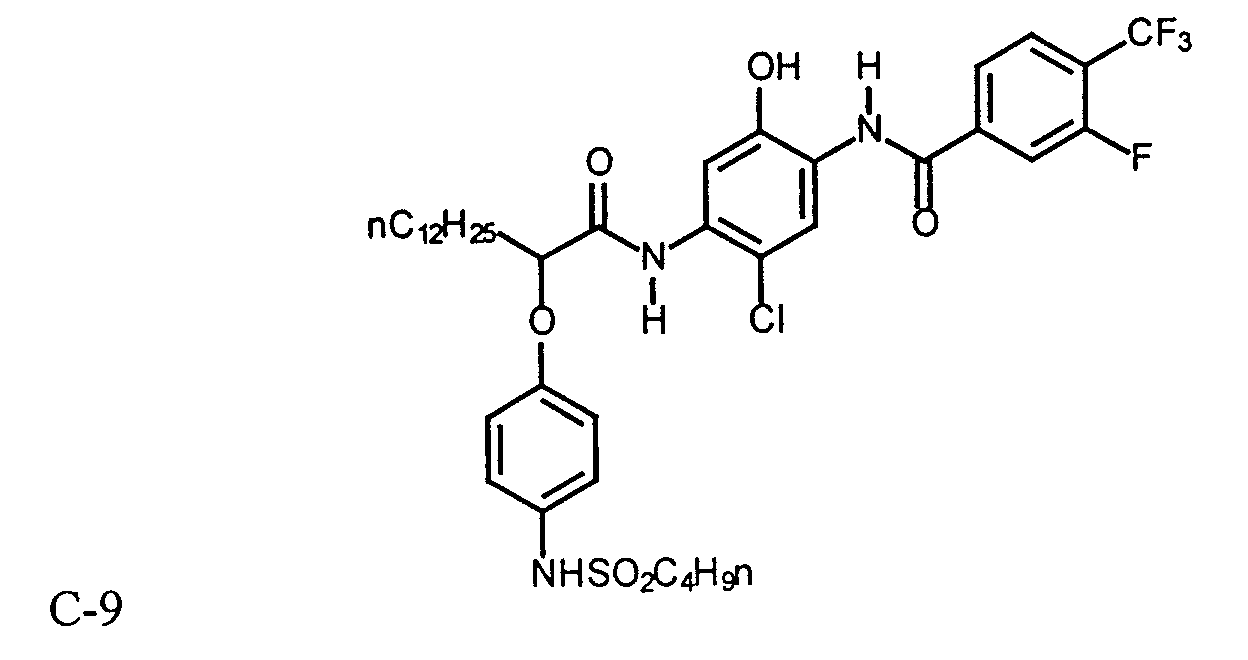

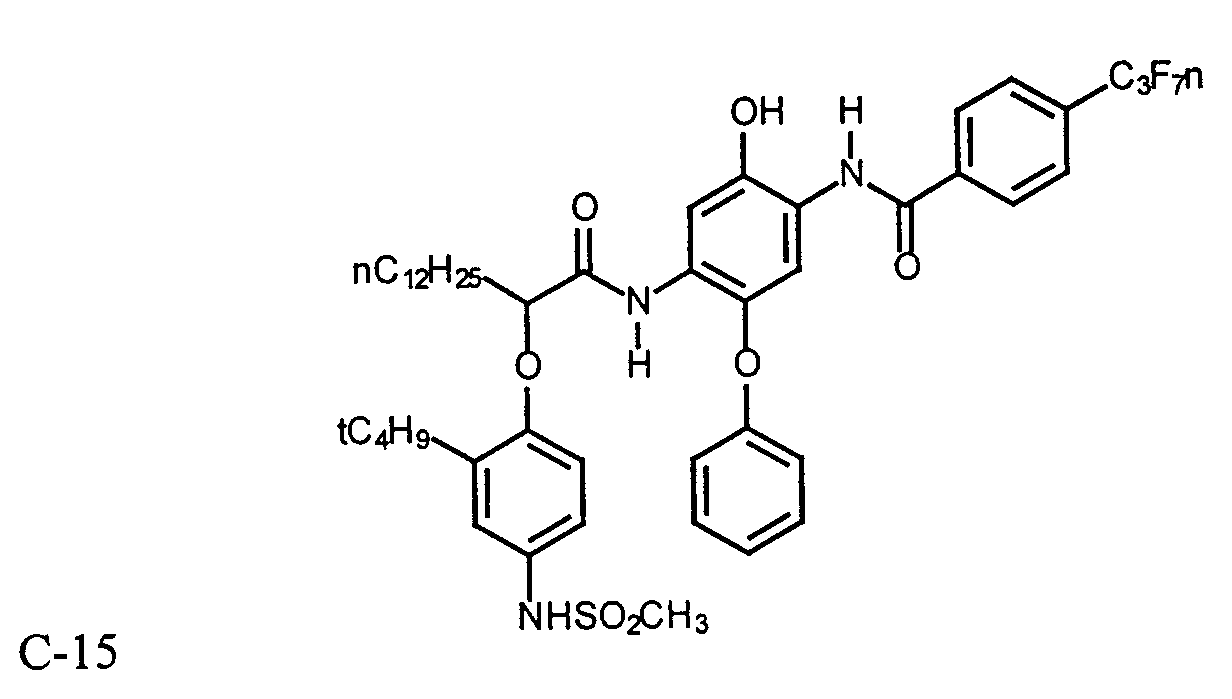


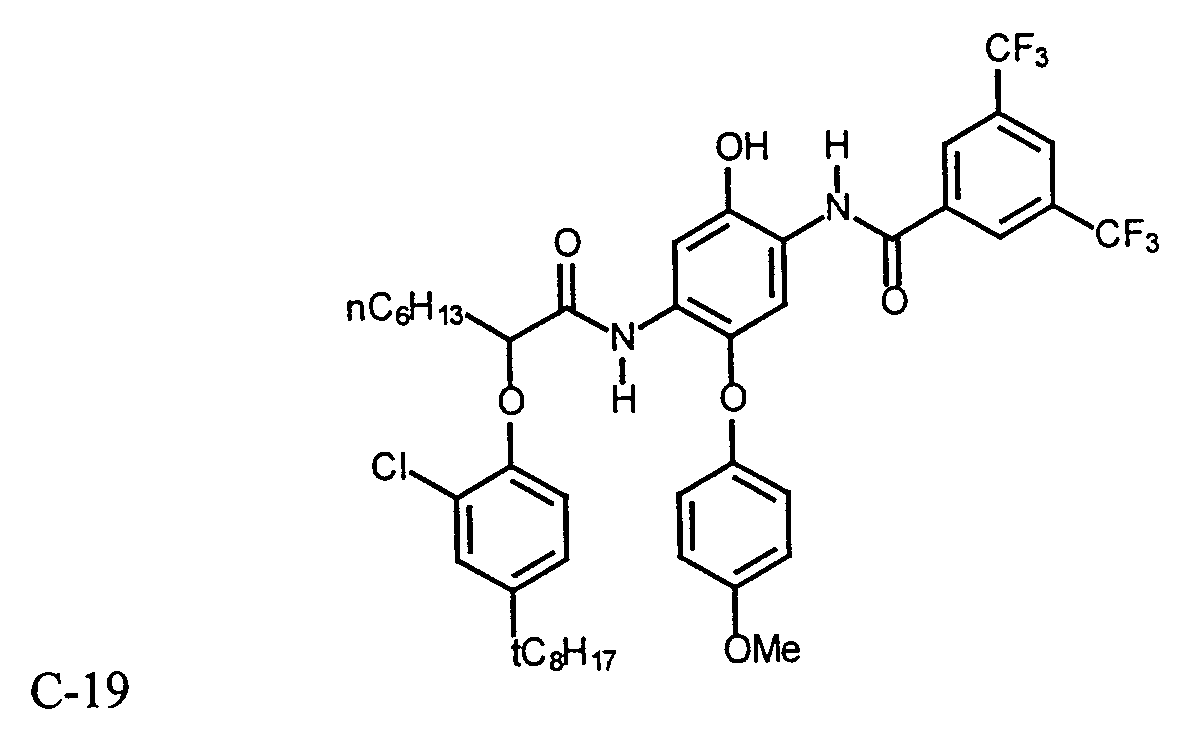

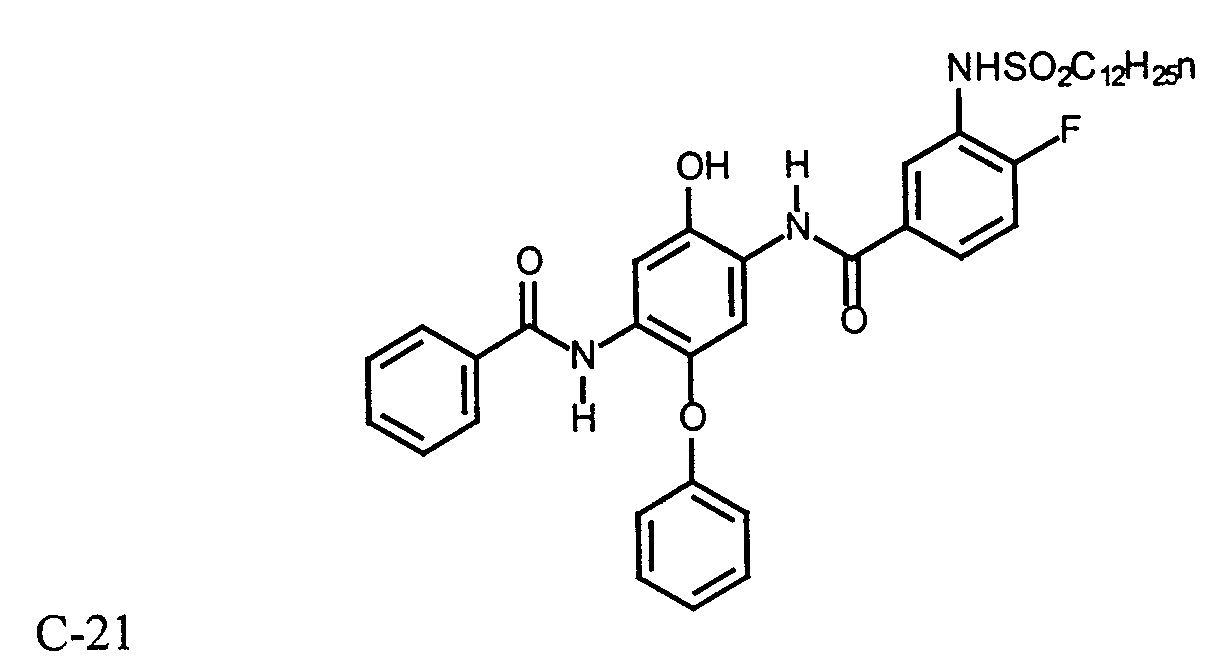


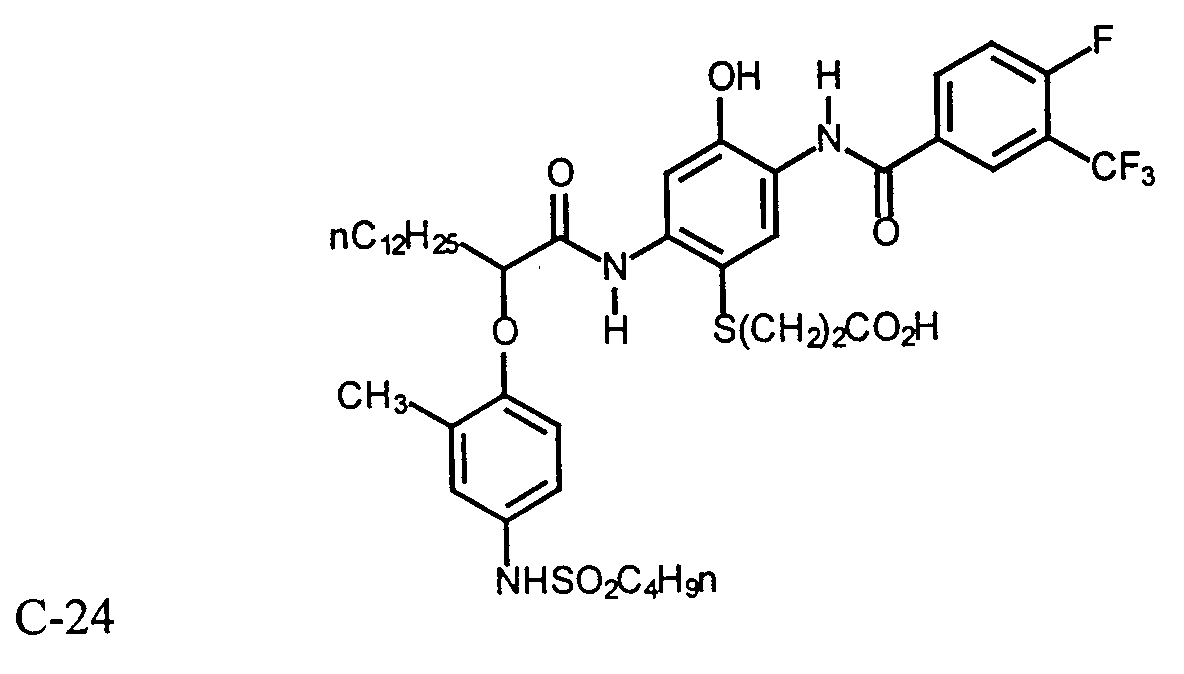


R6, R7, R8 and R9 are independently selected from hydrogen or halogen atoms or unsubstituted or substituted alkyl, aryl or alkoxy groups, preferably alkyl groups and especially secondary or tertiary alkyl groups. Although R6, R7, R8 and R9 may be the same or different, conveniently R6 and R9 are the same for ease of synthesis, especially alkyl groups, as are R7 and R8, which are especially halogen atoms or alkyl groups.





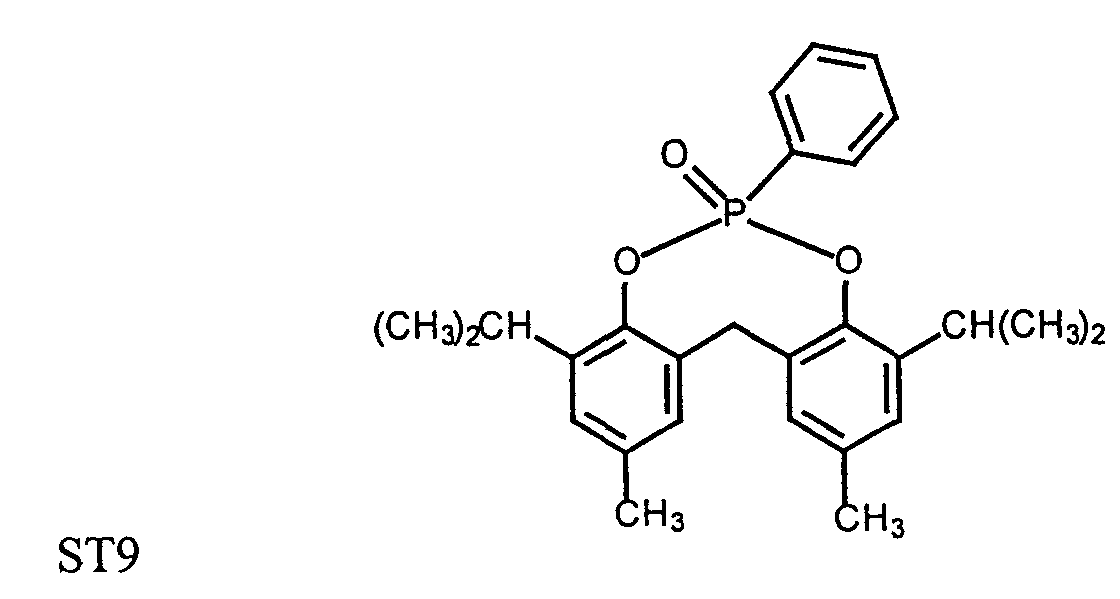
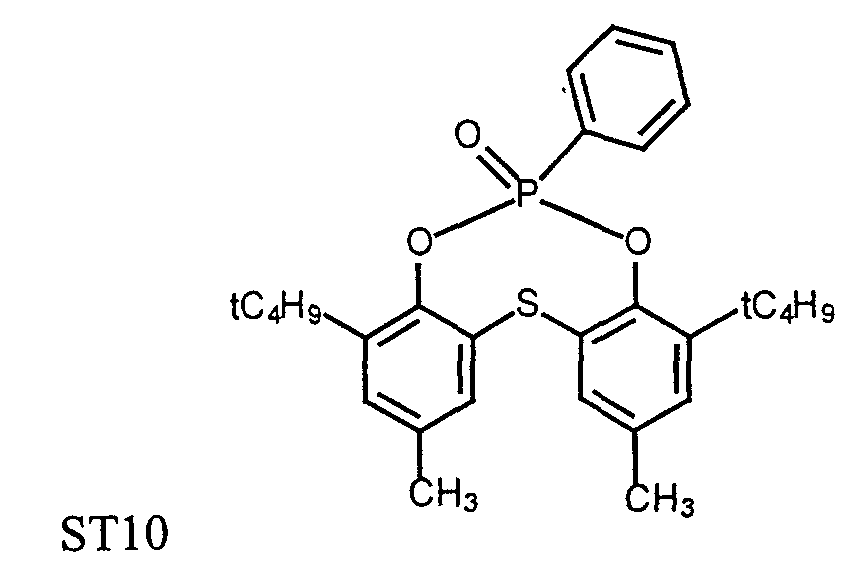
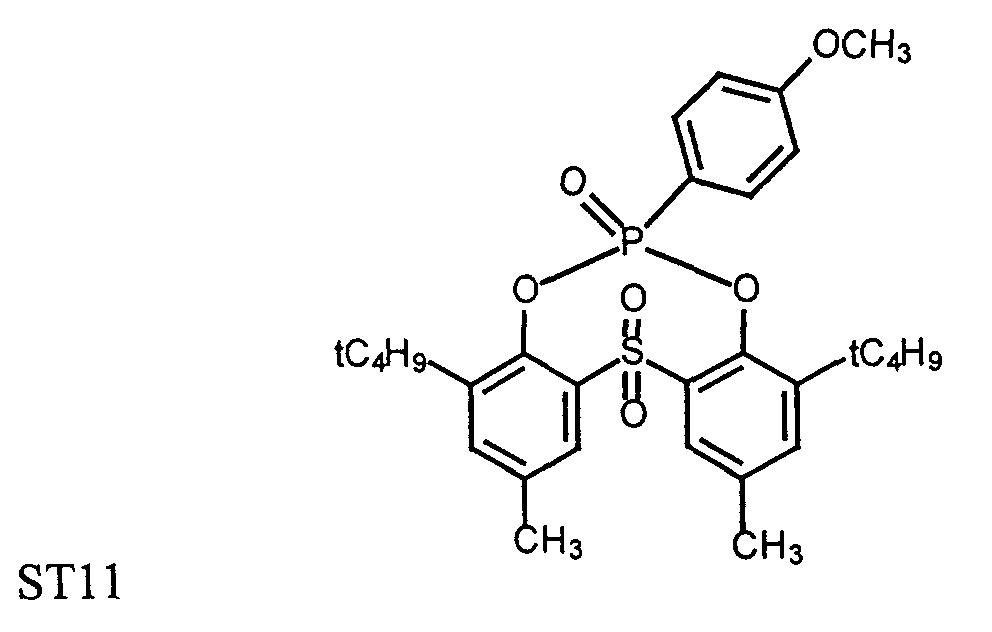
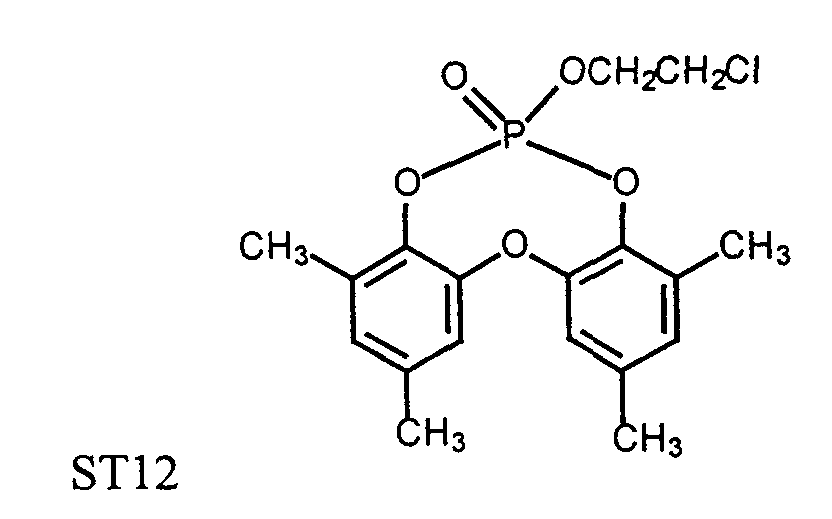











Research Disclosure, Item 22534, January 1983, published by Kenneth Mason Publications, Ltd., Emsworth, Hampshire P010 7DD, England; U.S. Patent Nos. 4,439,520; 4,414,310; 4,433,048; 4,643,966; 4,647,528; 4,665,012; 4,672,027; 4,678,745; 4,693,964; 4,713,320; 4,722,886; 4,755,456; 4,775,617; 4,797,354; 4,801,522; 4,806,461; 4,835,095; 4,853,322; 4,914,014; 4,962,015; 4,985,350; 5,061,069 and 5,061,616.



| Calcd. for C37H48ClF2N3O6S | C, 60.4; | H, 6.6; | N, 5.7% |
| Found | C, 60.5; | H, 6.5; | N, 5.6% |
| Calcd. for C31H39O3P | C, 75.9; | H, 8.0% |
| Found | C, 75.7; | H, 7.8% |
| Gel | 1.0 g.m-2 | GEL SUPERCOAT |
| Hardener | 0.084 g.m-2 | |
| Coupler | 0.831 mM.m-2 | PHOTOSENSITIVE LAYER |
| Ag | 0.21 g.m-2 | |
| Gel | 1.615 g.m-2 | |
| Gel | 3.0 g.m-2 | GEL PAD |
| Resin Coated Paper |
| Photographic Evaluation of Couplers in Monochrome Format (1:1:1 Coupler/ST1/Sl) | ||||
| Coating No. | Coupler No. | λmax (nm) | HBW (nm) | HID Fade |
| 1. | C-1 | 657 | 161 | -0.11 (inv.) |
| 2 | C-2 | 656 | 161 | -0.11 (inv.) |
| 3 | C-3 | 658 | 162 | -0.11 (inv.) |
| 4. | C-4 | 659 | 162 | -0.12 (inv.) |
| 5. | C-5 | 658 | 162 | -0.10 (inv.) |
| 6. | C-6 | 660 | 161 | -0.08 (inv.) |
| 7. | C-7 | 660 | 160 | -0.12 (inv.) |
| 8. | C-8 | 661 | 164 | -0.11 (inv.) |
| 9. | C-9 | 661 | 163 | -0.10 (inv.) |
| 10. | CC-1 | 647 | 157 | -0.18 (comp.) |
| 11. | CC-2 | 643 | 151 | -0.31 (comp) |
| Photographic Evaluation of Couplers in Monochrome Format (1:1:1 Coupler/ST1/S1) | |||||
| No. | Coating No. | Coupler (nm) | λmax (nm) | HBW Fade | HID |
| 1. | C-10 | 665 | 172 | -0.17 | (inv.) |
| 2. | CC-3 | 654 | 167 | -0.25 | (comp.) |
| 3. | CC-4 | 673 | 170 | -0.26 | (comp.) |
| Photographic Evaluation of Couplers in Monochrome Format (1:1:1 Coupler/ST1/Solvent) | ||||||
| Coating No. | Coupler No. | Solvent | λmax (nm) | HBW (nm) | HID Fade | |
| 1. | C-6 | S10 | 652 | 150 | -0.36 | (inv.) |
| 1. | CC-5 | S10 | 645 | 155 | -0.50 | (comp.) |
| 2. | C-6 | S11 | 652 | 156 | -0.16 | (inv.) |
| 3. | CC-5 | S11 | 645 | 154 | -0.30 | (comp.) |
Claims (15)
- A photographic element comprising a light sensitive silver halide emulsion layer having associated therewith (A) a cyan dye-forming coupler of formula (I) and (B) a bisphenol derivative compound of formula (II):- (A)wherein
 each R1 is an independently selected substituent provided that at least one of these is a fluoro or a perfluoroalkyl substituent;n is an integer from 1 to 3;R2 is an unsubstituted or substituted alkyl, aryl, amino or alkoxy group or a 5-10 membered heterocyclic ring which contains one or more heteroatoms selected from nitrogen, oxygen and sulfur, which ring is unsubstituted or substituted; andCOG is a hydrogen atom or a group which can be split off by the reaction of the coupler with an oxidized colour developing agent.
provided thatwherein(a) when n is 3 and each R1 is fluorine, COG is not a methoxy group and(b) when n is 2 and R1 in the 3- and 4- positions is each a fluorine atom, COG is not hydrogen; and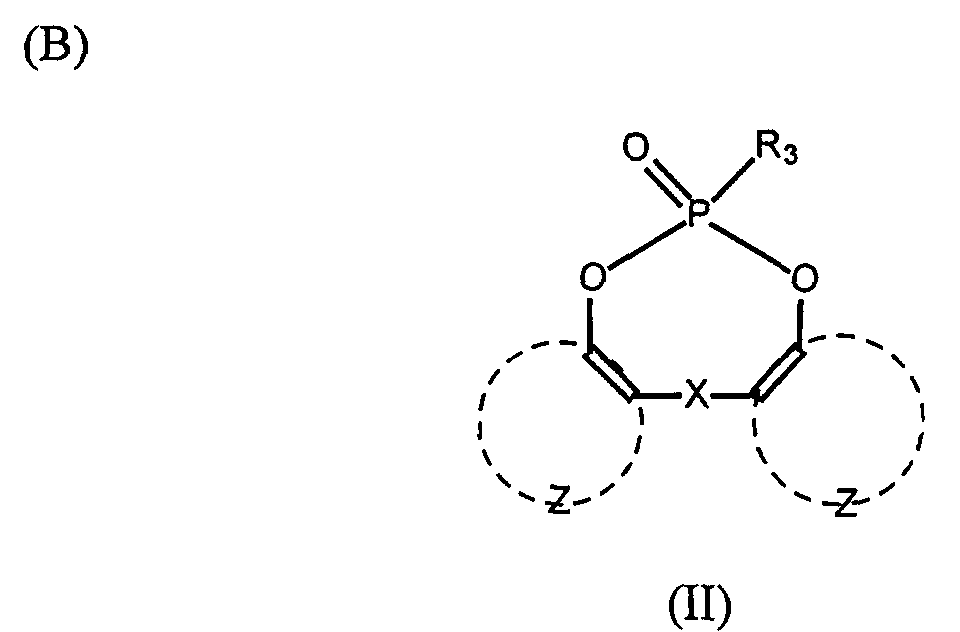 R3 is an unsubstituted or substituted alkyl, aryl, alkoxy, aryloxy group or a substituted amino group;each Z independently represents the atoms necessary to complete a substituted or unsubstituted arene or heteroaromatic ring system;X is a single bond or a linking group having a single atom which connects the arene or heteroaromatic ring systems; orX forms, together with substituents ortho to X on the arene or heteroaromatic ring systems, a fused unsubstituted or substituted 5-, 6-or 7-membered ring, which may contain one or two heteroatoms selected from nitrogen, oxygen and sulfur.
 - A photographic element according to claim 1 wherein in formula (I) at least one R1 is selected from fluoro and trifluoromethyl groups.
- A photographic element according to either of the preceding claims wherein n is 2.
- A photographic element according to any one of the preceding claims wherein in formula (I) R2 is an alkyl group substituted with halogen or an unsubstituted or substituted alkyl, aryloxy or alkyl- or aryl- sulfonyl group.
- A photographic element according to claim 4 wherein R2 is the groupwherein

each A is independently a substituent with at least one A being an alkyl- or aryl-sulfonamido or -sulfamoyl group, r is 1 or 2, and Rc is hydrogen or an alkyl group. - A photographic element according to any one of the preceding claims wherein the cyan dye-forming coupler of formula (I) is selected fromand

- A photographic element according to any one of the preceding claims wherein the bisphenol derivative has the formula (IIA):-wherein
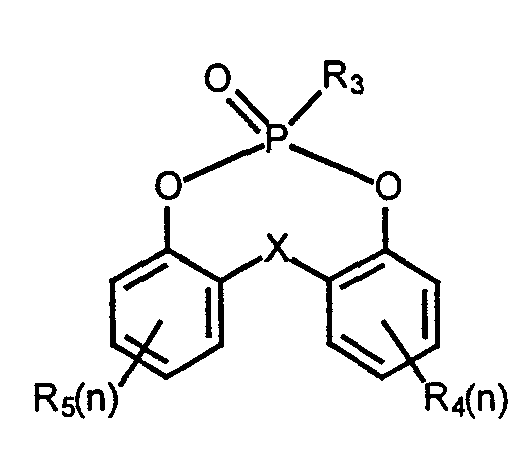 R3 is as defined in claim 1;R4 and R5 are each independently selected from halogen or an unsubstituted or substituted alkyl, aryl, alkoxy, aryloxy, COOR or CONR'R" group, where R is an unsubstituted or substituted alkyl or aryl group, R' and R" are independently selected from hydrogen and an unsubstituted or substituted alkyl or aryl group;each n is independently an integer from 1 to 4; andX is a single bond or a linking group having a single atom which connects the phenyl rings; orX forms together with R4 and R5, when in the ortho position, a fused unsubstituted or substituted 5-, 6-or 7-membered ring, which may contain one or two heteroatoms selected from nitrogen, oxygen and sulfur.
 - A photographic element according to claim 7 wherein the bisphenol derivative has the formula (IIB):-wherein
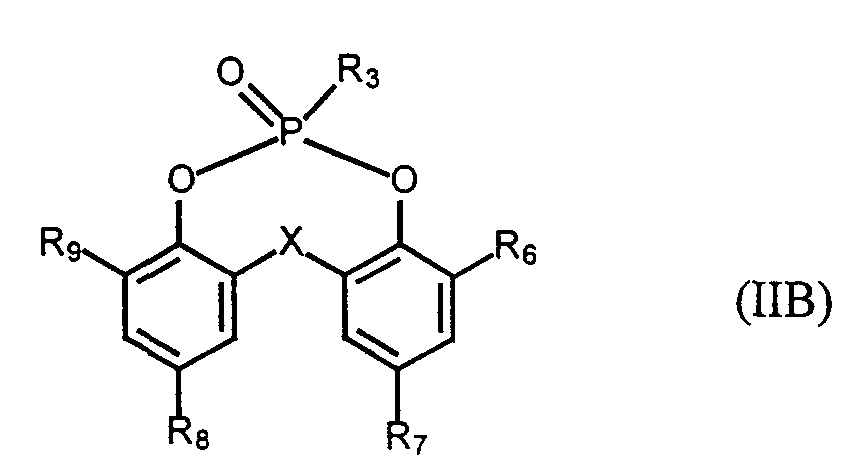 R3 is as defined in claim 1;R6, R7, R8 and R9 are independently selected from hydrogen or halogen atoms or unsubstituted or substituted alkyl, aryl or alkoxy groups; andX is a single bond or linking group having a single atom which connects the phenyl rings.
 - A photographic element according to any one of the preceding claims wherein X is a divalent linking group selected from -CR'R"-, -NR-, -S(O)q- and -O-, wherein R, R' and R" are as defined in claim 7 and q is 0, 1 or 2.
- A photographic element according to claim 9 wherein X is an unsubstituted or substituted methylene group or a sulfur or oxygen atom.
- A photographic element according to any one of the preceding claims having associated therewith a solvent of formula (III) :-wherein
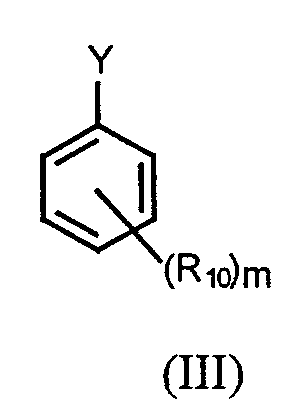 each R10 is an independently selected substituent and m is an integer of from 1 to 3 and the total number of the carbon atoms contained in all of the R10 groups is at least 8; andY is OH or NHSO2R''', wherein R''' is an unsubstituted or substituted alkyl or aryl group or a 5-10 membered heterocyclic ring which contains one or more heteroatoms selected from nitrogen, oxygen and sulfur, which ring is unsubstituted or substituted.
 - A photographic element according to any one of the preceding claims wherein the ratio by weight of stabilizer to dye-forming coupler is from about 0.1:1 to about 5:1.
- A photographic element according to claim 12 wherein the stabilizer and dye-forming coupler are in equal amounts by weight.
- A multi-colour photographic element comprising a support bearing yellow, magenta and cyan image-dye-forming units comprising at least one blue-, green- or red-sensitive silver halide emulsion layer having associated therewith at least one yellow, magenta or cyan dye-forming coupler respectively, wherein the element is as according to any one of the preceding claims.
- A process of forming an image in a photographic element after the element has been imagewise exposed to light, comprising contacting an element as defined in any one of the preceding claims with a colour developing agent.
Applications Claiming Priority (2)
| Application Number | Priority Date | Filing Date | Title |
|---|---|---|---|
| GB0023093 | 2000-09-20 | ||
| GBGB0023093.8A GB0023093D0 (en) | 2000-09-20 | 2000-09-20 | Photographic element containing cyan dye-forming coupler |
Publications (2)
| Publication Number | Publication Date |
|---|---|
| EP1197798A2 true EP1197798A2 (en) | 2002-04-17 |
| EP1197798A3 EP1197798A3 (en) | 2002-06-19 |
Family
ID=9899828
Family Applications (1)
| Application Number | Title | Priority Date | Filing Date |
|---|---|---|---|
| EP01203484A Withdrawn EP1197798A3 (en) | 2000-09-20 | 2001-09-14 | Photographic element containing cyan dye-forming coupler |
Country Status (4)
| Country | Link |
|---|---|
| US (1) | US6444417B1 (en) |
| EP (1) | EP1197798A3 (en) |
| JP (1) | JP2002131877A (en) |
| GB (1) | GB0023093D0 (en) |
Cited By (1)
| Publication number | Priority date | Publication date | Assignee | Title |
|---|---|---|---|---|
| EP1394606A1 (en) * | 2002-08-29 | 2004-03-03 | Eastman Kodak Company | Photographic element compound and process |
Families Citing this family (1)
| Publication number | Priority date | Publication date | Assignee | Title |
|---|---|---|---|---|
| GB0127068D0 (en) * | 2001-11-10 | 2002-01-02 | Eastman Kodak Co | Photographic elements containing cyan coupler UV absorber and stabilizer |
Family Cites Families (5)
| Publication number | Priority date | Publication date | Assignee | Title |
|---|---|---|---|---|
| US4463086A (en) | 1982-08-17 | 1984-07-31 | Konishiroku Photo Industry Co., Ltd. | Light-sensitive silver halide color photographic material |
| GB8625149D0 (en) * | 1986-10-21 | 1986-11-26 | Kodak Ltd | Stabilisation of dye images |
| GB8808694D0 (en) * | 1988-04-13 | 1988-05-18 | Kodak Ltd | Stabilization of dye images produced in photographic materials |
| JPH028839A (en) * | 1988-06-27 | 1990-01-12 | Konica Corp | Silver halide photographic sensitive material |
| US6004738A (en) | 1997-10-30 | 1999-12-21 | Eastman Kodak Company | Photographic elements containing cyan dye-forming coupler, coupler solvent and bisphenol derivative |
-
2000
- 2000-09-20 GB GBGB0023093.8A patent/GB0023093D0/en not_active Ceased
-
2001
- 2001-08-21 US US09/934,284 patent/US6444417B1/en not_active Expired - Fee Related
- 2001-09-14 EP EP01203484A patent/EP1197798A3/en not_active Withdrawn
- 2001-09-19 JP JP2001285125A patent/JP2002131877A/en active Pending
Cited By (1)
| Publication number | Priority date | Publication date | Assignee | Title |
|---|---|---|---|---|
| EP1394606A1 (en) * | 2002-08-29 | 2004-03-03 | Eastman Kodak Company | Photographic element compound and process |
Also Published As
| Publication number | Publication date |
|---|---|
| JP2002131877A (en) | 2002-05-09 |
| US20020064735A1 (en) | 2002-05-30 |
| GB0023093D0 (en) | 2000-11-01 |
| US6444417B1 (en) | 2002-09-03 |
| EP1197798A3 (en) | 2002-06-19 |
Similar Documents
| Publication | Publication Date | Title |
|---|---|---|
| EP0825489B1 (en) | Photographic elements containing cyan dye-forming coupler having a sulfone ballast group | |
| EP0825488B1 (en) | Coupler set for silver halide color imaging | |
| US5681690A (en) | Photographic dye-forming coupler, emulsion layer, element, and process | |
| US5674666A (en) | Photographic elements containing new cyan dye-forming coupler providing improved color reproduction | |
| EP0779543B1 (en) | Photographic element containing an improved pyrazolotriazole coupler | |
| EP0779544B1 (en) | Photographic element containing an improved pyrazolotriazole coupler | |
| EP0953873B1 (en) | Photographic element containing acylacetamido yellow dye-forming couplers | |
| US5994038A (en) | Photographic element containing acetamido DIR coupler | |
| US6004738A (en) | Photographic elements containing cyan dye-forming coupler, coupler solvent and bisphenol derivative | |
| US6143485A (en) | Pyrazolotriazle dye-forming photographic coupler | |
| US6444412B1 (en) | Photographic element with dye-forming coupler and stabilizing compound | |
| EP0953872B1 (en) | Photographic element containing improved acylacetamido yellow dye-forming coupler | |
| US6444417B1 (en) | Photographic element containing cyan dye-forming coupler | |
| US6132944A (en) | Photographic element containing high dye-yield couplers | |
| US5670302A (en) | Photographic elements containing new magenta dye-forming couplers | |
| EP0813111B1 (en) | Color negative photographic film containing a particular cyan coupler bearing a sulfonyl containing ballast | |
| US6030760A (en) | Photographic element containing specific magenta coupler and anti-fading agent | |
| US6699650B1 (en) | Photographic couplers having improved image dye light stability | |
| US6130032A (en) | Photographic elements containing improved yellow dye-forming couplers | |
| US6162598A (en) | Silver halide photographic element containing improved yellow dye-forming coupler | |
| US5654132A (en) | Photographic materials and process comprising ureido naphtholic cyan couplers | |
| US6361931B1 (en) | Silver halide photographic element, imaging process, and compound | |
| EP1096311A1 (en) | Yellow coupler, photographic element, and process for forming an image | |
| EP1205796A2 (en) | Photographic element and compound and process useful therewith | |
| EP1394606A1 (en) | Photographic element compound and process |
Legal Events
| Date | Code | Title | Description |
|---|---|---|---|
| PUAI | Public reference made under article 153(3) epc to a published international application that has entered the european phase |
Free format text: ORIGINAL CODE: 0009012 |
|
| AK | Designated contracting states |
Kind code of ref document: A2 Designated state(s): AT BE CH CY DE DK ES FI FR GB GR IE IT LI LU MC NL PT SE TR |
|
| AX | Request for extension of the european patent |
Free format text: AL;LT;LV;MK;RO;SI |
|
| PUAL | Search report despatched |
Free format text: ORIGINAL CODE: 0009013 |
|
| AK | Designated contracting states |
Kind code of ref document: A3 Designated state(s): AT BE CH CY DE DK ES FI FR GB GR IE IT LI LU MC NL PT SE TR |
|
| AX | Request for extension of the european patent |
Free format text: AL;LT;LV;MK;RO;SI |
|
| 17P | Request for examination filed |
Effective date: 20021113 |
|
| AKX | Designation fees paid |
Designated state(s): DE FR GB |
|
| 17Q | First examination report despatched |
Effective date: 20030704 |
|
| GRAP | Despatch of communication of intention to grant a patent |
Free format text: ORIGINAL CODE: EPIDOSNIGR1 |
|
| STAA | Information on the status of an ep patent application or granted ep patent |
Free format text: STATUS: THE APPLICATION IS DEEMED TO BE WITHDRAWN |
|
| 18D | Application deemed to be withdrawn |
Effective date: 20050504 |