EP1197570A2 - Nickel-base alloy and its use in forging and welding operations - Google Patents
Nickel-base alloy and its use in forging and welding operations Download PDFInfo
- Publication number
- EP1197570A2 EP1197570A2 EP01308419A EP01308419A EP1197570A2 EP 1197570 A2 EP1197570 A2 EP 1197570A2 EP 01308419 A EP01308419 A EP 01308419A EP 01308419 A EP01308419 A EP 01308419A EP 1197570 A2 EP1197570 A2 EP 1197570A2
- Authority
- EP
- European Patent Office
- Prior art keywords
- percent
- billet
- alloy
- tantalum
- providing
- Prior art date
- Legal status (The legal status is an assumption and is not a legal conclusion. Google has not performed a legal analysis and makes no representation as to the accuracy of the status listed.)
- Granted
Links
Images



Classifications
-
- C—CHEMISTRY; METALLURGY
- C22—METALLURGY; FERROUS OR NON-FERROUS ALLOYS; TREATMENT OF ALLOYS OR NON-FERROUS METALS
- C22C—ALLOYS
- C22C19/00—Alloys based on nickel or cobalt
- C22C19/03—Alloys based on nickel or cobalt based on nickel
- C22C19/05—Alloys based on nickel or cobalt based on nickel with chromium
- C22C19/051—Alloys based on nickel or cobalt based on nickel with chromium and Mo or W
- C22C19/056—Alloys based on nickel or cobalt based on nickel with chromium and Mo or W with the maximum Cr content being at least 10% but less than 20%
-
- C—CHEMISTRY; METALLURGY
- C22—METALLURGY; FERROUS OR NON-FERROUS ALLOYS; TREATMENT OF ALLOYS OR NON-FERROUS METALS
- C22C—ALLOYS
- C22C19/00—Alloys based on nickel or cobalt
- C22C19/03—Alloys based on nickel or cobalt based on nickel
- C22C19/05—Alloys based on nickel or cobalt based on nickel with chromium
- C22C19/051—Alloys based on nickel or cobalt based on nickel with chromium and Mo or W
- C22C19/055—Alloys based on nickel or cobalt based on nickel with chromium and Mo or W with the maximum Cr content being at least 20% but less than 30%
-
- C—CHEMISTRY; METALLURGY
- C22—METALLURGY; FERROUS OR NON-FERROUS ALLOYS; TREATMENT OF ALLOYS OR NON-FERROUS METALS
- C22F—CHANGING THE PHYSICAL STRUCTURE OF NON-FERROUS METALS AND NON-FERROUS ALLOYS
- C22F1/00—Changing the physical structure of non-ferrous metals or alloys by heat treatment or by hot or cold working
- C22F1/10—Changing the physical structure of non-ferrous metals or alloys by heat treatment or by hot or cold working of nickel or cobalt or alloys based thereon
-
- B—PERFORMING OPERATIONS; TRANSPORTING
- B23—MACHINE TOOLS; METAL-WORKING NOT OTHERWISE PROVIDED FOR
- B23K—SOLDERING OR UNSOLDERING; WELDING; CLADDING OR PLATING BY SOLDERING OR WELDING; CUTTING BY APPLYING HEAT LOCALLY, e.g. FLAME CUTTING; WORKING BY LASER BEAM
- B23K35/00—Rods, electrodes, materials, or media, for use in soldering, welding, or cutting
- B23K35/22—Rods, electrodes, materials, or media, for use in soldering, welding, or cutting characterised by the composition or nature of the material
- B23K35/24—Selection of soldering or welding materials proper
- B23K35/30—Selection of soldering or welding materials proper with the principal constituent melting at less than 1550°C
- B23K35/3033—Ni as the principal constituent
- B23K35/304—Ni as the principal constituent with Cr as the next major constituent
Definitions
- This invention relates to a nickel-base alloy and its use in the production of forgings and welded articles.
- the metallic alloy selected for each forged component must be both forgeable to the required configuration in a commercially acceptable manner and also exhibit suitable mechanical properties at elevated service temperatures.
- the nickel-base Alloy 718 is widely employed in aerospace and other applications to produce forgings and fabrications that are used at elevated service temperatures of up to about 1150°F, and for a time which is a function of the service temperature.
- the primary strengthening mechanism of Alloy 718 is based upon delta ( ⁇ )-phase (Ni 3 Nb) and body-centered tetragonal gamma double prime ( ⁇ ")-phase (Ni 3 (Nb,Ta, Al,Ti)) precipitation. Alloy 718 does not have sufficient mechanical properties and microstructural stability for many higher-temperature service applications.
- alloys strengthened by ordered face centered cubic gamma prime ( ⁇ ')-phase (Ni 3 (Al,Ti)) precipitation are used. Examples are Waspaloy and Rene' 41 alloys. These gamma prime strengthened alloys have the necessary high-temperature mechanical performance, but they are difficult to forge in a commercially acceptable manner.
- the gamma prime strengthened alloys are susceptible to surface cracking during the forging operation. The surface cracks may be removed by grinding after the forging operation, but such rework procedures are costly in the labor required and also because the forging must be made oversize and a considerable amount of material wasted.
- alloys such as Alloy 718 exhibit good forging and welding properties but have insufficient mechanical properties and stability at service temperatures above about 1150°F.
- Alloys such as Waspaloy and Rene 41 are difficult and expensive to forge and weld, but have acceptable mechanical properties at higher service temperatures.
- the present invention provides an alloy that is readily forgeable in commercial operations, without the need for extensive rework of surface cracks and without the need for the billet to be supplied excessively oversize to allow for rework of surface cracks.
- the result is substantially lower production costs for forged articles than is possible with the gamma prime phase-strengthened forged articles.
- the alloy material is also readily welded. The material, when processed to a final forged article, exhibits excellent stability and mechanical properties at elevated service temperatures up to about 1300°F.
- a composition of matter has a composition consisting essentially of, in weight percent, from about 16 percent to about 21 percent chromium, from about 6 percent to about 12 percent iron (more preferably from about 8 percent to about 9.5 percent iron, and most preferably about 9 percent iron), from about 6 percent to about 12 percent cobalt (and preferably with the total of iron and cobalt constant at about 18 percent), from about 2.8 percent to about 3.3 percent molybdenum, from about 5 percent to about 5.4 percent niobium, from about 0.2 percent to about 2 percent tantalum (more preferably from about 0.8 percent to about 1.2 percent tantalum, and most preferably about 1 percent tantalum), from about 0.65 percent to about 1.15 percent titanium, from about 0.2 percent to about 0.8 percent aluminum, from about 0.01 percent to about 0.05 percent carbon, from about 0.005 percent to about 0.01 percent boron, less than about 0.1 percent zirconium, balance nickel and impurities.
- the composition consists essentially of, in weight percent, about 17.84 percent chromium, about 9.03 percent cobalt, about 8.93 percent iron, about 2.97 percent molybdenum, about 5.15 percent niobium, about 0.99 percent tantalum, about 0.99 percent titanium, about 0.48 percent aluminum, about 0.033 percent carbon, about 0.007 percent boron, less than about 0.1 percent zirconium, balance nickel and impurities.
- a forged article is provided by first providing a billet, heating the billet to an initial forging temperature of from about 1800°F to about 2100°F, and forging the billet beginning at the initial forging temperature. Typically, after forging the forged billet is heat treated and machined to form a forged article.
- the forged article is operable over a wide range of service temperatures, but it achieves its greatest benefits over other alloys when placed into service at a maximum service temperature of from about 1100°F to about 1300°F.
- Figure 1 is a perspective view of a forged article of manufacture, illustrated as a low-pressure turbine case 20 of a gas turbine engine.
- the low-pressure turbine case 20 is a relatively thin-walled, hollow body that is generally cylindrically symmetric about its centerline.
- the low-pressure turbine case 20 experiences a maximum service temperature of about 1300°F, which is too high a temperature to use Alloy 718 as its material of construction.
- the low-pressure turbine case 20 would be forged of a higher-temperature alloy such as Waspaloy or Rene' 41.
- these latter higher-temperature alloys are difficult and expensive to forge and weld, leading to excessive cost for the low-pressure turbine case 20.
- the article has a composition consisting essentially of, in weight percent, from about 16 percent to about 21 percent chromium, from about 6 percent to about 12 percent iron (more preferably from about 8 percent to about 9.5 percent iron, and most preferably about 9 percent iron), from about 6 percent to about 12 percent cobalt (but preferably with the total of iron and cobalt about 18 percent), from about 2.8 percent to about 3.3 percent molybdenum, from about 5 percent to about 5.4 percent niobium, from about 0.2 percent to about 2 percent tantalum (more preferably from about 0.8 percent to about 1.2 percent tantalum, and most preferably about 1 percent tantalum), from about 0.65 percent to about 1.15 percent titanium, from about 0.2 percent to about 0.8 percent aluminum, from about 0.01 percent to about 0.05 percent carbon, from about 0.005 percent to about 0.01 percent boron, less than about 0.1 percent zirconium, balance nickel and impurities.
- the composition consists essentially of, in weight percent, about 17.84 percent chromium, about 9.03 percent cobalt, about 8.93 percent iron, about 2.97 percent molybdenum, about 5.15 percent niobium, about 0.99 percent tantalum, about 0.99 percent titanium, about 0.48 percent aluminum, about 0.033 percent carbon, about 0.007 percent boron, less than about 0.01 percent zirconium, balance nickel and impurities.
- This alloy is nickel base, having more nickel than any other element.
- the alloy After processing, the alloy has a microstructure including body centered tetragonal gamma double prime (Ni 3 (Nb,Ta,Al,Ti)) precipitates, which harden the nickel-base solid-solution alloy matrix.
- the chromium, iron, cobalt, and molybdenum partition primarily to the nickel-base alloy matrix.
- Chromium imparts oxidation and corrosion resistance to the matrix. If the chromium content is greater than the indicated maximum, alpha-chromium and sigma phase may be present to cause embrittlement. If the chromium content is less than the indicated minimum, oxidation resistance is reduced with an attendant increase in time-dependent crack growth rates.
- Iron is present in the matrix as a solid solution strengthening element.
- a high iron content also causes incipient melting of the alloy and accelerates the precipitation kinetics of the body centered tetragonal gamma double prime phase at elevated temperature.
- the reduction in iron as compared with Alloy 718 increases the solidus temperature so that the alloy is workable at a higher service temperature than Alloy 718.
- the iron also reduces surface cracking of the alloy by improving malleability. If the iron content is greater than the indicated maximum, incipient melting may occur with the precipitation of brittle Laves phases. If the iron content is less than the indicated minimum, malleability suffers and the elemental cost increases.
- Cobalt substitutes for iron in the matrix, without significantly affecting the morphology of the body centered tetragonal gamma double prime precipitate, but significantly reduces precipitation kinetics resulting in stability improvements at elevated temperature relative to Alloy 718. That is, preferably the cobalt plus iron totals about 17-19, preferably 18, weight percent.
- Molybdenum is a strong solid solution hardener in the matrix. If the molybdenum content is greater than the indicated maximum, an embrittling Laves phase may precipitate. If the molybdenum content is less than the indicated minimum, matrix strength properties are insufficient.
- Ni 3 (Al,Ti) ordered face centered cubic gamma prime precipitate
- the alloy is primarily strengthened by coarse body centered tetragonal gamma double prime precipitate, fine gamma prime also precipitates in the matrix to strengthen it.
- niobium Under the proper processing conditions, niobium combines with nickel, tantalum, aluminum, and titanium to form the body centered tetragonal gamma double prime precipitate, denoted generally as Ni 3 (Nb,Ta,Al,Ti). If the niobium content is greater than the indicated maximum, there is unacceptable macrosegregation which adversely affects malleability and mechanical properties. If the niobium content is less than the indicated minimum, the result is insufficient stability at elevated temperature resulting in reduced strength over time.
- Tantalum is a large atom which participates in the formation of the body centered tetragonal gamma double prime phase. Tantalum also diffuses slowly so that the resulting body centered tetragonal gamma double prime phase is more thermodynamically stable when tantalum is present than when it is absent. Tantalum must therefore be present in an amount exceeding about 0.2 percent, or the body centered tetragonal gamma double prime precipitate will not have sufficient stability at elevated temperatures. However, if tantalum is present in an amount of more than about 2 percent, there is macrosegregation similar to that experienced with excessive niobium and there is an excessive increase in elemental costs.
- niobium and tantalum may substitute for each other without significant effect on the final properties of the alloy. That is not the case in the present composition.
- the niobium and the tantalum must each individually be within the limits discussed herein.
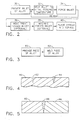
- Figure 2 depicts an approach for preparing and using an article such as the low-pressure turbine case 20.
- a billet of the alloy set forth herein is provided, numeral 30.
- a heat of the alloy is melted and cast into an mold.
- the resulting ingot is thermomechanically reduced in size to a billet having a reduced and more uniform grain size than the ingot, a process termed ingot conversion.
- the billet is heated to an initial forging temperature, numeral 32, usually in a furnace.
- the initial forging temperature of billets of the present alloy is preferably from about 1800°F to about 2100°F.
- the billet is then forged, numeral 34, beginning at the initial forging temperature. As the billet is forged, it gradually cools. If the forging is sufficiently prolonged that the billet cools below the indicated minimum forging temperature during the course of the forging, the steps 32 and 34 may be repeated, as indicated by the "reheat" arrow in Figure 2.
- the forged billet is optionally heat treated, step 36, and machined, step 38, to produce the final forged article.
- a typical heat treatment to precipitate primarily gamma double prime phase to strengthen the article is performed at a temperature of from about 1300°F to about 1450°F, for a time of from about 4 hours to about 16 hours.
- the selected aging temperature is tailored to provide the required property balance, with the final aging temperature preferably no lower than the application temperature minus 50°F.
- a duplex, two-step aging cycle may also be used for this alloy system.
- the article is placed into service, numeral 40.
- the article produced by the present approach may be used at room and intermediate temperatures, but its greatest benefits are realized when it is used for extended service at higher temperatures than possible with Alloy 718, such as from about 1150°F to about 1300°F.
- the present alloy composition is also readily welded, in addition to its excellent forgeability.
- Figure 3 depicts an approach for welding the alloy
- Figures 4-5 depict welded structures.
- a piece 60 of the alloy discussed previously is provided, numeral 50.
- the piece 60 of the alloy may be a forged piece, as illustrated in Figure 4, or otherwise.
- the piece 60 of the alloy may be that produced at the conclusion of any of the steps 30, 32, 34, 36, 38, or even 40 of the method of Figure 2, or it may be produced by any other operable approach.
- the piece 60 is welded, numeral 52.
- the welding may be accomplished, numeral 52, by any operable approach, with or without a filler metal.
- the filler metal is preferably of the same composition as the piece 60.
- operable welding approaches are plasma welding and TIG welding.
- surface cracks 62 in the single piece 60 of the alloy are welded closed with a filler metal of the same alloy composition as the piece 60, to produce a filled crack 64.
- the piece 60 is welded to a second piece 66 at a weld joint 68 of the filler metal.
- the second piece 66 may be the same composition as the piece 60, or a different composition.
- Alloy 718 and Waspaloy the closest competitive alloys.
- Alloy 718 has excellent forgeability and weldability, but insufficient mechanical properties above about 1150°F.
- Waspaloy has good mechanical properties up to about 1300°F, but is forgeable and weldable only with difficulty.
- the present alloy, denominated Alloy 991 in the testing had a nominal composition, in weight percent, of about 17.84 percent chromium, about 9.03 percent cobalt, about 8.93 percent iron, about 2.97 percent molybdenum, about 5.15 percent niobium, about 0.99 percent tantalum, about 0.99 percent titanium, about 0.48 percent aluminum, about 0.033 percent carbon, about 0.007 percent boron, less than about 0.01 percent zirconium, balance nickel and impurities.
- the "991" nomenclature is based on the preferred composition of the alloy of about 9 percent cobalt, about 9 percent iron, and about 1 percent tantalum.
- the Alloy 718 had a nominal composition, in weight percent, of about 17.86 percent chromium, about 0.01 percent cobalt, about 18.06 percent iron, about 2.99 percent molybdenum, less than about 0.01 percent tungsten, about 0.03 percent copper, about 5.28 percent niobium, less than about 0.01 percent manganese, about 0.02 percent vanadium, less than about 0.01 percent tantalum, about 0.99 percent titanium, about 0.49 percent aluminum, about 0.03 percent carbon, less than about 0.1 percent zirconium, balance nickel and impurities.
- the Waspaloy baseline material had a nominal composition, in weight percent, of about 19.02 percent chromium, about 13.13 percent cobalt, about 0.55 percent iron, about 4.18 percent molybdenum, about 0.01 percent niobium, about 0.02 percent tantalum, less than about 0.01 percent tungsten, less than about 0.01 percent copper, about 0.01 percent manganese, about 0.01 percent vanadium, less than about 0.01 percent silicon, about 2.98 percent titanium, about 1.41 percent aluminum, about 0.03 percent carbon, less than about 0.06 percent zirconium, balance nickel and impurities.
- the Alloy 991 and the Alloy 718 had excellent forgeability and weldability, evaluated qualitatively.
- the Waspaloy baseline alloy was difficult to forge and weld, and showed extensive surface cracking during forging.
- the alloys were tensile tested at 1000°F and 1300°F, and the results are shown in Figure 6.
- the Alloy 991 achieved the best performance of the three alloys at 1300°F.
- the alloys were tested in creep at 1200°F and 98,000 pounds per square inch load. The accepted measure of performance is the time to creep to 0.2 percent strain, with longer times being better.
- the Alloy 718 had creep times ranging from 40 to 105 hours.
- the Alloy 991 had creep times ranging from 155 to more than 210 hours (testing was terminated at 210 hours).
- the Waspaloy had creep times ranging from 155 to more than 215 hours (testing was terminated at 215 hours).
- the Alloy 718 is not suitable for service at this temperature, while the Alloy 991 had properties comparable with those of Waspaloy.
- thermodynamic stability of the alloys at the required service temperatures is an important consideration.
- specimens were subjected to creep loading at 1200°F for 212 hours at a loading of 98,000 pounds per square inch, and thereafter exposed to a temperature of 1400°F for 100 hours. The specimens were thereafter tensile tested at 1300°F. Comparison specimens were not subjected to the creep testing and exposure at 1400°F, but were tensile tested at 1300°F. In each case, the UTS ratio is the ratio of the ultimate tensile strength of the exposed specimens to the ultimate tensile strength of the unexposed specimens.
- the YS ratio is the ratio of the 0.2 percent yield strength of the exposed specimens to the 0.2 percent yield strength of the unexposed specimens. A ratio of close to 1 is desirable in each case.
- the UTS ratio is about 0.8, and the YS ratio is about 0.66.
- the UTS ratio is about 0.91, and the YS ratio is about 0.87.
- the UTS ratio is about 1.05, and the YS ratio is about 1.04.
- Alloy 718 has significant degradation of properties in this test, Alloy 991 has moderate but acceptable degradation of properties, and Waspaloy actually has an improvement in properties.
- the unique combination of good forgeability and weldability and also acceptable mechanical properties in the range of about 1150°F to about 1300°F of the present material is based on its quaternary Ni-Cr-Fe-Co alloying chemistry and the resulting precipitation kinetics.
- This quaternary alloying chemistry is, in turn, based on the balance of cobalt and iron, and additionally on the presence of the optimal amount of tantalum.
- This alloy utilizes the body-centered-tetragonal gamma double prime phase of the ternary Ni-Fe-Cr system as the basis of its quaternary Ni-Cr-Fe-Co strengthening phase but overages much slower than a Ni-Fe-Cr alloy such as Alloy 718 due in part to the presence of the optimal amount of tantalum.
- the Alloy 718 tends to overage rapidly and has poor creep strength at higher temperatures.
- Ternary Ni-Cr-Co alloys such as Waspaloy are strengthened by the ordered face centered cubic gamma prime Ni 3 (Al,Ti) phase.
- This strengthening mechanism imparts improved creep properties with slower overaging at elevated temperatures, but the alloys have limited forgeability and limited weldability due to strain age cracking caused by rapid re-precipitation of gamma prime during solidification and post-weld heat treatment.
- the slower aging kinetics of the present Ni-Cr-Fe-Co alloys with an optimal amount of tantalum results in less brittleness during forging and welding operations than experienced in ternary Ni-Cr-Co alloys, but sufficient strength is achieved for the service temperatures and the strengthening precipitate is stable.
Landscapes
- Chemical & Material Sciences (AREA)
- Engineering & Computer Science (AREA)
- Materials Engineering (AREA)
- Mechanical Engineering (AREA)
- Metallurgy (AREA)
- Organic Chemistry (AREA)
- Physics & Mathematics (AREA)
- Thermal Sciences (AREA)
- Crystallography & Structural Chemistry (AREA)
- Forging (AREA)
Abstract
Description
Claims (19)
- A composition of matter having a composition consisting essentially of, in weight percent, from about 16 percent to about 21 percent chromium, from about 6 percent to about 12 percent iron, from about 6 percent to about 12 percent cobalt, from about 2.8 percent to about 3.3 percent molybdenum, from about 5 percent to about 5.4 percent niobium, from about 0.2 percent to about 2 percent tantalum, from about 0.65 percent to about 1.15 percent titanium, from about 0.2 percent to about 0.8 percent aluminum, from about 0.01 percent to about 0.05 percent carbon, from about 0.005 percent to about 0.01 percent boron, less than about 0.1 percent zirconium, balance nickel and impurities.
- The composition of matter of claim 1, wherein the total of iron plus cobalt is from about 17 to about 19 percent.
- The composition of matter of claim 1, wherein the iron content is from about 8 percent to about 9.5 percent.
- The composition of matter of claim 1, wherein the iron content is about 9 percent.
- The composition of matter of claim 1, wherein the tantalum content is from about 0.8 percent to about 1.2 percent.
- The composition of matter of claim 1, wherein the tantalum content is about 1 percent.
- A composition of matter having a composition consisting essentially of, in weight percent, about 17.84 percent chromium, about 9.03 percent cobalt, about 8.93 percent iron, about 2.97 percent molybdenum, about 5.15 percent niobium, about 0.99 percent tantalum, about 0.99 percent titanium, about 0.48 percent aluminum, about 0.033 percent carbon, about 0.007 percent boron, less than about 0.01 percent zirconium, balance nickel and impurities.
- A method of providing a forged article (20), comprising the steps of:providing a billet having a composition consisting essentially of, in weight percent, from about 16 percent to about 21 percent chromium, from about 6 percent to about 12 percent iron, from about 6 percent to about 12 percent cobalt, from about 2.8 percent to about 3.3 percent molybdenum, from about 5 percent to about 5.4 percent niobium, from about 0.2 percent to about 2 percent tantalum, from about 0.65 percent to about 1.15 percent titanium, from about 0.2 percent to about 0.8 percent aluminum, from about 0.01 percent to about 0.05 percent carbon, from about 0.005 percent to about 0.01 percent boron, less than about 0.1 percent zirconium, balance nickel and impurities;heating the billet to an initial forging temperature of from about 1800°F to about 2100°F; andforging the billet beginning at the initial forging temperature.
- The method of claim 8, wherein the step of providing the billet includes the step ofproviding the billet having an iron content of from about 8 percent to about 9.5 percent.
- The method of claim 8, wherein the step of providing the billet includes the step ofproviding the billet having an iron content of about 9 percent.
- The method of claim 8, wherein the step of providing the billet includes the step ofproviding a billet having a tantalum content of from about 0.8 percent to about 1.2 percent.
- The method of claim 8, wherein the step of providing the billet includes the step ofproviding a tantalum content of about 1 percent.
- The method of claim 8, wherein the step of providing the billet includes the step ofproviding the billet having a composition consisting essentially of, in weight percent, about 17.84 percent chromium, about 9.03 percent cobalt, about 8.93 percent iron, about 2.97 percent molybdenum, about 5.15 percent niobium, about 0.99 percent tantalum, about 0.99 percent titanium, about 0.48 percent aluminum, about 0.033 percent carbon, about 0.007 percent boron, less than about 0.01 percent zirconium, balance nickel and impurities.
- The method of claim 8, including the additional steps, after the step of forging, ofheat treating the forged billet, andmachining the forged billet to form a finished article.
- The method of claim 14, including an additional step, after the step of machining, ofplacing the forged article into service at a service temperature of about 1300°F.
- The method of claim 8, including an additional step, after the step of forging, ofwelding the forged article.
- A method of preparing a welded article, comprising the steps of:providing a piece of material (60) having a composition consisting essentially of, in weight percent, from about 16 percent to about 21 percent chromium, from about 6 percent to about 12 percent iron, from about 6 percent to about 12 percent cobalt, from about 2.8 percent to about 3.3 percent molybdenum, from about 5 percent to about 5.4 percent niobium, from about 0.2 percent to about 2 percent tantalum, from about 0.65 percent to about 1.15 percent titanium, from about 0.2 percent to about 0.8 percent aluminum, from about 0.01 percent to about 0.05 percent carbon, from about 0.005 percent to about 0.01 percent boron, less than about 0.1 percent zirconium, balance nickel and impurities; andwelding the piece of material (60).
- The method of claim 17, wherein the step of welding includes the step of surface welding the piece of material (60).
- The method of claim 17, wherein the step of welding includes the step of joining the piece of material (60) to a second piece of material (66).
Applications Claiming Priority (2)
| Application Number | Priority Date | Filing Date | Title |
|---|---|---|---|
| US68742400A | 2000-10-13 | 2000-10-13 | |
| US687424 | 2000-10-13 |
Publications (3)
| Publication Number | Publication Date |
|---|---|
| EP1197570A2 true EP1197570A2 (en) | 2002-04-17 |
| EP1197570A3 EP1197570A3 (en) | 2002-08-07 |
| EP1197570B1 EP1197570B1 (en) | 2004-12-29 |
Family
ID=24760399
Family Applications (1)
| Application Number | Title | Priority Date | Filing Date |
|---|---|---|---|
| EP20010308419 Expired - Lifetime EP1197570B1 (en) | 2000-10-13 | 2001-10-02 | Nickel-base alloy and its use in forging and welding operations |
Country Status (2)
| Country | Link |
|---|---|
| EP (1) | EP1197570B1 (en) |
| DE (1) | DE60108037T2 (en) |
Cited By (12)
| Publication number | Priority date | Publication date | Assignee | Title |
|---|---|---|---|---|
| EP1420074A3 (en) * | 2002-10-25 | 2004-07-14 | General Electric Company | Nickel-base alloy and its use in casting and welding operations |
| WO2007035184A3 (en) * | 2005-09-20 | 2007-08-23 | L James Cardarella | Fan case reinforcement in a gas turbine jet engine |
| WO2006137875A3 (en) * | 2004-09-23 | 2007-08-23 | James L Cardarella Jr | Fan case reinforcement in a gas turbine jet engine |
| US8230899B2 (en) | 2010-02-05 | 2012-07-31 | Ati Properties, Inc. | Systems and methods for forming and processing alloy ingots |
| US8789254B2 (en) | 2011-01-17 | 2014-07-29 | Ati Properties, Inc. | Modifying hot workability of metal alloys via surface coating |
| JP2015054332A (en) * | 2013-09-10 | 2015-03-23 | 大同特殊鋼株式会社 | FORGING METHOD OF Ni-BASED HEAT RESISTANT ALLOY |
| US9027374B2 (en) | 2013-03-15 | 2015-05-12 | Ati Properties, Inc. | Methods to improve hot workability of metal alloys |
| US9327342B2 (en) | 2010-06-14 | 2016-05-03 | Ati Properties, Inc. | Lubrication processes for enhanced forgeability |
| EP3121298A1 (en) * | 2015-07-20 | 2017-01-25 | Rolls-Royce plc | Ni-base alloy for structural applications |
| TWI584890B (en) * | 2010-02-05 | 2017-06-01 | 冶聯科技地產有限責任公司 | Systems and methods for processing alloy ingots |
| EP3290536A1 (en) * | 2016-08-31 | 2018-03-07 | General Electric Company | Grain refinement in in706 using laves phase precipitation |
| CN115354194A (en) * | 2022-09-06 | 2022-11-18 | 中国科学院金属研究所 | Nickel-based high-temperature alloy material for additive repair and application thereof |
Families Citing this family (1)
| Publication number | Priority date | Publication date | Assignee | Title |
|---|---|---|---|---|
| US9539636B2 (en) | 2013-03-15 | 2017-01-10 | Ati Properties Llc | Articles, systems, and methods for forging alloys |
Family Cites Families (5)
| Publication number | Priority date | Publication date | Assignee | Title |
|---|---|---|---|---|
| US4652315A (en) * | 1983-06-20 | 1987-03-24 | Sumitomo Metal Industries, Ltd. | Precipitation-hardening nickel-base alloy and method of producing same |
| US4981644A (en) * | 1983-07-29 | 1991-01-01 | General Electric Company | Nickel-base superalloy systems |
| US5338379A (en) * | 1989-04-10 | 1994-08-16 | General Electric Company | Tantalum-containing superalloys |
| GB2252563B (en) * | 1991-02-07 | 1994-02-16 | Rolls Royce Plc | Nickel base alloys for castings |
| JPH09268337A (en) * | 1996-04-03 | 1997-10-14 | Hitachi Metals Ltd | Forged high corrosion resistant superalloy alloy |
-
2001
- 2001-10-02 EP EP20010308419 patent/EP1197570B1/en not_active Expired - Lifetime
- 2001-10-02 DE DE2001608037 patent/DE60108037T2/en not_active Expired - Lifetime
Cited By (24)
| Publication number | Priority date | Publication date | Assignee | Title |
|---|---|---|---|---|
| EP1420074A3 (en) * | 2002-10-25 | 2004-07-14 | General Electric Company | Nickel-base alloy and its use in casting and welding operations |
| WO2006137875A3 (en) * | 2004-09-23 | 2007-08-23 | James L Cardarella Jr | Fan case reinforcement in a gas turbine jet engine |
| US8191254B2 (en) | 2004-09-23 | 2012-06-05 | Carlton Forge Works | Method and apparatus for improving fan case containment and heat resistance in a gas turbine jet engine |
| US8317456B2 (en) | 2004-09-23 | 2012-11-27 | Carlton Forge Works | Fan case reinforcement in a gas turbine jet engine |
| US8454298B2 (en) | 2004-09-23 | 2013-06-04 | Carlton Forge Works | Fan case reinforcement in a gas turbine jet engine |
| WO2007035184A3 (en) * | 2005-09-20 | 2007-08-23 | L James Cardarella | Fan case reinforcement in a gas turbine jet engine |
| TWI584890B (en) * | 2010-02-05 | 2017-06-01 | 冶聯科技地產有限責任公司 | Systems and methods for processing alloy ingots |
| US8230899B2 (en) | 2010-02-05 | 2012-07-31 | Ati Properties, Inc. | Systems and methods for forming and processing alloy ingots |
| US8757244B2 (en) | 2010-02-05 | 2014-06-24 | Ati Properties, Inc. | Systems and methods for forming and processing alloy ingots |
| US11059088B2 (en) | 2010-02-05 | 2021-07-13 | Ati Properties Llc | Systems and methods for processing alloy ingots |
| US11059089B2 (en) | 2010-02-05 | 2021-07-13 | Ati Properties Llc | Systems and methods for processing alloy ingots |
| TWI630963B (en) * | 2010-02-05 | 2018-08-01 | 冶聯科技地產有限責任公司 | Systems and methods for processing alloy ingots |
| US10207312B2 (en) | 2010-06-14 | 2019-02-19 | Ati Properties Llc | Lubrication processes for enhanced forgeability |
| US9327342B2 (en) | 2010-06-14 | 2016-05-03 | Ati Properties, Inc. | Lubrication processes for enhanced forgeability |
| US8789254B2 (en) | 2011-01-17 | 2014-07-29 | Ati Properties, Inc. | Modifying hot workability of metal alloys via surface coating |
| US9027374B2 (en) | 2013-03-15 | 2015-05-12 | Ati Properties, Inc. | Methods to improve hot workability of metal alloys |
| JP2015054332A (en) * | 2013-09-10 | 2015-03-23 | 大同特殊鋼株式会社 | FORGING METHOD OF Ni-BASED HEAT RESISTANT ALLOY |
| EP3121298A1 (en) * | 2015-07-20 | 2017-01-25 | Rolls-Royce plc | Ni-base alloy for structural applications |
| US10287654B2 (en) | 2015-07-20 | 2019-05-14 | Rolls-Royce Plc | Ni-base alloy for structural applications |
| EP3290536A1 (en) * | 2016-08-31 | 2018-03-07 | General Electric Company | Grain refinement in in706 using laves phase precipitation |
| KR20180025206A (en) * | 2016-08-31 | 2018-03-08 | 제네럴 일렉트릭 컴퍼니 | Grain refinement in in706 using laves phase precipitation |
| CN107794471A (en) * | 2016-08-31 | 2018-03-13 | 通用电气公司 | The crystal grain refinement in IN706 is separated out using Laves phases |
| CN107794471B (en) * | 2016-08-31 | 2021-11-30 | 通用电气公司 | Grain refinement IN IN706 using Laves phase precipitation |
| CN115354194A (en) * | 2022-09-06 | 2022-11-18 | 中国科学院金属研究所 | Nickel-based high-temperature alloy material for additive repair and application thereof |
Also Published As
| Publication number | Publication date |
|---|---|
| DE60108037T2 (en) | 2005-09-15 |
| EP1197570B1 (en) | 2004-12-29 |
| DE60108037D1 (en) | 2005-02-03 |
| EP1197570A3 (en) | 2002-08-07 |
Similar Documents
| Publication | Publication Date | Title |
|---|---|---|
| EP0302302B1 (en) | Nickel-base alloy | |
| JP6150192B2 (en) | Method for producing Ni-base superalloy | |
| CN112760525B (en) | High gamma prime nickel-based superalloy, use thereof and method of manufacturing a turbine engine component | |
| JP4485619B2 (en) | Nickel-base superalloy and pre-weld heat treatment of this nickel-base superalloy | |
| EP0361524B1 (en) | Ni-base superalloy and method for producing the same | |
| JP7138689B2 (en) | High-temperature, scratch-resistant superalloys, products made from the alloys, and methods of making the alloys | |
| EP2479302B1 (en) | Ni-based heat resistant alloy, gas turbine component and gas turbine | |
| EP2902516B1 (en) | A weld filler for nickel-base superalloys | |
| EP1420074A2 (en) | Nickel-base alloy and its use in casting and welding operations | |
| EP0234172B1 (en) | High-strength nickel-base superalloy for castings, treated by means of hot isostatic pressing | |
| US20070102071A1 (en) | High strength, high toughness, weldable, ballistic quality, castable aluminum alloy, heat treatment for same and articles produced from same | |
| EP2383356A1 (en) | Cobalt-Nickel Superalloys, and Related Articles | |
| EP1818132B1 (en) | Braze alloy compositions | |
| US5571345A (en) | Thermomechanical processing method for achieving coarse grains in a superalloy article | |
| EP1197570B1 (en) | Nickel-base alloy and its use in forging and welding operations | |
| GB2151951A (en) | Forging process for superalloys | |
| JP3308090B2 (en) | Fe-based super heat-resistant alloy | |
| EP0235490A2 (en) | Nickel-base superalloy for castings, free from Laves phase, and treated by means of hot isostatic pressing | |
| US4213026A (en) | Age hardenable nickel superalloy welding wires containing manganese | |
| JP2025524498A (en) | nickel-based alloy | |
| JP2003013161A (en) | Austenitic low thermal expansion Ni-base superalloy and method for producing the same | |
| US20070095441A1 (en) | Nickel-base alloy, articles formed therefrom, and process therefor | |
| CA2010147A1 (en) | Tantalum-containing superalloys | |
| JP2021167439A (en) | Austenitic heat resistant alloy welded joint | |
| GB1592407A (en) | Age hardenable nickel superalloy welding wires containing manganese |
Legal Events
| Date | Code | Title | Description |
|---|---|---|---|
| PUAI | Public reference made under article 153(3) epc to a published international application that has entered the european phase |
Free format text: ORIGINAL CODE: 0009012 |
|
| AK | Designated contracting states |
Kind code of ref document: A2 Designated state(s): AT BE CH CY DE DK ES FI FR GB GR IE IT LI LU MC NL PT SE TR |
|
| AX | Request for extension of the european patent |
Free format text: AL;LT;LV;MK;RO;SI |
|
| PUAL | Search report despatched |
Free format text: ORIGINAL CODE: 0009013 |
|
| AK | Designated contracting states |
Kind code of ref document: A3 Designated state(s): AT BE CH CY DE DK ES FI FR GB GR IE IT LI LU MC NL PT SE TR |
|
| AX | Request for extension of the european patent |
Free format text: AL;LT;LV;MK;RO;SI |
|
| 16A | New documents despatched to applicant after publication of the search report |
Effective date: 20020911 |
|
| 17P | Request for examination filed |
Effective date: 20030207 |
|
| 17Q | First examination report despatched |
Effective date: 20030307 |
|
| AKX | Designation fees paid |
Designated state(s): DE FR GB |
|
| GRAP | Despatch of communication of intention to grant a patent |
Free format text: ORIGINAL CODE: EPIDOSNIGR1 |
|
| GRAS | Grant fee paid |
Free format text: ORIGINAL CODE: EPIDOSNIGR3 |
|
| GRAA | (expected) grant |
Free format text: ORIGINAL CODE: 0009210 |
|
| AK | Designated contracting states |
Kind code of ref document: B1 Designated state(s): DE FR GB |
|
| REG | Reference to a national code |
Ref country code: GB Ref legal event code: FG4D |
|
| REG | Reference to a national code |
Ref country code: IE Ref legal event code: FG4D |
|
| REF | Corresponds to: |
Ref document number: 60108037 Country of ref document: DE Date of ref document: 20050203 Kind code of ref document: P |
|
| PLBE | No opposition filed within time limit |
Free format text: ORIGINAL CODE: 0009261 |
|
| STAA | Information on the status of an ep patent application or granted ep patent |
Free format text: STATUS: NO OPPOSITION FILED WITHIN TIME LIMIT |
|
| 26N | No opposition filed |
Effective date: 20050930 |
|
| ET | Fr: translation filed | ||
| REG | Reference to a national code |
Ref country code: FR Ref legal event code: PLFP Year of fee payment: 15 |
|
| PGFP | Annual fee paid to national office [announced via postgrant information from national office to epo] |
Ref country code: DE Payment date: 20151028 Year of fee payment: 15 Ref country code: GB Payment date: 20151027 Year of fee payment: 15 |
|
| PGFP | Annual fee paid to national office [announced via postgrant information from national office to epo] |
Ref country code: FR Payment date: 20151019 Year of fee payment: 15 |
|
| REG | Reference to a national code |
Ref country code: DE Ref legal event code: R119 Ref document number: 60108037 Country of ref document: DE |
|
| GBPC | Gb: european patent ceased through non-payment of renewal fee |
Effective date: 20161002 |
|
| REG | Reference to a national code |
Ref country code: FR Ref legal event code: ST Effective date: 20170630 |
|
| PG25 | Lapsed in a contracting state [announced via postgrant information from national office to epo] |
Ref country code: FR Free format text: LAPSE BECAUSE OF NON-PAYMENT OF DUE FEES Effective date: 20161102 Ref country code: GB Free format text: LAPSE BECAUSE OF NON-PAYMENT OF DUE FEES Effective date: 20161002 Ref country code: DE Free format text: LAPSE BECAUSE OF NON-PAYMENT OF DUE FEES Effective date: 20170503 |