Background of the Invention
Field of the Invention
The present invention relates to respiratory chain
enzymes of coryneform bacteria, more precisely enzymes
constituting the electron transport system, and genes
coding for the enzymes.
Description of the Related Art
Most of organisms acquire energy necessary for
life activity by respiration. In higher organisms,
carbohydrates, proteins, and aliphatic acids are
degraded into acetyl-CoA by the glycolytic pathway and
the β-oxidation in cytoplasm, and acetyl-CoA is degraded
by the citric acid cycle in mitochondria. The resulting
energy is saved as reducing power of NADH and FADH2.
Finally, NADH is completely oxidized to water by the
subsequent electron transport system that is present on
mitochondrial inner membranes, and a proton
concentration gradient is formed in a coupled manner to
the oxidation, and serves as driving force of the ATP
synthesis.
Since the bacterial respiratory chain generally
comprises various functional enzyme complexes depending
on species and growing circumstance, the energy
conservation efficiency may vary to a great extent. For
example, Escherichia coli contains at least two kinds of
quinol oxidases, bo type and bd type, which function as
terminal oxidases in the respiratory chain. When a
wild-type strain carrying the enzymes of the both types,
a mutant strain carrying only the bo type, and a mutant
strain carrying only the bd type are compared as for
growth yield observed in aerobic culture, the growth
yield is the lowest in the mutant carrying only the bd
type enzyme, and depends on the kind of the terminal
oxidases and their energy conservation efficiency
(Lecture Abstract for The Conference of The Society for
Bioscience and Bioengineering, Japan, 1995, Subject No.
357).
Coryneform bacteria such as Brevibacterium
lactofermentum and Brevibacterium flavum are gram-positive
and aerobic bacteria that are industrially
utilized for amino acid producers. Although terminal
oxidases of the respiratory chain have been well
investigated as for those of Proteobacteria, which is
phylogenetically quite far from the coryneform bacteria,
and those of Bacillus subtilis and the thermophilic
Bacillus, which are also gram-positive bacteria like the
coryneform bacteria but phylogenetically somewhat
different from them, the electron transport system of
respiratory chain in coryneform bacteria has not been
investigated in detail. It is considered that it is
important to elucidate the electron transport system of
the respiratory chain, which is the key of the energy
metabolism, in coryneform bacteria in view of collecting
fundamental data for improving productivity of useful
substances. Further, if enzymes involved in the
electron transport system of the respiratory chain in
coryneform bacteria and genes therefor are identified,
they may be useful for, for example, creating strains
with higher energy efficiency.
Thus far, it has been reported that the
respiration of Brevibacterium lactofermentum is coupled
to the proton transport, and it involves cytochromes a,
b and c (Kawahara, Y., et al., Agric. Biol. Chem., 52
(8), 1979-1983 (1988)), and further a gene coding for a
cytochrome bd type quinol oxidase has been isolated
(Japanese Patent Laid-open Publication (Kokai) No. 11-346776,
Europe Patent Laid-open Publication 0 967
282(A2)).
Further, in Corynebacterium glutamicum, there is
a cytochrome bc1 complex, and presence of at least two
kinds of terminal oxidases, SoxM type oxidase and
cytochrome bd type oxidase, is confirmed (The Second
Symposium Concerning Metabolic Engineering, Lecture
Abstracts, 1999). This shows that the electron transfer
pathway form quinone pool to oxygen molecule include two
kinds of pathways, a pathway utilizing cytochrome bc1
complex and SoxM type oxidase (Castresana J, Saraste M.,
Trends in Biochem. Sci., 20, 443-448 (1995)) and a
pathway utilizing only the cytochrome bd type oxidase.
It is considered that the former is an electron transfer
pathway of high energy efficiency, in which proton
translocation value for transfer of one electron is high,
and the latter is an electron transfer pathway of low
energy efficiency, in which proton translocation value
for transfer of one electron is low.
By the way, a cytochrome aa3 type oxidase is
structurally defined as a heme-copper oxidase, and
classified into SoxM type oxidases. It is known that
there are two kinds of SoxM type oxidases, i.e.,
cytochrome c oxidase and quinol oxidase, and they have
high proton transportation ability. Oxidases showing
homology to the cytochrome aa3 type oxidase already
discovered in microorganisms are known for Paracoccus
denitrificans, Bradyrhizobium japonicum, Rhodobacter
sphaeroides, Synechococcus vulcanus, Thermus
thermophilus, Bacillus subtilis, Bacillus
stearothermophilus and so forth (Trumpower, B.L. and
Gennis, R.B., Annu. Rev. Biochem., 63, 675-716 (1994);
Cao, J. et al., J. Biol. Chem., 267, 24273-24278 (1992);
Sone, N. et al., Biochim. Biophys. Acta., 1183, 130-138
(1993); Sakamoto, J. et al., J. Biochem., 122, 764-771
(1997)).
On the other hand, the cytochrome bc1 complexes
widely exist in respiratory chains of various organisms,
such as those in mitochondria and microorganisms, and
constitute a superfamily. These enzymes play an
important role in the production of energy required for
organisms, that is, they transport electrons from quinol
to cytochrome c, and simultaneously, pump out protons
form the inside of membrane to the outside of membrane
to form a transmembrane proton concentration gradient.
Further, these cytochrome c1 reductases are considered
to transport protons form the inside of membrane to the
outside of membrane by a mechanism called proton motive
Q cycle (Mitchell, P., J. Theoret. Biol., 62, 327-367
(1976); Croft, A.R., Meinhardt, S.W., Jones, K.R., and
Snozzi, M., Biochim. Biophys. Acta, 723, 202-218 (1983);
Trumpower, B.L., J. Biol. Chem., 265, 11409-11412
(1990)). The cytochrome bc1 complexes are known for
Paracoccus denitrificans, Rhodobacter sphaeroides and
Bacillus stearothermophilus (Trumpower B.L. and Gennis
RB., Annu. Rev. Biochem., 63, 675-716 (1994), Sone et
al., J. Biol. Chem., 271, 12457-12462 (1996)).
Summary of the Invention
An object of the present invention is to provide a
cytochrome aa3 type oxidase and cytochrome bc1 complex
of coryneform bacteria, as well as genes coding for them.
In order to achieve the aforementioned object, the
inventors of the present invention attempted to clone a
cytochrome aa3 gene of Corynebacterium glutamicum. As a
result, they successfully cloned a gene coding for the
aa3 subunit I (also referred to as "ctaD" hereinafter)
from a chromosomal DNA library of Corynebacterium
glutamicum by hybridization utilizing a probe produced
based on a sequence common to a wide range of heme-copper
oxidases. However, unlike many other oxidases,
genes of other subunits were not found in the
neighborhood of that gene.
On the other hand, the inventors of the present
invention also successfully purified cytochrome aa3 from
a membrane preparation of Corynebacterium glutamicum,
and they isolated a subunit II protein from that
purified enzyme, and determined its N-terminus partial
peptide sequence. A primer was prepared based on this
sequence, and PCR was performed by using this primer and
a primer prepared based on the conserved sequence of CuA
binding motif in the oxidase subunit II to produce a
probe. Then, hybridization was performed by using this
probe to successfully obtain a gene coding for the
subunit II (also referred to as "ctaC" hereinafter).
Furthermore, it was also found that a gene coding for
the subunit III (also referred to as "ctaE" hereinafter)
existed downstream from that gene.
Further, a sequence estimated to be a part of ORF
was found at a position on the 3' end side and
downstream from the aforementioned gene coding for the
cytochrome aa3 subunit III (ctaE). Then, a clone
containing this sequence was obtained and its sequence
was determined. Furthermore, a subunit containing
cytochrome c among the subunits constituting the
cytochrome bc1 complex was purified, and its amino acid
sequence was determined. As a result, it was found that
the aforementioned clone contained an operon coding for
the three subunits of cytochrome bc1 complex (qcrCAB).
The present invention was accomplished as
described above, and provides the followings.
In the present invention, the expression that "a
polypeptide can constitute cytochrome aa3" means that
the polypeptide has a property that it can form a
protein complex that shows oxidation-reduction spectrum
of heme a, CO binding reduction-type minus reduction-type
difference spectrum of heme a3, and an activity for
receiving an electron from cytochrome c and transmitting
the electron to oxygen so as to reduce it to a water
molecule, together with the other subunit peptides.
Further, the expression that "a polypeptide can
constitute cytochrome bc1 complex" means that the
polypeptide has a property that it can form a protein
complex that shows oxidation-reduction absorption
spectra of heme b and heme c, and an activity for
receiving an electron from a reduced type quinone
compound (quinol) and transmitting the electron to
cytochrome c or a terminal oxidase, together with the
other subunit peptides.
According to the present invention, there are
provided subunits constituting cytochrome aa3 and DNA
coding for them. There are also provided subunits
constituting cytochrome bc1 complex and DNA coding for
them. These polypeptides and DNA are useful for
elucidation of the electron transport system of
coryneform bacteria. Further, the DNA of the present
invention can be used for breeding of coryneform
bacteria that produce useful substances with good energy
efficiency.
Brief Explanation of the Drawings
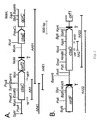
Fig. 1 shows structure of genes coding for the
subunits of cytochrome aa3, and relationship between the
structures and clones:
Fig. 2 shows structures of genes coding for
subunits of cytochrome bc1 complex (qcrC, qcrA, qcrB),
and relationship between the structures and clones.
Detailed Description of the Invention
Hereafter, the present invention will be explained
in detail.
<1> Cytochrome aa3, subunits thereof, and DNA coding for
them
Among the DNAs coding for cytochrome aa3 of the
present invention, the DNA coding for the subunit I can
be obtained as follows. That is, primers are prepared
from, for example, Corynebacterium glutamicum
chromosomal DNA based an amino acid sequence of a region
highly conserved in known heme-copper enzymes such as
cytochrome c oxidases I of Bradyrhizobium japonicum,
Acetobacter aceti, Synechococcus vulcanus and Bacillus
stearothermophilus, and a probe is prepared by PCR using
the primers and chromosomal DNA of Corynebacterium
glutamicum as a template. Then, the intended DNA can be
obtained from a Corynebacterium glutamicum chromosomal
DNA library by hybridization using the probe obtained
above.
The chromosomal DNA of Corynebacterium glutamicum
can be prepared by, for example, the method of Saito and
Miura (Biochem. Biophys. Acta., 72, 619, (1963)), or the
method of K. S. Kirby (Biochem. J., 64, 405, (1956)). A
chromosome DNA library can be obtained by partially
digesting chromosomal DNA with a suitable restriction
enzyme, ligating each of the obtained DNA fragments to a
vector DNA autonomously replicable in Escherichia coli
cell to prepare recombinant DNA, and introducing the DNA
into Escherichia coli. The vector is not particularly
limited, so long as it is a vector usually used for
genetic cloning, and plasmid vectors such as pUC19,
pUC18, pUC118 and pUC119, phage vectors such as lambda
phage DNA and so forth can be used.
The primers used for the aforementioned PCR may be,
for example, oligonucleotides having the nucleotide
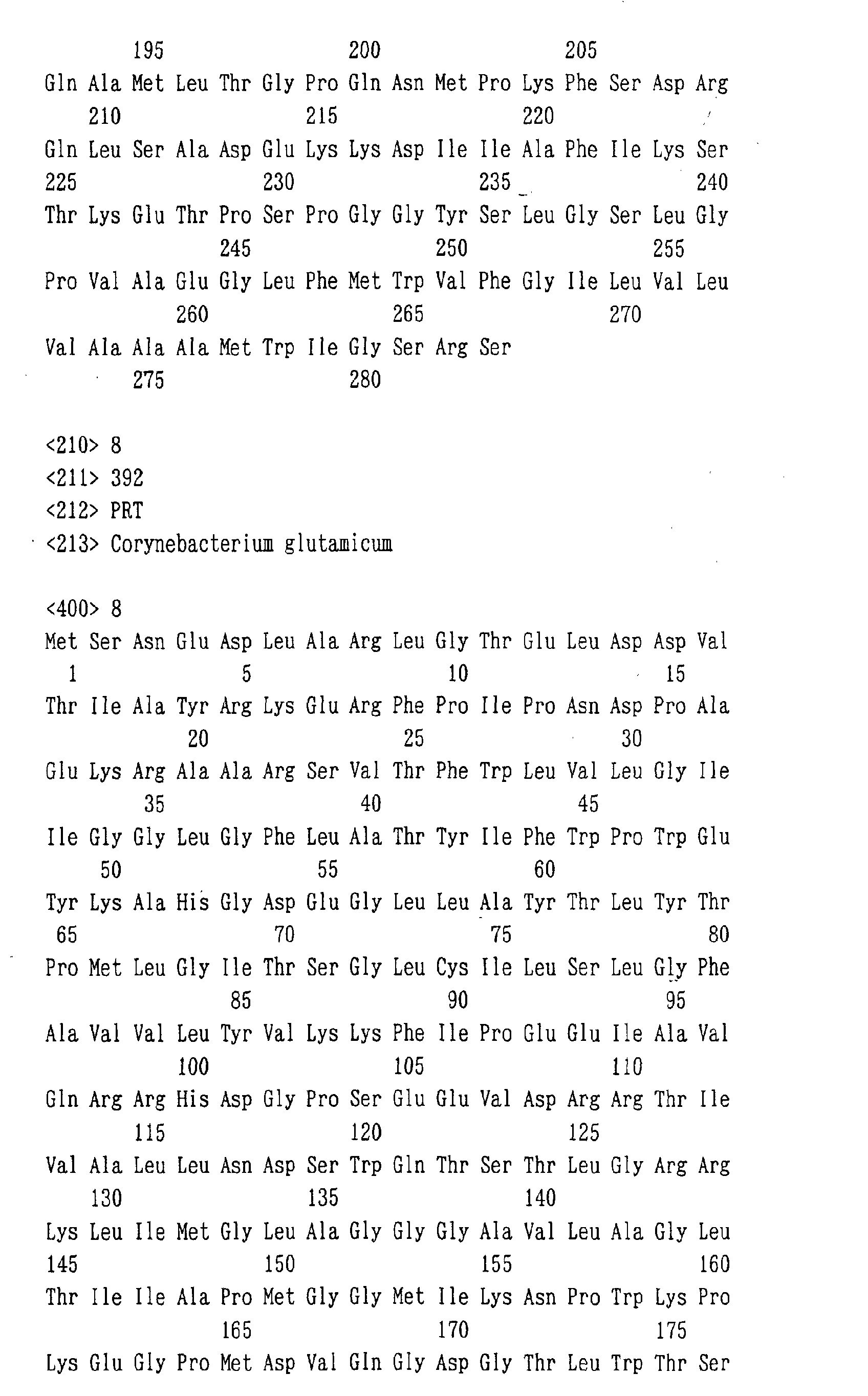
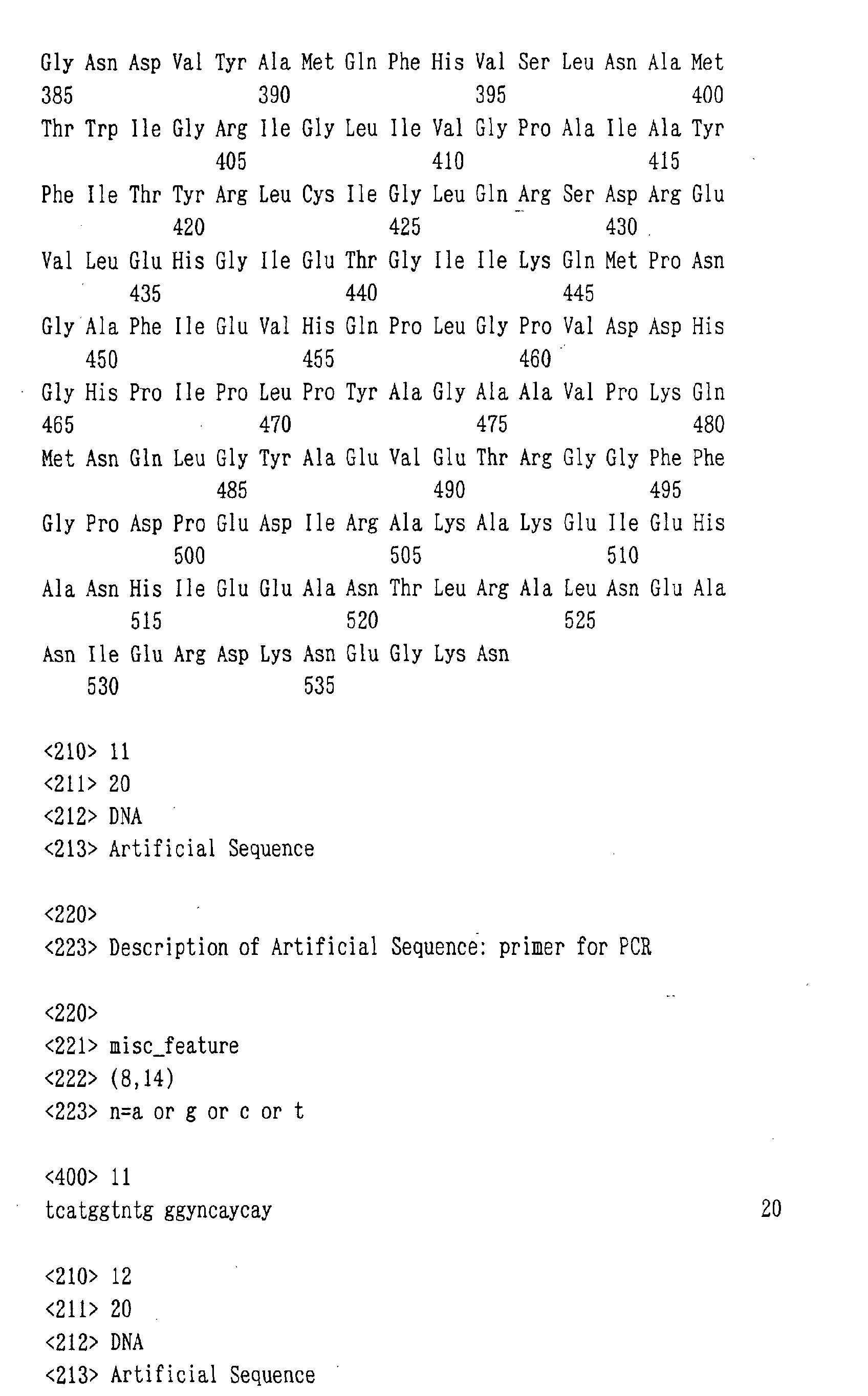
sequences of SEQ ID NO: 11 or SEQ ID NO: 12.
Screening of a chromosomal DNA library of
Corynebacterium glutamicum utilizing a DNA fragment
obtained in PCR as a probe can be performed by colony
hybridization when plasmid vectors are used for the
preparation of the library, or plaque hybridization when
phage vectors are used for the preparation of the
library. A hybridization positive clone can be
confirmed if it contains the target gene coding for
cytochrome aa3 subunit I (ctaD) by preparing DNA from
the clone and determining its nucleotide sequence. It
is also possible to preliminarily perform Southern
analysis for a hybridization positive clone by using the
aforementioned probe.
A nucleotide sequence of ctaD gene of
Corynebacterium glutamicum KY9002 strain (ATCC13032)
obtained in the working example to be mentioned later in
such a manner as described above is shown in SEQ ID NO:
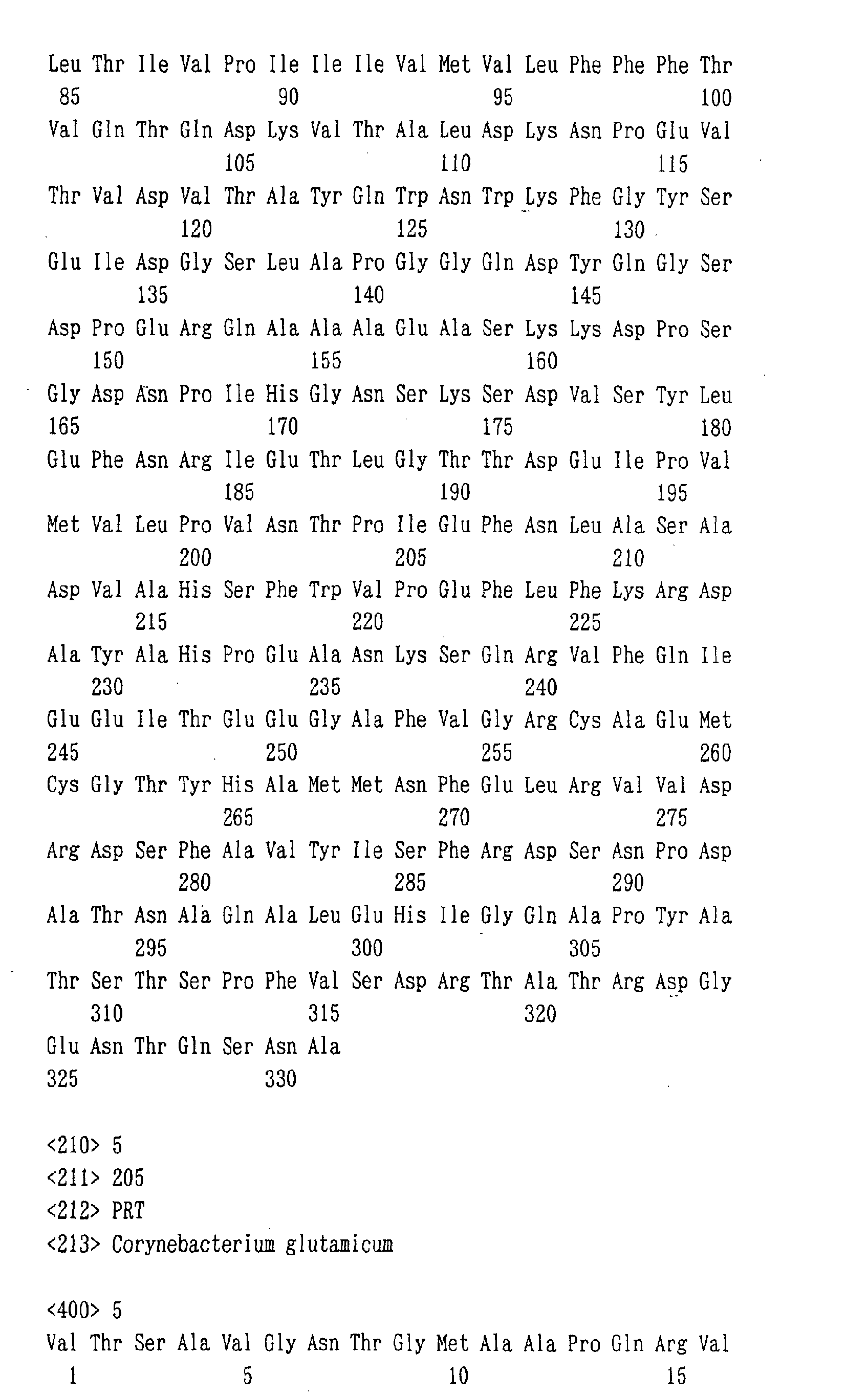
1. An expected coding region and amino acid sequence of
protein encoded thereby are shown in SEQ ID NO: 1.
Further, genes coding for cytochrome aa3 subunits
II and III (ctaC and ctaE) can be obtained as follows.
From a membrane preparation of Corynebacterium
glutamicum, cytochrome aa3 is purified, and an N-terminus
partial peptide sequence of each subunit is
determined. A primer is prepared based on the sequence.
By using this primer and a primer prepared based on a
sequence highly conserved among the known oxidase
subunits, for example, a conserved sequence of CuA
binding motif in the subunit II, PCR is performed to
produce a probe. Then, a DNA fragment containing the
gene coding for the subunit II (ctaC) and the gene
coding for the subunit III (ctaE) is obtained by
hybridization using the probe.
The primers used for the aforementioned PCR may be,
for example, oligonucleotides having the nucleotide
sequences of SEQ ID NO: 14 or SEQ ID NO: 15.
A nucleotide sequence of a DNA fragment containing
ctaC gene and ctaE gene of the Corynebacterium
glutamicum KY9002 strain (ATCC13032), which was obtained
in the working example to be mentioned later in the
manner as described above, is shown in SEQ ID NO: 3.
Expected coding regions and amino acid sequences of
proteins encoded thereby are shown in SEQ ID NOS: 4 and
5. In the aforementioned DNA fragment, the ctaC gene
and the ctaE gene were separate from each other by about
1 kb, and another ORF existed between them.
The numbers of amino acid residues of the subunits
I, II and III of cytochrome aa3 are estimated to be 584,
316 and 205 residues, respectively, and molecular
weights are calculated to be 65.0, 39.5 and 22.4 kDa,
respectively. As for the subunit II, it is considered
that an N-terminal sequence from first residue to the
glycine residue at the 28th position is excised and the
cysteine residue at the 29th position is modified with a
lipid in a matured polypeptide in view of the results of
the amino acid sequence analysis and analogy with
oxidases of other species (Bacillus subtilis and
Escherlchia coli: Santana, M. et al., J. Biol. Chem.,
267, 10225-10231 (1992)).
In the amino acid sequence of the subunit II shown
in SEQ ID NO: 4, the amino acid numbers 257-268
correspond to the conserved sequence of CuA binding
motif.
In addition, the codons of the amino acid residues
of the N-termini of the subunits II and III are GTG, and
the corresponding amino acid residues are indicated as
Val in Sequence Listing. However, they are actually Met,
and it is considered that this is because GTG is
recognized as an initiation methionine. Other examples
of such a phenomenon have also been reported.
Analyses such as estimation of coding regions and
operon structure can be performed by using GENETYX
Homology Version 2.2.2 (Software Development Co., Ltd.).
Homology analysis can be performed according to the
method of Lipman and Peason (Science, 227, 1435-1441,
1985).
The nucleotide sequences of ctaD, ctaC and ctaE
were elucidated by the present invention, and therefore
these gene can be directly obtained by preparing primers
based on the nucleotide sequence shown in SEQ ID NO: 1
or 3, and performing PCR utilizing them and
Corynebacterium glutamicum chromosomal DNA as a template.
The DNA of the present invention may be one coding
for either one of the aforementioned subunits I, II and
III of cytochrome aa3, or one coding for two or three
kinds of them. Cytochrome aa3 or a subunit thereof can
be produced by introducing the DNA of the present
invention into a suitable host cell, and culturing an
obtained transformant to express the DNA. For example,
the DNA coding for the subunit I may be a DNA having the
nucleotide sequence consisting of nucleotide numbers
1538-3289 in the nucleotide sequence of SEQ ID NO: 1,
the DNA coding for the subunit II may be a DNA having
the nucleotide sequence consisting of nucleotide numbers
604-1680 in the nucleotide sequence of SEQ ID NO: 3, and
the DNA coding for the subunit III may be a DNA having
the nucleotide sequence consisting of nucleotide numbers
2715-3329 in the nucleotide sequence of SEQ ID NO: 3.
Produced cytochrome aa3 or subunits thereof can be
collected and purified from culture by a method commonly
used for the purification of proteins such as salting
out, solvent precipitation, gel filtration
chromatography and ion exchange chromatography.
The DNA of the present invention coding for the
subunit I may be one coding for a polypeptide that has
the amino acid sequence of SEQ ID NO: 2 comprising
substitution, deletion, insertion or addition of one or
several amino acid residues in the amino acid sequence,
and can constitute cytochrome aa3 together with the
subunit II and III.
The DNA of the present invention encoding the
subunit II may be one coding for a polypeptide that has
the amino acid sequence of SEQ ID NO: 4 comprising
substitution, deletion, insertion or addition of one or
several amino acid residues in the amino acid sequence,
and can constitute cytochrome aa3 together with the
subunit I and III.
The DNA of the present invention encoding the
subunit III may be one coding for a polypeptide that has
the amino acid sequence of SEQ ID NO: 5 comprising
substitution, deletion, insertion or addition of one or
several amino acid residues in the amino acid sequence,
and can constitute cytochrome aa3 together with the
subunit I and II.
Furthermore, a DNA coding for a cytochrome aa3 in
which Subunit I, II or III, or two or three of them
contain a mutation also falls within the scope of the
DNA of the present invention.
The number of "several" amino acid residues is
preferably 1-40, more preferably 1-10. Alternatively,
the number is preferably such a number that the amino
acid sequence should show homology of 80% or more,
preferably 95% or more, to the amino acid sequence of
SEQ ID NO: 2, 4 or 5.
Such a DNA coding for substantially the same
protein as the subunit I, II or III as described above
can be obtained by, for example, modifying each
nucleotide sequence by, for example, the site-directed
mutagenesis method so that the amino acid sequence
should involve substitution, deletion, insertion or
addition of one or more amino acid residues at a
specified site. Such a DNA modified as described above
may also be obtained by a conventionally known mutation
treatment. The mutation treatment includes a method of
treating DNA coding for the subunit I, II or III in
vitro, for example, with hydroxylamine, and a method for
treating a microorganism, for example, a bacterium
belonging to the genus Escherichia, harboring a DNA
coding for the subunit I and/or subunit II with
ultraviolet irradiation or a mutating agent usually used
for mutation treatment such as N-methyl-N'-nitro-N-nitrosoguanidine
(NTG) and nitrous acid.
The substitution, deletion, insertion or addition
of nucleotide as described above also includes a
naturally occurring mutation (mutant or variant) on the
basis of, for example, individual difference or
difference in species or genus of coryneform bacteria
that harbor cytochrome aa3 and so forth.
A DNA coding for substantially the same protein as
the subunit I, II or III described above can be obtained
by expressing such a DNA having a mutation as described
above in a suitable cell, and examining the cytochrome
aa3 activity of the expression product. A DNA coding
for substantially the same protein as the subunit I, II
or III can also be obtained by isolating a DNA
hybridizable with a DNA having, for example, the
nucleotide sequence corresponding to nucleotide numbers
of 1538-3289 of the nucleotide sequence shown in SEQ ID
NO: 1, the nucleotide sequence corresponding to
nucleotide numbers of 604-1680 or the nucleotide numbers
of 2715-3329 of the nucleotide sequence shown in SEQ ID
NO: 3 under the stringent conditions, and coding for a
protein having a function of the subunit I, II or III
from a DNA coding for the subunit I, II or III including
a mutation or a cell harboring it. The "stringent
conditions" referred to herein is a condition under
which so-called specific hybrid is formed, and nonspecific
hybrid is not formed. It is difficult to
clearly express this condition by using any numerical
value. However, for example, the stringent conditions
include a condition under which DNA's having high
homology, for example, DNA's having homology of not less
than 50%, are hybridized with each other, and DNA's
having homology lower than the above level are not
hybridized with each other. Alternatively, the
stringent conditions are exemplified by a condition
under which DNA's are hybridized with each other at a
salt concentration corresponding to an ordinary
condition of washing in Southern hybridization, i.e., 1
x SSC, 0.1% SDS, preferably 0.1 x SSC, 0.1% SDS, at 60°C.
Genes hybridizable under such conditions as
described above include those having a stop codon
generated in the genes, and those no longer having
activity. However, such genes can be readily removed by
ligating each of the genes with a commercially available
activity expression vector, and examining the function
of the expression product.
The host for the expression of the DNA of the
present invention include, for example, various kinds of
bacteria including coryneform bacteria such as
Escherichia coli, Brevibacterium lactofermentum, and
Brevibacterium flavum, eucaryotic cells such as
Saccharomyces cerevisiae and so forth. In order to
introduce the DNA of the present invention into a host
such as those mentioned above, the host cell can be
transformed with a recombinant vector which is obtained
by inserting the DNA of the present invention into a
vector selected depending on the kind of the host in
which the expression is to be obtained. Those
procedures can be performed by using methods of genetic
recombination well known to those skilled in the art.
Methods for preparation of chromosomal DNA,
construction of chromosomal DNA library, hybridization,
PCR, preparation of plasmid DNA, digestion and ligation
of DNA, transformation, design of oligonucleotides used
as primers and so forth are described in by Sambrook, J.,
Fritsch, E.F., Maniatis, T., "Molecular Cloning A
Laboratory Manual, Second Edition", Cold Spring Harbor
Laboratory Press (1989) and so forth.
The cytochrome aa3, subunits thereof and DNA
coding for them of the present invention are considered
to be useful for elucidation of the electron transport
system of coryneform bacteria. Further, the DNA can be
used for breeding of coryneform bacteria that produce
useful substances with good energy efficiency.
<2> Cytochrome bc1 complex, subunits thereof and DNA
coding for them
A part of DNA coding for cytochrome bc1 complex
was found in the DNA fragment containing the genes
coding for cytochrome aa3 subunits II and III (ctaC and
ctaE) obtained as described above, at a position
downstream from the genes on the 3' side. Therefore, a
DNA coding for cytochrome bc1 complex can be obtained by
cloning the flanking regions of the ctaE gene of
Corynebacterium glutamicum chromosomal DNA in a known
manner.
Specifically, PCR is performed (95°C for 60
seconds, 52°C for 60 seconds, 68°C for 60 seconds, 35
cycles) by using the primers shown in SEQ ID NOS: 14 and
15 and chromosomal DNA of Corynebacterium glutamicum
KY9002 strain (ATCC13032) as a template, and the
obtained DNA fragment is used as a probe to screen a
chromosomal DNA library by colony hybridization.
The nucleotide sequence of DNA coding for
cytochrome bc1 complex of Corynebacterium glutamicum
KY9002 strain (ATCC13032) obtained in the manner
described above in the working example to be mentioned
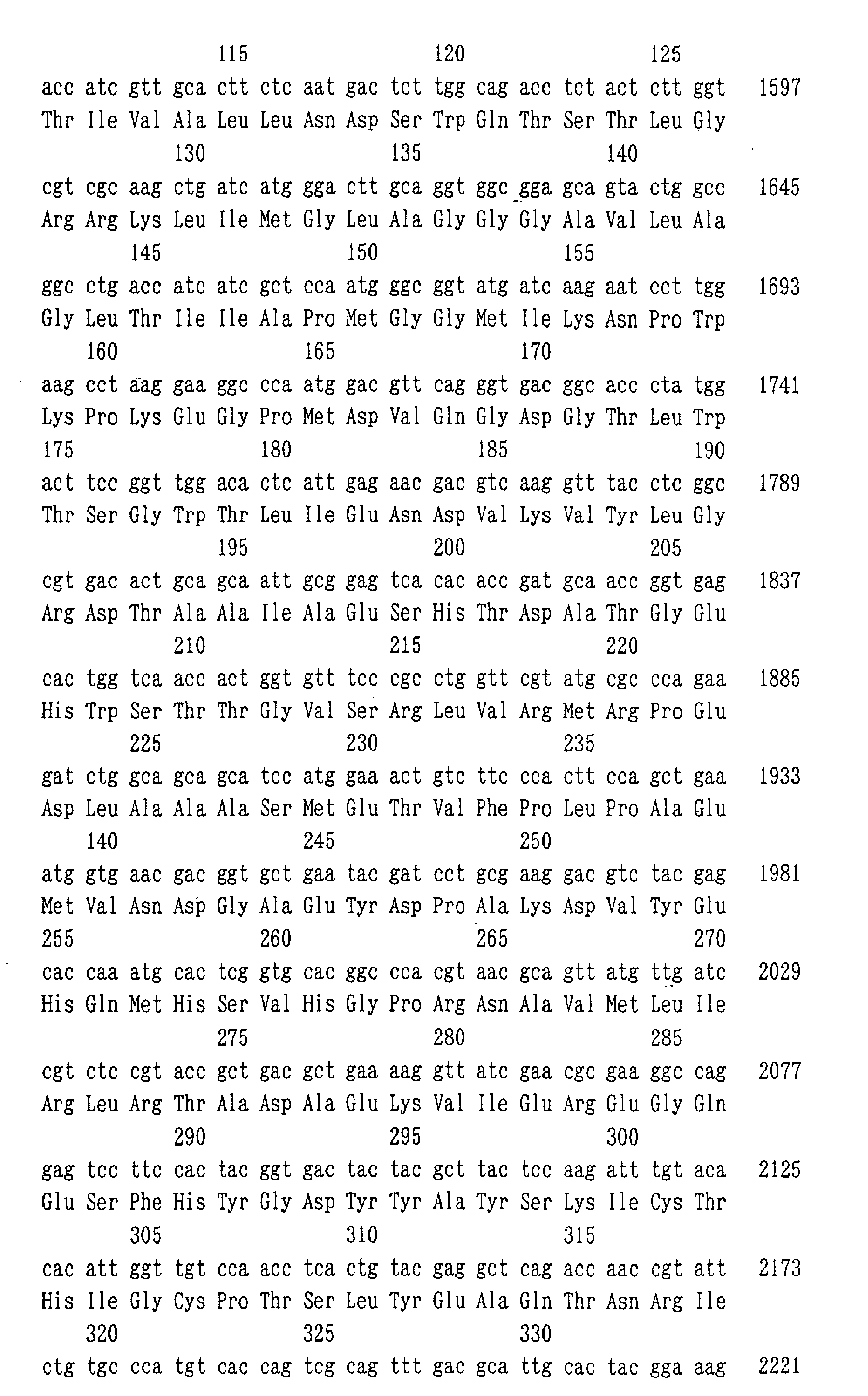
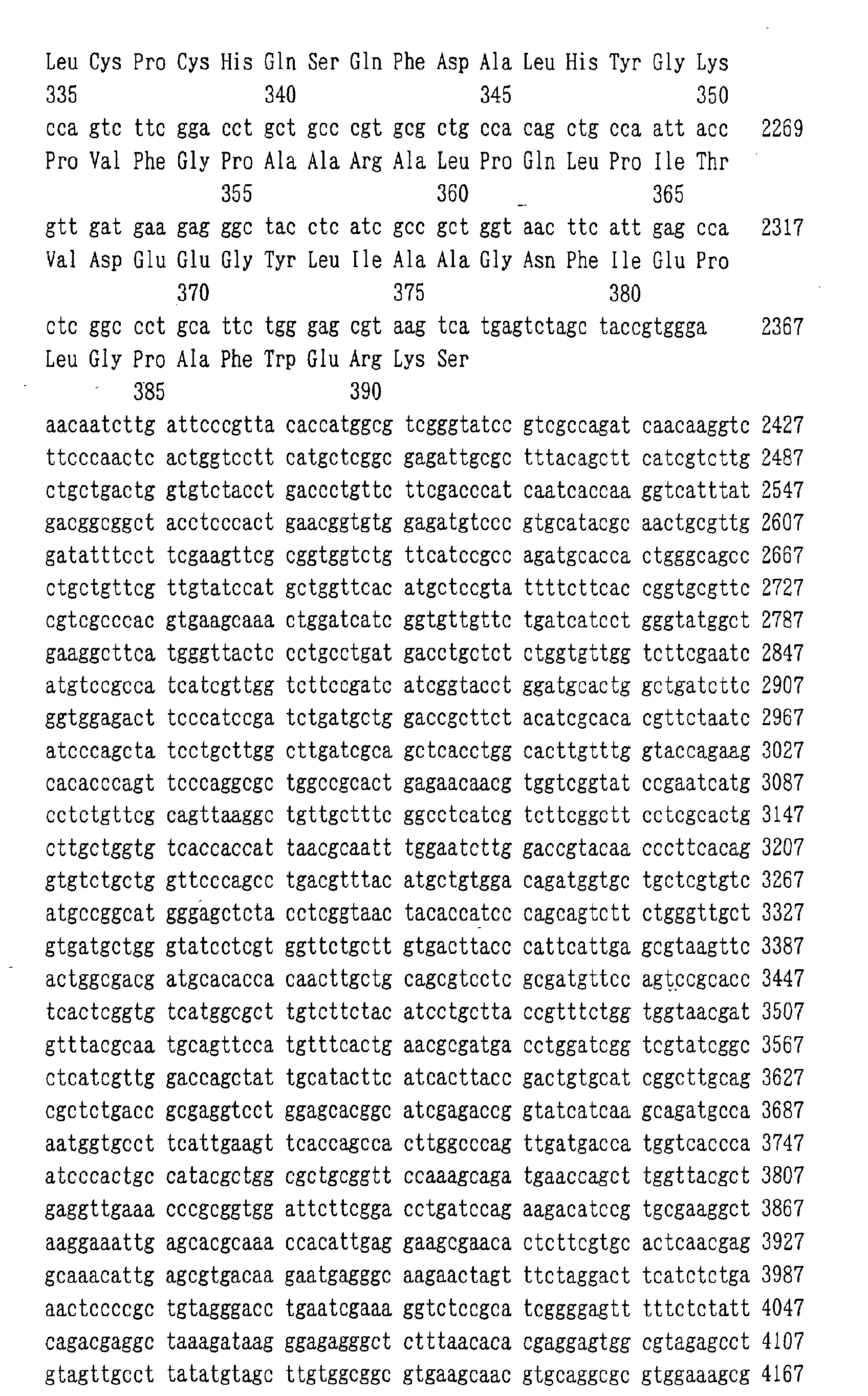
later is shown in SEQ ID NO: 6. This nucleotide
sequence contains six ORFs, three of which (nucleotide
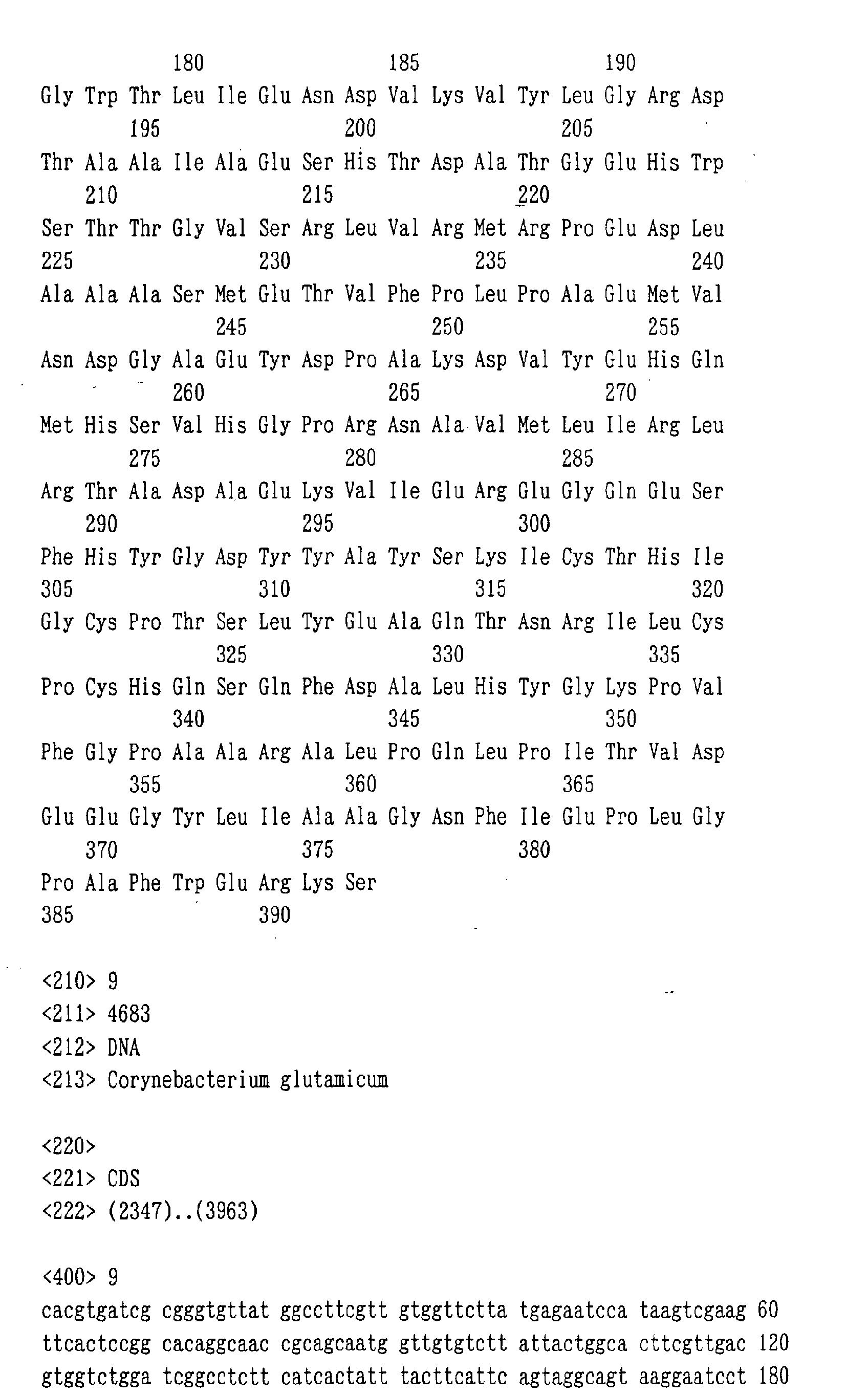
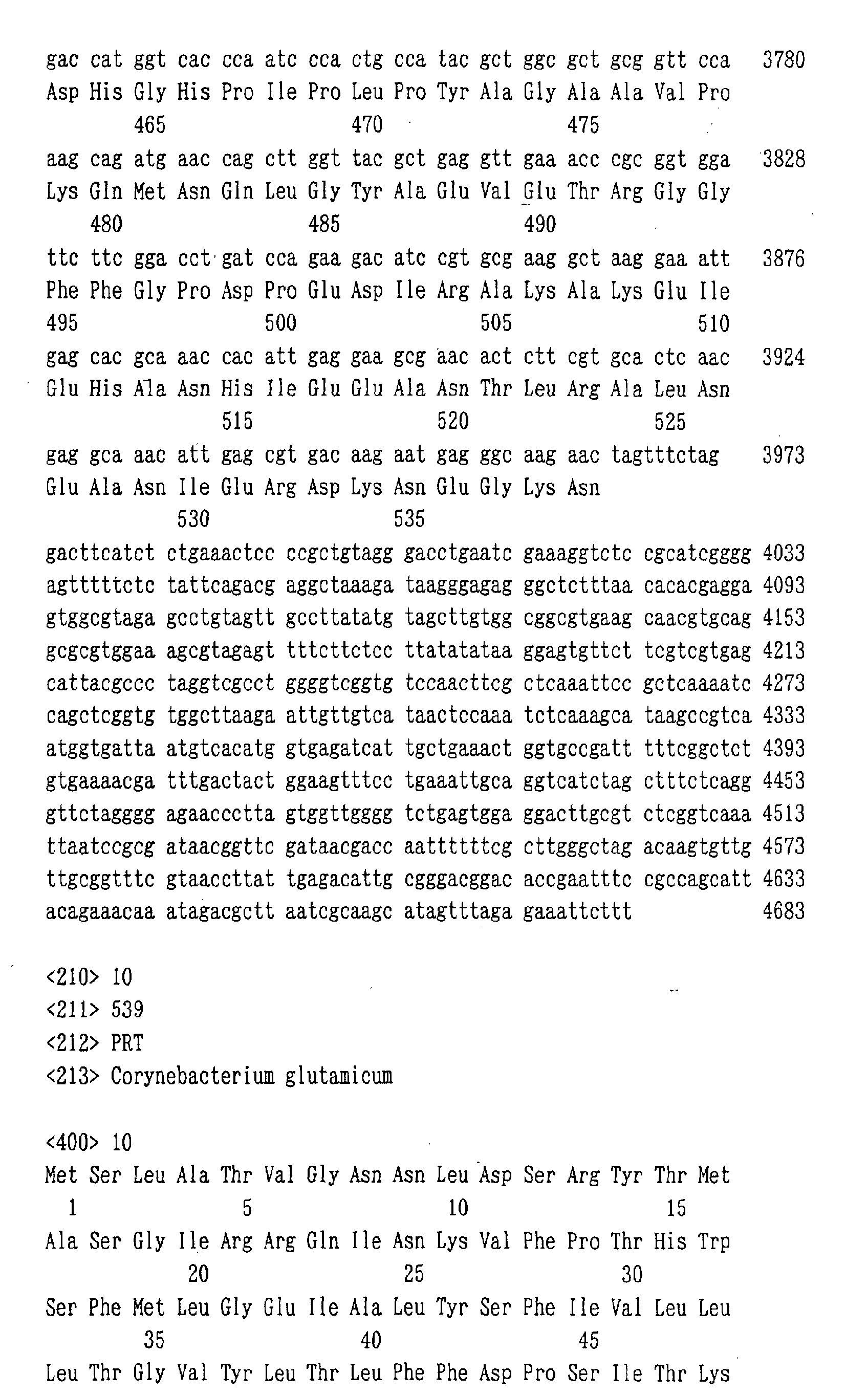
numbers 276-1124, 1172-2347 and 2347-3963) are qcrC,
qcrA and qcrB, respectively, and code for the subunits
constituting the cytochrome bc1 complex (QcrC, QcrA,
QcrB). These genes take an operon structure (Fig. 2).
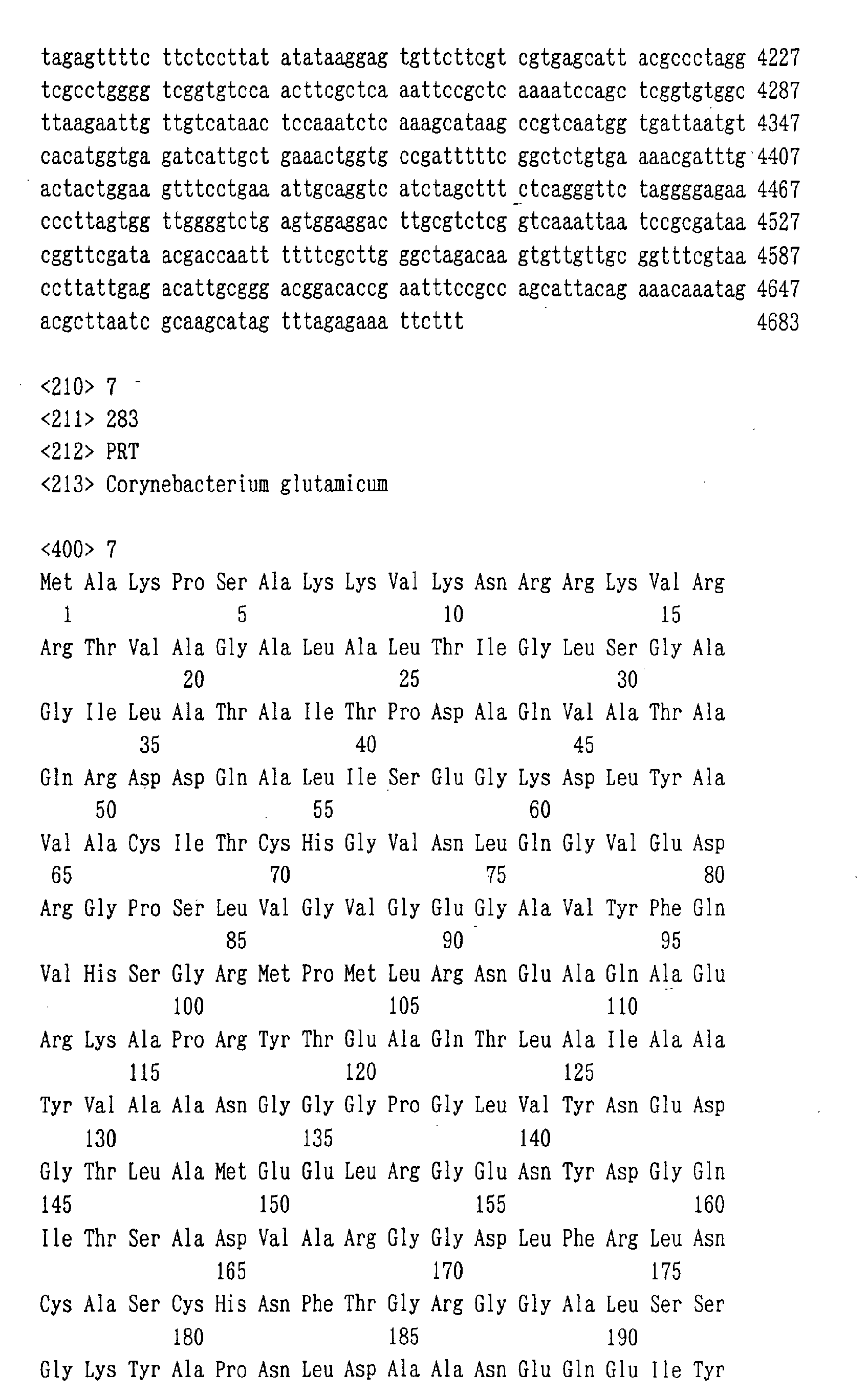
The amino acid sequences encoded by the ORFs are shown
in SEQ ID NOS: 7, 8 and 10 in that order. In addition,
the amino acid sequence encoded by qcrC and qcrA is
shown in SEQ ID NO: 6 together with the nucleotide
sequence. Further, the amino acid sequence encoded by
qcrB is shown in SEQ ID NO: 9 together with the
nucleotide sequence (the same as the nucleotide sequence
shown in SEQ ID NO: 6).
The nucleotide sequences of qcrC, qcrA and qcrB
were elucidated by the present invention, and therefore
these genes can be directly obtained by preparing
primers based on the nucleotide sequence shown in SEQ ID
NO: 6, and performing PCR utilizing them and
Corynebacterium glutamlcum chromosomal DNA as a template.
The DNA of the present invention may be one coding
for either one of the aforementioned subunits QcrC, QcrA
and QcrB of the cytochrome bc1 complex, or one coding
for two or three kinds of them. The cytochrome bc1
complex or a subunit thereof can be produced by
introducing the DNA of the present invention into a
suitable host cell, and culturing an obtained
transformant to express the DNA. For example, the DNA
coding for QcrC may be a DNA having the nucleotide
sequence consisting of nucleotide numbers 276-1124 in
the nucleotide sequence of SEQ ID NO: 6, the DNA coding
for QcrA may be a DNA having the nucleotide sequence
consisting of nucleotide numbers 1172-2347 in the
nucleotide sequence of SEQ ID NO: 6, and the DNA coding
for QcrB may be a DNA having the nucleotide sequence
consisting of nucleotide numbers 2347-3963 in the
nucleotide sequence of SEQ ID NO: 6.
Produced cytochrome bc1 complex or subunits
thereof can be collected and purified from culture by a
method commonly used for the purification of proteins
such as salting out, solvent precipitation, gel
filtration chromatography and ion exchange
chromatography.
The DNA of the present invention coding for QcrC
may be one coding for a polypeptide that has the amino
acid sequence of SEQ ID NO: 7 comprising substitution,
deletion, insertion or addition of one or several amino
acid residues in the amino acid sequence, and can
constitute the cytochrome bc1 complex together with QcrA
and QcrB.
The DNA of the present invention coding for QcrA
may be one coding for a polypeptide that has the amino
acid sequence of SEQ ID NO: 8 comprising substitution,
deletion, insertion or addition of one or several amino
acid residues in the amino acid sequence, and can
constitute the cytochrome bc1 complex together with QcrC
and QcrB.
The DNA of the present invention coding for QcrB
may be one coding for a polypeptide that has the amino
acid sequence of SEQ ID NO: 10 comprising substitution,
deletion, insertion or addition of one or several amino
acid residues in the amino acid sequence, and can
constitute the cytochrome bc1 complex together with QcrC
and QcrA.
Furthermore, a DNA coding for a cytochrome bc1
complex in which QcrC, QcrA or QcrB, or two or three of
them contain a mutation also falls within the scope of
the DNA of the present invention.
The number of "several" amino acid residues is
preferably 1-40, more preferably 1-10. Alternatively,
the number is preferably such a number that the amino
acid sequence should show homology of 80% or more,
preferably 95% or more, to the amino acid sequence of
SEQ ID NO: 7, 8 or 10.
Such a DNA coding for substantially the same
protein as QcrC, QcrA or QcrB as described above can be
obtained by the site-directed mutagenesis method or
mutation treatment in the same manner as those mentioned
above for DNA coding for substantially the same protein
as cytochrome aa3.
A DNA coding for substantially the same protein as
QcrC, QcrA or QcrB can also be obtained by isolating a
DNA hybridizable with a DNA having, for example, the
nucleotide sequence corresponding to nucleotide numbers
of 276-1124, the nucleotide sequence corresponding to
nucleotide numbers of 1172-2347 or the nucleotide
numbers of 2347-3963 of the nucleotide sequence shown in
SEQ ID NO: 6 under the stringent conditions, and coding
for a protein having a function of QcrC, QcrA or QcrB
from qcrC, qcrA or qcrB including a mutation or a cell
harboring it. The "stringent conditions" has the same
meaning as described above.
The host for the expression of the DNA of the
present invention include, for example, various kinds of
bacteria including coryneform bacteria such as
Escherichia coli, Brevibacterium lactofermentum, and
Brevibacterium flavum, eucaryotic cells such as
Saccharomyces cerevisiae and so forth. In order to
introduce the DNA of the present invention into a host
such as those mentioned above, the host cell can be
transformed with a recombinant vector which is obtained
by inserting the DNA of the present invention into a
vector selected depending on the kind of the host in
which the expression is to be obtained. Those
procedures can be performed by using methods of genetic
recombination well known to those skilled in the art.
The cytochrome bc1 complex, subunits thereof and
DNA coding for them of the present invention are
considered to be useful for elucidation of the electron
transport system of coryneform bacteria. Further, the
DNA can be used for breeding of coryneform bacteria that
produce useful substances with good energy efficiency.
Best Mode for Carrying out the Invention
The present invention will be more specifically
explained with reference to the following examples.
Example 1: Cloning of cytochrome aa3 subunit I gene
(1) Cloning of cytochrome aa3 subunit I gene of
Corynebacterium glutamicum
Primers (uni1: TCATGGTNTGGGYNCAYCAY (SEQ ID NO:
11), uni2r: ATAACRTWRTGRAARTGNGC (SEQ ID NO: 12)) were
synthesized based on the amino acid sequence of the
region highly conserved in cytochrome c oxidase subunits
I of Bradyrhizobium japonicum, Acetobacter aceti,
Synechococcus vulcanus and Bacillus stearothermophilus.
By using these primers and chromosomal DNA of
Corynebacterium glutamicum KY9002 strain (ATCC13032) as
a template, PCR was performed (95°C for 45 seconds, 52°C
for 60 seconds and 62°C for 90 seconds, 35 cycles) to
obtain a fragment of 0.3 kb.
A labeled probe was produced in the same manner as
the method described above by using the obtained
fragment of 0.3 kb. By using this probe, Southern
hybridization was performed for Corynebacterium
glutamicum chromosomal DNA digested with PstI or SphI.
DNA was extracted from the gel at a position
corresponding to a position at which a positive signal
was obtained. The DNA was ligated to pUC119 digested
with PstI or SphI to prepare a recombinant DNA, and
Escherichia coli was transformed with it. By using the
aforementioned probe, colony hybridization was performed
for colonies of transformants. Plasmids were prepared
from colonies showing positive results for the
hybridization to obtain clones AA22 and AA32. The
nucleotide sequences of these clones were determined.
The nucleotide sequence obtained by ligating the
nucleotide sequences of these clones is shown in SEQ ID
NO: 1. This nucleotide sequence contained two ORFs (Fig.
1B). As a result of database searching for these ORFs,
it was found that the second ORF (nucleotide numbers
1538-3289) was the ctaD gene coding for the subunit I of
aa3.
(2) Purification of cytochrome aa3 of Corynebacterium
glutamicum
Cultured bacterial cells (wet weight: 120 g) of
Corynebacterium glutamicum KY9002 strain (ATCC13032)
were suspended in 200 ml of a buffer (0.5% NaCl, 10 mM
sodium phosphate, pH 7.4), and immediately disrupted by
stirring at a high speed by means of a bead beater
(Biospec) in the presence of glass beads (D=0.5mm, 350
g). After this disrupted cell suspension was
centrifuged at 8,000 x g for 10 minutes to remove
undisrupted bacterial cells, the supernatant was
centrifuged at 100,000 x g for 1 hour and the resulting
precipitates were suspended in a buffer (100 mM NaCl, 50
mM potassium phosphate, pH 6.5) to obtain a membrane
preparation.
The aforementioned membrane preparation was
suspended in a buffer (5 mg/ml, 2% sodium cholate, 0.5 M
NaCl, 10 mM sodium phosphate, pH 7.4), disrupted by
sonication, and centrifuged at 100,000 x g for 30
minutes. The resulting precipitates were suspended in a
buffer (10 mg/ml, 2% n-octyl-D-glucoside, 0.5 M NaCl, 50
mM potassium phosphate, pH 6.5), and disrupted again by
sonication. The disrupted suspension was centrifuged at
100,000 x g for 30 minutes, and the obtained supernatant
was dialyzed against a solution of 10 mM sodium
phosphate, pH 7.4, and loaded on a DEAE-Toyopearl column
(1.4 x 10 cm) so that proteinaceous components should be
adsorbed on the column. The proteinaceous components
were eluted with an eluent of 1% n-octyl-D-glucoside, 10
mM potassium phosphate, pH 7.4 with increasing NaCl
concentration. A fraction showing spectra of heme a and
heme a3 in the oxidation-reduction difference spectrum
and CO binding reduction-type minus reduction-type
difference spectrum was eluted with a condition of 200
mM NaCl as a single peak. This fraction was loaded on a
hydroxyapatite eolumn (0.8 x 2 cm) so that the
proteinaceous components should be adsorbed on the
column and eluted with an eluent of 1% n-octyl-D-glucoside
containing sodium phosphate at a gradually
increasing concentration. Since the fraction eluted
with 200 mM sodium phosphate similarly showed spectra of
heme a and heme a3 in the oxidation-reduction difference
spectrum and CO binding reduction-type minus reduction-type
difference spectrum and TMPD oxidase activity, it
was concluded that it was a fraction containing
cytochrome aa3 (Table 1).
| | Total protein | Cytochrome aa3 | TMPD oxidase activity |
| | | | | Total activity | Specific activity | TN |
| | (mg) | (mmol) | (nmol/ mg) | (unit) | (unit/ mg) | (s-1) |
| Membrane | 662 | 41.0 | 0.06 | 26.7 | 0.04 | 10.8 |
| Cholic acid washing | 583 | 42.7 | 0.07 | 19.4 | 0.033 | 7.51 |
| Octylglucoside extraction | 47.8 | 44.2 | 0.93 | 1.82 | 0.038 | 0.68 |
| DEAE-Toyopearl | 6.19 | 13.2 | 2.13 | 1.51 | 0.242 | 1.91 |
| Hydroxyapatite | 0.34 | 2.8 | 8.09 | 0.110 | 0.296 | 0.61 |
The cytochrome aa3 protein obtained in the manner
described above was separated by SDS-PAGE and
transferred to a polyvinylidene difluolide membrane. A
portion of this membrane at a position considered to
correspond to the subunit II was excised and used for
amino acid sequencing in Pulse-liquid peptide sequencer
Model 477A (Applied Biosystems). The determined amino
acid sequence of the N-terminus portion is shown in SEQ
ID NO: 13.
(4) Cloning of cytochrome aa3 subunit II and III genes
A primer crg1 (GGYGAYTTCYTBCGNATGGG, SEQ ID NO:
14) was synthesized based on the amino acid sequence of
the N-teminus amino acid sequence of the purified aa3
subunit II. Further, a primer crg2r
(GGACCGCASARYTCNGMRCA, SEQ ID NO: 15) was synthesized
based on the conserved sequence of CuA binding motif in
the oxidase subunits II of Paracoccus denitrificans,
Rhodobacter sphaeroides, Synechococcus vulcanus, Thermus
thermophilus, Bacillus subtilis and Bacillus
stearothermophilus. By using these crg1 and crg2r, and
chromosomal DNA of Corynebacterium glutamicum KY9002
strain (ATCC13032) as a template, PCR was performed
(95°C for 60 seconds, 52°C for 60 seconds, 68°C for 60
seconds, 35 cycles) to obtain a fragment of 0.8 kb (AA1).
The chromosomal DNA of Corynebacterium glutamicum was
prepared by the method of Saito and Miura (Biochem.
Biophys. Acta., 72, 619 (1963)).
The obtained fragment of 0.8 kb was labeled by
using DIG DNA Labeling Kit (Bohringer Mannheim), and
used as a probe for screening of a chromosomal DNA
library. The used chromosomal DNA library of
Corynebacterium glutamicum was obtained by partially
digesting the chromosomal DNA with a restriction enzyme
Sau3AI, ligating the obtained DNA fragments to pUC119
digested with a restriction enzyme BamHI to produce
recombinant DNA, and transforming Escherichia coli with
the recombinant DNA.
Colony hybridization (47-50°C, 5 x SSC, 0.5%
blocking reagent (Bohringer Mannheim), 0.1% sodium
lauroyl sarcosinate, 0.02% SDS) was performed for the
colonies of transformants by using the aforementioned
probe labeled with DIG. The probe was detected by using
DIG Detection Kit (Bohringer Mannheim), which utilized
anti-DIG antibodies labeled with alkaline phosphatase.
Plasmids were prepared from colonies that showed
positive results for the hybridization to obtain clones
AA41, AA51 and AA61. The nucleotide sequences of these
clones were determined. It was found that these
nucleotide sequences overlapped with on another and
contained the ctaC gene coding for the subunit II and
the ctaE gene coding for the subunit III of aa3 as a
whole (Fig. 1A). A nucleotide sequence obtained by
ligating the nucleotide sequences of the aforementioned
three clones is shown in SEQ ID NO: 3. This nucleotide
sequence contained three open reading frames (ORF). As
a result of database searching for these ORFs, it was
found that the first ORF (nucleotide numbers 604-1680)
was the ctaC gene coding for the subunit II, and the
third OFR (nucleotide numbers 2715-3329) was the ctaE
gene coding for the subunit III. The amino acid
sequences therefor are shown in SEQ ID NOS: 4 and 5,
respectively.
The results of homology searching of databases for
each amino acid sequence are shown in Table 2. The
sequence analysis was performed by using GENETYX
Homology Version 2.2.2 (Software Development Co., Ltd.).
The homology analysis was performed according to the
method of Lipman and Peason (Science, 227, 1435-1441,
1985).
| Gene | Homology (amino acid sequence level) |
| ctaD | Mycobacterium tuberculosis Bacillus stearothermohilus | ctaD product (70%) Cytochrome oxidase subunit I (47%) |
| ctaC | Mycobacterium tuberculosis Streptomyces coelicolor | ctaC product (50%) Protein estimated to be cytochrome oxidase subunit II (32%) |
| ctaE | Mycobacterium tuberculosis Streptomyces coelicolor | ctaE product (60%) Protein estimated to be cytochrome oxidase subunit III (57%) |
A sequence estimated to be a part of ORF was found
in the sequence of SEQ ID NO: 3 obtained in Example 1 at
a position downstream from the gene coding for
cytochrome aa3 subunit III, ctaE, on the 3' end side.
As a result of database searching for the amino acid
sequence that may be encoded by this sequence, the amino
acid sequence showed homology to an amino acid sequence
of known cytochrome c1 subunit.
The partial sequence of about 800 bp used for the
cloning of ctaC in Example 1 was obtained by PCR,
labeled by using DIG DNA Labeling Kit (Bohringer
Mannheim), and designated as Probe AA1. By using this
probe AA1, a chromosomal DNA library was screened
through colony hybridization. The used chromosomal DNA
library was obtained by partially digesting the
chromosomal DNA of Corynebacterium glutamicum with a
restriction enzyme Sau3AI, ligating the obtained DNA
fragments to pUC18 digested with a restriction enzyme
BamHI to produce recombinant DNA, and transforming
Escherichia coli with the recombinant DNA. The probe
was detected by using DIG Detection Kit (Bohringer
Mannheim), which utilized anti-DIG antibodies labeled
with alkaline phosphatase. Plasmids were prepared from
colonies that showed positive results for the
hybridization to obtain clone BLC1.
The nucleotide sequence of the aforementioned
clone pBLC1 was determined, and a fragment of 154 bp was
newly excised from that sequence with restriction
enzymes EagI and SacI and designated as Probe 1. This
Probe 1 was labeled in the same manner as described
above, and used to screen again the chromosomal DNA
library. The nucleotide sequence of clone B12 obtained
by the above procedure was determined, and a fragment of
about 500 bp excised from the sequence with a
restriction enzyme StyI was used to produce a probe
(Probe 2). This Probe 2 was labeled in the manner
described above, and used to screen a chromosomal DNA
library through colony hybridization. The chromosomal
DNA library used in this screening was obtained by fully
digesting the chromosomal DNA of Corynebacterium
glutamicum with restriction enzymes BglII and SmaI,
collecting DNA fragments of about 2.8 kb, ligating the
fragment to pUC118 digested with restriction enzymes
SmaI and BamHI to produce recombinant DNA, and
transforming Escherichia coli with the recombinant DNA.
This procedure provided a clone B13, and its nucleotide
sequence was determined. A nucleotide sequence obtained
by ligating BLC1, B12 and B13 is shown in SEQ ID NO: 6.
This nucleotide sequence contained six ORFs, three of
which (nucleotide numbers 276-1124, 1172-2347 and 2347-3963)
were in an operon structure (Fig. 2). Databases
were searched for these OFRs, and they were designated
as qcrC, qcrA and qcrB, respectively. The amino acid
sequences encoded by these ORFs are shown in SEQ ID NOS:
7, 8 and 10, respectively. In addition, the amino acid
sequence encoded by qcrC and qcrA is shown in SEQ ID NO:
6 together with the nucleotide sequence. Further, the
amino acid sequence encoded by qcrB is shown in SEQ ID
NO: 9 together with the nucleotide sequence (the same
the nucleotide sequence shown in SEQ ID NO: 6).
The qcrC gene product was characterized by
containing two of heme c binding motifs, and showed 34%
or more of homology on amino acid level to homologous
proteins of high G+C content gram positive bacteria such
as Mycobacterium tuberculosis and Streptomyces
coelicolor. In particular, it showed a high homology of
54% to the homologous protein of M. tuberculosis. It
was concluded that this qcrC was the gene coding for the
cytochrome c1 subunit of cytochrome bc1 complex.
Further, the qcrA gene product contained a Rieske
iron-sulfur motif, although the conservation degree was
low, and showed the highest homology to the Rieske iron-sulfur
protein of Thermus thermophilus among the high
G+C content gram positive bacteria. It was concluded
that this qcrA was the gene coding for Rieske iron-sulfur
protein of the cytochrome bc1 complex.
The qcrB gene product showed homology to
cytochrome b of high G+C content gram positive bacterium,
T. thermophilus, and cytochrome b6 of Bacillus
stearothermopholus, and a His residue that is a heme
bonding site and peripheral sequences thereof were also
highly conserved in it. It is expected that these gene
products are functioning by forming a complex with
cytochrome c1, iron-sulfur protein or cytochrome b, as
is already known for mitochondria of eukaryotes and
Proteobacteria. It was concluded that this qcrB was the
gene coding for the cytochrome b subunit of cytochrome
bc1 complex.
The sequence analysis was performed by using
GENETYX Homology Version 2.2.2 (Software Development Co.,
Ltd.). The homology analysis was performed according to
the method of Lipman and Peason (Science, 227, 1435-1441,
1985).
| Gene | Homology (amino acid sequence level) |
| qcrC | qcrC product of high G+C content gram positive bacteria (34% or more) qcrC product of M. tuberculosis (54%) |
| qcrA | T. thermophilus Rieske iron-sulfur protein (45%) |
| qcrB | M. tuberculosis cytochrome b (61%) B. stearothermopholus cytochrome b6 (31%) |
In cytochrome c, heme c is covalently bonded to a
cysteine residue of a protein portion, and therefore the
heme c is still bonded to it even after the protein is
denatured. The heme iron has peroxidase activity.
Therefore, among polypeptides obtained by denaturing
cytochrome c, presence of those having a covalently
bonded heme can be clarified. Denatured cytochrome c
was subjected to SDS-polyacrylamide gel electrophoresis,
and peroxidase activity was detected. As a result, it
was found that only the polypeptide having a molecular
weight of about 28 kDa showed the peroxidase activity,
and had c type heme. Based on this, it is considered
that Corynebacterium glutamicum has one kind of protein
containing heme c. Moreover, it is considered that, if
this protein is purified and its amino acid sequence is
determined, the subunit of cytochrome bc1 complex can be
identified.
Cultured cells of Corynebacterium glutamicum
KY9002 strain (ATCC13032) were collected by
centrifugation at 10,000 x g for 10 minutes, washed with
a buffer (20 mM potassium phosphate, pH 7.5), and
collected again by centrifugation at 10,000 x g for 10
minutes. This washing procedure was repeated again, and
the obtained cells were suspended in a buffer (20 mM
potassium phosphate, pH 7.5), added with lysozyme
(Sigma) at a final concentration of 0.5 mg/ml, left at
room temperature for 30 minutes, and disrupted by
sonication.
This disrupted cell suspension was centrifuged at
10,000 x g for 20 minutes to remove undisrupted cells,
and the supernatant was centrifuged at 150,000 x g for
90 minutes to obtain precipitates, which were suspended
in a buffer (20 mM potassium phosphate, pH 7.5) for
washing. The suspension was centrifuged at 150,000 x g
for 90 minutes, and the obtained precipitates were
suspended in 200 ml of buffer (1% sodium cholate, 0.5%
sodium deoxycholate, 0.1 M NaCl, 10 mM sodium phosphate,
pH 6.8) at a protein concentration of 10 mg/ml for
washing, and the suspension was centrifuged at 100,000 x
g for 45 minutes to precipitate membrane proteins.
The membrane proteins obtained as described above
were dissolved in a buffer (1% decylglucoside, 0.05 M
potassium phosphate, pH 6.5) by mild sonication, and
centrifuged at 100,000 x g for 30 minutes. The obtained
supernatant was dialyzed against 20 mM Tris-HCl, pH 7.2
for 3 hours. The dialyzed supernatant was loaded on a
DEAE-Toyopearl column (1.6 x 8.0 cm) equilibrated with a
buffer (1% decylglucoside, 20 mM Tris-HCl, pH 7.2). The
proteins adsorbed on the column were eluted with a
buffer as eluent (1% n-octyl-D-glucoside, 20 mM Tris-HCl,
pH 7.2) containing NaCl with increasing concentration.
A fraction in red color containing heme c and exulted at
60-80 mM of NaCl concentration was collected, and loaded
on a hydroxyapatite column (0.5 x 1.5 cm) so that the
proteinaceous components should be adsorbed on the
column. The column was washed with a buffer (1% n-octyl-D-glucoside,
20 mM Tris-HCl, pH 7.2), and then the
proteinaceous components were eluted with a buffer (1%
decylglucoside, 5 mM sodium phosphate, pH 6.8). The
obtained fraction was concentrated to about 0.1 mL by
loading it to Centricon 30 (Amersham), and subjected to
gel filtration by loading it at a flow rate of 0.8
mL/min to a Toso G3000SW column (Tosoh) equilibrated
with a buffer (0.05% decylglucoside, 0.1 M NaCl, 10 mM
Tris-HCl, pH 7.2) by HPLC to obtain a fraction
containing a protein containing heme c (Table 4).
| | Total protein | Heme c |
| | (mg) | (mmol) | (nmol/mg) |
| Membrane | 169 | 120.0 | 0.07 |
| Cholic acid washing | 166 | 99.0 | 0.06 |
| Octylglucoside extraction | 4.5 | 33.0 | 7.3 |
| DEAE-Toyopearl | 0.45 | 12.7 | 29 |
| Hydroxyapatite | 0.34 | 9.3 | 62 |
The fraction containing heme c containing protein
obtained as described above was separated by SDS-PAGE
and transferred to a polyvinylidene difluoride membrane.
A portion of this membrane at a position corresponding
to cc1 was excised, and the proteins were degraded
composed by a previously reported method (Kuge, S.
et
al., Biochem. Mol. Biol. Int., 38, 181-188 (1996)) using
Staphylococcus aureus V8 protease. The degradation
product was subjected to amino acid sequence
determination using Pulse-liquid peptide sequencer Model
477A (Applied Biosystems). As a result, two kinds of
partial amino acid sequences, QAERKAPRITEAQVLA (SEQ ID
NO: 16) and LRGENYDGQITSADVARGGDLFRL (SEQ ID NO: 17),
were obtained. These partial amino acid sequences were
substantially the same as the amino acid sequence
obtained from the aforementioned cloned
qcrC gene.