EP1195037B1 - System and method for local policy enforcement for internet service providers - Google Patents
System and method for local policy enforcement for internet service providers Download PDFInfo
- Publication number
- EP1195037B1 EP1195037B1 EP00950163.6A EP00950163A EP1195037B1 EP 1195037 B1 EP1195037 B1 EP 1195037B1 EP 00950163 A EP00950163 A EP 00950163A EP 1195037 B1 EP1195037 B1 EP 1195037B1
- Authority
- EP
- European Patent Office
- Prior art keywords
- subscriber
- policy enforcement
- enforcement point
- key
- internet
- Prior art date
- Legal status (The legal status is an assumption and is not a legal conclusion. Google has not performed a legal analysis and makes no representation as to the accuracy of the status listed.)
- Expired - Lifetime
Links
- 238000000034 method Methods 0.000 title claims description 12
- 238000013475 authorization Methods 0.000 claims description 22
- 238000010586 diagram Methods 0.000 description 5
- 230000011664 signaling Effects 0.000 description 3
- 230000003247 decreasing effect Effects 0.000 description 2
- 230000007246 mechanism Effects 0.000 description 2
- 238000000926 separation method Methods 0.000 description 2
- 108091035710 E-box Proteins 0.000 description 1
- 230000005540 biological transmission Effects 0.000 description 1
- 230000001419 dependent effect Effects 0.000 description 1
- 230000003831 deregulation Effects 0.000 description 1
- 230000006870 function Effects 0.000 description 1
- 230000000977 initiatory effect Effects 0.000 description 1
- 230000000737 periodic effect Effects 0.000 description 1
- 230000004044 response Effects 0.000 description 1
- 230000011218 segmentation Effects 0.000 description 1
Images


Classifications
-
- H—ELECTRICITY
- H04—ELECTRIC COMMUNICATION TECHNIQUE
- H04L—TRANSMISSION OF DIGITAL INFORMATION, e.g. TELEGRAPHIC COMMUNICATION
- H04L63/00—Network architectures or network communication protocols for network security
- H04L63/08—Network architectures or network communication protocols for network security for authentication of entities
-
- H—ELECTRICITY
- H04—ELECTRIC COMMUNICATION TECHNIQUE
- H04L—TRANSMISSION OF DIGITAL INFORMATION, e.g. TELEGRAPHIC COMMUNICATION
- H04L12/00—Data switching networks
- H04L12/28—Data switching networks characterised by path configuration, e.g. LAN [Local Area Networks] or WAN [Wide Area Networks]
- H04L12/2854—Wide area networks, e.g. public data networks
- H04L12/2856—Access arrangements, e.g. Internet access
- H04L12/2858—Access network architectures
-
- H—ELECTRICITY
- H04—ELECTRIC COMMUNICATION TECHNIQUE
- H04L—TRANSMISSION OF DIGITAL INFORMATION, e.g. TELEGRAPHIC COMMUNICATION
- H04L63/00—Network architectures or network communication protocols for network security
- H04L63/20—Network architectures or network communication protocols for network security for managing network security; network security policies in general
Definitions
- the present invention relates generally to telecommunications systems and methods for accessing the Internet using an Internet Service Provider (ISP), and specifically to authenticating and authorizing users to use the ISP resources and services.
- ISP Internet Service Provider
- IP Internet Protocol
- ISPs Internet Service Providers
- new customer segments can be created along criteria other than physical location, such as nationality, corporate affiliation, religion, culture, specific interests, etc.
- IP-based Virtual Private Networks VPN can be easily created to cater for scattered individuals and groups.
- the key to this ultimate separation of the services from the infrastructure is the existence of a local Policy Enforcement Point (PEP).
- PEP Policy Enforcement Point
- the PEP is responsible for enforcing policies with respect to authentication of subscribers, authorization to access and services, accounting and mobility, etc.
- the PEP would be located in a local access server or edge router of the ISP.
- An example of such a system is shown in US 5,881,234 .
- implementing the PEP at the edge router typically requires substantial investments and many practical arrangements with, and dependency of, local access providers concerning policy enforcement.
- the present invention is directed to telecommunications systems and methods for implementing a Policy Enforcement Point (PEP) for an Internet Service Provider (ISP) at the subscriber premises.
- PEP Policy Enforcement Point
- ISP Internet Service Provider
- the PEP is responsible for enforcing policies with respect to authentication of subscribers, authorization to access and services, accounting and mobility of the subscribers. These policies are defined by the ISP operator in a Policy Decision Point (PDP), which is a server connected to the Internet that communicates with the PEP.
- PDP Policy Decision Point
- the ISP can supply an encryption key for the PEP and an encryption key for a particular subscriber.
- all communications between the subscriber and the PEP, as well as between the PEP and the PDP can be encrypted.
- FIGURE 1 of the drawings conventionally, a single subscriber 100a or a company 110 having multiple subscribers 100b and 100c, only two of which are shown, connected together through a Local Area Network (LAN) 120 access the Internet 140 through a local access server 130 (or edge router) of an Internet Service Provider (ISP) 135.
- the local access server 130 serves as a local policy enforcement point (PEP) 160 for the ISP 135 in an area 150 that the local access server 130 serves.
- PEP 160 is responsible for enforcing policies with respect to authentication of subscribers 100a-c in the area, authorization to access and services, accounting and mobility.
- the PEP 160 Prior to initiating an Internet session, the PEP 160 must authenticate a subscriber, for example, subscriber 100b.
- the subscriber 100b supplies authentication information 105a, such as an account number and personal identification number (PIN), to the local access server 130 of the ISP 135.
- the PEP 160 within the local access server 130 authenticates the subscriber 100b by comparing the received authentication information 105a provided by the subscriber 100b with authentication information 105b associated with that subscriber 100b stored within the PEP 160.
- the PEP 160 within the local access server 130 stores the authentication information 105 for every subscriber 100a-c that it serves.
- the subscriber 100b can access the Internet 140 and browse the web through the local access server 130.
- the PEP 160 collects and stores accounting and billing information 115 for the Internet session.
- the PEP 160 can be implemented within a server (or service node) 180 connected to the LAN 120 of the subscriber(s) 100, as is shown.
- the PEP 160 can be implemented within the computer or terminal associated with that subscriber 100.
- the ISP 135 can provide software for the PEP 160 to the subscriber(s) 100.
- This software can be downloaded from the ISP 135 over the Internet 140 or can be mailed to the subscriber(s) 100.
- the software contains a separate subscriber key for each of the subscribers 100 and a PEP key for the PEP 160.
- This software for the PEP 160 can be loaded onto a server 180 serving multiple subscribers 100, as is shown, or onto a terminal associated with a single subscriber 100 to carry out the functions of the PEP 160.
- the software could be loaded onto an e-Box, which is a secure server 180 with a built-in firewall capability that has an interface to the LAN 120.
- the subscribers 100 can be assigned one of the subscriber keys and the PEP 160 can register the PEP key with the local access server 130.
- the PEP 160 enforces policies with respect to authentication of subscribers 100, authorization to access and services, accounting and mobility for the subscribers that the PEP 160 serves. These policies are defined by the ISP 135 operator in a Policy Decision Point (PDP) 170, which is a server under operator control that can be situated anywhere in the world.
- PDP Policy Decision Point
- the PDP 170 communicates with PEPs 160 and with other network PDPs (not shown) to authenticate subscribers 100 that are roaming outside of their home network.
- the authentication information 105 associated with that subscriber 100 may not be stored in the PEP 160 of the LAN 120. Instead, the authentication information 105 may be stored in another PEP (not shown) of the ISP 135. Therefore, when the visiting subscriber 100 attempts to access the Internet 140 through the ISP 135, the PEP 160 can send the authentication information 105 received from the subscriber 100 to the PDP 170 through the local access server 130 and the Internet 140 to authenticate the subscriber 100.
- the PDP 170 can authenticate the subscriber 100 directly (if the PDP 170 stores all of the authentication information 105 for all of the subscribers 100 registered with the ISP (135). Alternatively, the PDP 170 can determine the PEP (not shown) associated with the visiting subscriber 100, transmit this authentication information 105 to that PEP and request authentication and authorization from that PEP.
- the PEP 160 can contact the PDP 170 through the local access server 130 associated with the ISP 135 and the Internet 140 to authenticate the subscriber 100 and obtain authorization to access the ISP 135.
- the PDP 170 can communication with a PDP (not shown) of the ISP that the subscriber 100 has an account with to verify that the subscriber 100 has an account with that ISP and to obtain authorization for billing and charging purposes.
- Each PEP 160 has a separate key 162 associated with it.
- This key 162 identifies the PEP 160 to the PDP 170 and local access server 130 of the ISP 135. Therefore, instead of storing authentication information 105 for each subscriber 100, the local access server 130 only needs to store the PEP keys 162 for the PEPs 160 that it serves.
- the PEP keys 162 can also be used to encrypt the information transmitted between the PEP 160 and the local access server 130 and between the PEP 160 and the PDP 170, which greatly reduces the possibility of interception by an unauthorized party.
- the PEP 160 To initiate an Internet session, the PEP 160 provides this PEP key 162 to the local access server 130 to authenticate the PEP 160. Thereafter, the PEP 160 and local access server 130 can use this PEP key 162 to encrypt all of the information transmitted between them. Likewise, the PEP key 162 can be used by the PEP 160 and the PDP 170 to encrypt information transmitted therebetween. Such information can include, for example, authentication information 105 and authorization information of visiting or roaming subscribers 100 or accounting and billing information 115 at the completion of an Internet session.
- the PEP 160 also includes a memory or database 165 for storing a different subscriber key 164 for each subscriber 100 that it serves.
- the PEP 160 can store a list of subscriber user names or account numbers 163 and associated subscriber keys 164.
- a subscriber 100 To initiate an Internet session, a subscriber 100 must provide their account number 163, along with their subscriber key 164 to the PEP 160.
- the PEP 160 accesses the database 165 and compares the received account number 163 and key 164 with the stored account number 163 and key 164 to authenticate the subscriber 100.
- This subscriber key 164 can also be utilized to encrypt all of the information transmitted between the PEP 160 and the subscriber 100.
- the PEP 160 can also store an authorization database 168 that contains authorization information 169 for each subscriber 100 that it serves. Certain services offered by the ISP 135 may not be available to each subscriber 100. Therefore, after authentication, when a subscriber 100 requests a service from the ISP 135, the PEP 160 can access the authorization database 168 to determine if the subscriber is allowed to use this service based upon the authorization information 169.
- the PEP 160 maintains an accounting log 166 containing information 167 pertaining to the session, such as the start time, stop time and services utilized. This accounting log 166 is used by the ISP 135 for billing and auditing purposes. At completion of the Internet session, the PEP 160 forwards this accounting log 166, using the PEP key 162, to the PDP 170. Alternatively, the accounting log 166 for all subscribers 100 served by the PEP 160 can be transmitted at regular intervals, such as at the end of the day.
- the PEP 160 By placing the PEP 160 in the premises 110 of the subscriber 100, the overhead is reduced due to the decreased number of messages transmitted between the subscriber 100 and the local access server 130. In addition, the security is increased and the delay is decreased in all communications between the subscriber 100 and the PEP 160.
- a subscriber 100 sends an authentication request (step 400), including the account number 163 and subscriber key 164, to the PEP 160. Thereafter, the PEP 160 establishes a connection with the local access server 130 of the ISP 135 and sends an access authentication request (step 405), including the PEP key 162, to the local access server 130.
- the local access server 130 After authentication of the PEP 160, the local access server 130 sends an access authentication reply message (step 410) to the PEP 160, indicating that the PEP 160 is authorized to conduct an Internet session with the ISP 135.
- the PEP 160 receives the authentication reply message from the local access server 130, the PEP 160 authenticates the subscriber, using the account number 163 and subscriber key 164 provided by the subscriber 100, and sends an authentication reply message (step 415) to the subscriber 100.
- the PEP 160 sends an authentication message, including both the PEP key 162 and the account number 163 and subscriber key 164 for the subscriber 100 to the PDP 170 via the local access server 130 and the Internet 140 (step 412). It should be understood that if the roaming subscriber 100 has an account with another ISP (not shown), the identification of this ISP, along with the subscriber's 100 account number with the ISP is sent to the PDP 170. In order for that roaming subscriber 100 to have access to the ISP 135 of the PEP 160, the two ISP's will typically have a contract allowing subscriber's to have access to either ISP. In addition, charging and accounting information would also need to be addressed in the contract.
- the PDP 170 authenticates the subscriber 100 directly or by querying another PEP (not shown) containing the account number 163 and subscriber key 164 for the subscriber 100 or by querying another PDP (not shown). Once authenticated, the PDP 170 returns the authentication reply message to the PEP 160 (step 413), which in turn, sends the authentication reply message to the subscriber 100 (step 415).
- the subscriber 100 can transmit a service request (step 420) to the PEP 160.
- the service request can be, for example, a request to access a web site 190 or retrieve subscriber or network information. If the PEP 160 determines that the requested service is not authorized, the PEP 160 sends an authorization reply (step 425) indicating that the service is not allowed. However, if the requested service is allowed, the PEP 160 sends the authorization reply message (step 425) indicating that the service is allowed, and transmits a resource request message (step 430), including the service request, to the local access server 130.
- the local access server 130 notifies the subscriber 100 by sending a resource confirm message (step 435) indicating that the service is not available to the subscriber 100 via the PEP 160.
- the requested service may not be able to be provided if, for example, the network is busy or if the service is unavailable at the time.
- the resource confirm message (step 435) indicates that the service is available.
- the subscriber 100 can conduct the Internet session (step 440), for example, by retrieving information from or providing information to a web site 190 on the Internet 140.
- the subscriber key 164 and the PEP key 162 all of the information transmitted between the subscriber 100 and the local access server 130 can be encrypted, preventing unauthorized access to this information.
- the PEP 160 logs, in the accounting log 166, all of the information 167 about the Internet session, such as the start time, stop time and service requested.
- the PDP 170 can transmit an account polling message (step 445) to the PEP 160, requesting the accounting log 166 for all Internet sessions that have occurred since the previous account polling message.
- the PEP 160 transmits the accounting log (step 450), which includes the records of each Internet session completed prior to receiving the account polling message, to the PDP 170.
- the PEP 160 can retrieve the accounting log 166 and send this accounting log 166 to the PDP 170 (step 450) without waiting for the account polling message (step 445).
- the accounting log 166 can be encrypted for transmission from the PEP 160 to the PDP 170 using the PEP key 162.
Landscapes
- Engineering & Computer Science (AREA)
- Computer Networks & Wireless Communication (AREA)
- Signal Processing (AREA)
- Computer Hardware Design (AREA)
- Computer Security & Cryptography (AREA)
- Computing Systems (AREA)
- General Engineering & Computer Science (AREA)
- Data Exchanges In Wide-Area Networks (AREA)
- Mobile Radio Communication Systems (AREA)
- Computer And Data Communications (AREA)
Description
- The present invention relates generally to telecommunications systems and methods for accessing the Internet using an Internet Service Provider (ISP), and specifically to authenticating and authorizing users to use the ISP resources and services.
- The confluence of two forces, deregulation and the impact of the Internet Protocol (IP), are making possible a horizontal segmentation of the telecommunications market. Earlier attempts to horizontally slice the telecommunications markets by liberating terminals and long distance have proven to be slow and rather non-convincing to the subscriber.
- Today, the unbundling of the local loop, and the separation of the services from the infrastructure, together with the advent of IP, has thoroughly altered the relationship between the subscriber and the service provider. Transparent IP-based networks provided by Internet Service Providers (ISPs), which permit exchange of service and accounting policies between network segments, have allowed a physical dislocation of the subscriber from the ISP. Thus, permitting an operator to have subscribers anywhere, and in almost any network in the world.
- For example, new customer segments can be created along criteria other than physical location, such as nationality, corporate affiliation, religion, culture, specific interests, etc. In addition, IP-based Virtual Private Networks (VPN) can be easily created to cater for scattered individuals and groups.
- The key to this ultimate separation of the services from the infrastructure is the existence of a local Policy Enforcement Point (PEP). The PEP is responsible for enforcing policies with respect to authentication of subscribers, authorization to access and services, accounting and mobility, etc. Normally, the PEP would be located in a local access server or edge router of the ISP. An example of such a system is shown in
US 5,881,234 . However, implementing the PEP at the edge router typically requires substantial investments and many practical arrangements with, and dependency of, local access providers concerning policy enforcement. - It is, therefore, an object of the present invention to reduce the investment cost for ISPs implementing a PEP.
- The present invention is directed to telecommunications systems and methods for implementing a Policy Enforcement Point (PEP) for an Internet Service Provider (ISP) at the subscriber premises. The PEP is responsible for enforcing policies with respect to authentication of subscribers, authorization to access and services, accounting and mobility of the subscribers. These policies are defined by the ISP operator in a Policy Decision Point (PDP), which is a server connected to the Internet that communicates with the PEP. In addition, the ISP can supply an encryption key for the PEP and an encryption key for a particular subscriber. Thus, all communications between the subscriber and the PEP, as well as between the PEP and the PDP can be encrypted.
- The disclosed invention will be described with reference to the accompanying drawings, which show important sample embodiments of the invention and which are incorporated in the specification hereof by reference, wherein:
-
FIGURE 1 is a block diagram illustrating conventional policy enforcement by an Internet Service Provider (ISP); -
FIGURE 2 is an exemplary block diagram illustrating the implementation of a local policy enforcement point (PEP) at the customer premises in accordance with preferred embodiments of the present invention; -
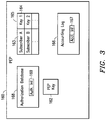
FIGURE 3 is a detailed view of the local PEP in accordance with embodiments of the present invention; and -
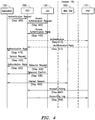
FIGURE 4 is an exemplary signaling diagram illustrating the signaling involved in a sample Internet session in accordance with embodiments of the present invention. - The numerous innovative teachings of the present application will be described with particular reference to the presently preferred exemplary embodiments. However, it should be understood that this class of embodiments provides only a few examples of the many advantageous uses of the innovative teachings herein. In general, statements made in the specification of the present application do not necessarily delimit any of the various claimed inventions. Moreover, some statements may apply to some inventive features but not to others.
- With reference now to
FIGURE 1 of the drawings, conventionally, asingle subscriber 100a or acompany 110 havingmultiple subscribers local access server 130 serves as a local policy enforcement point (PEP) 160 for theISP 135 in anarea 150 that thelocal access server 130 serves. ThePEP 160 is responsible for enforcing policies with respect to authentication ofsubscribers 100a-c in the area, authorization to access and services, accounting and mobility. - Prior to initiating an Internet session, the
PEP 160 must authenticate a subscriber, for example,subscriber 100b. Typically, thesubscriber 100b suppliesauthentication information 105a, such as an account number and personal identification number (PIN), to thelocal access server 130 of theISP 135. Thereafter, thePEP 160 within thelocal access server 130 authenticates thesubscriber 100b by comparing the receivedauthentication information 105a provided by thesubscriber 100b withauthentication information 105b associated with thatsubscriber 100b stored within thePEP 160. It should be noted that thePEP 160 within thelocal access server 130 stores the authentication information 105 for everysubscriber 100a-c that it serves. Once authenticated, thesubscriber 100b can access the Internet 140 and browse the web through thelocal access server 130. When the Internet session is completed, the PEP 160 collects and stores accounting andbilling information 115 for the Internet session. - Currently, none of the information transmitted between the
subscriber 100b and thelocal access server 130 orPEP 160 during an Internet session is encrypted. Therefore, this information, including the authentication information 105, is susceptible to interception by an unauthorized party. The current policing mechanisms by theISP 135 do not account for this type of unauthorized access. Therefore, theISP 135 must rely upon the policing mechanisms of the local access provider in thearea 150 to help ensure authentication, which increases the cost toISPs 135 and tosubscribers 100a-c that use theISP 135 services. In addition, certain accounting and billing information needed by theISP 135 can only be provided by the local access provider, which also increases the cost to theISP 135. - However, if, as shown in
FIGURE 2 of the drawings, thePEP 160 is located in thesubscriber premises 110, such as being connected to theLAN 120 that thesubscriber 100 is connected to, the up-front investments required to become anISP 135 would be reduced. In addition, theISP 135 would become less dependent on the local access provider. Therefore, in accordance with preferred embodiments of the present invention, thePEP 160 can be implemented within a server (or service node) 180 connected to theLAN 120 of the subscriber(s) 100, as is shown. Alternatively, if thesubscriber 100 is a single subscriber, thePEP 160 can be implemented within the computer or terminal associated with thatsubscriber 100. - To implement the
PEP 160 at thesubscriber premises 110, when asubscriber 100 or a group of subscribers registers with anISP 135, theISP 135 can provide software for thePEP 160 to the subscriber(s) 100. This software can be downloaded from theISP 135 over the Internet 140 or can be mailed to the subscriber(s) 100. The software contains a separate subscriber key for each of thesubscribers 100 and a PEP key for thePEP 160. This software for the PEP 160 can be loaded onto aserver 180 servingmultiple subscribers 100, as is shown, or onto a terminal associated with asingle subscriber 100 to carry out the functions of thePEP 160. For example, the software could be loaded onto an e-Box, which is asecure server 180 with a built-in firewall capability that has an interface to theLAN 120. Once loaded, thesubscribers 100 can be assigned one of the subscriber keys and thePEP 160 can register the PEP key with thelocal access server 130. - As discussed above, the
PEP 160 enforces policies with respect to authentication ofsubscribers 100, authorization to access and services, accounting and mobility for the subscribers that thePEP 160 serves. These policies are defined by theISP 135 operator in a Policy Decision Point (PDP) 170, which is a server under operator control that can be situated anywhere in the world. ThePDP 170 communicates withPEPs 160 and with other network PDPs (not shown) to authenticatesubscribers 100 that are roaming outside of their home network. - For example, if the LAN 120 is part of a company that has offices in several locations, and a
subscriber 100 associated with one of the locations is visiting theLAN 120 location, the authentication information 105 associated with thatsubscriber 100 may not be stored in thePEP 160 of theLAN 120. Instead, the authentication information 105 may be stored in another PEP (not shown) of theISP 135. Therefore, when the visitingsubscriber 100 attempts to access the Internet 140 through theISP 135, the PEP 160 can send the authentication information 105 received from thesubscriber 100 to thePDP 170 through thelocal access server 130 and the Internet 140 to authenticate thesubscriber 100. Based upon the visiting subscribers' authentication information 105, thePDP 170 can authenticate thesubscriber 100 directly (if thePDP 170 stores all of the authentication information 105 for all of thesubscribers 100 registered with the ISP (135). Alternatively, thePDP 170 can determine the PEP (not shown) associated with the visitingsubscriber 100, transmit this authentication information 105 to that PEP and request authentication and authorization from that PEP. - As another example, if a
subscriber 100 connected to theLAN 120 has an account with another ISP (not shown), but is attempting to access theInternet 140 through theISP 135 of theLAN 120, thePEP 160 can contact thePDP 170 through thelocal access server 130 associated with theISP 135 and theInternet 140 to authenticate thesubscriber 100 and obtain authorization to access theISP 135. ThePDP 170 can communication with a PDP (not shown) of the ISP that thesubscriber 100 has an account with to verify that thesubscriber 100 has an account with that ISP and to obtain authorization for billing and charging purposes. - The structure and operation of an exemplary embodiment of the
PEP 160 will now be described in more detail with reference toFIGURE 3 of the drawings. EachPEP 160 has aseparate key 162 associated with it. This key 162 identifies thePEP 160 to thePDP 170 andlocal access server 130 of theISP 135. Therefore, instead of storing authentication information 105 for eachsubscriber 100, thelocal access server 130 only needs to store thePEP keys 162 for thePEPs 160 that it serves. ThePEP keys 162 can also be used to encrypt the information transmitted between thePEP 160 and thelocal access server 130 and between thePEP 160 and thePDP 170, which greatly reduces the possibility of interception by an unauthorized party. - To initiate an Internet session, the
PEP 160 provides thisPEP key 162 to thelocal access server 130 to authenticate thePEP 160. Thereafter, thePEP 160 andlocal access server 130 can use thisPEP key 162 to encrypt all of the information transmitted between them. Likewise, the PEP key 162 can be used by thePEP 160 and thePDP 170 to encrypt information transmitted therebetween. Such information can include, for example, authentication information 105 and authorization information of visiting or roamingsubscribers 100 or accounting andbilling information 115 at the completion of an Internet session. - The
PEP 160 also includes a memory ordatabase 165 for storing adifferent subscriber key 164 for eachsubscriber 100 that it serves. For example, in thedatabase 165, thePEP 160 can store a list of subscriber user names oraccount numbers 163 and associatedsubscriber keys 164. To initiate an Internet session, asubscriber 100 must provide theiraccount number 163, along with theirsubscriber key 164 to thePEP 160. ThePEP 160 accesses thedatabase 165 and compares the receivedaccount number 163 and key 164 with the storedaccount number 163 and key 164 to authenticate thesubscriber 100. Thissubscriber key 164 can also be utilized to encrypt all of the information transmitted between thePEP 160 and thesubscriber 100. - In addition, the
PEP 160 can also store anauthorization database 168 that containsauthorization information 169 for eachsubscriber 100 that it serves. Certain services offered by theISP 135 may not be available to eachsubscriber 100. Therefore, after authentication, when asubscriber 100 requests a service from theISP 135, thePEP 160 can access theauthorization database 168 to determine if the subscriber is allowed to use this service based upon theauthorization information 169. - During the Internet session, the
PEP 160 maintains anaccounting log 166 containinginformation 167 pertaining to the session, such as the start time, stop time and services utilized. Thisaccounting log 166 is used by theISP 135 for billing and auditing purposes. At completion of the Internet session, thePEP 160 forwards thisaccounting log 166, using thePEP key 162, to thePDP 170. Alternatively, theaccounting log 166 for allsubscribers 100 served by thePEP 160 can be transmitted at regular intervals, such as at the end of the day. - By placing the
PEP 160 in thepremises 110 of thesubscriber 100, the overhead is reduced due to the decreased number of messages transmitted between thesubscriber 100 and thelocal access server 130. In addition, the security is increased and the delay is decreased in all communications between thesubscriber 100 and thePEP 160. - With reference now to the signaling diagram shown in
FIGURE 4 of the drawings, which will be described in connection with the block diagrams shown inFIGURES 2 and3 of the drawings, to initiate an Internet session, asubscriber 100 sends an authentication request (step 400), including theaccount number 163 andsubscriber key 164, to thePEP 160. Thereafter, thePEP 160 establishes a connection with thelocal access server 130 of theISP 135 and sends an access authentication request (step 405), including thePEP key 162, to thelocal access server 130. - After authentication of the
PEP 160, thelocal access server 130 sends an access authentication reply message (step 410) to thePEP 160, indicating that thePEP 160 is authorized to conduct an Internet session with theISP 135. When thePEP 160 receives the authentication reply message from thelocal access server 130, thePEP 160 authenticates the subscriber, using theaccount number 163 andsubscriber key 164 provided by thesubscriber 100, and sends an authentication reply message (step 415) to thesubscriber 100. - If the
subscriber 100 is a roamingsubscriber 100, as discussed above, in order to authenticate thesubscriber 100, thePEP 160 sends an authentication message, including both thePEP key 162 and theaccount number 163 andsubscriber key 164 for thesubscriber 100 to thePDP 170 via thelocal access server 130 and the Internet 140 (step 412). It should be understood that if the roamingsubscriber 100 has an account with another ISP (not shown), the identification of this ISP, along with the subscriber's 100 account number with the ISP is sent to thePDP 170. In order for that roamingsubscriber 100 to have access to theISP 135 of thePEP 160, the two ISP's will typically have a contract allowing subscriber's to have access to either ISP. In addition, charging and accounting information would also need to be addressed in the contract. - Thereafter, the
PDP 170 authenticates thesubscriber 100 directly or by querying another PEP (not shown) containing theaccount number 163 andsubscriber key 164 for thesubscriber 100 or by querying another PDP (not shown). Once authenticated, thePDP 170 returns the authentication reply message to the PEP 160 (step 413), which in turn, sends the authentication reply message to the subscriber 100 (step 415). - Once the
subscriber 100 receives the authentication reply message, thesubscriber 100 can transmit a service request (step 420) to thePEP 160. The service request can be, for example, a request to access aweb site 190 or retrieve subscriber or network information. If thePEP 160 determines that the requested service is not authorized, thePEP 160 sends an authorization reply (step 425) indicating that the service is not allowed. However, if the requested service is allowed, thePEP 160 sends the authorization reply message (step 425) indicating that the service is allowed, and transmits a resource request message (step 430), including the service request, to thelocal access server 130. - If the requested service cannot be provided to the
subscriber 100, thelocal access server 130 notifies thesubscriber 100 by sending a resource confirm message (step 435) indicating that the service is not available to thesubscriber 100 via thePEP 160. The requested service may not be able to be provided if, for example, the network is busy or if the service is unavailable at the time. However, if the requested service can be provided, the resource confirm message (step 435) indicates that the service is available. Thereafter, thesubscriber 100 can conduct the Internet session (step 440), for example, by retrieving information from or providing information to aweb site 190 on theInternet 140. Advantageously, by using thesubscriber key 164 and thePEP key 162, all of the information transmitted between thesubscriber 100 and thelocal access server 130 can be encrypted, preventing unauthorized access to this information. - During the Internet session (step 440), the
PEP 160 logs, in theaccounting log 166, all of theinformation 167 about the Internet session, such as the start time, stop time and service requested. At periodic intervals, thePDP 170 can transmit an account polling message (step 445) to thePEP 160, requesting theaccounting log 166 for all Internet sessions that have occurred since the previous account polling message. In response, thePEP 160 transmits the accounting log (step 450), which includes the records of each Internet session completed prior to receiving the account polling message, to thePDP 170. Alternatively, at completion of the Internet session, thePEP 160 can retrieve theaccounting log 166 and send thisaccounting log 166 to the PDP 170 (step 450) without waiting for the account polling message (step 445). It should be understood that theaccounting log 166 can be encrypted for transmission from thePEP 160 to thePDP 170 using thePEP key 162. - As will be recognized by those skilled in the art, the innovative concepts described in the present application can be modified and varied over a wide range of applications. Accordingly, the scope of patented subject matter should not be limited to any of the specific exemplary teachings discussed, but is instead defined by the following claims.
Claims (25)
- A policy enforcement point (160) of an Internet Service Provider comprising a memory for storing a subscriber key for said at least one subscriber, said subscriber key being used to authenticate said at least one subscriber, and wherein the policy enforcement point is adapted to be housed within subscriber premises (110) associated with said at least one subscriber (100), the policy enforcement point further provided with a policy enforcement point key for authenticating said policy enforcement point to an access, characterized in that said policy enforcement point key is used to encrypt information transmitted between said policy enforcement point and said node, and said subscriber key is used to encrypt information transmitted between said policy enforcement point and said at least one subscriber.
- The policy enforcement point of Claim 1, further characterized by an authorization database for storing authorization information associated with said at least one subscriber.
- The policy enforcement point of Claim 1, characterized by an accounting log for recording session information associated with an Internet session initiated by said at least one subscriber.
- The policy enforcement point of Claim 1, characterized in that said subscriber premises includes a local area network, said policy enforcement point being a server adapted to be connected to said local area network
- A telecommunications system for conducting an Internet session
by at least one subscriber (100) using an Internet Service Provider, comprising a policy enforcement point (160) of said Internet Service Provider, said policy enforcement point (160) for receiving a subscriber key from said at least one subscriber (100) when said at least one subscriber(100) initiates said Internet session, wherein said subscriber key is utilized to authenticate said at least one subscriber, wherein an access node of said Internet Service Provider located outside of said subscriber premises and adapted to receiving a policy enforcement point key from said policy enforcement point (160) for authenticating the policy enforcement point (160) based on said policy enforcement point key, said access node enabling said at least one subscriber to conduct said Internet session after authentication of said policy enforcement point (160), wherein the policy enforcement point of said Internet Service Provider is adapted to be located (180) within a subscriber premises (110) associated with said at least one subscriber (100), characterized in that said subscriber key comprises means for encrypting information transmitted between said policy enforcement point and said at least one subscriber during said Internet session, and in that said policy enforcement point key comprises means for encrypting information transmitted between said policy enforcement point and said access node during said Internet session. - The telecommunications system of Claim 5, characterized in that said policy enforcement point has a memory therein for storing a stored subscriber key for said at least one subscriber, said stored subscriber key being compared with said received subscriber key to authenticate said at least one subscriber.
- The telecommunications system of Claim 5, characterized in that said policy enforcement point includes an authorization database for storing authorization information associated with said at least one subscriber.
- The telecommunications system of Claim 7, characterized in that said policy enforcement point comprises means for receiving a request for service from said at least one subscriber and means for accessing said authorization database to determine whether said requested service is authorized using said authorization information, said Internet session being conducted when said requested service is authorized.
- The telecommunications system of Claim 5, characterized in that said policy enforcement point includes an accounting log for recording session information associated with said Internet session.
- The telecommunications system of Claim 9, characterized in that said session information comprises a start time, a stop time and at least one requested service.
- The telecommunications system of Claim 5, characterized in that said subscriber premises includes a local area network, said policy enforcement point being a server connected to said local area network.
- The telecommunications system of Claim 5, characterized in that said subscriber premises is a terminal associated with said at least one subscriber.
- The telecommunications system of Claim 5, further characterized by:a policy decision point of said Internet Service Provider connected to the Internet and accessible by said policy enforcement point through said access node.
- The telecommunications system of Claim 13, characterized in that said policy enforcement point comprises means for transmitting said policy enforcement point key to said policy decision point to authenticate said policy enforcement point.
- The telecommunications system of Claim 13, characterized in that said policy enforcement point comprises means for transmitting said subscriber key to said policy decision point to authenticate said at least one subscriber when said at least one subscriber is visiting said subscriber premises.
- The telecommunications system of Claim 13, characterized in that said policy enforcement point comprises means for transmitting session information associated with said Internet session to said policy decision point upon completion of said Internet session.
- The telecommunications system of Claim 16, characterized in that said session information is adapted to be encrypted using said policy enforcement point key, said encrypted session information being adapted to be transmitted to said policy decision point.
- A method for conducting a session on the Internet using an Internet Service Provider, comprising the steps of receiving a subscriber key (164) from at least one subscriber at a policy enforcement point (160) of said Internet Service Provider within a subscriber premises associated with said at least one subscriber, said policy enforcement point (160) authenticating said at least one subscriber (100) based on said received subscriber key (164), the method characterized by the steps:- transmitting a policy enforcement point key (162) from said policy enforcement point (160) to an access node of said Internet Service Provider located outside of said subscriber premises;- encrypting information transmitted between said policy enforcement point and said access node during said Internet session using said policy enforcement point key;- encrypting information transmitted between said policy enforcement point and said at least one subscriber during said Internet session using said subscriber key;- said access node authenticating said policy enforcement point (160) based on said policy enforcement point key (164), and- said at least one subscriber (100) participating in said Internet session via said policy enforcement point (160).
- The method of Claim 18, characterized in that said step of authenticating said at least one subscriber further comprises the steps of:- storing within said policy enforcement point a subscriber key for said at least one subscriber; and- comparing said stored subscriber key with said received subscriber key
- The method of Claim 18, further characterized by the steps of:- storing within said policy enforcement point authorization information associated with said at least one subscriber;- receiving at said policy enforcement point a request for service from said at least one subscriber; and- said policy enforcement point determining whether said requested service is authorized based on said authorization information, and if so, indicating that said Internet session can be conducted.
- The method of Claim 18, characterized by the additional step of:- during said Internet session, recording within an accounting log within said policy enforcement point session information associated with said Internet session.
- The method of Claim 21, characterized by the further step of:- upon completion of said Internet session, transmitting said session information from said policy enforcement point to a policy decision point of said Internet Service Provider connected to the Internet and located outside of said customer premises.
- The method of Claim 22, characterized by said step of transmitting said session information further comprising the step of:- encrypting said session information using a policy enforcement point key.
- The method of Claim 22, characterized by the further steps of:- transmitting a policy enforcement point key from said policy enforcement point to said policy decision point; and- authenticating said policy enforcement point using said policy enforcement point key.
- The method of Claim 24, characterized in that said first-mentioned step of authenticating further comprises the step of:- transmitting said subscriber key from said policy enforcement point to said policy decision point to authenticate said at least one subscriber when said at least one subscriber is visiting said subscriber premises.
Priority Applications (1)
| Application Number | Priority Date | Filing Date | Title |
|---|---|---|---|
| EP10183923A EP2267974A1 (en) | 1999-07-15 | 2000-07-11 | System and method for local policy enforcement for internet service providers |
Applications Claiming Priority (3)
| Application Number | Priority Date | Filing Date | Title |
|---|---|---|---|
| US354418 | 1999-07-15 | ||
| US09/354,418 US7409704B1 (en) | 1999-07-15 | 1999-07-15 | System and method for local policy enforcement for internet service providers |
| PCT/SE2000/001479 WO2001006733A1 (en) | 1999-07-15 | 2000-07-11 | System and method for local policy enforcement for internet service providers |
Related Child Applications (1)
| Application Number | Title | Priority Date | Filing Date |
|---|---|---|---|
| EP10183923A Division-Into EP2267974A1 (en) | 1999-07-15 | 2000-07-11 | System and method for local policy enforcement for internet service providers |
Publications (2)
| Publication Number | Publication Date |
|---|---|
| EP1195037A1 EP1195037A1 (en) | 2002-04-10 |
| EP1195037B1 true EP1195037B1 (en) | 2018-01-24 |
Family
ID=23393269
Family Applications (2)
| Application Number | Title | Priority Date | Filing Date |
|---|---|---|---|
| EP00950163.6A Expired - Lifetime EP1195037B1 (en) | 1999-07-15 | 2000-07-11 | System and method for local policy enforcement for internet service providers |
| EP10183923A Withdrawn EP2267974A1 (en) | 1999-07-15 | 2000-07-11 | System and method for local policy enforcement for internet service providers |
Family Applications After (1)
| Application Number | Title | Priority Date | Filing Date |
|---|---|---|---|
| EP10183923A Withdrawn EP2267974A1 (en) | 1999-07-15 | 2000-07-11 | System and method for local policy enforcement for internet service providers |
Country Status (8)
| Country | Link |
|---|---|
| US (1) | US7409704B1 (en) |
| EP (2) | EP1195037B1 (en) |
| CN (1) | CN1169330C (en) |
| AU (1) | AU770479B2 (en) |
| CA (1) | CA2379677C (en) |
| MX (1) | MXPA01013117A (en) |
| RU (1) | RU2253187C2 (en) |
| WO (1) | WO2001006733A1 (en) |
Families Citing this family (11)
| Publication number | Priority date | Publication date | Assignee | Title |
|---|---|---|---|---|
| US8589975B2 (en) * | 1998-08-21 | 2013-11-19 | United Video Properties, Inc. | Electronic program guide with advance notification |
| US20030041268A1 (en) * | 2000-10-18 | 2003-02-27 | Noriaki Hashimoto | Method and system for preventing unauthorized access to the internet |
| US7739728B1 (en) * | 2005-05-20 | 2010-06-15 | Avaya Inc. | End-to-end IP security |
| US7739724B2 (en) * | 2005-06-30 | 2010-06-15 | Intel Corporation | Techniques for authenticated posture reporting and associated enforcement of network access |
| RU2311676C2 (en) * | 2005-06-30 | 2007-11-27 | Валерий Валерьевич Ситников | Method for providing access to objects of corporate network |
| CN101018190A (en) * | 2006-02-09 | 2007-08-15 | 华为技术有限公司 | A method and system for controlling the uplink traffic of the access network |
| US20070280254A1 (en) * | 2006-05-31 | 2007-12-06 | Microsoft Corporation | Enhanced network communication |
| US20080184334A1 (en) * | 2007-01-30 | 2008-07-31 | Sap Ag | Sealing electronic content |
| US9584625B2 (en) * | 2011-07-08 | 2017-02-28 | Raven Industries, Inc. | Web based system using events and pushed web content to interact with remote users for notifications and data collections |
| US9026784B2 (en) | 2012-01-26 | 2015-05-05 | Mcafee, Inc. | System and method for innovative management of transport layer security session tickets in a network environment |
| US10063593B2 (en) * | 2015-12-29 | 2018-08-28 | International Business Machines Corporation | Propagating fraud awareness to hosted applications |
Family Cites Families (34)
| Publication number | Priority date | Publication date | Assignee | Title |
|---|---|---|---|---|
| US5091942A (en) * | 1990-07-23 | 1992-02-25 | Ericsson Ge Mobile Communications Holding, Inc. | Authentication system for digital cellular communications |
| US5299263A (en) * | 1993-03-04 | 1994-03-29 | Bell Communications Research, Inc. | Two-way public key authentication and key agreement for low-cost terminals |
| US5544322A (en) * | 1994-05-09 | 1996-08-06 | International Business Machines Corporation | System and method for policy-based inter-realm authentication within a distributed processing system |
| DE69533328T2 (en) | 1994-08-30 | 2005-02-10 | Kokusai Denshin Denwa Co., Ltd. | VERIFICATION DEVICE |
| US5864683A (en) | 1994-10-12 | 1999-01-26 | Secure Computing Corporartion | System for providing secure internetwork by connecting type enforcing secure computers to external network for limiting access to data based on user and process access rights |
| FR2732653B1 (en) * | 1995-04-10 | 1997-06-20 | Treves Ets | DEVICE FOR MOUNTING THE REAR SHELF OF A MOTOR VEHICLE |
| CA2176775C (en) | 1995-06-06 | 1999-08-03 | Brenda Sue Baker | System and method for database access administration |
| DE19521484A1 (en) * | 1995-06-13 | 1996-12-19 | Deutsche Telekom Ag | Method and device for authenticating subscribers to digital switching centers |
| US5599244A (en) * | 1995-08-14 | 1997-02-04 | Ethington; Russell A. | Automatic transmission shifter for velocipedes |
| JPH0981519A (en) | 1995-09-08 | 1997-03-28 | Kiyadeitsukusu:Kk | Authentication method on network |
| US5815665A (en) | 1996-04-03 | 1998-09-29 | Microsoft Corporation | System and method for providing trusted brokering services over a distributed network |
| US5881234A (en) | 1996-04-26 | 1999-03-09 | Schwob; Pierre R. | Method and system to provide internet access to users via non-home service providers |
| RU2118051C1 (en) * | 1996-04-30 | 1998-08-20 | Лихачев Александр Геннадьевич | Method for access to world-wide web resources using proxy servers |
| US5898780A (en) | 1996-05-21 | 1999-04-27 | Gric Communications, Inc. | Method and apparatus for authorizing remote internet access |
| US5970477A (en) | 1996-07-15 | 1999-10-19 | Bellsouth Intellectual Property Management Corporation | Method and system for allocating costs in a distributed computing network |
| US5841864A (en) | 1996-08-05 | 1998-11-24 | Motorola Inc. | Apparatus and method for authentication and session key exchange in a communication system |
| US5828833A (en) | 1996-08-15 | 1998-10-27 | Electronic Data Systems Corporation | Method and system for allowing remote procedure calls through a network firewall |
| US5889958A (en) | 1996-12-20 | 1999-03-30 | Livingston Enterprises, Inc. | Network access control system and process |
| US6061346A (en) | 1997-01-17 | 2000-05-09 | Telefonaktiebolaget Lm Ericsson (Publ) | Secure access method, and associated apparatus, for accessing a private IP network |
| RU2100841C1 (en) * | 1997-04-17 | 1997-12-27 | Открытое акционерное общество "Банк Петровский" | Integrated automatic system of post-bank service |
| US6047072A (en) * | 1997-10-23 | 2000-04-04 | Signals, Inc. | Method for secure key distribution over a nonsecure communications network |
| US6580906B2 (en) * | 1997-12-10 | 2003-06-17 | Intel Corporation | Authentication and security in wireless communication system |
| US6208627B1 (en) * | 1997-12-10 | 2001-03-27 | Xircom, Inc. | Signaling and protocol for communication system with wireless trunk |
| US6286052B1 (en) * | 1998-12-04 | 2001-09-04 | Cisco Technology, Inc. | Method and apparatus for identifying network data traffic flows and for applying quality of service treatments to the flows |
| US6463470B1 (en) * | 1998-10-26 | 2002-10-08 | Cisco Technology, Inc. | Method and apparatus of storing policies for policy-based management of quality of service treatments of network data traffic flows |
| US6298383B1 (en) * | 1999-01-04 | 2001-10-02 | Cisco Technology, Inc. | Integration of authentication authorization and accounting service and proxy service |
| EP1117265A1 (en) * | 2000-01-15 | 2001-07-18 | Telefonaktiebolaget Lm Ericsson | Method and apparatus for global roaming |
| US6854014B1 (en) * | 2000-11-07 | 2005-02-08 | Nortel Networks Limited | System and method for accounting management in an IP centric distributed network |
| US20040039803A1 (en) * | 2002-08-21 | 2004-02-26 | Eddie Law | Unified policy-based management system |
| US20040054766A1 (en) * | 2002-09-16 | 2004-03-18 | Vicente John B. | Wireless resource control system |
| DE10326726B4 (en) * | 2003-06-10 | 2007-07-26 | Siemens Ag | Method for data traffic separation in a packet-oriented mobile radio network |
| US7594256B2 (en) * | 2003-06-26 | 2009-09-22 | Sun Microsystems, Inc. | Remote interface for policy decisions governing access control |
| US8661521B2 (en) * | 2005-08-30 | 2014-02-25 | Intel Corporation | Controlling a network connection using dual-switching |
| US8621549B2 (en) * | 2005-12-29 | 2013-12-31 | Nextlabs, Inc. | Enforcing control policies in an information management system |
-
1999
- 1999-07-15 US US09/354,418 patent/US7409704B1/en not_active Expired - Fee Related
-
2000
- 2000-07-11 CA CA2379677A patent/CA2379677C/en not_active Expired - Lifetime
- 2000-07-11 RU RU2002103720/09A patent/RU2253187C2/en active
- 2000-07-11 CN CNB008104263A patent/CN1169330C/en not_active Expired - Lifetime
- 2000-07-11 EP EP00950163.6A patent/EP1195037B1/en not_active Expired - Lifetime
- 2000-07-11 MX MXPA01013117A patent/MXPA01013117A/en active IP Right Grant
- 2000-07-11 WO PCT/SE2000/001479 patent/WO2001006733A1/en not_active Ceased
- 2000-07-11 AU AU63299/00A patent/AU770479B2/en not_active Expired
- 2000-07-11 EP EP10183923A patent/EP2267974A1/en not_active Withdrawn
Non-Patent Citations (2)
| Title |
|---|
| ERIC HARLOW: "Building an ISP Using Linux and an Intranet", LINUX JOURNAL, 1 September 1997 (1997-09-01), XP055142255, Retrieved from the Internet <URL:www.linuxjournal.com> [retrieved on 20140924] * |
| JIM BOYLE MCI RON COHEN CLASS DATA SYSTEMS DAVID DURHAM INTEL SHAI HERZOG IPHIGHWAY RAJU RAJAN IBM ARUN SASTRY CISCO: "The COPS (Common Open Policy Service) Protocol; draft-ietf-rap-cops-01.txt", 5. JCT-VC MEETING; 96. MPEG MEETING; 16-3-2011 - 23-3-2011; GENEVA;(JOINT COLLABORATIVE TEAM ON VIDEO CODING OF ISO/IEC JTC1/SC29/WG11AND ITU-T SG.16 ); URL: HTTP://WFTP3.ITU.INT/AV-ARCH/JC TVC-SITE/- 17/03/2011, INTERNET ENGINEERING TASK FORCE, IETF, vol. rap, no. 1, 12 March 1998 (1998-03-12), XP015026199, ISSN: 0000-0004 * |
Also Published As
| Publication number | Publication date |
|---|---|
| CA2379677C (en) | 2011-04-05 |
| CN1169330C (en) | 2004-09-29 |
| US7409704B1 (en) | 2008-08-05 |
| CN1361968A (en) | 2002-07-31 |
| AU770479B2 (en) | 2004-02-19 |
| EP1195037A1 (en) | 2002-04-10 |
| MXPA01013117A (en) | 2002-06-04 |
| RU2253187C2 (en) | 2005-05-27 |
| EP2267974A1 (en) | 2010-12-29 |
| AU6329900A (en) | 2001-02-05 |
| WO2001006733A1 (en) | 2001-01-25 |
| CA2379677A1 (en) | 2001-01-25 |
Similar Documents
| Publication | Publication Date | Title |
|---|---|---|
| EP1484892B1 (en) | Method and system for lawful interception of packet switched network services | |
| US8145193B2 (en) | Session key management for public wireless LAN supporting multiple virtual operators | |
| EP1504621B1 (en) | Seamless user authentication in a public wireless local area network | |
| US6212561B1 (en) | Forced sequential access to specified domains in a computer network | |
| US20040090930A1 (en) | Authentication method and system for public wireless local area network system | |
| US20020075844A1 (en) | Integrating public and private network resources for optimized broadband wireless access and method | |
| US7624429B2 (en) | Method, a network access server, an authentication-authorization-and-accounting server, and a computer software product for proxying user authentication-authorization-and-accounting messages via a network access server | |
| JP2004505383A (en) | System for distributed network authentication and access control | |
| WO2005096644A1 (en) | A method for establishing security association between the roaming subscriber and the server of the visited network | |
| US20090077635A1 (en) | Method, apparatus and system for network service authentication | |
| JP3973961B2 (en) | Wireless network connection system, terminal device, remote access server, and authentication function device | |
| WO2004008715A1 (en) | Eap telecommunication protocol extension | |
| US7793352B2 (en) | Sharing network access capacities across internet service providers | |
| US7409704B1 (en) | System and method for local policy enforcement for internet service providers | |
| US20030196107A1 (en) | Protocol, system, and method for transferring user authentication information across multiple, independent internet protocol (IP) based networks | |
| US7065358B2 (en) | Identity protection in a LAN-universal radiotelephone system | |
| RU2002103720A (en) | SYSTEM AND METHOD FOR LOCAL ENSURING OF FULFILLMENT OF ESTABLISHED REGULATIONS FOR INTERNET NETWORK SERVICES PROVIDERS | |
| EP1320236A1 (en) | Access control for network services for authenticating a user via separate link | |
| US20030154408A1 (en) | Method and apparatus for secured unified public communication network based on IP and common channel signaling | |
| KR101049635B1 (en) | Roaming Service between Public WLAN and Enterprise WLAN | |
| Fisher | Authentication and Authorization: The Big Picture with IEEE 802.1 X | |
| WO2002046983A1 (en) | A method for arranging accounting and a communication system | |
| KR20040001344A (en) | Method of certification and accounting in wireless LAN |
Legal Events
| Date | Code | Title | Description |
|---|---|---|---|
| PUAI | Public reference made under article 153(3) epc to a published international application that has entered the european phase |
Free format text: ORIGINAL CODE: 0009012 |
|
| 17P | Request for examination filed |
Effective date: 20011129 |
|
| AK | Designated contracting states |
Kind code of ref document: A1 Designated state(s): AT BE CH CY DE DK ES FI FR GB GR IE IT LI LU MC NL PT SE |
|
| AX | Request for extension of the european patent |
Free format text: AL;LT;LV;MK;RO;SI |
|
| RAP1 | Party data changed (applicant data changed or rights of an application transferred) |
Owner name: TELEFONAKTIEBOLAGET LM ERICSSON (PUBL) |
|
| GRAJ | Information related to disapproval of communication of intention to grant by the applicant or resumption of examination proceedings by the epo deleted |
Free format text: ORIGINAL CODE: EPIDOSDIGR1 |
|
| GRAP | Despatch of communication of intention to grant a patent |
Free format text: ORIGINAL CODE: EPIDOSNIGR1 |
|
| INTG | Intention to grant announced |
Effective date: 20170926 |
|
| GRAS | Grant fee paid |
Free format text: ORIGINAL CODE: EPIDOSNIGR3 |
|
| GRAA | (expected) grant |
Free format text: ORIGINAL CODE: 0009210 |
|
| AK | Designated contracting states |
Kind code of ref document: B1 Designated state(s): AT BE CH CY DE DK ES FI FR GB GR IE IT LI LU MC NL PT SE |
|
| REG | Reference to a national code |
Ref country code: GB Ref legal event code: FG4D |
|
| REG | Reference to a national code |
Ref country code: CH Ref legal event code: EP |
|
| REG | Reference to a national code |
Ref country code: AT Ref legal event code: REF Ref document number: 966366 Country of ref document: AT Kind code of ref document: T Effective date: 20180215 |
|
| REG | Reference to a national code |
Ref country code: IE Ref legal event code: FG4D |
|
| REG | Reference to a national code |
Ref country code: DE Ref legal event code: R096 Ref document number: 60049772 Country of ref document: DE |
|
| REG | Reference to a national code |
Ref country code: NL Ref legal event code: FP |
|
| REG | Reference to a national code |
Ref country code: AT Ref legal event code: MK05 Ref document number: 966366 Country of ref document: AT Kind code of ref document: T Effective date: 20180124 |
|
| PG25 | Lapsed in a contracting state [announced via postgrant information from national office to epo] |
Ref country code: CY Free format text: LAPSE BECAUSE OF FAILURE TO SUBMIT A TRANSLATION OF THE DESCRIPTION OR TO PAY THE FEE WITHIN THE PRESCRIBED TIME-LIMIT Effective date: 20180124 Ref country code: FI Free format text: LAPSE BECAUSE OF FAILURE TO SUBMIT A TRANSLATION OF THE DESCRIPTION OR TO PAY THE FEE WITHIN THE PRESCRIBED TIME-LIMIT Effective date: 20180124 Ref country code: ES Free format text: LAPSE BECAUSE OF FAILURE TO SUBMIT A TRANSLATION OF THE DESCRIPTION OR TO PAY THE FEE WITHIN THE PRESCRIBED TIME-LIMIT Effective date: 20180124 |
|
| PG25 | Lapsed in a contracting state [announced via postgrant information from national office to epo] |
Ref country code: SE Free format text: LAPSE BECAUSE OF FAILURE TO SUBMIT A TRANSLATION OF THE DESCRIPTION OR TO PAY THE FEE WITHIN THE PRESCRIBED TIME-LIMIT Effective date: 20180124 Ref country code: GR Free format text: LAPSE BECAUSE OF FAILURE TO SUBMIT A TRANSLATION OF THE DESCRIPTION OR TO PAY THE FEE WITHIN THE PRESCRIBED TIME-LIMIT Effective date: 20180425 Ref country code: AT Free format text: LAPSE BECAUSE OF FAILURE TO SUBMIT A TRANSLATION OF THE DESCRIPTION OR TO PAY THE FEE WITHIN THE PRESCRIBED TIME-LIMIT Effective date: 20180124 |
|
| REG | Reference to a national code |
Ref country code: DE Ref legal event code: R097 Ref document number: 60049772 Country of ref document: DE |
|
| PG25 | Lapsed in a contracting state [announced via postgrant information from national office to epo] |
Ref country code: IT Free format text: LAPSE BECAUSE OF FAILURE TO SUBMIT A TRANSLATION OF THE DESCRIPTION OR TO PAY THE FEE WITHIN THE PRESCRIBED TIME-LIMIT Effective date: 20180124 |
|
| PG25 | Lapsed in a contracting state [announced via postgrant information from national office to epo] |
Ref country code: DK Free format text: LAPSE BECAUSE OF FAILURE TO SUBMIT A TRANSLATION OF THE DESCRIPTION OR TO PAY THE FEE WITHIN THE PRESCRIBED TIME-LIMIT Effective date: 20180124 |
|
| PLBE | No opposition filed within time limit |
Free format text: ORIGINAL CODE: 0009261 |
|
| STAA | Information on the status of an ep patent application or granted ep patent |
Free format text: STATUS: NO OPPOSITION FILED WITHIN TIME LIMIT |
|
| 26N | No opposition filed |
Effective date: 20181025 |
|
| REG | Reference to a national code |
Ref country code: CH Ref legal event code: PL |
|
| PG25 | Lapsed in a contracting state [announced via postgrant information from national office to epo] |
Ref country code: MC Free format text: LAPSE BECAUSE OF FAILURE TO SUBMIT A TRANSLATION OF THE DESCRIPTION OR TO PAY THE FEE WITHIN THE PRESCRIBED TIME-LIMIT Effective date: 20180124 Ref country code: LU Free format text: LAPSE BECAUSE OF NON-PAYMENT OF DUE FEES Effective date: 20180711 |
|
| REG | Reference to a national code |
Ref country code: BE Ref legal event code: MM Effective date: 20180731 |
|
| REG | Reference to a national code |
Ref country code: IE Ref legal event code: MM4A |
|
| PG25 | Lapsed in a contracting state [announced via postgrant information from national office to epo] |
Ref country code: IE Free format text: LAPSE BECAUSE OF NON-PAYMENT OF DUE FEES Effective date: 20180711 Ref country code: LI Free format text: LAPSE BECAUSE OF NON-PAYMENT OF DUE FEES Effective date: 20180731 Ref country code: CH Free format text: LAPSE BECAUSE OF NON-PAYMENT OF DUE FEES Effective date: 20180731 Ref country code: FR Free format text: LAPSE BECAUSE OF NON-PAYMENT OF DUE FEES Effective date: 20180731 |
|
| PG25 | Lapsed in a contracting state [announced via postgrant information from national office to epo] |
Ref country code: BE Free format text: LAPSE BECAUSE OF NON-PAYMENT OF DUE FEES Effective date: 20180731 |
|
| PGFP | Annual fee paid to national office [announced via postgrant information from national office to epo] |
Ref country code: NL Payment date: 20190726 Year of fee payment: 20 |
|
| PGFP | Annual fee paid to national office [announced via postgrant information from national office to epo] |
Ref country code: DE Payment date: 20190729 Year of fee payment: 20 |
|
| PGFP | Annual fee paid to national office [announced via postgrant information from national office to epo] |
Ref country code: GB Payment date: 20190729 Year of fee payment: 20 |
|
| PG25 | Lapsed in a contracting state [announced via postgrant information from national office to epo] |
Ref country code: PT Free format text: LAPSE BECAUSE OF FAILURE TO SUBMIT A TRANSLATION OF THE DESCRIPTION OR TO PAY THE FEE WITHIN THE PRESCRIBED TIME-LIMIT Effective date: 20180124 |
|
| REG | Reference to a national code |
Ref country code: DE Ref legal event code: R071 Ref document number: 60049772 Country of ref document: DE |
|
| REG | Reference to a national code |
Ref country code: GB Ref legal event code: PE20 Expiry date: 20200710 |
|
| REG | Reference to a national code |
Ref country code: NL Ref legal event code: MK Effective date: 20200710 |
|
| PG25 | Lapsed in a contracting state [announced via postgrant information from national office to epo] |
Ref country code: GB Free format text: LAPSE BECAUSE OF EXPIRATION OF PROTECTION Effective date: 20200710 |