EP1193979A2 - Device and method for coding video information - Google Patents
Device and method for coding video information Download PDFInfo
- Publication number
- EP1193979A2 EP1193979A2 EP01122574A EP01122574A EP1193979A2 EP 1193979 A2 EP1193979 A2 EP 1193979A2 EP 01122574 A EP01122574 A EP 01122574A EP 01122574 A EP01122574 A EP 01122574A EP 1193979 A2 EP1193979 A2 EP 1193979A2
- Authority
- EP
- European Patent Office
- Prior art keywords
- dct coefficients
- quantized dct
- coded data
- amount
- quantization scale
- Prior art date
- Legal status (The legal status is an assumption and is not a legal conclusion. Google has not performed a legal analysis and makes no representation as to the accuracy of the status listed.)
- Withdrawn
Links
Images


Classifications
-
- H—ELECTRICITY
- H04—ELECTRIC COMMUNICATION TECHNIQUE
- H04N—PICTORIAL COMMUNICATION, e.g. TELEVISION
- H04N19/00—Methods or arrangements for coding, decoding, compressing or decompressing digital video signals
- H04N19/10—Methods or arrangements for coding, decoding, compressing or decompressing digital video signals using adaptive coding
- H04N19/169—Methods or arrangements for coding, decoding, compressing or decompressing digital video signals using adaptive coding characterised by the coding unit, i.e. the structural portion or semantic portion of the video signal being the object or the subject of the adaptive coding
- H04N19/18—Methods or arrangements for coding, decoding, compressing or decompressing digital video signals using adaptive coding characterised by the coding unit, i.e. the structural portion or semantic portion of the video signal being the object or the subject of the adaptive coding the unit being a set of transform coefficients
-
- H—ELECTRICITY
- H04—ELECTRIC COMMUNICATION TECHNIQUE
- H04N—PICTORIAL COMMUNICATION, e.g. TELEVISION
- H04N19/00—Methods or arrangements for coding, decoding, compressing or decompressing digital video signals
- H04N19/10—Methods or arrangements for coding, decoding, compressing or decompressing digital video signals using adaptive coding
- H04N19/102—Methods or arrangements for coding, decoding, compressing or decompressing digital video signals using adaptive coding characterised by the element, parameter or selection affected or controlled by the adaptive coding
- H04N19/115—Selection of the code volume for a coding unit prior to coding
-
- H—ELECTRICITY
- H04—ELECTRIC COMMUNICATION TECHNIQUE
- H04N—PICTORIAL COMMUNICATION, e.g. TELEVISION
- H04N19/00—Methods or arrangements for coding, decoding, compressing or decompressing digital video signals
- H04N19/10—Methods or arrangements for coding, decoding, compressing or decompressing digital video signals using adaptive coding
- H04N19/102—Methods or arrangements for coding, decoding, compressing or decompressing digital video signals using adaptive coding characterised by the element, parameter or selection affected or controlled by the adaptive coding
- H04N19/124—Quantisation
- H04N19/126—Details of normalisation or weighting functions, e.g. normalisation matrices or variable uniform quantisers
-
- H—ELECTRICITY
- H04—ELECTRIC COMMUNICATION TECHNIQUE
- H04N—PICTORIAL COMMUNICATION, e.g. TELEVISION
- H04N19/00—Methods or arrangements for coding, decoding, compressing or decompressing digital video signals
- H04N19/10—Methods or arrangements for coding, decoding, compressing or decompressing digital video signals using adaptive coding
- H04N19/134—Methods or arrangements for coding, decoding, compressing or decompressing digital video signals using adaptive coding characterised by the element, parameter or criterion affecting or controlling the adaptive coding
- H04N19/146—Data rate or code amount at the encoder output
- H04N19/149—Data rate or code amount at the encoder output by estimating the code amount by means of a model, e.g. mathematical model or statistical model
-
- H—ELECTRICITY
- H04—ELECTRIC COMMUNICATION TECHNIQUE
- H04N—PICTORIAL COMMUNICATION, e.g. TELEVISION
- H04N19/00—Methods or arrangements for coding, decoding, compressing or decompressing digital video signals
- H04N19/10—Methods or arrangements for coding, decoding, compressing or decompressing digital video signals using adaptive coding
- H04N19/134—Methods or arrangements for coding, decoding, compressing or decompressing digital video signals using adaptive coding characterised by the element, parameter or criterion affecting or controlling the adaptive coding
- H04N19/146—Data rate or code amount at the encoder output
- H04N19/15—Data rate or code amount at the encoder output by monitoring actual compressed data size at the memory before deciding storage at the transmission buffer
-
- H—ELECTRICITY
- H04—ELECTRIC COMMUNICATION TECHNIQUE
- H04N—PICTORIAL COMMUNICATION, e.g. TELEVISION
- H04N19/00—Methods or arrangements for coding, decoding, compressing or decompressing digital video signals
- H04N19/10—Methods or arrangements for coding, decoding, compressing or decompressing digital video signals using adaptive coding
- H04N19/169—Methods or arrangements for coding, decoding, compressing or decompressing digital video signals using adaptive coding characterised by the coding unit, i.e. the structural portion or semantic portion of the video signal being the object or the subject of the adaptive coding
- H04N19/17—Methods or arrangements for coding, decoding, compressing or decompressing digital video signals using adaptive coding characterised by the coding unit, i.e. the structural portion or semantic portion of the video signal being the object or the subject of the adaptive coding the unit being an image region, e.g. an object
- H04N19/172—Methods or arrangements for coding, decoding, compressing or decompressing digital video signals using adaptive coding characterised by the coding unit, i.e. the structural portion or semantic portion of the video signal being the object or the subject of the adaptive coding the unit being an image region, e.g. an object the region being a picture, frame or field
-
- H—ELECTRICITY
- H04—ELECTRIC COMMUNICATION TECHNIQUE
- H04N—PICTORIAL COMMUNICATION, e.g. TELEVISION
- H04N19/00—Methods or arrangements for coding, decoding, compressing or decompressing digital video signals
- H04N19/10—Methods or arrangements for coding, decoding, compressing or decompressing digital video signals using adaptive coding
- H04N19/169—Methods or arrangements for coding, decoding, compressing or decompressing digital video signals using adaptive coding characterised by the coding unit, i.e. the structural portion or semantic portion of the video signal being the object or the subject of the adaptive coding
- H04N19/17—Methods or arrangements for coding, decoding, compressing or decompressing digital video signals using adaptive coding characterised by the coding unit, i.e. the structural portion or semantic portion of the video signal being the object or the subject of the adaptive coding the unit being an image region, e.g. an object
- H04N19/176—Methods or arrangements for coding, decoding, compressing or decompressing digital video signals using adaptive coding characterised by the coding unit, i.e. the structural portion or semantic portion of the video signal being the object or the subject of the adaptive coding the unit being an image region, e.g. an object the region being a block, e.g. a macroblock
-
- H—ELECTRICITY
- H04—ELECTRIC COMMUNICATION TECHNIQUE
- H04N—PICTORIAL COMMUNICATION, e.g. TELEVISION
- H04N19/00—Methods or arrangements for coding, decoding, compressing or decompressing digital video signals
- H04N19/60—Methods or arrangements for coding, decoding, compressing or decompressing digital video signals using transform coding
- H04N19/61—Methods or arrangements for coding, decoding, compressing or decompressing digital video signals using transform coding in combination with predictive coding
Definitions
- the present invention relates to a device for coding a digital moving picture video signal and more specifically to a device and method for coding a video signal in a predetermined coding format through the use of an improved method of updating the quantization scale factor.
- an encoder for coding a video signal i.e., a moving picture signal
- a video signal i.e., a moving picture signal
- the encoder is required to control the amount of coded data generated in the bitstream.
- the quantization scale factor refers to a factor used for quantizing DCT (Discrete Cosine Transform) coefficients.
- DCT Discrete Cosine Transform
- one frame of video signal input to the encoder is divided into a number of blocks. Each block is orthogonal-transformed through DCT process to obtain a set of DCT coefficients.
- the DCT coefficients are quantized based on the quantization scale factor.
- the amount of generated coded data and the quantization scale factor are inversely proportional to each other. That is, the greater the quantization scale is, the smaller the amount of generated coded data becomes.
- the quantization scale is adjusted to control the amount of generated coded data in a bitstream.
- the quantization scale factor is adjusted as follow: First, a video signal is DCT-processed, the resulting DCT coefficients are quantized and variable-length coded. The amount of coded data generated through the variable-length coding is calculated. A comparison is made on a frame or block basis between a preset target amount of coded data and the calculated amount of coded data. The quantization scale factor is determined based on the result of the comparison and updated. Thus, in the prior art, the amount of generated coded data is compared with the target amount of coded data to determine a quantization scale factor to be used in the quantization process.
- the amount of generated coded data corresponds to the actual amount of variable-length coded data to be output from the encoder as a result of DCT processing, quantization of DCT coefficients and subsequent variable-length coding of quantized DCT coefficients.
- the actual amount of generated coded data is first determined, and then the quantization scale factor is updated accordingly. Therefore, the video signal processing and the variable-length coding cannot be carried out concurrently, which results in the decreased speed of the overall process of coding a video signal.
- a video coding device comprising:
- a video coding device comprising:
- a video coding method comprising steps of:
- a video coding method comprising the steps of:
- the quantization scale factor can be controlled based on the number of the quantized DCT coefficients which are obtained from the each block after the each block being signal processed and before the each block being variable-length coded, the signal processing and the variable-length coding can be carried out independently and in parallel, allowing the overall processing to be speeded up and the amount of generated coded data to be controlled properly.
- FIG. 1 there is illustrated, in block diagram form, the arrangement of an encoder for variable-length coding a moving picture signal, or a video signal in accordance with an embodiment of the present invention.
- the encoder shown in FIG. 1 comprises a signal processing unit 10 for processing and compressing a video signal and a controller 20 for controlling the signal processing unit 10 and other units in the encoder.
- a digital video signal is supplied to the signal processing unit 10 in units of one video object plane (VOP), on a frame or field basis.
- VOP video object plane
- the video signal is divided into blocks of a given size, i.e., macroblocks (MB), in accordance with a predetermined method. Each macroblock is compressed through signal processing.
- the compression schemes include the MPEG-4 standard, the ITU-T Rec. H.263 standard, and their modified forms.
- the signal processing unit 10 includes a DCT unit 21 and a quantization unit 22 as shown in FIG. 2.
- the digital video signal input to the signal processing unit 10 under the control of the controller 20 is processed in the DCT unit 21 for each of macroblocks MB that the minimum coded units in each frame or field. That is, the DCT unit 21 performs an orthogonal transform. i.e., DCT operations, on each macroblock MB to obtain a set of DCT coefficients.
- the DCT coefficients are input to the quantization unit 22 and then quantized independently for each of DC and AC components.
- the quantization of the DCT coefficients is carried out based on the preset quantization scale factor which will be described later.
- the quantized DCT coefficients are input to a variable-length coding unit 11 where they are variable-length coded.
- the signal processing unit 10 shown in FIG. 2 further includes an inverse quantization unit 23 which performs inverse quantization on the quantized DCT coefficients output from the DCT unit 21 based on the preset quantization scale factor and an inverse DCT unit 24 which performs inverse DCT of inverse-quantized DCT coefficients to inverse DCT coefficients.
- the signal processing unit 10 further includes a frame memory 25 for storing a frame which is reconstructed based on the inverse DCT coefficients supplied from the inverse DCT unit 24 and a motion compensation (MC) unit 26 which performs inter-frame prediction based the reconstructed frame stored in the frame memory 25 to reconstruct a next frame.
- MC motion compensation
- the DCT coefficients are inverse DCT processed to reconstruct a decoded picture, i.e, a reconstrucion frame or field.
- the frame or field of the decoded picture is compared in the MC unit 26 with the next input frame or field on a macroblock basis. Based on the result of this comparison, motion vectors and a predicted reference picture are output from the MC unit 26.
- the predicted reference picture and the next frame picture are subtracted prior to DCT process and their difference is DCT coded in the DCT unit 21.
- the resultant DCT coefficients are then output to the quantization unit 22.
- the video encoder further includes a variable-length coding unit 11 for variable-length coding the DCT coefficients, a transmission buffer 12 for buffering the bitstream for transmission, a counter unit 13 for counting the amount of coded data in the variable-length bitstream, a counter unit 14 for counting the quantized DCT coefficients, a computation unit 15 for computing the average codeword length of the quantized DCT coefficients from the outputs of the counter units 13 and 14, and a control unit 16 for controlling the quantization scale factor.
- a variable-length coding unit 11 for variable-length coding the DCT coefficients
- a transmission buffer 12 for buffering the bitstream for transmission
- a counter unit 13 for counting the amount of coded data in the variable-length bitstream
- a counter unit 14 for counting the quantized DCT coefficients
- a computation unit 15 for computing the average codeword length of the quantized DCT coefficients from the outputs of the counter units 13 and 14, and a control unit 16 for controlling the quantization scale factor.
- the controller 20 which controls each of the units as described above, sets a target amount of coded data (a target bit rate) or the number of frames (a target frame rate) and sets the encoder to operate in a rate control or error resilience mode.
- variable-length coding unit 11 performs variable-length coding on input macroblock information (quantized DCT coefficients, motion vectors, etc.) produced by the signal processing unit 10 in accordance with a predetermined syntax and then sends the resulting variable-length coded information to the transmission buffer 12.
- input macroblock information quantized DCT coefficients, motion vectors, etc.
- the transmission buffer 12 outputs the bitstream supplied from the variable-length coding unit 11 in accordance with the bit rate set by the controller 20.
- the counter unit 13 counts the amount of coded data in a signal coded in the variable-length coding unit 11.
- the counter unit 14 counts the quantized DCT coefficients in the macroblock information produced by the signal processing unit 10. The count in that counter unit is reset to zero as requested by the controller 20.
- the computation unit 15 computes the average codeword length of the quantized DCT coefficients from the counts in the counter units 13 and 14.
- the average codeword length L is defined as Csum/Nsum.
- the accumulated count corresponds to the amount of generated coded data or the total number of quantized DCT coefficients from the time the input of a certain frame is started to the time arbitrary one of the macroblocks in that frame is processed.
- the quantization scale control unit 16 estimates the amount of generated coded data on the basis of the count Ncoef(i) of quantized DCT coefficients output from the counter unit 14 and the average codeword length L(y) of quantized DCT coefficients per one macroblock, which is calculated in the computation unit 15 from y macroblocks. Also, the control unit 16 makes a comparison among the estimated value for the amount of coded data to be generated, the amount of generated coded data C(y) output from the counter unit 13 for counting the amount of coded data generated from the coding unit 11, and a preset target amount of generated coded data, and updates the quantization scale factor accordingly. The updated quantization scale factor is applied to the quantization unit 22 shown in FIG. 2.
- the target bit rate set by the controller 20 is Tbr
- the target frame rate is Tfr
- the number of macroblocks on which signal processing has already been performed by the signal processing unit 10 is x
- the number of macroblocks which have already been variable-length coded by the coding unit 11 is y (x ⁇ y)
- the total number of macroblocks per frame is Nvop (Nvop ⁇ x ⁇ y).
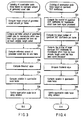
- the quantization scale factor is updated in accordance with steps (1) to (6), which will be described with reference to the flowchart shown in FIG. 3.
- DCT coefficients are quantized based on the updated quantization scale factor Q and the resulting quantized DCT coefficients are sent to the variable-length coding unit 11.
- the quantization scale update procedure the number of quantized DCT coefficients is obtained from the output of the signal processing unit 10 and a new quantization scale factor is determined based on this value. That is, the next quantization scale factor can be set on the basis of the results of the signal processing.
- the first update procedure unlike the prior art, in determining a new quantization scale factor there is no need of waiting for the termination of variable-length coding of quantized DCT coefficients by the Variable-length coding unit 11, which allows the entire coding process to be speeded up.
- the determination of the updated quantization scale factor Q needs the computation of the estimated amount of generated coded data Evop.
- the quantization scale factor Q can be updated on the basis of the count of quantized DCT coefficients, Encoef(x/y), without using the estimated amount of generated coded data Evop.
- This update procedure will be described as the second update procedure with reference to a flowchart shown in FIG. 4, Of symbols used in the following description, the symbols that have already been described are used without describing their definition.
- the number of quantized DCT coefficients is obtained from the output of the signal processing unit 10 and a new quantization scale factor is determined based on this value. Therefore, the next quantization scale factor can be set on the basis of the processing results from the signal processing unit, thus allowing the entire coding process to be speeded up.
- the target amount of generated coded data or the target number of quantized DCT coefficients is determined on a frame-by-frame basis, this is not restrictive.
- the target value may be set on a macroblock or macroblock group basis as in video packets. Further, the target value may be set on a frame group basis as in a group of pictures (GOP).
- GOP group of pictures
- the amount of generated coded data can be controlled by updating the quantization scale factor; however, updating of the quantization scale factor influences the picture quality. That is, the greater the quantization scale factor, the lower the picture resolution becomes.
- changing the quantization scale factor over a wide range within one frame results in a frame picture having some portions of good picture quality and some portions of bad picture quality. It is therefore allowed to limit A or B that is the variation in the quantization scale factor or the quantization scale factor Q after being updated. This limitation should be considered not only from a picture quality viewpoint but from a system syntax viewpoint.
- the quantization scale factor within each frame is changed using the field value called quant_scale and the field value called dquant in VP (Video Packet) header information for a group of macroblocks.
- the quant_scale is the quantization scale factor and can be set to any value.
- the dquant is a difference in quantization scale factor from the immediately preceding macroblock and can take only a value in the range from -2 to +2. This therefore must be considered in updating the quantization scale factor.
- the quantization scale factor needs to be limited. For this reason, in order to limit the quantization scale factor updated in accordance with the previously described first and second update procedures, further processing is performed. That is, Q is limited such that the difference from the quantization scale factor Qp for the immediately preceding macroblock on which signal processing has been performed becomes K ⁇ Q - Qp ⁇ K where K is a positive integer.
- Limiting the quantization scale factor to be updated in this manner allows the quantization scale factor to be limited at the stage of signal processing in the case of MPEG-4 coding in resynchronizing marker-free mode in particular, which allows a bitstream to be produced to conform to the MPEG-4 syntax.
- a new quantization scale factor value can be set from quantized DCT coefficients which are part of the output of the signal processing unit 10.
- quantization scale factor control is allowed while carrying out each of signal processing and variable-length coding are not related each other and carried out independently and in parallel. As a result, the entire coding process can be speeded up.
- Controlling the quantization scale factor while performing the signal processing and the variable-length coding independently and in parallel allows the step of signal processing and the step of variable-length coding to be performed separately.
- a number of macroblocks can be processed collectively in a group and the group of macroblocks are performed on signal processing and variable-length coding without performing signal processing and variable-length coding in units of one macroblck. For this reason, overhead which is caused by changing between signal processing and variable-length coding can be decreased, the overhead relating number of time the program command is downloaded due to a cache hit miss.
- each of the signal processing and the variable-length coding can be performed on a separate processor, allowing more efficient and faster processing.
Landscapes
- Engineering & Computer Science (AREA)
- Multimedia (AREA)
- Signal Processing (AREA)
- Physics & Mathematics (AREA)
- Algebra (AREA)
- General Physics & Mathematics (AREA)
- Mathematical Analysis (AREA)
- Mathematical Optimization (AREA)
- Pure & Applied Mathematics (AREA)
- Compression Or Coding Systems Of Tv Signals (AREA)
- Compression, Expansion, Code Conversion, And Decoders (AREA)
Abstract
Description


Claims (9)
- A video coding device characterized by comprising:setting means (20) for setting a target amount of generated coded data;performing means (21) for performing DCT operations on a unit of video information divided into blocks on a block-by-block basis to produce DCT coefficients;quantizing means (22) for quantizing the DCT coefficients in accordance with a predetermined quantization scale factor to produce quantized DCT coefficients;coding means (11) for variable-length coding the quantized DCT coefficients to produce a bitstream;first counter (14) configured to count the number of the quantized DCT coefficients, Ncoef(i), output from the quantization means;second counter (13) configured to count the amount of generated coded data in the bitstream output from the coding means (11);computation means (15) for computing an average codeword length, L(y), of the quantized DCT coefficients from the number of the quantized DCT coefficients from the first counter (14) and the amount of generated coded data from the second counter (13); andupdate means (16) for computing an estimated value, Evop, of the amount of coded data to be generated for the unit of information, from the average codeword length, L(y), supplied from the computation means (15) and the number of the quantized DCT coefficients supplied from the first counter (14), and updating the quantization scale factor in accordance with the target amount of generated coded data Tvop and the estimated amount of generated coded data.
- The device according to claim 1, characterized in that the set means (20) is adapted to set a target bit rate Tbr which is the number of bits transmitted per second and a target frame rate Tfr which is the number of frames transmitted per second and then set the target amount of generated coded data Tvop as
- The device according to claim 1, characterized in that the estimated value Evop of the amount of coded data to be generated is given by
- The device according to claim 1, characterized in that the quantization scale factor Q is updated in accordance with the average Qm of quantization scale factors for the unit of video information and a variation A by
- A video coding device characterized by comprising:transform means (21) for performing DCT operations on a unit of video information divided into blocks on a block-by-block basis to produce DCT coefficients;quantization means (22) for quantizing the DCT coefficients in accordance with a predetermined quantization scale factor to produce quantized DCT coefficients;set means (20) for setting a target number, Tncoef, of quantized DCT coefficients for the unit of video information;coding means (11) for variable-length coding the quantized DCT coefficients to produce a bitstream;first counter (14) for counting the actual number of quantized DCT coefficients output from the quantization means (22);second counter (13) for counting the amount of generated coded data in the bitstream output from the coding means (11);average codeword length computation means (15) for computing an average codeword length, L(y), of the quantized DCT coefficients from the number of the quantized DCT coefficients from the first counter (14) and the amount of generated coded data from the second counter (13);target quantized DCT coefficient computation means (16) for computing the target number, TxtTxy, of the quantized DCT coefficients that is expected to be counted by the first counter on the basis of the target number, Tncoef, of the target quantized DCT coefficients; andupdate means (16) for updating the quantization scale factor in accordance with the actual number, Encoef(x,y), of the quantized DCT coefficients and the target number, Txy, of the quantized DCT coefficients and sending the updated quantization scale factor to the quantization means (22).
- The device according to claim 5, characterized in that the update means (16) determines a variation B in the quantization scale factor as
- The device according to claim 5, characterized in that the number target Txy of the quantized DCT coefficients is the number of DCT coefficients that have not yet been variable-length coded by the coding means but have already been quantized by the quantization means is given by
Tncoef is the target number of quantized DCT coefficients and given by - A video coding method, comprising steps of:setting a target amount of generated coded data;performing DCT operations on a unit of video information divided into blocks on a block-by-block basis to produce DCT coefficients;quantizing the DCT coefficients in accordance with a predetermined quantization scale factor to produce quantized DCT coefficients;variable-length coding the quantized DCT coefficients to produce a bitstream;counting the number of the quantized DCT coefficients, Ncoef(i), output by the quantization step;counting the amount of generated coded data in the bitstream output by the coding step;computing an average codeword length, L(y), of the quantized DCT coefficients from the number of the quantized DCT coefficients obtained by the first counting step and the amount of generated coded data obtained by the second counting step; andcomputing an estimated value, Evop, for the amount of generated coded data for the unit of information from the average codeword length, L(y), and the number of the quantized DCT coefficients and updating the quantization scale factor in accordance with the target amount of generated coded data Tvop and the estimated amount of generated coded data Evop.
- A video coding method characterized by comprising the steps of:performing DCT operations on a unit of video information divided into blocks on a block-by-block basis to produce DCT coefficients;quantizing the DCT coefficients in accordance with a predetermined quantization scale factor to produce quantized DCT coefficients;setting a target number of quantized DCT coefficients for the unit of video information;variable-length coding the quantized DCT coefficients to produce a bitstream;counting the actual number of quantized DCT coefficients, Encoef(x,y), output by the quantization step;counting the amount of generated coded data in the bitstream output by the coding step;computing an average codeword length, L(y), of the quantized DCT coefficients from the number of the quantized DCT coefficients and the amount of generated coded data;computing the target number, TxtTxy, of the quantized DCT coefficients that is expected to be counted by the first-mentioned counting step on the basis of the target number, Tncoef, of quantized DCT coefficients; andupdating the quantization scale factor in accordance with the actual number, Encoef(x,y), of the quantized DCT coefficients and the target number of the quantized DCT coefficients and sending the updated quantization scale factor to the quantization step.
Applications Claiming Priority (2)
| Application Number | Priority Date | Filing Date | Title |
|---|---|---|---|
| JP2000293631A JP4607305B2 (en) | 2000-09-27 | 2000-09-27 | Video encoding apparatus and video encoding method |
| JP2000293631 | 2000-09-27 |
Publications (2)
| Publication Number | Publication Date |
|---|---|
| EP1193979A2 true EP1193979A2 (en) | 2002-04-03 |
| EP1193979A3 EP1193979A3 (en) | 2004-05-19 |
Family
ID=18776391
Family Applications (1)
| Application Number | Title | Priority Date | Filing Date |
|---|---|---|---|
| EP20010122574 Withdrawn EP1193979A3 (en) | 2000-09-27 | 2001-09-25 | Device and method for coding video information |
Country Status (3)
| Country | Link |
|---|---|
| US (1) | US6826229B2 (en) |
| EP (1) | EP1193979A3 (en) |
| JP (1) | JP4607305B2 (en) |
Cited By (1)
| Publication number | Priority date | Publication date | Assignee | Title |
|---|---|---|---|---|
| GB2564151A (en) * | 2017-07-05 | 2019-01-09 | Sony Corp | Image data encoding and decoding |
Families Citing this family (26)
| Publication number | Priority date | Publication date | Assignee | Title |
|---|---|---|---|---|
| US7079582B2 (en) * | 2000-07-07 | 2006-07-18 | Matsushita Electric Industrial Co., Ltd. | Image coding apparatus and image coding method |
| US20030228068A1 (en) * | 2002-06-11 | 2003-12-11 | General Electric Company | Progressive transmission and reception of image data using modified hadamard transform |
| US7212571B2 (en) * | 2003-01-31 | 2007-05-01 | Seiko Epson Corporation | Method and apparatus for DCT domain filtering for block based encoding |
| US8824553B2 (en) | 2003-05-12 | 2014-09-02 | Google Inc. | Video compression method |
| TWI235003B (en) * | 2003-06-17 | 2005-06-21 | Inst Information Industry | Digital video encryption and decryption system and method thereof |
| JP2005033336A (en) * | 2003-07-08 | 2005-02-03 | Ntt Docomo Inc | Moving picture coding apparatus, moving picture coding method, and moving picture coding program |
| KR100566191B1 (en) * | 2003-07-30 | 2006-03-29 | 삼성전자주식회사 | MPEG-4 Encoder Using H.263 Multimedia Chip |
| US7394856B2 (en) * | 2003-09-19 | 2008-07-01 | Seiko Epson Corporation | Adaptive video prefilter |
| JP4485996B2 (en) | 2005-06-13 | 2010-06-23 | 株式会社日立製作所 | Image encoding apparatus and image encoding program |
| US8325796B2 (en) | 2008-09-11 | 2012-12-04 | Google Inc. | System and method for video coding using adaptive segmentation |
| US8311111B2 (en) * | 2008-09-11 | 2012-11-13 | Google Inc. | System and method for decoding using parallel processing |
| US8326075B2 (en) | 2008-09-11 | 2012-12-04 | Google Inc. | System and method for video encoding using adaptive loop filter |
| JP2010288166A (en) * | 2009-06-15 | 2010-12-24 | Panasonic Corp | Video encoding apparatus, broadcast wave recording apparatus, and program |
| US8780996B2 (en) | 2011-04-07 | 2014-07-15 | Google, Inc. | System and method for encoding and decoding video data |
| US8781004B1 (en) | 2011-04-07 | 2014-07-15 | Google Inc. | System and method for encoding video using variable loop filter |
| US9154799B2 (en) | 2011-04-07 | 2015-10-06 | Google Inc. | Encoding and decoding motion via image segmentation |
| US8780971B1 (en) | 2011-04-07 | 2014-07-15 | Google, Inc. | System and method of encoding using selectable loop filters |
| JPWO2012160626A1 (en) * | 2011-05-20 | 2014-07-31 | 富士通株式会社 | Image compression apparatus, image restoration apparatus, and program |
| US8885706B2 (en) | 2011-09-16 | 2014-11-11 | Google Inc. | Apparatus and methodology for a video codec system with noise reduction capability |
| US9262670B2 (en) | 2012-02-10 | 2016-02-16 | Google Inc. | Adaptive region of interest |
| US9131073B1 (en) | 2012-03-02 | 2015-09-08 | Google Inc. | Motion estimation aided noise reduction |
| US9344729B1 (en) | 2012-07-11 | 2016-05-17 | Google Inc. | Selective prediction signal filtering |
| CA2909216C (en) * | 2013-04-12 | 2019-08-27 | Square Enix Holdings Co., Ltd. | Information processing apparatus, method of controlling the same, program and storage medium |
| US11425395B2 (en) | 2013-08-20 | 2022-08-23 | Google Llc | Encoding and decoding using tiling |
| US10102613B2 (en) | 2014-09-25 | 2018-10-16 | Google Llc | Frequency-domain denoising |
| JP6377222B2 (en) * | 2017-07-31 | 2018-08-22 | 株式会社スクウェア・エニックス・ホールディングス | Information processing apparatus, control method, program, and recording medium |
Family Cites Families (8)
| Publication number | Priority date | Publication date | Assignee | Title |
|---|---|---|---|---|
| JPH0418857A (en) * | 1990-04-23 | 1992-01-23 | Ricoh Co Ltd | Picture data compression system |
| JP2839339B2 (en) * | 1990-08-06 | 1998-12-16 | 松下電器産業株式会社 | Orthogonal transform coding apparatus and orthogonal transform coding method |
| JPH06261306A (en) * | 1993-03-09 | 1994-09-16 | Mitsubishi Electric Corp | Video signal encoding/decoding device |
| US5515388A (en) * | 1993-03-19 | 1996-05-07 | Sony Corporation | Apparatus and method for preventing repetitive random errors in transform coefficients representing a motion picture signal |
| US6415057B1 (en) * | 1995-04-07 | 2002-07-02 | Sony Corporation | Method and apparatus for selective control of degree of picture compression |
| JPH09261640A (en) | 1996-03-22 | 1997-10-03 | Oki Electric Ind Co Ltd | Image coding device |
| US6111991A (en) * | 1998-01-16 | 2000-08-29 | Sharp Laboratories Of America | Method and apparatus for optimizing quantizer values in an image encoder |
| CN1174624C (en) * | 1998-09-29 | 2004-11-03 | 松下电器产业株式会社 | variable bit rate coding device |
-
2000
- 2000-09-27 JP JP2000293631A patent/JP4607305B2/en not_active Expired - Fee Related
-
2001
- 2001-09-25 EP EP20010122574 patent/EP1193979A3/en not_active Withdrawn
- 2001-09-25 US US09/961,305 patent/US6826229B2/en not_active Expired - Fee Related
Cited By (2)
| Publication number | Priority date | Publication date | Assignee | Title |
|---|---|---|---|---|
| GB2564151A (en) * | 2017-07-05 | 2019-01-09 | Sony Corp | Image data encoding and decoding |
| US11290709B2 (en) | 2017-07-05 | 2022-03-29 | Sony Corporation | Image data encoding and decoding |
Also Published As
| Publication number | Publication date |
|---|---|
| JP2002112266A (en) | 2002-04-12 |
| EP1193979A3 (en) | 2004-05-19 |
| US20020054639A1 (en) | 2002-05-09 |
| JP4607305B2 (en) | 2011-01-05 |
| US6826229B2 (en) | 2004-11-30 |
Similar Documents
| Publication | Publication Date | Title |
|---|---|---|
| US6826229B2 (en) | Device and method for coding video information | |
| KR100880055B1 (en) | Method and apparatus for allocating bits to code pictures and sequences of pictures in a received bitstream at a digital video transcoder | |
| US6804301B2 (en) | First pass encoding of I and P-frame complexity for compressed digital video | |
| US6526097B1 (en) | Frame-level rate control for plug-in video codecs | |
| US20190200042A1 (en) | Parameterization for fading compensation | |
| WO1998037701A1 (en) | Apparatus and method for optimizing the rate control in a coding system | |
| US20030152151A1 (en) | Rate control method for real-time video communication by using a dynamic rate table | |
| KR20040076034A (en) | Method and apparatus for encoding video signal with variable bit rate | |
| KR100227298B1 (en) | Code amount control method of encoded image | |
| JP3426668B2 (en) | Video coding method | |
| EP1185108B1 (en) | Video encoding apparatus and video encoding method | |
| JP4570098B2 (en) | Apparatus for encoding a video data stream | |
| US6480544B1 (en) | Encoding apparatus and encoding method | |
| JP2000358247A (en) | Rate control device, rate control method, and encoding device | |
| US7254176B2 (en) | Apparatus for variable bit rate control in video compression and target bit allocator thereof | |
| US20040091045A1 (en) | Method and apparatus for rate control in moving picture video compression | |
| JP4718736B2 (en) | Video encoding device | |
| US9253491B2 (en) | Method and apparatus for transcoding a video signal | |
| KR20010041441A (en) | Method and device for encoding a video signal | |
| JPH10290461A (en) | Rate control device and rate control method | |
| JPH10308944A (en) | Coded transmission method | |
| KR0141819B1 (en) | Apparatus for compression of data | |
| KR100355438B1 (en) | Method for controling bit stream output buffer in MPEG2 video encoder | |
| JPH1023433A (en) | Target code quantity calculating device and code quantity controller | |
| JPH0638196A (en) | Animation coder |
Legal Events
| Date | Code | Title | Description |
|---|---|---|---|
| PUAI | Public reference made under article 153(3) epc to a published international application that has entered the european phase |
Free format text: ORIGINAL CODE: 0009012 |
|
| 17P | Request for examination filed |
Effective date: 20010925 |
|
| AK | Designated contracting states |
Kind code of ref document: A2 Designated state(s): AT BE CH CY DE DK ES FI FR GB GR IE IT LI LU MC NL PT SE TR |
|
| AX | Request for extension of the european patent |
Free format text: AL;LT;LV;MK;RO;SI |
|
| PUAL | Search report despatched |
Free format text: ORIGINAL CODE: 0009013 |
|
| AK | Designated contracting states |
Kind code of ref document: A3 Designated state(s): AT BE CH CY DE DK ES FI FR GB GR IE IT LI LU MC NL PT SE TR |
|
| AX | Request for extension of the european patent |
Extension state: AL LT LV MK RO SI |
|
| AKX | Designation fees paid |
Designated state(s): DE FR GB |
|
| 17Q | First examination report despatched |
Effective date: 20090225 |
|
| STAA | Information on the status of an ep patent application or granted ep patent |
Free format text: STATUS: THE APPLICATION IS DEEMED TO BE WITHDRAWN |
|
| 18D | Application deemed to be withdrawn |
Effective date: 20090708 |