EP1193885A2 - Apparatus and method for switching service class in response to generated heat in a GPRS terminal - Google Patents
Apparatus and method for switching service class in response to generated heat in a GPRS terminal Download PDFInfo
- Publication number
- EP1193885A2 EP1193885A2 EP01119273A EP01119273A EP1193885A2 EP 1193885 A2 EP1193885 A2 EP 1193885A2 EP 01119273 A EP01119273 A EP 01119273A EP 01119273 A EP01119273 A EP 01119273A EP 1193885 A2 EP1193885 A2 EP 1193885A2
- Authority
- EP
- European Patent Office
- Prior art keywords
- gprs
- class
- temperature
- service class
- service
- Prior art date
- Legal status (The legal status is an assumption and is not a legal conclusion. Google has not performed a legal analysis and makes no representation as to the accuracy of the status listed.)
- Granted
Links
Images
Classifications
-
- H—ELECTRICITY
- H04—ELECTRIC COMMUNICATION TECHNIQUE
- H04B—TRANSMISSION
- H04B7/00—Radio transmission systems, i.e. using radiation field
- H04B7/24—Radio transmission systems, i.e. using radiation field for communication between two or more posts
- H04B7/26—Radio transmission systems, i.e. using radiation field for communication between two or more posts at least one of which is mobile
- H04B7/2612—Arrangements for wireless medium access control, e.g. by allocating physical layer transmission capacity
-
- H—ELECTRICITY
- H04—ELECTRIC COMMUNICATION TECHNIQUE
- H04B—TRANSMISSION
- H04B1/00—Details of transmission systems, not covered by a single one of groups H04B3/00 - H04B13/00; Details of transmission systems not characterised by the medium used for transmission
- H04B1/02—Transmitters
- H04B1/03—Constructional details, e.g. casings, housings
- H04B1/036—Cooling arrangements
Definitions
- the present invention relates generally to a GPRS (General Packet Radio Service) system, and in particular, to an apparatus and method for switching a service class according to the heat generated by a specific element in a GPRS terminal.
- GPRS General Packet Radio Service
- GPRS refers to a radio packet data service provided in a European-style GSM (Global System for Mobile communication) system, and corresponds to the HDR (High Data Rate) technique developed by Qualcomm, USA.
- the GPRS system increases a data rate per GSM channel from 9600 bps (bits per second) to 14400 bps by performing packet switching in a GSM network, and can support high-speed packet switching of up to 14.4-115 Kbps in the existing GSM network environment through a data compression technique.
- the GPRS system facilitating the expansion of a data network to the mobile communication network, provides a GSM packet data service, manages packet mobility and billing processes using GSM network equipment such as HLR (Home Location Register) and VLR (Visitor Location Register), and also provides paging and SMS (Short Message Service) services to the voice service.
- GSM network equipment such as HLR (Home Location Register) and VLR (Visitor Location Register)
- paging and SMS Short Message Service
- a GPRS service class is classified into 12 service classes according to the duration of the time slots as occupied per frame. That is, the GPRS terminal can occupy a maximum of 5 time slots per frame, including time slots for transmission (TX) and time slots for reception (RX). An increase in the number of the occupied time slots causes an increase in the entire duration of the occupied time slots, thus enabling the GPRS terminal to transmit and receive an increased amount of data.
- the 12 service classes are again classified into first and second classes, such as a high class and a low class according to relative duration of the time slots.
- the GSM GPRS terminal supporting high-speed data communication is provided with the high-class GPRS service where transmission power is set high and the duration of the time slots is set long
- specific elements such as a power supply IC (Integrated Circuit), a power amplifier module and a processor are subject to heat generation due to the increased duration of the time slots, thereby causing deterioration of the QoS (Quality of Service) and damage to the elements in the RF transceiver.
- QoS Quality of Service
- the object of the present invention to provide an apparatus and method for switching a GPRS service class in response to the heat generated by specific elements in a GPRS terminal during a GPRS mode of operation.
- an apparatus for switching a GPRS service class in a GPRS terminal measures a temperature of at least one specific element in the GPRS terminal during a GPRS mode of operation.
- An analog-to-digital (A/D) converter converts an analog value of the temperature measured by the temperature sensor to a digital value.
- a limit data register stores a critical temperature of the specific element for the GPRS service class.
- a controller compares the measured temperature from the temperature sensor with the critical temperature stored in the limit data register, and switches the GPRS service class to a low class, when the measured temperature is greater than or equal to the critical temperature. The controller maintains the present GPRS service class when the measured temperature is less than the critical temperature. Further, the controller switches the GPRS service class from the low class back to the high class, when the measured temperature becomes less than the critical temperature during the low-class GPRS service.
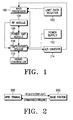
- FIG. 1 illustrates a block diagram of an RF transceiver in a GPRS terminal according to an embodiment of the present invention.
- a main processor 100 controls the overall operation of the GPRS terminal. Specifically, a temperature sensor 108 provides the main processor 100 with information about the heat generated in a GPRS mode by at least one of a main processor 100, an RF module 104, a power amplifier module 106, signal controller 110 and a power supply 112. The main processor 100 then compares the temperature information of the elements provided from the temperature sensor 108 with a critical temperature for each element previously stored in a limit data register 102, and switches the GPRS service class from a high class to a low class, if the temperature of an element is greater than or equal to its respective critical temperature.
- the main processor 100 switches the GPRS service class of the terminal back to the high class.
- the temperature sensor 108 measures the temperature of the main processor 100, the RF module 104, the power amplifier module 106, signal controller 110, and the power supply IC 112 during the GPRS mode of operation. This list is not meant to be inclusive as any of the elements of the terminal can be monitored by the temperature sensor 108, and their respective critical temperatures stored in limit data register 102.
- An A/D (Analog-to-Digital) converter 114 converts an analog value of the temperature measured by the temperature sensor 108 to a digital temperature value, and provides the converted digital temperature value to the main processor 100.
- the limit data register 102 can store the various critical temperatures, based on which GPRS service class the terminal is to be switched to.
- the "critical temperature” refers to a boundary temperature or threshold so defined as to prevent a QoS deterioration and element damage of the terminal due to the heat generated because of the increase in duration of the time slots during the GPRS mode of operation.
- FIG. 2 illustrates the connection between a GPRS terminal according to the present invention and a base station.
- a GPRS terminal 200 sends to a base station 202 through an uplink a request for switching the service class to the low class when it is necessary to switch the GPRS service class to the low class because the temperature of one of the specific elements is greater than or equal to the critical temperature during the GPRS mode.
- the base station 202 sends a service class-down switch command to the GPRS terminal 200 through a downlink.
- the GPRS terminal 200 switches the GPRS service class to the low class.
- the GPRS terminal 200 switches the GPRS service class back to the high class in a similar process, to thereby re-enable the high-speed data communication.
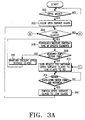
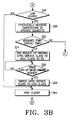
- FIGs. 3A and 3B illustrate a procedure for switching a GPRS service class according to the heat generated by specific elements in the GPRS terminal according to an embodiment of the present invention. Now, a detailed description of the present invention will be made with reference to FIGs. 1 to 3B.
- a user of the GPRS terminal will set an operation mode of the terminal to the GPRS mode when he or she desires to perform a high-speed data communication.
- the main processor 100 determines in step 300 whether a GPRS mode setting request is received from the user. Upon receipt of the GPRS mode setting request, the main processor 100 sets the terminal to the GPRS mode. After setting the GPRS mode, the main processor 100 checks the GPRS service class presently set in the terminal, in step 302.
- the main processor 100 determines in step 304 whether the present GPRS service class is the high class. If the present GPRS service class is the high class, the main processor 100 performs the GPRS high-speed data communication and at the same time, receives temperature information of the specific elements in the terminal from the temperature sensor 108, in step 306. The main processor 100 determines in step 308 whether the measured temperature is greater than or equal to the critical temperature previously stored in the limit data register 102. If the measured temperature is less than the critical temperature, the main processor 100 maintains the present high class GPRS service in step 310, and the process returns to step 306.
- the main processor 100 sends a request for switching the service class to the low class to the base station 202 through the uplink in step 312.
- the main processor 100 determines in step 314 whether a service class-down switch command is received from the base station 202 through the downlink in response to the service class switch request.
- the main processor 100 switches the GPRS service class to the low class in step 316.
- the main processor 100 determines in step 318 of FIG. 3B whether the GPRS service class is set to the low class. If the GPRS service class is set to the low class, the main processor 100 receives the temperature information of the specific elements in the GPRS terminal from the temperature sensor 108, in step 320. The main processor 100 determines in step 322 whether the measured temperature is less than the critical temperature. If the measured temperature is less than the critical temperature so that it is necessary to switch the service class to the high class, the main processor 100 sends a request for switching the service class to the high class to the base station 202 through the uplink in step 324.
- the main processor 100 determines in step 326 whether a service class-up switch command is received from the base station 202 through the downlink in response to the service class switch request. Upon receipt of the service class-up switch command from the base station 202, the main processor 100 switches the GPRS service class to the high class in step 328, enabling the high-speed data communication. The process then returns to step 304.
- the novel service class switching apparatus and method periodically measures the temperature of specific elements in the GPRS terminal during the GPRS mode of operation, and switches the GPRS service class to the low class having short-duration time slots when the measured temperature is greater than or equal to a predetermined critical temperature. Thereafter, if the measured temperature becomes less than the critical temperature, the GPRS terminal switches the GPRS service class back to the high class, to thereby re-enable the high-speed data communication.
- the novel service class switching apparatus and method can prevent QoS deterioration and damage to the elements due to excessive heat generated during high class service operations.
Landscapes
- Engineering & Computer Science (AREA)
- Computer Networks & Wireless Communication (AREA)
- Signal Processing (AREA)
- Mobile Radio Communication Systems (AREA)
- Transmitters (AREA)
Abstract
Description
Claims (7)
- An apparatus for switching a General Packet Radio Service (GPRS) service class in a GPRS terminal, the apparatus comprising:a temperature sensor for measuring a temperature of at least one specific element in the GPRS terminal during a GPRS mode of operation;a limit data register for storing a critical temperature of the at least one specific element for the GPRS service class; anda controller for comparing the measured temperature from the temperature sensor with the critical temperature stored in the limit data register, and switching the GPRS service class from a first class to a second class when the measured temperature is greater than or equal to the critical temperature.
- The apparatus as claimed in claim 1, wherein the controller maintains the present GPRS service class when the measured temperature is less than the critical temperature.
- The apparatus as claimed in claim 1, wherein the controller switches the GPRS service class from the second class back to the first class when the measured temperature becomes less than the critical temperature during the second class GPRS service.
- The apparatus as claimed in one of the claims 1 to 3, further comprising an analog-to-digital (A/D) converter for converting an analog value of the temperature measured by the temperature sensor to a digital value.
- A method for switching a General Packet Radio Service (GPRS) service class according to generated heat in a GPRS terminal, the method comprising the steps of:measuring a temperature of at least one specific element in the GPRS terminal during a GPRS mode of operation;determining to switch the GPRS service class from a first class to a second class when the measured temperature is greater than or equal to a critical temperature;sending a request for switching the GPRS service class to the second class to a base station through an uplink; andupon receipt of a service class-down switch command from the base station through a downlink in response to the GPRS service class switch request, switching the GPRS service class to the second class.
- The method as claimed in claim 5, further comprising the step of maintaining the present GPRS service class when the measured temperature is less than the critical temperature.
- The method as claimed in claim 5, further comprising the steps of:determining to switch the GPRS service class back to the first class when the measured temperature becomes less than the critical temperature during the second class GPRS service;sending a request for switching the GPRS service class to the first class to the base station through the uplink; andupon receipt of a service class-up switch command from the base station through a downlink in response to the GPRS service class switch request, switching the GPRS service class to the first class.
Applications Claiming Priority (2)
| Application Number | Priority Date | Filing Date | Title |
|---|---|---|---|
| KR1020000057329A KR20020025476A (en) | 2000-09-29 | 2000-09-29 | Apparatus and method for modifying service class with respect to generation of heat in a gprs terminal |
| KR2000057329 | 2000-09-29 |
Publications (3)
| Publication Number | Publication Date |
|---|---|
| EP1193885A2 true EP1193885A2 (en) | 2002-04-03 |
| EP1193885A3 EP1193885A3 (en) | 2003-06-25 |
| EP1193885B1 EP1193885B1 (en) | 2005-06-01 |
Family
ID=19691072
Family Applications (1)
| Application Number | Title | Priority Date | Filing Date |
|---|---|---|---|
| EP01119273A Expired - Lifetime EP1193885B1 (en) | 2000-09-29 | 2001-08-09 | Apparatus and method for switching service class in response to generated heat in a GPRS terminal |
Country Status (5)
| Country | Link |
|---|---|
| US (1) | US6799058B2 (en) |
| EP (1) | EP1193885B1 (en) |
| KR (1) | KR20020025476A (en) |
| CN (2) | CN101166031A (en) |
| DE (1) | DE60111152T2 (en) |
Cited By (6)
| Publication number | Priority date | Publication date | Assignee | Title |
|---|---|---|---|---|
| FR2850829A1 (en) * | 2002-10-31 | 2004-08-06 | Motorola Inc | METHOD AND MOBILE STATION FOR COMMUNICATION CONTROL VIA A RADIO LINK |
| WO2008004112A1 (en) * | 2006-06-30 | 2008-01-10 | Nokia Corporation | Controlling a mobile device |
| WO2010048471A1 (en) * | 2008-10-24 | 2010-04-29 | Interdigital Patent Holdings, Inc. | Method and apparatus for temperature control in a wireless terminal |
| US7933571B2 (en) | 2007-06-20 | 2011-04-26 | Motorola Mobility, Inc. | Method and apparatus for selecting a communication mode based on energy sources in a hybrid power supply |
| WO2012040510A1 (en) * | 2010-09-24 | 2012-03-29 | Qualcomm Incorporated | Methods and apparatus for touch temperature management based on power dissipation history |
| WO2012094616A1 (en) * | 2011-01-07 | 2012-07-12 | Qualcomm Incorporated | Downlink flow control by adding noise to a receiver to reduce physical layer throughput |
Families Citing this family (11)
| Publication number | Priority date | Publication date | Assignee | Title |
|---|---|---|---|---|
| US7206567B2 (en) * | 2003-11-10 | 2007-04-17 | Research In Motion Limited | Methods and apparatus for limiting communication capabilities in mobile communication devices |
| US7689256B2 (en) | 2003-11-10 | 2010-03-30 | Research In Motion Limited | Methods and apparatus for limiting communication capabilities in mobile communication devices |
| JP4624227B2 (en) * | 2005-09-29 | 2011-02-02 | 京セラ株式会社 | Communication terminal, mobile communication system, and communication control method |
| JP4778318B2 (en) * | 2006-01-20 | 2011-09-21 | 富士通東芝モバイルコミュニケーションズ株式会社 | Mobile device |
| CN100518191C (en) * | 2006-03-21 | 2009-07-22 | 华为技术有限公司 | Method and system for securing service quality in communication network |
| US20080025341A1 (en) * | 2006-07-31 | 2008-01-31 | Motorola, Inc. | Method and system for granting of channel slots |
| US7991437B2 (en) * | 2006-10-30 | 2011-08-02 | Infineon Technologies Ag | Method and apparatus for controlling output power in power amplifiers |
| US8086229B2 (en) * | 2008-02-25 | 2011-12-27 | Telefonaktiebolaget L M Ericsson (Publ) | Alleviating mobile device overload conditions in a mobile communication system |
| CN102123409A (en) * | 2011-02-24 | 2011-07-13 | 华为终端有限公司 | Wireless network connection method and wireless broadband equipment |
| CN108628359B (en) * | 2017-03-24 | 2020-09-08 | 深圳市中兴微电子技术有限公司 | A method, onboard terminal and system for temperature control |
| CN107317702A (en) * | 2017-06-13 | 2017-11-03 | 广东神马搜索科技有限公司 | The service class control method and system of online service system |
Family Cites Families (14)
| Publication number | Priority date | Publication date | Assignee | Title |
|---|---|---|---|---|
| KR950022547A (en) | 1993-12-30 | 1995-07-28 | 김주용 | Indoor temperature display device and control method of wireless telephone |
| US5519886A (en) * | 1994-09-26 | 1996-05-21 | Motorola, Inc. | Method and apparatus for controlling device temperature during transmissions |
| JP3050365B2 (en) | 1995-03-03 | 2000-06-12 | 日本電気株式会社 | Temperature control method for communication equipment |
| JP3591792B2 (en) * | 1996-01-31 | 2004-11-24 | アイコム株式会社 | Wireless communication equipment |
| JP2872112B2 (en) * | 1996-06-07 | 1999-03-17 | 埼玉日本電気株式会社 | Mobile communication device control equipment for packet communication |
| US5930241A (en) * | 1997-01-17 | 1999-07-27 | Telefonaktiebolaget L M Ericsson | Centralized radio control in a mobile communication system wherein an operator can select either the fixed network or the mobile to control the radio traffic therebetween |
| JP2990150B2 (en) * | 1998-04-06 | 1999-12-13 | 静岡日本電気株式会社 | Method and apparatus for preventing overheating of mobile phone |
| GB2339113B (en) | 1998-06-30 | 2003-05-21 | Nokia Mobile Phones Ltd | Data transmission in tdma system |
| JP3223887B2 (en) * | 1998-09-07 | 2001-10-29 | 株式会社デンソー | Wireless communication device |
| US6760311B1 (en) * | 1998-11-20 | 2004-07-06 | Ericsson Inc. | Thermal transmission control of wireless data modem |
| US6606501B1 (en) * | 1999-11-10 | 2003-08-12 | Ericsson, Inc. | TOA Positioning of GPRS mobiles within the BSS centric architecture of a GSM network |
| US6253063B1 (en) * | 2000-01-25 | 2001-06-26 | Motorola, Inc. | Method and apparatus for selecting a communication data rate between mobile and base stations |
| US6952591B2 (en) * | 2001-11-20 | 2005-10-04 | Lucent Technologies Inc. | Uplink power control algorithm |
| US7292575B2 (en) * | 2002-07-24 | 2007-11-06 | Telefonaktiebolaget Lm Ericsson (Publ) | Method and system for multi-protocol label switching (MPLS) based data flow aggregation in a third generation (3G) cellular telecommunication system |
-
2000
- 2000-09-29 KR KR1020000057329A patent/KR20020025476A/en not_active Ceased
-
2001
- 2001-06-26 US US09/891,990 patent/US6799058B2/en not_active Expired - Fee Related
- 2001-08-09 EP EP01119273A patent/EP1193885B1/en not_active Expired - Lifetime
- 2001-08-09 DE DE60111152T patent/DE60111152T2/en not_active Expired - Lifetime
- 2001-08-15 CN CNA2007101616167A patent/CN101166031A/en active Pending
- 2001-08-15 CN CN01133977A patent/CN1348287A/en active Pending
Cited By (10)
| Publication number | Priority date | Publication date | Assignee | Title |
|---|---|---|---|---|
| FR2850829A1 (en) * | 2002-10-31 | 2004-08-06 | Motorola Inc | METHOD AND MOBILE STATION FOR COMMUNICATION CONTROL VIA A RADIO LINK |
| JP2006505213A (en) * | 2002-10-31 | 2006-02-09 | モトローラ・インコーポレイテッド | Method and mobile station for controlling communication over a radio link |
| EP1556971A4 (en) * | 2002-10-31 | 2010-03-17 | Motorola Inc | Method and mobile station for controlling communication via a radio link |
| US8169981B2 (en) | 2002-10-31 | 2012-05-01 | Motorola Mobility, Inc. | Method and mobile station for controlling communication via a radio link |
| WO2008004112A1 (en) * | 2006-06-30 | 2008-01-10 | Nokia Corporation | Controlling a mobile device |
| US7933571B2 (en) | 2007-06-20 | 2011-04-26 | Motorola Mobility, Inc. | Method and apparatus for selecting a communication mode based on energy sources in a hybrid power supply |
| WO2010048471A1 (en) * | 2008-10-24 | 2010-04-29 | Interdigital Patent Holdings, Inc. | Method and apparatus for temperature control in a wireless terminal |
| WO2012040510A1 (en) * | 2010-09-24 | 2012-03-29 | Qualcomm Incorporated | Methods and apparatus for touch temperature management based on power dissipation history |
| US9667280B2 (en) | 2010-09-24 | 2017-05-30 | Qualcomm Incorporated | Methods and apparatus for touch temperature management based on power dissipation history |
| WO2012094616A1 (en) * | 2011-01-07 | 2012-07-12 | Qualcomm Incorporated | Downlink flow control by adding noise to a receiver to reduce physical layer throughput |
Also Published As
| Publication number | Publication date |
|---|---|
| CN1348287A (en) | 2002-05-08 |
| EP1193885A3 (en) | 2003-06-25 |
| US20020039897A1 (en) | 2002-04-04 |
| US6799058B2 (en) | 2004-09-28 |
| DE60111152D1 (en) | 2005-07-07 |
| KR20020025476A (en) | 2002-04-04 |
| EP1193885B1 (en) | 2005-06-01 |
| CN101166031A (en) | 2008-04-23 |
| DE60111152T2 (en) | 2005-11-03 |
Similar Documents
| Publication | Publication Date | Title |
|---|---|---|
| EP1193885B1 (en) | Apparatus and method for switching service class in response to generated heat in a GPRS terminal | |
| AU2001266263B2 (en) | Transmission procedures | |
| KR101124132B1 (en) | Direct transition to cell dch | |
| EP1479252B1 (en) | Adaptive power control for multicast transmission | |
| TWI385992B (en) | Communication apparatus and method for handling collided paging occasions | |
| US6330446B1 (en) | Velocity-based method of controlling registration in mobile communication systems | |
| KR101061469B1 (en) | How to set up a connection on a mobile telecommunication network | |
| US20050255890A1 (en) | Radio base station device setting system and method for re-setting communication configurations for radio base station device | |
| WO2002045456A1 (en) | Release of user equipment using a page procedure in a cellular communication system | |
| CA2559794A1 (en) | Method of and system for selecting a plmn for network sharing | |
| US20010041575A1 (en) | Positioning of gprs mobiles using toa methodology | |
| KR100555023B1 (en) | Optimized Sleep Mode Behavior | |
| AU2001266263A1 (en) | Transmission procedures | |
| WO2001020933A1 (en) | Temperature controlled radio transmitter in a tdma system | |
| KR20050039442A (en) | Distributing wcdma terminals according to frequency in idle mode and providing hierarchical paging | |
| KR100726656B1 (en) | Mobile communication terminal and RRC connection disconnection method when selecting cell | |
| KR100581222B1 (en) | Reference Power Determination Method Used for Power Balance in Mobile Communication Systems | |
| KR101052687B1 (en) | Mode switching method of multi-mode multi-band mobile communication terminal | |
| KR20070080785A (en) | Apparatus and method for setting channel transmission rate in mobile communication system | |
| HK1102166B (en) | Method of and system for selecting a plmn for network sharing |
Legal Events
| Date | Code | Title | Description |
|---|---|---|---|
| PUAI | Public reference made under article 153(3) epc to a published international application that has entered the european phase |
Free format text: ORIGINAL CODE: 0009012 |
|
| 17P | Request for examination filed |
Effective date: 20010809 |
|
| AK | Designated contracting states |
Kind code of ref document: A2 Designated state(s): AT BE CH CY DE DK ES FI FR GB GR IE IT LI LU MC NL PT SE TR |
|
| AX | Request for extension of the european patent |
Free format text: AL;LT;LV;MK;RO;SI |
|
| PUAL | Search report despatched |
Free format text: ORIGINAL CODE: 0009013 |
|
| AK | Designated contracting states |
Designated state(s): AT BE CH CY DE DK ES FI FR GB GR IE IT LI LU MC NL PT SE TR |
|
| AX | Request for extension of the european patent |
Extension state: AL LT LV MK RO SI |
|
| RIC1 | Information provided on ipc code assigned before grant |
Ipc: 7H 04B 1/04 A Ipc: 7H 04B 1/036 B |
|
| 17Q | First examination report despatched |
Effective date: 20030923 |
|
| AKX | Designation fees paid |
Designated state(s): DE FR GB IT |
|
| GRAP | Despatch of communication of intention to grant a patent |
Free format text: ORIGINAL CODE: EPIDOSNIGR1 |
|
| GRAS | Grant fee paid |
Free format text: ORIGINAL CODE: EPIDOSNIGR3 |
|
| GRAA | (expected) grant |
Free format text: ORIGINAL CODE: 0009210 |
|
| AK | Designated contracting states |
Kind code of ref document: B1 Designated state(s): DE FR GB IT |
|
| REG | Reference to a national code |
Ref country code: GB Ref legal event code: FG4D |
|
| REF | Corresponds to: |
Ref document number: 60111152 Country of ref document: DE Date of ref document: 20050707 Kind code of ref document: P |
|
| ET | Fr: translation filed | ||
| PLBE | No opposition filed within time limit |
Free format text: ORIGINAL CODE: 0009261 |
|
| STAA | Information on the status of an ep patent application or granted ep patent |
Free format text: STATUS: NO OPPOSITION FILED WITHIN TIME LIMIT |
|
| 26N | No opposition filed |
Effective date: 20060302 |
|
| PGFP | Annual fee paid to national office [announced via postgrant information from national office to epo] |
Ref country code: DE Payment date: 20140723 Year of fee payment: 14 |
|
| PGFP | Annual fee paid to national office [announced via postgrant information from national office to epo] |
Ref country code: GB Payment date: 20140723 Year of fee payment: 14 Ref country code: FR Payment date: 20140724 Year of fee payment: 14 |
|
| PGFP | Annual fee paid to national office [announced via postgrant information from national office to epo] |
Ref country code: IT Payment date: 20140722 Year of fee payment: 14 |
|
| REG | Reference to a national code |
Ref country code: DE Ref legal event code: R119 Ref document number: 60111152 Country of ref document: DE |
|
| GBPC | Gb: european patent ceased through non-payment of renewal fee |
Effective date: 20150809 |
|
| PG25 | Lapsed in a contracting state [announced via postgrant information from national office to epo] |
Ref country code: IT Free format text: LAPSE BECAUSE OF NON-PAYMENT OF DUE FEES Effective date: 20150809 |
|
| REG | Reference to a national code |
Ref country code: FR Ref legal event code: ST Effective date: 20160429 |
|
| PG25 | Lapsed in a contracting state [announced via postgrant information from national office to epo] |
Ref country code: GB Free format text: LAPSE BECAUSE OF NON-PAYMENT OF DUE FEES Effective date: 20150809 Ref country code: DE Free format text: LAPSE BECAUSE OF NON-PAYMENT OF DUE FEES Effective date: 20160301 |
|
| PG25 | Lapsed in a contracting state [announced via postgrant information from national office to epo] |
Ref country code: FR Free format text: LAPSE BECAUSE OF NON-PAYMENT OF DUE FEES Effective date: 20150831 |