1. Field of the Invention
This invention relates to compositions and methods for reducing
inflammation and redness of mammalian skin, More particularly, it relates to
compositions containing at least one compound selected from an alkanolamine
and/or tyrosine and their application to mammalian skin. The compositions can be
applied to skin to effect a reduction in inflammation or erythema caused by
inherent skin conditions such as acne or rosacea or by irritations experienced by
the skin.
2. Background of the Invention
Human beings have long sought products that can ameliorate irritation and
redness in the skin. Such redness and irritation may be caused by inherent disease
conditions such as acne, rosacea, atopic dermatitis and other disease states, but by
external irritation. Substances applied to the skin and those to which the skin is
exposed in daily life can cause the skin to respond by becoming red and irritated. The
skin's blotchy appearance when such conditions exist may be the source of discomfort
and, possibly, acute embarrassment, particularly among those stricken with disease
states.
Heretofore, redness and irritation of the skin have often been treated with
topical steroids. However, prolonged use of topical steroids can cause the skin to
atrophy and may not be tolerated well over longer time periods.
Thus, it is an object of this invention to provide topical compositions that can
be used to ameliorate redness and/or inflammation of mammalian skin.
It is another object of this invention is to provide topical compositions to
ameliorate redness and inflammation that are well-tolerated by the skin.
Yet another object of this invention is to provide a method of ameliorating
redness or inflammation of the skin using a topically-applied composition.
Still another object of this invention is to provide a method of ameliorating
redness or inflammation quickly in order to relieve symptoms.
Yet another object of this invention is to provide a composition capable of
relieving redness and inflammation which is safe for continued use over a long time
period.
Summary of the Invention
It has been discovered that compositions containing at least one compound
selected from an alkanolamine and/or tyrosine alleviate redness as well as irritation
on mammalian skin. Indeed, such compositions have been found to reduce redness
caused by acne lesions within one hour of application. They have also been found
to reduce the appearance of redness associated with rosacea.
Accordingly, in one embodiment, the invention relates to a method for
ameliorating redness or inflammation of mammalian skin comprising topically
applying a composition comprising an effective amount of at least one compound
selected from an alkanolamine, tyrosine, or mixtures thereof and a cosmetically
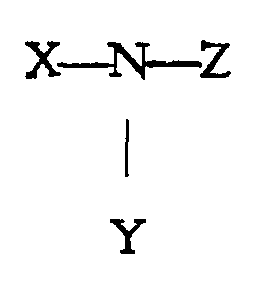
acceptable carrier. The alkanolamine has the following general formula:
wherein X, Y and Z are selected from the group consisting of hydrogen, C
1-C
3
alkyl group, C
2-C
4 alkanol group, wherein at least one of X, Y or Z is a C
2-C
4
alkanol group bearing at least one hydroxyl group and optionally at least one
carboxyl group.
It has also been discovered that the compounds described above are
effective in reducing the skin irritation caused by application of an irritating active
ingredient Accordingly, in another embodiment, the invention relates to a method
for ameliorating the irritating effects of a skin irritating composition comprising
adding to said composition an effective amount of at least one compound as
described above.
Brief Description of the Drawings
Figure 1 is a bar graph showing the percent of subjects with acne related
redness over a 45 day evaluation period in accordance with the claimed method.
Detailed Description of the Preferred Embodiments
As discussed above, the invention relates to a method for ameliorating
redness or inflammation of mammalian skin comprising topically applying a
composition comprising an effective amount of at least one compound selected
from an alkanolamine, tyrosine, or mixtures thereof and a cosmetically acceptable
carrier. The alkanolamine has the following general formula:
wherein X, Y and Z are selected from the group consisting of hydrogen, C
1-C
3
alkyl group, C
2-C
4 alkanol group, wherein at least one of X, Y or Z is a C
2-C
4
alkanol group bearing at least one hydroxyl group and optionally at least one
carboxyl group.
In a preferred embodiment the alkanolamine is selected from the group
consisting of ethylaminoethanol, methylaminoethanol, dimethylaminoethanolamine,
isopropanolamine, triethanolamine, isopropanoldimethylamine, ethylethanolamine,
2-butanolamine, choline and serine. More preferably, the alkanolamine is
dimethylaminoethanol (DMAE).
The compositions used in the methods according to the invention
preferably contain from about 0.1 about 10% by weight of the at least one
compound, more preferably, from about 0.1 to about 5% and, most preferably,
from about 1 to about 3% by weight. In a particularly preferred embodiment, the
compositions used in the methods according to the invention, comprise a mixture
of about 1 to about 5% by weight DMAE and from about 1 to about 5% by weight
of tyrosine.
In a preferred embodiment, the compositions used in the methods of the
invention contain a pH buffering agent. Preferably, the amount of buffering agent
should be that which would result in compositions having a pH ranging from about
4.5 to about 8.5, more preferably from about 5.5 to about 8.5, most preferably from
about 6.5 to about 8.0. The buffering agent can be any of the known buffering
agents commonly found in cosmetic compositions provided that they are physically
and chemically stable with the other ingredients of the composition. Suitable
buffering agents include organic acids such as (but not intended to be restricted to)
citric acid, malic acid, and glycolic acid.
The compositions of this invention should be in the form of topical
products that can be applied externally to the skin and can be prepared in
accordance with conventional techniques known to those of ordinary skill in the
art. The carrier may take a variety of physical forms such as, for example, creams,
dressings, gels, lotions, ointments or liquids. The carrier may take a variety of
physical forms such as, for example, creams, dressings, gels, lotions, ointments or
liquids. Preferably, the carrier should be a gel or moisturizing lotion, or a cooling
solution. One could also utilize this in a convenient spray applicator.
Typical carriers include lotions containing water and/or alcohols and
emollients such as hydrocarbon oils and waxes, silicone oils, hyaluronic acid,
vegetable, animal or marine fats or oils, glyceride derivatives, fatty acids or fatty acid
esters or alcohols or alcohol ethers, lanolin and derivatives, polyhydric alcohols or
esters, wax esters, sterols, phospholipids and the like, and generally also emulsifiers
(nonionic, cationic or anionic), although some of the emollients inherently possess
emulsifying properties. These same general ingredients can be formulated into a
cream rather than a lotion, or into gels, or into solid sticks by utilization of different
proportions of the ingredients and/or by inclusion of thickening agents such as
gums or other forms of hydrophillic colloids. Such compositions are referred to
herein as cosmetically acceptable carriers. Preferably, the carrier should be a gel
base formula without lipid materials that would exxacerbate the oiliness of acne
prone skin. However, a moisturizer emulsion base may be preferred by individuals
that have particularly dry yet skin still suffer from acne lesions.
The topical compositions according to the invention can comprise
additional ingredients commonly found in skin care compositions, such as for
example, emollients, skin conditioning agents, emulsifying agents, humectants,
preservatives, antioxidants, perfumes, chelating agents, etc., provided that they are
physically and chemically compatible with the other components of the
composition. It is also envisioned that this invention could be combined with other
agents such as topical anesthetics (such as benzocaine or other caine type
molecules) or even mild steroids such as hydrocortisone for enhanced antiinflammatory
activity]. Noteably useful is the incorporation of vitamin A and
vitamin A derivatives, including but not restricted to retinoids, such as, retinol,
retinyl palmitate, retinoic acid, retinal, and retinyl propionate.
Examples of suitable preservatives for use in the compositions of the
invention include the C1-C4 alkyl parabens and phenoxyethanol. Generally, the
preservative is present in an amount ranging from about 0.5 to about 2.0, preferably
about 1.0 to about 1.5, weight percent based on the total composition. In a
preferred embodiment, the preservative is mixture of from about 0.2 to about 0.5
weight percent methylparaben, from about 0.2 to about 5.0 weight percent
propylparaben and from about 0.05 to about 0.10 weight percent butylparaben. A
particularly preferred commercially available preservative that may be used in the
skin care composition according to this invention is PHENONIP TM which is a
practically colorless, viscous, liquid mixture of phenoxyethanol, methylparaben,
ethylparaben, propylparaben, and butylparaben available from Nipa Laboratories,
Inc., Wilmington, Del.
Preferably, antioxidant should be present in the compositions according to
the invention. Suitable antioxidants include butylated hydroxy toluene (BHT),
ascorbyl palmitate, butylated hydroanisole (BHA), phenyl-α-naphthylamine,
hydroquinone, propyl gallate, nordihydroquiaretic acid, vitamin E or derivatives of
vitamin E, vitamin C and derivatives thereof, calcium pantothenic, green tea
extracts and mixed polyphenosls, and mixtures thereof. Of the above, the most
preferred antioxidant is BHT. Preferably, the antioxidant present in the
composition at from about .02 to about .05% by weight, most preferably from
about .02 to about 0.10% by weight.
Emollients which can be included in the compositions of the invention
function by their ability to remain on the skin surface or in the stratum corneum to
act as lubricants, to reduce flaking, and to improve the skin appearance. Typical
emollients include fatty esters, fatty alcohols, mineral oil, polyether siloxane
copolymers and the like. Examples of suitable emollients include, but are not
limited to, polypropylene glycol ("PPG")-15 stearyl ether, PPG-10 cetyl ether,
steareth-10, oleth-8, PPG-4 lauryl ether, vitamin E acetate, PEG-7 glyceryl cocoate,
lanolin, cetyl alcohol, octyl hydroxystearare, dimethicone, and combinations thereof.
Cetyl alcohol, octyl hydroxystearate, dimethicone, and combinations thereof are
preferred. When utilized, the emollient can be present in an amount from about
0.01 to about 5, preferably from about 1 to about 4% by weight of the
composition.
Polyhydric alcohols can be utilized as humectants in the compositions of
the invention. The humectants aid in increasing the effectiveness of the emollient,
reduce scaling, stimulate removal of built-up scale and improve skin feel. Suitable
polyhydric alcohols include, but are not limited to, glycerol (also known as glycerin),
polyalkylene glycols, alkylene polyols and their derivatives, including butylene
glycol, propylene glycol, dipropylene glycol, polypropylene glycol, polyethylene
glycol and derivatives thereof, sorbitol, hydroxypropyl sorbitol, hexylene glycol, 1,3-dibutylene
glycol, 1,2,6,-hexanetriol, ethoxylated glycerol, propoxylated glycerol and
mixtures thereof. Glycerin is preferred. When utilized, the humectant is present in
an amount from about 0.1 to about 5, preferably from about 1 to about 3 percent
by weight, based on the total weight of the composition.
The compositions according to the invention preferably contain an effective
stabilizing amount of an emulsifier. Preferably, the emulsifier is present at from
about 1.0 to about 10.0, more preferably from about 3.0 to about 6.0, weight
percent, based on the total composition. Any emulsifier that is compatible with the
components of the composition can be employed. Suitable emulsifiers include
stearic acid, cetyl alcohol, stearyl alcohol, steareth 2, steareth 20, Acrylates/C10-30
alkyl Acrylate Crosspolymer. Particularly preferred is PEMULEN TR-1 (CTFA
Designation: Acrylates/10-30 Alkyl Acrylate Crosspolymer).
Any fragrance may be added to the compositions of the invention for
aesthetic purposes. Suitable fragrances include, but are not limited to, eucalyptus
oil, camphor synthetic, peppermint oil, dove oil, lavender, chamomile and the like.
When utilized, fragrances are present in an amount from about 0.05 to about 0.5,
preferably from about 0.1 to about 0.3 percent by weight, based on the total weight
of the composition. In certain aspects of this invention, the compositions should
include a chelating agent. Chelating agents which are useful in the compositions of
the present invention include ethylenediamine tetra acetic acid (EDTA) and
derivatives and salts thereof, dihydroxyethyl glycine, tartaric acid, and mixtures
thereof. The chelating agents should be utilized in a stabilizing effective amount
and may range from about 0.01 to about 2% based on the weight of the total
composition, preferably from about 0.05 to about 1%. Most preferably, the
chelating agent should be EDTA.
Generally, the composition is topically applied to the affected skin areas in a
predetermined or as-needed regimen to bring about improvement, it generally being
the case that gradual improvement is noted with each successive application.
Insofar as has been determined based upon clinical studies to date, no adverse side
effects are encountered. The methods according to the invention can be used to
treat a variety of skin conditions which result in inflammation or erythema. For
example, inflammation or erythema can result from external causes such as sun or
wind burn or irritating soaps or cleansers. It is also known that inflammation and
erythema can be caused from inherent conditions such as rosacea, atopic dermatitis,
or allergic skin reactions. The method according to the invention can be used to
treat inflammation and/or erythema caused by both external and inherent
conditions.
It has also been discovered that the compounds described above are
effective in reducing the skin irritation caused by application of an irritating active
ingredient. Accordingly, in another embodiment, the invention relates to a method
for ameliorating the irritating effects of a skin irritating composition comprising
adding to said composition an effective amount of at least one compound selected
from the group consisting of an alkanolamine; tyrosine; or a mixture thereof as
described above. Indeed, as shown by the Examples below, it has been discovered
that the irritating effects of compositions containing an irritating ingredient, such as
for example, benzoyl peroxide, alpha-hydroxyacids and derivatives thereof, salicylic
acid, surfactants, soaps, natural plant extracts, sunscreen actives, urea, preservatives,
and retinoids, such as, retinol, retinyl palmitate, retinoic acid, retinal, and retinyl
propionate, can be dramatically reduced upon the incorporation of at least one
compound selected from an alkanolamine, tyrosine, or mixtures thereof as
described above. One can envision a wide variety of therapeutic agents that are
beneficial for the skin yet can cause short term inflammation that would benefit
from the current method for ameliorating redness and/or inflammation.
The advantages of the invention and specific embodiments of the skin care
compositions prepared in accordance with the present invention are illustrated by
the following examples. It will be understood, however, that the invention is not
confined to the specific limitations set forth in the individual examples, but rather
defined within the scope of the appended claims.
The following materials were used in the Examples: BIOSIL Basics SPQ:
Example 1
The following formula was made in accordance with the teachings of this
invention. The oil phase, water phase and tyrosine premix were formed separately.
The tyrosine premix was prepared as follows: deionized water, DMAE, and
tyrosine were added to a closed container and placed in a heated (50-55°C) water
bath. The mixture was heated to about 50 to about 55°C. The mixture was held at
that temperature with mixing until the water and oil phases were combined and
cooled to about 45°C as described below.
The following oil phase ingredients (FINSOLV TN, WICKENOL 171,
Dimethicone 47V-100, BRIJ 72, CETAL, BRIJ 721, and BHT) were blended
together in a kettle and heated to about 60°C with agitation. Once the mixture was
homogeneous PEMULEN was added with agitation until homogenous. The
temperature was held at about 78-80°C until the water phase was prepared and
ready for addition.
The water phase was prepared as follows: deionized water was added to a
kettle and the kettle slowly heated to about 70 to about 75°C. During the heating
process disodium EDTA, glycerin, panthenol (preheated until easy flowing liquid)
were added. At about 78 to about 80°C propylparaben, methylparaben and
phenoxyethanol were added. The mixture was held at about 70 to about 75°C for
about 3 to about 5 minutes, i.e., until a uniform mixture was obtained.
When both phases were at a temperature of about 78 to about 80°C and
homogenous, the oil phase was added to the water phase. The mixture was held at
about 78 to about 80°C for about 10 to 15 minutes,
i.e., until a smooth, non-grainy
dispersion was apparent. Heating was discontinued and when the temperature
reached below 45°C the DMAE/Tyrosine premix followed by the buffer pre-mix
were added and mixed well. The mixture was homogenized at 40% for about 3-4
minutes with a rotor-stator homogenizer.
| INGREDIENT: | WEIGHT PERCENT: |
| Water Phase: |
| Deionized water | 62.69 |
| Disodium EDTA | 0.10 |
| Glycerin | 3.00 |
| Panthenol | 0.50 |
| EMERESSENCE 1160 | 0.73 |
| Methylparaben | 0.35 |
| Propylparaben | 0.17 |
| Oil Phase: |
| FINSOLV TN | 4.00 |
| WICKENOL 171 | 1.00 |
| Dimethicone 47V-100 | 1.00 |
| BRIG 72 | 0.60 |
| Cetyl Alchol | 2.50 |
| BRIJ 721 | 0.90 |
| BHT | 0.10 |
| PEMULEN TR1 | 0.50 |
| DMAE/Tyrosine Premix: |
| L-tyrosine | 0.50 |
| Deionized water | 15.00 |
| DMAE | 3.00 |
| Buffer Premix: |
| GLYPURE 70 | 1.2 |
| Malic acid | 0.84 |
| Deionized water | 1.32 |
The composition of Example 1 was applied to 29 females having mild acne
at the start of the study for a 45 day period. The females had the following
demographics:
| No. of Subjects | Acne | Mean Age | Gender | Mean Weight |
| 29 | Mild | 30 | Female | 157 lbs. |
Of the 29 subjects with mild acne, about 49% had moderate erythema.
The level of inflammation redness and inflammation exhibited by the subjects
during the test period was evaluated by a dermatologist. The results are set forth in
Figure 1. As can be seen from Figure 1, a statistically significant decrease in redness
at all observations was seen when compared to the baseline.
Comparative Example 2
Deionized water was added to a kettle and heated to about 78 to about
80°C. At about 78 to about 82°C, STABILEZE QM was added using a propeller
mixer. The mixture was held at about 78 to about 82°C until dear. Heating was
discontinued and when the mixture was at about 75°C, disodium EDTA,
CRODESTA SL-40, GLYCEROX 767, and hexylene glycol were added. At room
temperature, the urea/water premix was added to the mixture. The pH of the
mixture was adjusted to about 6.5 to about 7.0 with potassium hydroxide 10%
solution. The remaining ingredients were added with mixing in the following
order. SD-10, talc, BIOSIL BASICS SPQ, PHENONIP, and deionized water. The
mixture was homogenized at 40% for about 2 minutes with a rotor-stator
homogenizer.
| INGREDIENT: | WEIGHT PERCENT: |
| Deionized water | 70.85 |
| STABILEZE QM | 1.50 |
| Disodium EDTA | 0.10 |
| CRODESTA SL-40 | 0.75 |
| GLYCEROX 767 | 0.75 |
| Hexylene glycol | 1.00 |
| KOH, 10% solution | 6.55 |
| Urea Premix: |
| Deionized water | 10.00 |
| Urea | 5.00 |
| Post Addition: |
| Windsor Talc 66 | 0.50 |
| SP-10 | 1.00 |
| BIOSIL Basics SPQ | 1.00 |
| PHENONIP | 1.00 |
Deionized water was added to a kettle, argon was bubbled though for 10
minutes to purge oxygen out. Then, the water was heated to about 78 to about
80°C. Under argon blanket, at about 78 to about 82°C, STABILEZE QM was
added using a propeller mixer. The mixture was held at about 78 to about 82°C
until clear. Heating was discontinued and when the mixture was at about 75°C,
disodium EDTA, CRODESTA SL-40, GLYCEROX 767, and hexylene glycol were
added. At room temperature, the urea premix was added to the mixture and mixed
well. The pH of the mixture was adjusted to about 6.5 to about 7.0 with potassium
hydroxide 10% solution. Under yellow lights and with argon purging the
remaining ingredients were added with mixing in the following order. Tween 80,
Retinol, SD-10, talc, BIOSIL BASICS SPQ, PHENONIP, and deionized water.
The mixture was homogenized at 40% for about 2 minutes with a rotor-stator
homogenizer.
| INGREDIENT | WEIGHT PERCENT: |
| Deionized water |
| STABILEZE QM | 1.50 |
| Disodium EDTA | 0.10 |
| CRODESTA SL-40 | 0.75 |
| GLYCEROX 767 | 0.75 |
| Hexylene glycol | 1.00 |
| KOH, 10% solution |
| Urea Premix: |
| Deionized water | 10.00 |
| Urea | 5.00 |
| Post Addition: |
| TWEEN 80 | 0.15 |
| Retinol | 0.1 |
| Windsor Talc 66 | 0.50 |
| SP-10 | 1.00 |
| BIOSIL Basics SPQ | 1.00 |
| PHENONIP | 1.00 |
Deionized water was added to a kettle and heated to about 78 to about
80°C. At about 78 to about 82°C, STABILEZE QMwas added using a propeller
mixer. The mixture was held at about 78 to about 82°C until clear. Heating was
discontinued and when the mixture was at about 75°C, disodium EDTA,
CRODESTA SL-40, GLYCEROX 767, and hexylene glycol were added. At room
temperature, the DMAE premix was added to the mixture to neutralize the
STABILEZE followed by the tyrosine premix and mixed well. The pH of the
mixture was adjusted to about 6.5 to about 7.0 with glycolic acid. The remaining
ingredients were added with mixing in the following order: SD-10, talc, BIOSIL
BASICS SPQ, PHENONIP, and deionized water. The mixture was homogenized
at 40% for about 2 minutes with a rotor-stator homogenizer.
| INGREDIENT: | WEIGHT PERCENT: |
| Deionized water | 63.8 |
| STABILEZE QM | 1.50 |
| Disodium EDTA | 0.10 |
| CRODESTA SL-40 | 0.75 |
| GLYCEROX 767 | 0.75 |
| Hexylene glycol | 1.00 |
| DMAE Premix: |
| DMAE | 3.00 |
| Deionized water | 3.00 |
| Tyrosine/Urea Premix: |
| Deionized water | 10.00 |
| Urea | 5.00 |
| L-tyrosine | 5.00 |
| Post Addition: |
| GLYPURE | 2.61 |
| Windsor Talc 66 | 0.50 |
| SP-10 | 1.00 |
| BIOSIL Basics SPQ | 1.00 |
| PHENONIP | 1.00 |
Warer, sodium hyaluronare, urea, glycosaminoglycans, xantham gum, EDTA-Na2,
and sorbitol were dissolved to form
Phase 1. This phase was heated to 65C.
Butyleneglycol dicaprylate/dicaprate, cyclomethicone, ascorbyl palmitate,
polysorbate 20, oleic acid, vitamin E acetate, and
cetearyl alcohol 50/50 were
combined to form Phase 2 and were heated to 62C. In the presence of a
homogenizer,
Phase 1 was added to Phase 2 with continued homogenization for 10
minutes. Titanium dioxide and GERMABEN IIE were then added with additional
water. The emulsion was homogenized for an additional 20 minutes. The
emulsion was cooled rapidly using sweep mixing to 50C. The emulsion was
additionally cooled to 45C at which time ORDENONE was added.
| INGREDIENT | WEIGHT PERCENT |
| Water | 64.90 |
| Sodium hyaluronate | 11.00 |
| Ascorbyl palmitate | 7.00 |
| L-tyrosine | NONE |
| Urea | 5.00 |
| Butyleneglycol dicaprylate/dicaprate | 4.00 |
| Cyclomethicone | 3.00 |
| Glycosoamineglycans | 2.00 |
| DMAE | NONE |
| Glycolic acid (70%) | NONE |
| Polysorbate-20 | 0.60 |
| Oleic acid | 0.60 |
| Sorbitol 70% | 0.50 |
| Germaben IIE | 0.50 |
| Ordenone | 0.20 |
| Sodium Metabisulfite | 0.20 |
| Disodium EDTA | 0.10 |
| Vitamin E Acetate | 0.10 |
| Cetearyl alcohol 50/50 | 0.10 |
| TiO2 | 0.10 |
| Xanthan Gum | 0.10 |
The product was processed by pre-dissolving the glycolic acid with the water,
sodium hyaluronate, urea, glycosaminoglycans, xantham gum, EDTA-Na2, and
sorbitol to form
Phase 1. This phase was heated to 65C. Butyleneglycol
dicaprylate/dicaprate, cydomethicone, ascorbyl palmitare, polysorbate 20, oleic
acid, vitamin E acetate, and
cetearyl alcohol 50/50 were combined to form Phase 2
and were heated to 62C. In the presence of a homogenizer,
Phase 1 was added to
Phase 2 with continued homogenization for 10 minutes. L-tyrosine, titanium
dioxide, and germaben IIE were then added with additional water. The emulsion
was homogenized for an additional 20 minutes. The emulsion was cooled rapidly
using sweep mixing to 45C at which time the ORDENONE was added.
| INGREDIENT | WEIGHT PERCENT |
| Water | 58.97 |
| Sodium hyaluronate | 11.00 |
| Ascorbyl palmitate | 7.00 |
| L-tyrosine | 5.00 |
| Urea | 5.00 |
| Butyleneglycol dicaprylate/dicaprate | 4.00 |
| Cyclomethicone | 3.00 |
| Glycosoamineglycans | 2.00 |
| DMAE | NONE |
| Glycolic acid (70%) | 1.00 |
| Polysorbate-20 | 0.60 |
| Oleic acid | 0.60 |
| Sorbitol 70% | 0.50 |
| Germaben IIE | 0.50 |
| Ordenone | 0.20 |
| Sodium Metabisulfite | 0.20 |
| Disodium EDTA | 0.10 |
| Vitamin E Acetate | 0.10 |
| Cetearyl alcohol 50/50 | 0.10 |
| TiO2 | 0.10 |
| Xanthan Gum | 0.03 |
The product was processed by pre-dissolving the glycolic acid with the water,
sodium hyaluronate, urea, glycosaminoglycans, xantham gum, EDTA-Na2, and
sorbitol to form
Phase 1. This phase was heated to 65C. Butyleneglycol
dicaprylate/dicaprate, cyclomethicone, ascorbyl palmitare, polysorbate 20, oleic
acid, vitamin E acetate, and
cetearyl alcohol 50/50 were combined to form Phase 2
and were heated to 62C. In the presence of a homogenizer,
Phase 1 was added to
Phase 2 with continued homogenization for 10 minutes. Titanium dioxide, and
germaben IIE were then added with additional water. The emulsion was
homogenized for an additional 20 minutes. The emulsion was cooled rapidly using
sweep mixing to 50C, and the dimethylaminoethanol was added with equal part of
water. The emulsion was additionally cooled to 45C at which time the ordenone
was added.
| INGREDIENT | WEIGHT PERCENT |
| Water | 60.97 |
| Sodium hyaluronate | 11.00 |
| Ascorbyl palmitate | 7.00 |
| L-tyrosine | NONE |
| Urea | 5.00 |
| Butyleneglycol dicaprylate/dicaprate | 4.00 |
| Cyclomethicone | 3.00 |
| Glycosoamineglycans | 2.00 |
| DMAE | 3.00 |
| Glycolic acid (70%) | 1.00 |
| Polysorbate-20 | 0.60 |
| Oleic acid | 0.60 |
| Sorbitol 70% | 0.50 |
| Germaben IIE | 0.50 |
| Ordenone | 0.20 |
| Sodium Metabisulfite | 0.20 |
| Disodium EDTA | 0.10 |
| Vitamin E Acetate | 0.10 |
| Cetearyl alcohol 50/50 | 0.10 |
| TiO2 | 0.10 |
| Xanthan Gum | 0.03 |
The product was processed by pre-dissolving the glycolic acid with the water,
sodium hyaluronate, urea, glycosaminoglycans, xantham gum, EDTA-Na2, and
sorbitol to form
Phase 1. This phase was heated to 65C. Butyleneglycol
dicaprylate/dicaprate, cyclomethicone, ascorbyl palmitare, polysorbate 20, oleic
acid, vitamin E acetate, and
cetearyl alcohol 50/50 were combined to form Phase 2
and were heated to 62C. In the presence of a homogenizer,
Phase 1 was added to
Phase 2 with continued homogenization for 10 minutes. L-tyrosine, titanium
dioxide, and germaben IIE were then added with additional water. The emulsion
was homogenized for an additional 20 minutes. The emulsion was cooled rapidly
using sweep mixing to 50C, and the dimethylaminoethanol was added with equal
part of water. The emulsion was additionally cooled to 45C at which time the
ordenone was added.
| INGREDIENT | WEIGHT PERCENT |
| Water | 55.97 |
| Sodium hyaluronate | 11.00 |
| Ascorbyl palmitate | 7.00 |
| L-tyrosine | 5.00 |
| Urea | 5.00 |
| Butyleneglycol dicaprylate/dicaprate | 4.00 |
| Cyclomethicone | 3.00 |
| Glycosoamineglycans | 2.00 |
| DMAE | 3.00 |
| Glycolic acid (70%) | 1.00 |
| Polysorbate-20 | 0.60 |
| Oleic acid | 0.60 |
| Sorbitol 70% | 0.50 |
| Germaben IIE | 0.50 |
| Ordenone | 0.20 |
| Sodium Metabisulfite | 0.20 |
| Disodium EDTA | 0.10 |
| Vitamin E Acetate | 0.10 |
| Cetearyl alcohol 50/50 | 0.10 |
| TiO2 | 0.10 |
| Xanthan Gum | 0.03 |
In a second series of studies, inflammation was observed to be reduced
when products were formulated in accordance with the invention compared with
formulae without these elements. Specifically, the compositions of Examples 2-8
were tested in a modified RIPT (Draize) text as set forth in U.S. patent application
Ser. No. 08/414,975. The compositions were applied repeatedly to the skin of
approximately 200 volunteers under semi-occlusive patches over a period of three
weeks. At each application, the level of inflammation under each test patch was
rated on a scale of 0 (no visible erytherna or inflammation) to 4 (intense erythema
with edema and erosion). The irritation scores for each product, for
each
observation, for each subject were summed to yield a composite irritation score for
each of the test formulae. The results are set forth below.
| Example | Irritation Score |
| 2 | 17.5 |
| 3 | 365 |
| 4 | 281 |
| 5 | 128.5 |
| 6 | 61.5 |
| 7 | 18.5 |
| 8 | 15.5 |
The results show that the addition of retinol (Example 3) to the gel base
(Comparative Example 2) there was a large increase in the irritation scores from 17.5
to 365. Addition of 3% dimethylaminoethanol (DMAE) and 5% tyrosine to the same
base with 0.15% retinol (Example 4) showed an anti-inflammatory effect on the
irritation reducing the irritation to 281 Similarly a moderately irritating moisturizer
base (Comparative Example 5) had an irritation score of 128.5. The addition of 5%
tyrosine (Example 6) or 3% DMAE (Example 7) reduced the irritation score
dramatically to 61.5 and 18.5 respectively. Further, the combination of tyrosine and
DMAE (Example 8) demonstrated an even more dramatically lower irritation
compared with the irritating placebo. These demonstrate the unexpected result that
either tyrosine or DMAE separately, or in combination can reduce the irritation of
irritating skin compositions or compositions that have irritating ingredients.
Example 9
The following composition was prepared in accordance with the procedure
described in Example 4.
| Ingredient | Weight Percent |
| DI Water | 90.90 |
| PVM/MA Decadiene Crosspolymer | 1.50 |
| Disodium EDTA | 0.10 |
| Sucrose Cocoate | 0.75 |
| PEG-6 Capric/Caprylic Glycerides | 0.75 |
| Hexylene Glycol | 1.00 |
| KOH 10% solution | 1.00 |
| Talc | 0.50 |
| Nylon 12 | 1.00 |
| Silicone Quaternium-13 | 1.00 |
| Ethanol | 0.50 |
| Phenoxyethanol, Methylparaben, Butylparaben, Ethylparaben, and Propylparaben | 1.00 |
The composition of Example 9 was applied to a subject suffering from
rosacea. After four days of daily use of the formula, there was significant visual
reduction in the redness, blotchiness, and uneven surface texture associated with
the rosacea condition.