EP1191028A1 - Tricyclic compounds having spiro union - Google Patents
Tricyclic compounds having spiro union Download PDFInfo
- Publication number
- EP1191028A1 EP1191028A1 EP00940912A EP00940912A EP1191028A1 EP 1191028 A1 EP1191028 A1 EP 1191028A1 EP 00940912 A EP00940912 A EP 00940912A EP 00940912 A EP00940912 A EP 00940912A EP 1191028 A1 EP1191028 A1 EP 1191028A1
- Authority
- EP
- European Patent Office
- Prior art keywords
- group
- compound
- nonane
- diaza
- piperidin
- Prior art date
- Legal status (The legal status is an assumption and is not a legal conclusion. Google has not performed a legal analysis and makes no representation as to the accuracy of the status listed.)
- Granted
Links
- 0 *S*(CC1)CCC1=O Chemical compound *S*(CC1)CCC1=O 0.000 description 9
- VJGZYAMYFILRHD-UHFFFAOYSA-N CC[N+](C)(O)[O-]#C Chemical compound CC[N+](C)(O)[O-]#C VJGZYAMYFILRHD-UHFFFAOYSA-N 0.000 description 1
Images












Classifications
-
- C—CHEMISTRY; METALLURGY
- C07—ORGANIC CHEMISTRY
- C07D—HETEROCYCLIC COMPOUNDS
- C07D498/00—Heterocyclic compounds containing in the condensed system at least one hetero ring having nitrogen and oxygen atoms as the only ring hetero atoms
- C07D498/12—Heterocyclic compounds containing in the condensed system at least one hetero ring having nitrogen and oxygen atoms as the only ring hetero atoms in which the condensed system contains three hetero rings
- C07D498/20—Spiro-condensed systems
-
- A—HUMAN NECESSITIES
- A61—MEDICAL OR VETERINARY SCIENCE; HYGIENE
- A61K—PREPARATIONS FOR MEDICAL, DENTAL OR TOILETRY PURPOSES
- A61K47/00—Medicinal preparations characterised by the non-active ingredients used, e.g. carriers or inert additives; Targeting or modifying agents chemically bound to the active ingredient
-
- A—HUMAN NECESSITIES
- A61—MEDICAL OR VETERINARY SCIENCE; HYGIENE
- A61P—SPECIFIC THERAPEUTIC ACTIVITY OF CHEMICAL COMPOUNDS OR MEDICINAL PREPARATIONS
- A61P7/00—Drugs for disorders of the blood or the extracellular fluid
- A61P7/02—Antithrombotic agents; Anticoagulants; Platelet aggregation inhibitors
-
- A—HUMAN NECESSITIES
- A61—MEDICAL OR VETERINARY SCIENCE; HYGIENE
- A61P—SPECIFIC THERAPEUTIC ACTIVITY OF CHEMICAL COMPOUNDS OR MEDICINAL PREPARATIONS
- A61P9/00—Drugs for disorders of the cardiovascular system
-
- G—PHYSICS
- G01—MEASURING; TESTING
- G01N—INVESTIGATING OR ANALYSING MATERIALS BY DETERMINING THEIR CHEMICAL OR PHYSICAL PROPERTIES
- G01N2333/00—Assays involving biological materials from specific organisms or of a specific nature
- G01N2333/90—Enzymes; Proenzymes
- G01N2333/914—Hydrolases (3)
- G01N2333/948—Hydrolases (3) acting on peptide bonds (3.4)
- G01N2333/95—Proteinases, i.e. endopeptidases (3.4.21-3.4.99)
- G01N2333/964—Proteinases, i.e. endopeptidases (3.4.21-3.4.99) derived from animal tissue
- G01N2333/96425—Proteinases, i.e. endopeptidases (3.4.21-3.4.99) derived from animal tissue from mammals
- G01N2333/96427—Proteinases, i.e. endopeptidases (3.4.21-3.4.99) derived from animal tissue from mammals in general
- G01N2333/9643—Proteinases, i.e. endopeptidases (3.4.21-3.4.99) derived from animal tissue from mammals in general with EC number
- G01N2333/96433—Serine endopeptidases (3.4.21)
- G01N2333/96441—Serine endopeptidases (3.4.21) with definite EC number
- G01N2333/96444—Factor X (3.4.21.6)
-
- G—PHYSICS
- G01—MEASURING; TESTING
- G01N—INVESTIGATING OR ANALYSING MATERIALS BY DETERMINING THEIR CHEMICAL OR PHYSICAL PROPERTIES
- G01N2500/00—Screening for compounds of potential therapeutic value
Definitions
- This invention relates to orally administrable tricyclic compounds having spiro union or its salts thereof that are useful as pharmaceuticals, particularly as an inhibitor of activated blood coagulation factor X (hereunder referred to as FXa), and which exhibit potent anticoagulation action.
- FXa activated blood coagulation factor X
- This invention also relates to a drug designing methods by means of molecular design for creating a compound, which exhibits inhibitory activity for FXa.
- ischemic heart diseases and other pathology of heart and blood vessels are increasing year after year.
- increase of vascular occlusive diseases such as myocardial infarction, cerebral thrombosis, pulmonary embolism, and peripheral arterial and venous occlusive disease is increasing each year and treatment of such diseases has become a serious social issue.
- anticoagulation therapy has been playing an important role in internal medicine together with anti-platelet therapy and thrombolytic therapy.
- safety that permits long-term drug administration and the development of a positive and appropriate anticoagulant activity are essential.
- anticoagulants such as warfarin and heparin have been used in order to prevent and treat thrombosis due to hypercoagulability.
- Warfarin is extensively used in the world as the solo peroral anticoagulant.
- concentration range for the development of efficacy is narrow and yet it takes long to develop efficacy and the half-life in blood is as long as 36 hours; what is more, for several reasons such as the great individual difference of effective dose, it is difficult to control the anticoagulability of warfarin (N. Eng. J. Med.
- warfarin also has many other side effects such as nausea, vomiting, diarrhea, and alopecia; thus, warfarin is a drug that involves considerable difficulty in clinical use.
- heparin is extensively used in the world as an intravenously administrable anticoagulant. However, since it is a direct inhibitor of thrombin, heparin has a high risk of bleeding and needs as frequent monitoring as warfarin; what is more, due to its characteristics based on the mechanism of action, adequate coagulation inhibiting effect is not expected at a lowered antithrombin III level; thus, heparin is a drug that involves considerable difficulty in clinical use. In view of such situation, improved anticoagulants have been desired that has none of the defects inherent in warfarin and heparin.
- the blood coagulation cascade is a chain reaction involving limited protein hydrolysis triggered by activation of the extrinsic coagulation cascade or the intrinsic coagulation cascade, and once the cascade is activated, the reaction is amplifies like an avalanche. Since the final stage of the blood coagulation cascade is thrombin-mediated conversion of fibrinogen to fibrin, efforts have recently been made to develop thrombin inhibitors; however, drugs that directly inhibit thrombin are known to increase the risk of bleeding. In addition, they have low bioavailability in oral administration; therefore no thrombin inhibitor, which can be orally administered, has been introduced into market.
- FXa is a key enzyme, which is located in the upstream of the thrombin in the coagulation cascade, and also at the point of convergence between the extrinsic and the intrinsic coagulation cascade.
- One molecule of FXa is known to produce about a hundred molecules of thrombin per minute. Therefore, an FXa inhibitor can potentially inhibit the coagulation cascade more efficiently than a thrombin inhibitor (Thrombosis Research, vol. 19, pages 339-349, 1980; Mebio vol. 14, No. 8, 1997).
- FXa inhibitor Compounds having an aminoheterocyclic group typified by 1-(4-pyridyl)piperidin-4-yl group can be used as FXa inhibitor; for example, disclosed in prior art references including WO96/10022, WO97/28129, WO97/29104, WO98/21188, WO98/54164, WO99/06371, and WO99/09027.
- the desired pharmacological activity is not the sole requirement.
- Another requirement is that strict criteria be met in various aspects including absorption, distribution, metabolism and excretion, and the like.
- the drugs are required to pass various examinations for drug interaction, desensitization or tolerance, absorption from digestive tract in the oral administration, transfer rate to small intestine, absorption rate and first pass effect, organ barrier, protein binding, induction of drug metabolizing enzyme, excretion pathway and clearance from body, administration method (site, method, and purpose of administration), and the like, and a drug meeting all such requirements are seldom discovered.
- the anticoagulants also share such general challenge of the drug development.
- condition of the binding between the FXa and the FXa inhibitor has great significance.
- active site of the FXa is formed in the structure characteristic to a chymotrypsin-like serine protease.
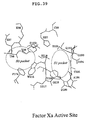
- the active center of a serine protease is formed from a plurality of pockets called subsites, and it is known that substantially all of the inhibitors which do not form covalent bond with Ser195 residue bind to these pockets.
- S1 pocket is believed to be the most important in the serine protease in the binding with the substrate, or in the development of the substrate selectivity.
- S1 site is also believed to be the most important in the serine protease inhibitor for the development of the inhibitory activity and the enzyme selectivity.
- the residue which is generally believed to be the most important for the substrate specificity in the S1 pocket is the residue corresponding to chymotrypsin No. 189, and FXa has Asp (Asp189) as this residue and the inside of the pocket is believed to be negatively charged.
- the substrate specificity of the entire enzyme is determined by structural difference of the subsite such as S3 pocket in addition to the structural difference of S1, and designing of an inhibitor selective for FXa can be accomplished by using such structural difference.
- amidino group is bound to S1 pocket of the FXa, and in particular, Asp189 and the amidino group are firmly bound to each other by electrostatic interaction and hydrogen bonds. This is the binding manner commonly known in trypsin inhibitors and thrombin inhibitors.
- DX-9065a and FX-2212a are insufficient in their efficacy in oral administration, and there was also apprehension for the side effects induced by amidino group and guanidino group. In the meanwhile, it has not been even found out for the FXa inhibitors having other structure whether such X-ray crystallographic analysis is possible, and the binding state with the FXa was not at all found out.
- an anticoagulant drug which exhibits high safety and excellent effectivity, and which is easy to use.
- an anticoagulant which can be orally administered to human and other mammals, and in particular, which can be readily used in clinical practice, and which has realized at least one of avoidance of interaction with other drugs, reduced side effects including reduced risk of bleeding, improved dose response, and the like.
- the inventors of the present invention conducted an intensive study in order to solve the problems as described above and to provide a compound which has excellent FXa inhibitory action, and found that the compound of formula (I) having spiro skeleton exhibits remarkably excellent FXa inhibitory action.
- the present invention has been completed on the bases of such finding.
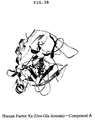
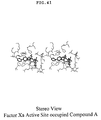
- the inventors of the present invention also succeeded in producing the crystal of the complex of the FXa inhibitor of the present invention and the FXa, and found an important pharmacophore useful in discovering the FXa inhibitor of the type which is different from DX-9065a and the like through the analysis of such crystal.
- the present invention has been completed also on the basis of such finding.
- the present invention relates to a tricyclic compound having spiro union as represented by formula (I) which will be described below, intermediates thereof, and pharmacophores which are useful in molecule design of a FXa inhibitor.
- C 1-6 for example, means that "the group is a straight chain or branched group containing 1 to 6 carbon atoms” unless otherwise noted. In the case of a cyclic group, “C 1-6 “ denotes "the number of ring member carbon atoms”.
- the compound of formula (I) and the compound of formula (I') according to the present invention are not particularly limited for their molecular weight.
- the molecular weight is preferably up to 1000, and more preferably up to 700 (and otherwise stated, the total number of carbon atoms constituting the compound is less than 40).
- Such limitation of molecular weight is routinely employed for identifying the structure of the compound as a major limiting factor in addition to the pharmacologically characteristic basic skeleton in recent drug design.
- the molecular weight is preferably limited to the range of up to 1000 when oral absorptivity of the drug is taken into consideration.
- the compound of this invention is represented by formula (I) or its pharmaceutically acceptable salt.
- formula (I) the compound of this invention is represented by formula (I) or its pharmaceutically acceptable salt.
- Q is a hydrocarbon group or a heterocyclic group, and these groups may optionally have substituents.
- exemplary "hydrocarbon groups" within the definition of Q include aliphatic hydrocarbon groups, alicyclic hydrocarbon groups, and aryl groups, and the preferred is an aryl group.
- aliphatic hydrocarbon groups include straight- or branched-chain hydrocarbon groups, for example, alkyl groups, alkenyl groups, alkynyl groups, and the like.
- alkyl groups include C 1-10 (and more preferably C 1-6 ) alkyl groups, for example, methyl, ethyl, propyl, isopropyl, butyl, isobutyl, sec-butyl, tert-butyl, pentyl, isopentyl, neopentyl, tert-pentyl, 1-methylbutyl, 2-methylbutyl, 1,2-dimethylpropyl, hexyl, isohexyl, 1-methylpentyl, 2-methylpentyl, 3-methylpentyl, 1,1-dimethylbutyl, 1,2-dimethylbutyl, 2,2-dimethylbutyl, 1,3-dimethylbutyl, 2,3-dimethylbutyl, 3,3-dimethylbutyl, 1-ethylbutyl, 2-ethylbutyl, 1,1,2-trimethylpropyl, 1,2,2-trimethylpropyl, 1-ethyl
- alkenyl groups include C 2-6 alkenyl groups, for example, vinyl, allyl, isopropenyl, 2-methylallyl, butenyl, pentenyl, and hexenyl.
- alkynyl groups include C 2-6 alkynyl groups, for example, ethinyl, 1-propinyl, 2-propinyl, butinyl, pentynyl, and hexinyl.
- alicyclic hydrocarbon groups include saturated and unsaturated alicyclic hydrocarbon groups, for example, cycloalkyl group, cycloalkenyl group, and cycloalkanedienyl group.
- cycloalkyl groups include C 3-9 cycloalkyl groups, for example, cyclopropyl, cyclobutyl, cyclopentyl, cyclohexyl, cycloheptyl, cyclooctyl, and cyclononyl.
- cycloalkenyl groups include C 3-6 cycloalkenyl groups, for example, 1-cyclopropen-1-yl, 1-cyclobuten-1-yl, 1-cyclopenten-1-yl, 2-cyclopenten-1-yl, 3-cyclopenten-1-yl, and 1-cyclohexen-1-yl.
- cycloalkanedienyl groups include C 4-6 cycloalkanedienyl groups, for example, 2,4-cyclopentadien-1-yl and 2,5-cyclohexadien-1-yl.
- aryl groups include C 6-14 aryl groups, for example, phenyl, naphthyl, biphenylyl, 2-anthryl, phenanthryl, acenaphthyl, and 5,6,7,8-tetrahydronaphthalenyl(2-yl), and among these, the preferred are phenyl, 2-naphthyl, and 1-naphthyl.
- Exemplary heterocyclic groups of the "optionally substituted heterocyclic groups" in Q include aromatic heterocyclic groups, and saturated and unsaturated non-aromatic heterocyclic groups.
- Exemplary such heterocyclic groups include those having a five- to fourteen-membered ring, and preferably, a five- to twelve-membered ring containing at least one heteroatom (preferably 1 to 4 heteroatoms) selected from N, O and S in addition to the carbon atoms.
- aromatic heterocyclic groups include monocyclic and fused heterocyclic groups.
- Preferable monocyclic aromatic heterocyclic groups are those containing 5 to 6 ring members, for example, pyrolyl, furyl, thienyl, oxazolyl, imidazolyl, oxazolyl, isooxazolyl, thiazolyl, isothiazolyl, pyrazolyl, 1,2,3-triazolyl, 1,2,4-triazolyl, 1,2,3-oxadiazolyl, 1,2,4-oxadiazolyl, 1,3,4-oxadiazolyl, furazanyl, 1,2,3-thiadiazolyl, 1,2,4-thiadiazolyl, 1,3,4-thiadiazolyl, tetrazolyl, pyridyl, pyridazinyl, pyrimidinyl, pyrazinyl, 1,2,3-triazinyl, 1,2,4-triazinyl,
- Preferable fused aromatic heterocyclic groups are those containing 8 to 12 ring members, for example, monovalent groups formed by condensation of the five- or six-membered aromatic ring as described above with 1 or a plurality of (preferably 1 to 2) aromatic rings (for example, benzene ring) followed by removal of hydrogen atom at an arbitrary position from the thus formed ring.
- Exemplary such groups include indolyl, isoindolyl, 1H-indazolyl, benzofuranyl (-2-yl), isobenzofuranyl, benzothienyl (-2-yl), isobenzothienyl, benzindazolyl, benzoxazolyl (-2-yl), 1,2-benzoisoxazolyl, benzothiazolyl (-2-yl), 1,2-benzoisothiazolyl, 2H-benzopyranyl (-3-yl), (1H-)benzimidazolyl (-2-yl), 1H-benzotriazolyl, 4H-1,4-benzoxazinyl, 4H-1,4-benzothiazinyl, quinolyl, isoquinolyl, cinnolinyl, quinazolinyl, quinoxalinyl, phthalazinyl, naphthylizinyl, purinyl, pteridinyl, carb
- non-aromatic heterocyclic groups include three- to eight-membered saturated and unsaturated non-aromatic heterocyclic groups, for example, azetidinyl, oxilanyl, oxetanyl, thietanyl, pyrolidinyl, tetrahydrofuryl, thiolanyl, pyrazolinyl, pyrazolidinyl, pyperidyl, tetrahydropyranyl, pyperadinyl, morpholinyl, thiomorpholinyl, and quinuclidinyl.
- azetidinyl oxilanyl
- oxetanyl thietanyl
- pyrolidinyl tetrahydrofuryl
- thiolanyl pyrazolinyl
- pyrazolidinyl pyperidyl
- tetrahydropyranyl pyperadinyl
- Exemplary "substituents" of the "optionally substituted hydrocarbon group” or the “optionally substituted heterocyclic group” in Q include (a) alkyl, alkenyl, alkynyl, aryl, cycloalkyl, and cycloalkenyl, (b) heterocyclic groups, (c) amino, (d) imidoyl, amidino, hydroxyl, thiol, and oxo, (e) halogen atoms such as fluorine, chlorine, bromine, and iodine, cyano, and nitro, (f) carboxyl, and (g) carbamoyl, thiocarbamoyl, sulfonyl, sulfinyl, sulfide and acyl.
- the groups excluding (e) may further comprise a substituent.
- Q is preferably as described below.
- Examples of the "optionally substituted hydrocarbon group” or the “optionally substituted heterocyclic group” include: (1) C 1-10 alkyl groups; (2) C 2-6 alkenyl groups; (3) C 2-6 alkynyl groups; (4) C 3-9 cycloalkyl groups; (5) C 3-6 cycloalkenyl groups; (6) C 4-6 cycloalkanedienyl groups; (7) C 6-14 aryl groups; and (8) (i) "five- or six-membered, monocyclic aromatic heterocyclic groups", (ii) "eight- to twelve-membered, fused aromatic heterocyclic groups", and (iii) "three- to eight-membered, saturated or unsaturated, non-aromatic heterocyclic groups", which contain 1 to 4 heteroatoms selected from nitrogen atom, oxygen atom and sulfur atom in addition to the carbon atoms, and each group of the above (1) to (8) may be
- the classes are:
- Q is (1) a C 1-6 alkyl group, (2) a C 2-6 alkenyl group, (7) a C 6-14 aryl group, or (8) (i) a five- or six-membered, monocyclic aromatic heterocyclic group, (ii) an eight- to twelve-membered, fused aromatic heterocyclic group, or (iii) a three- to eight-membered, saturated or unsaturated, non-aromatic heterocyclic group, which contains 1 to 4 heteroatoms selected from nitrogen atom, oxygen atom and sulfur atom in addition to the carbon atoms, and each group in (1), (2), (7) and (8) is optionally mono-or di-substituted at an arbitrary position with the substituent of the class selected from [1-1] (a-1) to (g-1) (and most preferably, from those listed as "particularly preferable groups").
- Q is (1') or (2'): a C 1-6 alkyl group (most preferably a C 1-2 alkyl group) or a C 2-6 alkenyl group (most preferably a C 2 alkenyl group) substituted with a substituent selected from substituent (a-1): a C 6-14 aryl group and substituent (b-1): an aromatic group selected from (i) five- or six-membered monocyclic aromatic heterocyclic groups and (ii) eight- to twelve-membered fused aromatic heterocyclic groups, which contain 1 to 4 heteroatoms selected from nitrogen atom, oxygen atom and sulfur atom in addition to the carbon atoms; or (7'): a C 6-14 aryl group which is optionally substituted with 1 to 2 halogen atoms; or (8'): a heterocyclic group which is (i) a five- or six-membered, monocyclic, aromatic heterocyclic group, (ii) an eight- to twelve-member
- the aromatic ring in the above substituent (1') or (2') is optionally substituted with 1 to 3 substituents selected from halogen atoms, trifluoromethyl, cyano, hydroxyl, amino, nitro, carboxyl, carbamoyl, C 1-6 alkyl, C 1-6 alkoxy, mono/di C 1-6 alkylamino, di C 1-6 alkylcarbamoyl, C 1-6 alkoxycarbonyl, N-C 1-6 alkylcarbamoyl, N,N-di 1-6 alkylcarbamoyl and C 2-6 alkenoylamino.
- substituents selected from halogen atoms, trifluoromethyl, cyano, hydroxyl, amino, nitro, carboxyl, carbamoyl, C 1-6 alkyl, C 1-6 alkoxy, mono/di C 1-6 alkylamino, di C 1-6 alkylcarbamoyl, C 1-6 alkoxycarbonyl
- the aromatic ring in the substituents (7') and (8') is also optionally mono- or di-substituted at arbitrary position with the substituent of the class selected from [1-1] (a-1) to (g-1) (and most preferably, from those listed as "particularly preferable groups").
- Exemplary "saturated or unsaturated, five- or six-membered, heterocyclic groups” are five- or six-membered, monocyclic groups in the heterocyclic groups shown in "aromatic heterocyclic groups, and saturated or unsaturated, non-aromatic heterocyclic groups" in Q.
- the heterocyclic groups contain at least one (and preferably 1 to 4) heteroatom selected from N, O, and S in addition to the carbon atoms.
- the compound of formula (VI) is also a novel compound useful as an intermediate in the synthesis of the compound of formula (I). It should be noted that the preferable range for A, B, X, Y, l, and m are as described above for the preferable embodiments of the formula (I). R is preferably methyl group, ethyl group, 1,2-ethylene group, or 1,3-propylene group.
- R is preferably methyl group, ethyl group, 1,2-ethylene group, or 1,3-propylene group.
- Sixth aspect of the present invention is the compound of formula (Ik): (wherein P 1 and P 2 are independently hydrogen atom or a protective group for the imino group; Y, Z, D, l, m, n, and r and the preferred embodiments are as defined above for the formula (I); and the three rings are independently optionally substituted).
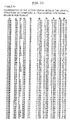
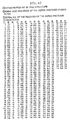
- the amino acid No. of the FXa corresponding to the chymotrypsin No. is shown in FIG. 42 in the form of a table.
- the compound of formula (I') is the one wherein, when the compound of formula (I') binds to the FXa, the interaction of the Lb with the Tyr228 is an interaction mediated by the halogen atom, methyl group, ethyl group, or methoxy group (preferably chlorine atom or bromine atom) constituting a part of the hydrophobic moiety of the Lb.
- a preferable example of Lb is a group represented by the combination of Q in [1-1-d] and T in [1-8-a].
- amino acid No. of the FXa is indicated by chymotrypsin No. used in Protein Data Bank (PDB), Registration ID: 1FAX (J. Biol. Chem. 1996 Nov. 22; 271(47): 29988-92).
- [17-b] a pharmacophore of [17-a] wherein [17-b1] the interaction with the Tyr228 is an interaction mediated by the halogen atom, methyl group, ethyl group, or methoxy group (preferably chlorine atom or bromine atom) constituting a part of the hydrophobic moiety; [17-b2] in the interaction with Tyr228, the distance between the centroid of the hydrophobic moiety and the centroid of the Tyr228 side chain is within the range of 6.9 to 7.9 ⁇ ; [17-b3] the pharmacophore satisfies at least one of the following conditions 1) to 3):
- the present invention also includes hydrates of the compound (I) as well as pharmaceutically acceptable solvates and crystalline polymorphic forms of the compound (I). It should also be taken for granted that the present invention is by no means limited to the compounds mentioned in the Examples as described below, and all of the tricyclic compounds having the spiro union as represented by formula (I) and their pharmaceutically acceptable salts are within the scope of the present invention.
- W in the production process represents the leaving group or the group convertible into the leaving group as described above.
- J represents a thiol protective group such as p-methoxybenzyl group.
- P 1 and P 2 in the intermediate compounds of formulae (Ik) to (IIIk-9) marked with "k” independently represent hydrogen atom or a protective group of the imino group (-NH-).
- Exemplary protective groups of the imino group (-NH-) include aralkyl groups such as benzyl group; acyl groups such as acetyl group; and alkoxycarbonyl groups such as benzyloxycarbonyl group, and t-butoxycarbonyl group.
- deblocking may be accomplished by adequately selecting the type of the protective groups or the conditions of the deblocking to independently or simultaneously remove the protective groups, and if necessary, the protective groups and the like can also be reintroduced.
- Base may be any of inorganic bases such as potassium carbonate, cesium carbonate, sodium hydroxide, potassium hydroxide, and sodium hydride; or organic bases such as triethylamine, pyridine, N,N-dialkylaniline, and lithium diisopropylamide; and acid may be any of mineral acids such as hydrochloric acid, and sulfuric acid; organic acids such as methanesulfonic acid and p-toluenesulfonic acid.
- the base and the acid are not necessarily limited to those mentioned above.
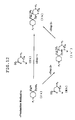
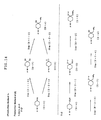
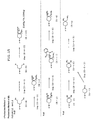
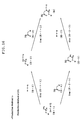
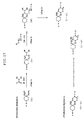
- the compounds represented by formula (I) and formula (Ik) which are the compounds of the present invention or their salts may be synthesized from the compounds represented by formula (II), formula (IIk), formula (III), formula (IIIk), formula (III-3), formula (IIIk-4), formula (IIIk-6), formula (IV), formula (V), or formula (VI) or their salts which can be readily produced from known or commercially available compounds, by ⁇ Production process 1>, ⁇ Production process 2>, ⁇ Production process 3>, or ⁇ Production process 4>.
- reaction preferably by using toluene for the solvent in the presence or absence of an acid catalyst, and preferably, in the presence of p-toluenesulfonic acid.
- the reaction may be promoted at a temperature in the range of 0°C to the solvent reflux temperature, and preferably at the solvent reflux temperature for a time sufficient for the progress of the required reaction, and preferably for 2 to 6 hours to produce the compound represented by formula (I-a) or its salt.
- the compound represented by formula (II-2) or its salt obtained in ⁇ Step II-1-1> may be then reduced in accordance with the known process described in documents (for example, "Shinjikkenkagakukouza 14 Synthesis and Reaction of Organic Compounds [III]", page 1332, 1978, Maruzen) to produce the compound represented by formula (II-a) or its salt.
- a compound represented by formula (II-1) or its salt may be reacted in accordance with the known process described in documents (for example, "Shinjikkenkagakukouza 14 Synthesis and Reaction of Organic Compounds [I]", page 594, 1977, Maruzen) to produce the compound represented by formula (II-3) or its salt.
- the compound When Y is S (sulfur atom), the compound may be produced, for example, by the production process as described below.
- a compound represented by the formula (II-4) (wherein R is a hydrocarbon group as typically represented by C 1-6 alkyl groups such as methyl, ethyl, propyl, and t-butyl and aralkyl groups such as benzyl group) or its salt which is commercially available or readily derived from a commercially available compound may be reacted in accordance with the known process described in documents (for example, JP09510700) to produce the compound represented by formula (II-5): (wherein R is the same as R in (II-4); J is a protective group such as p-methoxybenzyl group) or its salt.
- the compound represented by formula (II-6) or its salt obtained in ⁇ Step II-3-2> may be then reduced in accordance with the known process described in documents (for example, "Shinjikkenkagakukouza 14 Synthesis and Reaction of Organic Compounds [III]", page 1332, 1978, Maruzen) to produce the compound represented by formula (II-7) or its salt.
- the compound When Y is O (oxygen atom), the compound may be produced, for example, by the production process as described below.
- a compound represented by formula (II-8): or its salt which is commercially available or readily derived from a commercially available compound may be reacted in accordance with the known process described in documents (for example, "Shinjikkenkagakukouza 14 Synthesis and Reaction of Organic Compounds [I]", page 331, 1977, Maruzen) to produce a reactive derivative represented by formula (II-9) or its salt.
- the compound represented by formula (II-9) or its salt obtained in ⁇ Step II-4-1> may be then reacted with an active methylene compound such as ethyl cyanoacetate, ethyl nitroacetate, ethyl malonate monoamide or ethyl cyanopropionate in a solvent which is not involved in the reaction in the presence of a base to produce the compound represented by formula (II-10) (wherein E represents nitro group, cyano group, or amide group; and R is the same as R defined in formula (II-4)) or its salt.
- an active methylene compound such as ethyl cyanoacetate, ethyl nitroacetate, ethyl malonate monoamide or ethyl cyanopropionate
- the compound represented by formula (II-10) or its salt obtained in ⁇ Step II-4-2> may be then reduced in accordance with the known process described in documents (for example, "Shinjikkenkagakukouza 14 Synthesis and Reaction of Organic Compounds [III]", page 1332, 1978, Maruzen) to produce the compound represented by formula (II-c) or its salt.
- the compound represented by formula (II-c) or its salt obtained in ⁇ Step II-4-3> may be reacted with a phosphorus compound such as triphenylphosphin or tributylphosphin and an azodicarboxylate as typically represented by diethyl azodicarboxylate (DEAD) in a solvent which is not involved in the reaction to activate the hydroxyl group, and the resulting product may be reacted with phthalimide to produce the compound represented by formula (II-11) or its salt.
- a phosphorus compound such as triphenylphosphin or tributylphosphin
- an azodicarboxylate as typically represented by diethyl azodicarboxylate (DEAD)
- DEAD diethyl azodicarboxylate
- the compound represented by formula (II-11) or its salt obtained in ⁇ Step II-5-1> may be then reacted for deblocking to produce the compound represented by formula (II-d) or its salt.
- the compound When Y is imino group (-NH-), the compound may be produced, for example, by the alternative production process as described below.
- the compound represented by formula (II-12) or its salt obtained in ⁇ Step II-6-1> may be reduced in accordance with ⁇ Step II-1-2> to produce the compound represented by formula (II-e) or its salt.
- the compound represented by formula (II-1) or its salt may be reacted in accordance with the known process described in documents (for example, DE4405140, Scheme 1 (Reaction i)) to produce the compound represented by formula (II-12) or its salt.
- the substituent may be introduced into the alkylene chain, for example, by using a commercially available compound having the corresponding substituent for the starting material (II-1) or (II-8); by introducing the corresponding substituent in the starting material by the process commonly used in the synthesis; by converting the active methylene compound of ⁇ Step II-4-1> to an adequately substituted derivative before the reaction with the methylene compound; by reducing the cyano group in (II-2) or (II-4) to amide group, and converting and/or modifying the carbonyl group as desired; or if necessary, by directly introducing the substituent into the compound represented by formula (II).
- D may be introduced in accordance with the process employed for the synthesis of D as described below.
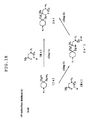
- a compound represented by formula (III-1): (wherein n is 1 or 2) or its salt which is commercially available or readily derived from a commercially available compound, and a compound represented by formula (III-2): W-T-Q (wherein W, Q, and T are as described above) or its salt which is commercially available or readily derived from a commercially available compound may be fused to produce the compound represented by formula (III-3) or its salt.
- T is sulfonyl group and W is chlorine atom
- the reaction may be carried out in methylene chloride in the presence of triethylamine at a temperature in the range of 0°C to room temperature, and preferably, at room temperature for 2 to 12 hours.
- the compound represented by formula (III-3) or its salt obtained in ⁇ Step III-1-1> may be reacted with an alkylating agent represented by formula (III-4) in a solvent which is not involved in the reaction in the presence of a base to produce the compound represented by formula (III) or its salt.
- the compound represented by formula (III-5) or its salt obtained in ⁇ Step III-2-1> is condensed with the compound represented by formula (III-2) or its salt in accordance with the procedure of ⁇ Step III-1-1> to produce the compound represented by formula (III) or its salt.
- carbonyl group in the formula (III) may be protected if necessary, and the protective group may be removed at an adequate stage.
- substituent may be introduced at the alkylene chain, for example, by using a commercially available compound having the corresponding substituent for the starting material (III-1) or (III-4); or by introducing the corresponding substituent in the starting material by the known process described in the documents.
- the compound represented by: (wherein A, B, Q, T, X, Y, Z, l, m, and n are as defined above) or its salt may be produced by the process as described below.
- the compound represented by formula (II) produced by the process described in ⁇ Production process 1> or its salt and the compound represented by formula (IV) or its salt which is commercially available or readily derived from a commercially available compound wherein A, B, X, Y, l, and m, and substitution of each alkylene chain are as defined above; and R is hydrogen atom, a C 1-6 alkyl, a C 1-6 alkoxy, or a C 1-6 alkyl group optionally substituted with hydroxyl or a halogen atom (and in particular, methyl group or ethyl group); or the two R may together represent a C 1-6 alkyl, a C 1-6 alkoxy, a C 2-4 alkylene group optionally substituted with hydroxyl or a halogen atom (in particular, 1,2-ethylene group or 1,3-propylene group)) may be reacted in accordance with the procedure of ⁇ Production process 1> to produce the compound represented by formula (V) or its salt.
- W is a halogen atom, hydroxyl group, or an alkoxy group in the compound represented by formula (III-3) or its salt
- amidation in normal peptide is carried out.
- W is hydroxyl group
- a phenol such as 2,4,5-trichlorophenol, pentachlorophenol, 2-nitrophenol, or 4-nitrophenol
- a N-hydroxy compound such as N-hydroxysuccinimide, N-hydroxy-5-norbornene-endo-2,3-dicarboxyimide or N-hydroxypiperidine is condensed in the presence of a condensing agent such as N,N-dicyclohexylcarbodiimide for conversion into active ester form, and allowed for reaction.
- reaction may be conducted after producing a mixed acid anhydride by reacting with a halogenated acyl compound such as isobutylchloroformate.
- a halogenated acyl compound such as isobutylchloroformate.
- the reaction may be also promoted by using a peptide condensation reagent such as N,N-dicyclohexylcarbodiimide, diphenylphosphoric acid azide or diethyl cyanophosphate alone.
- the compound represented by formula (III-3) may be activated by using a phosphorus compound such as triphenylphosphin or tributylphosphin and an azodicarboxylate typically represented by diethyl azodicarboxylate, and then reacted in a solvent which is not involved in the reaction.
- a phosphorus compound such as triphenylphosphin or tributylphosphin
- an azodicarboxylate typically represented by diethyl azodicarboxylate
- the compound represented by formula (VI) (wherein A, B, Q, T, X, Y, Z, l, m, and n, and substitution of each alkylene chain are as defined above; and R is the same as R defined in the compound represented by formula (IV)) or its salt obtained in ⁇ Step 2> may be then reacted in accordance with the known process described in documents (for example, JP09316059) in a solvent which is not involved in the reaction, and preferably by using toluene for the solvent, in the presence of an acid catalyst, and preferably in the presence of p-toluenesulfonic acid to produce a compound represented by formula (I-b) or its salt.
- the reaction temperature is preferably in the range of 70°C to 80°C, and the reaction time is preferably in the range of 1 to 2 hours.
- substituent Z interconversion between carbonyl group and thiocarbonyl group or conversion into methyelene group may be accomplished, if necessary, by a known process, for example, the process described in "Shinjikkenkagakukouza 14 Synthesis and Reaction of Organic Compounds [III]", page 1817, 1978, Maruzen. (In the formula, A, B, Q, T, X, Y, Z, l, m, and n are as defined above)
- the compound represented by formula (I-b): (wherein A, B, Q, T, X, Y, Z, l, m, and n are as defined above) or its salt produced in ⁇ Production process 2> may be reacted for reduction of the double bond in the formula to produce the compound represented by formula (I-a) or its salt.
- Exemplary reduction processes include reduction by a metal or a metal salt such as sodium, calcium and aluminum; reduction by a metal hydride such as diisopropyl aluminum hydride; and reduction by a metal hydride complex such as sodium borohydride; electrophilic reduction by diborane or substituted borane; and catalytic hydrogenation using a metal catalyst.
- the reaction solvents used is a solvent which is not involved in the reaction, for example, tetrahydrofuran, toluene, methylene chloride, or methanol, or a mixture thereof, and the reaction is conducted at a temperature of -78°C to reflux temperature for a time sufficient for required progress of the reaction.
- A, B, D, Q, T, X, Y, Z, l, m, n, and r are as defined above
- the compound represented by formula: (wherein D, P 1 , P 2 , Y, Z, l, m, n, and r, and substitution of each alkylene chain are as defined above) or its salt may be produced by the process as described below.
- the compound represented by formula (Ik) or its salt may be produced also by another process as described below.
- the reaction may be promoted in accordance with ⁇ Step 1> by using a reaction solvent which is described in ⁇ Production process 1>, or alternatively, a halogen solvent such as methylene chloride, chloroform, or 1,2-dichloroethane, the preferred being chloroform, and there is produced a compound of formula (Ik') (wherein D, P 1 , P 2 , W, Y, Z, l, m, and n, and substitution of each alkylene chain are as defined above; and r is 1).
- a reaction solvent which is described in ⁇ Production process 1>
- a halogen solvent such as methylene chloride, chloroform, or 1,2-dichloroethane, the preferred being chloroform
- the compound represented by formula (Ik') or its salt produced in ⁇ Step 2> may be then condensed in accordance with ⁇ Production process 2> ⁇ Step 2> to produce the compound represented by formula (Ik) or its salt.
- the compound represented by formula (IIk) or its salt may be produced in accordance with the production process of ⁇ Production process 1> ⁇ formula (II)>.
- the compound represented by formula (IIIk) or its salt may be produced in accordance with the production process of ⁇ Production process 1> ⁇ formula (III)>.
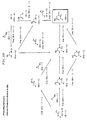
- the compound represented by formula (IIIk) may be produced also by different processes as described below.
- the compound represented by formula (IIIk-2) or its salt obtained in ⁇ Step IIIk-1-1> may be then reacted for normal introduction of the protective group P 2 into the imino group (-NH-) to produce the compound represented by formula (IIIk-3) or its salt.
- the compound represented by formula (IIIk-3) or its salt obtained in ⁇ Step IIIk-1-2> may be then reacted in a solvent which is not involved in the reaction for oxidation by manganese dioxide; chromic acid oxidation by chromium oxide (VI) or dichromate; oxidation by lead tetraacetate; oxidation by oxygen; oxidation by activated DMSO; oxidation by high valence iodine typically represented by Dess-Martin reagent; oxidation by halogen compound such as hypohalogenous acid or its salt to produce the compound represented by formula (IIIk) or its salt.
- the compound represented by formula (III-1) or its salt may be reacted by ⁇ Step IIIk-1-2> and ⁇ Step IIIk-1-1> through the compound represented by formula (IIIk-4) or its salt to produce the compound represented by formula (IIIk-3) or its salt.
- the compound represented by formula (IIIk-2) or its salt may be reacted by ⁇ Step IIIk-1-3> and ⁇ Step IIIk-1-2> through the compound represented by formula (IIIk-5) or its salt to produce the compound represented by formula (IIIk) or its salt.
- the compound represented by formula (IIIk-6) or its salt which is commercially available or readily derived from a commercially available compound may be reacted in accordance with ⁇ Production process 1> ⁇ Step III-1-2> to produce the compound represented by formula (IIIk-7) or its salt.
- the compound represented by formula (IIIk-6) or its salt may be reacted in accordance with ⁇ Step IIIk-1-1> and ⁇ Step IIIk-1-2> through the compound represented by formula (IIIk-9) or its salt to produce the compound represented by formula (IIIk-3) or its salt.
- the compound of formula (IIIk-9) may be oxidized in accordance with ⁇ Step IIIk-1-3> to produce the compound represented by formula (IIIk-7) or its salt.
- a compound having -T-Q instead of the -P 2 for example, a compound of formula (IIIk-6) wherein -P 2 is -T-Q, or a compound of formula (IIIk-4) wherein -P 2 is -T-Q may be used in accordance with the alternative process as described above to produce the compound represented by formula (III) or its salt.
- P 1 or P 2 may be independently deblocked at the most adequate stage for subsequent conversion into the A-B or the T-Q. Conversion into the A-B and the T-Q is described later.
- the compound represented by formula (I-a) or its salt wherein P 1 - is A-B-, and -P 2 is -T-Q can be produced by the production of the compound represented by formula (I-a'): (wherein A, B, D, Q, T, X, Y, l, m, n, and W, and substitution of each alkylene chain are as defined above; r is 1; and Z represents carbonyl group or thiocarbonyl group) or its salt followed by condensation.
- the conversion of the substituents D, A-B, and T-Q may be carried out at any stage in the ⁇ Production process 1>, ⁇ Production process 2>, ⁇ Production process 3>, and ⁇ Production process 4>, or in the stage of the starting compound, or in any reaction stage of producing such starting compound.
- the compound represented by formula (I-a-1) or its salt obtained in ⁇ Step D-1> is reacted with aqueous solution of sodium hydroxide, for example, in methanol at room temperature to produce the compound represented by formula (I-a-2): (wherein A, B, Q, T, X, and n, and substitution of each alkylene chain are as defined above) or its salt.
- the compound wherein D' is -CH 2 OH or its salt may be reacted with a compound represented by formula: R'-W in a solvent which is not involved in the reaction, and preferably, in the mixed solvent of methylene chloride and water in the presence of a base, and preferably, using sodium hydroxide in the presence or absence of a phase transfer catalyst such as quaternary ammonium salt or crown ether, and preferably, in the presence of benzyltriethylammonium chloride at a temperature of -78°C to reflux temperature, and preferably, at 0°C for a time sufficient for the required progress of the reaction, and preferably, for 2 hours for conversion into the compound wherein D is -CH 2 -OR' or its salt.
- the compound wherein D' is -CH 2 OH or its salt may be reacted with R''-CO-W in a solvent which is not involved in the reaction in the presence or absence of a base or in the presence or absence of an acid for conversion into the compound wherein D is -CH 2 -O-CO-R'' or its salt.
- the compound wherein D' is -CH 2 OH or its salt may be reacted with thionyl chloride, methanesulfonyl chloride, p-toluenesulfonyl chloride, or the like in a solvent which is not involved in the reaction in the presence or absence of a base or in the presence or absence of an acid for conversion into the compound wherein D' is -CH 2 -W or its salt.
- the compound wherein D' is -CH 2 -W or its salt may be further reacted with an amine represented by HNR'R'' (for example, HNR 6 R 7 and NR 6 R 7 are as defined above) in a solvent which is not involved in the reaction in the presence or absence of copper powder, copper oxide powder, or iron powder in the presence or absence of a base or in the presence or absence of an acid for conversion into the compound wherein D is -CH 2 -NR'R'' or its salt.
- a metal such as copper, palladium, chromium, or bismuth may be employed for formation of a complex with the compound wherein D' is represented by -CH 2 -W in order to use the compound with a higher activity in the reaction.
- the compound wherein D' is -CH 2 OH or its salt may be reacted with a phosphorus compound such as triphenylphosphin or tributylphosphin and an azodicarboxylate as typically represented by diethyl azodicarboxylate (DEAD) in a solvent which is not involved in the reaction to activate the hydroxyl group, and the resulting product may be reacted with the compound represented by formula: NHR'R'' for conversion into the compound wherein D is -CH 2 -NR'R'' or its salt.
- a phosphorus compound such as triphenylphosphin or tributylphosphin and an azodicarboxylate as typically represented by diethyl azodicarboxylate (DEAD)
- DEAD diethyl azodicarboxylate
- R'' is hydrogen in the resulting compound wherein D is -CH 2 -NR'R'' or its salt
- the compound may be reacted with R'''-CO-W (wherein W is as defined above; and R''' is an optionally substituted C 1-6 alkyl group) in a solvent which is not involved in the reaction in the presence or absence of a base or in the presence or absence of an acid for conversion into the compound wherein D is -CH 2 -NR'-CO-R''' or its salt.
- R'' is hydrogen in the resulting compound wherein D is -CH 2 -NR'R'' or its salt
- the compound may be also alkylated with R'''-W (wherein R''' is an optionally substituted C 1-6 alkyl group) in a solvent which is not involved in the reaction in the presence or absence of a base or in the presence or absence of an acid for conversion into the compound wherein D is -CH 2 -NR'R''' or its salt.
- R'' is hydrogen in the resulting compound wherein D is -CH 2 -NR'R'' or its salt
- the compound may be also reacted with a ketone or an aldehyde represented by formula: R d1 -CO-R d2 (wherein R d1 and R d2 are independently hydrogen atom, an optionally substituted C 1-6 alkyl group, a C 3-6 cycloalkyl group, or a five- or six-membered heterocyclic group containing at least one heteroatom selected from N, O, and S, or d1, d2 and carbon atom of the ketone together form a five- or six-membered cyclic group which may contain at least one heteroatom selected from N, O, and S) in a solvent which is not involved in the reaction in the presence of a reducing agent such as sodium borohydride, lithium aluminum hydride, or diisobutylaluminum hydride for reductive amination of the compound to thereby convert the compound
- the compound wherein D' is -CH 2 OH or its salt may be reacted in a solvent which is not involved in the reaction for oxidation by manganese dioxide; chromic acid oxidation by chromium oxide (VI) or dichromate; oxidation by lead tetraacetate; oxidation by oxygen; oxidation by activated DMSO; oxidation by halogen compound such as hypohalogenous acid or its salt to thereby convert the compound into the compound wherein D is -CHO or its salt.
- halogen compound such as hypohalogenous acid or its salt
- the compound wherein D' is -CH 2 OH or its salt may be reacted in a solvent which is not involved in the reaction for oxidation by manganese dioxide; chromic acid oxidation by chromium oxide (VI) or dichromate; oxidation by lead tetraacetate; oxidation by oxygen; oxidation by activated DMSO; oxidation by halogen compound such as hypohalogenous acid or its salt to thereby convert the compound into the compound wherein D is -CO 2 H or its salt.
- the compound wherein D is -CO 2 H or its salt can be also produced by reacting the compound wherein D is -CHO or its salt synthesized in 1-4) for oxidation by manganese dioxide; chromic acid oxidation by chromium oxide (VI) or dichromate; oxidation by lead tetraacetate; oxidation by oxygen; oxidation by activated DMSO; oxidation by halogen compound such as hypohalogenous acid or its salt. 2) Substituent D convertible from D which is -CHO 2-1) Production of the compound wherein D is -CH(OH)-R d3 (wherein R d3 is an adequate group selected from the R 15 defined for D) or its salt
- the compound wherein D is -CHO or its salt synthesized in 1-4) may be reacted with a nucleophilic reagent such as methyllithium or phenyllithium in a solvent which is not involved in the reaction for conversion into the compound wherein D is -CH(OH)R d3 or its salt.
- a nucleophilic reagent such as methyllithium or phenyllithium in a solvent which is not involved in the reaction for conversion into the compound wherein D is -CH(OH)R d3 or its salt.
- the resulting compound wherein D is -CH(OH)R d3 or its salt may be converted into the compound wherein D is -CH(OR')R d3 or its salt by the procedure similar to 1-1); into the compound wherein D is -CH(O-CO-R')R d3 or its salt by the procedure similar to 1-2); and into the compound wherein D is -CH(NR'R'')R d3 (wherein NR'R'' is as defined above) or its salt by the procedure similar to 1-3).
- the compound wherein D is -CH(OH)R d3 or its salt may be also converted into the compound wherein D is -CO-R d4 (wherein R d4 is an alkyl group adequately selected from for example R 15 ) by the procedure similar to 1-4).
- a catalyst such as activated carbon-palladium
- a catalyst such as activated carbon-palladium in a solvent which is not involved in the reaction to convert the compound into the compound wherein D is -CH 2 -CHR d5 R d6 or its salt.
- the compound wherein D is -CHO or its salt synthesized in 1-4) may be reacted with the amine represented by the formula: HNR'R'' as described above in a solvent which is not involved in the reaction in the presence of a reducing agent such as sodium borohydride, lithium aluminum hydride, or diisobutylaluminum hydride for reductive amination to thereby convert the compound into the compound wherein D is -CH-NR'R'' or its salt.
- a reducing agent such as sodium borohydride, lithium aluminum hydride, or diisobutylaluminum hydride for reductive amination
- the compound wherein D is -CO 2 H or its salt synthesized in 1-5) may be reacted with R'-OH (wherein R' is an optionally substituted C 1-6 alkyl group) in a solvent which is not involved in the reaction in the presence or absence of a condensing agent such as carbodiimidazole for conversion into the compound wherein D is -CO 2 R' or its salt.
- R'-OH an optionally substituted C 1-6 alkyl group
- the compound wherein D is -CO 2 H or its salt may also be reacted with thionyl chloride or the like for conversion into a compound wherein D is -COCl, and the compound may be then reacted with R'-OH for conversion into the compound wherein D is -CO 2 R' or its salt.
- the compound wherein D is -CO 2 H or its salt synthesized in 1-5) may be reacted with NHR'R''(as defined above) in a solvent which is not involved in the reaction in the presence or absence of a condensing agent such as carbodiimidazole for conversion into the compound wherein D is -CO-NR'R'' or its salt.
- a condensing agent such as carbodiimidazole
- the resulting compound wherein D is -CO-NR'R" or its salt may be reacted with a reducing agent such as lithium aluminum hydride or diisobutylaluminum hydride to convert the compound into the compound wherein D is -CHO or its salt.
- the resulting compound wherein D is -CO-NR'R'' or its salt may be also reacted with a reducing agent such as lithium aluminum hydride or diisobutylaluminum hydride to convert the compound into the compound wherein D is -CH 2 -NR'R'' or its salt.
- a reducing agent such as lithium aluminum hydride or diisobutylaluminum hydride
- the compound wherein D is -CO 2 H or its salt synthesized in 1-5) may be reacted with a nucleophilic reagent such as methyllithium or phenyllithium in a solvent which is not involved in the reaction for conversion into the compound wherein D is -CO-R or its salt.
- a nucleophilic reagent such as methyllithium or phenyllithium in a solvent which is not involved in the reaction for conversion into the compound wherein D is -CO-R or its salt.
- the reaction with the nucleophilic reagent may be accomplished by using the compound wherein D is -CO 2 R' or its salt obtained in 3-1) or the compound wherein D is -CO-NR'R'' or its salt obtained in 3-2).
- the substituent B or T when the substituent B or T is carbonyl group, the substituent may be derived by reaction with A-CO-W or Q-CO-W in accordance with the procedure described in 1-2) in a solvent which is not involved in the reaction in the presence or absence of a base or in the presence or absence of an acid.
- the substituent may be derived by condensation using A-CO 2 H or Q-CO 2 H as described in 3-2).
- the substituent B or T is -S(O) z -
- the substituent may be derived by reaction with A-S(O) z -W or Q-S(O) z -W in accordance with the procedure described in 1-2) in a solvent which is not involved in the reaction in the presence or absence of a base or in the presence or absence of an acid.
- the substituent B or T is an optionally substituted C 1-2 alkylene group
- the substituent may be derived by converting the hydroxyl moiety of the corresponding alcohol form into a leaving group followed by nucleophilic substitution in accordance with the procedure described in 1-3); by using reductive amination of the corresponding aldehyde forms shown in 2-3); or by reducing the bond formed through the carbonyl as described above.
- the substituent B When the substituent B is single bond, the substituent may be derived by using A-W through coupling reaction using the metal as described in 1-3); or by reacting the compound with an organic base such as triethylamine or diisopropylethylamine or an inorganic base such as potassium carbonate or sodium hydroxide in a polar solvent such as DMF, 2-ethoxyethanol, ethanol, or water at solvent reflux temperature or by heating in a sealed tube.
- an organic base such as triethylamine or diisopropylethylamine or an inorganic base such as potassium carbonate or sodium hydroxide
- a polar solvent such as DMF, 2-ethoxyethanol, ethanol, or water at solvent reflux temperature or by heating in a sealed tube.
- geometric isomer, tautomer, optical isomer and other stereoisomers may be present for the compound of the present invention when X is methine carbon or when substituent D is present.
- isomers and mixtures thereof are within the scope of the present invention. Isolation or purification of such stereoisomer may be accomplished by any of the techniques commonly used in the art, for example, recrystalization and various chromatographic processes. It is also possible to separately produce such isomer by asymmetric synthesis.
- the pharmacophore of the present invention is the one which has been described in the seventeenth aspect of the present invention, and more specifically, the one described in detail in [17-a] to [17-e].
- the use of such pharmacophore enables designing and/or screening of an inhibitor which selectively inhibits FXa by reversibly binding to the active site of the FXa to develop competitive inhibitory activity for the FXa.
- a rapid evaluation of a large number of compounds will be enabled, and such evaluation will greatly increase the efficiency of the biological tests which require enormous expenditure and time.
- Such evaluation will also enable to limit the number of compounds actually synthesized and greatly increase the efficiency of the synthetic process.
- the compound should be capable of physically/structurally binding to the active site of the FXa.
- the noncovalent bond between a protein and an inhibitor generally takes the form of electrostatic interaction, hydrogen bond, van der Waals interaction, or hydrophobic interaction.
- the compound should be capable of taking the conformation which enables the compound to bind to the active site of the FXa.
- An efficient designing and/or screening of the inhibitor is enabled by selecting the compound which meets such conditions and the pharmacophore of the present invention.
- the discovery of the FXa inhibitory compound which fulfills the factors as described above may be accomplished by utilizing information on the three-dimensional structure of the FXa in combination with various computer programs and databases.
- a compound which exhibits FXa inhibitory activity can be detected by selecting the compounds which satisfy the pharmacophore of the present invention by the method as described below; purchasing or synthesizing the compound; and evaluating the compounds for their FXa inhibitory activity by a standard method.
- Low molecular weight compounds are docked in the active site of the FXa.
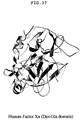
- the three-dimensional structure of the FXa is disclosed by PDB, and the structure of the active site is available from PDB.
- the docking may be accomplished by various computer programs.
- Use of the computer database of the three-dimensional compounds enables a screening from several million to several ten millions of compounds as well as screening of the non-existing compounds.
- the compounds exhibiting a binding mode which satisfy the pharmacophore of the present invention are extracted. The binding mode can be confirmed by using various molecular graphics software programs.
- Compounds having both hydrophobic moiety and basic moiety are first selected from the database, and it is also possible to preliminarily include the non-existing compounds in the database. Three-dimensional structure of the selected compounds of low molecular weight are then docked in the active site of the FXa, and the compounds exhibiting a binding mode which satisfy the pharmacophore of the present invention are extracted.
- the docking may be accomplished by various computer programs, and the binding mode can be confirmed by using various molecular graphics software programs.
- Low molecular weight compounds are docked to each of the S1 pocket and the S3 pocket of the FXa, respectively, so that the pharmacophore of the present invention is satisfied.
- the compounds used may be those of the computer database of three-dimensional compounds or any compounds or their fragments.
- the compound which was placed to the S1 pocket and the compound which was placed to the S3 pocket were connected by using an adequate skeleton which does not change relative spatial position. This process can also be accomplished by using various computer programs.
- Complex structures between a chymotrypsin-like serine protease and its substrate or the inhibitor are prepared.
- the three-dimensional structure of the protease and the three-dimensional structure of the FXa are overlaid on each other at the structure-conserved area of the chymotrypsin-like serine protease family to thereby construct a virtual docking model between the substrate or the inhibitor and the FXa.
- the structure of the substrate or the inhibitor is then altered to satisfy the pharmacophore of the present invention. This process can also be accomplished by using various computer programs.
- the designing and/or screening of the compounds as described above may be accomplished by using the so called molecular design-assisting integrated computer system such as Insight II, Cerius2, Sybyl, and their modules.
- Insight II and Cerius2 are available from Molecular Simulations Inc., San Diego, CA, USA, and Sybyl is available from Tripos Inc., St. Louis, MO, USA.
- computer programs with specialized functions are also useful in the processes of detecting the low molecular weight compounds which fit with the structure of the active site; detecting the adequate compounds which satisfies the pharmacophore; or docking the low molecular weight compounds to the structure of the active site. Exemplary such programs include those as described below.
- the compound having FXa inhibitory activity may also be designed or searched by a process other than the compound designing/screening process described in the present invention or the computer systems.
- an inhibitor which competitively binds to the active site of the FXa or its fragment may be identified by:
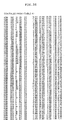
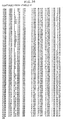
- the inhibitor may be identified by providing a computer system with the three-dimensional structural information of the FXa molecule containing the active site defined by coordinates of Table A as described below; depicting the three-dimensional structure of the active site in the computer system; overlaying the three-dimensional structure of a test compound on the three-dimensional structure of the active site such that the three-dimensional structure of the test compound is arranged to meet all of the following conditions that:
- drug design may be accomplished by conducting an evaluation on a computer by using the three-dimensional structural information of the FXa or its fragment for a compound which satisfies the following association conditions:
- a more specific identification or molecular designing of the FXa inhibitor is enabled by adding the condition for the pharmacophore of the present invention that interaction with the Tyr228 is mediated by the halogen atom, methyl group, or ethyl group (preferably chlorine atom or bromine atom) constituting a part of the hydrophobic moiety.
- the identification or molecular designing of the FXa inhibitor may be accomplished by adding the condition that, in the interaction with the Tyr228, the centroid of the hydrophobic moiety and the centroid of the Tyr228 side chain is within the range of 6.9 to 7.9 ⁇ .
- the identification or molecular designing of the FXa inhibitory compound may be accomplished by adding the condition that the pharmacophore also satisfies at least one of the following conditions 1) to 3):
- the identification or molecular designing of the FXa inhibitor may be accomplished by adding the condition that all of the conditions 1) to 3) are satisfied.
- the molecular designing of the FXa inhibitor may be accomplished by adding the means for suppressing alteration of the conformation of the cross-linking group described in the aspect [18-e].
- the thus identified or designed compound may be obtained by purchasing or synthesizing the compound, and the compound may be subjected to the bioassay, for example, the one described in the Examples of the present invention to determine its specific pharmacological activities, for example, in vitro IC 50 .
- the compound is the one having a FXa inhibitory activity of up to 1 ⁇ M in terms of IC 50 , and preferably, the one which was unknown at the time of the filing of the present invention.
- the present invention is also directed to a pharmaceutical composition characterized by its inclusion as an effective component of at least one compound which has been identified or designed by the identification or drug designing method as described above, which has FXa inhibitory activity in terms of IC 50 determined by a bioassay of up to 1 ⁇ M, and which was (1) unknown at the time of the filing of the present invention or (2) known but whose biological activity was unknown at the time of the filing of the present invention.
- a pharmaceutical composition characterized by its inclusion as an effective component of at least one compound which has been identified or designed by the identification or drug designing method as described above, which has FXa inhibitory activity in terms of IC 50 determined by a bioassay of up to 1 ⁇ M, and which was (1) unknown at the time of the filing of the present invention or (2) known but whose biological activity was unknown at the time of the filing of the present invention.
- the present invention is also directed to a FXa inhibitor characterized by its inclusion as an effective component of at least one compound which has FXa inhibitory activity in terms of IC 50 determined by a bioassay of up to 1 ⁇ M, and which was (1) unknown at the time of the filing of the present invention or (2) known but whose biological activity was unknown at the time of the filing of the present invention.
- FXa inhibitor characterized by its inclusion as an effective component of at least one compound which has FXa inhibitory activity in terms of IC 50 determined by a bioassay of up to 1 ⁇ M, and which was (1) unknown at the time of the filing of the present invention or (2) known but whose biological activity was unknown at the time of the filing of the present invention.
- the preferred is the one having the FXa inhibitory activity in terms of IC 50 of up to 0.5 ⁇ M, more preferably up to 0.1 ⁇ M, and most preferably up to 0.01 ⁇ M.
- the identification or designing of such compound may be accomplished by assuming that the compound has a partial structure comprising the spiro skeleton which is the structure wherein one or both of La and Lb have been removed from the general formula (I'), and then defining the residual Lb, the residual La, or the residual Lb and La.
- Lb may be defined, for example, after assuming the group represented by A-B- of formula (I) as a particular La, and for example, after setting the condition of the aspect 10-d, 4), namely the condition that "La has an optionally substituted, five- to six-membered, aromatic monocyclic heterocyclic group" for the La, and in particular, after assuming that La comprises 4-pyridyl group.
- La may be defined by assuming the group represented by -T-Q of formula (I) as a particular Lb, and preferably, by assuming that Lb comprises a group wherein Q is the one described in the aspect [1-1-d] and T is the one described in the aspect [1-8-b], and most preferably, p-halogenostylylsulfonyl group, 6-halogenonaphthalen-2-ylsulfonyl group, or 7-halogeno-2H-benzopyran-3-ylsulfonyl group, as will be understood from the foregoing description.
- compositions of the present invention possess a potent FXa inhibitory activity.
- the compositions of the present invention are a potent FXa inhibitor, and more particularly, a specific FXa inhibitor, which does not inhibit other enzymes.
- compositions of the present invention are also an orally administrable FXa inhibitor, and more specifically, an orally administrable specific FXa inhibitor.
- the compounds of the present invention specifically inhibit activity of the FXa among the many serine proteases. To be more specific, it does not inhibit trypsin or chymotrypsin at all, nor do they inhibit thrombin, which is another serine protease in the blood coagulation cascade.
- the compounds of the present invention solve the aforementioned problems associated with the use of the conventional thrombin inhibitors, for example, the tendency to cause bleeding.
- the compounds of the present invention can be rapidly absorbed by the digestive tract after oral administration with no reduction in its activity by the absorption, and it also exhibit favorable absorption, distribution, metabolism, and excretion characteristics. Its value as an orally administrable agent is quite high.
- compositions containing the compounds of the present invention can be used as preventives and/or therapeutics of diseases wherein an FXa inhibitor is useful.
- compositions containing the compounds of the present invention cab also be used as an anticoagulant, and as preventives and/or therapeutics of diseases for which anticoagulant is useful.
- such agents are effective in prevention and/or treatment of diseases caused by thrombus or embolism.
- diseases include: diseases from ischemic cerebrovascular disorders such as cerebral thrombosis, brain infarction, cerebral embolism, transient cerebral ischemic attack (TIA) and cerebral vascular spasm after subarachnoid hemorrhage; Alzheimer's disease, cerebrovascular dementia, asymptomatic cerebrovascular disorder, disease associated with ischemic heart disease such as acute and chronic myocardial infarction, aftereffect after myocardial infarction, unstable angina pectoris, angina pectoris and coronary thrombolysis; thrombogenesis after artificial blood vessel or artificial valve replacement, reocclusion and restenosis after coronary artery bypass grafting, reocclusion and restenosis after PTCA or PTCA or stent placement, pulmonary infarction, lung thrombus/lung embolism, diseases associated with pulmonary vascular disorder (for example, drug-induced
- prophilaxis of vascular endothelial cell injury associated with diabetes hypercoagulation associated with transplantation or activated protein C (APC) resistance, blood hypercoagulation associated with vascular disease, injury after operation, obesity, pregnancy, use of oral contraceptive, sustained depression, heparin induced thrombocytopenia, collagen disease (for example, antiphospholipid syndrome, polyarteritis, and systemic lupus erythematosus), Bechet's disease, ischemic reperfusion injury, cancer or the like, and toxemia in pregnancy.
- APC activated protein C
- the agents of the present invention are particularly adapted for use in prevention of embolism associated with atrial fibrillation/artificial valve or valvular heart disease, and preferably for prevention of onset of cerebral embolism, prevention of transient cerebral ischemic attack and especially for prevention of recurrence of the transient cerebral ischemic attack, and prevention/treatment of deep vein thrombosis or DIC.
- the agents of the present invention are used as a drug for these diseases, preventive administration is recommended and such use is particularly important since the agents of the present invention are neither a direct thrombolytic agent nor a direct anti-platelet agents.
- the agents of the present invention are adapted for preventive use in patients suffering from thrombophilia or patients having the risk factor of thrombus/embolism for the purpose of preventing thrombus/embolism.
- thrombosis is easily generated at the site of the lesion or the transplantation, and such thrombosis often triggers cerebral infarction, which is more than often a fatal attack.
- the agents of the present invention have a good potential to be a potent drug for preventing onset of the thrombus/embolism, and in particular, cerebral embolism induced in such patients.
- the agents of the present invention can be administered by oral administration with less side effects such as bleeding, and therefore, the agents of the present invention can be reliably used for a long time with no need of frequent monitoring.
- the agents of the present invention are preventives and/or therapeutics for embolism associated with atrial fibrillation/artificial valve or valvular heart disease.
- the agents of the present invention are preferably preventives of the onset of cerebral embolism associated with such disease.
- the agents of the present invention are also preventives and/or therapeutics, and in particular, a preventives of the onset of transient cerebral ischemic attack; and a preventives and/or therapeutics for deep vein thrombosis or DIC.
- compositions containing the compounds of the present invention as an active ingredient are also effective as veterinary drugs and have high value of use.
- the compositions are also useful as a reagent adapted for use in measuring various blood coagulative functions and as a laboratory reagents.
- compositions are also useful as preventives/therapeutics for infection by influenza virus based on the inhibitory activity for the propagation of the influenza virus, and also, as preventives/therapeutics for periodontal disease.
- FXa inhibitory activity is measured in accordance with the method of Kettner et al. (Journal of Biological Chemistry, vol. 265, pages 18289 to 18297, 1990).
- human FXa product of Enzyme Research Laboratories, Inc., 0.019 U/ml
- DMSO dimethylsulfoxide
- S-2222 Chiromogenix AB, 0.4 mM
- the mixtures are incubated at 37°C in Tris-hydrochloric acid buffer (pH 7.5) while the absorbance at 405 nm is measured continuously.
- the initial reaction velocity is compared with the value for a control containing no test compound. It should be noted that the FXa inhibitory activity of the test compound is generally indicated as IC 50 .
- the strength is in the range of 0.1 nM to 1 ⁇ M in terms of IC 50 .
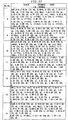
- Table 1 shows typical measurements. Test compound (compounds of the Examples) IC 50 ( ⁇ M) Example 1 0.0032 Example 5 0.0029 Example 10 0.0054 Example 25 0.0015 Example 50 0.0019 Example 59 0.0034 Example 61 0.0028
- Activated partial thromboplastin time is measured in the presence of the test compounds diluted at various concentrations.
- a test compound diluted with DMSO at various concentrations is mixed with human plasma and APTT reagent. The mixture is incubated at 37°C for 2 minutes; calcium chloride (25 mM) is added to the mixture; and the coagulation time is thereafter measured.
- the anticoagulant activity of the test compound is described in terms of the concentration required to double the coagulation time for the case where no test compound is added.
- the compounds of the present invention were found to be effective in extending the APTT.
- the effects of the compounds of the present invention are shown in Table 2.
- Test compound Compounds of the Examples
- Male Wistar rats (200 g - 300 g; Japan SLC Inc.) that have been starved for more than 12 hours are administered through a femoral vein with a single dose of a drug (3 - 30 mg/kg) dissolved in physiological saline (or 10% DMSO solution), and the blood is collected at a certain time interval (3.8% sodium citrate, 1/10 volume), and plasma is then separated by centrifugation at 3000 rpm for 10 minutes.
- Prothrombin time PT is measured by the procedure as described below by using the separated plasma.
- the intravenously administered compounds of the present invention were found to be effective in extending the PT on account of enzyme inhibition.
- test compound is compulsorily administered by oral administration using an oral introducer instead of the administration from the femoral vein at a single dose in the test a), and a certain volume of the blood is collected at a certain time interval at 3.8% sodium citrate, 1/10 volume.
- the blood is evaluated by the procedure as described in a) for extrinsic coagulation time and intrinsic coagulation time.
- the compounds of the present invention were found to be effective in extending the coagulation time upon oral administration of 10 - 100 mg.
- compositions of the present invention may contain at least one compound represented by formula (I) (as already defined above) or salts thereof as an active ingredient. They may also contain any pharmaceutical acceptable carriers.
- formula (I) as already defined above
- salts thereof as an active ingredient. They may also contain any pharmaceutical acceptable carriers.
- the preferred examples of the compounds of the general formula (I) have already been mentioned.
- the compounds of the present invention exhibit potent inhibitory action for FXa activity without exhibiting any inhibitory activity for trypsin, chymotrypsin, or thrombin, and the specificity of the compounds is high. Furthermore, the compounds of the present invention exhibit antithrombotic action when orally administered at a dose of 0.1 to 10 mg/kg, or intravenously administered at a dose of 0.01 to 1 mg/kg in rats.
- the compounds of the present invention does not exhibit prolongation of bleeding time when orally administered at a dose of 10 mg/kg or intravenously administered at a dose of 1 mg/kg in rats. Accordingly, the compounds of the present invention exhibit the anticoagulation action with no risk of showing bleeding tendency, and this is a significant difference from heparin and warfarin, which are known anticoagulants. In addition, the compounds of the present invention exhibit excellent oral absorption, adequate long-lasting action, as well as high safety.
- the compounds of the present invention may be administered to the disease as described above which is to be prevented and treated by the present invention either alone or in combined application with other pharmacologically active component.
- pharmacologically active components include known fibrinolytics (for example, tissue plasminogen activators (tPA) and their derivatives (including modified agents or the so called “second generation” agents), urokinase, and streptokinase); known anticoagulants (for example, warfarin, heparin, and thrombomodulin); known inhibitors of platelet aggregation (for example, aspirin, thromboxane antagonist, inhibitor of thromboxane synthesis, and GPIIb/IIIa antagonist); known therapeutic agents for hyperlipidemia (for example, clofibrate and related drugs, HMG-CoA reductase inhibitor, and EPA-E); and known hypotensive agents (for example, nifedipine and diltiazem).
- fibrinolytics for example
- combined application covers not only the administration of a combination drug containing both the compound of the present invention and another pharmacologically active ingredient but also the case where the two are in separate dosage forms and administered either at a time or at different times.
- the mode of administration is in no way limited as long as the compound of the present invention and another pharmacologically active ingredient exist simultaneously in the patient's blood.
- the pharmaceutical composition containing one or more compounds of the present invention or its pharmaceutically acceptable salt as its effective component may be prepared into capsules, pills, tablets, granules, subtle granules, or powder; or alternatively, oral solution such as suspension, emulsion, limonades, elixir, or syrup; injectable solution; transnasal formation; suppository; ointment; epithem; and the like which are orally or perorally administered to human and other animals by using the commonly used pharmaceutical vehicle, excipient, or other additives.
- Clinical dose of the compound of the present invention to human may be adequately determined in consideration of symptom, body weight, age, sex, and the like of the patient to which the compound is administered.
- the adult daily dose in oral administration is generally in the range of 0.1 mg to 1000 mg, and preferably 1 mg to 300 mg, and the dose in peroral administration is 0.01 to 300 mg, and preferably 0.1 mg to 100 mg.
- Such dose may be administered as a single dose or divided into several doses. The dose may vary depending on various conditions, and the dose below the above described range may be sufficient in some cases.
- capsules, pills, tablets, powder, granules, and the like may be employed for the solid composition.
- Such solid composition is produced by combining at least one active substance with at least one inactive carrier.
- the composition may contain an excipient (for example, lactose, saccharose, mannitol, glucose, hydroxy propylcellulose, microcrystalline cellulose, or metasilicic acid), a binder (for example, crystalline cellulose, saccharide, dextrin, hydroxy propylcellulose, hydroxy propylmethylcellulose, polyvinyl pyrrolidone, or Macrogol), a lubricant (for example, magnesium stearate, calcium stearate, or talc), a disintegrant (for example, corn starch, carboxy methyl cellulose, or calcium cellulose glycorate), a stabilizer (for example, lactose and other sugar alcohols or sugar), a solubilizer or a solubilizing aid (for example
- an excipient for example, lactos
- the tablet, the pill and the granules may be coated with sugar, gelatin, hydroxy propylmethylcellulosse phthalate or other gastric or enteric film coating.
- Exemplary injectable solution used for parenteral administration include aseptic aqueous or nonaqueous solution, suspension, and emulsion.
- Exemplary carriers for the aqueous solution and suspension include water for injection and physiological saline, and exemplary carriers for the nonaqueous solution and suspension include propylene glycol, polyethylene glycol, vegetable oils such as olive oil, and alcohols such as ethylalcohol, and polysorbate 80 (TM).
- composition may further comprise an isotonic agent, antiseptic, emolient, emulsifier, dispersant, stabilizer, solubilizer, solubilizing aid, or other additives as described above, and these additives may be sterilized, for example, by filtration with a membrane filter, inclusion of an antimicrobial agent, or UV irradiation.
- an isotonic agent for example, antiseptic, emolient, emulsifier, dispersant, stabilizer, solubilizer, solubilizing aid, or other additives as described above, and these additives may be sterilized, for example, by filtration with a membrane filter, inclusion of an antimicrobial agent, or UV irradiation.
- composition may be also produced in the form of sterilized solid composition which can be dissolved, emulsified, or suspended before its use for use as an injectable solution.
- the compound of the present invention has low solubility, the compound may be solubilized as desired.
- solubilization may be accomplished by any of the processes known in the art to be applicable for the production of drugs, for example, addition of a surfactant (a polyoxyethylene hydrogenated castor oil, a polyoxyethylene sorbitan higher fatty acid ester, a sugar fatty acid ester, and the like); and formation of a solid dispersion of the drug and a solubilizer, for example, a polymer (a water-soluble polymer such as polyethylene glycol (PEG), hydroxy propyl methylcellulose (HPMC), or polyvinyl pyrrolidone (PVP); or an enteric polymer such as hydroxy propyl methylcellulose phthalate (HPMCP), or methyl methacrylate-methacrylic acid copolymer (Eudragid L,S (TM) manufactured by Rohm and Haas Company)).
- a surfactant a polyoxyethylene hydrogenated castor oil, a polyoxyethylene sorbitan higher fatty acid ester, a sugar fatty acid ester,
- an inclusion compound may be formed by using ⁇ -, ⁇ -, or ⁇ -cyclodextrin, hydroxy propyl cyclodextrin, or the like.
- the procedure employed for the solubilization may also be modified as desired depending on the drug desired by referring to Nagai, T., et al., "Monograph in Pharmacology No.1, Biochemical Availability", Soft-Science Inc., 78-82(1988) or Utsumi, I., et al., “Current Pharmaceutical Technology and Its Application", Iyaku Journal, 157-159(1983).
- the preferred is formation of a solid dispersion comprising the drug and the solubilizer which exhibits an improved solubility (JP-A 56-49314, FR2460667).
- Compound M is the compound of the present invention represented by formula (I) or its pharmaceutically acceptable salt, and to be more specific, a compound selected from the compounds described in Examples.
- Injectable solution 1.0 mg/ml
- Compound M 1.0% W/V Sodium phosphate buffer 3.6% W/V 1M
- Nuclear magnetic resonance (NMR) spectrum was measured by using JEOL JNM-EX270 FT-NMR (manufactured by JEOL Ltd.) or JEOL JNM-LA300 FT-NMR (indicated by * in the data; manufactured by JEOL Ltd.).
- Infrared absorption spectrum (IR) was measured by using HORIBA FT-200 FT-IR (indicated by * in the data; manufactured by HORIBA Ltd.) or HORIBA FT-720 FT-IR (manufactured by HORIBA Ltd.).
- HRMS high resolution mass spectrometry
- HRMS High resolution mass spectrometry
- Glycine ethyl ester hydrochloride (9.88 g) was suspended in methylene chloride (500 ml), and triethylamine (20.2 ml) and then 6-chloronaphthalene-2-sulfonyl chloride (17.6 g) were added to the suspension under cooling with ice. After stirring at room temperature for 1 hour and adjusting the mixture to pH 2 by addition of 1N hydrochloric acid, the mixture was extracted with methylene chloride. The methylene chloride layer was washed with saturated sodium chloride solution and dried over anhydrous sodium sulfate, and the solvent was distilled off under reduced pressure.
- Step A-1 To a solution of the compound obtained in Step A-1 (2.50 g) in N,N-dimethylformamide (25 ml) were added potassium carbonate (1.58 g) and sodium iodide (1.14 g), and a solution of 1-acetoxy-3-chloroacetone (1.72 g) in N,N-dimethylformamide (7 ml) was added dropwise at room temperature. The reaction mixture was stirred at room temperature for 1.5 hours, and the mixture was extracted with diethyl ether after adding water. The organic layer was washed with saturated sodium chloride solution and dried over anhydrous sodium sulfate, and the solvent was distilled off under reduced pressure.
- Step A-2 To a solution of the compound obtained in Step A-2 (1.6 g) and 4-(aminomethyl)-1-benzyl-4-hydroxypiperidine (800 mg) in toluene (200 ml) was added p-toluenesulfonic acid monohydrate (34.0 mg), and the mixture was heated under reflux for 1 hour by using a Dean Stark. The reaction mixture was allowed to cool, and the solvent was distilled off under reduced pressure. The resulting residue was purified by silica gel column chromatography (eluent; ethyl acetate) to obtain the title compound (1.08 g).
- Step A-3 To a solution of the compound obtained in Step A-3 (425 mg) in methanol (11 ml) was added 1N aqueous solution of sodium hydroxide (2.8 ml) under cooling with ice. The reaction mixture was stirred at room temperature for 1 hour, and the solvent was distilled off under reduced pressure. The residue was washed by adding water, collected by filtration, and dried under reduced pressure to obtain the title compound (365 mg).
- Step A-4 To a solution of the compound obtained in Step A-4 (100 mg), benzyltriethylammonium chloride (4.0 mg), and dimethyl sulfate (0.018 ml) in methylene chloride (2 ml) was gradually added 50% aqueous solution of sodium hydroxide (0.6 ml) with vigorous stirring under cooling with ice. After stirring the reaction mixture at room temperature for 2 hours, water was added under cooling with ice, and the mixture was extracted with methylene chloride. The organic layer was washed with saturated sodium chloride solution and dried over anhydrous sodium sulfate, and the solvent was distilled off under reduced pressure.
- racemic body of the title compound (50.9 mg) was mixed with (+)-O,O'-dibenzoyl-D-tartaric acid (32.7 mg), and methanol (6.6 ml) was added to the mixture. After stirring the mixture, the insoluble content was collected by filtration and dried in vacuum. The thus obtained crystals (20 mg) were desalted by using saturated aqueous solution of sodium hydrogencarbonate to obtain the (+) form of the title compound at an optical purity of 94.6%ee. The (-) form of the title compound was also obtained by the similar manner using (-)-O,O'-dibenzoyl-L-tartaric acid.
- the resulting residue was dissolved in a mixed solution of methanol (1.33 l) and methylene chloride (1.33 l), and 1N aqueous solution of sodium hydroxide (140 ml) was added dropwise to this solution under cooling with ice. After stirring at room temperature for 30 minutes, the solvent was distilled off under reduced pressure. To the residue was added saturated aqueous solution of ammonium chloride, and the mixture was extracted with methylene chloride. The organic layer was washed with saturated sodium chloride solution and dried over anhydrous sodium sulfate, and the solvent was distilled off under reduced pressure.
- Step B-2 To a solution of the compound obtained in Step B-2 (76.5 g) in acetonitrile (1.53 l) was added trimethylsilyl iodide (32 ml) under cooling with ice. After stirring the mixture for 45 minutes under cooling with ice, the reaction mixture was poured into 1N hydrochloric acid under cooling with ice, and n-hexane was added to this mixture. The mixture was stirred for separation, and the aqueous layer was washed with n-hexane followed by addition of methylene chloride. 2N aqueous solution of sodium hydroxide was added with stirring under cooling with ice and the mixture was adjusted to pH 11.
- Step C-1 The procedure of Step C-1 was repeated by using the compound obtained in Step D-3 (100 mg) to obtain the title compound (145 mg).
- Step C-2 was repeated by using the compound obtained in Step D-4 (72.5 mg) to obtain the title compound (67.0 mg).
- Example 1 ⁇ Step A-4> was repeated by using the compound obtained in Example 7 ⁇ Step B-1> (938 mg) to obtain the title compound (626 mg).
- Example 1 ⁇ Step A-6> was repeated by using the compound obtained in Example 1 ⁇ Step A-3> (584 mg) to obtain the title compound (430 mg).
- Step A-1 The compound obtained in Step A-1 (370 mg) was used to synthesize according to the procedure of Example 1 ⁇ Step A-7> to thereby obtain the title compound (30.0 mg).
- Step A-1 The compound obtained in Step A-1 (300 mg) was used to synthesize according to the procedure of Example 1 ⁇ Step A-6> to thereby obtain the title compound (276 mg).
- Example 3 ⁇ Step A-2> 300 mg was used to synthesize according to the procedure of Example 4 ⁇ Step A-1> to thereby obtain the title compound (168 mg).
- Step B-1 The compound obtained in Step B-1 (48 mg) was dissolved in formic acid (1.0 ml) and the solution was stirred overnight at room temperature. The mixture was solidified by addition of diethyl ether and the supernatant was removed by decantation and dried in vacuum to obtain the title compound (35.3 mg).
- Step A-2 The compound obtained in Step A-2 (175 mg) was dissolved in 10% hydrogen chloride-methanol solution (2 ml) and the solution was stirred at room temperature for 2 hours. The reaction mixture was concentrated under reduced pressure and the resulting residue was solidified by addition of diethyl ether, and thereafter fully triturated. The solvent was distilled off under reduced pressure to obtain the title compound (160 mg).
- the reaction mixture was concentrated and to the resulting residue was added 1N aqueous solution of sodium hydroxide.
- the mixture was extracted with methylene chloride.
- the organic layer was washed with saturated sodium chloride solution and dried over anhydrous sodium sulfate.
- the solvent was distilled off under reduced pressure to obtain the title compound (3.47 g).
- Example 1 ⁇ Step A-7> was repeated by using the compound obtained in Step B-1 (2.60 g) to obtain the title compound (240 mg).
- Step 1 To a solution of the compound obtained in Step 1 (76.6 mg) in methanol (2 ml) was added 1N aqueous solution of sodium hydroxide (2.84 ml) at room temperature. The reaction mixture was stirred at room temperature for 20 minutes and the solvent was distilled off under reduced pressure. Water was added to the residue and the mixture was extracted with methylene chloride. The organic layer was washed with saturated sodium chloride solution and dried over anhydrous sodium sulfate. The solvent was distilled off under reduced pressure to obtain the title compound (63.1 mg).
- Example 2 ⁇ Step 1> was repeated by using the compound obtained in Example 9 ⁇ Step 5> to obtain the title compound (293 mg).
- Example 9 The compound obtained in Example 9 ⁇ Step 1> (2.46 g) was suspended in methylene chloride (90 ml) and to the suspension were added triethylamine (1.56 ml) and then (E)-4-chlorostyrylsulfonyl chloride (2.26 g) under cooling with ice. The mixture was stirred at room temperature for 4 hours and water was added thereto. The mixture was extracted with methylene chloride. The organic layer was dried over anhydrous sodium sulfate and thereafter the solvent was distilled off under reduced pressure.
- Example 2 To a solution of the compound obtained in Example 1 (111 mg) in methanol (0.4 ml) was added methanesulfonic acid (0.01313.6 ml) and the mixture was stirred for 30 minutes. The reaction mixture was concentrated under reduced pressure and the residue was crystallized by addition of diethyl ether. The supernatant was removed by decantation and the solvent was distilled off under reduced pressure to obtain the title compound (119 mg).
- Example 12 The procedure of Example 12 was repeated by using the (-)-1,4-diaza-4-(6-chloronaphthalen-2-ylsulfonyl)-6-(methoxymethyl)-7-oxa-1'-(4-pyridyl)spiro[bicyclo[4.3.0]nonane-8,4'-piperidin]-2-one (111 mg) produced by the optical resolution method described in Example 1 ⁇ Step A-7> to obtain the title compound (119 mg).
- Example 12 The procedure of Example 12 was repeated by using the compound obtained in Example 3 ⁇ Step A-2> (33.0 mg) to obtain the title compound (38.0 mg).
- Example 12 The procedure of Example 12 was repeated by using the compound obtained in Example 4 ⁇ Step A-3> (40.0 mg) to obtain the title compound (43.0 mg).
- Example 12 The procedure of Example 12 was repeated by using the compound obtained in Example 7 ⁇ Step A-4> (33.0 mg) to obtain the title compound (34.2 mg).
- Example 12 The procedure of Example 12 was repeated by using the compound obtained in Example 9 ⁇ Step 6> (27.8 mg) to obtain the title compound (30.0 mg).
- Example 12 The procedure of Example 12 was repeated by using the compound obtained in Example 10 ⁇ Step 2> (31.2 mg) to obtain the title compound (34.0 mg).
- Example 12 The procedure of Example 12 was repeated by using the compound obtained in Example 11 ⁇ Step 5> (30.6 mg) to obtain the title compound (31.5 mg).
- Example 4 ⁇ Step A-1> was repeated by using the compound obtained in Example 1 ⁇ Step B-1> (4.00 g) to obtain the title compound (3.90 g).
- Step 1 The compound obtained in Step 1 (100 mg) was dissolved in a mixed solution of tetrahydrofuran (1 ml) and ethanol (1 ml) and to the solution were added lithium chloride (18.6 mg) and sodium borohydride (16.5 mg). After stirring at room temperature for 3 hours, saturated aqueous solution of ammonium chloride was added to the reaction mixture under cooling with ice, followed by extraction with methylene chloride. The organic layer was washed with saturated sodium chloride solution and dried over anhydrous sodium sulfate.
- Example 12 The procedure of Example 12 was repeated by using the compound obtained in Example 20 ⁇ Step 5> (50.0 mg) to obtain the title compound (59.3 mg).
- Example 20 ⁇ Step 2> was repeated by using the compound obtained in Example 4 ⁇ Step A-3> (50.0 mg) to obtain the title compound (39.2 mg).
- IR (KBr) cm -1 3435, 3066, 1657, 1554, 1205, 1122
- Example 12 The procedure of Example 12 was repeated by using the compound obtained in Example 25 ⁇ Step 4> (56.0 mg) to obtain the title compound (58.9 mg).
- Example 28 The procedure of Example 28 was repeated by using the compound obtained in Example 27 (20 mg) and using isopropyl alcohol (0.028 ml) instead of methanol to obtain the title compound (18.1 mg).
- HRMS:C 29 H 31 ClN 4 O 6 S(M + ) Calculated: 598.1652, Found: 598.1668
- Example 28 The procedure of Example 28 was repeated by using the compound obtained in Example 27 (20 mg) and using n-propyl alcohol (0.026 ml) instead of methanol to obtain the title compound (15.3 mg).
- Example 28 The procedure of Example 28 was repeated by using the compound obtained in Example 27 (20 mg) and using allyl alcohol (0.025 ml) instead of methanol to obtain the title compound.
- IR(KBr)cm -1 1747, 1678, 1597, 1350, 1167, 972
- Example 28 The procedure of Example 28 was repeated by using the compound obtained in Example 27 (20 mg) and using 2-methoxyethanol (0.028 ml) instead of methanol to obtain the title compound (13.1 mg).
- Dioxane (1.0 ml) solidified in a bath cooled to -20 °C was added concentrated sulfuric acid (0.1 ml). The mixture was warmed to room temperature to obtain a homogenous solution. The solution was solidified again in the bath cooled to -20 °C and the compound obtained in Example 27 (18.0 mg) was added. The mixture was warmed to room temperature to obtain a homogenous solution, which was solidified in the bath cooled to -20 °C. After adding liquid isobutylene (0.7 ml), the mixture was stirred in a sealed tube at room temperature for 5 hours. Saturated aqueous solution of sodium hydrogencarbonate was added to the reaction mixture, followed by extraction with methylene chloride.
- Example 12 The procedure of Example 12 was repeated by using the (-) form of the compound obtained in Example 35 (100 mg) to obtain the title compound (104 mg).
- Example 27 The procedure of Example 27 was repeated by using the compound obtained in Example 35 (1.80 g) to obtain the title compound (1.63 g).
- IR(KBr)cm -1 1664, 1647, 1543, 1460, 1350, 1169
- Example 28 The procedure of Example 28 was repeated by using the compound obtained in Example 37 (160 mg) to obtain the title compound (153 mg).
- IR(KBr)cm -1 1749, 1678, 1599, 1349
- Example 28 The procedure of Example 28 was repeated by using the compound obtained in Example 37 (150 mg) and using isopropyl alcohol (0.206 ml) instead of methanol to obtain the title compound (147.7 mg).
- HRMS:C 29 H 31 ClN 4 O 6 S(M + ) Calculated: 598.1652, Found: 598.1667
- Example 28 The procedure of Example 28 was repeated by using the compound obtained in Example 37 (170 mg) and using n-propyl alcohol (0.023 ml) instead of methanol to obtain the title compound (158 mg).
- Example 28 The procedure of Example 28 was repeated by using the compound obtained in Example 37 (160 mg) and using allyl alcohol (0.196 ml) instead of methanol to obtain the title compound (158 mg).
- Example 28 The procedure of Example 28 was repeated by using the compound obtained in Example 37 (180 mg) and using 2-methoxyethanol (0.255 ml) instead of methanol to obtain the title compound (178.6 mg).
- Example 33 The procedure of Example 33 was repeated by using the compound obtained in Example 37 (160 mg) to obtain the title compound (146 mg).
- IR(KBr)cm -1 1738, 1678, 1597, 1352, 1157, 1132
- Example 12 The procedure of Example 12 was repeated by using the compound obtained in Example 38 (110 mg) to obtain the title compound (12 mg).
- Example 12 The procedure of Example 12 was repeated by using the compound obtained in Example 39 (110 mg) to obtain the title compound (125 mg).
- Example 12 The procedure of Example 12 was repeated by using the compound obtained in Example 40 (110 mg) to obtain the title compound (126 mg).
- Example 12 The procedure of Example 12 was repeated by using the compound obtained in Example 41 (110 mg) to obtain the title compound (129 mg).
- Example 12 The procedure of Example 12 was repeated by using the compound obtained in Example 42 (110 mg) to obtain the title compound (127 mg).
- Example 12 The procedure of Example 12 was repeated by using the compound obtained in Example 43 (119 mg) to obtain the title compound (137 mg).
- Example 50 The procedure of Example 50 was repeated by using the (+) form of the compound obtained in Example 35 (40.0 mg) to obtain the (+) form of the title compound (20.5 mg).
- IR(KBr)cm -1 1626, 1603, 1398, 1348, 1169
- Example 50 was repeated by using the (-) form of the compound obtained in Example 35 (55.0 mg) to obtain the (-) form of the title compound (28.3 mg).
- IR(KBr)cm -1 1657, 1626, 1603, 1396, 1348, 1169
- Example 23 The procedure of Example 23 was repeated by using the (-) form of the compound obtained in Example 35 and using ethyl p-toluenesulfonate instead of methyl p-toluenesulfonate to obtain the title compound.
- IR (KBr) cm -1 3064, 1676, 1649, 1349, 1221, 1192, 1169, 1124, 1012
- Example 36 and 52 can be repeated by using the (+) form obtained in Example 35 to thereby obtain the respective (+) bodies. Further, the procedures of Examples 37 and 38 - 49 can be repeated to obtain the respective (+) bodies.
- Example 12 The procedure of Example 12 was repeated by using the compound obtained in Example 56 (40.0 mg) to obtain the title compound (43.7 mg).
- the organic layer was washed with water and saturated sodium chloride solution, and dried over anhydrous sodium sulfate.
- the amorphous content (450 mg) obtained by distilling off the solvent under reduced pressure was dissolved in methylene chloride (1.3 ml) and to the solution were added glycine ethyl ester hydrochloride (50.4 mg) and acetic acid (0.03 ml). Thereafter, sodium triacetoxy borohydride (127 mg) was added under cooling with ice and the mixture was stirred at room temperature for 8 hours. After adding saturated aqueous solution of sodium hydrogencarbonate to the reaction mixture and extracting with methylene chloride, the organic layer was wished with water and saturated sodium chloride solution, and dried over anhydrous sodium sulfate.
- Example 12 The procedure of Example 12 was repeated by using the compound obtained in Example 61 ⁇ Step 2> (50.9 mg) to obtain the title compound (50.8 mg).
- Example 2 ⁇ Step 1> was repeated by using the compound obtained in Example 7 ⁇ Step B-1> (930 mg) to obtain the title compound (480 mg).
- Example 2 ⁇ Step 2> was repeated by using the compound obtained in ⁇ Step 1> (300 mg) to obtain the title compound (197 mg).
- IR(KBr)cm -1 3400, 1666, 1595, 1348, 1169
- Example 2 The procedure of Example 2 ⁇ Step 1> was repeated by using the compound obtained in Example 25 ⁇ Step 3> (390 mg) to obtain the title compound (363 mg).
- Example 27 The procedure of Example 27 was repeated by using the compound obtained in Example 67 ⁇ Step 2> (10 mg) to obtain the title compound (1.9 mg).
- Example 1 ⁇ Step A-2> was repeated by using the compound obtained in Example 1 ⁇ Step A-1> (1.0 g) and using chloroacetone (0.368 ml) instead of 1-acetoxy-3-chloroacetone to obtain the title compound (1.08 g).
- Example 12 The procedure of Example 12 was repeated by using the compound obtained in Example 69 ⁇ Step 4> (35.0 mg) to obtain the title compound (37.9 mg).
- Example 1 ⁇ Step C-1> was repeated by using the compound obtained in Step 1 (5.56 g).
- the thus obtained compound was used as the starting material to synthesize according to the procedure of Example 1 ⁇ Step C-2> to thereby obtain the title compound (1.50 g).
- Example 7 was repeated by using the compound obtained in Step 2 (0.53 g) to obtain the title compound (0.30 g).
- Example 50 The procedure of Example 50 was repeated by using the compound obtained in Example 71 ⁇ Step 4> (90 mg) to obtain the title compound (70 mg).
- IR(KBr)cm -1 3945, 2949, 1666, 1599, 1348, 1167
- Example 1 ⁇ Step A-3> was repeated by using the compound obtained in Example 1 ⁇ Step A-2> (10.3 g) and 4-amino-4-(aminomethyl)-1-benzylpiperidine (5.26 g) to obtain the title compound (7.76 g).
- Example 20 ⁇ Step 5> was repeated by using the compound obtained in Step 2 (3.30 g) to obtain the title compound (2.50 g).
- IR(KBr) cm -1 3336, 2939, 1657, 1601, 1454, 1421, 1346, 1167
- Example 1 ⁇ Step A-5> was repeated by using the compound obtained in Example 7466 (0.34 g) to obtain the title compound (0.14 g).
- IR(KBr)cm -1 was repeated by using the compound obtained in Example 7466 (0.34 g) to obtain the title compound (0.14 g).
- Example 12 The procedure of Example 12 was repeated by using the compound obtained in Example 75 (0.13 g) to obtain the title compound (0.17 g).
- Example 1 ⁇ Step A-5> was repeated by using the compound obtained in Example 73 ⁇ Step 3> (1.50 g) to obtain the title compound (0.75 g).
- IR(KBr)cm -1 was used for the procedure of Example 1 ⁇ Step A-5> to obtain the title compound (0.75 g).
- Example 1 ⁇ Step A-4> was repeated by using the compound obtained in Example 73 ⁇ Step 1> (2.00 g) to obtain the title compound (1.75 g).
- the aqueous layer was adjusted to pH 10 with potassium carbonate and extracted with methylene chloride.
- the organic layer was washed with saturated sodium chloride solution and dried over anhydrous sodium sulfate.
- the solvent was distilled off under reduced pressure and the resulting residue was purified by silica gel column chromatography [ChromatorexNHTM] (eluent; methylene chloride - 2% methanol/methylene chloride) to obtain the title compound (0.15 g).
- Example 79 The procedure of Example 79 was repeated by using the compound obtained in Example 75 (130 mg) to obtain the title compound (69.0 mg).
- Example 79 The procedure of Example 79 was repeated by using (+)-1,4-diaza-4-(6-chloronaphthalen-2-ylsulfonyl)-6-(methoxymethyl)-7-oxa-1'-(4-pyridyl)spiro[bicyclo[4.3.0]nonane-8,4'-piperidin]-2-one (100 mg) to obtain the title compound (90.7 mg).
- Example 79 The procedure of Example 79 was repeated by using (-)-1,4-diaza-4-(6-chloronaphthalen-2-ylsulfonyl)-6-(methoxymethyl)-7-oxa-1'-(4-pyridyl)spiro[bicyclo[4.3.0]nonane-8,4'-piperidin]-2-one (100 mg) to obtain the title compound (84.1 mg).
- the diethyl ether layer was further extracted with 1N hydrochloric acid and combined with the above aqueous layer.
- the aqueous layer was adjusted to pH 9 with sodium carbonate under cooling with ice and extracted with methylene chloride.
- the organic layer was washed with saturated sodium chloride solution and dried over anhydrous sodium sulfate.
- Step 7 To a solution of the compound obtained in Step 7 (4.5 mg) in methanol (1 ml) was added 10% palladium-active carbon (2 mg) and the mixture was stirred at room temperature for 2 hours under a hydrogen atmosphere. The reaction mixture was filtered through Celite and washed with methanol. The filtrate was concentrated to obtain the title compound quantitatively.
Landscapes
- Chemical & Material Sciences (AREA)
- Health & Medical Sciences (AREA)
- Organic Chemistry (AREA)
- Veterinary Medicine (AREA)
- Public Health (AREA)
- General Health & Medical Sciences (AREA)
- Animal Behavior & Ethology (AREA)
- Life Sciences & Earth Sciences (AREA)
- Medicinal Chemistry (AREA)
- Pharmacology & Pharmacy (AREA)
- Chemical Kinetics & Catalysis (AREA)
- Bioinformatics & Cheminformatics (AREA)
- General Chemical & Material Sciences (AREA)
- Nuclear Medicine, Radiotherapy & Molecular Imaging (AREA)
- Engineering & Computer Science (AREA)
- Cardiology (AREA)
- Diabetes (AREA)
- Hematology (AREA)
- Heart & Thoracic Surgery (AREA)
- Epidemiology (AREA)
- Pharmaceuticals Containing Other Organic And Inorganic Compounds (AREA)
- Nitrogen Condensed Heterocyclic Rings (AREA)
- Heterocyclic Carbon Compounds Containing A Hetero Ring Having Oxygen Or Sulfur (AREA)
- Preparation Of Compounds By Using Micro-Organisms (AREA)
- Prostheses (AREA)
- External Artificial Organs (AREA)
Abstract

Description
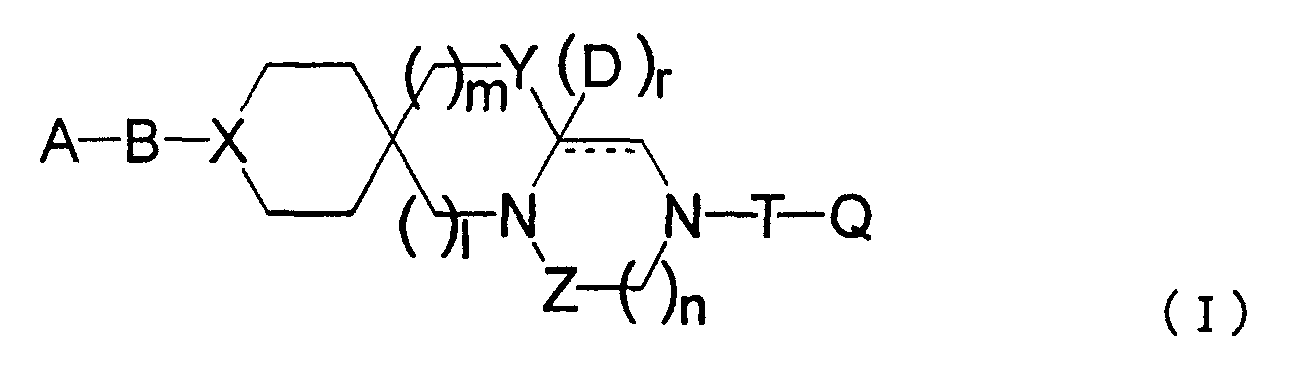
a group selected from (1) a saturated or unsaturated five- or six-membered cyclic hydrocarbon group, or a saturated or unsaturated five- or six-membered heterocyclic group, (2) an amino group, and (3) an imidoyl group (wherein the groups of (1) to (3) are optionally substituted);
[1-1] In the compound of formula (I), Q is a hydrocarbon group or a heterocyclic group, and these groups may optionally have substituents. Exemplary "hydrocarbon groups" within the definition of Q include aliphatic hydrocarbon groups, alicyclic hydrocarbon groups, and aryl groups, and the preferred is an aryl group.
y is 0, 1, or 2.
[1-1-a] Examples of the "optionally substituted hydrocarbon group" or the "optionally substituted heterocyclic group" include:
(1) C1-10 alkyl groups; (2) C2-6 alkenyl groups; (3) C2-6 alkynyl groups; (4) C3-9 cycloalkyl groups; (5) C3-6 cycloalkenyl groups; (6) C4-6 cycloalkanedienyl groups; (7) C6-14 aryl groups; and (8) (i) "five- or six-membered, monocyclic aromatic heterocyclic groups", (ii) "eight- to twelve-membered, fused aromatic heterocyclic groups", and (iii) "three- to eight-membered, saturated or unsaturated, non-aromatic heterocyclic groups", which contain 1 to 4 heteroatoms selected from nitrogen atom, oxygen atom and sulfur atom in addition to the carbon atoms, and each group of the above (1) to (8) may be either unsubstituted or substituted with 1 to 5 substituents of the class selected from (a-1) to (g-1) as described below.
y is 0, 1, or 2.
[1-1-b] Preferably, Q is (1) a C1-6 alkyl group, (2) a C2-6 alkenyl group, (7) a C6-14 aryl group, or (8) (i) a five- or six-membered, monocyclic aromatic heterocyclic group, (ii) an eight- to twelve-membered, fused aromatic heterocyclic group, or (iii) a three- to eight-membered, saturated or unsaturated, non-aromatic heterocyclic group, which contains 1 to 4 heteroatoms selected from nitrogen atom, oxygen atom and sulfur atom in addition to the carbon atoms, and each group in (1), (2), (7) and (8) is optionally mono-or di-substituted at an arbitrary position with the substituent of the class selected from [1-1] (a-1) to (g-1) (and most preferably, from those listed as "particularly preferable groups").
[1-1-c] More preferably, Q is (1') or (2'): a C1-6 alkyl group (most preferably a C1-2 alkyl group) or a C2-6 alkenyl group (most preferably a C2 alkenyl group) substituted with a substituent selected from substituent (a-1): a C6-14 aryl group and substituent (b-1): an aromatic group selected from (i) five- or six-membered monocyclic aromatic heterocyclic groups and (ii) eight- to twelve-membered fused aromatic heterocyclic groups, which contain 1 to 4 heteroatoms selected from nitrogen atom, oxygen atom and sulfur atom in addition to the carbon atoms; or
(7'): a C6-14 aryl group which is optionally substituted with 1 to 2 halogen atoms; or (8'): a heterocyclic group which is (i) a five- or six-membered, monocyclic, aromatic heterocyclic group, (ii) an eight- to twelve-membered, fused aromatic heterocyclic group, or (iii) a three- to eight-membered, saturated or unsaturated, non-aromatic heterocyclic group, which contains 1 to 4 heteroatoms selected from nitrogen atom, oxygen atom and sulfur atom in addition to the carbon atoms, and wherein the carbon atoms are mono- or di-substituted with a halogen atom.
[1-1-d] Still more preferably, Q is benzyl group, phenethyl group, styryl group, 1-naphthyl group, 2-naphthyl group, benzofuran-2-yl group, benzo[b]thien-2-yl group, indolyl-2-yl group, quinolin-3-yl group, 1H-benzimidazol-2-yl group, benzoxazol-2-yl group, benzothiazol-2-yl group, 2H-benzopyran-3-yl group, 4-vinylphenyl group, 4-benzenesulfonyl-thiophen-2-yl group, or 5-(2-pyridyl)thiophen-2-yl group, and the aromatic ring in such group is optionally mono- or di-substituted with halogen atom (most preferably chlorine atom or bromine atom) or a C1-6 alkyl group (most preferably methyl group).
[1-2] In the compound of formula (I), A is hydrogen atom; or
the "saturated or unsaturated, five- or six-membered, cyclic hydrocarbon group" corresponds to those containing 5 or 6 carbon atoms in the cyclic hydrocarbon groups listed as "alicyclic hydrocarbon groups" and "aryl groups" in Q. Examples are cyclopentyl, cyclohexyl, cycloheptyl, cyclopentenyl, cyclopentadienyl, cyclohexadienyl, and phenyl.
exemplary "aromatic heterocyclic groups" include pyrolyl, furyl, thienyl, oxazolyl, imidazolyl, oxazolyl, isoxazolyl, thiazolyl, isothiazolyl, pyrazolyl, 1,2,3-triazolyl, 1,2,4-triazolyl, 1,2,3-oxadiazolyl, 1,2,4-oxadiazolyl, 1,3,4-oxadiazolyl, furazanyl, 1,2,3-thiadiazolyl, 1,2,4-thiadiazolyl, 1,3,4-thiadiazolyl, tetrazolyl, pyridyl, pyridazinyl, pyrimidinyl, pyrazinyl, 1,2,3-triazinyl, 1,2,4-triazinyl, 1,2,5-triazinyl, 1,3,5-triazinyl, and thiadiazinyl.
[1-2-c] Examples of the optionally substituted imidoyl group of (3) include
group: -C(RVII')=N-RVII"
(wherein RVII' and RVII" are the same or different and arbitrarily selected from a hydrogen atom and the substituent RVII as described above in (2)).

[1-2-b1] an amino group which is optionally mono- or di-substituted with a C1-10 alkyl group or a C6-14 aryl group, a formimidoyl-amino group, or an acetimidoyl amino group; or [1-2-c1] group: -N(Ra'')-C(Ra')=N-Ra or group:
Ra' is a hydrogen atom; a C1-6 alkyl group; a C1-6 alkanoyl group; a benzoyl group; an amino group which is optionally mono- or di-substituted with a group selected from a C1-6 alkyl, a C1-6 alkanoyl or a benzoyl; or a C1-6 alkoxy group; and
Ra is a hydrogen atom, a C1-6 alkyl group, a C1-6 alkanoyl group, or benzoyl group), or alternatively, -C(Ra')=N-Ra moiety in each group may form:

[1-3-a] a single bond, a carbonyl group, -S(O)x- (wherein x is typically 0 to 2, and preferably 2), or an optionally substituted C1-2 alkylene group (which is typically substituted with an optionally halogenated C1-6 alkyl group or an optionally halogenated C1-6 alkoxy group),
[1-3-b] preferably a single bond, a carbonyl group, or -SO2-, and
[1-3-c] more preferably a single bond.
[1-4] In the compound of formula (I), D is [1-4-a] a hydrogen atom, a group -CO-R5 (wherein R5 is hydrogen atom or a substituent), or an optionally substituted C1-6 alkyl group (preferably a C1-6 alkyl group optionally substituted with R15 as described below).
[1-4-b] More preferably, D is a hydrogen atom; or
[1-4-c] Still more preferably, D is a hydrogen atom; or
- 1) a group selected from a carboxyl group, a C1-2 alkylcarbonyl group, a C1-2 alkoxycarbonyl group, and a C1-2 alkoxycarbonylalkylcarbonyl group; or a group selected from a phenoxycarbonyl group which is optionally substituted with a C1-2 alkyl, a C1-2 alkoxy, or a halogen atom, or a benzyloxycarbonyl group which is optionally substituted with a C1-2 alkyl, a C1-2 alkoxy, or a halogen atom;
- 2) a carbamoyl group which is optionally mono- or di-substituted with a C1-2 alkyl; a C1-2 alkoxycarbamoyl group; a C1-2 alkoxycarbonylalkylcarbamoyl group; a cyclic amino carbonyl group which is optionally substituted with oxo, hydroxyl, amino or carboxyl (and in particular, a pyrrolidin-1-ylcarbonyl group, a piperidin-1-ylcarbonyl, a piperazin-1-ylcarbonyl, a 4-morpholino carbonyl group, a thiomorpholino carbonyl group, or a 1,1-dioxo-4-thiomorpholino carbonyl group); or
- 3) a methyl group or an ethyl group optionally substituted with R15' (wherein R15' represents a carboxyl group; a C1-2 alkoxycarbonyl group; a hydroxyl group; a C1-2 alkoxy group; a C1-3 alkanoyloxy group; an amino group; a mono- or di-substituted C1-2 alkylamino group; a C1-2 alkanoylamino group; a pyrrolidin-1-yl group, a piperidin-1-yl group, a piperazin-1-yl group, a 4-morpholino group, a thiomorpholino group or a 1,1-dioxo-4-thiomorpholino group, each of which is optionally substituted with oxo, hydroxyl, amino or carboxyl).
[1-5-a] a methine group optionally substited with A'-B'-(wherein A' is a group selected from those defined for A and B' is a group selected from those defined for B), or nitrogen atom, and
[1-5-b] preferably a methine group or a nitrogen atom, and [1-5-c] more preferably a nitrogen atom. [1-6] In formula (I), Y is
[1-6-a] an oxygen atom, -S(O)y- (wherein y is an integer of 0 to 2), or an optionally substituted imino group (-NH-) wherein the substituent for the imino group is 1) -CO-R5 (wherein R5 is a group selected from those as defined above); 2) a C1-6 alkyl group optionally substituted with R15 (wherein R15 is a group selected from those as defined above); 3) a C1-6 alkyl, C1-6 alkoxy or phenyl group which is optionally substituted with a halogen atom; or 4) a N-oxide group, as described for D in [4].
[1-6-b] Preferably, Y is an oxygen atom, or
[1-6-c] alternatively, -S(O)y- (wherein y is an integer of 0 to 2, and preferably 0), or
[1-6-d] an unsubstituted imino group (-NH-).
[1-7] In formula (I), Z is
[1-7-a] a methylene group, a carbonyl group, or a thiocarbonyl group, and
[1-7-b] preferably a carbonyl group.
[1-8] In formula (I), T is
[1-8-a] -S(O)z- (wherein z is an integer of 0 to 2, and preferably 2), carbonyl group, or an optionally substituted C1-2 alkylene group (in particular, C1-2 alkylene group optionally substituted with an optionally halogenated C1-6 alkyl group or an optionally halogenated C1-6 alkoxy group), and
[1-8-b] preferably, -SO2- or -CH2-.
[1-9] In formula (I), l, m, and n are
[1-9-a] independently an integer selected from 0, 1 and 2 with the proviso that l and m are not simultaneously 0, and [1-9-b] more preferably, l is 1; m is 0 or 1; and n is 1. [1-10] In formula (I), r is 0 or 1. The bond indicated by the broken line and the solid line is a single bond or a double bond (when r is 0).
[1-11] Exemplary substitutents of the ring containing X, the ring containing Y, and the ring containing Z include an oxo group (=O); a hydroxyimino group (=N∼OH); an alkoxyimino groups (=N∼ORi wherein Ri is a C1-6 alkyl groups optionally substituted with a substituent which is preferably a group selected from halogen, hydroxyl, and carboxyl); and groups shown for D in [1-4], and the preferable substituents are an oxo group, a hydroxyl group, a carboxyl group, a halogen atoms, a C1-6 alkyl groups, a C2-6 alkenyl groups, and a C2-6 alkynyl groups. Among these, the C1-6 alkyl groups, the C2-6 alkenyl groups, and the C2-6 alkynyl group are optionally further substituted with substituent RI (wherein RI represents a group selected from C1-6 alkoxy; C1-6 alkoxycarbonyl; carboxyl; carbamoyl optionally mono- or di-substituted with C1-6 alkyl; halogen; C1-6 alkyl; halogenated C1-6 alkyl; amino optionally mono- or di-substituted with a C1-6 alkyl; C2-6 alkenoyl amino; nitro; hydroxyl; oxo; cyano; and amidino). Particularly preferable substituents are an oxo group, a C1-6 alkoxy groups, and a carboxyl group.
hydroxyl, and carboxy); and
[1-12]
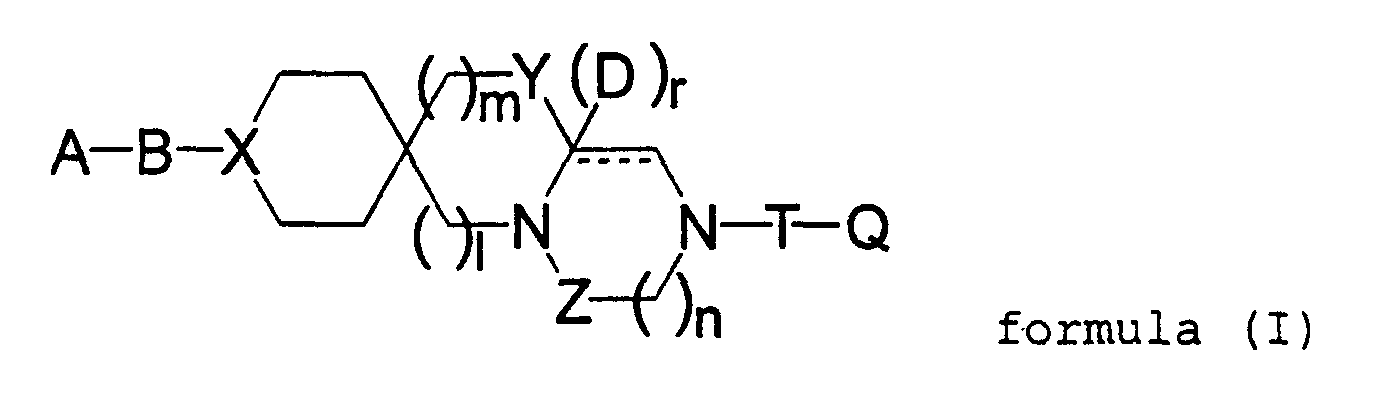
Ra' is a hydrogen atom, a C1-6 alkyl group, a C1-6 alkanoyl group, a benzoyl group, an amino group mono- or di-substituted with a group selected from C1-6 alkyl, C1-6 alkanoyl and benzoyl, or a C1-6 alkoxy group; and
Ra is a hydrogen atom, a C1-6 alkyl group, a C1-6 alkanoyl group, or a benzoyl group; or alternatively
the -C(Ra')=N-Ra moiety in each group may form

R5 is preferably a hydrogen atom, hydroxyl, a C1-6 alkyl, a C1-6 alkoxy, a C1-6 alkoxycarbonylalkyl, or an optionally substituted amino group, and in particular, group -NR6R7 (wherein R6 and R7 are independently hydrogen atom, a C1-6 alkyl, a C4-7 cycloalkyl, or a C2-6 alkenyl; or R6 and R7 may together form a five- to seven-membered heterocyclic ring with the nitrogen atom to which R6 and R7 are binding, the heterocyclic ring optionally further comprising 1 or 2 heteroatoms selected from N, S, and O); wherein the substituent R5 is optionally further substituted with a group selected from hydroxyl, amino, carboxyl, C1-6 alkoxycarbonyl, oxo, C1-6 alkyl, hydroxy-C1-6 alkyl, C1-6 alkoxy-C1-6 alkyl, carboxy-C1-6 alkyl, C1-6 alkyl-C1-6 alkoxycarbonyl, and carbamoyl-C1-6 alkoxy; and
- X is CH or N;
- Y is oxygen atom, -S(O)y- (wherein y is an integer of 0 to 2, and preferably 0), or NH;
- Z is a methylene group, a carbonyl group, or a thiocarbonyl group (and preferably a carbonyl group); and
- l, m, and n are independently an integer selected from 0, 1 and 2 with the proviso that l and m are not simultaneously 0; and r is an integer of 0 or 1, and the bond indicated by the broken line and the solid line is a single bond or a double bond (when r is 0).


- 1) an anticoagulant; or a prophylactic and/or therapeutic agent for diseases induced by thrombosis or embolism;
- 2) a prophylactic and/or therapeutic agent for diseases wherein an anticoagulant is effective; or a prophylactic and/or therapeutic agent for diseases wherein inhibition of FXa is effective;
- 3) a prophylactic agent for enbolism associated with atrial fibrillation/artificial valve or valvular heart disease (and preferably, a prophylactic agent for onset of cerebral embolism associated with these diseases); or a prophylactic and/or therapeutic agent for (and in particular, a prophylactic agent for recurrence of) transient ischemic attack; or
- 4) a prophylactic and/or therapeutic agent for DIC; a prophylactic and/or therapeutic agent for influenza virus infection; or a prophylactic and/or therapeutic agent for deep vein thrombosis.
- [3-a] More specifically, the FXa inhibitor is an inhibitor specific for FXa characterized by its inclusion of the compound represented by formula (I) or its pharmaceutically acceptable salt as an effective component; a FXa inhibitor which can be orally administered; and an inhibitor specific for FXa which can be orally administered.
- [3-b] The FXa inhibitor is a reagent characterized by its use of the compound represented by formula (I) or its pharmaceutically acceptable salt. Exemplary such reagents include a reagent for diagnosing abnormality of blood coagulation in a mammal wherein the FXa inhibitory action is utilized; a reagent for use in physiological experiments wherein quantitative FXa inhibitory action is utilized.
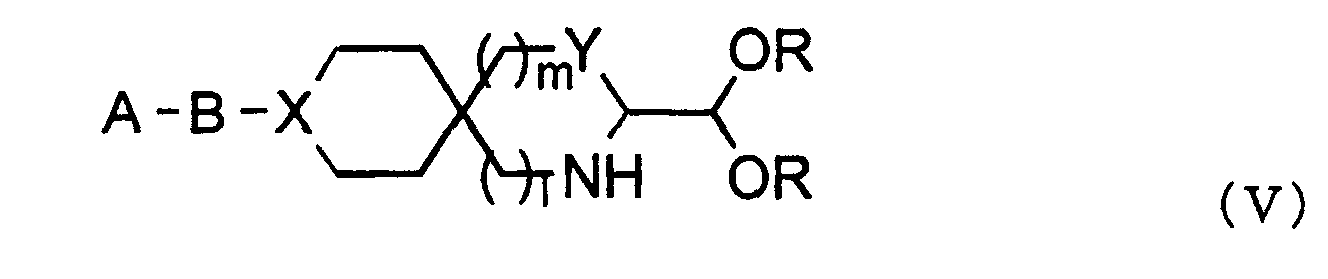
[5] Fifth aspect of the present invention is the compound of formula (VI):

[6] Sixth aspect of the present invention is the compound of formula (Ik):
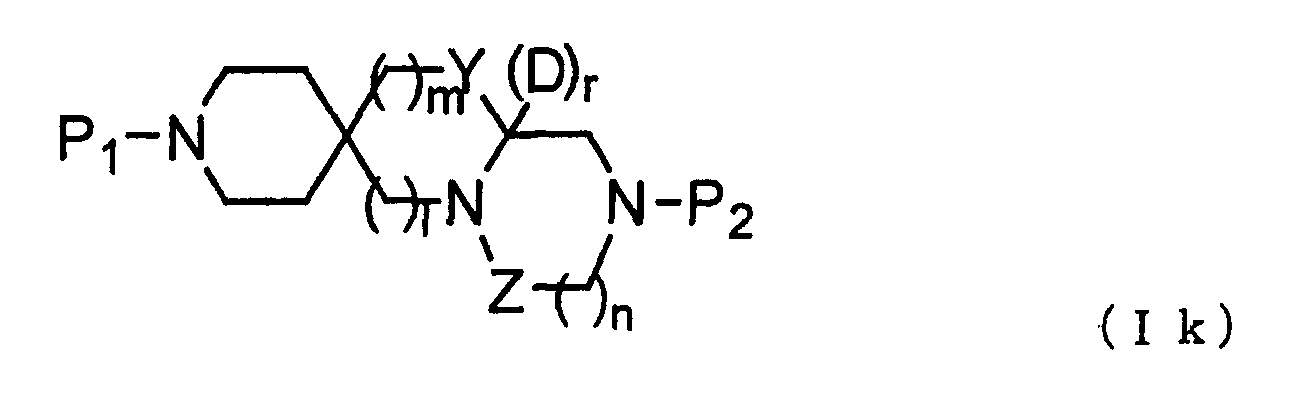
[7] Seventh aspect of the present invention is the compound of formula (I-a'):

[8] Eighth aspect of the present invention is a compound exhibiting FXa inhibitory activity which has a partial structure represented by formula (I'') in its molecule, and the salt thereof.
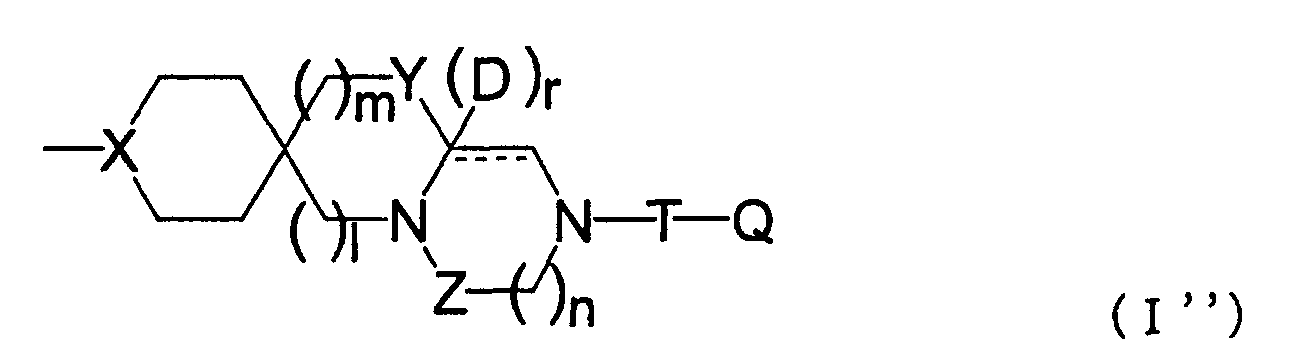
[9] Ninth aspect of the present invention is a compound exhibiting FXa inhibitory activity which has a partial structure represented by formula (I''') in its molecule, and the salt thereof.

[10] Tenth aspect of the present invention is
[10-a] a compound having FXa inhibitory activity represented by the formula (I') or its pharmaceutically acceptable salt:
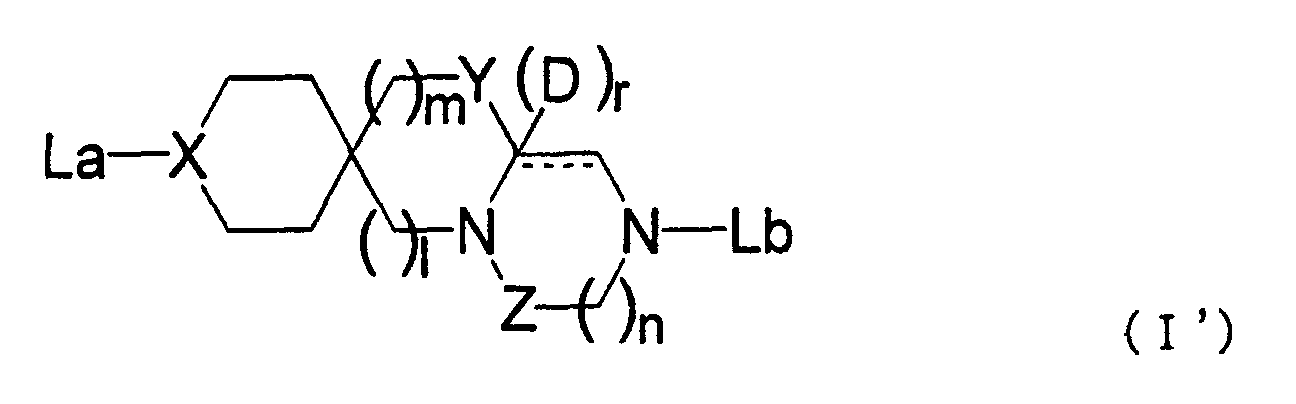
[10-c] More preferably, the compound of formula (I') is the one wherein, when the hydrophobic moiety of the Lb interacts with the Tyr228 in the binding of the compound of formula (I') to the FXa, the distance between the centroid (the coordinate obtained by calculating the average for each of X, Y, and Z coordinates of all heavy atoms included in the partial structure; hereinafter simply referred to as centroid) of the hydrophobic moiety of the Lb and the centroid of the Tyr228 side chain is within the range of 6.9 to 7.9 Å.
[10-d] The compound is also a FXa inhibitory compound which further satisfies at least one of the following conditions 1) to 3) in addition to the [10-a] to [10-c] as described above.
[12] Twelfth aspect of the present invention is a compound which satisfies all of the following conditions:
- (1) the compound has a group including a basic moiety which associates with the S3 pocket of the Fxa [a space formed at least by amino residues Trp215, Phe174, Tyr99, Thr98, Glu97, and Lys96] when the complex of the compound with the FXa is in its crystalline state;
- (2) the compound has a hydrophobic moiety which binds to the S1 pocket of FXa [a space formed at least by amino acid residues Val213, Ser214, Trp215, Gly216, Glu217, Gly218, Cys220, Asp189, Ala190, Cys191, Gln192, Gly193, Asp194, Ser195, Gly226, Ile227, and Tyr228] when the complex of the compound with the FXa is in its crystalline state;
- (3) said hydrophobic moiety interacts with the Tyr228 side chain in the S1 pocket, but does not covalently bond to the Ser195 in the active center when the complex of the compound with the FXa is in its crystalline state; and
- (4) the compound has FXa inhibitory activity.
[14] Fourteenth aspect of the present invention is a pharmaceutical composition characterized by its inclusion of at least one compound according to eighth to twelfth aspect of the invention as an effective component.
[15] Fifteenth aspect of the present invention is a method for inhibiting FXa characterized in that the method comprises administration of the pharmaceutical composition according to the fourteenth aspect of the invention to a mammal requiring the FXa inhibition. The method is preferably the one characterized by that the administration is accomplished by oral administration.
[16] Sixteenth aspect of the present invention is a crystal of the complex of at least one compound according to eighth to twelfth aspect of the invention or its salt with FXa.
[17] Seventeenth aspect of the present invention is:
[17-a] a pharmacophore which is useful in identifying or designing an inhibitor which competitively binds to active site of the FXa or its fragment, and which satisfies all of the (a) to (c):
[17-b] a pharmacophore of [17-a] wherein
[17-b1] the interaction with the Tyr228 is an interaction mediated by the halogen atom, methyl group, ethyl group, or methoxy group (preferably chlorine atom or bromine atom) constituting a part of the hydrophobic moiety;
[17-b2] in the interaction with Tyr228, the distance between the centroid of the hydrophobic moiety and the centroid of the Tyr228 side chain is within the range of 6.9 to 7.9 Å;
[17-b3] the pharmacophore satisfies at least one of the following conditions 1) to 3):
[18] Eighteenth aspect of the present invention is
[18-a] a method for identifying or designing an inhibitor which competitively binds to an active site of FXa or its fragment, wherein the inhibitor is screened by providing three-dimensional structural information of the active site to a computer system; identifying a compound which is assumed to bind to the FXa in a manner satisfying all of the conditions that:
- (a) the compound associates with S1 pocket by its hydrophobic moiety and the moiety interacts with Tyr228,
- (b) the compound associates with the inside of S3 pocket of the active site by its basic moiety, and
- (c) the compound does not bind covalently with Ser195; and subjecting the compound to a biological assay which is capable of measuring FXa inhibitory activity to thereby determine whether the compound exhibits FXa inhibitory activity in the assay; and
- (a) the hydrophobic moiety is arranged in the S1 pocket so that the hydrophobic moiety can interact with the Tyr228;
- (b) the basic moiety is arranged in the S3 pocket; and
- (c) the compound does not bind covalently with the Ser195; evaluating whether the three-dimensional structure of the test compound spatially fits with the active site; preparing a test compound which spatially fits with the active site; and subjecting the test compound to a biological assay which is capable of measuring FXa inhibitory activity to thereby determine whether the test compound exhibits FXa inhibitory activity in the assay; or [18-c] alternatively, a drug designing method characterized in that an evaluation is conducted on a computer by using the three-dimensional structural information of the FXa or its fragment for a compound which satisfies the following association conditions:
- (a) the compound associates with the S1 pocket by its hydrophobic moiety, and the moiety interacts with the Tyr228;
- (b) the compound associates with the inside of the S3 pocket by its basic moiety; and
- (c) the compound does not bind covalently with Ser195; or
[18-d1] a method for conducting identification or molecular design on the bases of the condition that interaction with the Tyr228 is mediated by the halogen atom, methyl group, ethyl group, or methoxy group (preferably chlorine atom or bromine atom) constituting a part of the hydrophobic moiety; or
[18-d2] a method for conducting identification or molecular design on the bases of the condition that, in the interaction with the Tyr228, the distance between the centroid of the hydrophobic moiety and the centroid of the Tyr228 side chain is within the range of 6.9 to 7.9 Å; or
[18-d3] a method for conducting identification or molecular design of a FXa inhibitory compound which satisfies at least one of the following conditions 1) to 3):
- 1) when the compound binds to the FXa, the hydrophobic moiety does not either partly or entirely undergo an electrostatic interaction with the Asp189 of the S1 pocket;
- 2) when the compound binds to the FXa, centroid
position of the hydrophobic moiety satisfies in the S1
pocket at least two of the following conditions that such
position is:
- i) at a distance of 3.6 to 4.6 Å from the Cys191 backbone Cα atom;
- ii) at a distance of 6.2 to 7.2 Å from the Ser195 backbone Cα atom;
- iii) at a distance of 5.5 to 6.5 Å from the Ser214 backbone Cα atom;
- iv) at a distance of 3.6 to 4.6 Å from the Trp215 backbone Cα atom;
- v) at a distance of 6.7 to 7.7 Å from the Glu217 backbone Cα atom; and
- vi) at a distance of 5.8 to 6.8 Å from the Cys220 backbone Cα atom; and
[18-e] a method for conducting identification or molecular design of the inhibitor according to aspects [18-a] to [18-d], wherein, in providing a cross-linking group connecting the group binding to the S1 pocket and the group binding to the S3 pocket (for example La and Lb in formula (I')), a ring having spiro union is provided in the cross-linking group as a means for suppressing alteration of the conformation of the cross-linking group itself; or
[18-f] a compound identified or designed by, or a compound adapted for (a compound identifiable or designable by) the method for conducting identification or molecular design of the inhibitor according to aspects [18-a] to [18-e], which has FXa inhibitory activity in terms of IC50 determined by a bioassay of up to 1 µM, and which was unknown at the time of the filing of the present invention; or
[18-g] a pharmaceutical composition containing as an effective component at least one compound identified or designed by, or a compound adapted for the method for conducting identification or molecular design of the inhibitor according to aspects [18-a] to [18-e], which has FXa inhibitory activity in terms of IC50 determined by a bioassay of up to 1 µM, and (1) which was unknown at the time of the filing of the present invention or (2) which was known but whose biological activity was unknown at the time of the filing of the present invention, or a pharmaceutically acceptable salt thereof; or
[18-h] a FXa inhibitor containing as an effective component at least one compound identified or designed by, or a compound adapted for the method for conducting identification or molecular design of the inhibitor according to aspects [18-a] to [18-e], which has FXa inhibitory activity in terms of IC50 determined by a bioassay of up to 1 µM, and (1) which was unknown at the time of the filing of the present invention or (2) which was known but whose FXa inhibitory activity was unknown at the time of the filing of the present invention, or a pharmaceutically acceptable salt thereof.
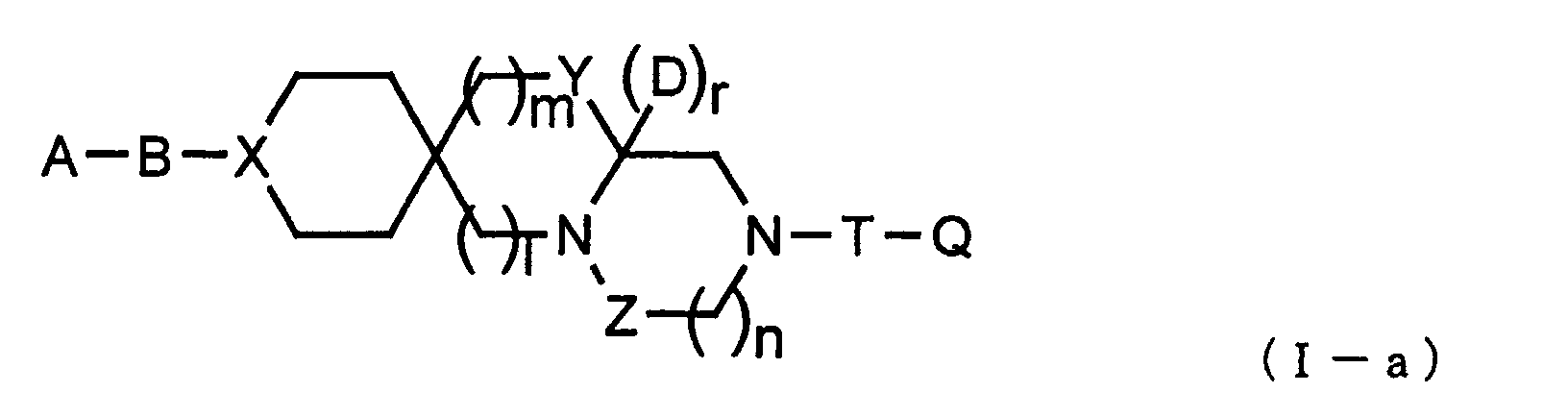

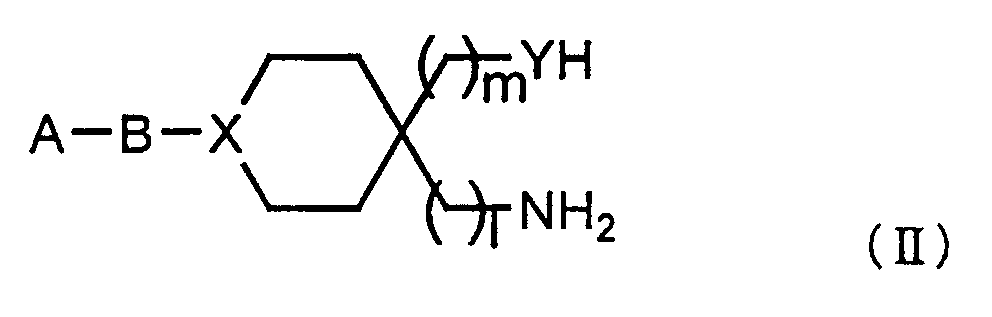
1-1) When l = 1 and m = 0




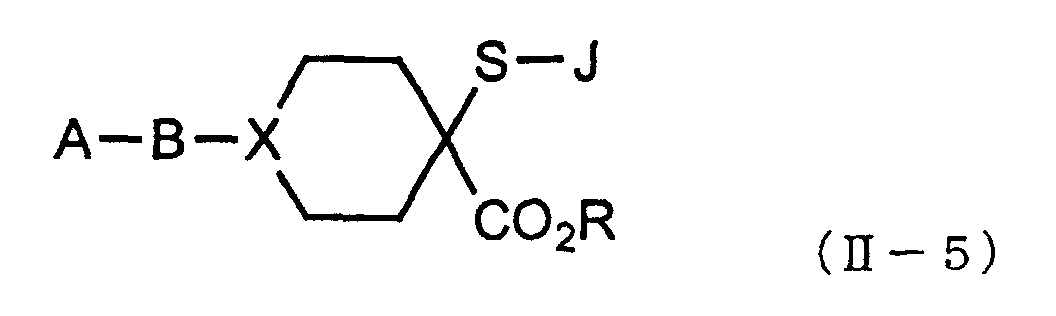
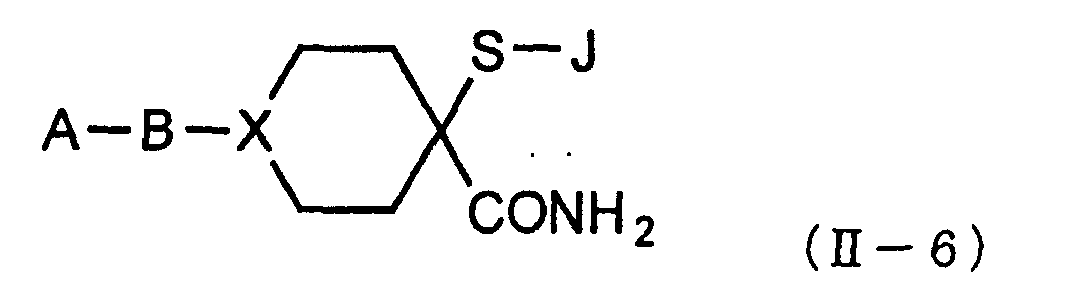

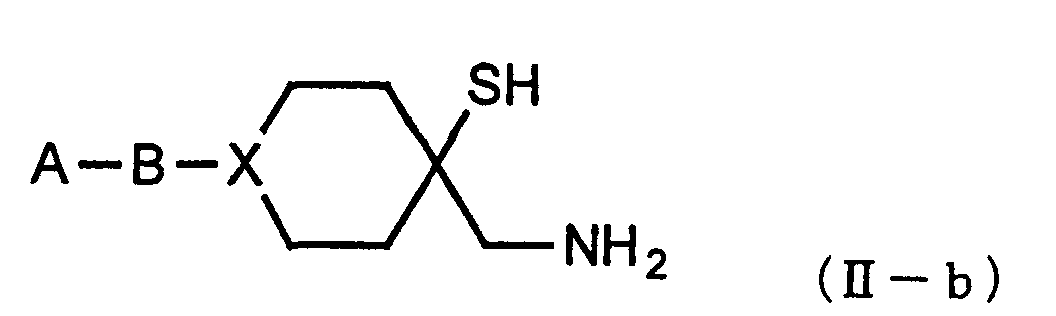
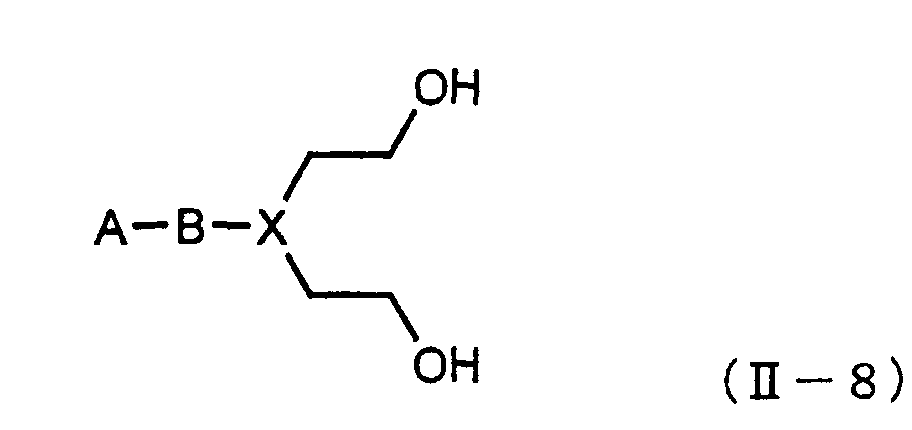
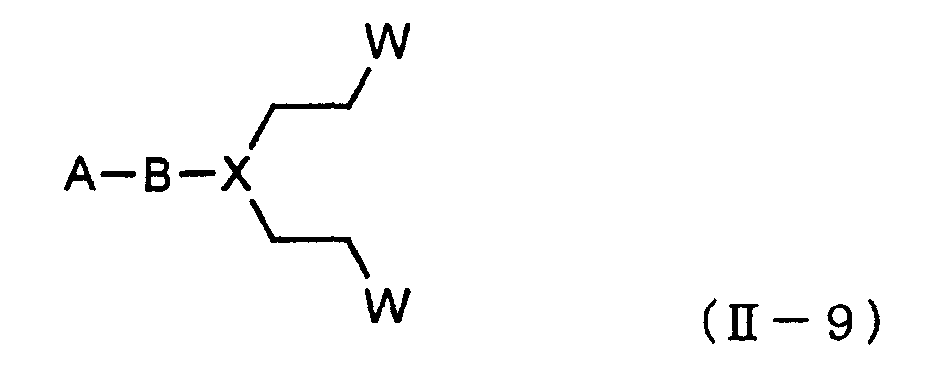
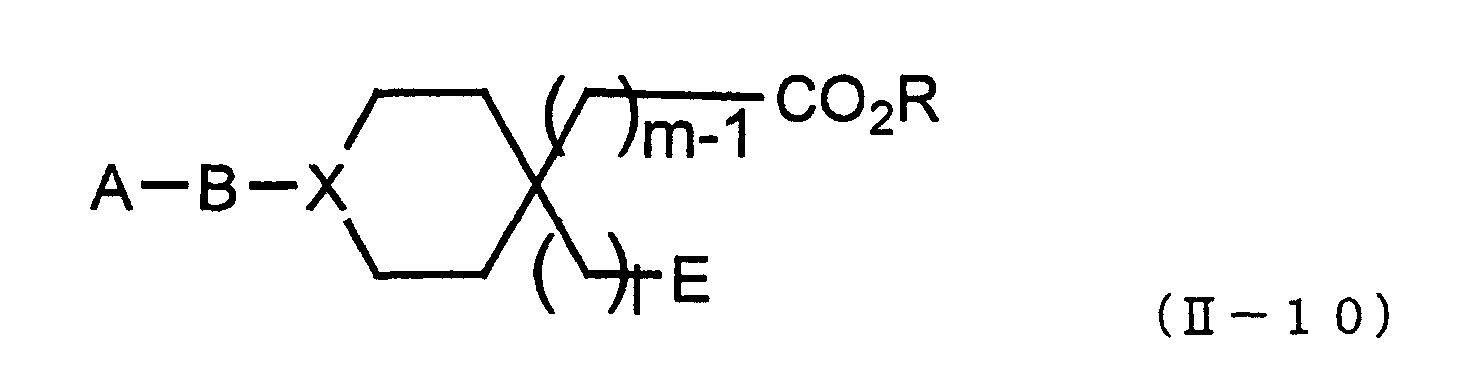
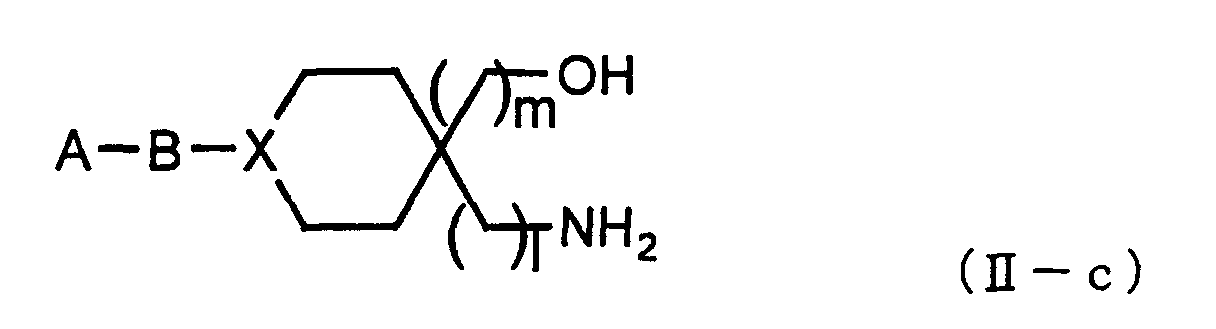
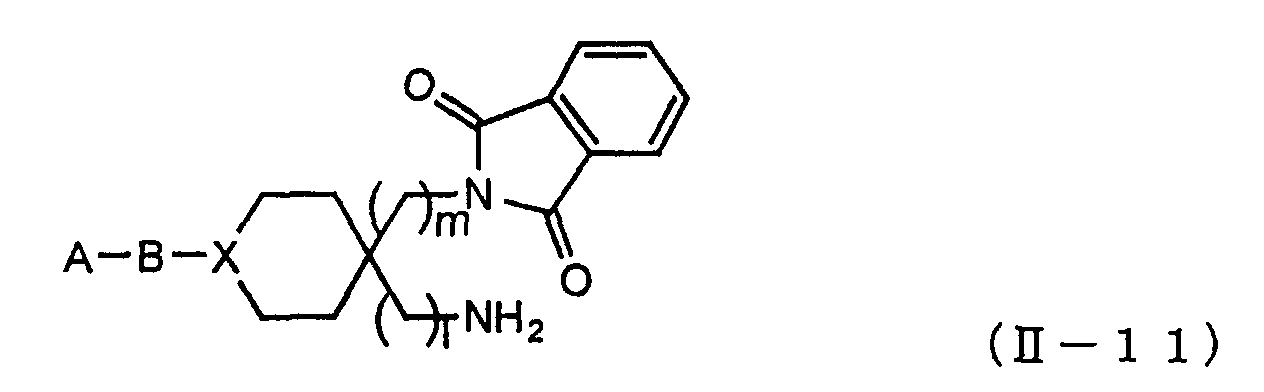


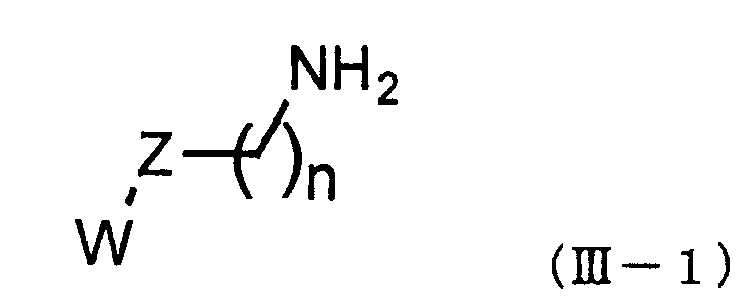


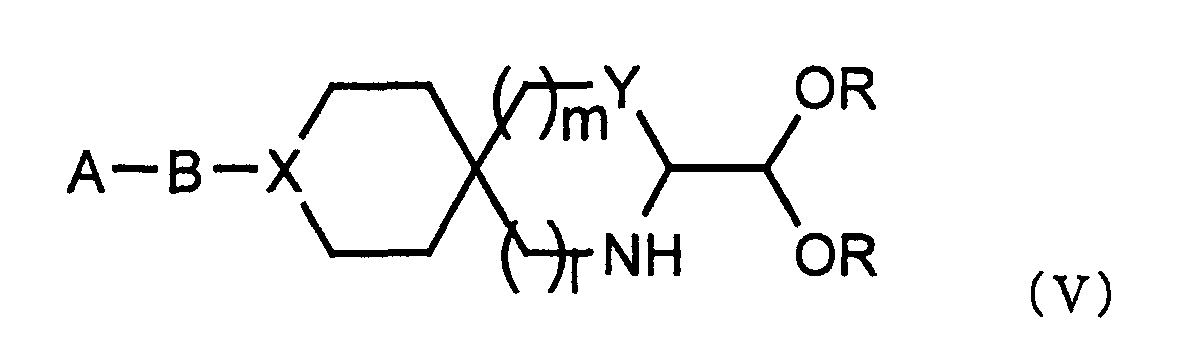


R is the same as R defined in formula (IV).)
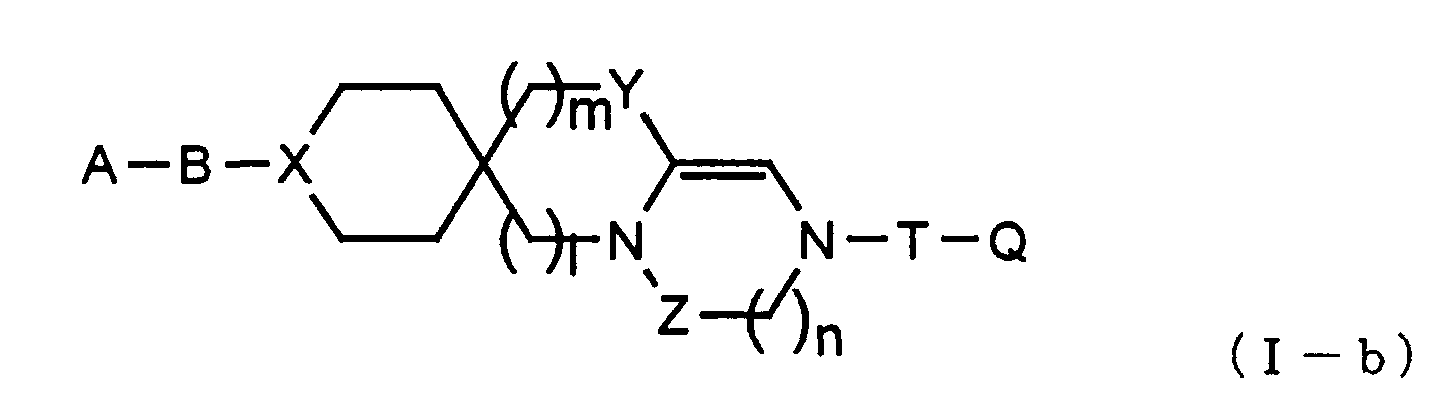


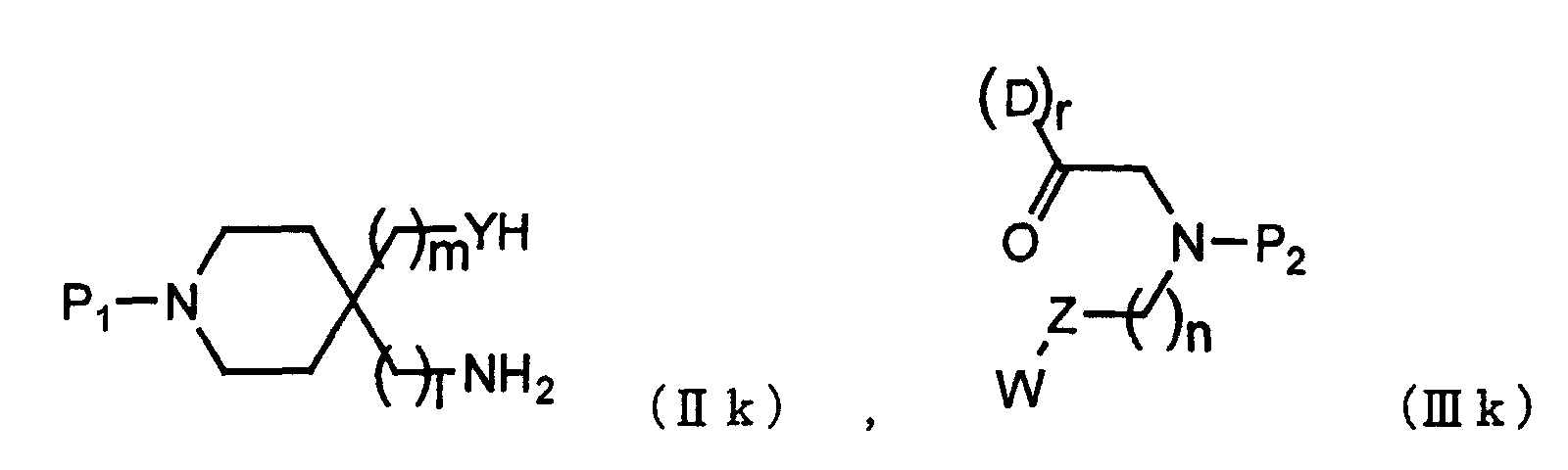


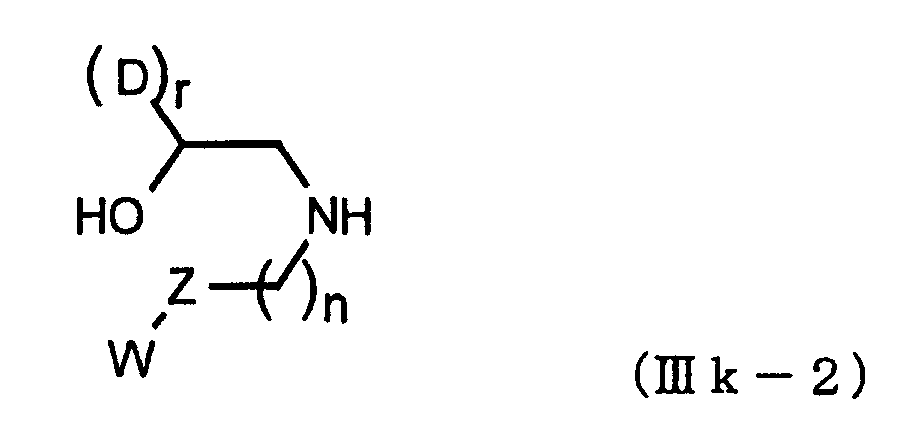
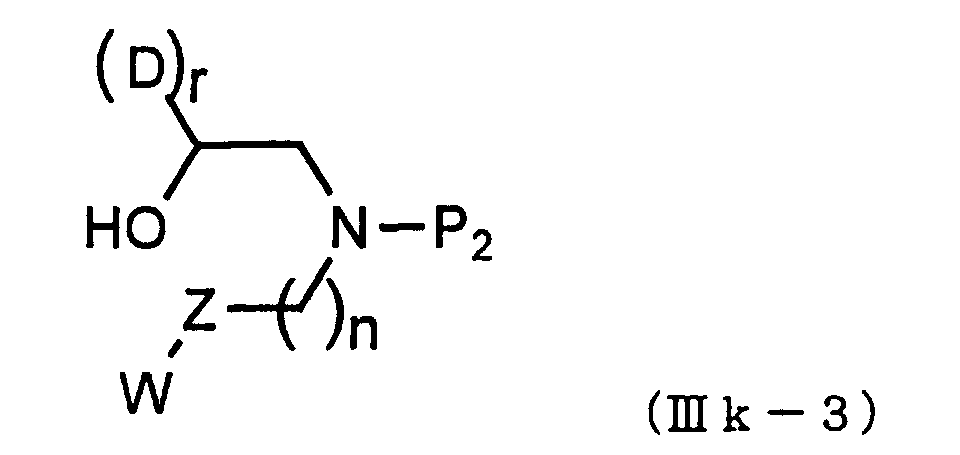
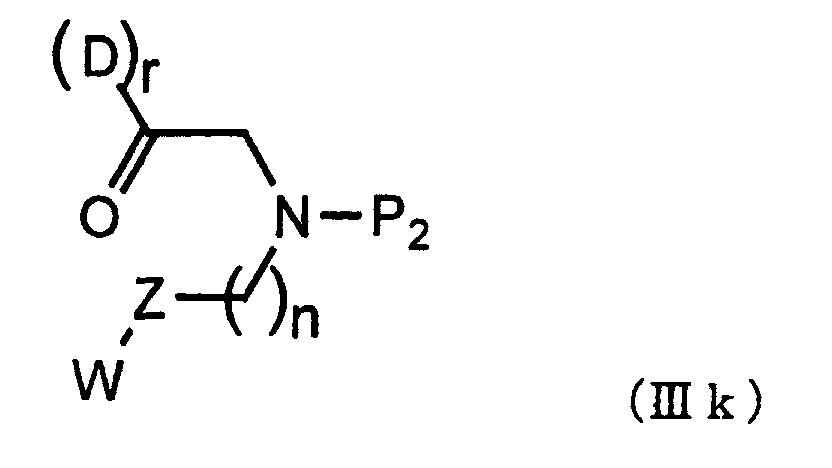


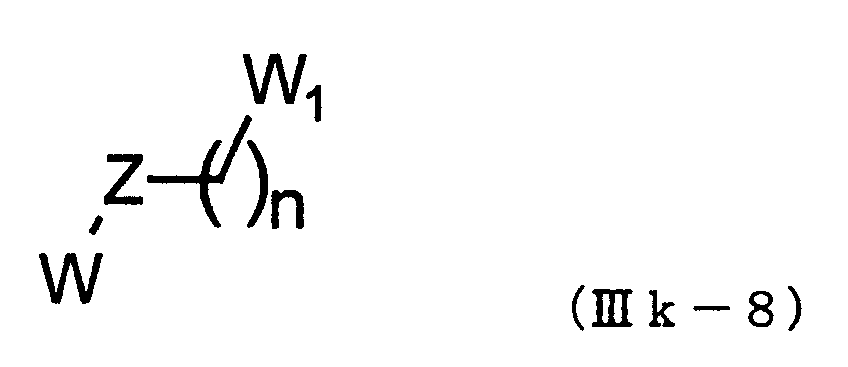

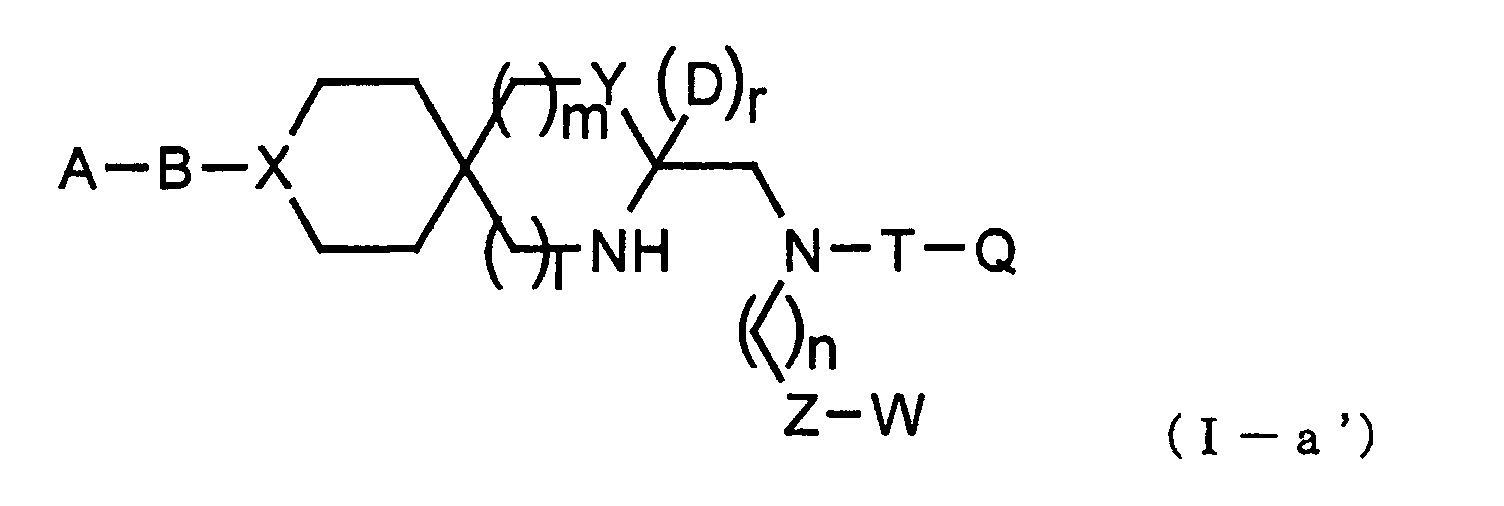


1) Substituent D convertible from D' which is -CH2OH
1-1) Production of a compound wherein D is -CH2-OR'
(wherein R' is an optionally substituted C1-6 alkyl group) or its salt
1-1-1) Production process using R'-W
1-1-2) Production process using R'-OH
1-2) Production of a compound wherein D is -CH2-O-CO-R''
(wherein R'' is an optionally substituted C1-6 alkyl group) or its salt
1-3) Production of a compound wherein D is -CH2-NR'R'' (wherein -NR' and R'' are an amino group represented, for example, by -NR6R7 (wherein R6 and R7 are independently hydrogen atom, a C1-6 alkyl, a C4-7 cycloalkyl, or a C2-6 alkenyl; or R6, R7 and the nitrogen to which they are binding together represent a five- to seven-membered heterocyclic ring wherein the heterocyclic ring contains 1 to 2 heteroatoms selected from N, S, and O; said R6 and R7 being optionally further substituted with an adequate substituent)) or its salt
1-4) Production of a compound wherein D is -CHO or its salt
1-5) Production of a compound wherein D is -CO2H or its salt
2) Substituent D convertible from D which is -CHO
2-1) Production of the compound wherein D is -CH(OH)-Rd3 (wherein Rd3 is an adequate group selected from the R15 defined for D) or its salt
2-2) Production of the compound wherein D is -CH=CRd5Rd6 or its salt
2-3) Production of the compound wherein D is -CH-NR'R'' or its salt
3) Substituent D convertible from D which is -CO2H
3-1) Production of the compound wherein D is -CO2R' or its salt
3-2) Production of the compound wherein D is -CO-NR'R'' (wherein NR'R'' is as defined above) or its salt
3-3) Production of the compound wherein D is -CO-R or its salt
- DOCK [I.D.Kuntz et al., "A Geometric Approach to Macromolecule-Ligand Interactions", J. Mol. Biol., 161: 269-288(1982)]. DOCK is commercially available from University of California, San Francisco, CA, USA.
- Catalyst [Green,J. et al., "Chemical Function Queries for 3D Database Search", J. Chem. Inf. Comput. Sci. 34, 1297-1308(1994)]. Catalyst is commercially available from Molecular Simulations Inc., San Diego, CA, USA.
- Ludi [Bohm, H. J. "LUDI: rule-based automatic design of new substituents for enzyme inhibitor or leads", J. Comput. Aided Mol. Des., 6: 593-606 (1992)]. Ludi is commercially available from Molecular Simulations Inc. San Diego, CA, USA.
- C2-LigandFit. C2-LigandFit is commercially available from Molecular Simulations Inc., San Diego, CA, USA.
- FlexX [Rarey, M. et al., "A fast flexible docking method using an incremental construction algorithm", J. Mol. Biol., 261: 470-489(1996)]. FlexX is commercially available from Tripos Inc., St. Louis, MO, USA.
an inhibitor which competitively binds to the active site of the FXa or its fragment may be identified by:
| Test compound (compounds of the Examples) | IC50 (µM) |
| Example 1 | 0.0032 |
| Example 5 | 0.0029 |
| Example 10 | 0.0054 |
| Example 25 | 0.0015 |
| Example 50 | 0.0019 |
| Example 59 | 0.0034 |
| Example 61 | 0.0028 |
| Test compound (compounds of the Examples) | Concentration required to double coagulation time (µM) |
| Example 5 | 0.43 |
| Example 6 | 0.99 |
| Example 9 | 0.29 |
| Example 23 | 0.62 |
| Example 29 | 0.90 |
| Example 42 | 0.20 |
| Example 58 | 0.18 |
| Example 69 | 0.36 |
| (a) Tablet (1 mg) | |
| Compound M | 1.0 g |
| Lactose | 90.0 g |
| Sodium carboxymethyl cellulose | 7.0 g |
| Corn starch paste(5% W/V paste) | 1.0 g |
| Magnesium stearate | 1.0 g |
| (b) Tablet (10 mg) | |
| Compound M | 10 g |
| Lactose | 150 g |
| Crosscarmellose sodium | 6.0 g |
| Corn starch | 28.5 g |
| Polyvinyl pyrrolidone | 2.5 g |
| Magnesium stearate | 3 g |
| (c) Tablet (100 mg) | |
| Compound M | 100 g |
| Lactose | 180 g |
| Crosscarmellose sodium | 13 g |
| Corn starch (5% W/V paste) | 4 g |
| Magnesium stearate | 3 g |
| (d) Capsule (50 mg) | |
| Compound M | 100 g |
| Lactose | 395.5 g |
| Magnesium stearate | 4.5 g |
| (e) Injectable solution (0.1 mg/ml) | |
| Compound M | 0.1% W/V |
| Sodium phosphate buffer | 2.3% W/V |
| Citric acid | 0.4% |
| Macrogol 400 | 3.5% |
| Water for injection | adequate amount |
| to make up 100%. |
| (f) Injectable solution (1.0 mg/ml) | |
| Compound M | 1.0% W/V |
| Sodium phosphate buffer | 3.6% W/V |
| 1M Aqueous solution of | 15% W/V |
| Water for injection | adequate amount |
| to make up 100%. |
NMR spectrum (*CDCl3) δppm: 8.43-8.40(1H,m), 7.95-7.87(4H,m), 7.57(1H,dd,J=2,9Hz), 5.22-5.15(1H,m), 4.01(2H,q,J=7Hz), 3.82(2H,d,J=6Hz), 1.11(3H,t,J=7Hz)
NMR spectrum (*CDCl3) δppm: 8.42-8.37(1H,m), 7.98-7.85(3H,m), 7.80(1H,dd,J=2,9Hz), 7.57(1H,dd,J=2,9Hz), 4.84(2H,s), 4.31(2H,s), 4.15(2H,s), 4.06(2H,q,J=7Hz), 2.16(3H,s), 1.17(3H,t,J=7Hz)
NMR spectrum (*CDCl3) δppm: 8.36(1H,s), 8.02-7.88(3H,m), 7.78(1H,d,J=9Hz), 7.60(1H,d,J=9Hz), 7.36-7.19(5H,m), 4.48-4.14(5H,m), 3.46 (2H,s), 3.34(1H,d,J=17Hz), 3.08 (1H,d,J=12Hz), 2.62-2.21(4H,m), 2.33(1H,d,J=12Hz), 2.11(3H,s), 1.93-1.72(2H,m), 1.53-1.34(2H,m)
NMR spectrum (*CDCl3) δppm: 8.40-8.33(1H,m), 8.01-7.90(3H,m), 7.82-7.76(1H,m), 7.65-7.58(1H,m), 7.35-7.21(5H,m), 4.50-4.31(2H,m), 4.24(1H,d,J=12Hz), 3.89(1H,d, J=12Hz), 3.62(1H,d,J=12Hz), 3.47(2H,s), 3.35(1H,d, J=17Hz), 3.07(1H,d,J=12Hz), 2.66-2.07(4H,m), 2.26(1H,d,J=12Hz), 1.97-1.75(2H,m), 1.57-1.36(2H,m)
NMR spectrum (*CDCl3) δppm: 8.36-8.33(1H,m), 7.97-7.92(3H,m), 7.80-7.75(1H,m), 7.63-7.57(1H,m), 7.33-7.20(5H,m), 4.40-4.30(2H,m), 4.18(1H,d,J=12Hz), 3.64(1H,d,J=10Hz), 3.54(1H,d,J=10Hz), 3.46(2H,s), 3.41(3H,s), 3.32(1H,d,J=17Hz), 3.10(1H,d,J=12Hz), 2.67-2.18(4H,m), 2.24(1H,d,J=12Hz), 1.99-1.75(2H,m), 1.53-1.33(2H,m)
NMR spectrum (*DMSO-d6) δppm: 8.89-8.75(1H,brs), 8.73-8.58(1H,brs), 8.61(1H,s), 8.33-8.13(3H,m), 7.93-7.84(1H,m), 7.77-7.69(1H,m), 4.17-4.02(3H,m), 3.57-2.80(7H,m), 3.28(3H,s), 3.18(1H,d,J=12Hz), 2.62(1H,d,J=11Hz), 2.00-1.83(2H,m), 1.70-1.54(2H,m)
HRMS: C27H29ClN4O5S(M+): Calculated: 556.1547, Found: 556.1540
NMR spectrum (*CDCl3) δppm: 8.37-8.33(lH,m), 7.97-7.91(3H,m), 7.80-7.74(1H,m), 7.63-7.58(1H,m), 7.39-7.25(5H,m), 5.10(2H,s), 4.46-4.32(2H,m), 4.22(1H,d, J=12Hz), 3.96-3.85(1H,m), 3.76-3.53(3H,m), 3.52-3.40(1H,m), 3.36(1H,d,J=17Hz), 3.37-3.24(1H,m), 3.15(1H,d,J=12Hz), 2.41(1H,brs), 2.28(1H,d,J=12Hz), 1.89-1.68(2H,m), 1.48-1.34(2H,m)
NMR spectrum (*CDCl3) δppm: 8.34(1H,s), 7.99-7.91(3H,m), 7.80-7.74(1H,m), 7.64-7.58(1H,m), 7.38-7.25(5H,m), 5.09(2H,s), 4.42-4.29(2H,m), 4.16(1H,d,J=11Hz), 3.41(3H,s), 3.65(1H,d,J=10Hz), 3.59(1H,d,J=10Hz), 3.74-3.13(6H,m), 2.25(1H,d,J=12Hz), 1.94-1.66(2H,m), 1.46-1.31(2H,m)
NMR spectrum (*CDCl3) δppm: 8.38-8.32(1H,m), 7.99-7.91(3H,m), 7.82-7.74(1H,m), 7.61(1H,dd,J=2,9Hz), 4.41-4.29(2H,m), 4.21(1H,d,J=12Hz), 3.65(1H,d,J=10Hz), 3.58(1H,d,J=10Hz), 3.41(3H,s), 3.32(1H,d,J=17Hz), 3.20-3.04(2H,m), 3.01-2.74(3H,m), 2.25(1H,d,J=12Hz), 1.98-1.82(2H,m), 1.58-1.38(2H,m)
NMR spectrum (*CDCl3) δppm: 8.37-8.32(1H,m), 7.94-7.76(4H,m), 7.55(1H,dd,J=2,9Hz), 7.33-7.22(5H,m), 4.44(2H,s), 4.14(1H,d,J=12Hz), 4.02(1H,d,J=12Hz), 3.95-3.77(2H,m), 3.60(1H,d,J=15Hz), 3.50(1H,d,J=15Hz), 3.49(2H,s), 3.38-3.23(1H,m), 3.11-2.85(2H,m), 2.62-2.20(4H,m), 2.04(3H,s), 1.82-1.54(4H,m), 1.06(3H,t,J=7Hz)
NMR spectrum (*CDCl3) δppm: 4.19(2H,q,J=7Hz), 3.87-3.78(1H,m), 3.39(3H,s), 3.50-3.35(4H,m), 2.81-2.62(2H,m), 1.29(3H,t,J=7Hz)
NMR spectrum (*CDCl3) δppm: 8.38(1H,s), 7.88(1H,d,J=9Hz), 7.87-7.81(3H,m), 7.50(1H,dd,J=2,9Hz), 4.22(2H,s), 4.05(2H,q,J=7Hz), 4.06-3.97(1H,m), 3.33(3H,s), 3.56-3.31(4H,m), 1.14(3H,t,J=7Hz)
NMR spectrum (*CDCl3) δppm: 8.38(1H,s), 7.93-7.77(4H,m), 7.54-7.48(1H,m), 4.44(2H,s), 4.20(2H,s), 4.13(2H,s), 4.02(2H,q,J=7Hz), 3.39(3H,s), 1.13(3H,t, J=7Hz)
NMR spectrum (*CDCl3) δppm: 8.37-8.32(1H,m), 7.96-7.77(4H,m), 7.56-7.50(1H,m), 7.35-7.22(5H,m), 4.53-4.37(2H,m), 3.93-3.81(2H,m), 3.59-3.54(2H,m), 3.50-3.44(4H,m), 3.34(3H,s), 2.94(1H,d,J=12Hz), 2.86(1H,d,J=12 Hz), 2.68-2.34(4H,m), 1.88-1.53(4H,m), 1.05(3H,t,J=7Hz)
NMR spectrum (*CD3OD) δppm: 8.52-8.47(1H,m), 8.16-8.04 (3H,m), 7.87(1H,dd,J=2,9Hz), 7.65(1H,dd,J=2,9Hz), 4.32-4.19(2H,m), 4.16(1H,d, J=12Hz), 3.78-3.68(2H,m), 3.48(1H,d,J=17Hz), 3.35-3.25(1H,m), 3.23-3.11(1H,m), 3.08-2.83(3H,m), 2.58(1H,d,J=12Hz), 2.06-1.79(2H,m), 1.66-1.35(2H,m)
NMR spectrum (*CDCl3) δppm: 8.36(1H,s), 8.07-7.90(4H,m), 7.84-7.74(1H,m), 7.67-7.58(1H,m), 6.16(1H,d,J=6Hz), 4.44-4.29(2H,m), 4.24-4.14(1H,m), 3.95-3.28(6H,m), 3.43(3H,s), 3.35(1H,d,J=17Hz), 3.28-3.17 (1H,m), 2.46(3H,s), 2.29(1H,d,J=12Hz), 2.01-1.73(2H,m), 1.53-1.40(2H,m)
NMR spectrum (*DMSO-d6) δppm: 8.77(1H,brs), 8.68-8.52(2H,m), 8.34-8.14(3H,m), 7.93-7.86(1H,m), 7.74(1H,dd,J=2,9Hz), 5.32-5.22(1H,m), 4.17-3.97(3H,m), 3.63-2.80(7H,m), 3.21(1H,d,J=12Hz), 2.63(1H,d,J=12Hz), 2.04-1.84(2H,m), 1.69-1.53(2H,m)
HRMS: C26H27ClN4O5S(M+): Calculated: 542.1390, Found: 542.1421
NMR spectrum (CDCl3) δppm: 8.37-8.32(1H,m), 7.97-7.90(3H,m), 7.80-7.73(1H,m), 7.60(1H,dd,J=2,9Hz), 7.34-7.18(5H,m), 4.42-4.08(7H,m), 3.90-3.73(2H,m), 3.47(2H,s), 3.31(1H,d,J=17Hz), 3.18(1H,d,J=12Hz), 2.68-2.19(4H,m), 2.27(1H,d,J=12Hz), 2.07-1.79(2H,m), 1.66-1.33(2H,m), 1.33-1.22(3H,m)
NMR spectrum (*CDCl3) δppm: 9.65-9.45(2H,brs), 8.33(1H,s), 8.00-7.90(3H,m), 7.80-7.73(1H,m), 7.65-7.58(1H,m), 4.40-4.05(7H,m), 3.90(1H,d,J=10Hz), 3.77(1H,d,J=10Hz), 3.42-3.01(6H,m), 2.37-2.09(2H,m), 2.26(1H,d,J=12Hz), 2.05-1.91(1H,m), 1.58-1.45(1H,m), 1.29(3H,t,J=7Hz)
IR (*KBr)cm-1: 3412, 3149, 1998, 1744, 1647, 1402
NMR spectrum (*CDCl3) δppm: 8.38-8.32(1H,m), 8.28-8.17(2H,m), 8.00-7.89(3H,m), 7.83-7.74(1H,m), 7.66-7.58(1H,m), 6.66-6.56(2H,m), 4.42-4.28(2H,m), 4.19(1H,d,J=11Hz), 4.12(1H,d,J=17Hz), 4.02(1H,d,J=17Hz), 3.96-3.88(1H,m), 3.81-3.72(1H,m), 3.53-3.17(4H,m), 3.35(1H,d,J=17Hz), 3.30(1H,d,J=11Hz), 2.32(1H,d,J=12Hz), 2.16-2.04(1H,m), 1.96-1.82(1H,m), 1.78-1.41(2H,m), 1.50(9H,s)
NMR spectrum (*DMSO-d6) δppm: 7.90-7.83(2H,m), 6.92-6.84(2H,m), 6.78-6.70(1H,m), 4.58(1H,brs), 3.64-3.50(2H,m), 3.17-3.04(2H,m), 2.92(2H,d,J=6Hz), 1.60-1.30(4H,m), 1.35(9H,s)
NMR spectrum (*DMSO-d6) δppm: 8.10(2H,d,J=7Hz), 6.87(2H,d,J=7Hz), 6.76-6.68(1H,m), 4.55(1H,brs), 3.78-3.65(2H,m), 3.24-3.11(2H,m), 2.92(2H,d,J=6Hz), 1.58-1.30(4H,m), 1.35(9H,s)
NMR spectrum (*DMSO-d6) δppm: 13.68(1H,brs), 8.20(2H,d,J=8Hz), 8.13(2H,brs), 7.22(2H,d,J=8Hz), 5.43(1H,s), 4.08-3.96(2H,m), 3.52-3.32(2H,m), 2.80(2H,brs), 1.77-1.46(4H,m)
NMR spectrum (*CDCl3) δppm: 8.38-8.34(1H,m), 7.99-7.92(3H,m), 7.82-7.76(1H,m), 7.65-7.58(1H,m), 4.43(1H,d,J=12Hz), 4.45-4.30(2H,m), 4.27(1H,d,J=12Hz), 4.19(1H,d,J=12Hz), 3.34(1H,d,J=17Hz), 3.08(1H,d,J=12Hz), 3.04-2.82(2H,m), 2.77-2.61(2H,m), 2.33(1H,d,J=12Hz), 2.12(3H,s), 1.86-1.67(2H,m), 1.47-1.29(2H,m)
NMR spectrum (*CDCl3) δppm: 8.35(1H,s), 7.97-7.90(3H,m), 7.82-7.76(1H,m), 7.63-7.56(1H,m), 7.33-7.18(5H,m), 5.03(1H,d,J=13Hz), 4.68(1H,d,J=14Hz), 4.32-4.20(2H,m), 4.06(1H,d,J=13Hz), 3.67(1H,d,J=12Hz), 3.54-3.43(1H,m), 3.46(2H,s), 3.32(1H,d,J=16Hz), 2.54(1H,d,J=14Hz), 2.46(1H,d,J=12Hz), 2.45-2.35(2H,m), 2.32-2.19(2H,m), 2.13(3H,s), 1.54-1.24(4H,m)
NMR spectrum (*CDCl3) δppm: 8.36-8.32(1H,m), 7.96-7.90(3H,m), 7.81-7.75(1H,m), 7.63-7.57(1H,m), 7.32-7.18(5H,m), 4.73-4.62(1H,m), 4.34-4.15(3H,m), 3.90-3.80(1H,m), 3.68-3.44(2H,m), 3.46(2H,s), 3.34(1H,d,J=17Hz), 2.51(1H,d,J=14Hz), 2.47-2.36(3H,m), 2.32-2.20(2H,m), 2.14-2.07(1H,m), 1.58-1.28(4H,m)
NMR spectrum (*CDCl3) δppm: 8.34(1H,s), 7.96-7.89(3H,m), 7.81-7.75(1H,m), 7.62-7.56(1H,m), 7.35-7.17(5H,m), 4.67(1H,d,J=14Hz), 4.35-4.23(2H,m), 4.04(1H,d,J=11Hz), 3.69-3.42(5H,m), 3.47(3H,s), 3.29(1H,d,J=17Hz), 2.55(1H,d,J=14Hz), 2.49-2.19(5H,m), 1.58-1.23(4H,m)
NMR spectrum (*DMSO-d6) δppm: 8.71(2H,brs), 8.60(1H,s), 8.35-8.14(3H,m), 7.94-7.83(1H,m), 7.80-7.68(1H,m), 4.36(1H,d,J=14Hz), 4.21-4.09(2H,m), 3.98-3.88(2H,m), 3.77-2.72(7H,m), 3.32(3H,s), 2.79(1H,d,J=14Hz), 2.67(1H,d,J=12Hz), 1.62-1.42(4H,m)
NMR spectrum (CDCl3) δppm: 4.63-4.57(1H,m), 4.24-4.14(2H,m), 3.78-3.64(2H,m), 3.61-3.48(2H,m), 3.44(2H,s), 2.76(2H,d,J=6Hz), 1.32-1.15(9H,m)
NMR spectrum (*CDCl3) δppm: 8.40(1H,s), 7.93-7.82(4H,m), 7.55(1H,dd,J=2,9Hz), 4.68-4.63(1H,m), 4.33(2H,s), 3.96(2H,q,J=7Hz), 3.77-3.64(2H,m), 3.60-3.47(2H,m), 3.37(2H,d,J=6Hz), 1.23-1.13(6H,m), 1.12-1.04(3H,m)
NMR spectrum (*CDCl3) δppm: 9.74-9.70(1H,m), 8.39(1H,s), 7.98-7.85(3H,m), 7.85-7.78(1H,m), 7.62-7.53(1H,m), 4.24-4.03(6H,m), 1.21-1.13(3H,m)
NMR spectrum (CDCl3) δppm: 8.36-8.32(1H,m), 7.97-7.88(3H,m), 7.81-7.74(1H,m), 7.60(1H,dd,J=2,9Hz), 7.37-7.21(5H,m), 5.17-5.10(1H,m), 4.41-4.24(2H,m), 3.65(1H,d,J=12Hz), 3.49(2H,s), 3.28(1H,d,J=17Hz), 3.16(1H,d,J=12Hz), 2.60-2.32(5H,m), 1.92-1.58(4H,m)
NMR spectrum (DMSO-d6) δppm: 9.00-8.57(3H,m), 8.33-8.13(3H,m), 7.98-7.87(1H,m), 7.75(1H,dd,J=2,9Hz), 5.16(1H,dd,J=4,8Hz), 4.22-4.08(1H,m), 4.05(1H,d,J=16Hz), 3.81-3.69(1H,m), 3.62-2.78(6H,m), 2.78-2.64(1H,m), 2.05-1.58(4H,m)
HRMS:C25H25ClN4 O4 S(M+ ): Calculated: 512.1285, Found: 512.1310
NMR spectrum (CDCl3) δppm: 8.42-8.35(1H,m), 8.07-7.92(3H,m), 8.02(1H,d,J=6Hz), 7.84-7.76(1H,m), 7.68-7.58(1H,m), 6.21(1H,d,J=6Hz), 5.21(1H,dd,J=4,9Hz), 4.45-4.34(1H,m), 4.33(1H,d,J=17Hz), 4.12-3.93(2H,m), 3.80-3.71(1H,m), 3.52-3.27(2H,m), 3.32(1H,d,J=17Hz),3.23-3.15(1H,m), 2.48(3H,s), 2.57-2.39(1H,m), 2.23-1.80(1H,m), 1.80-1.57(3H,m)
HAMS:C24H24ClN5 O4 S(M+ ) : Calculated: 513.1237, Found: 513.1276
NMR spectrum (*CDCl3) δppm: 7.48-7.35(5H,m), 6.96-6.88(1H,m), 4.64(1H,t,J=5Hz), 4.29(2H,s), 4.17(2H,q,J=7Hz), 3.78-3.47(4H,m), 3.24(2H,d,J=5Hz), 1.32-1.14(9H,m)
NMR spectrum (CDCl3) δppm: 7.48(1H,d,J=15Hz), 7.49-7.37(4H,m), 7.37-7.22(5H,m), 6.63(1H,d,J=15Hz), 5.13(1H,dd,J=4,9Hz), 4.32-4.18(2H,m), 3.74(1H,d,J=12Hz), 3.56 (1H,d,J=17Hz), 3.51(2H,s), 3.20(1H,d,J=12Hz), 2.75-2.64(1H,m), 2.61-2.36(4H,m), 1.94-1.66(4H,m)
NMR spectrum (*CDCl3) δppm: 9.68(2H,brs), 7.49(1H,d,J=15Hz), 7.58-7.31(4H,m), 6.66(1H,d,J=15Hz), 5.21-5.12(1H,m), 4.33-4.14(2H,m), 3.93(1H,d,J=12Hz), 3.59(1H,d,J=17Hz), 3.54-3.10(4H,m), 3.23(1H,d,J=12Hz), 2.80-2.68(1H,m), 2.35-2.00(2H,m), 1.92-1.65(2H,m)
HRMS:C23H25ClN4 O4 S(M+ ): Calculated: 488.1285, Found: 488.1306
NMR spectrum (*CDCl3) δppm: 8.36-8.31(1H,m), 7.98-7.90(3H,m), 7.81-7.74(1H,m), 7.65-7.57(1H,m), 7.40-7.24(5H,m), 5.10(2H,s), 4.40-4.06(7H,m), 3.89(1H,d,J=10Hz), 3.78(1H,d,J=10Hz), 3.82-3.20(6H,m), 2.29(1H,d,J=12Hz), 2.03-1.91(1H,m), 1.84-1.70(1H,m), 1.46-1.24(5H,m)
NMR spectrum (*CDCl3) δppm: 8.37-8.33(1H,m), 7.98-7.92(3H,m), 7.78(1H,dd,J=2,9Hz), 7.64-7.58(1H,m), 7.39-7.24(5H,m), 5.10(2H,s), 4.50(1H,d,J=12Hz), 4.38(1H,d,J=17Hz), 4.21(1H,d,J=12Hz), 3.86(1H,d,J=10Hz), 3.83-3.26(9H,m), 3.60(1H,d,J=10Hz), 3.13(1H,d,J=12Hz), 2.40-2.33(1H,m), 2.24(1H,d,J=12Hz), 1.90-1.70(2H,m), 1.46-1.33(2H,m)
NMR spectrum (*CDCl3) δppm: 8.36-8.32(1H,m), 7.98-7.90(3H,m), 7.80-7.74(1H,m), 7.61(1H,dd,J=2,9Hz), 7.40-7.26(5H,m), 5.10(2H,s), 4.40-4.26(2H,m), 4.13(1H,d,J=11Hz), 3.36(3H,s), 3.82-3.20(12H,m), 2.27(1H,d,J=12Hz), 1.98-1.66(2H,m), 1.46-1.30(2H,m)
NMR spectrum (*CDCl3) δppm: 8.38-8.32(1H,m), 7.99-7.91(3H,m), 7.81-7.75(1H,m), 7.64-7.58(1H,m), 4.39-4.16(3H,m), 3.80-3.66(4H,m), 3.60-3.51(2H,m), 3.37(3H,s), 3.31(1H,d,J=17Hz), 3.17(1H,d,J=11Hz), 3.10-2.99(1H,m), 2.96-2.84(1H,m), 2.76-2.60(2H,m), 2.27(1H,d,J=12Hz), 1.96-1.62(2H,m), 1.48-1.27(2H,m)
HRMS:C29H33ClN4 O6 S(M+ ): Calculated: 600.1809, Found: 600.1785
HRMS:C28H31ClN4 O6 S(M+ ): Calculated: 586.1652, Found: 586.1685
IR (KBr) cm-1: 3435, 3066, 1657, 1554, 1205, 1122
NMR spectrum (*CD3 OD) δppm: 8.52-8.44(1H,m), 8.15-7.97(3H,m), 7.83(1H,dd,J=2,9Hz), 7.63(1H,dd,J=2,9Hz), 7.41-7.25(5H,m), 5.08(2H,s), 4.69-4.61(1H,m), 4.18(1H,d,J=17Hz), 4.03(1H,d,J=12Hz), 3.82-3.64(2H,m), 3.57-3.17(3H,m), 3.44(1H,d,J=17Hz), 2.79-2.66(1H,m), 1.87-1.39(4H,m),
NMR spectrum (*CDCl3) δppm: 8.35(1H,s), 7.99-7.87(3H,m), 7.80-7.72(1H,m), 7.65-7.56(1H,m), 7.40-7.28(5H,m), 5.10(2H,s), 4.75(1H,d,J =12Hz), 4.38-4.18(3H,m), 4.07(1H,d,J=12Hz), 3.81-3.58(2H,m), 3.48-3.22(4H,m), 2.45(1H,d,J=12Hz), 1.75-1.60(2H,m), 1.56-1.42(2H,m), 1.39-1.30(3H,m)
NMR spectrum (CDCl3) δppm: 8.38-8.31(1H,m), 8.01-7.85(3H,m), 7.77(1H,dd,J=2,9Hz), 7.61(1H,dd,J=2,9Hz), 4.74(1H,d,J11=Hz), 4.38-4.17(3H,m), 4.11(1H,d,J=12H 3.41-3.26(2H,m), 3.16-2.77(4H,m), 2.45(1H,d,J=11Hz), 1.90-1.45(4H,m), 1.34(3H,t,J=7Hz)
HRMS:C28H29ClN4 O6 S(M+ ): Calculated: 584.1496, Found: 584.1532
IR(KBr)cm-1:1666, 1647, 1537, 1460, 1350, 1169, 698
IR(KBr)cm-1:1751, 1678, 1597, 1350, 1165, 1080
HRMS:C29H31ClN4 O6 S(M+) : Calculated: 598.1652, Found: 598.1668
HRMS:C29H31ClN4 O6 S(M+ ): Calculated: 598.1652, Found: 598.1625
IR(KBr)cm-1:1747, 1678, 1597, 1350, 1167, 972
HRMS:C29H31ClN4 O7 S(M+ ): Calculated: 614.1602, Found: 614.1597
IR(KBr)cm-1:1765, 1670, 1645, 1599, 1543, 1167
(+) form: HRMS:C28H29ClN4 O6 S(M+ ): Calculated: 584.1496, Found: 584.1462
(-) form: HRMS:C28H29ClN4 O6 S(M+ ): Calculated: 584.1496, Found: 584.1540
IR(KBr)cm-1:1664, 1647, 1543, 1460, 1350, 1169
IR(KBr)cm-1:1749, 1678, 1599, 1349
HRMS:C29H31ClN4 O6 S(M+) : Calculated: 598.1652, Found: 598.1667
HRMS:C29H31ClN4 O6 S(M+): Calculated: 598.1652, Found: 598.1666
IR (KBr) cm-1:1747, 1678, 1597, 1419, 1352
HRMS:C29H31ClN4 O7 S(M+ ): Calculated: 614.1602, Found: 614.1572
IR(KBr)cm-1:1738, 1678, 1597, 1352, 1157, 1132
IR(KBr)cm-1:1657, 1628, 1601, 1396, 1348, 1169
IR(KBr)cm-1:1626, 1603, 1398, 1348, 1169
IR (KBr) cm-1:3064, 1676, 1649, 1349, 1221, 1192, 1169, 1124, 1012
NMR spectrum (CDCl3) δppm: 8.36(1H,s), 7.99-7.90(3H,m), 7.82-7.74(1H,m), 7.65-7.56(1H,m), 7.45(2H,d,J=9Hz), 6.81(2H,d,J=9Hz), 4.42-4.29(2H,m), 4.21(1H,d,J=12Hz), 3.67(1H,d,J=10Hz), 3.61(1H,d,J=10Hz), 3.43(3H,s), 3.50-3.16(5H,m), 3.21(1H,d,J=12Hz), 2.31(1H,d,J=12Hz), 2.08-1.80(2H,m), 1.58-1.46(2H,m)
NMR spectrum (*CDCl3) δppm: 8.38-8.33(1H,m), 7.99-7.91(3H,m), 7.82-7.76(1H,m), 7.66-7.58(3H,m), 6.87-6.80(2H,m), 4.42-4.18(5H,m), 3.67(1H,d,J=10Hz), 3.61(1H,d,J=10Hz), 3.43(3H,s), 3.48-3.16(6H,m), 2.29(1H,d,J=12Hz), 2.08-1.84(2H,m), 1.58-1.50(2H,m), 1.44-1.36(3H,m)
IR(KBr)cm-1:2925, 1658, 1506, 1346, 1165
IR (KBr) cm-1:3422, 2817, 1670, 1454, 1419, 1350, 1169
NMR spectrum (*CDCl3) δppm: 8.44-8.41(1H,m), 8.25-8.18(2H,m), 8.00-7.75(8H,m), 7.62(1H,dd,J=2,9Hz), 6.65-6.51(2H,m), 4.58-4.51(1H,m), 4.39-4.24(2H,m), 4.19(1H,d,J=15Hz), 4.09(1H,d,J=15Hz), 3.44(1H,d,J=17Hz), 3.44-3.16(4H,m), 3.04(1H,d,J=12Hz), 2.45-2.38(1H,m), 1.89-1.62(2H,m), 1.47-1.40(2H,m)
IR(KBr)cm-1:3395, 2920, 2360, 1666, 1597, 1348, 1167
IR(KBr)cm-1:3419, 2941, 1718, 1672, 1599, 1350, 1242, 1169
IR(KBr)cm-1:3360, 2854, 1736, 1670, 1597, 1348, 1169
NMR spectrum (*CDCl3) δppm: 8.36-8.31(1H,m), 8.28-8.20(2H,m), 8.00-7.92(3H,m), 7.85-7.72(3H,m), 7.63(1H,dd,J=2,9Hz), 7.44-7.37(2H,m), 6.68-6.63(2H,m), 4.31-4.17(5H,m), 3.64-3.37(3H,m), 3.34-3.17(3H,m), 2.49(3H,s), 2.32(1H,d,J=12Hz), 2.10-1.98(1H,m), 1.94-1.81(1H,m), 1.58-1.43(2H,m)
IR(KBr)cm-1:2951, 2852, 1670, 1597, 1350, 1167
HRMS:C27H29N5 O6 S(M+ ): Calculated: 551.1838, Found: 551.1804
HRMS:C27H28ClN5 O6 S(M+ ): Calculated: 585.1448, Found: 585.1497
NMR spectrum (*CDCl3) δppm: 8.41-8.34(1H,m), 8.04-7.89(4H,m), 7.79(1H,dd,J=2,9Hz), 7.62(1H,dd,J=2,9Hz), 6.17(1H,d,J=6Hz), 4.50-4.32(2H,m), 4.25(1H,d,J=12Hz), 4.01-3.30(6H,m), 3.38(1H,d,J=17Hz), 3.20(1H,d,J=12Hz), 2.76-2.60(1H,m), 2.45(3H,s), 2.33(1H,d,J=12Hz), 2.00-1.67(2H,m), 1.56-1.36(2H,m)
NMR spectrum (*CDCl3) δppm: 8.38(1H,s), 8.01(1H,d,J=6Hz), 8.01-7.90(3H,m), 7.84-7.78(1H,m), 7.66-7.60(1H,m), 6.16(1H,d,J=6Hz), 4.51(1H,d,J=12Hz), 4.48-4.32(2H,m), 4.26(1H,d,J=12Hz), 4.18(1H,d,J=12Hz), 4.00-3.80(2H,m), 3.51-3.30(2H,m), 3.37(1H,d,J=17Hz), 3.18(1H,d,J=12Hz), 2.46(3H,s), 2.36(1H,d,J=12Hz), 2.14(3H,s), 1.97-1.40(4H,m)
IR(KBr)cm-1: 3400, 1666, 1595, 1348, 1169
NMR spectrum (*CDCl3) δppm: 8.36(1H,s), 8.02(1H,d,J=6Hz), 7.99-7.92(3H,m), 7.81-7.75(1H,m), 7.65-7.59(1H,m), 6.18(1H,d,J=6Hz), 4.77 (1H,d,J=11Hz), 4.38-4.22(3H,m), 4.10(1H,d,J=12Hz), 4.00-3.80(2H,m), 3.58-3.34 (3H,m), 3.35(1H,d,J=17Hz), 2.53-2.43(1H,m), 2.47(3H,s), 1.83-1.51(4H,m), 1.36(3H,t,J=7Hz)
HRMS:C27H28ClN5 O6 S(M+ ): Calculated: 585.1448, Found: 585.1456
IR(KBr)cm-1:3400, 1657, 1599, 1346, 1169
NMR spectrum (*CDCl3) δppm: 8.40-8.38(1H,m), 7.93-7.86(3H,m), 7.83-7.78(1H,m), 7.56(1H,dd,J=2,9Hz), 4.29(2H,s), 4.17(2H,s), 4.04(2H,q,J=7Hz), 2.19(3H,s), 1.16(3H,t,J=7Hz)
NMR spectrum (CDCl3) δppm: 8.33(1H,s), 7.97-7.88(3H,m), 7.80-7.73(1H,m), 7.60(1H,dd,J=2,9Hz), 7.34-7.18(5H,m), 4.37-4.26(1H,m), 4.25-4.08(2H,m), 3.46(2H,s), 3.32-3.22(1H,m), 3.04(1H,d,J=12Hz), 2.65-2.20(4H,m), 2.33(1H,d,J=11Hz), 1.90-1.73(2H,m), 1.59(3H,s), 1.47-1.37 (2H,m)
NMR spectrum (*CDCl3) δppm: 8.36-8.33(1H,m), 7.97-7.92(3H,m), 7.80-7.76(1H,m), 7.61(1H,dd,J=2,9Hz), 4.38-4.29(1H,m), 4.24(1H,d,J=12Hz), 4.14(1H,d,J=11Hz), 3.32-3.23(1H,m), 3.08-2.98(1H,m), 3.04(1H,d,J=12Hz), 2.92-2.82(1H,m), 2.78-2.61(2H,m), 2.34(1H,d,J=11Hz), 1.85-1.69(2H,m), 1.61(3H,s), 1.44-1.27(2H,m)
HRMS:C26H27ClN4 O4 S(M+ ): Calculated: 526.1441, Found: 526.1408
NMR spectrum (*CDCl3) δppm: 8.39(1H,s), 7.95-7.84(3H,m), 7.84-7.77(1H,m), 7.60-7.52(1H,m), 4.27(2H,s), 4.17(2H,s), 4.04(2H,q,J=7Hz), 3.66(3H,s), 2.55(2H,t,J=7Hz), 2.31(2H,t,J=7Hz), 1.96-1.83(2H,m), 1.15(3H,t,J=7Hz)
NMR spectrum (*CDCl3) δppm: 8.39-8.31(1H,m), 8.00-7.87(3H,m), 7.78(1H,dd,J=2,9Hz), 7.60(1H,dd,J=2,9Hz), 7.36-7.17(5H,m), 4.39-4.13(3H,m), 3.69(3H,s),3.47(2H,s), 3.30(1H,d,J=17Hz), 3.04(1H,d,J=12Hz), 2.67-2.12(6H,m), 2.22(1H,d,J=12Hz), 2.12-1.53(6H,m), 1.53-1.30(2H,m)
NMR spectrum (*CDCl3) δppm: 8.35(1H,s), 8.02-7.92(3H,m), 7.83-7.74(1H,m), 7.61(1H,dd,J=2,9Hz), 4.40-4.17(3H,m), 3.70(3H,s), 3.31(1H,d,J=17Hz), 3.11-2.97(1H,m), 3.04(1H,d,J=12Hz), 2.97-2.79(1H,m), 2.79-2.68(2H,m), 2.48-2.30(2H,m), 2.24(1H,d,J=12Hz), 2.12-1.67(6H,m), 1.45-1.30(2H,m)
IR(KBr)cm-1:3442, 2949, 1732, 1666, 1597, 1348, 1167
IR(KBr)cm-1:3945, 2949, 1666, 1599, 1348, 1167
NMR spectrum (*CDCl3) δppm: 8.37-8.32(1H,m), 7.97-7.89(3H,m), 7.80-7.74(1H,m), 7.59(1H,dd,J=2,9Hz), 7.35-7.17(5H,m), 4.36-4.12(5H,m), 3.45(2H,s), 3.33(1H,d,J=17Hz), 2.88(1H,d,J=12Hz), 2.63-2.40(2H,m), 2.31(1H,d,J=12Hz), 2.37-1.93(2H,m), 2.11(3H,s), 1.80-1.65(2H,m), 1.40-1.25(2H,m)
NMR spectrum (*DMSO-d6) δppm: 8.60-8.55(1H,m), 8.30(1H,d,J=9Hz), 8.27-8.24(1H,m), 8.17(1H,d,J=9Hz), 7.87(1H,dd,J=2,9Hz), 7.73(1H,dd,J= 2,9Hz), 5.26-5.18(1H,m), 4.01(1H,d,J=17Hz), 4.00-3.89(2H,m), 3.58-3.30(3H,m), 2.78(1H,d,J=11Hz), 2.85-2.25(4H,m), 2.36(1H,d,J=12Hz), 1.99(1H,brs), 1.60-1.44(2H,m), 1.20-1.04(2H,m)
IR(KBr) cm-1: 3336, 2939, 1657, 1601, 1454, 1421, 1346, 1167
IR(KBr)cm-1:3444, 2943, 1657, 1599, 1456, 1348, 1167
IR(KBr)cm-1:3446, 2930, 1662, 1597, 1454, 1348, 1167
IR(KBr)cm-1:3435, 2939, 1662, 1597, 1454, 1421, 1350, 1167
NMR spectrum (*CDCl3) δppm: 8.35-8.32(1H,m), 7.96-7.88(3H,m), 7.80-7.73(1H,m), 7.60(1H,dd,J=2,9Hz), 7.34-7.19(5H,m), 4.37-4.20(2H,m), 4.17-4.08(1H,m), 4.00-3.93(1H,m), 3.55-3.47(1H,m), 3,46(2H,s), 3.32(1H,d,J=17Hz), 2.93(1H,d,J=12Hz), 2.64-2.40(2H,m), 2.35-2.15(2H,m), 2.25(1H,d,J=12Hz), 1.80-1.71(2H,m), 1.44-1.35(2H,m)
NMR spectrum (*CDCl3) δppm: 8.35-8.31(1H,m), 7.97-7.88(3H,m), 7.80-7.74(1H,m), 7.59(1H,dd,J=2,9Hz), 7.34-7.19(5H,m), 4.31(1H,d,J=17Hz), 4.22-4.08(2H,m), 3.70(1H,d,J=10Hz), 3.49-3.38(1H,m), 3.45(2H,s), 3.42(3H,s), 3.27(1H,d,J=17Hz), 2.88(1H,d,J=12Hz), 2.60-2.40(2H,m), 2.31-2.10(2H,m), 2.21(1H,d,J=12Hz), 1.80-1.65(2H,m), 1.40-1.21(2H,m)
NMR spectrum (*CDCl3) δppm: 8.35-8.31(1H,m), 7.98-7.88(3H,m), 7.77(1H,dd,J=2,9Hz), 7.59(1H,dd,J=2,9Hz), 7.35-7.20(5H,m), 5.16(1H,d,J=13Hz), 4.54(1H,d,J=11Hz), 4.42(1H,d,J=17Hz), 4.37-4.29(1H,m), 3.90-3.83(1H,m), 3.47(2H,s), 3.37-3.25(2H,m), 3.32(3H,s), 2.94-2.75(2H,m), 2.55-2.25(2H,m), 2.29(1H,d,J=13Hz), 2.28(3H,s), 2.18-2.00(2H,m), 1.95-1.80(1H,m), 1.28-1.13(1H,m)
NMR spectrum (*CDCl3) δppm: 8.34(1H,s), 8.00-7.88(3H,m), 7.81-7.74(1H,m), 7.60(1H,dd,J=2,9Hz), 5.16(1H,d,J=12Hz), 4.61(1H,d,J=11Hz), 4.42(1H,d,J=17Hz), 4.34(1H,d,J=10Hz), 3.87(1H,d,J=10Hz), 3.40-3.27(2H,m), 3.34(3H,s), 3.15-2.97(2H,m), 2.80-2.65(1H,m), 2.55-2.44(1H,m), 2.43-2.23(2H,m), 2.28(3H,s), 2.03-1.85(2H,m), 1.30-1.17(1H,m)
IR(KBr)cm-1:3435, 2920, 1666, 1639, 1597, 1383, 1346, 1167
NMR spectrum (*CDCl3) δppm: 8.14-8.06(1H,m), 7.98-7.91(1H,m), 7.80-7.71(2H,m), 6.06(1H,brs), 4.06(2H,q,J=7Hz), 4.01(2H,s), 1.20-1.13(3H,m)
NMR spectrum (*CDCl3) δppm: 8.10-8.02(1H,m), 7.76-7.62(3H,m), 4.73(2H,s), 4.53(2H,s), 4.24(2H,s), 4.15(2H,q,J=7Hz), 2.16(3H,s), 1.24(3H,t,J=7Hz)
NMR spectrum (*DMSO-d6,100°C) δppm: 7.38-7.24(5H,m), 5.08(2H,s), 4.75(2H,s), 4.25(2H,s), 4.10(2H,q,J=7Hz), 4.03(2H,s), 2.07(3H,s), 1.17(3H,t,J=7Hz)
NMR spectrum (*DMSO-d6,100°C) δppm: 7.37-7.16(10H,m), 5.07(2H,s), 4.21-3.88(6H,m), 3.54-3.34(2H,m), 3.44(2H,s), 3.30-3.20(1H,m), 2.90-2.76(2H,m), 2.52-2.38(2H,m), 2.34-2.22(2H,m), 1.94(3H,s), 1.65-1.45(4H,m), 1.16(3H,t,J=7Hz)
NMR spectrum (*DMSO-d6, 100°C) δppm: 7.38-7.16(10H,m), 5.11(2H,s), 4.38(1H,d,J=13Hz), 4.30-3.99(4H,m), 3.82(1H,d,J=18Hz), 3.47(2H,s), 3.09(1H,d,J=11Hz), 3.00(1H,d,J=13Hz), 2.58-2.22(4H,m), 1.94(3H,s), 1.80-1.72(2H,m), 1.56-1.50(2H,m)
NMR spectrum (*DMSO-d6,100°C) δppm: 7.38-7.16(10H,m), 5.10(2H,s), 4.76-4.67(1H,m), 4.29(1H,d,J=13Hz), 4.17(1H,d,J=18Hz), 4.10(1H,d, J=11Hz), 3.81(1H,d,J=18Hz), 3.47(2H,s), 3.44-3.35(2H,m), 3.09(1H,d,J=11Hz), 2.99-2.91(1H,m), 2.59-2.42(2H,m), 2.37-2.24(2H,m), 1.86-1.72(2H,m), 1.58-1.42(2H,m)
NMR spectrum (*DMSO-d6,100°C) δppm: 7.38-7.26(5H,m), 5.11(2H,s), 4.69(1H,brs), 4.30(1H,d,J=13Hz), 4.18(1H,d,J=18Hz), 4.12(1H,d,J=11Hz), 3.81(1H,d,J=18Hz), 3.40(2H,s), 3.06(1H,d,J=11Hz), 2.94(1H,d,J=13Hz), 3.02-2.74(2H,m), 2.62-2.50(2H,m), 1.72-1.66(2H,m), 1.44-1.36(2H,m)
NMR spectrum (*CDCl3) δppm: 4.42(1H,d,J=12Hz), 3.77-3.58(4H,m), 3.50(1H,d,J=18Hz), 3.05(1H,d,J=12Hz), 3.10-2.94(2H,m), 2.82-2.70(2H,m), 2.67(1H,d,J=12Hz), 1.90-1.46(4H,m)
NMR spectrum (*CDCl3) δppm: 7.36-7.22(5H,m), 4.37(1H,d,J=12Hz), 3.76-3.42(5H,m), 3.51(2H,s), 3.05(1H,d,J=12Hz), 2.70-2.48(3H,m), 2.46-2.29(2H,m), 1.94-1.73(2H,m), 1.70-1.50(2H,m)
NMR spectrum (*CDCl3) δppm: 7.42-7.25(5H,m), 5.24-5.08(2H,m), 4.62-4.44(1H,m), 4.23-4.07(4H,m), 3.78-3.36(6H,m), 1.30-1.11(9H,m)
NMR spectrum (*CDCl3) δppm: 9.70-9.56(1H,m), 7.40-7.26(5H,m), 5.23-5.11(2H,m), 4.25-4.01(6H,m), 1.32-1.18(3H,m)
NMR spectrum (*DMSO-d6,100°C) δppm: 7.39-7.15(10H,m), 5.15-4.98(2H,m), 4.62-4.57(1H,m), 4.13-3.91(2H,m), 3.67-3.25(4H,m), 2.88-2.60(2H,m), 2.56-2.26(4H,m), 1.65-1.33(4H,m)
NMR spectrum (*DMSO-d6,100°C) δppm: 7.40-7.15(10H,m), 5.12(2H,s), 5.00(1H,dd,J=4,9Hz), 4.35-4.27(1H,m), 4,21(1H,d,J=18Hz), 3.76(1H,d,J=18Hz), 3.70(1H,d,J=11Hz), 3.48(2H,s), 3.10(1H,d,J=11Hz), 3.00-2.88(1H,m), 2.57-2.32(4H,m), 1.84-1.55(4H,m)
NMR spectrum (*DMSO-d6,100°C) δppm: 7.38-7.27(5H,m), 5.12(2H,s), 5.01(1H,dd,J=4,9Hz), 4.36-4.27(1H,m), 4.26-4.17(1H,m), 3.81-3.65(2H,m), 3.12-3.06(1H,m), 2.98-2.74(3H,m), 2.64-2.54(2H,m), 1.67-1.60(2H,m), 1.55-1.47 (2H,m)
NMR spectrum (DMSO-d6,100°C) δppm: 8.13(2H,dd,J=2,5Hz), 7.40-7.25(5H,m), 6.76(2H,dd,J=2,5Hz), 5.13(2H,s), 5.07(1H,dd,J=4,9Hz), 4.38-4.28(1H,m), 4.23(1H,d,J=18Hz), 3.84-3.73(2H,m), 3.52-3.23(4H,m), 3.17(1H,d,J=11Hz), 3.04-2.92(1H,m), 1.90-1.60(4H,m)
NMR spectrum (*CDCl3) δppm: 8.31-8.22(2H,m), 6.72-6.63(2H,m), 5.00(1H,dd,J=4,8Hz), 3.96-3.88(1H,m), 3.65-3.28(7H,m), 3.19-3.10(1H,m), 2.66(1H,dd,J=8,13Hz), 2.00-1.55(4H,m)
NMR spectrum (*CDCl3) δppm: 7.40-7.25(5H,m), 4.94(1H,dd,J=4,8Hz), 3.83(1H,d,J=11Hz), 3.62-3.37(5H,m), 3.14(1H,d,J=11Hz), 2.62(1H,dd,J=8,13Hz), 2.65-2.35(4H,m), 1.95-1.53(4H,m)
NMR spectrum (*CDCl3) δppm: 4.97(1H,dd,J=4,8Hz), 3.87(1H,d,J=12Hz), 3.59(1H,d,J=18Hz), 3.51-3.38(2H,m), 3.15(1H,d,J=12Hz), 3.15-2.97(2H,m), 2.94-2.77(2H,m), 2.63(1H,dd,J=8,13Hz), 1.88-1.63(4H,m)

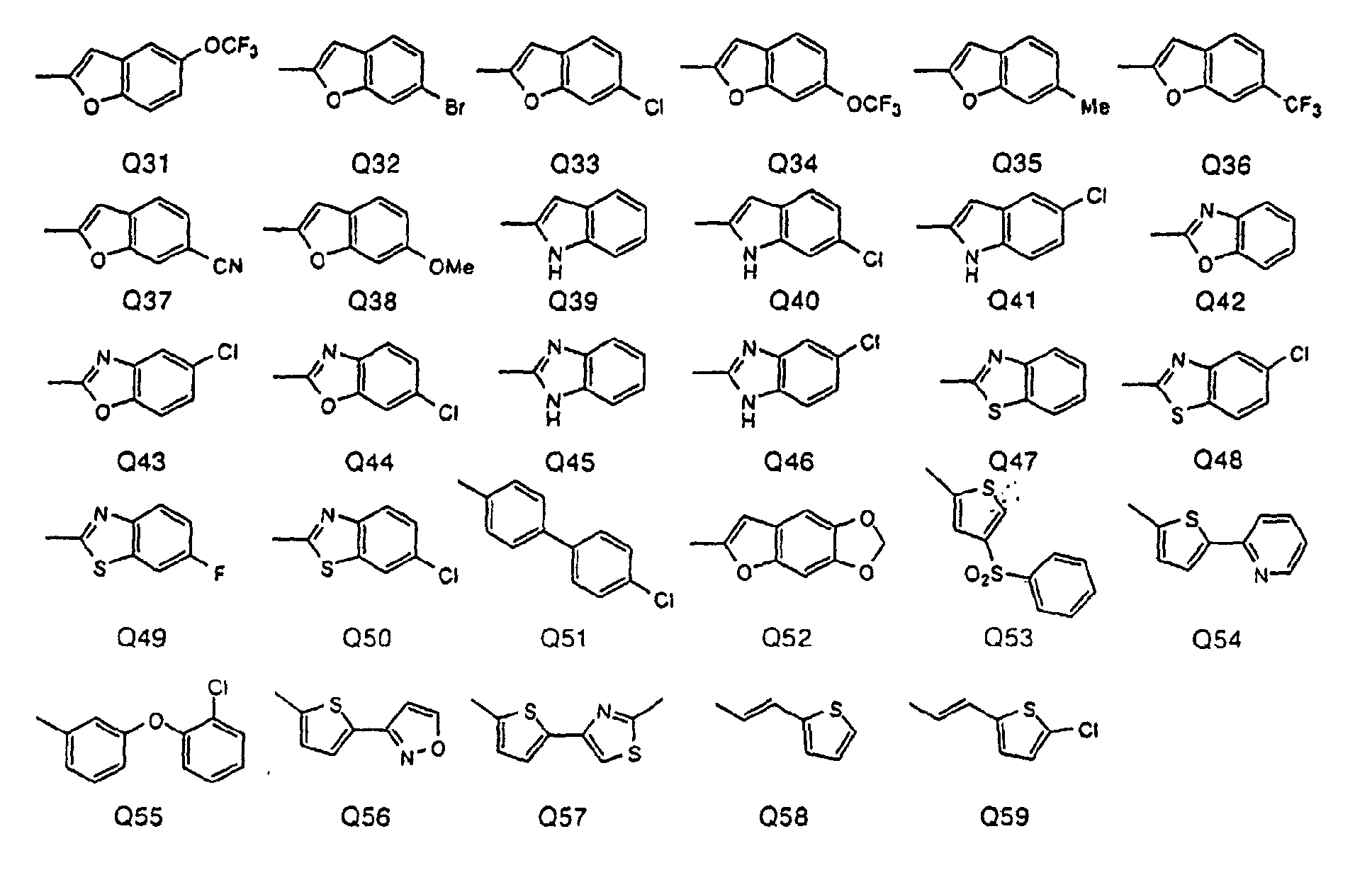
| Ex. No. | Y | D | T | Q |
| 83 | Y1 | D1 | T1 | Q1 |
| 84 | Y1 | D1 | T1 | Q2 |
| 85 | Y1 | D1 | T1 | Q3 |
| 86 | Y1 | D1 | T1 | Q4 |
| 87 | Y1 | D1 | T1 | Q5 |
| 88 | Y1 | D1 | T1 | Q6 |
| 89 | Y1 | D1 | T1 | Q7 |
| 90 | Y1 | D1 | T1 | Q8 |
| 91 | Y1 | D1 | T1 | Q9 |
| 92 | Y1 | D1 | T1 | Q10 |
| 93 | Y1 | D1 | T1 | Q11 |
| 94 | Y1 | D1 | T1 | Q12 |
| 95 | Y1 | D1 | T1 | Q13 |
| 96 | Y1 | D1 | T1 | Q14 |
| 97 | Y1 | D1 | T1 | Q15 |
| 98 | Y1 | D1 | T1 | Q16 |
| 99 | Y1 | D1 | T1 | Q17 |
| 100 | Y1 | D1 | T1 | Q18 |
| 101 | Y1 | D1 | T1 | Q19 |
| 102 | Y1 | D1 | T1 | Q20 |
| 103 | Y1 | D1 | T1 | Q21 |
| 104 | Y1 | D1 | T1 | Q22 |
| 105 | Y1 | D1 | T1 | Q23 |
| 106 | Y1 | D1 | T1 | Q24 |
| 107 | Y1 | D1 | T1 | Q25 |
| 108 | Y1 | D1 | T1 | Q26 |
| 109 | Y1 | D1 | T1 | Q27 |
| 110 | Y1 | D1 | T1 | Q28 |
| 111 | Y1 | D1 | T1 | Q29 |
| 112 | Y1 | D1 | T1 | Q30 |
| 113 | Y1 | D1 | T1 | Q31 |
| 114 | Y1 | D1 | T1 | Q32 |
| 115 | Y1 | D1 | T1 | 033 |
| 116 | Y1 | D1 | T1 | Q34 |
| 117 | Y1 | D1 | T1 | Q35 |
| 118 | Y1 | D1 | T1 | Q36 |
| 119 | Y1 | D1 | T1 | Q37 |
| 120 | Y1 | D1 | T1 | Q38 |
| 121 | Y1 | D1 | T1 | Q39 |
| 122 | Y1 | D1 | T1 | Q40 |
| 123 | Y1 | D1 | T1 | Q41 |
| 124 | Y1 | D1 | Ti | Q42 |
| 125 | Y1 | D1 | T1 | Q43 |
| 126 | Y1 | D1 | T1 | Q44 |
| 127 | Y1 | D1 | T1 | Q45 |
| 128 | Y1 | D1 | T1 | Q46 |
| 129 | Y1 | D1 | T1 | Q47 |
| 130 | Y1 | D1 | T1 | Q48 |
| 131 | Y1 | D1 | T1 | Q49 |
| 132 | Y1 | D1 | T1 | Q50 |
| 133 | Y1 | D1 | T1 | Q51 |
| 134 | Y1 | D1 | T1 | Q52 |
| 135 | Y1 | D1 | T1 | Q53 |
| 136 | Y1 | D1 | T1 | Q54 |
| 137 | Y1 | D1 | T1 | Q55 |
| 138 | Y1 | D1 | T1 | Q56 |
| 139 | Y1 | D1 | T1 | Q57 |
| 140 | Y1 | D1 | T1 | Q58 |
| 141 | Y1 | D1 | T1 | Q59 |
| 142 | Y1 | D2 | T1 | Q1 |
| 143 | Y1 | D2 | T1 | Q2 |
| 144 | Y1 | D2 | T1 | Q3 |
| 145 | Y1 | D2 | T1 | Q4 |
| 146 | Y1 | D2 | T1 | Q5 |
| 147 | Y1 | D2 | T1 | Q6 |
| 148 | Y1 | D2 | T1 | Q7 |
| 149 | Y1 | D2 | T1 | Q8 |
| 150 | Y1 | D2 | T1 | Q9 |
| 151 | Y1 | D2 | T1 | Q10 |
| 152 | Y1 | D2 | T1 | Q11 |
| 153 | Y1 | D2 | T1 | Q12 |
| 154 | Y1 | D2 | T1 | Q13 |
| 155 | Y1 | D2 | T1 | Q14 |
| 156 | Y1 | D2 | T1 | Q15 |
| 157 | Y1 | D2 | T1 | Q16 |
| 158 | Y1 | D2 | T1 | Q17 |
| 159 | Y1 | D2 | T1 | Q18 |
| 160 | Y1 | D2 | T1 | Q19 |
| 161 | Y1 | D2 | T1 | Q20 |
| 162 | Y1 | D2 | T1 | Q21 |
| 163 | Y1 | D2 | T1 | Q22 |
| 164 | Y1 | D2 | T1 | Q23 |
| 165 | Y1 | D2 | T1 | Q24 |
| 166 | Y1 | D2 | T1 | Q25 |
| 167 | Y1 | D2 | T1 | Q26 |
| 168 | Y1 | D2 | T1 | Q27 |
| 169 | Y1 | D2 | T1 | Q28 |
| 170 | Y1 | D2 | T1 | Q29 |
| 171 | Y1 | D2 | T1 | Q30 |
| 172 | Y1 | D2 | T1 | Q31 |
| 173 | Y1 | D2 | T1 | 032 |
| 174 | Y1 | D2 | T1 | Q33 |
| 175 | Y1 | D2 | T1 | Q34 |
| 176 | Y1 | D2 | T1 | Q35 |
| 177 | Y1 | D2 | T1 | Q36 |
| 178 | Y1 | D2 | T1 | Q37 |
| 179 | Y1 | D2 | T1 | Q38 |
| 180 | Y1 | D2 | T1 | Q39 |
| 181 | Y1 | D2 | T1 | Q40 |
| 182 | Y1 | D2 | T1 | Q41 |
| 183 | Y1 | D2 | T1 | Q42 |
| 184 | Y1 | D2 | T1 | Q43 |
| 185 | Y1 | D2 | T1 | Q44 |
| 186 | Y1 | D2 | T1 | Q45 |
| 187 | Y1 | D2 | T1 | Q46 |
| 188 | Y1 | D2 | T1 | Q47 |
| 189 | Y1 | D2 | T1 | Q48 |
| 190 | Y1 | D2 | T1 | Q49 |
| 191 | Y1 | D2 | T1 | Q50 |
| 192 | Y1 | D2 | T1 | Q51 |
| 193 | Y1 | D2 | T1 | Q52 |
| 194 | Y1 | D2 | T1 | Q53 |
| 195 | Y1 | D2 | T1 | Q54 |
| 196 | Y1 | D2 | T1 | Q55 |
| 197 | Y1 | D2 | T1 | Q56 |
| 198 | Y1 | D2 | T1 | Q57 |
| 199 | Y1 | D2 | T1 | Q58 |
| 200 | Y1 | D2 | T1 | Q59 |
| 201 | Y1 | D3 | T1 | Q1 |
| 202 | Y1 | D3 | T1 | Q2 |
| 203 | Y1 | D3 | T1 | Q3 |
| 204 | Y1 | D3 | T1 | Q4 |
| 205 | Y1 | D3 | T1 | Q5 |
| 206 | Y1 | D3 | T1 | Q6 |
| 207 | Y1 | D3 | T1 | Q7 |
| 208 | Y1 | D3 | T1 | Q8 |
| 209 | Y1 | D3 | T1 | Q9 |
| 210 | Y1 | D3 | T1 | Q10 |
| 211 | Y1 | D3 | T1 | Q11 |
| 212 | Y1 | D3 | T1 | Q12 |
| 213 | Y1 | D3 | T1 | Q13 |
| 214 | Y1 | D3 | T1 | Q14 |
| 215 | Y1 | D3 | T1 | Q15 |
| 216 | Y1 | D3 | T1 | Q16 |
| 217 | Y1 | D3 | T1 | Q17 |
| 218 | Y1 | D3 | T1 | Q18 |
| 219 | Y1 | D3 | T1 | Q19 |
| 220 | Y1 | D3 | T1 | Q20 |
| 221 | Y1 | D3 | T1 | Q21 |
| 222 | Y1 | D3 | T1 | Q22 |
| 223 | Y1 | D3 | T1 | Q23 |
| 224 | Y1 | D3 | T1 | Q24 |
| 225 | Y1 | D3 | T1 | Q25 |
| 226 | Y1 | D3 | T1 | Q26 |
| 227 | Y1 | D3 | T1 | Q27 |
| 228 | Y1 | D3 | T1 | Q28 |
| 229 | Y1 | D3 | T1 | Q29 |
| 230 | Y1 | D3 | T1 | Q30 |
| 231 | Y1 | D3 | T1 | Q31 |
| 232 | Y1 | D3 | T2 | Q1 |
| 233 | Y1 | D3 | T2 | Q2 |
| 234 | Y1 | D3 | T2 | Q3 |
| 235 | Y1 | D3 | T2 | Q4 |
| 236 | Y1 | D3 | T2 | Q5 |
| 237 | Y1 | D3 | T2 | Q6 |
| 238 | Y1 | D3 | T2 | Q7 |
| 239 | Y1 | D3 | T2 | Q8 |
| 240 | Y1 | D3 | T2 | Q9 |
| 241 | Y1 | D3 | T2 | Q10 |
| 242 | Y1 | D3 | T2 | Q11 |
| 243 | Y1 | D3 | T2 | Q12 |
| 244 | Y1 | D3 | T2 | Q13 |
| 245 | Y1 | D3 | T2 | Q14 |
| 246 | Y1 | D3 | T2 | Q15 |
| 247 | Y1 | D3 | T2 | Q16 |
| 248 | Y1 | D3 | T2 | Q17 |
| 249 | Y1 | D3 | T2 | Q18 |
| 250 | Y1 | D3 | T2 | Q19 |
| 251 | Y1 | D3 | T2 | Q20 |
| 252 | Y1 | D3 | T2 | Q21 |
| 253 | Y1 | D3 | T2 | Q22 |
| 254 | Y1 | D3 | T2 | Q23 |
| 255 | Y1 | D3 | T2 | Q24 |
| 256 | Y1 | D3 | T2 | Q25 |
| 257 | Y1 | D3 | T2 | Q26 |
| 258 | Y1 | D3 | T2 | Q27 |
| 259 | Y1 | D3 | T2 | Q28 |
| 260 | Y1 | D3 | T2 | Q29 |
| 261 | Y1 | D3 | T2 | Q30 |
| 262 | Y1 | D3 | T2 | Q3] |
| 263 | Y2 | D3 | T1 | Q1 |
| 264 | Y2 | D3 | T1 | Q2 |
| 265 | Y2 | D3 | T1 | Q3 |
| 266 | Y2 | D3 | T1 | Q4 |
| 267 | Y2 | D3 | T1 | Q5 |
| 268 | Y2 | D3 | T1 | Q6 |
| 269 | Y2 | D3 | T1 | Q7 |
| 270 | Y2 | D3 | T1 | Q8 |
| 271 | Y2 | D3 | T1 | Q9 |
| 272 | Y2 | D3 | T1 | Q10 |
| 273 | Y2 | D3 | T1 | Q11 |
| 274 | Y2 | D3 | T1 | Q12 |
| 275 | Y2 | D3 | T1 | Q13 |
| 276 | Y2 | D3 | T1 | Q14 |
| 277 | Y2 | D3 | T1 | Q15 |
| 278 | Y2 | D3 | T1 | Q16 |
| 279 | Y2 | D3 | T1 | Q17 |
| 280 | Y2 | D3 | T1 | Q18 |
| 281 | Y2 | D3 | T1 | Q19 |
| 282 | Y2 | D3 | T1 | Q20 |
| 283 | Y2 | D3 | T1 | Q21 |
| 284 | Y2 | D3 | T1 | Q22 |
| 285 | Y2 | D3 | T1 | Q23 |
| 286 | Y2 | D3 | T1 | Q24 |
| 287 | Y2 | D3 | T1 | Q25 |
| 288 | Y2 | D3 | T1 | Q26 |
| 289 | Y2 | D3 | T1 | Q27 |
| 290 | Y2 | D3 | T1 | Q28 |
| 291 | Y2 | D3 | T1 | Q29 |
| 292 | Y2 | D3 | T1 | Q30 |
| 293 | Y2 | D3 | T1 | Q31 |
| 294 | Y2 | D3 | T2 | Q1 |
| 295 | Y2 | D3 | T2 | Q2 |
| 296 | Y2 | D3 | T2 | Q3 |
| 297 | Y2 | D3 | T2 | Q4 |
| 298 | Y2 | D3 | T2 | Q5 |
| 299 | Y2 | D3 | T2 | Q6 |
| 300 | Y2 | D3 | T2 | Q7 |
| 301 | Y2 | D3 | T2 | Q8 |
| 302 | Y2 | D3 | T2 | Q9 |
| 303 | Y2 | D3 | T2 | Q10 |
| 304 | Y2 | D3 | T2 | Q11 |
| 305 | Y2 | D3 | T2 | Q12 |
| 306 | Y2 | D3 | T2 | Q13 |
| 307 | Y2 | D3 | T2 | Q14 |
| 308 | Y2 | D3 | T2 | Q15 |
| 309 | Y2 | D3 | T2 | Q16 |
| 310 | Y2 | D3 | T2 | Q17 |
| 311 | Y2 | D3 | T2 | Q18 |
| 312 | Y2 | D3 | T2 | Q19 |
| 313 | Y2 | D3 | T2 | Q20 |
| 314 | Y2 | D3 | T2 | Q21 |
| 315 | Y2 | D3 | T2 | Q22 |
| 316 | Y2 | D3 | T2 | Q23 |
| 317 | Y2 | D3 | T2 | Q24 |
| 318 | Y2 | D3 | T2 | Q25 |
| 319 | Y2 | D3 | T2 | Q26 |
| 320 | Y2 | D3 | T2 | Q27 |
| 321 | Y2 | D3 | T2 | Q28 |
| 322 | Y2 | D3 | T2 | Q29 |
| 323 | Y2 | D3 | T2 | Q30 |
| 324 | Y2 | D3 | T2 | Q31 |
| 325 | Y3 | D3 | T1 | Q1 |
| 326 | Y3 | D3 | T1 | Q2 |
| 327 | Y3 | D3 | T1 | Q3 |
| 328 | Y3 | D3 | T1 | Q4 |
| 329 | Y3 | D3 | T1 | Q5 |
| 330 | Y3 | D3 | T1 | Q6 |
| 331 | Y3 | D3 | T1 | Q7 |
| 332 | Y3 | D3 | T1 | Q8 |
| 333 | Y3 | D3 | T1 | Q9 |
| 334 | Y3 | D3 | T1 | Q10 |
| 335 | Y3 | D3 | T1 | Q11 |
| 336 | Y3 | D3 | T1 | Q12 |
| 337 | Y3 | D3 | T1 | Q13 |
| 338 | Y3 | D3 | T1 | Q14 |
| 339 | Y3 | D3 | T1 | Q15 |
| 340 | Y3 | D3 | T1 | Q16 |
| 341 | Y3 | D3 | T1 | Q17 |
| 342 | Y3 | D3 | T1 | Q18 |
| 343 | Y3 | D3 | T1 | Q19 |
| 344 | Y3 | D3 | T1 | Q20 |
| 345 | Y3 | D3 | T1 | Q21 |
| 346 | Y3 | D3 | T1 | Q22 |
| 347 | Y3 | D3 | T1 | Q23 |
| 348 | Y3 | D3 | T1 | Q24 |
| 349 | Y3 | D3 | T1 | Q25 |
| 350 | Y3 | D3 | T1 | Q26 |
| 351 | Y3 | D3 | T1 | Q27 |
| 352 | Y3 | D3 | T1 | Q28 |
| 353 | Y3 | D3 | T1 | Q29 |
| 354 | Y3 | D3 | T1 | Q30 |
| 355 | Y3 | D3 | T1 | Q31 |
| 356 | Y3 | D3 | T2 | Q1 |
| 357 | Y3 | D3 | T2 | Q2 |
| 358 | Y3 | D3 | T2 | Q3 |
| 359 | Y3 | D3 | T2 | Q4 |
| 360 | Y3 | D3 | T2 | Q5 |
| 361 | Y3 | D3 | T2 | Q6 |
| 362 | Y3 | D3 | T2 | Q7 |
| 363 | Y3 | D3 | T2 | Q8 |
| 364 | Y3 | D3 | T2 | Q9 |
| 365 | Y3 | D3 | T2 | Q10 |
| 366 | Y3 | D3 | T2 | Q11 |
| 367 | Y3 | D3 | T2 | Q12 |
| 368 | Y3 | D3 | T2 | Q13 |
| 369 | Y3 | D3 | T2 | Q14 |
| 370 | Y3 | D3 | T2 | Q15 |
| 371 | Y3 | D3 | T2 | Q16 |
| 372 | Y3 | D3 | T2 | Q17 |
| 373 | Y3 | D3 | T2 | Q18 |
| 374 | Y3 | D3 | T2 | Q19 |
| 375 | Y3 | D3 | T2 | Q20 |
| 376 | Y3 | D3 | T2 | Q21 |
| 377 | Y3 | D3 | T2 | Q22 |
| 378 | Y3 | D3 | T2 | Q23 |
| 379 | Y3 | D3 | T2 | Q24 |
| 380 | Y3 | D3 | T2 | Q25 |
| 381 | Y3 | D3 | T2 | Q26 |
| 382 | Y3 | D3 | T2 | Q27 |
| 383 | Y3 | D3 | T2 | Q28 |
| 384 | Y3 | D3 | T2 | Q29 |
| 385 | Y3 | D3 | T2 | Q30 |
| 386 | Y3 | D3 | T2 | Q31 |
| 387 | Y1 | D4 | T1 | Q1 |
| 388 | Y1 | D4 | T1 | Q2 |
| 389 | Y1 | D4 | T1 | Q3 |
| 390 | Y1 | D4 | T1 | Q4 |
| 391 | Y1 | D4 | T1 | Q5 |
| 392 | Y1 | D4 | T1 | Q6 |
| 393 | Y1 | D4 | T1 | Q7 |
| 394 | Y1 | D4 | T1 | Q8 |
| 395 | Y1 | D4 | T1 | Q9 |
| 396 | Y1 | D4 | T1 | Q10 |
| 397 | Y1 | D4 | T1 | Q11 |
| 398 | Y1 | D4 | T1 | Q12 |
| 399 | Y1 | D4 | T1 | Q13 |
| 400 | Y1 | D4 | T1 | Q14 |
| 401 | Y1 | D4 | T1 | Q15 |
| 402 | Y1 | D4 | T1 | Q16 |
| 403 | Y1 | D4 | T1 | Q17 |
| 404 | Y1 | D4 | T1 | Q18 |
| 405 | Y1 | D4 | T1 | Q19 |
| 406 | Y1 | D4 | T1 | Q20 |
| 407 | Y1 | D4 | T1 | Q21 |
| 408 | Y1 | D4 | T1 | Q22 |
| 409 | Y1 | D4 | T1 | Q23 |
| 410 | Y1 | D4 | T1 | Q24 |
| 411 | Y1 | D4 | T1 | Q25 |
| 412 | Y1 | D4 | T1 | Q26 |
| 413 | Y1 | D4 | T1 | Q27 |
| 414 | Y1 | D4 | T1 | Q28 |
| 415 | Y1 | D4 | T1 | Q29 |
| 416 | Y1 | D4 | T1 | Q30 |
| 417 | Y1 | D4 | T1 | Q31 |
| 418 | Y1 | D4 | T2 | Q1 |
| 419 | Y1 | D4 | T2 | Q2 |
| 420 | Y1 | D4 | T2 | Q3 |
| 421 | Y1 | D4 | T2 | Q4 |
| 422 | Y1 | D4 | T2 | Q5 |
| 423 | Y1 | D4 | T2 | Q6 |
| 424 | Y1 | D4 | T2 | Q7 |
| 425 | Y1 | D4 | T2 | Q8 |
| 426 | Y1 | D4 | T2 | Q9 |
| 427 | Y1 | D4 | T2 | Q10 |
| 428 | Y1 | D4 | T2 | Q11 |
| 429 | Y1 | D4 | T2 | Q12 |
| 430 | Y1 | D4 | T2 | Q13 |
| 431 | Y1 | D4 | T2 | Q14 |
| 432 | Y1 | D4 | T2 | Q15 |
| 433 | Y1 | D4 | T2 | Q16 |
| 434 | Y1 | D4 | T2 | Q17 |
| 435 | Y1 | D4 | T2 | Q18 |
| 436 | Y1 | D4 | T2 | Q19 |
| 437 | Y1 | D4 | T2 | Q20 |
| 438 | Y1 | D4 | T2 | Q21 |
| 439 | Y1 | D4 | T2 | Q22 |
| 440 | Y1 | D4 | T2 | Q23 |
| 441 | Y1 | D4 | T2 | Q24 |
| 442 | Y1 | D4 | T2 | Q25 |
| 443 | Y1 | D4 | T2 | Q26 |
| 444 | Y1 | D4 | T2 | Q27 |
| 445 | Y1 | D4 | T2 | Q28 |
| 446 | Y1 | D4 | T2 | Q29 |
| 447 | Y1 | D4 | T2 | Q30 |
| 448 | Y1 | D4 | T2 | Q31 |
| 449 | Y2 | D4 | T1 | Q1 |
| 450 | Y2 | D4 | T1 | Q2 |
| 451 | Y2 | D4 | T1 | Q3 |
| 452 | Y2 | D4 | T1 | Q4 |
| 453 | Y2 | D4 | T1 | Q5 |
| 454 | Y2 | D4 | T1 | Q6 |
| 455 | Y2 | D4 | T1 | Q7 |
| 456 | Y2 | D4 | T1 | Q8 |
| 457 | Y2 | D4 | T1 | Q9 |
| 458 | Y2 | D4 | T1 | Q10 |
| 459 | Y2 | D4 | T1 | Q11 |
| 460 | Y2 | D4 | T1 | Q12 |
| 461 | Y2 | D4 | T1 | Q13 |
| 462 | Y2 | D4 | T1 | Q14 |
| 463 | Y2 | D4 | T1 | Q15 |
| 464 | Y2 | D4 | T1 | Q16 |
| 465 | Y2 | D4 | T1 | Q17 |
| 466 | Y2 | D4 | T1 | Q18 |
| 467 | Y2 | D4 | T1 | Q19 |
| 468 | Y2 | D4 | T1 | Q20 |
| 469 | Y2 | D4 | T1 | Q21 |
| 470 | Y2 | D4 | T1 | Q22 |
| 471 | Y2 | D4 | T1 | Q23 |
| 472 | Y2 | D4 | T1 | Q24 |
| 473 | Y2 | D4 | T1 | Q25 |
| 474 | Y2 | D4 | T1 | Q26 |
| 475 | Y2 | D4 | T1 | Q27 |
| 476 | Y2 | D4 | T1 | Q28 |
| 477 | Y2 | D4 | T1 | Q29 |
| 478 | Y2 | D4 | T1 | Q30 |
| 479 | Y2 | D4 | T1 | Q31 |
| 480 | Y2 | D4 | T2 | Q1 |
| 481 | Y2 | D4 | T2 | Q2 |
| 482 | Y2 | D4 | T2 | Q3 |
| 483 | Y2 | D4 | T2 | Q4 |
| 484 | Y2 | D4 | T2 | Q5 |
| 485 | Y2 | D4 | T2 | Q6 |
| 486 | Y2 | D4 | T2 | Q7 |
| 487 | Y2 | D4 | T2 | Q8 |
| 488 | Y2 | D4 | T2 | Q9 |
| 489 | Y2 | D4 | T2 | Q10 |
| 490 | Y2 | D4 | T2 | Q11 |
| 491 | Y2 | D4 | T2 | Q12 |
| 492 | Y2 | D4 | T2 | Q13 |
| 493 | Y2 | D4 | T2 | Q14 |
| 494 | Y2 | D4 | T2 | Q15 |
| 495 | Y2 | D4 | T2 | Q16 |
| 496 | Y2 | D4 | T2 | Q17 |
| 497 | Y2 | D4 | T2 | Q18 |
| 498 | Y2 | D4 | T2 | Q19 |
| 499 | Y2 | D4 | T2 | Q20 |
| 500 | Y2 | D4 | T2 | Q21 |
| 501 | Y2 | D4 | T2 | Q22 |
| 502 | Y2 | D4 | T2 | Q23 |
| 503 | Y2 | D4 | T2 | Q24 |
| 504 | Y2 | D4 | T2 | Q25 |
| 505 | Y2 | D4 | T2 | Q26 |
| 506 | Y2 | D4 | T2 | Q27 |
| 507 | Y2 | D4 | T2 | Q28 |
| 508 | Y2 | D4 | T2 | Q29 |
| 509 | Y2 | D4 | T2 | Q30 |
| 510 | Y2 | D4 | T2 | Q31 |
| 511 | Y3 | D4 | T1 | Q1 |
| 512 | Y3 | D4 | T1 | Q2 |
| 513 | Y3 | D4 | T1 | Q3 |
| 514 | Y3 | D4 | T1 | Q4 |
| 515 | Y3 | D4 | T1 | Q5 |
| 516 | Y3 | D4 | T1 | Q6 |
| 517 | Y3 | D4 | T1 | Q7 |
| 518 | Y3 | D4 | T1 | Q8 |
| 519 | Y3 | D4 | T1 | Q9 |
| 520 | Y3 | D4 | T1 | Q10 |
| 521 | Y3 | D4 | T1 | Q11 |
| 522 | Y3 | D4 | T1 | Q12 |
| 523 | Y3 | D4 | T1 | Q13 |
| 524 | Y3 | D4 | T1 | Q14 |
| 525 | Y3 | D4 | T1 | Q15 |
| 526 | Y3 | D4 | T1 | Q16 |
| 527 | Y3 | D4 | T1 | Q17 |
| 528 | Y3 | D4 | T1 | Q18 |
| 529 | Y3 | D4 | T1 | Q19 |
| 530 | Y3 | D4 | T1 | Q20 |
| 531 | Y3 | D4 | T1 | Q21 |
| 532 | Y3 | D4 | T1 | Q22 |
| 533 | Y3 | D4 | T1 | Q23 |
| 534 | Y3 | D4 | T1 | Q24 |
| 535 | Y3 | D4 | T1 | Q25 |
| 536 | Y3 | D4 | T1 | Q26 |
| 537 | Y3 | D4 | T1 | Q27 |
| 538 | Y3 | D4 | T1 | Q28 |
| 539 | Y3 | D4 | T1 | Q29 |
| 540 | Y3 | D4 | T1 | 030 |
| 541 | Y3 | D4 | T1 | Q31 |
| 542 | Y3 | D4 | T2 | Q1 |
| 543 | Y3 | D4 | T2 | Q2 |
| 544 | Y3 | D4 | T2 | Q3 |
| 545 | Y3 | D4 | T2 | Q4 |
| 546 | Y3 | D4 | T2 | Q5 |
| 547 | Y3 | D4 | T2 | Q6 |
| 548 | Y3 | D4 | T2 | Q7 |
| 549 | Y3 | D4 | T2 | Q8 |
| 550 | Y3 | D4 | T2 | Q9 |
| 551 | Y3 | D4 | T2 | Q10 |
| 552 | Y3 | D4 | T2 | Q11 |
| 553 | Y3 | D4 | T2 | Q12 |
| 554 | Y3 | D4 | T2 | Q13 |
| 555 | Y3 | D4 | T2 | Q14 |
| 556 | Y3 | D4 | T2 | Q15 |
| 557 | Y3 | D4 | T2 | Q16 |
| 558 | Y3 | D4 | T2 | Q17 |
| 559 | Y3 | D4 | T2 | Q18 |
| 560 | Y3 | D4 | T2 | Q19 |
| 561 | Y3 | D4 | T2 | Q20 |
| 562 | Y3 | D4 | T2 | Q21 |
| 563 | Y3 | D4 | T2 | Q22 |
| 564 | Y3 | D4 | T2 | Q23 |
| 565 | Y3 | D4 | T2 | Q24 |
| 566 | Y3 | D4 | T2 | Q25 |
| 567 | Y3 | D4 | T2 | Q26 |
| 568 | Y3 | D4 | T2 | Q27 |
| 569 | Y3 | D4 | T2 | Q28 |
| 570 | Y3 | D4 | T2 | Q29 |
| 571 | Y3 | D4 | T2 | Q30 |
| 572 | Y3 | D4 | T2 | Q31 |
| 573 | Y1 | D3 | T1 | Q32 |
| 574 | Y1 | D3 | T1 | Q33 |
| 575 | Y1 | D3 | T1 | Q34 |
| 576 | Y1 | D3 | T1 | Q35 |
| 577- | Y1 | D3 | T1 | Q36 |
| 578 | Y1 | D3 | T1 | Q37 |
| 579 | Y1 | D3 | T1 | Q38 |
| 580 | Y1 | D3 | T1 | Q39 |
| 581 | Y1 | D3 | T1 | Q40 |
| 582 | Y1 | D3 | T1 | Q41 |
| 583 | Y1 | D3 | T1 | Q42 |
| 584 | Y1 | D3 | T1 | Q43 |
| 585 | Y1 | D3 | T1 | Q44 |
| 586 | Y1 | D3 | T1 | Q45 |
| 587 | Y1 | D3 | T1 | Q46 |
| 588 | Y1 | D3 | T1 | Q47 |
| 589 | Y1 | D3 | T1 | Q48 |
| 590 | Y1 | D3 | T1 | Q49 |
| 591 | Y1 | D3 | T1 | Q50 |
| 592 | Y1 | D3 | T1 | Q51 |
| 593 | Y1 | D3 | T1 | Q52 |
| 594 | Y1 | D3 | T1 | Q53 |
| 595 | Y1 | D3 | T1 | Q54 |
| 596 | Y1 | D3 | T1 | Q55 |
| 597 | Y1 | D3 | T1 | Q56 |
| 598 | Y1 | D3 | T1 | Q57 |
| 599 | Y1 | D3 | T1 | Q58 |
| 600 | Y1 | D3 | T1 | Q59 |
| 601 | Y2 | D3 | T1 | Q32 |
| 602 | Y2 | D3 | T1 | Q33 |
| 603 | Y2 | D3 | T1 | Q34 |
| 604 | Y2 | D3 | T1 | Q35 |
| 605 | Y2 | D3 | T1 | Q36 |
| 606 | Y2 | D3 | T1 | Q37 |
| 607 | Y2 | D3 | T1 | Q38 |
| 608 | Y2 | D3 | T1 | Q39 |
| 609 | Y2 | D3 | T1 | Q40 |
| 610 | Y2 | D3 | T1 | Q41 |
| 611 | Y2 | D3 | T1 | Q42 |
| 612 | Y2 | D3 | T1 | Q43 |
| 613 | Y2 | D3 | T1 | Q44 |
| 614 | Y2 | D3 | T1 | Q45 |
| 615 | Y2 | D3 | T1 | Q46 |
| 616 | Y2 | D3 | T1 | Q47 |
| 617 | Y2 | D3 | T1 | Q48 |
| 618 | Y2 | D3 | T1 | Q49 |
| 619 | Y2 | D3 | T1 | Q50 |
| 620 | Y2 | D3 | T1 | Q51 |
| 621 | Y2 | D3 | T1 | Q52 |
| 622 | Y2 | D3 | T1 | Q53 |
| 623 | Y2 | D3 | T1 | Q54 |
| 624 | Y2 | D3 | T1 | Q55 |
| 625 | Y2 | D3 | T1 | Q56 |
| 626 | Y2 | D3 | T1 | Q57 |
| 627 | Y2 | D3 | T1 | Q58 |
| 628 | Y2 | D3 | T1 | Q59 |
| 629 | Y3 | D3 | T1 | Q32 |
| 630 | Y3 | D3 | T1 | Q33 |
| 631 | Y3 | D3 | T1 | Q34 |
| 632 | Y3 | D3 | T1 | Q35 |
| 633 | Y3 | D3 | T1 | Q36 |
| 634 | Y3 | D3 | T1 | Q37 |
| 635 | Y3 | D3 | T1 | Q38 |
| 636 | Y3 | D3 | T1 | Q39 |
| 637 | Y3 | D3 | T1 | Q40 |
| 638 | Y3 | D3 | T1 | Q41 |
| 639 | Y3 | D3 | T1 | Q42 |
| 640 | Y3 | D3 | T1 | Q43 |
| 641 | Y3 | D3 | T1 | Q44 |
| 642 | Y3 | D3 | T1 | Q45 |
| 643 | Y3 | D3 | T1 | Q46 |
| 644 | Y3 | D3 | T1 | Q47 |
| 645 | Y3 | D3 | T1 | Q48 |
| 646 | Y3 | D3 | T1 | Q49 |
| 647 | Y3 | D3 | T1 | Q50 |
| 648 | Y3 | D3 | T1 | Q51 |
| 649 | Y3 | D3 | T1 | Q52 |
| 650 | Y3 | D3 | T1 | Q53 |
| 651 | Y3 | D3 | T1 | Q54 |
| 652 | Y3 | D3 | T1 | Q55 |
| 653 | Y3 | D3 | T1 | Q56 |
| 654 | Y3 | D3 | T1 | Q57 |
| 655 | Y3 | D3 | T1 | Q58 |
| 656 | Y3 | D3 | T1 | Q59 |
| 657 | Y1 | D4 | T1 | Q32 |
| 658 | Y1 | D4 | T1 | Q33 |
| 659 | Y1 | D4 | T1 | Q34 |
| 660 | Y1 | D4 | T1 | Q35 |
| 661 | Y1 | D4 | T1 | Q36 |
| 662 | Y1 | D4 | T1 | Q37 |
| 663 | Y1 | D4 | T1 | Q38 |
| 664 | Y1 | D4 | T1 | Q39 |
| 665 | Y1 | D4 | T1 | Q40 |
| 666 | Y1 | D4 | T1 | Q41 |
| 667 | Y1 | D4 | T1 | Q42 |
| 668 | Y1 | D4 | T1 | Q43 |
| 669 | Y1 | D4 | T1 | Q44 |
| 670 | Y1 | D4 | T1 | Q45 |
| 671 | Y1 | D4 | T1 | Q46 |
| 672 | Y1 | D4 | T1 | Q47 |
| 673 | Y1 | D4 | T1 | Q48 |
| 674 | Y1 | D4 | T1 | Q49 |
| 675 | Y1 | D4 | T1 | Q50 |
| 676 | Y1 | D4 | T1 | Q51 |
| 677 | Y1 | D4 | T1 | Q52 |
| 678 | Y1 | D4 | T1 | Q53 |
| 679 | Y1 | D4 | T1 | Q54 |
| 680 | Y1 | D4 | T1 | Q55 |
| 681 | Y1 | D4 | T1 | Q56 |
| 682 | Y1 | D4 | T1 | Q57 |
| 683 | Y1 | D4 | T1 | Q58 |
| 684 | Y1 | D4 | T1 | Q59 |
| 685 | Y2 | D4 | T1 | Q32 |
| 686 | Y2 | D4 | T1 | Q33 |
| 687 | Y2 | D4 | T1 | Q34 |
| 688 | Y2 | D4 | T1 | Q35 |
| 689 | Y2 | D4 | T1 | Q36 |
| 690 | Y2 | D4 | T1 | Q37 |
| 691 | Y2 | D4 | T1 | Q38 |
| 692 | Y2 | D4 | T1 | Q39 |
| 693 | Y2 | D4 | T1 | Q40 |
| 694 | Y2 | D4 | T1 | Q41 |
| 695 | Y2 | D4 | T1 | Q42 |
| 696 | Y2 | D4 | T1 | Q43 |
| 697 | Y2 | D4 | T1 | Q44 |
| 698 | Y2 | D4 | T1 | Q45 |
| 699 | Y2 | D4 | T1 | Q46 |
| 700 | Y2 | D4 | T1 | Q47 |
| 701 | Y2 | D4 | T1 | Q48 |
| 702 | Y2 | D4 | T1 | Q49 |
| 703 | Y2 | D4 | T1 | Q50 |
| 704 | Y2 | D4 | T1 | Q51 |
| 705 | Y2 | D4 | T1 | Q52 |
| 706 | Y2 | D4 | T1 | Q53 |
| 707 | Y2 | D4 | T1 | Q54 |
| 708 | Y2 | D4 | T1 | Q55 |
| 709 | Y2 | D4 | T1 | Q56 |
| 710 | Y2 | D4 | T1 | Q57 |
| 711 | Y2 | D4 | T1 | Q58 |
| 712 | Y2 | D4 | T1 | Q59 |
| 713 | Y3 | D4 | T1 | Q32 |
| 714 | Y3 | D4 | T1 | Q33 |
| 715 | Y3 | D4 | T1 | Q34 |
| 716 | Y3 | D4 | T1 | Q35 |
| 717 | Y3 | D4 | T1 | Q36 |
| 718 | Y3 | D4 | T1 | Q37 |
| 719 | Y3 | D4 | T1 | Q38 |
| 720 | Y3 | D4 | T1 | Q39 |
| 721 | Y3 | D4 | T1 | Q40 |
| 722 | Y3 | D4 | T1 | Q41 |
| 723 | Y3 | D4 | T1 | Q42 |
| 724 | Y3 | D4 | T1 | Q43 |
| 725 | Y3 | D4 | T1 | Q44 |
| 726 | Y3 | D4 | T1 | Q45 |
| 727 | Y3 | D4 | T1 | Q46 |
| 728 | Y3 | D4 | T1 | Q47 |
| 729 | Y3 | D4 | T1 | Q48 |
| 730 | Y3 | D4 | T1 | Q49 |
| 731 | Y3 | D4 | T1 | Q50 |
| 732 | Y3 | D4 | T1 | Q51 |
| 733 | Y3 | D4 | T1 | Q52 |
| 734 | Y3 | D4 | T1 | Q53 |
| 735 | Y3 | D4 | T1 | Q54 |
| 736 | Y3 | D4 | T1 | Q55 |
| 737 | Y3 | D4 | T1 | Q56 |
| 738 | Y3 | D4 | T1 | Q57 |
| 739 | Y3 | D4 | T1 | Q58 |
| 740 | Y3 | D4 | T1 | Q59 |
Claims (18)
- A compound represented by formula (I) or its pharmaceutically acceptable saltwherein A is a hydrogen atom, or
 the three rings (the ring containing X, the ring containing Y, and the ring containing Z) are independently optionally substituted; and the bond indicated by the broken line and the solid line in the ring containing Z is a single bond or a double bond (when r is 0).a group selected from (1) a saturated or unsaturated five- or six-membered cyclic hydrocarbon group, or a saturated or unsaturated five- or six-membered heterocyclic group, (2) an amino group, and (3) an imidoyl group (wherein the groups of (1) to (3) are optionally substituted);B is a single bond, a carbonyl group, -S(O)x-, or an optionally substituted C1-2 alkylene group;D is a hydrogen atom, -CO-R5 (wherein R5 is a hydrogen atom or a substituent), or an optionally substituted C1-6 alkyl group;X is a nitrogen atom or a methine group optionally substituted with a group A'-B'- (wherein A' represents a group selected from those defined for A, and B' represents a group selected from those defined for B);Y is an oxygen atom, -S(O)y-, or an optionally substituted imino group (-NH-);Z is a methylene group, a carbonyl group, or a thiocarbonyl group;T is -S(O)z-, a carbonyl group, or an optionally substituted C1-2 alkylene group;Q is a hydrocarbon group or a heterocyclic group, which are optionally substituted;l, m, n, x, y, and z are independently an integer selected from 0, 1 and 2 with the proviso that l and m are not simultaneously 0; and r is an integer of 0 or 1; and
 - At least one compound selected from the compounds as described below, or its (+) or (-) optical isomer, or its pharmaceutically acceptable salt:1,4-diaza-4-(6-chloronaphthalen-2-ylsulfonyl)-6-(methoxymethyl)-7-oxa-1'-(4-pyridyl)spiro[bicycle[4.3.0]nonane-8,4'-piperidin]-2-one;(-)-1,4-diaza-4-(6-chloronaphthalen-2-ylsulfonyl)-6-(methoxymethyl)-7-oxa-1'-(4-pyridyl)spiro[bicyclo[4.3.0]nonane-8,4'-piperidin]-2-one;1,4-diaza-4- (6-chloronaphthalen-2-ylsulfonyl)-6-(hydroxymethyl)-7-oxa-1'-(4-pyridyl)spiro[bicyclo[4.3.0]nonane-8,4'-piperidin]-2-one;1,4-diaza-4-(6-chloronaphthalen-2-ylsulfonyl)-6-(ethoxycarbonylmethoxymethyl)-7-oxa-1'-(4-pyridyl) spiro[bicyclo [4.3.0]nonane-8,4'-piperidin]-2-one;6-(acetoxymethyl)-1,4-diaza-4-(6-chloronaphthalen-2-ylsulfonyl)-7-oxa-1'-(4-pyridyl)spiro[bicyclo[4.3.0]nonane-8,4'-piperidin]-2-one;1,4-diaza-4-(6-chloronaphthalen-2-ylsulfonyl)-7-oxa-1'-(4-pyridyl)spiro[bicyclo[4.3.0]nonane-8,4'-piperidin]-2-one;1,4-diaza-4-(6-chloronaphthalen-2-ylsulfonyl)-7-oxa-1'-(4-pyrimidinyl)spiro[bicyclo[4.3.0]nonane-8,4'-piperidin]-2-one;1, 4-diaza-4-((E)-4-chlorostyrylsulfonyl)-7-oxa-1'-(4-pyridyl)spiro[bicyclo[4.3.0]nonane-8,4'-piperidin]-2-one;1,4-diaza-4-(6-chloronaphthalen-2-ylsulfonyl)-6-(2-methoxyethoxymethyl)-7-oxa-1'-(4-pyridyl)spiro[bicyclo[4.3.0]nonane-8,4'-piperidin]-2-one;1, 4-diaza-4-(6-chloronaphthalen-2-ylsulfonyl)-6-(ethoxycarbonyl)-7-oxa-1'-(4-pyridyl)spiro[bicyclo[4.3.0]nonane-8,4'-piperidin]-2-one methanesulfone;(-)-1,4-diaza-4-(6-chloronaphthalen-2-ylsulfonyl)-6-(ethoxycarbonyl)-7-oxa-1'-(4-pyridyl)spire[bicycle[4.3.0]nonane-8,4'-piperidin]-2-one;(-)-1,4-diaza-4-(6-chloronaphthalen-2-ylsulfonyl)-6-(methoxycarbonyl)-7-oxa-1'-(4-pyridyl)spiro[bicyclo[4.3.0]nonane-8,4'-piperidin]-2-one;(-) -1,4-diaza-4-(6-chloronaphthalen-2-ylsulfonyl)-6-(isopropoxycarbonyl)-7-oxa-1'-(4-pyridyl) spiro[bicyclo[4.3.0]nonane-8,4'-piperidin]-2-one;(-)-1,4-diaza-4-(6-chloronaphthalen-2-ylsulfonyl)-7-oxa-6-(propoxycarbonyl)-1'-(4-pyridyl)spiro[bicyclo[4.3.0]nonane-8,4'-piperidin]-2-one;(-)-6-(allyloxycarbonyl)-1,4-diaza-4-(6-chloronaphthalen-2-ylsulfonyl)-7-oxa-1'-(4-pyridyl)spiro[bicyclo[4.3.0]nonane-8,4'-piperidin]-2-one;(-)-1,4-diaza-4-(6-chloronaphthalen-2-ylsulfonyl)-6-(2-methoxyethoxycarbonyl)-7-oxa-1'-(4-pyridyl)spiro[bicycio[4.3.0]nonane-8,4'-piperidin]-2-one;(-)-1,4-diaza-6-(t-butoxycarbonyl)-4-(6-chloronaphthalen-2-ylsulfonyl)-7-oxa-1'-(4-pyridyl)spiro[bicyclo[4.3.0]nonane-8,4'-piperidin]-2-one;ammonium 1,4-diaza-4-(6-chloronaphthalen-2-ylsulfonyl)-7-oxa-2-oxo-1'-(4-pyridyl)spiro[bicyclo[4.3.0]nonane-8,4'-piperidine]-6-carboxylate;(+)-ammonium 1,4-diaza-4-(6-chloronaphthalen-2-ylsulfonyl)-7-oxa-2-oxo-1'-(4-pyridyl)spiro[bicyclo[4.3.0]nonane-8,4'-piperidine]-6-carboxylate;(-)-ammonium 1,4-diaza-4-(6-chloronaphthalen-2-ylsulfonyl)-7-oxa-2-oxo-1'-(4-pyridyl)spiro[bicyclo[4.3.0]nonane-8,4'-piperidine]-6-carboxylate;4-[1,4-diaza-4-(6-chloronaphthalen-2-ylsulfonyl)-6-(methoxymethyl)-7-oxa-2-oxospiro[bicyclo[4.3.0]nonane-8,4'-piperidin]-1'-yl]pyridine 1-oxide;1'-acetimidoyl-1,4-diaza-4-(6-chloronaphthalen-2-ylsulfonyl)-7-oxaspiro[bicyclo[4.3.0]nonane-8,4'-piperidin]-2-one;6-(aminomethyl)-1,4-diaza-4-(6-chloronaphthalen-2-ylsulfonyl)-7-oxa-1'-(4-pyridyl)spiro[bicyclo[4.3.0]nonane-8,4'-piperidin]-2-one;1,4-diaza-4-(6-chloronaphthalen-2-ylsulfonyl)-6-(ethoxycarbonylaminomethyl)-7-oxa-1'-(4-pyridyl)spiro[bicyclo[4.3.0]nonane-8,4'-piperidin]-2-one;1,4-diaza-4-(6-chloronaphthalen-2-ylsulfonyl)-6-(morpholinomethyl)-7-oxa-1'-(4-pyridyl)spiro[bicyclo[4.3.0]nonane-8,4'-piperidin]-2-one;1,4-diaza-4-(6-chloronaphthalen-2-ylsulfonyl)-6-methyl-7-oxa-1'-(4-pyridyl)spiro[bicyclo[4.3.0]nonane-8,4'-piperidin]-2-one;ammonium 4-[1,4-diaza-4-(6-chloronaphthalen-2-ylsulfonyl)-7-oxa-2-oxo-1'-(4-pyridyl)spiro[bicyclo[4.3.0]nonane-8,4'-piperidin]-6-yl]butylate;1,4,7-triaza-4-(6-chloronaphthalen-2-ylsulfonyl)-6-(methoxymethyl)-7-methyl-1'-(4-pyridyl)spiro[bicyclo[4.3.0]nonane-8,4'-piperidin]-2-one;1,4,7-triaza-4-(6-chloronaphthalen-2-ylsulfonyl)-6-(methoxymethyl)-1'-(4-pyridyl)spiro[bicycle [4.3.0]nonane-8,4'-piperidin]-2-one;1,4-diaza-4-(7-chloro-2H-benzopyran-3-ylsulfonyl)-(6-methoxymethyl)-7-oxa-1'-(4-pyridyl)spiro[bicyclo[4.3.0]nonane-8,4'-piperidin]-2-one;1,4-diaza-4-(7-chloro-2H-benzopyran-3-ylmethyl)-(6-methoxymethyl)-7-oxa-1'-(4-pyridyl)spiro[bicyclo[4.3.0]nonane-8,4'-piperidin]-2-one;1,4-diaza-4-(6-chlorobenzothiophen-2-ylsulfonyl)-(6-methoxymethyl)-7-oxa-1'-(4-pyridyl)spiro[bicyclo[4.3.0]nonane-8,4'-piperidin]-2-one;1,4-diaza-4-(6-chlorobenzothiophen-2-ylmethyl)-(6-methoxymethyl)-7-oxa-1'-(4-pyridyl)spiro[bicyclo[4.3.0]nonane-8,4'-piperidin]-2-one;1,4-diaza-4-(5-chlorobenzofuran-2-ylsulfonyl)-(6-methoxymethyl)-7-oxa-1'-(4-pyridyl)spiro[bicyclo[4.3.0]nonane-8,4'-piperidin]-2-one;1,4-diaza-4-(5-chlorobenzofuran-2-ylmethyl)-(6-methoxymethyl)-7-oxa-1'-(4-pyridyl)spiro[bicyclo[4.3.0]nonane-8,4'-piperidin]-2-one, and1,4-diaza-4-(6-chlorobenzofuran-2-ylsulfonyl)-(6-methoxymethyl)-7-oxa-1'-(4-pyridyl)spiro[bicyclo[4.3.0]nonane-8,4'-piperidin]-2-one.
- A prodrug of the compound of claim 1 or 2 or its pharmaceutically acceptable salt.
- A pharmaceutical composition characterized by that the composition contains a compound represented by formula (I) or its pharmaceutically acceptable salt as an effective component.
- A FXa inhibitor characterized by that the inhibitor contains a compound represented by formula (I) or its pharmaceutically acceptable salt as an effective component.
- A compound represented by formula (V) or its saltwherein A, B, X, Y, l, and m are as defined for the formula (I); the ring containing X and the ring containing Y are independently optionally substituted; and R is hydrogen atom, a C1-6 alkyl, a C1-6 alkoxy, or a C1-6 alkyl group optionally substituted with hydroxyl or a halogen atom, with the proviso that two R may together form a C1-6 alkyl, a C1-6 alkoxy, a C2-4 alkylene group optionally substituted with hydroxyl or a halogen atom.

- A compound represented by formula (VI) or its saltwherein A, B, X, Y, Z, T, Q, l, m, and n are as defined for the formula (I); the ring containing X and the ring containing Y are independently optionally substituted; the alkylene chain which binds to Z when n is 1 or more is optionally substituted; and R is hydrogen atom, C1-6 alkyl, C1-6 alkoxy, a C1-6 alkyl group optionally substituted with hydroxyl or a halogen atom, with the proviso that two R may together form a C1-6 alkyl, a C1-6 alkoxy, a C2-4 alkylene group optionally substituted with hydroxyl or a halogen atom.

- A compound represented by formula (Ik) or its saltwherein P1 and P2 independently represent hydrogen atom or a protective group for the imino group; Y, Z, D, l, m, n, and r are as defined for the formula (I); and the three rings are independently optionally substituted.

- A compound represented by formula (I-a') or its saltwherein A, B, D, X, Y, Z, Q, T, l, m, n, and r are as defined for the formula (I); W is a leaving group or a group convertible to a leaving group; the ring containing X and the ring containing Y are independently optionally substituted; and the alkylene which binds to Z when n is 1 or more is optionally substituted.

- A compound exhibiting inhibitory activity for FXa which has a partial structure represented by formula (I'') in its molecule, or its pharmaceutically acceptable saltwherein -X= is -CH= or -N=; the three rings (the ring containing X, the ring containing Y, and the ring containing Z) are independently optionally substituted; Y, Z, D, T, Q, l, m, n, and r are as defined for the formula (I).
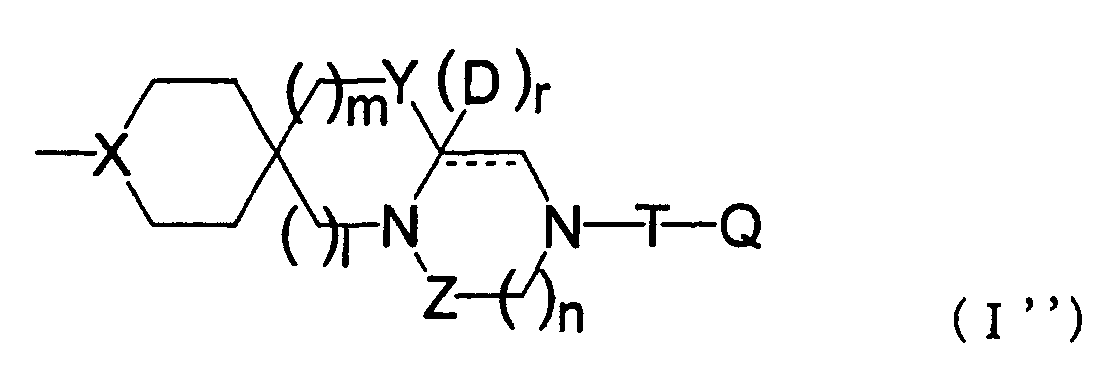
- A compound exhibiting inhibitory activity for FXa which has a partial structure represented by formula (I''') in its molecule, or its pharmaceutically acceptable saltwherein X is a methine group or a nitrogen atom; the three rings (the ring containing X, the ring containing Y, and the ring containing Z) are independently optionally substituted; A, B, Y, Z, D, l, m, n, and r are as defined for formula (I).

- A compound exhibiting inhibitory activity for FXa represented by the following formula (I'), or its pharmaceutically acceptable saltwherein D is hydrogen atom, -CO-R5 (wherein R5 is hydrogen atom or a substituent), or an optionally substituted C1-6 alkyl group;

X is a methine group or a nitrogen atom;
Y is an oxygen atom, -S(O)y-, or an optionally substituted imino group (-NH-);
the three rings (the ring containing X, the ring containing Y, and the ring containing Z) are independently optionally substituted;
Z is a methylene group, a carbonyl group, or a thiocarbonyl group;
l, m, n, and y are independently an integer selected from 0, 1 and 2 with the proviso that l and m are not simultaneously 0; and r is an integer of 0 or 1;
the bond indicated by the broken line and the solid line is a single bond or a double bond (when r is 0); and
La and Lb are groups involved in the binding of the compound of formula (I') with FXa, and
La represents a group which has a basic moiety which associates with S3 pocket of FXa [a space formed at least by amino acid residues Trp215, Phe174, Tyr99, Thr98, Glu97, and Lys96], and
Lb represents a group which has a hydrophobic moiety which binds to S1 pocket of FXa [a space formed at least by amino acid residues Val213, Ser214, Trp215, Gly216, Glu217, Gly218, Cys220, Asp189, Ala190, Cys191, Gln192, Gly193, Asp194, Ser195, Gly226, Ile227, and Tyr228], and which interacts with Tyr228 side chain in the S1 pocket but which does not covalently bind to Ser195 in active center (wherein amino acid No. of the FXa is indicated by chymotrypsin No. used in Protein Data Bank (PDB), Registration ID: 1FAX (J. Biol. Chem. 1996 Nov. 22; 271(47): 29988-92)). - A compound which satisfies all of the conditions as descirbed below or its pharmaceutically acceptable salt(1) the compound has a group including a basic moiety which associates with S3 pocket of FXa [a space formed at least by amino acid residues Trp215, Phe174, Tyr99, Thr98, Glu97, and Lys96] when the complex of the compound with FXa is in its crystalline state;(2) the compound has a hydrophobic moiety which binds to S1 pocket of FXa [a space formed at least by amino acid residues Val213, Ser214, Trp215, Gly216, Glu217, Gly218, Cys220, Asp189, Ala190, Cys191, Gln192, Gly193, Asp194, Ser195, Gly226, Ile227, and Tyr228] when the complex is in its crystalline state;(3) said hydrophobic moiety interacts with the Tyr228 side chain in the S1 pocket, while it does not covalently bind to the Ser195 in active center when the complex is in crystalline state; and(4) the compound has inhibitory activity for FXa.
- A pharmaceutical composition characterized by that the composition contains at least one compound or its pharmaceutically acceptable salt of claims 10 to 13 as an effective component.
- A method for inhibiting FXa characterized by that the method comprises administration of the pharmaceutical composition of claim 14 to a mammal which requires inhibition of the FXa.
- Crystal of a complex between FXa and at least one compound or its salt of claims 10 to 13.
- A pharmacophore which is useful in identifying or designing an inhibitor which competitively binds to an active site of FXa or its fragment, and which satisfies all of (a) to (c):(a) it is the three-dimensional structural parameter defining the binding mode when the inhibitor binds to S1 pocket of FXa by its hydrophobic moiety, and it induces interaction with Tyr228 side chain in S1 pocket;(b) it is the three-dimensional structural parameter defining the binding mode when the inhibitor binds to S3 pocket of FXa by its basic moiety; and(c) the inhibitor does not bind covalently to Ser195 in the active center.
- A method for identifying or designing an inhibitor which competitively binds to an active site of FXa or its fragment, wherein the inhibitor is screened by providing three-dimensional structural information of the active site to a computer system; identifying a compound which is assumed to bind to the FXa in a manner satisfying all of the conditions that:subjecting the compound to a biological assay which is capable of measuring FXa inhibitory activity to thereby determine whether the compound exhibits FXa inhibitory activity in the assay.(a) the compound associates with S1 pocket by its hydrophobic moiety and the moiety interacts with Tyr228,(b) the compound associates with the inside of S3 pocket of the active site by its basic moiety, and(c) the compound does not bind covalently with Ser195; and
Applications Claiming Priority (3)
| Application Number | Priority Date | Filing Date | Title |
|---|---|---|---|
| JP22288399 | 1999-06-30 | ||
| JP22288399 | 1999-06-30 | ||
| PCT/JP2000/004374 WO2001002397A1 (en) | 1999-06-30 | 2000-06-30 | Tricyclic compounds having spiro union |
Publications (3)
| Publication Number | Publication Date |
|---|---|
| EP1191028A1 true EP1191028A1 (en) | 2002-03-27 |
| EP1191028A4 EP1191028A4 (en) | 2002-10-23 |
| EP1191028B1 EP1191028B1 (en) | 2004-11-03 |
Family
ID=16789385
Family Applications (1)
| Application Number | Title | Priority Date | Filing Date |
|---|---|---|---|
| EP00940912A Expired - Lifetime EP1191028B1 (en) | 1999-06-30 | 2000-06-30 | Tricyclic compounds having spiro union |
Country Status (21)
| Country | Link |
|---|---|
| EP (1) | EP1191028B1 (en) |
| JP (1) | JP4890707B2 (en) |
| KR (1) | KR20020015061A (en) |
| CN (1) | CN1371375A (en) |
| AT (1) | ATE281457T1 (en) |
| AU (1) | AU774397B2 (en) |
| BR (1) | BR0012093A (en) |
| CA (1) | CA2380852C (en) |
| CZ (1) | CZ20014696A3 (en) |
| DE (1) | DE60015541T2 (en) |
| HK (1) | HK1049157A1 (en) |
| HU (1) | HUP0202188A3 (en) |
| IL (1) | IL147348A0 (en) |
| MX (1) | MXPA02000003A (en) |
| NO (1) | NO20016402L (en) |
| NZ (1) | NZ516363A (en) |
| PL (1) | PL352862A1 (en) |
| SK (1) | SK19292001A3 (en) |
| TR (1) | TR200103853T2 (en) |
| WO (1) | WO2001002397A1 (en) |
| ZA (1) | ZA200110558B (en) |
Cited By (1)
| Publication number | Priority date | Publication date | Assignee | Title |
|---|---|---|---|---|
| US7745623B2 (en) | 2004-05-21 | 2010-06-29 | Takeda Pharmaceutical Company Limited | Cyclic amide derivative, and its production and use |
Families Citing this family (7)
| Publication number | Priority date | Publication date | Assignee | Title |
|---|---|---|---|---|
| US20030187023A1 (en) * | 2000-07-17 | 2003-10-02 | Keiji Kubo | Sulfone derivatives, process for their production and use thereof |
| WO2002053568A1 (en) * | 2000-12-28 | 2002-07-11 | Mochida Pharmaceutical Co., Ltd. | Cholesterol biosynthesis inhibitors containing as the active ingredient tricyclic spiro compounds |
| EP1569912B1 (en) | 2002-12-03 | 2015-04-29 | Pharmacyclics, Inc. | 2-(2-hydroxybiphenyl-3-yl)-1h-benzoimidazole-5-carboxamidine derivatives as factor viia inhibitors |
| WO2006006490A1 (en) * | 2004-07-08 | 2006-01-19 | Ono Pharmaceutical Co., Ltd. | Spirocyclic compound |
| WO2006106804A1 (en) | 2005-03-31 | 2006-10-12 | Mochida Pharmaceutical Co., Ltd. | Tricyclic spiro compound comprising acyl group bound to nitrogen atom in the ring |
| WO2007136085A1 (en) | 2006-05-23 | 2007-11-29 | Mochida Pharmaceutical Co., Ltd. | Spiro tetracyclic compound |
| US7739434B2 (en) | 2008-01-11 | 2010-06-15 | International Business Machines Corporation | Performing a configuration virtual topology change and instruction therefore |
Family Cites Families (2)
| Publication number | Priority date | Publication date | Assignee | Title |
|---|---|---|---|---|
| ATE136032T1 (en) * | 1987-07-20 | 1996-04-15 | Duphar Int Res | 8,9-ANNELLATED 1,2,3,4-TETRAHYDRO-BETA-CARBOLINE DERIVATIVES |
| US5292747A (en) * | 1990-08-07 | 1994-03-08 | Hoffman-La Roche Inc. | Substituted pyrroles |
-
2000
- 2000-06-30 DE DE60015541T patent/DE60015541T2/en not_active Expired - Lifetime
- 2000-06-30 AU AU55720/00A patent/AU774397B2/en not_active Ceased
- 2000-06-30 EP EP00940912A patent/EP1191028B1/en not_active Expired - Lifetime
- 2000-06-30 NZ NZ516363A patent/NZ516363A/en unknown
- 2000-06-30 AT AT00940912T patent/ATE281457T1/en not_active IP Right Cessation
- 2000-06-30 SK SK1929-2001A patent/SK19292001A3/en unknown
- 2000-06-30 JP JP2001507834A patent/JP4890707B2/en not_active Expired - Fee Related
- 2000-06-30 TR TR2001/03853T patent/TR200103853T2/en unknown
- 2000-06-30 CA CA002380852A patent/CA2380852C/en not_active Expired - Fee Related
- 2000-06-30 PL PL00352862A patent/PL352862A1/en not_active Application Discontinuation
- 2000-06-30 KR KR1020017016658A patent/KR20020015061A/en not_active Withdrawn
- 2000-06-30 CN CN00811976A patent/CN1371375A/en active Pending
- 2000-06-30 WO PCT/JP2000/004374 patent/WO2001002397A1/en not_active Ceased
- 2000-06-30 BR BR0012093-6A patent/BR0012093A/en not_active IP Right Cessation
- 2000-06-30 MX MXPA02000003A patent/MXPA02000003A/en unknown
- 2000-06-30 HK HK03100716.0A patent/HK1049157A1/en unknown
- 2000-06-30 CZ CZ20014696A patent/CZ20014696A3/en unknown
- 2000-06-30 IL IL14734800A patent/IL147348A0/en unknown
- 2000-06-30 HU HU0202188A patent/HUP0202188A3/en unknown
-
2001
- 2001-12-21 ZA ZA200110558A patent/ZA200110558B/en unknown
- 2001-12-28 NO NO20016402A patent/NO20016402L/en not_active Application Discontinuation
Cited By (2)
| Publication number | Priority date | Publication date | Assignee | Title |
|---|---|---|---|---|
| US7745623B2 (en) | 2004-05-21 | 2010-06-29 | Takeda Pharmaceutical Company Limited | Cyclic amide derivative, and its production and use |
| US8697865B2 (en) | 2004-05-21 | 2014-04-15 | Takeda Pharmaceutical Company Limited | Cyclic amide derivative, and its production and use |
Also Published As
| Publication number | Publication date |
|---|---|
| WO2001002397A1 (en) | 2001-01-11 |
| AU774397B2 (en) | 2004-06-24 |
| SK19292001A3 (en) | 2002-06-04 |
| EP1191028B1 (en) | 2004-11-03 |
| HK1049157A1 (en) | 2003-05-02 |
| KR20020015061A (en) | 2002-02-27 |
| ATE281457T1 (en) | 2004-11-15 |
| WO2001002397A9 (en) | 2001-04-05 |
| EP1191028A4 (en) | 2002-10-23 |
| CA2380852C (en) | 2009-10-20 |
| CZ20014696A3 (en) | 2002-05-15 |
| DE60015541T2 (en) | 2005-12-08 |
| NO20016402D0 (en) | 2001-12-28 |
| MXPA02000003A (en) | 2003-07-21 |
| CA2380852A1 (en) | 2001-01-11 |
| HUP0202188A2 (en) | 2002-10-28 |
| DE60015541D1 (en) | 2004-12-09 |
| NO20016402L (en) | 2002-02-27 |
| TR200103853T2 (en) | 2002-11-21 |
| HUP0202188A3 (en) | 2004-04-28 |
| PL352862A1 (en) | 2003-09-08 |
| NZ516363A (en) | 2004-05-28 |
| BR0012093A (en) | 2002-07-16 |
| JP4890707B2 (en) | 2012-03-07 |
| AU5572000A (en) | 2001-01-22 |
| ZA200110558B (en) | 2002-09-12 |
| CN1371375A (en) | 2002-09-25 |
| IL147348A0 (en) | 2002-08-14 |
Similar Documents
| Publication | Publication Date | Title |
|---|---|---|
| EP4389751A1 (en) | Heterocyclic compounds and uses thereof | |
| KR102398941B1 (en) | covalent inhibitor of PAD4 | |
| JP7498795B2 (en) | Imidazolidinone derivatives and their applications in medicine | |
| US20230091225A1 (en) | Bifunctional chimeric heterocyclic compounds for targeted degradation of androgen receptors and use thereof | |
| ES3007582T3 (en) | Bicyclic inhibitors of pad4 | |
| JP6165977B2 (en) | Heteroarylpyridone and aza-pyridone amide compounds | |
| CN121889399A (en) | KRAS proteolysis targeting chimeras | |
| WO2010068806A1 (en) | Amide derivatives as btk inhibitors in the treatment of allergic, autoimmune and inflammatory disorders as well as cancer | |
| WO2010068810A2 (en) | Certain substituted amides, method of making, and method of use thereof | |
| TW202413351A (en) | Degradation of irak4 by conjugation of irak4 inhibitors with e3 ligase ligand and methods of use | |
| WO2010068788A1 (en) | Heterocyclic amides as btk inhibitors | |
| AU2015359624A1 (en) | Piperidine substituted pyrazolo[1,5-a]pyrimidine derivatives with inhibitory activity on the replication of the respiratory syncytial virus (RSV) | |
| CN105732638A (en) | Bruton tyrosine kinase inhibitor with spiro or bridge ring structure and preparation method thereof | |
| KR20220137694A (en) | Macrocyclic PAD4 inhibitors useful as immunosuppressants | |
| EP1191028B1 (en) | Tricyclic compounds having spiro union | |
| US20040063716A1 (en) | Cholesterol biosynthesis inhibitors containing as the active ingredient tricyclic spiro compounds | |
| US11897863B2 (en) | Indazole amine derivative, preparation method therefor and medical use thereof | |
| JPWO2001002397A1 (en) | Tricyclic compounds with spiro bonds | |
| US6858599B2 (en) | Tricyclic compound having spiro union | |
| CN108137608A (en) | Selective inhibitors of JANUS kinase 1 and their pharmaceutical use | |
| US20250129070A1 (en) | Bifunctional androgen receptor compounds | |
| CA3203922A1 (en) | Enzyme inhibitors | |
| WO2025171296A1 (en) | Ras inhibitors | |
| CN101175756A (en) | Tricyclic spirocyclic compounds containing acyl groups bound to ring nitrogen atoms | |
| US20090170844A1 (en) | Spiro Tetracyclic Compound |
Legal Events
| Date | Code | Title | Description |
|---|---|---|---|
| PUAI | Public reference made under article 153(3) epc to a published international application that has entered the european phase |
Free format text: ORIGINAL CODE: 0009012 |
|
| 17P | Request for examination filed |
Effective date: 20011228 |
|
| AK | Designated contracting states |
Kind code of ref document: A1 Designated state(s): AT BE CH CY DE DK ES FI FR GB GR IE IT LI LU MC NL PT SE |
|
| AX | Request for extension of the european patent |
Free format text: AL;LT;LV;MK PAYMENT 20011228;RO;SI PAYMENT 20011228 |
|
| A4 | Supplementary search report drawn up and despatched |
Effective date: 20020905 |
|
| AK | Designated contracting states |
Kind code of ref document: A4 Designated state(s): AT BE CH CY DE DK ES FI FR GB GR IE IT LI LU MC NL PT SE |
|
| 17Q | First examination report despatched |
Effective date: 20030203 |
|
| GRAP | Despatch of communication of intention to grant a patent |
Free format text: ORIGINAL CODE: EPIDOSNIGR1 |
|
| GRAS | Grant fee paid |
Free format text: ORIGINAL CODE: EPIDOSNIGR3 |
|
| GRAA | (expected) grant |
Free format text: ORIGINAL CODE: 0009210 |
|
| AK | Designated contracting states |
Kind code of ref document: B1 Designated state(s): AT BE CH CY DE DK ES FI FR GB GR IE IT LI LU MC NL PT SE |
|
| AX | Request for extension of the european patent |
Extension state: RO SI |
|
| PG25 | Lapsed in a contracting state [announced via postgrant information from national office to epo] |
Ref country code: AT Free format text: LAPSE BECAUSE OF FAILURE TO SUBMIT A TRANSLATION OF THE DESCRIPTION OR TO PAY THE FEE WITHIN THE PRESCRIBED TIME-LIMIT Effective date: 20041103 Ref country code: FI Free format text: LAPSE BECAUSE OF FAILURE TO SUBMIT A TRANSLATION OF THE DESCRIPTION OR TO PAY THE FEE WITHIN THE PRESCRIBED TIME-LIMIT Effective date: 20041103 |
|
| REG | Reference to a national code |
Ref country code: GB Ref legal event code: FG4D |
|
| REG | Reference to a national code |
Ref country code: CH Ref legal event code: EP |
|
| REF | Corresponds to: |
Ref document number: 60015541 Country of ref document: DE Date of ref document: 20041209 Kind code of ref document: P |
|
| REG | Reference to a national code |
Ref country code: CH Ref legal event code: NV Representative=s name: BOVARD AG PATENTANWAELTE Ref country code: IE Ref legal event code: FG4D |
|
| PG25 | Lapsed in a contracting state [announced via postgrant information from national office to epo] |
Ref country code: DK Free format text: LAPSE BECAUSE OF FAILURE TO SUBMIT A TRANSLATION OF THE DESCRIPTION OR TO PAY THE FEE WITHIN THE PRESCRIBED TIME-LIMIT Effective date: 20050203 Ref country code: GR Free format text: LAPSE BECAUSE OF FAILURE TO SUBMIT A TRANSLATION OF THE DESCRIPTION OR TO PAY THE FEE WITHIN THE PRESCRIBED TIME-LIMIT Effective date: 20050203 Ref country code: SE Free format text: LAPSE BECAUSE OF FAILURE TO SUBMIT A TRANSLATION OF THE DESCRIPTION OR TO PAY THE FEE WITHIN THE PRESCRIBED TIME-LIMIT Effective date: 20050203 |
|
| PG25 | Lapsed in a contracting state [announced via postgrant information from national office to epo] |
Ref country code: ES Free format text: LAPSE BECAUSE OF FAILURE TO SUBMIT A TRANSLATION OF THE DESCRIPTION OR TO PAY THE FEE WITHIN THE PRESCRIBED TIME-LIMIT Effective date: 20050214 |
|
| NLR4 | Nl: receipt of corrected translation in the netherlands language at the initiative of the proprietor of the patent | ||
| PG25 | Lapsed in a contracting state [announced via postgrant information from national office to epo] |
Ref country code: IE Free format text: LAPSE BECAUSE OF NON-PAYMENT OF DUE FEES Effective date: 20050630 Ref country code: LU Free format text: LAPSE BECAUSE OF NON-PAYMENT OF DUE FEES Effective date: 20050630 Ref country code: MC Free format text: LAPSE BECAUSE OF NON-PAYMENT OF DUE FEES Effective date: 20050630 Ref country code: CY Free format text: LAPSE BECAUSE OF FAILURE TO SUBMIT A TRANSLATION OF THE DESCRIPTION OR TO PAY THE FEE WITHIN THE PRESCRIBED TIME-LIMIT Effective date: 20050630 |
|
| PLBE | No opposition filed within time limit |
Free format text: ORIGINAL CODE: 0009261 |
|
| STAA | Information on the status of an ep patent application or granted ep patent |
Free format text: STATUS: NO OPPOSITION FILED WITHIN TIME LIMIT |
|
| 26N | No opposition filed |
Effective date: 20050804 |
|
| ET | Fr: translation filed | ||
| REG | Reference to a national code |
Ref country code: IE Ref legal event code: MM4A |
|
| PG25 | Lapsed in a contracting state [announced via postgrant information from national office to epo] |
Ref country code: PT Free format text: LAPSE BECAUSE OF NON-PAYMENT OF DUE FEES Effective date: 20050403 |
|
| REG | Reference to a national code |
Ref country code: CH Ref legal event code: PFA Owner name: MOCHIDA PHARMACEUTICAL CO., LTD. Free format text: MOCHIDA PHARMACEUTICAL CO., LTD.#7, YOTSUYA 1-CHOME#SHINJUKU-KU TOKYO 160-8515 (JP) -TRANSFER TO- MOCHIDA PHARMACEUTICAL CO., LTD.#7, YOTSUYA 1-CHOME#SHINJUKU-KU TOKYO 160-8515 (JP) |
|
| PGFP | Annual fee paid to national office [announced via postgrant information from national office to epo] |
Ref country code: FR Payment date: 20110621 Year of fee payment: 12 Ref country code: CH Payment date: 20110614 Year of fee payment: 12 |
|
| PGFP | Annual fee paid to national office [announced via postgrant information from national office to epo] |
Ref country code: NL Payment date: 20110629 Year of fee payment: 12 Ref country code: GB Payment date: 20110629 Year of fee payment: 12 |
|
| PGFP | Annual fee paid to national office [announced via postgrant information from national office to epo] |
Ref country code: BE Payment date: 20110610 Year of fee payment: 12 Ref country code: IT Payment date: 20110624 Year of fee payment: 12 |
|
| PGFP | Annual fee paid to national office [announced via postgrant information from national office to epo] |
Ref country code: DE Payment date: 20110622 Year of fee payment: 12 |
|
| BERE | Be: lapsed |
Owner name: *MOCHIDA PHARMACEUTICAL CO. LTD Effective date: 20120630 |
|
| REG | Reference to a national code |
Ref country code: NL Ref legal event code: V1 Effective date: 20130101 |
|
| REG | Reference to a national code |
Ref country code: CH Ref legal event code: PL |
|
| REG | Reference to a national code |
Ref country code: CH Ref legal event code: PL |
|
| GBPC | Gb: european patent ceased through non-payment of renewal fee |
Effective date: 20120630 |
|
| PG25 | Lapsed in a contracting state [announced via postgrant information from national office to epo] |
Ref country code: IT Free format text: LAPSE BECAUSE OF NON-PAYMENT OF DUE FEES Effective date: 20120630 |
|
| REG | Reference to a national code |
Ref country code: FR Ref legal event code: ST Effective date: 20130228 |
|
| REG | Reference to a national code |
Ref country code: DE Ref legal event code: R119 Ref document number: 60015541 Country of ref document: DE Effective date: 20130101 |
|
| PG25 | Lapsed in a contracting state [announced via postgrant information from national office to epo] |
Ref country code: CH Free format text: LAPSE BECAUSE OF NON-PAYMENT OF DUE FEES Effective date: 20120630 Ref country code: FR Free format text: LAPSE BECAUSE OF NON-PAYMENT OF DUE FEES Effective date: 20120702 Ref country code: LI Free format text: LAPSE BECAUSE OF NON-PAYMENT OF DUE FEES Effective date: 20120630 Ref country code: BE Free format text: LAPSE BECAUSE OF NON-PAYMENT OF DUE FEES Effective date: 20120630 Ref country code: DE Free format text: LAPSE BECAUSE OF NON-PAYMENT OF DUE FEES Effective date: 20130101 Ref country code: GB Free format text: LAPSE BECAUSE OF NON-PAYMENT OF DUE FEES Effective date: 20120630 Ref country code: NL Free format text: LAPSE BECAUSE OF NON-PAYMENT OF DUE FEES Effective date: 20130101 |